WO1993009227A1 - Human neuropeptide y-y1 receptor - Google Patents

Human neuropeptide y-y1 receptor Download PDF

Info

Publication number
WO1993009227A1
WO1993009227A1 PCT/AU1992/000600 AU9200600W WO9309227A1 WO 1993009227 A1 WO1993009227 A1 WO 1993009227A1 AU 9200600 W AU9200600 W AU 9200600W WO 9309227 A1 WO9309227 A1 WO 9309227A1
Authority
WO
WIPO (PCT)
Prior art keywords
receptor
npy
human
cells
cell
Prior art date
Legal status (The legal status is an assumption and is not a legal conclusion. Google has not performed a legal analysis and makes no representation as to the accuracy of the status listed.)
Ceased
Application number
PCT/AU1992/000600
Other languages
French (fr)
Inventor
Lisa Selbie
Herbert Herzog
John Shine
Current Assignee (The listed assignees may be inaccurate. Google has not performed a legal analysis and makes no representation or warranty as to the accuracy of the list.)
Garvan Institute of Medical Research
Original Assignee
Garvan Institute of Medical Research
Priority date (The priority date is an assumption and is not a legal conclusion. Google has not performed a legal analysis and makes no representation as to the accuracy of the date listed.)
Filing date
Publication date
Application filed by Garvan Institute of Medical Research filed Critical Garvan Institute of Medical Research
Priority to CA002123108A priority Critical patent/CA2123108C/en
Priority to US08/232,144 priority patent/US5571695A/en
Priority to JP50804993A priority patent/JP3419454B2/en
Priority to DE69229283T priority patent/DE69229283T2/en
Priority to AU29097/92A priority patent/AU658947B2/en
Priority to EP92922987A priority patent/EP0668910B1/en
Publication of WO1993009227A1 publication Critical patent/WO1993009227A1/en
Anticipated expiration legal-status Critical
Ceased legal-status Critical Current

Links

Classifications

    • CCHEMISTRY; METALLURGY
    • C07ORGANIC CHEMISTRY
    • C07KPEPTIDES
    • C07K14/00Peptides having more than 20 amino acids; Gastrins; Somatostatins; Melanotropins; Derivatives thereof
    • C07K14/435Peptides having more than 20 amino acids; Gastrins; Somatostatins; Melanotropins; Derivatives thereof from animals; from humans
    • C07K14/705Receptors; Cell surface antigens; Cell surface determinants
    • C07K14/70571Receptors; Cell surface antigens; Cell surface determinants for neuromediators, e.g. serotonin receptor, dopamine receptor
    • AHUMAN NECESSITIES
    • A61MEDICAL OR VETERINARY SCIENCE; HYGIENE
    • A61KPREPARATIONS FOR MEDICAL, DENTAL OR TOILETRY PURPOSES
    • A61K38/00Medicinal preparations containing peptides

Definitions

  • the present invention relates to cDNA and genomic DNA sequences which encode the human neuropeptide Y-Y1 receptor.
  • the present invention relates to the use of these sequences in the production of the human neuropeptide Y-Y1 receptor and related receptor subtypes using recombinant DNA technology and to methods of screening and testing compounds for neuropeptide Y (NPY) agonist or antagonist activity.
  • NPY neuropeptide Y
  • Neuropeptide Y has a wide range of functions in the body, particularly affecting the cardiovascular system. Within the peripheral nervous system NPY is present in postganglionic sympathetic nerves, being co-localised and co-released with other neurotransmitter, including catechoiamines. When used pharmacologically, NPY has been shown to have a potent vasoconstrictor activity as well as dramatically potentiating the
  • NPY neuropeptide Y
  • sympathetic nerves supplying the coronary, cerebral and renal vasculature and when infused into these vascular beds, NPY causes prolonged vasoconstriction that is not reversed by adrenergic blocking agents.
  • NPY is the candidate transmitter for pathological vasospasm, a major cause of morbidity and mortality when involving the coronary and cerebral vessels.
  • NPY also appears to be involved in interaction with the renin angiotensin system. NPY containing sympathetic nerve terminals are found on the juxta-glomerular
  • NPY Within the central nervous system NPY is localised predominantly within interneurons where it appears to have a regulatory role. It therefore has widespread and diverse effects including effects on memory and a possible role in Alzheimer's disease. NPY is the most potent known substance to cause an increase in feeding and may play a role in the genetic basis of Type II diabetes mellitus. NPY may also play a role as a regulatory agent in
  • NPY neuropeptide
  • NPY possess a compact tertiary structure and different parts of the molecule are required for interaction with different subtypes of the receptor, the logical development of both agonists and antagonists is critically dependent upon the availability and knowledge of specific receptor structure.
  • NPY binds specifically to at least two receptors, Y1 and Y2.(Fuhlendorff, J., et al., Proc. Natl. Acad. Sci. USA. 87:182-186, 1990). In addition, a third receptor subtype has been suggested (Wahlstedt, et al, Life
  • NPY receptors couple to the adenylate cyclase second messengereer system
  • additional NPY receptor subtypes exist since there is evidence that phosphatidylinositol turnover, cations, and arachidonic acid may also function as second messengers for NPY.
  • NPY agonists and antagonists may have commercial value as potential anti-hypertensive agents, cardiovascular drugs, neuronal growth factors, anti-psychotics, anti-obesity and anti-diabetic agents, the ability to produce NPY receptors by recombinant DNA technology would be advantageous.
  • the present inventors have isolated full length cDNA clones encoding the human Y1 NPY receptor (designated Y1) from human hippocampal cDNA using DNA homology screening.
  • the receptor sequences were identified as the human Y1 NPY receptor by expression of the cloned cDNA in mammalian cells and by measurement of specific binding to the transfected cells by a variety of NPY analogues.
  • the receptor has also been shown to couple to both the
  • the receptor has been expressed in a bacterial cells, allowing for additional drug screening methods as well as
  • the DNA sequences represents a novel human receptor which may be of clinical and commercial importance.
  • the present invention consists in a cDNA molecule encoding the human NPY-Y1 receptor, the cDNA molecule having a sequence substantial as shown in Table 1 or a functionally equivalent sequence.
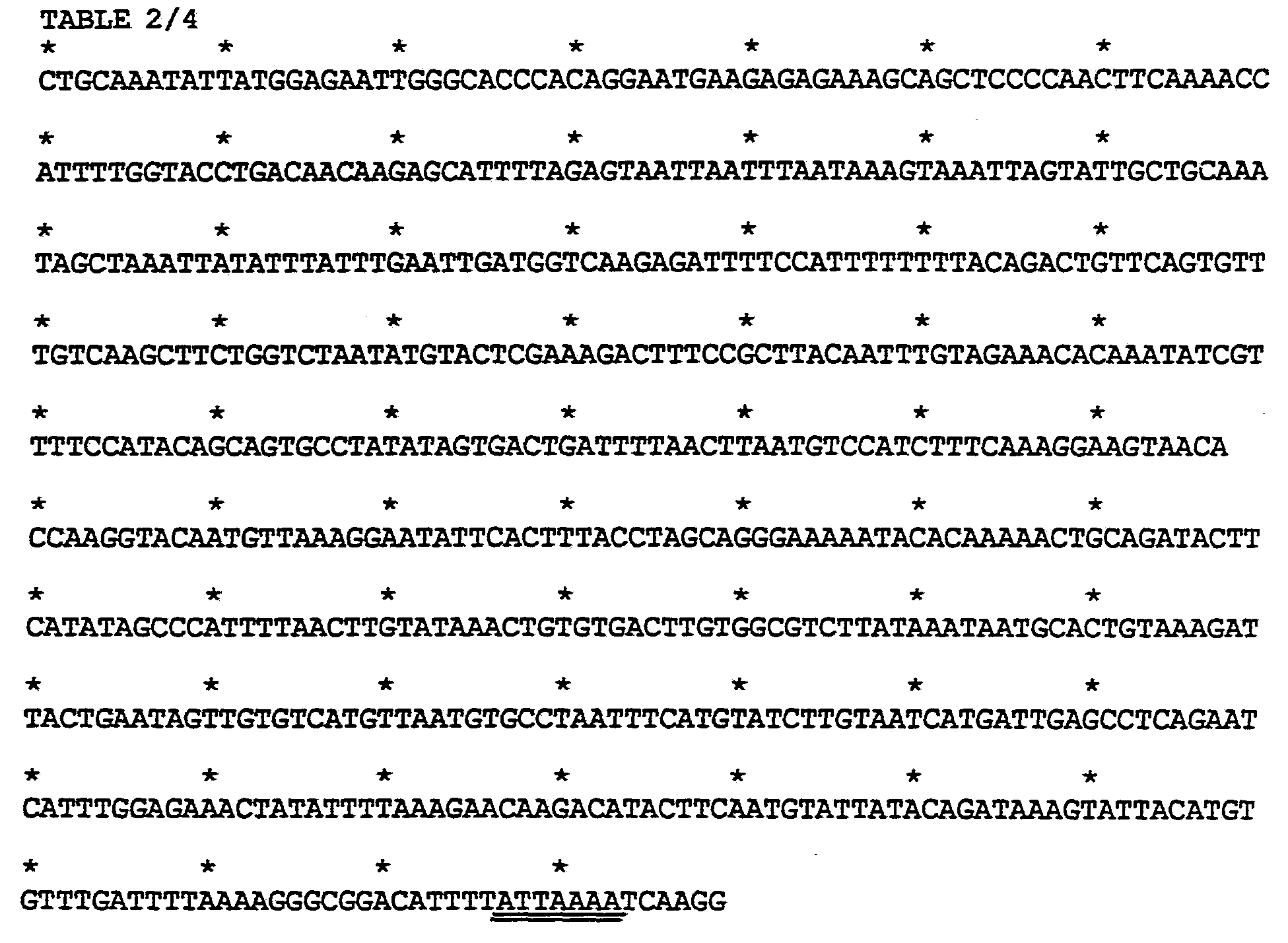
  • the present invention consists in a genomic DNA molecule encoding the human NPY-Y1 receptor, the genomic DNA molecule having a sequence substantially as shown in Table 2 or a functionally equivalent sequence.
  • the term "functionally equivalent sequence” is intended to cover minor variation in the DNA sequence which, due to degenerancy in the DNA code, do not result in the sequence encoding a different polypeptide. Further, this term is intended to cover alterations in the DNA code which lead to changes in the encoded polypeptide, but in which such changes do not affect the biological activity of the peptide. In addition, this term is intended to cover use of the human NPY Y1 receptor gene or gene fragments for expression in cell lines to be used in drug screening.
  • the present invention consists in a method of producing human NPY-Y1 receptors comprising culturing a cell transformed with the cDNA molecule of. the first aspect of the present invention or the genomic DNA molecule of the second aspect of the present invention under conditions which allow expression of the DNA
  • the cells may be either mammalian cells or bacterial cells. Where the cells are mammalian cells it is presently preferred that the cells are Chinese Hamster Ovary (CHO) cells or human embryonic kidney 293 cells.
  • CHO Chinese Hamster Ovary
  • the cDNA molecule is under the control of the CMV promoter when expressed in mammalian cells.
  • the present invention consists in a method of screening compounds for NPY agonist or
  • antagonist activity comprising contacting the molecule with the human NPY-Y1 receptor produced by the method of the second aspect of the present invention.
  • the NPY-Y1 receptor is present on the surface of a cell, preferably CHO or 293 cells or bacterial cells.
  • the cDNA and genomic DNA molecules of the present invention represent novel human receptors. These receptors may be of interest both clinically and
  • neuropeptide Y-Y1 receptor protein in a substantially pure form.
  • the present invention consists in neuropeptide Y-Y1 receptor in a substantially pure form.
  • sequence of the present invention will also enable the isolation of DNA sequences encoding other NPY-Y1 receptor subtypes including the NPY-Y2 and NPY-Y3 receptor, by using the proof in DNA homology screening of DNA libraries of interest.
  • fura-2-loaded CHO cells transfected with the human NPY Y1 receptor cDNA were measured in response to NPY, NPY
  • NPY Y1 receptor expressing cell line was stimulated with 100 nM NPY(A), peptide YY (B), NPY (L,P) (C), peptide YY cells did not respond to any of the NPY analogues, including 100 nM NPY
  • Figure 4 shows the restriction map for SacI, Xhol,
  • Figure 5 shows the results obtained when CHO cells expressing human NPY-Y1 receptor were loaded with
  • RNA (3 ⁇ g) from rat brain was used as a
  • cDNAs were used in a polymerase chain reaction (PCR) together with the oligonucleotide primers R1 (CTG GTG CTG CAG TAT TTT GGC CCA CTC TGT) and R2 (AAT GTC TCA GAG AAT TCT CCA TTT CTG GCC) 30 pmol each) which correspond to position 672-584 and 48-78 in the rat cDNA clone FC5R, respectively.
  • PCR condition 30 cycles at 95 for 1 min, 63 C for 2 min and 72 C for 1 min.
  • the reaction product was digested with EcoR I and Pst I, gel purified and subcloned for sequencing into the Bluescript vector (Stratagene) to show authenticity.
  • the largest cDNA (2.5 kb) contains an open reading frame for 384 amino acids encoding the human NPY receptor subtype Y 1 (Table 1).
  • the two other clones (F5 and F13) are truncated versions of the same cDNA with 100% identity in the overlapping region (position 664-1555 and 670-1925) respectively.
  • the mammalian expression construct pN-H(3-4) was made by subcloning a PCR fragment containing only the coding region of the NPY Y 1 receptor into the pcDNA NEO
  • the construct is under the control of the CMV promoter and contains the neomycin gene for selection.
  • the expression construct pN-H3 was transfected into the mammalian cell line CHO K1 using a modified calcium TABLE 1/1
  • transfected cells were selected with neomycin and tested for the ability to bind NPY/PYY peptide analogues.
  • Transfected cells (1 ⁇ 10 6 ) were incubated in 0.5ml assay buffer (50mM Tris-HCl pH 7.4, 2mM CaCl 2 , 5mMKCl, 120mM NaCl, ImM MgCl 2 , and 0.1% bovine serum albumin) in the presence of 0.05nM
  • NPY(Leu31,Pro34) receptor-selective NPY(Leu31,Pro34) [peptides were obtained from Auspep, Australia]. Peptide analogues were also tested on human neuroblastoma SK-N-MC cells (1.6 ⁇ 10 6 ), which express only the Y1 receptor subtype, and on rat brain membrane preparations (approximately 100 ⁇ g) which express predominantly Y2 receptors. Untransfected
  • CHO K1 cells (1 ⁇ 10 6 ) were also tested and showed no specific binding to the peptide analogues. Cells were incubated with the radiolabelled peptide and unlabelled competitors for one hour at room temperature and pelleted in a microcentrifuge for 4 minutes. Pellets were counted for one minute in a gamma counter. Binding of the Y1 receptor-selective agonist confirmed the identity of this clone as the NPY-Y1 receptor.
  • NPY Y1 receptor was assessed for its ability to bind NPY and related analogs (methods detailed in human NPY Y1 receptor patent application) ( Figure 1).
  • the receptor has been successfully used to show specific binding to a Y1 receptor-specific agonist NPY (L 31 ,P 34 ) and to not bind to a Y2 receptor-specific agonist peptide
  • the Y1 receptor expressed in these cell lines has been shown to couple to inhibition of adenylate cyclase in 293 cells ( Figure 2) and the increase in cytosolic calcium levels in the CHO cells ( Figure 3).
  • cyclic AMP was assayed in whole cells treated for 15 min. at 37°C with 100 micromolar isobutylmethylxanthine (IBMX; Sigma). Transfected cells (1 ⁇ 10 6 / 0.5 ml reaction) were incubated with 10 micromolar forskolin and various concentrations of NPY and related peptides. Reactions were terminated with the addition of HC1 to 0.1M,
  • Cyclic AMP was quantitated by using a radioimmunoassay (Dupont/NEN).
  • transfected cells were suspended in loading medium
  • Bombesin was purchased from Sigma and Auspep. Fluorescence recordings were made on a Hitachi fluorescence spectrometer (F4010) at 340 nm
  • Intracellular calcium was quantitated by using equations described by Grynkiewicz, et al., J. Bio. Chem.
  • Plasmid pMalp (Promega), which carries the malE gene under the control of the tac promoter, was cut with EcoRI and Malawi restriction enzymes simultaneously.
  • the plasmid pHz59 was cut with StuI and EcoRI restriction enzymes
  • the recombinant plasmid (pHz60) was transfected into the bacterial strain TB1.
  • Bacteria were grown at 37°C in L broth containing 50lg/ml of ampicillin, up to an A600 value of 0.5-0.7.
  • IPTG isopropylb-D-thiogalactopyranoside
  • sucrose gradient consisting of 3ml 60% (mass/vol.) sucrose, 6 ml 42.5% (mass/vol.) sucrose, and 15 ml 25% (mass/vol.) sucrose (in 10 mM Hepes pH7.5 containing 5 mM EDTA) and centrifuged at 100000g for 16h at 4°C in a Beckmann SW41 rotor. Two major bands were visible at the interface of the sucrose layers,
  • NPY Y1 receptor cDNA 32 P-labelled cloned NPY Y1 receptor cDNA (nucleotides 14 to 2327) isolated from human hippocampal cDNA. Two positive clones were obtained from 7.5 ⁇ 10 bacteriophage plaques. Clone kC contained an insert of approximately 14 kb and clone kD contained an insert of approximately 11kb. The insert in kD was subsequently shown to be completely contained within the longer clone. The
  • the exon sequence of the NPY Y1 receptor gene is identical to that of the human hippocampal cDNA described above.
  • the human NPY Y1 receptor gene consists of 3 exons. This is in contrast to many of the other G protein coupled receptor genes, which are intronless.
  • the overall sequence of the gene consists of approximately 10kb (Fig. 4).
  • the first 57 nucleotides of the 5' untranslated sequence of the human hippocampal NPY Y1 receptor mRNA are separated by a 6kb intron from the second exon.
  • the second intron (97bpJ, containing an in frame stop codon, is located exactly after the proposed fifth transmembrane domain at nucleotide 908 corresponding to the cDNA sequence (Table 2).
  • Introns in several other G-coupled receptor genes human substance K, human
  • a potential for transcription factor binding sites is found in the + orientation in this region.
  • polyadenylation site was found at position 2670 of the cDNA sequence.
  • the approximate 2.7 kb sequence of the cDNA is consistent with the size of the NPY Y1
  • EcoR I and Sac I correspond exactly to the fragments found in the human genomic clones.
  • the pattern for the restriction enzyme Pst I shows an additional 5.1 kb band, which suggests the presence of a polymorphic site within the first intron of the gene.
  • Southern blot analysis of genomic DNA samples from 69 normal individuals confirmed this suggestion and demonstrated that the allele frequency for the Pst I polymorphism in this population is 54%:46% (Table 3). Sequence analysis revealed a single point mutation in the recognition site for the restriction enzyme Pst I, changing the first cytidine to a thymidine. The polymorphism could be used to assess variations in the population which may represent a possible marker for hypertension.
  • a human peripheral blood genomic DNA library A human peripheral blood genomic DNA library
  • Hybond N filters (Amersham) and hybridised with the probe in a solution containing 6xSSC, 5xDenhardt's and 0.1% SDS at 65°C for 16 h. Filters were washed twice 15 min in 2xSSC/0.1%SDS at 65°C followed by a 15 min wash in 0.1xSSC/0.1% SDS and exposed to X-ray film (Kodak, X-Omat) using an intensifying screen at -70°C for 16h.
  • kDNA was digested with EcoR I, Hind III, BamH I, Sac I, Xho I, or combinations of these enzymes to generate subsequently ordered subclones in the Bluescript SK vector (Stratagene) covering the entire region of the NPY Y1 receptor gene.
  • Supercoiled plasmid DNA was alkaline-denatured and sequenced by the dideoxy chain termination method using T7 polymerase (Promega). Oligonucleotide primers were initially from the flanking region of the vector and internal to the cDNA sequence. Additional primers were synthesised based on intron sequence obtained.
  • the mammalian cells transfected with the human NPY Y1 receptor cDNA were used to identify a peptide antagonist of NPY function.
  • a hexapeptide amide SALRHY-NH 2 (Ser-Ala-Leu-ARg-His-Tyr amide), which corresponds to residues 22-27 of the NPY molecule portion of the amphiphatic helix in NPY was synthesised in an ABI Peptide Synthesiser Model 430A. T-boc chemistry was used. HF cleavage was used to release peptide from the solid support. Peptide was subjected to HPLC (Ion
  • the hexapeptide was tested in vitro for its ability to inhibit NPY effects on mammalian cell lines transfected with the human NPY Y1 receptor cDNA. The ability of the hexapeptide to block the NPY-induced increase in
  • intracellular calcium correlated well with its in vivo ability to block NPY Y1 receptor-mediated increases in blood pressure.
  • CHO cells expressing the human NPY Y1 receptor were loaded with FURA-2 AM as described, and stimulated with 5 nM or 50 nM human NPY (Auspep) after the addition of

Landscapes

  • Health & Medical Sciences (AREA)
  • Life Sciences & Earth Sciences (AREA)
  • Chemical & Material Sciences (AREA)
  • Organic Chemistry (AREA)
  • Immunology (AREA)
  • Medicinal Chemistry (AREA)
  • Neurology (AREA)
  • Toxicology (AREA)
  • Zoology (AREA)
  • Gastroenterology & Hepatology (AREA)
  • Biomedical Technology (AREA)
  • Biochemistry (AREA)
  • Biophysics (AREA)
  • General Health & Medical Sciences (AREA)
  • Genetics & Genomics (AREA)
  • Cell Biology (AREA)
  • Molecular Biology (AREA)
  • Proteomics, Peptides & Aminoacids (AREA)
  • Engineering & Computer Science (AREA)
  • Peptides Or Proteins (AREA)
  • Preparation Of Compounds By Using Micro-Organisms (AREA)
  • Medicines That Contain Protein Lipid Enzymes And Other Medicines (AREA)
  • Medicines Containing Material From Animals Or Micro-Organisms (AREA)
  • Measurement And Recording Of Electrical Phenomena And Electrical Characteristics Of The Living Body (AREA)
  • Liquid Crystal Substances (AREA)
  • Absorbent Articles And Supports Therefor (AREA)
  • Micro-Organisms Or Cultivation Processes Thereof (AREA)

Abstract

The invention provides a cDNA sequence and a genomic DNA sequence which encodes the human neuropeptide Y-Y1 receptor. These DNA sequences can be used to express the NPY-Y1 receptor in cells and can be used to screen compounds for neuropeptide Y agonist and antagonist activity.

Description

HUMAN NEUROPEPTIDE Y-Y1 RECEPTOR
Field of the Invention
The present invention relates to cDNA and genomic DNA sequences which encode the human neuropeptide Y-Y1 receptor. In addition the present invention relates to the use of these sequences in the production of the human neuropeptide Y-Y1 receptor and related receptor subtypes using recombinant DNA technology and to methods of screening and testing compounds for neuropeptide Y (NPY) agonist or antagonist activity.
Background of the Invention
Neuropeptide Y (NPY) has a wide range of functions in the body, particularly affecting the cardiovascular system. Within the peripheral nervous system NPY is present in postganglionic sympathetic nerves, being co-localised and co-released with other neurotransmitter, including catechoiamines. When used pharmacologically, NPY has been shown to have a potent vasoconstrictor activity as well as dramatically potentiating the
vasoconstriction caused by many other pressor agents.
Particularly high concentrations of NPY are found in the sympathetic nerves supplying the coronary, cerebral and renal vasculature and when infused into these vascular beds, NPY causes prolonged vasoconstriction that is not reversed by adrenergic blocking agents. These
observations have led to the proposal that NPY is the candidate transmitter for pathological vasospasm, a major cause of morbidity and mortality when involving the coronary and cerebral vessels.
NPY also appears to be involved in interaction with the renin angiotensin system. NPY containing sympathetic nerve terminals are found on the juxta-glomerular
apparatus of the renal cortex and NPY influences renin release. These data, together with the demonstration of alterations in NPY concentrations in hypertensive animal models and the pressor response to infusion of the peptide, have resulted in implications of this peptide in hypertension.
Within the central nervous system NPY is localised predominantly within interneurons where it appears to have a regulatory role. It therefore has widespread and diverse effects including effects on memory and a possible role in Alzheimer's disease. NPY is the most potent known substance to cause an increase in feeding and may play a role in the genetic basis of Type II diabetes mellitus. NPY may also play a role as a regulatory agent in
pituitary function as well as potential neuromodulatory function in stress responses and in reproductive function.
Specific agonists and antagonists of NPY are
therefore likely to be of substantial benefit for therapy of a wide range of clinical disorders. As NPY possess a compact tertiary structure and different parts of the molecule are required for interaction with different subtypes of the receptor, the logical development of both agonists and antagonists is critically dependent upon the availability and knowledge of specific receptor structure.
NPY binds specifically to at least two receptors, Y1 and Y2.(Fuhlendorff, J., et al., Proc. Natl. Acad. Sci. USA. 87:182-186, 1990). In addition, a third receptor subtype has been suggested (Wahlstedt, et al, Life
Sciences 50:PL7-PL12, 1991; Michel, MC Trends in
Pharmacol. Sci. 12:389-394, 1991). While it has been demonstrated that NPY receptors couple to the adenylate cyclase second messeneer system, it remains probable that additional NPY receptor subtypes exist since there is evidence that phosphatidylinositol turnover, cations, and arachidonic acid may also function as second messengers for NPY. Since NPY agonists and antagonists may have commercial value as potential anti-hypertensive agents, cardiovascular drugs, neuronal growth factors, anti-psychotics, anti-obesity and anti-diabetic agents, the ability to produce NPY receptors by recombinant DNA technology would be advantageous.
The present inventors have isolated full length cDNA clones encoding the human Y1 NPY receptor (designated Y1) from human hippocampal cDNA using DNA homology screening. The receptor sequences were identified as the human Y1 NPY receptor by expression of the cloned cDNA in mammalian cells and by measurement of specific binding to the transfected cells by a variety of NPY analogues. The receptor has also been shown to couple to both the
inhibition of adenylate cyclase activity and increases in intracellular cytosolic calcium levels. In addition, the receptor has been expressed in a bacterial cells, allowing for additional drug screening methods as well as
purification of the receptor protein. The DNA sequences represents a novel human receptor which may be of clinical and commercial importance.
Summary of the Invention
Accordingly, in a first aspect the present invention consists in a cDNA molecule encoding the human NPY-Y1 receptor, the cDNA molecule having a sequence substantial as shown in Table 1 or a functionally equivalent sequence.
In a second aspect the present invention consists in a genomic DNA molecule encoding the human NPY-Y1 receptor, the genomic DNA molecule having a sequence substantially as shown in Table 2 or a functionally equivalent sequence.
As used herein the term "functionally equivalent sequence" is intended to cover minor variation in the DNA sequence which, due to degenerancy in the DNA code, do not result in the sequence encoding a different polypeptide. Further, this term is intended to cover alterations in the DNA code which lead to changes in the encoded polypeptide, but in which such changes do not affect the biological activity of the peptide. In addition, this term is intended to cover use of the human NPY Y1 receptor gene or gene fragments for expression in cell lines to be used in drug screening.
In a third aspect the present invention consists in a method of producing human NPY-Y1 receptors comprising culturing a cell transformed with the cDNA molecule of. the first aspect of the present invention or the genomic DNA molecule of the second aspect of the present invention under conditions which allow expression of the DNA
sequence and optionally recovering the human NPY-Y1 receptor.
Where the cDNA sequence is used the cells may be either mammalian cells or bacterial cells. Where the cells are mammalian cells it is presently preferred that the cells are Chinese Hamster Ovary (CHO) cells or human embryonic kidney 293 cells.
It will also be clear to persons skilled in the art that where the genomic DNA sequence is used that gene fragments could be used to obtain expression of the NPY-Y1 receptor. It is intended that the use of such gene fragments is included within the scope of the present invention.
In a further preferred embodiment the cDNA molecule is under the control of the CMV promoter when expressed in mammalian cells.
In a fourth aspect the present invention consists in a method of screening compounds for NPY agonist or
antagonist activity, comprising contacting the molecule with the human NPY-Y1 receptor produced by the method of the second aspect of the present invention.
In a preferred embodiment of the present invention the NPY-Y1 receptor is present on the surface of a cell, preferably CHO or 293 cells or bacterial cells.
The cDNA and genomic DNA molecules of the present invention represent novel human receptors. These receptors may be of interest both clinically and
commercially as they are expressed in many regions of the body and a NPY affects a wide number of systems .
By using the cDNA or genomic DNA sequences of the present invention it is possible to isolate the
neuropeptide Y-Y1 receptor protein in a substantially pure form.
Accordingly, in a fifth aspect the present invention consists in neuropeptide Y-Y1 receptor in a substantially pure form.
It is believed that sequence of the present invention will also enable the isolation of DNA sequences encoding other NPY-Y1 receptor subtypes including the NPY-Y2 and NPY-Y3 receptor, by using the proof in DNA homology screening of DNA libraries of interest.
In order that the nature of the present invention may be more clearly understood preferred forms thereof will now be described with reference to the following examples and drawings in which:- Figure 1. Inhibition of porcine [125I]-PYY binding with various NPY-related peptides. Increasing
concentrations of human NPY [□] , human
[L31,P34]NPY[■], porcine peptide YY [▲], peptide YY residues 13-36 [●], and human pancreatic
polypeptide [Δ] were tested for their ability to inhibit the binding of [ 125I]-PYY. Results were expressed as a percentage of the maximal specifically bound radiolabelled
PYY. Standard errors of triplicate samples are shown.
Untransfected CHO cells showed no
specific binding of NPY.
Figure 2. The cyclic AMP response, in 293 cells transfected with human NPY Y1 receptor, to NPY
(L31,P34) (Y1) or porcine PYY-(13-36) is expressed as a percentage of the cyclic AMP level produced with 10 micromolar forskolin from three independent experiments. Basal levels were 2.5 + 0.13 pmol per 10 cells
(untransfected 293 cells) and 2.26 + 0.06 pmol per 106 cells (transfected 293 cells). Cyclic AMP levels
stimulated by 10 micromolar forskolin were 121.2 +
19.8 pmol per 106 cells (untransfected 293 cells) and 139 + 14.2 pmol per 10 cells (transfected 293 cells).
Figure 3. Intracellular calcium levels of
fura-2-loaded CHO cells transfected with the human NPY Y1 receptor cDNA were measured in response to NPY, NPY
(L31,P34) (Y1), PYY, PYY 13-36, or PP. After
successive addition of two of these compounds the
intracellular calcium response mediated by the endogenous bombesin receptor was measured with the addition of 1 micromolar bombesin (Bom). The NPY Y1 receptor expressing cell line was stimulated with 100 nM NPY(A), peptide YY (B), NPY (L,P) (C), peptide YY cells did not respond to any of the NPY analogues, including 100 nM NPY
(L 31,P34) (F). Treatment of stably transfected cells overnight with pertussis toxin at 100 ng.ml abolished the response to 2.5 micromolar PYY (H), as compared with untreated cells (G), but did not affect the intracellular response to 1 micromolar bombesin. The intracellular calcium increase mediated by the NPY Y1 receptor was dependent on the concentration of NPY (L 31,P34) and was maximal at 10 nM (J).
Figure 4 shows the restriction map for SacI, Xhol,
BamHI and EcoRI of AC clone.
Figure 5 shows the results obtained when CHO cells expressing human NPY-Y1 receptor were loaded with
FURA-2 AM and stimulated with 5nM or 50nM human NPY after the addition of 40 μg/ml hexapeptide. Increases in calcium induced by the endogenous bombesin receptor were measured by the addition of 5 nM bombesin. Methods:
Isolation of cDNA
Total RNA (3μg) from rat brain was used as a
template to synthesize random primed single-stranded cDNAs. These cDNAs were used in a polymerase chain reaction (PCR) together with the oligonucleotide primers R1 (CTG GTG CTG CAG TAT TTT GGC CCA CTC TGT) and R2 (AAT GTC TCA GAG AAT TCT CCA TTT CTG GCC) 30 pmol each) which correspond to position 672-584 and 48-78 in the rat cDNA clone FC5R, respectively. PCR condition: 30 cycles at 95 for 1 min, 63 C for 2 min and 72 C for 1 min. The reaction product was digested with EcoR I and Pst I, gel purified and subcloned for sequencing into the Bluescript vector (Stratagene) to show authenticity.
Two lambda cDNA libraries derived from human fetal brain (Clonetec) and human adult hippocampus (Stratagene) (9.105 pfu each) were screened with the rat cDNA as a probe under following hybridization conditions: 5 × SSPE,
0.1% SDS and 5x Denhardt at 60 C for 16 hours. The filters were washed twice with 2 × SSC and 0.1% SDS at 60 C for 15 min. Three strongly hybridizing clones were isolated and the cDNA inserts were subcloned for
sequencing into Bluescript vectors. The largest cDNA (2.5 kb) contains an open reading frame for 384 amino acids encoding the human NPY receptor subtype Y1 (Table 1).
The two other clones (F5 and F13) are truncated versions of the same cDNA with 100% identity in the overlapping region (position 664-1555 and 670-1925) respectively.
The mammalian expression construct pN-H(3-4) was made by subcloning a PCR fragment containing only the coding region of the NPY Y1 receptor into the pcDNA NEO
vector. The construct is under the control of the CMV promoter and contains the neomycin gene for selection.
The expression construct pN-H3 was transfected into the mammalian cell line CHO K1 using a modified calcium TABLE 1/1
Human Neuropeptide Y Y1 receptor cDNA
70
* * * * * * *
ATTGTTCAGTTCAAGGGAATGAAGAATTCAGAATAATTTTGGTAAATGGATTCCAATATCGGGAATAAGA
140 * * * * * * *
ATAAGCTGAACAGTTGACCTGCTTTGAAGAAACATACTGTCCATTTGTCTAAAATAATCTATAACAACCA
210 * * * * * * *
AACCAATCAAAATGAATTCAACATTATTTTCCCAGGTTGAAAATCATTCAGTCCACTCTAATTTCTCAGA M N S T L F S Q V E N H S V H S N F S E
280 * * * * * * *
GAAGAATGCCCAGCTTCTGGCTTTTGAAAATGATGATTGTCATCTGCCCTTGGCCATGATATTTACCTTA K N A Q L L A F E N D D C H L P L A M I F T L
350 * * * * * * *
GCTCTTGCTTATGGAGCTGTGATCATTCTTGGTGTCTCTGGAAACCTGGCCTTGATCATAATCATCTTGA A L A Y G A V I I L G V S G N L A L I I I I L
420 * * * * * * *
AACAAAAGGAGATGAGAAATGTTACCAACATCCTGATTGTGAACCTTTCCTTCTCAGACTTGCTTGTTGC K O K E M R N V T N I L I V N L S F S D L L V A
490 * * * * * * *
CATCATGTGTCTCCCCTTTACATTTGTCTACACATTAATGGACCACTGGGTCTTTGGTGAGGCGATGTGT I M C L P F T F V Y T L M D H W V F G E A M C
560 * * * * * * *
AAGTTGAATCCTTTTGTGCAATGTGTTTCAATCACTGTGTCCATTTTCTCTCTGGTTCTCATTGCTGTGG K L N P F V O C V S I T V S I F S L V L I A V
630 * * * * * * *
AACGACATCAGCTGATAATCAACCCTCGAGGGTGGAGACCAAATAATAGACATGCTTATGTAGGTATTGC E R H O L I I N P R G W R P N N R H A Y V G I A
700 * * * * * * *
TGTGATTTGGGTCCTTGCTGTGGCTTCTTCTTTGCCTTTCCTGATCTACCAAGTAATGACTGATGAGCCG V I W V L A V A S S L P F L I Y Q V M T D E P
770
* * * * * * *
TTCCAAAATGTAACACTTGATGCGTACAAAGACAAATACGTGTGCTTTGATCAATTTCCATCGGACTCTC F O N V T L D A Y K D K Y V C F D Q F P S D S
840
* * * * * * *
ATAGGTTGTCTTATACCACTCTCCTCTTGGTGCTGCAGTATTTTGGTCCACTTTGTTTTATATTTATTTG H R L S Y T T L L L V L Q Y F G P L C F I F I C
910
* * * * * * *
CTACTTCAAGATATATATACGCCTAAAAAGGAGAAACAACATGATGGACAAGATGAGAGACAATAAGTAC Y F K I Y I R L K R R N N M M D K M R D N K Y
980
* * * * * * *
AGGTCCAGTGAAACCAAAAGAATCAATATCATGCTGCTCTCCATTGTGGTAGCATTTGCAGTCTGCTGGC
R S S E T K R I N I M L L S I V V A F A V C W
1050
* * * * * * *
TCCCTCTTACCATCTTTAACACTGTGTTTGATTGGAATCATCAGATCATTGCTACCTGCAACCACAATCT L P L T I F N T V F D W N H Q I I A T C N H N L TABLE 1/2
1120 * * * * * * . *
GTTATTCCTGCTCTGCCACCTCACAGCAATGATATCCACTTGTGTCAACCCCATATTTTATGGGTTCCTG L F L L C H L T A M I S T C V N P I F Y G F L
1190 * * * * * * . *
AACAAAAACTTCCAGAGAGACTTGCAGTTCTTCTTCAACTTTTGTGATTTCCGGTCTCGGGATGATGATT N K N F O R D L O F F F N F C D F R S R D D D
1260 * * * * * * . *
ATGAAACAATAGCCATGTCCACGATGCACACAGATGTTTCCAAAACTTCTTTGAAGCAAGCAAGCCCAGT Y E T I A M S T M H T D V S K T S L K Q A S P V
1330 * * * * * * . *
CGCATTTAAAAAAATCAACAACAATGATGATAATGAAAAAATCTGAAACTACTTATAGCCTATGGTCCCG
A F K K I N N N D D N E K I *
1400 * * * * * * . *
GATGACATCTGTTTAAAAACAAGCACAACCTGCAACATACTTTGATTACCTGTTCTCCCAAGGAATGGGG
1470 * * * * * * . *
TTGAAATCATTTGAAAATGACTAAGATTTTCTTGTCTTGCTTTTTACTGCTTTTGTTGTAGTTGTCATAA
1540 * * * * * * . *
TTACATTTGGAACAAAAGGTGTGGGCTTTGGGGTCTTCTGGAAATAGTTTTGACCAGACATCTTTGAAGT
1610 * * * * * * . *
GCTTTTTGTGAATTTATGCATATAATATAAAGACTTTTATACTGTACTTATTGGAATGAAATTTCTTTAA
1680 * * * * * * . *
AGTATTACGATNNNCTGACTTCAGAAGTACCTGCCATCCAATACGGTCATTAGATTGGGTCATCTTGATT
1750 * * * * * * . *
AGATTAGATTAGATTAGATTGTCAACAGATTGGGCCATCCTTACTTTATGATAGGCATCATTTTAGTGTG
1820 * * * * * * . *
TTACAATAGTAACAGTATGCAAAAGCAGCATTCAGGAGCCGAAAGATAGTCTTGAAGTCATTCAGAAGTG
1890 * * * * * * . *
GTTTGAGGTTTCTGTTTTTTGGTGGTTTTTGTTTGTTTTTTTTTTTTTTCACCTTAAGGGAGGCTTTCAT
1960 * * * * * * . *
TTCCTCCCGACTGATTGTCACTTAAATCAAAATTTAAAAATGAATAAAAAGACATACTTCTCAGCTGCAA
2030 * * * * * * . *
ATATTATGGAGAATTGGGCACCCACAGGAATGAAGAGAGAAAGCAGCTCCCCAACTTCAAAACCATTTTG
2100 * * * * * * . *
GTACCTGACAACAAGAGCATTTTAGAGTAATTAATTTAATAAAGTAAATTAGTATTGCTGCAAATAGCTA
2170 * * * * * * . **
AATTATATTTATTTGAATTGATGGTCAAGAGATTTTCCATTTTTTTTACAGACTGTTCAGTGTTTGTCAA
2240 * * * * * * . *
GCTTCTGGTCTAATATGTACTCGAAAGACTTTCCGCTTACAATTTGTAGAAACACAAATATCGTTTTCCA
2310 * * * * * * . **
TACAGCAGTGCCTATATAGTGACTGATTTTAACTTTCAATGTCCATCTTTCAAAGGAAGTAACACCAAGG
2380 * * * * * * . *
TACAATGTTAAAGGAATATTCACTTTACCTAGCAGGGAAAAATACACAAAAACTGCAGATACTTCATATA TABLE 1/3
2450 * * * * * * . *
GCCCATTTTAACTTGTATAAACTGTGTGACTTGTGGCGTCTTATAAATAATGCACTGTAAAGATTACTGA
2520 * * * * * * . *
ATAGTTGTGTCATGTTAATGTGCCTAATTTCATGTATCTTGTAATCATGATTGAGCCTCAGAATCATTTG
2590 * * * * * * . *
GAGAAACTATATTTTAAAGAACAAGACATACTTCAATGTATTATACAGATAAAGTATTACATGTGTTTGA
* * *
TTTTAAAAGGGCGGACATTTTATTAAAATCAAGG
phosphate transfection method. Stably transfected cells were selected with neomycin and tested for the ability to bind NPY/PYY peptide analogues. Transfected cells (1 × 10⁶) were incubated in 0.5ml assay buffer (50mM Tris-HCl pH 7.4, 2mM CaCl2, 5mMKCl, 120mM NaCl, ImM MgCl2, and 0.1% bovine serum albumin) in the presence of 0.05nM
[125I]-labelled peptide YY(NEN) and either 10-8 M
porcine peptide YY(PYY 13-36), or the Y1
receptor-selective NPY(Leu31,Pro34) [peptides were obtained from Auspep, Australia]. Peptide analogues were also tested on human neuroblastoma SK-N-MC cells (1.6 × 10⁶), which express only the Y1 receptor subtype, and on rat brain membrane preparations (approximately 100μg) which express predominantly Y2 receptors. Untransfected
CHO K1 cells (1 × 10⁶) were also tested and showed no specific binding to the peptide analogues. Cells were incubated with the radiolabelled peptide and unlabelled competitors for one hour at room temperature and pelleted in a microcentrifuge for 4 minutes. Pellets were counted for one minute in a gamma counter. Binding of the Y1 receptor-selective agonist confirmed the identity of this clone as the NPY-Y1 receptor.
The expressed NPY Y1 receptor was assessed for its ability to bind NPY and related analogs (methods detailed in human NPY Y1 receptor patent application) (Figure 1).
The receptor has been successfully used to show specific binding to a Y1 receptor-specific agonist NPY (L31,P34) and to not bind to a Y2 receptor-specific agonist peptide
YY 13-36. These results reflect the in vivo effects of these agonists.
In the present invention, the Y1 receptor expressed in these cell lines has been shown to couple to inhibition of adenylate cyclase in 293 cells (Figure 2) and the increase in cytosolic calcium levels in the CHO cells (Figure 3). These are significant and novel findings and of use in the screening of agonists and antagonists by function.
To measure intracellular cyclic AMP levels, cyclic AMP was assayed in whole cells treated for 15 min. at 37°C with 100 micromolar isobutylmethylxanthine (IBMX; Sigma). Transfected cells (1 × 10⁶ / 0.5 ml reaction) were incubated with 10 micromolar forskolin and various concentrations of NPY and related peptides. Reactions were terminated with the addition of HC1 to 0.1M,
incubation at room temperature for 15 min., neutralisation and sample dilution in 50 mM sodium acetate, pH 6.2.
Cyclic AMP was quantitated by using a radioimmunoassay (Dupont/NEN).
To measure levels of intracellular calcium,
transfected cells were suspended in loading medium
(modified RPMI 1640 medium/10 mM Hepes/1% newborn calf serum) and incubated in a spinner flask at 37°C for 2.5 hour at 1 × 10 cells per ml. Cells were then treated with 1 micromolar Fura-2 acetoxymethyl ester (fura-2 AM; Molecular Probes) for 30 min. at 37°C, washed twice with loading medium, and resuspended at 5 × 10 cells/ml.
Immediately before fluorescence spectroscopy, cells were recovered by centrifugation at 1000 rpm and resuspended at 1 × 10 cells/ml in a modified Krebs buffer (135 mM NaCl/ 4.7 mM KCl/1.2 mM MgSO4/1.2 mM KH2PO4/5 mM NaHCO3/
1 mM CaCl2/2.8 mM glucose/10 mM Hepes, pH 7.4)
containing sulfinpyrazone. Bombesin was purchased from Sigma and Auspep. Fluorescence recordings were made on a Hitachi fluorescence spectrometer (F4010) at 340 nm
(excitation) and 505 nm (emission) over 10 min. with slit widths of 5 nm and responpse time of 2 seconds.
Intracellular calcium was quantitated by using equations described by Grynkiewicz, et al., J. Bio. Chem.
260:3440-3450, 1985. Plasmid Construction
Plasmid pMalp (Promega), which carries the malE gene under the control of the tac promoter, was cut with EcoRI and Hindu restriction enzymes simultaneously. A 2.1kb EcoRI/HindIII cDNA fragment containing the whole coding region for the human NPY Y1 receptor was cloned into the pMalp vector to generate plasmid pHz59. The plasmid pHz59 was cut with StuI and EcoRI restriction enzymes
simultaneously and the 5 ' overhang of the EcoRI site was filled in with Klenow enzyme and the plasmid was religated to generate the fusion construct pHz60. The recombinant plasmid (pHz60) was transfected into the bacterial strain TB1.
Preparation and Fractionation of E.coli Membranes
Bacteria were grown at 37°C in L broth containing 50lg/ml of ampicillin, up to an A600 value of 0.5-0.7.
Derepression of the tac promoter with 1mM
isopropylb-D-thiogalactopyranoside (IPTG) for 2 hours at 37 C let to the production of a 86 kD malE/NPY Y1 receptor fusion-protein. Cells, from a 11 culture, were harvested and washed at 4°C with 11 10mM Hepes pH 7.5 and the pellet stored over night at -20°C. All the subsequent steps were carried out on ice. The bacterial pellet was suspended in 28 ml 10mM Hepes pH 7.5 containing 20% (by mass) sucrose, DNAse I at 30 lg/ml, and RNase A at 30 lg/ml, and the following protease inhibitors: 1mM
phenylmethylsulfonylfluoride, leupeptin at 5 lg/ml, and pepstatin at 7 lg/ml. The suspension was sonicated three times for 3 min. Unbroken cells were removed by
centrifugation at 5000g for 10 min. and 2 ml 0.1 M EDTA (pH 7.5) was added to the supernatant. This supernatant was layered on a sucrose gradient consisting of 3ml 60% (mass/vol.) sucrose, 6 ml 42.5% (mass/vol.) sucrose, and 15 ml 25% (mass/vol.) sucrose (in 10 mM Hepes pH7.5 containing 5 mM EDTA) and centrifuged at 100000g for 16h at 4°C in a Beckmann SW41 rotor. Two major bands were visible at the interface of the sucrose layers,
corresponding to the enriched preparations of the outer and inner membrane. Fractions were collected from the gradient and aliquots used to measure binding activity for 125I NPY, in the biding assay described.
Isolation of the Human NPY Y1 Receptor Gene
A human genomic DNA library constructed in lambda GEM
11 phage vector (Clontec) was screened with a
32P-labelled cloned NPY Y1 receptor cDNA (nucleotides 14 to 2327) isolated from human hippocampal cDNA. Two positive clones were obtained from 7.5×10 bacteriophage plaques. Clone kC contained an insert of approximately 14 kb and clone kD contained an insert of approximately 11kb. The insert in kD was subsequently shown to be completely contained within the longer clone. The
restriction map for Sac I, Xho I, BamH I and EcoR I of the kC clone is shown in Fig. 4 and sequence set out in Table 2. The insert of this clone was digested with
different enzymes and the fragments subcloned into the
Bluescript SK vector for sequencing. The exon sequence of the NPY Y1 receptor gene is identical to that of the human hippocampal cDNA described above. The human NPY Y1 receptor gene consists of 3 exons. This is in contrast to many of the other G protein coupled receptor genes, which are intronless. The overall sequence of the gene consists of approximately 10kb (Fig. 4). The first 57 nucleotides of the 5' untranslated sequence of the human hippocampal NPY Y1 receptor mRNA are separated by a 6kb intron from the second exon. The second intron (97bpJ, containing an in frame stop codon, is located exactly after the proposed fifth transmembrane domain at nucleotide 908 corresponding to the cDNA sequence (Table 2). Introns in several other G-coupled receptor genes (human substance K, human
rhodopsin), tend to be positioned the same way, shortly
Figure imgf000017_0001
Figure imgf000018_0001
Figure imgf000019_0001
Figure imgf000020_0001
after or in front of a transmembrane domain. This
organisation is also consistent with suggestions that the following third cytoplasmatic loop of the receptor forms a specific domain involved in determination of the
specificity of coupling to different G proteins. The nucleotide sequences of the two introns adjoining the splice junctions (Table 2) are consistent with the
recognised consensus sequence GT/AG.
Putative regulatory sequence elements
Identification of the transcriptional initiation site was carried out with primer extension, using a 21mer primer corresponding to nucleotides 38 to 18. The primer when extended on mRNA derived from the NPY Y1 receptor specific expressing human neuroblastoma cell line SK-N-MC, revealed a transcription start site at 210 nucleotides upstream from the initiation start codon. This position is also identical with a type 1 cap site (CCATTC) and is accompanied 35bp upstream by a TATA box-like motif
(AAATAC), a typical CAAT box (TCAATCT) 60bp upstream, a cAMP response element (CGACGTCA) 124 bp upstream and a AP2 recognition site (GCGAGCCC) 451bp upstream (Table 2). No other typical transcription factor binding sites are found in the + orientation in this region. A potential
polyadenylation site (ATTAAA) was found at position 2670 of the cDNA sequence. The approximate 2.7 kb sequence of the cDNA is consistent with the size of the NPY Y1
receptor mRNA demonstrated in Nothern analysis of
placental and kidney mRNA.
Characterisation of a Pst I Polymorphism in the Human NPY Y1 Receptor Gene
Southern blot analysis was performed using the
32 P-labelled cDNA fragment (nucleotides 14 to 2327) as a probe. The restriction patterns obtained with BamH I,
EcoR I and Sac I correspond exactly to the fragments found in the human genomic clones. However, the pattern for the restriction enzyme Pst I shows an additional 5.1 kb band, which suggests the presence of a polymorphic site within the first intron of the gene. Southern blot analysis of genomic DNA samples from 69 normal individuals confirmed this suggestion and demonstrated that the allele frequency for the Pst I polymorphism in this population is 54%:46% (Table 3). Sequence analysis revealed a single point mutation in the recognition site for the restriction enzyme Pst I, changing the first cytidine to a thymidine. The polymorphism could be used to assess variations in the population which may represent a possible marker for hypertension.
Genomic Library Screening
A human peripheral blood genomic DNA library
(Clontec) was screened with a 32P-labelled 2.3kb
fragment (nucleotides 14 to 2327) of the human NPY Y1 receptor cDNA. Bacteriophage DNA was transferred to
Hybond N filters (Amersham) and hybridised with the probe in a solution containing 6xSSC, 5xDenhardt's and 0.1% SDS at 65°C for 16 h. Filters were washed twice 15 min in 2xSSC/0.1%SDS at 65°C followed by a 15 min wash in 0.1xSSC/0.1% SDS and exposed to X-ray film (Kodak, X-Omat) using an intensifying screen at -70°C for 16h.
Positive plaques were purified and DNA was isolated using a standard lysate procedure. kDNA was digested with EcoR I, Hind III, BamH I, Sac I, Xho I, or combinations of these enzymes to generate subsequently ordered subclones in the Bluescript SK vector (Stratagene) covering the entire region of the NPY Y1 receptor gene.
Nucleotide Sequence Determination
Supercoiled plasmid DNA was alkaline-denatured and sequenced by the dideoxy chain termination method using T7 polymerase (Promega). Oligonucleotide primers were initially from the flanking region of the vector and internal to the cDNA sequence. Additional primers were synthesised based on intron sequence obtained.
TABLE 3: NPY Y1 Receptor Gene Pst I Polymorphism
Allele
Genoptypes Frequency
3.8/3.8 3.8/5.1 5.1/5.1 3.8 5.1
Samples (69) 22 30 17
74 64 Frequency 31.9% 43.4% 24.6% 53.6% 46.4%
NOY Agonist and Antagonist Seguesinα
The mammalian cells transfected with the human NPY Y1 receptor cDNA were used to identify a peptide antagonist of NPY function.
Using synthetic peptide chemistry, a hexapeptide amide SALRHY-NH2 (Ser-Ala-Leu-ARg-His-Tyr amide), which corresponds to residues 22-27 of the NPY molecule portion of the amphiphatic helix in NPY was synthesised in an ABI Peptide Synthesiser Model 430A. T-boc chemistry was used. HF cleavage was used to release peptide from the solid support. Peptide was subjected to HPLC (Ion
Exchange and Reverse Phase) purifications. The peptide was subjected to sequence and amino acid analysis for sequence integrity. In a series of experiments not
described here in anaesthetized rats significant
inhibition of the NPY-evoked pressor response and a
decrease in resting blood pressure levels 60 minutes after administration of SALRHY-NH2 was observed. The
inhibitory effect of SALRHY-NH2 is confined to the
postsynaptic or Y1 receptor as no significant inhibitory effects are seen on attenuation of cardiac vagal action, a Y2 receptor mediated function. The hexapeptide was tested in vitro for its ability to inhibit NPY effects on mammalian cell lines transfected with the human NPY Y1 receptor cDNA. The ability of the hexapeptide to block the NPY-induced increase in
intracellular calcium correlated well with its in vivo ability to block NPY Y1 receptor-mediated increases in blood pressure.
CHO cells expressing the human NPY Y1 receptor were loaded with FURA-2 AM as described, and stimulated with 5 nM or 50 nM human NPY (Auspep) after the addition of
401g/ml SALRHY-NH2 hexapeptide. Increases in calcium induced by the endogenous bombesin receptor were measured by the addition of 5nM bombesin. The results are shown in Figure 5.
It will be appreciated by persons skilled in the art that numerous variations and/or modifications may be made to the invention as shown in the specific embodiments without departing from the spirit or scope of the
invention as broadly described. The present embodiments are, therefore, to be considered in all respects as illustrative and not restrictive.

Claims

CLAIMS : -
1. A cDNA molecule encoding the human NPY-Y1 receptor, the cDNA molecule having a sequence substantial as shown in Table 1 or a functionally equivalent sequence.
2. A genomic DNA molecule encoding the human NPY-Y1 receptor, the genomic DNA molecule having a sequence substantially as shown in Table 2 or a functionally equivalent sequence.
3. A method of producing human NPY-Y1 receptors
comprising culturing a cell transformed with the cDNA molecule as claimed in claim 1 or genomic DNA molecule as claimed in claim 2 under conditions which allow expression of the DNA sequence and optionally recovering the human
NPY-Y1 receptor.
4. A method as claimed in claim 3 in which the method comprises culturing a bacterial cell transformed with the cDNA molecules as claimed in claim 1.
5. A method as claimed in claim 3 in which the cell is a mammalian cell.
6. A method as claimed in claim 5 in which the cells are
Chinese Hamster Ovary cells or human embryonic kidney 293 cells.
7. A method as claimed in claim 5 or 6 in which the cell is transformed with a fragment of the genomic DNA molecule as claimed in claim 2, the fragment including the coding regions for the NPY-Y1 receptor.
8. A method as claimed in any one of claims 3 to 7 in which the cDNA molecule is under the control of the CMV promoter.
9. A method of screening compounds for NPY agonist or antagonist activity, comprising contacting the molecule with the human NPY-Y1 receptor produced by the method as claimed in any one of claims 3 to 8.
10. A method as claimed in claim 9 in which the NPY1 receptor is present on the surface of a cell.
11. A method as claimed in claim 10 in which the cell is a mammalian or bacterial cell.
12. A method as claimed in claim 11 in which the cell is Chinese Hamster Ovary cell or human embryonic kidney 293 cells.
13. Neuropeptide Y-Y1 receptor in a substantially pure form.
PCT/AU1992/000600 1991-11-06 1992-11-06 Human neuropeptide y-y1 receptor Ceased WO1993009227A1 (en)

Priority Applications (6)

Application Number Priority Date Filing Date Title
CA002123108A CA2123108C (en) 1991-11-06 1992-11-06 Human neuropeptide y-y1 receptor
US08/232,144 US5571695A (en) 1991-11-06 1992-11-06 Human neuropeptide Y-Y1 receptor
JP50804993A JP3419454B2 (en) 1991-11-06 1992-11-06 Human neuropeptide Y-Y1 receptor
DE69229283T DE69229283T2 (en) 1991-11-06 1992-11-06 HUMAN NEUROPEPTIDE Y-Y1 RECEPTOR
AU29097/92A AU658947B2 (en) 1991-11-06 1992-11-06 Human neuropeptide Y-Y1 receptor
EP92922987A EP0668910B1 (en) 1991-11-06 1992-11-06 Human neuropeptide y-y1 receptor

Applications Claiming Priority (4)

Application Number Priority Date Filing Date Title
AUPK9336 1991-11-06
AUPK933691 1991-11-06
AUPL313192 1992-06-23
AUPL3131 1992-06-23

Publications (1)

Publication Number Publication Date
WO1993009227A1 true WO1993009227A1 (en) 1993-05-13

Family

ID=25644146

Family Applications (1)

Application Number Title Priority Date Filing Date
PCT/AU1992/000600 Ceased WO1993009227A1 (en) 1991-11-06 1992-11-06 Human neuropeptide y-y1 receptor

Country Status (7)

Country Link
US (1) US5571695A (en)
EP (1) EP0668910B1 (en)
JP (1) JP3419454B2 (en)
AT (1) ATE180510T1 (en)
CA (1) CA2123108C (en)
DE (1) DE69229283T2 (en)
WO (1) WO1993009227A1 (en)

Cited By (24)

* Cited by examiner, † Cited by third party
Publication number Priority date Publication date Assignee Title
EP0672054A4 (en) * 1991-12-19 1996-02-07 Garvan Inst Med Res A novel molecule which inhibits neuropeptide tyrosine biological function.
WO1996016542A1 (en) * 1994-12-02 1996-06-06 Synaptic Pharmaceutical Corporation Methods of modifying feeding behavior, compounds useful in such methods, and dna encoding a hypothalamic atypical neuropeptide y/peptide yy receptor (y5)
EP0746332A4 (en) * 1993-12-28 1997-02-26 Synaptic Pharma Corp DNA ENCODING A NEUROPEPTIDE Y / PEPTIDE YY / PANCREATIC POLYPEPTIDE RECEPTOR (Y4) AND USE THEREOF
US5621079A (en) * 1995-02-03 1997-04-15 Merck & Co., Inc. Neuropeptide Y receptor
WO1997037998A3 (en) * 1996-04-08 1997-11-13 Bayer Ag Neuropeptide y receptor y5 and nucleic acid sequence
EP0802972A4 (en) * 1994-02-03 1998-04-01 Synaptic Pharma Corp Nucleic acid encoding neuropeptide y/peptide yy (y2) receptors and uses thereof
US5908830A (en) * 1996-10-31 1999-06-01 Merck & Co., Inc. Combination therapy for the treatment of diabetes and obesity
US5919901A (en) * 1996-04-08 1999-07-06 Bayer Corporation Neuropeptide Y receptor Y5 and nucleic acid sequences
US5989920A (en) * 1994-12-02 1999-11-23 Synaptic Pharmaceutical Corporation Methods of modifying feeding behavior compounds useful in such methods and DNA encoding a hypothalmic atypical neuropeptide Y/peptide YY receptor Y5
US6001970A (en) * 1994-11-07 1999-12-14 Merck & Co., Inc Modified human neuropeptide Y1 Receptors
EP0862627A4 (en) * 1995-11-09 2000-01-12 Garvan Inst Med Res Y-Y5 NEUROPEPTIDE RECEPTOR
WO2000063404A1 (en) * 1999-04-15 2000-10-26 Astrazeneca Ab New expression systems using introns
AU730141B2 (en) * 1997-01-16 2001-03-01 B.M.R.A. Corp. B.V. Transgenic animals with disrupted npy y1 receptor genes
WO2002083137A1 (en) * 2001-04-12 2002-10-24 Astrazeneca Ab Use of npy y2 receptor antagonists
US6713265B1 (en) 1997-06-04 2004-03-30 Synaptic Pharmaceutical Corporation Methods of modifying feeding behavior, compounds useful in such methods, and DNA encoding a hypothalamic atypical neuropeptide Y/peptide YY receptor (Y5)
US7459432B2 (en) 2001-09-24 2008-12-02 Imperial College Innovations Ltd. Modification of feeding behavior
EP2329839A1 (en) 2002-01-10 2011-06-08 Imperial Innovations Limited Modification of feeding behavior by GLP-1 and PYY
WO2011092473A1 (en) 2010-01-27 2011-08-04 Imperial Innovations Limited Novel compounds and their effects on feeding behaviour
US8101576B2 (en) 2006-12-13 2012-01-24 Imperial Innovations Limited Compounds and their effects on feeding behaviour
US8202836B2 (en) 2005-03-09 2012-06-19 Imperial Innovations Limited Modified PYY (3-36) peptides and their effects on feeding behavior
WO2012101413A1 (en) 2011-01-27 2012-08-02 Imperial Innovations Limited Novel compounds and their effects on feeding behaviour
WO2015177572A1 (en) 2014-05-23 2015-11-26 Imperial Innovations Limited Peptide yy (pyy) analogues
US11421012B2 (en) 2017-12-04 2022-08-23 Ip2Ipo Innovations Limited Analogues of PYY
US12617830B2 (en) 2017-12-04 2026-05-05 Ip2Ipo Innovations Limited Analogues of PYY

Families Citing this family (6)

* Cited by examiner, † Cited by third party
Publication number Priority date Publication date Assignee Title
US6087154A (en) * 1998-03-20 2000-07-11 Eli Lilly And Company Rhesus neuropeptide Y1 receptor
US20040053864A1 (en) * 2000-01-20 2004-03-18 Gerard Karsenty Methods and compositions for control of bone formation via modulation of neuropeptide y activity
EP1263768A4 (en) * 2000-01-28 2004-05-12 Neurogen Corp Chimeric neuropeptide y receptors
WO2001085742A2 (en) * 2000-05-05 2001-11-15 Genaissance Pharmaceuticals, Inc. Haplotypes of the npy1r gene
WO2005114213A2 (en) * 2004-05-21 2005-12-01 Bayer Healthcare Ag Diagnostics and therapeutics for diseases associated with g protein-coupled receptor npy1 (npy1)
WO2006108218A1 (en) * 2005-04-15 2006-10-19 Regenertech Pty Limited Use of neuropeptide y (npy) and agonists and antagonists thereof for tissue regeneration

Citations (3)

* Cited by examiner, † Cited by third party
Publication number Priority date Publication date Assignee Title
FR2628750A1 (en) * 1988-03-21 1989-09-22 Pasteur Institut VECTOR MODIFIED BY A SEQUENCE ENCODING A SEQUENCE OF AMINO ACIDS CONTAINED IN A MAMMALIAN PROTEIN HAVING A MEMBRANE RECEPTOR BIOLOGICAL ACTIVITY
EP0355794A2 (en) * 1988-08-26 1990-02-28 Merrell Dow Pharmaceuticals Inc. Neuropeptide Y antagonists
EP0355793A2 (en) * 1988-08-26 1990-02-28 Merrell Pharmaceuticals Inc. Neuropeptide Y agonists and partial agonists

Family Cites Families (2)

* Cited by examiner, † Cited by third party
Publication number Priority date Publication date Assignee Title
US4332892A (en) * 1979-01-15 1982-06-01 President And Fellows Of Harvard College Protein synthesis
US4743679A (en) * 1986-02-24 1988-05-10 Creative Biomolecules, Inc. Process for producing human epidermal growth factor and analogs thereof

Patent Citations (3)

* Cited by examiner, † Cited by third party
Publication number Priority date Publication date Assignee Title
FR2628750A1 (en) * 1988-03-21 1989-09-22 Pasteur Institut VECTOR MODIFIED BY A SEQUENCE ENCODING A SEQUENCE OF AMINO ACIDS CONTAINED IN A MAMMALIAN PROTEIN HAVING A MEMBRANE RECEPTOR BIOLOGICAL ACTIVITY
EP0355794A2 (en) * 1988-08-26 1990-02-28 Merrell Dow Pharmaceuticals Inc. Neuropeptide Y antagonists
EP0355793A2 (en) * 1988-08-26 1990-02-28 Merrell Pharmaceuticals Inc. Neuropeptide Y agonists and partial agonists

Non-Patent Citations (4)

* Cited by examiner, † Cited by third party
Title
AAKERLUND L. et al., "Y1 Receptors for Neuropeptide Y are Coupled to Mobilization of Intracellular Calcium and Inhibition of Adenylate Cyclase", FEBS Letters, published January 1990, Volume 260, pages 73-78. *
FETH et al., "G-Protein Coupling and Signalling of Y1-Like Neuropeptide Y Receptors in SK-N-MC Cells", Archives of Pharmacology (1991) Volume 344, pages 1-7. *
SHEIKH S.P. et al., "Binding of Monoiodinated Neuropeptide Y to Hippocampal Membranes and Human Neuroblastoma Cell Lines", Journal of Biological Chemistry, issued 25 April 1989, Vol. 264, pages 6648-6654. *
SHEIKH S.P. et al., "Y1 and Y2 Receptors for Neuropeptide Y", FEBS Letters, published March 1989, Volume 245, pp 209-214. *

Cited By (44)

* Cited by examiner, † Cited by third party
Publication number Priority date Publication date Assignee Title
EP0672054A4 (en) * 1991-12-19 1996-02-07 Garvan Inst Med Res A novel molecule which inhibits neuropeptide tyrosine biological function.
US6913892B1 (en) 1993-12-28 2005-07-05 H. Lundbeck A/S Method of obtaining compositions comprising Y4 specific compounds
EP0746332A4 (en) * 1993-12-28 1997-02-26 Synaptic Pharma Corp DNA ENCODING A NEUROPEPTIDE Y / PEPTIDE YY / PANCREATIC POLYPEPTIDE RECEPTOR (Y4) AND USE THEREOF
US5976814A (en) * 1993-12-28 1999-11-02 Synaptic Pharmaceutical Corporation DNA encoding a human neuropeptide Y/peptide YY/pancreatic polypeptide receptor (Y4) and uses thereof
US5958709A (en) * 1993-12-28 1999-09-28 Synaptic Pharmaceutical Corporation Processes for identifying compounds that bind to the human Y4 receptor
US6420532B1 (en) 1994-02-03 2002-07-16 Synaptic Pharmaceutical Corporation Method of obtaining compositions comprising Y2 specific compounds
EP0802972A4 (en) * 1994-02-03 1998-04-01 Synaptic Pharma Corp Nucleic acid encoding neuropeptide y/peptide yy (y2) receptors and uses thereof
US5989834A (en) * 1994-02-03 1999-11-23 Synaptic Pharmaceutical Corporation Uses of nucleic acid encoding neuropeptide Y/peptide YY (Y2) receptors nucleic acid encoding
EP0791009A4 (en) * 1994-11-07 2003-03-05 Merck & Co Inc MODIFIED NEUROPEPTIDE RECEPTORS
US6001970A (en) * 1994-11-07 1999-12-14 Merck & Co., Inc Modified human neuropeptide Y1 Receptors
US5968819A (en) * 1994-12-02 1999-10-19 Synaptic Pharmaceutical Corporation DNA encoding a hypothalamic atypical neuropeptide Y/peptide YY receptor (Y5)
WO1996016542A1 (en) * 1994-12-02 1996-06-06 Synaptic Pharmaceutical Corporation Methods of modifying feeding behavior, compounds useful in such methods, and dna encoding a hypothalamic atypical neuropeptide y/peptide yy receptor (y5)
US6818445B2 (en) 1994-12-02 2004-11-16 Synaptic Pharmaceutical Corporation Methods of modifying feeding behavior, compounds useful in such methods, and DNA encoding a hypothalamic atypical neuropeptide Y/peptide YY receptor (Y5)
US5989920A (en) * 1994-12-02 1999-11-23 Synaptic Pharmaceutical Corporation Methods of modifying feeding behavior compounds useful in such methods and DNA encoding a hypothalmic atypical neuropeptide Y/peptide YY receptor Y5
US6316203B1 (en) 1994-12-02 2001-11-13 Synaptic Pharmaceutical Corporation Methods of screening and preparing a composition using DNA encoding a hypothalamic atypical neuropeptide Y/peptide YY receptor (Y5)
US6645774B1 (en) 1994-12-02 2003-11-11 Synaptic Pharmaceutical Corporation Methods of modifying feeding behavior using compounds with afinity for the human hypothalamic atypical neuropeptide Y/peptide YY receptor (Y5)
EP0809648A4 (en) * 1995-02-03 2000-05-03 Merck & Co Inc NEUROPEPTIDE Y RECEPTOR
US5621079A (en) * 1995-02-03 1997-04-15 Merck & Co., Inc. Neuropeptide Y receptor
US5939263A (en) * 1995-02-03 1999-08-17 Merck & Co., Ltd. Neuropeptide Y receptor
EP0862627A4 (en) * 1995-11-09 2000-01-12 Garvan Inst Med Res Y-Y5 NEUROPEPTIDE RECEPTOR
US6528303B1 (en) 1995-11-09 2003-03-04 Garvan Institute Of Medical Research Neuropeptide Y-Y5 receptor
US5965392A (en) * 1996-04-08 1999-10-12 Bayer Corporation Neuropeptide Y receptor Y5 and nucleic acid sequences
US5919901A (en) * 1996-04-08 1999-07-06 Bayer Corporation Neuropeptide Y receptor Y5 and nucleic acid sequences
US6368824B1 (en) 1996-04-08 2002-04-09 Bayer Corporation Neuropeptide Y receptor Y5 and nucleic acid sequences
WO1997037998A3 (en) * 1996-04-08 1997-11-13 Bayer Ag Neuropeptide y receptor y5 and nucleic acid sequence
US5908830A (en) * 1996-10-31 1999-06-01 Merck & Co., Inc. Combination therapy for the treatment of diabetes and obesity
AU730141B2 (en) * 1997-01-16 2001-03-01 B.M.R.A. Corp. B.V. Transgenic animals with disrupted npy y1 receptor genes
US6713265B1 (en) 1997-06-04 2004-03-30 Synaptic Pharmaceutical Corporation Methods of modifying feeding behavior, compounds useful in such methods, and DNA encoding a hypothalamic atypical neuropeptide Y/peptide YY receptor (Y5)
WO2000063404A1 (en) * 1999-04-15 2000-10-26 Astrazeneca Ab New expression systems using introns
WO2002083137A1 (en) * 2001-04-12 2002-10-24 Astrazeneca Ab Use of npy y2 receptor antagonists
US8217001B2 (en) 2001-09-24 2012-07-10 Imperial Innovations Limited Modification of feeding behavior
US7459432B2 (en) 2001-09-24 2008-12-02 Imperial College Innovations Ltd. Modification of feeding behavior
EP2050460A1 (en) 2001-09-24 2009-04-22 Imperial Innovations Limited PYY and agonists thereof for modification of feeding behaviour
EP2329839A1 (en) 2002-01-10 2011-06-08 Imperial Innovations Limited Modification of feeding behavior by GLP-1 and PYY
US8202836B2 (en) 2005-03-09 2012-06-19 Imperial Innovations Limited Modified PYY (3-36) peptides and their effects on feeding behavior
US8101576B2 (en) 2006-12-13 2012-01-24 Imperial Innovations Limited Compounds and their effects on feeding behaviour
WO2011092473A1 (en) 2010-01-27 2011-08-04 Imperial Innovations Limited Novel compounds and their effects on feeding behaviour
US9018160B2 (en) 2010-01-27 2015-04-28 Imperial Innovations Limited Peptide tyrosine tyrosine analogues
WO2012101413A1 (en) 2011-01-27 2012-08-02 Imperial Innovations Limited Novel compounds and their effects on feeding behaviour
US8901073B2 (en) 2011-01-27 2014-12-02 Imperial Innovations Limited Compounds and their effects on feeding behaviour
WO2015177572A1 (en) 2014-05-23 2015-11-26 Imperial Innovations Limited Peptide yy (pyy) analogues
US11421012B2 (en) 2017-12-04 2022-08-23 Ip2Ipo Innovations Limited Analogues of PYY
US12060402B2 (en) 2017-12-04 2024-08-13 Ip2Ipo Innovations Limited Analogues of PYY
US12617830B2 (en) 2017-12-04 2026-05-05 Ip2Ipo Innovations Limited Analogues of PYY

Also Published As

Publication number Publication date
DE69229283T2 (en) 1999-09-23
EP0668910A1 (en) 1995-08-30
ATE180510T1 (en) 1999-06-15
EP0668910B1 (en) 1999-05-26
CA2123108C (en) 2003-03-25
JPH07500732A (en) 1995-01-26
US5571695A (en) 1996-11-05
CA2123108A1 (en) 1993-05-13
EP0668910A4 (en) 1994-10-20
DE69229283D1 (en) 1999-07-01
JP3419454B2 (en) 2003-06-23

Similar Documents

Publication Publication Date Title
EP0668910B1 (en) Human neuropeptide y-y1 receptor
Nakai et al. Primary structure and functional expression from cDN A of the cardiac ryanodine receptor/calcium release channel
AU685076B2 (en) DNA encoding 5-HT4 serotonin receptors and uses thereof
JP3438186B2 (en) Diabetes treatment screening method
AU777247B2 (en) DNA encoding SNORF25 receptor
Marazziti et al. Cloning of GPR37, a gene located on chromosome 7 encoding a putative G-protein-coupled peptide receptor, from a human frontal brain EST library
JP2000217584A (en) Glutamate receptor composition and method
EP0455682A1 (en) Polypeptides having a human beta-adrenergic receptor activity, and playing a role in lipolytic response, nucleic acids coding for these polypeptides and use of said polypeptides for screening substances which act on these polypeptides.
Takeshima et al. A brain-specific transcript from the 3′-terminal region of the skeletal muscle ryanodine receptor gene
US7241863B2 (en) Human metabotropic glutamate receptor
US5610282A (en) cDNA encoding a rat D1 dopamine receptor linked to adenylyl cyclase activation and expression of the receptor protein in plasmid-transfected cell lines
US6416972B1 (en) DNA encoding a prostaglandin F2α receptor, a host cell transformed therewith and an expression product thereof
US5747279A (en) Nucleic acid molecules encoding kappa3 opioid receptors, receptors encoded thereby, and uses thereof
US6562587B1 (en) Polypeptides having opioid receptor activity, nucleic acids coding therefor and uses thereof
AU658947B2 (en) Human neuropeptide Y-Y1 receptor
Miotto et al. Molecular characterization of opioid receptors
JP2003502040A (en) Cloning and expression of novel 5-HT4 receptor
US20030104572A1 (en) Nucleic acid molecules encoding kappa3, opioid receptors, receptors encoded thereby, and uses thereof
US20030143670A1 (en) DNA encoding SNORF44 receptor
CA2284857A1 (en) G protein coupled receptor a4

Legal Events

Date Code Title Description
AK Designated states

Kind code of ref document: A1

Designated state(s): AU CA JP US

AL Designated countries for regional patents

Kind code of ref document: A1

Designated state(s): AT BE CH DE DK ES FR GB GR IE IT LU MC NL SE

DFPE Request for preliminary examination filed prior to expiration of 19th month from priority date (pct application filed before 20040101)
WWE Wipo information: entry into national phase

Ref document number: 2123108

Country of ref document: CA

WWE Wipo information: entry into national phase

Ref document number: 1992922987

Country of ref document: EP

WWE Wipo information: entry into national phase

Ref document number: 08232144

Country of ref document: US

WWP Wipo information: published in national office

Ref document number: 1992922987

Country of ref document: EP

WWG Wipo information: grant in national office

Ref document number: 1992922987

Country of ref document: EP