TITLE OF THE INVENTION
BIOCHEMICAL PURIFICATION OF SIMVASTATIN
BRIEF SUMMARY OF THE INVENTION
The present invention relates to
biosynthetic conversion of lovastatin to
7-[1',2',6',7',8',8a'(R)-hexahydro-2'(S),6,(R)-di-methyl-8'(S)-hydroxy-1,(S)-naphthyl]-3(R),5(R)-dihydroxyheptanoic acid, "triol acid" by microbiological hydrolysis in the synthesis of simvastatin from lovastatin to facilitate the separation and isolation of simvastatin from unreacted lovastatin starting material. The process employs a bacterium or fungus capable of hydrolyzing the 2-methylbutyryloxy side chain of lovastatin, or a mutant of such a microbe or a hydrolase derived therefrom.
The triol acid and its lactone form are known in the art and are inhibitors of
3-hydroxy-3-methylglutaryl-coenzyme A (HMG-CoA) reductase, an enzyme involved in cholesterol
biosynthesis.
The selective conversion of lovastatin salt to the triol salt is useful for the separation of simvastatin from unreacted lovastatin in the
production. of simvastatin from lovastatin.
Lovastatin acid has a 2-methylbutyryloxy side chain in the 8'-position and is difficult to separate from the newly formed simvastatin acid which has a
2,2-dimethyl-butyryloxy side chain at the
8'-position. Applicants have now found that
selective cleavage of the 2-methylbutyryloxy side chain from lovastatin acid salt using the process of this invention employing a hydrolase enzyme from a microbe including fungi such as Clonostachys
compactiuscula (ATCC 38009 and ATCC 74178), Monascus ruber, Mortierella jsabellina, Emericella unguis. Diheterospora chlamydosporia, Humicola fuscoatra, Dechotomomyces cejpii, Neocosmospora africana,
Xylogone sphaerospora, Torulpmyces ragena, Thielavia fimeti, Aspergillus unguis, Mucor circinelloides, Fusarium solani, Penicilliυm chrysogenum, Aspergillus clavatus. Scopularjopsis communis, Gilmaniella humicola, Mucor bainieri, Tricharus spiralis, and
Chaetomium cochliodes, or bacteria, especially an actinomycete such as Streptomyces albogriscolus,
Streptomyces paucisporogenes, Streptomyces
hygroscopius, Streptomyces viridochromogenes,
Planomonospora parontospora, and Kibdelosporangium aridum to yield the triol salt results in a more easily separable mixture and greater purity of the simvastatin product.
BACKGROUND OF THE INVENTION
The present invention is in the field of inhibitors of HMG-CoA reductase which are useful as antihypercholesterolemic agents. It is now well established that hypercholesterolemia is a
significant risk factor in the development of
cardiovascular disease, particularly atherosclerosis. Compounds which are able to inhibit the HMG-CoA reductase enzyme interfere with and limit the
biosynthesis of cholesterol, and in that way function as antihypercholesterolemic agents.
As already described above, the triol acid and its lactone form are old compounds. The triol acid in its lactone form, for example, is described in Endo, published Japanese Pat. Appln. 86-13798 (1986), where its production by fermentation of
Monascus ruber and a demonstration of its ability to reduce blood cholesterol levels is also set out.
Lovastatin and simvastatin are also compounds known in the art as HMG-CoA reductase
inhibitors. The two compounds differ in that
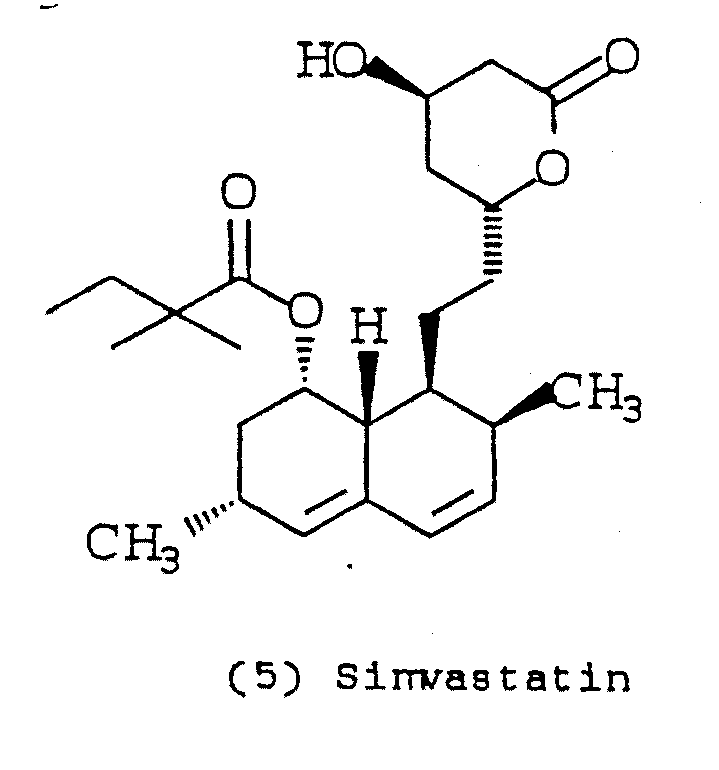
lovastatin has a 2-methylbutyryloxy chain at the 8'-position and simvastatin has a 2,2-dimethylbutyryloxy side chain.
Although simvastatin has been synthesized from lovastatin, it has been difficult to separate and purify simvastatin from a mixture of simvastatin and lovastatin. The similarity in structure between the two compounds (the two compounds differ by only one methyl group) makes high pressure liquid chromatography (HPLC) separation difficult because the
compounds have such similar retention times. One methodology used to isolate simvastatin from a
mixture of simvastatin and lovastatin is to convert the unreacted lovastatin to the triol acid or the diol lactone using base hydrolysis with, for example, sodium hydroxide (NaOH) or lithium hydroxide (LiOH). However, this base hydrolysis hydrolyzes only a percentage of the lovastatin, leaving unreacted lovastatin as a contaminant of the final simvastatin
product. An additional problem with the base
hydrolysis is partial hydrolysis of the simvastatin, thus reducing the yield of the desired simvastatin product. The present invention provides for a process of isolating simvastatin from mixtures of simvastatin and lovastatin in greater purity and without concomitant yield losses.
Komagata et al., J. Antibiotics, 39, 1574-77 (1986), describes enzymatic hydrolytic conversion of compactin (ML-236B) to the 8-hydroxy analog (ML-236A) in which the same side chain is removed as in the present invention. Of 1600 fungal strains
investigated, 59 were found to be effective in catalyzing the hydrolytic reaction, and Emericella unguis showed the most potent activity.
Endo, published Japanese Pat. Appln. 85-176595 (1985) describes the same conversion as Komagata et al. above, but additionally includes conversion of "monacolin K" (which is lovastatin) to "monacolin J", (which is the triol acid in the present invention). Especially useful are said to be the molds Mortierella isabellina, Emericella unguis, Diheterospora chlamydosporia, Humicola fuscoatra, Dichotomomyces cejpii, Neocosmospora africana,
Xylogoae sphaerospora, Torulomyces ragena, and
Thielavia fimeti.
European Patent Publication EPO 486 153 teaches that Clonostachys compactiuscula ATCC 38009 is capable of converting lovastatin acid to triol acid. This same strain has also been redeposited with the American Type Culture Collection as ATCC 74178.
Lovastatin can be converted to a more active HMG-CoA reductase inhibitor by C-methylation of the natural 2(S)-methylbutyryloxy side chain to obtain simvastatin. C-methylation may be accomplished by any known process amenable to the functionalities of the molecule.
One process for direct C-methylation of the 2(S)-methylbutyryloxy side chain is described in U.S. Patent No. 4,582,915. This process is detailed in Scheme I and in the description which follows.
SCHEME I
wherein: M is an alkali metal salt, preferably potassium;X is halo, such as chloro, bromo or iodo,
preferably bromo or iodo;
M1 + is a cation derived from lithium, sodium or potassium, preferably lithium; and
R1 and R2 are
1) independently C1-3alkyl, or
2) R1 and R2 joined together form a 5- or
6-membered heterocycle such as pyrrolidine or piperidine with the nitrogen to which they are attached, preferably pyrrolidine.
In the process of forming simvastatin by the direct methylation of lovastatin, the lovastatin lactone compound is first converted to an alkali metal salt, preferably a potassium salt of the dihydroxycarboxylate. Although any conceivable method for preparing a dry salt would suffice, it is convenient to add a substantially stoichiometric amount of aqueous potassium hydroxide to a solution of the lactone starting material in a hydrocarbon solvent such as benzene, toluene or cyclohexane containing a small amount of a C1-3 alkanol,
preferably isopropanol, ethanol or methanol, or alternatively in tetrahydrofuran (THF) with or without added alkanol, stirring for a few minutes to about an hour and finally concentrating to dryness in vacuo. The residue is subjected to rigorous drying such as by azeotropic distillation with cyclohexane, toluene or dry tetrahydrofuran, preferably extremely dry (less than 0.08 mg H2O/mL) tetrahydrofuran.
The dry alkali metal salt is dissolved in an ethereal solvent such as tetrahydrofuran, diethyl ether, 1,2-dimethoxyethane, cooled to about -80ºC to -25ºC and treated with an excess of a strong base such as an alkali metal amide, wherein the alkali metal is lithium, sodium or potassium, preferably lithium, and the amide is diethylamide, pyrrolidide, dimethylamide or diisopropyl amide in an ethereal
solvent in a dry, inert environment. After about 2 to 8 hours, preferably about two hours at -80° to -25ºC, preferably -35° to -30°C, a methyl halide, such as methyl bromide, methyl chloride or methyl iodide, preferably methyl bromide or methyl iodide, is added to the mixture while maintaining the low temperature. Treatment with the strong base and methyl halide as described can be repeated if
appreciable amounts of starting material remain.
After 0.5 to about 3 hours following final addition of methyl halide, the reaction mixture is quenched by adding to it excess water.
Following this direct methylation, attempts to convert unreacted lovastatin to the triol acid or the diol lactone for final product purification purposes were made using NaOH or LiOH. However, this base hydrolysis hydrolyzed only a small percentage of the lovastatin. Thus, unreacted lovastatin remained as a contaminant of the final simvastatin product. Furthermore, the base hydrolysis also hydrolyzed simvastatin, thus reducing yields of the desired simvastatin product. Following hydrolysis, the open ring acid form of simvastatin or a salt form thereof was then converted to the lactone by either heat or acid-catalyzed lactonization, and separated and purified by crystallization.
DETAILED DESCRIPTION OF THE INVENTION
The present invention is concerned with the purification and isolation of simvastatin from mixtures of simvastatin and lovastatin in high purity and yield employing a fungus or bacterium capable of
selectively hydrolyzing the lovastatin
2-methylbutyryloxy side chain to 6(R)-[2-8(S)-hydroxy-2(S),6(R)-dimethyl-1',2',6',7',8',8a'(R)-hexahydronaphthyl)ethyl)-4(R)-hydrόxy-3,4,5,6-tetrahydro-2H-pyran-2-one, the triol acid or the
corresponding diol lactone. The triol acid or diol lactone is easily separable from the simvastatin (or simvastatin acid) by conventional means such as crystallization, high pressure liquid chromatography or other chromatographic methods. The present invention is particularly useful in removing
unreacted lovastatin from simvastatin in the
synthesis of simvastatin from lovastatin.
The process of the present invention may be used to separate mixtures of simvastatin and
lovastatin either in their lactone forms or in their acid forms. Since the acid forms of lovastatin and simvastatin are more soluble in aqueous systems than the lactone form, the use of the acid form is
preferred.
Typically the lovastatin and simvastatin will be employed in the salt form. Unless otherwise specified, the terms "acid", "open ring acid" and "acid form", when applied to the starting materials, intermediates and final products of the present invention include any suitable salt form thereof as well. Any salt which permits good solubility and which will not interfere with the other conditions encountered in carrying out the particular reaction is permissible. For example, the alkali metal salts, such as lithium, sodium and potassium; alkaline earth metal salts, such as calcium or magnesium; or salts
with other metals such as aluminum, iron, zinc, copper, nickel or cobalt; amino acid salts formed from basic amino acids, such as arginine, lysine,α,β-diaminobutyric acid and ornithihe; amine salts such as t-octylamine, dibenzylamine, ethylenediamine, morpholine, and tris(hydroxymethyl)aminomethane; or the ammonium salt may be employed. The alkali metal salts (Li, Na, and K) and the ammonium salt forms of the lovastatin acid may be employed and are
preferred. Especially preferred are the potassium and ammonium salt forms.
For convenience, the structural formulas for lovastatin acid, the triol acid, its lactone form, and simvastatin- are set out below as Formulas 1, 2 , 3, and 4 respectively:
wherein :
M3 is selected from the group consisting of
a) H ,
b) an alkali metal salt such as Li, Na or K,
c) an alkaline earth metal salt such as Ca or Mg,
d) a salt with other metals such as Al, Fe, Zn, Cu, Ni or Co,
e) an amino acid salt formed from a basic amino acid such as arginine, lysine, α,ß-diaminobutyric acid, or ornithine, f) an amine salt such as t-octylamine, dibenzylamine, ethylenediamine, morpholine, or tris(hydroxy-methyl) aminomathane and
g) the ammonium salt.
As already explained, for reasons of solubility, it has been found most desirable to use
mixtures of lovastatin and simvastatin in their open ring of acid forms, and ror this purpose the
ammonium, potassium, sodium and lithium salt forms of lovastatin acid are preferred.
Fungi which are useful in the process of the present invention are those fungi which selectively cleave the lovastin 2-methylbutyryloxy side chain in the presence of simvastatin. Fungi of genera
Clonostachys, Emericella, Diheterospora, Humicola, Dichotomonyces, Neocosmospora, Scopulariopsis,
Xylogone, Torulomyces and Thievela are capable of hydrolyzing the lovastatin side chain. Particularly useful fungi include: Clonostachys compactiuscula, Monascus ruber, Mortierella isabellina, Emericella unguis, Diheterospora chlamydosporia, Humicola fuscoatra, Dechotomomyces cejpii, Neocosmospora africana, Xylogpne sphaerospora. Torulomyces ragena, Thielavia fimeti, Aspergillus unguis, Mucor
circinelloides, Fusarium solani, Penicillium
chrysogenum, Aspergillus clavatυs, Scopulariopsis communis, Gilmaniella humicola, Mucor bainieri,
Tricharυs spiralis, and Chaetomium cochliodes.
Especially preferred are the fungi Clonostachys Compactiugcula, Humicola fuscoatra,
Neocosmospora africana, Scopulariopsis communis, and Xylogone sphaerospora. The most preferred strain is Clonostachys compactiuscula (ATCC 74178 or ATCC
38009).
Bacteria which are useful in the process of the present invention are those bacteria which selectively cleave the lovastin 2-methylbutyryloxy side chain in the presence of simvastatin.
Actinomycetes of genera Streptomyces, Planomonospora and Kibdelosporangium are capable of hydrolyzing the lovastatin side chain. Particularly useful bacteria include: Streptomyces albogriscolus, Streptomyces paucisporogenes, Streptomyces hygroscopius,
Streptomyces viridochromogenes, Planomonospora parontogpora, and Kibdelosporangium aridum.
The mixture pf lovastatin and simvastatin or the acids thereof may be treated with the microbe itself, or mutants thereof, or a cell-free extract derived therefrom, or a hydrolase purified from the cell free extract (or the spent, cell-free broth or cutures medium in which the fungus or bacterium was grown.
The term "mutant" refers to an organism in which some gene (or its regulatory region of DNA) within its genome is modified, leaving the gene or genes responsible for the organism's ability to hydrolyze lovastatin acid to the triol acid
functional and heritable. Mutants within the scope of this invention have essentially the same
characteristics as those of the parent strain, and are capable of hydrolyzing the lovastatin
2-methylbutyryloxy side chain.
The enzyme produced by the microbial culture or a mutant thereof may be brought into contact with the mixture of simvastatin and lovastatin in any number of ways, all of which will be apparent to the person of ordinary skill in this art. All of these are within the definition of the term "treating" as defined in this invention. For example, whole fermentation broth may be used, and in accordance with this procedure, a fermentation culture of the
microbe is produced to which the mixture of
simvastatin and lovastatin is singly added and the pure simvastatin product recovered.
A variation of this whole broth procedure is one in which a fermentation culture of the microbe as described above is produced, but a small
concentration (0.5 to 2.5 g/L, preferably 1.0 to 2.0 g/L) of lovastatin acid is added for the purpose of inducing hydrolytic activity. The cell mass is then harvested by centrifugation or filtration and
recovered as pellets or as a hyphal mat which can be used immediately or frozen for later use. The pellets or mat may then be added directly to the mixture of simvastatin and lovastatin resulting from conversion of lovastatin to simvastatin via
methylation. Alternatively, the mixture of
lovastatin and simvastatin may be partially purified and then brought into contact with the frozen pellets of the microbial culture described above.
It is not necessary that the whole cells of the fungus be alive. It is also possible to employ dead cells, e.g., those which have been acetone-dried.
As an alternative to whole cells, it is possible to use crude homogenates derived from these whole cell cultures. It is also possible to isolate the hydrolytic enzyme itself from the crude
homogenates and employ the substantially purified hydrolytic enzyme.
When the microorganism excretes the hydrolytic enzyme into the fermentation/culture medium, it is possible to employ the isolated
enzyme.
The process of bringing the hydrolytic enzyme into contact with the mixture of simvastatin and lovastatin starting material may be carried out batch-wise, or it may be carried out in a continuous manner. The contacting of these reactants themselves may be modified in various ways in keeping with advances in process technology. Thus, an immobilized enzyme column may be employed for the hydrolytic enzyme with the mixture of simvastatin and lovastatin being passed through the column. Another example of such process technology is that relating to membrane reactors. The preferred methods of contacting the reactants is by way of the immobilized enzyme column described above or by using a purified enzyme
preparation.
Working examples set out further below describe the method currently employed to demonstrate the enzymatic hydrolysis of contaminating lovastatin to triol acid in the presence of simvastatin to simvastatin of high purity. However, the methods in those working examples would not necessarily be suggestive of methods which would be utilized for commercial production.
The use of the process of this invention to separate and purify simvastatin from mixtures of simvastatin and lovastatin is shown in Scheme II.
The mixture of the simvastatin and lovastatin lactones is converted to a mixture of the corresponding open-ring acids, preferably by
treatment with an essentially stoichiometric aqueous alkali hydroxide such as potassium hydroxide or sodium hydroxide in a hydrocarbon solvent such as
benzene, toluene or cyclohexane containing a small amount of a C1-3 alkanol, pveferably isopropanol, ethanol or methanol, stirring for a few minutes to about an hour. The substrate is then extracted into an aqueous medium, such as TRIS (Tris(hydroxymethyl)-aminomethane), glycine, TES (N-tris[Hydroxymethyl)-methylamino]-2-hydroxy-propane-sulfonic acid), sodium phosphate, MOPSO (3-[N-Morpholinb]-2-hydroxypropanesulfonic acid), BIS-TRIS PROPANE (1,3-bis[tris-(Hydroxymethyl)methylamino]propane), BES (N,N-bis-[2-hydroxyethyl]-2-aminoethanesulfonic acid), MOPS (3-[N-Morpholino]-propanesulfonic acid), HEPES
(N-[2-Hydroxyethyl]-piperazine-N'-[2-ethanesulfonic acid]), DIPSO (3-[N,N-bis(2-Hydroxyethyl)amino]-2-hydroxypropane- sulfonic acid), TAPSO (3-[N-tris-(Hydroxymethyl)-methylamino]-2-hydroxypropanesulfonic acid), HEPPSO (N-[2-Hydroxyethyl]piperazine-N'-[2-hydroxypropane- sulfonic acid]), POPSO (Piperazine-N,N'-bis[2-hydroxypropane sulfonic acid]), EPPS
(N-[2-Hydroxyethyl]-piperazine-N'-[3-propanesulfonic acid], TEA (N-tris[Hydroxymethyl]methyl-2-aminoethane sulfonic acid), TRICINE (N-tris[Hydroxymethyl]-methyl-glycine), BICINE (N,N-bis[2-Hydroxyethyl]-glycine), TAPS (N-tris[Hydroxymethyl]methyl-3-aminopropane sulfonic acid), AMPSO (3-[(1,1-Dimethyl-2-hydroxyethyl)amine]-2-hydroxypropanesulfonic acid) or CHES (2-[N-Cyclohexylamino]-2-hydroxypropanesulfonic acid) buffer, pH 7-10, 25 mM to 1 M; distilled water, or one of the aqueous media listed above supplemented with up to 20% (vol./vol.) of a water-miscible solvent such as methanol, ethanol, propanol, butanol, or tetrahydrofuran. Preferred are TRIS, glycine, TES
and sodium phosphate buffers, pH 7.5-9.5, 25 mM to 75 mM containing 12 % methanol. The dissolved or suspended substrate is then treated with the microbe or a mutant thereof or a cell-free extract derived therefrom or a hydrolase derived from the microbe or the substrate is converted to the ammonium salt and treated with the microbe or a mutant thereof or a cell-free extract derived therefrom or a hydrolase derived therefrom. The aqueous system may be added prior to or simultaneous with the addition of the selected microbe or acceptable mutants thereof, or the cell-free extract derived therefrom or the hydrolase.
Lactonization by either acid-catalyzed or heat-catalyzed methods, for example, by stirring in isopropylacetate (IPAC) containing 7 mM methane sulfonic acid for two hours at room temperature follows. The resulting simvastatin lactone and diol lactone are separable by high pressure liquid
chromatography (HPLC) or by crystallization to obtain substantially pure simvastatin.
Reversed-phase HPLC is conducted using as a mobile phase an organic-aqueous mixture with the aqueous component being 0.01 to 1.07. phosphoric acid or trifluoroacetic acid or other suitable acid and suitable organic components include acetonitrile, methanol and ethanol.
Simvastatin may also be isolated from the triol acid/diol lactone and purified by
crystallization from ethyl acetate, isopropyl acetate and methanol.
SCHEME II
The enzymatic hydrolysis of lovastatin acid to the triol acid can also be employed in the process for making simvastatin by direct methylation of lovastatin. This overall process is shown in Scheme III.
In the process of forming simvastatin by the direct methylation of lovastatin, the lovastatin lactone compound is first converted to an alkali
metal salt, preferably potassium salt of the
dihydroxycarboxylate. Although any conceivable method of preparing a dry salt would suffice, it is convenient to add a substantially stoichiometric amount of aqueous potassium hydroxide to a solution of the lactone starting material in a hydrocarbon solvent such as benzene, toluene or cyclohexane containing a small amount of a C1-3alkanol,
preferably isopropanol, ethanol or methanol, or alternatively employing tetrahydrofuran (THF), with or without the added alkanol, stirring for a few minutes to about an hour and finally concentrating to dryness in vacuo. The residue is subjected to rigorous water removal such as by azeotropic
distillation with cyclohexane, toluene, or dry tetrahydrofuran, preferably extremely dry (less than 0.08 mg H2O/mL) tetrahydrofuran.
The dry alkali metal salt is dissolved in an ethereal solvent such as tetrahydrofuran, diethyl ether, 1,2-dimethoxyethane or the like, cooled to about -80ºC to -25ºC, preferably -35°C to -30°C and treated with an excess of a strong base such as an alkali metal amide, wherein the alkali metal is lithium, sodium or potassium, preferably lithium, and the amide is diethylamide, pyrrolidide, dimethylamide or diisopropyl amide in an etheral solvent in a dry inert environment. After about 2 to 8 hours, preferably about two hours at -80° to -25ºC,
preferably -35° to -30ºC, a methylhalide, such as methyl bromide, methyl chloride or methyl iodide, preferably methyl bromide or methyl iodide, is added to the mixture while maintaining the low
temperature. Treatment with the strong base and
SCHEME III
methyl halide as described can be repeated if
appreciable amounts of starting material remain.
After 0.5 to about 3 hours following final additionof methyl halide, the reaction mixture is quenched by adding to it excess water.
The mixture of lovastatin acid salt and simvastatin acid salt is then, preferably, converted to the corresponding ammonium salt by ammonium hydroxide-methanol in ethyl acetate and following isolation of the ammonium salt (preferably by
crystallization) and resuspension in an aqueous
medium, treating with the selected microbe, or a mutant thereof or a hydrolase derived therefrom.
Alternatively the hydrolytic enzyme is added directly to the mixture of lovastatin salt and simvastatin salt following the removal of residual organics by distillation.
The resulting mixture of simvastatin acid and triol acid may be converted to the corresponding mixture of lactones by a suitable method, for
example, heat-catalyzed or acid-catalyzed
lactonization. Simvastatin is separable from the resulting mixture of simvastatin and diol lactone by HPLC or crystallization. Alternatively, the
simvastatin acid may be separated from the triol acid by HPLC or crystallization, followed by conversion of the pure simvastatin acid to simvastatin lactone. If the simvastatin acid is to be isolated and purified by crystallization, it is preferred to convert the simvastatin acid to the ammonium salt prior to lactonization.
The present invention is also directed to mutants of the particular strain of the microbial culture: Clonostachys compactiuscula (ATCC 38009 and ATCC 74178), Monascus ruber (FERM-P. No. 4822),
Mortierella isabellina (IFO 7844, ATCC 42613, ATCC 36670, ATCC 38063, or ATCC 44853), Emericella unguis (IFO 8087, ATCC 10073, ATCC 12063, ATCC 13431, or ATCC 16812), Diheterospora chlamydosporia (IFO 9249, ATCC 16449, ATCC 18956, ATCC 20537), Humicola
fuscoatra (IFO 9530, ATCC 12774, ATCC 52073, ATCC 62175), Dechotomomyces ceipii (IFO 9929, ATCC 22149, ATCC 42284), Neocosmospora africana (IFO 7590, ATCC
24342), Xylogone sphaerospora (IFO 9516, ATCC 42027), Torulomyces ragena (IFO, 30008), Thielavia fimeti (IFO 30419), Aspergillus unguis (MF 1416), Mucor
circinelloides (ATCC 1207a), Fusarium solani (ATCC 12826), Penicillium chrysogenum (ATCC 10002),
Aspergillus clavatυs (ATCC 1007), Scopulariopsis communis (MF 3769), Gilmaniella humicola (ATCC
16013), Mucor bainieri (ATCC 42642), Tricharus spiralis (MF 5295), Chaetomium cochliodes (ATCC
10195), Streptomyces albogriscolυs (NRRL 5748),
Streptomyces paυcisporogenes (ATCC 25482),
Streptomyces hygroscopius (ATCC 21722), Streptomyces viridochromogenes (ATCC 21724), Planomonospora parontospora (ATCC 23864), and Kibdelosporangium aridum (NRRL 12647) which are capable of converting lovastatin acid to triol acid. There are techniques well known in the fermentation art for improving the yields of desired products produced by various strains of microorganisms. For example, a given producing strain may be irradiated or exposed to other stimuli known to greatly increase the ongoing mutation of the genetic material of the microorganism. By using a sensitive screen, it is then possible to select from the many mutations thus produced only those which result in an enhanced production of the desired product. In this way, it is usually possible to continually improve the output of a producing strain through its various selected descendants. A biologically pure culture of a mutant is a culture that consists substantially of one strain of mutant. With regard to the present
invention, similar improvements in output of
lovastatin acid hydrolase by selected mutants of the
fungi or actinomycetes may be achieved. A
satisfactory screen for this purpose is the use of high performance liquid chromatography (HPLC) which can detect the enzymatic cleavage products at very low concentrations, thus clearly establishing the lovastatin has been converted to triol acid by any particular mutant in question.
Culture Medium
Fermentation of the microbes is carried out in aqueous media such as those employed for the production of other fermentation products. Such media contain sources of carbon, nitrogen and
inorganic salts assimilable by the microorganism.
In general, carbohydrates such as sugars, for example, lactose, glucose, fructose, maltose, mannose, sucrose, xylose, mannitol and the like and starches such as grains, for example, oats, ryes, cornstarch, millet, corn meal and the like can be used either alone or in combination as sources of assimilable carbon in the nutrient medium. The exact quantity of the carbohydrate source or sources utilized in the medium depends in part upon the other ingredients of the medium but, in general, the amount of carbohydrate usually varies between about 1% and 6% by weight of the medium. These carbon sources can be used individually, or several such carbon sources may be combined in the medium. In general many proteinaceous materials may be used as nitrogen sources in the fermentation process. Suitable nitrogen sources include for example, yeast
hydrolysates, primary yeast, soybean meal, cottonseed flour, hydrolysates of casein, corn steep liquor,
distiller's solubles or tomato paste and the like. The sources of nitrogen either alone or in
combination, are used in amounts ranging from about 0.2% to 6% by weight of the aqueous medium.
Among the nutrient inorganic salts which can be incorporated in the culture media are the
customary salts capable of yielding sodium,
potassium, ammonium, calcium, phosphate, sulfate, chloride, carbonate, and like ions. Also included are trace metals such as cobalt, manganese, iron and magnesium. In addition, if necessary, a defoaming agent such as polyethylene glycol or silicone may be added, especially if the culture medium foams
excessively.
It should be noted that the media described in the Examples are merely illustrative of the wide variety of media which may be employed, and are not intended to be limitative. Specifically, the carbon sources used in the culture media include dextrose, dextrin, oat flour, oatmeal, molasses, citrate, soybean oil, glycerol, malt extract, cod liver oil, starch, ethanol, figs, sodium ascorbate and lard oil. Included as nitrogen sources were peptonized milk, autolyzed yeast, yeast RNA, tomato paste, casein, primary yeast, peanut meal, distillers solubles, corn steep liquor, soybean meal, corn meal, NZ amine, bean extract, aspargine, cottonseed meal and ammonium sulfate. The major ionic components are CaCO3, KH2PO4, MgSO4●7H2O and NaCl and small amounts of CoCl2●6H2O and traces of Fe, Mn, Mo, B, Co and Cu were also present.
Lactonization
Treatment of a mixture of simvastatin acid lovastatin acid with the microbial cultures capable of hydrolyzing the lovastatin 2-methylbutyryloxy side chain, or mutants thereof, or a cell-free extract derived therefrom, or a hydrolase derived therefrom, in accordance with the process of the present
invention provides the easily separable mixture of simvastatin acid and triol acid. If the lactone form of simvastatin is desired, the product mixture may be lactonized and separated, the diol lactone separated from the simvastatin lactone, alternatively, the simvastatin acid may be separated from the triol acid, followed by lactonization of simvastatin acid to simvastatin. Lactonization of triol acid is carried out using standard procedures, i.e., either heat or acid catalyzed lactonization. Procedures for acid-catalyzed lactonization of lovastatin acid-related compounds are known and described in U.S. Patent 4,916,239. For simvastatin acid and the triol acid, lactonization has been carried out by stirring in isopropyl acetate containing 7 mM methane sulfonic acid for 2 hours at room temperature.
EXAMPLE 1
Biotransformation of lovastatin acid to triol acid by whole cells of Clonostachys compactiuscula
Clonostachys compactiuscula ATCC 38009 was grown in a 2 L airlift fermentor with 1.8 L working volume in medium EN (glucose 1%; peptone 0.2%; beef extract 0.1%; yeast extract 0.1%; and corn steep liquor 0.3%), at 29°C, at an aeration rate of 1.25vvm, for 48-72 hrs. Lovastatin ammonium salt was
added (0.5 g/L final concentration) to induce hydrolytic activity. The fermentation was harvested 24-72 hrs. after addition of the lovastatin ammonium salt by straining through a sieve and washing the pellets with buffer (20 mM Tris, pH 8.5). The cell pellets were frozen until ready to use.
For the biotransformation, Clonostachys compactiuscula pellets (17 g wet weight) from an airlift fermentation were contacted with 20 mL crude lovastatin acid (@20 g/L) in carbonate buffer harvested from an Aspergillus terreus fermentation. The biotransformation was carried out in a 250 mL Erlenmeyer flask at 27°C and 160 rpm. After 17 hrs. approximately 60% of the lovastatin acid was
converted to triol acid.
In an additional experiment, Clonostachys compactiuscula pellets from an airlift fermentation (5 g wet weight) were contacted with 10 mL crude lovastatin acid (3.5 g/L) extracted from an
Aspergillus terreus fermentation by methanol. The final concentration of methanol in the biotransformation mixture was 25%. The bioreaction was carried out in a 250 mL Erlenmeyer flask at 27ºC and 160 rpm. After 2 hrs. the biotransformation
employing Clonostachys compactiuscula converted nearly 100% of the lovastatin acid to triol acid, as measured by thin layer chromatography.
EXAMPLE 2
Biotransformation of lovastatin acid to triol acid by crude homogenate of Clonostachys compactiuscula
Clonostachys compactiuscula ATCC 38009 was grown in 250 mL shake flasks containing 12 mL of
medium EN at 29º C for 3 days. Lovastatin ammonium salt was added to give a concentration of 2.5 g/L and fermentation was continued for 2 additional days. To prepare the crude homogenate, the culture was
harvested by centrifugation at 3000 rpm for 10 minutes, after which it was washed with 50 mM of N-tris(hydroxymethyl)methyl-2-aminoethanesulfonic acid (TES) buffer, pH 7.7. The culture medium was again centrifuged and the cell mass was chilled on ice and then subjected to grinding in a mortar and pestle containing glass fragments and powdered dry ice. Ground homogenate equivalent to the contents of 1 shake flask was resuspended in 2.0 mL of 50 mM TES buffer and centrifuged at 6000 rpm for 10 minutes to remove cell debris and glass fragments. The
supernatant was used as the source of crude
homogenate with a protein concentration of
approximately 0.5 mg/mL.
In order to carry out the biotransformation, one volume of crude homogenate was combined with an equal volume of lovastatin acid ammonium salt (5 g/L), and the mixture was incubated at 29° C. Using this method, 80-907. conversion of lovastatin acid to triol acid was observed within 2 hrs.
EXAMPLE 3
Purification of the lovastatin hydrolyzing enzyme from Clonastachys compactiuscula cells
A hydrolytic enzyme which carries out the biotransformation of lovastatin acid to triol acid was purified by Fast Protein Liquid Chromatography (FPLC*) employing a MONO Q® anion exchange column to
near homogeneity from homogenates of Clonostachys compactiuscula employing the procedures described below.
The supernatant from the 6,000 rpm centrifugation as in Example 2 above, but where 50 mM of tris(hydroxymethyl)aminomethane (TRIS) buffer (pH 7.8) is substituted for 50 mM TES buffer, was
centrifuged at 15,000 rpm for 20 minutes and the resulting supernatant filtered through a 0.45 mm filter. Batches (10 mL). of filtrate containing
0.3-0.5 mg/mL protein were then applied at a rate of 1.0-2.0 mL/minute to a Pharmacia MONO Q® (HR 5/5) anion exchange column connected to a Pharmacia Fast Protein Liquid Chromatography (FPLC) system.
After allowing binding of the anionic proteins to the column matrix, the hydrolase was specifically eluted by the application of a linear gradient of sodium chloride (0-500mM) in 20 mM TRIS, pH 7.8. Eluted protein was collected in 1 mL
fractions and assayed either using lovastatin
ammonium salt (in which case percent hydrolysis was estimated by TLC (thin-layer chromatography) and densitometry or HPLC), or a colorimetxic substrate (ortho-nitrophenyl butyrate, o-NPB) towards which the enzyme had been shown to have hydrolytic activity. When the latter substrate was used, the hydrolytic reaction was monitored spectrophotometrically at 410 nm essentially as described by Lawrence, R.C. et al. in J. Gen. Microbiol. (1967) 48, 401-418. Both assay methods revealed that the hydrolase was eluted when the NaCl concentration approached 300 mM.
Sodium dodecyl sulfate-polyacrylamide (SDS) gel electrophoresis revealed the peak lovastatin acid
hydrolase-containing fractions to contain a prominent band of molecular weight approximately 45,00C Da.
Using the purified enzyme preparation, the biotransformation was carried out in accordance with the procedures described above in Examples 1, 2, 4 and 6, and an estimate was made of the hydrolase's Km and specific activity with lovastatin ammonium salt as substrate. The value for Km obtained was 4.14 mM and under saturating substrate conditions the enzyme was found to have a specific activity of 0.04 mmol lovastatin ammonium salt hydrolyzed/mg protein per minute.
EXAMPLE 4
Biotransformation of lovastatin acid to triol acid by purified hydrolase from Clonostachys compactiuscula
A hydrolytic enzyme which carries out the biotransformation of lovastatin acid to triol acid was purified by Fast Protein Liquid Chromatography (FPLC*) employing a MONO Q® anion exchange column to near homogeneity from homogenates of Clonostachys compactiuscula employing the procedures described below.
A supernatant from the 6,000 rpm centrifugation as in Example 2 above, but where 20 mM of tris(hydroxymethyl)aminomethane (TRIS) buffer is substituted for 50 mM TES buffer, was centrifuged at 15,000 rpm and the resulting supernatant filtered through a 0.45 micrometei filter. Batches (10 mL) of filtrate containing 0.3-0.5 mg/mL protein were then applied to a Pharmacia MONO Q® anion exchange column connected to a Pharmacia Fast Protein Liquid
Chromatography (FPLC) system.
After allowing binding of the anionic proteins to the column matrix, the hydrolase was specifically eluted by the application of a linear gradient of sodium chloride (0-500 mM). Eluted protein was collected in 1 mL fractions and assayed either using lovastatin ammonium salt (in which case percent hydrolysis was estimated by TLC and
densitometry or HPLC), or a colorimetric substrate (ortho-nitrophenyl butyrate o-NPB) towards which the enzyme had been shown to have hydrolytic activity. When the latter substrate was used, the hydrolytic reaction was monitored spectrophotometrically at 410, nm essentially as described by Lawrence, R.C. et al. in J. Gen. Microbiol. (1967) 48, 401-418. Both assay methods revealed that the hydrolase was eluted when the NaCl concentration approached 300 mM.
Sodium dodecyl sulfate-polyacrylamide (SDS) gel electrophoresis revealed the peak lovastatin acid hydrolase-containing fractions to contain a prominant band of molecular weight approximately 45,000 Da.
Using the purified enzyme preparation, the biotransformation was carried out in accordance with the procedures described above in Examples 1 and 2, and an estimate was made of the hydrolase's Km and specific activity with lovastatin ammonium salt as substrate. The value for Km obtained was 4.14 mM and under saturating substrate conditions the enzyme was found to have a specific activity of 110 umol
lovastatin ammonium sal+/mg protein per hour.
EXAMPLE 5
Biotransformation of lovastatin ammonium salt in the presence of excess simvastatin ammonium salt.
Forty-five grams of frozen Clonostachys compatiuscula (ATCC 38009) cells, which had been grown in medium EN as detailed in Example 2 (and washed with 50 mM Tris buffer, pH 7.8, prior to freezing) was homogenized with glass fragments and dry ice using a mortar and pestle. The resulting homogenized, frozen powder was transferred to a suitable tube and the material remaining in the mortar washed into the same tube using a minimal volume of 50 mM Tris, pH 7.8. The mixture was then allowed to thaw and then centrifuged at 6000 rpm for 10 minutes to remove large cell debris and glass.
The 6000 rpm supernatant was used as a crude source of hydrolase and 0.8 mL was mixed with 0.2 mL methanol and 1.0 mL of a solution of simvastatin (18.6 mM and lovastatin (1.4 mM) ammonium salts in 50 MM Tris, pH 7.8.) The reaction mixture was incubated at 29 C and sampled after lh, 2h, and 17h by removing 0.1 mL and diluting with 0.9 mL methanol. The samples were then subjected to analysis by HPLC using a Whatman C-8 column as stationary phase and a 60:40 mixture of acetonitrile: 0.5% phosphoric acid as mobile phase; under these conditions the respective retention times for simvastatin, lovastatin and triol ammonium salts are 4.4 min,, 3.8 min., and 2.5 min. After 17h the area percent of the lovastatin peak had been reduced from 23.2% to 0.7%, representing a greater than 997. conversion. Greater than 967. of the initial simvastatin ammonium salt remained intact over this same contact period.
EXAMPLE 6
Biotransformation of residual lovastatin acid to triol acid following the synthesis of simvastatin acid from lovastatin acid by direct methylation.
Step 1: Preparation of Lovastatin Potassium Salt
A solution of lovastatin (99% pure; 25 g; 60.57 mmol) in 325 mL tetrahydrofuran (THF) was prepared under nitrogen then cooled to 5ºC. An aqueous solution (6.1 mL) of 10.01 M potassium hydroxide was added over 15 min then the mixture was warmed to 25ºC and aged, with stirring, until
complete (>99%) conversion to the potassium salt (by HPLC analysis) had occurred.
Step 2: Preparation of Simvastatin Potassium Salt
The lovastatin potassium salt solution prepared in Step 1 was heated to reflux, distilling a total of 500-700 mL THF through a 10 in. Vigreaux column while maintaining a minimum pot volume of 215 mL with sieve-dried THF. The water content of the lovastatin potassium salt solution was thus reduced to a level of <0.1 mg/mL. This solution was then diluted with 150 mL of sieve-dried THF (water content <0.1 mg water/mL) to give a total volume of 365 mL. Sieve-dried pyrrolidine (5.81 g; 81.7 mmol; water content <0.2 mg/mL) was added as a single batch and the reaction cooled in a dry ice/acetone bath to -78ºC. Next, 117 mL of 1.6 M n-butyllithium in hexane was added over a one hour period, sub-surface, while maintaining rapid agitation and an internal temperature below -70ºC.
The lovastatin potassium salt solution, now containing the lithium pyrrolidide intermediate, was warmed to -35ºC using a dry ice-acetonitrile bath and aged for 2 hours. After recooling to -45ºC, 13.32 g of sieve-dried methyl iodide (93.0 mmol; density 2.89 g/mL) was added in one portion and the mixture aged at -30ºC (internal temperature following methyl iodide addition) for 30 minutes. The mixture was quenched with 200 mL water and the phases allowed to separate in a separating funnel. The lower, aqueous, layer was diluted to a volume of 1250 mL by the further addition of water and then cooled to below 10ºC. The pH was adjusted to 6 using 6 M
hydrochloric acid then 250 mL ethyl acetate was added and the pH further adjusted to 2.0 (again using
HCl). Phase separation was again allowed to occur then the aqueous layer was re-extracted with 175 mL cold (5-10ºC) ethyl acetate. The two organic (ethyl acetate) layers were pooled and then washed with 150 mL water before drying the final organic layer over sodium sulfate (to <10 mg/mL water) and filtering. Next, 112.3 mL methanol was charged into the (425 mL) dry, filtered mixture at 25ºC and then 1.3 mL of a methanol: aqueous ammonium hydroxide (3:1) solution was added over a 5 minute period. The mixture was seeded with simvastatin ammonium salt (SAS) and aged for 10 minutes then a further 35.9 mL of the
methanol:aqueous ammonium hydroxide (3:1) solution was added dropwise over 1 hour. The mixture was then cooled to -10ºC over 2.5 hours and aged for an additional 1 hour. The product was filtered and washed with 25 mL cold (0ºC) methanol and the
resulting white crystals were dried in vacuo to give
simvastatin ammonium salt as white needles (87% pure SAS containing 10% residual lovastatin as the
ammonium salt).
Step 3: Biotransformation of residual lovastatin
acid (as the ammonium salt) to triol acid Clonostachys compactiuscula esterase was purified from 57 g mycelial cells which had been grown up in medium EN using the methods detailed in Examples 1 and 3. The use of a Pharmacia HR 10/10 MONO Q® column allowed the application of 85 mL of crude cell-free extract per purification run. In total 0.89 mg of purified esterase was obtained (in a volume of 10 mL) which was then concentrated to 0.175 mg protein/mL by ultrafiltration using a 10,000 molecular weight cut-off CENTRIPREP® device (AMICON®).
Samples of the esterase were then incubated with the simvastatin ammonium salt prepared by direct methylation of lovastatin; final concentrations of protein were 0.4, 4.0 and 40 microgram/mL and simvastatin concentrations used were 10, 35 and 50 mM. Other conditions which were varied were pH (7.8 and 9.5 were assessed) and methanol concentration (0, 10 and 20% [v/v, final concentration]). The reactions were buffered by the incision of either 100 mM TRIS (in the case of reactions carried out at pH 7.8) or 100 mM glycine (pH 9.0). Greater than 90% hydrolysis of residual lovastatin acid to triol acid was
obtained within 16 h under the following conditions:
Epzyme conc. Simvastatin conc. pH Methanol conc. (microgram/ml) (mM) (% v/v)
4.0 10 7.8 0
4.0 10 7.8 10
4.0 10 9.5 0
4.0 10 9.5 10
4.0 10 9.5 20
4.0 35 9.5 10
40.0 35 7.8 0
40.0 35 7.8 10
40.0 35 9.5 0
40.0 35 9.5 10
40.0 35 9.5 20
EXAMPLE 7
Biotransformation of residual lovastatin acid to triol acid following the synthesis of simvastatin acid from lovastatin acid by direct methylation.
Step 1: Preparation of Simvastatin Amminium Salt
Starting with 5 g lovastatin, the potassium salt solution in THF is prepared according to Example 6, Step 1. A solution of sieve-dried pyrrolidine (2.48 mL; 2.4 equivalents; 29.67 mmoL; <0.2 mg
water/ml) in 12.3 mL sieve-dried THF) is cooled to -20ºC in a dry ice/acetonitrile bath . Then a
solution of 1.6M butyllithium in hexane (18.2 mL;
2.35 equivalents) is added at such a rate as to keep the temperature below -10ºC. After the addition is complete the lithium pyrrolidide/THF solution is aged at -20ºC for 15 minutes. The dry solution of
lovastatin potassium salt in THF is cooled to -35ºC in a dry ice/acetonitrile cooling bath. The lithium pyrrolidide/THF solution at -20ºC is added to the rapidly agitated mixture at such a rate as to
maintain the internal temperature below -30°C at all times throughout the addition. The mixture is aged at -35°C for 2 hours then, following cooling to
-40°C, 1.16 mL (18.67 mmol; 1.5 equivalents) methyl iodide is added to the solution in a single batch which causes the internal temperature of the mixture to rise (to approximately -20ºC); the internal temperature is brought back to -30°C and aged for 1 hour, then warmed to -10°C and aged for 30 minutes.
The mixture is quenched with 40 mL water and the phases allowed to separate in a separating funnel. The lower, aqueous, layer is diluted to a volume of 250 mL by the further addition of water and then is cooled to below 10°C. The pH is adjusted to 6 using 6 M aqueous hydrochloric acid then 50 mL ethyl .
acetate is added and the pH further adjusted to 2.0 (again using HCl). Phase separation is again allowed to occur then the aqueous layer was re-extracted with 35 mL cold (5-10ºC) ethyl acetate. The two organic (ethyl acetate) layers are pooled and then washed with 30 mL water before drying the final organic layer over sodium sulfate and filtering. Next, 22.5 mL methanol is charged into the dry, filtered mixture at 25ºC and then 0.26 mL of a methanol:aqueous ammonium hydroxide (3:1) solution is added over 5 minutes. The mixture is seeded with simvastatin ammonium salt and aged for 10 minutes then a further 7.2 mL of the methanol/ammonium hydroxide is added dropwise over 1 hour. The mixture is then cooled to
-10°C over 2.5 hours and aged for an additional 1 hour. The product is filtered and washed with 5 mL cold (0ºC) methanol and the resulting white crystals are dried in vacuo to give simvastatin ammonium salt .
Step 2: Biotransformation of residual lovastatin
acid (as the ammonium salt) to triol acid
Biotransformation is conducted according to the procedures in Example 6, Step 3.
EXAMPLE 8
Lactonization of Simvastatin Ammonium Salt and
Crystallization and Isolation of Pure Simvastatin Lactone
Step 1: Lactpnization of Simvastatin Ammonium Salt
Distilled water (20 mL) glacial acetic acid (40 mL) and butylated hydroxyanisole (BHA, 50 mg) were charged to a 250 ML 3-neck round bottom flask under a nitrogen atmosphere. The batch temperature was adjusted to 20-25ºC and simvastatin ammonium salt (12.5 g, 27.56 mmoles) was added and agitated at
20-25ºC for 15 min. or until dissolved. Methane sulfonic acid (70%, 4.35 g, 30.8 mmoles, 1.118 equiv) was added and the mixture was aged at 20-25ºC for 2 hours until the lactonization reaction was more than 757. complete.
Percent conversion was determined by HPLC following the conditions in Preparation A. Percent conversion was calculated as follows: area %(Simvastatin Ammonium Salt) X 100% area %(Simvastatin Ammonium Salt + Simvastatin)
Step 2: Crystallization and Isolation of Pure
Simvastatin :
The batch was seeded with crude Simvastatin seed crystals (60 mg) and aged at 20-25ºC for 0.5 hour. Distilled water (22.5 mL) was added over 3 hours (0.13 mL/min.) and a second distilled water charge (35 mL was added over one hour (0.58
mL/min.). The batch was aged at 20-25ºC for one hour and then treated dropwise with 28 w/w% ammonium hydroxide (4.0 mL).
The batch was aged at 20-25°C for one hour and filtered to collect the Simvastatin crude
crystals. The Simvastatin crude wet cake was washed with 2:1) distilled water:acetic acid (50 mL), distilled water (50 mL) and 1:1 methanol: distilled water (50 mL). The product was dried overnight in vacuo with a nitrogen purge at 25-30ºC to give the Simvastatin crude as white needles (10.38 g HPLC assay 98 w/w%).
EXAMPLE 9
Crystallization and Isolation of Pure Simvastatin
Crude Simvastatin (10 g, 23,89 mmoles) and butylated hydroxyanisole (50 mg) were charged to a flask containing 126.4 mL degassed methanol under a nitrogen atmosphere. The batch temperature was adjusted to 20-25ºC and agitated for 15 minutes until solids dissolved. The solution was filtered through a bed of ECOSORB C® which is activated carbon
composed of: water, activated carbon, cellulose fiber, styrene divinyl benzene and anion exchange resin (91.5 g of methanol (50 mL) washed ECOSORB C®)
and the carbon cake is washed with 40 mL of degassed methanol. The combined methanol solution was
transferred to a 250 mL 3 neck round bottom flask and heated to 38-40°C under a nitrogen atmosphere.
Degassed distilled water (83.3 mL) was added
subsurface over 30 minutes (2.78 mL/min.) and aged at 38-40ºC for 30 minutes. The batch was cooled to 25ºC over 1 hour. Degassed distilled water (83.3 mL was charged subsurface over 1 h (1.38 mL/min.) at 25°C and cooled to 10-15ºC over 1 hour.
The slurry was filtered and the wet cake was washed with 50 mL of 50% methanol/distilled water (vol. /vol.) at 10ºC. The product was dried overnight in vacuo with a nitrogen purge at 35-40ºC to give pure simvastatin as white needles (9.49 g HPLC assay = 99 w/w%).
EXAMPLE 10
Screening of Fungal Microorganisms for Lovastatin
Esterase Activity
The strains listed below in Table I were grown in 10 mL medium EN for 48 or 72 hours before adding to the flasks lovastatin (for the screens reported in column 2) or simvastin (for the screens reported in column 3) as their ammonium salts, to a final concentration of 2.5 g/L. The cultures were allowed to incubate for a further 96 hours before analyzing the broths for conversion of the lovastatin or simvastatin to triol acid by thin layer
chromatography. The extent of hydrolysis was quantified through densitometric scanning of TLC plates and comparison to lanes run with standard concentrations of pure samples of Lovastatin ammonium
Salt, Simvastatin Ammonium Salt and Triol Acid
Ammonium Salt.
TABLE I
percent simvastatin
Strain name hydrolysis
Mortierella isabellina 42013 11 <1 Humicola fuscoatra 12 3 Aspergillus unguis 21 0 Mucor circinelloides 1207a 2 0 Fusarium solani 12826 9 0 Dechotomomyces cejpii 22149 2 0 Dechotomomyces cejpii 42284 4 0
Diheterospora chlamydosporia 11 2
16449
Diheterospora chlamydosporia 12 4
18056
Diheterospora chlamydosporia 3 10
20537
Emericella unguis 10073 9 2
Emericella unguis 12063 4 1
Emericella unguis 13431 4 0
Emericella unguis 16812 1 2
Humicola fuscoatra 12774 57 0
Humicola fuscoatra 52037 14 4
Humicola fuscoatra 62175 25 7
Mortierella isabellina 36670 5 10
Mortierella isabellina 38063 14 0
Mortierella isabellina 44853 12 6
Neocosmospora africana 24342 73 5
Xylogone sphaerospora 42047 48 8
Penicillium chrysogenum 10002 9 0
Aspergillus clavatus 1007 7 0 Scopulariopsis communis 30 0 Gilmaniella humicola 16013 5 0 Mucor bainieri 42642 1 0 Tricharus spiralis 2 0 Chaetomium cochliodes 10195 6 0 Scopulariopsis communis 40 0 Clonostachys compactiuscula 100 5
38009
74178
Clonostachys compactiuscula 87 3
38009
74178
EXAMPLE 11
Screening of Actinomycetes for Lovastatin Esterase
Activity
The strains listed below in Table II were grown in 10 mL YN broth (1% meat extract, 0.5% yeast extract, 0.5% glucose, 0.6% peptone,. pH 7.2) or 10 ML of ISP-1 medium for 72 hours before adding to the flasks lovastatin (for the screens reported in column 2) or simvastin (for the screens reported in column 3 as their ammonium salts, to a final concentration of 2.5 g/L. The cultures were allowed to incubate for a further 96 hours before analyzing the broths for conversion of the lovastatin or simvastatin to triol acid by thin layer chromatography. The extent of hydrolysis was quantified through densitometric scanning of TLC plates.
TABLE II
percent percent ATCC lovastatin simvastatin Strain name No. hydrolysis hydrolysis
Streptomyces albogriscolus 6 3
*NRRL No. 5748
Streptomyces paucisporogenes 13 0
25482
Streptomyces hygroscopius 25 5
21722
Streptomyces viridochromogenes 7 0
21724
Planomonospora parontospora 7 0
23864 2 0
Kibdelosporangium aridum 18 0
*NRRL No. 12647
PREPARATION A HPLC Weight Percent Assay for Dry Simvastatin Crude
30 mg of standard or sample were accurately weighed into a 100 mL volumetric flask and were diluted to the mark with 60:40 acetonitrile: 0.01 M KH2PO4 (pH = 4.0).
Column: PERKIN-ELMER® C18, 3 cm length, 3 micron particle size, reversed-phase column
Temperature: 25ºC
Flow rate: 3.0 mL/min
Detection: uv 238 nm
Injection: 5 microliters
Mobile phase: 50:50 acetonitrile: 0.1% H3PO4 (aq)
Retention Time:
Time (min) Identity
1.80 1. Simvastatin ammonium salt 2.20 2. Lovastatin and epimer 3.44 3. Simvastatin crude
The weight % is calculated as follows:
(average response factor of samples) (100) = WEIGHT % (average response factor of standard)