WO1994003474A1 - Steroids with a fluorinated acylureidic type side chain - Google Patents
Steroids with a fluorinated acylureidic type side chain Download PDFInfo
- Publication number
- WO1994003474A1 WO1994003474A1 PCT/EP1993/002035 EP9302035W WO9403474A1 WO 1994003474 A1 WO1994003474 A1 WO 1994003474A1 EP 9302035 W EP9302035 W EP 9302035W WO 9403474 A1 WO9403474 A1 WO 9403474A1
- Authority
- WO
- WIPO (PCT)
- Prior art keywords
- formula
- compound
- group
- carbonyl
- aza
- Prior art date
- Legal status (The legal status is an assumption and is not a legal conclusion. Google has not performed a legal analysis and makes no representation as to the accuracy of the status listed.)
- Ceased
Links
Classifications
-
- C—CHEMISTRY; METALLURGY
- C07—ORGANIC CHEMISTRY
- C07J—STEROIDS
- C07J41/00—Normal steroids containing one or more nitrogen atoms not belonging to a hetero ring
- C07J41/0033—Normal steroids containing one or more nitrogen atoms not belonging to a hetero ring not covered by C07J41/0005
- C07J41/0066—Normal steroids containing one or more nitrogen atoms not belonging to a hetero ring not covered by C07J41/0005 the 17-beta position being substituted by a carbon atom forming part of an amide group
-
- C—CHEMISTRY; METALLURGY
- C07—ORGANIC CHEMISTRY
- C07J—STEROIDS
- C07J73/00—Steroids in which the cyclopenta[a]hydrophenanthrene skeleton has been modified by substitution of one or two carbon atoms by hetero atoms
- C07J73/001—Steroids in which the cyclopenta[a]hydrophenanthrene skeleton has been modified by substitution of one or two carbon atoms by hetero atoms by one hetero atom
- C07J73/005—Steroids in which the cyclopenta[a]hydrophenanthrene skeleton has been modified by substitution of one or two carbon atoms by hetero atoms by one hetero atom by nitrogen as hetero atom
Definitions
- the present invention relates to 4-aza- ⁇ -androstan-3-one and androst-1 , 4-dien-3-one derivatives with a fluorinated acylureidic type side chain, to a process for their preparation, to pharmaceutical compositions containing them, and to the use of said compounds as inhibitors of androgen action, by means of testosterone ⁇ -reductase inhibition.
- testosterone ⁇ -reductase inhibition.
- DHT dihydrotestosterone
- the conversion of testosterone to dihydrotestosterone is catalyzed by the enzyme ⁇ -reductase and if ⁇ -reductase is inhibited, the formation of dihydrotestosterone is reduced and its specific androgenic effect is attenuated or prevented.
- the ⁇ -reductase inhibitors may find medical application for the treatment of hyperandrogenic conditions, e.g. certain prostatic diseases, such as benign prostatic hyperplasia and prostatic cancer, and certain skin-hair conditions, such as acne, seborrhoea, female hirsutism and male pattern baldness (Siiteri P.K. , Wilson J.D. , J. Clin. Invest. 49 , 1737, 1970; Price V.H. , Arch. Dermatol . Ill, 1496, 197 ⁇ ; Sandberg A.A. , Urology i_7_, 34, 1981).
- certain prostatic diseases such as benign prostatic hyperplasia and prostatic cancer
- skin-hair conditions such as acne, seborrhoea, female hirsutism and male pattern baldness
- breast cancer treatment can take advantage from use of ⁇ -reductase inhibitors as the said tumor is known to ⁇ be aggravated by presence of androgens.
- Androst-4-en-3- one-17 ⁇ -carboxylic acid and its methyl ester are among the first steroidic compounds described as ⁇ -reductase inhibitors.
- the present invention provides compounds of the following formula I :
- A is a CH group or an N-R group wherein R is a hydrogen atom or a C* -C, alkyl group provided that, when A is a CH group, (Y) is a double bond, and when A is an N-R group (Y) is a single bond and in position ⁇ there is a hydrogen atom with ⁇ -configuration;
- B is an oxygen atom or a sulphur atom; each of R, , R, , R, independently is a hydrogen atom or a
- the invention includes also all the possible isomers of formula (I) and their mixtures. .
- metabolites and the metabolic precursors of the l ⁇ compounds of formula (I) are within the scope of the present invention.
- alkyl groups may be straight or branched chain.
- a C j -C, alkyl group may be, for example, methyl, ethyl, 20 n-propyl , isopropyl, tert-butyl;
- a C.-C R alkyl group may be, for example, a C.-C r alkyl group or a C.-C ⁇ alkyl group, such as e.g. -CH, , -C,H r ,
- the C.-C» alkyl group may be unsubstituted or substituted 2 ⁇ by one or more, preferably one to nine or one to three, fluorine atoms, for example: -CH,F, -CHF,, CF , CH,CF,, -CHICH, )CF., -CH(CF.),, -C(CH,F),, -C(CHF, ),, -C(CF, ),, -CH,CH,CH,CF. )
- An aryl group may be, for example, phenyl or phenyl (C,-C, ⁇ alkyl), in particular tolyl , preferably o- , m- or p- tolyl .
- the aryl group may be unsubstituted or substituted by one or more, preferably one, two or three, fluorine atoms, for example o-fluorophenyl , m-fluorophenyl , p- fluorophenyl , o-trifluoromethylphenyl , m-trifluoro-
- a preferred class of compounds according to ⁇ he invention are the compounds of formula (I) wherein: the symbol is a single or a double bond;
- A is a CH group or an N-R group wherein R is a hydrogen l ⁇ atom or a methyl group provided that when A is a CH group (Y) is a double bond, and when A is an N-R group (Y) is a single bond and in position ⁇ there is a hydrogen atom with ⁇ con iguration;
- B is an oxygen atom or a sulphur atom;
- each of R,i , R, c-. and RRONv independently is H, CH * , C,-H t *. ,
- R. substituted by a fluorine atom.
- the compounds of formula (I) may be obtained by a process comprising: a) reacting a compound of formula (II)
- R, and R are as defined above and R, is hydrogen; or b) reacting a compound of formula (IV)
- each of R, and Rr independently is a C. -C. alkyl group or an aryl group wherein, optionally, one or more hydrogen atoms are substituted by one or more fluorine atoms, so obtaining a compound of formula (I) wherein the symbol , A and B are as defined above, each of R. and
- R is independently a C,-Cg alkyl group or an aryl group wherein, optionally, one or more hydrogen atoms are substituted by one or more fluorine atoms and R, is hydrogen, provided that at least one hydrogen atom in R. or R, is substituted by a fluorine atom; or c) reacting a compound of formula (VI)
- R, R j , R j , R3 and B are as defined above and reducing a compound of formula (XI) as defined above, so obtaining a compound of formula (I) wherein the (X) bond and the (Y) bond are single bonds
- A is an N-R group wherein R is as defined above and R j , R, , R, and B are as defined above and/or, if desired, f) dehydrogenating a compound of formula (I) wherein A, B, R j , R, RJ are as defined above, the (X) bond is a single bond and (Y) is a single or a double bond, so obtaining a compound of formula (I) wherein A, B, R. , R, , R, are as defined above and the (X) bond is a double bond and the (Y) bond is a single or double bond and, if desired, separating a mixture of isomers into the single i somers .
- the reaction between a compound of formula (II) and a compound of formula (III), according to the process variant a), may be carried out, e.g. , refluxing the compound of formula (II) with a large excess of the compound of formula (III) in an organic solvent such as, for example, dioxane, toluene or xylene, or in pyridine in the presence of sodium, for a time varying from about 1 hour to about 48 hours, under inert atmosphere, of, e.g. , nitrogen at a temperature varying from room temperature to about the refluxing temperature of the reaction mixture.
- an organic solvent such as, for example, dioxane, toluene or xylene, or in pyridine in the presence of sodium
- reaction may be carried out by methods analogous to those described in Eur. J. Med. Chem. ⁇ , 421-26 (1989).
- the reaction between a compound of formula (IV) and a compound of formula (V), according to the process variant b), may be carried out, e.g. , stirring the mixture of the two compounds in a suitable anhydrous solvent such as, for example, diethyl ether, benzene, dioxane, methylene chloride, dimethylformamide , tetrahydrofuran, ethyl acetate or a mixture of them, optionally in the presence of an organic base such as, for example, pyridine or triethylamine at a temperatue ranging from about 0 "' C to the reflux temperature of the reaction mixture, for a time ranging from about 2 hours to about 48 hours.
- the reaction may be carried out by gradual addition of a compound of formula (IV) to a compound of formula (V) in hot pyridine.
- reaction between a compound of formula (VI) and a ⁇ compound of formula ( YI I > according to the process variant c), may be carried out, e.g. , by adding a solution of freshly prepared acyl chloride of formula (VI) dissolved in a solvent such as, for example, tetrahydrofuran , dimethyl formamide , dimethoxyethane ,
- the oxidation of a compound of formula (I) according to the process variant e) may be carried out, for example, in the presence of an oxidizing agent such as sodium 5 metaperiodate and potassium permanganate and a base such as aqueous potassium carbonate in an organic solvent. It is suitably performed at a temperature of from room temperature to about 60°C, typically for a period of from about one hour to about five hours.
- the organic solvent is methanol, ethanol, acetone, tetrahydrofuran, dioxane, isopropanol , tert- butanol or a mixture of any of these.
- the reaction is suitably performed by adding a solution of the oxidizing agent, for example sodium metaperiodate ⁇ and potassium permanganate, and the base such as potassium carbonate, in water to a solution of a compound of formula (I) in an organic solvent, or by adding simultaneously an aqueous solution of .sodium meta ⁇ periodate and an aqueous solution of potassium 0 permanganate to a solution of a compound of formula (I) in an organic solvent and aqueous potassium carbonate.
- the oxidation of a compound of formula (I) may be carried out with ozone in an organic solvent.
- the reaction is typically continued until all the ⁇ " starting material is consumed.
- the temperature of the reaction is suitably from about -78°C to room temperature.
- an oxidizing agent is then added to the reaction mixture to destroy the resulting ozonide.
- the solvent is methylene chloride, ethylacetate, methanol or a mixture of any of these.
- the oxidizing agent is preferably hydrogen peroxide.
- reaction between a compound of formula (IX) and a compound of formula (X) is preferably carried out in an anhydrous organic solvent at a temperature from about 60°C to the reflux temperature of the solvent. It is suitably continued for a period of from about 30 minutes to about four hours.
- the solvent is ethylene glycol, dimethyl- formamide , dimethylsulphoxide , ethanol, methanol, dioxane, ethylacetate or a mixture of any of these.
- oxidation of a compound of formula (I) is carried out with ozone, it is possible to perform the cyclization reaction by treating directly the ozonide containing reaction mixture with the amine o formula (X), typically in excess, thereby directly obtaining a compound of formula (XI) .
- the reduction of a compound of formula (XI) is preferably carried out in an organic solvent under hydrogen pressure varying from about 1 atm to about 10 atm, in the presence of hydrogenation catalyst.
- the temperature is typically from room temperature to about 60 ° C.
- the reduction time typically varies from about 30 minutes to about five hours .
- the solvent is ethanol, acetic acid or a mixture of any of these and the hydrogenation catalyst is platinum oxide (Adam's Catalyst), ⁇ % or 10 % palladium ⁇ on charcoal or palladium hydroxide.
- platinum oxide Adam's Catalyst
- ⁇ % or 10 % palladium ⁇ on charcoal or palladium hydroxide platinum oxide
- the dehydrogenation of a compound of formula (I) according to the abov p process variant f), which is preferably performed on a compound of formula (I) wherein R. is hydrogen, may be carried out by treatment with a 0 suitable dehydrogenating agent such as, e.g. , chloranil, benzeneseleninic anhydride or dichlorodicyanobenzoquinone (DDQ), operating in an anhydrous solvent, such as, for example, chlorobenzene , dioxane., xylene, toluene or benzene, and, optionally, in the presence of BSTFA [bis- ⁇ ( trimethylsilyl )trifluoroacetamide] .
- the reaction temperature may range from the room temperature to the reflux temperature of the solvent and the reaction time may vary approximately from about 2 hours to about 24 hours.
- the reaction is carried out under inert 0 atmosphere, e.g. , nitrogen atmosphere.
- the compounds of formula (II) wherein (X), (Y), A and R, are as defined above, are known compounds or they can be prepared by the methods usually used in the synthesis of amides (J.WU . 29, 2298-231 ⁇ , 1986) excluding the ⁇ compounds of formula (II) wherein A is an N-R group wherein R is as defined above, (Y) is a single bond, (X) is a single or double bond and R, is a C-C R alkyl group wherein one or more hydrogen atoms are substituted by one or more fluorine atoms.
- a solvent such as, for example, methylene chloride, ethyl acetate, tetra ⁇ hydrofuran, dimethylforma ide, benzene or toluene at a temperature ranging from about O'C to about 100°C, for a time varying from about 1 hour to about 48 hours.
- a stoichiometric amount of an organic base such as, for example, pyridine, or a tri-C,-Cg-alkylamine , preferably triethylamine has to be added to the reaction mixture.
- 20 A is an -N-R group wherein R is as defined above according to the process variant B), which is preferably performed on a compound of formula (II) wherein R is hydrogen, may be carried out by treatment with a suitable dehydrogenating agent such as, e.g., chloranil , benzene-
- reaction temperature may range from the room temperature to the reflux temperature ⁇ of the solvent and the reaction time may vary approximately from about 2 hours to about 24 hours.
- reaction is carried out under inert atmosphere, e.g. , nitrogen atmosphere.
- the compounds of formula (IV) are known compounds or can
- each of R, and R independently is a hydrogen atom a C.-C p alkyl group or an aryl group are known compounds.
- l The compounds of formula (V), wherein each of R, and R, is independently a C,-C alkyl group or an aryl group, wherein one or more hydrogen atoms are substituted by one or more fluorine atoms, are known compounds (see, for example: Izv. Akad. Nauk. SSSR, Ser. Khim. 1967 (9),
- the fluorinated ureas of formula (VII) are known compounds (see, for example, J. Med. Chem. 9 . , 892-911 (1966)) or they can be prepared by known methods for the synthesis of ureas (see, for example, J.O.C. 4J5, 886 (1980) or J. Chem. Soc. 1936, 1273).
- the compounds of the present invention inhibit specifically the testosterone ⁇ -reductase enzyme and, therefore, are potent antiandrogens .
- the inhibitory effect of the compounds of the invention on ⁇ -reductase was determined in vitro-, according to the procedure reported herebelo .
- Inhibition of ⁇ -reductase was evaluated using the 5 particulate fraction from homogenates of hyperplastic human prostates as the enzyme source.
- the particulate fraction was prepared centrifuging prostate homogenate at 140,000 x g.
- the resulting pellet washed several times, was resuspended in buffer and stored at -80'C in aliquots 0 containing ⁇ 10 mg protein/ml.
- the assay for ⁇ -reductase was done in a final volume of O. ⁇ ml, in 40 mM TRIS-HC1 buffer pH 5.5, containing 1 mM dithiothreitol, 5 mM NADPH , 1 ⁇ M [ C] testosterone, an aliquot of the enzyme preparation and various ⁇ concentrations of the inhibitors. After 30 min incubation at 37°C the reaction was terminated by addition of 2 ml cold diethyl ether and the organic phase was separated, evaporated under N, and resuspended in ethyl acetate. Testosterone metabolites in this extract were separated ⁇ in T C on silica gel F 2 ⁇ 4 plates (Merck) using chloroform, acetone and n-hexane (2:1:2) as developing solvent system.
- Radioactivity on the plate was scanned and analyzed from quantitative plots printed by a TLC-analyzer (Berthold).
- the fractional ⁇ -reduction of testosterone was calculated by relating the HC-radioactivity in the ⁇ - reduced metabolites ( ⁇ -dihydrotestosterone , 3 ⁇ - and 3 ⁇ - androstanediols ) regions to the total radioactivity in the testosterone and ⁇ -reduced metabolites regions.
- l ⁇ The concentration of each compound required to reduce control ⁇ -reductase activity by ⁇ 0% ( ICr n ) was determined.
- a mammal e.g. a human or animal, may thus be treated by a method which comprises administering thereto a pharmaceutically effective amount of a compound of formula (I) as defined above.
- the toxicity of the compounds of the invention is quite negligible so that they can be safely used in therapy, ⁇
- the compounds of the invention can be administered in a variety of dosage forms, e.g. orally, in the form of tablets, capsules, sugar- or film-coated tablets, liquid solutions or suspensions; rectally, in the form of suppositories; parenterally , e.g. intramuscularly, or by 0 intravenous injection or infusion; topically, e.g. in the form of creams.
- the dosage depends on the age, weight, conditions of the patient and administration route; for example, the dosage adopted for oral administration to adult humans may range ⁇ from about 1 to 200 mg pro dose, from 1 to 3 times daily.
- the invention includes pharmaceutical compositions comprising a compound of the invention in association with a pharmaceutically acceptable excipient (which can be carrier or diluent).
- a pharmaceutically acceptable excipient which can be carrier or diluent.
- the pharmaceutical compositions containing the compounds of the invention are usually prepared following conventional methods and are administered in a pharmaceutically suitable form.
- the solid oral forms may contain, together ⁇ with the active compound, diluents, e.g. , lactose, dextrose, saccharose, cellulose, corn starch or potato starch; lubricants, e.g.
- binding agents e.g. starches, arabic gums, gelatin, methylcellulose , carboxymethylcellulose or ⁇ polyvinyl pyrrolidone
- dis-aggregating agents e.g. a starch, alginic acid, alginates or sodium starch glycolate; effervescing mixtures; dyestuffs; sweeteners
- compositions used in pharmaceutical formulations.
- Said pharmaceutical preparations may be manufactured in known manner, for example, by means of mixing, granulating, tabletting, sugar-coating, or film- coating processes.
- the liquid dispersions for oral administration may be, e.g. syrups, emulsions and suspensions.
- the syrups may contain as carrier, for example, saccharose or saccharose with glycerine and/or mannitol and/or sorbitol; in particular a syrup to be administered
- 20 to diabetic patients can contain as carriers only products not metabolizable to glucose, or metabolizable in very small amount to glucose, for example sorbitol.
- the suspensions and the emulsions may contain as carrier, for example, a natural gum, agar, sodium alginate,
- the suspensions or solutions for intramuscular injections may contain, together with the active compound, a pharma ⁇ ceutically acceptable carrier, e.g. sterile water, olive oil, ethyl oleate, glycol, e.g. propylene glycol and if ⁇ desired, a suitable amount of lidocaine hydrochloride .
- a pharma ⁇ ceutically acceptable carrier e.g. sterile water, olive oil, ethyl oleate, glycol, e.g. propylene glycol and if ⁇ desired, a suitable amount of lidocaine hydrochloride .
- the solutions for intravenous injections or infusions may contain as carrier, for example, sterile water or preferably they may be in the form of sterile, aqueous, isotonic saline solutions.
- the suppositories may contain together with the active compound a pharmaceutically acceptable carrier, e.g. cocoa-butter, polyethylene glycol, a polyoxyethylene sorbitan fatty acid ester surfactant or lecithin.
- a pharmaceutically acceptable carrier e.g. cocoa-butter, polyethylene glycol, a polyoxyethylene sorbitan fatty acid ester surfactant or lecithin.
- Conventional carriers may be used for topical l ⁇ formulations.
- reaction mixture was then heated to reflux for 80 minutes, cooled to room temperature and treated dropwise 0 with a solution of 4-methyl-3-oxo-4-aza- ⁇ -androstane- 17 ⁇ -carbonyl chloride (l ⁇ O mg ) in tetrahydrofuran (3 ml). After stirring at room temperature for 36 hours the mixture was cooled with an ice-bath, acidified with IN hydrochloric acid and extracted thoroughly with ethyl ⁇ acetate .
- Aqueous 2% potassium permanganate solution (0.441 ml) and sodium metaperiodate (1.05 g in 6.53 ml of water) are added dropwise simultaneously to the mixture over a period of 30 minutes.
- a suspension of seco-ketoacid (300 mg ) in dioxane (10 ml) ⁇ is treated with an excess of liquid methylamine and heated to about 80 * C for 1 hour into an autoclave. After removing the excess of methylamine by a nitrogen flow, the solution is concentrated, poured into water and extracted with ethyl acetate; the organic extracts are 0 washed with IN hydrochloric acid, with brine, anhydrified over sodium-sulphate and the solvent is removed under vacuum.
- the brown crude oil is purified by flash chromatography (eluant: methylene chloride/acetone 9:1), so obtaining 5 130 mg of 1-(4-methyl-3-oxo-4-aza- ⁇ -androst-5-ene-17 ⁇ - carbonyl )-l,3-di-(2,2, 2-trifluoroethyl)urea.
- the ⁇ 5'6-unsaturated-4-aza-steroid (130 m ) is dissolved in absolute ethanol and hydrogenated over platinum oxide
- Scored tablets for oral use each containing 2 ⁇ 0 mg of the active substance, were manufactured as follows. Composition (for 10,000 tablets) 1-(4-methyl-3-oxo-4-aza- ⁇ -androstane-17 ⁇ - carbonyl)-l , 3-di-( 2,2,2-trifluoroethyl )urea 2 ⁇ 00 g Corn starch 280 g
- Calcium stearate 40 g The active substance was granulated with a 4% w/v aqueous solution of methyl cellulose. To the dried granules a mixture of the remainder of the ingredients_is added and the final mixture compressed into tablets of proper weight.
Landscapes
- Chemical & Material Sciences (AREA)
- Organic Chemistry (AREA)
- Health & Medical Sciences (AREA)
- General Health & Medical Sciences (AREA)
- Pharmaceuticals Containing Other Organic And Inorganic Compounds (AREA)
- Steroid Compounds (AREA)
Abstract
The present invention concerns steroidic 5α-reductase inhibitors having formula (I), wherein the symbol -^_-^_-^_-^_ is a single or a double bond; A is a CH group or an N-R group wherein R is a hydrogen atom or a C1-C4 alkyl group provided that, when A is a CH group, (Y) is a double bond, and when A is an N-R group, (Y) is a single bond and in position 5 there is a hydrogen atom with α configuration; B is an oxygen atom or a sulphur atom; each of R1, R2, R3 independently is a hydrogen atom or a C1-C6 alkyl group or an aryl group wherein, optionally, one or more hydrogen atoms are substituted by one or more fluorine atoms provided that at least one hydrogen atom in R1, R2, R3 is substituted by a fluorine atom. The compounds of the invention are therapeutically useful in, e.g., benign prostatic hyperplasia, prostatic and breast cancers, seborrhoea, female hirsutism and male pattern baldness.
Description
"STEROIDS WITH A FLUORINATED ACYLUREIDIC TYPE SIDE CHAIN"
The present invention relates to 4-aza-δα-androstan-3-one and androst-1 , 4-dien-3-one derivatives with a fluorinated acylureidic type side chain, to a process for their preparation, to pharmaceutical compositions containing them, and to the use of said compounds as inhibitors of androgen action, by means of testosterone δα-reductase inhibition. In certain androgen responsive tissues the action of testosterone is mediated primarily through its δα-reduced metabolite, dihydrotestosterone ( DHT) (Bruchowsky N.. Wilson J.D. ; J. Biol. Chem 243, δ9δ3, 1968). The conversion of testosterone to dihydrotestosterone is catalyzed by the enzyme δα-reductase and if δα-reductase is inhibited, the formation of dihydrotestosterone is reduced and its specific androgenic effect is attenuated or prevented.
The δα-reductase inhibitors may find medical application for the treatment of hyperandrogenic conditions, e.g. certain prostatic diseases, such as benign prostatic hyperplasia and prostatic cancer, and certain skin-hair conditions, such as acne, seborrhoea, female hirsutism and male pattern baldness (Siiteri P.K. , Wilson J.D. , J.
Clin. Invest. 49 , 1737, 1970; Price V.H. , Arch. Dermatol . Ill, 1496, 197ό; Sandberg A.A. , Urology i_7_, 34, 1981). Also breast cancer treatment can take advantage from use of δα-reductase inhibitors as the said tumor is known to δ be aggravated by presence of androgens. Androst-4-en-3- one-17β-carboxylic acid and its methyl ester (Voigt and Hsia, Endocrinology, 9_2, 1216 (1973); Canadian Patent No. 970,692) are among the first steroidic compounds described as δα-reductase inhibitors.
10 Two , 1O-secosteroids having a 3-keto-4 , δ-diene system in the expanded ring have been found to be selective inhibitors of rat epididymal δα-reductase (Robaire et al. , J. Steroid Biochem, 8, 307-310 (1977)). The ( 20R)-4-diazo-21-hydroxy-20-methyl-δα-pregnan-3-one lδ and its analogs are reported to be enzyme activated inhibitors of testosterone δα-reductase (Blohm et al . , Biochem. Biophys. Res. Comm 9_δ> 273-80 (1980); United States, Patent 4, 317,817). Another series of enzyme-directed irreversible inhibitors
20 of δα-reductase has been prepared by introducing a 6- methylene moiety into substrates type 3-keto-Δ - progestins and androgens (Petrow et al . , Steroids 38 , 3δ2-δ3 (1981); United States Patent 4,396,615). More recently unsaturated derivatives of 3-carboxy
2δ. steroids have been reported as uncompetitive δα-reductase inhibitors versus testosterone (Biorg. Chem. J 7, 372-376
(1989); Eur. Pat. Appln. No. 0289327).
4-Aza steroids are by far the most studied steroid δα- reductase inhibitors. The compounds known in the art are reported in a very large number of publications and patents. In particular the 17β-acylamides and their metabolites are described in: J. Med. Chem. 2_7, 1690-1701 (1984), J. Med. Chem. 29 , 2298-231δ (1986), Eur. Pat. Appl. No. 0,004,949; U.S. Patent 4,377,δ84; Eur. Pat. Appl . 0,lδδ,096; U.S. Patent 4,84δ,104; Eur. Pat. Appl. 0,462,662; Eur. Pat. Appl. 0,484,094 A2 ; U.S. Patent 4,8δ9,681 ; WO 91/12261.
The present invention provides compounds of the following formula I :

wherein: the symbol is a single or a double bond;
A is a CH group or an N-R group wherein R is a hydrogen atom or a C* -C, alkyl group provided that, when A is a CH group, (Y) is a double bond, and when A is an N-R group (Y) is a single bond and in position δ there is a hydrogen atom with α-configuration;
B is an oxygen atom or a sulphur atom; each of R, , R, , R, independently is a hydrogen atom or a
C. -Cg alkyl group or an aryl group wherein, optionally, one or more hydrogen atoms are substituted by one or more δ fluorine atoms provided that at least one hydrogen atom in R. , R, , R, is subst ituted by a fluorine atom.
In the formulae of th i *- specification the dotted line
("""") indicates a subst ituent in the α configuration, i.e. below the plane of the ring, and the wedged line 10 { .^ ^ ) indicates a substituent in the β configuration, i.e. above the plane of the ring.
The invention includes also all the possible isomers of formula (I) and their mixtures. .
Also the metabolites and the metabolic precursors of the lδ compounds of formula (I) are within the scope of the present invention.
In this specification the alkyl groups may be straight or branched chain.
A Cj-C, alkyl group may be, for example, methyl, ethyl, 20 n-propyl , isopropyl, tert-butyl;
A C.-CR alkyl group may be, for example, a C.-Cr alkyl group or a C.-C^ alkyl group, such as e.g. -CH, , -C,Hr ,
-CH(CH, )CH,, -CH.CH(CH,)CH, , -C(CH,),, -CH,C(CH, ),.
The C.-C» alkyl group, may be unsubstituted or substituted 2δ by one or more, preferably one to nine or one to three, fluorine atoms, for example:
-CH,F, -CHF,, CF , CH,CF,, -CHICH, )CF., -CH(CF.),, -C(CH,F),, -C(CHF, ),, -C(CF, ),, -CH,CH,CH,CF.)
■"CHft CHmCHft CF()CF<; •
An aryl group may be, for example, phenyl or phenyl (C,-C, δ alkyl), in particular tolyl , preferably o- , m- or p- tolyl . The aryl group may be unsubstituted or substituted by one or more, preferably one, two or three, fluorine atoms, for example o-fluorophenyl , m-fluorophenyl , p- fluorophenyl , o-trifluoromethylphenyl , m-trifluoro-
10 methylphenyl , p-trifluoromethylphenyl .
A preferred class of compounds according to ±he invention are the compounds of formula (I) wherein: the symbol is a single or a double bond;
A is a CH group or an N-R group wherein R is a hydrogen lδ atom or a methyl group provided that when A is a CH group (Y) is a double bond, and when A is an N-R group (Y) is a single bond and in position δ there is a hydrogen atom with α con iguration; B is an oxygen atom or a sulphur atom;
20 each of R,i , R, c-. and R„v independently is H, CH* , C,-Ht*. ,
CH(CH, ),, C(CH, ),, CH2CF,, CH(CH,)CF,, CH(CF,),, C(CF, ),,
or provided that at least one hydrogen atom in
R. ,
 substituted by a fluorine atom.
Examples of specific compounds preferred under this

1 ) 1- ( 3-oxo-4-aza-δα-androst-l-ene-l7β-carbonyl ) -1 , 3- di-(2,2,2-trifluoroethyl)urea;
2 ) 1- ( 3-oxo-4-aza-δα-androstane-l7β-carbony1 )-1 , 3-di- δ ( 2 , 2 , 2-trifluoroethyl lurea;
3) 1 - { 4-methyl-3-oxo-4-aza-5α-androst-l-ene-17β- carbonyl )-l , 3-di- ( 2,2,2-trifluoroethyl lurea;
4 ) l-( 4-methyl-3-oxo-4-aza-δα-androstane-l 7β-carbony1 )-
-1 ,3-di-( 2, 2, 2-trif luoroethyl lurea; 10 δ) l-( 4-methyl-3-oxo-4-aza-δα-androstane-l 7β-carbonyl ) -
-l,3-di-(2,2,2-trifluoroethyl)thiourea; 6) l-( 3-oxo-4-aza-5α-androst-l-ene-17β-carbonyl )-l , 3- di-(3,3,3,l,l, 1-hexafluoroprop-2-yl l rea;
7 ) l-( 4-methyl-3-oxo-4-aza-δα-androstane-17β-carbonyl )- lδ -l,3-di-(3, 3,3,1,1, 1-hexafluorop op-2-yl )urea;
8 ) l-( 4-methyl-3-oxo-4-aza-δα-androstane-17β-carbonyl )-
-1- ( 2 , 2 , 2-trifluoroethyl )-3-ethylurea;
9 ) l-( 4-methyl-3-oxo-4-aza- α-androstane-17β-carbonyl )-
-1- ( 2,2,2-trifluoroethyl )-3,3-diethylurea; 20 10) l-( 4-methyl-3-oxo-4-aza-δα-androstane-17β-carbonyl 1- -1-nonafluorotertbutyl-3-phenylurea; 111 l-( 4-methyl-3-oxo-4-aza-δα-androstane-17β-carbonyl )- -1-(3,3,3,1,1, 1-hexafluoroprop-2-yl )-3-phenylurea; 12) 1 - ( 3-oxoandrost-4-ene-17β-carbonyl )-l , 3-di- 25 (.3 , 3 , 3 , 1 , 1 , 1-hexafluoroprop-2-yl lurea;
- t
13 ) l-( 3-oxoandrost-4-ene-17β-carbonyl 1-1 , 3-di-( 2,2,2- trifluoroethyl )urea;
14) 1- ( 3-oxoandrost-4-ene-17β-carbonyl)-l-( 2, 2 ,2- trifluoroethyl )-3-ethylurea;
15) 1 - ( 3-oxoandrost-4-ene-17β-carbonyl)-l-( 2, 2 ,2- trifluoroeth l 1-3, -diethylurea.
The structural formulae of the above listed compounds, according to their progressive number, are tabulated below, with reference to the formula (I) substituents:


wherein the symbols , A and R, are as defined above with a compound of formula (III)
B=C=N-R I, (III)
wherein R, and B are as defined above, so obtaining a compound of formula (I), wherein the symbol , A, B,
R, and R, are as defined above and R, is hydrogen; or b) reacting a compound of formula (IV)

wherein the symbol , A and B are as defined above with a compound of formula (V)
R,-N=C=N-R, V)
wherein each of R, and Rr independently is a C. -C. alkyl group or an aryl group wherein, optionally, one or more hydrogen atoms are substituted by one or more fluorine atoms, so obtaining a compound of formula (I) wherein the symbol , A and B are as defined above, each of R. and
R, is independently a C,-Cg alkyl group or an aryl group wherein, optionally, one or more hydrogen atoms are substituted by one or more fluorine atoms and R, is hydrogen, provided that at least one hydrogen atom in R. or R, is substituted by a fluorine atom; or c) reacting a compound of formula (VI)

wherein the symbol and A are as defined above with a compound of formula (VII)

wherein R, , R,, R, and B are as defined above, so
obtaining a compound of formula (I) wherein the symbol ^ L i A, B, R. , R, and R, are as defined above; or d) reacting a compound of formula (VI), as defined above, with a compound of formula (VII), wherein R. is hydrogen and R -,, R,0, B are as defined above, and a compound of formula (VIII)
R,—W VIII)
wherein R, is as defined above, but it isn't hydrogen, and W is a halogen atom, so obtaining a compound of formula (I) wherein the symbol
 A, B, Rj and R, are as defined above and R, is as defined above, but it isn't hydrogen; or e) oxidative opening the A-ring of a compound of formula (I), wherein the (X) bond is a single bond, A is a CH group, (Y) is a double bond and R, , R-,, R, and B are as defined above, so obtaining a compound of formula (IX)

wherein R, , R,, R. and B are as defined above and cyclizing a compound of formula (IX) as defined above, in
the presence of a compound of formula (X)
R—NH2 (X)
wherein R is as defined above, so obtaining a compound of formula (XI)

wherein R, Rj, Rj, R3 and B are as defined above and reducing a compound of formula (XI) as defined above, so obtaining a compound of formula (I) wherein the (X) bond and the (Y) bond are single bonds, A is an N-R group wherein R is as defined above and Rj , R, , R, and B are as defined above and/or, if desired, f) dehydrogenating a compound of formula (I) wherein A, B, Rj, R,, RJ are as defined above, the (X) bond is a single bond and (Y) is a single or a double bond, so obtaining a compound of formula (I) wherein A, B, R. , R, , R, are as defined above and the (X) bond is a double bond and the (Y) bond is a single or double bond and, if desired, separating a mixture of isomers into the single
i somers .
The reaction between a compound of formula (II) and a compound of formula (III), according to the process variant a), may be carried out, e.g. , refluxing the compound of formula (II) with a large excess of the compound of formula (III) in an organic solvent such as, for example, dioxane, toluene or xylene, or in pyridine in the presence of sodium, for a time varying from about 1 hour to about 48 hours, under inert atmosphere, of, e.g. , nitrogen at a temperature varying from room temperature to about the refluxing temperature of the reaction mixture. _
In particular, for example, the reaction may be carried out by methods analogous to those described in Eur. J. Med. Chem. Λ , 421-26 (1989).
The reaction between a compound of formula (IV) and a compound of formula (V), according to the process variant b), may be carried out, e.g. , stirring the mixture of the two compounds in a suitable anhydrous solvent such as, for example, diethyl ether, benzene, dioxane, methylene chloride, dimethylformamide , tetrahydrofuran, ethyl acetate or a mixture of them, optionally in the presence of an organic base such as, for example, pyridine or triethylamine at a temperatue ranging from about 0 "' C to the reflux temperature of the reaction mixture, for a time ranging from about 2 hours to about 48 hours.
Alternatively, the reaction may be carried out by gradual addition of a compound of formula (IV) to a compound of formula (V) in hot pyridine.
The reaction between a compound of formula (VI) and a δ compound of formula ( YI I > according to the process variant c), may be carried out, e.g. , by adding a solution of freshly prepared acyl chloride of formula (VI) dissolved in a solvent such as, for example, tetrahydrofuran , dimethyl formamide , dimethoxyethane ,
10 preferably tetrahydrofuran , into a solution of the compound (VII) or its potassium salt [obtained treating the compound (VII) in a solvent such as, for example, tetrahydrofuran , with excess αf an alkaline metal hydride, for instance, sodium or potassium hydride, and lδ then refluxing the mixture for, e.g. , about 2 hours] in a solvent such as, for example, "tetrahydrofuran or dimethylformamide , optionally in the presence of an organic base such as pyridine or triethylamine , stirring the mixture so obtained at room temperature for some
20 hours, and then quenching the reaction with diluted acid such as, for example, hydrochloric acid, or with water. The reaction between a compound of formula (VI) and a compound of formula (VII) in the presence of a compound of formula (VIII), according to the reaction variant d),
25 may be carried out following the procedure hereabove described and quenching the reaction with a compound of
f ormul a ( VI I I ) .
The oxidation of a compound of formula (I) according to the process variant e) may be carried out, for example, in the presence of an oxidizing agent such as sodium 5 metaperiodate and potassium permanganate and a base such as aqueous potassium carbonate in an organic solvent. It is suitably performed at a temperature of from room temperature to about 60°C, typically for a period of from about one hour to about five hours. Preferably the organic solvent is methanol, ethanol, acetone, tetrahydrofuran, dioxane, isopropanol , tert- butanol or a mixture of any of these.
The reaction is suitably performed by adding a solution of the oxidizing agent, for example sodium metaperiodate δ and potassium permanganate, and the base such as potassium carbonate, in water to a solution of a compound of formula (I) in an organic solvent, or by adding simultaneously an aqueous solution of .sodium meta¬ periodate and an aqueous solution of potassium 0 permanganate to a solution of a compound of formula (I) in an organic solvent and aqueous potassium carbonate. Alternatively, the oxidation of a compound of formula (I) may be carried out with ozone in an organic solvent. The reaction is typically continued until all the δ "starting material is consumed. The temperature of the reaction is suitably from about -78°C to room
temperature. An oxidizing agent is then added to the reaction mixture to destroy the resulting ozonide. Preferably, the solvent is methylene chloride, ethylacetate, methanol or a mixture of any of these. The oxidizing agent is preferably hydrogen peroxide.
The reaction between a compound of formula (IX) and a compound of formula (X) is preferably carried out in an anhydrous organic solvent at a temperature from about 60°C to the reflux temperature of the solvent. It is suitably continued for a period of from about 30 minutes to about four hours.
Preferably the solvent is ethylene glycol, dimethyl- formamide , dimethylsulphoxide , ethanol, methanol, dioxane, ethylacetate or a mixture of any of these. When the oxidation of a compound of formula (I) is carried out with ozone, it is possible to perform the cyclization reaction by treating directly the ozonide containing reaction mixture with the amine o formula (X), typically in excess, thereby directly obtaining a compound of formula (XI) .
The reduction of a compound of formula (XI) is preferably carried out in an organic solvent under hydrogen pressure varying from about 1 atm to about 10 atm, in the presence of hydrogenation catalyst. The temperature is typically from room temperature to about 60°C. The reduction time typically varies from about 30 minutes to about five
hours .
Preferably the solvent is ethanol, acetic acid or a mixture of any of these and the hydrogenation catalyst is platinum oxide (Adam's Catalyst), δ % or 10 % palladium δ on charcoal or palladium hydroxide.
The dehydrogenation of a compound of formula (I) according to the abovp process variant f), which is preferably performed on a compound of formula (I) wherein R. is hydrogen, may be carried out by treatment with a 0 suitable dehydrogenating agent such as, e.g. , chloranil, benzeneseleninic anhydride or dichlorodicyanobenzoquinone (DDQ), operating in an anhydrous solvent, such as, for example, chlorobenzene , dioxane., xylene, toluene or benzene, and, optionally, in the presence of BSTFA [bis- δ ( trimethylsilyl )trifluoroacetamide] . The reaction temperature may range from the room temperature to the reflux temperature of the solvent and the reaction time may vary approximately from about 2 hours to about 24 hours. Preferably the reaction is carried out under inert 0 atmosphere, e.g. , nitrogen atmosphere.
The compounds of formula (II) wherein (X), (Y), A and R, are as defined above, are known compounds or they can be prepared by the methods usually used in the synthesis of amides (J.WU . 29, 2298-231δ, 1986) excluding the δ compounds of formula (II) wherein A is an N-R group wherein R is as defined above, (Y) is a single bond, (X)
is a single or double bond and R, is a C-CR alkyl group wherein one or more hydrogen atoms are substituted by one or more fluorine atoms.
These latter compounds of formula (II) may be prepared, e.g. ,
A) reacting a compound of formula (XII)

wherein the symbol. and R are as defined above and Z is an activating group of the carboxy function useful, in particular, in the formation of amidic and peptidic linkages; for instance one of the following groups:

with a compound of formula (XIII) or a salt thereof
NH,—R, (XIII)
wherein R. is as defined above, or
B) dehydrogenating a compound of formula (II) wherein A is a -N-R group wherein R, R, and the symbol are as defined above and (X) and (Y) are single bonds so δ obtaining a compound of formula (II) wherein (Y) is a single bond, A and R, , are as defined immediately hereabove and (χ~ ) is a double bond.
The reaction of a compound of formula (XII) with a compound of formula (XIII), according to the process
10 variant A), may be carried out in a solvent such as, for example, methylene chloride, ethyl acetate, tetra¬ hydrofuran, dimethylforma ide, benzene or toluene at a temperature ranging from about O'C to about 100°C, for a time varying from about 1 hour to about 48 hours. If the lδ compound of formula (XIII) is in the salt-form a stoichiometric amount of an organic base, such as, for example, pyridine, or a tri-C,-Cg-alkylamine , preferably triethylamine has to be added to the reaction mixture. The dehydrogenation of a compound of formula (II) wherein
20 A is an -N-R group wherein R is as defined above according to the process variant B), which is preferably performed on a compound of formula (II) wherein R is hydrogen, may be carried out by treatment with a suitable dehydrogenating agent such as, e.g., chloranil , benzene-
2δ seleninic anhydride or dichlorodicyanobenzoquinone (DD ) , operating in an anhydrous solvent, such as, for example,
chlorobenzene , dioxane, xylene, toluene or benzene, and, optionally, in the presence of BSTFA [bis- ( trimethyl- silyl )trifluoro acetamide] . The reaction temperature may range from the room temperature to the reflux temperature δ of the solvent and the reaction time may vary approximately from about 2 hours to about 24 hours. Preferably the reaction is carried out under inert atmosphere, e.g. , nitrogen atmosphere. The compounds of formula (IV), are known compounds or can
10 be prepared by known procedures (e.g. according to PCT/WO 91/12261 ) .
The compounds of formula (V) wherein each of R, and R, independently is a hydrogen atom a C.-Cp alkyl group or an aryl group are known compounds. lδ The compounds of formula (V), wherein each of R, and R, is independently a C,-C alkyl group or an aryl group, wherein one or more hydrogen atoms are substituted by one or more fluorine atoms, are known compounds (see, for example: Izv. Akad. Nauk. SSSR, Ser. Khim. 1967 (9),
20 2086-8, CA. 68_: 39719v; Izv. Akad. Nauk. SSSR, Ser. Khim. 1971 (7), 1481-6, CA. _δ: 140773c) or can be obtained according to the methods known for the synthesis of carbodii ides (see, for example Chem. Ber. 104 , 133δ- 1336 (1971)).
2δ The fluorinated ureas of formula (VII) are known compounds (see, for example, J. Med. Chem. 9., 892-911
(1966)) or they can be prepared by known methods for the synthesis of ureas (see, for example, J.O.C. 4J5, 886 (1980) or J. Chem. Soc. 1936, 1273).
The compounds of formulae (III), (VI), (VII), (VIII), δ (X), (XII) and (XIII) are known compounds or they can be prepared by known procedures.
The compounds of the present invention inhibit specifically the testosterone δα-reductase enzyme and, therefore, are potent antiandrogens . 0 For example, the inhibitory effect of the compounds of the invention on δα-reductase was determined in vitro-, according to the procedure reported herebelo .
Assay of δα-reductase inhibition:
Inhibition of δα-reductase was evaluated using the 5 particulate fraction from homogenates of hyperplastic human prostates as the enzyme source. The particulate fraction was prepared centrifuging prostate homogenate at 140,000 x g. The resulting pellet, washed several times, was resuspended in buffer and stored at -80'C in aliquots 0 containing α 10 mg protein/ml.
The assay for δα-reductase was done in a final volume of O.δ ml, in 40 mM TRIS-HC1 buffer pH 5.5, containing 1 mM dithiothreitol, 5 mM NADPH , 1 μM [ C] testosterone, an aliquot of the enzyme preparation and various δ concentrations of the inhibitors. After 30 min incubation
at 37°C the reaction was terminated by addition of 2 ml cold diethyl ether and the organic phase was separated, evaporated under N, and resuspended in ethyl acetate. Testosterone metabolites in this extract were separated δ in T C on silica gel F 2δ4 plates (Merck) using chloroform, acetone and n-hexane (2:1:2) as developing solvent system.
Radioactivity on the plate was scanned and analyzed from quantitative plots printed by a TLC-analyzer (Berthold).
10 The fractional δα-reduction of testosterone was calculated by relating the HC-radioactivity in the δα- reduced metabolites ( δα-dihydrotestosterone , 3α- and 3β- androstanediols ) regions to the total radioactivity in the testosterone and δα-reduced metabolites regions. lδ The concentration of each compound required to reduce control δα-reductase activity by δ0% ( ICrn ) was determined.
In view of the above indicated activity the compounds of the invention are therapeutically useful in the
20 situations in which a decrease in androgen action, by means of δα-reductase inhibition, is desirable such as, for example, benign prostatic hyperplasia, prostatic and breast cancers and certain skin-hair conditions such as, e.g. acne, seborrhoea, female hirsutism and male pattern
2δ baldness. A mammal, e.g. a human or animal, may thus be treated by a method which comprises administering thereto
a pharmaceutically effective amount of a compound of formula (I) as defined above.
The toxicity of the compounds of the invention is quite negligible so that they can be safely used in therapy, δ The compounds of the invention can be administered in a variety of dosage forms, e.g. orally, in the form of tablets, capsules, sugar- or film-coated tablets, liquid solutions or suspensions; rectally, in the form of suppositories; parenterally , e.g. intramuscularly, or by 0 intravenous injection or infusion; topically, e.g. in the form of creams.
The dosage depends on the age, weight, conditions of the patient and administration route; for example, the dosage adopted for oral administration to adult humans may range δ from about 1 to 200 mg pro dose, from 1 to 3 times daily. As already said the invention includes pharmaceutical compositions comprising a compound of the invention in association with a pharmaceutically acceptable excipient (which can be carrier or diluent). 0 The pharmaceutical compositions containing the compounds of the invention are usually prepared following conventional methods and are administered in a pharmaceutically suitable form. For example, the solid oral forms may contain, together δ with the active compound, diluents, e.g. , lactose, dextrose, saccharose, cellulose, corn starch or potato
starch; lubricants, e.g. silica, talc, stearic acid, magnesium or calcium stearate , and/or polyethylene glycols; binding agents, e.g. starches, arabic gums, gelatin, methylcellulose , carboxymethylcellulose or δ polyvinyl pyrrolidone ; dis-aggregating agents, e.g. a starch, alginic acid, alginates or sodium starch glycolate; effervescing mixtures; dyestuffs; sweeteners; wetting agents such as lecithin, polysorbates , lauryl- sulphates; and, in general, non-toxic and pharma-
10 cologically inactive substances used in pharmaceutical formulations. Said pharmaceutical preparations may be manufactured in known manner, for example, by means of mixing, granulating, tabletting, sugar-coating, or film- coating processes. lδ The liquid dispersions for oral administration may be, e.g. syrups, emulsions and suspensions.
The syrups may contain as carrier, for example, saccharose or saccharose with glycerine and/or mannitol and/or sorbitol; in particular a syrup to be administered
20 to diabetic patients can contain as carriers only products not metabolizable to glucose, or metabolizable in very small amount to glucose, for example sorbitol. The suspensions and the emulsions may contain as carrier, for example, a natural gum, agar, sodium alginate,
2δ pectin, methylcellulose, carboxymethylcellulose, or polyvinyl alcohol.
The suspensions or solutions for intramuscular injections may contain, together with the active compound, a pharma¬ ceutically acceptable carrier, e.g. sterile water, olive oil, ethyl oleate, glycol, e.g. propylene glycol and if δ desired, a suitable amount of lidocaine hydrochloride . The solutions for intravenous injections or infusions may contain as carrier, for example, sterile water or preferably they may be in the form of sterile, aqueous, isotonic saline solutions.
10 The suppositories may contain together with the active compound a pharmaceutically acceptable carrier, e.g. cocoa-butter, polyethylene glycol, a polyoxyethylene sorbitan fatty acid ester surfactant or lecithin. Conventional carriers may be used for topical lδ formulations.
The following examples illustrate but do not limit the invention.
The reported NMR data are determined in deuterochloroform (CDC1,), unless otherwise specified, and are reported as
20 parts per million (δ) downfield from tetramethylsilane .
Example 1
1- ( 3- oxo-4-aza-5α-a drost-l-ene-17β-carbonyl 1-1 ,3-di-
(2,2, 2-trifluoroethyl lurea.
[(I) : (X)=double, (Y)=single, A=NH, B=0, R,=CH,-CF,, R,=H, δ R,=CH,-CF, ] .
A mixture of 1-( 3-oxo-4-aza-δα-androstane-17β-carbonyl )- 1 , 3-di-( 2 , 2 , 2-trifluoroethyl )urea (36.1 mg ) and benzene- seleninic anhydride (36.0 mg) in chlorobenzene (δ.O ml) are heated at 120°C for 14 hours.
10 The solvent is removed in vacuo and the residue is chromatographed on silica gel (eluant methylene chloride/acetone 9:1), so obtaining 11.2 mg of the title compound. Following an analogous procedure 1-( 3-oxo-4-aza-δα- lδ androst-l-ene-17β-carbonyl)-l , 3-di-( 3 ,3 ,3, l ,l , l- hexafluoroprop-2-yl )urea can be prepared.
Example 2 l-(4-methyl-3-oxo-4-aza-5α-androstane-17β-carbonyl )- 1- (2,2, 2-trifluoroethyl )-3-ethylurea. 20 [(I) : (X)=single; (Y)=single, A=N-CH, , B=0, R.=CH,CF,, R,=H, R,=CH,-CH,] .
A mixture of N-( 2 ,2 , 2-trifluoroethyl )-4-methyl-3-oxo-4- aza-δα-androstane-17β-carboxamide (104 mg ) in toluene (3 ml) and ethyl isocyanate (0.2 ml) were refluxed overnight. The solvents were removed under vacuum and the residue dissolved in methylene chloride, washed with water and anhydrified over sodium sulphate.
The solvent was evaporated under vacuum and the crude product was purified by flash chromatography on silica gel (eluant methylene chloride/acetone 9:1), so obtaining 37 mg of the title compound.
Using the appropriate starting material and following an analogous procedure l-( 3-oxoandrost-4-ene-17β-carbonyl )- 1-( 2 ,2 ,2-trifluoroethyl )-3-ethylurea can be prepared.
Example 3
1- ( 4-methyl-3-oxo-4-aza-δα-androstane-17β-carbonyl )-l , 3- di-(2,2,2-trifluoroethyl)urea.
[ (I) : (X) = single, (Y)=single, A=N-CH3, B=0, R^C -CFj,

1 , 3-di-( 2 , 2 , 2-trifluoroethyl )urea (obtained treating 2 , 2 ,2-trifluoroethylamine hydrochloride with triethylamine and trifosgene) (δOO mg ) in methylene chloride (20 ml ) was treated with carbon tetrachloride
- 2i
(0.215 ml), triethylamine (0.310 ml) and triphenylphosphine ( 702 mg ) and the mixture was refluxed for 2 hours.
The yellow solution was cooled at room temperature, solid δ 4-methyl-3-oxo-4-aza-δα-androstane-17β-carboxylic acid
(δ9δ mg ) was added and the mixture was stirred overnight at room temperature.
The solvent was evaporated under vacuum and the crude was purified by flash chromatography on silica gel (eluant: 0 benzene/methanol 98:2) to afford 127 mg of the title compound as a white solid (m.p. 90-9δ°C)
MS (m/z): 513 M+'
414 M - 0=C=N-CH2CF31+' 399 M - 0=C=N-CH2CF3 - CHj 5 NMR (CDCl3)δ : 9.60 (bs, 1H, CONH) , 5.10 and 4.25 (2m,
2H, CON(CH, LCF,<.* )CO) , 3.98 ( , 2H, CONHCH,CF0, ) , 3.03 (dd,
1H, H(δα)), 2.97 (t, 1H , H(17α)), 2.92 (s, 3H, N-CH3 ) ,
0.88 (s, 3H, CH3(19)), 0.72 (s, 3H, CHj(18)).
Using the appropriate starting material and following an 0 analogous procedure the compounds listed below can be prepared:
1- ( 3- oxo-4- aza-δα-androst- 1-ene- 17β-carbonyl )-l , 3-di-
(2,2, 2-trif luoroethyl )urea; l-( 3-oxo-4-aza-δα-androstane-l 7β-carbonyl )-l,3-di-(2,2,2- 5 trif luoroethyl lurea;
1- ( 4-methyl-3-oxo-4-az a-5α-androst-l-ene-17β-carbony 1-
l,3-di-(2,2,2-trifluoroethyl)urea;
1- ( 4-methyl-3-oxo-4-aza-δα-androstane-17β-carbonyl ) -1 , 3- di-( 2 , 2 , 2-trifluoroethyl )thiourea; l-(3-oxo-4-aza-δα-androst-l-ene- 17β-carbonyl )-l , 3-di- δ (3,3,3,1,1, 1-hexafluoroprop-2-yl )urea;
1-(4-methyl-3-oxo-4-aza-δα-androstane-17β-carbonyl )-l , 3- di-(3,3,3,l,l, 1-hexafluoroprop-2-yl )urea;
1-( 4-methyl-3-oxo-4-aza-δα-androst ne-17β-carbonyl 1-1- nonafluorotertbutyl-3-phenylurea; 0 1-(4-methyl-3-oxo-4-aza-δα-androstane-17β-carbonyl )- 1-
(3,3,3,1,1, 1-hexafluoroprop-2-yl )-3-phenylurea; l-( 3-oxoandrost-4-ene-17β-carbonyl )- 1 ,3^di- (2 , 2, 2 - trifluoroethyl )urea; l-( 3-oxoandrost-4-ene-17β-carbonyl )-l-(2,2,2-trifluoro- δ ethyl)-3-ethylurea; l-( 3-oxoandrost-4-ene-17β-carbonyl)-l ,3-di-(3,3,3,l,l,l- hexafluoroprop-2-yl )urea.
Example 4
1-( 4-methyl-3-oxo-4-aza-δα-androstane-17β-carbonyl )- 1- 0 (2,2, 2-trifluoroethyl )-3 , 3-diethylurea.
[ (I) : (X)=single, (Y)=single, A=N-CH3, B=0, R^CHj-CF, ,


The reaction mixture was then heated to reflux for 80 minutes, cooled to room temperature and treated dropwise 0 with a solution of 4-methyl-3-oxo-4-aza-δα-androstane- 17β-carbonyl chloride (lδO mg ) in tetrahydrofuran (3 ml). After stirring at room temperature for 36 hours the mixture was cooled with an ice-bath, acidified with IN hydrochloric acid and extracted thoroughly with ethyl δ acetate .
The organic layers were combined, washed with water, dried over sodium sulphate to give, after removal of the solvents, 277 mg of a yellow oil that was purified by flash chromatography (eluant methylene chloride/acetone 0 8 : 2 ) to yield 80 mg of the title compound. MS (m/z): 513 Mf'
NMR (CDCl,)δ: 4.4δ and 4.13 (2m, 2H , 2CH,,CF3), 3.42 (m, 4H, N(CH,CH3 ),) , 3.03 (dd, 1H, H(δα)), 2.93 (s, 3H, N- CH, ) , 1.20 (t, 6H, N(CHJCHJ ), ) , 0.88 (s, 3H , CHj(19) ), 0.76 5- (s, 3H, CH, (18)).
Following the same procedure 1- ( 3-oxoandrost-4-ene-l 7β- carbonyl )-l- ( 2 , 2 , 2-trifluoroethyl )-3,3-diethylurea was obtained .
Example 5 ι_ ( 4-methyl-3-oxo-4-aza-δα-androstane-17β-carbonyl )-l , 3- di- ( 2 , 2 , 2-trifluoroethyl )urea.
[ (I) : (X)=single, (Y)=single, A=N-CH3, B=0, Rj=CH2-CF, ,

To a solution of l-( 3-oxoandrost-4-ene-17β-carbσnyl )-l , 3- di-( 2 , 2 , 2-trifluoroethyl lurea (3δ3 mg) in tert-butanol (4 ml) and methylene chloride (4 ml) maintained at 3δ-40°C,
2M sodium carbonate (0.518 ml) is added.
Aqueous 2% potassium permanganate solution (0.441 ml) and sodium metaperiodate (1.05 g in 6.53 ml of water) are added dropwise simultaneously to the mixture over a period of 30 minutes.
The resulting suspension is stirred for 3 hours and then the tert-butanol is removed under vacuum.
After acidification with IN hydrochloric acid and dilution with water the reaction mixture is extracted with methylene chloride.
The combined extracts are washed several times with water, anhydrified over sodium sulphate and the solvent
is removed under vacuum, so obtaining 300 mg of solid seco-ketoacid.
[(IX):B=0, R,=CH,-CF. , R,=H , R.=CH„CF, ].
A suspension of seco-ketoacid (300 mg ) in dioxane (10 ml) δ is treated with an excess of liquid methylamine and heated to about 80*C for 1 hour into an autoclave. After removing the excess of methylamine by a nitrogen flow, the solution is concentrated, poured into water and extracted with ethyl acetate; the organic extracts are 0 washed with IN hydrochloric acid, with brine, anhydrified over sodium-sulphate and the solvent is removed under vacuum.
The brown crude oil is purified by flash chromatography (eluant: methylene chloride/acetone 9:1), so obtaining 5 130 mg of 1-(4-methyl-3-oxo-4-aza-δα-androst-5-ene-17β- carbonyl )-l,3-di-(2,2, 2-trifluoroethyl)urea. The Δ 5'6-unsaturated-4-aza-steroid (130 m ) is dissolved in absolute ethanol and hydrogenated over platinum oxide
(Adams' Catalyst) under about 50 psi of hydrogen at about 0 45-50'C.
The catalyst is filtered off and the solvent is evapor¬ ated under vacuum, so affording 12δ mg of the title compound as a whitish solid (m.p. 88-93°C). The final mixture was encapsulated in the conventional δ manner.
Example 6
Scored tablets for oral use, each containing 2δ0 mg of the active substance, were manufactured as follows. Composition (for 10,000 tablets) 1-(4-methyl-3-oxo-4-aza-δα-androstane-17β- carbonyl)-l , 3-di-( 2,2,2-trifluoroethyl )urea 2δ00 g Corn starch 280 g
Talc powder 180 g
Calcium stearate 40 g The active substance was granulated with a 4% w/v aqueous solution of methyl cellulose. To the dried granules a mixture of the remainder of the ingredients_is added and the final mixture compressed into tablets of proper weight.
Claims
1. A compound of formula ( I

wherein:
The symbol is a single or a double bond;
A is a CH group or an N-R group wherein R is hydrogen or a C.-C, alkyl group provided that, when A is a CH group, (Y) is a double bond and when A is an N-R group (Y) is a single bond, and in position δ
10 there is a hydrogen atom with α-configuration; B is an oxygen atom or a sulphur atom; each of R.l , R*--, , R,- independently is a hydrogen atom or a C. 1-CG alkyl or aryl group wherein, optionally, one or more hydrogen atoms are substituted by one or more lδ fluorine atoms provided that at least one hydrogen atom in R, , R.*,, R, is substituted by a fluorine atom.
2. A compound of formula (I) wherein:
The symbol is a single or a double bond; - 35
A is a CH group or an N-R group wherein R is a hydrogen atom or a methyl group provided that when A is a CH group (Y) is a double bond, and when A is an N-R group (Y) is a single bond and in position δ there δ is a hydrogen atom **ith α-configuration; B is an oxygen atom or a sulphur atom; each of R, , R, and R. independently is H, CH,, C,Hr , CH(CH, ),, C(CH, ),, CH.CF,, CH(CH, )CF,, CH(CF, ),, C(CF,), or phenyl , provided that at least one hydrogen atom in 10 R, , R,, R, is substituted by a fluorine atom.
3. A compound selected from the group consisting of:
1-( 3-oxo-4-aza-δα-androst-l-ene-17β-carbonyl )-l , 3-di-
(2,2, 2-trifluoroethyl )urea;
1-( 3-oxo-4-aza- α-androstane-17β-carbonyl)- 1 , 3-di- lδ ( 2 ,2 ,2-trifluoroethyl )urea;
1- ( 4-methyl-3-oxo-4-aza-δα-androst-l-ene-17β- carbonyl)-l,3-di-(2,2, 2-trifluoroethyl)urea;
1-( 4-methyl-3-oxo-4-aza-5α-androstane-17β-carbonyl)-
1 ,3-di-(2,2, 2-trifluoroethyl (urea; 20 l-( 4-methyl-3-oxo-4-aza-5α-androstane-l7β-carbonyl )- l,3-di-(2,2,2-trifluoroethyl )thiourea;
1-( 3-oxo-4-aza-5α-androst-l-ene-1 β-carbonyl)-l ,3-di-
(3,3,3,1,1, 1-hexafluoroprop-2-yl)urea;
1-( 4-methyl-3-oxo-4-aza-5α-androstane-17β-carbonyl)- 2δ l,3-di-(3,3,3,l,l, 1-hexafluoroprop-2-yl lurea; l-( 4-methyl-3-oxo-4-aza-δα-androstane-l 7β-carbonyl ) -1-
(2,2, 2-trifluoroethyl )-3-ethylurea; l-( 4-methyl-3-oxo-4-aza-δα-androstane-17β-carbonyl )-l-
(2,2, 2-trifluoroethyl )-3, 3-diethylurea; l-( 4-methyl-3-oxo-4-aza-δα-androstane-17β-carbonyl ) -1- nonafluorotertbutyl-3-phenylurea; l-( 4-methyl-3-oxo-4-aza-5α-androstane-17β-carbonyl )-l-
(3,3,3,1,1, 1-hexafluoroprop-2-yl )-3-phenylurea;
1- ( 3-oxoandrost-4-ene-17β-carbonyl )-l ,3-di- (3, 3,3 ,
10 1,1, 1-hexafluoroprop-2-yl )urea; l-( 3-oxoandrost-4-ene-17β-carbonyl )-l ,3-di-(2,2,2- trifluoroethyllurea; l-( 3-oxoandrost-4-ene-17β-carbonyl)-l- (2, 2,2-tri- fluoroethyl )-3-ethylurea; and lδ l-( 3-o oandrost-4-ene-17β-carbony1)-l-(2,2,2-tri- fluoroethyl )-3 , 3-diethylurea.
4. A process for the preparation of a compound of formula (I) according to claim 1 comprising: a) reacting a compound of formula (II)
20 (II)


wherein R, and B are as defined in claim 1 , so obtaining a compound of formula (I) wherein the symbol , A, B, R, and R, are as defined m claim 1 and R, is hydrogen; or b) reacting a compound of formula (IV)

wherein the symbol . A and B are as defined in claim 1 with a compound of formula (V)
R1-N=C=N-R2
wherein each of R. and R, independently is a C.-C*. alkyl group or an aryl group wherein optionally one or more hydrogen atoms are substituted by one or more fluorine atoms, so obtaining a compound of formula (I) wherein the symbol , A and B, are as defined in claim 1 , each of R, and R, is independently a C.-C,. alkyl group or an aryl group, wherein optionally one or more hydrogen atoms are substituted by one or more fluorine atoms and R, is hydrogen, provided that at least one hydrogen atom in R. or R is substituted by a fluorine atom; or reacting a compound of formula (VI)

wherein the symbol and A are as defined in claim 1 with a compound of formula (VII)
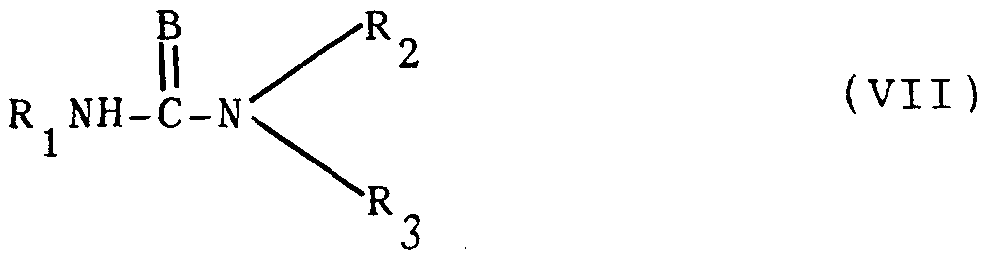
wherein R, , R, , R« and B are as defined in claim 1 so obtaining a compound of formula (I) wherein the symbol , A, B, R, , R, and R, are as defined in claim 1 ; or d) reacting a compound of formula (VI), as defined above with a compound of formula (VII), wherein R. is hydrogen and R , R- and B are as defined above, and a compound of formula (VIII)
R, -W (VIII 1
wherein R. is as defined in claim 1 but it isn't hydrogen and W is a halogen atom, so obtaining a compound of formula (I) wherein the symbol ^Z^. A, B, R, and R, are as defined in claim 1, and R, is as defined in claim 1, but it isn't hydrogen; or e) oxidative opening of the A-ring of compound of formula (I), wherein the (X) bond is a single bond, A is a CH group, (Y) is a double bond and R. , and B are as defined in claim 1, so  obtaining a compound of formula (IX)

wherein R, , R2 , R3 and B are as defined in claim 1 and cyclizing a compound of formula (IX) as defined above, in the presence of a compound of formula (X)
R-NH, (X) wherein R is as defined in claim 1, so obtaining a compound of formula (XI)

wherein R, R,, R-,, R3 and B are as defined in claim 1 and reducing a compound of formula (XI) as defined above, so obtaining a compound of formula (I) wherein the (X) bond and the (Y) bond are single bonds, A is an N-R group wherein R is as defined in claim 1 and R. , R, , R, and B are as defined in claim 1 and/or, if desired, f) dehydrogenating a compound of formula (I) wherein A, B, R, , R, , R, are as defined in claim 1, the (X) bond is a single bond and (Y) is a single or a double bond, so obtaining a compound of formula (I) wherein A, B, R, , R2 , Rj are as defined in claim 1 and the (X) bond is a double bond and the (Y) bond is a single or double bond and, if desired, separating a mixture of isomers into the single isomers
5. A pharmaceutical composition comprising a pharma¬ ceutically acceptable carrier and/or diluent and, as an active principle, a compound of formula (I) according to claim 1.
6. A compound of formula (I) according to claim 1 for use as a testosterone δα-reductase inhibitor.
7. Use of a compound of formula (I) according to claim 1 in the manifacture of a medicament for use as a testosterone 5<\-reductase inhibitor.
Priority Applications (2)
| Application Number | Priority Date | Filing Date | Title |
|---|---|---|---|
| JP6504992A JPH06511496A (en) | 1992-07-31 | 1993-07-29 | Fluorinated acylureido type side chain steroid |
| EP93917703A EP0610472A1 (en) | 1992-07-31 | 1993-07-29 | Steroids with a fluorinated acylureidic type side chain |
Applications Claiming Priority (2)
| Application Number | Priority Date | Filing Date | Title |
|---|---|---|---|
| GB9216280.9 | 1992-07-31 | ||
| GB929216280A GB9216280D0 (en) | 1992-07-31 | 1992-07-31 | Steroids with a fluorinated acylureidic type side chain |
Publications (1)
| Publication Number | Publication Date |
|---|---|
| WO1994003474A1 true WO1994003474A1 (en) | 1994-02-17 |
Family
ID=10719595
Family Applications (1)
| Application Number | Title | Priority Date | Filing Date |
|---|---|---|---|
| PCT/EP1993/002035 Ceased WO1994003474A1 (en) | 1992-07-31 | 1993-07-29 | Steroids with a fluorinated acylureidic type side chain |
Country Status (4)
| Country | Link |
|---|---|
| EP (1) | EP0610472A1 (en) |
| JP (1) | JPH06511496A (en) |
| GB (1) | GB9216280D0 (en) |
| WO (1) | WO1994003474A1 (en) |
Cited By (8)
| Publication number | Priority date | Publication date | Assignee | Title |
|---|---|---|---|---|
| WO1996003420A1 (en) * | 1994-07-28 | 1996-02-08 | Pharmacia S.P.A. | 3-carboxysteroids with a fluorinated side chain |
| US5543417A (en) * | 1994-10-21 | 1996-08-06 | Merck & Co., Inc. | Combination method of treating acne using 4-AZA-5α-cholestan-ones and 4-AZA-5α-androstan-ones as selective 5α-reductase inhibitors with anti-bacterial, keratolytic, or anti-inflammatory agents |
| US5843953A (en) * | 1994-10-25 | 1998-12-01 | Merck & Co., Inc. | 7-substituted 4-aza cholanic acid derivatives and their use |
| US6645974B2 (en) | 2001-07-31 | 2003-11-11 | Merck & Co., Inc. | Androgen receptor modulators and methods for use thereof |
| US7329750B2 (en) | 2003-06-30 | 2008-02-12 | Merck & Co., Inc. | 17-Acetamido-4-azasteroid derivatives as androgen receptor modulators |
| US7402577B2 (en) | 2001-10-03 | 2008-07-22 | Merck & Co., Inc. | Androstane 17-beta-carboxamides as androgen receptor modulators |
| US7482357B2 (en) | 2003-06-30 | 2009-01-27 | Merck & Co., Inc. | 17-acetamido-4-azasteroid derivatives as androgen receptor modulators |
| US7696217B2 (en) | 2003-06-30 | 2010-04-13 | Merck Sharp & Dohme Corp. | 17-acetamido-4-azasteroid derivatives as androgen receptor modulators |
Citations (2)
| Publication number | Priority date | Publication date | Assignee | Title |
|---|---|---|---|---|
| US4191759A (en) * | 1978-04-13 | 1980-03-04 | Merck & Co., Inc. | N-substituted-17β-carbamoylandrost-4-en-3-one 5α reductase inhibitors |
| WO1991012261A1 (en) * | 1990-02-09 | 1991-08-22 | Farmitalia Carlo Erba S.R.L. | 17β-SUBSTITUTED-4-AZA-5α-ANDROSTAN-3-ONE DERIVATIVES AND PROCESS FOR THEIR PREPARATION |
-
1992
- 1992-07-31 GB GB929216280A patent/GB9216280D0/en active Pending
-
1993
- 1993-07-29 EP EP93917703A patent/EP0610472A1/en not_active Withdrawn
- 1993-07-29 WO PCT/EP1993/002035 patent/WO1994003474A1/en not_active Ceased
- 1993-07-29 JP JP6504992A patent/JPH06511496A/en active Pending
Patent Citations (2)
| Publication number | Priority date | Publication date | Assignee | Title |
|---|---|---|---|---|
| US4191759A (en) * | 1978-04-13 | 1980-03-04 | Merck & Co., Inc. | N-substituted-17β-carbamoylandrost-4-en-3-one 5α reductase inhibitors |
| WO1991012261A1 (en) * | 1990-02-09 | 1991-08-22 | Farmitalia Carlo Erba S.R.L. | 17β-SUBSTITUTED-4-AZA-5α-ANDROSTAN-3-ONE DERIVATIVES AND PROCESS FOR THEIR PREPARATION |
Cited By (9)
| Publication number | Priority date | Publication date | Assignee | Title |
|---|---|---|---|---|
| WO1996003420A1 (en) * | 1994-07-28 | 1996-02-08 | Pharmacia S.P.A. | 3-carboxysteroids with a fluorinated side chain |
| US5543417A (en) * | 1994-10-21 | 1996-08-06 | Merck & Co., Inc. | Combination method of treating acne using 4-AZA-5α-cholestan-ones and 4-AZA-5α-androstan-ones as selective 5α-reductase inhibitors with anti-bacterial, keratolytic, or anti-inflammatory agents |
| US5843953A (en) * | 1994-10-25 | 1998-12-01 | Merck & Co., Inc. | 7-substituted 4-aza cholanic acid derivatives and their use |
| US6645974B2 (en) | 2001-07-31 | 2003-11-11 | Merck & Co., Inc. | Androgen receptor modulators and methods for use thereof |
| EP1420796A4 (en) * | 2001-07-31 | 2007-07-11 | Merck & Co Inc | ANDROGEN RECEPTOR MODULATORS AND METHODS OF USE |
| US7402577B2 (en) | 2001-10-03 | 2008-07-22 | Merck & Co., Inc. | Androstane 17-beta-carboxamides as androgen receptor modulators |
| US7329750B2 (en) | 2003-06-30 | 2008-02-12 | Merck & Co., Inc. | 17-Acetamido-4-azasteroid derivatives as androgen receptor modulators |
| US7482357B2 (en) | 2003-06-30 | 2009-01-27 | Merck & Co., Inc. | 17-acetamido-4-azasteroid derivatives as androgen receptor modulators |
| US7696217B2 (en) | 2003-06-30 | 2010-04-13 | Merck Sharp & Dohme Corp. | 17-acetamido-4-azasteroid derivatives as androgen receptor modulators |
Also Published As
| Publication number | Publication date |
|---|---|
| JPH06511496A (en) | 1994-12-22 |
| EP0610472A1 (en) | 1994-08-17 |
| GB9216280D0 (en) | 1992-09-16 |
Similar Documents
| Publication | Publication Date | Title |
|---|---|---|
| US5155107A (en) | 17β-substituted-4-aza-5α-androstan-3-one derivatives and process for their preparation | |
| US4377584A (en) | 4-Aza-17β-substituted-5α-androstan-3-one-reductase inhibitors | |
| US5418238A (en) | 17β-substituted 4-aza-5α-androstan-3-one derivatives | |
| RU2125061C1 (en) | FLUORINATED DERIVATIVES OF 17β-SUBSTITUTED-4-AZA--5α-ANDROSTANE- -3-ONE, PHARMACEUTICAL COMPOSITION | |
| US5527807A (en) | 7β-substituted-4-aza-5α-cholestan-3-ones as 5α reductase inhibitors useful in the prevention and treatment of hyperandrogenetic disorders | |
| EP0540717B1 (en) | UNSATURATED 17$g(b)-SUBSTITUTED 3-CARBOXY STEROIDS | |
| US5486511A (en) | 4-amino-17β-(cyclopropyloxy)androst-4-en-3-one, 4-amino-17β-(cyclopropylamino)androst-4-en-3-one and related compounds as C17-20 lyase and 5α-reductase | |
| EP0610472A1 (en) | Steroids with a fluorinated acylureidic type side chain | |
| US6114345A (en) | Phenylsubstituted 4-azasteroid fluoroderivatives | |
| CA2044914A1 (en) | 17.beta.-aminobenzoyl-4-5 .alpha.-androst-1-en-3-ones as benign prostatic hypertrophy agents | |
| US5719159A (en) | 4-azasteroids with side-chain fluoroketones | |
| HK1011693B (en) | Fluorinated 17-beta substituted-4-aza-5-alpha-andostran-3one derivatives | |
| MXPA97003464A (en) | Fluoro-derivatives of 4-azaesteroids substitute with fen | |
| GB2273096A (en) | Piperido(4',3':16,17)-4-aza-5 alpha-androstan-3-one derivatives and process for their preparation |
Legal Events
| Date | Code | Title | Description |
|---|---|---|---|
| AK | Designated states |
Kind code of ref document: A1 Designated state(s): JP |
|
| AL | Designated countries for regional patents |
Kind code of ref document: A1 Designated state(s): AT BE CH DE DK ES FR GB GR IE IT LU MC NL PT SE |
|
| WWE | Wipo information: entry into national phase |
Ref document number: 1993917703 Country of ref document: EP |
|
| 121 | Ep: the epo has been informed by wipo that ep was designated in this application | ||
| WWP | Wipo information: published in national office |
Ref document number: 1993917703 Country of ref document: EP |
|
| WWW | Wipo information: withdrawn in national office |
Ref document number: 1993917703 Country of ref document: EP |