WO1994011372A1 - Preparation of 2-aryl carbapenems via a boronic acid coupling reaction - Google Patents

Preparation of 2-aryl carbapenems via a boronic acid coupling reaction Download PDF

Info

Publication number
WO1994011372A1
WO1994011372A1 PCT/US1993/010539 US9310539W WO9411372A1 WO 1994011372 A1 WO1994011372 A1 WO 1994011372A1 US 9310539 W US9310539 W US 9310539W WO 9411372 A1 WO9411372 A1 WO 9411372A1
Authority
WO
WIPO (PCT)
Prior art keywords
alkyl
formula
compound
hydroxy
silyl
Prior art date
Legal status (The legal status is an assumption and is not a legal conclusion. Google has not performed a legal analysis and makes no representation as to the accuracy of the status listed.)
Ceased
Application number
PCT/US1993/010539
Other languages
French (fr)
Inventor
Ann Decamp
Ulf H. Dolling
Yulan Li
Dale L. Rieger
Nobuyoshi Yasuda
Lyndon C. Xavier
Current Assignee (The listed assignees may be inaccurate. Google has not performed a legal analysis and makes no representation or warranty as to the accuracy of the list.)
Merck and Co Inc
Original Assignee
Merck and Co Inc
Priority date (The priority date is an assumption and is not a legal conclusion. Google has not performed a legal analysis and makes no representation as to the accuracy of the date listed.)
Filing date
Publication date
Application filed by Merck and Co Inc filed Critical Merck and Co Inc
Priority to JP6512170A priority Critical patent/JPH08512280A/en
Priority to AU56657/94A priority patent/AU5665794A/en
Priority to EP94902205A priority patent/EP0669921A4/en
Publication of WO1994011372A1 publication Critical patent/WO1994011372A1/en
Anticipated expiration legal-status Critical
Ceased legal-status Critical Current

Links

Classifications

    • CCHEMISTRY; METALLURGY
    • C07ORGANIC CHEMISTRY
    • C07DHETEROCYCLIC COMPOUNDS
    • C07D477/00Heterocyclic compounds containing 1-azabicyclo [3.2.0] heptane ring systems, i.e. compounds containing a ring system of the formula:, e.g. carbapenicillins, thienamycins; Such ring systems being further condensed, e.g. 2,3-condensed with an oxygen-, nitrogen- or sulphur-containing hetero ring
    • C07D477/10Heterocyclic compounds containing 1-azabicyclo [3.2.0] heptane ring systems, i.e. compounds containing a ring system of the formula:, e.g. carbapenicillins, thienamycins; Such ring systems being further condensed, e.g. 2,3-condensed with an oxygen-, nitrogen- or sulphur-containing hetero ring with hydrogen atoms, hydrocarbon or substituted hydrocarbon radicals, directly attached in position 4, and with a carbon atom having three bonds to hetero atoms with at the most one bond to halogen, e.g. an ester or nitrile radical, directly attached in position 2
    • C07D477/12Heterocyclic compounds containing 1-azabicyclo [3.2.0] heptane ring systems, i.e. compounds containing a ring system of the formula:, e.g. carbapenicillins, thienamycins; Such ring systems being further condensed, e.g. 2,3-condensed with an oxygen-, nitrogen- or sulphur-containing hetero ring with hydrogen atoms, hydrocarbon or substituted hydrocarbon radicals, directly attached in position 4, and with a carbon atom having three bonds to hetero atoms with at the most one bond to halogen, e.g. an ester or nitrile radical, directly attached in position 2 with hydrogen atoms, hydrocarbon or substituted hydrocarbon radicals, attached in position 6
    • C07D477/14Heterocyclic compounds containing 1-azabicyclo [3.2.0] heptane ring systems, i.e. compounds containing a ring system of the formula:, e.g. carbapenicillins, thienamycins; Such ring systems being further condensed, e.g. 2,3-condensed with an oxygen-, nitrogen- or sulphur-containing hetero ring with hydrogen atoms, hydrocarbon or substituted hydrocarbon radicals, directly attached in position 4, and with a carbon atom having three bonds to hetero atoms with at the most one bond to halogen, e.g. an ester or nitrile radical, directly attached in position 2 with hydrogen atoms, hydrocarbon or substituted hydrocarbon radicals, attached in position 6 with hydrogen atoms, hydrocarbon or substituted hydrocarbon radicals, attached in position 3
    • CCHEMISTRY; METALLURGY
    • C07ORGANIC CHEMISTRY
    • C07DHETEROCYCLIC COMPOUNDS
    • C07D477/00Heterocyclic compounds containing 1-azabicyclo [3.2.0] heptane ring systems, i.e. compounds containing a ring system of the formula:, e.g. carbapenicillins, thienamycins; Such ring systems being further condensed, e.g. 2,3-condensed with an oxygen-, nitrogen- or sulphur-containing hetero ring
    • C07D477/02Preparation
    • CCHEMISTRY; METALLURGY
    • C07ORGANIC CHEMISTRY
    • C07FACYCLIC, CARBOCYCLIC OR HETEROCYCLIC COMPOUNDS CONTAINING ELEMENTS OTHER THAN CARBON, HYDROGEN, HALOGEN, OXYGEN, NITROGEN, SULFUR, SELENIUM OR TELLURIUM
    • C07F5/00Compounds containing elements of Groups 3 or 13 of the Periodic Table
    • C07F5/02Boron compounds
    • C07F5/025Boronic and borinic acid compounds
    • CCHEMISTRY; METALLURGY
    • C07ORGANIC CHEMISTRY
    • C07FACYCLIC, CARBOCYCLIC OR HETEROCYCLIC COMPOUNDS CONTAINING ELEMENTS OTHER THAN CARBON, HYDROGEN, HALOGEN, OXYGEN, NITROGEN, SULFUR, SELENIUM OR TELLURIUM
    • C07F7/00Compounds containing elements of Groups 4 or 14 of the Periodic Table
    • C07F7/02Silicon compounds
    • C07F7/08Compounds having one or more C—Si linkages
    • C07F7/18Compounds having one or more C—Si linkages as well as one or more C—O—Si linkages
    • C07F7/1804Compounds having Si-O-C linkages

Definitions

  • the invention disclosed herein concerns a process of making 2-aryl carbapenems.
  • Carbapenem antibiotics particularly thienamycin and imipenem (see U.S. Patent Nos. 3,950,377 and
  • Active 2- Aryl substituted Carbapenem include those disclosed in US 5,034,384 and 5,011 ,832.
  • the Carbapenem nucleus is unstable, thus necessitating mild coupling reagents.
  • the present methods of coupling utilize toxic reagents.
  • one alternative procedure utilizes highly toxic stannane reagents.
  • the stannane procedure also introduces toxic impurities which made purification of the product and subsequent processing difficult.
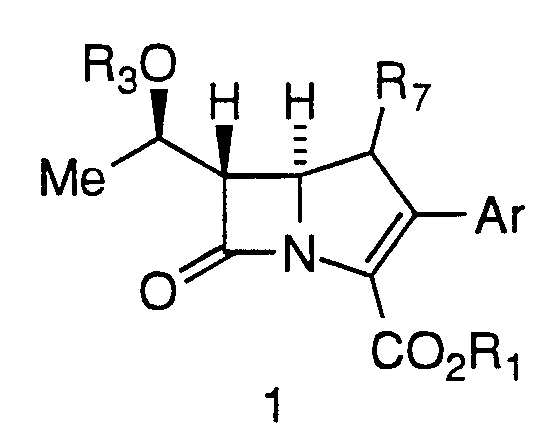
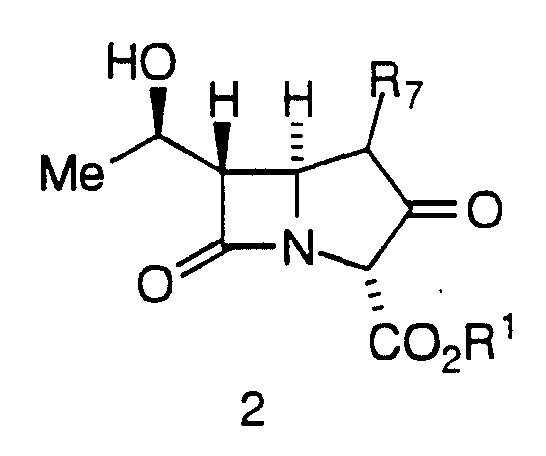
  • the present invention is directed to a process of making 2- Aryl Carbapenems of formula 1 from a compound of Formula 2:
  • the invention concerns a process of making 2-aryl carbapenem intermediates of Formula 1,
  • R b is
  • R 1 is a conventional protecting group, such as, but not limited to
  • a hydroxy protecting group selected from tri-C 1 -4 alkyl silyl, phenyl di C 1 -4 alkyl and diphenyl mono C 1 -4 alkyl silyl;
  • R' 3 is (a) benzyl
  • R 7 is hydrogen or methyl, including ⁇ -methyl
  • disubstituted phenyl and the substituents are each independently hydrogen or halo including chloro;
  • non-reactive solvents include halocarbon solvents such solvents as mono or di-halo C 1 -4 alkyl including dichloromethane; etheral solvents such as diethyl ether di-n- butyl and diisopropyl ethers, cyclic ethers such as tetrahydropyran, and tetrahydrofuran; aromatic solvents such as benzene, toluene and xylene; and C 6-10 linear, branched or cyclic hydrocarbon solvent including hexane.
  • halocarbon solvents such solvents as mono or di-halo C 1 -4 alkyl including dichloromethane
  • etheral solvents such as diethyl ether di-n- butyl and diisopropyl ethers, cyclic ethers such as tetrahydropyran, and tetrahydrofuran
  • aromatic solvents such as benzene, toluene and xylene
  • Activating agents are defined to include bis-(3-chlorophenyl) chlorophosphate, diphenyl chlorophosphate, fluorosulfonic anhydride and trifluoromethanesulfonic anhydride, or others that will yield the substituent -OR 2 .
  • Suitable bases include but are not limited to pyrrole, pyridine, pyrrolidine, imidazole and lutidine, di C 1 -3 alkylamine such as diisopropylamine and tri C 1 -3 alkylamine such as triethylamine and diisopropyl ethylamine, metal amides, wherein metal is defined as sodium, potassium or lithium, including di-C 1 -4 alkyl amides such as lithium diisopropylamide; C 1 -4 alkyl metals such as n-butyllithium; metal C 1 -4 alkoxides, such as potassium t-butoxide; metal hydrides such as sodium or potassium hydride; and metal carbonates sodium and potassium carbonates.
  • the molar ratio of activating agent to Formula 2 should be approximately 0.90 to 1.0, but preferably not greater. A ratio of 0.95 is typical.
  • the reaction may be conducted from
  • reaction is allowed to proceed until substantially complete in approximately 0.25-2 hours, typically 0.25-1.0 hours.
  • the reaction is preferably conducted under nitrogen.
  • protecting agent is R 3 X, consisting of a protecting group R 3 and a good leaving group X.
  • the protecting groups (R 3 ) suitable for step (B) include triorgano silyl groups such as tri-C 1 -3 alkyl silyl, including trimethyl and triethyl silyl and t-butyl dimethyl silyl. Also included is t-butyl diphenylsilyl. Good leaving groups are defined to include chloro and triflate. Other suitable groups are found in Protective Groups in Organic Synthesis, Theodora W.
  • the nitrogen containing bases are defined as above.
  • the molar ratio of compound A to the protecting agent should be
  • the reaction should be allowed to proceed until complete and approximately 0.25 to 1.5 hours.
  • the reaction may be conducted from -20°C to -80°C.
  • the reaction is preferably conducted under nitrogen.
  • Step (B) is conducted in situ with the reaction mixture resulting from Step (A).
  • Compound A can be isolated by standard means before continuing with the reaction scheme.
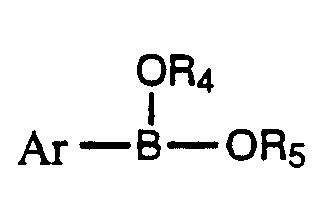
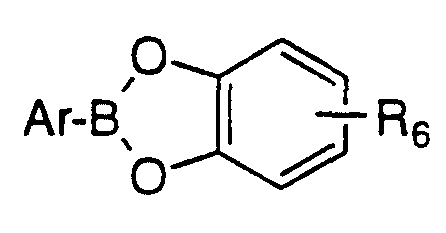
  • R 4 and R 5 are each individually hydrogen or C 1 -6 alkyl or R 4 and R 5 taken together are C 1 -6 alkyl or R 4 and R 5 are joined together as to form
  • R 6 is C 1 -3 alkyl, halo, hydroxy, C 1 -3 alkoxy or hydrogen.
  • coupling bases include but are not limited to metal hydroxides including barium, potassium, sodium, or lithium, thallium hydroxides; metal C 1 -4 alkoxide such as sodium, potassium or lithium t-butoxide; and metal carbonate such as potassium or sodium carbonates.
  • the coupling solvent is defined to include di-C 1 -3 alkyl formamide such as dimethyl formamide, di-C 1 - 3 alkyl sulfoxide such as dimethylsulfoxide, N-methylpyrrolidinone, N- ethylpyrrolidinone and sulfolane as well as halocarbon solvents such solvents as mono or di-halo C 1 -4 alkyl including dichloromethane; etheral solvents such as diethyl ether di-n-butyl and diisopropyl ethers, cyclic ethers such as tetrahydropyran, and tetrahydrofuran; aromatic solvents such as benzene, toluene and xylene; and C 6-10 linear, branched or cyclic hydrocarbon solvent including hexane.
  • non-reactive solvents include halocarbon solvents such as mono or di-halo C 1 -4 alkyl including dichloromethane.
  • phase transfer agent such as tetra-n- butylammonium salts and polyethylglycol reagents such as TWEEN 40 may be added to the reaction mix (0 to 5% of total volume).
  • the molar ratio of compound B to Ar-B-OR 5 should be approximately 1 to 1 , typically between 1.25:1 to 1 :1.25.
  • the molar ratio of palladium catalyst to compound B should be
  • reaction is allowed to proceed until substantially complete in 1 - 24 hours (solvent dependent).
  • transition metal catalyst is defined to include Pd° catalysts including Pd (dba) 2 , Pd 2 (dba) 3 , Pd 2 (dba) 3 •CHCl 3 wherein dba is defined as dibenzyledineacetone.
  • Pd° catalysts including Pd (dba) 2 , Pd 2 (dba) 3 , Pd 2 (dba) 3 •CHCl 3 wherein dba is defined as dibenzyledineacetone.
  • Pdba is defined as dibenzyledineacetone.
  • Pd II catalysts may also be employed
  • Nickel catalysts may also be used.
  • the compound of Formula 1 can then be converted to active antibiotic by methods known in the art, as exemplified in US 5,034,384 and 5,011,832 which are hereby incorporated by reference.
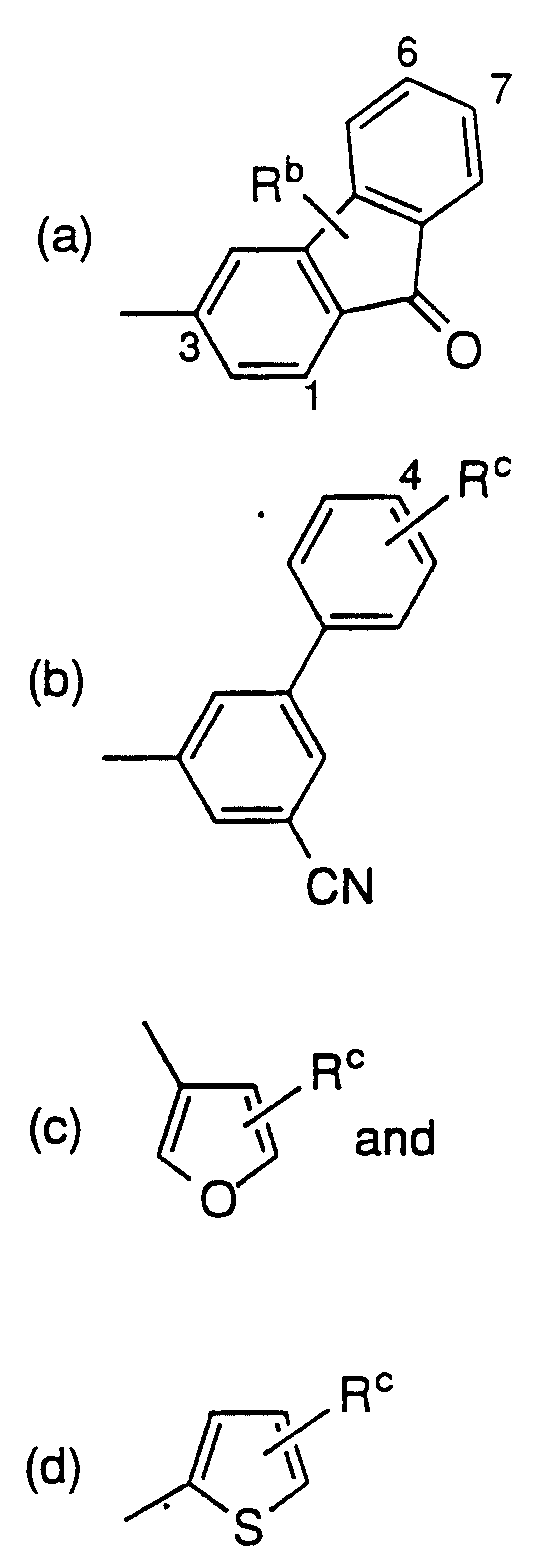
  • Preferred definitions of Ar include those wherein R b and
  • R c are each -CH 2 OH, -OCH 3 , -CH 3 or triethylsilyloxymethyl. As shown above, R b may reside at any position on the fluorenone, but preferrably resides a position 6 or 7 of the fluorenone. R c preferrably resides at position 4 of the biphenyl.
  • the group Ar may optionally contain a carbonyl or other group that required protection prior to further processing.
  • Examples the compound of Formula 2 is identified as ADC-13.
  • PNB is p-nitrobenzyl
  • TESO is triethylsilyloxy
  • Tf is triflate (trifluoromethanesulfonate
  • DMF is dimethylformamide.
  • trifluoromethanesulfonate (447.3 mL, 523 g, 1.98 mol) was added over 70-75 minutes, maintaining the internal temperature below -70°C. The mixture was aged at -70 to 80°C for 45-65 minutes.
  • TWEEN 40 14 mg in toluene (10 mL) was added, followed by a suspension of the methylfluorenylboronic acid (323 mg, 1.36 mmol) in 1 M aqueous K 2 CO 3 (11.4 mL, 11.4 mmol). This mixture was warmed to ambient temperature, degassed with a stream of N 2 , and
  • the BBA•2H 2 O (20.0 g, 69.2 mmol) was dissolved in THF (630 mL) and the solution was added to the enol triflate solution by cannula, maintaining the internal temperature below -60°C.
  • Bis(dibenzylideneacetone)palladium(0) (1.2 g, 2.08 mmol) was added, followed by 5.6 N aq KOH (37 mL, 208 mmol), maintaining the internal temperature below -60°C.
  • the cold bath was removed and the dark mixture was allowed to warm to ambient temperature.
  • the reaction was quenched by pouring the mixture into 0.2 M aq KH 2 PO 4 (not pH adjusted, 1.1 L), EtOAc (1.3 L), and MeOH (220 mL). The mixture was agitated and the phases (both slightly cloudy) were separated. The aqueous layer was extracted with EtOAc (1 x 650 mL). The combined organic extracts were concentrated in vacuo and the residue (dark oil) was flushed with acetonitrile (2 x 165 mL). The blackish-red residue was diluted to a final volume of 720 mL (the mixture was very turbid and dark brown in color; insoluble palladium compounds are present).
  • SP-206 resin (Mitsubishi; 900 mL resin; 45 mL resin/g of biphenylboronic acid) was swelled in 50% aqueous methanol. The resin was loaded onto a column. The resin was washed with 2 b.v. (1800 mL) of acetone, 2 b.v. (1800 mL) of acetonitrile (ACN), and 2 b.v. (1800 mL) 70/30 ACN/water.
  • the column feed (1 b.v., 900 mL, assayed to contain ca. 39 g of product, ca. 85% yield from BBA ⁇ 2H 2 O) was loaded onto the resin (ambient temperature) at a flow rate of 3-5 b.v./h (0.5 b.v. fractions [450 mL]).
  • the column was eluted with: 3 b.v. (2700 mL) 70/30 acetonitrile/water, followed by 3.5 b.v. (3150 mL) acetonitrile.
  • the reaction mixture was stirred another 1.25 hours at the end of which TLC showed complete reaction to the triethylsilyl derivative.
  • the hydroxymethylflourenone-boronic acid (254 mg, 1.0 eq) was dissolved in DMF (2.2 ml) and added dropwise to the reaction mixture followed by Pd 2 (dibenzylideneacetone) 3 CHCl 3 (21 mg) and KOH solution (0.52 ml, 5.67N).
  • the reaction mixture was stirred at -78° for 10 minutes and then allowed to warm to room temperature in 15 minutes and then stirred at 30° for 3.5 hours. TLC showed complete reaction of the enoltriflate.
  • Absolute methyl alcohol (200 mL; 10 mL/g) was charged to a dry glass-lined pressure-rated (to 100 psi) vessel equipped with a mechanical stirrer under a N 2 atmosphere. 6-Bromo-2-bromomethyl- 9-fluorenon (20 g; 0.057 mol) was charged and the resulting slurry was heated at 100°C in the sealed vessel for 24 hours. The mixture was cooled to room temperature. The methyl ether crystallized upon cooling.
  • the reaction mixture from Part 4a was cooled to 0-5°C and sequentially charged with concentrated sulfuric acid (4.6 mL; added dropwise to prevent splattering, exothermic) and trimethyl orthoformate (93.5 mL, 0.855 mol; slightly endothermic).
  • concentrated sulfuric acid 4 mL; added dropwise to prevent splattering, exothermic
  • trimethyl orthoformate 93.5 mL, 0.855 mol; slightly endothermic.
  • the reaction flask was fitted with a distillation head and the reaction mixture was heated and distillate was collected ( ⁇ 60 mL) until the internal
  • the phases (both cloudy) were separated and the aqueous phase was extracted with toluene (200 mL).
  • the combined organic phases were washed twice with D.I. water (200 mL).
  • the organic phase was filtered into the next reaction vessel (suitable for cryogenic reactions) (clear solution at this point) and azeotropically dried by vacuum distillation of toluene (internal temperature ⁇ 53 °C) to a KF ⁇ 100 ⁇ g/mL.
  • the solution was reduced to a minimum volume (57 mL) prior to the next reaction.
  • n-butyl lithium solution (1.6 M; 19 mL; 30.4 mmol) was added to the reaction mixture over 10 minutes at -80 to -75°C. After aging for 20 minutes, a reaction aliquot was assayed by HPLC. In a typical case, 0.1 area % of the bromo compound remained.
  • the reaction mixture was allowed to warmed to 20°C over 1 hour.
  • aqueous sulfuric acid (2 M; 920 mL; 1.84 mol) over 10 minutes.
  • the reaction temperature rose to 28°C.
  • the mixture was vigorously stirred for 30 minutes.
  • the organic layer (2.62 L) was separated.
  • the aqueous layer (1.2 L) was extracted with ethyl acetate (0.5 L and 0.2 L).
  • the solution was aged at 5 °C overnight .
  • the precipitates were collected by filtration and washed with tetrahydrofuran (300 mL).
  • the solution was heated to 100 °C and DI water (300 mL) was added.
  • the mixture was cooled to 23 -25 °C and pH of the slurry was adjusted to 4.0 to 4.5 with 2 M HCl.
  • the slurry was cooled to 5 °C and aged overnight.
  • the residual solid was dissolved in DMF (2.3 L) at 100°C and added DI water (6.9 L) at 100°C. The mixture was cooled down to room temperature gently and aged at ambient temperature overnight. The crystals were collected by filtration, washed with 30% cold aqueous DMF (2 L) and then DI water (2 L), and dried in over at room temperature overnight to give 524 g of the desired boronic acid.

Landscapes

  • Chemical & Material Sciences (AREA)
  • Organic Chemistry (AREA)
  • Health & Medical Sciences (AREA)
  • Life Sciences & Earth Sciences (AREA)
  • Molecular Biology (AREA)
  • Nitrogen Condensed Heterocyclic Rings (AREA)
  • Low-Molecular Organic Synthesis Reactions Using Catalysts (AREA)

Abstract

The present invention is directed to a process of making 2-aryl carbapenems of formula (1) from a compound of formula (2).

Description

TITLE OF THE INVENTION
PREPARATION OF 2-ARYL CARBAPENEMS VIA A BORONIC
ACID COUPLING REACTION
BACKGROUND OF THE INVENTION
The invention disclosed herein concerns a process of making 2-aryl carbapenems. Carbapenem antibiotics, particularly thienamycin and imipenem (see U.S. Patent Nos. 3,950,377 and
4,194,047) are well known for treating a broad spectrum of gram- negative and gram -positive bacterial infections. Active 2- Aryl substituted Carbapenem include those disclosed in US 5,034,384 and 5,011 ,832.
As is generally appreciated by those with skill in the art, the Carbapenem nucleus is unstable, thus necessitating mild coupling reagents. The present methods of coupling utilize toxic reagents. For example, one alternative procedure utilizes highly toxic stannane reagents. The stannane procedure also introduces toxic impurities which made purification of the product and subsequent processing difficult.
Processes disclosed in the prior art include the following:
Coupling to produce 2-aryl carbapenems was previously performed via stannane chemistry (Rano et al. Tetrahedron Letters 1990, 2853). Related couplings with β-lactam containing substrates are given by Monroe and McDonald (Journal of Organic Chemistry 1989, 54, 5828), Kant (Tetrahedron Letters 1990, 3389), and Farina
(Tetrahedron Letters 1988, 5739, 6043). Boronic acid or ester couplings were reported by Snieckus (Tetrahedron Letters 1990, 1665), Suzuki (Chem. Letters 1989, 1405; Journal of the American Chemical Society 1985, 107, 972).
In sharp contrast, the boronic acid coupling methodology disclosed herein present mild conditions, low toxicity and ease of product purification. Selected examples of the generalized palladium catalyzed coupling of organometallic agents with enol triflates are reported by Scott and McMurry (Accounts of Chemical Research, 1988, 21,47), Stille (Agnew. Chem International Edition English, 1986, 25, 508) and Piers (Tetrahedron Letters 1991, 4555).
BRIEF DESCRIPTION OF THE INVENTION
The present invention is directed to a process of making 2- Aryl Carbapenems of formula 1 from a compound of Formula 2:
Figure imgf000004_0001
DETAILED DESCRIPTION OF THE INVENTION
In one embodiment, the invention concerns a process of making 2-aryl carbapenem intermediates of Formula 1,
Figure imgf000004_0002
wherein
Ar is
Figure imgf000005_0001
wherein
Ra is
(a) CN,
(b) CF3,
(c) C1 -3 alkoxy,
(d) -NO2,
(e) hydroxy C1 -3 alkyl, wherein the hydroxy is optionally protected with a silyl protecting group selected from tri-
C1 -4 alkyl silyl, phenyl di C1 -4 alkyl and diphenyl mono
C1 -4 alkyl silyl; or (f) substituted tetrazolyl wherein the substitutent is hydrogen,
C1 -3-alkyl, halo, hydroxy or C1 -3alkoxy;
Rb is
(a) C1 -3 alkyl,
(b) C1 -3 alkoxy,
(c) substituted C1 -3 alkyl, wherein the substituent is hydroxy, or
(d) hydroxy C1 -3 alkyl, wherein the hydroxy is optionally protected with a silyl protecting group selected from tri-
C1 -4 alkyl silyl, phenyl di C1 -4 alkyl and diphenyl mono
C1 -4 alkyl silyl;
Rc is
(a) C1 -3 alkyl,
(b) hydroxy C1 -3 alkyl, wherein the hydroxy is optionally protected with a silyl protecting group selected from tri-
C1 -4 alkyl silyl, phenyl di C1 -4 alkyl and diphenyl mono
C1 -4 alkyl silyl;
R1 is a conventional protecting group, such as, but not limited to
(a) benzyl,
(b) p-methoxybenzyl,
(c) p-nitrobenzyl,
(d) o-nitrobenzyl,
(e) benzhydryl
(f) allyl,
(g) 2-trimethylsilylethyl or
(h) 2,2,2-trichloroethyl;
R3 is
(a) hydrogen,
(b) a hydroxy protecting group selected from tri-C1 -4 alkyl silyl, phenyl di C1 -4 alkyl and diphenyl mono C1 -4 alkyl silyl;
(c) -C(O)OR'3,
wherein R'3 is (a) benzyl,
(b) p-methoxybenzyl,
(c) p-nitrobenzyl,
(d) o-nitrobenzyl,
(e) benzhydryl
(f) allyl,
(g) 2-trimethylsilylethyl or
(h) 2,2,2-trichloroethyl;
(d) CH2 OR'3, or
(e) R'3;
R7 is hydrogen or methyl, including β-methyl;
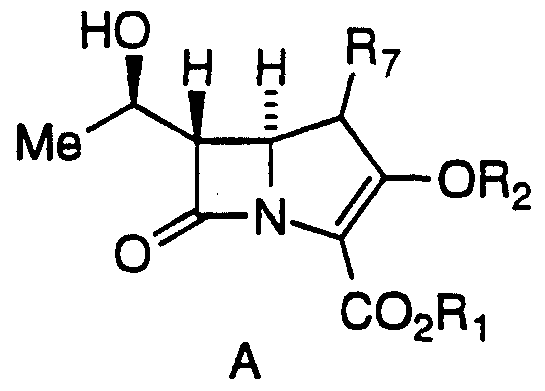
(A) contacting a compound of Formula 2
Figure imgf000007_0001
in a non-reactive solvent with an activating agent in the presence of a base to yield a compound of formula A;
Figure imgf000007_0002
wherein -OR2 is a good leaving group such as
(a) triflate, (b) fluorosulfonate,
(c) mesylate,
(d) tosylate,
(e) diaryl phosphate wherein the aryl group is mono or
disubstituted phenyl and the substituents are each independently hydrogen or halo including chloro;
For purposes of this specification non-reactive solvents include halocarbon solvents such solvents as mono or di-halo C1 -4 alkyl including dichloromethane; etheral solvents such as diethyl ether di-n- butyl and diisopropyl ethers, cyclic ethers such as tetrahydropyran, and tetrahydrofuran; aromatic solvents such as benzene, toluene and xylene; and C6-10 linear, branched or cyclic hydrocarbon solvent including hexane. Activating agents are defined to include bis-(3-chlorophenyl) chlorophosphate, diphenyl chlorophosphate, fluorosulfonic anhydride and trifluoromethanesulfonic anhydride, or others that will yield the substituent -OR2. Suitable bases include but are not limited to pyrrole, pyridine, pyrrolidine, imidazole and lutidine, di C1 -3alkylamine such as diisopropylamine and tri C1 -3 alkylamine such as triethylamine and diisopropyl ethylamine, metal amides, wherein metal is defined as sodium, potassium or lithium, including di-C1 -4 alkyl amides such as lithium diisopropylamide; C1 -4 alkyl metals such as n-butyllithium; metal C1 -4 alkoxides, such as potassium t-butoxide; metal hydrides such as sodium or potassium hydride; and metal carbonates sodium and potassium carbonates. The molar ratio of activating agent to Formula 2 should be approximately 0.90 to 1.0, but preferably not greater. A ratio of 0.95 is typical. The reaction may be conducted from
approximately -20°C to -80°C preferably -70°C to -80°C. The reaction is allowed to proceed until substantially complete in approximately 0.25-2 hours, typically 0.25-1.0 hours. The reaction is preferably conducted under nitrogen.
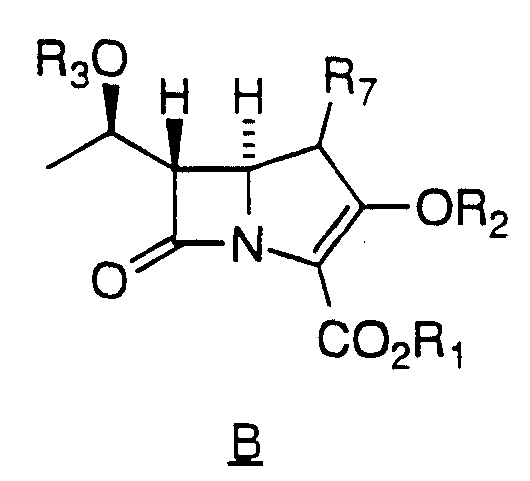
(B) Contacting the compound of formula A in non-reactive solvent as defined above, with a protecting agent suitable for removably protecting the hydroxyl of Formula 2 in the presence of a nitrogen containing base to yield a compound of Formula B;
Figure imgf000009_0001
wherein the protecting agent is R3X, consisting of a protecting group R3 and a good leaving group X.
For purposes of this specification, the protecting groups (R3) suitable for step (B) include triorgano silyl groups such as tri-C1 -3 alkyl silyl, including trimethyl and triethyl silyl and t-butyl dimethyl silyl. Also included is t-butyl diphenylsilyl. Good leaving groups are defined to include chloro and triflate. Other suitable groups are found in Protective Groups in Organic Synthesis, Theodora W.
Green, John Wiley and Sons 1981.
The nitrogen containing bases are defined as above. The molar ratio of compound A to the protecting agent should be
approximately 1 to 1 or greater. The reaction should be allowed to proceed until complete and approximately 0.25 to 1.5 hours. The reaction may be conducted from -20°C to -80°C. The reaction is preferably conducted under nitrogen.
As shown in the Example, preferably Step (B) is conducted in situ with the reaction mixture resulting from Step (A). Altematively, Compound A can be isolated by standard means before continuing with the reaction scheme.
(C) Contacting the compound of Formula B and a coupling base in a coupling solvent with a compound
Figure imgf000009_0002
OR4
of formula Ar-B-OR5 and a transition metal catalyst to yield a
compound of Formula 1,
Figure imgf000010_0001
wherein R4 and R5 are each individually hydrogen or C1 -6 alkyl or R4 and R5 taken together are C1 -6 alkyl or R4 and R5 are joined together as to form
Figure imgf000010_0002
wherein R6 is C1 -3 alkyl, halo, hydroxy, C1 -3 alkoxy or hydrogen.
For purposes of this specification coupling bases include but are not limited to metal hydroxides including barium, potassium, sodium, or lithium, thallium hydroxides; metal C1 -4 alkoxide such as sodium, potassium or lithium t-butoxide; and metal carbonate such as potassium or sodium carbonates. The coupling solvent is defined to include di-C1 -3alkyl formamide such as dimethyl formamide, di-C1 - 3alkyl sulfoxide such as dimethylsulfoxide, N-methylpyrrolidinone, N- ethylpyrrolidinone and sulfolane as well as halocarbon solvents such solvents as mono or di-halo C1 -4 alkyl including dichloromethane; etheral solvents such as diethyl ether di-n-butyl and diisopropyl ethers, cyclic ethers such as tetrahydropyran, and tetrahydrofuran; aromatic solvents such as benzene, toluene and xylene; and C6-10 linear, branched or cyclic hydrocarbon solvent including hexane. For purposes of this specification non-reactive solvents include halocarbon solvents such as mono or di-halo C1 -4 alkyl including dichloromethane.
Optionally, a standard phase transfer agent such as tetra-n- butylammonium salts and polyethylglycol reagents such as TWEEN 40 may be added to the reaction mix (0 to 5% of total volume).
OR4
Figure imgf000011_0001
The molar ratio of compound B to Ar-B-OR5 should be approximately 1 to 1 , typically between 1.25:1 to 1 :1.25. The molar ratio of palladium catalyst to compound B should be
approximately 0.01 or greater; preferably 0.06 to 0.10. The reaction is allowed to proceed until substantially complete in 1 - 24 hours (solvent dependent).
For purposes of this specification transition metal catalyst is defined to include Pd° catalysts including Pd (dba)2, Pd2 (dba)3, Pd2 (dba)3•CHCl3 wherein dba is defined as dibenzyledineacetone. As appreciated by those of skill in the art, other standard coordinating ligands may also be used. PdII catalysts may also be employed
including Pd(OAc)2 and PdCl2. Nickel catalysts may also be used.
The compound of Formula 1 can then be converted to active antibiotic by methods known in the art, as exemplified in US 5,034,384 and 5,011,832 which are hereby incorporated by reference.
In a second embodiment the invention concerns
OR4
intermediate compounds of formula Ar-B-OR5, as defined above.
Figure imgf000012_0001
SCHEME 2
Ar-Br
Figure imgf000013_0002
[Ar-Li]
Figure imgf000013_0003
[Ar-B(O-iPr)2]
Figure imgf000013_0004
Ar-B(OH)2
Figure imgf000013_0001
Preferred definitions of Ar include those wherein Rb and
Rc are each -CH2OH, -OCH3, -CH3 or triethylsilyloxymethyl. As shown above, Rb may reside at any position on the fluorenone, but preferrably resides a position 6 or 7 of the fluorenone. Rc preferrably resides at position 4 of the biphenyl.
The method of preparation is shown in Scheme 2 and further detailed in the Examples. In overview, the bromide, Ar-Br undergoes metallation with n-butyl lithium; is then boronated with B(O- i-propyl)3; and is then acidified to form Ar-B(OH)2- Further reaction with R4OH and R5OH (R4 and R5 defined on page 11) provides the intermediate boronic esters.
As Exemplified hereinunder, the group Ar may optionally contain a carbonyl or other group that required protection prior to further processing.
The following examples illustrate the preparation of representative compounds of the invention and as such are not
considered as limiting the invention as set forth in the Claims. For further methods of preparing substituted fluorenonyl and biphenyl compounds please see US 5,034,384 and 5,011,832 which are hereby incorporated by reference. Please also note that in the following
Examples the compound of Formula 2 is identified as ADC-13. As appreciated by those of skill in the art, PNB is p-nitrobenzyl; TESO is triethylsilyloxy; Tf is triflate (trifluoromethanesulfonate; and DMF is dimethylformamide.
Figure imgf000014_0001
EXAMPLE 1 CONT'D
Figure imgf000015_0001
Fluorenone Boronic
Figure imgf000015_0003
Acid (FBA)
Pd(dba)2, 5.4 N
aq KOH
Figure imgf000015_0002
Coupling Product
C
Preparation of p-Nitrobenzyl (5R,6S)-2-[7-hydroxymethyl-9- fluorenone-3-yl]-6-[(1R)-triethylsilyloxyethyl] carbapen-2-em-3- carboxylate dimethylformamide monosolvate
Anhydrous dichloromethane (7.6 L, 11.5 mL/g of ADC-13 KF≤ 50 mg/mL) was charged to a dry flask under an N2 atmosphere. ADC-13 (660 g, 1.88 mol) was added as a solid and the solution was cooled to -78°C (thick slurry). Triethylamine (249.5 mL, 181 g, 1.79 mol) was added over approximately 30 minutes. After 15-25 minutes, trifluoromethanesulfonic anhydride (302.4 mL, 505 g, 1.79 mol) was added over 75 minutes. Triethylamine (275.7 mL, 200 g, 1.98 mol) was added over approximately 25-30 minutes, maintaining the internal temperature below -70°C. After 15-25 minutes, triethylsilyl
trifluoromethanesulfonate (447.3 mL, 523 g, 1.98 mol) was added over 70-75 minutes, maintaining the internal temperature below -70°C. The mixture was aged at -70 to 80°C for 45-65 minutes.
A separate dry flask was charged with anhydrous dimethylformamide (3.6 L, 9.0 mL/g boronic acid) and the hydroxymethyl- fluorenylboronic acid (400 g, 1.57 mol) at ambient temperature under N2 atmosphere. This solution was added to the TES enol triflate solution (internal temperature maintained≤ -60°C) over 35 minutes. To the resulting mixture was added bis(dibenzylideneacetone)palladium (0) (54.4 g, 94.2 mmol, 0.06 mol/mol boronic acid) as a solid and 5.67 N aqueous KOH (830.7 mL, 4.71 mol, 3.0 mol/mol boronic acid). The mixture was allowed to warm to ambient temperature and stir for four hours. Ethyl acetate (3 L) was added and the dichloromethane was removed by vacuum concentration to a volume of 6.3 L. The resulting dark mixture was diluted with EtOAc (15 L), and H2O (10 L). The dark layers were separated and the aqueous layer was back extracted with EtOAc (10 L). The combined organic layers were quantitatively assayed by HPLC and then dried by azeotropic distillation of water and concentrated to 4.0 L.
The ethyl acetate solution was turned over to acetonitrile by distillation. The blackish-red mixture was concentrated to a final volume of 17.3 L. Water (3.48 L; 20 v/v% of the acetonitrile mixture) was added. The resulting mixture was agitated for 30 minutes. Black free flowing solids formed. The solids were removed by filtration and washed (1.44 L of 17% water in acetonitrile). The clear reddish yellow filtrate (HPLC assay showed 720 g product) was then loaded on to an SP-206 resin column (18 L of resin) at a flow rate of 2 b.v/h (0.5 b.v fractions [9L]). The column was eluted with: 3 b.v. (54 L) of 70/30 acetonitrile/water, 2 b.v. (36 L) of acetonitrile, and 7 b.v. (126 L) of 50/50 2-butanone/acetonitrile.
The appropriate fractions (assayed to contain 720 g product) were combined and turned over to dimethylformamide (DMF) by distillation (final volume = 32 L, 45 mL/g assayed product). Water (8.6 L, 12 mL/g assayed product) was added over 5 minutes. The temperature rose from 30 to 36°C. The solution was cooled to 30°C and was seeded (5% by weight). Crystallization occurred and a yellow slurry formed as the mixture was aged at 30°C for 0.5 hours. More water (8.6 L) was added over 4 hours (final DMF:water = 15:8). The slurry was cooled to 0.5°C over 45 minutes and aged for 1 hour. The crystals were collected by filtration and washed with cold DMF:water (15:8; 5°C; 7.2 L,) and water (ambient temperature; 2 x 7.2 L). The wet cake was dried in vacuo (N2 sweep, over P2O5) to give 720 g (63% yield) of the coupled product as its DMF solvate (98 area % purity).
EXAMPLE 2
Preparation of p-Nitrobenzyl (5R,6S)-2-phenyl-6-[(1R)-triethylsilyloxy- ethyl] carbapen-2-em-3-carboxylate
Figure imgf000017_0001
A solution of p-nitrobenzyl 7-[(1R)-1-triethylsilyloxy- ethyl]-2-trifluoromethane-sulfonyloxy-3-carbapenem 4-carboxylate (1 mmol), prepared as in Example 1, was diluted with toluene (4.7 mL) at -78°C. To the solution was added phenylboric acid (159 mg, 1.3 mmol.), potassium carbonate (359 mg, 2.6 mmol), TWEEN 40
(2 drops), and Pd2(dba)3CHCl3 (20.3 mg) and the mixture was stirred for 4 hours at ambient temperature. The mixture was diluted with ethyl acetate, washed with saturated aqueous ammonium chloride and saturated aqueous sodium chloride, dried over magnesium sulfate, and purified by silica gel chromatography using ethyl acetate and n-hexane = 1.5: 8.5 to give 319 mg of p-nitrobenzyl 2-phenyl-7-{(1R)-1-triethyl- silyloxyethyl]-3-carbapem-4-carboxylate (61.0%) as a crystalline solid. 1HNMR (250 MHz CDCI3) δ 0.63 (6H, m), 0.97 (9H, t, J = 7.8 Hz), 1.32 (3 H,d,J = 6.2Hz), 3.14 - 3.31 (3 H, m), 4.22 - 4.35 (2H, m), 5.20 and 5.36 (2H, ABq, J = 13.9 Hz), 7.35 (5 H, s), 7.44 and 8.16 (4 H, ABq, J = 8.6 Hz). 13C NMR (62.5 MHz, CDCI3) d 4.94, 6.80, 22.72, 42.65, 52.50, 65.31, 66.17, 67.34, 123.61, 126.65, 127.99, 128.06, 128.18, 129.04, 133.27, 142.69, 145.85, 147.54, 160.56, and 176.51. IR (neat) 2960, 2880, 1765, 1720, 1605, 1515, 1345, 1270, and 1190 cm-1.
EXAMPLE 3
Preparation of p-Nitrobenzyl (5R,6S)-2-[7-methoxymethyl-9- fluorenone-3-yl]-6-[(1R)-triethylsilyloxyethyl] carbapen-2-em-3- carboxylate
Figure imgf000019_0001
To a solution of ADC-13 (348 mg, 1 mmol) in anhydrous tetrahydrofuran (THF) (4 mL) was added diisopropylamine (0.154 mL, 1.1 mmol) at -70°C. After 15 minutes stirring at -70°C, tifluoro- methanesulfonic anhydride (0.185 mL, 1.1 mmol) was added at 72°C to -64°C, and the mixture was stirred at -78°C for 20 minutes. To this mixture was added triethylamine (0.153 mL, 1.1 mmol) followed by triethylsilyl trifluoromethanesulfonate (0.249 mL, 1.1 mmol) at -78°C and the mixture stirred for 30 minutes at -78°C. To the reaction mixture was added 2-methoxymethylfluorene-9-one-6-boric acid (201 mg, 0.75 mmol), potassium carbonate (207 mg, 1.5 mmol).
Pd2(dba)3CHCl3 (20 mg, 0.0196 mmol), and TWEEN 40 (3 drops) at -78°C and the mixture was allowed to warm to ambient temperature. After stirring for 1.5 hours, additional potassium carbonate (20 mg) and Pd2(dba)3CHCl3 (5 mg) was added. The mixture was stirred for additional 4 hours at ambient temperature. The reaction mixture was diluted with ethyl acetate (20 mL) and washed with water (20 mL). The aqueous layer was separated and extracted with ethyl acetate (10 mL).
The extract and washings were combined, dried over magnesium sulfate, and purified by silica gel chromatography using ethyl acetate and n-hexane (1 :4) (v/v) to give p-nitrobenzyl 2-(2-methoxymethyl- fluorene-9-one-6-yl)-7-{ (lR)-1-triethylsilyloxyethyl]-3-carbapem-4- carboxylate (219 mg, 43.7%) as an amorphous solid.
1H NMR (CDCI3, 250 MHz) δ 7.96 (d, J = 8.7 Hz, 2H), 7.52-7.23
(overlapping m, 7H), 7.13 (dd, J = 7.6, 1.0 Hz, 1H), 5.26 (d, J = 13.6
Hz, 1H), 5.09 (d, J = 13.6 Hz, 1H), 4.36 (s, 2H), 4.40 - 4.15 (m, 2H),
3.32 (s, 3H), 3.40 - 3.22 (m, 3H), 1.22 (d, J = 6.1 Hz, 3H), 0.88 (t, J =
7.9 Hz, 9H), 0.58 - 0.49 (m, 6H)
13C NMR (CDCI3) δ 192.54, 176.H, 160.13, 147.33 143.96, 143.84,
142.84, 142.13, 140.08, 139.74, 134.28, 134.05, 133.60, 128.28,
128.18, 127.99, 123.77, 123.38, 120.14, 119.96, 73.72, 67.34, 65.70,
65.44, 58.27, 52.27 42.22, 22.47, 6.65, 4.75.
IR (Nujol) 1770, 1710, 1515, 1345, 1265, 1190, 1100 cm- 1.
EXAMPLE 4
Preparation of p-Nitrobenzyl (5R,6S)-2-[7-methyl-9-fluorenon-3-yl]-6- [(1R)-triethylsilyloxyethyl] carbapen-2-em-3-carboxylate
Figure imgf000021_0001
Anhydrous THF (10 mL) was charged to a dry flask under N2. ADC-13 (496 mg, 1.43 mmol) was added and the solution was cooled to -78°C. Di-iso-propylamine (221 μL, 159 mg, 1.58 mmol) was added slowly, giving an orange solution. After 15 minutes, trifluoromethanesulfonic anhydride (266 μL, 446 mg, 1.58 mmol) was added dropwise (T≤-73°C), giving the intermediate ADC-13 enol triflate. After 1 hour, triethylamine (219 μL, 159 mg, 1.58 mmol) was added dropwise, followed by triethylsilyl trifluoromethanesulfonate (357 μL, 417 mg, 1.58 mmol) (T≤-71°C). The pale yellow mixture was aged for 1 hour. More triethylamine (100 mL) and triethylsilyl trifluoromethanesulfonate (160 mL) were added to consume any remaining ADC-13 enol triflate. After 15 minutes, a solution of
TWEEN 40 (14 mg) in toluene (10 mL) was added, followed by a suspension of the methylfluorenylboronic acid (323 mg, 1.36 mmol) in 1 M aqueous K2CO3 (11.4 mL, 11.4 mmol). This mixture was warmed to ambient temperature, degassed with a stream of N2, and
tris(dibenzylidene-acetone)dipalladium chloroform complex (30 mg, 0.0286 mmol) was added. This mixture was stirred at ambient temperature for 29 hours. This mixture was diluted with i-PrOAc (30 mL) and was washed with H2O (1 x 25 mL) and 1 N aqueous Na2CO3 (1 x 25 mL). The combined aqueous washings were extracted with i- PrOAc (1 x 10 mL). The combined organic extracts were washed with saturated aqueous NH4CI (1 x 25 mL) and brine (1 x 25 mL). The organic layer was dried over anhydous MgSO4, filtered, and purified by flash chromatography over silica gel (20% EtOAc in hexanes, then 30% EtOAc in hexanes as eluant) to give 360 mg (50% yield) of the title compound as a glassy yellow oil (purity ca. 90% by 1H NMR analysis):
1H NMR (250 MHz, CDCI3) δ 8.18 (m, 2 H), 7.60 (m, 1 H), 7.48 (m, 3 H), 7.38 (m, 1 H), 7.25 (m 3 H), 5.28 (ABq, JAB = 13.5 Hz, ΔυAB = 41.4 Hz, 2 H), 4.31 (m, 2 H), 3.30 (m, 3 H), 2.39 (s, 3 H) 1.32 (d, J = 6.2 Hz, 3 H), 0.98 (t, J = 8.1 Hz, 9 H) 0.64 (m, 6 H).
EXAMPLE 5
Preparation of p-Nitrobenzyl (5R, 6S)-2 [7-triethylsilyloxyethyl-9- fluorenon-3-yl]-6-[(1R)-triethylsilyloxyethyl] carbapen-2-em-3- carboxylate
Figure imgf000023_0001
A solution of ADC-13 (0.273 g, 0.78 mmol) in the THF (3 mL) was treated with di-iso-propylamine (0.122 mL, 1.1 eq) at -78°C. After 15 minutes, trifluoromethanesulfonic acid anhydride (01. 45 mL, 1.1 eq) was added and the mixture stirred at -78°C for 20 min. Triethylamine (0.122 mL, 1.1 eq) was added followed by triethylsilyl trifluoromethane-sulfonate (0J96 mL, 1.1 eq). The mixture was stirred at -78°C for 1 hour. To this mixture was added triethylsilyl-oxymethylfluorenylboronic acid (0.1 g, 0.35 eq) in a solution of toluene:tetrahydrofuran (4:1). Catalyst (Pd2(dba)3CHCl3 (0.021 g)) and aqueous KOH (5.4 N, 0.55 mL, 3.0 eq) were added and the mixture stirred at ambient temperature for 16 hours. The mixture was diluted with ethyl acetate (30 mL) and washed with water (30 mL). The organic phase was dried over anhydrous MgSO4 and purified by silica gel chromatography (ethyl acetate :hexane) to give 190 mg (91% yield of the title compound as an amorphous solid.
1HNMR (250 mHz, CDCI3) δ 0.53 (m, 12 H), 1.0 (m, 18 H), 1.25 (d, 3H), 3.3 (m, 3H), 4.2-4.4 (m, 2H), 4.7 (s, 2H) 5.15 and 5.4 (2H) 7.1-7.7 (m, 8H), 8.1 (d, 2H).
EXAMPLE 6
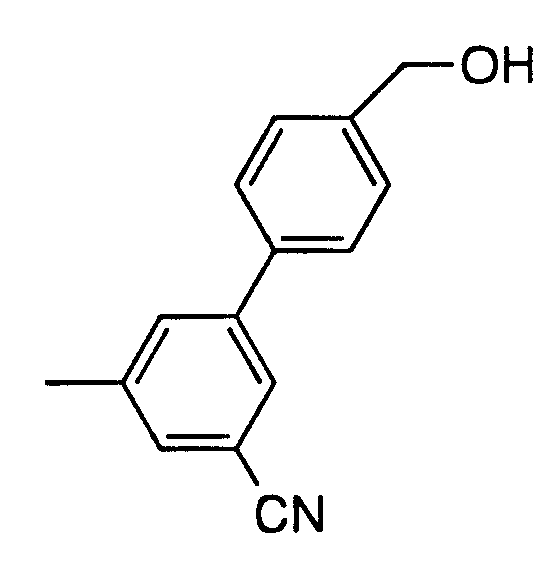
Preparation of p-Nitrobenzyl (5R,6S)-2-[3-cyano-5-(4-hydroxy- methylphenyl)phenyl]-6-[(1R)-triethylsilyloxyeth-1-yl]carbapen-2-em-3- carboxylate
Figure imgf000025_0001
Dry dichloromethane (330 mL, 11.5 mL/g ADC- 13, KF≤ 100 mg/mL) was charged to a dry flask under a dry N2 atmosphere. ADC-13 (28.9 g, 83.0 mmol) was added as a solid and the solution was cooled to -78°C. Triethylamine (11.0 mL, 7.9 g, 78.8 mmol, KF≤ 100 mg/mL) was added over approximately 5 min, maintaining the internal temperature below -70°C. After 15 min, trifluoromethanesulfonic anhydride (13.3 mL, 22.2 g, 78.8 mmol) was added over approximately 15 min (exothermic!), maintaining the internal temperature below -70°C. After 15 min, triethylamine (12.1 mL, 8.8 g, 87.2 mmol, KF≤ 100 mg/mL) was added over approximately 5 min, maintaining the internal temperature below -70°C. After 15 min, triethylsilyl trifluoromethanesulfonate (19.7 mL, 23.0 g, 87.2 mmol) was added over approximately 15 min (exothermic!), maintaining the internal temperature below -70°C. The mixture was aged at -70 to -80°C for 30 min.
In a separate flask, the BBA•2H2O (20.0 g, 69.2 mmol) was dissolved in THF (630 mL) and the solution was added to the enol triflate solution by cannula, maintaining the internal temperature below -60°C. Bis(dibenzylideneacetone)palladium(0) (1.2 g, 2.08 mmol) was added, followed by 5.6 N aq KOH (37 mL, 208 mmol), maintaining the internal temperature below -60°C. The cold bath was removed and the dark mixture was allowed to warm to ambient temperature.
The reaction was quenched by pouring the mixture into 0.2 M aq KH2PO4 (not pH adjusted, 1.1 L), EtOAc (1.3 L), and MeOH (220 mL). The mixture was agitated and the phases (both slightly cloudy) were separated. The aqueous layer was extracted with EtOAc (1 x 650 mL). The combined organic extracts were concentrated in vacuo and the residue (dark oil) was flushed with acetonitrile (2 x 165 mL). The blackish-red residue was diluted to a final volume of 720 mL (the mixture was very turbid and dark brown in color; insoluble palladium compounds are present).
Water (145 mL; 20 v/v % of the acetonitrile mixture) was added over 1 min. The resulting mixture was agitated for 30 min. Black free-flowing solids formed. The solids were removed by filtration and washed (60 mL of 17% water in acetonitrile). The clear reddish yellow filtrate (900 mL; approximate solvent composition is 16% water in acetonitrile; 1 bed-volume; an HPLC assay was run to determine concentration of the column feed) was then loaded onto an SP-206 resin column (900 mL of resin).
Column Preparation:
SP-206 resin (Mitsubishi; 900 mL resin; 45 mL resin/g of biphenylboronic acid) was swelled in 50% aqueous methanol. The resin was loaded onto a column. The resin was washed with 2 b.v. (1800 mL) of acetone, 2 b.v. (1800 mL) of acetonitrile (ACN), and 2 b.v. (1800 mL) 70/30 ACN/water.
Chromatography:
The column feed (1 b.v., 900 mL, assayed to contain ca. 39 g of product, ca. 85% yield from BBA·2H2O) was loaded onto the resin (ambient temperature) at a flow rate of 3-5 b.v./h (0.5 b.v. fractions [450 mL]). The column was eluted with: 3 b.v. (2700 mL) 70/30 acetonitrile/water, followed by 3.5 b.v. (3150 mL) acetonitrile.
The appropriate fractions (minimum collected fraction purity was 91 area %; combined fraction purity was 95 area %; assayed to contain 31.2 g product) were combined and evaporated in vacuo to give a pale yellow, oily foam (34.55 g, 72% from BBA-2H20, 95 wt % pure vs. working std, 95 area % pure (270 nm)).
The following additional compounds were prepared by the analogous procedure:
1. Preparation of p-Nitrobenzyl (5R,6S)-2-(4-t- butyldiρhenylsiloxymethylphenyl)-6-[(1R)-triethyl- silyloxyeth-1-yl)] carbapen-2-em-3-carboxylate
Figure imgf000028_0001
1H NMR (CDCI3, 250 MHz) δ 8.18 (overlapping m, 2H), 7.75 (m, 4H),
7.35-7.58 (m, 12H), 5.43 (d, J = 14.0 Hz, 1H), 5.25 (d, J = 14.0, 1H),
4.84 (s, 2H), 4.27-4.47 (overlapping m, 2H), 3.40 (dd, J = 18.1, 8.9 Hz, 1H), 3.32 (overlapping m, 1H), 3.26 (dd, J = 18.1, 10.0 Hz, 1H), 1.38
(d, J = 6.3 Hz, 3H), 1.17 (s, tBu, 9H), 1.03 (t, J = 7.6 Hz, Me, 9H), 0.07
(m, 6H).
13C NMR (CDCI3) δ 176.29, 160.46, 147.29, 145.72, 142.62, 142.06,
135.31, 133.02, 131.47, 129.59, 127.88, 127.58, 126.08, 125.29,
123.48, 123.33, 67.02 and 65.82, 65.05 and 64.91 , 52.08, 42.27, 26.63,
22.47, 19.10, 6.62, 4.75.
IR (neat) 2973, 2895, 1769, 1720, 1608, 1522, 1347, 702 cm-1. 2. Preparation of p-Nitrobenzyl (5R,6S)-2-(3-nitrophenyl)-6- [(1R)-triethylsilyloxyeth-1-yl)] carbapen-2-em-3- carboxylate
Figure imgf000029_0001
1H NMR (CDCI3, 250 MHz) δ 8.24 (t, J = 1.9 Hz, 1H), 8.12-8.23 (overlapping m, 3H), 7.72 (m, 1H), 7.56 (m, 2H), 7.52 (t, J = 8.5 Hz, 1H), 5.38 (d, J = 14.0 Hz, 1H), 5.22 (d, J = 14.0 Hz, 1H), 4.38 (ddd, J = 10.2, 8.8, 3.0 Hz, 1H), 4.23-4.34 (m, 1H), 3.40 (dd, J = 18.6, 8.8 Hz, 1H), 3.32 (dd, J=5.6, 3.0 Hz, 1H), 3.24 (dd, J = 18.6, 10.2 Hz, 1H), 1.32 (d, J = 6.0 Hz, 3H), 0.96 (t, J = 7.8 Hz, 9H), 0.62 (m, 6H).
13C NMR (CDCl3) δ 176.14, 160.18, 147.91, 147.68, 142.38, 142.32, 134.77, 134.14, 129.13, 128.45, 128.29, 123.70, 123.59, 123.18, 67.63, 65.77, 65.70, 52.22, 42.22, 22.64, 6.79, 4.92.
IR (neat) 2980, 2895, 1790, 1727, 1525, 1350, 1275, 1200, 750 cm-1. 3. Preparation of p-Nitrobenzyl-(5R,6S)-2-(2-thiopheno)-6- [(1R)-triethylsilyloxyeth-1-yl] carbapen-2-em-3- carboxylate
Figure imgf000030_0001
1H NMR (CDCI3, 250 MHz) δ 8.20 (dd, J = 8.7, 2.2 Hz, 2H), 7.67 (d, J = 8.6 Hz, 2H), 7.58 (dd, J = 3.8, 1.0 Hz, 1H), 7.48 (dd, J = 5.1, 1.0 Hz, 1H), 7.06 (dd, J = 5.1, 3.8 Hz, 1H), 5.50 (d, J = 14.0 Hz, 1H), 5.28 (d, J = 14.0 Hz, 1H), 4.28-4.18 (m, 2H), 3.45 (dd, J = 17.6, 9.8 Hz, 1H), 3.35 (dd, J = 17.6, 9.3 Hz, 1H), 3.18 (dd, J = -5.9, 2.8 Hz, 1H), 1.29 (d, J = 7.8 Hz, 3H), 0.94 (t, J = 7.8 Hz, 9H), 0.64-0.55 (m, 6H).
1 3c NMR (CDCI3) δ 176.13, 161.09, 147.58, 143.01, 138.56, 134.32, 131.62, 130.33, 128.12, 127.16, 123.68, 123.49, 67.09, 65.89, 65.38, 51.47, 42.04, 22.70, 6.78, 4.91.
IR (Nujol) 1770, 1705, 1600, 1565, 1515, 1340, 1325, 1280, 1255, 1195 cm- 1.
4. Preparation of
Figure imgf000031_0001
1H NMR (CDCI3 , 250 MHz) δ 8J2 (m, 1H), 7.99 (m, 2H), 7.34-7.27 (m, 9H), 7.18 (m, 1H), 7.13-7.04 (m, 8H), 5.01 (d, J = 13.8 Hz, 1H), 4.86 (d, J = 13.8 Hz, 1H), 4.14 (q, J = 5.9 Hz, 1H), 3.78 (broad, 1H), 2.99 (broad, 2H), 2.89 (dd, J = 18.4, 9.9 Hz, 1H), 1.16 (d, J = 6.2 Hz, 3H), 0.91 (t, J = 7.9 Hz, 9H), 0.60-0.50 (m, 6H). 5. Preparation of p-Nitrobenzyl (5R,6S)-2-(3-cyanophenyl)-6- [(1R)-triethylsilyloxyeth-1-yl] carbapen-2-em-3- carboxylate
Figure imgf000032_0001
1H NMR (CDCI3, 250 MHz) δ 8.16 (m, 2H), 7.65-7.40 (m, 6H), 5.36 (d, J = 13.8 Hz, 1H), 5.19 (d, J = 13.8 Hz, 1H), 4.40-4.23 (m, 2H), 3.43-3.26 (m, 2H), 3.18 (dd, J = 18.3, 10.1 Hz, 1H), 1.29 (d, J = 6.1 Hz, 3H), 0.95 (t, J = 7.8 Hz, 9H), 0.65-0.56 (m, 6H).
13C NMR (CDCI3, 62.9 Hz) δ 176.20 160.18, 147.64, 142.61, 142.41, 134,53, 132.43, 132.15, 131.70, 129.02, 128.25, 128.16, 123.68, 118.27, 112.45, 67.54, 65.76, 65.61, 52.20, 42.19 , 22.61, 6.79, 4.91.
6. Preparation of p-Nitrobenzyl-(5R,6S)-2-(4-trifluoro- methylphenyl)-6-[(1R)-triethylsilyloxyeth-1-yl] carbapen-2- em-3-carboxylate
Figure imgf000032_0002
o 1H NMR (CDCI3, 250 MHz) δ 8.13 (m, 2H), 7.60-7.43 (m, 6H), 5.35 (d, J = 13.8 Hz, 1H), 5J8 (d, J = 13.8 Hz, 1H), 4.42-4.22 (m, 2H), 3.43-3.27 (m, 2H), 3.20 (dd, J = 18.4, 10.1 Hz, 1H), 1.30 (d, J = 6.1 Hz, 3H), 0.96 (t, J = 7.8 Hz, 9H)), 0.68-0.55 (m, 6H). 7. Preparation of p-Nitrobenzyl (5R,6S)-2-styryl-6-[(1R)- triethylsilyloxyeth-1 -yl] carbapen-2-em-3-carboxylate
Figure imgf000033_0001
1H NMR (CDCI3, 400 MHz) δ 8.24 (m, 2H), 7.92 (d, J = 16.3 Hz, 1H),
7.71 (m, 2H), 7.48 (m, 2H), 7.37-7.27 (m, 3H), 6.72 (d, J = 16.3 Hz, 1H), 5.51 (d, J = 13.9 Hz, 1H), 5.31 (d, J = 13.9 Hz, 1H), 4.32-4.21 (m,
2H), 3.25 (dd, J = 17.6, 10.4 Hz, 1H), 3.20 (dd, J = 6.2, 3.0 Hz, 1H),
3.13 (dd, J = 17.6, 8.7 Hz, 1H), 1.32 (d, J = 6J Hz, 3H), 0.98 (t, J = 7.9
Hz, 9H), 0.67-0.61 (m, 6H).
13C NMR (CDCI3, 100 Mz) δ 175.93, 160.94, 147.62, 144.85, 143.07,
136.78, 136.27, 129.00, 128.80, 128.09, 127.23, 126.73, 123.74,
121.34, 67.12, 66.09, 65.23, 52.60, 36.75, 22.68, 6.80, 4.95.
IR (Nujol) 1755, 1710, 1610, 1575, 1565, 1520, 1345, 1290, 1280,
1270, 1230, 1200, 1155, 1110, 1070, 1015 cm- 1.
8. Preparation ofp-Nitrobenzyl-(5R,6S)-2-(2'-methoxy- phenyl)-6-[(1R-triethylsilyloxyeth-1-yl)]-carbapen-2-em-3- carboxylate
Figure imgf000034_0001
1H NMR (CDCI3, 250 MHz) δ 8.08 (m, 2H), 7.34-7.23 (m, 3H), 7.13 (dd, J =7.5, 1.7 Hz, 1H), 6.94-6.83 (m, 2H), 5.27 (d, J = 14.1 Hz, 1H), 5.12 (d, J = 14.1 Hz, 1H), 4.35-4.19 (m, 2H), 3.73 (s, 3H), 3.31 (dd, J = 18.3, 8.8 Hz, 1H), 3.24 (dd, J = 6.5, 2.9 Hz, 1H), 3.09 (dd, J = 18.3, 10.0 Hz, 1H), 1.30 (d, J = 6.2 Hz, 3H), 0.95 (t, J = 7.9 Hz, 9H), 0.68- 0.52 (m, 6H).
13C NMR (CDCI3, 62.9 MHz) δ 176.70, 160.49, 156.26, 147.41 , 143.42, 142.88, 129.98, 129.46, 128.16, 127.81, 123.51, 122.95, 120.34, 110.83, 67.24, 66.34, 65.04, 55.37, 53.19, 41.80, 22.72, 6.81 , 4.95.
IR 2970, 2890, 1770, 1720, 1610, 1600, 1520, 1480, 1460, 1440, 1380, 1350, 1270, 1 195 cm- 1
EXAMPLE 7
Preparation of p-Nitrobenzyl (1S,5R,6S)-1-methyl-2-(7-hydroxy- methyl-9-fluorenone-3-yl)-6-[(1R)-triethylsilyloxyeth-1-yl] carbapen-2- em-3-carboxylate
Figure imgf000035_0001
p-Nitrobenzyl (1R,5R,6S)-1-methyl-2-oxo-6-[(1R)-hydroxyethyl]- carbapenam-3-carboxylate
(3S,4R)-3-[(1R)-1-hydroxyethyl]-4-[(1R)-1-methyl-3- diazo-3-p-nitrobenzyloxycarbonyl-2-oxo-propyl]azetidin-2-one (390 mg, 1 mmol) was dissolved in anhydrous methylene chloride (8 ml) and treated with Rhodium octanoate (3 mg). The reaction mixture was refluxed under nitrogen for 4 hours then allowed to cool and
evaporated under reduced pressure to give the desired cyclized product which was used for the next reaction without further purification. p-Nitrobenzyl (1S,5R,6S)-1-methyl-2-(7-hydroxymemyl-9-fluorenone- 3-yl)-6-[(1R)-triethylsilyloxyethyl) carbapen-2-em-3-carboxylate
The product from the previous reaction was dissolved in methylene chloride (4 ml) and cooled to -78°, under nitrogen. Triethylamine (133 μl, 0.95 eq.) was added dropwise and the reaction mixture was stirred for 15 minutes followed by dropwise addition of trifluoromethanesulfonic anhydride (159 μl, 0.95 eq.). The reaction mixture was stirred at -78° for 25 min. To this was added triethylamine (153 μl, 1.1 eq) dropwise followed 15 minutes later, by triethylsilyl trifluoromethanesulfonate (193 μl, 1.1 eq) also added dropwise. The reaction mixture was stirred another 1.25 hours at the end of which TLC showed complete reaction to the triethylsilyl derivative. The hydroxymethylflourenone-boronic acid (254 mg, 1.0 eq) was dissolved in DMF (2.2 ml) and added dropwise to the reaction mixture followed by Pd2 (dibenzylideneacetone)3CHCl3 (21 mg) and KOH solution (0.52 ml, 5.67N). The reaction mixture was stirred at -78° for 10 minutes and then allowed to warm to room temperature in 15 minutes and then stirred at 30° for 3.5 hours. TLC showed complete reaction of the enoltriflate.
The reaction mixture was diluted with 20% EtOAc/Et2O (50 ml) and washed four times with water (25 ml) and then with brine. The organic phase was dried over Na2SO4 and evaporated to give a residue (502 mg). Chromatography on silica gel plates (35%
EtOAc/hexane eluant) gave the product (331 mg).
NMR (200 MHz, CDCI3): δ 0.62 (q, J=7, CH3-CH2-Si); 0.97 (t, J=7, CH3-CH2-Si); 1.12 (d, J=7.5, 1-b-CH3); 1.33 (d, J=7.5, CH3-CHOH); 3.38 (d,d J=3, J=7, C-6 H); 3.45 (m, C-1 H); 4.31 (m, CH3CHOH); 4.2 (d,d J=3, J=10.5 C-5 H); 4.7 (s, CH2OH); 5.18 (ABq, ArCH2O); 7.12- 8.05 (m, ArH).
EXAMPLE 8
1. Preparation of 2-Methoxymethylfluoren-9-on-6-ylboronic Acid by solvolysis/ketalization protection steps followed by
metallation/borylation
A. Solvolysis and Ketalization Reactions Preparation of 6-Bromo-2-methoxymethyl-9-fluorenone Dimethyl Ketal
Figure imgf000037_0001
Part a - (conversion of benzylic bromide to methyl ether):
Absolute methyl alcohol (200 mL; 10 mL/g) was charged to a dry glass-lined pressure-rated (to 100 psi) vessel equipped with a mechanical stirrer under a N2 atmosphere. 6-Bromo-2-bromomethyl- 9-fluorenon (20 g; 0.057 mol) was charged and the resulting slurry was heated at 100°C in the sealed vessel for 24 hours. The mixture was cooled to room temperature. The methyl ether crystallized upon cooling.
(Ketalization of the carbonyl):
The reaction mixture from Part 4a was cooled to 0-5°C and sequentially charged with concentrated sulfuric acid (4.6 mL; added dropwise to prevent splattering, exothermic) and trimethyl orthoformate (93.5 mL, 0.855 mol; slightly endothermic). The reaction flask was fitted with a distillation head and the reaction mixture was heated and distillate was collected (~ 60 mL) until the internal
temperature reached 60°C (still head temperature: 55°C). The reaction mixture was then heated at 60°C under reflux for 1.5 hours. The colorless to pale yellow solution was cooled to 10°C. Triethylamine (47.7 mL, 34.6 g, 0.34 mol; 4 mol/mol of H2SO4; KF < 100 μg/mL) was added to the stirred mixture. The solution was taken to a minimum volume (~ 57 mL) by distillation in vacuo (internal temperature≤ 30°C). The mixture was diluted with toluene (400 mL) and aqueous NaOH solution (400 mL, 1.0 N) and agitated. The phases (both cloudy) were separated and the aqueous phase was extracted with toluene (200 mL). The combined organic phases were washed twice with D.I. water (200 mL). The organic phase was filtered into the next reaction vessel (suitable for cryogenic reactions) (clear solution at this point) and azeotropically dried by vacuum distillation of toluene (internal temperature≤ 53 °C) to a KF≤ 100 μg/mL. The solution was reduced to a minimum volume (57 mL) prior to the next reaction.
B. Metallation/Boronation
Preparation of 2-Methoxymethylfluoren-9-on-6-ylboronic Acid
Figure imgf000038_0001
Preparation of 2-Hydroxymethylfluoren-9-on-6-ylboronic Acid
Figure imgf000039_0001
lnto a dry three liter three necked round bottom flask equipped with a 500 mL addition funnel, thermocouple probe, and nitrogen inlet, were charged the solution of ketal in toluene (420 mL, 1.07 M) and tetrahydrofuran (1.7 L, KF < 44 μg/mL) at room
temperature. The air in the reaction flask was exchanged by three vacuum purges with nitrogen. A sample is taken to verify a KF < 100 μg/mL. Triisopropyl borate (150 mL, 651 mmol) was added to the solution at room temperature. The mixture was cooled to -78°C and n- butyl lithium solution (1.6 M in hexanes; 395 mL; 628 mmol) was slowly added over 3 hours, maintaining the temperature at -80 to -75°C. After 30 minutes, an aliquot of the reaction mixture was taken and quenched into acetic acid for HPLC assay. Typically, 2.0 area % of the bromo compound remained. Additional n-butyl lithium solution (1.6 M; 19 mL; 30.4 mmol) was added to the reaction mixture over 10 minutes at -80 to -75°C. After aging for 20 minutes, a reaction aliquot was assayed by HPLC. In a typical case, 0.1 area % of the bromo compound remained. The reaction mixture was allowed to warmed to 20°C over 1 hour. To the solution was added aqueous sulfuric acid (2 M; 920 mL; 1.84 mol) over 10 minutes. The reaction temperature rose to 28°C. The mixture was vigorously stirred for 30 minutes. The organic layer (2.62 L) was separated. The aqueous layer (1.2 L) was extracted with ethyl acetate (0.5 L and 0.2 L). The combined organic extracts were concentrated to 300 mL under 165 mm bar (38°C bath). The product crystallized out. To this mixture was added DI water (450 mL), and the resulting three phase mixture was stirred overnight at room temperature. The precipitates were collected on a 600 mL sintered glass filtered, washed with toluene (100 mL) and DI water (3 x 150 mL), and dried under house vacuum (nitrogen sweep) at 80°C overnight (filter cake; 9.8 cm ID x 2.5 cm). 2-Methoxymethylfluoren- 9-one-6-boric acid was obtained as a mono-hydrate (125.8 g, 91 J wt % purity) in 95.2% corrected yield.
Into a dry 500 mL three necked round bottom flask equipped with a reflux condenser, mechanical stirrer, and nitrogen inlet, were charged 2-methyoxymethylfluoren-9-on-6-ylboronic acid (30.8 gram) and trifluoroacetic acid (300 mL) at room temperature. The solution was aged at refluxfor 44 h. The reaction mixture was cooled to 25 °C. To the reaction mixture was added water (1200 mL) maintaining the temperature between 22 - 30 °C. The slurry was cooled to 4 - 6 °C and aged for 30 min . The precipitates were filtered off and washed with 200 mL of water. The wet cake was dissolved in aqueous THF . The solution was adjusted to pH = 12.5 with 50 % sodium hydroxide solution at 20 to 25 °C. The solution was aged at 5 °C overnight . The precipitates were collected by filtration and washed with tetrahydrofuran (300 mL). The solid was suspended in N,N- dimethylformamide (DMF, 500 mL) and water (100 mL) and adjusted to pH = 4.5 with hydrochloric acid (2 M; 100 mL). The solution was heated to 100 °C and DI water (300 mL) was added. The mixture was cooled to 23 -25 °C and pH of the slurry was adjusted to 4.0 to 4.5 with 2 M HCl. The slurry was cooled to 5 °C and aged overnight. The crystal were filtered off, washed with cold 50 % DMF in water (50 mL) and water (200 mL) and dried in vacuo (N2 sweep). The product was isolated as a solid (23.9 g, 97.7 area % purity; 90.0 % corrected yield).
2. Preparation of 5-cyano-4'-hydroxyoxymethylbi-phenyl-3-boronic acid
Figure imgf000042_0001
FW: 253.06
C14H12BNO3
To 1 -bromo-4-tert-butyldiphenylsilyloxy-methylbenzene (1.224 Kg; 2.32 mol) was added dry (KF < 50 μg/mL) THF (10.5 L) and B(OiPr)3 (794 mL; 3.44 mol; 1.48 eq) at room temperature under nitrogen. The air in the reaction flask was completely exchanged by three vacuum purges with nitrogen. A sample is taken to verify a KF < 100 μg/mL. The solution was cooled down to -78°C. To the solution was added 1.6 M solution of n-BuLi in hexanes (2.08 L; 3.32 mol; 1.43 eq) at -78 to -75°C over 2 hours. The mixture was allowed to warm up to 17°C. To the mixture was added 4 M H2SO4 (4.64 L) at 5°C. The reaction was slightly exothermic and the temperature rose to 10°C. The reaction mixture was refluxing for 48 hours.
After cooling down to room temperature, 5 M aqueous potassium hydroxide (7.7 L) was dropwise added to the mixture below 20°C (pH was about 10.8). During nutralization, inorganic salt
(K2SO4) was precipitated. To this mixture was added 1M aqueous potassium hydroxide (2.23 L) below 20°C (pH was about 12.5). To this mixture was added t-butylmethyl ether (5 L) and stirred at room temperature for 30 minutes. The aqueous layer was separated and THF (2.5 L) was added to the aqueous solution. The aqueous solution was adjusted it pH to 2.7 with cone. HCl (about 374 mL) below 20°C. The mixture was extracted after stirring with ethyl acetate (5 L), dried over MgSO4 (about 200 g), and concentrated in vacuo. The residual solid was dissolved in DMF (2.3 L) at 100°C and added DI water (6.9 L) at 100°C. The mixture was cooled down to room temperature gently and aged at ambient temperature overnight. The crystals were collected by filtration, washed with 30% cold aqueous DMF (2 L) and then DI water (2 L), and dried in over at room temperature overnight to give 524 g of the desired boronic acid.

Claims

WHAT IS CLAIMED IS:
1. A process of making 2-aryl carbapenem compounds of Formula 1 ,
Figure imgf000044_0001
wherein
Ar is
Figure imgf000044_0002
wherein:
Ra is
(a) CN,
(b) CF3,
(c) C1 -3 alkoxy,
(d) -NO2,
(e) hydroxy C1 -3 alkyl, wherein the hydroxy is optionally protected with a silyl protecting group selected from tri-
C1 -4 alkyl silyl, phenyl di C1 -4 alkyl and diphenyl mono
C1 -4 alkyl silyl;
(f) substituted tetrazolyl;
Rb is
(a) C1 -3 alkyl,
(b) C1 -3 alkoxy,
(c) substituted C1 -3 alkyl, wherein the substituent is hydroxy, or
(d) hydroxy C1 -3 alkyl, wherein the hydroxy is optionally protected with a silyl protecting group selected from tri-
C1 -4 alkyl silyl, phenyl di C1 -4 alkyl and diphenyl mono
C1 -4 alkyl silyl;
Rc is
(a) C1 -3 alkyl,
(b) hydroxy C1 -3 alkyl, wherein the hydroxy is optionally protected with a silyl protecting group selected from tri-
C1 -4 alkyl silyl, phenyl di C1 -4 alkyl and diphenyl mono
C1 -4 alkyl silyl;
R1 is a conventional protecting group, such as, but not limited to
(a) benzyl,
(b) p-methoxybenzyl,
(c) p-nitrobenzyl,
(d) o-nitrobenzyl,
(e) benzhydryl
(f) allyl, (g) 2-trimethylsilylethyl or
(h) 2,2,2-trichloroethyl;
R3 is
(a) hydrogen,
(b) a hydroxy protecting group selected from tri-C1 -4 alkyl silyl, phenyl di C1 -4 alkyl and diphenyl mono C1 -4 alkyl silyl;
(c) -C(O)OR'3, wherein R'3 is
(a) benzyl,
(b) p-methoxybenzyl,
(c) p-nitrobenzyl,
(d) o-nitrobenzyl,
(e) benzhydryl
(f) allyl,
(g) 2-trimethylsilylethyl or
(h) 2,2,2-trichloroethyl;
(d) CH2 OR'3, or
(e) R'3;
R7 is hydrogen or methyl including β-methyl; comprising:
contacting a compound of formula B
Figure imgf000046_0001
and a coupling base in a coupling solvent with a compound of Formula OR4
Ar-B-OR5 and a transitional metal catalyst to yield a compound of Formula 1 wherein R4 and R5 are each individually hydrogen or C1 -6 alkyl or R4 and R5 are taken together are C1 -6 alkyl or R4 and R5 are joined together as to form
Figure imgf000047_0001
wherein R6 is C1 -3 alkyl, halo, hydroxy, C1 -3 alkoxy or hydrogen.
2. A process according to Claim 1 wherein the palladium catalyst is Pd(dba)2.
3. A process according to Claim 1 further comprising: contacting the compound of formula A
Figure imgf000047_0002
in a non-reactive solvent with a protecting agent suitable for removably protecting a hydroxyl group in the presence of a nitrogen containing base to yield a compound of Formula B
Figure imgf000048_0001
wherein the protecting agent is R3X, consisting of a protecting group R3 and a good leaving group X.
4. A process according to Claim 3 wherein the halocarbon solvent is dichloromethane.
5. A process according to Claim 4 wherein the protecting agent is triethylsilyl trifluoromethane sulfonate.
6. A process of making 2-aryl carbapenem compounds of Formula 1,
Figure imgf000048_0002
wherein
Figure imgf000049_0001
wherein
Ra is
(a) CN,
(b) CF3,
(c) C1 -3 alkoxy,
(d) -NO2,
(e) hydroxy C1 -3 alkyl, wherein the hydroxy is optionally protected with a silyl protecting group selected from tri-
C1 -4 alkyl silyl, phenyl di C1 -4 alkyl and diphenyl mono
C1 -4 alkyl silyl;
(f) substituted tetrazolyl; Rb is
(a) C1 -3 alkyl,
(b) C1 -3 alkoxy,
(c) substituted C1 -3 alkyl, wherein the substituent is hydroxy, or
(d) hydroxy C1 -3 alkyl, wherein the hydroxy is optionally protected with a silyl protecting group selected from tri-
C1 -4 alkyl silyl, phenyl di C1 -4 alkyl and diphenyl mono
C1 -4 alkyl silyl;
Rc is
(a) C1 -3 alkyl,
(b) hydroxy C1 -3 alkyl, wherein the hydroxy is optionally protected with a silyl protecting group selected from tri-
C1 -4 alkyl silyl, phenyl di C1 -4 alkyl and diphenyl mono
C1 -4 alkyl silyl;
R1 is a conventional protecting group, such as, but not limited to
(a) benzyl,
(b) p-methoxybenzyl,
(c) p-nitrobenzyl,
(d) o-nitrobenzyl,
(e) benzhydryl
(f) allyl,
(g) 2-trimethylsilylethyl or
(h) 2,2,2-trichloroethyl;
R3 is
(a) hydrogen,
(b) a hydroxy protecting group selected from tri-C1 -4 alkyl silyl, phenyl di C1 -4 alkyl and diphenyl mono C1 -4 alkyl silyl;
(c) -C(O)OR'3,
wherein R'3 is (a) benzyl,
(b) p-methoxybenzy 1,
(c) p-nitrobenzyl,
(d) o-nitrobenzyl,
(e) benzhydryl,
(f) allyl,
(g) 2-trimethylsilylethyl or
(h) 2,2,2-trichloroethyl;
(d) CH2 OR'3, or
(e) R'3;
R7 is hydrogen or methyl, optionally β-methyl;
(A) contacting a compound of Formula 2
Figure imgf000051_0001
in a non-reactive solvent with an activating agent in the presence of a base to yield a compound of formula A;
Figure imgf000051_0002
wherein -OR2 is a good leaving group selected from
(a) triflate,
(b) fluorosulfonate,
(c) mesylate,
(d) tosylate, (e) diaryl phosphate wherein the aryl group is mono or disubstituted phenyl and the substituents are each independently hydrogen or halo including chloro;
(B) Contacting the compound of formula A in non-reactive solvent as defined above, with a protecting agent suitable for removably protecting the hydroxyl of Formula A in the presence of a nitrogen containing base to yield a compound of Formula B
Figure imgf000052_0001
wherein the protecting agent is R3X, consisting of a protecting group R3 and a good leaving group X.
(C) Contacting the compound of Formula B and a coupling base in a coupling solvent with a compound
OR4
of formula Ar-B-OR5 and a palladium catalyst to yield a compound of Formula 1.
7. A process according to Claim 6 wherein R7 is β- methyl.
8. A process of making 2-aryl carbapenem compounds of Formula 1 ,
Figure imgf000052_0002
R1 is p-nitrobenzyl,
-OR2 is Triflate,
R3 is triethylsilyl,
R7 is hydrogen, and
Ar is
Figure imgf000053_0001
comprising:
contacting a compound of formula B
Figure imgf000053_0002
and a coupling base in a coupling solvent with a
O
Figure imgf000053_0003
R4
compound of Formula Ar-B-OR5 and a transition metal catalyst to yield a compound of Formula 1 wherein R4 and R5 are each individually hydrogen or C1 -6 alkyl or R4 and R5 are taken together are C1 -6 alkyl or R4 and R5 are joined together as to form
Figure imgf000053_0004
wherein R6 is C1 -3 alkyl, halo, hydroxy, C1 -3 alkoxy or hydrogen.
9. A process according to Claim 7 wherein the palladium catalyst is Pd(dba)2.
10. A process according to Claim 7 further comprising: contacting the compound of formula A
Figure imgf000054_0001
in a non-reactive solvent with a protecting agent suitable for removably protecting agent suitable for protecting a hydroxyl group in the presence of a nitrogen containing base to yield a compound of Formula B
Figure imgf000054_0002
wherein the protecting agent is R3X, consisting of a protecting group R3 and a good leaving group X.
11. A process according to Claim 10 wherein the halocarbon solvent is dichloromethane.
12. A process according to Claim 11 wherein the protecting agent is triethylsilyl trifluoromethane sulfonate.
13. A process of making a 2-aryl carbapenem compound of Formula 1,
wherein
R1 is p-nitrobenzyl,
-OR2 is triflate,
R3 is triethylsilyl,
R7 is hydrogen,
Ar is
Figure imgf000055_0001
(A) contacting a compound of Formula 2
Figure imgf000055_0002
in a non-reactive solvent with an activating agent in the presence of a base to yield a compound of formula A;
Figure imgf000055_0003
(B) Contacting the compound of formula A in non-reactive solvent as defined above, with a protecting agent suitable for removably protecting the hydroxyl of Formula 2 in the presence of a nitrogen containing base to yield a compound of Formula B
Figure imgf000056_0001
wherein the protecting agent is R3X, and X is a good leaving group;
(C) Contacting the compound of Formula B and a coupling base in a coupling solvent with a compound
OR4
of formula Ar-B-OR5 and a palladium catalyst to yield a compound of Formula 1,
Figure imgf000056_0002
Figure imgf000056_0003
OR4
14. A compound of Formula Ar-B-OR 5
wherein
Figure imgf000057_0001
Ra is
(a) CN,
(b) CF3,
(c) C1 -3 alkoxy,
(d) -NO2,
(e) hydroxy C1 -3 alkyl, wherein the hydroxy is optionally protected with a silyl protecting group selected from tri-
C1 -4 alkyl silyl, phenyl di C1 -4 alkyl and diphenyl mono
C1 -4 alkyl silyl;
(f) substituted tetrazolyl;
Rb is (a) C1 -3 alkyl,
(b) C1 -3 alkoxy,
(c) substituted C1 -3 alkyl, wherein the substituent is hydroxy, or
(d) hydroxy C1 -3 alkyl, wherein the hydroxy is optionally
protected with a silyl protecting group selected from tri-
C1 -4 alkyl silyl, phenyl di C1 -4 alkyl and diphenyl mono
C1 -4 alkyl silyl;
Rc is
(a) C1 -3 alkyl,
(b) hydroxy C1 -3 alkyl, wherein the hydroxy is optionally
protected with a silyl protecting group selected from tri-
C1 -4 alkyl silyl, phenyl di C1 -4 alkyl and diphenyl mono
C1 -4 alkyl silyl; and wherein R4 and R5 are each individually hydrogen or C1 -6 alkyl or R4 and R5 are taken together are C1 -6 alkyl.
15. A compound according to Claim 14 wherein
Rb and Rc are each -CH2OH, -OCH3, -CH3 or triethylsilyl wherein Ra resides at position 6 or 7 of the fluorenone and Rc resides at position 4 of the phenyl.
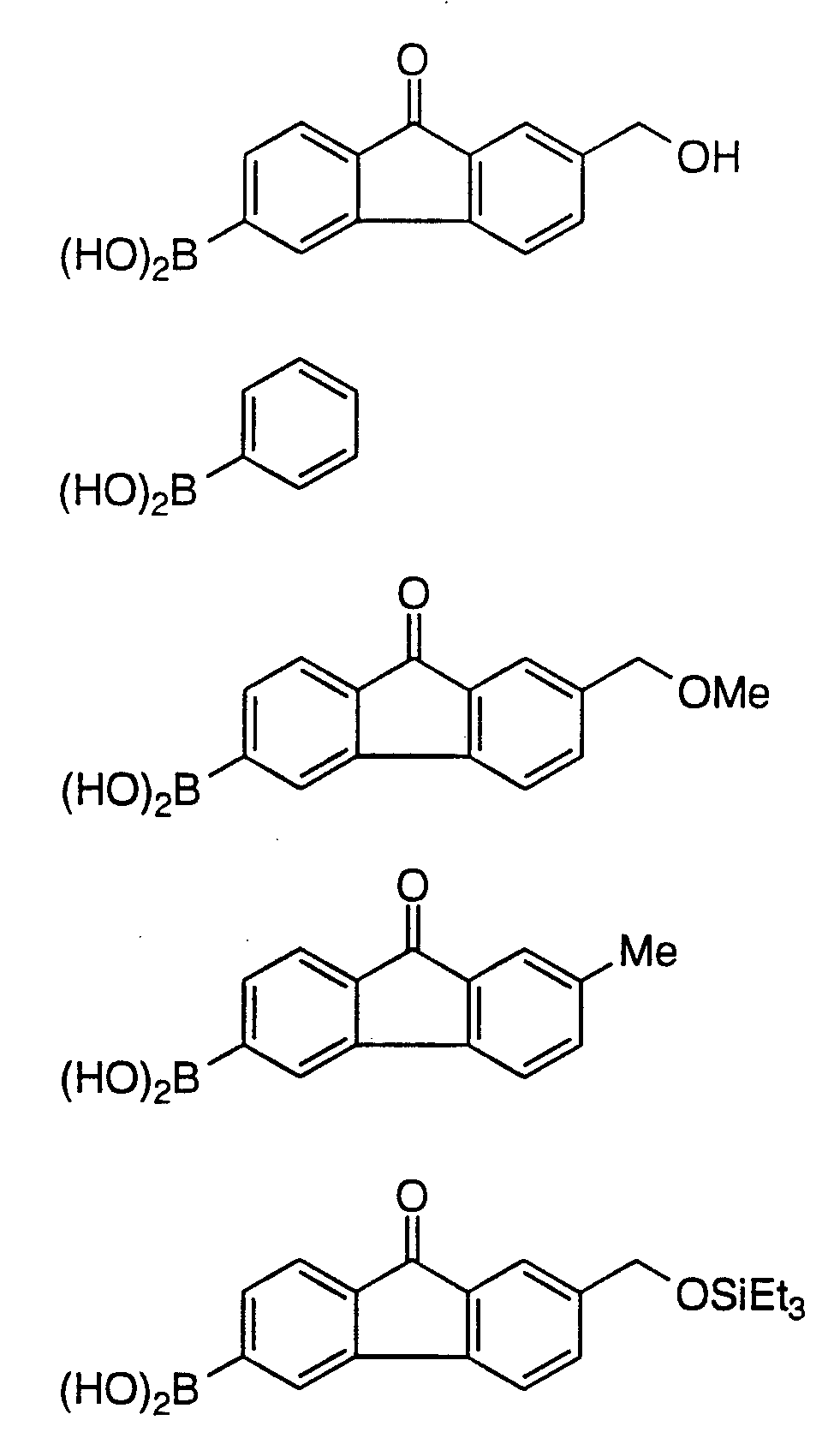
16. A compound according to Claim 15 selected from the group consisting of:
Figure imgf000059_0001
Figure imgf000060_0001
Figure imgf000061_0001
AMENDED CLAIMS
[received by the International Bureau on 29 April 1994 (29.04.94); original claims 1-16 replaced by amended claims 1-15 (16 pages)]
1. A process of making 2-aryl carbapenem compounds of Formula 1,
Figure imgf000062_0001
wherein
Ar is selected from the group consisting of:
Figure imgf000063_0001
wherein:
Rb is
(a) C1-3 alkyl,
(b) C1-3 alkoxy,
(c) substituted C1-3 alkyl, wherein the substituent is hydroxy, or (d) hydroxy C1-3 alkyl, wherein the hydroxy is optionally
protected with a silyl protecting group selected from tri-C1-4 alkyl silyl, phenyl di C1-4 alkyl and diphenyl mono C1-4 alkyl silyl;
Rc is
(a) C1-3 alkyl,
(b) hydroxy C1-3 alkyl, wherein the hydroxy is optionally
protected with a silyl protecting group selected from tri-C1-4 alkyl silyl, phenyl di C1 -4 alkyl and diphenyl mono C1 -4 alkyl silyl;
R1 is a protecting group selected from the group consisting of:
(a) benzyl,
(b) p-methoxybenzyl,
(c) p-nitrobenzyl,
(d) o-nitrobenzyl,
(e) benzhydryl
(f) allyl,
(g) 2-trimethylsilylethyl or
(h) 2,2,2-trichloroethyl; R3 is
(a) hydrogen,
(b) a hydroxy protecting group selected from tri-C1 -4 alkyl silyl, phenyl di C1 -4 alkyl and diphenyl mono C1 -4 alkyl silyl;
(c) -C(O)OR'3, wherein R'3 is
(a) benzyl,
(b) p-methoxybenzyl,
(c) p-nitrobenzyl,
(d) o-nitrobenzyl;
(e) benzhydryl
(f) allyl,
(g) 2-trimethylsilylethyl or
(h) 2,2,2-trichloroethyl;
(d) CH2 OR'3, or
(e) R'3;
R7 is hydrogen or methyl; comprising:
contacting a compound of formula B
Figure imgf000065_0001
wherein -OR2 represents a leaving group selected from: (a) triflate; (b) fluorosulfonate; (c) mesylate; (d) tosylate, and (e) diarylphosphate in which the aryl group is mono or disubstituted phenyl and the substituents are hydrogen or halo,
and a coupling base in a coupling solvent with a compound of formula:
Figure imgf000065_0002
R4 and R5 are each individually hydrogen or C1 -6 alkyl or R4 and R5 are taken together are C1 -6 alkyl or R4 and R5 are joined together as to form
Figure imgf000065_0003
wherein R6 is C1 -3 alkyl, halo, hydroxy, C1 -3 alkoxy or hydrogen and a transitional metal catalyst to yield a compound of formula 1.
2. A process according to Claim 1 wherein the palladium catalyst is Pd(dba)2.
3. A process according to Claim 1 further comprising: contacting the compound of formula A
Figure imgf000066_0002
wherein -OR2 is a leaving group selected from:
(a) triflate,
(b) fluorosulfonate,
(c) mesylate,
(d) tosylate, and
(e) diaryl phosphate wherein the aryl group is mono or
disubstituted phenyl and the substituents are each independently hydrogen or halo including chloro; in a non-reactive solvent with a protecting agent suitable for removably protecting a hydroxyl group in the presence of a nitrogen containing base to yield a compound of Formula B
Figure imgf000066_0001
wherein the protecting agent is R3X, consisting of a protecting group R3 and a good leaving group X.
4. A process according to Claim 3 wherein the halocarbon solvent is dichloromethane.
5. A process according to Claim 4 wherein the protecting agent is triethylsilyl trifluoromethane sulfonate.
6. A process of making 2-aryl carbapenem compounds of the formula 1 :
Figure imgf000067_0001
wherein
Ar is selected from the group consisting of:
Figure imgf000068_0001
wherein
Rb is
(a) C1-3 alkyl,
(b) C1-3 alkoxy,
(c) substituted C1-3 alkyl, wherein the substituent is hydroxy, or (d) hydroxy C1-3 alkyl, wherein the hydroxy is optionally
protected with a silyl protecting group selected from tri-C1-4 alkyl silyl, phenyl di C1-4 alkyl and diphenyl mono C1-4 alkyl silyl;
Rc is
(a) C1-3 alkyl, (b) hydroxy C1 -3 alkyl, wherein the hydroxy is optionally protected with a silyl protecting group selected from tri-C1 -4 alkyl silyl, phenyl di C1 -4 alkyl and diphenyl mono C1 -4 alkyl silyl;
R1 is a protecting group selected from the group consisting of:
(a) benzyl,
(b) p-methoxybenzyl,
(c) p-nitrobenzyl,
(d) o-nitrobenzyl,
(e) benzhydryl
(f) allyl,
(g) 2-trimethylsilylethyl or
(h) 2,2,2-trichloroethyl;
R3 is
(a) hydrogen,
(b) a hydroxy protecting group selected from tri-C1 -4 alkyl silyl, phenyl di C1 -4 alkyl and diphenyl mono C1 -4 alkyl silyl;
(c) -C(O)OR'3,
wherein R'3 is
(a) benzyl,
(b) p-methoxybenzyl,
(c) p-nitrobenzyl,
(d) o-nitrobenzyl,
(e) benzhydryl,
(f) allyl,
(g) 2-trimethylsilylethyl or
(h) 2,2,2-trichloroethyl;
(d) CH2 OR'3, or
(e) R'3; R7 is hydrogen or methyl;
(A) contacting a compound of Formula 2
Figure imgf000070_0002
in a non-reactive solvent with an activating agent in the presence of a base to yield a compound of formula A;
Figure imgf000070_0001
wherein -OR2 is a leaving group selected from the group consisting of:
(a) triflate,
(b) fluorosulfonate,
(c) mesylate,
(d) tosylate,
(e) diaryl phosphate wherein the aryl group is mono or
disubstituted phenyl and the substituents are each independently hydrogen or halo including chloro;
(B) contacting the compound of formula A in non-reactive solvent as defined above, with a protecting agent suitable for removably protecting the hydroxyl of Formula A in the presence of a nitrogen containing base to yield a compound of Formula B
Figure imgf000071_0001
wherein the protecting agent is R3X, consisting of a protecting group R3 and a good leaving group X.
(C) contacting the compound of Formula B and a coupling base in a coupling solvent with a compound of the formula
Figure imgf000071_0002
and a palladium catalyst to yield a compound of Formula 1.
7. A process of making 2-aryl carbapenem compounds of formula 1,
ϊ
Figure imgf000071_0003
R1 is p-nitrobenzyl,
R3 is triethylsilyl,
R7 is hydrogen, and Ar is
Figure imgf000072_0001
comprising:
contacting a compound of formula B
Figure imgf000072_0002
wherein -OR2 is triflate, and a coupling base in a coupling solvent with a compound of the formula
Figure imgf000072_0003
wherein R4 and R5 are each individually hydrogen or C1 -6 alkyl or R4 and R5 are taken together are C1 -6 alkyl or R4 and R5 are joined together as to form
Figure imgf000072_0004
wherein R6 is C1 -3 alkyl, halo, hydroxy, C1 -3 alkoxy or hydrogen and a transition metal catalyst to yield a compound of Formula 1.
8. A process according to Claim 7 wherein the palladium catalyst is Pd(dba)2.
9. A process according to Claim 7 further comprising: contacting the compound of formula A
Figure imgf000073_0001
in a non-reactive solvent with a protecting agent suitable for protecting a hydroxyl group in the presence of a nitrogen containing base to yield a compound of Formula B
Figure imgf000073_0002
wherein said protecting agent is R3X, consisting of a protecting group R3 and a good leaving group X.
10. A process according to Claim 9 wherein the halocarbon solvent is dichloromethane.
11. A process according to Claim 10 wherein the protecting agent is triethylsilyl trifluoromethane sulfonate.
12. A process of making a 2-aryl carbapenem compound of formula 1 , wherein:
R1 is p-nitrobenzyl,
-OR2 is triflate,
R3 is triethylsilyl,
R7 is hydrogen,
Ar is
Figure imgf000074_0001
(A) contacting a compound of Formula 2
Figure imgf000074_0002
in a non-reactive solvent with an activating agent in the presence of a base to yield a compound of formula A;
Figure imgf000074_0003
(B) contacting the compound of formula A in a non-reactive solvent as defined above, with a protecting agent suitable for removably protecting the hydroxyl of formula 2 in the presence of a nitrogen containing base to yield a compound of Formula B
Figure imgf000075_0001
wherein the protecting agent is R3X, in which R3 is a hydroxyl protecting group and X is a good leaving group; (C) contacting the compound of formula B and a coupling base in a coupling solvent with a compound of the formula:
Figure imgf000075_0002
and a palladium catalyst to yield a compound of Formula 1,
Figure imgf000075_0003
13. A compound of the formula
Figure imgf000075_0004
wherein
Ar is selected from the group consisting of:
Figure imgf000076_0001
Rb is
(a) C1 -3 alkyl,
(b) C1 -3 alkoxy,
(c) substituted C1 -3 alkyl, wherein the substituent is hydroxy, or
(d) hydroxy C1 -3 alkyl, wherein the hydroxy is optionally
protected with a silyl protecting group selected from tri- C1 -4 alkyl silyl, phenyl di C1 -4 alkyl and diphenyl mono C1 -4 alkyl silyl;
Rc is (a) C1 -3 alkyl,
(b) hydroxy C1 -3 alkyl, wherein the hydroxy is optionally
protected with a silyl protecting group selected from tri-C1 -4 alkyl silyl, phenyl di C1 -4 alkyl and diphenyl mono C1 -4 alkyl silyl; and R4 and R5 are each individually hydrogen or C1 -6 alkyl, or R4 and R5 are taken together to represent C1 -6 alkyl.
14. A compound according to Claim 13 wherein
Rb and Rc are each -CH2OH, -OCH3, -CH3 or triethylsilyl wherein Rb resides at position 6 or 7 of the fluorenone and Rc resides at position 4 of the phenyl.
15. A compound according to Claim 14 selected from the group consisting of:
Figure imgf000077_0001
PCT/US1993/010539 1992-11-19 1993-11-03 Preparation of 2-aryl carbapenems via a boronic acid coupling reaction Ceased WO1994011372A1 (en)

Priority Applications (3)

Application Number Priority Date Filing Date Title
JP6512170A JPH08512280A (en) 1992-11-19 1993-11-03 Preparation of 2-arylcarbapenems by boronic acid coupling reaction
AU56657/94A AU5665794A (en) 1992-11-19 1993-11-03 Preparation of 2-aryl carbapenems via a boronic acid coupling reaction
EP94902205A EP0669921A4 (en) 1992-11-19 1993-11-03 PREPARATION OF 2-ARYL CARBAPENEMS BY COUPLING REACTION WITH BORIC ACID.

Applications Claiming Priority (2)

Application Number Priority Date Filing Date Title
US978,598 1992-11-19
US07/978,598 US5338875A (en) 1992-11-19 1992-11-19 Boron containing intermediates useful in the preparation of carbapenems

Publications (1)

Publication Number Publication Date
WO1994011372A1 true WO1994011372A1 (en) 1994-05-26

Family

ID=25526248

Family Applications (1)

Application Number Title Priority Date Filing Date
PCT/US1993/010539 Ceased WO1994011372A1 (en) 1992-11-19 1993-11-03 Preparation of 2-aryl carbapenems via a boronic acid coupling reaction

Country Status (6)

Country Link
US (2) US5338875A (en)
EP (1) EP0669921A4 (en)
JP (1) JPH08512280A (en)
AU (1) AU5665794A (en)
CA (1) CA2148696A1 (en)
WO (1) WO1994011372A1 (en)

Cited By (1)

* Cited by examiner, † Cited by third party
Publication number Priority date Publication date Assignee Title
WO1995031461A1 (en) * 1994-05-17 1995-11-23 Merck & Co., Inc. Preparation of 2-aryl carbapenems

Families Citing this family (11)

* Cited by examiner, † Cited by third party
Publication number Priority date Publication date Assignee Title
US5442056A (en) * 1994-05-17 1995-08-15 Merck & Co., Inc. Preparation of 2-aryl carbapenems
US7115595B2 (en) * 2000-12-27 2006-10-03 Dainippon Sumitomo Pharma Co., Ltd. Carbapenem compounds
JP4377231B2 (en) * 2001-11-05 2009-12-02 大日本住友製薬株式会社 New carbapenem compounds
BRPI0412856A2 (en) * 2003-03-19 2017-04-18 Mul-T-Lock Tech Ltd extended multi-point extensible lock
JPWO2004089954A1 (en) * 2003-04-08 2006-07-06 大日本住友製薬株式会社 New carbapenem compounds
EP2428519B1 (en) * 2004-08-24 2015-01-21 BTG International Limited Composition for the preparation of 17-vinyl- triflates as intermediates
JPWO2006025475A1 (en) * 2004-09-03 2008-05-08 大日本住友製薬株式会社 New carbapenem compounds
WO2006103999A1 (en) * 2005-03-25 2006-10-05 Dainippon Sumitomo Pharma Co., Ltd. Novel carbapenem compound
EP2052055B1 (en) * 2006-08-16 2011-07-06 Merck Patent GmbH Cyclohexene compounds for liquid-crystalline mixtures
DK2326648T3 (en) * 2008-07-30 2012-10-15 Ranbaxy Lab Ltd Process for the preparation of carbapenem compounds
WO2011048583A1 (en) 2009-10-23 2011-04-28 Ranbaxy Laboratories Limited Process for the preparation of carbapenem compounds

Citations (3)

* Cited by examiner, † Cited by third party
Publication number Priority date Publication date Assignee Title
US3090801A (en) * 1956-07-06 1963-05-21 American Potash & Chem Corp Aryl polyboronic acids and esters and process for their preparation
US5143914A (en) * 1991-06-25 1992-09-01 Merck & Co., Inc. 2-heteroarylphenyl-carbapenem antibacterial agents
US5153186A (en) * 1991-05-24 1992-10-06 Merck & Co., Inc. 2-benzocoumarinyl-carbapenems

Family Cites Families (2)

* Cited by examiner, † Cited by third party
Publication number Priority date Publication date Assignee Title
US3038926A (en) * 1958-09-17 1962-06-12 Roussel Uclaf Organic diol aryl boronates
CA2036960A1 (en) * 1990-02-26 1991-08-27 Thomas A. Rano Novel synthesis of carbapenem intermediates

Patent Citations (3)

* Cited by examiner, † Cited by third party
Publication number Priority date Publication date Assignee Title
US3090801A (en) * 1956-07-06 1963-05-21 American Potash & Chem Corp Aryl polyboronic acids and esters and process for their preparation
US5153186A (en) * 1991-05-24 1992-10-06 Merck & Co., Inc. 2-benzocoumarinyl-carbapenems
US5143914A (en) * 1991-06-25 1992-09-01 Merck & Co., Inc. 2-heteroarylphenyl-carbapenem antibacterial agents

Non-Patent Citations (2)

* Cited by examiner, † Cited by third party
Title
CHEMICAL ABSTRACTS, Volume 106, No. 13; BROWN et al., "Preparation and Characterization of Organyl-1-Alkyl Boronic Esters", see entire document; Organometallics, 6(3), 1987, pp. 629-31. *
See also references of EP0669921A4 *

Cited By (1)

* Cited by examiner, † Cited by third party
Publication number Priority date Publication date Assignee Title
WO1995031461A1 (en) * 1994-05-17 1995-11-23 Merck & Co., Inc. Preparation of 2-aryl carbapenems

Also Published As

Publication number Publication date
AU5665794A (en) 1994-06-08
EP0669921A1 (en) 1995-09-06
US5442057A (en) 1995-08-15
EP0669921A4 (en) 1996-02-07
CA2148696A1 (en) 1994-05-26
US5338875A (en) 1994-08-16
JPH08512280A (en) 1996-12-24

Similar Documents

Publication Publication Date Title
US5338875A (en) Boron containing intermediates useful in the preparation of carbapenems
US4960879A (en) Process for carbapenem intermediates
EP0333268A1 (en) Process for synthesis of a chiral 3-beta hydrogen (3R) 4-aroyloxy azetidinone
US6143885A (en) Preparation of beta-methyl carbapenem intermediates
US5563264A (en) Preparation of βlactam compounds
US4639335A (en) Stereocontrolled acetoxyazetidinone process
EP0298756A2 (en) Optically active allyl alcohol and process for producing leucotriene B4 using thereof
US5618934A (en) Boronic acid compound
EP0269236B1 (en) Process for synthesis of a chiral azetidinone
KR100289512B1 (en) Method for preparing beta-lactam compound and intermediates thereof
US5442056A (en) Preparation of 2-aryl carbapenems
EP0066301B1 (en) Intermediates for the preparation of thienamycin and process for preparing the same
IL98350A (en) Rhodium catalyzed cyclic beta-lactams
EP0192171A1 (en) Process for chiral synthesis of 1-bêta-methyl-carbapenem intermediates
EP1007511B1 (en) Preparation of beta-methyl carbapenem intermediates
US4663451A (en) Process for the synthesis of penems and penams
JP3684339B2 (en) Method for producing carbapenem compounds
US20070167475A1 (en) Novel Processes for the Production of Useful Intermediates
KR100231498B1 (en) Beta-methyl carbapenem derivatives and method for preparing the same
US5145957A (en) Stereoselective synthesis of a chiral cis 3-beta hydrogen (3R) 4-aroyloxy azetidinone
JP3543016B2 (en) Production method of β-lactam compound
JPH0713058B2 (en) Process for producing 4-substituted azetidinone derivative
IL90497A (en) Azetidinone intermediates for 1-carba (dethia) cephalosporins
IE50071B1 (en) Preparation of azetidin-2-ones suitable for the synthesis of thienamycin and azetidin-2-ones useful in a synthesis of that kind
JPH085853B2 (en) Lactam compound and its manufacturing method

Legal Events

Date Code Title Description
AK Designated states

Kind code of ref document: A1

Designated state(s): AU BB BG BR BY CA CZ FI HU JP KR KZ LK LV MG MN MW NO NZ PL RO RU SD SK UA US UZ

AL Designated countries for regional patents

Kind code of ref document: A1

Designated state(s): AT BE CH DE DK ES FR GB GR IE IT LU MC NL PT SE BF BJ CF CG CI CM GA GN ML MR NE SN TD TG

DFPE Request for preliminary examination filed prior to expiration of 19th month from priority date (pct application filed before 20040101)
121 Ep: the epo has been informed by wipo that ep was designated in this application
WWE Wipo information: entry into national phase

Ref document number: 2148696

Country of ref document: CA

Ref document number: 1994902205

Country of ref document: EP

WWP Wipo information: published in national office

Ref document number: 1994902205

Country of ref document: EP

WWW Wipo information: withdrawn in national office

Ref document number: 1994902205

Country of ref document: EP