WO1994014971A1 - Synthetic herpes simplex virus promoters - Google Patents
Synthetic herpes simplex virus promoters Download PDFInfo
- Publication number
- WO1994014971A1 WO1994014971A1 PCT/US1993/012507 US9312507W WO9414971A1 WO 1994014971 A1 WO1994014971 A1 WO 1994014971A1 US 9312507 W US9312507 W US 9312507W WO 9414971 A1 WO9414971 A1 WO 9414971A1
- Authority
- WO
- WIPO (PCT)
- Prior art keywords
- herpes simplex
- gene
- simplex virus
- promoter
- synthetic
- Prior art date
- Legal status (The legal status is an assumption and is not a legal conclusion. Google has not performed a legal analysis and makes no representation as to the accuracy of the status listed.)
- Ceased
Links
Classifications
-
- C—CHEMISTRY; METALLURGY
- C12—BIOCHEMISTRY; BEER; SPIRITS; WINE; VINEGAR; MICROBIOLOGY; ENZYMOLOGY; MUTATION OR GENETIC ENGINEERING
- C12N—MICROORGANISMS OR ENZYMES; COMPOSITIONS THEREOF; PROPAGATING, PRESERVING, OR MAINTAINING MICROORGANISMS; MUTATION OR GENETIC ENGINEERING; CULTURE MEDIA
- C12N15/00—Mutation or genetic engineering; DNA or RNA concerning genetic engineering, vectors, e.g. plasmids, or their isolation, preparation or purification; Use of hosts therefor
- C12N15/09—Recombinant DNA-technology
- C12N15/63—Introduction of foreign genetic material using vectors; Vectors; Use of hosts therefor; Regulation of expression
- C12N15/79—Vectors or expression systems specially adapted for eukaryotic hosts
- C12N15/85—Vectors or expression systems specially adapted for eukaryotic hosts for animal cells
- C12N15/86—Viral vectors
-
- C—CHEMISTRY; METALLURGY
- C07—ORGANIC CHEMISTRY
- C07K—PEPTIDES
- C07K14/00—Peptides having more than 20 amino acids; Gastrins; Somatostatins; Melanotropins; Derivatives thereof
- C07K14/005—Peptides having more than 20 amino acids; Gastrins; Somatostatins; Melanotropins; Derivatives thereof from viruses
-
- C—CHEMISTRY; METALLURGY
- C07—ORGANIC CHEMISTRY
- C07K—PEPTIDES
- C07K14/00—Peptides having more than 20 amino acids; Gastrins; Somatostatins; Melanotropins; Derivatives thereof
- C07K14/435—Peptides having more than 20 amino acids; Gastrins; Somatostatins; Melanotropins; Derivatives thereof from animals; from humans
- C07K14/76—Albumins
- C07K14/77—Ovalbumin
-
- C—CHEMISTRY; METALLURGY
- C12—BIOCHEMISTRY; BEER; SPIRITS; WINE; VINEGAR; MICROBIOLOGY; ENZYMOLOGY; MUTATION OR GENETIC ENGINEERING
- C12N—MICROORGANISMS OR ENZYMES; COMPOSITIONS THEREOF; PROPAGATING, PRESERVING, OR MAINTAINING MICROORGANISMS; MUTATION OR GENETIC ENGINEERING; CULTURE MEDIA
- C12N15/00—Mutation or genetic engineering; DNA or RNA concerning genetic engineering, vectors, e.g. plasmids, or their isolation, preparation or purification; Use of hosts therefor
- C12N15/09—Recombinant DNA-technology
- C12N15/63—Introduction of foreign genetic material using vectors; Vectors; Use of hosts therefor; Regulation of expression
- C12N15/79—Vectors or expression systems specially adapted for eukaryotic hosts
- C12N15/85—Vectors or expression systems specially adapted for eukaryotic hosts for animal cells
-
- C—CHEMISTRY; METALLURGY
- C12—BIOCHEMISTRY; BEER; SPIRITS; WINE; VINEGAR; MICROBIOLOGY; ENZYMOLOGY; MUTATION OR GENETIC ENGINEERING
- C12N—MICROORGANISMS OR ENZYMES; COMPOSITIONS THEREOF; PROPAGATING, PRESERVING, OR MAINTAINING MICROORGANISMS; MUTATION OR GENETIC ENGINEERING; CULTURE MEDIA
- C12N2710/00—MICROORGANISMS OR ENZYMES; COMPOSITIONS THEREOF; PROPAGATING, PRESERVING, OR MAINTAINING MICROORGANISMS; MUTATION OR GENETIC ENGINEERING; CULTURE MEDIA dsDNA viruses
- C12N2710/00011—Details
- C12N2710/16011—Herpesviridae
- C12N2710/16211—Lymphocryptovirus, e.g. human herpesvirus 4, Epstein-Barr Virus
- C12N2710/16222—New viral proteins or individual genes, new structural or functional aspects of known viral proteins or genes
-
- C—CHEMISTRY; METALLURGY
- C12—BIOCHEMISTRY; BEER; SPIRITS; WINE; VINEGAR; MICROBIOLOGY; ENZYMOLOGY; MUTATION OR GENETIC ENGINEERING
- C12N—MICROORGANISMS OR ENZYMES; COMPOSITIONS THEREOF; PROPAGATING, PRESERVING, OR MAINTAINING MICROORGANISMS; MUTATION OR GENETIC ENGINEERING; CULTURE MEDIA
- C12N2710/00—MICROORGANISMS OR ENZYMES; COMPOSITIONS THEREOF; PROPAGATING, PRESERVING, OR MAINTAINING MICROORGANISMS; MUTATION OR GENETIC ENGINEERING; CULTURE MEDIA dsDNA viruses
- C12N2710/00011—Details
- C12N2710/16011—Herpesviridae
- C12N2710/16611—Simplexvirus, e.g. human herpesvirus 1, 2
- C12N2710/16641—Use of virus, viral particle or viral elements as a vector
- C12N2710/16643—Use of virus, viral particle or viral elements as a vector viral genome or elements thereof as genetic vector
-
- C—CHEMISTRY; METALLURGY
- C12—BIOCHEMISTRY; BEER; SPIRITS; WINE; VINEGAR; MICROBIOLOGY; ENZYMOLOGY; MUTATION OR GENETIC ENGINEERING
- C12N—MICROORGANISMS OR ENZYMES; COMPOSITIONS THEREOF; PROPAGATING, PRESERVING, OR MAINTAINING MICROORGANISMS; MUTATION OR GENETIC ENGINEERING; CULTURE MEDIA
- C12N2830/00—Vector systems having a special element relevant for transcription
-
- C—CHEMISTRY; METALLURGY
- C12—BIOCHEMISTRY; BEER; SPIRITS; WINE; VINEGAR; MICROBIOLOGY; ENZYMOLOGY; MUTATION OR GENETIC ENGINEERING
- C12N—MICROORGANISMS OR ENZYMES; COMPOSITIONS THEREOF; PROPAGATING, PRESERVING, OR MAINTAINING MICROORGANISMS; MUTATION OR GENETIC ENGINEERING; CULTURE MEDIA
- C12N2830/00—Vector systems having a special element relevant for transcription
- C12N2830/008—Vector systems having a special element relevant for transcription cell type or tissue specific enhancer/promoter combination
-
- C—CHEMISTRY; METALLURGY
- C12—BIOCHEMISTRY; BEER; SPIRITS; WINE; VINEGAR; MICROBIOLOGY; ENZYMOLOGY; MUTATION OR GENETIC ENGINEERING
- C12N—MICROORGANISMS OR ENZYMES; COMPOSITIONS THEREOF; PROPAGATING, PRESERVING, OR MAINTAINING MICROORGANISMS; MUTATION OR GENETIC ENGINEERING; CULTURE MEDIA
- C12N2830/00—Vector systems having a special element relevant for transcription
- C12N2830/15—Vector systems having a special element relevant for transcription chimeric enhancer/promoter combination
-
- C—CHEMISTRY; METALLURGY
- C12—BIOCHEMISTRY; BEER; SPIRITS; WINE; VINEGAR; MICROBIOLOGY; ENZYMOLOGY; MUTATION OR GENETIC ENGINEERING
- C12N—MICROORGANISMS OR ENZYMES; COMPOSITIONS THEREOF; PROPAGATING, PRESERVING, OR MAINTAINING MICROORGANISMS; MUTATION OR GENETIC ENGINEERING; CULTURE MEDIA
- C12N2830/00—Vector systems having a special element relevant for transcription
- C12N2830/60—Vector systems having a special element relevant for transcription from viruses
-
- C—CHEMISTRY; METALLURGY
- C12—BIOCHEMISTRY; BEER; SPIRITS; WINE; VINEGAR; MICROBIOLOGY; ENZYMOLOGY; MUTATION OR GENETIC ENGINEERING
- C12N—MICROORGANISMS OR ENZYMES; COMPOSITIONS THEREOF; PROPAGATING, PRESERVING, OR MAINTAINING MICROORGANISMS; MUTATION OR GENETIC ENGINEERING; CULTURE MEDIA
- C12N2830/00—Vector systems having a special element relevant for transcription
- C12N2830/80—Vector systems having a special element relevant for transcription from vertebrates
- C12N2830/90—Vector systems having a special element relevant for transcription from vertebrates avian
Definitions
- the present invention relates generally to synthetic herpes simplex virus (HSV) promoters useful for expressing heterologous genes within the context of the HSV genome. More specifically, the invention relates to a synthetic viral promoter including the 5' nontranscribed domain of an HSV gene operatively linked to the transcription initiation site and 5' transcribed non-coding domain of an HSV gene.
- HSV herpes simplex virus
- the HSV-1 genome includes at least seventy-six open reading frames which encode at least seventy-three diverse polypeptides.
- the genes encoded by the viral genome have been classified into three major groups designated as , ⁇ and 7, whose expression is coordinately regulated and sequentially ordered in a cascade fashion. The genes are expressed in the absence of prior viral protein synthesis. Expression of the genes is induced by the interaction of an HSV structural protein designated as ⁇ -transinducing factor or virion protein No. 16 and several host proteins which interact with a response element located in the 5' untranscribed domains of all a genes.
- the products of the a genes trans-activate the expression of the ⁇ genes by a mechanism as yet unknown, but the response elements for the induction of the ⁇ genes appear to reside in their 5 * untranscribed domains.
- the response elements commonly associated with ⁇ gene promoters are TAT A A boxes, SP1 binding sites, CCAAT boxes, and sites for binding of the ⁇ .4 gene product.
- the expression of 7 genes also requires the expression of genes. In addition, their expression is partially (the 7 1 genes) or totally (the 7 2 genes) dependent on viral DNA synthesis. In contrast to the and ⁇ genes, in 7 genes promoter response elements
- HSV promoters have been utilized to express non-HSV genes in the context of the HSV genome.
- Post et al., Mol Cell Biol, 2: 233-240 (1982) reports the expression of ovalbumin from a fusion of a chicken ovalbumin gene to the promoter of the ⁇ 4 gene.
- Hummel et al., Virology, 148: 337-343 (1986) describes the expression of an Epstein-Barr virus protein, the EBNA1 protein, from the ⁇ 4 promoter in the HSV genome.
- Synthetic genes consisting of the coding sequences of a foreign gene fused to a specific HSV promoter and inserted into the HSV genome are expressed in the temporal class of the promoter as is reported, for example, in Shih et al., Proc. Natl. Acad. Sci. USA, 81: 5867-5870 (1984) where the hepatitis B virus S gene specifying the hepatitis B virus surface antigen was inserted into the HSV genome under the control of the HSV o_4 gene promoter and separately under the control of the HSV thymidine kinase gene ⁇ promoter.
- HSV genome has been successfully utilized to express products of heterologous genes
- inserting foreign genes under the control of native HSV promoters is problematic because of the sequential order of activation of HSV promoters.
- a foreign gene under the control of an HSV promoter is transcribed early in the replicative process of the virus while a foreign gene under the control of an HSV 7 promoter is transcribed only in the later stages of replication.
- Heterologous polypeptides or proteins are therefore not continuously expressed throughout the infection cycle of the virus and the potential level of foreign protein synthesized is correspondingly reduced.
- HSV synthetic promoters specifically designed to express gene products throughout the infectious process of the virus and overproduce the gene product.
- the present invention provides synthetic HSV promoters that include an HSV (i.e., HSV-1 or HSV-2) a gene promoter fragment operatively linked 5' to an HSV (i.e. , HSV-1 or HSV-2) 7 gene promoter fragment. Also provided are DNA constructs including a synthetic HSV promoter of the invention operatively linked 5 1 to a heterologous gene, recombinant HSV genomes containing such DNA constructs, and recombinant viruses having such a recombinant HSV genomes.
- the HSV gene promoter fragment of the synthetic promoters of the invention consists essentially of the 5' nontranscribed domain of an gene.
- the a gene promoter fragment preferably includes the promoter sequences upstream of the translation initiation site (i.e., cap site) and preferably is a fragment of the ⁇ 4 gene. More preferably, the ⁇ 4 gene promoter fragment consists essentially of nucleotides -588 to -12 of the ⁇ 4 gene promoter relative to its transcription initiation site or of a functionally equivalent nucleotide sequence.
- the HSV 7 gene promoter fragment of the synthetic promoters of the invention consists essentially of the transcription initiation site and 5 1 transcribed non- coding domain of a 7 gene.
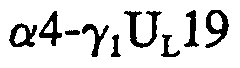
- the 7 gene fragment preferably includes the transcription initiation site and promoter sequences downstream of the transcription initiation site and preferably is a fragment of the 7 ⁇ U L 19 gene. More preferably, the 7 ⁇ U L 19 gene promoter fragment consists essentially of nucleotides -11 to + 189 of the
- synthetic HSV promoters of the invention is the synthetic promoter designated the promoter which was deposited in the plasmid pRB4297 in E. coli strain XL1 Blue with the American Type Culture
- ATCC American Type Culture Collection
- the synthetic promoter/heterologous gene DNA constructs of the invention when included in recombinant HSV genomes and/or recombinant viruses are useful for expressing heterologous polypeptides in appropriately transfected or infected host cells. (See Roizman, European Patent No.
- heterologous genes may encode any non-HSV polypeptide or protein of interest that confers immunity to infection, for example, surface glycoproteins of Epstein-Barr virus, influenza virus, human immunodeficiency virus, papilloma viruses, varicella- zoster virus, human cytomegalovirus and human herpesvirus HHV-6, as well as HSV proteins not naturally under the transcriptional control of either of the component promoters of the synthetic constructs.
- Transcription in a host cell from a synthetic promoter of the invention occurs constitutively throughout HSV infection and results in overproduction of the gene product.
- recombinant herpes simplex viruses of the invention is the recombinant herpes simplex virus R7125 which was deposited with the ATCC on November 19, 1992 and was assigned ATCC Accession No. VR 2389.
- the recombinant viruses described herein that include a heterologous gene operatively linked to a synthetic promoter of the invention are useful as vaccines.
- a host especially a human host
- Immunization against polypeptides encoded by various non-HSV viruses and bacteria is contemplated, including Epstein-Barr virus (EBV), varicella-zoster virus and cytomegalovirus, as well as immunization against various other human herpesviruses.
- EBV Epstein-Barr virus
- varicella-zoster virus varicella-zoster virus
- cytomegalovirus cytomegalovirus
- Herpes simplex viruses that are appropriate for insertion of the DNA constructs of the invention and for use as vaccines are avirulent strains (e.g., the strains described in Roizman, U.S. Patent No. 4,859,587 issued on August 22, 1989 and in Roizman, PCT International Publication No. WO 92/04050 published on March 19, 1992).
- Immunization of a human host with a recombinant herpes simplex virus of the invention involves administration by inoculation of an immunity-inducing dose of the virus by the parenteral route, preferably by intramuscular or subcutaneous injection. Inoculation may also by effected by surface scarification or by inoculation into a body cavity. Typically, one or several inoculations of between about 1000 and about 10,000,000 plaque-forming units each, as measured in susceptible human or nonhuman primate cell lines, are sufficient to effect immunization of a human host.
- Virus to be used as a vaccine may be utilized in liquid or freeze-dried form (in combination with one or more suitable preservatives and/or protective agents to protect the virus during the freeze-drying process).
- FIGURE 1 is a schematic representation of the HSV-1 genome and the natural locations of the promoters used in the construction of an promoter of the invention.
- FIGURE 2 is a schematic representation of the structure of three synthetic HSV promoter DNA constructs respectively included in recombinant viruses R3213, R7610 and R7600.
- FIGURE 3 is an autoradiographic image of chicken ovalbumin immunoprecipitated from the extracellular medium of cells respectively infected with HSV-l(F) (wild type HSV) and recombinant viruses R3213, R7610 and R7600.
- FIGURE 4 is a graph ' depicting the relative amounts of chicken ovalbumin made in cells during infection with HSV- 1(F) and recombinant viruses R3213, R7610 and R7600.
- FIGURE 5 is a schematic representation of the genomes of HSV-1 (F) and of recombinant viruses R3410, R7020 and R7125.
- FIGURE 6 is a schematic representation of the synthetic HSV promoter/Epstein Barr virus glycoprotein gp350/220 DNA construct in recombinant virus R7125.
- FIGURES 7A and 7B are autoradiographic images of HSV- 1(F), recombinant virus R7020, nonpassaged recombinant virus R7125 and serially passaged R7125P7 DNA digested with EcoRI or EcoRV, respectively, and hybridized to DNA encoding Epstein Barr virus glycoprotein gp350/220.
- FIGURE 8 is an autoradiographic image of gp350/220 immunoprecipitated from cells infected with recombinant virus R7020 and with recombinant virus R7125.
- the HSV-1 a promoter fragment selected for illustration here consists of the nucleotides -588 to -12 of the ⁇ 4 promoter relative to its transcription initiation site. This sequence includes several ⁇ -TIF response elements, several SP1 binding sites, and the native ⁇ 4 TATAA box.
- a domain of the 7 ⁇ U L 19 gene consisting of nucleotides -11 to + 189 relative to its transcription initiation site was selected.
- the U L 19 gene encodes virion protein VP5, the major capsid protein of the virus.
- Example 1 describes the construction of the synthetic promoter, fusion of the synthetic promoter to a chicken ovalbumin gene in a recombinant HSV-1 genome, and generation of a recombinant virus, designated R7600, therefrom.
- Example 2 describes the testing of recombinant virus R7600 for the capacity to produce ovalbumin and an analysis of the production of ovalbumin by the recombinant virus during infection of host cells in comparison to control viruses.
- Example 3 describes the construction of a DNA construct including the synthetic o.4-7 1 U L 19 promoter fused to structural sequences encoding the Epstein Barr virus glycoprotein gp350/220 and the generation of a recombinant virus, desginated R7125, having the DNA construct within its genome.
- Example 4 describes the testing of recombinant virus R7125 for the capacity to produce gp350/220 in comparison to a control virus and the stability of the recombinant virus after serial passage.
- FIGURE 1 schematically depicts the HSV-1 genome and the locations of restriction fragments of the genome which contain the promoter fragments of the HSV-1 U L 19, U L 44 (or gC) and ⁇ 4 genes utilized herein.
- ab and b'a' represent the inverted repeats flanking the U L components, whereas a and ca represent the inverted repeats flanking the U s component.
- the locations of BamHI fragments B 1 , 1 and N which respectively contain the U L 19, gC and o_4 promoters are indicated.
- a synthetic HSV promoter, designated the promoter was constructed as follows. DNA of bacterial plasmid clone pRB140 [Post et al., Proc. Natl. Acad. Sci.
- a second plasmid, pRB4295, containing promoter elements of the ⁇ 4 gene was derived from pRB168 (Post et al., supra) which contains the BamHI fragment Z of HSV-1(F). Plasmid pRB168 DNA was digested with Narl and Bgll and a 420 bp fragment was isolated and ligated to a synthetic double stranded oligonucleotide (the sequence of which is set out below) which conforms in part to elements from -88 to -12 in the o_4 promoter region (see description of pRB4295 below for differences). SEQ ID NO: 1
- pRB4295 contains the natural ⁇ .4 promoter elements from -520 to -88, natural sequence restored by the oligonucleotide from -88 to -40, then two nucleotide base changes to introduce a Notl recognition site (underlined). Natural sequences are restored from -37 through the natural TATA element at -28 (bold) to an induced BamHI recognition site at -12 (double underlined).
- a 200 bp fragment containing a portion of the 5 1 untranscribed sequence, the transcription initiation site and the 5 1 transcribed non-coding sequence of the 7iU L 19 gene was excised from pRB4294 with
- nucleotides 1 to 594 correspond to the c.4 gene promoter fragment
- nucleotides 595 to 797 correspond to the 7 ⁇ U L 19 gene promoter fragment
- nucleotide 606 is the transcription start site.
- Plasmid pRB4297 was digested with Kpnl and Hindlll and the resulting
- pRB4302 contains an entire HSV-1 genome with a cDNA copy of the structural sequences of the chicken ovalbumin gene inserted into the Bglll site in the leader of the thymidine kinase (tk) gene of the HSV-1 Bam Q fragment (see FIGURE 1).
- the Kpnl site of pRB4302 is adjacent to the translational start site of the chicken ovalbumin gene.
- the orientation in which the synthetic ⁇ 4-7 X U L 19 promoter was inserted into pRB4303 was the correct transcriptional orientation with respect to the translation start site of the ovalbumin gene.
- FIGURE 2 A schematic representation of the synthetic HSV promoter/ovalbumin gene DNA construct in pRB4303 is set out in FIGURE 2, wherein the wide box labeled "ova" represents the cDNA sequence of the structural portion of the chicken ovalbumin gene, the thin boxes represent the promoter regions and the arrowhead denotes the transcriptional orientation of the promoter.
- the synthetic HSV promoter/ovalbumin DNA construct was inserted into an HSV-1 genome by recombination through thymidine kinase sequences flanking the DNA construct by a method similar to that described in Post et al., Cell, 25: 555-565 (1981). Specifically, cotransfection of rabbit skin cells with DNA from pRB4303 and with DNA from the wild type HSV-1 strain HSV(F), followed by selection on 143TK cells for the TK + phenotype produced a number of recombinant viruses which then were plaque purified twice on Vero cells.
- five recombinant viruses tested five contained the ⁇ 4-7 ⁇ U L 19 synthetic promoter/chicken ovalbumin gene construct.
- the five recombinant viruses generated in Example 1 were tested for the capacity to produce chicken ovalbumin.
- All five were shown to produce comparable amounts of ovalbumin when the extracellular medium of infected cells was electrophoresed in denaturing polyacrylamide gels.
- One of these five viruses, designated R7600 was chosen for temporal analysis of ovalbumin expression during the HSV infection cycle by detection of the protein excreted from infected cells by immunoprecipitation with commercially available anti-ovalbumin antibody.
- the first recombinant virus, R3213 contains the nucleotides -1467 to +33 of the ⁇ 4 promoter fused to the chicken ovalbumin gene and inserted into the Bglll site of the tk gene in the HSV-1 genome as present in intermediate plasmid pRB3213. See Arsenakis et al., supra, and FIGURE 2.
- the second, R7610 contains nucleotides -2700 to + 137 of the promoter of the HSV glycoprotein C gene (U L 44) fused to the chicken ovalbumin gene and similarly inserted into the HSV genome. See FIGURE 2.
- the product of the U L 44 gene is made in abundant amounts.
- the R7600 virus of the invention and the three control viruses were propagated on HEp-2 cells and titered on Vero cells. Replicate cultures of HEp-2 cells were each infected with 10 plaque- forming units (pfu) of HSV(F), R7600, R3213 or R7610 viruses. At 2, 5, 8, 11, 14, and 17 hours post infection, the medium was replaced with 1 ml of 199V (JRH Bioscience, Lenexa, Kansas) without calf serum, 1/10 the normal concentration of methionine, and 100 ⁇ Ci of 35 S-methionine (> 1000 Ci/mmol; Amersham, Arlington Heights, Illinois).
- R7600-infected cells was at least 57-fold greater than the background measured in the medium of cells infected with HSV(F), 5.2-fold more than produced by R7610- infected cells, and 3.8-fold more than in cells infected with R3213.
- Epstein-Barr virus infects and predominantly remains latent in human B lymphocytes.
- the virus is mainly associated with subclinical infection, but primary infection with EBV is the cause of infectious mononucleosis.
- Recent interest has focused on EBV because it may play a role as a human carcinogenic agent in the etiology of Burkitt's lymphoma and nasopharyngeal carcinoma. Immunization against EBV is thus indicated for individuals susceptible to or infected with the virus.
- the synthetic HSV promoter described in Example 1 was fused to an EBV gene encoding the viral glycoprotein gp350/220.
- a recombinant virus, designated R7125, having the synthetic HSV promoter/gp350/220 synthetic gene as part of its genome was derived from a stable genetically engineered attenuated strain of HSV-1 designated R7020 (ATCC VR2123). See Meignier et al., J. Infect. Dis., 158: 602-614 (1988) and Meignier et al., J. Infect. Dis. , 162: 313-322 (1990).
- line 1 represents the genotype of wild type HSV(F);
- line 2 indicates the deletions present in R3410 (ATCC VR2124) to attenuate the virus (R3410 has deletions in the ti , U L 24, U L 55, U L 56 genes and only has single copies of ⁇ 4, ⁇ 0, and 734.5 genes and the latency associated transcript sequence);
- line 3 depicts the addition of three glycoprotein genes from HS V-2(G) (ATCC VR734) and of an cu4 promoter driven tk gene (in a nonnatural site) to R3410 to create R7020 (R7020 expresses gG-2, gD-2, gI-2 and ⁇ tk); and the fourth line shows the introduction of the synthetically driven gp350/220 into the locale of the deleted site of tk and U L 24 in R7125.
- pRB4297 (the plasmid described in Example 1 which contains the ⁇ 4- 7jU L 19 synthetic promoter) was cut with Kpnl and Hindlll to generate a fragment including the promoter. The sticky ends of the fragment were blunt-ended with T4
- a plasmid was constructed as a shuttle vector which contained a genomic deletion identical to the deletion in the natural viral thymidine kinase gene of R7020 and which had a suitable polylinker for cloning other genetic elements.
- pRB173 Post et al., supra
- Bglll BamHI Q segment of HSV(F) in pUC9
- Bglll BamHI Q segment of HSV(F) in pUC9
- Bglll and Sad to delete 500 bp of the sequences of U L 23 and U L 24, the identical deletion present in R7020.
- Into the plasmid was introduced a double stranded synthetic oligonucleotide having the following top strand sequence: SEQID NO: 3
- the introduction of the oligonucleotide restored the Bglll and Sad restriction sites, induced restriction sites for Kpnl and Xbal (which are not otherwise present in the pUC9 vector) and produced bidirectional polyadenylation signals.
- the resulting shuttle vector was designated pRB3982.
- a 3000 bp fragment of pRB4298 containing the synthetic promoter/gp350/220 DNA construct was obtained by digestion with Kpnl and Hindi.
- the fragment was ligated into the shuttle vector pRB3982 which had been digested with Xbal, treated with T4 polymerase and deoxynucleotides, and then cut with Kpnl.
- FIGURE 6 is a schematic representation of the construction wherein Narl, BamHI, BstVI denote restriction enzyme recognition sites;
- TATA denotes the critical transcriptional initiation signal
- boxed regions indicate transcribed, nontranslated portions of the various promoters
- ATG denotes the methionine codon at which translation is initiated
- numbers indicate positions relative to the transcriptional initiation site of the native promoter
- FIGURE 6 displays the features of the natural promoter of the ⁇ 4 gene from pRB168.
- the 7I ICP5 promoter in the second line is the natural promoter of the 7U L 19 gene from pRB140.
- the third line indicates the arrangement of the synthetic promoter.
- the fourth line sets out the arrangement of the synthetic promoter attached to the gp350/220 gene flanked by homologous sequences derived from pRB3982 as present in pRB4299.
- R7020 and plasmid DNA of pRB4299 were cotransfected into rabbit skin cells by the method described in Example 1. Plaques were selected for expression of gp350/220 by treatment with anti-gp350/220 antibody followed by staining with immunoperoxidase. Complement free media was used after it was determined that the staining reaction resulted in complement activation and destruction of the recombinant virus infected cells. After 5 rounds of serial selection, R7125 was determined to be free of contaminating R7020 parent virus.
- Recombinant virus R7125 was serially passaged in Vero cells seven times, and the passaged virus was analyzed with regard to its DNA restriction profile.
- the expression of gp350/220 by nonpassaged R7125 and passaged R7125 (R7125P7) in comparison to parent virus R7020 was also analyzed.
- Recombinant viruses R7020 and R7125 were compared for expression of EBV gp350/220. Extracts of Vero cells ( ⁇ 4x10 s cells) which were infected with 5 pfu virus were harvested at 2, 4, 6 and 14 hours post-infection after labelling with
- Extracts of cells infected with a R7125P7 isolate contained similar quantities of gp350/220 when compared to extracts of cells infected with nonpassaged R7125.
- Kinetics of expression of gp350/220 by nonpassaged and passaged R7125 appear to be similar with large quantities appearing between 2 and 4 hours and continuing to 14 hours.
- ADDRESSEE Marshall, O'Toole, Gerstein, Murray &
Landscapes
- Health & Medical Sciences (AREA)
- Life Sciences & Earth Sciences (AREA)
- Genetics & Genomics (AREA)
- Chemical & Material Sciences (AREA)
- Organic Chemistry (AREA)
- Engineering & Computer Science (AREA)
- Zoology (AREA)
- Bioinformatics & Cheminformatics (AREA)
- Biomedical Technology (AREA)
- Biotechnology (AREA)
- General Engineering & Computer Science (AREA)
- Wood Science & Technology (AREA)
- Biophysics (AREA)
- Molecular Biology (AREA)
- Biochemistry (AREA)
- General Health & Medical Sciences (AREA)
- Microbiology (AREA)
- Plant Pathology (AREA)
- Physics & Mathematics (AREA)
- Virology (AREA)
- Medicinal Chemistry (AREA)
- Gastroenterology & Hepatology (AREA)
- Proteomics, Peptides & Aminoacids (AREA)
- Toxicology (AREA)
- Micro-Organisms Or Cultivation Processes Thereof (AREA)
- Pyrane Compounds (AREA)
- Compounds Of Unknown Constitution (AREA)
- Medicines Containing Antibodies Or Antigens For Use As Internal Diagnostic Agents (AREA)
- Preparation Of Compounds By Using Micro-Organisms (AREA)
- Medicines Containing Material From Animals Or Micro-Organisms (AREA)
Abstract
Description


Claims
Priority Applications (6)
| Application Number | Priority Date | Filing Date | Title |
|---|---|---|---|
| AU59586/94A AU5958694A (en) | 1992-12-23 | 1993-12-22 | Synthetic herpes simplex virus promoters |
| DE69332678T DE69332678T2 (en) | 1992-12-23 | 1993-12-22 | HERPES SIMPLEX VIRUS SYNTHETIC PROMOTORS |
| EP94905494A EP0675962B1 (en) | 1992-12-23 | 1993-12-22 | Synthetic herpes simplex virus promoters |
| DK94905494T DK0675962T3 (en) | 1992-12-23 | 1993-12-22 | Synthetic herpes simplex virus promoters |
| AT94905494T ATE232238T1 (en) | 1992-12-23 | 1993-12-22 | SYNTHETIC PROMOTERS OF HERPES SIMPLEX VIRUS |
| KR1019950702628A KR0181355B1 (en) | 1992-12-23 | 1995-06-23 | Synthetic herpes simplex virus promoters |
Applications Claiming Priority (2)
| Application Number | Priority Date | Filing Date | Title |
|---|---|---|---|
| US99696192A | 1992-12-23 | 1992-12-23 | |
| US07/996,961 | 1992-12-23 |
Publications (1)
| Publication Number | Publication Date |
|---|---|
| WO1994014971A1 true WO1994014971A1 (en) | 1994-07-07 |
Family
ID=25543479
Family Applications (1)
| Application Number | Title | Priority Date | Filing Date |
|---|---|---|---|
| PCT/US1993/012507 Ceased WO1994014971A1 (en) | 1992-12-23 | 1993-12-22 | Synthetic herpes simplex virus promoters |
Country Status (9)
| Country | Link |
|---|---|
| US (2) | US5641651A (en) |
| EP (1) | EP0675962B1 (en) |
| KR (1) | KR0181355B1 (en) |
| AT (1) | ATE232238T1 (en) |
| AU (1) | AU5958694A (en) |
| DE (1) | DE69332678T2 (en) |
| DK (1) | DK0675962T3 (en) |
| ES (1) | ES2191681T3 (en) |
| WO (1) | WO1994014971A1 (en) |
Cited By (4)
| Publication number | Priority date | Publication date | Assignee | Title |
|---|---|---|---|---|
| US5763217A (en) * | 1993-11-10 | 1998-06-09 | University Of British Columbia | Method of using, process of preparing and composition comprising recombinant herpesvirus vectors |
| US6410228B1 (en) | 1997-07-14 | 2002-06-25 | Baylor College Of Medicine | Method for the identification of synthetic cell- or tissue- specific transcriptional regulatory regions |
| EP1141338A4 (en) * | 1998-12-31 | 2002-09-25 | Arch Dev Corp | RECOMBINANT HERPES SIMPLEX VIRUS USEFUL IN THE TREATMENT OF NEOPLASTIC DISEASES |
| EP2386630A1 (en) | 1997-10-14 | 2011-11-16 | Darwin Molecular Corporation | Thymidine kinase mutants and fusion proteins having thymidine kinase and guanylate kinase activities |
Families Citing this family (3)
| Publication number | Priority date | Publication date | Assignee | Title |
|---|---|---|---|---|
| US6764675B1 (en) * | 1999-06-08 | 2004-07-20 | The Uab Research Foundation | Herpes simplex virus expressing foreign genes and method for treating cancers therewith |
| EP1356071B1 (en) | 2000-11-28 | 2007-11-21 | The University of Chicago | Genetically engineered herpes virus for the treatment of cardiovascular disease |
| EP1447067B1 (en) | 2003-02-12 | 2007-12-05 | The Procter & Gamble Company | Thin and dry diaper |
Family Cites Families (3)
| Publication number | Priority date | Publication date | Assignee | Title |
|---|---|---|---|---|
| US4859587A (en) * | 1984-06-04 | 1989-08-22 | Institut Merieux | Recombinant herpes simplex viruses, vaccines and methods |
| CA1282721C (en) * | 1984-06-04 | 1991-04-09 | Bernard Roizman | Herpes simplex virus as a vector |
| US5328688A (en) * | 1990-09-10 | 1994-07-12 | Arch Development Corporation | Recombinant herpes simplex viruses vaccines and methods |
-
1993
- 1993-12-22 EP EP94905494A patent/EP0675962B1/en not_active Expired - Lifetime
- 1993-12-22 DE DE69332678T patent/DE69332678T2/en not_active Expired - Fee Related
- 1993-12-22 ES ES94905494T patent/ES2191681T3/en not_active Expired - Lifetime
- 1993-12-22 AU AU59586/94A patent/AU5958694A/en not_active Abandoned
- 1993-12-22 WO PCT/US1993/012507 patent/WO1994014971A1/en not_active Ceased
- 1993-12-22 AT AT94905494T patent/ATE232238T1/en not_active IP Right Cessation
- 1993-12-22 DK DK94905494T patent/DK0675962T3/en active
-
1994
- 1994-10-31 US US08/332,467 patent/US5641651A/en not_active Expired - Lifetime
-
1995
- 1995-06-23 KR KR1019950702628A patent/KR0181355B1/en not_active Expired - Fee Related
-
1996
- 1996-07-29 US US08/681,811 patent/US5714153A/en not_active Expired - Fee Related
Non-Patent Citations (3)
| Title |
|---|
| ARSENAKIS, M. & ROIZMAN, B.: "Evaluation of isogenic viral promoters for expression of foreign genes in Herpes Simplex virus 1 genomes", METHODS IN MOLECULAR AND CELLULAR BIOLOGY, vol. 2, no. 1, 1990, pages 5 - 16 * |
| POST, L.E. ET AL.: "Chicken ovalbumin gene fused to a Herpes Simplex virus alpha and linked to a Thymidine Kinase gene is regulated like a viral gene", MOLECULAR AND CELLULAR BIOLOGY, vol. 2, no. 3, March 1982 (1982-03-01), pages 233 - 240 * |
| POST, L.E. ET AL.: "Regulation of alpha genes of Herpes Simplex virus: expression of chimeric genes produced by fusion of Thymidine Kinase with alpha gene promoters", CELL., vol. 24, no. 2, May 1991 (1991-05-01), CAMBRIDGE, NA US, pages 555 - 565, XP027462947, DOI: doi:10.1016/0092-8674(81)90346-9 * |
Cited By (7)
| Publication number | Priority date | Publication date | Assignee | Title |
|---|---|---|---|---|
| US5763217A (en) * | 1993-11-10 | 1998-06-09 | University Of British Columbia | Method of using, process of preparing and composition comprising recombinant herpesvirus vectors |
| US6410228B1 (en) | 1997-07-14 | 2002-06-25 | Baylor College Of Medicine | Method for the identification of synthetic cell- or tissue- specific transcriptional regulatory regions |
| US7960536B2 (en) | 1997-07-14 | 2011-06-14 | Genetronics, Inc. | Synthetic cell-or tissue-specific transcriptional regulatory regions |
| EP2386630A1 (en) | 1997-10-14 | 2011-11-16 | Darwin Molecular Corporation | Thymidine kinase mutants and fusion proteins having thymidine kinase and guanylate kinase activities |
| EP2386629A1 (en) | 1997-10-14 | 2011-11-16 | Darwin Molecular Corporation | Thymidine kinase mutants and fusion proteins having thymidine kinase and guanylate kinase activities |
| EP1141338A4 (en) * | 1998-12-31 | 2002-09-25 | Arch Dev Corp | RECOMBINANT HERPES SIMPLEX VIRUS USEFUL IN THE TREATMENT OF NEOPLASTIC DISEASES |
| US7744899B2 (en) | 1998-12-31 | 2010-06-29 | The University Of Chicago | Recombinant herpes simplex virus useful for treating neoplastic disease |
Also Published As
| Publication number | Publication date |
|---|---|
| KR960700345A (en) | 1996-01-19 |
| KR0181355B1 (en) | 1999-04-01 |
| US5641651A (en) | 1997-06-24 |
| ES2191681T3 (en) | 2003-09-16 |
| US5714153A (en) | 1998-02-03 |
| DE69332678T2 (en) | 2004-02-05 |
| DK0675962T3 (en) | 2003-04-07 |
| DE69332678D1 (en) | 2003-03-13 |
| ATE232238T1 (en) | 2003-02-15 |
| EP0675962A1 (en) | 1995-10-11 |
| AU5958694A (en) | 1994-07-19 |
| EP0675962B1 (en) | 2003-02-05 |
Similar Documents
| Publication | Publication Date | Title |
|---|---|---|
| US5846707A (en) | Herpes simplex virus as a vector | |
| US5288641A (en) | Herpes Simplex virus as a vector | |
| Baer et al. | DNA sequence and expression of the B95-8 Epstein—Barr virus genome | |
| Poffenberger et al. | A noninverting genome of a viable herpes simplex virus 1: presence of head-to-tail linkages in packaged genomes and requirements for circularization after infection | |
| Jones et al. | A cluster of dispensable genes within the human cytomegalovirus genome short component: IRS1, US1 through US5, and the US6 family | |
| Baines et al. | The open reading frames UL3, UL4, UL10, and UL16 are dispensable for the replication of herpes simplex virus 1 in cell culture | |
| Laux et al. | A spliced Epstein‐Barr virus gene expressed in immortalized lymphocytes is created by circularization of the linear viral genome. | |
| Liu et al. | The promoter, transcriptional unit, and coding sequence of herpes simplex virus 1 family 35 proteins are contained within and in frame with the UL26 open reading frame | |
| Peeters et al. | Glycoprotein H of pseudorabies virus is essential for entry and cell-to-cell spread of the virus | |
| Jenkins et al. | Herpes simplex virus 1 recombinants with noninverting genomes frozen in different isomeric arrangements are capable of independent replication | |
| Lagunoff et al. | The regulation of synthesis and properties of the protein product of open reading frame P of the herpes simplex virus 1 genome | |
| Yanagida et al. | Recombinant fowlpox viruses expressing the glycoprotein B homolog and the pp38 gene of Marek's disease virus | |
| CA2239072C (en) | Recombinant live vaccine containing feline herpes virus type 1, particularly for treating feline infectious peritonitis | |
| Guarino et al. | Functional mapping of Autographa california nuclear polyhedrosis virus genes required for late gene expression | |
| Spivack et al. | Expression of herpes simplex virus type 1 (HSV-1) latency-associated transcripts and transcripts affected by the deletion in avirulent mutant HFEM: evidence for a new class of HSV-1 genes | |
| JPH04502852A (en) | virus vaccine | |
| Barker et al. | Identification of three genes nonessential for growth in cell culture near the right terminus of the unique sequences of long component of herpes simplex virus 1 | |
| Baumeister et al. | Pseudorabies virus and equine herpesvirus 1 share a nonessential gene which is absent in other herpesviruses and located adjacent to a highly conserved gene cluster | |
| Leslie et al. | Overexpression of the herpes simplex virus type 1 tegument protein VP22 increases its incorporation into virus particles | |
| AU8741891A (en) | Recombinant herpes simplex viruses vaccines and methods | |
| Desrosiers et al. | Synthesis of bovine growth hormone in primates by using a herpesvirus vector | |
| EP0675962B1 (en) | Synthetic herpes simplex virus promoters | |
| EP0427788B1 (en) | Methods for isolating herpes virus thymidine kinase-encoding dna | |
| Pellett et al. | Transcription initiation sites and nucleotide sequence of a herpes simplex virus 1 gene conserved in the Epstein-Barr virus genome and reported to affect the transport of viral glycoproteins | |
| EP0277773A1 (en) | Hybrid cytomegalovirus (CMV) and vaccine |
Legal Events
| Date | Code | Title | Description |
|---|---|---|---|
| AK | Designated states |
Kind code of ref document: A1 Designated state(s): AT AU BB BG BR BY CA CH CZ DE DK ES FI GB HU JP KP KR KZ LK LU MG MN MW NL NO NZ PL PT RO RU SD SE SK UA VN |
|
| AL | Designated countries for regional patents |
Kind code of ref document: A1 Designated state(s): AT BE CH DE DK ES FR GB GR IE IT LU MC NL PT SE BF BJ CF CG CI CM GA GN ML MR NE SN TD TG |
|
| DFPE | Request for preliminary examination filed prior to expiration of 19th month from priority date (pct application filed before 20040101) | ||
| 121 | Ep: the epo has been informed by wipo that ep was designated in this application | ||
| WWE | Wipo information: entry into national phase |
Ref document number: 1994905494 Country of ref document: EP |
|
| WWP | Wipo information: published in national office |
Ref document number: 1994905494 Country of ref document: EP |
|
| REG | Reference to national code |
Ref country code: DE Ref legal event code: 8642 |
|
| NENP | Non-entry into the national phase |
Ref country code: CA |
|
| WWG | Wipo information: grant in national office |
Ref document number: 1994905494 Country of ref document: EP |