WO1994017057A1 - Cycloaliphatic acrylic monomer - Google Patents
Cycloaliphatic acrylic monomer Download PDFInfo
- Publication number
- WO1994017057A1 WO1994017057A1 PCT/SE1993/000360 SE9300360W WO9417057A1 WO 1994017057 A1 WO1994017057 A1 WO 1994017057A1 SE 9300360 W SE9300360 W SE 9300360W WO 9417057 A1 WO9417057 A1 WO 9417057A1
- Authority
- WO
- WIPO (PCT)
- Prior art keywords
- acrylic monomer
- dioxane
- acrylic
- product
- radiation curing
- Prior art date
- Legal status (The legal status is an assumption and is not a legal conclusion. Google has not performed a legal analysis and makes no representation as to the accuracy of the status listed.)
- Ceased
Links
Classifications
-
- C—CHEMISTRY; METALLURGY
- C09—DYES; PAINTS; POLISHES; NATURAL RESINS; ADHESIVES; COMPOSITIONS NOT OTHERWISE PROVIDED FOR; APPLICATIONS OF MATERIALS NOT OTHERWISE PROVIDED FOR
- C09D—COATING COMPOSITIONS, e.g. PAINTS, VARNISHES OR LACQUERS; FILLING PASTES; CHEMICAL PAINT OR INK REMOVERS; INKS; CORRECTING FLUIDS; WOODSTAINS; PASTES OR SOLIDS FOR COLOURING OR PRINTING; USE OF MATERIALS THEREFOR
- C09D4/00—Coating compositions, e.g. paints, varnishes or lacquers, based on organic non-macromolecular compounds having at least one polymerisable carbon-to-carbon unsaturated bond ; Coating compositions, based on monomers of macromolecular compounds of groups C09D183/00 - C09D183/16
-
- A—HUMAN NECESSITIES
- A61—MEDICAL OR VETERINARY SCIENCE; HYGIENE
- A61K—PREPARATIONS FOR MEDICAL, DENTAL OR TOILETRY PURPOSES
- A61K6/00—Preparations for dentistry
- A61K6/80—Preparations for artificial teeth, for filling teeth or for capping teeth
- A61K6/884—Preparations for artificial teeth, for filling teeth or for capping teeth comprising natural or synthetic resins
- A61K6/887—Compounds obtained by reactions only involving carbon-to-carbon unsaturated bonds
-
- C—CHEMISTRY; METALLURGY
- C07—ORGANIC CHEMISTRY
- C07D—HETEROCYCLIC COMPOUNDS
- C07D319/00—Heterocyclic compounds containing six-membered rings having two oxygen atoms as the only ring hetero atoms
- C07D319/04—1,3-Dioxanes; Hydrogenated 1,3-dioxanes
- C07D319/06—1,3-Dioxanes; Hydrogenated 1,3-dioxanes not condensed with other rings
-
- C—CHEMISTRY; METALLURGY
- C08—ORGANIC MACROMOLECULAR COMPOUNDS; THEIR PREPARATION OR CHEMICAL WORKING-UP; COMPOSITIONS BASED THEREON
- C08F—MACROMOLECULAR COMPOUNDS OBTAINED BY REACTIONS ONLY INVOLVING CARBON-TO-CARBON UNSATURATED BONDS
- C08F120/00—Homopolymers of compounds having one or more unsaturated aliphatic radicals, each having only one carbon-to-carbon double bond, and only one being terminated by only one carboxyl radical or a salt, anhydride, ester, amide, imide or nitrile thereof
- C08F120/02—Monocarboxylic acids having less than ten carbon atoms; Derivatives thereof
- C08F120/10—Esters
- C08F120/12—Esters of monohydric alcohols or phenols
- C08F120/16—Esters of monohydric alcohols or phenols of phenols or of alcohols containing two or more carbon atoms
- C08F120/18—Esters of monohydric alcohols or phenols of phenols or of alcohols containing two or more carbon atoms with acrylic or methacrylic acids
-
- C—CHEMISTRY; METALLURGY
- C08—ORGANIC MACROMOLECULAR COMPOUNDS; THEIR PREPARATION OR CHEMICAL WORKING-UP; COMPOSITIONS BASED THEREON
- C08F—MACROMOLECULAR COMPOUNDS OBTAINED BY REACTIONS ONLY INVOLVING CARBON-TO-CARBON UNSATURATED BONDS
- C08F20/00—Homopolymers and copolymers of compounds having one or more unsaturated aliphatic radicals, each having only one carbon-to-carbon double bond, and only one being terminated by only one carboxyl radical or a salt, anhydride, ester, amide, imide or nitrile thereof
- C08F20/02—Monocarboxylic acids having less than ten carbon atoms, Derivatives thereof
- C08F20/10—Esters
- C08F20/26—Esters containing oxygen in addition to the carboxy oxygen
- C08F20/28—Esters containing oxygen in addition to the carboxy oxygen containing no aromatic rings in the alcohol moiety
-
- C—CHEMISTRY; METALLURGY
- C08—ORGANIC MACROMOLECULAR COMPOUNDS; THEIR PREPARATION OR CHEMICAL WORKING-UP; COMPOSITIONS BASED THEREON
- C08G—MACROMOLECULAR COMPOUNDS OBTAINED OTHERWISE THAN BY REACTIONS ONLY INVOLVING UNSATURATED CARBON-TO-CARBON BONDS
- C08G65/00—Macromolecular compounds obtained by reactions forming an ether link in the main chain of the macromolecule
- C08G65/02—Macromolecular compounds obtained by reactions forming an ether link in the main chain of the macromolecule from cyclic ethers by opening of the heterocyclic ring
- C08G65/04—Macromolecular compounds obtained by reactions forming an ether link in the main chain of the macromolecule from cyclic ethers by opening of the heterocyclic ring from cyclic ethers only
- C08G65/22—Cyclic ethers having at least one atom other than carbon and hydrogen outside the ring
-
- C—CHEMISTRY; METALLURGY
- C08—ORGANIC MACROMOLECULAR COMPOUNDS; THEIR PREPARATION OR CHEMICAL WORKING-UP; COMPOSITIONS BASED THEREON
- C08G—MACROMOLECULAR COMPOUNDS OBTAINED OTHERWISE THAN BY REACTIONS ONLY INVOLVING UNSATURATED CARBON-TO-CARBON BONDS
- C08G65/00—Macromolecular compounds obtained by reactions forming an ether link in the main chain of the macromolecule
- C08G65/02—Macromolecular compounds obtained by reactions forming an ether link in the main chain of the macromolecule from cyclic ethers by opening of the heterocyclic ring
- C08G65/32—Polymers modified by chemical after-treatment
- C08G65/329—Polymers modified by chemical after-treatment with organic compounds
- C08G65/331—Polymers modified by chemical after-treatment with organic compounds containing oxygen
- C08G65/332—Polymers modified by chemical after-treatment with organic compounds containing oxygen containing carboxyl groups, or halides, or esters thereof
- C08G65/3322—Polymers modified by chemical after-treatment with organic compounds containing oxygen containing carboxyl groups, or halides, or esters thereof acyclic
-
- C—CHEMISTRY; METALLURGY
- C09—DYES; PAINTS; POLISHES; NATURAL RESINS; ADHESIVES; COMPOSITIONS NOT OTHERWISE PROVIDED FOR; APPLICATIONS OF MATERIALS NOT OTHERWISE PROVIDED FOR
- C09J—ADHESIVES; NON-MECHANICAL ASPECTS OF ADHESIVE PROCESSES IN GENERAL; ADHESIVE PROCESSES NOT PROVIDED FOR ELSEWHERE; USE OF MATERIALS AS ADHESIVES
- C09J4/00—Adhesives based on organic non-macromolecular compounds having at least one polymerisable carbon-to-carbon unsaturated bond ; adhesives, based on monomers of macromolecular compounds of groups C09J183/00 - C09J183/16
Definitions
- the present invention relates to a cycloaliphatic acrylic monomer based on ethoxylated, propoxylated, butoxylated and/or phenylethoxylated 1,3-dioxane alcohols, which acrylic monomer primarily is intended as a component in radiation curing compositions.
- Radiation curing compositions are well-known technologies and used in for instance printing inks, paints and lacquers for furniture and packaging materials as well as for adhesives, but can also comprise application areas such as dental
- compositions most often contain one or more oligomers having an unsaturation, normally as acrylate. These oligomers are usually high viscous and are, to obtain applicable viscosities, diluted with various monomers.
- the monomers are most often acrylic monomers, which monomers are esters of alcohols and acrylic or methacrylic acid. The most commonly used acrylic monomers normally have an acrylate functionality within the range of 1-4.
- Neopentyl glycol diacrylate Neopentyl glycol ethoxylate diacrylate
- acrylic monomers are not included in the list of monomers issued by the Society of British Ink Manufactures Ltd., which list voluntarily exclude monomers that due to for instance a high irritation index or toxicity not are acceptable for use in radiation curing coatings for the printing industry.
- High viscous acrylic monomers having an acrylate functionality of 5 and even higher, such as dipentaerythritol pentacrylate, are also used for specific purposes.
- acrylic monomers are the cycloaliphatic 5-ethyl-1,3-dioxane-5-methanol monoacrylate and acrylates of allyl alcohols, such as trimethylolpropane allyl ethers, known.
- Acrylic monomers are generally highly reactive and as such potentially hazardous being skin and eye irritants and
- the skin irritation value for the above disclosed monomer 5-ethyl-1,3-dioxane-5-methanol monoacrylate has from evaluations performed according to OECD Guideline for Testing of Chemicals no. 404, "Acute Dermal Irritation/Corrosion” of 12 May 1983, been determined to be 2.6/2.8 (erythema/oedema). These values prove, according to "Directive of the Commission 83/467/EEC" of 29 July 1983, as published in "Official Journal of the European Communities” L 257, 1983, that the monomer is to be classified as skin irritant. It can furthermore be noted that neopentyl glycol diacrylate is suspected of being carcinogenic.
- composition and technology of radiation curing systems and acrylic monomers are further disclosed i.a. in "Chemistry & Technology of UV and EB Formulations for Coatings, Inks and Paints” - Volume 2: "Prepolymers and Reactive Diluents for UV and EB Curable Formulations” by N.S. Allen, M.S. Johnson, P.K.T. Oldring and S. Salim. ⁇ 1991 Selective Industrial Training Associates Ltd. London, U.K.
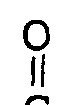
- the cycloaliphatic acrylic monomer according to the invention is based on ethoxylated, propoxylated, butoxylated and/or phenylethoxylated 1,3-dioxane alcohols, such as 5-methyl-1,3- dioxane-5-methanol, 5-ethyl-1,3-dioxane-5-methanol and 1,3- dioxane-5,5-dimethanol and is characterised in the general formula
- R 3 is C 2 H 4 O, C 3 H 6 O, C 4 H 8 O, C 8 H 8 O or combinations thereof,
- R 4 is H or CH 3 and wherein the mean value ⁇ for n is 1-24.
- 1,3-dioxane alcohols possible to use derivatives thereof, wherein one or more carbon atomsare alkyl substituted, such as 4-methyl-1,3-dioxane-5,5-dimethanol.
- a combination such as ethoxylated propoxylate of the 1,3-dioxane alcohol involves two steps.
- the first step in such an embodiment, is propoxylation of the alcohol and the second step ethoxylation of the propoxylated alcohol.
- the resulting product from the ethoxylation, propoxylation, butoxylation and/or phenylethoxylation is finally esterified with acrylic and/or methacrylic acid to obtain the acrylic monomer.
- acrylic acids instead of a direct esterification with above acrylic acids can a transesterification using acrylates such as ethylacrylate, butylacrylate etc. or corresponding methacrylates, be employed.
- Phenylethylene oxide can for specific applications and/or in order to incorporate one or more phenolic rings into the molecule be combined with an ethylene oxide, propylene oxide and/or a butylene oxide.
- Such a combination can for example suitably be performed by either an intermediate reaction step following the addition step, during which step ethylene oxide, propylene oxide and/or butylene oxide are reacted with the alcohol, and prior to the acrylation step or through an initial reaction step prior to said addition of ethylene oxide, propylene oxide and/or butylene oxide, in which initial step phenylethylene oxide is added to the alcohol.
- phenylethylene oxide added in an amount corresponding to the desired final properties.
- the following process is a suitable process for ethoxylation, propoxylation, butoxylation and/or phenylethoxylation of
- 1,3-dioxane alcohols The alcohol is charged in a reaction vessel equipped with a stirrer, temperature control and inlet of inert gas.
- An alkaline compound such as potassium
- the reaction mixture is heated to 100-160°C and a pressure of 2000-4000 mm Hg is applied.
- Ethylene oxide, propylene oxide, butylene oxide and/or phenylethylene oxide (styrene oxide) is then, in an amount resulting in the desired degree of addition, slowly pumped into the reaction vessel.
- Suitable charging time is about 1 hour followed by a post-reaction during 30 minutes.
- the obtained product is usually neutralised to pH 6-8 by addition of for instance sodium hydrogenphosphate together with a small amount of water and a filter aid.
- the water is, after stirring for 1 hour at 100-150°C, evaporated by vacuum distillation.
- the product is finally filtered at 100°C and preferably stabilised by addition of an antioxidant such as butylhydroxytoluene (BHT).
- BHT butylhydroxytoluene
- ethylene oxide, propylene oxide, butylene oxide and/or phenylethylene oxide can be replaced by equivalent glycols and/or polyglycols, whereby a conventional etherification is performed.
- a suitable process for preparation of an acrylic and/or methacrylic ester of an ethoxylated, a propoxylated, a butoxylated and/or a phenylethoxylated 1,3-dioxane alcohol can be disclosed as follows.
- the alcohol compound, the acrylic or methacrylic acid and an azeotropic solvent, such as toluene, are charged into a reaction vessel provided with a stirrer, temperature control, air inlet and a cooler connected to a water-trap.
- Acrylic or methacrylic acid is charged in excess in relation to desired degree of acrylation and the amount of azeotropic solvent is suitably equal to the subtotal weight of charged raw materials.
- the reaction mixture is stirred until a clear solution is obtained, a heating to 40-60°C may be necessary.
- Inhibitors such as 2-methyl hydroquinone and nitrobenzene and a catalyst such as sulphonic acid are added and the reaction mixture is heated to reflux using an air sparge. The reflux is maintained until the desired degree of esterification is obtained and formed esterification water is continuously removed azeotropically.
- the reaction mixture is cooled to room temperature and neutralised, usually to pH 7-8, with for instance an aqueous solution of sodium hydroxide.
- the water/salt phase is removed and the product/toluene phase is then repeatedly washed with water.
- the water phase is after each washing removed.
- Active carbon and a filter aid are following the washing added to the product/toluene phase, which phase thereafter is filtered.
- An antioxidant such as 2-methyl hydroquinone, is added to the product/toluene phase and residual toluene is evaporated under vacuum maintaining an air sparge.
- Acrylation can as alternative to a direct esterification as above, involve a transesterification.
- cycloaliphatic acrylic monomer exhibits excellent dilution properties as well as a low skin irritation, a high degree of through hardening, good final hardness, flexibility and resistance.
- the cycloaliphatic acrylic monomer according to the invention can favourably be used as a component in radiation curing compositions.
- the percentage monomer is in such compositions within the range of 0.1-80% by weight, preferably 5-40% by weight.
- the radiation curing composition can for example be a printing ink, a paint, a lacquer, an adhesive, a dental material or the like. It is, besides radiation curing systems, also possible to use the monomer for the preparation of latex dispersions.
- Radiation curing compositions most often comprise one or more oligomers in an amount of 10-80% by weight. Some commonly used oligomers are for instance polyurethane acrylates, polyester acrylates, epoxy acrylates, silicone acrylates and unsaturated polyesters. Radiation curing compositions can furthermore comprise one or more, to the cycloaliphatic monomer according to the invention, additional mono, di and/or multifunctional acrylic monomers in amounts of 0.1-70% by weight.
- One or more initiators for example photoinitiators such as benzoephenones and aromatic keto compounds prepared from benzoephenones such as alkylated and halogen-alkylated benzoephenones are also present.
- photoinitiators are for example antraquinones, benzoines and derivatives thereof, acetophenones, acyloxime esters and benzil ketals.
- the percentage initiator in a radiation curing composition is normally 0.1-10% by weight.
- Above described compositions can be cured either by means of ultra-violet light or by means of electron-beams (so called UV and EB curing). Curing can also be performed by means of peroxides or other radical forming initiators.
- Example 5 Skin irritating properties of the acrylic monomer according to Example 3.
- the obtained product was neutralised to pH 6-8 with 3% of sodium hydrogenphosphate together with 1.5% of water and 1.5% of a filter aid (Celite), calculated on charged raw materials.
- the water was after one hour of stirring at 120°C during 30 minutes evaporated at this temperature and a vacuum of ⁇ 1 mm Hg. Finally, the product was filtered at 100°C.
- the obtained product consisted of 5-ethyl-1,3-dioxane-5- methanol-triethoxylate having the following characteristics:
- Example 1 was repeated with the difference that 148 g (1 mole) of 1,3-dioxane-5,5-dimethanol was charged instead of 146 g (1 mole) of 5-ethyl-1,3-dioxane-5-methanol.
- the obtained product consisted of 1,3-dioxane-5,5-dimethanoltriethoxylate having the following characteristics:
- the mixture was after 4.5 hours cooled to room temperature and neutralised with a 5% aqueous solution of sodium hydroxide.
- the water/salt phase was removed and the product/toluene phase was washed three times with water, which after each washing was removed.
- 5% of active carbon (0.6-1.5 mm Hydraffin BK) and 2% of a filter aid (Celite) was following the washings added to the product/toluene phase, which thereafter was heated to 90°C.
- the product/toluene phase was kept at this temperature for 15 minutes, after which time it was cooled to room temperature and filtered. Following the filtration 200 ppm of 2-methyl hydroquinone was added and a vacuum of 20 mm Hg was applied.
- the residual toluene was evaporated at 20 mm Hg and a temperature of max. 40°C whilst maintaining an air sparge.
- the obtained product consisted of 5-ethyl-1,3-dioxane-5- methanol-triethoxylate monoacrylate having the following characteristics:
- Viscosity 60 mPas at 23°C
- the product/toluene phase was kept at this temperature for 15 minutes, after which time it was cooled to room temperature and filtered. Following the filtration 200 ppm of 2-methyl hydroquinone was added and a vacuum of 20 mm Hg was applied. The residual toluene was evaporated at 20 mm Hg and a temperature of max. 40°C whilst maintaining an air sparge.
- the obtained product consisted of 1,3-dioxane-5,5-dimethanoltriethoxylate diacrylate having the following characteristics:
- Viscosity 140 mPas at 23°C
- a UV curing lacquer containing the product obtained according to Example 3 was prepared by mixing of below components.
- polyester oligomer (Laromer LR 8799, BASF AG,
- a UV curing lacquer containing the product obtained according to Example 4 was prepared by mixing of below components.
- polyester oligomer (Laromer LR 8799, BASF AG,
- UV-initiator (Darocure 1173, Firma E. Merck,
- the lacquers obtained according to Examples 6 and 7 were cured by means of a UV-lamp of 80W/cm and at a belt speed of 20 m/min.
- the lacquers were coated on glass panels at a filmthickness of 30 ⁇ 5 ⁇ m (cured) and were allowed to pass the UV-lamp 1, 2, 4, 8 and 16 times.
- the samples were after curing tempered for 24 hours at 23 ⁇ 2°C and 50 ⁇ 5% relative humidity, whereupon the filmhardness was measured by means of a König pendulum and according to Swedish Standard SS 184186 Edition 4.
- Example 8 The lacquers obtained according to Examples 6 and 7 were coated and cured as in Example 8.
- the evaluation scale according to above Standard is 0-5, wherein 5 is best.
- the lacquers obtained according to Examples 6 and 7 were coated on steel panels complying with ISO 1514 at a film- thickness of 30 ⁇ 5 ⁇ m (cured) and cured as in Example 8.
- the scratch resistance as pencil hardness was determined according to ASTM 3363-74 (1989) and the flexibility was determined according to Swedish Standard SS 184177 Edition 3 Both determinations were carried out after 8 passages under the UV-lamp.
- Example 8 The lacquers obtained according to Examples 6 and 7 were coated and cured as in Example 8.
- the degree of hardening through was determined by means of IR-spectra and as unreacted unsaturation after 1 and 4 passages under the UV-lamp.
- the degree of unsaturation in the lacquer prior to curing was normalised to 100.
- the degree of hardening through is expressed as 100 minus unreacted unsaturation after curing.
Landscapes
- Chemical & Material Sciences (AREA)
- Organic Chemistry (AREA)
- Health & Medical Sciences (AREA)
- Chemical Kinetics & Catalysis (AREA)
- Polymers & Plastics (AREA)
- Medicinal Chemistry (AREA)
- Life Sciences & Earth Sciences (AREA)
- Oral & Maxillofacial Surgery (AREA)
- Wood Science & Technology (AREA)
- Materials Engineering (AREA)
- Engineering & Computer Science (AREA)
- General Health & Medical Sciences (AREA)
- Veterinary Medicine (AREA)
- Public Health (AREA)
- General Chemical & Material Sciences (AREA)
- Animal Behavior & Ethology (AREA)
- Epidemiology (AREA)
- Plastic & Reconstructive Surgery (AREA)
- Addition Polymer Or Copolymer, Post-Treatments, Or Chemical Modifications (AREA)
- Organic Low-Molecular-Weight Compounds And Preparation Thereof (AREA)
- Polymerisation Methods In General (AREA)
- Dental Preparations (AREA)
- Paints Or Removers (AREA)
- Inks, Pencil-Leads, Or Crayons (AREA)
- Adhesives Or Adhesive Processes (AREA)
- Heterocyclic Compounds That Contain Two Or More Ring Oxygen Atoms (AREA)
Abstract
Description


Claims



Priority Applications (7)
| Application Number | Priority Date | Filing Date | Title |
|---|---|---|---|
| EP93913689A EP0680477B1 (en) | 1993-01-20 | 1993-04-26 | Cycloaliphatic acrylic monomer |
| US08/492,053 US5559201A (en) | 1993-01-20 | 1993-04-26 | Cycloaliphatic acrylic monomer |
| KR1019950702945A KR100274584B1 (en) | 1993-01-20 | 1993-04-26 | Alicyclic Acrylic Monomer |
| AT93913689T ATE187722T1 (en) | 1993-01-20 | 1993-04-26 | CYCLOALIPHATIC ACRYLOYL MONOMERS |
| DE69327338T DE69327338T2 (en) | 1993-01-20 | 1993-04-26 | CYCLOALIPHATIC ACRYLOYL MONOMERS |
| CA002152910A CA2152910C (en) | 1993-01-20 | 1993-04-26 | Cycloaliphatic acrylic monomer |
| AU43630/93A AU4363093A (en) | 1993-01-20 | 1993-04-26 | Cycloaliphatic acrylic monomer |
Applications Claiming Priority (2)
| Application Number | Priority Date | Filing Date | Title |
|---|---|---|---|
| SE9300145A SE9300145L (en) | 1993-01-20 | 1993-01-20 | Monofunctional acrylate monomer |
| SE9300145-1 | 1993-01-20 |
Publications (1)
| Publication Number | Publication Date |
|---|---|
| WO1994017057A1 true WO1994017057A1 (en) | 1994-08-04 |
Family
ID=20388589
Family Applications (1)
| Application Number | Title | Priority Date | Filing Date |
|---|---|---|---|
| PCT/SE1993/000360 Ceased WO1994017057A1 (en) | 1993-01-20 | 1993-04-26 | Cycloaliphatic acrylic monomer |
Country Status (10)
| Country | Link |
|---|---|
| US (1) | US5559201A (en) |
| EP (1) | EP0680477B1 (en) |
| JP (1) | JP2764470B2 (en) |
| KR (1) | KR100274584B1 (en) |
| AT (1) | ATE187722T1 (en) |
| AU (1) | AU4363093A (en) |
| CA (1) | CA2152910C (en) |
| DE (1) | DE69327338T2 (en) |
| SE (1) | SE9300145L (en) |
| WO (1) | WO1994017057A1 (en) |
Cited By (3)
| Publication number | Priority date | Publication date | Assignee | Title |
|---|---|---|---|---|
| EP1717261A4 (en) * | 2004-02-20 | 2010-02-24 | Tokyo Ohka Kogyo Co Ltd | POLYMERIC COMPOUND, PHOTORESISTANT COMPOSITION CONTAINING SUCH POLYMERIC COMPOUND, AND METHOD OF FORMING RESISTANT STRUCTURE |
| EP1736485A4 (en) * | 2004-04-13 | 2010-03-03 | Tokyo Ohka Kogyo Co Ltd | POLYMER COMPOUND, PHOTORESIST COMPOSITION CONTAINING SUCH POLYMER COMPOUND, AND METHOD OF MAKING RESIST PATTERN |
| EP3326834A1 (en) * | 2016-11-23 | 2018-05-30 | Friedrich Klumpp GmbH | Plate-shaped workpiece, method and system for the production of same, and varnish composition |
Families Citing this family (9)
| Publication number | Priority date | Publication date | Assignee | Title |
|---|---|---|---|---|
| US6114458A (en) * | 1998-09-23 | 2000-09-05 | International Business Machines Corporation | Highly branched radial block copolymers |
| JP4799981B2 (en) * | 2005-09-29 | 2011-10-26 | 富士フイルム株式会社 | Ink composition, inkjet recording method, lithographic printing plate production method, and lithographic printing plate |
| JP4976075B2 (en) * | 2005-12-26 | 2012-07-18 | リンテック株式会社 | Adhesive for polarizing plate, polarizing plate with adhesive and method for producing the same |
| JP5430051B2 (en) * | 2005-12-28 | 2014-02-26 | 富士フイルム株式会社 | Ink composition, inkjet recording method, lithographic printing plate production method, and lithographic printing plate |
| EP2383314B3 (en) | 2005-12-28 | 2018-02-14 | Fujifilm Corporation | Ink composition, inkjet recording method, printed material, method for producing planographic printing plate, and planographic printing plate |
| JP5490588B2 (en) * | 2010-03-23 | 2014-05-14 | 三洋化成工業株式会社 | Polymerizable compound and ink composition for ink jet printing ink |
| EP2989107B1 (en) * | 2013-04-22 | 2018-03-07 | Perstorp Ab | Acrylic compund with tetraoxaspiro backbone for radiation curable compositions |
| JP2018035126A (en) * | 2016-09-02 | 2018-03-08 | Dic株式会社 | Polymerizable compound and optically anisotropic body |
| JP7284635B2 (en) * | 2018-05-30 | 2023-05-31 | 住友化学株式会社 | RESIN, RESIST COMPOSITION AND METHOD FOR MANUFACTURING RESIST PATTERN |
Citations (4)
| Publication number | Priority date | Publication date | Assignee | Title |
|---|---|---|---|---|
| US3267084A (en) * | 1962-05-23 | 1966-08-16 | Gulf Oil Corp | Polymerizable 5-alkylene-m-dioxanyl acrylic esters |
| EP0090174A1 (en) * | 1982-03-09 | 1983-10-05 | Bayer Ag | Process for the reinforcement of edges and the closure of hems of textile materials |
| EP0347381A1 (en) * | 1988-06-13 | 1989-12-20 | Ciba-Geigy Ag | Unsaturated beta-ketoesteracetals and their applications |
| EP0397492A2 (en) * | 1989-05-12 | 1990-11-14 | Hoechst Celanese Corporation | Novel polyacetal copolymers of trioxane and trimethylolpropane formal derivatives |
Family Cites Families (1)
| Publication number | Priority date | Publication date | Assignee | Title |
|---|---|---|---|---|
| DE1900202A1 (en) * | 1969-01-03 | 1970-08-06 | Bayer Ag | 1,3-dioxane derivs for use as plasticisers, - perfumes and intermediates |
-
1993
- 1993-01-20 SE SE9300145A patent/SE9300145L/en not_active IP Right Cessation
- 1993-04-26 EP EP93913689A patent/EP0680477B1/en not_active Expired - Lifetime
- 1993-04-26 CA CA002152910A patent/CA2152910C/en not_active Expired - Fee Related
- 1993-04-26 JP JP6516904A patent/JP2764470B2/en not_active Expired - Lifetime
- 1993-04-26 DE DE69327338T patent/DE69327338T2/en not_active Expired - Fee Related
- 1993-04-26 US US08/492,053 patent/US5559201A/en not_active Expired - Lifetime
- 1993-04-26 AU AU43630/93A patent/AU4363093A/en not_active Abandoned
- 1993-04-26 AT AT93913689T patent/ATE187722T1/en not_active IP Right Cessation
- 1993-04-26 KR KR1019950702945A patent/KR100274584B1/en not_active Expired - Fee Related
- 1993-04-26 WO PCT/SE1993/000360 patent/WO1994017057A1/en not_active Ceased
Patent Citations (4)
| Publication number | Priority date | Publication date | Assignee | Title |
|---|---|---|---|---|
| US3267084A (en) * | 1962-05-23 | 1966-08-16 | Gulf Oil Corp | Polymerizable 5-alkylene-m-dioxanyl acrylic esters |
| EP0090174A1 (en) * | 1982-03-09 | 1983-10-05 | Bayer Ag | Process for the reinforcement of edges and the closure of hems of textile materials |
| EP0347381A1 (en) * | 1988-06-13 | 1989-12-20 | Ciba-Geigy Ag | Unsaturated beta-ketoesteracetals and their applications |
| EP0397492A2 (en) * | 1989-05-12 | 1990-11-14 | Hoechst Celanese Corporation | Novel polyacetal copolymers of trioxane and trimethylolpropane formal derivatives |
Non-Patent Citations (1)
| Title |
|---|
| PATENT ABSTRACTS OF JAPAN, Vol. 12, No. 344, C-528; & JP,A,63 101 377 (KYOWA GAS CHEM IND CO LTD et al.), 06 May 1988. * |
Cited By (7)
| Publication number | Priority date | Publication date | Assignee | Title |
|---|---|---|---|---|
| EP1717261A4 (en) * | 2004-02-20 | 2010-02-24 | Tokyo Ohka Kogyo Co Ltd | POLYMERIC COMPOUND, PHOTORESISTANT COMPOSITION CONTAINING SUCH POLYMERIC COMPOUND, AND METHOD OF FORMING RESISTANT STRUCTURE |
| US7723007B2 (en) | 2004-02-20 | 2010-05-25 | Tokyo Ohka Kogyo Co., Ltd. | Polymer compound, photoresist composition including the polymer compound, and resist pattern formation method |
| EP1736485A4 (en) * | 2004-04-13 | 2010-03-03 | Tokyo Ohka Kogyo Co Ltd | POLYMER COMPOUND, PHOTORESIST COMPOSITION CONTAINING SUCH POLYMER COMPOUND, AND METHOD OF MAKING RESIST PATTERN |
| US7700259B2 (en) | 2004-04-13 | 2010-04-20 | Tokyo Ohka Kogyo Co., Ltd. | Polymer compound, photoresist composition containing such polymer compound, and method for forming resist pattern |
| US8741538B2 (en) | 2004-04-13 | 2014-06-03 | Tokyo Ohka Kogyo Co., Ltd. | Polymer compound, photoresist composition containing such polymer compound, and method for forming resist pattern |
| EP3326834A1 (en) * | 2016-11-23 | 2018-05-30 | Friedrich Klumpp GmbH | Plate-shaped workpiece, method and system for the production of same, and varnish composition |
| WO2018096033A1 (en) * | 2016-11-23 | 2018-05-31 | Friedrich Klumpp Gmbh | Plate-shaped workpiece, method, and system for the production thereof, and lacquer composition |
Also Published As
| Publication number | Publication date |
|---|---|
| KR960700241A (en) | 1996-01-19 |
| DE69327338D1 (en) | 2000-01-20 |
| DE69327338T2 (en) | 2000-05-18 |
| AU4363093A (en) | 1994-08-15 |
| JPH08501108A (en) | 1996-02-06 |
| JP2764470B2 (en) | 1998-06-11 |
| CA2152910C (en) | 2001-12-18 |
| US5559201A (en) | 1996-09-24 |
| SE470019B (en) | 1993-10-25 |
| EP0680477A1 (en) | 1995-11-08 |
| EP0680477B1 (en) | 1999-12-15 |
| SE9300145D0 (en) | 1993-01-20 |
| KR100274584B1 (en) | 2000-12-15 |
| ATE187722T1 (en) | 2000-01-15 |
| SE9300145L (en) | 1993-10-25 |
| CA2152910A1 (en) | 1994-08-04 |
Similar Documents
| Publication | Publication Date | Title |
|---|---|---|
| EP0680477B1 (en) | Cycloaliphatic acrylic monomer | |
| US4618703A (en) | Production of the acrylates and methacrylates of oxyalkylated allyl alcohol | |
| US4382135A (en) | Radiation-hardenable diluents | |
| EP0755949B1 (en) | Radiation curable masses containing covalently bonded photoinitiators | |
| KR20140119743A (en) | Photo-reactive binder | |
| US5741829A (en) | Radiation-curable acrylates with built-in photoinitiators | |
| US4281172A (en) | Acrylyl esters of polyester-polyether copolymers | |
| US4171423A (en) | Derivatives of ester diol alkoxylates and compositions thereof | |
| WO1995011219A1 (en) | Acrylic monomer | |
| US4308394A (en) | Aryl-glyoxyloyloxyalkylacrylates | |
| CA2126774A1 (en) | Binder and coating agent composition, its manufacture and use | |
| US4188477A (en) | Isocyanate derivatives of ester diol alkoxylates and compositions thereof | |
| JPS6028288B2 (en) | Curing composition | |
| CA2188588A1 (en) | Radiation curing of dihydrofuran derivatives | |
| JP2881134B2 (en) | Photocurable resin composition | |
| JP3861353B2 (en) | Curable composition | |
| US4192789A (en) | Blends of acrylic latexes and derivatives of ester diol alkoxylates | |
| US9388194B2 (en) | Acrylic compound having tetraoxaspiro backbone for radiation curing compositions | |
| US4195160A (en) | Epoxide derivatives of ester diol alkoxylates and compositions thereof | |
| US5364691A (en) | Alk-1-enyloxy carbonates | |
| CA1196649A (en) | 2-acylated dihydro-1,3-dioxepins, process for the production thereof and use thereof as photo- initiators | |
| CA1112787A (en) | Process for preparing blends of vinyl esters and reactive diluents | |
| US4639540A (en) | Dicyanoethenyl fatty compounds and derivatives thereof | |
| US5527941A (en) | Composition comprising a novel phosphatized alicyclic compound | |
| JPS6084274A (en) | Production of acrylic acid ester |
Legal Events
| Date | Code | Title | Description |
|---|---|---|---|
| AK | Designated states |
Kind code of ref document: A1 Designated state(s): AT AU BB BG BR BY CA CH CZ DE DK ES FI GB HU JP KP KR KZ LK LU MG MN MW NL NO NZ PL PT RO RU SD SE SK UA US UZ VN |
|
| AL | Designated countries for regional patents |
Kind code of ref document: A1 Designated state(s): AT BE CH DE DK ES FR GB GR IE IT LU MC NL PT SE BF BJ CF CG CI CM GA GN ML MR NE SN TD TG |
|
| DFPE | Request for preliminary examination filed prior to expiration of 19th month from priority date (pct application filed before 20040101) | ||
| 121 | Ep: the epo has been informed by wipo that ep was designated in this application | ||
| WWE | Wipo information: entry into national phase |
Ref document number: 2152910 Country of ref document: CA |
|
| WWE | Wipo information: entry into national phase |
Ref document number: 1993913689 Country of ref document: EP |
|
| WWE | Wipo information: entry into national phase |
Ref document number: 08492053 Country of ref document: US |
|
| WWP | Wipo information: published in national office |
Ref document number: 1993913689 Country of ref document: EP |
|
| REG | Reference to national code |
Ref country code: DE Ref legal event code: 8642 |
|
| WWG | Wipo information: grant in national office |
Ref document number: 1993913689 Country of ref document: EP |