WO1994019388A1 - Polyester ignifuge - Google Patents
Polyester ignifuge Download PDFInfo
- Publication number
- WO1994019388A1 WO1994019388A1 PCT/JP1993/000209 JP9300209W WO9419388A1 WO 1994019388 A1 WO1994019388 A1 WO 1994019388A1 JP 9300209 W JP9300209 W JP 9300209W WO 9419388 A1 WO9419388 A1 WO 9419388A1
- Authority
- WO
- WIPO (PCT)
- Prior art keywords
- polyester
- phosphorus
- group
- flame
- compound
- Prior art date
- Legal status (The legal status is an assumption and is not a legal conclusion. Google has not performed a legal analysis and makes no representation as to the accuracy of the status listed.)
- Ceased
Links
Classifications
-
- D—TEXTILES; PAPER
- D01—NATURAL OR MAN-MADE THREADS OR FIBRES; SPINNING
- D01F—CHEMICAL FEATURES IN THE MANUFACTURE OF ARTIFICIAL FILAMENTS, THREADS, FIBRES, BRISTLES OR RIBBONS; APPARATUS SPECIALLY ADAPTED FOR THE MANUFACTURE OF CARBON FILAMENTS
- D01F1/00—General methods for the manufacture of artificial filaments or the like
- D01F1/02—Addition of substances to the spinning solution or to the melt
- D01F1/07—Addition of substances to the spinning solution or to the melt for making fire- or flame-proof filaments
-
- C—CHEMISTRY; METALLURGY
- C08—ORGANIC MACROMOLECULAR COMPOUNDS; THEIR PREPARATION OR CHEMICAL WORKING-UP; COMPOSITIONS BASED THEREON
- C08G—MACROMOLECULAR COMPOUNDS OBTAINED OTHERWISE THAN BY REACTIONS ONLY INVOLVING UNSATURATED CARBON-TO-CARBON BONDS
- C08G63/00—Macromolecular compounds obtained by reactions forming a carboxylic ester link in the main chain of the macromolecule
- C08G63/68—Polyesters containing atoms other than carbon, hydrogen and oxygen
- C08G63/692—Polyesters containing atoms other than carbon, hydrogen and oxygen containing phosphorus
- C08G63/6924—Polyesters containing atoms other than carbon, hydrogen and oxygen containing phosphorus derived from polycarboxylic acids and polyhydroxy compounds
- C08G63/6926—Dicarboxylic acids and dihydroxy compounds
-
- D—TEXTILES; PAPER
- D01—NATURAL OR MAN-MADE THREADS OR FIBRES; SPINNING
- D01F—CHEMICAL FEATURES IN THE MANUFACTURE OF ARTIFICIAL FILAMENTS, THREADS, FIBRES, BRISTLES OR RIBBONS; APPARATUS SPECIALLY ADAPTED FOR THE MANUFACTURE OF CARBON FILAMENTS
- D01F6/00—Monocomponent artificial filaments or the like of synthetic polymers; Manufacture thereof
- D01F6/78—Monocomponent artificial filaments or the like of synthetic polymers; Manufacture thereof from copolycondensation products
- D01F6/84—Monocomponent artificial filaments or the like of synthetic polymers; Manufacture thereof from copolycondensation products from copolyesters
Definitions
- the present invention relates to a flame-retardant thermoplastic polyester modified with a phosphorus-based flame-retardant compound and a molded product thereof. More specifically, the present invention relates to a flame-retardant polyester copolymer or composition which does not decrease the degree of polymerization and melt viscosity or discoloration during melt molding and does not generate toxic gas even when exposed to high heat. Background art
- Aromatic polyesters represented by polyethylene terephthalate have excellent mechanical properties, and are widely used as fibers, filament films, and other plastic moldings. It is a useful material. At the same time, however, they have the drawback of easy burning, and in recent years there has been a strong demand for flame retardant with increasing awareness of fire. Poisonous gas especially when burning
- polyester flame-retardant (Cyan, halogen) generation is regarded as a problem. Therefore, development of flame-retardant products that do not generate toxic gas during flame contact is expected.
- Various measures to make polyester flame-retardant have been studied. For example, a method of post-treating a molded article such as a fiber with a flame retardant, a method of copolymerizing a compound having a flame-retardant atom having a functional group with a polyester, and a method of using a flame retardant during molding. A kneading method is known.
- the treatment is complicated or uneven, the texture of the molded product is rough, and the flame retardancy is reduced by washing. It has various disadvantages such as dripping.
- JP-B-36-210550 and JP-B-38-94447 disclose methods of adding phosphonic acid or phosphonic acid esters.
- these phosphonate esters generally have a low boiling point, so they have the drawback that they are distilled out of the system during polymerization or cause a three-dimensional side reaction during the production of polyester, making molding difficult or impossible.
- 36-20771 discloses a method of adding and copolymerizing bisglycol ester phosphonate having a relatively high boiling point. However, despite its high boiling point, it has the disadvantage that many low-boiling cyclic substances are generated by self-condensation during the polymerization and volatilize out of the system.
- a polymer of phosphonic acid is added to JP-B-47-13386 and JP-A-50-39389 to copolymerize or have a trifunctional group.
- a method of co-adding and copolymerizing a phosphate is disclosed. Such a method can significantly reduce the amount of distillate outside the system due to the high boiling point of the polymer, but when the degree of polymerization is high, the reactivity of the terminal functional groups becomes poor, making it difficult for the polymer to be introduced into the polyester main chain, resulting in the mechanical It has the disadvantages of deteriorating the properties, elution of unreacted substances, and gelling due to trifunctional groups.
- Japanese Patent Application Laid-Open No. 53-68756 discloses a method in which phenylphosphonic acid and a polymerization catalyst are added after the transesterification reaction, and the esterification reaction is advanced under mild conditions, followed by polymerization. I have. However, esterification does not proceed under mild conditions that suppress the formation of low-boiling cyclic compounds, and under conditions that allow esterification to proceed sufficiently, phosphorus compounds can be distilled out of the system and satisfactory products can be obtained. At present, there is no shortcoming, and no practical one has been obtained yet.
- Japanese Patent Publication No. Sho 53-13479 and Japanese Patent Laid-Open Publication No. Sho 50-53354 disclose copolymerization of carboxyphosphinic acid. Such a phosphine compound has no volatility and has excellent flame resistance. However, since the ester-forming functional group is a carboxyl group and a P-0H group of a phosphoric acid bond, the reaction rate is slightly different and lacks uniformity. In addition, it has a slight disadvantage that it is inferior to the P- ⁇ C bond in terms of heat resistance. In addition, Japanese Patent Publication No. 55-41610 discloses a method of copolymerizing a phosphorus-containing dicarboxylic acid compound derived from oxaphosphanoxide and itaconic acid.
- This method also has excellent flame resistance.
- it since it is a complex polycyclic compound, it has the drawback that crystallinity, melting point, physical properties, etc. are reduced due to steric hindrance, or that molecular cleavage is easily caused by slight light or heat.
- the kneading method in which a flame retardant is added and mixed at the time of forming polyester, has the advantage that, unlike the copolymerization method, the type and brand can be easily switched without contaminating the polymerization vessel.
- This is an excellent method that can be used especially in factories that have continuous polymerization equipment.However, depending on the type of flame retardant, it has insufficient compatibility with polyester when melt-mixed, or it decomposes and disperses due to heat. Many of them have problems such as gelling, coloring, etc., which significantly deteriorate the physical properties of the polyester.
- Japanese Patent Publication No. 46-32865 discloses a method of adding and mixing perbromobenzene.
- Japanese Patent Publication No. 47-322,977 and Japanese Patent Publication No. A method is disclosed in which a polyphosphonate obtained by polycondensation of an aromatic diol such as a polyester and arylphosphonic dichloride is added to and mixed with a polyester.
- this method contains a phosphoric acid ester bond, it is a good method because it is a polymer and has a large molecular weight. .
- the physical properties of the polyester will be reduced, and the false twisting processability, which is one of the major characteristics, will be poor.
- the flame retardant effect cannot be sufficiently exhibited.
- a phosphonic acid glycol ester was added and polycondensed to obtain a low-polymerization-modified polyester.
- a method for incorporation into polyester is disclosed.
- the glycolic acid phosphonate is remarkably distilled during polymerization of polyester, and only a low phosphorus content is obtained, which is insufficient as a flame retardant.
- a large amount of addition is required to impart the flame retardancy, and therefore, there is a disadvantage that various physical properties of the polyester are significantly deteriorated.
- the problem to be solved by the present invention is to first solve the above-mentioned drawbacks of the prior art and, by copolymerizing or blending a small amount with polyester, to check the generation of harmful gases during effective and flame contact. Is to find no flame retardant components.
- the first object of the present invention is to easily form a fiber, a film, a plastic molded product, etc. without impairing the mechanical and thermal properties inherent in the polyester, and to obtain whiteness, light resistance, and the like.
- An object of the present invention is to provide a flame-retardant polyester having excellent washing resistance.
- a second object of the present invention is to inhibit polymerization without causing troubles such as sublimation, volatilization, decomposition, escape from the system, and gelation during polymerization with polyester, melt mixing or polyester molding.
- An object of the present invention is to provide a useful flame-retardant polyester excellent in heat resistance with industrial ease and economical advantage by using a flame-retardant component without any problem.
- the third objective is to minimize the contamination of manufacturing facilities and equipment, to easily and easily switch between varieties and brands, and to efficiently manufacture products without being restricted by a batch or continuous method.
- An object of the present invention is to provide a polyester composition having excellent flame retardancy.
- the ultimate goal is to provide fire-resistant polyester fibers, fabrics, films, molded products, etc. that are extremely self-extinguishing without the generation of harmful gases when exposed to flames.
- the goal is to minimize human casualties at times.
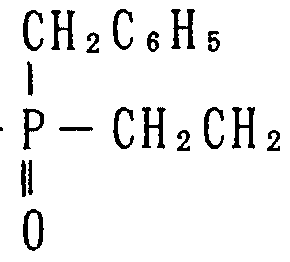
- the first aspect of the present invention is a heat For the plastic polyester, the following general formula (1),
- R is an alkyl group, an aryl group or an aralkyl group having 11 to 19 carbon atoms
- X is a group represented by the following general formulas (2), (3) and (4), -R! C 00-... (2)
- X is the formula (3) or (4), n is 1 to 10 and Y is hydrogen; and at least one of the phosphorus-containing compounds represented by the formula Is a copolymer which is 0.2 to 3.0% by weight based on the total weight.
- the second embodiment of the present invention is a compound represented by the following general formula (3 ′) or (4 ′): HOR 2 ⁇ ( ⁇ C—A—CO ⁇ R 2 ⁇ -) a ⁇
- R 2 , A, a, b and c are the same as defined above, and a compound represented by the general formula (5):
- a polyphosphonate compound obtained by polycondensation with at least one kind of P_monosubstituted phosphonyl dichloride represented by the formula below, having a phosphorus atom content of 0.2 to 3.0 wt. % Is a polyester composition characterized by being blended with a thermoplastic polyester so as to be%.
- thermoplastic polyester component which has the following general formula (1):
- R is an alkyl group having 1 to 9 carbon atoms, an aryl group or an aralkyl group
- X is a group represented by the following general formulas (2), (3) and (4), -R, C00- ... (2) 10 RI ⁇ + 0 C— A— C ⁇ R 2 0 ⁇ "... (3)-0 R ... ( Four )
- R is an alkylene group having 1 to 4 carbon atoms which binds to phosphorus
- R 2 is an alkylene group having 2 to 4 carbon atoms
- ⁇ is a divalent aromatic residue containing no halogen atom
- An alkyl group; and when X is the formula (3) or (4), n 1-10 and Y is hydrogen.
- At least one of the phosphorus-containing compounds represented by the formula (I) or a derivative thereof is composed of a comonomer selected from the group consisting of dicarboxylic acids, diols, diamines, and diisocyanates;
- the copolymer was copolymerized so that the content was at least 1.0% by weight based on the total weight.
- the polyester composition is characterized in that the phosphorus-containing copolymer produced is blended with a phosphorus-free thermoplastic polyester so that the phosphorus atom content in the blend is 0.2 to 3.0% by weight. Things.
- a polyester generally used that is, a polyester obtained by polycondensation of a dicarboxylic acid or a derivative thereof and glycol described below can be used.
- dicarboxylic acids include terephthalic acid, isophthalic acid, 2,6-naphthylenedicarboxylic acid, 1,5-naphthalenedicarboxylic acid, 4,4-diphenyldicarboxylic acid, and bis (4- Carboxyphenyl) ether, bis- (4-potassium ropoxyphenyl) sulfone, 1,2-bis (4-carboxyphenyl) ethane, 5—sodium sulfoisophtalic acid, 5—sulfopropoxyisphthalic acid, diphenyl 1 ⁇ , p 'dicarboxylic acid, ⁇ -phenylenediacetic acid, diphenyloxide 1 p, P'-dicarboxylic acid, trans-he
- particularly useful are those composed of at least 80 mol% of terephthalic acid or 2,6-naphthalene dicarboxylic acid as a main component, and other aromatic dicarboxylic acids and adibic acid and sebacic acid.
- One or more kinds of aliphatic dicarboxylic acids such as azelaic acid and decamethylendicarboxylic acid and other ester-forming derivatives may be used in a small amount of up to 20 mol%.
- the glycol components include ethylene glycol, 1,2-propylene glycol, 1,4-butanediol, trimethylene glycol, 1,6-hexanediol, and 1,4-cyclohexanediol.
- those which are useful are composed of at least 80% ethylenic alcohol or 1,4-butanediol as a main component, and contain at least one other glycol component and one or more ester-forming derivatives. It may be used by mixing a small amount of up to 20 mol% of the toluene component.
- an oxycarboxylic acid component having a carboxylic acid group and an alcohol group in one molecule for example, 4-hydroxybenzoic acid, 4-hydroxyethoxybenzoic acid, oxybivalic acid, and the like can be used as needed.
- polyester is a substantially linear polymer
- a small amount of a monofunctional compound such as benzoic acid, benzoylbenzoic acid, acetic acid, methoxypolyethylene glycol, or a trifunctional compound may be used as necessary.
- a monofunctional compound such as benzoic acid, benzoylbenzoic acid, acetic acid, methoxypolyethylene glycol, or a trifunctional compound.
- the above compounds for example, glycerin, pennin erythritol, trimellitic acid, pyromellitic acid, phosphoric acid compounds and ester-forming derivatives thereof can also be added.
- the degree of polymerization of the polyester is not particularly limited as long as it is used for ordinary textiles, but is preferably an intrinsic viscosity [7?] Force of 0.5 or more, and preferably 0.6 to 1 5, more preferably 0.65-1.0.
- X is a dicarboxylic acid or an ester thereof represented by the general formula (2):
- R and Y are the same as above, and R ′ represents hydrogen or a methyl group].
- R in the above general formula is, for example, C 6 H 5 -, Me - C 6 ⁇ 4 -, (Me) 2 - C 6 H 3 -, E t
- Aryl group or alkaryl group such as -C 6 ⁇ 4-; C 6 H 5 -C ⁇ 2 ,
- aralkyl groups such as CH 2- and the like.
- useful ones are a -phenyl group and a tolyl group, and a phenyl group is particularly preferred because of its excellent heat resistance.
- R ′ is hydrogen or methyl, and has carbon atoms
- the production method of these phosphorus-containing dicarboxylic acid compounds includes a method of reacting an unsaturated compound with P-substituted dichloromouth phosphine, or a method of producing P-substituted dichlorophosphine or dichlorophosphine.
- the former P-substituted phosphine contains unsaturated compounds, for example, malonic esters such as ethyl malonate and methyl malonate, acrylonitrile, and acrylonitrile. It is preferable to use a method in which the reaction is carried out by an addition reaction of lylic acid, acrylate, methyl methacrylate, or the like.
- bis- (2-carboxymethyl) phenyl phosphoxide is obtained by reacting dichlorophenyl phosphine with ethyl methyl malonate, then acidifying the compound, and then subjecting the compound to a heat treatment to convert the compound to an oxidizing agent such as hydrogen peroxide. It is obtained by oxidation using Also, for example, bis- (2-carboxyethyl) phenyl phosphoxide is described in M. M. Rauhut, I. Hechenbleikner,
- the above-mentioned phosphorus-containing dicarboxylic acid compound used in the present invention has a left-right symmetrical form having a molecular structure of a phosphoxide skeleton of a PC bond, and has two functional groups Are carboxyl groups with equivalent frontier electron densities, and have the same reaction rates for various chemical reactions, for example, esterification and amidation.
- the use of an aryl group as the P-substituent of the dicarboxylic acid group significantly improves heat resistance and high boiling point and does not volatilize. Therefore, the heat resistance and mechanical properties of the compound obtained by copolymerizing the compound are asymmetric. It is superior to that of copolymers, and is suitable for use in processes involving high temperatures of about 200 to 300 ° C in the production of polyester fibers, films and other molded products.
- the polyester copolymer containing the above-mentioned special structural unit as a chain member can be obtained by, for example, preparing a polyester by a known method from a dicarboxylic acid component containing terephthalic acid as a main component and a glycol component containing ethylene glycol as a main component.
- X of the general formula (1) is obtained by adding and copolymerizing a phosphorus-containing dicarboxylic acid represented by the general formula (2).
- the phosphorus-containing dicarboxylic acid may be a free dicarboxylic acid or a cyclic acid anhydride, or may be an alkyl ester or a glycol ester.
- the timing of the addition is selected, if necessary, in the transesterification step or before the polycondensation, during the polycondensation or just before the completion of the polycondensation. Although the present invention is not restricted by the timing of such addition, it is preferable to add it in the process until the polycondensation in order to obtain a homogeneous copolymer. Naturally, the transesterification reaction and the polycondensation reaction are carried out using a known catalyst.
- the amount of the above-mentioned phosphorus-containing dicarboxylic acid component is such that the resulting polyester has a phosphorus atom content of 2,000 to 30,000 ppm, preferably 3,000 to 20, OO ppm, more preferably Add 5,000—15, OOO p pm.
- a phosphorus atom content 2,000 to 30,000 ppm, preferably 3,000 to 20, OO ppm, more preferably Add 5,000—15, OOO p pm.
- it is generally in the range of 2-20 mol% of the total acid components. If it is less than 2,000 ppm, the flame retardancy is poor, and if it is more than 30,000 ppm, the flame retardant effect is saturated and the inherent properties of polyester are significantly reduced.
- the desired phosphorus content is obtained. It can also be mixed with ordinary polyester and molded.
- the phosphorus-containing hydroxy compound in which X is the general formula (3) is represented by the following general formula (8) ),
- Examples of the P-monosubstituted phosphonyl dichloride represented by the general formula (5) include, for example, methyl dichloro phosphonoxide, ethyl dicyclo phosphine oxide, propyl dichloro phosphoxide, isopropyl dichloro phosphon oxide, Alkyl or cycloalkyldichlorophosphinoxides such as butyldichlorophosphonoxide, hexamethyldichlorophosphonoxide, octyldichlorophosphinoxide, 2-ethylhexyldichlorophosphinoxide, cyclohexyldichlorophosphinoxide and the like.
- Phenyl dichloride phosphinoxide Phenyl dichloride phosphinoxide, tolyl dichloride phosphinoxide, xyl dichloride phosphinoxide, etc., aryl, alkali or aralkyl Kildichlorophosphinoxides and the like.
- aryl, alkaline or aralkyldichlorophosphoxide which is excellent in heat resistance and weather resistance, is preferable, and phenyl dichloro-mouth phosphoxide is particularly preferable.
- Examples of the aromatic bishydroxy compound having an ester bond represented by the general formula (3 ′) include dicarboxylic acids and ester derivatives having a divalent aromatic ring A containing no halogen as a skeleton. (C) hydrolyzing the polyester by a known method, or (c) reacting the dicarboxylic acid or acid chloride with a halogenated alcohol in the presence of an alkaline earth metal. Or (2) the dicarboxylic acid or a derivative thereof can be obtained by transesterification with glycol in the presence of a known catalyst.
- epoxides include, for example, ethylene oxide, propylene oxide, and 1,2-butylene oxide.
- examples of the halogenated alcohol include ethylene chlorohydrin, 3-chloropropanol (1), and 2-chloroprene 1-methylprono.
- a polyethylene terephthalate, a polybutylene terephthalate, a polyethylene napthelate, or the like which is usually carried out in the presence of a known catalyst, is used. It is easily obtained by hydrolysis with glycerol or the like, or by transesterification of terephthalic acid or dimethyl terephthalate with ethylene glycol.
- Either of these methods may be used, but method (2) is advantageously used because it can be easily extracted from that step because of the transesterification reaction, which is one of the usual polyester production steps.
- Ethylene glycol and ethylene oxide which have a small number of carbon atoms, when it is necessary to increase the phosphorus content of the resulting linibis-hydroxy compound, if the glycol or epoxy compound is selected for its purpose and application. Is preferred.
- the reaction is adjusted so that the average value of a in the general formula (3 ′) is 1-2, preferably 1.5 or less. If it exceeds 2, the amount of diethylene glycol increases and the physical properties of the polyester may be reduced, or a side reaction may occur, which is not preferable. Needless to say, those having a value of less than 1 are not preferred because they inhibit polymerization or reduce the reactivity with a phosphorus compound.
- a that forms the skeleton of the dihydroxy compound of the general formula (3 ′) is a divalent aromatic organic residue not containing a halogen atom or the like.
- B represents an alkylene group having 13 to 13 carbon atoms, an alkylidene group, ⁇ , S, and S 02.
- an alkyl group having 13 to 13 carbon atoms, a sulfonic acid group, a phosphoric acid group and a metal salt thereof may be bonded to this skeleton.
- the dicarboxylic acid having such a skeleton include terephthalic acid and isofluric acid.
- 2,6-naphthalenedicarboxylic acid 1,5-naphthylenedicarboxylic acid, 4,4-diphenyldicarboxylic acid, bis- (carboxyphenyl) ether, bis- (4-carboxyphenyl) sulfone, 5 — And sodium sulfoisphthalic acid, and the like, and one or more of these can be used as a mixture.
- the number of carbon atoms is too large, the phosphorus content of the general formula (8) is reduced, and the flame retardant effect is reduced, so that the number of carbon atoms is 20 or less, preferably 15
- the following are preferred: Among them, terephthalic acid, naphthalenedicarboxylic acid, 5-sodium sulfoisphoric acid and the like are preferable because of their excellent heat stability and flame retardant effect.
- the phosphorus-containing hydroxy compound of the general formula (8) can be easily prepared. Obtainable.
- a conventionally known technique such as a solution method, a melting method or an interfacial reaction method can be applied. Among them, the solution method is preferred from the viewpoint of ease of adjustment and purification.
- a solvent having a relatively low polarity is preferable, and for example, tetrahydrofuran, trichlorene, dichloroethane, benzene, toluene, xylene, black form, O Carbon tetrachloride, perchlorene, etc.
- n in the general formula (8) can be arbitrarily adjusted according to the charging ratio. Too n If the value is too large, the reactivity during the polymerization of the polyester becomes poor, which is not preferable.
- the average n is preferably in the range of 1 to 3, preferably 1 to 1.5 o
- the amount charged during the reaction is 2 to 4 Z 3 moles, preferably 2 to 53 moles, per mole of the phosphorus compound of the general formula (5) per mole of the bishydroxyl compound of the general formula (3 '). Range. As the number of moles approaches the equimolar ratio, the degree of polymerization n becomes 4 or more. On the other hand, if the number of moles of the general formula (3 ′) exceeds 2 moles, unreacted bishydroxy compounds may be mixed in and may cause deterioration of the physical properties of the polyester, which is not preferred.
- the thus obtained linbishydroxy compound of the general formula (8) is added and copolymerized with the thermoplastic polyester, but the addition is carried out during the transesterification reaction step or before or during the polycondensation. Alternatively, it can be selected as needed, for example, just before the completion of the polycondensation.
- the present invention is not restricted by the timing of the addition, since the linibishydroxy compound already has a glycol ester structure, it should be added in a step after the completion of the transesterification reaction. Is preferred.
- a known catalyst is used for the transesterification reaction and the polycondensation reaction.
- the phosphorus-containing hydroxy compound of the general formula (8) used in this embodiment is a low-molecular compound having a degree of polymerization n of 2 or less, and has a highly active ester-forming glycolic hydroxyl group at both terminal groups. Therefore, even when the polyester is present in the polyester polycondensation reaction system, it is easily copolymerized without inhibiting the polycondensation reaction, and a uniform linear polyester is formed.
- phosphonic acid glycol esters for example, Phenylphosphonic acid-bis-hydroxyxethyl ester and the like are distilled out of the system at the time of polymerization, and the residual ratio of phosphorus in the copolymerized polyester is 40% or less
- R in the general formula (8) of the present invention is Is a phenyl group
- R 2 is an ethylene group
- A is a phenylene group
- n 1.0
- an additive such as an ether bond inhibitor such as a min or organic carboxylic acid amide may be used.
- the amount of the phosphorus-containing hydroxy compound represented by the general formula (8) is such that the resulting polyester has a phosphorus atom content of 2,000 to 30, OOOppm, preferably 3,000 to 20, OOOppm, and more preferably. Or 5,000— 15,000 Add so as to be ppm.
- ppm phosphorus atom content of 2,000 to 30, OOOppm, preferably 3,000 to 20, OOOppm, and more preferably.
- 5,000— 15,000 Add so as to be ppm varies depending on the composition of the dicarboxylic acid and the glycol component used, but is generally in the range of 2 to 20 mol% of the total glycol component. If the content is less than 2, OOOppm, the flame retardancy is poor. If the content is more than 30, ppm, the flame-retardant effect is saturated and the inherent properties of polyester are remarkably reduced.
- the linibishydrokizi compound containing X represented by the general formula (4) is represented by the following general formula (14):
- Examples of the aromatic dioxy compound having an ether bond represented by the general formula (4 ′) include an addition reaction between a phenolic diol having A as a skeleton and an epoxide (ii), or It is easily obtained by reacting a halogenated alcohol in the presence of an alkaline earth metal.
- Epoxy in the case of (ii) is, for example,
- Examples of the ethylene oxide and the halogenated alcohol in the case of (mouth) include, for example, ethylene chlorohydrin, 3-chloropropanol-11, and epichlorohydrin.
- A which forms the skeleton of the dioxy compound of the general formula (4 ′), is a divalent aromatic organic residue not containing a halogen atom or the like.
- an alkyl group having 1 to 3 carbon atoms, a sulfonic acid group, a phosphoric acid group and a metal salt thereof are bonded to this skeleton. May be.
- the diol compound having such a skeleton include hydroquinone, resorcinol, 2-methylresorcinol, 1,5-dihydroxybenzene-13-sodium sulfonate, and 4,4'-dihydroxydiphenyl.
- 2,2 'dihydroxydiphenyl bisphenol A, bisphenol B, 1,4—dihydroxynaphthalene, 1,5—dihydroxynaphthalene, 2,6-dihydroxynaphthalene, 4 , 5-dihydroxyxanaphthylene 1, 7-sodium disulfonic acid, hydroxybenzophenone, 1,5-dihydroxytraquinone, 1,8-dihydroxytraquinone, etc. They can be used alone or as a mixture of two or more. If the number of these carbon atoms is too large, the phosphorus content of the general formula (14) decreases, and the flame retardant effect is reduced. Therefore, the number of carbon atoms is preferably 20 or less, more preferably It is 15 or less. Of these, bisphenols such as bisphenol A and bisphenol S and benzenesulfonic acid are preferred because they have excellent heat stability and flame retardant effects.
- a conventionally known technique such as a solution method, a melting method or an interfacial reaction method can be applied.
- the solution method is preferred from the viewpoint of easy adjustment and purification.
- additives such as a heat stabilizer, a coloring inhibitor, a pigment, a reaction accelerator, and a fluorescent agent may be used.
- a solvent having a relatively low polarity is preferable.
- n is too large, the heat resistance and coloring of the product, etc.
- the reaction with the product is not preferable because the reactivity is poor during copolymerization, and the average n is preferably 1 to 3, more preferably 1 to 1.5 o
- the phosphorus-containing hydroxy compound represented by the above general formula (14) used in the present invention has a molecular structure in which the P-0 bond is symmetrical left and right, and the two functional groups on the left and right are Both are equivalent-the reaction rates of various chemical reactions, such as esterification, amidation, etc., are the same.
- the compound obtained by copolymerizing the compound is superior in heat resistance and mechanical properties as compared with the asymmetric copolymer, and is used in the production of polyester fiber. This is convenient for use in a process where a high temperature of about 300 ° C. is required.
- Ariru group residue R in the general formula for example, C 6 H 5 one, M e- C 6 H 4 - , (M e) 2 - C 6 H 3 -, E t is illustrated in C 6 H ,
- aralkyl groups are, for example, C 6 H 5 —CH 2 —, Me—C 6 H 4 —CH 2 —, C 6 H 5 —CH 2 CH 2 —,
- the thus obtained linibishydroxy-containing compound of the general formula (14) is added and copolymerized with the thermoplastic polyester.
- the timing of the addition may be determined, if necessary, by a transesterification reaction step or a transesterification step. Select before polycondensation, during polycondensation or slightly before completion of polycondensation. Although the product of the present invention is not restricted by the timing of such addition, it is preferable to add it in the process until the polycondensation in order to obtain a homogeneous copolymer. Naturally, the transesterification and polycondensation reactions are carried out using known catalysts.
- pigments During the production or molding of such a copolyester, pigments, anti-glazing agents, fluorescent brighteners, heat stabilizers, ultraviolet absorbers, antioxidants, antistatic agents and organic amines, organic carboxylic acids And the like can be used as needed.
- the amount of the above-mentioned phosphorus-containing hydroxy compound is such that the content of the phosphorus atoms in the obtained polyester is 2,000-30, OOOppm, preferably 3,000-20, OOOppm, more preferably 5,000-15,000, Add so that it becomes OOOppm.
- OOOppm a compound that is a compound that is a compound that has a high-content.
- R 2 , 8, a, b and c are the same as defined above, and a bishydroxy compound represented by the following general formula (5):
- the bishydroxy compounds of the general formulas (3 ′) and (4 ′) and the P-monosubstituted phosphonyl dichloride applied here are described in detail in the first embodiment.
- the method of (2) in which an epoxide is added to an aromatic dicarboxylic acid has a molar number of addition of aromatic dicarboxylic acid of It is preferable that the amount is substantially equimolar to 1.5 moles with respect to the acid.
- the molar ratio is close to 2 moles, the diethylene glycol component increases, which is not preferable because the physical properties of the polyester deteriorate.
- the average ratio of the aromatic dicarboxylic acid component to the glycol component is 1: 1.
- ⁇ 1: Adjust so that it is in the range of 1.5. That is, the value of a in the general formula (3 ′) is 1-2, preferably 1-1.2, and more preferably a 1.
- the value of a exceeds 2 the phosphorus content in the polyphosphonate, which is a flame retardant, is reduced, and the flame retardancy of the blended polyester is reduced. It is not preferable to increase the blending amount to compensate for the decrease in flame retardancy because the physical properties of the polyester composition are reduced.
- aromatic dicarboxylic acids for obtaining bishydroxy compounds include terephthalic acid, isophthalic acid, 2,6-naphthylene dicarboxylic acid, 1,5-naphthylene dicarboxylic acid, and 4,4-diphenyl Dicarboxylic acid, bis- (4-carboxyphenyl) ether, bis- (4-carboxyphenyl) sulfone, 2-bis- (carboxyphenyl) ethane, 5-sodium Examples include ruhui sophthalic acid, 5-sulfopropoxyisofluric acid, diphenyl-p, p'-dicarboxylic acid, and the like. Among them, terephthalic acid, which is general-purpose and inexpensive, is preferable.
- Bishydroxy compound of aromatic dicarboxylic acid represented by (4 ′) or a derivative thereof and P-monosubstituted phosphonyl dichloride represented by general formula (5) are subjected to dehydrochlorination polycondensation reaction to form polyphosphonate.
- it can be easily increased by reacting 0.8 to 1.2 moles, preferably 0.9 to 1.1 moles, of the link mouth to 1 mole of the bishydroxyl compound.
- a polymerized polyphosphonate can be obtained. If it is out of this range, a polymer conforming to the present invention cannot be obtained, and if this is blended with polyester, various properties are impaired, which is not preferable.
- the molecular weight of the polyphosphonate conforming to this embodiment differs depending on the type of the compound, usually, when several molecules are condensed, the solvent resistance, heat resistance, and compatibility with the polyester are significantly improved, so that the weight average molecular weight (GPC If the measurement is 5,000 or more, the objective can be achieved sufficiently. If the molecular weight is less than 5,000, the solvent resistance, heat resistance, and when blended with polyester, the degree of polymerization and melt viscosity of the polyester tend to decrease, and coloring tends to occur. More preferred molecular weights are 6,000 or more, more preferably 8,000 to 30,000.
- Methods for synthesizing such polyphosphonates include (a) dimethylformamide, dimethylsulfoxide, dimethylacetamide, hexamethylphosphoramide, and, if necessary, a hydrochloric acid adsorbent, For example, in the presence of tertiary amines, hydrocarbons such as benzene, toluene, xylene, and tetrahydrofuran; 19388 P / JP /
- the polymerization conditions differ depending on the polymerization method and the type of compound used, but all of the compounds of the general formulas (3 ′), (4 ′) and (5) are extremely reactive. Since it has a functional group, it does not require a high temperature of 200 ° C or higher as in the case of low reactivity such as a hydroxyl group, and it is preferably 180 ° C or lower, preferably 15 ° C or lower. The reaction proceeds easily at a temperature of 0 ° C or lower, more preferably at a temperature of 120 ° C or lower. Rather, it is preferable to react at a low temperature since a high polymer can be obtained without side reactions.
- the high-polymer polyphosphonate obtained as described above is used in an amount of from 0.2 to 3.0% by weight, preferably from 0.4 to 3.0% by weight, based on the total weight, as a phosphorus atom relative to the polyester. %, More preferably from 0.5 to 2.0% by weight. If the blended polyphosphonate is less than 0.2% by weight of the polyester as a phosphorus atom, the flame-retardant effect is insufficient. On the other hand, if it exceeds 3% by weight, the flame-retardant effect is excessive. Is not preferred because it is saturated and significantly reduces the properties of the polyester.
- the polyester composition according to the second embodiment of the present invention is obtained by blending the above-mentioned polyphosphonate with the above-mentioned polyester, and the blending method is as follows: You may go in. For example, after the completion of polyester polycondensation, a method in which the mixture is added to a polymerization vessel and melt-molded, or a method in which a polyester polymer is once processed into a chip or powder, then melted again, added and mixed, and then molded, or polyphosphonate is After preparing a master chip mixed in a large amount, a method of diluting and mixing with ordinary polyester to obtain a predetermined compounding amount and molding can be adopted.
- these compounding machines there can be used, for example, an auto crepe with a stirring blade, a kneader, a Hensiel mixer, or a conventional mixer.
- a mixing can be performed in a spinneret or in a pipe introduced into the spinneret at the time of molding by using a stick mixer, and after mixing, the spinneret can be discharged and spun from the spinneret in a very short time.
- the polyester composition of this embodiment may be, if necessary, a pigment, a dye, an antistatic agent, a light stabilizer, a heat stabilizer, an ultraviolet absorber, an antioxidant, a fluorescent agent, a carbon black, a titanium oxide, a phosphorus compound, etc.
- a publicly known auxiliary for polyester may be contained.
- the polyester composition according to the second aspect of the present invention has a flame retardant when molded into a fiber, a filament, a film, or a plastic molded product. It can be easily molded industrially without sublimation and scattering, and the obtained molded product has extremely high whiteness, excellent washing resistance, light resistance, heat resistance, compatibility with disperse dyes, stability to ultraviolet light, etc. It is also industrially useful with good flame retardancy.
- the polyphosphonate to be blended is, for example, a bishydroxy compound represented by the general formula (3 ′).
- the substance is bis- ( ⁇ -hydroxyxethyl) terephthalate
- the phosphonyl dichloride represented by the general formula (5) is a polyphosphonate composed of phenylphosphonic dichloride, the following structure:
- the third embodiment of the present invention relates to the following general formula (1) described in the first embodiment for the thermoplastic polyester component.
- the copolymer is copolymerized so as to be at least 1.0 weight on a weight basis, and then the resulting phosphorus-containing copolymer is blended with a phosphorus-free thermoplastic polyester to reduce the phosphorus atom content in the blend to 0.1. It is a polyester composition characterized by having a content of 2 to 3.0% by weight.
- Examples of the phosphorus-containing copolymer containing the phosphorus-containing compound represented by the above general formula (1) as a constituent include, for example, those which are ester-bonded with other compounds, those which are reacted with amide bonds, those which are reacted with urethane bonds. Also However, those reacted with an ether bond can be employed.
- the ester bond can be formed, for example, by reacting a dicarboxylic acid with a diol compound having two OH groups when the phosphorus-containing compound is a dicarboxylic acid, or a dicarboxylic acid when the phosphorus-containing compound is a diol. it can.
- a dicarboxylic acid preferably, an aliphatic dicarboxylic acid such as adipic acid, sebacic acid, azelic acid, etc. having a skeletal structure similar to that of the polyester fiber, or a derivative or ester derivative thereof, or terephthalic acid is used.
- diol components include ethylene glycol, 1,2-propylene glycol, 1,4-butanediol, trimethylenglycol, 1,6-hexanediol, 1,4-cyclodiol. Hexanediol, neopentyl glycol, 1,4-cyclohexane dimethanol, bisphenol A, bisphenol S, diethylen glycol, polyethylene glycol, polypropylene glycol And the like. Further, those having a urethane bond can be obtained by reacting a diol of a phosphorus-containing compound represented by the above general formula (1) with a diisocyanate compound.
- those having an amide bond can be obtained by reacting a dicarboxylic acid of a phosphorus-containing compound represented by the above general formula (1) with diamine.
- the composition is set so that the phosphorus atom content in the phosphorus-containing copolymer is at least 1% by weight, preferably 3% by weight, and more preferably 4 to 10% by weight.
- the content of phosphorus atoms is less than 1% by weight
- the amount of the phosphorus-containing copolymer to be incorporated into the thermoplastic polyester to exhibit flame retardancy is increased, and the resulting polyester composition is thermally degraded, the mechanical properties are reduced, and the coloring is increased. This will lead to adverse effects.
- the degree of polymerization is 5 or more, more preferably 10-100.
- the degree of polymerization is appropriately selected according to the method of blending the present phosphorus-containing copolymer.
- the degree of polymerization is preferably 50 or more when added at an early stage, such as at the time of polymerization of a thermoplastic polyester and also at the end of transesterification, and the degree of polymerization is 20-70 when blended after the middle stage of polyester polymerization. Rank is preferred.
- the blending of the phosphorus-containing copolymer into the polyester is carried out at the start of the polymerization of the thermoplastic polyester. Preferably, it is carried out after the end of the ester exchange in which the terminal of dicarboxylic acid of terephthalic acid is replaced by ethylene glycol. More preferably, it is added at the time when the polymerization of the polyester is not completed, for example, when the intrinsic viscosity [77] is less than 0.4. More preferably, the [7?] Force is 0.1-0.3. If it is less than 0.1, the polyester polymerization system contains a large amount of alcohol components such as ethylene glycol, and it is difficult to uniformly introduce the phosphorus-containing copolymer into the thermoplastic polyester.
- the blending ratio of the phosphorus-containing copolymer is not particularly limited as long as the mechanical properties, thermal properties, flame retardancy, etc. of the polyester composition are not reduced, but is preferably 25 to polyester. weight% Below, more preferably within a range of not more than 15% by weight, the resulting polyester composition has a phosphorus atom content of 2,000-30, OOOppm, preferably 3,000-20, OOOppm, and furthermore, Preferably, it is added at 5,000 to 15,000 ppm. 2. Flame retardancy is poor when the content is less than OOOppm, and it is not preferable when the content is more than 30, ppm because the flame retardant effect is saturated and the inherent properties of the polyester are significantly reduced.
- Spinning of the polyester composition obtained by blending the phosphorus-containing copolymer can be carried out by a usual melt spinning method, but any of spin draw-high speed spinning and composite spinning can be adopted.
- the fineness of the fibers is usually 1 denier or more, but finer fibers can be spun depending on the application.
- fiber cross-sections not only circular cross-sections, but also non-circular cross-sections such as triangular cross-sections, flat cross-sections, square cross-sections, polygonal cross-sections, and hollow cross-sections are possible.
- pigments In spinning, pigments, anti-glazing agents, fluorescent brighteners, heat stabilizers, ultraviolet absorbers, antioxidants, antistatic agents, organic amines, and organic carboxylic acids are used in the same manner as ordinary fiber spinning.
- Various agents such as an ether bond inhibitor such as a mid may be used as necessary.
- parts means “parts by weight”.
- the evaluation of flame retardancy was measured and displayed according to the number of times of flame contact (JISL-1091D) by the 45 ° coil method. That is, the spun filament bundle is cut to a length of 22 cm, 1 g is collected, one end is fixed, and the other end is sandwiched by a hand drill. Twist 20 times, fold it into two, and spun naturally to make a stranded rod of about 10 cm in length. Put the coil into the coil with this twist rod 4 5. Fix the slope and measure the number of times required to burn 10 cm by flame contact from below.
- the average was measured 10 times.
- the number of inflammations is usually 2.3 or more, preferably 3.5 or more (note that the LOI evaluation usually requires 23 or more, and preferably 26 or more).
- the lightfastness is as follows: After irradiating for 40 hours in a carbon arc method, the gray level of the original yarn and the gray scale of the dyed yarn, and the grade 5 with no discoloration compared to the blue scale, markedly discolored The results were classified into five grades of grade 1 and evaluated. It is preferable that the light fastness be 4 or higher.
- the whiteness was measured by a colorimetric colorimeter using a densely wrapped thread around black paper, as in the case of the light-resistant sample, and indicated by the color b value. The larger the b value, the more yellow the color is, so it is preferable that the value be 3.5 or less.
- a four-necked flask equipped with a stirrer, a dropping funnel, a nitrogen inlet tube, and a reflux condenser is installed, and 300 cc of ethanol is added while flowing nitrogen gas. Then, 23.8 g of small pieces of sodium metal are gradually added while stirring under ice cooling. After all the sodium metal has disappeared, the temperature of the reaction solution is raised to 50 ° C, and 166 g of getyl malonate is added dropwise over 2 hours. Thereafter, 92 g of dichlorophenylphosphine was gradually added dropwise, and the mixture was reacted for 2 hours until the reaction solution became neutral. At this time, vigorous heat is generated. If necessary, cool with a water bath or ice bath.
- the obtained polymer had an intrinsic viscosity of “7?” 0.60 and a melting point of 2448 ° C. After drying this pellet to a moisture content of 0.05%, it was melt-spun in an extruder at a spinning temperature of 288 ° C and a winding speed of 800 m / min, followed by a magnification of 3.9. The sheet was drawn with a roller heater at 85 ° C at a drawing speed of 1000 m / min and set with a plate heater at 150 ° C to obtain a drawn yarn of 75d24f. The yarn had good tensile strength of 4.7 to 5.8 g / d and elongation of 30 to 40%.
- the bis one ⁇ - arsenide de Loki Chez chill terephthalate evening rate 2.6 parts of xylene, 2 parts agitator, dropping funnel, New 2 inlet, placed in Ri attached reaction vessels preparative distillation tube opening, the New 2 gas
- the mixture was heated to 110 ° C while flowing to dissolve.
- 1.0 part of phenylphosphonic dichloride was gradually added dropwise from the dropping funnel over 20 minutes while maintaining the internal temperature at 110 to 120 ° C while stirring.
- the dihydroxy component is 2.0 mole ratio per mole of phenylphosphonic dichloride.
- Polycondensation was performed at 0.3 inmHg for 3 hours, and then the polymer was extruded into a cord and cut into pellets having a size of 2.5 mm 0 x 3 mm. No phosphorus compound as a flame retardant was detected in the upper lid of the polymerization vessel or in the distilled ethylene glycol, and no distilling out of the system was observed.
- this pellet After drying this pellet to a moisture content of 0.05%, it was melt-spun in an extruder at a spinning temperature of 288 ° C and a winding speed of 80 OmZ, followed by a magnification of 3. 9 4 times, stretching at 100 mZ min at 85 ° C over the mouth, and setting with a plate heater at 150 ° C, 75 dZ 24 f ( A drawn yarn having a P content of 7,500 ppm) was obtained.
- the dihydroxy compound is reacted with phenylphosphonic dichloride at various molar ratios to synthesize flame retardants B to F.
- the polyester contains phosphorus. Copolymerization was performed so that the amount was the same as A. These were melt-spun and drawn to give a 75d24f drawn yarn.
- Table 2 shows the measurement results of the intrinsic viscosity [7?], The melting point, the number of times of flame contact, and the light resistance of the copolymerized polyester thus obtained.
- the copolymerized polyesters of the present invention are all excellent in light resistance and flame retardancy.
- those in which the P-substituent is an aryl group, for example, a phenyl group are less likely to decrease in viscosity and melting point and are excellent in heat resistance as compared with alkyl group derivatives.
- Example 2 the reaction was carried out by using ethylene glycol instead of the aromatic dihydroxy compound, to synthesize bis- (2-hydroxyxethyl) phenylphosphonic acid oxide. This was subjected to polycondensation as in Example 2. A phosphorus compound was distilled out during the polycondensation, and the phosphorus content in the obtained polyester was measured. As a result, the residual ratio of phosphorus was 29%. This polyester copolymer was spun and stretched in the same manner as in Example 2 and the performance was measured. As a result, the number of times of flame contact was 2.1, which was inferior.
- Example 1 the transesterification reaction of dimethyl terephthalic acid and ethylene glycol in the presence of zinc acetate dihydrate was carried out, followed by the conversion of phenylphosphonic acid.
- antimony trioxide was added, followed by esterification and polymerization under the conditions described, to obtain a polyester copolymer.
- Significant phosphorus was detected in the reaction distillate.
- This polyester copolymer was spun and stretched, and the performance was measured. As a result, the number of times of flame contact was 3.2 times, the color-b value was 3.5, and the light resistance was inferior to grades 3 to 4.
- the flame-retardant copolymerized polyester of the present invention has extremely excellent heat resistance and washing resistance.
- Example 3 was repeated except that the polyester layer was depolymerized in the presence of ethylene glycol and an alkaline earth metal compound, and then bis- ⁇ -hydroxyxethyl terephthalate obtained by thin-film distillation was used. The reaction was carried out according to the procedure to obtain a white transparent resin (flame retardant D).
- the average molecular weight of this resin was 12,300 (average degree of polymerization: 32.5), and the elemental analysis values were C: 57.42%, ⁇ : 4.67%, and ⁇ : 8.12%.
- the flame retardant B obtained in Production Example 3 was charged into a container, heated to 180 ° C. under reduced pressure, melted, defoamed, and a predetermined amount was measured with a metering pump under a nitrogen gas pressure of 0.5 atm.
- polyethylene terephthalate having an intrinsic viscosity of 0.67 is melted in an extruder, and the mixture is sent and mixed in the mixer so that the blending amount of the flame retardant is 8% by weight.
- the above yarn was false-twisted at a false twist temperature of 20 (TC, 1st feed + 1.8%, 2nd feed + 4.2%, twist number 3,600 TZM). , Strength 3.9 gZd, elongation 28%, yarn strength retention (temporary twisted Z raw yarn) 81.2%, showing strong elongation characteristics, uniform crimp and good bulkiness The resulting bulky yarn was obtained.
- a 75 d / 24 f drawn yarn was obtained in the same manner as in Example 6, except that the flame retardant Z of Comparative Production Example 1 was used and the melting temperature was 240 ° C.
- This yarn has an excellent strength of 4.3 g / d, an elongation of 27.8%, a b value of 9, and a flame contact frequency of 5.3 times, and has a flame contact frequency of 5 after washing with a tubular knitted fabric. It had good durability twice.
- false twisting was performed in the same manner as in Example 6. As a result, many yarn breaks could not be collected at 200 ° C.
- the obtained false twisted yarn had a strength of 2.7 g / d, an elongation of 21.4%, and a yarn strength retention of 62.8% due to false twisting, and had poor bulkiness in which untwisted yarns were mixed. It was a thing.
- This flame retardant X was mixed and spun in the same manner as in Example 6, except that the mixing ratio was 25 parts of the flame retardant X to 75 parts of the polyester.
- the obtained yarn had a strength of 3.9 / 0, an elongation of 27.2%, and the number of times of flame contact was 3.3 (however, 3/10 was 3 times and failed).
- Example 7 shows the results of measuring the properties of this yarn in accordance with Example 6.
- Example 8 shows the results of measuring the properties of this yarn in accordance with Example 6.
- PET Master (wt%) (g / d) (3 ⁇ 4) (grade) (times)
- the pellet After drying the pellet to a moisture content of 0.05%, it was melt-spun in an extruder at a spinning temperature of 288 ° C and a winding speed of 800 minutes, followed by a magnification of 3. It is stretched by a roller heater of 75 ° C at a stretching speed of 100 times O mZ for 9 times, and set by a plate heater of 150 ° C to obtain a stretched yarn of 75 cm / 24 f. Was. Yarn quality was good with strength of 4.7 to 5. SgZd and elongation of 30 to 45%.
- Table 10 shows the performance of various compounds. Table 10 0 Compounds Contact time (times) L 0 I value Remarks
- Each of the pellets was dried to a moisture content of 0.05%, melt-spun in an extruder at a spinning temperature of 285 ° C and a winding speed of 95 OmZ, and subsequently, a magnification of 3.8.
- the film was drawn by a roller heater at 80 ° C at a drawing speed of 7 times and at a drawing speed of 750 minutes, and set by a plate heater at 150 ° C to obtain a drawn yarn of 75d / 24f.
- a copolymer containing 4% of each of the phosphorus-containing compounds (8) to (10) shown in Table 12 was obtained by the method of Example 11 and the polymerization was carried out during the polymerization of the polyester in the same manner as in Example 11. Was added so that the P content in the final polymer became 6700 ppm, and the polymerization was terminated. The polymer was recovered and spun in the same manner as in Example 11 to obtain a fiber having a size of 75 mm / 24 f. Table 12 shows the various performances. Table 1 2
- Each of the pellets was dried to a moisture content of 0.005%, melt-spun in an extruder at a spinning temperature of 288 ° C and a winding speed of 80 OmZ, and subsequently a magnification of 3.9. 4x, stretching at 80 ° mZ for 75 ° C over the mouth, stretching with a plate heater at 140 ° C, stretching at 75 mm / 24 f Yarn was obtained.
- the flame retardancy was determined by cutting a tubular knitted fabric into a rod shape having a weight of 1 g and a length of 100 mm, and measuring the number of flame contacts by a 45 'coil method. Table 13 shows the results.
- a copolymer containing 4% of the two phosphorus-containing compounds (11) and (12) shown in Table 14 was obtained by the method of Example 13 and the polyester was prepared in the same manner as in Example 13 During the polymerization, the P content in the final polymer was adjusted so as to be 670 ppm, and the polymerization was terminated. The polymer was recovered and spun in the same manner as in Example 13 to obtain a 75 dZ24f fiber. Table 14 shows the various performances. Table 14
- a phosphorus atom imparting flame retardancy is introduced into the main chain of the polyester. It is useful because it is durable and does not lose its flame-retardant performance during use or during washing and other treatments. Furthermore, it does not impair the mechanical and thermal properties inherent in polyester and the texture of textiles, and has excellent light fastness and whiteness, and has good dyeability.
- the only atom that imparts flame retardancy is a phosphorus atom, and even if the molded article comes in contact with flame, there is no generation of harmful gas to the human body, and it is extremely safe and useful.
- the polyester composition containing the polyphosphonate of the present invention is formed into a fiber, a filament, a film, or a plastic molded article
- the polyphosphonate flame retardant is sublimated. It can be easily molded industrially without scattering, and the molded product obtained has extremely high whiteness, excellent washing resistance, light resistance, heat resistance, and good affinity for disperse dyes, stability to ultraviolet rays, etc. It is industrially useful with excellent flame retardancy.
- the polyester composition of the present invention has a polyethylene terephthalate structure when the polyphosphonate to be blended is, for example, a polyphosphonate composed of bis ( ⁇ -hydroxyxethyl) monotererate and phenylphosphonic dichloride. It has a remarkable feature that it has extremely high compatibility and has extremely low crystallinity hindrance because it has a similar structure, and has extremely excellent properties even in severe processing such as false twisting. is there.
- the flame-retardant polyester composition of the present invention in which a phosphorus-containing polymer having a phosphorus atom imparting flame retardancy introduced into the main chain of the polyester or ether is added during the polymerization of the polyester, is blended.
- the components are in a mixed state equivalent to that of complete copolymerization, and the phosphorus atoms are contained in the highly stabilized composition.
- the flame retardancy can be easily adjusted by changing the addition rate of the phosphorus-containing copolymer, so that it can easily cope with the size of production outlets and the variety of varieties.
- the flame-retardant polyester of the present invention can be spun, drawn or spun into fibers and yarns by ordinary methods, can be post-treated by ordinary methods, and can be woven or knitted without special consideration. Loom and knitting machine can be used.
- mixed spinning or composite spinning with ordinary polyester or cation dyeable polyester, or composite woven with other ordinary fibers or other fibers such as cotton, polyester, or acrylic, or multi-layer woven fabric, etc.
- High-grade technology High-quality flame-retardant polyester products can be obtained.
- molded products such as film foil or bottles can be easily formed into a flame-retardant product by extrusion, compression or injection molding in a usual manner. Examples of such fiber products and molded articles include, for example, heavy-weight fabrics, clothing, power plants, curtains, shoes, nonwoven fabrics, bottles, films, structural components, mechanically conductive components, and the like.
Landscapes
- Chemical & Material Sciences (AREA)
- Engineering & Computer Science (AREA)
- Chemical Kinetics & Catalysis (AREA)
- General Chemical & Material Sciences (AREA)
- Textile Engineering (AREA)
- Manufacturing & Machinery (AREA)
- Health & Medical Sciences (AREA)
- Medicinal Chemistry (AREA)
- Polymers & Plastics (AREA)
- Organic Chemistry (AREA)
- Polyesters Or Polycarbonates (AREA)
Description





Claims


Priority Applications (3)
| Application Number | Priority Date | Filing Date | Title |
|---|---|---|---|
| EP93904329A EP0731124A1 (en) | 1993-02-22 | 1993-02-22 | Flame retardant polyester |
| PCT/JP1993/000209 WO1994019388A1 (fr) | 1991-08-22 | 1993-02-22 | Polyester ignifuge |
| KR1019950703512A KR960701122A (ko) | 1993-02-22 | 1993-02-22 | 난연 폴리에스테르(flame retardant polyester) |
Applications Claiming Priority (2)
| Application Number | Priority Date | Filing Date | Title |
|---|---|---|---|
| JP23727891A JPH0551440A (ja) | 1991-08-22 | 1991-08-22 | 難燃性ポリエステル共重合体 |
| PCT/JP1993/000209 WO1994019388A1 (fr) | 1991-08-22 | 1993-02-22 | Polyester ignifuge |
Publications (1)
| Publication Number | Publication Date |
|---|---|
| WO1994019388A1 true WO1994019388A1 (fr) | 1994-09-01 |
Family
ID=26434375
Family Applications (1)
| Application Number | Title | Priority Date | Filing Date |
|---|---|---|---|
| PCT/JP1993/000209 Ceased WO1994019388A1 (fr) | 1991-08-22 | 1993-02-22 | Polyester ignifuge |
Country Status (1)
| Country | Link |
|---|---|
| WO (1) | WO1994019388A1 (ja) |
Cited By (2)
| Publication number | Priority date | Publication date | Assignee | Title |
|---|---|---|---|---|
| EP1188848A4 (en) * | 1999-01-19 | 2003-01-22 | Toyo Boseki | FIREPROOF POLYESTER FIBER, FIREPROOF FABRIC, WOVEN OR MESH FABRIC, NON-WOVEN FABRIC OF THIS TYPE, AND SUEDE WOVEN OR MESH FABRIC |
| CN113801162A (zh) * | 2021-11-05 | 2021-12-17 | 湖南世博瑞高分子新材料有限公司 | 二酸单体、共聚阻燃剂和共聚阻燃尼龙及其制备方法 |
Citations (4)
| Publication number | Priority date | Publication date | Assignee | Title |
|---|---|---|---|---|
| JPS5118145A (en) * | 1974-06-24 | 1976-02-13 | Fortune William S | Kogatashinkusojigu |
| JPS5126996A (en) * | 1974-08-30 | 1976-03-05 | Asahi Chemical Ind | Henseihoriesuteru no seizohoho |
| JPS5128855A (ja) * | 1974-09-05 | 1976-03-11 | Kanebo Ltd | |
| JPS5945320A (ja) * | 1982-08-24 | 1984-03-14 | レ−ム・ゲゼルシヤフト・ミツト・ベシユレンクテル・ハフツング | リン含有ポリアリ−レンエステルおよびその製法 |
-
1993
- 1993-02-22 WO PCT/JP1993/000209 patent/WO1994019388A1/ja not_active Ceased
Patent Citations (4)
| Publication number | Priority date | Publication date | Assignee | Title |
|---|---|---|---|---|
| JPS5118145A (en) * | 1974-06-24 | 1976-02-13 | Fortune William S | Kogatashinkusojigu |
| JPS5126996A (en) * | 1974-08-30 | 1976-03-05 | Asahi Chemical Ind | Henseihoriesuteru no seizohoho |
| JPS5128855A (ja) * | 1974-09-05 | 1976-03-11 | Kanebo Ltd | |
| JPS5945320A (ja) * | 1982-08-24 | 1984-03-14 | レ−ム・ゲゼルシヤフト・ミツト・ベシユレンクテル・ハフツング | リン含有ポリアリ−レンエステルおよびその製法 |
Non-Patent Citations (1)
| Title |
|---|
| See also references of EP0731124A4 * |
Cited By (3)
| Publication number | Priority date | Publication date | Assignee | Title |
|---|---|---|---|---|
| EP1188848A4 (en) * | 1999-01-19 | 2003-01-22 | Toyo Boseki | FIREPROOF POLYESTER FIBER, FIREPROOF FABRIC, WOVEN OR MESH FABRIC, NON-WOVEN FABRIC OF THIS TYPE, AND SUEDE WOVEN OR MESH FABRIC |
| CN113801162A (zh) * | 2021-11-05 | 2021-12-17 | 湖南世博瑞高分子新材料有限公司 | 二酸单体、共聚阻燃剂和共聚阻燃尼龙及其制备方法 |
| CN113801162B (zh) * | 2021-11-05 | 2023-06-16 | 湖南世博瑞高分子新材料有限公司 | 二酸单体、共聚阻燃剂和共聚阻燃尼龙及其制备方法 |
Similar Documents
| Publication | Publication Date | Title |
|---|---|---|
| SU850010A3 (ru) | Способ получени линейных полиэфиров | |
| CN1576292B (zh) | 聚酯的制造方法、聚酯组合物和聚酯纤维 | |
| KR100404666B1 (ko) | 방염성 폴리에스테르 공중합체 | |
| EP0749459A1 (en) | Flame-retardant recycled polyester copolymers | |
| US4229552A (en) | Fire-retardant polyester compositions | |
| JP2001172823A (ja) | 難燃性ポリエステル繊維及びその製造方法 | |
| CH625812A5 (ja) | ||
| WO1994019388A1 (fr) | Polyester ignifuge | |
| EP0731124A1 (en) | Flame retardant polyester | |
| JP2883778B2 (ja) | 難燃ポリエステル繊維の製造方法 | |
| JP3168107B2 (ja) | カチオン可染性難燃ポリエステル繊維 | |
| JP2865910B2 (ja) | 難燃性ポリエステル共重合体 | |
| JPH05140432A (ja) | 難燃化ポリエステル組成物 | |
| JP3051586B2 (ja) | 難燃性ポリエステル共重合体 | |
| JP3685308B2 (ja) | 難燃性ポリエステル樹脂及びそれを用いた難燃性ポリエステル繊維 | |
| JPH11124732A (ja) | 耐候、難燃性ポリエステル繊維 | |
| JPH08109518A (ja) | 耐光性に優れた高難燃性ポリエステル複合繊維 | |
| JPH0551440A (ja) | 難燃性ポリエステル共重合体 | |
| WO1995024445A2 (en) | Flame-retardant recycled polyester compositions | |
| KR0170068B1 (ko) | 난연성 폴리에스테르의 제조방법 | |
| KR20000020667A (ko) | 고 난연성 폴리에스테르 복합섬유의 제조방법 | |
| JP3316333B2 (ja) | 高難燃性ポリエステル繊維 | |
| KR100341940B1 (ko) | 난연성 폴리에스터의 제조방법 | |
| JP2927630B2 (ja) | 難燃ポリエステル繊維の製造方法 | |
| JPH06228814A (ja) | 難燃性ポリエステル繊維の製造方法 |
Legal Events
| Date | Code | Title | Description |
|---|---|---|---|
| AK | Designated states |
Kind code of ref document: A1 Designated state(s): KR US |
|
| AL | Designated countries for regional patents |
Kind code of ref document: A1 Designated state(s): AT BE CH DE DK ES FR GB GR IE IT LU MC NL PT SE |
|
| DFPE | Request for preliminary examination filed prior to expiration of 19th month from priority date (pct application filed before 20040101) | ||
| 121 | Ep: the epo has been informed by wipo that ep was designated in this application | ||
| WWE | Wipo information: entry into national phase |
Ref document number: 1993904329 Country of ref document: EP |
|
| ENP | Entry into the national phase |
Ref country code: US Ref document number: 1996 507409 Date of ref document: 19960102 Kind code of ref document: A Format of ref document f/p: F |
|
| WWP | Wipo information: published in national office |
Ref document number: 1993904329 Country of ref document: EP |
|
| WWW | Wipo information: withdrawn in national office |
Ref document number: 1993904329 Country of ref document: EP |