WO1995002418A1 - Radionuclide metal chelates for the radiolabeling of ligands, anti-ligands or other proteins - Google Patents
Radionuclide metal chelates for the radiolabeling of ligands, anti-ligands or other proteins Download PDFInfo
- Publication number
- WO1995002418A1 WO1995002418A1 PCT/US1994/007733 US9407733W WO9502418A1 WO 1995002418 A1 WO1995002418 A1 WO 1995002418A1 US 9407733 W US9407733 W US 9407733W WO 9502418 A1 WO9502418 A1 WO 9502418A1
- Authority
- WO
- WIPO (PCT)
- Prior art keywords
- mmol
- antibody
- solution
- biotin
- compound
- Prior art date
- Legal status (The legal status is an assumption and is not a legal conclusion. Google has not performed a legal analysis and makes no representation as to the accuracy of the status listed.)
- Ceased
Links
Classifications
-
- C—CHEMISTRY; METALLURGY
- C07—ORGANIC CHEMISTRY
- C07K—PEPTIDES
- C07K5/00—Peptides containing up to four amino acids in a fully defined sequence; Derivatives thereof
- C07K5/04—Peptides containing up to four amino acids in a fully defined sequence; Derivatives thereof containing only normal peptide links
- C07K5/06—Dipeptides
- C07K5/06139—Dipeptides with the first amino acid being heterocyclic
-
- A—HUMAN NECESSITIES
- A61—MEDICAL OR VETERINARY SCIENCE; HYGIENE
- A61K—PREPARATIONS FOR MEDICAL, DENTAL OR TOILETRY PURPOSES
- A61K51/00—Preparations containing radioactive substances for use in therapy or testing in vivo
- A61K51/02—Preparations containing radioactive substances for use in therapy or testing in vivo characterised by the carrier, i.e. characterised by the agent or material covalently linked or complexing the radioactive nucleus
- A61K51/04—Organic compounds
- A61K51/0497—Organic compounds conjugates with a carrier being an organic compounds
-
- A—HUMAN NECESSITIES
- A61—MEDICAL OR VETERINARY SCIENCE; HYGIENE
- A61K—PREPARATIONS FOR MEDICAL, DENTAL OR TOILETRY PURPOSES
- A61K51/00—Preparations containing radioactive substances for use in therapy or testing in vivo
- A61K51/02—Preparations containing radioactive substances for use in therapy or testing in vivo characterised by the carrier, i.e. characterised by the agent or material covalently linked or complexing the radioactive nucleus
- A61K51/04—Organic compounds
- A61K51/08—Peptides, e.g. proteins, carriers being peptides, polyamino acids, proteins
- A61K51/10—Antibodies or immunoglobulins; Fragments thereof, the carrier being an antibody, an immunoglobulin or a fragment thereof, e.g. a camelised human single domain antibody or the Fc fragment of an antibody
- A61K51/1045—Antibodies or immunoglobulins; Fragments thereof, the carrier being an antibody, an immunoglobulin or a fragment thereof, e.g. a camelised human single domain antibody or the Fc fragment of an antibody against animal or human tumor cells or tumor cell determinants
- A61K51/1054—Antibodies or immunoglobulins; Fragments thereof, the carrier being an antibody, an immunoglobulin or a fragment thereof, e.g. a camelised human single domain antibody or the Fc fragment of an antibody against animal or human tumor cells or tumor cell determinants the tumor cell being from lung
-
- C—CHEMISTRY; METALLURGY
- C07—ORGANIC CHEMISTRY
- C07F—ACYCLIC, CARBOCYCLIC OR HETEROCYCLIC COMPOUNDS CONTAINING ELEMENTS OTHER THAN CARBON, HYDROGEN, HALOGEN, OXYGEN, NITROGEN, SULFUR, SELENIUM OR TELLURIUM
- C07F13/00—Compounds containing elements of Groups 7 or 17 of the Periodic Table
- C07F13/005—Compounds without a metal-carbon linkage
-
- C—CHEMISTRY; METALLURGY
- C07—ORGANIC CHEMISTRY
- C07K—PEPTIDES
- C07K5/00—Peptides containing up to four amino acids in a fully defined sequence; Derivatives thereof
- C07K5/04—Peptides containing up to four amino acids in a fully defined sequence; Derivatives thereof containing only normal peptide links
- C07K5/06—Dipeptides
- C07K5/06008—Dipeptides with the first amino acid being neutral
- C07K5/06017—Dipeptides with the first amino acid being neutral and aliphatic
- C07K5/0606—Dipeptides with the first amino acid being neutral and aliphatic the side chain containing heteroatoms not provided for by C07K5/06086 - C07K5/06139, e.g. Ser, Met, Cys, Thr
Definitions
- Radiolabeled antibodies are used in a variety of diagnostic and therapeutic medical procedures.
- the increased specificity of monoclonal antibodies, compared to polyclonal antibodies, makes them even more useful for delivering diagnostic or therapeutic agents such as radioisotopes to desired target sites in vivo.
- a monoclonal antibody specific for a desired type of target cells such as tumor cells may be used to deliver a therapeutic radionuclide attached to the antibody to the target cells, thereby causing the eradication of the undesired target cells.
- a monoclonal antibody having a diagnostically effective radionuclide attached thereto may be administered, whereupon the radiolabeled antibody localizes on the target tissue.
- Conventional diagnostic procedures then may be used to detect the presence of the target sites within the patient.
- pretargeting approaches may be used to achieve therapeutic or diagnostic goals, which pretargeting approaches involve the interaction of two members of a high affinity binding pair such as a ligand-anti-ligand binding pair.
- Radiolabeling proteins such as antibodies as well as proteinaceous and non-proteinaceous binding pair members
- attachment of radionuclide metal chelates to the proteins or binding pair members involves attachment of radionuclide metal chelates to the proteins or binding pair members.
- Chelates having a variety of chemical structures have been developed for this purpose. The usefulness of such chelates is dependent upon a number of factors such as the stability of radionuclide binding within the chelate and the reactivity of the chelate with the desired protein or binding pair member.
- the efficiency of radiolabeling of the chelating compound to produce the desired radionuclide metal chelate also is important. Another consideration is the biodistribution of the radiolabeled antibody or binding pair member and catabolites thereof in vivo.
- Non-target tissues limits the total dosage of a therapeutic radiolabeled antibody or binding pair member that can be administered, thereby decreasing the therapeutic effect.
- localization in non-target tissues may cause undesirable background and/or result in misdiagnosis.
- the need remains for improvement in these and other characteristics of radionuclide metal chelate compounds used for radiolabeling of proteins such as antibodies.
- the use of pretargeting approaches diminishes non-target tissue localization of radiolabel; however, the need remains for improvement in molecules incorporating chelates and binding pair members of proteinaceous or non-proteinaceous structure.
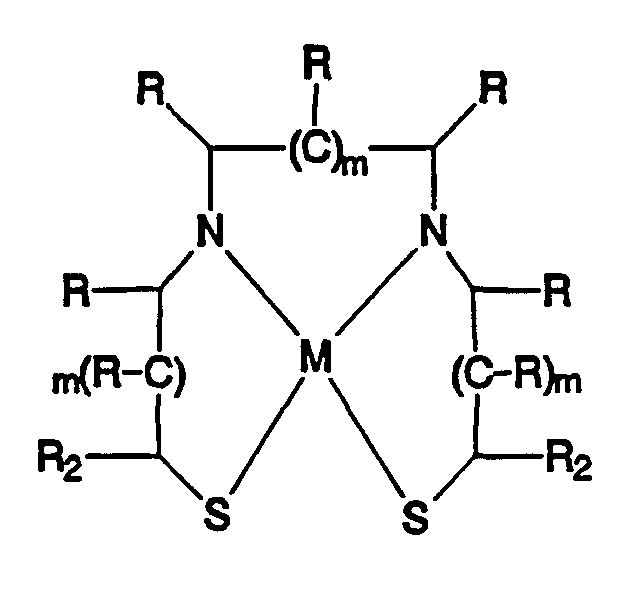
- the present invention provides a compound of the formula:
- n 0 to about 3;
- R 1 represents a lower alkyl or substituted lower alkyl group
- Z represents a protein conjugation group, a ligand conjugation group, an anti-ligand conjugation group or a targeting protein, ligand or anti-ligand; or a ligand-linker moiety or an anti-ligand-linker moiety wherein the linker moiety is derived from a ligand or anti-ligand conjugation group;
- each R 2 independently represents H 2 , a lower alkyl group, -(CH 2 ) n - COOH, -(CH 2 ) n -CO-saccharide or saccharide derivative, or -(CH 2 ) n -NH- saccharide or saccharide derivative, or R 1 -Z;
- each T represents a sulfur protecting group
- the compound comprises at least one (CH 2 ) n -COOH substituent or one -(CH 2 ) n -CO-saccharide or saccharide derivative or -(CH 2 ) n -NH-saccharide or saccharide derivative substituent and one - R 1 -Z substituent.
- the present invention also provides radionuclide metal chelate compounds of the formula:
- M represents a radionuclide metal or oxide thereof and the other symbols are as described above.
- These compounds comprise a targeting protein such as an antibody, or a conjugation group for attachment of the compound to a targeting protein.
- the compounds include a ligand or an anti-ligand or a conjugation group for the attachment of the compound to a ligand or to an anti-ligand.
- the chelating compound may be attached to a targeting protein, ligand or anti-ligand and subsequently radiolabeled.
- the radionuclide metal chelate compound may be prepared and then attached to a targeting protein, ligand or anti-ligand.
- the resulting radiolabeled targeting proteins, ligands or anti-ligands are useful in diagnostic and therapeutic medical procedures.
- An example of a targeting protein is a monoclonal antibody that binds to cancer cells.
- An example of a ligand is biotin, with the complementary anti-ligand thereof being avidin or streptavidin, wherein biotin and avidin or streptavidin together form a ligand-anti-ligand binding pair.
- ester cleavable R 1 moiety exhibiting, for example, ester and/or amide functionalities.
- the carboxylic acid substituent(s) on the compounds of the present invention are believed to assist in chelation of a radionuclide and to contribute to improved biodistribution properties of catabolites of the radiolabeled targeting proteins, ligands or anti-ligands. Reduced localization of radioactivity within the intestines is achieved using the radiolabeled targeting proteins, ligands or anti-ligands of the present invention.
- Figures 1-7 depict chemical synthesis procedures that may be used to prepare certain chelating compounds of the present invention.
- Figure 8 depicts the tumor uptake profile of NR-LU-10 streptavidin conjugate (LU-10-StrAv) in comparison to a control profile of native NR-LU-10 whole antibody.
- Targeting moiety A molecule that binds to a defined population of cells.
- the targeting moiety may bind a receptor, an oligonucleotide, an enzymatic substrate, an antigenic determinant, or other binding site present on or in the target cell population.
- Targeting moieties that are proteins are referred to herein as "targeting proteins.”
- Antibody is used throughout the specification as a prototypical example of a targeting moiety and a targeting protein. Tumor is used as a prototypical example of a target in describing the present invention.
- Ligand/anti-ligand pair A complementary/anticomplementary set of molecules that demonstrate specific binding, generally of relatively high affinity.
- exemplary ligand/anti-ligand pairs include zinc finger protein/dsDNA fragment, hapten/antibody, lectin/carbohydrate, ligand/receptor, and biotin/avidin.
- Biotin/avidin is used throughout the specification as a prototypical example of a ligand/anti-ligand pair.
- Anti-ligand As defined herein, an "anti-ligand” demonstrates high affinity, and preferably, multivalent binding of the complementary ligand.
- the anti-ligand is large enough to avoid rapid renal clearance, and contains sufficient multivalency to accomplish crosslinking and aggregation of targeting moiety-ligand conjugates.
- Univalent anti-ligands are also contemplated by the present invention.
- Anti-ligands of the present invention may exhibit or be derivitized to exhibit structural features that direct the uptake thereof, e.g., galactose residues that direct liver uptake.
- Avidin and streptavidin are used herein as prototypical anti-ligands.
- Avidin and Streptavidin As defined herein, both of the terms "avidin” and “streptavidin” include avidin, streptavidin and derivatives and analogs thereof that are capable of high affinity, multivalent or univalent binding of biotin.
- Ligand As defined herein, a "ligand” is a relatively small, soluble molecule that exhibits rapid serum, blood and/or whole body clearance when administered intravenously in an animal or human. Biotin is used as the prototypical ligand.
- Pretargeting involves target site localization of a targeting moiety that is conjugated with one member of a ligand/anti-ligand pair; after a time period sufficient for optimal target-to-non-target accumulation of this targeting moiety conjugate, active agent conjugated to the opposite member of the ligand/anti-ligand pair is administered and is bound (directly or indirectly) to the targeting moiety conjugate at the target site (two-step pretargeting). Three-step and other related methods described herein are also encompassed.
- Linker Moiety A moiety that is a portion of a protein, ligand or anti-ligand conjugation group that remains part of the structure of a protein-chelate, ligand-chelate or anti-ligand-chelate conjugate following the conjugation step.
- the linker moiety of an active ester chelate derivative includes, for example, a carbonyl (-CO-) moiety.
- the present invention provides chelating compounds and radionuclide metal chelate compounds prepared therefrom, as well as radiolabeled proteins, ligands or anti-ligands having the chelates attached thereto.
- the radionuclide metal chelates of the present invention are attached to targeting proteins such as antibodies to form radiolabeled targeting proteins having diagnostic or therapeutic use.
- the compounds each comprise a targeting protein or a protein conjugation group for attachment of the compound to a targeting protein.
- the radionuclide metal chelates of the present invention are attached to ligands or anti-ligands to form radiolabeled ligands or anti-ligands having diagnostic or therapeutic use.
- Such compounds include a ligand or anti-ligand conjugation group to facilitate attachment of the compound to a ligand or anti-ligand.
- the compounds also comprise at least one carboxylic acid substituent.
- the good radiolabeling yields (i.e., chelate formation) achieved with these compounds are believed to be attributable, at least in part, to the presence of the carboxylic acid substituent(s).
- the improved biodistribution properties of the radiolabeled proteins of the invention also are believed to be at least in part attributable to the carboxylic acid substituent(s) on the chelate.
- chelating compounds of the following formula:
- n 0 to 3;
- R 1 represents a lower alkyl or substituted lower alkyl group
- Z represents a protein conjugation group, a ligand conjugation group, an anti-ligand conjugation group or a targeting protein, ligand or anti-ligand; or a ligand-linker moiety or an anti-ligand-linker moiety wherein the linker moiety is derived from a ligand or an anti-ligand conjugation group;
- each R 2 independently represents H 2 , a lower alkyl group, -(CH 2 ) n -
- each T represents a sulfur protecting group
- the compound comprises at least one -(CH 2 ) n -COOH substituent -(CH 2 ) n - CO-saccharide or saccharide derivative, or -(CH 2 ) n -NH-saccharide or saccharide derivative substituent and one -R 1 -Z substituent.
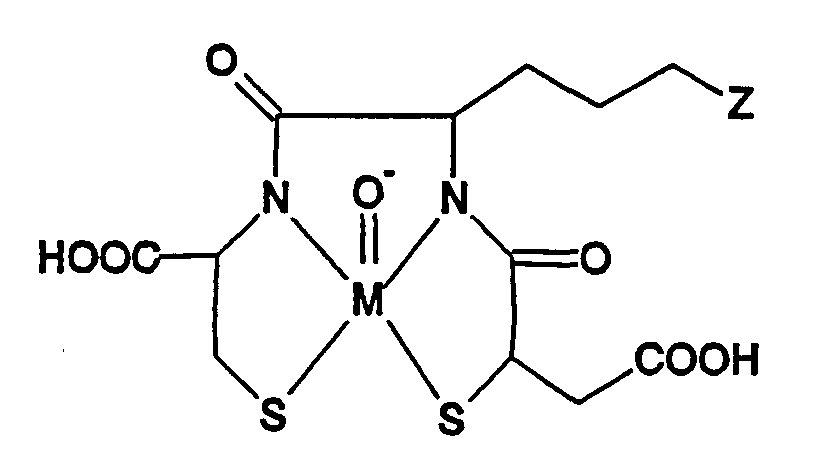
- M represents a radionuclide metal or an oxide thereof and all the other symbols are as described above.
- ester cleavable R 1 moieties incorporating, for example, ester and/or amide-containing R 1 groups.
- An example of such compounds of the present invention employing a cleavable succinate mono-ester mono-amide linkage has the formula shown below:
- ester cleavable R 1 group is a reduction in non-target cell retention. Also, ester functionalities often improve water solubility and overall polarity of small molecules. Preparation of compounds having ester cleavable linkers is discussed in the Examples set forth below.
- a protein conjugation group is a chemically reactive functional group that will react with a protein under conditions that do not denature or otherwise adversely affect the protein.
- the protein conjugation group therefore is sufficiently reactive with a functional group on a protein so that the reaction can be conducted in substantially aqueous solutions and does not have to be forced, e.g. by heating to high temperatures, which may denature the protein.
- suitable protein conjugation groups include but are not limited to active esters, isothiocyanates, amines, hydrazines, thiols, and maleimides.
- active esters are thiophenyl ester, 2,3,5,6-tetrafluorophenyl ester, and 2,3,5, 6-tetrafluorothiophenyl ester.
- the preferred active esters may comprise a group that enhances water solubility, at the para (i.e., 4) position on the phenyl ring.
- groups are CO 2 H, SO 3 -, PO 3 2- and OPO 3 2- , and
- a ligand or anti-ligand conjugation group is a chemically reactive functional group that will react with a ligand or anti-ligand under conditions that do not adversely affect the ligand or anti-ligand, including the capacity of the ligand or anti-ligand to bind to its complementary binding pair member.
- Ligand or anti-ligand conjugation groups therefore are sufficiently reactive with a functional group on a ligand or anti-ligand so that the reaction can be conducted under relatively mild reaction conditions including those described above for protein-chelate conjugation.
- protein conjugation groups may correspond to ligand or anti-ligand conjugation groups.
- Suitable ligand or anti-ligand conjugation groups therefore include, but are not limited to, active esters, isothiocyanates, amines, hydrazines, thiols, and maleimides.
- active esters are thiophenyl ester, 2,3,5,6-tetrafluorophenyl ester, and 2,3,5,6-tetrafluorothiophenyl ester.
- the preferred active esters may comprise a group that enhances water solubility, at the para (i.e., 4) position on the phenyl ring. Examples of such groups are CO 2 H, SO 3 -, PO 3 2 -, OPO 3 2- , and O(CH 2 CH 2 O) n CH 3 groups.
- suitable conjugations groups are those functional groups that react with a ligand or anti-ligand functional group (e.g., a terminal carboxy group) or a functional group which the ligand or anti-ligand has been derivatized to contain (e.g., an alcohol or an amine group produced by the reduction of a terminal carboxy moiety).
- a ligand or anti-ligand functional group e.g., a terminal carboxy group
- a functional group which the ligand or anti-ligand has been derivatized to contain e.g., an alcohol or an amine group produced by the reduction of a terminal carboxy moiety.
- conjugation groups such as those recited above, that are capable of reacting with -COOH, -OH or -NH 2 groups are useful conjugation groups for producing biotin-chelate molecules of this aspect of the present invention.
- Exemplary biotin-COOH conjugation groups are amines, hydrazines, alcohols and the like.
- Exemplary biotin-OH conjugation groups are tosylates (Ts), active esters, halides and the like, with exemplary groups being reactive with biotin-O-Ts including amines, hydrazines, thiols and the like.
- Exemplary biotin-NH 2 conjugation groups are active esters, acyl chlorides, tosylates, isothiocyanates and the like.
- R 1 is a lower alkyl or substituted lower alkyl group.
- lower alkyl is meant an alkyl group of preferably one to four carbon atoms. Most preferably, R 1 is a methylene chain comprising from two to three carbon atoms. The lower alkyl group may be substituted with hetero atoms such as oxygen or nitrogen atoms.
- the R 1 linkage comprises a methylene group immediately adjacent to the terminal primary amine protein conjugation group.
- targeting moiety binds to a defined target cell population, such as tumor cells.
- Preferred targeting moieties useful in this regard include antibody and antibody fragments, proteinaceous or non-proteinaceous ligands or anti-ligands, peptides, and hormones. Proteins corresponding to known cell surface receptors (including low density
- lipoproteins lipoproteins, transferrin and insulin), fibrinolytic enzymes, anti-HER2, platelet binding proteins such as annexins, and biological response modifiers (including interleukin, interferon, erythropoietin and colony-stimulating factor) are also preferred targeting moieties.
- anti-EGF receptor antibodies which internalize following binding to the receptor and traffic to the nucleus to an extent, are preferred targeting moieties for use in the present invention to facilitate delivery of Auger emitters and nucleus binding drugs to target cell nuclei.
- Oligonucleotides e.g., antisense oligonucleotides that are complementary to portions of target cell nucleic acids (DNA or RNA), are also useful as targeting moieties in the practice of the present invention. Oligonucleotides binding to cell surfaces are also useful. Analogs of the above-listed targeting moieties that retain the capacity to bind to a defined target cell population may also be used within the claimed invention. In addition, synthetic targeting moieties may be designed.
- targeting moieties of the present invention are also useful as targeting moieties of the present invention.
- One targeting moiety functional equivalent is a mimetic compound, an organic chemical construct designed to mimic the proper configuration and/or orientation for targeting moiety-target cell binding.
- Another targeting moiety functional equivalent is a short polypeptide designated as a "minimal" polypeptide, constructed using computer-assisted molecular modeling and mutants having altered binding affinity, which minimal polypeptides exhibit the binding affinity of the targeting moiety.
- targeting protein refers to proteins which are capable of binding to a desired target site in vivo.
- the targeting protein may bind to a receptor, substrate, antigenic determinant, complementary binding pair member or other binding site on a target cell or other target site.
- the targeting protein serves to deliver the radionuclide attached thereto to the desired target site in vivo.
- targeting proteins include, but are not limited to, antibodies and antibody fragments, proteinaceous ligands or anti-ligands, hormones, fibrinolytic enzymes, and biologic response modifiers.
- targeting protein includes proteins, polypeptides, and fragments thereof.
- targeting proteins other molecules that localize in a desired target site in vivo, although not strictly proteins, are included within the definition of the term "targeting proteins" as used herein.
- certain carbohydrates or glycoproteins may be used in the present invention.
- the proteins may be modified, e.g., to produce variants and fragments thereof, as long as the desired biological property (i.e.. the ability to bind to the target site) is retained.
- the proteins may be modified by using various genetic engineering or protein engineering techniques.
- antibodies most preferably monoclonal antibodies.
- a number of monoclonal antibodies that bind to a specific type of cell have been developed, including monoclonal antibodies specific for tumor-associated antigens in humans.
- monoclonal antibodies that may be used are anti-TAC, or other interleukin-2receptor antibodies; 9.2.27 and NR-ML-05 to the 250 kilodalton human melanoma-associated proteoglycan; and NR-LU-10 to a pancarcinoma
- the antibody employed in the present invention may be an intact (whole) molecule, a fragment thereof, or a functional equivalent thereof.
- antibody fragments are F(ab') 2 , Fab', Fab, and F v fragments, which may be produced by conventional methods or by genetic or protein engineering.
- Murine monoclonal antibodies or "humanized” murine antibodies are also useful as targeting moieties in accordance with the present invention.
- murine monoclonal antibody may be "humanized” by genetically recombining the nucleotide sequence encoding the murine Fv region (i.e..
- containing the antigen binding site or the complementarity determining regions thereof with the nucleotide sequence encoding at least a human constant domain region and an Fc region, e.g. , in a manner similar to that disclosed in European Patent Application No. 0,411,893 A2.
- Some additional murine residues may also be retained within the human variable region framework domains to ensure proper target site binding characteristics.
- Humanized targeting moieties are recognized to decrease the immunoreactivity of the antibody or polypeptide in the host recipient, permitting an increase in the half-life and a reduction in the possibility of adverse immune reactions.
- Targeting proteins are rarely completely specific for a desired target site. Localization in non-target tissues may occur through cross-reactivity or non-specific uptake, for example. In the case of radiolabeled targeting proteins, such localization at non-target sites may result in decreased clarity of diagnostic images (due to the increased "background") and misdiagnosis. Exposure of non-target tissues to radiation also occurs, which is especially undesirable in therapeutic procedures.
- the improved biodistribution properties of the radiolabeled targeting proteins of the present invention are believed to be attributable to the effect of the chelate, most likely on the biodistribution of catabolites of the radiolabeled proteins.
- Ligands suitable for use within the present invention include biotin, haptens, lectins, epitopes, dsDNA fragments and analogs and derivatives thereof.
- Useful complementary anti-ligands include avidin (for biotin), carbohydrates (for lectins), antibody, fragments or analogs thereof, including mimetics (for haptens and epitopes) and zinc finger proteins (for dsDNA fragments).
- Preferred ligands and anti-ligands bind to each other with an affinity of at least about k D ⁇ 10- 9 M.
- the chelating compounds of the present invention comprise two nitrogen and two sulfur donor atoms, and thus may be termed "N 2 S 2 " chelating compounds.
- the radiolabeled targeting proteins of the present invention exhibit certain improved biodistribution properties compared to targeting proteins radiolabeled with certain other N 2 S 2 chelates. Most notably, localization of radiolabeled targeting proteins (or catabolites thereof) within the intestines is reduced.
- a percentage of the injected dosage of the radionuclide becomes localized within the intestines (i.e., becomes part of the intestinal contents, rather than binding to intestinal epithelial tissue per se).
- stable attachment of radionuclides to antibodies and effective localization thereof on target tumors has been achieved using the EP 188,256 system, reduction of the intestinal localization would be beneficial.
- a portion of the non-target-bound administered radiolabeled proteins e.g., antibodies or fragments thereof
- most likely is first metabolized to produce radiolabeled catabolites that subsequently enter the intestines, probably through hepatobiliary excretion.
- a major catabolite may be the lysine adduct of the chelate.
- Intestinal localization of radioactivity may be confused with (or obstruct) target sites in the abdominal area.
- the dosage that can be safely administered is reduced when intestinal localization occurs (due to exposure of normal tissues to the radiation). The therapeutic effect on the target sites therefore also is reduced.
- the biodistribution patterns in vivo differ when targeting proteins (e.g., antibody fragments) are radiolabeled with a chelate of the present invention, compared to radiolabeling using certain other N 2 S 2 chelates.
- the advantage of reduced intestinal localization is demonstrated for the radiolabeled targeting proteins of the present invention. While not wishing to be bound by theory, it is believed that the carboxylic acid
- substituent(s) on the chelate confer the advantageous biodistribution properties on catabolites of the radiolabeled protein (most likely lysine adducts of the chelate).
- the carboxylic acid substituent(s) on the compounds of the present invention increase the polarity, and therefore the water solubility, of the compounds. The increased water solubility is believed to promote excretion of the catabolites by the kidneys, resulting in efficient elimination of the radioactive catabolites in the urine.
- Other substituents that enhance polarity e.g., sulfate groups
- Another advantage of the chelates of the present invention is the comparatively good radiolabeling yields.
- the free carboxylic acid substituent(s) are believed to assist in the chelation of the radionuclide.
- Radiolabeled ligands and anti-ligands also exhibit these favorable biodistribution and chelation properties.
- bonds form between the four donor atoms and the radionuclide metal to form the corresponding radionuclide metal chelate.
- Any suitable conventional sulfur protecting group(s) may be attached to the sulfur donor atoms of the compounds of the present invention.
- the protecting groups should be removable, either prior to or during the radiolabeling reaction.
- the protecting groups attached to the two sulfur donor atoms may be the same or different.
- a single protecting group e.g. a thioacetal group, may protect both sulfur donor atoms.
- the preferred sulfur protecting groups are acetamidomethyl and hemithioacetal protecting groups, which are displacable from the chelating compound during the radiolabeling reaction.
- At least one sulfur protecting group is a hemithioacetal group, and at most one sulfur protecting group is an acetamidomethyl group.
- An acetamidomethyl sulfur-protecting group is represented by the following formula, wherein the sulfur atom shown is a sulfur donor atom of the chelating compound:
- the acetamidomethyl group is displaced from the chelating compound during radiolabeling conducted at about 50°C in a reaction mixture having a pH of about 3 to 6.
- each sulfur atom to be protected has a separate protective group attached to it, which together with the sulfur atom defines a hemithioacetal group.
- the hemithioacetal groups contain a carbon atom bonded directly (i.e., without any intervening atoms) to a sulfur atom and an oxygen atom, i.e.,
- Preferred hemithioacetals generally are of the following formula, wherein the sulfur atom is a sulfur atom of the chelating compound, and a separate protecting group is attached to each of the sulfur atoms on the chelating compound: wherein R 3 is a lower alkyl group, preferably of from two to five carbon atoms, and R 4 is a lower alkyl group, preferably of from one to three carbon atoms. Alternatively, R 3 and R 4 may be taken together with the carbon atom and the oxygen atom shown in the formula to define a nonaromatic ring, preferably comprising from three to seven carbon atoms in addition to the carbon and oxygen atoms shown in the formula.
- R 5 represents hydrogen or a lower alkyl group wherein the alkyl group preferably is of from one to three carbon atoms. Examples of such preferred hemithioacetals include, but are not limited to:
- at least one and preferably two R 2 substituents are -(CH 2 ) n -COOH, with n preferably equal to 1.
- chelating compounds of the present invention are the compounds of the following formulas:
- these chelating compounds comprise either two hemithioacetal, or one hemithioacetal and one acetamidomethyl sulfur protecting groups.
- chelating compounds of the present invention incorporate one or more saccharide residues.
- a preferred number of saccharide residues ranges from 1 to about 10, although when polymeric saccharides are employed the number of saccharide residues therein may be higher.
- Saccharides such as hexoses (e.g., glucose) and pentoses (e.g., fructose) and polymers of such saccharides are hydrophilic and, consequently, are generally excreted efficiently into the urine by glomular filtration.
- hexoses e.g., glucose
- pentoses e.g., fructose
- polymers of such saccharides are hydrophilic and, consequently, are generally excreted efficiently into the urine by glomular filtration.
- Inulin a 5 kD polymer of fructose, is the gold standard for glomular filtration studies.
- Derivatization of a chelating compound with one or more hexose residues, such as glucose residues, for example, is expected to increase the water solubility and hydrophilicity of the chelating compound and conjugates containing the same. Consequently, glucose-bearing chelating compounds and conjugates will exhibit enhanced renal excretion.
- Saccharide or saccharide derivative-bearing conjugates can be prepared in accordance with procedures discussed in the examples below for glucose derivative-bearing conjugates.
- Exemplary glucose derivative-containing conjugates of the present invention can be prepared from a variety of
- sugar derivative (unmodified, amino functionalized or carboxy functionalized) depends on the conjugating group of the chelating compound.
- amino sugars are preferred for conjugation to chelating compound carboxyl groups.
- Glucosamine for example, is useful for this purpose, as it allows amino group reaction with appropriate derivatives of chelating compounds such as active esters, active halides, aldehydes.
- saccharide compounds bearing carboxyl residues are commercially available and can be reacted with amine derivatives of chelating compounds.
- Glucuronic acid for example, is useful for this purpose, as it bears a carboxy residue available for reaction with a chelating compound amine.
- native saccharide compounds such as glucose for example
- chelating compound amines can be reacted with chelating compound amines to form amine-linked sugar-chelating compound conjugates. Subsequent or concurrent imine reduction results in a stable amine linkage.
- Sugar lactones may be employed in the preparation of amide-linked sugar-chelating compound conjugates.
- the lactone serves as an activated carboxylic acid which undergoes nucleophilic, ring opening upon reaction with amine bearing chelating compounds.
- the chelating compounds of the present invention are radiolabeled, using conventional procedures, with any of a variety of radionuclide metals to form the corresponding radionuclide metal chelates.
- radionuclide metals include, but are not limited to, copper (e.g., 67 Cu and 64 Cu); technetium (e.g., 99m Tc); rhenium (e.g., 186 Re and 188 Re); lead (e.g., 212 Pb); bismuth (e.g, 212 Bi); and palladium (e.g., 109 Pd). Methods for preparing these isotopes are known.
- Molybdenum/technetium generators for producing 99m Tc are commercially available.
- Procedures for producing 186 Re include the procedures described by Deutsch et al., (Nucl. Med. Biol., Vol. 13:4:465-477, 1986) and Nanderheyden et al. (Inorganic Chemistry, Vol. 24:1666-1673, 1985), and methods for production of 188 Re have been described by Blachot et al. (Intl. J. of Applied Radiation and Isotopes. Vol. 20:467-470, 1969) and by Klofutar et al. (J. of Radioanalytical Chem., Vol. 5:3-10, 1970).
- chelating compounds of the invention comprising acetamidomethyl and/or hemithioacetal sulfur protective groups are radiolabeled with a metal radionuclide by reacting the compound with the radionuclide under conditions of acidic pH. It is believed that the acidic pH and the presence of the metal both contribute to the displacement of the sulfur protective groups from the chelating compound. The radionuclide is in chelatable form when reacted with the chelating compounds of the invention.
- reducing agent will be employed to reduce the radionuclides (e.g., in the form of pertechnetate and perrhenate, respectively) to a lower oxidation state at which chelation will occur.
- radionuclides e.g., in the form of pertechnetate and perrhenate, respectively
- suitable reducing agents are known. (See, for example, U.S.
- Such reducing agents include, but are not limited to, stannous ion (e.g., in the form of stannous salts such as stannous chloride or stannous fluoride), metallic tin, ferrous ion (e.g., in the form of ferrous salts such as ferrous chloride, ferrous sulfate, or ferrous ascorbate) and many others.
- stannous ion e.g., in the form of stannous salts such as stannous chloride or stannous fluoride
- metallic tin e.g., in the form of ferrous salts such as ferrous chloride, ferrous sulfate, or ferrous ascorbate
- ferrous ion e.g., in the form of ferrous salts such as ferrous chloride, ferrous sulfate, or ferrous ascorbate
- Sodium pertechnetate i.e., 99m TcO 4 - which is in the +7 oxidation level
- the radionuclide is treated with a reducing agent and a complexing agent to form an intermediate complex (i.e., an "exchange complex").
- Complexing agents are compounds which bind the radionuclide more weakly than do the chelate compounds of the invention, and may be weak chelators. Any of the suitable known complexing agents may be used, including but not limited to gluconic acid, glucoheptonic acid, methylene disphosphonate, glyceric acid, glycolic acid, mannitol, oxalic acid, malonic acid, succinic acid, bicine, N,N'-bis(2-hydroxy ethyl) ethylene diamine, citric acid, ascorbic acid and gentisic acid.
- Radionuclides in the form of such an exchange complex are reacted with the chelating compounds of the invention, the radionuclide will transfer to these compounds which bind the radionuclide more strongly to form chelates of the invention. Heating is often required to promote transfer of the radionuclide. Radionuclides in the form of such complexes also are considered to be in
- Chelates of 212 Pb, 212 Bi, 109 Pd may be prepared by combining the appropriate salt of the radionuclide with the chelating compound and incubating the reaction mixture at room temperature or at higher temperatures. It is not necessary to treat the lead, bismuth, palladium, and copper radioisotopes with a reducing agent prior to chelation, as such isotopes are already in an oxidation state suitable for chelation (i.e., in chelatable form).
- the specific radiolabeling reaction conditions may vary somewhat according to the particular radionuclide and chelating compound involved.
- the chelating compound may be radiolabeled to form a radionuclide metal chelate, which then is reacted with a targeting protein, ligand or anti-ligand.
- the unlabeled chelating compound may be attached to the targeting protein, ligand or anti-ligand and subsequently radiolabeled.
- Proteins and proteinaceous ligands or anti-ligands e.g., avidin or streptavidin
- non-proteinaceous ligands or anti-ligands e.g., biotin
- proteins and proteinaceous ligands or anti-ligands contain one or more of a variety of functional groups; e.g., carboxylic acid (COOH) or free amine (-NH 2 ) groups, which are available for reaction with a suitable protein, ligand or anti-ligand conjugation group "Z" on a chelator to bind the chelator to the protein, ligand or anti-ligand.
- an active ester on the chelator reacts with primary amine groups on lysine residues of proteins to form amide bonds.
- the protein, ligand or anti-ligand and/or chelator may be derivatized to expose or attach additional reactive functional groups.
- the derivatization may involve attachment of any of a number of linker molecules such as those available from Pierce Chemical Company, Rockford, Illinois. (See the Pierce 1986-87 General Catalog, pages 313-54.)
- the derivatization may involve chemical treatment of the protein (which may be an antibody), ligand or anti-ligand. Procedures for generation of free sulfhydryl groups on antibodies or antibody fragments are also known. (See U.S. Patent No. 4,659,839.) Maleimide conjugation groups on a chelator are reactive with the sulfhydryl (thiol) groups.
- derivatization may involve chemical treatment of the carbohydrate; e.g., glycol cleavage of the sugar moiety of a glycoprotein antibody with periodate to generate free aldehyde groups.
- the free aldehyde groups on the antibody may be reacted with free amine or hydrazine conjugation groups on the chelator to bind the chelator thereto.
- Biotin has a terminal carboxy moiety which may be reacted with a suitable ligand conjugation group, such as an amine, hydroxyl in the presence of a coupling agent such as DCC or the like.
- a suitable ligand conjugation group such as an amine, hydroxyl in the presence of a coupling agent such as DCC or the like.
- the terminal carboxy moiety may be derivatized to form an active ester, which is suitable for reaction with a suitable ligand conjugation group, such as an amine, a hydroxyl, another nucleophile, or the like.
- the terminal carboxy moiety may be reduced to a hydroxy moiety for reaction with a suitable ligand conjugation group, such as a halide (e.g., iodide, bromide or chloride), toxylate, mesylate, other good leaving groups or the like.
- the hydroxy moiety may be chemically modified to form an amine moiety, which may be reacted with a
- the radiolabeled targeting proteins, ligands and anti-ligands of the present invention have use in diagnostic and therapeutic procedures, both for in vitro assays and for in vivo medical procedures.
- One type of therapeutic or diagnostic procedure in which the compounds of the present invention may be employed is a pretargeting protocol.
- pretargeting encompasses two protocols, termed the three-step and the two-step. In the three-step protocol, shown schematically below, targeting moiety-ligand is administered and permitted to localize to target.
- Targeting moiety-ligand conjugates may be prepared in accordance with known techniques therefor. Anti-ligand is then administered to act as a clearing agent and to facilitate and direct the excretion of circulating targeting moiety-ligand. The anti-ligand also binds to target-associated targeting moiety-ligand. Next, a conjugate employing a compound of the present invention is administered, having the following structure:
- the radiolabeled ligand conjugate either binds to target-associated targeting moiety-ligand-anti-14-gand or is rapidly excreted, with the excretion proceeding primarily through the renal pathway. Consequently, the target-non-target ratio of active agent is improved, and undesirable hepatobiliary excretion and intestinal uptake of the active agent are substantially decreased.
- Two-step pretargeting involves administration of targeting moiety-anti-ligand, which may be prepared in accordance with known techniques therefor.
- a radiolabeled ligand of the present invention is administered.
- a clearing agent is administered to remove circulating targeting moiety-anti-ligand without binding of clearing agent to target-associated targeting moiety-anti-ligand. In this manner, the target-non-target ratio of the radiolabeled ligand is increased, and undesirable hepatobiliary excretion and intestinal uptake of the radiolabeled ligand are substantially decreased.
- the radiolabeled proteins, ligands or anti-ligands may be administered intravenously, intraperitoneally, intralymphatically, locally, or by other suitable means, depending on such factors as the type of target site.
- the amount to be administered will vary according to such factors as the type of radionuclide (e.g., whether it is a diagnostic or therapeutic radionuclide), the route of
- a diagnostically effective dose for a chelate labeled antibody embodiment of the present invention is generally from about 5 to about 35 and typically from about 10 to about 30 mCi per 70 kg body weight.
- a therapeutically effective dose is generally from about 20 mCi to about 300 mCi.
- Elevated doses e.g., ranging from about 2 to about 10 times higher, can be used when pretargeting procedures are employed, because of the decoupling of targeting moiety localization and radionuclide localization.
- conventional non-invasive procedures e.g., gamma cameras
- the biodistribution of the diagnostic radionuclide thereby determining the presence or absence of the target sites of interest (e.g., tumors).
- the comparatively low intestinal localization of the therapeutic radiolabeled antibodies of the present invention or catabolites thereof permits increased dosages, since intestinal tissues are exposed to less radiation.
- the clarity and accuracy of diagnostic images also is improved by the reduced localization of radiolabeled antibodies or catabolites thereof in normal tissues.
- Procedure #1 Synthesis of succinate reagent 16 via base opening of oxathiolone: Conversion of 2 to 2-mercaptosuccinic acid oxathiolone ⁇ -t-butyl ester 13:
- Compound 2 was prepared from 1 as described in Example I. To an ice cold solution of 2 (1.45 g, 6.30 mmol) in acetonitrile (6.5 mL) and t-butanol (0.89 mL) were added dimethyl aminopyridine (77 mg, 0.63 mmol) and DCC 1.55 g, 7.56 mmol). The reaction was stirred for 1 hour at 0°C and then stored at 0°C for 4 days. The product was filtered. The filtrate was evaporated. Chromatography (10% EtOAc/Hexanes) provided 13 as a yellow oil (1.76 g, 6.15 mmol) in 98% yield.
- Procedure #2 Synthesis of succinate reagent 16 using LDA Conversion of S-tetrahydropyranylmercaptoacetic acid (17) to S- tetrahydropyranylmercaptosuccinic acid ⁇ -t-butyl ester 15 and NHS ester 16:
- a solution of lithium diisopropylamide (LDA) was prepared by adding a 1.30 M solution of n-butyl lithium in hexanes (13.2 mL, 17.2 mmol) to a solution of d ⁇ sopropyl amine (2.52 mL, 18.0 mmol) in THF (10.0 mL) at - 78°C. The solution was stirred for 20 minutes. To this was added dropwise a solution of S-tetrahydropyranylmercaptoacetic acid (1.32 g, 7.50 mmol) in THF (5.0 mL). The reaction became cloudy. It was stirred at -78°C for 25 minutes, warmed to 0°C, and stirred for 25 minutes.
- LDA lithium diisopropylamide
- the reaction was then cooled to - 78°C and treated with a solution of t-butyl bromoacetate (3.2 mL) in THF (2.0 mL). The reaction solution was stirred for 1 hour at -78°C, and for 30 minutes at 0°C. The reaction was quenched by the addition of acetic acid (1.0 mL) in methylene chloride. The mixture was concentrated, diluted with water and ethyl acetate. The aqueous layer was separated, acidified with 1.0 M HC1 to pH 3.0, and further extracted with EtOAc (2 x 75 mL). The combined EtOAc extracts were washed with brine, dried, and evaporated to give 15 as a canary yellow oil.
- stannous gluconate complex 50 mg sodium gluconate and 1.2 mg stannous chloride dehydrate, available from Merck Frosst, Canada, in dry solid form
- a sterile insulin syringe was used to inject 0.1 mL of the resulting stannous gluconate solution into an empty sterile vial.
- Sodium pertechnetate (0.75 mL, 75-100 mCi, eluted from a "Mo/"Tc generator purchased from DuPont,
- the kit in an alternative procedure for providing the 99m Tc-gluconate exchange complex, includes a vial containing a lyophilized preparation comprising 5 mg sodium gluconate, 0.12 mg stannous chloride dehydrate, about 0.1 mg gentisic acid as a stabilizer compound, and about 20 mg lactose as a filler compound.
- the amount of gentisic acid may vary, with the stabilizing effect generally increasing up to about 0.1 mg. Interference with the desired reactions may occur when about 0.2 mg or more gentisic acid is added.
- the amount of lactose also may vary, with amounts between 20 and 100 mg, for example, being effective in aiding lyophilization.
- Addition of stabilizer and a filler compound is especially important when the vial contained these relatively small amounts of sodium gluconate and stannous chloride (compared to the alternative embodiment above).
- One mL of sodium pertechnetate (about 100 mCi) was added directly to the lyophilized preparation. The vial was agitated gently to mix the contents, then incubated as described above to form the 99m Tc-gluconate complex.
- a separate vial containing 0.3 mg of a chelating agent in dry solid form was prepared by dispensing a solution of 0.3 mg chelating agent in acetonitrile into the vial, then removing the solvent under N 2 gas. To this vial was then added 0.87 mL of 100% isopropyl alcohol, and the vial was gently shaken for about 2 minutes to completely dissolve the chelating compound. Next, 0.58 mL of this solution of the chelating agent was transferred to a vial containing 0.16 mL of glacial acetic acid/0.2 N HCl (2:14), and the vial was gently agitated. Of this acidified solution, 0.5 mL was transferred to the vial containing the 99m Tc- gluconate complex, prepared above. After gentle agitation to mix, the vial was incubated in a 75°C ⁇ 2°C water bath for 15 minutes, then immediately transferred to a 0°C ice bath for 2 minutes.
- a separate vial containing 10 mg of the Fab fragment of a monoclonal antibody in 0.5 mL of phosphate-buffered saline was added 0.37 mL of 1.0 M sodium bicarbonate buffer, pH 10.0.
- the Fab fragment was generated by treating the monoclonal antibody with papain according to conventional techniques.
- the monoclonal antibody, designated NR-LU-10 recognizes a pancarcinoma antigen.
- the vial was gently agitated.
- Other targeting proteins may be substituted for the NR-LU-10 Fab fragment.
- the vial containing the acidified solution of the 99m Tc-labeled chelate was removed from the ice bath, 0.1 mL of the sodium bicarbonate buffer was added, and the vial was agitated to mix. Immediately, the buffered antibody solution (above) was added, gently agitated to mix and incubated at room temperature for 20 minutes to allow conjugation of the radiolabeled chelate to the antibody.
- a column containing an anion exchanger either DEAE-Sephadex or QAE-Sephadex, was used to purify the conjugate.
- the column was prepared under aseptic conditions as follows. Five 1 mL QAE-Sephadex columns were connected end-to-end to form a single column. Alternatively, a single 5 mL
- QAE-Sephadex column may he used.
- the column was washed with 5 mL of 37 mM sodium phosphate buffer, pH 6.8.
- a 1.2 ⁇ filter (available from Millipore) was attached to the column, and a 0.2 ⁇ filter was attached to the 1.2 ⁇ filter.
- a 22-gauge sterile, nonpyrogenic needle was attached to the 0.2 ⁇ filter.
- the reaction mixture was drawn up into a 3 mL or 5 mL syringe, and any air bubbles were removed from the solution.
- the syringe was connected to the QAE-Sephadex column on the end opposite the filters.
- the needle cap was removed from the 22-gauge needle attached to the filter end of the column and the needle tip was inserted into a sterile,
- the same chelating compounds may be radiolabeled with 188 Re by a procedure similar to the 99m Tc labeling procedure.
- Sodium perrhenate produced from a W-188/Re-188 research scale generator is combined with citric acid (a preferred complexing agent for 188 Re), a reducing agent, and preferably gentisic acid and lactose.
- citric acid a preferred complexing agent for 188 Re
- a reducing agent preferably gentisic acid and lactose.
- the resulting 188 Re-citrate exchange complex is heated with the desired chelating compound, as above.
- a C 18 reversed phase low pressure material (Baker C 18 cartridges) may be used to purify the 188 Re-chelate.
- a monoclonal antibody or fragment thereof is reacted with the chelate in a buffered solution to bind the chelate thereto, as described for the 99m Tc procedure.
- a Sephadex G-25 column may be used to purify the radiolabeled antibody
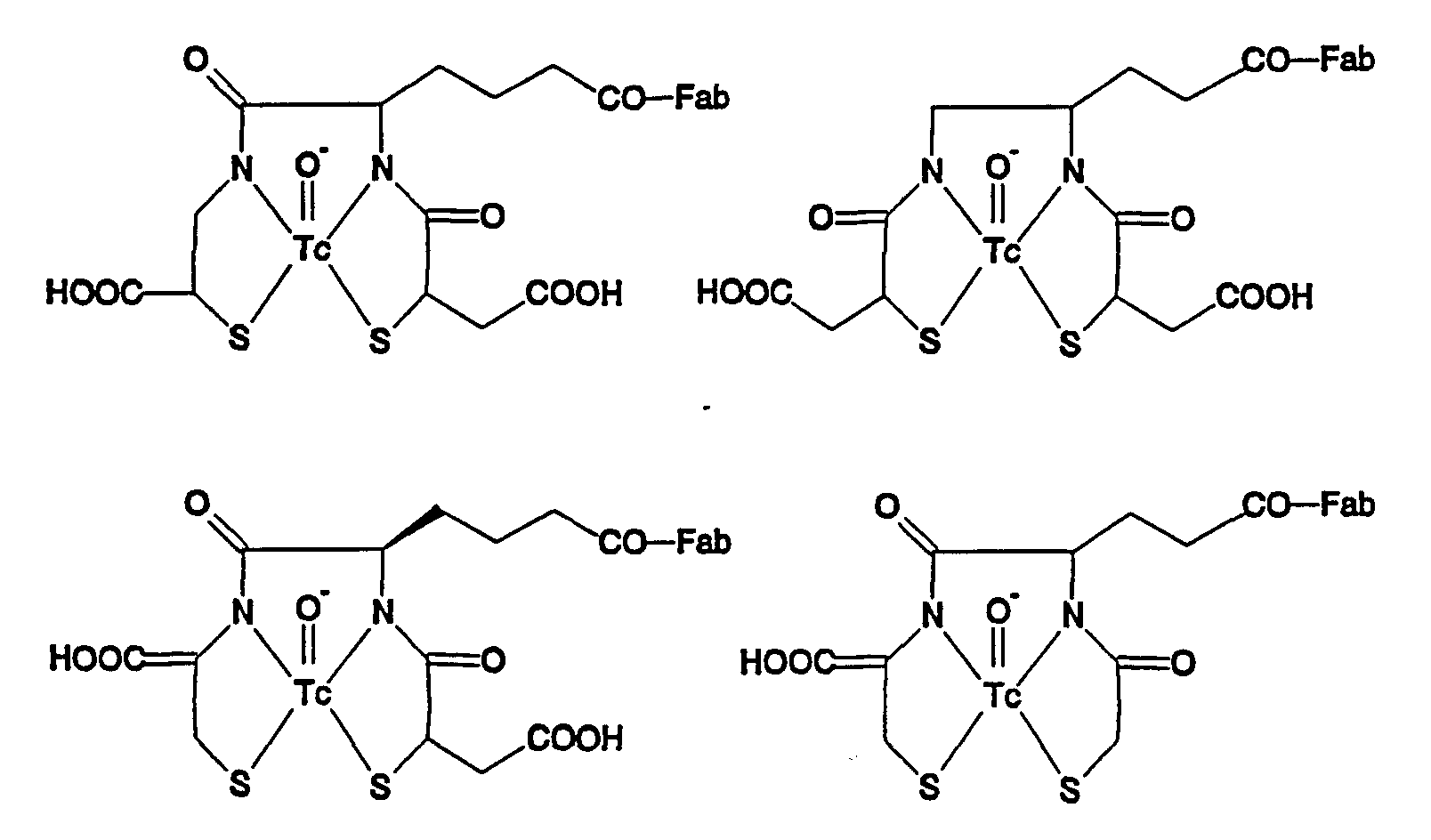
- Example VIII was analyzed in a rat model. 100 ⁇ g of protein (about 0.5 mCi) was administered intravenously into Sprague-Dawley rats. Each of the four types of radiolabeled antibody fragments (i.e., NR-LU-10 Fab fragments radiolabeled with one of the four different chelating compounds) was injected into three rats. Biodistribution was analyzed at 6 hours post-injection by isolating intestines and kidneys and determining the mCi of injected radioactivity per gram of these tissues, using a dose calibrator. The percentage of injected dose per gram of intestinal and kidney tissue was calculated and averaged to give the mean value for each group of three animals.
- radiolabeled antibody fragments i.e., NR-LU-10 Fab fragments radiolabeled with one of the four different chelating compounds
- stannous gluconate complex 50 mg sodium gluconate and 1.2 mg stannous chloride dehydrate, available from Merck Frosst, Canada, in dry solid form
- a sterile insulin syringe was used to inject 0.1 mL of the resulting stannous gluconate solution into an empty sterile vial.
- Sodium pertechnetate (0.75 mL, 75-100 mCi, eluted from a 99 Mo/ 99 Tc generator purchased from DuPont,
- a separate vial containing 0.3 mg of the chelating agent (21 or 36) in dry solid form was prepared by dispensing a solution of 0.3 mg chelating agent in acetonitrile into the vial, then removing the solvent under ⁇ 2 gas. To this vial was then added 0.87 mL of 100% isopropyl alcohol, and the vial was gently shaken for about 2 minutes to completely dissolve the chelating compound.
- the radiolabeled chelate was purified prior to conjugation to an antibody as follows.
- the 99m Tc chelates thus purified were attached to the Fab fragment of a monoclonal antibody (designated NR-LU-10) as described in Example VIII.
- targeting proteins may be substituted for the NR-LU-10 antibody fragment.
- Example XII The resulting 99m Tc chelate was attached to an antibody fragment as described in Example VIII. Other targeting proteins may be substituted for the antibody fragment.
- Example XII The resulting 99m Tc chelate was attached to an antibody fragment as described in Example VIII. Other targeting proteins may be substituted for the antibody fragment.
- Epsilon-BOC-lysine a (available from Bachem Inc.) is acylated with N-hydroxy succinimidyl-S-tetrahydropyranyl mercaptoacetate b (preparable in accordance with known procedures for protecting thiols as S-tetrahydropyranyl hemithioacetals, such as Greene et al., Protective Groups in Organic Synthesis. 2nd ed., page 291, John Wiley & Sons, Inc., New York, 1990, to give N-alpha-(S-tetrahydropyranylmercapto acetyl)-N-epsilon-BOC-lysine c.
- the BOC group is cleaved with formic acid, and the resultant amine jd is acylated with NHS-biotin to give e.
- the free carboxyl group of e is activated with NHS and EDCI to give f, which is then coupled to S-acetamidomethyl-cysteine to give the resultant N 2 S 2 -biotin conjugate g.
- DAP Diaminopentanoic acid
- X is H (synthesized using a 5-biotinam4-do-pentylamine reactant, wherein the reactant is available from Pierce Chemical Company) or COOH (synthesized using biocytin as a reactant, wherein the reactant is available from Sigma Chemical Company) and wherein Y is H (synthesized using bis-EOE-mercaptoacetyl-DAP as a reactant, wherein the reactant is synthesizable by known procedures) or CH 2 COOH (synthesized using bis-THP-mercaptosuccinyl-DAP as a reactant).
- a suspension of N 2 S 2 -tetrafluorophenylester or thioester a and biocytin b is heated at 100°C for 10 minutes.
- the product is purified by C-18 flash chromatography to afford the N 2 S 2 -biotin amide product.
- the 5-biotinamidopentylamine and N 2 S 2 -tetrafluorophenyl ester reaction occurs analogously.
Landscapes
- Health & Medical Sciences (AREA)
- Chemical & Material Sciences (AREA)
- Life Sciences & Earth Sciences (AREA)
- Organic Chemistry (AREA)
- Proteomics, Peptides & Aminoacids (AREA)
- General Health & Medical Sciences (AREA)
- Medicinal Chemistry (AREA)
- Physics & Mathematics (AREA)
- Epidemiology (AREA)
- Biophysics (AREA)
- Biochemistry (AREA)
- Veterinary Medicine (AREA)
- Oncology (AREA)
- Molecular Biology (AREA)
- Pharmacology & Pharmacy (AREA)
- Optics & Photonics (AREA)
- Genetics & Genomics (AREA)
- Public Health (AREA)
- Animal Behavior & Ethology (AREA)
- Immunology (AREA)
- Cell Biology (AREA)
- Peptides Or Proteins (AREA)
- Medicines Containing Antibodies Or Antigens For Use As Internal Diagnostic Agents (AREA)
Abstract
Description




Claims




Priority Applications (2)
| Application Number | Priority Date | Filing Date | Title |
|---|---|---|---|
| EP94924458A EP0792170A4 (en) | 1993-07-12 | 1994-07-12 | METAL CHELATES OF RADIONUCLIDES USED FOR RADIOTARKING LIGANDS, ANTI-LIGANDS AND OTHER PROTEINS |
| US08/591,560 US5783171A (en) | 1989-06-16 | 1994-07-12 | Radionuclide metal N2 S2 chelates substituted with glucose and biotin moieties |
Applications Claiming Priority (2)
| Application Number | Priority Date | Filing Date | Title |
|---|---|---|---|
| US9042193A | 1993-07-12 | 1993-07-12 | |
| US08/090,421 | 1993-07-12 |
Publications (1)
| Publication Number | Publication Date |
|---|---|
| WO1995002418A1 true WO1995002418A1 (en) | 1995-01-26 |
Family
ID=22222702
Family Applications (1)
| Application Number | Title | Priority Date | Filing Date |
|---|---|---|---|
| PCT/US1994/007733 Ceased WO1995002418A1 (en) | 1989-06-16 | 1994-07-12 | Radionuclide metal chelates for the radiolabeling of ligands, anti-ligands or other proteins |
Country Status (3)
| Country | Link |
|---|---|
| EP (1) | EP0792170A4 (en) |
| CA (1) | CA2165052A1 (en) |
| WO (1) | WO1995002418A1 (en) |
Cited By (3)
| Publication number | Priority date | Publication date | Assignee | Title |
|---|---|---|---|---|
| EP0813425A4 (en) * | 1993-07-12 | 1998-09-09 | Neorx Corp | PROTEINS MARKED WITH METAL RADIONUCLEIDES FOR DIAGNOSTIC AND THERAPEUTIC USE |
| EP0724601A4 (en) * | 1993-08-17 | 1999-02-03 | Neorx Corp | S 3N CHELATING COMPOUNDS FOR RADIOTAGGING LIGANDS, ANTILIGANDS OR OTHER PROTEINS |
| WO2007057756A3 (en) * | 2005-11-17 | 2007-07-26 | Pfizer Ltd | Isocystene derivatives for the treatment of pain |
Citations (1)
| Publication number | Priority date | Publication date | Assignee | Title |
|---|---|---|---|---|
| US5164176A (en) * | 1989-06-16 | 1992-11-17 | Neorx Corporation | Radionuclide metal chelates for the radiolabeling of proteins |
Family Cites Families (4)
| Publication number | Priority date | Publication date | Assignee | Title |
|---|---|---|---|---|
| US5556982A (en) * | 1985-01-14 | 1996-09-17 | Neorx Corporation | Metal radionuclide labeled proteins for diagnosis and therapy |
| EP0300431A3 (en) * | 1987-07-22 | 1990-06-27 | Neorx Corporation | Method of radiolabeling chelating compounds comprising sulfur atoms with metal radionuclides |
| ATE130303T1 (en) * | 1989-06-16 | 1995-12-15 | Neorx Corp | RADIONUCLATE CHELATED COMPOUNDS FOR RADIOM LABELING OF PROTEINS. |
| US5112953A (en) * | 1989-12-29 | 1992-05-12 | Neorx Corporation | Radiolabeled proteins for diagnostic or therapeutic use |
-
1994
- 1994-07-12 WO PCT/US1994/007733 patent/WO1995002418A1/en not_active Ceased
- 1994-07-12 EP EP94924458A patent/EP0792170A4/en not_active Withdrawn
- 1994-07-12 CA CA 2165052 patent/CA2165052A1/en not_active Abandoned
Patent Citations (1)
| Publication number | Priority date | Publication date | Assignee | Title |
|---|---|---|---|---|
| US5164176A (en) * | 1989-06-16 | 1992-11-17 | Neorx Corporation | Radionuclide metal chelates for the radiolabeling of proteins |
Non-Patent Citations (3)
| Title |
|---|
| JOURNAL OF NUCLEAR MEDICINE, Volume 28, Number 8, issued 01 August 1987, D.J. HNATOWICH et al., "Investigations of Avidin and Biotin for Imaging Applications", pages 1294-1302. * |
| NUCLEAR MEDICINE COMMUNICATIONS, Volume 12, issued 1991, G. PAGANELLI et al., "Monoclonal Antibody Pretargetting Techniques For Tumour Localization: the Avidin-Biotin System", pages 211-234. * |
| See also references of EP0792170A4 * |
Cited By (3)
| Publication number | Priority date | Publication date | Assignee | Title |
|---|---|---|---|---|
| EP0813425A4 (en) * | 1993-07-12 | 1998-09-09 | Neorx Corp | PROTEINS MARKED WITH METAL RADIONUCLEIDES FOR DIAGNOSTIC AND THERAPEUTIC USE |
| EP0724601A4 (en) * | 1993-08-17 | 1999-02-03 | Neorx Corp | S 3N CHELATING COMPOUNDS FOR RADIOTAGGING LIGANDS, ANTILIGANDS OR OTHER PROTEINS |
| WO2007057756A3 (en) * | 2005-11-17 | 2007-07-26 | Pfizer Ltd | Isocystene derivatives for the treatment of pain |
Also Published As
| Publication number | Publication date |
|---|---|
| EP0792170A4 (en) | 2000-03-15 |
| CA2165052A1 (en) | 1995-01-26 |
| EP0792170A1 (en) | 1997-09-03 |
Similar Documents
| Publication | Publication Date | Title |
|---|---|---|
| US4897255A (en) | Metal radionuclide labeled proteins for diagnosis and therapy | |
| CA1328147C (en) | Metal-radionuclide-labeled proteins and glycoproteins for diagnosis and therapy | |
| US5175343A (en) | Metal radionuclide labeled proteins for diagnosis and therapy | |
| US5202451A (en) | Anchimeric radiometal chelating compounds | |
| US4965392A (en) | Chelating compounds for metal-radionuclide labeled proteins | |
| US5037630A (en) | Metal radionuclide labeled proteins for diagnosis and therapy | |
| US4988496A (en) | Metal radionuclide chelating compounds for improved chelation kinetics | |
| US5112953A (en) | Radiolabeled proteins for diagnostic or therapeutic use | |
| US5242679A (en) | Metal radionuclide labeled proteins for diagnosis and therapy | |
| US5556982A (en) | Metal radionuclide labeled proteins for diagnosis and therapy | |
| US5091514A (en) | Metal-radionuclide-labeled proteins and glycoproteins for diagnosis and therapy | |
| JPH06122691A (en) | Radionuclide metal chelate | |
| US5607659A (en) | Directed biodistribution of radiolabelled biotin using carbohydrate polymers | |
| US5175257A (en) | Radiolabeled proteins for diagnostic or therapeutic use | |
| US6528627B1 (en) | Bridged aromatic substituted amine ligands with donor atoms | |
| US5164176A (en) | Radionuclide metal chelates for the radiolabeling of proteins | |
| US5120526A (en) | Method of producing metal radionuclide labeled proteins for diagnosis and therapy | |
| US5783171A (en) | Radionuclide metal N2 S2 chelates substituted with glucose and biotin moieties | |
| US5250666A (en) | Radionuclide metal chelates for the radiolabeling of proteins | |
| JPH07506667A (en) | Complexing agents and targeted immunological reagents useful in therapeutic and diagnostic compositions and methods | |
| WO1995002418A1 (en) | Radionuclide metal chelates for the radiolabeling of ligands, anti-ligands or other proteins | |
| US5175256A (en) | Protein labeling reagents | |
| EP0431146B1 (en) | Radionuclide metal chelates for the radiolabeling of proteins | |
| US5684137A (en) | S3 N chelating compounds for the radiolabeling of ligands, anti-ligands or other proteins | |
| CA2165538A1 (en) | S3n chelating compounds for the radiolabeling of ligands, anti-ligands or other proteins |
Legal Events
| Date | Code | Title | Description |
|---|---|---|---|
| AK | Designated states |
Kind code of ref document: A1 Designated state(s): CA JP US |
|
| AL | Designated countries for regional patents |
Kind code of ref document: A1 Designated state(s): AT BE CH DE DK ES FR GB GR IE IT LU MC NL PT SE |
|
| DFPE | Request for preliminary examination filed prior to expiration of 19th month from priority date (pct application filed before 20040101) | ||
| 121 | Ep: the epo has been informed by wipo that ep was designated in this application | ||
| WWE | Wipo information: entry into national phase |
Ref document number: 2165052 Country of ref document: CA |
|
| WWE | Wipo information: entry into national phase |
Ref document number: 1994924458 Country of ref document: EP |
|
| WWE | Wipo information: entry into national phase |
Ref document number: 08591560 Country of ref document: US |
|
| WWP | Wipo information: published in national office |
Ref document number: 1994924458 Country of ref document: EP |
|
| WWW | Wipo information: withdrawn in national office |
Ref document number: 1994924458 Country of ref document: EP |