WO1996011258A1 - Methods for producing enhanced antigenic enteric bacteria and vaccines comprising same - Google Patents
Methods for producing enhanced antigenic enteric bacteria and vaccines comprising same Download PDFInfo
- Publication number
- WO1996011258A1 WO1996011258A1 PCT/US1995/013196 US9513196W WO9611258A1 WO 1996011258 A1 WO1996011258 A1 WO 1996011258A1 US 9513196 W US9513196 W US 9513196W WO 9611258 A1 WO9611258 A1 WO 9611258A1
- Authority
- WO
- WIPO (PCT)
- Prior art keywords
- enteric bacterium
- enteric
- bacterium
- shigella
- campylobacter
- Prior art date
- Legal status (The legal status is an assumption and is not a legal conclusion. Google has not performed a legal analysis and makes no representation as to the accuracy of the status listed.)
- Ceased
Links
Classifications
-
- A—HUMAN NECESSITIES
- A61—MEDICAL OR VETERINARY SCIENCE; HYGIENE
- A61K—PREPARATIONS FOR MEDICAL, DENTAL OR TOILETRY PURPOSES
- A61K39/00—Medicinal preparations containing antigens or antibodies
- A61K39/02—Bacterial antigens
- A61K39/105—Delta proteobacteriales, e.g. Lawsonia; Epsilon proteobacteriales, e.g. campylobacter, helicobacter
-
- A—HUMAN NECESSITIES
- A61—MEDICAL OR VETERINARY SCIENCE; HYGIENE
- A61K—PREPARATIONS FOR MEDICAL, DENTAL OR TOILETRY PURPOSES
- A61K39/00—Medicinal preparations containing antigens or antibodies
- A61K39/02—Bacterial antigens
- A61K39/025—Enterobacteriales, e.g. Enterobacter
-
- A—HUMAN NECESSITIES
- A61—MEDICAL OR VETERINARY SCIENCE; HYGIENE
- A61K—PREPARATIONS FOR MEDICAL, DENTAL OR TOILETRY PURPOSES
- A61K39/00—Medicinal preparations containing antigens or antibodies
- A61K39/02—Bacterial antigens
- A61K39/09—Lactobacillales, e.g. aerococcus, enterococcus, lactobacillus, lactococcus, streptococcus
-
- A—HUMAN NECESSITIES
- A61—MEDICAL OR VETERINARY SCIENCE; HYGIENE
- A61K—PREPARATIONS FOR MEDICAL, DENTAL OR TOILETRY PURPOSES
- A61K39/00—Medicinal preparations containing antigens or antibodies
- A61K39/02—Bacterial antigens
- A61K39/107—Vibrio
-
- A—HUMAN NECESSITIES
- A61—MEDICAL OR VETERINARY SCIENCE; HYGIENE
- A61P—SPECIFIC THERAPEUTIC ACTIVITY OF CHEMICAL COMPOUNDS OR MEDICINAL PREPARATIONS
- A61P1/00—Drugs for disorders of the alimentary tract or the digestive system
-
- A—HUMAN NECESSITIES
- A61—MEDICAL OR VETERINARY SCIENCE; HYGIENE
- A61P—SPECIFIC THERAPEUTIC ACTIVITY OF CHEMICAL COMPOUNDS OR MEDICINAL PREPARATIONS
- A61P31/00—Antiinfectives, i.e. antibiotics, antiseptics, chemotherapeutics
- A61P31/04—Antibacterial agents
-
- A—HUMAN NECESSITIES
- A61—MEDICAL OR VETERINARY SCIENCE; HYGIENE
- A61P—SPECIFIC THERAPEUTIC ACTIVITY OF CHEMICAL COMPOUNDS OR MEDICINAL PREPARATIONS
- A61P37/00—Drugs for immunological or allergic disorders
- A61P37/02—Immunomodulators
-
- C—CHEMISTRY; METALLURGY
- C12—BIOCHEMISTRY; BEER; SPIRITS; WINE; VINEGAR; MICROBIOLOGY; ENZYMOLOGY; MUTATION OR GENETIC ENGINEERING
- C12N—MICROORGANISMS OR ENZYMES; COMPOSITIONS THEREOF; PROPAGATING, PRESERVING, OR MAINTAINING MICROORGANISMS; MUTATION OR GENETIC ENGINEERING; CULTURE MEDIA
- C12N1/00—Microorganisms; Compositions thereof; Processes of propagating, maintaining or preserving microorganisms or compositions thereof; Processes of preparing or isolating a composition containing a microorganism; Culture media therefor
- C12N1/20—Bacteria; Culture media therefor
-
- C—CHEMISTRY; METALLURGY
- C12—BIOCHEMISTRY; BEER; SPIRITS; WINE; VINEGAR; MICROBIOLOGY; ENZYMOLOGY; MUTATION OR GENETIC ENGINEERING
- C12Q—MEASURING OR TESTING PROCESSES INVOLVING ENZYMES, NUCLEIC ACIDS OR MICROORGANISMS; COMPOSITIONS OR TEST PAPERS THEREFOR; PROCESSES OF PREPARING SUCH COMPOSITIONS; CONDITION-RESPONSIVE CONTROL IN MICROBIOLOGICAL OR ENZYMOLOGICAL PROCESSES
- C12Q1/00—Measuring or testing processes involving enzymes, nucleic acids or microorganisms; Compositions therefor; Processes of preparing such compositions
- C12Q1/02—Measuring or testing processes involving enzymes, nucleic acids or microorganisms; Compositions therefor; Processes of preparing such compositions involving viable microorganisms
- C12Q1/04—Determining presence or kind of microorganism; Use of selective media for testing antibiotics or bacteriocides; Compositions containing a chemical indicator therefor
- C12Q1/045—Culture media therefor
-
- C—CHEMISTRY; METALLURGY
- C12—BIOCHEMISTRY; BEER; SPIRITS; WINE; VINEGAR; MICROBIOLOGY; ENZYMOLOGY; MUTATION OR GENETIC ENGINEERING
- C12Q—MEASURING OR TESTING PROCESSES INVOLVING ENZYMES, NUCLEIC ACIDS OR MICROORGANISMS; COMPOSITIONS OR TEST PAPERS THEREFOR; PROCESSES OF PREPARING SUCH COMPOSITIONS; CONDITION-RESPONSIVE CONTROL IN MICROBIOLOGICAL OR ENZYMOLOGICAL PROCESSES
- C12Q1/00—Measuring or testing processes involving enzymes, nucleic acids or microorganisms; Compositions therefor; Processes of preparing such compositions
- C12Q1/02—Measuring or testing processes involving enzymes, nucleic acids or microorganisms; Compositions therefor; Processes of preparing such compositions involving viable microorganisms
- C12Q1/18—Testing for antimicrobial activity of a material
-
- A—HUMAN NECESSITIES
- A61—MEDICAL OR VETERINARY SCIENCE; HYGIENE
- A61K—PREPARATIONS FOR MEDICAL, DENTAL OR TOILETRY PURPOSES
- A61K39/00—Medicinal preparations containing antigens or antibodies
- A61K2039/555—Medicinal preparations containing antigens or antibodies characterised by a specific combination antigen/adjuvant
- A61K2039/55511—Organic adjuvants
- A61K2039/55555—Liposomes; Vesicles, e.g. nanoparticles; Spheres, e.g. nanospheres; Polymers
-
- Y—GENERAL TAGGING OF NEW TECHNOLOGICAL DEVELOPMENTS; GENERAL TAGGING OF CROSS-SECTIONAL TECHNOLOGIES SPANNING OVER SEVERAL SECTIONS OF THE IPC; TECHNICAL SUBJECTS COVERED BY FORMER USPC CROSS-REFERENCE ART COLLECTIONS [XRACs] AND DIGESTS
- Y02—TECHNOLOGIES OR APPLICATIONS FOR MITIGATION OR ADAPTATION AGAINST CLIMATE CHANGE
- Y02A—TECHNOLOGIES FOR ADAPTATION TO CLIMATE CHANGE
- Y02A50/00—TECHNOLOGIES FOR ADAPTATION TO CLIMATE CHANGE in human health protection, e.g. against extreme weather
- Y02A50/30—Against vector-borne diseases, e.g. mosquito-borne, fly-borne, tick-borne or waterborne diseases whose impact is exacerbated by climate change
Definitions
- This invention relates generally to in vitro methods for inducing or enhancing expression of enteric bacterial antigens and/or virulence factors thereby producing antigenically enhanced enteric bacteria, to methods for using antigenically enhanced enteric bacteria and to vaccines comprising
- Campylobacter strain 81-176 grown in rabbit ileal loops expresses proteins not expressed under conventional laboratory in vitro culture conditions (Panigrahi, et al.,
- bile acids Other intestinal components, such as bile acids or salts, are known to be inhibitory for some bacteria, but the bile acids may play another role by affecting virulence expression by the bacterium.
- Synthesis of new proteins by S. flexneri is also induced by altering pH, temperature and ionic composition of the growth medium (Mekalanos, J. Bacteriol., 174:1-7, 1992).
- PCT application publication number WO 93/22423 discloses methods for growing bacteria on lipids, such as phosphatidylserine, or mucus and for the isolation of proteins whose expression is enhanced by growth in the presence of phosphatidylserine.
- This reference neither discloses nor suggests methods of the present invention for producing enteric bacteria having enhanced virulence or antigenic properties.
- Campylobacter and Shigella are not yet available but the epidemiology of these disease agents makes such vaccines an important goal. Shigellosis is endemic throughout the world and in developing countries it accounts for about 10 percent of the 5 million childhood deaths annually due to diarrhea. Campylobacter, although only recently identified as an enteric pathogen is now recognized as one of the major causes of diarrheal disease in both the developed and underdeveloped countries. An estimated 400 to 500 million Campylobacter diarrheas occur yearly, and over 2 million cases occur in the United States.
- Shigellosis is a consequence of bacterial invasion of the colonic mucosa.
- the invasion is associated with the presence of a plasmid found in all invasive isolates (Sansonetti et al., Infect. Immun., 35:852-860, 1982).
- a fragment of this plasmid contains the invasion plasmid antigen (Ipa) genes, Ipa A, -B, -C, and -D.
- Ipa B, -C, and -D proteins are essential for the entry process (Baudry et al., J. Gen. Microbiol., 133:3403-3413, 1987).
- Ipa proteins are logical vaccine candidates although their protective efficacy has not been clearly established.
- Ipa B and Ipa C are immunodominant proteins (Hale, et al., Infect. Immun., 50:620-629, 1985).
- the 62 kDa Ipa B protein (the invasin that initiates cell entry and functions in the lysis of the membrane-bound phagocytic vacuole) (High, et al., EMBO J., 11:1991-1999, 1992) is highly conserved among Shigella species.
- the prolonged illness observed in malnourished children who have no significant mucosal antibody to Shigella Ipa suggests that the presence of mucosal antibody to Ipa may limit the spread and severity of infection.
- Campylobacter infections are not as well understood as that of Shigella infections.
- Cell invasion studies in vitro Konkel, et al., J. Infect. Dis., 168:948- 954, 1993
- histopathologic examinations suggest that colonic invasion is also important. This conclusion is consistent with the observation that diarrhea caused by Campylobacter may be severe and associated with blood in the stool. These activities may be associated with the immunodominant 62 kPa flagellin protein.
- a recent report indicates that the
- flagella is essential for Campylobacter to cross polarized epithelial cell monolayers (Grant et al., Infect. Immun., 61:1764-1771, 1993).
- flagellar protein The importance of the flagellar protein is indicated by its association with colonization of the intestine and with the cross-strain protection against infection within Lior
- a flagella protein based Campylobacter vaccine may have to include the flagella protein antigen from the 8-10 most clinically relevant Lior serogroups.
- objects of the present invention include 1) in vitro culture conditions for culturing or treating enteric bacteria which optimally induce or enhance invasive activities and/or certain cellular characteristics including cell surface characteristics; 2) correlated altered invasiveness or cellular characteristics including surface characteristics with changes in antigenic profiles; 3) increased virulence of these organisms in small animal models; and 4) antisera against organisms with enhanced invasiveness or altered characteristics including surface characteristics that are more effective in neutralizing live organisms used for in vitro or in vivo challenges than antisera prepared against conventionally grown bacteria.
- This invention addresses these needs and others.
- This invention provides defined culture conditions and components incorporated into growth media of enteric bacteria to induce or enhance the presence of virulence factors and other antigens.
- antigens are immunogenic. More preferably, such immunogenic antigens correlate with indices of virulence.
- Enteric bacteria are grown in the presence of conditions and components simulating certain in vivo conditions to which the organisms are exposed in nature.
- Methods of the present invention produce antigenically enhanced enteric bacteria with phenotypic changes such as increased total protein per cell, new or increased individual proteins, altered or increased surface carbohydrates, altered surface lipopolysaccharides, increased adhesive ability, increased invasive ability and/or increased intracellular swarming.
- methods of the present invention are adaptable to practical scale-up
- Said antigenically enhanced enteric bacteria can be used to produce protective vaccines, such as inactivated whole cell or subunit vaccines, or for diagnostic purposes such as for the production of antibodies and detection of pathogenic enteric bacteria or to produce antibiotics. Further, the antibodies induced by the enhanced enteric bacteria of the present invention may be used as passive vaccines.
- an object of the present invention is a method for producing enteric bacteria selected from the group
- Escherichia coli having enhanced antigenic properties comprising: growing enteric bacteria in vitro with a combination of conditions including: a) 0.05% to 3% bile or 0.025% to 0.6% of one or more bile acids or salts thereof, at a temperature between 30°C and 42°C, until a growth phase at about early log phase, between early log and stationary phases, or at about
- stationary phase in air or microaerophillic conditions, such as 5% to 20% CO 2 with 80% to 95% air, 5% to 20% CO 2 with 80% to 95% N 2 ; or 5% to 10% O 2 , 10% to 20% CO 2 , with 70% to 85% N 2 ; and optionally in the presence of a divalent cation chelator, such as, but not limited to 0 to 100 ⁇ M, preferably 25 ⁇ M, of
- BAPTA/AM 0 to 10 mM of EGTA, and 0 to 100 ⁇ M of EGTA/AM; or b) as in a) except in the presence of a divalent cation chelator, such as 1.0 to 100 ⁇ M, preferably 25 ⁇ M, of
- BAPTA/AM 0.5 to 10 mM of EGTA, or 1 to 100 ⁇ M of EGTA/AM, and without any bile, bile acids or bile salts.
- concentrations of any individual bile acid or salt thereof include 0.025% to 0.6%, preferably 0.05% to 0.5%, more preferably 0.05% to 0.2%, most preferred is 0.05% or 0.1%.
- a further object of the invention is enteric bacteria selected from the group consisting of: Campylobacter sp. , Yersinia sp. , Helicobacter sp. , Gastrospirillum sp. ,
- enteric bacteria are grown in vitro under a combination of conditions to promote enhanced antigenic properties, said conditions comprising: a) 0.05% to 3% bile or 0.025% to 0.6% of one or more bile acids or salts thereof, at a temperature between 30°C and 42°C, until a growth phase at about early log phase, between early log and stationary phases, or at about
- a divalent cation chelator such as, but not limited to 0 to 100 ⁇ M, preferably 25 ⁇ M, of BAPTA/AM, 0 to 10 mM of EGTA, and 0 to 100 ⁇ M of EGTA/AM, or b) as in a) except in the presence of a divalent cation chelator, such as 1.0 to 100 ⁇ M, preferably 25 ⁇ M, of BAPTA/AM, 0.5 to 10 mM of EGTA, 1.0 to 100 ⁇ M of EGTA/AM, and without any bile, bile acids or bile salts.
- a divalent cation chelator such as, but not limited to 0 to 100 ⁇ M, preferably 25 ⁇ M, of BAPTA/AM, 0 to 10 mM of EGTA, and 0 to 100 ⁇ M of EGTA/AM, or b) as in a) except in the presence of a divalent cation chelator, such as
- Another object of the invention is a vaccine comprising a whole enteric bacteria or components thereof, selected from the group consisting of: Campylobacter sp. , Yersinia sp. , Helicobacter sp. , Gastrospirillum sp. , Bacteroides sp. ,
- Klebsiella sp. Enterobacter sp. , Salmonella sp. , Shigella sp. , Aeromonas sp. , Vibrio sp. , Clostridium sp. , Enterococcus sp . and Escherichia coli , or an immunogenic fragment or derivative thereof, having enhanced antigenic properties; and optionally a pharmaceutically acceptable carrier or diluent.
- a further object of the invention is a vaccine further comprising an adjuvant.
- a further object of the present invention is directed to antibodies (including but not limited to antisera, purified IgG or IgA antibodies, Fab fragment, etc.) which are capable of specifically binding to at least one antigenic determinant of an enteric bacteria of the present invention.
- antibodies including but not limited to antisera, purified IgG or IgA antibodies, Fab fragment, etc.
- polyclonal and monoclonal antibodies are useful as immunoassay reagents for detecting enteric bacteria in an animal or biological sample therefrom.
- the polyclonal and monoclonal antibodies of the present invention are also useful as passive vaccines for use in protecting against enteric bacteria infections and diseases.
- a further object of the invention is an in vitro method for assaying potential antimicrobial agents comprising the steps of contacting enteric bacteria having enhanced antigenic properties selected from the group consisting of:
- Gastrospirillum sp. Bacteroides sp. , Klebsiella sp. ,
- Enterobacter sp. Salmonella sp. , Shigella sp. , Aeromonas sp. , Vibrio sp. , Clostridium sp. , Enterococcus sp. and Escherichia coli, with said potential agents and assaying the
- Still a further object of the invention is an in vitro method for detecting a host's production of antibodies or for the detection of enteric bacteria in an animal or biological sample therefrom, comprising the steps of contacting a
- Campylobacter sp. Yersinia sp. , Helicobacter sp. , Gastrospirillum sp. ,
- Bacteroides sp. Klebsiella sp. , Enterobacter sp. , Salmonella sp. , Shigella sp. , Aeromonas sp. , Vibrio sp. , Clostridium sp. , Enterococcus sp. and Escherichia coli, antigens thereof or antibodies thereto and screening for antibody:antigen
- Another object of the present invention relates to a diagnostic kit for detecting a host's production of antibodies to enteric bacteria or for detecting enteric bacteria,
- Gastrospirillum sp. Bacteroides sp. , Klebsiella sp. ,
- Enterobacter sp. Salmonella sp. , Shigella sp. , Aeromonas sp. , Vibrio sp. , Clostridium sp. , Enterococcus sp. and Escherichia coli, or antibodies thereto and all other essential kit components.
- Preferred enteric bacteria that the various aspects of the present invention relate to are Campylobacter jejuni , Campylobacter coli, Yersinia enterocolitica, Yersinia pestis, Yersinia pseudotuberculosis, Escherichia coli, Shigella flexneri, Shigella sonnei, Shigella dysenteriae, Shigella boydii, Helicobacter pylori, Helicobacter felis,
- Escherichia coli include but are not limited to entero-toxic, entero-hemorrhagic, entero-invasive, entero-pathogenic or other strains.
- the present invention is based, in part, on the
- antigenically enhanced enteric bacteria of the invention induce immune responses that are cross-protective against a broader range of strains or serotypes of the same bacterial species than that induced by the same enteric bacteria but grown using conventional culturing conditions.
- the immune response induced by the antigenically enhanced enteric bacteria of the invention is cross-protective against a different species of enteric bacteria.
- Figures 1A, 1B and 1C graphically depict the results of high-performance liquid chromatography of monosaccharides from surface extract hydrolysates of C. jejuni 81-176.
- Figure 1A Standards: Fucose "Fuc”, N-acetyl-galactosamine “GalNac”, N-acetyl-glucosamine “GlcNac”, galactose "Gal”, glucose "Glc", Mannose "Man”.
- Figure 1B surface extract of conventionally grown bacteria "BHI”.
- Figure 1C surface extracts of bacteria grown according to methods of the present invention "DOC” .
- Figure 2 pictorially depicts the results of sodium dodecyl sulfate-polyacrylamide gel electrophoresis (SDS-PAGE) showing a comparison of proteins of whole cell (columns 1, 2 and 3) or surface extracts (col 5 and 6) of C. jejuni 81-176 conventionally grown "BHI” or grown according to methods of the present invention (0.8% Oxgall bile acids "OX” or 0.1% deoxycholate "DOC”) .
- SDS-PAGE sodium dodecyl sulfate-polyacrylamide gel electrophoresis
- Figure 3 pictorially depicts the results of western blot analysis showing a comparison of proteins bound by ferret IgA-containing mucus produced by infection with whole cell C.
- Figure 4 pictorially depicts the results of western blot analysis showing a comparison of proteins bound by flagellin-specific monoclonal antibody 72c from whole cell C. jejuni 81-176 which were grown according to methods of the present invention, "3"; conventionally grown, “2”; or grown in a fermentor according to methods of the present invention, "1".
- Figure 5 pictorially depicts the results of SPS-PAGE showing a comparison of lipopolysaccharides (LPS) of whole cell S. flexneri 2457T conventionally grown, column “1”, or grown according to methods of the present invention, 0.1% deoxycholate, column "2".
- LPS lipopolysaccharides
- Figure 6 graphically depicts the enhancement of immunocross reactivity of C. jejuni grown according to methods of the present invention.
- Example 5 conventionally or according to methods of the invention as exemplified in Example 5 (DOC) were used to induce antibodies.
- the agglutination activity of the two types of antibodies i.e., anti-C. jejuni 81-176 cultured in BHI and anti-C.
- FIG. 7A, 7B and 7C graphically depict the efficacy of a vaccine comprising inactivated C. jejuni 81-176 whole cells in protecting mice against a nasally delivered challenge of live C. jejuni 81-176 cells.
- Mice were vaccinated with phosphate buffered saline (PBS; solid line), PBS plus LT adjuvant (Adjuvant; dash line), formalin-inactivated C.
- FIG. 7A shows the results of the protection afforded by the vaccinations using three oral doses of 10 ⁇ inactivated bacterial particles per dose.
- Figure 7B shows the results of the protection afforded by the vaccinations using three oral doses of 10 7 inactivated bacterial particles per dose.
- Figure 7C shows the results of the protection afforded by the vaccinations using three oral doses of 10 9 inactivated
- Figures 8A, 8B and 8c graphically depict the efficacy of vaccine comprising inactivated C. jejuni 81-176 whole cells in protecting mice against an orally delivered challenge of live C. jejuni 81-176 cells.
- Mice were vaccinated as described in the brief description of Figures 7A, 7B and 7C The vaccine efficacy was examined using the intestinal colonization assay.
- Figure 8A top panel shows the results of the protection afforded by the vaccinations using three oral doses of 10 5 inactivated bacterial particles per dose.
- Figure 8B (middle panel) shows the results of the protection afforded by the vaccinations using three oral doses of 10 7 i•nactivated
- FIG. 9 graphically depicts the effect of the growth phase of the Shigella flexneri culture on the invasiveness of the Shigella flexneri 2457T cells.
- Shigella flexneri 2457T cells were grown conventionally (BHI), or according to the methods of the present invention as exemplified by Example 9 (DOC-EL) — that is harvesting the cells when the culture is in early log phase— or according to Example 9 but allowing the culture to reach late log phase before harvesting the cells (DOC-LL). The invasiveness of these different preparations of cells are shown. See Example 35 in Section 12 for details.
- dysenteriae 3818 were cultured conventionally (BHI) or
- Example 9 The invasiveness of these different preparations of Shigella cells against INT-407 cells are shown. See Example 35 in Section 12 for details.
- Figure 11 graphically depicts the enhancement of immunocross reactivity of Shigella grown according to methods of the present invention.
- S. flexneri 2457T grown according to methods of the present invention as exemplified in Example 9 was used to induce antibodies.
- Example 9 serotypes are shown. See Example 36 in Section 12 for details.
- Figure 12 graphically depicts the effect of bile
- H. pylori NB3-2 cells were grown in culture medium containing 0%, 0.025%, 0.05% or 0.1% bile and harvested at 8, 10, 12 and 18 h after inoculation. The invasiveness of these different preparations of H. pylori NB3-2 cells against INT-407 cells are shown. See Example 38 in Section 14 for
- Figure 13 graphically depicts the effect of bile concentration and the growth phase of the Helicobacter pylori culture on the adhesiveness of Helicobacter pylori G1-4 cells.
- H. pylori G1-4 cells were grown in culture medium containing 0%, 0.1% or 0.2% bile and harvested at 6, 8, 10, 12, 14 and 16 h after inoculation. The invasiveness of these different preparations of H. pylori G1-4 cells against INT-407 cells are shown. See Example 38 in Section 15 for details.
- the methods of the present invention relate to growing enteric bacteria in vitro in the presence of a combination of certain conditions with certain components selected to induce or enhance the expression of antigens and/or virulence
- enteric refers to bacteria normally found in or associated with any part of an animal's gastrointestinal tract and any bacteria that causes an infection in any part of an animal's
- enteric bacteria include both gram positive and gram negative bacteria.
- components and conditions relate to many factors associated with an enteric bacterium's natural in vivo environment and other factors.
- Such components and conditions include, but are not limited to, bile, bile acids or salts thereof or their
- biological precursors such as cholesterol, pH,
- microaerophillic condition osmolarity
- harvesting or collecting the bacteria at a desired bacterial growth phase osmolarity
- antigens and its related term “antigenic” as used herein and in the claims includes antigens or antigenic characteristics including, but not limited to, macromolecules contributing to cellular morphology or cell motility;
- lipopolysaccharides and carbohydrates Preferably said antigens are immunogenic.
- immunogenic refers to the ability to induce antibody production in an animal after said animal is exposed to a composition
- antigenic state of enteric bacteria grown according to the methods of the present invention. Such bacteria have higher levels of certain immunogenic antigens and/or new immunogenic antigens as compared to the same bacteria grown using conventional methods.
- microaerophillic conditions refers to anaerobic conditions or elevated CO 2 levels, such as 5% to 20% CO 2 with 80% to 95% air; 5% to 20% CO 2 with 80% to 95% N 2 ; or 5% to 10% O 2 with 10% to 20% CO 2 with 70% to 85% N 2 .
- viral infection refers to those factors of an enteric bacteria associated with the ability to adhere to and/or to invade and/or to survive in a host and/or cause a pathological condition.
- immuno-cross protective refers to the ability of the immune response induced by one bacterial strain or serotype, whole cell or otherwise, to prevent or attenuate infection of the same host by a different bacterial strain, serotype, or species of the same genus.
- immuno-cross reactive refers to the ability of the humoral immune
- the term "host” as used herein and in the claims refers to either in vivo in an animal or in vitro in animal cell cultures.
- the term "animal” as used herein and in the claims includes but is not limited to all warm-blooded creatures such as mammals and birds (e.g., chicken, turkey, duck etc.)
- the enteric bacteria in a vaccine comprising antigenically enhanced enteric bacteria or an immunogenic fragment or derivative thereof, may be either live bacteria or may be inactivated and may further comprise an adjuvant, such as, but not limited to, alum, oil-water emulsion, heat labile toxin from enterotoxigenic E . coli (LT) nontoxigenic forms thereof (eg. mLT) and/or individual subunits thereof, Bacille Calmette-Guerin (BCG), or Fruend's adjuvant and may also further comprise a suitable adjuvant, such as, but not limited to, alum, oil-water emulsion, heat labile toxin from enterotoxigenic E . coli (LT) nontoxigenic forms thereof (eg. mLT) and/or individual subunits thereof, Bacille Calmette-Guerin (BCG), or Fruend's adjuvant and may also further comprise a suitable adjuvant, such as, but not limited to, alum,
- pharmaceutical carrier including but not limited to saline, dextrose or other aqueous solution.
- suitable pharmaceutical carrier including but not limited to saline, dextrose or other aqueous solution.
- vaccines which comprise antibodies that specifically bind pathogens against whose infections or diseases protection is sought.
- inactivated bacteria refers to enteric bacteria that are incapable of infection and/or colonization and encompasses attenuated as well as killed bacteria. Attenuated bacteria may replicate but cannot cause infection or disease. Inactivation of said bacteria may be accomplished by any methods known by those skilled in the art. For example, the bacteria may be
- an effective amount is defined as an amount of enteric bacteria or an immunogenic fragment or derivative thereof that is capable of producing an immune response in a subject.
- the amount needed will vary depending upon the antigenicity of the bacteria, fragment, or derivative used, and the species and weight of the subject to be
- an effective amount of vaccine produces an elevation of anti-bacterial antibody titer to at least two times the antibody titer prior to vaccination.
- approximately 10 7 to 10 11 bacteria and preferably 10 8 to 10 10 bacteria are preferred, specific, non-limiting embodiment of the invention.
- vaccines comprising inactivated whole bacteria.
- vaccines is an amount of antibody that is capable of
- the amount needed will vary depending upon the type of
- antibody and the antibody titer, and the species and weight of the subject to be vaccinated may be ascertained using standard techniques.
- Vaccines of the present invention may be administered locally and/or systemically by any method known in the art, including, but not limited to, intravenous, subcutaneous, intramuscular, intravaginal, intraperitoneal, intranasal, oral or other mucosal routes.
- Vaccines may be administered in a suitable, nontoxic pharmaceutical carrier, may be comprised in microcapsules, and/or may be comprised in a sustained release implant.
- Vaccines may desirably be administered at several doses.
- Vaccines of the invention may be used in conjunction with other bacteriocidal or bacteriostatic methods.
- Antibodies of the invention may be obtained by any conventional methods known to those skilled in the art, such as but not limited to the methods described in Antibodies A Laboratory Manual (E. Harlow, D. Lane, Cold Spring Harbor Laboratory Press, 1989). In general, an animal (a wide range of vertebrate species can be used, the most common being mice, rats, guinea pig, hamsters and rabbits) is immunized with a whole cell or immunogenic fragment or derivative of an
- the animal serum is assayed for the presence of desired antibody by any convenient method.
- the serum or blood of said animal can be used as the source of polyclonal antibodies.
- the animal is euthanized and the spleen is
- the spleen cells are mixed with a specifically selected immortal myeloma cell line, and the mixture is then exposed to an agent, typically
- the myeloma cell lines that are used for fusion are specifically chosen such that, by the use of selection media, such as HAT: hypoxanthine, aminopterin, and thymidine, the only cells to persist in culture from the fusion mixture are those that are hybrids between cells derived from the immunized donor and the myeloma cells. After fusion, the cells are diluted and cultured in the selective media.
- selection media such as HAT: hypoxanthine, aminopterin, and thymidine
- inventions have use as passive vaccines against enteric
- immunoassays are known in the art and include, but are not limited to
- RIA radioimmunoassays
- ELISA enzyme-linked immunosorbent assays
- fluorescent immunoassays fluorescent immunoassays
- FPIA polarization immunoassays
- Another embodiment includes diagnostic kits comprising all of the essential reagents required to perform a desired immunoassay according to the present invention.
- diagnostic kit may be presented in a commercially packaged form as a combination of one or more containers holding the necessary reagents.
- a kit comprises an enteric bacteria of the present invention, and/or a monoclonal or polyclonal antibody of the present invention in combination with several conventional kit components.
- Conventional kit components will be readily apparent to those skilled in the art and are disclosed in numerous publications, including Antibodies A Laboratory Manual (E. Harlow, D. Lane, Cold Spring Harbor Laboratory Press, 1989).
- kit components may include such items as, for example, roicrotiter plates, buffers to maintain the pH of the assay mixture (such as, but not limited to Tris, HEPES, etc.), conjugated second antibodies, such as peroxidase conjugated anti-mouse IgG (or any anti-IgG to the animal from which the first antibody was derived) and the like, and other standard reagents.
- roicrotiter plates such as, but not limited to Tris, HEPES, etc.
- conjugated second antibodies such as peroxidase conjugated anti-mouse IgG (or any anti-IgG to the animal from which the first antibody was derived) and the like, and other standard reagents.
- Methods of the present invention include growing enteric bacteria in a suitable basal essential culture medium, such as but not limited to commercially available brain heart infusion broth “BHI”, Luria broth “LB”, sheep blood agar “SBA”,
- the methods of the present invention also include growing enteric bacteria as described immediately above except in the presence of a divalent cation chelator, such as, but not limited to 1.0 to 100 ⁇ M, preferrably 25 ⁇ M, of BAPTA/AM, 0.5 to 10 mM of EGTA, or 1.0 to 100 ⁇ M of EGTA/AM; but without any bile, bile acids or bile salts.
- a divalent cation chelator such as, but not limited to 1.0 to 100 ⁇ M, preferrably 25 ⁇ M, of BAPTA/AM, 0.5 to 10 mM of EGTA, or 1.0 to 100 ⁇ M of EGTA/AM; but without any bile, bile acids or bile salts.
- Bile or bile acids or salts thereof useful for the present invention include any natural bile compound secreted by the liver and normally concentrated in the gall bladder as well as synthetic bile acids known by those skilled in the art, such as but not limited to "OXGALL” (Difco Laboratories, Detroit, Michigan), bovine bile (Sigma Chemicals, St. Louis, Missouri) or other commercially available preparations, cholic, deoxycholic, taurocholic and glycocholic acids.
- DOC deoxycholate
- GC glycocholate
- enteric bacterial cultures selected from the group of Campylobacter sp. .
- Bacteroides sp. , Klebsiella sp. , Enterobacter sp. , Salmonella sp. , Aeromonas sp. , Vibrio sp. , Shigella sp. , Clostridium sp. , Enterococcus sp. , and Escherichia coli can be prepared as frozen stocks by methods generally known to those skilled in the art and maintained at -80°C for future use.
- stocks of Campylobacter jejuni can be prepared by growing the organism on trypticase soy agar containing 5% defribinated sheep erythrocytes (SBA) , at 37°C in 5% O 2 , 10% CO 2 , 85% N 2 (microaerophilic condition, "MC") for 20 h.
- SBA defribinated sheep erythrocytes
- Escherichia coli, Salmonella typhimurium, Helicobacter pylori and Shigella flexneri can be prepared by growing the organism in brain heart infusion broth ("BHI") . Bacteria can be harvested for freezing by any known method, for instance by swabbing the culture and resuspending in BHI containing 30% glycerol. Cultures for analytical experiments or for
- production fermentations can be prepared by any generally known methods, such as by growing the organism on BHI with 1.5% agar at 37oC under MC or atmospheric conditions and then transferring a single colony to broth and culturing according to methods of the present invention described herein.
- Bacteria can be harvested for use by any method generally known to those skilled in the art, such as by centrifugation.
- antigenically enhanced cells of Campylobacter sp. preferably of the species jejuni or coli and most preferably of the jejuni strain 81-176, are grown in a basal essential culture medium, preferably BHI broth, additionally comprising about 0.1% DOC or about 0.8% bile at 37°C in a mixture of about 10 to 20% CO 2 with about 80 to 90% air and harvested after the growth of the culture has reached about late log phase to about stationary phase, typically about 20 h after inoculation.
- antigenically enhanced cells of Shigella sp. preferably of the species flexneri or dysentariae and most preferably of the flexneri strain 2457T, are grown in a basal essential culture medium, preferably BHI broth, additionally comprising about 0.1% DOC or about 0.8% bile at 37oC in air and harvested after the growth of the culture has reached about early log phase, typically about 30 min after inoculation with a culture that is at early to mid log phase.
- antigenically enhanced cells of Helicobacter pylori are grown in a basal essential culture medium, preferably BHI broth, additionally comprising about 0.05% to about 0.2% bile or about 0.05% glycocholate (GC) at 37°C in a mixture of about 5% to 20% CO 2 with about 80% to 95% air, or about 10% CO 2 with about 5% O 2 with about 85% N 2 and harvested after the growth of the culture has reached about log or about stationary phase.
- a basal essential culture medium preferably BHI broth
- GC glycocholate
- the cells are harvested after the culture has reached about log phase.
- Enteric bacteria cultured according to the methods of the present invention have altered morphologies, and/or cell motilities and/or produce certain new proteins,
- carbohydrates and lipopolysaccharides can be prepared.
- the enhanced carbohydrates can be seen by high pressure liquid chromatography (HPLC).
- Protein profiles of outer membranes prepared from enteric bacteria grown under virulence enhancing growth condictions of the present invention can be characterized by sodium dodecyl sulfate-polyacrylamide gel electrophoresis (SDS-PAGE) and compared to those from organisms grown in conventional media. SDS-PAGE is conducted to evaluate changes induced in bacterial cellular and extracted proteins in response to antigen
- the immunogenic potential of induced or altered protein antigens can be identified by Western Blotting.
- Immunogenicity of induced or altered bacterial proteins identified by SDS-PAGE can be evaluated by the generally accepted techniques of Western Blotting as described below.
- Any source of antibody can be used, such as convalescent immune rabbit or ferret sera (source of antibody from animals infected orally with live organisms grown conventionally or according to methods of the present invention), intestinal mucus (source of IgA antibody), polyclonal antisera, or a monoclonal antibody, for instance one that is cross-reactive with C. jejuni flagellin, for assaying bacterial antigens.
- Congo red dye binding assay is a generally accepted method predictive of virulence and is described below and in Andrews et al., (Infect. Immun.,
- Congo red binding also correlates with enhanced bacterial invasion of epithelial cells.
- Antigenically enhanced Campylobacter produced according to methods of the present invention are immuno-cross reactive against a broader range of Lior serotypes than that obtained using conventionally grown Campylobacter.
- antigenically enhanced Shigella produced according to the methods of the present invention are immuno-cross reactive and immuno-cross protective against a broader range of Shigella species than that obtained using conventionally grown Shigella .
- Methods of the present invention for production of antigenically enhanced enteric bacteria correlate to enhanced virulence in small animal models.
- Several domestic animals can be used as models of Campylobacter disease in humans.
- the most studied from the standpoint of immunization efficacy is the reversible intestinal tie, adult rabbit diarrhea (RITARD Model) of Caldwell, et al., (Infect. Immun., 42:1176-1182, 1983).
- This model has also demonstrated the association of Lior serotypes with cross-strain protection. However, this model measures resistance to colonization rather than
- Campylobacter in fecal matter With Shigella, the mouse nasal challenge assay as described by Mallett et al. (see infra Section 13) is used to assess virulence and vaccine efficacy. With Helicobacter pylori , the Helicobacter felis gastric colonization model described by Chen et al. (Lancet. 339:1120-1121, 1992) is used to evaluate the vaccine potential of H. pylori produced by the methods of the present invention. There are other animal models relevant to enteric bacterial invasion and infection and they can be used to test for vaccine efficacy of the enhanced enteric bacteria produced according to the methods of the present invention.
- the antigenically enhanced enteric bacteria produced by the methods of the present invention are used to prepare prototype killed whole-cell or subunit vaccines. These vaccines when administered co animals can be shown to induce antibodies and thus establish the vaccines' protective
- Vaccine candidate preparations produced by the methods of the present invention can be used with various mucosal
- vaccines can be used to protect animals challenged with the pathogens with or without enhanced antigenicities. Also vaccines can be used to protect animals challenged with the pathogens with or without enhanced antigenicities. Also vaccines can be used to protect animals challenged with the pathogens with or without enhanced antigenicities. Also vaccines can be used to protect animals challenged with the pathogens with or without enhanced antigenicities. Also vaccines can be used to protect animals challenged with the pathogens with or without enhanced antigenicities. Also vaccines can be used to protect animals challenged with the pathogens with or without enhanced antigenicities. Also vaccines can be used to protect animals challenged with the pathogens with or without enhanced antigenicities. Also vaccines can be used to protect animals challenged with the pathogens with or without enhanced antigenicities. Also vaccines can be used to protect animals challenged with the pathogens with or without enhanced antigenicities. Also vaccines can be used to protect animals challenged with the pathogens with or without enhanced antigenicities. Also vaccines can be used to protect animals challenged with the pathogens with or without enhanced antigenicities. Also vaccine
- Shigella and Campylobacter cells or components thereof can be combined as a single vaccine.
- antigenically enhanced bacteria induce an immunogenic response which is protective against infections by a broader range of bacterial strains, serotypes and/or species and are therefore useful as efficacious vaccines as compared to conventionally grown bacteria.
- Campylobacter jejuni strain 81-176 was streaked on blood agar plates (containing trypticase soy agar, plus 5% defibrinated sheep erythrocytes) and incubated in a microaerophilic GasPak jar (BBL, Cockeysville, MP) for 20 h at 37°C. Lawns of bacteria were removed by swabbing and
- Campylobacter jejuni strain 81-176 was streaked on blood agar plates (containing trypticase soy agar, plus 5% defibrinated sheep erythrocytes) and incubated in a microaerophilic GasPak jar (BBL, Cockeysville, MO) for 20 h at 37°C. Lawns of bacteria were removed by swabbing and
- Campylobacter jejuni strain 81-176 was streaked on blood agar plates (containing trypticase soy agar, plus 5% defibrinated sheep erythrocytes) and incubated in a microaerophilic GasPak jar (BBL, Cockeysville, MP) for 20 h at 37°C. Lawns of bacteria were removed by swabbing and
- Campylobacter jejuni strain 81-176 was streaked on blood agar plates (containing trypticase soy agar, plus 5% defibrinated sheep erythrocytes) and incubated in a microaerophilic GasPak jar (BBL, Cockeysville, MO) for 20 h at 37°C. Lawns of bacteria were removed by swabbing and
- Vibrio cholerae is streaked on BHI agar plates (containing trypticase soy agar, plus 5% defibrinated sheep erythrocytes) and incubated in air for 20 h at 37°c.
- Lawns of bacteria are removed by swabbing and inoculated into flasks containing 1 liter of BHI medium with 0.1% sodium deoxycholate. Cultures are incubated for 20 h with shaking at 37°C in air, then harvested as described above.
- Example 7 Salmonella cholerasius is streaked on BHI agar plates and incubated in air for 20 h at 37oC. Lawns of bacteria are removed by swabbing and inoculated into flasks containing 1 liter of BHI medium with 0.1% sodium
- Example 8 Salmonella typhimurium is streaked on Luria broth agar plates and incubated for 20 h at 37oC in air.
- Lawns of bacteria are inoculated into flasks containing 1 liter of BHI medium with 0.1% sodium deoxycholate. Cultures are incubated for 20 h with shaking at 37°C in 10% CO 2 , 90% air. One colony is transferred into 1 liter of LB containing 0.1% DOC and incubated in a closed top flask at 37 °C with slow shaking. After 12 h, 60 ml of the culture is diluted into 1 liter of the same fresh prewarmed medium and incubated a further 30 min, and then is harvested as described above.
- Example 9 Shigella flexneri 2457T was streaked on Congo red agar plates and incubated for 20 h at 37°C in air. One red colony was inoculated into flasks containing 1 liter of BHI media and incubated with shaking for 12 h. 50 ml of this culture was then used to inoculate 250 ml of prewarmed BHI containing 0.1% sodium deoxycholate. The culture was
- Campylobacter jejuni 81-176, 81-116, or HC in BHI with 30% glycerol was rapidly thawed and plated on sheep blood agar (SBA, 0.1 ml per plate).
- SBA sheep blood agar
- the inoculated plates were incubated in a GasPak jar with a CampyPak Plus microaerophilic environment generator (BBL, Cockeysville, MP) for 20 h at 37°C.
- BBL CampyPak Plus microaerophilic environment generator
- the bacterial suspension was inoculated into 1 liter of BHI broth alone or BHI broth containing 0.1% DOC, pre-equilibrated to 10% CO 2 , 90% air, in a 2 liter flask.
- the inoculum was added to preequilibrated medium until the O0 625 is equal to 0.05.
- the inoculated flask was returned to the 10% co 2 with 90% air and stirred slowly for 20 h at 37°C. At this point the bacteria were harvested as described above.
- Example 11 Helicobacter pylori was added to BHI broth plus 4% bovine calf serum. After inoculation the flasks were flushed with 5% O 2 , 10% CO 2 , 85% N 2 and incubated for 22 h at 37°C with shaking . After this incubation , 2 .5 ml of the culture was transferred to a flask containing BHI broth with 4% bovine calf serum or the same medium additionally
- Example 12 Salmonella typhimurium (in LB with 30% glycerol) was streaked on a LB agar plate and cultured for 18-20 h at 37°C in air. One colony was picked and transferred into 1 liter of LB or LB containing 0.1% DOC in flasks that are flushed with 10% CO 2 , 5% CO 2 , 85% N 2 , sealed and incubated for 12 h at 37oC with shaking. The bacteria were then diluted in the same media to OD 600 of 0.17 and incubated under
- Example 13 Salmonella typhimurium is streaked on a LB agar plate and cultured for 18-20 h at 37 °C in air. One colony is picked and transferred into 1 liter of LB or LB containing 0.1% DOC and incubated for 12 h at 37°C in air. The culture is then diluted (1/5) in the same fresh media and incubated a further 4 hours under identical conditions. The cultures are then diluted in the same fresh media to OD 600 of 0.17 and incubated under identical conditions until the culture reaches log phase, typically 30 minutes after the dilution. Cells are harvested as described above.
- Klebsiella pneumoniae is streaked on a BHI agar plate and incubated 18-20 h at 37°C in air. One colony is picked and inoculated into 1 liter of BHI or BHI containing 0.1% DOC and shaken for 12 h at 37°C in air. The bacteria are then diluted in the same media to OD 600 of 0.17 and grown for 30 min further and then harvested as described above.
- Example 15 Enterobacter cloacae is streaked on a BHI agar plate and incubated at 37°C in air for 18-20 h. One colony is inoculated into 1 liter of BHI or BHI containing o.l% DOC and shaken for 12 h at 37°C. The bacteria are then diluted in the same media to OD 600 of 0.17 and grown for 30 min further and then harvested as described above.
- Example 16 Escherichia coli strain 0157 :H7 was streaked on sheep blood agar plate and incubated at 37°C in air for 18- 20 h. One colony was inoculated into 1 liter BHI or BHI containing 0.1% to 0.2% DOC flask and shaken for 12 h at 37°C. The bacteria were then diluted to OD 600 of 0.17 and grown for 30 min further and then harvested as described above.
- Example 17 Enterococcus faecalis is streaked on sheep blood agar plate and incubated at 37°C in air for 18-20 h.
- One colony is inoculated into 1 liter BHI or BHI containing 0.1% DOC flask and shaken for 12 h at 37°C. The bacteria are then diluted to OD 600 of 0.17 and grown for 30 min further and then harvested as described above.
- Clostridium difficile (modified chopped meat medium with 30% glycerol) is streaked on a plate of Beef liver medium for anaerobes containing 1.5% agar and cultured at 37°C under microaerophillic conditions (5% CO 2 and 95% N 2 ). One colony is transferred to 1 liter of modified chopped meat medium or same medium containing 0.1% DOC. The bacteria are cultured under microaerophillic conditions at 37oC for 12 h, and harvested as described above.
- Bacteroides fragilis (modified chopped meat medium with 30% glycerol) is streaked on a modified chopped meat medium agar plate and cultured at 37°C under
- microaerophillic conditions 5% CO 2 and 95% N 2 .
- One colony is transferred to 1 liter of modified chopped meat medium or same medium containing 0.1% DOC.
- the bacteria are cultured under microaerophillic conditions at 37°C for 12 h, and harvested as described above.
- Example 20 Yersinia pseudotuberculosis (Luria broth containing 30% glycerol) is streaked on a Luria broth agar plate and incubated at 30oC. One colony is transferred to 1 liter of LB and incubated for 12 h at 30°C. This culture is diluted (1/5) in LB or LB containing 0.1% DOC and incubated 4 h at 37oC. Subsequently, the cultures are diluted in the same media to O0 ⁇ of 0.17 and incubated a further 30 min and then harvested as described above.
- Example 21 Helicobacter pylori was added to BHI broth plus 4% bovine calf serum. After inoculation the flasks were flushed with 5% O 2 , 10% CO 2 , 85% N 2 and incubated for 22 h at 37oC with shaking. After this incubation, 2.5 ml of the culture was transferred to a flask containing BHI broth with 4% bovine calf serum or the same medium additionally
- EHANCED bacteria Morphology of bacteria cultured according to methods of the present invention (hereinafter referred to as "ENHANCED” bacteria) was altered compared to those cultured in basal media alone (conventionally grown) .
- “ENHANCED” c. jejuni aggregated, and formed large clumps of cells, while conventionally grown cells were predominantly solitary. It was apparent from capsule staining (data not shown) that a change in the bacterial surface was effected by culturing using methods of the present invention. This surface
- Example 23 C. jejuni surface components were analyzed by phenol extraction. Extracts were made from C. jejuni 81-176 grown conventionally or cultured according to Example 2 above. C. jejuni cells were harvested from culture medium by centrifugation as described above. The cell pellet was extracted for 2 h at room temperature with 1% phenol. Intact cells were separated from extracted materials by
- Carbohydrate content of the extract was assayed with the generally accepted phenol-sulfuric acid method utilizing glucose as a standard. Uronic acid content of the extract was measured with the method of Dische using the carbazole
- the carbohydrate to protein ratio of the extracts is shown in Table 1 below.
- the extract Upon rehydration, the extract had a high geling capacity in water rendering the solution highly viscous and mucus-like, which was similar in character to the aggregated bacteria.
- the functionality of the extract resembled mucin-like
- glycoproteins glycoproteins
- Example 24 Bacterial proteins were analyzed by SDS-PAGE and Western Blotting.
- the gel system of Lugtenberg, et al. (FEBS Letters 58:254-258, 1975) was used.
- the gel system is a discontinuous gel consisting of a low acrylamide (typically 4%) stacking gel pH 6.8, and a higher percentage acrylamide separation gel pH 8.8. SDS (0.1%) was included in both gels and all buffers used.
- Protein separation was according to molecular size, and 8 or 12% acrylamide separation gels were used. Visualization of separated proteins was by silver staining of fixed gels, and molecular size determinations were made based on the M r values of known proteins used as
- C. jejuni cell proteins were separated by SDS-PAGE and visualized by silver staining.
- Four proteins including a 62 kDa protein were induced or enhanced in cells cultured with DOC ( Figure 2).
- Example 25 S . flexneri LPS was analyzed by phenol extraction. S . flexneri cells grown conventionally or
- LPS Lipopolysaccharides
- the purified LPS was characterized as to carbohydrate content as described above, and by sodium dodecyl sulfatepolyacrylamide gel electrophoresis (SPS-PAGE) as described below and shown in Figure 5.
- Example 26 Immunogenicity of proteins was determined by Western Blots. Proteins from bacteria grown conventionally or according to the methods of the present invention as
- Example 1 or 5 exemplified in Example 1 or 5 above were separated by SPS-PAGE, then were electrophoretically transferred to
- the blot was then washed and a secondary antibody reporter cognate was applied. Following washing, the blot was visualized with light or chromophore producing substrates.
- the reporter moiety used was horse radish peroxidase or alkaline phosphatase.
- Figure 3 depicts proteins from Western Blotting with immune rabbit mucus containing IgA.
- the 62 kPa protein was the immunodominant antigen.
- the antigenicity of the 62 kPa protein was greatly enhanced in cells cultured with DOC or bile. This protein was also the predominant antigen in the surface extract of cells cultured with DOC.
- Example 27 Congo red dye binding was used to measure virulence. Enteric bacteria grown conventionally (BHI) or according to the methods of the present invention ("ENHANCEP”) on BHI agar plates and containing 0.025% Congo red were resuspended in distilled water and extracted with acetone for 10 min. Cellular debris was pelleted by centrifugation, and the OD 488 of the dye was measured with a blank solution of 40% acetone, 60% water. The dye absorbance was compared to the cell absorbance at 660 nm and expressed as the ratio of
- Example 28 Bacterial adhesion to cultured epithelial cells was analyzed. Bacterial adhesion was assayed as
- Tissue culture cells INT-407 or Henle cells (ATCC # CCL6), and CaCo-2 (ATCC # HTB37) human
- intestinal cell lines were cultured in 24-well tissue culture plates (37°C, 5% CO 2 ) to a confluency of 60-80%.
- the medium is dependent on the cell line used, but Dulbecco's modified Eagle's medium with 10% fetal bovine serum and 50 mg/ml each of penicillin G and streptomycin was used for Henle cells, and RPMI 1640 medium with 10% fetal bovine serum and 50 mg/ ⁇ l each of penicillin G and streptomycin was used for the culture of CaCo-2 cells.
- RPMI 1640 medium 10% fetal bovine serum and 50 mg/ ⁇ l each of penicillin G and streptomycin was used for the culture of CaCo-2 cells.
- the culture medium was removed and the cells were washed twice with Hank's balanced salt solution (HBSS) with magnesium and calcium. The monolayers were then overlayed with antibiotic-free growth medium.
- HBSS Hank's balanced salt solution
- the bacteria were prepared as follows.
- For slow growing enteric bacteria such as
- Campylobacter and Helicobacter the bacterial culture density was diluted to an OD 625 of 0.1 with fresh, preequilibrated medium and then used in the assay.
- the bacterial culture was diluted to 0.17 at OD 625 with fresh, preequilibrated medium and then used in the assay.
- the bacteria were added to the epithelial cells at a multiplicity of infection of 10 bacteria per cell to avoid saturation. The number of bacteria
- Percent adhesion is expressed as the number of colony forming units (CFU) recovered from the monolayer divided by the number of CFU inoculated onto the monolayer multiplied by 100.
- epithelial cells were grown and prepared according to the methods described above for the adhesion assay. Bacteria grown conventionally or according to methods of the present invention were added to the epithelial cells at a multiplicity of infection of 10 bacteria per cell to avoid saturation. The number of bacteria inoculated into the tissue culture well was calculated by plate counting.
- Invasion is expressed as the percent of cell entering the monolayer, as determined by the number of colony forming units (CFU) recovered from the monolayer after gentamycin treatment divided by the number of CFU inoculated onto the monolayer multiplied by 100.
- CFU colony forming units
- Shigella grown according to the methods of the present invention had greatly enhanced abilities of both adhesion and invasion.
- Example 29 A rapid slide agglutination assay was used to show immuno-cross reactivity.
- C. jejuni strains grown conventionally or according to the methods of the present invention as exemplified in Example 5 were exposed to serum IgG from animals immunized with C. jejuni 81-176 (Lior 5) grown either conventionally, or according to the present invention (e.g., Example 5).
- the IgG antibodies were
- Table 9 shows all four of the tested Lior serotypes (L5, L2, L8, L21) cross-reacted with antibody generated from animals immunized with enhanced C. jejuni 81-176 Lior serotype L5.
- Mucus lavage from the intestines of rabbits infected with C. jejuni 81-176, comprising IgA, reacted with eight out of the 10 major clinical serotypes (i.e., human pathogens) of C. jejuni grown according to methods of the present invention cross reacted with antibodies to Lior 5 serotype strain (see Table 16 below).
- the results show that methods of the present invention significantly extend the number of Lior serotypes which cross react with anti-serum from animals immunized with Lior 5 serotype strain of C. jejuni .
- Example 30 The ferret model for studying Campylobacter pathogenesis can be used as a model to evaluate vaccine efficacy in protecting against colonization and/or disease because infection of ferrets reproducibly generates two of the three disease manifestations seen in humans.
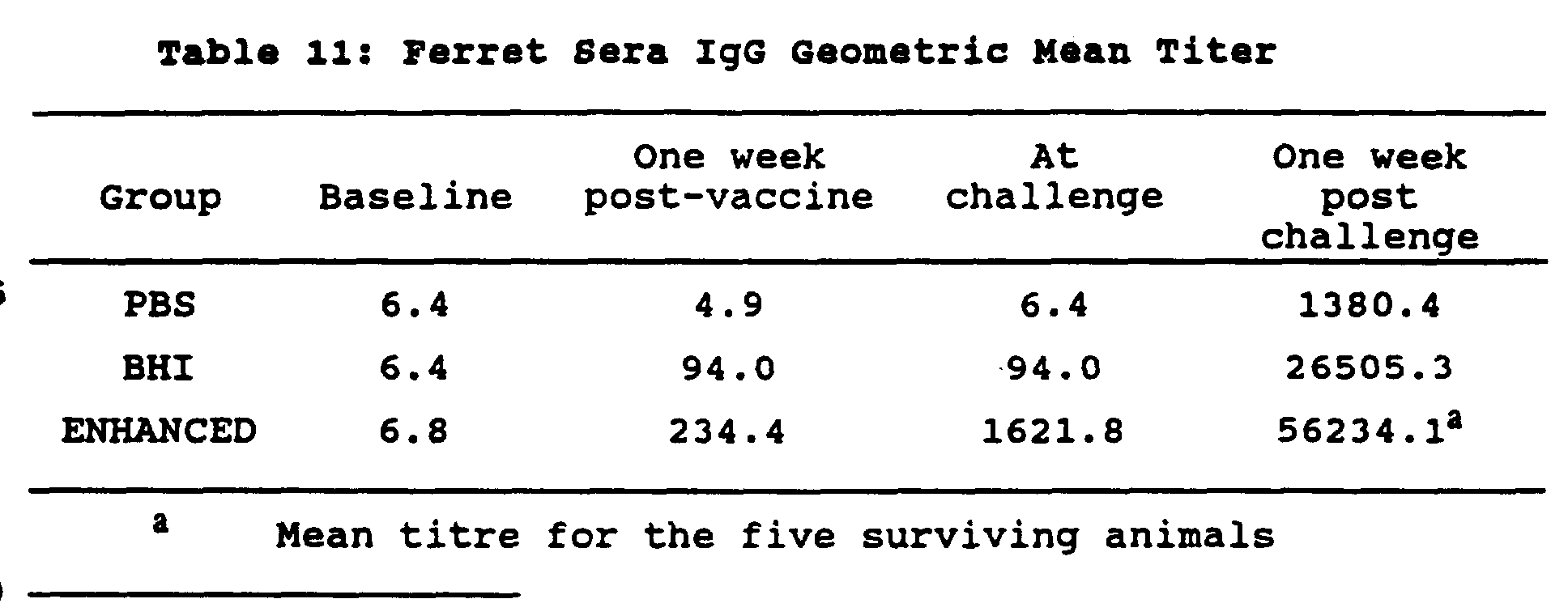
- Serum was isolated to determine baseline IgG titres. All vaccines and PBS were administered in the presence of the adjuvant LT, two times, one week apart (Day 0 and day 7 , "vaccination”). Serum was collected one week later (day 14) ("post-vaccination") to determine IgG antibody titres.
- post-vaccination Four weeks post-vaccination (challenge), the ferrets were anesthetized with ACE promazine-Ketamine and challenged orally with a 10 ml PBS solution containing live C . jejuni 81-176 (lxlO 10 CFU).
- Bacteremia was detected by drawing l to 2 ml of blood from the jugular vein of anesthetized ferrets and incubating the specimen in a vented trypticase soy broth culture. Subcultures to blood agar plates were taken at 2, 5 and 7 days post challenge. Serum samples were collected prior to immunization (baseline), one week after the second
- Occult blood was detected by testing fecal material on a Hemacult card. Fecal material was smeared on a slide and stained with methylene blue to detect fecal leukocytes. Fecal shedding of Campylobacter was established by culturing smears from rectal swabs on Campylobacter-selective medium plates (trypticase soy agar, 5% sheep blood, trimethoprim,
- bacteria produced by the methods of the present invention are useful as vaccines to protect mammals from infection.
- Example 31 Mice do not naturally develop Campylobacter or Shigella infections as do ferrets, but they have been used by those skilled in the art to show resistance to intestinal colonization upon oral challenge of immunized animals or resistance to illness via lung infection of immunized animals.
- the mouse intranasal inoculation model then can be used to predict the efficacy of vaccines for use in other animals or humans. This assay was described by Mallet, et al. (Vaccine. 11:190-196, 1993).
- Groups of 10 female Balb/c mice about sixteen weeks old were immunized orally with phosphate-buffered saline (PBS) C. jejuni conventionally grown (BHI) or C. jejuni grown according to Example 5 (ENHANCED) in doses of about 10 7 CFU or 10 9 CFU, then challenged.
- IgA titres from intestinal mucus in each group were determined by ELISA methods and are presented in Table 12 below.
- Table 12 shows that animals immunized with bacteria grown according to the methods of the present invention have a higher intestinal IgA antibody titre as presented by a greater percentage of responders than animals immunized with bacteria grown conventionally.
- Example 32 Although not intending for the present invention to be limited to any particular mechanism of action, the present inventors have obtained evidence that suggests that deoxycholate (DOC) appears to have a two fold action in altering or enhancing the antigenicity of enteric bacteria.
- DOC deoxycholate
- the invasion assays were carried out and scored as described in Example 28 in Section 7 above.
- bile or bile salts such as DOC (e.g., Campylobacter, Shigella , Helicobacter) have genes homologous to low calcium response (lcr) genes from Yersinia .
- the lcr locus is known to regulate virulence of Yersinia in response to low calcium levels.
- Two Campylobacter genes involved in flagellin expression and assembly which are required for invasion are regulated in part by the lcr product.
- Example 5 exemplified in Example 5 above.
- the Congo red dye binding assays whose results are shown in Table 15, were carried out as described in Example 26 above.
- the flak mutant is unable to express flagellin.
- the flaA mutant and a flaA-flaB double mutant (received from C. Grant, N1H) are both noninvasive even after treatment with DOC, indicating that flagellin is required for invasion.
- Campylobacter jejuni grown according the methods of the present invention was examined using the rapid slide
- the assay used intestinal mucus from immunized and non-immunized rabbits to determine the effects of altering culture conditions on the cross-reactivity of heterologous strains of Campylobacter.
- the rabbits were immunized with live C . jejuni 81-176 grown conventionally.
- the agglutination activity of the mucus antibodies were tested against twenty-four Campylobacter strains, comprising eighteen serotypes, grown conventionally in BHI-YE medium or according to the methods of the invention as exemplified in Example 5.
- Table 16 illustrates cross-reactivity of anti-81-176 immune rabbit mucus against 19 heterologous Lior serotypes consisting of 22 strains grown conventionally (BHI-YE) or using the methods of Example 5 (ENHANCED). Even though this experiment assayed only a fraction of the known Lior
- strains of Lior serotype 8 are of a different species, Campylobacter coli .
- One of the 2 strains (VC167) of this serotype strongly agglutinated (3+) in anti-81-176 immune rabbit mucus.
- a vaccine derived from a C. jejuni strain e.g., Lior 5
- Campylobacter species e.g., Campylobacter coli
- Lior serotypes 1, 2, 4, 9, and 11 are among the most prevalent disease-associated serotypes world-wide. They all
- Example 34 The protective efficacy of formalin-fixed whole cell Campylobacter jejuni grown according to the methods of the present invention was determined using the mouse colonization model reported by Baqar (Infect. & Immun.,
- C. jejuni 81-176 was grown and harvested according to Example 5 and inactivated with 0.075% formalin as described above.
- Groups of five 6 to 8 week old female Balb/c mice were administered three oral doses (0.25 ml/dose in endotoxin-free PBS) containing either 10 5 , 10 7 , or 10 9 inactivated bacterial particles alone or in combination with 25 ⁇ q of the heat labile enterotoxin from E . coli (LT).
- Doses were given at 48 hour intervals and immediately after two 0.5 ml doses of 5% sodium bicarbonate solution (pH 8.5) were given at 15 minute intervals, to neutralize gastric acidity.
- groups of animals were vaccinated with PBS alone or in combination with the LT adjuvant. Approximately 28 days after
- vaccinated animals were challenged either nasally or orally with approximately 10° colony forming units (CFU) of live conventionally grown C. jejuni 81-176.
- CFU colony forming units
- the duration of intestinal colonization was determined by monitoring fecal shedding every day over a 9 day period.
- Fecal material was emulsified in sterile PBS and aliquots plated on Campylobacter blood agar. Plates were incubated at 35oC under microaerophillic conditions
- Campylobacter GasPak BBL
- Colonization results are expressed as the percentage of animals shedding Campylobacter organisms on a given sample day.
- the non-adjuvantized vaccine produced a level of protection equal to or slightly greater than that obtained when a
- IP intraperitoneally
- mice groups of 20 female Balb/c mice were administered a single dose of 1.3 ⁇ 10 10 , 2.5 ⁇ 10 9 , 5.0 ⁇ 10 8 , 1.0 ⁇ 10 8 or 2.0 ⁇ 10 7 inactivated C. jejuni particles in 0.5 ml endotoxin-free PBS without adjuvant.
- the animals were challenged 14 days later with a single lethal dose of live C. jejuni 81-176
- Example 35 The invasiveness of Shigella sp . grown in vitro is affected by the culture's growth phase.
- Example 9 Example 9 (DOC-EL) (wherein the cells are from an early log phase culture), or according to Example 9 but allowing the culture to reach late log phase before harvesting the cells (DOC-LL) was tested according to the procedures described in Example 28.
- the results show that culturing with DOC enhances invasiveness and that the maximum enhancement is achieved during early log phase of growth (see Figure 9).
- Culturing with DOC according to the methods of the invention also enhances the invasiveness of other Shigella species, S. sonnei , and S . dysentariae (see Figure 10).
- S. sonnei Shigella species
- S . dysentariae see Figure 10
- Shigella was observed only when the epithelial cells were infected basolaterally by the bacteria. This finding is consistant with the invasion process observed in vivo .
- Example 36 Shigella cultured according to the methods of the present invention also exhibit enhanced Congo red binding.
- Shigella is divided into four species and various
- the immuno-cross reactivity of Shigella flexneri grown according the methods of the present invention was examined using the agglutination assay as described in Example 28.
- the assay used antiserum from immunized rabbits to determine the effects of culture conditions on the immunocross reactivity of different Shigella species.
- the rabbits were immunized with formalin-fixed shigella flexneri 2457T grown according to the methods of Example 9.
- agglutination activity of the IgG antibodies obtained from the immunized animals were tested against all four Shigella species grown conventionally in BHI medium or according to the methods of the invention (e.g.. Example 9).
- the results of the agglutination assays show that growth with DOC
- Example 37 The protective efficacy of formalin-fixed whole cell Shigella flexneri grown according to the methods of the present invention was determined using the mouse nasal challenge model developed by C.P. Mallett et al. (Vaccine. 11:190-196, 1993). Briefly, Shigella flexneri was grown and harvested according to the methods exemplified in Example 9 and inactivated with 0.075% formalin as described in Example 30. Approximately 10 7 inactivated bacterial particles were used to vaccinate 14-16 week-old female Balb/c mice. The inactivated 5.
- flexneri was suspended in sterile, endotoxin-free PBS at a concentration of 10 8 particles/ml and 35 ⁇ l of this material was administered nasally to groups of 10 lightly anesthetized animals. A total of three immunizations were given at 14 day intervals.
- mice were challenged nasally with a sublethal wasting dose (10 5 cfu) of either live S . flexneri or S .
- mice immunized with vaccine comprising inactivated S flexneri grown according to the methods of the invention were protected against challenge with live S . flexneri organisms. Those mice suffered less weight loss and underwent more rapid weight recovery as compared to unvaccinated mice, i.e. the PB sham control group.
- the S . flexneri vaccine also protected the mice against challenge with live s. sonnei Interestingly, animals receiving the vaccine alone without th LT adjuvant were as well protected against the homologous S. flexneri challenge as animals that received the adjuvantized vaccine.
- the S . flexneri vaccine alone also conferred
- Example 38 The adherence of H . pylori is enhanced by growth in glycocholate or bile.
- Cells of H. pylori strain NB3-2 or G1-4 were added to BHI broth plus 4% bovine calf serum. After inoculation the flasks were flushed with 10% CO 2 -5%O 2 -85%N 2 and incubated for 22 h at 37°C with shaking.
- the culture was diluted 1 to 10 to a flask containing 1 liter of the BHI medium with 4% bovine calf serum containing various concentrations of bovine bile (0.025% to 0.2%). These cultures were again flushed with the same gas mixture, and incubated at 37°C. The cells were harvested at various times up to 18 h and their adherence to INT-407 cells assayed using the methods described in Example 28. The results show that culturing with bile enhanced the
- Helicobacter felis gastric colonization model described by Chen et al. (Lancet, 339:1120-1121, 1992).
- Helicobacter pylori strain G1-4 was grown as a seed culture for about 22 h at 37°C under 10% CO 2 , 90% air in BHI media containing 4% bovine calf serum. An aliqout of this culture was used to inoculate a 10-fold volume of the same media containing 0.1% (v/v) bovine bile. After 12-14 h of growth at 37oC, the cells are harvested by centrifugation and resuspended in 1/10 of the original volume of Hank's Balanced Salts Solution (HBSS) at room temperature. Cells were recentrifuged and again
- Urease activity was determined by incubating antral tissue samples in 0.5 ml
- H. pylori strain G1-4 protected animals against an H. felis oral challenge.
- the methods of the present invention produce bacteria capable of inducing an immunogenic response which is
Landscapes
- Health & Medical Sciences (AREA)
- Life Sciences & Earth Sciences (AREA)
- Chemical & Material Sciences (AREA)
- Organic Chemistry (AREA)
- General Health & Medical Sciences (AREA)
- Engineering & Computer Science (AREA)
- Immunology (AREA)
- Medicinal Chemistry (AREA)
- Microbiology (AREA)
- Pharmacology & Pharmacy (AREA)
- Animal Behavior & Ethology (AREA)
- Public Health (AREA)
- Veterinary Medicine (AREA)
- Bioinformatics & Cheminformatics (AREA)
- Zoology (AREA)
- Wood Science & Technology (AREA)
- Mycology (AREA)
- Biotechnology (AREA)
- Genetics & Genomics (AREA)
- Proteomics, Peptides & Aminoacids (AREA)
- Epidemiology (AREA)
- Chemical Kinetics & Catalysis (AREA)
- Nuclear Medicine, Radiotherapy & Molecular Imaging (AREA)
- General Chemical & Material Sciences (AREA)
- Biochemistry (AREA)
- General Engineering & Computer Science (AREA)
- Physics & Mathematics (AREA)
- Biophysics (AREA)
- Analytical Chemistry (AREA)
- Molecular Biology (AREA)
- Toxicology (AREA)
- Communicable Diseases (AREA)
- Biomedical Technology (AREA)
- Virology (AREA)
- Tropical Medicine & Parasitology (AREA)
- Oncology (AREA)
- Medicines Containing Antibodies Or Antigens For Use As Internal Diagnostic Agents (AREA)
- Micro-Organisms Or Cultivation Processes Thereof (AREA)
Abstract
Description




Claims
Priority Applications (9)
| Application Number | Priority Date | Filing Date | Title |
|---|---|---|---|
| PL95319580A PL182700B1 (en) | 1994-10-05 | 1995-10-04 | Method of obtaining antigenically strengthened entrobacteria and vaccines containing them |
| BR9509276A BR9509276A (en) | 1994-10-05 | 1995-10-04 | Processes for producing an enteric bacterium to test a potential antimicrobial agent to detect antibodies of a host to enteric bacteria and enteric bacteria in an animal or biological sample of it to produce antibacterial antibodies and to stimulate an immuno-response in an animal enteric bacteria having increased vaccine and kit antigenic properties diagnostic test to detect a host of antibodies to enteric bacteria or to detect enteric bacteria |
| FI971403A FI971403L (en) | 1994-10-05 | 1995-10-04 | Method for producing enhanced antigenic enteric bacteria and vaccines containing them |
| EP95937449A EP0804542A4 (en) | 1994-10-05 | 1995-10-04 | METHOD FOR THE PRODUCTION OF REINFORCED ANTI-INTELLECTORY BACTERIA AND VACCINES CONTAINED THEREFORE |
| NZ295907A NZ295907A (en) | 1994-10-05 | 1995-10-04 | Method of growing enteric bacteria with enhanced immunogenicity |
| AU39561/95A AU704283B2 (en) | 1994-10-05 | 1995-10-04 | Methods for producing enhanced antigenic enteric bacteria and vaccines comprising same |
| JP51271696A JP3394047B2 (en) | 1994-10-05 | 1995-10-04 | Methods for producing enhanced antigenic enterobacteria and vaccines containing the same |
| MX9702431A MX9702431A (en) | 1994-10-05 | 1995-10-04 | METHODS FOR PRODUCING IMPROVED ANTIGENIC ENTERIC BACTERIA AND VACCINES INCLUDING THE SAME. |
| NO971519A NO971519L (en) | 1994-10-05 | 1997-04-03 | Process for the preparation of antigenically potentiated enteric agents and vaccines containing them |
Applications Claiming Priority (6)
| Application Number | Priority Date | Filing Date | Title |
|---|---|---|---|
| US31840994A | 1994-10-05 | 1994-10-05 | |
| US318,409 | 1994-10-05 | ||
| US08/538,543 US5681736A (en) | 1994-10-05 | 1995-10-03 | Methods for producing enhanced antigenic shigella bacteria and vaccines comprising same |
| US08/538,545 | 1995-10-03 | ||
| US08/538,545 US5679564A (en) | 1994-10-05 | 1995-10-03 | Methods for producing enhanced antigenic campylobacter bacteria and vaccines |
| US08/538,543 | 1995-10-03 |
Publications (2)
| Publication Number | Publication Date |
|---|---|
| WO1996011258A1 true WO1996011258A1 (en) | 1996-04-18 |
| WO1996011258A9 WO1996011258A9 (en) | 1996-06-06 |
Family
ID=27405987
Family Applications (1)
| Application Number | Title | Priority Date | Filing Date |
|---|---|---|---|
| PCT/US1995/013196 Ceased WO1996011258A1 (en) | 1994-10-05 | 1995-10-04 | Methods for producing enhanced antigenic enteric bacteria and vaccines comprising same |
Country Status (16)
| Country | Link |
|---|---|
| EP (1) | EP0804542A4 (en) |
| JP (1) | JP3394047B2 (en) |
| CN (1) | CN1168693A (en) |
| AU (1) | AU704283B2 (en) |
| BR (1) | BR9509276A (en) |
| CA (1) | CA2202027A1 (en) |
| CZ (1) | CZ104397A3 (en) |
| FI (1) | FI971403L (en) |
| HU (1) | HUT77876A (en) |
| IL (1) | IL115521A0 (en) |
| MX (1) | MX9702431A (en) |
| NO (1) | NO971519L (en) |
| NZ (1) | NZ295907A (en) |
| PL (1) | PL182700B1 (en) |
| SG (2) | SG73509A1 (en) |
| WO (1) | WO1996011258A1 (en) |
Cited By (5)
| Publication number | Priority date | Publication date | Assignee | Title |
|---|---|---|---|---|
| EP0792347A4 (en) * | 1994-10-05 | 1999-07-21 | Microcarb Inc | Methods for producing enhanced antigenic helicobacter sp. and vaccines comprising same |
| EP1996228A4 (en) * | 2006-03-17 | 2009-08-26 | Cerebus Biolog Inc | CAMPYLOBACTER VACCINES AND METHODS OF USE |
| EP2161035A4 (en) * | 2007-05-28 | 2012-12-26 | Kitasato Daiichi Sankyo Vaccine Co Ltd | WHOLE CELL VACCINE COMPOSITION CONTAINING BORDETELLA PARAPERTUSSIS |
| CN107513553A (en) * | 2017-09-18 | 2017-12-26 | 江南大学 | A kind of method for screening the lactic acid bacteria with antagonism C. jejuni infec-tion function |
| US12403187B2 (en) | 2018-12-31 | 2025-09-02 | Bellevacc As | Bacterial vaccine |
Families Citing this family (2)
| Publication number | Priority date | Publication date | Assignee | Title |
|---|---|---|---|---|
| CN102304527A (en) * | 2003-05-30 | 2012-01-04 | 英特塞尔股份公司 | Enterococcus antigens |
| CN109633151B (en) * | 2018-12-26 | 2022-03-11 | 西北农林科技大学 | A kind of Salmonella Enteritidis detection method, test strip and application |
Family Cites Families (1)
| Publication number | Priority date | Publication date | Assignee | Title |
|---|---|---|---|---|
| JPH06503231A (en) * | 1991-09-18 | 1994-04-14 | アムジエン・インコーポレーテツド | Hepatitis B vaccine formulation containing bile salts |
-
1995
- 1995-10-04 MX MX9702431A patent/MX9702431A/en not_active IP Right Cessation
- 1995-10-04 CZ CZ971043A patent/CZ104397A3/en unknown
- 1995-10-04 JP JP51271696A patent/JP3394047B2/en not_active Expired - Fee Related
- 1995-10-04 SG SG1998000815A patent/SG73509A1/en unknown
- 1995-10-04 AU AU39561/95A patent/AU704283B2/en not_active Ceased
- 1995-10-04 WO PCT/US1995/013196 patent/WO1996011258A1/en not_active Ceased
- 1995-10-04 FI FI971403A patent/FI971403L/en not_active IP Right Cessation
- 1995-10-04 CN CN95196589A patent/CN1168693A/en active Pending
- 1995-10-04 BR BR9509276A patent/BR9509276A/en not_active Application Discontinuation
- 1995-10-04 CA CA002202027A patent/CA2202027A1/en not_active Abandoned
- 1995-10-04 NZ NZ295907A patent/NZ295907A/en unknown
- 1995-10-04 EP EP95937449A patent/EP0804542A4/en not_active Withdrawn
- 1995-10-04 SG SG1998000819A patent/SG73510A1/en unknown
- 1995-10-04 PL PL95319580A patent/PL182700B1/en not_active IP Right Cessation
- 1995-10-04 HU HU9702303A patent/HUT77876A/en unknown
- 1995-10-05 IL IL11552195A patent/IL115521A0/en unknown
-
1997
- 1997-04-03 NO NO971519A patent/NO971519L/en not_active Application Discontinuation
Non-Patent Citations (7)
| Title |
|---|
| 93RD AMERICAN SOCIETY OF MICROBIOLOGY MEETING, Session 133, 1993, POPE et al., "Facultative Intracellular Pathogens: Shigella, Listeria, Brucella, Yersinia and Nocardia", Abstract B-147. * |
| 94TH AMERICAN SOCIETY OF MICROBIOLOGY MEETING, 1994, DURHAM et al., page 386, Abstract P-96. * |
| INFECTION AND IMMUNITY, Volume 60, No. 11, issued November 1992, PANIGRAPHI et al., "Human Immune Response to Campylobacter Jejuni Proteins Expressed in Vivo", pages 4938-4944. * |
| JOURNAL OF BACTERIOLOGY, Volume 174, No. 1, issued January 1992, MEKALANOS, "Environmental Signals Controlling Expression of Virulence Determinants in Bacteria", pages 1-7. * |
| JOURNAL OF INFECTIOUS DISEASES, Volume 168, issued May 1993, KONKEL et al., "Kinetic and Antigenic Characterization of Altered Protein Synthesis by Campylobacter Jejuni During Cultivation with Human Epithelial Cells", pages 948-954. * |
| MOLECULAR MICROBIOLOGY, Volume 3, issued May 1989, PAYNE, "Iron and Virulence in Shigella", pages 1301-1306. * |
| See also references of EP0804542A4 * |
Cited By (6)
| Publication number | Priority date | Publication date | Assignee | Title |
|---|---|---|---|---|
| EP0792347A4 (en) * | 1994-10-05 | 1999-07-21 | Microcarb Inc | Methods for producing enhanced antigenic helicobacter sp. and vaccines comprising same |
| EP1996228A4 (en) * | 2006-03-17 | 2009-08-26 | Cerebus Biolog Inc | CAMPYLOBACTER VACCINES AND METHODS OF USE |
| EP2161035A4 (en) * | 2007-05-28 | 2012-12-26 | Kitasato Daiichi Sankyo Vaccine Co Ltd | WHOLE CELL VACCINE COMPOSITION CONTAINING BORDETELLA PARAPERTUSSIS |
| US8465754B2 (en) | 2007-05-28 | 2013-06-18 | Kitasato Daiichi Sankyo Vaccine Co., Ltd. | Bordetella parapertussis whole-cell vaccine composition |
| CN107513553A (en) * | 2017-09-18 | 2017-12-26 | 江南大学 | A kind of method for screening the lactic acid bacteria with antagonism C. jejuni infec-tion function |
| US12403187B2 (en) | 2018-12-31 | 2025-09-02 | Bellevacc As | Bacterial vaccine |
Also Published As
| Publication number | Publication date |
|---|---|
| NO971519L (en) | 1997-05-27 |
| HUT77876A (en) | 1998-09-28 |
| EP0804542A4 (en) | 1998-10-28 |
| PL319580A1 (en) | 1997-08-18 |
| BR9509276A (en) | 1997-11-18 |
| SG73510A1 (en) | 2000-06-20 |
| EP0804542A1 (en) | 1997-11-05 |
| CN1168693A (en) | 1997-12-24 |
| JPH10507347A (en) | 1998-07-21 |
| FI971403A0 (en) | 1997-04-04 |
| IL115521A0 (en) | 1996-06-18 |
| SG73509A1 (en) | 2000-06-20 |
| PL182700B1 (en) | 2002-02-28 |
| JP3394047B2 (en) | 2003-04-07 |
| FI971403A7 (en) | 1997-06-04 |
| CZ104397A3 (en) | 1998-06-17 |
| NO971519D0 (en) | 1997-04-03 |
| AU3956195A (en) | 1996-05-02 |
| NZ295907A (en) | 1999-04-29 |
| AU704283B2 (en) | 1999-04-15 |
| MX9702431A (en) | 1998-05-31 |
| CA2202027A1 (en) | 1996-04-18 |
| FI971403L (en) | 1997-06-04 |
Similar Documents
| Publication | Publication Date | Title |
|---|---|---|
| US5681736A (en) | Methods for producing enhanced antigenic shigella bacteria and vaccines comprising same | |
| Ørskov et al. | 4 serotyping of Klebsiella | |
| Law | Adhesion and its role in the virulence of enteropathogenic Escherichia coli | |
| JPH0450531B2 (en) | ||
| US6051416A (en) | Methods for producing enhanced antigenic Helicobacter sp. | |
| Yamamoto et al. | Adherence characteristics to human small intestinal mucosa of Escherichia coli isolated from patients with diarrhea or urinary tract infections | |
| Tsang et al. | A murine monoclonal antibody specific for the outer core oligosaccharide of Salmonella lipopolysaccharide | |
| WO1996011257A9 (en) | Methods for producing enhanced antigenic helicobacter sp. and vaccines comprising same | |
| AU704283B2 (en) | Methods for producing enhanced antigenic enteric bacteria and vaccines comprising same | |
| WO1996011258A9 (en) | Methods for producing enhanced antigenic enteric bacteria and vaccines comprising same | |
| JPH08502720A (en) | Methods and compositions for the diagnosis of cat scratch disease and bacterial hemangiomatosis | |
| Svenungsson et al. | Synthetic disaccharide-protein antigens for production of specific 04 and 09 antisera for immunofluorescence diagnosis of Salmonella | |
| Nandy et al. | Serum antibacterial and antitoxin responses in clinical cholera caused by Vibrio cholerae O139 Bengal and evaluation of their importance in protection | |
| Hartman et al. | Specificity of monoclonal antibodies elicited by mucosal infection of BALB/c mice with virulent Shigella flexneri 2a | |
| Granström et al. | Bordetella pertussis lipopolysaccharide as antigen in ELISA for serological diagnosis of whooping cough | |
| Aziz | Annotated bibliography on classical vibrio cholerae | |
| Oranje | Serological diagnosis of gonorrhoea using gonococcal pili as antigen | |
| Boedeker et al. | Laboratory investigation of childhood enteric infections | |
| Lockman | Motility and adherence as Salmonella typhimurium virulence factors: The pathogenesis of fla, mot, andfim mutants in murine typhoid fever | |
| Izadjoo | Chemical and immunological properties of polysaccharide extracted from Vibrio parahaemolyticus | |
| HK1005247A (en) | Methods for producing enhanced antigenic enteric bacteria and vaccines comprising same |
Legal Events
| Date | Code | Title | Description |
|---|---|---|---|
| WWE | Wipo information: entry into national phase |
Ref document number: 95196589.1 Country of ref document: CN |
|
| AK | Designated states |
Kind code of ref document: A1 Designated state(s): AL AM AU BB BG BR BY CA CN CZ EE FI GE HU IS JP KG KP KR KZ LK LR LT LV MD MG MK MN MX NO NZ PL RO RU SG SI SK TJ TM TT UA UZ VN |
|
| AL | Designated countries for regional patents |
Kind code of ref document: A1 Designated state(s): KE MW SD SZ UG AT BE CH DE DK ES FR GB GR IE IT LU MC NL PT SE BF BJ CF CG CI CM GA GN ML MR NE SN TD TG |
|
| COP | Corrected version of pamphlet |
Free format text: PAGES 1/13-13/13,DRAWINGS,REPLACED BY NEW PAGES 1/11-11/11;DUE TO LATE TRANSMITTAL BY THE RECEIVING OFFICE |
|
| 121 | Ep: the epo has been informed by wipo that ep was designated in this application | ||
| DFPE | Request for preliminary examination filed prior to expiration of 19th month from priority date (pct application filed before 20040101) | ||
| WWE | Wipo information: entry into national phase |
Ref document number: PA/a/1997/002431 Country of ref document: MX |
|
| WWE | Wipo information: entry into national phase |
Ref document number: PV1997-1043 Country of ref document: CZ Ref document number: 1995937449 Country of ref document: EP Ref document number: 971403 Country of ref document: FI |
|
| ENP | Entry into the national phase |
Ref document number: 2202027 Country of ref document: CA Ref document number: 2202027 Country of ref document: CA Kind code of ref document: A |
|
| WWE | Wipo information: entry into national phase |
Ref document number: 1019970702258 Country of ref document: KR |
|
| WWE | Wipo information: entry into national phase |
Ref document number: 295907 Country of ref document: NZ |
|
| WWP | Wipo information: published in national office |
Ref document number: 1019970702258 Country of ref document: KR |
|
| WWP | Wipo information: published in national office |
Ref document number: 1995937449 Country of ref document: EP |
|
| WWP | Wipo information: published in national office |
Ref document number: PV1997-1043 Country of ref document: CZ |
|
| WWG | Wipo information: grant in national office |
Ref document number: 1019970702258 Country of ref document: KR |
|
| WWW | Wipo information: withdrawn in national office |
Ref document number: 1995937449 Country of ref document: EP |
|
| WWR | Wipo information: refused in national office |
Ref document number: PV1997-1043 Country of ref document: CZ |