WO1996019286A1 - Methylene-bridged aromatic polymer adsorbents with increased hydrophobicity - Google Patents
Methylene-bridged aromatic polymer adsorbents with increased hydrophobicity Download PDFInfo
- Publication number
- WO1996019286A1 WO1996019286A1 PCT/US1995/016546 US9516546W WO9619286A1 WO 1996019286 A1 WO1996019286 A1 WO 1996019286A1 US 9516546 W US9516546 W US 9516546W WO 9619286 A1 WO9619286 A1 WO 9619286A1
- Authority
- WO
- WIPO (PCT)
- Prior art keywords
- formula
- aromatic
- methylene
- group
- substituted
- Prior art date
- Legal status (The legal status is an assumption and is not a legal conclusion. Google has not performed a legal analysis and makes no representation as to the accuracy of the status listed.)
- Ceased
Links
Classifications
-
- C—CHEMISTRY; METALLURGY
- C08—ORGANIC MACROMOLECULAR COMPOUNDS; THEIR PREPARATION OR CHEMICAL WORKING-UP; COMPOSITIONS BASED THEREON
- C08F—MACROMOLECULAR COMPOUNDS OBTAINED BY REACTIONS ONLY INVOLVING CARBON-TO-CARBON UNSATURATED BONDS
- C08F212/00—Copolymers of compounds having one or more unsaturated aliphatic radicals, each having only one carbon-to-carbon double bond, and at least one being terminated by an aromatic carbocyclic ring
- C08F212/34—Monomers containing two or more unsaturated aliphatic radicals
- C08F212/36—Divinylbenzene
-
- B—PERFORMING OPERATIONS; TRANSPORTING
- B01—PHYSICAL OR CHEMICAL PROCESSES OR APPARATUS IN GENERAL
- B01J—CHEMICAL OR PHYSICAL PROCESSES, e.g. CATALYSIS OR COLLOID CHEMISTRY; THEIR RELEVANT APPARATUS
- B01J20/00—Solid sorbent compositions or filter aid compositions; Sorbents for chromatography; Processes for preparing, regenerating or reactivating thereof
- B01J20/22—Solid sorbent compositions or filter aid compositions; Sorbents for chromatography; Processes for preparing, regenerating or reactivating thereof comprising organic material
- B01J20/26—Synthetic macromolecular compounds
-
- C—CHEMISTRY; METALLURGY
- C08—ORGANIC MACROMOLECULAR COMPOUNDS; THEIR PREPARATION OR CHEMICAL WORKING-UP; COMPOSITIONS BASED THEREON
- C08F—MACROMOLECULAR COMPOUNDS OBTAINED BY REACTIONS ONLY INVOLVING CARBON-TO-CARBON UNSATURATED BONDS
- C08F8/00—Chemical modification by after-treatment
- C08F8/18—Introducing halogen atoms or halogen-containing groups
- C08F8/24—Haloalkylation
-
- C—CHEMISTRY; METALLURGY
- C08—ORGANIC MACROMOLECULAR COMPOUNDS; THEIR PREPARATION OR CHEMICAL WORKING-UP; COMPOSITIONS BASED THEREON
- C08F—MACROMOLECULAR COMPOUNDS OBTAINED BY REACTIONS ONLY INVOLVING CARBON-TO-CARBON UNSATURATED BONDS
- C08F8/00—Chemical modification by after-treatment
- C08F8/26—Removing halogen atoms or halogen-containing groups from the molecule
-
- C—CHEMISTRY; METALLURGY
- C08—ORGANIC MACROMOLECULAR COMPOUNDS; THEIR PREPARATION OR CHEMICAL WORKING-UP; COMPOSITIONS BASED THEREON
- C08F—MACROMOLECULAR COMPOUNDS OBTAINED BY REACTIONS ONLY INVOLVING CARBON-TO-CARBON UNSATURATED BONDS
- C08F2800/00—Copolymer characterised by the proportions of the comonomers expressed
- C08F2800/20—Copolymer characterised by the proportions of the comonomers expressed as weight or mass percentages
-
- C—CHEMISTRY; METALLURGY
- C08—ORGANIC MACROMOLECULAR COMPOUNDS; THEIR PREPARATION OR CHEMICAL WORKING-UP; COMPOSITIONS BASED THEREON
- C08F—MACROMOLECULAR COMPOUNDS OBTAINED BY REACTIONS ONLY INVOLVING CARBON-TO-CARBON UNSATURATED BONDS
- C08F2810/00—Chemical modification of a polymer
- C08F2810/20—Chemical modification of a polymer leading to a crosslinking, either explicitly or inherently
-
- C—CHEMISTRY; METALLURGY
- C08—ORGANIC MACROMOLECULAR COMPOUNDS; THEIR PREPARATION OR CHEMICAL WORKING-UP; COMPOSITIONS BASED THEREON
- C08F—MACROMOLECULAR COMPOUNDS OBTAINED BY REACTIONS ONLY INVOLVING CARBON-TO-CARBON UNSATURATED BONDS
- C08F2810/00—Chemical modification of a polymer
- C08F2810/40—Chemical modification of a polymer taking place solely at one end or both ends of the polymer backbone, i.e. not in the side or lateral chains
-
- Y—GENERAL TAGGING OF NEW TECHNOLOGICAL DEVELOPMENTS; GENERAL TAGGING OF CROSS-SECTIONAL TECHNOLOGIES SPANNING OVER SEVERAL SECTIONS OF THE IPC; TECHNICAL SUBJECTS COVERED BY FORMER USPC CROSS-REFERENCE ART COLLECTIONS [XRACs] AND DIGESTS
- Y10—TECHNICAL SUBJECTS COVERED BY FORMER USPC
- Y10S—TECHNICAL SUBJECTS COVERED BY FORMER USPC CROSS-REFERENCE ART COLLECTIONS [XRACs] AND DIGESTS
- Y10S521/00—Synthetic resins or natural rubbers -- part of the class 520 series
- Y10S521/905—Hydrophilic or hydrophobic cellular product
Definitions
- the present invention concerns novel methylene-bridged aromatic polymer adsorbents having increased hydrophobicity, the process for their manufacture, and their use in the adsorption and recovery of volatile organic compounds.
- Such hydrophobic methylene-bridged aromatic polymer adsorbents are prepared by capping any residual chloromethyl groups remaining in a post-crossl inked chloromethylated aromatic copolymer with a hydrophobic aromatic compound.
- Chloromethylated aromatic copolymer is methylene-bridged by first swelling the r es in and then contacting the resin with a Fnedel-Crafts catalyst at a temperature sufficient to effect alkylation. Normally, a certain percentage of chloromethyl groups is prevented from reacting with a neighboring aromatic ring because of increasing rigidity of the polymer backbone due to methylene-bridging and because of resulting geometric constraints on any further bridging. Typically, about four percent of the chloromethyl groups remain unreacted. During additional processing or during intended use, the residual chloromethyl groups are hydrolyzed or oxidized to from hydrophilic sites, e.g., benzyl alcohol groups or benzoic acid groups.
- hydrophilic sites e.g., benzyl alcohol groups or benzoic acid groups.
- the weight of water adsorbed at high relative humidity, i.e., humidities greater than 75 percent, should be less than about 10 weight percent based on the dry weight of the polymer adsorbent.
- the hydrophobicity of methylene-bridged aromatic polymer adsorbents can be enhanced by capping any residual chloromethyl groups with hydrophobic aromatic compounds.
- the present invention concerns a hydrophobic polymer adsorbent comprising a methylene-bridged aromatic polymer adsorbent in which residual chloromethyl groups of the formula
- Ar is a substituted phenyl group of the formula
- X is independently -H, -R, -OR or halogen
- R is a C t -C alkyl group or a substituted or unsubstituted phenyl group of the formula
- Y is -H, a C j -C. alkyl group or halogen, n is an integer from 1 to 3, and m is an integer from 2 to 4.
- the present invention also concerns a process for the preparation of hydrophobic methylene-bridged aromatic polymer adsorbents which comprises:
- ArH is a substituted benzene of the formula
- X is independently -H, -R, -OR or halogen
- R is a C C alkyl group or a substituted or unsubstituted phenyl group of the formula
- Y is -H, a f ⁇ -C, alkyl group or halogen, n is an integer from 1 to 3, and m is an integer from 2 to 4, in the presence of the Friedel-Crafts catalyst and at a temperature sufficient to react with any remaining chloromethyl groups, and (d) recovering the hydrophobic methylene-bridged aromatic polymer adsorbent.
- Another aspect of the present invention concerns an improved process of adsorbing volatile organic materials from a vapor stream which comprises contacting the vapor stream with a hydrophobic methylene-bridged aromatic polymer adsorbent in which residual chloromethyl groups of the formula
- Ar is a substituted phenyl group of the formula
- X is independently -H, -R, -OR or halogen
- R is a C ⁇ -C alkyl group or a substituted or unsubstituted phenyl group of
- Y is -H, a C ⁇ C. alkyl group or halogen
- n is an integer from 1 to 3
- m is an integer from 2 to 4.
- the adsorbed organic materials can be recovered by desorption.
- the hydrophobic methylene-bridged aromatic polymer adsorbents of the present invention have a water adsorption capacity of about 10 weight percent or less and adsorb much less water at high relative humidity, i.e., humidities greater than 75 percent, than do the corresponding polymer adsorbents in which any residual chloromethyl groups have not been capped with a hydrophobic aromatic compound. Under humid conditions, therefore, the " polymer adsorbents of the present invention have higher capacities for volatile organic compounds.
- halo and hal refer to the halogens F, Cl, Br or I
- C ⁇ C. alkyl and C ⁇ -C ⁇ alkyl refer to straight-chained or branched, cyclic or acyclic hydrocarbon groups of up to four carbon atoms and ten carbon atoms respectively, provided that all substituent groups are stencally compatible with each other
- ste ⁇ cally compatible is employed to designate substituent groups which are not affected by ste ⁇ c hindrance as this term is defined in "Hawley's Condensed Chemical Dictionary,” 1 1th edition, Van Nostrand Reinhold Co , N Y , page 1093 (1987) which definition is as follows "ste ⁇ c hindrance” A characteristic of molecular structure in which the molecules have a spatial arrangement of their atoms such that a given reaction with another molecule is prevented or retarded "
- Stencally compatible may be further defined as reacting compounds having substituents whose physical bulk does not require confinement within volumes insufficient for the exercise of their normal behavior as discussed "Organic Chemistry" by D J Cram and G Hammond, 2nd edition, McGraw-Hill Book Company, N Y , page 215 (1964)
- Methylene-bridged aromatic polymer adsorbents refer to adsorbent resins which are made from microporous or macroporous copolymers of a monovinyl aromatic monomer and a polyvinyl aromatic crosslinking monomer which have been chloromethylated and then post-crossl inked in a swollen state in the presence of a Fnedel-Crafts catalyst Such resins have been referred to as “hypercrosslinked” or "macronet” resins and their preparations and uses have been described, for example, by V A Davankov and M P Tsyurupa, Reactive Polymers, 13, 27 (1990) and in U S Patent Nos 4,191
- chloromethylated aromatic copolymers When chloromethylated aromatic copolymers are post-crossl inked to form methylene bridges between neighboring aromatic rings, not all chloromethyl groups can react because of spatial considerations. Usually, from about 2 to 10 percent of the chloromethyl groups remain unreacted depending on the overall extent of chloromethylation, i e , the ratio of chloromethyl groups to aromatic rings. In general, the greater the extent of chloromethylation, the greater the percentage of unreacted chloromethyl groups.
- hydrophobic aromatic compounds refer to benzene and its derivatives which are from weakly deactivated to weakly to moderately activated towards electrophilic aromatic substitution as defined in Organic Chemistry by R. T. Morrison and R. N. Boyd, 6th Edition, Prentice Hall, Inc., Englewood Cliffs, N.J., p. 522 (1992). More particularly, the preferred hydrophobic aromatic compounds of those of formula
- ArH is a substituted benzene of the formula
- X is independently -H, -R, -OR or -halogen
- R is a C,-C alkyl group or a substituted or unsubstituted phenyl group of the formula
- Y is -H, a C.-C. alkyl group or halogen, n is an integer from 1 to 3, and m is an integer from 2 to 4
- substituted benzenes in which X is -H, C,-C alkyl, or -C,H. and naphthalene.
- X is -CH 3 or -CH 2 CH 3 and n is 1 or 2
- the most preferred process for the manufacture of the hydrophobic methylene-bridged aromatic polymer adsorbents of the present invention requires the following steps: (a) swelling of the chloromethylated aromatic copolymer, (b) methylene- bndging the swollen copolymer in the presence of a Friedel-Crafts catalyst, (c) capping unreacted chloromethyl groups with a hydrophobic aromatic hydrocarbon in the presence of the same Fnedel-Crafts catalyst, and (d) recovering the polymer adsorbent
- the chloromethylated aromatic copolymer is contacted with a swelling agent to expand the copolymer structure
- Suitable swelling agents are solvents which are substantially inert during post-crossl inking of the copolymer and include chlorinated hydrocarbons, such as ethylene dichlo ⁇ de, methylene chloride, and propylene dichlonde
- the preferred swelling agent is 1 ,2-d ⁇ chloroethane
- the copolymer is allowed to swell in an excess amount of the swelling agent for at least 30 minutes
- the copolymer is contacted with the swelling agent for a time sufficient to substantially attain equilibrium with respect to swelling by the particular swelling agent employed It is also generally convenient to dissolve the Friedel-Crafts catalyst employed in the subsequent post-crossl inking reaction within the swelling agent
- the chloromethylated copolymer is maintained at a temperature and in the presence of a Fnedel-Crafts catalyst such that the bridging moieties (-CH ? -) are formed by reaction of the chloromethyl groups with a neighboring aromatic ring
- a Fnedel-Crafts catalyst such that the bridging moieties (-CH ? -) are formed by reaction of the chloromethyl groups with a neighboring aromatic ring
- Any F ⁇ edel- Crafts-type catalyst may be utilized to catalyze the post-crossl inking reaction, such as, for example, the acidic metal halides including aluminum chloride, stannic chloride, aluminum bromide, boron t ⁇ fluo ⁇ de, zinc chloride or ferric chloride
- the catalyst is typically effective in amounts ranging from 0 001 to 50 and preferably from 5 to 30 percent by weight, based on weight of polymeric material The optimum amount depends upon the reactants and conditions selected for carrying out the reaction
- the mixture is heated to a temperature
- the hydrophobic aromatic capping compound After the methylene bridging is substantially complete, usually from about 1 to about 10 and preferably from 1 5 to 3 molar equivalents, based on the moles of unreacted chloromethyl groups, of the hydrophobic aromatic capping compound are added to the mixture This may correspond to from 0 5 to 20 weight percent of aromatic hydrocarbon based on the total weight of polymer depending on the extent of chloromethylation Alternatively, the hydrophobic aromatic hydrocarbon can be used as the solvent, either replacing the swelling solvent completely or being employed in substantial proportion in conjunction with the swelling solvent The reaction temperature is maintained for a period ranging from 1 to 8 hours until capping is complete
- the resin particle size may be controlled over a wide range Generally the size of the beads may range from 10 to 2000 micrometers ( ⁇ m), preferably from 100 to 1200 ⁇ m, more preferably from 200 to 600 ⁇ m
- the methylene-bridged aromatic polymer adsorbents of the present ⁇ nvention are very useful in a method of adsorbing and recovering an organic material from a vapor stream
- vapor streams are oxygen, nitrogen, carbon dioxide or mixtures thereof, such as air, which are mixed with an organic material
- the adsorbents are particularly useful for recovering organic materials which are present in very small amounts, usually less than 5 and very often less than 1 percent by weight of the vapor stream
- a gas stream, containing an organic material is caused to flow through a bed of the hydrophobic methylene-bridged aromatic polymer adsorbent which adsorbs the organic material
- the flow of the gas continues until the content of the organic material in the vapor stream which flows out of the adsorbent bed exceeds an acceptable level
- the organic material can be recovered and the adsorbent can be regenerated for continued use by desorbing the organic material from the adsorbent, e g , by treatment with a purge gas
- hydrocarbons preferably having 4 or more carbon atoms, or a mixture of such hydrocarbons such as gasoline
- halogenated hydrocarbons in particular saturated and unsaturated 0 halogenated hydrocarbons having 1 to 3 carbon atoms or aromatic halogenated hydrocarbons,
- Example 3 The procedure of Example 1 was repeated using toluene as the aromatic compound at a 5 percent (5 g) rather than a 10 percent level. After workup and drying the adsorbent had a water adsorption capacity of 4.7 percent.
- Example 3 The procedure of Example 1 was repeated using toluene as the aromatic compound at a 5 percent (5 g) rather than a 10 percent level. After workup and drying the adsorbent had a water adsorption capacity of 4.7 percent.
- Example 1 The procedure of Example 1 was repeated using a gellular (microporous) styrene/divinylbenzene copolymer having 1.5 percent divinylbenzene as the starting material
- the chloromethylation was conducted at 45°C with 30 weight percent FeCI. for 3 hr. After bridging for 3 hr, the material was treated with 10 weight percent of the hydrophobic aromatic capping compound (based on weight of starting polymer) for 1 hr.
- Example 5 Adsorption of Trichloroethylene from an Air Stream by a Hydrophobic Aromatic Methylene-Bridged Polymer Adsorbent Capped with Toluene
Landscapes
- Chemical & Material Sciences (AREA)
- Chemical Kinetics & Catalysis (AREA)
- Organic Chemistry (AREA)
- Health & Medical Sciences (AREA)
- Medicinal Chemistry (AREA)
- Polymers & Plastics (AREA)
- General Chemical & Material Sciences (AREA)
- Analytical Chemistry (AREA)
- Addition Polymer Or Copolymer, Post-Treatments, Or Chemical Modifications (AREA)
- Solid-Sorbent Or Filter-Aiding Compositions (AREA)
Abstract
Residual chloromethyl groups in methylene-bridged aromatic polymer adsorbents are susceptible to hydrolysis to benzyl alcohol groups and oxidation to benzoic acid groups. The introduction of these hydroxyl and carboxylic acid groups contributes to the water adsorption capacity or hydrophilicity of these adsorbents. Unfortunately, this hydrophilicity interferes with the utility of these resins as adsorbents for volatile organic compounds. By capping these residual chloromethyl groups with hydrophobic aromatic compounds prior to their opportunity to hydrolyze or oxidize, the hydrophobicity of methylene-bridged aromatic polymer adsorbents is increased and their utility for the adsorption of organic compounds is enhanced.
Description
METHYLENE-BRIDGED AROMATIC POLYMER ADSORBENTS WITH INCREASED
HYDROPHOBICITY The present invention concerns novel methylene-bridged aromatic polymer adsorbents having increased hydrophobicity, the process for their manufacture, and their use in the adsorption and recovery of volatile organic compounds. Such hydrophobic methylene- bridged aromatic polymer adsorbents are prepared by capping any residual chloromethyl groups remaining in a post-crossl inked chloromethylated aromatic copolymer with a hydrophobic aromatic compound.
Both gel (U.S. Patent No. 5,079,274) and lightly crosslinked macroporous (U.S. Patent No. 5,288,307) aromatic polymer adsorbents, which have been post-crossl inked by the methylene-bπdging of chloromethylated aromatic copolymers, have been used to adsorb and recover hydrocarbon fuel vapor emissions from fuel reservoirs and volatile organic compounds from gas streams. While the adsorption capacities for methylene-bridged aromatic polymer adsorbents typically surpass those of non-bridged adsorbents and activated carbon, they also suffer from one serious drawback, i.e., they have a tendency to competitively adsorb water at high relative humidities. Not only does this tendency to adsorb water reduce overall capacity forthe volatile organic compound, but upon desorption the compound recovered is contaminated with water.
Chloromethylated aromatic copolymer is methylene-bridged by first swelling the resin and then contacting the resin with a Fnedel-Crafts catalyst at a temperature sufficient to effect alkylation. Normally, a certain percentage of chloromethyl groups is prevented from reacting with a neighboring aromatic ring because of increasing rigidity of the polymer backbone due to methylene-bridging and because of resulting geometric constraints on any further bridging. Typically, about four percent of the chloromethyl groups remain unreacted. During additional processing or during intended use, the residual chloromethyl groups are hydrolyzed or oxidized to from hydrophilic sites, e.g., benzyl alcohol groups or benzoic acid groups. These hydrophilic sites favor the adsorption of water which can effectively compete with the adsorption of the volatile organic compound and can reduce the effective capacity of the adsorbent. Thus, it would be desirable to prevent the residual chloromethyl groups from being converted into hydrophilic sites. Ideally, the weight of water adsorbed at high relative humidity, i.e., humidities greater than 75 percent, should be less than about 10 weight percent based on the dry weight of the polymer adsorbent.
It has now been found that the hydrophobicity of methylene-bridged aromatic polymer adsorbents can be enhanced by capping any residual chloromethyl groups with hydrophobic aromatic compounds. Thus, the present invention concerns a hydrophobic polymer adsorbent comprising a methylene-bridged aromatic polymer adsorbent in which residual chloromethyl groups of the formula

wherein
is a copolymer of a monovinyl aromatic monomer and a polyvinyl aromatic
 crosslin ing monomer,
are converted into a group of the formula

p — i is as previously defined, and
Ar is a substituted phenyl group of the formula

or a substituted naphthyl group of the formula
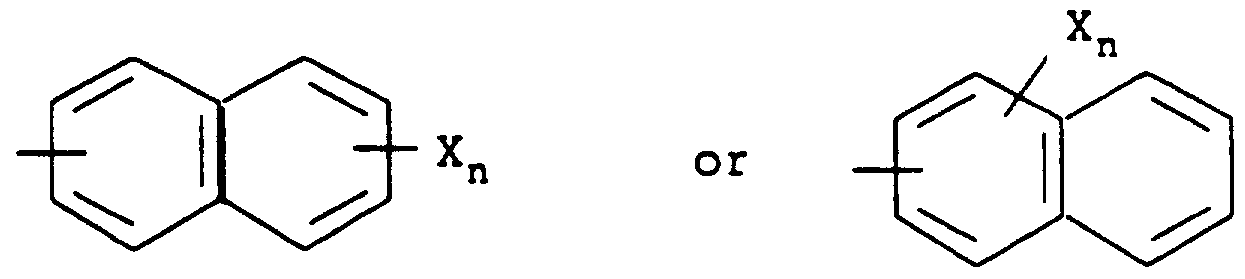
wherein
X is independently -H, -R, -OR or halogen,
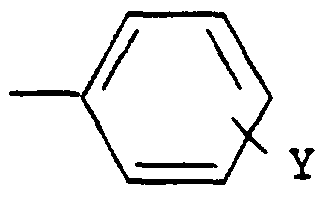
R is a Ct-C alkyl group or a substituted or unsubstituted phenyl group of the formula

wherein
Y is -H, a Cj-C. alkyl group or halogen, n is an integer from 1 to 3, and m is an integer from 2 to 4. In addition to the polymer adsorbents, the present invention also concerns a process for the preparation of hydrophobic methylene-bridged aromatic polymer adsorbents which comprises:
(a) contacting a chloromethylated aromatic copolymer of a monovinyl aromatic monomer and a polyvinyl aromatic crosslinking monomer with a swelling agent to expand the copolymer structure,
(b) heating the swollen chloromethylated aromatic copolymer in the presence of a Friedel-Crafts catalyst to form methylene bridges by alkylation of neighboring aromatic rings with the chloromethyl groups,
(c) adding a hydrophobic aromatic compound of the formula
ArH wherein
ArH is a substituted benzene of the formula

or a substituted naphthalene of the formula

wherein
X is independently -H, -R, -OR or halogen,
R is a C C alkyl group or a substituted or unsubstituted phenyl group of the formula

wherein
Y is -H, a f^-C, alkyl group or halogen, n is an integer from 1 to 3, and m is an integer from 2 to 4, in the presence of the Friedel-Crafts catalyst and at a temperature sufficient to react with any remaining chloromethyl groups, and (d) recovering the hydrophobic methylene-bridged aromatic polymer adsorbent. Another aspect of the present invention concerns an improved process of adsorbing volatile organic materials from a vapor stream which comprises contacting the vapor stream with a hydrophobic methylene-bridged aromatic polymer adsorbent in which residual chloromethyl groups of the formula
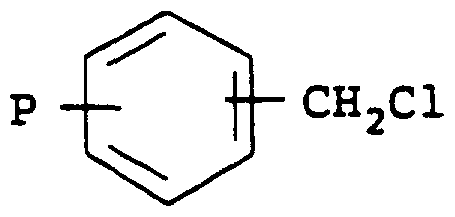
is a copolymer of a monovinyl aromatic monomer and a polyvinyl aromatic
 crosslinking monomer,
have been converted into a group of the formula


Ar is a substituted phenyl group of the formula


X is independently -H, -R, -OR or halogen,
R is a Cτ-C alkyl group or a substituted or unsubstituted phenyl group of
20 the formula

" wherein
Y is -H, a C^C. alkyl group or halogen, n is an integer from 1 to 3, and m is an integer from 2 to 4. The adsorbed organic materials can be recovered by desorption. " The hydrophobic methylene-bridged aromatic polymer adsorbents of the present invention have a water adsorption capacity of about 10 weight percent or less and adsorb much less water at high relative humidity, i.e., humidities greater than 75 percent, than do the corresponding polymer adsorbents in which any residual chloromethyl groups have not been capped with a hydrophobic aromatic compound. Under humid conditions, therefore, the " polymer adsorbents of the present invention have higher capacities for volatile organic compounds.
As used herein, the terms "halo" and "hal " refer to the halogens F, Cl, Br or I, and the terms "C^C. alkyl " and "C^-C^ alkyl" refer to straight-chained or branched, cyclic or acyclic hydrocarbon groups of up to four carbon atoms and ten carbon atoms respectively, provided that all substituent groups are stencally compatible with each other The term "steπcally compatible" is employed to designate substituent groups which are not affected by steπc hindrance as this term is defined in "Hawley's Condensed Chemical Dictionary," 1 1th edition, Van Nostrand Reinhold Co , N Y , page 1093 (1987) which definition is as follows "steπc hindrance" A characteristic of molecular structure in which the molecules have a spatial arrangement of their atoms such that a given reaction with another molecule is prevented or retarded "
Stencally compatible may be further defined as reacting compounds having substituents whose physical bulk does not require confinement within volumes insufficient for the exercise of their normal behavior as discussed "Organic Chemistry" by D J Cram and G Hammond, 2nd edition, McGraw-Hill Book Company, N Y , page 215 (1964) Methylene-bridged aromatic polymer adsorbents refer to adsorbent resins which are made from microporous or macroporous copolymers of a monovinyl aromatic monomer and a polyvinyl aromatic crosslinking monomer which have been chloromethylated and then post-crossl inked in a swollen state in the presence of a Fnedel-Crafts catalyst Such resins have been referred to as "hypercrosslinked" or "macronet" resins and their preparations and uses have been described, for example, by V A Davankov and M P Tsyurupa, Reactive Polymers, 13, 27 (1990) and in U S Patent Nos 4,191 ,813, 4,263,407, 4,950,332, 5,079,274; and 5,288,307 Preferred monovinyl aromatic monomers are styrene and ethyl vinylbenzene, the preferred polyvinyl aromatic crosslinking monomer is divmylbenzene Chloromethylation is preferably carried out by treatment of the copolymer with chloromethyl methyl ether in the presence of a Friedel-Crafts catalyst Alternatively, chloromethyl groups can be incorporated into the copolymer by using vinylbenzyl chloride as a monovinyl aromatic monomer Post-crossl inking, i e , methylene bridging, is preferably accomplished by treatment with ethylene dichloπde to first swell the chloromethylated aromatic copolymer followed by treatment with a Fnedel- Crafts catalyst Chloromethylated aromatic copolymers refer to chloromethylated microporous or macroporous copolymers of a monovinyl aromatic monomer and a polyvinyl aromatic crosslinking monomer The preferred monovinyl aromatic monomers are styrene and ethyl vinylbenzene The preferred polyvinyl aromatic crosslinking monomer, which usually comprises from about 0 1 to about 20 weight percent of the combined monomers, is divmylbenzene Chloromethyl groups may be incorporated into the chloromethylated aromatic copolymer either by treatment with a chloromethylation agent such as, for example, chloromethyl methyl ether, or by use of vinylbenzyl chloride as a portion of the monovinyl aromatic monomer Chloromethylated aromatic copolymers typically contain from about 0 1
to about 0 9 and preferably from 0.6 to 0.8 chloromethyl groups per aromatic ring Chloromethylations are described, for example, in U.S. Patent Nos. 2,597,492; 2,629,710; 2,642,417; and 2,960,480.
When chloromethylated aromatic copolymers are post-crossl inked to form methylene bridges between neighboring aromatic rings, not all chloromethyl groups can react because of spatial considerations. Usually, from about 2 to 10 percent of the chloromethyl groups remain unreacted depending on the overall extent of chloromethylation, i e , the ratio of chloromethyl groups to aromatic rings. In general, the greater the extent of chloromethylation, the greater the percentage of unreacted chloromethyl groups. In the novel methylene-bridged aromatic polymer adsorbents of the present invention, these unreacted chloromethyl groups are capped with hydrophobic aromatic compounds In other words, the residual chloromethyl groups alkylate the hydrophobic aromatic compounds in a Fnedel-Crafts alkylation which is not subject to the spatial or geometric constraints imposed on further methylene bridging with aromatic rings confined to the rigid hypercrossl inked polymer backbone. For this purpose, hydrophobic aromatic compounds refer to benzene and its derivatives which are from weakly deactivated to weakly to moderately activated towards electrophilic aromatic substitution as defined in Organic Chemistry by R. T. Morrison and R. N. Boyd, 6th Edition, Prentice Hall, Inc., Englewood Cliffs, N.J., p. 522 (1992). More particularly, the preferred hydrophobic aromatic compounds of those of formula
ArH wherein
ArH is a substituted benzene of the formula

or a substituted naphthalene of the formula

wherein
X is independently -H, -R, -OR or -halogen,
R is a C,-C alkyl group or a substituted or unsubstituted phenyl group of the formula

wherein
Y is -H, a C.-C. alkyl group or halogen, n is an integer from 1 to 3, and m is an integer from 2 to 4 Preferred are substituted benzenes in which X is -H, C,-C alkyl, or -C,H. and naphthalene. Most preferred are substituted benzenes in which X is -CH3 or -CH2CH3 and n is 1 or 2
In preparing the hydrophobic methylene-bridged aromatic polymer adsorbents of the present invention, two important factors need to be kept in mind First, both the methylene bridging and the capping with a hydrophobic aromatic compound are Fnedel-Crafts alkylations and proceed under virtually identical reaction conditions Therefore, it is most practical and efficient to conduct the reactions in sequence in the same reactor and to make use of the same solvent, the same catalyst and the same temperatures in a most economical fashion. Second, it is imperative that any residual chloromethyl groups be capped immediately after methylene-bπdgtng before they are given an opportunity to hydrolyze or oxidize during the workup procedure Otherwise, the hydrophilic sites will have already been formed
Thus, the most preferred process for the manufacture of the hydrophobic methylene-bridged aromatic polymer adsorbents of the present invention requires the following steps: (a) swelling of the chloromethylated aromatic copolymer, (b) methylene- bndging the swollen copolymer in the presence of a Friedel-Crafts catalyst, (c) capping unreacted chloromethyl groups with a hydrophobic aromatic hydrocarbon in the presence of the same Fnedel-Crafts catalyst, and (d) recovering the polymer adsorbent
The chloromethylated aromatic copolymer is contacted with a swelling agent to expand the copolymer structure Suitable swelling agents are solvents which are substantially inert during post-crossl inking of the copolymer and include chlorinated hydrocarbons, such as ethylene dichloπde, methylene chloride, and propylene dichlonde The preferred swelling agent is 1 ,2-dιchloroethane The copolymer is allowed to swell in an excess amount of the swelling agent for at least 30 minutes Preferably, the copolymer is contacted with the swelling agent for a time sufficient to substantially attain equilibrium with respect to swelling by the particular swelling agent employed It is also generally convenient to dissolve the Friedel-Crafts catalyst employed in the subsequent post-crossl inking reaction within the swelling agent
Once swollen, the chloromethylated copolymer is maintained at a temperature and in the presence of a Fnedel-Crafts catalyst such that the bridging moieties (-CH?-) are formed by reaction of the chloromethyl groups with a neighboring aromatic ring Any Fπedel-
Crafts-type catalyst may be utilized to catalyze the post-crossl inking reaction, such as, for example, the acidic metal halides including aluminum chloride, stannic chloride, aluminum bromide, boron tπfluoπde, zinc chloride or ferric chloride The catalyst is typically effective in amounts ranging from 0 001 to 50 and preferably from 5 to 30 percent by weight, based on weight of polymeric material The optimum amount depends upon the reactants and conditions selected for carrying out the reaction The mixture is heated to a temperature ranging from 20°C to 180°C for a period sufficient to post-crosslink the resin, preferably from 0 5 to 30 hours More preferably, the temperature ranges from 60°C up to the reflux temperature of the organic swelling liquid and the reaction period ranges from 0 5 to 8 hours Most preferably, the temperature ranges from 60°C to 85°C The reaction temperatures and times may vary depending on the reactive species and catalyst in the reaction mixture
After the methylene bridging is substantially complete, usually from about 1 to about 10 and preferably from 1 5 to 3 molar equivalents, based on the moles of unreacted chloromethyl groups, of the hydrophobic aromatic capping compound are added to the mixture This may correspond to from 0 5 to 20 weight percent of aromatic hydrocarbon based on the total weight of polymer depending on the extent of chloromethylation Alternatively, the hydrophobic aromatic hydrocarbon can be used as the solvent, either replacing the swelling solvent completely or being employed in substantial proportion in conjunction with the swelling solvent The reaction temperature is maintained for a period ranging from 1 to 8 hours until capping is complete
After the reaction is complete, the mixture is cooled and the methylene-bridged aromatic polymer adsorbent is separated from the liquid, washed and dried by conventional techniques Due to the fact that the methylene-bridged aromatic polymer adsorbents produced in the process of the present invention are usually prepared from a styrene/divinylbenzene copolymer which has been prepared by a conventional suspension polymerization process, the resin particle size may be controlled over a wide range Generally the size of the beads may range from 10 to 2000 micrometers (μm), preferably from 100 to 1200 μm, more preferably from 200 to 600 μm
The methylene-bridged aromatic polymer adsorbents of the present ι nvention are very useful in a method of adsorbing and recovering an organic material from a vapor stream Exemplary of vapor streams are oxygen, nitrogen, carbon dioxide or mixtures thereof, such as air, which are mixed with an organic material The adsorbents are particularly useful for recovering organic materials which are present in very small amounts, usually less than 5 and very often less than 1 percent by weight of the vapor stream In the practice of the present invention a gas stream, containing an organic material is caused to flow through a bed of the hydrophobic methylene-bridged aromatic polymer adsorbent which adsorbs the organic material The flow of the gas continues until the content of the organic material in the vapor stream which flows out of the adsorbent bed
exceeds an acceptable level The organic material can be recovered and the adsorbent can be regenerated for continued use by desorbing the organic material from the adsorbent, e g , by treatment with a purge gas at elevated temperature and/or reduced-pressure The adsorption and desorption steps may be carried out in any conventional known adsorption apparatus and are described in more detail in U S Patent No 5,079,274 The most important impurities which can be separated from a gas such as air according to the method of the present invention are
(a) hydrocarbons, preferably having 4 or more carbon atoms, or a mixture of such hydrocarbons such as gasoline,
(b) halogenated hydrocarbons, in particular saturated and unsaturated 0 halogenated hydrocarbons having 1 to 3 carbon atoms or aromatic halogenated hydrocarbons,
(c) aldehydes and ketones, particularly those having less than 6 carbon atoms, and
(d) alcohols, preferably those of from 1 to 6 carbon atoms 5 The process for preparing the hydrophobic methylene-bridged aromatic polymer adsorbents and the method of adsorbing an organic material from a vapor stream according to the present invention are further illustrated by the following examples which should not be construed to limit the scope of the present invention Example 1 Preparation of Hydrophobic, Methylene-Bπdqed Aromatic Polymer Adsorbents 0 A 100 gram (g) sample of macroporous styrene/di vinyl benzene copolymer, having
6 weight percent divmylbenzene and polymerized in the presence of 42 weight percent iso- octane diluent, was swollen in 500 mil liters (mL) of chloromethyl methyl ether (CMME) for 30 minutes (mm) at less than 20°C To the stirring mixture was added 30 g of anhydrous FeCI. and the mixture was heated to 52°C over 30 minutes The reaction mixture was held at 52°C for 2 5 5 hours (hr) before being cooled to 0°C About 500 mL of methanol was added slowly to the cold mixture The liquid wash was removed from the beads and a fresh 500 mL of methanol was added and the mixture was stirred for 30 mm The methanol was withdrawn and replaced with another 500 mL of methanol
The methanol was removed and replaced with 1000 mL of 1,2-dιchloroethane
30 (EDC) The beads were allowed to swell in the EDC for 30 mm before the EDC was removed and replaced with fresh EDC After 30 minutes the EDC was again replaced with fresh EDC and 15 g of FeCI. After stirring for 30 mm the mixture was heated to 80°C over a period of 1 hr and then held at 80°C for 3 hr After 2 of the 3 hr had passed, 10 g of aromatic compound was added to the hot stirring reaction mixture After the 3 hr were over the reaction mixture was cooled to
35 25°C and the liquid removed About 500 mL of methanol was added to the beads and the mixture was stirred for 30 mm before the methanol was replaced with fresh methanol The beads were washed twice more with 500 mL of methanol and once with 500 mL of water
The water washed beads were re-suspended in water and 150 mL of 1 N NaOH was added to the suspension. The stirring suspension was heated to 80CC over 30 mm and held at 80°C for 3 hr before being cooled to room temperature and washed three times with water. The beads were air dried over night in a fume hood and then vacuum dried at 60CC for 3 hr Approximately 5 g of polymer adsorbent that had been dried was placed on a moisture balance and dried to constant weight at 90°C. The adsorbent was transferred to a small glass column and 85 percent relative humidity air was passed through the adsorbent for two hours. The humidified adsorbent was transferred to a moisture balance and dried to determine the weight percent water uptake from the humid air The results from using various hydrophobic aromatic capping compounds are tabulated in Table 1
Table 1
Water Adsorption Capacity of Methylene-Bridged
Aromatic Polymer Adsorbents Capped with
Hydrophobic Aromatic Compounds
Run Aromatic Compound % Water Adsorbed a chlorobenzene 10.0 b cyclohexylbenzene 9.8 c 1,2,3,4-tetrahydronaphthalene 9.3 d anisole 4.2 e naphthalene 3.7 f biphenyl 2.9 g mesitylene 2.7 h diethylbenzene 1.7 i toluene 1.8
Example 2
The procedure of Example 1 was repeated using toluene as the aromatic compound at a 5 percent (5 g) rather than a 10 percent level. After workup and drying the adsorbent had a water adsorption capacity of 4.7 percent. Example 3
The procedure of Example 1 was repeated using a gellular (microporous) styrene/divinylbenzene copolymer having 1.5 percent divinylbenzene as the starting material The chloromethylation was conducted at 45°C with 30 weight percent FeCI. for 3 hr. After
bridging for 3 hr, the material was treated with 10 weight percent of the hydrophobic aromatic capping compound (based on weight of starting polymer) for 1 hr.
After workup and drying, the adsorbents had the water adsorption capacities listed in Table 2.
Table 2
Water Adsorption Capacity of Methylene-Bridged
Aromatic Polymer Adsorbents Capped with
Hydrophobic Aromatic Compounds
Run Aromatic Compound % Water Adsorbed a 2,6-dichloroanisole 2.5 b 2-ethylnaphthalene 2.2 c 4-phenyltoluene 1.9 d 2,6-dichlorotoluene 1.7 e 1-phenyldecane 1.6 f 2 ,5-dimethylanisole 1.5 g toluene 1.3
Example 4
The procedure of Example 3 was repeated using ethyl benzene as the aromatic compound at a 2 weight percent rather than a 10 weight percent level After workup and drying, the adsorbent had a water adsorption capacity of 1.6 percent. Example 5 Adsorption of Trichloroethylene from an Air Stream by a Hydrophobic Aromatic Methylene-Bridged Polymer Adsorbent Capped with Toluene
Approximately 5 g of dried polymeric adsorbent from Example 1 , was dried and transferred to a small glass column. Air containing 600 parts per million by volume of trichloroethylene was passed through the adsorbent at a rate of 103 ft/mιn (15 liters/mιn) and at relative humidities of 26 percent and 88 percent The percent breakthrough of the tnchloroethane was monitored as a function of time. The results are tabulated in Table 3.
Table 3 Percent Breakthrough of Trichloroethylene from a Toluene- Capped Adsorbent as a Function of Time and Humidity
Rel. Hum.
Time (min)
26% 88%
0 0. 0
5 0 0
10 0 0
15 0.1 0.1
20 0.4 0.5
25 2.1 3.5
30 11.7 20.6
35 44.6 65.3
40 83.1 93.2
45 96.8 99.0
50 99.5 99.9
55 99.9 100
60 100 100
Claims
WHAT IS CLAIMED IS:
1. A hydrophobic polymer adsorbent comprising a methylene-bridged aromatic polymer adsorbent in which residual chloromethyl groups of the formula

is a copolymer of a monovinyl aromatic p monomer and a polyvinyl aromatic
 crosslinking monomer,
are converted into a group of the formula

is as previously defined, and

Ar is a substituted phenyl group of the formula

or a substituted naphthyl group of the formula

wherein
X is independently -H, -R, -OR or halogen,
is a C,-C alkyl group or a substituted or unsubstituted phenyl group of the formula
wherein
Y is -H, a C^C. alkyl group or halogen, n is an integer from 1 to 3, and m is an integer from 2 to 4.
2. The hydrophobic methylene-bridged aromatic polymer adsorbent of Claim 1 in which Ar is a substituted phenyl group of the formula

wherein
X is independently -H, a C(-C alkyl group or a -C H. group.
3. The hydrophobic methylene-bridged polymeric adsorbent of Claim 2 in which X is -H, -CH. or -CH.CH. and n is 1 or 2.
4. A process for the preparation of hydrophobic methylene-bridged aromatic polymer adsorbents which comprises:
(a) contacting a chloromethylated aromatic copolymer of a monovinyl aromatic monomer and a polyvinyl aromatic crosslinking monomer with a swelling agent to expand the copolymer structure,
(b) heating the swollen chloromethylated aromatic copolymer in the presence of a Friedel-Crafts catalyst to form methylene bridges by alkylation of neighboring aromatic rings with the chloromethyl groups,
(c) adding a hydrophobic aromatic compound of the formula
ArH wherein
ArH is a substituted benzene of the formula


wherein
X is independently -H, -R, -OR or halogen, R is a Ct-Cl0 alkyl group or a substituted or unsubstituted phenyl group of the formula

wherein
Y is -H, a Ct-C. alkyl group or halogen, n is an integer from 1 to 3, and m is an integer from 2 to 4, in the presence of the Fnedel-Crafts catalyst and at a temperature sufficient to react with any remaining chloromethyl groups, and (d) recovering the hydrophobic methylene-bridged aromatic polymer adsorbent 5 The process of Claim 4 in which ArH is a substituted benzene of the formula

wherein
X is independently -H, a ^C alkyl group or a -C6H. group
6 The process of Claim 5 in which X is -H, -CH. or -CH.CH. and n is 1 or 2
7 An improved process of adsorbing volatile organic materials from a vapor stream which comprises contacting the vapor stream with a hydrophobic methylene-bridged aromatic polymer adsorbent in which residual chloromethyl groups of the formula


have been converted into a group of the formula

is as previously defined, and

Ar is a substituted phenyl group of the formula


X is independently -H, -R, -OR or halogen,
R is a C,-C alkyl group or a substituted or unsubstituted phenyl group of the formula

Y is -H, a C^C. alkyl group or halogen, n is an integer from 1 to 3, and m is an integer from 2 to 4. 8. The process of Claim 7 in which Ar is a substituted phenyl group of the formula

wherein
X is independently -H, a C,-C alkyl group or a -C H group.
9. The process of Claim 8 in which X is -H, -CH. or -CH2CH3 and n is 1 or 2.
Priority Applications (3)
| Application Number | Priority Date | Filing Date | Title |
|---|---|---|---|
| JP51994596A JP3842288B2 (en) | 1994-12-21 | 1995-12-19 | Methylene-bridged aromatic polymer adsorbent with increased hydrophobicity |
| DE69505420T DE69505420T2 (en) | 1994-12-21 | 1995-12-19 | METHYLENE BRIDGED AROMATIC POLYMER ADSORBENTS WITH IMPROVED HYDROPHOBICITY |
| EP95943887A EP0799089B1 (en) | 1994-12-21 | 1995-12-19 | Methylene-bridged aromatic polymer adsorbents with increased hydrophobicity |
Applications Claiming Priority (2)
| Application Number | Priority Date | Filing Date | Title |
|---|---|---|---|
| US08/360,551 US5504163A (en) | 1994-12-21 | 1994-12-21 | Methylene-bridge aromatic polymer adsorbents with increased hydrophobicity |
| US08/360,551 | 1994-12-21 |
Publications (1)
| Publication Number | Publication Date |
|---|---|
| WO1996019286A1 true WO1996019286A1 (en) | 1996-06-27 |
Family
ID=23418468
Family Applications (1)
| Application Number | Title | Priority Date | Filing Date |
|---|---|---|---|
| PCT/US1995/016546 Ceased WO1996019286A1 (en) | 1994-12-21 | 1995-12-19 | Methylene-bridged aromatic polymer adsorbents with increased hydrophobicity |
Country Status (5)
| Country | Link |
|---|---|
| US (1) | US5504163A (en) |
| EP (1) | EP0799089B1 (en) |
| JP (1) | JP3842288B2 (en) |
| DE (1) | DE69505420T2 (en) |
| WO (1) | WO1996019286A1 (en) |
Cited By (1)
| Publication number | Priority date | Publication date | Assignee | Title |
|---|---|---|---|---|
| WO2017222978A1 (en) * | 2016-06-22 | 2017-12-28 | Dow Global Technologies Llc | Treating vinyl aromatic resin |
Families Citing this family (13)
| Publication number | Priority date | Publication date | Assignee | Title |
|---|---|---|---|---|
| US6544727B1 (en) | 1995-06-07 | 2003-04-08 | Cerus Corporation | Methods and devices for the removal of psoralens from blood products |
| US20020115585A1 (en) * | 1996-06-07 | 2002-08-22 | Hei Derek J. | Method and devices for the removal of psoralens from blood products |
| US20010018179A1 (en) | 1998-01-06 | 2001-08-30 | Derek J. Hei | Batch devices for the reduction of compounds from biological compositions containing cells and methods of use |
| US20010009756A1 (en) | 1998-01-06 | 2001-07-26 | Derek Hei | Flow devices for the reduction of compounds from biological compositions and methods of use |
| US7611831B2 (en) * | 1998-01-06 | 2009-11-03 | Cerus Corporation | Adsorbing pathogen-inactivating compounds with porous particles immobilized in a matrix |
| KR100323249B1 (en) | 1999-01-16 | 2002-02-04 | 윤덕용 | Method For Controlling Surface Area And Microporosity of Polymer Bead And Process for Preparing Post-crosslinking Polymer Bead Whose Surface Area And Microporosity Are Increased |
| JP5428133B2 (en) * | 2007-02-09 | 2014-02-26 | 三菱化学株式会社 | Method for producing crosslinked polymer particles |
| CA2974946C (en) | 2015-01-27 | 2023-01-10 | Dow Global Technologies Llc | Separation of nitrogen from hydrocarbon gas using pyrolyzed sulfonated macroporous ion exchange resin |
| BR112017016169A2 (en) | 2015-01-27 | 2018-04-17 | Dow Global Technologies Llc | alkylene bridged macroporous adsorbent hydrocarbon separation |
| JP2019521843A (en) * | 2016-06-22 | 2019-08-08 | ダウ グローバル テクノロジーズ エルエルシー | Method for removing colloidal cobalt from an aqueous composition |
| BR112018074341A2 (en) * | 2016-06-22 | 2019-03-06 | Dow Global Technologies Llc | aromatic vinyl resin |
| CN109317120A (en) * | 2018-10-19 | 2019-02-12 | 福州大学 | A kind of hypercrosslinked polymer material and preparation method thereof |
| CN109880150B (en) * | 2019-01-25 | 2020-08-07 | 浙江大学 | Preparation method of super-hydrophobic microporous polymer adsorption material with high specific surface area |
Citations (1)
| Publication number | Priority date | Publication date | Assignee | Title |
|---|---|---|---|---|
| DE4215741A1 (en) * | 1992-05-13 | 1993-11-18 | Bitterfeld Wolfen Chemie | Adsorber polymers for improved adsorbency for organic cpds. - prepd. by chloromethylation and crosslinking of special styrene]-di:vinylbenzene copolymers in organic liq. and Friedel-crafts catalysts for osmotic stability |
Family Cites Families (10)
| Publication number | Priority date | Publication date | Assignee | Title |
|---|---|---|---|---|
| BE756082A (en) * | 1969-09-12 | 1971-03-11 | I Elementoorganiche Kih Soedin | POLYSTYRENE MACRORETICULAR SKELETS FOR ION EXCHANGING RESINS AND THEIR PREPARATION PROCESS ( |
| US4074035A (en) * | 1975-04-22 | 1978-02-14 | Exxon Research & Engineering Co. | Halomethylated aromatic interpolymers |
| US4191813A (en) * | 1978-07-24 | 1980-03-04 | Rohm And Haas Company | Polymeric adsorbents from vinylbenzyl chloride copolymer beads |
| US4263407A (en) * | 1978-07-24 | 1981-04-21 | Rohm And Haas Company | Polymeric adsorbents from macroreticular polymer beads |
| US4568700A (en) * | 1983-08-22 | 1986-02-04 | Yeda Research And Development Co. Ltd. | Process for the production of halomethylating agents which are of low volatility |
| US4604270A (en) * | 1984-09-28 | 1986-08-05 | Hercules Incorporated | Scavengers for the removal of impurities from inert fluids |
| US5137926A (en) * | 1987-10-26 | 1992-08-11 | Rohm And Haas Company | High-surface-area compositions |
| US4950332A (en) * | 1988-03-17 | 1990-08-21 | The Dow Chemical Company | Process for decolorizing aqueous sugar solutions via adsorbent resins, and desorption of color bodies from the adsorbent resins |
| GB8905934D0 (en) * | 1989-03-15 | 1989-04-26 | Dow Europ Sa | A process for preparing adsorptive porous resin beads |
| US5288307A (en) * | 1992-08-28 | 1994-02-22 | The Dow Chemical Company | Method to reduce fuel vapor emissions |
-
1994
- 1994-12-21 US US08/360,551 patent/US5504163A/en not_active Expired - Lifetime
-
1995
- 1995-12-19 EP EP95943887A patent/EP0799089B1/en not_active Expired - Lifetime
- 1995-12-19 JP JP51994596A patent/JP3842288B2/en not_active Expired - Lifetime
- 1995-12-19 WO PCT/US1995/016546 patent/WO1996019286A1/en not_active Ceased
- 1995-12-19 DE DE69505420T patent/DE69505420T2/en not_active Expired - Lifetime
Patent Citations (1)
| Publication number | Priority date | Publication date | Assignee | Title |
|---|---|---|---|---|
| DE4215741A1 (en) * | 1992-05-13 | 1993-11-18 | Bitterfeld Wolfen Chemie | Adsorber polymers for improved adsorbency for organic cpds. - prepd. by chloromethylation and crosslinking of special styrene]-di:vinylbenzene copolymers in organic liq. and Friedel-crafts catalysts for osmotic stability |
Cited By (1)
| Publication number | Priority date | Publication date | Assignee | Title |
|---|---|---|---|---|
| WO2017222978A1 (en) * | 2016-06-22 | 2017-12-28 | Dow Global Technologies Llc | Treating vinyl aromatic resin |
Also Published As
| Publication number | Publication date |
|---|---|
| EP0799089B1 (en) | 1998-10-14 |
| DE69505420D1 (en) | 1998-11-19 |
| DE69505420T2 (en) | 1999-05-20 |
| EP0799089A1 (en) | 1997-10-08 |
| JP3842288B2 (en) | 2006-11-08 |
| US5504163A (en) | 1996-04-02 |
| JPH10511304A (en) | 1998-11-04 |
Similar Documents
| Publication | Publication Date | Title |
|---|---|---|
| EP0388140B1 (en) | A process for preparing adsorptive porous resin beads | |
| EP0799089B1 (en) | Methylene-bridged aromatic polymer adsorbents with increased hydrophobicity | |
| US4470829A (en) | Solid adsorbent for carbon monoxide and process for separation from gas mixture | |
| US4263407A (en) | Polymeric adsorbents from macroreticular polymer beads | |
| JPS62283107A (en) | Removal of organohalide in hydrocarbon solvent | |
| JPH083089A (en) | Method for producing high-purity bisphenols | |
| US4675309A (en) | Adsorbent for use in selective gas adsorption-separation and a process for producing the same | |
| Frechet et al. | Polymeric reagents. II. Synthesis and applications of crosslinked poly (vinylpyridinium hydrobromide perbromide) resins | |
| US4546094A (en) | Solid adsorbent for unsaturated hydrocarbon and process for separation of unsaturated hydrocarbon from gas mixture | |
| EP0007792B1 (en) | Synthetic polymeric adsorbents and ion exchange resins, their production and processes using them | |
| US4239508A (en) | Cumene recovery | |
| US20070259046A1 (en) | Process for removal of solvents from bead polymers | |
| US20010002656A1 (en) | Process for preparing monodisperse adsorber resins and their use | |
| US5037857A (en) | High-surface-area fiber | |
| Mitra et al. | Polymer-bound benzyltriethylammonium polyhalides: recyclable reagents for the selective iodination of amines and phenols | |
| EP0314449B1 (en) | High-surface-area compositions | |
| JPS6126417B2 (en) | ||
| US5137926A (en) | High-surface-area compositions | |
| EP0496405A1 (en) | Porous resin and process for its production | |
| JPH11147915A (en) | Porous beads and method for producing the same | |
| JP3143113B2 (en) | Organic solvent absorbing polymer and method for mutual separation of mixture of organic solvent and water or gas | |
| JPS60137908A (en) | Method for producing chloromethylated polymer | |
| JPS5853957B2 (en) | Treatment method for wastewater containing phenols | |
| JPS5987089A (en) | Removal of organic substance in water | |
| JPH0465868B2 (en) |
Legal Events
| Date | Code | Title | Description |
|---|---|---|---|
| AK | Designated states |
Kind code of ref document: A1 Designated state(s): JP RU |
|
| AL | Designated countries for regional patents |
Kind code of ref document: A1 Designated state(s): AT BE CH DE DK ES FR GB GR IE IT LU MC NL PT SE |
|
| DFPE | Request for preliminary examination filed prior to expiration of 19th month from priority date (pct application filed before 20040101) | ||
| 121 | Ep: the epo has been informed by wipo that ep was designated in this application | ||
| WWE | Wipo information: entry into national phase |
Ref document number: 1995943887 Country of ref document: EP |
|
| WWP | Wipo information: published in national office |
Ref document number: 1995943887 Country of ref document: EP |
|
| WWG | Wipo information: grant in national office |
Ref document number: 1995943887 Country of ref document: EP |