WO1996022022A1 - Herbicidal composition - Google Patents

Herbicidal composition Download PDF

Info

Publication number
WO1996022022A1
WO1996022022A1 PCT/EP1996/000032 EP9600032W WO9622022A1 WO 1996022022 A1 WO1996022022 A1 WO 1996022022A1 EP 9600032 W EP9600032 W EP 9600032W WO 9622022 A1 WO9622022 A1 WO 9622022A1
Authority
WO
WIPO (PCT)
Prior art keywords
alkyl
halogen
substituted
hydrogen
alkoxy
Prior art date
Legal status (The legal status is an assumption and is not a legal conclusion. Google has not performed a legal analysis and makes no representation as to the accuracy of the status listed.)
Ceased
Application number
PCT/EP1996/000032
Other languages
French (fr)
Inventor
Jutta Glock
Elmar Kerber
Current Assignee (The listed assignees may be inaccurate. Google has not performed a legal analysis and makes no representation or warranty as to the accuracy of the list.)
Novartis AG
Original Assignee
Ciba Geigy AG
Novartis AG
Priority date (The priority date is an assumption and is not a legal conclusion. Google has not performed a legal analysis and makes no representation as to the accuracy of the date listed.)
Filing date
Publication date
Application filed by Ciba Geigy AG, Novartis AG filed Critical Ciba Geigy AG
Priority to JP8521997A priority Critical patent/JPH10512272A/en
Priority to PL96321244A priority patent/PL321244A1/en
Priority to BR9607487A priority patent/BR9607487A/en
Priority to AU44372/96A priority patent/AU4437296A/en
Priority to EP96900566A priority patent/EP0804077A1/en
Publication of WO1996022022A1 publication Critical patent/WO1996022022A1/en
Priority to MXPA/A/1997/005448A priority patent/MXPA97005448A/en
Anticipated expiration legal-status Critical
Ceased legal-status Critical Current

Links

Classifications

    • AHUMAN NECESSITIES
    • A01AGRICULTURE; FORESTRY; ANIMAL HUSBANDRY; HUNTING; TRAPPING; FISHING
    • A01NPRESERVATION OF BODIES OF HUMANS OR ANIMALS OR PLANTS OR PARTS THEREOF; BIOCIDES, e.g. AS DISINFECTANTS, AS PESTICIDES OR AS HERBICIDES; PEST REPELLANTS OR ATTRACTANTS; PLANT GROWTH REGULATORS
    • A01N43/00Biocides, pest repellants or attractants, or plant growth regulators containing heterocyclic compounds
    • A01N43/48Biocides, pest repellants or attractants, or plant growth regulators containing heterocyclic compounds having rings with two nitrogen atoms as the only ring hetero atoms
    • A01N43/541,3-Diazines; Hydrogenated 1,3-diazines

Definitions

  • the present invention relates to a selective-herbicidal composition for controlling grasses and broad-leaved weeds in crops of useful plants, in particular in crops of maize and cereals such as rye, barley, oats and, in particular, wheat, which composition comprises a herbicide and a safener (counteracting agent, antidote) and which safeguards the useful plants, but not the weeds, against the phytotoxic effect of the herbicide, and to the use of this composition for weed control in crops of useful plants.
  • a herbicide and a safener counteracting agent, antidote
  • safeners which are capable of antagonizing the damaging effect of the herbicide on the crop plant, i.e. of protecting the crop plant from this effect while causing virtually no impairment of the herbicidal effect on the weeds to be controlled.
  • the safeners proposed often have a very specific action both with regard to the crop plants and with regard to the herbicide and in some cases, in addition, depending on the mode of application; in other words, a particular safener is often suitable only for a specific crop plant and a specific class of herbicidal substance, or a specific herbicide.
  • a selective-herbicidal composition which comprises, in addition to customary inert formulation auxiliaries such as carriers, solvents and wetting agents, an active substance comprising a mixture of a) a herbicidally effective quantity of a herbicide of the formula I
  • Z is C 1 -C 10 alkyl, C 1 -C 10 alkyl substituted by halogen, C 3 -C 8 cycloalkyl, R 7 O-, R 7 S(O) n -,
  • R 7 R 8 N-, R 8 CO-, R 9 ON CR 8 -, (CH 3 ) 3 Si-, -CN or oxiranyl, C 2 -C 8 alkenyl, C 2 -C 8 alkenyl substituted by halogen, phenyl, phenyl substituted by halogen, C 1 -C 6 alkyl,
  • R 7 is hydrogen, C 1 -C 10 alkyl, C 2 -C 8 alkenyl, C 2 -C 8 alkynyl, phenyl or phenyl substituted by halogen, C 1 -C 6 alkyl, C 1 -C 6 haloalkyl, C 1 -C 6 alkoxy, C 1 -C 6 haloalkoxy or C 1 -C 6 -alkoxy- carbonyl,
  • n 0, 1 or 2
  • R 8 is as defined for R 7 or is C 1 -C 6 alkoxy, C 3 -C 8 alkenyloxy or C 3 -C 8 alkynyloxy,
  • R 9 is C 1 -C 10 alkyl, C 2 -C 8 alkenyl or C 2 -C 8 alkynyl,
  • R 10 is C 1 -C 10 alkyl, C 1 -C 10 alkyl substituted by halogen, R 7 O-, R 7 S(O) n -, -NR 7 R 8 or -CN,
  • R 5 is C 1 -C 10 alkyl, C 1 -C 10 alkyl substituted by halogen, C 3 -C 8 cycloalkyl, R 7 O-, R 7 S(O) n -,
  • R 7 R 8 N-, R 8 CO-, R 9 ON CR 8 -, (CH 3 ) 3 Si-, -CN or oxiranyl, C 2 -C 8 alkenyl, C 2 -C 8 alkenyl substituted by halogen, phenyl, phenyl substituted by halogen, C 1 -C 6 alkyl,
  • R 6 is as defined for R 5 or is hydrogen or together with R 5 forms a C 4 -C 7 alkylene radical, or
  • Z is a radical of the formula
  • R 50 is hydrogen, halogen, -NO 2 , -CN, C 1 -C 4 alkyl, C 1 -C 4 alkyl substituted by halogen,
  • R 60 is hydrogen, halogen, -CN, -NO 2 , C 1 -C 4 alkyl, C 1 -C 4 alkyl substituted by halogen,
  • R 70 independently at each occurrence is hydrogen, C 1 -C 4 alkyl, C 1 -C 4 haloalkyl,
  • R 80 is hydrogen, C 1 -C 4 alkyl, C 1 -C 4 haloalkyl, halogen, -CO 2 R 130 , -SO 2 NR 140 R 150 , -OSO 2 R 170 , -S(O) b R 180 , -CN or -NO 2 , and
  • R 90 is hydrogen, C 1 -C 4 alkyl, C 1 -C 4 alkyl substituted by halogen or phenyl, C 2 -C 4 alkenyl, phenyl or phenyl substituted by halogen, C 1 -C 4 alkyl, -NO 2 , -CN or C 1 -C 4 alkoxy, where
  • R 100 is hydrogen, C 1 -C 4 alkyl, C 1 -C 4 alkyl substituted by halogen or -OCH 3 ,
  • R 110 and R 120 independently of one another are C 1 -C 4 alkyl or R 110 and R 120 together are
  • R 130 is hydrogen, C 1 -C 4 alkyl, C 1 -C 4 alkyl substituted by halogen, -CN, -CO 2 R 100 ,
  • R 140 is hydrogen or C 1 -C 4 alkyl
  • R 150 is hydrogen, C 1 -C 4 alkyl, C 1 -C 4 alkoxy or C 2 -C 4 alkenyl, or R 140 and R 150 together are
  • R 160 is C 1 -C 4 alkyl or C 1 -C 4 haloalkyl
  • R 170 is C 1 -C 4 alkyl or -NR 1440 R 150 , in which R 140 and R 150 are as defined,
  • R 180 is C 1 -C 4 alkyl, C 1 -C 4 haloalkyl, C 2 -C 4 alkoxyalkyl, C 2 -C 4 alkenyl, C 3 -C 4 alkynyl, phenyl or phenyl substituted by halogen, C 1 -C 3 alkyl, C 1 -C 3 alkoxy or C 1 -C 3 haloalkyl,
  • R 190 is C 1 -C 4 alkyl or C 1 -C 4 alkyl substituted by -F, -Cl or -OR 160 ,
  • G is a radical of the formula
  • R 260 is hydrogen or C 1 -C 3 alkyl
  • R 270 is hydrogen, C 1 -C 3 alkyl or C 2 -C 4 alkenyl
  • R 2 is hydrogen, C 1 -C 10 alkyl, C 1 -C 10 alkyl substituted by C 1 -C 6 alkoxy or
  • R 3 and R 4 independently of one another are hydrogen, halogen, C 1 -C 10 alkyl, R 7 O-, R 7 S(O) n -, R 7 R 8 N-, C 1 -C 10 haloalkyl, C 1 -C 10 haloalkoxy, C 1 -C 6 alkoxy-C 1 -C 6 alkyl or phenylthio, where R 7 , n and R 8 are as defined, or
  • R 3 or R 4 together with R, form a radical -OCH 2 CH 2 (CH 2 ) m - or -(CH 2 ) m CH 2 CH 2 O-, in which m is 0 or 1 ,
  • R a is hydrogen, C 1 -C 8 alkyl, C 1 -C 8 alkyl substituted by hydroxy, C 1 -C 8 alkoxy, phenoxy, C 1 -C 8 alkylthio, phenylthio, (CH 3 ) 3 Si-, C 3 -C 8 cycloalkyl, phenyl or di-C 1 -C 8 alkylamino, C 2 -C 5 alkenyl, C 2 -C 6 alkenyl substituted by halogen, or R a is C 2 -C 6 alkynyl,
  • C 3 -C 8 cycloalkyl, C 3 -C 8 cycloalkyl substituted by C 1 -C 3 alkyl, or R a is C 3 -C 6 cycloalkenyl, phenyl, phenyl substituted by C 1 -C 8 alkyl, halogen, nitro, -CN, C 1 -C 6 alkoxy,
  • R b is hydrogen, C 1 -C 8 alkyl or phenyl, or
  • R a and R b together with the carbon atom to which they are attached, form a radical of the formula -CO-, and
  • n 0 or 1
  • R 010 is hydrogen, C 1 -C 8 alkyl or C 1 -C 8 alkyl which is substituted by C 1 -C 6 alkoxy or
  • X 2 is hydrogen or chlorine
  • E is nitrogen or methine
  • R 11 is -CCl 3 or unsubstituted or halogen-substituted phenyl
  • R 12 and R 13 independently of one another are hydrogen or halogen
  • R 14 is C 1 -C 4 alkyl
  • R 12 and R 13 are as defined above, and
  • R 66 , R 67 and R 68 independently of one another are C 1 -C 4 alkyl, of a compound of the formula IIc
  • a 2 is a group
  • R 25 and R 26 independently of one another are hydrogen, C 1 -C 8 alkyl, C 3 -C 8 cycloalkyl,
  • R 27 is hydrogen or C 1 -C 4 alkyl
  • R aa is hydrogen, halogen, cyano, trifluoromethyl, nitro, C 1 -C 4 alkyl, C 1 -C 4 alkoxy, C 1 -C 4 alkylthio, C 1 -C 4 alkylsulfinyl, C 1 -C 4 alkylsulfonyl, -COOR j , -CONR k R m , -COR n ,
  • R g is hydrogen, halogen, cyano, nitro, C 1 -C 4 alkyl, C 1 -C 4 haloalkyl, C 1 -C 4 alkylthio, C 1 -C 4 alkylsulfinyl, C 1 -C 4 alkylsulfonyl, -COOR j , -CONR k R m , -COR n , -SO 2 NR k R m ,
  • -OSO 2 -C 1 -C 4 alkyl C1 -C 6 alkoxy, or C 1 -C 6 alkoxy substituted by C 1 -C 4 alkoxy or halogen, C 3 -C 6 alkenyloxy, or C 3 -C 6 alkenyloxy substituted by halogen, or C 3 -C 6 alkynyloxy, or R a and R b together form a C 3 -C 4 alkylene bridge which can be substituted by halogen or C 1 -C 4 alkyl, or form a C 3 -C 4 alkenylene bridge which can be substituted by halogen or C 1 -C 4 alkyl, or form a C 4 alkadienylene bridge which can be substituted by halogen or C 1 -C 4 alkyl;
  • R bb and R h independently of one another are hydrogen, halogen, C 1 -C 4 alkyl,
  • R c is hydrogen, halogen, nitro, C 1 -C 4 alkyl or methoxy;
  • R d is hydrogen, halogen, nitro, C 1 -C 4 alkyl, C 1 -C 4 alkoxy, C 1 -C 4 alkylthio, C 1 -C 4 alkylsulfinyl, C 1 -C 4 alkylsulfonyl,
  • R e is hydrogen, halogen, C 1 -C 4 alkyl, -COOR j , trifluoromethyl or methoxy, or R d and R e together form a C 3 -C 4 alkylene bridge;
  • R f is hydrogen, halogen or C 1 -C 4 alkyl
  • R x and R y independently of one another are hydrogen, halogen, C 1 -C 4 alkyl, C 1 -C 4 alkoxy, C 1 -C 4 alkylthio, -COOR 28 , trifluoromethyl, nitro or cyano;
  • R j , R k and R m independently of one another are hydrogen or C 1 -C 4 alkyl; or
  • R k and R m together form a C 4 -C 6 alkylene bridge, which can be interrupted by oxygen, NH or -N(C 1 -C 4 alkyl)-;
  • R n is C 1 -C 4 alkyl, phenyl, or phenyl which is substituted by halogen, C 1 -C 4 alkyl, methoxy, nitro or trifluoromethyl;
  • R 28 is hydrogen, C 1 -C 10 alkyl, C 1 -C 4 alkoxy-C 1 -C 4 alkyl, C 1 -C 4 alkylthio-C 1 -C 4 alkyl, di-
  • C 3 -C 7 cycloalkylcarbonyl benzoyl which is unsubstituted or is substituted on the phenyl ring by up to three identical or different substituents consisting of halogen, C 1 -C 4 alkyl, halo-C 1 -C 4 alkyl, halo-C 1 -C 4 alkoxy or C 1 -C 4 alkoxy; or furoyl, thienyl; or C 1 -C 4 alkyl substituted by phenyl, halophenyl, C 1 -C 4 alkylphenyl, C 1 -C 4 alkoxyphenyl, halo-C 1 -C 4 - alkylphenyl, halo-C 1 -C 4 alkoxyphenyl, C 1 -C 6 alkoxycarbonyl, C 1 -C 4 alkoxy-C 1 -C 8 - alkoxycarbonyl, C 3 -C 8 alkenyloxycarbonyl
  • R 33 and R 34 independently of one another are C 1 -C 6 alkyl or C 2 -C 6 alkenyl; or R 33 and R 34
  • R 35 and R 36 independently of one another are hydrogen or C 1 -C 6 alkyl
  • R 37 and R 38 independently of one another are C 1 -C 4 alkyl, or R 37 and R 38 together are -(CH 2 ) 5 - ;
  • R 39 is hydrogen, C 1 -C 4 alkyl or ;
  • R 33 and R 34 together are or ;
  • R 40 , R 41 , R 42 , R 43 , R 44 , R 45 , R 46 , R 47 , R 48 , R 49 , R 050 , R 51 , R 52 , R 53 , R 54 and R 55 independently of one another are hydrogen or C 1 -C 4 alkyl;
  • R 63 is hydrogen or chlorine
  • R 54 is cyano or trifluoromethyl
  • R 65 is hydrogen or methyl.
  • the invention also relates to a process for the selective control of weeds in crops of useful plants, which comprises treating the useful plants, their seeds or seedlings or their cultivation area, simultaneously or separately, with a herbicidally effective quantity of a herbicide of the formula I and a herbicide-antagonistically effective quantity of a safener of one of the formulae IIa to Ilg.
  • maize and cereals such as rye, barley, oats and, in particular, wheat are particularly suitable.
  • crops should also be understood as referring to those which have been made tolerant to herbicides or classes of herbicide by means of conventional breeding or genetic manipulation methods.
  • the weeds to be controlled may be both monocotyledon and dicotyledon weeds.
  • the areas regarded as cultivation areas are the soil areas on which the crop plants are already growing, or soil areas sown with the seed of these crop plants, and also the areas intended for cultivation with these crop plants.
  • alkyl groups mentioned in the definitions of substituents of the compounds of the formulae I and IIa to Ilg can be straight-chain or branched and are for example methyl, ethyl, n-propyl, isopropyl, n-butyl, sec-butyl, isobutyl, tert-butyl and also pentyl, hexyl, heptyl, octyl, nonyl, decyl and branched isomers thereof.
  • halogen especially fluorine, chlorine or bromine
  • alkoxy, thioalkyl, cycloalkyl, phenyl, amino, acyl (e.g. R 8 CO-) or oxo (O ).
  • Suitable alkoxy, thioalkyl, haloalkyl and haloalkoxy groups are derived from the alkyl groups mentioned.
  • Examples of unsaturated substituent groups are ethenyl, propenyl, butenyl, pentenyl, hexenyl, heptenyl, octenyl, ethynyl, propynyl, butynyl, pentynyl, hexynyl, heptynyl, octynyl and isomers, which differ in the different position of the unsaturated bond or bonds in the molecule, isomers which include branching points, and cis and trans isomers in the case of the alkenes.
  • chlorine-substituted propenyl can exist in the two forms
  • substituted compounds of the formula I also constitute isomers which can be obtained and/or employed in pure form or as a mixture.
  • alkenyloxy, alkynyloxy, haloalkenyl and haloalkenyloxy groups can be derived from the alkyl groups mentioned.
  • Cycloalkyl groups comprise, for example, cyclopropyl, cyclobutyl, cyclopentyl, cyclohexyl, cycloheptyl and cyclooctyl.
  • Corresponding cycloalkenes can be mono- or polyunsaturated.
  • substituted refers, where possible in the corresponding group, not only to monosubstitution but also to polysubstitution.
  • the invention likewise embraces agriculturally compatible salts which the compounds of the formula I can form, for example, with amines, alkali metal and alkaline earth metal bases or quaternary ammonium bases.
  • alkali metal and alkaline earth metal hydroxides as salt formers, particular emphasis should be placed on the hydroxides of lithium, sodium, potassium, magnesium or calcium, but especially on those of sodium or potassium.
  • Examples of amines suitable for forming ammonium salts are not only ammonia but also primary, secondary and tertiary C 1 -C 18 alkylamines, C 1 -C 4 hydroxyalkylamines and C 2 -C 4 alkoxyalkylamines, for example methylamine, ethylamine, n-propylamine, isopropylamine, the four isomeric butylamines, n-amylamine, isoamylamine, hexylamine, heptylamine, octylamine, nonylamine, decylamine, pentadecylamine, hexadecylamine, heptadecylamine, octadecylamine, methylethylamine, methylisopropylamine,
  • n-pentenyl-2-amine 2,3-dimethylbutenyl-2-amine, dibutenyl-2-amine, n-hexenyl-2-amine, propylenediamine, trimethylamine, triethylamine, tri-n-propylamine, triisopropylamine, tri-n-butylamine, triisobutylamine, tri-sec-butylamine, tri-n-amylamine,
  • heterocyclic amines such as, for example, pyridine, quinoline, isoquinoline, morpholine, piperidine, pyrrolidine, indoline, quinuclidine and azepine
  • primary arylamines such as, for example, anilines
  • compositions according to the present invention comprise as herbicide a compound of the formula I in which R 3 and R 4 are methoxy.
  • compositions comprise as herbicide a compound of the formula I in which R 3 and R 4 are methoxy and Z is C 1 -C 10 alkyl, C 2 -C 8 alkenyl or
  • compositions comprise as safener as compound of the formula IIa, IIb 1 , IIb 2 or IIc.
  • a safener of the formulae Ila to Ilg can be used for pretreating the seed of the crop plant (dressing of the seed or of the seedlings), or placed in the soil before or after sowing. It can, however, also be applied, on its own or together with the herbicide, following the emergence of the plants.
  • the treatment of the plants or of the seed with the safener can therefore, in principle, take place independently of the point in time of the application of the herbicide.
  • the plant treatment can also be carried out by simultaneous application of herbicide and safener (for example as a tank mix).
  • the application rate of safener to herbicide to be applied depends largely on the method of application.
  • the ratio of herbicide to safener is in general from 1: 100 to 1:1 , preferably from 1 :50 to 1:5.
  • the application rates of herbicide are generally between 0.001 and 2 kg/ha, but preferably between 0.005 and 1 kg/ha.
  • compositions according to the invention are suitable for all application methods which are customary in agriculture, for example preemergence application, postemergence application and seed dressing.
  • safener/kg of seed In general, in seed dressing, from 0.001 to 10 kg of safener/kg of seed, preferably from 0.05 to 2 g of safener/kg of seed, are applied. If the safener is applied in liquid form shortly before sowing, accompanied by seed swelling, then it is expedient to use safener solutions which comprise the active substance in a concentration of from 1 to 10000 ppm, preferably from 100 to 1000 ppm.
  • the safeners of the formula II are advantageously processed together with the auxiliaries which are customary in the art of formulation to give particular formulations, for example emulsion concentrates, brushable pastes, directly sprayable or dilutable solutions, dilute emulsions, wettable powders, soluble powders, dusts, granules or microcapsules.
  • the formulations are produced in a known manner, for example by intimate mixing and/or grinding of the active substances with liquid or solid formulation auxiliaries such as, for example, solvents or solid carriers.
  • surface-active compounds surfactants
  • Suitable solvents can be aromatic hydrocarbons, preferably C 8 to C 12 fractions, for example xylene mixtures or substituted naphthalenes, phthalates such as dibutyl or dioctyl phthalate, aliphatic hydrocarbons such as cyclohexane or paraffins, alcohols and glycols, and ethers and esters thereof, such as ethanol, diethylene glycol, 2-methoxyethanol or 2-ethoxyethanol, ketones, such as cyclohexanone, strongly polar solvents such as N-methyl-2-pyrrolidone, dimethyl sulfoxide or dimethylformamide, and unmodified or epoxidized vegetable oils, such as epoxidized coconut oil or soya oil; or water.
  • aromatic hydrocarbons preferably C 8 to C 12 fractions, for example xylene mixtures or substituted naphthalenes, phthalates such as dibutyl or dioctyl phthalate, aliphatic hydro
  • solid carriers for example for dusts and dispersible powders, use is generally made of ground natural minerals, such as calcite, talc, kaolin, montmorillonite or attapulgite.
  • ground natural minerals such as calcite, talc, kaolin, montmorillonite or attapulgite.
  • highly disperse silica or highly disperse absorbent polymers In order to improve the physical properties of the formulation, it is also possible to add highly disperse silica or highly disperse absorbent polymers.
  • Suitable granulated, adsorptive granule carriers are porous types, for example pumice, broken brick, sepiolite or bentonite, while suitable nonsorbent carrier materials are, for example, calcite or sand.
  • Suitable surface-active compounds are nonionic, cationic and/or anionic surfactants having good emulsifying, dispersing and wetting properties. References to surfactants also include surfactant mixtures.
  • Suitable anionic surfactants can be both water-soluble soaps and water-soluble synthetic surface-active compounds.
  • Soaps which may be mentioned are the alkali metal, alkaline earth metal or substituted or unsubstituted ammonium salts of higher fatty acids (C 10 -C 22 ), for example the sodium or potassium salts or oleic or stearic acid, or of natural fatty acid mixtures which can be obtained, for example, from coconut oil or tallow oil.
  • Other salts which can be mentioned are the fatty acid methyltaurine salts.
  • so-called synthetic surfactants are used, especially fatty sulfonates, fatty sulfates, sulfonated benzimidazole derivatives or alkylarylsulfonates.
  • the fatty sulfonates or fatty sulfates are generally present as alkali metal, alkaline earth metal or substituted or unsubstituted ammonium salts and have an alkyl radical of 8 to 22 carbon atoms, alkyl also including the alkyl moiety of acyl radicals, examples being the sodium or calcium salt of ligninsulfonic acid, of dodecylsulfuric ester or of a fatty alcohol sulfate mixture prepared from natural fatty acids. Also included here are the salts of sulfuric esters and sulfonic acids with fatty alcohol-ethylene oxide adducts.
  • the sulfonated benzimidazole derivatives preferably contain 2 sulfonic acid groups and a fatty acid radical having 8 to 22 carbon atoms.
  • alkylarylsulfonates are the sodium, calcium or triethanolamine salts of dodecylbenzenesulfonic acid, of
  • phosphates for example salts of the phosphoric ester of a p-nonylphenol-(4-14)-ethylene oxide adduct or phospholipids.
  • Suitable nonionic surfactants are primarily polyglycol ether derivatives of aliphatic or cycloaliphatic alcohols, saturated or unsaturated fatty acids and alkylphenols, which can contain 3 to 30 glycol ether groups and 8 to 20 carbon atoms in the (aliphatic)
  • hydrocarbon radical and 6 to 18 carbon atoms in the alkyl radical of the alkylphenols.
  • nonionic surfactants are the water-soluble adducts, containing 20 to 250 ethylene glycol ether groups and 10 to 100 propylene glycol ether groups, of polyethylene oxide and polypropylene glycol, ethylenediaminopolypropylene glycol and
  • alkylpolypropylene glycol having 1 to 10 carbon atoms in the alkyl chain.
  • the compounds mentioned customarily contain 1 to 5 ethylene glycol units per propylene glycol unit.
  • nonionic surfactants which can be mentioned are nonylphenolpolyethoxyethanols, castor oil polyglycol ethers, polypropylene-polyethylene oxide adducts, tributylphenoxypolyethoxyethanol, polyethylene glycol and octylphenoxypolyethoxyethanol.
  • fatty acid esters of polyoxyethylenesorbitan such as
  • the cationic surfactants are primarily quaternary ammonium salts which have, as
  • N-substituent at least one alkyl radical having 8 to 22 carbon atoms and, as further substituents, lower, unmodified or halogenated alkyl, benzyl or lower hydroxyalkyl radicals.
  • the salts are preferably in the form of halides, methyl sulfates or ethyl sulfates, for example the stearyltrimethylammonium chloride or the benzyldi(2-chloroethyl)ethylammonium bromide.
  • the agrochemical formulations generally contain from 0.1 to 99 per cent by weight, in particular from 0.1 to 95 % by weight, of safener or safener/herbicide active-substance mixture, from 1 to 99.9 % by weight, in particular from 5 to 99.8 % by weight, of a solid or liquid formulation auxiliary, and from 0 to 25 % by weight, in particular from 0.1 to 25 % by weight, of a surfactant.
  • While the preferred commercial product usually comprises concentrated compositions, the end user generally employs dilute compositions.
  • compositions can also comprise further additives, such as stabilizers, defoamers, viscosity regulators, binders, adhesives and fertilizers or other active substances.
  • a) The seeds are dressed by shaking them, in a vessel, together with an active substance of the formulae IIa to IIg formulated as a wettable powder, until the active ingredient is distributed uniformly on the seed surface (dry seed dressing). In this case from about 1 to 500 g of active substance of the formulae IIa to IIg (4 g to 2 kg of wettable powder) are used per 100 kg of seed.
  • b) The seeds are dressed with an emulsion concentrate of the active substance of the formulae IIa to IIg in accordance with method a) (wet seed dressing).
  • the seeds are dressed by immersing them into a liquor containing 100-1000 ppm of active substance of the formulae IIa to IIg for from 1 to 72 hours and then, if desired, by drying the seeds (seed soaking).
  • the dressing of the seed and the treatment of the seedling which has begun to germinate are of course the preferred methods of application, since the treatment with the active substance is directed entirely towards the target crop.
  • a liquid preparation of a mixture of antidote and herbicide (mutual quantitative ratio between 10:1 and 1:100) is used, the application rate of herbicide being from 0.005 to 5.0 kg per hectare.
  • Such tank mixes are applied before or after sowing.
  • the safener is introduced into the open seed drill, containing seed, as an emulsion concentrate, wettable powder or in the form of granules. After the seed drill has been covered over, the herbicide is applied preemergence in a customary manner. iv) Controlled release of active substance
  • the active substance of the formulae IIa to IIg is applied in solution to mineral granule carriers or polymerized granules (urea/formaldehyde), which are then dried. If desired, a coating can be applied (coated granules), which enables the release of the active substance in regulated amounts over a defined period.
  • Example B 1 Postemergence applications of mixtures of a herbicide of the formula I with a safener of the formulae IIa to IIg to cereals
  • Example B2 Postemergence applications of mixtures of a herbicide of the formula I with a safener of the formulae IIa to IIg to maize
  • Example B3 Postemergence applications of mixtures of a herbicide of the formula I with a safener of the formulae IIa to IIg to rice
  • test plants Under greenhouse conditions, the test plants are sown or planted in plastic troughs in standard soil. Water is then introduced up to the surface of the soil. After 3 days, the water level is elevated by 2 cm and the herbicide is applied as an aqueous suspension (Example F7) on its own and in a tank mix with the safeners.
  • the application rates for the herbicide can be seen from Table B6.
  • the application rate for the safener is 125 g/ha. Cultivation of the test plants is then continued in the greenhouse under optimum conditions. 13 days after application, the test is evaluated using a percentage scale. 100 % denotes that the test plant has died, while 0 % denotes no phytotoxic effect. The results obtained show that, with the safeners of the formulae IIa to IIg, the damage caused to rice by the herbicide of the formula I can be substantially reduced.

Landscapes

  • Life Sciences & Earth Sciences (AREA)
  • Agronomy & Crop Science (AREA)
  • Pest Control & Pesticides (AREA)
  • Plant Pathology (AREA)
  • Health & Medical Sciences (AREA)
  • Engineering & Computer Science (AREA)
  • Dentistry (AREA)
  • General Health & Medical Sciences (AREA)
  • Wood Science & Technology (AREA)
  • Zoology (AREA)
  • Environmental Sciences (AREA)
  • Agricultural Chemicals And Associated Chemicals (AREA)

Abstract

Selective-herbicidal composition which comprises, in addition to customary inert formulation auxiliaries, an active substance comprising a mixture of a) a herbicidally effective quantity of a herbicide of formula (I), and b) a herbicide-antagonistically effective quantity of a compound of formulae (IIa), (IIb1), (IIb2), (IIc), (IIe), (IIf), or (IIg), in which the substituents are as defined in claim 1.

Description

Herbicidal composition
The present invention relates to a selective-herbicidal composition for controlling grasses and broad-leaved weeds in crops of useful plants, in particular in crops of maize and cereals such as rye, barley, oats and, in particular, wheat, which composition comprises a herbicide and a safener (counteracting agent, antidote) and which safeguards the useful plants, but not the weeds, against the phytotoxic effect of the herbicide, and to the use of this composition for weed control in crops of useful plants.
When herbicides are used it is possible, depending for example on the rate and mode of application of the herbicide, on the crop plant, on the nature of the soil and on the climatic conditions, such as period of exposure to light, temperature and amounts of precipitation, for the crop plants too to be damaged to a considerable extent.
In order to counter this and similar problems, a variety of substances have already been proposed as safeners, which are capable of antagonizing the damaging effect of the herbicide on the crop plant, i.e. of protecting the crop plant from this effect while causing virtually no impairment of the herbicidal effect on the weeds to be controlled. In this context it has been found that the safeners proposed often have a very specific action both with regard to the crop plants and with regard to the herbicide and in some cases, in addition, depending on the mode of application; in other words, a particular safener is often suitable only for a specific crop plant and a specific class of herbicidal substance, or a specific herbicide.
It has now been found that safeners known from EP-A-492 366, WO 91/7874 and WO 94/987 are suitable for protecting crop plants against the phytotoxic effect of a certain class of N-acylsulfonamide herbicides. Such herbicides are known, for example, from EP-A-592680, EP-A-514551, EP-A-353 640, WO 94/5644, WO 92/16511, EP-A-444 286 and WO 92/1677.
In accordance with the invention, therefore, a selective-herbicidal composition is proposed which comprises, in addition to customary inert formulation auxiliaries such as carriers, solvents and wetting agents, an active substance comprising a mixture of a) a herbicidally effective quantity of a herbicide of the formula I
Figure imgf000004_0001
in which
Z is C1-C10alkyl, C1-C10alkyl substituted by halogen, C3-C8cycloalkyl, R7O-, R7S(O)n-,
R7R8N-, R8CO-, R9ON=CR8-, (CH3)3Si-, -CN or oxiranyl, C2-C8alkenyl, C2-C8alkenyl substituted by halogen, phenyl, phenyl substituted by halogen, C1-C6alkyl,
C1-C6haloalkyl, C1-C6alkoxy, C1-C6haloalkoxy or C1-C6alkoxycarbonyl,
C3-C8cycloalkyl, R7O-, R7S(O)n-, R7R8N-, (CH3)3Si-, -CN, R8CO- or R9ON=CR8-,
C2-C8alkynyl, C3-C8cycloalkyl, C3-C8cycloalkyl substituted by halogen, C1-C10alkyl, phenyl, phenyl substituted by halogen, C1-C6alkyl, C1-C6haloalkyl, C1-C6alkoxy, C1-C6haloalkoxy or C1-C6alkoxycarbonyl, R7O-, R7S(O)n-, R7R8N-, (CH3)3Si-, -CN, oxo,
=NOR7, R8CO- or R9ON=CR8-, C3-C8cycloalkenyl, C3-C8cycloalkenyl substituted by halogen, C1-C10alkyl, phenyl, phenyl substituted by halogen, C1-C6alkyl, C1-C6haloalkyl, C1-C6alkoxy, C1-C6haloalkoxy or C1-C6alkoxycarbonyl, R7O-, R7S(O)n-, R7R8N-,
(CH3)3Si-, -CN, oxo, =NOR7, R8CO- or R9ON=CR8-, -NR5R6, R10CON(R6)- or
R10SO2N(R6)-, where
R7 is hydrogen, C1-C10alkyl, C2-C8alkenyl, C2-C8alkynyl, phenyl or phenyl substituted by halogen, C1-C6alkyl, C1-C6haloalkyl, C1-C6alkoxy, C1-C6haloalkoxy or C1-C6-alkoxy- carbonyl,
n is 0, 1 or 2,
R8 is as defined for R7 or is C1-C6alkoxy, C3-C8alkenyloxy or C3-C8alkynyloxy,
R9 is C1-C10alkyl, C2-C8alkenyl or C2-C8alkynyl,
R10 is C1-C10alkyl, C1-C10alkyl substituted by halogen, R7O-, R7S(O)n-, -NR7R8 or -CN,
C2-C8alkenyl, C2-C8alkenyl substituted by halogen, R7O-, R7S(O)n-, -NR7R8 or -CN, phenyl or phenyl substituted by halogen, C1-C6alkyl, C1-C6haloalkyl, C1-C6alkoxy,
C1-C6haloalkoxy or C1-C6alkoxycarbonyl, in which R7, n and R8 are as defined,
R5 is C1-C10alkyl, C1-C10alkyl substituted by halogen, C3-C8cycloalkyl, R7O-, R7S(O)n-,
R7R8N-, R8CO-, R9ON=CR8-, (CH3)3Si-, -CN or oxiranyl, C2-C8alkenyl, C2-C8alkenyl substituted by halogen, phenyl, phenyl substituted by halogen, C1-C6alkyl,
C1-C6haloalkyl, C1-C6alkoxy, C1-C6haloalkoxy or C1-C6alkoxycarbonyl,
C3-C8cycloalkyl, R7O-, R7S(O)n-, R7R8N-, (CH3)3Si-, -CN, R8CO- or R9ON=CR8-,
C2-C8alkynyl, C3-C8cycloalkyl, C3-C8cycloalkyl substituted by halogen, C1-C10alkyl, phenyl, phenyl substituted by halogen, C1-C6alkyl, C1-C6haloalkyl, C1-C6alkoxy, C1-C6haloalkoxy or C1-C6alkoxycarbonyl, R7O-, R7S(O)n-, R7R8N-, (CH3)3Si-, -CN, oxo, =NOR7, R8CO- or R9ON=CR8-, C3-C8cycloalkenyl, C3-C8cycloalkenyl substituted by halogen, C1-C10alkyl, phenyl, phenyl substituted by halogen, C1-C6alkyl, C1-C6haloalkyl, C1-C6alkoxy, C1-C6haloalkoxy or C1-C6alkoxycarbonyl, R7O-, R7S(O)n-, R7R8N-,
(CH3)3Si-, -CN, oxo, =NOR7, R8CO- or R9ON=CR8-, or is R7O- in which R7 is as defined, and
R6 is as defined for R5 or is hydrogen or together with R5 forms a C4-C7alkylene radical, or
Z is a radical of the formula
Figure imgf000005_0001
in which
R50 is hydrogen, halogen, -NO2, -CN, C1-C4alkyl, C1-C4alkyl substituted by halogen,
-CN, -OCH3 or -SCH3, C2-C4alkenyl, C2-C4alkenyl substituted by halogen or OCH3,
C2-C4alkynyl, C2-C4alkynyl substituted by halogen, -OCH3 or -Si(CH3)3,
C3-C6cycloalkyl, C3-C6cycloalkyl substituted by -F, -Cl or -CH3, -C(O)R100,
-OCH2CH2OR100, -OH, -C(R100)(OR110)(OR120), -CO2R130, -C(O)NR140R150, -N3,
-SO2NR140R150, -SO3R160, -OSO2R170, phenyl, phenyl substituted by halogen, -CH3 or
-OCH3, -O-R180, -S(O)bR180 or -(CH2)sG, in which b and s independen tly of one another are 0 or 1,
R60 is hydrogen, halogen, -CN, -NO2, C1-C4alkyl, C1-C4alkyl substituted by halogen,
-CO2R130, -SO2NR140R150, -NR140R150, C1- or C2alkoxy, -OR190, -S(O)bR190, C1- or
C2haloalkoxy, C1- or C2alkylthio, C1- or C2haloalkylthio, -CN, -OH or -SH, -CO2R130,
-SO2NR140R150, -NRj40R150, -S(O)bR190 or -OR190,
R70 independently at each occurrence is hydrogen, C1-C4alkyl, C1-C4haloalkyl,
C2-C4alkenyl, phenyl, phenyl substituted by halogen, -S(O)bR190 or -OR190, -S(O)bR190,
-OR190 or halogen,
R80 is hydrogen, C1-C4alkyl, C1-C4haloalkyl, halogen, -CO2R130, -SO2NR140R150, -OSO2R170, -S(O)bR180, -CN or -NO2, and
R90 is hydrogen, C1-C4alkyl, C1-C4alkyl substituted by halogen or phenyl, C2-C4alkenyl, phenyl or phenyl substituted by halogen, C1-C4alkyl, -NO2, -CN or C1-C4alkoxy, where
R100 is hydrogen, C1-C4alkyl, C1-C4alkyl substituted by halogen or -OCH3,
C3-C6cycloalkyl, C3-C6cycloalkyl substituted by halogen or -CH3, C2-C4alkenyl or
C2-C4alkynyl,
R110 and R120 independently of one another are C1-C4alkyl or R110 and R120 together are
-CH2CH2-, -CH2OCH2- or -CH2C(CH3)2CH2-,
R130 is hydrogen, C1-C4alkyl, C1-C4alkyl substituted by halogen, -CN, -CO2R100,
-NR140R150, -OR100 or -Si(CH3)3, C3-C4alkynyl, C3-C4alkynyl substituted by -CH3 or
-Si(CH3)3, C3-C6cycloalkyl, C3-C6cycloalkyl-C1-C4alkyl, C1-C4alkoxy or -Si(CH3)3,
R140 is hydrogen or C1-C4alkyl,
R150 is hydrogen, C1-C4alkyl, C1-C4alkoxy or C2-C4alkenyl, or R140 and R150 together are
-(CH2)2(CH2)a-(CH2)2- or -(CH2)2O(CH2)2-, in which a is 0 or 1,
R160 is C1-C4alkyl or C1-C4haloalkyl,
R170 is C1-C4alkyl or -NR1440R150, in which R140 and R150 are as defined,
R180 is C1-C4alkyl, C1-C4haloalkyl, C2-C4alkoxyalkyl, C2-C4alkenyl, C3-C4alkynyl, phenyl or phenyl substituted by halogen, C1-C3alkyl, C1-C3alkoxy or C1-C3haloalkyl,
R190 is C1-C4alkyl or C1-C4alkyl substituted by -F, -Cl or -OR160,
q is 0 or 1,
G is a radical of the formula
Figure imgf000006_0001
Figure imgf000007_0001
in which R260 is hydrogen or C1-C3alkyl and
R270 is hydrogen, C1-C3alkyl or C2-C4alkenyl,
R2 is hydrogen, C1-C10alkyl, C1-C10alkyl substituted by C1-C6alkoxy or
C1-C6alkoxycarbonyl, C3-C8alkenyl or benzyl,
X and Y independently of one another are =N-, =CH- or =CR-, where either X or Y must be =N-, and in which R is halogen, C1-C6alkyl, C1-C6alkyl substituted by halogen, C1-C6alkoxy or C1-C6haloalkoxy, C1 -C6alkoxy or C1-C6haloalkoxy,
R3 and R4 independently of one another are hydrogen, halogen, C1-C10alkyl, R7O-, R7S(O)n-, R7R8N-, C1-C10haloalkyl, C1-C10haloalkoxy, C1-C6alkoxy-C1-C6alkyl or phenylthio, where R7, n and R8 are as defined, or
R3 or R4, together with R, form a radical -OCH2CH2(CH2)m- or -(CH2)mCH2CH2O-, in which m is 0 or 1 ,
Ra is hydrogen, C1-C8alkyl, C1-C8alkyl substituted by hydroxy, C1-C8alkoxy, phenoxy, C1-C8alkylthio, phenylthio, (CH3)3Si-, C3-C8cycloalkyl, phenyl or di-C1-C8alkylamino, C2-C5alkenyl, C2-C6alkenyl substituted by halogen, or Ra is C2-C6alkynyl,
C3-C8cycloalkyl, C3-C8cycloalkyl substituted by C1-C3alkyl, or Ra is C3-C6cycloalkenyl, phenyl, phenyl substituted by C1-C8alkyl, halogen, nitro, -CN, C1-C6alkoxy,
C1-C6haloalkoxy, phenoxy, -NR7R8 or R8CO-, in which R7 and R8 are as defined, or Ra is hydroxyl, halogen, tetrahydrothienyl, tetrahydrofuryl, furyl, pyridyl or thienyl,
Rb is hydrogen, C1-C8alkyl or phenyl, or
Ra and Rb, together with the carbon atom to which they are attached, form a radical of the formula -CO-, and
m is 0 or 1;
and also salts and stereoisomers of the compounds of the formula I
and b) a herbicide-antagonistically effective quantity of a compound of the formula IIa
Figure imgf000008_0003
in which
R010 is hydrogen, C1-C8alkyl or C1-C8alkyl which is substituted by C1-C6alkoxy or
C3-C6alkenyloxy, and
X2 is hydrogen or chlorine,
of a compound of the formula Ilb1
Figure imgf000008_0002
in which
E is nitrogen or methine,
R11 is -CCl3 or unsubstituted or halogen-substituted phenyl,
R12 and R13 independently of one another are hydrogen or halogen, and
R14 is C1-C4alkyl,
of a compound of the formula IIb2
Figure imgf000008_0001
in which
R12 and R13 are as defined above, and
R66, R67 and R68 independently of one another are C1-C4alkyl, of a compound of the formula IIc
Figure imgf000009_0008
in which
A2 is a group
Figure imgf000009_0007
Figure imgf000009_0006
Figure imgf000009_0003
or
Figure imgf000009_0004
Figure imgf000009_0005
R25 and R26 independently of one another are hydrogen, C1-C8alkyl, C3-C8cycloalkyl,
C3-C6alkenyl, C3-C6alkynyl, , or C1-C4alkyl which is substituted by
Figure imgf000009_0001
C1-C4alkoxy or ; or R1 and R 2 together form a C4-C6alkylene bridge
Figure imgf000009_0002
which can be interrupted by oxygen, sulfur, SO, SO2, NH or -N(C1-C4alkyl)-,
R27 is hydrogen or C1-C4alkyl;
Raa is hydrogen, halogen, cyano, trifluoromethyl, nitro, C1-C4alkyl, C1-C4alkoxy, C1-C4alkylthio, C1-C4alkylsulfinyl, C1-C4alkylsulfonyl, -COORj, -CONRkRm, -CORn,
-SO2NRkRm or -OSO2-C1-C4alkyl;
Rg is hydrogen, halogen, cyano, nitro, C1-C4alkyl, C1-C4haloalkyl, C1-C4alkylthio, C1-C4alkylsulfinyl, C1-C4alkylsulfonyl, -COORj, -CONRkRm, -CORn, -SO2NRkRm,
-OSO2-C1-C4alkyl, C1-C6alkoxy, or C1-C6alkoxy substituted by C1-C4alkoxy or halogen, C3-C6alkenyloxy, or C3-C6alkenyloxy substituted by halogen, or C3-C6alkynyloxy, or Ra and Rb together form a C3-C4alkylene bridge which can be substituted by halogen or C1-C4alkyl, or form a C3-C4alkenylene bridge which can be substituted by halogen or C1-C4alkyl, or form a C4alkadienylene bridge which can be substituted by halogen or C1-C4alkyl;
Rbb and Rh independently of one another are hydrogen, halogen, C1-C4alkyl,
trifluoromethyl, C1-C6alkoxy, C1-C6alkylthio or -COORj;
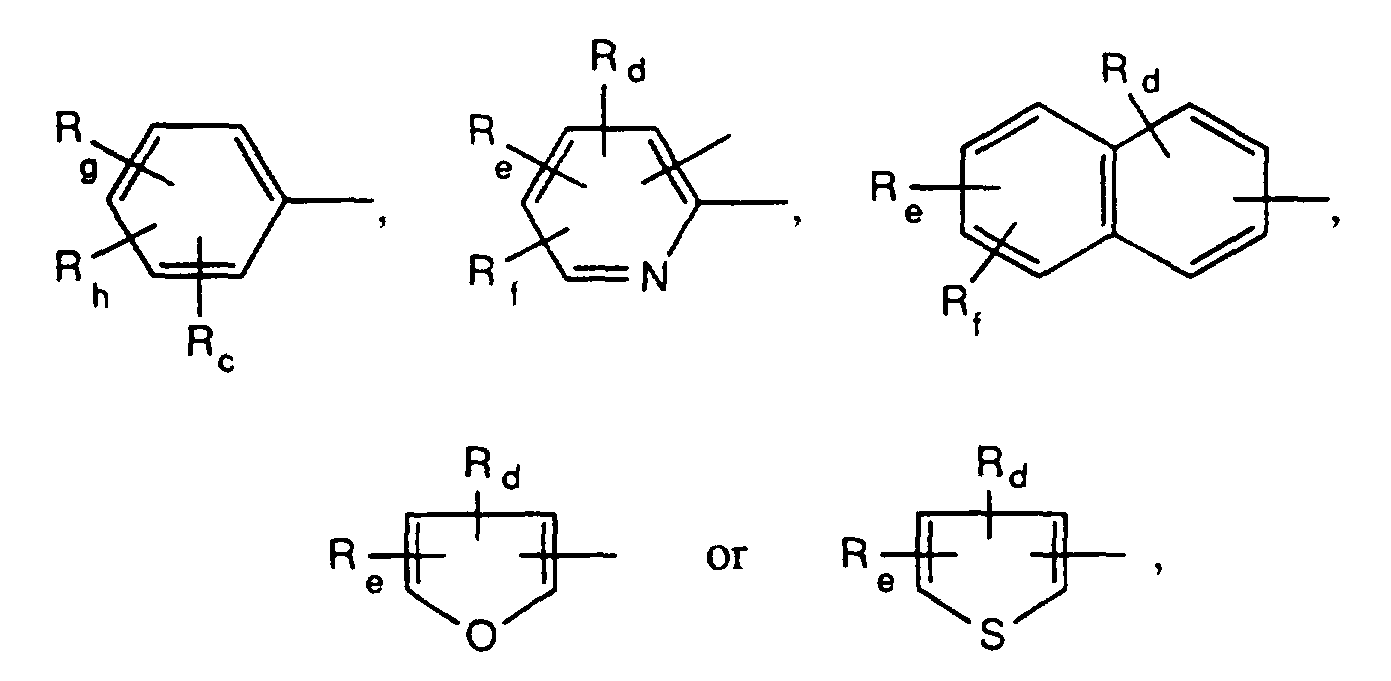
Rc is hydrogen, halogen, nitro, C1 -C4alkyl or methoxy; Rd is hydrogen, halogen, nitro, C1-C4alkyl, C1-C4alkoxy, C1-C4alkylthio, C1-C4alkylsulfinyl, C1-C4alkylsulfonyl,
-COORj or CONRkRm;
Re is hydrogen, halogen, C1-C4alkyl, -COORj, trifluoromethyl or methoxy, or Rd and Re together form a C3-C4alkylene bridge;
Rf is hydrogen, halogen or C1-C4alkyl;
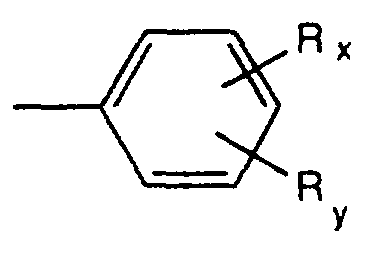
Rx and Ry independently of one another are hydrogen, halogen, C1-C4alkyl, C1-C4alkoxy, C1-C4alkylthio, -COOR28, trifluoromethyl, nitro or cyano;
Rj, Rk and Rm independently of one another are hydrogen or C1-C4alkyl; or
Rk and Rm together form a C4-C6alkylene bridge, which can be interrupted by oxygen, NH or -N(C1-C4alkyl)-;
Rn is C1-C4alkyl, phenyl, or phenyl which is substituted by halogen, C1-C4alkyl, methoxy, nitro or trifluoromethyl;
R28 is hydrogen, C1-C10alkyl, C1-C4alkoxy-C1-C4alkyl, C1-C4alkylthio-C1-C4alkyl, di-
C1-C4alkylamino-C1-C4alkyl, halogen-C1-C8alkyl, C2-C8alkenyl, halo-C2-C8alkenyl,
C3-C8alkynyl, C3-C7cycloalkyl, halo-C3-C7cycloalkyl. C1-C8alkylcarbonyl, allylcarbonyl,
C3-C7cycloalkylcarbonyl, benzoyl which is unsubstituted or is substituted on the phenyl ring by up to three identical or different substituents consisting of halogen, C1-C4alkyl, halo-C1-C4alkyl, halo-C1-C4alkoxy or C1-C4alkoxy; or furoyl, thienyl; or C1-C4alkyl substituted by phenyl, halophenyl, C1-C4alkylphenyl, C1-C4alkoxyphenyl, halo-C1-C4- alkylphenyl, halo-C1-C4alkoxyphenyl, C1-C6alkoxycarbonyl, C1-C4alkoxy-C1-C8- alkoxycarbonyl, C3-C8alkenyloxycarbonyl, C3-C8alkynyloxycarbonyl, C1-C8alkylthio- carbonyl, C3-C8alkenylthiocarbonyl, C3-C8alkynylthiocarbonyl, carbamoyl, mono-C1-C4- alkylaminocarbonyl, di-C1-C4alkylaminocarbonyl; or phenylaminocarbonyl which is unsubstituted or is substituted on the phenyl by up to three identical or different substituents consisting of halogen, C1-C4alkyl, halo-C1-C4 alkyl, halo-C1-C4alkoxy or C1-C4alkoxy or by a single cyano or nitro substituent, or dioxolan-2-yl which is unsubstituted or is substituted by one or two C1-C4alkyl radicals, or dioxan-2-yl which is unsubstituted or is substituted by one or two C1-C4alkyl radicals, or C1-C4alkyl which is substituted by cyano, nitro, carboxyl or C1-C8alkylthio-C1-C8alkoxycarbonyl, of a compound of the formula IIe
Figure imgf000011_0004
in which
R33 and R34 independently of one another are C1-C6alkyl or C2-C6alkenyl; or R33 and R34
together are ;
Figure imgf000011_0003
R35 and R36 independently of one another are hydrogen or C1-C6alkyl;
or R33 and R34 together are ;
Figure imgf000011_0002
R37 and R38 independently of one another are C1-C4alkyl, or R37 and R38 together are -(CH2)5- ;
R39 is hydrogen, C1-C4alkyl or ;
Figure imgf000011_0001
or R33 and R34 together are or ;
Figure imgf000011_0006
Figure imgf000011_0005
R40, R41, R42, R43, R44, R45, R46, R47, R48, R49, R050, R51, R52, R53, R54 and R55 independently of one another are hydrogen or C1-C4alkyl;
of a compound of the formula IIf
Figure imgf000012_0002
in which
R63 is hydrogen or chlorine and
R54 is cyano or trifluoromethyl,
or of a compound of the formula Ilg
Figure imgf000012_0001
in which
R65 is hydrogen or methyl.
The invention also relates to a process for the selective control of weeds in crops of useful plants, which comprises treating the useful plants, their seeds or seedlings or their cultivation area, simultaneously or separately, with a herbicidally effective quantity of a herbicide of the formula I and a herbicide-antagonistically effective quantity of a safener of one of the formulae IIa to Ilg.
Among crop plants which can be protected by the safeners of the formulae Ila to Ilg against the damaging effect of the abovementioned herbicides, maize and cereals such as rye, barley, oats and, in particular, wheat are particularly suitable.
The term crops should also be understood as referring to those which have been made tolerant to herbicides or classes of herbicide by means of conventional breeding or genetic manipulation methods.
The weeds to be controlled may be both monocotyledon and dicotyledon weeds.
The areas regarded as cultivation areas are the soil areas on which the crop plants are already growing, or soil areas sown with the seed of these crop plants, and also the areas intended for cultivation with these crop plants.
The alkyl groups mentioned in the definitions of substituents of the compounds of the formulae I and IIa to Ilg can be straight-chain or branched and are for example methyl, ethyl, n-propyl, isopropyl, n-butyl, sec-butyl, isobutyl, tert-butyl and also pentyl, hexyl, heptyl, octyl, nonyl, decyl and branched isomers thereof. These alkyl groups can carry further substituents, for example halogen, especially fluorine, chlorine or bromine, alkoxy, thioalkyl, cycloalkyl, phenyl, amino, acyl (e.g. R8CO-) or oxo (O=). Suitable alkoxy, thioalkyl, haloalkyl and haloalkoxy groups are derived from the alkyl groups mentioned.
Examples of unsaturated substituent groups are ethenyl, propenyl, butenyl, pentenyl, hexenyl, heptenyl, octenyl, ethynyl, propynyl, butynyl, pentynyl, hexynyl, heptynyl, octynyl and isomers, which differ in the different position of the unsaturated bond or bonds in the molecule, isomers which include branching points, and cis and trans isomers in the case of the alkenes. For example, chlorine-substituted propenyl can exist in the two forms
Figure imgf000013_0001
Figure imgf000013_0002
Thus substituted compounds of the formula I also constitute isomers which can be obtained and/or employed in pure form or as a mixture.
Examples of alkenyloxy, alkynyloxy, haloalkenyl and haloalkenyloxy groups can be derived from the alkyl groups mentioned.
Cycloalkyl groups comprise, for example, cyclopropyl, cyclobutyl, cyclopentyl, cyclohexyl, cycloheptyl and cyclooctyl. Corresponding cycloalkenes can be mono- or polyunsaturated.
The expression "substituted" refers, where possible in the corresponding group, not only to monosubstitution but also to polysubstitution.
The invention likewise embraces agriculturally compatible salts which the compounds of the formula I can form, for example, with amines, alkali metal and alkaline earth metal bases or quaternary ammonium bases. Among the alkali metal and alkaline earth metal hydroxides, as salt formers, particular emphasis should be placed on the hydroxides of lithium, sodium, potassium, magnesium or calcium, but especially on those of sodium or potassium.
Examples of amines suitable for forming ammonium salts are not only ammonia but also primary, secondary and tertiary C1-C18alkylamines, C1-C4hydroxyalkylamines and C2-C4alkoxyalkylamines, for example methylamine, ethylamine, n-propylamine, isopropylamine, the four isomeric butylamines, n-amylamine, isoamylamine, hexylamine, heptylamine, octylamine, nonylamine, decylamine, pentadecylamine, hexadecylamine, heptadecylamine, octadecylamine, methylethylamine, methylisopropylamine,
methylhexylamine, methylnonylamine, methylpentadecylamine, methyloctadecylamine, ethylbutylamine, ethylheptylamine, ethyloctylamine, hexylheptylamine, hexyloctylamine, dimethylamine, diethylamine, di-n-propylamine, diisopropylamine, di-n-butylamine, di-n-amylamine, diisoamylamine, dihexylamine, diheptylamine, dioctylamine,
ethanolamine, n-propanolamine, isopropanolamine, N,N-diethanolamine,
N-ethylpropanolamine, N-butylethanolamine, allylamine, n-butenyl-2-amine,
n-pentenyl-2-amine, 2,3-dimethylbutenyl-2-amine, dibutenyl-2-amine, n-hexenyl-2-amine, propylenediamine, trimethylamine, triethylamine, tri-n-propylamine, triisopropylamine, tri-n-butylamine, triisobutylamine, tri-sec-butylamine, tri-n-amylamine,
methoxyethylamine and ethoxyethylamine; heterocyclic amines such as, for example, pyridine, quinoline, isoquinoline, morpholine, piperidine, pyrrolidine, indoline, quinuclidine and azepine; primary arylamines such as, for example, anilines,
methoxy anilines, ethoxyanilines, o-, m- and p-toluidines, phenylenediamines, benzidines, naphthylamines and o-, m- and p-chloroanilines; but especially triethylamine,
isopropylamine and diisopropylamine.
Preferred compositions according to the present invention comprise as herbicide a compound of the formula I in which R3 and R4 are methoxy.
Another group of preferred compositions comprise as herbicide a compound of the formula I in which R3 and R4 are methoxy and Z is C1-C10alkyl, C2-C8alkenyl or
C2-C8haloalkenyl.
Among these compounds, particular preference is given to those which comprise as herbicide a compound of the formula I in which Z is -CH2-CH(CH3)2, -CH2-C(CH3)=CH2 or -CH2-CH=CHCl. Particular importance is attached to those compositions which comprise as herbicide a compound of the formula I in which Z is -CH2-CH(CH3)2, -CH2-C(CH3)=CH2 or -CH2-CH=CHCl and m is 0.
Preferred compositions comprise as safener as compound of the formula IIa, IIb1, IIb2 or IIc.
Among these, particular preference is given to those with the safeners of the formulae lIb1 and llb2 and also to those with the safeners of the formula Ila.
Particular value is possessed by compositions which comprise as herbicide a compound of the formula I in which Z is -CH2-CH(CH3)2, -CH2-C(CH3)=CH2 or -CH2-CH=CHCl and m is 0, and as safener a compound of the formula Ila, in particular of the formula IIa1
Figure imgf000015_0001
Preferred compounds of the formula I are listed in the following tables.
Figure imgf000016_0001
Figure imgf000017_0001
Figure imgf000019_0001
Figure imgf000019_0002
Figure imgf000020_0001
Figure imgf000020_0002
Figure imgf000021_0001
Figure imgf000021_0002
Figure imgf000022_0001
Figure imgf000023_0001
Figure imgf000023_0002
The safeners listed in Tables 4 to 10 and their preparation are known, for example, from EP-A-492366, WO 91/7874 and WO 94/987.
Depending on the intended use, a safener of the formulae Ila to Ilg can be used for pretreating the seed of the crop plant (dressing of the seed or of the seedlings), or placed in the soil before or after sowing. It can, however, also be applied, on its own or together with the herbicide, following the emergence of the plants. The treatment of the plants or of the seed with the safener can therefore, in principle, take place independently of the point in time of the application of the herbicide. The plant treatment, however, can also be carried out by simultaneous application of herbicide and safener (for example as a tank mix).
The application rate of safener to herbicide to be applied depends largely on the method of application. In a field treatment carried out either using a tank mix comprising a combination of safener and herbicide or by separate application of safener and herbicide, the ratio of herbicide to safener is in general from 1: 100 to 1:1 , preferably from 1 :50 to 1:5.
In general, in field treatment, from 0.001 to 5.0 kg of safener/ha, preferably from 0.001 to 0.5 kg of safener/ha, are applied.
The application rates of herbicide are generally between 0.001 and 2 kg/ha, but preferably between 0.005 and 1 kg/ha.
The compositions according to the invention are suitable for all application methods which are customary in agriculture, for example preemergence application, postemergence application and seed dressing.
In general, in seed dressing, from 0.001 to 10 kg of safener/kg of seed, preferably from 0.05 to 2 g of safener/kg of seed, are applied. If the safener is applied in liquid form shortly before sowing, accompanied by seed swelling, then it is expedient to use safener solutions which comprise the active substance in a concentration of from 1 to 10000 ppm, preferably from 100 to 1000 ppm.
For application, the safeners of the formula II, or combinations of these safeners with the herbicides of the formula I, are advantageously processed together with the auxiliaries which are customary in the art of formulation to give particular formulations, for example emulsion concentrates, brushable pastes, directly sprayable or dilutable solutions, dilute emulsions, wettable powders, soluble powders, dusts, granules or microcapsules. The formulations are produced in a known manner, for example by intimate mixing and/or grinding of the active substances with liquid or solid formulation auxiliaries such as, for example, solvents or solid carriers. Furthermore, it is possible in addition to use surface-active compounds (surfactants) for producing the formulations.
Suitable solvents can be aromatic hydrocarbons, preferably C8 to C12 fractions, for example xylene mixtures or substituted naphthalenes, phthalates such as dibutyl or dioctyl phthalate, aliphatic hydrocarbons such as cyclohexane or paraffins, alcohols and glycols, and ethers and esters thereof, such as ethanol, diethylene glycol, 2-methoxyethanol or 2-ethoxyethanol, ketones, such as cyclohexanone, strongly polar solvents such as N-methyl-2-pyrrolidone, dimethyl sulfoxide or dimethylformamide, and unmodified or epoxidized vegetable oils, such as epoxidized coconut oil or soya oil; or water.
As solid carriers, for example for dusts and dispersible powders, use is generally made of ground natural minerals, such as calcite, talc, kaolin, montmorillonite or attapulgite. In order to improve the physical properties of the formulation, it is also possible to add highly disperse silica or highly disperse absorbent polymers. Suitable granulated, adsorptive granule carriers are porous types, for example pumice, broken brick, sepiolite or bentonite, while suitable nonsorbent carrier materials are, for example, calcite or sand. In addition, it is possible to use a large number of pregranulated materials of inorganic or organic nature, such as, in particular, dolomite or comminuted plant residues.
Suitable surface-active compounds, depending on the safener and, if appropriate, on the herbicide as well, are nonionic, cationic and/or anionic surfactants having good emulsifying, dispersing and wetting properties. References to surfactants also include surfactant mixtures.
Suitable anionic surfactants can be both water-soluble soaps and water-soluble synthetic surface-active compounds.
Soaps which may be mentioned are the alkali metal, alkaline earth metal or substituted or unsubstituted ammonium salts of higher fatty acids (C10-C22), for example the sodium or potassium salts or oleic or stearic acid, or of natural fatty acid mixtures which can be obtained, for example, from coconut oil or tallow oil. Other salts which can be mentioned are the fatty acid methyltaurine salts.
More often, however, so-called synthetic surfactants are used, especially fatty sulfonates, fatty sulfates, sulfonated benzimidazole derivatives or alkylarylsulfonates.
The fatty sulfonates or fatty sulfates are generally present as alkali metal, alkaline earth metal or substituted or unsubstituted ammonium salts and have an alkyl radical of 8 to 22 carbon atoms, alkyl also including the alkyl moiety of acyl radicals, examples being the sodium or calcium salt of ligninsulfonic acid, of dodecylsulfuric ester or of a fatty alcohol sulfate mixture prepared from natural fatty acids. Also included here are the salts of sulfuric esters and sulfonic acids with fatty alcohol-ethylene oxide adducts. The sulfonated benzimidazole derivatives preferably contain 2 sulfonic acid groups and a fatty acid radical having 8 to 22 carbon atoms. Examples of alkylarylsulfonates are the sodium, calcium or triethanolamine salts of dodecylbenzenesulfonic acid, of
dibutylnaphthalenesulfonic acid or of a naphthalenesulfonic acid-formaldehyde condensation product.
Also suitable are appropriate phosphates, for example salts of the phosphoric ester of a p-nonylphenol-(4-14)-ethylene oxide adduct or phospholipids.
Suitable nonionic surfactants are primarily polyglycol ether derivatives of aliphatic or cycloaliphatic alcohols, saturated or unsaturated fatty acids and alkylphenols, which can contain 3 to 30 glycol ether groups and 8 to 20 carbon atoms in the (aliphatic)
hydrocarbon radical, and 6 to 18 carbon atoms in the alkyl radical of the alkylphenols.
Further suitable nonionic surfactants are the water-soluble adducts, containing 20 to 250 ethylene glycol ether groups and 10 to 100 propylene glycol ether groups, of polyethylene oxide and polypropylene glycol, ethylenediaminopolypropylene glycol and
alkylpolypropylene glycol having 1 to 10 carbon atoms in the alkyl chain. The compounds mentioned customarily contain 1 to 5 ethylene glycol units per propylene glycol unit.
Examples of nonionic surfactants which can be mentioned are nonylphenolpolyethoxyethanols, castor oil polyglycol ethers, polypropylene-polyethylene oxide adducts, tributylphenoxypolyethoxyethanol, polyethylene glycol and octylphenoxypolyethoxyethanol.
Also suitable are fatty acid esters of polyoxyethylenesorbitan, such as
polyoxyethylenesorbitan trioleate .
The cationic surfactants are primarily quaternary ammonium salts which have, as
N-substituent, at least one alkyl radical having 8 to 22 carbon atoms and, as further substituents, lower, unmodified or halogenated alkyl, benzyl or lower hydroxyalkyl radicals. The salts are preferably in the form of halides, methyl sulfates or ethyl sulfates, for example the stearyltrimethylammonium chloride or the benzyldi(2-chloroethyl)ethylammonium bromide.
The surfactants customary in the an of formulation, which can also be used in the compositions according to the invention, are described inter alia in "Mc Cutcheon's Detergents and Emulsifiers Annual" MC Publishing Corp., Ridgewood New Jersey, 1981, Stache, H., "Tensid-Taschenbuch" | Pocketbook of Surfactants], Carl Hanser Verlag, Munich/Vienna, 1981 and M. and J. Ash, "Encyclopedia of Surfactants", Vol I-III, Chemical Publishing Co., New York, 1980-81.
The agrochemical formulations generally contain from 0.1 to 99 per cent by weight, in particular from 0.1 to 95 % by weight, of safener or safener/herbicide active-substance mixture, from 1 to 99.9 % by weight, in particular from 5 to 99.8 % by weight, of a solid or liquid formulation auxiliary, and from 0 to 25 % by weight, in particular from 0.1 to 25 % by weight, of a surfactant.
While the preferred commercial product usually comprises concentrated compositions, the end user generally employs dilute compositions.
The compositions can also comprise further additives, such as stabilizers, defoamers, viscosity regulators, binders, adhesives and fertilizers or other active substances.
For the use of safeners of the formulae IIa to IIg or of compositions comprising them for protecting crop plants against the damaging effects of herbicides of the formula I, a variety of methods and techniques are suitable, examples being the following: i) Seed dressing
a) The seeds are dressed by shaking them, in a vessel, together with an active substance of the formulae IIa to IIg formulated as a wettable powder, until the active ingredient is distributed uniformly on the seed surface (dry seed dressing). In this case from about 1 to 500 g of active substance of the formulae IIa to IIg (4 g to 2 kg of wettable powder) are used per 100 kg of seed. b) The seeds are dressed with an emulsion concentrate of the active substance of the formulae IIa to IIg in accordance with method a) (wet seed dressing). c) The seeds are dressed by immersing them into a liquor containing 100-1000 ppm of active substance of the formulae IIa to IIg for from 1 to 72 hours and then, if desired, by drying the seeds (seed soaking).
The dressing of the seed and the treatment of the seedling which has begun to germinate are of course the preferred methods of application, since the treatment with the active substance is directed entirely towards the target crop. As a rule, from 1 to 1000 g of antidote, preferably from 5 to 150 g of antidote, are used per 100 kg of seed, it being possible to deviate from these limit concentrations up or down (repeat dressing), depending on the method, which also makes possible the addition of other active substances or micronutrients. ii) Application as a tank mix
A liquid preparation of a mixture of antidote and herbicide (mutual quantitative ratio between 10:1 and 1:100) is used, the application rate of herbicide being from 0.005 to 5.0 kg per hectare. Such tank mixes are applied before or after sowing. iii) Application in the seed drill
The safener is introduced into the open seed drill, containing seed, as an emulsion concentrate, wettable powder or in the form of granules. After the seed drill has been covered over, the herbicide is applied preemergence in a customary manner. iv) Controlled release of active substance
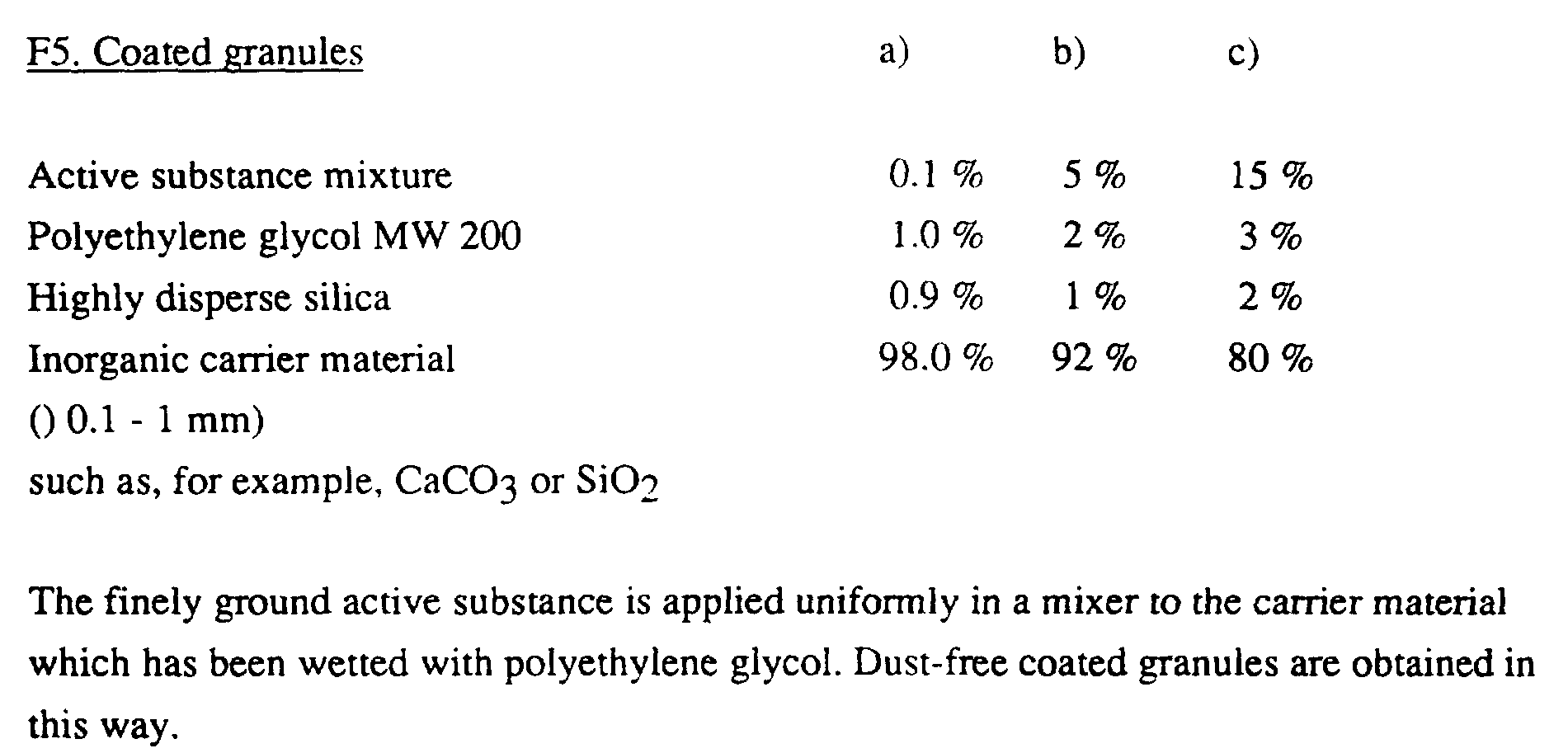
The active substance of the formulae IIa to IIg is applied in solution to mineral granule carriers or polymerized granules (urea/formaldehyde), which are then dried. If desired, a coating can be applied (coated granules), which enables the release of the active substance in regulated amounts over a defined period.
The examples which follow illustrate the invention in more detail without limiting it.
Figure imgf000028_0001
Figure imgf000029_0001
Figure imgf000029_0002
Figure imgf000029_0003
Figure imgf000030_0001
Figure imgf000030_0002
Figure imgf000030_0003
Figure imgf000030_0004
Figure imgf000031_0001
Figure imgf000031_0002
Biological examples
Example B 1 : Postemergence applications of mixtures of a herbicide of the formula I with a safener of the formulae IIa to IIg to cereals
Under greenhouse conditions, wheat is grown in plastic pots to the 2.5 leaf stage. At this stage, both the herbicides of the formula I alone and also the mixture of the herbicides with a safener of the formulae IIa to IIg are applied to the test plants. Application takes place in the form of an aqueous suspension of the test substances (Formulation Example F7) with 500 1 of water/ha. The application rates for herbicide and safener can be seen in Tables B1, B2, B3 and B4. 28 days after application, the test is evaluated using a percentage scale. 100 % denotes that the test plant has died, while 0 % denotes no phytotoxic effect. The results obtained (cf. Table B1 below) show that, with the safeners of the formulae IIa to IIg, the damage caused to wheat by the herbicide of the formula I can be substantially reduced.
Figure imgf000032_0001
Figure imgf000032_0002
Figure imgf000033_0001
Figure imgf000033_0002
Example B2: Postemergence applications of mixtures of a herbicide of the formula I with a safener of the formulae IIa to IIg to maize
Under greenhouse conditions, maize is grown in plastic pots to the 2.5 leaf stage. At this stage, both the herbicides of the formula I alone and also the mixture of the herbicides with a safener of the formulae IIa to IIg are applied to the test plants. Application takes place in the form of an aqueous suspension of the test substances (Formulation Example F7) with 500 1 of water/ha. The application rates for herbicide and safener can be seen from Table B5. 19 days after application, the test is evaluated using a percentage scale. 100 % denotes that the test plant has died, while 0 % denotes no phytotoxic effect. The results obtained show that, with the safeners of the formulae IIa to IIg, the damage caused to maize by the herbicide of the formula I can be substantially reduced.
Figure imgf000033_0003
Figure imgf000034_0002
Example B3: Postemergence applications of mixtures of a herbicide of the formula I with a safener of the formulae IIa to IIg to rice
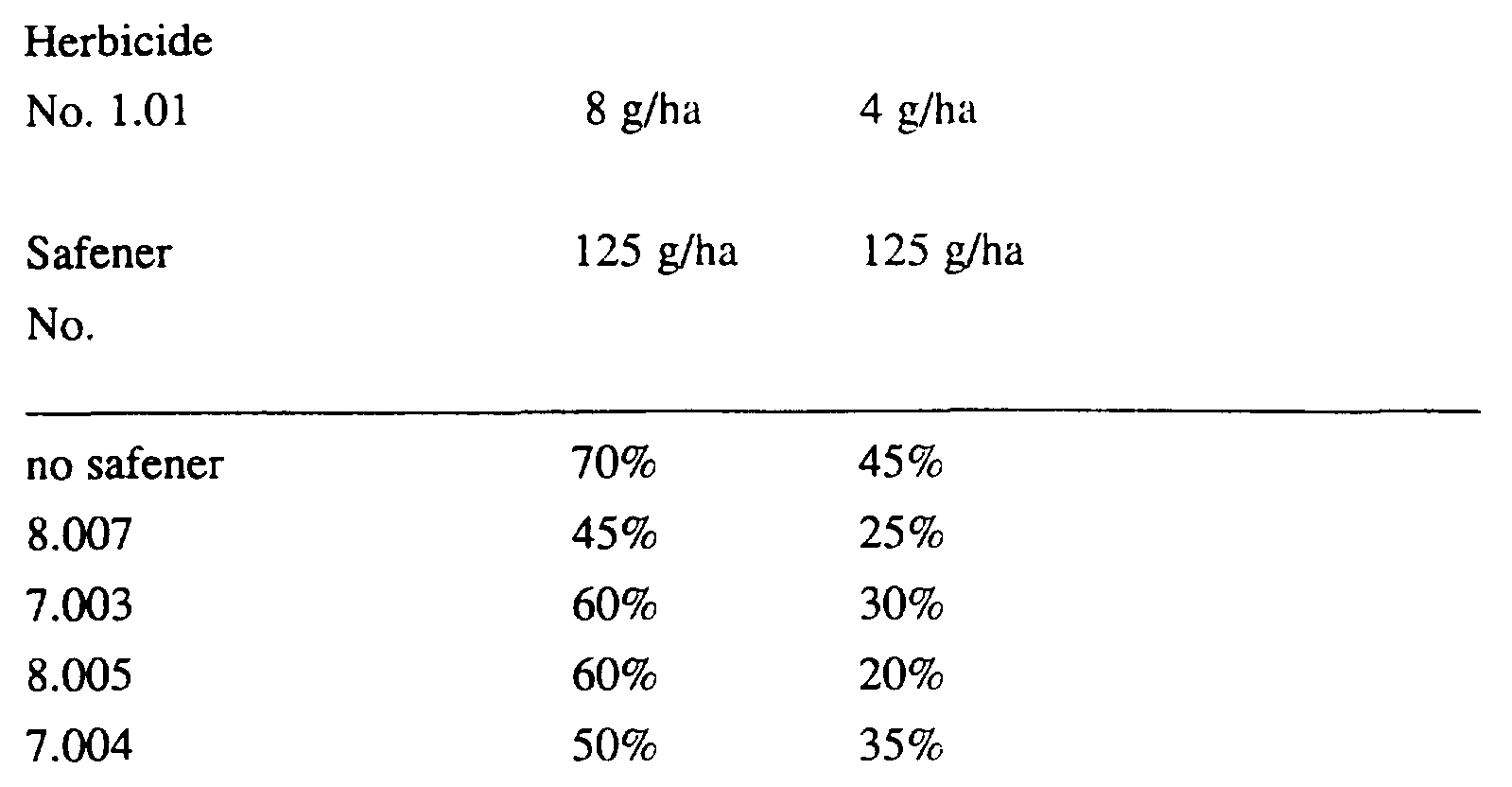
Under greenhouse conditions, the test plants are sown or planted in plastic troughs in standard soil. Water is then introduced up to the surface of the soil. After 3 days, the water level is elevated by 2 cm and the herbicide is applied as an aqueous suspension (Example F7) on its own and in a tank mix with the safeners. The application rates for the herbicide can be seen from Table B6. The application rate for the safener is 125 g/ha. Cultivation of the test plants is then continued in the greenhouse under optimum conditions. 13 days after application, the test is evaluated using a percentage scale. 100 % denotes that the test plant has died, while 0 % denotes no phytotoxic effect. The results obtained show that, with the safeners of the formulae IIa to IIg, the damage caused to rice by the herbicide of the formula I can be substantially reduced.
Figure imgf000034_0001

Claims

WHAT IS CLAIMED IS:
1. A selective-herbicidal composition, which comprises, in addition to customary inert formulation auxiliaries, an active substance comprising a mixture of
a) a herbicidally effective quantity of a herbicide of the formula I
Figure imgf000035_0001
in which
Z is C1-C10alkyl, C1-C10alkyl substituted by halogen, C3-C8cycloalkyl, R7O-, R7S(O)n-,
R7R8N-, R8CO-, R9ON=CR8-, (CH3)3Si-, -CN or oxiranyl, C2-C8alkenyl, C2-C8alkenyl substituted by halogen, phenyl, phenyl substituted by halogen, C1-C6alkyl,
C1-C6haloalkyl, C1-C6alkoxy, C1-C6haloalkoxy or C1-C6alkoxycarbonyl,
C3-C8cycloalkyl, R7O-, R7S(O)n-, R7R8N-, (CH3)3Si-, -CN, R8CO- or R9ON=CR8-,
C2-C8alkynyl, C3-C8cycloalkyl, C3-C8cycloalkyl substituted by halogen, C1-C10alkyl, phenyl, phenyl substituted by halogen, C1-C6alkyl, C1-C6haloalkyl, C1-C6alkoxy,
C1-C6haloalkoxy or C1-C6alkoxycarbonyl, R7O-, R7S(O)n-, R7R8N-, (CH3)3Si-, -CN, oxo,
=NOR7, R8CO- or R9ON=CR8-, C3-C8cycloalkenyl, C3-C8cycloalkenyl substituted by halogen, C1-Cioalkyl, phenyl, phenyl substituted by halogen, C1-C6alkyl, C1-C6haloalkyl,
C1-C6alkoxy, C1-C6haloalkoxy or C1-C6alkoxycarbonyl, R7O-, R7S(O)n-, R7R8N-,
(CH3)3Si-, -CN, oxo, =NOR7, R8CO- or R9ON=CR8-, -NR5R6, R10CON(R6)- or
R10SO2N(R6)-, where
R7 is hydrogen, C1-C10alkyl, C2-C8alkenyl, C2-C8alkynyl, phenyl or phenyl substituted by halogen, C1-C6alkyl, C1-C6haloalkyl, C1-C6alkoxy, C1-C6haloalkoxy or C1-C6-alkoxy-carbonyl,
n is 0, 1 or 2,
R8 is as defined for R7 or is C1-C6alkoxy, C3-C8alkenyloxy or C3-C8alkynyloxy,
R9 is C1-C10alkyl, C2-C8alkenyl or C2-C8alkynyl,
R10 is C1-C10alkyl, C1-C10alkyl substituted by halogen, R7O-, R7S(O)n-, -NR7R8 or -CN,
C2-C8alkenyl, C2-C8alkenyl substituted by halogen, R7O-, R7S(O)n-, -NR7R8 or -CN, phenyl or phenyl substituted by halogen, C1-C6alkyl, C1-C6haloalkyl, C1-C6alkoxy, C1-C6haloalkoxy or C1-C6alkoxycarbonyl, in which R7, n and R8 are as defined, R5 is C1-C10alkyl, C1-C10alkyl substituted by halogen, C3-C8cycloalkyl, R7O-, R7S(O)n-, R7R8N-, R8CO-, R9ON=CR8-, (CH3)3Si-, -CN or oxiranyl, C2-C8alkenyl, C2-C8alkenyl substituted by halogen, phenyl, phenyl substituted by halogen, C1-C6alkyl,
C1-C6haloalkyl, C1-C6alkoxy, C1-C6haloalkoxy or C1-C6alkoxycarbonyl,
C3-C8cycloalkyl, R7O-, R7S(O)n-, R7R8N-, (CH3)3Si-, -CN, R8CO- or R9ON=CR8-, C2-C8alkynyl, C3-C8cycloalkyl, C3-C8cycloalkyl substituted by halogen, C1-C10alkyl, phenyl, phenyl substituted by halogen, C1-C6alkyl, C1-C6haloalkyl, C1-C6alkoxy, C1-C6haloalkoxy or C1-C6alkoxycarbonyl, R7O-, R7S(O)n-, R7R8N-, (CH3)3Si-, -CN, oxo, =NOR7, R8CO- or R9ON=CR8-, C3-C8cycloalkenyl, C3-C8cycloalkenyl substituted by halogen, C1-C10alkyl, phenyl, phenyl substituted by halogen, C1-C6alkyl, C1-C6haloalkyl, C1-C6alkoxy, C1-C6haloalkoxy or C1-C6alkoxycarbonyl, R7O-, R7S(O)n-, R7R8N-, (CH3)3Si-, -CN, oxo, =NOR7, R8CO- or R9ON=CR8-, or is R7O- in which R7 is as defined, and
R6 is as defined for R5 or is hydrogen or together with R5 forms a C4-C7alkylene radical, or
Z is a radical of the formula
Figure imgf000036_0001
in which
R50 is hydrogen, halogen, -NO2, -CN, C1-C4alkyl, C1-C4alkyl substituted by halogen, -CN, -OCH3 or -SCH3, C2-C4alkenyl, C2-C4alkenyl substituted by halogen or OCH3, C2-C4alkynyl, C2-C4alkynyl substituted by halogen, -OCH3 or -Si(CH3)3,
C3-C6cycloalkyl, C3-C6cycloalkyl substituted by -F, -Cl or -CH3, -C(O)R100,
-OCH2CH2OR100, -OH, -C(R100)(OR110)(OR120), -CO2R130, -C(O)NR140R150- -N3, -SO2NR140R150, -SO3R160, -OSO2R170, phenyl, phenyl substituted by halogen, -CH3 or -OCH3, -O-R180, -S(O)bR180 or -(CH2)sG, in which b and s independently of one another are 0 or 1, R60 is hydrogen, halogen, -CN, -NO2, C1-C4alkyl, C1-C4alkyl substituted by halogen,
-CO2R130, -SO2NR140R150, -NR140R150, C1- or C2alkoxy, -OR190, -S(O)bR190, C1- or C2haloalkoxy, C1- or C2alkylthio, C1- or C2haloalkylthio, -CN, -OH or -SH, -CO2R130,
-SO2NR140R150, -NR140R150, -S(O)bR190 or -OR190,
R70 independently at each occurrence is hydrogen, C1-C4alkyl, C1-C4haloalkyl,
C2-C4alkenyl, phenyl, phenyl substituted by halogen, -S(O)bR190 or -OR190, -S(O)bR190,
-OR190 or halogen,
R80 is hydrogen, C1-C4alkyl, C1-C4haloalkyl, halogen, -CO2R130, -SO2NR140R150,
-OSO2R170, -S(O)bR180, -CN or -NO2, and
R90 is hydrogen, C1-C4alkyl, C1-C4alkyl substituted by halogen or phenyl, C2-C4alkenyl, phenyl or phenyl substituted by halogen, C1-C4alkyl, -NO2, -CN or C1-C4alkoxy, where
R100 is hydrogen, C1-C4alkyl, C1-C4alkyl substituted by halogen or -OCH3,
C3-C6cycloalkyl, C3-C6cycloalkyl substituted by halogen or -CH3, C2-C4alkenyl or
C2-C4alkynyl,
R110 and R120 independently of one another are C1-C4alkyl or R110 and R120 together are
-CH2CH2-, -CH2OCH2- or -CH2C(CH3)2CH2-,
R130 is hydrogen, C1-C4alkyl, C1-C4alkyl substituted by halogen, -CN, -CO2R100-
-NR140R150, -OR100 or -Si(CH3)3, C3-C4alkynyl, C3-C4alkynyl substituted by -CH3 or
-Si(CH3)3, C3-C6cycloalkyl, C3-C6cycloalkyl-C1-C4alkyl, C1-C4alkoxy or -Si(CH3)3,
R140 is hydrogen or C1-C4alkyl,
R150 is hydrogen, C1-C4alkyl, C1-C4alkoxy or C2-C4alkenyl, or R140 and R150 together are
-(CH2)2(CH2)a-(CH2)2- or -(CH2)2O(CH2)2-, in which a is 0 or 1,
R160 is C1-C4alkyl or C1-C4haloalkyl,
R170 is C1-C4alkyl or -NR140R150, in which R140 and R150 are as defined,
R 180 is C1-C4alkyl, C1-C4hal oalkyl, C2-C4alkoxyalkyl, C2-C4alkenyl, C3-C4alkynyl, phenyl or phenyl substituted by halogen, C1-C3alkyl, C1-C3alkoxy or C1-C3haloalkyl,
R190 is C1-C4alkyl or C1-C4alkyl substituted by -F, -Cl or -OR160,
q is 0 or 1,
G is a radical of the formula
Figure imgf000037_0001
0
Figure imgf000038_0001
in which R260 is hydrogen or C1-C3alkyl and
R27o is hydrogen, C1-C3alkyl or C2-C4alkenyl,
R2 is hydrogen, C1-C10alkyl, C1-C10alkyl substituted by C1-C6alkoxy or
C1-C6alkoxycarbonyl, C3-C8alkenyl or benzyl,
X and Y independently of one another are =N-, =CH- or =CR-, where either X or Y must be =N-, and in which R is halogen, C1-C6alkyl, C1-C6alkyl substituted by halogen, C1-C6alkoxy or C1-C6haloalkoxy, C1-C6 alkoxy or C1-C6haloalkoxy,
R3 and R4 independently of one another are hydrogen, halogen, C1-C10alkyl, R7O-,
R7S(O)n-, R7R8N-, C1-C10haloalkyl, C1-C10haloalkoxy, C1-C6alkoxy-C1-C6alkyl or phenylthio, where R7, n and R8 are as defined, or
R3 or R4, together with R, form a radical -OCH2CH2(CH2)m- or -(CH2)mCH2CH2O-, in which m is 0 or 1 ,
Ra is hydrogen, C1-C8alkyl, C1-C8alkyl substituted by hydroxy, C1-C8alkoxy, phenoxy, C1-C8alkylthio, phenylthio, (CH3)3Si-, C3-C8cycloalkyl, phenyl or di-C1-C8alkylamino,
C2-C6alkenyl, C2-C6alkenyl substituted by halogen, or Ra is C2-C6alkynyl,
C3-C8cycloalkyl, C3-C8cycloalkyl substituted by C1-C3alkyl, or Ra is C3-C6cycloalkenyl, phenyl, phenyl substituted by C1-C8alkyl, halogen, nitro, -CN, C1-C6alkoxy,
C1-C6haloalkoxy, phenoxy, -NR7R8 or R8CO-, in which R7 and R8 are as defined, or Ra is hydroxyl, halogen, tetrahydrothienyl, tetrahydrofuryl, furyl, pyridyl or thienyl,
Rb is hydrogen, C1-C8alkyl or phenyl, or Ra and Rb, together with the carbon atom to which they are attached, form a radical of the formula -CO-, and
m is 0 or 1 ;
and also salts and stereoisomers of the compounds of the formula I
and b) a herbicide-antagonistically effective quantity of a compound of the formula IIa
Figure imgf000039_0002
in which
R010 is hydrogen, C1-C8alkyl or C1-C8alkyl which is substituted by C1-C6alkoxy or C3-C6alkenyloxy, and
X2 is hydrogen or chlorine,
of a compound of the formula Ilb1
Figure imgf000039_0001
in which
E is nitrogen or methine,
R11 is -CCl3 or unsubstituted or halogen-substituted phenyl,
R12 and R13 independently of one another are hydrogen or halogen, and
R14 is C1-C4alkyl,
of a compound of the formula IIb2
Figure imgf000040_0003
in which
R12 and R13 are as defined above, and
R66, R67 and R68 independently of one another are C1-C4alkyl, of a compound of the formula IIc
Figure imgf000040_0001
in which
A2 is a group
Figure imgf000040_0002
R25 and R26 independenriy of one another are hydrogen, C1-C8alkyl, C3-C8cycloalkyl,
C3-C6alkenyl, C3-C6alkynyl, , or C1-C4alkyl which is substituted by
Figure imgf000040_0004
C1-C4alkoxy or ; or R1 and R2 together form a C4-C6alkylene bridge
Figure imgf000041_0001
which can be interrupted by oxygen, sulfur, SO, SO2, NH or -N(C1-C4alkyl)-,
R27 is hydrogen or C1-C4alkyl;
Raa is hydrogen, halogen, cyano, trifluoromethyl, nitro, C1-C4alkyl, C1-C4alkoxy, C1-C4alkylthio, C1-C4alkylsulfinyl, C1-C4alkylsulfonyl, -COORj, -CONRkRm, -CORn,
-SO2NRkRm or -OSO2-C1-C4alkyl;
Rg is hydrogen, halogen, cyano, nitro, C1-C4alkyl, C1-C4haloalkyl, C1-C4alkylthio, C1-C4alkylsulfinyl, C1-C4alkylsulfonyl, -COORj, -CONRkRm, -CORn, -SO2NRkRm,
-OSO2-C1-C4alkyl, C1-C6alkoxy, or C1-C6alkoxy substituted by C1-C4alkoxy or halogen,
C3-C6alkenyloxy, or C3-C6alkenyloxy substituted by halogen, or C3-C6alkynyloxy, or Ra and Rb together form a C3-C4alkylene bridge which can be substituted by halogen or C1-C4alkyl, or form a C3-C4alkenylene bridge which can be substituted by halogen or C1-C4alkyl, or form a C4alkadienylene bridge which can be substituted by halogen or C1-C4alkyl;
Rbb and Rh independently of one another are hydrogen, halogen, C1-C4alkyl,
trifluoromethyl, C1-C6alkoxy, C1-C6alkylthio or -COORj;
Rc is hydrogen, halogen, nitro, C1-C4alkyl or methoxy; Rd is hydrogen, halogen, nitro, C1-C4alkyl, C1-C4alkoxy, C1-C4alkylthio, C1-C4alkylsulfinyl, C1-C4alkylsulfonyl,
-COORj or CONRkRm;
Re is hydrogen, halogen, C1-C4alkyl, -COORj, trifluoromethyl or methoxy, or Rd and Re together form a C3-C4alkylene bridge;
Rf is hydrogen, halogen or C1-C4alkyl;
Rx and Ry independently of one another are hydrogen, halogen, C1-C4alkyl, C1-C4alkoxy, C1-C4alkylthio, -COOR28, trifluoromethyl, nitro or cyano;
Rj, Rk and Rm independently of one another are hydrogen or C1-C4alkyl; or
Rk and Rm together form a C4-C6alkylene bridge, which can be interrupted by oxygen, NH or -N(C1-C4alkyl)-;
Rn is C1-C4alkyl, phenyl, or phenyl which is substituted by halogen, C1-C4alkyl, methoxy, nitro or trifluoromethyl;
R28 is hydrogen, C1-Cl0alkyl, C1-C4alkoxy-C1-C4alkyl, C1-C4alkylthio-C1-C4alkyl, di- C1-C4alkylamino-C1-C4alkyl, halogen- C1-C8alkyl, C2-C8alkenyl, halo-C2-C8alkenyl,
C3-C8alkynyl, C3-C7cycloalkyl, halo-C3-C7cycloalkyl, C1-C8alkylcarbonyl, allylcarbonyl,
C3-C7cycloalkylcarbonyl, benzoyl which is unsubstituted or is substituted on the phenyl ring by up to three identical or different substituents consisting of halogen, C1-C4alkyl, halo-C1-C4alkyl, halo-C1-C4alkoxy or C1-C4alkoxy; or furoyl, thienyl; or C1-C4alkyl substituted by phenyl, halophenyl, C1-C4alkylphenyl, C1-C4alkoxyphenyl, halo-C1-C4-alkylphenyl, halo- C1-C4alkoxyphenyl, C1-C6alkoxycarbonyl, C1-C4alkoxy-C1-C8- alkoxycarbonyl, C3-C8alkenyloxycarbonyl, C3-C8alkynyloxycarbonyl, C1-C8alkylthio- carbonyl, C3-C8alkenylthiocarbonyl, C3-C8alkynylthiocarbonyl, carbamoyl, mono-C1-C4-alkylaminocarbonyl, di-C1-C4alkylaminocarbonyl; or phenylaminocarbonyl which is unsubstituted or is substituted on the phenyl by up to three identical or different substituents consisting of halogen, C1-C4alkyl, halo-C1-C4alkyl, halo-C1-C4alkoxy or C1-C4alkoxy or by a single cyano or nitro substituent, or dioxolan-2-yl which is unsubstituted or is substituted by one or two C1-C4alkyl radicals, or dioxan-2-yl which is unsubstituted or is substituted by one or two C1-C4alkyl radicals, or C1-C4alkyl which is substituted by cyano, nitro, carboxyl or C1-Csalkylthio- C1-C8alkoxycarbonyl, of a compound of the formula IIe
Figure imgf000042_0004
in which
R33 and R34 independently of one another are C1-C6alkyl or C2-C6alkenyl; or R33 and R34
together are ;
Figure imgf000042_0003
R35 and R36 independently of one another are hydrogen or C1-C6alkyl;
or R33 and R34 together are ;
Figure imgf000042_0001
R37 and R38 independently of one another are C1-C4alkyl, or R37 and R38 together are -(CH2)5- ;
R39 is hydrogen, C1-C4alkyl or
Figure imgf000042_0002
; or R33 and R34 together are or ;
Figure imgf000043_0003
Figure imgf000043_0004
R40, R41, R42, R43, R44, R45, R46, R47, R48, R49, R050, R51, R52, R53, R54 and R55 independently of one another are hydrogen or C1-C4alkyl;
of a compound of the formula IIf
Figure imgf000043_0002
in which
R63 is hydrogen or chlorine and
R64 is cyano or trifluoromethyl,
or of a compound of the formula Ilg
Figure imgf000043_0001
in which
R65 is hydrogen or methyl.
2. A composition according to claim 1, which comprises as herbicide a compound of the formula I in which R3 and R4 are methoxy.
3. A composition according to claim 1, which comprises as herbicide a compound of the formula I in which R3 and R4 are methoxy and Z is C1-C10alkyl, C2-C8alkenyl or C2-C8haloalkenyl.
4. A composition according to claim 3, which comprises as herbicide a compound of the formula I in which Z is -CH2-CH(CH3)2, -CH2-C(CH3 )=CH2 or -CH2-CH=CHCl.
5. A composition according to claim 1, which comprises as herbicide a compound of the formula I in which Z is -CH2-CH(CH3)2, -CH2-C(CH3)=CH2 or -CH2-CH=CHCl and m is 0.
6. A composition according to claim 1, which comprises as safener a compound of the formula Ila, Ilb1, IIb2 or IIe.
7. A composition according to claim 6, which comprises as safener a compound of the formula IIb1 or IIb2.
8. A composition according to claim 6, which comprises as safener a compound of the formula IIa.
9. A composition according to claim 1, which comprises as herbicide a compound of the formula I in which Z is -CH2-CH(CH3)2, -CH2-C(CH3)=CH2 or -CH2-CH=CHCl and m is 0, and as safener a compound of the formula IIa.
10. A composition according to claim 9, which comprises as safener a compound of the formula IIa1
Figure imgf000044_0001
11. A process for the selective control of broad-leaved weeds and grasses in crops of useful plants, which comprises treating the useful plants, their seeds or seedlings or their cultivation area, simultaneously or separately, with a herbicidally effective quantity of a herbicide of the formula I and a herbicide-antagonistically effective quantity of a safener of the formulae Ila to Ilg.
12. A process according to claim 1 1, wherein crops of useful plants or cultivation areas for the crops of useful plants are trcated with from 0.001 to 2 kg/ha of a herbicide of the formula I and with a quantity of from 0.001 to 0.5 kg/ha of a safener of the formulae IIa to IIg.
13. A process according to claim 1 1, wherein the crops of useful plants are those of maize or cereals, especially rye, barley, oats or wheat.
PCT/EP1996/000032 1995-01-19 1996-01-05 Herbicidal composition Ceased WO1996022022A1 (en)

Priority Applications (6)

Application Number Priority Date Filing Date Title
JP8521997A JPH10512272A (en) 1995-01-19 1996-01-05 Herbicidal composition
PL96321244A PL321244A1 (en) 1995-01-19 1996-01-05 Insecticide composition
BR9607487A BR9607487A (en) 1995-01-19 1996-01-05 Herbicidal composition
AU44372/96A AU4437296A (en) 1995-01-19 1996-01-05 Herbicidal composition
EP96900566A EP0804077A1 (en) 1995-01-19 1996-01-05 Herbicidal composition
MXPA/A/1997/005448A MXPA97005448A (en) 1995-01-19 1997-07-18 Herbic composition

Applications Claiming Priority (2)

Application Number Priority Date Filing Date Title
CH14595 1995-01-19
CH145/95 1995-01-19

Publications (1)

Publication Number Publication Date
WO1996022022A1 true WO1996022022A1 (en) 1996-07-25

Family

ID=4180280

Family Applications (1)

Application Number Title Priority Date Filing Date
PCT/EP1996/000032 Ceased WO1996022022A1 (en) 1995-01-19 1996-01-05 Herbicidal composition

Country Status (10)

Country Link
EP (1) EP0804077A1 (en)
JP (1) JPH10512272A (en)
AR (1) AR000734A1 (en)
AU (1) AU4437296A (en)
BR (1) BR9607487A (en)
CA (1) CA2209902A1 (en)
IL (1) IL116797A0 (en)
PL (1) PL321244A1 (en)
WO (1) WO1996022022A1 (en)
ZA (1) ZA96400B (en)

Cited By (12)

* Cited by examiner, † Cited by third party
Publication number Priority date Publication date Assignee Title
WO1998031226A1 (en) * 1997-01-15 1998-07-23 Novartis Ag Herbicidal agent
US9782408B2 (en) 2014-10-06 2017-10-10 Vertex Pharmaceuticals Incorporated Modulators of cystic fibrosis transmembrane conductance regulator
US10570115B2 (en) 2016-09-30 2020-02-25 Vertex Pharmaceuticals Incorporated Modulator of cystic fibrosis transmembrane conductance regulator, pharmaceutical compositions, methods of treatment, and process for making the modulator
US10654829B2 (en) 2017-10-19 2020-05-19 Vertex Pharmaceuticals Incorporated Crystalline forms and compositions of CFTR modulators
US10738030B2 (en) 2016-03-31 2020-08-11 Vertex Pharmaceuticals Incorporated Modulators of cystic fibrosis transmembrane conductance regulator
US10793547B2 (en) 2016-12-09 2020-10-06 Vertex Pharmaceuticals Incorporated Modulator of the cystic fibrosis transmembrane conductance regulator, pharmaceutical compositions, methods of treatment, and process for making the modulator
US11179367B2 (en) 2018-02-05 2021-11-23 Vertex Pharmaceuticals Incorporated Pharmaceutical compositions for treating cystic fibrosis
US11253509B2 (en) 2017-06-08 2022-02-22 Vertex Pharmaceuticals Incorporated Methods of treatment for cystic fibrosis
US11414439B2 (en) 2018-04-13 2022-08-16 Vertex Pharmaceuticals Incorporated Modulators of cystic fibrosis transmembrane conductance regulator, pharmaceutical compositions, methods of treatment, and process for making the modulator
US11434201B2 (en) 2017-08-02 2022-09-06 Vertex Pharmaceuticals Incorporated Processes for preparing pyrrolidine compounds
US11465985B2 (en) 2017-12-08 2022-10-11 Vertex Pharmaceuticals Incorporated Processes for making modulators of cystic fibrosis transmembrane conductance regulator
US11517564B2 (en) 2017-07-17 2022-12-06 Vertex Pharmaceuticals Incorporated Methods of treatment for cystic fibrosis

Citations (2)

* Cited by examiner, † Cited by third party
Publication number Priority date Publication date Assignee Title
WO1994000987A2 (en) * 1992-07-08 1994-01-20 Ciba-Geigy Ag Selective herbicidal composition
EP0592680A1 (en) * 1992-03-03 1994-04-20 Kumiai Chemical Industry Co., Ltd. N-sulfonylated, six-membered nitrogenous aromatic carboxamide derivative or salt thereof, production thereof, and pest control agent

Patent Citations (2)

* Cited by examiner, † Cited by third party
Publication number Priority date Publication date Assignee Title
EP0592680A1 (en) * 1992-03-03 1994-04-20 Kumiai Chemical Industry Co., Ltd. N-sulfonylated, six-membered nitrogenous aromatic carboxamide derivative or salt thereof, production thereof, and pest control agent
WO1994000987A2 (en) * 1992-07-08 1994-01-20 Ciba-Geigy Ag Selective herbicidal composition

Cited By (22)

* Cited by examiner, † Cited by third party
Publication number Priority date Publication date Assignee Title
WO1998031226A1 (en) * 1997-01-15 1998-07-23 Novartis Ag Herbicidal agent
US9782408B2 (en) 2014-10-06 2017-10-10 Vertex Pharmaceuticals Incorporated Modulators of cystic fibrosis transmembrane conductance regulator
US10258624B2 (en) 2014-10-06 2019-04-16 Vertex Pharmaceuticals Incorporated Modulators of cystic fibrosis transmembrane conductance regulator
US12168009B2 (en) 2014-10-06 2024-12-17 Vertex Pharmaceuticals Incorporated Modulators of cystic fibrosis transmembrane conductance regulator
US11426407B2 (en) 2014-10-06 2022-08-30 Vertex Pharmaceuticals Incorporated Modulators of cystic fibrosis transmembrane conductance regulator
US10758534B2 (en) 2014-10-06 2020-09-01 Vertex Pharmaceuticals Incorporated Modulators of cystic fibrosis transmembrane conductance regulator
US10738030B2 (en) 2016-03-31 2020-08-11 Vertex Pharmaceuticals Incorporated Modulators of cystic fibrosis transmembrane conductance regulator
US11186566B2 (en) 2016-09-30 2021-11-30 Vertex Pharmaceuticals Incorporated Modulator of cystic fibrosis transmembrane conductance regulator, pharmaceutical compositions, methods of treatment, and process for making the modulator
US10570115B2 (en) 2016-09-30 2020-02-25 Vertex Pharmaceuticals Incorporated Modulator of cystic fibrosis transmembrane conductance regulator, pharmaceutical compositions, methods of treatment, and process for making the modulator
US11453655B2 (en) 2016-12-09 2022-09-27 Vertex Pharmaceuticals Incorporated Modulator of the cystic fibrosis transmembrane conductance regulator, pharmaceutical compositions, methods of treatment, and process for making the modulator
US12384762B2 (en) 2016-12-09 2025-08-12 Vertex Pharmaceuticals Incorporated Modulator of the Cystic Fibrosis Transmembrane Conductance Regulator, pharmaceutical compositions, methods of treatment, and process for making the modulator
US10793547B2 (en) 2016-12-09 2020-10-06 Vertex Pharmaceuticals Incorporated Modulator of the cystic fibrosis transmembrane conductance regulator, pharmaceutical compositions, methods of treatment, and process for making the modulator
US11253509B2 (en) 2017-06-08 2022-02-22 Vertex Pharmaceuticals Incorporated Methods of treatment for cystic fibrosis
US11517564B2 (en) 2017-07-17 2022-12-06 Vertex Pharmaceuticals Incorporated Methods of treatment for cystic fibrosis
US12350262B2 (en) 2017-07-17 2025-07-08 Vertex Pharmaceuticals Incorporated Methods of treatment for cystic fibrosis
US11434201B2 (en) 2017-08-02 2022-09-06 Vertex Pharmaceuticals Incorporated Processes for preparing pyrrolidine compounds
US10654829B2 (en) 2017-10-19 2020-05-19 Vertex Pharmaceuticals Incorporated Crystalline forms and compositions of CFTR modulators
US11155533B2 (en) 2017-10-19 2021-10-26 Vertex Pharmaceuticals Incorporated Crystalline forms and compositions of CFTR modulators
US11465985B2 (en) 2017-12-08 2022-10-11 Vertex Pharmaceuticals Incorporated Processes for making modulators of cystic fibrosis transmembrane conductance regulator
US12415798B2 (en) 2017-12-08 2025-09-16 Vertex Pharmaceuticals Incorporated Processes for making modulators of cystic fibrosis transmembrane conductance regulator
US11179367B2 (en) 2018-02-05 2021-11-23 Vertex Pharmaceuticals Incorporated Pharmaceutical compositions for treating cystic fibrosis
US11414439B2 (en) 2018-04-13 2022-08-16 Vertex Pharmaceuticals Incorporated Modulators of cystic fibrosis transmembrane conductance regulator, pharmaceutical compositions, methods of treatment, and process for making the modulator

Also Published As

Publication number Publication date
ZA96400B (en) 1996-08-14
BR9607487A (en) 1997-12-23
AR000734A1 (en) 1997-08-06
IL116797A0 (en) 1996-05-14
CA2209902A1 (en) 1996-07-25
MX9705448A (en) 1997-10-31
EP0804077A1 (en) 1997-11-05
AU4437296A (en) 1996-08-07
JPH10512272A (en) 1998-11-24
PL321244A1 (en) 1997-11-24

Similar Documents

Publication Publication Date Title
EP0342569B1 (en) Heterocyclic 2-alkoxyphenoxysulfonyl urea and their use as herbicides or as plant growth regulators
JP2004099602A (en) Herbicidal composition
EP0096003B1 (en) Sulfonyl(thio)ureas, process for their preparation and their use as herbicides and/or growth regulating agents
CH649081A5 (en) TRIAZA CONNECTIONS.
EP0888055B1 (en) Herbicidal composition and method of weed control
HUT62766A (en) Herbicidal and plant growth regulating compositions comprising pyridylsulfonylurea salts as active ingrdient and process for producing such compounds
WO1996022022A1 (en) Herbicidal composition
AU719770B2 (en) Herbicidal composition
FI90188B (en) Herbicidal o-carbomethoxysulfonylureas
US6511941B2 (en) Herbicidal synergistic composition, and method of controlling weeds
US5529974A (en) Selective safened herbicidal composition
US4290798A (en) Herbicidal compound and method of use
AU653898B2 (en) Selective herbicidal composition
JP3084102B2 (en) Synergistic herbicide composition
US4509974A (en) S-n-Butyl-N,N-diisopropyl thiocarbamate as a selective herbicide in cotton
WO1996029870A1 (en) Herbicidal compositions
US7071146B1 (en) Herbicidal composition
DE3639563A1 (en) N-ARYLSULFONYL-N'-PYRIMIDYL (TRIAZINYL) UREAS
CA2236802C (en) Herbicidal composition
US5962371A (en) Herbicidal composition and method of controlling weeds
KR100358303B1 (en) Compositions with synergistic herbicidal effect to inhibit unwanted weed growth in rice crops
JP3590147B2 (en) Paddy field herbicide composition
PL151678B1 (en) Weed-killer
WO2008011911A1 (en) Method of selectively controlling morning glory spp
CS268692B2 (en) Synergetc herbicide

Legal Events

Date Code Title Description
AK Designated states

Kind code of ref document: A1

Designated state(s): AL AM AU BB BG BR CA CN CZ EE FI GE HU IS JP KG KP KR LK LR LT LV MD MG MK MN MX NO NZ PL RO SG SI SK TR TT UA US UZ VN AZ BY KZ RU TJ TM

AL Designated countries for regional patents

Kind code of ref document: A1

Designated state(s): KE LS MW SD SZ UG AT BE CH DE DK ES FR GB GR IE IT LU MC NL PT SE BF BJ CF CG CI CM GA GN ML MR NE SN TD TG

DFPE Request for preliminary examination filed prior to expiration of 19th month from priority date (pct application filed before 20040101)
121 Ep: the epo has been informed by wipo that ep was designated in this application
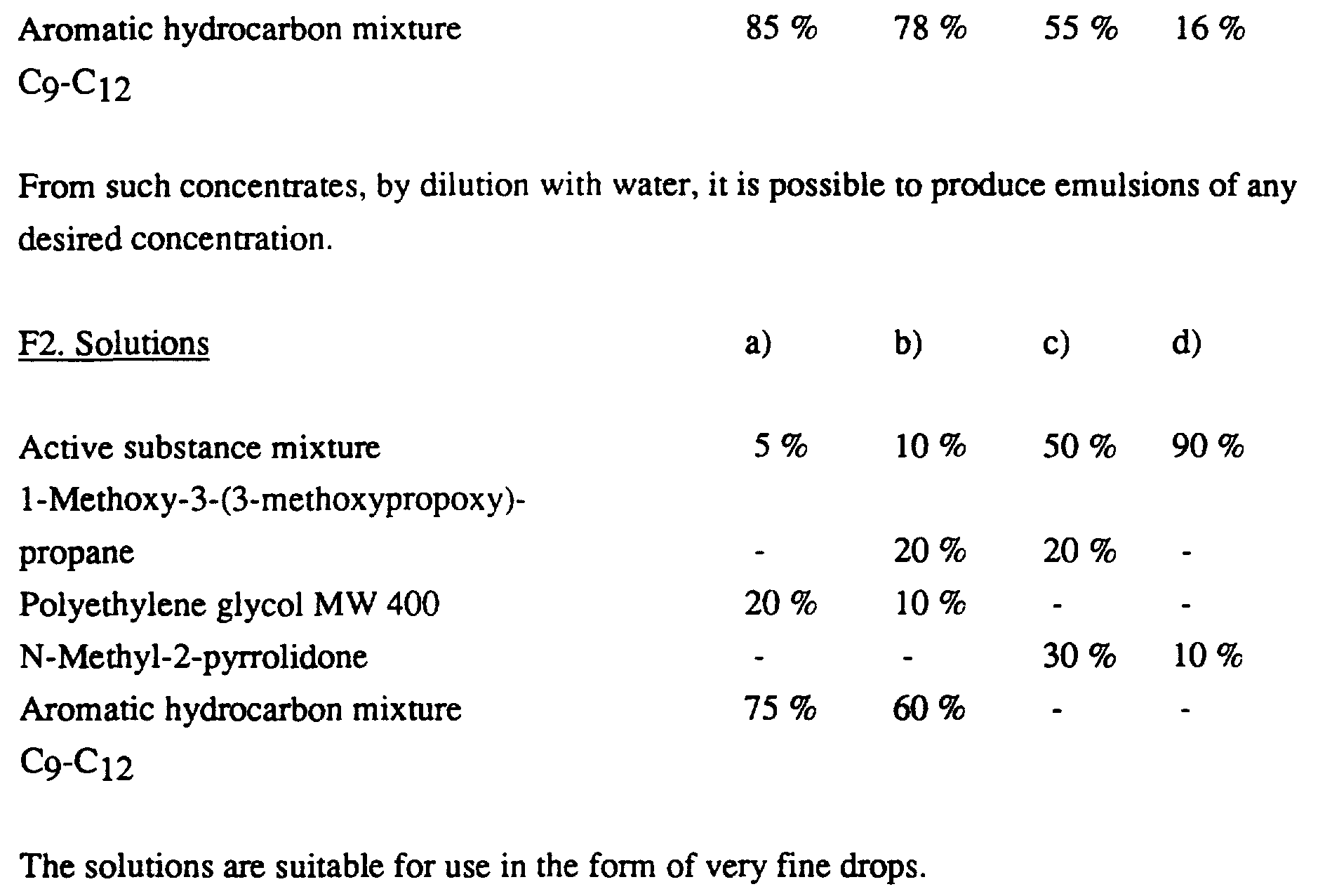
WWE Wipo information: entry into national phase

Ref document number: 1996900566

Country of ref document: EP

ENP Entry into the national phase

Ref document number: 2209902

Country of ref document: CA

Ref document number: 2209902

Country of ref document: CA

Kind code of ref document: A

ENP Entry into the national phase

Ref document number: 1997 875192

Country of ref document: US

Date of ref document: 19970715

Kind code of ref document: A

WWE Wipo information: entry into national phase

Ref document number: PA/a/1997/005448

Country of ref document: MX

Ref document number: 97-01328

Country of ref document: RO

WWP Wipo information: published in national office

Ref document number: 1996900566

Country of ref document: EP

WWW Wipo information: withdrawn in national office

Ref document number: 1996900566

Country of ref document: EP