WO1997023650A2 - Method for evaluation of polymorphic genetic sequences, and the use thereof in identification of hla types - Google Patents

Method for evaluation of polymorphic genetic sequences, and the use thereof in identification of hla types Download PDF

Info

Publication number
WO1997023650A2
WO1997023650A2 PCT/US1996/020202 US9620202W WO9723650A2 WO 1997023650 A2 WO1997023650 A2 WO 1997023650A2 US 9620202 W US9620202 W US 9620202W WO 9723650 A2 WO9723650 A2 WO 9723650A2
Authority
WO
WIPO (PCT)
Prior art keywords
type
sample
chain terminating
sequencing
positions
Prior art date
Legal status (The legal status is an assumption and is not a legal conclusion. Google has not performed a legal analysis and makes no representation as to the accuracy of the status listed.)
Ceased
Application number
PCT/US1996/020202
Other languages
French (fr)
Other versions
WO1997023650A3 (en
Inventor
John K. Stevens
James M. Dunn
James Leushner
Ronald J. Green
Current Assignee (The listed assignees may be inaccurate. Google has not performed a legal analysis and makes no representation or warranty as to the accuracy of the list.)
Visible Genetics Inc
Original Assignee
Visible Genetics Inc
Priority date (The priority date is an assumption and is not a legal conclusion. Google has not performed a legal analysis and makes no representation as to the accuracy of the date listed.)
Filing date
Publication date
Application filed by Visible Genetics Inc filed Critical Visible Genetics Inc
Priority to EP96944459A priority Critical patent/EP0870059B1/en
Priority to AU14262/97A priority patent/AU718670B2/en
Priority to CA002239896A priority patent/CA2239896C/en
Priority to DE69620791T priority patent/DE69620791T2/en
Priority to JP9523796A priority patent/JP2000502260A/en
Publication of WO1997023650A2 publication Critical patent/WO1997023650A2/en
Priority to US08/892,003 priority patent/US5981186A/en
Publication of WO1997023650A3 publication Critical patent/WO1997023650A3/en
Anticipated expiration legal-status Critical
Ceased legal-status Critical Current

Links

Classifications

    • CCHEMISTRY; METALLURGY
    • C12BIOCHEMISTRY; BEER; SPIRITS; WINE; VINEGAR; MICROBIOLOGY; ENZYMOLOGY; MUTATION OR GENETIC ENGINEERING
    • C12QMEASURING OR TESTING PROCESSES INVOLVING ENZYMES, NUCLEIC ACIDS OR MICROORGANISMS; COMPOSITIONS OR TEST PAPERS THEREFOR; PROCESSES OF PREPARING SUCH COMPOSITIONS; CONDITION-RESPONSIVE CONTROL IN MICROBIOLOGICAL OR ENZYMOLOGICAL PROCESSES
    • C12Q1/00Measuring or testing processes involving enzymes, nucleic acids or microorganisms; Compositions therefor; Processes of preparing such compositions
    • C12Q1/68Measuring or testing processes involving enzymes, nucleic acids or microorganisms; Compositions therefor; Processes of preparing such compositions involving nucleic acids
    • C12Q1/6844Nucleic acid amplification reactions
    • C12Q1/6858Allele-specific amplification
    • CCHEMISTRY; METALLURGY
    • C12BIOCHEMISTRY; BEER; SPIRITS; WINE; VINEGAR; MICROBIOLOGY; ENZYMOLOGY; MUTATION OR GENETIC ENGINEERING
    • C12QMEASURING OR TESTING PROCESSES INVOLVING ENZYMES, NUCLEIC ACIDS OR MICROORGANISMS; COMPOSITIONS OR TEST PAPERS THEREFOR; PROCESSES OF PREPARING SUCH COMPOSITIONS; CONDITION-RESPONSIVE CONTROL IN MICROBIOLOGICAL OR ENZYMOLOGICAL PROCESSES
    • C12Q1/00Measuring or testing processes involving enzymes, nucleic acids or microorganisms; Compositions therefor; Processes of preparing such compositions
    • C12Q1/68Measuring or testing processes involving enzymes, nucleic acids or microorganisms; Compositions therefor; Processes of preparing such compositions involving nucleic acids
    • C12Q1/6869Methods for sequencing
    • CCHEMISTRY; METALLURGY
    • C12BIOCHEMISTRY; BEER; SPIRITS; WINE; VINEGAR; MICROBIOLOGY; ENZYMOLOGY; MUTATION OR GENETIC ENGINEERING
    • C12QMEASURING OR TESTING PROCESSES INVOLVING ENZYMES, NUCLEIC ACIDS OR MICROORGANISMS; COMPOSITIONS OR TEST PAPERS THEREFOR; PROCESSES OF PREPARING SUCH COMPOSITIONS; CONDITION-RESPONSIVE CONTROL IN MICROBIOLOGICAL OR ENZYMOLOGICAL PROCESSES
    • C12Q1/00Measuring or testing processes involving enzymes, nucleic acids or microorganisms; Compositions therefor; Processes of preparing such compositions
    • C12Q1/68Measuring or testing processes involving enzymes, nucleic acids or microorganisms; Compositions therefor; Processes of preparing such compositions involving nucleic acids
    • C12Q1/6876Nucleic acid products used in the analysis of nucleic acids, e.g. primers or probes
    • C12Q1/6881Nucleic acid products used in the analysis of nucleic acids, e.g. primers or probes for tissue or cell typing, e.g. human leukocyte antigen [HLA] probes
    • CCHEMISTRY; METALLURGY
    • C12BIOCHEMISTRY; BEER; SPIRITS; WINE; VINEGAR; MICROBIOLOGY; ENZYMOLOGY; MUTATION OR GENETIC ENGINEERING
    • C12QMEASURING OR TESTING PROCESSES INVOLVING ENZYMES, NUCLEIC ACIDS OR MICROORGANISMS; COMPOSITIONS OR TEST PAPERS THEREFOR; PROCESSES OF PREPARING SUCH COMPOSITIONS; CONDITION-RESPONSIVE CONTROL IN MICROBIOLOGICAL OR ENZYMOLOGICAL PROCESSES
    • C12Q1/00Measuring or testing processes involving enzymes, nucleic acids or microorganisms; Compositions therefor; Processes of preparing such compositions
    • C12Q1/68Measuring or testing processes involving enzymes, nucleic acids or microorganisms; Compositions therefor; Processes of preparing such compositions involving nucleic acids
    • C12Q1/6876Nucleic acid products used in the analysis of nucleic acids, e.g. primers or probes
    • C12Q1/6883Nucleic acid products used in the analysis of nucleic acids, e.g. primers or probes for diseases caused by alterations of genetic material
    • CCHEMISTRY; METALLURGY
    • C12BIOCHEMISTRY; BEER; SPIRITS; WINE; VINEGAR; MICROBIOLOGY; ENZYMOLOGY; MUTATION OR GENETIC ENGINEERING
    • C12QMEASURING OR TESTING PROCESSES INVOLVING ENZYMES, NUCLEIC ACIDS OR MICROORGANISMS; COMPOSITIONS OR TEST PAPERS THEREFOR; PROCESSES OF PREPARING SUCH COMPOSITIONS; CONDITION-RESPONSIVE CONTROL IN MICROBIOLOGICAL OR ENZYMOLOGICAL PROCESSES
    • C12Q1/00Measuring or testing processes involving enzymes, nucleic acids or microorganisms; Compositions therefor; Processes of preparing such compositions
    • C12Q1/68Measuring or testing processes involving enzymes, nucleic acids or microorganisms; Compositions therefor; Processes of preparing such compositions involving nucleic acids
    • C12Q1/6876Nucleic acid products used in the analysis of nucleic acids, e.g. primers or probes
    • C12Q1/6888Nucleic acid products used in the analysis of nucleic acids, e.g. primers or probes for detection or identification of organisms
    • C12Q1/689Nucleic acid products used in the analysis of nucleic acids, e.g. primers or probes for detection or identification of organisms for bacteria
    • GPHYSICS
    • G01MEASURING; TESTING
    • G01NINVESTIGATING OR ANALYSING MATERIALS BY DETERMINING THEIR CHEMICAL OR PHYSICAL PROPERTIES
    • G01N27/00Investigating or analysing materials by the use of electric, electrochemical, or magnetic means
    • G01N27/26Investigating or analysing materials by the use of electric, electrochemical, or magnetic means by investigating electrochemical variables; by using electrolysis or electrophoresis
    • G01N27/416Systems
    • G01N27/447Systems using electrophoresis
    • G01N27/44704Details; Accessories
    • G01N27/44717Arrangements for investigating the separated zones, e.g. localising zones
    • G01N27/44721Arrangements for investigating the separated zones, e.g. localising zones by optical means
    • CCHEMISTRY; METALLURGY
    • C12BIOCHEMISTRY; BEER; SPIRITS; WINE; VINEGAR; MICROBIOLOGY; ENZYMOLOGY; MUTATION OR GENETIC ENGINEERING
    • C12QMEASURING OR TESTING PROCESSES INVOLVING ENZYMES, NUCLEIC ACIDS OR MICROORGANISMS; COMPOSITIONS OR TEST PAPERS THEREFOR; PROCESSES OF PREPARING SUCH COMPOSITIONS; CONDITION-RESPONSIVE CONTROL IN MICROBIOLOGICAL OR ENZYMOLOGICAL PROCESSES
    • C12Q2600/00Oligonucleotides characterized by their use
    • C12Q2600/156Polymorphic or mutational markers
    • CCHEMISTRY; METALLURGY
    • C12BIOCHEMISTRY; BEER; SPIRITS; WINE; VINEGAR; MICROBIOLOGY; ENZYMOLOGY; MUTATION OR GENETIC ENGINEERING
    • C12QMEASURING OR TESTING PROCESSES INVOLVING ENZYMES, NUCLEIC ACIDS OR MICROORGANISMS; COMPOSITIONS OR TEST PAPERS THEREFOR; PROCESSES OF PREPARING SUCH COMPOSITIONS; CONDITION-RESPONSIVE CONTROL IN MICROBIOLOGICAL OR ENZYMOLOGICAL PROCESSES
    • C12Q2600/00Oligonucleotides characterized by their use
    • C12Q2600/16Primer sets for multiplex assays

Definitions

  • SSCP 'single-stranded conformational polymorphism
  • ddF dideoxy-fingerprinting
  • the tests employed in the hierarchy may frequently be combinations of different types of molecular tests, for examples combinations of immunoassays, oligonucleotide probe hybridization tests, oligonucleotide fragment analyses, and direct nucleic acid sequencing
  • This application relates to a particular type of test which can be useful alone or as part of a hierarchical testing protocol, particularly for highly polymorphic genes
  • a particular example of the use of this test is its application to determining the allelic type of human HLA genes, although the test is applicable to many genes of known sequence, and the invention should not be construed as limited to HLA
  • Human HLA genes are part of the major histocompatability complex (MHC), a cluster of genes associated with tissue antigens and immune responses Within the MHC genes are two groups of genes which are of substantial importance in the success of tissue and organ transplants between individuals
  • MHC major histocompatability complex
  • the HLA Class I genes encode transplantation antigens which are used by cytotoxic T cells to distinguish self from non-self
  • the HLA class II genes, or immune response genes determine whether an individual can mount a strong response to a particular antigen
  • Both classes of HLA genes are highly polymorphic, and in fact this polymorphism plays a critical role in the immune response potential of a host On the other hand, this polymorphism also places an immunological burden on the host transplanted with allogeneic tissues As a result, careful testing and matching of HLA types between tissue donor and recipient is a major factor in the success of allogeneic tissue and marrow transplants
  • HLA genes have proceeded along two basic lines serological and nucleic acid-based
  • serological typing antibodies have been developed which are specific for certain types of HLA proteins Panels of these tests can be performed to evaluate the type of a donor or recipient tissue
  • nucleic acid based-approaches samples of the HLA genes may be hybridized with sequence-specific oligonucleotide probes to identify particular alleles or allele groups
  • determination of HLA type by sequencing of the HLA gene has also been proposed Santamaria P, et al "HLA Class I Sequence-Based Typing", Human Immunology 37 39-50 (1993)
  • the allelic type of a polymorphic genetic locus in a sample is identified by first combining the sample with a sequencing reaction mixture containing a template-dependent nucleic acid polymerase, A, T, G and C nucleotide feedstocks, one type of chain terminating nucleotide and a sequencing primer under conditions suitable for template dependant primer extension to form a plurality of oligonucleotide fragments of differing lengths, and then evaluating the length of the oligon
  • the use of the method of the invention can increase laboratory throughput (since up to four times as many samples can be processed on the same amount of equipment) and reduce the cost per test by up to a factor of four compared to sequencing of all four bases for every sample B 1EF DESCRIPTION OF THE DRAWINGS
  • Fig 1 shows the application of the invention to typing of a simple polymorphic gene
  • Fig 2 illustrates an improved method for distinguishing heterozygotic alleles using the present invention
  • Fig 3 illustrates a situation in which heterozygote pairs remain ambiguous even after full sequencing.
  • Fig 4 illustrates the use of a control lane to evaluate the number of intervening bases in a single base sequencing reaction
  • Fig 5 shows results from an automated DNA sequencing apparatus.
  • Fig 6 illustrates peak-by-peak correlation of sequencing results
  • Fig 7 shows a plot of the maxima of each data peak plotted against the separation from the nearest other peak
  • Figs 8A-8C illustrate the application of the invention to typing of Chlamy ⁇ a trach ⁇ tis.
  • Allele refers to a specific version of a nucleotide sequence at a polymorphic genetic locus
  • Polymorphism means the variability found within a population at a genetic locus
  • Polymorphic site means a given nucleotide location in a genetic locus which is variable within a population
  • Gene or “Genetic locus” means a specific nucleotide sequence within a given genome
  • the “location” or “position” of a nucleotide in a genetic locus means the number assigned to the nucleotide in the gene, generally taken from the cDNA sequence or the genomic sequence of the gene
  • nucleotides Adenine, Cytosine, Guanine and Thymine are sometimes represented by their designations of A, C, G or T, respectively While it has long been apparent to persons skilled in the art that knowledge of the identity of the base at a particular location within a polymorphic genetic locus may be sufficient to determine the allelic type of that locus, this knowledge has not led to any modification of sequencing procedures Rather, the knowledge has driven development of techniques such as allele-specific hybridization assays, and allele-specific ligation assays Despite the failure of the art to recognize the possibility, however, it is not always necessary to determine the sequence of all four nucleotides of a polymorphic genetic locus in order to determine which allele is present in a specific patient sample Certain alleles of a genetic locus may be distinguishable on the basis of identification of the location of less than four, and often only one nucleotide This finding allows the development of the present method for improved allele identification at a polymorphic genetic locus
  • each of the four sequencing reactions generates a plurality of primer extension products, all of which end with a specific type of dideoxy-nucleotide
  • Each lane on the electrophoresis gel thus reflects the positions of one type of base in the extension product, but does not reveal the order and type of nucleotides intervening between the bases of this specific type
  • the information provided by the four lanes is therefore combined in known sequencing procedures to arrive at a composite picture of the sequence as a whole
  • single sequencing reactions are performed and evaluated independently to provide the number of intervening bases between each instance of a selected base and thus a precise indication of the positional location of the selected base
  • a single sequencing reaction would first be performed using either dideoxy-A or dideoxy-T as the chain terminating nucleotide If the third allelic type did not exist or was unknown
  • a second sequencing test could be performed using either dideoxy-C or the dideoxy-A/T not used in the first test to resolve the identity of the allelic type .
  • some other test such as an allele-specific hybridization probe or an antibody test which distinguished well between allele 1 or 2 and allele 3 could be used in this case
  • the method of the invention specifically identifies "known" alleles of a polymorphic locus, and is not necessarily useful for identification of new and hitherto unrecorded alleles.
  • An unknown allele might be missed if it were incorrectly assumed that the single nucleotide sequence obtained from a patient sample corresponded to a unique allele, when in fact other nucleotides of the allele had been rearranged in a new fashion.
  • the method is specific for distinguishing among known alleles of a polymorphic locus (though it may fortuitously come across new mutations if the right single nucleotide sequence is chosen) Databases listing known alleles must therefore be continually updated to provide greatest utility for the invention
  • the second sequencing reaction performed may not yield unique patterns for all of the samples tested In this case, prior to performing a third sequencing reaction, it is desirable to combine the results of the first two sequencing reactions and evaluate these composite results for unique base patterns
  • a first and second sequencing reaction may have four alleles which can be characterized as follows
  • Allele 2 and Allele 4 give unique results from the T-sequence reaction alone, and can therefore be typed based upon this information Alleles 1 and 3, however have the same T- sequencing pattern. Because these two allele have different A-sequencing reaction patterns, however, they are clearly distinguishable and can be typed based upon the combined patterns without further testing.
  • HLA Human Leukocyte Antigen
  • the method is not limited to human polymorphisms It may be used for other animals, plants, bacteria, viruses or fungi It may be used to distinguish the allelic variants present among a mixed sample of organisms
  • the method can be used to identify which subspecies of bacteria or viruses are present in a body sample This diagnosis could be essential for determining whether drug-resistant strains of pathogens are present in an individual
  • the first step of the method of the invention is obtaining a suitable sample of material for testing using this methodology
  • the genetic material tested using the invention may be chromosomal DNA, messenger RNA, cDNA, or any other form of nucleic acid polymer which is subject to testing to evaluate polymorphism, and may be derived from various sources including whole blood, tissue samples including tumor cells, sperm, and hair follicles
  • Amplification primers for this purpose are advantageously designed to be highly selective for the genetic locus in question
  • group specific and locus specific amplification primers have been disclosed in US Patent No 5,424, 184 and Cereb et al , "Locus-specific amplification of HLA class 1 genes from genomic DNA locus-specific sequences in the first and third introns of HLA-A, -B and -C alleles " Tissue Antigens 45 1-1 1 (1995) which are incorporated herein by reference
  • This reaction mixture contains a template-dependent nucleic acid polymerase, A, T, G and C nucleotide feedstocks, one type of chain terminating nucleotide and a sequencing primer
  • Thermo SequenaseTM a thermostable polymerase enzyme marketed by Amersham Life Sciences
  • suitable enzymes include regular SequenaseTM and other enzymes used in sequencing reactions
  • Selection of appropriate sequencing primers is generally done by finding a part of the gene, either in an intron or an exon, that lies near (within about 300 nt) the polymorphic region of the gene which is to be evaluated, is 5' to the polymorphic region (either on the sense or the antisense strand), and that is highly conserved among all known alleles of the gene
  • a sequencing primer that will hybridize to such a region with high specificity can then be used to sequence through the polymorphic region
  • Other aspects of primer quality such as lack of palindromic sequence, and preferred G/C content are identified in the US Patent No 5,545,527
  • Two or more primers may be necessary to test among some sub-groups of a genetic locus In these cases it is necessary to attempt a sequencing reaction using one of the primers If hybridization is successful, and a sequencing reaction proceeds, then the results can be used to determine allele identity If no sequencing reactions occur, it may be necessary to use another one of the primers
  • the sequencing reaction mixture is processed through multiple cycles during which primer is extended and then separated from the template DNA from the sample and new primer is reannealed with the template At the end of these cycles, the product oligonucleotide fragments are separated by gel electrophoresis and detected
  • This process is well known in the art
  • this separation is performed in an apparatus of the type described in US Patent Application No 08/353,932, the continuation in part thereof filed on December 12, 1995 as International Patent Application No PCT/US95/15951 using thin microgels as described in International Patent Application No. PCT/US9514531, all of which applications are incorporated herein by reference
  • the practice of the instant invention is assisted by technically advanced methods for precisely identifying the location of nucleotides in a genetic locus using single nucleotide sequencing
  • the issue is that in the technique of single nucleotide sequencing using dideoxy-sequencing/ electrophoresis analysis it is sometimes a challenge to determine how many nucleotides fall between two of the identified nucleotides A A A or A A A
  • control lane indicates precisely the number of nucleotides that lie in the gaps between the identified nucleotides, as in Fig. 3
  • Any sequencing format can use such a control lane, be it "manual" sequencing, using radioactively labeled oligonucleotides and autoradiograph analysis (see Chp 7, Current Protocols in Molecular Biology, Eds Ausubel, F M et al, (John Wiley & Sons, 1 95)), or automated laser fluorescence systems
  • a further embodiment of the invention which may be applied in some cases, including HLA typing, to further expedite and reduce the expense of testing, involves the simultaneous use of two chain terminating nucleotides in a single reaction mixture
  • a single reaction containing a mixture of ddATP and ddCTP could be performed initially
  • the peaks observed on the sequencing gel are either A or C, and cannot be distinguished (unless dye-labeled terminators with different labels are used). In some cases, however, this information is sufficient to identify the nature of the allele For example, in the simple three allele case shown in Fig. 1, the sequence information would identify the T allele unambiguously.
  • a second sequencing run including two chain terminating nucleotides, one being the same as one included in the first reaction and the other being different from those included in the first reaction mixture.
  • wave forms may represent heterozygote mixtures.
  • the database should include wave forms from all known heterozygote combinations to ensure that the matching process includes the full variety of possibilities.
  • the software can be designed to inform the user of the next analytical test that should be performed to help distinguish among possible allelic members of the heterozygote
  • Heterozygous polymorphic genetic loci need special consideration. Where more than one variant of the same loci exists in the patient sample, complex results are obtained when single lane sequencing begins at a commonly shared sequencing primer site. This problem is also found in traditional 4 lane sequencing (see Santamaria P, et al "HLA Class I Sequence-Based Typing” Human Immunology 37, 39-50 (1993)). However, Figure 2 illustrates an improved method for distinguishing heterozygotic alleles using the present invention.
  • Fig. 2a The problem presented by a heterozygous allele is illustrated in Fig. 2a.
  • the observed data from single nucleotide sequencing of the A lane can not point to the presence of a unique allele. Either the loci is heterozygous or a new allele has been found. (For well studied genetic loci, new alleles will be rare, so heterozygosity may be assumed.)
  • the problem flows from a mixture of alleles in the patient sample which is analyzed. For exam ⁇ ple, the observed data may result from the additive combination of allele 1 and allele 2.
  • Fig 3c shows further, that sometimes observed data may appear to be a homozygote for one allele, but in fact it may consist of a heterozygote pair, either including the suggested allele, or not
  • the alleles that might lead to such confusion, by masking possible heterozygotes, can be identified in the known allele database Identification of these alleles can not be confirmed unless further tests are made which can confirm whether a heterozygote underlies the observed data
  • Allelic dropout is resolved by amplifying both alleles from genomic DNA using quantitative polymerase chain reaction (see for example, Chp 15, Current Protocols in Molecular Biology, Eds Ausubel, F M et al, (John Wiley & Sons, 1995))
  • the sequencing primer is used as one of a pair of PCR primers A fragment of DNA spanning the alleles in question is amplified quantitatively
  • quantities of PCR products will be only half the expected amount if only one allele is being amplified
  • Quantitative analysis can be made on the basis of peak heights of amplified bands observed by automated DNA sequencing instruments
  • a plurality of pathogens can produce even more complex results from single nucleotide sequencing
  • the complexity flows from an unlimited number of variants of the pathogen that may be present in the patient sample
  • viruses, and bacteria may have variable surface antigen coding domains which allow them to evade host immune system detection
  • the genetic locus selected for examination is preferably highly conserved among all variants of the pathogen, such as ribosomal DNA or functionally critical protein coding regions of DNA
  • an extended series of comparisons between the observed data and the known alleles can assist the diagnosis by determining which alleles are not substantial components of the observed data
  • the method of the present invention lends itself to the construction of tailored kits which provide components for the sequencing reactions As described in the examples, these components include oligonucleotide sequencing primers, enzymes for sequencing, nucleoside and dideoxynucleoside preparations, and buffers for reactions Unlike conventional kits, however, the amount of each type of dideoxynucleoside required for any given assay is not the same Thus, for an assay in which the A sequencing reaction is performed first and on all samples, the amount of dideoxy-A included in the kit may be 5 to 10 times greater than the amount of the other dideoxynucleosides
  • DRB 1 is a polymorphic HLA Class II gene with at least 107 known alleles (See Bodmer et al Nomenclature for Factors of the HLA System, 1994 Hum 1mm 41 , 1 -20 ( 1994))
  • the broad serological subtype of the patient sample DRB 1 allele is first determined by attempting to amplify the allele using group specific primers
  • Genomic DNA is prepared from the patient sample using a standard technique such as proteinase proteolysis Allele amplification is carried out in Class II PCR buffer 10 mM T ⁇ s pH 8 4 50 mM KC1 1 5 mM MgC12 0 1% gelatin
  • the 5'-primers of the above groups are terminally labelled with a fluorophore such as a fluorescein dye at the 5'- end
  • reaction mixture is mixed well 2 5 units Taq Polymerase are added and mixed immediately prior to thermocycling
  • reaction tubes are placed in a Robocycler Gradient 96 (Stratagene, Inc ) and subject to thermal cycling as follows
  • the PCR amplification primers are a biotinylated 3'-PRIMER amp B
  • the PCR product ( 10 ul) is mixed with 10 ul of washed Dynabeads M-280 (as per manufacturers recommendations, Dynal, Oslo, Norway) and incubated for 1 hr at room temperature
  • the beads are washed with 50 ul of IX BW buffer ( 10 mM Tris, pH 7 5, 1 mM EDTA, 2M NaCl) followed by 50 ul of 1 X TE buffer (10 mM Tris, 1 mM EDTA)
  • Lane 1 first requires alignment with the database results
  • the alignment requires determination of one or more normalization coefficients (for stretching or shrinking the results of lane 1 ) to provide a high degree of overlap (i.e. maximize the intersection) with the previously aligned database results
  • the alignment co-efficient(s) may be calculated using the Genetic Algorithm method of the above noted application, or another method.
  • the normalization coefficients are then applied to Lane 1.
  • the aligned result of Lane 1 is then systematically correlated to each of the 22 known alleles.
  • the correlation takes place on a peak by peak basis as illustrated in Fig. 6
  • the area under each peak is calculated within a limited radius of the peak maxima (i e. 20 data points for A L F. Sequencer results).
  • a similar calculation is made for the area under the curve of the known allele at the same point
  • the swath of overlapping areas is then compared. Any correlation below a threshold of reasonable variation, for example 80%, indicates that a peak is present in the patient data stream and not in the other If one peak is missing, then the known allele is rejected as a possible identifier of the sample.
  • peaks in the known data stream are identified and compared, one by one, to the patient sample results Again, the presence of a peak in one data stream, that is not present in the other, eliminates the known data stream as an identifier of the sample
  • lane 2 for allele DRB 1 *0405, has a peak (marked X) not found in the patient sample Peak comparison between aligned lane 1 and lane 2 will fall below threshold at the peak marked X.
  • Lane 3 is for part of known allele DRB1 *0401 In this case, each peak is found to have a correlate in the other data stream. DRB 1 *0401 may therefore identify the patient sample. (The results illustrated are much shorter than the 200-300 nt usually used for comparison, so identity of the patient sample is not confirmed until the full diagnostic sequence is compared )
  • Example 2 Results are obtained from the patient sample according to Example 1 , above The sample results are converted into a "text" file as follows The maxima of each peak is located and plotted against the separation from the nearest other peak (minor peaks representing noise are ignored). Fig. 7 The peaks that are closest together are assumed to represent single nucleotide separation and an narrow range for single nucleotide separation is determined.
  • a series of timing tracks are proposed which attempts to locate all the peaks in terms of multiples of a possible single nucleotide separation
  • the timing track that correlates best (by least mean squares analysis) with the maxima of the sample data is selected as the correct timing track
  • the peak maxima are then plotted on the timing track
  • the spaces between the peaks are assumed to represent other nucleotides
  • a text file may now be generated which identifies the location of all nucleotides of one type and the single nucleotide steps in between.
  • the text file for the patient sample is compared against all known alleles
  • the known allele that best matches the patient sample identifies the sample
  • Example 3 For HLA Class II DRB1 Serological group DR4, 22 alleles are known. A hierarchy of single nucleotide sequencing reactions can be used to minimize the number of reactions required for identification of which allele is present Reactions are performed according to the methods of example 1 , above If it is established from the group specific reaction that only one DRB1 allele is a DR4 subtype, then identification of that allele is made by the following steps
  • Example 4 If the group specific reaction in example 1 indicates that two DR4 alleles are present in the patient sample, then from the 22 known alleles, there are 253 possible allelic pair combinations (22 homozygotes + 231 heterozygotes) Again, a hierarchy of single nucleotide sequencing reactions can be used to minimize the number of reactions required for identification of which allelic pair is present Reactions are performed according to the methods of example 1, above
  • Virtually all the alleles of the HLA Class I C gene can be determined on the basis of exon 2 and 3 genomic DNA sequence alone (Cereb, N et al "Locus-specific amplification of HLA class I genes from genomic DNA locus-specific sequences in the first and third introns of HLA-A, -B and -C alleles " Tissue Antigens 45 1-1 1 ( 1995))
  • the primers used amplify the polymorphic exons 2 and 3 of all C-alleles without any co- amplification of pseudogenes or B or A alleles
  • These primers utilize C-specific sequences in introns 1, 2 and 3 of the C-locus
  • the following primers are used to amplify the HLA Class 1 C gene exon 2
  • the amplification was carried out in PCR buffer composed of 15.6 mM ammonium sulfate, 67 mM Tris-HCI (pH 8.8), 50 uM EDTA, 1 5 mM MgCI2, 0 01% gelatin, 0 2 mM of each dNTP (dATP, dCTP, dGTP and dTTP) and 0 2 mM of each amplification primer
  • dNTP dATP, dCTP, dGTP and dTTP
  • 0 2 mM of each amplification primer Prior to amplification 40 ng of patient sample DNA is added followed by 2 5 units of Taq Polymerase (Roche Molecular)
  • the amplification cycle consisted of 1 min 96 C
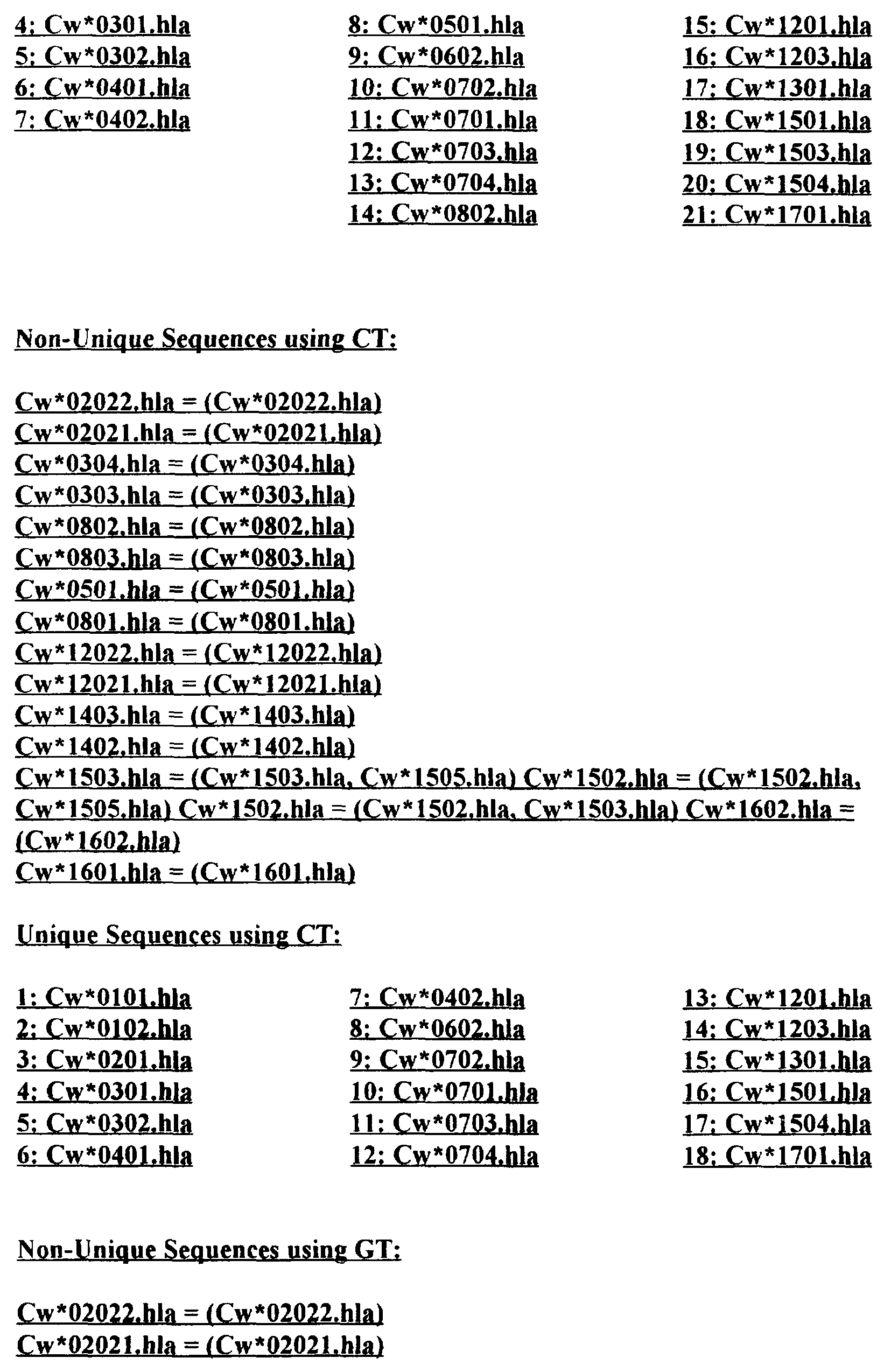
  • the termination reaction selected depends on whether a forward or reverse primer is chosen. Appendix 1 lists which alleles can be distinguished if a forward primer is used (i.e sequencing template is the anti-sense strand) If a reverse primer is used for sequencing, the termination reaction selected is the complementary one (A for T, C for G, and vice versa).
  • the remaining 2 alleles, Cw* 12022.hla and Cw* 12021.hla can not be distinguished by nucleotide sequencing of only exons 2 and 3. Further reactions according to the invention may be performed to distinguish among these alleles If the patient sample is identified at any one step, then the following step(s) need not be performed for that sample
  • Heterozygotes are analyzed on the same basis, the order of single nucleotide sequencing reactions is determined by picking which reactions will distinguish among the greatest number of samples (data not shown), and performing those reactions first
  • LPL lipoprotein lipase
  • Asn291 Ser is associated with reduced HDL cholesterol levels in premature atherosclerosis
  • This variant has a single missense mutation of A to C at nucleotide 1 127 of the sense strand in Exon 6
  • This variant can be distinguished according to the instant invention as follows
  • Exon 6 of the LPL gene from a patient sample is amplified with a 5' PCR primer located in intron 5 near the 5' boundary of exon 6
  • the 3' PCR primer is located in exon 6 a short distance from the Asn291 Ser mutation and labeled with biotin
  • PCR amplification reactions were performed according to the methods detailed in Reymer, PWA , et al , "A lipoprotein lipase mutation (Asn291 Ser) is associated with reduced HDL cholesterol levels in premature atherosclerosis " Nature Genetics 10 28- 34 (1995) Sequencing analysis was then performed according to the Thermo SequenaseTM (Amersham) method of example 1 , using a fluorescent-labeled version of the 5' PCR primer noted above Since the deleterious allele has a C at nucleotide 1127 of the sense strand, the C termination sequencing reaction was performed The results of the reaction were recorded on an automated DNA sequencing apparatus and analyzed at the 1127 site The patient sample either carries the C at that site, or it does not If a C is present, the patient is identified as having the "unhealthy” allele If no C is present, then the "healthy" form of the allele is identified Patient reports may be prepared on this basis
  • Example 7 Health care workers currently seek to distinguish among Chlamy ⁇ a trachomatis strains to determine the molecular epidemiologic association of a range of diseases with infecting genotype (See Dean, D et al "Major Outer Membrane Protein Variants of Chlamy ⁇ a trachomatis Are Associated with Severe Upper Genital Tract Infections and Histopathology in San Francisco " J Infect Dis 172 1013-22 (1995))
  • the presence and genotype of pure and mixed cultures of C. trachomatis may be determined by examining the C. trachomatis ompl gene (Outer Membrane Protein
  • the ompl gene has at least 4 variable sequence ("VS") domains that may be used to distinguish among the 15 known genotypes (Yuan, Y et al "Nucleotide and Deduced Amino Acid Sequences for the Four Variable Domains of the Major Outer Membrane Proteins of the 15 Chlamy ⁇ a trachomatis Serovars" Infect Immun 57 1040-1049 (1989))
  • VS variable sequence
  • thermocycler temperature profile was 95 degrees C for 45 sec, 55 degrees C for 1 min, and 72 degrees C for 2 min, with a final extension of 10 min at 72 degrees C after the last cycle
  • One microliter of the PCR product was then used in each of two separate nested 100 microliter reactions with primer pair MF21
  • flank VS1 (Variable Sequence 1 ) and VS2, and primer pair
  • trachomatis serovars A-K and LI -3 including Ba, Da, la, and L2a
  • a sample of each product 10 microliters was run on a 1 5% agarose gel to confirm the size of the amplification product
  • All PCR products were purified (GeneClean II, Bio 101, La Jolla, CA) according to the manufacturer's instructions
  • biotinylated strand was separated with Dynal beads and selected termination reactions were performed as in Example 1 using a 5' fluorescent labeled version of MF21 or MVF3
  • the first 25 nt of the T termination reaction for C trachomatis VS1 can be used to distinguish among 3 groups of genotypes, as illustrated in Fig 8A
  • the observed results for Sample 1 in Fig 8 A demonstrates that detectable levels of at least one of Group 1 and at least one of the Group 3 genotypes are present Group 2 is not detected
  • FIG 8B illustrates possible A results
  • the observed results of Sample 1 shows an A at site 257 This A could be provided by only E, F or G genotypes Since the T track has already established the absence of both F and G, then E must be among the genotypes present Further, the absence of an A at 283 indicates that neither D nor F nor G are present The presence of E and the absence of D, F and G may be reported
  • Group 1 genotypes may be present in addition to E, they do not appear because their presence is effectively masked by E Other single nucleotide termination reactions can be performed to distinguish among these other possible contributors, if necessary The investigator simply determines which single nucleotide reaction will effectively distinguish among the genotypes which may be present and need to be distinguished Alternatively, Sample 2, which showed the presence of Group 1 only in the T reaction is shown to be comprised of only Ba genotype because of an absence of A at 268 This shows that both the presence and absence of nucleotides can be used to determine the presence of some genotypes in some circumstances
  • the first 25 nt of C and G termination reactions for VS1 only are included in Fig 8C to show how an investigator can determine which reaction to select and perform If higher degrees of resolution are required, the termination reactions for VS2, VS3 and VS4 may be performed
  • the only combinations that can not be distinguished after this point include 2 remaining alleles, Cw* 12022 and Cw* 12021 , which can not be distinguished by nucleotide sequencing of only exons 2 and 3 Further reactions according to the invention may be performed to distinguish among these alleles Note that since these alleles differ only at a silent mutation, they are identical at the amino acid level, and do not need to be distinguished in practice Sample reports can simply confirm the presence of the one allele plus either of Cw* 12022 or * 12021
  • EXAMPLE 9 Analysis of the HLA-DRB1 allelic type of a sample may be performed according to Example 1 using two chain terminating nucleotides 100 ng of patient sample DNA (previously amplified as in Example 1 ) is combined with labeled sequencing primer 5' - GAGTGTCATTTCTTCAA - 3' [SEQ ID NO 18]
  • the termination reaction mixture is thermal cycled in a Robocycler for 30 cycles (or fewer if found to be satisfactory) 95 C 40 sec 50 C 30 sec 68 C 60 sec
  • HLA Class I C locus allele analysis on the basis of exons 2 and 3.
  • 35 alleles may be combined as 35 homozygous pairs or 630 heterozygous pairs.
  • Homozygous pairs mav be distinguished by single nucleotide sequencing in the following order:
  • Cw*02022.hla .Cw*02022.hla)
  • Cw*1503.hla (Cw*1503.hla.
  • Cw*02021.hla .Cw*02021.hla.
  • Cw*0303.hla .Cw*0303.hla.
  • Cw*1502.hla tCw*1502.hla.
  • Cw*0303.hla (Cw*0303.hla. Cw*0304.hla. Cw*0801.hl . Cw*0803.hla.
  • Cw*0302.hla (Cw*0302.hla. Cw*0304.hta. Cw*0801.hla. Cw*0803.hla.
  • Cw*0302.hla tCw*0302.hla. Cw*0303.hla. Cw*0801.hla. Cw*0803.hla.
  • Cw*0302.hla ⁇ Cw*0302.hla. Cw*0303.hla. Cw*0304.hla. Cw*0803.hla.
  • CwM402.hla CwM402.hla.
  • Cw*0302.hla (Cw*0302.hla. Cw*0303.hla. Cw*0304.hla. Cw*0801.hla.
  • CwM2022.hla (CwM2022.hla.
  • CwM2021.hla .CwM2021.hla ⁇
  • CwM2022.hla (CwM2022.hla.
  • CwM2021.hla fCwM2021.hlai
  • CwM403.hla rCwM403.hlal
  • C M6Qi.hla (CwM6 Q i ⁇ hla)
  • CWOlOl.hla 2 Cw*0102.hla 3: Cw*0201.hla 4: Cw*0301.hla 8: Cw*0501.hla 15: CwM201.hla 5: Cw*0302.hla 9: Cw*0602.hla 16: CwM203.hla 6: Cw*0401.hla 10: Cw*0702.hla 17: CwM301.hla 7: Cw*0402.hla 11 : Cw*0701.hla 18: CwM501.hla 12: Cw*0703.hla 19: CwM503.hla 13: Cw*0704.hla 20: CwM504.hla 14: Cw » 0802.hla 21 : CwM701.hla
  • CwM2022.hla fCwM2022.hla.
  • CwM2021.hla .CwM2021.hlal
  • CwM2022.hla ⁇ CwM2022.hlai
  • CwM2021.hla (CwM2021.hla1
  • CwM503.hla (CwM503.hlal
  • CwM502.hla (CwM502.hla.
  • CwM2022.hla rCwM2022.hla.
  • CwM2021.hla .CwM2021.hla.
  • CwM402.hla (CwM402.hla1
  • CwM505.hla (CwM505.hlai
  • CwM502.hla fCwM502.hlai
  • MOLECULE TYPE other nucleic acid
  • HYPOTHETICAL no
  • ANTI-SENSE yes
  • FRAGMENT TYPE internal
  • ORIGINAL SOURCE (A) ORGANISM: human
  • MOLECULE TYPE other nucleic acid
  • HYPOTHETICAL no
  • ANTI-SENSE yes
  • ORGANISM human
  • OTHER INFORMATION forward sequencing primer for HLA-C gene, exon 3
  • MOLECULE TYPE other nucleic acid
  • HYPOTHETICAL no
  • ANTI-SENSE yes
  • FRAGMENT TYPE internal
  • ORIGINAL SOURCE (A) ORGANISM: human

Landscapes

  • Chemical & Material Sciences (AREA)
  • Life Sciences & Earth Sciences (AREA)
  • Organic Chemistry (AREA)
  • Health & Medical Sciences (AREA)
  • Proteomics, Peptides & Aminoacids (AREA)
  • Zoology (AREA)
  • Wood Science & Technology (AREA)
  • Analytical Chemistry (AREA)
  • Engineering & Computer Science (AREA)
  • Molecular Biology (AREA)
  • Immunology (AREA)
  • Biochemistry (AREA)
  • Genetics & Genomics (AREA)
  • General Health & Medical Sciences (AREA)
  • Physics & Mathematics (AREA)
  • General Engineering & Computer Science (AREA)
  • Bioinformatics & Cheminformatics (AREA)
  • Biophysics (AREA)
  • Biotechnology (AREA)
  • Microbiology (AREA)
  • Chemical Kinetics & Catalysis (AREA)
  • Pathology (AREA)
  • Cell Biology (AREA)
  • Electrochemistry (AREA)
  • General Physics & Mathematics (AREA)
  • Measuring Or Testing Involving Enzymes Or Micro-Organisms (AREA)

Abstract

The allelic type of a polymorphic genetic locus in a sample is identified by first combining the sample with a sequencing reaction mixture containing a polymerase, nucleoside feedstocks, one type of chain terminating nucleoside and a sequencing primer to form a plurality of oligonucleotide fragments of differing lengths, and then evaluating the length of the oligonucleotide fragments. As in a standard sequencing procedure, the lengths of the fragments indicate the positions of the type of base corresponding to the chain terminating nucleotide in the extended primer. Instead of performing and evaluating four concurrent reactions, one for each type of chain terminating nucleotide, however, the sample is concurrently combined with at most three, and preferably only one, sequencing reaction mixtures containing different types of chain terminating nucleotides. The information obtained from this test is evaluated prior to performing any additional tests on the sample. In many cases, evaluation of the positions of only a single base using one sequencing reaction will allow for allelic typing of the sample.

Description

METHOD FOR EVALUATION OF POLYMORPHIC GENETIC SEQUENCES, AND THE USE THEREOF IN IDENTIFICATION OF HLA TYPES
DESCRIPTION
BACKGROUND OF THE INVENTION
Genetic testing to determine the presence of or a susceptibility to a disease condition offers incredible opportunities for improved medical care, and the potential for such testing increases almost daily as ever increasing numbers of disease-associated genes and/or mutations are identified. A major hurdle which must be overcome to realize this potential, however, is the high cost of testing. This is particularly true in the case of highly polymorphic genes where the need to test for a large number of variations may make the test procedure appear to be so expensive that routine testing can never be achieved.
Testing for changes in DNA sequence can proceed via complete sequencing of a target nucleic acid molecule, although many persons in the art believe that such testing is too expensive to ever be routine. Changes in DNA sequence can also be detected by a technique called 'single-stranded conformational polymorphism" ( "SSCP") described by Orita et al., Genomics 5: 874-879 (1989), or by a modification thereof referred to a dideoxy-fingerprinting ("ddF") described by Sarkar et al., Genυmics 13: 4410443 (1992). SSCP and ddF both evaluate the pattern of bands created when DNA fragments are electrophoretically separated on a non-denaturing electrophoresis gel. This pattern depends on a combination of the size of the fragments and of the three-dimensional conformation of the undenatured fragments. Thus, the pattern cannot be used for sequencing, because the theoretical spacing of the fragment bands is not equal.
The hierarchical assay methodology described in US Patent No 5,545,527 and International Patent Publication No. WO 96/07761 , which are incorporated herein by reference, provides a mechanism for systematically reducing the cost per test by utilizing a series of different test methodologies which may have significant numbers of results incorrectly indicating the absence of a genetic sequence of interest, but which rarely if ever yield a result incorrectly indicating the presence of such a genetic sequence. The tests employed in the hierarchy may frequently be combinations of different types of molecular tests, for examples combinations of immunoassays, oligonucleotide probe hybridization tests, oligonucleotide fragment analyses, and direct nucleic acid sequencing. This application relates to a particular type of test which can be useful alone or as part of a hierarchical testing protocol, particularly for highly polymorphic genes. A particular example of the use of this test is its application to determining the allelic type of human HLA genes, although the test is applicable to many genes of known sequence, and the invention should not be construed as limited to HLA.
Human HLA genes are part of the major histocompatability complex (MHC), a cluster of genes associated with tissue antigens and immune responses. Within the MHC genes are two groups of genes which are of substantial importance in the success of tissue and organ transplants between individuals. The HLA Class I genes encode transplantation antigens which are used by cytotoxic T cells to distinguish self from non-self. The HLA class II genes, or immune response genes, determine whether an individual can mount a strong response to a particular antigen. Both classes of HLA genes are highly polymorphic, and in fact this polymorphism plays a critical role in the immune response potential of a host. On the other hand, this polymorphism also places an immunological burden on the host transplanted with allogeneic tissues. As a result, careful testing and matching of HLA types between tissue donor and recipient is a major factor in the success of allogeneic tissue and marrow transplants.
Typing of HLA genes has proceeded along two basic lines serological and nucleic acid-based. In the case of serological typing, antibodies have been developed which are specific for certain types of HLA proteins. Panels of these tests can be performed to evaluate the type of a donor or recipient tissue. In nucleic acid based-approaches, samples of the HLA genes may be hybridized with sequence-specific oligonucleotide probes to identify particular alleles or allele groups. In some cases, determination of HLA type by sequencing of the HLA gene has also been proposed. Santamaria P, et al "HLA Class I Sequence-Based Typing", Human Immunology 37: 39-50 (1993)
In all of these cases, the test panel performed on each individual sample is extensive, with the result that the cost of HLA typing is very high. It would therefore be desirable to have a method for typing HLA which provided comparable or better reliability at substantially reduced cost. It is an object of the present invention to provide such a method. SUMMARY OF THE INVENTION
The method of the invention makes use of a modification of standard sequencing technology, preferably in combination with improved data analysis capabilities to provide a streamlined method for obtaining information about the allelic type of a sample of genetic material. Thus, in accordance with the invention, the allelic type of a polymorphic genetic locus in a sample is identified by first combining the sample with a sequencing reaction mixture containing a template-dependent nucleic acid polymerase, A, T, G and C nucleotide feedstocks, one type of chain terminating nucleotide and a sequencing primer under conditions suitable for template dependant primer extension to form a plurality of oligonucleotide fragments of differing lengths, and then evaluating the length of the oligonucleotide fragments. As in a standard sequencing procedure, the lengths of the fragments can be evaluated on a denaturing gel, such that the actual length of each fragment, independent of conformational changes that may be caused by sequence variations is determined. The observed bands therefore indicate the positions of the type of base corresponding to the chain terminating nucleotide in the extended primer. The method of the invention differs from standard sequencing procedures, however, because instead of performing and evaluating four concurrent reactions, one for each type of chain terminating nucleotide, in the method of the invention the sample is concurrently combined with at most three sequencing reaction mixtures containing different types of chain terminating nucleotides. Preferably, the sample will be combined with only one reaction mixture, containing only one type of chain terminating nucleotide and the information obtained from this test will be evaluated prior to performing any additional tests on the sample.
In many cases, evaluation of the positions of only a single base will allow for allelic typing of the sample. In this case, no further tests need to be performed. Thus, the use of the method of the invention can increase laboratory throughput (since up to four times as many samples can be processed on the same amount of equipment) and reduce the cost per test by up to a factor of four compared to sequencing of all four bases for every sample. BRIEF DESCRIPTION OF THE DRAWINGS
Fig. 1 shows the application of the invention to typing of a simple polymorphic gene;
Fig.2 illustrates an improved method for distinguishing heterozygotic alleles using the present invention;
Fig. 3 illustrates a situation in which heterozygote pairs remain ambiguous even after full sequencing;
Fig. 4 illustrates the use of a control lane to evaluate the number of intervening bases in a single base sequencing reaction;
Fig.5 shows results from an automated DNA sequencing apparatus.
Fig. 6 illustrates peak-by-peak correlation of sequencing results,
Fig. 7 shows a plot of the maxima of each data peak plotted against the separation from the nearest other peak, and
Figs. 8A-8C illustrate the application of the invention to typing of Chlamydia trachomatis.
DETAILED DESCRIPTION OF THE INVENTION
While the terminology used in this application is standard within the art, the following definitions of certain terms are provided to assure clarity.
1. "Allele" refers to a specific version of a nucleotide sequence at a polymorphic genetic locus.
2. "Polymorphism" means the variability found within a population at a genetic locus.
3 . "Polymorphic site" means a given nucleotide location in a genetic locus which is variable within a population.
4. "Gene" or "Genetic locus" means a specific nucleotide sequence within a given genome.
5. The "location" or "position" of a nucleotide in a genetic locus means the number assigned to the nucleotide in the gene, generally taken from the cDNA sequence or the genomic sequence of the gene.
6. The nucleotides Adenine, Cytosine, Guanine and Thymine are sometimes represented by their designations of A, C, G or T, respectively. While it has long been apparent to persons skilled in the art that knowledge of the identity of the base at a particular location within a polymorphic genetic locus may be sufficient to determine the allelic type of that locus, this knowledge has not led to any modification of sequencing procedures. Rather, the knowledge has driven development of techniques such as allele-specific hybridization assays, and allele-specific ligation assays. Despite the failure of the art to recognize the possibility, however, it is not always necessary to determine the sequence of all four nucleotides of a polymorphic genetic locus in order to determine which allele is present in a specific patient sample. Certain alleles of a genetic locus may be distinguishable on the basis of identification of the location of less than four, and often only one nucleotide. This finding allows the development of the present method for improved allele identification at a polymorphic genetic locus.
A simple example is to consider a polymorphic site for which only two alleles are known, as in Figure 1. In this case, identification of the location of the A nucleotides in the genetic locus, particularly at site 101, will distinguish whether allele 1 or allele 2 is present. If a third allele was discovered which had a C at site 101, the presence of the allele could be distinguished either by the absence at site 101 of an A and a T in independent A and T reactions or by the presence of a C at site 101.
Traditionally, if sequencing were going to be used to evaluate the allelic type of the polymorphic site of Fig 1 , four dideoxy nucleotide "sequencing" reactions of the type described by Sanger et al. (Proc. Natl. Acad. Sci. USA 74: 5463-5467 (1977)) would be run on the sample concurrently, and the products of the four reactions would then be analyzed by polyacrylamide gel electrophoresis. (see Chp 7 6, Current Protocols in Molecular Biology, Eds. Ausubel, F M et al, (John Wiley & Sons, 1995)) In this well known technique, the each of the four sequencing reactions generates a plurality of primer extension products, all of which end with a specific type of dideoxy-nucleotide. Each lane on the electrophoresis gel thus reflects the positions of one type of base in the extension product, but does not reveal the order and type of nucleotides intervening between the bases of this specific type. The information provided by the four lanes is therefore combined in known sequencing procedures to arrive at a composite picture of the sequence as a whole. In accordance with the present invention, however, single sequencing reactions are performed and evaluated independently to provide the number of intervening bases between each instance of a selected base and thus a precise indication of the positional location of the selected base. Applying the method of the invention to the simplistic example of Fig. 1 , a single sequencing reaction would first be performed using either dideoxy-A or dideoxy-T as the chain terminating nucleotide. If the third allelic type did not exist or was unknown, this single test would be enough to provide a specific result. If the third allelic type was known to exist and the base present in the sample was not identified by the first test, a second sequencing test could be performed using either dideoxy-C or the dideoxy-A/T not used in the first test to resolve the identity of the allelic type . Alternatively, some other test such as an allele-specific hybridization probe or an antibody test which distinguished well between allele 1 or 2 and allele 3 could be used in this case.
As is clear from this example, the method of the invention specifically identifies "known" alleles of a polymorphic locus, and is not necessarily useful for identification of new and hitherto unrecorded alleles. An unknown allele might be missed if it were incorrectly assumed that the single nucleotide sequence obtained from a patient sample corresponded to a unique allele, when in fact other nucleotides of the allele had been rearranged in a new fashion. The method is specific for distinguishing among known alleles of a polymorphic locus (though it may fortuitously come across new mutations if the right single nucleotide sequence is chosen) Databases listing known alleles must therefore be continually updated to provide greatest utility for the invention.
The advantages of "less than 4" nucleotide analysis of the invention for identifying alleles are the decrease in costs for reagents and labor and the increased throughput of patient samples that can be obtained in a diagnostic laboratory. These advantages can be more dramatically demonstrated by considering a system which more closely approximates a real world example. For this purpose, we have assumed a population in which only the known HLA Class II DR4 alleles exist (of these, 5 alleles DRB 1 *0401, DRB 1 *0402, DRB1 *0405, DRB 1 *0408, and DRB 1 *0409 are found in 95% of the North American population), and in which these alleles are always homozygous.
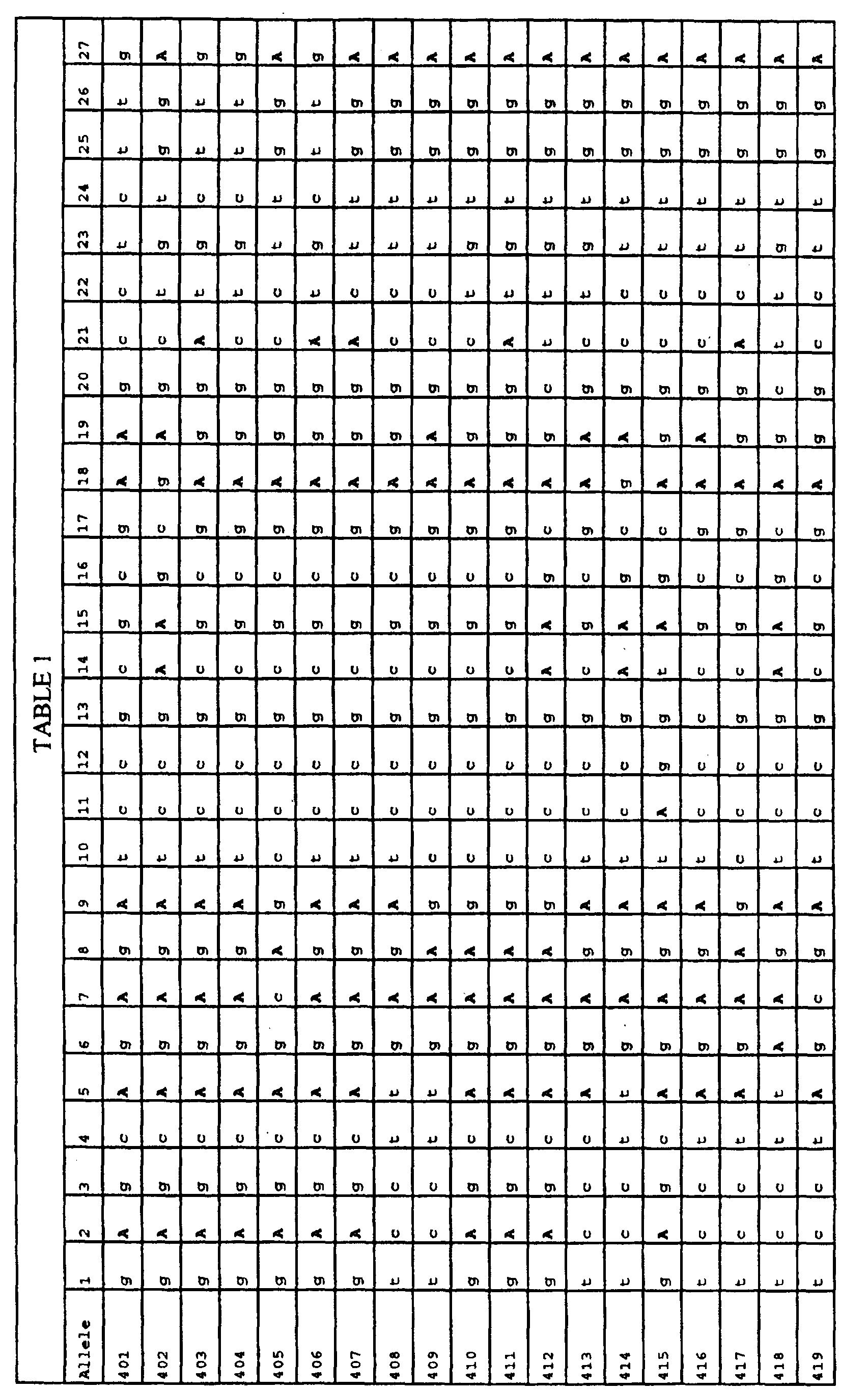
To determine the order in which the single nucleotide sequences should be performed, the sequence differences among alleles are evaluated to determine which of the bases will yield the most information, and the circumstances in which knowledge about two or more bases yields a definitive typing. To do this, we look first at base A, for example, to determine which alleles can be identified unequivocally from a knowledge of the position of the A bases within the sample. One way to approach this is to set up a table which shows the base for each allele at each polymorphic site, as shown in Table 1, and to determine the pattern which would be observed if the A's in the table were detected. Each unique pattern can be definitively typed using this one sequencing reaction. For the DR4 alleles, every allele (including all of the most widely distributed alleles) except DRB1 *0413 and
DRB1 *0416 produces a unique patten. All of the other bases effectively identify fewer allelic types, and therefore the A reaction is done first Further, it is very likely that any given group of samples could be entirely typed using this single sequencing reaction. In the event that samples were not definitively typed using this first sequencing reaction, any second sequencing reaction performed on the untyped samples would distinguish between DRB 1 *0413 and DRB 1 *0416
The significance in terms of cost per test of using the method of the invention is easily appreciated. Determining the DR4 allelic type of 100 samples using traditional 4 nucleotide DNA sequencing requires performance of a total of 400 sequencing reactions. Assuming a cost (reagents plus labor) of $20.00 per test, this would result in a cost per patient of $80.00. In contrast, in the test using the method of the invention, only the first test for the positions of A is performed on all samples. Even assuming the statistically unlikely event that 5% of the samples are of type DRB1 *0413 or DRB1 *0416, 95 positive typings will result. The remaining 5 samples are tested using a second (G, C or T) sequencing reaction, with the result that all 5 samples are definitively typed. Thus, the cost for performing these 100 typings using the method of the invention is $2,100 or $21 per patient.
Figure imgf000010_0001
In some cases, the second sequencing reaction performed may not yield unique patterns for all of the samples tested. In this case, prior to performing a third sequencing reaction, it is desirable to combine the results of the first two sequencing reactions and evaluate these composite results for unique base patterns. Thus, for example, a first and second sequencing reaction may have four alleles which can be characterized as follows
Figure imgf000011_0001
Allele 2 and Allele 4 give unique results from the T-sequence reaction alone, and can therefore be typed based upon this information Alleles 1 and 3, however have the same T-sequencing pattern. Because these two allele have different A-sequencing reaction patterns, however, they are clearly distinguishable and can be typed based upon the combined patterns without further testing.
This substantial reduction in the number of sequencing reactions means that the cost of reagents and labor required to perform the reactions is reduced. Further, since each sample must be analyzed by electrophoresis, fewer electrophoresis runs need to be performed. For example, in an automated DNA sequencer having 40 lanes, such as the Pharmacia A.L.F.™ (Pharmacia, Uppsala, Sweden), up to 40 patient samples can be run on a gel rather than 10 patient samples using 4 lanes each. In systems such as the Applied Biosystems Inc. 377™, (Foster City, CA) which permit the use of 4 fluorescent dyes per lane, 4 patient samples may be run per lane instead of one patient sample per lane. Use of networked high-speed DNA sequencers with software that can combine data taken from different instruments, such as the MICROGENE BLASTER™ sequencer and GENE OBJECTS™ software, (both part of the OPEN GENE™ System available from Visible Genetics Inc., Toronto, Canada) can also enhance this method.
This same methodology can be applied to virtually any known polymorphic genetic locus to obtain efficient characterization of the locus. For example, identification of alleles in the highly polymorphic Human Leukocyte Antigen (HLA) gene system (Parham, P. et al. "Nature of Polymorphism in HLA-A, -B and -C Molecules", Proc. Natl. Acad. Sci , USA 85: 4005-4009 ( 1988)) will benefit greatly from the method Moreover, the method is not limited to human polymorphisms. It may be used for other animals, plants, bacteria, viruses or fungi. It may be used to distinguish the allelic variants present among a mixed sample of organisms. In human or animal diagnostics, the method can be used to identify which subspecies of bacteria or viruses are present in a body sample. This diagnosis could be essential for determining whether drug-resistant strains of pathogens are present in an individual .
After developing an assay methodology in the manner outlined above for a particular known polymorphic gene, the first step of the method of the invention is obtaining a suitable sample of material for testing using this methodology. The genetic material tested using the invention may be chromosomal DNA, messenger RNA, cDNA, or any other form of nucleic acid polymer which is subject to testing to evaluate polymorphism, and may be derived from various sources including whole blood, tissue samples including tumor cells, sperm, and hair follicles.
In some cases, it may be advantageous to amplify the sample, for example using polymerase chain reaction (PCR) amplification, to create one which is enriched in the particular genetic sequences of interest. Amplification primers for this purpose are advantageously designed to be highly selective for the genetic locus in question. For example, for HLA Class I testing, group specific and locus specific amplification primers have been disclosed in US Patent No. 5,424, 184 and Cereb et al. , "Locus-specific amplification of HLA class I genes from genomic DNA locus-specific sequences in the first and third introns of HLA-A, -B and -C alleles " Tissue Antigens 45:1-1 1 (1995) which are incorporated herein by reference.
Once a suitable sample is obtained, the sample is combined with the first sequencing reaction mixture. This reaction mixture contains a template-dependent nucleic acid polymerase, A, T, G and C nucleotide feedstocks, one type of chain terminating nucleotide and a sequencing primer.
The selection of the template-dependent nucleic acid polymerase is not critical to the success of the invention. A preferred polymerase, however, is Thermo Sequenase™, a thermostable polymerase enzyme marketed by Amersham Life Sciences. Other suitable enzymes include regular Sequenase™ and other enzymes used in sequencing reactions.
Selection of appropriate sequencing primers is generally done by finding a part of the gene, either in an intron or an exon, that lies near (within about 300 nt) the polymorphic region of the gene which is to be evaluated, is 5' to the polymorphic region (either on the sense or the antisense strand), and that is highly conserved among all known alleles of the gene. A sequencing primer that will hybridize to such a region with high specificity can then be used to sequence through the polymorphic region. Other aspects of primer quality, such as lack of palindromic sequence, and preferred G/C content are identified in the US Patent No 5,545,527.
In some cases it is impossible to select one primer that can satisfy all the above demands. Two or more primers may be necessary to test among some sub-groups of a genetic locus. In these cases it is necessary to attempt a sequencing reaction using one of the primers. If hybridization is successful, and a sequencing reaction proceeds, then the results can be used to determine allele identity If no sequencing reactions occur, it may be necessary to use another one of the primers.
The sequencing reaction mixture is processed through multiple cycles during which primer is extended and then separated from the template DNA from the sample and new primer is reannealed with the template. At the end of these cycles, the product
oligonucleotide fragments are separated by gel electrophoresis and detected. This process is well known in the art. Preferably, this separation is performed in an apparatus of the type described in US Patent Application No 08/353,932, the continuation in part thereof filed on December 12, 1995 as International Patent Application No. PCT/US95/15951 using thin microgels as described in International Patent Application No. PCT/US9514531, all of which applications are incorporated herein by reference.
The practice of the instant invention is assisted by technically advanced methods for precisely identifying the location of nucleotides in a genetic locus using single nucleotide sequencing. The issue is that in the technique of single nucleotide sequencing using dideoxy-sequencing/ electrophoresis analysis it is sometimes a challenge to determine how many nucleotides fall between two of the identified nucleotides: or
Figure imgf000014_0001
Figure imgf000014_0002
In many cases, there is little difficulty, particularly when short sequencing reaction products are examined (200 nt or less), because the electrophoretic separation of reaction products follows a highly predictable pattern. A computer or a human can easily determine the number of nucleotides lying between two identified nucleotides by simply measuring the gap and determining the number of singleton peaks that would otherwise fall in the gap. The problem becomes relevant in longer electrophoresis runs where resolution and separation of sequencing reaction fragments is lost. In addition, loss of consistency in maintaining the temperature, electric field strength or other operating parameters can lead to inconsistencies in the spacing between peaks and ambiguities in interpretation Such ambiguities can prevent accurate identification of alleles.
One simple way to resolve these problems is to run a "control" lane with all samples which identifies all possible nucleotide fragment lengths from the genetic locus being sequenced, for example by performing a reaction which includes all 4 dideoxy nucleotides. The control lane indicates precisely the number of nucleotides that lie in the gaps between the identified nucleotides, as in Fig. 3.
Any sequencing format can use such a control lane, be it "manual" sequencing, using radioactively labeled oligonucleotides and autoradiograph analysis (see Chp 7, Current Protocols in Molecular Biology, Eds. Ausubel, F. M et al, (John Wiley & Sons, 1995)), or automated laser fluorescence systems.
An improved method for identifying alleles, which does not rely on measuring the number of nucleotides lying between two identified nucleotides is disclosed in US Patent Application Serial No. 08/497,202. Briefly, this method relies on the actual shape of the data signal ("wave form") received from an automated laser fluorescence DNA analysis system. The method compares the patient sample wave form to a database of wave forms representing the known alleles of the gene. The known wave form that best matches the sample wave form identifies the allele in the sample.
A further embodiment of the invention which may be applied in some cases, including HLA typing, to further expedite and reduce the expense of testing, involves the
simultaneous use of two chain terminating nucleotides in a single reaction mixture. For example, a single reaction containing a mixture of ddATP and ddCTP could be performed initially. The peaks observed on the sequencing gel are either A or C, and cannot be distinguished (unless dye-labeled terminators with different labels are used). In some cases, however, this information is sufficient to identify the nature of the allele. For example, in the simple three allele case shown in Fig. 1, the sequence information would identify the T allele unambiguously. For more complicated polymorphic genes, a second sequencing run, including two chain terminating nucleotides, one being the same as one included in the first reaction and the other being different from those included in the first reaction mixture. These two sequencing procedures permit determination of the position of three bases expressly and the fourth base by difference in a total of only two reactions.
As discussed below, some wave forms may represent heterozygote mixtures. The database should include wave forms from all known heterozygote combinations to ensure that the matching process includes the full variety of possibilities. When a patient sample is found to be a possible heterozygote, the software can be designed to inform the user of the next analytical test that should be performed to help distinguish among possible allelic members of the heterozygote.
Heterozygous polymorphic genetic loci need special consideration. Where more than one variant of the same loci exists in the patient sample, complex results are obtained when single lane sequencing begins at a commonly shared sequencing primer site. This problem is also found in traditional 4 lane sequencing (see Santamaria P, et al "HLA Class I Sequence-Based Typing" Human Immunology 37, 39-50 (1993)). However, Figure 2 illustrates an improved method for distinguishing heterozygotic alleles using the present invention.
The problem presented by a heterozygous allele is illustrated in Fig. 2a. The observed data from single nucleotide sequencing of the A lane can not point to the presence of a unique allele. Either the loci is heterozygous or a new allele has been found. (For well studied genetic loci, new alleles will be rare, so heterozygosity may be assumed.) The problem flows from a mixture of alleles in the patient sample which is analyzed. For example, the observed data may result from the additive combination of allele 1 and allele 2.
Where there are more than two possible alleles, it is necessary to compare each of the known allelic variants to the observed data to see if they could result in the observed data Each heterozygote pair will have its own distinct pattern. Fig 3b illustrates that alleles 3 and 4 can not underlie the observed data because certain A nucleotides in those alleles are not represented in the data. They are thus eliminated from consideration. The remaining alleles 5, 6, and 7 could be used in combination with others to generate the observed data.
In the case of human genomic DNA, only two alleles at any one loci can generally be present (one from each chromosome). It is necessary, therefore, to combine all known alleles to determine if they can be additively combined to result in the observed data. (In fact, the data appearance of known and hypothetical heterozygote pairs can be prepared and stored in an additional database to facilitate analysis ) In Fig 3b combination of alleles 5 and 6 will result in the observed data, and combination of neither 5 & 7 nor 6 & 7 gives the desired result. Therefore, if only the alleles 3 to 7 were known, the only two that could possibly be combined to result in the observed data would be 5 and 6. Allelic identification could be made on this basis.
In some cases, where more than one pair of alleles can be combined to obtain the observed data, as in Fig 3c, it is necessary to determine the relative locations of other nucleotides in order to distinguish which allelic pair is present Identification of another specific type of nucleotide serves to distinguish which pair of alleles is present. Fig 3d shows further, that sometimes observed data may appear to be a homozygote for one allele, but in fact it may consist of a heterozygote pair, either including the suggested allele, or not. The alleles that might lead to such confusion, by masking possible heterozygotes, can be identified in the known allele database. Identification of these alleles can not be confirmed unless further tests are made which can confirm whether a heterozygote underlies the observed data.
All of the analyses of comparing the known alleles to the observed data can be conveniently assisted by the use of high speed computer analysis.
In rare cases, such as in Fig. 4, sequencing of all 4 nucleotides will not permit identification of which allelic pair is present. The ambiguity may be reported as such, especially if the clinical need for distinguishing is low. Alternatively, high stringency hybridization probes may be used, as they can identify the presence of specific allelic variants. Protocols for hybridization probes are well known in the art (see Chp 6.4, Current Protocols in Molecular Biology, Eds. Ausubel, F. M. et al, (John Wiley & Sons, 1995)). Occasionally, quantitative measurements of the amount of sequencing reaction products may be sufficient to distinguish whether only one allele has an A at a specific loci, or both. It is found experimentally, however, that quantitative analysis of sequencing peak heights can only rarely assist in the analysis.
Quantitative analysis proves more useful for resolving the problem of "allelic dropout". In cases of allelic dropout, sequencing reactions identify an apparent homozygote, but only because the sequencing primer has failed to initiate sequencing reactions on one of the two alleles. This may have resulted from heterogeneity at the sequencing primer site itself, which prevents the primer from hybridizing to the target site or initiating chain extension. (This problem should be rare as sequencing primers according to the invention are designed to hybridize generally to highly conserved areas of the genome).
Allelic dropout is resolved by amplifying both alleles from genomic DNA using quantitative polymerase chain reaction (see for example, Chp 15, Current Protocols in Molecular Biology, Eds. Ausubel, F. M . et al, (John Wiley & Sons, 1995)) The sequencing primer is used as one of a pair of PCR primers. A fragment of DNA spanning the alleles in question is amplified quantitatively. At the end of the reaction, quantities of PCR products will be only half the expected amount if only one allele is being amplified Quantitative analysis can be made on the basis of peak heights of amplified bands observed by automated DNA sequencing instruments.
A plurality of pathogens can produce even more complex results from single nucleotide sequencing. The complexity flows from an unlimited number of variants of the pathogen that may be present in the patient sample. For example, viruses, and bacteria may have variable surface antigen coding domains which allow them to evade host immune system detection. To avoid this problem of variability, the genetic locus selected for examination is preferably highly conserved among all variants of the pathogen, such as ribosomal DNA or functionally critical protein coding regions of DNA. Where variable regions of the pathogen must be analyzed, an extended series of comparisons between the observed data and the known alleles can assist the diagnosis by determining which alleles are not substantial components of the observed data.
The method of the present invention lends itself to the construction of tailored kits which provide components for the sequencing reactions. As described in the examples, these components include oligonucleotide sequencing primers, enzymes for sequencing, nucleoside and dideoxynucleoside preparations, and buffers for reactions. Unlike conventional kits, however, the amount of each type of dideoxynucleoside required for any given assay is not the same. Thus, for an assay in which the A sequencing reaction is performed first and on all samples, the amount of dideoxy-A included in the kit may be 5 to 10 times greater than the amount of the other dideoxynucleosides.
The following examples are included to illustrate aspects of the instant invention and are not intended to limit the invention in any way.
Example 1
Identification of HLA Class II gene alleles present in an individual patient sample can be performed using the method of the instant invention. For example, DRB 1 is a polymorphic HLA Class II gene with at least 107 known alleles (See Bodmer et al .
Nomenclature for Factors of the HLA System, 1994. Hum. Imm. 41 , 1 -20 ( 1994)).
The broad serological subtype of the patient sample DRB 1 allele is first determined by attempting to amplify the allele using group specific primers.
Genomic DNA is prepared from the patient sample using a standard technique such as proteinase K proteolysis Allele amplification is carried out in Class II PCR buffer:
10 mM Tris pH 8.4
50 mM KCl
1 .5 mM MgCl2
0.1% gelatin
200 uM each of dATP, dCTP, dGTP and dTTP
12 pmol of each group specific primer
40 ng patient sample genomic DNA
Groups are amplified separately The group specific primers employed are
Figure imgf000018_0001
Figure imgf000019_0001
The 5'-primers of the above groups are terminally labelled with a fluorophore such as a fluorescein dye at the 5'- end.
The reaction mixture is mixed well. 2.5 units Taq Polymerase are added and mixed immediately prior to thermocycling. The reaction tubes are placed in a Robocycler Gradient 96 (Stratagene, Inc. ) and subject to thermal cycling as follows:
Figure imgf000019_0002
Figure imgf000020_0001
4 C cool on ice until ready for electrophoretic analysis.
Seven reactions (one for each group specific primer set) are performed. After amplification 2 uL of each of the PCR products are pooled, and mixed with 1 1 uL of loading buffer consisting of 100% formamide with 5 mg/ml dextran blue. The products are run on a 6% polyacrylamide electrophoresis gel in an automated fluorescence detection apparatus such as the Pharmacia A.L.F.™ (Uppsala, Sweden). Size determinations are performed based on migration distances of known size fragments. The serological group is identified by the length of the successfully amplified fragment. Only one fragment will appear if both alleles belong to the same serological group, otherwise, for heterozygotes containing alleles from two different groups, two fragments appear.
Once the serological group is determined, specificity within the group is determined by single nucleotide sequencing according to the invention.
Each positive group from above is individually amplified for sequence analysis The PCR amplification primers are a biotinylated 3'-PRIMER amp B:
(5' Biotin-CCGCTGCACTGTGAAGCTCT 3' ) [Seq ID No.8] and the appropriate 5'-PRIMER described above. The conditions for amplification are identical to the method described above.
After amplification sequencing is performed using the following sequencing primer:
5' - GAGTGTCATTTCTTCAA [ Seq ID No. 18]
The PCR product ( 10 ul) is mixed with 10 ul of washed Dynabeads M-280 (as per manufacturers recommendations, Dynal, Oslo, Norway) and incubated for 1 hr at room temperature. The beads are washed with 50 ul of IX BW buffer (10 mM Tris, pH 7.5, 1 mM EDTA, 2M NaCl) followed by 50 ul of 1 X TE buffer (10 mM Tris, 1 mM EDTA).
After washing, resuspend the beads in 10 ul of TE and take 3 ul for the sequencing reaction which consists of:
3 ul bound beads
3 ul sequencing primer (30 ng total)
2 ul 10X sequencing buffer (260 mM Tris-HCl, pH 9.5, 65 mM MgCI2)
2 ul of Thermo Sequenase™ (Amersham Life Sciences, Cleveland) (diluted 1 10 from stock)
3 ul H2O
Final Volume = 13 ul Keep this sequencing reaction mix on ice.
Remove 3 ul of the sequencing reaction mix and add to 3 ul of one of the following mixtures, depending on the termination reaction desired.
A termination reaction:
750 uM each of dATP, dCTP, dGTP, and dTTP, 2 5 uM ddATP
C termination reaction:
750 uM each of dATP, dCTP, dGTP, and dTTP, 2 5 uM ddCTP
G termination reaction:
750 uM each of dATP, dCTP, dGTP, and dTTP, 2 5 uM ddGTP
T termination reaction:
750 uM each of dATP, dCTP, dGTP, and dTTP, 2 5 uM ddTTP
Total termination reaction volume 6 ul
Cycle the termination reaction mixture in a Robocycler for 25 cycles (or fewer if found to be satisfactory):
95 C 30 sec
50 C 10 sec
-70 CC 30 sec After cycling add 12 ul of loading buffer consisting of 100% formamide with 5 mg/ml dextran blue, and load appropriate volume to an automated DNA sequencing apparatus, such as a Pharmacia A. L. F.
Allele identification requires analysis of results from the automated DNA sequencing apparatus as in Fig. 5. Fragment length analysis revealed that one allele of the patient sample was from the DR4 serological subtype (data not shown). Single nucleotide sequencing was then performed to distinguish among the possible DR4 alleles. Lane 1 illustrates the results of single nucleotide sequencing for the "C" nucleotide of a patient sample (i.e. using the C termination reaction, above). Lanes 2 and 3 represent C nucleotide sequence results for 2 of the 22 known DR4 alleles. Similar results for the 20 other alleles are stored in a database. The patient sample is then compared to the known alleles using one or more of the methods disclosed in US Patent Application Serial No. US 08/497,202.
In Fig. 5, Lane 1 first requires alignment with the database results. The alignment requires determination of one or more normalization coefficients (for stretching or shrinking the results of lane 1 ) to provide a high degree of overlap (i.e. maximize the intersection) with the previously aligned database results. The alignment co-efficient(s) may be calculated using the Genetic Algorithm method of the above noted application, or another method. The normalization coefficients are then applied to Lane 1. The aligned result of Lane 1 is then systematically correlated to each of the 22 known alleles.
The correlation takes place on a peak by peak basis as illustrated in Fig. 6 Each peak in the aligned patient data stream, representing a discrete sequencing reaction termination product, is identified. (Minor peaks representing sequencing artifacts are ignored. ) The area under each peak is calculated within a limited radius of the peak maxima (i. e. 20 data points for A L F. Sequencer results). A similar calculation is made for the area under the curve of the known allele at the same point. The swath of overlapping areas is then compared. Any correlation below a threshold of reasonable variation, for example 80%, indicates that a peak is present in the patient data stream and not in the other. If one peak is missing, then the known allele is rejected as a possible identifier of the sample.
The reverse comparison is also made peaks in the known data stream are identified and compared, one by one, to the patient sample results Again, the presence of a peak in one data stream, that is not present in the other, eliminates the known data stream as an identifier of the sample.
In Fig 5, lane 2, for allele DRB 1 *0405, has a peak (marked X) not found in the patient sample. Peak comparison between aligned lane 1 and lane 2 will fall below threshold at the peak marked X. Lane 3 is for part of known allele DRB1 *0401 . In this case, each peak is found to have a correlate in the other data stream. DRB 1 *0401 may therefore identify the patient sample. (The results illustrated are much shorter than the 200-300 nt usually used for comparison, so identity of the patient sample is not confirmed until the full diagnostic sequence is compared. )
Example 2
Results are obtained from the patient sample according to Example 1 , above. The sample results are converted into a "text" file as follows. The maxima of each peak is located and plotted against the separation from the nearest other peak (minor peaks representing noise are ignored). Fig. 7. The peaks that are closest together are assumed to represent single nucleotide separation and an narrow range for single nucleotide separation is determined. A series of timing tracks are proposed which attempts to locate all the peaks in terms of multiples of a possible single nucleotide separation. The timing track that correlates best (by least mean squares analysis) with the maxima of the sample data is selected as the correct timing track. The peak maxima are then plotted on the timing track. The spaces between the peaks are assumed to represent other nucleotides. A text file may now be generated which identifies the location of all nucleotides of one type and the single nucleotide steps in between.
The text file for the patient sample is compared against all known alleles. The known allele that best matches the patient sample identifies the sample.
Example 3
For HLA Class II DRB1 Serological group DR4, 22 alleles are known. A hierarchy of single nucleotide sequencing reactions can be used to minimize the number of reactions required for identification of which allele is present. Reactions are performed according to the methods of example 1 , above. If it is established from the group specific reaction that only one DRB1 allele is a DR4 subtype, then identification of that allele is made by the following steps:
1. Determine A nucleotide sequence. This identifies 16 of 22 known alleles, then
2. Determine G nucleotide sequence. Identifies 10 of 22 known alleles; then
3. Combine A and G sequencing results by computer analysis Identifies all 22 known alleles.
If the patient sample is identified at any one step, then the following step(s) need not be performed for that sample.
Example 4
If the group specific reaction in example 1 indicates that two DR4 alleles are present in the patient sample, then from the 22 known alleles, there are 253 possible allelic pair combinations (22 homozygotes + 231 heterozygotes). Again, a hierarchy of single nucleotide sequencing reactions can be used to minimize the number of reactions required for identification of which allelic pair is present. Reactions are performed according to the methods of example 1, above.
1 . Sequence G: Distinguishes among 10 homozygote pairs and 64 heterozygote pairs.
2. Sequence A: Distinguishes among 16 homozygote pairs and 23 heterozygote pairs.
3. Combine A and G sequencing results by computer analysis. Identifies all known homozygotes and 169 known heterozygote alleles.
4. Sequence C Distinguishes among 5 homozygotes pairs and 18 heterozygote pairs .
5. Combine A, C and G sequencing results by computer analysis Identifies all known homozygotes and 219 heterozygote pairs.
6. Sequence T: Distinguishes one homozygote pair and 5 heterozygote pairs.
7. Combine A, C, G and T sequencing results by computer analysis. Identifies all known homozygotes and 225 heterozygote pairs. 8. If at the end of sequencing the 4 nucleotides, allelic pairs can still not be distinguished, Sequence Specific Oligonucleotide Probes may be used to distinguish which of the pairs are present, according to the invention.
If the patient sample is identified at any one step, then the following step(s) need not be performed for that sample.
This example assumes that all alleles will be equally represented among the patient samples analyzed. If certain alleles predominate in the population, then it may be advantageous to perform reactions definitive for those alleles first, in order to reduce the total number of reactions performed.
Example 5
Virtually all the alleles of the HLA Class I C gene can be determined on the basis of exon 2 and 3 genomic DNA sequence alone (Cereb, N et al. "Locus-specific amplification of HLA class I genes from genomic DNA: locus-specific sequences in the first and third introns of HLA-A, -B and -C alleles. " Tissue Antigens 45: 1-1 1 ( 1995)). The primers used amplify the polymorphic exons 2 and 3 of all C-alleles without any co- amplification of pseudogenes or B or A alleles. These primers utilize C-specific sequences in introns 1, 2 and 3 of the C-locus.
Identification of alleles in a patient sample is performed according to the method of example 1, with the following changes. Patient sample DNA is prepared according to standard methods (Current Protocols in Molecular Biology, Eds Ausubel, F. M. et al, (John Wiley & Sons, 1995))
The following primers are used to amplify the HLA Class 1 C gene exon 2:
Figure imgf000025_0001
Amplicon size 407 bp.
The amplification was carried out in PCR buffer composed of 15.6 mM ammonium sulfate, 67 mM Tris-HCl (pH 8.8), 50 uM EDTA, 1 .5 mM MgCI2, 0.01% gelatin, 0.2 mM of each dNTP (dATP, dCTP, dGTP and dTTP) and 0.2 mM of each amplification primer. Prior to amplification 40 ng of patient sample DNA is added followed by 2.5 units of Taq Polymerase (Roche Molecular). The amplification cycle consisted of:
Figure imgf000026_0001
In a separate reaction, exon 3 of HLA Class I C is amplified using the following primers:
Forward primer; intron 2-exon 3 border
Figure imgf000026_0002
The same reaction conditions as listed for exon 2 are used to amplify the DNA.
Sequencing reactions are next performed according to the method of example 1 using one of the following 5' fluorescent-labeled sequencing primers:
Exon 2:
Figure imgf000027_0001
The termination reaction selected depends on whether a forward or reverse primer is chosen. Appendix 1 lists which alleles can be distinguished if a forward primer is used (i.e sequencing template is the anti-sense strand). If a reverse primer is used for sequencing, the termination reaction selected is the complementary one (A for T, C for G, and vice versa).
Homozygotic alleles of HLA Class I C are effectively distinguished by the following sequencing order:
1 Determine sense strand A nucleotide sequence Identifies 24 of 35 known homozygotes; then
2 Determine sense strand C nucleotide sequence Identifies 16 of 35 known homozygotes; then
3. Combine A and C sequencing results by computer analysis. Identifies 31 of 35 known homozygotes;
4 Determine sense strand G nucleotide sequence Identifies 14 of 35 known homozygotes; then
5 Combine A, C and G sequencing results by computer analysis. Identifies 33 of 35 known homozygotes.
The remaining 2 alleles, Cw* 12022.hla and Cw* 12021.hla can not be distinguished by nucleotide sequencing of only exons 2 and 3. Further reactions according to the invention may be performed to distinguish among these alleles. If the patient sample is identified at any one step, then the following step(s) need not be performed for that sample.
Heterozygotes are analyzed on the same basis, the order of single nucleotide sequencing reactions is determined by picking which reactions will distinguish among the greatest number of samples (data not shown), and performing those reactions first.
This example assumes that all alleles will be equally represented among the patient samples analyzed . If certain alleles predominate in the population, then it may be advantageous to perform reactions definitive for those alleles first, in order to reduce the total number of reactions performed.
Example 6
One lipoprotein lipase (LPL) variant (Asn291 Ser) is associated with reduced HDL cholesterol levels in premature atherosclerosis. This variant has a single missense mutation of A to C at nucleotide 1 127 of the sense strand in Exon 6. This variant can be distinguished according to the instant invention as follows.
Exon 6 of the LPL gene from a patient sample is amplified with a 5' PCR primer located in intron 5 near the 5' boundary of exon 6
(5'-GCCGAGATACAATCTTGGTG- 3') [Seq ID No 26]
The 3' PCR primer is located in exon 6 a short distance from the Asn291 Ser mutation and labeled with biotin.
(S'-biotin- CAGGTACATTTTGCTGCTTC - 3') [Seq ID No 27]
PCR amplification reactions were performed according to the methods detailed in Reymer, PWA., et al., "A lipoprotein lipase mutation (Asn291 Ser) is associated with reduced HDL cholesterol levels in premature atherosclerosis." Nature Genetics 10 :28- 34 (1995).
Sequencing analysis was then performed according to the Thermo Sequenase™
(Amersham) method of example 1 , using a fluorescent-labeled version of the 5' PCR primer noted above. Since the deleterious allele has a C at nucleotide 1127 of the sense strand, the C termination sequencing reaction was performed. The results of the reaction were recorded on an automated DNA sequencing apparatus and analyzed at the 1127 site. The patient sample either carries the C at that site, or it does not. If a C is present, the patient is identified as having the "unhealthy" allele. If no C is present, then the "healthy" form of the allele is identified Patient reports may be prepared on this basis.
Example 7
Health care workers currently seek to distinguish among Chlamydia trachomatis strains to determine the molecular epidemiologic association of a range of diseases with infecting genotype (See Dean, D. et al "Major Outer Membrane Protein Variants of Chlamydia trachomatis Are Associated with Severe Upper Genital Tract Infections and Histopathology in San Francisco. " J. Infect. Dis. 172:1013-22 (1995)). According to the instant invention, the presence and genotype of pure and mixed cultures of C. trachomatis may be determined by examining the C. trachomatis ompl gene (Outer Membrane Protein
1 ).
The ompl gene has at least 4 variable sequence ("VS") domains that may be used to distinguish among the 15 known genotypes (Yuan, Y et al "Nucleotide and Deduced Amino Acid Sequences for the Four Variable Domains of the Major Outer Membrane Proteins of the 15 Chlamydia trachomatis Serovars" Infect. Immun. 57 1040-1049 (1989)). Logically, to determine presence of a genotype in detectable amounts in a possibly mixed culture, the technique must search for a nucleotide which is unique among the genotypes at a specific location. For example, genotype H has a unique A at site 284. No other genotype shares this A, therefore it is diagnostic of genotype H. Other genotypes have other unique nucleotides. On this basis, a preferred order of single nucleotide sequencing may be determined, as follows.
Patient samples were obtained and DNA was extracted using standard SDS/Proteinase K methods. The sample was alternatively prepared according to Dean, D et al.
"Comparison of the major outer membrane protein sequence variant regions of B/Ba isolates: a molecular epidemiologic approach to Chlamydia trachomatis infections. " J. Infect. Dis 166 383-992 (1992). In brief, the sample was washed once with 1 X PBS, centrifuged at 14,000g, resuspended in dithiothreitol and TRIS-EDTA buffer, and boiled before PCR. One microliter of the sample was used in a 100 microliter reaction volume that contained 50 mM KCl, 10 mM TRIS-CI (pH 8.1 ), 1.5 mM MgCl2, 100 micromolar (each) dATP, dCTP, dGTP, and dTTP, 2 5 U of ampli-Taq DNA polymerase (PerkinElmer Cetus, Foster City, CA), and 150 ng of each primer. The upstream primer was F1 1:
Figure imgf000030_0001
The thermocycler temperature profile was 95 degrees C for 45 sec, 55 degrees C for 1 min, and 72 degrees C for 2 min, with a final extension of 10 min at 72 degrees C after the last cycle One microliter of the PCR product was then used in each of two separate nested 100 microliter reactions with primer pair:
MF21
Figure imgf000030_0002
which flank VS3 and VS4 (see Dean D, and Stephens RS. "Identification of individual genotypes of Chlamydia trachυmatis in experimentally mixed infections and mixed infections among trachoma patients " J. Clin. Microbiol. 32: 1506-10 ( 1994) ) These primer sets uniformly amplify prototype C. trachomatis serovars A-K and L1 -3, including Ba, Da, la, and L2a. A sample of each product ( 10 microliters) was run on a 1.5% agarose gel to confirm the size of the amplification product. All PCR products were purified (GeneClean II, Bio 101, La Jolla, CA) according to the manufacturer's instructions.
All samples that were positive for presence of C. trachomatis by PCR were subjected to ompl genotyping by single nucleotide sequencing. Amplification for sequencing reactions was performed as above using at least one of the above noted amplification primer pairs, with a 5' biotinylated version of either one of the primers.
The biotinylated strand was separated with Dynal beads and selected termination reactions were performed as in Example 1 using a 5' fluorescent labeled version of MF21 or MVF3.
The selection of termination reactions depends on the degree of resolution among genotypes desired. Only 1-3% of clinical C trachomatis samples contain mixed genotypes Nonetheless, other pathogens are more commonly mixed, such as HIV, HPV and Hepatitis C. For all these organisms, it is important to have a method of distinguishing heterogenous samples.
The first 25 nt of the T termination reaction for C trachomatis VS1 can be used to distinguish among 3 groups of genotypes, as illustrated in Fig.8A. The observed results for Sample 1 in Fig. 8A demonstrates that detectable levels of at least one of Group 1 and at least one of the Group 3 genotypes are present Group 2 is not detected.
If a higher degree of resolution is required, then further reactions are necessary. To distinguish among possible Group 1 s, the VS I A reaction is performed Fig.8B illustrates possible A results. The observed results of Sample 1 shows an A at site 257. This A could be provided by only E, F or G genotypes. Since the T track has already established the absence of both F and G, then E must be among the genotypes present. Further, the absence of an A at 283 indicates that neither D nor F nor G are present. The presence of E and the absence of D, F and G may be reported .
Other Group 1 genotypes may be present in addition to E, they do not appear because their presence is effectively masked by E. Other single nucleotide termination reactions can be performed to distinguish among these other possible contributors, if necessary. The investigator simply determines which single nucleotide reaction will effectively distinguish among the genotypes which may be present and need to be distinguished. Alternatively, Sample 2, which showed the presence of Group 1 only in the T reaction is shown to be comprised of only Ba genotype because of an absence of A at 268. This shows that both the presence and absence of nucleotides can be used to determine the presence of some genotypes in some circumstances.
The first 25 nt of C and G termination reactions for VS1 only are included in Fig. 8C to show how an investigator can determine which reaction to select and perform. If higher degrees of resolution are required, the termination reactions for VS2, VS3 and VS4 may be performed.
Not only the genotype, but also variants of D, E, F, H, 1 and K genotypes (as disclosed in Dean, D et al "Major Outer Membrane Protein Variants of Chlamydia trachomatis Are Associated with Severe Upper Genital Tract Infections and Histopathology in San
Francisco." J Infect. Dis. 172 : 1013-22 (1995)) may be distinguished by using the above single nucleotide sequencing method .
EXAMPLE 8
The allelic frequencies of HLA Class I C are distributed among Canadians as follows:
Figure imgf000032_0001
Unknown/other 22 0
On the basis of this data, for a Canadian sample, it is preferable to perform termination reactions that preferentially distinguish homozygotes and heterozygotes containing a Cw7 allele (i. e. Cw*0701 to Cw*0704) first. This should be followed by Cw4, Cw6 and Cw9, etc. Cw7 is preferentially distinguished on the basis of C/G analysis (122 out of 134 possible combinations, See Appendix 2). (Plus a further 320 out of the remaining 496). Cw4 is also preferentially distinguished on the basis of C/G analysis (57 out of 69) (with a further 385 out of the remaining 561 ). Thus the preferred order of termination reactions is as follows:
1. Determine sense strand C nucleotide sequence for patient sample exon 2 and exon 3,
2. Determine sense strand G nucleotide sequence for patient sample exon 2 and exon 3, then
3. Combine G and C sequencing results by computer analysis to identify 442 out of 630 possible combinations, including 179/195 possible allelic pairs containing at least one Cw7 or Cw4 allele (38 9% of Canadian population).
4. Determine sense strand A nucleotide sequence for exons 2 and 3,
5. Combine A, C and G sequencing results by computer analysis Identifies remaining, undetermined heterozygotes.
The only combinations that can not be distinguished after this point include 2 remaining alleles, Cw* 12022 and Cw* 12021 , which can not be distinguished by nucleotide sequencing of only exons 2 and 3. Further reactions according to the invention may be performed to distinguish among these alleles. Note that since these alleles differ only at a silent mutation, they are identical at the amino acid level, and do not need to be distinguished in practice. Sample reports can simply confirm the presence of the one allele plus either of Cw* 12022 or * 12021 .
If the patient sample is identified at any one step, then the following step(s) need not be performed for that sample.
EXAMPLE 9
Analysis of the HLA-DRB1 allelic type of a sample may be performed according to Example 1 using two chain terminating nucleotides. 100 ng of patient sample DNA (previously amplified as in Example 1 ) is combined with labeled sequencing primer:
5' - GAGTGTCATTTCTTCAA - 3' [SEQ ID NO. 18]
(30 ng (5 pM total)); in 2X sequencing buffer (52 mM Tris-HCl, pH 9.5, 13 mM MgCl2); and 2 U of Thermo Sequenase enzyme (Amersham Life Sciences, Cleveland) in a final volume of 3 ul. This sequencing pre-mix is kept on ice until ready to use, and then combined with 3 ul of one of the following termination mixtures:
A/C termination reaction:
750 uM each of dATP, dCTP, dGTP, and dTTP, 2 5 uM ddATP, 2 5 uM ddCTP
A/G termination reaction:
750 uM each of dATP, dCTP, dGTP, and dTTP, 2 5 uM ddGTP, 2 5 uM ddATP
Total termination reaction volume: 6 ul
The termination reaction mixture is thermal cycled in a Robocycler for 30 cycles (or fewer if found to be satisfactory):
95 C 40 sec
50 C 30 sec
68 C 60 sec
After cycling 12 ul of loading buffer consisting of 100% formamide with 5 mg/ml dextran blue is added to the termination reaction mixture, and an appropriate volume (i.e. 1 .5 ul) is loaded on to an automated DNA sequencing apparatus, such as a Visible Genetics OPEN GENE™ System.
Figure imgf000035_0001
Figure imgf000036_0001
Figure imgf000037_0001
Figure imgf000038_0001
Figure imgf000039_0001
Figure imgf000040_0001
Figure imgf000041_0001
Figure imgf000042_0001
Figure imgf000043_0001
Figure imgf000044_0001
Figure imgf000045_0001
Figure imgf000046_0001
Figure imgf000047_0001
Figure imgf000048_0001
Figure imgf000049_0001
Figure imgf000050_0001
Figure imgf000051_0001
Figure imgf000052_0001
Figure imgf000053_0001
Figure imgf000054_0001
Figure imgf000055_0001
Figure imgf000056_0001
Figure imgf000057_0001
Figure imgf000058_0001
Figure imgf000059_0001
Figure imgf000060_0001
Figure imgf000061_0001
Figure imgf000062_0001
Figure imgf000063_0001

Claims

1. A method for identification of allelic type of a known polymorphic genetic locus in a sample comprising the steps of:
(a) combining the sample with a sequencing reaction mixture containing a template-dependent nucleic acid polymerase. A, T, G and C nucleotide feedstocks, one type of chain terminating nucleotide and a sequencing primer under conditions suitable for template dependant primer extension to form a plurality of oligonucleotide fragments of differing lengths, the lengths of said fragments indicating the positions of the type of base corresponding to the chain terminating nucleotide in the extended primer; and
(b) evaluating the length of the oligonucleotide fragments thereby determining the position of the positions of the type of base corresponding to the chain terminating nucleotide in the extended primer, characterized in that herein the sample is concurrently combined with at most three sequencing reaction mixtures containing different types of chain terminating nucleotides.
2. The method of claim 1 , wherein the sample is combined with a single sequencing reaction mixture containing at most two chain terminating nucleotides, and the lengths of the oligonucleotide fragments produced are evaluated prior to combining the sample with any further sequencing reaction mixture.
3. The method of claim 1, wherein the sample is combined with a single sequencing reaction mixture containing only one chain terminating nucleotide, and the lengths of the oligonucleotide fragments produced are evaluated prior to combining the sample with any further sequencing reaction mixture.
4. The method of any of claims 1 to 3, wherein the sample is amplified prior to combining it with the sequencing reaction mixture to enrich the amount of the polymorphic genetic locus.
5. The method of claim 4, wherein the amplification is performed using polymerase chain reaction amplification.
6. The method of any of claims 1 to 5, characterized in that the length of the oligonucleotide fragments is evaluated by electrophoretic separation on a denaturing gel.
7. A kit for identification of allelic type of a polymorphic genetic locus in a sample comprising, in packaged combination,
(a) a sequencing primer adapted to hybridize to genetic material in the sample near the polymorphic genetic locus; and
(b) two or more chain terminating nucleotides, wherein a first of said chain terminating nucleotides is provided in an amount which is five or more times greater than the amount of any other chain terminating nucleotide.
8. The kit of claim 7, wherein the first chain terminating nucleotide is dideoxyadenosine.
9. The kit of claim 7, wherein the first chain terminating nucleotide is dideoxycytosine.
10. The kit of claim 7, wherein the first chain terminating nucleotide is dideoxythymine.
1 1 . The kit of claim 7, wherein the first chain terminating nucleotide is dideoxyguanosine.
12. A method for determining the allelic type of a polymorphic gene in a sample comprising the steps of:
(a) combining a first aliquot of the sample with a first sequencing reaction mixture containing a template-dependent nucleic acid polymerase, A, T, G and C nucleotide feedstocks, a first type of chain terminating nucleotide and a sequencing primer under conditions suitable for template dependant primer extension to form a plurality of oligonucleotide fragments of differing lengths, the lengths of said fragments indicating the positions of the type of base corresponding to the first type of chain terminating nucleotide in the extended primer,
(b) evaluating the length of the oligonucleotide fragments to determine the positions of the type of base corresponding to the first type of chain terminating nucleotide in the extended primer; and (c) comparing the positions of the type of base corresponding to the first type of chain terminating nucleotide in the extended primer to the positions found in known alleles of the gene whereby the sample can either be assigned as being of a particular type or is assigned as ambiguous for further evaluation.
13. The method of claim 12, wherein the sample is ambiguous after comparing the positions of the type of base corresponding to the first type of chain terminating nucleotide in the extended primer to the positions found in known alleles of the gene, further comprising the steps of
combining a second aliquot of the sample with a second sequencing reaction mixture containing a template-dependent nucleic acid polymerase. A, T, G and C nucleotide feedstocks, a second type of chain terminating nucleotide, different from said first type, and a sequencing primer under conditions suitable for template dependant primer extension to form a plurality of oligonucleotide fragments of differing lengths, the lengths of said fragments indicating the positions of the type of base corresponding to the second type of chain terminating nucleotide in the extended primer;
evaluating the length of the oligonucleotide fragments to determine the positions of the type of base corresponding to the second type of chain terminating nucleotide in the extended primer; and
comparing the positions of the type of base corresponding to the first and second types of chain terminating nucleotide in the extended primer to the positions found in known alleles of the gene whereby the sample can either be assigned as being of a particular type or is assigned as ambiguous for further evaluation.
14. The method of claim 13, wherein the sample is ambiguous after comparing the positions of the type of base corresponding to the first and second types of chain terminating nucleotide in the extended primer to the positions found in known alleles of the gene, further comprising the steps of
combining a third aliquot of the sample with a third sequencing reaction mixture containing a template-dependent nucleic acid polymerase, A, T, G and C nucleotide feedstocks, a third type of chain terminating nucleotide, different from said first and second types, and a sequencing primer under conditions suitable for template dependant primer extension to form a plurality of oligonucleotide fragments of differing lengths, the lengths of said fragments indicating the positions of the type of base corresponding to the third type of chain terminating nucleotide in the extended primer,
evaluating the length of the oligonucleotide fragments to determine the positions of the type of base corresponding to the third type of chain terminating nucleotide in the extended primer, and
comparing the positions of the type of base corresponding to the first, second and third types of chain terminating nucleotide in the extended primer to the positions found in known alleles of the gene whereby the sample can either be assigned as being of a particular type or is assigned as ambiguous for further evaluation .
15. The method of claim 14, wherein the sample is ambiguous after comparing the positions of the type of base corresponding to the first, second and third types of chain terminating nucleotide in the extended primer to the positions found in known alleles of the gene, further comprising the steps of
combining a fourth aliquot of the sample with a fourth sequencing reaction mixture containing a template-dependent nucleic acid polymerase, A, T, G and C nucleotide feedstocks, a fourth type of chain terminating nucleotide, different from said first, second and third type, and a sequencing primer under conditions suitable for template dependant primer extension to form a plurality of oligonucleotide fragments of differing lengths, the lengths of said fragments indicating the positions of the type of base corresponding to the fourth type of chain terminating nucleotide in the extended primer,
evaluating the length of the oligonucleotide fragments to determine the positions of the type of base corresponding to the fourth type of chain terminating nucleotide in the extended primer; and comparing the positions of the type of base corresponding to the first, second, third and fourth types of chain terminating nucleotide in the extended primer to the positions found in known alleles of the gene whereby the sample can either be assigned as being of a particular type or is assigned as ambiguous for further evaluation.
16. The method of any of claims 12 to 15, wherein the sample is amplified prior to combining it with the sequencing reaction mixture to enrich the amount of the polymorphic genetic locus.
17. The method of claim 16, wherein the amplification is performed using polymerase chain reaction amplification.
18. The method of any of claims 12 to 17, wherein the gene is an HLA Class I gene.
19. The method of any of claims 12 to 17, wherein the gene is an HLA Class II gene.
PCT/US1996/020202 1995-06-30 1996-12-19 Method for evaluation of polymorphic genetic sequences, and the use thereof in identification of hla types Ceased WO1997023650A2 (en)

Priority Applications (6)

Application Number Priority Date Filing Date Title
EP96944459A EP0870059B1 (en) 1995-12-22 1996-12-19 Method for evaluation of polymorphic genetic sequences, and the use thereof in identification of hla types
AU14262/97A AU718670B2 (en) 1995-12-22 1996-12-19 Method for evaluation of polymorphic genetic sequences, and the use thereof in identification of HLA types
CA002239896A CA2239896C (en) 1995-12-22 1996-12-19 Method for evaluation of polymorphic genetic sequences, and the use thereof in identification of hla types
DE69620791T DE69620791T2 (en) 1995-12-22 1996-12-19 METHOD FOR EVALUATING POLYMORPHIC GENETIC SEQUENCES, AND THEIR USE FOR DETERMINING HLA TYPES
JP9523796A JP2000502260A (en) 1995-12-22 1996-12-19 Methods for evaluating polymorphic gene sequences and their use in identifying HLA types
US08/892,003 US5981186A (en) 1995-06-30 1997-07-14 Method and apparatus for DNA-sequencing using reduced number of sequencing mixtures

Applications Claiming Priority (2)

Application Number Priority Date Filing Date Title
US08/577,858 US5834189A (en) 1994-07-08 1995-12-22 Method for evaluation of polymorphic genetic sequences, and the use thereof in identification of HLA types
US08/577,858 1995-12-22

Related Child Applications (1)

Application Number Title Priority Date Filing Date
US08/892,003 Continuation-In-Part US5981186A (en) 1995-06-30 1997-07-14 Method and apparatus for DNA-sequencing using reduced number of sequencing mixtures

Publications (2)

Publication Number Publication Date
WO1997023650A2 true WO1997023650A2 (en) 1997-07-03
WO1997023650A3 WO1997023650A3 (en) 1997-08-21

Family

ID=24310433

Family Applications (1)

Application Number Title Priority Date Filing Date
PCT/US1996/020202 Ceased WO1997023650A2 (en) 1995-06-30 1996-12-19 Method for evaluation of polymorphic genetic sequences, and the use thereof in identification of hla types

Country Status (7)

Country Link
US (1) US5834189A (en)
EP (1) EP0870059B1 (en)
JP (1) JP2000502260A (en)
AU (1) AU718670B2 (en)
CA (1) CA2239896C (en)
DE (1) DE69620791T2 (en)
WO (1) WO1997023650A2 (en)

Cited By (22)

* Cited by examiner, † Cited by third party
Publication number Priority date Publication date Assignee Title
WO1999016910A1 (en) * 1997-09-26 1999-04-08 Visible Genetics Inc. Method and kit for evaluation of hiv mutations
US6007983A (en) * 1995-12-22 1999-12-28 Visible Genetics Inc. Method and kit for evaluation of HIV mutations
WO2000036142A1 (en) * 1998-12-11 2000-06-22 Visible Genetics Inc. METHOD AND KIT FOR THE CHARACTERIZATION OF ANTIBIOTIC-RESISTANCE MUTATIONS IN $i(MYCOBACTERIUM TUBERCULOSIS)
US6265152B1 (en) 1995-12-22 2001-07-24 Visible Genetics Inc. Method and kit for evaluation of HIV mutations
WO2000061795A3 (en) * 1999-04-09 2001-08-23 Innogenetics Nv Method for the amplification of HLA class I alleles
US6830887B2 (en) 1997-03-18 2004-12-14 Bayer Healthcare Llc Method and kit for quantitation and nucleic acid sequencing of nucleic acid analytes in a sample
US7169560B2 (en) 2003-11-12 2007-01-30 Helicos Biosciences Corporation Short cycle methods for sequencing polynucleotides
US7220549B2 (en) 2004-12-30 2007-05-22 Helicos Biosciences Corporation Stabilizing a nucleic acid for nucleic acid sequencing
US7397546B2 (en) 2006-03-08 2008-07-08 Helicos Biosciences Corporation Systems and methods for reducing detected intensity non-uniformity in a laser beam
US7462449B2 (en) 1999-06-28 2008-12-09 California Institute Of Technology Methods and apparatuses for analyzing polynucleotide sequences
US7476734B2 (en) 2005-12-06 2009-01-13 Helicos Biosciences Corporation Nucleotide analogs
US7482120B2 (en) 2005-01-28 2009-01-27 Helicos Biosciences Corporation Methods and compositions for improving fidelity in a nucleic acid synthesis reaction
US7501245B2 (en) 1999-06-28 2009-03-10 Helicos Biosciences Corp. Methods and apparatuses for analyzing polynucleotide sequences
WO2007035836A3 (en) * 2005-09-20 2009-06-11 Univ Oklahoma Accelerated class i and class ii hla dna sequence-based typing
US7635562B2 (en) 2004-05-25 2009-12-22 Helicos Biosciences Corporation Methods and devices for nucleic acid sequence determination
US7645596B2 (en) 1998-05-01 2010-01-12 Arizona Board Of Regents Method of determining the nucleotide sequence of oligonucleotides and DNA molecules
US7666593B2 (en) 2005-08-26 2010-02-23 Helicos Biosciences Corporation Single molecule sequencing of captured nucleic acids
WO2011030159A1 (en) 2009-09-11 2011-03-17 King's College London Method using hla epitope determination
US7981604B2 (en) 2004-02-19 2011-07-19 California Institute Of Technology Methods and kits for analyzing polynucleotide sequences
US8008002B2 (en) 2004-03-26 2011-08-30 Qiagen Gmbh Nucleic acid sequencing
US8426129B2 (en) 1998-04-20 2013-04-23 Innogenetics N.V. Method for typing HLA alleles
US9096898B2 (en) 1998-05-01 2015-08-04 Life Technologies Corporation Method of determining the nucleotide sequence of oligonucleotides and DNA molecules

Families Citing this family (56)

* Cited by examiner, † Cited by third party
Publication number Priority date Publication date Assignee Title
US5830655A (en) 1995-05-22 1998-11-03 Sri International Oligonucleotide sizing using cleavable primers
GB9620209D0 (en) 1996-09-27 1996-11-13 Cemu Bioteknik Ab Method of sequencing DNA
GB9626815D0 (en) 1996-12-23 1997-02-12 Cemu Bioteknik Ab Method of sequencing DNA
US6379957B1 (en) * 1998-09-21 2002-04-30 Leslie A. Johnston-Dow Methods for HIV sequencing and genotyping
US6703228B1 (en) 1998-09-25 2004-03-09 Massachusetts Institute Of Technology Methods and products related to genotyping and DNA analysis
EP1001037A3 (en) * 1998-09-28 2003-10-01 Whitehead Institute For Biomedical Research Pre-selection and isolation of single nucleotide polymorphisms
US6573047B1 (en) 1999-04-13 2003-06-03 Dna Sciences, Inc. Detection of nucleotide sequence variation through fluorescence resonance energy transfer label generation
US7655443B1 (en) * 1999-05-07 2010-02-02 Siemens Healthcare Diagnostics, Inc. Nucleic acid sequencing with simultaneous quantitation
US7058517B1 (en) 1999-06-25 2006-06-06 Genaissance Pharmaceuticals, Inc. Methods for obtaining and using haplotype data
JP2003521024A (en) * 1999-06-25 2003-07-08 ジェネサンス・ファーマシューティカルズ・インコーポレーテッド Methods for obtaining and using haplotype data
US6406854B1 (en) * 1999-09-16 2002-06-18 Mj Research Method and compositions for evaluating resolution of nucleic acid separation systems
US7332275B2 (en) 1999-10-13 2008-02-19 Sequenom, Inc. Methods for detecting methylated nucleotides
WO2001040520A1 (en) 1999-12-02 2001-06-07 Dna Sciences, Inc. Methods for determining single nucleotide variations and genotyping
US20010049102A1 (en) * 2000-02-24 2001-12-06 Huang Xiaohua C. Methods for determining single nucleotide variations
US6760668B1 (en) 2000-03-24 2004-07-06 Bayer Healthcare Llc Method for alignment of DNA sequences with enhanced accuracy and read length
US6931326B1 (en) 2000-06-26 2005-08-16 Genaissance Pharmaceuticals, Inc. Methods for obtaining and using haplotype data
US6958214B2 (en) 2000-07-10 2005-10-25 Sequenom, Inc. Polymorphic kinase anchor proteins and nucleic acids encoding the same
US6397150B1 (en) 2000-07-27 2002-05-28 Visible Genetics Inc. Method and apparatus for sequencing of DNA using an internal calibrant
GB0021286D0 (en) * 2000-08-30 2000-10-18 Gemini Genomics Ab Identification of drug metabolic capacity
EP1368497A4 (en) 2001-03-12 2007-08-15 California Inst Of Techn METHOD AND DEVICE FOR ANALYZING POLYNUCLEOTIDE SEQUENCES BY ASYNCHRONOUS BASE EXTENSION
CA2387277C (en) * 2001-05-25 2015-03-03 Hitachi, Ltd. Information processing system using nucleotide sequence-related information
US7222059B2 (en) * 2001-11-15 2007-05-22 Siemens Medical Solutions Diagnostics Electrophoretic trace simulator
US20040267458A1 (en) * 2001-12-21 2004-12-30 Judson Richard S. Methods for obtaining and using haplotype data
AU2003228809A1 (en) 2002-05-03 2003-11-17 Sequenom, Inc. Kinase anchor protein muteins, peptides thereof, and related methods
US20030220844A1 (en) * 2002-05-24 2003-11-27 Marnellos Georgios E. Method and system for purchasing genetic data
EP1396962A1 (en) * 2002-08-05 2004-03-10 Sony International (Europe) GmbH Bus service interface
EP2112229A3 (en) 2002-11-25 2009-12-02 Sequenom, Inc. Methods for identifying risk of breast cancer and treatments thereof
EP1773860A4 (en) * 2004-07-22 2009-05-06 Sequenom Inc METHODS OF ASSESSING THE RISK OF TYPE II DIABETES APPEARANCE AND RELATED TREATMENTS
US20070207490A1 (en) * 2006-03-06 2007-09-06 Applera Corporation Method and system for generating sample plate layout for validation
EP3260556B1 (en) 2006-05-31 2019-07-31 Sequenom, Inc. Methods for the extraction of nucleic acid from a sample
EP2236623A1 (en) 2006-06-05 2010-10-06 Cancer Care Ontario Assessment of risk for colorectal cancer
US7902345B2 (en) 2006-12-05 2011-03-08 Sequenom, Inc. Detection and quantification of biomolecules using mass spectrometry
WO2008098142A2 (en) 2007-02-08 2008-08-14 Sequenom, Inc. Nucleic acid-based tests for rhd typing, gender determination and nucleic acid quantification
US20110189663A1 (en) 2007-03-05 2011-08-04 Cancer Care Ontario Assessment of risk for colorectal cancer
AU2008230813B2 (en) 2007-03-26 2014-01-30 Sequenom, Inc. Restriction endonuclease enhanced polymorphic sequence detection
WO2009032781A2 (en) 2007-08-29 2009-03-12 Sequenom, Inc. Methods and compositions for universal size-specific polymerase chain reaction
CA2717320A1 (en) 2008-03-11 2009-09-17 Sequenom, Inc. Nucleic acid-based tests for prenatal gender determination
WO2009120808A2 (en) 2008-03-26 2009-10-01 Sequenom, Inc. Restriction endonuclease enhanced polymorphic sequence detection
US8962247B2 (en) 2008-09-16 2015-02-24 Sequenom, Inc. Processes and compositions for methylation-based enrichment of fetal nucleic acid from a maternal sample useful for non invasive prenatal diagnoses
US8476013B2 (en) 2008-09-16 2013-07-02 Sequenom, Inc. Processes and compositions for methylation-based acid enrichment of fetal nucleic acid from a maternal sample useful for non-invasive prenatal diagnoses
WO2010075188A2 (en) 2008-12-23 2010-07-01 Illumina Inc. Multibase delivery for long reads in sequencing by synthesis protocols
IL313131A (en) 2009-02-11 2024-07-01 Caris Mpi Inc Molecular profiling of tumors
EP3514244B1 (en) 2009-04-03 2021-07-07 Sequenom, Inc. Nucleic acid preparation methods
CA2779223A1 (en) 2009-10-27 2011-05-12 Caris Mpi, Inc. Molecular profiling for personalized medicine
EP3088532B1 (en) 2009-12-22 2019-10-30 Sequenom, Inc. Processes and kits for identifying aneuploidy
WO2012149339A2 (en) 2011-04-29 2012-11-01 Sequenom, Inc. Quantification of a minority nucleic acid species
HK1206055A1 (en) 2012-03-02 2015-12-31 Sequenom, Inc. Methods and processes for non-invasive assessment of genetic variations
US9920361B2 (en) 2012-05-21 2018-03-20 Sequenom, Inc. Methods and compositions for analyzing nucleic acid
US10504613B2 (en) 2012-12-20 2019-12-10 Sequenom, Inc. Methods and processes for non-invasive assessment of genetic variations
US20140093873A1 (en) 2012-07-13 2014-04-03 Sequenom, Inc. Processes and compositions for methylation-based enrichment of fetal nucleic acid from a maternal sample useful for non-invasive prenatal diagnoses
US9896728B2 (en) 2013-01-29 2018-02-20 Arcticrx Ltd. Method for determining a therapeutic approach for the treatment of age-related macular degeneration (AMD)
HK1216655A1 (en) 2013-03-13 2016-11-25 Sequenom, Inc. Primers for dna methylation analysis
CN105722977A (en) 2013-10-30 2016-06-29 绿色生活生物技术有限责任公司 Pathogenesis quantification systems and treatment methods for citrus greening blight
US11365447B2 (en) 2014-03-13 2022-06-21 Sequenom, Inc. Methods and processes for non-invasive assessment of genetic variations
JP7462632B2 (en) 2018-11-30 2024-04-05 カリス エムピーアイ インコーポレイテッド Next-generation molecular profiling
WO2021112918A1 (en) 2019-12-02 2021-06-10 Caris Mpi, Inc. Pan-cancer platinum response predictor

Family Cites Families (15)

* Cited by examiner, † Cited by third party
Publication number Priority date Publication date Assignee Title
US4582788A (en) * 1982-01-22 1986-04-15 Cetus Corporation HLA typing method and cDNA probes used therein
US5171534A (en) * 1984-01-16 1992-12-15 California Institute Of Technology Automated DNA sequencing technique
US5207880A (en) * 1984-03-29 1993-05-04 The Board Of Regents Of The University Of Nebraska DNA sequencing
US4865968A (en) * 1985-04-01 1989-09-12 The Salk Institute For Biological Studies DNA sequencing
US4811218A (en) * 1986-06-02 1989-03-07 Applied Biosystems, Inc. Real time scanning electrophoresis apparatus for DNA sequencing
US4971903A (en) * 1988-03-25 1990-11-20 Edward Hyman Pyrophosphate-based method and apparatus for sequencing nucleic acids
US4962020A (en) * 1988-07-12 1990-10-09 President And Fellows Of Harvard College DNA sequencing
DE3841565C2 (en) * 1988-12-09 1998-07-09 Europ Lab Molekularbiolog Methods for sequencing nucleic acids
US5547839A (en) * 1989-06-07 1996-08-20 Affymax Technologies N.V. Sequencing of surface immobilized polymers utilizing microflourescence detection
US5119316A (en) * 1990-06-29 1992-06-02 E. I. Du Pont De Nemours And Company Method for determining dna sequences
CA2105585A1 (en) * 1991-03-06 1992-09-07 Pedro Santamaria Dna sequence-based hla typing method
US5424184A (en) * 1991-05-08 1995-06-13 Regents Of The University Of Minnesota DNA sequence-based HLA class I typing method
US5365455A (en) * 1991-09-20 1994-11-15 Vanderbilt University Method and apparatus for automatic nucleic acid sequence determination
EP0540997A1 (en) * 1991-11-05 1993-05-12 F. Hoffmann-La Roche Ag Methods and reagents for HLA class I DNA typing
EP0592060B1 (en) * 1992-10-09 2001-07-18 The Board of Regents of the University of Nebraska Digital DNA typing

Cited By (35)

* Cited by examiner, † Cited by third party
Publication number Priority date Publication date Assignee Title
US6007983A (en) * 1995-12-22 1999-12-28 Visible Genetics Inc. Method and kit for evaluation of HIV mutations
US6265152B1 (en) 1995-12-22 2001-07-24 Visible Genetics Inc. Method and kit for evaluation of HIV mutations
US6653107B2 (en) 1995-12-22 2003-11-25 Visible Genetics Inc. Method and kit for evaluation of HIV mutations
US6830887B2 (en) 1997-03-18 2004-12-14 Bayer Healthcare Llc Method and kit for quantitation and nucleic acid sequencing of nucleic acid analytes in a sample
WO1999016910A1 (en) * 1997-09-26 1999-04-08 Visible Genetics Inc. Method and kit for evaluation of hiv mutations
AU751471B2 (en) * 1997-09-26 2002-08-15 Bayer Healthcare Llc Method and kit for evaluation of HIV mutations
US8426129B2 (en) 1998-04-20 2013-04-23 Innogenetics N.V. Method for typing HLA alleles
US10208341B2 (en) 1998-05-01 2019-02-19 Life Technologies Corporation Method of determining the nucleotide sequence of oligonucleotides and DNA molecules
US10214774B2 (en) 1998-05-01 2019-02-26 Life Technologies Corporation Method of determining the nucleotide sequence of oligonucleotides and DNA molecules
US9957561B2 (en) 1998-05-01 2018-05-01 Life Technologies Corporation Method of determining the nucleotide sequence of oligonucleotides and DNA molecules
US9725764B2 (en) 1998-05-01 2017-08-08 Life Technologies Corporation Method of determining the nucleotide sequence of oligonucleotides and DNA molecules
US9458500B2 (en) 1998-05-01 2016-10-04 Life Technologies Corporation Method of determining the nucleotide sequence of oligonucleotides and DNA molecules
US9212393B2 (en) 1998-05-01 2015-12-15 Life Technologies Corporation Method of determining the nucleotide sequence of oligonucleotides and DNA molecules
US9096898B2 (en) 1998-05-01 2015-08-04 Life Technologies Corporation Method of determining the nucleotide sequence of oligonucleotides and DNA molecules
US7645596B2 (en) 1998-05-01 2010-01-12 Arizona Board Of Regents Method of determining the nucleotide sequence of oligonucleotides and DNA molecules
WO2000036142A1 (en) * 1998-12-11 2000-06-22 Visible Genetics Inc. METHOD AND KIT FOR THE CHARACTERIZATION OF ANTIBIOTIC-RESISTANCE MUTATIONS IN $i(MYCOBACTERIUM TUBERCULOSIS)
WO2000061795A3 (en) * 1999-04-09 2001-08-23 Innogenetics Nv Method for the amplification of HLA class I alleles
EP2314715A3 (en) * 1999-04-09 2012-04-18 Innogenetics N.V. Method for the amplification of HLA class I alleles
US7462449B2 (en) 1999-06-28 2008-12-09 California Institute Of Technology Methods and apparatuses for analyzing polynucleotide sequences
US7501245B2 (en) 1999-06-28 2009-03-10 Helicos Biosciences Corp. Methods and apparatuses for analyzing polynucleotide sequences
US7169560B2 (en) 2003-11-12 2007-01-30 Helicos Biosciences Corporation Short cycle methods for sequencing polynucleotides
US9657344B2 (en) 2003-11-12 2017-05-23 Fluidigm Corporation Short cycle methods for sequencing polynucleotides
US9012144B2 (en) 2003-11-12 2015-04-21 Fluidigm Corporation Short cycle methods for sequencing polynucleotides
US7491498B2 (en) 2003-11-12 2009-02-17 Helicos Biosciences Corporation Short cycle methods for sequencing polynucleotides
US7981604B2 (en) 2004-02-19 2011-07-19 California Institute Of Technology Methods and kits for analyzing polynucleotide sequences
US8008002B2 (en) 2004-03-26 2011-08-30 Qiagen Gmbh Nucleic acid sequencing
US7635562B2 (en) 2004-05-25 2009-12-22 Helicos Biosciences Corporation Methods and devices for nucleic acid sequence determination
US7220549B2 (en) 2004-12-30 2007-05-22 Helicos Biosciences Corporation Stabilizing a nucleic acid for nucleic acid sequencing
US7482120B2 (en) 2005-01-28 2009-01-27 Helicos Biosciences Corporation Methods and compositions for improving fidelity in a nucleic acid synthesis reaction
US7666593B2 (en) 2005-08-26 2010-02-23 Helicos Biosciences Corporation Single molecule sequencing of captured nucleic acids
US9868978B2 (en) 2005-08-26 2018-01-16 Fluidigm Corporation Single molecule sequencing of captured nucleic acids
WO2007035836A3 (en) * 2005-09-20 2009-06-11 Univ Oklahoma Accelerated class i and class ii hla dna sequence-based typing
US7476734B2 (en) 2005-12-06 2009-01-13 Helicos Biosciences Corporation Nucleotide analogs
US7397546B2 (en) 2006-03-08 2008-07-08 Helicos Biosciences Corporation Systems and methods for reducing detected intensity non-uniformity in a laser beam
WO2011030159A1 (en) 2009-09-11 2011-03-17 King's College London Method using hla epitope determination

Also Published As

Publication number Publication date
CA2239896A1 (en) 1997-07-03
AU718670B2 (en) 2000-04-20
EP0870059A2 (en) 1998-10-14
WO1997023650A3 (en) 1997-08-21
JP2000502260A (en) 2000-02-29
US5834189A (en) 1998-11-10
DE69620791D1 (en) 2002-05-23
DE69620791T2 (en) 2002-08-14
AU1426297A (en) 1997-07-17
CA2239896C (en) 2004-11-30
EP0870059B1 (en) 2002-04-17

Similar Documents

Publication Publication Date Title
EP0870059B1 (en) Method for evaluation of polymorphic genetic sequences, and the use thereof in identification of hla types
EP0907752B1 (en) Method for determination of nucleic acid sequences and diagnostic applications thereof
EP0333465B1 (en) Mutation detection by competitive oligonucleotide priming
US5593830A (en) DNA sequence-based HLA class I typing method
AU2003247715B8 (en) Methods and compositions for analyzing compromised samples using single nucleotide polymorphism panels
EP0914468B1 (en) Method for sequencing of nucleic acid polymers
JP2001520020A (en) Methods and kits for amplifying, sequencing and typing classical HLA class I genes - Patents.com
AU8846898A (en) Method and kit for hla class i typing dna
KR950010188B1 (en) Detection of Novel Gaucher Disease Mutations in Intron 2 of the Glucocerebrosidase Gene
US6015675A (en) Mutation detection by competitive oligonucleotide priming
US20040014101A1 (en) Separating and/or identifying polymorphic nucleic acids using universal bases
US20020018999A1 (en) Methods for characterizing polymorphisms
US6265152B1 (en) Method and kit for evaluation of HIV mutations
US6007983A (en) Method and kit for evaluation of HIV mutations
AU751471B2 (en) Method and kit for evaluation of HIV mutations
EP0910662B1 (en) Methods and reagents for typing hla class i genes
WO1998026091A2 (en) Method and kit for hla class i typing
US6413718B1 (en) Method for sequencing of nucleic acid polymers
JP2022129868A (en) Methods and reagents for detecting genetic factors of immune responsiveness to hepatitis B vaccine
JP2010246400A (en) Polymorphism identification method
US20110117547A1 (en) Target dna detection method and target dna detection kit
GB2395787A (en) Method and kit for evaluation of HIV mutations
WO2010008809A2 (en) Compositions and methods for early stage sex determination
JP2005198525A (en) Method for detecting glutathione s-transferase gene polymorphism and kit for detection
HK1035004A (en) Detection of sequence variation of nucleic acid by shifted termination analysis

Legal Events

Date Code Title Description
AK Designated states

Kind code of ref document: A2

Designated state(s): AL AM AT AU AZ BA BB BG BR BY CA CH CN CU CZ DE DK EE ES FI GB GE HU IL IS JP KE KG KP KR KZ LC LK LR LS LT LU LV MD MG MK MN MW MX NO NZ PL PT RO RU SD SE SG SI SK TJ TM TR TT UA UG US UZ VN AM AZ BY KG KZ MD RU TJ TM

AL Designated countries for regional patents

Kind code of ref document: A2

Designated state(s): KE LS MW SD SZ UG AT BE CH DE DK ES FI FR GB GR IE IT LU MC NL PT SE BF BJ CF CG

AK Designated states

Kind code of ref document: A3

Designated state(s): AL AM AT AU AZ BA BB BG BR BY CA CH CN CU CZ DE DK EE ES FI GB GE HU IL IS JP KE KG KP KR KZ LC LK LR LS LT LU LV MD MG MK MN MW MX NO NZ PL PT RO RU SD SE SG SI SK TJ TM TR TT UA UG US UZ VN AM AZ BY KG KZ MD RU TJ TM

AL Designated countries for regional patents

Kind code of ref document: A3

Designated state(s): KE LS MW SD SZ UG AT BE CH DE DK ES FI FR GB GR IE IT LU MC NL PT SE BF BJ CF CG

DFPE Request for preliminary examination filed prior to expiration of 19th month from priority date (pct application filed before 20040101)
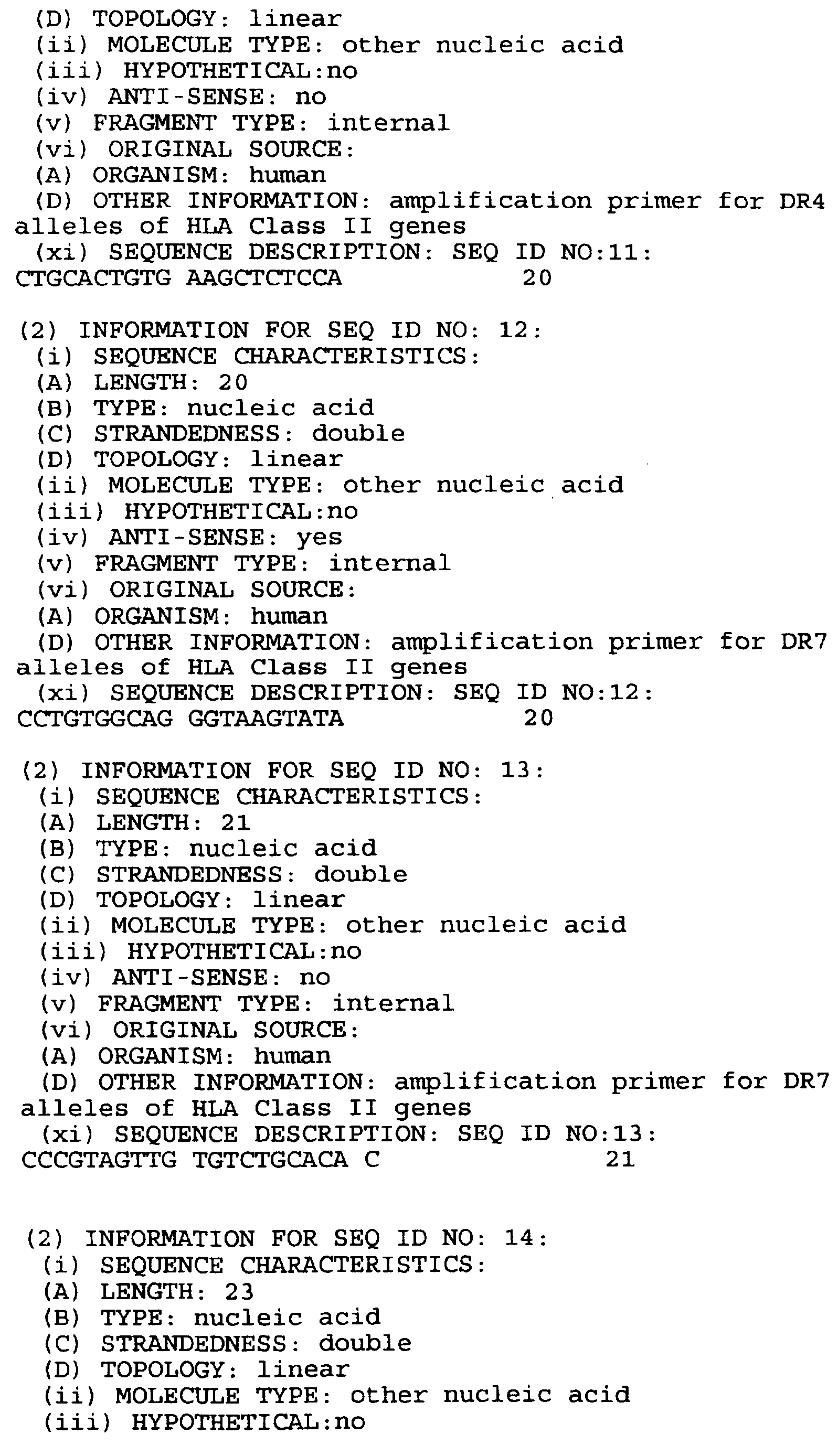
121 Ep: the epo has been informed by wipo that ep was designated in this application
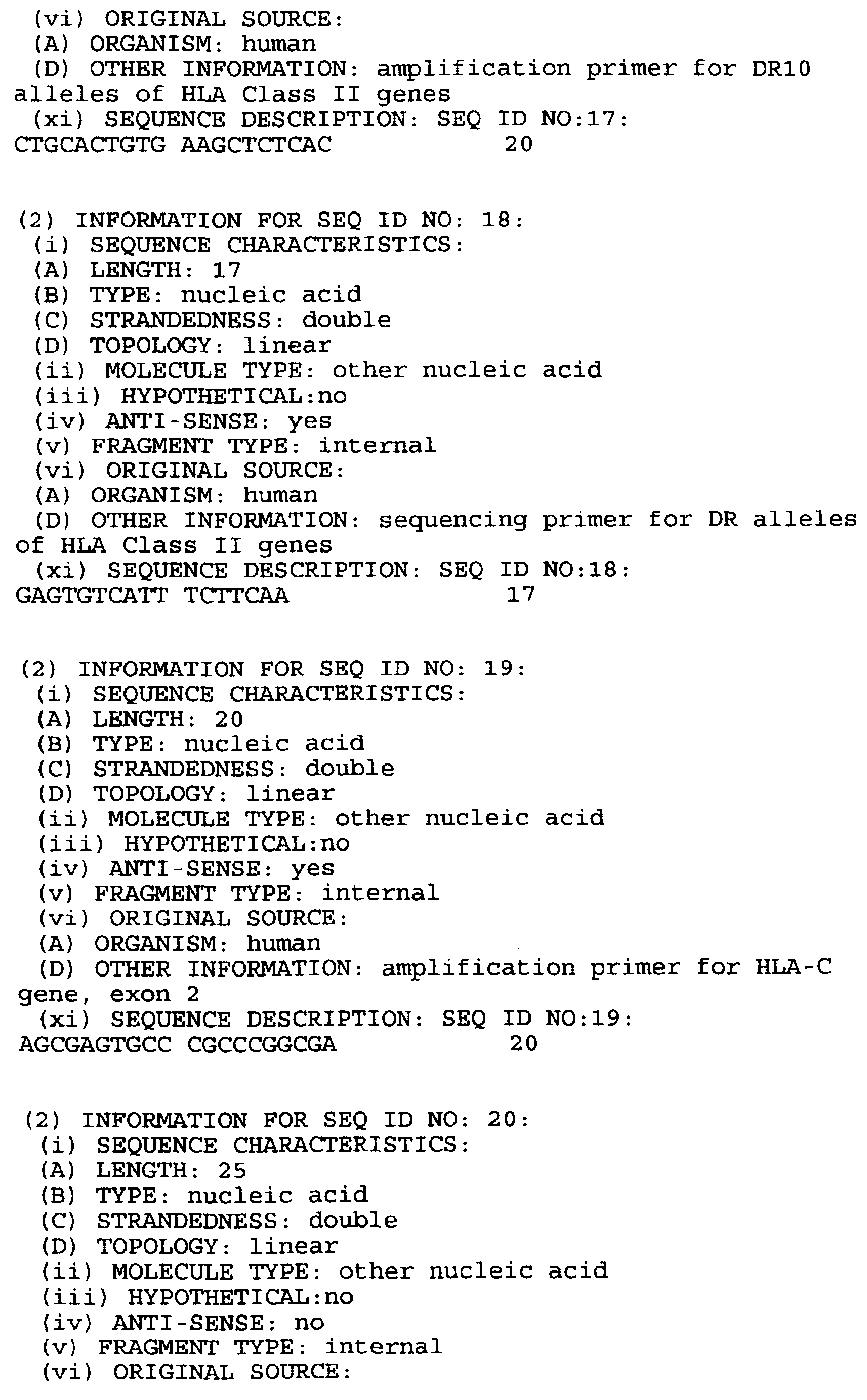
ENP Entry into the national phase

Ref document number: 2239896

Country of ref document: CA

Ref country code: CA

Ref document number: 2239896

Kind code of ref document: A

Format of ref document f/p: F

ENP Entry into the national phase

Ref country code: JP

Ref document number: 1997 523796

Kind code of ref document: A

Format of ref document f/p: F

WWE Wipo information: entry into national phase

Ref document number: 1996944459

Country of ref document: EP

WWP Wipo information: published in national office

Ref document number: 1996944459

Country of ref document: EP

REG Reference to national code

Ref country code: DE

Ref legal event code: 8642

WWG Wipo information: grant in national office

Ref document number: 1996944459

Country of ref document: EP