WO1997029185A1 - Recombinant phages - Google Patents
Recombinant phages Download PDFInfo
- Publication number
- WO1997029185A1 WO1997029185A1 PCT/SE1997/000172 SE9700172W WO9729185A1 WO 1997029185 A1 WO1997029185 A1 WO 1997029185A1 SE 9700172 W SE9700172 W SE 9700172W WO 9729185 A1 WO9729185 A1 WO 9729185A1
- Authority
- WO
- WIPO (PCT)
- Prior art keywords
- bacteriophage
- phage
- ecacc
- bacterial
- treatment
- Prior art date
- Legal status (The legal status is an assumption and is not a legal conclusion. Google has not performed a legal analysis and makes no representation as to the accuracy of the status listed.)
- Ceased
Links
Classifications
-
- A—HUMAN NECESSITIES
- A61—MEDICAL OR VETERINARY SCIENCE; HYGIENE
- A61K—PREPARATIONS FOR MEDICAL, DENTAL OR TOILETRY PURPOSES
- A61K39/00—Medicinal preparations containing antigens or antibodies
- A61K39/395—Antibodies; Immunoglobulins; Immune serum, e.g. antilymphocytic serum
-
- A—HUMAN NECESSITIES
- A61—MEDICAL OR VETERINARY SCIENCE; HYGIENE
- A61K—PREPARATIONS FOR MEDICAL, DENTAL OR TOILETRY PURPOSES
- A61K35/00—Medicinal preparations containing materials or reaction products thereof with undetermined constitution
- A61K35/66—Microorganisms or materials therefrom
- A61K35/76—Viruses; Subviral particles; Bacteriophages
-
- A—HUMAN NECESSITIES
- A61—MEDICAL OR VETERINARY SCIENCE; HYGIENE
- A61K—PREPARATIONS FOR MEDICAL, DENTAL OR TOILETRY PURPOSES
- A61K39/00—Medicinal preparations containing antigens or antibodies
- A61K39/395—Antibodies; Immunoglobulins; Immune serum, e.g. antilymphocytic serum
- A61K39/40—Antibodies; Immunoglobulins; Immune serum, e.g. antilymphocytic serum bacterial
-
- A—HUMAN NECESSITIES
- A61—MEDICAL OR VETERINARY SCIENCE; HYGIENE
- A61K—PREPARATIONS FOR MEDICAL, DENTAL OR TOILETRY PURPOSES
- A61K45/00—Medicinal preparations containing active ingredients not provided for in groups A61K31/00 - A61K41/00
-
- A—HUMAN NECESSITIES
- A61—MEDICAL OR VETERINARY SCIENCE; HYGIENE
- A61K—PREPARATIONS FOR MEDICAL, DENTAL OR TOILETRY PURPOSES
- A61K47/00—Medicinal preparations characterised by the non-active ingredients used, e.g. carriers or inert additives; Targeting or modifying agents chemically bound to the active ingredient
- A61K47/50—Medicinal preparations characterised by the non-active ingredients used, e.g. carriers or inert additives; Targeting or modifying agents chemically bound to the active ingredient the non-active ingredient being chemically bound to the active ingredient, e.g. polymer-drug conjugates
- A61K47/69—Medicinal preparations characterised by the non-active ingredients used, e.g. carriers or inert additives; Targeting or modifying agents chemically bound to the active ingredient the non-active ingredient being chemically bound to the active ingredient, e.g. polymer-drug conjugates the conjugate being characterised by physical or galenical forms, e.g. emulsion, particle, inclusion complex, stent or kit
- A61K47/6901—Conjugates being cells, cell fragments, viruses, ghosts, red blood cells or viral vectors
-
- A—HUMAN NECESSITIES
- A61—MEDICAL OR VETERINARY SCIENCE; HYGIENE
- A61P—SPECIFIC THERAPEUTIC ACTIVITY OF CHEMICAL COMPOUNDS OR MEDICINAL PREPARATIONS
- A61P1/00—Drugs for disorders of the alimentary tract or the digestive system
- A61P1/04—Drugs for disorders of the alimentary tract or the digestive system for ulcers, gastritis or reflux esophagitis, e.g. antacids, inhibitors of acid secretion, mucosal protectants
-
- A—HUMAN NECESSITIES
- A61—MEDICAL OR VETERINARY SCIENCE; HYGIENE
- A61P—SPECIFIC THERAPEUTIC ACTIVITY OF CHEMICAL COMPOUNDS OR MEDICINAL PREPARATIONS
- A61P31/00—Antiinfectives, i.e. antibiotics, antiseptics, chemotherapeutics
-
- C—CHEMISTRY; METALLURGY
- C07—ORGANIC CHEMISTRY
- C07K—PEPTIDES
- C07K14/00—Peptides having more than 20 amino acids; Gastrins; Somatostatins; Melanotropins; Derivatives thereof
- C07K14/005—Peptides having more than 20 amino acids; Gastrins; Somatostatins; Melanotropins; Derivatives thereof from viruses
-
- C—CHEMISTRY; METALLURGY
- C07—ORGANIC CHEMISTRY
- C07K—PEPTIDES
- C07K14/00—Peptides having more than 20 amino acids; Gastrins; Somatostatins; Melanotropins; Derivatives thereof
- C07K14/195—Peptides having more than 20 amino acids; Gastrins; Somatostatins; Melanotropins; Derivatives thereof from bacteria
- C07K14/205—Peptides having more than 20 amino acids; Gastrins; Somatostatins; Melanotropins; Derivatives thereof from bacteria from Campylobacter (G)
-
- C—CHEMISTRY; METALLURGY
- C07—ORGANIC CHEMISTRY
- C07K—PEPTIDES
- C07K16/00—Immunoglobulins [IG], e.g. monoclonal or polyclonal antibodies
- C07K16/12—Immunoglobulins [IG], e.g. monoclonal or polyclonal antibodies against material from bacteria
-
- C—CHEMISTRY; METALLURGY
- C07—ORGANIC CHEMISTRY
- C07K—PEPTIDES
- C07K16/00—Immunoglobulins [IG], e.g. monoclonal or polyclonal antibodies
- C07K16/12—Immunoglobulins [IG], e.g. monoclonal or polyclonal antibodies against material from bacteria
- C07K16/1203—Gram-negative bacteria
- C07K16/121—Helicobacter (G); Campylobacter (G)
-
- C—CHEMISTRY; METALLURGY
- C07—ORGANIC CHEMISTRY
- C07K—PEPTIDES
- C07K19/00—Hybrid peptides, i.e. peptides covalently bound to nucleic acids, or non-covalently bound protein-protein complexes
-
- C—CHEMISTRY; METALLURGY
- C12—BIOCHEMISTRY; BEER; SPIRITS; WINE; VINEGAR; MICROBIOLOGY; ENZYMOLOGY; MUTATION OR GENETIC ENGINEERING
- C12N—MICROORGANISMS OR ENZYMES; COMPOSITIONS THEREOF; PROPAGATING, PRESERVING, OR MAINTAINING MICROORGANISMS; MUTATION OR GENETIC ENGINEERING; CULTURE MEDIA
- C12N7/00—Viruses; Bacteriophages; Compositions thereof; Preparation or purification thereof
-
- C—CHEMISTRY; METALLURGY
- C12—BIOCHEMISTRY; BEER; SPIRITS; WINE; VINEGAR; MICROBIOLOGY; ENZYMOLOGY; MUTATION OR GENETIC ENGINEERING
- C12N—MICROORGANISMS OR ENZYMES; COMPOSITIONS THEREOF; PROPAGATING, PRESERVING, OR MAINTAINING MICROORGANISMS; MUTATION OR GENETIC ENGINEERING; CULTURE MEDIA
- C12N2795/00—Bacteriophages
- C12N2795/00011—Details
- C12N2795/14011—Details ssDNA Bacteriophages
- C12N2795/14111—Inoviridae
- C12N2795/14132—Use of virus as therapeutic agent, other than vaccine, e.g. as cytolytic agent
Definitions
- TECHNICAL HELD This invention relates to bacteriophages useful for the treatment of bacterial infections, especially mucosal bacterial infections such as Helicobacter pylori infections.
- a bacteriophage, or phage is a virus which specifically infects bacteria. Phages bind to their host bacterium and transfer genes encoding various phage proteins. They utilize the protein-synthesizing machinery, amino acids etc., and the energy provided by the host bacterium for their replication (Maloy et al. (eds.): Microbial genetics. Jones and Bartlett Publishers, 1994).
- phages lyse or by other mechanisms destroy specific strains of bacteria.
- the present invention stems from the realisation that genetic modification of phages, in particular filamentous bacteriophages, offers a means for designing new bacterium-specific phages capable of eradicating certain bacteria, e.g. Helicobacter pylori, and having the potential to overcome problems related to antibiotic resistance.
- E. coli cells bearing hair-like F-pili are hosts for filamentous phages such as M13, fd and f1. These Ff (F pili, filamentous) phages are nearly identical in sequence and behaviour (Rashed & Oberer (1986) Microbiological reviews 50, 401-427; Kornberg & Baker, in: DNA Replication, p. 557-570, W.H. Freeman and Co., New York 1992). Ff phages alone among the bacterial viruses do not produce a lytic infection, but rather induce a state in which the infected host cells produce and secrete phage particles without undergoing lysis.
- the single-stranded genome of phage M13 encodes 10 different proteins.
- the DNA is enclosed in a protein coat comprised of approximately 2700 copies of the gene 8 protein (g8p).
- a viable M13 phage also expresses five copies of the 43 kDa gene 3 protein (g3p) on its tip, which protein is responsible for adsorption to E. coli pili.
- the gene 3 protein is anchored to the virus coat via the C-terminal part of the polypeptide chain, whereas the N-terminal globular domain is exposed and mediates the attachment of the phage to the tip of a host F pilus.
- the adsorption complex appears as a "knob-on-stem" structure at one end of the phage.
- the leader sequences of g3p and g8p direct the transport of these proteins into the inner membrane of the bacterial cell.
- the Ff phages have gained popularity as cloning vectors because they have no physical constraints limiting the length of DNA that can be packaged and because they allow the easy purification of single-stranded DNA.
- a phagemid is a vector which carries both the M13 (single-stranded) and plasmid (double-stranded) origins of replication. Phagemids can be grown as plasmids or packaged as recombinant M13 phage with the aid of a helper phage such as M13K07 (Veira & Messing (1987) Methods in Enzymol. 153, 3-11). Recombinant antibody production
- Antibody molecules contain discrete fragments which can be isolated by protease digestion or produced by recombinant techniques.
- One such fragment is the Fv (fragment variable) which is composed only of the V L and V H regions of the antibody.
- Fv fragment variable
- ScFv single-chain Fv
- the commercially available phagemid pCANTAB5 is designed such that antibody variable region genes can be cloned between the leader sequence and the main body of the M13 gene 3.
- the g3p leader sequence directs transport of the resulting fusion protein to the inner membrane and/ or periplasm of E. coli where the main g3p domain attaches the fusion protein to the tip of the assembling phage.
- the expression of the antibody-g3p gene is controlled by an inducible lac promoter on the phagemid.
- H. pylori colonises the wall of the stomach, protected from the acid environment by a layer of mucus which lines the stomach wall, and by a metabolic process which enables the organism to secrete ammonia to neutralise acid.
- Conventional antibiotic treatment appears to have little effect on H. pylori. This is probably due to: (i) poor access of the antimicrobial agent to the organism which is not directly exposed to the blood circulation; and (ii) rapid passage of many oral antibiotics through the stomach, or degradation of such antibiotics in the acid conditions of the stomach.
- the purpose of the present invention is to provide new forms of treatment for eradication of bacteria, especially eradication of bacteria responsible for mucosal bacterial infections such as Helicobacter pylori.
- it provides filamentous bacteriophages genetically modified to have binding specificity towards another bacterial host for use in therapy.
- Methods of treatment of mucosal bacterial infections based on recombinant phages are believed to be superior to conventional antibiotic treatment for several reasons, e.g. the following:
- standard protocols and "standard procedures” are to be understood as protocols and procedures found in an ordinary laboratory manual such as: Sambrook, J., Fritsch, E.F. and Maniatis, T. (1989) Molecular Cloning: A laboratory manual, 2nd Ed., Cold Spring Harbor Laboratory, Cold Spring Harbor, NY.
- this invention provides a modified bacteriophage for use in the treatment or prophylaxis of a bacterial infection, which bacteriophage presents at its surface a recombinant protein comprising
- a second component comprising variable region sequences of an antibody to provide a bacterial antigen binding site, said second component rendering said bacteriophage capable of binding to and thereby inhibiting growth of bacterial cells involved in the etiology of said infection.
- the said modified bacteriophage can e.g. be a modified filamentous phage, such as a modified M13 phage.
- the said bacterial infection can e.g. be a mucosal bacterial infection such as Helicobacter pylori infection.
- the present invention is not restricted to phages capable of incapacitating Helicobacter pylori cells, but rather comprises phages with altered properties which can be used for incapacitating a wide range of bacteria. It will be understood that a phage according to the invention which is specific for any bacterial species can be prepared by the skilled person on the basis of the present disclosure. Phages according to the invention are suitable for treatment of any mucosal bacterial infection accessible to the outside world.
- mucosal epitheliums examples include nasal, lung, gastrointestinal tract, urinary bladder and vagina.
- Campylobacter jejuni Campylobacter coli, Helicobacter, Vibrio cholera or E. coli.
- the said first component of the recombinant protein mentioned above can preferably be derived from the protein responsible for adsorption of the unmodified form of said bacteriophage to bacterial pili, e.g. the g3p protein from a M13 phage.
- the said second component of said recombinant protein can e.g. comprise a recombinant single-chain Fv (ScFv) polypeptide. Consequently, the said recombinant protein can e.g. be a g3p - ScFv fusion protein.
- the bacteriophage according to the invention is a
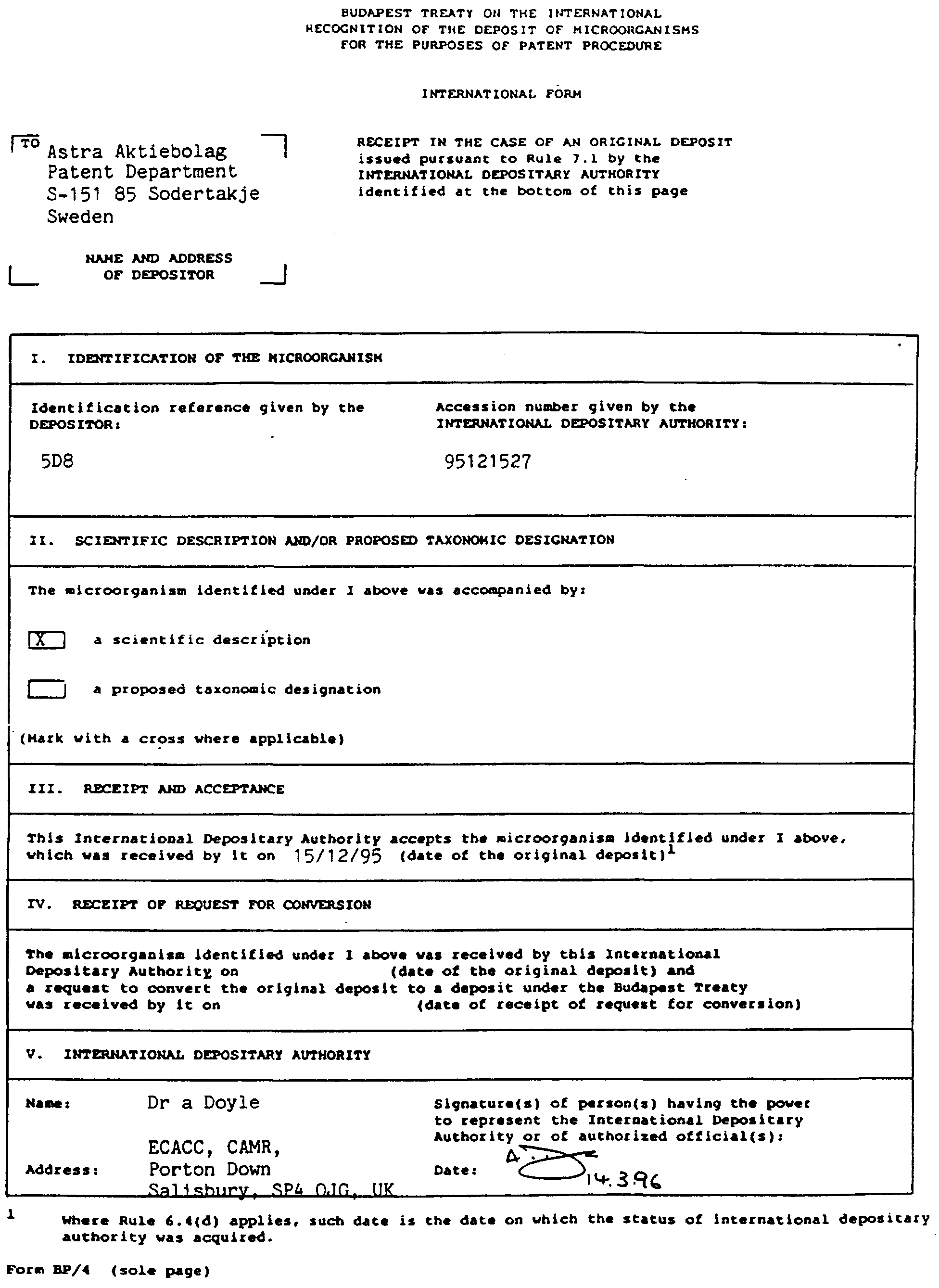
- the bacteriophage for use in the treatment or prophylaxis of Helicobacter pylori infection wherein the antibody variable region sequences of said recombinant polypeptide are variable region sequences of a monoclonal antibody selected from the monoclonal antibodies of hybridoma cell lines 5F8 (ECACC No.95121524), 2H6 (ECACC No.95121526) and 5D8 (ECACC No.95121527).
- the bacteriophage according to the invention can e.g. be the modified M13 bacteriophage designated B8 deposited at the NCIMB under accession number NCIMB 40779, or a derivative thereof which retains the ability to bind and infect Helicobacter pylori.
- Phages with the desired properties can be obtained by e.g. one of the following methods: (a) Screening naturally occurring phages, or phage libraries containing phages expressing a multitude of variable antibody fragments. Phage libraries may be obtained e.g. from immune cells, from a large number of individuals. Due to the vast genetic variability, such large phage libraries are likely to comprise the desired, specific phage directed towards bacteria, to which the individuals previously have been exposed.
- a bacteriophage according to the invention can thus be produced by a method comprising (a) isolating an antibody against a bacterial cell; (b) isolating the DNA encoding for a variable region of the heavy and light chains of the said antibody; and (c) introducing the said DNA into phage DNA so that the said antibody regions will be expressed on the surface of the phage.
- the invention provides a pharmaceutical composition
- phages comprising a bacteriophage according to the invention in admixture with a pharmaceutically acceptable carrier or excipient.
- suitable means of administration of phages according to the invention include:
- muco-adhesive gels i.e. cellulose-based gels, polycarbophil, poloxamer etc.
- gastric mucosa and vaginal mucosa i.e. cellulose-based gels, polycarbophil, poloxamer etc.
- the number of phages to be administered can be determined by the skilled person. Depending on the type of infection, the number of phages to be administered
- administered can range from 10 4 to 10 10 .
- the invention provides a method for treatment of a bacterial infection in a mammal which comprises administering a bacteriophage or pharmaceutical composition according to the invention.
- the said bacterial infections can e.g. be mucosal bacterial infections such as Helicobacter pylori infections.
- Included in the invention is also the use of a bacteriophage according to the invention in the manufacture of a medicament for the treatment or prophylaxis of a mucosal bacterial infection, e.g. Helicobacter pylori infections.
- hybridoma selected from 5F8 (ECACC No.95121524), 2H6 (ECACC No.95121526) and 5D8 (ECACC No.95121527), as well as a monoclonal antibody selected from the monoclonal antibodies produced by the said hybridomas.
- Hybridoma technology in which antibody-producing B- cells from immunized animals are fused with myeloma cells, and resulting hybridoma cell lines producing the desired antibody are selected, is well known in the art.
- H. pylori strains 17874, 25, 66, 253, and 1139 were cultured on Columbia agar supplemented with 8.5% horse blood, 10% horse serum, 1% isovitalex under microaerophilic condition with Anaerocult C at +37°C. Procedures described by Ma J-Y et al. (1994) Scand. J. Gastroenterol. 29, 961-965, were followed to prepare surface protein of H. pylori. Briefly, a total of 4 g of the five strains of H. pylori were incubated for 15 min at room temperature in 100 ml of 0.2 M glycine-HCl (pH 2.2).
- the pH was neutralized with 1 M NaOH.
- the antigen preparation was centrifuged at 10,000 x g for 10 min at +4°C. The pellet was discarded and the supernatant was dialysed overnight against distilled water at +4°C and further used as "H. pylori antigen preparation" or "H. pylori surface proteins".
- Immunization procedure was carried out essentially as described by Cabero, J.L. et al. (1992) Acta Physiol. Scand. 144, 369-378.
- 2 mg/ml of surface protein of H. pylori was emulsified with an equal volume of Freund's complete adjuvant at +4°C.
- Two female DBA/1 mice were injected into the hind footpads with single dose of 50 ⁇ l of antigen emulsion.
- lymphocytes from popliteal lymph nodes were fused with mouse myeloma cells (sp2 line) by using 50% (w/w) PEG 4000.
- the cell fusion suspension was then distributed in five microtiter plates. All cells were grown in DMEM culture medium containing 10% fetal calf serum plus 50 ⁇ g/ml gentamycin.
- Immunoplates were coated with 50 ⁇ l of 0.05 M Na 2 CO 3 /NaHCO- buffer, pH 9.8 containing indicated antigen (10 ⁇ g/ml) and incubated overnight at +4°C. Free binding sites were blocked with PBS containing 0.05% Tween-20 (PBS-T) at +37°C for 1 hour. Primary antibody supernatant was added and incubated at +37°C for 1 hour. Goat anti-mouse IgG peroxidase conjugate was used as a secondary antibody. Bound peroxidase was detected with 0.04% (w/v) OPD and 14 mM hydrogen peroxide in 0.1 M citric acid/ 0.2 M NaHPO 4 , pH 5. The plates were read at 492 nm after stopping reaction by adding 2 M H 2 SO 4 . Washing with PBS-T was performed three times between each incubation.
- Hybridoma clones designated 2H6 (ECACC No.
- EXAMPLE 2 Production of recombinant M13 phage against H. pylori 2.1. Materials QuickPrep mRNA purification kitTM, Mouse ScFv Module kitTM, Expression
- the Recombinant Phage Antibody SystemTM (Pharmacia) was used to express fragments of antibodies as fusion proteins displayed on the phage surface.
- Total mRNA was isolated from hybridoma cell lines (2H6, 5D8, and 5F8) and purified by affinity chromatography on oligo(dT)-cellulose, using QuickPrep mRNA Purification KitTM (Pharmacia).
- the amplified V H and V L chains were purified and isolated by electrophoresis on a 1% agarose gel and were then assembled into a single-chain Fv (ScFv) gene using a DNA linker fragment provided with the kit.
- the linker fragment was constructed such that one end annealed to the 3'-end of the heavy chain while the other end hybridized with the 5'-end of the light chain.
- a single band at correct size for a ScFv gene (750 bp) was observed after electrophoresis.
- the assembled antibody ScFv DNA fragment was amplified with a set of oligonucleotide primers (provided with the kit) that introduced NotI and SfiI restriction sites. The fragment was purified on a spun column (provided with the kit) to remove linkers, dNTPs and Taq DNA polymerase. The ScFv fragment was digested with NotI and SfiI to generate cohesive ends for ligation to the pCANTAB5 vector.
- the transformed cells were grown at +30°C in a medium containing glucose and ampicillin. 3.2 ⁇ 10 4 ScFv clones were obtained. Ampicillin resistant colonies were scraped into medium to generate a library stock.
- Phage-displayed antibodies capable of binding H. pylori antigen were selected by panning against the antigen.
- a culture flask was coated with 5 ml of H. pylori surface protein (15 ⁇ g/ml in 50 mM sodium carbonate buffer, pH 9.6) overnight. After three washes with PBS, the flask containing 10 ml of 1% BSA (w/v) in PBS was incubated at +37°C for 1 h. Following three washes with PBS, the flask was incubated at +37°C for 2 h in phage supernatant (medium containing phage).
- the eluted phage was used to infect log-phase E. coli TGI cells on the SOBAG agar containing 2% Bacto-tryptone, 0.5% Bacto-yeast extract, 0.05% NaCl, 0.01 M MgCl 2 , 0.01% glucose and 0.01% ampicillin. Colonies were picked, transferred, grown and rescued again with M13K07.
- the recombinant phage B8 has a titre 10-fold higher than the helper phage (wide phage).
- Phage B8 (NCIMB No. 40779) was chosen for further analysis.
- the phage-displayed recombinant antibodies were detected and identified in an enzyme-linked immunosorbent assay (ELISA), using the Detection Module KitTM.
- ELISA enzyme-linked immunosorbent assay
- a 96-well micro titre plate was coated with 200 ⁇ l of H. pylori antigen (10 ⁇ g/ml in 50 mM Na 2 CO 3 /NaHCO 3 , pH 9.6) and incubated overnight at +4°C.
- the wells were washed with PBS containing 0.05% Tween 20 (PBS-T) for three times and then blocked with 300 ⁇ l of PBS containing 1% BSA for 1 hour at +37°C.
- Recombinant phage antibodies were diluted with an equal volume of 1%
- bacteria were cultured at +37°C in Brucella broth containing 5% fetal calf serum in an atmosphere containing 10% CO 2 and 5% O 2 .
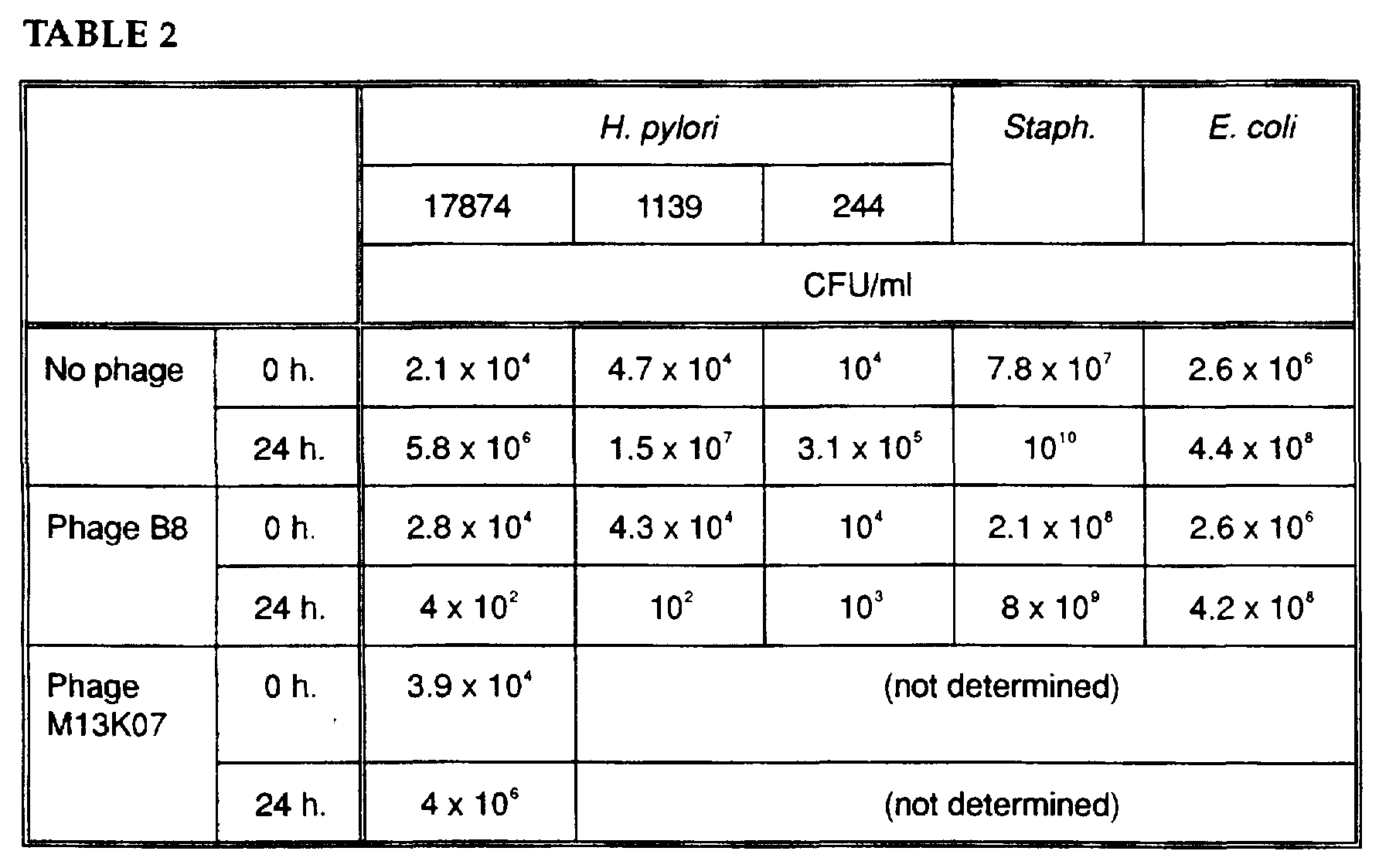
- H. pylori laboratory strains 17874, 1139 and 244, together with Staphylococcus aureus, ATCC 29213, and E. coli TG1 were cultured with or without phage (10 6 phages to 10 ml medium) for 24 h.
- CFU was analyzed at Time 0 and at 24 h (Table 2).
- the recombinant phage decreased CFU of the three H. pylori strains tested but did not affect Staphylococcus or E. coli.
- H. pylori 17874 was not affected by the helper phage M13K07 used as a control
- H. pylori strains 17874, 1139, 253, 25 and 66 were tested together with Streptococcus (Raf M87). Without phage, CFU increased during the 24 h incubation in all the bacteria tested. However, in culture with the recombinant phage present (10 6 phages to 10 ml medium at Time 0), the CFU values of the H. pylori strains 17874, 1139 and 25 were reduced in number and the growth rate of strains 253 and 66 were strongly reduced compared to the controls. Thus all H. pylori strains tested were affected by the phages.
- Phage antibody B8 was concentrated by PEG precipitation and
- immunofluorescent staining was performed on the H. pylori (17874 strain) taken from culture.
- Reagent A 10 12 transducing units/ml of phage antibodies was diluted 1:1 with 1% BSA/PBS;
- Reagent B sheep anti-M13 IgG diluted with 1 % BSA/PBS;
- Reagent C anti-sheep IgFITC conjugate dilute 1:100 in 1% BSA/PBS;
- Reagent D 1 mg (w/v) of pronase in PBS.
- H. pylori Five different strains
- Staphylococcus aureus ATCC 29213
- Streptococcus Raf M 87
- 20 ⁇ l of each bacteria suspension were added onto glass slides.
- the bacteria were air dried and fixed in neutral formalin for 2 min, then washed by dipping slides six times into water and air dried at room temperature.
- Brief treatment in reagent D increased signal-to-noise ratio when sample slides were compared with controls.
- the slides were consecutively incubated with 30 ⁇ l of reagents A, B and C, for 30 min each, and washed in PBS between incubations.
- the slides were air dried and 1 drop of SlowFade was added before covering. All incubations were performed at room temperature. Negative control was performed by omitting the primary antibody.
- the recombinant phage B8 has been deposited under the Budapest Treaty at the National Collections of Industrial and Marine Bacteria (NCIMB), Aberdeen, Scotland, on 20 December 1995 with accession number NCIMB 40779.
Landscapes
- Health & Medical Sciences (AREA)
- Chemical & Material Sciences (AREA)
- Life Sciences & Earth Sciences (AREA)
- Organic Chemistry (AREA)
- Medicinal Chemistry (AREA)
- General Health & Medical Sciences (AREA)
- Genetics & Genomics (AREA)
- Biochemistry (AREA)
- Immunology (AREA)
- Bioinformatics & Cheminformatics (AREA)
- Engineering & Computer Science (AREA)
- Proteomics, Peptides & Aminoacids (AREA)
- Molecular Biology (AREA)
- Biophysics (AREA)
- Pharmacology & Pharmacy (AREA)
- Animal Behavior & Ethology (AREA)
- Public Health (AREA)
- Veterinary Medicine (AREA)
- Microbiology (AREA)
- Virology (AREA)
- Epidemiology (AREA)
- Zoology (AREA)
- Wood Science & Technology (AREA)
- Mycology (AREA)
- General Engineering & Computer Science (AREA)
- Biotechnology (AREA)
- Gastroenterology & Hepatology (AREA)
- Biomedical Technology (AREA)
- Chemical Kinetics & Catalysis (AREA)
- General Chemical & Material Sciences (AREA)
- Nuclear Medicine, Radiotherapy & Molecular Imaging (AREA)
- Communicable Diseases (AREA)
- Hematology (AREA)
- Cell Biology (AREA)
- Oncology (AREA)
- Micro-Organisms Or Cultivation Processes Thereof (AREA)
- Peptides Or Proteins (AREA)
- Medicines Containing Material From Animals Or Micro-Organisms (AREA)
- Preparation Of Compounds By Using Micro-Organisms (AREA)
- Medicines That Contain Protein Lipid Enzymes And Other Medicines (AREA)
Abstract
Description



Claims
Priority Applications (10)
| Application Number | Priority Date | Filing Date | Title |
|---|---|---|---|
| NZ331580A NZ331580A (en) | 1996-02-06 | 1997-02-05 | Recombinant phages |
| DE69728975T DE69728975T2 (en) | 1996-02-06 | 1997-02-05 | RECOMBINANT PHAGES |
| EP97902815A EP0889955B1 (en) | 1996-02-06 | 1997-02-05 | Recombinant phages |
| JP52844697A JP4015195B2 (en) | 1996-02-06 | 1997-02-05 | Recombinant phage |
| AU16817/97A AU712767B2 (en) | 1996-02-06 | 1997-02-05 | Recombinant phages |
| IL12564597A IL125645A0 (en) | 1996-02-06 | 1997-02-05 | Recombinant phages |
| AT97902815T ATE266091T1 (en) | 1996-02-06 | 1997-02-05 | RECOMBINANT PHAGES |
| NO19983456A NO323359B1 (en) | 1996-02-06 | 1998-07-27 | Use of a modified bacteriophage for the manufacture of a medicament. |
| IL125645A IL125645A (en) | 1996-02-06 | 1998-08-03 | Use of a modified bacteriophage in the manufacture of a medicament |
| US09/603,153 US6497874B1 (en) | 1997-02-05 | 2000-06-23 | Recombinant phages |
Applications Claiming Priority (2)
| Application Number | Priority Date | Filing Date | Title |
|---|---|---|---|
| SE9600434-6 | 1996-02-06 | ||
| SE9600434A SE506771C2 (en) | 1996-02-06 | 1996-02-06 | Fusion protein, bacteriophage expressing the protein, their use and hybridoma cells and monoclonals produced by the cells |
Related Child Applications (1)
| Application Number | Title | Priority Date | Filing Date |
|---|---|---|---|
| US09/603,153 Division US6497874B1 (en) | 1997-02-05 | 2000-06-23 | Recombinant phages |
Publications (1)
| Publication Number | Publication Date |
|---|---|
| WO1997029185A1 true WO1997029185A1 (en) | 1997-08-14 |
Family
ID=20401289
Family Applications (1)
| Application Number | Title | Priority Date | Filing Date |
|---|---|---|---|
| PCT/SE1997/000172 Ceased WO1997029185A1 (en) | 1996-02-06 | 1997-02-05 | Recombinant phages |
Country Status (16)
| Country | Link |
|---|---|
| EP (1) | EP0889955B1 (en) |
| JP (1) | JP4015195B2 (en) |
| KR (1) | KR100459638B1 (en) |
| CN (1) | CN1125174C (en) |
| AT (1) | ATE266091T1 (en) |
| AU (1) | AU712767B2 (en) |
| CA (1) | CA2244792A1 (en) |
| DE (1) | DE69728975T2 (en) |
| ES (1) | ES2221033T3 (en) |
| HU (1) | HUP9901242A3 (en) |
| IL (2) | IL125645A0 (en) |
| NO (1) | NO323359B1 (en) |
| NZ (1) | NZ331580A (en) |
| RU (1) | RU2215032C2 (en) |
| SE (1) | SE506771C2 (en) |
| WO (1) | WO1997029185A1 (en) |
Cited By (6)
| Publication number | Priority date | Publication date | Assignee | Title |
|---|---|---|---|---|
| WO2000061190A3 (en) * | 1999-04-09 | 2001-03-01 | Microbiological Res Authority | Treatment of intracellular infection |
| WO2002007742A3 (en) * | 2000-07-25 | 2002-08-08 | Us Gov Health & Human Serv | Bacteriophage having multiple host range |
| US6914123B2 (en) | 2001-04-17 | 2005-07-05 | Genentech, Inc. | Hairpin peptides with a novel structural motif and methods relating thereto |
| US7235626B1 (en) | 1999-06-14 | 2007-06-26 | Genentech, Inc. | Structured peptide scaffold for displaying turn libraries on phage |
| US8685893B2 (en) | 1998-07-27 | 2014-04-01 | Genentech, Inc. | Phage display |
| WO2019070161A2 (en) | 2017-10-04 | 2019-04-11 | Opko Pharmaceuticals, Llc | Articles and methods directed to personalized therapy of cancer |
Families Citing this family (7)
| Publication number | Priority date | Publication date | Assignee | Title |
|---|---|---|---|---|
| KR20040036176A (en) * | 2002-10-23 | 2004-04-30 | (주)엘피스바이오텍 | Protein interaction mediated selective infection of bacteriophage and there use of |
| CN102296051B (en) * | 2011-03-07 | 2014-09-17 | 江苏省农业科学院 | Wide-host-spectrum Salmonella pullorum bacteriophage and application thereof |
| RU2503716C1 (en) * | 2012-09-27 | 2014-01-10 | Федеральное бюджетное учреждение науки Государственный научный центр прикладной микробиологии и биотехнологии (ФБУН ГНЦ ПМБ) | SPECIES-SPECIFIC BACTERIOPHAGE STRAIN HAVING LYTIC ACTIVITY IN RELATION TO Staphylococcus aureus, INCLUDING MULTI-DRUG RESISTANT STRAINS |
| GB201308745D0 (en) * | 2013-05-15 | 2013-06-26 | Imp Innovations | Bacteriophage |
| CN106198523A (en) * | 2016-07-06 | 2016-12-07 | 哈尔滨贝贝凯尔科技发展有限公司 | Trace element detection reagent paper and preparation method thereof |
| US11939592B2 (en) * | 2018-12-27 | 2024-03-26 | National University Corporation Tokai National Higher Education And Research System | Host bacterium specific nanoparticle |
| CN109679981A (en) * | 2019-02-21 | 2019-04-26 | 武汉大学 | A kind of formyl peptides directed evolution bacteriophage and the preparation method and application thereof |
Citations (2)
| Publication number | Priority date | Publication date | Assignee | Title |
|---|---|---|---|---|
| WO1992001047A1 (en) * | 1990-07-10 | 1992-01-23 | Cambridge Antibody Technology Limited | Methods for producing members of specific binding pairs |
| WO1995016027A1 (en) * | 1993-12-06 | 1995-06-15 | Bioinvent International Ab | Method of selecting specific bacteriophages |
Family Cites Families (1)
| Publication number | Priority date | Publication date | Assignee | Title |
|---|---|---|---|---|
| US5478731A (en) * | 1991-04-12 | 1995-12-26 | Stratagene | Polycos vectors |
-
1996
- 1996-02-06 SE SE9600434A patent/SE506771C2/en not_active IP Right Cessation
-
1997
- 1997-02-05 IL IL12564597A patent/IL125645A0/en active IP Right Grant
- 1997-02-05 ES ES97902815T patent/ES2221033T3/en not_active Expired - Lifetime
- 1997-02-05 KR KR10-1998-0705761A patent/KR100459638B1/en not_active Expired - Fee Related
- 1997-02-05 EP EP97902815A patent/EP0889955B1/en not_active Expired - Lifetime
- 1997-02-05 CA CA002244792A patent/CA2244792A1/en not_active Abandoned
- 1997-02-05 WO PCT/SE1997/000172 patent/WO1997029185A1/en not_active Ceased
- 1997-02-05 CN CN97192116A patent/CN1125174C/en not_active Expired - Fee Related
- 1997-02-05 NZ NZ331580A patent/NZ331580A/en unknown
- 1997-02-05 RU RU98116471/13A patent/RU2215032C2/en not_active IP Right Cessation
- 1997-02-05 HU HU9901242A patent/HUP9901242A3/en unknown
- 1997-02-05 JP JP52844697A patent/JP4015195B2/en not_active Expired - Fee Related
- 1997-02-05 AT AT97902815T patent/ATE266091T1/en not_active IP Right Cessation
- 1997-02-05 DE DE69728975T patent/DE69728975T2/en not_active Expired - Fee Related
- 1997-02-05 AU AU16817/97A patent/AU712767B2/en not_active Ceased
-
1998
- 1998-07-27 NO NO19983456A patent/NO323359B1/en unknown
- 1998-08-03 IL IL125645A patent/IL125645A/en not_active IP Right Cessation
Patent Citations (2)
| Publication number | Priority date | Publication date | Assignee | Title |
|---|---|---|---|---|
| WO1992001047A1 (en) * | 1990-07-10 | 1992-01-23 | Cambridge Antibody Technology Limited | Methods for producing members of specific binding pairs |
| WO1995016027A1 (en) * | 1993-12-06 | 1995-06-15 | Bioinvent International Ab | Method of selecting specific bacteriophages |
Cited By (10)
| Publication number | Priority date | Publication date | Assignee | Title |
|---|---|---|---|---|
| US8685893B2 (en) | 1998-07-27 | 2014-04-01 | Genentech, Inc. | Phage display |
| WO2000061190A3 (en) * | 1999-04-09 | 2001-03-01 | Microbiological Res Authority | Treatment of intracellular infection |
| US6660264B1 (en) | 1999-04-09 | 2003-12-09 | Health Protection Agency | Treatment of intracellular infection |
| US7235626B1 (en) | 1999-06-14 | 2007-06-26 | Genentech, Inc. | Structured peptide scaffold for displaying turn libraries on phage |
| WO2002007742A3 (en) * | 2000-07-25 | 2002-08-08 | Us Gov Health & Human Serv | Bacteriophage having multiple host range |
| US7163818B2 (en) | 2000-07-25 | 2007-01-16 | The United States Of America As Represented By The Department Of Health And Human Services | Bacteriophage having multiple host range |
| US6914123B2 (en) | 2001-04-17 | 2005-07-05 | Genentech, Inc. | Hairpin peptides with a novel structural motif and methods relating thereto |
| US7229777B2 (en) | 2001-04-17 | 2007-06-12 | Genentech, Inc. | Hairpin peptides with a novel structural motif and methods relating thereto |
| WO2019070161A2 (en) | 2017-10-04 | 2019-04-11 | Opko Pharmaceuticals, Llc | Articles and methods directed to personalized therapy of cancer |
| US11215618B2 (en) | 2017-10-04 | 2022-01-04 | Hesperix SA | Articles and methods directed to personalized therapy of cancer |
Also Published As
| Publication number | Publication date |
|---|---|
| JP2000505648A (en) | 2000-05-16 |
| NO983456D0 (en) | 1998-07-27 |
| ES2221033T3 (en) | 2004-12-16 |
| NZ331580A (en) | 1999-09-29 |
| DE69728975T2 (en) | 2005-05-04 |
| JP4015195B2 (en) | 2007-11-28 |
| DE69728975D1 (en) | 2004-06-09 |
| EP0889955A1 (en) | 1999-01-13 |
| HUP9901242A2 (en) | 1999-07-28 |
| KR19990082041A (en) | 1999-11-15 |
| ATE266091T1 (en) | 2004-05-15 |
| CN1210558A (en) | 1999-03-10 |
| SE9600434D0 (en) | 1996-02-06 |
| SE9600434L (en) | 1997-08-07 |
| CA2244792A1 (en) | 1997-08-14 |
| NO323359B1 (en) | 2007-04-10 |
| HUP9901242A3 (en) | 2000-03-28 |
| IL125645A0 (en) | 1999-04-11 |
| NO983456L (en) | 1998-10-06 |
| IL125645A (en) | 2006-08-20 |
| CN1125174C (en) | 2003-10-22 |
| RU2215032C2 (en) | 2003-10-27 |
| EP0889955B1 (en) | 2004-05-06 |
| SE506771C2 (en) | 1998-02-09 |
| AU712767B2 (en) | 1999-11-18 |
| AU1681797A (en) | 1997-08-28 |
| KR100459638B1 (en) | 2005-02-24 |
Similar Documents
| Publication | Publication Date | Title |
|---|---|---|
| Cao et al. | Helicobacter pylori-antigen-binding fragments expressed on the filamentous M13 phage prevent bacterial growth | |
| EP0889955B1 (en) | Recombinant phages | |
| CN111848789B (en) | Single chain antibody against S protein of SARS-COV-2 virus and its use | |
| US20020044922A1 (en) | Recombinant phages | |
| JP3574135B2 (en) | How to select specific bacteriophages | |
| CN106008710B (en) | A pig-derived single-chain antibody against enterotoxigenic Escherichia coli K88 FaeG protein and its preparation method | |
| CN109021109A (en) | A kind of ox source property anti-Staphylococcus aureus fusion antibody scFv-Fc and preparation method thereof | |
| CN111848790B (en) | Bovine-derived single-chain antibody for resisting staphylococcus aureus and preparation and application thereof | |
| Park et al. | Affinity maturation of natural antibody using a chain shuffling technique and the expression of recombinant antibodies in Escherichia coli | |
| AU661465B2 (en) | Pseudomonas peptide composition and method for producing the same | |
| US6497874B1 (en) | Recombinant phages | |
| CN120484111B (en) | A composition containing probiotics and its use in treating gastrointestinal diseases | |
| CN109206484B (en) | A peptide for the prevention and treatment of enteropathogenic Escherichia coli infection | |
| Ojobor | The Noncontractile Phage Tail-Like Bacterial Killing Nanomachines–Characterizing the Specificity Determinants of the F-Pyocins of Pseudomonas aeruginosa | |
| AU5328599A (en) | Gastrointestinal bacterial antibody factories | |
| CN118344443B (en) | A protein that enhances the adhesion of bacteriophage to intestinal mucosa | |
| Tout et al. | Phage display and bacterial expression of a recombinant Fab specific for Pseudomonas aeruginosa serotype O6 lipopolysaccharide | |
| Naylor | Development of a Dusky kob scFv gene phage display library for the discovery of antibodies to Brome mosaic virus-a proxy for a novel, emerging fish pathogen | |
| CN114369159A (en) | A kind of bovine-derived anti-Staphylococcus aureus eukaryotic expression single-chain antibody, preparation method and use thereof | |
| Distefano | Functional characterization of the biofilm exopolysaccharide produced by Burkholderia multivorans C1576 | |
| Kaluzny | Investigation of the Wzy alpha and beta O-antigen polymerases in Pseudomonas aeruginosa | |
| McLean | Application of phage display to the study of toxin-receptor interactions |
Legal Events
| Date | Code | Title | Description |
|---|---|---|---|
| WWE | Wipo information: entry into national phase |
Ref document number: 97192116.4 Country of ref document: CN |
|
| AK | Designated states |
Kind code of ref document: A1 Designated state(s): AL AM AT AU AZ BA BB BG BR BY CA CH CN CU CZ DE DK EE ES FI GB GE HU IL IS JP KE KG KP KR KZ LC LK LR LS LT LU LV MD MG MK MN MW MX NO NZ PL PT RO RU SD SE SG SI SK TJ TM TR TT UA UG US UZ VN AM AZ BY KG KZ MD RU TJ TM |
|
| AL | Designated countries for regional patents |
Kind code of ref document: A1 Designated state(s): KE LS MW SD SZ UG AT BE CH DE DK ES FI FR GB GR IE IT LU MC NL PT SE BF BJ CF CG |
|
| DFPE | Request for preliminary examination filed prior to expiration of 19th month from priority date (pct application filed before 20040101) | ||
| 121 | Ep: the epo has been informed by wipo that ep was designated in this application | ||
| WWE | Wipo information: entry into national phase |
Ref document number: 1997902815 Country of ref document: EP |
|
| WWE | Wipo information: entry into national phase |
Ref document number: 1019980705761 Country of ref document: KR |
|
| ENP | Entry into the national phase |
Ref document number: 2244792 Country of ref document: CA Ref document number: 2244792 Country of ref document: CA Kind code of ref document: A |
|
| WWE | Wipo information: entry into national phase |
Ref document number: 331580 Country of ref document: NZ |
|
| REG | Reference to national code |
Ref country code: DE Ref legal event code: 8642 |
|
| WWP | Wipo information: published in national office |
Ref document number: 1997902815 Country of ref document: EP |
|
| WWP | Wipo information: published in national office |
Ref document number: 1019980705761 Country of ref document: KR |
|
| WWG | Wipo information: grant in national office |
Ref document number: 1997902815 Country of ref document: EP |
|
| WWG | Wipo information: grant in national office |
Ref document number: 1019980705761 Country of ref document: KR |