PYRIDYL-PHENYL- UND -BENZYLETHER, VERFAHREN UND ZWISCHENPRODUKTE ZU IHRER HER¬ STELLUNG UND IHRE VERWENDUNG ALS FUNGIZIDE UND ZUR BEKÄMPFUNG VON TIERISCHEN SCHÄDLINGEN Beschreibung
Die vorliegende Erfindung betriff t Pyridyl-phenyl - und -benzyl - ether der Formel I ,
&
sowie deren Salze und N-Oxide, in denen die Substituenten und In¬ dices die folgende Bedeutung haben:
Q C(C02CH3)=CHCH3, C(C02CH3)=CHOCH3, C(CONH2)=NOCH3,
C (C02CH3 ) =NOCH3 , C (CONHCH3 ) =NOCH3 oder N (OCH3 ) -C02CH3 ;
n 0 oder 1 ;
R1 Wasserstoff oder
ein über ein Kohlenstoff-Atom gebundener organischer Rest;
R2 Wasserstoff, Cyano, Halogen, oder
ein über ein Kohlenstoff-, Sauerstoff-, Schwefel- oder Stick- stoff-Atom gebundener organischer Rest;
R3 Wasserstoff, Halogen, Cχ-C4-Alkyl oder Cι-C2-Halogenalkyl;
x 0, 1 oder 2, wobei die Reste R4 verschieden sein können, wenn x für 2 steht;
R4 Cyano, Nitro, Halogen oder
ein über ein Kohlenstoff-, Sauerstoff-, Schwefel- oder Stick- stoff-Atom gebundener organischer Rest;
y 0, 1, 2 oder 3, wobei die Reste R5 verschieden sein können, wenn y für 2 oder 3 steht;
R5 Cyano, Halogen, Cι-C4-Alykl, Cι~C4-Halogenalkyl oder C1-C4-AI- koxy.
Desweiteren betrifft die Erfindung Verfahren und Zwischenprodukte zur Herstellung dieser Verbindungen sowie ihre Verwendung zur Be¬ kämpfung von tierischen Schädlingen und Schadpilzen.
Aus der Literatur (EP-A 254 426; EP-A 278 595; EP-A 299 694; EP-A 363 818; EP-A 350 691; EP-A 398 692; EP-A 407 873; EP-A 477 631; EP-A 513 580; JP-A 04/182,461; WO-A 93/15,046) sind Pyridyl-phe¬ nyl- und -benzylether mit fungiziden bzw. fungiziden und insekti- ziden Eigenschaften bekannt, die sich von den erfindungsgemäßen Verbindungen durch die Substituenten im Pyridylteil unterschei¬ den.
Demgegenüber lagen der vorliegenden Erfindung Verbindungen mit verbesserter Wirkung und verbreitertem Wirkungsspektrum als Auf- gäbe zugrunde.
Demgemäß wurden die eingangs definierten Verbindungen I gefunden. Desweiteren wurden Verfahren und Zwischenprodukte zur Herstellung dieser Verbindungen sowie ihre Verwendung zur Bekämpfung von tie- rischen Schädlingen und Schadpilzen gefunden.
Die Verbindungen I sind auf verschiedenen Wegen nach an sich in der Literatur beschriebenen Verfahren erhältlich.
Der Aufbau der Gruppierung Q ist beispielsweise aus der eingangs zitierten Literatur bekannt und erfolgt im allgemeinen und im be¬ sonderen nach den dort beschriebenen Verfahren.
Üblicherweise geht man bei der Synthese der Verbindungen I so vor, daß man ein Pyridinderivat der Formel Ila in einem inerten Lösungsmittel mit einem Phenol bzw. Benzylalkohol der Formel lila in den entsprechenden Ether der Formel IVa überführt und IV an¬ schließend mit einem O-substituierten Hydroxylamin (R1-0-NH2) oder dessen Salz zu I umsetzt.
L1 in der Formel Ila steht für eine nucleophil austauschbare Ab¬ gangsgruppe wie Halogen (z.B. Fluor, Chlor, Brom oder lod) oder 10 Alkyl- oder Arylsulfonat (z.B. Methylsulfonat, Trifluormethyl- sulfonat, Phenylsulfonat oder Methylphenylsulfonat) .
la) Die Umsetzung von Ila mit lila erfolgt üblicherweise in einem inerten Lösungsmittel bei Temperaturen von 0°C bis 130°C, vor- 15 zugsweise 20°C bis 80°C in Gegenwart einer Base.
Geeignete Lösungsmittel sind aliphatische Kohlenwasserstoffe wie Pentan, Hexan, Cyclohexan und Petrolether, aromatische Kohlenwasserstoffe wie Toluol, o-, m- und p-Xylol, Ether wie
20 Diethylether, Diisopropylether, tert.-Butylmethylether, Di¬ oxan, Anisol und Tetrahydrofuran, Nitrile wie Acetonitril und Propionitril, Ketone wie Aceton, Methylethylketon, Diethylke- ton und tert.-Butylmethylketon, sowie Dimethylsulfoxid und Dimethylformamid, besonders bevorzugt Tetrahydrofuran, Aceto- 25 nitril, Dimethylsulfoxid und Aceton. Es können auch Gemische der genannten Lösungsmittel verwendet werden.
Als Basen kommen allgemein anorganische Verbindungen wie Al¬ kalimetall- und Erdalkalimetallhydroxide wie Lithiumhydroxid,
2Q Natriumhydroxid, Kaliumhydroxid und Calziumhydroxid, Alkali- metall- und Erdalkalimetalloxide wie Lithiumoxid, Natriumo¬ xid, Calziumoxid und Magnesiumoxid, Alkalimetall- und Erdal- kalimetallhydride wie Lithiumhydrid, Natriumhydrid, Kaliumhy¬ drid und Calziumhydrid, Alkalimetallamide wie Lithiumamid,
3c Natriumamid und Kaliumamid, Alkalimetall- und Erdalkalime- tallcarbonate wie Lithiumcarbonat und Calziumcarbonat sowie Alkalimetallhydrogencarbonate wie Natriumhydrogencarbonat, metallorganische Verbindungen, insbesondere Alkalimetallal- kyle wie Methyllithium, Butyllithium und Phenyllithium, Al-
•» kylmagnesiumhalogenide wie Methylmagnesiumchlorid sowie Alka¬ limetall- und Erdalkalimetallalkoholate wie Natriummethano- lat, Natriumethanolat, Kaliumethanolat, Kalium- tert.-Butano- lat und Dimethoxymagnesium, außerdem organische Basen, z.B. tertiäre Amine wie Trimethy1amin, Triethylamin, Tri-isopropy-
Λ - lethylamin und N-Methylpiperidin, Pyridin, substituierte Py- ridine wie Collidin, Lutidin und 4-Dimethylaminopyridin sowie bicyclische Amine in Betracht. Besonders bevorzugt werden Ka-
liumcarbonat, Natriumhydrid und Kalium-tert.-butylat. Die Ba¬ sen werden im allgemeinen in katalytischen Mengen eingesetzt, sie können aber auch äquimolar, im Überschuß oder gegebenen¬ falls als Lösungsmittel verwendet werden.
Die Edukte werden im allgemeinen in äquimolaren Mengen mit¬ einander umgesetzt. Es kann für die Ausbeute vorteilhaft sein, Ila in einem Überschuß bezogen auf lila einzusetzen.
lb) Die Umsetzung von IVa mit dem O-substituierten Hydroxylamin oder dessen Salz erfolgt üblicherweise in einem inerten Lö¬ sungsmittel bei Temperaturen von 0°C bis 80°C, vorzugsweise 20°C bis 60°C, ggf. in Gegenwart einer Säure oder ggf. in Ge¬ genwart einer Base, wenn das O-substituierte Hydroxylamin aus seinem Salz freigesetzt wird.
Geeignete Lösungsmittel sind aliphatische Kohlenwasserstoffe wie Pentan, Hexan, Cyclohexan und Petrolether, aromatische Kohlenwasserstoffe wie Toluol, o-, m- und p-Xylol, haloge- nierte Kohlenwasserstoffe wie Methylenchlorid, Chloroform und Chlorbenzol, Ether wie Diethylether, Diisopropylether, tert.- Butylmethylether, Dioxan, Anisol und Tetrahydrofuran, Nitrile wie Acetonitril und Propionitril, Alkohole wie Methanol, Ethanol, n-Propanol, Isopropanol, n-Butanol und tert.-Butanol sowie Dimethylsulfoxid, Dimethylformamid und Pyridin, beson¬ ders bevorzugt Methanol und Pyridin. Es können auch Gemische der genannten Lösungsmittel verwendet werden.
Als Basen kommen allgemein anorganische Verbindungen wie AI- kalimetall- und Erdalkalimetallhydroxide wie Lithiumhydroxid, Natriumhydroxid, Kaliumhydroxid und Calziumhydroxid, Alkali- metall- und Erdalkalimetalloxide wie Lithiumoxid, Natriumo¬ xid, Calziumoxid und Magnesiumoxid, Alkalimetall- und Erdal¬ kalimetallhydride wie Lithiumhydrid, Natriumhydrid, Kaliumhy- drid und Calziumhydrid, Alkalimetallamide wie Lithiumamid, Natriumamid und Kaliumamid, Alkalimetall- und Erdalkalime- tallcarbonate wie Lithiumcarbonat und Calziumcarbonat sowie Alkalimetallhydrogencarbonate wie Natriumhydrogencarbonat, metallorganische Verbindungen, insbesondere Alkalimetallal- kyle wie Methyllithium, Butyllithium und Phenyllithium, Al- kylmagnesiumhalogenide wie Methylmagnesiumchlorid sowie Alka¬ limetall- und Erdalkalimetallalkoholate wie Natriummethano- lat, Natriumethanolat, Kaliumethanolat, Kalium- tert.-Butano- lat und Dimethoxymagnesium, außerdem organische Basen, z.B. tertiäre Amine wie Trimethylamin, Triethylamin, Tri-isopropy- lethylamin und N-Methylpiperidin, Pyridin, substituierte Py- ridine wie Collidin, Lutidin und 4-Dimethylaminopyridin sowie
bicyclische Amine in Betracht. Besonders bevorzugt werden Py¬ ridin und Natriumhydroxid. Die Basen werden im allgemeinen in katalytischen Mengen eingesetzt, sie können aber auch äquimo- lar, im Überschuß oder gegebenenfalls als Lösungsmittel ver¬ wendet werden.
Als Säuren und saure Katalysatoren finden anorganische Säuren wie Fluorwasserstoffsäure, Salzsäure, Bromwasserstoffsaure, Schwefelsäure und Perchlorsäure, Lewis-Säuren wie Bortrifluo- rid, Aluminiumtrichlorid, Eisen-III-chlorid, Zinn-IV-chlorid, Titan-IV-chlorid und Zink-II-chlorid, sowie organische Säuren wie Ameisensäure, Essigsäure, Propionsaure, Oxalsäure, Zitro¬ nensäure und Trifluoressigsaure Verwendung. Die Säuren werden im allgemeinen in katalytischen Mengen eingesetzt.
Die Edukte werden im allgemeinen in äquimolaren Mengen mit¬ einander umgesetzt. Es kann für die Ausbeute vorteilhaft sein, das Hydroxylamin bzw. dessen Salz in einem Überschuß bezogen auf IVa einzusetzen.
In entsprechender Weise erhält man die Verbindungen I dadurch, daß man ein Pyridinderivat der Formel Ila zunächst mit einem O- substituierten Hydroxylamin (R1-0-NH2) oder dessen Salz in die entsprechende Verbindung der Formel Va überführt und Va anschlie- ßend in einem inerten Lösungsmittel mit einem Phenol bzw. Benzyl¬ alkohol der Formel lila zu I umsetzt.
Die Umsetzungen erfolgen im allgemeinen und im besonderen nach den vorstehend beschriebenen Methoden.
Verbindungen I, in denen n für 1 steht, erhält man bevorzugt da¬ durch, daß man einen Pyridinalkohol der Formel llb in einem iner¬ ten Lösungsmittel mit einer Benzylverbindung der Formel Illb in den entsprechenden Benzylether der Formel IVb überführt und IVb anschließend mit einem O-substituierten Hydroxylamin (Ri-O-NH-j) oder dessen Salz zu I umsetzt.
L
2 in der Formel Illb steht für eine nucleophil austauschbare Ab¬ gangsgruppe wie Halogen (z.B. Chlor, Brom oder lod) oder Alkyl- oder Arylsulfonat (z.B. Methylsulfonat, Trifluormethylsulfonat, Phenylsulfonat oder Methylphenylsulfonat) .
2a) Die Umsetzung von llb mit Illb erfolgt üblicherweise in einem inerten Lösungsmittel bei Temperaturen von 0°C bis 130°C, vor¬ zugsweise 20°C bis 60°C in Gegenwart einer Base.
Geeignete Lösungsmittel sind aliphatische Kohlenwasserstoffe wie Pentan, Hexan, Cyclohexan und Petrolether, aromatische Kohlenwasserstoffe wie Toluol, o-, m- und p-Xylol, haloge¬ nierte Kohlenwasserstoffe wie Methylenchlorid, Chloroform und Chlorbenzol, Ether wie Diethylether, Diisopropylether, tert.- Butylmethylether, Dioxan, Anisol und Tetrahydrofuran, Nitrile wie Acetonitril und Propionitril, Ketone wie Aceton, Methyle¬ thylketon, Diethylketon und tert.-Butylmethylketon, sowie Di¬ methylsulfoxid und Dimethylformamid, besonders bevorzugt Te¬ trahydrofuran, Acetonitril, Dimethylsulfoxid und Aceton. Es können auch Gemische der genannten Lösungsmittel verwendet werden.
Als Basen kommen allgemein anorganische Verbindungen wie Al¬ kalimetall- und Erdalkalimetallhydroxide wie Lithiumhydroxid, Natriumhydroxid, Kaliumhydroxid und Calziumhydroxid, Alkali- metall- und Erdalkalimetalloxide wie Lithiumoxid, Natriumo- xid, Calziumoxid und Magnesiumoxid, Alkalimetall- und Erdal¬ kalimetallhydride wie Lithiumhydrid, Natriumhydrid, Kaliumhy¬ drid und Calziumhydrid, Alkalimetallamide wie Lithiumamid, Natriumamid und Kaliumamid, Alkalimetall- und Erdalkalime- tallcarbonate wie Lithiumcarbonat und Calziumcarbonat sowie Alkalimetallhydrogencarbonate wie Natriumhydrogencarbonat, metallorganische Verbindungen, insbesondere Alkalimetallal- kyle wie Methyllithium, Butyllithium und Phenyllithium, Al- kylmagnesiumhalogenide wie Methylmagnesiumchlorid sowie Alka¬ limetall- und Erdalkalimetallalkoholate wie Natriummethano- lat, Natriumethanolat, Kaliumethanolat, Kalium- tert.-Butano- lat und Dimethoxymagnesium, außerdem organische Basen, z.B. tertiäre Amine wie Trimethylamin, Triethylamin, Tri-isopropy- lethylamin und N-Methylpiperidin, Pyridin, substituierte Py- ridine wie Collidin, Lutidin und 4-Dimethylaminopyridin sowie bicyclische Amine in Betracht. Besonders bevorzugt werden Ka¬ liumcarbonat, Natriumhydrid und Kalium-tert.-butylat. Die Ba¬ sen werden im allgemeinen in katalytischen Mengen eingesetzt, sie können aber auch äquimolar, im Überschuß oder gegebenen¬ falls als Lösungsmittel verwendet werden.
Die Edukte werden im allgemeinen in äquimolaren Mengen mit¬ einander umgesetzt. Es kann für die Ausbeute vorteilhaft sein, llb in einem Überschuß bezogen auf Illb einzusetzen.
Die Umsetzung von IVb mit dem O-substituierten Hydroxyleunin oder dessen Salz erfolgt im allgemeinen und im besonderen nach den vorstehend unter Punkt lb beschriebenen Bedingungen.
Geeignete Lösungsmittel sind aliphatische Kohlenwasserstoffe wie Pentan, Hexan, Cyclohexan und Petrolether, aromatische Kohlenwasserstoffe wie Toluol, o-, m- und p-Xylol, haloge¬ nierte Kohlenwasserstoffe wie Methylenchlorid, Chloroform und Chlorbenzol, Ether wie Diethylether, Diisopropylether, tert.- Butylmethylether, Dioxan, Anisol und Tetrahydrofuran, Nitrile wie Acetonitril und Propionitril, Alkohole wie Methanol, Ethanol, n-Propanol, Isopropanol, n-Butanol und tert.-Butanol sowie Dimethylsulfoxid, Dimethylformamid und Pyridin, beson¬ ders bevorzugt Methanol und Pyridin. Es können auch Gemische der genannten Lösungsmittel verwendet werden.
Als Basen kommen allgemein anorganische Verbindungen wie Al¬ kalimetall- und Erdalkalimetallhydroxide wie Lithiumhydroxid, Natriumhydroxid, Kaliumhydroxid und Calziumhydroxid, Alkali- metall- und Erdalkalimetalloxide wie Lithiumoxid, Natriurno- xid, Calziumoxid und Magnesiumoxid, Alkalimetall- und Erdal- kalimetallhydride wie Lithiumhydrid, Natriumhydrid, Kaliumhy¬ drid und Calziumhydrid, Alkalimetallamide wie Lithiumamid, Natriumamid und Kaliumamid, Alkalimetall- und Erdalkalime- tallcarbonate wie Lithiumcarbonat und Calziumcarbonat sowie Alkalimetallhydrogencarbonate wie Natriumhydrogencarbonat, metallorganische Verbindungen, insbesondere Alkalimetallal- kyle wie Methyllithium, Butyllithium und Phenyllithium, Al- kylmagnesiumhalogenide wie Methylmagnesiumchlorid sowie Alka¬ limetall- und Erdalkalimetallalkoholate wie Natriummethano- lat, Natriumethanolat, Kaliumethanolat, Kalium- tert.-Butano- lat und Dimethoxymagnesium, außerdem organische Basen, z.B. tertiäre Amine wie Trimethylamin, Triethylamin, Tri-isopropy- 1ethylamin und N-Methylpiperidin, Pyridin, substituierte Py- ridine wie Collidin, Lutidin und 4-Dimethylaminopyridin sowie bicyclische Amine in Betracht. Besonders bevorzugt werden Py¬ ridin und Natriumhydroxid. Die Basen werden im allgemeinen in katalytischen Mengen eingesetzt, sie können aber auch äquimo- lar, im Überschuß oder gegebenenfalls als Lösungsmittel ver¬ wendet werden.
Als Säuren und saure Katalysatoren finden anorganische Säuren wie Fluorwasserstoffsäure, Salzsäure, Bromwasserstoffsaure, Schwefelsäure und Perchlorsäure, Lewis-Säuren wie Bortrifluo¬ rid, Aluminiumtrichlorid, Eisen-III-chlorid, Zinn-IV-chlorid, Titan-IV-chlorid und Zink-II-chlorid, sowie organische Säuren wie Ameisensäure, Essigsäure, Propionsaure, Oxalsäure, Zitro¬ nensäure und Trifluoressigsaure Verwendung. Die Säuren werden im allgemeinen in katalytischen Mengen eingesetzt.
Die Edukte werden im allgemeinen in äquimolaren Mengen mit¬ einander umgesetzt. Es kann für die Ausbeute vorteilhaft sein, llb in einem Überschuß bezogen auf Illb einzusetzen.
In entsprechender Weise erhält man die Verbindungen I, in denen n für 1 steht, dadurch, daß man einen Pyridinalkohol der Formel llb zunächst mit einem O-substituierten Hydroxylamin (R
1-0-NH
2) oder dessen Salz in die entsprechende Verbindung der Formel Vb über¬ führt und Vb anschließend in einem inerten Lösungsmittel mit ei¬ ner BenzylVerbindung der Formel Illb zu I umsetzt.
y
Die Umsetzungen erfolgen im allgemeinen und im besonderen nach den vorstehend beschriebenen Methoden.
Die für die Herstellung der Verbindungen I nach den vorstehend beschriebenen Verfahren benötigten Ausgangsstoffe der Formeln lila und lllb sind aus der eingangs genannten Literatur bekannt oder können gemäß den dort beschriebenen Verfahren in analoger Weise hergestellt werden.
Die Ausgangsstoffe der Formel Ila können erhalten werden, indem man ein geeignet substituiertes Pyridin der Formel Via in einem inerten Lösungsmittel in Gegenwart einer metallorganischen Base mit einer aktivierten Carbonsäure der Formel Vlla umsetzt [vgl. J. Organomet. Chem. 5_£, 53-66 (1973); Chem. Ber. 125., 1169-1190 (1992)] .
Y1 in der Formel Via steht für ein Halogenatom, z.B. Fluor, Chlor, Brom und lod, besonders Brom und lod.
L3 in der Formel VII steht für ein Halogenatom, z.B. Fluor, Chlor, Brom und lod, besonders Chlor, oder einen Amid- oder einen Ester- rest. Anstelle der Verbindung Vlla kann auch ein entsprechendes Cyanid R2-CsN eingesetzt werden.
Diese Umsetzung erfolgt üblicherweise in einem inerten Lösungs¬ mittel in Gegenwart einer metallorganischen Basebei Temperaturen von -75°C bis 40°C, vorzugsweise -75°C bis 0°C.
Geeignete Lösungsmittel sind aliphatische Kohlenwasserstoffe wie Pentan, Hexan, Cyclohexan und Petrolether, aromatische Kohlenwas¬ serstoffe wie Toluol, o-, m- und p-Xylol, Ether wie Diethylether, Diisopropylether, tert.-Butylmethylether, Dioxan, Anisol und Te¬ trahydrofuran, sowie Dimethylsulfoxid und Dimethylformamid, be- sonders bevorzugt Diethylether und Tetrahydrofuran. Es können auch Gemische der genannten Lösungsmittel verwendet werden.
Als metallorganische Basen kommen allgemein metallorganische Ver¬ bindungen, insbesondere Alkalimetallalkyle wie Methyllithium, Bu- tyllithium und Phenyllithium, Alkylmagnesiumhalogenide wie Me- thylmagnesiumchlorid sowie in Betracht. Besonders bevorzugt wer¬ den n-Butyllithium. Die Basen können im allgemeinen äquimolar oder im Überschuß verwendet werden.
Die Edukte werden im allgemeinen in äquimolaren Mengen miteinan¬ der umgesetzt. Es kann für die Ausbeute vorteilhaft sein, Vlla in einem Überschuß bezogen auf Via einzusetzen.
Nach einer weiteren Methode erhält man die Verbindungen Ha auch dadurch, daß man ein Pyridincarbonsäure-halogenid der allgemeinen Formel Villa in einem inerten Lösungsmittel mit einer metallorga¬ nischen Verbindung (R2-M; M steht für das Äquivalent eines Metal¬ lions) umsetzt [vgl. DE-A 38 38 243; EP-A 446 872].
Als Metall eignen sich besonders Litium, Magnesium, Kupfer und Zink.
L4 in der Formel Villa steht für ein Halogenatom, z.B. Fluor, Chlor, Brom und lod, besonders Chlor.
Diese Umsetzung erfolgt üblicherweise in einem inerten Lösungs¬ mittel bei Temperaturen von -80°C bis 20°C, vorzugsweise -75°C bis 0°C.
Geeignete Lösungsmittel sind aliphatische Kohlenwasserstoffe wie Pentan, Hexan, Cyclohexan und Petrolether, aromatische Kohlenwas¬ serstoffe wie Toluol, o-, m- und p-Xylol, Ether wie Diethylether, Diisopropylether, tert.-Butylmethylether, Dioxan, Anisol und Te¬ trahydrofuran, besonders bevorzugt Diethylether und Tetrahydrofu- ran. Es können auch Gemische der genannten Lösungsmittel verwen¬ det werden.
Die Edukte werden im allgemeinen in äquimolaren Mengen miteinan¬ der umgesetzt. Es kann für die Ausbeute vorteilhaft sein, die me- tallorganische Verbindung in einem Überschuß bezogen auf Villa einzusetzen.
Nach einer weiteren Methode erhält man die Verbindungen Ila auch dadurch, daß man ein Pyridincarbonsäure-halogenid der allgemeinen Formel Villa in einem inerten Lösungsmittel mit einem Malonsäu- reester der Formel IX in das entsprechnede Triketon Vlllb über¬ führt und Vlllb anschließend zu Ila umsetzt [vgl. Tetrahedron 48 1221. 9233 (1992)].
Rx in den Formeln Vlllb und IX steht für den Rest einer Gruppe R2,
R in den Formeln Vlllb und IX steht für voneinander unabhängige Cι-C4~Alkylgruppen, insbesondere Methyl und Ethyl.
3a) Die Umsetzung von Villa und IX erfolgt üblicherweise in einem inerten Lösungsmittel bei Temperaturen von 0°C bis 120°C, vor¬ zugsweise 20°C bis 80°C in Gegenwart einer Base und ggf. in Gegenwart einer Lewis-Säure wie Magnesium-chlorid.
Geeignete Lösungsmittel sind aliphatische Kohlenwasserstoffe wie Pentan, Hexan, Cyclohexan und Petrolether, aromatische Kohlenwasserstoffe wie Toluol, o-, m- und p-Xylol, haloge¬ nierte Kohlenwasserstoffe wie Methylenchlorid, Chloroform und Chlorbenzol, Ether wie Diethylether, Diisopropylether, tert.- Butylmethylether, Dioxan, Anisol und Tetrahydrofuran, Nitrile wie Acetonitril und Propionitril, Ketone wie Aceton, Methyle¬ thylketon, Diethylketon und tert.-Butylmethylketon, sowie Di¬ methylsulfoxid und Dimethylformamid, besonders bevorzugt To- luol. Es können auch Gemische der genannten Lösungsmittel verwendet werden.
Als Basen kommen allgemein anorganische Verbindungen wie Al¬ kalimetall- und Erdalkalimetallhydroxide wie Lithiumhydroxid, Natriumhydroxid, Kaliumhydroxid und Calziumhydroxid, Alkali- metall- und Erdalkalimetalloxide wie Lithiumoxid, Natriumo¬ xid, Calziumoxid und Magnesiumoxid, Alkalimetall- und Erdal¬ kalimetallhydride wie Lithiumhydrid, Natriumhydrid, Kaliumhy¬ drid und Calziumhydrid, Alkalimetallamide wie Lithiumamid, Natriumamid und Kaliumamid, Alkalimetall- und Erdalkalime- tallcarbonate wie Lithiumcarbonat und Calziumcarbonat sowie Alkalimetallhydrogencarbonate wie Natriumhydrogencarbonat, metallorganische Verbindungen, insbesondere Alkalimetallal- kyle wie Methyllithium, Butyllithium und Phenyllithium, Al- kylmagnesiumhalogenide wie Methylmagnesiumchlorid sowie Alka¬ limetall- und Erdalkalimetallalkoholate wie Natriummethano- lat, Natriumethanolat, Kaliumethanolat, Kalium- tert.-Butano- lat und Dimethoxymagnesium, außerdem organische Basen, z.B. tertiäre Amine wie Trimethylamin, Triethylamin, Tri-isopropy- lethylamin und N-Methylpiperidin, Pyridin, substituierte Py- ridine wie Collidin, Lutidin und 4-Dimethylaminopyridin sowie bicyclische Amine in Betracht. Besonders bevorzugt werden Na¬ triumhydroxid und Triethylamin. Die Basen werden im allgemei¬ nen äquimolar eingesetzt, sie können aber auch im Überschuß oder gegebenenfalls als Lösungsmittel verwendet werden.
Die Edukte werden im allgemeinen in äquimolaren Mengen mit¬ einander umgesetzt. Es kann für die Ausbeute vorteilhaft sein, IX in einem Überschuß bezogen auf Villa einzusetzen.
Die Decarboxylierung von Vlllb zu Ila erfolgt üblicherweise in einem inerten Lösungsmittel bei Temperaturen von 60°C bis 200°C, vorzugsweise 100°C bis 160°C ggf. in Gegenwart einer Base.
Geeignete Lösungsmittel sind aromatische Kohlenwasserstoffe wie Toluol, o-, m- und p-Xylol, halogenierte Kohlenwasser¬ stoffe wie Chlorbenzol, Nitrile wie Acetonitril und Propioni¬ tril, Alkohole wie Methanol, Ethanol, n-Propanol, Isopropa- nol, n-Butanol und tert.-Butanol sowie Dimethylsulfoxid und
Dimethylformamid, besonders bevorzugt Wasser und Dimethylsul¬ foxid. Es können auch Gemische der genannten Lösungsmittel verwendet werden.
Als Basen kommen allgemein anorganische Verbindungen wie Al¬ kalimetall- und Erdalkalimetallhydroxide wie Lithiumhydroxid, Natriumhydroxid, Kaliumhydroxid und Calziumhydroxid, Alkali- metall- und Erdalkalimetalloxide wie Lithiumoxid, Natriumo¬ xid, Calziumoxid und Magnesiumoxid, Alkalimetall- und Erdal- kalimetallhydride wie Lithiumhydrid, Natriumhydrid, Kaliumhy¬ drid und Calziumhydrid, Alkalimetallamide wie Lithiumamid, Natriumamid und Kaliumamid, Alkalimetall- und Erdalkalime- tallcarbonate wie Lithiumcarbonat und Calziumcarbonat sowie Alkalimetallhydrogencarbonate wie Natriumhydrogencarbonat, metallorganische Verbindungen, insbesondere Alkalimetallal- kyle wie Methyllithium, Butyllithium und Phenyllithium, Al- kylmagnesiumhalogenide wie Methylmagnesiumchlorid sowie Alka¬ limetall- und Erdalkalimetallalkoholate wie Natriummethano- lat, Natriumethanolat, Kaliumethanolat, Kalium- tert.-Butano- lat und Dimethoxymagnesium, außerdem organische Basen, z.B. tertiäre Amine wie Trimethylamin, Triethylamin, Tri-isopropy- lethylamin und N-Methylpiperidin, Pyridin, substituierte Py- ridine wie Collidin, Lutidin und 4-Dimethylaminopyridin sowie bicyclische Amine in Betracht. Besonders bevorzugt werden Na- triumhydroxid und Natriummethanolat. Die Basen werden im all¬ gemeinen in katalytischen Mengen eingesetzt, sie können aber auch äquimolar, im Überschuß oder gegebenenfalls als Lösungs¬ mittel verwendet werden.
Die Ausgangsstoffe der Formel llb erhält man dadurch, daß man ein geeignet substituiertes Pyridinderivat der Formel Via in Gegen¬ wart einer Base mit einem Alkoholat (R'-O- M
+; R' bedeutet Cι-C
4~Alkyl, M
+ steht für das Äquivalent eines Alkalimetall- oder Erdalkalimetall-kations, insbesondere Natrium oder Kalium) in den entsprechenden Alkyl-pyridylether der Formel VIb überfüht, VIb anschließend in Analogie zum vorstehend beschriebenen Verfahren (Umsetzung von Via) durch Umsetzung mit einer aktivierten Carbon¬ saure der Formel Vlla in den entsprechenden Ether IIc überführt und IIc anschließend zu llb spaltet.
a) Die Veretherung von Via zu VIb erfolgt üblicherweise bei Tem¬ peraturen von 0°C bis 120°C, vorzugsweise 20°C bis 80°C in Ge¬ genwart eines inerten Lösungsmittels.
Geeignete Lösungsmittel sind aliphatische Kohlenwasserstoffe wie Pentan, Hexan, Cyclohexan und Petrolether, aromatische Kohlenwasserstoffe wie Toluol, o-, m- und p-Xylol, haloge¬ nierte Kohlenwasserstoffe wie Methylenchlorid, Chloroform und Chlorbenzol, Ether wie Diethylether, Diisopropylether, tert.- Butylmethylether, Dioxan, Anisol und Tetrahydrofuran, Nitrile wie Acetonitril und Propionitril, Ketone wie Aceton, Methyle¬ thylketon, Diethylketon und tert.-Butylmethylketon, sowie Di¬ methylsulfoxid und Dimethylformamid, besonders bevorzugt Di¬ methylformamid. Es können auch Gemische der genannten Lö¬ sungsmittel verwendet werden.
Das Pyridinderivat Via und das Alkoholat werden im allgemei¬ nen in äquimolaren Mengen miteinander umgesetzt. Es kann für die Ausbeute vorteilhaft sein, das Alkoholat in einem Über¬ schuß bezogen auf Via oder als Lösungsmittel einzusetzen.
b) Die Umsetzung des Ethers VIb mit der aktivierten Carbonsäure Vlla erfolgt im allgemeinen und im besonderen unter den bei der Herstellung der Verbindungen Ila aus den Verbindungen Via beschriebenen Bedingungen.
c) Die Etherspaltung von IIc nach llb erfolgt üblicherweise in eienm inerten Lösungsmittel bei Temperaturen von 0°C bis 130°C, vorzugsweise 60°C bis 100°C in Gegenwart einer Säure.
Geeignete Lösungsmittel sind aliphatische Kohlenwasserstoffe wie Pentan, Hexan, Cyclohexan und Petrolether, aromatische Kohlenwasserstoffe wie Toluol, o-, m- und p-Xylol, haloge¬ nierte Kohlenwasserstoffe wie Methylenchlorid, Chloroform und Chlorbenzol, Nitrile wie Acetonitril und Propionitril, Alko¬ hole wie Methanol, Ethanol, n-Propanol, Isopropanol, n-Buta¬ nol und tert.-Butanol sowie Dimethylsulfoxid und Dimethylfor¬ mamid, besonders bevorzugt Methylenchlorid. Es können auch Gemische der genannten Lösungsmittel verwendet werden.
Als Säuren und saure Katalysatoren finden anorganische Säuren wie Fluorwasserstoffsäure, Salzsäure, Bromwasserstoffsaure, Schwefelsäure und Perchlorsäure, Lewis-Säuren wie Bortrifluo¬ rid, Aluminiumtrichlorid, Eisen-III-chlorid, Zinn-IV-chlorid, Titan-IV-chlorid und Zink-II-chlorid, sowie organische Säuren wie Ameisensäure, Essigsäure, Propionsaure, Oxalsäure, Zitro¬ nensäure und Trifluoressigsaure Verwendung. Die Säuren werden im allgemeinen in katalytischen Mengen eingesetzt, sie können aber auch äquimolar, im Überschuß oder gegebenenfalls als Lö¬ sungsmittel verwendet werden.
Die Zwischenprodukte der Formel IVa können außerdem dadurch er¬ halten werden, daß man einen Ether der Formel Xa entweder a) in Gegenwart einer metallorganischen Base in einem inerten Lösungsmittel mit einer aktivierten Carbonsäure der Formel XI oder b) in einem inerten Lösungsmittel mit einer Zinn-organischen Verbindung der Formel XII umsetzt.
Y
1 in der Formel Xa steht für ein Halogenatom wie Fluor, Chlor,
Brom und lod, insbesondere Brom und lod.
Y2 in der Formel Vllb steht für ein Halogenatom wie Fluor, Chlor, Brom und lod, insbesondere Chlor.
Die Reste Rx in der Formel XI sind voneinander unabhängig und ste¬ hen für Alkyl.
5a) Die Umsetzung des Ethers Xa mit der aktivierten Carbonsäure VIIb erfolgt im allgemeinen und im besonderen unter den bei der Herstellung der Verbindungen Ila aus den Verbindungen Via beschriebenen Bedingungen.
5b) Die Umsetzung des Ethers Xa mit der Zinn-organischen Verbin¬ dung XI erfolgt üblicherweise in einem inerten Lösungsmittel bei Temperaturen von -70°C bis 40°C, vorzugsweise -70°C bis 0°C in Gegenwart eines Katalysators wie Pd[P(C6H5)3] 3 und PdCl2.
Geeignete Lösungsmittel sind aliphatische Kohlenwasserstoffe wie Pentan, Hexan, Cyclohexan und Petrolether, aromatische Kohlenwasserstoffe wie Toluol, o-, m- und p-Xylol, Ether wie Diethylether, Diisopropylether, tert.-Butylmethylether, Dio- xan, Anisol und Tetrahydrofuran, Nitrile wie Acetonitril und Propionitril, sowie Dimethylsulfoxid und Dimethylformamid, besonders bevorzugt Tetrahydrofuran und Diethylether. Es kön¬ nen auch Gemische der genannten Lösungsmittel verwendet wer¬ den.
Die Edukte werden im allgemeinen in äquimolaren Mengen mit¬ einander umgesetzt. Es kann für die Ausbeute vorteilhaft sein, die Zinn-organische Verbindung XI in einem Überschuß bezogen auf den Ether Xa einzusetzen.
Im allgemeinen ist es bei der Herstellung der erfindungsgemäßen Verbindungen I unerheblich, ob die den Phenyl- bzw. Benzylteil enthaltenden Edukte und Zwischenprodukte (Formeln III, IV und X) sowie bei den Ethern der Formel I bereits die Gruppe Q enthalten oder ob in dieser Position eine Gruppe steht, die nach den in der eingangs zitierten Literatur beschriebenen Verfahren in Q über¬ führt werden kann. Die Gruppe Q kann grundsätzlich auf jeder der genannten Stufen (Formeln III, IV, X und I) aufgebaut werden.
In den neuen Zwischenprodukten allgemeinen Formel II
haben die Substituenten R
2, R
3 und R
4 und der Index x die eingangs gegebene Beutung haben und L und Z stehen für die folgenden Grup- pen:
L Hydroxy oder eine nucleophil austauschbare Abgangsgruppe;
Z Sauerstoff oder eine Gruppe NOR1, wobei R1 die eingangs gege- bene Bedeutung hat.
In den neuen Zwischenprodukten allgemeinen Formel X
Qf^
haben die Substituenten Q, R
2, R
3, R
4 und R
5 und die Indices n, x und Y die eingangs gegebene Beutung haben und Y steht für die folgenden Gruppen: Halogen oder CO-R
2, wobei R
2 die eingangs gege¬ bene Bedeutung hat.
Die Reaktionsgemische werden in üblicher Weise aufgearbeitet, z.B. durch Mischen mit Wasser, Trennung der Phasen und gegebenen¬ falls chromatographische Reinigung der Rohprodukte. Die Zwischen- und Endprodukte fallen z.T. in Form farbloser oder schwach bräun¬ licher, zäher Öle an, die unter vermindertem Druck und bei mäßig erhöhter Temperatur von flüchtigen Anteilen befreit oder gerei- nigt werden. Sofern die Zwischen- und Endprodukte als Feststoffe erhalten werden, kann die Reinigung auch durch Umkristallisieren oder Digerieren erfolgen.
Die Verbindungen I können bei der Herstellung aufgrund ihrer C=C- und C=N-Doppelbindungen als E/Z-Isomerengemische anfallen, die z.B. durch Kristallisation oder Chromatographie in üblicher Weise in die Einzelverbindungen getrennt werden können.
Sofern bei der Synthese Isomerengemische anfallen, ist im allge- meinen jedoch eine Trennung nicht unbedingt erforderlich, da sich die einzelnen Isomere teilweise während der Aufbereitung für die Anwendung oder bei der Anwendung (z.B. unter Licht-, Säure- oder
Baseneinwirkung) ineinander umwandeln können. Entsprechende Um¬ wandlungen können auch nach der Anwendung, beispielsweise bei der Behandlung von Pflanzen in der behandelten Pflanze oder im zu be¬ kämpfenden Schadpilz oder tierischen Schädling erfolgen.
In Bezug auf die C=NOR1-Doppelbindung werden hinsichtlich ihrer Wirksamkeit die E-Isomere der Verbindungen I bevorzugt (Konfigu¬ ration bezogen auf die R2-Gruppe im Verhältnis zur OR1-Gruppe) .
Bei den in den vorstehenden Formeln angegebenen Definitionen der Symbole wurden Sammelbegriffe verwendet, die allgemein repräsen¬ tativ für die folgenden Substituenten stehen:
Halogen: Fluor, Chlor, Brom und Jod;
Alkyl: gesättigte, geradkettige oder verzweigte Kohlenwasser¬ stoffreste mit 1 bis 4, 6, 8 oder 10 Kohlenstoffatomen, z.B. Cι-C6-Alkyl wie Methyl, Ethyl, Propyl, 1-Methylethyl, Butyl, 1-Me- thyl-propyl, 2-Methylpropyl, 1,1-Dimethylethyl, Pentyl, 1-Methyl- butyl, 2-Methylbutyl, 3-Methylbutyl, 2,2-Di-methylpropyl,
1-Ethylpropyl, Hexyl, 1,1-Dimethylpropyl, 1,2-Dimethylpropyl, 1-Methylpentyl, 2-Methylpentyl, 3-Methylpentyl, 4-Methylpentyl, 1,1-Dimethylbutyl, 1,2-Dirnethylbutyl, 1,3-Dimethylbutyl, 2,2-Dimethylbutyl, 2,3-Dimethylbutyl, 3,3-Dimethylbutyl, 1-Ethyl- butyl, 2-Ethylbutyl, 1,1,2-Trimethylpropyl, 1,2,2-Trimethyl- propyl, 1-Ethyl-l-methylpropyl und l-Ethyl-2-methylpropyl;
Halogenalkyl: geradkettige oder verzweigte Alkylgruppen mit 1 bis 10 Kohlenstoffatomen (wie vorstehend genannt) , wobei in diesen Gruppen teilweise oder vollständig die Wasserstoffatome durch Halogenatome wie vorstehend genannt ersetzt sein können, z.B. Cι-C2-Halogenalkyl wie Chlormethyl, Brommethyl, Dichlormethyl, Trichlormethyl, Fluormethyl, Difluormethyl, Trifluormethyl, Chlorfluormethyl, Dichlorfluormethyl, Chlordifluormethyl, 1-Chlorethyl, 1-Bromethyl, 1-Fluorethyl, 2-Fluorethyl, 2,2-Di- fluorethyl, 2,2,2-Trifluorethyl, 2-Chlor-2-fluorethyl, 2-Chlor- 2,2-difluorethyl, 2,2-Dichlor-2-fluorethyl, 2,2,2-Trichlorethyl und Pentafluorethyl;
Alkoxy: geradkettige oder verzweigte Alkylgruppen mit 1 bis 10 Kohlenstoffatomen (wie vorstehend genannt) , welche über ein Sauerstoffatom (-0-) an das Gerüst gebunden sind;
Halogenalkoxy: geradkettige oder verzweigte Halogenalkylgruppen mit 1 bis 10 Kohlenstoffatomen (wie vorstehend genannt) , welche über ein Sauerstoffatom (-0-) an das Gerüst gebunden sind;
Alkylthio: geradkettige oder verzweigte Alkylgruppen mit 1 bis 10 oder 1 bis 4 Kohlenstoffatomen (wie vorstehend genannt) , welche über ein Schwefelatom (-S-) an das Gerüst gebunden sind;
Alkylamino: eine geradkettige oder verzweigte Alkylgruppe mit 1 bis 10 Kohlenstoffatomen (wie vorstehend genannt) , welche über eine Aminogruppe (-NH-) an das Gerüst gebunden ist;
Dialkylamino: zwei voneinander unabhängige geradkettige oder ver- zweigte Alkylgruppen mit jeweils 1 bis 10 Kohlenstoffatomen (wie vorstehend genannt) , welche über ein Stickstoffatom an das Gerüst gebunden sind;
Alkylcarbonyl: eine geradkettige oder verzweigte Alkylgruppe mit 1 bis 10 Kohlenstoffatomen (wie vorstehend genannt) , welche über eine Carbonylgruppe (-CO-) an das Gerüst gebunden ist;
Alkoxycarbonyl: eine Alkoxygruppe mit 1 bis 10 Kohlenstoffatomen (wie vorstehend genannt) , welche über eine Carbonylgruppe (-CO-) an das Gerüst gebunden ist;
Alkylthiocarbonyl: eine Alkylthiogruppe mit 1 bis 10 Kohlenstoff- atomen (wie vorstehend genannt) , welche über eine Carbonylgruppe (-CO-) an das Gerüst gebunden ist;
Alkylaminocarbonyl: eine Alkylaminogruppe mit 1 bis 10 Kohlen¬ stoffatomen (wie vorstehend genannt), welche über eine Carbonyl¬ gruppe (-CO-) an das Gerüst gebunden ist;
Dialkylaminocarbonyl: eine Dialkylaminogruppe (wie vorstehend ge¬ nannt) , welche über eine Carbonylgruppe (-CO-) an das Gerüst ge¬ bunden ist;
Alkylcarbonyloxy: eine geradkettige oder verzweigte Alkylgruppe mit 1 bis 10 Kohlenstoffatomen (wie vorstehend genannt) , welche über eine Carbonyloxygruppe (-C02-) an das Gerüst gebunden ist;
Alkylcarbonylthio: eine geradkettige oder verzweigte Alkylgruppe mit 1 bis 10 Kohlenstoffatomen (wie vorstehend genannt) , welche über eine Carbonylthiogruppe (-C0S-) an das Gerüst gebunden ist;
Alkylcarbonylamino: eine geradkettige oder verzweigte Alkylgruppe mit 1 bis 10 Kohlenstoffatomen (wie vorstehend genannt) , welche über eine Carbonylaminogruppe (-CONH-) an das Gerüst gebunden ist;
Alkylsulfonyl: eine geradkettige oder verzweigte Alkylgruppe mit 1 bis 10 Kohlenstoffatomen (wie vorstehend genannt) , welche über eine Sulfonylgruppe (-S02-) an das Gerüst gebunden ist;
Alkoxysulfonyl: eine Alkoxygruppe mit 1 bis 10 Kohlenstoffatomen (wie vorstehend genannt) , welche über eine Sulfonylgruppe (-S02-) an das Gerüst gebunden ist;
Alkylthiosulfonyl: eine Alkylthiogruppe mit 1 bis 10 Kohlenstoff- atomen (wie vorstehend genannt) , welche über eine Sulfonylgruppe (-S02-) an das Gerüst gebunden ist;
Alkylaminosulfonyl: eine Alkylaminogruppe mit 1 bis 10 Kohlen¬ stoffatomen (wie vorstehend genannt), welche über eine Sulfonyl- gruppe (-S02-) an das Gerüst gebunden ist;
Dialkylaminosulfonyl: eine Dialkylaminogruppe (wie vorstehend ge¬ nannt) , welche über eine Sulfonylgruppe (-S02-) an das Gerüst ge¬ bunden ist;
Alkenyl: ungesättigte, geradkettige oder verzweigte Kohlenwasser¬ stoffreste mit 2 bis 4, 6, 8 oder 10 Kohlenstoffatomen und einer Doppelbindung in einer beliebigen Position, z.B. C2-Cg-Alkenyl wie Ethenyl, 1-Propenyl, 2-Propenyl, 1-Methylethenyl, 1-Butenyl, 2-Butenyl, 3-Butenyl, 1-Methyl-l-propenyl, 2-Methyl-l-propenyl, l-Methyl-2-propenyl, 2-Methyl-2-propenyl, 1-Pentenyl, 2-Pentenyl, 3-Pentenyl, 4-Pentenyl, 1-Methyl-l-butenyl, 2-Methyl-l-butenyl, 3-Methyl-l-butenyl, l-Methyl-2-butenyl, 2-Methyl-2-butenyl, 3-Methyl-2-butenyl, l-Methyl-3-butenyl, 2-Methyl-3-butenyl, 3-Me- thy1-3-butenyl, 1, l-Dimethyl-2-propenyl, 1,2-Dimethyl-l-propenyl, 1,2-Dimethyl-2-propenyl, 1-Ethyl-l-propenyl, 1-Ethyl-2-propenyl, 1-Hexenyl, 2-Hexenyl, 3-Hexenyl, 4-Hexenyl, 5-Hexenyl, 1-Me- thyl-1-pentenyl, 2-Methyl-l-pentenyl, 3-Methyl-l-pentenyl, 4-Me- thyl-1-pentenyl, 1-Methyl-2-pentenyl, 2-Methyl-2-pentenyl, 3-Methyl-2-pentenyl, 4-Methyl-2-pentenyl, l-Methyl-3-pentenyl, 2-Methyl-3pentenyl, 3-Methyl-3-pentenyl, 4-Methyl-3-pentenyl, l-Methyl-4-pentenyl, 2-Methyl-4-pentenyl, 3-Methyl-4-pentenyl, 4-Methyl-4-pentenyl, 1, l-Dimethyl-2-butenyl, 1,1-Dimethyl-3-bute¬ nyl, 1,2-Dimethyl- 1-butenyl, 1, 2-Dirnethy1-2-butenyl, 1,2-Dimethyl-3-butenyl, 1,3-Dimethyl-l-butenyl, 1,3-Dimethyl-2-butenyl, 1,3-Dimethyl- 3-butenyl, 2,2-Dimethyl-3-butenyl, 2,3-Dimethyl-l-butenyl, 2,3-Dimethyl-2-butenyl, 2,3-Dimethyl-3-butenyl, 3,3-Dime- thyl-1-butenyl, 3,3-Dimethyl-2-butenyl, 1-Ethyl-l-butenyl, 1-Eth- yl-2-butenyl, 1-Ethyl-3-butenyl, 2-Ethyl-l-butenyl, 2-Ethyl-2-bu- tenyl, 2-Ethyl-3-butenyl, 1,1,2-Trimethyl-2-propenyl, 1-Eth-
yl-l-methyl-2-propenyl, l-Ethyl-2-methyl-lpropenyl und 1-Eth- yl-2-methyl-2-propenyl;
Halogenalkenyl: ungesättigte, geradkettige oder verzweigte Koh- lenwasserstoffreste mit 2 bis 10 Kohlenstoffatomen und einer Dop¬ pelbindung in einer beliebigen Position (wie vorstehend genannt) , wobei in diesen Gruppen die Wasserstoffatome teilweise oder voll¬ ständig gegen Halogenatome wie vorstehend genannt, insbesondere Fluor, Chlor und Brom, ersetzt sein können;
Alkenyloxy: ungesättigte, geradkettige oder verzweigte Kohlenwas¬ serstoffreste mit 3 bis 10 Kohlenstoffatomen und einer Doppelbin¬ dung in einer beliebigen, nicht zum Heteroatom benachbarten, Po¬ sition (wie vorstehend genannt) , welche über ein Sauerstoffatom (-0-) an das Gerüst gebunden sind;
Halogenalkenyloxy: ungesättigte, geradkettige oder verzweigte Al- kenyloxygruppen mit 3 bis 10 Kohlenstoffatomen (wie vorstehend genannt) , wobei in diesen Gruppen die Wasserstoffatome teilweise oder vollständig gegen Halogenatome wie vorstehend genannt, ins¬ besondere Fluor, Chlor und Brom, ersetzt sein können;
Alkenylthio: ungesättigte, geradkettige oder verzweigte Kohlen¬ wasserstoffreste mit 3 bis 10 Kohlenstoffatomen und einer Doppel- bindung in einer beliebigen, nicht zum Heteroatom benachbarten, Position (wie vorstehend genannt) , welche über ein Schwefelatom (-S-) an das Gerüst gebunden sind;
Alkenylamino: ungesättigte, geradkettige oder verzweigte Kohlen- wasserstoffreste mit 3 bis 10 Kohlenstoffatomen und einer Doppel¬ bindung in einer beliebigen, nicht zum Heteroatom benachbarten, Position (wie vorstehend genannt) , welche über eine Aminogruppe (-NH-) an das Gerüst gebunden sind;
Alkenylcarbonyl: ungesättigte, geradkettige oder verzweigte Koh¬ lenwasserstoffreste mit 2 bis 10 Kohlenstoffatomen und einer Dop¬ pelbindung in einer beliebigen Position (wie vorstehend genannt) , welche über eine Carbonylgruppe (-C0-) an das Gerüst gebunden sind;
Alkenyloxycarbonyl: geradkettige oder verzweigte Alkenyloxygrup- pen mit 3 bis 10 Kohlenstoffatomen (wie vorstehend genannt) , wel¬ che über eine Carbonylgruppe (-C0-) an das Gerüst gebunden sind;
Alkenylthiocarbonyl: geradkettige oder verzweigte Alkenylthio- gruppen mit 3 bis 10 Kohlenstoffatomen (wie vorstehend genannt) , welche über eine Carbonylgruppe (-C0-) an das Gerüst gebunden sind;
Alkenylaminocarbonyl: geradkettige oder verzweigte Alkenylamino- gruppen mit 3 bis 10 Kohlenstoffatomen (wie vorstehend genannt) , welche über eine Carbonylgruppe (-C0-) an das Gerüst gebunden sind;
Alkenylcarbonyloxy: ungesättigte, geradkettige oder verzweigte Kohlenwasserstoffreste mit 2 bis 10 Kohlenstoffatomen und einer Doppelbindung in einer beliebigen Position (wie vorstehend ge¬ nannt) , welche über eine Carbonyloxygruppe (-C02-) an das Gerüst gebunden ist;
Alkenylcarbonylthio: ungesättigte, geradkettige oder verzweigte Kohlenwasserstoffreste mit 2 bis 10 Kohlenstoffatomen und einer Doppelbindung in einer beliebigen Position (wie vorstehend ge- nannt) , welche über eine Carbonylthiogruppe (-C0S-) an das Gerüst gebunden ist;
Alkenylcarbonylamino: ungesättigte, geradkettige oder verzweigte Kohlenwasserstoffreste mit 2 bis 10 Kohlenstoffatomen und einer Doppelbindung in einer beliebigen Position (wie vorstehend ge¬ nannt) , welche über eine Carbonylaminogruppe (-C0NH-) an das Ge¬ rüst gebunden ist;
Alkenylsulfonyl: ungesättigte, geradkettige oder verzweigte Koh- lenwasserstoffreste mit 2 bis 10 Kohlenstoffatomen und einer Dop¬ pelbindung in einer beliebigen Position (wie vorstehend genannt) , welche über eine Sulfonylgruppe (-S02-) an das Gerüst gebunden ist;
Alkenyloxysulfonyl: eine geradkettige oder verzweigte Alkenyloxy- gruppe mit 3 bis 10 Kohlenstoffatomen (wie vorstehend genannt) , welche über eine Sulfonylgruppe (-S02-) an das Gerüst gebunden ist;
Alkenylthiosulfonyl: eine geradkettige oder verzweigte Alkenyl- thiogruppe mit 3 bis 10 Kohlenstoffatomen (wie vorstehend ge¬ nannt) , welche über eine Sulfonylgruppe (-S02-) an das Gerüst ge¬ bunden ist;
Alkenylaminosulfonyl: eine geradkettige oder verzweigte Alkenyla- minogruppe mit 3 bis 10 Kohlenstoffatomen (wie vorstehend ge¬ nannt) , welche über eine Sulfonylgruppe (-S02-) an das Gerüst ge¬ bunden ist;
Alkinyl: geradkettige oder verzweigte Kohlenwasserstoffgruppen mit 2 bis 4, 6, 8 oder 10 Kohlenstoffatomen und einer Dreifach¬ bindung in einer beliebigen Position, z.B. C2-C6-Alkinyl wie Ethinyl, 1-Propinyl, 2-Propinyl, 1-Butinyl, 2-Butinyl, 3-Butinyl, l-Methyl-2-propinyl, 1-Pentinyl, 2-Pentinyl, 3-Pentinyl,
4-Pentinyl, l-Methyl-2-butinyl, l-Methyl-3-butinyl, 2-Methyl-3- butinyl, 3-Methyl-l-butinyl, 1,l-Dimethyl-2-propinyl, l-Ethyl-2- propinyl, 1-Hexinyl, 2-Hexinyl, 3-Hexinyl, 4-Hexinyl, 5-Hexinyl, l-Methyl-2-pentinyl, l-Methyl-3-pentinyl, l-Methyl-4-pentinyl, 2-Methyl-3-pentinyl, 2-Methyl-4-pentinyl, 3-Methyl-l-pentinyl, 3-Methyl-4-pentinyl, 4-Methyl-l-pentinyl, 4-Methyl-2-pentinyl, l,l-Dimethyl-2-butinyl, 1,l-Dimethyl-3-butinyl, 1,2-Dimethyl-3- butinyl, 2,2-Dimethyl-3-butinyl, 3,3-Dimethyl-l-butinyl, 1-Eth- yl-2-butinyl, l-Ethyl-3-butinyl, 2-Ethyl-3-butinyl und 1-Ethyl- l-methyl-2-propinyl;
Halogenalkinyl: ungesättigte, geradkettige oder verzweigte Koh¬ lenwasserstoffreste mit 2 bis 10 Kohlenstoffatomen und einer Dreifachbindung in einer beliebigen Position (wie vorstehend ge- nannt) , wobei in diesen Gruppen die Wasserstoffatome teilweise oder vollständig gegen Halogenatome wie vorstehend genannt, ins¬ besondere Fluor, Chlor und Brom, ersetzt sein können;
Alkinyloxy: ungesättigte, geradkettige oder verzweigte Kohlenwas- serstoffreste mit 3 bis 10 Kohlenstoffatomen und einer Dreifach¬ bindung in einer beliebigen, nicht zum Heteroatom benachbarten, Position (wie vorstehend genannt) , welche über ein Sauerstoffatom (-0-) an das Gerüst gebunden sind;
Halogenalkinyloxy: ungesättigte, geradkettige oder verzweigte Al- kinyloxygruppen mit 3 bis 10 Kohlenstoffatomen (wie vorstehend genannt) , wobei in diesen Gruppen die Wasserstoffatome teilweise oder vollständig gegen Halogenatome wie vorstehend genannt, ins¬ besondere Fluor, Chlor und Brom, ersetzt sein können;
Alkinylthio: ungesättigte, geradkettige oder verzweigte Kohlen¬ wasserstoffreste mit 3 bis 10 Kohlenstoffatomen und einer Drei- fachbindung in einer beliebigen, nicht zum Heteroatom benachbar¬ ten, Position (wie vorstehend genannt), welche über ein Schwefel- atom (-S-) an das Gerüst gebunden sind;
Alkinylamino: ungesättigte, geradkettige oder verzweigte Kohlen¬ wasserstoffreste mit 3 bis 10 Kohlenstoffatomen und einer Drei- fachbindung in einer beliebigen, nicht zum Heteroatom benachbar¬ ten, Position (wie vorstehend genannt) , welche über eine Amino- gruppe (-NH-) an das Gerüst gebunden sind;
Alkinylcarbonyl: ungesättigte, geradkettige oder verzweigte Koh¬ lenwasserstoffreste mit 2 bis 10 Kohlenstoffatomen und einer Dreifachbindung in einer beliebigen Position (wie vorstehend ge- nannt) , welche über eine Carbonylgruppe (-C0-) an das Gerüst ge¬ bunden sind;
Alkinyloxycarbonyl: geradkettige oder verzweigte Alkinyloxygrup- pen mit 3 bis 10 Kohlenstoffatomen (wie vorstehend genannt), wel- che über eine Carbonylgruppe (-C0-) an das Gerüst gebunden sind;
Alkinylthiocarbonyl: geradkettige oder verzweigte Alkinylthio- gruppen mit 3 bis 10 Kohlenstoffatomen (wie vorstehend genannt) , welche über eine Carbonylgruppe (-C0-) an das Gerüst gebunden sind;
Alkinylaminocarbonyl: geradkettige oder verzweigte Alkinylamino- gruppen mit 3 bis 10 Kohlenstoffatomen (wie vorstehend genannt) , welche über eine Carbonylgruppe (-C0-) an das Gerüst gebunden sind;
Alkinylcarbonyloxy: ungesättigte, geradkettige oder verzweigte Kohlenwasserstoffreste mit 2 bis 10 Kohlenstoffatomen und einer Dreifachbindung in einer beliebigen Position (wie vorstehend ge- nannt) , welche über eine Carbonyloxygruppe (-C02-) an das Gerüst gebunden ist;
Alkinylcarbonylthio: ungesättigte, geradkettige oder verzweigte Kohlenwasserstoffreste mit 2 bis 10 Kohlenstoffatomen und einer Dreifachbindung in einer beliebigen Position (wie vorstehend ge¬ nannt) , welche über eine Carbonylthiogruppe (-COS-) an das Gerüst gebunden ist;
Alkinylcarbonylamino: ungesättigte, geradkettige oder verzweigte Kohlenwasserstoffreste mit 2 bis 10 Kohlenstoffatomen und einer Dreifachbindung in einer beliebigen Position (wie vorstehend ge¬ nannt) , welche über eine Carbonylaminogruppe (-C0NH-) an das Ge¬ rüst gebunden ist;
Alkinylsulfonyl: ungesättigte, geradkettige oder verzweigte Koh¬ lenwasserstoffreste mit 2 bis 10 Kohlenstoffatomen und einer Dreifachbindung in einer beliebigen Position (wie vorstehend ge-
nannt) , welche über eine Sulfonylgruppe (-S02-) an das Gerüst ge¬ bunden ist;
Alkinyloxysulfonyl: eine geradkettige oder verzweigte Alkinyloxy- gruppe mit 3 bis 10 Kohlenstoffatomen (wie vorstehend genannt) , welche über eine Sulfonylgruppe (-S02-) an das Gerüst gebunden ist;
Alkinylthiosulfonyl: eine geradkettige oder verzweigte Alkinyl- thiogruppe mit 3 bis 10 Kohlenstoffatomen (wie vorstehend ge¬ nannt) , welche über eine Sulfonylgruppe (-S02-) an das Gerüst ge¬ bunden ist;
Alkinylaminosulfonyl: eine geradkettige oder verzweigte Alkinyla- minogruppe mit 3 bis 10 Kohlenstoffatomen (wie vorstehend ge¬ nannt) , welche über eine Sulfonylgruppe (-S02-) an das Gerüst ge¬ bunden ist;
Cycloalkyl: monocyclische, gesättigte Kohlenwasserstoffgruppen mit 3 bis 6, 8, 10 oder 12 Kohlenstoffringgliedern, z.B.
Cs-Cβ-Cycloalkyl wie Cyclopropyl, Cyclobutyl, Cyclopentyl, Cyclo¬ hexyl, Cycloheptyl und Cyclooctyl;
Cycloalkoxy: monocyclische, gesättigte Kohlenwasserstoffgruppen mit 3 bis 12 Kohlenstoffringgliedern (wie vorstehend genannt) , welche über ein Sauerstoffatom (-0-) an das Gerüst gebunden sind;
Cycloalkylthio: monocyclische, gesättigte Kohlenwasserstoffgrup¬ pen mit 3 bis 12 Kohlenstoffringgliedern (wie vorstehend ge- nannt) , welche über ein Schwefelatom (-S-) an das Gerüst gebunden sind;
Cycloalkylamino: monocyclische, gesättigte Kohlenwasserstoffgrup¬ pen mit 3 bis 12 Kohlenstoffringgliedern (wie vorstehend ge- nannt) , welche über eine Aminogruppe (-NH-) an das Gerüst gebun¬ den sind;
Cycloalkylcarbonyl: monocyclische, gesättigte Kohlenwasserstoff- gruppen mit 3 bis 12 Kohlenstoffringgliedern (wie vorstehend ge- nannt) , welche über eine Carbonylgruppe (-C0-) an das Gerüst ge¬ bunden sind;
Cycloalkoxycarbonyl: eine monocyclische Cycloalkoxygruppe mit 3 bis 12 Kohlenstoffringgliedern (wie vorstehend genannt) , welche über eine Carbonylgruppe (-C0-) an das Gerüst gebunden ist;
Cycloalkylthiocarbonyl: eine monocyclische Cycloalkylthiogruppe mit 3 bis 12 Kohlenstoffringgliedern (wie vorstehend genannt) , welche über eine Carbonylgruppe (-CO-) an das Gerüst gebunden ist;
Cycloalkylaminocarbonyl: eine monocyclische Cycloalkylaminogruppe mit 3 bis 12 Kohlenstoffringgliedern (wie vorstehend genannt) , welche über eine Carbonylgruppe (-C0-) an das Gerüst gebunden ist;
Cycloalkylcarbonyloxy: monocyclische, gesättigte Kohlenwasser¬ stoffgruppen mit 3 bis 12 Kohlenstoffringgliedern (wie vorstehend genannt) , welche über eine Carbonyloxygruppe (-C02-) an das Gerüst gebunden sind;
Cycloalkylcarbonylthio: monocyclische, gesättigte Kohlenwasser¬ stoffgruppen mit 3 bis 12 Kohlenstoffringgliedern (wie vorstehend genannt) , welche über eine Carbonylthiogruppe (-COS-) an das Ge¬ rüst gebunden sind;
Cycloalkylcarbonylamino: monocyclische, gesättigte Kohlenwasser¬ stoffgruppen mit 3 bis 12 Kohlenstoffringgliedern (wie vorstehend genannt) , welche über eine Carbonylaminogruppe (-C0NH-) an das Gerüst gebunden sind;
Cycloalkylsulfonyl: monocyclische, gesättigte Kohlenwasserstoff- gruppen mit 3 bis 12 Kohlenstoffringgliedern (wie vorstehend ge¬ nannt) , welche über eine Sulfonylgruppe (-S02-) an das Gerüst ge¬ bunden sind;
Cycloalkoxysulfonyl: eine monocyclische Cycloalkoxygruppe mit 3 bis 12 Kohlenstoffringgliedern (wie vorstehend genannt) , welche über eine Sulfonylgruppe (-S02-) an das Gerüst gebunden ist;
Cycloalkylthiosulfonyl: eine monocyclische Cycloalkylthiogruppe mit 3 bis 12 Kohlenstoffringgliedern (wie vorstehend genannt) , welche über eine Sulfonylgruppe (-S02-) an das Gerüst gebunden ist; Cycloalkylaminosulfonyl: eine monocyclische Cycloalkylaminogruppe mit 3 bis 12 Kohlenstoffringgliedern (wie vorstehend genannt) , welche über eine Sulfonylgruppe (-S02-) an das Gerüst gebunden ist;
gesättigtes oder partiell ungesättigter cyclischer Rest, welcher neben Rohlenstoffatomen als Ringglieder Heteroatome aus der Grup¬ pe Sauerstoff, Schwefel oder Stickstoff enthalten kann: Cyclo¬ alkyl mit 3 bis 12 Kohlenstoffringgliedern wie vorstehend genannt
oder 5- oder 6-gliedrige Heterocyclen (Heterocyclyl) enthaltend neben Kohlenstoffringgliedern ein bis drei Stickstoffatome und/ oder ein Sauerstoff- oder Schwefelatom oder ein oder zwei Sauer¬ stoff- und/oder Schwefelatome, z.B. 2-Tetrahydrofuranyl, 3-Tetra- hydrofuranyl, 2-Tetrahydrothienyl, 3-Tetrahydrothienyl,
2-Pyrrolidinyl, 3-Pyrrolidinyl, 3-Isoxazolidinyl, 4-Isoxazolidi- nyl, 5-Isoxazolidinyl, 3-Isothiazolidinyl, 4-Isothiazolidinyl, 5-Isothiazolidinyl, 3-Pyrazolidinyl, 4-Pyrazolidinyl, 5-Pyrazoli- dinyl, 2-Oxazolidinyl, 4-Oxazolidinyl, 5-Oxazolidinyl, 2-Thiazo- lidinyl, 4-Thiazolidinyl, 5-Thiazolidinyl, 2-Imidazolidinyl, 4-Imidazolidinyl, 1,2,4-Oxadiazolidin-3-yl, 1,2,4-0xadiazoli- din-5-yl, 1,2,4-Thiadiazolidin-3-yl, 1,2,4-Thiadiazolidin-5- yl, l,2,4-Triazolidin-3-yl, 1,3,4-Oxadiazolidin-2-yl, 1,3,4-Thia- diazolidin-2-yl, l,3,4-Triazolidin-2-yl, 2,3-Dihydrofur-2-yl, 2,3-Dihydrofur-3-yl, 2,4-Dihydrofur-2-yl, 2,4-Dihydrofur-3-yl, 2,3-Dihydrothien-2-yl, 2,3-Dihydrothien-3-yl, 2,4-Dihydrothien- 2-yl, 2,4-Dihydrothien-3-yl, 2,3-Pyrrolin-2-yl, 2,3-Pyrrolin- 3-yl, 2,4-Pyrrolin-2-yl, 2,4-Pyrrolin-3-yl, 2,3-Isoxazolin-3-yl, 3,4-Isoxazolin-3-yl, 4,5-Isoxazolin-3-yl, 2,3-Isoxazolin-4-yl, 3,4-Isoxazolin-4-yl, 4,5-Isoxazolin-4-yl, 2,3-Isoxazolin-5-yl, 3,4-Isoxazolin-5-yl, 4,5-Isoxazolin-5-yl, 2,3-Isothiazolin-3-yl, 3,4-Isothiazolin-3-yl, 4,5-Isothiazolin-3-yl, 2,3-Isothiazo- lin-4-yl, 3,4-Isothiazolin-4-yl, 4,5-Isothiazolin-4-yl, 2,3-Iso- thiazolin-5-yl, 3,4-Isothiazolin-5-yl, 4,5-Isothiazolin-5-yl, 2,3-Dihydropyrazol-l-yl, 2,3-Dihydropyrazol-2-yl, 2,3-Dihydropy- razol-3-yl, 2,3-Dihydropyrazol-4-yl, 2,3-Dihydropyrazol-5-yl, 3,4-Dihydropyrazol-l-yl, 3,4-Dihydropyrazol-3-yl, 3,4-Dihydropy- razol-4-yl, 3,4-Dihydropyrazol-5-yl, 4,5-Dihydropyrazol-l-yl, 4,5-Dihydropyrazol-3-yl, 4,5-Dihydropyrazol-4-yl, 4,5-Dihydropy- razol-5-yl, 2,3-Dihydrooxazol-2-yl, 2,3-Dihydrooxazol-3-yl,
2, 3-Dihydrooxazol-4-yl, 2,3-Dihydrooxazol-5-yl, 3,4-Dihydrooxa- zol-2-yl, 3,4-Dihydrooxazol-3-yl, 3,4-Dihydrooxazol-4-yl, 3,4-Di- hydrooxazol-5-yl, 3,4-Dihydrooxazol-2-yl, 3,4-Dihydrooxazol-3-yl, 3,4-Dihydrooxazol-4-yl, 2-Piperidinyl, 3-Piperidinyl, 4-Piperidinyl, 1,3-Dioxan-5-yl, 2-Tetrahydropyranyl, 4-Tetrahy¬ dropyranyl, 2-Tetrahydrothienyl, 3-Tetrahydropyridazinyl, 4-Te- trahydropyridazinyl, 2-Tetrahydropyrimidinyl, 4-Tetrahydropyrimi- dinyl, 5-Tetrahydropyrimidinyl, 2-Tetrahydropyrazinyl, 1,3,5-Te- trahydro-triazin-2-yl und 1,2,4-Tetrahydrotriazin-3-yl;
Heterocyclyloxy: ein 5- oder 6-gliedriger Heterocyclus (wie vor¬ stehend genannt) , welcher über ein Sauerstoffatom (-0-) an das Gerüst gebunden ist;
Heterocyclylthio: ein 5- oder 6-gliedriger Heterocyclus (wie vor¬ stehend genannt) , welcher über ein Schwefelatom (-S-) an das Ge¬ rüst gebunden ist;
Heterocyclylamino: ein 5- oder 6-gliedriger Heterocyclus (wie vorstehend genannt) , welcher über eine Aminogruppe (-NH-) an das Gerüst gebunden ist;
Heterocyclylcarbonyl: ein 5- oder 6-gliedriger Heterocyclus (wie vorstehend genannt) , welcher über eine Carbonylgruppe (-CO-) an das Gerüst gebunden ist;
Heterocyclyloxycarbonyl: eine Heterocyclyloxygruppe (wie vorste¬ hend genannt) , welche über eine Carbonylgruppe (-CO-) an das Ge- rüst gebunden ist;
Heterocyclylthiocarbonyl: eine Heterocyclylthiogruppe (wie vor¬ stehend genannt) , welche über eine Carbonylgruppe (-CO-) an das Gerüst gebunden ist;
Heterocyclylaminocarbonyl: ein 5- oder 6-gliedriger Heterocyclus (wie vorstehend genannt) , welche über eine Aminocarbonylgruppe (-NHC0-) an das Gerüst gebunden ist;
Heterocyclylcarbonyloxy: ein 5- oder 6-gliedriger Heterocyclus (wie vorstehend genannt) , welcher über eine Carbonyloxygruppe (-C02-) an das Gerüst gebunden ist;
Heterocyclylcarbonylthio: ein 5- oder 6-gliedriger Heterocyclus (wie vorstehend genannt) , welcher über eine Carbonylthiogruppe (-C0S-) an das Gerüst gebunden ist;
Heterocyclylcarbonylamino: ein 5- oder 6-gliedriger Heterocyclus (wie vorstehend genannt) , welcher über eine Carbonylaminogruppe (-C0NH-) an das Gerüst gebunden ist;
Heterocyclylsulfonyl: ein 5- oder 6-gliedriger Heterocyclus (wie vorstehend genannt) , welcher über eine Sulfonylgruppe (-S02-) an das Gerüst gebunden ist;
Aryloxysulfonyl: eine Heterocyclyloxygruppe (wie vorstehend ge¬ nannt) , welche über eine Sulfonylgruppe (-S02-) an das Gerüst ge¬ bunden ist;
Heterocyclylthiosulfonyl: eine Heterocyclylthiogruppe (wie vor¬ stehend genannt) , welcher über eine Sulfonylgruppe (-S02-) an das Gerüst gebunden ist;
Heterocyclylaminosulfonyl: eine Heterocyclylaminogruppe (wie vor¬ stehend genannt), welche über eine Sulfonylgruppe (-S02-) an das Gerüst gebunden ist;
Aryl: ein ein- bis dreikerniges aromatisches Ringsystem enthal- tend 6 bis 14 Kohlenstoffringglieder, z.B. Phenyl, Naphthyl und Anthracenyl;
Aryloxy: ein ein- bis dreikerniges aromatisches Ringsystem (wie vorstehend genannt) , welches über ein Sauerstoffatom (-0-) an das Gerüst gebunden ist;
Arylthio: ein ein- bis dreikerniges aromatisches Ringsystem (wie vorstehend genannt) , welches über ein Schwefelatom (-S-) an das Gerüst gebunden ist;
Arylamino: ein ein- bis dreikerniges aromatisches Ringsystem (wie vorstehend genannt) , welches über eine Aminogruppe (-NH-) an das Gerüst gebunden ist;
Arylcarbonyl: ein ein- bis dreikerniges aromatisches Ringsystem (wie vorstehend genannt) , welches über eine Carbonylgruppe (-C0-) an das Gerüst gebunden ist;
Aryloxycarbonyl: eine ein- bis dreikemige Aryloxygruppe (wie vorstehend genannt) , welche über eine Carbonylgruppe (-C0-) an das Gerüst gebunden ist;
Arylthiocarbonyl: eine ein- bis dreikernige Arylthiogruppe (wie vorstehend genannt) , welche über eine Carbonylgruppe (-C0-) an das Gerüst gebunden ist;
Arylaminocarbonyl: eine ein- bis dreikernige Arylaminogruppe (wie vorstehend genannt) , welche über eine Carbonylgruppe (-C0-) an das Gerüst gebunden ist;
Arylcarbonyloxy: ein ein- bis dreikerniges aromatisches Ring¬ system (wie vorstehend genannt) , welches über eine Carbonyloxy¬ gruppe (-C02-) an das Gerüst gebunden ist; Arylcarbonylthio: ein ein- bis dreikerniges aromatisches Ring- system (wie vorstehend genannt) , welches über eine Carbonylthio¬ gruppe (-C0S-) an das Gerüst gebunden ist;
Arylcarbonylamino: ein ein- bis dreikerniges aromatisches Ring- system (wie vorstehend genannt) , welches über eine Carbonylamino- gruppe (-C0NH-) an das Gerüst gebunden ist;
Arylsulfonyl: ein ein- bis dreikerniges aromatisches Ringsystem (wie vorstehend genannt) , welches über eine Sulfonylgruppe (-S02-) an das Gerüst gebunden ist;
Aryloxysulfonyl: eine ein- bis dreikernige Aryloxygruppe (wie vorstehend genannt) , welche über eine Sulfonylgruppe (-S02-) an das Gerüst gebunden ist;
Arylthiosulfonyl: eine ein- bis dreikernige Arylthiogruppe (wie vorstehend genannt) , welche über eine Sulfonylgruppe (-S02-) an das Gerüst gebunden ist;
Arylaminosulfonyl: eine ein- bis dreikernige Arylaminogruppe (wie vorstehend genannt) , welche über eine Sulfonylgruppe (-S02-) an das Gerüst gebunden ist;
aromatisches Ringsystem, welches neben Kohlenstoffringgliedern Heteroatome aus der Gruppe Sauerstoff, Schwefel und Stickstoff enthalten kann: Aryl wie vorstehend genannt oder ein- oder zwei- kerniges Heteroaryl, z.B. - 5-σliedriσes Heteroaryl. enthaltend ein bis vier Stickstoff- atome oder ein bis drei Stickstoffatome und ein Schwefel- oder Sauerstoffatom: 5-Ring Heteroarylgruppen, welche neben Kohlen¬ stoffatomen ein bis vier Stickstoffatome oder ein bis drei Stickstoffatome und ein Schwefel- oder Sauerstoffatom als Ring- glieder enthalten können, z.B. 2-Furyl, 3-Furyl, 2-Thienyl,
3-Thienyl, 2-Pyrrolyl, 3-Pyrrolyl, 3-Isoxazolyl, 4-Isoxazolyl, 5-Isoxazolyl, 3-Isothiazolyl, 4-Isothiazolyl, 5-Isothiazolyl, 3-Pyrazolyl, 4-Pyrazolyl, 5-Pyrazolyl, 2-Oxazolyl, 4-0xazolyl, 5-0xazolyl, 2-Thiazolyl, 4-Thiazolyl, 5-Thiazolyl, 2-Imidazolyl, 4-Imidazolyl, 1,2,4-Oxadiazol-3-yl, 1,2,4-0xadia- zol-5-yl, l,2,4-Thiadiazol-3-yl, 1,2,4-Thiadiazol-5-yl, 1,2,4-Triazol-3-yl, 1,3,4-Oxadiazol-2-yl, 1,3,4-Thiadiazol- 2-yl und 1,3,4-Triazol-2-yl; - benzokondensiertes 5-σliedriσes Heteroaryl. enthaltend ein bis drei Stickstoffatome oder ein Stickstoffatom und ein Sauer¬ stoff- oder Schwefelatom: 5-Ring Heteroarylgruppen, welche ne¬ ben Kohlenstoffatomen ein bis vier Stickstoffatome oder ein bis drei Stickstoffatome und ein Schwefel- oder Sauerstoffatom als Ringglieder enthalten können, und in welchen zwei benachbarte Kohlenstoffringglieder oder ein Stickstoff- und ein benachbar¬ tes Kohlenstoffringglied durch eine Buta-1, 3-dien-l,4- diylgruppe verbrückt sein können;
- über Stickstoff gebundenes 5-σliedriσes Hβteroarvl. enthaltend ein bis vier Stickstoffatome. oder über Stickstoff gebundenes benzokondensiertes 5-σliedriσes Heteroaryl. enthaltend ein bis drei Stickstoffatome: 5-Ring Heteroarylgruppen, welche neben Kohlenstoffatomen ein bis vier Stickstoffatome bzw. ein bis drei Stickstoffatome als Ringglieder enthalten können, und in welchen zwei benachbarte Kohlenstoffringglieder oder ein Stick¬ stoff- und ein benachbartes Kohlenstoffringglied durch eine Buta-1,3-dien-l,4-diylgruppe verbrückt sein können, wobei diese Ringe über eines der Stickstoffringglieder an das Gerüst gebun¬ den sind;
- 6-σliedriσes Heteroaryl. enthaltend ein bis drei bzw. ein bis vier Stickstoffatome: 6-Ring Heteroarylgruppen, welche neben Kohlenstoffatomen ein bis drei bzw. ein bis vier Stickstoff- atome als Ringglieder enthalten können, z.B. 2-Pyridinyl, 3-Py- ridinyl, 4-Pyridinyl, 3-Pyridazinyl, 4-Pyridazinyl, 2-Pyri- midinyl, 4-Pyrimidinyl, 5-Pyrimidinyl, 2-Pyrazinyl, 1,3,5- Triazin-2-yl und 1,2,4-Triazin-3-yl;
Hetaryloxy: ein ein- bis dreikerniges heteroaromatisches Ring¬ system (wie vorstehend genannt) , welches über ein Sauerstoffatom (-0-) an das Gerüst gebunden ist;
Hetarylthio: ein ein- bis dreikerniges heteroaromatisches Ring- system (wie vorstehend genannt) , welches über ein Schwefelatom (-S-) an das Gerüst gebunden ist;
Hetarylamino: ein ein- bis dreikerniges heteroaromatisches Ring¬ system (wie vorstehend genannt) , welches über eine Aminogruppe (-NH-) an das Gerüst gebunden ist;
Hetarylcarbonyl: ein ein- bis dreikerniges heteroaromatisches Ringsystem (wie vorstehend genannt), welches über eine Carbonyl¬ gruppe (-C0-) an das Gerüst gebunden ist;
Hetaryloxycarbonyl: eine ein- bis dreikernige Hetaryloxygruppe (wie vorstehend genannt) , welche über eine Carbonylgruppe (-C0-) an das Gerüst gebunden ist;
Hetarylthiocarbonyl: eine ein- bis dreikernige Hetarylthiogruppe (wie vorstehend genannt) , welche über eine Carbonylgruppe (-C0-) an das Gerüst gebunden ist;
Hetarylaminocarbonyl: eine ein- bis dreikernige Hetarylamino- gruppe (wie vorstehend genannt) , welche über eine Carbonylgruppe (-C0-) an das Gerüst gebunden ist;
Hetarylcarbonyloxy: ein ein- bis dreikerniges heteroaromatisches Ringsystem (wie vorstehend genannt) , welches über eine Carbonylo¬ xygruppe (-C02-) an das Gerüst gebunden ist;
Hetarylcarbonylthio: ein ein- bis dreikerniges heteroaromatisches Ringsystem (wie vorstehend genannt) , welches über eine Carbonylt- hiogruppe (-C0S-) an das Gerüst gebunden ist;
Hetarylcarbonylamino: ein ein- bis dreikerniges heteroaromati- sches Ringsystem (wie vorstehend genannt) , welches über eine Car¬ bonylaminogruppe (-C0NH-) an das Gerüst gebunden ist;
Hetarylsulfonyl: ein ein- bis dreikerniges heteroaromatisches Ringsystem (wie vorstehend genannt), welches über eine Sulfonyl- gruppe (-S02-) an das Gerüst gebunden ist;
Hetaryloxysulfonyl: eine ein- bis dreikernige Hetaryloxygruppe (wie vorstehend genannt) , welche über eine Sulfonylgruppe (-S02-) an das Gerüst gebunden ist;
Hetarylthiosulfonyl: eine ein- bis dreikernige Hetarylthiogruppe (wie vorstehend genannt) , welche über eine Sulfonylgruppe (-S02-) an das Gerüst gebunden ist;
Hetarylaminosulfonyl: eine ein- bis dreikernige Hetarylamino- gruppe (wie vorstehend genannt) , welche über eine Sulfonylgruppe (-S02-) an das Gerüst gebunden ist;
Alkylen: divalente unverzweigte Ketten aus 3 bis 5 CH2-Gruppen, z.B. CH2, CH2CH2, CH2CH2CH2, CH2CH2CH2CH2 und CH2CH2CH2CH2CH2;
Oxyalkylen: divalente unverzweigte Ketten aus 2 bis 4 CH2-Gruppen, wobei eine Valenz über ein Sauerstoffatom an das Gerüst gebunden ist, z.B. OCH2CH2, OCH2CH2CH2 und OCH2CH2CH2CH2;
Oxyalkylenoxy: divalente unverzweigte Ketten aus 1 bis 3 CH2-Gruppen, wobei beide Valenzen über ein Sauerstoffatom an das Gerüst gebunden ist, z.B. OCH20, OCH2CH20 und OCH2CH2CH20;
Alkenylen: divalente unverzweigte Ketten aus 1 bis 3 CH2-Gruppen und einer CH=CH-Gruppe in einer beliebeigen Position, z.B.
CH=CHCH2, CH2CH=CHCH2, CH=CHCH2CH2, CH2CH=CHCH2CH2 und
CH=CHCH2CH2CH2;
Oxyalkenylen: divalente unverzweigte Ketten aus 0 bis 2 CH2-Grup- pen und einer CH=CH-Gruppe in einer beliebeigen Position, wobei eine Valenz über ein Sauerstoffatom an das Gerüst gebunden ist,
z . B . OCH=CH, OCH=CHCH2 , OCH2CH=CH, OCH2CH=CHCH2 , OCH=CHCH2CH2 und
OCH2CH2-CH=CH;
Oxyalkenylenoxy: divalente unverzweigte Ketten aus 0 bis 2 CH2-Gruppen und einer CH=CH-Gruppe in einer beliebeigen Position, wobei beide Valenzen über ein Sauerstoffatom an das Gerüst gebun¬ den ist, z.B. 0CH=CH0, 0CH=CHCH20, OCH2CH=CHCH20 und 0CH=CHCH2CH2O;
organischer Rest: ggf. subst. Alkyl, Alkenyl, Alkinyl, Cyclo¬ alkyl, Heterocyclyl, Aryl oder Hetaryl.
Der Zusatz "ggf . subst . " in Bezug auf Alkyl -, Alkenyl- und Alkinylgruppen soll zum Ausdruck bringen, daß diese Gruppen par- tiell oder vollständig halogeniert sein können [d. h . die Wasser ¬ stof fatome dieser Gruppen können teilweise oder vollständig durch gleiche oder verschiedene Halogenatome wie vorstehend genannt (vorzugsweise Fluor, Chlor oder Brom) ersetzt sein] und/oder einen bis drei (vorzugsweise einen) der folgenden Reste tragen können:
- Cyano, Nitro, Hydroxy, Amino, Formyl, Carboxyl, Aminocarbonyl, Alkoxy, Halogenalkoxy, Alkylthio, Halogenalkylthio, Alkylamino, Dialkylamino, Alkylcarbonyl, Alkoxycarbonyl, Alkylcarbonyloxy, Alkylaminocarbonyl, Dialkylaminocarbonyl, Alkylcarbonylamino, Alkoxycarbonylamino, Alkylcarbonyl-N-alkylamino und Alkylcarbo- nyl-N-alkylamino, wobei die Alkylgruppen in diesen Resten vor¬ zugsweise 1 bis 6 Kohlenstoffatome, insbesondere 1 bis 4 Kohlenstoffatome enthalten;
- unsubstituiertes oder durch übliche Gruppen substituiertes Cycloalkyl, Cycloalkoxy, Cycloalkylthio, Cycloalkylamino, Cy- cloalkyl-N-alkylamino, Heterocyclyl, Heterocyclyloxy, Heterocy¬ clylthio, Heterocyclylamino oder Heterocyclyl-N-alkylamino, wo¬ bei die cyclischen Systeme 3 bis 12 Ringglieder, vorzugsweise 2 bis 8 Ringglieder, insbesondere 3 bis 6 Ringglieder enthalten und die Alkylgruppen in diesen Resten vorzugsweise 1 bis 6
Kohlenstoffatome, insbesondere 1 bis 4 Kohlenstoffatome enthal¬ ten;
- unsubstituiertes oder durch übliche Gruppen substituiertes Aryl, Aryloxy, Arylthio, Arylamino, Aryl-N-alkylamino, Arylal- koxy, Arylalkylthio, Arylalkylamino, Arylalkyl-N-alkylamino,
Hetaryl, Hetaryloxy, Hetarylthio, Hetarylamino, Hetaryl-N-alky¬ lamino, Hetarylalkoxy, Hetarylalkylthio, Hetarylalkylamino und Hetarylalkyl-N-alkylamino, wobei die Arylreste vorzugsweise 6 bis 10 Ringglieder, insbesondere 6 Ringglieder (Phenyl) enthal- ten, die Hetarylreste insbesondere 5 oder 6 Ringglieder enthal¬ ten und die Alkylgruppen in diesen Resten vorzugsweise 1 bis 6
Kohlenstoffatome, insbesondere 1 bis 4 Kohlenstoffatome enthal¬ ten.
Der Zusatz "ggf. subst" in Bezug auf die cyclischen (gesättigten, ungesättigten oder aromatischen) Gruppen soll zum Ausdruck brin¬ gen, daß diese Gruppen partiell oder vollständig halogeniert sein können [d.h. die Wasserstoffatome dieser Gruppen können teilweise oder vollständig durch gleiche oder verschiedene Halogena tome wie vorstehend genannt (vorzugsweise Fluor, Chlor oder Brom, ins - -besondere Fluor oder Chlor) ersetzt sein] und/oder einen bis vier (insbesondere einen bis drei) der folgenden Reste tragen können:
- Cyano, Nitro, Hydroxy, Amino, Carboxyl, Aminocarbonyl, Alkyl, Haloalkyl, Alkenyl, Haloalkenyl, Alkenyloxy, Haloalkenyloxy, Alkinyl, Haloalkinyl, Alkinyloxy, Haloalkinyloxy, Alkoxy, Halo- genalkoxy, Alkylthio, Halogenalkylthio, Alkylamino, Dialkyl¬ amino, Alkylcarbonyl, Alkoxycarbonyl, Alkylcarbonyloxy, Alkyl- aminocarbonyl, Dialkylaminocarbonyl, Alkylcarbonylamino, Alk- oxycarbonylamino, Alkylcarbonyl-N-alkylamino und Alkylcarbonyl- N-alkylamino, wobei die Alkylgruppen in diesen Resten Vorzugs- weise 1 bis 6 Kohlenstoffatome, insbesondere 1 bis 4 Kohlen¬ stoffatome enthalten und die genannten Alkenyl- oder Alkinyl- gruppen in diesen Resten 2 bis 8, vorzugsweise 2 bis 6, ins¬ besondere 2 bis 4 Kohlenstoffatome enthalten; und/oder einen bis drei (insbesondere einen) der folgenden Reste: - unsubstituiertes oder durch übliche Gruppen substituiertes
Cycloalkyl, Cycloalkoxy, Cycloalkylthio, Cycloalkylamino, Cy- cloalkyl-N-alkylamino, Heterocyclyl, Heterocyclyloxy, Heterocy¬ clylthio, Heterocyclylamino oder Heterocyclyl-N-alkylamino, wo¬ bei die cyclischen Systeme 3 bis 12 Ringglieder, vorzugsweise 2 bis 8 Ringglieder, insbesondere 3 bis 6 Ringglieder enthalten und die Alkylgruppen in diesen Resten vorzugsweise 1 bis 6 Kohlenstoffatome, insbesondere 1 bis 4 Kohlenstoffatome enthal¬ ten;
- unsubstituiertes oder durch übliche Gruppen substituiertes Aryl, Aryloxy, Arylthio, Arylamino, Aryl-N-alkylamino, Arylal¬ koxy, Arylalkylthio, Arylalkylamino, Arylalkyl-N-alkylamino, Hetaryl, Hetaryloxy, Hetarylthio, Hetarylamino, Hetaryl-N-alky¬ lamino, Hetarylalkoxy, Hetarylalkylthio, Hetarylalkylamino und Hetarylalkyl-N-alkylamino, wobei die Arylreste vorzugsweise 6 bis 10 Ringglieder, insbesondere 6 Ringglieder (Phenyl) enthal¬ ten, die Hetarylreste insbesondere 5 oder 6 Ringglieder enthal¬ ten und die Alkylgruppen in diesen Resten vorzugsweise 1 bis 6 Kohlenstoffatome, insbesondere 1 bis 4 Kohlenstoffatome enthal¬ ten; und/oder einen oder zwei (insbesondere einen) der folgenden Reste trage kann:
- Formyl,
- CRiii=NORiv [wobei R111 Wasserstoff, Alkyl, Cycloalkyl und Aryl und Riv Alkyl, Alkenyl, Halogenalkenyl, Alkinyl und Arylalkyl bedeutet (wobei die genannten Alkylgruppen vorzugsweise 1 bis 6 Kohlenstoffatome, insbesondere 1 bis 4 Kohlenstoffatome, ent- halten, die genannten Cycloalkylgruppen, Alkenylgruppen und Al- kinylgruppen vorzugsweise 3 bis 8, insbesondere 3 bis 6, Koh¬ lenstoffatome enthalten) und Aryl insbesondere Phenyl bedeu¬ tet, welches unsubstituiert ist oder durch übliche Gruppen sub¬ stituiert sein kann] oder - NRv-C0-D-Rvi [wobei Rv für Wasserstoff, Hydroxy, Ci-Cβ-Alkyl, C2-C6~Alkenyl, C2-C6~Alkinyl, Cι-C6-Alkoxy, C2-C6-Alkenyloxy, C2-C6-Alkinyloxy, Ci-Cε-Alkoxy-Ci-Cg-alkyl, Ci-Cβ-Alkoxy- Ci-Cβ-alkoxy und Ci-Cg-Alkoxycarbonyl steht, Rvi für Wasserstoff, Cι-C6-Alkyl, C2-C6-Alkenyl, C2-Cg-Alkinyl, C3-C6-Cycloalkyl, Cs-Ce-Cycloalkenyl, Aryl, Aryl-Ci-Cß-alkyl, Hetaryl und Hetaryl- Ci-Ce-alkyl steht und D eine direkte Bindung, Sauerstoff oder Stickstoff bedeutet, wobei der Stickstoff eine der bei Rvi ge¬ nannten Gruppen tragen kann] , und/oder bei denen zwei benachbarte C-Atome der cyclischen Sy- steme eine C3-C5-Alkylen-, C3-Cs-Alkenylen-, Oxy-C2-C4- alkylen-, Oxy-Cχ-C3-alkylenoxy, Oxy-C2-C4-alkenylen-, Oxy-C2- C4~alkenylenoxy- oder Butadiendiylgruppe tragen können, wobei diese Brücken ihrerseits partiell oder vollständig halogeniert sein können und/oder einen bis drei, insbesondere einen oder zwei der folgenden Reste tragen können:
- Cι-C4-Alkyl, C1-C4-Halogenalkyl, Cι-C4-Alkoxy, Cι~C4-Halogen- alkoxy und Cι-C4-Alkylthio.
Unter üblichen Gruppen sind insbesondere die folgenden Sub- stituenten zu verstehen: Halogen, Cyano, Nitro, Cι-C4-Alkyl,
Cι-C4-Halogenalkyl, Cι-C4~Alkoxy, C1-C4-Halogenalkoxy, Cι-C4*-*Alkyl- amino, Di-Cι-C4-Alkylamino und Cχ-C4-Alkylthio.
Besonders bevorzugt werden Verbindungen I, in denen Q für C(C02CH3)=CHCH3, C(C02CH3)=CH0CH3, C(C02CH3)=NOCH3, C(CONHCH3)=NOCH3 oder N(OCH3)-C02CH3 steht.
Besonders bevorzugt sind Verbindungen der Formel I, in denen R1 für Wasserstoff oder eine der folgenden Gruppen steht: ggf. subst. Alkyl, Alkenyl, Alkinyl, Cycloalkyl, Heterocyclyl, Aryl oder Heteroaryl.
Insbesondere werden Verbindungen I bevorzugt, in denen R1 für Was¬ serstoff steht.
Außerdem werden Verbindungen I besonders bevorzugt, in denen R1 für ggf. subst. Ci-Cβ-Alkyl steht.
Gleichermaßen besonders bevorzugt sind Verbindungen I, in denen R1 für ggf. subst. C3-C6~Alkenyl steht.
Daneben werden Verbindungen I besonders bevorzugt, in denen R1 für ggf. subst. C3-C6~Alkinyl steht.
Insbesondere werden auch Verbindungen I bevorzugt, in denen R1 für Ci-Cß-Halogenalkyl steht.
Außerdem werden Verbindungen I besonders bevorzugt, in denen R1 für C3-C6~Halogenalkenyl steht.
Gleichermaßen besonders bevorzugt sind Verbindungen I, in denen R1 für Aryl-Cι-C2-alkyl steht, wobei der Arylrest gegebenfalls sub- stituiert sein kann.
Besonders bevorzugt sind Verbindungen I, in denen R1 für Aryl- Cι~C2-alkyl steht, wobei der Arylrest partiell oder vollständig halogeniert sein kann und/oder eine bis drei der folgenden Grup- pen tragen kann: Cι-C4~Alkyl, C1-C4-Halogenalkyl und Cι-C4-Alkoxy.
Daneben werden Verbindungen I besonders bevorzugt, in denen R1 für C3-C6-Cycloalkyl-Cι-C2-alkyl steht, wobei der Cycloalkylrest gege¬ benfalls substituiert sein kann.
Insbesondere werden Verbindungen I bevorzugt, in denen R1 für C3-C6-Cycloalkyl-Cι-C2-alkyl steht, wobei der Cycloalkylrest par¬ tiell oder vollständig halogeniert sein kann und/oder eine bis drei Cι-C4~Alkylgruppen tragen kann.
Desweiteren werden Verbindungen I besonders bevorzugt, in denen R1 für Hetaryl-Cι-C2-alkyl steht, wobei der Hetarylrest gegebenfalls substituiert sein kann.
Insbesondere werden Verbindungen I bevorzugt, in denen R1 für He- taryl-Cχ-C2-alkyl steht, wobei der Hetarylrest partiell oder voll¬ ständig halogeniert sein kann und/oder eine bis drei der folgen¬ den Gruppen tragen kann: C-_-C4-Alkyl, Cχ-C4-Halogenalkyl und C1-C4-Alkoxy.
Außerdem werden Verbindungen der Formel I besonders bevorzugt, in denen R2 für Wasserstoff oder eine der folgenden Gruppen steht: ggf. subst. Alkyl, Alkenyl, Alkinyl, Cycloalkyl, Heterocyclyl, Aryl oder Heteroaryl, wobei diese Gruppen direkt (über ein Koh- lenstoff-Atom) oder über ein Sauerstoff-, Schwefel- oder Stick¬ stoff-Atom an das Gerüst gebunden sind.
Insbesondere werden Verbindungen I bevorzugt, in denen R2 für ggf. subst. Ci-Cö-Alkyl steht.
Außerdem werden Verbindungen I besonders bevorzugt, in denen R2 für ggf. subst. C2-Ce-Alkenyl steht.
Gleichermaßen besonders bevorzugt sind Verbindungen I, in denen R2 für ggf. subst. C2-C6-Alkinyl steht.
Daneben werden Verbindungen I besonders bevorzugt, in denen R2 für Cs-Cß-Cycloalkyl steht.
Insbesondere werden auch Verbindungen I bevorzugt, in denen R2 für Aryl steht.
Außerdem werden Verbindungen I besonders bevorzugt, in denen R2 für Hetaryl steht.
Außerdem werden Verbindungen I besonders bevorzugt, in denen R3 für Wasserstoff, Halogen, Cι~C3-Alkyl oder Cι-C2-Halogenalkyl, insbesondere Wasserstoff, Methyl, Fluor, Chlor, Ethyl, Isopropyl und Trifluormethyl, steht.
Insbesondere werden Verbindungen I bevorzugt, in denen R3 für Was- serstoff steht.
Außerdem werden Verbindungen I besonders bevorzugt, in denen R3 für Halogen, insbesondere Fluor, Chlor und Brom steht.
Gleichermaßen besonders bevorzugt sind Verbindungen I, in denen R3 für Methyl steht.
Daneben werden Verbindungen I besonders bevorzugt, in denen R3 für Ci-Halogenalkyl, insbesondere Trifluormethyl, steht.
Desweiteren werden Verbindungen I besonders bevorzugt, in denen x für 0, 1 oder 2 steht, wobei die Reste R4 verschieden sein können, wenn x für 2 steht.
Insbesondere werden Verbindungen I bevorzugt, in denen x für 0 oder 1 steht.
Außerdem werden Verbindungen der Formel I besonders bevorzugt, in denen R4 für Cyano, Nitro, Halogen oder eine der folgenden Gruppen steht: ggf. subst. Alkyl, Alkenyl, Alkinyl, Cycloalkyl, Hetero¬ cyclyl, Aryl oder Heteroaryl, wobei diese Gruppen direkt (über
ein Kohlenstoff-Atom) oder über ein Sauerstoff-, Schwefel- oder Stickstoff-Atom an das Gerüst gebunden sind.
Insbesondere werden Verbindungen I bevorzugt, in denen R4 für Ha- logen, insbesondere Fluor, Chlor und Brom, steht.
Außerdem werden Verbindungen I besonders bevorzugt, in denen R4 für C1-C2-Alkyl steht.
Gleichermaßen besonders bevorzugt sind Verbindungen I, in denen R4 für Cι-C2-Alkoxy steht.
Daneben werden Verbindungen I besonders bevorzugt, in denen R4 für Cyano steht.
Insbesondere werden auch Verbindungen I bevorzugt, in denen R4 für Nitro steht.
Desweiteren werden Verbindungen I besonders bevorzugt, in denen y für 0, 1, 2 oder 3 steht, wobei die Reste R5 verschieden sein kön¬ nen, wenn y für 2 oder 3 steht.
Insbesondere werden Verbindungen I bevorzugt, in denen y für 0 oder 1 steht.
Außerdem werden Verbindungen I besonders bevorzugt, in denen R5 Cyano, Halogen, Cι-C3-Alykl, Cι-C2-Halogenalkyl oder Cι~C3-Alkoxy, insbesondere Cyano, Fluor, Chlor, Methyl, Ethyl, Isopropyl, Tri¬ fluormethyl, Methoxy oder Ethoxy, bedeutet.
Insbesondere werden Verbindungen I bevorzugt, in denen R5 für Me¬ thyl steht.
Außerdem werden Verbindungen I besonders bevorzugt, in denen R5 für Methoxy steht.
Gleichermaßen besonders bevorzugt sind Verbindungen I, in denen R5 für Fluor steht.
Daneben werden Verbindungen I besonders bevorzugt, in denen R5 für Chlor steht.
Insbesondere werden auch Verbindungen I bevorzugt, in denen R5 für Trifluormethyl steht.
Außerdem werden Verbindungen I besonders bevorzugt, in denen R5 für 0CH20 steht.
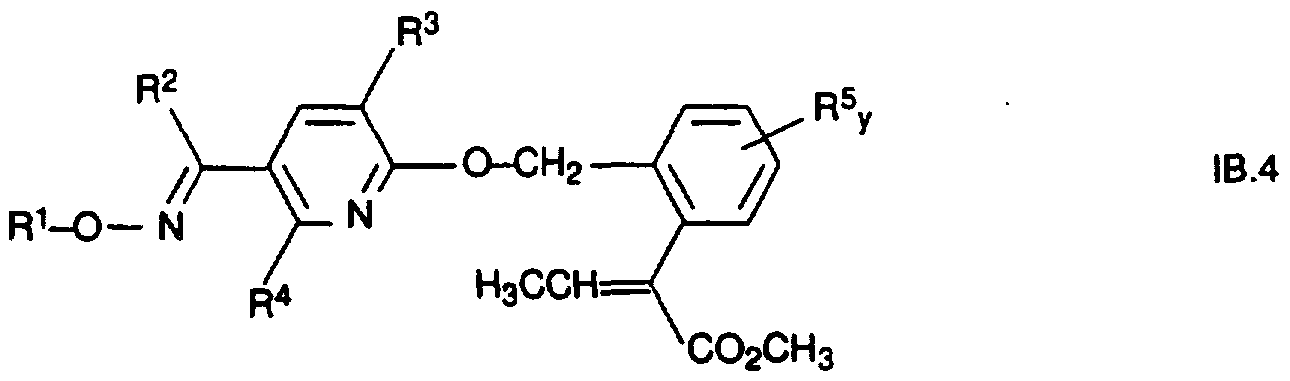
Insbesondere sind im Hinblick auf ihre Verwendung die in den fol¬ genden Tabellen zusammengestellten Verbindungen I bevorzugt. Die in den Tabellen für einen Substituenten genannten Gruppen stellen außerdem für sich betrachtet, unabhängig von der Kombination, in der sie genannt sind, eine besonders bevorzugte Ausgestaltung des betreffenden Substituenten dar.
Tabelle 1
Verbindungen der allgemeinen Formel IA.l, in denen R2 für Methyl, R3 für Wasserstoff, R4 für Wasserstoff und R5 y für Wasserstoff steht und R1 für eine Verbindung jeweils einer Gruppe der Tabelle A entspricht.
Tabelle 2
Verbindungen der allgemeinen Formel IA.2, in denen R2 für Methyl, R3 für Wasserstoff, R4 für Wasserstoff und R5 y für Wasserstoff steht und R1 für eine Verbindung jeweils einer Gruppe der Tabelle A entspricht.
Tabelle 3
Verbindungen der allgemeinen Formel IA.3, in denen R2 für Methyl, R3 für Wasserstoff, R4 für Wasserstoff und R5 y für Wasserstoff steht und R1 für eine Verbindung jeweils einer Gruppe der Tabelle A entspricht.
40
Tabelle 4
Verbindungen der allgemeinen Formel IA.4, in denen R2 für Methyl, R3 für Wasserstoff, R4 für Wasserstoff und R5 y für Wasserstoff steht und R1 für eine Verbindung jeweils einer Gruppe der Tabelle A entspricht.
Tabelle 5
Verbindungen der allgemeinen Formel IA.5, in denen R2 für Methyl, R3 für Wasserstoff, R4 für Wasserstoff und R5 y für Wasserstoff steht und R1 für eine Verbindung jeweils einer Gruppe der Tabelle A entspricht.
Tabelle 6 Verbindungen der allgemeinen Formel IA.6, in denen R2 für Methyl, R3 für Wasserstoff, R4 für Wasserstoff und R5 y für Wasserstoff steht und R1 für eine Verbindung jeweils einer Gruppe der Tabelle A entspricht.
Tabelle 7
Verbindungen der allgemeinen Formel IA.7, in denen R2 für Methyl, R3 für Wasserstoff, R4 für Wasserstoff und R5 y für Wasserstoff steht und R1 für eine Verbindung jeweils einer Gruppe der Tabelle A entspricht.
Verbindungen der allgemeinen Formel IA.8, in denen R2 für Methyl, R3 für Wasserstoff, R4 für Wasserstoff und R5 y für Wasserstoff steht und R1 für eine Verbindung jeweils einer Gruppe der Tabelle A entspricht.
Tabelle 9
Verbindungen der allgemeinen Formel IA.9, in denen R2 für Methyl, R3 für Wasserstoff, R4 für Wasserstoff und R5 y für Wasserstoff steht und R1 für eine Verbindung jeweils einer Gruppe der Tabelle A entspricht.
Tabelle 10 Verbindungen der allgemeinen Formel IA.10, in denen R2 für Methyl, R3 für Wasserstoff, R4 für Wasserstoff und R5 y für Wasserstoff steht und R1 für eine Verbindung jeweils einer Gruppe der Tabelle A entspricht.
Tabelle 11
Verbindungen der allgemeinen Formel IB.l, in denen R2 für Methyl, R3 für Wasserstoff, R4 für Wasserstoff und R5 y für Wasserstoff steht und R1 für eine Verbindung jeweils einer Gruppe der Tabelle A entspricht.
Verbindungen der allgemeinen Formel IB.2, in denen R2 für Methyl, R3 für Wasserstoff, R4 für Wasserstoff und R5 y für Wasserstoff steht und R1 für eine Verbindung jeweils einer Gruppe der Tabelle A entspricht.
Tabelle 13
Verbindungen der allgemeinen Formel IB.3, in denen R2 für Methyl, R3 für Wasserstoff, R4 für Wasserstoff und R5 y für Wasserstoff steht und R1 für eine Verbindung jeweils einer Gruppe der Tabelle A entspricht.
Tabelle 14 Verbindungen der allgemeinen Formel IB.4, in denen R2 für Methyl, R3 für Wasserstoff, R4 für Wasserstoff und R5y für Wasserstoff steht und R1 für eine Verbindung jeweils einer Gruppe der Tabelle A entspricht.
Tabelle 15
Verbindungen der allgemeinen Formel IB.5, in denen R2 für Methyl, R3 für Wasserstoff, R4 für Wasserstoff und R5 y für Wasserstoff steht und R1 für eine Verbindung jeweils einer Gruppe der Tabelle A entspricht.
Verbindungen der allgemeinen Formel IB.6, in denen R2 für Methyl, R3 für Wasserstoff, R4 für Wasserstoff und R5 y für Wasserstoff steht und R1 für eine Verbindung jeweils einer Gruppe der Tabelle A entspricht.
Tabelle 17
Verbindungen der allgemeinen Formel IB.7, in denen R2 für Methyl, R3 für Wasserstoff, R4 für Wasserstoff und R5 y für Wasserstoff steht und R1 für eine Verbindung jeweils einer Gruppe der Tabelle A entspricht.
Tabelle 18 Verbindungen der allgemeinen Formel IB.8, in denen R2 für Methyl, R3 für Wasserstoff, R4 für Wasserstoff und R5 y für Wasserstoff steht und R1 für eine Verbindung jeweils einer Gruppe der Tabelle A entspricht.
Tabelle 19
Verbindungen der allgemeinen Formel IB.9, in denen R2 für Methyl,
R3 für Wasserstoff, R4 für Wasserstoff und R5 y für Wasserstoff steht und R1 für eine Verbindung jeweils einer Gruppe der Tabelle A entspricht.
Verbindungen der allgemeinen Formel IB.10, in denen R2 für Methyl, R3 für Wasserstoff, R4 für Wasserstoff und R5 y für Wasserstoff steht und R1 für eine Verbindung jeweils einer Gruppe der Tabelle A entspricht.
Tabelle 21
Verbindungen der allgemeinen Formel IA.l, in denen R2 für Methyl, R3 für Methyl, R4 für Wasserstoff und R5 y für Wasserstoff steht und R1 für eine Verbindung jeweils einer Gruppe der Tabelle A ent¬ spricht.
Tabelle 22
Verbindungen der allgemeinen Formel IA.2, in denen R2 für Methyl, R3 für Methyl, R4 für Wasserstoff und R5 y für Wasserstoff steht und R1 für eine Verbindung jeweils einer Gruppe der Tabelle A ent¬ spricht.
Tabelle 23
Verbindungen der allgemeinen Formel IA.3, in denen R2 für Methyl, R3 für Methyl, R4 für Wasserstoff und R5 y für Wasserstoff steht und R1 für eine Verbindung jeweils einer Gruppe der Tabelle A ent¬ spricht.
Tabelle 24 Verbindungen der allgemeinen Formel IA.4, in denen R2 für Methyl, R3 für Methyl, R4 für Wasserstoff und R5 y für Wasserstoff steht und R1 für eine Verbindung jeweils einer Gruppe der Tabelle A ent¬ spricht.
Tabelle 25
Verbindungen der allgemeinen Formel IA.5, in denen R2 für Methyl, R3 für Methyl, R4 für Wasserstoff und R5 y für Wasserstoff steht und R1 für eine Verbindung jeweils einer Gruppe der Tabelle A ent¬ spricht.
Tabelle 26
Verbindungen der allgemeinen Formel IA.6, in denen R2 für Methyl, R3 für Methyl, R4 für Wasserstoff und R5 y für Wasserstoff steht und R1 für eine Verbindung jeweils einer Gruppe der Tabelle A ent¬ spricht.
Tabelle 27
Verbindungen der allgemeinen Formel IA.7, in denen R2 für Methyl,
R3 für Methyl, R4 für Wasserstoff und Rs y für Wasserstoff steht
und R1 für eine Verbindung jeweils einer Gruppe der Tabelle A ent¬ spricht.
Tabelle 28 Verbindungen der allgemeinen Formel IA.8, in denen R2 für Methyl, R3 für Methyl, R4 für Wasserstoff und R5 y für Wasserstoff steht und R1 für eine Verbindung jeweils einer Gruppe der Tabelle A ent¬ spricht.
Tabelle 29
Verbindungen der allgemeinen Formel IA.9, in denen R2 für Methyl, R3 für Methyl, R4 für Wasserstoff und R5 y für Wasserstoff steht und R1 für eine Verbindung jeweils einer Gruppe der Tabelle A ent¬ spricht.
Tabelle 30
Verbindungen der allgemeinen Formel IA.10, in denen R2 für Methyl, R3 für Methyl, R4 für Wasserstoff und R5 y für Wasserstoff steht und R1 für eine Verbindung jeweils einer Gruppe der Tabelle A ent¬ spricht.
Tabelle 31
Verbindungen der allgemeinen Formel IB.l, in denen R2 für Methyl, R3 für Methyl, R4 für Wasserstoff und R5 y für Wasserstoff steht und R1 für eine Verbindung jeweils einer Gruppe der Tabelle A ent¬ spricht.
Tabelle 32
Verbindungen der allgemeinen Formel IB.2, in denen R2 für Methyl, R3 für Methyl, R4 für Wasserstoff und R5 y für Wasserstoff steht und R1 für eine Verbindung jeweils einer Gruppe der Tabelle A ent¬ spricht.
Tabelle 33
Verbindungen der allgemeinen Formel IB.3, in denen R2 für Methyl, R3 für Methyl, R4 für Wasserstoff und R5 y für Wasserstoff steht und R1 für eine Verbindung jeweils einer Gruppe der Tabelle A ent* spricht.
Tabelle 34
Verbindungen der allgemeinen Formel IB.4, in denen R2 für Methyl, R3 für Methyl, R4 für Wasserstoff und R5 y für Wasserstoff steht und R1 für eine Verbindung jeweils einer Gruppe der Tabelle A ent¬ spricht.
Tabelle 35
Verbindungen der allgemeinen Formel IB.5, in denen R2 für Methyl, R3 für Methyl, R4 für Wasserstoff und R5 y für Wasserstoff steht und R1 für eine Verbindung jeweils einer Gruppe der Tabelle A ent¬ spricht.
Tabelle 36
Verbindungen der allgemeinen Formel IB.6, in denen R2 für Methyl, R3 für Methyl, R4 für Wasserstoff und R5 y für Wasserstoff steht und R1 für eine Verbindung jeweils einer Gruppe der Tabelle A ent¬ spricht.
Tabelle 37
Verbindungen der allgemeinen Formel IB.7, in denen R2 für Methyl, R3 für Methyl, R4 für Wasserstoff und R5 y für Wasserstoff steht und R1 für eine Verbindung jeweils einer Gruppe der Tabelle A ent- spricht.
Tabelle 38
Verbindungen der allgemeinen Formel IB.8, in denen R2 für Methyl, R3 für Methyl, R4 für Wasserstoff und R5 y für Wasserstoff steht und R1 für eine Verbindung jeweils einer Gruppe der Tabelle A ent¬ spricht.
Tabelle 39
Verbindungen der allgemeinen Formel IB.9, in denen R2 für Methyl, R3 für Methyl, R4 für Wasserstoff und R5 y für Wasserstoff steht und R1 für eine Verbindung jeweils einer Gruppe der Tabelle A ent¬ spricht.
Tabelle 40
Verbindungen der allgemeinen Formel IB.10, in denen R2 für Methyl, R3 für Methyl, R4 für Wasserstoff und R5 y für Wasserstoff steht und R1 für eine Verbindung jeweils einer Gruppe der Tabelle A ent¬ spricht.
Tabelle 41
Verbindungen der allgemeinen Formel IA.l, in denen R2 für Methyl, R3 für Chlor, R4 für Wasserstoff und R5 y für Wasserstoff steht und R1 für eine Verbindung jeweils einer Gruppe der Tabelle A ent¬ spricht.
Tabelle 42 Verbindungen der allgemeinen Formel IA.2, in denen R2 für Methyl, R3 für Chlor, R4 für Wasserstoff und R5 y für Wasserstoff steht und R1 für eine Verbindung jeweils einer Gruppe der Tabelle A ent¬ spricht.
Tabelle 43
Verbindungen der allgemeinen Formel IA.3, in denen R2 für Methyl, R3 für Chlor, R4 für Wasserstoff und R5 y für Wasserstoff steht und R1 für eine Verbindung jeweils einer Gruppe der Tabelle A ent¬ spricht.
Tabelle 44
Verbindungen der allgemeinen Formel IA.4, in denen R2 für Methyl,
R3 für Chlor, R4 für Wasserstoff und R5 y für Wasserstoff steht und
R1 für eine Verbindung jeweils einer Gruppe der Tabelle A ent¬ spricht.
Tabelle 45 Verbindungen der allgemeinen Formel IA.5, in denen R2 für Methyl, R3 für Chlor, R4 für Wasserstoff und R5 y für Wasserstoff steht und R1 für eine Verbindung jeweils einer Gruppe der Tabelle A ent¬ spricht.
Tabelle 46
Verbindungen der allgemeinen Formel IA.6, in denen R2 für Methyl, R3 für Chlor, R4 für Wasserstoff und R5 y für Wasserstoff steht und R1 für eine Verbindung jeweils einer Gruppe der Tabelle A ent¬ spricht.
Tabelle 47
Verbindungen der allgemeinen Formel IA.7, in denen R2 für Methyl, R3 für Chlor, R4 für Wasserstoff und R5 y für Wasserstoff steht und R1 für eine Verbindung jeweils einer Gruppe der Tabelle A ent¬ spricht.
Tabelle 48
Verbindungen der allgemeinen Formel IA.8, in denen R2 für Methyl, R3 für Chlor, R4 für Wasserstoff und R5 y für Wasserstoff steht und R1 für eine Verbindung jeweils einer Gruppe der Tabelle A ent¬ spricht.
Tabelle 49
Verbindungen der allgemeinen Formel IA.9, in denen R2 für Methyl, R3 für Chlor, R4 für Wasserstoff und R5 y für Wasserstoff steht und R1 für eine Verbindung jeweils einer Gruppe der Tabelle A ent¬ spricht.
Tabelle 50
Verbindungen der allgemeinen Formel IA.10, in denen R2 für Methyl, R3 für Chlor, R4 für Wasserstoff und R5 y für Wasserstoff steht und R1 für eine Verbindung jeweils einer Gruppe der Tabelle A ent- spricht.
Tabelle 51
Verbindungen der allgemeinen Formel IB.l, in denen R2 für Methyl, R3 für Chlor, R4 für Wasserstoff und R5 y für Wasserstoff steht und R1 für eine Verbindung jeweils einer Gruppe der Tabelle A ent¬ spricht.
Tabelle 52
Verbindungen der allgemeinen Formel IB.2, in denen R2 für Methyl, R3 für Chlor, R4 für Wasserstoff und R5 y für Wasserstoff steht und R1 für eine Verbindung jeweils einer Gruppe der Tabelle A ent¬ spricht.
Tabelle 53
Verbindungen der allgemeinen Formel IB.3, in denen R2 für Methyl, R3 für Chlor, R4 für Wasserstoff und R5 y für Wasserstoff steht und R1 für eine Verbindung jeweils einer Gruppe der Tabelle A ent¬ spricht.
Tabelle 54
Verbindungen der allgemeinen Formel IB.4, in denen R2 für Methyl, R3 für Chlor, R4 für Wasserstoff und R5 y für Wasserstoff steht und R1 für eine Verbindung jeweils einer Gruppe der Tabelle A ent- spricht.
Tabelle 55
Verbindungen der allgemeinen Formel IB.5, in denen R2 für Methyl, R3 für Chlor, R4 für Wasserstoff und R5 y für Wasserstoff steht und R1 für eine Verbindung jeweils einer Gruppe der Tabelle A ent¬ spricht.
Tabelle 56
Verbindungen der allgemeinen Formel IB.6, in denen R2 für Methyl, R3 für Chlor, R4 für Wasserstoff und R5 y für Wasserstoff steht und R1 für eine Verbindung jeweils einer Gruppe der Tabelle A ent¬ spricht.
Tabelle 57
Verbindungen der allgemeinen Formel IB.7, in denen R2 für Methyl, R3 für Chlor, R4 für Wasserstoff und R5 y für Wasserstoff steht und R1 für eine Verbindung jeweils einer Gruppe der Tabelle A ent¬ spricht.
Tabelle 58
Verbindungen der allgemeinen Formel IB.8, in denen R2 für Methyl, R3 für Chlor, R4 für Wasserstoff und R5 y für Wasserstoff steht und R1 für eine Verbindung jeweils einer Gruppe der Tabelle A ent¬ spricht.
Tabelle 59 Verbindungen der allgemeinen Formel IB.9, in denen R2 für Methyl, R3 für Chlor, R4 für Wasserstoff und R5 y für Wasserstoff steht und R1 für eine Verbindung jeweils einer Gruppe der Tabelle A ent¬ spricht.
Tabelle 60
Verbindungen der allgemeinen Formel IB.10, in denen R2 für Methyl, R3 für Chlor, R4 für Wasserstoff und R5 y für Wasserstoff steht und R1 für eine Verbindung jeweils einer Gruppe der Tabelle A ent¬ spricht.
Tabelle 61
Verbindungen der allgemeinen Formel IA.l, in denen R2 für Methyl, R3 für Fluor, R4 für Wasserstoff und R5 y für Wasserstoff steht und
R1 für eine Verbindung jeweils einer Gruppe der Tabelle A ent¬ spricht.
Tabelle 62 Verbindungen der allgemeinen Formel IA.2, in denen R2 für Methyl, R3 für Fluor, R4 für Wasserstoff und R5 y für Wasserstoff steht und R1 für eine Verbindung jeweils einer Gruppe der Tabelle A ent¬ spricht.
Tabelle 63
Verbindungen der allgemeinen Formel IA.3, in denen R2 für Methyl, R3 für Fluor, R4 für Wasserstoff und R5 y für Wasserstoff steht und R1 für eine Verbindung jeweils einer Gruppe der Tabelle A ent¬ spricht.
Tabelle 64
Verbindungen der allgemeinen Formel IA.4, in denen R2 für Methyl, R3 für Fluor, R4 für Wasserstoff und R5 y für Wasserstoff steht und R1 für eine Verbindung jeweils einer Gruppe der Tabelle A ent¬ spricht.
Tabelle 65
Verbindungen der allgemeinen Formel IA.5, in denen R2 für Methyl, R3 für Fluor, R4 für Wasserstoff und R5 y für Wasserstoff steht und R1 für eine Verbindung jeweils einer Gruppe der Tabelle A ent¬ spricht.
Tabelle 66
Verbindungen der allgemeinen Formel IA.6, in denen R2 für Methyl, R3 für Fluor, R4 für Wasserstoff und R5 y für Wasserstoff steht und R1 für eine Verbindung jeweils einer Gruppe der Tabelle A ent¬ spricht.
Tabelle 67
Verbindungen der allgemeinen Formel IA.7, in denen R2 für Methyl, R3 für Fluor, R4 für Wasserstoff und R5 y für Wasserstoff steht und R1 für eine Verbindung jeweils einer Gruppe der Tabelle A ent- spricht.
Tabelle 68
Verbindungen der allgemeinen Formel IA.8, in denen R2 für Methyl, R3 für Fluor, R4 für Wasserstoff und R5 y für Wasserstoff steht und R1 für eine Verbindung jeweils einer Gruppe der Tabelle A ent¬ spricht.
Tabelle 69
Verbindungen der allgemeinen Formel IA.9, in denen R2 für Methyl, R3 für Fluor, R4 für Wasserstoff und R5 y für Wasserstoff steht und R1 für eine Verbindung jeweils einer Gruppe der Tabelle A ent¬ spricht.
Tabelle 70
Verbindungen der allgemeinen Formel IA.10, in denen R2 für Methyl, R3 für Fluor, R4 für Wasserstoff und R5 y für Wasserstoff steht und R1 für eine Verbindung jeweils einer Gruppe der Tabelle A ent¬ spricht.
Tabelle 71
Verbindungen der allgemeinen Formel IB.l, in denen R2 für Methyl, R3 für Fluor, R4 für Wasserstoff und R5 y für Wasserstoff steht und R1 für eine Verbindung jeweils einer Gruppe der Tabelle A ent- spricht.
Tabelle 72
Verbindungen der allgemeinen Formel IB.2, in denen R2 für Methyl, R3 für Fluor, R4 für Wasserstoff und R5 y für Wasserstoff steht und R1 für eine Verbindung jeweils einer Gruppe der Tabelle A ent¬ spricht.
Tabelle 73
Verbindungen der allgemeinen Formel IB.3, in denen R2 für Methyl, R3 für Fluor, R4 für Wasserstoff und R5 y für Wasserstoff steht und R1 für eine Verbindung jeweils einer Gruppe der Tabelle A ent¬ spricht.
Tabelle 74
Verbindungen der allgemeinen Formel IB.4, in denen R2 für Methyl, R3 für Fluor, R4 für Wasserstoff und R5 y für Wasserstoff steht und R1 für eine Verbindung jeweils einer Gruppe der Tabelle A ent¬ spricht.
Tabelle 75
Verbindungen der allgemeinen Formel IB.5, in denen R2 für Methyl, R3 für Fluor, R4 für Wasserstoff und R5 y für Wasserstoff steht und R1 für eine Verbindung jeweils einer Gruppe der Tabelle A ent¬ spricht.
Tabelle 76 Verbindungen der allgemeinen Formel IB.6, in denen R2 für Methyl, R3 für Fluor, R4 für Wasserstoff und R5 y für Wasserstoff steht und R1 für eine Verbindung jeweils einer Gruppe der Tabelle A ent¬ spricht.
Tabelle 77
Verbindungen der allgemeinen Formel IB.7, in denen R2 für Methyl, R3 für Fluor, R4 für Wasserstoff und R5 y für Wasserstoff steht und R1 für eine Verbindung jeweils einer Gruppe der Tabelle A ent¬ spricht.
Tabelle 78
Verbindungen der allgemeinen Formel IB.8, in denen R2 für Methyl,
R3 für Fluor, R4 für Wasserstoff und R5 V für Wasserstoff steht und
R1 für eine Verbindung jeweils einer Gruppe der Tabelle A ent¬ spricht.
Tabelle 79 Verbindungen der allgemeinen Formel IB.9, in denen R2 für Methyl, R3 für Fluor, R4 für Wasserstoff und R5 y für Wasserstoff steht und R1 für eine Verbindung jeweils einer Gruppe der Tabelle A ent¬ spricht.
Tabelle 80
Verbindungen der allgemeinen Formel IB.10, in denen R2 für Methyl, R3 für Fluor, R4 für Wasserstoff und R5 y für Wasserstoff steht und R1 für eine Verbindung jeweils einer Gruppe der Tabelle A ent¬ spricht.
Tabelle 81
Verbindungen der allgemeinen Formel IA.l, in denen R2 für Methyl, R3 für Brom, R4 für Wasserstoff und R5 y für Wasserstoff steht und R1 für eine Verbindung jeweils einer Gruppe der Tabelle A ent¬ spricht.
Tabelle 82
Verbindungen der allgemeinen Formel IA.2, in denen R2 für Methyl, R3 für Brom, R4 für Wasserstoff und R5 y für Wasserstoff steht und R1 für eine Verbindung jeweils einer Gruppe der Tabelle A ent¬ spricht.
Tabelle 83
Verbindungen der allgemeinen Formel IA.3, in denen R2 für Methyl, R3 für Brom, R4 für Wasserstoff und R5 y für Wasserstoff steht und R1 für eine Verbindung jeweils einer Gruppe der Tabelle A ent¬ spricht.
Tabelle 84
Verbindungen der allgemeinen Formel IA.4, in denen R2 für Methyl, R3 für Brom, R4 für Wasserstoff und R5 y für Wasserstoff steht und R1 für eine Verbindung jeweils einer Gruppe der Tabelle A ent- spricht.
Tabelle 85
Verbindungen der allgemeinen Formel IA.5, in denen R2 für Methyl, R3 für Brom, R4 für Wasserstoff und R5 y für Wasserstoff steht und R1 für eine Verbindung jeweils einer Gruppe der Tabelle A ent¬ spricht.
Tabelle 86
Verbindungen der allgemeinen Formel IA.6, in denen R2 für Methyl, R3 für Brom, R4 für Wasserstoff und R5 y für Wasserstoff steht und R1 für eine Verbindung jeweils einer Gruppe der Tabelle A ent¬ spricht.
Tabelle 87
Verbindungen der allgemeinen Formel IA.7, in denen R2 für Methyl, R3 für Brom, R4 für Wasserstoff und R5 y für Wasserstoff steht und R1 für eine Verbindung jeweils einer Gruppe der Tabelle A ent¬ spricht.
Tabelle 88
Verbindungen der allgemeinen Formel IA.8, in denen R2 für Methyl, R3 für Brom, R4 für Wasserstoff und R5 y für Wasserstoff steht und R1 für eine Verbindung jeweils einer Gruppe der Tabelle A ent- spricht.
Tabelle 89
Verbindungen der allgemeinen Formel IA.9, in denen R2 für Methyl, R3 für Brom, R4 für Wasserstoff und R5 y für Wasserstoff steht und R1 für eine Verbindung jeweils einer Gruppe der Tabelle A ent¬ spricht.
Tabelle 90
Verbindungen der allgemeinen Formel IA.10, in denen R2 für Methyl, R3 für Brom, R4 für Wasserstoff und R5 y für Wasserstoff steht und RI für eine Verbindung jeweils einer Gruppe der Tabelle A ent¬ spricht.
Tabelle 91
Verbindungen der allgemeinen Formel IB.l, in denen R2 für Methyl, R3 für Brom, R4 für Wasserstoff und R5 y für Wasserstoff steht und R1 für eine Verbindung jeweils einer Gruppe der Tabelle A ent¬ spricht.
Tabelle 92
Verbindungen der allgemeinen Formel IB.2, in denen R2 für Methyl, R3 für Brom, R4 für Wasserstoff und R5 y für Wasserstoff steht und R1 für eine Verbindung jeweils einer Gruppe der Tabelle A ent¬ spricht.
Tabelle 93 Verbindungen der allgemeinen Formel IB.3, in denen R2 für Methyl, R3 für Brom, R4 für Wasserstoff und R5 y für Wasserstoff steht und R1 für eine Verbindung jeweils einer Gruppe der Tabelle A ent¬ spricht.
Tabelle 94
Verbindungen der allgemeinen Formel IB.4, in denen R2 für Methyl, R3 für Brom, R4 für Wasserstoff und R5 y für Wasserstoff steht und R1 für eine Verbindung jeweils einer Gruppe der Tabelle A ent¬ spricht.
Tabelle 95
Verbindungen der allgemeinen Formel IB.5, in denen R2 für Methyl,
R3 für Brom, R4 für Wasserstoff und R5 y für Wasserstoff steht und
R1 für eine Verbindung jeweils einer Gruppe der Tabelle A ent¬ spricht.
Tabelle 96 Verbindungen der allgemeinen Formel IB.6, in denen R2 für Methyl, R3 für Brom, R4 für Wasserstoff und R5 y für Wasserstoff steht und R1 für eine Verbindung jeweils einer Gruppe der Tabelle A ent¬ spricht.
Tabelle 97
Verbindungen der allgemeinen Formel IB.7, in denen R2 für Methyl, R3 für Brom, R4 für Wasserstoff und R5 y für Wasserstoff steht und R1 für eine Verbindung jeweils einer Gruppe der Tabelle A ent¬ spricht.
Tabelle 98
Verbindungen der allgemeinen Formel IB.8, in denen R2 für Methyl, R3 für Brom, R4 für Wasserstoff und R5 y für Wasserstoff steht und R1 für eine Verbindung jeweils einer Gruppe der Tabelle A ent¬ spricht.
Tabelle 99
Verbindungen der allgemeinen Formel IB.9, in denen R2 für Methyl, R3 für Brom, R4 für Wasserstoff und R5 y für Wasserstoff steht und R1 für eine Verbindung jeweils einer Gruppe der Tabelle A ent¬ spricht.
Tabelle 100
Verbindungen der allgemeinen Formel IB.10, in denen R2 für Methyl, R3 für Brom, R4 für Wasserstoff und R5 y für Wasserstoff steht und R1 für eine Verbindung jeweils einer Gruppe der Tabelle A ent¬ spricht.
Tabelle 101
Verbindungen der allgemeinen Formel IA.l, in denen R2 für Methyl, R3 für Trifluormethyl, R4 für Wasserstoff und R5 y für Wasserstoff steht und R1 für eine Verbindung jeweils einer Gruppe der Tabelle A entspricht.
Tabelle 102
Verbindungen der allgemeinen Formel IA.2, in denen R2 für Methyl, R3 für Trifluormethyl, R4 für Wasserstoff und R5 y für Wasserstoff steht und R1 für eine Verbindung jeweils einer Gruppe der Tabelle A entspricht.
Tabelle 103
Verbindungen der allgemeinen Formel IA.3, in denen R2 für Methyl, R3 für Trifluormethyl, R4 für Wasserstoff und R5 y für Wasserstoff steht und R1 für eine Verbindung jeweils einer Gruppe der Tabelle A entspricht.
Tabelle 104
Verbindungen der allgemeinen Formel IA.4, in denen R2 für Methyl,
R3 für Trifluormethyl, R4 für Wasserstoff und R5 y für Wasserstoff steht und R1 für eine Verbindung jeweils einer Gruppe der Tabelle
A entspricht.
Tabelle 105
Verbindungen der allgemeinen Formel IA.5, in denen R2 für Methyl, R3 für Trifluormethyl, R4 für Wasserstoff und R5 y für Wasserstoff steht und R1 für eine Verbindung jeweils einer Gruppe der Tabelle A entspricht.
Tabelle 106
Verbindungen der allgemeinen Formel IA.6, in denen R2 für Methyl, R3 für Trifluormethyl, R4 für Wasserstoff und R5 y für Wasserstoff steht und R1 für eine Verbindung jeweils einer Gruppe der Tabelle A entspricht.
Tabelle 107
Verbindungen der allgemeinen Formel IA.7, in denen R2 für Methyl, R3 für Trifluormethyl, R4 für Wasserstoff und R5 y für Wasserstoff steht und R1 für eine Verbindung jeweils einer Gruppe der Tabelle A entspricht.
Tabelle 108
Verbindungen der allgemeinen Formel IA.8, in denen R2 für Methyl, R3 für Trifluormethyl, R4 für Wasserstoff und R5 y für Wasserstoff steht und R1 für eine Verbindung jeweils einer Gruppe der Tabelle A entspricht.
Tabelle 109
Verbindungen der allgemeinen Formel IA.9, in denen R2 für Methyl, R3 für Trifluormethyl, R4 für Wasserstoff und R5 y für Wasserstoff steht und R1 für eine Verbindung jeweils einer Gruppe der Tabelle A entspricht.
Tabelle 110 Verbindungen der allgemeinen Formel IA.10, in denen R2 für Methyl, R3 für Trifluormethyl, R4 für Wasserstoff und R5 y für Wasserstoff steht und R1 für eine Verbindung jeweils einer Gruppe der Tabelle A entspricht.
Tabelle 111
Verbindungen der allgemeinen Formel IB.l, in denen R2 für Methyl, R3 für Trifluormethyl, R4 für Wasserstoff und R5 y für Wasserstoff steht und R1 für eine Verbindung jeweils einer Gruppe der Tabelle A entspricht.
Tabelle 112
Verbindungen der allgemeinen Formel IB.2, in denen R2 für Methyl,
R3 für Trifluormethyl, R4 für Wasserstoff und R5 y für Wasserstoff
steht und R1 für eine Verbindung jeweils einer Gruppe der Tabelle A entspricht.
Tabelle 113 Verbindungen der allgemeinen Formel IB.3, in denen R2 für Methyl, R3 für Trifluormethyl, R4 für Wasserstoff und R5 y für Wasserstoff steht und R1 für eine Verbindung jeweils einer Gruppe der Tabelle A entspricht.
Tabelle 114
Verbindungen der allgemeinen Formel IB.4, in denen R2 für Methyl, R3 für Trifluormethyl, R4 für Wasserstoff und R5 y für Wasserstoff steht und R1 für eine Verbindung jeweils einer Gruppe der Tabelle A entspricht.
Tabelle 115
Verbindungen der allgemeinen Formel IB.5, in denen R2 für Methyl, R3 für Trifluormethyl, R4 für Wasserstoff und R5 y für Wasserstoff steht und R1 für eine Verbindung jeweils einer Gruppe der Tabelle A entspricht.
Tabelle 116
Verbindungen der allgemeinen Formel IB.6, in denen R2 für Methyl, R3 für Trifluormethyl, R4 für Wasserstoff und R5 y für Wasserstoff steht und R1 für eine Verbindung jeweils einer Gruppe der Tabelle A entspricht.
Tabelle 117
Verbindungen der allgemeinen Formel IB.7, in denen R2 für Methyl, R3 für Trifluormethyl, R4 für Wasserstoff und R5 y für Wasserstoff steht und R1 für eine Verbindung jeweils einer Gruppe der Tabelle A entspricht.
Tabelle 118
Verbindungen der allgemeinen Formel IB.8, in denen R2 für Methyl, R3 für Trifluormethyl, R4 für Wasserstoff und R5 y für Wasserstoff steht und R1 für eine Verbindung jeweils einer Gruppe der Tabelle A entspricht.
Tabelle 119
Verbindungen der allgemeinen Formel IB.9, in denen R2 für Methyl, R3 für Trifluormethyl, R4 für Wasserstoff und R5 y für Wasserstoff steht und R1 für eine Verbindung jeweils einer Gruppe der Tabelle A entspricht.
Tabelle 120
Verbindungen der allgemeinen Formel IB.10, in denen R2 für Methyl, R3 für Trifluormethyl, R4 für Wasserstoff und R5 y für Wasserstoff steht und R1 für eine Verbindung jeweils einer Gruppe der Tabelle A entspricht.
Tabelle 121
Verbindungen der allgemeinen Formel IA.l, in denen R2 für Methyl, R3 für Methyl, R4 für Methyl und R5 y für Wasserstoff steht und R1 für eine Verbindung jeweils einer Gruppe der Tabelle A ent¬ spricht.
Tabelle 122
Verbindungen der allgemeinen Formel IA.2, in denen R2 für Methyl, R3 für Methyl, R4 für Methyl und R5 y für Wasserstoff steht und R1 für eine Verbindung jeweils einer Gruppe der Tabelle A ent- spricht.
Tabelle 123
Verbindungen der allgemeinen Formel IA.3, in denen R2 für Methyl, R3 für Methyl, R4 für Methyl und R5 y für Wasserstoff steht und R1 für eine Verbindung jeweils einer Gruppe der Tabelle A ent¬ spricht.
Tabelle 124
Verbindungen der allgemeinen Formel IA.4, in denen R2 für Methyl, R3 für Methyl, R4 für Methyl und R5 y für Wasserstoff steht und R1 für eine Verbindung jeweils einer Gruppe der Tabelle A ent¬ spricht.
Tabelle 125
Verbindungen der allgemeinen Formel IA.5, in denen R2 für Methyl, R3 für Methyl, R4 für Methyl und R5 y für Wasserstoff steht und R1 für eine Verbindung jeweils einer Gruppe der Tabelle A ent¬ spricht.
Tabelle 126
Verbindungen der allgemeinen Formel IA.6, in denen R2 für Methyl, R3 für Methyl, R4 für Methyl und R5 y für Wasserstoff steht und R1 für eine Verbindung jeweils einer Gruppe der Tabelle A ent¬ spricht.
Tabelle 127 Verbindungen der allgemeinen Formel IA.7, in denen R2 für Methyl, R3 für Methyl, R4 für Methyl und R5 y für Wasserstoff steht und R1 für eine Verbindung jeweils einer Gruppe der Tabelle A ent¬ spricht.
Tabelle 128
Verbindungen der allgemeinen Formel IA.8, in denen R2 für Methyl, R3 für Methyl, R4 für Methyl und R5 y für Wasserstoff steht und R1 für eine Verbindung jeweils einer Gruppe der Tabelle A ent¬ spricht.
Tabelle 129
Verbindungen der allgemeinen Formel IA.9, in denen R2 für Methyl,
R3 für Methyl, R4 für Methyl und R5 y für Wasserstoff steht und R1
für eine Verbindung jeweils einer Gruppe der Tabelle A ent¬ spricht.
Tabelle 130 Verbindungen der allgemeinen Formel IA.10, in denen R2 für Methyl, R3 für Methyl, R4 für Methyl und R5 y für Wasserstoff steht und R1 für eine Verbindung jeweils einer Gruppe der Tabelle A ent¬ spricht.
Tabelle 131
Verbindungen der allgemeinen Formel IB.l, in denen R2 für Methyl, R3 für Methyl, R4 für Methyl und R5 y für Wasserstoff steht und R1 für eine Verbindung jeweils einer Gruppe der Tabelle A ent¬ spricht.
Tabelle 132
Verbindungen der allgemeinen Formel IB.2, in denen R2 für Methyl, R3 für Methyl, R4 für Methyl und R5 y für Wasserstoff steht und R1 für eine Verbindung jeweils einer Gruppe der Tabelle A ent¬ spricht.
Tabelle 133
Verbindungen der allgemeinen Formel IB.3, in denen R2 für Methyl, R3 für Methyl, R4 für Methyl und R5 y für Wasserstoff steht und R1 für eine Verbindung jeweils einer Gruppe der Tabelle A ent¬ spricht.
Tabelle 134
Verbindungen der allgemeinen Formel IB.4, in denen R2 für Methyl, R3 für Methyl, R4 für Methyl und R5 y für Wasserstoff steht und R1 für eine Verbindung jeweils einer Gruppe der Tabelle A ent¬ spricht.
Tabelle 135
Verbindungen der allgemeinen Formel IB.5, in denen R2 für Methyl, R3 für Methyl, R4 für Methyl und R5 y für Wasserstoff steht und R1 für eine Verbindung jeweils einer Gruppe der Tabelle A ent- spricht.
Tabelle 136
Verbindungen der allgemeinen Formel IB.6, in denen R2 für Methyl, R3 für Methyl, R4 für Methyl und R5 y für Wasserstoff steht und R1 für eine Verbindung jeweils einer Gruppe der Tabelle A ent¬ spricht.
Tabelle 137
Verbindungen der allgemeinen Formel IB.7, in denen R2 für Methyl, R3 für Methyl, R4 für Methyl und R5 y für Wasserstoff steht und R1 für eine Verbindung jeweils einer Gruppe der Tabelle A ent¬ spricht.
Tabelle 138
Verbindungen der allgemeinen Formel IB.8, in denen R2 für Methyl, R3 für Methyl, R4 für Methyl und R5 y für Wasserstoff steht und R1 für eine Verbindung jeweils einer Gruppe der Tabelle A ent¬ spricht. 5
Tabelle 139
Verbindungen der allgemeinen Formel IB.9, in denen R2 für Methyl, R3 für Methyl, R4 für Methyl und R5 y für Wasserstoff steht und R1 für eine Verbindung jeweils einer Gruppe der Tabelle A ent- 10 spricht.
Tabelle 140
Verbindungen der allgemeinen Formel IB.10, in denen R2 für Methyl, R3 für Methyl, R4 für Methyl und R5 y für Wasserstoff steht und R1 15 für eine Verbindung jeweils einer Gruppe der Tabelle A ent¬ spricht.
Tabelle A
A.25 Cyclohexylmethyl
A.26 2-Cyclohexyleth-1-yl
5 A.27 Cyc1opropylmethy1
A.28 2 -Cyclopropyleth-1-yl
A.29 2-Methoxyeth-1-yl
A.30 2-Ethoxyeth-1-yl
A.31 2-Isopropoxyeth-1-yl
10
A.32 3-Methoxyprop-1-yl
A.33 3 -Ethoxyprop-1-y1
A.34 3-1sopropoxyprop-1-yl
A.35 4-Methoxybut-1-yl
15 A.36 4-1sopropoxybut-1-yl
A.37 Propen-3-yl
A.38 But-2-en-l-yl
A.39 3-Methylbut-2-en-1-y1
20 A.40 2-Vinyloxyeth-1-yl
A.41 AIlyloxyeth-1-y1
A.42 2-Trifluormethoxyeth-1-yl
A.43 3 -Trifluormethoxyprop-1-yl
A.44 4-Difluormethoxybut-1-yl
? tt
A.45 Hydroxycarbonylmethyl
A.46 Methoxycarbonylmethyl
A.47 Aminocarbonylmethyl
A.48 N-Methylaminocarbonylmethyl
30 A.49 N,N-Dirnethylaminocarbonyl-methyl
A.50 2-Hydroxycarbonyleth-1-yl
A.51 2-Methoxycarbonyleth-1-yl
A.52 2-Aminocarbonyleth-1-yl
35 A.53 2-N-Methylaminocarbonyleth-l-yl
A.54 2-Dimethylammocarbonyleth-1-yl
A.55 2-Aminoeth-1-yl
A.56 2-Aminoprop-1-y1
40 A.57 4-Aminobut-1-yl
A.58 3-Dimethylaminoprop-1-yl
A.59 4-Aminothiocarbonylbut-1-yl
A.60 2-Oxopropyl
A.61 Cyclohexyl 5
A.62 Cyclopropyl
A.220 4-Aminothiocarbonyl-C6H4-CH2
A.221 2-Methoxyiminomethyl-C6H4-CH2
A.222 3-Methoxyiminomethyl-CgH4-CH2
A.223 4-Methoxyiminomethyl-C6H4-CH2
A.224 2-Formyl-C6H4-CH2
A.225 3-Formyl-C6H4-CH2
A.226 4-Formyl-C6H4-CH2
A.227 2- (1' -Methoxyiminoeth-1' -yl) -C6H4 -CH2
A.228 3- (1' -Methoxyiminoeth-1' -yl) -C6H4 -CH2
A.229 4- (1' -Methoxyiminoeth-1' -yl) -C6H4 -CH2
A.230 2-SCH3-C6H4-CH2
A.231 3-SCH3-C6H4-CH2
A.232 4-SCH3-C6H4-CH2
A.233 2-S02CH3-C6H4-CH2
A.234 3-SO2CH3-C6H4-CH2
A.235 4-S02CH3-C6H4-CH2
A.236 2-OCF3-C6H4-CH2
A.237 3-OCF3-C6H4-CH2
A.238 4-0CF3-C6H4-CH2
A.239 2-OCHF2-C6H4-CH2
A.240 3-OCHF2-C6H4-CH2
A.241 4-0CHF2-C6H4-CH2
A.242 3-CF3, 4-OCF3-C6H3-CH2
A.243 1-Naphthyl -CH2
A.244 2-Naphthyl-CH2
A.245 2-Phenoxyeth-1-yl
A.246 2- (2' -Chlorphenoxy) eth-1-yl
A.247 2- (3' -Chlorphenoxy) eth-1-yl
A.248 2- (4' -Chlorphenoxy)eth-1-yl
A.249 2- (3' ,5' -Dichlorphenoxy) eth-1-yl
A.250 2- (2' -Cyanophenoxy)eth-1-yl
A.251 2- (3' -Cyanophenoxy) eth-1-yl
A.252 2- (4' -Cyanophenoxy) eth-1-yl
A.253 2- (2' -Methylphenoxy) eth-1-yl
A.254 2- (3' -Methylphenoxy) eth-1-yl
A.255 2- (4' -Methylphenoxy) eth-1-yl
A.256 2- (3' -t-Butylphenoxy) eth-1-yl
A.257 2- (4' -t-Butylphenoxy) eth-l-yl
A.258 2- (2' -Nitrophenoxy) eth-l-yl
A.454 2- (1' -Phenyl -l'H-l' ,2' ,4' -triazol-3' -yloxy) eth-: L-yl
A.455 2 - ( 1 ' - Phenylpyrazol - 3 ' - yloxy) eth-l-yl
A.456 C6H5
A.457 2-Cl-C6H4
A.458 3-Cl-C6H4
A.459 4-Cl-C6H4
A.460 2,3-Cl2-C6H3
A.461 2,4-Cl2-C6H3
A.462 2,5-Cl2-C6H3
A.463 3,4-Cl2-C6H3
A.464 3,5-Cl2-C6H3
A.465 4-CN-C6H4
A.466 2-N02-C6H4
A.467 3-N02-C6H4
A.468 4-N02-C6H4
A.469 2,4- (N02)2-C6H3
A.470 2-CH3-C6H4
A.471 3-CH3-C6H4
A.472 4-CH3-C6H4
A.473 2,3-(CH3)2-C6H3
A.474 2,4- (CH3)2-C6H3
A.475 2,5- (CH3)2-C6H3
A.476 2,6- (CH3)2-C6H3
A.477 2-C6H5-C6H4
A.478 3-C6H5-C6H4
A.479 4-C6H5-C6H4
A.480 3-OCH3-C6H4
A.481 4-0CH3-C6H4
A.482 3 -Acetyl -C6H4
A.483 4- Acetyl -C6H4
A.484 3 -Methoxycarbonyl -C6H4
A.485 4 -Methoxycarbonyl -C6H4
A.486 3-CF3-C6H4
A.487 4-CF3-C6H4
A.488 2 -Naphthyl
A.489 6-Chlorpyridazin-3-yl
A.490 5 - Chlorpyrazin - 2 - yl
A.491 Chinolin- 2 -yl
A.492 2, 5 -Dimethylpyrazin-3 -yl
Nr. Rl
A.493 Pyrazin-2-yl
A.494 3-Chlorpyrid-2-yl
A.495 6-Chlorpyrid-2-yl
A.496 4-Trifluormethyl, 6-Chlorpyrid-2-yl
A.497 4-Trifluormethylpyrid-2-y1
A.498 6-Trifluormethylpyrid-2-yl
A.499 6-Methoxypyrid-2-yl
A.500 5-Chlorpyrid-2-yl
A.501 Pyrid-2-yl
A.502 Benzothiazol-2-yl
A.503 7-Chlorchinolin-4-yl
A.504 3-Nitropyrid-2-y1
A.505 Pyrrol-3-yl
A.506 Pyrrol-2-yl
A.507 2,6-Dioctylpyrid-4-yl
A.508 5-Nitropyrid-2-yl
A.509 Pyrid-4-yl
A.510 Pyrid-3-yl
A.511 Pyrimidin-2-yl
A.512 Pyrimidin-4-yl
A.513 Chinazolin-4-yl
A.514 6-Chlorpyrimidin-4-yl
A.515 6-Methoxypyrimidin-4-yl
A.516 2,5,6-Trichlorpyrimidin-4-yl
A.517 2,6-Dimethylpyrimidin-4-yl
A.518 2-Methyl, 6-Chlorpyrimidin-4-yl
A.519 2-Methyl, 6-Ethoxypyrimidin-4-yl
A.520 4,5,6-Trichlorpyrimidin-2-yl
A.521 4,6-Dimethoxypyrimidin-2-yl
A.522 4,6-Dirnethylpyrimidin-2-yl
A.523 4,6-Dichlorpyrimidin-2-yl
A.524 4-Methyl, 6-methoxypyrimidin-2-yl
A.525 4-Chlor, 6-methoxypyrimidin-2-yl
A.526 6-Chlorchinoxalin-2-yl
A.527 3, 6-Dichlor-l,2,4-triazin-5-yl
A.528 4-Methoxy-l,3,5-triazin-2-yl
A.529 4-Ethoxy-l,3,5-triazin-2-yl
A.530 4,6-Dichlor-1,3,5-triazin-2-yl
A.531 4-Ethoxy, 6-Chlor-l,3,5-triazin-2 -yl
Nr. Rl
A.532 Isoxazol-3-yl
A.533 Thien-2-yl
A.534 Fur-2-yl
A.535 Thiatriazol-5-yl
A.536 (E) -1-Chlorpropen-3-yl
A.537 (E) -4- (4' -Chlorphenyl)but-2-en- 1-yl
A.538 Propin-3-yl
A.539 Methylcarbonyl
A.540 Ethylcarbonyl
A.541 n-Propylcarbonyl
A.542 i-Propylcarbonyl
A.543 n-Butylcarbonyl
A.544 s-Butylcarbonyl
A.545 i-Butylcarbonyl
A.546 t-Butylcarbonyl
A.547 n-Pentylcarbonyl
A.548 i-Pentylcarbonyl
A.549 neo-Pentylcarbonyl
A.550 n-Hexylcarbonyl
A.551 n-Octylcarbonyl
A.552 1-Propenylcarbonyl
A.553 2-Penten-1-yl-carbonyl
A.554 2,5-Heptadien-1-yl-carbonyl
A.555 Benzoyl
A.556 2-Chlorbenzoyl
A.557 3-Chlorbenzoyl
A.558 4-Chlorbenzoyl
A.559 2-Cyanobenzoyl
A.560 3-Cyanobenzoyl
A.561 4-Cyanobenzoyl
A.562 4-Methoxybenzoyl
A.563 2-Pyridylcarbonyl
A.564 3-Pyridylcarbonyl
A.565 4-Pyridylcarbonyl
A.566 2-Pyrimidinylcarbonyl
A.567 2-Oxazolylcarbonyl
A.568 4-Methylisoxazol-5-ylcarbonyl
A.569 Methylsulfonyl
Die Verbindungen I eignen sich als Fungizide.
Die Verbindungen I zeichnen sich durch eine hervorragende Wirk- samkeit gegen ein breites Spektrum von pflanzenpathogenen Pilzen, insbesondere aus der Klasse der Ascomyceten, Phycomyceten und
Basidiomyceten, aus. Sie sind zum Teil systemisch wirksam und können im Pflanzenschutz als Blatt- und Bodenfungizide eingesetzt werden.
Besondere Bedeutung haben sie für die Bekämpfung einer Vielzahl von Pilzen an verschiedenen Kulturpflanzen wie Weizen, Roggen, Gerste, Hafer, Reis, Mais, Gras, Baumwolle, Soja, Kaffee, Zucker¬ rohr, Wein, Obst- und Zierpflanzen und Gemüsepflanzen wie Gurken, Bohnen und Kürbisgewächsen, sowie an den Samen dieser Pflanzen.
Speziell eignen sie sich zur Bekämpfung folgender Pflanzenkrank¬ heiten: Erysiphe graminis (echter Mehltau) in Getreide, Erysiphe cichoracearum und Sphaerotheca fuliginea an Kürbisgewächsen, Podosphaera leucotricha an Äpfeln, Uncinula necator an Reben,
Puccinia-Arten an Getreide, Rhizoctonia-Arten an Baumwolle, Reis und Rasen, Ustilago-Arten an Getreide und Zuckerrohr, Venturia inaequalis (Schorf) an Äpfeln, Helminthosporium-Arten an Getrei¬ de, Septoria nodorum an Weizen, Botrytis cinerea (Grauschimmel) an Erdbeeren, Gemüse und Zierpflanzen, Reben, Cercospora arachi- dicola an Erdnüssen, Pseudocercosporella herpotrichoides an Wei¬ zen, Gerste, Pyricularia oryzae an Reis, Phytophthora infestans an Kartoffeln und Tomaten, Fusarium- und Verticillium-Arten an verschiedenen Pflanzen, Plasmopara viticola an Reben, Pseudopero- nospora-Arten in Äpfeln und Gurken, Alternaria-Arten an Gemüse und Obst.
Die Verbindungen I eignen sich außerdem zur Bekämpfung von Schad¬ pilzen im Materialschutz (z.B. Holz, Papier, Fasern bzw. Gewebe) und im Vorratsschutz.
Die Verbindungen I werden angewendet, indem man die Pilze oder die vor Pilzbefall zu schützenden Pflanzen, Saatgüter, Materiali¬ en oder den Erdboden mit einer fungizid wirksamen Menge der Wirk- stoffe behandelt. Die Anwendung erfolgt vor oder nach der Infek¬ tion der Materialien, Pflanzen oder Samen durch die Pilze.
Sie können in die üblichen Formulierungen überführt werden, wie Lösungen, Emulsionen, Suspensionen, Stäube, Pulver, Pasten und Granulate. Die Anwendungsform richtet sich nach dem jeweiligen Verwendungszweck; sie soll in jedem Fall eine feine und gleichmä* ßige Verteilung der erfindungsgemäßen Verbindung gewährleisten. Die Formulierungen werden in bekannter Weise hergestellt, z.B. durch Verstrecken des Wirkstoffs mit Lösungsmitteln und/oder Trägerstoffen, gewünschtenfalls unter Verwendung von Emulgier¬ mitteln und Dispergiermitteln, wobei im Falle von Wasser als Ver- dünnungsmittel auch andere organische Lösungsmittel als Hilfs- lösungsmittel verwendet werden können. Als Hilfsstoffe kommen da¬ für im wesentlichen in Betracht: Lösungsmittel wie Aromaten (z.B. Xylol), chlorierte Aromaten (z.B. Chlorbenzole), Paraffine (z.B. Erdölfraktionen), Alkohole (z.B. Methanol, Butanol), Ketone (z.B. Cyclohexanon), Amine (z.B.Ethanolamin, Dimethylformamid) und Was¬ ser; Trägerstoffe wie natürliche Gesteinsmehle (z.B. Kaoline, Tonerden, Talkum, Kreide) und synthetische Gesteinsmehle (z.B. hochdisperse Kieselsäure, Silikate) ; Emulgiermittel wie nicht- ionogene und anionische Emulgatoren (z.B. Polyoxyethylen-Fettal- kohol-Ether, Alkylsulfonate und Arylsulfonate) und Dispergier¬ mittel wie Lignin-Sulfitablaugen und Methylcellulose.
Die fungiziden Mittel enthalten im allgemeinen zwischen 0,1 und 95, vorzugsweise zwischen 0,5 und 90 Gew.-% Wirkstoff.
Die Aufwandmengen liegen bei der Anwendung im Pflanzenschutz je nach Art des gewünschten Effektes zwischen 0,01 und 2,0 kg Wirk¬ stoff pro ha.
Bei der Saatgutbehandlung werden im allgemeinen Wirkstoffmengen von 0,001 bis 0,1 g, vorzugsweise 0,01 bis 0,05 g je Kilogramm Saatgut benötigt.
Bei der Anwendung im Material- bzw. Vorratsschutz richtet sich die Aufwandmenge an Wirkstoff nach der Art des Einsatzgebietes und des gewünschten Effekts. Übliche Aufwandmengen sind im Materialschutz beispielsweise 0,001 g bis 2 kg, vorzugsweise 0,005 g bis 1 kg Wirkstoff pro Qubikmeter behandelten Materials.
Die erfindungsgemäßen Mittel können in der Anwendungsform als Fungizide auch zusammen mit anderen Wirkstoffen vorliegen, der z.B. mit Herbiziden, Insektiziden, Wachstumsregulatoren, Fungizi¬ den oder auch mit Düngemitteln.
Beim Vermischen mit Fungiziden erhält man dabei in vielen Fällen eine Vergrößerung des fungiziden WirkungsSpektrums.
Die folgende Liste von Fungiziden, mit denen die erfindungsgemä¬ ßen Verbindungen gemeinsam angewendet werden können, soll die Kombinationsmöglichkeiten erläutern, nicht aber einschränken:
Schwefel, Dithiocarbamate und deren Derivate, wie Ferridimethyl- dithiocarbamat, Zinkdimethyldithiocarbamat, Zinkethylenbisdithio¬ carbamat, Manganethylenbisdithiocarbamat, Mangan-Zink-ethylendia- min-bis-dithiocarbamat, Tetramethylthiuramdisulfide, Ammoniak- Komplex von Zink- (N,N-ethylen-bis-dithiocarbamat) , Ammoniak-Kom- plex von Zink- (N,N'-propylen-bis-dithiocarbamat) , Zink-
(N,N'-propylenbis-dithiocarbamat) , N,N'-Polypropylen-bis- (thio¬ carbamoyl)disulfid;
Nitroderivate, wie Dinitro- (1-methylheptyl) -phenylcrotonat, 2- sec-Butyl-4,6-dinitrophenyl-3,3-dimethylacrylat, 2-sec-Butyl- 4,6-dinitrophenyl-isopropylcarbonat, 5-Nitro-isophthalsäure-di- isopropylester;
heterocyclische Substanzen, wie 2-Heptadecyl-2-imidazolin-acetat, 2,4-Dichlor-6- (o-chloranilino)-s-triazin, 0,0-Diethyl-phthalimi- dophosphonothioat, 5-Amino-l-[bis- (dimethylamino)-phosphi- nyl] -3-phenyl-l,2,4- triazol, 2,3-Dicyano-l,4-dithioanthrachinon, 2-Thio-l,3-dithiolo[4,5-b]chinoxalin, 1- (Butylcarbamoyl)-2-benzi- midazol-carbaminsäuremethylester, 2-Methoxycarbonylamino-benzimi- dazol, 2- (Furyl- (2) )-benzimidazol, 2-(Thiazolyl-
(4) ) -benzimidazol, N-(1,1,2,2-Tetrachlorethylthio)-tetrahydro- phthalimid, N-Trichlormethylthio-tetrahydrophthalimid, N-Tri- chlormethylthio-phthalimid,
N-Dichlorfluormethylthio-N' ,N'-dimethyl-N-phenyl-schwefelsäure- diamid, 5-Ethoxy-3-trichlormethyl-l,2,3-thiadiazol, 2-Rhodanme- thylthiobenzthiazol, 1,4-Dichlor-2,5-dimethoxybenzol, 4-(2- Chlorphenylhydrazono)-3-methyl-5-isoxazolon, Pyridin-2-thio- 1-oxid, 8-Hydroxychinolin bzw. dessen Kupfersalz, 2,3-Dihydro- 5-carboxanilido-6-methyl-l,4-oxathiin, 2,3-Dihydro-5-carboxanili- do-6-methyl-l,4-oxathiin-4,4-dioxid, 2-Methyl-5,6-dihydro-4H-py- ran-3-carbonsäure-anilid, 2-Methyl-furan-3-carbonsäureanilid, 2,5-Dimethyl-furan-3-carbonsäureanilid, 2,4, 5-Trimethyl-furan- 3-carbonsäureanilid, 2,5-Dimethyl-furan-3-carbonsäurecyclohexyl- amid, N-Cyclohexyl-N-methoxy-2,5-dimethyl-furan-3-carbonsäure- amid, 2-Methyl-benzoesäure-anilid, 2-Iod-benzoesäure-anilid, N- Formyl-N-morpholin-2,2,2-trichlorethylacetal, Piperazin-1,4-diyl- bis- (1- (2,2,2-trichlor-ethyl)-formamid, 1- (3,4-Dichloranili- no)-l-formylamino-2,2,2-trichlorethan, 2,6-Dimethyl-N-tridecyl- morpholin bzw. dessen Salze, 2,6-Dimethyl-N-cyclododecyl-morpho- lin bzw. dessen Salze, N- [3- (p-tert.-Butylphenyl)-2-methylpro- pyl] -cis-2,6-dimethyl-morpholin, N-[3-(p-tert.-Butylphenyl)-2-
methylpropyl] -piperidin, 1- [2-(2,4-Dichlorphenyl)-4-ethyl-l,3- dioxolan-2-yl-ethyl]-lH-l,2,4-triazol, 1- [2- (2,4-Dichlorphenyl) -
4-n-propyl-l,3-dioxolan-2-yl-ethyl] -1H-1,2,4-triazol, N-(n-Pro- pyl)-N- (2,4,6-trichlorphenoxyethyl)-N'-imidazol-yl-harnstoff, 1- (4-Chlorphenoxy)-3, 3-dimethyl-l- (1H-1,2,4-triazol-l-yl)-2-buta- non, 1-(4-Chlorphenoxy)-3,3-dimethyl-l- (1H-1,2,4-triazol-l- yl) -2-butanol, α-(2-Chlorphenyl)-α- (4-chlorphenyl)-5-pyrimidin- methanol, 5-Butyl-2-dimethylamino-4-hydroxy-6-methyl-pyrimidin,
Bis-(p-chlorphenyl)-3-pyridinmethanol, 1,2-Bis-(3-ethoxycarbo- nyl-2-thioureido) -benzol, 1,2-Bis-(3-methoxycarbonyl-2-thiou- reido)-benzol,
sowie verschiedene Fungizide, wie Dodecylguanidinacetat, 3-[3- (3,5-Dimethyl-2-oxycyclohexyl)-2-hydroxyethyl] -glutarimid, Hexa- chlorbenzol, DL-Methyl-N- (2,6-dimethyl-phenyl)-N-furoyl (2)-alani- nat, DL-N- (2,6-Dimethyl-phenyl) -N- (2'-methoxyacetyl) -alanin-me- thyl- ester, N- (2,6-Dimethylphenyl)-N-chloracetyl-D,L-2-aminobu- tyrolacton, DL-N-(2,6-Dimethylphenyl)-N-(phenylacetyl)-alanin- methylester, 5-Methyl-5-vinyl-3-(3,5-dichlorphenyl) -2,4-dioxo- 1,3-oxazolidin, 3-[3,5-Dichlorphenyl(-5-methyl-5-methoxymethyl] - 1,3-oxazolidin- 2,4-dion, 3- (3,5-Dichlorphenyl) -1-isopropylcarba- moylhydantoin, N-(3,5-Dichlorphenyl)-1,2-dimethylcyclopropan- 1,2-dicarbonsäureimid, 2-Cyano- [N-(ethylaminocarbonyl)-2-meth- oximino] -acetamid, 1- [2-(2,4-Dichlorphenyl)-pentyl] -1H-1,2,4- triazol, 2,4-Difluor-α- (1H-1,2,4-triazolyl-l-methyl)-benzhydry- lalkohol, N-(3-Chlor-2,6-dinitro-4-trifluormethyl-phenyl)-5-tri- fluormethyl-3-chlor-2-aminopyridin, 1-( (bis-(4-Fluorphenyl) -me* thylsilyl)-methyl)-1H-1,2,4-triazol.
Strobilurine wie Methyl-E-methoxyimino- [α- (o-tolyloxy)-o-to- lyl] -acetat, Methyl-E-2-{2- [6-(2-cyanophenoxy) -pyrimidin-4-yl¬ oxy] -phenyl}-3-methoxyacrylat, Methyl-E-methoxyimino- [α- (2-pheno- xyphenyl) ]-acetamid, Methyl-E-methoxyimino- [α- (2,5-dimethylphen- oxy)-o-tolyl]-acetamid.
Anilinopyrimidine wie N-(4,6-Dimethylpyrimidin-2-yl)-anilin, N- [4-Methyl-6-(1-propinyl)-pyrimidin-2-yl]-anilin, N-(4-Methyl- 6-cyclopropyl-pyrimidin-2-yl)-anilin.
Phenylpyrrole wie 4-(2,2-Difluor-1,3-benzodioxol-4-yl)-pyrrol-3- carbonitril.
Zimtsäureamide wie 3- (4-Chlorphenyl)-3- (3,4-dimethoxyphenyl)- acrylsäuremorpholid.
Die Verbindungen der Formel I sind außerdem geeignet, Schädlinge aus der Klasse der Insekten, Spinnentiere und Nematoden wirksam zu bekämpfen. Sie können im Pflanzenschutz sowie auf dem Hygi¬ ene-, Vorratsschutz- und Veterinärsektor als Schädlingsbekämp- fungsmittel eingesetzt werden.
Zu den schädlichen Insekten gehören aus der Ordnung der Schmet¬ terlinge (Lepidoptera) beispielsweise Agrotis ypsilon, Agrotis segetum, Alabama argillacea, Anticarsia gemmatalis, Argyresthia conjugella, Autographa gamma, Bupalus piniarius, Cacoecia muri- nana, Capua reticulana, Cheimatobia brumata, Choristoneura fumi- ferana, Choristoneura occidentalis, Cirphis unipuncta, Cydia po- monella, Dendrolimus pini, Diaphania nitidalis, Diatraea grandio- sella, Earias insulana, Elasmopalpus lignosellus, Eupoecilia am- biguella, Evetria bouliana, Feltia subterranea, Galleria mello- nella, Grapholitha funebrana, Grapholitha molesta, Heliothis ar- migera, Heliothis virescens, Heliothis zea, Hellula undalis, Hi- bernia defoliaria, Hyphantria cunea, Hyponomeuta malinellus, Kei¬ feria lycopersicella, Lambdina fiscellaria, Laphygma exigua, Leu- coptera coffeella, Leucoptera scitella, Lithocolletis blancar- della, Lobesia botrana, Loxostege sticticalis, Lymantria dispar, Lymantria monacha, Lyonetia clerkella, Malacosoma neustria, Ma- mestra brassicae, Orgyia pseudotsugata, Ostrinia nubilalis, Pano- lis flammea, Pectinophora gossypiella, Peridroma saucia, Phalera bucephala, Phthorimaea operculella, Phyllocnistis citrella, Pie- ris brassicae, Plathypena scabra, Plutella xylostella, Pseudoplu- sia includens, Rhyacionia frustrana, Scrobipalpula absoluta, Si- totroga cerealella, Sparganothis pilleriana, Spodoptera frugi- perda, Spodoptera littoralis, Spodoptera litura, Thaumatopoea pi- tyocampa, Tortrix viridana, Trichoplusia ni, Zeiraphera canaden- sis.
Aus der Ordnung der Käfer (Coleoptera) beispielsweise Agrilus si- nuatus, Agriotes lineatus, Agriotes obscurus, Amphimallus solsti- tialis, Anisandrus dispar, Anthonomus grandis, Anthonomus pomo- rum, Atomaria linearis, Blastophagus piniperda, Blitophaga un- data, Bruchus rufimanus, Bruchus pisorum, Bruchus lentis, Bycti- scus betulae, Cassida nebulosa, Cerotoma trifurcata, Ceuthorrhyn- chus assimilis, Ceuthorrhynchus napi, Chaetocnema tibialis, Cono- derus vespertinus, Crioceris asparagi, Diabrotica longicornis, Diabrotica 12-punctata, Diabrotica virgifera, Epilachna varive- stis, Epitrix hirtipennis, Eutinobothrus brasiliensis, Hylobius abietis, Hypera brunneipennis, Hypera postica, Ips typographus, Lema bilineata, Lema melanopus, Leptinotarsa decemlineata, Limo- nius californicus, Lissorhoptrus oryzophilus, Melanotus communis, Meligethes aeneus, Melolontha hippocastani, Melolontha melo- lontha, Oulema oryzae, Ortiorrhynchus sulcatus, Otiorrhynchus
ovatus, Phaedon cochleariae, Phyllotreta chrysocephala, Phyllo- phaga sp., Phyllopertha horticola, Phyllotreta nemorum, Phyllo¬ treta striolata, Popillia japonica, Sitona lineatus, Sitophilus granaria.
Aus der Ordnung der Zweiflügler (Diptera) beispielsweise Aedes aegypti, Aedes vexans, Anastrepha ludens, Anopheles maculipennis, Ceratitis capitata, Chrysomya bezziana, Chrysomya hominivorax, Chrysomya macellaria, Contarinia sorghicola, Cordylobia anthropo- phaga, Culex pipiens, Dacus cucurbitae, Dacus oleae, Dasineura brassicae, Fannia canicularis, Gasterophilus intestinalis, Glos¬ sina morsitans, Haematobia irritans, Haplodiplosis equestris, Hy- lemyia platura, Hypoderma lineata, Liriomyza sativae, Liriomyza trifolii, Lucilia caprina, Lucilia cuprina, Lucilia sericata, Ly- coria pectoralis, Mayetiola destructor, Musca domestica, Muscina stabulans, Oestrus ovis, Oscinella frit, Pegomya hysocyami, Phor- bia antiqua, Phorbia brassicae, Phorbia coarctata, Rhagoletis ce¬ rasi, Rhagoletis pomonella, Tabanus bovinus, Tipula oleracea, Ti- pula paludosa.
Aus der Ordnung der Thripse (Thysanoptera) beispielsweise Fran¬ kliniella fusca, Frankliniella occidentalis, Frankliniella triti* ci, Scirtothrips citri, Thrips oryzae, Thrips palmi, Thrips ta- baci.
Aus der Ordnung der Hautflügler (Hymenoptera) beispielsweise Athalia rosae, Atta cephalotes, Atta sexdens, Atta texana, Hoplo- campa minuta, Hoplocampa testudinea, Monomorium pharaonis, Sole- nopsis geminata, Solenopsis invicta.
Aus der Ordnung der Wanzen (Heteroptera) beispielsweise Acroster- num hilare, Blissus leucopterus, Cyrtopeltis notatus, Dysdercus cingulatus, Dysdercus intermedius, Eurygaster integriceps, Eu- schistus impictiventris, Leptoglossus phyllopus, Lygus lineola- ris, Lygus pratensis, Nezara viridula, Piesma quadrata, Solubea insularis, Thyanta perditor.
Aus der Ordnung der Pflanzensauger (Homoptera) beispielsweise Acyrthosiphon onobrychis, Adelges laricis, Aphidula nasturtii, Aphis fabae, Aphis pomi, Aphis sambuci, Brachycaudus cardui, Bre- vicoryne brassicae, Cerosipha gossypii, Dreyfusia nordmannianae, Dreyfusia piceae, Dysaphis radicola, Dysaulacorthum pseudosolani, Empoasca fabae, Macrosiphum avenae, Macrosiphum euphorbiae, Ma- crosiphon rosae, Megoura viciae, Metopolophium dirhodum, Myzodes persicae, Myzus cerasi, Nilaparvata lugens, Pemphigus bursarius, Perkinsiella saccharicida, Phorodon humuli, Psylla mali, Psylla piri, Rhopalomyzus ascalonicus, Rhopalosiphum maidis, Sappaphis
mala, Sappaphis mali, Schizaphis graminum, Schizoneura lanugi- nosa, Trialeurodes vaporariorum, Viteus vitifolii.
Aus der Ordnung der Termiten (Isoptera) beispielsweise Calotermes flavicollis, Leucotermes flavipes, Reticulitermes lucifugus, Ter- mes natalensis.
Aus der Ordnung der Geradflügler (Orthoptera) beispielsweise Acheta domestica, Blatta orientalis, Blattella germanica, Forfi- cula auricularia, Gryllotalpa gryllotalpa, Locusta migratoria, Melanoplus bivittatus, Melanoplus femur-rubrum, Melanoplus mexi- canus, Melanoplus sanguinipes, Melanoplus spretus, Nomadacris septemfasciata, Periplaneta americana, Schistocerca americana, Schistocerca peregrina, Stauronotus maroccanus, Tachycines asyna- morus.
Aus der Klasse der Arachnoidea beispielsweise Spinnentiere (Aca- rina) wie Amblyomma americanum, Amblyomma variegatum, Argas per- sicus, Boophilus annulatus, Boophilus decoloratus, Boophilus mi- croplus, Brevipalpus phoenicis, Bryobia praetiosa, Dermacentor silvarum, Eotetranychus carpini, Eriophyes sheldoni, Hyalomma truncatum, Ixodes ricinus, Ixodes rubicundus, Ornithodorus mou- batä, Otobius megnini, Paratetranychus pilosus, Dermanyssus gal- linae, Phyllocoptruta oleivora, Polyphagotarsonemus latus, Pso- roptes ovis, Rhipicephalus appendiculatus, Rhipicephalus evertsi, Sarcoptes scabiei, Tetranychus cinnabarinus, Tetranychus kanza- wai, Tetranychus pacificus, Tetranychus telarius, Tetranychus ur- ticae.
Aus der Klasse der Nematoden beispielsweise Wurzelgallennemato- den, z.B. Meloidogyne hapla, Meloidogyne incognita, Meloidogyne javanica, Zysten bildende Nematoden, z.B. Globodera rostochien- sis, Heterodera avenae, Heterodera glycines, Heterodera schach- tii, Heterodera trifolii, Stock- und Blattälchen, z.B. Belonolai- mus longicaudatus, Ditylenchus destructor, Ditylenchus dipsaci, Heliocotylenchus multicinctus, Longidorus elongatus, Radopholus similis, Rotylenchus robustus, Trichodorus primitivus, Tylenchor- hynchus claytoni, Tylenchorhynchus dubius, Pratylenchus neglec- tus, Pratylenchus penetrans, Pratylenchus curvitatus, Pratylen- chus goodeyi.
Die Wirkstoffe können als solche, in Form ihrer Formulierungen oder den daraus bereiteten Anwendungsformen, z.B. in Form von di¬ rekt versprühbaren Lösungen, Pulvern, Suspensionen oder Disper- sionen, Emulsionen, Öldispersionen, Pasten, Stäubemitteln, Streu¬ mitteln, Granulaten durch Versprühen, Vernebeln, Verstäuben, Ver¬ streuen oder Gießen angewendet werden. Die Anwendungsformen rieh-
ten sich ganz nach den Verwendungszwecken; sie sollten in jedem Fall möglichst die feinste Verteilung der erfindungsgemäßen Wirk¬ stoffe gewährleisten.
Die Wirkstoffkonzentrationen in den anwendungsfertigen Zu¬ bereitungen können in größeren Bereichen variiert werden.
Im allgemeinen liegen sie zwischen 0,0001 und 10%, vorzugsweise zwischen 0,01 und 1%.
Die Wirkstoffe können auch mit gutem Erfolg im Ultra-Low-Volume- Verfahren (ULV) verwendet werden, wobei es möglich ist, Formulie¬ rungen mit mehr als 95 Gew.-% Wirkstoff oder sogar den Wirkstoff ohne Zusätze auszubringen.
Die Aufwandmenge an Wirkstoff zur Bekämpfung von Schädlingen be¬ trägt unter Freilandbedingungen 0,1 bis 2,0, vorzugsweise 0,2 bis 1,0 kg/ha.
Zur Herstellung von direkt versprühbaren Lösungen, Emulsionen, Pasten oder Öldispersionen kommen Mineralδlfraktionen von mittle¬ rem bis hohem Siedepunkt, wie Kerosin oder Dieselöl, ferner Kohlenteeröle sowie Öle pflanzlichen oder tierischen Ursprungs, aliphatische, cyclische und aromatische Kohlenwasserstoffe, z.B. Benzol, Toluol, Xylol, Paraffin, Tetrahydronaphthalin, alkylierte Naphthaline oder deren Derivate, Methanol, Ethanol, Propanol, Butanol, Chloroform, Tetrachlorkohlenstoff, Cyclohexanol, Cyclo¬ hexanon, Chlorbenzol, Isophoron, stark polare Lösungsmittel, z.B. Dimethylformamid, Dimethylsulfoxid, N-Methylpyrrolidon, Wasser, in Betracht.
Wäßrige Anwendungsformen können aus Emulsionskonzentraten, Pasten oder netzbaren Pulvern (Spritzpulver, öldispersionen) durch Zu¬ satz von Wasser bereitet werden. Zur Herstellung von Emulsionen, Pasten oder Öldispersionen können die Substanzen als solche oder in einem Öl oder Lösungsmittel gelöst, mittels Netz-, Haft-, Dispergier- oder Emulgiermitttel in Wasser homogenisiert werden. Es können aber auch aus wirksamer Substanz Netz-, Haft-, Dispergier- oder Emulgiermittel und eventuell Lösungsmittel oder Öl bestehende Konzentrate hergestellt werden, die zur Verdünnung mit Wasser geeignet sind.
Als oberflächenaktive Stoffe kommen Alkali-, Erdalkali-, Ammoni¬ umsalze von Ligninsulfonsäure, Naphthalinsulfonsäure, Phenolsul- fonsäure, Dibutylnaphthalinsulfonsäure, Alkylarylsulfonate, Al¬ kylsulfate, Alkylsulfonate, Fettalkoholsulfate und Fettsäuren so¬ wie deren Alkali- und Erdalkalisalze, Salze von sulfatiertem
Fettalkoholglykolether, Kondensationsprodukte von sulfoniertem Naphthalin und Naphthalinderivaten mit Formaldehyd, Kondensati¬ onsprodukte des Naphthalins bzw. der Naphtalinsulfonsäure mit Phenol und Formaldehyd, Polyoxyethylenoctylphenolether, ethoxy- liertes Isooctylphenol, Octylphenol, Nonylphenol, Alkylphenol- polyglykolether, Tributylphenylpolyglykolether, Alkylarylpoly- etheralkohole, Isotridecylalkohol, Fettalkoholethylenoxid-Konden- säte, ethoxyliertes Rizinusöl, Polyoxyethylenalkylether, ethoxy¬ liertes Polyoxypropylen, Laurylalkoholpolyglykoletheracetal, Sor- bitester, Ligninsulfitablaugen und Methylcellulose in Betracht.
Pulver-, Streu- und Stäubemittel können durch Mischen oder ge¬ meinsames Vermählen der wirksamen Substanzen mit einem festen Trägerstoff hergestellt werden.
Die Formulierungen enthalten im allgemeinen zwischen 0,01 und 95Gew.-%, vorzugsweise zwischen 0,1 und 90 Gew.-% des Wirkstoffs. Die Wirkstoffe werden dabei in einer Reinheit von 90% bis 100%, vorzugsweise 95% bis 100% (nach NMR-Spektrum) eingesetzt.
Beispiele für Formulierungen sind:
I. 5 Gew.-Teile einer erfindungsgemäßen Verbindung werden mit 95 Gew.-Teilen feinteiligem Kaolin innig vermischt. Man er* hält auf diese Weise ein Stäubemittel, das 5 Gew.-% des Wirkstoffs enthält.
II. 30 Gew.-Teile einer erfindungsgemäßen Verbindung werden mit einer Mischung aus 92 Gew.-Teilen pulverförmigem Kiesel- säuregel undβ Gew.-Teilen Paraffinöl, das auf die Oberfläche dieses Kieselsäuregels gesprüht wurde, innig vermischt. Man erhält auf diese Weise eine Aufbereitung des Wirkstoffs mit guter Haftfähigkeit (Wirkstoffgehalt 23 Gew.-%) .
III. 10 Gew.-Teile einer erfindungsgemäßen Verbindung werden in einer Mischung gelöst, die aus 90 Gew.-Teilen Xylol, 6 Gew.- Teilen des Anlagerungsproduktes von 8 bis 10 Mol Ethylenoxid an lMol Ölsäure-N-monoethanolamid, 2 Gew.-Teilen Calciumsalz der Dodecylbenzolsulfonsäure und 2 Gew.-Teilen des Anlage- rungsproduktes von 40 Mol Ethylenoxid an 1 Mol Ricinusöl be¬ steht (Wirkstoffgehalt 9 Gew.-%).
IV. 20 Gew.-Teile einer erfindungsgemäßen Verbindung werden in einer Mischung gelöst, die aus 60 Gew.-Teilen Cyclohexanon, 30 Gew.-Teilen Isobutanol, 5 Gew.-Teilen des Anlagerungspro¬ duktes von 7 Mol Ethylenoxid an 1 Mol Isooctylphenol und
5Gew.-Teilen des Anlagerungsproduktes von 40 Mol Ethylenoxid an 1 Mol Ricinusöl besteht (Wirkstoffgehalt 16 Gew.-%) .
V. 80 Gew.-Teile einer erfindungsgemäßen Verbindung werden mit 3 Gew.-Teilen des Natriumsalzes der Diisobutylnaphthalin-al- pha-sulfonsäure, 10 Gew.-Teilen des Natriumsalzes einer Ligninsulfonsäure aus einer Sulfit-Ablauge und 7 Gew.-Teilen pulverförmigem Kieselsäuregel gut vermischt und in einer Hammermühle vermählen (Wirkstoffgehalt 80 Gew.-%) .
VI. Man vermischt 90 Gew.-Teile einer erfindungsgemäßen Ver¬ bindung mit 10 Gew.-Teilen N-Methyl-α-pyrrolidon und erhält eine Lösung, die zur Anwendung in Form kleinster Tropfen ge¬ eignet ist (Wirkstoffgehalt 90 Gew.-%).
VII. 20 Gew.-Teile einer erfindungsgemäßen Verbindung werden in einer Mischung gelöst, die aus 40 Gew.-Teilen Cyclohexanon, 30Gew.-Teilen Isobutanol, 20 Gew.-Teilen des Anlagerungspro¬ duktes von 7 Mol Ethylenoxid an 1 Mol Isooctylphenol und 10 Gew.-Teilen des Anlagerungsproduktes von 40 Mol Ethylenoxid an 1 Mol Ricinusöl besteht. Durch Eingießen und feines Ver¬ teilen der Lösung in 100 000 Gew.-Teilen Wasser erhält ma- neine wäßrige Dispersion, die 0,02 Gew.-% des Wirkstoffs enthält.
VIII.20 Gew.-Teile einer erfindungsgemäßen Verbindung werden mit 3 Gew.-Teilen des Natriumsalzes der Diisobutylnaphthalin-α- sulfonsäure, 17 Gew.-Teilen des Natriumsalzes einer Lignin- sulfonsäure aus einer Sulfit-Ablauge und 60 Gew.-Teilen pul- verförmigem Kieselsäuregel gut vermischt und in einer Ham¬ mermühle vermählen. Durch feines Verteilen der Mischung in 20000 Gew.-Teilen Wasser erhält man eine Spritzbrühe, die 0,1 Gew.-% des Wirkstoffs enthält.
Granulate, z.B. Umhüllungs-, Imprägnierungs- und Homogengranula¬ te, können durch Bindung der Wirkstoffe an feste Trägerstoffe hergestellt werden. Feste Trägerstoffe sind z.B. Mineralerden, wie Silicagel, Kieselsäuren, Kieselgele, Silikate, Talkum, Kao¬ lin, Attaclay, Kalkstein, Kalk, Kreide, Bolus, Löß, Ton, Dolomit, Diatomeenerde, Calcium- und Magnesiumsulfat, Magnesiumoxid, ge¬ mahlene Kunststoffe, Düngemittel, wie z.B. Ammoniumsulfat, Ammo¬ niumphosphat, Ammoniumnitrat, Harnstoffe und pflanzliche Produk¬ te, wie Getreidemehl, Baumrinden-, Holz- und Nußschalenmehl, Cel- lulosepulver und andere feste Trägerstoffe.
Zu den Wirkstoffen können Öle verschiedenen Typs, Herbizide, Fun¬ gizide, andere Schädlingsbekämpfungsmittel, Bakterizide, gegebe¬ nenfalls auch erst unmittelbar vor der Anwendung (Tankmix) , zuge¬ setzt werden. Diese Mittel können zu den erfindungsgemäßen Mit- 5 teln im GewichtsVerhältnis 1:10 bis 10:1 zugemischt werden.
Synthesebeispiele
Die in den nachstehenden Synthesebeispielen wiedergegebenen Vor- 0 Schriften wurden unter entsprechender Abwandlung der Ausgangs- Verbindungen zur Gewinnung weiterer Verbindungen I benutzt. Die so erhaltenen Verbindungen sind in den anschließenden Tabellen mit physikalischen Angaben aufgeführt.
5 Beispiel 1 E-2-Methoxyimino-2- [ (2- [6- (methoximinoeth-1'-yl) -pyri- din-2-yl) ]oxy-methyl)phenyl]essigsauremethylester (Ver¬ bindung Nr. 2)
c Stufe 1: 2-Ethoxy-6-brompyridin:
20 g 2, 6-Dibrompyridin wurden in 130 ml Dimethylformamid vorge¬ legt. 6,4 g Natriumethanolat wurden zugegeben. Das Reaktionge¬ misch wurde für zwei Stunden bei 55°C gerührt. Nach dem Abkühlen 0 auf Raumtemperatur wurde das Reaktionsgemisch in ca. 900 ml halb¬ konzentrierte wäßrige Ammoniumchlorid-Lösung gegossen. Es wurde 4 mal mit Methyl-tert.-butylether extrahiert. Die vereinigten orga¬ nischen Phasen wurden 3 mal mit halbkonzentrierter wäßriger Na¬ triumhydrogencarbonat-Lösung gewaschen, anschließend über Natri- 5 umsulfat getrocknet. Nach dem Abziehen des Lösungsmittels ver¬ blieben 16,8 g 2-Ethoxy-6-brompyridin, das ohne weitere Reinigung für die Folgestufe eingesetzt wurde.
Stufe 2: 2-Ethoxy-6-acetylpyridin: 0
16,8 g 2-Ethoxy-6-brompyridin wurden bei -75°C in 220 ml Tetrahy¬ drofuran vorgelegt. 54,4 ml n-Butyllithium (1,6 molare Lösung in n-Hexan) wurden bei dieser Temperatur zugetropft. Es wurde zwei Stunden bei -75°C nachgerührt, dann wurden bei dieser Temperatur 5 7,6 g N,N-Dimethylacetamid zugetropft. Man rührte eine weitere Stunde bei -75°C, dann wurde auf -10°C erwärmt und bei dieser Tem¬ peratur zunächst ca. 170 ml 20 prozentige wäßrige Ammoniumchlo-
rid-Lösung dann 200 ml Wasser zugetropft. Es wurde 3 mal mit Me¬ thyl-tert.-butylether extrahiert. Die vereinigten organischen Phasen wurden 3 mal mit Wasser gewaschen, anschließend über Na¬ triumsulfat getrocknet. Nach Abziehen des Lösungsmittels wurde der verbleibende Rückstand an Kieselgel mit Cyclohexan/Methyl- tert.-butylether 8:1 chromatographiert. Man erhielt 5,5 g Ethoxy-6-acetylpyridin als farblosen Feststoff (Fp. : 36-37°C) .
Stufe 3: 2-Hydroxy-6-acetylpyridin:
48,5 g 2-Ethoxy-6-acetylpyridin wurden in 145 ml Bromwasserstoff- Lösung (30 prozentige Lösung in Eisessig) vorgelegt und auf 95°C erwärmt. Bei dieser Temperatur wurden weitere 176 ml Bromwasser¬ stoff-Lösung (30%-ige Lösung in Eisessig) zugetropft. Es wurde 3 Stunden bei 95°C gerührt, dann auf Raumtemperatur abgekühlt. Es wurde auf Eiswasser gegossen und mit 50 prozentiger wäßriger Na¬ tronlauge auf pH 7 neutralisiert. Anschließend wurde 3 mal mit Methyl-tert.-butylether extrahiert. Die wäßrige Phase wurde ein¬ geengt. Der verbleibende Rückstand wurde 4 mal mit Aceton ver- rührt. Nach dem Einengen der vereinigten Aceton-Phasen verblieben 38,5 g 2-Hydroxy-6-acetylpyridin als farbloser Feststoff (Fp. : 115-117°C) .
Stufe 4: 2-Hydroxy-6-(methoximinoeth-1'-yl)-pyridin:
4,1 g 2-Hydroxy-6-acetylpyridin und 3,8g Methoxyaminhydrochlorid wurden in 60 ml Methanol vorgelegt und mit 5%-iger wäßriger Na¬ tronlauge auf pH 5 eingestellt. Es wurde drei Stunden bei 60°C dann 14 Stunden bei Raumtemperatur gerührt. Das Reaktionsgemisch wurde eingeengt. Das verbleibende Rohprodukt wurde an Kieselgel mit Essigester chromatographiert. Man erhielt 4 g 2-Hy- droxy-6- (methoximinoeth-1'-yl)-pyridin als farblosen Feststoff (Fp. : 102-103°C) .
Stufe 5: Titelverbindung:
4 g 2-Hydroxy-6-(methoximinoeth-1'-yl)-pyridin, 6,9 g E-2-Meth- oxyimino-2- [2-(brommethyl)phenyl]essigsauremethylester und 5 g Kaliumcarbonat wurden in 80 ml Dimethylformamid für 2 Stunden bei 60°C dann 14 Stunden bei Raumtemperatur gerührt. Das Reaktionsge¬ misch wurde eingeengt. Der verbleibende Rückstand wurde in Me¬ thyl-tert.-butylether aufgenommen. Es wurde mit Wasser gewaschen, über Natriumsulfat getrocknet und erneut eingeengt. Das Rohpro¬ dukt wurde in 20 ml Isopropanol heiß gelöst. Beim Abkühlen auf Raumtemperatur setzte Kristallisation ein. Es wurden 40 ml n-He¬ xan zugesetzt. Das ausgefallene Produkt wurde abfiltriert und ge-
trocknet. Man erhielt 6,4 g der Titelverbindung als farblosen
Feststoff (Fp.: 100-101°C) .
Beispiel 2 E-2-Methoxyimino-2- [ (2- [6- (methoximinoeth-1' -yl) -pyri- 5 din-2-yl) Joxymethyl)phenyl] essigsäuremethylamid (Ver¬ bindung Nr. 1)
Weg A:
15
5,2 g des Methylesters (Titelverbindung aus Beispiel 1) wurden in 50 ml Tetrahydrofuran gelöst und mit 10,9 g 40%-iger wäßriger Me¬ thylaminlösung versetzt. Man rührte 5 Stunden bei 60°C. Nach dem Abkühlen wurde der Ansatz eingeengt. Der verbleibende Rückstand
20 wurde in 100 ml Methyl-tert.-butylether aufgenommen. Die organi¬ sche Phase wurde mit Wasser gewaschen, über Natriumsulfat ge¬ trocknet und abschließend bis zur Trockne eingedampft. Es ver¬ blieben 4,9 g der Titelverbindung als farbloser Feststoff (Fp. : 63-64°C) .
25
Weg B:
Stufe 1: 2-Brom-6-acetylpyridin:
30 29,7g 2,6-Dibrompyridin wurden nach Literatur [J. Organomet. Chem. 56 (1973) 53 - 66; Chem. Ber. 125 (1992) 1169-1190] in 300 ml Diethylether mit 86,1 ml n-Butyllithium (1,6 molare Lösung in n-Hexan) und 12 g N,N-Dimethylacetamid zu 2-Brom-6-acetylpyridin umgesetzt.
35
Stufe 2: 2-Brom-6- (methoximinoeth-l'-yl)-pyridin:
2g 2-Brom-6-acetylpyridin und 1,25g Methoxyaminhydrochlorid wur¬ den in 20 ml Pyridin 14 Stunden bei Raumtemperatur (ca. 25°C) ge¬
40 rührt. Das Reaktionsgemisch wurde in Methyl-tert.-butylether auf¬ genommen. Die organische Phase wurde zunächst mit 10 prozentiger Salzsäure, dann mit Wasser gewaschen, über Natriumsulfat getrock¬ net und abschließend bis zur Trockne eingedampft. Es verblieben 2,3 g 2-Brom-6- (methoximinoeth-l'-yl)-pyridin, das ohne weitere M C Reinigung in Stufe 3 eingesetzt wurde.
Stufe 3: Titelverbindung:
Zu 0,14g Natriumhydrid in 5 ml Dimethylformamid wurde bei Raum¬ temperatur eine Lösung aus 1,1 g E-2-Methoxyimino-2- [2- (hydroxy- 5 methyl)phenyl] essigsäuremethylamid in 10 ml Dimethylformamid ge¬ tropft. Es wurde für 10 Minuten im Ultraschallbad nachgerührt. Anschließend wurde eine Lösung aus 1,15 g 2-Brom-6- (methoximi¬ noeth-l'-yl) -pyridin in 12 ml Dimethylformamid zugetropft. Es wurde vier Stunden bei 120°C gerührt. Nach dem Abkühlen wurde der
10 Ansatz eingeengt. Der verbleibende Rückstand wurde in Methyl- tert.-butylether aufgenommen. Die organische Phase wurde mit Was¬ ser gewaschen, über Natriumsulfat getrocknet und abschließend bis zur Trockne eingedampft. Der verbleibende Rückstand wurde an Kie¬ selgel mit Cyclohexan/Methyl-tert.-butylether 1:2 chromatogra-
15 phiert. Man erhielt 0,35 g der Titelverbindung als farblosen Feststoff (Fp.: 63 -64°C) .
Beispiel 3 E-2-Methoxyimino-2-[ (2- [3-methyl-5- (ethoximi- noeth-1'-yl) -pyridin-2-yl) ]oxy-methyl)phenyl] essigsäu- 20 remethy1amid (Verbindung Nr. 17)
Stufe 1: 2-Brom-3-methyl-5-acetylpyridin:
30 12,2 g 2-Brom-3-methyl-5-iodpyridin [hergestellt nach J. Org. Chem. 60 (1995) 5358] wurden in 120 ml Diethylether vorgelegt. Bei -75°C wurden 28,1 ml n-Butyllithium (1,6 molare Lösung in n- Hexan) zugetropft. Es wurde eine Stunde bei -75°C, dann 30 Minuten bei -40°C gerührt. Bei -75°C wurden 3,9 g Dimethylacetamid zuge¬
35 tropft. Es wurde 15 Minuten bei -75°C, dann 2 Stunden bei -40°C gerührt. Dann wurde auf -10°C erwärmt und die Reaktionsmischung wurde mit ca. 100 ml 20%-iger wäßriger Ammoniumchlorid-Lösung versetzt. Die organische Phase wurde abgetrennt. Die wäßrige Phase wurde 3 mal mit Methyl-tert.-butylether extrahiert. Die
40 vereinigten organischen Phasen wurden 3 mal mit Wasser gewaschen, anschließend über Natriumsulfat getrocknet und eingeengt. Der verbleibende Rückstand wurde an Kieselgel mit Cyclohexan/Methyl- tert.-butylether 3:1 chromatographiert. Man erhielt 5,3 g 2-Brom-3-methyl-5-acetylpyridin als farblosen Feststoff (Fp.:
45 114-115°C) .
Stufe 2 : E-2-Methoxyimino-2- [ (2- [3-methyl-5-acetyl-pyri- din-2-yl) ]oxy-methy1)phenyl] essigsäuremethylamid:
Zu 0,39g Natriumhydrid in 5 ml Dimethylformamid wurde bei Raum- temperatur eine Lösung aus 3,1 g E-2-Methoxyimino-2- [2- (hydroxy¬ methyl)phenyl] essigsäuremethylamid in 25 ml Dimethylformamid ge¬ tropft. Es wurde für 15 Minuten im Ultraschallbad nachgerührt. Anschließend wurde eine Lösung aus 3g 2-Brom-3-methyl-5-acetylpy- ridin in 40 ml Dimethylformamid zugetropft. Es wurde drei Stunden bei 60°C gerührt. Nach dem Abkühlen wurde der Ansatz eingeengt. Der verbleibende Rückstand wurde in Essigester aufgenommen. Die organische Phase wurde mit Wasser gewaschen, über Natriumsulfat getrocknet und abschließend bis zur Trockne eingedampft. Der ver¬ bleibende Rückstand wurde an Kieselgel mit Cyclohexan/Essigester 1:1 chromatographiert. Man erhielt 2,6 g E-2-Methoxyi- mino-2- [ (2- [3-methyl-5-acetyl-pyridin-2-yl) ]oxy-methy1)phenyl] es¬ sigsäuremethylamid als farblosen Feststoff (Fp. : 97-99°C) .
Stufe 3: TitelVerbindung:
lg E-2-Methoxyimino-2- [ (2- [3-methyl-5-acetyl-pyridin-2-yl) ] oxy- methyl)phenyl] essigsäuremethylamid aus Stufe 2 und 0,57 g Etho- xyaminhydrochlorid wurden in 10 ml Methanol vorgelegt. Das Reak¬ tionsgemisch wurde mit 10%-iger Salzsäure auf pH 5 eingestellt. Es wurde zwei Stunden bei 60°C und weitere 12 Stunden bei Raumtem¬ peratur gerührt. Das Reaktionsgemisch wurde eingeengt. Der ver¬ bleibende Rückstand wurde in Methyl-tert.-butylether aufgenommen, mit Wasser gewaschen und erneut eingeengt. Das Rohprodukt wurde in wenig Methyl-tert.-butylether gelöst. Durch Zugabe von n-Pen- tan wurde das Produkt kristallin ausgefällt. Man erhielt 0,8 g der Titelverbindung als farblosen Feststoff (Fp. : 97-99°C) .
Beispiel 4 E-2-Methoxyimino-2- [ (2- [3-chlor-5-(prop-1' '-en-3' '- oximinoeth-1'-yl) -pyridin-2-yl) ]oxymethyl)phenyl]essig- säuremethylamid (Verbindung Nr. 14)
Stufe 1: 2,3-Dichlor-5-acetylpyridin:
2,3-Dichlor-5-acetylpyridin wurde nach Literatur hergestellt (vgl. DE-A 38 38 243, EP-A 446 872; Tetrahedron 48, 22 (1992) 5 9233ff.) .
Stufe 2: E-2-Methoxyimino-2-[(2- [3-chlor-5-acetyl-pyri- din-2-yl)]oxymethyl)phenyl]essigsäuremethylamid
0 Zu 2,64g Natriumhydrid in 50 ml Dimethylformamid wurde bei Raum¬ temperatur eine Lösung aus 22,2 g E-2-Methoxyimino-2- [2- (hydroxy¬ methyl)phenyl]essigsäuremethylamid in 200 ml Dimethylformamid ge¬ tropft. Es wurde für 20 Minuten im Ultraschallbad nachgerührt. Anschließend wurde eine Lösung aus 19g 2,3-Dichlor-5-acetylpyri- 5 din in 150 ml Dimethylformamid zugetropft. Es wurde 14 Stunden bei Raumtemperatur dann fünf Stunden bei 50°C gerührt. Nach dem Abkühlen wurde das Reaktionsgemisch in 1,5 1 Wasser aufgenommen und 3 mal mit Methyl-tert.-butylether extrahiert. Die vereinigten organischen Phasen wurden mit Wasser gewaschen, über Natriumsul- 0 fat getrocknet und eingeengt. Der verbleibende Rückstand wurde aus Isopropanol umkristallisiert. Man erhielt 15,5 g E-2-Metho- xyimino-2- [ (2- [3-chlor-5-acetyl-pyridin-2-yl) ]oxy-methy1)phe¬ nyl]essigsäuremethylamid als farblosen Feststoff (Fp. : 133-134°C) .
5 Stufe 3: Titelverbindung:
1,5 g E-2-Methoxyimino-2-[ (2-[3-chlor-5-acetyl-pyridin-2-yl)] - oxy-methyl)phenyl] essigsäuremethylamid aus Stufe 2 und 0,66 g Prop-l-en-3-oxyaminhydrochlorid wurden in 0,48 g Pyridin für 12 0 Stunden gerührt. Das Reaktionsgemisch wurde eingeengt. Der ver¬ bleibende Rückstand wurde in Methyl-tert.-butylether aufgenommen, mit Wasser gewaschen, über Natriumsulfat getrocknet und erneut eingeengt. Das Rohprodukt wurde aus n-Hexan/Essigester umkristal¬ lisiert. Man erhielt 1,25 g der Titelverbindung als farblosen 5 Feststoff (Fp. : 77-79°C) .
Beispiel 5 E-2-Methoxyimino-2- [ (2- [5- (prop-1 ' ' -in-3 ' ' -oximi- noeth-1' -yl) -pyridin-2-yl) ] oxy-methyl) phenyl] essigsäu¬ remethylamid (Verbindung Nr. 28 )
5
Stufe 1: 2-Chlor-5-acetylpyridin bzw. 2-Brom-5-acetylpyridin:
2-Chlor-5-acetylpyridin bzw. 2-Brom-5-acetylpyridin wurden nach Literatur hergestellt [siehe Chem. Ber. 125 (1992) 1169 - 1190; 5 Tetrahedron 48, 22 (1992) 9233ff.] und konnten jeweils für Stufe 2 eingesetzt werden. Im folgenden ist exemplarisch die Umsetzung mit 2-Chlor-5-acetylpyridin beschrieben.
Stufe 2: E-2-Methoxyimino-2-[ (2- [5-acetyl-pyridin-2-yl) ]oxyme- 10 thyl)phenyl] essigsäuremethylamid:
Zu 2,22g Natriumhydrid in 20 ml Dimethylformamid wurde bei Raum¬ temperatur eine Lösung aus 17,8 g E-2-Methoxyimino-2- [2- (hydroxy¬ methyl)phenyl] essigsäuremethylamid in 120 ml Dimethylformamid ge-
15 tropft. Es wurde für 20 Minuten bei Raumtemperatur und für 90 Mi¬ nuten bei 40°C im Ultraschallbad nachgerührt. Anschließend wurde eine Lösung aus 12,4g 2-Chlor-5-acetylpyridin in 100 ml Dimethyl¬ formamid zugetropft. Es wurde 3 Stunden bei 45°C und weitere 12 Stunden bei Raumtemperatur gerührt. Das Reaktionsgemisch wurde in
20 1 1 Wasser aufgenommen und 3 mal mit Methyl-tert.-butylether ex¬ trahiert. Die vereinigten organischen Phasen wurden mit Wasser gewaschen, über Natriumsulfat getrocknet und eingeengt. Der ver¬ bleibende Rückstand wurde aus Isopropanol umkristallisiert. Man erhielt 16,7 g E-2-Methoxyimino-2-[ (2- [5-
25 acetyl-pyridin-2-yl)]oxy-methyl)phenyl] essigsäuremethylamid als farblosen Feststoff (Fp.: 132-134°C) .
Stufe 3: Titelverbindung:
30 1,4 g E-2-Methoxyimino-2- [ (2- [5-acetyl-pyridin-2-yl) ]oxy-me¬ thyl)phenyl] essigsäuremethylamid aus Stufe 2 in 25 ml Methanol und 0,66 g Prop-l-in-3-oxyaminhydrochlorid wurden in 0,49 g Pyri¬ din für 3 Stunden bei 45°C und 12 Stunden bei Raumtemperatur ge¬ rührt. Das Reaktionsgemisch wurde eingeengt. Der verbleibende
35 Rückstand wurde in Methyl-tert.-butylether aufgenommen, mit Was¬ ser gewaschen, über Natriumsulfat getrocknet und erneut einge¬ engt. Man erhielt 1,54 g der Titelverbindung als farbloses Harz.
IR [cm-l] : 1672, 1602, 1526, 1490, 1316, 1288, 1256, 1039, 1007, 40 979.
45
Beispiel 6 E-2-Methoxyimino-2- [ (2- [5- (benzyloximinoeth-1'-yl) - pyridin-2-yl) ]oxy-)phenyl]essigsäuremethylamid
(Verbindung Nr. 22)
10
Stufe 1: E-2-Methoxyimino-2- [ (2- [5-acetyl-pyridin-2-yl) ] oxy-)phe- nyl] essigsäuremethylamid:
8,9g 2-Chor-5-acetylpyridin, 9,9 g E-2-Methoxyimino-2- [2- (hy- -,c droxy)phenyl] essigsäuremethylamid und 9,9g Kaliumcarbonat wurden in 120 ml Dimethylformamid 12 Stunden bei 70°C gerührt. Das Reak¬ tionsgemisch wurde in 0,5 1 Wasser aufgenommen und 3 mal mit Me¬ thyl-tert.-butylether extrahiert. Die vereinigten organischen Phasen wurden mit Wasser gewaschen, über Natriumsulfat getrocknet -Q und eingeengt. Der verbleibende Rückstand wurde an Kieselgel mit Cyclohexan/Essigester 1:2 chromatographiert. Man erhielt 3,5 g E-2-Methoxyimino-2-[ (2- [5-acetyl-pyridin-2-yl) ]oxy-)phenyl]essig¬ säuremethylamid als farblosen Feststoff (Fp. : 116-117°C) .
55 Stufe 3: Titelverbindung:
Ein Reaktionsgemisch aus 0,7 g E-2-Methoxyimino-2-[(2-[5-acetyl- pyridin-2-yl) ]oxy-)phenyl] essigsäuremethylamid (aus Stufe 1) in 15 ml Methanol und 0,34 g Benzyloxyamin wurde mit 10%-iger Salz-
3« säure auf pH 5 eingestellt. Es wurde 3 Stunden bei 45°C und 12 Stunden bei Raumtemperatur gerührt. Das Reaktionsgemisch wurde eingeengt. Der verbleibende Rückstand wurde in Methyl-tert.-buty¬ lether aufgenommen, mit Wasser gewaschen, über Natriumsulfat ge¬ trocknet und erneut eingeengt. Man erhielt 0,8 g der Titelverbin-
35 düng als farblosen Feststoff (Fp. : 88-89°C) .
0
5
VO ~4
Tabelle O
vo to
VO
Fp [oc] ; IR [cm-i]; iH-NMR [6 in ppm/TMS] Position der Gruppe C(R2)=NORi s a
O vβ i Lri
vo
OJ
*: Fp [oc] ; IR [cm"l] ; iH-NMR [δ in ppm/TMS] H
•A #: Position der Gruppe C(R2)=NOR1 VO -1 o o -J
OJ
OS
O
o.
VO
*: Fp [°C] ; IR [cm-
l] ; IH-NMR [6 in ppm/TMS] •fl n #: Position der Gruppe C(R2)=NOR!
i σs
Beispiele für die Wirkung gegen Schadpilze
Die fungizide Wirkung der Verbindungen der allgemeinen Formel I ließ sich durch die folgenden Versuche zeigen:
Die Wirkstoffe wurden als 20%-ige Emulsion in einem Gemisch aus 70 Gew.-% Cyclohexanon, 20 Gew.-% Nekanil® LN (Lutensol® AP6, Netzmittel mit Emulgier- und Dispergierwirkung auf der Basis ethoxylierter Alkylphenole) und 10 Gew.-% Emulphor® EL (Eroulan® EL, Emulgator auf der Basis ethoxylierter Fettalkohole) aufberei¬ tet und entsprechend der gewünschten Konzentration mit Wasser verdünnt.
Wirkung gegen Plasmopara viticola (Rebenperonospora)
Topfreben (Sorte: "Müller Thurgau") wurden mit der Wirkstof¬ faufbereitung tropfnaß gespritzt (Aufwandmenge: 16 ppm) . Nach 8 Tagen wurden die Pflanzen mit einer Zoosporenaufschweiαmung des Pilzes Plasmopara vi ticola besprüht und 5 Tage bei 20-30°C bei hoher Luftfeuchtigkeit aufbewahrt. Vor der Beurteilung wurden die Pflanzen danach für 16h bei hoher Luftfeuchtigkeit aufbewahrt. Die Auswertung erfolgte visuell.
In diesem Test zeigten die mit den erfindungsgemaßen Verbindungen
1.1, 1.2, 1.3, 1.4, 1.5, 1.6, 1.7, 1.8, 1.9, 1.10, 1.11, 1.12, 1.13, 1.14, 1.15, 1.16, 1.17, 1.20, 1.23, 1.24, 1.25, 1.26. 1.27, 1.28, 1.29, 1.32, 1.33 und 1.34 behandelten Pflanzen einen Befall von 15% und weniger, während die unbehandelten (Kontroll-) Pflan¬ zen zu 80% befallen waren.
Wirkung gegen Puccinia recondita (Weizenbraunrost)
Blätter von Weizensämlingen (Sorte "Kanzler") wurden mit Spo¬ ren des Braunrosts ( Puccinia recondi ta) bestäubt. Die so be¬ handelten Pflanzen wurden 24h bei 20-22°C und einer relativen Luftfeuchtigkeit von 90-95% inkubiert und anschließend mit der wäßrigen Wirkstoffaufbereitung behandelt (Aufwandmenge: 63 ppm) . Nach weiteren 8 Tagen bei 20-22°C und 65-70% relativer Luftfeuchtigkeit wurde das Ausmaß der Pilzentwicklung ermitt- lelt. Die Auswertung erfolgte visuell.
In diesem Test zeigten die mit den erfindungsgemäßen Verbindungen 1.1, 1.3, 1.6, 1.7, 1.8, 1.10, 1.11, 1.12, 1.13, 1.14, 1.15,
1.16, 1.17, 1.22, 1.23, 1.24, 1.25, 1.26, 1.28, 1.29, 1.31, 1.32, 1.33 und 1.34 behandelten Pflanzen einen Befall von 15% und weni-
ger, während die unbehandelten (Kontroll-) Pflanzen zu 60% befal¬ len waren.
Beispiele für die Wirkung gegen tierische Schädlinge
Die Wirkung der Verbindungen der allgemeinen Formel I gegen tier¬ ische Schädlinge ließ sich durch folgende Versuche zeigen:
Die Wirkstoffe wurden a. als 0,1%-ige Lösung in Aceton oder b. als 10%-ige Emulsion in einem Gemisch aus 70 Gew.-% Cyclohex¬ anon, 20 Gew.-% Nekanil® LN (Lutensol® AP6, Netzmittel mit Emulgier- und Dispergierwirkung auf der Basis ethoxylierter Alkylphenole) und 10 Gew.-% Emulphor® EL (Emulan® EL, Emul- gator auf der Basis ethoxylierter Fettalkohole) aufbereitet und entsprechend der gewünschten Konzentration mit Aceton im Fall von a. bzw. mit Wasser im Fall von b. verdünnt.
Nach Abschluß der Versuche wurde die jeweils niedrigste Kon- zentration ermittelt, bei der die Verbindungen im Vergleich zu unbehandelten Kontrollversuchen noch eine 80 bis 100%-ige Hemmung bzw. Mortalität hervorriefen (Wirkschwelle bzw. Minimalkonzentra¬ tion) .
Nephotettix cincticeps (Grüne Reiszikade), Kontaktwirkung
Rundfilter wurden mit der wäßrigen Wirkstoffaufbereitung behan¬ delt und anschließend mit 5 adulten Zikaden belegt. Nach 24h wurde die Mortalität beurteilt.
In diesem Test zeigten die Verbindungen 1.23, 1.24, 1.25, 1.26, 1.27 und 1.28 Wirkschwellen von 0,2 mg.
Aphis fabae (Schwarze Laus) , Kontaktwirkung
Stark befallene Buschbohnen (Vicia faba) wurden mit der wässrigen Wirkstoffaufbereitung behandelt. Nach 24h wurde die Mortalitäts¬ rate bestimmt.
In diesem Test zeigten die Verbindungen 1.7 und I.ll Wirkschwel¬ len von 200 ppm.
Tetranychus urticae (Spinnmilbe) , Kontaktwirkung
Getopfte Buschbohnen, die das zweite Folgeblattpaar zeigten, wur¬ den mit wässrigen Wirkstoffaufbereitung behandelt. Nach 24h wur- den die Pflanzen mit Hilfe von stark befallenen Blattstücken in¬ fiziert. Nach 12 Tagen im Gewächshaus wurde der Befall bestimmt.
In diesem Test zeigten die Verbindungen 1.10, I.ll, 1.12, 1.13, 1.14 und 1.22 Wirkschwellen von 200 ppm und weniger.