WO1997043671A1 - Polarization converter, optical converter, electronic apparatus and process for producing polarization converter - Google Patents
Polarization converter, optical converter, electronic apparatus and process for producing polarization converter Download PDFInfo
- Publication number
- WO1997043671A1 WO1997043671A1 PCT/JP1997/001617 JP9701617W WO9743671A1 WO 1997043671 A1 WO1997043671 A1 WO 1997043671A1 JP 9701617 W JP9701617 W JP 9701617W WO 9743671 A1 WO9743671 A1 WO 9743671A1
- Authority
- WO
- WIPO (PCT)
- Prior art keywords
- light
- polarization
- conversion device
- liquid crystal
- substance
- Prior art date
- Legal status (The legal status is an assumption and is not a legal conclusion. Google has not performed a legal analysis and makes no representation as to the accuracy of the status listed.)
- Ceased
Links
Classifications
-
- G—PHYSICS
- G02—OPTICS
- G02B—OPTICAL ELEMENTS, SYSTEMS OR APPARATUS
- G02B5/00—Optical elements other than lenses
- G02B5/30—Polarising elements
-
- H—ELECTRICITY
- H04—ELECTRIC COMMUNICATION TECHNIQUE
- H04N—PICTORIAL COMMUNICATION, e.g. TELEVISION
- H04N9/00—Details of colour television systems
- H04N9/12—Picture reproducers
- H04N9/31—Projection devices for colour picture display, e.g. using electronic spatial light modulators [ESLM]
- H04N9/3102—Projection devices for colour picture display, e.g. using electronic spatial light modulators [ESLM] using two-dimensional electronic spatial light modulators
- H04N9/312—Driving therefor
-
- G—PHYSICS
- G02—OPTICS
- G02B—OPTICAL ELEMENTS, SYSTEMS OR APPARATUS
- G02B27/00—Optical systems or apparatus not provided for by any of the groups G02B1/00 - G02B26/00, G02B30/00
- G02B27/28—Optical systems or apparatus not provided for by any of the groups G02B1/00 - G02B26/00, G02B30/00 for polarising
- G02B27/283—Optical systems or apparatus not provided for by any of the groups G02B1/00 - G02B26/00, G02B30/00 for polarising used for beam splitting or combining
-
- G—PHYSICS
- G02—OPTICS
- G02B—OPTICAL ELEMENTS, SYSTEMS OR APPARATUS
- G02B5/00—Optical elements other than lenses
- G02B5/30—Polarising elements
- G02B5/3083—Birefringent or phase retarding elements
-
- H—ELECTRICITY
- H04—ELECTRIC COMMUNICATION TECHNIQUE
- H04N—PICTORIAL COMMUNICATION, e.g. TELEVISION
- H04N9/00—Details of colour television systems
- H04N9/12—Picture reproducers
- H04N9/31—Projection devices for colour picture display, e.g. using electronic spatial light modulators [ESLM]
- H04N9/3102—Projection devices for colour picture display, e.g. using electronic spatial light modulators [ESLM] using two-dimensional electronic spatial light modulators
- H04N9/3105—Projection devices for colour picture display, e.g. using electronic spatial light modulators [ESLM] using two-dimensional electronic spatial light modulators for displaying all colours simultaneously, e.g. by using two or more electronic spatial light modulators
Definitions
- Polarization conversion device optical conversion device g, electronic device and method of manufacturing polarization conversion device
- the present invention when a natural light having a plurality of polarization planes is made incident and a light flux having a particular polarization plane is taken out of the natural light, the light flux having another polarization plane is rotated and added, thereby obtaining a specific polarization.
- the present invention relates to a polarization conversion device capable of increasing and extracting a light beam having a surface, and a method for manufacturing the same. Further, the present invention relates to an optical conversion device using the polarization conversion device and an electronic device using the optical conversion device.
- a liquid crystal display device is an example of an optical conversion device using a polarization action.
- a backlight type liquid crystal display device 300 shown in FIG. 23 is known.
- a polarizer 330 is disposed in front of the liquid crystal cell 320 in the light incident direction from the backlight 310 to the liquid crystal cell 320, and the liquid crystal cell It has a configuration in which a light beam transmitted through 320 passes through an analyzer 340.
- the light emitted from the backlight 310 has polarization planes in all directions, and the light is, for example, a light flux having a vector component on the vertical axis and a horizontal axis orthogonal to the vertical axis. It can be considered that the light flux having a vector component is synthesized. Optically, the former is called P wave, and the latter is called S wave.
- the polarization plane of the light that can pass through the analyzer 340 is the light that has passed through the polarizer 340 and the liquid crystal cell 320 that has a predetermined 'listing angle'. It matches the twisted plane of polarization.
- the vector components on the vertical axis and the vertical axis of the polarization plane are 50% each.
- the polarizer 330 By passing through the polarizer 330, 50% of the light is cut off even if ideal. In practice, assuming that the intensity of the incident light is 100%, less than 35% of the light passes through the polarizer 330 due to light loss.
- the light passing ability of the polarizer located on the light incident side is the same as that of the above-mentioned backlight type liquid crystal display device.
- the backlight type liquid crystal display device 300 can output an amount of light more than twice the amount of light that can pass through the polarizer 330 because the light utilization rate of the polarizer 330 is poor.
- a light source is needed. For this reason, conventionally, much of the power required for, for example, a notebook computer equipped with a liquid crystal display device has been consumed by the light source of the pack light. Therefore, unless the power of the backlight can be reduced, there is a limit in reducing the power consumption of the liquid crystal display device.
- the present invention has been made in view of the above-described conventional problems, and it is an object of the present invention to minimize waste caused when aligning polarization directions of light incident for display and to improve light utilization. It is another object of the present invention to provide a method for manufacturing a polarization conversion device suitable for manufacturing the above-described polarization conversion device.
- Still another object of the present invention is to configure an optical conversion device such as a liquid crystal display device using the above-described polarization conversion device to increase the light utilization rate, form a bright display screen, or reduce the power consumption of the light source.
- an optical conversion device capable of greatly reducing the following.
- a polarization conversion device that converts incident light having a plurality of polarization planes into light having one specific polarization plane
- Optical rotation in the optical rotation substance used in the present invention refers to a phenomenon in which the polarization plane of transmitted light, which is emitted when linearly polarized light passes through the substance, rotates by a certain angle with respect to the polarization plane of incident light. To tell. Substances that exhibit this phenomenon are called optically active substances or optically active substances.
- This type of optically rotating substance has two types of substances: a molecule that does not have a chiral center but a substance that is optically active in a crystalline form, and a force center such as an asymmetric carbon atom in the molecule.
- Organic substances with Examples of the former substance include quartz, Shinsha, lithium potassium sulfate, LiKS04, sodium perchlorate, and sodium bromate.
- Examples of the latter substance include organic substances such as lactic acid, tartaric acid, tartrate, sucrose, alanine, glucose, and glucose.
- one polarization plane of incident light for example, a horizontal polarization plane of FIG.
- the first incident vector component 10 of the light beam having is rotated within the optically rotating substance 1 by an angle of rotation 6> 1 with respect to the horizontal plane of polarization.
- the second incident vector component 20 of the light beam having another polarization plane of the incident light for example, the light flux having the perpendicular polarization plane in FIG. 1 is the rotation angle with respect to the vertical polarization plane in the optical rotation material 1.
- the ratio of the optical rotation angles is, for example, 0 1 and 0 2.
- the optical rotation material has a plurality of optical rotation molecule, the plurality of optical rotation molecule By aligning the three-dimensional arrangements, the optical rotation has anisotropy even in the bulk state.
- the first incident vector component 10 of the light beam having a horizontal polarization plane is rotated by the optical rotation angle ⁇ 1 to become the first outgoing vector component 12.
- the second incident vector component 20 of the light beam having a perpendicular polarization plane is rotated at an optical rotation angle ⁇ 2, and becomes a second output vector component 22.
- an optically-rotating substance having anisotropy is arranged so as to be 0 1 and S 2.
- the first emission vector component 12 after rotation can be decomposed into a first horizontal vector component 12a and a first vertical vector component 12b.
- the second output vector component 22 after rotation can be decomposed into a second horizontal vector component 22a and a second vertical vector component 22b.
- the first horizontal vector component 12 a after transmission has almost no decrease in its horizontal component, and the first vertical vector component after transmission.
- the vector component 1 2b increases slightly.
- the transmitted second vertical vector component 22 b is considerably reduced, and the transmitted second horizontal vector component 22 a Increase.
- the sum of the horizontal vector components of the emitted light is larger than the sum of the vertical vector components.
- Each of the optical rotation molecules has, for example, a rigid molecular part, a chiral center bonded thereto, and one or more substituents bonded to the chiral molecule, and the rigid molecular part is stretch-oriented, Due to the flow orientation in the liquid crystal state, the orientation by the wall surface, and the like, the direction leading to the chiral sensor is aligned in a substantially constant direction, and the force The steric arrangement of the substituents as viewed from the top of the illarcene is aligned in a substantially constant direction. In this case, the optical rotation anisotropy can be secured.
- the optical rotation substance can be formed of a polymer.
- the orientation of the polymer is uniaxially or biaxially orthogonally stretched, whereby the steric arrangement of each of the optical rotation molecules can be substantially aligned, and the optical rotation anisotropy can be ensured.
- the optical rotatory substance has a predetermined length necessary for polarization conversion in the light passing direction, and the three-dimensional arrangement of each of the optical rotatory molecules in each layer obtained by dividing the predetermined ridge area. May be staggered between the layers so as to increase the intensity of the light beam having the specific polarization plane.
- the arrangement of the layers is such that the three-dimensional arrangement of the optically rotating molecules constituting each layer is shifted so as to maximize the intensity of the light beam having the specific polarization plane.
- each layer can be configured by laminating a plurality of polarization conversion layers formed of the optically rotatory substance in the light transmission direction.
- the horizontal vector component in FIG. 1 is increased in each layer, and the vertical vector component is reduced, so that the amount of light having a certain polarization plane can be further increased.
- the three-dimensional arrangement of each of the optical rotatory molecules constituting the polarization conversion layer may be shifted so as to maximize the intensity of the light beam having the specific polarization plane. preferable.
- the thickness of the optical rotatory substance is set in the light transmission direction so as to increase the light in a specific polarization direction when the incident natural light is transmitted, and to reduce the light in the direction orthogonal to the polarization direction.
- the optical rotation substance can be mixed in a state of being dissolved in the base polymer.
- the base polymer used in this case is a water-soluble polymer comprising at least one of polyvinyl alcohol, polyvinyl pyrrolidone and polyamino acid.
- the optically rotating substance can be a water-soluble optically rotating substance composed of at least one of tartaric acid, lactic acid, tartrate, sugar, or amino acid or a derivative thereof.
- the base polymer is polyvinyl acetate, methyl polymethacrylate, polymer ethyl acrylate, epoxy resin, alkyd resin, urea resin, nitrocellulose, cellulose acetate, polyethylene terephthalate, nylon, phenol resin.
- An organic solvent-soluble polymer consisting of at least one of phenolic resin, polyvinyl chloride, polyvinylidene chloride, vinyl chloride'vinyl acetate copolymer, polystyrene or styrene.acrylonitrile copolymer.
- the optical rotatory substance can be an organic solvent-soluble substance comprising at least one of a liquid crystal exhibiting a chiral smectic C phase or an I phase, a liquid crystal composition, and an amino acid ester.
- crystals of an optically rotating substance having optically anisotropic properties may be dispersed in the base polymer.
- the base polymer may be a water-soluble polymer composed of at least one of polyvinyl alcohol, polyvinyl bilidone, and a polyamino acid
- the optically active substance may be a chiral smear. It can be a water-insoluble optical rotatory substance composed of at least one of liquid crystal of C- or I-phase, crystal, and crystal of Shinsha.
- the base polymer is polyvinyl acetate, polymethyl methacrylate, polyethyl methacrylate, epoxy resin, alkyd resin, urea resin, nitrocellulose, cellulose acetate, polyethylene terephthalate, nylon, phenol resin.
- An organic solvent-soluble polymer consisting of at least one of phenolic resin resin, polyvinyl chloride, polyvinylidene chloride, vinyl chloride / vinyl acetate copolymer, polystyrene or styrene / acrylonitrile copolymer. It is possible,
- the optical rotatory substance is insoluble in an organic solvent comprising at least one of crystal, cinna, lithium potassium sulfate, sodium perchlorate or sodium bromate, sugar or a derivative thereof, and crystal of sugar protein. It can be an optical rotatory substance.
- the optical rotation substance mixed with the base polymer may include a substance represented by the following formula.
- the other optically active substance mixed with the base polymer may include a substance represented by the following formula c
- the main connecting directions of the rigid molecular portions from CBH, ⁇ to the asymmetric carbon atom of each optically rotating molecule are aligned in substantially the same direction, and The three-dimensional arrangement of the substituents CH 2 , C: H 5 and H viewed from the asymmetric carbon atom is substantially the same.
- the optical rotation of the optical rotation substance can be made anisotropic.
- the base polymer is composed of a water-soluble polymer, and the constituent material thereof is a polyamino acid, a main-chain or side-chain polymer liquid crystal, or a polysaccharide or a glycoprotein or a derivative thereof.
- the base polymer is mixed with an optically-rotating substance having a chiral molecule in a monomolecular structure of a polyester-based polymer liquid crystal which is an organic solvent-soluble polymer.
- optical rotation can be performed by the optical rotation of the optically rotating substance itself mixed with the base polymer, and a larger optical rotation can be given to incident light.
- the base polymer has a wavelength dispersion characteristic that compensates for the wavelength dispersion characteristic with respect to the optical rotation of the optical rotation substance mixed with the base polymer.
- the wavelength dispersion characteristics in the polarization conversion device can be flattened, and the light emitted from the polarization conversion device can be prevented from being colored.
- the optically rotating substance other than the base polymer is composed of a plurality of optically rotating substances, and one of the optically rotating substances is a chromatic dispersion that compensates for the chromatic dispersion property of the other optically rotating substance with respect to the optically rotating property. Properties can be provided.
- the wavelength dispersion characteristics of the polarization conversion device can be flattened.
- a liquid can be used as the optical rotatory substance.
- the polarization conversion device should be configured so that an optically rotating substance containing a liquid sugar having optical rotation is sandwiched between two transparent substrates provided with the K-directional film opposed to each other. Can be. At this time, the amount of light having a specific polarization plane can be increased by making the angle between the orientation directions of the two directional films match the direction in which the optical rotation is ultimately desired.
- an optical rotatory substance containing a liquid crystal with a rotatory power and including a ferroelectric liquid crystal having optical rotatory power is sandwiched between two transparent substrates provided with transparent electrodes on the surface, and a turtle is interposed between the two transparent electrodes.
- the polarization converter can be configured to apply pressure.
- the ferroelectric liquid crystal which is an optically rotatory substance, has an orientation property to an electric field, it can be oriented in a specific direction by applying a voltage to increase the amount of light on a specific polarization plane.
- the polarization conversion device can be arranged before the polarizer of the optical conversion device, or the polarizer itself can be constituted by the polarization conversion device.
- This polarization conversion device can guide light having a specific polarization plane to a liquid crystal cell via a polarizer with a light amount larger than that of incident light, or directly to the liquid crystal cell.
- light having a different polarization plane which has been absorbed by the polarizer in the conventional polarizing plate, can be used as display light, and the liquid crystal display can be made brighter.
- the conventional brightness can be maintained even if the rating of the light source is reduced. This has the effect of reducing power and reducing the size of the device.
- the optical conversion device may include a lamp unit as a light source, and the polarization conversion device may be disposed immediately after the light output side of the lamp unit. This provides advantages such as reducing the number of required polarization converters and facilitating optical design.
- the optical conversion device can be configured as either a transmission type or a reflection type liquid crystal display device.
- an electronic apparatus having both display surfaces for displaying information depending on the behavior of liquid crystal molecules of the liquid crystal cell can be configured.
- This child device may be a liquid crystal projector or a multimedia-compatible device. It may be a personal computer or an engineering workstation (EWS), or even a pager, mobile phone, word processor, television, video-recorder of viewfinder or direct-view monitor type, digital camera, electronic organizer, It may be an electronic desk calculator, a navigation device, a POS terminal, or a device equipped with a touch panel.
- EWS engineering workstation
- such electronic devices include a pager, a portable terminal, and a pocket computer.
- liquid crystal display devices not only devices using liquid crystals such as liquid crystal display devices, but also devices that use a polarization effect, such as an element with an electro-optic effect that rotates a specific polarization plane by applying a voltage, and an optical switch using the device. It can be applied to optical elements.
- the method of the present invention is a method for manufacturing a polarization conversion device that converts incident light into light having a predetermined polarization plane
- the optically rotating molecules are naturally oriented in a direction with low resistance. Then, in the stretching step after drying, the optically rotatory molecules that have been orientated to some extent in the casting step further enhance the orientation by the stretching. Thereby, the optical rotation can have anisotropy.
- the mixed solution is caused to flow along the above-mentioned groove. This is because the optical rotation molecule is easily oriented along the groove.
- FIG. 1 is a schematic explanatory diagram for explaining the anisotropy of the optical rotation phenomenon of the optical rotation substance used in the present invention.
- FIG. 2 is a schematic explanatory diagram of a liquid crystal display device as an optical conversion device according to a first embodiment to which the present invention is applied.
- FIG. 3 is a schematic explanatory diagram of a liquid crystal display device as an optical conversion device according to a second embodiment to which the present invention is applied.
- FIG. 4 is a schematic explanatory view for explaining the optical rotation phenomenon in each layer of the multilayer polarization conversion device shown in FIG.
- FIG. 5 is a schematic explanatory diagram of a liquid crystal display device as an optical conversion device according to a fourth embodiment of the present invention.
- FIG. 6 is an overall configuration diagram of a liquid crystal display device according to a fifth embodiment of the present invention.
- FIG. 7 is a configuration diagram of an apparatus for manufacturing a polarization conversion device according to the fifth embodiment.
- FIG. 8 is an overall configuration diagram of the liquid crystal display device of the sixth embodiment.
- FIG. 9 is a cross-sectional view of a polarization conversion device based on the rubbing method of the sixth embodiment.
- FIG. 10 is a cross-sectional view of a polarization converter using a magnetic field application method according to the sixth embodiment.
- FIG. 11 shows an example of the wavelength dispersion characteristic of the optical rotation of the optical rotation substance.
- FIG. 12 is an example of chromatic dispersion characteristics that compensate for the chromatic dispersion characteristics of the optical rotation of the optically active substance of FIG.
- FIG. 13 shows the chromatic dispersion characteristics when a rotatory substance having the chromatic dispersion characteristics shown in FIG. 11 and a rotatory substance having the chromatic dispersion characteristics shown in FIG. 12 are mixed.
- FIG. 14 is a block diagram showing an electric schematic configuration of an electronic apparatus to which a liquid crystal display device as an optical conversion device is applied according to a seventh embodiment of the present invention.
- FIG. 15 is a schematic plan view illustrating a projector as an electronic apparatus according to a first example of the seventh embodiment of the present invention.
- FIG. 16 is a schematic plan view illustrating a personal computer or an engineering workstation (EWS) as an electronic device according to a second example of the seventh embodiment of the present invention.
- EWS engineering workstation
- FIG. 17 is a schematic plan view illustrating a pager as an electronic device according to a third example of the seventh embodiment of the present invention.
- FIG. 18 is a diagram illustrating a modification of the third example of the seventh embodiment of the present invention.
- ⁇ FIG. 19 illustrates an electronic device according to a first example of the eighth embodiment of the present invention. Project FIG.
- FIG. 20 is a schematic perspective view illustrating a mobile phone according to a second example of the eighth embodiment of the present invention.
- FIG. 21 is a schematic perspective view illustrating a wristwatch-type electronic device according to a second example of the eighth embodiment of the present invention.
- FIG. 22 is a schematic perspective view illustrating a portable information processing apparatus according to a second example of the eighth embodiment of the present invention.
- FIG. 23 is a schematic explanatory view showing a conventional liquid crystal display device. BEST MODE FOR CARRYING OUT THE INVENTION
- FIG. 2 is a schematic explanatory view of a liquid crystal display device as an optical conversion device to which the present invention is applied.
- the liquid crystal display device includes a backlight 30, a polarization converter 40, a polarizer 50, a liquid crystal cell 60, and an analyzer 70.
- Light emitted from the backlight 30 has a plane of polarization in every direction.
- the polarization converter 40 into which the light from the backlight 30 is incident increases the light having one specific polarization plane and outputs the light.
- the polarization conversion device 40 of the light that has passed through the polarization conversion device 40, only the light having the specific polarization plane is passed, and the light polarizer 5 that absorbs the light having the other polarization plane is provided. 0 is provided. Accordingly, the polarization plane of the light that can pass through the polarizer 50 has the same direction as the specific polarization plane of the light increased by the polarization converter 40, that is, is parallel.
- a TN liquid crystal cell 60 in which, for example, a TN (twisted nematic) liquid crystal 66 is sealed in two glass substrates 62 and 64 is provided downstream of the polarizer 50.
- One of the two glass substrates 62, 64 has a transparent pixel connected to, for example, a two-terminal (for example, metal layer-insulating layer-metal layer MIM) or three-terminal (for example, thin film transistor TFT) active element.
- An electrode is provided, and the other glass substrate is provided with a transparent counter electrode.
- This TN liquid crystal cell 60 is a transparent pixel electrode
- the polarization plane of the incident light is rotated by a predetermined twist angle, and when the potential difference is large, the polarization plane of the light emitted by the person is transmitted without rotating. Let it.
- an analyzer 70 is provided on the light emission side of the liquid crystal cell 60.
- the probe 70 transmits only light having a certain plane of polarization.
- the polarization plane of the light passing through the analyzer 70 is shifted from the polarization plane of the light passing through the polarizer 50 by the twist angle of the liquid crystal cell 60.
- the polarization conversion device 40 is made of an anisotropic light-transmitting substance, and examples of the light-rotating substance include a polymer having a repeating unit of a light-rotating molecule represented by the following chemical formula.
- n 2, 3, 4, 5, 6 CH 3
- RI H, CH3
- R2 represents a 0CH 3, 0CH3
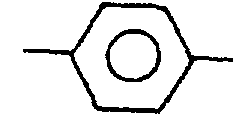
- the constituents in the above chemical formula are a rigid molecular portion of the side chain, and the portion indicated by is an asymmetric carbon atom, that is, chiralsen.
- This chiral center R * has a substituent (CH 2 ) n bonded thereto in addition to the rigid molecular portion.
- Chiralsen Yuichi R * is a rigid molecular moiety, a substituent (CH
- a methyl group and a fluorine atom are bonded, and the steric configuration is constant for each optical rotation molecule, and forms the root of steric anisotropy.
- the polymer constituting the polarization conversion device 40 is stretched and oriented.
- the directions of the rigid molecular portion and the chiral center R * are aligned in a substantially constant direction, and the rigid molecular portion and the substituent (the steric configuration of CH n is substantially constant in the same direction). It is aligned.
- the vector component of light having a specific polarization plane is added, and the vector component of light having a polarization plane perpendicular to that. Is reduced.
- the polarization converter 40 rotates the polarization plane and the light S: of the specific polarization plane increased by the polarization converter 40 is incident on the liquid crystal cell 60. * Can be increased.
- the polarization plane of the incident light is changed by the liquid crystal 66 according to the driving state of the active element arranged for each pixel, and the light emitted from the liquid crystal cell 60 passes through the analyzer 70. Will be output.
- This liquid crystal screen can be a bright screen because the light incident on the liquid crystal cell 60 is increased compared to the conventional one.
- the power of the battery 30 is set to be smaller than that of the conventional one, the brightness of the screen can be maintained at a level equal to or higher than that of the conventional one. It can be greatly reduced. Also, the size of the device can be reduced.
- the device can be downsized. Further, predetermined performance can be stably obtained without heating the liquid crystal cell active element and the like by the polarizer.
- the second embodiment is different from the second embodiment in that, instead of the polarization converter 40 shown in FIG. 2, as shown in FIG. 3, a polarization converter 80 in which polymer sheets 80a to 80d are laminated is used. However, this is different from the first embodiment.
- Each of the polymer sheets 80a to 8Gd is formed of a polymer having the same chemical formula as in the first embodiment.
- the polymer is stretched and oriented in the same manner as in the first embodiment, and the optical rotation in each polymer sheet is performed.
- light having a horizontal polarization plane is rotated at an optical rotation angle of 01, and light having a vertical polarization plane is converted. It is assumed that the rotation is at an optical rotation angle ⁇ 2 (> ⁇ 1).
- the direction in which they are stretched and oriented can be shifted from each other for each layer.
- Each of the polymer sheets preferably has the largest azimuthal polarization component among the components of the elliptical polarization obtained by conversion in the preceding layer, which is most increased by the polarization conversion in the next layer.
- the stretching orientation directions of 80a to 80d are shifted for each layer. This will be described with reference to FIG. FIG. 4 shows the state of light that is polarized and converted by each polymer sheet 80a to 80d arranged spatially apart for convenience of explanation.
- the first polymer sheet 80a receives light that is decomposed into a horizontal vector component 200 and a vertical vector component 210.
- the light passing through the first polymer sheet 80a rotates a horizontal vector component 200 having a horizontal plane of polarization at an angle of rotation 01 with respect to the horizontal plane, and as transmitted light.
- Passed light 201 having a polarization plane inclined by an angle of rotation 6> 1 from the horizontal polarization plane is obtained.
- the vertical vector component 210 having a vertical polarization plane is rotated at an optical rotation angle of 02 from the vertical polarization plane, and the vertical The transmitted light 2 1 ⁇ ⁇ ⁇ having a polarization plane inclined by the rotation angle S 2 from the proper polarization plane is obtained.
- the polarization plane of the second polymer sheet 80b that is most rotated is set to be inclined by 91 (from the polymer sheet 80a in the preceding stage).
- the polarization component in the specific direction which is the largest among the polarization components in each direction converted in the previous layer, is increased by the polarization conversion in the next layer. Further, the orientation directions of stretching of the polymer sheets 80c and 80d are shifted from each other for each layer.
- the transmitted light 202 in which the light on the specific polarization plane is increased can be obtained.
- the horizontal vector component of the light passing through the second polymer sheet 80b is rotated by a certain optical rotation angle, and the specific polarization plane is changed.
- the transmitted light 203 with further increased light is obtained.
- the horizontal vector component of the light passing through the third polymer sheet 80c is rotated at a certain optical rotation angle, and the specific polarization plane
- the transmitted light 204 with the light having the further increased is obtained.
- the vertical vector component of the light passing through the third polymer sheet 80c is rotated at a certain rotation angle. Passing light can get.
- the polarization plane of the light passing through the polarizer 50 coincides with the specific polarization plane whose light amount has been increased.
- the light increasing effect due to the optical rotation that is repeated a plurality of times is realized by the multilayer polymer sheet.
- the light has a predetermined thickness in the light passing direction and has a different thickness in the polarization direction.
- the three-dimensional arrangement of the components of the optically active substance described above is shifted for each unit length region obtained by dividing the predetermined thickness.
- the optical rotation material having the unit length in the subsequent stage should have each stage so as to maximize the light having the polarization plane most polarized in the optical rotation material having the unit length in the preceding stage. It is also possible to shift the three-dimensional arrangement of the components of the optically active substance.
- the third embodiment since less light is absorbed by the polarizer and discarded as heat, a brighter liquid crystal display can be achieved, or the consumption power of the backlight 30 can be significantly reduced. Further, predetermined performance can be stably obtained without heating the liquid crystal cell active element and the like by the polarizer.
- a polarization conversion device is provided before the liquid crystal cell 60. Are arranged only.
- the polarizer 90 is composed of the optically rotating substance exhibiting the multi-stage optical rotation phenomenon.
- the polarizer 90 can have not only a light increasing effect but also a function as an original polarizer that allows only light having a certain polarization plane to pass.
- the number of members can be reduced as compared with the first to third embodiments, and moreover, light absorbed by the polarizer and discarded as heat is reduced, so that a brighter liquid crystal display can be performed.
- the power consumption of the backlight 30 can be significantly reduced. Also, predetermined performance can be stably obtained without heating the liquid crystal cell, the active element, and the like by the polarizer.
- FIG. 6 is a schematic explanatory view of a liquid crystal display device using another polarization conversion device of the present invention.
- C The liquid crystal display device shown in FIG. 6 is replaced with the polarization conversion device 40 of the liquid crystal display device shown in FIG.
- the third embodiment differs from the first embodiment in that a polarization converter 42 is provided.
- the polarization converter 42 of the present embodiment is configured by mixing a rotatory substance with a base polymer.
- Table 1 shows the composition of the base polymer and the composition of the optically active substance mixed with it.
- C 8 Hi 7 8 SI in table 1 has the following composition formula (1) - ⁇ ⁇ - @ - COO- ⁇ ⁇ ) - CH 2 C * H (CH 3) C 2 H5 8SI * 4- (2-methylbutyI) phenyl4'-octylbiphenyl-4-carboxylate ⁇ ⁇ ⁇ (1) Also, 10., 3 ⁇ 4 18 SI is a substance that causes ftj ⁇ of de! F.
- Organic solvents include methyl alcohol, acetone, methyl ethyl ketone, methyl ybutyl ketone, tetrahydrofuran, ethyl acetate, n-butyl acetate, isoamyl acetate, morpholine, pyridine, carbon tetrachloride, carbon form, ethyl dichloride, Examples include trichloroethylene, m-cresol, benzene, toluene, ethylbenzene, xylene, cyclobenzene, hexane, cyclohexane, acetic acid or formic acid.
- pattern 2 and pattern 4 in Table 1 it is possible to use, for example, a rod-shaped crystal having an anisotropic crystal shape of the optically active material to be dispersed. Can be easily made. If the optically rotating substance has low solubility in the base polymer, the optically rotating substance precipitates when the solvent is removed. As a result, even in the combination of patterns 1 and 3, the optical rotation is contained in the base polymer corresponding to patterns 2 and 4. It is possible to have a configuration in which crystalline materials are dispersed.
- optical rotation substances shown in Table 1 above often have optical rotation when a carbon atom in the optical rotation molecule is bonded to four different atoms or groups. This carbon atom is called an asymmetric carbon a torn. When bonded to different atoms or groups, the molecule is not symmetric and has an enantiomer. This property is called chirality, and the asymmetric carbon atom in the presence of chirality is called chiral center.
- U. Molecules with chirality show optical rotation c
- the optical rotation differs depending on the direction of the polarization plane of the incident light.
- the optically rotating molecule in the polarization converter 42 causes Rotated by an angle of rotation 6> 1 with respect to the horizontal plane of polarization.
- an incident vector component 20 of light having a vertical polarization plane of the incident light is rotated by an optical rotation molecule by an optical rotation angle 0 2 with respect to the vertical polarization plane.
- the relationship of the magnitude of the optical rotation angle is, for example, (9 1 ⁇ 0 2).
- the incident vector component 10 of the light having the horizontal plane of polarization is rotated by the angle of rotation 01 and becomes the emission vector component 12.
- the incident vector component 20 of the light having the perpendicular polarization plane is rotated by the optical rotation angle 32 to become the emission vector component 22.
- the injection vector component 12 after this rotation can be decomposed into a horizontal vector component 12a and a vertical vector component 12b.
- the injection vector component 22 after rotation can be decomposed into a horizontal vector component 22a and a vertical vector component 22b.
- the optical rotation angle is 6> 1 ⁇ 6> 2
- the horizontal vector component 12a after transmission is hardly reduced in horizontal vector component 12a compared with the original incident vector component 10.
- a horizontal vector component 22b after transmission is generated.
- the horizontal vector component that is the sum of the two becomes considerably large.
- the transmitted vertical vector component 22b is considerably reduced, and the transmitted incident vertical vector component 10 is reduced from the original incident vector component 10.
- the vector component 1 2b has hardly increased. That is, the vertical vector component is considerably reduced even when the sum of the two is taken. Therefore, the sum of the horizontal vector components of the emitted light is larger than the sum of the vertical vector components.
- the angle of rotation of both can be adjusted, and the light having a polarization plane in one direction and the light having a polarization plane orthogonal to this can be rotated. In addition, a considerably large amount of emitted light can be obtained.
- FIG. 7 shows the manufacturing apparatus of the present example, with a partial cross section.
- the manufacturing equipment consists of a base polymer container 102, an optical rotatory material container 103, a mixing container 107, a cast board 109, a drying heater 111, a power supply 112, and a drive roller 113. , 1 14, conveyor belt 1 15, blade 1 16, stretching rollers 1 18, 1 19 and take-up roller 1 21.
- the base polymer container 102 contains the base polymer 100 listed in Table 1, and the optically rotating material container 103 contains the optically rotating material 101 shown in Table 1. Is inserted. Mixing amount of base polymer by adjusting the valve 1 0 4, the mixing amount of optical rotation material by adjusting the valve 1 0 5, the base polymer in c mixing vessel 1 0 7 can be controlled respectively and optical rotatory substance Are mixed to form a mixed solution 110.
- Casting step (S 2) The mixed solution 110 is flowed over a cast belt, with the flow rate adjusted by a valve 108. Since the cast port 109 is inclined at a slight angle with respect to the level surface, the mixed solution 110 is spread in a film shape while flowing slowly.
- the cast port 109 has a fine groove 117 along the extending direction thereof, and the optical rotation of the optically rotating substance 101 is caused by the flow of the mixed solution 110 over the groove.
- the alignment of the hydrophilic molecules is uniform. That is, since the optically rotating molecule has a rigid linear chain portion with a large molecular weight at the asymmetric carbon atom, when the optically rotating substance flows on a plane, the optically rotating molecule is naturally oriented in a direction with low resistance. Orientation. This is called flow orientation. At this time, if the grooves are provided along the direction of orientation on the flow surface, molecules are easily oriented by the shape effect. At this time, when the mixed solution is in a liquid crystal state or when the shape of crystals in the mixed (dispersed) solution has anisotropy (for example, rod-shaped crystals), The effect of the orientation due to the orientation and shape effects increases.
- Drying process (S 3): Since the power supply 112 is connected to the drying heater 111, the mixed solution 110 spread in the form of a film is heated and the solvent is evaporated and dried. As a result, the liquid mixed solution 110 is solidified to form a film.
- the transport belt 115 transports the mixed solution 110 which has started to solidify at a speed equivalent to the flow of the mixed solution 110 on the cast board 109.
- Stretching process (S 4) The mixed solution 110 is dried, the formed film 120 is peeled off by the blade 116, and is stretched at a constant tension by the stretching rollers 118 and 119. Pulled.
- the optical rotatory molecule having a certain degree of orientation by the casting process can be further enhanced in orientation by this stretching.
- the film 120 having the enhanced orientation is taken up by a take-up roller 121.
- the thickness of the film is adjusted by the gap between the stretching rollers 118 and 119.
- the film 120 produced by the above steps exhibits optical rotation with respect to light in a direction perpendicular to the orientation direction, that is, in the thickness direction of the film. If the anisotropy of the optical rotation angle required for the polarization conversion device cannot be ensured by the thickness of this film, a plurality of films are laminated to secure the required optical rotation. When the laminated film is cut into a predetermined size, the polarization conversion device 1 is completed. When laminating films, it is preferable to change the orientation of the optical rotatory substance for each layer. For example, as described with reference to FIG.
- the direction of the stretching direction of the optically active substance may be set to be different so that the polarization plane capable of giving the difference is shifted by ⁇ 91.
- the mixing method, the casting method, the drying method and the stretching method may be any as long as they can be solidified into a film from a mixed solution of the base polymer and the optically active substance and stretched.
- Other known methods can be applied regardless of the method of the seventh embodiment.
- the polarizer 50 may be omitted.
- the light having a specific polarization plane occupies most, and the other polarized light. It becomes possible to almost completely eliminate light having a light surface. This is because such a polarization conversion device also functions as a polarizer that allows only light having a specific polarization plane to pass, together with the light increasing action due to optical rotation of the light having the other polarization plane.
- a polarization converter in which the orientation of optically rotating molecules is uniform by mixing the optically active substance with the base polymer, forming the film into a film, and drying and stretching the film.
- This polarization conversion device exhibits optical rotation anisotropy with respect to incident light by using a combination of a base polymer and a polarizing substance as shown in Table 1.
- the sixth embodiment of the present invention provides a polarization conversion device using a liquid optical rotatory substance instead of the solidified optical rotatory substance of the fifth embodiment.
- FIG. 8 shows a schematic configuration diagram of the liquid crystal display device of the sixth embodiment.
- This liquid crystal display device is different from the fifth embodiment only in that the polarization converter 420 of FIG. 6 is changed to the polarization converter 160 of the present embodiment.
- the change conversion device 160 of the present embodiment is configured by sandwiching the optically active substance 163 between the transparent substrates 161 and 162.
- transparent substrates 16 1 and 16 2 materials having high light transmittance such as various glass substrates and plastic substrates are used.
- Embodiments of the polarization conversion device 160 include a device using a rubbing method using the alignment film shown in FIG. 9 and a device using an electric field application method applying a voltage shown in FIG.
- the polarization conversion device 16 OA using the rubbing method in FIG. 9 will be described.
- an optically polar polymer film of sugar or the like is applied to the inner surfaces of the transparent substrates 16 1 and 16 2, and the surface in contact with the optically rotating substance is rubbed in a certain direction to form an alignment film 16.
- the composition of the alignment films 164 A and 165 A includes soluble cellulose, polyethylene, polyvinyl alcohol, Nikon 66, nylon 6TPA, polybutylene terephthalate, polyethylene terephthalate, polyester, polyimide, and polypropylene.
- optically or non-optically active polymers such as polyparaxylene, polycyclohexyl methacrylate, cross-linked nylon, polyvinyl methyl ketone, polyacetal, polybenzyl methacrylate, and polybrene are exemplified.
- the rotatory substance 163 A in the case of using the rubbing method includes a sugar, an amino acid, and a liquid crystal represented by the above-mentioned composition formula (1) or (2) indicating the optical rotation shown in Table 1. And a liquid crystal composition.
- the polarization converter 160B using the electric field application method in FIG. 10 will be described.
- the transparent electrodes 164B and 165B are formed on the surfaces of the transparent electrodes 161 and 162 facing each other.
- the space between the two transparent electrodes is filled with a rotatory substance 163 B composed of liquid crystal molecules.
- the transparent electrodes 164B and 165B are composed of, for example, an ITO (indium tin oxide) film.
- the optically rotating substance 163B needs to be a substance having orientation with respect to an electric field, for example, a ferroelectric substance such as chiral smectic C (Sm * C) or chiral smectic I (Sm + 1). Liquid crystals are preferred.
- a predetermined voltage is applied between the transparent electrodes by the light source 166.
- the alignment direction of the molecular long axis of the optical rotation molecule differs depending on the properties of the liquid crystal as the optical rotation substance. For example, when the liquid crystal exhibits a homeotropic orbital orientation in the nematic phase or has a property of being vertically oriented to the substrate in the smectic phase, the molecular long axis of the liquid crystal molecule is changed as shown in FIG. It is oriented almost perpendicular to the transparent substrate. On the other hand, when the liquid crystal exhibits a homogenous orientation in the nematic phase, or has a property of being oriented parallel to the substrate in the smectic phase, the molecular long axis becomes almost parallel to the transparent substrate.
- the orientation control of the optically rotatory substance is not limited to the above method, and various known methods can be applied.
- a shear stress method, a temperature gradient method, a SiO oblique deposition method, or the like can be used.
- the optically rotating substance not only one kind of optically rotating substance but also a mixed solution of a plurality of optically rotating substances can be used.
- a liquid in which fine crystals are dispersed in a liquid can be used.
- the optically rotating substance is a liquid
- it is held by the transparent substrate to provide a polarization conversion device having the same optical rotation as the fifth embodiment. it can.
- the eighth embodiment of the present invention provides a combination of the base polymer capable of compensating the optical rotation and the optical rotation material according to the fifth embodiment.
- an optically rotatory base polymer is used as the base polymer of the fifth embodiment (see Table 1).
- the optically active base polymer polyamino acids, polysaccharides, glycoproteins, and derivatives thereof can be considered for the water-soluble base polymer.
- the structure may have a chiral center (for example, an example of this polymer is shown in the composition formula (3)).
- the base polymer scratch or casting process (FIG. 7 : S 2) orients the molecular long axis of the optical rotatory molecule constituting the base polymer, and obtains outgoing light having polarization anisotropy with respect to the incident light.
- the light incident on such a polarization conversion device is rotated by the optical rotation of the optically rotating substance itself mixed with the base polymer, and is also rotated by the optically rotating molecules constituting the base polymer itself. .
- the optical rotation characteristic of the base polymer preferably has a wavelength dispersion characteristic that compensates for a change in optical rotation with respect to the wavelength of the optical rotation substance (referred to as a wavelength dispersion characteristic of optical rotation). This will be described with reference to FIGS. 11 to 13.
- Figure 11 shows the optical wavelength dispersion characteristics of the optically active substance itself.
- Ordinary optically rotating substances change their optical rotation corresponding to the wavelength (the magnitude of the optical rotation angle, etc.) even in the wavelength region of visible light.
- a polarization converter using an optically rotating substance having such wavelength dispersion characteristics has a large optical rotation angle at a certain wavelength, and amplifies the amount of light of this wavelength, while at other wavelengths an optical rotation is required.
- the rotation angle is small and the amount of light of this wavelength is not amplified much. Since the amount of light increases only at specific wavelengths, the light emitted from the polarization converter may be colored.
- a substance having wavelength dispersion characteristics capable of compensating for the wavelength dispersion characteristics of the optically active substance is used as the substance contained in the base polymer itself or the base polymer.
- the optically active substance exhibits the wavelength dispersion characteristics shown in Fig. 11
- the optical rotation P 3 at the short wavelength is high
- the optical rotation P 4 at the long wavelength is low
- the chromatic dispersion characteristics in the visible light region are inversely different from those in Fig. 11. .
- the optical rotation characteristic of the optical rotation substance and the optical rotation characteristic of the optical rotation substance contained in the base polymer or base polymer are added, and as shown in Fig. 13 It will show an average optical rotation in the region. It can be seen from FIG. 13 that the optical rotation P 5 at the short wavelength and the optical rotation P 6 at the long wavelength show almost the same optical rotation.
- Examples of such a combination of a base polymer and a rotatory substance capable of optical rotation compensation include a combination of a base polymer with a polyamino acid and a rotatory substance with a sugar.
- the base polymer itself or the substance contained in the base polymer has the optical rotation to compensate for the wavelength dispersion characteristics of the optical rotation substance, but the base polymer does not have the optical rotation.
- the same effect can be obtained by using a plurality of optically active substances.
- one optically active substance is used as an optically active substance that can compensate for the optically active optical wavelength dispersion characteristic.
- the wavelength dispersion characteristic of the polarization conversion device can be flattened.
- a combination of an amino acid and a sugar is mentioned as an optically rotating substance that compensates for optical rotation with each other.
- the optical rotation is given to the substance contained in the base polymer itself or the base polymer
- a polarization converter having a higher optical rotation can be provided.
- the substance contained in the base polymer itself or the base polymer has a wavelength dispersion characteristic capable of compensating the optical rotatory wavelength dispersion characteristic of the optical rotatory substance, the polarized light having a flat wavelength dispersion characteristic and no coloring can be obtained.
- a conversion device can be provided.
- the liquid crystal display device as an optical conversion device that can use the polarization conversion device according to the present invention as a polarizer is not limited to the above-described backlight type (transmission type), but may be a reflection type liquid crystal display device. .
- a polarization converter may be arranged on the front surface of the liquid crystal cell on the light incident side.
- the liquid crystal display device as an optical conversion device using the polarization conversion device according to the present invention is not limited to a specific type of liquid crystal and a method of driving the liquid crystal, and various types of liquid crystal conventionally using a polarizer It can be used for a liquid crystal display device.
- the polarization conversion device of the present invention is not limited to the one used for a liquid crystal display device, but may be any device that uses a polarized light beam having a fixed polarization plane, such as a liquid crystal light valve for a projector, an optical analysis device, and the like. It can also be used as various polarizers for devices and liquid crystal displays.
- such an electronic device includes a display information output source 400 for outputting display information, a display information processing circuit 402 for processing the display information, and a display driving circuit 40.4 for driving the display.
- An optical switch 406 including a liquid crystal panel, a clock generation circuit 408 for generating a clock signal, and a power supply circuit 410 are provided.
- the display information output source 400 is connected to a memory such as ROM or RAM, And a tuning circuit for tuning and outputting the signal.
- the display information output source 400 outputs display information such as a video signal to the display information processing circuit 402 in response to the clock signal sent from the clock generation circuit 408.
- the display information processing circuit 402 is configured to include, for example, an amplification / polarity inversion circuit, a phase expansion circuit, a rotation circuit, a gamma correction circuit, or a clamp circuit.
- the display information processing circuit 402 processes the display information in synchronization with the clock signal sent from the clock generation circuit 408, and outputs the processed information to the display drive circuit 404.
- the display drive circuit 404 includes a scan side drive circuit and a data side drive circuit, and drives the optical switch 406 to display information.
- the power supply circuit 410 supplies power to circuits and elements inside the device.
- FIG. 15 shows a liquid crystal projector.
- This liquid crystal projector is a projection type liquid crystal projector using a transmission type liquid crystal panel as a light valve.
- This projector uses a three-prism optical system as an example.
- the projector 500 shown in FIG. 15 includes a run light 502 of a white light source.
- the projection light emitted from the lamp unit 502 is guided to a light guide 504, in which a plurality of mirrors 506 and two dichroics 508 form three primary colors of R, G, and B. Of light.
- the three primary colors of light are respectively guided to light switches 510R, 510G, and 510B using three liquid crystal panels, which are responsible for displaying the images of the corresponding colors. Is modulated according to.
- the three optical switches 51 ⁇ ⁇ ⁇ ⁇ R, 5110G, and 5110B are each configured as a transmissive optical conversion device according to the present invention. That is, as shown in FIG. 2, FIG. 3, FIG. 6, and FIG. 8, this optical switch has a configuration including a polarization converter, a polarizer, a liquid crystal cell, and an analyzer in order from the light incident side. As shown in FIG. 5, the configuration includes, in order from the light incident side, a ninth converter (also serving as a polarizer), a liquid crystal cell, and an analyzer. In addition, a polarization conversion device (and a polarizer, if necessary) can be arranged immediately after the lamp unit. This reduces the number of polarization converters required, further simplifies optical design, and achieves both high reliability and low cost. Can be made.
- the three primary colors of light R, G, and B modulated by the three optical switches 510R, 510G, and 510B are coupled to a dichroic prism 511, as shown in FIG. It is incident from a direction.
- the dichroic prism 512 the propagation directions of the red R and blue B light are bent 90 degrees, and the green G light travels straight, so that the three primary color images are synthesized.
- the light of the composite image is projected on a projection object such as a screen through the projection lens 5 14, whereby a color image reflecting the display information is obtained.
- FIG. 16 shows a personal computer or an engineering workstation (EWS) compatible with multimedia.
- EWS engineering workstation
- the personal computer 520 has a main body 524 provided with a keyboard 522 and a display 528 provided with a liquid crystal display screen 526. Among them, the above-mentioned optical conversion device of the present invention is applied to a portion of a transmission type liquid crystal panel forming a liquid crystal display screen 5 26.
- FIG. 17 shows a pager as a third example of such an electronic device.
- a mobile phone, word processor, television, video-recorder of viewing type or monitor direct-view type, digital camera, electronic organizer, electronic desktop calculator, power navigation device, POS Terminals and devices with a touch panel can also be cited.
- the pager 5330 shown in FIG. 17 has a metal frame 532, and a light guide 536 with a liquid crystal display substrate 534 and a knock light 536a inside the frame.
- a circuit board 538, first and second shield boards 540, 542, two elastic conductors 544, 546, and a film carrier table 548 are provided.
- the elastic conductors 544 and 546 and the film carrier 548 are used for connecting the liquid crystal display substrate 534 and the circuit substrate 538 to each other.
- the liquid crystal display substrate 534 is an example of the optical conversion device of the present invention.
- the liquid crystal display substrate 534 includes, for example, two transparent substrates 534a and 534b and a polarization converter 534c (also serving as a polarizer).
- the transparent substrates 534a and 534b enclose liquid crystal, thereby forming at least a liquid crystal display panel (optical switch) of the dot matrix type.
- the polarization conversion device 534 c is arranged on the light incident side of the substrate 534.
- the polarization converter 5334c may be attached to a substrate as necessary.
- One of the two transparent substrates 5 3 4 a and 5 3 4 b is provided with a display drive circuit 4 0 4 shown in FIG. 14 or a display information processing circuit 5 2 Circuits that are not formed on the transparent substrates 5 3 4 a and 5 3 4 b are configured as their external circuits.In the case of the page in Figure 17, such external circuits are circuits. Can be mounted on board 5 3 8.
- a circuit board 538 is required in addition to the liquid crystal display board 534.
- the minimum structural unit of the optical conversion device is a liquid crystal display substrate. It is.
- an element in which the liquid crystal display substrate 534 is fixed to the metal frame 532 serving as a housing is configured, and this element is incorporated into an electronic device as one component. May be.
- a liquid crystal display substrate 534 and a light guide 536 provided with a backlight 536a are integrally incorporated in a metal frame 532.
- the optical conversion device of the present invention may be configured.
- a TCP may be adopted as an optical conversion device, which is one component for a child device. That is, as shown in FIG. 18, a TCP 550 having an IC chip 544 mounted on a polyimide tape 552 on which a metal conductive film is formed is prepared. It can be connected to one of two transparent substrates 5334a and 5334b and used like an optical conversion device.
- the various electronic apparatuses according to the seventh embodiment are provided with the optical conversion device including the polarization conversion device according to the present invention in an appropriate mode. Therefore, As in the embodiments described above, the amount of polarized light having a specific deflecting surface to be incident on the liquid crystal cell (liquid crystal substrate) can be increased. You can get the display screen. On the other hand, even if the amount of light from the light source is reduced, the same display brightness as before can be secured, so that the power consumption of the entire electronic device can be significantly reduced, and power consumption can be reduced. Also, the size of the light source can be reduced. Furthermore, when the light intensity of the light source is reduced in such a manner, the heat generated in the device is also reduced, so that the advantages of simplification of the design required for heat generation countermeasures and further miniaturization by simplifying the cooling mechanism can be obtained. .
- FIGS. 8-10 As an eighth embodiment of the present invention, another example of various electronic devices using the above-described optical conversion device will be described with reference to FIGS.
- a reflection type liquid crystal panel is used for the optical conversion device.
- FIG. 19 is a schematic configuration diagram when a main part of the projector is viewed in a plan view. That is, when the direction of the system optical axis L from the light source unit is the X axis, it is a cross-sectional view along the XZ plane passing through the X axis.
- the projector 600 is composed of a polarization illuminator 602, a polarization beam splitter 604, a dichroic mirror 606, 608, and three reflective liquid crystal light valves 61OR, 6 10 G, 6 10 B, projection optical system 6 12, and screen 6 14.
- a light source section 620, an integrator lens 622, and a polarization conversion element 624 are arranged along the system optical axis L.
- the light emitted from the light source section 62 has a random deflection surface. This emitted light is split into a plurality of intermediate light beams by the integer lens 622 and enters the polarization conversion element 624.
- Another integer lens 624 a is arranged on the light incident side of the polarization conversion element 624.
- the intermediate light beam incident on the polarization conversion element 6 24 is The light passes through the lens 624a and enters the polarization conversion element main body 624b.
- the polarization conversion element 624 is configured to apply the polarization conversion device of the present invention so as to serve as both a polarization conversion device and a polarizer.
- the intermediate light beam is converted into one type of polarized light beam (S-polarized light beam) whose polarization directions are almost uniform and the amount of light is increased. This S-polarized light beam then enters the polarizing beam splitter 604.
- the polarizing beam splitter 604 has an S-polarized light beam reflecting surface 604a, and reflects the incident S-polarized light beam on the S-polarized light beam reflecting surface. Of this reflected light beam, the light beam of blue light B is further reflected by the blue light reflecting layer of the dichroic mirror 606, and is incident on the reflective liquid crystal light valve 610B for blue.
- the light valve 6110B modulates a blue light beam according to display information. Also, of the light flux transmitted through the blue light reflection layer of the dichroic mirror 606, the light flux of the red light R is reflected by the red light reflection layer of another dichroic mirror 608, and the reflective liquid crystal line for red light is used. Inject into the valve 61 OR.
- the light valve 61 OR modulates a red light beam according to display information. Further, the luminous flux of blue light G transmitted through the red light reflection of the dichroic mirror 608 enters the reflective liquid crystal light valve 610 G for green, and the light valve according to the display information. The green luminous flux is modulated.
- This liquid crystal panel includes a TN type liquid crystal (a liquid crystal in which the major axis of the liquid crystal molecules is oriented substantially parallel to the panel substrate when no voltage is applied), or an SH3 ⁇ 4 liquid crystal (a liquid crystal panel whose liquid crystal molecules are long when no voltage is applied). (A liquid crystal that is aligned almost vertically).
- the light reflection operation is as follows.
- a pixel (OFF pixel) where the voltage applied to the liquid crystal layer sandwiched between the reflective electrode of the pixel and the common electrode of the substrate facing the pixel is lower than the threshold voltage of the liquid crystal
- the incident color light Is elliptically polarized by the liquid crystal layer and reflected by the reflective electrode.
- the color light in a state close to elliptically polarized light having a large number of polarization axis components deviated by approximately 90 degrees from the polarization of the incident color light is reflected and emitted through the liquid crystal layer.
- the incident color light reaches the reflection electrode with the polarization axis as it is and is reflected by the reflection electrode.
- color light with the same polarization axis as the incident light Is reflected and emitted. Since the alignment angle of the liquid crystal molecules of the TN type liquid crystal changes according to the voltage value applied to the reflective electrode, the angle of the polarization axis of the reflected color light with respect to the incident color light is determined for each pixel applied to the reflective electrode via the transistor. It can be controlled according to the voltage value corresponding to the display information.
- the light reflection operation is as follows.
- the polarization axis of the incident color light reaches the reflective electrode while being reflected, and is reflected there. In other words, the light is reflected and emitted with the same polarization axis as that at the time of incidence.
- the incident color light is elliptically polarized by the liquid crystal layer and reaches the reflective electrode c. Therefore, it is reflected by the reflective electrode and emitted from the liquid crystal layer.
- the color light is elliptically polarized light having a large polarization axis component whose polarization axis is shifted by about 90 degrees with respect to the polarization axis of the incident color light.
- the alignment angle of the liquid crystal molecules can be changed according to the value of the voltage applied to the reflective electrode, so the angle of the polarization axis of the reflected color light with respect to the incident light Can be controlled according to the voltage value corresponding to the display information for each pixel applied to the reflective electrode via the transistor.
- Each color light reflected by the reflective liquid crystal light valves 610R, 610G and 610B passes through the dichroic mirrors 608 and 606 to form a polarized beam bridge 604. Incident on. Since this polarized beam splitter 604 is formed so as to reflect the S-polarized light, the S-polarized light does not pass through the splitter 604, but the P-polarized light passes through the splitter 604. The P-polarized luminous flux of each color light is transmitted through the splitter 604 and combined to form an image according to the display information. For this reason, when the TN type liquid crystal is used for the liquid crystal panel, the reflected light of only the 0 FF pixel passes through the projection optical system 6 12, so that the image projected on the screen 6 14 is normally white. On the other hand, when the SH type liquid crystal is used, the reflected light of only the ON pixels passes through the projection optical system 612, so that the image projected on the screen 614 is a normally black display.
- a reflective liquid crystal panel since pixels are formed using semiconductor technology, a larger number of pixels can be formed and the panel size can be larger than that of an active matrix liquid crystal panel in which a TFT array is formed on a glass substrate. Can be downsized. As a result, a high-definition field image can be projected, and the compactness of the entire brochure can be realized. Wear.
- the polarization conversion element according to the present invention is used instead of a normal polarizer, the polarization illuminating device, which is the component that consumes the most power, is reduced in power consumption and downsized to approximately one half of the conventional device. It is possible to further promote the compactness of the entire projector.
- FIG. 20 to FIG. 22 show the appearance of these electronic devices.
- FIG. 20 is a perspective view showing the mobile phone 65.
- This mobile phone 650 includes a crystal display section 651 using a reflective liquid crystal panel to which the optical conversion device of the present invention is applied.
- FIG. 21 is a perspective view showing a wristwatch-type electronic device 660.
- the clock main body 661 of the device 660 is provided with a liquid display section 662 using a reflection type liquid crystal panel to which the chemical conversion device of the present invention is applied.
- FIG. 22 is a perspective view of a portable information processing device 670 such as a word processor or a personal computer.
- the information processing device 670 is provided in the device main body 671, an input unit 672 such as a keyboard provided in the device main body 671, a display unit 673, and provided in the display unit 673.
- the liquid crystal display section 674 using a reflective liquid crystal panel to which the optical conversion device of the present invention is applied is provided.
- the optical conversion device including the polarization conversion device according to the present invention is mounted in an appropriate mode in which the optical conversion device is disposed directly in front of the user. Therefore, similarly to the above-described embodiments, the amount of polarized light having a specific deflecting surface incident on the liquid crystal cell (liquid crystal substrate) can be increased. In this way, when used in a direct view type, it is possible to obtain a display with a brightness approximately twice that of the conventional one using a polarizing plate. For this reason, it is possible to greatly improve the visibility in dark places as well as bright places, and furthermore, the color vividness of the reflective color display.
- the present invention is not limited to the above embodiments, and various modifications can be made within the scope of the present invention.
- the polarization converter of the present invention is It is not only applied to the driving of various types of liquid crystal panels, but also to devices that use polarization action (polarizing microscopes, storage devices using lasers, Z recording devices, optical sensors, lighting devices, stereoscopic movies, projectors, etc.) The same applies.
- the polarization converter is provided with the light-emitting substance arranged so as to cause anisotropy in the optical rotation, and the optical rotation substance causes the light flux having the specific polarization plane to be formed.
- the intensity is increased, and the intensity of a light beam having a polarization plane orthogonal to the specific polarization plane is reduced.
- the polarization plane of the 3 ⁇ 4 bundle having another polarization plane is added to the luminous flux having the specific polarization plane by rotating, and as a result, the light quantity of the luminous flux having the specific polarization plane is increased. Can be taken out. Therefore, it is possible to eliminate waste generated when extracting light having a specific polarization plane of light incident for display as much as possible, and to improve the light utilization rate.
- the optical conversion device of the present invention since such a polarization conversion device is disposed directly on the front surface of the liquid crystal cell or via a polarizer, the utilization of incident light is higher than that of the conventional device, and a bright display is achieved. In addition to forming a screen, the power consumption of the light source can be significantly reduced, and the reliability of the device functions is improved.
- the electronic apparatus of the present invention since such an optical conversion device is mounted, it is possible to form a bright display screen with a high light utilization rate of incident light or to significantly reduce power consumption of a light source. In addition, it is possible to improve the reliability of functions and reduce the size due to the improvement in light utilization.
Landscapes
- Physics & Mathematics (AREA)
- General Physics & Mathematics (AREA)
- Optics & Photonics (AREA)
- Engineering & Computer Science (AREA)
- Multimedia (AREA)
- Signal Processing (AREA)
- Polarising Elements (AREA)
- Liquid Crystal (AREA)
- Moulding By Coating Moulds (AREA)
- Shaping By String And By Release Of Stress In Plastics And The Like (AREA)
- Liquid Crystal Substances (AREA)
- Compositions Of Macromolecular Compounds (AREA)
Description


Claims
Priority Applications (4)
| Application Number | Priority Date | Filing Date | Title |
|---|---|---|---|
| DE69733112T DE69733112T2 (de) | 1996-05-14 | 1997-05-14 | Polarisationsumwandler, elektronischer apparat und verfahren zur herstellung des polarisationsumwandlers |
| JP54073797A JP3864423B2 (ja) | 1996-05-14 | 1997-05-14 | 偏光変換装置、光学変換装置、電子機器及び偏光変換装置の製造方法 |
| EP97922042A EP0840145B1 (en) | 1996-05-14 | 1997-05-14 | Polarization converter, optical converter, electronic apparatus and process for producing polarization converter |
| US08/983,355 US6624859B1 (en) | 1996-05-14 | 1997-05-14 | Polarizing apparatus for polarizing instant light having planes of polarization to light having a particular plane of polarization and method of manufacturing the polarizing apparatus |
Applications Claiming Priority (6)
| Application Number | Priority Date | Filing Date | Title |
|---|---|---|---|
| JP14362296 | 1996-05-14 | ||
| JP8/143622 | 1996-05-14 | ||
| JP9/63651 | 1997-03-17 | ||
| JP6365297 | 1997-03-17 | ||
| JP6365197 | 1997-03-17 | ||
| JP9/63652 | 1997-03-17 |
Publications (1)
| Publication Number | Publication Date |
|---|---|
| WO1997043671A1 true WO1997043671A1 (en) | 1997-11-20 |
Family
ID=27298237
Family Applications (1)
| Application Number | Title | Priority Date | Filing Date |
|---|---|---|---|
| PCT/JP1997/001617 Ceased WO1997043671A1 (en) | 1996-05-14 | 1997-05-14 | Polarization converter, optical converter, electronic apparatus and process for producing polarization converter |
Country Status (7)
| Country | Link |
|---|---|
| US (1) | US6624859B1 (ja) |
| EP (1) | EP0840145B1 (ja) |
| JP (1) | JP3864423B2 (ja) |
| KR (1) | KR100455971B1 (ja) |
| DE (1) | DE69733112T2 (ja) |
| TW (1) | TW442692B (ja) |
| WO (1) | WO1997043671A1 (ja) |
Cited By (3)
| Publication number | Priority date | Publication date | Assignee | Title |
|---|---|---|---|---|
| JP2003535192A (ja) * | 2000-05-31 | 2003-11-25 | バイエル アクチェンゲゼルシャフト | 光学式データ記憶用混合ポリマー |
| JP2010085964A (ja) * | 2008-10-01 | 2010-04-15 | Ind Technol Res Inst | 光学シート |
| JP2011508270A (ja) * | 2007-12-24 | 2011-03-10 | ロフォ ハイ テック フィルム ゲゼルシャフト ミット ベシュレンクテル ハフツング | 液晶ディスプレイ用の光学補償フィルム及びそれと関連する発明 |
Families Citing this family (9)
| Publication number | Priority date | Publication date | Assignee | Title |
|---|---|---|---|---|
| US7252597B2 (en) | 1999-10-14 | 2007-08-07 | Laurence H. Li | Golf club assembly with recessed adjuster assembly |
| JP2002090547A (ja) | 2000-07-11 | 2002-03-27 | Optiva Inc | 偏光子製造装置 |
| JP3867975B2 (ja) * | 2001-01-10 | 2007-01-17 | 日東電工株式会社 | 異方性フィルムを形成する装置および方法 |
| RU2222429C2 (ru) | 2001-01-10 | 2004-01-27 | ОПТИВА, Инк. | Способ формирования анизотропных пленок и устройство для его осуществления |
| US7057700B2 (en) * | 2001-01-23 | 2006-06-06 | Ricoh Company, Ltd. | Light deflection element, light deflection device and image display device |
| KR100783358B1 (ko) * | 2001-04-27 | 2007-12-07 | 엘지.필립스 엘시디 주식회사 | 입체영상 표시장치 및 제조방법 |
| JP5030134B2 (ja) | 2005-08-18 | 2012-09-19 | 株式会社リコー | 偏光変換素子、偏光変換光学系および画像投影装置 |
| US11468639B2 (en) * | 2015-02-20 | 2022-10-11 | Microsoft Technology Licensing, Llc | Selective occlusion system for augmented reality devices |
| CN110767344B (zh) * | 2019-10-21 | 2021-07-27 | 暨南大学 | 一种基于矢量光场的光操控系统与方法 |
Citations (3)
| Publication number | Priority date | Publication date | Assignee | Title |
|---|---|---|---|---|
| JPH04212104A (ja) * | 1990-07-06 | 1992-08-03 | Hitachi Ltd | 非吸収型偏光素子、該素子の製法および該素子を用いた表示装置 |
| JPH06174919A (ja) * | 1992-12-02 | 1994-06-24 | Fuji Photo Film Co Ltd | 旋光フイルムおよびそれを用いた液晶表示装置 |
| JPH06331824A (ja) * | 1993-05-19 | 1994-12-02 | Asahi Optical Co Ltd | 偏光光学素子 |
Family Cites Families (7)
| Publication number | Priority date | Publication date | Assignee | Title |
|---|---|---|---|---|
| US5113270A (en) * | 1988-10-19 | 1992-05-12 | Fergason James L | Variable density light control apparatus |
| JP2660601B2 (ja) * | 1990-06-27 | 1997-10-08 | 日本石油株式会社 | 液晶表示素子用補償板の製造法 |
| US5157526A (en) | 1990-07-06 | 1992-10-20 | Hitachi, Ltd. | Unabsorbing type polarizer, method for manufacturing the same, polarized light source using the same, and apparatus for liquid crystal display using the same |
| JP3331575B2 (ja) * | 1993-06-18 | 2002-10-07 | ソニー株式会社 | 光学装置 |
| US5659411A (en) * | 1993-06-18 | 1997-08-19 | Sony Corporation | Optical device having an optically transparent birefringent medium that selectively shifts the optical axis |
| JP4091978B2 (ja) | 1993-12-21 | 2008-05-28 | スリーエム カンパニー | 明るさを強化した反射偏光子 |
| WO1997001779A1 (en) * | 1995-06-29 | 1997-01-16 | Philips Electronics N.V. | Polarizing element |
-
1997
- 1997-05-14 EP EP97922042A patent/EP0840145B1/en not_active Expired - Lifetime
- 1997-05-14 TW TW086106418A patent/TW442692B/zh not_active IP Right Cessation
- 1997-05-14 WO PCT/JP1997/001617 patent/WO1997043671A1/ja not_active Ceased
- 1997-05-14 US US08/983,355 patent/US6624859B1/en not_active Expired - Fee Related
- 1997-05-14 DE DE69733112T patent/DE69733112T2/de not_active Expired - Lifetime
- 1997-05-14 KR KR10-1998-0700267A patent/KR100455971B1/ko not_active Expired - Fee Related
- 1997-05-14 JP JP54073797A patent/JP3864423B2/ja not_active Expired - Fee Related
Patent Citations (3)
| Publication number | Priority date | Publication date | Assignee | Title |
|---|---|---|---|---|
| JPH04212104A (ja) * | 1990-07-06 | 1992-08-03 | Hitachi Ltd | 非吸収型偏光素子、該素子の製法および該素子を用いた表示装置 |
| JPH06174919A (ja) * | 1992-12-02 | 1994-06-24 | Fuji Photo Film Co Ltd | 旋光フイルムおよびそれを用いた液晶表示装置 |
| JPH06331824A (ja) * | 1993-05-19 | 1994-12-02 | Asahi Optical Co Ltd | 偏光光学素子 |
Non-Patent Citations (2)
| Title |
|---|
| O PLUS E, K.K. SHIN GIJUTSU COMMUNICATIONS (TOKYO), August 1993, No. 165, MASAO IMAI et al., "Realization of High Luminance of Liquid-Crystal Projectors by Polarizing Conversion Optical System (in Japanese)", p. 95-101. * |
| See also references of EP0840145A4 * |
Cited By (4)
| Publication number | Priority date | Publication date | Assignee | Title |
|---|---|---|---|---|
| JP2003535192A (ja) * | 2000-05-31 | 2003-11-25 | バイエル アクチェンゲゼルシャフト | 光学式データ記憶用混合ポリマー |
| JP2011508270A (ja) * | 2007-12-24 | 2011-03-10 | ロフォ ハイ テック フィルム ゲゼルシャフト ミット ベシュレンクテル ハフツング | 液晶ディスプレイ用の光学補償フィルム及びそれと関連する発明 |
| JP2010085964A (ja) * | 2008-10-01 | 2010-04-15 | Ind Technol Res Inst | 光学シート |
| US8369016B2 (en) | 2008-10-01 | 2013-02-05 | Industrial Technology Research Institute | Optical sheet |
Also Published As
| Publication number | Publication date |
|---|---|
| KR100455971B1 (ko) | 2005-06-17 |
| EP0840145B1 (en) | 2005-04-27 |
| EP0840145A4 (en) | 1999-02-24 |
| DE69733112T2 (de) | 2006-02-02 |
| US6624859B1 (en) | 2003-09-23 |
| KR19990028965A (ko) | 1999-04-15 |
| EP0840145A1 (en) | 1998-05-06 |
| JP3864423B2 (ja) | 2006-12-27 |
| TW442692B (en) | 2001-06-23 |
| DE69733112D1 (de) | 2005-06-02 |
Similar Documents
| Publication | Publication Date | Title |
|---|---|---|
| TWI362531B (en) | Compensated electro-optical light modulation element | |
| CN101558337B (zh) | Van液晶显示器件以及液晶投影仪 | |
| US5726723A (en) | Sub-twisted nematic liquid crystal display | |
| TW580592B (en) | Image shifting device, image display, liquid crystal display, and projection image display | |
| CN101558354B (zh) | 反射型液晶显示器件以及反射型液晶投影仪 | |
| Fan-Chiang et al. | Fringing-field effects on high-resolution liquid crystal microdisplays | |
| KR20010012224A (ko) | 적층 위상차판 및 그것으로 구성된 액정표시장치 | |
| JPWO1998052093A1 (ja) | 積層位相差板及びそれから構成される液晶表示装置 | |
| JP3864423B2 (ja) | 偏光変換装置、光学変換装置、電子機器及び偏光変換装置の製造方法 | |
| EP0448124A2 (en) | Optical modulation device and display apparatus | |
| JP2000347174A (ja) | 液晶装置及びその製造方法並びにそれを用いた電子機器 | |
| JPWO1997043671A1 (ja) | 偏光変換装置、光学変換装置、電子機器及び偏光変換装置の製造方法 | |
| TW201137472A (en) | Liquid crystal device and projection display device | |
| JPH1164840A (ja) | 液晶表示装置 | |
| US20020005930A1 (en) | A liquid crystal layer including a dichroic dye | |
| JP2000162581A (ja) | 反射型液晶表示装置とその製造方法 | |
| KR100486068B1 (ko) | 반사형강유전체액정디스플레이 | |
| Broer et al. | Progress in liquid crystal displays by new developments in functional polymers | |
| WO2001018593A1 (en) | Liquid crystal shutter | |
| JPH1026766A (ja) | 液晶表示装置 | |
| TWI292501B (ja) | ||
| JP3960152B2 (ja) | 反射型液晶素子を用いた投影装置 | |
| JPH1195212A (ja) | 反射型液晶表示素子および液晶プロジェクタ | |
| Baur et al. | High-performance liquid crystal device suitable for projection display | |
| JP2001324722A (ja) | 液晶装置および電子機器 |
Legal Events
| Date | Code | Title | Description |
|---|---|---|---|
| AK | Designated states |
Kind code of ref document: A1 Designated state(s): JP KR US |
|
| AL | Designated countries for regional patents |
Kind code of ref document: A1 Designated state(s): AT BE CH DE DK ES FI FR GB GR IE IT LU MC NL PT SE |
|
| WWE | Wipo information: entry into national phase |
Ref document number: 1019980700267 Country of ref document: KR |
|
| WWE | Wipo information: entry into national phase |
Ref document number: 08983355 Country of ref document: US |
|
| WWE | Wipo information: entry into national phase |
Ref document number: 1997922042 Country of ref document: EP |
|
| 121 | Ep: the epo has been informed by wipo that ep was designated in this application | ||
| WWP | Wipo information: published in national office |
Ref document number: 1997922042 Country of ref document: EP |
|
| WWP | Wipo information: published in national office |
Ref document number: 1019980700267 Country of ref document: KR |
|
| WWG | Wipo information: grant in national office |
Ref document number: 1019980700267 Country of ref document: KR |
|
| WWG | Wipo information: grant in national office |
Ref document number: 1997922042 Country of ref document: EP |