WO1998017655A1 - Metalloproteinase inhibitors - Google Patents
Metalloproteinase inhibitors Download PDFInfo
- Publication number
- WO1998017655A1 WO1998017655A1 PCT/GB1997/002891 GB9702891W WO9817655A1 WO 1998017655 A1 WO1998017655 A1 WO 1998017655A1 GB 9702891 W GB9702891 W GB 9702891W WO 9817655 A1 WO9817655 A1 WO 9817655A1
- Authority
- WO
- WIPO (PCT)
- Prior art keywords
- alkyl
- methyl
- phenyl
- amino
- compound
- Prior art date
- Legal status (The legal status is an assumption and is not a legal conclusion. Google has not performed a legal analysis and makes no representation as to the accuracy of the status listed.)
- Ceased
Links
- FYAUTMAHMQAPBM-LEWJYISDSA-N CC(C)C[C@H]([C@H](CCCNS(c(cc1)ccc1OC)(=O)=O)C(NO)=O)C(N1CCCCC1)=O Chemical compound CC(C)C[C@H]([C@H](CCCNS(c(cc1)ccc1OC)(=O)=O)C(NO)=O)C(N1CCCCC1)=O FYAUTMAHMQAPBM-LEWJYISDSA-N 0.000 description 1
- SCULXLVNJFOYGE-HUUYTVAOSA-N CC(C)[C@H](C1)[C@]1(C(CCNS(C)(=O)=O)C(NO)=O)C(N1CCCCC1)=O Chemical compound CC(C)[C@H](C1)[C@]1(C(CCNS(C)(=O)=O)C(NO)=O)C(N1CCCCC1)=O SCULXLVNJFOYGE-HUUYTVAOSA-N 0.000 description 1
Classifications
-
- C—CHEMISTRY; METALLURGY
- C07—ORGANIC CHEMISTRY
- C07D—HETEROCYCLIC COMPOUNDS
- C07D295/00—Heterocyclic compounds containing polymethylene-imine rings with at least five ring members, 3-azabicyclo [3.2.2] nonane, piperazine, morpholine or thiomorpholine rings, having only hydrogen atoms directly attached to the ring carbon atoms
- C07D295/16—Heterocyclic compounds containing polymethylene-imine rings with at least five ring members, 3-azabicyclo [3.2.2] nonane, piperazine, morpholine or thiomorpholine rings, having only hydrogen atoms directly attached to the ring carbon atoms acylated on ring nitrogen atoms
- C07D295/18—Heterocyclic compounds containing polymethylene-imine rings with at least five ring members, 3-azabicyclo [3.2.2] nonane, piperazine, morpholine or thiomorpholine rings, having only hydrogen atoms directly attached to the ring carbon atoms acylated on ring nitrogen atoms by radicals derived from carboxylic acids, or sulfur or nitrogen analogues thereof
- C07D295/182—Radicals derived from carboxylic acids
- C07D295/185—Radicals derived from carboxylic acids from aliphatic carboxylic acids
-
- A—HUMAN NECESSITIES
- A61—MEDICAL OR VETERINARY SCIENCE; HYGIENE
- A61P—SPECIFIC THERAPEUTIC ACTIVITY OF CHEMICAL COMPOUNDS OR MEDICINAL PREPARATIONS
- A61P1/00—Drugs for disorders of the alimentary tract or the digestive system
- A61P1/04—Drugs for disorders of the alimentary tract or the digestive system for ulcers, gastritis or reflux esophagitis, e.g. antacids, inhibitors of acid secretion, mucosal protectants
-
- A—HUMAN NECESSITIES
- A61—MEDICAL OR VETERINARY SCIENCE; HYGIENE
- A61P—SPECIFIC THERAPEUTIC ACTIVITY OF CHEMICAL COMPOUNDS OR MEDICINAL PREPARATIONS
- A61P17/00—Drugs for dermatological disorders
- A61P17/06—Antipsoriatics
-
- A—HUMAN NECESSITIES
- A61—MEDICAL OR VETERINARY SCIENCE; HYGIENE
- A61P—SPECIFIC THERAPEUTIC ACTIVITY OF CHEMICAL COMPOUNDS OR MEDICINAL PREPARATIONS
- A61P19/00—Drugs for skeletal disorders
- A61P19/02—Drugs for skeletal disorders for joint disorders, e.g. arthritis, arthrosis
-
- A—HUMAN NECESSITIES
- A61—MEDICAL OR VETERINARY SCIENCE; HYGIENE
- A61P—SPECIFIC THERAPEUTIC ACTIVITY OF CHEMICAL COMPOUNDS OR MEDICINAL PREPARATIONS
- A61P19/00—Drugs for skeletal disorders
- A61P19/08—Drugs for skeletal disorders for bone diseases, e.g. rachitism, Paget's disease
- A61P19/10—Drugs for skeletal disorders for bone diseases, e.g. rachitism, Paget's disease for osteoporosis
-
- A—HUMAN NECESSITIES
- A61—MEDICAL OR VETERINARY SCIENCE; HYGIENE
- A61P—SPECIFIC THERAPEUTIC ACTIVITY OF CHEMICAL COMPOUNDS OR MEDICINAL PREPARATIONS
- A61P27/00—Drugs for disorders of the senses
- A61P27/02—Ophthalmic agents
-
- A—HUMAN NECESSITIES
- A61—MEDICAL OR VETERINARY SCIENCE; HYGIENE
- A61P—SPECIFIC THERAPEUTIC ACTIVITY OF CHEMICAL COMPOUNDS OR MEDICINAL PREPARATIONS
- A61P29/00—Non-central analgesic, antipyretic or antiinflammatory agents, e.g. antirheumatic agents; Non-steroidal antiinflammatory drugs [NSAID]
-
- A—HUMAN NECESSITIES
- A61—MEDICAL OR VETERINARY SCIENCE; HYGIENE
- A61P—SPECIFIC THERAPEUTIC ACTIVITY OF CHEMICAL COMPOUNDS OR MEDICINAL PREPARATIONS
- A61P35/00—Antineoplastic agents
-
- A—HUMAN NECESSITIES
- A61—MEDICAL OR VETERINARY SCIENCE; HYGIENE
- A61P—SPECIFIC THERAPEUTIC ACTIVITY OF CHEMICAL COMPOUNDS OR MEDICINAL PREPARATIONS
- A61P43/00—Drugs for specific purposes, not provided for in groups A61P1/00-A61P41/00
-
- C—CHEMISTRY; METALLURGY
- C07—ORGANIC CHEMISTRY
- C07D—HETEROCYCLIC COMPOUNDS
- C07D295/00—Heterocyclic compounds containing polymethylene-imine rings with at least five ring members, 3-azabicyclo [3.2.2] nonane, piperazine, morpholine or thiomorpholine rings, having only hydrogen atoms directly attached to the ring carbon atoms
- C07D295/22—Heterocyclic compounds containing polymethylene-imine rings with at least five ring members, 3-azabicyclo [3.2.2] nonane, piperazine, morpholine or thiomorpholine rings, having only hydrogen atoms directly attached to the ring carbon atoms with hetero atoms directly attached to ring nitrogen atoms
- C07D295/26—Sulfur atoms
-
- Y—GENERAL TAGGING OF NEW TECHNOLOGICAL DEVELOPMENTS; GENERAL TAGGING OF CROSS-SECTIONAL TECHNOLOGIES SPANNING OVER SEVERAL SECTIONS OF THE IPC; TECHNICAL SUBJECTS COVERED BY FORMER USPC CROSS-REFERENCE ART COLLECTIONS [XRACs] AND DIGESTS
- Y02—TECHNOLOGIES OR APPLICATIONS FOR MITIGATION OR ADAPTATION AGAINST CLIMATE CHANGE
- Y02P—CLIMATE CHANGE MITIGATION TECHNOLOGIES IN THE PRODUCTION OR PROCESSING OF GOODS
- Y02P20/00—Technologies relating to chemical industry
- Y02P20/50—Improvements relating to the production of bulk chemicals
- Y02P20/55—Design of synthesis routes, e.g. reducing the use of auxiliary or protecting groups
Definitions
- the present invention relates to therapeutically active hydroxamic and carboxylic acid derivatives, to processes for their preparation, to pharmaceutical compositions containing them, and to the use of such compounds in medicine.
- the compounds are inhibitors of matrix metalloproteinases involved in tissue degradation, especially collagenases such as human fibroblast collagenase (MMP- 1 ), human neutrophil collagenase (MMP-8) and collagenase-3 (MMP-13).
- MMPs matrix metalloproteinases
- rheumatoid arthritis osteoarthritis
- osteopenias such as osteoporosis
- periodontitis gingivitis
- corneal epidermal or gastric ulceration corneal epidermal or gastric ulceration
- tumour metastasis invasion and growth.
- MMP inhibitors are also of potential value in the treatment of neuroinflammatory disorders, including those involving myelin degradation, for example multiple sclerosis, as well as in the management of angiogenesis dependent diseases, which include arthritic conditions and solid tumour growth as well as psoriasis, proliferative retinopathies, neovascular glaucoma, ocular tumours, angiofibromas and hemangiomas.
- angiogenesis dependent diseases which include arthritic conditions and solid tumour growth as well as psoriasis, proliferative retinopathies, neovascular glaucoma, ocular tumours, angiofibromas and hemangiomas.
- Metalloproteinases are characterised by the presence in the structure of a zinc(ll) ionic site. It is now known that there exists a range of metalloproteinase enzymes that includes human fibroblast collagenase (MMP-1), human neutrophil collagenase (MMP-8) and collagenase-3 (MMP-13), 72 kDa-gelatinase, 92 kDa-gelatinase, stromelysin-1 , stromelysin-2 and PUMP-1 (J.F. Woessner, FASEB J, 1991 , 5, 2145- 2154).
- MMP-1 human fibroblast collagenase
- MMP-8 human neutrophil collagenase
- MMP-13 collagenase-3
- 72 kDa-gelatinase 72 kDa-gelatinase
- 92 kDa-gelatinase 92 kDa-gelatinase
- stromelysin-1 stromely
- This invention makes available a novel class of compounds which are inhibitors of matrix metalloproteinases.
- they are selective inhibitors of collagenases, such as human fibroblast collagenase, over gelatinases, stromelysins and matrilysin, and are therefore indicated for treatment of diseases primarily mediated by collagenases.
- the class includes compounds which are capable of being administered orally, as ⁇ indicated by oral dosing tests in laboratory animals.
- the compounds of the invention conform to general formula (IA), but differ in structure from prior art compounds of that general formula principally in the identity of the group X.
- the group X is a sulfonamidoalkyl group, not contemplated by any of EP-A-0574758, EP-A-0684240, or WO 95/33731.
- V is HO- or HONH-
- n 1 , 2, 3 or 4;
- Ri is a C r C 12 alkyl
- R 2 is a saturated 5- to 8-membered monocyclic or bridged N-heterocyclic ring which is attached via the N atom and which, when it is monocyclic, (i) optionally contains as a ring member O, S, SO, SO 2 , or NR 5 wherein R 5 is hydrogen, hydroxy, C r C 6 alkyl, (C r C 6 alkyl, benzyl, acyl, an amino protecting group, or a group -SO 2 R 6 wherein R 6 is C r C 6 alkyl or a substituted or unsubstituted phenyl or heteroaryl group, and/or (ii) is optionally substituted on one or more C atoms by hydroxy, C 1 -C 6 alkyl, C r C 6 alkoxy, cyano, oxo, ketalised oxo, amino, mono ⁇ - C 6 alkyl)amino, di(C r C 6 alkyl)amino, carboxy,
- R 3 is hydrogen, C r C 6 alkyl, benzyl, acyl, an amino protecting group, or a group -(CH 2 ) m COZ where m is an integer from 1 to 6, and Z represents OH, C r C 6 alkoxy or -NR x R y where R x , R y each independently represent hydrogen or C r C 6 alkyl; and
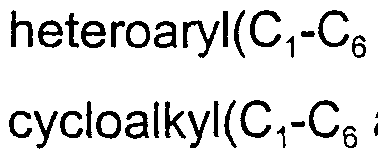
- R 4 is optionally substituted C r C 6 alkyl, C 2 -C 6 alkenyl, C 2 -C 6 alkynyl, C C 3 perfluoroalkyl, cycloalkyl, cycloalkyl(C r C 6 alkyl)-, cycloalkenyl, cycloalkenyl(C C 6 alkyl)-, di-(C r C 6 alkyl)amino, phenyl, phenyl(C r C 6 alkyl)-, biphenyl, phenyl-heteroaryl, naphthyl, non-aryl heterocyclyl, non-aryl heterocyclyl(C r C 6 alkyl)-, heteroaryl or heteroaryl(C r C 6 alkyl)-; heteroaryl-phenyl; heteroaryl-heteroaryl; aryloxyaryl or
- R 3 and R 4 taken together represent a divalent C 3 -C 6 alkylene or alkenylene group which may optionally be (i) substituted by an oxo group, and/or (ii) substituted by (C 1 -C 6 )alkoxy, hydroxy, mercapto, (C r C 6 )alkylthio, amino, halo (including fluoro, chloro, bromo and iodo), cyano, trifluoromethyl, nitro, - COOH, -CONH 2 , -CONHR A or -CONR A R B wherein R A and R B are independently a (C 1 -C 6 )alkyl group, and/or (iii) fused to a phenyl or heteroaryl group which itself may be substituted;
- cycloalkyl as used herein means a saturated alicyclic ring having from 3-8 carbon atoms and includes, for example, cyclopropyl, cyclobutyl, cyclopentyl, cyclohexyl, cycloheptyl and cyclooctyl.
- cycloalkenyl as used herein means an unsaturated alicyclic ring having from 5-8 carbon atoms and includes, for example, cyclopentenyl, cyclohexenyl, cycloheptenyl and cyclooctenyl.
- the ring may contain more than one double bond.
- non-aryl heterocyclyl means a 5-7 membered heterocyciic ring containing one, two or three heteroatoms selected from S, N and O in which at least two adjoining atoms are saturated.
- Examples include morpholinyl, thiomorpholinyl, dihydrofuranyl, tetrahydrothienyl, dihydrothienyl, piperidinyl, pyrrolidinyl, pyrrolinyl, dioxolanyl, oxathiolanyl, imidazolinyl, imidazolidinyl, pyrazolinyl, pyrazolidinyl, pyranyl, dioxanyl, dithianyl, oxathianyl, and piperazinyl.
- heteroaryl means a 5-7 membered aromatic heterocyciic ring containing one or more heteroatoms selected from S, N and O, and optionally fused to a benzene ring.
- Illustrative of such rings are thienyl, furyl, pyrrolyl, imidazolyl, benzimidazolyl, thiazolyl, pyrazolyl, isoxazolyl, isothiazolyl, triazolyl, thiadiazolyl, oxadiazolyl, pyridinyl, pyridazinyl, pyrimidinyl, pyrazinyl and triazinyl.
- substituted as applied to any moiety herein means substituted with up to four substituents, each of which independently may be C,-C 6 alkyl, (C r C 6 )alkoxy, hydroxy, mercapto, (C C 6 )alkylthio, amino, halo (including fluoro, chloro, bromo and iodo), cyano, trifluoromethyl, nitro, -COOH, -CONH 2 , -CONHR A or -CONR A R B wherein R A and R B are indendently a (C r C 6 )alkyl group or the residue of a natural alpha-amino acid, or substituted with a phenyl group which itself may be substituted by any of the foregoing.
- Salts of the compounds of the invention include physiologically acceptable acid addition salts for example hydrochlorides, hydrobromides, sulfates, methane sulfonates, p-toluenesulfonates, phosphates, acetates, citrates, succinates, lactates, tartrates, fumarates and maleates. Salts may also be formed with bases, for example sodium, potassium, magnesium, and calcium salts.
- the compounds of the present invention differ in structure from the collagenase inhibitors disclosed in EP-A-0574758, EP-A-0684240, or WO 95/33731 principally in that they have the above defined R 4 -(SO 2 )-N(R 3 )-(CH 2 )- group on the carbon atom carrying the hydroxamic acid group.
- the groups R 1 and R 2 of the compounds of this invention may include those which have been disclosed in the corresponding positions of compounds disclosed in any of EP- A-0574758, EP-A-0684240, or WO 95/33731.
- substituents R 1 and R 2 are given below.
- n may be 1 , 2 or 3.
- Compounds wherein n is 1 are at present preferred for their activity as collagenase selective inhibitors;
- V is preferably HONH-
- Ri may for example be optionally substituted C C 12 alkyl or C 3 -C 6 alkenyl; cycioalkyl(C C 6 alkyl); or phenyl(C r C 6 alkyl)- or phenoxy(C r C 6 alkyl), either of which may be optionally substituted in the phenyl ring by halogen, C C 6 alkyl, C r C 6 alkoxy or phenyl.
- n- propyl isopropyl, n-butyl, iso-butyl, n-pentyl, n-hexyl, n-heptyl, n-octyl, n- nonyl, n-decyl, cyclopropylmethyl, cyclobutylmethyl, cyclopentylmethyl, cyclohexylmethyl, cyclobutylethyl, 1 ,1 ,1 -trifluoropropyl, phenylpropyl, 4- chlorophenylpropyl, 4-methylphenylpropyl, 4-methoxyphenylpropyl, 4-phenyl- phenylpropyl, 4-(4-chlorophenyl)phenylpropyl and phenoxybutyl.
- R 1 is preferably C r C 12 alkyl or fluoro-substituted alkyl, for example C r C 6 alkyl such as iso-butyl, or cycloalkyl(C r C 6 alkyl) such cyclopentylmethyl
- R 2 may for example be substituted or unsubstituted 1-pyrrolidinyl, piperidino, 1-piperazinyl, hexahydro-1-pyridazinyl, morpholino, tetrahydro-1 , 4-thiazin-4- yl, tetrahydro-1 ,4-thiazin-4-yl 1-oxide, tetrahydro-1 ,4-thiazin-4-yl 1 ,1-dioxide, thiazolidin-3-yl, hexahydroazipino, or octahydroazocino.
- Such groups include piperidin-1-yl, 2-(methylcarbamoyl)-1-pyrrolidinyl, 2- (hydroxymethyl)-l-pyrrolidinyl, 4-hydroxypiperidino, 2- (methylcarbamoyl)piperidino, 4-hydroxyiminopiperidino, 4-methoxypiperidino, 4-methyl-1-piperazinyl, 4-phenyl-1-piperazinyl, 1 ,4-dioxa-8- azaspiro[4,5]decan-8-yl, hexahydro-3-(methylcarbamoyl)-2-pyridazinyl, hexahydro-1 -(benzyloxycarbonyl)-2-pyridazinyl, 5,5-dimethyl-4- methylcarbamoyl-thiazolidin-3-yl, or 5,5-dimethyl-4-propylcarbamoyl- thiazolidin-3-yl.
- R 3 may for example be hydrogen, methyl, ethyl, n- or iso-propyl, n-, sec- or tert- butyl, n-pentyl, n-hexyl, benzyl, or acetyl.
- R 3 is preferably hydrogen, acetyl or methyl.
- R 4 may for example be substituted or unsubstituted methyl, ethyl, n- or isopropyl, n-, sec- or tert-butyl, n-pentyl, n-hexyl, n-heptyl, n-octyl, cyclopropyl, cyclobutyl, cyclopentyl, cyclohexyl, cycloheptyl, cyclooctyl, cyclopentenyl, cyclohexenyl, cycloheptenyl, cyclooctenyl, phenyl, biphenyl, naphth-1-yl, naphth-2-yl, benzyl, thien-2-yl, furan-2-yl, pyrrolyl, imidazol-2-yl, benzimidazolyl, thiazol-2-yl, benzothiazol-2-yl, pyrazoly
- substituted R 4 groups include, 2-methoxyphenyl, 3- methoxyphenyl, 4-methoxyphenyl, 4-(n-butoxy)phenyl, 3,4-dimethoxyphenyl, 2,5-dimethoxyphenyl, 2-fluorophenyl, 3-fluorophenyl, 4-fluorophenyl, 2- chlorophenyl, 3-chlorophenyl, 4-chlorophenyl, 3,4-dichlorophenyl, 3,5- dichlorophenyl, 2-chloro-5-trifluoromethyphenyl, 2-bromophenyl, 3- bromophenyl, 4-bromophenyl, 2-iodophenyl, 3-iodophenyl, 4-iodophenyl, 2- methylphenyl, 3-methylphenyl, 4-methylphenyl, 3,4-dimethyl, 2,5-dimethyl-4- chlorophenyl, 2-methoxy-5-chlorophenyl, 2-
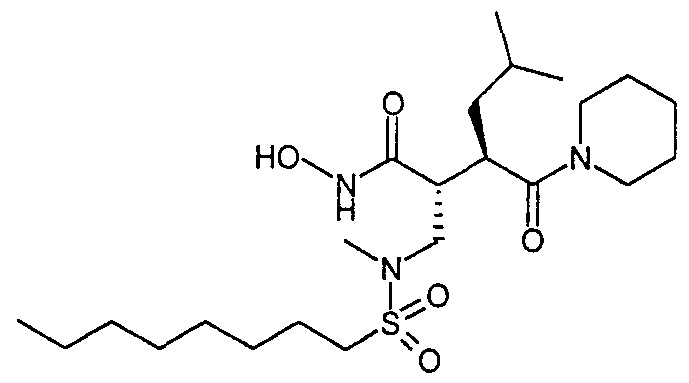
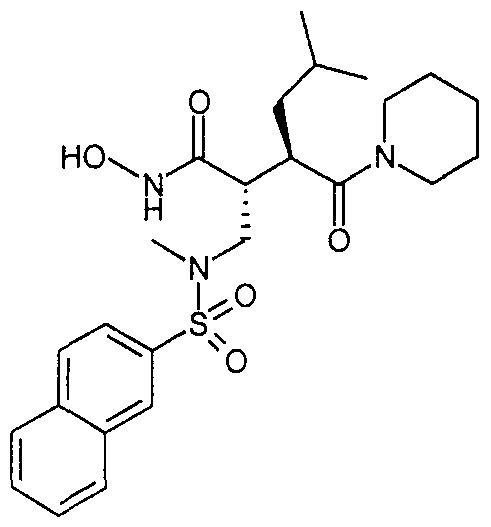
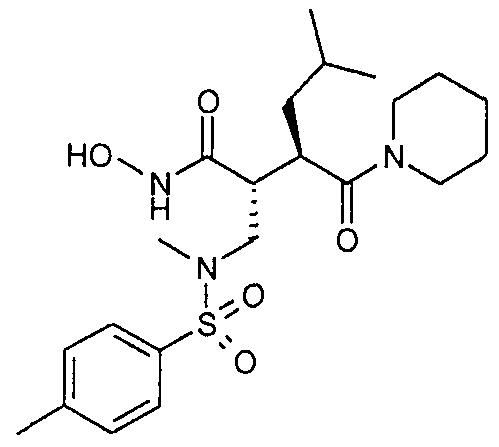
- R 4 is methyl, ethyl, n-butyl, n- octyl, dimethylamino, trifluoromethyl, phenyl, 4-methoxyphenyl, 4- butoxyphenyl, 2,5-dimethoxyphenyl, 4-chlorophenyl, 3,4-dichlorophenyl, 2- chloro-5-methoxyphenyl, 2-chloro-5-trifluoromethylphenyl, 5-chloro-1 ,3- dimethyl-phenyl- 5-chloro-1 ,3-dimethyl-1 H-pyrazol-4-yl, naphth-1-yl, naphth-2- yl, 5-dimethylaminonaphth-1-yl, or thien-2-yl, 4-methylphenylmethyl, 4-(1 ,1- dimethylpropyl)phenyl, 4-biphenyl, quinolin-8-yl.
- R 3 and R 4 taken together with the N and S atoms to which they are attached may represent a group of formula (II) or (III)
- ring A is a substituted or unsubstituted, saturated or unsaturated 5-8 membered ring and ring B is a substituted or unsubstituted fused phenyl or heteroaryl (e.g. thienyl or pyridinyl) ring.
- Specific compounds of the invention include those prepared according to the Examples below, and pharmaceutically acceptable salts, hydrates and solvates thereof.
- Compounds which are particularly interesting include: 2S- ⁇ [(4-Methoxybenzenesulfonyl)-methyl-amino]-methyl ⁇ -5-methyl-3R- (piperidine-l-carbonyl)-hexanoic acid hydroxyamide,
- R 1 f R 2 , R 3 , and R 4 being as defined in general formula (I) except that any substituents in R 1 f R 2 , R 3 , and R 4 which are potentially reactive with hydroxylamine, the O-protected hydroxylamine, the N,O-diprotected hydroxylamine or their salts may themselves be protected from such reaction, then removing any protecting groups from the resultant hydroxamic acid moiety and from any protected substituents in R 1 f R 2 , R 3 , and R 4 .
- Conversion of (IV) to an activated derivative such as the pentafluorophenyl, hydroxysuccinyl, or hydroxybenzotriazolyl ester may be effected by reaction with the appropriate alcohol in the presence of a dehydrating agent such as dicyclohexyl dicarbodiimide (DCC), N,N-dimethylaminopropyl-N'-ethyl carbodiimide (EDC), or 2- ethoxy-1 -ethoxycarbonyl-1 ,2-dihydroquinoline (EEDQ).
- DCC dicyclohexyl dicarbodiimide
- EDC N,N-dimethylaminopropyl-N'-ethyl carbodiimide
- EEDQ 2- ethoxy-1 -ethoxycarbonyl-1 ,2-dihydroquinoline
- Protecting groups as referred to above are well known perse, for example from the techniques of peptide chemistry.
- Amino groups are often protectable by benzyloxycarbonyl, t-butoxycarbonyl or acetyl groups, or in the form of a phthalimido group.
- Hydroxy groups are often protectable as readily cleavable ethers such as the t-butyl or benzyl ether, or as readily cleavable esters such as the acetate.
- Carboxy groups are often protectable as readily cleavable esters, such as the t-butyl or benzyl ester.
- O-protected hydroxylamines for use in the process of the invention above include O-benzylhydroxylamine, O-4-methoxybenzylhydroxylamine, O- trimethylsilylhydroxylamine, and O-tert-butoxycarbonylhydroxylamine.
- O,N-diprotected hydroxylamines for use in the process of the invention include N,O-bis(benzyl)hydroxylamine, N,O-bis(4-methoxybenzyl)hydroxylamine, N- tert-butoxycarbonyl-O-tert-butyldimethylsilylhydroxylamine, N-tert-butoxycarbonyl-O- tetrahydropyranylhydroxylamine, and N,O-bis(tert-butoxycarbonyl)hydroxylamine.
- Acids of the invention (IV) differ in structure from the analogous compounds of EP-A- 0684240 principally in that they have the above defined R 4 -(SO 2 )-N(R 3 )-(CH 2 ) n - group on the carbon atom carrying the carboxylic acid group.
- the synthetic route disclosed in that publication which involves an alkylation step to introduce the desired group onto the carbon atom carrying the carboxyl group, may be used to prepare acids (IV) by substituting the alkylating agent required to introduce the R 4 - (SO 2 )-N(R 3 )-(CH 2 ) n - group of this invention, for example R 4 -(SO 2 )-N(R 3 )-(CH 2 ) n -Br.
- Acids of the invention (IV) may also be prepared by forming the appropriate R 4 - sulfonamide of an amine of formula (V), for example by reaction with an activated derivative of a sulpho ⁇ ic acid (VI),
- R 1 t R 2 , R 3 and R 4 are as defined in relation to formula (I) except that any substituents in R 1 f R 2 , R 3 and R 4 which are potentially reactive with (VI) may be protected, and thereafter deprotecting the protected carboxyl group P and any protected substituents in R ⁇ R 2 , R 3 and R 4 .
- Activated sulphonic acids and conditions for forming sulfonamides are well known in organic synthesis, e.g. reaction with the sulfonyl chloride in the presence of an organic base.
- Amines of formula (V) in which R 3 is hydrogen may be prepared from the corresponding hydroxyl compound of formula (VA)
- Amines of formula (V) in which R 3 is other than hydrogen may be accessible by direct introduction of R 3 onto the amine group of the compound (V) wherein R 3 is hydrogen.
- R 3 is hydrogen
- n, P ⁇ R 1 f and R 2 are as defined in relation to formula (V) and P 2 is a protected hydroxyl group, which is converted to the required hydroxyl group after the reaction with amine R 2 H.
- Compounds (VAB) and (VIIB) are either known, are analogues of known compounds, or are accessible by known literature methods.
- compounds of formula (I) are useful in human or veterinary medicine since they are active as inhibitors of MMPs.
- Enzyme inhibition assays useful for determining the activity of a particular compound of the invention against MMPs are known, see for example the assays described in Biological Example A below, and the MMP inhibition assays described in patent publications listed above in the section "Background to the Invention".
- this invention concerns:
- a method of management by which is meant treatment or prophylaxis of diseases or conditions mediated by MMPs in mammals, in particular in humans, which method comprises administering to the mammal an effective amount of a compound as defined with respect to formula (I) above, or a pharmaceutically acceptable salt thereof; and (i) a compound as defined with respect to formula (I) for use in human or veterinary medicine, particularly in the management (by which is meant treatment or prophylaxis) of diseases or conditions mediated by MMP; and
- Diseases or conditions mediated by MMPs include those involving tissue breakdown such as bone resorption, inflammatory diseases, dermatological conditions and tumour invasion by secondary metastases, in particular rheumatoid arthritis, osteoarthritis, periodontitis, gingivitis, corneal ulceration and tumour invasion by secondary metastases as well as neuroinflammatory disorders, including those involving myelin degradation, for example multiple sclerosis.
- a pharmaceutical or veterinary composition comprising a compound of formula (I) together with a pharmaceutically or veterinarily acceptable excipient or carrier.
- One or more compounds of general formula (I) may be present in the composition together with one or more excipient or carrier.
- the specific dose level for any particular patient will depend upon a variety of factors including the activity of the specific compound employed, the age, body weight, general health, sex, diet, time of administration, route of administration, rate of excretion, drug combination and the severity of the particular disease undergoing therapy. Optimum dose levels and frequency of dosing will be determined by clinical trial.
- the compounds with which the invention is concerned may be prepared for administration by any route consistent with their pharmacokinetic properties.
- the orally administrable compositions may be in the form of tablets, capsules, powders, granules, lozenges, liquid or gel preparations, such as oral, topical, or sterile parenteral solutions or suspensions.
- Tablets and capsules for oral administration may be in unit dose presentation form, and may contain conventional excipients such as binding agents, for example syrup, acacia, gelatin, sorbitol, tragacanth, or polyvinyl-pyrrolidone; fillers for example lactose, sugar, maize-starch, calcium phosphate, sorbitol or glycine; tabletting lubricant, for example magnesium stearate, talc, polyethylene glycol or silica; disintegrants for example potato starch, or acceptable wetting agents such as sodium lauryl sulphate.
- the tablets may be coated according to methods well known in normal pharmaceutical practice.
- Oral liquid preparations may be in the form of, for example, aqueous or oily suspensions, solutions, emulsions, syrups or elixirs, or may be presented as a dry product for reconstitution with water or other suitable vehicle before use.
- Such liquid preparations may contain conventional additives such as suspending agents, for example sorbitol, syrup, methyl cellulose, glucose syrup, gelatin hydrogenated edible fats; emulsifying agents, for example lecithin, sorbitan monooleate, or acacia; non-aqueous vehicles (which may include edible oils), for example almond oil, fractionated coconut oil, oily esters such as glycerine, propylene glycol, or ethyl alcohol; preservatives, for example methyl or propyl p-hydroxybe ⁇ zoate or sorbic acid, and if desired conventional flavouring or colouring agents.
- suspending agents for example sorbitol, syrup, methyl cellulose, glucose syrup, gelatin hydrogenated edible fats
- emulsifying agents for example lecithin, sorbitan monooleate, or acacia
- non-aqueous vehicles which may include edible oils
- almond oil fractionated coconut oil
- oily esters such as glycerine, prop
- the drug may be made up into a cream, lotion or ointment.
- Cream or ointment formulations which may be used for the drug are conventional formulations well known in the art, for example as described in standard textbooks of pharmaceutics such as the British Pharmacopoeia.
- the drug may be made up into a solution or suspension in a suitable sterile aqueous or non aqueous vehicle.
- Additives for instance buffers such as sodium metabisulphite or disodium edeate; preservatives including bactericidal and fungicidal agents such as phenyl mercuric acetate or nitrate, benzalkonium chloride or chlorhexidine, and thickening agents such as hypromellose may also be included.
- the active ingredient may also be administered parenterally in a sterile medium.
- the drug can either be suspended or dissolved in the vehicle.
- adjuvants such as a local anaesthetic, preservative and buffering agents can be dissolved in the vehicle.
- Reagents and conditions (A) Bzl-Br, K 2 C0 3 in acetone, (B) 9-BBN, H 2 0 2 in THF, (C) MsCI, Et 3 N in THF, 0°C, (D) NaN 3 , n Bu 4 l, in toluene/water, reflux, (E) H 2 ,10% Pd/C in ethanol, (F) Z-ONSu, Et 3 N, THF, (G) pipendine EDC, HOBt, THF, (H) H 2 , 10% Pd/C in ethanol, (I) 4-MeO(C 6 H 4 )S0 2 CI, Et 3 N in THF, (J) TFA in CH 2 CI 2 , 4°C, (K) HOBt, EDC in DMF, then H 2 NOH HCI, NMM Step A: 2S-Allyl-3R-isobutyl-succinic acid 4-benzyl ester 1 -tert
- Step B 2S-(3-Hydroxypropyl)-3R-isobutyl-succinic acid 4-benzyl ester 1 -tert-butyl ester
- Step C 3R-lsobutyl-2S-(3-methanesuifonyloxy-propyl)-succinic acid 4-benzyl ester 1 -tert-butyl ester
- Step D 2S-(3-Azido-propyl)-3R-isobutyl-succinic acid 4-benzyl ester 1 -tert-butyl ester
- the reaction mixture was diluted with ethyl acetate (100 ml) and the organic layer was separated, washed with water (3 x 80 ml), dried over anhydrous sodium sulfate, filtered and evaporated under reduced pressure.
- the product thus obtained (5.5 g, 95%) was used without further purification.
- Step E 2S-(3-Amino-propyl)-3R-isobutyl-succinic acid 1 -tert-butyl ester
- Step G 2S-(3-Benzyloxycarbonylamino-propyl)-5-methyl-3R-(piperidine-1-carbonyl)- hexanoic acid tert-butyl ester
- Step H 2S-(3-Amino-propyl)-5-methyl-3R-(piperidine-1-carbonyl)-hexanoic acid tert- butyl ester
- Step I 2S-[3-(4-Methoxybenzenesulfonyl-amino)-propyl]-5-methyl-3R-(piperidine-1- carbonyl)-hexanoic acid tert-butyl ester
- Step J 2S-[3-(4-Methoxybenzenesulfonyl-amino)-propyl]-5-methyl-3R-(piperidine-1- carbonyl)-hexanoic acid
- the starting material was prepared as follows:
- the title compound was prepared from 2S-(2-Hydroxyethyl)-3R-isobutyl-succinic acid 4-benzyl ester 1 -tert-butyl ester by analogy with Example 2, using methanesulfonyl chloride in lieu of 4-methoxybenzenesulfonyl chloride. Off-white solid, m.p. 75 - 80°C.
- the starting material was prepared as follows:
- Reagents and conditions- (A) H 2 , 10% Pd/C in EtOAc; (B) piperidine aq. HCHO in ethanol; (C) Bzl-Br, K 2 C0 3 in acetone, (D) TFA, CH 2 CI 2 , 4°C; (E) piperidine, EDC, HOBt in EtOAc; (F) MeNH 2 in methanol, (G) H 2 , 10% Pd/C in ethanol, (H) 4-MeO(C ⁇ H 4 )S0 2 CI, Et 3 N in THF, (I) HOBt, EDC in DMF, then H 2 NOH.HCI, NMM.
- Step A 2-Carboxy-3R-isobutyl-succinic acid 4-tert-butyl ester
- Step B 3R-lsobutyl-2-methylene-succinic acid 4-tert-butyl ester
- Step C 3R-lsobutyl-2-methylene-succinic acid 1 -benzyl ester 4-tert-butyl ester
- 3R-lsobutyl-2-methylene-succinic acid 4-tert-butyl ester 28.11 g, 122 mmol was dissolved in acetone (500 ml) and the solution was placed under an argon atmosphere. Solid potassium carbonate (67.34 g, 488 mmol) was added and the suspension was stirred for 30 minutes. Benzyl bromide (13.13 ml, 110 mmol) was added and the reaction mixture was left to stir overnight at room temperature. The inorganics were removed by filtration and the solvent was removed under reduced pressure to leave the title compound as a yellow oil (35.5 g, ca. 91 %; trace benzyl bromide).
- Step D 3R-lsobutyl-2-methylene-succinic acid 1 -benzyl ester
- Step E 2-[3-Methyl-1 R-(piperidine-1-carbonyl)-butyl]-acrylic acid benzyl ester
- Step F 5-Methyl-2S-methylaminomethyl-3R-(piperidine-1 -carbonyl)-hexanoic acid benzyl ester
- Step G 5-Methyl-2S-methylaminomethyl-3R-(piperidine-1 -carbonyl)-hexanoic acid
- Step H 2S- ⁇ [(4-Methoxybenzenesulfonyl)-methyl-amino]-methyl ⁇ -5-methyl-3R- (piperidine-1 -carbonyl)-hexanoic acid
- Step I 2S- ⁇ [(4-Methoxybenzenesulfonyl)-methyl-amino]-methyl ⁇ -5-methyl-3R- (piperidine-l-carbonyl)-hexanoic acid hydroxyamide
- Step A 3-lsobutyl-2-methylaminomethyl-succinic acid 1 -benzyl ester 4-tert-butyl ester
- Step B 3R-lsobutyl-2-[(Methanesulfonyl)-methyl-amino)-methyl]-succinic acid 1- benzyl ester 4-tert-butyl ester
- Step C 3R-lsobutyl-2-[(Methanesulfonyl)-methyl-amino)-methyl]-succinic acid 1- benzyl ester 3R-lsobutyl-2-[(methanesulfonyl)-methyl-amino)-methyl]-succinic acid 1 -benzyl ester 4-tert-butyl ester was converted to the title compound by acidolysis with TFA as described previously (Example 1 , Step J).
- Step D 2S-[(Methanesulfonyl)-methyl-amino)-methyl]-5-methyl-3R-(piperidine-1- carbonyl)-hexanoic acid benzyl ester
- Step E 2S-[(Methanesulfonyl)-methyl-amino)-methyl]-5-methyl-3R-(piperidine-1- carbonyl)-hexanoic acid
- Step F 2S-[(Methanesulfonyl)-methyl-amino)-methyl]-5-methyl-3R-(piperidine-1- carbonyl)-hexanoic acid hydroxyamide
- the starting material was prepared as follows:
- STEP B 2-[4-(4-Chloro-phenyl)-1-(piperidine-1-carbonyl)-butyl]-malonic acid tert- butyl ester
- 6-(4-Chloro-phenyl)-3-(piperidine-1-carbonyl)-hexanoic acid tert-butyl ester (2.9 g, 7.4 mmol) was dissolved in THF (80 ml) and the solution was cooled to -78°C.
- diisopropylamine (1.24 ml, 8.8 mmol) was dissolved in THF (30 ml) and cooled to -78°C before addition of n-butyllithium (2.1 M solution in hexane; 3.9 ml, 8.2 mmol).
- the reaction mixture was allowed to stir for 5 minutes and the LDA thus formed was transferred via a cannula into the first flask.
- the starting material 3R-cyclopentylmethyl-2-methylene-succinic acid 1 -benzyl ester 4-tert-butyl ester is prepared from 2-benzyloxycarbonyl-3R-carboxy-4-cyclopentyl- butyric acid 1 -benzyl ester 4-tert-butyl ester by analogy with Example 7.
- 2- Benzyloxycarbonyl-3R-carboxy-4-cyclopentyl-butyric acid 1 -benzyl ester 4-tert-butyl ester is prepared essentially by literature methods (e.g. M.J. Broadhurst et al, Bioorg Med. Chem. Lett. 1997, 7, 2299-2302).
- the potency of compounds of the present invention as inhibitors of human fibroblast collagenase may be determined by the procedure of Cawston and Barrett, (Anal. Biochem.. 99, 340-345, 1979), hereby incorporated by reference, whereby a 1 mM solution of the compound being tested, or a dilution thereof, was incubated at 37 C C for 16 hours with collagen and human fibroblast collagenase (buffered with 25mM Hepes, pH 7.5 containing 5mM CaCI 2 , 0.05% Brij 35 and 0.02% NaN 3 ).
- the collagen was acetylated 14 C collagen prepared by the method of Cawston and Murphy, (Methods in Enzymology, 80, 711 , 1981), hereby incorporated by reference.
- the samples were centrifuged to sediment undigested collagen, and an aliquot of the radioactive supernatant removed for assay on a scintillation counter as a measure of hydrolysis.
- the collagenase activity in the presence of 1 mM of the test compound, or a dilution thereof, was compared to activity in a control devoid of inhibitor and the result reported below as that of inhibitor concentration effecting 50% inhibition of the collagenase activity (IC 50 ).
- Compounds of the invention tested in this assay were shown to be active as inhibitors of human fibroblast collagenase. For example, in this assay, the compound of Example 2 was shown to have IC 50 of about 50 nM.
Landscapes
- Health & Medical Sciences (AREA)
- Chemical & Material Sciences (AREA)
- Organic Chemistry (AREA)
- Veterinary Medicine (AREA)
- Chemical Kinetics & Catalysis (AREA)
- General Chemical & Material Sciences (AREA)
- Medicinal Chemistry (AREA)
- Nuclear Medicine, Radiotherapy & Molecular Imaging (AREA)
- Pharmacology & Pharmacy (AREA)
- Life Sciences & Earth Sciences (AREA)
- Animal Behavior & Ethology (AREA)
- General Health & Medical Sciences (AREA)
- Public Health (AREA)
- Bioinformatics & Cheminformatics (AREA)
- Engineering & Computer Science (AREA)
- Rheumatology (AREA)
- Physical Education & Sports Medicine (AREA)
- Orthopedic Medicine & Surgery (AREA)
- Pain & Pain Management (AREA)
- Ophthalmology & Optometry (AREA)
- Dermatology (AREA)
- Immunology (AREA)
- Pharmaceuticals Containing Other Organic And Inorganic Compounds (AREA)
- Lubricants (AREA)
- Hydrogenated Pyridines (AREA)
- Enzymes And Modification Thereof (AREA)
- Immobilizing And Processing Of Enzymes And Microorganisms (AREA)
- Organic Low-Molecular-Weight Compounds And Preparation Thereof (AREA)
- Acyclic And Carbocyclic Compounds In Medicinal Compositions (AREA)
Abstract
Description




Claims




Priority Applications (7)
| Application Number | Priority Date | Filing Date | Title |
|---|---|---|---|
| DE69735479T DE69735479D1 (en) | 1996-10-19 | 1997-10-20 | METALOPROTEINASE INHIBITORS |
| JP10519112A JP2001502348A (en) | 1996-10-19 | 1997-10-20 | Metalloproteinase inhibitors |
| CA002269283A CA2269283A1 (en) | 1996-10-19 | 1997-10-20 | Metalloproteinase inhibitors |
| AU47142/97A AU713603B2 (en) | 1996-10-19 | 1997-10-20 | Metalloproteinase inhibitors |
| NZ334711A NZ334711A (en) | 1996-10-19 | 1997-10-20 | Metalloproteinase inhibitors with sulphonamide and hydroxamic functionality |
| EP97909461A EP0934292B1 (en) | 1996-10-19 | 1997-10-20 | Metalloproteinase inhibitors |
| GB9816616A GB2324091B (en) | 1996-10-19 | 1997-10-20 | Metalloproteinase inhibitors |
Applications Claiming Priority (2)
| Application Number | Priority Date | Filing Date | Title |
|---|---|---|---|
| GBGB9621814.4A GB9621814D0 (en) | 1996-10-19 | 1996-10-19 | Metalloproteinase inhibitors |
| GB9621814.4 | 1996-10-19 |
Related Child Applications (1)
| Application Number | Title | Priority Date | Filing Date |
|---|---|---|---|
| US09/121,033 Continuation-In-Part US6022873A (en) | 1996-10-19 | 1998-07-23 | Metalloproteinase inhibitors |
Publications (1)
| Publication Number | Publication Date |
|---|---|
| WO1998017655A1 true WO1998017655A1 (en) | 1998-04-30 |
Family
ID=10801681
Family Applications (1)
| Application Number | Title | Priority Date | Filing Date |
|---|---|---|---|
| PCT/GB1997/002891 Ceased WO1998017655A1 (en) | 1996-10-19 | 1997-10-20 | Metalloproteinase inhibitors |
Country Status (10)
| Country | Link |
|---|---|
| US (1) | US6022873A (en) |
| EP (1) | EP0934292B1 (en) |
| JP (1) | JP2001502348A (en) |
| AT (1) | ATE320422T1 (en) |
| AU (1) | AU713603B2 (en) |
| CA (1) | CA2269283A1 (en) |
| DE (1) | DE69735479D1 (en) |
| GB (2) | GB9621814D0 (en) |
| NZ (1) | NZ334711A (en) |
| WO (1) | WO1998017655A1 (en) |
Cited By (7)
| Publication number | Priority date | Publication date | Assignee | Title |
|---|---|---|---|---|
| WO1999048881A1 (en) * | 1998-03-25 | 1999-09-30 | British Biotech Pharmaceuticals Limited | Metalloproteinase inhibitors |
| US6022873A (en) * | 1996-10-19 | 2000-02-08 | British Biotech Pharmaceuticals Limited | Metalloproteinase inhibitors |
| FR2852958A1 (en) * | 2003-03-25 | 2004-10-01 | Fournier Lab Sa | New N-heterocycloalkylbenzene sulfonamide derivatives used for treating pain and inflammatory disorders |
| WO2004087700A1 (en) * | 2003-03-25 | 2004-10-14 | Laboratoires Fournier S.A. | Benzenesulphonamide derivatives, method for production and use thereof for treatment of pain |
| US6838466B2 (en) | 2001-12-20 | 2005-01-04 | Schering Corporation | Compounds for the treatment of inflammatory disorders |
| WO2008045671A1 (en) * | 2006-10-06 | 2008-04-17 | Janssen Pharmaceutica, N.V. | Matrix metalloprotease inhibitors |
| US8580965B2 (en) | 2006-10-16 | 2013-11-12 | Gruenenthal Gmbh | Substituted sulfonamide compounds |
Families Citing this family (5)
| Publication number | Priority date | Publication date | Assignee | Title |
|---|---|---|---|---|
| CN1732023A (en) * | 2002-12-27 | 2006-02-08 | 血管技术国际股份公司 | Compositions and methods of using collajolie |
| US20040225077A1 (en) | 2002-12-30 | 2004-11-11 | Angiotech International Ag | Drug delivery from rapid gelling polymer composition |
| WO2006036664A1 (en) * | 2004-09-23 | 2006-04-06 | Amgen Inc. | Substituted sulfonamidopropionamides and methods of use |
| AU2005294418A1 (en) * | 2004-10-06 | 2006-04-20 | Amgen Inc. | Substituted aryl or heteroarylsulfonylbutanamides for use as anti-inflammatory agents |
| US20060112494A1 (en) * | 2004-12-01 | 2006-06-01 | David Oppong | Method of protecting an animal skin product from metalloproteinase activity |
Citations (4)
| Publication number | Priority date | Publication date | Assignee | Title |
|---|---|---|---|---|
| GB2007663A (en) * | 1977-11-07 | 1979-05-23 | Dresden Arzneimittel | Sulphonylated omega - amidinophenyl- alpha -aminocarhoxylic acid amides |
| WO1993014066A1 (en) * | 1992-01-09 | 1993-07-22 | James Black Foundation Limited | Amino acid derivatives with anticholecystokinin activity |
| WO1994018185A1 (en) * | 1993-02-10 | 1994-08-18 | Pentapharm Ag | Piperazides of substituted phenylalanine derivates as thrombin inhibitors |
| WO1997025315A1 (en) * | 1996-01-11 | 1997-07-17 | Sanofi | Novel n-(arylsulphonyl)amino acid derivatives having bradykinin receptor affinity |
Family Cites Families (3)
| Publication number | Priority date | Publication date | Assignee | Title |
|---|---|---|---|---|
| GB9501737D0 (en) * | 1994-04-25 | 1995-03-22 | Hoffmann La Roche | Hydroxamic acid derivatives |
| US5863949A (en) * | 1995-03-08 | 1999-01-26 | Pfizer Inc | Arylsulfonylamino hydroxamic acid derivatives |
| GB9621814D0 (en) * | 1996-10-19 | 1996-12-11 | British Biotech Pharm | Metalloproteinase inhibitors |
-
1996
- 1996-10-19 GB GBGB9621814.4A patent/GB9621814D0/en active Pending
-
1997
- 1997-10-20 JP JP10519112A patent/JP2001502348A/en not_active Withdrawn
- 1997-10-20 WO PCT/GB1997/002891 patent/WO1998017655A1/en not_active Ceased
- 1997-10-20 CA CA002269283A patent/CA2269283A1/en not_active Abandoned
- 1997-10-20 EP EP97909461A patent/EP0934292B1/en not_active Expired - Lifetime
- 1997-10-20 AU AU47142/97A patent/AU713603B2/en not_active Ceased
- 1997-10-20 GB GB9816616A patent/GB2324091B/en not_active Expired - Fee Related
- 1997-10-20 DE DE69735479T patent/DE69735479D1/en not_active Expired - Lifetime
- 1997-10-20 AT AT97909461T patent/ATE320422T1/en not_active IP Right Cessation
- 1997-10-20 NZ NZ334711A patent/NZ334711A/en unknown
-
1998
- 1998-07-23 US US09/121,033 patent/US6022873A/en not_active Expired - Fee Related
Patent Citations (4)
| Publication number | Priority date | Publication date | Assignee | Title |
|---|---|---|---|---|
| GB2007663A (en) * | 1977-11-07 | 1979-05-23 | Dresden Arzneimittel | Sulphonylated omega - amidinophenyl- alpha -aminocarhoxylic acid amides |
| WO1993014066A1 (en) * | 1992-01-09 | 1993-07-22 | James Black Foundation Limited | Amino acid derivatives with anticholecystokinin activity |
| WO1994018185A1 (en) * | 1993-02-10 | 1994-08-18 | Pentapharm Ag | Piperazides of substituted phenylalanine derivates as thrombin inhibitors |
| WO1997025315A1 (en) * | 1996-01-11 | 1997-07-17 | Sanofi | Novel n-(arylsulphonyl)amino acid derivatives having bradykinin receptor affinity |
Cited By (12)
| Publication number | Priority date | Publication date | Assignee | Title |
|---|---|---|---|---|
| US6022873A (en) * | 1996-10-19 | 2000-02-08 | British Biotech Pharmaceuticals Limited | Metalloproteinase inhibitors |
| WO1999048881A1 (en) * | 1998-03-25 | 1999-09-30 | British Biotech Pharmaceuticals Limited | Metalloproteinase inhibitors |
| US6838466B2 (en) | 2001-12-20 | 2005-01-04 | Schering Corporation | Compounds for the treatment of inflammatory disorders |
| US7034057B2 (en) | 2001-12-20 | 2006-04-25 | Schering Corporation | Compounds for the treatment of inflammatory disorders |
| US7598242B2 (en) | 2001-12-20 | 2009-10-06 | Schering Corporation | Compounds for the treatment of inflammatory disorders |
| FR2852958A1 (en) * | 2003-03-25 | 2004-10-01 | Fournier Lab Sa | New N-heterocycloalkylbenzene sulfonamide derivatives used for treating pain and inflammatory disorders |
| WO2004087700A1 (en) * | 2003-03-25 | 2004-10-14 | Laboratoires Fournier S.A. | Benzenesulphonamide derivatives, method for production and use thereof for treatment of pain |
| JP2006521333A (en) * | 2003-03-25 | 2006-09-21 | ラボラトワール フルニエ エス・アー | Benzenesulfonamide derivative, process for its preparation and use thereof for treating pain |
| EA008921B1 (en) * | 2003-03-25 | 2007-08-31 | Лаборатуар Фурнье С.А. | Benzenesulphonamide derivatives, method for production and use thereof for treatment of pain |
| US7538111B2 (en) | 2003-03-25 | 2009-05-26 | Laboratoires Fournier S.A. | Benzenesulphonamide derivatives, method for production and use thereof for treatment of pain |
| WO2008045671A1 (en) * | 2006-10-06 | 2008-04-17 | Janssen Pharmaceutica, N.V. | Matrix metalloprotease inhibitors |
| US8580965B2 (en) | 2006-10-16 | 2013-11-12 | Gruenenthal Gmbh | Substituted sulfonamide compounds |
Also Published As
| Publication number | Publication date |
|---|---|
| NZ334711A (en) | 2000-10-27 |
| GB2324091B (en) | 2000-11-15 |
| AU713603B2 (en) | 1999-12-09 |
| EP0934292B1 (en) | 2006-03-15 |
| GB9621814D0 (en) | 1996-12-11 |
| AU4714297A (en) | 1998-05-15 |
| DE69735479D1 (en) | 2006-05-11 |
| US6022873A (en) | 2000-02-08 |
| ATE320422T1 (en) | 2006-04-15 |
| EP0934292A1 (en) | 1999-08-11 |
| GB2324091A (en) | 1998-10-14 |
| CA2269283A1 (en) | 1998-04-30 |
| JP2001502348A (en) | 2001-02-20 |
| GB9816616D0 (en) | 1998-09-30 |
Similar Documents
| Publication | Publication Date | Title |
|---|---|---|
| KR101799007B1 (en) | 1,3,4-Oxadiazole Sulfonamide Derivative Compounds as Histone Deacetylase 6 Inhibitor, and the Pharmaceutical Composition Comprising the same | |
| RU2709207C2 (en) | 1,3,4-oxadiazole derivatives of compound as inhibitor of histone deacetylase 6 and pharmaceutical composition containing same | |
| AU650458B2 (en) | Guanidines | |
| US6967196B1 (en) | Sulfonamide compounds and uses thereof | |
| AU775701B2 (en) | Sulfamato hydroxamic acid metalloprotease inhibitor | |
| US6743787B2 (en) | N-(4-sulfonylaryl)cyclylamine-2-hydroxyethylamines as beta-3 adrenergic receptor agonists | |
| IL117343A (en) | Arylsulfonylamino hydroxamic acid derivatives, process for their preparation and pharmaceutical compositions containing them | |
| US6022873A (en) | Metalloproteinase inhibitors | |
| US6271262B1 (en) | Metalloproteinase inhibitors | |
| NZ520656A (en) | Heterocyclic side chain containing metalloprotease inhibitors | |
| AU781339B2 (en) | Hydroxamic acid derivatives as matrix metalloprotease inhibitors | |
| KR100722354B1 (en) | New Piperidine Compounds | |
| CA2379061C (en) | Antibacterial agents | |
| JP2002542228A (en) | MMP inhibitor | |
| JP2004143139A (en) | New piperidine derivatives | |
| EP1572630A1 (en) | Antibacterial agents | |
| US6800646B1 (en) | Sulfamato hydroxamic acid metalloprotease inhibitor | |
| KR20060111744A (en) | Novel Hydroxamic Acid Derivatives as Peptide Deformillase Inhibitors and Methods for Preparing the Same | |
| US20030171404A1 (en) | Use of sulfonyl aryl or heteroaryl hydroxamic acids and derivatives thereof as aggrecanase inhibitors | |
| WO1999048881A1 (en) | Metalloproteinase inhibitors | |
| MXPA06013626A (en) | N-sulfonylcarboximidamide apoptosis promoters | |
| PL173030B1 (en) | Novel sulfonamide-caboxyamides and method of obtaining them |
Legal Events
| Date | Code | Title | Description |
|---|---|---|---|
| AK | Designated states |
Kind code of ref document: A1 Designated state(s): AU BR CA CN CZ DE GB GE HU IL JP KR MX NO NZ PL RU SG SK TR UA US |
|
| AL | Designated countries for regional patents |
Kind code of ref document: A1 Designated state(s): AT BE CH DE DK ES FI FR GB GR IE IT LU MC NL PT SE |
|
| DFPE | Request for preliminary examination filed prior to expiration of 19th month from priority date (pct application filed before 20040101) | ||
| ENP | Entry into the national phase |
Ref country code: GB Ref document number: 9816616 Kind code of ref document: A Format of ref document f/p: F |
|
| 121 | Ep: the epo has been informed by wipo that ep was designated in this application | ||
| WWE | Wipo information: entry into national phase |
Ref document number: 1997909461 Country of ref document: EP |
|
| WWE | Wipo information: entry into national phase |
Ref document number: 334711 Country of ref document: NZ |
|
| ENP | Entry into the national phase |
Ref country code: JP Ref document number: 1998 519112 Kind code of ref document: A Format of ref document f/p: F |
|
| ENP | Entry into the national phase |
Ref document number: 2269283 Country of ref document: CA Ref country code: CA Ref document number: 2269283 Kind code of ref document: A Format of ref document f/p: F |
|
| WWP | Wipo information: published in national office |
Ref document number: 1997909461 Country of ref document: EP |
|
| REG | Reference to national code |
Ref country code: DE Ref legal event code: 8642 |
|
| WWG | Wipo information: grant in national office |
Ref document number: 1997909461 Country of ref document: EP |