WO1998024768A1 - Novel urea derivatives - Google Patents
Novel urea derivatives Download PDFInfo
- Publication number
- WO1998024768A1 WO1998024768A1 PCT/JP1997/004399 JP9704399W WO9824768A1 WO 1998024768 A1 WO1998024768 A1 WO 1998024768A1 JP 9704399 W JP9704399 W JP 9704399W WO 9824768 A1 WO9824768 A1 WO 9824768A1
- Authority
- WO
- WIPO (PCT)
- Prior art keywords
- group
- lower alkyl
- alkyl group
- phenylbiperazinyl
- methoxyphenyl
- Prior art date
- Legal status (The legal status is an assumption and is not a legal conclusion. Google has not performed a legal analysis and makes no representation as to the accuracy of the status listed.)
- Ceased
Links
Classifications
-
- C—CHEMISTRY; METALLURGY
- C07—ORGANIC CHEMISTRY
- C07D—HETEROCYCLIC COMPOUNDS
- C07D401/00—Heterocyclic compounds containing two or more hetero rings, having nitrogen atoms as the only ring hetero atoms, at least one ring being a six-membered ring with only one nitrogen atom
- C07D401/02—Heterocyclic compounds containing two or more hetero rings, having nitrogen atoms as the only ring hetero atoms, at least one ring being a six-membered ring with only one nitrogen atom containing two hetero rings
- C07D401/04—Heterocyclic compounds containing two or more hetero rings, having nitrogen atoms as the only ring hetero atoms, at least one ring being a six-membered ring with only one nitrogen atom containing two hetero rings directly linked by a ring-member-to-ring-member bond
-
- C—CHEMISTRY; METALLURGY
- C07—ORGANIC CHEMISTRY
- C07D—HETEROCYCLIC COMPOUNDS
- C07D231/00—Heterocyclic compounds containing 1,2-diazole or hydrogenated 1,2-diazole rings
- C07D231/02—Heterocyclic compounds containing 1,2-diazole or hydrogenated 1,2-diazole rings not condensed with other rings
- C07D231/10—Heterocyclic compounds containing 1,2-diazole or hydrogenated 1,2-diazole rings not condensed with other rings having two or three double bonds between ring members or between ring members and non-ring members
- C07D231/14—Heterocyclic compounds containing 1,2-diazole or hydrogenated 1,2-diazole rings not condensed with other rings having two or three double bonds between ring members or between ring members and non-ring members with hetero atoms or with carbon atoms having three bonds to hetero atoms with at the most one bond to halogen, e.g. ester or nitrile radicals, directly attached to ring carbon atoms
- C07D231/38—Nitrogen atoms
- C07D231/40—Acylated on said nitrogen atom
-
- C—CHEMISTRY; METALLURGY
- C07—ORGANIC CHEMISTRY
- C07D—HETEROCYCLIC COMPOUNDS
- C07D401/00—Heterocyclic compounds containing two or more hetero rings, having nitrogen atoms as the only ring hetero atoms, at least one ring being a six-membered ring with only one nitrogen atom
- C07D401/02—Heterocyclic compounds containing two or more hetero rings, having nitrogen atoms as the only ring hetero atoms, at least one ring being a six-membered ring with only one nitrogen atom containing two hetero rings
- C07D401/12—Heterocyclic compounds containing two or more hetero rings, having nitrogen atoms as the only ring hetero atoms, at least one ring being a six-membered ring with only one nitrogen atom containing two hetero rings linked by a chain containing hetero atoms as chain links
-
- C—CHEMISTRY; METALLURGY
- C07—ORGANIC CHEMISTRY
- C07D—HETEROCYCLIC COMPOUNDS
- C07D403/00—Heterocyclic compounds containing two or more hetero rings, having nitrogen atoms as the only ring hetero atoms, not provided for by group C07D401/00
- C07D403/02—Heterocyclic compounds containing two or more hetero rings, having nitrogen atoms as the only ring hetero atoms, not provided for by group C07D401/00 containing two hetero rings
- C07D403/12—Heterocyclic compounds containing two or more hetero rings, having nitrogen atoms as the only ring hetero atoms, not provided for by group C07D401/00 containing two hetero rings linked by a chain containing hetero atoms as chain links
-
- C—CHEMISTRY; METALLURGY
- C07—ORGANIC CHEMISTRY
- C07D—HETEROCYCLIC COMPOUNDS
- C07D405/00—Heterocyclic compounds containing both one or more hetero rings having oxygen atoms as the only ring hetero atoms, and one or more rings having nitrogen as the only ring hetero atom
- C07D405/02—Heterocyclic compounds containing both one or more hetero rings having oxygen atoms as the only ring hetero atoms, and one or more rings having nitrogen as the only ring hetero atom containing two hetero rings
- C07D405/04—Heterocyclic compounds containing both one or more hetero rings having oxygen atoms as the only ring hetero atoms, and one or more rings having nitrogen as the only ring hetero atom containing two hetero rings directly linked by a ring-member-to-ring-member bond
Definitions
- the present invention is clearly useful in the field of medicine. More specifically, the novel pyrazole derivative of the present invention is useful as a neuropeptide Y receptor antagonist as a therapeutic agent for various cardiovascular diseases, central nervous system diseases, metabolic diseases, and the like.
- NPY Neuropeptide Y
- NPY Neuropeptide Y
- NPY is a peptide consisting of 36 amino acids and was first isolated from pig brain by Tachimoto et al. In 1982 [Nature, 296, 659 (1982) ].
- NPY is widely distributed in the central nervous system and the peripheral nervous system.
- NPY controls various functions in living organisms.
- NPY acts centrally as an appetite-stimulating substance and remarkably promotes fat accumulation through the secretion of various hormones or the action of the nervous system.
- Continuous intraventricular administration of NPY is known to induce obesity and insulin resistance based on these effects. It is also related to the control of emotions and the function of the central autonomic nervous system.
- NPY coexists with norlepinephrine at sympathetic endings and is associated with the tone of the sympathetic nervous system.
- Peripheral administration of NPY is known to cause vasoconstriction and enhance the action of other vasoconstrictors, including norepinephrine [International Jounal of obesity), 19, 517 (1995); Endocrinology, 133, 1753 (1993); British journal, ob pharmacology (Britsh) Jounal of Pharmacology) 95, 419 (1988)].
- NPY functions are expressed by binding to NPY receptors present in the central or peripheral nervous system. Therefore, by inhibiting the binding of NPY to the NPY receptor, NPY action can be prevented.
- substances that antagonize the NPY receptor binding of NPY include various diseases involving NPY, such as hypertension, kidney disease, heart disease, and cardiovascular diseases such as vasospasm, such as bulimia, depression, epilepsy, It is expected to be useful in the prevention or treatment of central diseases such as dementia, such as metabolic diseases such as obesity, diabetes, and hormonal abnormalities, and glaucoma. [Trends in Pharmacological Sciences ), 15, 153 (1994)].
- An object of the present invention is to provide a novel drug having an NPY antagonistic action.
- A is a nitrogen atom or a group represented by C—R 5 ;
- Ar may have a substituent selected from the group consisting of a halogen atom, a lower alkyl group and a halo-lower alkyl group.
- Ar 2 is a group consisting of a halogen atom, a lower alkyl group, a lower alkenyl group, a halo-lower alkyl group, a lower alkoxy group, a lower alkylthio group, a lower alkylamino group, a di-lower alkylamino group and an aryl group.
- R 1 is a hydrogen atom or a lower alkyl group or a bond connected to R 5 ;
- R 2 is a hydrogen atom or a lower atom, which may have a substituent selected from R 3 and R 4 are the same or different and are each a hydrogen atom or A lower alkyl group or an alkylene group having 2 to 4 carbon atoms which may have a lower alkyl group, wherein both R 3 and R 4 are linked to each other;
- R 5 is a hydrogen atom, a hydroxyl group, a lower alkyl group; It found that compounds represented by means a bond linking the group or lower alkoxy group or R 1] has a NPY antagonistic activity, the present invention forms completed.
- the compound [I] of the present invention has NPY antagonistic activity, various diseases involving NPY, such as hypertension, kidney disease, heart disease, and circulatory diseases such as vasospasm, for example, bulimia, depression, and epilepsy It is useful as an agent for treating central diseases such as dementia, for example, obesity, diabetes, metabolic diseases such as hormonal abnormalities, and glaucoma.
- NPY neurotrophic factor
- various diseases involving NPY such as hypertension, kidney disease, heart disease, and circulatory diseases such as vasospasm, for example, bulimia, depression, and epilepsy It is useful as an agent for treating central diseases such as dementia, for example, obesity, diabetes, metabolic diseases such as hormonal abnormalities, and glaucoma.
- the compound [I] of the present invention is useful as an agent for treating bulimia, obesity, diabetes, and the like.
- the present invention relates to a compound represented by the general formula [I] or a salt thereof, and a production method and use thereof.
- the halogen atom means a fluorine atom, a chlorine atom, a bromine atom and an iodine atom.
- the lower alkyl group means a linear, branched or cyclic alkyl group having 1 to 7 carbon atoms, such as a methyl group, an ethyl group, a propyl group, an isopropyl group, a butyl group, an isobutyl group, a sec- Butyl group, tert-butyl group, pentyl group, isopentinole group, neopentyl group, tert-pentyl group, 1-methylbutyl group, 2-methylbutyl group, 1,2-dimethylpropyl group, 1-ethylpropyl group, hexyl group , Isohexyl group, 1-methylpentyl group, 2-methylpentyl group, 3-methylpentyl group, 1,1-dimethylbutyl group, 1,2-dimethylbutyl group, 2,2-dimethylbutynole group, 1-ethylbutyl Group, 1,1,2-trimethylpropyl group
- the halo-lower-alkyl group means the above-mentioned lower-alkyl group having a no-logen atom, for example, a fluoromethyl group, a difluoromethyl group, a trifluoromethyl group, a 1-fluoromethyl group, a 2-fluoroethyl group, a 2,2,2. — Trifluoromethyl, pentafluoroethyl, chloromethyl, dichloromethyl, trichloromethyl, 1-chloroethyl, 2-chloroethyl, and the like.
- the aryl group means a phenyl group, a naphthyl group or an anthryl group, and a phenyl group and a naphthyl group are preferred.
- the lower alkenyl group means a linear or branched alkenyl group having 2 to 7 carbon atoms, for example, vinyl group, 2-propenyl group, isopropyl group, 3-butenyl group, 2-butenyl group.
- the lower alkoxy group means an alkoxy group having the lower alkyl group, that is, an alkoxy group having 1 to 7 carbon atoms or an alkylenedioxy group having 1 to 3 carbon atoms, such as a methoxy group, an ethoxy group, and a propyloxy group.
- the lower alkylthio group means an alkylthio group having the lower alkyl group, that is, an alkylthio group having 1 to 7 carbon atoms, such as a methylthio group, an ethylthio group, a propylthio group, an isopropylthio group, a butylthio group, and an isobutyl group.
- the lower alkylamino group means an amino group mono-substituted by the lower alkyl group, for example, a methylamino group, an ethylamino group, a propylamino group, an isopropylamino group, a butylamino group, a sec-butylamino group, and a tert-butylamino group. And the like.
- the di-lower alkylamino group means an amino group di-substituted by the lower alkyl group, and examples thereof include a dimethylamino group, a getylamino group, an ethylmethylamino group, a dipropylamino group, a methylpropylamino group, and a diisopropylamino group.
- a heteroaromatic group is a 5- or 6-membered single or two- or more-membered member containing one or more, preferably one to three, heteroatoms selected from the group consisting of an oxygen atom, a nitrogen atom and a sulfur atom.
- a heterocyclic group means, for example, a pyrrolyl group, a furinole group, a phenyl group, an imidazolyl group, a pyrazolyl group, a thiazolyl group, an isothiazolyl group, an oxazolyl group, an isoxazolyl group, a triazolinole group, an oxaziazolyl group, a thiadiazolyl group, a pyridyl group.
- alkylene group having 2 to 4 carbon atoms is a linear alkylene group, that is, It means a len, trimethylene or tetramethylene group.
- the salt of the compound represented by the general formula [I] means a conventional pharmaceutically acceptable salt, for example, an acid addition salt based on a basic group such as a basic heterocyclic group or an amino substituent. And the like.
- the acid addition salts include, for example, inorganic acid salts such as hydrochloride, sulfate, nitrate, phosphate, perchlorate; for example, maleate, fumarate, tartrate, citrate, ascorbate, Organic acid salts such as trifluoroacetate; and sulfonates such as maleic sulfonate, isethionate, benzenesulfonate and p-toluenesulfonate.
- inorganic acid salts such as hydrochloride, sulfate, nitrate, phosphate, perchlorate
- maleate, fumarate, tartrate, citrate, ascorbate Organic acid salts such as trifluoroacetate
- sulfonates such as maleic sulfonate, isethionate, benzenesulfonate and p-toluenesulfonate.
- the therapeutic agent means an agent provided for the purpose of treatment and prevention or prevention of various diseases.
- A is nitrogen atom or C - it means a group represented by R 5.
- A is preferably a nitrogen atom.
- Ar 1 represents an aryl group which may have a substituent selected from the group consisting of a nitrogen atom, a lower alkyl group and / or a lower alkyl group.
- An aryl group which may have a substituent selected from the group consisting of a halogen atom, a lower alkyl group and a halo-lower alkyl group refers to the unsubstituted aryl group or a substituent at any substitutable position.
- the substituent may be selected from the group consisting of a halogen atom, a lower alkyl group and a halo-lower alkyl group in the same or different one or more, preferably one or two.
- halogen atom for the substituent for example, a chlorine atom, a bromine atom and the like are preferable.
- the lower alkyl group for the substituent for example, a methyl group, an ethyl group, a propyl group, an isopropyl group, a cyclopropyl group, a butyl group, an isobutyl group, a sec-butyl group, a tert-butyl group, a pentyl group and the like are more preferable.
- the halo-lower alkyl group for the substituent is, for example, preferably a trifluoromethyl group.
- a halogen atom and the like are preferable.
- aryl group for Ar 1 for example, a phenyl group is suitable.
- examples of Ar 1 include a phenyl group and a 3-chlorophenyl group, and among them, a 3-chlorophenyl group and the like are preferable.
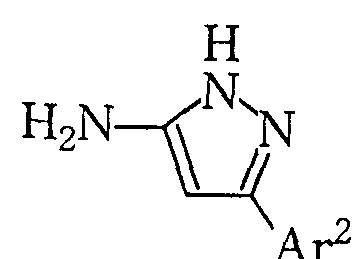
- Ar 2 is selected from the group consisting of a halogen atom, a lower alkyl group, a lower alkenyl group, a halo-lower alkyl group, a lower alkoxy group, a lower alkylthio group, a lower alkylamino group, a di-lower alkylamino group and an aryl group. It means an aryl group or a heteroaromatic ring group which may have a substituent.
- a substituent selected from the group consisting of a halogen atom, a lower alkyl group, a lower alkenyl group, a halo-lower alkyl group, a lower alkoxy group, a lower alkylthio group, a lower alkylamino group, a di-lower alkylamino group and an aryl group.
- the aryl group or the heteroaromatic ring group may be the unsubstituted aryl group or the heteroaromatic ring group, or the aryl group or the heteroaromatic group having a substituent at any substitutable position.
- a cyclic group, wherein the substituent comprises a halogen atom, a lower alkyl group, a lower alkenyl group, a halo-lower alkyl group, a lower alkoxy group, a lower alkylthio group, a lower alkylamino group, a di-lower alkylamino group and an aryl group.
- the substituent comprises a halogen atom, a lower alkyl group, a lower alkenyl group, a halo-lower alkyl group, a lower alkoxy group, a lower alkylthio group, a lower alkylamino group, a di-lower alkylamino group and an aryl group.
- the substituent comprises a halogen atom, a lower alkyl group, a lower alkenyl group, a halo-lower alkyl group, a lower alkoxy group, a lower alkylthio group, a lower al
- Suitable examples of the halogen atom for the substituent include a chlorine atom and a bromine atom.
- the lower alkyl group for the substituent is, for example, preferably a methyl group, an ethyl group.
- Examples of the lower alkenyl group for the substituent include a vinyl group, a 2-propenyl group, an isopropyl group, a 2-butenyl group, a 3-methyl-2-butenyl group, and more preferably a vinyl group, a 2-propyl group, and the like.
- a benzyl group and the like are preferred.
- the halo-lower alkyl group for the substituent is, for example, preferably a fluoromethyl group, a trifluoromethyl group.
- Examples of the lower alkoxy group for the substituent include a methoxy group, an ethoxy group, and a Preferred are a pyroxy group, a methylenedioxy group and the like, more preferably a methoxy group and a methylenedioxy group.
- the lower alkylthio group for the substituent is, for example, preferably a methylthio group, an ethylthio group, a propylthio group, and more preferably a methylthio group.
- a methylthio group for example, a methylamino group and the like are preferable.
- di-lower alkylamino group for the substituent for example, a dimethylamino group is preferred.
- the aryl group of the substituent is, for example, preferably a phenyl group.
- a halogen atom a lower alkyl group, a lower alkoxy group, a lower alkylthio group, a di-lower alkylamino group and the like are preferable.
- the aryl group of Ar 2 is preferably, for example, a phenyl group, and the heteroaromatic group is, for example, a pyridyl group.
- Ar 2 is, for example, a phenyl group, a 1-naphthyl group, a 2-naphthyl group, a 2-pyridinole group, a 3-pyridyl group, a 4-pyridyl group, a 2-chlorophenyl group, a 3-chlorophenyl group , 4-chlorophenyl, 3,4-dichlorophenyl, 2-bromophenyl, 3-bromophenyl, 4-bromophenyl, 5-chloro-3-pyridyl, 5-bromo-3- Pyridyl group, 2-methylphenyl group, 3-methylphenyl group, 4-methylphenyl group, 3-ethylphenyl group, 4-ethylphenyl group, 4-propylphenyl group, 5-methyl-2-pyridyl group, 6-methyl-3-pyridyl Group, 6-ethyl-3-pyridyl, 2-methyl-4-pyridyl group
- 4-pyridyl group 2-methyl-4-pyridyl group, 2-ethyl-4'-pyridyl group, 2-propyl-4-pyridyl group, 2-butyl-4'pyridyl group, and 3-cyclobutene 4-, 4-chlorophenyl, 3,4-dichlorophenyl, 3-bromophenyl, 4-bromophenyl, 2-methylphenyl, 3-methylphenyl, 4-methylphenyl, 4-ethylphenyl, 3-methyl-4 1-pyridyl group, 3-ethyl-4-monopyridyl group, 4-vinylphenyl group, 4- (2-propenyl) phenyl group, 3-methoxyphenyl group, 4-metyl Cydenyl group, 4-ethoxy phenyl group, 3,4-dimethoxyphenyl group, 3,4-methylenedioxyphenyl group, 3-methoxy-4-pyridyl group, 4-methyl
- R 1 represents a bond connected to a hydrogen atom or a lower alkyl group or R 5 .
- the lower alkyl group for R 1 for example, a methyl group, an ethyl group, and the like are preferable.
- R 1 represents a bond in connection with a hydrogen atom or R 5.
- R 2 represents a hydrogen atom or a lower alkyl group.
- R 2 for example, a methyl group, an ethyl group and the like are preferable.
- R 2 a hydrogen atom is preferable.
- R 3 and R 4 are the same or different and each is a hydrogen atom or a lower alkyl group, or a carbon number which may have a lower alkyl group when both R 3 and R 4 are linked to each other;
- R 3 and R 4 for example, a methyl group, an ethyl group and the like are preferable.
- L which may have a lower alkyl group, is the same as or different from the unsubstituted alkylene group or any substitutable position of the alkylene group having 2 to 4 carbon atoms. It means the alkylene group having one or more lower alkyl groups, and the unsubstituted alkylene group is preferable.
- the lower alkyl group as a substituent is, for example, preferably a methyl group, an ethyl group, a propyl group, an isopropyl group, etc., and more preferably a methyl group.
- R 3 and R 4 are the same or different and are a lower alkyl group, or a carbon which may have a lower alkyl group by linking both R 3 and R 4 to each other.
- R 5 represents a bond in connection with a hydrogen atom, a hydroxyl group, a lower alkyl group or a lower alkoxy group, or R 1 .
- the lower alkyl group for R 5 for example, a methyl group, an ethyl group, and the like are preferable.
- the lower alkoxy group for R 5 for example, a methoxy group, an ethoxy group, a propyloxy group and the like are suitable.
- R 5 represents a bond in connection with a hydrogen atom or a hydroxyl group or R 1 .
- the compound of the present invention may have stereoisomers or tautomers such as optical isomers, diastereoisomers, and geometric isomers, depending on the mode of the substituents. Also included are stereoisomers and tautomers and mixtures thereof.
- the compound [I] of the present invention can be produced, for example, by the following production methods or the methods shown in Examples. However, the production method of the present compound [I] is not limited to these reaction examples.
- Ar 3 is a halogen atom or a phenyl group which may be substituted by a nitro group; and X represents a halogen atom.
- A has the meaning of kx RRR 3 and R or the] by reacting a compound represented by, it is possible to prepare a compound represented by by general formula [I].
- the reaction between the compound represented by the general formula [ ⁇ ] and the compound represented by the general formula [ ⁇ ] is usually performed by reacting the compound represented by the general formula [ ⁇ ] with 1 mol of the compound represented by the general formula [ ⁇ ].
- the reaction is carried out using the compound represented by 0.5 mol to excess mol, preferably equimolar to 1.5 mol.
- the reaction is usually carried out in an inert solvent.
- the inert solvent for example, methylene chloride, chloroform, tetrahydrofuran, ethyl ether, benzene, toluene, dimethylformamide and the like or a mixed solvent thereof are suitable. is there.
- the above reaction is preferably performed in the presence of a base, such as triethylamine, diisopropylethylamine, pyridine, an organic base such as 4-dimethylaminopyridine or sodium hydroxide, Inorganic bases such as hydroxide hydroxide, sodium carbonate, lithium carbonate, sodium hydrogen carbonate and the like can be used.
- the base is preferably used in an equimolar amount or an excess molar amount relative to 1 mol of the compound represented by the general formula [ ⁇ ].
- the base can be used as a solvent and a base.
- the reaction temperature is usually from 78 ° C to 100 ° C, preferably from -20 ° C to 50 ° C.
- the reaction time is generally 5 minutes to 7 days, preferably 30 minutes to 24 hours.
- the reaction between the compound represented by the general formula [IV] and the compound represented by the general formula [V] is performed by isolating or isolating the compound represented by the general formula [IV] obtained by the above reaction.
- the compound represented by the general formula [V] is used in an equimolar amount or an excess amount, preferably an equimolar amount to 1.5 mol, per 1 mol of the compound [IV].
- the reaction is usually performed in an inert solvent, and as the inert solvent, for example, methylene chloride, chloroform, tetrahydrofuran, dimethylformamide and the like, or a mixed solvent thereof are suitable.
- inert solvent for example, methylene chloride, chloroform, tetrahydrofuran, dimethylformamide and the like, or a mixed solvent thereof are suitable.
- the above reaction is preferably performed in the presence of a base, and the base is preferably, for example, triethylamine, diisopropylethylamine or the like.
- the amount of the base to be used is generally equimolar to excess, preferably 1 to 5 mol, per 1 mol of the compound represented by the general formula [IV].
- the reaction temperature is usually-30 ° C to 200 ° C, preferably 20 ° C to 100 ° C.
- the reaction time is generally 5 minutes to 7 days, preferably 30 minutes to 24 hours.
- the target compound in each of the above steps can be easily isolated and purified by ordinary separation means. Examples of such means include solvent extraction, recrystallization, column chromatography, preparative thin-layer chromatography, and the like.
- the compound of the general formula [I] can be converted into a pharmaceutically acceptable salt by a conventional method, and conversely, the conversion of a salt to a free compound can be performed by a conventional method.
- the compound represented by the general formula [ ⁇ ] used in the present invention may be a commercially available product or a compound described in the literature [Comprehensive Heterocyclic Chemistry, Vol. 5, AR Force Tricky (ARKatritzky), Pergamon Press (1984), etc.] or a method equivalent thereto, the following method or the method described in Reference Example. CH 3 CN, base
- reaction conditions of compound (1) with acetonitrile vary depending on the type of base used.
- the reaction is usually carried out in an inert solvent such as tetrahydrofuran or ethyl ether, and the reaction temperature is usually -78 ° C to room temperature. Yes, the reaction time is usually 30 minutes to 6 hours.
- the reaction is usually performed in an inert solvent such as tetrahydrofuran, ethyl ether, or dimethylformamide, and the reaction temperature is usually from room temperature to 100 ° C. Yes, the reaction time is usually 1 hour to 6 hours.
- an inert solvent such as tetrahydrofuran, ethyl ether, or dimethylformamide
- the reaction between compound (3) and hydrazine is usually carried out by reacting 1 mole of compound (3) in an inert solvent such as ethanol, propanol, isoamyl alcohol, acetic acid, benzene, toluene, kynlen or a mixed solvent thereof.
- an inert solvent such as ethanol, propanol, isoamyl alcohol, acetic acid, benzene, toluene, kynlen or a mixed solvent thereof.
- the reaction temperature is usually from room temperature to the boiling point of the solvent used in the reaction, preferably from 50 ° C to the reaction temperature! / Is the boiling point of the solvent.
- the reaction time is generally 30 minutes to 7 days, preferably 1 hour to 48 hours.
- the hydrazine used for the reaction may be an anhydride or a hydrate.
- the compound represented by the general formula (3) is produced by using a compound represented by the general formula (2) instead of the compound represented by the general formula (1) and reacting the compound with a cyanide. You can also.
- the compound represented by the general formula (1) or (2) can be produced by using a commercially available product, or by appropriately combining a known method or a method similar thereto as necessary.
- the compound represented by the general formula [ ⁇ ] or [V] used in the present invention can be produced by using a commercially available product or by appropriately combining a known method or a method analogous thereto as necessary.
- the usefulness of the compound of the present invention as a medicament is proved by, for example, showing NPY antagonistic activity in the following pharmacological test examples.
- the cDNA sequence encoding the human NPY Y5 receptor [see International Patent Application W096Z 16542] was cloned into the expression vector pcDNA3, pRc / RSV (Invitrogen) and pCI-neo (Promega). did.
- the resulting expression vector was prepared using the cationic lipid method [Proceding of the National "Academy of the Science” of the United States of the State of the State. National Academy of Sciences of the United States of America), Vol. 84, pp. 7413 (1987)] using host cells COS-7, CH0 and LM (tk—) (American 'type culture collection'). Then, the cells were transfected to protect NPY Y5 receptor-expressing cells.
- a membrane preparation prepared from cells expressing the NPY ⁇ 5 receptor was used together with the test compound and 20, 125 cpm [1251] ⁇ butide YY (manufactured by Amersham), together with an atsey buffer (10 mM magnesium chloride, ImM Phenylmethylsulfonylfur After incubation in a 25 mM HEPES buffer containing 0.1% bacitracin and pH 7.4) at 25 ° C for 2 hours, the mixture was filtered through a glass filter-GF / C. After washing with 50 mM Tris buffer containing 0.3% BSA, pH 7.4, the radioactivity on the glass filter was determined using a gamma counter.
- Nonspecific binding was measured in the presence of 1 M Bae Putaido YY, calculated 50% inhibition concentration of the test compound (IC 5. Value) for the specific Bae Putaido YY binding [e emissions Doc Li Roh b G ( Endocrinology), 131, 2090 (1992)]. As a result, IC 5 of the compound of Example 17 was obtained. The value was 27 nM.
- the compounds of the present invention potently inhibited the binding of peptide YY (NPY and homologous substances) to the NPY Y5 receptor.
- Pharmacological test example 2 (antagonism test on eating behavior induced by bPP)
- a chronic guide cannula (0.8 mm in outer diameter, fixed stereotaxically) in the right ventricle of male SD rats (7-8 weeks old, 200-300 g) (Inner diameter 0.5 mm, length 10 mm) was inserted and fixed with dental resin.
- the tip of the guide cannula is 0.9 mm behind the bregma, 1.2 mm to the right of the midline, and 1.5 mm deep from the brain surface.
- the inner needle is inserted, about 2 mm of the tip comes out of the guide cannula tip. To reach the lateral ventricle.
- psipancreatic polypeptide (bPP, 5 jg / head / 10 ⁇ . 1) was administered into the lateral ventricle.
- the test compound was mixed with bPP and co-administered, and food consumption was measured 2 hours after administration.
- the bPP and the test compound were administered after being dissolved in 50% propylene glycol.
- the compounds of the present invention significantly suppressed the increase in food intake by bPP (NPY and homologous substances) administered at the same time.
- the compound [I] of the present invention is useful for various diseases involving NPY, for example, high blood pressure, kidney disease, heart disease, circulatory system diseases such as vasospasm, for example, bulimia, depression, epilepsy, It is useful as an agent for treating central diseases such as dementia, for example, metabolic tolerance diseases such as obesity, diabetes, and hormonal abnormalities or glaucoma, and particularly for treating bulimia, obesity, diabetes, and the like.
- the compound represented by the general formula [I] can be administered orally or parenterally, and when formulated into a form suitable for such administration, it can be used for hypertension, kidney As a therapeutic agent for cardiovascular diseases such as heart disease, vasospasm, etc., for example, central diseases such as bulimia, depression, epilepsy, dementia, for example, metabolic diseases such as obesity, diabetes, hormonal abnormalities, and glaucoma. Can be offered.
- cardiovascular diseases such as heart disease, vasospasm, etc.
- central diseases such as bulimia, depression, epilepsy, dementia, for example, metabolic diseases such as obesity, diabetes, hormonal abnormalities, and glaucoma.
- a pharmaceutically acceptable excipient according to the administration form, and then administer it after formulating various formulations.
- additives commonly used in the field of pharmaceutical preparations can be used as such additives, for example, gelatin, lactose, sucrose, titanium oxide, starch, crystalline cellulose, hydroxypropylmethylcellulose, carboxymethylcellulose, cornstarch. , Microcrystalline Wax, White Vaseline, Magnesium Anoolemate Metasilicate, Calcium Phosphate Anhydrous, Cuenoic Acid, Trisodium Quanate, Hydroxypropylcellulose, Sonolebitol, Sorbitan Fatty Acid Ester, Polysorbate, Sucrose Fatty Acid Ester, Polyoxyethylene Hard Castor oil, polyvinylpyrrolidone, magnesium stearate, light gay anhydride, talc, vegetable oil, benzyl alcohol, acacia, propylene glycol Call, polyalkylene glycol, cyclodextrin or hydroxy Cipro buildings cyclodextrin.
- Dosage forms formulated as a mixture with these additives include, for example, solid preparations such as tablets, capsules, granules, powders and suppositories; and liquid preparations such as syrups, elixirs and injections, etc. These can be prepared according to a usual method in the pharmaceutical field.
- liquid preparations they may be dissolved or suspended in water or other appropriate medium before use.
- it may be dissolved or suspended in a physiological saline solution or a glucose solution as necessary, and a buffer or a preservative may be added.
- These preparations may contain the compound of the present invention in a proportion of 1.0 to 100% by weight, preferably 1.0 to 60% by weight of the whole drug. These formulations may also contain other therapeutically effective compounds.
- the dose and frequency of administration vary depending on the patient's sex, age, body weight, degree of symptoms, type and range of the intended treatment effect, and the like.
- 0.1 to 100 mgZkg is divided into 1 to several doses, and for parenteral administration, 0.001 to 10 It is preferable to administer mgZkg- in one to several divided doses.
- Example 2 to 32 The compounds of Examples 2 to 32 were obtained in the same manner as in Example 1 except that the raw materials used in Example 1 were changed to the raw materials corresponding to the desired compounds.
- the aqueous layer was acidified with 6N hydrochloric acid, and extracted with ethyl acetate (200 mL ⁇ 3).
- the organic layers were combined, washed with saturated saline and dried over anhydrous sodium sulfate, and then the solvent was distilled off under reduced pressure.
- the residue was crystallized from ethyl acetate-hexane to give the title compound (3.6 g) as pale-yellow crystals.
- NPY neurotrophic factor
- various diseases involving NPY such as hypertension, kidney disease, heart disease, and circulatory diseases such as vasospasm, such as binge eating, depression, epilepsy, It is useful as a therapeutic agent for central diseases such as dementia, for example, obesity, diabetes, metabolic diseases such as hormone abnormality, and glaucoma.
Landscapes
- Chemical & Material Sciences (AREA)
- Organic Chemistry (AREA)
- Pharmaceuticals Containing Other Organic And Inorganic Compounds (AREA)
- Plural Heterocyclic Compounds (AREA)
- Acyclic And Carbocyclic Compounds In Medicinal Compositions (AREA)
Description


Claims


Priority Applications (5)
| Application Number | Priority Date | Filing Date | Title |
|---|---|---|---|
| CA002273102A CA2273102A1 (en) | 1996-12-03 | 1997-12-02 | Urea derivatives |
| US09/308,668 US6043246A (en) | 1996-12-03 | 1997-12-02 | Urea derivatives |
| AU51359/98A AU5135998A (en) | 1996-12-03 | 1997-12-02 | Novel urea derivatives |
| DE69720051T DE69720051T2 (de) | 1996-12-03 | 1997-12-02 | Harnstoffderivate |
| EP97946071A EP0955293B1 (en) | 1996-12-03 | 1997-12-02 | Urea derivatives |
Applications Claiming Priority (2)
| Application Number | Priority Date | Filing Date | Title |
|---|---|---|---|
| JP33759396 | 1996-12-03 | ||
| JP8/337593 | 1996-12-03 |
Publications (1)
| Publication Number | Publication Date |
|---|---|
| WO1998024768A1 true WO1998024768A1 (en) | 1998-06-11 |
Family
ID=18310115
Family Applications (1)
| Application Number | Title | Priority Date | Filing Date |
|---|---|---|---|
| PCT/JP1997/004399 Ceased WO1998024768A1 (en) | 1996-12-03 | 1997-12-02 | Novel urea derivatives |
Country Status (6)
| Country | Link |
|---|---|
| US (1) | US6043246A (ja) |
| EP (1) | EP0955293B1 (ja) |
| AU (1) | AU5135998A (ja) |
| CA (1) | CA2273102A1 (ja) |
| DE (1) | DE69720051T2 (ja) |
| WO (1) | WO1998024768A1 (ja) |
Cited By (16)
| Publication number | Priority date | Publication date | Assignee | Title |
|---|---|---|---|---|
| US6127414A (en) * | 1997-09-23 | 2000-10-03 | Astra Aktiebolag | NPY antagonists |
| US6218418B1 (en) | 1999-08-12 | 2001-04-17 | Pharmacia & Upjohn S.P.A | 3(5)-amino-pyrazole derivatives, process for their preparation and their use as antitumor agents |
| US6387900B1 (en) * | 1999-08-12 | 2002-05-14 | Pharmacia & Upjohn S.P.A. | 3(5)-ureido-pyrazole derivatives process for their preparation and their use as antitumor agents |
| US6713473B1 (en) | 1999-04-20 | 2004-03-30 | Meiji Seika Kaisha, Ltd. | Tricyclic compounds |
| EP1473292A1 (en) * | 1997-11-03 | 2004-11-03 | Boehringer Ingelheim Pharmaceuticals, Inc. | Aromatic heterocyclic compounds as anti-inflammatory agents |
| JP2005532392A (ja) * | 2002-07-02 | 2005-10-27 | シェーリング コーポレイション | 新規神経ペプチドyy5レセプターアンタゴニスト |
| US7056914B2 (en) | 2002-04-09 | 2006-06-06 | Esteve Laboratorios Dr. Esteve S.A. | Benzoxazinone-derived compounds, their preparation and use as medicaments |
| WO2007041052A2 (en) | 2005-09-29 | 2007-04-12 | Merck & Co., Inc. | Acylated spiropiperidine derivatives as melanocortin-4 receptor modulators |
| WO2010051236A1 (en) | 2008-10-30 | 2010-05-06 | Merck Sharp & Dohme Corp. | Isonicotinamide orexin receptor antagonists |
| US7888510B2 (en) | 2003-07-30 | 2011-02-15 | Laboratorios Del Dr. Esteve S.A. | 2-′4(phenylamino)-piperidin-1-yl!-n-phenyl-acetamine derivatives and related compounds as neuropeptide Y5 (NPY5) ligands for the treatment of obesity |
| WO2013059222A1 (en) | 2011-10-19 | 2013-04-25 | Merck Sharp & Dohme Corp. | 2-pyridyloxy-4-nitrile orexin receptor antagonists |
| EP2698157A1 (en) | 2006-09-22 | 2014-02-19 | Merck Sharp & Dohme Corp. | Method of treatment using fatty acid synthesis inhibitors |
| WO2020167706A1 (en) | 2019-02-13 | 2020-08-20 | Merck Sharp & Dohme Corp. | 5-alkyl pyrrolidine orexin receptor agonists |
| WO2021026047A1 (en) | 2019-08-08 | 2021-02-11 | Merck Sharp & Dohme Corp. | Heteroaryl pyrrolidine and piperidine orexin receptor agonists |
| EP3923933A1 (en) | 2019-02-13 | 2021-12-22 | Merck Sharp & Dohme Corp. | Pyrrolidine orexin receptor agonists |
| WO2022040070A1 (en) | 2020-08-18 | 2022-02-24 | Merck Sharp & Dohme Corp. | Bicycloheptane pyrrolidine orexin receptor agonists |
Families Citing this family (31)
| Publication number | Priority date | Publication date | Assignee | Title |
|---|---|---|---|---|
| ATE314371T1 (de) | 1998-11-10 | 2006-01-15 | Merck & Co Inc | Spiro-indole als y5-rezeptor antagonisten |
| UA73492C2 (en) | 1999-01-19 | 2005-08-15 | Aromatic heterocyclic compounds as antiinflammatory agents | |
| CA2360934A1 (en) | 1999-02-22 | 2000-08-31 | Lin-Hua Zhang | Polycyclo heterocyclic derivatives as antiinflammatory agents |
| JP2002539206A (ja) | 1999-03-12 | 2002-11-19 | ベーリンガー インゲルハイム ファーマシューティカルズ インコーポレイテッド | 抗炎症剤としての芳香族複素環化合物 |
| ATE278674T1 (de) | 1999-03-12 | 2004-10-15 | Boehringer Ingelheim Pharma | Heterocyklischer harnstoff und verwandte verbindungen als entzündungshemmende mittel |
| CA2374737C (en) | 1999-07-09 | 2008-02-12 | Boehringer Ingelheim Pharmaceuticals, Inc. | Novel process for synthesis of heteroaryl-substituted urea compounds |
| US6525046B1 (en) | 2000-01-18 | 2003-02-25 | Boehringer Ingelheim Pharmaceuticals, Inc. | Aromatic heterocyclic compounds as antiinflammatory agents |
| US6608052B2 (en) | 2000-02-16 | 2003-08-19 | Boehringer Ingelheim Pharmaceuticals, Inc. | Compounds useful as anti-inflammatory agents |
| US20030040505A1 (en) * | 2000-03-31 | 2003-02-27 | The Regents Of The University Of California | Synthetic phospholipids to ameliorate atherosclerosis and other inflammatory conditions |
| US20030022891A1 (en) * | 2000-12-01 | 2003-01-30 | Anandan Palani | MCH antagonists and their use in the treatment of obesity |
| AU3405602A (en) * | 2000-12-21 | 2002-07-01 | Schering Corp | Heteroaryl urea neuropeptide y y5 receptor antagonists |
| US6946476B2 (en) | 2000-12-21 | 2005-09-20 | Schering Corporation | Heteroaryl urea neuropeptide Y Y5 receptor antagonists |
| MXPA03006478A (es) * | 2001-01-26 | 2003-09-22 | Pharmacia Italia Spa | Derivados de cromano, procedimiento para su preparacion y su uso como agentes antitumorales. |
| WO2002067918A1 (en) * | 2001-02-27 | 2002-09-06 | Banyu Pharmaceutical Co., Ltd. | Novel diallylmethylamine derivative |
| US6900329B2 (en) * | 2001-03-21 | 2005-05-31 | Schering Corporation | MCH antagonists and their use in the treatment of obesity |
| IL157456A0 (en) | 2001-03-21 | 2004-03-28 | Pharmacopeia Inc Pharmacopeia | Aryl and biaryl compounds having mch modulatory activity |
| ATE460163T1 (de) | 2001-04-12 | 2010-03-15 | Pharmacopeia Llc | Arly und diaryl piperidinderivate verwendbar als mch-hemmer |
| KR20040058307A (ko) | 2001-11-26 | 2004-07-03 | 쉐링 코포레이션 | 비만 및 cns 장애를 치료하기 위한 피페리딘계 mch길항제 |
| IL162311A0 (en) * | 2001-12-04 | 2005-11-20 | Schering Corp | N-aryl-n'-arylcycloalkyl-urea derivatives aas mch antagonists for the treatment of obesity |
| EP1480973B1 (en) | 2002-02-25 | 2008-02-13 | Boehringer Ingelheim Pharmaceuticals Inc. | 1,4-disubstituted benzofused cycloalkyl urea compounds useful in treating cytokine mediated diseases |
| US7589199B2 (en) | 2002-06-12 | 2009-09-15 | Chemocentryx, Inc. | Substituted piperazines |
| US7842693B2 (en) * | 2002-06-12 | 2010-11-30 | Chemocentryx, Inc. | Substituted piperazines |
| EP1531822B1 (en) * | 2002-06-12 | 2009-08-05 | ChemoCentryx Inc | 1-aryl-4-substituted piperazine derivatives for use as ccr1 antagonists for the treatment of inflammation and immune disorders |
| US20050256130A1 (en) * | 2002-06-12 | 2005-11-17 | Chemocentryx, Inc. | Substituted piperazines |
| GB2425310B (en) * | 2003-12-31 | 2008-04-16 | Council Scient Ind Res | N-aryloxypropanolyl-N' -phenethyl-urea |
| US7435831B2 (en) * | 2004-03-03 | 2008-10-14 | Chemocentryx, Inc. | Bicyclic and bridged nitrogen heterocycles |
| US7435830B2 (en) * | 2004-03-03 | 2008-10-14 | Chemocentryx, Inc. | Bicyclic and bridged nitrogen heterocycles |
| US6962945B2 (en) | 2004-03-26 | 2005-11-08 | Council Of Scientific And Industrial Research | N-aryloxypropanolyl-N′-phenethyl-urea |
| EA012119B1 (ru) * | 2004-08-12 | 2009-08-28 | Пфайзер Инк. | ПРОИЗВОДНЫЕ ТРИАЗОЛОПИРИДИНСУЛЬФАНИЛА В КАЧЕСТВЕ ИНГИБИТОРОВ p38 MAP КИНАЗЫ |
| JP2008519078A (ja) * | 2004-11-04 | 2008-06-05 | ニューロゲン コーポレイション | Cb1拮抗薬としてのアリールアルキル尿素類 |
| TWI640519B (zh) * | 2011-11-29 | 2018-11-11 | 泰緯生命科技股份有限公司 | Hec1活性調控因子及其調節方法 |
Citations (1)
| Publication number | Priority date | Publication date | Assignee | Title |
|---|---|---|---|---|
| JPH07188269A (ja) * | 1993-12-27 | 1995-07-25 | Otsuka Pharmaceut Factory Inc | ホスホン酸ジエステル誘導体 |
Family Cites Families (5)
| Publication number | Priority date | Publication date | Assignee | Title |
|---|---|---|---|---|
| GB1547564A (en) * | 1975-06-05 | 1979-06-20 | Lilly Industries Ltd | Acylated amino-heteroaryl compounds |
| JP2784925B2 (ja) * | 1988-09-07 | 1998-08-13 | 日本農薬株式会社 | 3又は5−フェニルピラゾール類又はその塩及び除草剤 |
| JPH0393774A (ja) * | 1989-09-07 | 1991-04-18 | Nippon Nohyaku Co Ltd | 3又は5―フェニルピラゾール類又はその塩及び除草剤 |
| WO1996014843A2 (en) * | 1994-11-10 | 1996-05-23 | Cor Therapeutics, Inc. | Pharmaceutical pyrazole compositions useful as inhibitors of protein kinases |
| WO1999027965A1 (en) * | 1997-11-28 | 1999-06-10 | Banyu Pharmaceutical Co., Ltd. | Antihyperlipemic agents |
-
1997
- 1997-12-02 CA CA002273102A patent/CA2273102A1/en not_active Abandoned
- 1997-12-02 WO PCT/JP1997/004399 patent/WO1998024768A1/ja not_active Ceased
- 1997-12-02 US US09/308,668 patent/US6043246A/en not_active Expired - Fee Related
- 1997-12-02 DE DE69720051T patent/DE69720051T2/de not_active Expired - Fee Related
- 1997-12-02 EP EP97946071A patent/EP0955293B1/en not_active Expired - Lifetime
- 1997-12-02 AU AU51359/98A patent/AU5135998A/en not_active Abandoned
Patent Citations (1)
| Publication number | Priority date | Publication date | Assignee | Title |
|---|---|---|---|---|
| JPH07188269A (ja) * | 1993-12-27 | 1995-07-25 | Otsuka Pharmaceut Factory Inc | ホスホン酸ジエステル誘導体 |
Non-Patent Citations (1)
| Title |
|---|
| See also references of EP0955293A4 * |
Cited By (18)
| Publication number | Priority date | Publication date | Assignee | Title |
|---|---|---|---|---|
| US6127414A (en) * | 1997-09-23 | 2000-10-03 | Astra Aktiebolag | NPY antagonists |
| EP1473292A1 (en) * | 1997-11-03 | 2004-11-03 | Boehringer Ingelheim Pharmaceuticals, Inc. | Aromatic heterocyclic compounds as anti-inflammatory agents |
| US6713473B1 (en) | 1999-04-20 | 2004-03-30 | Meiji Seika Kaisha, Ltd. | Tricyclic compounds |
| US6218418B1 (en) | 1999-08-12 | 2001-04-17 | Pharmacia & Upjohn S.P.A | 3(5)-amino-pyrazole derivatives, process for their preparation and their use as antitumor agents |
| US6387900B1 (en) * | 1999-08-12 | 2002-05-14 | Pharmacia & Upjohn S.P.A. | 3(5)-ureido-pyrazole derivatives process for their preparation and their use as antitumor agents |
| US7514429B2 (en) | 2002-04-09 | 2009-04-07 | Esteve Laboratorios Dr. Esteve S.A. | Benzoxazinone-derived compounds, their preparation and use as medicaments |
| US7056914B2 (en) | 2002-04-09 | 2006-06-06 | Esteve Laboratorios Dr. Esteve S.A. | Benzoxazinone-derived compounds, their preparation and use as medicaments |
| JP2005532392A (ja) * | 2002-07-02 | 2005-10-27 | シェーリング コーポレイション | 新規神経ペプチドyy5レセプターアンタゴニスト |
| US7888510B2 (en) | 2003-07-30 | 2011-02-15 | Laboratorios Del Dr. Esteve S.A. | 2-′4(phenylamino)-piperidin-1-yl!-n-phenyl-acetamine derivatives and related compounds as neuropeptide Y5 (NPY5) ligands for the treatment of obesity |
| WO2007041052A2 (en) | 2005-09-29 | 2007-04-12 | Merck & Co., Inc. | Acylated spiropiperidine derivatives as melanocortin-4 receptor modulators |
| EP2698157A1 (en) | 2006-09-22 | 2014-02-19 | Merck Sharp & Dohme Corp. | Method of treatment using fatty acid synthesis inhibitors |
| EP2946778A1 (en) | 2006-09-22 | 2015-11-25 | Merck Sharp & Dohme Corp. | Method of treatment using fatty acid synthesis inhibitors |
| WO2010051236A1 (en) | 2008-10-30 | 2010-05-06 | Merck Sharp & Dohme Corp. | Isonicotinamide orexin receptor antagonists |
| WO2013059222A1 (en) | 2011-10-19 | 2013-04-25 | Merck Sharp & Dohme Corp. | 2-pyridyloxy-4-nitrile orexin receptor antagonists |
| WO2020167706A1 (en) | 2019-02-13 | 2020-08-20 | Merck Sharp & Dohme Corp. | 5-alkyl pyrrolidine orexin receptor agonists |
| EP3923933A1 (en) | 2019-02-13 | 2021-12-22 | Merck Sharp & Dohme Corp. | Pyrrolidine orexin receptor agonists |
| WO2021026047A1 (en) | 2019-08-08 | 2021-02-11 | Merck Sharp & Dohme Corp. | Heteroaryl pyrrolidine and piperidine orexin receptor agonists |
| WO2022040070A1 (en) | 2020-08-18 | 2022-02-24 | Merck Sharp & Dohme Corp. | Bicycloheptane pyrrolidine orexin receptor agonists |
Also Published As
| Publication number | Publication date |
|---|---|
| EP0955293A1 (en) | 1999-11-10 |
| US6043246A (en) | 2000-03-28 |
| DE69720051T2 (de) | 2003-09-04 |
| EP0955293A4 (en) | 2000-02-23 |
| DE69720051D1 (de) | 2003-04-24 |
| AU5135998A (en) | 1998-06-29 |
| CA2273102A1 (en) | 1998-06-11 |
| EP0955293B1 (en) | 2003-03-19 |
Similar Documents
| Publication | Publication Date | Title |
|---|---|---|
| WO1998024768A1 (en) | Novel urea derivatives | |
| US6180653B1 (en) | Aminopyrazole derivatives | |
| US6057335A (en) | Pyrazole derivatives | |
| ES2248107T3 (es) | Benciliden-tiazolidindionas y analogos y su utilizacion en el tratamiento de la diabetes. | |
| EP0945439B1 (en) | Aminopyrazole derivatives | |
| US7183303B2 (en) | Gamma-secretase inhibitors | |
| WO2004020393A1 (ja) | ジベンジルアミン化合物及びその医薬用途 | |
| WO2001062738A1 (en) | Novel imidazoline compounds | |
| BR112012007828B1 (pt) | compostos inibidores da xantina oxidase, processo para preparar os compostos, e, composição farmacêutica para a inibição da xantina oxidase | |
| JP3018619B2 (ja) | 6,7−ジヒドロ−3−フェニル−1,2−ベンズイソオキサゾール−4(5h)−オンおよびオール、その製法およびそれを含有する医薬 | |
| IL296413B1 (en) | Gpr52 modulator compounds | |
| JP3148252B2 (ja) | オキサ―及びチア―ジアゾールムスカリン受容体アンタゴニスト | |
| WO1998040356A1 (en) | Drugs containing aminopyridine derivatives as the active ingredient | |
| WO1999024425A1 (en) | Benzimidazole derivatives and pharmaceutically acceptable salts thereof | |
| CN101460493A (zh) | 杂环g蛋白偶联受体激动剂 | |
| JPWO1998024768A1 (ja) | 新規ウレア誘導体 | |
| JP7568241B2 (ja) | 新規抗腫瘍剤 | |
| JPWO1998027063A1 (ja) | アミノピラゾール誘導体 | |
| KR880000729B1 (ko) | 아닐리노-1, 2, 3-트리아졸 유도체의 제조방법 | |
| JPWO1998025908A1 (ja) | 新規アミノピラゾール誘導体 | |
| JPWO1998025907A1 (ja) | ピラゾール誘導体 | |
| KR102183666B1 (ko) | T-형 칼슘 채널에 활성을 가지는 피롤리딘 또는 피페리딘 화합물 | |
| JP2010189417A (ja) | 新規ピリドン誘導体 | |
| JPWO1998040356A1 (ja) | アミノピリジン誘導体を有効成分とする薬剤 | |
| JP2001039984A (ja) | チオフェン化合物 |
Legal Events
| Date | Code | Title | Description |
|---|---|---|---|
| AK | Designated states |
Kind code of ref document: A1 Designated state(s): AL AM AT AU AZ BA BB BG BR BY CA CH CN CU CZ DE DK EE ES FI GB GE GH HU ID IL IS JP KE KG KR KZ LC LK LR LS LT LU LV MD MG MK MN MW MX NO NZ PL PT RO RU SD SE SG SI SK SL TJ TM TR TT UA UG US UZ VN YU ZW AM AZ BY KG KZ MD RU TJ TM |
|
| AL | Designated countries for regional patents |
Kind code of ref document: A1 Designated state(s): GH KE LS MW SD SZ UG ZW AT BE CH DE DK ES FI FR GB GR IE IT LU MC NL |
|
| WR | Later publication of a revised version of an international search report | ||
| DFPE | Request for preliminary examination filed prior to expiration of 19th month from priority date (pct application filed before 20040101) | ||
| 121 | Ep: the epo has been informed by wipo that ep was designated in this application | ||
| ENP | Entry into the national phase |
Ref document number: 2273102 Country of ref document: CA |
|
| WWE | Wipo information: entry into national phase |
Ref document number: 1997946071 Country of ref document: EP |
|
| WWE | Wipo information: entry into national phase |
Ref document number: 09308668 Country of ref document: US |
|
| REG | Reference to national code |
Ref country code: DE Ref legal event code: 8642 |
|
| WWP | Wipo information: published in national office |
Ref document number: 1997946071 Country of ref document: EP |
|
| WWG | Wipo information: grant in national office |
Ref document number: 1997946071 Country of ref document: EP |