WO1998029468A1 - Storage stable compatible curing agent compositions for epoxy resins self curable at sub-ambient temperatures - Google Patents
Storage stable compatible curing agent compositions for epoxy resins self curable at sub-ambient temperatures Download PDFInfo
- Publication number
- WO1998029468A1 WO1998029468A1 PCT/EP1997/007299 EP9707299W WO9829468A1 WO 1998029468 A1 WO1998029468 A1 WO 1998029468A1 EP 9707299 W EP9707299 W EP 9707299W WO 9829468 A1 WO9829468 A1 WO 9829468A1
- Authority
- WO
- WIPO (PCT)
- Prior art keywords
- compound
- composition
- curing agent
- substituted
- group
- Prior art date
- Legal status (The legal status is an assumption and is not a legal conclusion. Google has not performed a legal analysis and makes no representation as to the accuracy of the status listed.)
- Ceased
Links
- 0 CC(C1CC(C2)OC2C1)OC(*(C)C(OCC1CC2OC2CC1)=O)=O Chemical compound CC(C1CC(C2)OC2C1)OC(*(C)C(OCC1CC2OC2CC1)=O)=O 0.000 description 1
Classifications
-
- C—CHEMISTRY; METALLURGY
- C08—ORGANIC MACROMOLECULAR COMPOUNDS; THEIR PREPARATION OR CHEMICAL WORKING-UP; COMPOSITIONS BASED THEREON
- C08G—MACROMOLECULAR COMPOUNDS OBTAINED OTHERWISE THAN BY REACTIONS ONLY INVOLVING UNSATURATED CARBON-TO-CARBON BONDS
- C08G73/00—Macromolecular compounds obtained by reactions forming a linkage containing nitrogen with or without oxygen or carbon in the main chain of the macromolecule, not provided for in groups C08G12/00 - C08G71/00
- C08G73/02—Polyamines
- C08G73/028—Polyamidoamines
-
- C—CHEMISTRY; METALLURGY
- C08—ORGANIC MACROMOLECULAR COMPOUNDS; THEIR PREPARATION OR CHEMICAL WORKING-UP; COMPOSITIONS BASED THEREON
- C08G—MACROMOLECULAR COMPOUNDS OBTAINED OTHERWISE THAN BY REACTIONS ONLY INVOLVING UNSATURATED CARBON-TO-CARBON BONDS
- C08G59/00—Polycondensates containing more than one epoxy group per molecule; Macromolecules obtained by polymerising compounds containing more than one epoxy group per molecule using curing agents or catalysts which react with the epoxy groups
- C08G59/18—Macromolecules obtained by polymerising compounds containing more than one epoxy group per molecule using curing agents or catalysts which react with the epoxy groups ; e.g. general methods of curing
- C08G59/182—Macromolecules obtained by polymerising compounds containing more than one epoxy group per molecule using curing agents or catalysts which react with the epoxy groups ; e.g. general methods of curing using pre-adducts of epoxy compounds with curing agents
- C08G59/184—Macromolecules obtained by polymerising compounds containing more than one epoxy group per molecule using curing agents or catalysts which react with the epoxy groups ; e.g. general methods of curing using pre-adducts of epoxy compounds with curing agents with amines
-
- C—CHEMISTRY; METALLURGY
- C08—ORGANIC MACROMOLECULAR COMPOUNDS; THEIR PREPARATION OR CHEMICAL WORKING-UP; COMPOSITIONS BASED THEREON
- C08G—MACROMOLECULAR COMPOUNDS OBTAINED OTHERWISE THAN BY REACTIONS ONLY INVOLVING UNSATURATED CARBON-TO-CARBON BONDS
- C08G59/00—Polycondensates containing more than one epoxy group per molecule; Macromolecules obtained by polymerising compounds containing more than one epoxy group per molecule using curing agents or catalysts which react with the epoxy groups
- C08G59/18—Macromolecules obtained by polymerising compounds containing more than one epoxy group per molecule using curing agents or catalysts which react with the epoxy groups ; e.g. general methods of curing
- C08G59/40—Macromolecules obtained by polymerising compounds containing more than one epoxy group per molecule using curing agents or catalysts which react with the epoxy groups ; e.g. general methods of curing characterised by the curing agents used
- C08G59/50—Amines
- C08G59/54—Amino amides>
-
- C—CHEMISTRY; METALLURGY
- C09—DYES; PAINTS; POLISHES; NATURAL RESINS; ADHESIVES; COMPOSITIONS NOT OTHERWISE PROVIDED FOR; APPLICATIONS OF MATERIALS NOT OTHERWISE PROVIDED FOR
- C09D—COATING COMPOSITIONS, e.g. PAINTS, VARNISHES OR LACQUERS; FILLING PASTES; CHEMICAL PAINT OR INK REMOVERS; INKS; CORRECTING FLUIDS; WOODSTAINS; PASTES OR SOLIDS FOR COLOURING OR PRINTING; USE OF MATERIALS THEREFOR
- C09D163/00—Coating compositions based on epoxy resins; Coating compositions based on derivatives of epoxy resins
Definitions
- This invention is related to a storage stable curing agent composition for epoxy resins, and to two component solvent borne or solventless systems having enhanced compatibility between the epoxy resin and the curing agent, which are rapidly heat curable at ambient and sub- ambient temperatures in the absence of external catalysts/accelerators.
- the invention is also directed to methods of application and manufacture, as well as to the cured products made thereby.
- Conventional amine curing agents have primary amine groups, and stored or used in low temperature curing conditions or in high humidity environments, produce in the final cured product the undesired side effect of blooming or hazing. This phenomena is thought to result from the reaction between the highly reactive primary amine groups with atmospheric carbon dioxide and moisture to produce carbamates, resulting in scission of the curing agent polymer chain.
- Another problem that can occur with conventional primary amine curing agents in storage is that they may oligomerize, especially in hot environments.
- many amine curing agents have a problem with storage stability. To some extent, this problem can be ameliorated by reacting out many of the primary amine hydrogens.
- the curing agent comprises the reaction product of a b) substituted aryl amidopolymme with a c) monoglycidyl capping agent, where the substituted aryl amidopolyamine comprises the reaction product of: bi) a phenolic compound substituted with at least one carboxyl group and at least one hydrocarbyl group having at least 1 carbon atom, preferably 8 or more, and bn) an aliphatic polyamine compound having at least two primary amine groups.
- the bi) a phenolic compound is more preferably substituted with at least one carboxyl group and at least one hydrocarbyl group having more than 12 carbon atoms, and the bn) aliphatic polyamine compound preferably has at least two primary amine groups and a secondary amine group .
- the curing agent comprises the reaction product of a bi) a phenolic compound substituted with at least one carboxyl group and at least one hydrocarbyl group having at least 1 carbon atom; and preferably 8 or more and more preferably 14 or more carbon atoms a) a polyepoxide compound; bn) a polyamine compound having at least two primary amine groups; and c) a monoglycidyl capping agent.
- a bi) a phenolic compound substituted with at least one carboxyl group and at least one hydrocarbyl group having at least 1 carbon atom; and preferably 8 or more and more preferably 14 or more carbon atoms a) a polyepoxide compound; bn) a polyamine compound having at least two primary amine groups; and c) a monoglycidyl capping agent.
- These compounds produced by this reaction can be characterized by having a ⁇ -hydroxy ester group and a ⁇ -hydroxy secondary amine group, terminated with moieties unre
- the phenolic acid compound is reacted with the polyepoxide compound to produce a substituted aromatic glycidyl ester compound, which ester is combined and reacted with the polyamine compound and the monoglycidyl capping agent.
- a substituted aromatic glycidyl ester compound is those having an 8 to 36 carbon branched or unbranched alkyl group.
- the substituted aromatic glycidyl ester is reacted first with the total amount of the polyamine compound used in the manufacture of the curing agent to make a glycidyl ester-amme adduct, followed by addition of the monoglycidyl capping agent with the adduct .
- the most preferred embodiment is the former described method, where the polyepoxide compound is reacted with the phenolic acid to make a substituted aromatic glycidyl ester composition, followed by combining and reacting onto the substituted aromatic glycidyl ester composition the polyamine and monoglycidyl capping agent in the stated sequence or as a mixture, more preferably m the stated sequence.
- the two component epoxy resin composition comprising an epoxy resin component and the above described curing agent component.
- the two component epoxy resin composition is in the absence of external catalysts/accelerators, and can cure within 24 hours, and preferably within 15 hours at 4.4 °C .
- compositions can self cure without external accelerators, even at low temperatures, because the curing agent adduct contains phenolic hydroxyl groups, which self catalyze reactions between the epoxy resins and the amine nitrogens.
- storage stability tests revealed that the amine curing agent retained a substantially constant viscosity over a 6 month period, which is a good indicator that the phenolic hydroxyl groups and amine hydrogens on the curing agent molecules did not autocatalyze with each other and oligomerize, and did not cleave through carbaraate formation, leading to the retention of its curing reactivity.
- the curing agents also have the advantage of enhanced compatibility with epoxy resins as evidenced by clear draw down films as soon as the epoxy resin and the curing agent components are mixed together and drawn. This enhanced compatibility leads to very short, or the complete elimination of, induction times.
- Typical epoxy resin compositions need an induction period ranging from 15 minutes to 1 hour to compatibilize the epoxy and curing agent components prior to curing.
- the curing agents of the invention can be mixed with the epoxy resin and immediately cured without waiting for an induction period to compatibilize the components.
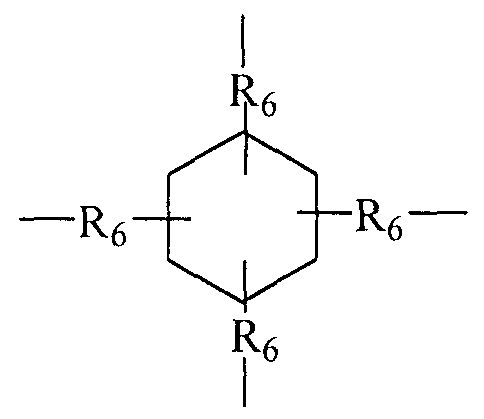
- the curing agent composition is represented by the following structural formula
- Ri is a branched or unbranched, substituted or unsubstituted, monovalent hydrocarbyl group having at least one carbon atom, preferably an alkyl group having at least an average of at least 14 carbon atoms;
- R2 and R4 each independently represent a branched or unbranched, substituted or unsubstituted, divalent hydrocarbyl group having 2-24 carbon atoms, preferably 2-6 carbon atoms, or
- Rg represents a branched or unbranched, substituted or unsubstituted, divalent hydrocarbyl group having 2-24 carbon atoms
- R3 is a branched or unbranched, substituted or unsubstituted, monovalent hydrocarbyl having 1-24 carbon atoms, a polyoxyalkylene group, an aryl group, an alkaryl group, or an aralkyl group
- R5 is hydrogen or a branched or unbranched, substituted or unsubstituted, monovalent hydrocarbyl having 1-24 carbon atoms, preferably hydrogen
- R7 is the residue of said polyepoxide compound
- a represents an integer equal to 0 or 1
- c represents an integer from 0-10, preferably from 1-10.
- the structure of the phenolic acid is an aromatic ring to which is covalently bonded at least one hydroxyl group, at least one hydrocarbyl group, and at least one carboxyl group.
- the structure of the phenolic acid will contain only one hydroxyl group and one carboxyl group bonded to the aromatic ring.
- Commercially available phenolic compounds usually contain a mixture of species, such as mono and di carboxyl substituted phenolics.
- this embodiment includes a phenolic which contains a mixture of species in which the predominant (>70 mole percent) species has only one carboxy group and one hydroxyl group bonded to the aromatic ring.
- hydrocarbyl group One of the substituents on the aromatic ring of the phenolic acid is the hydrocarbyl group. While the hydrocarbyl group can comprise a wide variety of structures and atoms, it must have a predominantly hydrocarbon character. Included within the meaning of a hydrocarbyl group are the alkyl or alkenyl groups, the aliphatic substituted aromatic or alicyclics, or the aromatic or alicyclic substituted alkyls or alkenyls. Each of these groups may be branched or unbranched.
- the phenolic acid preferably contains at least 50 mole% species which have only one hydrocarbyl substituent.
- the substituent on the substituted aryl amidopolyamine is at least one hydrocarbyl group having at least one carbon atom.
- Longer chain hydrocarbyl groups are preferred. All else remaining equal, a curing agent having longer chain hydrocarbyl substituents, i.e. 8 or more, preferably greater than 12, and most preferably 14 or more, tend to be more hydrophobic than the curing agents having short chain hydrocarbyl groups on the order of 1-7 carbon atoms.
- the hydrophobic character of the hydrocarbyl substituent is desirable to improve the compatibility of the curing agent with the epoxy resin component.
- long chain hydrocarbyl substituents are somewhat more flexible than their shorter chain counterparts, thus lowering the glass transition temperature of the curing agent.
- the most preferred hydrocarbyl groups are those having 14 or more carbon atoms. Although there is no particular upper limit on number of carbon atoms, the most common number of carbon atoms used within this invention will be 14-24, more typically from 14-18, although hydrocarbons with up to 36 carbon atoms are also available.
- alkyls are preferred. These can be branched or unbranched, preferably unbranched or having no more than 1 branch per 6 backbone carbon atoms.
- alkyl substituents having at least about 8 carbon atoms include octyl, nonyl, decyl, isodecyl, dodecyl, pentadecyl, eicosyl, triacontyl and the like, as well as radicals derived from substantially saturated petroleum fractions, olefin polymers and highly refined white oils or synthetic alkanes .
- hydrocarbyl groups which are suitable include substituted hydrocarbyl groups; that is, groups containing non-hydrocarbon substituents which do not alter the predominantly hydrocarbon character of the group. Examples are halo, nitro, cyano, ether, carbonyl, and sulfonyl groups. Also included are hetero atoms which are atoms other than carbon present within a chain or ring otherwise composed of carbon atoms. Suitable hetero atoms include, for example, nitrogen, oxygen, and sulphur. Further included within the meaning of the hydrocarbyl group are the alkoxy compounds.
- the hydrocarbyl group does not contain any hetero atoms or substituents.
- the phenolic acid may contain more than one hydrocarbyl substituent on the aromatic ring.
- the dihydrocarbyl substituted phenolic acids may have a long chain hydrocarbyl of 14 or more carbon atoms and a short chain hydrocarbyl of from 1 to 4 carbon atoms attached to the aromatic ring, or both of the hydrocarbyls may be long chain. As noted above, however, preferably greater than 50 mole% of the species contain only one hydrocarbyl substituent .
- the phenols on which the hydrocarbyl and carboxyl groups are situated are aromatic compounds containing at least one, and preferably one, hydroxyl group.
- aromatic compounds containing at least one, and preferably one, hydroxyl group. Examples are phenol, ⁇ - or ⁇ - naphthols, resorcinol, hydroquinone, 4,4' -dioxydiphenyl, 4,4' -dioxydiphenylether, 4, 4 ' -dioxydiphenylsulfone, 4 , 4 ' -dioxydiphenylmethane, the condensation products of phenol and formaldehyde known as novolacs, and bis (4-hydroxyphenyl) alkyls or ethers or sulfones optionally substituted with alkyl groups on the aromatic rings. Phenol is preferred.
- a hydrocarbon-based compound of the hydrocarbyl group as mentioned above is reacted with the hydroxyl aromatic compound at a temperature of from 50 °C to 200 °C in the presence of a suitable catalyst such as aluminum chloride, boron t ⁇ fluoride or zinc chloride .
- the phenolic acid also contains at least one carboxyl group as a substituent, and preferably only one carboxyl group per aromatic ring.
- the carboxyl group is bonded directly to the aromatic phenolic ring, or indirectly to the ring through an aliphatic chain.
- a carboxyl group are the alkyl esters and anhydrides of the carboxyl substituents.
- Examples of the carboxyl groups bonded to the phenolic aromatic ring are those derived from carboxylic acids containing from 0 to 24 carbon atoms, not counting the carboxyl group carbon.
- the carboxylic acids from which the substituents are derived include -formic acid (a-carboxy acid), -acetic acid, -propionic acid, or -stea ⁇ c acid substituents.
- a particularly preferred carboxyl group is a carboxy acid in view of its high reactivity with amines .
- the phenolic acid containing the carboxyl and the hydrocarbyl groups can oe prepared by methods which are known in the art as the "Kolbe-Schmitt reaction, " which comprises reacting a salt, preferably an alkali metal salt, of the hydrocarbyl substituted phenol with carbon dioxide and subsequently acidifying the salt thus obtained.
- the conditions of the carbonation reaction are likewise well known to those skilled in the art. It may be carried out at atmospheric or superatmospheric pressure in a substantially inert, non-polar liquid diluent .
- a particularly preferred phenolic acid is a hydrocarbyl substituted salicyclic acid.
- This phenolic acid is a good building block toward producing a curing agent which has good flow, reactivity, and compatibility with epoxy resins at low cure temperatures in the absence of external accelerators/catalysts, and a good balance of mechanical properties and weatherability .
- the phenolic compound used in the invention is a salicylic acid substituted with a from 14 to 18 linear carbon alkyl group located at the o- or p- position to the phenolic hydroxyl group.
- the ingredients can be mixed together and reacted, but preferably, the phenolic compound should be added to the polyamine compound so as to reduce the possibility of reacting both of the primary amine groups on the polyamine compound with the phenolic compound.
- This reaction may be carried out in the presence of absence of solvents or catalysts, typically in the presence of a solvent and in the absence of a catalyst. If a catalyst is employed, one could use triphenylphosphite . It is advisable not to let the reaction temperature rise too much above 170 °C for an extended period of time in order to avoid de-carboxylation of the phenolic compound and the resultant production of free phenolic compounds in the reaction mixture.
- vacuum may be applied during the course of the reaction or towards the tail end of the reaction.
- at least one primary nitrogen group equivalent of polyamine is reacted per carboxyl group equivalent on the phenolic compound, and more preferably the polyamine is reacted with the phenolic compound at a molar excess, such as at a molar ratio of 1.25:1 or more, in order to react out the all the carboxyl groups to form amide groups wherever carboxyl groups appear on the phenolic compound.
- molar ratios of less than 1:1 are tolerable, the object of providing a reactive curing agent at low temperature cure conditions which is storage stable and compatible with epoxy resins is best achieved if an molar equivalent or excess of the polyamine is used.
- a partial vacuum either during the course of the reaction or towards the tail end of the reaction.
- the reaction is substantially completed when free acid can no longer be detected in the composition.
- the ingredients can be mixed together and subsequently reacted, but preferably, the phenolic acid is added to the polyepoxide compound so as to reduce the possibility of reacting both of the oxirane groups on the polyepoxide compound with the phenolic acid.
- the reaction between the polyepoxide compound and the phenolic acid are suitably carried out at molar ratios of at least 1:1, preferably greater than 1:1 such as at least 2:1, and even 3:1 on up. It is desirable to use a molar excess of the polyepoxide compound so that one of the oxirane groups on the polyepoxide compound is free to react with the polyamine compound and does not react with further phenolic acids.
- a stoichiometric amount of the phenolic acid is added to the polyepoxide compound such as at a molar ratio of polyepoxide to phenolic acid of 0.5:1 or less (the stoichiometry proceeding upon the assumption that the phenolic acid has only one functional group, the acid group, and a diepoxide is used) , then both of the oxirane groups will be consumed by the acid group on the phenolic compound. Therefore, a stoichiometric excess of oxirane groups (>0.5:1) is desired to ensure that the substituted aromatic glycidyl ester compound has free oxirane groups available for reaction with the polyamine compound.
- the reaction between the phenolic acid and the polyepoxide compound may be carried out in the presence or absence of solvents or catalysts, typically in the presence of both.
- Suitable solvents include alcohols, ketones, esters, ethers of hydrocarbons. Examples of suitable solvents are butanol, methyl isobutyl ketone, toluene, ethylglycol acetate, xylene, benzyl alcohol, phthalic acid esters of monohydric alcohols, e.g.
- n- butanol amylalcohol, 2-ethylhexanol, nonanol, benzyl alcohol, gamma -butyrolactone, delta -valerolactone, epsilon -caprolactone, lower and higher molecular weight polyols, e.g. glycerol trimethylol-ethane or -propane, ethyleneglycol, and ethoxylated or propoxylated polyhydric alcohols, either individually or in admixture.
- glycerol trimethylol-ethane or -propane ethyleneglycol
- ethoxylated or propoxylated polyhydric alcohols either individually or in admixture.
- a catalyst is employed, one could use a Lewis acid, metal salts, and bases.
- a Lewis acid examples include trimethylamine, triethylamine, benzyldimethylamine, tris (dimethylaminomethyl) phenol, dimethylethanolamine, n-methymorpholine, benzyl trimethyl ammonium chloride, ethyl triphenyl phosphonium salts, tetrabutyl phosphonium salts, and stannous salts of carboxylic acids.
- Typical amounts of catalyst used range from 0.1 to 100 ppm.
- the polyepoxide used in the invention is any polyepoxide having an average of 1.5 or more oxirane groups per molecule, preferably 1.7 or more oxirane groups.
- the polyepoxide compounds can be monomeric or polymeric, saturated or unsaturated, aliphatic, cycloaliphatic, aromatic or heteroaromatic and may be substituted, if desired, with other substituents in addition to the epoxy groups with, for example, hydroxyl groups or halogen atoms such as bromine.
- Suitable polyepoxide compounds are the reaction products of polyphenols and epihalohydrins, polyalcohols and epinalohydnns, amines and epihalohydrins, sulphur containing compounds and epihalohydrins, polycarboxylic acids and epihalohydrins or mixtures thereof.
- Preferred polyepoxide compounds include, but are not limited to, any one of those represented by the formulas: o
- R ⁇ is a divalent aliphatic group, a divalent cycloaliphatic group, a divalent aryl group, a polyoxyalkylene group, or a divalent arylaliphatic group
- R 12 is independently a hydrogen or a C -C ⁇ o alkyl group
- R 8 is a divalent aliphatic group optionally containing ether or ester group (s) or together with R ⁇ or RIO form a spiro ring optionally containing heteroatoms
- R ⁇ and RIO are independently hydrogen or R ⁇ or RIO together with R 8 form a spiro ring optionally containing heteroatoms such as oxygen .
- RU can be a divalent cycloaliphatic group having the formula :
- R!3 and R! ⁇ are each independently an alkylene group, or a divalent arylaliphatic group having the formula
- R ⁇ is an alkylene group
- the epoxy compound is preferably a diglycidyl ether of a dihydric phenol, diglycidyl ether of a hydrogenated dihydric phenol, an aliphatic glycidyl ether, epoxy novolac or a cycloaliphatic epoxy.
- Diglycidyl ethers of dihydric phenols can be produced, for example, by reacting an epihalohydrin with a dihydric phenol in the presence of an alkali.
- suitable dihydric phenols include: 2, 2-bis ( 4-hydroxy- phenyl) propane (bisphenol-A) ; 2 , 2-bis ( 4-hydroxy-3-tert- butylphenyl) propane; 1, 1-bis ( 4-hydroxyphenyl) ethane; 1, 1-bis (4-hydroxyphenyl) isobutane; bis (2-hydroxy- 1-naphthyl) methane; 1, 5-dihydroxynaphthalene; 1, 1-bis (4-hydroxy-3-alkylphenyl) ethane and the like.
- Suitable dihydric phenols can also be obtained from the reaction of phenol with aldehydes such as formaldehyde (bisphenol-F) .
- Diglycidyl ethers of dihydric phenols includes advancement products of the above diglycidyl ethers of dihydric phenols with phenolic compounds such as bisphenol-A, such as those described in U.S. Patent Nos. 3,477,990 and 4,734,468.
- Diglycidyl ethers of hydrogenated dihydric phenols can be produced, for example, by hydrogenation of dihydric phenols followed by glycidation with epihalohydrin in the presence of a Lewis acid catalyst and subsequent formation of the glycidyl ether by reaction with sodium hydroxide.
- suitable dihydric phenols are listed above.
- Aliphatic glycidyl ethers can be produced, for example, by reacting an epihalohydrin with an aliphatic diol in the presence of a Lewis acid catalyst followed by conversion of the halohydrin intermediate to the glycidyl ether by reaction with sodium hydroxide.
- a representative formula is: C 2 —CH—CH 2 —O—(CH 2 —CH —0)—CH 2 —C /H° ⁇ ⁇ -CH- XII
- p is an integer from 2 to 12, preferably from 2 to 6; and q is an integer from 4 to 24, preferably from 4 to 12.
- Suitable aliphatic glycidyl ethers include for example, diglycidyl ethers of 1,4 butanediol, neopentyl glycol, cyclohexane dimethanol, hexanediol, polypropylene glycol, and like diols and glycols; and triglycidyl ethers of trimethylol ethane and trimethylol propane .
- Epoxy novolacs can be produced by condensation of formaldehyde and a phenol followed by glycidation by epihalohydrin in the presence of an alkali.
- the phenol can be for example, phenol, cresol, nonylphenol and t- butylphenol .
- Examples of the preferred epoxy novolacs include those corresponding to the formula VI above.
- Epoxy novolacs generally contain a distribution of compounds with a varying number of glycidated phenoxymethylene units, r. Generally, the quoted number of units is the number closest to the statistical average, and the peak of the distribution.
- Cycloaliphatic epoxies can be produced by epoxidizing a cycloalkene-containing compound with greater than one olefinic bond with peracetic acid.
- Examples of the preferred cycloaliphatic epoxies include those corresponding to the formula VII above.
- cycloaliphatic epoxies include, for example, 3, 4-epoxycyclo-hexylmethyl- (3, 4-epoxy) cyclohexane carboxylate, dicycloaliphatic diether diepoxy [2- (3, -epoxy) cycl ohexyl-5 , 5-sp ⁇ ro ( 3 , 4 -epoxy) cyclohexane- m-dioxane] , bis (3, 4-epoxycyclohexylmethyl ) adipate, bis ( 3, 4-epoxycyclohexyl) adipate and vinylcyclohexene dioxide [4- ( 1, 2-epoxyethyl) -1, 2-epoxycyclohexane] .
- Cycloaliphatic epoxies include compounds of the formulas:
- the preferred epoxy compounds having a nominal functionality of two or more include, for example, EPON Resins DPL-862, 828, 826, 825, 1001, EPONEX Resin 1510, HELOXY Modifiers 107, 67, 68, and 32 (EPON, EPONEX and HELOXY are trade marks) ; and Epoxy Resins ERL-4221, -4289, -4299, -4234 and -4206.
- the reaction between the phenolic acid compound and the polyepoxide compound will produce a variety of species depending upon the particular phenolic acid functional sites which undergo reaction.
- the following reaction scheme represents two species produced between phenolic acid - polyepoxide reaction, where all of the carboxylic acid groups on the phenolic acid compound have been reacted :
- R ⁇ is the hydrocarbyl substituent on the phenolic acid compound, and R7 is the polyepoxide residue.
- the substituted aromatic glycidyl ester composition is made, it is reacted with the bii) polyamine compound and the c) monoglycidyl capping agent in the stated sequence or simultaneously in mixture, preferably sequentially to increase the number of species having the polyamine compound reacted into the molecule.
- adding the polyamine and monoglycidyl capping agent in mixture is also suitable for the purposes of the invention .
- At least one mole of the polyamine compound is reacted per mole of the substituted aromatic glycidyl esters, and more preferably the polyamine is reacted with the substituted aromatic glycidyl esters at a molar excess, such as at a molar ratio of 1.25:1 or more, more preferably 2:1 or more, in order to react out the all the oxirane groups and provide primary amino group termination.
- the reaction conditions are much like those described above with relation to the phenolic acid and the polyepoxide compound, except that typically no catalysts are needed.
- the temperature can range from 100 °C to 230 °C, with the higher end of the temperature range initiated when vacuum distillation is applied.
- the substituted aromatic glycidyl ester composition is preferably added to the polyamine compound to ensure that the polyamine compound, once reacted, will have a free unreacted primary amine site available for reaction with the monoglycidyl capping agent. Once the amine reaction onto the substituted aromatic glycidyl ester composition is complete, the excess amine, if any, should be vacuum distilled off, typically at 20 m.Hg to 30 m.Hg for 30 to 480 minutes.
- the aliphatic polyammes useful for the manufacture of the aryl amidopolyammes e.g.
- the polyammes useful for reaction onto the substituted aromatic glycidyl ester composition are those which have at least two primary amine groups, one primary amine group used for reaction with the oxirane groups m the substituted aromatic glycidyl ester composition, and the other primary am e available for reaction with the monoglycidyl capping agent.
- polyammes useful the practice of the invention are those represented by the formula: wherein n is an average of integers between about 0 and 10, preferably between 1 and 4; and X is a divalent branched or unbranched hydrocarbon radical having about 1-18 carbons, one or more aryl or alkaryl groups, or one or more alicyclic groups.
- X is a lower alkylene radical having 1-10, preferably 2-6, carbon atoms .
- alkylene polyamines include methylene polyamines, ethylene polyamines, butylene polyamines, propylene polyamines, pentylene polyamines, hexylene polyamines, heptylene polyamines, etc.
- the higher homologs of such amines and related aminoalkyl- substituted piperazines are also included.
- polyamines include ethylene diamine, triethylene tetramine, tris (2-aminoethyl ) -amine, 1,2- and 1, 3-propylene diamine, trimethylene diamine, 1,2- and 1 , 4-butanediamine, hexamethylene diamine, decamethylene diamine, octamethylene diamine, diethylene triamine, triethylene tetramine, di (heptamethylene) triamine, tripropylene tetramine, tetraethylene pentamine, trimethylene diamine, pentaethylene hexamine, di (trimethylene) triamine, p- and m-xylylene diamine, methylene dianiline, 2 , 4-toluenediamine, 2, 6-toluenediamine, poly- methylene polyphenylpolyamine, and mixtures thereof.
- Higher homologs obtained by condensing two or more of the above-illustrated alkylene amines, are also useful. More preferred are those polyamines containing at least one secondary amino group in addition to the at least two primary amino groups, and multiple divalent hydrocarbon radicals having 2-4 carbon atoms.
- the ethylene type polyammes examples of which are mentioned above, are especially useful for reasons of cost and effectiveness. Such polyamines are described in detail under the heading "Diammes and Higher Amines" in Kirk-Othmer, Encyclopedia of Chemical Technology, Second Edition, Vol. 7, pp. 22-39. They are prepared most conveniently by the reaction of an alkylene chloride with ammonia or by reaction of an ethylene lime with a ring- opening reagent such as ammonia.
- alkylene polyammes including cyclic condensation products such as piperaz es .
- cyclic condensation products such as piperaz es .
- hydroxy polyam es e.g., alkylene polyamines having one or more hydroxyalkyl substituents on the nitrogen atoms
- Preferred hydroxyalkyl-substituted alkylene polyammes are those in which the hydroxyalkyl group has less than about 10 carbon atoms.
- hydroxyalkyl-substituted polyammes examples include N- (2-hydroxy- ethyl) -ethylene diamme, N, N ' -bis (2-hydroxyethyl) ethylene diamme, monohydroxypropyl-substituted diethylene triamine, dihydroxypropyltetraethylene pentamme and N- (3-hydroxybutyl) tetramethylene diamme.
- Higher homologs obtained by condensation of the above-illustrated hydroxyalkyl-substituted alkylene amines through ammo radicals or through hydroxy radicals are likewise useful.
- polyammes which are useful include those m which one of the above described polyamines are reacted in stoichiometric excess with polyepoxide compounds or polycarboxylic acids to produce a primary amme terminated am e adduct having either ammealkyl hydroxy linkages or amide linkages along the adduct chain.
- This primary amine terminated polyamine adduct can then be used to react with the phenolic compound described above.
- the monoglycidyl capping agent reacts onto the free primary amine groups.
- a larger number of the desired species are obtained if the polyamine compounds and the monoglycidyl capping agents are added sequentially, the latter being added after the polyamine is reacted and excess polyamine is preferably distilled off.
- the monoglycidyl capping agent adds onto the primary amine functionality relatively easy, in that no catalysts are needed, and the reaction temperature is fairly low, in the range of 80 °C to 110 °C . There is no particular pressure limitation, and the reaction proceeds well at atmospheric pressures.
- the capping agent is reacted with the adduct of the polyamine-substituted aromatic glycidyl ester adduct at a molar ratio of preferably 0.5:1 to preferably not more than 2:1. While one can go much higher than a 2:1 ratio, it is not necessary to do so in order to convert the primary amine groups present on the polyamine-substituted aromatic glycidyl ester adduct into secondary amine groups through reaction with the capping agent. With respect to the preferable lower limit, not all of the free primary amine groups present in the adduct need to be reacted and converted into secondary amine groups . One will notice a some reduction in blush even if the adduct is only partially capped with the monoglycidyl capping agent.
- the monoglycidyl capping agent can be an aliphatic, alicyclic, or aromatic compound attached to a monoglycidyl functional group.
- Non-limitmg examples of monoglycidyl capping agents which are suitable for use in the invention include:
- R 6 and R!° are the same or different and are a branched or linear alkyl, an alkalicyclic, polyoxyalkyl , or alkenyl group having 2-100 carbon atoms, optionally branched, ; and R ⁇ IS hydrogen or a branched or unbranched alkyl having 1-18 carbon atoms. There may be more than one type of R!' group attached to the aromatic
- These categories would include the unsaturated epoxy hydrocarbons of butylene, cyclohexene and styrene oxide; epoxy ethers of monovalent alcohols such as methyl, ethyl, butyl, 2-ethylhexyl, dodecyl alconol and others; epoxides of the alkylene oxide adducts of alcohols having at least 8 carbon atoms by the sequential addition of alkylene oxide to the corresponding alkanol (ROH) , such as those marketed under tne NEODOL name (NEODOL is a trade mark); epoxy ethers of monovalent phenols such as phenol, cresol, and other phenols substituted in the o- or p- positions with C -C2 ⁇ branched or unbranched alkyl, aralkyl, alkaryl, or alkoxy groups such as nonylphenol; glycidyl esters of mono-carboxylic acids such as the glycidy
- epoxy esters of unsaturated alcohols or unsaturated carboxylic acids such as the glycidyl ester of neodecanoic acid, epoxidized methyl oleate, epoxidized n-butyl oleate, epoxidized methyl palmitoleate, epoxidized ethyl linoleate and the like; phenyl glycidyl ether; allyl glycidyl ethers, and acetals of glycidaldehyde .
- unsaturated alcohols or unsaturated carboxylic acids such as the glycidyl ester of neodecanoic acid, epoxidized methyl oleate, epoxidized n-butyl oleate, epoxidized methyl palmitoleate, epoxidized ethyl linoleate and the like; phenyl glycidyl ether;
- monoglycidyl capping agents useful to the practice of the invention include alkyl glycidyl ethers with 1-18 linear carbon atoms in the alkyl chain such as butyl glycidyl ether or a mixture of Cg-C 4 alkyls, cresyl glycidyl ether, phenyl glycidyl ether, nonylglycidyl ether, p-tert-butylphenyl glycidyl ether, 2-ethylhexyl glycidyl ether, and the glycidyl ester of neodecanoic acid.
- alkyl glycidyl ethers with 1-18 linear carbon atoms in the alkyl chain such as butyl glycidyl ether or a mixture of Cg-C 4 alkyls, cresyl glycidyl ether, phenyl glycidyl ether, nonylg
- the aliphatic based capping agents are usually hydrophobic in character, which tends to improve the flow properties of the epoxy-curing agent mixture at low temperatures, and tends to lower the glass transition temperature of the film or coating. The lower glass transition temperature improves the impact strength of the cured film.
- Aromatic based monoglycidyl capping agents have the advantage of rendering the cured film more rigid, chemically resistant, and resistant to stresses at high temperatures. Any one of these types of capping agents may be used, and mixtures thereof are also advantageous to attain an overall balance of mechanical strength and chemical resistance.
- the monoglycidyl capping agent is reacted with the amidopolyamine compound at a molar ratio of 0.5:1 to 2:1. While one can go much higher than a 2:1 ratio, it is not necessary to do so in order to convert the primary amine groups into secondary amine groups. Further, the curing agent can be only partially capped with the monoglycidyl capping agent, because even a partial capping will have some effect on blush reduction and increasing storage stability.
- reacting the amidopolyamine with a monoglycidyl functional group has the advantage of leaving the one free amine hydrogen active for reaction with epoxy groups. It is desirable to avoid reacting the amidopolyamine with functional groups which would yield the structure -NH-CO-, since the carboxy group tends to deactivate the amine hydrogen. Reacting the primary amine on the amidopolyamine compound with a glycidyl functionality, however, leaves the secondary amine hydrogen more active for reaction with an epoxy resin. Thus, one can achieve the dual advantage of reducing blush without destroying the reactivity of the curing agent toward the epoxy resin.
- the order of reaction it is desired to first make the amidopolyamine compound followed by reaction with the monoglycidyl capping agent to ensure that the polyamine compounds react onto the phenolic compounds. Reacting all ingredients together in situ would result in competing reactions where monoglycidyl functionalities undesirably react with the acid groups on the phenolic compound or with both primary amine functionalities on the polyamine compound, thereby effectively reducing the number of species having amidopolyamine linkages between the phenolic compound and the polyamine compound, end capped with the monoglycidyl capping agent.
- the curing agents of the invention can optionally be mixed with other conventional curing agents .
- the amount of other conventional curing agents mixed in will depend upon the requirements placed upon the end product and the efficiencies one desires to achieve. If the end use does not require a product which has high end physical properties and/or it is not important to have lowered processing times, and/or the product is not stored for lengthy time periods, then greater amount of an inexpensive conventional curing agent can be mixed with the curing agent composition of the invention.
- the amount of the curing agent of the invention can range in the low end of from 1 to 50 wt% based on the weight of all curing agents, but is preferably from 50 wt% to 100 wt%.
- Conventional curing agents are usually polyamines with at least 2 nitrogen atoms per molecule and at least two reactive amine hydrogen atoms per molecule.
- the nitrogen atoms are linked by divalent hydrocarbyl groups.
- Other hydrocarbyl groups such as aliphatic, cycloaliphatic or aromatic groups may also be singly linked to some of the nitrogen atoms.
- These polyamines contain at least 2 carbon atoms per molecule.
- Preferably polyamines contain about 2 to 6 amine nitrogen atoms per molecule, 2 to 8 amine hydrogen atoms per molecule, and 2 to 50 carbon atoms.
- polyamines useful as conventional curing agents for epoxy resins include aliphatic polyamines such as ethylene diamine, diethylene triamine, triethylene tetramine, tetraethylene pentamine, pentaethylene hexamine, dipropylene triamine, tributylene tetramine, hexamethylene diamine, dihexamethylene triamine, 1,2-propane diamine, 1,3-propane diamine, 1,2-butane diamine, 1,3-butane diamine, 1,4-butane diamine, 1,5-pentane diamine, 1,6-hexane diamine, 2-methyl-l, 5-pentanediamine, 2, 5-dimethyl-2, 5-hexane- diamine and the like; cycloaliphatic polyamines such as isophoronediamine, 4,4' -diaminodicyclohexylmethane, menthane diamine, 1, 2-diaminocyclohexane, 1,4-dia
- polyamines include EPI-CURE Curing Agent 3140 (a dimer acid-aliphatic polyamine adduct) (EPICURE is a trade mark) , EPI-CURE Curing Agent 3270 (a modified aliphatic polyamine) , EPI-CURE Curing Agent 3274 (a modified aliphatic polyamine) , EPI-CURE Curing Agent 3295 (an aliphatic amine adduct) , EPI-CURE Curing Agent 3282 (an aliphatic amine adduct) , EPI-CURE Curing Agent 3055 (an amidoamine) , EPI-CURE Curing Agent 3046 (an amidoamine) and EPI-CURE Curing Agent 3072 (modified amidoamine) , and EPI-CURE Curing Agent 3483 (an aromatic polyamine) available from Shell Chemical Company. Mixtures of polyamines can also be used.
- the invention is also directed to two component epoxy compositions having an epoxy resin component (A) and a curing agent component (B) .
- the epoxy resin component (A) has at least one
- 1,2-epoxy group per molecule 1,2-epoxy group per molecule.
- Mixtures of epoxy compounds having one epoxy functionality and two or more epoxy groups are also suitable.
- the epoxy compounds having two or more epoxy groups per molecule means that the nominal functionality is two or more.
- epoxy resins contain a distribution of compounds with a varying number of 1,2-epoxy equivalency. The actual average functionality of these epoxy compounds is 1.5 or more.
- Any of the epoxy compounds can be saturated or unsaturated, linear or branched, aliphatic, cycloaliphatic, aromatic or heterocyclic, and may bear substituents. Such substituents can include bromine or fluorine. They may be monomeric or polymeric, liquid or solid, but are preferably liquid or a low melting solid at room temperature.
- the epoxy compounds can be of the glycidyl ether type prepared by reacting epichlorohydrin with a compound containing at least one aromatic hydroxyl group carried out under alkaline reaction conditions.
- examples of other epoxy resins suitable for use in the invention include diglycidyl ethers of dihydric compounds, epoxy novolacs and cycloaliphatic epoxies.
- Specific examples of the epoxy resins useful in the epoxy resin component A are described hereinbefore with reference to the reaction between the phenolic acid and the polyepoxide compound.
- Preferred epoxy resins include, but are not limited to, any one of those represented by the hereinbefore specified formulas V, VI and VII.
- the two component epoxy resin composition is either solvent borne or solventless. Suitable solvents are described above, with preference given to ketones, alcohols, and xylene. Solventless epoxy resin compositions are those compositions which are applied in the absence of a solvent and in the absence of an aqueous medium.
- the two component compositions of the invention are mixed and cured, preferably in the absence of external accelerators, in a wide range of temperatures ranging from -25 °C to 100 °C .
- One advantage of the invention is that the curing agent composition of the invention and the epoxy resin can cure, once mixed, within 24 hours at 4.4 °C, and even in as short a time as within 15 hours at 4.4 °C in the absence of external accelerators. This is unexpected since many, if not all, of the primary amine groups are reacted out with the monoglycidyl capping agent, thus otherwise lowering the reactivity of the curing agent.
- the two component mixture is "cured” or “curable” when it cures or has the capacity to cure to a hard gel (cotton free) at the designated temperature in the absence of external accelerators and at 50% relative humidity.
- the curing agent composition of the invention can cure an epoxy resin in as quick as 5 hours.
- the amount of time required for cure naturally increases, although due to the excellent compatibility between the curing agent composition and the epoxy resin used in the invention, the overall time to cure at any given temperature is dramatically reduced compared to epoxy resins mixed with other types of curing agents .
- the curable epoxy resin composition is cured in the absence of catalyst compounds which accelerate the reaction between the curing agent and the epoxy resin, commonly known as accelerators.
- accelerators can be included, if desired, to increase the cure rate of the epoxy resin-curing agent system beyond that already achieved in its absence.
- Various amine-compatible accelerators can be used as long as they are soluble in the amine curing agents.
- accelerators include metal salts such as, for example, sulfonates, phosphonates, sulfates, tetrafluoroborates, carboxylates and nitrates of Groups IA, IIA and transition metal series of the Periodic Table (CAS version), preferably Mg, Ca, Zn and Sn salts, and complexes thereof; inorganic acids such as, for example, HBF , H 2 S0 , H NS0 H and H3PO4; carboxylic acids, preferably hydroxy-substituted carboxylic acids such as, for example, salicylic, lactic, glycolic and resorcylic; phenolic compounds such as, for example, phenol, t-butylphenol, nonylphenol and
- the accelerators are typically present in an amount of from 0.1 weight percent to 10 weight percent, preferably to 5 weight percent, based on the epoxy resm, if used at all.
- the storage stable composition of the invention may include other additives, such as fillers, elastomers, uv- stabilizers, extenders, plasticizers, accelerators, pigments, reinforcing agents, flow control agents and flame retardants depending on the application.
- additives such as fillers, elastomers, uv- stabilizers, extenders, plasticizers, accelerators, pigments, reinforcing agents, flow control agents and flame retardants depending on the application.
- the curable two component epoxy resm composition can also contain pigments of the conventional type such as iron oxides, lead oxides, strontium chromate, carbon black, titanium dioxide, talc, barium sulfate, phthalocyanme blue and green, cadmium red, iron blue, chromic green, lead silicate, silica and silicates.
- pigments can be added to the polyamine curing agent component or the epoxy res component prior to mixing them together. Their amounts usually range from 20 to 100 pbw based on the weight of the epoxy resm and the curing agent composition.
- the curable epoxy resm composition can also contain a filler such as san ⁇ , other siliceous materials, iron or other metals. Small amounts of thixotropic agents, colouring agents, inert plasticizers, and levelling agents can also be incorporated in the curable epoxy resm composition if desired.
- a filler such as san ⁇ , other siliceous materials, iron or other metals.
- Small amounts of thixotropic agents, colouring agents, inert plasticizers, and levelling agents can also be incorporated in the curable epoxy resm composition if desired.
- the curing agent composition of the invention contains no added solvents or water when used in powder coating applications.
- the curing agent composition is non-aqueous and is either dissolved in solvents or is applied neat, or solventless.
- some amount of solvent is used in the curing agent composition and in the two component epoxy resin composition to reduce the viscosity of the curing agent and/or the epoxy resin compositions, especially in cold temperature applications. The reduction in viscosity facilitates the handling and application of the composition in various environments.
- Suitable solvents include alcohols, ketones, esters, ethers of hydrocarbons.
- Suitable solvents are butanol, methyl isobutyl ketone, toluene, ethylglycol acetate, xylene, benzyl alcohol, phthalic acid esters of monohydric alcohols, e.g. n-butanol, amylalcohol, 2-ethylhexanol, nonanol, benzyl alcohol, gamma - butyrolactone, delta -valerolactone, epsilon - caprolactone, lower and higher molecular weight polyols, e.g.
- the amount of solvent can range from 0 to 80 wt% .
- the solids concentration can range from 20 wt% to 100 wt%, preferably from 65 wt% to 85 wt%.
- Defoamers, tints, slip agents, thixotropes, etc. are common auxiliary components to most coatings and may be employed in the composition of the present invention.
- Flow control agents are typically used in amounts ranging from 0.05 to 5 wt%, based on the combined weight of the epoxy resin and the curing agent composition.
- Re-inforcing agents may be added to either of the components, and include natural and synthetic fibers in the form of woven, mat, monofilament , chopped fibers and the like.
- Other materials for re-inforcing include glass, ceramics, nylon, rayon, cotton, aramid, graphite and combinations thereof.
- Suitable fillers include inorganic oxides, inorganic carbonates, ceramic microspheres, plastic microspheres, glass microspheres, clays, sand, gravel and combinations thereof. The fillers can be used in amounts suitably from 0 to 100 pbw of the combined epoxy/curing agent components.
- the curing agent compositions of the invention and the two component compositions utilizing the curing agents compositions can be used in such applications as flooring, casting, crack or defect repair, moulding, adhesives, potting, filament winding, encapsulation, structural and electrical laminates, composites and the like.
- a typical use for the two component compositions of the invention is in coatings.
- the heat-curable coating composition can be applied to a substrate by brush, spray, or rollers.
- the curing agent compositions can be mixed and dried to a powder for powder coating applications.
- the epoxy resin composition is preferably a liquid resin, a semi-solid resin, or in solution, at the application temperature. The same is true for the curing agent composition.
- One advantage of the invention is that the curing agent composition of the invention and the epoxy resin can cure, once mixed, within 24 hours at 4.4 °C . This is unexpected since many, if not all, of the primary amine groups are reacted out with the monoglycidyl capping agent, thus otherwise lowering the reactivity of the curing agent.
- the two component mixture is
- the curing agent composition of the invention can cure an epoxy resin as quick as 10 hours, even as soon as within 7 hours, depending upon the particular species of curing agent, epoxy resin, and humidity conditions.
- the amount of time required for cure naturally increases, although due to the excellent compatibility between the curing agent composition and the epoxy resin used in the invention, the overall time to cure at any given temperature is dramatically reduced compared to epoxy resins mixed with other types of curing agents .
- the curing agent compositions of the invention can also be used in thermosetting powder coating compositions prepared by the various methods known to the powder coating industry: dry blending, melt compounding by two roll mill or extruder and spray drying.
- the process used is the melt compounding process: dry blending solid ingredients in a planetary mixer and then melt blending the admixture in an extruder at a temperature within the range of 80 °C to 130 °C . The extrudate is then cooled and pulverized into a particulate blend.
- thermosetting powder composition can generally be applied directly to a substrate of, e.g., a metal such as steel or aluminum.
- a substrate e.g., a metal such as steel or aluminum.
- Non-metallic substrates such as plastics and composites can also be used.
- Application can be by electrostatic spraying or by use of a fluidized bed. Electrostatic spraying is the preferred method.
- the coating powder can be applied in a single sweep or in several passes to provide a film thickness after cure of 2.0 to 15.0 mils.
- the substrate can optionally be preheated prior to application of a powder composition to promote uniform and thicker powder deposition.
- the powder-coated substrate is baked, typically at 120 °C, preferably from 150 °C to 205 °C for a time sufficient to cure the powder coating composition, typically from 1 minute to 60 minutes, preferably from 10 minutes to 30 minutes.
- SSA is about 63 wt% salicyclic acid mono substituted with C 4-C ⁇ g alkyl groups dissolved in xylene and containing less than 15 mole% of C ⁇ 4-C g alkyl phenols and less than 5 mole% of dicarboxylic acid species, having an acid value of 92 mg KOH/g in solution and 146 mg KOH/g based on the solids.
- TETA is triethylene tetramine commercially available from Union Carbide having a typical amine value of 1436 mg KOH/g.
- HELOXY Modifier 62 is a commercial grade of ortho-cresyl glycidyl ether manufactured by Shell Chemical Company, that is produced by treatment of ortho-cresol with epichlorohydrin and sodium hydroxide.
- HELOXY Modifier is a thin liquid having a viscosity at 25 °C of 7 centipoise and an epoxide equivalent weight of 175 to 195.
- EPON 828 is a diglycidyl ether liquid epoxy resin commercially available from Shell Chemical Company and Shell Chemical Europe Ltd.
- This example illustrates the synthesis of the substituted aryl amidopolyamine compound based on a substituted salicyclic acid and triethylene tetramine, which is subsequently reacted with a monoglycidyl ether.
- a 4 necked round-bottomed glass flask was equipped with a condenser having a water trap, a nitrogen inlet, an acid inlet, and the TETA inlet. The flask was flushed with nitrogen. 1529.4 G of SSA was charged to the flask, after which a total of 390.42 grams of TETA was charged over a period of time to the flask, for a total of 1919.8 grams of reaction ingredients.
- the amount of SSA and TETA added were reacted in a ratio of one amine equivalent to one acid equivalent, or a 1:1 mole ratio. During the course of the reaction through completion, approximately 613 grams of water and xylene were distilled off. In this reaction scheme, the total amount of ingredients were mixed together prior to reaction.
- TETA was added dropwise at about 23 °C initial, with the contents of the flask being stirred at about 60 rpm under a nitrogen pad, for a period of two hours, during which the exotherm raised the temperature of the reaction mixture to 50 °C.
- the temperature of the reactants in the flask was raised to 150 °C slowly over a 55 minute period, and then raised to 160 °C over the next one and a half hours. The reaction was left overnight at room temperature. The next day, the reaction was again heated to 160 °C for the first two hours, and subsequently warmed to 170 °C over the next 7 hours. To drive the reaction to full completion and the desired acid value, the reactants were again heated to 145 °C - 150 °C over a 5 hour period under vacuum at about 20 in.Hg. The acid value was measured at 10.3 mg KOH/g, and the amine value was measured to be 345.4 mg KOH/g.
- the product was charged to a 4 necked round bottomed flask equipped with a condenser. The flask was purged with nitrogen, and agitation was initiated. Once the product was heated to 93 °C, the HELOXY 62 was added dropwise over a period of about 3 hours . The reaction temperature was held at 90-96 °C for the next 30 minutes, after which the final end capped amidopolyamine curing agent was isolated under nitrogen purge using a coarse grade Gardner filter cup. The acid and amine values of the final end capped amidopolyamine product were measured to be 7.6 and 246.4 mg KOH/g, respectively.
- This example demonstrates the storage stability of the product made in Example 1.
- the viscosity of the curing agent was measured at one month intervals using a Brookfield viscometer with a spindle 6 and again using a spindle 7 at 20 rpm.
- CARDOLITE NC-541 a commercially available low temperature phenalkamine curing agent having aliphatic polyammes attached to an aromatic backbone with aliphatic sidecha s, from The Cardolite Corporation, was also sampled monthly over a six month period for changes in viscosity, using a spindle 7 at 20 rpm (CARDOLITE is a trade mark) .
- the results are tabulated in Table 1 below. The results show a dramatic increase in the viscosity of the CARDOLITE sample at one month, with a steady increase thereafter.
- This example demonstrates the properties of end capped amidopolyamine curing agent solution made in Example 1 when mixed and reacted with an epoxy resin.
- a formula for coating was made consisting of 6.0 g of the EPON 828 resin, 8.54 g of the end capped amidopolyamine final product in solution made in Example 1, and 0.006 g of BYK 348 flow control agent. Upon mixing, the mixture was dropped onto 4 inch by 6 inch cold roll steel panels, and allowed to cure over 7 days. The film thickness was 1-2 mils, initial specular gloss was 104 at 60 ° and 102.7 at 20 °. On glass panels with cure conditions set at 7 days, 25 °C, and 50 RH, the gloss at 60 ° was 146 and at 20 ° was 165.
- amidopolyamine capped curing agent solution was mixed with an epoxy resin for examination of the film properties.
- 33.18 Pbw of EPON Resin 828 was mixed with 33.18 pbw of the curing agent solution made in Example 1 at a stoichiometric ratio of 1:0.707, respectively.
- the mixture was pigmented with a white pigment and given a 30 minute induction time, although this time was not necessary.
- the mixture was drawn down with a # 50 wire- wound bar on bonderite 1000 steel panel at an average thickness of 2.5 mils.
- the curing conditions were set for 14 days at 25 °C and 50% RH .
- the pot life of the mixture was about 6 hours, and the initial mix viscosity was 600 cP.
- the film became a soft gel (set to touch) at 2 hours, a hard gel (cotton free) at 6.5 hours, and mar resistant (through dry) at 10 hours.
- the film had a hardness of 2B; and after 14 days, a hardness of F.
- the direct impact was pl6, f20; adhesion X-cut was 5A, flexibility on Mandrel test was 6.35% elongation, specular gloss was 98.4 at 60 ° and 85.6 at 20 °, and the MEK resistance was 85.
- the coatings showed very good water resistance properties as evidenced by the maintenance of coating integrity in water immersion tests under ambient (25 °C) and elevated temperatures (60 °C) for 2000 hours.
- the film When cured at 4.4 °C and 70%RH for 14 days, the film had a hardness of 3B. Its cure rate was 6 hours to soft gel, 24 hours to hard gel, and 42 hours to mar resistance .
- the results indicate that coatings made with the curing agent of the invention had good reactivity as indicated by their reasonable cure rates, and produced films having excellent hardness at room temperature and good hardness when cured at temperatures as low as 4.4 °C .
- the reactivity of the epoxy resin composition was good in that it cured to a hard gel within 24 hours at the low temperature of 4.4 °C, even in the absence of an external accelerator/catalyst.
- This example illustrates the synthesis of the substituted aromatic glycidyl ester composition.
- 500 Grams of EPIKOTE 828 in xylene which is a bisphenol A based epoxy resin available from Shell Chemicals Europe; 327 grams of a 63 wt . % 3-alkyl substituted salicyclic acid mixture in xylene (corresponding to about 20 mole % per epoxy group) , in which the alkyl group contains from 14 to 18 carbon atoms and the mixture contains less than 15 mole% of C 4-C ⁇ g alkyl phenols and less than 5 mole% of dicarboxylic acid species; and
- a substituted aromatic glycidyl ester composition was also made using the same ingredients and procedure as in Example 1, except that only the amount of the substituted salicyclic acid having 14 to 18 carbon atom substitution corresponded to 5 mole % per epoxy group instead of 20 mole %.
- the product was dissolved in xylene to give a solution having 95 wt% solids. This product was designated as SSA-3. This product was dissolved with more xylene to give a solution with 85 wt% solids. This more diluted product was designated as SSA-4.
- This example demonstrates the synthesis of the curing agent of the invention based on SSA-2.
- a 2000 ml.4necked round-bottomed flask was equipped with a condenser having a water trap, a nitrogen inlet, an acid inlet, and the TETA inlet.
- the flask was flushed with nitrogen.
- 468.54 G of TETA was charged to a flask and warmed to 93 °C over a fifteen minute period.
- 471.00 g of SSA-2 was added slowly over a period of 1 hour, 25 minutes, and held at 93 °C for 1 more hour. Subsequently, the temperature was increased to 230 °C for the remainder of the reaction, which lasted for another 6 hours, during which a vacuum was pulled to about
- reaction product was heated to 230 °C to confirm that no more TETA would distill, and then cooled to 115 °C, at which time 118.76 g of n- butanol was added.
- time 118.76 g of n- butanol was added.
- 176.91 g of HELOXY 62 capping agent was added dropwise over a 40 minute period and reacted for about another 40 minutes at that temperature.
- 356.28 g of xylene was added to produce a curing agent solution (CA-2) having about
- Example 8 This example demonstrates the synthesis of the curing agent of the invention based on SSA-4.
- a 2000 ml 4-necked flask was equipped with a condenser having a water trap, a nitrogen inlet, an acid inlet, and the TETA inlet. The flask was flushed with nitrogen. 468.54 g of TETA was charged to a flask and warmed to 93 °C over a half hour period. 262.65 g of SSA-4 was added to the TETA over a 1 hour, 5 minute period, and held at about 94 °C for 1 more hour, after which the temperature was slowly increased to a maximum of 230 °C under a vacuum of about 28.5 in.Hg to distill off unreacted TETA and xylene. The resulting product had an amine value of 580 mg KOH/g.
- This example demonstrates the physical and chemical properties of the curing agent and films made with the curing agent of the invention.
- To the curing agent of CA-2 was added 0.37g of BYK 346 flow control agent, and to CA-4 was added 0.39 g of BYK-346 flow control agent.
- Each of the curing agents were reacted in a 1:1 stoichiometric calculated ratio with the epoxy resin.
- the cured films were made at room temperature and at 4.4 °C for the designated amount of time, and tested for their physical properties. For compatibility between the epoxy resin and the curing agent, the two were combined in mass rather than as a film, and inspected by eye for haziness .
- the curing agents of the invention have good compatibility immediately upon mixing with the epoxy resin both at room temperature and at sub- ambient temperatures, such as 4.4 °C .
- the cure rates at room temperature and sub-ambient temperature are quick even in the absence of external accelerators/catalysts. Further, the cured films had good hardness.
Landscapes
- Chemical & Material Sciences (AREA)
- Organic Chemistry (AREA)
- Health & Medical Sciences (AREA)
- Chemical Kinetics & Catalysis (AREA)
- Medicinal Chemistry (AREA)
- Polymers & Plastics (AREA)
- Life Sciences & Earth Sciences (AREA)
- Engineering & Computer Science (AREA)
- Materials Engineering (AREA)
- Wood Science & Technology (AREA)
- Epoxy Resins (AREA)
- Paints Or Removers (AREA)
Abstract
Description


Claims


Priority Applications (5)
| Application Number | Priority Date | Filing Date | Title |
|---|---|---|---|
| JP52961298A JP2001507729A (en) | 1996-12-31 | 1997-12-24 | Storage-stable compatible hardener compositions for epoxy resins that are self-curing below ambient temperature |
| AU60919/98A AU728883B2 (en) | 1996-12-31 | 1997-12-24 | Storage stable compatible curing agent compositions for epoxy resins self curable at sub-ambient temperatures |
| BR9713798-7A BR9713798A (en) | 1996-12-31 | 1997-12-24 | Curing agent composition, and solvent-free or two-component epoxy composition. |
| EP97954954A EP0951495A1 (en) | 1996-12-31 | 1997-12-24 | Storage stable compatible curing agent compositions for epoxy resins self curable at sub-ambient temperatures |
| CA002275697A CA2275697A1 (en) | 1996-12-31 | 1997-12-24 | Storage stable compatible curing agent compositions for epoxy resins self curable at sub-ambient temperatures |
Applications Claiming Priority (4)
| Application Number | Priority Date | Filing Date | Title |
|---|---|---|---|
| US3395796P | 1996-12-31 | 1996-12-31 | |
| US3395696P | 1996-12-31 | 1996-12-31 | |
| US60/033,957 | 1996-12-31 | ||
| US60/033,956 | 1996-12-31 |
Publications (1)
| Publication Number | Publication Date |
|---|---|
| WO1998029468A1 true WO1998029468A1 (en) | 1998-07-09 |
Family
ID=26710374
Family Applications (1)
| Application Number | Title | Priority Date | Filing Date |
|---|---|---|---|
| PCT/EP1997/007299 Ceased WO1998029468A1 (en) | 1996-12-31 | 1997-12-24 | Storage stable compatible curing agent compositions for epoxy resins self curable at sub-ambient temperatures |
Country Status (8)
| Country | Link |
|---|---|
| EP (1) | EP0951495A1 (en) |
| JP (1) | JP2001507729A (en) |
| KR (1) | KR20000062383A (en) |
| AU (1) | AU728883B2 (en) |
| BR (1) | BR9713798A (en) |
| CA (1) | CA2275697A1 (en) |
| WO (1) | WO1998029468A1 (en) |
| ZA (1) | ZA9711649B (en) |
Cited By (3)
| Publication number | Priority date | Publication date | Assignee | Title |
|---|---|---|---|---|
| WO2008045884A1 (en) * | 2006-10-10 | 2008-04-17 | Dow Global Technologies Inc. | Process for preparing soluble polymers with high conversion of acid from aromatic epoxy resins and diacids and process for preparing crosslinked coatings therefrom |
| WO2008045882A1 (en) * | 2006-10-10 | 2008-04-17 | Dow Global Technologies Inc. | Soluble polymers with high conversion of acid from aromatic epoxy resins and diacids and crosslinked coatings prepared therefrom |
| GB2640572A (en) * | 2024-04-25 | 2025-10-29 | Jones Paul | Amine adduct |
Families Citing this family (2)
| Publication number | Priority date | Publication date | Assignee | Title |
|---|---|---|---|---|
| WO2009080209A1 (en) * | 2007-12-19 | 2009-07-02 | Cognis Ip Management Gmbh | Phenalkamine and salted amine blends as curing agents for epoxy resins |
| CN109415488B (en) * | 2016-06-27 | 2022-04-29 | 赢创运营有限公司 | Room temperature ionic liquid curing agent |
Citations (5)
| Publication number | Priority date | Publication date | Assignee | Title |
|---|---|---|---|---|
| US2938004A (en) * | 1955-04-28 | 1960-05-24 | Shell Oil Co | Adducts of aromatic polyamines and monoepoxides |
| GB879957A (en) * | 1958-09-22 | 1961-10-11 | Ciba Ltd | Improvements relating to the hardening of epoxides |
| US4229563A (en) * | 1979-08-03 | 1980-10-21 | Ameron, Inc. | Aromatic amidoamines |
| US4264758A (en) * | 1979-11-02 | 1981-04-28 | Texaco Development Corporation | Novel epoxy curing system |
| EP0545354A1 (en) * | 1991-12-05 | 1993-06-09 | Kansai Paint Co., Ltd. | Aqueous resin dispersions |
-
1997
- 1997-12-24 CA CA002275697A patent/CA2275697A1/en not_active Abandoned
- 1997-12-24 AU AU60919/98A patent/AU728883B2/en not_active Ceased
- 1997-12-24 JP JP52961298A patent/JP2001507729A/en active Pending
- 1997-12-24 BR BR9713798-7A patent/BR9713798A/en not_active Application Discontinuation
- 1997-12-24 WO PCT/EP1997/007299 patent/WO1998029468A1/en not_active Ceased
- 1997-12-24 EP EP97954954A patent/EP0951495A1/en not_active Ceased
- 1997-12-24 KR KR1019997005945A patent/KR20000062383A/en not_active Withdrawn
- 1997-12-29 ZA ZA9711649A patent/ZA9711649B/en unknown
Patent Citations (5)
| Publication number | Priority date | Publication date | Assignee | Title |
|---|---|---|---|---|
| US2938004A (en) * | 1955-04-28 | 1960-05-24 | Shell Oil Co | Adducts of aromatic polyamines and monoepoxides |
| GB879957A (en) * | 1958-09-22 | 1961-10-11 | Ciba Ltd | Improvements relating to the hardening of epoxides |
| US4229563A (en) * | 1979-08-03 | 1980-10-21 | Ameron, Inc. | Aromatic amidoamines |
| US4264758A (en) * | 1979-11-02 | 1981-04-28 | Texaco Development Corporation | Novel epoxy curing system |
| EP0545354A1 (en) * | 1991-12-05 | 1993-06-09 | Kansai Paint Co., Ltd. | Aqueous resin dispersions |
Cited By (3)
| Publication number | Priority date | Publication date | Assignee | Title |
|---|---|---|---|---|
| WO2008045884A1 (en) * | 2006-10-10 | 2008-04-17 | Dow Global Technologies Inc. | Process for preparing soluble polymers with high conversion of acid from aromatic epoxy resins and diacids and process for preparing crosslinked coatings therefrom |
| WO2008045882A1 (en) * | 2006-10-10 | 2008-04-17 | Dow Global Technologies Inc. | Soluble polymers with high conversion of acid from aromatic epoxy resins and diacids and crosslinked coatings prepared therefrom |
| GB2640572A (en) * | 2024-04-25 | 2025-10-29 | Jones Paul | Amine adduct |
Also Published As
| Publication number | Publication date |
|---|---|
| AU6091998A (en) | 1998-07-31 |
| JP2001507729A (en) | 2001-06-12 |
| CA2275697A1 (en) | 1998-07-09 |
| AU728883B2 (en) | 2001-01-18 |
| BR9713798A (en) | 2000-02-01 |
| ZA9711649B (en) | 1998-06-25 |
| KR20000062383A (en) | 2000-10-25 |
| EP0951495A1 (en) | 1999-10-27 |
Similar Documents
| Publication | Publication Date | Title |
|---|---|---|
| JP5325791B2 (en) | Epoxy resin containing alicyclic diamine curing agent | |
| US5527839A (en) | Self-emulsifying epoxy curing agent based on the reaction product of epoxy resin and polyether polyol | |
| US6136894A (en) | Aqueous epoxy resin system with curing agent from reacting acid-terminated polyalkylene glycol with epoxy-amine adduct | |
| US6359037B1 (en) | Polyamine/epoxy-functional amidoamine product with epoxy resin | |
| US5746935A (en) | Epoxy resin system | |
| AU727693B2 (en) | Waterborne curing agent composition, comprising a prereacted surfactant composition, for self-curing epoxy resins at ambient or sub-ambient temperatures | |
| US6274682B1 (en) | Epoxy resin system | |
| EP1436339B1 (en) | Low viscosity curing agents compositions in epoxy resin systems for low temperature cure applications | |
| US6346582B1 (en) | Glycidation of carboxy polyester and tertiary C monocarboxyic acid (glycidyl ester) | |
| CN112778500B (en) | Phenolic amine epoxy curing agents derived from methylene bridged poly (cyclohexyl-aromatic) amines and epoxy resin compositions containing the same | |
| JP3515865B2 (en) | Curable epoxy resin composition and use thereof | |
| JPS6253530B2 (en) | ||
| US6160040A (en) | Water borne capped ester containing epoxy amine adduct curing agents compositions for self-curing epoxy resins at ambient or sub-ambient temperatures | |
| US5936046A (en) | Epoxy resin with monoglycidyl-capped aryl amidopolyamine | |
| US6387989B1 (en) | Hardeners for epoxy resins, processes for producing the same and methods of using the same | |
| US6180727B1 (en) | Capped ester containing epoxy amine adduct curing agents for curing epoxy resins at ambient or sub-ambient temperatures without external catalysts | |
| US6410617B1 (en) | Self-dispersing, hardenable epoxy resins, processes for producing the same and methods of using the same | |
| JPS6178826A (en) | Novolac epoxy resin curing agent for solvent system | |
| AU728883B2 (en) | Storage stable compatible curing agent compositions for epoxy resins self curable at sub-ambient temperatures | |
| GB2101605A (en) | Lactone-modified epoxy resin and composition containing such resin | |
| US6387988B1 (en) | Epoxy resin hardener from aminopolyalkylene oxide/unsaturated ester, polyepoxide and amine | |
| CN1242022A (en) | Waterborne curing agent composition comprising a prereacted surfactant composition, for self-curing epoxy resins at ambient or sub-ambient temperatures | |
| MXPA00004427A (en) | Water compatible curing agents for epoxy resins |
Legal Events
| Date | Code | Title | Description |
|---|---|---|---|
| WWE | Wipo information: entry into national phase |
Ref document number: 97181083.4 Country of ref document: CN |
|
| AK | Designated states |
Kind code of ref document: A1 Designated state(s): AU BR CA CN JP KR SG |
|
| AL | Designated countries for regional patents |
Kind code of ref document: A1 Designated state(s): AT BE CH DE DK ES FI FR GB GR IE IT LU MC NL PT SE |
|
| DFPE | Request for preliminary examination filed prior to expiration of 19th month from priority date (pct application filed before 20040101) | ||
| 121 | Ep: the epo has been informed by wipo that ep was designated in this application | ||
| WWE | Wipo information: entry into national phase |
Ref document number: 1997954954 Country of ref document: EP |
|
| WWE | Wipo information: entry into national phase |
Ref document number: 60919/98 Country of ref document: AU |
|
| ENP | Entry into the national phase |
Ref document number: 2275697 Country of ref document: CA Ref document number: 2275697 Country of ref document: CA Kind code of ref document: A |
|
| ENP | Entry into the national phase |
Ref document number: 1998 529612 Country of ref document: JP Kind code of ref document: A |
|
| WWE | Wipo information: entry into national phase |
Ref document number: 1019997005945 Country of ref document: KR |
|
| WWP | Wipo information: published in national office |
Ref document number: 1997954954 Country of ref document: EP |
|
| WWP | Wipo information: published in national office |
Ref document number: 1019997005945 Country of ref document: KR |
|
| WWG | Wipo information: grant in national office |
Ref document number: 60919/98 Country of ref document: AU |
|
| WWR | Wipo information: refused in national office |
Ref document number: 1997954954 Country of ref document: EP |
|
| WWW | Wipo information: withdrawn in national office |
Ref document number: 1997954954 Country of ref document: EP |
|
| WWW | Wipo information: withdrawn in national office |
Ref document number: 1019997005945 Country of ref document: KR |