WO1998051677A1 - Process for synthesizing carbapenem intermediates - Google Patents

Process for synthesizing carbapenem intermediates Download PDF

Info

Publication number
WO1998051677A1
WO1998051677A1 PCT/US1998/009036 US9809036W WO9851677A1 WO 1998051677 A1 WO1998051677 A1 WO 1998051677A1 US 9809036 W US9809036 W US 9809036W WO 9851677 A1 WO9851677 A1 WO 9851677A1
Authority
WO
WIPO (PCT)
Prior art keywords
compound
formula
accordance
produce
reacting
Prior art date
Legal status (The legal status is an assumption and is not a legal conclusion. Google has not performed a legal analysis and makes no representation as to the accuracy of the status listed.)
Ceased
Application number
PCT/US1998/009036
Other languages
French (fr)
Inventor
Guy R. Humphrey
Ross A. Miller
David R. Lieberman
Current Assignee (The listed assignees may be inaccurate. Google has not performed a legal analysis and makes no representation or warranty as to the accuracy of the list.)
Merck and Co Inc
Original Assignee
Merck and Co Inc
Priority date (The priority date is an assumption and is not a legal conclusion. Google has not performed a legal analysis and makes no representation as to the accuracy of the date listed.)
Filing date
Publication date
Priority claimed from GBGB9806023.9A external-priority patent/GB9806023D0/en
Application filed by Merck and Co Inc filed Critical Merck and Co Inc
Priority to CA002287931A priority Critical patent/CA2287931A1/en
Priority to AU73678/98A priority patent/AU728091B2/en
Priority to JP54927898A priority patent/JP2001527557A/en
Priority to EP98920961A priority patent/EP0981522A1/en
Publication of WO1998051677A1 publication Critical patent/WO1998051677A1/en
Anticipated expiration legal-status Critical
Ceased legal-status Critical Current

Links

Classifications

    • CCHEMISTRY; METALLURGY
    • C07ORGANIC CHEMISTRY
    • C07DHETEROCYCLIC COMPOUNDS
    • C07D275/00Heterocyclic compounds containing 1,2-thiazole or hydrogenated 1,2-thiazole rings
    • C07D275/04Heterocyclic compounds containing 1,2-thiazole or hydrogenated 1,2-thiazole rings condensed with carbocyclic rings or ring systems
    • C07D275/06Heterocyclic compounds containing 1,2-thiazole or hydrogenated 1,2-thiazole rings condensed with carbocyclic rings or ring systems with hetero atoms directly attached to the ring sulfur atom
    • CCHEMISTRY; METALLURGY
    • C07ORGANIC CHEMISTRY
    • C07CACYCLIC OR CARBOCYCLIC COMPOUNDS
    • C07C311/00Amides of sulfonic acids, i.e. compounds having singly-bound oxygen atoms of sulfo groups replaced by nitrogen atoms, not being part of nitro or nitroso groups
    • C07C311/15Sulfonamides having sulfur atoms of sulfonamide groups bound to carbon atoms of six-membered aromatic rings
    • C07C311/16Sulfonamides having sulfur atoms of sulfonamide groups bound to carbon atoms of six-membered aromatic rings having the nitrogen atom of at least one of the sulfonamide groups bound to hydrogen atoms or to an acyclic carbon atom
    • YGENERAL TAGGING OF NEW TECHNOLOGICAL DEVELOPMENTS; GENERAL TAGGING OF CROSS-SECTIONAL TECHNOLOGIES SPANNING OVER SEVERAL SECTIONS OF THE IPC; TECHNICAL SUBJECTS COVERED BY FORMER USPC CROSS-REFERENCE ART COLLECTIONS [XRACs] AND DIGESTS
    • Y02TECHNOLOGIES OR APPLICATIONS FOR MITIGATION OR ADAPTATION AGAINST CLIMATE CHANGE
    • Y02PCLIMATE CHANGE MITIGATION TECHNOLOGIES IN THE PRODUCTION OR PROCESSING OF GOODS
    • Y02P20/00Technologies relating to chemical industry
    • Y02P20/50Improvements relating to the production of bulk chemicals
    • Y02P20/55Design of synthesis routes, e.g. reducing the use of auxiliary or protecting groups

Definitions

  • Carbapenems are antibiotics having a broad antibacterial spectrum, which includes gram positive, gram negative and anaerobic microorganisms.
  • the carbapenems in which the naphthosultams of the present invention are useful contain a naphthosultam ring system in the side chain which is attached to the carbapenem nucleus at position two. Examples of carbapenems which are substituted with a naphthosultam-containing side chain at position two are found in U. S. Application No. 60/016,184 filed on April 24, 1996, the teachings of which are hereby incorporated by reference.
  • the naphthosultam platform is attached to the carbapenem nucleus directly or through a linking moiety, such as a sulfur atom, a methylene group or a higher alkylene group. Also attached to the naphthosultam platform may be one or more substituent groups.
  • the naphthosultam produced is an active pharmacophore when appropriately coupled to a carbapenem.
  • R represents halo or Ci-6 alkyl , unsubstituted or substituted with OP, wherein P represents a protecting group, comprising:
  • Alkyl refers to Ci-6 alkyl groups which may be straight or branched.
  • Halogen and halo refer to chlorine, bromine and iodine, selected on an independent basis. Preferred values of halo include bromo and iodo. Most preferably, halo is bromo.
  • Acid as used herein refers to strong acids such as hydrochloric, formic, sulfuric, toluene sulfonic acid and the like.
  • the process described herein involves the cyclization of an appropriately substituted naphthalene sulfonamide to provide appropriately substituted 1,8-naphthosultams.
  • the invention involves synthesizing a compound of formula I:
  • R represents halo or Ci-6 alkyl , unsubstituted or substituted with OP, wherein P represents a protecting group, comprising:
  • R represents methyl.
  • R represents halo, preferably Br or I, and most preferably Br.
  • one of R a and Rb represent H or Ci-6 alkyl, and the other is Ci-6 alkyl. More particularly, both represent Ci-6 alkyl, and most preferably, both represent ethyl.
  • R represents halo or Ci-6 alkyl , unsubstituted or substituted with OP, wherein P represents a protecting group.
  • R represents halo or Ci-6 alkyl , unsubstituted or substituted with OP, wherein P represents a protecting group; and R a and R b represent H or Ci-6 alkyl.
  • an intermediate compound is included which is represented by formula XI:
  • the reaction between the 1-halonaphthalene or 1-alkylnaphthalene and the chlorosulfonic acid can be conducted in an organic solvent, such as nitro substituted organics, e.g., nitromethane and nitrobenzene, and halo substituted organic solvents, such as dichlorobenzene, including ortho, meta or para substituted benzene, dichloromethane, chloroform, carbon tetrachloride,, dichloroethane and trifluoroacetic acid (TFA).
  • TFA trifluoroacetic acid
  • the reaction is typically conducted at a temperature of from about -40°C to as high as about 100°C, preferably about 0°C to about 25°C.
  • the formation of the sulfonamide is typically conducted in a non-reactive organic solvent. Examples include secondary and tertiary alcohols, such as isopropanol, tertiary butanol, aromatics, such as toluene, and xylene, hexanes, ethers, esters, tetrahydrofuran, and many chlorinated solvents, as described above.
  • the reaction is typically conducted between about -50°C and reflux temperature.
  • the reaction with nitric acid is typically conducted in trifluoroacetic acid, sulfuric acid, nitrobenzene or a chlorinated organic solvent, as described above.
  • the temperature range is typically from about -30°C to about 60°C, and more preferably from about 0°C to about 20°C.
  • Reduction of the nitro group to form an amine and cyclization can be conducted in essentially any solvent, at a temperature ranging from about -40°C to reflux temperature.
  • Reducing agents which are useful in connection with the present invention include, for example, H2/P as well as any other catalyst, Pd/C with chemical transfer reagents, such as formic acid, ammonium formate, any metal formate, any trialkylammonium formate or cyclohexene, tin chloride and the like.
  • Acids which are useful for the cyclization include for example, hydrochloric, sulfuric, trifluoroacetic and methanesulfonic acids.
  • hydrochloric acid is used.
  • Carboxylation (chain extension) can typically be conducted in solvents such as THF and ether, e.g., diethylether, at a temperature generally in the range of about -100°C to about 70°C.
  • the base that is included in the reaction is typically lithium dialkylamide, e.g., lithium diisopropylamide.
  • Reduction of the carboxylic acid to form the alcohol is typically conducted in a solvent such as THF or diethylether.
  • Suitable reducing agents include borane in THF and similar agents. This reaction is typically conducted at a temperature ranging from about -
  • the carbapenems which are synthesized in accordance with the present invention are prepared by reacting a suitably protected, activated 2-hydroxymethyl-carbapen-2-em-3- carboxylate with a naphthosultam, modifying the thus-introduced side chain as desired, and then removing any protecting groups which are present to afford the desired final product.
  • the process is illustrated by the following generic scheme:
  • the naphthosultam side chain group can initially be reacted with a suitably protected carbapen-2-em-3-carboxylate having an activated hydroxymethyl group at the 2-position.
  • the carbapenem nucleus having a -CH2OH substituent at position 2 can be obtained in accordance with Schmitt, S. M. et al., J. Antibiotics 41(6): 780-787 (1988), the teachings of which are incorporated herein by reference.
  • the carboxylic acid group at C-3 of the carbapenem is generally protected as a carboxyl protecting group such as p-nitrobenzyl (PNB), allyl, p-methoxybenzyl, trichloroethyl, 2- trimethylsilylethyl, and the like.
  • PNB p-nitrobenzyl
  • allyl allyl
  • p-methoxybenzyl trichloroethyl
  • 2- trimethylsilylethyl 2- trimethylsilylethyl
  • the hydroxyl group of the 6-(hydroxyethyl) side-chain is optionally protected with a hydroxyl protecting group such as trimethylsilyl (TMS), triethylsilyl (TES), tert- butyldimethylsilyl (TBDMS), tert-butyldiphenylsilyl (TBDPS), acetyl, allyloxycarbonyl, 2-trimethylsilylethoxy carbonyl, 2- trichloroethoxycarbonyl and the like.
  • TMS trimethylsilyl
  • TES triethylsilyl
  • TDMS tert- butyldimethylsilyl
  • TDPS tert-butyldiphenylsilyl
  • acetyl acetyl, allyloxycarbonyl, 2-trimethylsilylethoxy carbonyl, 2- trichloroethoxycarbonyl and the like.
  • the addition of the naphthosultam side chain group (SCG) to the carbapenem is accomplished by treating a solution of the hydroxymethyl-carbapenem and the naphthosultam side chain group in a suitable solvent such as tetrahydrofuran (THF), ether, acetonitrile, dimethylformamide (DMF), benzene, dimethylsulfoxide (DMSO), and the like with a (premixed) suitable activating reagent such as diethyl azodicarboxylate (DEAD) / triphenylphosphine, diisopropyl azodicarboxylate (DIAD) / tributylphosphine, and the like, at a temperature between about -20 °C and 35 °C for about 5 to 90 minutes.
  • a suitable solvent such as tetrahydrofuran (THF), ether, acetonitrile, dimethylformamide (DMF), benzene, dimethylsul
  • the naphthosultam and carbapenem can be mixed together with either the azodicarboxylate or the phosphine reagent in a suitable and the other component of the activating reagent (the phosphine or the azodicarboxylate, respectively) can be added to that mixture.
  • the reaction is allowed to proceed at a temperature between about -20 °C and 35 °C for about 5 to 90 minutes.
  • a positively charged substituent may be introduced into the side chain by first activating the hydroxyl group by converting it to a suitable leaving group such as a triflate, mesylate, tosylate, iodide, chloride, bromide, and the like, and then displacing the resulting leaving group with a quaternizing compound, such as N-methyl- imidazole, N-(2-hydroxyethyl)-imidazole, N-methyl-diazabicyclooctane, l-(carbamoylmethyl)-4-aza-l-azoniabicyclo-[2.2.2.]-octane, l-(3- hydroxyprop-l-yl)-4-aza-l-azoniabicyclo-[2.2.2.]-octane, pyridine, morpholine and the like which contains a nitrogen atom that can act as a nucleophile.
  • a suitable leaving group such as a triflate, mesy
  • the charged substituent may be incorporated in the naphthosultam side chain before addition of the naphthosultam to the carbapenem or may be introduced after deprotection. Introduction of the charged substituent before deprotection is greatly preferred.
  • the conversion of the hydroxyl group to a suitable leaving group is accomplished by treating the hydroxyl substituted compound in a suitable solvent such as dichloromethane, tetrahydro- furan, ether, benzene, and the like with an activating reagent, such as trifluoromethanesulfonic anhydride, methanesulfonic anhydride, toluenesulfonic anhydride, methanesulfonyl chloride, benzenesulfonyl chloride, toluenesulfonyl chloride, and the like in the presence of a suitable base such as triethylamine, tributylamine, diisopropylethyl- amine, and the like at a temperature between about -100°C and 0°C for about 5 to 120 minutes.
  • a suitable solvent such as dichloromethane, tetrahydro- furan, ether, benzene, and the like
  • the intermediate thus obtained contains a leaving group, which may be converted to an alternative leaving group, iodide, by treating a solution of the intermediate in a suitable solvent such as acetone, methyl ethyl ketone, and the like at about -10°C to 50°C with an excess of sodium iodide or potassium iodide for about 0.25 to 24 hours.
  • a suitable solvent such as acetone, methyl ethyl ketone, and the like
  • sodium iodide or potassium iodide for about 0.25 to 24 hours.
  • the iodide is obtained in sufficiently pure form that it may be used without further purification.
  • the iodide if not crystalline, may be lyophilized from benzene to afford an amorphous, easily handled, solid.
  • the activated hydroxyl group or iodide is displaced by reacting the activated intermediate with activating reagent.
  • activation and displacement may be accomplished in a single step.
  • the activating reagent is added to a solution of the hydroxyl substituted compound in the presence of a suitable base in a suitable solvent such as dichloromethane, tetrahydrofuran, ether, DMF, benzene, acetonitrile, DMSO, and the like.
  • a suitable solvent such as dichloromethane, tetrahydrofuran, ether, DMF, benzene, acetonitrile, DMSO, and the like.
  • the resulting activated intermediate is treated with 1-3 molar equivalents of the naphthosultam at a temperature between about -78°C and 50°C for about 15 to 120 minutes.
  • the displacement may be conducted without isolation of the intermediate and, in cases where Q* is also used as a base, may even be concurrent with the formation of the activated intermediate.
  • a solution of the iodide is combined with an approximately equivalent amount (0.9 - 1.05 molar equivalents) of the naphthosultam.
  • a salt of a non-nucleophilic acid such as silver trifluoromethanesulfonate, silver tetrafluoroborate and the like can be added.
  • the salt assists in the removal of the displaced iodide from the reaction mixture which can improve the efficiency of subsequent steps.
  • the resulting mixture is then subjected to a standard work-up procedure familiar to those skilled in the art to afford a crude product which is purified, if necessary, by recrystallization or chromatography.
  • An alternative method for introducing a positive charge into the side chain may be applied to side chains that contain a nitrogen atom which may be quaternized by reaction with a suitable alkylating reagent, such as methyl iodide, methyl bromide, benzyl trichloroacetimidate, methyl trif uoromethanesulfonate, triethyloxonium tetrafluoroborate, and the like. Quaternization of the nitrogen atom in the side chain is effected by treating a solution of the compound with a slight excess (1.05 to 1.2 molar equivalents) of the alkylating reagent.
  • the synthesis of the target compound is typically completed by removing any protecting groups which are present in the penultimate intermediate using standard techniques which are well known to those skilled in the art.
  • the deprotected final product is then purified, as necessary, using standard techniques such as ion exchange chroma- tography, HPLC on reverse phase silica gel, MPLC on reverse phase polystyrene gel, and the like or by recrystallization.
  • the final product may be characterized structurally by standard techniques such as NMR, IR, MS, and UV.
  • the final product if not crystalline, may be lyophilized from water to afford an amorphous, easily handled solid.
  • R examples include halo, methyl, ethyl and propyl, unsubstituted or substituted with OP, wherein P represents a hydroxyl protecting group.
  • protecting groups P include trimethylsilyl (TMS), triethylsilyl (TES), tert-butyldimethylsilyl (TBDMS), tert-butyldiphenylsilyl (TBDPS), acetyl, allyloxycarbonyl, 2-trimethylsilylethoxy carbonyl, 2-trichloroethoxycarbonyl and the like.
  • Preferred values of R a and R b include H, methyl, ethyl and propyl. Most preferably each represents ethyl.
  • NHR a Rb represents dimethylamine, diethylamine or dipropylamine.
  • reducing agent is used to refer to compounds which when reacted with compound V, convert the nitro group at position 8 to an amino group.
  • suitable reducing agents include H2 in combination with a metal, e.g., Pd/C, formic acid in combination with a metal, trialkylammonium formates with a metal, cyclohexene and a metal, tin chloride and the like.
  • the product crystallized upon addition to water to give a white slurry.
  • reaction vessel was washed with TF A/water (1: 1, 1.0L) and the wash added to the quench vessel.
  • the cake was filtered on a polypropylene filter cloth and washed with water. The cake was dried in nitrogen stream overnight.
  • the cake was dried in a nitrogen stream until the residual water content was ⁇ 35%w/w.
  • the partially dried solid was slurried in ethyl acetate (75 mL) at 30°C for 30min. Hexane (150mL) was added over 20min and the slurry aged at 20°C for 30 min. The slurry was filtered, washed with hexane (lOOmL) and dried in a nitrogen stream overnight.
  • a 72 L round bottom flask was equipped with a N2 inlet, thermocouple, and an overhead stirrer. The flask was charged with 2.20 Kg of l-methyl-4-diethylsulfonamide-5-nitronaphthalene, along with ethanol (20 L).
  • Pd C 10 t% 50 wt% water wet, 0.17 Kg was charged as a slurry in water (800 ml) and rinsed down with water (80 ml) and ethanol (6 L). To the resultant slurry was added potassium formate (1.74 Kg) in one portion. The slurry was warmed to 60°C for 1 h then to reflux for 1 h. The reaction was considered complete when ⁇ 0.2% SM remained relative to the starting material as determined by HPLC.
  • the resultant slurry was filtered through a pad of solka- flocTM and the cake washed with 10% hydrochloric acid in ethanol (total of 13 L).
  • the combined filtrates were recharged to the cleaned 72L flask and heated to reflux (81°C) for 3-4h to achieve complete cyclization.
  • the solution was cooled to 40°C and concentrated to a slurry.
  • the slurry was cooled to 20°C and water (7.5L) added over 30 min.
  • the slurry was cooled to 5°C and aged for 15 min.
  • the slurry was filtered and washed with water (5 L).
  • the crystalline solid was dried under a stream of nitrogen overnight.
  • a 20 L flask equipped with nitrogen inlet, stirrer, temperature probe and addition funnel was charged with THF (5L). Diisopropylamine(1.34L) was added. The solution was cooled to -15°C and n-butyllithium (6.0L) added dropwise maintaining the reaction temperature between -15°C and 0°C to produce lithium diisopropylamide (LDA).
  • a separate 50 L flask equipped with stirrer and nitrogen inlet was charged with THF ( 10 L) and 1-Me NH naphthosultam (1.0 Kg). The solution was degassed by vacuum/purging with nitrogen and cooled to -15°C and the LDA solution added dropwise keeping the solution temperature between -15°C and -5°C to produce the dianion solution.
  • the dianion solution was aged for 30 min at -15°C.
  • a 50L round bottom flask was set up and equipped with a
  • the slurry was aged at 15-20°C and the reaction progress monitored by HPLC.
  • the slurry was cooled to 10°C and methanol (1.2L) slowly added to quench excess borane. 2N HC1 (11L ) was added slowly and aged for 30 min.
  • the quenched reaction mixture was distilled at atmospheric pressure to remove volatiles.
  • the resultant solution was cooled to 55°C, seeded to initiate crystallization and cooled to 15°C over lh. After aging for 30 min, the slurry was filtered, washed with 10L water and dried under a stream of nitrogen.
  • Diisopropylamine(0.14 mL) was added.
  • the solution was cooled to -15°C and n-butyllithium (0.66 mL) added dropwise maintaining the reaction temperature between -15°C and 0°C to produce lithium diisopropylamide (LDA).
  • LDA lithium diisopropylamide
  • the dianion solution was aged for 30 min at -15°C.
  • a separate 20 mL flask equipped with stirrer, nitrogen inlet and temperature probe was charged with THF (2 mL) and para formaldehyde (0.12 gm) and degassed with a vacuum /nitrogen purge.
  • the solution was cooled to -20°C.
  • the dianion solution was then slowly added to this parafomaldehyde solution while ensuring efficient mixing.
  • 10 mL of 2N HC1 was added the solution and was aged for 30 min.
  • the solution was concentrated atmospherically to about 10 mL to remove THF and initiate crystallization.
  • the resultant slurry was aged at 15°C for 30 min, filtered and the cake washed with water(10 mL) and dried in a nitrogen stream.

Landscapes

  • Chemical & Material Sciences (AREA)
  • Organic Chemistry (AREA)
  • Pharmaceuticals Containing Other Organic And Inorganic Compounds (AREA)
  • Organic Low-Molecular-Weight Compounds And Preparation Thereof (AREA)
  • Thiazole And Isothizaole Compounds (AREA)
  • Nitrogen Condensed Heterocyclic Rings (AREA)

Abstract

A process for synthesizing a compound of formula (I) is disclosed wherein R represents halo or C1-6 alkyl, unsubstituted or substituted with OP, wherein P represents a protecting group, comprising: (a) reacting a compound of formula (II) with chlorosulfonic acid to produce a compound of formula (III), (b) reacting compound (III) with NHRaRb, wherein R?a and Rb¿ represent H or C¿1-6? alkyl, to produce a compound of formula (IV), (c) reacting compound (IV) with HNO3 to produce a compound of formula (V), (d) reacting compound (V) with a reducing agent to produce a compound of formula (VI) and (e) reacting compound (VI) with acid to produce a compound of formula (I). Intermediate compounds that are useful in the synthesis of carbapenem side chains are included as well.

Description

TITLE OF THE INVENTION
PROCESS FOR SYNTHESIZING CARBAPENEM INTERMEDIATES
BACKGROUND OF THE INVENTION The invention described herein relates to intermediate compounds that are useful in the synthesis of carbapenems. Carbapenems are antibiotics having a broad antibacterial spectrum, which includes gram positive, gram negative and anaerobic microorganisms. The carbapenems in which the naphthosultams of the present invention are useful contain a naphthosultam ring system in the side chain which is attached to the carbapenem nucleus at position two. Examples of carbapenems which are substituted with a naphthosultam-containing side chain at position two are found in U. S. Application No. 60/016,184 filed on April 24, 1996, the teachings of which are hereby incorporated by reference. The naphthosultam platform is attached to the carbapenem nucleus directly or through a linking moiety, such as a sulfur atom, a methylene group or a higher alkylene group. Also attached to the naphthosultam platform may be one or more substituent groups. The naphthosultam produced is an active pharmacophore when appropriately coupled to a carbapenem.
SUMMARY OF THE INVENTION A process for synthesizing a compound of formula I:
Figure imgf000003_0001
is disclosed wherein R represents halo or Ci-6 alkyl , unsubstituted or substituted with OP, wherein P represents a protecting group, comprising:
(a) reacting a compound of the formula II:
Figure imgf000004_0001
wherein R is as previously defined, with chlorosulfonic acid to produce a compound of formula III:
Figure imgf000004_0002
(b) reacting compound III with NHRaRb, wherein Ra and Rb represent H or Ci-6 alkyl, to produce a compound of formula IV;
Figure imgf000004_0003
S02NR aanRb
IV (c) reacting compound IV with HNO3 to produce a compound of formula V:
Figure imgf000005_0001
V
(d) reacting compound V with a reducing agent to produce a compound of formula VI:
Figure imgf000005_0002
NRaRb VI
and (e) reacting compound VI with acid to produce a compound of formula I.
Intermediate compounds that are useful in the synthesis of carbapenem side chains are included as well.
DETAILED DESCRIPTION OF THE INVENTION
The invention is described using the following definitions unless otherwise indicated.
Alkyl refers to Ci-6 alkyl groups which may be straight or branched.
Halogen and halo refer to chlorine, bromine and iodine, selected on an independent basis. Preferred values of halo include bromo and iodo. Most preferably, halo is bromo. Acid as used herein refers to strong acids such as hydrochloric, formic, sulfuric, toluene sulfonic acid and the like.
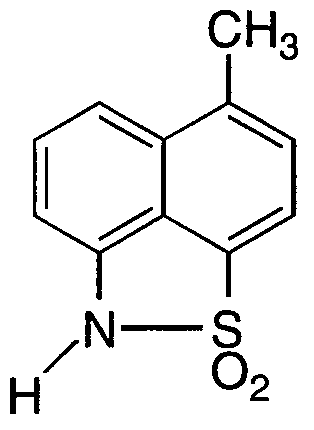
The process described herein involves the cyclization of an appropriately substituted naphthalene sulfonamide to provide appropriately substituted 1,8-naphthosultams. In one aspect of the invention, the invention involves synthesizing a compound of formula I:
Figure imgf000006_0001
wherein R represents halo or Ci-6 alkyl , unsubstituted or substituted with OP, wherein P represents a protecting group, comprising:
(a) reacting a compound of the formula II:
Figure imgf000006_0002
wherein R is as previously defined, with chlorosulfonic acid to produce a compound of formula III:
Figure imgf000007_0001
SO CI
(b) reacting compound III with NHRaRb, wherein Ra and Rb represent H or Ci-6 alkyl, to produce a compound of formula IV;
Figure imgf000007_0002
S02NR aaRob
IV
(c) reacting compound IV with HNO3 to produce a compound of formula V:
Figure imgf000007_0003
NRaRb V
(d) reacting compound V with a reducing agent to produce a compound of formula VI:
Figure imgf000008_0001
NRaRb VI
and (e) reacting compound VI with acid to produce a compound of formula I.
In a preferred aspect of the invention, R represents methyl. In another preferred aspect of the invention, R represents halo, preferably Br or I, and most preferably Br.
In another preferred aspect of the invention, one of Ra and Rb represent H or Ci-6 alkyl, and the other is Ci-6 alkyl. More particularly, both represent Ci-6 alkyl, and most preferably, both represent ethyl.
In another preferred aspect of the invention, a process of making a compound of formula X:
Figure imgf000008_0002
X
is included herein which comprises reacting a compound of the formula XI:
Figure imgf000009_0001
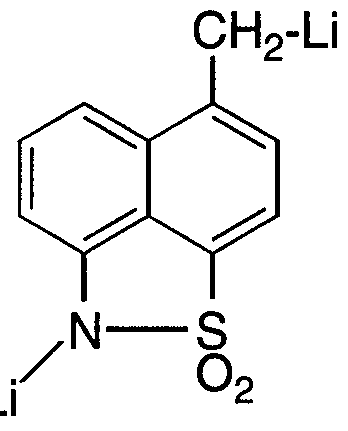
XI
with a lithiating agent to produce a compound of the formula XII:
Figure imgf000009_0002
XII
reacting the lithiated compound with CO2 to produce a compound of the formula:
Figure imgf000009_0003
XIV
and reducing this compound with a reducing agent to produce a compound of formula X.
In another preferred aspect of the invention, a process of making a compound of formula X:
Figure imgf000010_0001
X
is included herein which comprises reacting a compound of the formula XI:
Figure imgf000010_0002
XI
with a lithiating agent to produce a compound of the formula XII:
L
Figure imgf000010_0003
XII
reacting the lithiated compound with HCHO to produce a compound of the formula:
Figure imgf000011_0001
X
In another aspect of the invention, an intermediate compound is included which is represented by the formula I:
Figure imgf000011_0002
wherein R represents halo or Ci-6 alkyl , unsubstituted or substituted with OP, wherein P represents a protecting group.
In another aspect of the invention, an intermediate compound is included which is represented by formula V:
Figure imgf000011_0003
V
wherein
R represents halo or Ci-6 alkyl , unsubstituted or substituted with OP, wherein P represents a protecting group; and Ra and Rb represent H or Ci-6 alkyl. In another aspect of the invention, an intermediate compound is included which is represented by formula XI:
Figure imgf000012_0001
In another aspect of the invention, an intermediate compound is included which is represented by formula XII:
Figure imgf000012_0002
In another aspect of the invention, intermediate compounds are included which are represented by the formulae:
Figure imgf000012_0003
XIV
Generally the reaction between the 1-halonaphthalene or 1-alkylnaphthalene and the chlorosulfonic acid can be conducted in an organic solvent, such as nitro substituted organics, e.g., nitromethane and nitrobenzene, and halo substituted organic solvents, such as dichlorobenzene, including ortho, meta or para substituted benzene, dichloromethane, chloroform, carbon tetrachloride,, dichloroethane and trifluoroacetic acid (TFA). Preferably TFA is used as the solvent.
The reaction is typically conducted at a temperature of from about -40°C to as high as about 100°C, preferably about 0°C to about 25°C. The formation of the sulfonamide is typically conducted in a non-reactive organic solvent. Examples include secondary and tertiary alcohols, such as isopropanol, tertiary butanol, aromatics, such as toluene, and xylene, hexanes, ethers, esters, tetrahydrofuran, and many chlorinated solvents, as described above. The reaction is typically conducted between about -50°C and reflux temperature.
The reaction with nitric acid is typically conducted in trifluoroacetic acid, sulfuric acid, nitrobenzene or a chlorinated organic solvent, as described above. The temperature range is typically from about -30°C to about 60°C, and more preferably from about 0°C to about 20°C.
Reduction of the nitro group to form an amine and cyclization can be conducted in essentially any solvent, at a temperature ranging from about -40°C to reflux temperature.
Reducing agents which are useful in connection with the present invention include, for example, H2/P as well as any other catalyst, Pd/C with chemical transfer reagents, such as formic acid, ammonium formate, any metal formate, any trialkylammonium formate or cyclohexene, tin chloride and the like.
Acids which are useful for the cyclization include for example, hydrochloric, sulfuric, trifluoroacetic and methanesulfonic acids. Preferably hydrochloric acid is used.
Carboxylation (chain extension) can typically be conducted in solvents such as THF and ether, e.g., diethylether, at a temperature generally in the range of about -100°C to about 70°C. The base that is included in the reaction is typically lithium dialkylamide, e.g., lithium diisopropylamide.
Reduction of the carboxylic acid to form the alcohol is typically conducted in a solvent such as THF or diethylether. Suitable reducing agents include borane in THF and similar agents. This reaction is typically conducted at a temperature ranging from about -
50°C to reflux temperature.
The carbapenems which are synthesized in accordance with the present invention are prepared by reacting a suitably protected, activated 2-hydroxymethyl-carbapen-2-em-3- carboxylate with a naphthosultam, modifying the thus-introduced side chain as desired, and then removing any protecting groups which are present to afford the desired final product. The process is illustrated by the following generic scheme:
FLOW SHEET A
H C
Figure imgf000015_0001
Figure imgf000015_0002
With reference to Flow Sheet A above, the naphthosultam side chain group can initially be reacted with a suitably protected carbapen-2-em-3-carboxylate having an activated hydroxymethyl group at the 2-position. The carbapenem nucleus having a -CH2OH substituent at position 2 can be obtained in accordance with Schmitt, S. M. et al., J. Antibiotics 41(6): 780-787 (1988), the teachings of which are incorporated herein by reference. The carboxylic acid group at C-3 of the carbapenem is generally protected as a carboxyl protecting group such as p-nitrobenzyl (PNB), allyl, p-methoxybenzyl, trichloroethyl, 2- trimethylsilylethyl, and the like. Furthermore, the hydroxyl group of the 6-(hydroxyethyl) side-chain is optionally protected with a hydroxyl protecting group such as trimethylsilyl (TMS), triethylsilyl (TES), tert- butyldimethylsilyl (TBDMS), tert-butyldiphenylsilyl (TBDPS), acetyl, allyloxycarbonyl, 2-trimethylsilylethoxy carbonyl, 2- trichloroethoxycarbonyl and the like.
The addition of the naphthosultam side chain group (SCG) to the carbapenem is accomplished by treating a solution of the hydroxymethyl-carbapenem and the naphthosultam side chain group in a suitable solvent such as tetrahydrofuran (THF), ether, acetonitrile, dimethylformamide (DMF), benzene, dimethylsulfoxide (DMSO), and the like with a (premixed) suitable activating reagent such as diethyl azodicarboxylate (DEAD) / triphenylphosphine, diisopropyl azodicarboxylate (DIAD) / tributylphosphine, and the like, at a temperature between about -20 °C and 35 °C for about 5 to 90 minutes.
Alternatively, the naphthosultam and carbapenem can be mixed together with either the azodicarboxylate or the phosphine reagent in a suitable and the other component of the activating reagent (the phosphine or the azodicarboxylate, respectively) can be added to that mixture. Once the naphthosultam, carbapenem, and activating reagent(s) have been mixed, the reaction is allowed to proceed at a temperature between about -20 °C and 35 °C for about 5 to 90 minutes. The resulting mixture is then subjected to a standard work- up procedure to afford a crude 2-naphthosultam-methyl substituted carbapenem which is purified, if necessary, by recrystallization or by chromatography on silica gel, eluting with a suitable solvent or mixture of two or more solvents, such as hexane, ethyl acetate, ether, benzene, dichloromethane, chloroform, acetone, methanol and the like. Modification of the naphthosultam side chain of compounds, which is generally necessary to introduce the charged substituent, is best accomplished before removal of the protecting groups. For compounds which contain a hydroxyl group in the side chain, a positively charged substituent may be introduced into the side chain by first activating the hydroxyl group by converting it to a suitable leaving group such as a triflate, mesylate, tosylate, iodide, chloride, bromide, and the like, and then displacing the resulting leaving group with a quaternizing compound, such as N-methyl- imidazole, N-(2-hydroxyethyl)-imidazole, N-methyl-diazabicyclooctane, l-(carbamoylmethyl)-4-aza-l-azoniabicyclo-[2.2.2.]-octane, l-(3- hydroxyprop-l-yl)-4-aza-l-azoniabicyclo-[2.2.2.]-octane, pyridine, morpholine and the like which contains a nitrogen atom that can act as a nucleophile. Alternatively, the charged substituent may be incorporated in the naphthosultam side chain before addition of the naphthosultam to the carbapenem or may be introduced after deprotection. Introduction of the charged substituent before deprotection is greatly preferred. The conversion of the hydroxyl group to a suitable leaving group is accomplished by treating the hydroxyl substituted compound in a suitable solvent such as dichloromethane, tetrahydro- furan, ether, benzene, and the like with an activating reagent, such as trifluoromethanesulfonic anhydride, methanesulfonic anhydride, toluenesulfonic anhydride, methanesulfonyl chloride, benzenesulfonyl chloride, toluenesulfonyl chloride, and the like in the presence of a suitable base such as triethylamine, tributylamine, diisopropylethyl- amine, and the like at a temperature between about -100°C and 0°C for about 5 to 120 minutes. The intermediate thus obtained contains a leaving group, which may be converted to an alternative leaving group, iodide, by treating a solution of the intermediate in a suitable solvent such as acetone, methyl ethyl ketone, and the like at about -10°C to 50°C with an excess of sodium iodide or potassium iodide for about 0.25 to 24 hours. In many cases, the iodide is obtained in sufficiently pure form that it may be used without further purification. For ease of handling, the iodide, if not crystalline, may be lyophilized from benzene to afford an amorphous, easily handled, solid. The activated hydroxyl group or iodide is displaced by reacting the activated intermediate with activating reagent. In some cases, activation and displacement may be accomplished in a single step. The activating reagent is added to a solution of the hydroxyl substituted compound in the presence of a suitable base in a suitable solvent such as dichloromethane, tetrahydrofuran, ether, DMF, benzene, acetonitrile, DMSO, and the like. The resulting activated intermediate is treated with 1-3 molar equivalents of the naphthosultam at a temperature between about -78°C and 50°C for about 15 to 120 minutes. In some cases, it is desirable to form the activated intermediate in one solvent, isolate the activated intermediate, and conduct the displacement reaction in a different solvent. In other cases, the displacement may be conducted without isolation of the intermediate and, in cases where Q* is also used as a base, may even be concurrent with the formation of the activated intermediate. In cases where the displacement reaction is best accomplished by using the iodide, a solution of the iodide is combined with an approximately equivalent amount (0.9 - 1.05 molar equivalents) of the naphthosultam. A salt of a non-nucleophilic acid, such as silver trifluoromethanesulfonate, silver tetrafluoroborate and the like can be added. Although the reaction will proceed in the absence of the silver salt, the reaction proceeds more rapidly in the presence of an appropriate salt. In addition, the salt assists in the removal of the displaced iodide from the reaction mixture which can improve the efficiency of subsequent steps. The resulting mixture is then subjected to a standard work-up procedure familiar to those skilled in the art to afford a crude product which is purified, if necessary, by recrystallization or chromatography.
An alternative method for introducing a positive charge into the side chain may be applied to side chains that contain a nitrogen atom which may be quaternized by reaction with a suitable alkylating reagent, such as methyl iodide, methyl bromide, benzyl trichloroacetimidate, methyl trif uoromethanesulfonate, triethyloxonium tetrafluoroborate, and the like. Quaternization of the nitrogen atom in the side chain is effected by treating a solution of the compound with a slight excess (1.05 to 1.2 molar equivalents) of the alkylating reagent.
The synthesis of the target compound is typically completed by removing any protecting groups which are present in the penultimate intermediate using standard techniques which are well known to those skilled in the art. The deprotected final product is then purified, as necessary, using standard techniques such as ion exchange chroma- tography, HPLC on reverse phase silica gel, MPLC on reverse phase polystyrene gel, and the like or by recrystallization. The final product may be characterized structurally by standard techniques such as NMR, IR, MS, and UV. For ease of handling, the final product, if not crystalline, may be lyophilized from water to afford an amorphous, easily handled solid.
Preferred values of R include halo, methyl, ethyl and propyl, unsubstituted or substituted with OP, wherein P represents a hydroxyl protecting group.
Representative examples of protecting groups P include trimethylsilyl (TMS), triethylsilyl (TES), tert-butyldimethylsilyl (TBDMS), tert-butyldiphenylsilyl (TBDPS), acetyl, allyloxycarbonyl, 2-trimethylsilylethoxy carbonyl, 2-trichloroethoxycarbonyl and the like. Preferred values of Ra and Rb include H, methyl, ethyl and propyl. Most preferably each represents ethyl. Thus, preferably NHRaRb represents dimethylamine, diethylamine or dipropylamine. As used herein, the term "reducing agent" is used to refer to compounds which when reacted with compound V, convert the nitro group at position 8 to an amino group. Examples of suitable reducing agents include H2 in combination with a metal, e.g., Pd/C, formic acid in combination with a metal, trialkylammonium formates with a metal, cyclohexene and a metal, tin chloride and the like. EXAMPLE 1 CHLOROSULFONATION
Figure imgf000020_0001
A three neck flask was charged with methylnaphthalene (2.63 Kg) and trifluoroacetic acid (13.2 L). The two-phase mixture was stirred and cooled to 5°C using an ice-water bath. Chlorosulfonic acid (2.93 L) was added over 30 minutes maintaining the reaction temperature at <20°C. The reaction was quenched with deionized water at 10-20°C over 15 min.
The product crystallized upon addition to water to give a white slurry.
The reaction vessel was washed with TF A/water (1: 1, 1.0L) and the wash added to the quench vessel. The cake was filtered on a polypropylene filter cloth and washed with water. The cake was dried in nitrogen stream overnight.
EXAMPLE 2 SULFONAMIDE
Figure imgf000020_0002
A flask was charged with methylnaphthalenesulfonyl chloride (4.0 Kg) and isopopanol (12.0 L). Diethylamine (3.73 L) was added to the slurry over lOmin.
An exotherm to about 65°C occured and the starting material dissolved. The reaction progress was monitored by HPLC. The solution was cooled to 20°C and water (4 L) added. The mixture was seeded with sulfonamide product (2 gm) and aged at 20°C for 20min. The remaining water (32 L) was added over lh. The resultant slurry was aged at 20°C for 20 min. The slurry was filtered on a 23" polypropylene filter cloth and washed with water (12 L). The cake was dried in nitrogen stream overnight.
EXAMPLE 3 NITRATION
Figure imgf000021_0001
A 2L flask, fitted with nitrogen inlet, mechanical stirrer, addition funnel and temperature probe was charged with N,N-Diethyl- l-Methyl-4-naphthalenesulfonamide (30 gms) and trifluoroacetic acid (TFA) (150 mL). The resultant solution was cooled to 15°C. Concentrated sulfuric acid (30mL) was added over 2 minutes. The solution was cooled to -3C.
Fuming nitric acid (6.2 mL) was added to the solution with rapid stirring over about 30 min maintaining the reaction temperature at -3 to +5°C. The reaction progress was monitored by HPLC. The reaction was considered complete when <1% starting material remained by HPLC analysis (by area relative to product at 200nm).
Water (375 mL) was added to the solution over 60 min. maintaining the quench temperature less than 25°C using ice-water bath. The resultant slurry was aged at 20°C for 30 min, filtered and the cake washed with water (100 mL).
The cake was dried in a nitrogen stream until the residual water content was <35%w/w.
The partially dried solid was slurried in ethyl acetate (75 mL) at 30°C for 30min. Hexane (150mL) was added over 20min and the slurry aged at 20°C for 30 min. The slurry was filtered, washed with hexane (lOOmL) and dried in a nitrogen stream overnight.
EXAMPLE 4 REDUCTION-CYCLIZATION
Figure imgf000022_0001
A 72 L round bottom flask was equipped with a N2 inlet, thermocouple, and an overhead stirrer. The flask was charged with 2.20 Kg of l-methyl-4-diethylsulfonamide-5-nitronaphthalene, along with ethanol (20 L).
Pd C 10 t% (50 wt% water wet, 0.17 Kg) was charged as a slurry in water (800 ml) and rinsed down with water (80 ml) and ethanol (6 L). To the resultant slurry was added potassium formate (1.74 Kg) in one portion. The slurry was warmed to 60°C for 1 h then to reflux for 1 h. The reaction was considered complete when <0.2% SM remained relative to the starting material as determined by HPLC.
On complete reaction the mixture was cooled to 20°C and concentrated hydrochloric acid (2.73 L) added over about 20 min.
The resultant slurry was filtered through a pad of solka- floc™ and the cake washed with 10% hydrochloric acid in ethanol (total of 13 L). The combined filtrates were recharged to the cleaned 72L flask and heated to reflux (81°C) for 3-4h to achieve complete cyclization.
The solution was cooled to 40°C and concentrated to a slurry. The slurry was cooled to 20°C and water (7.5L) added over 30 min. The slurry was cooled to 5°C and aged for 15 min.
The slurry was filtered and washed with water (5 L). The crystalline solid was dried under a stream of nitrogen overnight.
EXAMPLE 5 DILITHIATION-CARBOXYLATION
Figure imgf000023_0001
MW = 219.25 MW = 263.2 CπH9NO2S C12H9NO4S
A 20 L flask equipped with nitrogen inlet, stirrer, temperature probe and addition funnel was charged with THF (5L). Diisopropylamine(1.34L) was added. The solution was cooled to -15°C and n-butyllithium (6.0L) added dropwise maintaining the reaction temperature between -15°C and 0°C to produce lithium diisopropylamide (LDA). A separate 50 L flask equipped with stirrer and nitrogen inlet was charged with THF ( 10 L) and 1-Me NH naphthosultam (1.0 Kg). The solution was degassed by vacuum/purging with nitrogen and cooled to -15°C and the LDA solution added dropwise keeping the solution temperature between -15°C and -5°C to produce the dianion solution.
The dianion solution was aged for 30 min at -15°C.
A separate 100L flask equipped with stirrer, nitrogen inlet and temperature probe was charged with THF (10 L) and degassed with a vacuum /nitrogen purge. The solution was cooled to -20°C and bone- dry grade CO2 bubbled into the THF until saturation was reached. The dianion solution was then slowly added to this carbonated solution while ensuring efficient mixing of the resulting slurry. After warming to 10°C, 10L of 2N HC1 was added the solution and was aged for 30 min. The solution was concentrated atmospherically to about 10 L to remove THF and initiate crystallization. The resultant slurry was aged at 15°C for 30 min, filtered and the cake washed with water(lOL) and dried in a nitrogen stream.
EXAMPLE 6 BORANE REDUCTION
Figure imgf000024_0001
MW = 263.2 MW = 249.29 C12H9NO4S C12H„NO3S
A 50L round bottom flask was set up and equipped with a
N2 inlet, thermocouple, addition funnel and an overhead stirrer. The flask was charged with dried NH-sultam carboxylic acid (1.14Kg) and THF (18L). The slurry was cooled to 15°C. To this slurry was added NaBH4 (327g), followed by the slow addition of BF3 etherate (1.42L).
The slurry was aged at 15-20°C and the reaction progress monitored by HPLC. The slurry was cooled to 10°C and methanol (1.2L) slowly added to quench excess borane. 2N HC1 (11L ) was added slowly and aged for 30 min. The quenched reaction mixture was distilled at atmospheric pressure to remove volatiles. The resultant solution was cooled to 55°C, seeded to initiate crystallization and cooled to 15°C over lh. After aging for 30 min, the slurry was filtered, washed with 10L water and dried under a stream of nitrogen.
EXAMPLE 7 DILITHIATION-HYDROXYMETHYLATION
A 10 mL flask equipped with nitrogen inlet, stirrer, and temperature probe was charged with THF (2 mL).
Diisopropylamine(0.14 mL) was added. The solution was cooled to -15°C and n-butyllithium (0.66 mL) added dropwise maintaining the reaction temperature between -15°C and 0°C to produce lithium diisopropylamide (LDA).
A separate 20 mL flask equipped with stirrer and nitrogen inlet was charged with THF ( 2 mL) and 1-Me NH naphthosultam (0.07 gm). The solution was degassed by vacuum/purging with nitrogen and cooled to -15°C and the LDA solution added dropwise keeping the solution temperature between -15°C and -5°C to produce the dianion solution.
The dianion solution was aged for 30 min at -15°C. A separate 20 mL flask equipped with stirrer, nitrogen inlet and temperature probe was charged with THF (2 mL) and para formaldehyde (0.12 gm) and degassed with a vacuum /nitrogen purge. The solution was cooled to -20°C. The dianion solution was then slowly added to this parafomaldehyde solution while ensuring efficient mixing. After warming to 10°C, 10 mL of 2N HC1 was added the solution and was aged for 30 min. The solution was concentrated atmospherically to about 10 mL to remove THF and initiate crystallization. The resultant slurry was aged at 15°C for 30 min, filtered and the cake washed with water(10 mL) and dried in a nitrogen stream.

Claims

WHAT IS CLAIMED IS:
1. A process for synthesizing a compound of formula I:
Figure imgf000027_0001
I
is disclosed wherein R represents halo or Ci-6 alkyl , unsubstituted or substituted with OP, wherein P represents a protecting group, comprising:
(a) reacting a compound of the formula II:
Figure imgf000027_0002
wherein R is as previously defined, with chlorosulfonic acid to produce a compound of formula III:
Figure imgf000027_0003
(b) reacting compound III with NHRaRb, wherein Ra and Rb represent H or Ci-6 alkyl, to produce a compound of formula IV;
Figure imgf000028_0001
S02NR aanRb
IV
(c) reacting compound IV with HNO3 to produce a compound of formula V:
R
N02 S02NRaRb V
(d) reacting compound V with a reducing agent to produce a compound of formula VI:
Figure imgf000028_0002
NRaRb VI
and (e) reacting compound VI with acid to produce a compound of formula I.
2. A process in accordance with claim 1 wherein R represents methyl.
3. A process in accordance with claim 1 wherein R represents halo.
4. A process in accordance with claim 1 wherein one of Ra and Rb represent H or Ci-6 alkyl, and the other is Ci-6 alkyl.
5. A process in accordance with claim 4 wherein Ra and Rb represent Ci-6 alkyl.
6. A process in accordance with claim 5 wherein Ra and Rb represent ethyl.
7. A process in accordance with claim 1 wherein step (a) is conducted in a solvent selected from the group consisting of: nitromethane, nitrobenzene, dichlorobenzene, dichloromethane, chloroform, carbon tetrachloride,, dichloroethane and trifluoroacetic acid.
8. A process in accordance with claim 7 wherein the solvent is trifluoroacetic acid.
9. A process in accordance with claim 7 wherein step (a) is conducted at a temperature of from about -40°C to about 100°C.
10. A process in accordance with claim 1 wherein step (b) is conducted in a substantially non-reactive organic solvent.
11. A process in accordance with claim 10 wherein the solvent is selected from isopropanol, tertiary butanol, toluene, xylene, hexanes, ethers, esters, tetrahydrofuran, and many chlorinated solvents, as described above.
12. A process in accordance with claim 11 wherein the temperature of the reaction of step (b) is between about -50°C and reflux temperature.
13. A process in accordance with claim 1 wherein step (c) is conducted in a solvent selected from trifluoroacetic acid, sulfuric acid, nitrobenzene and a chlorinated organic solvent.
14. A process in accordance with claim 13 wherein step (c) is conducted at a temperature in the range of about -30°C to about 60°C.
15. A process in accordance with claim 14 wherein step
(c) is conducted at a temperature in the range of about 0 to about 20°C.
16. A process in accordance with claim 1 wherein step (d) is conducted at a temperature ranging from about -40°C to reflux temperature.
17. A process in accordance with claim 16 wherein step
(d) is conducted with a reducing agent which is selected from the group consisting of: hydrogen gas, formic acid or a derivative thereof, selected from ammonium formate, a metal formate selected from sodium, potassium, lithium and calcium, tri-Ci-6 alkyl ammonium formate, sodium borohydride, cyclohexene and tin chloride.
18. A process in accordance with claim 1 wherein step
(e) is conducted with an acid that is selected from the group consisting of hydrochloric, sulfuric, trifluoroacetic and methanesulfonic.
19. A process in accordance with claim 19 wherein the acid is hydrochloric.
20. A process of making a compound of the formula:
Figure imgf000031_0001
X
comprising reacting a compound of the formula XI:
Figure imgf000031_0002
XI
with a lithiating agent to produce a compound of the formula XII:
Figure imgf000031_0003
LiX °2
XII reacting the lithiated compound with CO2 to produce a compound of the formula:
Figure imgf000032_0001
XIV
and reducing this compound with a reducing agent to produce a compound of formula X.
21. A process of making a compound of the formula:
Figure imgf000032_0002
X
comprising reacting a compound of the formula XI:
XI with a lithiating agent to produce a compound of the formula XII:
Figure imgf000033_0001
XII
and reacting the lithiated compound with HCHO to produce a compound of the formula:
Figure imgf000033_0002
X
22. A compound represented by the formula I:
Figure imgf000033_0003
wherein R represents halo or Cι_6 alkyl , unsubstituted or substituted with OP, wherein P represents a protecting group.
23. A compound represented by the formula:
Figure imgf000034_0001
NRaRb V
wherein
R represents halo or Ci-6 alkyl , unsubstituted or substituted with OP, wherein P represents a protecting group; and Ra and Rb represent H or Ci-6 alkyl.
24. A compound in accordance with claim 22 represented by the formula XI:
Figure imgf000034_0002
XI
25. A compound represented by the formula:
Figure imgf000034_0003
26. A compound represented by the formula:
Figure imgf000035_0001
X XIV
PCT/US1998/009036 1997-05-13 1998-05-08 Process for synthesizing carbapenem intermediates Ceased WO1998051677A1 (en)

Priority Applications (4)

Application Number Priority Date Filing Date Title
CA002287931A CA2287931A1 (en) 1997-05-13 1998-05-08 Process for synthesizing carbapenem intermediates
AU73678/98A AU728091B2 (en) 1997-05-13 1998-05-08 Process for synthesizing carbapenem intermediates
JP54927898A JP2001527557A (en) 1997-05-13 1998-05-08 Synthetic method of carbapenem intermediate
EP98920961A EP0981522A1 (en) 1997-05-13 1998-05-08 Process for synthesizing carbapenem intermediates

Applications Claiming Priority (4)

Application Number Priority Date Filing Date Title
US4635797P 1997-05-13 1997-05-13
US60/046,357 1997-05-13
GBGB9806023.9A GB9806023D0 (en) 1998-03-20 1998-03-20 Process for synthesizing carbapenem intermediates
GB9806023.9 1998-03-20

Publications (1)

Publication Number Publication Date
WO1998051677A1 true WO1998051677A1 (en) 1998-11-19

Family

ID=26313321

Family Applications (1)

Application Number Title Priority Date Filing Date
PCT/US1998/009036 Ceased WO1998051677A1 (en) 1997-05-13 1998-05-08 Process for synthesizing carbapenem intermediates

Country Status (7)

Country Link
EP (1) EP0981522A1 (en)
JP (1) JP2001527557A (en)
AR (1) AR011735A1 (en)
AU (1) AU728091B2 (en)
CA (1) CA2287931A1 (en)
TW (1) TW408116B (en)
WO (1) WO1998051677A1 (en)

Cited By (2)

* Cited by examiner, † Cited by third party
Publication number Priority date Publication date Assignee Title
WO2001000624A1 (en) * 1999-06-25 2001-01-04 Merck & Co., Inc. Synthetic process for naphthosultam carbapenems
WO2003029230A1 (en) * 2001-10-02 2003-04-10 Pharmacia Corporation Method for preparing benzenesulfonyl compounds

Citations (2)

* Cited by examiner, † Cited by third party
Publication number Priority date Publication date Assignee Title
US2773765A (en) * 1952-08-16 1956-12-11 Azoplate Corp Light sensitive material for photomechanical reproduction
WO1997040048A1 (en) * 1996-04-24 1997-10-30 Merck & Co., Inc. Carbapenem antibacterial compounds, compositions containing such compounds and methods of treatment

Patent Citations (2)

* Cited by examiner, † Cited by third party
Publication number Priority date Publication date Assignee Title
US2773765A (en) * 1952-08-16 1956-12-11 Azoplate Corp Light sensitive material for photomechanical reproduction
WO1997040048A1 (en) * 1996-04-24 1997-10-30 Merck & Co., Inc. Carbapenem antibacterial compounds, compositions containing such compounds and methods of treatment

Non-Patent Citations (3)

* Cited by examiner, † Cited by third party
Title
CHEMICAL ABSTRACTS, vol. 29, no. 4, 20 February 1935, Columbus, Ohio, US; abstract no. 1085, XP002073541 *
PAUL CAGNIANT ET AL: "Contribution à l'étude des hétérocycles soufrés condensés.", BULLETIN DE LA SOCIETE CHIMIQUE DE FRANCE., 1966, PARIS FR, pages 2037 - 2042, XP002073540 *
ROBERT E. STEINER: "Sensitivity to light of aromatic nitro compounds. V peri-dervatives of 1-nitronaphthalene", HELVETICA CHIMICA ACTA., vol. 17, 1934, BASEL CH, pages 1142 - 1157 *

Cited By (5)

* Cited by examiner, † Cited by third party
Publication number Priority date Publication date Assignee Title
WO2001000624A1 (en) * 1999-06-25 2001-01-04 Merck & Co., Inc. Synthetic process for naphthosultam carbapenems
WO2003029230A1 (en) * 2001-10-02 2003-04-10 Pharmacia Corporation Method for preparing benzenesulfonyl compounds
RU2284324C2 (en) * 2001-10-02 2006-09-27 Фармация Корпорейшн Method for preparing benzenesulfonyls
CN1308315C (en) * 2001-10-02 2007-04-04 法玛西雅公司 Method for preparing benzenesulfonyl compounds
AU2008205429B2 (en) * 2001-10-02 2008-11-06 Pharmacia Corporation Method for preparing benzenesulfonyl compounds

Also Published As

Publication number Publication date
TW408116B (en) 2000-10-11
EP0981522A1 (en) 2000-03-01
JP2001527557A (en) 2001-12-25
AR011735A1 (en) 2000-08-30
AU7367898A (en) 1998-12-08
CA2287931A1 (en) 1998-11-19
AU728091B2 (en) 2001-01-04

Similar Documents

Publication Publication Date Title
KR101522740B1 (en) Process for the preparation of tauroursodeoxycholic acid
CN111187269A (en) Synthetic method of Reidesciclovir intermediate
US20220024850A1 (en) Method for preparing 2-ethyl-4-fluoro-1-nitrobenzene
US20250002506A1 (en) Improved process for the preparation of lurbinectedin and its morphs thereof
CN109942593B (en) Total synthesis method of racemic tetrandrine
KR20240056726A (en) Synthesis of nirogacestat
CN104918912B (en) Processes for the synthesis of 2-amino-4,6-dimethoxybenzamide and other benzamide compounds
CN113444083B (en) A method for preparing a small molecule tyrosine kinase inhibitor
AU728091B2 (en) Process for synthesizing carbapenem intermediates
US5908936A (en) Process for synthesizing carbapenem intermediates
EP3807268A1 (en) Process for the preparation of lifitegrast
CN110551144B (en) Preparation method of amoxicillin
CN114315755B (en) A synthetic method for key intermediates of Tubulysin and its analogs
WO2003045896A1 (en) New process
CN103562207B (en) For preparing the preparation method of 2-amino-9-((2-phenyl-1,3-dioxane-5-base epoxide) methyl)-1H-purine-6 (9H) the-one compound of valganciclovir
US4960832A (en) Polymer-supported alkyl azodicarboxylates and their use in Mitsunobu reactions
CN115417816B (en) A kind of preparation method of 3,6-dibromo-1-chloro-isoquinoline
CN117088797A (en) A kind of synthesis method of 2-bromo-1-(4-methanesulfonyl)acetophenone
IL133151A (en) Nitration process for diphenyl ethers
EP0528941A4 (en) Process for preparing cephalexin monohydrate
CN111479800B (en) Intermediate compound, preparation method thereof and solid-phase synthesis method for preparing polypeptide by using intermediate compound
JPS631952B2 (en)
CN1903836A (en) Compound containing multinitrobenzene amantadine and its synthesis method
KR970005377B1 (en) Process for preparation of 2,6-dinitroparacresol
CN114478437A (en) Method for preparing N-methyl-2-pyrrolidine ethylamine or salt thereof

Legal Events

Date Code Title Description
AK Designated states

Kind code of ref document: A1

Designated state(s): AL AM AU AZ BA BB BG BR BY CA CN CU CZ EE GE GW HU ID IL IS JP KG KR KZ LC LK LR LT LV MD MG MK MN MX NO NZ PL RO RU SG SI SK SL TJ TM TR TT UA US UZ VN YU

AL Designated countries for regional patents

Kind code of ref document: A1

Designated state(s): GH GM KE LS MW SD SZ UG ZW AM AZ BY KG KZ MD RU TJ TM AT BE CH CY DE DK ES FI FR GB GR IE IT LU MC NL PT SE BF BJ CF CG CI CM GA GN ML MR NE SN TD TG

DFPE Request for preliminary examination filed prior to expiration of 19th month from priority date (pct application filed before 20040101)
121 Ep: the epo has been informed by wipo that ep was designated in this application
ENP Entry into the national phase

Ref document number: 2287931

Country of ref document: CA

Ref country code: CA

Ref document number: 2287931

Kind code of ref document: A

Format of ref document f/p: F

WWE Wipo information: entry into national phase

Ref document number: 1998920961

Country of ref document: EP

ENP Entry into the national phase

Ref country code: JP

Ref document number: 1998 549278

Kind code of ref document: A

Format of ref document f/p: F

WWE Wipo information: entry into national phase

Ref document number: 73678/98

Country of ref document: AU

WWP Wipo information: published in national office

Ref document number: 1998920961

Country of ref document: EP

WWG Wipo information: grant in national office

Ref document number: 73678/98

Country of ref document: AU

WWW Wipo information: withdrawn in national office

Ref document number: 1998920961

Country of ref document: EP