WO1998055463A1 - Diphenyl-triazole derivatives and their use as anti-gestative, immuno-suppressant and anti-tumoral agents - Google Patents

Diphenyl-triazole derivatives and their use as anti-gestative, immuno-suppressant and anti-tumoral agents Download PDF

Info

Publication number
WO1998055463A1
WO1998055463A1 PCT/EP1998/003496 EP9803496W WO9855463A1 WO 1998055463 A1 WO1998055463 A1 WO 1998055463A1 EP 9803496 W EP9803496 W EP 9803496W WO 9855463 A1 WO9855463 A1 WO 9855463A1
Authority
WO
WIPO (PCT)
Prior art keywords
chosen
heterocyclic aromatic
nitrogen heterocyclic
derivative
alkyl
Prior art date
Legal status (The legal status is an assumption and is not a legal conclusion. Google has not performed a legal analysis and makes no representation as to the accuracy of the status listed.)
Ceased
Application number
PCT/EP1998/003496
Other languages
French (fr)
Inventor
Carla Rossi
Current Assignee (The listed assignees may be inaccurate. Google has not performed a legal analysis and makes no representation or warranty as to the accuracy of the list.)
Geange Ltd
Original Assignee
Geange Ltd
Priority date (The priority date is an assumption and is not a legal conclusion. Google has not performed a legal analysis and makes no representation as to the accuracy of the date listed.)
Filing date
Publication date
Application filed by Geange Ltd filed Critical Geange Ltd
Priority to JP50160599A priority Critical patent/JP2002508757A/en
Priority to EP98939500A priority patent/EP0986544A1/en
Priority to US10/178,305 priority patent/USRE38962E1/en
Priority to US09/445,218 priority patent/US6333343B1/en
Publication of WO1998055463A1 publication Critical patent/WO1998055463A1/en
Anticipated expiration legal-status Critical
Ceased legal-status Critical Current

Links

Classifications

    • CCHEMISTRY; METALLURGY
    • C07ORGANIC CHEMISTRY
    • C07DHETEROCYCLIC COMPOUNDS
    • C07D249/00Heterocyclic compounds containing five-membered rings having three nitrogen atoms as the only ring hetero atoms
    • C07D249/02Heterocyclic compounds containing five-membered rings having three nitrogen atoms as the only ring hetero atoms not condensed with other rings
    • C07D249/081,2,4-Triazoles; Hydrogenated 1,2,4-triazoles
    • AHUMAN NECESSITIES
    • A61MEDICAL OR VETERINARY SCIENCE; HYGIENE
    • A61PSPECIFIC THERAPEUTIC ACTIVITY OF CHEMICAL COMPOUNDS OR MEDICINAL PREPARATIONS
    • A61P15/00Drugs for genital or sexual disorders; Contraceptives
    • A61P15/18Feminine contraceptives
    • AHUMAN NECESSITIES
    • A61MEDICAL OR VETERINARY SCIENCE; HYGIENE
    • A61PSPECIFIC THERAPEUTIC ACTIVITY OF CHEMICAL COMPOUNDS OR MEDICINAL PREPARATIONS
    • A61P35/00Antineoplastic agents
    • AHUMAN NECESSITIES
    • A61MEDICAL OR VETERINARY SCIENCE; HYGIENE
    • A61PSPECIFIC THERAPEUTIC ACTIVITY OF CHEMICAL COMPOUNDS OR MEDICINAL PREPARATIONS
    • A61P37/00Drugs for immunological or allergic disorders
    • A61P37/02Immunomodulators
    • A61P37/06Immunosuppressants, e.g. drugs for graft rejection
    • CCHEMISTRY; METALLURGY
    • C07ORGANIC CHEMISTRY
    • C07FACYCLIC, CARBOCYCLIC OR HETEROCYCLIC COMPOUNDS CONTAINING ELEMENTS OTHER THAN CARBON, HYDROGEN, HALOGEN, OXYGEN, NITROGEN, SULFUR, SELENIUM OR TELLURIUM
    • C07F9/00Compounds containing elements of Groups 5 or 15 of the Periodic Table
    • C07F9/02Phosphorus compounds
    • C07F9/547Heterocyclic compounds, e.g. containing phosphorus as a ring hetero atom
    • C07F9/645Heterocyclic compounds, e.g. containing phosphorus as a ring hetero atom having two nitrogen atoms as the only ring hetero atoms
    • C07F9/6503Five-membered rings
    • C07F9/65031Five-membered rings having the nitrogen atoms in the positions 1 and 2
    • CCHEMISTRY; METALLURGY
    • C07ORGANIC CHEMISTRY
    • C07FACYCLIC, CARBOCYCLIC OR HETEROCYCLIC COMPOUNDS CONTAINING ELEMENTS OTHER THAN CARBON, HYDROGEN, HALOGEN, OXYGEN, NITROGEN, SULFUR, SELENIUM OR TELLURIUM
    • C07F9/00Compounds containing elements of Groups 5 or 15 of the Periodic Table
    • C07F9/02Phosphorus compounds
    • C07F9/547Heterocyclic compounds, e.g. containing phosphorus as a ring hetero atom
    • C07F9/6515Heterocyclic compounds, e.g. containing phosphorus as a ring hetero atom having three nitrogen atoms as the only ring hetero atoms
    • C07F9/6518Five-membered rings

Definitions

  • Objects of the present invention are nitrogen heterocyclic aromatic derivatives and their use as anti- gestative, immunosuppressant and anti-tumoral agents.
  • Object of the present invention is also a procedure for the preparation of nitrogen heterocyclic aromatic derivatives.
  • Object of the present invention is again a pharmaceutical composition which contains, as active principle, at least 5 one heterocyclic aromatic according to the present invention.
  • R ⁇ is an alkyl group C 1 -C 4 .
  • EP11129 reports 1, 2, 4 triazoles derivatives of the following general structure:
  • R is hydrogen or methyl and R*-_ is hydrogen or an alkyl group C-*_-C 4 , or R**_ and R 2 together form an additional bond between the carbon and oxygen atoms.
  • BE 879,732 reports a class of compounds showing the following general structure:
  • R is an
  • R 5 is chosen among alkyl C 1 -C 4 , alkenyl C -C and alkinyl C 2 -C , whereas R 2 is a - CH(R )ORa where R 7 is an hydrogen or methyl and Rg is like R 5 -CO.
  • DL 111-IT reported in BE 879,732 did show an interesting anti-gestative activity in all the investigated animal species including the mouse, the rat, the hamster, the dog and monkeys.
  • DL 111-IT has been proposed as anti-gestative agent for human use.
  • EP0080053 describes 3, 5 diphenyl-lH-1, 2, 4 triazole derivatives that, as compared to the previously reported derivatives, have been structurally modified in order to obtain a high anti-gestative activity after a single-dose parenteral administration by subcutaneous and intramuscular route.
  • R is chosen between hydrogen and R 5 CO-, where R 5 is a saturated or non-saturated aliphatic -C 2 o hydrocarbon chain, Ri, R 2 and R 3 are chosen among hydrogen and short-chain alkyl or alkoxyl, or R x and R together form a ethylendioxy group, R 4 is a saturated or non-saturated aliphatic C;L-C2 O hydrocarbon group.
  • OBJECTIVES OF THE INVENTION Objective of the present invention is to make available nitrogen heterocyclic aromatic derivatives endowed with high anti-gestative activity when administered as single dose to different animal species including higher mammals and man.
  • objective of the present invention is also to make available nitrogen heterocyclic aromatic derivatives endowed with high immuno-suppressant activity.
  • objective of the present invention is to make available nitrogen heterocyclic aromatic derivatives . . . . . endowed with non species-specifIC anti-gestative, immuno- suppressant and anti-tumour activity.
  • objective of the present invention is to make available nitrogen heterocyclic aromatic derivatives endowed with a sustained duration of action, thus able to display the desired activity by a single-dose treatment (anti-gestative activity) or by multiple dose treatments with wide inter-administration time intervals (immuno- suppressant and anti-tumour activities) . . . .
  • Objective of the present invention is also to make available a pharmaceutical formulations, containing at least one nitrogen heterocyclic aromatic derivative as active principle, easy to be administered, well tolerated and able to allow a high therapeutic index.
  • -R is chosen between hydrogen, -CORg where R 8 is a saturated or non-saturated C ⁇ -C 10 aliphatic hydrocarbon. or R represents any other group able to form a bond with a nitrogen atom;
  • R 3 is chosen among hydrogen, halogen, alkyl or alkoxyl Ci-C- ⁇ o
  • R 4 is chosen among hydrogen, alkyl or alkoxyl C ⁇ -C 10/ or R 3 and R together form a methylendioxy group
  • R 7 is chosen among a saturated or non- saturated, linear or branched C ⁇ - ⁇ 0 aliphatic hydrocarbon, or is chosen according to the following formula :
  • R, R , X and Y are defined as above and R 6 is chosen among hydrogen, halogen, alkyl or alkoxyl C ⁇ -C 1Q l or Z is chosen equal to NHRs where R 8 is a linear or branched C ⁇ C o alkyl chain. Mentioned R*-_ and R 2 are never located on two adjacent atoms of the heterocyclic aromatic ring.
  • saturated or non-saturated aliphatic hydrocarbon means a linear or branched alkyl, alkenyl or alkinyl chain which contains one or more double or triple bonds.
  • alkyl or alkoxyl means a linear or branched alkyl or alkoxyl group.
  • the mentioned nitrogen heterocyclic aromatic derivative of formula (I) is a derivative of pyrazole, imidazole and 1H-1, 2, 4-triazole respectively:
  • the mentioned derivative of formula (I) is a triazole derivative having the following general formula:
  • the derivatives of the present invention are provided of anti-gestation, immuno-suppressive and anti-tumour activities Particularly, the anti-gestative activity is displayed by a single dose regime and it does not requires a prolonged treatment. Furthermore, these derivatives show high therapeutic indexes, since a remarkable efficacy is achieved at doses much lower than the toxic ones able to induce undesirable adverse events.
  • the compounds of the present invention of formula (I) when administered as a single parenteral injection displayed more than one pharmacological activity, namely: (a) they have proven to be highly effective in terminating pregnancy in rodent and non-rodent animal species;
  • the compounds of the present invention while lacking of effectiveness in different tumour models, showed a specific marked activity on an model of human chorio-carcinoma transplanted in nude mice.
  • the different pharmacological activities displayed by the derivatives object of the present invention are attributable to a common mechanism of action.
  • the reference model which explains this multiple pharmacological action is an atypical rapidly proliferating cell system, the placenta.
  • the derivatives object of the present invention are characterised by the presence of an easily hydrolysed bond through non species-specific enzymatic reactions occurring on R 5 group ; this hydrolysis allows the release of the active principle that can display its in vivo action.
  • the characteristic bond of R 5 group present in the derivatives object of the present invention is different from the bonds described in the already disclosed derivatives, and it can be hydrolysed according to different mechanisms of reaction. Because of these properties , unlike the compounds already disclosed, the compounds objective of the present invention are also effective in higher mammal species, including humans.
  • the pregnancy-terminating activity of the compounds of the present invention has been assessed by carrying out experiments in rats and dogs.
  • female Sprague Dawley rats weighing 200- 230 g. were mated and the presence of sperm was detected, was considered day one of pregnancy.
  • Pregnancy was later confirmed at the time of autopsy by the presence of implantation sites in the uterus.
  • Test compounds dissolved in sesame oil containing 20% benzyl benzoate (or suspended if insoluble) were administered subcutaneously, in a single injection, on day 7 of gestation. The animals were then autopsied on day 16 of pregnancy and the uteri were examined for evidence of pregnancy (implantation sites, foetal resorption or live foetuses) , haemorrhage, and evidence of abnormalities of the uterus, placenta or foetuses, for reference see G . Galliani et al . Contraception, 23_, 163 - 180 (198) .. The compounds were tested at different doses in order to study the dose-activity relationship and their activity, reported below in Table 2 , has been expressed as ED 5 Q values.
  • the compound was given intramuscularly in one depot site of the thigh muscle of the right hind leg dissolved in sesame oil at the dose of 5 mg/kg (11.1 ⁇ moles/kg , 40 mg/mL, 0.2 mL/kg).
  • the anti-gestative effectiveness was ascertained by exploratory laparatomy examining uterine horns where the presence of live or dead foetuses was deduced from the dimension and appearance of each uterine swelling, for methodological reference see G . Galliani et al . , J . Small Animal Practice, 2_5, 211-222 (1984) .
  • the compounds of the present invention displayed significant immuno-suppressive activity on both humoral and cellular immunity when administered during the inductive phase of the immuno response, i.e. soon after antigen challenge.
  • immuno-suppressant activity of the compounds of the present invention was assessed by carrying out experiments in mice.
  • SRBC Sheep Red Blood Cells
  • LPS Lipo-polysaccharide
  • IgM Direct (IgM) and indirect (IgG) plaque forming cells (PFC) were evaluated in the spleen 4 and 10 days later, Jerne et al . Science 140. 405 (1963) and Dresser and Wortis, Nature, 208 . 859 (1965) .
  • Indirect PCF were developed with rabbit anti-serum to mouse gamma globulin.
  • B6D2F1 mice were immunised with 20 ⁇ g LPS intra- peritoneally.
  • PCF were determined in the spleen by SRBC coated with LPS, Moller, Nature, 207 , 1166 (1965) .
  • DTH Delayed Type hypersensitivity
  • the compounds of the present invention are endowed with a high and specific anti-tumour activity as demonstrated on an j in vivo test against human chorio- carcinoma.
  • compound of example 5 was highly effective in inhibiting the growth of a human chorio-carcinoma transplanted into nude mice.
  • the potency of the tested compound was even higher than that displayed by methotrexate, the choice drug in the therapy of chorio- carcinoma.
  • choriocarcinoma is a gestational tumor derived from trophoblastic cells, which, toghether with decidual cells, was suggested as the target site of the anti-proliferative action of 3, 5 diaryl-s-1 , 2 , 4 triazoles (Galliani et al. 1986) .
  • the compounds of the present invention are embodied into topical, transdermal and injectable dosage forms to be administered epicutaneously or parenterally, i.e. subcutaneously, intramuscularly or intravenously.
  • Such composition are formulated using proper transdermal delivery systems (epicutaneous dosing) , aqueous (intravenous dosing ) or non-aqueous vehicles (epicutaneous, subcutaneous and intramuscular dosing) .
  • oils of vegetable origin or fatty esters such as sesame oil, corn oil, peanut oil, cotton seed oil, and ethyl oleate can suitably be employed.
  • Other oily vehicles may as well be used provided that they are safe in the volume administered and do not interfere with the therapeutic efficacy of the preparation.
  • these preparations may also contain anti-microbial agents, to prevent growth of micro-organisms in the preparation, and antioxidants, essentially to prevent the development of rancidity of the oily vehicle.
  • These dosage forms in general contain from 1 to 10% (w/v) of at least one derivative of formula (I) object of the present invention, where the optimum dose/volume ratio depends on the selected dose and the species and size of the animal/subject to be administered.
  • the compounds of the present invention can be advantageously prepared starting from a derivative (IX) of the following chemical formula:
  • This method consists in the rearrangement of hydrazones of substituited benzaldehydes with 4-hydrazino-lH-2 , 3- benzoxazines of formula (X)
  • Ri, R 2 a R 3 are as defined as for the derivatives of formula (I) .
  • This rearrangement simply occurs by refluxing the hydrazone III in a high boiling inert organic solvent, such as for instance, xylene, N,N-dimethylformamide, and halogenated aromatic hydrocarbons, for about 30 minutes and then recovering the compound II by filtration.
  • a high boiling inert organic solvent such as for instance, xylene, N,N-dimethylformamide, and halogenated aromatic hydrocarbons.
  • Another suitable method for the preparation of the 2- hydroxymethyl-phenyl derivatives of formula (XI a) consists in the oxidation of the corresponding 2- methylphenyl triazoles, either directly to the alcohol
  • eerie ammonium nitrate or silver (II) oxide are the oxidising agents which may be suitably employed, while in the latter, the oxidative step is carried out with any of the several oxidisers known in the art to transform a methyl group on an aromatic ring to a carboxylic group, such as permanganate, nitric acid, and dichromate, and the reductive step in easily performed with a metal hydride.
  • the starting compounds of formula II can be prepared by following the process described in EP80053.
  • the procedure for their preparation starting from the corresponding derivative of formula (IX) varies depending whether the substituent R is hydrogen or a group Rs-CO wherein R 8 has the same meaning as above in relation to derivatives of formula (I) .
  • R is hydrogen
  • R, Ri, X and Y are defined as above and R 5 is chosen among hydrogen, halogen, alkyl or alkoxyl CX-CK), or Z is chosen equal to NH-R 8 where R 8 is a linear or branched C ⁇ C 2 o alkyl chain.
  • derivative of formula (IX) when have to be synthesised derivatives of formula (I) where R 7 is chosen as (XII) , asymmetric carbonates, or when R 7 is chosen as saturated or unsaturated, linear or branched C ⁇ -C 2 o aliphatic hydrocarbon, derivative of formula (IX) can undergo reaction according to the following general scheme, in detail:
  • an inert solvent i.e. chloroform, dichloro- methane, tetrahydrofuran:
  • alcoholate preparation is carried out on the selected alcohol using as base NaH or matallic Na either in . . . . catalytic or stoichiometric amounts, temperature can be between 0°C and 60°C (optimal room temperature) , while reaction time ranges between 30 min to 12 hours
  • the synthesis of the imidazolide of the second alcohol is carried out using as reagent carbonyl-diimidazole with temperature between 0°C and 60°C (optimal, room temperature) , while reaction time ranges between 30 min to 12 hours (optimal 1 hour) ;
  • the synthesis of the end carbonates products is carried out by mixing properly the solutions of the alcoholate and of the imidazolide for a time of 6 to 24 hours (optimal 12 hours) at a temperature between 0°C and 60°C (optimal, room temperature) .
  • a general method for the synthesis of derivatives of formula (I) where R and R 3 are chosen as hydrogens, R is chosen as ethoxyl, R 5 is chosen as COOR 7 where R 7 is a linear or branched C1-C20 alkylic chain, is hereafter described:
  • Example 1 50 mL solution of 3- (2- (hydroxymethyl) phenyl) -5- (3- ethoxyphenyl) -1H-1, 2, 4 triazole (3g, 10 mmoles) in tetrahydrofuran, at room temperature, is added an 80% NaH suspension (310 mg, 10 mmoles) in tetrahydrofuran (50 mL) . The reaction mixture is shacked at room temperature for 1 hour. The resulting solution is then added to a tetrahydrofuran solution containing the imidazolide of the selected alcohol obtained by reacting the alcoholic derivative (10 mmoles) with 1, 1 ' -carbonyl-diimidazole
  • R is chosen equal to -CO R 8 , where R 8 is a saturated or a non saturated Ci- C 10 aliphatic hydrocarbon
  • the hydroxy group of derivative (IX) will be protected according to known methods.
  • Protected derivative (IXb) will be also obtained and acylated according to known methods in order to introduce the -COR 8 group. Subsequently these acylated derivatives will be de- protected and allowed to react with phosgene as reported above.
  • R 5 is chosen:
  • Derivatives of formula (I) are advantageously prepared starting from derivatives of formula (IX) (eventually submitted to a previous acylation reaction as already described) by reaction with phosphoric acid or equivalents according to known methods. For example, following this procedure derivative (VIII) , object of the present invention, is prepared..
  • the mixture can be separated into the single components by chemico-physical known methods.
  • a mixture can be resolved into the single components is a fractionated crystallisation, which take advantage of the different solubility of each compound in various solvents at different temperatures.
  • Suitable solvents that can be used for this method are chosen as an example, among hexane, ethyl-acetate, C 1 -C 4 alkyl ethers, methylen chloride, light petroleum ether and mixtures thereof.
  • PLC preparative high pressure liquid chromatography

Landscapes

  • Chemical & Material Sciences (AREA)
  • Organic Chemistry (AREA)
  • Health & Medical Sciences (AREA)
  • General Health & Medical Sciences (AREA)
  • Life Sciences & Earth Sciences (AREA)
  • Molecular Biology (AREA)
  • Biochemistry (AREA)
  • Engineering & Computer Science (AREA)
  • Veterinary Medicine (AREA)
  • Nuclear Medicine, Radiotherapy & Molecular Imaging (AREA)
  • Chemical Kinetics & Catalysis (AREA)
  • Pharmacology & Pharmacy (AREA)
  • Immunology (AREA)
  • Animal Behavior & Ethology (AREA)
  • Bioinformatics & Cheminformatics (AREA)
  • Medicinal Chemistry (AREA)
  • General Chemical & Material Sciences (AREA)
  • Public Health (AREA)
  • Transplantation (AREA)
  • Gynecology & Obstetrics (AREA)
  • Endocrinology (AREA)
  • Reproductive Health (AREA)
  • Pharmaceuticals Containing Other Organic And Inorganic Compounds (AREA)
  • Pyridine Compounds (AREA)

Abstract

Compounds of formula (I), wherein X and Y are independently carbon or nitrogen (but no both simultaneously carbon), R1 is a group (II) and R2 is a group (III), R5 being a carbonate, carbamate or phosphate residue, are useful as anti-gestative, immuno-suppressant and anti-tumour agents.

Description

DIPHENYL-TRIAZOLE DERIVATIVES AND THEIR USE AS ANTI-GESTAΗVE, IMMUNO-SUPPRESSANT AND ANTI-TUMORAL AGENTS
OBJECT OF THE PRESENT INVENTION
Objects of the present invention are nitrogen heterocyclic aromatic derivatives and their use as anti- gestative, immunosuppressant and anti-tumoral agents.
Object of the present invention is also a procedure for the preparation of nitrogen heterocyclic aromatic derivatives.
Object of the present invention is again a pharmaceutical composition which contains, as active principle, at least 5 one heterocyclic aromatic according to the present invention.
STATUS OF THE TECHNIQUE
Chemical classes of compounds endowed with anti-gestative 0 activity are known, more specifically BE 866,728 reports a class of 3, 5-diphenyl-lH-l, 2, 4 triazoles of the
Figure imgf000003_0001
following general formula:
where R± is an alkyl group C1-C4 .
EP11129 reports 1, 2, 4 triazoles derivatives of the following general structure:
Figure imgf000004_0001
where R is hydrogen or methyl and R*-_ is hydrogen or an alkyl group C-*_-C4 , or R**_ and R2 together form an additional bond between the carbon and oxygen atoms.
BE 879,732 reports a class of compounds showing the following general structure:
where, among the other possible substitutions, R is an
Figure imgf000004_0002
hydrogen or a R5-CO group where R5 is chosen among alkyl C1-C4, alkenyl C -C and alkinyl C2-C , whereas R2 is a - CH(R )ORa where R7 is an hydrogen or methyl and Rg is like R5-CO.
In the above mentioned disclosed documents, the pharmacological data show how these compounds display a high anti-gestative activity after repeated parenteral administrations (daily up to 5 consecutive days) . The literature describes the compound 3- (2-ethyl-phenyl) -5-
(3-methoxy-phenyl) -1H-1, 2, 4-triazole, also identified by the code DL 111-IT (Reviews on Drug Metabolism & Drug
Interactions, Vol. IV, N. 2&3, 1982, A. Assandri, A:
Omodei-Sale ' , G. Galliani) .
The mentioned DL 111-IT, reported in BE 879,732, did show an interesting anti-gestative activity in all the investigated animal species including the mouse, the rat, the hamster, the dog and monkeys. DL 111-IT has been proposed as anti-gestative agent for human use.
These previously disclosed anti-gestative compounds, including the compound DL 111-IT, when tested according to a protocol which foresee a single dose parenteral treatment, displayed their activity at doses much higher than those required by multiple dose regimens. EP0080053 describes 3, 5 diphenyl-lH-1, 2, 4 triazole derivatives that, as compared to the previously reported derivatives, have been structurally modified in order to obtain a high anti-gestative activity after a single-dose parenteral administration by subcutaneous and intramuscular route.
The compounds described in EP0080053 have the following general structure:
Figure imgf000006_0001
where, R is chosen between hydrogen and R5CO-, where R5 is a saturated or non-saturated aliphatic -C2o hydrocarbon chain, Ri, R2 and R3 are chosen among hydrogen and short-chain alkyl or alkoxyl, or Rx and R together form a ethylendioxy group, R4 is a saturated or non-saturated aliphatic C;L-C2O hydrocarbon group.
The above mentioned derivatives, when given by single dose to rodents, displayed a high anti-gestative activity. This activity was however shown to be highly species-specific. Actually, while in rodents it was very high, in the higher mammal species, like the dog, the anti-gestative activity markedly decreased, due to a too slow hydrolysis rate of the administered products that undergo metabolism before the active principle become bioavailable.
OBJECTIVES OF THE INVENTION Objective of the present invention is to make available nitrogen heterocyclic aromatic derivatives endowed with high anti-gestative activity when administered as single dose to different animal species including higher mammals and man.
objective of the present invention is also to make available nitrogen heterocyclic aromatic derivatives endowed with high immuno-suppressant activity.
Again, objective of the present invention is to make available nitrogen heterocyclic aromatic derivatives . . . . . endowed with non species-specifIC anti-gestative, immuno- suppressant and anti-tumour activity.
Again, objective of the present invention is to make available nitrogen heterocyclic aromatic derivatives endowed with a sustained duration of action, thus able to display the desired activity by a single-dose treatment (anti-gestative activity) or by multiple dose treatments with wide inter-administration time intervals (immuno- suppressant and anti-tumour activities) . . . .
Objective of the present invention is also to make available a pharmaceutical formulations, containing at least one nitrogen heterocyclic aromatic derivative as active principle, easy to be administered, well tolerated and able to allow a high therapeutic index.
DESCRIPTION OF THE INVENTION
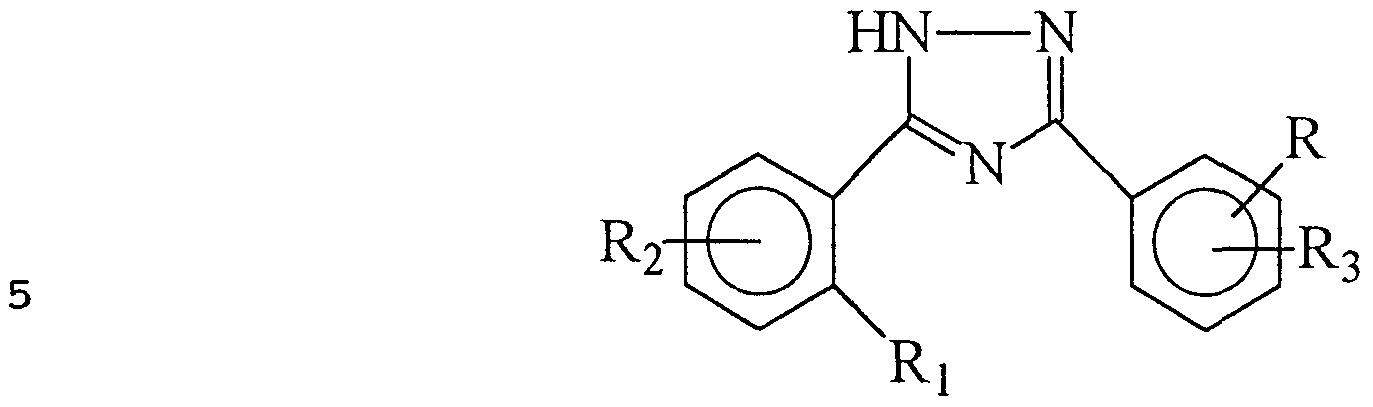
These and other objectives with further advantages which are clarified in the description below, are obtained by the nitrogen heterocyclic aromatic derivatives having the following general formula:
Figure imgf000008_0001
where:
-when X=Y, X, Y=N;
-when X=Y, X, Y=N, C, CH;
-R is chosen between hydrogen, -CORg where R8 is a saturated or non-saturated Cι-C10 aliphatic hydrocarbon. or R represents any other group able to form a bond with a nitrogen atom;
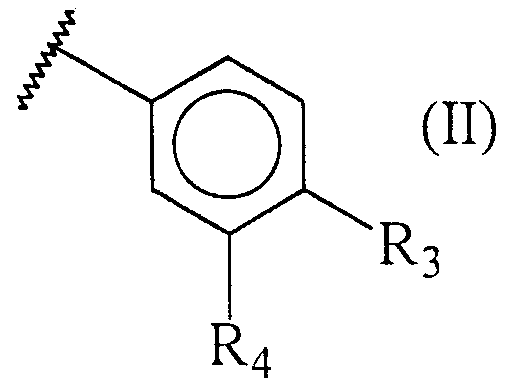
- Ri has the following general formula:
Figure imgf000009_0001
where R3 is chosen among hydrogen, halogen, alkyl or alkoxyl Ci-C-^o, R4 is chosen among hydrogen, alkyl or alkoxyl Cι-C10/ or R3 and R together form a methylendioxy group;
- R has the following general structure:
Figure imgf000009_0002
(III) where R5 is chosen among :
Figure imgf000009_0003
where Z=0R7 with R7 is chosen among a saturated or non- saturated, linear or branched Cχ-^0 aliphatic hydrocarbon, or is chosen according to the following formula :
Figure imgf000010_0001
(XII) where R, R , X and Y are defined as above and R6 is chosen among hydrogen, halogen, alkyl or alkoxyl Cι-C1Q l or Z is chosen equal to NHRs where R8 is a linear or branched Cι~C o alkyl chain. Mentioned R*-_ and R2 are never located on two adjacent atoms of the heterocyclic aromatic ring.
According to the present invention, the term saturated or non-saturated aliphatic hydrocarbon means a linear or branched alkyl, alkenyl or alkinyl chain which contains one or more double or triple bonds. Always according to the present invention, the term alkyl or alkoxyl means a linear or branched alkyl or alkoxyl group.
Namely, the mentioned nitrogen heterocyclic aromatic derivative of formula (I) is a derivative of pyrazole, imidazole and 1H-1, 2, 4-triazole respectively:
Figure imgf000011_0001
According to the present invention, the mentioned derivative of formula (I) is a triazole derivative having the following general formula:
Figure imgf000011_0002
(IV) where X=Y=N, while the other substituents are defined as for the derivative of formula (I) .
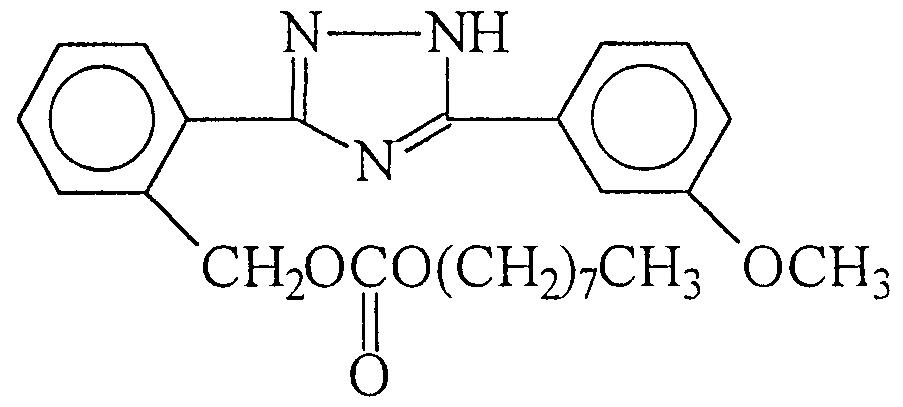
Of particular interest are those derivatives of formula (IV) where Rς, is hydrogen, R4 is -0CH3 or -OCH2CH3, R3 is hydrogen, R5 is chosen equal to COZ where Z=0R7 with R7 as a saturated linear aliphatic C1-C12 hydrocarbon. Always according to the present invention, of particular interest were those derivatives having the following formulas:
Figure imgf000012_0001
Figure imgf000012_0002
Figure imgf000012_0003
Figure imgf000012_0004
Figure imgf000013_0001
(XVI)
Figure imgf000013_0002
(XIII)
Figure imgf000013_0003
(XIV)
Figure imgf000014_0001
(XV)
In addition according to the present invention, of particular interest were the two derivatives having the following formulas:
Figure imgf000014_0002
(XVII)
N NH
•OA CH2OCANHCHA3 OCH2CH3
O
(XVIII)
As reported in the literature, see Potts K.T , J: Chem. Soc. 3451, (1954) and Potts K.T., Chem. Rew. 6JL, 99 (1961), Kubota and Uda , Chem. Pharm. Bull. 23(5), 955 (1975) , due to the high mobility of the hydrogen atoms of 1, 2, 4-triazoles, compounds of formula (I) of the present invention where X=Y=N, are to be regarded as a mixture of two tautomeric forms, i.e. those in which the hydrogen atom is located on one or the other of the two adjacent nitrogen atoms of the triazole ring. Depending on the nature of the substitutes at the 3 and 5 positions, a form may predominate on the other one. Consequently, both mentioned tautomeric forms must be considered as part of the present invention. It is known that tautomeric forms rapidly exchange in between and consequently behave as a dynamic equilibrium. Anyway, throughout the whole description and claims relative to the present invention, 3, 5 diphenyl-lH-1, 2, 4-triazoles according to the present invention, will be numbered as reported above for derivative (V) .
The derivatives of the present invention are provided of anti-gestation, immuno-suppressive and anti-tumour activities Particularly, the anti-gestative activity is displayed by a single dose regime and it does not requires a prolonged treatment. Furthermore, these derivatives show high therapeutic indexes, since a remarkable efficacy is achieved at doses much lower than the toxic ones able to induce undesirable adverse events. The compounds of the present invention of formula (I) , when administered as a single parenteral injection displayed more than one pharmacological activity, namely: (a) they have proven to be highly effective in terminating pregnancy in rodent and non-rodent animal species;
(b) they have proven to be highly effective in reducing both the humoural and cellular immunological response in animal models predictive for the pharmacological activity in humans
(c) in addition, the compounds of the present invention while lacking of effectiveness in different tumour models, showed a specific marked activity on an model of human chorio-carcinoma transplanted in nude mice. The different pharmacological activities displayed by the derivatives object of the present invention, are attributable to a common mechanism of action.
The reference model which explains this multiple pharmacological action is an atypical rapidly proliferating cell system, the placenta.
As reported by Aitken, Beaconsfield and Ginsher in their comprehensive review | Origin and formation of the placenta^ , this system, during its early stage of development, has strong similarities to tumour (1 ) . Among these in particular, the placenta is tolerated by the maternal host due to an alteration of the immune responsiveness with no inflammatory response to blastocyst and/or throphoblast invasion.
Biochemical studies on placental tissue, during the early post-implantation period, demonstrated that the contra- gestational activity of 3,5 diaryl-lH-1, 2 , 4-triazoles occurs through a selective action on the decidual and throphoblastic cells. Reasonably, this selective anti- proliferative action can also account for the activity of 3,5 diaryl-lH-l,2,4-triazoles against a gestational tumour like chorio-carcinoma. Finally, the immuno- suppressant response, which closely relates to the contra-gestational potency of 3,5 diaryl-lH-1, 2,4- triazoles , may either be the early or the late response of the primary biochemical alterations.
The derivatives object of the present invention are characterised by the presence of an easily hydrolysed bond through non species-specific enzymatic reactions occurring on R5 group ; this hydrolysis allows the release of the active principle that can display its in vivo action. The characteristic bond of R5 group present in the derivatives object of the present invention, is different from the bonds described in the already disclosed derivatives, and it can be hydrolysed according to different mechanisms of reaction. Because of these properties , unlike the compounds already disclosed, the compounds objective of the present invention are also effective in higher mammal species, including humans. With the aim of evaluating whether inter-species difference could exist in the enzymatic reactions of the ester bond, compounds (XV) , (XIV, VI) ad some known derivatives described in EP0080053 (compounds A ,B and C) have been tested in vitro :
Figure imgf000019_0001
where when R4 is chosen as -C3 H7 the compound is named A; where when R ^s chosen as -C7 H15 the compound is named
B;
Where when R4 ^s chosen as -Cg H23 the compound is named c;
These compounds dissolved in an ethanol mother solution, when incubated in diluted (1:4 v/v, with saline, 0.9%
NaCl) rat, dog and human serum at a 10" M concentration
"for 1 hour at 37 °C underwent enzymatic hydrolysis. The hydrolysis rates, expressed as nMoles/hour of the active principle formed, i.e. 3- (2-hydroxymethyl-phenyl) -5- (3- ethoxyphenyl) -1H-1, 2 , 4 triazole, corresponding to the compound described in EP0080053, were measured. The values obtained, reported in Table 1, show how, in the higher species considered, i.e. the dog and man, the known products A, B and C undergo hydrolysis very slowly whereas compounds (XIV) , (XV) and (VI) , are rapidly metabolised both by rat, dog and human serum. TABLE 1 : HYDROLYSIS RATE OF SELECTED 3 - (3 -ETHOXYPHENYL) - 5- (2 -ACYL-CARBOXYMETHYL-PHENYL) -1H-1 , 2 , 4 TRIAZOLES,
COMPOUNDS (XV) , (X- V) and (VI) AND SELECTED 3 - (3 - METHOXYPHENYL) -5- (2 -ACYLOXYMETHYL-PHENYL) -1H-1 , 2 , 4 TRIAZOLES, COMPOUNDS (A) , (B) AND (C)
COMPOUND Rate of Hydrolysis (nmoles/hour)
RAT DOG MAN
(XV) > 120 > 120 > 120
A > 120 16 12
(XIV) > 120 > 120 > 120
B > 120 3 2
(VI) > 120 > 120 > 120 c > 120 < 0.5 < 0.5
Since the metabolic attack (de-alkylation) of these structures, occurring in position meta with respect to the substituent R*j_ of structure (II) , gives rise to inactive or poorly active metabolites, a too slow hydrolysis of compounds A, B and C will lead to a marked reduction of the activity of these molecules in the higher species. On the contrary, as already mentioned, derivatives of the present invention of formula (I) , can e usefully used in higher mammal species including the dog and man. The compounds of the present invention actually represent a class of new non-hormonal, non- prostaglandin, like, post-coital, post-implantation anti- fertility agents particularly useful for terminating pregnancy in mammals following a single dose treatment at very low doses .
The pregnancy-terminating activity of the compounds of the present invention has been assessed by carrying out experiments in rats and dogs. In particular, female Sprague Dawley rats weighing 200- 230 g. were mated and the presence of sperm was detected, was considered day one of pregnancy.
Pregnancy was later confirmed at the time of autopsy by the presence of implantation sites in the uterus. Test compounds dissolved in sesame oil containing 20% benzyl benzoate (or suspended if insoluble) , were administered subcutaneously, in a single injection, on day 7 of gestation. The animals were then autopsied on day 16 of pregnancy and the uteri were examined for evidence of pregnancy (implantation sites, foetal resorption or live foetuses) , haemorrhage, and evidence of abnormalities of the uterus, placenta or foetuses, for reference see G . Galliani et al . Contraception, 23_, 163 - 180 (198) .. The compounds were tested at different doses in order to study the dose-activity relationship and their activity, reported below in Table 2 , has been expressed as ED5Q values.
These values identify the dose levels which terminate pregnancy (absence of live foetuses) in 50% of the treated animals. For comparison purposes, the ED50 of some related triazoles previously disclosed (Belgian patents 866,728 and 879,732 and European patent application publication No. 11,129), are reported. In particular compound D (active principle) , has the following structural formula:
Figure imgf000022_0001
and it has been prepared as described in EP 11129, while compound E, prepared as described in BE 879732 and identified as DL111-IT, has the following formula:
Figure imgf000022_0002
TABLE 2 : PREGNANCY TERMINATION ACTIVITY IN S . D . RATS
AFTER A SINGLE SUBCUTANEOUS INJECTION AT DAY 7 OF GESTATION
Figure imgf000023_0001
*5-(2-Hydroxymethylphenyl) -3- (3-ethoxy-phenyl) -1H-1, 2, 4- triazole described in the European patent application Publication No. 11, 129
**5- (2-Ethylphenyl) -3- (3-methoxyphenyl) -1H-1, 2, 4- triazole, DL 111-IT, described in example 24 of Belgian patent 879, 732
The results obtained show how the compounds of formula (I) object of the present invention administered by a single parenteral injection are much more effective of the two compounds previously disclosed taken as reference.
Acute toxicity studies did show as the lethal doses of compounds (VI) t DSQ > 500 mg/kg, are of three order of magnitude higher than those anti-gestative. In another experiment carried out in Beagle bitches (0.9 - 4.5 y, 7 - 12.5 kg), compound (VI), i.e. 3-(2- decanoyl-oxymethylphenyl) -5- (3-ethoxy phenyl) -1H-1, 2, 4- triazole, when administered as a single intramuscular dose between the day of mating and the 25th day of gestation was found to be highly effective and very well tolerated. The compound was given intramuscularly in one depot site of the thigh muscle of the right hind leg dissolved in sesame oil at the dose of 5 mg/kg (11.1 μmoles/kg , 40 mg/mL, 0.2 mL/kg). The anti-gestative effectiveness was ascertained by exploratory laparatomy examining uterine horns where the presence of live or dead foetuses was deduced from the dimension and appearance of each uterine swelling, for methodological reference see G . Galliani et al . , J . Small Animal Practice, 2_5, 211-222 (1984) .
TABLE 3 : CONTRAGESTATIONAL EFFECT OF COMPOUND (VI), GIVEN AS SINGLE I.M. DOSES BETWEEN THE DAY OF MATING AND
THE 14TH DAY OF GESTATION.
Administration Dose No of bitches Pregnancy
(days of (μmoles/kg) arrest gestation) (%) 15 5 ( 11 . 1 ) 5 80
20 5 ( 11 . 1 ) 5 100
25 5 ( 11 . 1 ) 5 100
The compounds of the present invention displayed significant immuno-suppressive activity on both humoral and cellular immunity when administered during the inductive phase of the immuno response, i.e. soon after antigen challenge. In experimental models of auto- immunity and skin transplantation they were able to reduce auto-antibody production as well as to prolong the skin graft survival. The immuno-suppressant activity of the compounds of the present invention was assessed by carrying out experiments in mice.
In detail, the Antibody Response to Sheep Red Blood Cells ( SRBC) and to Lipo-polysaccharide (LPS) , was studied in B6D2F1 mice injected intravenously 108 SRBC (day 0) . Direct (IgM) and indirect (IgG) plaque forming cells (PFC) were evaluated in the spleen 4 and 10 days later, Jerne et al . Science 140. 405 (1963) and Dresser and Wortis, Nature, 208 . 859 (1965) .
Indirect PCF were developed with rabbit anti-serum to mouse gamma globulin. B6D2F1 mice were immunised with 20 μg LPS intra- peritoneally. Four days later, PCF were determined in the spleen by SRBC coated with LPS, Moller, Nature, 207 , 1166 (1965) .
TABLE 4 : IgM ANTIBODY RESPONSE TO SRBC AND LPS AFTER SINGLE TREATMENT WITH COMPOUND (VI) COMPARED TO THAT OBTAINED AFTER MULTIPLE TREATMENT WITH THE REFERENCE COMPOUND E (see Mistrello et al . , 1985)
Figure imgf000026_0001
Figure imgf000027_0001
TABLE 5 : IgG ANTIBODY RESPONSE TO SRBC AFTER SINGLE TREATMENT WITH COMPOUND OF (VI) COMPARED TO THAT OBTAINED AFTER MULTIPLE TREATMENT WITH THE REFERENCE COMPOUND E (see Mistrello et al . , 1985 )
COMPOUND DAY OF DOSING DOSE PFC/SPLEEN.10
(μmoles/Kg/day (mean + S.D. )
(VI) 0 vehicle 24 + 3
0 2 . 15 3 + 3*
0 - 3 vehicle 26 + 4
0 - 3 3 . 58 4 + 3*
Delayed Type hypersensitivity (DTH) , was carried out in C57B1/6 mice administered subcutaneously 2 x 10⁸ SRBC emulsified in complete Freund's adjuvant. Ten days later an eliciting dose of 108 SRBC was inoculated into a footpad. The DTH reaction was recorded 24 hours later by measuring the footpad swelling (Kerckhaert et al , Cell Immunology, 29_, 232 , (1977) . TABLE EFFECT ON DTH AFTER SINGLE TREATMENT WITH
COMPOUND OF COMPOUND (VI) COMPARED TO THAT OBTAINED AFTER MULTIPLE TREATMENT WITH THE REFERENCE COMPOUND E (see Mistrello et al . , 1985)
Figure imgf000028_0001
For the Skin Grafting, fitted pinch grafts of skin from 0 C3H (H-2k) donor mice were transplanted onto C57B1/6 (H- 2 ) recipient mice (Mistrello et al,. 1984). Bandages were removed 7 days later and graft were scored daily by microscopy. Rejection was recorded when no viable epidermis remained. The median survival time (MST) of the 5 grafts, measured as days, was calculated according to Litchfield (1949) .
TABLE 7 : EFFECT ON SKIN GRAFT SURVIVAL TIME (MST) AFTER 1 WEEKLY TREATMENT WITH COMPOUND (VI) COMPARED TO THAT OBTAINED AFTER MULTIPLE TREATMENT WITH THE REFERENCE COMPOUND E (see Mistrello et al . , 1985 )
COMPOUND DAYS OF DOSING DOSE MST , days
(μmoles/Kg/day (mean + S.D.)
)
(VI) -1, 7 vehicle 10.7 + 0.4
-1, 7 17.20 15.1 + 0.6*
E -1,1,3, 5, 7, vehicle 11.0 + 0.4 9,11
-1,1,3, 5, 7, 89.61 14.7 + 0.7*
9,11
* p< 0.01
Finally, the compounds of the present invention are endowed with a high and specific anti-tumour activity as demonstrated on an j in vivo test against human chorio- carcinoma. In particular compound of example 5 was highly effective in inhibiting the growth of a human chorio-carcinoma transplanted into nude mice. The potency of the tested compound was even higher than that displayed by methotrexate, the choice drug in the therapy of chorio- carcinoma.
Noteworthy, choriocarcinoma is a gestational tumor derived from trophoblastic cells, which, toghether with decidual cells, was suggested as the target site of the anti-proliferative action of 3, 5 diaryl-s-1 , 2 , 4 triazoles (Galliani et al. 1986) .
For their use in suppressing the immunological response, in terminating pregnancy, and in treating chorio- carcinoma, the compounds of the present invention are embodied into topical, transdermal and injectable dosage forms to be administered epicutaneously or parenterally, i.e. subcutaneously, intramuscularly or intravenously. Such composition are formulated using proper transdermal delivery systems (epicutaneous dosing) , aqueous (intravenous dosing ) or non-aqueous vehicles (epicutaneous, subcutaneous and intramuscular dosing) . As examples of such systems/vehicles, the following can e considered for epicutaneous, subcutaneous and intramuscular dosing : oils of vegetable origin or fatty esters such as sesame oil, corn oil, peanut oil, cotton seed oil, and ethyl oleate can suitably be employed. Other oily vehicles may as well be used provided that they are safe in the volume administered and do not interfere with the therapeutic efficacy of the preparation. As known to the art skilled man, these preparations may also contain anti-microbial agents, to prevent growth of micro-organisms in the preparation, and antioxidants, essentially to prevent the development of rancidity of the oily vehicle.
These dosage forms in general contain from 1 to 10% (w/v) of at least one derivative of formula (I) object of the present invention, where the optimum dose/volume ratio depends on the selected dose and the species and size of the animal/subject to be administered.
As an example, the compounds of the present invention can be advantageously prepared starting from a derivative (IX) of the following chemical formula:
Figure imgf000031_0001
(IX) More particularly, when substituents Rλ and R2 are in position 3 and 5 respectively, the corresponding derivative (XI) has the following chemical formula:
Figure imgf000032_0001
(XI)
The above mentioned derivative of formula (XI) , used as starting materials in the process of the present invention, is prepared according to different procedures already reported by the literature. In particular when X=Y=N, the corresponding derivative (XI a) can be advantageously prepared as described in EP11129. In this case the method
This method consists in the rearrangement of hydrazones of substituited benzaldehydes with 4-hydrazino-lH-2 , 3- benzoxazines of formula (X)
Figure imgf000033_0001
wherein Ri, R2 a R3 are as defined as for the derivatives of formula (I) . This rearrangement simply occurs by refluxing the hydrazone III in a high boiling inert organic solvent, such as for instance, xylene, N,N-dimethylformamide, and halogenated aromatic hydrocarbons, for about 30 minutes and then recovering the compound II by filtration. Another suitable method for the preparation of the 2- hydroxymethyl-phenyl derivatives of formula (XI a) , consists in the oxidation of the corresponding 2- methylphenyl triazoles, either directly to the alcohol
(XI a) or to the corresponding carboxylic acid followed by a reduction of this latter to the alcohol (XI a).
In the former case, eerie ammonium nitrate or silver (II) oxide are the oxidising agents which may be suitably employed, while in the latter, the oxidative step is carried out with any of the several oxidisers known in the art to transform a methyl group on an aromatic ring to a carboxylic group, such as permanganate, nitric acid, and dichromate, and the reductive step in easily performed with a metal hydride.
Alternatively, the starting compounds of formula II can be prepared by following the process described in EP80053.
Referring to compounds of formula (I) , object of the present invention, the procedure for their preparation starting from the corresponding derivative of formula (IX) varies depending whether the substituent R is hydrogen or a group Rs-CO wherein R8 has the same meaning as above in relation to derivatives of formula (I) . When R is hydrogen, the derivative of formula (IX) is prepared according to different procedures already reported by the literature, in equi olar ratio with phosgene (COCl2) and the resulting chloro-carbonate is left to react with a derivative Z where Z=OR7 and R7 is chosen among a saturated or non-saturated, linear or branched aliphatic hydrocarbon Cι-C20 , or is chosen according to the following formula:
Figure imgf000035_0001
(XII) where R, Ri, X and Y are defined as above and R5 is chosen among hydrogen, halogen, alkyl or alkoxyl CX-CK), or Z is chosen equal to NH-R8 where R8 is a linear or branched Cι~C2o alkyl chain.
The derivative of formula (I) where R is chosen as hydrogen, can be successively separated from the possible by-products formed during the reaction with phosgene. Phosgene to use is commercially available already dissolved in appropriate solvents.
Following this procedure can be then prepared for example, derivatives (V) , (VI) and (VII) of the present invention.
Alternatively, when have to be synthesised derivatives of formula (I) where R7 is chosen as (XII) , asymmetric carbonates, or when R7 is chosen as saturated or unsaturated, linear or branched Cι-C2o aliphatic hydrocarbon, derivative of formula (IX) can undergo reaction according to the following general scheme, in detail:
=>both for the intermediates preparation (alcoholate and imidazolide) and for the end carbonate product, an inert solvent is chosen, i.e. chloroform, dichloro- methane, tetrahydrofuran:
=> alcoholate preparation is carried out on the selected alcohol using as base NaH or matallic Na either in . . . . catalytic or stoichiometric amounts, temperature can be between 0°C and 60°C (optimal room temperature) , while reaction time ranges between 30 min to 12 hours
(optimal 1 hour) ;
=>the synthesis of the imidazolide of the second alcohol is carried out using as reagent carbonyl-diimidazole with temperature between 0°C and 60°C (optimal, room temperature) , while reaction time ranges between 30 min to 12 hours (optimal 1 hour) ;
=>the synthesis of the end carbonates products is carried out by mixing properly the solutions of the alcoholate and of the imidazolide for a time of 6 to 24 hours (optimal 12 hours) at a temperature between 0°C and 60°C (optimal, room temperature) . Merely as an example, not limiting the present invention, a general method for the synthesis of derivatives of formula (I) , where R and R3 are chosen as hydrogens, R is chosen as ethoxyl, R5 is chosen as COOR7 where R7 is a linear or branched C1-C20 alkylic chain, is hereafter described:
Example 1 50 mL solution of 3- (2- (hydroxymethyl) phenyl) -5- (3- ethoxyphenyl) -1H-1, 2, 4 triazole (3g, 10 mmoles) in tetrahydrofuran, at room temperature, is added an 80% NaH suspension (310 mg, 10 mmoles) in tetrahydrofuran (50 mL) . The reaction mixture is shacked at room temperature for 1 hour. The resulting solution is then added to a tetrahydrofuran solution containing the imidazolide of the selected alcohol obtained by reacting the alcoholic derivative (10 mmoles) with 1, 1 ' -carbonyl-diimidazole
(1.65 g, 10 mmoles) in tetrahydrofuran (20 mL) for 1 hour at room temperature. The mixture is stirred at room temperature for 12 hours, then solvent is take to dryness under vacuum and the residue re-dissolved in methylene chloride. The organic phase is washed with water, dried by anhydrous Na2 S04 and evaporated under vacuum. The obtained crude material is purified by column chromatography on silica gel (eluent hexane-ethylacetate, 8:2, v/v) . After evaporation of the solvents, the solid pure product obtained is re-dissolved in hexane, filtered and dried under vacuum.
The compounds described below were prepared according to the procedure reported in Example 1.
0 Example 2
Preparation of 3- (2- (ethoxy-carbonyloxymethyl) phenyl-5-
(3-ethoxyphenyl)-lH-l, 2, 4-triazole (XV).
Yield 52%; melting point = 124-126°C
Hl-NMR: 7.98 (1H, t, J=4.1 Hz); 7.72-7.74 (6H, m) ; 7.06 15 (lH,d, J=6.9 Hz); 5.68 (2H, s) ; 4.16 (2H, q, J=7.0 Hz),
4.14 (2H, q, J=7.1 Hz); 1.40 (3H, t, J=7.0 Hz); 1.21
(3H, t, J=7.1 Hz) .
13C-NMR: 158.76, 154.21, 133.65, 129.83, 129.04, 128.77,
128.60 (2C) , 118.16 (2C), 115.86, 112.04 (2C), 67.20, 2063.33, 63.15, 14.36, 13.82.
Example 3
Preparation of 3- (2- (butoxy-carbonyloxymethyl) phenyl-5- (3-ethoxyphenyl)-lH-l, 2, 4-triazole (XIV). 25 Yield 58%; melting point= 119-121°C ^Η- MR: 8.00 (1H, t, J=4.8 Hz) ; 7.70-7.40 (6H, m) ; 7.03 (lH,d, J=7.2 Hz) ; 5.62 (2H, s) ; 4.12 (2H, q, J=7.0 Hz) , 4.03 (2H, t, J=6.4 Hz) ; 1.49 (2H, ) ; 1.36 (3H, t, J=7.0 Hz) ; 1.23 (2H, m) ; 0.80 (3H, t, J=7.3 Hz) .
13C-NMR: 158.70, 154.29, 133.51, 129.89, 129.20 (2C) , 128.63 (2C) , 128.35 (2C) , 118.15 (2C) , 115.96, 111.98 (2C) , 67.27, 67.17, 63.20, 18.03,14.26, 12.98.
Example 4
Preparation of 3- (2- (hexyloxy-carbonyloxymethyl) phenyl-5-
(3-ethoxyphenyl)-lH-l, 2, 4-triazole (XVI).
Yield 42%; melting point = 90-92 °C
1H-NMR: 8.07 (1H, m) ; 7.69-7.40 (6H, m) ; 7.06 (1H, d, J=7.3 Hz); 5.68 (2H, s) ; 4.15 (2H, q, J=7.0 Hz), 4.07
(2H, t, J=6.6 Hz); 1.56 (2H, m) ; 1.40 (3H, t, J=7.0 Hz);
1.23 (6H, m) ; 0.85 (3H, t, J=6.5 Hz).
13C-NMR: 158.76, 154.29, 133.65, 129.79, 128.87 (2C),
128.59 (2C), 128.15 (2C), 118.15 (2C), 115.87, 112.03 (2C) , 67.37, 67.29, 63.13, 30.49, 27.87, 24.52,
21.61,14.36, 13.43.
Example 5
Preparation of 3-(2-(octyloxy-carbonyloxymethyl)phenyl-5- (3-ethoxyphenyl) -1H-1, 2, 4-triazole (XVI). Yield 49%; melting point= 86-89°C 1H-NMR: 8.06 (1H, m) ; 7.72-7.40 (6H, m7) ; 7.05 (1H, d, J=7.1 Hz); 5.69 (2H, s) ; 4.15 (2H, q, J=7.0 Hz), 4.07 (2H, t, J=6.4 Hz); 1.56 (2H, m) ; 1.40 (3H, t, J=7.0 Hz); 1.23 (10H, m) ; 0.86 (3H, t, J=6.5 Hz).
13C-NMR: 158.76, 154.28, 133.65, 129.77, 129.01, 128.84, 128.59 (2C) , 128.59 (2C), 128.13 (2C), 118.16 (2C), 115.83, 112.03 (2C), 67.37, 67.30, 63.13, 30.88, 27.91, 24.89, 21.72,14.35, 13.53. In the following example 6, the synthesis of one derivative of formula (I) , where the group R7 is chosen of formula (XII) , symmetric carbonates, is described:
Example 6 Preparation of Di- (2- (5- (3-ethoxyphenyl) -1H-1, 2, 4- triazol-3-yl) phenylmethyl) carbonate (XVII) . A 15 mL solution of 3- (2- (hydroxy ethyl) phenyl) -5- (3- ethoxyphenyl) -1H-1, 2, 4 triazole (0.7g, 2.4 mmoles) in tetrahydrofuran, at room temperature, is added a 80% NaH suspension (35 mg, 1.2 mmoles) in tetrahydrofuran (15 L) . The reaction mixture is shacked at room temperature for 1 hour. The resulting solution is then added 1,1'- carbonyl-diimidazole (192 mg, 1.2 mmoles) in tetrahydrofuran (20 mL) for 1 hour at room temperature. The mixture is stirred at room temperature for 12 hours. Solvent is taken to dryness under vacuum and the residue re-dissolved in methylene chloride. The organic phase is washed with water, dried by anhydrous Na S0 and evaporated under vacuum. The obtained crude material is purified by column chromatography on silica gel (eluent hexane-ethylacetate, 7:3, v/v). After evaporation of the solvents, the solid pure product obtained is re-dissolved in hexane, filtered and dried under vacuum. 212 mg of the compound (XVII) are obtained. Yield 36%; melting point = 143-145°C
1H-NMR: 8.07 (2H, m) , 7.69-7.38 (12H, m) ; 7.03 (2H,d, J=8.4 Hz); 5.72 (4H, s) ; 4.12 (4H, q, J=7.0 Hz), 1.37 (6H, t, J=7.0 Hz) ; . 13C-NMR: 158.74, 154.21, 133.59, 129.81 (2C), 128.97 (2C) , 128.02 (2C), 118.18 (2C), 115.88, 112.00 (2C), 67.41, 63.13, 14.33.
When R is chosen equal to -CO R8, where R8 is a saturated or a non saturated Ci- C10 aliphatic hydrocarbon, the hydroxy group of derivative (IX) , will be protected according to known methods. Protected derivative (IXb) will be also obtained and acylated according to known methods in order to introduce the -COR8 group. Subsequently these acylated derivatives will be de- protected and allowed to react with phosgene as reported above. In the case of X=Y=N, the acylation reaction could be carried out as described by EP80053. When R5 is chosen:
Figure imgf000042_0001
Derivatives of formula (I) are advantageously prepared starting from derivatives of formula (IX) (eventually submitted to a previous acylation reaction as already described) by reaction with phosphoric acid or equivalents according to known methods. For example, following this procedure derivative (VIII) , object of the present invention, is prepared..
For derivatives of formula (I), when X=Y=N and R=H, following the acylation procedure described above, both single compounds, where the substituent R is located on one of the two adjacent nitrogen atoms and mixtures of the two possible isomers can be obtained.
In this latter case, being established that each lsomer retains the same anti-gestative immuno-suppressant and anti tumour activity, the mixture can be separated into the single components by chemico-physical known methods.
For example, the way a mixture can be resolved into the single components is a fractionated crystallisation, which take advantage of the different solubility of each compound in various solvents at different temperatures. Suitable solvents that can be used for this method are chosen as an example, among hexane, ethyl-acetate, C1-C4 alkyl ethers, methylen chloride, light petroleum ether and mixtures thereof. A further illustrative example of a method useful for the separation of the isomers ' mixture is based on column chromatography, performed on non-acid, buffered adsorbents, as silica-gel buffered to ph=7. Another example of a method useful for the separation of the isomer mixture is based on the use of preparative high pressure liquid chromatography (PHPLC) , carried out on proper columns, for example filled with silica-gel esterified with octyl-silane or octyl- decylsilane. Other obvious procedures useful for resolving a mixture of isomers into the single components are intended to fall within the scopes of the invention.

Claims

CLAIMS 1. Nitrogen heterocyclic aromatic derivatives having the following general formula:
Figure imgf000044_0001
where:
-when X=Y , X, Y=N;
-when X=Y, X, Y=N, C, CH;
-R is chosen between hydrogen, -C0R8 where R8 is a saturated or non-saturated aliphatic hydrocarbon Ci-Cio , or R represents any other group able to form a bond with a nitrogen atom;
- Ri has the following general formula:
Figure imgf000044_0002
where R3 is chosen among hydrogen, halogen, alkyl or alkoxyl C -Cιo, R4 is chosen among hydrogen, alkyl or alkoxyl C!-C10, or R3 and R4 together form a ethylendioxy group; - R2 has the following general structure:
Figure imgf000045_0001
(III) where R5 is chosen among:
Figure imgf000045_0002
where Z=OR with R is chosen among a saturated or non- saturated, linear or branched C*j_-C2o aliphatic hydrocarbon, or is chosen according to the following formula:
Figure imgf000045_0003
(XII) where R, Rlr X and Y are defined as above and Rζ, is chosen among hydrogen, halogen, alkyl or alkoxyl C1-C10, or Z is chosen equal to NHR8 where R8 is a linear or branched C1-C20 alkyl chain. Mentioned R1 and R are never located on two adjacent atoms of the heterocyclic aromatic ring.
2. Nitrogen heterocyclic aromatic derivatives according to the claim 1. characterised by a saturated or non- saturated Cl- C2o aliphatic hydrocarbon represented by a linear or branched alkyl, alkenyl or alkinyl which can contain one or more double or triple bonds. Always according to the present invention, the term alkyl or alkoxyl means a linear or branched C-^-Cio alkyl or alkoxyl group. 3. Nitrogen heterocyclic aromatic derivatives according to the claim 1. characterised by the fact that are derivatives of pyrazole, imidazole and 1H-1, 2, 4- triazole respectively:
Figure imgf000046_0001
4. Nitrogen heterocyclic aromatic derivatives according to the claim 1, characterised by having X=Y=N, R=H and showing the following general formula:
Figure imgf000047_0001
halogen, alkyl or alkoxyl Cx-C^-), R4 is chosen among hydrogen, alkyl or alkoxyl Cι-Cιo, or R3 and R4 together form a methylendioxy group, where R5 is chosen among:
Figure imgf000047_0002
where Z=OR7 with R7 is chosen among a saturated or non- saturated, linear or branched C-L-C20 aliphatic hydrocarbon, or is chosen according to the following formula:
Figure imgf000047_0003
(XII) where R, Rl t X and Y are defined as above and R6 is chosen among hydrogen, halogen, alkyl or alkoxyl Cx-Cio, or Z is chosen equal to NHR8 where R8 is a linear or branched C-L-C20 alkyl chain.
5. Nitrogen heterocyclic aromatic derivatives according to claim 4. characterised by having R6 = hydrogen, R = OCH3 or OCH2CH3. Mentioned R3 is hydrogen, mentioned R5 is chosen equal to COZ where Z=OR7 with R7 as a saturated linear aliphatic Cι-C-j_2 hydrocarbon.
6. Nitrogen heterocyclic aromatic derivative according to claim 1. having the following chemical structure:
Figure imgf000048_0001
7. Nitrogen heterocyclic aromatic derivative according to claim 1. having the following chemical structure:
Figure imgf000048_0002
8.Nitrogen heterocyclic aromatic derivative according to claim 1. having the following chemical structure:
Figure imgf000049_0001
Figure imgf000049_0002
9. Nitrogen heterocyclic aromatic derivative according to claim 1. having the following chemical structure:
Figure imgf000049_0003
(XIII)
o 10.Nitrogen heterocyclic aromatic derivative according to claim 1. having the following chemical structure:
5
Figure imgf000050_0001
(XIV)
11. Nitrogen heterocyclic aromatic derivative according to claim 1. having the following chemical structure:
Figure imgf000050_0002
(XV)
12.Nitrogen heterocyclic aromatic derivative according to claim 1.having the following chemical structure:
Figure imgf000051_0001
0
(XVII)
13. Use of the nitrogen heterocyclic aromatic derivatives, according to claim 1., as anti-gestative agents.
1 14. Use of the nitrogen heterocyclic aromatic derivatives, according to claim 1, as immuno-suppressant agents.
15. Use of the nitrogen heterocyclic aromatic derivatives, according to claim 1., for the preparation 20 of a drug with anti-gestative activity.
16. Use of the nitrogen heterocyclic aromatic derivatives, according to claim 1., for the preparation of a drug with immuno-suppressant activity.
25
17. Pharmaceutical composition with anti-gestative action which contains at least one nitrogen heterocyclic aromatic derivative, according to claim 1., as active principle.
18.Pharmaceutical composition with immuno-suppressant action which contains at least one nitrogen heterocyclic aromatic derivative, according to claim 0 l., as active principle.
19.Pharmaceutical composition according to claims 17 and 18., formulated utilising systems suitable for a transdermic release. 15
20. Pharmaceutical composition according to claims 17 and 18., formulated utilising proper aqueous systems suitable for an intravenous administration.
20 21. Pharmaceutical composition according to claim 17 and 18., formulated utilising vegetable oils or esters of fatty acids, i.e, sesame oil, suitable for an epicutaneous, subcutaneous and intramuscular administration.
25
22. Pharmaceutical composition according to claim 21., formulated utilising oils of vegetable origin or fatty esters such as sesame oil, corn oil, peanut oil, cotton seed oil, and ethyl oleate.
23.Pharmaceutical composition according to claim 17 and 22., formulated utilising previously disclosed anti- microbic agents 10
24.Pharmaceutical composition according to claim 17 and 22., formulated utilising previously disclosed anti- oxidative agents.
1525.Pharmaceutical composition according to claim 17 and 24., containing from 1 to 10 % (w/v) of at least one nitrogen heterocyclic aromatic derivative according to claim 1.
2026.Method of preparation of nitrogen heterocyclic aromatic derivative according to claim 1, which involves the following synthesis phases:
a) preparation of one nitrogen heterocyclic aromatic 25 derivative of general formula
Figure imgf000054_0001
(IX)
b) possible protection of the OH group, possible acylation reaction with introduction of a -COR8 group leading to the formation of an acylated derivative, subsequent de-protection of the OH group, and alternatively: c) reaction of derivative (IX) with a carbonatante agent, to give rise to a corresponding carbonate product. d) reaction of the above mentioned carbonate with Z to obtain the mentioned derivative (I) . Where Z=OR7 with R7 is chosen among a saturated or non-saturated, linear or branched C1-C20 aliphatic hydrocarbon, or is chosen according to the following formula:
Figure imgf000055_0001
(XII) where R, Ri, X and Y are defined as above and R6 is chosen among hydrogen, halogen, alkyl or alkoxyl C-^-CiO or Z is chosen equal to NHR8 where R8 is a linear or branched C-L-C20 alkyl chain;
or: reaction of the above mentioned derivative (IX) with phosphoric acid or equivalent products, with formation of the derivative of formula (I) .
27. Procedure according to claim 26, characterised by selecting as carbonatante agent phosgene (C0C1 ) .
PCT/EP1998/003496 1997-06-05 1998-06-04 Diphenyl-triazole derivatives and their use as anti-gestative, immuno-suppressant and anti-tumoral agents Ceased WO1998055463A1 (en)

Priority Applications (4)

Application Number Priority Date Filing Date Title
JP50160599A JP2002508757A (en) 1997-06-05 1998-06-04 Diphenyl-triazole derivatives and their use as anti-gestational, immunosuppressive and antitumor agents
EP98939500A EP0986544A1 (en) 1997-06-05 1998-06-04 Diphenyl-triazole derivatives and their use as anti-gestative, immuno-suppressant and anti-tumoral agents
US10/178,305 USRE38962E1 (en) 1997-06-05 1998-06-04 Diphenyl-triazole derivatives and their use as anti-gestative immuno-suppressant and anti-tumoral agents
US09/445,218 US6333343B1 (en) 1997-06-05 1998-06-04 Diphenyl-triazole derivatives and their use as anti-gestative, immuno-suppressant and anti-tumoral agents

Applications Claiming Priority (2)

Application Number Priority Date Filing Date Title
ITMI97A001328 1997-06-05
IT97MI001328A IT1292091B1 (en) 1997-06-05 1997-06-05 NITROGEN AROMATIC HETEROCYCLIC DERIVATIVES, PROCEDURE FOR THEIR PREPARATION AND THEIR USE AS ANTIGESTATIVES, IMMUNOSUPPRESSORS AND

Publications (1)

Publication Number Publication Date
WO1998055463A1 true WO1998055463A1 (en) 1998-12-10

Family

ID=11377301

Family Applications (1)

Application Number Title Priority Date Filing Date
PCT/EP1998/003496 Ceased WO1998055463A1 (en) 1997-06-05 1998-06-04 Diphenyl-triazole derivatives and their use as anti-gestative, immuno-suppressant and anti-tumoral agents

Country Status (5)

Country Link
US (2) US6333343B1 (en)
EP (1) EP0986544A1 (en)
JP (1) JP2002508757A (en)
IT (1) IT1292091B1 (en)
WO (1) WO1998055463A1 (en)

Families Citing this family (2)

* Cited by examiner, † Cited by third party
Publication number Priority date Publication date Assignee Title
MY142651A (en) * 2003-03-18 2010-12-15 Merck Sharp & Dohme Biaryl substituted triazoles as sodium channel blockers
US20060183897A1 (en) * 2003-03-18 2006-08-17 Chakravarty Prasun K Biaryl substituted triazoles as sodium channel blockers

Citations (3)

* Cited by examiner, † Cited by third party
Publication number Priority date Publication date Assignee Title
US4119635A (en) * 1971-07-22 1978-10-10 Gruppo Lepetit S.P.A. Substituted 1,2,4-triazole derivatives
FR2440364A1 (en) * 1978-10-30 1980-05-30 Lepetit Spa NOVEL 1-ACYL-3,5-DIPHENYL-1H-1,2,4-TRIAZOLES DERIVATIVES, ESPECIALLY USEFUL AS REPRODUCTIVE REGULATING AGENTS, AND THEIR PREPARATION METHODS
EP0080053A1 (en) * 1981-10-20 1983-06-01 Gruppo Lepetit S.P.A. 3,5-Diphenyl-1H-1,2,4-triazoles with contragestational activity, pharmaceutical compositions thereof and process for their preparation

Family Cites Families (1)

* Cited by examiner, † Cited by third party
Publication number Priority date Publication date Assignee Title
US4888350A (en) * 1978-10-30 1989-12-19 Gruppo Lepetit S.P.A. New acyl-1H-1,2,4-triazole derivatives

Patent Citations (3)

* Cited by examiner, † Cited by third party
Publication number Priority date Publication date Assignee Title
US4119635A (en) * 1971-07-22 1978-10-10 Gruppo Lepetit S.P.A. Substituted 1,2,4-triazole derivatives
FR2440364A1 (en) * 1978-10-30 1980-05-30 Lepetit Spa NOVEL 1-ACYL-3,5-DIPHENYL-1H-1,2,4-TRIAZOLES DERIVATIVES, ESPECIALLY USEFUL AS REPRODUCTIVE REGULATING AGENTS, AND THEIR PREPARATION METHODS
EP0080053A1 (en) * 1981-10-20 1983-06-01 Gruppo Lepetit S.P.A. 3,5-Diphenyl-1H-1,2,4-triazoles with contragestational activity, pharmaceutical compositions thereof and process for their preparation

Non-Patent Citations (1)

* Cited by examiner, † Cited by third party
Title
TOJA E ET AL: "Synthesis and pregnancy terminating activity of 2-aryl pyrazolo[5,1-a]isoindoles and isoquinolines", EUROPEAN JOURNAL OF MEDICINAL CHEMISTRY - CHIMICA THERAPEUTICA, vol. 17, no. 3, 1982, Paris, FR, pages 223 - 7, XP002078326 *

Also Published As

Publication number Publication date
IT1292091B1 (en) 1999-01-25
ITMI971328A1 (en) 1998-12-05
USRE38962E1 (en) 2006-01-31
US6333343B1 (en) 2001-12-25
JP2002508757A (en) 2002-03-19
ITMI971328A0 (en) 1997-06-05
EP0986544A1 (en) 2000-03-22

Similar Documents

Publication Publication Date Title
US5221670A (en) Rapamycin esters
US5164399A (en) Rapamycin pyrazoles
US5162333A (en) Aminodiesters of rapamycin
US5346893A (en) Rapamycin 42-sulfonates and 42-(N-carbalkoxy) sulfamates useful as immunosuppressive agents
KR100929503B1 (en) Method for preparing scopine ester
US5358944A (en) Rapamycin esters for treating transplantation rejection
KR100224135B1 (en) Quinoline or quinazoline derivatives, preparations and uses thereof
FR2517302A1 (en) ESTERS AND AMIDES OF 13 14-BISDEHYDROPROSTAGLANDINS
FR2644789A1 (en) NOVEL 19-NOR, 3-KETO STEROIDS COMPRISING AN AMINOSUBSTITUTED 17-CHAIN, PROCESS FOR THE PREPARATION THEREOF AND INTERMEDIATES THEREOF, THEIR USE AS MEDICAMENTS AND THE PHARMACEUTICAL COMPOSITIONS CONTAINING SAME
KR100347639B1 (en) Diphenyl triazole derivative compound, preparation method thereof and pharmaceutical composition comprising the same
SK117392A3 (en) Rapamycin derivatives and pharmaceutical agents containing them
CA3062972C (en) Indolizine derivatives and their application in medicine
EP0986386B1 (en) Use of nitrogen heterocyclic aromatic derivatives in the topical treatment of the epithelial tissues diseases
US6333343B1 (en) Diphenyl-triazole derivatives and their use as anti-gestative, immuno-suppressant and anti-tumoral agents
CA1317953C (en) Antiulcer (alkyldithio) quinoline derivatives
FR2499577A1 (en) SUBSTITUTED 1- (2-CHLOROETHYL) -1-NITROSOUREES-3-SUBSTITUTED BY SUGAR REST, PARTICULARLY USEFUL AS ANTITUMOR AGENTS AND PROCESS FOR THE PREPARATION THEREOF
JPS63277682A (en) Novel compound, manufacture and medicinal composition
KR101773527B1 (en) One pot synthesis of tetrazole derivatives of sirolimus
PH26259A (en) Tetrazole derivatives and their use as leukotriene antagonist
US5276180A (en) Process for making succinyl acetone
US4535090A (en) 3,5-Diphenyl-1H-1,2,4-triazoles pharmaceutical compositions and uses
US5252603A (en) Immunosuppressive analogues and derivatives of succinylacetone
US4201864A (en) Oxy-alkylamino acids and esters
JPH0393791A (en) Ketophosphamide glycosides, method of their preparation and their use as pharmaceutically active compounds
US5173482A (en) Immunosuppressive analogues and derivatives of succinylacetone

Legal Events

Date Code Title Description
AK Designated states

Kind code of ref document: A1

Designated state(s): JP US

AL Designated countries for regional patents

Kind code of ref document: A1

Designated state(s): AT BE CH CY DE DK ES FI FR GB GR IE IT LU MC NL PT SE

DFPE Request for preliminary examination filed prior to expiration of 19th month from priority date (pct application filed before 20040101)
121 Ep: the epo has been informed by wipo that ep was designated in this application
WWE Wipo information: entry into national phase

Ref document number: 1998939500

Country of ref document: EP

WWE Wipo information: entry into national phase

Ref document number: 09445218

Country of ref document: US

WWP Wipo information: published in national office

Ref document number: 1998939500

Country of ref document: EP

WWR Wipo information: refused in national office

Ref document number: 1998939500

Country of ref document: EP

WWW Wipo information: withdrawn in national office

Ref document number: 1998939500

Country of ref document: EP