WO1999026963A1 - Hypusine peptides - Google Patents

Hypusine peptides Download PDF

Info

Publication number
WO1999026963A1
WO1999026963A1 PCT/US1998/017221 US9817221W WO9926963A1 WO 1999026963 A1 WO1999026963 A1 WO 1999026963A1 US 9817221 W US9817221 W US 9817221W WO 9926963 A1 WO9926963 A1 WO 9926963A1
Authority
WO
WIPO (PCT)
Prior art keywords
peptide
gly
hypusine
thr
hpu
Prior art date
Legal status (The legal status is an assumption and is not a legal conclusion. Google has not performed a legal analysis and makes no representation as to the accuracy of the status listed.)
Ceased
Application number
PCT/US1998/017221
Other languages
French (fr)
Inventor
Raymond J. Bergeron, Jr.
Current Assignee (The listed assignees may be inaccurate. Google has not performed a legal analysis and makes no representation or warranty as to the accuracy of the list.)
University of Florida
University of Florida Research Foundation Inc
Original Assignee
University of Florida
University of Florida Research Foundation Inc
Priority date (The priority date is an assumption and is not a legal conclusion. Google has not performed a legal analysis and makes no representation as to the accuracy of the date listed.)
Filing date
Publication date
Application filed by University of Florida, University of Florida Research Foundation Inc filed Critical University of Florida
Priority to CA002310027A priority Critical patent/CA2310027A1/en
Priority to AU91090/98A priority patent/AU9109098A/en
Priority to EP98943259A priority patent/EP1032586A4/en
Priority to JP2000522120A priority patent/JP2001524488A/en
Publication of WO1999026963A1 publication Critical patent/WO1999026963A1/en
Anticipated expiration legal-status Critical
Ceased legal-status Critical Current

Links

Classifications

    • CCHEMISTRY; METALLURGY
    • C07ORGANIC CHEMISTRY
    • C07KPEPTIDES
    • C07K7/00Peptides having 5 to 20 amino acids in a fully defined sequence; Derivatives thereof
    • C07K7/04Linear peptides containing only normal peptide links
    • C07K7/06Linear peptides containing only normal peptide links having 5 to 11 amino acids
    • CCHEMISTRY; METALLURGY
    • C07ORGANIC CHEMISTRY
    • C07KPEPTIDES
    • C07K5/00Peptides containing up to four amino acids in a fully defined sequence; Derivatives thereof
    • C07K5/04Peptides containing up to four amino acids in a fully defined sequence; Derivatives thereof containing only normal peptide links
    • C07K5/06Dipeptides
    • C07K5/06008Dipeptides with the first amino acid being neutral
    • C07K5/06017Dipeptides with the first amino acid being neutral and aliphatic
    • C07K5/0606Dipeptides with the first amino acid being neutral and aliphatic the side chain containing heteroatoms not provided for by C07K5/06086 - C07K5/06139, e.g. Ser, Met, Cys, Thr
    • CCHEMISTRY; METALLURGY
    • C07ORGANIC CHEMISTRY
    • C07KPEPTIDES
    • C07K5/00Peptides containing up to four amino acids in a fully defined sequence; Derivatives thereof
    • C07K5/04Peptides containing up to four amino acids in a fully defined sequence; Derivatives thereof containing only normal peptide links
    • C07K5/06Dipeptides
    • C07K5/06139Dipeptides with the first amino acid being heterocyclic
    • C07K5/06147Dipeptides with the first amino acid being heterocyclic and His-amino acid; Derivatives thereof
    • CCHEMISTRY; METALLURGY
    • C07ORGANIC CHEMISTRY
    • C07KPEPTIDES
    • C07K5/00Peptides containing up to four amino acids in a fully defined sequence; Derivatives thereof
    • C07K5/04Peptides containing up to four amino acids in a fully defined sequence; Derivatives thereof containing only normal peptide links
    • C07K5/08Tripeptides
    • C07K5/0802Tripeptides with the first amino acid being neutral
    • C07K5/0804Tripeptides with the first amino acid being neutral and aliphatic
    • C07K5/081Tripeptides with the first amino acid being neutral and aliphatic the side chain containing O or S as heteroatoms, e.g. Cys, Ser
    • CCHEMISTRY; METALLURGY
    • C07ORGANIC CHEMISTRY
    • C07KPEPTIDES
    • C07K5/00Peptides containing up to four amino acids in a fully defined sequence; Derivatives thereof
    • C07K5/04Peptides containing up to four amino acids in a fully defined sequence; Derivatives thereof containing only normal peptide links
    • C07K5/08Tripeptides
    • C07K5/0815Tripeptides with the first amino acid being basic
    • YGENERAL TAGGING OF NEW TECHNOLOGICAL DEVELOPMENTS; GENERAL TAGGING OF CROSS-SECTIONAL TECHNOLOGIES SPANNING OVER SEVERAL SECTIONS OF THE IPC; TECHNICAL SUBJECTS COVERED BY FORMER USPC CROSS-REFERENCE ART COLLECTIONS [XRACs] AND DIGESTS
    • Y02TECHNOLOGIES OR APPLICATIONS FOR MITIGATION OR ADAPTATION AGAINST CLIMATE CHANGE
    • Y02PCLIMATE CHANGE MITIGATION TECHNOLOGIES IN THE PRODUCTION OR PROCESSING OF GOODS
    • Y02P20/00Technologies relating to chemical industry
    • Y02P20/50Improvements relating to the production of bulk chemicals
    • Y02P20/55Design of synthesis routes, e.g. reducing the use of auxiliary or protecting groups

Definitions

  • the present invention relates to novel hypusine-containing peptides.
  • hydroxy-7-azaundecanoic acid an unusual naturally occurring amino acid, having the structure:
  • This initiation factor 5A is unique in that it is the only known cellular protein that contains the amino acid hypusine (Hpu).
  • Hpu amino acid hypusine
  • elF-5A was shown to stimulate ribosomal subunit joining and to enhance 80 S-bound Met-t-RNAj reactivity with puromycin [Anderson et al, FEBS Lett., Vol. 76, pages 1-10 (1977); and Kemper et al. J. Biol. Chem., Vol. 251. pages 5551-5557 (1976)1. Later, in
  • the present invention relates to novel hypusine-containing peptides synthesized utilizing the hypusine reagent:
  • Q ⁇ Q 2 , and Q 3 may be the same or different and are amino protective groups, provided that Q 3 is orthogonal to Qi and Q 2 ; and Z is a hydroxy protective group.
  • a further embodiment of the invention relates to compounds of structure (2)
  • hypusine reagent (1) which may be synthesized using hypusine reagent (1), wherein Hpu is the hypusine amino acid residue, S and T are each independently peptide residues from zero to about 12 amino acids in length.
  • Hpu is the hypusine amino acid residue
  • S and T are each independently peptide residues from zero to about 12 amino acids in length.
  • Compounds of the invention find utility in the study of biochemical processes involving hypusine.
  • Another embodiment of the invention concerns improved methods of peptide synthesis wherein the above-described hypusine reagent is employed to prepare novel hypusine-containing peptides.
  • FIGs. 1 and 2 depict example reaction schemes for preparing peptides of the invention.
  • Figures 1 and 2 correspond to the chemistry described in Examples 1 through 8.
  • novel peptides (2) of the present invention comprise any synthetic peptide that incorporates within its structure the hypusine moiety, which is synthesized according to a method involving the use of the above-described hypusine reagent (1).
  • S and T are peptide residues from zero to about 12 amino acids in length, and preferably, are peptide residues from zero to about six amino acids in length. Most preferably, S and T are peptides residues from zero to about three amino acids in length S and T may vary independently in length and in composition of amino acid residues. The terminal amino acid reside of T may be hydroxylated.
  • Non-limiting examples of peptides of the invention are: L-Ser-L-Thr-L-Ser-L-Lys-L-Thr-Gly-Hpu-L-His-Gly-L-His-L-Ala-L-Lys,
  • peptides of the invention find utility in the study of biochemical processes involving hypusine, such as in the study of transport mechanisms for elF5A.
  • the peptides of the invention may be prepared employing conventional steps of peptide synthesis except that the above-described hypusine reagent (1) is employed to incorporate the hypusine moiety into the peptide chain.
  • Conventional peptide synthesis steps are disclosed, for example, in Moroder et al., "Hormonal Receptors in Digestive Tract Physiology," G. Rosselin et al., eds., Elsevier/North- Holland Biomedical Press, Amsterdam, pages 129-135 (1979); and Moroder et al., Phvsiol. Chem., Vol. 360, pages 787-790 (1979).
  • the synthesis of peptides is generally carried out through the condensation of the carboxyl group of an amino acid, and the amino group of another amino acid, to form a peptide bond.
  • a sequence can be constructed by repeating the condensation of individual amino acid residues in stepwise elongation or, in some cases, by condensation between two pre-formed peptide fragments (fragment condensation).
  • fragment condensation the amino and carboxy groups that are not to participate in the reaction must be blocked with protecting groups which should be readily introduced, be stable to the condensation reactions and be removed selectively from the completed peptide. If a peptide involves amino acids with side chains that may react during condensation, the problem of protection becomes increasingly difficult.
  • Solid phase peptide synthesis involves attachment of a first amino acid to a solid support, such as a resin, followed by sequential addition of subsequent amino acids which results in assembly of the peptide chain on the solid support.
  • Peptides can also be synthesized by related methods involving coupling peptide fragments to solid supports as discussed by Erickson et al., supra, pages 268-269. This technique involves the synthesis of small peptide segments containing a few amino acids, which segments are then coupled to each other using fragment condensation techniques to form larger peptides. Fragment condensation techniques can be combined with standard solid phase techniques wherein small peptides are attached to resins followed by sequential attachment of single amino acids or other peptide segments. Alternatively, sequential attachment of small peptides to single resin-bound amino acids can also be accomplished. The combination of the two approaches provides flexibility to synthetic schemes.
  • the synthesized peptide is then removed from the resin, usually by chemical means such as treatment with hydrofluoric acid (HF).
  • HF hydrofluoric acid
  • the chemical treatment also removes various amino acid and peptide protecting groups, such as CBZ, t-BOC or tosyl, which mask the reactivity of amino acid functional groups during synthesis.
  • the initial attachment to the resin involves the C- terminal amino acid of the peptide to be synthesized, which amino acid is covalently attached to the resin through an ester or amide linkage involving its ⁇ -carboxyl group. Synthesis then proceeds from the C- to the N-terminal. N-terminal to C- terminal peptide synthesis is less frequently used because the chemistry is more difficult and unwanted side reactions are more common.
  • the first amino acid may be covalently attached to the resin, in some cases, through its functional side chain.
  • Initial attachment of an amino acid to the resin by means of the side chain functional group allows the possibility of bi-directional synthesis starting with the attached amino acid. Bi-directional synthesis cannot be performed if the initial amino acid is attached through the ⁇ -COOH or ⁇ -NH 2 group.
  • Side chain functional groups which have been used for attachment to resins include the sulfhydryl group of cysteine, the imidazole group of histidine, the ⁇ -amino group
  • hypusine reagent described herein may be employed to access any hypusine-containing peptide
  • the method of the invention will be illustrated with reference to the following syntheses. It will be understood that any conventional peptide synthesis may be modified to prepare a hypusine-containing peptide by simply utilizing the herein described hypusine reagent at any convenient stage thereof.
  • the hypusine-containing pentapeptide found in eIF-5A capped at its N-terminus with L-Cys i.e., L-Cys-Thr-Gly-Hpu-His-Gly is a typical target peptide.
  • L-Cys which is not contained in the natural peptide, was fixed to the sequence with the idea of being able to covalently link the peptide via a disulfide bond to a larger protein, in order to ultimately generate antibodies.
  • the final hexapeptide 12 was constructed stepwise from the three aforementioned fragments, i.e., 1 , 15 and 18. Hydrogenolysis of the N ⁇ - CBZ group of 17 provided the amine HCI salt (74%) which was condensed with hypusine reagent 1 to give the di-CBZ-THP protected Hpu-His-Gly tripeptide 18 in 85% yield.
  • the hypusine reagent described has been demonstrated to be a highly useful synthon in accessing the elF-5A pentapeptide sequence. While the yields are generally excellent for these kinds of systems, the most notable feature is the flexibility that this methodology offers in synthesizing related elF-5A mimics.
  • the polymer-bound peptide 21 was synthesized using an Applied Biosystems 432A Synthesizer. Amino acid analysis for 21 : Gly 2.09, His 1.03, Thr 0.88. An aliquot of 21 (49 mg, 19.3 ⁇ mol), phenol (250 mg) and pentamethylbenzene (250 mg) were dissolved in degassed TFA (5.0 ml) at 0°C. Saturated HBr in acetic acid solution (0.2 ml), triisopropylsilane (0.1 ml) and 1 , 2-ethanedithiol (0.1 ml) were added under an argon atmosphere. The solution was stirred at room temperature for 1 hour and concentrated under reduced pressure.

Landscapes

  • Chemical & Material Sciences (AREA)
  • Organic Chemistry (AREA)
  • Genetics & Genomics (AREA)
  • Biochemistry (AREA)
  • Biophysics (AREA)
  • General Health & Medical Sciences (AREA)
  • Health & Medical Sciences (AREA)
  • Medicinal Chemistry (AREA)
  • Molecular Biology (AREA)
  • Proteomics, Peptides & Aminoacids (AREA)
  • Life Sciences & Earth Sciences (AREA)
  • Peptides Or Proteins (AREA)
  • Medicines That Contain Protein Lipid Enzymes And Other Medicines (AREA)

Abstract

The invention relates to novel peptides synthesized according to a method utilizing the hypusine reagent of formula (1) wherein Q1, Q2, and Q3 may be the same or different and are amino protective groups, provided that Q3 is orthogonal to Q1 and Q2; and Z is a hydroxy protective group, as well as improved methods of peptide synthesis wherein the above-described hypusine reagent is employed to prepare novel hypusine-containing peptides.

Description

HYPUSINE PEPTIDES
Field of the Invention
The present invention relates to novel hypusine-containing peptides.
BACKGROUND OF THE INVENTION Description of the Prior Art
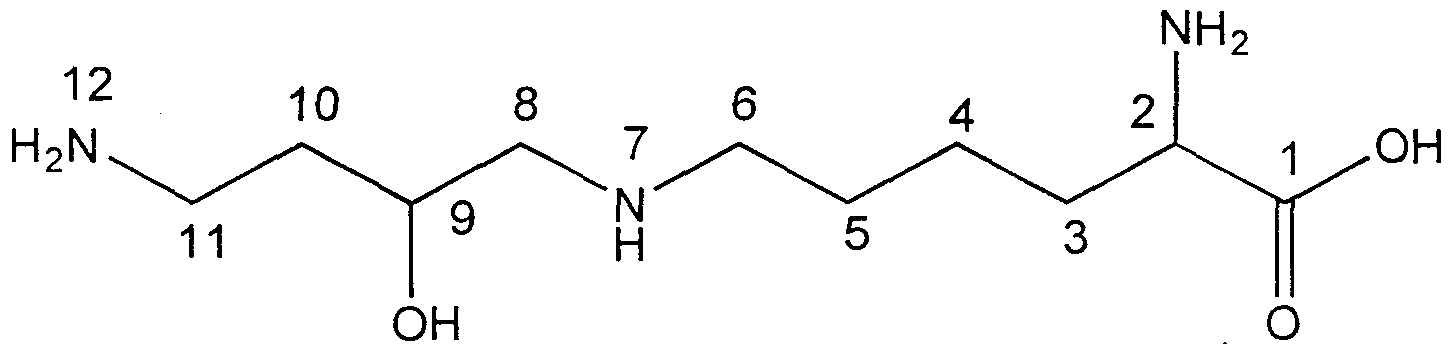
Hypusine [Ne - (4-amino-2-hydroxybutyl) lysine], or [(2S, 9R)-2, 11-diamino-9-
hydroxy-7-azaundecanoic acid], an unusual naturally occurring amino acid, having the structure:
Figure imgf000003_0001
(A)
was first isolated from bovine brain extracts by Shiba et al. in 1971 fBiochim. Biophvs. Acta.. Vol. 244, pages 523-531 (1971)]. The molecule has two chiral centers at positions 2 and 9, each of which can be classified R or S by the Cahn- Ingold-Prelog method. The (2S, 9R) diastereomer (B), formed as a post- translational modification
Figure imgf000004_0001
(B)
of lysine, has been shown to occur on a precursor protein of the eukaryotic initiation factor 5A (formerly called elF-4D) [Cooper et al, Proc. Natl. Acad. Sci. U.S.A., Vol. 80, pages 1854-1857 (1983); and Safer. Eur. J. Biochem.. Vol. 186, pages 1-3
(1989)]. This initiation factor 5A is unique in that it is the only known cellular protein that contains the amino acid hypusine (Hpu). In the mid-1970's, elF-5A was shown to stimulate ribosomal subunit joining and to enhance 80 S-bound Met-t-RNAj reactivity with puromycin [Anderson et al, FEBS Lett., Vol. 76, pages 1-10 (1977); and Kemper et al. J. Biol. Chem., Vol. 251. pages 5551-5557 (1976)1. Later, in
1983, Cooper et al, supra, suggested that a hypusine-modified protein serves as an important initiation factor in all growing eukaryotic cells. In 1986, Park et al [J. Biol. Chem., Vol. 261 , pages 14515-14519 (1986)] isolated the el F-5A protein from human red blood cells and elucidated the amino acid sequence surrounding the single hypusine residue, as Thr-Gly-Hpu-His-Gly-His-Ala-Lys. Furthermore, and most interesting because of the potential application to the control of HIV replication [Bevec et al., J. Proc. Natl. Acad. Sci. U.S.A.. Vol. 91 , pages 10829-10833 (1994); and Ruhl et al. J. Cell Biol., Vol. 123, pages 1309-1320 (1994)], the synthesis of el F- 5A analogues are of great therapeutic significance. Since hypusine is specific to elF-5A, antibodies derived from hypusine- containing peptides could be used to quantitate the levels of elF-5A directly and with high specificity. Interest in developing an antibody assay of elF-5A to investigate the physiological role of this important initiation factor prompted total synthesis of hypusine and its (2S, 9R)-diastereomer [Bergeron et al.. J. Orq. Chem.. Vol. 58, pages 6804-6806 (1993)]. The key step in the synthesis involved the Ne-alkylation
of Ne-benzyl-Nα-carbobenzyloxy-(L)-lysine benzyl ester with (R)- or (S)-
epichlorohydrin to give the respective (2S, 9R)- and (2S, 9S)-chlorohydrins. Subsequent displacement of the respective chlorides by cyanide ion provided the protected hypusine skeletons. The final step, hydrogenation over PtO2 in AcOH, followed by neutralization and re-acidification, yielded the respective (2S, 9S)- and (2S, 9R)-hypusine dihydrochiorides. A comparison of the reported hypusine optical rotation with that of the synthetic (2S, 9R)-hypusine B confirmed the stereochemical integrity of both chiral centers throughout the synthesis.
Synthetic methodology for accessing hypusine itself exists and it was desirable to have a selectively-protected hypusine reagent which could be used to incorporate this unusual amino acid into selected peptides. Copending application Serial No. 08/962, 300, filed October 31 , 1997 entitled "Hypusine Reagent for Peptide Synthesis", the entire contents and disclosure of which are incorporated herein by reference, describes a selectively protected hypusine reagent useful for incorporating hypusine into peptides, as well as methods for preparation of the hypusine reagent.
It is an object of the present invention to provide novel hypusine-containing peptides, as well as methods for their synthesis utilizing the above-described hypusine reagent. SUMMARY OF THE INVENTION
The above and other objects are realized by the present invention, one embodiment of which relates to novel peptides containing the hypusine moiety.
More specifically, the present invention relates to novel hypusine-containing peptides synthesized utilizing the hypusine reagent:
Figure imgf000006_0001
wherein: Q^ Q2, and Q3 may be the same or different and are amino protective groups, provided that Q3 is orthogonal to Qi and Q2; and Z is a hydroxy protective group.
A further embodiment of the invention relates to compounds of structure (2)
S - Hpu - T (2)
which may be synthesized using hypusine reagent (1), wherein Hpu is the hypusine amino acid residue, S and T are each independently peptide residues from zero to about 12 amino acids in length. Compounds of the invention find utility in the study of biochemical processes involving hypusine. Another embodiment of the invention concerns improved methods of peptide synthesis wherein the above-described hypusine reagent is employed to prepare novel hypusine-containing peptides.
BRIEF DESCRIPTION OF THE DRAWINGS
Figs. 1 and 2 depict example reaction schemes for preparing peptides of the invention. Figures 1 and 2 correspond to the chemistry described in Examples 1 through 8.
DETAILED DESCRIPTION OF THE INVENTION
The novel peptides (2) of the present invention comprise any synthetic peptide that incorporates within its structure the hypusine moiety, which is synthesized according to a method involving the use of the above-described hypusine reagent (1).
In compounds of structure (2), S and T are peptide residues from zero to about 12 amino acids in length, and preferably, are peptide residues from zero to about six amino acids in length. Most preferably, S and T are peptides residues from zero to about three amino acids in length S and T may vary independently in length and in composition of amino acid residues. The terminal amino acid reside of T may be hydroxylated. Non-limiting examples of peptides of the invention are: L-Ser-L-Thr-L-Ser-L-Lys-L-Thr-Gly-Hpu-L-His-Gly-L-His-L-Ala-L-Lys,
L-Cys-L-Thr-Gly-Hpu-L-His-Gly,
L-Cys-L-Thr-Gly-Hpu-L-His-Gly-OH,
Hpu-L-His-Gly,
L-Thr-Gly-Hpu-L-His-Gly, L-Lys-L-Thr-Gly-Hpu-L-His-Gly, wherein the Hpu linkage is the (2S, 9R)-diastereomer thereof.
Compounds of the invention find utility in the study of biochemical processes involving hypusine, such as in the study of transport mechanisms for elF5A. The peptides of the invention may be prepared employing conventional steps of peptide synthesis except that the above-described hypusine reagent (1) is employed to incorporate the hypusine moiety into the peptide chain. Conventional peptide synthesis steps are disclosed, for example, in Moroder et al., "Hormonal Receptors in Digestive Tract Physiology," G. Rosselin et al., eds., Elsevier/North- Holland Biomedical Press, Amsterdam, pages 129-135 (1979); and Moroder et al., Phvsiol. Chem., Vol. 360, pages 787-790 (1979).
The synthesis of peptides is generally carried out through the condensation of the carboxyl group of an amino acid, and the amino group of another amino acid, to form a peptide bond. A sequence can be constructed by repeating the condensation of individual amino acid residues in stepwise elongation or, in some cases, by condensation between two pre-formed peptide fragments (fragment condensation). In such condensations, the amino and carboxy groups that are not to participate in the reaction must be blocked with protecting groups which should be readily introduced, be stable to the condensation reactions and be removed selectively from the completed peptide. If a peptide involves amino acids with side chains that may react during condensation, the problem of protection becomes increasingly difficult. A great range of reactive groups and side chains (amino, carboxy, thiol, hydroxy and the like) must be adequately blocked. Their blocking must be stable to unmasking of the α-amino or α-carboxy block for stepwise condensation and must be readily
removed at the final stage, leaving the completed peptide moiety intact. Several methods are known wherein peptides are synthesized in vitro. The principal methodology used for peptide synthesis involves variations of the solid- phase methodology developed by Merrifield et al. See, for example, Erickson et al., "The Proteins," third edition, Vol. 2, Chapter 3, Academic Press. New York (1976). Solid phase peptide synthesis involves attachment of a first amino acid to a solid support, such as a resin, followed by sequential addition of subsequent amino acids which results in assembly of the peptide chain on the solid support.
Peptides can also be synthesized by related methods involving coupling peptide fragments to solid supports as discussed by Erickson et al., supra, pages 268-269. This technique involves the synthesis of small peptide segments containing a few amino acids, which segments are then coupled to each other using fragment condensation techniques to form larger peptides. Fragment condensation techniques can be combined with standard solid phase techniques wherein small peptides are attached to resins followed by sequential attachment of single amino acids or other peptide segments. Alternatively, sequential attachment of small peptides to single resin-bound amino acids can also be accomplished. The combination of the two approaches provides flexibility to synthetic schemes.
Upon completion of a particular synthesis, the synthesized peptide is then removed from the resin, usually by chemical means such as treatment with hydrofluoric acid (HF). The chemical treatment also removes various amino acid and peptide protecting groups, such as CBZ, t-BOC or tosyl, which mask the reactivity of amino acid functional groups during synthesis.
In most peptide syntheses, the initial attachment to the resin involves the C- terminal amino acid of the peptide to be synthesized, which amino acid is covalently attached to the resin through an ester or amide linkage involving its α-carboxyl group. Synthesis then proceeds from the C- to the N-terminal. N-terminal to C- terminal peptide synthesis is less frequently used because the chemistry is more difficult and unwanted side reactions are more common.
The first amino acid may be covalently attached to the resin, in some cases, through its functional side chain. Initial attachment of an amino acid to the resin by means of the side chain functional group allows the possibility of bi-directional synthesis starting with the attached amino acid. Bi-directional synthesis cannot be performed if the initial amino acid is attached through the α-COOH or α-NH2 group.
Side chain functional groups which have been used for attachment to resins include the sulfhydryl group of cysteine, the imidazole group of histidine, the δ-amino group
of ornithine, the e-amino group of lysine and the γ-carboxyl group of glutamic acid. A review of the chemistry of solid phase peptide synthesis, including attachment of amino acids to resins via the α-COOH, α-NH and functional side chain groups, is
found in Erickson et al., supra. By using the insoluble resin support, it is possible to isolate the product of each coupling reaction simply by filtering the resin and washing it free of by-products and excess starting materials. In fact, the synthetic processes are so simplified and the time required for one cycle is so shortened that in recent years, it has become quite common to use automated peptide synthesizers. [See, for example, Barany et al., "The Peptides," Vol. 2, Academic Press. Inc.. New York (1979), pages 1-284; or Kemp-Vellaccio, "Organic Chemistry," pages 1030-1032 (1980).]
Although the hypusine reagent described herein may be employed to access any hypusine-containing peptide, the method of the invention will be illustrated with reference to the following syntheses. It will be understood that any conventional peptide synthesis may be modified to prepare a hypusine-containing peptide by simply utilizing the herein described hypusine reagent at any convenient stage thereof.
While the hypusine reagent allows for the assembly of a variety of hypusine- containing peptides, the hypusine-containing pentapeptide found in eIF-5A capped at its N-terminus with L-Cys, i.e., L-Cys-Thr-Gly-Hpu-His-Gly is a typical target peptide. The L-Cys, which is not contained in the natural peptide, was fixed to the sequence with the idea of being able to covalently link the peptide via a disulfide bond to a larger protein, in order to ultimately generate antibodies. The solution synthesis, a convergent approach, was carried out by elaborating from the C- to the N-terminus, as shown in Fig. 1 , and involved the coupling of three appropriately-protected pieces: Cys-Thr-Gly, Hpu and His-Gly.
The carboxyamidomethyl (CAM) ester developed by Martinez et al. ■Tetrahedron, Vol. 41 , pages 739-743 (1985); and Tetrahedron Lett.. Vol. 47, pages 5219-5222 (1983)] was employed as a carboxyl protecting group in generating the Cys-Thr-Gly fragment. This protecting group is orthogonal to the BOC, CBZ and FMOC groups. Thus, the synthesis of the masked Cys-Thr-Gly fragment 15 began with the N-BOC-Gly-CAM ester [Martinez et al., Tetrahedron, supra]. Removal of the BOC group with trifluoroacetic acid (TFA) gave the amine salt (60%) which was immediately coupled with N-FMOC-(O-t-butyl)-L-threonine to give the N-FMOC-(O-t- butyl)-L-Thr-Gly-CAM ester 13 in 85% yield. Treatment of 13 with 10% diethylamine (DEA) in DMF followed by coupling with N, S-di-CBZ-L-cysteine with BOP and DIEA afforded the N, S-di-CBZ-L-Cys-(O-t-butyl)-L-Thr-Gly-CAM ester 14 in 50% yield. Removal of the CAM ester with aqueous Na2CO3 followed by acidification with aqueous citric acid generated the N, S-di-CBZ-L-Cys-(0-t-butyl)-L-Thr-Gly acid 15 in 77% yield. The design of the His-Gly fragment 17 was predicated on obtaining efficient coupling between the Nα His group and reagent 1. Previous work by Yamashiro et
al. U. Am. Chem. Soc. Vol. 94, pages 2855-2859 (1972)] demonstrated that t-butyl- carbonylation of the imidazole side chain prior to the condensation step substantially increased coupling yields between systems containing His residues and N-BOC groups. For this reason, the His-Gly fragment 17 was assembled in two steps. First, the condensation of glycine t-butyl ester and Nα-CBZ-L-His with diphenyi-
phosphorylazide (DPPA) [Shioiri et al., J. Am. Chem. Soc, Vol. 94, No. 17, pages 6203-6205 (1972)] afforded Nα-CBZ-L-His-Gly t-butyl ester 16 (72%). In the second step, the His side chain was masked by the treatment with di-t-butyl dicarbonate in THF to give the Nα-CBZ-Nιm-BOC-L-His-Gly t-butyl ester 17 in 78% yield.
As shown in Fig. 1 , the final hexapeptide 12 was constructed stepwise from the three aforementioned fragments, i.e., 1 , 15 and 18. Hydrogenolysis of the Nα- CBZ group of 17 provided the amine HCI salt (74%) which was condensed with hypusine reagent 1 to give the di-CBZ-THP protected Hpu-His-Gly tripeptide 18 in 85% yield. The amine generated by treatment of the Nα-FMOC in 18 with 4-
aminomethyl-piperidine (68%) [Beyermann et al., J. Orq. Chem., Vol. 55, pages 721-728 (1990)] was acylated by the tripeptide acid 15 and BOP to give the masked conjugate 19 in 81 % yield. The final deprotection of 19 with HBr/acetic acid in TFA and a "cocktail" of scavengers (phenol, pentamethylbenzene, triisopropylsilane, 1 ,2- ethanedithiol) at room temperature developed by Wang et al. [Int. J. Peptide. Res., Vol. 40, pages 344-349 (1992)] gave the Cys-Thr-Gly-Hpu-His-Gly as its tetrakis- trifluoroacetic acid salt 12 in 22% yield. The peptide was fully assigned by DOCOSY, TOCSY and HMOC NMR. Polymer bounded synthesis of the hexapeptide 12 was performed on a HMP- resin [Wang, supra] using an Applied Biosystems 432A Synthesizer. The Cys and His residues of the hexapeptide were initially protected with trityl groups while the Thr was protected as its t-butyl ether. Attempts to release the free hexapeptide by refluxing in TFA phenol or with HBr/acetic acid in TFA with phenol and pentamethylbenzene, respectively, did not succeed. Use of the more labile 4-methoxytrityl and 4-methyltrityl groups to protect the Cys and His derivatives, respectively, produced the protected hexapeptide 20 (Fig. 2). Final deprotection of 20 was then achieved with HBr/acetic acid in TFA using a "cocktail" of four cation scavengers. This method generated very few side products and provided 12 after purification by HPLC in 24% yield. All analytical data were consistent with hexapeptide 12 * 4 TFA previously prepared by the solution-phase method.
In summary, the hypusine reagent described has been demonstrated to be a highly useful synthon in accessing the elF-5A pentapeptide sequence. While the yields are generally excellent for these kinds of systems, the most notable feature is the flexibility that this methodology offers in synthesizing related elF-5A mimics.
EXAMPLE 1 FMOC-Thr(O-t-butyl)-Glv Carboxyamido methyl (CAM) Ester (14)
Nα-BOC-Gly CAM ester [Martinez et al., Tetrahedron, supra] (1.16 g, 5.0
mmol) was dissolved in TFA (10 ml) and stirred 10 minutes at 0° C. The amine TFA salt was precipitated with diethyl ether (130 ml), filtered and dried (0.75 g, 60%). The amine salt (0.75 g) was then dissolved in a dry DMF (10 ml) solution containing FMOC-Thr (O-t-butyl)-OH (1.20 g, 3.0 mmol) and BOP (1.33 g, 3.0 mmol). The solution was cooled to 0° C, and diisopropylethylamine (DIEA, 1.15 ml, 6.6 mmol)
was added dropwise. The solution was warmed to room temperature and stirred overnight. The volatiles were removed in vacuo, the resulting oil was dissolved in ethyl acetate (200 ml) and washed with 1 M citric acid, water, 5% aqueous NaHCO3 solution and water. The organic layer was dried over MgSO and concentrated.
Flash chromatography (90% ethyl acetate/hexane) gave 14 as a colorless solid (1.30 g, 85%). 1H NMR (CDCI3) δ 7.77(d, 2H, J = 7.5 Hz), 7.65 (m, 1 H), 7.60 (d, 2H, J =
7.5 Hz), 7.45- 7.27 (m, 4H), 6.60 (s br, 1 H), 5.87 (d br, 1 H), 5.54 (s br, 1 H), 4.67 (m, 2H) , 4.51 - 4.35 (m, 2H), 4.28 - 4.12 (m, 4H), 4.05 (m, 1 H), 1.29 (s, 9H), 1.08 (d, 3H, J = 6.4 Hz). Anal, calcd. for C27H33N307: C 63.39; H 6.50, N 8.21. Found: C 63.14; H 6.60, N 8.10. [α] 22 D -0.8° (c = 1.00, CH3OH).
EXAMPLE 2 CBZ-Cvs (CBZ) -Thr (O-t-butyl) -Gly Carboxyamidomethyl Ester (15)
A solution of 14 (0.46 g, 0.90 mmol) was dissolved in a solution of diethylamine (DEA, 0.8 ml) in dry DMF (8 ml). After stirring overnight at room temperature, the volatiles were removed in vacuo and the residue dissolved in 15 ml dry DMF. N, S-di-CBZ-L-Cys (0.35 g, 0.90 mmol) and BOP (0.40 g, 0.90 mmol) were added and the turbid solution cooled to 0° C. DIEA (0.25 g, 1.89 mmol) was added, and the solution was stirred at room temperature for 2 days. The reaction mixture was concentrated in vacuo, diluted with ethyl acetate (100 ml) and washed with 10% citric acid, water, 5% aqueous NaHCO3 solution and water. The organic layer was dried over MgS0 and concentrated in vacuo. The resulting oil was purified by flash column chromatography (80% ethyl acetate/10% hexane/10% CHCI3 to obtain 15 (0.29 g, 50%). mp 95 - 97°C. H NMR (CDCI3) δ 7.70 (m, 1 H),
7.28 (s, 10H), 6.78 (s, 1 H), 6.00 (s, .1 H), 5.50 (s, 1 H), 5.23 (s, 2H), 5.17 (s, 2H), 4.62 (m, 2H), 4.41 (m, 1 H), 4.30 (m, 1 H), 4.25 (m, 1 H), 4.15 (m, 1 H), 3.94 (m, 1 H), 3.30 (m, 2H), 1.65 (s, 1 H), 1.20 (s, 9H), 1.07 (d, 3H). Anal, calcd. for C31H40N4Ol 0S: C 56.35; H 6.10; N 8.48. Found: C 56.62; H 6.14, N 8.38. [α]25 D - 14° (c = 1.10,
CH3OH).
EXAMPLE 3 CBZ-Cvs(CBZ)-Thr(O-t-butyl)-Glv-OH (16)
To a solution of 15 (0.90 g, 1.36 mmol) dissolved in DMF (14 ml) was added aqueous Na2CO3 (2.72 mmol, 8 ml) at room temperature. The solution warmed upon addition and water was added until the solution was clear. After 5 minutes, the pH was adjusted to 6 with citric acid (0.5 N, 9 ml). The reaction mixture was concentrated in vacuo; the residue was dissolved in ethyl acetate and washed with 0.5 N citric acid. The organic layer was dried over sodium sulfate and concentrated in vacuo. The residue was purified by column chromatography using LH-20 lipophilic Sephadex (50 g; eluting with 1% EtOH/toluene) to give 16 as a white solid (0.63 g, 77%). mp 124 - 125°C; 1H NMR (CD3OD) δ 7.39 - 7.25 (m, 10H), 5.24 (s, 2H), 5.12
(s, 2H), 4.46 (dd, 1H, J = 8.6, 5.0 Hz), 4.33 (d, 1 H,J = 3.0 Hz), 4.16 (m, 1 H), 3.92 (m, 2H), 3.45 (dd, 1 H, J = 14.3, 5.0 Hz), 3.16 (dd, 1 H, J = 14.3, 8.6 Hz), 1.20 (s, 9H), 1.09 (d, 3H, J = 6.4 Hz). Anal, calcd. for C29H37N3O9S: C 57.70; H 6.18; N 6.96.
Found: C 57.76; H 6.24; N 7.02. [α] 22 D +8.6° (c = 0.50, CHCI3). EXAMPLE 4 CBZ-His-Gly-O-tert-Butyl (17)
Glycine t-butyl ester hydrochloride (2.20 g, 13.0 mmol) and Nα-CBZ-L-His
(3.44g, 1 1.9 mmol) were dissolved in dry DMF (40 ml). The solution was cooled to 0°C under an N2 atmosphere, and diphenylphosphoryl azide (DPPA, 3.58 g, 13.0 mmol) was added dropwise over 5 minutes. The clear solution was stirred for 10 minutes and turned turbid upon addition of triethylamine (2.63 g, 26 mmol). The solution was stirred at room temperature overnight. The solution was concentrated and the residue purified by flash chromatography (8% EtOH/CHCI3) to give 17 as a white solid (3.45 g, 72%). mp 64 - 66°C. 1H NMR (CD3OD) δ 7.56 (d, 1 H, J = 1.1
Hz), 7.30 (m, 5H), 6.88 (s, 1 H), 5.04 (m, 2H), 4.42 (m, 1 H), 3.80 (m, 2H), 3.12 (m, 1 H), 2.91 (m, 1 H), 1.46 (s, 9H). Anal, calcd. for C20H26N4O5: C 59.69; H 6.51 ; N 13.92. Found: C 59.43; H 6.46; N 13.81.
EXAMPLE 5
CBZ-His(BOC)-Glv-O-tert-Butyl (18)
A solution of di-t-butyl dicarbonate (1.33 g, 6.0 mmol) in 3 ml THF was added dropwise at 0°C to a solution of 17 (2.0 g, 5.0 mmol) in 15 ml THF. The reaction mixture was stirred overnight at room temperature and concentrated in vacuo. The residue was purified by flash chromatography (60% ethyl acetate/hexane) to give 1.96 g of 18 (78%). 1 H NMR (CDCI3) δ 8.00 (s, 1 H), 7.30 (m, 6H), 6.60 (m, 1 H), 5.10
(s, 2H), 4.58 (m, 1 H), 3.85 (m, 2H), 3.03 (m, 2H), 2.38 (s, 1 H), 1.60 (s, 9H), 1.40 (s, 9H). Anal, calcd. for C2oH26N4O5: C 59.75; H 6.82; N 11.15. Found: C 59.69; H 6.87; N 11.09. [α]22 D -4.0° (c = 1.00, CH3OH).
EXAMPLE 6
FMOC-Hpu(N7.N12-di-CBZ. O9-THP)- His(BOC)-Gly-O-tert-Butyl (19)
To a solution of 18 (185 mg, 0.37 mmol) and 1 N HCI (370 μ1) in ethanol (15
ml) was added 10% Pd-C (18 mg), and the reaction mixture was hydrogenated for 2.5 hours at room temperature. The reaction mixture was filtered through Celite, concentrated in vacuo and purified by flash chromatography (CHCI3/EtOH = 9:1) to give H-His-(BOC)-Gly-O-t-Bu hydrochloride (101 mg, 68%). A portion of this ammonium salt (69 mg, 0.17 mmol) and hypusine reagent 1 (134 mg, 0.17 mmol) were dissolved in 12 ml dry DMF. The solution was cooled to 0° C and BOP (87 mg, 0.20 mmol) was added and stirred for 20 minutes. DIEA (47.5 mg, 0.37 mmol) was added dropwise at 0° C and the solution warmed to room temperature and stirred overnight. The volatiles were removed under reduced pressure, and the residue was dissolved in ethyl acetate and washed with 5% aqueous NaHC03 solution and water. The organic layer was dried over MgSO4 and concentrated in vacuo and the residue purified by flash chromatography (4% EtOH/CHCI3) to give 19 as a colorless oil (165 mg, 85%). 1 H NMR (600 MHz) (CD3OD) δ 7.86 (m, 1 H), 7.70 (d, 2H, J = 7.5 Hz),
7.58 (m, 2H), 7.31 - 7.1 1 (m, 15H), 5.00 (m, 2H), 4.92 (s, 2H), 4.60 (m, 1 H), 4.50 - 4.32 (m, 1 H), 4.30 - 4.26 (m, 2H), 4.08 (t, 1 H, J = 6.8 Hz), 3.90 (m, 1 H), 3.86 - 3.52 (m, 5H), 3.38 - 2.76 (m, 8H), 1.70 - 1.12 (m, 14H), 1.40 (s, 9H), 1.28 (s, 9H). HRMS
m/z calcd. for C63H8oN7O14 1 158.5763; found 1 158.5739. [α]26 D -1.5° (C = 1.00,
CHCI3). EXAMPLE 7
CBZ-Cvs(CBZ)-Thr(O-t-Bu)-Glv-Hpu(N7. N12-di-CBZ, O9-THP)-His(BOC)-Gly-O-t-Bu (20)
4-(Aminomethyl)-piperidine (1.0 ml) was added to 19 (156 mg, 0.14 mmol) dissolved in CHCI3 (10 ml). The clear solution was stirred for 2 hours at room temperature. An additional portion of 4-(aminomethyl)-piperidine (1.0 ml) was added and stirring was continued another 40 minutes. The reaction mixture was taken up in 50 ml CHCI3 and extracted three times with phosphate buffer (pH = 5.5, 75 ml each). The organic layer was dried over Na2SO , concentrated and purified by flash chromatography on silica (10% MeOH/CHCI3) to give H-Hpu (N7, N12-di-
CBZ,O9-THP) - His(BOC)-Gly-O-t-Bu as a colorless oil (88 mg, 68%). A portion of the colorless oil (10 mg, 1 1 μmol) and 16 (7 mg, 11 μmol) in dry DMF (2 ml) was cooled to 0°C. BOP (6 mg, 12 μmol) was added and stirred for 30 minutes. Diisopropylethylamine (4.5 μl, 26 μmol) was added dropwise and the solution was warmed to room temperature and stirred overnight. The reaction mixture was concentrated in vacuo. The residue was dissolved in ethyl acetate (15 ml) and extracted with 5% aqueous NaHC03 solution (10 ml) and water (10 ml). The organic layer was concentrated under reduced pressure and the residue purified by flash chromatography (10% EtOH/CHCI3; Rf = 0.35) to give 20 as a colorless oil (13 mg, 81 %). 1H NMR (600 MHz) (CD3OD) δ 7.99 (m, 1 H), 7.28 - 7.14 (m, 21 H), 5.17 -
5.07 (m, 2H), 5.06 - 4.88 (m, 6H), 4.58 (dd, 1 H, J = 9.0, 4.2 Hz), 4.51 - 4.32 (m, 2H), 4.26 (m, 1 H), 4.14 (m, 1 H), 4.10 (m, 1 H), 4.08 - 3.98 (m, 2H), 3.86 - 3.58 (m, 6H), 3.40 - 2.94 (m, 8H), 2.88 (m, 1 H), 1.70 - 0.94 (m, 17H), 1.48 (s, 9H), 1.34 (s, 9H), 1.08 (s, 9H). HRMS m/z calcd. for C77Hιo5NιoO20S 1521.7227; found 1521.736.
[α]26 D -1.2° (c = 1.00, CHCI3).
EXAMPLE 8
Cvs-Thr-Glv-Hpu-His-Glv, Trifluoroacetic Acid Salt (12)
Method (a)
A solution of 20 (13 mg, 7.2 μmol) and phenol (5 mg, 50 μmol) was heated to reflux for 90 minutes in degassed TFA (5.0 ml) under an argon atmosphere. The reaction mixture was concentrated in vacuo and the residue applied to a C-18 plug (Supelco; water/acetonitrile = 88/22 + 0.1% TFA). Further purification was performed by preparative HPLC (solvent systems A, aqueous 0.1% TFA; and B, 0.1 % FA in CH3CN; linear gradient of 0-20% B in 50 minutes; flow rate 4.0 ml/minute; detection at 214 nm; retention time = 8.4 minutes) using a C-18 reverse phase column (Dynamax 300 A Cι6) to give 12 as a colorless oil (2 mg, 24%). 1H NMR (D2O) (600 MHz) δ 8.69 (d, 1 H, J = 1.2 Hz), 7.38 (s, 1 H), 4.80 (m, 1 H), 4.49 (d,
1 H, J = 4.9 Hz), 4.41 (t, 1 H, J = 5.6 Hz), 4.36 (dd, 1 H, J = 8.5, 6.0 Hz), 4.29 (m, 1 H), 4.11 (m, 1 H), 4.09 - 4.00 (m, 4H), 3.37 (dd, 1 H, J = 15.5, 7.2 Hz), 3.29 - 3.06 (m, 9H), 1.99 (m, 1 H), 1.86 (m, 2H), 1.76 (m, 3H), 1.45 (m, 2H), 1.32 (d, 3H, J = 6.4 Hz). MS (MALDI-Tof) m/z calcd. for C27H48N10O9S 688.33 (M+), found 688.96.
Method (b)
The polymer-bound peptide 21 was synthesized using an Applied Biosystems 432A Synthesizer. Amino acid analysis for 21 : Gly 2.09, His 1.03, Thr 0.88. An aliquot of 21 (49 mg, 19.3 μmol), phenol (250 mg) and pentamethylbenzene (250 mg) were dissolved in degassed TFA (5.0 ml) at 0°C. Saturated HBr in acetic acid solution (0.2 ml), triisopropylsilane (0.1 ml) and 1 , 2-ethanedithiol (0.1 ml) were added under an argon atmosphere. The solution was stirred at room temperature for 1 hour and concentrated under reduced pressure. The residue was dissolved in 10% acetic acid (10 ml) and extracted with methyl tert-butyl ether (3 x 25 ml). The aqueous layer was concentrated in vacuo and the residue was purified on a preparative HPLC as in method (a) above using a C-18 reverse phase column (Dynamax 300 A Cι8) to give 12 as a colorless oil (5.2 mg, 24%). 1H NMR and MS analytical data were identical to those for 12 prepared by method (a) above. [α]26 D -
16 7° (c = 0.30, H2O). Amino acid analysis: Gly 1.94, His 1.02, Thr 1.04.

Claims

I claim:
1. A peptide containing a hypusine moiety, wherein said peptide is synthesized according to a method of preparing peptides comprising the use of a hypusine reagent having the formula:
Figure imgf000021_0001
wherein: Qi and Q2 may be the same or different and are amino protective groups;
Q3 is an amino protective group which is orthogonal to Q-i and Q2; and
Z is a hydroxy protective group.
2. A peptide of claim 1 wherein said hypusine moiety is the (2S, 9R), (2R,
9S), (2S, 9S) or the (2R, 9R) diastereomer.
3. A peptide of claim 1 comprising the hexapeptide:
L-CYS-L-THR-GLY-HPU-L-HIS-GLY.
4. A peptide of claim 3 wherein said -HPU- linkage is the (2S, 9R), (2R, 9S), (2S, 9S) or the (2R, 9R) diastereomer thereof.
5. A peptide of claim 1 comprising the tripeptide: HPU-L-HIS-GLY.
6. A peptide of claim 5 wherein said -HPU- linkage is the (2S, 9R), (2R, 9S), (2S, 9S) or the (2R, 9R) diastereomer thereof.
7. A peptide of claim 1 comprising the pentapeptide:
L-THR-GLY-HPU-L-HIS-GLY.
8. A pentapeptide of claim 9 wherein said -HPU- linkage is the (2S, 9R), (2R, 9S), (2S, 9S) or the (2R, 9R) diastereomer thereof.
9. In a method of preparing peptides, the improvement comprising synthesizing a peptide containing a hypusine moiety using a hypusine reagent having the formula:
Figure imgf000022_0001
wherein: Qi and Q2 may be the same or different and are amino protective groups; Q3 is an amino protective group which is orthogonal to Qi and Q2; and
Z is a hydroxy protective group.
10. A method according to claim 9 wherein said method of preparing peptides comprises synthesis of a peptide chain on an insoluble support.
11. A peptide of formula:
S - Hpu - T (2) wherein Hpu is a hypusine amino acid residue, S and T are peptide residues each independently comprising from zero to about 12 amino acids.
12. A peptide according to claim 11 , wherein said peptide is L-Cys-L-Thr-
Gly-hypusine-L-His-Gly.
13. A peptide according to claim 11 , wherein said peptide is L-Ser-L-Thr-L- Ser-L-Lys-L-Thr-Gly-hypusine-L-His-Gly-L-His-L-Ala-L-Lys.
14. A peptide according to claim 11 , wherein said peptide is hypusine-L- His-Gly.
15. A peptide according to claim 11 , wherein said peptide is L-Thr-Gly- hypusine-L-His-Gly.
16. A peptide according to claim 11 , wherein said peptide is L-Cys-L-Thr- Gly-Hpu-L-His-Gly-OH.
17. A peptide according to claim 11 , wherein said peptide is L-Lys-L-Thr-
Gly-hypusine-L-His-Gly.
18. A peptide of formula (2) synthesized by utilizing the reagent of claim 1.
PCT/US1998/017221 1997-11-21 1998-08-19 Hypusine peptides Ceased WO1999026963A1 (en)

Priority Applications (4)

Application Number Priority Date Filing Date Title
CA002310027A CA2310027A1 (en) 1997-11-21 1998-08-19 Hypusine peptides
AU91090/98A AU9109098A (en) 1997-11-21 1998-08-19 Hypusine peptides
EP98943259A EP1032586A4 (en) 1997-11-21 1998-08-19 PEPTIDES CONTAINING HYPUSIN
JP2000522120A JP2001524488A (en) 1997-11-21 1998-08-19 Hypsin peptide

Applications Claiming Priority (2)

Application Number Priority Date Filing Date Title
US97565697A 1997-11-21 1997-11-21
US08/975,656 1997-11-21

Publications (1)

Publication Number Publication Date
WO1999026963A1 true WO1999026963A1 (en) 1999-06-03

Family

ID=25523257

Family Applications (1)

Application Number Title Priority Date Filing Date
PCT/US1998/017221 Ceased WO1999026963A1 (en) 1997-11-21 1998-08-19 Hypusine peptides

Country Status (5)

Country Link
EP (1) EP1032586A4 (en)
JP (1) JP2001524488A (en)
AU (1) AU9109098A (en)
CA (1) CA2310027A1 (en)
WO (1) WO1999026963A1 (en)

Cited By (2)

* Cited by examiner, † Cited by third party
Publication number Priority date Publication date Assignee Title
WO2010131962A3 (en) * 2009-05-15 2011-03-03 Stichting Het Nederlands Kanker Instituut Lysine compounds and their use in site- and chemoselective modification of peptides and proteins
US12099064B2 (en) 2015-08-28 2024-09-24 Genentech, Inc. Anti-hypusine antibodies and uses thereof

Citations (2)

* Cited by examiner, † Cited by third party
Publication number Priority date Publication date Assignee Title
US5344846A (en) * 1992-12-30 1994-09-06 The United States Of America As Represented By The Department Of Health And Human Services Compositions and methods for inhibiting deoxyhypusine synthase and the growth of cells
US5538897A (en) * 1994-03-14 1996-07-23 University Of Washington Use of mass spectrometry fragmentation patterns of peptides to identify amino acid sequences in databases

Patent Citations (2)

* Cited by examiner, † Cited by third party
Publication number Priority date Publication date Assignee Title
US5344846A (en) * 1992-12-30 1994-09-06 The United States Of America As Represented By The Department Of Health And Human Services Compositions and methods for inhibiting deoxyhypusine synthase and the growth of cells
US5538897A (en) * 1994-03-14 1996-07-23 University Of Washington Use of mass spectrometry fragmentation patterns of peptides to identify amino acid sequences in databases

Non-Patent Citations (1)

* Cited by examiner, † Cited by third party
Title
See also references of EP1032586A4 *

Cited By (4)

* Cited by examiner, † Cited by third party
Publication number Priority date Publication date Assignee Title
WO2010131962A3 (en) * 2009-05-15 2011-03-03 Stichting Het Nederlands Kanker Instituut Lysine compounds and their use in site- and chemoselective modification of peptides and proteins
CN102459160A (en) * 2009-05-15 2012-05-16 荷兰癌症研究所基金会 Lysine compounds and their use in site- and chemoselective modification of peptides and proteins
US8729009B2 (en) 2009-05-15 2014-05-20 Stichting Het Nederlands Kanker Instituut Lysine compounds and their use in site- and chemoselective modification of peptides and proteins
US12099064B2 (en) 2015-08-28 2024-09-24 Genentech, Inc. Anti-hypusine antibodies and uses thereof

Also Published As

Publication number Publication date
EP1032586A4 (en) 2000-11-15
JP2001524488A (en) 2001-12-04
AU9109098A (en) 1999-06-15
EP1032586A1 (en) 2000-09-06
CA2310027A1 (en) 1999-06-03

Similar Documents

Publication Publication Date Title
US7589170B1 (en) Synthesis of cyclic peptides
EP0561412B1 (en) Parathyroid hormone derivatives
US5635598A (en) Selectively cleavabe linners based on iminodiacetic acid esters for solid phase peptide synthesis
AP1117A (en) Process for the preparation of resin-bound cyclic peptides.
CA1339793C (en) Cyclic analogs of atrial natriuretic peptides
EP1115739B1 (en) Auxiliary for amide bond formation
MacDonald et al. Approaches to cyclic peptide beeta turn mimics
JPH06510028A (en) Lanthionine cross-linked peptide
Bergeron et al. Development of a hypusine reagent for peptide synthesis
EP1032586A1 (en) Hypusine peptides
Hu et al. Cyclosporin analogs modified in the 3, 7, 8-positions: substituent effects on peptidylprolyl isomerase inhibition and immunosuppressive activity are nonadditive
JP3436559B2 (en) Peptide synthesis method and novel synthetic intermediate
US6492489B1 (en) Synthetic hypusine peptides
CN118591551A (en) Synthetic methods for producing modified GCC receptor agonists
Spatola Synthesis of pseudopeptides
EP0370165B1 (en) Novel calcitonin derivative and salt thereof
WO2023097207A1 (en) Synthetic process for production of modified gcc receptor agonists
Brown et al. Peptide synthesis. Part 4. Solid-phase syntheses of peptides related to gastrin
EP0765341A1 (en) Template directed cyclization
AU766495B2 (en) Synthesis of cyclic peptides
US20110046348A1 (en) Methods of preparing peptide derivatives
MXPA00010056A (en) Process for the preparation of resin-bound cyclic peptides
Warnke Studies in Peptide Synthesis
Angell The solid-phase synthesis of cyclosporin A analogues

Legal Events

Date Code Title Description
AK Designated states

Kind code of ref document: A1

Designated state(s): AL AM AT AU AZ BA BB BG BR BY CA CH CN CU CZ DE DK EE ES FI GB GE GH GM HU ID IL IS JP KE KG KP KR KZ LC LK LR LS LT LU LV MD MG MK MN MW MX NO NZ PL PT RO RU SD SE SG SI SK SL TJ TM TR TT UA UG UZ VN YU ZW

AL Designated countries for regional patents

Kind code of ref document: A1

Designated state(s): GH GM KE LS MW SD SZ UG ZW AM AZ BY KG KZ MD RU TJ TM AT BE CH CY DE DK ES FI FR GB GR IE IT LU MC NL PT SE BF BJ CF CG CI CM GA GN GW ML MR NE SN TD TG

121 Ep: the epo has been informed by wipo that ep was designated in this application
DFPE Request for preliminary examination filed prior to expiration of 19th month from priority date (pct application filed before 20040101)
ENP Entry into the national phase

Ref document number: 2310027

Country of ref document: CA

Ref country code: CA

Ref document number: 2310027

Kind code of ref document: A

Format of ref document f/p: F

ENP Entry into the national phase

Ref country code: JP

Ref document number: 2000 522120

Kind code of ref document: A

Format of ref document f/p: F

WWE Wipo information: entry into national phase

Ref document number: 1998943259

Country of ref document: EP

NENP Non-entry into the national phase

Ref country code: KR

WWP Wipo information: published in national office

Ref document number: 1998943259

Country of ref document: EP

REG Reference to national code

Ref country code: DE

Ref legal event code: 8642

WWW Wipo information: withdrawn in national office

Ref document number: 1998943259

Country of ref document: EP