WO1999040073A2 - Tryptase-inhibitoren - Google Patents
Tryptase-inhibitoren Download PDFInfo
- Publication number
- WO1999040073A2 WO1999040073A2 PCT/EP1999/000727 EP9900727W WO9940073A2 WO 1999040073 A2 WO1999040073 A2 WO 1999040073A2 EP 9900727 W EP9900727 W EP 9900727W WO 9940073 A2 WO9940073 A2 WO 9940073A2
- Authority
- WO
- WIPO (PCT)
- Prior art keywords
- different
- bond
- same
- group
- tryptase
- Prior art date
- Legal status (The legal status is an assumption and is not a legal conclusion. Google has not performed a legal analysis and makes no representation as to the accuracy of the status listed.)
- Ceased
Links
- XIAHSJTUQAWUAW-UHFFFAOYSA-N CC(C)(c1ccc(C)cc1)c1ccc(C)cc1 Chemical compound CC(C)(c1ccc(C)cc1)c1ccc(C)cc1 XIAHSJTUQAWUAW-UHFFFAOYSA-N 0.000 description 2
- 0 CCCCC(C(*)=O)NC(CC)=O Chemical compound CCCCC(C(*)=O)NC(CC)=O 0.000 description 2
- CXTCLZWXBYSEAF-UHFFFAOYSA-N CN(CC1)CCN1[N](C)(C)C Chemical compound CN(CC1)CCN1[N](C)(C)C CXTCLZWXBYSEAF-UHFFFAOYSA-N 0.000 description 1
Classifications
-
- C—CHEMISTRY; METALLURGY
- C07—ORGANIC CHEMISTRY
- C07D—HETEROCYCLIC COMPOUNDS
- C07D213/00—Heterocyclic compounds containing six-membered rings, not condensed with other rings, with one nitrogen atom as the only ring hetero atom and three or more double bonds between ring members or between ring members and non-ring members
- C07D213/02—Heterocyclic compounds containing six-membered rings, not condensed with other rings, with one nitrogen atom as the only ring hetero atom and three or more double bonds between ring members or between ring members and non-ring members having three double bonds between ring members or between ring members and non-ring members
- C07D213/04—Heterocyclic compounds containing six-membered rings, not condensed with other rings, with one nitrogen atom as the only ring hetero atom and three or more double bonds between ring members or between ring members and non-ring members having three double bonds between ring members or between ring members and non-ring members having no bond between the ring nitrogen atom and a non-ring member or having only hydrogen or carbon atoms directly attached to the ring nitrogen atom
- C07D213/60—Heterocyclic compounds containing six-membered rings, not condensed with other rings, with one nitrogen atom as the only ring hetero atom and three or more double bonds between ring members or between ring members and non-ring members having three double bonds between ring members or between ring members and non-ring members having no bond between the ring nitrogen atom and a non-ring member or having only hydrogen or carbon atoms directly attached to the ring nitrogen atom with hetero atoms or with carbon atoms having three bonds to hetero atoms with at the most one bond to halogen, e.g. ester or nitrile radicals, directly attached to ring carbon atoms
- C07D213/78—Carbon atoms having three bonds to hetero atoms, with at the most one bond to halogen, e.g. ester or nitrile radicals
- C07D213/81—Amides; Imides
-
- A—HUMAN NECESSITIES
- A61—MEDICAL OR VETERINARY SCIENCE; HYGIENE
- A61P—SPECIFIC THERAPEUTIC ACTIVITY OF CHEMICAL COMPOUNDS OR MEDICINAL PREPARATIONS
- A61P1/00—Drugs for disorders of the alimentary tract or the digestive system
- A61P1/02—Stomatological preparations, e.g. drugs for caries, aphtae, periodontitis
-
- A—HUMAN NECESSITIES
- A61—MEDICAL OR VETERINARY SCIENCE; HYGIENE
- A61P—SPECIFIC THERAPEUTIC ACTIVITY OF CHEMICAL COMPOUNDS OR MEDICINAL PREPARATIONS
- A61P11/00—Drugs for disorders of the respiratory system
- A61P11/06—Antiasthmatics
-
- A—HUMAN NECESSITIES
- A61—MEDICAL OR VETERINARY SCIENCE; HYGIENE
- A61P—SPECIFIC THERAPEUTIC ACTIVITY OF CHEMICAL COMPOUNDS OR MEDICINAL PREPARATIONS
- A61P17/00—Drugs for dermatological disorders
-
- A—HUMAN NECESSITIES
- A61—MEDICAL OR VETERINARY SCIENCE; HYGIENE
- A61P—SPECIFIC THERAPEUTIC ACTIVITY OF CHEMICAL COMPOUNDS OR MEDICINAL PREPARATIONS
- A61P17/00—Drugs for dermatological disorders
- A61P17/06—Antipsoriatics
-
- A—HUMAN NECESSITIES
- A61—MEDICAL OR VETERINARY SCIENCE; HYGIENE
- A61P—SPECIFIC THERAPEUTIC ACTIVITY OF CHEMICAL COMPOUNDS OR MEDICINAL PREPARATIONS
- A61P19/00—Drugs for skeletal disorders
- A61P19/06—Antigout agents, e.g. antihyperuricemic or uricosuric agents
-
- A—HUMAN NECESSITIES
- A61—MEDICAL OR VETERINARY SCIENCE; HYGIENE
- A61P—SPECIFIC THERAPEUTIC ACTIVITY OF CHEMICAL COMPOUNDS OR MEDICINAL PREPARATIONS
- A61P27/00—Drugs for disorders of the senses
- A61P27/16—Otologicals
-
- A—HUMAN NECESSITIES
- A61—MEDICAL OR VETERINARY SCIENCE; HYGIENE
- A61P—SPECIFIC THERAPEUTIC ACTIVITY OF CHEMICAL COMPOUNDS OR MEDICINAL PREPARATIONS
- A61P29/00—Non-central analgesic, antipyretic or antiinflammatory agents, e.g. antirheumatic agents; Non-steroidal antiinflammatory drugs [NSAID]
-
- A—HUMAN NECESSITIES
- A61—MEDICAL OR VETERINARY SCIENCE; HYGIENE
- A61P—SPECIFIC THERAPEUTIC ACTIVITY OF CHEMICAL COMPOUNDS OR MEDICINAL PREPARATIONS
- A61P37/00—Drugs for immunological or allergic disorders
- A61P37/08—Antiallergic agents
-
- A—HUMAN NECESSITIES
- A61—MEDICAL OR VETERINARY SCIENCE; HYGIENE
- A61P—SPECIFIC THERAPEUTIC ACTIVITY OF CHEMICAL COMPOUNDS OR MEDICINAL PREPARATIONS
- A61P43/00—Drugs for specific purposes, not provided for in groups A61P1/00-A61P41/00
-
- C—CHEMISTRY; METALLURGY
- C07—ORGANIC CHEMISTRY
- C07C—ACYCLIC OR CARBOCYCLIC COMPOUNDS
- C07C237/00—Carboxylic acid amides, the carbon skeleton of the acid part being further substituted by amino groups
- C07C237/02—Carboxylic acid amides, the carbon skeleton of the acid part being further substituted by amino groups having the carbon atoms of the carboxamide groups bound to acyclic carbon atoms of the carbon skeleton
- C07C237/22—Carboxylic acid amides, the carbon skeleton of the acid part being further substituted by amino groups having the carbon atoms of the carboxamide groups bound to acyclic carbon atoms of the carbon skeleton having nitrogen atoms of amino groups bound to the carbon skeleton of the acid part, further acylated
-
- C—CHEMISTRY; METALLURGY
- C07—ORGANIC CHEMISTRY
- C07C—ACYCLIC OR CARBOCYCLIC COMPOUNDS
- C07C279/00—Derivatives of guanidine, i.e. compounds containing the group, the singly-bound nitrogen atoms not being part of nitro or nitroso groups
- C07C279/16—Derivatives of guanidine, i.e. compounds containing the group, the singly-bound nitrogen atoms not being part of nitro or nitroso groups having nitrogen atoms of guanidine groups bound to carbon atoms of rings other than six-membered aromatic rings
-
- C—CHEMISTRY; METALLURGY
- C07—ORGANIC CHEMISTRY
- C07D—HETEROCYCLIC COMPOUNDS
- C07D211/00—Heterocyclic compounds containing hydrogenated pyridine rings, not condensed with other rings
- C07D211/04—Heterocyclic compounds containing hydrogenated pyridine rings, not condensed with other rings with only hydrogen or carbon atoms directly attached to the ring nitrogen atom
- C07D211/06—Heterocyclic compounds containing hydrogenated pyridine rings, not condensed with other rings with only hydrogen or carbon atoms directly attached to the ring nitrogen atom having no double bonds between ring members or between ring members and non-ring members
- C07D211/36—Heterocyclic compounds containing hydrogenated pyridine rings, not condensed with other rings with only hydrogen or carbon atoms directly attached to the ring nitrogen atom having no double bonds between ring members or between ring members and non-ring members with hetero atoms or with carbon atoms having three bonds to hetero atoms with at the most one bond to halogen, e.g. ester or nitrile radicals, directly attached to ring carbon atoms
- C07D211/56—Nitrogen atoms
- C07D211/58—Nitrogen atoms attached in position 4
-
- C—CHEMISTRY; METALLURGY
- C07—ORGANIC CHEMISTRY
- C07D—HETEROCYCLIC COMPOUNDS
- C07D213/00—Heterocyclic compounds containing six-membered rings, not condensed with other rings, with one nitrogen atom as the only ring hetero atom and three or more double bonds between ring members or between ring members and non-ring members
- C07D213/02—Heterocyclic compounds containing six-membered rings, not condensed with other rings, with one nitrogen atom as the only ring hetero atom and three or more double bonds between ring members or between ring members and non-ring members having three double bonds between ring members or between ring members and non-ring members
- C07D213/04—Heterocyclic compounds containing six-membered rings, not condensed with other rings, with one nitrogen atom as the only ring hetero atom and three or more double bonds between ring members or between ring members and non-ring members having three double bonds between ring members or between ring members and non-ring members having no bond between the ring nitrogen atom and a non-ring member or having only hydrogen or carbon atoms directly attached to the ring nitrogen atom
- C07D213/60—Heterocyclic compounds containing six-membered rings, not condensed with other rings, with one nitrogen atom as the only ring hetero atom and three or more double bonds between ring members or between ring members and non-ring members having three double bonds between ring members or between ring members and non-ring members having no bond between the ring nitrogen atom and a non-ring member or having only hydrogen or carbon atoms directly attached to the ring nitrogen atom with hetero atoms or with carbon atoms having three bonds to hetero atoms with at the most one bond to halogen, e.g. ester or nitrile radicals, directly attached to ring carbon atoms
- C07D213/78—Carbon atoms having three bonds to hetero atoms, with at the most one bond to halogen, e.g. ester or nitrile radicals
- C07D213/81—Amides; Imides
- C07D213/82—Amides; Imides in position 3
-
- C—CHEMISTRY; METALLURGY
- C07—ORGANIC CHEMISTRY
- C07D—HETEROCYCLIC COMPOUNDS
- C07D295/00—Heterocyclic compounds containing polymethylene-imine rings with at least five ring members, 3-azabicyclo [3.2.2] nonane, piperazine, morpholine or thiomorpholine rings, having only hydrogen atoms directly attached to the ring carbon atoms
- C07D295/16—Heterocyclic compounds containing polymethylene-imine rings with at least five ring members, 3-azabicyclo [3.2.2] nonane, piperazine, morpholine or thiomorpholine rings, having only hydrogen atoms directly attached to the ring carbon atoms acylated on ring nitrogen atoms
- C07D295/18—Heterocyclic compounds containing polymethylene-imine rings with at least five ring members, 3-azabicyclo [3.2.2] nonane, piperazine, morpholine or thiomorpholine rings, having only hydrogen atoms directly attached to the ring carbon atoms acylated on ring nitrogen atoms by radicals derived from carboxylic acids, or sulfur or nitrogen analogues thereof
- C07D295/182—Radicals derived from carboxylic acids
- C07D295/185—Radicals derived from carboxylic acids from aliphatic carboxylic acids
-
- C—CHEMISTRY; METALLURGY
- C07—ORGANIC CHEMISTRY
- C07D—HETEROCYCLIC COMPOUNDS
- C07D295/00—Heterocyclic compounds containing polymethylene-imine rings with at least five ring members, 3-azabicyclo [3.2.2] nonane, piperazine, morpholine or thiomorpholine rings, having only hydrogen atoms directly attached to the ring carbon atoms
- C07D295/16—Heterocyclic compounds containing polymethylene-imine rings with at least five ring members, 3-azabicyclo [3.2.2] nonane, piperazine, morpholine or thiomorpholine rings, having only hydrogen atoms directly attached to the ring carbon atoms acylated on ring nitrogen atoms
- C07D295/20—Heterocyclic compounds containing polymethylene-imine rings with at least five ring members, 3-azabicyclo [3.2.2] nonane, piperazine, morpholine or thiomorpholine rings, having only hydrogen atoms directly attached to the ring carbon atoms acylated on ring nitrogen atoms by radicals derived from carbonic acid, or sulfur or nitrogen analogues thereof
- C07D295/215—Radicals derived from nitrogen analogues of carbonic acid
-
- C—CHEMISTRY; METALLURGY
- C07—ORGANIC CHEMISTRY
- C07D—HETEROCYCLIC COMPOUNDS
- C07D401/00—Heterocyclic compounds containing two or more hetero rings, having nitrogen atoms as the only ring hetero atoms, at least one ring being a six-membered ring with only one nitrogen atom
- C07D401/14—Heterocyclic compounds containing two or more hetero rings, having nitrogen atoms as the only ring hetero atoms, at least one ring being a six-membered ring with only one nitrogen atom containing three or more hetero rings
Definitions
- the invention relates to bifunctional inhibitors of human tryptase, human tryptase in crystallized form, a process for the preparation of human tryptase in crystallized form, pharmaceutical compositions comprising a bifunctional inhibitor of human tryptase and a process for the development and identification of tryptase inhibitors.
- Human tryptase is a serine proteinase that is the predominant protein in human mast cells. Tryptase comprises four closely related enzymes ( ⁇ , I. H / ß, III; with 90 to 98% sequence identity) (see Miller et al., J.Clin.invest. 84 (1989) 1188-1195; Miller et al. , J.Clin.invest. 86 (1990) 864-870; Vanderslice et ⁇ l., Proc.Natl.Acad.Sci., USA 87 (1990) 3811-3815). With the exception of ⁇ -tryptase (Schwartz et al., J.Clin.invest.
- the enzymes are activated intracellularly and stored in catalytically active form in secretion granules.
- Tryptase has compared to other known serine proteinases, e.g. Trypsin or Chymotrypsin some special properties (Schwartz et al., Methods Enzymol. 244, (1994), 88-100; GH Caughey, "Mast cell proteases in immunology and biology.” Marcel Dekker, Inc., New York, 1995) . Tryptase from human tissue has a non-covalently linked tetrameric structure that must be stabilized by heparin or other proteoglycans in order to be proteolytically active.
- tryptase has an unusual, very narrow substrate specificity, with a number of peptide substrates being cleaved in vitro (Tarn et al., Am.J. Respir.Cell Mol. Biol. 3 (1990) 27-32), but only a few selected ones Proteins.
- fibrinogen, fibronectin and high molecular weight kininogen are inactivated (Schwartz et al., J. Immunol., 135 (4) (1985), 2762-2767; Lohi et al., J. Cell. Biochem. 50, (1992), 337 -349; Little et al., Biochem. J.
- Tryptase is used together with other inflammatory mediators, e.g. Histamine and proteoglycans released when human mast cells are activated. It is therefore suspected that tryptase plays a role in a number of diseases, in particular allergic and inflammatory diseases, on the one hand because of the importance of mast cells in such diseases and on the other hand because an increased tryptase content was found in a number of such diseases.
- tryptase is associated with the following diseases: Acute and chronic (especially inflammatory and allergen-induced) respiratory diseases of various origins (e.g.
- bronchitis allergic bronchitis, bronchial asthma, COPD
- interstitial lung diseases Diseases based on allergic reactions of the upper respiratory tract (throat, nose) and the adjacent regions (e.g. sinuses, conjunctiva), such as allergic conjunctivitis and allergic rhinitis; Diseases from the arthritis class (e.g. rheumatic arthritis); Autoimmune diseases such as multiple sclerosis; also periodontitis, anaphylaxis, interstitial cystitis, dermatitis, psoriasis, scleroderma / systemic sclerosis, inflammatory bowel diseases (Crohn's disease, inflammatory bowel disease) and others.
- tryptase inhibitors have been designed and synthesized on the basis of the activity and specificity of tryptase, which is similar to trypsin, with a benzamide group as the substrate residue being mostly assumed. More or less good inhibitors were found using the trial and error method, in particular benzamidine and similar structures with more or less rigid and hydrophobic groups being derivatized.
- An example of this is 4-amidinophenylpyruvic acid (APPA, amidinophenyl pyruvic acid; Sturzbecher et al., Biol. Chem.
- LDTI leech-derived tryptase inhibitor
- LDTI leech-derived tryptase inhibitor
- WO95 / 03333 Stubbs et al., J. Biol. Chem. 272 ( 32) (1979), 19931-19937; W097 / 22626).
- LDTI leech-derived tryptase inhibitor
- It is a proteinaceous inhibitor, the structure of which was determined on the basis of NMR data and of LDTI and trypsin crystals. It was found that the basic amino terminus of LDTI presumably makes an electrostatic contribution to the interaction with tryptase.
- LDTI is an inhibitor with high affinity for tryptase (K ⁇ of 1.4 nM), but LDTI also inhibits trypsin and chymotrypsin in the nanomolar range.
- SLPI Secretory leucocyte protease inhibitor
- W095 / 32945, WO96 / 09297 and WO98 / 04537 describe low molecular weight compounds as tryptase inhibitors. These compounds predominantly have amino, guanidino or amidino groups at the ends. The effectiveness of these compounds is also determined by "trial and error".
- a bifunctional inhibitor of human tryptase which is characterized in that it comprises two head groups K1 and K2, which are connected by a linker L, K1 and K2 being identical or different and each comprising a group Q, which can interact with a carboxylate group, the linker L being able to adopt such a conformation that the groups Q of the two head groups are at a distance of 20 to 45 A, and the dimensions of the head groups and the linker are the penetration of the inhibitor allow in a cavity with dimensions 52 A x 32 A x 40 A.
- Embodiments of group Q are also referred to herein as group X1, X2 or group Y1, Y2 and are defined in more detail below.
- the found flat, frame-shaped structure of the tryptase tetramer is surprising and differs fundamentally from the previously published schematic tryptase models, in which a compact, "quasi-tetrahedral" structure has been given (Johnson et al., Protein Sei. 1, (1992 ), 370-377; Matsumoto et al., J. Biol. Chem. 270 (1995), 19524-19531; GH Caughey, Am. J. Respir. Cell Mol. Biol. 16 (1997), 621-628).
- All tryptase units of the tetramer are almost identical in their structure and differ only in their relative orientation and in the contacts to their neighbors.
- the tetramer therefore has a quasi-2 2 2 symmetry, the four (quasi) equivalent units being arranged in a rectangular, flat ring.
- A, B, C and D see FIG. 1
- A is identical to C and B to D.
- the tryptase monomer A contacts its neighbors B and D via two different contact surfaces, of approximately 500 and 1100 A 2, respectively.
- the tryptase units A and D (as well as B and C), which can be converted into each other via 2-fold axes of rotation, are connected to each other by an elongated peripheral bridge, whereby in addition to hydrophobic, polar interactions also contribute to the binding.
- On the peripheral surface of the AD (and the corresponding BC) homodimer positive charges are balanced by adjacent negative charges, which results in a relatively weak electrostatic potential.
- the 2-fold symmetry between the monomers A and B (as well as between the monomers C and D) is locally disturbed, and the two monomers touch via a comparatively small and thus relatively poorly stable, hydrophobic contact surface.
- This central, circular contact surface consists exclusively of hydrophobic interactions.
- the AB (like the CD) homodimer is held together by heparin chains that attach to the positively charged peripheral surfaces.
- the AB homodimer (as well as the equivalent CD homodimer) carries a number of positively charged residues on its peripheral surface, which form a positive electrostatic potential.
- Each tryptase monomer consists of 246 amino acids (see FIG. 4) and, depending on the degree of glycosylation, has a molecular weight of 31 to 34 kDa.
- the core structure of each monomer similar to that of all other trpysin-like serine proteinases, consists of two 6-stranded ⁇ -fibers (cf. FIG. 3). These ß-barrels are held together by three trans-domain segments and continue to contain two helices and a series of peptide loops on their surface.
- the catalytic residues Ser195, His57 and Asp102 are arranged in the contact line between the two barrels, while the active Center column runs perpendicular to both.
- the tryptase nucleus consisting of about 165 residues, is topologically similar to the core areas of the reference proteinases trypsin and chymotrypsin.
- the additional residues of tryptase (15 and 22), however, have clear conformational differences, especially different loop structures. There are drastic differences in length and geometry in six superficial peptide loops that surround the active center (the 70 to 80 loop, the 147 loop with the attached 152 spur, the 37 loop, the 60 loop, the 170 loop Loop and the 97 loop).
- Monomers A and B touch each other via the first three loops mentioned, while monomers A and D are in contact with one another via the last three loops mentioned.
- the 60s loop which contains five inserted residues, runs abruptly northwards from the column (the relative directions given refer to the orientation shown in FIG. 2), where it kinks on the cisPro 60 A in order to slowly adapt to the general main chain sequence of others To approximate serine proteinases.
- Position 69 which is strictly reserved for a Gly in all other homologous proteinases, has an Arg residue in tryptase.
- the subsequent 70-80 loop which winds around a stabilizing calcium ion in the calcium-binding serine proteinases (Bode et al., J. Mol. Biol. 98 (1975) 693-717), is more compact in tryptase and around three amino acids shorter.
- the 97 loop which forms the north edge of the column, contains the same number of residues, but with a different arrangement: Ala97 occupies the position normally occupied by the remainder 99. It also has an unusual helical turn leading to the Asp102.
- the 147er loop (referred to as the "autolysis loop” in pancreatic proteinases), which forms the south wall of the active column together with Gln192, is a little shorter to Leu151.
- the following unusual Pro152-Pro152A-cisPro152B-Phe153-Pro154 sequence comprising two insert residues forms a hydrophobic 152 "spur".
- the structure of the active center and its surroundings in the tryptase monomer is very similar to that in trypsin.
- the so-called S1 specificity pocket (with P1, P2 etc. or P1 ⁇ P2 'etc. in the following are the peptide positions N- or C-terminal of the peptide bond to be cleaved in a bound peptide substrate and with S1, S2 etc. or S1' , S2 'etc. denotes the corresponding binding sites on the enzyme), which are on the left (in terms of the so-called standard orientation, defined by a horizontally running active center column facing the viewer, in which bound peptide substrates would run from left to right; cf.
- amidinophenyl group of amidinophenylpyruvic acid protrudes into this pocket, in the same way as in APPA trypsin (Walter and Bode et al., Hoppe-Seylers Z. Physiol. Chem. 364 (1983), 949-959) and im APPA thrombin (Chen et al., Arch. Biochem. Biophys.
- the resulting negative charge is a possible second anchor point for the basic synthetic see tryptase inhibitors such as bis-benzamidines (Sturzbecher et al., Biol. Chem. Hoppe-Seyler 373 (1992) 1025-1030; Caughey et al., J. Pharmacol. Exp. Ther. 264 (1993), 676-682; Stubbs et al., J. Biol. Chem. 272 (1997), 19931-19937).
- tryptase inhibitors such as bis-benzamidines (Sturzbecher et al., Biol. Chem. Hoppe-Seyler 373 (1992) 1025-1030; Caughey et al., J. Pharmacol. Exp. Ther. 264 (1993), 676-682; Stubbs et al., J. Biol. Chem. 272 (1997), 19931-19937).
- the S2 binding region capped by the flat side of the His57 imidazole group and the Ala97 side chain, and (further out) by the Pro60A, is slightly larger than in trypsin.
- the S3 / S4 region resting on the indole group of the Trp215 and the Glu217 side chain, on the other hand, is severely restricted in size by the Gln98 side chain of the same monomer and the Tyr95 phenol group of the neighboring monomer (D).
- the left side of the S6 region is formed by the side chains of the Pro ⁇ OA and Asp60B of the neighboring monomer (D).
- the SV and the S2 'regions are very similar to trypsin.
- the S3 'region is more restricted by the protruding Pro37A on the right, and a peptide chain bound with an elongated conformation would abut residues of the neighboring monomer (B) shortly after the P5' residue.
- the subregions S2 to S6 of the monomers A and D lie in a large common cavity which is arched by a coherent "sky", formed from the protruding 95, 170 and 60 peptide loops of both monomers and in which the S1 to S4 binding regions of the monomers A and D face each other.
- This geometry i.e.
- the spatial proximity of the active centers of the subunits A and D (as well as the subunits B and C) in the tetramer enables the development of bifunctional inhibitors with two correspondingly spatially separated functional inhibitor groups which bind to two different, in particular adjacent, active sites in different monomer subunits of the tetramer.
- the connecting line between the two Ser195 O ⁇ atoms about 23 A apart (as well as between the respective S1, S2, S3, S4 or SV subregions) runs through the free space of the strongly negatively charged cave.
- Appropriately designed bifunctional inhibitors can therefore connect the two catalytic centers to one another through this free space.
- the inhibitors according to the invention are bifunctional inhibitors, i.e. Inhibitors with two bindable, functional groups. These groups are designed in such a way that they can bind specifically to active sites of tryptase.
- the two functional groups of the inhibitor preferably bind to active sites in different monomer subunits of the tryptase tetramer.
- the inhibitors according to the invention are suitable for inhibiting human tryptase.
- human tryptase in particular the human enzyme ⁇ -tryptase with the EC no. 3.4.21.59 understood.
- the bifunctional inhibitors according to the invention are distinguished by the fact that they comprise two head groups, here called K1 and K2, which are connected by a linker L.
- the head groups K1 and K2 can be the same or different and each comprise a group Q which can interact with a carboxylate group.
- the linker L can assume a conformation, so that the groups Q of the two head groups are at a distance of 20 to 45 A. This spatial requirement results from the spatial structure of the active centers of the tryptase tetramer, as determined by the x-ray structure of the tryptase.
- the dimensions of the head groups and the linker of the bifunctional inhibitors must allow the inhibitors to penetrate into a cavity with the dimensions 52 A x 32 A x 40 A (depth).
- the narrow opening of the central channel which, as stated above, is further narrowed by peptide loops, prevents the penetration of bulky inhibitors.
- protein-like tryptase inhibitors known for other serine proteinases are not effective.
- An essential requirement for effective inhibitors of tryptase is therefore a spatial structure which allows the inhibitors to penetrate into the central cavity enclosed by the four tryptase subunits. It was surprisingly found that not only the immediate vicinity of the specificity pocket is important for the structure of the inhibitor, but also the spatial limitation with regard to the pore formed by the 4 subunits and further narrowed by peptide loops.
- the inhibitors according to the invention have the formula I.
- the head groups K1 and K2 of the inhibitors according to the invention preferably comprise groups Q which can interact with the carboxylate groups of Asp189 from tryptase.
- Asp189 stands for the amino acid aspartic acid in position 189 of the individual amino acid sequences of the monomeric subunits of tryptase when using a counting method in analogy to the counting method known for the amino acid sequence of chymotrypsin (cf. FIG. 4).
- the distance of the carboxyl groups of the Asp189 residues is measured on the X-ray structure of the tryptase as the shortest distance between the respective centroids via the two terminal oxygen atoms of the carboxylate groups.
- the distances between the carboxylate groups of the Asp189 residues in the respective subunits g .
- between A and B are: 45 A ⁇ 1 A, between A and C 45 A ⁇ 1 A, between A and D 33 A ⁇ 1 A, between B and C 33 A ⁇ 1 A, between B and D 45 A ⁇ 1 A and between C and D 45 ⁇ ⁇ 1 ⁇ .
- a tryptase inhibitor which is preferred according to the invention thus comprises two identical or different head groups K1 and K2, each comprising a group Q which can interact with a carboxylate group, the head groups being connected by a linker L, the linker L being capable of one Conformation that allows the two groups Q of the head groups K1 and K2 to interact with the carboxylate groups of the Asp189 residues in the specificity pockets of two different subunits of tryptase, the linker being dimensioned so that it is in the, of the four Sub-unit enclosed central cavity fits.
- the linker L can preferably assume a conformation so that the groups Q of the two head groups are at a distance of 20 to 45 A, so that an interaction with the carboxylate groups of the Asp189 residues of the subunits A and D or B and C is possible.
- the nature of the interaction between the Q groups and the carboxylate groups is not limited. Due to the bifunctionality of the inhibitor, a high binding affinity and thus specificity of the inhibitor with respect to tryptase is achieved even with low interactions.
- Groups Q are preferably used, which can enter into ionic interactions or / and hydrogen bridge interactions with carboxylate groups, in particular with the carboxylate groups of the Asp189 residues in the subunits A and D or B and C of tryptase.
- the interactions can also be mediated by one or more water molecules, the water molecule or the water molecules coming between the head group and the carboxylate group, in particular the carboxylate group of the Asp189 residue.
- the groups Q are preferably at a distance of about 2.5 to 5 ⁇ from one or both carboxylate oxygen atoms, in particular the carboxylate oxygen atoms from Asp189 in S1 - Bag on.
- the linker L preferably comprises aromatic, heterocyclic, alicyclic or aliphatic groups.
- the total size of the linker or the bifunctional inhibitor is basically not limited. It is essential for the function as tryptase inhibitor, however, that the dimensions of the head groups and the associated linker part make it possible for the functional groups Q to interact with the active sites of the tryptase. This is ensured if the dimensions of the head groups and the linker prevent the inhibitors from penetrating into the cavity formed by the four tryptase monomer units in the tetramer or channel. The limitation of the input of the channel to approximately 52 A x 32 A must also be taken into account here.
- An inhibitor preferred according to the invention therefore comprises head groups and a linker which allow the inhibitors to penetrate through an inlet having the dimensions 52 A x 32 A, preferably 50 A x 30 A and particularly preferably 40 A x 25 ⁇ . Such penetration is guaranteed if the dimensions of the head groups and the linker are equal to or smaller than the dimensions specified above. However, it is also possible to use an inhibitor whose head groups and linkers are larger per se and which nevertheless allow penetration due to changes in the conformation of the inhibitor and / or the channel of the tetrameric tryptase.
- the bifunctional inhibitors according to the invention are distinguished in that they can bind simultaneously to two catalytic centers, in particular from two different tryptase monomer units. All groups which can interact with a carboxylate group can be used as group Q here.
- Group Q preferably represents a basic group, in particular a proton donor.
- Group Q is particularly preferably selected from
- the functional groups Q which can be part of a head group or represent a head group itself, are connected by suitable linkers in such a way that the geometry requirements claimed according to the invention are fulfilled.
- the linker L can represent both a rigid structural part, so that the groups Q are basically at the desired distance of 20 to 45 ⁇ . However, it can also represent a flexible structural part, as long as it is only possible that the linker L can assume a conformation in which the groups Q are present at the desired distance of 20 to 45 ⁇ .
- a bifunctional tryptase inhibitor preferred according to the invention therefore has the formula I.
- K1 and K2 are the same or different and each comprise a group Q which can interact with a carboxylate group, the linker L being able to assume a conformation so that the groups Q of the two head groups are at a distance of 20 to 45 ⁇ are present, the dimensions of the head groups and the linker allowing penetration of the inhibitor into a cavity with the dimensions 52 A x 32 A x 40 ⁇ , and where L for
- A1 and A2 are the same or different and -C (O) -, -NH-, -O- (oxygen), -S- (sulfur), -S (0) 2 -, -S (0) 2 -NH- , -NH-S (0) 2 -, -C (0) -NH-, -NH-C (O) -, -OC (O) -, -0 (O) -O- or a bond
- A3 and A4 are the same or different and -C (O) -, -C (S) -, -O-, -S-, -NH-, -OC (O) -, -C (0) -0-, - C (0) -NH-, -NH-C (O) - or a bond, or are selected from the group in which
- V means -O- (oxygen), -S- (sulfur) or -CH 2 - (methylene), and
- W denotes the group -C (O) - or a bond
- A5 and A6 are identical or different and -C (O) -, -NH-, -O-, -S-, -C (0) -NH-, -NH-C (O) -, -OC (O) -, -C (0) -0- or a bond
- M is selected from one of the following groups
- R1 and R2 are the same or different and are hydrogen, 1-4C-alkyl, fully or partially substituted by fluorine-substituted 1-4C-alkyl or hydroxy, or R1 and R2 together and including the carbon atom to which they are attached -C (O ) - mean or represent a 5- or 6-membered, optionally substituted cyclic hydrocarbon,
- R3 and R4 are identical or different and are hydrogen or one, two or three identical or different 1-4C-alkyl radicals
- E denotes -CH 2 -, -O- or a bond
- G denotes -S-, -O- or -S (0) 2 -
- T denotes -CH 2 -, -O- or a bond
- R5 and R6 are the same or different and are hydrogen or 1-4C-alkyl
- R7 represents hydrogen, 1-4C-alkyl, phenyi or pyridyl
- R8 denotes 1 -4C-alkoxy, N (R81) R82, piperidino or morpholino, R81 and R82 are identical or different and denote hydrogen or 1-4C-alkyl,
- R9 denotes hydrogen or one, two or three identical or different 1-4C-alkyl radicals, n denotes 0, 1, 2 or 3,
- K1 -B7- (C (0)) m -B9-X1, -B7- (C (0)) m -B9-Y1 or -B7- (C (0)) m -B9-Z1 -B11 -X1 means , K2 -B8- (C (O)) p -B10-X2, -B8- (C (O)) p -B10-Y2 or -B8- (C (O)) p -B10-Z2-B12-X2 means
- B1, B2, B3, B4, B5 and B6 are identical or different and represent a bond or 1-4C-alkylene
- B7, B8, B9, B10, B11 and B12 are identical or different and denote a bond or 1-3C-alkylene, m denotes 0 or 1, p denotes 0 or 1,
- X1 and X2 are the same or different and are selected from the following groups
- R10 means 1-4C-alkyl
- Y1 and Y2 are the same or different and represent a 4-11C heteroaryl or 2-7C heterocycloalkyl radical containing at least one ring nitrogen which can act as a proton acceptor or proton donor
- Z1 and Z2 are the same or different and 5- 12C-arylene, 5-12C-heteroarylene, 3-8C-cycloalkylene or 3-8C-heterocycloalkylene, where each arylene, heteroarylene, cycloalkylene, heterocycloalkylene, heteroaryl or heterocycloalkyl is in turn additionally selected from the group by one, two or three substituents Hydroxy, halogen, nitro, cyano, amino, 1-4C-alkyl, 1-4C-alkoxy, 1-4C-alkoxycarbonyl, 1-4C-alkylcarbonyloxy, carboxyl or aminocarbonyl may be substituted, the salts of these compounds, and the N-oxides of the heteroaryls, heterocycloalkyl
- 1-4C-Alkyi stands for straight-chain or branched alkyl radicals with 1 to 4 carbon atoms. Examples include the butyl, isobutyl, sec-butyl, tert-butyl, propyl, isopropyl, ethyl and methyl radicals.
- Examples of completely or partially substituted by fluorine-substituted 1-4C-alkyl are 2,2,3,3,3-pentafluoropropyl, perfluoroethyl, 1,2,2-trifluoroethyl, 1,1, 2,2 -Tetrafluorethyl-, the 2,2,2-trifluoroethyl, the trifluoromethyl and the difluoromethyl radical called.
- Cyclopentane or cyclohexane may be mentioned as the 5- or 6-membered cyclic hydrocarbon.
- 1-4C-alkoxy represents radicals which, in addition to the oxygen atom, contain a straight-chain or branched alkyl radical having 1 to 4 carbon atoms. Examples include the butoxy, iso-butoxy, see.-butoxy, tert.-butoxy, propoxy, isopropoxy and preferably the ethoxy and methoxy radical.
- 1-4C-alkylene stands for straight-chain or branched 1-4C-alkylene radicals, for example methylene- [-CH 2 -], ethylene- [-CH2-CH2-], trimethylene- [-CH2-CH2-CH2-], tetramethylene - [-CH2-CH2-CH2-CH2-], 1, 2-dimethylethylene- [-CH (CH 3 ) -CH (CH 3 ) -], 1, 1-dimethylethylene- [-C (CH 3 ) 2- CH 2 -], 2,2-dimethylethylene- [-CH 2 -C (CH 3 ) 2 -], isopropylidene- [-C (CH 3 ) 2 -] or the 1 -methylethylene residue [-CH (CH 3 ) - CH 2 -].
- 1-3C-alkylene stands for straight-chain or branched 1-3C-alkylene radicals, for example methylene- [-CH 2 -], ethylene- [-CH 2 -CH 2 -], trimethylene- [-CH2-CH2-CH2-] , Isopropylidene- [-C (CH 3 ) 2 -] or the 1 -methylethylene residue [-CH (CH 3 ) -CH 2 -j.
- 4-11 C-heteroaryl represents a - if desired substituted - mono- or bicyclic aromatic hydrocarbon which contains 4 to 11 carbon atoms and at least one ring nitrogen atom; in addition, one or more of the carbon atoms can be replaced by ring heteroatoms selected from the group O, N or S. In the case of bicycles, at least one of the rings aromatic. Examples include pyrid-4-yl, pyrid-3-yl, pyrimidin-5-yl, imidazol-1-yl and benzimidazol-5-yl.
- 2-7C-heterocycloalkyl stands for a - if desired substituted - monocyclic saturated or partially saturated hydrocarbon which contains 2 to 7 C atoms and at least one ring nitrogen atom; in addition, one or more carbon atoms can be replaced by ring heteroatoms selected from the group O, N or S.
- Examples include piperid-4-yl, piperazin-1-yl, pyrrolidin-2-yl, pyrrolidin-3-yl, imidazolidin-1-yl, imidazolidin-2-yl, imidazolidin-4-yl and morpholin-2-yl .
- 5- 12C-Arylene stands for a - if desired substituted - divalent mono- or bicyclic aromatic hydrocarbon radical which has 5 to 12 C atoms, with at least one of the rings being aromatic in the bicyclic aromatic hydrocarbon radicals.
- the free valences can both be on the aromatic, both on the non-aromatic or one on the aromatic and one on the non-aromatic ring. Examples include 1,4-phenylene, 1,3-phenylene, 1,4-naphthylene and 2,6-naphthylene.
- 5-12C-Heteroarylene stands for an arylene radical, as previously defined, in which 1 to 4 C atoms are replaced by heteroatoms selected from the group O, N and S.
- Examples include 2,5-furylene, 2,5-pyrrolylene, 4,2-pyridylene, 5,2-pyridylene, 2,5-indolylene, 2,6-indolylene, 3,5-indolylene, 3,6-indolylene , 3,5-indazolylene, 3,6-indazolylene, 2,5-benzofuranylene, 2,6-quinolinylene and 4,2-thiazolylene.
- 3-8C-Cycloalkylene stands for a - if desired substituted - divalent monocyclic saturated or partially saturated hydrocarbon residue which has 3 to 8 C atoms.
- the 1,3-cyclopentiene, the 1,3-cyclohexylene and preferably the 1,4-cyclohexylene radical may be mentioned as examples.
- 3-8C-heterocycloalkylene stands for a cycloalkylene radical, as previously defined, in which 1 to 3 carbon atoms are replaced by heteroatoms selected from the group O, N and S.
- the 1,4-piperidinylene, 1,4-piperazinylene, 2,5-pyrrolidinylene, 4,2-imidazolidinylene and preferably the 4,1-piperidinylene radical may be mentioned as examples.
- 1-4C-alkoxycarbonyl stands for a carbonyl group to which one of the above-mentioned 1-4C-alkoxy radicals is attached.
- the methoxyearbonyl (CH 3 0-C (0) -) and the ethoxycarbonyl (CH 3 CH 2 0-C (0) -) are mentioned.
- 1-4C-Alkylcarbonyloxy stands for a carbonyloxy group to which one of the above 1-4C alkyl radicals is bound.
- the acetoxy radical (CH 3 C (0) -0-) may be mentioned.
- the groups Z1 and Z2 are by definition between groups B9 and B11 (-B9-Z1-B11-) or B10 and B12 (-B10-Z2-B12-).
- the first number stands for the linking point with the group B9 or B10 and the second number for the linking point with the group B11 or B12.
- Suitable salts for compounds of the formula I - depending on the substitution - are all acid addition salts or all salts with bases. Particular mention should be made of the pharmacologically acceptable salts of the inorganic and organic acids commonly used in galenics. Suitable as such are on the one hand water-soluble and water-insoluble acid addition salts with acids such as, for example, hydrochloric acid, hydrobromic acid, phosphoric acid, nitric acid, sulfuric acid, acetic acid, citric acid, D-gluconic acid, benzoic acid, 2- (4-hydroxybenzoyl) benzoic acid, butyric acid, maleic acid, sulfosalicylic acid , Lauric acid, malic acid, fumaric acid, succinic acid, oxalic acid, tartaric acid, embonic acid, stearic acid, toluenesulfonic acid, methanesulfonic acid or 3-hydroxy-2-naphthoic acid, the acids used in salt production -
- salts with bases can also be used.
- alkali lithium, sodium, potassium
- calcium, aluminum, magnesium, titanium, ammonium, meglumine or guanidinium salts may be mentioned, the bases also being used here in salt production equimolar or a different ratio.
- Pharmacologically incompatible salts which may initially be obtained as process products in the preparation of the compounds according to the invention on an industrial scale, are converted into pharmacologically acceptable salts by processes known to the person skilled in the art. It is known to the person skilled in the art that the compounds according to the invention and their salts, if they are isolated, for example, in crystalline form, can contain different amounts of solvents.
- the invention therefore also includes all solvates and in particular all hydrates of the compounds of the formula I, and also all solvates and in particular all hydrates of the salts of the compounds of the formula I.
- A1 and A2 are the same or different and -C (O) -, -NH-, -O- (oxygen), -S- (sulfur), -S (0) 2 -, -S (0) 2 -NH- , -NH-S (0) 2 -, -C (0) -NH-, -NH-C (O) -, -OC (O) -, -C (0) -0- or a bond
- A3 and A4 are the same or different and -C (O) -, -C (S) -, -O-, -S-, -NH-, -OC (O) -, -C (0) -0-, - C (0) -NH-, -NH-C (O) - or a bond, or are selected from the group
- V -O- oxygen
- -S- sulfur
- -CH 2 - methylene
- W represents the group -C (O) - or a bond
- A5 and A6 are the same or different and -C (O) -, -NH-, -O-, -S-, -C (0) -NH-, -NH-C (O) -,
- M is selected from one of the following groups
- R1 and R2 are the same or different and are hydrogen, 1-4C-alkyl, fully or partially fluorine-substituted 1-4C-alkyl or hydroxy, or R1 and R2 together and including the carbon atom to which they are attached
- -C (O) - mean or represent a 5- or 6-membered, optionally substituted cyclic hydrocarbon
- R3 and R4 are identical or different and are hydrogen or one, two or three identical or different 1-4C-alkyl radicals, E -CH 2 -, -O- or a bond,
- G means -S-, -O- or -S (0) 2 -
- R8 is 1-4C-alkoxy, N (81) R82, piperidino or morpholino, R81 and R82 are identical or different and are hydrogen or 1-4C-alkyl
- K1 -B7- (C (0)) m -B9-X1 , -B7- (C (0)) m -B9-Y1 or -B7- (C (0)) m -B9-Z1 -B11 -X1 means, K2 -B8- (C (O)) p -B10- X2, -B8- (C (O)) p -B10-Y2 or -B8- (C (O)) p -B10-Z2-B12-X2 means, K2 -B8- (C (O)) p -B10-X2, -B8- (C (O)) p -B10-Y2 or -B8- (C (O)) p -B10-Z
- B1, B2, B3, B4, B5 and B6 are the same or different and represent a bond of 3 or 1-4C-alkylene
- B7, B8, B9, B10, B11 and B12 are the same or different and a bond or 1-3C- Alkylene means m denotes 0 or 1
- p denotes 0 or 1
- X1 and X2 are the same or different and are selected from the following groups
- R10 means 1-4C-alkyl
- Y1 and Y2 are the same or different and represent a 4-11C heteroaryl or 2-7C heterocycloalkyl radical containing at least one ring nitrogen which can act as a proton acceptor or proton donor,
- Z1 and Z2 are the same or different and are 5-12C-arylene, 5-12C-heteroarylene, 3-8C-cycloalkylene or 3-8C-heterocycloalkylene, each being arylene, heteroarylene, cycloalkylene, heterocycloalkylene, heteroaryl or
- Heterocycloalkyl in addition, in turn, by one, two or three substituents selected from the group hydroxy, halogen, nitro, cyano, amino, 1-4C-alkyl,
- A1 and A2 are the same or different and -C (O) -, -NH-, -O- (oxygen), -C (0) -NH-,
- A3 and A4 are the same or different and -C (O) -, -O-, -NH -, -OC (O) -, -C (0) -0-, -C (0) -NH-, -NH-C (O) - or a bond, or are selected from the
- W represents the group -C (O) - or a bond
- A5 and A6 are the same or different and -C (O) -, -NH-, -O-, -C (0) -NH-, -NH-C (O) -,
- M is selected from one of the following groups
- R1 and R2 are the same or different and are hydrogen, 1-4C-alkyl, fully or partially fluorine-substituted 1-4C-alkyl or hydroxy, or R1 and R2 together and including the carbon atom to which they are attached -C ( O) - mean or represent a 5- or 6-membered, optionally substituted cyclic hydrocarbon, R3 and R4 are identical or different and represent hydrogen or one, two or three identical or different 1-4C-alkyl radicals, E -CH 2 -, -O- or a bond means G means -S-, -O- or -S (0) 2 -
- R8 is 1-4C-alkoxy, N (R81) R82, piperidino or morpholino, R81 and R82 are identical or different and are hydrogen or 1-4C-alkyl
- K1 -B7- (C (0)) m -B9-X1 , -B7- (C (0)) m -B9-Y1 or -B7- (C (0)) m -B9-Z1 -B11 -X1 means, K2 -B8- (C (O)) p -B10- X2, -B8- (C (O)) P -B10-Y2 or -B8- (C (O)) p -B10-Z2-B12-X2 means B1, B2, B3, B4, B5 and B6 are equal to or are different and are a bond or straight-chain or branched 1-4C-alkylene, B7, B8, B9, B10, B11 and B12 are identical or different and are
- X1 and X2 are the same or different and are selected from the following groups
- Y1 and Y2 are the same or different and piperid-4-yl, piperid-3-yl, piperazin-1-yl, piperazin-2-yl, morpholin-2-yl, pyrrolidin-2-yl, pyrrolidin-3-yl, imidazolidin-1-yl, imidazolidin-2-yl, imidazolidin-4-yl, 2-imidazolin-3-yl, 2-imidazolin-2-yl, imidazol-1-yl, imidazol-2-yl, imidazol-4-yl, 5-methylimidazol-4-yl, pyrid-4-yl, pyrid-3-yl, pyridazin-4-yl, pyrimidin-5-yl, pyrimidin-4-yl, indol-3- yl, benzimidazol-4-yl or benzimidazol-5-yl mean, Z1 and Z2 are the same or different and 1,4
- Particularly noteworthy compounds of embodiment a are those in which A1 and A2 are the same or different and are -O- (oxygen) or -NH-C (O) -, A3 and A4 are the same or different and are -C (0) -NH- or are selected from the group
- W is the group -C (O) - or a bond
- A5 and A6 are the same or different and -C (O) -, -C (0) -NH-, -NH-C (O) - or one
- Binding means M is selected from one of the following groups
- K1 means -B7- (C (0)) m -B9-X1 or -B7- (C (0)) m -B9-Z1 -B11 -X1,
- K2 -B8- (C (O)) p -B10-X2 or -B8- (C (O)) p -B10-Z2-B12-X2 means B1, B2, B3, B4, B5 and B6 the same or different are and are a bond or -CH ⁇ - (methylene), B7, B8, B9, B10, B11 and B12 are the same or different and a bond or
- X1 and X2 are the same or different and are amino, amidino or guanidino
- Z1 and Z2 are the same or different and are 1, 4-phenylene, 1, 3-phenylene, 1, 4-cyclohexylene or 1, 4-piperazinylene, the salts of these compounds, whereby all those compounds are excluded in which one or more of the variables B1, B2, B3, B4, B5, B6, B7, B8, B9, B10, B11 or B12 assume the meaning of a bond and thereby make it a direct link two heteroatoms or two carbonyl groups would come.
- A1 and A2 are identical or different and denote -O- (oxygen) or -NH-C (O) -, A3 and A4 are the same or different and are -C (0) -NH- or are selected from the group
- W is the group -C (O) - or a bond
- A5 and A6 are the same or different and -C (O) -, -NH-C (O) - or a bond
- M is selected from one of the following groups
- K1 -B7- (C (0)) m -B9-Z1-B11-X1 means K2 -B8- (C (O)) p -B10-Z2-B12-X2 means
- B1, B2, B3, B4, B5 and B6 are the same or different and denote a bond or -CH - (methylene),
- B7, B8, B9, B10, B11 and B12 are identical or different and represent a bond or -CH 2 - (methylene), m represents 0 or 1, p represents 0 or 1,
- X1 and X2 are the same or different and denote amino, amidino or guanidino,
- Z1 and Z2 are the same or different and are 1, 4-phenylene, 1, 3-phenylene, 1, 4-cyclohexylene or 1, 4-piperazinylene, the salts of these compounds, all those compounds being excluded in which one or more of the Variables B1, B2, B3, B4, B5, B6, B7, B8, B9, B10, B11 or
- Particularly preferred compounds of embodiment a are bis ⁇ 4- [4- (4-aminomethylcyclohexanoyl) piperazin-1-yl] carbonyl ⁇ -4,4'-diamino-diphenyl ether, bis ⁇ 4 - [(3-aminomethyl) - benzoyl-piperazin-1-yl] carbonyl ⁇ 4,4'-diamino-diphenyl ether, di ⁇ 4- [4- (4-aminomethyl) cyclohexanoyl- amino] piperidin-1-yl-carbamoyl ⁇ cyclohexylmethane, 2,2-bis- [4- (4-guanidinyl-benzylamino) carbonylmethoxyphenyljpropane, 2,2-bis- [4- (10-amino-3,6-diaza -2,5-dioxodecyloxy) phenyl] propane and 2,2-bis- ⁇ 4- [4
- a further embodiment (embodiment b) of the compounds of the formula I according to the invention are those in which L is
- A1 and A2 are identical or different and -C (O) -, -NH-, -O- (oxygen), -S- (sulfur), -S (0) 2 -, -S (0) 2 - NH-, -NH-S (0) 2 -, -C (0) -NH-, -NH-C (O) -, -OC (O) -, -C (0) -0- or a bond
- A3 and A4 are the same or different and -C (O) -, -C (S) -, -O-, -S-, -NH-, -OC (O) -, -C (0) -0- , -C (0) -NH-, -NH-C (O) - or a bond, or are selected from the group
- V -O- oxygen
- -S- sulfur
- -CH 2 - methylene
- W represents the group -C (O) - or a bond
- A5 and A6 are the same or different and -C (O) -, -NH-, -O-, -S-, -C (0) -NH-, -NH-C (O) -,
- M is selected from one of the following groups
- R1 and R2 are the same or different and are hydrogen, 1-4C-alkyl, fully or partially fluorine-substituted 1-4C-alkyl or hydroxy, or R1 and R2 together and including the carbon atom to which they are attached
- -C (O) - mean or represent a 5- or 6-membered, optionally substituted cyclic hydrocarbon
- R3 and R4 are identical or different and are hydrogen or one, two or three identical or different 1-4C-alkyl radicals, E -CH 2 -, -O- or a bond,
- G means -S-, -O- or -S (0) 2 -
- T denotes -CH 2 -, -O- or a bond
- R5 and R6 are identical or different and are hydrogen or 1-4C-alkyl
- R7 is hydrogen, 1-4C-alkyl, phenyl or pyridyl
- R9 is hydrogen or one, two or three identical or different 1-4C-alkyl radicals
- n 0, 1, 2 or 3 means
- K2 means -B8- (C (O)) p -B10-X2, -B8- (C (O)) p -B10-Y2 or -B8- (C (O)) p -B10-Z2-B12-X2
- B1, B2, B3, B4, B5 and B6 are the same or different and represent a bond or 1-4C-alkylene
- B7, B8, B9, B10, B1 1 and B12 are the same or different and a bond or 1-3C -AI- kylene mean m represents 0 or 1
- p represents 0 or 1
- X1 and X2 are the same or different and are selected from the following groups
- R10 means 1-4C-alkyl
- Y1 and Y2 are the same or different and represent a 4-11 C-heteroaryl or 2-7C-heterocycloalkyl radical containing at least one ring nitrogen which can act as proton acceptor or proton donor
- Z1 and Z2 are the same or different and 5 -12C-arylene, 5-12C-heteroarylene, 3-8C-cycloalkylene or 3-8C-heterocycloalkylene, where each arylene, heteroarylene, cycloalkylene, heterocycloalkylene, heteroaryl or heterocycloalkyl is in turn additionally selected from one, two or three substituents the group hydroxy, halogen, nitro, cyano, amino, 1-4C-alkyl, 1-4C-alkoxy, 1-4C-alkoxycarbonyl, 1-4C-alkylcarbonyloxy, carboxyl or aminocarbonyl, the salts of these compounds, as well as the N-oxides of the heteroaryls, heterocycloal
- A1 and A2 are the same or different and -C (O) -, -NH-, -O- (oxygen), -S- (sulfur),
- A3 and A4 are the same or different and -C (O) -, -C (S) -, -O-, -S-, -NH-, -O-C (O) -,
- V -O- oxygen
- -S- sulfur
- -CH 2 - methylene
- W represents the group -C (O) - or a bond
- A5 and A6 are the same or different and -C (O) -, -NH-, -O-, -S-, -C (0) -NH-, -NH-C (O) -, -OC (O) -, -C (0) -0- or a bond, M is selected from one of the following groups
- R1 and R2 are identical or different and denote completely or partially fluorine-substituted 1-4C-alkyl, or R1 and R2 together and including the carbon atom to which they are attached represent a 5- or 6-membered, optionally substituted cyclic hydrocarbon
- R3 and R4 are identical or different and denote hydrogen or one, two or three identical or different 1-4C-alkyl radicals
- E denotes -CH 2 -, -O- or a bond
- G -S (0) 2 - means T means -CH -, -O- or a bond
- R5 and R6 are the same or different and are hydrogen or 1-4C-alkyl, R7 is pyridyl,
- K1 -B7- (C (0)) m -B9-X1, -B7- (C (0)) m -B9-Y1 or -B7- (C (0)) m -B9-Z1 -B11 -X1 means ,
- K2 means -B8- (C (O)) p -B10-X2, -B8- (C (O)) p -B10-Y2 or -B8- (C (O)) p -B10-Z2-B12-X2
- B1, B2, B3, B4, B5 and B6 are the same or different and represent a bond or 1-4C-alkylene
- B7, B8, B9, B10, B11 and B12 are the same or different and a bond or 1-3C- Alkylene means m denotes 0 or 1
- p denotes 0 or 1
- X1 and X2 are the same or different and are selected from the following groups
- R10 means 1-4C-alkyl
- Y1 and Y2 are the same or different and represent a 4-11C heteroaryl or 2-7C heterocycloalkyl radical containing at least one ring nitrogen which can act as a proton acceptor or proton donor
- Z1 and Z2 are the same or different and 5- 12C-arylene, 5-12C-heteroarylene, 3-8C-cycloalkylene or 3-8C-heterocycloalkylene, where each arylene, heteroarylene, cycloalkylene, heterocycloalkylene, heteroaryl or heterocycloalkyl is in turn additionally selected from the group by one, two or three substituents Hydroxy, halogen, nitro, cyano, amino, 1-4C-alkyl, 1-4C-alkoxy, 1-4C-alkoxycarbonyl, 1-4C-alkylcarbonyloxy, carboxyl or aminocarbonyl may be substituted, the salts of these compounds, and the N-oxides of
- compounds of embodiment b to be emphasized are those in which A1 and A2 are identical or different and -C (O) -, -NH-, -O- (oxygen), -S- (sulfur), -S (0) 2 - , -S (0) 2 -NH-, -NH-S (0) 2 -, -C (0) -NH-, -NH-C (O) -, -OC (O) -, -C (0 ) -0- or a bond
- A3 and A4 are the same or different and -C (O) -, -C (S) -, -O-, -S-, -NH-, -OC (O) -, -C (0) -0-, -C (0) -NH-, -NH-C (O) - or a bond, or are selected from the group
- V -O- oxygen
- -S- sulfur
- -CH 2 - methylene
- W represents the group -C (O) - or a bond
- A5 and A6 are the same or different and -C (O) -, -NH-, -O-, -S-, -C (0) -NH-, -NH-C (O) - -OC (O) - , -C (0) -0- or a bond, M is selected from one of the following groups
- R1 and R2 are identical or different and denote 1-4C-alkyl or together and including the carbon atom to which they are attached carbonyl
- R3 and R4 are identical or different and are hydrogen or one, two or three identical or different 1 -4C-alkyl radicals mean E means -CH 2 -, -O- or a bond
- G means -O- (oxygen) or -S- (sulfur),
- T denotes -CH 2 -, -O- or a bond
- R5 and R6 are identical or different and are hydrogen or 1-4C-alkyl
- R7 is hydrogen, 1-4C-alkyl or phenyl
- K1 -B7- (C (0)) m -B9-X1, -B7- (C (0)) m -B9-Y1 or -B7- (C (0)) m -B9-Z1 -B11 -X1 means , K2 -B8- (C (O)) p -B10-X2, -B8- (C (O)) p -B10-Y2 or -B8- (C (O)) p -B10-Z2-B12-X2 means B1, B2, B3, B4, B5 and B6 are the same or different and represent a bond or 1-4C-alkylene, B7, B8, B9, B10, B11 and B12 are the same or different and a bond or 1-3C -AI- are kylene, m is 0 or 1, p is 0 or 1,
- X1 and X2 are the same or different and are selected from the following groups
- R10 means 1-4C-alkyl
- Y1 and Y2 are the same or different and are pyrrolidin-2-yl, imidazolidin-1-yl, imidazolidin-2-yl, imidazolidin-2-yl, pyridazin-4-yl, indol-3-yl or morpholin-2-yl
- Z1 and Z2 are the same or different and are 5-12C-arylene, 5-12C-heteroarylene, 3-8C-cycloalkylene or 3-8C-heterocycloalkylene, each being arylene, heteroarylene, cycloalkylene, heterocycloalkylene, heteroaryl or heterocycloalkyl in turn by one, two or three substituents selected from the group consisting of hydroxy, halogen, nitro, cyano, amino, 1-4C-alkyl, 1-4C-alkoxy, 1-4C-alkoxycarbonyl, 1 -4C-alkylcarbonyloxy, carboxyl or aminocar- bonyl substitute
- A1 and A2 are the same or different and -C (O) -, -NH-, -O- (oxygen), -S- (sulfur), -S (0) 2 -, -NH-S (0) 2 - , -S (0) 2 -NH-, -NH-S (0) 2 -, -C (0) -NH-, -NH-C (O) -, -OC (O) -, -C (0 ) -0- or a bond
- A3 and A4 are the same or different and -C (O) -, -C (S) -, -O-, -S-, -NH-, -OC (O) -, -C (0) -0-, -C (0) -NH-, -NH-C (O) - or a bond, or are selected from the group
- V -O- oxygen
- -S- sulfur
- -CH 2 - methylene
- W represents the group -C (O) - or a bond
- A5 and A6 are the same or different and -C (O) -, -NH-, -O-, -S-, -C (0) -NH-, -NH-C (O) -,
- M is selected from one of the following groups
- R3 and R4 are the same or different and are hydrogen or one, two or three identical or different 1-4C-alkyl radicals
- R9 is hydrogen or one, two or three identical or different 1-4C-alkyl radicals
- n is 0, 1, 2 or 3 means K1 -B7- (C (0)) m -B9-X1, -B7- (C (0)) m -B9-Y1 or -B7- (C (0)) m -B9-Z1 - B11 -X1 means
- K2 -B8- (C (0)) P -B10-X2, -B8- (C (0)) P -B10-Y2 or -B8- (C (0)) P -B10-Z2-B12-X2 means ,
- B1, B2, B3, B4, B5 and B6 are the same or different and represent a bond or 1-4C-alkylene
- B7, B8, B9, B10, B11 and B12 are the same or different and a bond or 1-3C-AI kylene means m denotes 0 or 1
- p means 0 or 1
- X1 and X2 are the same or different and are selected from the following groups
- R10 is 1-4C-alkyl
- Y1 and Y2 are the same or different and are pyrrolidin-2-yl, imidazolidin-1-yl, imidazolidin-2-yi, imidazolidin-4-yl, pyridazin-4-yl, indol-3-yl or morpholin-2-yl
- Z1 and Z2 are the same or different and are 5-12C-arylene, 5-12C-heteroarylene, 3-8C-cycloalkylene or 3-8C-heterocycloalkylene, each being arylene, heteroarylene, cycloalkylene, heterocycloalkylene, heteroaryl or heterocycloalkyl in turn by one, two or three substituents selected from the group consisting of hydroxy, halogen, nitro, cyano, amino, 1-4C-alkyl, 1-4C-alkoxy, 1-4C-alkoxycarbonyl, 1-4C-alkylcarbonyloxy, carboxyl or aminocar- bonyi may be
- Particularly noteworthy compounds of embodiment b are those in which A1 and A2 are the same or different and -C (O) -, -NH-, -O- (oxygen), -C (0) -NH-, -NH-C (O) -, -OC (O) -, -C (0) -0- or a bond, A3 and A4 are the same or different and are -C (O) -, -O-, -NH-, -OC (O) -, -C (0) -0-, -C (0) -NH-, -NH -C (O) - or a bond, or are selected from the group
- W is the group -C (O) - or a bond
- A5 and A6 are the same or different and -C (O) -, -NH-, -O-, -C (0) -NH-, -NH-C (O) -,
- M is selected from one of the following groups
- R1 and R2 are identical or different and denote completely or partially fluorine-substituted 1-4C-alkyl, or R1 and R2 together and including the carbon atom to which they are attached represent a 5- or 6-membered, optionally substituted cyclic hydrocarbon,
- R3 and R4 are identical or different and are hydrogen or one, two or three identical or different 1-4C-alkyl radicals
- E denotes -CH 2 -, -O- or a bond
- T denotes -CH 2 -, -O- or a bond
- R5 and R6 are the same or different and are hydrogen or 1-4C-alkyl
- R7 means pyridyl
- K1 -B7- (C (0)) m -B9-X1, -B7- (C (0)) m -B9-Y1 or -B7- (C (0)) m -B9-Z1 -B11 -X1 means ,
- K2 means -B8- (C (O)) p -B10-X2, -B8- (C (O)) p -B10-Y2 or -B8- (C (O)) p -B10-Z2-B12-X2 ,
- B1, B2, B3, B4, B5 and B6 are the same or different and represent a bond or 1-4C-alkylene
- B7, B8, B9, B10, B11 and B12 are the same or different and a bond or 1-3C-AI - means kylene
- m means 0 or 1
- p means 0 or 1
- X1 and X2 are the same or different and are selected from the following groups
- Y1 and Y2 are the same or different and piperid-4-yl, piperid-3-yl, piperazin-1-yl, piperazin-2-yl, morpholin-2-yl, pyrrolidin-2-yl, pyrrolidin-3-yl, imidazolidin-1-yl, imidazolidin-2-yl, imidazolidin-4-yl, 2-imidazolin-3-yl, 2-imidazolin-2-yl, imidazol-1-yl, imidazol-2-yl, imidazol-4-yl, 5-methylimidazol-4-yl, pyrid-4-yl, pyrid-3-yl, pyridazin-4-yl, pyrimidin-5-yl, pyrimidin-4-yl, indole- 3-yl, benzimidazol-4-yl or benzimidazol-5-yl,
- Z1 and Z2 are identical or different and 1, 4-phenylene, 1, 3-phenylene, 1, 4-naphthylene, 2,6-naphthylene, 1,4-cyclohexylene, 1, 3-cyclohexylene, 1, 3-cyclopentylene, 1,4-piperazinylene, 4,1-piperidinylene, 1,4-piperidinylene, 2,5-pyrrolidinylene, 4,2-imidazolidinylene,
- 2,5-furylene, 2,5-pyrrolylene, 4,2-pyridylene, 5,2-pyridylene, 6-methyl-5,2-pyridinylene, 2,5-indolylene, 2,6-indolylene, 3,5- Indolylene, 3,6-indolylene, 3,5-indazolylene, 3,6-indazolylene, 2,6-quinolinylene, 2,5-benzofuranylene or 4,2-thiazolylene mean the salts of these compounds and the N-oxides of a nitrogen atom-containing heteroaryls, heterocycloalkyls, heteroarylenes and heterocycloalkylenes and their salts, all those compounds being excluded in which one or more of the
- A1 and A2 are the same or different and -C (O) -, -NH-, -O- (oxygen), -C (0) -NH-, -NH-C (O) -, -OC (O) - , -C (0) -0- or a bond
- A3 and A4 are the same or different and are -C (O) -, -O-, -NH-, -OC (O) -, -C (0) -0-, -C (0) -NH-, -NH -C (O) - or a bond, or are selected from the group
- W is the group -C (O) - or a bond
- A5 and A6 are the same or different and -C (O) -, -NH-, -O-, -C (0) -NH-, -NH-C (O) -
- M is selected from one of the following groups
- R1 and R2 are the same or different and mean 1-4C-alkyl or together and under
- R3 and R4 are identical or different and denote hydrogen or one, two or three identical or different 1-4C-alkyl radicals, E denotes -CH 2 -, -O- or a bond,
- G means -O- (oxygen) or -S- (sulfur),
- T denotes -CH 2 -, -O- or a bond
- R5 and R6 are the same or different and are hydrogen or 1-4C-alkyl
- R7 is hydrogen, 1-4C-alkyl or phenyl
- K1 -B7- (C (0)) m -B9-X1, -B7- (C (0)) m -B9-Y1 or -B7- (C (0)) m -B9-Z1 -B11 -X1 means ,
- K2 means -B8- (C (O)) p -B10-X2, -B8- (C (O)) p -B10-Y2 or -B8- (C (O)) p -B10-Z2-B12-X2 , , 3rd
- B1, B2, B3, B4, B5 and B6 are the same or different and represent a bond or 1-4C-alkylene
- B7, B8, B9, B10, B11 and B12 are the same or different and a bond or 1-3C-AI - means kylene
- m means 0 or 1
- p means 0 or 1
- X1 and X2 are the same or different and are selected from the following groups
- R10 is 1-4C-alkyl
- Y1 and Y2 are the same or different and are pyrrolidin-2-yl, imidazolidin-1-yl, imidazolidin-2-yl, imidazoiidin-4-yl, pyridazin-4-yl, indol-3-yl or morpholin-2-yl
- Z1 and Z2 are the same or different and 1,4-phenylene, 1,3-phenylene, 1,4-naphthylene, 2,6-naphthylene, 1,4-cyclohexylene, 1,3-cyclohexylene, 1,3-cyclopentylene , 1,4-piperazinylene, 4,1-piperidinylene, 1,4-piperidinylene, 2,5-pyrrolidinylene, 4,2-imidazolidinylene,
- 2,5-furylene, 2,5-pyrrolylene, 4,2-pyridylene, 5,2-pyridylene, 6-methyl-5,2-pyridinylene, 2,5-indolylene, 2,6-indolylene, 3,5- Indolylene, 3,6-indolylene, 3,5-indazolylene, 3,6-indazolylene, 2,6-quinolinylene, 2,5-benzofuranylene or 4,2-thiazolylene mean the salts of these compounds and the N-oxides of a nitrogen atom-containing heteroaryls, heterocycloalkyls, heteroarylenes and heterocycloalkylenes and their salts, all compounds being excluded in which one or more of the variables B1, B2, B3, B4, B5, B6, B7, B8, B9, B10, B11 or B12 assume the meaning of a bond and this would result in the direct linking of two heteroatoms or two carbonyl groups.
- Particularly noteworthy compounds of embodiment b are those in which A1 and A2
- A3 and A4 are the same or different and -C (O) -, -O-, -NH -, -OC (O) -, -C (0) -0-, -C (0) -NH-, -NH-C (O) - or a bond, or are selected from the
- W represents the group -C (O) - or a bond
- A5 and A6 are the same or different and -C (O) -, -NH-, -O-, -C (0) -NH-, -NH-C (O) -,
- M is selected from one of the following groups
- R3 and R4 are the same or different and are hydrogen or one, two or three identical or different 1-4C-alkyl radicals
- R9 is hydrogen or one, two or three identical or different 1-4C-alkyl radicals
- n is 0, 1, 2 or 3 means K1 -B7- (C (0)) m -B9-X1, -B7- (C (0)) m -B9-Y1 or -B7- (C (0)) m -B9-Z1- B11-X1 means
- K2 means -B8- (C (O)) p -B10-X2, -B8- (C (O)) p -B10-Y2 or -B8- (C (O)) p -B10-Z2-B12-X2 , B1, B2, B3, B4, B5 and B6 are the same or different and represent a bond or 1-4C-alkylene, B7, B8, B9, B10, B11 and B12 are the same or different and a bond or 1-3C- Alkylene means m means 0 or 1, p means 0 or 1,
- X1 and X2 are the same or different and are selected from the following groups
- R10 is 1-4C-alkyl
- Y1 and Y2 are the same or different and are pyrrolidin-2-yl, imidazolidin-1-yl, imidazolidin-2-yl, imidazolidin-4-yl, pyridazin-4-yl, indol-3-yl or morpholin-2-yl
- Z1 and Z2 are the same or different and 1,4-phenylene, 1,3-phenylene, 1,4-naphthylene, 2,6-naphthylene, 1,4-cyclohexylene, 1,3-cyclohexylene, 1,3-cyclopentylene , 1,4-piperazinylene, 4,1-piperidinylene, 1,4-piperidinylene, 2,5-pyrrolidinylene, 4,2-imidazolidinylene,
- 2,5-furylene, 2,5-pyrrolylene, 4,2-pyridylene, 5,2-pyridylene, 6-methyl-5,2-pyridinylene, 2,5-indolylene, 2,6-indolylene, 3,5- Indolylene, 3,6-indolylene, 3,5-indazolylene, 3,6-indazolylene, 2,6-quinolinylene, 2,5-benzofuranylene or 4,2-thiazolylene mean the salts of these compounds and the N-oxides of a nitrogen atom-containing heteroaryls, heterocycloalkyls, heteroarylenes and heterocycloalkylenes and their salts, all compounds being excluded in which one or more of the variables B1, B2, B3, B4, B5, B6, B7, B8, B9, B10, B11 or B12 would assume the meaning of a bond and this would result in the direct linking of two heteroatoms, two carbonyl groups.
- Particularly noteworthy compounds of embodiment b are pyridine-2,6-dicarboxylic acid bis- [4- (3-aminomethyl-benzoyl) -1-piperazide], pyridine-2,6-dicarboxylic acid bis- [4- (trans- 4-aminomethylcyclohexanoyl) -1-piperazide], 2,6-dimethyl-4-phenyl-pyridine-3,5-dicarboxylic acid bis- [4- (3-aminomethyl-benzoyl) -1-piperazide], pyridine- 2,6-dicarboxylic acid bis- [4- (3-amino- methyl-benzoylamino) -1-piperidide] and pyhdin-2,6-dicarboxylic acid bis- [4- (4-aminomethyl-cyclohexy! carbonylamino) -1-piperidide], and the salts of these compounds.
- a further embodiment (embodiment c) of the compounds of the formula I are those in which L is
- A1 and A2 are the same or different and -C (O) -, -NH-, -O- (oxygen), -S- (sulfur),
- A3 and A4 are the same or different and -C (O) -, -C (S) -, -0-, -S-, -NH-, -O-C (O) -,
- V -O- oxygen
- -S- sulfur
- -CH 2 - methylene
- W represents the group -C (O) - or a bond
- A5 and A6 are the same or different and -C (O) -, -NH-, -O-, -S-, -C (0) -NH-, -NH-C (O) -, -OC (O) -, -C (0) -0- or a bond, M is selected from one of the following groups
- B1, B2, B3, B4, B5 and B6 are the same or different and represent a bond or 1-4C-alkylene
- B7, B8, B9, B10, B11 and B12 are the same or different and a bond or 1-3C-AI - means kylene
- m means 0 or 1
- p means 0 or 1
- X1 and X2 are the same or different and are selected from the following groups
- R10 means 1-4C-alkyl
- Y1 and Y2 are the same or different and represent a 4-11C heteroaryl or 2-7C heterocycloalkyl radical containing at least one ring nitrogen which can act as a proton acceptor or proton donor
- Z1 and Z2 are the same or different and 5- 12C-arylene, 5-12C-heteroarylene, 3-8C-cycloalkylene or 3-8C-heterocycloalkylene, where each arylene, heteroarylene, cycloalkylene, heterocycloalkylene, heteroaryl or heterocycloalkyl is in turn additionally selected from the group by one, two or three substituents Group hydroxy, halogen, nitro, cyano, amino, 1-4C-alkyl, 1-4C-alkoxy, 1-4C-alkoxycarbonyl, 1-4C-alkylcarbonyloxy, carboxyl or aminocarbonyl may be substituted, the salts of these compounds, and also the N-oxides of the heteroaryls, heterocycloal
- A1 and A2 are identical or different and -C (O) -, -NH-, -O- (oxygen), -S- (sulfur), -S (0) 2 -, -S (0) 2 -NH-, -NH-S (0) 2 -, -C (0) -NH-, -NH-C (O) -, -OC (O) -, -C (0) -0- or a bond
- A3 and A4 are the same or different and -C (O) -, -C (S) -, -O-, -S-, -NH-, -OC (O) -, - C (0) -0-, -C (0) -NH-, -NH-C (O) - or a bond, or are selected from the group
- V -O- oxygen
- -S- sulfur
- -CH 2 - methylene
- W represents the group -C (O) - or a bond
- A5 and A6 are the same or different and -C (O) -, -NH-, -O-, -S-, -C (0) -NH-, -NH-C (O) -, -OC (O) -, -C (0) -0- or a bond,
- M is selected from one of the following groups
- K2 -B8- (C (O)) p -B10-X2, -B8- (C (O)) P -B10-Y2 or -B8- (C (O)) p -B10-Z2-B12-X2 means , - 40 -
- B1, B2, B3, B4, B5 and B6 are the same or different and represent a bond or 1-4C-alkylene
- B7, B8, B9, B10, B11 and B12 are the same or different and a bond or 1-3C-AI - means kylene
- m means 0 or 1
- p means 0 or 1
- X1 and X2 are the same or different and are selected from the following groups
- R10 is 1-4C-alkyl
- Y1 and Y2 are the same or different and are pyrrolidin-2-yl, imidazolidin-1-yl, imidazolidin-2-yl, imidazolidin-4-yl, pyridazin-4-yl, indol-3-yl or morpholin-2-yl
- Z1 and Z2 are the same or different and are 5-12C-arylene, 5-12C-heteroarylene, 3-8C-cycloalkylene or 3-8C-heterocycloalkylene, each being arylene, heteroarylene, cycloalkylene, heterocycloalkylene, heteroaryl or heterocycloalkyl in turn by one, two or three substituents selected from the group consisting of hydroxy, halogen, nitro, cyano, amino, 1-4C-alkyl, 1-4C-alkoxy, 1-4C-alkoxycarbonyl, 1-4C-alkylcarbonyloxy, carboxyl or aminocar- bonyl substituted
- A1 and A2 are the same or different and -C (O) -, -NH-, -O- (oxygen), -C (0) -NH-,
- A3 and A4 are the same or different and -C (O) -, -O-, -NH -, -OC (O) -, -C (0) -0-, -C (0) -NH-, -NH-C (O) - or a bond, or are selected from the
- W is the group -C (O) - or a bond
- A5 and A6 are the same or different and -C (O) -, -NH-, -O-, -C (0) -NH-, -NH-C (O) -,
- M is selected from one of the following groups
- K2 -B8- (C (0)) P -B10-X2, -B8- (C (0)) P -B10-Y2 or -B8- (C (0)) P -B10-Z2-B12-X2 means , B1, B2, B3, B4, B5 and B6 are the same or different and represent a bond or 1-4C-alkylene, B7, B8, B9, B10, B11 and B12 are the same or different and a bond or 1-3C- Alkylene means m denotes 0 or 1, p denotes 0 or 1,
- X1 and X2 are the same or different and are selected from the following groups
- R10 means 1-4C-alkyl
- Y1 and Y2 are the same or different and are pyrrolidin-2-yl, imidazolidin-1-yl, imidazolidin-2-yl, imidazolidin-4-yl, pyridazin-4-yl, indol-3-yl or morpholin-2-yl
- Z1 and Z2 are the same or different and 1,4-phenylene, 1,3-phenylene, 1,4-naphthyene, 2,6-naphthylene, 1,4-cyclohexylene, 1,3-cyclohexylene, 1,3-cyclopentylene , 1,4-piperazinylene, 4,1-piperidinylene, 1,4-piperidinylene, 2,5-pyrrolidinylene, 4,2-imidazolidinylene, 2,5-furylene, 2,5-pyrrolylene, 4,2-pyridylene , 5,2-pyridylene, 6-methyl-5,2-pyridinylene, 2,5-
- the groups Q can also interact directly with the functional groups of one or more of the amino acids carbonyl-Gly219, carbonyl-Ser190 or / and Tyr228 of the respective tryptase subunit or by means of water molecules.
- the head groups K1 and / or K2 can have further functional groups which interact directly or with the intermediation of water molecules to functional groups of one or more of the amino acids Ser195 OY, Ser190 O ⁇ , Carbonyl-Ser190, Carbonyl-
- the head groups K1 and / or K2 can preferably comprise a charged group which can enter into hydrogen-bridging interactions with Gln192 and electrostatic interactions with the carboxylate groups of Asp143 or / and Asp147 of tryptase.
- the bifunctional inhibitor according to the invention can have a group in the head groups K1 and / or K2 which can enter into the S2 region Kirwii jngen.
- the head groups K1 and / or K2 can furthermore have a group, preferably a short group, which interact with the polar or non-polar side chains of Thr96, Ala97 and Gln98 and with Tyr95 and Thr96 and Gln98 of the neighboring subunits (A and D or B and C) the tryptase can enter into the S3 / S4 region.
- a group preferably a short group, which interact with the polar or non-polar side chains of Thr96, Ala97 and Gln98 and with Tyr95 and Thr96 and Gln98 of the neighboring subunits (A and D or B and C) the tryptase can enter into the S3 / S4 region.
- head groups K1 and / or K2 can also comprise positively charged groups which can enter into electrostatic interactions with the carboxylate group of Glu217 of tryptase in the S3 / S4 pocket.
- a further improvement in the overall binding can be achieved by head groups K1 and / or K2, which can enter into electrostatic interactions with the electronegative field around S3 / S4 and S6 of the tryptase units.
- the invention also encompasses a bifunctional inhibitor as described above, in which the groups Q of the two head groups are kept at a distance of 34 to 56 A by the linker L so that they interact with the carboxylate groups of Asp189 of the tryptase subunits A and B or A and C or B and D or C and D can enter.
- the invention encompasses both symmetrical and asymmetrical bifunctional inhibitors. It is essential that the head groups are at a distance that enables their interaction with the substrate specificity pocket of the individual tryptase subunits.
- the inhibitors according to the invention preferably have a Ki value of ⁇ 100 ⁇ mol, in particular ⁇ 1 ⁇ mol, particularly preferably ⁇ 100 nmol and most preferably ⁇ 10 nmol.
- the invention also encompasses a bifunctional inhibitor as described above, which comprises one or two further functional groups Q which are arranged such that they can interact with further substrate specificity pockets of further tryptase monomers of the tryptase tetramer.
- a bifunctional inhibitor as described above, which comprises one or two further functional groups Q which are arranged such that they can interact with further substrate specificity pockets of further tryptase monomers of the tryptase tetramer.
- Such a multifunctional inhibitor must be configured geometrically in such a way that it is suitable for the functional groups Q and for the overall size of the Molecule meets the geometrical framework specified in Figure 1.
- the compounds of the formula I consist of a large number of divalent building blocks (M, A1, A2, A3, A4, A5, A6, B1, B2, B3, B4, B5, B6, B7, B8, B9, B10, B11, B12 , Z1 and Z2) together. In principle, they can be synthesized from each of these building blocks. In the case of largely symmetrical compounds of the formula I, the structure starting from the central building block M is preferred, while in the case of predominantly unsymmetrical compounds of the formula I the synthesis starting from one of the end groups K1 or K2 can be advantageous.
- the building blocks are always linked according to the same pattern known to the person skilled in the art.
- the compounds of the formula I can either be built up brick by brick, or that larger fragments consisting of a plurality of individual bricks can first be created, which are then assembled to form the total molecule.
- ether and thioether bridges can be made by the Williamson method.
- Keto or thioketo bridges can, for example, be part of larger building blocks, such as. B. the 1, 3-dichloroacetone are introduced.
- Sulfonyl bridges can be obtained, for example, by oxidation of thioether bridges. - oU -
- ester bridges A large number of methods are known for the construction of ester bridges.
- An example is the reaction of acids with alcohols, preferably using H 2 SO 4 or p-toluenesulfonic acid as a catalyst; or with the addition of a dehydrating agent, such as molecular sieve or a carbodiimide.
- a dehydrating agent such as molecular sieve or a carbodiimide.
- the reaction of acid chlorides with alcohols can also be mentioned here.
- amide bridges There are also a number of known methods for the preparation of amide bridges.
- the reaction of acid chlorides with primary or secondary amines may be mentioned here as an example.
- sulfonamide bridges can be built up from sulfonic acid chlorides and primary or secondary amines.
- Carbamate bridges can e.g. B. by reaction of Chlorkohler.äureestern with amines.
- the chlorocarbonic acid esters in turn can be built up from alcohols and phosgene.
- Another variant for building carbamate bridges is the addition of alcohols to isocyanates.
- carbonate bridges can be produced from chlorocarbonic acid esters by reaction with alcohols (instead of amines).
- Carbamide bridges can e.g. B. by the reaction of isocyanates with amines.
- the N-oxidation takes place in a manner also familiar to the person skilled in the art, e.g. with the help of m-chloroperoxibenzoic acid in dichloromethane at room temperature.
- the person skilled in the art is familiar with the reaction conditions which are required for carrying out the process in detail on the basis of his specialist knowledge.
- the substances according to the invention are isolated and purified in a manner known per se, e.g. such that the solvent is distilled off in vacuo and the residue obtained is recrystallized from a suitable solvent or subjected to one of the customary purification methods, such as, for example, column chromatography on a suitable support material.
- Salts are obtained by dissolving the free compound in a suitable solvent, for example in a chlorinated hydrocarbon, such as methylene chloride or chloroform, or a low molecular weight aliphatic alcohol (ethanol, isopropanol) which is the desired one Contains acid or base, or to which the desired acid or base is then added.
- a suitable solvent for example in a chlorinated hydrocarbon, such as methylene chloride or chloroform, or a low molecular weight aliphatic alcohol (ethanol, isopropanol) which is the desired one Contains acid or base, or to which the desired acid or base is then added.
- the salts are obtained by filtering, reprecipitating, precipitating with a non-solvent for the addition salt or by evaporating the solvent. Salts obtained can be converted into the free compounds by alkalization or acidification, which in turn can be converted into salts. In this way, pharmacologically incompatible salts can be converted into pharmacologically acceptable salts.
- the invention further relates to human tryptase in crystallized form.
- a crystallized tryptase was not previously known in the prior art, but is helpful for the development of tryptase inhibitors.
- the crystals contain one tryptase tetramer per asymmetric unit.
- the invention further relates to a process for the production of human tryptase in crystallized form, which is characterized in that the crystals are obtained by steam diffusion or dialysis. It is also possible to use another conventional crystallization process known to the person skilled in the art.
- the protein is preferably first inhibited, for example with an excess of 4-amidinophenylpyruvic acid (APPA).
- the protein is, for example, against 0.2M 3- (N- morpholino) propanesulfonic acid equilibrated in ammonium sulfate.
- Suitable crystals are obtained by drop vapor diffusion (preferably by hanging or sitting-drop vapor diffusion). Tryptase crystals can be analyzed in terms of their geometry in particular by X-ray structure analysis. The data obtained in this way can be used directly for the development of suitable tryptase inhibitors.
- the invention therefore also includes a method for developing and / or identifying tryptase inhibitors, which is characterized in that the structure of the inhibitor is determined on the basis of the crystal structure data of crystallized tryptase.
- the structure of possible inhibitors is based on the crystal structure data of crystallized tryptase - O- -
- bifunctional or multifunctional inhibitors in particular can be developed which have a high potency and a high specificity for tryptase.
- monofunctional inhibitors With the method according to the invention, compounds can be developed which inhibit tryptase without having to rely on complex "trial and error" experiments.
- the invention further relates to a pharmaceutical composition
- a pharmaceutical composition comprising a tryptase inhibitor as described above.
- a pharmaceutical composition can optionally comprise conventional pharmaceutical carriers and / or auxiliaries. Due to the connection of tryptase and a variety of allergic and inflammatory diseases, such as in particular asthma, psoriasis, arthritis, gingivitis, periodontitis, rhinitis, conjunctivitis, dermatitis, anaphylaxis, rheumatoid arthritis, ARDS (adult respiratory distress syndrome), inflammation in the gastrointestinal tract Range (Crohn's disease, inflammatory bowel disorder) and others, the pharmaceutical compositions according to the invention are widely used.
- the tryptase inhibitor is present in a therapeutically effective amount.
- the pharmaceutical composition can be used in all common forms of use. It is preferably in an application form for topical use. Examples include use as an aerosol or as an ointment. However, it is also possible to provide the pharmaceutical compositions according to the invention for oral or subcutaneous administration. Suitable carriers for this are known to the person skilled in the art and include, for example, customary tableting aids or physiological salt solutions.
- the dosage of the active ingredients in systemic therapy is between 0.1 and 10 mg per kilogram and day.
- the bifunctional inhibitors according to the invention are also suitable for the diagnosis of diseases associated with tryptase.
- Another object of the invention is therefore the use of a tryptase inhibitor according to the invention for diagnosis, in particular of allergic and inflammatory diseases.
- FIG. 1 shows a schematic representation of the tetrameric structure of tryptase in the form of a section (11).
- the tryptase (11) has a frame-like shape in which four structurally identical subunits (monomers) A (7), B (9), C (10) and D (8) occupy the corners and together enclose a central cavity (12) .
- the subunits form specificity pockets (6) in their active centers.
- Asp189 residues (5) of the respective subunits are part of the specificity pockets (6).
- the distances [(13) - (18)] between the carboxyl groups of the Asp189 residues (5) in the respective subunits are
- a tryptase inhibitor 1 whose head groups K1 (2) and K2 (3) with the carboxyl groups of the Asp189 residues (5) in the specificity pockets (6) of the subunits A (7) and D (8) of the tryptase (11 ) interact.
- the linker L (4) lies in the cavity (12) enclosed by the four subunits.
- FIG. 2a shows a front view of a surface representation of a solid tryptase tetramer.
- the four subunits are related by three double axes of symmetry: two perpendicular to each other along the AB / CD and AD / BC interfaces, which lie in the paper plane, the third perpendicular to the other two, through the middle of the tetramer.
- the central, elongated pore of tryptase is clearly visible. Small protrusions from each of the subunits partially obscure the entrance to this pore.
- the electrostatic potential of the surface is represented by + (positively charged areas) and - (negatively charged areas) (in the attached colored illustration shows: blue positively charged areas and red negatively charged areas).
- the inhibitor 4-amidinophenylpyruvic acid (APPA) located at the active sites of each subunit is designated by I (in color: yellow-green).
- FIG. 2b shows the side view of units D and C.
- An oblique, elongated spot with positive potential (+ or blue) forms a possible 108 A long heparin binding site which spans the contact area between the two subunits.
- the length of this spot is compatible with the known stabilizing activity of 5.5 kDa (18-mer) and longer heparin chains. (Alter et al., Biochem. J. 248 (1987), 821-827). (The figure was made with GRASP (Nichols et al., Biopyhs. J. 64 (1993) A166)).
- FIG. 3 shows a stereo band representation of a tryptase monomer (A in standard orientation) with secondary structural elements and the APPA molecule.
- the remnants of the active site are highlighted as well as Tryptase's unique surface loops, namely (listed counter-clockwise) the 37 loop, the 60 loop, the 97 loop, the 173 loop, the 147 loop and the 70 to 80 loop. Loop (the figure was made with SETOR (SV Evans, J. Mol. Graphics 11 (1990), 134-138)).
- FIG. 4 shows an amino acid sequence comparison based on the structure of human mast cell tryptase II / ⁇ , bovine trypsin and bovine chymotrypsinogen A. Sequence identity and homology are shown in yellow and green, respectively. Numbering based on tryptase is above the sequences and numbering based on chymotrypsinogen (as used herein above) is given below the sequences. The catalytic residues are marked by open triangles and the disulfide bridges cysteines by filled triangles. Secondary structural elements of tryptase are shown schematically ( ⁇ 1- ⁇ 2 represents ⁇ -helices, ⁇ 1 to ⁇ 12 ⁇ -strands). (The figure was made with ALSCRIPT (G. J. Barton, Protein Eng. 6 (1993), 37-40)).
- Figure 5 shows the contact areas between the monomers A and B (5a) or A and C (5b).
- FIG. 6 shows the final 3 A electron density around the specificity pocket of the APPA tryptase complex.
- FIG. 7 shows the experimental structure of the tryptase tetramer with an LDTI molecule attached to the monomer.
- FIGS. 8, 9, 10, 11, 12, 13, 14, 15, 16, 17, 18 and 19 show formula schemes for the production of bifunctional inhibitors according to the invention.
- FIG. 20 shows the spatial coordinates of the atoms of human ⁇ -tryptase (EC 3.4.21.59) obtained from the X-ray structure analysis in Brookhaven PDB format. Examples
- Tryptase has been purified from human lung tissue to apparent homogeneity using known methods (Schwartz et al., J. Biol. Chem. 256 (1981), 11939-11943; Smith et al., J. Biol. Chem. 259 (1984 ), 11046 to 11051; Harvima et al., Biochim. Biophys. Acta 957 (1988), 71-80).
- the protein was inhibited with an excess of 4-amidinophenylpyruvic acid (APPA), concentrated to 4 mg / ml in 8 mM 2- (N-morpholino) ethanesulfonic acid buffer, pH 6.1, 1.7M sodium chloride and at 4 ° C equilibrated against 0.2M 3- (N-morpholino) propanesulfonic acid buffer, pH 5.0 and 3M ammonium sulfate. Crystals suitable for diffraction analysis were obtained by vapor diffusion of a seated drop.
- APPA 4-amidinophenylpyruvic acid
- the product is dissolved in 2 ml of dioxane, 0.5 ml of a 4.8 N solution of HCl in dioxane (2.4 mmol) is added and the suspension is diluted with 15 ml of diethyl ether.
- the title compound is isolated as a hydrochloride from the mp.> 260 ° C.
- the product-containing eluate is concentrated and stirred in diethyl ether. 280 mg (57%) of the title compound of mp 140 ° C. (foaming, sintering from 120 ° C.) are obtained.
- the residue is chromatographed on a silica gel column using a mixture of Et.hylacet.at/Methanol/NH 4 OH (25%) in a ratio of 90: 8: 2 as the eluent.
- the chromatographically pure fractions are combined, concentrated and the residue is dissolved in dichloromethane. After addition of ethereal hydrochloric acid, the mixture is concentrated, the mixture is distilled twice more with dichloromethane and the residue is then triturated with ethyl acetate isopropanol. The precipitate is filtered off, washed and then dried in a high vacuum. 0.32 g of the title compound with mp. From 182 ° C. decomposition is obtained.
- the solution is dried over magnesium sulfate, suction filtered and the filtrate is evaporated to dryness in vacuo.
- the oil is chromatographed on a silica gel column with a mixture of dichloromethane / ethanol 95: 5. The chromatographically pure fractions are combined, concentrated and the residue (0.9 g) is dissolved in a mixture of 60 ml of tetrahydrofuran, 3 ml of methanol and 1 ml of glacial acetic acid. After adding 0.3 g of palladium-on-carbon (10%), hydrogenation is carried out in a circulation apparatus until no further starting product can be detected. It is suctioned off from the catalyst and evaporated to dryness.
- the documented pathophysiological effects of mast cell tryptase are brought about directly by the enzymatic activity of the protease. Accordingly, they are reduced or blocked by inhibitors which inhibit the enzymatic activity of tryptase.
- a suitable measure for the affinity of a reversible inhibitor for the target protease is the equilibrium dissociation constant K of the enzyme-inhibitor complex. This Ki value can be determined via the influence of the inhibitor on the tryptase-induced cleavage of a chromogenic peptide-p-nitroanilide substrate.
- the dissociation constants for the tryptase inhibitor complexes are calculated under equilibrium conditions in accordance with the general suggestions of Bieth (Bieth JG, Pathophysiological Interpretation of kinetic constants of protease inhibitors, Bull. Europ. Physiopath. Resp. 16: 183-195, 1980) and the methods of Sommerhoff et al. (Sommerhoff CP et al., A Kazal-type inhibitor of human mast cell tryptase: Isolation from the medical leech Hirudo medicinalis, characterization, and sequence analysis, Biol. Chem. Hoppe-Seyler 375: 685-694, 1994).
- Vi / Vo 1 - ⁇ E, + l, + K i ap P - [(E, + l t + Ka PP ) 2 -4E, l,] 1/2 ⁇ / 2Et
- V ⁇ and V 0 are the speeds in the presence or absence of the inhibitor and Et and l t are the concentrations of the tryptase and the inhibitor.
Landscapes
- Chemical & Material Sciences (AREA)
- Organic Chemistry (AREA)
- Health & Medical Sciences (AREA)
- General Health & Medical Sciences (AREA)
- Animal Behavior & Ethology (AREA)
- Veterinary Medicine (AREA)
- Chemical Kinetics & Catalysis (AREA)
- General Chemical & Material Sciences (AREA)
- Medicinal Chemistry (AREA)
- Nuclear Medicine, Radiotherapy & Molecular Imaging (AREA)
- Public Health (AREA)
- Pharmacology & Pharmacy (AREA)
- Life Sciences & Earth Sciences (AREA)
- Engineering & Computer Science (AREA)
- Bioinformatics & Cheminformatics (AREA)
- Pulmonology (AREA)
- Dermatology (AREA)
- Pain & Pain Management (AREA)
- Rheumatology (AREA)
- Physical Education & Sports Medicine (AREA)
- Immunology (AREA)
- Pharmaceuticals Containing Other Organic And Inorganic Compounds (AREA)
- Plural Heterocyclic Compounds (AREA)
- Acyclic And Carbocyclic Compounds In Medicinal Compositions (AREA)
- Organic Low-Molecular-Weight Compounds And Preparation Thereof (AREA)
- Nitrogen Condensed Heterocyclic Rings (AREA)
- Hydrogenated Pyridines (AREA)
- Pyridine Compounds (AREA)
- Medicines That Contain Protein Lipid Enzymes And Other Medicines (AREA)
Abstract
Description



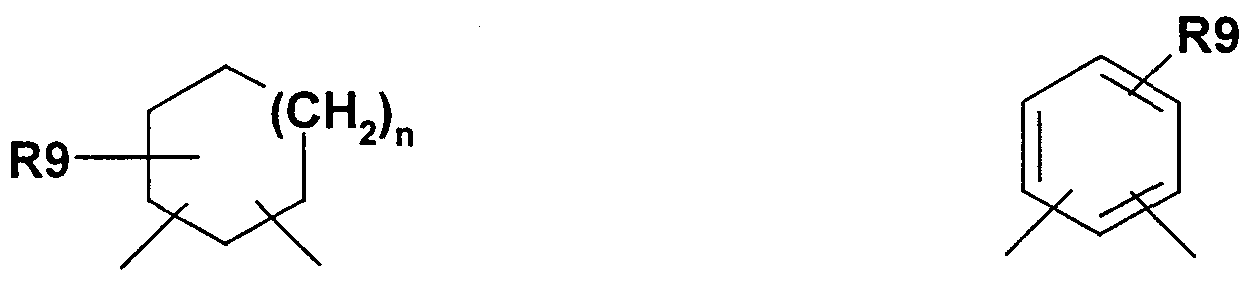


Claims


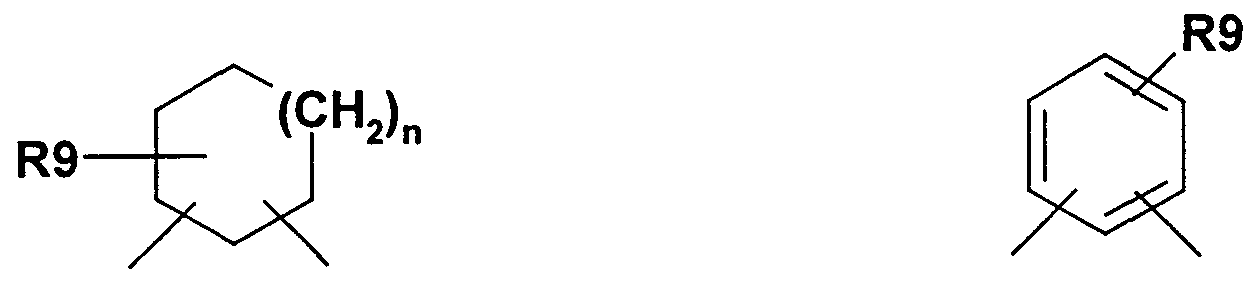


Priority Applications (4)
| Application Number | Priority Date | Filing Date | Title |
|---|---|---|---|
| US09/601,318 US6613769B1 (en) | 1998-02-06 | 1999-02-04 | Tryptase inhibitors |
| AU27230/99A AU2723099A (en) | 1998-02-06 | 1999-02-04 | Tryptase inhibitors |
| JP2000530503A JP2002502845A (ja) | 1998-02-06 | 1999-02-04 | トリプターゼ阻害物質 |
| EP99907497A EP1060171A2 (de) | 1998-02-06 | 1999-02-04 | Tryptase-inhibitoren |
Applications Claiming Priority (4)
| Application Number | Priority Date | Filing Date | Title |
|---|---|---|---|
| DE19804761 | 1998-02-06 | ||
| DE19804761.4 | 1998-02-06 | ||
| DE19851300.3 | 1998-11-06 | ||
| DE19851300A DE19851300A1 (de) | 1998-02-06 | 1998-11-06 | Tryptase-Inhibitoren |
Publications (2)
| Publication Number | Publication Date |
|---|---|
| WO1999040073A2 true WO1999040073A2 (de) | 1999-08-12 |
| WO1999040073A3 WO1999040073A3 (de) | 1999-11-11 |
Family
ID=26043653
Family Applications (1)
| Application Number | Title | Priority Date | Filing Date |
|---|---|---|---|
| PCT/EP1999/000727 Ceased WO1999040073A2 (de) | 1998-02-06 | 1999-02-04 | Tryptase-inhibitoren |
Country Status (5)
| Country | Link |
|---|---|
| US (1) | US6613769B1 (de) |
| EP (1) | EP1060171A2 (de) |
| JP (1) | JP2002502845A (de) |
| AU (1) | AU2723099A (de) |
| WO (1) | WO1999040073A2 (de) |
Cited By (11)
| Publication number | Priority date | Publication date | Assignee | Title |
|---|---|---|---|---|
| WO2001027096A1 (en) * | 1999-10-08 | 2001-04-19 | Tularik Limited | Aminomethyl-(hetero)aryl derivatives and their use as tryptase inhibitors |
| WO2001046128A3 (en) * | 1999-12-20 | 2001-11-22 | Byk Gulden Lomberg Chem Fab | Tryptase inhibitors |
| WO2003011812A1 (en) * | 2001-08-01 | 2003-02-13 | Mochida Pharmaceutical Co., Ltd. | NOVEL AMINE DERIVATIVE HAVING HUMAN β-TRYPTASE INHIBITORY ACTIVITY AND DRUGS CONTAINING THE SAME |
| WO2004013324A1 (ja) * | 2002-08-01 | 2004-02-12 | Mochida Pharmaceutical Co., Ltd. | 結晶性新規トリプターゼおよびその利用 |
| US6924305B2 (en) | 2001-01-31 | 2005-08-02 | Altana Pharma Ag | Diazocine derivatives and their use as tryptase inhibitors |
| US7015325B2 (en) | 1999-12-20 | 2006-03-21 | Altana Pharma Ag | Tryptase inhibitors |
| US7060716B2 (en) | 2001-02-21 | 2006-06-13 | Altana Pharma Ag | Tryptase inhibitors |
| US7101911B2 (en) | 2001-02-21 | 2006-09-05 | Altana Pharma Ag | Tryptase inhibitors |
| US8188277B2 (en) | 2004-08-06 | 2012-05-29 | Otsuka Pharmaceutical Co., Ltd. | Aromatic compounds for suppressing the generation of collagen |
| US8236826B2 (en) | 2005-12-05 | 2012-08-07 | Otsuka Pharmaceutical Co., Ltd. | Diarylether derivatives as antitumor agents |
| US8263599B2 (en) | 2006-10-02 | 2012-09-11 | Otsuka Pharmaceutical Co., Ltd. | STAT3/5 activation inhibitor |
Families Citing this family (2)
| Publication number | Priority date | Publication date | Assignee | Title |
|---|---|---|---|---|
| DE19955476A1 (de) * | 1999-11-18 | 2001-05-23 | Boehringer Ingelheim Pharma | Bis-basische Verbindungen als Tryptase-Inhibitoren, Verfahren zu deren Herstellung sowie deren Verwendung als Arzneimittel |
| ES2278928T3 (es) * | 2001-06-19 | 2007-08-16 | Altana Pharma Ag | Inhibidores de triptasa. |
Family Cites Families (5)
| Publication number | Priority date | Publication date | Assignee | Title |
|---|---|---|---|---|
| WO1995032945A1 (en) * | 1994-06-01 | 1995-12-07 | Arris Pharmaceutical Corporation | Compositions and methods for treating mast-cell mediated conditions |
| KR970706267A (ko) | 1994-09-23 | 1997-11-03 | 다니엘 에이치. 페트리 | 비만 세포 염증성 질환 치료용 조성물 및 방법(compositions and methods for treating mast-cell inflammatory condition) |
| EP0893437A4 (de) | 1996-04-10 | 2000-12-27 | Ono Pharmaceutical Co | Tryptase-Inhibitor und Guanidino-Derivate |
| AU733621B2 (en) * | 1996-07-30 | 2001-05-17 | Axys Pharmaceuticals, Inc. | Novel compounds and compositions for treating diseases associated with tryptase activity |
| ES2233025T3 (es) * | 1998-02-06 | 2005-06-01 | Max-Planck-Gesellschaft Zur Forderung Der Wissenschaften E.V. | Agente inhibidores de la triptasa. |
-
1999
- 1999-02-04 EP EP99907497A patent/EP1060171A2/de not_active Withdrawn
- 1999-02-04 AU AU27230/99A patent/AU2723099A/en not_active Abandoned
- 1999-02-04 US US09/601,318 patent/US6613769B1/en not_active Expired - Fee Related
- 1999-02-04 WO PCT/EP1999/000727 patent/WO1999040073A2/de not_active Ceased
- 1999-02-04 JP JP2000530503A patent/JP2002502845A/ja active Pending
Cited By (12)
| Publication number | Priority date | Publication date | Assignee | Title |
|---|---|---|---|---|
| WO2001027096A1 (en) * | 1999-10-08 | 2001-04-19 | Tularik Limited | Aminomethyl-(hetero)aryl derivatives and their use as tryptase inhibitors |
| WO2001046128A3 (en) * | 1999-12-20 | 2001-11-22 | Byk Gulden Lomberg Chem Fab | Tryptase inhibitors |
| US6815557B2 (en) | 1999-12-20 | 2004-11-09 | Altana Pharma Ag | Tryptase inhibitors |
| US7015325B2 (en) | 1999-12-20 | 2006-03-21 | Altana Pharma Ag | Tryptase inhibitors |
| US6924305B2 (en) | 2001-01-31 | 2005-08-02 | Altana Pharma Ag | Diazocine derivatives and their use as tryptase inhibitors |
| US7060716B2 (en) | 2001-02-21 | 2006-06-13 | Altana Pharma Ag | Tryptase inhibitors |
| US7101911B2 (en) | 2001-02-21 | 2006-09-05 | Altana Pharma Ag | Tryptase inhibitors |
| WO2003011812A1 (en) * | 2001-08-01 | 2003-02-13 | Mochida Pharmaceutical Co., Ltd. | NOVEL AMINE DERIVATIVE HAVING HUMAN β-TRYPTASE INHIBITORY ACTIVITY AND DRUGS CONTAINING THE SAME |
| WO2004013324A1 (ja) * | 2002-08-01 | 2004-02-12 | Mochida Pharmaceutical Co., Ltd. | 結晶性新規トリプターゼおよびその利用 |
| US8188277B2 (en) | 2004-08-06 | 2012-05-29 | Otsuka Pharmaceutical Co., Ltd. | Aromatic compounds for suppressing the generation of collagen |
| US8236826B2 (en) | 2005-12-05 | 2012-08-07 | Otsuka Pharmaceutical Co., Ltd. | Diarylether derivatives as antitumor agents |
| US8263599B2 (en) | 2006-10-02 | 2012-09-11 | Otsuka Pharmaceutical Co., Ltd. | STAT3/5 activation inhibitor |
Also Published As
| Publication number | Publication date |
|---|---|
| US6613769B1 (en) | 2003-09-02 |
| JP2002502845A (ja) | 2002-01-29 |
| WO1999040073A3 (de) | 1999-11-11 |
| EP1060171A2 (de) | 2000-12-20 |
| AU2723099A (en) | 1999-08-23 |
Similar Documents
| Publication | Publication Date | Title |
|---|---|---|
| AU2007225170B2 (en) | Piperidinyl, indolyl, pirinidyl, morpholinyl and benzimidazolyl urea derivatives as inhibitors of soluble epoxide hydrolase for the treatment of hypertension, inflammations and other diseases | |
| DE69819878T2 (de) | Divalente sulfonyl-aryl-oder heteroaryl hydroxamsäureverbindungen | |
| DE60021254T2 (de) | N-cyanomethylamide als protease inhibitoren | |
| DE69827940T2 (de) | Thiarylsulfonamid-hydroxamsäurederivate | |
| EP1060171A2 (de) | Tryptase-inhibitoren | |
| US6489327B1 (en) | Tryptase inhibitors | |
| DE60210612T2 (de) | N-formylhydroxylamin verbindungen als inhibitoren von pdf | |
| KR20090064480A (ko) | 가용성 에폭시드 히드롤라아제 억제제로서의 페닐우레아 화합물 | |
| DE10322191B4 (de) | N-sulfonylierte Aminosäurederivate, Verfahren zu ihrer Herstellung und ihre Verwendung | |
| US4797419A (en) | Method of treating the symptoms of senile cognitive decline employing di- or trisubstituted urea cholinergic agents | |
| EP0638553A1 (de) | Carbonsäureamide mit terminaler Carboxylgruppe als Aggregationshemmende Arzneimittel | |
| AU2019371209B2 (en) | Novel dipeptide compounds and uses thereof | |
| DE60101137T2 (de) | N-Benzensulfonyl-L-Prolin Derivate und deren Verwendung als Bradykinin Antagonisten | |
| EP1115731A2 (de) | Neue pyranosen | |
| DE102005054700B4 (de) | Neue duale Peptidase-Inhibitoren als Prodrugs zur Therapie von entzündlichen und anderen Erkrankungen | |
| US6673786B1 (en) | Tryptase inhibitors | |
| AU783217B2 (en) | Tryptase inhibitors | |
| DE19851300A1 (de) | Tryptase-Inhibitoren | |
| DE60224805T2 (de) | 1-glycinyl-4-(1-methylpiperidin-4-yl)piperazine und -piperidine als faktor-xa-antagonisten | |
| JPH07103101B2 (ja) | ピログルタミン酸誘導体 | |
| EP1360170A1 (de) | Carbonsäureamide, deren herstellung und deren verwendung als arzneimittel | |
| DE60220504T2 (de) | Tryptasehemmer | |
| DE19944066A1 (de) | Inhibitoren der Tryptase | |
| DE60204800T2 (de) | Bestimmte glycin-derivate als faktor xa inhibitoren zur verwendung in der behandlung von thrombose | |
| HK40060683B (en) | Novel dipeptide compounds and uses thereof |
Legal Events
| Date | Code | Title | Description |
|---|---|---|---|
| AK | Designated states |
Kind code of ref document: A2 Designated state(s): AL AM AT AU AZ BA BB BG BR BY CA CH CN CU CZ DE DK EE ES FI GB GD GE GH GM HR HU ID IL IN IS JP KE KG KP KR KZ LC LK LR LS LT LU LV MD MG MK MN MW MX NO NZ PL PT RO RU SD SE SG SI SK SL TJ TM TR TT UA UG US UZ VN YU ZW |
|
| AL | Designated countries for regional patents |
Kind code of ref document: A2 Designated state(s): GH GM KE LS MW SD SZ UG ZW AM AZ BY KG KZ MD RU TJ TM AT BE CH CY DE DK ES FI FR GB GR IE IT LU MC NL PT SE BF BJ CF CG CI CM GA GN GW ML MR NE SN TD TG |
|
| 121 | Ep: the epo has been informed by wipo that ep was designated in this application | ||
| AK | Designated states |
Kind code of ref document: A3 Designated state(s): AL AM AT AU AZ BA BB BG BR BY CA CH CN CU CZ DE DK EE ES FI GB GD GE GH GM HR HU ID IL IN IS JP KE KG KP KR KZ LC LK LR LS LT LU LV MD MG MK MN MW MX NO NZ PL PT RO RU SD SE SG SI SK SL TJ TM TR TT UA UG US UZ VN YU ZW |
|
| AL | Designated countries for regional patents |
Kind code of ref document: A3 Designated state(s): GH GM KE LS MW SD SZ UG ZW AM AZ BY KG KZ MD RU TJ TM AT BE CH CY DE DK ES FI FR GB GR IE IT LU MC NL PT SE BF BJ CF CG CI CM GA GN GW ML MR NE SN TD TG |
|
| DFPE | Request for preliminary examination filed prior to expiration of 19th month from priority date (pct application filed before 20040101) | ||
| WWE | Wipo information: entry into national phase |
Ref document number: 1999907497 Country of ref document: EP |
|
| NENP | Non-entry into the national phase |
Ref country code: KR |
|
| WWP | Wipo information: published in national office |
Ref document number: 1999907497 Country of ref document: EP |
|
| WWE | Wipo information: entry into national phase |
Ref document number: 09601318 Country of ref document: US |
|
| NENP | Non-entry into the national phase |
Ref country code: CA |
|
| REG | Reference to national code |
Ref country code: DE Ref legal event code: 8642 |
|
| WWW | Wipo information: withdrawn in national office |
Ref document number: 1999907497 Country of ref document: EP |