WO1999065973A1 - Dispersion silicone aqueuse, reticulable en elastomere transparent - Google Patents
Dispersion silicone aqueuse, reticulable en elastomere transparent Download PDFInfo
- Publication number
- WO1999065973A1 WO1999065973A1 PCT/FR1999/001435 FR9901435W WO9965973A1 WO 1999065973 A1 WO1999065973 A1 WO 1999065973A1 FR 9901435 W FR9901435 W FR 9901435W WO 9965973 A1 WO9965973 A1 WO 9965973A1
- Authority
- WO
- WIPO (PCT)
- Prior art keywords
- silicone
- pos
- dispersion
- optionally
- dispersion according
- Prior art date
- Legal status (The legal status is an assumption and is not a legal conclusion. Google has not performed a legal analysis and makes no representation as to the accuracy of the status listed.)
- Ceased
Links
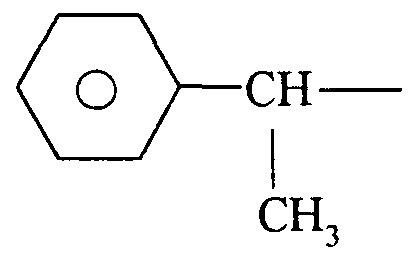
- RWGFKTVRMDUZSP-UHFFFAOYSA-N CC(C)c1ccccc1 Chemical compound CC(C)c1ccccc1 RWGFKTVRMDUZSP-UHFFFAOYSA-N 0.000 description 1
Classifications
-
- C—CHEMISTRY; METALLURGY
- C08—ORGANIC MACROMOLECULAR COMPOUNDS; THEIR PREPARATION OR CHEMICAL WORKING-UP; COMPOSITIONS BASED THEREON
- C08J—WORKING-UP; GENERAL PROCESSES OF COMPOUNDING; AFTER-TREATMENT NOT COVERED BY SUBCLASSES C08B, C08C, C08F, C08G or C08H
- C08J3/00—Processes of treating or compounding macromolecular substances
- C08J3/02—Making solutions, dispersions, lattices or gels by other methods than by solution, emulsion or suspension polymerisation techniques
- C08J3/03—Making solutions, dispersions, lattices or gels by other methods than by solution, emulsion or suspension polymerisation techniques in aqueous media
-
- C—CHEMISTRY; METALLURGY
- C09—DYES; PAINTS; POLISHES; NATURAL RESINS; ADHESIVES; COMPOSITIONS NOT OTHERWISE PROVIDED FOR; APPLICATIONS OF MATERIALS NOT OTHERWISE PROVIDED FOR
- C09K—MATERIALS FOR MISCELLANEOUS APPLICATIONS, NOT PROVIDED FOR ELSEWHERE
- C09K3/00—Materials not provided for elsewhere
- C09K3/10—Materials in mouldable or extrudable form for sealing or packing joints or covers
- C09K3/1006—Materials in mouldable or extrudable form for sealing or packing joints or covers characterised by the chemical nature of one of its constituents
- C09K3/1018—Macromolecular compounds having one or more carbon-to-silicon linkages
-
- C—CHEMISTRY; METALLURGY
- C08—ORGANIC MACROMOLECULAR COMPOUNDS; THEIR PREPARATION OR CHEMICAL WORKING-UP; COMPOSITIONS BASED THEREON
- C08J—WORKING-UP; GENERAL PROCESSES OF COMPOUNDING; AFTER-TREATMENT NOT COVERED BY SUBCLASSES C08B, C08C, C08F, C08G or C08H
- C08J2383/00—Characterised by the use of macromolecular compounds obtained by reactions forming in the main chain of the macromolecule a linkage containing silicon with or without sulfur, nitrogen, oxygen, or carbon only; Derivatives of such polymers
- C08J2383/04—Polysiloxanes
-
- C—CHEMISTRY; METALLURGY
- C09—DYES; PAINTS; POLISHES; NATURAL RESINS; ADHESIVES; COMPOSITIONS NOT OTHERWISE PROVIDED FOR; APPLICATIONS OF MATERIALS NOT OTHERWISE PROVIDED FOR
- C09K—MATERIALS FOR MISCELLANEOUS APPLICATIONS, NOT PROVIDED FOR ELSEWHERE
- C09K2200/00—Chemical nature of materials in mouldable or extrudable form for sealing or packing joints or covers
- C09K2200/02—Inorganic compounds
- C09K2200/0243—Silica-rich compounds, e.g. silicates, cement, glass
- C09K2200/0247—Silica
-
- C—CHEMISTRY; METALLURGY
- C09—DYES; PAINTS; POLISHES; NATURAL RESINS; ADHESIVES; COMPOSITIONS NOT OTHERWISE PROVIDED FOR; APPLICATIONS OF MATERIALS NOT OTHERWISE PROVIDED FOR
- C09K—MATERIALS FOR MISCELLANEOUS APPLICATIONS, NOT PROVIDED FOR ELSEWHERE
- C09K2200/00—Chemical nature of materials in mouldable or extrudable form for sealing or packing joints or covers
- C09K2200/04—Non-macromolecular organic compounds
- C09K2200/0411—Halogen-containing compounds
Definitions
- the field of the present invention is that of silicone compositions which can be hardened by crosslinking and which can be used, in particular, either as sealants or other sealing and / or waterproofing and / or jointing materials, or to form all types of coatings (for example paints) including semi-thick, flexible coatings. More specifically, the invention relates to an aqueous silicone dispersion, capable of forming a transparent elastomer and adhering to many supports, by crosslinking (e.g. polycondensation) accompanied by elimination of water (preferably at room temperature).
- crosslinking e.g. polycondensation
- the silicones or polyorganosiloxanes (POS) which fall within such a context are, in particular, ⁇ , ⁇ -dihydroxylated polydiorganosiloxanes, such as, for example, ⁇ , ⁇ -di-OH polydimethyl siloxanes.
- the aqueous silicone dispersions precursors for sealants or other waterproofing / waterproofing coatings optionally include adhesion promoters, for example silicones (silanes, oligo or polyorganosiloxanes) and optionally crosslinkers of the trialcoxysilane type, or polyfunctional resins comprising several ⁇ SiOR "functions. All of these silicon constituents, when they are not hydrophilic or water-soluble, make up the discontinuous phase (silicone phase ⁇ s ) of the aqueous silicone dispersion.
- adhesion promoters for example silicones (silanes, oligo or polyorganosiloxanes) and optionally crosslinkers of the trialcoxysilane type, or polyfunctional resins comprising several ⁇ SiOR "functions. All of these silicon constituents, when they are not hydrophilic or water-soluble, make up the discontinuous phase (silicone phase ⁇ s ) of the aqueous silicone dispersion.
- aqueous silicone dispersions precursors of mastic, sealing / waterproofing or jointing materials, or of coatings form one of the last generations of silicone compositions used in this technical field. Their aqueous character facilitates handling, shaping, as well as washing the tools used for their application. These aqueous silicone dispersions also have the advantage of less toxicity compared to silicone compositions comprising organic solvents or releasing volatile organic species.
- the hydrophilic phase ⁇ H (non-silicone) of these aqueous dispersions based on silicone oil crosslinkable into an elastomer by (hydrolysis) / condensation, with elimination of water and / or alcohol for example, is continuous and comprises constituents hydrophilic such as, for example, fillers (eg siliceous) and surfactants.
- This hydrophilic phase ⁇ H can also comprise an adhesion promoter, which can also thwart the role of crosslinker.
- compositions also include a condensation catalyst.
- Obtaining these aqueous dispersions of hydroxylated silicone oil can be carried out in the traditional way by mechanical stirring, or alternatively by emulsion polymerization.
- the traditional method consists in using apparatuses of the colloid mill type or homogenizer (FR-A-2 064 563, FR-A-2 1 14 130, FR-A-2 094 322,
- EP-A-0 169 098 This technique is limited to the emulsion of polymers with a viscosity of less than 5,000 mPa.s. It is possible to mechanically emulsify more viscous oils, for example using the techniques described in FR-A-2
- these aqueous silicone dispersions precursors of sealants and / or of waterproofing / waterproofing coatings have specifications whose specifications can be further improved. These specifications can be improved:
- European patent application EP-A-0 542 498 relates to aqueous silicone emulsions which can be transformed by crosslinking and drying into a translucent elastomer.
- These emulsions contain crosslinked polydimethylsiloxane (PDMS), in the form of a dispersed phase in which less than 10% of the particles have a size greater than 1000 nm.
- PDMS polydimethylsiloxane
- This emulsion also comprises a surfactant of formula: RSO 4 M, of the sodium lauryl sulfate type.
- the undispersed aqueous phase of this emulsion comprises a crosslinking agent of the alkoxysilane type ( ⁇ - methacryloxypropyl, trimethoxysilane chloropropyltrimethoxysilane, trifluoropropyl- trimethoxysilane, vinyltrimethoxysilane) and a filler consisting, for example, of precipitated silica of the order of 19 nm. and by colloidal silica, the particle size of which is approximately 20 nm.
- This non-dispersed continuous aqueous phase also comprises a condensation catalyst of the tin octoate type.
- Example 5 of EP-A-0 542 498 the translucency obtained for the elastomer resulting from aqueous silicone emulsions is of the order of 85% T transmittance for a 47 mil crosslinked dry elastomer film. (1.519 mm).
- T transmittance varying from 0 ⁇ T ⁇ 100% of a film of thickness e irradiated with white light of wavelength ⁇ between 400 and 700 nm
- ⁇ extinction coefficient (mm "1 )
- the transparency index R of the crosslinked elastomer films obtained according to EP-A-0 542 498 is greater than 25%.
- the extinction coefficient ⁇ of these films is greater than 0.8 mm "1 .
- the emulsions according to EP-A-0 542 498 are restricted to those comprising a specific surfactant of the sodium lauryl sulfate type.
- Patent application EP-A-0 739 929 discloses aqueous dispersions of polyorganodisiloxanes of the polydimethylsiloxane type, crosslinkable into an elastomer having improved temperature stability and transparency properties. According to this request, these advantages are obtained through the choice of particular surfactants which are not al ylsulfates, linear alkylbenzene sulfates, alkylsulfonates, or laurates. The surfactants must not behave as catalysts for the redistribution of siloxanes at temperatures above 100 ° C.
- the surfactants must be such that after evaporation of the water from the aqueous silicone (latex) silicone dispersion, the resulting elastomer composition comprises a cross-linked POS ⁇ s phase with refractive index n s , and an aqueous residual phase (comprising surfactants) with a refractive index n H , ⁇ H equaling n s .
- This silicone latex is obtained by emulsifying the silicone phase / surfactants / water mixture. This leads to a gelled phase, the silicone polymer content of which is at least 85%.
- the emulsion is then diluted with water.
- a catalyst is incorporated before or after the emulsification, or before or after dilution.
- the silicone polymer or the mixture of silicone polymers comprises an organic solvent.
- this aqueous silicone dispersion can be added with a filler, for example siliceous. It is also envisaged to incorporate a stabilizer of the diethylamine or 2-amino-2-methyl-1-propanol type in the silicone latex. It should be noted that. in accordance with the teaching of EP-A-0 739 929, page 5 line 44, transparent crosslinked elastomers can only be obtained from silicone latex or aqueous silicone dispersion free of fillers.
- the polyorganosiloxane used is a ⁇ - ⁇ -di-OH polydimethylsiloxane.
- the surfactant can be an alkylphenol sodium ethersulfate, an ethoxylated trisiloxane, a secondary alcohol ethoxylate, a trimethylated ammonium chloride and carrying an alkyl chain of soy fatty acid.
- the catalyst is a condensation catalyst, of the dibutyltin dilaurate type and the crosslinker is, for example, isobutyltrimethoxysilane.
- one of the essential objectives of the present invention is to provide an aqueous silicone dispersion: • charged,
- Crosslinkable into a transparent elastomer by elimination of water and / or alcohol and / or of a carboxylic residue of the acyloxy type, preferably under ambient atmospheric conditions,
- the present invention aims to optimize the transparency properties of sealants and / or waterproofing / waterproofing coatings obtained by crosslinking from these aqueous silicone dispersions, without sacrificing the other specifications of the technical specifications, including, in particular , stability, elasticity, resilience, hardness, mechanical strength, adhesion to common substrates (glass, wood, metals, ceramics) and the low cost price.
- Another essential objective of the present invention is to provide an aqueous silicone dispersion crosslinkable by condensation, in a correct and sufficiently rapid manner, into a charged, transparent elastomer with lasting mechanical properties.
- Another essential objective of the invention is to provide an aqueous dispersion of silicone, of the type described above and which is easy to use and, in particular, easily smoothed and washable with water (cleaning of the tools used to their preparation and application), due to the exclusive presence of water as solvent or liquid element of the continuous phase.
- Another essential objective of the invention is to provide an aqueous dispersion of silicone which is stable on storage (for example in "potlife" cartridge)
- Another essential objective of the invention is to provide an aqueous dispersion of silicone of the type described above and leading to a crosslinked, charged, transparent elastomer having improved flame resistance.
- Another object of the invention is to provide an aqueous silicone dispersion of the type described above, which can be easily handled and shaped. especially for mastics and / or waterproofing / waterproofing / grouting type applications
- Another essential objective of the invention is to provide a sealant, a waterproofing / waterproofing material, a waterproofing / waterproofing coating, which is translucent and which comprises the above-mentioned dispersion and / or the crosslinked elastomer which results therefrom.
- the present invention relates to an aqueous silicone dispersion which can be crosslinked into a transparent elastomer, of the type of those comprising (i) a silicone phase ⁇ s d refractive index n s and including
- a hydrophilic phase ⁇ H non-silicone of refractive index ⁇ H and comprising at least one charge CH, a surfactant TA and, optionally, at least one catalyst and / or at least one adhesion promoter B ' water soluble, character in that
- the hydrophilic phase ⁇ comprises all the hydrophilic constituents with the exclusion of water (iii) from the dispersion.
- This dispersion has the advantage of being transformable by crosslinking (hydrolysis-condensation) with elimination of water and possibly alcohol or acyloxy units, made of hardened and transparent elastomer, while being provided with a particulate filler, for example siliceous allowing a certain adjustment of the mechanical properties of the elastomer. This possibility is particularly advantageous in sealant or waterproofing / waterproofing type applications.
- the term "transparent" means that the cured silicone elastomer has a transparency R ⁇ 30%, preferably R ⁇ 25% and, more preferably still, 0% ⁇ R ⁇ 16%.
- the crosslinking function is provided by at least one of the constituents A, B, B ', D of ⁇ s.
- This crosslinking function assumes that at least three crosslinking functions (for example OH, alkoxy, acetoxy, ketiminoxy, enoxy) are present per molecule. There is nothing to prevent the crosslinking functions from being different from one another, but, in practice, they are preferably only condensable silanol functions.
- the above-mentioned aqueous silicone dispersion can be transformed into a transparent elastomer, this transformation being accompanied by elimination of water, advantageously by evaporation.
- This water is essentially that of the aqueous phase of the emulsion and in a minority comes from the condensation of the hydroxyls of the silanols.
- POS A is crosslinkable by condensation or hydrolysis-condensation, possibly in the presence of a condensation catalyst C;
- the optional crosslinking agent D comprises at least one hydroxylated and / or alkoxylated silicone resin and, optionally, at least one alkoxysilane E which supplies the ⁇ SiOR a ends of the POS A.
- POS A preferably comprises at least one viscous and reactive silicone homopolymer or copolymer, capable of forming, by polycondensation, a cross-linked three-dimensional network: • either alone if it is tri- or polyfunctional, • or in combination with a cross-linking agent B and / or B ', D and / or E if the POS A is only dysfunctional.
- the functionalities considered are crosslinking functionalities, preferably by (hydrolysis) / condensation. These functionalities are, for example hydroxyls or alkoxyls.
- the general formula of POS A is as follows:
- R f corresponds to hydrogen or to a linear or branched alkyl in CC, optionally substituted by a linear or branched alkyl in C ⁇ -C 3 (for example: methyl, ethyl, propyl, ethoxyethyl);
- R 3 , R 4 , R 5 , R 6 are identical or different radicals and chosen from:
- + and / or C ⁇ -C ⁇ aryls optionally substituted with 1 to 3 linear or branched alkyls, in CC 3 (for example: phenyl, totyl), + and / or aralkyls comprising for the aryl part C ⁇ -Cs atoms of carbon and for the alkyl part, linear or branched, C ⁇ -C carbon atoms (for example:
- + and / or aralkenyls comprising for the aryl part C ⁇ -Cs carbon atoms and for the alkenyl part, linear or branched, C ⁇ -C 4 carbon atoms (for example: styryl).
- R N corresponds to identical or different radicals which are defined as being amino radicals, preferably aminoalkyls or alkyl radicals comprising one or more epoxy and / or carboxylic and / or methacryloxy and / or mercapto and / or isocyanates and / or isocyanurates and / or cyano;
- R e represents radicals which are identical or different from each other, which are defined as being radicals corresponding to the same definition as that given above for RR 4 , R 5 , R 6 and / or radicals corresponding to the same definition as that given above for r R>N;
- POS A is a silicone oil formed by a homo or a copolymer of formula A given above, in which:
- R e , R 3 to R 6 are radicals which are identical or different from each other and chosen from:
- oils A prepared by the anionic polymerization process described in the aforementioned US patents: US-A-2,891,920 and, above all, US-A-3,294,725 (cited as reference).
- the polymer obtained is anionically stabilized with a surfactant which, according to the teaching of US Pat. No. 3,294,725, is preferably the salt of an alkali metal of an aromatic sulphonic hydrocarbon acid, l free acid also playing the role of polymerization catalyst.
- Catalyst and surfactant preferred are dodecylbenzenesulfonic acid or alkylsulfuric acid and their alkali metal salts, in particular their sodium salts.
- anionic or non-anionic surfactants can be added.
- this addition is not necessary because, in accordance with the teaching of TUS-A-A3 294 725, the amount of anionic surfactant, resulting from the neutralization of the sulfonic acid, is sufficient to stabilize the emulsion of polymer. This amount is generally less than 3%, preferably 1.5% of the weight of the emulsion.
- This emulsion polymerization process is particularly advantageous because it makes it possible to directly obtain an emulsion containing the oil A. Furthermore, this process makes it possible without difficulty to obtain oils A in very high viscosity emulsion.
- oils A already polymerized for the preparation of the dispersion using for example the techniques for emulsifying the silicone phase described in FR-A-2 697 021.
- the viscosity ⁇ at 25 ° C of these POS A is at least 100 mPa.s, preferably at least 50,000 mPa.s. It is, in fact, in particular for viscosities ⁇ greater than 50,000 mPa.s that an elastomer is obtained having a set of suitable mechanical properties, in particular at the level of shore A hardness and elongation. In addition, the higher the viscosity, the more the mechanical properties are preserved during aging of the crosslinked elastomer capable of being obtained from the aqueous dispersion.
- the viscosities ⁇ at 25 ° C are between 5 x 10 4 and 15 x 10 5 mPa.s. All the viscosities referred to in this presentation correspond to a quantity of dynamic viscosity at 25 ° C, called "Newtonian", that is to say the dynamic viscosity which is measured, in a manner known per se, at a sufficiently low shear speed gradient so that the viscosity measured is independent of the speed gradient.
- the optional adhesion promoters B and B ′, of phases ⁇ s and ⁇ * ⁇ respectively, can correspond to any known product, including in particular:
- 0 R 10 represents a monovalent group free of nitrogen, of identical or different nature from one repeating unit to another, and corresponding to hydrogen, a C 6 -C 6 alkyl, an aryl or a C 2 alkenyl -C 8 , optionally preferably substituted by a halogen or halogen radical, R 10 being more particularly selected from the group comprising: H, optionally halogenated C C4 alkyl; methyl, ethyl, propyl, trifluoro-3,3,3-propyl, vinyl, allyl and phenyl groups being more particularly preferred; ° R 20 represents a monovalent hydrocarbon group, linked to silicon by an Si-C bond and containing at least one nitrogen atom, R 2 being of identical or different nature from one recurring unit to another; ° R 30 is a hydrocarbon group comprising from 1 to 18 carbon atoms and, preferably, corresponding to the same definition as that given above for R 10 , 0 x, y and z are whole or decimal
- This compound (i), amino and silicon is preferably a resin having an average functionality of silicon greater than 2, for example DTT (N) resin (OR 3 ) , OR 3 being carried by D and / or T and / or T (N); the symbolization T (N) or D (N) indicating that the amine functionality is carried by at least one T or D motif, as the case may be.
- This amine and silicon compound (i) is as described in French patent application FR-A-2 724 661 which is entirely incorporated in the present description by reference.
- this promoter (i) has a certain amine content (eg at least one amine function per silicon) and / or is salified (depending on the pH), said promoter (i) is then hydrophilic or even water-soluble and corresponds to a promoter B 'included in ⁇ H. (Ii)
- hydroxylated polydiorganosiloxanes linear and with D and / or MD siloxyl units, as an example of polydiorganosiloxane, mention may be made of hydroxylated polymethylsiloxane
- a hydroxylated POS resin comprising siloxy units T and, optionally, M and / or D and / or Q or alternatively siloxy units Q and M and / or D and / or T
- resins may mention T (OH), DT (OH), DQ (OH), DT (OH), MQ (OH), MDT (OH), MDQ (OH), and mixtures thereof.
- these promoters each include one or more anchoring functions on a support, identical or different from each other, and chosen from the group comprising the functions • amino-, epoxy-, acrylo-, methacrylo-, ureido-, mercapto-, chloroalkyl-, preferably aminoalkyl (aminopropyl)
- anchoring functions on a support, identical or different from each other, and chosen from the group comprising the functions • amino-, epoxy-, acrylo-, methacrylo-, ureido-, mercapto-, chloroalkyl-, preferably aminoalkyl (aminopropyl)
- hydrophilic promoter (ii) As soon as the product forming promoter (ii) has a hydrophilic or even water-soluble character, it falls into the category of hydrophilic promoters B 'of ( H. This is particularly the case when (ii) is salified and / or when it it is an amino organosilicon comprising at least one amine function per silicon.
- Organotrialkoxysilanes such as vinyltrimethoxysilane
- alkyl silicates such as methyl silicate or ethyl silicate or their partial hydrolysis / condensation products, i.e. polysilicates of alkyl, such as methyl polysilicate and ethyl polysilicate at a content of 0.1 to 20 parts of adhesion agent per 100 parts by weight of POS
- Organotrialkoxysilanes and alkyl silicates respond, in preference to the general formula in which :
- R 11 is an alkyl radical having from 1 to 4 carbon atoms
- R 10 meets the same definition as RI 1 or a vinyl.
- Organo di- (or tri-) alkoxy silanes comprising epoxy, carboxylic, methacryloxy, mercapto, isocyanate isocyanurate or cyano groups, as well as the hydrolysis and condensation products of these organoalkoxysilanes.
- POS A and / or promoter B and / or B 'crosslinking function one of its essential characteristics is to be soluble in ⁇ s or dispersible in the silicone phase ⁇ s in the form of nanometric particles.
- This resin D has, per molecule, at least two different units chosen from those of formula M, D, T and
- Q at least one being a T or Q motif.
- organic substituents of these units mention may be made of methyl, ethyl, isopropyl, tert-butyl, n-hexyl and phenyl radicals.
- silicone resins are well-known branched organopolysiloxane polymers, the preparation methods of which are described in numerous patents.
- resins which can be used mention may be made of MQ resins, resins
- MDQ MDQ, TD resins and MDT resins.
- Resins which are solid or liquid at room temperature can be used. These resins can be incorporated as such in the emulsions in POS A, in solution in an organic solvent or a silicone oil, or else in the form of aqueous emulsions (EP-A-0 359 676).
- Aqueous emulsions of silicone resins which can be used are, for example, described in patents US-A-4,028,339, US-A-4,052,331, US-A-4,056,492, US-A
- this optional resin D can crosslinker function through its hydroxyl and / or alkoxyl, capable of reacting by condensation with the OR a silicone oil A.
- the possible crosslinking agent D can be formed by the above-described aminoalkylated silicone resin (i) (optionally salified), the latter comprising, for this purpose, molecules having at least three OR J groups per molecule, which corresponds to w + y ⁇ 2 in (I).
- this crosslinking agent D can be formed by the hydrophilic promoter B 'contained in ⁇ H , this crosslinking agent D / B' therefore has the property of being soluble in ⁇ H or dispersible in ⁇ H in the form of nanometric particles.
- Alkoxysilane E can play the same crosslinking role as D. But it can only react with silicone oil A provided that a prior hydrolysis of the OR functions has occurred.
- the crosslinking agent E can also be chosen from the following products: siliconate, silicate, silica (in powder or colloidal and their mixtures).
- catalyst C it is preferably a tin catalytic compound.
- the latter is generally an organotin salt, preferably introduced in the form of an aqueous emulsion.
- organotin salts which can be used are described, in particular in the work of NOLL, Chemistry and Technology of Silicones Academy Press (1968), page 337.
- reaction product of a tin salt in particular a tin dicarboxylate on ethyl polysilicate, can also be used as the tin catalytic compound, as described in US Pat. No. 3,862 919.
- the preferred tin salts are the tin bischelates (EP-A-147 323 and EP-A-235 049), the diorgano-tin dicarboxylates and in particular the dibutyl- or dioctyltin diversatates (British patent GB-A- 1,289,900), dibutyl- or dioctyltin diacetate, dibutyl- or dioctyltin dilaurate. 0.01 to 3, preferably 0.05 to 2 parts of organotin salt is used per 100 parts of A
- strong acids or bases KOH, NaOH
- amines optionally the amine of resin C
- catalyst F can also be used as catalyst F.
- the dispersion comprises at least one POS A1 whose refractive index n A ⁇ is such that
- POS Al is a silicone oil formed by a diorganopolysiloxane, ⁇ -diOH of the following formula:
- R 1, R 2 are identical or different one another and correspond to: - a linear or branched -C O, preferably methyl, ethyl, propyl, butyl, pentyl or hexyl, - or to a cyclic, linear or branched C 1 -C 6 alkenyl, preferably a vinyl;
- R N , R 3 are as defined above in formula (A). • q> 10,
- organic radicals R 1 , R 2 , R J , R ′ may also be, optionally, substituted by cyano or fluoro groups.
- the substituents generally used because of their availability in industrial products, are the methyl, ethyl, propyl, vinyl and 3,3,3-trifluoropropyl radicals.
- radicals In general, at least 80% by number of these radicals are methyl radicals.
- n R refractive index
- ⁇ is, eg such that: n R > 1.460, preferably. n R > 1.475.
- This n s enhancing agent is advantageously selected from the group of compounds comprising: a) at least one paraffin oil (monomer and / or oligomer and / or polymer); b) at least one alkyl phthalate comprising an alkyl residue, linear or branched, having from 1 to 13 carbon atoms (monomer); c) at least one aromatic alkyl of molecular weight> 200 g / mole (monomer and / or oligomer and / or polymer), d) and their mixtures.
- the enhancing agent is chosen from the aromatic alkyl compounds c) and, more preferably still, from the following compounds C: ⁇ ) a monoalkylbenzene comprising an alkyl residue, linear or branched, having from 9 to 30 carbon atoms, ⁇ ) a dialkylbenzene comprising alkyl residues, linear or branched, having 5 to 25 carbon atoms, ⁇ ) a diphenyl-alkane comprising an alkane residue, linear or branched, having 4 to 25 carbon atoms, ⁇ ) an alkylate containing at least one ⁇ monoalkylbenzene and / or at least one ⁇ dialkylbenzene and / or at least one ⁇ diphenyl alkane.
- a monoalkylbenzene comprising an alkyl residue, linear or branched, having from 9 to 30 carbon atoms
- a dialkylbenzene comprising alkyl residues, linear or branched, having 5 to 25 carbon atoms
- alkylate PROGLLINE 155 The average composition of this PROGILINE alkylate is a mixture based on:
- meta- and para-dialkylbenzenes comprising branched alkyl radicals having from 16 to 20 carbon atoms. It goes without saying that this enhancer of n s is used in chosen proportions so that it is miscible with ⁇ s.
- the dispersion comprises at least one POS A2 with a refractive index n A2 and chosen so that
- R 3 , R 4 are radicals, identical or different from each other and each comprising a linear or branched alkyl, C ⁇ -C 6 , of - • preferably methyl, ethyl, propyl, butyl, pentyl or a hexyl,
- R 5 are radicals, identical or different from each other and each comprising
- a linear or branched C 6 -C 6 alkyl preferably methyl, ethyl, propyl, butyl, pentyl or hexyl,
- R 6 are radicals, identical or different from each other and each comprising
- a linear or branched C7-C ⁇ ⁇ alkyl preferably an octyl, a nonyl and / or a dodecyle,
- n • m, n, p> 0, m and n are such that
- poly (methylaryl) (dimethyl) siloxane in which the aryl substituents are, for example, phenethyl and / or styryl and / or aryl of formula:
- the POS A2 defined by
- ⁇ 0.04 is associated with at least one enhancer of n s , preferably chosen from solvents S a of POS A2, this enhancer is moreover present in chosen proportions so that it is miscible with s Cet n s enhancer has a refractive index n R and was defined above in the context of the description of the first embodiment of the invention
- said dispersion comprises at least one POS A1 whose refractive index is such that! n A! - n H
- the dispersion contains.
- At least one enhancer of the refractive index ng of the silicone phase preferably chosen from the common solvents S of POS Al and POS A2, this enhancer being moreover present in proportions chosen such that 'it is miscible with ⁇ g.
- the booster is a solvent S of Al and A2 (third solvent).
- This third solvent S can be selected from the solvents Sa as defined above.
- a fourth embodiment of the dispersion according to which the latter is characterized in that it comprises at least one TA surfactant selected from fluorinated ionic surfactants, nonionic or amphoteric and mixtures thereof, preferably from the group of compounds comprising:
- TA having, moreover, a refractive index nj ⁇ ⁇ 1, 5, preferably ⁇ 1, 43.
- fluorinated surfactant is meant, as is well known per se, a compound formed from an aliphatic perfluorocarbon part, comprising at least three carbon atoms, and a hydrophilic, ionic, nonionic or amphoteric part.
- the perfluorocarbon part of at least three carbon atoms can represent either the whole or only a fraction of the fluorocarbon part of the molecule.
- references in the literature A person skilled in the art may refer in particular to FR-A-2 149 519, WO-A-94 21 233, US-A-3 194 767, the work "Fluorinated Surfactants", Erik Kissa, Publisher Marcel Dekker Inc.
- surfactants mention will be made, in particular, of anionic, cationic, nonionic and amphoteric perfluoroalkyl compounds, and among them, more particularly, surfactants of the ZONYL® class marketed by DU PONT, e.g.
- - ZONYL® FS-300 CAS 65545-80-4, 40%, the rest being 1,4-dioxane ( ⁇ 0.1%) and water - ZONYL®FSD: CAS 70983-60-7 30 %, (cationic), the remainder being hexylene glycol (10%), sodium chloride (3%) and water (57%).
- CAS 65545-80-4 40%, the rest being 1,4-dioxane ( ⁇ 0.1%) and water - ZONYL®FSD: CAS 70983-60-7 30 %, (cationic), the remainder being hexylene glycol (10%), sodium chloride (3%) and water (57%).
- perfluoroalkyl betaines such as that marketed by ELF- ATOCHEM under the name FORAFAC 1,157
- ethoxylated polyfluoroalcohols such as that marketed by ELF- ATOCHEM under the name FORAFAC 1,110 D
- polyfluoroalkyl salts ammonium such as that sold by ELF-ATOCHEM under the name FORAFAC 1179;
- surfactants whose hydrophilic part contains one or more saccharide unit (s) containing from 5 to 6 carbon atoms (units derived from sugars such as fructose, glucose, mannose, galactose, talose, gulose, allose, altose.
- n can range from 2 to 20, preferably from 2 to 10 and RF represents a perfluoroalkyl unit of formula C m F2m + l with m which can range from 1 to 10 , preferably from 4 to 8, chosen from those having the characteristics defined above; mention may be made of monoesters of perfluoroalkyl fatty acids and of sugars such as ⁇ , ⁇ -trehalose and sucrose, the monoester function being able to be represented by the formula Rp (CH 2 ) n C (O), where n can range from 2 to 10 and RF represents a perfluoroalkyl unit of formula C m F 2m + ⁇ with m which can range from 4 to 8, described in JAOCS, Vol. 69, no. 1 (January 1992) and chosen from those having the characteristics defined
- polyelectrolytes having fatty perfluoroalkyl side groups such as polyacrylates having R F (CH 2 ) n groups where n can range from 2 to
- Rp represents a perfluoroalkyl unit of formula
- the dispersion is characterized by a TA concentration, expressed in% by weight relative to ps, is as follows:
- TA can consist of one or more fluorinated surfactants combined with other surfactants, without this affecting the transparency of the final elastomer.
- the present invention also encompasses the case in which there is a dispersion where at least one of the constituents of the silicone phase ⁇ s is chosen for its refractive index sufficiently close to n H and at least one of the constituents of the non-silicone hydrophilic phase ⁇ H would be chosen for its index low enough to be close to or even less than or equal to n s .
- aqueous silicone dispersion makes it possible to obtain a final elastomer satisfying the specifications charges and, in particular, having transparency characteristics such that the extinction coefficient ⁇ expressed in mm " is ⁇ 1, preferably ⁇ 0.8, respectively for
- the dispersion is characterized by the following composition in parts by dry weight
- hydroxylated silicone resins preferably among the resins of the genus T (OH), DT (OH), DQ (OH), DT (OH),
- siliceous filler CH preferably selected from the following products: precipitated silica or not, colloidal or powdered silica and mixtures of these products, -» 0 to 20 of at least one additive AS silicon, such as sodium silicate or organosilicate, with the condition that at least one of the components D, B, B 'or E is present in the composition.
- AS silicon such as sodium silicate or organosilicate
- the CH charges used may be, for example, charges
- Such siliceous fillers have a particle size generally between a few nanometers and 300 ⁇ m and a BET surface greater than 50 m 2 / g.
- siliceous fillers are chosen e.g. from colloidal silicas, combustion and precipitation silica powders or their mixtures.
- silicas are well known, they are used, in particular, as fillers in silicone elastomer compositions, which can be vulcanized when hot to a silicone rubber.
- These silicas have an average particle size, generally less than 0.1 ⁇ m and a BET specific surface preferably between 100 and
- siliceous fillers such as diatomaceous earths, ground quartz, or optionally a hydrated alumina or a titanium dioxide, provided that such fillers are sufficiently fine. so as not to interfere with transparency (nanometric charges).
- colloidal silicas in the form of fine particles of silicas (less than or equal to ONOm) predispersed in water, or nanolatex of organic polymers (non-silicone) as claimed in the PCT WO application. -A-97/47 687.
- These CH charges are introduced into the emulsion in the form of dry powder or in the form of colloidal dispersions, for example by simple mixing.
- non-fluorinated TA surfactants which are, for example, selected from the alkali metal salts of sulfonic or alkylsulfuric aromatic hydrocarbon acids and the preferred nonionic surfactants are polyoxyethylenated alkylphenols or polyoxyethylenated fatty alcohols.
- the amount of surfactant that can be used is that commonly used for emulsification as described in particular in the aforementioned patents and in patent US-A-2 891 920.
- nonionic preferably, ionic or amphoteric surfactants can be used alone or as a mixture between them.
- the dispersion optionally further comprises at least one dispersant F, and / or at least one plasticizer G, and / or at least one antifungal agent H, and / or at least one antifoam agent I, and / or at least one stabilizer or thickener J, and / or at least one base K, and / or a pigment or dye L (minerals or organic).
- the dispersants F can consist, for example, of sodium polyacrylates and or of sodium hexametaphosphate.
- the plasticizers G are preferably chosen from non-reactive silicone oils (blocked) and / or from enhancers of the index n s of ⁇ s (solvents S a and S), such as those described above and , in particular, alkyl benzenes and, in particular, those described in patent application FR 2 446 849.
- the stabilizing or thickening agents J may be carboxymethylcellulose or xanthan gum.
- pigments or dyes L there may be mentioned: carbon black, aluminum oxide, expanded vermiculite or not, calcium carbonate, zinc oxide, mica, talc, iron oxide, barium sulfate, slaked lime and their mixtures.
- the aqueous silicone dispersion which can be crosslinked into an adherent elastomer is an oil-in-water emulsion loaded, the dry extract of which is greater than or equal to 40% by weight, preferably 80% by weight and, more preferably still, between 80% and 95% by weight.
- the dispersion of the invention as defined above is further characterized in that it comprises droplets of dispersed silicone phase ⁇ s in an at least partially crosslinked form.
- the dispersion can be stored in this form, before use, in an appropriate package, protected from air (such as eg a sealant application cartridge). And it is only after application on a support that the droplets of ⁇ s merge by coalescence to form a homogeneous material, which then finishes its transformation into an elastomer by crosslinking and elimination of water (evaporation).
- the dispersions according to the invention are more particularly suitable in the building industry, for producing sealants, caulking and sealing materials, such as gaskets or even for preparing films, coatings or other thin layers.
- the present invention relates to a process for preparing the dispersion, as defined above.
- This process is characterized in that it essentially consists in producing an emulsion of at least part of the silicone phase ⁇ s in an aqueous phase containing at least part of the hydrophilic phase ⁇ H and / or water , using mechanical stirring means.
- the silicone phase ⁇ s which is emulsified in the aqueous phase, comprises all or part of its constituents [(A), (B), (Sa),
- a silicone phase ⁇ s is emulsified comprising only at least part of POS A with the aqueous phase comprising all or part of the non-silicone hydrophilic phase ⁇ H
- the silicone phase ⁇ s is prepared by mixing all these constituents, and on the other hand, the hydrophilic phase
- the charge CH of ⁇ H is added to the mixture after the emulsification.
- the emulsification is advantageously carried out using traditional homogenization and stirring means, such as, for example, kneaders, planetary mixers, colloid mills, extruders of the mono- or twin-screw type, or homonenisers , at a temperature for example between 10 and 50 ° C.
- the pH is optionally adjusted between 4 and 13 by adding organic or mineral acid or base (eg potash, amine).
- the final dispersion obtained is homogenized, then degassed, it is then packaged in airtight and water vapor tight packaging.
- the dry extract of the dispersion is preferably between 80 and 95% by weight.
- this dry extract is advantageously between 40 and 75% by weight.
- the preferred precursor system according to the invention is of the one-component type. However, it can also be multi-component, for example two-component. crosslinkable by mixing the components just before application.
- a two-component system is formed by two separate parts PI, P2, intended to be mixed to form the dispersion, one of these parts PI, P2 containing the oil A and the other the crosslinking agent, the catalyst F being, possibly present in only one of the parts PI, P2.
- the subject of the invention is also all end products, including in particular sealants, transparent or adherent waterproofing / waterproofing coatings, films, paints or semi-thick coatings comprising the dispersion and / or crosslinked elastomer. obtained by drying this dispersion.
- the invention also relates to the silicone elastomer at least partially crosslinked, as defined above, in that it is obtained from the dispersion according to the invention, preferably according to a crosslinking by condensation.
- the crosslinked dispersions and elastomers according to the invention are of a nature to offer numerous outlets in the field of sealants, sealing materials, materials for forming coatings in thin layers, films, paints. among others.
- This transparency is all the more interesting as it is obtained without prejudice to the other specifications of the products considered.
- the examples which follow will make it possible to better understand the invention and to grasp all of its advantages, as well as its variant embodiments.
- n s 1.4191.
- the oil / water emulsion obtained has an average particle size of 0.80 ⁇ m and a median particle size of 0.73 ⁇ m
- the putty is spread on 24/5 contrast cards from the company ERICHSEN with a black background and a white background, with a calibrated doctor blade or using calibrated thickness frames, so as to achieve a film of variable thickness which is left to dry for 30 days in a room conditioned at 23 ° C. and at 50% relative humidity
- the thickness e of the dry film is measured using a Palmer.
- the device calculates the covering power of the defined film by the contrast-ratio R, which can vary between 0 in the case of perfectly transparent films (not covering) and 100% in the case of opaque films (fully covering).
- Table 1 The results are collated in table 1 below (note that the value of the extinction coefficient is in principle independent of the thickness, for thicknesses little different from 2 mm). Note that Table 1 includes, for comparison, the
- the refractive index of the silicone phase (H48 + Resin + alkylate) is equal to 1.425 and the average particle size of the emulsion is 1 ⁇ m (with a median of 1.1 ⁇ m).
- the final dry extract of the putty is 84%.
- the respective quantities are: • 206.7 g of Al 48V 135 000 oil, 2.1 g of D 4509 resin. 6.1 g of Rhodasurf ROX,
- the refractive index of the silicone phase (POS Al + resin D) is equal to 1.404.
- EXAMPLE 4 500 g of an ⁇ , ⁇ -dihydroxylated silicone copolymer with a viscosity equal to 124,000 mPa.s and consisting of 10% by weight of Ph 2 SiO units and 90% of Me 2 units are introduced into the IKA reactor.
- the mixture is sheared for 2 hours at 150 rpm (with circulation of cold water in the base of the reactor) which allows an oil / water emulsion of 0.67 ⁇ m of average particle size to be obtained.
- the dry extract of the final putty is 84%.
- the refractive index of the silicone phase ⁇ s (silicone oil + resin - * - alkylate) is equal to 1.4355 and the average particle size of the emulsion is 1 ⁇ m.
- 83.4 g of OH Ludox TM50 (2 cm fraction), 43.1 g of demineralized water, 16 g of promoter B ′ (example 1) and 4 g of emulsion C of dioctyltin dilaurate are added to the emulsion. .
- the dry extract of the final putty is 84%.
- the emulsification is carried out by casting, under shear, this mixture on a base stock consisting of a mixture of 20.6 g of Rhodasurf ROX and 29.1 g of Ludox TM50 ( e fraction).
- 146 g of CH Ludox TM50 (2 * " * fraction)
- 68.1 g of demineralized water, 28 g of promoter B '(example 1) and 7 g of emulsion C of dilaurate are added to the emulsion.
- the dry extract of the final putty is 84%.
- 166.8 g of CH Ludox TM50 the emulsion is added to (2 fraction I), 86.2 g of deionized water, 32 g of B 'and C 8 g emulsion of dioctyltin dilaurate.
- the dry extract of the final putty is 84%.
- the emulsion obtained has an average particle size of 3.15 ⁇ rn (measurements made with COULTER LS I 30 from the company COULTRONICS).
- the temperature in the mass is 19.3 ° C.
- This EMl emulsion has a dry extract of 86%.
Landscapes
- Chemical & Material Sciences (AREA)
- Organic Chemistry (AREA)
- Dispersion Chemistry (AREA)
- Health & Medical Sciences (AREA)
- Chemical Kinetics & Catalysis (AREA)
- Medicinal Chemistry (AREA)
- Polymers & Plastics (AREA)
- Engineering & Computer Science (AREA)
- Materials Engineering (AREA)
- Compositions Of Macromolecular Compounds (AREA)
- Paints Or Removers (AREA)
- Processes Of Treating Macromolecular Substances (AREA)
Abstract
Description






Claims
Priority Applications (5)
| Application Number | Priority Date | Filing Date | Title |
|---|---|---|---|
| CA002335720A CA2335720C (fr) | 1998-06-18 | 1999-06-15 | Dispersion silicone aqueuse, reticulable en elastomere transparent |
| AU41503/99A AU759798B2 (en) | 1998-06-18 | 1999-06-15 | Aqueous silicone dispersion, crosslinkable into transparent elastomer |
| JP2000554790A JP3950631B2 (ja) | 1998-06-18 | 1999-06-15 | 透明なエラストマーに架橋させ得る水性シリコーン分散液 |
| EP99925105A EP1093484A1 (fr) | 1998-06-18 | 1999-06-15 | Dispersion silicone aqueuse, reticulable en elastomere transparent |
| US09/719,778 US6528580B1 (en) | 1998-06-18 | 1999-06-15 | Aqueous silicone dispersion, crosslinkable into transparent elastomer |
Applications Claiming Priority (4)
| Application Number | Priority Date | Filing Date | Title |
|---|---|---|---|
| FR9807875A FR2780066B1 (fr) | 1998-06-18 | 1998-06-18 | Dispersion d'huile silicone avec tensioactif fluore |
| FR98/07875 | 1998-06-18 | ||
| FR99/01955 | 1999-02-12 | ||
| FR9901955A FR2780067B1 (fr) | 1998-06-18 | 1999-02-12 | Dispersion sillicone aqueuse reticulable en elastomere transparent et materiau d'etancheification et/ou de jointoiement et/ou de revetement comprenant cet elastomere |
Publications (1)
| Publication Number | Publication Date |
|---|---|
| WO1999065973A1 true WO1999065973A1 (fr) | 1999-12-23 |
Family
ID=26234391
Family Applications (1)
| Application Number | Title | Priority Date | Filing Date |
|---|---|---|---|
| PCT/FR1999/001435 Ceased WO1999065973A1 (fr) | 1998-06-18 | 1999-06-15 | Dispersion silicone aqueuse, reticulable en elastomere transparent |
Country Status (9)
| Country | Link |
|---|---|
| US (1) | US6528580B1 (fr) |
| EP (1) | EP1093484A1 (fr) |
| JP (1) | JP3950631B2 (fr) |
| KR (1) | KR100620299B1 (fr) |
| AU (1) | AU759798B2 (fr) |
| CA (1) | CA2335720C (fr) |
| FR (1) | FR2780067B1 (fr) |
| RU (1) | RU2223989C2 (fr) |
| WO (1) | WO1999065973A1 (fr) |
Families Citing this family (18)
| Publication number | Priority date | Publication date | Assignee | Title |
|---|---|---|---|---|
| US6740626B2 (en) * | 1996-04-02 | 2004-05-25 | S.C. Johnson & Son, Inc. | Acidic cleaning formulation containing a surface modification agent and method of applying the same |
| KR100688619B1 (ko) * | 1999-12-31 | 2007-03-08 | 주식회사 케이씨씨 | 내열피막조성물 |
| JP4947855B2 (ja) * | 2001-07-31 | 2012-06-06 | 東レ・ダウコーニング株式会社 | 皮膜形成性シリコーン樹脂組成物 |
| FR2856695B1 (fr) * | 2003-06-27 | 2005-09-16 | Rhodia Chimie Sa | Composition polyorganosiloxane monocomposante reticulant en elastomere silicone |
| CN100368488C (zh) * | 2003-08-06 | 2008-02-13 | 关桂南 | 一种隔热防渗防污外墙腻子 |
| FR2880026B1 (fr) * | 2004-12-23 | 2007-03-30 | Rhodia Chimie Sa | Dipersion aqueuse de polyether silyle |
| WO2006127649A2 (fr) * | 2005-05-22 | 2006-11-30 | U.S. Borax Inc. | Formulation co-biocide pour materiaux polymeres |
| DE102005043542A1 (de) * | 2005-09-13 | 2007-03-15 | Graphit Kropfmühl AG | Stabile wässrige Graphitdispersion mit hohem Feststoffgehalt |
| JP2007106944A (ja) * | 2005-10-17 | 2007-04-26 | Shin Etsu Chem Co Ltd | 室温硬化性オルガノポリシロキサン組成物 |
| ATE517144T1 (de) * | 2007-12-14 | 2011-08-15 | Henkel Ag & Co Kgaa | Härtbare zusammensetzungen enthaltend wässrige dispersionen von organopolysiloxanen |
| KR101657729B1 (ko) * | 2009-01-08 | 2016-09-19 | 나노그램 코포레이션 | 폴리실록산 중합체와 무기 나노입자의 복합체 |
| RU2503695C2 (ru) * | 2011-08-12 | 2014-01-10 | Закрытое акционерное общество "Комплексный технический сервис" | Силоксановый материал и способ его получения |
| GB201212782D0 (en) | 2012-07-18 | 2012-08-29 | Dow Corning | Organosiloxane compositions |
| EP3445737A1 (fr) | 2016-04-20 | 2019-02-27 | Dow Silicones Corporation | Composition d'alkylsiliconate de lithium, revêtement et procédé pour les produire |
| US10844025B2 (en) | 2016-08-22 | 2020-11-24 | North Carolina State University | 4-oxazolidinone antimicrobial agents |
| CN107602861B (zh) * | 2017-08-28 | 2021-01-12 | 哈尔滨工业大学无锡新材料研究院 | 一种水性阻燃含氟硅油及其制备方法 |
| US11248130B2 (en) | 2018-04-20 | 2022-02-15 | Ecp Incorporated | Vehicle interior protective coating |
| KR102316544B1 (ko) | 2019-12-04 | 2021-10-22 | 포항공과대학교 산학협력단 | 지방산 아미드 함유 중합체 기반의 올레오젤 및 이의 제조방법 |
Citations (5)
| Publication number | Priority date | Publication date | Assignee | Title |
|---|---|---|---|---|
| US3996189A (en) * | 1975-04-29 | 1976-12-07 | American Optical Corporation | Optically clear filled silicone elastomers |
| FR2377438A1 (fr) * | 1977-01-18 | 1978-08-11 | Bayer Ag | Emulsions stables d'alkylhydridopolysiloxannes |
| EP0542498A2 (fr) * | 1991-11-13 | 1993-05-19 | Dow Corning Corporation | Elastomères de silicone claires à base aqueuse |
| EP0739929A2 (fr) * | 1995-04-27 | 1996-10-30 | Dow Corning Corporation | Latex à partir de polysiloxanes émulsionnés directement en présence d'agents surfactants sélectionnés et ayant des propriétés physiques améliorées |
| WO1997047687A1 (fr) * | 1995-05-19 | 1997-12-18 | Rhodia Chimie | Dispersion aqueuse a base de silicones et de latex de (co)polymere(s) organique(s) pour la preparation d'elastomere silicone a translucidite reglable |
-
1999
- 1999-02-12 FR FR9901955A patent/FR2780067B1/fr not_active Expired - Fee Related
- 1999-06-15 WO PCT/FR1999/001435 patent/WO1999065973A1/fr not_active Ceased
- 1999-06-15 CA CA002335720A patent/CA2335720C/fr not_active Expired - Fee Related
- 1999-06-15 US US09/719,778 patent/US6528580B1/en not_active Expired - Lifetime
- 1999-06-15 AU AU41503/99A patent/AU759798B2/en not_active Ceased
- 1999-06-15 JP JP2000554790A patent/JP3950631B2/ja not_active Expired - Fee Related
- 1999-06-15 KR KR1020007014364A patent/KR100620299B1/ko not_active Expired - Fee Related
- 1999-06-15 RU RU2001101912/04A patent/RU2223989C2/ru not_active IP Right Cessation
- 1999-06-15 EP EP99925105A patent/EP1093484A1/fr not_active Withdrawn
Patent Citations (5)
| Publication number | Priority date | Publication date | Assignee | Title |
|---|---|---|---|---|
| US3996189A (en) * | 1975-04-29 | 1976-12-07 | American Optical Corporation | Optically clear filled silicone elastomers |
| FR2377438A1 (fr) * | 1977-01-18 | 1978-08-11 | Bayer Ag | Emulsions stables d'alkylhydridopolysiloxannes |
| EP0542498A2 (fr) * | 1991-11-13 | 1993-05-19 | Dow Corning Corporation | Elastomères de silicone claires à base aqueuse |
| EP0739929A2 (fr) * | 1995-04-27 | 1996-10-30 | Dow Corning Corporation | Latex à partir de polysiloxanes émulsionnés directement en présence d'agents surfactants sélectionnés et ayant des propriétés physiques améliorées |
| WO1997047687A1 (fr) * | 1995-05-19 | 1997-12-18 | Rhodia Chimie | Dispersion aqueuse a base de silicones et de latex de (co)polymere(s) organique(s) pour la preparation d'elastomere silicone a translucidite reglable |
Also Published As
| Publication number | Publication date |
|---|---|
| FR2780067B1 (fr) | 2003-01-24 |
| RU2223989C2 (ru) | 2004-02-20 |
| FR2780067A1 (fr) | 1999-12-24 |
| KR20010052973A (ko) | 2001-06-25 |
| CA2335720A1 (fr) | 1999-12-23 |
| US6528580B1 (en) | 2003-03-04 |
| KR100620299B1 (ko) | 2006-09-13 |
| CA2335720C (fr) | 2006-11-28 |
| EP1093484A1 (fr) | 2001-04-25 |
| JP3950631B2 (ja) | 2007-08-01 |
| JP2002518534A (ja) | 2002-06-25 |
| AU4150399A (en) | 2000-01-05 |
| AU759798B2 (en) | 2003-05-01 |
Similar Documents
| Publication | Publication Date | Title |
|---|---|---|
| EP1093484A1 (fr) | Dispersion silicone aqueuse, reticulable en elastomere transparent | |
| EP0410899B1 (fr) | Dispersion aqueuse à base d'huiles silicones et de (co)polymère organique réticulant en un élastomère par élimination de l'eau | |
| US9028966B2 (en) | Silicone fine particles and production method thereof | |
| CN103339171B (zh) | 可固化有机硅氧烷嵌段共聚物乳剂 | |
| CA2006036C (fr) | Dispersion aqueuse de silicone a base d'aminosilane et/ou d'amidosilane reticulant en un elastomere par elimination de l'eau | |
| CA2266389C (fr) | Dispersion silicone aqueuse | |
| CA2744667A1 (fr) | Composes a structure guanidine et leurs utilisations comme catalyseurs de polycondensation d'organopolysiloxanes | |
| WO2009106720A1 (fr) | Composition organopolysiloxanique vulcanisable a temperature ambiante en elastomere et nouveaux catalyseurs de polycondensation d'organopolysiloxanes | |
| EP2268743A2 (fr) | Composes a structure guanidine et leurs utilisations comme catalyseurs de polycondensation d'organopolysiloxanes | |
| FR2734833A1 (fr) | Resines de silicone de faible masse moleculaire pour moulage par injection de liquide presentant une teneur elevee en groupes vinyle | |
| WO2009106724A1 (fr) | Composition organopolyseloxanique vulcanisable a temperature ambiante en elastomere et nouveaux catalyseurs de polycondensation d'organopolysiloxanes | |
| FR2463164A1 (fr) | Emulsion de silicone donnant un produit elastomere et procede pour sa preparation | |
| EP1141131B1 (fr) | Compositions organopolysiloxanes durcissant en elastomeres translucides des la temperature ambiante en presence d'humidite | |
| EP0359676B1 (fr) | Dispersion aqueuse à base de résine silicone pouvant réticuler en un élastomère par élimination de l'eau | |
| EP0781305B1 (fr) | Dispersion silicone aqueuse, reticulable en un elastomere adherent, selon un mecanisme reactionnel de condensation | |
| EP1034209B1 (fr) | Dispersions silicones aqueuses, formulations notamment de peintures les comprenant et l'un de leur procede de preparation | |
| WO2013004925A2 (fr) | Utilisations de carbenes en solution comme catalyseurs de polycondensation d'organopolysiloxanes | |
| FR2734273A1 (fr) | Dispersion aqueuse a base de silicones et de latex de (co)polymere(s) organique(s) pour la preparation d'elastomere silicone a translucidite reglable | |
| JP3124539B2 (ja) | 硬化性シリコーンエマルジョン組成物 | |
| FR2780066A1 (fr) | Dispersion d'huile silicone avec tensioactif fluore |
Legal Events
| Date | Code | Title | Description |
|---|---|---|---|
| AK | Designated states |
Kind code of ref document: A1 Designated state(s): AE AL AM AT AU AZ BA BB BG BR BY CA CH CN CU CZ DE DK EE ES FI GB GD GE GH GM HR HU ID IL IN IS JP KE KG KP KR KZ LC LK LR LS LT LU LV MD MG MK MN MW MX NO NZ PL PT RO RU SD SE SG SI SK SL TJ TM TR TT UA UG US UZ VN YU ZA ZW |
|
| AL | Designated countries for regional patents |
Kind code of ref document: A1 Designated state(s): GH GM KE LS MW SD SL SZ UG ZW AM AZ BY KG KZ MD RU TJ TM AT BE CH CY DE DK ES FI FR GB GR IE IT LU MC NL PT SE BF BJ CF CG CI CM GA GN GW ML MR NE SN TD TG |
|
| 121 | Ep: the epo has been informed by wipo that ep was designated in this application | ||
| DFPE | Request for preliminary examination filed prior to expiration of 19th month from priority date (pct application filed before 20040101) | ||
| WWE | Wipo information: entry into national phase |
Ref document number: 41503/99 Country of ref document: AU |
|
| WWE | Wipo information: entry into national phase |
Ref document number: 1999925105 Country of ref document: EP |
|
| ENP | Entry into the national phase |
Ref document number: 2335720 Country of ref document: CA |
|
| WWE | Wipo information: entry into national phase |
Ref document number: 1020007014364 Country of ref document: KR |
|
| WWE | Wipo information: entry into national phase |
Ref document number: 09719778 Country of ref document: US |
|
| REG | Reference to national code |
Ref country code: DE Ref legal event code: 8642 |
|
| WWP | Wipo information: published in national office |
Ref document number: 1999925105 Country of ref document: EP |
|
| WWP | Wipo information: published in national office |
Ref document number: 1020007014364 Country of ref document: KR |
|
| WWG | Wipo information: grant in national office |
Ref document number: 41503/99 Country of ref document: AU |
|
| WWG | Wipo information: grant in national office |
Ref document number: 1020007014364 Country of ref document: KR |