WO2000004110A1 - Compositions - Google Patents

Compositions Download PDF

Info

Publication number
WO2000004110A1
WO2000004110A1 PCT/IB1999/001287 IB9901287W WO0004110A1 WO 2000004110 A1 WO2000004110 A1 WO 2000004110A1 IB 9901287 W IB9901287 W IB 9901287W WO 0004110 A1 WO0004110 A1 WO 0004110A1
Authority
WO
WIPO (PCT)
Prior art keywords
group
formula
coo
compound
independently represent
Prior art date
Legal status (The legal status is an assumption and is not a legal conclusion. Google has not performed a legal analysis and makes no representation as to the accuracy of the status listed.)
Ceased
Application number
PCT/IB1999/001287
Other languages
French (fr)
Inventor
Zoubair Cherkaoui
Carsten Benecke
Current Assignee (The listed assignees may be inaccurate. Google has not performed a legal analysis and makes no representation or warranty as to the accuracy of the list.)
Rolic Technologies Ltd
Original Assignee
Rolic AG
Priority date (The priority date is an assumption and is not a legal conclusion. Google has not performed a legal analysis and makes no representation as to the accuracy of the date listed.)
Filing date
Publication date
Application filed by Rolic AG filed Critical Rolic AG
Priority to US09/743,609 priority Critical patent/US6749771B1/en
Priority to AT99929627T priority patent/ATE282078T1/en
Priority to JP2000560209A priority patent/JP2002520472A/en
Priority to DE69921824T priority patent/DE69921824T2/en
Priority to AU46404/99A priority patent/AU4640499A/en
Priority to EP99929627A priority patent/EP1100855B1/en
Priority to HK01104410.3A priority patent/HK1033951B/en
Publication of WO2000004110A1 publication Critical patent/WO2000004110A1/en
Anticipated expiration legal-status Critical
Ceased legal-status Critical Current

Links

Classifications

    • CCHEMISTRY; METALLURGY
    • C09DYES; PAINTS; POLISHES; NATURAL RESINS; ADHESIVES; COMPOSITIONS NOT OTHERWISE PROVIDED FOR; APPLICATIONS OF MATERIALS NOT OTHERWISE PROVIDED FOR
    • C09KMATERIALS FOR MISCELLANEOUS APPLICATIONS, NOT PROVIDED FOR ELSEWHERE
    • C09K19/00Liquid crystal materials
    • C09K19/52Liquid crystal materials characterised by components which are not liquid crystals, e.g. additives with special physical aspect: solvents, solid particles
    • C09K19/54Additives having no specific mesophase characterised by their chemical composition
    • C09K19/56Aligning agents
    • CCHEMISTRY; METALLURGY
    • C09DYES; PAINTS; POLISHES; NATURAL RESINS; ADHESIVES; COMPOSITIONS NOT OTHERWISE PROVIDED FOR; APPLICATIONS OF MATERIALS NOT OTHERWISE PROVIDED FOR
    • C09KMATERIALS FOR MISCELLANEOUS APPLICATIONS, NOT PROVIDED FOR ELSEWHERE
    • C09K19/00Liquid crystal materials
    • C09K19/04Liquid crystal materials characterised by the chemical structure of the liquid crystal components, e.g. by a specific unit
    • C09K19/40Liquid crystal materials characterised by the chemical structure of the liquid crystal components, e.g. by a specific unit containing elements other than carbon, hydrogen, halogen, oxygen, nitrogen or sulfur, e.g. silicon, metals
    • CCHEMISTRY; METALLURGY
    • C09DYES; PAINTS; POLISHES; NATURAL RESINS; ADHESIVES; COMPOSITIONS NOT OTHERWISE PROVIDED FOR; APPLICATIONS OF MATERIALS NOT OTHERWISE PROVIDED FOR
    • C09KMATERIALS FOR MISCELLANEOUS APPLICATIONS, NOT PROVIDED FOR ELSEWHERE
    • C09K19/00Liquid crystal materials
    • C09K19/04Liquid crystal materials characterised by the chemical structure of the liquid crystal components, e.g. by a specific unit
    • C09K19/40Liquid crystal materials characterised by the chemical structure of the liquid crystal components, e.g. by a specific unit containing elements other than carbon, hydrogen, halogen, oxygen, nitrogen or sulfur, e.g. silicon, metals
    • C09K19/406Liquid crystal materials characterised by the chemical structure of the liquid crystal components, e.g. by a specific unit containing elements other than carbon, hydrogen, halogen, oxygen, nitrogen or sulfur, e.g. silicon, metals containing silicon
    • CCHEMISTRY; METALLURGY
    • C09DYES; PAINTS; POLISHES; NATURAL RESINS; ADHESIVES; COMPOSITIONS NOT OTHERWISE PROVIDED FOR; APPLICATIONS OF MATERIALS NOT OTHERWISE PROVIDED FOR
    • C09KMATERIALS FOR MISCELLANEOUS APPLICATIONS, NOT PROVIDED FOR ELSEWHERE
    • C09K19/00Liquid crystal materials
    • C09K19/04Liquid crystal materials characterised by the chemical structure of the liquid crystal components, e.g. by a specific unit
    • C09K19/40Liquid crystal materials characterised by the chemical structure of the liquid crystal components, e.g. by a specific unit containing elements other than carbon, hydrogen, halogen, oxygen, nitrogen or sulfur, e.g. silicon, metals
    • C09K19/406Liquid crystal materials characterised by the chemical structure of the liquid crystal components, e.g. by a specific unit containing elements other than carbon, hydrogen, halogen, oxygen, nitrogen or sulfur, e.g. silicon, metals containing silicon
    • C09K19/408Polysiloxanes
    • CCHEMISTRY; METALLURGY
    • C09DYES; PAINTS; POLISHES; NATURAL RESINS; ADHESIVES; COMPOSITIONS NOT OTHERWISE PROVIDED FOR; APPLICATIONS OF MATERIALS NOT OTHERWISE PROVIDED FOR
    • C09KMATERIALS FOR MISCELLANEOUS APPLICATIONS, NOT PROVIDED FOR ELSEWHERE
    • C09K2323/00Functional layers of liquid crystal optical display excluding electroactive liquid crystal layer characterised by chemical composition
    • GPHYSICS
    • G02OPTICS
    • G02FOPTICAL DEVICES OR ARRANGEMENTS FOR THE CONTROL OF LIGHT BY MODIFICATION OF THE OPTICAL PROPERTIES OF THE MEDIA OF THE ELEMENTS INVOLVED THEREIN; NON-LINEAR OPTICS; FREQUENCY-CHANGING OF LIGHT; OPTICAL LOGIC ELEMENTS; OPTICAL ANALOGUE/DIGITAL CONVERTERS
    • G02F1/00Devices or arrangements for the control of the intensity, colour, phase, polarisation or direction of light arriving from an independent light source, e.g. switching, gating or modulating; Non-linear optics
    • G02F1/01Devices or arrangements for the control of the intensity, colour, phase, polarisation or direction of light arriving from an independent light source, e.g. switching, gating or modulating; Non-linear optics for the control of the intensity, phase, polarisation or colour 
    • G02F1/13Devices or arrangements for the control of the intensity, colour, phase, polarisation or direction of light arriving from an independent light source, e.g. switching, gating or modulating; Non-linear optics for the control of the intensity, phase, polarisation or colour  based on liquid crystals, e.g. single liquid crystal display cells
    • G02F1/133Constructional arrangements; Operation of liquid crystal cells; Circuit arrangements
    • G02F1/1333Constructional arrangements; Manufacturing methods
    • G02F1/1337Surface-induced orientation of the liquid crystal molecules, e.g. by alignment layers
    • G02F1/13378Surface-induced orientation of the liquid crystal molecules, e.g. by alignment layers by treatment of the surface, e.g. embossing, rubbing or light irradiation
    • G02F1/133788Surface-induced orientation of the liquid crystal molecules, e.g. by alignment layers by treatment of the surface, e.g. embossing, rubbing or light irradiation by light irradiation, e.g. linearly polarised light photo-polymerisation

Definitions

  • the present invention relates to the use of a component of a polymerisable liquid crystalline mixture in the production of orientated liquid crystalline polymers; compounds used as components in polymerisable liquid crystalline mixtures; liquid crystalline mixtures comprising these components, liquid crystalline polymers prepared from such components and liquid crystalline devices comprising those compounds.
  • Liquid crystal polymers are used in the manufacture of optical components such as waveguides, optical gratings, filters, retarders, piezoelectric cells and non-linear optical cells and films.
  • optical components such as waveguides, optical gratings, filters, retarders, piezoelectric cells and non-linear optical cells and films.
  • the choice of LCP for use in any one of the aforementioned optical components depends upon its associated optical properties such as the optical anisotropy, refractive index, transparency and dispersion.
  • LCPs in which the component molecules adopt a specific tilt angle with respect to the plane of the substrate.
  • LCP materials can be used as optical components such as compensation layers and retarders.
  • Such optical components may be used in the production of liquid crystal devices (LCDs) with improved viewing angles, for example.
  • LCPs are manufactured by orientating a layer of a polymerisable liquid crystal single compound or mixture on an orientated substrate and cross-linking the mesogenic layer to form a liquid crystal polymer (LCP) network.
  • LCP liquid crystal polymer
  • Polymerisable LC compounds used in the manufacture of the LCPs need to be chemically and thermally stable, stable to electromagnetic radiation, soluble in standard solvents, miscible with other LC components and exhibit liquid crystalline properties over the range 25 to 150°C, preferably 25 to 80°C.
  • the configuration imposed by the orientation layer on the polymerisable LC single compound or mixture becomes fixed or frozen into the LCP network formed upon cross-linking.
  • the resulting LCP films have a high viscosity and are stable to mechanical stresses, temperature and light exposure.
  • the tilt angle adopted by the polymerisable LC single compound or mixture prior to cross-linking depends in part upon the nature of the LC components comprising that single compound or mixture.
  • Previous strategies employed in generating a tilt angle in a given LC single compound or mixture prior to cross-linking have, for example, relied upon the introduction of one or more lateral substituents into the meosogen, such as a short aliphatic alkyl chain.
  • substitution is accompanied by a decrease in the mechanical properties of the LC material or, depending upon the molecular architecture of the mesogen, is associated with a small or vanishing tilt angle.
  • the reproducibility of the initial tilt is readily lost before the mixture is cross-linked to give the LCP network due to thermal and mechanical effects.
  • a first aspect of the present invention provides the use of a component of a LC mixture in the manufacture of a LCP network comprising the mixture, characterised in that the component induces a stable tilt angle in the LCP network.
  • stable it is to be understood to mean that there is no substantial change in the value of the tilt angle over the period necessary for manufacturing the LCP network.
  • the LCP network obtained by cross-linking the polymerisable LC mixture can be a nematic, smectic A or discotic film, but is preferably a nematic film. These films are characterised by good orientation of the film components relative to the substrate.
  • the component used to induce a stable tilt angle is preferably mesogenic in nature or is compatible with a mesogenic molecular architecture and may contain polymerisable or non-polymerisable substituents. It is preferably miscible with the other components of the liquid crystal mixture. Without wishing to limit the scope of the invention, it is believed that the component must contain a sterically bulky group that has the ability to form a strong association with the substrate or with the orientation layer. The component should also contain a sterically less bulky group that is compatible with a mesogenic molecular architecture and which extends into the bulk of the LC single compound or mixture as a whole.
  • this mesogenically compatible group is able to assume an angle in which it is tilted relative to the plane of the substrate.
  • LCPs including these components are less susceptible to thermal effects and the polymerisable LC single compound or mixture comprising or including a component of the present invention is able to retain its initial orientation over the period necessary for manufacturing the LCP network. Judicious choice of the substrate associating and mesogenic extending groups allows this angle to be varied. It will be appreciated that the components of the invention can therefore be used in the manufacture of polymerisable LC single compounds or mixtures having a stable orientation or tilt angle relative to the plane of the substrate.
  • the lateral dimensions of the substrate associating group are at least half as large again as the lateral dimensions of the less bulky group, preferably two or more times the dimensions of the less bulky group.
  • the substrate associating or more bulky groups preferably comprise organosiloxane groups and the mesogenic extending or less bulky groups preferably contain aromatic or non-aromatic carbocyclic or heterocyclic ring systems. It is believed that the organosiloxane containing components used in the first aspect of the invention include compounds that are new per se and a second aspect of the invention provides an organosiloxane compound of formula I
  • B 1 to B each individually represent a spacer group selected from the group comprising optionally substituted saturated or unsaturated, straight chain or branched chain C -80 alkyl group, one or more of the non-adjacent alkyl CH 2 groups being optionally replaced by one or more heteroatoms;
  • B 3 represents a hydrogen atom or spacer group as defined above, A and A each individually represent a single bond or a spacer group as defined above, MG to MG each individually represent a mesogenic group comprising at least one optionally substituted aromatic or non aromatic carbocyclic or heterocyclic ring systems; and nl and n2 are each independently 0 or a positive integer with the proviso that, firstly, when n2 is 0 both B 1 and B 2 include a polymerisable group and at least one of A 1 , B 1 and B 2 includes a group selected from an organosiloxane, an organogermanium, an organotin and an organo-perfluoro residue and secondly, when n2 > 0 at least one of B 1 , B 2 , B 3 and B 4 includes a polymerisable group and at least one of A , A , B , B , B and B 4 includes an organosiloxane group.
  • LCPs liquid crystalline polymer networks
  • discotic liquid crystalline compounds described in prior art are based on disc-shaped molecules (such as triphenylene) which are characterised by a rigid and highly conjugated aromatic central core. These discotic compounds are of limited use because of properties such as a high viscosity, a high melting point, near visible light absorption and problems in their preparation, which also hinders the chemical diversity of the compounds that may be prepared. There is, therefore, a need for new_discotic liquid crystalline materials having reduced melting points and viscosities compared to those obtained with calamitic liquid crystals.
  • discotic mesophases may be obtained from rod-shaped molecules, which are more easily prepared and offer the possibility of preparing material having diverse molecular structures.
  • These discotic mesophases may be obtained from molecules having calamitic architecture, by introducing into each one of their peripheral alkyl chains, at least one bulky group which is not compatible (in the liquid crystalline state), with the other molecular constituents. This non compatibility means that these bulky groups tend to associate in the mesophase leading to separate micro layers.
  • the presence of the bulky groups in each of the peripheral alkyl chains causes the central rigid rod-shaped cores to adopt an intermolecular crossed configuration leading to disc-shaped elements which are able to form discotic mesophases.
  • the compound of formula (I) may be monomeric, oligomeric or polymeric in nature. It will be appreciated that the value of the integers nl and n2 will be determined by the nature of the compound of formula (I). When the compound of formula (I) is monomeric or oligomeric in nature, nl and n2 may assume values of from 0 to 10, preferably from 1 to 5. However when the compound of formula (I) is polymeric in nature the values of nl and n2 can range from 6 to 3,000 preferably from 11 to 2,000.
  • MG 1 to MG 3 The number of aromatic or non-aromatic ring systems present in the groups MG 1 to MG 3 will depend upon the application in which the compound of formula (I) is to be used. MG 1 to MG 3 preferably contain between 1 and 4 aromatic or non-aromatic ring systems.
  • the hydrocarbon spacer groups B 1 to B 4 may include C ⁇ -C 20 -alkyl, C ⁇ -C 2 o-alkoxy, C ⁇ -C o-alkoxycarbonyl, C ⁇ -C o-alkylcarbonyl and C ⁇ -C 2 o-alkylcarbonyloxy groups, for example, methyl, ethyl, propyl, butyl, pentyl, hexyl, heptyl, octyl, nonyl, decyl, undecyl, dodecyl, methoxy, ethoxy, n-propoxy, i-propoxy, butoxy, pentyloxy, hexyloxy, heptyloxy, octyloxy, nonyloxy, decyloxy, undecyloxy, dodecyloxy, methoxycarbonyl, ethoxycarbonyl, propoxycarbonyl, butoxycarbonyl, pentyloxycarbon
  • the optionally substituted C 2- g 0 alkyl groups may be substituted by alkyl, aryl and cycloalkyl, as well as amino, cyano, epoxy, halogen, hydroxy, nitro, oxo etc.
  • Possible heteroatoms, which may replace carbon atoms, include nitrogen, oxygen and sulfur. In the case of nitrogen further substitution is possible with groups such as alkyl, aryl and cycloalkyl.
  • the optionally substituted aromatic or non-aromatic carbocyclic or heterocyclic ring systems may be similarly substituted.
  • any one of the groups B 1 , B 2 , B and B 4 may contain an organosiloxane group and a polymerisable group.
  • one or more of the groups B , B , B , B 4 , A and A 2 may contain an organosiloxane group with one or more of the other groups of B , B 2 , B 3 and B 4 containing a polymerisable group.
  • at least one of the groups B 1 to B 4 includes both a polymerisable group and an organosiloxane group and in a first preferred embodiment of the second aspect of the invention each or any of the groups B to B 4 may be a hydrocarbon residue of formula (II)
  • W represents H, F, Cl, Br or I or a C 1 . 5 alkyl group
  • m3 is an integer having a value of from 1 to 9
  • m4 is an integer having a value of 0 or 1
  • R' represents a C 1 - 5 alkyl group
  • R" represents a C ⁇ -5 alkyl group, methoxy, cyano, F, Cl, Br or I;
  • Sp 1 and Sp 2 each independently represent a C ⁇ - 20 alkyl group;
  • kl and k2 are integers, each independently having a value of from 0 to 4;
  • R and R each independently represent straight chain or branched C ⁇ -20 alkyl groups;
  • ml is an integer having a value of from 0 to 10;
  • m2 is an integer having a value of from 1 to 10;
  • X 1 represents -O-, -S-, -NH-, N(CH 3 )-, -CH(OH)-, -CO-, -CH 2 (CO)-, -SO-,
  • -Ph- is to be understood as representing 1 ,4-phenylene, 1,2-phenylene as well as 1,3-phenylene. 1,4- phenylene groups are preferred.
  • Ph- or (Ph) should be understood to represent a phenyl group.
  • the C ⁇ -20 alkyl groups Sp 1 and Sp 2 may comprise branched or straight chain alkyl groups and may be unsubstituted, mono- or polysubstituted by F, Cl, Br, I or CN.
  • W 1 and W 2 each represent, independently, H, H-(CH 2 ) q r, F, Cl, Br or I.
  • the integers r, s and ql each independently represent a number of between 1 and 15.
  • One or more of the CH 2 groups of the C ⁇ . 20 alkyl groups R 1 and R 2 may each be replaced, independently, by -Si (CH ) 2 - or / and by -Si(CH3) 2 O Si(CH 3 ) 2 -.
  • Compounds of formula (I) in which A 1 and/or A 2 comprise an organosiloxane group are preferred and in a second preferred embodiment of the second aspect of the invention the groups A 1 and/or A 2 comprise a group of formula (III)
  • Sp 3 and Sp 4 each independently represent the designations assigned to Sp 1 and Sp 2 above
  • X and X each independently represent the designations assigned to X above
  • R and R 4 each independently represent the designations assigned to R 1 and R 2 above, k3 and k4 are integers, each integer independently having a value of from 0 to 4, t2 and t3 are integers, each independently having a value of 0 or 1 ; and m5 is an integer having a value of from 0 to 10; and m6 is an integer having a value of from 1 to 10.
  • the groups MG to MG may be the same or different and may comprise up to three bridging groups.
  • a third embodiment of the second aspect of the invention provides compounds of formula (I) in which MG 1 comprises a group of formula (IV)
  • C' to C 4 each independently represent a non aromatic, aromatic, carbocyclic or heterocyclic group
  • Z 1 to Z 3 each independently represent -COO-, -OCO-, -CH 2 -CH 2 -, -OCH 2 -,
  • al, a2 and a3 are integers, each integer independently having a value of from 0 to 3, with the proviso that al + a2 + a3 ⁇ 3. It is especially preferred that the groups C 1 to C 4 are selected from the following structural formulae:
  • C 5 , C 6 , C 7 and C each independently represent a non-aromatic, aromatic, carbocyclic or heterocyclic group
  • Z 4 to Z 6 each independently represent -COO-, -OCO-, -CH 2 -CH 2 -, -OCH 2 -,
  • a4 and a6 are integers, each integer independently having a value of from 0 to 3, with the proviso that firstly a4 + a5 + a6 ⁇ 3 and secondly that at least one of C to C independently comprises a trivalent group.
  • C 7 is the trivalent group. It is especially preferred that C 7 selected from one of the following structural formulae:
  • L represents -CH 3 , -COCH 3 , -NO 2 , CN, or halogen; ul represents an integer having a value of from 0 to 4; u2 represents an integer having a value of from 0 to 3 ; and u3 represents an integer having a value of from 0 to 2.
  • B 3 is hydrogen; B 1 to B 4 each independently represent a group of formula (V)
  • a 1 and A 2 each independently represent a group of formula (VI)
  • C 1 , C 2 , C 3 and C 4 are the same and are selected from phenylene or biphenylene;
  • Z 1 to Z 3 each independently represent a single bond, -COO- or -OCO-; and d MG 3 each independently represent a group of formula IVa wherein
  • C 5 , C 6 , and C 8 are the same and are selected from phenylene or biphenylene;
  • C 7 represents phenylene or biphenylene; and
  • Z 4 to Z 6 each independently represent a single bond, -COO- or -OCO-.
  • the surprising ability of the compounds of the invention to form discotic mesophases has been discussed to above.
  • the compounds of the invention that have been found to be particularly suitable for the preparation of discotic mesophases are those having a bulky group in each of their peripheral alkyl chains B 1 and B 2 .
  • the presence of the bulky groups causes the rod-shaped molecules of the invention to associate thereby forming disc-shaped elements, which are stabilising to discotic mesophases.
  • Suitable bulky groups include fluorinated alkyl residues as well as and organic residues having bulky atoms such as germanium, silicon, and tin.
  • the bulky groups comprise organic residues having tetravalent bulky atom such as germanium, silicon, and tin. It is especially preferred that the bulky groups comprise at least one silioxane group. It is more especially preferred that each of the groups B 1 and B 2 , include at least one siloxane group.
  • the central core of molecules having the ability to form a discotic mesophase comprises at least one optionally substituted aromatic or non- aromatic carbocyclic ring system. More preferably the central cores are selected from those that are able to induce a calamitic mesophase.
  • the bulky groups are preferably each independently attached to the central core of the molecule via a C ⁇ -2 o alkyl spacer group as defined above.
  • a preferred sixth embodiment of the second aspect of the invention provides a compound of formula (I) in which nl and n2 are both 0,
  • B 1 and B 2 each independently represent a group of formula (VII) P 3 -Sp 5 -[Si(CH 3 ) 2 O) m7 -Si(CH 3 ) 2 ] m8 -Sp 6 -X 4 - (VII); wherein
  • X 4 represents -O-, -CO-,-COO-,-OCO-, -C ⁇ C- or a single bond, especially -O-,-COO-,-OCO- or single bond;
  • Sp 5 to Sp 6 each independently represent a C ⁇ . 20 straight-chain alkyl group, especially ethylene, propylene, butylene, pentylene, hexylene, heptylene, octylene, nonylene, decylene, undecylene, or dodecylene;
  • W 5 represents H, CH 3, F, Cl, Br or I; and v2 is 0 or 1 ; m7 is 1 or 2; m8 is 1; MG 2 represents a group of formula IVa wherein
  • C ,C , and C are the same and are selected from phenylene or biphenylene;
  • C 7 represents phenylene or biphenylene
  • Z 4 to Z 6 each independently represent a single bond, -COO- or -OCO-.
  • These compounds are particularly suitable for the preparation of materials having discotic mesophases.
  • a third aspect of the invention provides a method for the preparation of compounds according to the second aspect of the invention comprising reacting a direactive siloxane with a mesogenic compound comprising at least one carbocyclic or heterocyclic ring system.
  • the organosiloxane compounds according to the second aspect of the invention may be used alone or as a component of a liquid crystal mixture.
  • Liquid crystalline materials comprising a compound of formula (I) may be used in the manufacture of LCPs.
  • a fourth aspect of the invention therefore comprises a liquid crystalline material comprising a compound of formula (I).
  • the liquid crystalline materials comprises at least two components.
  • the additional components must be miscible with the compound of formula (I) and may selected from known mesogenic materials such as those reported in Adv. Mater. 5, 107 (1993), Mol. Liq. Crsyt. 307, 111 (1997), J. Mat. Chem.
  • the form of the liquid crystal material will depend upon the application in which it is to be used and may be present as a liquid crystalline mixture, (co)polymer, elastomer, polymer gel or polymer network.
  • Polymer networks have been found to be of particular use and in a first preferred embodiment of the fourth aspect of the invention there is provided a polymer network comprising a compound of formula (I) in cross- linked form.
  • the polymer network comprises at least two components, at least one of which is an organosiloxane compound of formula (I).
  • the polymer network may be prepared by the copolymerisation of a mesogenic mixture comprising:
  • the chiral or achiral mesogenic polymerisable compound may be an organosiloxane compound of formula (I).
  • the polymerisable compound may be selected from the known mesogenic materials referred to above.
  • the chiral or achiral polymerisable compound includes the nematic phase in its thermotropic sequence.
  • the polymer network may optionally comprise further components. These include further polymerisable compounds, stabilisers and dyes.
  • the additional polymerisable compounds preferably comprise a non-mesogenic compound having at least one polymerisable functional group, especially diacrylate compounds. Any suitable stabiliser that prevents undesired spontaneous polymerisation, for example during storage of the mixture, may be used in the liquid crystalline mixture according to the invention. A broad range of these compounds is commercially available. Typical examples include 4-ethoxyphenol or 2,6-di-(t-butyl)-4-hydroxytoluene (BHT).
  • dyes may be added to the mixture.
  • the LC mixture contains no dye.
  • the chiral or achiral polymerisable mesogenic compound may be present in an amount comprising 0.01 to 99% by weight of the liquid crystalline polymer network mixture, preferably 50 to 95% by weight.
  • the organosiloxane compound of formula (I) may be present in an amount from 0.1 to 100% by weight of the liquid crystalline network, preferably from 1 to 50% by weight.
  • the initiator is preferably a photoinitiator and may be a radical or cationic initiator that is present in an amount comprising 0.1 to 5% by weight of the polymer mixture, preferably from 0.2 to 2% by weight.
  • a stabiliser this is generally present in an amount comprising 0 to 5% by weight of the liquid crystalline mixture, preferably from 0.1 to 1% by weight.
  • LCP films may be readily prepared by UV polymerisation of a LC mixture according to the fourth aspect of the invention; a film comprising the LC mixture is formed on a substrate and polymerised using UV light to give a cross-linked liquid crystal polymer (LCP) film.
  • the film is both light and temperature stable and can be used in the manufacture of devices such as waveguides, optical gratings, filters, retarders, piezoelectric cells or thin films exhibiting non-linear optical properties.
  • Transparent substrates such as coated ITO (indium tin oxide), glass or plastic substrates, may be used.
  • Preferred substrates include glass or plastic, especially those including a layer of rubbed polyimide or polyamide or a layer of photooriented photopolymer (LPP). Said layers are used to facilitate uniform orientation of the liquid crystalline mixture.
  • thermotropic phases are abbreviated as follows:
  • Example 1 l,3-Bis- ⁇ 4-
  • Example 2 ri.r ; 4 , .l "lTerphenyl-4.4"-dicarboxylic acid bis- ⁇ l l-r3-f4-acryloyloxybutyr)l.1.3.3- tetramethyldisiloxanyllundecyl 1 ester
  • reaction mixture was then allowed to warm to room temperature and stirring was continued overnight.
  • the reaction mixture was then poured into 120 ml of saturated NaHCO and extracted with 2 x 200 ml of ether.
  • the combined organic extracts were washed with 3N HCl (200 ml) and semi-saturated NaCl solution (2 x 100 ml), dried over MgSO 4 , filtered and dried to give a slightly yellow pasty material.
  • BHT 2,6-di-(t-butyl)-4-hydroxytoluene
  • 500ppm of 2,6-di-(t-butyl)-4-hydroxytoluene ( BHT ) inhibitor were added to this mixture in order to prevent premature polymerization.
  • Polymerization was started using 500 ppm initiator such as Irgacure 369 (commercially available from Ciba Geigy, Basel, Switzerland).
  • the mixture was stirred at room temperature and then spin-coated on a glass plate having an orientation layer to form an LCP film of ca.800nm in thickness. This film was dried at 60°C for 1 or 2 minutes and photopolymerized by irradiation with UV light for approximately 5 minutes at room temperature in an N 2 -atmosphere using a Mercury lamp.
  • the well oriented film shows the nematic mesophase at room temperature with a clearing point of 85°C.
  • this film exhibits a tilt angle of about 30° relative to the plane of the substrate, as shown by ellipsometric measurements.
  • the well oriented film shows the nematic mesophase at room temperature with a clearing point of 86.5°C. In addition this film exhibits a tilt angle of about 30° relative to the plane of the substrate, as shown by ellipsometric measurements.

Landscapes

  • Chemical & Material Sciences (AREA)
  • Crystallography & Structural Chemistry (AREA)
  • Engineering & Computer Science (AREA)
  • Materials Engineering (AREA)
  • Organic Chemistry (AREA)
  • Silicon Polymers (AREA)
  • Compositions Of Macromolecular Compounds (AREA)
  • Liquid Crystal Substances (AREA)
  • Macromonomer-Based Addition Polymer (AREA)
  • Manufacture Of Macromolecular Shaped Articles (AREA)
  • Dental Preparations (AREA)

Abstract

Compounds are provided for use in the preparation of polymerisable liquid crystalline mixtures, liquid crystalline polymers and optical devices prepared from such mixtures and polymers. The component includes novel compounds comprising an organosiloxane portion and a portion having a structure that is compatible with a mesogenic molecular architecture.

Description

Compositions
The present invention relates to the use of a component of a polymerisable liquid crystalline mixture in the production of orientated liquid crystalline polymers; compounds used as components in polymerisable liquid crystalline mixtures; liquid crystalline mixtures comprising these components, liquid crystalline polymers prepared from such components and liquid crystalline devices comprising those compounds.
Liquid crystal polymers (LCPs) are used in the manufacture of optical components such as waveguides, optical gratings, filters, retarders, piezoelectric cells and non-linear optical cells and films. The choice of LCP for use in any one of the aforementioned optical components depends upon its associated optical properties such as the optical anisotropy, refractive index, transparency and dispersion. Optical filters, for example, contain LCPs having a large anisotropy (Δn) and a low dispersion (n=f(λ)).
In some applications there is a requirement to produce LCPs in which the component molecules adopt a specific tilt angle with respect to the plane of the substrate. These LCP materials can be used as optical components such as compensation layers and retarders. Such optical components may be used in the production of liquid crystal devices (LCDs) with improved viewing angles, for example.
LCPs are manufactured by orientating a layer of a polymerisable liquid crystal single compound or mixture on an orientated substrate and cross-linking the mesogenic layer to form a liquid crystal polymer (LCP) network. Polymerisable LC compounds used in the manufacture of the LCPs need to be chemically and thermally stable, stable to electromagnetic radiation, soluble in standard solvents, miscible with other LC components and exhibit liquid crystalline properties over the range 25 to 150°C, preferably 25 to 80°C. The configuration imposed by the orientation layer on the polymerisable LC single compound or mixture becomes fixed or frozen into the LCP network formed upon cross-linking. The resulting LCP films have a high viscosity and are stable to mechanical stresses, temperature and light exposure.
The tilt angle adopted by the polymerisable LC single compound or mixture prior to cross-linking depends in part upon the nature of the LC components comprising that single compound or mixture. Previous strategies employed in generating a tilt angle in a given LC single compound or mixture prior to cross-linking have, for example, relied upon the introduction of one or more lateral substituents into the meosogen, such as a short aliphatic alkyl chain. However, such substitution is accompanied by a decrease in the mechanical properties of the LC material or, depending upon the molecular architecture of the mesogen, is associated with a small or vanishing tilt angle. In each case the reproducibility of the initial tilt is readily lost before the mixture is cross-linked to give the LCP network due to thermal and mechanical effects.
There is therefore a need for a liquid crystalline single compound or mixture that can be orientated on a substrate prior to cross-linking in such a way that the orientation of the LC single compound or mixture on the substrate remains stable over the period required for manufacturing the LCP network. There is also a need for a LC component with the ability to facilitate the generation of and maintain a wide range of predetermined tilt angles prior to and during the manufacture of the LCP film. The present invention addresses those needs.
A first aspect of the present invention provides the use of a component of a LC mixture in the manufacture of a LCP network comprising the mixture, characterised in that the component induces a stable tilt angle in the LCP network. By the word stable it is to be understood to mean that there is no substantial change in the value of the tilt angle over the period necessary for manufacturing the LCP network. The LCP network obtained by cross-linking the polymerisable LC mixture can be a nematic, smectic A or discotic film, but is preferably a nematic film. These films are characterised by good orientation of the film components relative to the substrate.
The component used to induce a stable tilt angle is preferably mesogenic in nature or is compatible with a mesogenic molecular architecture and may contain polymerisable or non-polymerisable substituents. It is preferably miscible with the other components of the liquid crystal mixture. Without wishing to limit the scope of the invention, it is believed that the component must contain a sterically bulky group that has the ability to form a strong association with the substrate or with the orientation layer. The component should also contain a sterically less bulky group that is compatible with a mesogenic molecular architecture and which extends into the bulk of the LC single compound or mixture as a whole. It is believed that this mesogenically compatible group is able to assume an angle in which it is tilted relative to the plane of the substrate. Unlike the LCP mixtures of the prior art, LCPs including these components are less susceptible to thermal effects and the polymerisable LC single compound or mixture comprising or including a component of the present invention is able to retain its initial orientation over the period necessary for manufacturing the LCP network. Judicious choice of the substrate associating and mesogenic extending groups allows this angle to be varied. It will be appreciated that the components of the invention can therefore be used in the manufacture of polymerisable LC single compounds or mixtures having a stable orientation or tilt angle relative to the plane of the substrate.
By sterically bulky it is to be understood that the lateral dimensions of the substrate associating group are at least half as large again as the lateral dimensions of the less bulky group, preferably two or more times the dimensions of the less bulky group.
The substrate associating or more bulky groups preferably comprise organosiloxane groups and the mesogenic extending or less bulky groups preferably contain aromatic or non-aromatic carbocyclic or heterocyclic ring systems. It is believed that the organosiloxane containing components used in the first aspect of the invention include compounds that are new per se and a second aspect of the invention provides an organosiloxane compound of formula I
Figure imgf000005_0001
(I)
wherein
B1 to B each individually represent a spacer group selected from the group comprising optionally substituted saturated or unsaturated, straight chain or branched chain C -80 alkyl group, one or more of the non-adjacent alkyl CH2 groups being optionally replaced by one or more heteroatoms;
B3 represents a hydrogen atom or spacer group as defined above, A and A each individually represent a single bond or a spacer group as defined above, MG to MG each individually represent a mesogenic group comprising at least one optionally substituted aromatic or non aromatic carbocyclic or heterocyclic ring systems; and nl and n2 are each independently 0 or a positive integer with the proviso that, firstly, when n2 is 0 both B1 and B2 include a polymerisable group and at least one of A1, B1 and B2 includes a group selected from an organosiloxane, an organogermanium, an organotin and an organo-perfluoro residue and secondly, when n2 > 0 at least one of B1, B2, B3 and B4 includes a polymerisable group and at least one of A , A , B , B , B and B4 includes an organosiloxane group.
By the term 'heteroatom' it should be understood to include nitrogen, oxygen and sulphur. Replacement nitrogen atoms may be further substituted with groups such as alkyl, aryl and cycloalkyl. These compounds have been found to be particularly useful in the preparation of liquid crystalline polymer networks (LCPs) in which the molecules are tilted with respect to the orientation layer. These LCPs can be used in a range of different optical and electrical applications. LCP networks having nematic, smectic A and surprisingly discotic properties may be prepared. Nematic mesophases are preferred.
Most of the discotic liquid crystalline compounds described in prior art are based on disc-shaped molecules (such as triphenylene) which are characterised by a rigid and highly conjugated aromatic central core. These discotic compounds are of limited use because of properties such as a high viscosity, a high melting point, near visible light absorption and problems in their preparation, which also hinders the chemical diversity of the compounds that may be prepared. There is, therefore, a need for new_discotic liquid crystalline materials having reduced melting points and viscosities compared to those obtained with calamitic liquid crystals.
The present inventors have surprisingly found that discotic mesophases may be obtained from rod-shaped molecules, which are more easily prepared and offer the possibility of preparing material having diverse molecular structures. These discotic mesophases may be obtained from molecules having calamitic architecture, by introducing into each one of their peripheral alkyl chains, at least one bulky group which is not compatible (in the liquid crystalline state), with the other molecular constituents. This non compatibility means that these bulky groups tend to associate in the mesophase leading to separate micro layers. The presence of the bulky groups in each of the peripheral alkyl chains causes the central rigid rod-shaped cores to adopt an intermolecular crossed configuration leading to disc-shaped elements which are able to form discotic mesophases.
The compound of formula (I) may be monomeric, oligomeric or polymeric in nature. It will be appreciated that the value of the integers nl and n2 will be determined by the nature of the compound of formula (I). When the compound of formula (I) is monomeric or oligomeric in nature, nl and n2 may assume values of from 0 to 10, preferably from 1 to 5. However when the compound of formula (I) is polymeric in nature the values of nl and n2 can range from 6 to 3,000 preferably from 11 to 2,000.
The number of aromatic or non-aromatic ring systems present in the groups MG1 to MG3 will depend upon the application in which the compound of formula (I) is to be used. MG1 to MG3 preferably contain between 1 and 4 aromatic or non-aromatic ring systems.
The hydrocarbon spacer groups B1 to B4may include Cι-C20-alkyl, Cι-C2o-alkoxy, Cι-C o-alkoxycarbonyl, Cι-C o-alkylcarbonyl and Cι-C2o-alkylcarbonyloxy groups, for example, methyl, ethyl, propyl, butyl, pentyl, hexyl, heptyl, octyl, nonyl, decyl, undecyl, dodecyl, methoxy, ethoxy, n-propoxy, i-propoxy, butoxy, pentyloxy, hexyloxy, heptyloxy, octyloxy, nonyloxy, decyloxy, undecyloxy, dodecyloxy, methoxycarbonyl, ethoxycarbonyl, propoxycarbonyl, butoxycarbonyl, pentyloxycarbonyl, hexyloxycarbonyl, octyloxycarbonyl, nonyloxycarbonyl, decyloxycarbonyl, undecyloxycarbonyl, dodecyloxycarbonyl, methylcarbonyl, ethylcarbonyl, propylcarbonyl, butylcarbonyl, pentylcarbonyl, hexylcarbonyl, octylcarbonyl, nonylcarbonyl, decylcarbonyl, undecylcarbonyl, dodecylcarbonyl, methylcarbonyloxy, ethylcarbonyloxy, propylcarbonyloxy, butylcarbonyloxy, pentylcarbonyloxy, hexylcarbonyloxy, octylcarbonyloxy, nonylcarbonyloxy, decylcarbonyloxy, undecylcarbonyloxy, dodecylcarbonyloxy, and the like. The optionally substituted C2-g0 alkyl groups may be substituted by alkyl, aryl and cycloalkyl, as well as amino, cyano, epoxy, halogen, hydroxy, nitro, oxo etc. Possible heteroatoms, which may replace carbon atoms, include nitrogen, oxygen and sulfur. In the case of nitrogen further substitution is possible with groups such as alkyl, aryl and cycloalkyl. The optionally substituted aromatic or non-aromatic carbocyclic or heterocyclic ring systems may be similarly substituted.
Any one of the groups B1, B2, B and B4 may contain an organosiloxane group and a polymerisable group. Alternatively one or more of the groups B , B , B , B4, A and A2 may contain an organosiloxane group with one or more of the other groups of B , B2, B3 and B4 containing a polymerisable group. Preferably at least one of the groups B1 to B4 includes both a polymerisable group and an organosiloxane group and in a first preferred embodiment of the second aspect of the invention each or any of the groups B to B4 may be a hydrocarbon residue of formula (II)
P-(Sp1)kl-[(Si(R1)2O)ml-Si(R2)2]m2-(Sp2)k2-(X1)t, - (II)
wherein
P is a polymerisable group selected from groups comprising CH2=CW-,
CH2=W-O-, CH2=CW-COO-, CH2=C(Ph)-COO-, CH2=CH-COO-Ph-, CH2=CW-CO-NH-, CH2=C(Ph)-CONH-, CH2=C(COOR')-CH2-COO-,
CH2=CH-O-, CH2=CH-OOC-, Ph-CH=CH-, CH3-C=N-(CH2)m3-, HO-, HS-, HO-(CH2)m3-, HS-(CH2)m3-, HO(CH2)m3COO-, HS(CH2)m3COO-, HWN-, HOC(O)-, CH2=CH-Ph-(O)m4
Figure imgf000008_0001
wherein
W represents H, F, Cl, Br or I or a C 1.5 alkyl group; m3 is an integer having a value of from 1 to 9; m4 is an integer having a value of 0 or 1 , R' represents a C1-5 alkyl group;
R" represents a Cι-5 alkyl group, methoxy, cyano, F, Cl, Br or I; Sp1 and Sp2 each independently represent a Cι-20 alkyl group; kl and k2 are integers, each independently having a value of from 0 to 4; R and R each independently represent straight chain or branched Cι-20 alkyl groups; ml is an integer having a value of from 0 to 10; m2 is an integer having a value of from 1 to 10;
X1 represents -O-, -S-, -NH-, N(CH3)-, -CH(OH)-, -CO-, -CH2(CO)-, -SO-,
-CH2(SO , -SO2-, -CH2(SO2)-, -COO-, -OCO-, -OCO-O-, -S-CO-, -CO- S-, -SOO-, -OSO-, -SOS-, -CH2-CH2-, -OCH2-, -CH2O-, -CH=CH-, -C≡C- or a single bond; and tl is an integer having a value of 0 or 1.
In relation to the hydrocarbon residue of formula (II), the term -Ph- is to be understood as representing 1 ,4-phenylene, 1,2-phenylene as well as 1,3-phenylene. 1,4- phenylene groups are preferred. The term Ph- or (Ph) should be understood to represent a phenyl group.
The Cι-20 alkyl groups Sp1 and Sp2 may comprise branched or straight chain alkyl groups and may be unsubstituted, mono- or polysubstituted by F, Cl, Br, I or CN. Alternatively or in addition one or more of the CH2 groups present in the hydrocarbon chain may be replaced, independently, by one or more groups selected from -O-, -S-, -NH-, N(CH3)-, -CH(OH)-, -CO-, -CH2(CO)-, -SO-, -CH2(SO)-, -SO2-, -CH2(SO2)-, -COO-, -OCO-, -OCO-O-, -S-CO-, -CO-S-, -SOO-, -OSO-, -SOS-, -CsC-, -(CF2)-r , -CD2)S- or C(W')=C(W2)-, with the proviso that no two oxygen atoms are directly linked to each other. W1 and W2 each represent, independently, H, H-(CH2)qr, F, Cl, Br or I. The integers r, s and ql each independently represent a number of between 1 and 15. One or more of the CH2 groups of the Cι.20 alkyl groups R1 and R2 may each be replaced, independently, by -Si (CH )2- or / and by -Si(CH3)2O Si(CH3)2-. Compounds of formula (I) in which A1 and/or A2 comprise an organosiloxane group are preferred and in a second preferred embodiment of the second aspect of the invention the groups A1 and/or A2 comprise a group of formula (III)
-(X2)t2-(Sp3)k3-[(Si(R3)2O)m5-Si(R4)2]m6-(Sp4)k4-(X3)β - (III)
wherein
Sp3 and Sp4 each independently represent the designations assigned to Sp1 and Sp2 above, X and X each independently represent the designations assigned to X above,
R and R4 each independently represent the designations assigned to R1 and R2 above, k3 and k4 are integers, each integer independently having a value of from 0 to 4, t2 and t3 are integers, each independently having a value of 0 or 1 ; and m5 is an integer having a value of from 0 to 10; and m6 is an integer having a value of from 1 to 10.
The groups MG to MG may be the same or different and may comprise up to three bridging groups. A third embodiment of the second aspect of the invention provides compounds of formula (I) in which MG1 comprises a group of formula (IV)
-C'-(Z,-C2)al-(Z2-C3)a2-(Z3-C4)a3 - ( IV), wherein
C' to C4 each independently represent a non aromatic, aromatic, carbocyclic or heterocyclic group;
Z1 to Z3 each independently represent -COO-, -OCO-, -CH2-CH2-, -OCH2-,
-CH2O-, -CH=CH-, -C≡C-, -CH=CH-COO-, -OCO-CH=CH- or a single bond; and al, a2 and a3 are integers, each integer independently having a value of from 0 to 3, with the proviso that al + a2 + a3 < 3. It is especially preferred that the groups C1 to C4 are selected from the following structural formulae:
Figure imgf000011_0001
In a fourth embodiment of the second aspect of the invention the groups MG and
MG comprise groups of formula (IVa)
-C5-(Z4-C6)a4-(Z5-C7)a5-(Z6-C8)a6 - ( IVa), wherein:
C5, C6, C7 and C each independently represent a non-aromatic, aromatic, carbocyclic or heterocyclic group; and
Z4 to Z6 each independently represent -COO-, -OCO-, -CH2-CH2-, -OCH2-,
-CH2O-, -CH=CH-, -C≡C-, -CH=CH-COO-, -OCO-CH=CH- or a single bond; and a4, a5 and a6 are integers, each integer independently having a value of from 0 to 3, with the proviso that firstly a4 + a5 + a6 < 3 and secondly that at least one of C to C independently comprises a trivalent group.
It is preferred that C7 is the trivalent group. It is especially preferred that C7 selected from one of the following structural formulae:
Figure imgf000012_0001
wherein for each of the groups MG to MG of formulae (IV) and (IVa) respectively L represents -CH3, -COCH3, -NO2, CN, or halogen; ul represents an integer having a value of from 0 to 4; u2 represents an integer having a value of from 0 to 3 ; and u3 represents an integer having a value of from 0 to 2.
In an especially preferred fifth embodiment of the second aspect of the invention there is provided a compound of formula (I) wherein nl and n2 are independently 0 or 1 ;
B3 is hydrogen; B1 to B4 each independently represent a group of formula (V)
P2-Sp5-[(Si(CH3)2O)m7-Si(CH3)2] m8-Sp6-X4- (V);
A1 and A2 each independently represent a group of formula (VI)
-X5-Sp7-[(Si(CH3)2O)m9-Si(CH3)2]mιo-Sp8-X6 - (VI) wherein X4 to X6 each independently represent -O-, -CO-, -COO-, -OCO-, -C≡C-, or a single bond, especially -O-, -COO-, -OCO- or single bond; Sp to Sp each independently represent a Cι.20 straight-chain alkyl group, especially ethylene, propylene, butylene, pentylene, hexylene, heptylene, octylene, nonylene, decylene, undecylene, or dodecylene; P2 represents CH2=CW5- or CH2=CW5-(CO)V2O- wherein W5 represents H, CH3, F, Cl, Br or I; and v2 is 0 or 1 ; m7 and m9 are integers, each independently having a value of 1 or 2; m8 and mlO are integers, each independently having a value of 0 or 1 ; with the proviso that m8 + mlO > 0; presents a group of formula IV wherein
C1, C2, C3 and C4 are the same and are selected from phenylene or biphenylene; and
Z1 to Z3 each independently represent a single bond, -COO- or -OCO-; and d MG3 each independently represent a group of formula IVa wherein
C5, C6, and C8 are the same and are selected from phenylene or biphenylene; C7 represents phenylene or biphenylene; and Z4 to Z6 each independently represent a single bond, -COO- or -OCO-.
The surprising ability of the compounds of the invention to form discotic mesophases has been discussed to above. The compounds of the invention that have been found to be particularly suitable for the preparation of discotic mesophases are those having a bulky group in each of their peripheral alkyl chains B1 and B2. As mentioned previously it is believed that the presence of the bulky groups causes the rod-shaped molecules of the invention to associate thereby forming disc-shaped elements, which are stabilising to discotic mesophases.
Suitable bulky groups include fluorinated alkyl residues as well as and organic residues having bulky atoms such as germanium, silicon, and tin. Preferably the bulky groups comprise organic residues having tetravalent bulky atom such as germanium, silicon, and tin. It is especially preferred that the bulky groups comprise at least one silioxane group. It is more especially preferred that each of the groups B1 and B2, include at least one siloxane group.
It is preferred that the central core of molecules having the ability to form a discotic mesophase comprises at least one optionally substituted aromatic or non- aromatic carbocyclic ring system. More preferably the central cores are selected from those that are able to induce a calamitic mesophase.
The bulky groups are preferably each independently attached to the central core of the molecule via a Cι-2o alkyl spacer group as defined above. A preferred sixth embodiment of the second aspect of the invention provides a compound of formula (I) in which nl and n2 are both 0,
B1 and B2 each independently represent a group of formula (VII) P3-Sp5-[Si(CH3)2O)m7-Si(CH3)2]m8-Sp6-X4- (VII); wherein
X4 represents -O-, -CO-,-COO-,-OCO-, -C≡C- or a single bond, especially -O-,-COO-,-OCO- or single bond; Sp5 to Sp6 each independently represent a Cι.20 straight-chain alkyl group, especially ethylene, propylene, butylene, pentylene, hexylene, heptylene, octylene, nonylene, decylene, undecylene, or dodecylene; P3 represents a hydrogen or CH2=CW5- or CH2=CW5-(CO)V2O- wherein
W5 represents H, CH3, F, Cl, Br or I; and v2 is 0 or 1 ; m7 is 1 or 2; m8 is 1; MG2 represents a group of formula IVa wherein
C ,C , and C are the same and are selected from phenylene or biphenylene;
C7 represents phenylene or biphenylene; and
Z4 to Z6 each independently represent a single bond, -COO- or -OCO-.
These compounds are particularly suitable for the preparation of materials having discotic mesophases.
The compounds according to the second aspect of the invention may be readily prepared using methods that are well known to the person skilled in the art, such as those documented in Houben-Weyl, Methoden der Organischen Chemie, Thieme-Verlag, Stuttgart. In particular, the compounds may be readily prepared from direactive organosiloxane compounds according to any one of Schemes 1 to 5. A third aspect of the invention provides a method for the preparation of compounds according to the second aspect of the invention comprising reacting a direactive siloxane with a mesogenic compound comprising at least one carbocyclic or heterocyclic ring system.
Figure imgf000016_0001
Scheme 2:
Figure imgf000017_0001
i) SOCI2 ϋ) ^^(CH2),OH
Et3N DCM
Figure imgf000017_0002
Scheme 3 :
Figure imgf000018_0001
i) CH3S02CI ϋ) OH
Et3N THF DMAP O
Figure imgf000018_0002
DCC
HO(CH2) SiOSi(CH2)4OH DMAP
DCM
Figure imgf000018_0003
Scheme 4
Figure imgf000019_0001
Scheme 5
Figure imgf000020_0001
The organosiloxane compounds according to the second aspect of the invention may be used alone or as a component of a liquid crystal mixture. Liquid crystalline materials comprising a compound of formula (I) may be used in the manufacture of LCPs. A fourth aspect of the invention therefore comprises a liquid crystalline material comprising a compound of formula (I). Preferably the liquid crystalline materials comprises at least two components. The additional components must be miscible with the compound of formula (I) and may selected from known mesogenic materials such as those reported in Adv. Mater. 5, 107 (1993), Mol. Liq. Crsyt. 307, 111 (1997), J. Mat. Chem. 5, 2047 (1995) or in patent applications US-A-5, 593, 617; US-A-5, 567, 349; GB-A-2 297 556; GB-A-2 299 333; DE-A-195 04 224; EP-A-0 606 940; EP-A-0 643 121 and EP-A-0 606 939, optionally selected from EP-A-0 606 940; EP-A-0 643 121 and EP- A-0 606 939.
The form of the liquid crystal material will depend upon the application in which it is to be used and may be present as a liquid crystalline mixture, (co)polymer, elastomer, polymer gel or polymer network. Polymer networks have been found to be of particular use and in a first preferred embodiment of the fourth aspect of the invention there is provided a polymer network comprising a compound of formula (I) in cross- linked form. Preferably the polymer network comprises at least two components, at least one of which is an organosiloxane compound of formula (I). The polymer network may be prepared by the copolymerisation of a mesogenic mixture comprising:
i) at least one chiral or/and achiral mesogenic polymerisable compound; ii) at least one organosiloxane compound of formula I; and iii) an initiator.
The chiral or achiral mesogenic polymerisable compound may be an organosiloxane compound of formula (I). Alternatively or in addition, the polymerisable compound may be selected from the known mesogenic materials referred to above. Preferably the chiral or achiral polymerisable compound includes the nematic phase in its thermotropic sequence. The polymer network may optionally comprise further components. These include further polymerisable compounds, stabilisers and dyes. The additional polymerisable compounds preferably comprise a non-mesogenic compound having at least one polymerisable functional group, especially diacrylate compounds. Any suitable stabiliser that prevents undesired spontaneous polymerisation, for example during storage of the mixture, may be used in the liquid crystalline mixture according to the invention. A broad range of these compounds is commercially available. Typical examples include 4-ethoxyphenol or 2,6-di-(t-butyl)-4-hydroxytoluene (BHT).
If colour filters are required, dyes may be added to the mixture. In a preferred embodiment of the invention the LC mixture contains no dye.
The chiral or achiral polymerisable mesogenic compound may be present in an amount comprising 0.01 to 99% by weight of the liquid crystalline polymer network mixture, preferably 50 to 95% by weight.
The organosiloxane compound of formula (I) may be present in an amount from 0.1 to 100% by weight of the liquid crystalline network, preferably from 1 to 50% by weight.
The initiator is preferably a photoinitiator and may be a radical or cationic initiator that is present in an amount comprising 0.1 to 5% by weight of the polymer mixture, preferably from 0.2 to 2% by weight. When the mixture further comprises a stabiliser, this is generally present in an amount comprising 0 to 5% by weight of the liquid crystalline mixture, preferably from 0.1 to 1% by weight.
These polymerisable liquid crystalline mixtures may be formed into liquid crystalline polymer (LCP) films and a fifth aspect of the invention provides a LCP film comprising a compound of formula (I). LCP films may be readily prepared by UV polymerisation of a LC mixture according to the fourth aspect of the invention; a film comprising the LC mixture is formed on a substrate and polymerised using UV light to give a cross-linked liquid crystal polymer (LCP) film. The film is both light and temperature stable and can be used in the manufacture of devices such as waveguides, optical gratings, filters, retarders, piezoelectric cells or thin films exhibiting non-linear optical properties. Different methods can be used for the formation of the sought LCP network, starting from the polymerisable liquid crystalline mixture manufactured as described above. Transparent substrates such as coated ITO (indium tin oxide), glass or plastic substrates, may be used. Preferred substrates include glass or plastic, especially those including a layer of rubbed polyimide or polyamide or a layer of photooriented photopolymer (LPP). Said layers are used to facilitate uniform orientation of the liquid crystalline mixture.
In the preparation of LCP films, it is particularly important to prevent the formation of defects or inhomogenities. This can be achieved by forming the polymerisable liquid crystalline mixture into a thin film; placing the mixture between two of the aforementioned substrates which are then sheared over a small distance until a planar order was obtained; or capillary filling the polymerisable liquid crystalline mixture between two of the said substrates prior to curing with, for example, by UV light, preferably in the presence of a photoinitiator, such as Irgacure®. The invention will now be described with reference to the following examples.
Variations on these falling within the scope of the invention will be apparent to a person skilled in the art.
In the following Examples the thermotropic phases are abbreviated as follows:
K crystalline
D discotic
S smectic
N nematic
N* chiral nematic (cholesteric)
I isotropic
Example 1 : l,3-Bis-{4-|"4-oxo-4,-(6-acryloyloxyhexyloxy)biphenyllbut-l-yl}-l, 1, 3, 3- tetramethyldisiloxane
Figure imgf000023_0001
(a) Acrylic acid 6-iodohexyl ester
Figure imgf000024_0001
To a stirred solution of 6-chloro-l-hexanol (27.3 g , 0.2 mol), triethylamine (56 ml , 400ml) in 100 ml of dichloromethane, cooled at 0°C and maintained under argon atmosphere, acroylchloride (19.5 ml , 0.24 mol) was added dropwise. After complete addition (30 min), the reaction mixture was stirred at room temperature overnight, diluted with 300 ml of dichloromethane and washed with water (200 ml) and saturated NaCl solution (3 x 150 ml). The organic phase was dried over magnesium sulfate, filtered and evaporated to dryness. This gave 43 g of a brownish oil as a crude product. The crude product was filtered over a silica-gel column (Hexane/Ether : 19/1) to give 21.45 g of pure acrylic acid 6-chlorohexyl ester. The 6-chlorohexyl ester was dissolved in 500 ml of acetone containing sodium iodide (84.3 g , 0.56 mol) and heated at reflux for 22 h. The precipitated sodium chloride was filtered off and the solvent was removed to give a yellowish residue which was dissolved in 300 ml of ether and washed with water (100 ml), saturated NaCl solution (3 x 150 ml) and dried over magnesium sulfate. The magnesium sulfate was removed by filtration. Removal of the ether solvent gave acrylic acid 6-iodo-hexyl ester as yellowish oily compound. Yield 31.74 g.
(b) Acrylic acid 6-(4'-hydroxybiphenyl-4-oxy)hexyl ester
Figure imgf000024_0002
A solution of 4, 4'-dihydroxybiphenyl (3.72 g , 20 mmol), acrylic acid 6-iodohexyl ester (4.21 g , 15 mmol) and potassium carbonate (2.07 g , 15 mmol) in DMF (50 ml) was stirred overnight at room temperature and under argon atmosphere. The reaction mixture was then poured into HC1 JN (100 ml) and extracted with ether ( 3 x 200 ml). The combined organic extracts were washed with saturated ΝaCl solution (200 ml), dried over magnesium sulfate, filtered and evaporated to dryness. The crystalline residue obtained was purified on silica-gel column (CH2C12, CH2Cl2/Et2O : 19/1). This gave acrylic acid 6-(4'-hydroxybiphen-4-yloxy-)hexyl ester as white crystalline material. Yield 2.5 g.
(c) l,3-Bis[4-(4-oxo-4'-(6-acryloyloxyhexyloxy)biphenyl)but-l-yl]-l, 1, 3, 3- tetramethyldisiloxane
Figure imgf000025_0001
To a solution of acrylic acid 6-(4'-hydroxybiphen-4-yloxy-)hexyl ester (1.77 g , 5.2 mmol), triphenylphosphine (TPP) (1.36 g , 5.2 mmol) and 1, 3-bis(4-hydroxybutyl)-l, 1, 3, 3-tetramethyldisiloxane (0.70 g , 2.5 mmol) in dry THF (30 ml), cooled at 0°C and maintained under argon atmosphere, diethyl azodicarboxylate (0.91 g , 5.2 mmol) was added dropwise over 30 min. After complete addition the reaction mixture was stirred at room temperature for 6 hours, then evaporated to dryness to give a residue which was purified by chromatography over a silica-gel column (CH2C12) to afford l,3-Bis[4-(4- oxo-4'-(6-acryloyloxyhexyloxy)biphenyl)but-l-yl]-l, 1, 3, 3-tetramethyldisiloxane as white crystalline material. Yield 2.1 g This compound has the following thermotropic sequence: K 99°C I
The following compounds may also be prepared in a similar way in accordance with Scheme 1: o
Figure imgf000026_0001
Figure imgf000026_0002
Figure imgf000026_0003
Figure imgf000026_0004
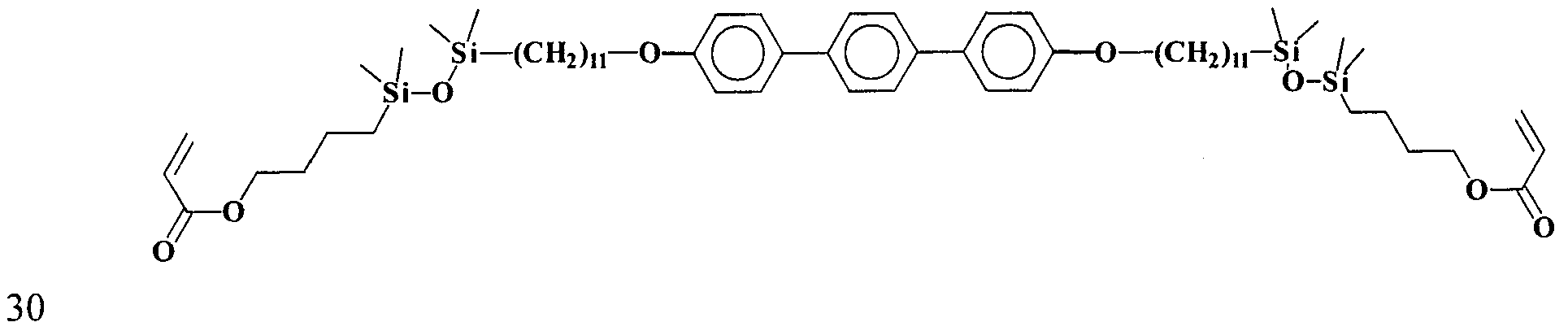
Example 2: ri.r ; 4,.l "lTerphenyl-4.4"-dicarboxylic acid bis-{ l l-r3-f4-acryloyloxybutyr)l.1.3.3- tetramethyldisiloxanyllundecyl 1 ester
Figure imgf000026_0005
) [1,1 ' ; 4',l"]Terphenyl-4,4"-dicarboxylic acid diundec-10-enyl ester
Figure imgf000027_0001
A suspension of [1,1 ' ; 4',l "]te henyl-4,4"-dicarboxylic acid (6.37 g , 20 mmol) in 100 ml of thionyl chloride was heated at reflux for 12 h then thionyl chloride was evaporated by azeotropic distillation. The crude yellow residue obtained therefrom was mixed with 10-undecen-l-ol (7.49 g , 44 mmol) in dichloromethane (300 ml) and triethylamine (8.9 g , 88 mmol) was added dropwise to the resulting mixture. The reaction mixture was stirred at 6 h at room temperature, then poured into water (300 ml) and extracted with dichloromethane (2 x 400 ml). The combined organic extracts were washed with saturated NaCl solution (500 ml), dried over magnesium sulphate, filtered and evaporated to dryness to give a brownish residue which was recrystallised from acetone / dichlorometane: 9 / 1 to afford pure [l,r;4',l"]terphenyl-4,4"-dicarboxylic acid diundec- 10-enyl ester as white crystalline material. Yield 8.97 g.
b) [1,1 '; 4', l"]Teφhenyl-4,4"-dicarboxylic acid bis-{l l-[3-(4-acryloyloxybutyl)- l,l,3,3-tetramethyldisiloxanyl]undecyl} ester
Figure imgf000027_0002
To a mixture of [1,1'; 4',l"]terphenyl-4,4"-dicarboxylic acid diundec-10-enyl ester (5g, 8.03 mmol) and 1,1,3,3-tetramethyldisiloxane (8.63g, 64.24 mmol.) in benzene (20 ml), stirred at room temperature and under argon atmosphere, 20 μl of platinum - divinyltetramethyldisiloxane catalyst [PT:DVTMS] (complex in xylene, 2.1-2.4% platinum) was added. The hydrosilylation reaction started immediately. After stirring for 1 h at room temperature, further 5 μl of the platinum catalyst was added to the reaction mixture, which was then heated at 70°C overnight. A further 5 μl of the platinum catalyst was added and the temperature was increased to 80°C. The reaction mixture was stirred for a further 1 h at this temperature. Removal of the benzene and excess disiloxane from the reaction mixture by distillation under reduced pressure gave a pasty yellow residue that was mixed with hot hexane (100 ml). The hexane mixture was filtered hot and evaporated to dryness. The pasty residue was dissolved in 40 ml of dry benzene and mixed with 3-buten-l-ol (2.31 g , 32 mmol)). The resulting solution was stirred for 15 min at room temperature. 10 μl of the platinum catalyst was then added to the solution and the reaction mixture was heated to 80°C for 2 h. A further 10 μl of the platinum catalyst was added to the reaction mixture which was stirred for a further 1 h at 80°C. The resulting dark reaction mixture was evaporated to dryness to give a dark pasty residue which was dissolved in 120 ml of dry THF. To this mixture 10 ml of Et3N was added followed by dropwise addition (at -10 to 0°C and under N2) of a solution of acroyl chloride (2.9 g , 32 mmol) in 30 ml of dry THF. After complete addition (20 min) the reaction mixture was stirred for further 6h at room temperature. THF and excess Et3N were removed under reduced pressure to give a dark-yellow residue that was dissolved in minimum CH2C12 (80 ml) and poured into 300 ml of Et2O. The precipitated triethylammonium salts were removed by filtration and the filtrate was evaporated to dryness to give a brown residue (14.2g) which was purified by chromatograpy on SiO2 column using Et2O / Hexane : 1 / 4 as eluent to give [l,l ';4', ']teφhenyl-4,4"- dicarboxylic acid bis-{ l,l-[3-(4-acryloyloxybutyl)-l, 1,3,3- tetramethyldisiloxanyl] undecyl} ester as pasty white product. Yield 5.58 g. This compound has the following thermotropic sequence: D 40°C I
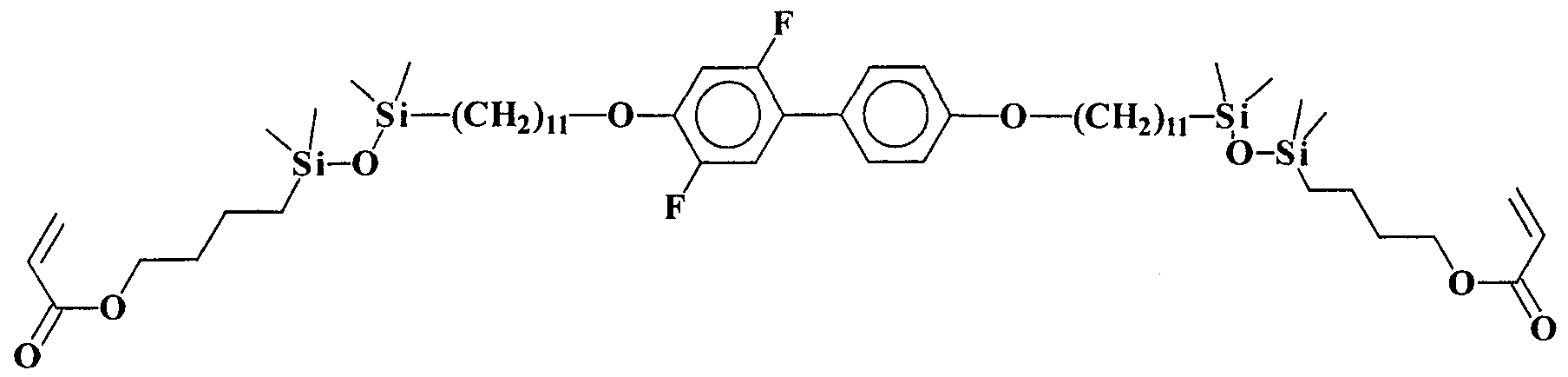
The following compounds may also be prepared in a similar way in accordance with Scheme 2:
Figure imgf000028_0001
Figure imgf000029_0001
Figure imgf000029_0002
Figure imgf000029_0003
Figure imgf000029_0004
Figure imgf000030_0001
Figure imgf000030_0002
O-tCHjJj-O =^ ^ύ- I I I I V-_ N-_-7 - CHΛ-O
Example 3:
1.3-Bis-{4-r2.5-di-(4-(6-acryloyloxyhexyloxyphenylcarbonyloxy')phenylcarbonyloxy1- but-l-v -1.1,3.3-tetramethyldisiloxane
Figure imgf000030_0003
a) 2,5-Di-[4-(6-acryloyloxyhexyloxy)phenylcarbonyloxy]benzaldehyde
Figure imgf000031_0001
A solution of mesylchloride (4.23 g, 36.94 mmol) in 10 ml of dry THF was added dropwise under argon over a period of 15 minutes to a cooled (-25 °C) solution of 4-(6-acryloyloxyhexyloxy)benzoic acid and triethylamine (20 ml) in 80 ml of dry THF. The reaction mixture was then stirred for 60 min at -25 °C, treated with a solution of 2,5-dihydroxybenzaldehyde (2.3 g , 16.65 mmol) in 60 ml of dry THF containing 195 mg of DMAP and further stirred at -25°C for 2h. The reaction mixture was then allowed to warm to room temperature and stirring was continued overnight. The reaction mixture was then poured into 120 ml of saturated NaHCO and extracted with 2 x 200 ml of ether. The combined organic extracts were washed with 3N HCl (200 ml) and semi-saturated NaCl solution (2 x 100 ml), dried over MgSO4, filtered and dried to give a slightly yellow pasty material. This was purified by flash chromatography over a short silica column (CH2Cl2/Et O : 19.5 / 0.5) to give a white residue (9.25 g) which was dissolved in CH2C12 (25 ml) then recrystallised from ethanol (250 ml) to give pure 2,5-di-[4-(6-acryloyloxy- hexyloxy)phenylcarbonyloxy]benzaldehyde as a white crystalline material. Yield 8.5 g.
b) 2,5-Di-[4-(6-acryloyloxyhexyloxy)phenylcarbonyloxy]benzoic acid
Figure imgf000031_0002
Jones oxidant (CrO3/H2SO4/H2O) (48 ml) was added to a ice-cooled solution of 2,5-di-[4-(6-acryloyloxyhexyloxy)phenylcarbonyloxy]benzaldehyde (8.24 g, 12 mmol) in acetone (300 ml) in a dropwise fashion over a period of 30 min. The reaction mixture was stirred overnight at room temperature. The resulting green-orange mixture was filtered off to leave a green precipitate that was washed with 600 ml of ether. The combined organic solutions were washed with water until the orange coloration disappeared (6 x 250 ml). The colourless organic solution obtained was washed with saturated NaCl solution (2 x 300 ml), dried over MgSO and filtered. Removal of the solvent gave pure 2,5-di-[4-(6-acryloyloxyhexyloxy)phenylcarbonyloxy]benzoic acid as a white crystalline material. Yield 8.5 g.
c) l,3-Bis-{4-[2,5-di-(4-(6-acryloyloxyhexyloxy)phenylcarbonyloxy)- phenylcarbonyloxy]but-l-yl}-l, 1, 3, 3-tetramethyldisiloxane
Figure imgf000032_0001
To a stirred solution of 2,5-di-[4-(6-acryloyloxyhexyloxy)phenylcarbonyloxy]- benzoic acid (0.77 g, 1.10 mmol), 4-dimethylaminopyridyne (13 mg, 0.11 mmol) and l,3-bis(4-hydroxybutyl)-l, 1, 3, 3-tetramethyldisiloxane (0.14 g , 0.5 mmol) in dichloromethane (25 ml), at 0°C, a solution of N,N'-dicyclohexylcarbodiimide (0.21 g , 1.10 mmol) in dichloromethane (5 ml) was added dropwise over a period of 15 min. The reaction mixture was warmed to room temperature and stirred overnight. Removal of the solvent gave a residue which was then purified by chromatography over a short silica-gel column (CH2C12, CH2Cl2/Et2O : 19 / 1) to give l,3-bis-{4-[2,5-di-(4-(6-acryloyloxy- hexyloxy)phenylcarbonyloxy)pheny lcarbonyloxy] -but- 1 -yl } - 1 , 1 , 3 , 3 - tetramethyldisiloxane as a white crystalline material. Yield: 0.59g. This compound has the following thermotropic sequence: N 43.8°C I
The following compounds may also be prepared in a similar way in accordance with Scheme 3 :
Figure imgf000033_0001
Figure imgf000034_0001
Example 4
Preparation of Nematic LCP Films
A mixture of the following components in Anisole was prepared:
Figure imgf000035_0001
Figure imgf000035_0002
1 ,4-butanediol diacrylate (Aldrich); and 6%
500ppm of 2,6-di-(t-butyl)-4-hydroxytoluene ( BHT ) inhibitor were added to this mixture in order to prevent premature polymerization. Polymerization was started using 500 ppm initiator such as Irgacure 369 (commercially available from Ciba Geigy, Basel, Switzerland). The mixture was stirred at room temperature and then spin-coated on a glass plate having an orientation layer to form an LCP film of ca.800nm in thickness. This film was dried at 60°C for 1 or 2 minutes and photopolymerized by irradiation with UV light for approximately 5 minutes at room temperature in an N2-atmosphere using a Mercury lamp.
The well oriented film shows the nematic mesophase at room temperature with a clearing point of 85°C. In addition this film exhibits a tilt angle of about 30° relative to the plane of the substrate, as shown by ellipsometric measurements.
Example 5
Preparation of Nematic LCP Films
A mixture of the following components in anisole was prepared according to the procedure of Example 4:
Figure imgf000036_0001
14%
Figure imgf000036_0002
1 ,4-butanediol diacrylate (Aldrich); and 6% The well oriented film shows the nematic mesophase at room temperature with a clearing point of 86.5°C. In addition this film exhibits a tilt angle of about 30° relative to the plane of the substrate, as shown by ellipsometric measurements.

Claims

CLAIMS 1. Use of a component of a LC mixture for the manufacture of a LCP network comprising the mixture, characterised in that the component induces a stable tilt angle in the LCP network. 2. Use according to claim 1, in which the component comprises a substrate associating portion and a mesogenic extending portion characterised in that the lateral dimensions of the substrate associating group are at least half as large again as the laterial dimensions of the mesogenic extending group.
3. Use according to Claim 1 or Claim 2, in which the substrate associating group comprises an organosiloxane group.
4. Use according to any one of claims 1 to 3, in which the mesogenic extending group comprises an aromatic, a non-aromatic carbocyclic or heterocyclic ring system
5. Use according to any one of claims 1 to 4, in which the LCP network is a nematic, smectic A or discotic_material.
6. A compound of formula (I)
Figure imgf000038_0001
wherein
B1 to B4 each individually represent a spacer group selected from the group comprising optionally substituted saturated or unsaturated, straight chain or branched chain C2-8o alkyl group, one or more of the alkyl
CH2 groups being optionally replaced by one or more heteroatoms; B5 represents a hydrogen atom or spacer group as defined above,
A1 and A2 each individually represent a single bond or a spacer group as defined above, MG1 to MG3 each individually represent a mesogenic group comprising at least one optionally substituted aromatic or non aromatic carbocyclic or heterocyclic ring systems; and nl and n2 are each independently 0 or a positive integer with the proviso that, firstly, when n2 is 0 both B1 and B2 include a polymerisable group and at least one of A1, B1 and B2 includes a group selected from an organosiloxane, an organogermanium, an organotin and an organo-perfluoro residue and secondly, when n2 > 0 at least one of B1, B2, B3 and B4 includes a polymerisable group and at least one of A1, A2, B1, B2, B3 and B4 includes an organosiloxane group.
7. A compound according to claim 6, in which at least one of A1, B1 and B2 includes an organosiloxane group.
8. A compound according to Claim 6 or Claim 7, in which at least one of the groups B 1 to B4 includes a bulky group selected from a fluorinated alkyl residue and an organic residue including an atom selected from germanium, tin and silicon.
9. A compound according to anyone of claims 6 to 8, in which at least one of the groups B 1 to B4 include at least one siloxane group.
10. A compound according to Claim 8 or Claim 9, in which the groups Bl and B2 include at least one siloxane group.
11. A compound according to any one of claims 6 to 10, in which B to B comprise a group of formula (II)
P-(Sp,)kl-[(Si(R1)2O)m,-Si(R2)2]m2-(Sp2)k2-(XI)tι (II) wherein
P is a polymerisable group selected from groups comprising CH2=CW-, CH2=CW-
O-, CH2=CW-COO-, CH2=C(Ph)-COO-, CH2=CH-COO-Ph-, CH2=CW-CO- NH-, CH2=C(Ph)-CONH-, CH2=C(COOR')-CH2-COO-, CH2=CH-O-, CH2=CH-OOC-, Ph-CH=CH-, CH3-C=N-(CH2)m3-, HO-, HS-, HO-(CH2)m3-, HS-(CH2)m3-, HO(CH2)m3COO-, HS(CH2)m3COO-, HWN-, HOC(O)-, CH2=CH-
Ph-(O)m4
Figure imgf000040_0001
wherein
W represents H, Cl or a Cι-5 alkyl group; m3 is an integer having a value of from 1 to 9; m4 is an integer having a value of 0 or 1 ,
R' represents a C ι-5 alkyl group;
R" represents a Cι-5 alkyl group, methoxy, cyano, F, Cl, Br or I; Sp1 and Sp2 each independently represent a Cι-20 alkyl group; kl and k2 are integers, each independently having a value of from 0 to 4; R and R each independently represent straight chain or branched Cι-20 alkyl groups; ml is an integer having a value of from 0 to 10; m2 is an integer having a value of from 1 to 10;
X1 represents -O-, -S-, -NH-, N(CH3)-, -CH(OH)-, -CO-, -CH2(CO)-, - SO-, -CH2(SO)-, -SO2-, -CH2(SO2)-, -COO-, -OCO-, -OCO-O-, -S-
CO-, -CO-S-, -SOO-, -OSO-, -SOS-, -CH2-CH2-, -OCH2-, -CH2O-, -CH=CH-, -C≡C- or a single bond; and tl is an integer having a value of 0 or 1.
12. A compound according to any one of claims 6 to 11, in which A1 and/or A2 comprise a group of formula (III)
-(X2)t2-(Sp3)k3-[(Si(R3)2O)m5-Si(R4)2]m6-(Sp4)k4-(X3)t3 (III)
wherein
Sp3 and Sp4 each independently represent the designations assigned to Sp1 above, X and X each independently represent the designations assigned to X above, R and R4 each independently represent the designations assigned to R1 above, k3 and k4 are integers, each integer independently having a value of from 0 to 4, t4 and t3 are integers, each independently having a value of 0 or 1 ; m5 is an integer having a value of from 0 to 10; and m6 is an integer having a value of from 1 to 10.
13. A compound according to any one of claims 6 to 12, in which MG1 comprises a group of formula (IV)
C1-(Z'-C2)al-(Z2-C3)a2-(Z3- C4)a3 ( IV), wherein C to C4 each independently represent a non aromatic, aromatic, carbocyclic or heterocyclic group; Z1 to Z3 each represent, independently, -COO-, -OCO-, -CH2-CH2-,
-OCH2-, -CH2O-, -CH=CH-, -OC-, -CH=CH-COO-, -OCO-CH=CH- or a single bond; and al, a2 and a3 are integers, each integer independently having a value of from 0 to 3, with the proviso that al + a2 + a3 < 3.
14. A compound according to any one of claims 6 to 13, in which MG and MG comprise a group of formula (IVa) C5-(Z4-C6)a4-(Z5-C7)a5-(Z6-C8)a6 ( IVa), in which: C5, C6, C7 and C8 each independently represent a non aromatic, aromatic, carbocyclic or heterocyclic group; Z4 to Z6 each independently represent -COO-, -OCO-, -CH2-CH2-, -OCH2-, -CH2O-, -CH=CH-, -C≡C-, -CH=CH-COO-,
-OCO-CH=CH- or a single bond; and a4. a5 and a6 are integers, each integer independently having a value of from 0 to3, with the proviso firstly that a4 + a5 + a6 < 3 and secondly that at least one of C5, C , C7 and C8 independently comprises a trivalent group. 15. A compound of formula (I) according to any one of claims 6 to 14,
Figure imgf000042_0001
in which nl and n2 are integers, each independently having a value of 0 or 1;
B5 is hydrogen;
B1 to B4 each independently represent a group of formula (V)
P2-Sp5-[(Si(CH3)2O)m7-Si(CH3)2] m8-Sp6-X4 - (V);
Al and A2 each independently represent a group of formula (VI)
-X5-Sp7-[(Si(CH3)2O)m9-Si(CH3)2]ml0-Sp8-X6 - (VI)
wherein
X4 to X6 each independently represent -O-, -CO-, -COO-, -OCO-,
-C≡C-, or a single bond, especially -O-, -COO-, -OCO- or single bond;
SpD to Sp8 each independently represent a C|-20 straight-chains alkyl group, especially ethylene, propylene, butylene, pentylene, hexylene, heptylene, octylene, nonylene, decylene, undecylene, or dodecylene; P2 represents CH2=CW5- or CH2=CW5-(CO)v2O- wherein W3 represents H, CH , or Cl; and v2 is an integer, having a value of 0 or 1 ; m7 and m9 are integers, each integer independently having a value of
1 or 2; m8 and mlO are integers, each integer independently having a value of 0 or 1 , with the proviso that m8 + ml 0 > 0;
MG1 represents a group of formula IV wherein
C1, C2, C3 and C4 are the same and are selected from phenylene or biphenylene; and Z1 to Z3 each independently represent a single bond, -COO- or -OCO-; and MG2 and MG3 independently represent a group of formula IVa wherein
C5, C6, and C8 are the same and are selected from phenylene or biphenylene;
C7 represents phenylene or biphenylene; and
Z4 to Z6 each independently represent a single bond, -COO- or
-OCO-. 16. A compound of formula (I) according to any one of claims 6 to 15 in which nl and n2 are both 0,
B 1 and B2 each independently represent a group of formula (VII) P3-Sp5-[Si(CH3)2O)m7-Si(CH3)2]m8-Sp6-X4- (VII); wherein X4 represents -O-,-CO-,-COO-,-OCO-,-C≡C- or a single bond, especially -O-,-COO-,-OCO- or a single bond; Sp5 to Sp6 each independently represent a Cι-20 straight-chain alkyl group, especially ethylene, propylene, butylene, pentylene, hexylene, heptylne, octylene, nonylene, decylene, undecylene, or dodecylene;
P3 represents a hydrogen or CH2-CW5- or CH2-CW5-(CO)V2O- wherein
W5 represents H, CH3, F, Cl, Br or I; and v2 is 0 or 1 ; m7 is 1 or 2; m8 is 1;
MG2 represents a group of formula IVa wherein
C ,C , and C are the same and are selected from phenylene or biphenylene; C7 represents phenylene or biphenylene; and Z4 to Z6 each independently represent a single bond, -COO-, or -OCO-.
17. A compound of formula (I) being l,3-bis-{4-[4-oxo-4'-(6-acryloyloxy- hexyloxy)biphenyl]but-l-yl}-l, 1, 3, 3-tetramethyldisiloxane.
18. A compound of formula (I) being [1,1 '; 4',l"]teφhenyl-4,4"-dicarboxylic acid bis-{ l,l-[3-(4- acryloyloxybutyl)l,l,3,3-tetramethyldisiloxanyl]undecyl} ester. 19. A compound of formula (I) being l,3-bis-{4-[2,5-di-(4-(6-acryloyloxy- hexyloxy)phenylcarbonyloxy)phenylcarbonyloxy]but-l-yl}-l, 1, 3, 3- tetramethyldisiloxane. 20. A method for the preparation of a compound according to any one of claims 6 to
19 comprising reacting a mesogenic compound with a direactive siloxane. 21. A liquid crystalline mixture comprising at least two components, wherein at least one component is a compound of formula (I) as defined in any one of claims 6 to
19. 22. A liquid crystalline material comprising a compound of formula (I) as defined in any one of claims 6 to 19 or a liquid crystalline mixture according to Claim 21. 23. A liquid crystal polymer film comprising a compound of formula (I) as defined in any one of claims 6 to 19 or a mixture as defined in Claim 21.
24. A material or film according to Claim 22 or 23, characterised in that the film or material is nematic, smectic A or discotic.
25. A liquid crystal device comprising a compound of formula (I) as defined in any one of claims 6 to 19, a liquid crystalline material according to Claim 22, a liquid crystalline mixture according to Claim 21 or a liquid crystal polymer film according to Claim 23.
26. Use of a compound according to any one of Claims 6 to 19 in a liquid crystal mixture for inducing a stable tilt angle in the liquid crystal mixture.
27. A discotic LC material comprising one or more compounds of formula (I) according to any one of claims 6 to 19.
PCT/IB1999/001287 1998-07-14 1999-07-14 Compositions Ceased WO2000004110A1 (en)

Priority Applications (7)

Application Number Priority Date Filing Date Title
US09/743,609 US6749771B1 (en) 1998-07-14 1999-07-14 Compounds as components in polymerizable liquid crystalline mixtures and liquid crystal polymer networks comprising them
AT99929627T ATE282078T1 (en) 1998-07-14 1999-07-14 COMPOSITIONS
JP2000560209A JP2002520472A (en) 1998-07-14 1999-07-14 Composition
DE69921824T DE69921824T2 (en) 1998-07-14 1999-07-14 Compositions
AU46404/99A AU4640499A (en) 1998-07-14 1999-07-14 Compositions
EP99929627A EP1100855B1 (en) 1998-07-14 1999-07-14 Compositions
HK01104410.3A HK1033951B (en) 1998-07-14 1999-07-14 Compositions

Applications Claiming Priority (2)

Application Number Priority Date Filing Date Title
GB9815269.7 1998-07-14
GBGB9815269.7A GB9815269D0 (en) 1998-07-14 1998-07-14 Compositions

Publications (1)

Publication Number Publication Date
WO2000004110A1 true WO2000004110A1 (en) 2000-01-27

Family

ID=10835498

Family Applications (1)

Application Number Title Priority Date Filing Date
PCT/IB1999/001287 Ceased WO2000004110A1 (en) 1998-07-14 1999-07-14 Compositions

Country Status (10)

Country Link
US (1) US6749771B1 (en)
EP (1) EP1100855B1 (en)
JP (1) JP2002520472A (en)
KR (1) KR100676759B1 (en)
CN (1) CN1309687A (en)
AT (1) ATE282078T1 (en)
AU (1) AU4640499A (en)
DE (1) DE69921824T2 (en)
GB (1) GB9815269D0 (en)
WO (1) WO2000004110A1 (en)

Cited By (18)

* Cited by examiner, † Cited by third party
Publication number Priority date Publication date Assignee Title
WO2000048985A1 (en) * 1999-02-17 2000-08-24 Rolic Ag Liquid crystal compounds
WO2000055110A1 (en) * 1999-03-17 2000-09-21 Rolic Ag Liquid crystal compounds
JP2002167360A (en) * 2000-11-29 2002-06-11 Asahi Glass Co Ltd Method for producing polymerizable monomer having mesogen group
EP1170353A3 (en) * 2000-07-06 2003-01-22 Fuji Photo Film Co., Ltd. Liquid crystal composition comprising liquid crystal molecules and aligment promoter
EP1432673A1 (en) * 2001-09-24 2004-06-30 Rolic AG Liquid crystalline "laterally polymerizable" compounds
WO2004048499A3 (en) * 2002-11-23 2004-07-22 Univ Hull Combined rod-disc crystalline systems with nematic properties
WO2005054406A1 (en) * 2003-12-04 2005-06-16 Rolic Ag Additive components for liquid crystalline materials
US6919946B2 (en) 2002-04-16 2005-07-19 3M Innovative Properties Company Compensators for liquid crystal displays and the use and manufacture of the compensators
EP2272937A1 (en) 2009-07-09 2011-01-12 Rolic AG Ester group containing compounds for optical or electro optical devices
WO2011003846A1 (en) 2009-07-09 2011-01-13 Rolic Ag Ester group containing liquid crystals for optical or electro optical devices
FR2950356A1 (en) * 2009-09-23 2011-03-25 Polymage COMPOSITE MATERIAL USING MESOMORPHIC ELASTOMER AND METHOD OF MANUFACTURING THE SAME
US8054411B2 (en) 2006-09-13 2011-11-08 Rolic Ag Volume photo-aligned retarder
US8574454B2 (en) 2006-12-22 2013-11-05 Rolic Ag Patternable liquid crystal polymer comprising thio-ether units
US9499649B2 (en) 2007-12-21 2016-11-22 Rolic Ag Functionalized photoreactive compounds
US9715144B2 (en) 2007-12-21 2017-07-25 Rolic Ag Photoalignment composition
WO2018019691A1 (en) 2016-07-29 2018-02-01 Rolic Ag Method for generating alignment on top of a liquid crystal polymer material
US10385215B2 (en) 2014-05-21 2019-08-20 Rolic Ag Polymerizable dichroic dyes
WO2021013780A1 (en) 2019-07-24 2021-01-28 Rolic Technologies AG Photo-alignable positive c-plate retarder

Families Citing this family (11)

* Cited by examiner, † Cited by third party
Publication number Priority date Publication date Assignee Title
GB9930557D0 (en) * 1999-12-23 2000-02-16 Rolic Ag Optically active materials
US7597945B2 (en) * 2004-11-09 2009-10-06 Chisso Corporation Polymerizable liquid crystal composition containing fluorine-substituted (meth) acrylate derivatives
US7425281B2 (en) * 2004-12-02 2008-09-16 Displaytech, Inc. Liquid crystal compositions comprising an organogermanium compound and methods for using the same
US7910179B2 (en) * 2005-11-23 2011-03-22 Lg Chem, Ltd. Vinylsulfone derivative, liquid crystal composition comprising the same and compensation film using the same liquid crystal composition
KR101499238B1 (en) 2008-08-07 2015-03-05 삼성디스플레이 주식회사 Liquid crystal display
KR101742529B1 (en) 2010-12-23 2017-06-16 삼성디스플레이 주식회사 Liquid crystal display device and method of manufacturing a liquid crystal display device
WO2013157888A1 (en) 2012-04-20 2013-10-24 주식회사 엘지화학 Polymerizable liquid crystal compound, polymerizable liquid crystal composition, and optical anisotropic body
TWI663250B (en) * 2014-05-23 2019-06-21 德商馬克專利公司 Liquid-crystal medium and liquid-crystal display
JP6897936B6 (en) * 2016-05-09 2021-07-28 兵庫県公立大学法人 Photoreactive liquid crystal composition, display element, optical element, manufacturing method of display element, manufacturing method of optical element
WO2018168778A1 (en) * 2017-03-17 2018-09-20 日本ゼオン株式会社 Polymerizable compound, polymerizable liquid crystal mixture, polymer, optical film, optically anisotropic body, polarizing plate, display device, antireflection film, and compound
JP2024082874A (en) * 2022-12-09 2024-06-20 住友化学株式会社 Vinyl compounds, vinyl compositions, vinyl resin cured products, prepregs, resin-coated films, resin-coated metal foils, metal-clad laminates, and printed wiring boards

Citations (2)

* Cited by examiner, † Cited by third party
Publication number Priority date Publication date Assignee Title
USRE35462E (en) * 1989-06-22 1997-02-25 Consortium Fur Elekochemische Ind. Gmbh Silylated benzoic acid derivatives
GB2317186A (en) * 1996-09-12 1998-03-18 Toshiba Kk Liquid crystals containing polysiloxanes having optical isomerism

Patent Citations (2)

* Cited by examiner, † Cited by third party
Publication number Priority date Publication date Assignee Title
USRE35462E (en) * 1989-06-22 1997-02-25 Consortium Fur Elekochemische Ind. Gmbh Silylated benzoic acid derivatives
GB2317186A (en) * 1996-09-12 1998-03-18 Toshiba Kk Liquid crystals containing polysiloxanes having optical isomerism

Non-Patent Citations (5)

* Cited by examiner, † Cited by third party
Title
COLES H J ET AL: "NEW LOW MOLAR MASS ORGANOSILOXANES WITH UNUSUAL FERROELECTRIC PROPERTIES", LIQUID CRYSTALS, vol. 15, no. 5, 1 November 1993 (1993-11-01), pages 739 - 744, XP000414623 *
CORSELLIS E ET AL: "STRUCTURAL CHARACTERIZATION OF MONO-AND DI-MESOGENIC ORGANOSILOXANES: THE IMPACT OF SILOXANE CONTENT ON BIPHENYL BENZOATE SYSTEMS", LIQUID CRYSTALS, vol. 23, no. 2, August 1997 (1997-08-01), pages 235 - 239, XP000701491 *
DIAZ F ET AL: "SYNTHESIS AND CHARACTERIZATION OF TWIN MESOGENS CONTAINING SILOXANEUNITS AS CENTRAL SPACERS", LIQUID CRYSTALS, vol. 16, no. 1, 1 January 1994 (1994-01-01), pages 105 - 113, XP000418464 *
OZCAYIR Y ET AL: "MESOMORPHIC PROPERTIES OF MAIN CHAIN THERMOTROPIC PLCS AND MODEL COMPOUNDS CONTAINING A TETRAMETHYLDISILOXANE MOIETY IN THE SPACER", MOLECULAR CRYSTALS AND LIQUID CRYSTALS (INC. NONLINEAR OPTICS ), vol. 185, 1 August 1990 (1990-08-01), pages 75 - 87, XP000162926 *
ROBINSON W K ET AL: "PRELIMINARY COMMUNICATION BI-MESOGENIC ORGANOSILOXANE LIQUID CRISTAL MATERIALS EXHIBITING ANTIFERROELECTRIC PHASES", LIQUID CRYSTALS, vol. 23, no. 2, August 1997 (1997-08-01), pages 309 - 312, XP000701497 *

Cited By (29)

* Cited by examiner, † Cited by third party
Publication number Priority date Publication date Assignee Title
US6676851B1 (en) 1999-02-17 2004-01-13 Rolic Ag Laterally substituted curable liquid crystals
WO2000048985A1 (en) * 1999-02-17 2000-08-24 Rolic Ag Liquid crystal compounds
WO2000055110A1 (en) * 1999-03-17 2000-09-21 Rolic Ag Liquid crystal compounds
US6733690B1 (en) 1999-03-17 2004-05-11 Rolic Ag Laterally substituted curable liquid crystals
US6875483B2 (en) 2000-07-06 2005-04-05 Fuji Photo Film Co., Ltd. Liquid crystal composition comprising liquid crystal molecules and alignment promoter
EP1170353A3 (en) * 2000-07-06 2003-01-22 Fuji Photo Film Co., Ltd. Liquid crystal composition comprising liquid crystal molecules and aligment promoter
JP2002167360A (en) * 2000-11-29 2002-06-11 Asahi Glass Co Ltd Method for producing polymerizable monomer having mesogen group
EP1432673A1 (en) * 2001-09-24 2004-06-30 Rolic AG Liquid crystalline "laterally polymerizable" compounds
US6919946B2 (en) 2002-04-16 2005-07-19 3M Innovative Properties Company Compensators for liquid crystal displays and the use and manufacture of the compensators
US7088411B2 (en) 2002-04-16 2006-08-08 3M Innovative Properties Company Liquid crystal displays including two o-plates and two c-plates, with helical arrangement of azimuthal orientations
WO2004048499A3 (en) * 2002-11-23 2004-07-22 Univ Hull Combined rod-disc crystalline systems with nematic properties
WO2005054406A1 (en) * 2003-12-04 2005-06-16 Rolic Ag Additive components for liquid crystalline materials
US8105662B2 (en) 2003-12-04 2012-01-31 Rolic Ag Additive components for liquid crystalline materials
US8054411B2 (en) 2006-09-13 2011-11-08 Rolic Ag Volume photo-aligned retarder
US8574454B2 (en) 2006-12-22 2013-11-05 Rolic Ag Patternable liquid crystal polymer comprising thio-ether units
US9715144B2 (en) 2007-12-21 2017-07-25 Rolic Ag Photoalignment composition
US10558089B2 (en) 2007-12-21 2020-02-11 Rolic Ag Photoalignment composition
US9499649B2 (en) 2007-12-21 2016-11-22 Rolic Ag Functionalized photoreactive compounds
WO2011003846A1 (en) 2009-07-09 2011-01-13 Rolic Ag Ester group containing liquid crystals for optical or electro optical devices
US8951616B2 (en) 2009-07-09 2015-02-10 Rolic Ag Ester group containing liquid crystals for optical or electro optical devices
EP2272937A1 (en) 2009-07-09 2011-01-12 Rolic AG Ester group containing compounds for optical or electro optical devices
FR2950356A1 (en) * 2009-09-23 2011-03-25 Polymage COMPOSITE MATERIAL USING MESOMORPHIC ELASTOMER AND METHOD OF MANUFACTURING THE SAME
WO2011036080A1 (en) * 2009-09-23 2011-03-31 Polymage Composite material using a mesomorphic elastomer, and method for making same
US10385215B2 (en) 2014-05-21 2019-08-20 Rolic Ag Polymerizable dichroic dyes
WO2018019691A1 (en) 2016-07-29 2018-02-01 Rolic Ag Method for generating alignment on top of a liquid crystal polymer material
US11181674B2 (en) 2016-07-29 2021-11-23 Rolic Technologies AG Method for generating alignment on top of a liquid crystal polymer material
US12044872B2 (en) 2016-07-29 2024-07-23 Rolic Technologies AG Method for generating alignment on top of a liquid crystal polymer material
WO2021013780A1 (en) 2019-07-24 2021-01-28 Rolic Technologies AG Photo-alignable positive c-plate retarder
US12248218B2 (en) 2019-07-24 2025-03-11 Rolic Technologies AG Photo-alignable positive c-plate retarder

Also Published As

Publication number Publication date
ATE282078T1 (en) 2004-11-15
US6749771B1 (en) 2004-06-15
KR100676759B1 (en) 2007-02-05
KR20010071865A (en) 2001-07-31
JP2002520472A (en) 2002-07-09
HK1033951A1 (en) 2001-10-05
EP1100855B1 (en) 2004-11-10
CN1309687A (en) 2001-08-22
EP1100855A1 (en) 2001-05-23
GB9815269D0 (en) 1998-09-09
DE69921824T2 (en) 2005-12-01
DE69921824D1 (en) 2004-12-16
AU4640499A (en) 2000-02-07

Similar Documents

Publication Publication Date Title
EP1100855B1 (en) Compositions
US6746729B1 (en) Liquid crystal compounds
KR100426296B1 (en) New Polymeric Liquid Crystal Compound
US6514578B1 (en) Polymerizable mesogenic tolanes
US6905739B2 (en) Optically active materials
US6630076B1 (en) Liquid crystalline compounds
US6733690B1 (en) Laterally substituted curable liquid crystals
WO1998052905A1 (en) New polymerisable liquid crystalline compounds
JP2002521354A (en) Crosslinkable liquid crystal compound
WO2003027056A1 (en) Liquid crystalline &#39;laterally polymerizable&#39; compounds
EP1046631A1 (en) Liquid crystalline compounds
CA2292138C (en) Liquid-crystalline silicones having increased uv stability
HK1033951B (en) Compositions
HK1033755B (en) Liquid crystalline compounds
WO2000002856A1 (en) Chiral compounds and their use as doping agents in liquid crystals
Lub et al. Synthesis and photopolymerization of cholesteric liquid crystalline vinyl ethers

Legal Events

Date Code Title Description
WWE Wipo information: entry into national phase

Ref document number: 99808572.3

Country of ref document: CN

AK Designated states

Kind code of ref document: A1

Designated state(s): AE AL AM AT AU AZ BA BB BG BR BY CA CH CN CU CZ DE DK EE ES FI GB GD GE GH GM HR HU ID IL IN IS JP KE KG KP KR KZ LC LK LR LS LT LU LV MD MG MK MN MW MX NO NZ PL PT RO RU SD SE SG SI SK SL TJ TM TR TT UA UG US UZ VN YU ZA ZW

AL Designated countries for regional patents

Kind code of ref document: A1

Designated state(s): GH GM KE LS MW SD SL SZ UG ZW AM AZ BY KG KZ MD RU TJ TM AT BE CH CY DE DK ES FI FR GB GR IE IT LU MC NL PT SE BF BJ CF CG CI CM GA GN GW ML MR NE SN TD TG

DFPE Request for preliminary examination filed prior to expiration of 19th month from priority date (pct application filed before 20040101)
121 Ep: the epo has been informed by wipo that ep was designated in this application
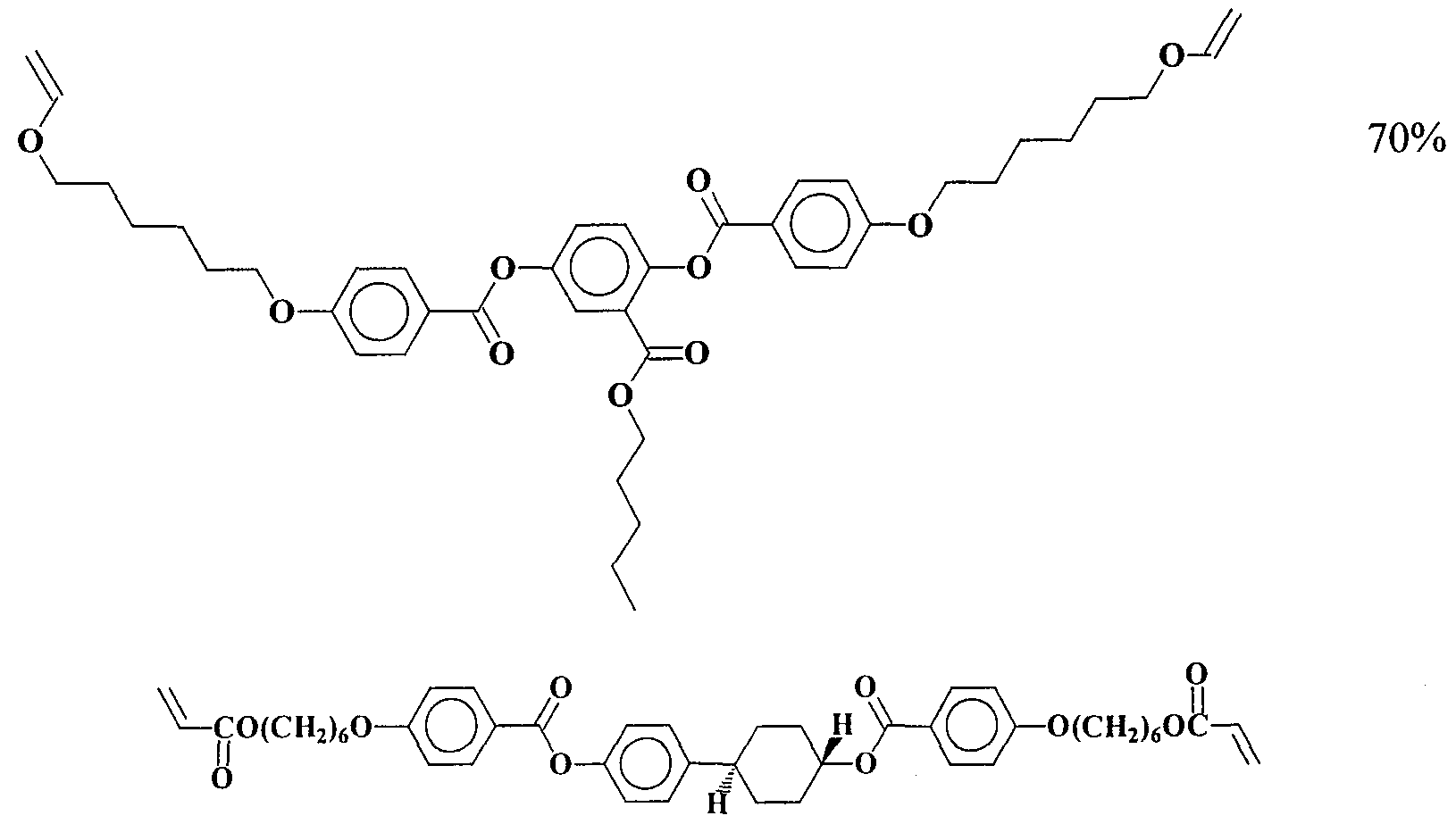
WWE Wipo information: entry into national phase

Ref document number: IN/PCT/2000/801/MUM

Country of ref document: IN

Ref document number: IN/PCT/2000/00801/MU

Country of ref document: IN

WWE Wipo information: entry into national phase

Ref document number: 1020017000501

Country of ref document: KR

Ref document number: 09743609

Country of ref document: US

Ref document number: 1999929627

Country of ref document: EP

ENP Entry into the national phase

Ref document number: 2000 560209

Country of ref document: JP

Kind code of ref document: A

REG Reference to national code

Ref country code: DE

Ref legal event code: 8642

WWP Wipo information: published in national office

Ref document number: 1999929627

Country of ref document: EP

WWP Wipo information: published in national office

Ref document number: 1020017000501

Country of ref document: KR

WWG Wipo information: grant in national office

Ref document number: 1999929627

Country of ref document: EP

WWG Wipo information: grant in national office

Ref document number: 1020017000501

Country of ref document: KR