WO2000006564A1 - Disubstituted maleimide compounds and medicinal utilization thereof - Google Patents

Disubstituted maleimide compounds and medicinal utilization thereof Download PDF

Info

Publication number
WO2000006564A1
WO2000006564A1 PCT/JP1999/004085 JP9904085W WO0006564A1 WO 2000006564 A1 WO2000006564 A1 WO 2000006564A1 JP 9904085 W JP9904085 W JP 9904085W WO 0006564 A1 WO0006564 A1 WO 0006564A1
Authority
WO
WIPO (PCT)
Prior art keywords
group
indole
dione
phenylamino
pyrroyl
Prior art date
Legal status (The legal status is an assumption and is not a legal conclusion. Google has not performed a legal analysis and makes no representation as to the accuracy of the status listed.)
Ceased
Application number
PCT/JP1999/004085
Other languages
English (en)
French (fr)
Inventor
Takashi Inaba
Masahiro Tanaka
Kenji Sakoda
Current Assignee (The listed assignees may be inaccurate. Google has not performed a legal analysis and makes no representation or warranty as to the accuracy of the list.)
Japan Tobacco Inc
Original Assignee
Japan Tobacco Inc
Priority date (The priority date is an assumption and is not a legal conclusion. Google has not performed a legal analysis and makes no representation as to the accuracy of the date listed.)
Filing date
Publication date
Application filed by Japan Tobacco Inc filed Critical Japan Tobacco Inc
Priority to IL14108099A priority Critical patent/IL141080A0/xx
Priority to CA002338866A priority patent/CA2338866A1/en
Priority to HU0103381A priority patent/HUP0103381A3/hu
Priority to BR9912612-5A priority patent/BR9912612A/pt
Priority to AU49299/99A priority patent/AU4929999A/en
Priority to KR1020017001124A priority patent/KR20010085305A/ko
Priority to EP99933165A priority patent/EP1120414A1/en
Publication of WO2000006564A1 publication Critical patent/WO2000006564A1/ja
Priority to NO20010487A priority patent/NO20010487L/no
Anticipated expiration legal-status Critical
Ceased legal-status Critical Current

Links

Classifications

    • CCHEMISTRY; METALLURGY
    • C07ORGANIC CHEMISTRY
    • C07DHETEROCYCLIC COMPOUNDS
    • C07D231/00Heterocyclic compounds containing 1,2-diazole or hydrogenated 1,2-diazole rings
    • C07D231/02Heterocyclic compounds containing 1,2-diazole or hydrogenated 1,2-diazole rings not condensed with other rings
    • C07D231/10Heterocyclic compounds containing 1,2-diazole or hydrogenated 1,2-diazole rings not condensed with other rings having two or three double bonds between ring members or between ring members and non-ring members
    • C07D231/12Heterocyclic compounds containing 1,2-diazole or hydrogenated 1,2-diazole rings not condensed with other rings having two or three double bonds between ring members or between ring members and non-ring members with only hydrogen atoms, hydrocarbon or substituted hydrocarbon radicals, directly attached to ring carbon atoms
    • CCHEMISTRY; METALLURGY
    • C07ORGANIC CHEMISTRY
    • C07DHETEROCYCLIC COMPOUNDS
    • C07D233/00Heterocyclic compounds containing 1,3-diazole or hydrogenated 1,3-diazole rings, not condensed with other rings
    • C07D233/54Heterocyclic compounds containing 1,3-diazole or hydrogenated 1,3-diazole rings, not condensed with other rings having two double bonds between ring members or between ring members and non-ring members
    • C07D233/56Heterocyclic compounds containing 1,3-diazole or hydrogenated 1,3-diazole rings, not condensed with other rings having two double bonds between ring members or between ring members and non-ring members with only hydrogen atoms or radicals containing only hydrogen and carbon atoms, attached to ring carbon atoms
    • CCHEMISTRY; METALLURGY
    • C07ORGANIC CHEMISTRY
    • C07DHETEROCYCLIC COMPOUNDS
    • C07D249/00Heterocyclic compounds containing five-membered rings having three nitrogen atoms as the only ring hetero atoms
    • C07D249/02Heterocyclic compounds containing five-membered rings having three nitrogen atoms as the only ring hetero atoms not condensed with other rings
    • C07D249/081,2,4-Triazoles; Hydrogenated 1,2,4-triazoles
    • CCHEMISTRY; METALLURGY
    • C07ORGANIC CHEMISTRY
    • C07DHETEROCYCLIC COMPOUNDS
    • C07D401/00Heterocyclic compounds containing two or more hetero rings, having nitrogen atoms as the only ring hetero atoms, at least one ring being a six-membered ring with only one nitrogen atom
    • C07D401/14Heterocyclic compounds containing two or more hetero rings, having nitrogen atoms as the only ring hetero atoms, at least one ring being a six-membered ring with only one nitrogen atom containing three or more hetero rings
    • CCHEMISTRY; METALLURGY
    • C07ORGANIC CHEMISTRY
    • C07DHETEROCYCLIC COMPOUNDS
    • C07D403/00Heterocyclic compounds containing two or more hetero rings, having nitrogen atoms as the only ring hetero atoms, not provided for by group C07D401/00
    • C07D403/02Heterocyclic compounds containing two or more hetero rings, having nitrogen atoms as the only ring hetero atoms, not provided for by group C07D401/00 containing two hetero rings
    • C07D403/04Heterocyclic compounds containing two or more hetero rings, having nitrogen atoms as the only ring hetero atoms, not provided for by group C07D401/00 containing two hetero rings directly linked by a ring-member-to-ring-member bond
    • CCHEMISTRY; METALLURGY
    • C07ORGANIC CHEMISTRY
    • C07DHETEROCYCLIC COMPOUNDS
    • C07D403/00Heterocyclic compounds containing two or more hetero rings, having nitrogen atoms as the only ring hetero atoms, not provided for by group C07D401/00
    • C07D403/14Heterocyclic compounds containing two or more hetero rings, having nitrogen atoms as the only ring hetero atoms, not provided for by group C07D401/00 containing three or more hetero rings
    • CCHEMISTRY; METALLURGY
    • C07ORGANIC CHEMISTRY
    • C07DHETEROCYCLIC COMPOUNDS
    • C07D471/00Heterocyclic compounds containing nitrogen atoms as the only ring hetero atoms in the condensed system, at least one ring being a six-membered ring with one nitrogen atom, not provided for by groups C07D451/00 - C07D463/00
    • C07D471/02Heterocyclic compounds containing nitrogen atoms as the only ring hetero atoms in the condensed system, at least one ring being a six-membered ring with one nitrogen atom, not provided for by groups C07D451/00 - C07D463/00 in which the condensed system contains two hetero rings
    • C07D471/04Ortho-condensed systems
    • CCHEMISTRY; METALLURGY
    • C07ORGANIC CHEMISTRY
    • C07DHETEROCYCLIC COMPOUNDS
    • C07D487/00Heterocyclic compounds containing nitrogen atoms as the only ring hetero atoms in the condensed system, not provided for by groups C07D451/00 - C07D477/00
    • C07D487/02Heterocyclic compounds containing nitrogen atoms as the only ring hetero atoms in the condensed system, not provided for by groups C07D451/00 - C07D477/00 in which the condensed system contains two hetero rings
    • C07D487/04Ortho-condensed systems

Definitions

  • the present invention relates to a novel di-substituted maleimide compound or a pharmaceutically acceptable salt thereof, and a pharmaceutical composition comprising the same as an active ingredient. More specifically, by selectively inhibiting protein kinase C (PKC) isozyme) 3 activity, diabetic complications such as diabetic retinopathy, diabetic nephropathy, diabetic cardiomyopathy, and diabetic neuropathy can be prevented.
  • PLC protein kinase C
  • the present invention relates to a novel di-substituted maleimide compound or a pharmaceutically acceptable salt thereof, which can be treated or prevented, and a pharmaceutical composition containing them as an active ingredient.
  • PKC is a type of serine-threonine protein kinase that plays a central role in diverse signaling in cells.
  • Proteins phosphorylated by PKC include numerous receptors such as epidermal growth factor receptor, insulin receptor, interleukin 2 receptor, acetylcholine receptor, adrenergic receptor, phospholamban, sodium ion channel, and glucose carrier. It covers a wide range of metabolic enzymes, such as membrane proteins, actin and myosin that make up muscle, glycogen phosphorylase kinase, and cytochrome P450.
  • PKC has at least 10 or more isozymes.
  • Each of these isozymes has a structure in which a kinase domain is arranged on the C-terminal side and a regulatory domain is arranged on the N-terminal side.
  • the kinase domain is highly homologous between PKCs, and includes other kinases such as A kinase (also known as cyclic AMP-dependent protein kinase, PKA), G kinase (cyclic GMP-dependent protein kinase), and oral synkinase. It shows homology to protein kinase.
  • PKC, ⁇ , and ⁇ are activated by calcium and metabolites of cell membrane inositol phospholipids such as diacylglycerol (DAG). Calcium-dependent seriso / threonine protein kinase.
  • DAG diacylglycerol
  • PKC activation-mediated conditions include abnormal blood flow such as decreased retinal blood flow, increased vascular permeability of retinal blood vessels, abnormal vasoconstriction such as increased renal glomerular filtration, and contractile responsiveness in renal mesangial cells. Reduction and increased production of extracellular matrix.
  • abnormal blood flow such as decreased retinal blood flow, increased vascular permeability of retinal blood vessels, abnormal vasoconstriction such as increased renal glomerular filtration, and contractile responsiveness in renal mesangial cells. Reduction and increased production of extracellular matrix.
  • abnormal cell proliferation and gene expression due to activation of transcription factors, and on pathological conditions such as cardiac hypertrophy and cardiac fibrillation in cardiac muscle tissue.
  • PKC plays a central role in intracellular signal transduction, select cells and organs with a high distribution of PKC] 3, symptoms without increased intracellular calcium concentration, and PKC] 3 It is desirable to selectively inhibit PKC] 3 activity in a condition involving a factor that activates selectively, and PKC] 3 selective inhibitors have attracted attention as a target for drug development that is safe and has few side effects. You.
  • PKC inhibitors are used for diabetic complications, specifically, diabetic retinopathy, diabetic nephropathy, diabetic cardiomyopathy, diabetic neuropathy, or vascular disorders such as arteriosclerosis, thrombosis, inflammation, and skin. It can be applied to various diseases, such as diseases of the nervous system, immune diseases such as acquired immunodeficiency, central nervous system diseases such as Alzheimer's disease, and cancer. In particular, it is expected to be applied to diabetic retinopathy, diabetic nephropathy, diabetic cardiomyopathy, diabetic complications such as diabetic neuropathy, and especially diabetic retinopathy.
  • Japanese Patent Application Laid-Open No. 9-507066 (Eli Lilly & Co.), Japanese Patent Application Laid-Open No. 08-056666 (F Ho ffmann-La Roche AG), EP 11 No. 5,350 (Bristol-Myers Co.), WO 97/0540 (Ciba-Geigy AG), etc. disclose these compounds. These compounds have an indole structure and 1 H-pyrroyl 2,5-dione (male Mid) or 1,2-dihydroxypyrrole-1-5-one structure, but their properties in terms of their PKC inhibitory activity, PKC selectivity, and PKC isozyme selectivity. There is a difference. _
  • the compounds of the present invention differ from all of these known compounds in their structures and also differ from most of these known compounds in that they have a PKC / 3-selective action.
  • compounds other than PKC inhibitors that are structurally similar to the compound of the present invention include the following compound E shown in WO91Z13070 (Boehringer Mannheim). CHiff
  • an object of the present invention is to provide a drug having a PKC inhibitory action, particularly a drug having a PKC 3 selective inhibitory action.
  • the present inventors have conducted intensive studies to find compounds having a high ⁇ KC inhibitory activity and a PKC; 3 isozyme-selective inhibitory activity among many similar compounds known as PKC inhibitors.
  • the present invention has been completed.
  • R 1 is a hydrogen atom or a lower alkyl group
  • R 2 is an optionally substituted aryl group, an optionally substituted cycloalkyl group or an optionally substituted heterocyclic group
  • RR ⁇ R 6 , R 7 and R 8 are the same or different and are each a hydrogen atom, a halogen atom, a hydroxyl group, an amino group, an optionally substituted lower alkyl group or an optionally substituted lower alkoxy group,
  • R 4 is W alone, or R 4 and R 3 together form
  • W is one (CH i — (Y) m- (CH 2 ) n -Z
  • Y is —CR 9 R 9 ′ — (wherein R 9 and R 9 ′ are the same or different and are each a hydrogen atom, a hydroxyl group, a lower alkyl group, a lower alkoxy group, a lower alkylthio group, a lower alkylamino group , A di-lower alkylamino group or a heterocyclic group.), -NR 10- (wherein is a hydrogen atom or a lower alkyl group), one O—, one S—, one S ⁇ 2 —, One CONH—, one NHCO—, one S ONH—, one NHS O—, one S 0 2 NH—, one NH S 0 2 — or _ S ⁇ 3 —
  • Z is a hydrogen atom, a halogen atom, a hydroxyl group, a lower alkoxy group which may be substituted, a lower alkanoyl group, a lower alkoxycarbonyl group, — NR "R 12 wherein R 11 and R 12 are the same or different A hydrogen atom or a lower alkyl group.),
  • W is a hydrogen atom, or the same or different from W— (CH ⁇ — (Y— (CH 2 ) n- Z, wherein each symbol is as defined above);
  • p, q, and r are the same or different and each is 0 or an integer of 1 to 4, and the * mark means that the * mark side is bonded to the nitrogen atom of the indole ring. Or a pharmaceutically acceptable salt thereof.
  • R 1 is a hydrogen atom or a C 6 lower alkyl group (here, 6 represents 1 to 6 carbon atoms; the same applies hereinafter);
  • R 2 is optionally substituted C 6 - 18 Ariru group, optionally substituted C 3 _ 8 a cycloalkyl group or an optionally substituted Hajime Tamaki (wherein the heterocyclic group is an oxygen atom, nitrogen Having 1 to 4 heteroatoms selected from an elementary atom and a sulfur atom, and the number of atoms constituting the ring is 5 to 12.)
  • R ⁇ R 5 , R 6 , R 7 and R 8 are the same or different and are each a hydrogen atom, a halogen atom, a hydroxyl group, an amino group, an optionally substituted lower alkyl group or an optionally substituted C 6 lower alkoxy group.
  • R 4 is W alone, or R 4 and R 3 together form
  • W is one — (Y) m — (CH 2 ) n — Z
  • Y is _CR 9 R 9 ′ — wherein R 9 and R 9 ′ are the same or different and are each a hydrogen atom, a hydroxyl group, a lower alkyl group, a C 6 lower alkoxy group, a Ci 6 lower alkylthio group, C ⁇ 6 lower alkylamino group, di ⁇ lower alkylamino group, or heterocyclic group (here, the heterocyclic group is one to four heteroatoms selected from an oxygen atom, a nitrogen atom and a sulfur atom. And the number of atoms constituting the ring is 5 to 12.).
  • R 1Q is a hydrogen atom or a -.
  • a 6 lower alkyl group One O-, one S-, one S0 2 -, One CONH-, One NHCO-, One S ON H-, one NHS O-, one S_ ⁇ 2 NH-, one NH S 0 2 - or one S 0 3 - a and, Z is a hydrogen atom, a halogen atom, a hydroxyl group, an optionally substituted C lower an alkoxy groups, C DOO 6 lower Arukanoiru groups, C-lower alkoxycarbonyl group, -NR 11 R 12 (which is wherein, R 11 and R 12 a hydrogen atom or the same or different and each is ⁇ Bok 6 lower alkyl group.), An optionally substituted amidino group, an optionally substituted guanidino group, a carbamoyl group, a C ⁇ 6 lower alkylaminocarbonyl group, an optionally substituted C 6 — i 8 aryl group, an optionally substituted good C 3 _ 8 cycl
  • 1 is 0 or an integer of 1 to 4
  • m is 0 or 1
  • n is ⁇ or an integer of 1 to 4.
  • W ′ is a hydrogen atom or is the same as or different from W (CH i — (Y) ra — (CH 2 ) n — Z (wherein each symbol is as defined above); W
  • R 2 is substituted C 6 - 8 Ariru group or optionally substituted C 3 - 8 a consequent opening alkyl group
  • R 3 , R 5 , RR 7 and R 8 are the same or different and each is a hydrogen atom, an optionally substituted C 6 lower alkyl group or an optionally substituted lower alkoxy group,
  • Y in W is one CR 9 R 9 ′ —, —NR 10 — (wherein R 9 , R 9 ′ and R 10 are as described in (2)), one O—, one S— or _ S o 2 _,
  • Z in W is a hydrogen atom, a hydroxyl group, an optionally substituted lower alkoxy group, a C 6 lower alkanoyl group, _NR "R 12 (wherein, R 11 and R 12 are as described in (2). ), An optionally substituted amidino group or an optionally substituted heterocyclic group,
  • R 1 is hydrogen atom
  • R 2 is substituted or optionally C 6 - is a 18 Ariru group (2) di-substituted maleimide de compound or a pharmaceutically acceptable salt thereof.
  • W, p and q are as described in (2), and W ′ is a hydrogen atom.
  • W ′ is a hydrogen atom.
  • Z in W is a hydroxyl group, one NRUR 12 (wherein R 11 and R 12 are as described in (2)) or an optionally substituted heterocyclic group.
  • a pharmaceutical composition comprising the di-substituted maleimide compound or the pharmaceutically acceptable salt thereof according to any of (1) to (10) and a pharmaceutically acceptable carrier.
  • a protein kinase c inhibitor comprising, as an active ingredient, the di-substituted maleimide compound or the pharmaceutically acceptable salt thereof according to any of (1) to (10).
  • a protein kinase C isozyme comprising as an active ingredient the disubstituted maleimide compound or a pharmaceutically acceptable salt thereof according to any one of (1) to (10); .
  • An agent for treating diabetic complications comprising as an active ingredient the di-substituted maleimide compound or the pharmaceutically acceptable salt thereof according to any of (1) to (10).
  • the definition of each substituent and each part used in this specification is as follows. ". ⁇ 6" indicates that the number of carbon atoms is 1 to 6.
  • protein kinase C isozyme ⁇ -selective inhibitor refers to a drug having a high inhibitory activity on PKC isozyme, especially against] 3, and is at least twice, preferably at least 10 times, the inhibitory activity against isozyme ⁇ . It is a PKC inhibitor having an isozyme ⁇ inhibitory activity of at least 30-fold, more preferably at least 30-fold.
  • Halogen atom is a fluorine atom, a chlorine atom, a bromine atom or an iodine atom, preferably a fluorine atom, a chlorine atom or a bromine atom, and particularly preferably a fluorine atom.
  • lower alkyl group refers to a linear or branched alkyl group having 1 to 6 carbon atoms, specifically, methyl, ethyl, propyl, isopropyl, butyl, isobutyl, sec-butynole. Group, tert-butyl group, pentyl group, isopentyl group, tert-pentyl group, hexyl group and the like.
  • a straight-chain or branched-chain alkyl group of 1 ⁇ Itaru 4 carbon atoms particularly preferably a methyl group at R 1, R 10, 1, R 12, R 16, R 17, R 18, R 19 and R 2
  • Particularly preferred in ° are a methyl group and an ethyl group.
  • the “lower alkoxy group” is an alkyloxy group whose alkyl moiety is the “lower alkyl group” as defined above, and preferably the alkyl moiety is a linear or branched alkyl group having 1 to 4 carbon atoms.
  • Certain alkoxy groups include a methoxy group, an ethoxy group, a propoxy group, an isopropyloxy group, a butoxy group, an isobutyloxy group, a tert-butyloxy group, a pentyloxy group, and a hexyloxy group.
  • the “lower alkylthio group” is an alkylthio group whose alkyl moiety is the “lower alkyl group” as defined above, and preferably the alkyl moiety is a linear or branched alkyl group having 1 to 4 carbon atoms. It is an alkylthio group. Specific examples include a methylthio group, an ethylthio group, a propylthio group, an isopropylthio group, a butylthio group, an isobutylthio group, a tert-butylthio group, a pentylthio group, and a hexylthio group.
  • “Lower alkanoyl group” means an alkyl monocarbonyl group whose alkyl moiety is the “lower alkyl group” as defined above, and preferably the alkyl moiety is a linear or branched alkyl group having 1 to 4 carbon atoms. Certain alkanoyl groups. Specific examples include an acetyl group, a propionyl group, a butyryl group, an isobutyryl group, and a bivaloyl group. Z is particularly preferably an acetyl group.
  • the “lower alkylamino group” is an alkyl-amino group whose alkyl moiety is the “lower alkyl group” as defined above, and preferably the alkyl moiety has a carbon number of W 0/0 56
  • alkylamino group which is a linear or branched alkyl group of 1 to 4. Specific examples include a methylamino group, an ethylamino group, a propylamino group, an isopropylamino group, a butylamino group, an isobutylamino group, a tert-butylamino group, a pentylamino group, and a hexylamino group.
  • the “di-lower alkylamino group” is a dialkyl-amino group whose alkyl moiety is the same or different and is a “lower alkyl group” as defined above, and preferably the alkyl moiety has 1 to 4 carbon atoms. It is a dialkylamino group which is a branched alkyl group. Specific examples include a dimethylamino group, a getylamino group, a methylethylamino group, and an N- ⁇ fsopropyl-1-N-isobutylamino group.
  • the “lower alkoxycarbonyl group” is an alkyloxycarbonyl group whose alkoxy moiety is the “lower alkoxy group” as defined above, and preferably the alkyl moiety is a straight or branched chain having 1 to 4 carbon atoms. It is an alkoxycarbonyl group which is an alkyl group of a chain. Specifically, methoxycarbonyl, ethoxycarbonyl, propoxycarbonyl, isopropyloxycarbonyl, butoxycarponyl, isobutynoleoxycarbonyl, tert-butyloxycarbonyl, pentyloxycarbonyl, hexyl And a carbonyl group.
  • the “lower alkylaminocarbonyl group” is an alkylamino-carbonyl group whose alkylamino moiety is the “lower alkylamino group” as defined above, and preferably the alkyl moiety is a straight-chain having 1 to 4 carbon atoms. Or an alkylaminocarbonyl group which is a branched alkyl group.
  • Specific examples include a methylaminocarbonyl group, an ethylaminocarbonyl group, a propylaminocarbonyl group, an isopropylaminocarbonyl group, a butylaminocarbonyl group, an isobutylaminocarbonyl group, and a tert-butylaminocarbonyl group.
  • Aryl group refers to an aromatic hydrocarbon group having 6 to 18 carbon atoms, specifically, phenyl group, naphthyl group, anthryl group, indenyl group, azulenyl group, fluorenyl group, phenanthryl group, pyrenyl group. And the like. Preferably it is a phenyl group.
  • the “cycloalkyl group” is a saturated cycloalkyl group having 3 to 8, preferably 5 to 7 carbon atoms, specifically, a cyclopropyl group, a cyclobutyl group, and a cycloalkyl group.
  • Heterocycle refers to a saturated or unsaturated heterocycle having 1 to 4 heteroatoms selected from oxygen, nitrogen and sulfur atoms, wherein the number of atoms constituting the ring is 5 to 12 These may be a single ring or a condensed ring.
  • condensed heterocyclic ring examples include:
  • it is a saturated or unsaturated 5- to 7-membered atom containing at least one or more nitrogen atoms and optionally containing one oxygen atom or one sulfur atom as the second heteroatom. It is a monocyclic heterocycle.
  • Particularly preferred is a 5- or 6-membered monocyclic aromatic complex having 1 to 4 nitrogen atoms.
  • the “optionally substituted lower alkyl group” means the “lower alkyl group” as defined above, preferably a linear or branched alkyl group having 1 to 4 carbon atoms is substituted with 1 to 3 substituents. And includes an unsubstituted lower alkyl group.
  • the substituent is selected from halogen atom, hydroxyl group, amino group, “lower alkylamino group” as defined above, and “di-lower alkylamino group” as defined above.
  • Examples of the “optionally substituted lower alkyl group” include a methyl group, an ethyl group, a propyl group, an isopropyl group, a tert-butyl group, a hydroxymethyl group, a 2-hydroxyethyl group, Examples thereof include a 2,3-dihydroxypropyl group, a trifluoromethyl group, an aminomethyl group, a 2-methylaminoethyl group, a 2-dimethylaminoethyl group, and a particularly preferable example of R 3 is a methyl group.
  • the “optionally substituted lower alkoxy group” refers to a “lower alkoxy group” as defined above, preferably an alkoxy group whose alkyl moiety is a linear or branched alkyl group having 1 to 4 carbon atoms. And may be unsubstituted lower alkoxy groups.
  • the substituent is selected from “halogen atom”, hydroxyl group, amino group, “lower alkylamino group” as defined above, and “di-lower alkylamino group” as defined above.
  • the “optionally substituted lower alkoxy group” include a methoxy group, an ethoxy group, a propoxy group, an isopropyloxy group, a tert-butyloxy group, a hydroxymethyl / reoxy group and a 2-hydroxyloxy group.
  • ⁇ Amidino group which may be substituted '' means a ⁇ lower alkyl group '' as defined above on the nitrogen atom of the amidino group, preferably a C1-C4 linear or branched alkyl group. It is a good lower alkyl-substituted amidino group or an amidino group itself, and specific examples thereof include an amidino group, a 1,2-dimethylamidino group, a 1,2-getylamidino group, and a 1-ethyl-12-methylamidino group.
  • Can be Z is particularly preferably an amidino group.
  • guanidino group refers to a ⁇ lower alkyl group '' as defined above, preferably a linear or branched alkyl group having 1 to 4 carbon atoms, on the nitrogen atom of the guanidino group.
  • the “optionally substituted aryl group” is an “aryl group” as defined above, which may be substituted with 1 to 5 substituents, including unsubstituted ones.
  • substituents include a “halogen atom” as defined above, a hydroxyl group, and a “optionally substituted lower group”.
  • di-lower alkylamino group J, nitro group, cyano group, carboxy group, sulfo group, carbamoyl group, the above-defined ⁇ lower alkylaminocarbonyl group '', Good amidino group "," optionally substituted guanidino group "as defined above, phenyl group, benzyl group, phenoxy group, phenylsulfonyl group, pyrrolidinyl group, piperidyl group and methylenedioxy group.
  • aryl group of the “optionally substituted aryl group” for R 2 and Z a phenyl group is particularly preferred.
  • the substituent of the “optionally substituted aryl group” for R 2 is the above-defined “halogen atom”, hydroxyl group, the above-defined “optionally substituted lower alkyl group”, the above-mentioned definition.
  • a lower alkoxy group which may be substituted, a lower alkylthio group as defined above, a rubamoyl group, a lower alkylaminocarbonyl group as defined above, a phenyl group, a benzyl group, a phenoxy group and a methylenedioxy group.
  • substituents are a fluorine atom, a bromine atom, a chlorine atom, a hydroxyl group, a methyl group, an isopropyl group, a trifluoromethyl group, a methoxy group, a carbamoyl group, a methylaminocarbonyl group, a phenyl group, Benzyl, phenoxy, methylthio and methylenedioxy groups (for example, 3,4-methyl A Jiokishifue sulfonyl group, etc.), particularly preferably a fluorine atom, a chlorine atom, a main butoxy group.
  • the “optionally substituted cycloalkyl group” is a “cycloalkyl group” as defined above, which may be substituted with 1 to 3 substituents, including unsubstituted ones.
  • the substituent is the same as in the above-mentioned "optionally substituted aryl group", specifically, “halogen atom", hydroxyl group, “optionally substituted lower alkyl group” as defined above, “Lower alkoxy group which may be substituted” as defined above, “lower alkylthio group” as defined above, “lower alkoxycarbonyl group” as defined above, amino group, “lower alkylamino group” as defined above, " Di-lower alkylamino group '', nitro group, cyano group, carboxy group, sulfo group, carbamoyl group, ⁇ lower alkylaminocarboyl group '' as defined above, ⁇ amidino group which may be substituted '' as defined above, Up It is selected from
  • Particularly preferred “optionally substituted cycloalkyl group” for R 2 and Z are cyclopentyl, cyclohexyl and cycloheptyl groups.
  • the “optionally substituted heterocyclic group” means a “heterocyclic group” as defined above, which may be substituted with 1 to 5 substituents, including unsubstituted ones.
  • the substituent is the same as in the above-mentioned "optionally substituted aryl group", and specifically includes the above-defined "halogen atom", hydroxyl group, and the above-defined "optionally substituted lower alkyl group”.
  • the heterocyclic ring of the "optionally substituted heterocyclic group" for Z preferably contains at least one nitrogen atom and one oxygen atom or one sulfur atom as the second heteroatom Or a saturated or unsaturated 5- to 7-membered monocyclic heterocyclic ring which may contain More specifically,
  • a pyrrolidinyl group More preferred are a pyrrolidinyl group, a piperidyl group, a piperazinyl group, a morpholinyl group and a thiomorpholinyl group, and particularly preferred are a pyrrolidinyl group and a piperidyl group.
  • substituent of the "optionally substituted heterocyclic group” for Z preferably a hydroxyl group, the "optionally substituted lower alkyl group” as defined above, the “lower alkoxy group luponyl group” as defined above, or the " Di-lower alkylamino group, carbamoyl group, lower alkylaminocarbonyl group as defined above, optionally substituted amidino group as defined above, benzyl group, pyrrolidinyl group and piperidyl group.
  • the substitution position is not particularly limited as long as it can be synthesized.
  • n in W is preferably 0, and when m is 0, 1 + n is preferably an integer of 1 to 4, and when R 4 is W alone, Preferably, m is 0, 1 + n is 3 or 4, R 4 is taken together with R 3 ,
  • n is preferably 1.
  • p + r in the group formed by R 4 and R 5 together is 0, 1 or 2.
  • heterocycle formed by R 16 and R 17 together with the nitrogen atom to which they are bonded is defined as having a nitrogen atom in the heterocyclic ring in the "heterocyclic group which may be substituted” as defined above. And a heterocyclic ring which can be bonded through the nitrogen atom.
  • the “pharmaceutically acceptable salt” may be any salt that forms a nontoxic salt with the compound represented by the above general formula [I], for example, hydrochloric acid, sulfuric acid, phosphoric acid, bromide Inorganic acids such as hydronic acid; or oxalic acid, malonic acid, citric acid, fumaric acid, milk Organic acids such as acid, malic acid, succinic acid, tartaric acid, acetic acid, dalconic acid, ascorbic acid, methylsulfonic acid, benzylsulfonic acid; or sodium hydroxide, lithium hydroxide, calcium hydroxide, magnesium hydroxide, water
  • An inorganic base such as ammonium oxide; or an organic base such as methylamine, getylamine, triethylamine, triethanolamine, ethylenediamine, tris (hydroxymethyl) methylamine, guanidine, choline, cinchonine; or an amino acid such as lysine, arginine, or alanine
  • prodrugs and metabolites of each compound are also included.
  • a “prodrug” is a derivative of a compound of the present invention that has a group that can be chemically or metabolically degraded and that, after being administered to a living organism, reverts to the original compound and exhibits its original medicinal properties, Conjugates and salts.
  • the compound of the present invention when used as a pharmaceutical preparation, it is usually known per se as a pharmaceutically acceptable carrier, excipient, diluent, extender, disintegrant, stabilizer, preservative, buffer, emulsifier, fragrance, coloring Agents, sweeteners, thickeners, flavoring agents, solubilizers, and other additives, specifically, water, vegetable oils, alcohols such as ethanol or benzyl alcohol, polyethylene glycol, glycerol, triacetate, and gelatin.
  • a pharmaceutically acceptable carrier excipient, diluent, extender, disintegrant, stabilizer, preservative, buffer, emulsifier, fragrance, coloring Agents, sweeteners, thickeners, flavoring agents, solubilizers, and other additives, specifically, water, vegetable oils, alcohols such as ethanol or benzyl alcohol, polyethylene glycol, glycerol, triacetate, and gelatin.
  • Lactose starch and other carbohydrates, magnesium stearate, talc, lanolin, petrolatum, etc., and mixed with tablets, pills, powders, granules, suppositories, injections, eye drops, liquids, capsules in the usual manner Agents, troches, aerosols, elixirs, suspensions, emulsions, syrups, etc. It can be administered by mouth or parenterally.
  • the dosage varies depending on the age, body weight, symptoms, therapeutic effect, administration method, etc., but usually, in the range of 0.1 mg to 1 g per adult, once or several times a day. It is.
  • reaction treatment may be performed by a usual method, and a commonly used method such as isolation and purification, crystallization, recrystallization, silica gel chromatography, and preparative HPLC may be appropriately selected and combined. Just do it.
  • a protective group may be introduced into a functional group, and the functional group may be deprotected for production.
  • the production method of each step using an optically active substance can be applied to a racemic body, and each of the steps using a racemic body can also be applied to an optically active body.
  • This production method is a method in which a maleimide compound is obtained by a condensation cyclization reaction of an acetamide derivative and an oxalate, and then the amide compound is substituted.
  • the solvent examples include alcohol solvents such as methanol, ethanol, n-propanol, and isopropanol; hydrocarbon solvents such as benzene, toluene, hexane, and xylene; dichloromethane, chloroform, carbon tetrachloride, and 1,2.
  • Alcohol solvents such as methanol, ethanol, n-propanol, and isopropanol
  • hydrocarbon solvents such as benzene, toluene, hexane, and xylene
  • dichloromethane chloroform, carbon tetrachloride, and 1,2.
  • Halogen solvents such as dichloroethane; 1,4-dioxane, geethylether, 1,2-dimethyl Ether solvents such as toxetane and tetrahydrofuran
  • polar solvents such as dimethylformamide, dimethylsulfoxide, and acetonitrile, or mixed solvent
  • Compound [1-1] is obtained by reacting compound [2] and compound [3] in an organic solvent such as chloroform, carbon tetrachloride, methylene chloride, toluene, nitrobenzene, and acetic acid while heating.
  • organic solvent such as chloroform, carbon tetrachloride, methylene chloride, toluene, nitrobenzene, and acetic acid while heating.
  • This production method is a method in which a pyrroyl-2-one compound is obtained by a condensed cyclization reaction of an aminoacetic acid ester and a malonic acid half ester, and then the amine compound is substituted through indole substitution.
  • Compound [1-2] is obtained from compound [8] in the same manner as in the second step of production method 1-1. be able to.
  • This production method is a method of introducing a substituent into the nitrogen atom on the indole ring in the general formula [I].
  • solvent examples include ether solvents such as 1,4-dioxane, getyl ether, 1,2-dimethoxyethane, and tetrahydrofuran; polar solvents such as dimethylformamide, dimethylsulfoxide, and acetonitrile; methanol, ethanol, n —Alcoholic solvents such as propanol and isopropanol are preferred.
  • Compound [12] can be obtained from compound [11] in the same manner as in the first step of production method 1-. _
  • Compound [I 3] can be obtained from compound [12] in the same manner as in the second step of Production Method 11-1.
  • Z is a substituent containing a nitrogen atom
  • R 14 is a protecting group for a hydroxyl group
  • R 15 is a halogen atom or a tosyloxy group, a mesyloxy group, or a trifluoromethanesulfonyl group.
  • R 16 and R 17 are the same or different and each is a hydrogen atom or a lower alkyl group, or R 16 and R 17 are the same. To form a heterocycle with the nitrogen atom to which they are attached. )
  • compound [1-4] is obtained by deprotecting the hydroxyl-protecting group by a conventional method. be able to.
  • hydroxyl-protecting group examples include a tert-butyldimethylsilyl group, an acetyl group, a benzyl group, and a methoxyethoxymethyl group.
  • R "is a tert-butyldimethylsilyl group treatment with tetrabutylammonium fluoride in tetrahydrofuran at room temperature, or mono-acetic acid-tetrahydrofuran at room temperature or under heating. Deprotection may be performed using a method such as treatment with drofuran, etc.
  • the compound [1-4] is dissolved in a solvent, under an argon atmosphere, under cooling, and in the presence of a reducing agent such as triphenylphosphine in the presence of a hypohalite such as hypochlorite, N-bromosuccinimide, Compound [I-15] can be obtained by halogenation using a halogenating agent.
  • a reducing agent such as triphenylphosphine
  • a hypohalite such as hypochlorite, N-bromosuccinimide
  • Solvents include ether solvents such as 1,4-dioxane, dimethyl ether, 1,2-dimethoxyethane, and tetrahydrofuran; dichloromethane, chloroform, carbon tetrachloride, 1,2-dichloroethane, and the like. Halogen solvents are preferred.
  • a leaving group may be obtained by subjecting a hydroxyl group to mesylation, tosylation, or trifluoromethanesulfonylation.
  • reacting compound [I-14] with a sulfonic anhydride such as trifluoromethanesulfonic anhydride in a solvent under an argon atmosphere under cooling in the presence of a base such as 2,4,6-collidine. can convert a hydroxyl group into a leaving group.
  • organic solvents such as chloroform, carbon tetrachloride, methylene chloride, toluene, nitrobenzene and acetic acid are preferred.
  • Compound [1-6] can be obtained by reacting compound [1-5] with compound [14] in a solvent under heating.
  • the compound [14] is an imidazole, pyrazole, 1,2,4-triazole, etc.
  • the compound [1-5] is reacted with the compound [1 4] in a solvent, under an argon atmosphere, under cooling, and in the presence of a strong base such as sodium hydride. 1-6].
  • ether solvents such as 1,4-dioxane, getyl ether, 1,2-dimethoxyethane and tetrahydrofuran; and polar solvents such as dimethylformamide, dimethylsulfoxide and acetonitrile are preferable.
  • this step is preferably performed in a sealed tube.
  • an amino compound is substituted with maleimide by using an intermediate in which Y in W in the above general formula [I] is a protected hydroxyl group, and then the protecting group for the hydroxyl group of Y Deprotection, halogenation, and substitution with an amine compound or a thiourea compound.
  • R 18 , R 19 and R 20 are the same or different and each represent a lower alkyl group .
  • Compound [1-7] can be obtained by reacting compound [15] with compound [3] in the same manner as in the first step of production method 2-2.
  • Second step The compound [1-8] can be obtained by reacting the compound [I-17] in the same manner as in the second step of Production method 2-2.
  • Compound [1-9] can be obtained by reacting compound [I-18] with compound [16] in the same manner as in the third step of Production Method 2-2.
  • Compound [1-10] can be obtained by reacting compound [1-8] with compound [17] in a solvent under heating.
  • solvent examples include ether solvents such as 1,4-dioxane, dimethyl ether, 1,2-dimethoxyethane, and tetrahydrofuran; polar solvents such as dimethylformamide, dimethylsulfoxide, and acetonitrile; Alcohol solvents such as ethanol, n-propanol and isopropanol are preferred.
  • ether solvents such as 1,4-dioxane, dimethyl ether, 1,2-dimethoxyethane, and tetrahydrofuran
  • polar solvents such as dimethylformamide, dimethylsulfoxide, and acetonitrile
  • Alcohol solvents such as ethanol, n-propanol and isopropanol are preferred.
  • This production method is a method of introducing a substituent into a saturated heterocycle when Z in W in the above general formula [I] is a protected amino group or a saturated heterocycle having a protected nitrogen atom. is there.
  • the following shows an example when z is a saturated heterocyclic ring having a protected nitrogen atom.
  • R 21 is ⁇ Mi emissions protecting group
  • R 22 is a lower alkyl group
  • R 23 is a leaving group
  • R 24 and R 25 are the same or different and each represent a hydrogen atom or a lower alkyl group.
  • Compound [19] can be obtained by reacting compound [9] with compound [18] in the same manner as in the first step of Production method 2-1.
  • Second step Compound [20] can be obtained by reacting compound [19] in the same manner as in the first step of Production method 1-1.
  • the compound [1-11] can be obtained by reacting the compound [20] with the compound [3] in the same manner as in the second step of the production method 11-1.
  • the compound [1-12] can be obtained by deprotecting the amine protecting group of the compound [1-11] by a conventional method.
  • Examples of the protecting group for amine include a tert-butoxycarbonyl group, a benzyloxycarbonyl group, and a trifluoroacetyl group.
  • R 21 is a tert-butoxycarbonyl group
  • deprotection may be carried out by treating with hydrochloric acid in tetrahydrofuran at room temperature, or by treating with dioxane hydrochloride at room temperature. .
  • the compound [1-12] is reacted with a compound [21] as an alkylating agent in a solvent at room temperature in the presence of a base such as carbonated sodium, sodium carbonate, sodium hydroxide, or hydroxylated sodium. By doing so, compound [1-1-3] can be obtained.
  • a base such as carbonated sodium, sodium carbonate, sodium hydroxide, or hydroxylated sodium.
  • alkylating agent examples include alkyl sulfonic acid esters such as methyl methanesulfonate, and alkyl halides such as methyl iodide.
  • the solvent examples include alcohol solvents such as methanol, ethanol, n-propanol, and isopropanol; ether solvents such as 1,4-dioxane, geethylether, 1,2-dimethoxetane, and tetrahydrofuran; dimethylformamide And polar solvents such as dimethyl sulfoxide and acetonitrile.
  • alcohol solvents such as methanol, ethanol, n-propanol, and isopropanol
  • ether solvents such as 1,4-dioxane, geethylether, 1,2-dimethoxetane, and tetrahydrofuran
  • dimethylformamide And polar solvents such as dimethyl sulfoxide and acetonitrile.
  • the compound [I-112] is reacted with the compound [22] in a solvent at room temperature in the presence of a base such as carbonated sodium carbonate, sodium carbonate, sodium hydroxide, hydroxylated starch, and triethylamine.
  • a base such as carbonated sodium carbonate, sodium carbonate, sodium hydroxide, hydroxylated starch, and triethylamine.
  • ether solvents such as 1,4-dioxane, getyl ether, 1,2-dimethoxyethane, and tetrahydrofuran; and polar solvents such as dimethylformamide, dimethylsulfoxide, and acetonitrile are preferable.
  • R 24 and R 25 may be an amidino group which is a protecting group such as a tert-butoxycarbonyl group, and may be deprotected after this step to introduce an amidino group on the heterocycle. .
  • This production method is a method of forming a maleimide group on a ring, substituting an amine compound after reducing the carboxylic acid ester and protecting the hydroxyl group, and further introducing a substituent into the deprotected hydroxyl group.
  • R 26 is a lower alkyl group such as a methyl group or an ethyl group
  • R 27 is a protecting group for a hydroxyl group
  • P and q are as described above.
  • the compound [24] is converted to a compound [24] by a usual reduction method such as adding a reducing agent such as lithium aluminum hydride, lithium borohydride, sodium borohydride, diborane or the like to a compound [23] in a solvent, preferably under cooling.
  • a reducing agent such as lithium aluminum hydride, lithium borohydride, sodium borohydride, diborane or the like
  • the solvent examples include alcohol solvents such as methanol, ethanol, n-propanol, and isopropanol; hydrocarbon solvents such as benzene, toluene, hexane, and xylene; dichloromethane, chloroform, carbon tetrachloride, and 1,2.
  • Alcohol solvents such as methanol, ethanol, n-propanol, and isopropanol
  • hydrocarbon solvents such as benzene, toluene, hexane, and xylene
  • dichloromethane, chloroform, carbon tetrachloride and 1,2.
  • Hydrogen solvents such as dichloromethane and ethane
  • 1,4-dioxane dimethyl ether
  • 1,2-dimethyl examples thereof include ether solvents such as toxetane and tetrahydrofuran or a mixed solvent thereof.
  • Compound [25] can be obtained by protecting the hydroxyl group of compound [24] by an ordinary method.
  • hydroxyl-protecting group examples include a tert-butyldiphenylsilyl group, an acetyl group, a benzyl group, a methoxyethoxymethyl group and the like.
  • R 27 when R 27 is a tert-butyldiphenylsilyl group, it may be protected by a method such as treatment with tert-butyldiphenylsilyl chloride and imidazole in dimethylformamide at room temperature.
  • Solvents include black form, carbon tetrachloride, methylene chloride, toluene, nitro Organic solvents such as benzene, tetrahydrofuran, acetic acid, and ethyl acetate are preferred.
  • Compound [27] can be obtained by hydrogenating only the carbonyl group directly bonded to the ring of compound [26].
  • Compound [28] can be obtained from compound [27] in the same manner as in the first step of production method 11-11.
  • Compound [1-15] can be obtained from compound [28] and compound [3] in the same manner as in the second step of production method 11-1.
  • the compound [1-16] can be obtained by removing the hydroxyl-protecting group from the compound [1-115] by a conventional method.
  • R 27 is a tert-butyldiphenylsilyl group
  • treatment with tetrabutylammonium fluoride in tetrahydrofuran at room temperature, or at room temperature, or at room temperature to warming may be performed using a method such as treatment with mono-acetic acid-tetrahydrofuran.
  • This production method is a method of forming an optically active form when obtaining an indole condensed ring similar to production method 411.
  • R 28 , R 29 and R 31 are relatively stable to acid and alkali conditions and are protecting groups that can be terminated in a multi-step reaction, and one OR 3D is a leaving group such as a mesyloxy group, and p 'Is an integer from 1 to 3, X is a halogen atom, # is an asymmetric carbon atom, and indicates that the compound is an optically active compound.
  • the compound [31] can be obtained by introducing the compound [30] into the hydroxyl group of the compound [29] by a conventional method to form a leaving group.
  • R 28 and R 29 are, for example, a lower alkyl group such as a methyl group or an ethyl group.
  • R 30 is a mesyl group
  • a method such as treating compound [29] with a mesyl-mouth ride in a tetrahydrofuran solvent in an argon atmosphere in the presence of a base such as triethylamine or pyridine may be used.
  • Compound [3 2] is obtained by removing the acetyl group of compound [31] by a conventional method. Can be obtained.
  • the deacetylation may be performed under conditions that do not affect —OR 3D .
  • compound [31] may be reacted in the presence of a base such as potassium carbonate or sodium carbonate in an argon stream. I just need.
  • the acetyl group of the compound [29] does not react in the first step, and other protecting groups may be used as long as they are eliminated in the second step without affecting one OR 3Q. Good.
  • the protected compound [34] can be obtained by introducing the compound [33] into the hydroxyl group of the compound [32] by a conventional method.
  • R 31 is a S tert-butyldiphenylsilyl group
  • a method such as treating compound [32] with tert-butyldiphenylchlorosilane and imidazole in dimethylformamide may be used.
  • This production method is a method for obtaining a compound [37] which is an enantiomer of the compound [34] from the compound [29].
  • Compound [35] can be obtained by the reaction.
  • the compound [36] can be obtained by removing the acetyl group of the compound [35] by a conventional method.
  • Asechiru group of compound [2 9] may be other protecting groups, if a protecting group is desorbed without affecting R 31.
  • Compound [37] can be obtained by reacting compound [36] with compound [30] in the same manner as in the first step of Production method 4-2-1.
  • p ′′ is an integer one less than p ′, and R 28 , R 29 , R 3 °, R 31 and # are as described above.
  • the solvent examples include alcohol solvents such as methanol, ethanol, n-propanol and isopropanol; hydrocarbon solvents such as benzene, toluene, hexane and xylene; dichloromethane, chloroform and carbon tetrachloride. 1,2-dichloroethane and other halogen-based solvents; 1,4-dioxane, dimethyl ether, 1,2-dimethyloxetane, tetrahydrofuran and other ether-based solvents; dimethylformamide, dimethylsulfoxide, and acetonitrile And a mixed solvent thereof.
  • alcohol solvents such as methanol, ethanol, n-propanol and isopropanol
  • hydrocarbon solvents such as benzene, toluene, hexane and xylene
  • dichloromethane chloroform and carbon tetrachloride.
  • Compound [40] can be obtained by reacting compound [39] in a solvent such as chloroform and the like in the presence of an acid catalyst such as trifluoroacetic acid.
  • Compound [41] can be obtained by reducing compound [40] by a conventional method.
  • a method such as catalytic reduction in an alcohol solvent such as ethanol, in the presence of a catalyst such as palladium-carbon, and in a hydrogen atmosphere may be used.
  • Compound [3 9 '] is obtained by reacting compound [3 1'] with compound [9] in the same manner as in the first step of production method 4-2-3, in place of compound [38] You can also.
  • This production method is another method for obtaining an indole fused ring having optical activity.
  • R 32 and R 33 are a hydrogen atom or an alkyl group such as a methyl group or an ethyl group, and R 3 ° and R 31 are as described above.
  • Compound [44] can be obtained by reacting compound [42] with compound [43] in a solvent under an argon atmosphere in the presence of a base, an acid or both.
  • Bases include pyridine, piperidine, potassium carbonate, sodium carbonate, sodium hydroxide, hydroxide hydroxide, lithium hydroxide and the like, and acids include acetic acid, hydrochloric acid, nitric acid, sulfuric acid and the like.
  • Solvents include alcoholic solvents such as methanol, ethanol, n-propanol and isopropanol; hydrocarbons such as benzene, toluene, hexane and xylene Elemental solvents; Halogen solvents such as dichloromethane, chloroform, carbon tetrachloride and 1,2-dichloroethane; Ether solvents such as 1,4-dioxane, getyl ether, 1,2-dimethoxetane and tetrahydrofuran A polar solvent such as dimethylformamide, dimethylsulfoxide, and acetonitrile, or a mixed solvent thereof.
  • alcoholic solvents such as methanol, ethanol, n-propanol and isopropanol
  • hydrocarbons such as benzene, toluene, hexane and xylene Elemental solvents
  • Halogen solvents such as dichloromethane, chloroform, carbon
  • Compound [45] can be obtained by reducing compound [44] by a conventional method.
  • compound [44] may be treated with a reducing agent such as lithium aluminum hydride, sodium borohydride, lithium borohydride, or a combination thereof in an alcohol solution such as ethanol under cooling.
  • a reducing agent such as lithium aluminum hydride, sodium borohydride, lithium borohydride, or a combination thereof in an alcohol solution such as ethanol under cooling.
  • compound [46] which is an optically active form (here, R-form) can be obtained.
  • the solvent examples include hydrocarbon solvents such as benzene, toluene, hexane, and xylene; halogen solvents such as dichloromethane, chloroform, carbon tetrachloride, and 1,2-dichloroethane; and 1,4-dioxane and getyl ether.
  • Ether solvents such as 1,2-dimethoxyethane and tetrahydrofuran
  • polar solvents such as dimethylformamide, dimethyl sulfoxide and acetonitrile
  • butyl acetate or a mixed solvent thereof examples of the solvent include hydrocarbon solvents such as benzene, toluene, hexane, and xylene; halogen solvents such as dichloromethane, chloroform, carbon tetrachloride, and 1,2-dichloroethane; and 1,4-dioxane and getyl ether.
  • Ether solvents such as 1,2-dime
  • the compound [47] can be obtained by reacting the compound [46] with the compound [33] in the same manner as in the third step of the production method 4-2-1.
  • Compound [48] can be obtained by subjecting compound [47] to deacetylation by a conventional method.
  • Compound [50] can be obtained by reacting compound [49] in the same manner as in the first step of Production method 4-2-3.
  • the solvent examples include hydrocarbon solvents such as benzene, toluene, hexane, and xylene; halogen solvents such as dichloromethane, chloroform, carbon tetrachloride, 1,2-dichloroethane, and the like; 1,4-dioxane, and methyl ether Ether solvents such as 1,1,2-dimethoxyethane and tetrahydrofuran; polar solvents such as dimethylformamide, dimethyl sulfoxide, and acetonitrile; and mixed solvents thereof.
  • hydrocarbon solvents such as benzene, toluene, hexane, and xylene
  • halogen solvents such as dichloromethane, chloroform, carbon tetrachloride, 1,2-dichloroethane, and the like
  • 1,4-dioxane, and methyl ether Ether solvents such as 1,1,2-dimethoxyethane and t
  • compound [45] can be obtained by performing the same reaction using malononitrile instead of compound [43] and then performing reduction.
  • enantiomers can be produced in the same manner by utilizing the replacement of the protecting group carried out in production method 4-2-2.
  • a maleimide group is formed on a condensed indole ring, and then a substituent is introduced.
  • Compound [1-18] can be obtained by deprotecting compound [52] in the same manner as in the fifth step of Production method 4-1-2.
  • Compound [54] can be obtained by reacting compound [1-18] with compound [30] in the same manner as in the first step of Production method 4-2-1.
  • the compound [54] is reacted with the compound [14] in the same manner as in the third step of the production method 2-2 to give the compound [1-19].
  • the compound [1-20] can be obtained by reacting the compound [54] with the compound [16] in the same manner as in the third step of the production method 2_3.
  • Compound [1-21] can be obtained by reacting compound [54] with compound [17] in the same manner as in Production Method 2-3, Step 4.
  • a maleimide group is formed on an indole ring after a substituent is introduced into a hydroxyl group.
  • the compound [55] obtained in the same manner as the compound [25] obtained in the production method 4-1-1 or the compound [50] obtained in the production method 413 is the same as the fifth step of the production method 4-1-2 Then, the compound [56] can be obtained by deprotection.
  • Compound [58] can be obtained by reacting compound [56] with compound [57] in the presence of a base such as sodium hydride or lithium hydride.
  • Compound [I-122] can be obtained from compound [58] in the same manner as in production method 4-1-2, from the first step to the second step, and production method 1-1, from the first step to the second step.
  • This production method is a method for synthesizing 1,7 cyclized form of indole.
  • the compound [62] can be obtained by reacting the compound [60] with the compound [61] in the same manner as in the first step of Production method 2-1.
  • Compound [63] can be obtained by reacting compound [62] in the same manner as in the fifth step of Production method 4-1-2.
  • the compound [64] can be obtained by removing the diphenylmethyl group from the compound [63] by a conventional method.
  • Compound [65] can be obtained by treating compound [64] with dialkyl azodicarbonate in a solvent in the presence of triphenylphosphine or the like.
  • the solvent include alcohol solvents such as methanol, ethanol, n-propanol, and isopropanol; hydrocarbon solvents such as benzene, toluene, hexane, and xylene; dichloromethane, chloroform, carbon tetrachloride, and 1,2. —Dichloroeta W
  • Solvents such as 1,4-dioxane, dimethyl ether, 1,2-dimethoxetane, tetrahydrofuran; polar solvents such as dimethylformamide, dimethylsulfoxide, and acetonitrile; A mixed solvent is mentioned.
  • Compound [66] can be obtained by adding dimethylamine and formalin to compound [65] in a mixed solvent of acetic acid and an acidic alcohol such as ethanol under cooling and then reacting at room temperature.
  • Compound [68] can be obtained by reacting compound [67] with a cyanating agent such as potassium cyanide in a solvent under heating.
  • a cyanating agent such as potassium cyanide
  • solvent examples include polar solvents such as dimethylformamide, dimethylsulfoxide, and acetonitrile.
  • Compound [69] can be obtained by hydrolyzing compound [68] in a solvent by a conventional method.
  • solvent examples include alcohol solvents such as methanol, ethanol, n-propanol, and isopropanol.
  • Compound [70] can be obtained by treating compound [69] with a halogenating agent such as thionyl chloride or oxalyl chloride in a solvent and then providing an amine source such as aqueous ammonia.
  • a halogenating agent such as thionyl chloride or oxalyl chloride in a solvent
  • an amine source such as aqueous ammonia.
  • Compound [I-123] can be obtained by reacting compound [70] in the same manner as in production method 111.
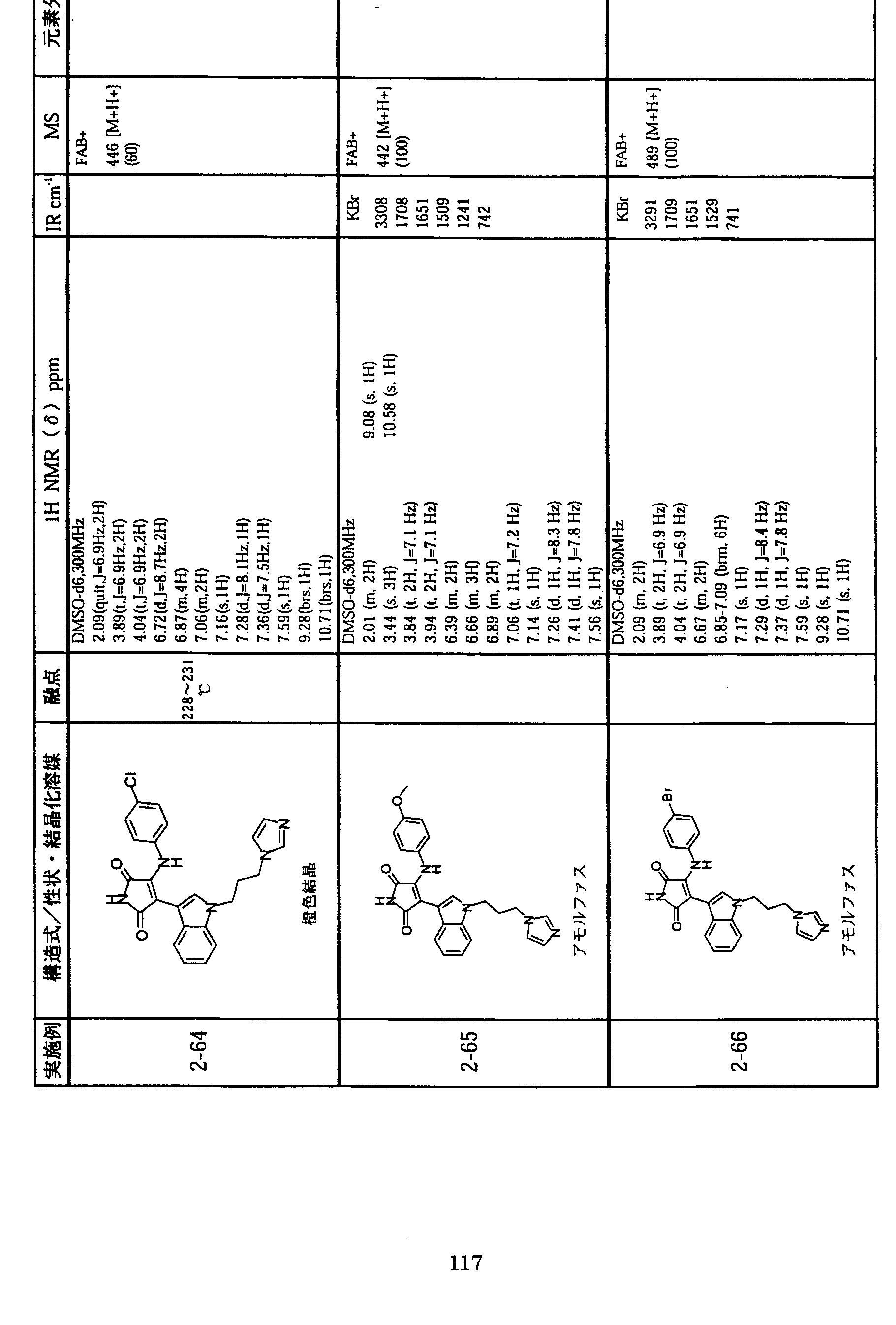
  • Example 2-1 In the same manner as in Example 2-1, the compounds of Examples 2-2 to 2-7 and Examples 2-44 to 246 were obtained. The physical properties are shown in Tables 7 to 9 and Tables 21 to 22.
  • Example 2-8 In the same manner as in Example 2-8, compounds of Examples 2-9 to 2-35 and Examples 2-47 to 2-57 were obtained. Physical property values are shown in Tables 9 to 18 and Tables 22 to 25.
  • Example 2-37 to 2-42 and Examples 2-58 to 2-73 were obtained in the same manner as in Example 2-36.
  • the physical properties are shown in Tables 19 to 20 and 26 to 31.
  • Example 2-1 First step of Example 2-1 from indole-13-acetoamide (l.Og, 5.74 ol) and 1-tert-butoxycarbonyl 3-tosyloxymethylbiperidine (2.33 g, 6.31 mmol) 1-[(1-tert-Butoxycarbonylpyridine-13-yl) methyl] 1-1H-indole-13-ylacetoamide was converted to yellow amorphous (959 mg, 45% yield) As obtained.
  • Example 3-2 The compound of Example 3-2 was obtained in the same manner as in Example 3-1.
  • Table 31 shows the physical properties.
  • Example 3_3 In the same manner as in Example 3_3, the compounds of Examples 3_4 to 3-6 were obtained. Table 32 shows the physical properties.
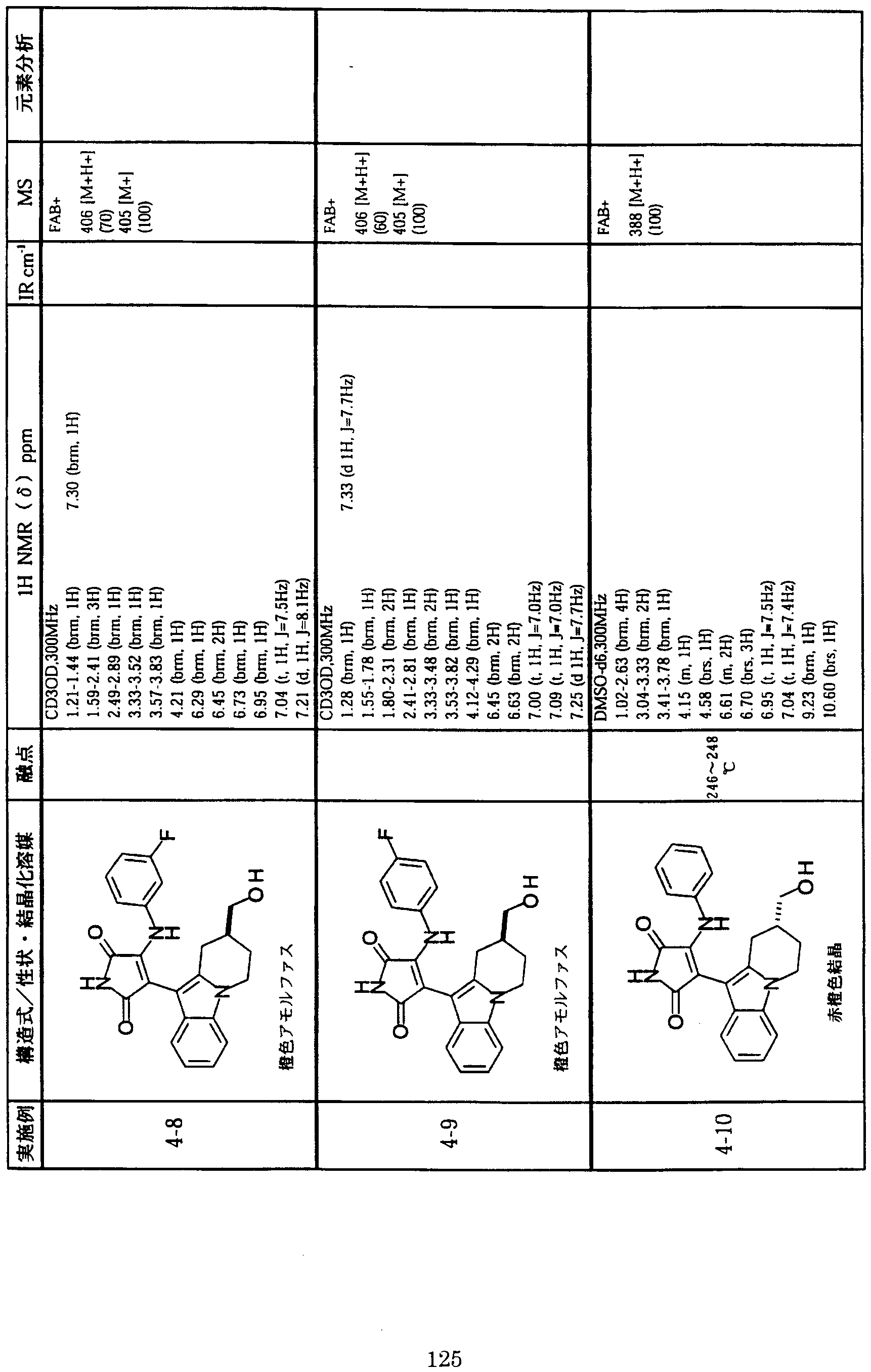
  • Example 10-4 to 4-10 In the same manner as in Example 4-1, the compound of Example 10-4 to 4-10 was obtained. The physical properties are shown in Tables 34 to 36.
  • Example 413 In the same manner as in Example 413, the compounds of Examples 413 to 419 were obtained. Physical properties are shown in Table 45-46.
  • Et represents an ethyl group
  • Ac represents an acetyl group
  • TBDPS represents a tert-butyldiphenylsilyl group
  • Ms represents a mesyl group. The same applies hereinafter.
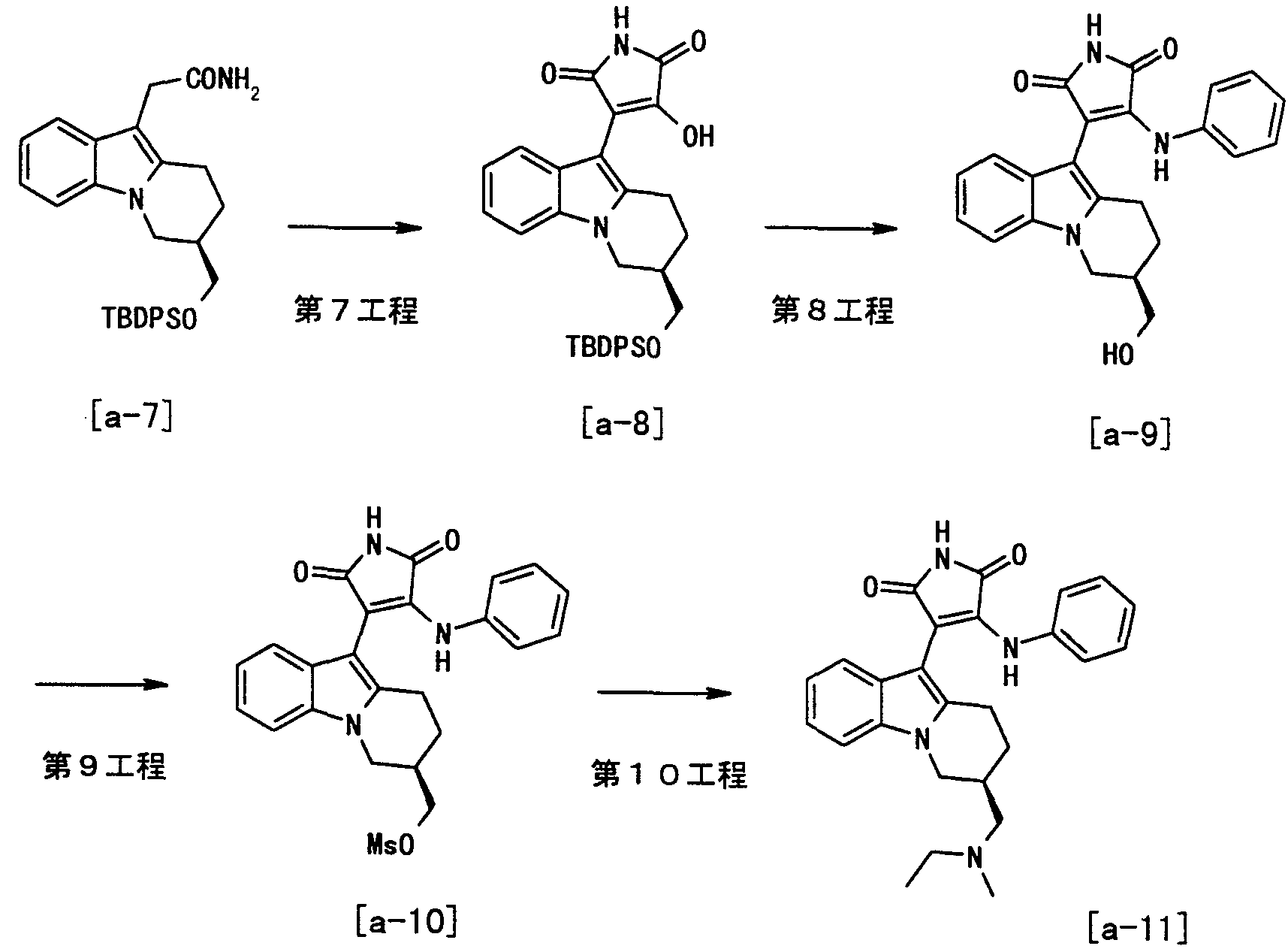
  • a-9
  • Example 4-51 A solution of the crude product [b-2] (1.53 g, equivalent to 4.67 mmol) obtained in the first step of 1 in dioxane (20 tnL) at 0 ° C was added water (lOmL) and 4N hydroxylated solution. Sodium aqueous solution
  • Example 4-51 To a solution of the crude product [b-3] (1.31 g, equivalent to 4.67 mmol) obtained in the second step of 1 and imidazole (636 mg, 9.34 mmol) in DMF (5raL) at 0 ° C was added. Tert-butyldiphenylchlorosilane (1.34 mL, 5. Hmrnol) was added, and the mixture was stirred at room temperature. The reaction mixture was poured into a saturated aqueous solution of sodium bicarbonate, extracted with ethyl acetate, and the organic layer was washed with brine and concentrated.
  • Example 41 Similarly to the fifth step of 40, the compound [b-5] (1.42 g, 2.37 mmol) obtained in the fourth step of Example 4-51 N- form (lOOmL) and A crude product [b-6] (crude 1.12 g) was obtained using a 50% aqueous acetic acid solution (7.1 mL) in the triphnoleo mouth. This was used in the next step without purification.
  • Example 41 Similarly to the seventh step of 40, the compound [b-7] (1.12 g, 2.26 mmol) obtained in the sixth step of Example 451, dimethyl oxalate (294 mg, 2.51 mmol) ), Anhydrous THF (11m) and! Compound [b-8] (960 mg, 74% yield) was obtained as a red amorphous substance using potassium e-butoxy potassium (533 mg, 4.75 mmol).
  • Example 41 Compound [b-8] (600 mg, 1.09 mmol) obtained in Step 7 of Step 41 in the same manner as in Step 8 of Example 40, acetic acid (3ra), aniline ( Compound [b-9] (398 mg, 94% yield) was obtained using 496 ⁇ l, 5.45 mmol), THF (10 mM) and 1 M tetrabutylammonium fluoride in THF solution (2.2 mL, 2.2 mL). Obtained as red amorphous. 9th step
  • the compound [C-2] (0.2 g, 0.7 ramol) obtained in the first step of Example 4-56 was dissolved in ethanol (2.5 mL) and THF (2.5 mL), and the solution was dissolved in lithium chloride ( A mixture of 150 mg, 3.5 mmol) and sodium borohydride (130 mg, 3.5 mmol) in ethanol (2.5 mL) and THF (2.5 mL) was added dropwise at 0 ° C. and stirred for 30 minutes. Thereafter, the reaction solution was heated to reflux for 30 minutes, a 10% aqueous solution of citric acid was added to the reaction solution, extracted with ethyl acetate, and the organic layer was washed with saturated saline and dried over sodium sulfate. After filtering off sodium sulfate, the filtrate was concentrated to dryness to obtain a crude product [c-3].
  • Example 4 The crude product [C-3] (7.2 g) obtained in the second step of Step 56 was dissolved in butyl acetate (100 mL), and Lipase PS (348 mg) was added thereto. Stir for 3 hours. The reaction solution was filtered using celite, and the filtrate was concentrated to dryness to obtain a crude product [c-4] (9.72 g).
  • Example 4 The compound [C-6] (11.6 g, 26.lmmol) obtained in the fifth step of 56 was dissolved in THF (200 mL). At C, pyridine (6.3 mL, 78.3 bandol) and methanesulfonic anhydride (9.09 g, 52.2 mmol) were added, and the mixture was stirred at room temperature for 2 hours under an argon stream. A saturated saline solution was added to the reaction solution, and the mixture was extracted with ethyl acetate.
  • Example 4 The crude product [C-7] obtained in the sixth step of 56 was dissolved in DMF (200 mL), and sodium hydride (1.15 g, 28.7 mmol), sodium iodide (0 ° C) was dissolved at 0 ° C. 391 mg, 2.61 mraol) was added, and the mixture was stirred at 0 ° C for 40 minutes and at room temperature for 12 hours under an argon stream. To the reaction solution was added a 1 M aqueous solution of potassium hydrogen sulfate, and the mixture was extracted with ethyl acetate. The obtained organic layer was washed with water and saturated saline, and then concentrated to dryness.
  • Example 4 The compound [C-9] (500 mg, 2.7 mmol) obtained in the eighth step of Step 56 was dissolved in THF (5 mL), and sodium hydride (130 mg, 3.2 mmol) was added under ice-cooling. In addition was. After the reaction mixture was stirred at room temperature for 15 minutes, methyl iodide (0.2 mL, 3.2 ramol) was added, and the mixture was stirred at room temperature for 1 hour. A 10% aqueous solution of citrate was added to the reaction mixture, and the mixture was extracted with ethyl acetate. The organic layer was washed with a saturated saline solution and dried over sodium sulfate. After the desiccant was filtered off, the filtrate was concentrated to dryness to give the compound [C-10] (620 mg) as a yellow oil. This was used for the next reaction without purification.
  • the compound [C-11] (755 mg) obtained in the 10th step of Example 4-56 was dissolved in THF (15 mL) and ethanol (7 mL), and sodium borohydride (505 mg, 13 .5 mmol) and stirred under water cooling for 1 hour. A 10% aqueous solution of citrate was added to the reaction mixture, and the mixture was extracted with ethyl acetate. The organic layer was washed with a saturated saline solution and dried over sodium sulfate. After filtering off the desiccant, the filtrate was concentrated to dryness.
  • Example 4-157 The compound of Example 4-157 was obtained in the same manner as in Example 4-56.
  • Table 52 shows the physical property values.
  • Example 412 or Example 4- From the compound [C-8] obtained in Steps 1 to 7 of Example 41-56, from the second step to the fifth step of Example 41-1, and Example 412 or Example 4- The compounds of Examples 4-58 to 4-71 were obtained in the same manner as the 40th ninth step to the 10th step. Physical properties are shown in Tables 52 to 57.
  • Ph represents a phenyl group
  • TBMS represents a tert-yl group
  • the crude product [d-2] obtained in the first step of Example 5-1 was dissolved in THF (100 mL), and a 1 M tetrabutylammonium fluoride / THF solution (150 mL) was added at room temperature. After that, the mixture was stirred for 1 hour. A 10% aqueous solution of citrate was added to the reaction mixture, extracted with ethyl acetate, and the organic layer was washed with saturated saline and dried over sodium sulfate. After the desiccant was filtered off, the filtrate was concentrated to dryness to obtain a crude product [d-3] (21.7 g) as a pale brown oil.
  • the compound [d-8] (l. Og) obtained in the seventh step of Example 5-1 was dissolved in methanol (10 mL), and then a 40% aqueous sodium hydroxide solution (6.0 mL) was added. Heated and refluxed for hours. After adding concentrated hydrochloric acid to the reaction mixture, the mixture was extracted with chloroform. The organic layer was washed with saturated saline and then dried over sodium sulfate. After the desiccant was filtered off, the filtrate was concentrated to dryness to give a crude product [d-9] (1.1 lg) as a brown oil. This was used in the next reaction without purification.
  • Example 5— The compound [d-10] obtained in the ninth step was obtained in the same manner as in the fourth step of Example 4-11 and the second step of Example 11-11 to obtain a compound [d-11].
  • Table 57 shows the physical property values.

Landscapes

  • Chemical & Material Sciences (AREA)
  • Organic Chemistry (AREA)
  • Pharmaceuticals Containing Other Organic And Inorganic Compounds (AREA)
  • Plural Heterocyclic Compounds (AREA)

Description

明細書
ジ置換マレイ ミ ド化合物及びその医薬用途
- 技術分野
本発明は、 新規ジ置換マレイミ ド化合物又は製薬上許容されるその塩、 及びそ れらを有効成分として含有してなる医薬組成物に関する。 更に詳しくは、 選択的 にプロテインキナーゼ C (PKC) アイソザィム )3活性を阻害することにより糖 尿病性網膜症、 糖尿病性腎症、 糖尿病性心筋症、 糖尿病性神経障害等の糖尿病合 併症を治療或るいは予防し得る新規ジ置換マレイミ ド化合物又は製薬上許容され るその塩、 及びそれらを有効成分として含有してなる医薬組成物に関する。
背景技術
PKCは、 細胞内の多様な情報伝達に中心的な役割を果たすセリン トレオニ ンタンパク質リン酸化酵素の一種である。
PKCがリン酸化する蛋白は、 上皮細胞成長因子受容体、 インスリン受容体、 インターロイキン 2受容体、 アセチルコリン受容体、 アドレナリン受容体などの 受容体、 ホスホランバン、 ナトリウムイオンチャンネル、 グルコース担体など多 数の膜蛋白、 筋肉を構成するァクチン、 ミオシンなど、 グリコーゲンホスホリラ ーゼキナーゼ、 シトクロム P 4 50などの代謝性酵素など多数にわたる。
現在、 PKCには少なく とも 1 0種以上のアイソザィムが存在することが知ら れる。 これらアイソザィムは、 何れも C末端側にキナーゼドメインを、 N末端側 に制御ドメインを配した構造をとる。 キナーゼドメインは、 PKC間では高い相 同性を示し、 Aキナーゼ (サイクリック AMP依存性プロテインキナーゼ、 PK Aともいう。)、 Gキナーゼ (サイクリック GMP依存性プロテインキナーゼ)、 チ 口シンキナーゼなど他のプロティンキナ一ゼとも相同性を示す。 制御ドメイン中 には、 カルシウム結合部位、 ホルボールエステル結合部位が存在し、 その両者を 有する一群 {ひ 、 ( I型、 II型)、 y } と、 ホルポールエステル結合部位のみ を有する一群 (δ 、 Ε 、 θ 、 7])、 及びその両者を欠く一群 (ζ 、 λ ) に区別でき る。
PKCひ 、 β、 γは、 ジァシルグリセロール (DAG) 等の細胞膜イノシトー ルリン脂質の代謝産物及びカルシウムにより活性化される、 すなわちリン脂質 Ζ カルシウム依存性セリソ /トレオニンタンパク質リン酸化酵素である。
PKC活性化を介する病状としては、 網膜血流低下などの血流異常、 網膜血管 の血管透過性亢進、 腎糸球体濾過値の亢進などの血管収縮性異常、 腎メサンギゥ ム細胞において収縮応答性の低下及び細胞外基質の産生増加が挙げられる。また、 転写因子の活性化による細胞増殖異常及び遺伝子発現異常、 心筋組織においては 心肥大、 心臓細動などの病態に係わるなど様々な報告がある。
PKCフアミリーそれぞれのアイソザィムの生体内分布、 細胞内分布、 活性化 機構には差異があることが知られているが、 高血糖状態においては網膜、 心臓、 大動脈、 腎糸球体では特に PKC /3の活性化が顕著である。 その理由として、 P KC ]3は他のアイソザィムと比較して低カルシウム濃度での D AG感受性が高い ことが挙げられ、 カルシウム濃度の上昇を伴わない D AG合成系を介する病態、 例えば糖尿病においては、 PKC の活性化が著しくなると考えられる。
PKCが、 細胞内情報伝達に中心的な役割を果たすことを考慮するに、 特に、 PKC ]3の分布が多い細胞及び臓器、 細胞内のカルシウム濃度上昇を伴わない症 状、 PKC ]3を選択的に活性化する因子が関与する症状に於ては、 PKC ]3活性 を選択的に阻害することが望ましく、 P K C ]3選択的阻害剤が安全かつ副作用の 少ない薬剤開発のターゲッ トとして注目される。
また、 P KCの生体内分布について、 アイソザィム αはほとんどすべての臓器 に存在することを考慮するに、 特に PKC ctと比較し PKC ]3を選択的に阻害す ることは望ましい態様の一つである。
よって PKC阻害剤は、 糖尿病合併症、 具体的には糖尿病性網膜症、 糖尿病性 腎症、 糖尿病性心筋症、 糖尿病性神経障害、 或るいは動脈硬化、 血栓症等の血管 障害、 炎症、 皮膚病、 後天性免疫不全症等の免疫性疾患、 アルツハイマー病等の 中枢神経系疾患、 癌など様々な疾患への適応が考えられる。 特には糖尿病性網膜 症、 糖尿病性腎症、 糖尿病性心筋症、 糖尿病性神経障害等の糖尿病合併症、 中で も糖尿病性網膜症への適応が期待される。
PKC阻害作用を有する化合物は、 既に数多く報告されている。 このうちいく つかの阻害剤はその他のキナーゼ類等と比較し P KC選択的であるにもかかわら ず、 アイソザィム αと ]3における選択性が不十分である等の理由により、 未だ実 用的な薬剤の開発には至っていない。 これら PKC阻害作用を有する化合物とし ては、 1 986年に T a m a o k i らによってスタウロスポリン(Staurosporine) が報告された (Biochem. and Biophys. Research Coramun.135 (2) , 397-402, 1986) 0
Figure imgf000005_0001
NHCH3
Staurospor i ne
続いて、 以下の構造を有する化合物の PKC阻害作用を有することが多数報告 されている。
Figure imgf000005_0002
具体的には、 特表平 9— 50 706 6号 (E l i L i l l y & C o.)、 特開平 8— 0 5 96 6 6号(F Ho f f m a n n— L a R o c h e AG), E P 1 1 5 3 50号 (B r i s t o l —My e r s C o.), WO 9 7/0 5 1 4 0号 (C i b a—G e i g y AG) 等にこれら化合物が開示されている。 これら化合物は、ィンドール構造及び 1 H—ピロ一ルー 2, 5—ジオン(マレイ ミ ド)又は 1, 2—ジヒ ドローピロール一 5—オン構造を有するという点で共通す るが、 その P KC阻害活性の程度、 P KC選択性、 P KCアイソザィム選択性と いう面でその性質に差異がある。 _
本発明化合物に比較的構造が類似の P KC阻害剤としては、 U S 5 4 0 5 8 6 4 (S y n t e X I n c .) に下記化合物 A等が開示され、 文献 (Bioorg. Med. Chem. Lett. , 4 (24) , 2845-2850, 1994) には下記化合物 Β等が開示されている。 し かし、 これら刊行物には P KC /3選択的であるとの記載は一切見られない。
Figure imgf000006_0001
また、 同じく P KC阻害剤として特開平 2 _ 2 6 4 7 7 6号 (F . H o f f m a n n— L a R o c h e AG) には下記化合物 C及び D等が記載されている が、 この公報にも P K C 3選択的であるとの記載は一切見られない。 一方、 文献 (Biochem. J. , 294(2), 335-337, 1993) には下記化合物 C及びその光学活性体に ついての P KCアイソザィム活性に関する記載が見られる。 しかし、 当該化合物 の持つ選択性は、 アイソザィム ε と比較し i3が数倍の高活性を有するというもの であり、 aと βとの比較においては寧ろひへの阻害活性が高いことが記載されて いる。
Figure imgf000007_0001
化合物 化合物 D
また、 既知化合物の中には PKC /3選択的阻害剤として開発された下記化合物 LY3 3 3 53 1 (特開平 7— 2 1 5 9 77号、 E l i L i l l y & C o.) も知られる。
Figure imgf000007_0002
LY333531
しかし、 本発明化合物はこれら全ての既知化合物とその構造を異にし、 また、 PKC /3選択的作用を有するという点でこれら既知化合物の大部分とその性質を 異にする。
一方、 PKC阻害剤以外の化合物で本願発明化合物と構造的に類似の化合物と しては、 WO 9 1Z1 3 0 70 (B o e h r i n g e r Ma n n h e i m) に 示される下記化合物 Eが挙げられる。 CH„
Figure imgf000008_0001
化合物 E
しかし、 その用途は免疫性疾患治療剤及び抗アレルギー剤であり、 本願発明の ように PKC阻害を介する作用である旨の記載は一切なく、 またそれを示唆する データの開示もない。
発明の開示
これらの知見により PKC阻害作用、 中でも PKC 選択的阻害作用を有する 薬剤は、 正常な細胞内情報伝達を損なうことなく、 顕著な副作用を示さない安全 な薬剤となり、 特に糖尿病合併症の治療及び予防剤となり得る。 従って、 本発明 の目的は、 PKC阻害作用を有する薬剤、 特に PKC ]3選択的阻害作用を有する 薬剤を提供することである。
本発明者らは、 P KC阻害剤として多くの類似化合物が知られる中で、 高い Ρ KC阻害作用を有しかつ PKC ;3アイソザィム選択的阻害作用を有する化合物を 見出すべく鋭意研究を重ねた結果、 本発明を完成するに至った。
より詳しくは下記 ( 1 ) 乃至 (1 4) に示す通りである。
( 1 ) 下記一般式 [ I ]
Figure imgf000008_0002
[式中、 R1は水素原子又は低級アルキル基であり、 R2は置換されてもよいァリール基、置換されてもよいシクロアルキル基又は置換 されてもよい複素環基であり、
R R\ R6、 R7及び R8はそれぞれ同一若しくは異なって水素原子、 ハロゲン 原子、 水酸基、 アミノ基、 置換されてもよい低級アルキル基又は置換されてもよ レ、低級アルコキシ基であり、
R4は単独で Wであるか、 又は R4と R3が一緒になって、 式
W
*一(GH2) ~C (CH 2J' q
W
若しくは
w
*— (CHJ— C—— C=C——
P I H H
W
で表される基を形成するか 又は、 R4と R5が一緒になつて、 式
W
*— (CH2)— C—— (CH2)「0
W
で表される基を形成し、
Wは一(CH i— (Y)m- (CH2)n - Z
{式中、 Yは— C R9R9'— (式中、 R9及び R9'はそれぞれ同一若しくは異なって 水素原子、 水酸基、 低級アルキル基、 低級アルコキシ基、 低級アルキルチオ基、 低級アルキルアミノ基、 ジ低級アルキルアミノ基、 又は複素環基である。)、 -N R10- (式中、 は水素原子又は低級アルキル基である。)、 一 O—、 一 S—、 一 S〇2—、 一 CONH—、 一 NHCO—、 一 S ONH—、 一 NHS O—、 一 S 02 NH—、 一 NH S 02—又は _ S〇3—であり、
Zは、 水素原子、 ハロゲン原子、 水酸基、 置換されてもよい低級アルコキシ基、 低級アルカノィル基、 低級アルコキシカルボニル基、 — NR"R12 (式中、 R11及 び R12はそれぞれ同一若しくは異なって水素原子又は低級アルキル基である。)、 置換されてもよいアミジノ基、置換されてもよいグァニジノ基、力ルバモイル基、 低級アルキルアミノカルボニル基、 置換されてもよいァリール基、 置換されても よいシクロアルキル基又は置換されてもよい複素環基であり、
1 は 0又は 1乃至 4の整数であり、 _mは 0又は 1であり、 nは 0又は 1乃至 4の 整数である。 } であり、
Wは水素原子であるか、 Wと同一若しくは異なって—(CH^— (Y —(CH2)n 一 Z (式中、 各記号は上記と同義である。) であり、
p、 q、 rはそれぞれ同一若しくは異なって 0又は 1乃至 4の整数であり、 上記 *印は、 *印側がィンドール環の窒素原子に結合することを意味する。]で表 されるジ置換マレイミ ド化合物又は製薬上許容されるその塩。
(2) 下記一般式 [ I ]
Figure imgf000010_0001
[式中、 R1は水素原子又は Cト6低級アルキル基 (ここで、 6は炭素数が 1 乃至 6個であることを示す。 以下同様。) であり、
R2は置換されてもよい C618ァリール基、 置換されてもよい C3_8シクロアル キル基又は置換されてもよい複素環基 (ここで、 当該複素環基は、 酸素原子、 窒 素原子及び硫黄原子から選ばれる 1乃至 4個のへテロ原子を有し、 環を構成する 原子の数が 5乃至 1 2である。) であり、
R\ R5、 R6、 R7及び R8はそれぞれ同一若しくは異なって水素原子、 ハロゲン 原子、 水酸基、 アミノ基、 置換されてもよい 低級アルキル基又は置換され てもよい C 6低級アルコキシ基であり、
R4は単独で Wであるか、 又は R4と R3が一緒になつて、 式
W
*— (CH2) -C— (CH2)―
W 若しくは
w
*一 (CHJ— C—— G二 G——
p I H H
W
で表される基を形成するか、 又は、 R4と R5が一緒になつて、 式
W
*— (CH2)— C一 (CH2)— 0— で表される基を形成し、
Wは一 —(Y)m— (CH2)n—Z
{式中、 Yは _CR9R9'— [式中、 R9及び R9'はそれぞれ同一若しくは異なって 水素原子、 水酸基、 低級アルキル基、 C^ 6低級アルコキシ基、 Ci_6低級 アルキルチオ基、 C ^ 6低級アルキルアミノ基、 ジじ ^低級アルキルアミノ基、 又は複素環基 (ここで、 当該複素環基は、 酸素原子、 窒素原子及び硫黄原子から 選ばれる 1乃至 4個のへテロ原子を有し、 環を構成する原子の数が 5乃至 1 2で ある。) である。]、 -NR10- (式中、 R1Qは水素原子又は — 6低級アルキル基 である。)、 一 O—、 一 S―、 一 S02—、 一 CONH—、 一NHCO—、 一S ON H—、 一 NHS O—、 一 S〇2NH—、 一 NH S 02—又は一 S 03—であり、 Zは、 水素原子、 ハロゲン原子、 水酸基、 置換されてもよい C 低級アルコキ シ基、 Cト 6低級アルカノィル基、 C 低級アルコキシカルボニル基、 —NR11 R12 (式中、 R11及び R12はそれぞれ同一若しくは異なって水素原子又は〇卜6低 級アルキル基である。)、 置換されてもよいアミジノ基、 置換されてもよいグァニ ジノ基、 力ルバモイル基、 C ^ 6低級アルキルアミノカルボニル基、 置換されて もよい C 6— i 8ァリ一ル基、置換されてもよい C3_8シクロアルキル基又は置換さ れてもよい複素環基 (当該複素環基は上記と同義である。) であり、
1は 0又は 1乃至 4の整数であり、 mは 0又は 1であり、 nは◦又は 1乃至 4の 整数である。 } であり、
W'は水素原子であるか、 Wと同一若しくは異なって一(CH i— (Y)ra—(CH2)n 一 Z (式中、 各記号は上記と同義である。) であり、 W
p、 q、 rはそれぞれ同一若しくは異なって 0又は 1乃至 4の整数であり、 上記 *印は、 *印側がィンドール環の窒素原子に結合することを意味する。]で表 される ( 1 ) 記載のジ置換マレイミ— ド化合物又は製薬上許容されるその塩。
( 3 ) R2が置換されてもよい C 68ァリール基又は置換されてもよい C38 シク口アルキル基であり、
R3、 R5、 R R7及び R8がそれぞれ同一若しくは異なって水素原子、 置換され てもよい C ^ 6低級アルキル基又は置換されてもよい 低級アルコキシ基で あり、
Wにおける Yが一 C R9R9' —、 -NR10- (式中、 R9、 R9'及び R10は (2) に 記載の通りである。)、 一 O—、 一 S—又は _ S o2_であり、
Wにおける Zが水素原子、 水酸基、 置換されてもよい 低級アルコキシ基、 C卜6低級アルカノィル基、 _ NR"R12 (式中、 R11及び R12は (2) に記載の 通りである。)、 置換されてもよいアミジノ基又は置換されてもよい複素環基であ り、
W'が水素原子である (2 )記載のジ置換マレイミ ド化合物又は製薬上許容される その塩。
(4 ) R1が水素原子であり、 R2が置換されてもよい C 618ァリール基である ( 2) 記載のジ置換マレイミ ド化合物又は製薬上許容されるその塩。
( 5 ) R4が単独で Wであるか、 又は R4と R3が一緒になつて、 式
W
*- (CH2)p-C— (CH2)―
W
(式中、 W、 p及び qは (2) に記載の通りであり、 W'は水素原子である。) で 表される基を形成する (4 ) 記載のジ置換マレイミ ド化合物又は製薬上許容され るその塩。
( 6) R4が R3と一緒になつて、 式
W
*-(CH2) C— (CH2)q— (式中、 W、 p及び qは (2) に記載の通りであり、 W'は水素原子である。) で 表される基を形成する (5) 記載のジ置換マレイミ ド化合物又は製薬上許容され るその塩。 ―
(7) R5、 R6、 R7及び R8が水素原子であり、 R2がフエニル基である (6) 記載のジ置換マレイミ ド化合物又は製薬上許容されるその塩。
(8) Wにおける Zが水酸基、 一 NRUR12 (式中、 R11及び R12は (2) に記 載の通りである。) 又は置換されてもよい複素環基である (7) 記載のジ置換マレ ィミ ド化合物又は製薬上許容されるその塩。
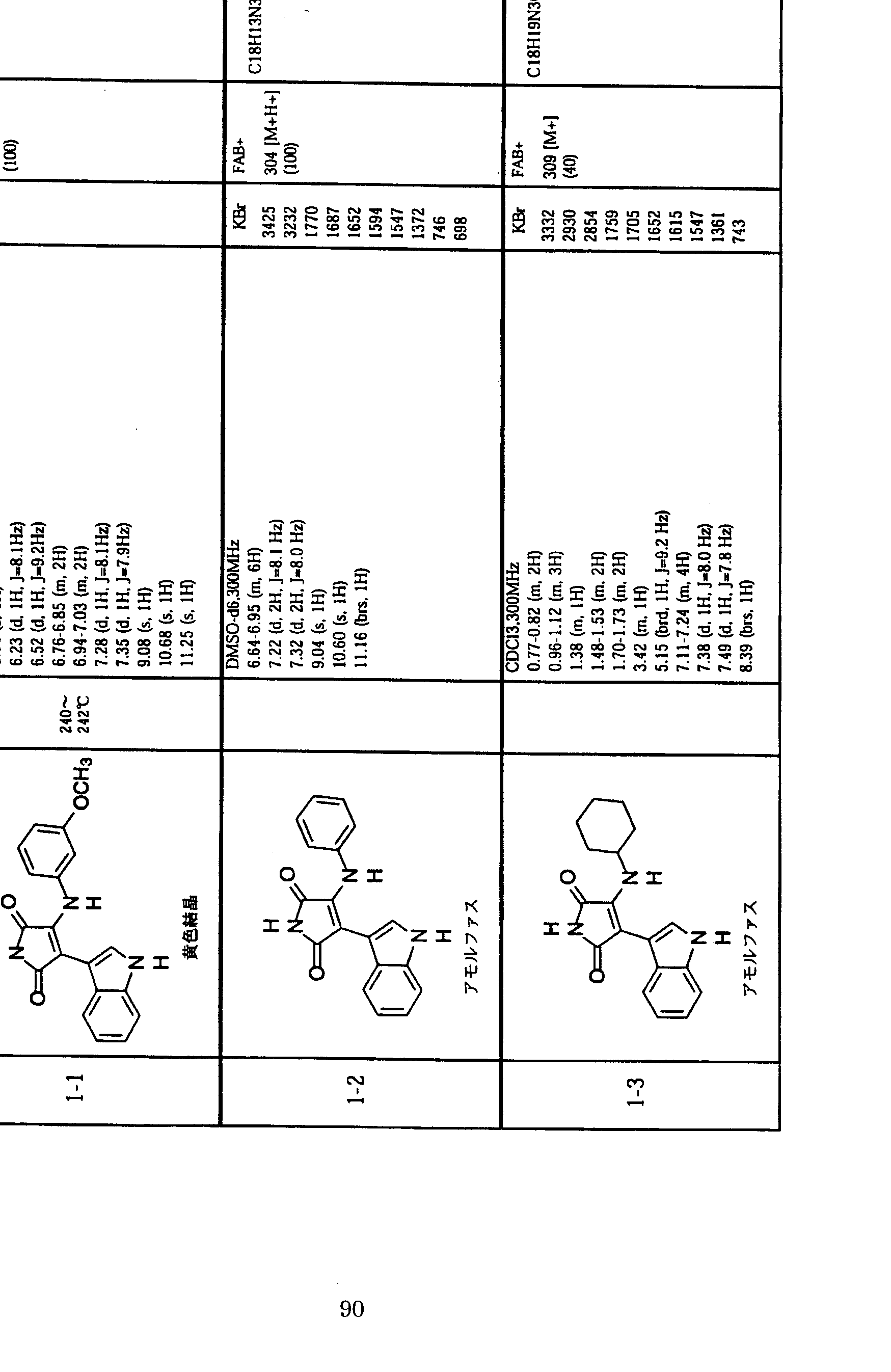
(9) 3— ( 1 H—インドールー 3—ィル) 一4— [(3—メ トキシフエニル) ァミノ] 一 1 H—ピロール一 2, 5—ジオン (実施例 1— 1 )、
3— ( 1 H—インドールー 3—ィル) 一4一 (フエニルァミノ) 一 1 H—ピロ —ルー 2, 5—ジオン (実施例 1 _ 2)、
3— (シクロへキシルァミノ) 一4一 ( 1 H—インドール一 3—ィル) 一 1 H —ピロ一ル一 2, 5 _ジォン (実施例 1一 3)、
3— ( 1 H—インドール一 3—ィル) 一 4 _ [(4—メチルフエニル) ァミノ] — 1 H—ピロール一 2, 5—ジオン (実施例 1一 4 )、
3— ( 1 H—インドール一 3—ィル) 一 4 _ [(3—メチルフエニル) ァミノ] 一 1 H—ピロール一 2, 5—ジオン (実施例 1一 5)、
3— [(3—クロ口フエニル) ァミノ] ー4一 ( 1 H—インド一ル一 3—ィル) — 1 H—ピロール— 2, 5—ジオン (実施例 1一 6 )、
3— ( 1 H—インド一ルー 3—ィル) - 4 - [(4—メ トキシ一 2—メチルフエ ニル) ァミノ] 一 1 H—ピロール一 2, 5—ジオン (実施例 1— 7)、
3— [(2, 4ージメ トキシフエニル) ァミノ] —4— (1 H—インドール一 3 —ィル) 一 1 H—ピロ一ルー 2, 5—ジオン (実施例 1— 8)、
3— [(2, 4—ジフルオロフェニル) ァミノ] —4一 (1 H—インドール一 3 一ィル) 一 1 H—ピロール一 2, 5—ジオン (実施例 1一 9)、
3— [(3—ブロモフエニル) ァミノ] 一 4— ( 1 H—インド一ルー 3—ィル) — 1 H—ピロ一ルー 2, 5—ジオン (実施例 1一 1 0)、
3— ( 1 H—インドールー 3—ィル) 一 4一 [(2—メチルフエニル) ァミノ] — 1 H—ピロ一ル一 2, 5—ジオン (実施例 1— 1 1 )、
3— [(3—フルオロフェニル) ァミノ] — 4— (1 H—インドール一 3—ィル) 一 1 H—ピロ一ルー 2, 5—ジオ (実施例 1— 1 2)、
3— ( 1 H—ィンドール一 3—ィル) 一 4— [(3— トリフルォロメチルフエ二 ル) ァミノ] — 1 H—ピロ一ルー 2, 5—ジオン (実施例 1— 1 3)、
3— ( 1 H—インドール一 3—ィル) 一4— (ビフエ二ルー 3—ィルァミノ) 一 1 H—ピロ一ル一 2, 5—ジオン (実施例 1— 1 4)、
3— ( 1 H—インドールー 3—ィル) 一4— [( 3—フエノキシフエニル) アミ ノ] — 1 H—ピロ一ルー 2, 5—ジオン (実施例 1— 1 5)、
3 - ( 1 H—インドールー 3—ィル) _4一 [( 3—イソプロピルフエニル) ァ ミノ] — 1 H—ピロ一ル一 2, 5—ジオン (実施例 1— 1 6)、
3 - ( 1 H—インドール一 3—ィル) 一4— (N—メチノレ一 N—フエ二ノレアミ ノ) 一 1 H—ピロ一ル一 2, 5—ジオン (実施例 1— 1 7)、
3— [ 1— ( 3—ヒ ドロキシプロピル) 一 1 H—インド一ル一 3—ィル] —4 ― (フエニルァミノ) 一 1 H—ピロール一 2, 5—ジオン (実施例 2— 1)、
3— [ 1— ( 3—ヒ ドロキシプロピル) 一 1 H—ィンドール一 3—ィル] 一 4 - [(3 _メチルフエニル) ァミノ] 一 1 H—ピロール一 2, 5—ジオン (実施例 2— 2 )、
3— [(3—クロ口フエ二ノレ) ァミノ] ー4一 [ 1 - (3—ヒ ドロキシプロピル) — 1 H—インドールー 3—ィル] — 1 H—ピロール一 2, 5—ジオン (実施例 2 一 3)、
3— [ 1— ( 2—ヒ ドロキシェチノレ) 一 1 H—インド一ノレ一 3—ィル] - 4 - (フエニルァミノ) 一 1 H—ピロール一 2, 5—ジオン (実施例 2— 4)、
3— [ 1— (4—ヒ ドロキシブチル) 一 1 H—インド一ルー 3—ィル] 一 4— (フエニルァミノ) 一 1 H—ピロール一 2, 5—ジオン (実施例 2— 5)、
3— [(3, 4—ジクロロフエニル) ァミノ] — 4一 [1— (3—ヒ ドロキシプ 口ピル) ― 1 H—ィンドール一 3—ィル] ― 1 H—ピロ一ルー 2, 5ージオン(実 施例 2— 6 )、
3— [ 1— (2—ァセ トキシェチル) 一 1 H—インドール一 3—ィル] —4— (フエニルァミノ) 一 1 H—ピロ一ルー 2, 5—ジオン (実施例 2— 7)、
3— [ 1 — (3—ジメチルァミノプロピル) 一 1 H—インドール一 3—ィル] — 4— (フエニルァミノ) 一 1 H—ピロール一 2, 5—ジオン (実施例 2— 8)、
3— [ 1 — ( 2—ジメチルアミノエチル) 一 1 H—インドール一 3—ィル] 一 4一 (フエニルァミノ) 一 1 H—ピロ一ルー 2, 5—ジオン (実施例 2— 9)、
3— [ 1— (4—ジメチルアミノブチル) 一 1 H—インドールー 3—ィル] ― 4 - (フエニルァミノ) 一 1 H—ピロール一 2 , 5—ジオン (実施例 2— 1 0)、
3 - [ 1 - (3—ジメチルァミノプロピル) 一 1 H—インド一ル一 3—ィル] — 4— [(3—メチルフエニル) ァミノ] 一 1 H—ピロール一 2, 5—ジオン (実 施例 2— 1 1 )、
3— [ 1 — ( 3—ジメチルァミノプロピル) 一 1 H—インドール一 3—ィル] — 4— [(3—クロ口フエニル) ァミノ] — 1 H—ピロ一ル一 2, 5—ジオン (実 施例 2— 1 2 )、
3— [ 1 — (3—ジェチルァミノプロピル) 一 1 H—インドールー 3—ィル] — 4— (フエニルァミノ) 一 1 H—ピロ一ル一 2, 5ージオン (実施例 2— 1 3 )、
3— [ 1 - { 3 - [N- (2—ジメチルアミノエチル) 一N—メチルァミノ] プロピル) 一 1 H—インド一ルー 3—ィル] — 4— (フエニルァミノ) 一 1 H— ピロール一 2, 5—ジオン (実施例 2— 1 4)、
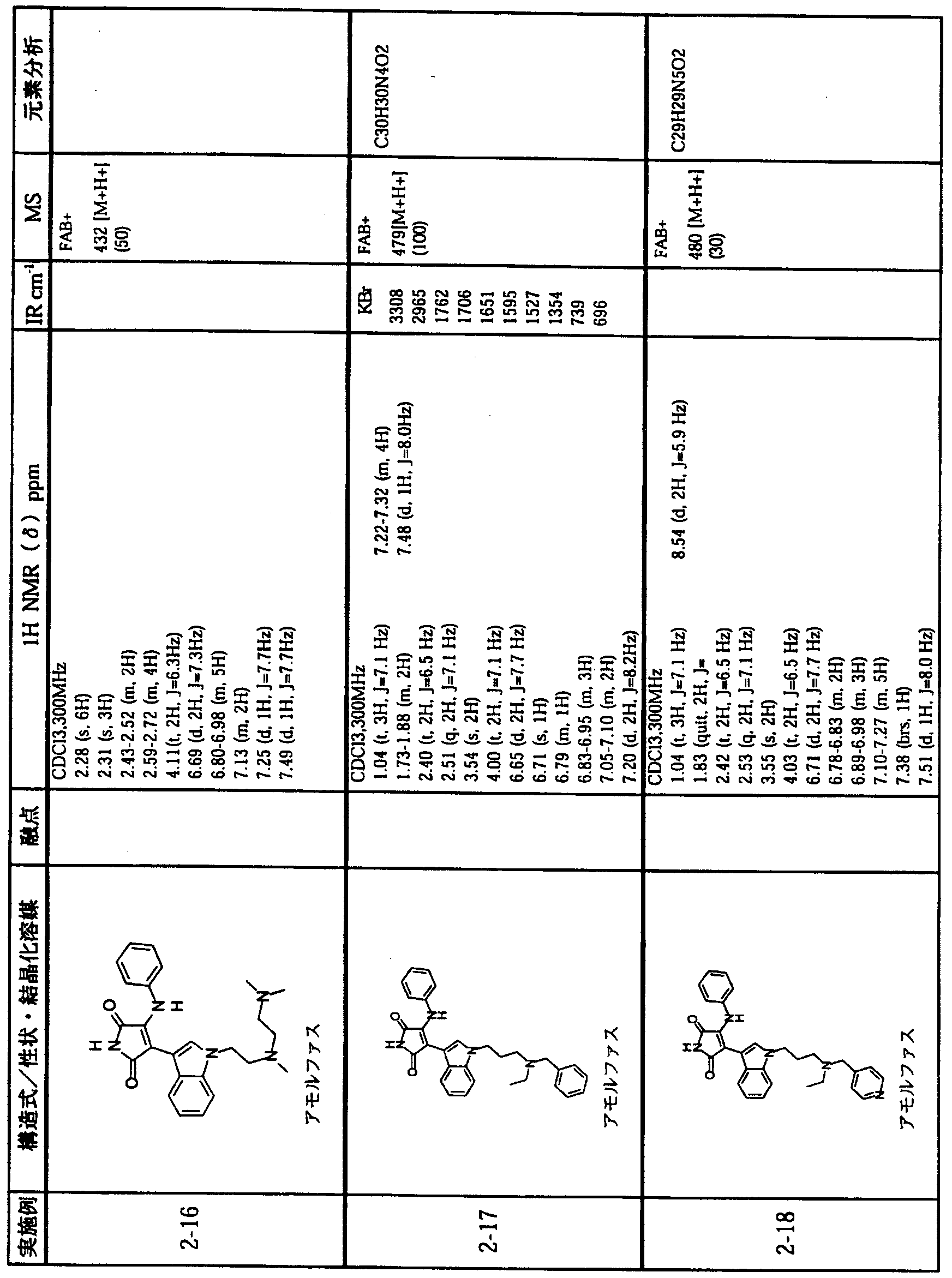
3— [ 1 - { 3 - [N—ェチルー N— (2—メ トキシェチル) ァミノ] プロピ ル} 一 1 H—インド一ル一 3—ィル] _ 4一 (フエニルァミノ) 一 1 H—ピロ一 ル— 2, 5—ジオン (実施例 2— 1 5)、
3— [ 1 — { 2 - [N— (2—ジメチルアミノエチル) 一N—メチルァミノ] ェチル } 一 1 H—イン ドール一 3—ィル] — 4— (フエニルァミノ) 一 1 H—ピ ロール一 2, 5—ジオン (実施例 2— 1 6)、
3 - [ 1 一 { 3 - (N—ベンジル一 N—ェチルァミノ) プロピル } 一 1 H—ィ ンドール一 3—ィル] — 4— (フエニルァミノ) 一 1 H—ピロ一ルー 2, 5—ジ オン (実施例 2— 1 7)、
3— [ 1 - { 3 - [N_ェチル_N— (4—ピリジルメチル) ァミノ] プロピ ル} — 1 H—インドール一 3—ィル] - 4 - (フエニルァミノ) 一 1 H—ピロ一 ル一 2, 5—ジオン (実施例 2— 1 8)、
3— [ 1— ( 3—モルホリノプロピル) 一 1 H—インドールー 3—ィル] —4 一 (フエニルァミノ) 一 1 H—ピロ一ルー 2, 5—ジオン (実施例 2— 1 9)、
3— [ 1— ( 3—ピペリジノプロピル) 一 1 H—インドール一 3 _ィル] —4 ― (フエニルァミノ) 一 1 H—ピロール一 2, 5—ジオン (実施例 2— 20)、
3— (フエニルァミノ) 一 4一 [ 1 - ( 3—チオモルホリ ノプロピル) 一 1 H —ィンド一ルー 3—ィル] 一 1 H—ピロ一ルー 2, 5ージオン (実施例 2— 2 1 )、
3 - (フエニルァミノ) 一 4— [ 1 - (3—ピロ リジン一 1一^ fルプロピル) — 1 H—インド一ル一 3—ィル] — 1 H—ピロール一 2, 5—ジオン (実施例 2 — 22)、
3— [ 1— ( 3—ァザシクロヘプタン一 1—ィルプロピル) 一 1 H—インドー ル一 3—ィル] — 4— (フエニルァミノ) 一 1 H—ピロ一ルー 2, 5—ジオン (実 施例 2— 23 )、
3 - [1— { 3 - ( 2—カノレバモイ/レビ口 リジン一 1ーィノレ) プロピノレ) 一 1 H—インド一ルー 3—ィ/レ] —4— (フエニルァミノ) 一 1 H—ピロ一ルー 2, 5—ジオン (実施例 2— 24)、
3— [ 1— { 3 - (4ーヒ ドロキシピペリジノ) プロピル } — 1 H—インドー ル一 3—ィル] 一 4一 (フエニルァミノ) 一 1 H—ピロール一 2, 5—ジオン (実 施例 2— 25 )、
3— [ 1 - { 3— (4—メチルビペラジン一 1—ィル) プロピル) 一 1 H—ィ ンドール一 3—ィル] —4 - (フエニルァミノ) 一 1 H—ピロ一ルー 2, 5—ジ オン (実施例 2— 26)、
3 - [(3—クロ口フエニル) ァミノ] — 4— [ 1 - {4一 (4ーヒ ドロキシピ ペリジノ) ブチル } — 1 H—インドールー 3—ィル] — 1 H—ピロ一ルー 2, 5 ージオン (実施例 2— 2 7)、
3— [ 1 - { 5— (4ーヒ ドロキシピペリジノ) ペンチル} ― 1 H—ィンドー ル一 3—ィル] 一 4— (フエニルァミノ) 一 1 H—ピロ一ルー 2, 5ージオン (実 施例 2— 28 )、
3— [ 1— {4一 (4ーメチルビペラジン一 1一ィル) プチル} 一 1 H—イン ドール一 3—ィル] —4— (フエニルァミノ) 一 1 H—ピロ一ルー 2, 5—ジォ ン (実施例 2— 29)、
3 - [ l - { 3 - [3 - ( t e r t—ブチルァミノカルボニル) 一デカヒ ドロ - (4 a S, 8 a S) 一イソキノ リン一 2—ィル] プロピル } 一 1 H—インドー ル一 3—ィル] — 4— (フエニルァミノ) _ 1 H—ピロ一ルー 2, 5—ジオン(実 施例 2— 30)、
3— (フエニルァミノ) 一4— [ 1— {3— (4—ピペリジノピペリジノ) プ 口ピル } — 1 H—インドール一 3—ィル]― 1 H—ピロ一ルー 2, 5ージオン(実 施例 2 _ 3 1 )、
3— [ 1— { 3 - [4— (2—ヒ ドロキシェチル) ピぺラジン一 1—ィル] プ 口ピル) 一 1 H—インドール一 3—ィル] —4一 (フエニルァミノ) 一 1 H—ピ 口一ルー 2, 5—ジオン (実施例 2— 3 2)、
3 - [ 1— { 3 - (4一力ルバモイルビペリジノ) プロピル } — 1 H—インド ール _ 3—ィル] —4一 (フエニルァミノ) 一 1 H—ピロ一ルー 2, 5—ジオン (実施例 2— 3 3 )、
3— [ 1— { 3 - (4—ジメチルアミノビペリジノ) プロピル } 一 1 H—イン ド一ルー 3—ィル] —4— (フエニルァミノ) 一 1 H—ピロ一ル一 2, 5—ジォ ン (実施例 2— 34)、
3— [ 1— { 3 - (フエニルスルホ -ル) プロピノレ} — 1 H—インドール一 3 一ィル] —4— (フエ-ルァミノ) 一 1 H—ピロール一 2, 5—ジオン (実施例 2 -3 5 )、
3 - [ 1 - ( 3—イ ミダゾ一ルー 1ーィルプロピル) — 1 H—インド一ルー 3 一ィル] 一 4— (フエニルァミノ) 一 1 H—ピロール一 2, 5—ジオン (実施例 2 -3 6 )、
3— (フエニルァミノ) _4一 [ 1 - (3—ピラゾ一ル一 1—ィルプロピル) — 1 H—インド一ルー 3 _ィル] — 1 H—ピロール— 2, 5—ジオン (実施例 2 — 37)、
3 - (フエニルァミノ) 一4— [ 1 - {3— (1, 2, 4— トリァゾ一ル一 1 —ィル) プロピル) — 1 H—イン ド一ル一 3—ィル] — 1 H—ピロ一ルー 2, 5 —ジオン (実施例 2 _ 3 8)、
3— [(3—クロ口フエニル) ァミノ] ー4一 [ 1— (3—イ ミダゾールー 1— ィルプロピル) 一 1 H—インドール一 3—ィノレ] — 1 H—ピロ一ノレ一 2, 5—ジ オン (実施例 2— 3 9)、
3— [(3—クロ口フエニル) ァミノ] — 4一 [ 1— (4 f ミダゾ一ルー 1― イノレブチル) 一 1 H—インドールー 3—ィル] — 1 H—ピロ一ルー 2, 5—ジォ ン (実施例 2— 40)、
3— [ 1— ( 5—イ ミダゾ一ルー 1ーィルペンチル) 一 1 H—インドール一 3 —ィル] —4— (フエニルァミノ) 一 1 H—ピロ一ルー 2, 5—ジオン (実施例
2 - 4 1 )、
3— [(3—クロ口フエニル) ァミノ] — 4一 [ 1— { 3 - (2—メチルイミダ ゾール一 1一ィル) プロピル) — 1 H—インド一ルー 3—ィル] 一 1 H—ピロ一 ル一 2, 5—ジオン (実施例 2— 4 2)、
3— [ 1— (3—アミジノチォプロピル) 一 1 H—インドール一 3—ィル] 一 4 - (フエニルァミノ) 一 1 H—ピロール一 2, 5—ジオン 臭化水素酸塩 (実 施例 2— 4 3 )、
3— [ 1 _ (2, 3—ジヒ ドロキシプロピル) 一 1 H—インドール一 3—ィル] ー4一 (フエニルァミノ) _ 1 H—ピロ一ルー 2, 5—ジオン (実施例 2— 44)、
3— [ 1— { 3 - (ヒ ドロキシメチル) ベンジル } 一 1 H—インドール一 3 - ィル] _4一 (フエニルァミノ) 一 1 H—ピロ一ル一 2, 5—ジオン (実施例 2 — 45)、
3— [ 1— (3—ヒ ドロキシプロピル) 一 5—メ トキシー 1 H—ィンドール一
3—ィル] _4一 (フエニルァミノ) 一 1 H—ピロ一ルー 2, 5—ジオン (実施 例 2— 4 6 )、
3— [ 1— { 2 - (4ーヒ ドロキシピペリジノ) ェチル } - 1 H—ィンドール — 3—ィル] 一 4— (フエニルァミノ) 一 1 H—ピロール一 2, 5—ジオン (実 施例 2— 4 7 )、
3— [1— { 3 - (4—ベンジルピペリジノ) プロピル) 一 1 H—インドール — 3—ィル] —4— (フエ-ルァミノ) 一 1 H—ピロール一 2, 5—ジオン (実 施例 2— 48 )、
3— [1— { 3 - (4—ピロ リジニルビペリジノ) プロピル) 一 1 H—インド ール _ 3—ィル] 一 4一 (フエ二/レアミノ) 一 1 H—ピロ一ル一 2, 5—ジオン (実施例 2— 4 9)、
3 - [1一 { 3 - [4— (ヒ ドロキシメチル) ピペリジノ] プロピル } - 1 H 一インドーノレ一 3—ィノレ] —4— (フエニノレアミノ) 一 1 H—ピロ一/レー 2, 5 ージオン (実施例 2 - 50),
3 - [1— { 3 - [4— ( t e r t—ブトキシカルボニル) ピぺリジノ] プロ ピノレ} 一 1 H—インドール一 3—ィノレ] —4一 (フエニルァミノ) 一 1 H—ピロ —ルー 2, 5—ジオン (実施例 2 _ 5 1 )、
3— [ 2—メチル一 1一 ( 3—モルホリノプロピル) 一 1 H—インドールー 3 —ィル] —4— (フエニルァミノ) 一 1 H—ピロ一ルー 2, 5—ジオン (実施例 2- 5 2 )、
3 - [2—メチルー 1— (3—ピペリジノプロピル) 一 1 H—インド一ル一 3 一ィル] 一 4— (フエニルァミノ) — 1 H—ピロ一ル一 2, 5—ジオン (実施例 2- 53 )、
3— [ 1— ( 3—ジメチルァミノプロピル) 一 2—メチル _ 1 H—インドール — 3—ィル] —4— (フエニルァミノ) 一 1 H—ピロ一ル一 2, 5—ジオン (実 施例 2— 54 )、
3— [2—メチルー 1一 (3—ピロ リジン一 1—ィルプロピル) 一 1 H—イン ド一ルー 3—ィル] —4— (フエニルァミノ) 一 1 H—ピロ一ルー 2, 5—ジォ ン (実施例 2— 5 5)、
3— [1— { 3 - (ェチルメチルァミノ) プロピル } — 2—メチル一 1 H—ィ ンドール一 3—ィノレ] —4— (フエニノレアミノ) 一 1 H—ピロール一 2, 5—ジ オン (実施例 2— 5 6 )、
3— [ 1— (3—ジメチルァミノプロピル) 一 5—メ トキシ一 1 H—ィンド一 ル一 3—ィル] — 4— (フエニルァミノ) 一 1 H—ピロール一 2, 5—ジオン (実 施例 2— 5 7 )、
3— [(3—クロ口フエニル) ァミノ] 一 4一 [ 1 - { 3 - (4一メチル一イ ミ ダゾ一ル一 1—ィル) プロピル } _ 1 H—インドール一 3—ィル] 一 1 H—ピロ ール一 2, 5—ジオン (実施例 2— 58)、
3— [(3—クロ口フエニル) ァ-ミノ] 一 4 _ [ 1— { 3 - (5—メチル一イ ミ ダゾールー 1 _ィル) プロピル } — 1 H—インドールー 3 _ィル] — 1 H—ピロ —ルー 2, 5—ジオン (実施例 2— 5 9)、
3— [(3—クロ口フエニル) ァミノ] 一 4一 [ 1— { 3 - (4ーヒ ドロキシメ チル—イ ミダゾ一ル一 1—ィル) プロピノレ) — 1 H—インド一ルー 3—ィル] - 1 H—ピロ一ルー 2, 5—ジオン及び 3— [(3—クロ口フエニル) ァミノ] 一 4 一 [ 1 - { 3 - ( 5—ヒ ドロキシメチルーイ ミダゾールー 1一ィル) プロピル } 一 1 H—インドール一 3—ィル] 一 1 H—ピロ一ル— 2, 5—ジオン (実施例 2
— 60)、
3— [ 1— { 3 - ( 2 _メチル一イ ミダゾ一ルー 1—ィル) プロピル } - 1 H —インドールー 3—ィル] 一 4— (フエニルァミノ) 一 1 H—ピロ一ル一 2, 5 ージオン (実施例 2— 6 1 )、
3 - [ 1 - ( 2—イ ミダゾール _ 1—イノレエチル) 一 1 H—インドール一 3— ィル] 一 4— (フエニルァミノ) 一 1 H—ピロール一 2, 5—ジオン (実施例 2
— 62)、
3— [ 1— { 2— ( 2—メチルーイ ミダゾ一ル一 1—ィル) ェチル } - 1 H- インド一ル一 3—ィル] —4一 (フエニルァミノ) 一 1 H—ピロ一ルー 2, 5 - ジオン (実施例 2 _ 6 3 )、
3— [(4—クロ口フエニル) ァミノ] —4— [ 1 - ( 3—イ ミダゾ一ル一 1一 ィルプロピル) 一 1 H—インドール一 3—ィル] 一 1 H—ピロール一 2, 5—ジ オン (実施例 2— 64 )、
3— [ 1— ( 3 _イ ミダゾール一 1—ィルプロピル) — 1 H—インド一ルー 3 —ィル] _4 _ [(4ーメ トキシフエニル) ァミノ] 一 1 H—ピロ一ルー 2, 5— ジオン (実施例 2— 6 5)、
3— [(4—ブロモフエニル) ァミノ] 一 4— [ 1一 (3—イ ミダゾール一 1— ィルプロピル) 一 1 H—インド一ルー 3—ィル] — 1 H—ピロ一ルー 2, 5—ジ オン (実施例 2— 6 6)、 3— [ 1 — ( 3—イ ミダゾール一 1 —ィルプロピル) — 1 H—インド一ル一 3 —ィル] — 4 _ [(4一 トリフルォロメチルフエニル) ァミノ] — 1 H—ピロ一ル 一 2, 5—ジオン (実施例 2— 6 7)、
3— [(4一フルオロフェニル) ァミノ] — 4— [ 1 - (3—イ ミダゾ一ルー 1 —ィルプロピル) 一 1 H—インドールー 3—ィル] — 1 H—ピロ一ルー 2, 5— ジオン (実施例 2— 6 8)、
3— [ 1 — (3—イ ミダゾ一ル _ 1ーィルプロピル) _ 2—メチルー 1 ^1—ィ ンド一ル一 3—ィル] — 4— (フエニルァミノ) 一 1 H—ピロール一 2, 5—ジ オン (実施例 2— 6 9)、
3 - (シクロへキシルァミノ) 一 4— [ 1 — ( 3—イ ミダゾ一ルー 1 一ィルプ 口ピル) 一 1 H—ィンドール— 3—ィル] ― 1 H—ピロ一ルー 2, 5—ジオン(実 施例 2— 7 0)、
3— (シクロペンチルァミノ) 一 4一 [ 1 - (3 f ミダゾール一 1 一ィルプ 口ピル) 一 1 H—ィンドール一 3—ィル] - 1 H—ピロール一 2, 5ージオン(実 施例 2— 7 1 )、
3 - (シクロへプチルァミノ) 一 4一 [ 1 — (3—イ ミダゾ一ル一 1 一ィルプ 口ピル) 一 1 H—インドール一 3—ィル] — 1 H—ピロ一ル一 2, 5—ジオン(実 施例 2— 7 2 )、
3 - [ 1 - ( 3—イ ミダゾールー 1 —ィルプロピル) 一 5—メ トキシー 1 H— インド一ルー 3—ィル] — 4— (フエニノレアミノ) 一 1 H—ピロール一 2, 5— ジオン (実施例 2— 7 3 )、
3— (フエニルァミノ) 一4一 [ 1 — (3—ピペリジルメチル) 一 1 H—イン ドール一 3—ィル] 一 1 H—ピロ一ルー 2, 5—ジオン (実施例 3— 1 )、
3— (フエニルァミノ) 一 4一 [ 1 一 (4—ピペリジルメチル) 一 1 H—イン ドール一 3—ィル] 一 1 H—ピロ一ル一 2, 5—ジオン (実施例 3— 2)、
3— [ 1 一 {( 1 —メチルビペリジン一 3—ィル) メチル } — 1 H—イン ドール — 3—ィル] — 4— (フエニルァミノ) 一 1 H—ピロール一 2, 5—ジオン (実 施例 3— 3 )、
3 - [ 1 - {( 1 —メチルビペリジン _ 4ーィル) メチル } — 1 H—インドール — 3—ィル] —4— (フエニルァミノ) 一 1 H—ピロ一ル一 2, 5—ジオン (実 施例 3— 4)、
3— [ 1 - {[ 1 - (2, 3—ジヒ ドロキシプロピル) ピぺリジン一 4—ィル] メチル } — 1 H—インドール一 3—ィル] —4— (フエ-ルァミノ) 一 1 H—ピ ロール— 2, 5—ジオン (実施例 3— 5)、
3— [ 1— {( 1—力ルバモイルビペリジン _ 4—ィル) メチル } — 1 H—イン ドール一 3—ィル] —4一 (フエニルァミノ) 一 1 H—ピロ一ルー 2, 5—ジォ ン (実施例 3— 6)、 及び
3— [ 1— {( 1—アミジノピペリジン一 4—ィル) メチル } 一 1 H—ィンド一 ルー 3—ィル] — 4一 (フエニルァミノ) 一 1 H—ピロ一ルー 2, 5—ジオン 塩 酸塩 (実施例 3— 7) からなる群より選ばれる ( 1 ) 記載のジ置換マレイミ ド化 合物又は製薬上許容されるその塩。
( 1 0)
Figure imgf000022_0001
Figure imgf000022_0002
OAV0/6 fcvl:£
Figure imgf000023_0001
Figure imgf000023_0002
Figure imgf000023_0003
Figure imgf000024_0001
t
Figure imgf000024_0002
Figure imgf000024_0003
2Z
Figure imgf000025_0001
Figure imgf000025_0002
Figure imgf000025_0003
Figure imgf000025_0004
S80tO/66df/13d WS90/00 OAV ΨΖ
Figure imgf000026_0001
Figure imgf000026_0002
Figure imgf000026_0003
Figure imgf000026_0004
S80tO/66df/XDd WS90/00 OAV
Figure imgf000027_0001
Figure imgf000027_0002
Figure imgf000027_0003
Figure imgf000027_0004

Figure imgf000028_0001
Figure imgf000028_0002
からなる群より選ばれる (1) 記載のジ置換マレイミ ド化合物又は製薬上許容さ れるその塩。
(1 1) (1) 乃至 (1 0) のいずれかに記載のジ置換マレイミ ド化合物又は 製薬上許容されるその塩と製薬上許容される担体を含有してなる医薬組成物。
(1 2) (1 ) 乃至 (1 0) のいずれかに記載のジ置換マレイミ ド化合物又は 製薬上許容されるその塩を有効成分として含有してなるプロテインキナーゼ c阻 害剤。
(1 3) (1 ) 乃至 (1 0) のいずれかに記載のジ置換マレイミ ド化合物又は 製薬上許容されるその塩を有効成分として含有してなるプロテインキナーゼ Cァ イソザィム ]3選択的阻害剤。
(14) (1) 乃至 (1 0) のいずれかに記載のジ置換マレイミ ド化合物又は 製薬上許容されるその塩を有効成分として含有してなる糖尿病合併症治療薬。 本明細書において使用する各置換基及び各部位の定義は、 次の通りである。 「。^ 6」 は炭素数が 1乃至 6個であることを示す。
「プロテインキナーゼ Cアイソザィム β選択的阻害剤」 とは、 PKCのァイソ ザィム中で特に ]3に対し阻害活性が高い薬剤を示し、 アイソザィム αに対する阻 害活性と比較し 2倍以上、 好ましくは 1 0倍以上、 さらに好ましくは 30倍以上 のアイソザィム βに対する阻害活性を有する P KC阻害剤である。 「ハロゲン原子」 とは、 フッ素原子、 塩素原子、 臭素原子又はヨウ素原子であ り、 好ましくはフッ素原子、 塩素原子又は臭素原子であり、 特に好ましくはフッ 素原子である。 _
「低級アルキル基」 とは、炭素数 1乃至 6の直鎖又は分岐鎖アルキル基を表し、 具体的にはメチル基、 ェチル基、 プロピル基、 イソプロピル基、 ブチル基、 イソ ブチル基、 s e c—ブチノレ基、 t e r t—ブチル基、 ペンチル基、 イソペンチル 基、 t e r t —ペンチル基、 へキシル基等が挙げられる。 好ましくは炭素数 1乃 至 4の直鎖又は分岐鎖アルキル基であり、 R 1において特に好ましくはメチル基、 R 101、 R 12、 R 16、 R 17、 R 18、 R 19及び R 2°において特に好ましくはメチル基 及びェチル基である。
「低級アルコキシ基」 とは、 そのアルキル部位が上記定義の 「低級アルキル基」 であるアルキル一ォキシ基であり、 好ましくはそのアルキル部位が炭素数 1乃至 4の直鎖又は分岐鎖のアルキル基であるアルコキシ基である。 具体的にはメ トキ シ基、 エトキシ基、 プロポキシ基、 イソプロピルォキシ基、 ブトキシ基、 イソブ チルォキシ基、 t e r t —ブチルォキシ基、 ペンチルォキシ基、 へキシルォキシ 基等が挙げられる。
「低級アルキルチオ基」 とは、 そのアルキル部位が上記定義の 「低級アルキル 基」 であるアルキルーチォ基であり、 好ましくはそのアルキル部位が炭素数 1乃 至 4の直鎖又は分岐鎖のアルキル基であるアルキルチオ基である。 具体的にはメ チルチオ基、 ェチルチオ基、 プロピルチオ基、 イソプロピルチオ基、 ブチルチオ 基、 イソブチルチオ基、 t e r tーブチルチオ基、 ペンチルチオ基、 へキシルチ ォ基等が挙げられる。
「低級アルカノィル基」 とは、 そのアルキル部位が上記定義の 「低級アルキル 基」 であるアルキル一カルボニル基であり、 好ましくはそのアルキル部位が炭素 数 1乃至 4の直鎖又は分岐鎖のアルキル基であるアルカノィル基である。 具体的 にはァセチル基、 プロピオニル基、 ブチリル基、 イソブチリル基、 ビバロイル基 等が挙げられる。 Zにおいて特に好ましくはァセチル基である。
「低級アルキルアミノ基」 とは、 そのアルキル部位が上記定義の 「低級アルキ ル基」 であるアルキル一アミノ基であり、 好ましくはそのアルキル部位が炭素数 W 0/0 56
1乃至 4の直鎖又は分岐鎖のアルキル基であるアルキルァミノ基である。 具体的 にはメチルァミノ基、 ェチルァミノ基、 プロピルアミノ基、 イソプロピルアミノ 基、 ブチルァミノ基、 ィソブチルァミノ基、 t e r t—ブチルァミノ基、 ペンチ ルァミノ基、 へキシルァミノ基等が挙げられる。
「ジ低級アルキルアミノ基」 とは、 そのアルキル部位が同一若しくは異なって 上記定義の 「低級アルキル基」 であるジアルキル—アミノ基であり、 好ましくは そのアルキル部位が炭素数 1乃至 4の直鎖又は分岐鎖のアルキル基であるジアル キルアミノ基である。 具体的にはジメチルァミノ基、 ジェチルァミノ基、 メチル ェチルァミノ基、 N— ^ f ソプロピル一 N—ィソブチルァミノ基等が挙げられる。
「低級アルコキシカルボニル基」 とは、 そのアルコキシ部位が上記定義の 「低 級アルコキシ基」 であるアルキル一ォキシ一カルボニル基であり、 好ましくはそ のアルキル部位が炭素数 1乃至 4の直鎖又は分岐鎖のアルキル基であるアルコキ シカルボニル基である。 具体的にはメ トキシカルボニル基、 エトキシカルボニル 基、 プロポキシカルボニル基、 イソプロピルォキシカルボニル基、 ブトキシカル ポニル基、 イソブチノレオキシカルボニル基、 t e r t —ブチルォキシカルボニル 基、ペンチルォキシカルボニル基、へキシルォキシカルボニル基等が挙げられる。
「低級アルキルアミノカルボニル基」 とは、 そのアルキルアミノ部位が上記定 義の 「低級アルキルアミノ基」 であるアルキル一アミノーカルボニル基であり、 好ましくはそのアルキル部位が炭素数 1乃至 4の直鎖又は分岐鎖アルキル基であ るアルキルァミノカルボニル基である。 具体的にはメチルァミノカルボニル基、 ェチルァミノカルボニル基、 プロピルアミノカルボニル基、 イソプロピルアミノ カルボニル基、 ブチルァミノカルボニル基、 イソブチルァミノカルボニル基、 t e r t—ブチルァミノカルボニル基等が挙げられる。
「ァリール基」 とは、 炭素数 6乃至 1 8の芳香族炭化水素基であり、 具体的に はフエニル基、 ナフチル基、 アントリル基、 インデニル基、 ァズレニル基、 フル ォレニル基、 フエナントリル基、 ピレニル基等が挙げられる。 好ましくはフエ二 ル基である。
「シクロアルキル基」 とは、 炭素数 3乃至 8個、 好ましくは 5乃至 7個の飽和 シクロアルキル基であり、 具体的にはシクロプロピル基、 シクロブチル基、 シク 口ペンチル基、 シクロへキシル基、 シクロへプチル基及びシクロォクチル基であ る。
「複素環」 とは、 酸素原子、 窒素原子及び硫黄原子から選ばれる 1乃至 4個の ヘテロ原子を有し、 環を構成する原子の数が 5乃至 1 2である飽和、 又は不飽和 複素環であり、 これらは単環であっても縮合環であってもよい。
単環である複素環として具体的には、
Figure imgf000031_0001
等が挙げられ、 縮合環である複素環として具体的には,
Figure imgf000032_0001
等が挙げられる。
より好ましくは、 少なく とも 1個以上の窒素原子を含み、 かつ第 2のへテロ原 子として 1個の酸素原子又は 1個の硫黄原子を含んでもよい飽和、 又は不飽和の 5乃至 7員の単環式複素環である。
特に好ましくは 1乃至 4個の窒素原子を有する 5員又は 6員の単環式芳香族複 素環である。
「置換されてもよい低級アルキル基」 とは、 上記定義の 「低級アルキル基」、 好 ましくは炭素数 1乃至 4の直鎖又は分岐鎖のアルキル基が 1乃至 3個の置換基で 置換されてもよいものであり、 無置換の低級アルキル基を含む。 該置換基として はハロゲン原子、 水酸基、 アミノ基、 上記定義の 「低級アルキルアミノ基」、 上記 定義の 「ジ低級アルキルアミノ基」 の中から選ばれる。 「置換されてもよい低級ァ ルキル基」 としては、 具体的には、 メチル基、 ェチル基、 プロピル基、 イソプロ ピル基、 t e r t一ブチル基、 ヒ ドロキシメチル基、 2—ヒ ドロキシェチル基、 2, 3—ジヒ ドロキシプロピル基、 トリフルォロメチル基、 アミノメチル基、 2 —メチルアミノエチル基、 2—ジメチルアミノエチル基等が挙げられ、 R3におい て特に好ましくはメチル基である。
「置換されてもよい低級アルコキシ基」 とは、 上記定義の 「低級アルコキシ基」、 好ましくはそのアルキル部位が炭素数 1乃至 4の直鎖又は分岐鎖のアルキル基で あるアルコキシ基が 1乃至 3個の置換基で置換されてもよいものであり、 無置換 の低級アルコキシ基を含む。 該置換基としては上記定義の 「ハロゲン原子」、 水酸 基、 アミノ基、 上記定義の 「低級アルキルアミノ基」、 上記定義の 「ジ低級アルキ ルァミノ基」の中から選ばれる。 「置換されてもよい低級アルコキシ基」 としては、 具体的には、 メ トキシ基、 エトキシ基、 プロポキシ基、 イソプロピルォキシ基、 t e r t一プチルォキシ基、 ヒ ドロキシメチ /レオキシ基、 2—ヒ ドロキシェチル ォキシ基、 2—ブロモェチルォキシ基、 2—クロ口ェチルォキシ基、 アミノメチ ルォキシ基、 2—メチルアミノエチルォキシ基、 2—ジメチルアミノエチルォキ シ基等が挙げられる。 Z及び R7において特に好ましくはメ トキシ基である。
「置換されてもよいアミジノ基」 とは、 アミジノ基の窒素原子上で上記定義の 「低級アルキル基」、好ましくは炭素数 1乃至 4の直鎖又は分岐鎖のアルキル基に より置換されてもよい低級アルキル置換ァミジノ基、 又はァミジノ基それ自体で あり、 具体的にはアミジノ基、 1, 2—ジメチルアミジノ基、 1, 2—ジェチル アミジノ基、 1—ェチル一 2—メチルアミジノ基等が挙げられる。 Zにおいて特 に好ましくはァミジノ基である。
「置換されてもよいグァニジノ基」 とは、 グァニジノ基の窒素原子上で上記定 義の「低級アルキル基」、好ましくは炭素数 1乃至 4の直鎖又は分岐鎖のアルキル 基により置換されてもよい低級アルキル置換グァニジノ基、 又はグァニジノ基そ れ自体であり、 具体的にはグァニジノ基、 2, 3—ジメチルグァニジノ基、 2, 3—ジェチルグァニジノ基、 2—ェチル一 3—メチルダァニジノ基等が挙げられ る。
「置換されてもよいァリール基」 とは、 上記定義の 「ァリール基」 力 、 1乃至 5個の置換基で置換されてもよいものであり、 無置換のものを含む。 該置換基と しては上記定義の 「ハロゲン原子」、 水酸基、 上記定義の 「置換されてもよい低級 アルキル基」、上記定義の 「置換されてもよい低級アルコキシ基」、上記定義の「低 級アルキルチオ基」、 上記定義の 「低級アルコキシカルボニル基」、 アミノ基、 上 記定義の 「低級アルキルアミノ基」、 上記定義の 「ジ低級アルキルアミノ基 J、 二 トロ基、 シァノ基、 カルボキシ基、 スルホ基、 力ルバモイル基、 上記定義の 「低 級アルキルアミノカルボニル基」、 上記定義の 「置換されてもよいアミジノ基」、 上記定義の 「置換されてもよいグァニジノ基」、 フエニル基、 ベンジル基、 フエノ キシ基、 フエニルスルホニル基、 ピロリジニル基、 ピペリジル基、 メチレンジォ キシ基の中から選ばれる。
R2及び Zにおける 「置換されてもよいァリール基」のァリール基として特に好 ましくはフエニル基である。
R2における 「置換されてもよいァリ一ル基」 の置換基としてより好ましくは、 上記定義の 「ハロゲン原子」、 水酸基、 上記定義の 「置換されてもよい低級アルキ ル基」、 上記定義の 「置換されてもよい低級アルコキシ基」、 上記定義の 「低級ァ ルキルチオ基」、力ルバモイル基、上記定義の「低級アルキルァミノカルボニル基」、 フエニル基、 ベンジル基、 フエノキシ基及びメチレンジォキシ基であり、 特に好 ましい置換基は、 フッ素原子、 臭素原子、 塩素原子、 水酸基、 メチル基、 イソプ 口ピル基、 トリフルォロメチル基、 メ トキシ基、 力ルバモイル基、 メチルァミノ カルボニル基、 フエニル基、 ベンジル基、 フエノキシ基、 メチルチオ基及びメチ レンジォキシ基 (例えば、 フエニル基に置換して 3, 4—メチレンジォキシフエ ニル基等) であり、 特に好ましくはフッ素原子、 塩素原子、 メ トキシ基である。
「置換されてもよいシクロアルキル基」 とは、 上記定義の 「シクロアルキル基」 力 S、 1乃至 3個の置換基で置換されてもよいものであり、 無置換のものを含む。 該置換基は上記 「置換されてもよいァリール基」 の場合と同様であり、 具体的に は上記定義の 「ハロゲン原子」、 水酸基、 上記定義の 「置換されてもよい低級アル キル基」、 上記定義の 「置換されてもよい低級アルコキシ基」、 上記定義の 「低級 アルキルチオ基」、 上記定義の 「低級アルコキシカルボニル基」、 アミノ基、 上記 定義の 「低級アルキルアミノ基」、 上記定義の 「ジ低級アルキルアミノ基」、 ニト 口基、 シァノ基、 カルボキシ基、 スルホ基、 力ルバモイル基、 上記定義の 「低級 アルキルアミノカルボ-ル基」、 上記定義の 「置換されてもよいアミジノ基」、 上 記定義の 「置換されてもよいグァニジノ基」、 フエニル基、 ベンジル基、 フエノキ シ基、 フエニルスルホニル基、 ピロリジニル基、 ピペリジル基及びメチレンジォ キシ基の中から選ばれる。
R2及び Zにおいて特に好ましい 「置換されてもよいシクロアルキル基」 は、 シ クロペンチル、 シク口へキシル及びシクロへプチル基である。
「置換されてもよい複素環基」 とは、 上記定義の 「複素環」 力 、 1乃至 5個の 置換基で置換されてもよいものであり、無置換のものを含む。該置換基は上記「置 換されてもよいァリール基」 の場合と同様であり、 具体的には上記定義の 「ハロ ゲン原子」、 水酸基、 上記定義の 「置換されてもよい低級アルキル基」、 上記定義 の 「置換されてもよい低級アルコキシ基」、 上記定義の 「低級アルキルチオ基」、 上記定義の 「低級アルコキシカルボニル基」、 アミノ基、 上記定義の 「低級アルキ ルァミノ基」、 上記定義の 「ジ低級アルキルアミノ基」、 ニトロ基、 シァノ基、 力 ルボキシ基、 スルホ基、 力ルバモイル基、 上記定義の 「低級アルキルアミノカル ボニル基」、 上記定義の 「置換されてもよいアミジノ基」、 上記定義の 「置換され てもよぃグァニジノ基」、 フエニル基、 ベンジル基、 フエノキシ基、 フエニルスル ホニル基、 ピロリジニル基、 ピペリジル基及びメチレンジォキシ基の中から選ば れる。
Zにおける 「置換されてもよい複素環基」 の複素環として好ましくは、 少なく とも 1個以上の窒素原子を含み、 かつ第 2のへテロ原子として 1個の酸素原子又 は 1個の硫黄原子を含んでもよい飽和、 又は不飽和の 5乃至 7員の単環式複素環 である。 より具体的には、
1乃至 4個の窒素原子を有する 5員又は 6員の芳香族複素環
Figure imgf000036_0001
少なくとも 1個以上の窒素原子を含み、 かつ第 2のへテロ原子として 1個の
酸素原子又は 1個の硫黄原子を含んでもよい 5乃至 7員の単環式飽和複素環
Figure imgf000036_0002
、。ノ ノ 及び
が挙げられる。
より好ましくはピロリジニル基、 ピペリジル基、 ピペラジニル基、 モルホリニ ル基及びチオモルホリニル基であり、 特に好ましくは、 ピロリジニル基及びピぺ リジル基である。
Zにおける 「置換されてもよい複素環基」 の置換基として好ましくは、 水酸基、 上記定義の 「置換されてもよい低級アルキル基」、 上記定義の 「低級アルコキシ力 ルポニル基」、 上記定義の 「ジ低級アルキルアミノ基」、 力ルバモイル基、 上記定 義の 「低級アルキルアミノカルボニル基」、 上記定義の 「置換されてもよいアミジ ノ基」、 ベンジル基、 ピロリジニル基及びピペリジル基であり、 特に好ましくは水 酸基、 メチル基、 ヒ ドロキシメチル基、 2—ヒ ドロキシェチル基、 2 , 3—ジヒ ドロキシプロピル基、 t e r t—ブトキシカルボニル基、 ジメチルァミノ基、 力 ルバモイル基、 t e r t 一プチルァミノカルボニル基、 アミジノ基、 ベンジル基、 1—ピロリジニル基、 ピペリジノ基である。
また置換位置は合成可能な位置であれば特に限定されるものではない。
一般式 [ I ] において Wにおけ mは 0であることが好ましく、 mが 0である 時、 1 + nは整数 1乃至 4であることが好ましく、 R4が単独で Wであるとき、特 に好ましくは mが 0であり、 1 + nが 3或いは 4であり、 R4が R 3と一緒になつ て、 式
W
*— (GH2)「<?一(CH r。) q 若しくは
W
*— (CHJ— C
2 P I
W
で表される基を形成するか、 又は、 R4と R 5が一緒になつて、 式
W
*— (CH ^J P— C I—— (CH ^J r— 0
W
で表される基を形成するとき、特に好ましくは mが 0であり、 1 + nが 1である。 また、 一般式 [ I ] において、 R4と R 3が一緒になつて形成する基における p + qは 2乃至 4の整数であることが好ましく、特に好ましくは p = 1かつ q = 1、 p = 1かつ q = 2、 若しくは p = 2かつ q = 1であり、
R4と R 5が一緒になつて形成する基における p + rは 0、 1又は 2であることが 好ましい。
「R 16と R 17が一緒になつてそれらが結合する窒素原子と共に形成する複素環」 とは、 上記定義の 「置換されてもよい複素環基」 の中で複素環内に窒素原子を有 し、 該窒素原子を介して結合し得る複素環である。
また、 「製薬上許容されるその塩」 とは、 上記一般式 [ I ] で示される化合物と 無毒の塩を形成するものであればいかなる塩でもよく、 例えば塩酸、 硫酸、 リン 酸、 臭化水素酸等の無機酸;又はシユウ酸、 マロン酸、 クェン酸、 フマル酸、 乳 酸、 リンゴ酸、 コハク酸、 酒石酸、 酢酸、 ダルコン酸、 ァスコルビン酸、 メチル スルホン酸、 ベンジルスルホン酸等の有機酸; 又は水酸化ナトリゥム、 水酸化力 リ ウム、 水酸化カルシウム、 水酸化マグネシウム、 水酸化アンモニゥム等の無機 塩基; 又はメチルァミン、 ジェチルァミン、 トリェチルァミン、 トリエタノール ァミン、 エチレンジァミン、 トリス (ヒ ドロキシメチル) メチルァミン、 グァニ ジン、 コリン、 シンコニン等の有機塩基 ; 又はリジン、 アルギニン、 ァラニン等 のアミノ酸と反応させることにより得ることができる。 なお、 本発明においては 各化合物の含水物或るいは水和物及び溶媒和物も包含される。
また、 上記一般式 [ I ] で示される化合物においては、 種々の異性体が存在す る。 例えば、 幾何異性体として E体及び Z体が存在し、 また、 不斉炭素原子が存 在する場合は、 これらに基づく立体異性体としての鏡像異性体及びジァステレオ マーが存在する。 場合によっては互変異性体が存在し得る。 従って、 本発明の範 囲にはこれらすベての異性体及びそれらの混合物が包含される。
なお、 本発明においては各化合物のプロ ドラッグ及び代謝物も包含される。 「プロ ドラッグ」 とは、 化学的又は代謝的に分解し得る基を有し、 生体に投与 された後、元の化合物に復元して本来の薬効を示す本発明化合物の誘導体であり、 共有結合によらない複合体及び塩を含む。
本発明化合物を医薬製剤として用いる場合、 通常それ自体公知の製薬上許容さ れる担体、 賦形剤、 希釈剤、 増量剤、 崩壊剤、 安定剤、 保存剤、 緩衝剤、 乳化剤、 芳香剤、 着色剤、 甘味剤、 粘稠剤、 矯味剤、 溶解補助剤、 その他添加剤、 具体的 には水、 植物油、 エタノール又はべンジルアルコール等のアルコール、 ポリェチ レングリ コール、 グリセ口一Λ^トリアセテート、 ゼラチン、 ラク トース、 デンプ ン等の炭水化物、 ステアリン酸マグネシウム、 タルク、 ラノ リン、 ワセリン等と 混合して、 常法により錠剤、 丸剤、 散剤、 顆粒、 坐剤、 注射剤、 点眼剤、 液剤、 カプセル剤、 トロ一チ剤、 エアゾール剤、 エリキシル剤、 懸濁剤、 乳剤、 シロッ プ剤等の形態となすことにより、 全身的或るいは局所的に、 経口若しくは非経口 で投与することができる。
投与量は年齢、 体重、 症状、 治療効果、 投与方法等により異なるが、 通常、 成 人ひとり当たり、 1回に 0 . I m g乃至 1 gの範囲で、 1 日 1回乃至数回が投与さ れる。
次に、 本発明を実施するための化合物の製造方法の一例を説明する。 しかしな がら、 本発明化合物の製造方法はこれらに限定されるものではない。
また、 各工程において、 反応処理は通常行われる方法を行えばよく、 単離精製、 結晶化、 再結晶化、 シリカゲルクロマトグラフィー、 分取 H P L C等の慣用され る方法を適宜選択し、 また組み合わせて行えばよい。 また、 必要に応じて官能基 に保護基を導入、 脱保護を行って製造を行えばよい。
本製法において、 光学活性体を形成させる製法を除いて、 光学活性体を用いる 各工程の製法はラセミ体にも応用でき、 ラセミ体を用いる各工程は光学活性体に も応用できるものである。
製法 1一 1
本製法は、 ァセ トアミ ド誘導体とシユウ酸エステルの縮合環化反応によりマレ イミ ド化合物を得た後、 ァミン化合物を置換させる方法である。
Figure imgf000039_0001
(式中、 各記号は前述の通りである。)
第 1工程
化合物 [ 1 ] とシユウ酸ジメチル、 シユウ酸ジェチル等のシユウ酸ジアルキル エステルを溶媒中、 アルゴン雰囲気下、 冷却乃至加温下で t e r t—ブトキシカ リウム、 水素化ナトリウム、 水素化カリウム等の塩基の存在下で縮合環化反応さ せることにより化合物 [ 2 ] を得ることができる。
溶媒としては、 メタノール、 エタノール、 n—プロパノール、 イソプロパノ一 ル等のアルコール系溶媒;ベンゼン、 トルエン、 へキサン、 キシレン等の炭化水 素系溶媒; ジクロロメタン、 クロ口ホルム、 四塩化炭素、 1, 2—ジクロロエタ ン等のハロゲン系溶媒; 1, 4一ジォキサン、 ジェチルェ一テル、 1, 2—ジメ トキシェタン、 テトラヒ ドロフラン等のエーテル系溶媒;ジメチルホルムァミ ド、 ジメチルスルホキシド、 ァセトニトリル等の極性溶媒若しくはそれらの混合溶媒 が挙げられる。 _
第 2工程
化合物 [2] と化合物 [3] をクロ口ホルム、 四塩化炭素、 塩化メチレン、 ト ルェン、 ニトロベンゼン、 酢酸等の有機溶媒中、 加温下で反応させることにより 化合物 [ 1— 1] を得ることができる。
製法 1一 2
本製法は、 ァミノ酢酸エステルとマロン酸ハーフエステルの縮合環化反応によ りピロ一ルー 2—オン化合物を得た後、 インドールによる置換を経て、 アミン化 合物を置換させる方法である。
Figure imgf000040_0001
第 1工程 第 2工程 N, O
[4]
[6] [7]
第 3工程
Figure imgf000040_0002
[8] [1-2]
(式中、 各記号は前述の通りである。)
第 1工程〜第 3工程
化合物 [4 ] より参考文献 (J . Ame r i c a n C h e m i c a l S o c i e t y , V o 1. 1 1 9, No. 4 1, p . 964 1— 9 6 5 1, 1 9 9 7) と同様にして化合物 [8] を得ることができる。
第 4工程
化合物 [8] より製法 1一 1の第 2工程と同様にして化合物 [ 1— 2] を得る ことができる。
製法 2— 1
本製法は、 上記一般式 [ I ] においてインドール環上の窒素原子に置換基を導 入する方法である。
Figure imgf000041_0001
(CH2)n-
[9]
[113
第 2工程
Figure imgf000041_0002
„-Z
[12] [1-3]
(式中、 Y、 Z、 1 、 m、 n、 R1及び R2は前述の通りであり、 R13はハロゲン 原子又はトシルォキシ、 メシルォキシ等の脱離基である。 但し、 l =m= n = 0 のとき Zは水素原子ではない。)
第 1工程
化合物 [9] と化合物 [ 1 0] を溶媒中、 アルゴン雰囲気下、 好ましくは冷却 下で t e r t一ブトキシカリウム、 水素化ナトリウム、 水素化力リウム、 ナトリ ゥムメ トキサイ ド、 ナトリゥムェトキサイ ド等の塩基の存在下で反応させること により化合物 [ 1 1] を得ることができる。
溶媒としては、 1, 4一ジォキサン、 ジェチルエーテル、 1 , 2—ジメ トキシ ェタン、 テトラヒ ドロフラン等のエーテル系溶媒; ジメチルホルムアミ ド、 ジメ チルスルホキシド、 ァセトニトリル等の極性溶媒; メタノール、 エタノール、 n —プロパノール、 ィソプロパノール等のアルコール系溶媒が好ましい。 第 2工程
化合物 [ 1 1 ] より製法 1 - の第 1工程と同様にして化合物 [1 2] を得る ことができる。 _
第 3工程
化合物 [ 1 2] より製法 1一 1の第 2工程と同様にして化合物 [ I 3] を得 ることができる。
なお、 Zが窒素原子を含む置換基である時には、 Zの窒素原子が保護された化 合物を用い本製法を行い、 後の工程で脱保護することが好ましい。
製法 2— 2
本製法は、 上記一般式 [ I ] において Wにおける Zが保護された水酸基である 中間体を用いて、 マレイミ ドにァミン化合物を置換させた後、 次いで、 Zの水酸 基の保護基を脱保護、 ハロゲン化、 ァミン化合物による置換を行う製法である。
Figure imgf000042_0001
OH
[13]
[1-4]
第 2工程
Figure imgf000042_0002
NR,6R17
[ 1-5]
[1-6]
(式中、 Y、 1 、 m、 n、 R1及び R2は前述の通りであり、 R14は水酸基の保護 基であり、 R15はハロゲン原子又はトシルォキシ基、 メシルォキシ基、 トリフル ォロメタンスルホニルォキシ基等の脱離基であり、 R16及び R17はそれぞれ同一 若しくは異なって水素原子又は低級アルキル基であるか、 又は R16と R17がー緒 になってそれらが結合する窒素原子と共に複素環を形成する。)
第 1工程
化合物 [ 1 3] と化合物 [3] を製法 1— 1の第 2工程と同様にして反応させ た後、 常法により水酸基の保護基を脱保護することにより化合物 [ 1—4] を得 ることができる。
水酸基の保護基としては、 t e r t—プチルジメチルシリル基、 ァセチル基、 ベンジル基、 メ トキシエトキシメチル基等が挙げられる。 例えば、 R"が t e r t一プチルジメチルシリル基である場合、 室温下、 テトラヒ ドロフラン中でテト ラブチルアンモニゥムフルオラィ ドで処理をする、 或るいは室温乃至加温下、 酢 酸一水ーテトラヒ ドロフランで処理をする等の方法を用い脱保護すればよい。 第 2工程
化合物 [ 1—4] を溶媒中、 アルゴン雰囲気下、 冷却下、 トリフエニルホスフ ィン等の還元剤の存在下で次亜塩素酸塩等の次亜ハロゲン酸塩、 N—ブロムスク シンィミ ド等のハロゲン化剤を用いハロゲン化を行うことにより化合物 [ I一 5] を得ることができる。
溶媒としては、 1, 4—ジォキサン、 ジェチルェ一テル、 1, 2—ジメ トキシ ェタン、 テトラヒ ドロフラン等のェ一テル系溶媒; ジクロロメタン、 クロ口ホル ム、 四塩化炭素、 1, 2—ジクロロエタン等のハロゲン系溶媒が好ましい。
また、 ハロゲン化に換えて水酸基のメシル化、 トシル化、 トリフルォロメタン スルホ二ル化等を行い脱離基としてもよい。
例えば、 化合物 [ I一 4] を溶媒中、 アルゴン雰囲気下、 冷却下で 2, 4, 6 ーコリジン等の塩基の存在下、 トリフルォロメタンスルホン酸無水物等のスルホ ン酸無水物と反応させることで水酸基を脱離基とすることができる。
溶媒としては、 クロ口ホルム、 四塩化炭素、 塩化メチレン、 トルエン、 ニトロ ベンゼン、 酢酸等の有機溶媒が好ましい。
第 3工程
化合物 [ 1— 5] を溶媒中、 加温下で化合物 [ 1 4] と反応させることにより 化合物 [ 1—6] を得ることができる。
ィ匕合物 [ 1 4] がイミダゾール、 ピラゾール、 1, 2, 4ートリアゾール等の 不飽和複素環である時は、 化合物 [ 1— 5] を溶媒中、 アルゴン雰囲気下、 冷却 下、 水素化ナトリウム等の強塩基の存在下で化合物 [1 4] と反応させることに より化合物 [ 1—6] を得ること^できる。
溶媒としては、 1, 4—ジォキサン、 ジェチルエーテル、 1, 2—ジメ トキシ ェタン、 テトラヒ ドロフラン等のエーテル系溶媒; ジメチルホルムアミ ド、 ジメ チルスルホキシド、 ァセトニトリル等の極性溶媒が好ましい。
また、 化合物 [1 4] が低沸点である時は、 本工程を封管中で行うことが好ま しい。
製法 2— 3
本製法は、 上記一般式 [ I ] において Wにおける Yが保護された水酸基である 中間体を用いて、 マレイミ ドにァミ ン化合物を置換させた後、 次いで、 Yの水酸 基の保護基を脱保護、 ハロゲン化を経て、 ァミン化合物若しくはチォゥレア化合 物による置換を行う製法である。
第 1工程
(CHz)广 OR14 (CH2)广 OH
' [ 1 5]
- 7]
第 2工程
Figure imgf000045_0001
[ I - 1 0]
(式中、 Z、 1、 n、 R'、 R2、 R1D、 R"及び R15は前述の通りであり、 R18、 R 19及び R20はそれぞれ同一若しくは異なって低級アルキル基を示す。)
第 1工程
化合物 [ 1 5] と化合物 [3] を製法 2— 2の第 1工程と同様にして反応させ ることにより化合物 [ 1 — 7] を得ることができる。
第 2工程 化合物 [ I一 7] を製法 2— 2の第 2工程と同様にして反応させることにより 化合物 [ 1— 8] を得ることができる。
第 3工程
化合物 [ I一 8] と化合物 [1 6] を製法 2— 2の第 3工程と同様にして反応 させることにより化合物 [ 1— 9] を得ることができる。
第 4工程
化合物 [ 1— 8] を溶媒中、 加温下で化合物 [1 7] と反応させることにより 化合物 [ 1— 1 0] を得ることができる。
溶媒としては、 1, 4一ジォキサン、 ジェチルェ一テル、 1, 2—ジメ トキシ ェタン、 テトラヒ ドロフラン等のェ一テル系溶媒; ジメチルホルムアミ ド、 ジメ チルスルホキシド、 ァセトニトリル等の極性溶媒; メタノ一ル、 ェタノ一ル、 n 一プロパノ一ル、 ィソプロパノール等のアルコール系溶媒が好ましい。
製法 3— 1
本製法は、 上記一般式 [ I ] において Wにおける Zが保護されたァミノ基或る いは保護された窒素原子を有する飽和複素環である時、 飽和複素環に置換基を導 入する方法である。 以下に、 zが保護された窒素原子を有する飽和複素環である 時の例を示す。
Figure imgf000047_0001
*2工程
工程
Figure imgf000047_0002
Figure imgf000047_0003
(式中、 Y、 1、 m、 n、 R\ R2、 R13は前述の通りであり、 R21はァミ ン保護 基であり、 R22は低級アルキル基であり、 T-R22はアルキル化剤であり、 R23は 脱離基であり、 R24及び R25はそれぞれ同一若しくは異なって水素原子又は低級 アルキル基を示す。)
第 1工程
化合物 [9] と化合物 [ 1 8] を製法 2— 1の第 1工程と同様にして反応させ ることにより化合物 [ 1 9] を得ることができる。
第 2工程 化合物 [1 9] を製法 1— 1の第 1工程と同様にして反応させることにより化 合物 [20] を得ることができる。
第 3工程
化合物 [20] と化合物 [3] を製法 1一 1の第 2工程と同様にして反応させ ることにより化合物 [ 1— 1 1] を得ることができる。
第 4工程
化合物 [ 1— 1 1] のァミン保護基を常法により脱保護することにより化合物 [ 1 - 1 2] を得ることができる。
ァミンの保護基としては、 t e r t—ブトキシカルボニル基、 ベンジルォキシ カルボニル基、 トリフルォロアセチル基等が挙げられる。 例えば、 R21が t e r t一ブトキシカルボニル基である場合、 室温下、 テトラヒ ドロフラン中で塩酸で 処理をする、 或るいは室温下、 塩酸一ジォキサンで処理をする等の方法を用い脱 保護すればよい。
第 5工程
化合物 [ 1 — 1 2] を溶媒中、 室温下、 炭酸力リゥム、 炭酸ナトリゥム、 水酸 化ナトリゥム、水酸化力リゥム等の塩基の存在下でアルキル化剤である化合物 [2 1] 等と反応させることにより化合物 [ 1— 1 3] を得ることができる。
アルキル化剤としては、 メタンスルホン酸メチル等のアルキルスルホン酸エス テル、 ョゥ化メチル等のハロゲン化アルキル等が挙げられる。
溶媒としては、 メタノール、 エタノール、 n—プロパノール、 イソプロパノー ル等のアルコール系溶媒; 1, 4一ジォキサン、 ジェチルェ一テル、 1, 2—ジ メ トキシェタン、 テトラヒ ドロフラン等のエーテル系溶媒; ジメチルホルムアミ ド、 ジメチルスルホキシド、 ァセトニトリル等の極性溶媒が好ましい。
第 6工程
化合物 [ I一 1 2] を溶媒中、 室温下、 炭酸力リゥム、 炭酸ナトリゥム、 水酸 化ナトリウム、水酸化力リゥム、 トリェチルァミン等の塩基の存在下、化合物 [ 2 2] と反応させることにより化合物 [ 1— 1 4] を得ることができる。
R23で表される脱離基としては、 ピラゾ一ルー 1—ィル基、 メチルチオ基等が 挙げられる。 溶媒としては、 1, 4—ジォキサン、 ジェチルエーテル、 1, 2—ジメ トキシ ェタン、 テトラヒ ドロフラン等のエーテル系溶媒; ジメチルホルムアミ ド、 ジメ チルスルホキシド、 ァセトニトリル等の極性溶媒が好ましい。
なお、 化合物 [22] において R24及び R25が t e r t一ブトキシカルボニル 基等の保護基であるアミジノ基を用い、 本工程後に脱保護を行うことで複素環上 にァミジノ基を導入してもよい。
なお、 本製法において Zが保護されたァミノ基である場合、 即ち Zがー N (R 21) 2で或る場合も同様にして反応を行い、 Zがー NHR22、 -N (R22) 2又は一 NHC (=NR24) NHR25である化合物を得ることができる。
製法 4一 1
本製法は、 カルボン酸エステルの還元、 水酸基の保護に引き続き、 環上にマレ イミ ド基を形成させアミン化合物を置換した後、 脱保護された水酸基に更に置換 基を導入する方法である。
製法 4— 1 - 1
Figure imgf000049_0001
[23] [24] [25]
(式中、 R26はメチル基、 ェチル基等の低級アルキル基、 R27は水酸基の保護基 であり、 P及び qは前述の通りである。)
第 1工程
化合物 [23] を溶媒中、 好ましくは冷却下、 水素化アルミニウムリチウム、 水素化ホウ素リチウム、 水素化ホウ素ナトリウム、 ジボラン等の還元剤を加え還 元する等の通常の還元法により化合物 [24] を得ることができる。
溶媒としては、 メタノール、 エタノール、 n—プロパノール、 イソプロパノ一 ル等のアルコール系溶媒;ベンゼン、 トルエン、 へキサン、 キシレン等の炭化水 素系溶媒; ジクロロメタン、 クロ口ホルム、 四塩化炭素、 1, 2—ジクロ口エタ ン等のハロゲン系溶媒; 1, 4一ジォキサン、 ジェチルエーテル、 1, 2—ジメ トキシェタン、 テトラヒ ドロフラン等のエーテル系溶媒若しくはそれらの混合溶 媒が挙げられる。
第 2工程
化合物 [ 2 4 ] の水酸基を通常の方法で保護することにより化合物 [ 2 5 ] を 得ることができる。
水酸基の保護基としては、 t e r t一プチルジフエニルシリル基、ァセチル基、 ベンジル基、 メ トキシエトキシメチル基等が挙げられる。 例えば、 R27が t e r tーブチルジフエニルシリル基である場合、 室温下、 ジメチルホルムアミ ド中で t e r t—プチルジフエニルシリルクロライ ドとイミダゾールで処理をする等の 方法を用い保護すればよい。
製法 4— 1— 2
Figure imgf000051_0001
第 1工程 第 2工程
[25] [26] [27]
第 3工程
Figure imgf000051_0002
C28] [1 -15]
第 5工程
Figure imgf000051_0003
CI -16] [1 -1 7]
(式中、 各記号は前述の通りである。)
第 1工程
文献 (T e t r a h e d r o n, 47, 464 5, 1 99 1 ) 及び文献 ( J . Me d. Ch e m., 36, 21-29, 1993) 等に記載の方法と同様にして得られた化合 物 [2 5] を溶媒中、 アルゴン雰囲気下、 室温下で塩化ォキサリルと反応させた 後、 冷却下、 濃アンモニア水と反応させることにより化合物 [26] を得ること ができる。 必要に応じてトリェチルァミン等の三級ァミンの存在下で反応させる ことができる。
溶媒としては、 クロ口ホルム、 四塩化炭素、 塩化メチレン、 トルエン、 ニトロ ベンゼン、 テトラヒ ドロフラン、 酢酸、 酢酸ェチル等の有機溶媒が好ましい。 第 2工程
化合物 [26] の環に直結したカルボニル基のみを水素化することにより化合 物 [2 7] を得ることができる。
本工程においては、 水素化ホウ素リチウム等の還元剤を用いた還元、 パラジゥ ム炭素、 ラネーニッケル等の金属触媒の存在下、 室温若しくは還流温度で水素ガ スにて接触還元を行う等通常の還元法を用いればよいが、 アミ ドを還元しない弱 い還元法若しくは水素化法を用いることが好ましい。 例えば、 化合物 [26] を メタノール、 ェタノ一ノレ、 n—プロノヽ。ノール、 イソプロノヽ0ノ一ノレ等のアルコール 系溶媒中、 室温下、 アルゴン雰囲気下で水素化ホウ素ナトリウムを用いて還元し た後、 クロ口ホルム、 四塩化炭素、 塩化メチレン、 トルエン、 ニトロベンゼン、 酢酸等の有機溶媒中、 室温下でトリフルォロ酢酸等の酸触媒及びトリエチルシラ ン等のトリアルキルシランと反応させることにより、 環に直結したカルボニル基 を水素化することができる。
第 3工程
化合物 [2 7] より製法 1一 1の第 1工程と同様にして化合物 [28] を得る ことができる。
第 4工程
化合物 [2 8] と化合物 [3] より製法 1一 1の第 2工程と同様にして化合物 [ 1 - 1 5] を得ることができる。
第 5工程
化合物 [ I一 1 5] を常法により水酸基の保護基を脱保護することにより化合 物 [ 1— 1 6] を得ることができる。
例えば、 R27が t e r tーブチルジフエ-ルシリル基である場合、 室温下、 テ トラヒ ドロフラン中でテトラブチルアンモニゥムフルオラィ ドで処理をする、 或 るいは室温下、 或るいは室温乃至加温下、 酢酸一水ーテトラヒ ドロフランで処理 をする等の方法を用い脱保護すればよい。
第 6工程
化合物 [ I 一 1 6 ] と化合物 [ 1 4] より製法 2— 2の第 2工程及び第 3工程 と同様にして化合物 [ 1— 1 7] を得ることができる。
製法 4— 2
本製法は、 製法 4一 1 と同様なインドール縮合環を得る際に、 光学活性体を形 成させる方法である。
製法 4— 2— 1
Figure imgf000053_0001
31
Figure imgf000053_0002
第 2工程 第 3工程
[32] [34]
(式中、 R28、 R29及び R31は酸、 アルカリ条件に比較的安定であり、 多段階反応 に絶え得る保護基であり、 一OR3Dはメシルォキシ基等の脱離基であり、 p'¾l 乃至 3の整数であり、 Xはハロゲン原子であり、 #は不斉炭素原子であり、 化合 物が光学活性体であることを示す。)
第 1工程
常法により、 化合物 [2 9] の水酸基に化合物 [30] を導入することにより 脱離基とし、 化合物 [3 1 ] を得ることができる。
R28及び R29は、 例えば、 メチル基、 ェチル基のような低級アルキル基である。 例えば、 R30がメシル基の場合、 化合物 [29] をテトラヒ ドロフラン溶媒中、 アルゴン雰囲気下、 トリェチルァミン、 ピリジン等の塩基の存在下でメシルク口 ライ ドと処理する等の方法を用いればよい。
ハロゲン化物 [3 0] に代えて無水物 R3°— O— R3。を用いてもよい。
第 2工程
化合物 [3 1 ] のァセチル基を常法により脱離させることにより化合物 [3 2] を得ることができる。
ここでは、 —OR3Dに影響を与えない条件で脱ァセチル化を行えばよく、 例え ば、 化合物 [3 1] を炭酸カリウム、 炭酸ナトリウム等の塩基の存在下、 ァルゴ ン気流下で反応させればよい。
ここで、 化合物 [2 9] のァセチル基は第 1工程において反応せず、 また、 第 2工程において一 OR3Qに影響を与えず脱離される保護基であれば他の保護基で あってもよい。
第 3工程
化合物 [3 2] の水酸基に常法により化合物 [3 3] を導入することにより保 護体 [34] を得ることができる。
例えば、 R31力 S t e r t—プチルジフエニルシリル基である場合、 化合物 [3 2] をジメチルホルムアミ ド中、 t e r t—ブチルジフエニルクロロシランとィ ミダゾ一ルで処理する等の方法を用いればよい。
製法 4— 2— 2
本製法は化合物 [29] から、 化合物 [34] のェナンチォマ一である化合物 [3 7] を得る方法である。
Figure imgf000054_0001
第 1工程
[29] 35]
第 2工程
Figure imgf000054_0002
(式中、 各記号は前述の通りである。)
第 1工程
化合物 [ 2 9] を製法 4一 2— 1の第 3工程と同様にして化合物 [3 3] と反 P 5
応させることにより化合物 [3 5] を得ることができる。
第 2工程
化合物 [3 5] のァセチル基を常法により脱離させることで化合物 [3 6] を 得る'ことができる。
ここで化合物 [2 9] のァセチル基は R31に影響を与えず脱離される保護基で あれば他の保護基であってもよい。
第 3工程
化合物 [3 6] を製法 4一 2— 1の第 1工程と同様にして化合物 [30] と反 応させることにより化合物 [3 7] を得ることができる。
製法 4— 2— 3
Figure imgf000055_0001
[39]
第 2工程
Figure imgf000055_0002
[40] [41]
(式中、 p"は p'より 1少ない整数であり、 R28、 R29、 R3°、 R31及び #は前述の 通りである。)
第 1工程
化合物 [3 8] を溶媒中、 アルゴン雰囲気下、 t e r t—ブトキシカリウム、 水素化ナトリウム、 水素化カリウム等の塩基、 及び必要に応じてヨウ化ナトリウ ム等のハロゲン化ナトリウムの存在下で化合物 [9] と反応させることにより、 化合物 [3 9] を得ることができる。
溶媒としては、 メタノ一ル、 ェタノ一ル、 n—プロパノール、 イソプロパノ一 ル等のアルコール系溶媒;ベンゼ 、 トルエン、 へキサン、 キシレン等の炭化水 素系溶媒; ジクロロメタン、 クロ口ホルム、 四塩化炭素、 1, 2—ジクロロエタ ン等のハロゲン系溶媒; 1, 4—ジォキサン、 ジェチルエーテル、 1, 2—ジメ トキシェタン、テトラヒ ドロフラン等のェ一テル系溶媒;ジメチルホルムァミ ド、 ジメチルスルホキシド、 ァセトニトリル等の極性溶媒若しくはそれらの混合溶媒 が挙げられる。
第 2工程
化合物 [3 9] をクロ口ホルム等の溶媒中、 トリフルォロ酢酸等の酸触媒の存 在下で反応させることにより化合物 [40] を得ることができる。
第 3工程
化合物 [40] を常法により還元することにより化合物 [4 1] を得ることが できる。
例えば、 エタノール等のアルコール溶媒中、 パラジウム一炭素等の触媒の存在 下、 水素雰囲気下で接触還元する等の方法を用いればよい。
Figure imgf000056_0001
(式中、 各記号は前述の通りである。)
なお、 化合物 [3 8] に代えて化合物 [3 1 '] を、 化合物 [9] と製法 4一 2 — 3の第 1工程と同様にして反応させることにより化合物 [3 9 '] を得ることも できる。
製法 4一 3
本製法は光学活性を有するィンドール縮合環を得る別の方法である。 33
R3202C C0。R
Figure imgf000057_0001
31
-R
第 3工程
Figure imgf000057_0002
[46] [47]
30
Figure imgf000057_0003
[48] [49] [50]
(式中、 R32及び R33は、 水素原子、 又はメチル基、 ェチル基等のアルキル基で あり、 R3°及び R31は前述の通りである。)
第 1工程
化合物 [4 2] を溶媒中、 アルゴン雰囲気下、 塩基、 酸又はその両方の存在下 で、 化合物 [43] と反応させることにより化合物 [44] を得ることができる。 塩基としては、 ピリジン、 ピぺリジン、 炭酸カリウム、 炭酸ナトリウム、 水酸 化ナトリゥム、 水酸化力リゥム、 水酸化リチウム等が挙げられ、 酸としては酢酸、 塩酸、 硝酸、 硫酸等が挙げられる。
溶媒としては、 メタノール、 エタノール、 n —プロパノール、 イソプロパノ一 ル等のアルコール系溶媒;ベンゼン、 トルエン、 へキサン、 キシレン等の炭化水 素系溶媒; ジクロロメタン、 クロ口ホルム、 四塩化炭素、 1, 2—ジクロロエタ ン等のハロゲン系溶媒; 1, 4一ジォキサン、 ジェチルエーテル、 1, 2—ジメ トキシェタン、テトラヒ ドロフラン等のエーテル系溶媒;ジメチルホルムアミ ド、 ジメチルスルホキシド、 ァセトニトリル等の極性溶媒若しくはそれらの混合溶媒 が挙げられる。
第 2工程
化合物 [44] を常法により還元することにより化合物 [4 5] を得ることが できる。
例えば、 化合物 [44] を冷却下、 エタノール等のアルコール溶液中、 水素化 アルミニウムリチウム、 水素化ホウ素ナトリウム、 水素化ホウ素リチウム等の還 元剤及びそれらの組み合わせで処理すればよい。
第 3工程
化合物 [4 5] を溶媒中、 酢酸ビニルの存在下で、 L i p a s e P S酵素と反 応させることにより光学活性体 (ここでは R体) である化合物 [46] を得るこ とができる。
溶媒としては、ベンゼン、 トルエン、へキサン、 キシレン等の炭化水素系溶媒; ジクロロメタン、 クロ口ホルム、 四塩化炭素、 1, 2—ジクロロェタン等のハロ ゲン系溶媒; 1, 4—ジォキサン、 ジェチルエーテル、 1, 2—ジメ トキシエタ ン、 テトラヒ ドロフラン等のエーテル系溶媒; ジメチルホルムアミ ド、 ジメチル スルホキシド、 ァセトニトリル等の極性溶媒;酢酸ビュル若しくはそれらの混合 溶媒が挙げられる。
第 4工程
化合物 [4 6] を製法 4一 2— 1の第 3工程と同様にして化合物 [33] と反 応させることにより化合物 [4 7] を得ることができる。
第 5工程
化合物 [4 7] を常法により脱ァセチル化させることにより化合物 [4 8] を 得ることができる。
第 6工程
化合物 [4 8] を製法 4一 2— 1の第 1工程と同様にして化合物 [30] と反 応させることにより、 化合物 [4 9] を得ることができる。
第 7工程
化合物 [4 9] を製法 4一 2— 3の第 1工程と同様にして反応させることによ り、 化合物 [50] を得ることができる。
溶媒としては、ベンゼン、 トルエン、へキサン、 キシレン等の炭化水素系溶媒; ジクロロメタン、 クロ口ホルム、 四塩化炭素、 1, 2—ジクロロエタン等のハロ ゲン系溶媒; 1, 4—ジォキサン、 ジェチルェ一テル、 1, 2—ジメ トキシエタ ン、 テトラヒ ドロフラン等のエーテル系溶媒; ジメチルホルムアミ ド、 ジメチル スルホキシド、 ァセトニトリル等の極性溶媒若しくはそれらの混合溶媒が挙げら れる。
なお、 第 1工程で化合物 [43] に代えてマロノ二トリルを用い同様の反応を 行い、 次いで還元を行うことにより化合物 [4 5] を得ることもできる。
また、 本製法においては製法 4— 2— 2で行う保護基の付け替えを利用し、 同 様にェナンチォマ一を製造することができる。
製法 4— 4
本製法はイン ドール縮合環上にマレイミ ド基を形成させた後、 置換基を導入す る方法である。
Figure imgf000060_0001
[51] [52]
Figure imgf000060_0002
[ 1 -20] [1 -21]
(式中、 各記号は前述の通りである。)
第 1工程
製法 4— 1— 2で得られる化合物 [ 27]、製法 4一 2-3で得られる化合物 [4 0] 及び化合物 [4 1]、 又は製法 4— 3で得られる化合物 [50] と同様にして 得られる化合物 [5 1 ] を製法 1一 1 と同様にして反応させることにより化合物 [52] を得ることができる。
第 2工程
化合物 [5 2] を製法 4— 1— 2の第 5工程と同様にして脱保護することによ り化合物 [ 1— 1 8] を得ることができる。
第 3工程
化合物 [ 1— 1 8] を製法 4— 2— 1の第 1工程と同様にして化合物 [30] と反応させることにより化合物 [54] を得ることができる。
第 4工程
化合物 [54] を製法 2— 2の第 3工程と同様にして化合物 [1 4] と反応さ せることにより化合物 [ 1— 1 9] を得ることができる。
第 5工程
化合物 [54] を製法 2 _ 3の第 3工程と同様にして化合物 [1 6] と反応さ せることにより化合物 [ 1— 20] を得ることができる。
第 6工程
化合物 [54] を製法 2— 3の第 4工程と同様にして化合物 [1 7] と反応さ せることにより化合物 [ 1—2 1] を得ることができる。
製法 4一 5
本製法は水酸基に置換基を導入後、 インド一ル環上にマレイミ ド基を形成させ る方法である。
X- (CH2)—2
Figure imgf000062_0001
[55] [56]
Figure imgf000062_0002
[58] [1 -22]
(式中、 各記号は前述の通りである。)
第 1工程
製法 4一 1 - 1で得られる化合物 [ 25]又は製法 4一 3で得られる化合物 [ 5 0] と同様にして得られる化合物 [5 5] を製法 4— 1一 2の第 5工程と同様に して脱保護することにより化合物 [56] を得ることができる。
第 2工程
化合物 [56] を水素化ナトリウム、 水素化リチウム等の塩基の存在下、 化合 物 [5 7] と反応させることにより化合物 [58] を得ることができる。
第 3工程
化合物 [5 8] を製法 4— 1一 2の第 1工程から第 2工程及び製法 1一 1の第 1工程から第 2工程と同様にして化合物 [ I一 2 2] を得ることができる。 製法 5— 1
本製法は、 インドールの 1, 7環化体を合成する方法である。
Figure imgf000063_0001
第 2工程
[60] [62]
Figure imgf000063_0002
[63] [64]
[65]
(式中、 各記号は前述の通りである。)
第 1工程
化合物 [60] を製法 2— 1の第 1工程と同様にして化合物 [6 1] と反応さ せることにより化合物 [6 2] を得ることができる。
第 2工程
化合物 [6 2] を製法 4一 1— 2の第 5工程と同様にして反応させることによ り化合物 [63] を得ることができる。
第 3工程
化合物 [63] を常法によりジフエ二ルメチル基を脱離させることにより化合 物 [64] を得ることができる。
第 4工程
化合物 [64] を溶媒中、 トリフエ-ルホスフィン等の存在下、 ァゾジカルボ ン酸ジアルキルで処理することにより化合物 [6 5] を得ることができる。 溶媒としては、 メタノール、 エタノール、 n—プロパノール、 イソプロパノ一 ル等のアルコール系溶媒;ベンゼン、 トルエン、 へキサン、 キシレン等の炭化水 素系溶媒; ジクロロメタン、 クロ口ホルム、 四塩化炭素、 1, 2—ジクロロエタ W
ン等のハロゲン系溶媒; 1, 4—ジォキサン、 ジェチルェ一テル、 1, 2—ジメ トキシェタン、テトラヒ ドロフラン等のェ一テル系溶媒;ジメチルホルムアミ ド、 ジメチルスルホキシド、 ァセトニトリル等の極性溶媒若しくはそれらの混合溶媒 が挙げられる。
Figure imgf000064_0001
Figure imgf000064_0002
(式中、 各記号は前述の通りであり、 Meはメチル基である。)
第 5工程
冷却下、 酢酸とエタノール等の酸性アルコール混合溶媒中、 化合物 [6 5] に ジメチルァミン及びホルマリンを加えた後、 室温で反応させることにより化合物 [66] を得ることができる。
第 6工程
酢酸中の化合物 [6 6] とヨウ化メチル等のアルキル化剤を反応させることに より化合物 [6 7] を得ることができる。
第 7工程
化合物 [6 7] を溶媒中、 加熱下、 シアン化カリウム等のシアン化剤と反応さ せることにより化合物 [68] を得ることができる。
溶媒としては、 ジメチルホルムアミ ド、 ジメチルスルホキシド、 ァセ トニ トリ ル等の極性溶媒等が挙げられる。
第 8工程
化合物 [68] を溶媒中、 常法により加水分解することにより化合物 [6 9] を得ることができる。
溶媒と しては、 メタノール、 エタノール、 n—プロパノール、 イ ソプロパノー ル等のアルコール系溶媒等が挙げられる。
第 9工程
化合物 [6 9] を溶媒中、 塩化チォニル、 塩化ォキサリル等のハロゲン化剤と 処理し、 次いでアンモニア水等のアミン源を与えることにより化合物 [70] を 得ることができる。
第 1 0工程
化合物 [70] を製法 1一 1 と同様にして反応させることにより化合物 [ I一 23] を得ることができる。
次に、 本発明に係る一般式 [ I ] で示される化合物及びその製造方法を実施例 によって具体的に説明する。 しかしながら、 本発明はこれら実施例によって限定 されるものではない。
実施例 1一 1
3— ( 1 H—インドール一 3—ィル) 一 4ー [(3—メ トキシフエニル) ァミノ] — 1 H—ピロール一 2, 5—ジオン
第 1工程
インド一ルー 3—ァセ トアミ ド (10.0g, 57.4mmol) 及びシユウ酸ジメチル (7.46g, 63. lmmol) のジメチルホルムアミ ド (DMF, lOOmL) 溶液にアルゴン 雰囲気下、 0°Cで t e r t—ブトキシカリウム (20g, 178mmol) を加え、 室温で 1時間撹拌した。 反応混合物を 1 0 °/0クェン酸水溶液中に注ぎ、 酢酸ェチルで 3 回抽出し、 有機層を飽和食塩水で洗浄後、 溶媒を減圧下留去することにより粗生 成物として 3—ヒ ドロキシー 4— ( 1 H—インドール一 3—ィル) 一 1 H—ピロ —ル一 2, 5—ジオン (39.0g, DM F 55%含有) を得た。
得られた粗生成物は精製することなく、 次反応に用いた。
第 2工程
実施例 1一 1の第 1工程と同様にして得られた 3—ヒ ドロキシー 4一 (1 H— ィンドール一 3—ィル) 一 1 H—ピロ一ルー 2, 5ージオン(350mg, 0.69mmol, D MF55%含有) と m—ァニシジン (258mg, 2.09mmol) を酢酸 (2mL) 中、 1 00 °C で加熱撹拌した。 3時間後、 反応混合物を室温まで冷却し、 溶媒を留去した。 得 られた残渣をシリカゲルカラムクロマトグラフィー (展開溶媒:へキサン 酢酸 ェチル =4 l→3Zl) で精製することにより表題化合物を黄色結晶 (105mg, 46%収率) として得た。 物性値を表 1に示す。
実施例 1一 1 と同様にして実施例 1一 2から 1一 1 8の化合物を得た。 物性値 を表 1から 6に示す。
実施例 2— 1
3— [1— ( 3—ヒ ドロキシプロピル) 一 1 H—インドール一 3—ィル] —4 - (フエニルァミノ) 一 1 H—ピロ一ル一 2, 5—ジオン
第 1工程
インドールー 3—ァセ トアミ ド (2.0 g, 11.5 mmol) の DMF (20mL) 溶液に アルゴン雰囲気下、 0°Cで水素化ナトリウム (964 mg, 24.1 mmol) を加え 1 5分 撹拌後、 1一ブロモ— 3— ( t e r tーブチルジメチルシリルォキシ) プロパン (3.05 g, 12. lmmol) を加え、 室温で 2時間撹拌した。 反応混合物を 1 0%クェ ン酸水溶液中に注ぎ、 酢酸ェチルで抽出し、 有機層を飽和食塩水で洗浄後、 溶媒 を減圧下留去した。 得られた残渣をシリカゲルカラムクロマトグラフィー (展開 溶媒:へキサンノ酢酸ェチル = 2Z 1 ) で精製することにより、 1— [3— ( t e r t—ブチルジメチルシリルォキシ) プロピル] — 1 H—インドール一 3—ィ ルァセトアミ ドを無色ろう状物 (3.39g, 85。/o収率) として得た。
第 2工程
実施例 2— 1の第 1工程で得られた 1— [ 3— ( t e r t—ブチルジメチルシ リルォキシ) プロピル] — 1 H—インドール— 3—ィルァセ トアミ ド (3.39g, 9.78画 ol) 及びシユウ酸ジメチル (1.27g, 10.8圆 ol) のテトラヒ ドロフラン (T H F, 30mL)溶液にアルゴン雰囲気下、 0°Cで t e r t—ブトキシカリウム(2.31g, 20.5隱 ol) を加え、 室温で 1時間撹拌した。 反応混合物を 1 0 %クェン酸水溶液 中に注ぎ、 酢酸ェチルで抽出し、 有機層を飽和食塩水で洗浄後、 溶媒を減圧下留 去した。 得られた残渣をシリカゲルカラムクロマ トグラフィー (展開溶媒:へキ サン Z酢酸ェチル = 3ノ 1 ) で精製することにより、 3— [ 1 — { 3 - ( t e r t —ブチルジメチノレシリルォキシ) プロピル) 一 1 H—インド一ルー 3—ィル] — 4—ヒ ドロキシー 1 H—ピロール一 2, 5ージオンを橙色結晶 (2.84g, 72%収 率) として得た。
第 3工程
実施例 2— 1の第 2工程で得られた 3— [ 1 — { 3 - ( t e r t 一プチルジメ チルシリルォキシ) プロピル } — 1 H—インド一ルー 3—ィル] — 4ーヒ ドロキ シ一 1 H—ピロール一 2, 5—ジオン (2.82 g, 7.04讓 ol) 及びァニリン (2.62g, 28.2mmol) の酢酸 (10mL) 溶液を 1 0 0 °Cで 1時間撹拌した。 反応混合物を減圧 下濃縮後、 残渣に TH F (lOmL) 及び 1 Mテトラプチルアンモニゥムフルオラィ ドノ TH F溶液 (7.74mL, 7· 74誦 ol) を順次添加し、 室温でー晚撹拌した。 反応 混合物を酢酸ェチルで希釈し、 飽和食塩水で洗浄後、 溶媒を減圧下留去した。 得 られた残渣をシリカゲルカラムクロマトグラフィ一 (展開溶媒:へキサン/酢酸 ェチル = 1 / 1 )で精製することにより、表題化合物を橙色アモルファス (2· 35g, 92%収率) として得た。 物性値を表 7に示す。
実施例 2— 1 と同様にして実施例 2— 2から 2— 7及び実施例 2— 4 4から 2 一 4 6の化合物を得た。 物性値を表 7から 9及び表 2 1から 2 2に示す。
実施例 2— 8
3— [ 1 — ( 3—ジメチルァミノプロピル) 一 1 H—インドール一 3 _ィル] — 4— (フエニノレアミノ) 一 1 H—ピロ一ノレ一 2, 5—ジオン
第 1工程
実施例 2 - 1で得られた 3— [ 1一 (3—ヒ ドロキシプロピル) 一 1 H—ィン ドール一 3—ィル] — 4— (フエニルァミノ) 一 1 H—ピロ一ル一 2 , 5—ジォ W 5
ン (1.84g, 5.09mmol) の THF (30mL) 溶液にアルゴン雰囲気下、 0。Cでトリフ ェニルホスフィン (2.67g, 10.2 mmol) 及び N—ブロムスクシンイ ミ ド (1.81g, 10.2mmol) を順次加え、 0 °Cで 20分間撹拌した。 反応混合物に飽和重曹水を加 え、 クロ口ホルムで抽出し、 有機層を減圧下濃縮した。 得られた残渣をシリカゲ ルカラムクロマ トグラフィー (展開溶媒:へキサン/酢酸ェチル = 2ノ 1 ) で精 製することにより、 3— [1— (3—ブロモプロピル) 一 1 H—インドール一 3 一ィル] —4— (フエニルァミノ) 一 1 H—ピロ一ルー 2, 5—ジオンを橙色ァ モルファス (1.35g, 62%収率) として得た。
第 2工程
実施例 2— 8の第 1工程で得られた 3— [ 1 - (3—プロモプロピル) — 1 H 一インド—ル一 3—ィル] —4— (フエニルァミノ) 一 1 H—ピロ一ルー 2, 5 ージオン (53mg, 0.12讓 ol) の THF (lmL) 溶液に 2 Mジメチルァミン/ T H F溶液 (lmL, 2. Ommol) を加え、 封管中 60 °Cで 1 0時間撹拌した。 反応混合物 を減圧下濃縮後、得られた残渣をシリカゲル薄層クロマトグラフィー(展開溶媒: クロ口ホルム //メタノール =4ノ1) で精製することにより、 表題化合物を橙色 アモルファス (45mg, 93%収率) として得た。 物性値を表 9に示す。
実施例 2— 8と同様にして実施例 2— 9から 2— 3 5及び実施例 2— 4 7から 2— 5 7の化合物を得た。 物性値を表 9から 1 8及び表 22から 25に示す。 実施例 2— 3 6
3— [ 1— ( 3—イ ミダゾールー 1ーィノレプロピル) - 1 H f ンドール— 3 一ィル] —4— (フエ-ルァミノ) 一 1 H—ピロ一ルー 2, 5—ジオン
ィミダゾール (40mg, 0.59mmol) の DMF (lmL)溶液にアルゴン雰囲気下、 0 °C で 60%水素化ナトリウム (24mg, 0.59mmol) を加え、 1 0分間撹拌後、 実施例 2— 8の第 1工程で得られた 3— [1— (3—ブロモプロピル) — 1 H—インド 一ルー 3—ィル] —4— (フエ二/レアミノ) 一 1 H—ピロ一ルー 2, 5—ジオン (50mg, 0.12mmol) を添加し、 室温で 30分間撹拌した。 反応混合物を 1 0%ク ェン酸水溶液中に注ぎ、 酢酸ュチルで抽出し、 有機層を飽和食塩水で洗浄後、 溶 媒を減圧下留去した。 得られた残渣をシリカゲル薄層クロマトグラフィー (展開 溶媒:へキサン/酢酸ェチル = 1 1 ) で精製することにより、 表題化合物を橙 色アモルファス (37 mg, 76%収率) として得た。 物性値を表 1 8に示す。
実施例 2— 36と同様にして実施例 2— 3 7から 2— 42及び実施例 2— 58 から 2— 73の化合物を得た。 物性 j直を表 1 9から 20及び表 26から 3 1に示 す。
実施例 2— 43
3— [1— (3—アミジノチォプロピル) 一 1 H—インド一ル一 3—ィル] 一 4 - (フエニルァミノ) 一 1 H—ピロ一ル一 2, 5—ジオン 臭化水素酸塩 実施例 2— 8の第 1工程と同様にして得られた 3— [ 1— (3—ブロモプロピ ル) 一 1 H—インドール一 3—ィル] 一 4— (フエニルァミノ) 一 1 H—ピロ一 ル一 2, 5—ジオン (90mg, 0.21mmol) をエタノール (1.0ml) に溶解し、 チォゥ レア (14mg, 0.18ramol) を室温で加えた後、 1 1時間加熱還流した。 反応混合物 を濃縮乾固した後に残渣をシリカゲルクロマトグラフィ一 (展開溶媒: クロロホ ルムノメタノ一ル = 9Z 1 ) で精製することにより表題化合物を橙色ァモルファ ス (91mg, 85%収率) として得た。 物性値を表 2 1に示す。
実施例 3 - 1
3 - (フエニルァミノ) 一4— [ 1一 (3—ピペリジルメチル) 一 1 H—イン ドーノレ一 3—イスレ] — 1 H—ピロ一ノレ一 2, 5—ジオン
第 1工程
ィンドール一 3—ァセトアミ ド (l.Og, 5.74画 ol) と 1— t e r t—ブトキシ カルボ二ルー 3—トシルォキシメチルビペリジン (2.33g, 6.31mmol) より実施例 2 - 1の第 1工程と同様にして、 1— [(1— t e r t—ブトキシカルボ二ルピぺ リジン一 3—ィル) メチル] 一 1 H—インド一ル一 3—ィルァセトアミ ドを黄色 アモルファス (959mg, 45%収率) として得た。
第 2工程
実施例 3― 1の第 1工程で得られた 1 _[( 1— t e r t—ブトキシカルボニル ピぺリジン一 3—ィル) メチル] — 1 H—インドール一 3—ィルァセ トアミ ド (860mg, 2.32mmol) より実施例 1— 1の第 1工程と同様にして、 3 _ [ 1 - {(1 — t e r t—ブトキシカルボ-ルビペリジン一 3 _ィル) メチル } — 1 H—イン ドール一 3—ィル] 一 4—ヒ ドロキシー 1 H—ピロ一ルー 2, 5—ジオンを橙色 アモルファス (316mg, 32%収率) として得た。 同時に、 1— [(1— t e r t— ブトキシカルボ二ルビペリジン一 3 _ィル) メチル] — 1 H—インドール一 3— ィルァセ トアミ ド (545mg, 63%収率) を回収した。
第 3工程
実施例 3 _ 1の第 2工程で得られた 3— [ 1 - {(1 - t e r t—ブトキシカル ボニルピペリジン一 3—ィル) メチノレ) 一 1 H—インド一ノレ一 3—ィル] —4— ヒ ドロキシー 1 H—ピロ一ル一 2, 5—ジオン (220mg, 0.52麵 ol) より、 実施例 1 - 1の第 2工程と同様にして、 3— [1— {(1— t e r t—ブトキシカルボ二 ルビペリジン一 3—ィル) メチル } — 1 H—インドール一 3—ィル] —4一 (フ ェニルァミノ) 一 1 H—ピロール一 2, 5—ジオンを赤色アモルファス (202mg, 78%収率) として得た。
第 4工程
実施例 3— 1の第 3工程で得られた 3— [ 1 - {( 1 - t e r t—ブトキシカル ボニノレビペリジン一 3—ィノレ) メチノレ) 一 1 H—インド一ル一 3—ィル] —4— (フエニルァミノ) 一 1 H—ピロール一 2, 5—ジオン (195mg, 0.39mmol) に 4 N塩酸 Zジォキサン (4.0ml) を室温で加え、 1 5分間撹拌した。 反応混合物にジ ェチルエーテルを加え、 析出した固体をろ取した。 その粗生成物を薄層クロマト グラフィー(展開溶媒:クロロホルム Zメタノ一ル アンモニア水 = 9/1 /0. 1 ) で精製することにより、 表題化合物を橙色結晶 (54mg, 35%収率) として得 た。 物性値を表 3 1に示す。
実施例 3— 1 と同様にして実施例 3— 2の化合物を得た。 物性値を表 3 1に示 す。
実施例 3— 3
3 - [ 1 - {(1ーメチルビペリジン一 3—ィル) メチル } - 1 H—ィンドール — 3—ィル] - 4 - (フエニルァミノ) 一 1 H—ピロール一 2, 5—ジオン 実施例 3— 1で得られた 3— (フエニルァミノ) 一4— [ 1— (3—ピペリジ ルメチル) 一 1 H—インドール一 3—ィル] 一 1 H—ピロ一ル一 2, 5—ジオン (46mg, 0.115mmol) をエタノール(0.5mL) に溶解し、炭酸カリウム(27mg, 0.196 圆 ol)、 メタンスルホン酸メチル (14.7μし, 0.173 mmol) を加えて室温で 3時間 撹拌した。 反応混合物に飽和炭酸水素ナトリウム水溶液を加えて、 酢酸ェチルで 抽出した。 有機層を飽和食塩水で洗浄後、 硫酸ナトリウムで乾燥した。 硫酸ナト リゥムをろ別後、ろ液を濃縮乾固し _、得られた残渣を薄層クロマトグラフィ一(展 開溶媒:クロロホルム/メタノール アンモニア水 = 9 1 Ζθ.1 ) で精製する ことにより、 表題化合物を橙色結晶 (llmg,24%収率) として得た。 物性値を表 3
2に示す。
実施例 3 _ 3と同様にして実施例 3 _4から 3— 6の化合物を得た。 物性値を 表 3 2カゝら 3 3に示す。
実施例 3— 7
3— [ 1— {( 1—アミジノピペリジン一 4—ィル) メチル } — 1 H—インドー ル一 3—ィル] —4— (フエニルァミノ) 一 1 H—ピロ一ルー 2, 5—ジオン 塩 酸塩
第 1工程
実施例 3— 2と同様にして得られた 3— (フエニルァミノ) 一4— [ 1 - (3 —ピペリジノレメチノレ) 一 1 H—インド一ノレ一 3—ィノレ] 一 1 H—ピロ一グレー 2, 5—ジオン 塩酸塩 (100mg, 0.23mmol) を DMF (1.0ml) に溶解し、 トリェチ ルァミン (38// 1, 0.28mmol)、 ジ一 t e r t—ブトキシカルボ二ルー 1 H—ピラ ゾ一ルー 1—カルボキサミジン (110mg, 0.35mmol) を室温で順次加え 1 8時間撹 拌した。 反応混合物に飽和食塩水を加え、 酢酸ェチルで抽出し、 有機層を硫酸ナ トリウムで乾燥した。 硫酸ナトリウムを濾別後、 濾液を濃縮乾固し、 残渣を薄層 シリカゲルクロマトグラフィー (展開溶媒: クロロホルム メタノ一ル= 9 5/ 5) で精製することにより、 3— [ 1— {[ 1 - ( 1, 2—ジ一 t e r t—ブトキ シカルボニルアミジノ) ピぺリジン一 4—ィル] メチル } — 1 H—インドール一 3—ィル] —4— (フエニルァミノ) 一 1 H—ピロール一 2, 5—ジオンを黄色 油状物 (150mg, 100%収率) として得た。
第 2工程
実施例 3— 7の第 1工程で得られた 3— [ 1— {[ 1 - ( 1, 2—ジ— t e r t —ブトキシカルボニルアミジノ) ピぺリジン一 4—ィル] メチル } — 1 H—イン ド一ノレ一 3—ィル] —4— (フエニノレアミノ) 一 1 H—ピロ一ル一 2, 5—ジォ ン (145mg, 0.22mmol) をメタノール (1.0ml) に溶解し 4 N塩酸/ジォキサン
(1.0ml) を室温で加え、 24時間撹拌した。 反応混合物を濃縮乾固した後、 残渣 をメタノール (0.5ml) に溶解し、 ςの溶液をジェチルエーテル (50ml) 中に室温 で徐々に加え室温で 3時間撹拌した。 得られた結晶を濾取しジェチルエーテルで 洗浄することにより表題化合物を橙色結晶として (70mg, 65%収率) 得た。 物性 値を表 3 3に示す。
実施例 4一 1
3— [ 8—ヒ ドロキシメチル一 6, 7, 8, 9—テトラヒ ドロピリ ド [ 1, 2 — a] インドール一 1 0—ィル] — 4— (フエニルァミノ) 一 1 H—ピロ一ルー 2, 5—ジオン
第 1工程
文献 (T e t r a h e d r o n, 4 7, 464 5, 1 9 9 1) 記載の方法に従 つて合成した 6, 7, 8, 9—テ トラヒ ドロピリ ド [ 1, 2— a] インドール一 8—ィルカルボン酸ェチル ( 8. lg, 33.3 mmol) を THF (lOOmL) に溶解し、 0 °C で水素化アルミニウムリチウム (1.0g, 26.6匪 ol) の THF (300mL) 懸濁液に加 えて 1時間撹拌した。 反応混合物に酢酸ェチル、 水、 1 N塩酸を順次加え、 ジェ チルエーテルで抽出し、 有機層を飽和食塩水で洗浄後、 溶媒を減圧下留去した。 得られた残渣を濃縮乾固し、 粗生成物を得た。
引き続き粗生成物を DM F (80mL)に溶解し、イミダゾ一ル(5· 44 g, 79.9 mmol)、 t e r t—プチルジフエニノレシリルクロライ ド (10.98 g, 40.0 mmol) を室温で 順次加え 4時間撹拌した。反応混合物に 0. 5 N硫酸水素カリゥム水溶液を加え、 酢酸ェチルで抽出し、 有機層を水で洗浄後、 硫酸ナトリウムで乾燥した。 硫酸ナ トリウムをろ別後、 ろ液を濃縮乾固し、 残渣をシリカゲルカラムクロマトグラフ ィー (展開溶媒:へキサンノ酢酸ェチル = 20 1 ) で精製することにより、 8 — t e r t—ブチノレジフエエルシリルォキシメチル一 6, 7, 8, 9ーテ トラヒ ドロピリ ド [ 1, 2— a] インドールを油状物 (10.5g, 72%収率) として得た。 第 2工程
実施例 4— 1の第 1工程で得られた 8— t e r t—プチルジフエニルシリルォ キシメチル一 6, 7, 8, 9—テ トラヒ ドロピリ ド [ 1, 2— a ]インドール(10.0g, 22.7画 ol)を塩化メチレン(60mL)に溶解し、 トリェチルァミン(3.79mL, 27.2mmol) を加えさらに、 アルゴン雰囲気下、 0。Cで塩化ォキサリル (2.18mL, 25.0mmol) を加えて 30分撹拌後、 28 %アンモニア水に反応混合物を 0°Cで加えて 20分 撹拌した。 反応液に水を加えて酢酸ェチルで抽出し、 有機層を飽和食塩水で洗浄 後、 硫酸ナトリウムで乾燥した。 硫酸ナトリウムをろ別後、 ろ液を濃縮乾固し、 得られた残渣をシリカゲルカラムクロマトグラフィ一 (展開溶媒:へキサンノ酢 酸ェチル = 1 0/1→6/1→2/1 ) で精製することにより、 8— t e r t— ブチルジフエニルシリルォキシメチル一 1 0 _ォキサモイルー 6, 7, 8, 9 - テトラヒ ドロピリ ド [1, 2— a] インド一ルを白色固体として (10.15 g, 88% 収率) 得た。
第 3工程
実施例 4— 1の第 2工程で得られた 8 _ t e r tーブチルジフエエルシリルォ キシメチル一 1 0—ォキサモイルー 6, 7, 8, 9—テトラヒ ドロピリ ド [ 1, 2 - a ] インドール (3, 10 g, 6.07 mmol) をエタノ一ル (80mL) に溶解後、 アル ゴン雰囲気下、 室温で水素化ホウ素ナトリウム (1.15 g, 30.4 mmol) を加えて 1 時間撹拌した。 反応液に 0°Cで 2 N硫酸水素カリウム水溶液を加え、 酢酸ェチル で抽出し、 有機層を飽和食塩水で洗浄後、 硫酸ナトリウムで乾燥した。 硫酸ナト リウムをろ別後、 ろ液を濃縮乾固し、 粗生成物を得た。
引き続き粗生成物を塩化メチレン (40mL) に溶解し、 室温でトリェチルシラン (1.94mL, 12. lramol), トリフルォロ酢酸 (4mL) を加えて、 3. 5時間撹拌した。 反応液に 0°Cで飽和炭酸水素ナトリゥム水溶液を加え、 クロロホルムで抽出し、 有機層を飽和炭酸水素ナトリウム水溶液、 飽和食塩水で順次洗浄後、 硫酸ナトリ ゥムで乾燥した。 硫酸ナトリウムをろ別し、 ろ液を濃縮乾固し、 得られた残渣を シリカゲルカラムクロマトグラフィー (展開溶媒:へキサン/酢酸ェチル = 5/ 1→ 2/ 1 ) で精製することにより、 [ 8— t e r t—ブチルジフエエルシリルォ キシメチルー 6, 7, 8, 9—テ トラヒ ドロピリ ド [ 1, 2— a] インドール一 1 0—ィル] ァセトアミ ドを茶白色油状物 (2.15 g, 71%収率) として得た。 第 4工程
実施例 4一 1の第 3工程で得られた [8— t e r t—プチルジフエニルシリル / 5
ォキシメチル一6, 7, 8, 9—テトラヒ ドロピリ ド [1, 2— a] インド一ル 一 1 0—ィル] ァセトアミ ド (1.63 g, 3.28 mmol) とシユウ酸ジメチル (426mg, 3.61mmol) を DMF (20mL) に溶解後、 アルゴン雰囲気下 0。Cで t e r t—ブト キシカリウム (405mg, 3.61mmol) を加えて 30分間撹拌し、 さらに t e r t—ブ トキシカリウム (405mg, 3.61mmol) を加えた。 30分後、 反応液に 0。Cで 2N硫 酸水素カリウム水溶液を加え、 酢酸ェチルで抽出し、 有機層を飽和食塩水で洗浄 後、 硫酸ナトリウムで乾燥した。 硫酸ナトリウムをろ別後、 ろ液を濃縮乾固し、 残渣をシリカゲルカラムクロマトグラフィ一 (展開溶媒:へキサン / /酢酸ェチル = 5/1→2/1) で精製することにより、 3— [8— ( t e r t—プチルジブ ェニルシリルォキシメチル) 一 6, 7, 8, 9—テトラヒ ドロピリ ド [1, 2— a ] インド一ルー 1 0—ィル] — 4—ヒ ドロキシ一 1 H—ピロ一ル一 2 , 5—ジ オンを油状物 (180mg, 10%収率) として得た。
第 5工程
実施例 4— 1の第 4工程で得られた 3— [8— ( t e r t—ブチルジフエニル シリルォキシメチル) 一 6, 7, 8, 9ーテトラヒ ドロピリ ド [1, 2— a] ィ ン ドーノレ一 1 0—イスレ] — 4ー ヒ ドロキシー 1 H—ピロ一ノレ一 2, 5—ジオン
(180mg, 0.327mmol) より、 実施例 2— 1の第 3工程と同様にして、 表題化合物 を (70mg, 55%収率) 得た。 物性値を表 33に示す。
実施例 4— 1 と同様にして実施例 4— 4から 4 _ 1 0の化合物を得た。 物性値 を表 34から 3 6に示す。
実施例 4一 2
3— [ 8— (ジメチルァミノメチル) 一 6, 7, 8, 9—テ トラヒ ドロピリ ド [ 1, 2— a ] インドール一 1 0—ィル] — 4— (フエニルァミノ) 一 1 H—ピ ロール一 2, 5—ジオン
トリフルォロメタンスルホン酸無水物(39 juL, 232 /mol)の塩化メチレン(4mL) 溶液に、 0°Cで実施例 4— 1で得られた 3— [8—ヒ ドロキシメチルー 6, 7, 8, 9—テ トラヒ ドロピリ ド [ 1, 2— a ] インド一ルー 1 0—ィル ] 一 4— (フ ェニルァミノ) 一 1 H—ピロール一 2, 5—ジオン (30mg, 77.4画 ol) と 2, 4, 6—コリジン (31 し, 232 μπιοΐ) を塩化メチレン (4mL) に溶解した混合物をァ ルゴン雰囲気下滴下し、 4 0分間撹拌した。 反応混合物に 2 Mジメチルァミン
( 1. 55mL, 3. lOmmol) の T H F溶液を 0 °Cで 加えて 2 . 5時間撹拌した。 反応液 に炭酸水素ナトリウム水溶液を加え、 酢酸ェチルで抽出し、 有機層を飽和食塩水 で洗浄後、 硫酸ナトリウムで乾燥した。 硫酸ナトリウムをろ別後、 ろ液を濃縮乾 固し、 残渣を薄層クロマトグラフィ一 (展開溶媒: クロ口ホルムズメタノール = 9 / 1 ) で精製することにより、 表題化合物を橙色アモルファス (16mg, 50%収 率) として得た。 物性値を表 3 4に示す。
実施例 4一 2と同様にして実施例 4一 1 1から 4一 3 5の化合物を得た。 物性 値を表 3 7から 4 5に示す。
実施例 4一 3
3— [ 8— ( 1 _イ ミダゾリルメチル) 一 6 , 7 , 8 , 9—テトラヒ ドロピリ ド [ 1 , 2— a ] インド一ルー 1 0—ィル] — 4— (フエニルァミノ) 一 1 H— ピロ一ノレ一 2, 5—ジオン
トリフルォロメタンスルホン酸無水物(51 303 mol)の塩化メチレン(4mL) 溶液に、 0 °Cで実施例 4— 1で得られた 3— [ 8—ヒ ドロキシメチル一 6 , 7 , 8 , 9—テトラヒ ドロピリ ド [ 1 , 2— a ] インドール一 1 0— Tル] 一 4— (フ ェニルァミノ) 一 1 H—ピロ一ルー 2 , 5—ジオン (39mg, 101 / mol) と 2 , 4, 6—コ リジン (40 // L, 303 μ πιο1) を塩化メチレン (4mL) に溶解した混合物をァ ルゴン雰囲気下滴下し、 4 0分間撹拌した。 反応混合物に、 ィミダゾール (69mg, 1. Olmmol)と 6 O %水素化ナトリゥム(40mg, 1. O lmmol)を 1 . 5時間、 D M F ( lmL) 中で撹拌した混合物を塩化メチレン (4mL) を用いて、 0 °Cで加えた。 3 0分後、 反応液に炭酸水素ナトリウム水溶液を加え、 酢酸ェチルで抽出し、 有機層を飽和 食塩水で洗浄後、 硫酸ナトリウムで乾燥した。 硫酸ナトリウムをろ別後、 ろ液を 濃縮乾固し、 残渣を薄層クロマトグラフィ一 (展開溶媒: クロ口ホルム Zメタノ ール = 9 Z 1 )で精製することにより、表題化合物を橙色アモルファス(5mg, 11% 収率) として得た。 物性値を表 3 4に示す。
実施例 4一 3と同様にして実施例 4一 3 6から 4一 3 9の化合物を得た。 物性 値を表 4 5カゝら 4 6に示す。
実施例 4一 4 0
Figure imgf000076_0001
第 1工程 第 2工程
[a-1] [a-2] [a-3]
第 第 5工程
Figure imgf000076_0002
[a - 6] [a - 7]
(式中、 E tはェチル基、 Acはァセチル基、 T B D P Sは t e r t—ブチルジ フエニルシリル基、 M sはメシル基を示す。 以下同様。)
第 1工程
Chem. Pharm. Bull. , 39(3), 823-825, 1991記載の方法により得られた化合物 [a-1] (1.00g, 4.27mmol) 及びイ ミダゾ一ル (581mg, 8.54mmol) の DMF (5mL) 溶液に 0°Cで t e r t -プチルジフエニルクロロシラン (1.22mL, 4.70mraol) を加 え、 室温でー晚攪拌した。 反応混合物を飽和重曹水中に注ぎ、 酢酸ェチルで抽出 し、 有機層を飽和食塩水で洗浄後、 濃縮した。 得られた残渣をシリカゲルカラム クロマ トグラフィー (展開溶媒;へキサン 酢酸ェチル = 9/ 1 ) で精製するこ とにより化合物 [a - 2] (2.00g, 99%収率) を無色油状物として得た。
第 2工程
実施例 4 _ 40の第 1工程で得られた化合物 [a- 2] (2.00g, 4.23mmol)のエタ ノール (20mL) 溶液に炭酸カリウム (643mg, 4.65ramol) を加え、 室温でー晚攪拌 した。 反応混合物を飽和食塩水中に注ぎ、 酢酸ェチルで抽出し、 有機層を飽和食 塩水で洗浄後、 濃縮した。 得られた残渣をシリカゲルカラムクロマトグラフィー (展開溶媒;へキサン 酢酸ェチル = 4/1 )で精製することにより、化合物 [a - 3] (1.79g, 98%収率)を無色油状物として得た。
第 3工程
実施例 4— 4 0の第 2工程で得られた化合物 [a- 3] (1.78g, 4.13mmol)の無水 THF (20mL) 溶液に、 アルゴン雰囲気下 0 °Cで ト リエチルァミン (1.15mL, 8.26醒 ol) 及びメシルク口ライ ド (352μ 1, 4.54mmol) を順次加え、 0°Cで 2時 間攪拌した。 反応混合物中に飽和重曹水を加え、 酢酸ェチルで抽出し、 有機層を 飽和食塩水で洗浄後、 無水硫酸マグネシウムで乾燥して濃縮した。 得られた粗生 成物 [a- 4] (crude 2.14g) は精製することなく次工程に用いた。
第 4工程
インド一ルー 3—ァセ トアミ ド (1.44g, 8.26mmol) の無水 DM F (lOmL) 溶液 に、 アルゴン雰囲気下 0°Cで 6 0 %水素化ナトリウム (330mg, 8.26mmol) を加え、 0°Cで 1 5分間攪拌後、実施例 4— 4 0の第 3工程で得られた化合物 [a- 4] (2.14g, 4.13mmol相当) の無水 THF (5mL)溶液及びョゥ化ナトリウム (62mg, 0.41mmol) を順次加え、 5 0°Cで 4時間攪拌した。 反応混合物を室温まで冷却後、 飽和塩化 アンモニゥム水中に注ぎ、 酢酸ェチルで抽出し、 有機層を飽和食塩水で洗浄後、 濃縮した。 得られた残渣をシリカゲルカラムクロマ トグラフィー (展開溶媒;へ キサン 酢酸ェチル: = 1 /2)で精製することにより、化合物 [a-5] (l.48g, 60% 収率) を無色油状物として得た。
第 5工程
実施例 4 _ 4 0の第 4工程で得られた化合物 [a- 5] (1.44g, 2.40mraol) のクロ 口ホルム (lOOmL) 溶液に 5 0 %トリフルォロ酢酸水溶液 (7.5mL) を加え、 室温 で 3 0分間攪拌した。 反応混合物を飽和重曹水中に注ぎ、 分層後、 有機層を無水 硫酸マグネシウムで乾燥して濃縮した。 得られた残渣 [a - 6] (crude 1.20g) は精 製することなく次工程に用いた。
第 6工程
実施例 4— 4 0の第 5工程で得られた化合物 [a- 6] (l.20g, 2.40mmol 相当) のエタノール (50mL) 溶液に 5 %パラジウム一炭素 (145mg) を加え、 3気圧の水 素雰囲気下、 室温で 2時間攪拌した。 触媒をろ別後、 ろ液を濃縮し、 得られた残 渣をシリカゲルカラムクロマトグラフィー (展開溶媒;へキサン/酢酸ェチル = 1/2) で精製することにより化合物 [a - 7] (1.13g, 93%収率) を無色油状物と して得た。
Figure imgf000078_0001
第 7工程
実施例 4— 40の第 6工程で得られた化合物 [a- 7] (1· 13g, 2.28 mmol) 及び シユウ酸ジメチル (296mg, 2.51mmol) の無水 THF (l2mL) 溶液に、 アルゴン雰 囲気下 0°Cで t e r t—ブトキシカリウム (537mg, 4.79mmol) を二度に分けて加 え、室温で 2時間攪拌した。反応混合物を 5%硫酸水素力リゥム水溶液中に注ぎ、 酢酸ェチルで抽出し、 有機層を飽和食塩水で洗浄後、 無水硫酸マグネシウムで乾 燥して濃縮した。 得られた残渣をシリカゲルカラムクロマトグラフィー (展開溶 媒;へキサン Z酢酸ヱチル = 1/3)で精製することにより、化合物 [a_8] (l.05g, 84%収率)を赤色アモルファスと して得た。
第 8工程
実施例 4一 40の第 7工程で得られた化合物 [a_8] (600mg, 1.09mmol) の酢酸 (3mL) 溶液に、 ァニリン (496μ 1, 5.45mmol) を加え 1 00°Cで 2時間攪拌後、 室温まで冷却し、 減圧下濃縮した。 得られた残渣を THF (lOmL) で希釈し、 1 Mフッ化テトラブチルアンモ -ゥム THF溶液 (2.2mL, 2.2mmol) を加え、 室温 で一晩攪拌した。 反応混合物を酢酸ェチルで希釈し、 有機層を飽和重曹水、 飽和 食塩水で順次洗浄後、 濃縮した。 得られた残渣をシリカゲルカラムクロマトグラ フィー (展開溶媒;へキサン 酢酸ェチル = 1ノ3) で精製することにより、 化 合物 [a- 9] (364mg, 86%収率) を赤色アモルファスとして得た。
第 9工程
実施例 4— 40の第 8工程で得られた化合物 [a- 9] (300mg, 0.77mmol) の無水 THF (5mL) 溶液に、 アルゴン雰囲気下 0。Cでピリジン (188// 1, 2.31瞧 ol) 及 びメタンスルホン酸無水物 (270mg, 1.54隨 ol) を順次加え、 室温で 2時間攪拌し た。 反応混合物を 5%硫酸水素カリウム水溶液中に注ぎ、 酢酸ェチルで抽出し、 有機層を飽和食塩水で洗浄後、 無水硫酸マグネシウムで乾燥して濃縮した。 得ら れた粗生成物 [a- 10] (crude 374 mg) は精製することなく次工程に用いた。 第 1 0工程
実施例 4— 40の第 9工程で得られた化合物 [a- 10] (50rag, 0. llmmol) の TH F (lmL)溶液に、ェチルメチルァミン (185// 1, 2.14mmol) を加え、封管中 8 5 °C でー晚攪拌した。 反応混合物を室温まで冷却後、 飽和重曹水中に注ぎ、 クロロホ ルムで抽出した。 有機層を濃縮後、 得られた残渣を薄層クロマトグラフィ一 (展 開溶媒; クロロホルム/メタノール = 9/1 ) で精製することにより、 化合物 [a- 11] (36mg, 81%収率) を赤色アモルファスとして得た。 物性値を表 4 6に示 す。
実施例 4— 40と同様にして実施例 4一 4 1から 4一 50の化合物を得た。 物 性値を表 4 7から 50に示す。
実施例 4一 5 1
Figure imgf000080_0001
第 1工程 第 2工程
[b-1] [b,2] [b-3]
第 3工程 第 5工程
Figure imgf000080_0002
[b-4]
[b - 5]
Figure imgf000080_0003
第 1工程
既知化合物 [b- 1] (l.09g, 4.67mmol) の無水 THF (20mL) 溶液に
雰囲気下 0°Cでトリエチルァミン (1.30mL, 9.34mmol) 及びメシルクロリ ド (398 1, 5. Hmmol) を順次加え、 0 °Cで 2 5分間攪拌した。 反応混合物に飽和重曹水 を加え、 酢酸ェチルで抽出し、 有機層を飽和食塩水で洗浄後、 無水硫酸マグネシ ゥムで乾燥して濃縮した。 得られた粗生成物 [b-2] (crude 1.53g) は精製するこ となく次工程に用いた。
第 2工程
実施例 4— 5 1の第 1工程で得られた粗生成物 [b- 2] (1.53g, 4.67mmol相当) のジォキサン (20tnL) 溶液に 0°Cで水 (lOmL) 及び 4 N水酸化ナトリウム水溶液
(l.40mL, 5.60mmol) を順次加え、 0°Cで 1時間攪拌した。 反応混合物中に飽和 食塩水を加え、 酢酸ェチルで抽出し、 有機層を飽和重曹水及び飽和食塩水で順次 洗浄後、 無水硫酸マグネシウムで乾燥して濃縮した。 得られた粗生成物 [b-3]
(crude 1.31g) は精製することなく次工程に用いた。 第 3工程
実施例 4— 5 1の第 2工程で得られた粗生成物 [b-3] (1.31g, 4.67mmol相当) 及びイミダゾール(636 mg, 9.34mmol)の DMF (5raL) 溶液に 0°Cで t e r t—ブ チルジフエニルクロロシラン (1.34mL, 5. Hmrnol) を加え、 室温でー晚攪拌した。 反応混合物を飽和重曹水中に注ぎ、 酢酸ェチルで抽出し、 有機層を飽和食塩水で 洗浄後、 濃縮した。 得られた残渣をシリカゲルカラムクロマ トグラフィー (展開 溶媒;へキサン/酢酸ェチル = 4/ 1 ) で精製することにより、 化合物 [b - 4] (2. llg, 89%収率) を無色油状物として得た。
第 4工程
実施例 4— 40の第 4工程と同様に、インドール一 3—ァセ トアミ ド (1.08g, 6.23mmol)、 無水 DMF (10mし)、 60%水素化ナトリウム (249mg, 6.23mmol)、 実施例 4一 5 1の第 3工程で得られた化合物 [b- 4] (2. llg, 4.15mmol), 無水 T HF (5mL) 及びョゥ化ナトリウム (62mg, 0.42mmol) を用い、化合物 [b- 5] (1.42 g, 57%収率) を無色油状物として得た。
第 5工程
実施例 4一 40の第 5工程と同様に、 実施例 4— 5 1の第 4工程で得られた化 合物 [b- 5] (1.42g, 2.37mmol)N クロ口ホルム (lOOmL) 及び 50%トリフノレオ口 酢酸水溶液 (7. lmL) を用い、 粗生成物 [b- 6] (crude 1.12g) を得た。 これは精 製することなく次工程に用いた。
第 6工程
実施例 4— 40の第 6工程と同様に、 実施例 4 _ 5 1の第 5工程で得られた粗 生成物 [b- 6] (1.12g, 2.37mmol相当)、 エタノール (50mL) 及び 5。/。パラジウム 一炭素 (lOOmg) を用い、 化合物 [b-7] (1.12g, 96%収率)を無色油状物として得 た。
Figure imgf000082_0001
TBDPSO
[b-7]
[b-8]
第 9工程
Figure imgf000082_0002
[b-10] [b-11]
第 7工程
実施例 4一 40の第 7工程と同様に、 実施例 4 5 1の第 6工程で得られた化 合物 [b- 7] (1.12g, 2.26mmol)、 シユウ酸ジメチル (294mg, 2.51mmol)、 無水 T H F (11mし) 及び! e r t一ブトキシカリウム (533mg, 4.75mmol) を用い、 化合 物 [b- 8] (960mg, 74%収率) を赤色アモルファスとして得た。
第 8工程
実施例 4一 40の第 8工程と同様に、 実施例 4一 5 1の第 7工程で得られた化 合物 [b-8] (600mg, 1.09mmol) 酢酸 (3raし)、 ァニリ ン (496 μ1, 5.45mmol)、 T H F (10mし) 及び 1 Mフッ化テトラプチルアンモニゥム THF溶液 (2.2 mL, 2.2 讓 ol) を用い、 化合物 [b- 9] (398mg、 94%収率) を赤色アモルファスとして得た。 第 9工程
実施例 4— 40の第 9工程と同様に、 実施例 4一 5 1の第 8工程で得られた化 合物 [b- 9] (300mg, 0.77mmol)、無水 THF (5mL)、 ピリジン (188/ l, 2.31画 ol) 及びメタンスルホン酸無水物 (270mg, 1.54mmol) を用い、 粗生成物 [b- 10] (360 mg) を得た。 これは精製することなく次工程に用いた。 第 1 0工程
実施例 4— 40の第 1 0工程と同様に、 実施例 4一 5 1の第 9工程で得られた 化合物 [b- 10] (50mg, 0.11瞧 ol) 、 THF (lmL) 及びェチルメチルァミン (185 μ 1, 2.14謹 ol) を用い、 化合物 [b- 11] (38mg, 83。/o収率) を赤色アモルファス として得た。 物性値を表 50に示す。
実施例 4 _ 5 1と同様にして実施例 4一 5 2から 4一 5 5の化合物を得た。 物 性値を表 50から 5 1に示す。
実施例 4一 56
Figure imgf000083_0001
[c-2]
[c-3]
Figure imgf000083_0002
第 1工程
T e t r a h e d r o n, 50, 6 29 9, 9 94又は S y n t h e t i c し ommu n i c a t i o n, 1 7, 64 7, 98 7記載の方法に従って合成 した化合物 [C- 1] (10.0g, 68.9mmol) をトルエン (150mL) に懸濁し、 室温でマ ロン酸ジェチル (12.5mL, 82.7mmol)、 ピぺリジン (0.68mL, 6.89mmol)、 モレキ ユラーシーブス 4 A (I0g) を加えて、 アルゴン気流下、 1 00— 1 0 5。Cで加熱 撹拌した。 3時間後に反応混合物をろ過し、 溶媒を减圧下留去した。 得られた残 渣をシリカゲルパッド (展開溶媒:へキサン 酢酸ェチル) で精製することによ り、 化合物 [c- 2] (10.0g, 50%収率) を黄色結晶として得た。
第 2工程
実施例 4— 56の第 1工程で得られた化合物 [C- 2] (0.2g, 0.7ramol) をェタノ —ル (2.5mL) および THF (2.5mL)に溶解し、 この溶液を塩化リチウム (150mg, 3.5mmol)と水素化ホウ素ナトリウム (130mg, 3.5mmol) のエタノール (2.5mL) お よび THF (2.5mL)中の混合物に、 0°Cで滴下し、 30分間撹拌した。 その後、 反 応溶液を 30分間加熱還流し、 反応液に 1 0 %クェン酸水溶液を加え、 酢酸ェチ ルで抽出し、 有機層を飽和食塩水で洗浄後、 硫酸ナトリウムで乾燥した。 硫酸ナ トリウムをろ別後、 ろ液を濃縮乾固し、 粗生成物 [c-3] を得た。
第 3工程
実施例 4一 5 6の第 2工程で得られた粗生成物 [C- 3] (7.2g) を酢酸ビュル (lOOmL) に溶解し、 そこに L i p a s e P S (348mg) を加えて室温で 1 3時間 撹拌した。 反応液をセライ トを用いてろ過し、 ろ液を濃縮乾固し、 粗生成物 [c- 4] (9.72g) を得た。
第 4工程
実施例 4— 56の第 3工程で得られた粗生成物 [C- 4] を DMF (35mL) に溶解 し、 そこに t e r tーブチルジフエユルクロロシラン (8.98mL, 38.3mmol)、 イ ミ ダゾール (2.61g, 38.3mmol) を加えてアルゴン気流下、 室温で 1.5 時間撹拌し た。 反応液に飽和食塩水を加えて、 酢酸ェチルで抽出し、 有機層を水、 飽和食塩 水で洗浄後、 有機層を濃縮乾固し、 粗生成物 [c-5] (19. lg) を得た。
第 5工程
実施例 4 _ 56の第 4工程で得られた粗生成物 [c-5] をメタノール (70mL) に 溶解し、 そこに炭酸カリウム (4.81g, 34.8mmol) を加えてアルゴン気流下、 室温 で 40分間撹拌した。 反応液に飽和食塩水、 1 M硫酸水素力リゥム水溶液を加え て、 酢酸ェチルで抽出した。 得られた有機層を飽和食塩水で洗浄後、 有機層を濃 縮乾固し、 得られた残渣をシリカゲルカラムクロマ トグラフィー (展開溶媒:へ キサンノ酢酸ェチル =4/1) で精製することにより、 化合物 [C- 6] (11.6g) を 得た。
第 6工程
実施例 4一 56の第 5工程で得られた化合物 [C- 6] (11.6g, 26. lmmol) を TH F (200mL) に溶解し、 0。Cでピリジン (6.3mL, 78.3匪 ol)、 メタンスルホン酸無 水物 (9.09g, 52.2mmol) を加えてアルゴン気流下、 室温で 2時間撹拌した。 反応 液に飽和食塩水を加えて、 酢酸ェチルで抽出した。 得られた有機層を 1 M硫酸水 素カリウム水溶液、 飽和食塩水で洗浄後、 濃縮乾固し、 粗生成物 [c- 7] (14. lg) を黄橙色ァモルファスとして得た。
第 7工程
実施例 4一 56の第 6工程で得られた粗生成物 [C- 7] を DMF (200mL) に溶 解し、 0°Cで水素化ナトリウム (1.15g, 28.7mmol), ヨウ化ナトリウム (391mg, 2.61mraol) を加えてアルゴン気流下、 0 °Cで 40分間及び室温で 1 2時間撹拌し た。 反応液に 1 M硫酸水素カリウム水溶液を加えて、 酢酸ェチルで抽出し、 得ら れた有機層を水、 飽和食塩水で洗浄後、 濃縮乾固した。 得られた残渣をシリカゲ ルカラムクロマトグラフィー (展開溶媒:へキサン Z酢酸ェチル = 9 5ノ 5) で 精製することにより、 化合物 [c-8] (8.94g, 化合物 [c - 6] から 80%収率) を得 た。
Figure imgf000086_0001
[c-8] [c-9]
Figure imgf000086_0002
第 8工程
実施例 4 _ 5 6の第 7工程で得られた化合物 [C- 8] (4.6g, 10.8mmol) を TH F (30mL) に溶解し、 1 Mテトラプチルアンモニゥムフルオライ ド ZTH F溶液 (22mL) を室温で加えた後、 1 2時間撹拌した。 反応混合物に 1 0%クェン酸水 溶液を加え、 酢酸ェチルで抽出した。 有機層を飽和食塩水で洗浄後、 硫酸ナトリ ゥムで乾燥した。 乾燥剤を濾別後、 濾液を濃縮乾固した。 残渣をシリカゲルカラ ムクロマ トグラフィー (展開溶媒;へキサン 酢酸ェチル = 1 /1 ) で精製する ことにより化合物 [C- 9] (1.36g, 67%収率) を黄色油状物として得た。
第 9工程
実施例 4一 56の第 8工程で得られた化合物 [C- 9] (500mg, 2.7mmol) を TH F (5mL) に溶解し、 次いで氷冷下で水素化ナトリウム (130mg, 3.2mmol) を加え た。 反応混合物を室温で 1 5分間撹拌した後、 ヨウ化メチル (0. 2mL, 3. 2ramol) を加え、 室温で 1時間撹拌した。 反応混合物に 1 0 %クェン酸水溶液を加え、 酢 酸ェチルで抽出した。有機層を飽和食塩水で洗浄後、硫酸ナトリゥムで乾燥した。 乾燥剤を濾別後、 濾液を濃縮乾固することにより、 化合物 [ C- 10] (620mg) を黄 色油状物として得た。 これを未精製のまま次反応へ使用した。
第 1 0工程
実施例 4— 5 6の第 9工程で得られた化合物 [c - 10] (620mg) を塩化メチレン ( lOmL) に溶解し、 トリェチルァミン (0. 28mL, 3. 2mmol) を加えた。 水冷後、 塩 化ォキサリル (0. 45mL,3. 2mmol) を加え氷冷下で 3 0分間撹拌した。 次いで反応 混合物にアンモニア水 (20mL) を氷冷下で加え 3 0分間撹拌した。 反応混合物に 1 0 %クェン酸水溶液を加え分層し、 さらに水層をクロ口ホルムで抽出した。 有 機層を合わせ硫酸ナトリウムで乾燥した。 乾燥剤を濾別後、 濾液を濃縮乾固する ことにより、 化合物 [ C- 11 ] (755mg) を淡茶色アモルファスとして得た。 これを 未精製のまま次反応へ使用した。
第 1 1工程
実施例 4— 5 6の第 1 0工程で得られた化合物 [ C- 11] (755mg)を T H F ( 15mL) とエタノール(7mL)に溶解し、氷冷下で水素化ホウ素ナトリゥム(505mg, 13. 5mmol) を加え水冷下で 1時間撹拌した。 反応混合物に 1 0 %クェン酸水溶液を加え、 酢 酸ェチルで抽出した。 有機層を飽和食塩水で洗浄後、硫酸ナトリゥムで乾燥した。 乾燥剤を濾別後、 濾液を濃縮乾固した。 残渣に塩化メチレン (10mL) を加え、 次 レヽで、 トリェチルシラン (0. 85mし, 5. 4mmol)、 トリフルォロ酢酸 (3mL) を加え室 温で 1 2時間撹拌した。 反応混合物に飽和重曹水を加え分層し、 さらに水層をク ロロホルムで抽出した。 有機層を合わせ硫酸ナトリウムで乾燥した。 乾燥剤を濾 別後、 濾液を濃縮乾固した。 残渣をシリカゲルカラムクロマトグラフィー (展開 溶媒:へキサン 酢酸ェチル = 1 / 2 ) で精製することにより化合物 [c - 12] (590mg, 86%収率) を淡茶色アモルファスとして得た。
第 1 2工程
実施例 4一 5 6の第 1 1工程で得られた化合物 [ C- 12] を実施例 4一 1の第 4 工程及び実施例 1一 1の第 2工程と同様にして化合物 [c-13] を得た。 物性値を 表 52に示す。
実施例 4一 56と同様にして実施例 4一 5 7の化合物を得た。 物性値を表 5 2 に示す。
実施例 4一 56の第 1工程から第 7工程で得られた化合物 [C- 8] より、 実施例 4一 1の第 2工程から第 5工程、 及び実施例 4一 2若しくは実施例 4— 40の第 9工程から第 1 0工程と同様にして、 実施例 4— 58から 4— 71の化合物を得 た。 物性値を表 52から 57に示す。
実施例 5— 1
Figure imgf000088_0001
[d-1] [d - 2] [d-3]
第 3工程
Figure imgf000088_0002
[d-4]
(式中、 P hはフエニル基、 T B DMSは t e r t - ル基を 示す。)
第 1工程
S y n t h e t i c C ommu n i c a t i o n, 2 (5), 6 1 1 - 6 1
7, 1 9 9 1記載の方法と同様にして得られた化合物 [d_l] (20g)を DMF (50mL) に溶解した後、 水素化ナトリウム (3.2g, 80.2mmol) の DMF (l50mL) 懸濁液に 氷冷下 40分で滴下した。 滴下終了後、 反応混合物を室温で 30分間撹拌し、 1 ーブロモー 2— ( t e r t ーブチルジメチルシリルォキシ) ェタン (19.2g, 80.2議 ol) を加え室温でさらに 1時間撹拌した。 反応終了後、 1 0%クェン酸水 溶液を加え、 酢酸ェチルで抽出し、 飽和食塩水で洗浄後、 硫酸ナトリウムで乾燥 した。 乾燥剤を濾別後、 濾液を濃縮乾固することにより粗生成物 [d- 2] (38. 7g) を淡茶色油状物として得た。
第 2工程
実施例 5— 1 の第 1工程で得られた粗生成物 [d- 2] を T H F ( lOOmL) に溶解 し、 1 Mテトラプチルアンモニゥムフルオラィ ド / T H F溶液 (150mL) を室温で 加えた後、 1時間撹拌した。 反応混合物に 1 0 %クェン酸水溶液を加え、 酢酸ェ チルで抽出し、 有機層を飽和食塩水で洗浄後、 硫酸ナトリウムで乾燥した。 乾燥 剤を濾別後、 濾液を濃縮乾固することにより粗生成物 [d- 3] (21. 7g) を淡茶色油 状物として得た。
第 3工程
実施例 5— 1 の第 2工程で得られた粗生成物 [d - 3] をメタノール (200mL) に 溶解し、 水酸化パラジウム (13. Og) を加えた後、 水素雰囲気下 (3気圧) 室温で 1時間撹拌した。 触媒を濾別し、 濾液を濃縮乾固した。 残渣をシリカゲルカラム クロマトグラフィ一 (展開溶媒:へキサン 酢酸ェチル = 3 / 2 ) で精製するこ とにより化合物 [d - 4] (3. 2g, 化合物 [d - 1] から 27%収率) を淡黄色結晶とし て得た。
第 4工程
実施例 5—1 の第 3工程で得られた化合物 [d- 4] (3. 2g) を T H F (90mL) に 溶解し、 トリフエニルホスフィン (5. 7g, 21. 7mmol) を加え室温で 3 0分間撹拌後、 氷冷下で、 ァゾジカルボン酸ジェチルの 4 0 %トルエン溶液を 2 0分間で滴下し た。 滴下後、 室温で 2時間撹拌し、 反応混合物を減圧下濃縮した。 残渣をシリカ ゲルカラムクロマトグラフィー (展開溶媒:へキサン 酢酸ェチル = 9 Z 1 ) で 精製することにより化合物 [d-5] (2. 34g, 82%収率) を黄色油状物として得た。
Figure imgf000090_0001
Figure imgf000090_0002
酢酸 (40mL) とエタノール (40mL) の混合溶媒に氷冷下で 4 0 %ジメチルアミ ン水溶液(4. lg, 36. Ommol)と 3 7 %ホルマリン水溶液(2. 6mL, 36. Ommol)を加えた。 次いで実施例 5— 1の第 4工程で得られた化合物 [d- 5] (2. 3g)の酢酸 (15mL) と エタノール (15mL) との混合物中の溶液を氷冷下で加えた後、 室温で 1 2時間撹 拌した。 反応混合物に 4 0 %水酸化ナトリウム水溶液を加え、 クロ口ホルムで抽 出した。 有機層を飽和食塩水で洗浄後、 硫酸ナトリウムで乾燥した。 乾燥剤を濾 別後、 濾液を濃縮乾固することにより、 粗生成物 [d-6] (3. 4g) を黄色油状物と して得た。 これは未精製のまま次反応で使用した。
第 6工程
エタノール (150mL) にヨウ化メチル (95mL) を加え、 次いで実施例 5— 1の第 5工程で得られた粗生成物 [d- 6] (3. 4g) の酢酸 (150mL) 溶液を氷冷下で加えた 後、 室温で 5時間撹拌した。 反応混合物を濃縮乾固することにより粗生成物 [d- 7] (6. lg) を黄色アモルファスとして得た。
第 7工程 _
実施例 5 _ 1 の第 6工程で得られた粗生成物 [d_7] (6. lg) を D M F (75raL) に溶解し、 次いでシアン化カリウム (9. 4g, 144mol) の水 (37. 5mL) 溶液を加え、 1時間加熱還流した。 反応混合物に飽和重曹水を加え、 酢酸ェチルで抽出した。 有機層を飽和食塩水で洗浄後、 硫酸ナトリウムで乾燥した。 乾燥剤を濾別後、 濾 液を濃縮乾固した。 残渣をシリカゲルカラムクロマトグラフィー (展開溶媒:へ キサン/酢酸ェチル = 7 / 3 ) で精製することにより化合物 [d- 8] ( 1. 33g, 47% 収率、 化合物 [d- 5] より) を黄色油状物として得た。
第 8工程
実施例 5—1 の第 7工程で得られた化合物 [d- 8] (l. Og)をメタノール (10mL) に溶解し、 次いで 4 0 %水酸化ナトリウム水溶液 (6. 0mL) を加え、 2時間加熱還 流した。 反応混合物に濃塩酸を加えた後、 クロ口ホルムで抽出した。 有機層を飽 和食塩水で洗浄後、 硫酸ナトリウムで乾燥した。 乾燥剤を濾別後、 濾液を濃縮乾 固することにより、 粗生成物 [d-9] ( 1. lg) を茶色油状物として得た。 これは未 精製のまま次反応で使用した。
第 9工程
実施例 5 _ 1 の第 8工程で得られた粗生成物 [ d_9] (l. lg)を塩化メチレン (20mL) に溶解し、 氷冷下で塩化ォキサリル (0. 8mL, 9. 2mniol) を加え、 氷冷下で 1時間撹拌した。 次いでアンモニア水 (30mL) を氷冷下で加え 3 0分間撹拌した。 反応混合物に飽和食塩水を加え、 クロ口ホルムで抽出した。 有機層を飽和食塩水 で洗浄後、 硫酸ナトリウムで乾燥した。 乾燥剤を濾別後、 濾液を濃縮乾固するこ とにより、 化合物 [d - 10] (850mg, 85%収率) を茶色アモルファスとして得た。 第 1 0工程
実施例 5—:!の第 9工程で得られた化合物 [d- 10] を実施例 4一 1の第 4工程 及び実施例 1 一 1の第 2工程と同様にして化合物 [d - 11] を得た。 物性値を表 5 7に示す。
Figure imgf000092_0001
Figure imgf000093_0001
Figure imgf000094_0001
9i/_
O
Figure imgf000095_0001
S9S0/ OAVる /66»1TAL:><1一
Figure imgf000096_0001
一 dr/udl si/一
Figure imgf000097_0001
9s0/66¾71リ_ i∞n
Figure imgf000098_0001
Figure imgf000099_0001
≠ 8 CD
00
Figure imgf000100_0001
9
Figure imgf000101_0001
V/ OA一
Figure imgf000102_0001
12
Figure imgf000103_0001
Figure imgf000104_0001
14
Figure imgf000105_0001
Figure imgf000106_0001
Figure imgf000107_0001
Figure imgf000108_0001
Figure imgf000109_0001
80T
Figure imgf000110_0001
61 ¾
S80fO/66dUr/XDd f9S90/00 OAV 表 20
Figure imgf000111_0001
/66df/:l>d一、
00
O
Figure imgf000112_0001
実施例 構造式/性状 ·結晶化溶媒 «点 IH NMR ( 6 ) ppm IR cm 1 MS 元素分析
DMSO-d6.300MHz Br FAB+
1.73(qult.J-6.4H2.2H)
3.29(m.2H) 3299 391[M+] (60)
3.55(s.3H) 1707
4.09(tJ=6.8Hz.2H) 1524
4,56(t,J-5.0Hz.lH) 1352
2-46 6.65(m.2H) 1219
6.77 (m.3H) 1049
6.85 (m.2H)
7.10(s,lH)
7.23{dJ-8.9Hz,lH)
橙色アモルファス 9.06(brs.IH)
10.65(brs,lH)
DMSO-d6,300MHz KBr FAB+
1.34 (m, 2H) 7.35 (d. IH, J=8.3 Hz)
1.68 (m. 2H) 7.38 (d. IH, J«8.0 Hz) 3367 431 [M+H+l
2.05 (m, ZH) 9.14 (s. IH) 1708 (50)
2.37 (m. 2H) 10.65 (s, IH) 1650
2.68 (m. 2H) 1532
2-47 3.43 (m. IH) 1356
4.09 (m, 2H) 740
(53 (d. 1H. J-4.2 Hz)
6.67-6.74 (m, 3H)
6.80-6.88 (m, 3H)
アモルファス 6,93 (s, IH)
7.02 (m. IH)
DMSO-d6,300MHz FAB+
1.21(brm.2H) 9.14(bre.lH)
1.63(brm.3H) 10.65(brstlH) 519 |M+H+]
2.06(brs,2H) 000)
2.72{brm,2H)
4.04(bnn,2H)
2-48 6.68(m.3H)
6.82 (m.3H)
6.91(s,lH)
7.02(tJ=7.7Hz,lH)
7.18(m,3H)
橙色アモルファス 7.32(m.4H)
¾ 22
Figure imgf000114_0001
23 9s90/ S80顏 6df/_l。d
O
Figure imgf000115_0001
9is、
Figure imgf000116_0001
実施例 構造式/性状 ·結晶化溶媒 緻点 IH N R ( δ ) ppm IR cm MS 元素分析
DMSO-d6,300MHz KBr FAB+
2.05-2.10 (m. 5H) 10.76 (s. IH) C25H22C1N502 3.81 (brt. 2H, J«7.1 Hz) 1762 460 [M+H+J
4.06 (brt. ZHJ-7.1 Hz) 1708 (2)
6.60 (d. 1 H. J一 7.7 Hz) 1594
6.66 (s, IH) 1527
2-58 6.76 {d. IH. J=8.8 Hz) 1352
6.82-6.87 (m, 3H) 743
7.05 (t. IH. J-7.2 Hz)
7.17 (s. IH)
7.29-7.32 (m. 2H)
アモルファス 7.43 (s. IH)
9.33 (s. IH)
DMSO-d6.300MHz KBr FAB- 2.03 (brt. 2H. J=7.1 Hz) 9.33 (s. IH) C25H22CIN502 2.08 (s. 3H) 10.75 (s. IH) 1762 459 [M+]
3.81 (brt, 2H. J 7.1 Hz) 1709 (10)
4.12 {brt. 2HJ-7.I Hz) 1654
6.57 (d, 1H. J-7.7 Hz) 1594
2-59 1528
6.63-6.65 (m. 2H)
6.76 (d, IH, J=8.8 Hz) 1352
6.81-6.87 (m, 2H) 734
7.05 (t, IH. J-7.2 Hz)
7.21 (s. IH)
アモルファス 7.29-7.32 (m. 2H)
7.50 (s, IH)
DMSO-d6,300MHz KBr FAB+
3.85及び 3.95 (【. 2H, M.l) C25H22C1N503 4.33及び 4.42 (d. 2H. J=4.5) 3278 476【M+H+1
4.81及び 5.09 (brs. IH, OH) 1761 (5)
1708
7.19及び 7.22 (s. IH, aniline)
7.49及び 7.57 (s. IH. indole ) 1650
2-60 1593
1527
1470
1352
743
アモルファス
¾62
9si/リ1 d -
Figure imgf000118_0001
Figure imgf000119_0001
表 29
Figure imgf000120_0001
6TT
Figure imgf000121_0001
οε拏
S80^0/66df/XDd ^9S90/00 OAV
9S/ OAV一
Figure imgf000122_0001
構造式/性状 ·結晶化溶媒 «点 IH NMR ( δ ) ppm IR cm 1 MS 元素分析
CD3OD,300MHz FAB+
0.99 (lH.m) 7.39 (lH. d.J=7.9Hz) C25H26N402 1.45-1.60 (2H,m) 415 [M+H+]
1.67-1.84 (2H.m) (100)
1.97-2.14 (2H.m)
203 2.25 (3H,s)
3-3 207 2.65 (lH.brd, 10.0Hz)
2.78 (IH.brdJ lO.OHz)
3.96 (2H, d.J=7.2Hz)
6.69-6.87 (6H,m)
6.94 (lH,s)
橙色結晶 7.04 {lH.brt.J=7.7Hz)
7.28 {lH. dJ=8.2Hz)
CD3OD,300 Hz FAB+
1.22-1.35 (m. 2H) 7.45 (d. 1H, J=7.9 Hz) C25 I26N,402
1.47 (brd. 2H, J- 11.4 Hz) 415 [M+H+]
1.69 (m, IH) (50)
2.05 (brt, 2H. J=9.9 Hz)
2.29 (s. 3H)
3-4 2.87 (brd, 2H, U.8 Hz)
3.92 (d, 2HJ-7.3 Hz)
6.72-6.76 (m. 3H)
6.82-6.86 (m, 3H)
6.90 (d, 1HJ-7.2 Hz)
アモルファス 7.07 (t, IH, J 8.2 Hz)
7.28 (d, lHf 8.2 Hz)
CD3OD.300MHz KBr FAB+
1.22-1.40 (m. 2H) 7.45 (d, IH, J=7.9 Hz) C27H30N4O4
3332
1.45 (brd. 2H, J=11. Hz) 475 [M+H+]
2930 (50)
1.70 (m, IH)
1760
2.05 (brq, 2H, J=11.4 Hz)
1708
2.40-2.58 (m, 2H)
3-5 1650
2.96-3.04 (m, 2H)
3.50-3.70 (m. 3H) 1530
1354
3.77-3.83 (m. 2H)
1041
3.91 (d. 2H 7.2 Hz)
6.74-6.91 (m, 7H) 746
アモルファス 7.07 (t. IH, J-8.2 Hz)
7.28 (d. IH, J-8.2 Hz)
32 寸0/66fcvl:£
Figure imgf000124_0001
Figure imgf000125_0001
¾ 34 実施例 構造式 性状 ·結晶化溶媒 融点 IH NMR ( (5 ) ppm IR cm' MS 元素分析
DMSO-d6,300MHz FAB+
i.13-1.42 (brm, IH) 10.68 (brs. IH)
1.50- 1.90 (brm, IH) 421 [M+]
2.03 (brm. IH) (50)
422 [M+H+]
2.20-2.82 (brm, IH)
(40)
3.24 (brm. 2H)
4-5 3.51- 3.85 (brm. IH)
4.10-4.34 (brm, IH)
4.64 (t. IH. J=5.1Hz)
6.30-6.49 (brm, IH)
6.60-7.05 (brm, 5H)
橙色アモルファス 7.12-7.32 (brm, IH)
9.32-9.45 (brm, IH)
DMSO-d6,300MHz FAB+
0.99 1.18 (brm. IH) 9.02 (d. IH. J=5.IHz)
1.39- 2.38(brm, 3H) 10.48 (d, IH. J=5.9Hz) 404 (M+H+i
2.55 (m, IH) (20)
3.10-3.23 (brm, 2H)
i24卜 243 3.40- 3.77 (brm. IH)
t 4-6 t; 4.17 (m. IH)
4.59 (m. IH)
6.09 (d. 2H, J»8.6Hz)
6.41 (d. 2H. J=8.6Hz)
6.90-7.08 (brm, 2H)
赤茶色結晶 7.20-7.34 (brm, 2H)
8.94 (d. lHJ-9.5Hz)
DMSO-d6.300MHz FAB+
0.75{brm,lH) 7.32(mf lH)
1.28(brm,2H) 9.17(dJ=9.2HztlH) 401 [M+H+l
(100)
1.81(bmi,2H) 10.62(s,lH)
2.35(brm.lH)
2.67(bnn.lH)
4-1 >250t; 3.17(brm.2H)
3.67(brm,lH)
4.45(brm,2H)
6.66(m.5H)
6.84 (m. I H)
橙色結晶 6.98(m.lH)
7.15(m.lH)
035
Figure imgf000127_0001
¾ 36
Figure imgf000128_0001
37
Figure imgf000129_0001
¾ 38 実施例 構造式/性状 ·結晶化溶媒 融点 IH NMR ( 6 ) ppm IR cm MS 元素分析
D SO-d6,300MHz FAB+
1.22(brm,2H) 7.32(m.lH)
1.59{bmn.lH) 9.17(brs,lH) 429 [M+H+]
1.93(brm,4H) 10.60(brs.lH) (100)
2.05(brm.6H)
2.32(brm.lH)
4-17 >25o 2.71(brm.lH)
3.73(bnn.lH)
4.37(brm,lH)
6.68 (m.5H)
6.84(m.lH)
橙色結品 6.98(m,lH)
7.15(m,lH)
DMSO-d6,300MHz FAB+
1.32(brm.5H) 9.16(brd.lH)
1.64(brs.2H) l0.61(brd.lH) 485 [ +H+l
1.91 (brm,6H) (100)
2.33(brm.lH)
2.8i(brm(lH)
t
00 4-18 3.40(brm.lH)
4.I0(brm,lH)
4.48(brm,lH)
6.67(m,5H)
6.91 (m.2H)
橙色アモルファス 7.15(m,lH)
7.32(m,lH)
DMSO-d6,300MHz FAB+
0.83-1.20 (brm. IH)
1.29-1.60 (brm, 7H) 455 [M+H+]
1.80-2.32 (brm, 8H) (100)
2.52-2.70 (brm, IH)
207〜210 3.35-3.80 (brm, IH)
4- 19 3.95-4.20 (brm, IH)
6.57 (brs. 2H)
6.63-6.75 (m. 3H)
6.89-7.10 (m. 2H)
7.21-7.29 (m, 2H)
9.13-9.33 (brm, IH)
10.61 (s. IH)
039 実施例 構造式ノ性状 ·結晶化溶媒 m点 IH NMR ( δ ) ppm IR cm 1 MS 元素分析
DMSO-d6.300MHz FAB+
0.854.60 (brm. 2H) 10.61 (s. IH)
441 [M+H+]
1.67 {brs. 4H)
(100)
1.76-2.17 (brm. 3H)
2.21-2.42 (brm. 5H)
21ト 218 2.50-2.75 (brm, IH)
4-20 3.36-3.80 (brm, IH)
3.99-4.21 (brm. IH)
6.58 (brs. 2H)
6.70 (brs. 3H)
6.89-7.10 (m. 2H)
7.21-7.37 {brm. 2H)
9.15-9.30 (brm, IH)
D SO-d6.300MHz KBr FAB+
1.38 (brm, 2H) 9.18 (s. IH)
3300
1.48 (brm. H) 10.62 (s. IH) 441 IM+H+]
1708 (100)
1.79-2.37 (brm, 7H)
1650
2.57 (m. IH)
1529
2.79 (m. IH)
4-21 740
3.65 (m. IH)
4.01 ( , IH)
6.64-6.82 (brm. 5H)
6.93 (dd, IH 7.9, 7.2 Hz)
7.00 (dd, IH, J=7.9, 7.2 Hz)
アモルファス 7.23 (d, IH. J-7.9 Hz)
7.34 (d. IH. J-7.9 Hz)
D SO-d6,300MHz FAB+
0.86(brm2H) 9.26(brs.lH)
441 [M+H+]
1.25(brm,lH) 10.62(brs,lH)
(60)
1.69(brm.6H)
2.08(brm,2H)
2.42(brm,4H)
4-22 3.36(brm.lH)
4.05(brm.lH)
6.60(m,2H)
6.72(m.3H)
7.01 (m,2H)
橙色アモルファス 7.29(m.2H)
¾ 40 実施例 構造式/性状 ·結晶化溶媒 融点 IH NMR ( δ ) ppm IR cm* MS 元素分析
DMSO-d6,300MHz KBr FAB+
0.65-4.11 (br, 20H)
3304
6.60 (m. 2H) 470 [M+H+j
1711 (100)
6.7i (brs. 3H)
1649
6.95-7.10 (m. 2H)
1459
7.12-7.38 (m. 2H)
4-23 752
9.25 (s, IH)
10.63 (s. IH) アモルファス
FAB+
0.88-1.55 (brm. 4H)
1.81-2.76 (brm, 11H) 429 [M+H+]
(60)
3.37-3.80 (brm, IH)
4.00-4.22 (brm, IH)
199〜201 6.59 (brm. 2H)
4-24 6.72 (m, 3H)
6.91-7.12 (brm, 2H)
7.21-7.39 (brm, 2H)
9.19-9.32 (brm, IH)
10.62 (brs. IH)
橙色結晶
DMSO-d6.300MHz KBr FAB+
1.23-2.30 (m. ΠΗ) C28H30N4O3
3310
2.35-2.70 (m, 5H) 471 [M+H+l
2938 (40)
3.42 (m, IH)
1762
4.02 (m. IH)
1709
4.51 (brs. IH)
4-25 1649
6.58-6.71 (m, 5H)
95
6.98 (t, IH. J-7.3 Hz)
1357
7.06 (t, IH. J=7.3 Hz)
752
7.28 (d. IH, 7.3 Hz)
7.33 (d. IH. J - 7.3 Hz)
アモルファス 9.23 (s. Ill)
10.61 (brs. iH)
4 CO
Figure imgf000133_0001
≠ 42
Figure imgf000134_0001
¾34 実施例 構造式 性状 ·結晶化溶媒 8*点 IH N R ( 6 ) ppm IR cm MS 元素分析
DMSO-d6.300MHz FAB+
2.12-2.38 (brm, 3H)
2.60-2.84 (brm, 8H) 405 |M+H+]
3.72 (dd, 1 H. J一 5.2. 10.4Hz) (80)
4.03 (dd. IH. J=7.3, 10.3Hz)
259〜262 6.52-6,73 (brm, 4H)
4-32 で
Figure imgf000135_0001
黄色結晶
DMSO-d6,300MH2 FAB+
1.03 (t, 3H. J=6.9Hz)
2.18-2.90 (brm. 7H) 419 [M+H+l
3.75 (dd. IH. J=5.1. 10.2Hz) (40)
4.06 (dd, IH. .2. 10.2Hz)
198〜201 6.59 (m. 2H)
CO CO 4-33 6.69 (m. 2H)
6.86 (t, IH, J»7.4Hz)
6.98 (t, IH. J=7.2Hz)
7.20 (d. lHJ-8.1Hz)
7.25 (d. lH. .8Hz)
黄橙色結晶 9.19 {brs. IH)
DMSO-d6.300MHz FAB+
0.61-1.36 (brm, IH)
1.51-2.60 (brm. 6H) 401 [M+H+l
2.25 (s. 3H) (100)
3.43 (m, IH)
|245〜248 4.10 (dd, IH. J-5.1. 12.0Hz)
4-34 6.61 (m. 2H)
6.98 (m. 3H)
6.98 (t, IH, J=7.4Hz)
7.06 (t, IH, J=7.5Hz)
7.28 (d, IH. J=7.5Hz)
赤橙色結晶 7.33 (d. IH, J»7.8Hz)
9.22 (brs. IH)
44
Figure imgf000136_0001
実施例 構造式/性状,結晶化溶媒 融点 IH NMR ( 6 ) ppm IR cm* MS 元素分析
DMSO-d6.300MHz FAB+
l.35(brm.3H) 9.12(brd.lH)
I.84(brm.3H) 10.62(brd.lH) 452[M+H+]
2.40(bre,lH) (60)
3.33(brm,lH)
179〜184 3.84{brm.2H)
4-38 4.32{brm.lH)
6.68(m,5H)
6.87{m.2H)
7.00(m,2H)
7.19(m.lH)
橙色結晶 7.34 (m,lH)
7.52(brm.lH)
DMSO-d6,300MHz KBr FAB+
0.62-2.70 (br. 5H)
3314
3.30-3.60 (br. IH) 437 |M十 1
3.80-4.22 (br. 3H) 1708 (100)
6.27 (s. IH) 1649
6.59-6.77 (br, 5H) 1534
00 4-39 750
7.04 (m. 2H)
7.19 (m, IH)
7.33 (m. IH)
7.48 (s, IH)
7.58-7.74 (m. IH)
アモルファス 9.27 (m. IH)
10.63 (s. IH)
DMSO-d6,300 Hz KBr FAB+
0.69-1.32 (m. 4H) 9.24 (s. IH) C26H28N402 1.50-1.95 (m. 3H) 10.61 (brs. IH) 3308 429 [M+H+!
1762
2.05-2.45 (m, 5H) (100)
2.12 (s, 3H) 1710
1649
3.32 (m. IH)
4-40 4.04 (m, IH) 1595
1538
6.60 {brd. 2H. J*6.6 Hz)
6.72 (brs, 3H) 1353
740
6.98 (t. IH. J=7.3 Hz)
7.05 (t, IH, .3 Hz)
アモルファス 7.27 (d, IH. 7.3 Hz)
7.33 (d,出, J«7.3 Hz)
064 実 J 構造式 性状 ·結晶化溶媒 «点 IH NMR ( δ ) ppm it\ cm MS 元素分析
DMSO-d6.300MHz KBr FAB+
0.75 (m. IH) 9.24 (s. IH) C25H26N402
3308
1.24 (m, IH) 10.61 (bre. IH) 414 [M+l
1764 (70)
1.50-2.60 (m, 5H)
2.12 (s. 6H) 1709
1649
3.30 (m. IH)
4-41 4.06 (m. IH) 1535
1459
6.60 (brd, 2H. J-6.6 Hz)
1355
6.72 (brs, 3H)
752
6.98 (t. IH. J»7.3 Hz)
7.05 (t. IH. J-7.3 Hz)
アモルファス 7.28 (d. IH. J-7.3 Hz)
7.33 (d. IH. J 7.3 Hz)
DMSO-d6.300MHz KBr
0.75 (m. IH) C27H28N403
3295
1.24 (m, IH) 457 [M+H+l
1765 (50)
1.50-2.60 (m. 9H)
1711
3.28-3.58 (m, 5H)
4.04 (m, IH) 1649
4-42 1595
6.58-6.71 (m, 5H)
1536
6.98 (t. IH, J-7.3 Hz)
H58
7.06 (t lH. J-7.3 Hz)
1356
7.28 (d, IH, 7.3 Hz)
752
7.33 (d, IH. J-7.3 Hz)
アモルファス 9.23 (s. IH)
10.61 (brs. IH)
4-43
植色アモルファス
74
Figure imgf000139_0001
¾84 88ΐ
Figure imgf000140_0001
6 拏
S80»O/66df/IDd t-9S90/00 OM
Figure imgf000141_0001
実施例 構造式/性状 ·結晶化溶媒 融点 IH NMR ( 5 ) ppm IR cm 1 MS 元素分析
DMSO-d6.300MHz.120t ESI+
2.64(bmi,lH) 8.54(brs,lH)
3.27 (m.lH) 10.16(brs.lH) 386 [ -t-H+I
(100)
3.42(m,lH)
3.85(m,lH)
4.02(m,lH)
4-53 5.79(m.lH)
6.27{m.lH)
6.69(m,lH)
6.87(m,lH)
7.05(m,lH)
接色アモルファス 7.25(m.lH)
DMSO-d6,300MHz FAB+
0.77-1.22 (m. 7H) C27H30N4O2 1.53-2.45 (m. 10H) 443 [M+H+I
(80)
3.35 (m. IH)
4.07 (m, IH)
6.58-6.71 (m. 5H)
〇 4-54 6.96 (t, IH. M.3 Hz)
7.04 (t, IH, J-7.3 Hz)
7.25 (d. IH. J=7'3 Hz)
7.32 (d. IH, J=7.3 Hz)
9.23 (s, IH)
アモルファス 10.60 (brs, IH)
DMSO-<16,300MHz FAB+
0.75 (m. IH) 9.24 (s. IH) C25H26N402
1.24 (m, IH) 10.61 (brs. IH) 414 [ +H+l
1.50-2.60 {m. 5H) (10)
2.12 (s. 6H)
3.30 (m. IH)
4-55 4.06 (m. IH)
6.60 (brd, 2H. J-6.6 Hz)
6.72 (brs, 3H)
6.98 (t, IH. J-7.3 Hz)
7.05 (t, IH. M.3 Hz)
アモルファス 7.28 (d. IH, 7.3 Hz)
7.33 (d. IH, J-7.3 Hz)
¾ 5
Figure imgf000143_0001
Figure imgf000144_0001
53 実施例 構造式/性状 ·結晶化溶媒 IH NMR ( 6 ) ppm IR cm' MS 元素分析
D SO-d6.300MHz KBr ESI- 2.H (m. IH) 6.99 (dd, 1H. M.7, 7.3 Hz)
2.50 (m. IH) 7.21 (d, IH, 7.7 Hz) 402 [M-H+l
(100)
2.73 (m. IH) 7.26 (d. IH, 7.7 Hz)
3.14 (m. IH) 9.04 (s, IH)
3.27 (m, IH) 10.51 (s, IH)
4-62 3.54 (s, 3H)
3.71 (dd. IH. J-10.2, 5.5 Hz)
4.01 (m. IH)
4.76 (t, IHJ 5.1 Hz)
6.33 (d, 2H, J«8.8 Hz)
6.74 (d, 2H. J=8.8 Hz)
6.88 (dd.出. =7.7, 7.3 Hz)
DMSO-d6.300MHz KBr ESI+
0.94 (t. 3H, 7.0Hz) 7.01 (dd. IH. J=7.7. 7.1 Hz)
3308
1.93-2.07 (m. 3H) 7.24 (d, IH, J-7.7 Hz) 445 [ +H+]
1710 (100)
2.10 (s. 3H) 7.32 (d. IH. 7.7 Hz)
1649
2.19-2.40 (m. 2H) 9.08 (s, IH)
1510
2.51 (m, IH) 10.53 (s, IH)
4^ 4-63 741
00 2.75 (m. IH)
3.54 (s. 3H)
3.63 (dd. IH. 10.3, 55 Hz)
3.99 (dd, 1H. J=10.3, 7.7 Hz)
6.34 (d. 2H. J-9.0 Hz)
アモルファス 6.59 (d. 2H. J-9.0 Hz)
6.91 (dd, IH. M.7. 7.1 Hz)
DMSO-d6,300MHz KBr ESI+
1.93 (d. 2H. 8.1 Hz) 9.17 (s. IH)
3435
2.08 (m. IH) 10.61 (s. IH) 401 [M+H+]
1711 (100)
2.08 (s. 6H)
1652
2.56 (m, IH)
739
2.73 (m. IH)
4-64 3.65 (dd.〗H. J-10.3, 55 Hz)
3.99 (dd, IH, J-10.3. 7.3 Hz)
6.64-6.81 (m, 5H)
6.91 (dd. IH. J=7.7. 7.0 Hz)
7.00 (dd. 1H. J-7.7, 7.0 Hz)
7.22 (d, IH, J-7.7 Hz)
7.35 (d, 1H. J鳙 7.7 Hz)
7 3116524 47 o o 43 2483 869
≠ 54 実施例 構造式 Z性状 ·結晶化溶媒 »点 IH NMR ( 0 ) ppm IR cm" MS 元素分析
DMSO-d6.300MHz KBr ESI+
0.90 (t, 6H. J 7.0 Hz) 10.62 (s, IH)
3310
1.90-2.15 (m. 3H) 429 [M+H+]
1708 (100)
2.25-2.61 (m. 5H)
1654
2.70 (m. IH)
1528
3.65 (dd. IH. J-10.3. 5.4 Hz)
4-65 739
3.97 (dd. IH, J=10.3, 7.4 Hz)
6.64-6.81 (m, 5H)
6.91 (dd, IH, J-7.9. 7.0 Hz)
7.00 (dd. IH. J»7.9. 7.0 Hz)
7.22 (d, IH 7.9 Hz)
アモルファス 7.35 (d, IH. J=7.9 Hz)
9.20 (s. IH)
DMSO-d6(300MHz KBr ESI+
0.94 (t. 3H. J=7.1 Hz) 7.29 Id, IH, J-7.3 Hz)
3291
1.98-2.20 (brm, 3H) 9.21 (s, IH) 433 [M+H+]
1709 (100)
2.12 (s. 3H) 10.61 (s. IH)
1651
2,32 (brm. 2H)
2.65 (dd, IH, J«16.3, 8.2 Hz) 1524
4-66 1508
2.84 (brm, IH)
741
3.70 (dd. IH, 10.4, 5.3 Hz)
4.03 (dd. IH. J-10.4. 7.7 Hz)
6.57-6.70 (brm. 4H)
6.88 (t. IH, J-7.3 Hz)
アモルファス 7.00 (t, IH. J-7.3 Hz)
7.23 (d. IH, J-7.3 Hz)
DMSO-d6,300MHz KBr ESI+
1.67 (brs. 4H) 9.17 (s, IH)
3287 427 (M
2.10 (m, 3H) 10.61 (s, IH)
1708
2.37 (m. 4H) (100)
1651
2.60 (m. IH)
1527
2.72 (m, IH)
4-67 743
で 3.67 (dd, IH, J-10.2. 5.5 Hz)
4.01 (dd. IH, J 10.2. 7.3 Hz)
6.64-6.82 (m. 5H)
6.90 (dd, IH. 8.1, 7.0 Hz)
7.00 (dd. IH, J-8.1( 7.0 Hz)
橙色結晶 7.23 (d, lH, J-8.1 Hz)
7.35 (d, lH. J-8.1 Hz)
5 14
Figure imgf000147_0001
¾ 56
99s0/00 o寸 0/66一fcvl:w
Figure imgf000148_0001
以下に製剤例を挙げるが、 これに限定されるものではない。
製剤例
(a) 実施例 1— 1の化合物 ― 1 0 g
( b ) 乳糖 50 g
( c ) トウモロコシデンプン 1 5 g
( d ) カルボキシメチルセノレロースナトリウム 44 g
(e) ステアリン酸マグネシウム l g
(a)、 (b)、 (c) の全量及び (d) の 30 gを水で練合し、 真空乾燥後、 製 粒を行う。 この製粒末に 1 4 gの (d) 及び lgの (e) を混合し、 打錠機で錠 剤とすることにより、 1錠あたり l Omgの (a) を含有する錠剤 1 000個を 製造する。
次に、 本発明化合物の PKC阻害活性の測定方法について説明する。 なお、 P KC 3Iより PKC ]3 IIの方が血管内細胞に多く存在することから、 ここでは主 として PKC ]311を用いた酵素活性試験を行った。
試験例 [ I ] PKC酵素活性試験
酵素活性試験用試薬として B I OTRAK P r o t e i n k i n a s e C e n z yme a s s a y s y s t e m (以下当 g亥システムとレヽつ、 Amersham社)、 また、 PKC酵素標品として P r o t e i n K i n a s e C, Huma n R e c o n b i n a n t (CALBIOCHEM社) を購入し用いた。 当該シ ステムに添付のカルシウムバッファー (12mM calcium acetate, 50mM Tris/HCl pH 7.5, 0.05% i,w/v) sodium azide)、 L i p i d (0.3 mg/ml L α - phosphatidyl - L— serine, 24mg/ml phorbol 12-myristate 13 - acetate, 50mM Tris/HCl pH 7.5, 0.05% (w/v) sodium azide)、ぺプチドバッファー(900 μ M peptide RKRTLRRL) , 50mM Tris/HCl pH 7.5, 0.05% (w/v) sodium azide)、 DTTバッファ一 (30mM dithiothreitol, 50mM Tris/HCl pH 7.5, 0.05% (w/v) sodium azide)、 マグネ シゥム A T Pバッファ一(1.2mM ATP, 30m Hepes pH 7.4, 72 mM magnesium chloride) の各溶液を 1 : 1 : 1 : 1 : 0. 8の割合で混合し、 [γ— 3 2 P] AT P (Amersham 社, cat. No. PB168) を 0. 67 Mとなるように加えて基質混合液とした。 PK C酵素標品は、 アツセィバッファー (10mM Hepes pH 7.4, 0.01% Triton X- 100) を用いて 400 n g/m 1 となるように希釈し酵素溶液とした。 基質混合液と被 検物質 (Dimethyl sulfoxide (DMS O) を用いて終濃度 InM- 10 μ Mとなるよう に希釈) を 20 : 1の割合で混合した後、 酵素溶液を基質混合液と等量加えて混 合し、 3 7°Cで 1 5分インキュベートした。当該システムに添付の反応停止剤(300 mM orthophosphoric acid containing carmosine red) を 質混合液と等量加; t て反応停止後、 反応液をホスホセルロースペーパー (Whatman社, P-81) にスポ ッ トし、 75mM オルトリン酸で 2回洗浄した後に B AS 2000 (Fuji film 社) により放射活性を測定した。
なお、 DMS Oを添加した場合の放射活性に対する被検物質を添加した場合の 放射活性の割合を求め、 各濃度の阻害率より I C5。値を算出した。 結果を表 58 から 6 5に示す。
S8i/66fc7リ d1 i90/ OVA_
活害濃度阻 c 活比 施例番号
Figure imgf000151_0001
Figure imgf000152_0001
Figure imgf000153_0001
表 61
PKC活性阻害濃度
ίΰΤΪΠ
I C50 ( M) - 実施例番号
PKC )311 PKC /β
2-54 0.061 6.672 109
2-55 0.096 >10 104
2-56 0.084 5.490 65
2-58 0.018 0.842 47
2-59 0.008 0.356 45
2-60 0.016 0.762 48
2-61 0.009 0.401 45
2-62 0.081 4.434 55
2-63 0.247 7.115 29
2-64 0.020 0.739 37
2-65 0.010 0.473 47
2-66 0.027 0.908 34
2-68 0.006 0.315 53
2-69 0.020 2.345 117
3-1 0.018 0.484 27
3-2 0.016 0.298 19
3-3 0.057 2.651 47
3-4 0.018 0.518 29 表 62
PKC活性阻害港度
in IX
I C50 M) - 実施例番号
PKC /311 PKC a/0
3-5 0.029 1.628 56
3-6 0.108 3.663 34
3-7 0.056 2.560 46
4-1 0.014 0.852 61
4-2 0.005 0.257 51
4-3 0.016 1.633 102
4-4 0.006 0.394 66
4-5 0.023 1.908 83
4-6 0.025 2.098 84
4-7 0.023 3.999 174
4-8 0.014 0.680 49
4-9 0.015 1.451 97
4-10 0.017 2.131 125
4-11 0.005 0.265 53
4-12 0.002 0.096 48
4-13 0.008 0.910 114
4-14 0.004 0.247 62
4-15 0.016 1.224 77 is/一ォ 9S9ミー
O
Figure imgf000156_0001
表 6 4
Figure imgf000157_0001
表 6 5
Figure imgf000158_0001
P
発明の効果
上記結果から明らかなように、 本発明の化合物は PKC ]3に対し高い阻害活性 を示し、 その一部は PKCひ及び PKAに比し選択的に PKC への阻害作用を 示す。
よって、 これら化合物は糖尿病性網膜症、 糖尿病性腎症、 糖尿病性心筋症、 糖 尿病性神経障害等の糖尿病合併症をはじめとする PKCに起因する疾患に対し有 効な薬剤となる。 また、 PKC /3への選択的な作用は顕著な副作用を示さない安 全な薬剤となり得る。 本出願は日本で出願された平成 1 0年特許願第 2 1 50 70号を基礎としてお り、 その内容は本明細書に全て包含されるものである。

Claims

請求の範囲
下記一般式 [ I ]
Figure imgf000160_0001
[式中、 R1は水素原子又は低級アルキル基であり、
R2は置換されてもよいァリール基、置換されてもよいシクロアルキル基又は置換 されてもよい複素環基であり、
R3、 R5、 R R7及び R8はそれぞれ同一若しくは異なって水素原子、 ハロゲン 原子、 水酸基、 アミノ基、 置換されてもよい低級アルキル基又は置換されてもよ い低級アルコキシ基であり、
R4は単独で Wであるか、 又は R4と R3が一緒になつて、 式
W
*一 (CH 2J— p C I一 (CHJ q— 若しくは
W
*— (CH 2,)" p— C—— G=G- I H H
W
で表される基を形成するか、 又は、 R4と R5が一緒になつて、 式
W
*— (CH2)— C― (CH2)— 0—
W
で表される基を形成し、
Wは—(CH2)「(Y)m— (CH2)n - Z
{式中、 Yは一 CR9R9'— (式中、 R9及び R9'はそれぞれ同一若しくは異なって 水素原子、 水酸基、 低級アルキル基、 低級アルコキシ基、 低級アルキルチオ基、 低級アルキルアミノ基、 ジ低級アルキルアミノ基、 又は複素環基である。)、 一 N R10- (式中、 R1Dは水素原子又は低級アルキル基である。)、 一 O—、 一S—、 一 S02—、 一 CONH—、 一 NHCO—、 一 SONH—、 一 NHSO—、 一 S 02 NH―、 一 NH S 02_又は一 S〇3—であり、
Zは、 水素原子、 ハロゲン原子、 水酸基、 置換されてもよい低級アルコキシ基、 低級アルカノィル基、 低級アルコキシカルボニル基、 — NR"R12 (式中、 R11及 び R12はそれぞれ同一若しくは異なって水素原子又は低級アルキル基である。)、 置換されてもよいァミジノ基、置換されてもよいグァニジノ基、力ルバモイル基、 低級アルキルアミノカルボニル基、 置換されてもよいァリール基、 置換されても よいシクロアルキル基又は置換されてもよい複素環基であり、
1 は 0又は 1乃至 4の整数であり、 mは 0又は 1であり、 nは 0又は 1乃至 4の 整数である。) であり、
Wは水素原子であるか、 Wと同一若しくは異なって一(CH i— (Y)m— (CH2)n 一 Z (式中、 各記号は上記と同義である。) であり、
p、 q、 rはそれぞれ同一若しくは異なって 0又は 1乃至 4の整数であり、 上記 *印は、 *印側がインドール環の窒素原子に結合することを意味する。]で表 されるジ置換マレイミ ド化合物又は製薬上許容されるその塩。
2. 下記一般式 [ I ]
Figure imgf000161_0001
[式中、 R1は水素原子又は Cぃ6低級アルキル基 (ここで、 C^ 6は炭素数が 1 乃至 6個であることを示す。 以下同様。) であり、
R2は置換されてもよい C6 18ァリール基、 置換されてもよい C 38シクロアル キル基又は置換されてもよい複素環基 (ここで、 当該複素環基は、 酸素原子、 窒 素原子及び硫黄原子から選ばれる 1乃至 4個のへテロ原子を有し、 環を構成する 原子の数が 5乃至 1 2である。) であり、
R R5、 R R7及び R8はそれぞれ同一若しくは異なって水素原子、 ハロゲン 原子、 水酸基、 アミノ基、 置換されてもよい C ^ e低級アルキル基又は置換され てもよい C — 6低級アルコキシ基であり、
R4は単独で Wであるか、 又は R4と R3が一緒になつて、 式
W
*一 (CH2)「†— (GH2)q
W
若しくは
W
*— (CHJ— C—— C=C——
2 P I H H で表される基を形成するか 又は、 R4と R5が一緒になつて、 式
W
*— (CH2)— C一 (CH2)— 0—
W ·
で表される基を形成し、
Wは _ (CH2)「 (Y)m- (CH2)n- Z
{式中、 Yは— C R9R9'— [式中、 R9及び R9'はそれぞれ同一若しくは異なって 水素原子、 水酸基、 低級アルキル基、 C — 6低級アルコキシ基、 じ 低級 アルキルチオ基、 C 低級アルキルアミノ基、 ジじ卜 6低級アルキルアミノ基、 又は複素環基 (ここで、 当該複素環基は、 酸素原子、 窒素原子及び硫黄原子から 選ばれる 1乃至 4個のへテロ原子を有し、 環を構成する原子の数が 5乃至 1 2で ある。) である。]、 -NR10- (式中、 R1Qは水素原子又は C 低級アルキル基 である。)、 一 O—、 一 S―、 一 S 02—、 一C ONH—、 一NHCO—、 一 S ON H—、 一 NH S O—、 一 S 02NH—、 一 N H S 02—又は一 S〇3_であり、 Zは、 水素原子、 ハロゲン原子、 水酸基、 置換されてもよい C ^ 6低級アルコキ
11 シ基、 — 6低級アルカノィル基、 C — 6低級アルコキシカルボニル基、 一 NR R12 (式中、 R11及び R1Zはそれぞれ同一若しくは異なって水素原子又は C^ e低 級アルキル基である。)、 置換されてもよいアミジノ基、 置換されてもよいグァニ ジノ基、 力ルバモイル基、 C 低級アルキルアミノカルボニル基、 置換されて もよい c6_18ァリール基、置換されてもよい c3_8シクロアルキル基又は置換さ れてもよい複素環基 (当該複素環基は上記と同義である。) であり、
1 は 0又は 1乃至 4の整数であり、 mは 0又は 1であり、 nは 0又は 1乃至 4の 整数である。 } であり、
Wは水素原子であるか、 Wと同一若しくは異なって一(CH^— (Y)m— (CH2)n 一 Z (式中、 各記号は上記と同義である。) であり、
p q rはそれぞれ同一若しくは異なって 0又は 1乃至 4の整数であり、 上記 *印は、 *印側がインドール環の窒素原子に結合することを意味する。]で表 される請求項 1記載のジ置換マレイミ ド化合物又は製薬上許容されるその塩。
3. R2が置換されてもよい C618ァリール基又は置換されてもよい〇3_8シ クロアルキル基であり、
R3 R5 R6 R7及び R8がそれぞれ同一若しくは異なって水素原子、 置換され てもよい C ^6低級アルキル基又は置換されてもよい C ^ 6低級アルコキシ基で あり、
Wにおける Yが一 C R9R9'— -NR10- (式中、 R9 R9'及び R1()は請求項 2 に記載の通りである。)、 — O—、 一 S—又は— S o2—であり、
Wにおける Zが水素原子、 水酸基、 置換されてもよい 低級アルコキシ基、
Ci— 6低級アルカノィル基、 — NRUR12 (式中、 R 11及び R 12は請求項 2に記載 の通りである。)、 置換されてもよいアミジノ基又は置換されてもよい複素環基で あり、
W'が水素原子である請求項 2記載のジ置換マレイミ ド化合物又は製薬上許容さ れるその塩。
4. R1が水素原子であり、 R2が置換されてもよい C618ァリール基である請 求項 2記載のジ置換マレイミ ド化合物又は製薬上許容されるその塩。
5. R4が単独で Wであるか、 又は R4と R3が一緒になつて、 式 W
*- (CH2)p-C— (CH2)—
W
(式中、 W、 p及び qは請求項 2に記載の通りであり、 W'は水素原子である。) で表される基を形成する請求項 4記載のジ置換マレイミ ド化合物又は製薬上許容 されるその塩。
6. R4が R3と一緒になつて、 式
W
*— (GH2) (CH2)q
W
(式中、 W、 p及び qは請求項 2に記載の通りであり、 W'は水素原子である。) で表される基を形成する請求項 5記載のジ置換マレイミ ド化合物又は製薬上許容 されるその塩。
7. R5、 R6、 R7及び R8が水素原子であり、 R2がフエニル基である請求項 6 記載のジ置換マレイミ ド化合物又は製薬上許容されるその塩。
8. Wにおける Zが水酸基、 一 NRUR12 (式中、 R11及び R12は請求項 2に記 載の通りである。)又は置換されてもよい複素環基である請求項 7記載のジ置換マ レイミ ド化合物又は製薬上許容されるその塩。
9. 3— ( 1 H—インドール一 3—イスレ) 一4— [(3—メ トキシフエニル) ァ ミノ] — 1 H—ピロ一ルー 2, 5—ジオン、
3 - ( 1 H—インドール _ 3 _ィル) 一4— (フエニルァミノ) 一 1 H—ピロ —ル一 2, 5—ジオン、
3— (シクロへキシルァミノ) 一4— ( 1 H—インドール一 3 _ィル) 一 1 H 一ピロ一ル一 2, 5—ジオン、
3 - ( 1 H—インドール一 3—ィル) 一 4— [(4—メチルフエニル) ァミノ] — 1 H—ピロ一ルー 2, 5—ジオン、
3— ( 1 H—インド一ル一 3—ィル) 一4— [(3 _メチルフエニル) ァミノ] — 1 H—ピロ一ル一 2, 5—ジオン、
3— [(3—クロ口フエニル) ァミノ] —4— ( 1 H—インドール一 3—ィル) 一 1 H—ピロール一 2, 5—ジオン、
3— ( 1 H—インドール一 3—ィル) 一 4— [(4—メ トキシ一 2—メチルフエ ニル) ァミノ] — 1 H—ピロ一ル一 2, 5—ジオン、
3— [( 2, 4—ジメ トキシフエニル) ァミノ] — 4一 (1 H—インドール一 3 —ィノレ) 一 1 H—ピロ一ルー 2, 5—ジオン、
3— [(2, 4—ジフルオロフェニル) ァミノ] —4— (1 H—インドール一 3 —ィル) 一 1 H—ピロ一ル一 2, 5—ジオン、
3 - し( 3—ブロモフエニル) ァミノ] —4— ( 1 H—インドール一 3—ィル) 一 1 H—ピロ一ル一 2, 5—ジオン、
3— ( 1 H—インドールー 3—ィル) 一4— [(2—メチルフエニル) ァミノ] — 1 H—ピロ一ル一 2, 5—ジオン、
3— [(3—フルオロフェニル) ァミノ] —4— ( 1 H—インドール一 3—ィル) — 1 H—ピロ一ル一 2, 5—ジオン、
3 - ( 1 H—ィンドール一 3—ィル) 一 4 _ [( 3— トリフルォロメチルフエ二 ル) ァミノ] — 1 H—ピロ一ル一 2, 5—ジオン、
3— ( 1 H—インド一ル一 3—ィル) 一4一 (ビフエニル一 3—ィルァミノ) — 1 H—ピロ一ル一 2, 5—ジオン、
3— ( 1 H—インドール一 3—ィル) 一4一 [(3—フエノキシフエニル) アミ ノ] — 1 H—ピロ一ル一 2, 5—ジオン、
3— ( 1 H—インドール一 3—ィル) 一4一 [( 3—イソプロピルフエニル) ァ ミノ] — 1 H—ピロ一ル一 2, 5—ジオン、
3 - ( 1 H—インドール一 3—ィル) 一4— (N—メチル一N—フエニルアミ ノ) 一 1 H—ピロ一ル一 2, 5—ジオン、
3— [1— ( 3—ヒ ドロキシプロピル) 一 1 H—インド一ルー 3—ィル] 一 4 一 (フエニルァミノ) 一 1 H—ピロ一ル一 2, 5—ジオン、
3— [1— ( 3—ヒ ドロキシプロピル) 一 1 H—インドール一 3—ィル] —4 ― [(3—メチルフエニル) ァミノ] — 1 H—ピロ一ルー 2, 5—ジオン、
3 - [(3—クロ口フエニル) ァミノ] — 4— [ 1— (3—ヒ ドロキシプロピル) — 1 H—インドールー 3—ィル] — 1 H—ピロ一ルー 2, 5—ジオン、 3— [ 1一 ( 2—ヒ ドロキシェチル) ― 1 H—ィンドール一 3—ィル] — 4— (フエニルァミノ) 一 1 H—ピロール一 2, 5—ジオン、
3— [ 1— (4—ヒ ドロキシブチル) 一 1 H—インド一ル一 3—ィル] —4一 (フエニルァミノ) 一 1 H—ピロール一 2, 5—ジオン、
3 - [(3, 4ージクロ口フエニル) ァミノ] — 4— [ 1— (3—ヒ ドロキシプ 口ピル) 一 1 H—インドール一 3—ィル] — 1 H—ピロ一ル一 2, 5—ジオン、
3— [ 1— (2—ァセ トキシェチル) 一 1 H—インド一ルー 3—ィル] —4— (フエニルァミノ) 一 1 H—ピロール一 2, 5—ジオン、
3— [ 1— (3—ジメチルァミノプロピル) _ 1 H—インド一ルー 3—ィル] —4— (フエニルァミノ) 一 1 H—ピロール一 2, 5—ジオン、
3— [ 1— ( 2—ジメチルアミノエチル) 一 1 H—インド一ルー 3—ィル] ― 4 - (フエニルァミノ) 一 1 H—ピロール一 2, 5—ジオン、
3 - [ 1 - (4ージメチルアミノブチル) 一 1 H—インドール一 3—ィル] ― 4一 (フエニルァミノ) 一 1 H—ピロ一ル一 2, 5—ジオン、
3— [ 1— (3—ジメチルァミノプロピル) 一 1 H—インド一ル一 3—ィル] - 4 - [(3—メチルフエニル) ァミノ] 一 1 H—ピロール一 2, 5—ジオン、
3— [1— (3—ジメチルァミノプロピル) 一 1 H—インド一ル一 3—ィル] —4一 [(3 _クロ口フエニル) ァミノ] — 1 H—ピロ一ルー 2, 5—ジオン、
3— [ 1— (3—ジェチルァミノプロピル) — 1 H—インド一ル— 3—^ Γル] —4一 (フエニルァミノ) 一 1 H—ピロ一ルー 2, 5—ジオン、
3— [ 1— { 3 - [N- (2—ジメチルアミノエチル) 一 N—メチルァミノ] プロピル) 一 1 H—インド一ル一 3—ィル] —4— (フエニルァミノ) 一 1 H— ピロール一 2, 5—ジオン、
3 - [ 1— { 3 - [N—ェチル一 N— (2—メ トキシェチル) ァミノ] プロピ ル} — 1 H—インドールー 3—ィル] —4一 (フエニルァミノ) 一 1 H—ピロ一 ル一 2, 5—ジオン、
3— [ 1 - { 2 - [N— (2—ジメチルアミノエチル) 一N—メチルァミノ] ェチル } _ 1 H—インド一ル一 3—ィノレ] —4— (フエニルァミノ) 一 1 H—ピ ロール一 2, 5—ジオン、 3— [1— { 3— (N—ベンジル一 N—ェチルァミノ) プロピル } — 1 H—ィ ンドール一 3—ィル] —4一 (フエニルァミノ) 一 1 H—ピロ一ル一 2, 5—ジ オン、 -
3 - [ 1— { 3 - [N—ェチル一 N— (4—ピリジルメチル) ァミノ] プロピ ル} — 1 H—インド一ル一 3—ィル] —4— (フエニルァミノ) 一 1 H—ピロ一 ルー 2, 5—ジオン、
3— [ 1— ( 3—モルホリノプロピル) 一 1 H—インドール一 3—ィル] —4 ― (フエニルァミノ) 一 1 H—ピロ一ル一 2, 5—ジオン、
3 - [ 1 - ( 3—ピペリジノプロピル) 一 1 H—インドール一 3—ィル] —4 - (フエニルァミノ) 一 1 H—ピロ一ルー 2, 5—ジオン、
3 - (フエニルァミノ) 一4— [ 1— (3—チオモルホリノプロピル) 一 1 H 一インドール一 3—ィル] 一 1 H—ピロール一 2, 5—ジオン、
3— (フエニルァミノ) ー4一 [ 1— (3—ピロ リジン一 1—ィルプロピル) — 1 H—インドール一 3—ィル] 一 1 H—ピロ一ノレ一 2, 5—ジオン、
3— [ 1— ( 3—ァザシクロヘプタン一 1—ィルプロピル) 一 1 H—インドー ノレ一 3—ィル] —4一 (フエニルァミノ) 一 1 H—ピロール一 2, 5—ジオン、
3 - [1— { 3— ( 2—力ルバモイルピロ リジン一 1 _ィル) プロピル) 一 1 H—インドール一 3—ィル] —4— (フエニルァミノ) 一 1 H—ピロ一ルー 2, 5—ジ才ン、
3 - [ 1— { 3— (4—ヒ ドロキシピペリジノ) プロピル } — 1 H—インドー ル一 3—ィル] —4— (フエニルァミノ) 一 1 H—ピロ一ル一 2, 5—ジオン、
3— [ 1— { 3— (4—メチルピペラジン一 1—ィル) プロピル } — 1 H—ィ ンド一ルー 3—ィル] —4— (フエニルァミノ) 一 1 H—ピロ一ルー 2, 5—ジ オン、
3 - [(3 _クロ口フエニル) ァミノ] 一 4一 [ 1 - { 4— (4—ヒ ドロキシピ ペリジノ) ブチル } — 1 H—インド一ルー 3—ィル] — 1 H—ピロール— 2, 5 —ジオン、
3 - [ 1— { 5— (4—ヒ ドロキシピペリジノ) ペンチル} — 1 H—インドー ル一 3—ィル] —4一 (フエニルァミノ) 一 1 H—ピロール一 2, 5—ジオン、 3 - [ 1— { 4 - (4—メチルピペラジン _ 1一ィル) ブチル } — 1 H—イン ドール一 3—ィル] —4— (フエニルァミノ) 一 1 H—ピロ一ルー 2, 5—ジォ ン、 .
3 - [ 1 - { 3 - [3— ( t e r tーブチルァミノカルボニル) 一デカヒ ドロ - (4 a S , 8 a S ) 一イソキノ リ ン一 2—ィル] プロピル } — 1 H—インド一 ル一3—ィル] —4一 (フエニルァミノ) 一 1 H—ピロ一ノレ一 2, 5—ジオン、
3 - (フエニルァミノ) 一4一 [ 1— { 3 - (4—ピペリジノピペリジノ) プ 口ピノレ} _ 1 H—インド一ルー 3 _イスレ] — 1 H—ピロール一 2, 5—ジオン、
3— [ 1— { 3 - [4— (2—ヒ ドロキシェチル) ピぺラジン一 1—ィル] プ 口ピル } — 1 H—インドールー 3—ィル] ー4一 (フエニルァミノ) 一 1 H—ピ 口一ルー 2, 5—ジオン、
3— [1— { 3 - (4—力ルバモイルピペリジノ) プロピル } — 1 H—インド 一ノレ一 3—ィル] —4— (フエニノレアミノ) 一 1 H—ピロ一ル一 2, 5—ジオン、
3— [ 1— { 3 - (4—ジメチルアミノビペリジノ) プロピル } — 1 H—イン ドーノレ一 3—ィノレ] —4— (フエニルァミノ) 一 1 H—ピロ一ル一 2, 5—ジォ ン、
3 - [ 1— { 3 - (フエニルスルホニル) プロピル } — 1 H—インドール一 3 一ィル] —4— (フエニルァミノ) 一 1 H—ピロ一ル一 2, 5—ジオン、
3 - [ 1 - ( 3—イミダゾ一ル一 1—ィルプロピル) — 1 H—インドールー 3 一ィル] —4— (フエニルァミノ) 一 1 H—ピロール一 2, 5—ジオン、
3— (フエニルァミノ) 一4— [ 1 - ( 3—ピラゾ一ル一 1—ィルプロピル) — 1 H—インドールー 3—ィル] — 1 H—ピロール一 2, 5—ジオン、
3— (フエニルァミノ) 一4— [ 1— { 3 - (1, 2, 4—トリァゾ一ルー 1 —ィル) プロピル } - 1 H f ンドール一 3—ィル] — 1 H—ピロール— 2, 5 ージオン、
3— [(3—クロロフヱニル) ァミノ] — 4— [ 1— (3—イミダゾール一 1— ィルプロピル) 一 1 H—インド一ルー 3—ィル] — 1 H—ピロ一ル一 2, 5—ジ オン、
3— [(3—クロ口フエ-ル) ァミノ] 一 4 _ [1— (4—イミダゾ一ル一 1— — 1 H—インドーノレ一 3—ィノレ] — 1 H—ピロ一ノレ一 2, 5—ジォ ン、
3— [1— ( 5—イ ミダゾール— 1—ィルペンチル) 一 1 H—インドールー 3 —ィル] 一 4一 (フエ二/レアミノ) 一 1 H—ピロール一 2, 5—ジオン、
3 - [(3—クロ口フエニル) ァミノ] — 4— [ 1— { 3— (2—メチルイ ミダ ゾ一ルー 1ーィノレ) プロピル } — 1 H—インドール一 3—ィル] — 1 H—ピロ一 ル一 2, 5—ジオン、
3— [1— (3—アミジノチォプロピル) 一 1 H—インド一ル一 3—ィル] ― 4一 (フエニルァミノ) 一 1 H—ピロール一 2, 5—ジオン 臭化水素酸塩、
3 - [ 1 - (2, 3—ジヒ ドロキシプロピル) 一 1 H—インドール一 3—ィル] —4一 (フエニルァミノ) 一 1 H—ピロール一 2, 5—ジオン、
3 - [ 1 - { 3 - (ヒ ドロキシメチノレ) ベンジル } ― 1 H—ィンドール一 3 - ィル] —4— (フエニルァミノ) 一 1 H—ピロ一ル一 2, 5—ジオン、
3— [ 1— (3—ヒ ドロキシプロピル) 一 5—メ トキシ一 1 H—ィンドール一 3 _ィル] —4— (フエニルァミノ) 一 1 H—ピロール一 2, 5—ジオン、
3— [1— { 2 - (4—ヒ ドロキシピペリジノ) ェチル } ― 1 H—ィンドール —3—ィル] —4— (フエニルァミノ) 一 1 H—ピロ一ル一 2, 5—ジオン、
3 - [ 1 - { 3 - (4—ベンジルピペリジノ) プロピル } — 1 H—インドール ー 3—ィル] —4— (フエニルァミノ) 一 1 H—ピロ一ルー 2, 5—ジオン、
3— [ 1 - { 3 - (4 _ピロ リジニルビペリジノ) プロピル } — 1 H—インド ール一 3—ィル] —4— (フエニルァミノ) 一 1 H—ピロ一ノレ一 2, 5—ジオン、
3— [1— { 3 - [4 - (ヒ ドロキシメチル) ピペリジノ] プロピル } - 1 H —イン ド一ルー 3—ィノレ] - 4 - (フエニノレアミノ) 一 1 H—ピロ一ル一 2, 5 —ジオン、
3 - [1— { 3 - [4— ( t e r t—ブトキシカルボニル) ピペリジノ] プロ ピル } — 1 H—インドール一 3—ィル] —4— (フエニルァミノ) 一 1 H—ピロ —ルー 2, 5—ジオン、
3 - [2—メチル一 1— ( 3—モルホリノプロピル) 一 1 H—インドール一 3 —ィノレ] —4— (フエニルァミノ) 一 1 H—ピロ一ル一 2, 5—ジオン、 3— [2—メチル一 1 _ (3—ピペリジノプロピル) 一 1 H—インド一ル一 3 一ィル] —4— (フエ-ルァミノ) 一 1 H—ピロール一 2, 5—ジオン、
3— [1— (3—ジメチルァミノプロピル) 一 2—メチルー 1 H— ^ f ンド一ル — 3—ィル] —4— (フエニルァミノ) 一 1 H—ピロ一ル一 2, 5—ジオン、
3 - [2—メチル一 1— (3—ピロ リジン一 1ーィルプロピル) 一 1 H—イン ドーノレ一 3—ィノレ] - 4 - (フエニノレアミノ) 一 1 H—ピロ一ノレ一 2, 5—ジォ ン、
3— [ 1— { 3 - (ェチルメチルァミノ) プロピル } 一 2—メチル一 1 H—ィ ンドール一 3—ィル] —4— (フエニノレアミノ) 一 1 H—ピロール一 2, 5—ジ オン、
3 - [ 1 - (3—ジメチルァミノプロピル) 一 5—メ トキシ一 1 H—ィンドー ル一 3—ィル] —4— (フエニルァミノ) 一 1 H—ピロ一ル一 2, 5—ジオン、
3 - [(3—クロ口フエニル) ァミノ] — 4— [ 1— { 3 - (4—メチル一イ ミ ダゾ一ル一 1—ィル) プロピル) 一 1 H—インド一ルー 3—ィノレ] — 1 H—ピロ ール一 2, 5—ジオン、
3 - [(3 _クロ口フエニル) ァミノ] — 4— [ 1— { 3 - (5—メチル一イ ミ ダゾールー 1一ィル) プロピル) 一 1 H—インド一ル一 3—ィノレ] — 1 H—ピロ —ノレ一 2, 5—ジオン、
3— [(3—クロ口フエニル) ァミノ] 一 4— [ 1— { 3 - (4—ヒ ドロキシ メチノレ一イ ミダゾールー 1 _ィル) プロピル) 一 1 H—インドール一 3—ィル] — 1 H—ピロール一 2, 5—ジオン、
3 - [(3—クロ口フエニル) ァミノ] _4— [ 1 - { 3 - (5—ヒ ドロキシ メチル一イ ミダゾ一ルー 1ーィル) プロピル } 一 1 H—インド一ルー 3—ィル] — 1 H—ピロール一 2, 5—ジオン、
3 - [1— { 3 - ( 2 _メチル—イ ミダゾール _ 1一ィル) プロピル } - 1 H —インドール一 3—ィル] —4— (フエニルァミノ) 一 1 H—ピロール一 2, 5 —ジオン、
3— [ 1— ( 2—イ ミダゾール一 1一イノレエチル) 一 1 H—インドール一 3— ィル] 一 4— (フエニルァミノ) 一 1 H—ピロール一 2, 5—ジオン、 3 - [ 1— { 2 - ( 2—メチル一イ ミダゾール— 1—ィル) ェチル } - 1 H- インド一ルー 3—ィル] —4— (フエニルァミノ) 一 1 H—ピロ一ル一 2, 5— ジオン、
3 - [(4—クロ口フエニル) ァミノ] _4一 [1— (3—イミダゾール一 1— ィルプロピル) 一 1 H—インドール一 3—ィル] — 1 H—ピロ一ル一 2, 5—ジ オン、
3— [ 1— (3—ィ ミダゾ一ル一 1一^ fルプロピル) — 1 H—インドール一 3 —ィル] —4— [(4—メ トキシフエニル) ァミノ] — 1 H—ピロ一ルー 2, 5— ジオン、
3 - [(4—ブロモフエニル) ァミノ] _4一 [1— (3 _ィ ミダゾ一ルー 1ー ィルプロピル) 一 1 H—インドール一 3—ィル] — 1 H—ピロ一ル— 2, 5—ジ オン、
3— [ 1— ( 3—イ ミダゾ一ル一 1—ィルプロピル) 一 1 H—インドール一 3 —ィル] — 4— [(4— トリフルォロメチルフエニル) ァミノ] 一 1 H—ピロ一ル 一 2, 5—ジオン、
3 - [(4ーフノレオロフェニル) ァミノ] — 4一 [ 1 - (3—ィ ミダゾ一ノレ一 1 —ィノレプロピル) 一 1 H—インドールー 3—ィル] — 1 H—ピロ一ル— 2, 5 - ジオン、
3 - [ 1 - ( 3 _イ ミダゾールー 1ーィルプロピル) — 2—メチル一 1 H—ィ ンド一ル一 3—イスレ] —4— (フエニノレアミノ) 一 1 H—ピロ一ル一 2, 5—ジ オン、
3 - (シクロへキシルァミノ) 一4— [1— (3—イ ミダゾ一ル一 1—ィルプ 口ピル) 一 1 H f ンド一ル一 3—ィル] — 1 H—ピロール一 2, 5—ジオン、
3— (シクロペンチルァミノ) 一4— [1— ( 3—イ ミダゾ一ル一 1—ィルプ 口ピル) 一 1 H—インドール一 3—ィル] — 1 H—ピロール一 2, 5—ジオン、
3— (シクロへプチルァミノ) 一4— [1— (3—イ ミダゾールー 1 _ィルプ 口ピル) 一 1 H—インドール一 3—ィル] — 1 H—ピロ一ル一 2, 5—ジオン、
3— [ 1— ( 3—イミダゾ一ル一 1—ィルプロピル) 一 5—メ トキシ一 1 H— インド一ル一 3—ィノレ] - 4 - (フエニルァミノ) 一 1 H—ピロ一ル一 2, 5— ジオン、
3 - (フエニルァミノ) 一4— [ 1— (3—ピペリジルメチル) 一 1 H—イン ドール一 3—ィル] — 1 H—ピロ一ルー 2, 5—ジオン、
3— (フエニルァミノ) 一4— [ 1 - (4ーピペリジルメチル) 一 1 H—イン ドール一 3—ィル] 一 1 H—ピロ一ル一 2, 5—ジオン、
3— [ 1— { ( 1—メチルピぺリジン一 3—ィル) メチル } - 1 H—ィンドール ー 3—ィル] —4— (フエニルァミノ) 一 1 H—ピロール一 2, 5—ジオン、
3— [ 1一 { ( 1ーメチルビペリジン一 4—ィル) メチル } 一 1 H—ィンドール — 3—ィル] —4— (フエニルァミノ) 一 1 H—ピロ一ル一 2, 5—ジオン、
3— [ 1— {[1— (2, 3—ジヒ ドロキシプロピル) ピぺリジン一 4 _ィル] メチル } — 1 H—インドール一 3—ィ /レ] —4— (フエニルァミノ) 一 1 H—ピ ローノレ一 2, 5—ジオン、
3— [ 1— {( 1—力ルバモイルピペリジン _ 4—ィル) メチル } — 1 H—イン ド一ノレ一 3—ィル] —4— (フエニノレアミノ) 一 1 H—ピロ一ノレ一 2, 5—ジォ ン、 及び
3 - [1— {(1—アミジノピペリジン一 4—ィル) メチル } — 1 H—インド一 ルー 3—ィル] 一 4— (フエニルァミノ) 一 1 H—ピロ一ルー 2, 5—ジオン 塩 酸塩からなる群より選ばれる請求項 1記載のジ置換マレイミ ド化合物又は製薬上 許容されるその塩。
Figure imgf000173_0001
SS90 /6fevlリ d一
Figure imgf000174_0001
Figure imgf000174_0002
o
Figure imgf000174_0003
Figure imgf000175_0001
Figure imgf000175_0002
Figure imgf000175_0003
S9 OAVS0/0/667一€K13d -
Figure imgf000176_0001
Figure imgf000176_0002
Figure imgf000176_0003
Figure imgf000177_0001
Figure imgf000177_0002
Figure imgf000177_0003
Figure imgf000177_0004
Figure imgf000178_0001
Figure imgf000178_0002
Figure imgf000178_0003
Figure imgf000178_0004
からなる群より選ばれる請求項 1記載のジ置換マレイミ ド化合物又は製薬上許容 されるその塩。
1 1 . 請求項 1乃至 1 0のいずれかに記載のジ置換マレイ ミ ド化合物又は製薬 上許容されるその塩と製薬上許容される担体を含有してなる医薬組成物。
1 2 . 請求項 1乃至 1 0のいずれかに記載のジ置換マレイミ ド化合物又は製薬 上許容されるその塩を有効成分として含有してなるプロテインキナーゼ C阻害剤
1 3 . 請求項 1乃至 1 0のいずれかに記載のジ置換マレイミ ド化合物又は製薬 上許容されるその塩を有効成分として含有してなるプロティンキナーゼ Cアイソ ザィム 0選択的阻害剤。
1 4 . 請求項 1乃至 1 0のいずれかに記載のジ置換マレイミ ド化合物又は製薬 上許容されるその塩を有効成分として含有してなる糖尿病合併症治療薬。
PCT/JP1999/004085 1998-07-30 1999-07-28 Disubstituted maleimide compounds and medicinal utilization thereof Ceased WO2000006564A1 (en)

Priority Applications (8)

Application Number Priority Date Filing Date Title
IL14108099A IL141080A0 (en) 1998-07-30 1999-07-28 Disubstituted maleimide derivatives and pharmaceutical compositions containing the same
CA002338866A CA2338866A1 (en) 1998-07-30 1999-07-28 Disubstituted maleimide compound and pharmaceutical use thereof
HU0103381A HUP0103381A3 (en) 1998-07-30 1999-07-28 Disubstituted maleimide compounds and medicinal utilization thereof and the pharmaceutical compositions containing the same
BR9912612-5A BR9912612A (pt) 1998-07-30 1999-07-28 Composto de maleimida dissubstituìdo e seu usofarmacêutico
AU49299/99A AU4929999A (en) 1998-07-30 1999-07-28 Disubstituted maleimide compounds and medicinal utilization thereof
KR1020017001124A KR20010085305A (ko) 1998-07-30 1999-07-28 이치환된 말레이미드 화합물 및 그의 의약 용도
EP99933165A EP1120414A1 (en) 1998-07-30 1999-07-28 Disubstituted maleimide compounds and medicinal utilization thereof
NO20010487A NO20010487L (no) 1998-07-30 2001-01-29 Disubstituert maleimidforbindelse og farmasøytisk anvendelse herav

Applications Claiming Priority (2)

Application Number Priority Date Filing Date Title
JP21507098 1998-07-30
JP10/215070 1998-07-30

Publications (1)

Publication Number Publication Date
WO2000006564A1 true WO2000006564A1 (en) 2000-02-10

Family

ID=16666269

Family Applications (1)

Application Number Title Priority Date Filing Date
PCT/JP1999/004085 Ceased WO2000006564A1 (en) 1998-07-30 1999-07-28 Disubstituted maleimide compounds and medicinal utilization thereof

Country Status (12)

Country Link
EP (1) EP1120414A1 (ja)
KR (1) KR20010085305A (ja)
CN (1) CN1320123A (ja)
AU (1) AU4929999A (ja)
BR (1) BR9912612A (ja)
CA (1) CA2338866A1 (ja)
HU (1) HUP0103381A3 (ja)
ID (1) ID27510A (ja)
IL (1) IL141080A0 (ja)
NO (1) NO20010487L (ja)
PE (1) PE20000945A1 (ja)
WO (1) WO2000006564A1 (ja)

Cited By (12)

* Cited by examiner, † Cited by third party
Publication number Priority date Publication date Assignee Title
WO2000021927A3 (en) * 1998-10-08 2000-07-13 Smithkline Beecham Plc Pyrrole-2,5-diones as gsk-3 inhibitors
WO2001074771A1 (en) * 2000-04-04 2001-10-11 Smithkline Beecham P.L.C. Pyrrole-2,5-dione derivatives for the treatment of diabetes
EP1224932A4 (en) * 1999-08-20 2002-10-16 Sagami Chem Res ACTIVE SUBSTANCES TO INHIBIT CELL DEATH
WO2003024976A3 (en) * 2001-09-21 2004-02-12 Upjohn Co Tricyclic indole derivatives as 5-ht ligands
US6719520B2 (en) 1998-10-08 2004-04-13 Smithkline Beecham Corporation Method and compounds
US6849643B2 (en) 2000-12-08 2005-02-01 Ortho-Mcneil Pharmaceutical, Inc. Indazolyl-substituted pyrroline compounds as kinase inhibitors
US6987110B2 (en) 2002-06-05 2006-01-17 Janssen Pharmaceutica N.V. Substituted pyrrolines as kinase inhibitors
US7232906B2 (en) 2002-06-05 2007-06-19 Janssen Pharmaceutica N.V. Substituted pyrrolines as kinase inhibitors
US7432288B2 (en) 2003-07-11 2008-10-07 Astrazeneca Ab Pyrrole-2,5-dione derivatives as Liver X receptor modulators
US7439363B2 (en) 2003-06-13 2008-10-21 Janssen Parmaceutica N.V. Substituted indazoly(indoly)maleimide derivatives as kinase inhibitors
US7608626B2 (en) 2004-11-01 2009-10-27 Wyeth Substituted indolizines and derivatives as CNS agents
WO2025165835A1 (en) * 2024-01-31 2025-08-07 Ensem Therapeutics, Inc. Anilino tricyclic compounds, and compositions and methods thereof

Families Citing this family (9)

* Cited by examiner, † Cited by third party
Publication number Priority date Publication date Assignee Title
TW200918046A (en) * 2002-04-03 2009-05-01 Novartis Ag Indolylmaleimide derivatives
KR100941205B1 (ko) 2005-02-09 2010-02-10 아르퀼 인코포레이티드 말레이미드 유도체, 약제학적 조성물 및 암을 치료하는방법
KR20100024494A (ko) 2007-06-22 2010-03-05 아르퀼 인코포레이티드 퀴나졸리논 화합물 및 이의 사용 방법
CA2912546A1 (en) 2007-06-22 2008-12-31 Arqule, Inc. Compositions and methods for treatment of cancer
EP2170870B1 (en) * 2007-06-22 2014-03-05 ArQule, Inc. Pyrrolidinone, pyrrolidine-2, 5-dione, pyrrolidine and thiosuccinimide derivatives, compositions and methods for treatment of cancer
CN101671329B (zh) * 2009-06-17 2012-11-07 东华大学 3-氨基醇取代的吲哚马来酰亚胺化合物、其制备和应用
CN102344443A (zh) * 2011-07-15 2012-02-08 南开大学 点击化学合成开环马来酰亚胺类化合物及其在治疗疾病中的应用
WO2013029043A1 (en) * 2011-08-25 2013-02-28 Reaction Biology Corp. Selective kinase inhibitors
CN112574163B (zh) * 2021-01-29 2023-04-07 山西省肿瘤研究所 巴西苏木素类天然产物(+)-Brazilin的合成方法

Citations (2)

* Cited by examiner, † Cited by third party
Publication number Priority date Publication date Assignee Title
WO1991013070A1 (de) * 1990-02-26 1991-09-05 Boehringer Mannheim Gmbh Neue trisubstituierte maleinimide, verfahren zu ihrer herstellung sowie arzneimittel, die diese verbindungen enthalten
JPH05221977A (ja) * 1991-11-04 1993-08-31 F Hoffmann La Roche Ag 置換マレイミド類の製造方法

Patent Citations (2)

* Cited by examiner, † Cited by third party
Publication number Priority date Publication date Assignee Title
WO1991013070A1 (de) * 1990-02-26 1991-09-05 Boehringer Mannheim Gmbh Neue trisubstituierte maleinimide, verfahren zu ihrer herstellung sowie arzneimittel, die diese verbindungen enthalten
JPH05221977A (ja) * 1991-11-04 1993-08-31 F Hoffmann La Roche Ag 置換マレイミド類の製造方法

Cited By (18)

* Cited by examiner, † Cited by third party
Publication number Priority date Publication date Assignee Title
US6719520B2 (en) 1998-10-08 2004-04-13 Smithkline Beecham Corporation Method and compounds
WO2000021927A3 (en) * 1998-10-08 2000-07-13 Smithkline Beecham Plc Pyrrole-2,5-diones as gsk-3 inhibitors
EP1224932A4 (en) * 1999-08-20 2002-10-16 Sagami Chem Res ACTIVE SUBSTANCES TO INHIBIT CELL DEATH
WO2001074771A1 (en) * 2000-04-04 2001-10-11 Smithkline Beecham P.L.C. Pyrrole-2,5-dione derivatives for the treatment of diabetes
US7329657B2 (en) 2000-12-08 2008-02-12 Ortho-Mcneil Pharmaceutical, Inc. Indazolyl-substituted pyrroline compounds as kinase inhibitors
US6849643B2 (en) 2000-12-08 2005-02-01 Ortho-Mcneil Pharmaceutical, Inc. Indazolyl-substituted pyrroline compounds as kinase inhibitors
US7855203B2 (en) 2000-12-08 2010-12-21 Ortho-Mcneil-Janssen Pharmaceuticals, Inc. Indazolyl-substituted pyrroline compounds as kinase inhibitors
US7304060B2 (en) 2000-12-08 2007-12-04 Ortho-Mcneil Pharmaceutical, Inc. Indazolyl-substituted pyrroline compounds as kinase inhibitors
WO2003024976A3 (en) * 2001-09-21 2004-02-12 Upjohn Co Tricyclic indole derivatives as 5-ht ligands
US6887868B2 (en) 2001-09-21 2005-05-03 Pharmacia & Upjohn Company Therapeutic 5-HT ligand compounds
US7232906B2 (en) 2002-06-05 2007-06-19 Janssen Pharmaceutica N.V. Substituted pyrrolines as kinase inhibitors
US7608634B2 (en) 2002-06-05 2009-10-27 Janssen Pharmaceutica Nv Substituted pyrrolines as kinase inhibitors
US7759380B2 (en) 2002-06-05 2010-07-20 Janssen Pharmaceutica, Nv Substituted pyrrolines as kinase inhibitors
US6987110B2 (en) 2002-06-05 2006-01-17 Janssen Pharmaceutica N.V. Substituted pyrrolines as kinase inhibitors
US7439363B2 (en) 2003-06-13 2008-10-21 Janssen Parmaceutica N.V. Substituted indazoly(indoly)maleimide derivatives as kinase inhibitors
US7432288B2 (en) 2003-07-11 2008-10-07 Astrazeneca Ab Pyrrole-2,5-dione derivatives as Liver X receptor modulators
US7608626B2 (en) 2004-11-01 2009-10-27 Wyeth Substituted indolizines and derivatives as CNS agents
WO2025165835A1 (en) * 2024-01-31 2025-08-07 Ensem Therapeutics, Inc. Anilino tricyclic compounds, and compositions and methods thereof

Also Published As

Publication number Publication date
KR20010085305A (ko) 2001-09-07
HUP0103381A2 (hu) 2002-02-28
ID27510A (id) 2001-04-12
CA2338866A1 (en) 2000-02-10
BR9912612A (pt) 2001-11-20
IL141080A0 (en) 2002-02-10
NO20010487D0 (no) 2001-01-29
CN1320123A (zh) 2001-10-31
NO20010487L (no) 2001-03-28
EP1120414A1 (en) 2001-08-01
AU4929999A (en) 2000-02-21
PE20000945A1 (es) 2000-09-25
HUP0103381A3 (en) 2002-07-29

Similar Documents

Publication Publication Date Title
WO2000006564A1 (en) Disubstituted maleimide compounds and medicinal utilization thereof
KR101164258B1 (ko) 단백질 키나아제 조절제로서의 피라졸 유도체
TWI344961B (en) Novel indazole derivative
CN112574255A (zh) 一类基于有机胂的cdk抑制剂及其制备方法和用途
CN101107243B (zh) 作为催产素拮抗剂的取代三唑衍生物
TW201035077A (en) Soluble guanylate cyclase activators
CN107698603B (zh) 噻吩并嘧啶类化合物、其制备方法、药用组合物及其应用
JP2009524628A (ja) スルホンアミド誘導体、これの調製法およびこれのオレキシン2受容体のアンタゴニストとしての使用
JP7737991B2 (ja) Egfr阻害剤
TW201032800A (en) Novel ortho-aminoamides for the treatment of cancer
UA126997C2 (uk) Галоаліламінові сполуки та їх застосування
US10221182B2 (en) 3,3-difluoro-piperidine derivatives as NR2B NMDA receptor antagonists
TW200904409A (en) Azetidines
US20070088021A1 (en) 4-haloisoquinoline derivative and drug containing the same
JP2021531320A (ja) 置換テトラヒドロシクロペンタ[c]ピロール、置換ジヒドロピロリジン、その類似体、およびそれらを使用する方法
US20240270720A1 (en) Indazole yl benzimidazole derivative or pharmaceutically acceptable salt thereof, and use thereof
CN102470132B (zh) 二取代的[4-(5-氨基甲基-苯基)-哌啶-1-基]-1h-吲哚-3-基]-甲酮
JP2007533717A (ja) 化合物
JP4257383B2 (ja) 高選択的Rhoキナーゼ阻害剤
TW201731837A (zh) 雙嗒 化合物及它們在治療癌症中之用途
EP1467731A1 (en) 3-(imidazolyl)-2-alkoxypropanoic acids as tafia inhibitors
JPH111472A (ja) ベンズアミド誘導体及びそれを含有する医薬組成物
TWI570119B (zh) (2s)-3-[(3s,4s)-3-[(1r)-1-羥乙基]-4-(4-甲氧基-3-{[1-(5-甲基吡啶-2-基)吖丁啶-3-基]氧基}苯基)-3-甲基吡咯啶-1-基]-3-氧代丙烷-1,2-二醇結晶型及其用途
CA2275527C (en) Novel heterocyclic substituted pyrrolidine amide derivatives
JP2000109479A (ja) ジ置換マレイミド化合物及びその医薬用途

Legal Events

Date Code Title Description
WWE Wipo information: entry into national phase

Ref document number: 99811577.0

Country of ref document: CN

AK Designated states

Kind code of ref document: A1

Designated state(s): AE AL AM AT AU AZ BA BB BG BR BY CA CH CN CU CZ DE DK EE ES FI GB GD GE GH GM HR HU ID IL IN IS KE KG KR KZ LC LK LR LS LT LU LV MD MG MK MN MW MX NO NZ PL PT RO RU SD SE SG SI SK SL TJ TM TR TT UA UG US UZ VN YU ZA ZW

AL Designated countries for regional patents

Kind code of ref document: A1

Designated state(s): GH GM KE LS MW SD SL SZ UG ZW AM AZ BY KG KZ MD RU TJ TM AT BE CH CY DE DK ES FI FR GB GR IE IT LU MC NL PT SE BF BJ CF CG CI CM GA GN GW ML MR NE SN TD TG

121 Ep: the epo has been informed by wipo that ep was designated in this application
DFPE Request for preliminary examination filed prior to expiration of 19th month from priority date (pct application filed before 20040101)
WWE Wipo information: entry into national phase

Ref document number: 141080

Country of ref document: IL

WWE Wipo information: entry into national phase

Ref document number: 1020017001124

Country of ref document: KR

ENP Entry into the national phase

Ref document number: 2338866

Country of ref document: CA

Ref document number: 2338866

Country of ref document: CA

Kind code of ref document: A

WWE Wipo information: entry into national phase

Ref document number: PA/a/2001/001213

Country of ref document: MX

Ref document number: 09744720

Country of ref document: US

WWE Wipo information: entry into national phase

Ref document number: 200101223

Country of ref document: ZA

WWE Wipo information: entry into national phase

Ref document number: 1999933165

Country of ref document: EP

WWE Wipo information: entry into national phase

Ref document number: 49299/99

Country of ref document: AU

Ref document number: IN/PCT/2001/271/CHE

Country of ref document: IN

REG Reference to national code

Ref country code: DE

Ref legal event code: 8642

WWP Wipo information: published in national office

Ref document number: 1999933165

Country of ref document: EP

WWP Wipo information: published in national office

Ref document number: 1020017001124

Country of ref document: KR

WWW Wipo information: withdrawn in national office

Ref document number: 1999933165

Country of ref document: EP

WWR Wipo information: refused in national office

Ref document number: 1020017001124

Country of ref document: KR