WO2000010973A2 - Oxo-pyridoimidazole-carboxamides: gaba brain receptor ligands - Google Patents

Oxo-pyridoimidazole-carboxamides: gaba brain receptor ligands Download PDF

Info

Publication number
WO2000010973A2
WO2000010973A2 PCT/US1999/019400 US9919400W WO0010973A2 WO 2000010973 A2 WO2000010973 A2 WO 2000010973A2 US 9919400 W US9919400 W US 9919400W WO 0010973 A2 WO0010973 A2 WO 0010973A2
Authority
WO
WIPO (PCT)
Prior art keywords
benzimidazole
carboxamide
compound according
hydroxy
formula
Prior art date
Legal status (The legal status is an assumption and is not a legal conclusion. Google has not performed a legal analysis and makes no representation as to the accuracy of the status listed.)
Ceased
Application number
PCT/US1999/019400
Other languages
French (fr)
Other versions
WO2000010973A3 (en
Inventor
Bogumila Rachwal
Pamela Albaugh
Kenneth Shaw
Current Assignee (The listed assignees may be inaccurate. Google has not performed a legal analysis and makes no representation or warranty as to the accuracy of the list.)
Neurogen Corp
Original Assignee
Neurogen Corp
Priority date (The priority date is an assumption and is not a legal conclusion. Google has not performed a legal analysis and makes no representation as to the accuracy of the date listed.)
Filing date
Publication date
Application filed by Neurogen Corp filed Critical Neurogen Corp
Priority to AU56911/99A priority Critical patent/AU5691199A/en
Priority to JP2000566247A priority patent/JP2002523399A/en
Priority to AT99943913T priority patent/ATE300539T1/en
Priority to CA002341531A priority patent/CA2341531A1/en
Priority to DE69926378T priority patent/DE69926378T2/en
Priority to EP99943913A priority patent/EP1107966B1/en
Publication of WO2000010973A2 publication Critical patent/WO2000010973A2/en
Publication of WO2000010973A3 publication Critical patent/WO2000010973A3/en
Anticipated expiration legal-status Critical
Ceased legal-status Critical Current

Links

Classifications

    • C—CHEMISTRY; METALLURGY
    • C07—ORGANIC CHEMISTRY
    • C07D—HETEROCYCLIC COMPOUNDS
    • C07D471/00—Heterocyclic compounds containing nitrogen atoms as the only ring hetero atoms in the condensed system, at least one ring being a six-membered ring with one nitrogen atom, not provided for by groups C07D451/00 - C07D463/00
    • C07D471/02—Heterocyclic compounds containing nitrogen atoms as the only ring hetero atoms in the condensed system, at least one ring being a six-membered ring with one nitrogen atom, not provided for by groups C07D451/00 - C07D463/00 in which the condensed system contains two hetero rings
    • C07D471/04—Ortho-condensed systems
    • A—HUMAN NECESSITIES
    • A61—MEDICAL OR VETERINARY SCIENCE; HYGIENE
    • A61P—SPECIFIC THERAPEUTIC ACTIVITY OF CHEMICAL COMPOUNDS OR MEDICINAL PREPARATIONS
    • A61P25/00—Drugs for disorders of the nervous system
    • A61P25/22—Anxiolytics
    • A—HUMAN NECESSITIES
    • A61—MEDICAL OR VETERINARY SCIENCE; HYGIENE
    • A61P—SPECIFIC THERAPEUTIC ACTIVITY OF CHEMICAL COMPOUNDS OR MEDICINAL PREPARATIONS
    • A61P25/00—Drugs for disorders of the nervous system
    • A61P25/24—Antidepressants
    • A—HUMAN NECESSITIES
    • A61—MEDICAL OR VETERINARY SCIENCE; HYGIENE
    • A61P—SPECIFIC THERAPEUTIC ACTIVITY OF CHEMICAL COMPOUNDS OR MEDICINAL PREPARATIONS
    • A61P25/00—Drugs for disorders of the nervous system
    • A61P25/30—Drugs for disorders of the nervous system for treating abuse or dependence
    • A—HUMAN NECESSITIES
    • A61—MEDICAL OR VETERINARY SCIENCE; HYGIENE
    • A61P—SPECIFIC THERAPEUTIC ACTIVITY OF CHEMICAL COMPOUNDS OR MEDICINAL PREPARATIONS
    • A61P43/00—Drugs for specific purposes, not provided for in groups A61P1/00-A61P41/00

Definitions

  • OXO-PYRIDOIMIDAZOLE-CARBOXAMIDES GABA BRAIN RECEPTOR LIGANDS
  • This invention relates to novel oxo-pyridoimidazole- carboxamides which selectively bind to GABAa receptors.
  • This invention also relates to pharmaceutical compositions comprising such compounds and to the use of such compounds in enhancing alertness and treating anxiety, overdoses of benzodiazepine-type drugs, Down Syndrome, depression and sleep, seizure and cognitive disorders.
  • the interaction of certain substituted oxo-pyridoimidazole-carboxamides of the invention with a GABA binding site, the benzodiazepine (BDZ) receptor, is described. This interaction results in the pharmacological activities of these compounds.
  • ⁇ -Aminobutyric acid GABA is regarded as one of the major
  • GABA mediates many of its actions through a complex of proteins localized both on cell bodies and nerve endings; these are called GABAa receptors. Postsynaptic responses to GABA are mediated through alterations in chloride conductance that generally, although not invariably, lead to hyperpolarization of the cell. Drugs that interact at the GABAa receptor can possess a spectrum of pharmacological activities depending on their abilities to modify the action of GABA.
  • the 1 , 4-Benzodiazepines such as diazepam, continue to be among the most widely used drugs in the world as anxiolytics, sedative-hypnotics, muscle relaxants, and anticonvulsants .
  • a number of these compounds are extremely potent drugs; such potency indicates a site of action with a high affinity and specificity for individual receptors.
  • the GABAa receptor subunits have been cloned from bovine and human cDNA libraries (Schoenfield et al . , 1988; Duman et al . , 1988) . A number of distinct cDNAs were identified as subunits of the GABAa receptor complex by cloning and
  • This invention provides novel compounds of Formula I which interact with a GABAa binding site, the benzodiazepine receptor.
  • the invention provides pharmaceutical compositions comprising compounds of Formula I.
  • the invention also provides compounds useful in the diagnosis and treatment of anxiety, Down Syndrome, depression, sleep, cognitive and seizure disorders, overdose with benzodiazepine drugs and for enhancement of alertness. Accordingly, a broad embodiment of the invention is directed to compounds of Formula I:
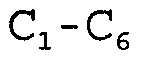
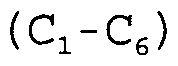
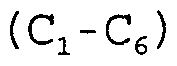
  • R- L and R 2 are the same or different and represent halogen, Cj-Cg alkyl, alkoxy, C 3 -C 7 cycloalkyl, C 3 -C 7 cycloalkoxy, each of which may be optionally substituted with NR 5 R 6 ;
  • R 5 and R 6 are the same or different and represent hydrogen, C ⁇ -
  • R 3 represents hydrogen, alkyl, C j -Cg alkoxy alkyl , C 3 - C 7 cycloalkyl, or C 3 -C 7 cycloalkoxy alkyl, C 3 -C 7 cycloalkyl, where any R 3 with the exception of hydrogen may be substituted with NR 5 R 6 ; and R 4 is aryl, heteroaryl, arylalkyl, or heteroarylalkyl, where each aryl group is optionally substituted with up to three groups independently selected from halogen, hydroxy, C 1 -C 6 alkyl, C 3 -C 7 cycloalkyl, mono- or di alkylamino, or alkoxy or C 3 -C 7 cycloalkoxy, either of which may be substituted with NR 5 R 6 ; provided that
  • R 3 is not substituted with NR 5 R 6 , then either R ⁇ or R 4 is substituted with NR 5 R 6 ;
  • R 4 is not substituted with NR 5 R 6 , then either R x or R 3 is substituted with NR 5 R 6 ;
  • R- L is not substituted with NR 5 R 6 , then either R 2 or R 4 is substituted with NR 5 R 6 ;
  • R 4 is arylalkyl or heteroarylalkyl, where each aryl group is optionally substituted with up to three groups independently selected from halogen, hydroxy, C 1 -C 6 alkyl, C 3 -C 7 cycloalkyl, mono- or di (C- L -Cg) alkylamino, or C- L -Cg alkoxy or C 3 -C 7 cycloalkoxy, either of which may be substituted with
  • These compounds are highly selective agonists, antagonists or inverse agonists for GABAa brain receptors or prodrugs of agonists, antagonists or inverse agonists for GABAa brain receptors. These compounds are useful in the diagnosis and treatment of anxiety, Down Syndrome, depression, sleep, cognitive and seizure disorders, overdose with benzodiazepine drugs and for enhancement of alertness.
  • R 17 R 2 , R 3 , and R 4 are as defined above.
  • R-, R 2 , R 3 , and R 4 are as defined above and n is 1, 2, or 3.
  • the present invention also encompasses compounds of Formula IV:
  • Y is Ci -Cg alkyl , C ⁇ -C 8 alkoxy, C 3 -C 7 cycloalkyl , or C 3 -C 7 cycloalkoxy.
  • R lf R 2 , R 5 , and R 6 are as defined above and R 4 is arylalkyl or heteroarylalkyl, where each aryl group is optionally substituted with up to three groups independently selected from halogen, hydroxy, alkyl, C 3 -C 7 cycloalkyl, mono- or di alkylamino, or C 1 -C 6 alkoxy or C 3 -C 7 cycloalkoxy, either of which may be substituted with NR 5 R 6 ; and
  • X is C 1 -C 6 alkyl, cycloalkyl, or C 3 -C 7 cycloalkoxy.
  • R 7 , R 7 , , R 8 , R 8 , , and R 9 are the same or different and are selected from hydrogen, halogen, hydroxy,
  • R 10 is C- L -Cg alkyl or C 3 -C 7 cycloalkyl; and R 1X and R 12 are the same or different and represent hydrogen, alkyl, C 3 -C 7 cycloalkyl, or R ⁇ and R 12 together with the nitrogen to which they are attached form a 3-7 membered ring;
  • R 7 , R 7 , , R 8 , R 8 , , and R 9 are as defined above and
  • R 13 and R 14 independently represent hydrogen, alkyl, C 3 -C 7 cycloalkyl, or R 13 and R 14 taken together with the carbon atom to which they are attached form C 3 -C 7 cycloalkyl;
  • Z is C 2 -C 6 alkylene or C 2 -C 6 alkyleneoxy (C 2 -C 6 ) alkyl , or Z may be taken together with R 5 or R 6 to form a heterocyclic ring;
  • R 13 , R 14 and Q are as defined above;
  • Preferred compounds of the invention include those of Formula 1A:
  • R 7 represents hydrogen, halogen preferably chloro or fluoro , hydroxy or methyl ;
  • R N represents hydrogen, r -C 2 alkyl , C 1 -C 2 alkoxy (C x - C 2 ) alkyl or R a R b N (C ⁇ C j ) alkyl
  • R a and R b independently represent hydrogen or alkyl or R a R b N represents a C 3 -C 7 nitrogen-containing ring which ring is optionally substituted with a nitrogen or oxygen atom and which ring may optionally be further substituted with C j -Cg alkyl
  • R_ represents R a R b N(C 1 -C 4 ) alkyl or R a R b N (C 1 -C 4 ) alkoxy (C x - C 4 ) alkyl where each R a and R b independently represents hydrogen or Ci-Cg alkyl or R a R b N represents a C 3 -C 7 nitrogen-containing ring which ring is optionally substituted with a nitrogen or oxygen atom and which ring may optional
  • each of A 1 and A 2 is independently C ⁇ C ⁇ ⁇ preferably C 2 -C 3 alkylene.
  • Particularly preferred compounds of Formula 1A are those where R 7 is hydrogen or fluoro; R N is ethyl, hydrogen, methyl, ethoxyethyl, 2-piperidinylethyl, ethylaminoethyl or methylaminoethyl ; and R_ is
  • R 7 represents hydrogen, halogen preferably chloro or fluoro, hydroxy or methyl
  • R N represents hydrogen, C 1 -C 2 alkyl, C ⁇ C j alkoxy (C 1 - C 2 ) alkyl or R a R b N (C ⁇ C,) alkyl where R a and R b independently represent hydrogen or alkyl or R a R b N represents a C 3 -C 7 nitrogen-containing ring which ring is optionally substituted with a nitrogen or oxygen atom and which ring may optionally be further substituted with C 1 -C 6 alkyl; and R s represents R a R b N(C 1 -C 4 ) alkyl where each R a and R b independently represents hydrogen or alkyl or R a R b N represents a C 3 -C 7 nitrogen-containing ring which ring is optionally substituted with a nitrogen or oxygen atom and which ring may optionally be further substituted with alkyl.
  • R a R b N represents a C 3 -C 7 nitrogen-containing ring
  • C 7 nitrogen-containing ring that is optionally substituted with a nitrogen atom and further substituted with alkyl, is meant rings such as 4-methylpiperazinyl or 4- methylimidazolidinyl .
  • compounds of Formula I may contain one or more asymmetric carbon atoms, so that the compounds can exist in different stereoisomeric forms.
  • These compounds can be, for example, racemates or optically active forms.
  • the single enantiomers, i. e., optically active forms can be obtained by asymmetric synthesis or by resolution of the racemates. Resolution of the racemates can be accomplished, for example, by conventional methods such as crystallization in the presence of a resolving agent, or chromatography, using, for example a chiral HPLC column.
  • Representative compounds of the present invention include, but are not limited to the compounds in Table I and their pharmaceutically acceptable acid and base addition salts.
  • the free base can be obtained by basifying a solution of the acid salt.
  • an addition salt particularly a pharmaceutically acceptable addition salt, may be produced by dissolving the free base in a suitable organic solvent and treating the solution with an acid, in accordance with conventional procedures for preparing acid addition salts from base compounds .
  • Non-toxic pharmaceutical salts include salts of acids such as hydrochloric, phosphoric, hydrobromic, sulfuric, sulfinic, formic, toluenesulfonic, methanesulfonic, nitic, bencoic, citric, tartaric, maleic, hydroiodic, alkanoic such as acetic, HOOC- (CH 2 ) n-ACOOH where n is 0-4, and the like.
  • Non-toxic pharmaceutical base addition salts include salts of bases such as sodium, potassium, calcium, ammonium, and the like. Those skilled in the art will recognize a wide variety of non-toxic pharmaceutically acceptable addition salts.
  • the present invention also encompasses the acylated prodrugs of the compounds of Formula I. Those skilled in the are will recognize various synthetic methodologies which may be employed to prepare non-toxic pharmaceutically acceptable addition salts and acylated prodrugs of the compounds encompassed by Formula I .
  • lower alkyl in the present invention is meant straight or branched chain alkyl groups having 1-6 carbon atoms, such as, for example, methyl, ethyl, propyl, isopropyl, n-butyl, sec-butyl, tert-butyl, pentyl, 2-pentyl, isopentyl, neopentyl, hexyl, 2-hexyl, 3-hexyl, and 3-methylpentyl .
  • cycloalkyl in the present invention is meant cycloalkyl groups having 3-7 atoms such as, for example cyclopropyl, cyclobutyl, cyclopenyl, cyclohexyl, and cycloheptyl .
  • aryl in the present invention is meant an aromatic carbocyclic group having a single ring (e. g., phenyl), multiple rings (e. g., biphenyl) , or multiple condensed rings in which at least one is aromatic (e. g., 1,2,3,4- tetrahydronaphthyl, naphthyl, anthryl, or phenanthryl) .
  • arylalkyl in the present invention is meant an alkyl group moiety substituted with an aryl group.
  • heteroarylalkyl in the present invention is meant an alkyl group moiety substituted with an heteroaryl group.
  • lower alkoxy in the present invention is meant straight or branched chain alkoxy groups having 1-6 carbon atoms, such as, for example, methoxy, ethoxy, propoxy, isopropoxy, n- butoxy, sec-butoxy, tert-butoxy, pentoxy, 2-pentyl, isopentoxy, neopentoxy, hexoxy, 2-hexoxy, and 3-methylpentoxy.
  • halogen in the present invention is meant fluorine, bromine, chlorine, and iodine.
  • heteroaryl aromatic heterocycle in the present invention is meant one or more aromatic ring systems of 5-, 6-, or 7-membered rings containing at least one and up to four hetero atoms selected from nitrogen, oxygen, or sulfur.
  • heteroaryl groups include, for example, thienyl, furanyl , thiazolyl, imidazolyl, (is) oxazolyl , pyridyl, pyrimidinyl, (iso) quinolinyl, naphthyridinyl , benzimidazolyl , and benzoxazolyl .
  • heteroaryl groups are the following:
  • L is nitrogen or -CR 15 ;
  • T is -NR 15 , oxygen, or sulfur
  • R 7 , R 8 , R 9 , R 7 ,, and R 8 are as defined above;
  • R 15 is hydrogen, lower alkyl having 1-6 carbon atoms, or lower cycloalkyl having 3-7 carbon atoms.
  • the compounds of Formula I and their salts are suitable for the diagnosis and treatment of anxiety, Down Syndrome, sleep, cognitive and seizure disorders, and overdose with benzodiazepine drugs and for enhancement of alertness, both in human and non-human animals and domestic pets, especially dogs and cats and farm animals such as sheep, swine and cattle.
  • the dipyridoimidazole-oxo-carboxamides of Formula I and their salts are suitable for the diagnosis and treatment of anxiety, Down Syndrome, depression, sleep, cognitive and seizure disorders, and overdose with benzodiazepine drugs and for enhancement of alertness, both in human and non-human animals and domestic pets, especially dogs and cats and farm animals such as sheep, swine and cattle.
  • the compounds of general Formula I may be administered orally, topically, parenterally, by inhalation or spray or rectally in dosage unit formulations containing conventional non-toxic pharmaceutically acceptable carriers, adjuvants and vehicles.
  • parenteral as used herein includes subcutaneous injections, intravenous, intramuscular, intrasternal injection or infusion techniques.
  • a pharmaceutical formulation comprising a compound of general Formula I and a pharmaceutically acceptable carrier.
  • One or more compounds of general Formula I may be present in association with one or more non-toxic pharmaceutically acceptable carriers and/or diluents and/or adjuvants and if desired other active ingredients.
  • compositions containing compounds of general Formula I may be in a form suitable for oral use, for example, as tablets, troches, lozenges, aqueous or oily suspensions, dispersible powders or granules, emulsion, hard or soft capsules, or syrups or elixirs.
  • Compositions intended for oral use may be prepared according to any method known to the art for the manufacture of pharmaceutical compositions and such compositions may contain one or more agents selected from the group consisting of sweetening agents, flavoring agents, coloring agents and preserving agents in order to provide pharmaceutically elegant and palatable preparations. Tablets contain the active ingredient in admixture with non-toxic pharmaceutically acceptable excipients which are suitable for the manufacture of tablets.
  • excipients may be for example, inert diluents, such as calcium carbonate, sodium carbonate, lactose, calcium phosphate or sodium phosphate; granulating and disintegrating agents, for example, corn starch, or alginic acid; binding agents, for example starch, gelatin or acacia, and lubricating agents, for example magnesium stearate, stearic acid or talc.
  • the tablets may be uncoated or they may be coated by known techniques to delay disintegration and absorption in the gastrointestinal tract and thereby provide a sustained action over a longer period.
  • a time delay material such as glyceryl monosterate or glyceryl distearate may be employed.
  • Formulations for oral use may also be presented as hard gelatin capsules wherein the active ingredient is mixed with an inert solid diluent, for example, calcium carbonate, calcium phosphate or kaolin, or as soft gelatin capsules wherein the active ingredient is mixed with water or an oil medium, for example peanut oil, liquid paraffin or olive oil.
  • Aqueous suspensions contain the active materials in admixture with excipients suitable for the manufacture of aqueous suspensions.
  • excipients are suspending agents, for example sodium carboxymethylcellulose, methylcellulose, hydropropylmethylcellulose, sodium alginate, polyvinylpyrrolidone, gum tragacanth and gum acacia; dispersing or wetting agents may be a naturally-occurring phosphatide, for example, lecithin, or condensation products of an alkylene oxide with fatty acids, for example polyoxyethylene stearate, or condensation products of ethylene oxide with long chain aliphatic alcohols, for example heptadecaethyleneoxycetanol , or condensation products of ethylene oxide with partial esters derived from fatty acids and a hexitol such as polyoxyethylene sorbitol monooleate, or condensation products of ethylene oxide with partial esters derived from fatty acids and hexitol anhydrides, for example polyethylene sorbitan monooleate.
  • dispersing or wetting agents may be a naturally-occurring phosphatide, for example, lecithin, or
  • the aqueous suspensions may also contain one or more preservatives, for example ethyl, or n-propyl p-hydroxybenzoate, one or more coloring agents, one or more flavoring agents, and one or more sweetening agents, such as sucrose or saccharin.
  • preservatives for example ethyl, or n-propyl p-hydroxybenzoate
  • coloring agents for example ethyl, or n-propyl p-hydroxybenzoate
  • flavoring agents for example ethyl, or n-propyl p-hydroxybenzoate
  • sweetening agents such as sucrose or saccharin.
  • Oily suspensions may be formulated by suspending the active ingredients in a vegetable oil, for example arachis oil, olive oil, sesame oil or coconut oil, or in a mineral oil such as liquid paraffin.
  • the oily suspensions may contain a thickening agent, for example beeswax, hard paraffin or cetyl alcohol. Sweetening agents such as those set forth above, and flavoring agents may be added to provide palatable oral preparations. These compositions may be preserved by the addition of an anti-oxidant such as ascorbic acid.
  • Dispersible powders and granules suitable for preparation of an aqueous suspension by the addition of water provide the active ingredient in admixture with a dispersing or wetting agent, suspending agent and one or more preservatives.
  • a dispersing or wetting agent e.g., glycerol, glycerol, glycerol, glycerol, glycerol, glycerol, glycerin, glycerin, glycerin, glycerin, glycerin, sorbitol, sorbitol, sorbitol, sorbitol, sorbitol, sorbitol, sorbitol, sorbitol, sorbitol, sorbitol, glycerol, glycerol, glycerol, glycerol, glycerol, glycerol, glycerol, glycerol, glycerol
  • compositions of the invention may also be in the form of oil-in-water emulsions.
  • the oily phase may be a vegetable oil, for example olive oil or arachis oil, or a mineral oil, for example liquid paraffin or mixtures of these.
  • Suitable emulsifying agents may be naturally-occurring gums, for example gum acacia or gum tragacanth, naturally-occurring phosphatides, for example soy bean, lecithin, and esters or partial esters derived from fatty acids and hexitol, anhydrides, for example sorbitan monoleate, and condensation products of the said partial esters with ethylene oxide, for example polyoxyethylene sorbitan monoleate.
  • the emulsions may also contain sweetening and flavoring agents.
  • Syrups and elixirs may be formulated with sweetening agents, for example glycerol, propylene glyeol, sorbitor or sucrose. Such formulations may also contain a demulcent, a preservative and flavoring and coloring agents.
  • the pharmaceutical compositions may be in the form of a sterile injectable aqueous or oleaginous suspension. This suspension may be formulated according to the known art using those suitable dispersing or wetting agents and suspending agents which have been mentioned above.
  • the sterile injectable preparation may also be sterile injectable solution or suspension in a non-toxic parentally acceptable diluent or solvent, for example as a solution in 1, 3-butanediol .
  • Suitable vehicles and solvents that may be employed are water, Ringer's solution and isotonic sodium chloride solution.
  • sterile, fixed oils are conventionally employed as a solvent or suspending medium.
  • any bland fixed oil may be employed including synthetic mono-or diglycerides.
  • fatty acids such as oleic acid find use in the preparation of injectables.
  • the compounds of general Formula I may also be administered in the form of suppositories for rectal administration of the drug.
  • These compositions can be prepared by mixing the drug with a suitable non-irritating excipient which is solid at ordinary temperatures but liquid at the rectal temperature and will therefore melt in the rectum to release the drug.
  • a suitable non-irritating excipient which is solid at ordinary temperatures but liquid at the rectal temperature and will therefore melt in the rectum to release the drug.
  • Such materials are cocoa butter and polyethylene glycols.
  • Compounds of general Formula I may be administered parenterally in a sterile medium.
  • the drug depending on the vehicle and concentration used, can either be suspended or dissolved in the vehicle.
  • adjuvants such as local anaesthetics, preservatives and buffering agents can be dissolved in the vehicle.
  • Dosage levels of the order of from about 0.1 mg to about 140 mg per kilogram of body weight per day are useful in the treatment of the above-indicated conditions (about 0.5 mg to about 7 g per patient per day) .
  • the amount of active ingredient that may be combined with the carrier materials to produce a single dosage form will vary depending upon the host treated and the particular mode of administration. Dosage unit forms will generally contain between from about 1 mg to about 500 mg of an active ingredient.
  • the specific dose level for any particular patient will depend upon a variety of factors including the activity of the specific compound employed, the age, body weight, general health, sex, diet, time of administration, route of administration, and rate of excretion, drug combination and the severity of the particular disease undergoing therapy.
  • the composition may also be added to the animal feed or drinking water. It will be convenient to formulate these animal feed and drinking water compositions with a mullet-dose of the drug so that the animal takes in an appropriate quantity of the composition along with its diet. It will also be convenient to present the composition as a premix for addition to the feed or drinking water.
  • the starting materials and various intermediates may be obtained from commercial sources, prepared from commercially available organic and/or inorganic sources, or prepared using well known synthetic methods.
  • EXAMPLE 1 Ethyl 1, 2-dihydro-3-hydroxy-pyrido [1, 2-a] benzimidazole-4- carboxylate is prepared according to literature procedure (Marynoff et al , J. Med. Chem., 1995, 38, 16-20; Marynoff, McComsey, and Winston, WO 94/04532) .
  • EXAMPLE 2 EXAMPLE 2
  • 2-Dimethylaminoethylchloride hydrochloride is stirred with 10M aqueous NaOH (4 mL) and ether (20 mL) for one hour. The ether layer is decanted and the aqueous layer is washed with ether (10 ml) . The combined ether layers are dried over Na 2 S0 4 , decanted, and treated with molecular sieves overnight.
  • 2-dihydro-3-hydroxy-pyrido [1, 2- a] benzimidazole-4 -carboxylate 1.3 g , 5 mmol
  • DMF 25 mL
  • the upper layer is diluted with ether (100 mL) , washed with water (20 mL) , dried, and concentrated to yield 5- (2-dimethylaminoethyl) -3-oxo-l, 2 , 3 , 5- tetrahydropyrido [1 , 2 -a] benzimidazole . 3.)
  • EXAMPLE 4 The following compounds were prepared essentially according to the procedures described in Examples 1-3: a) N- (4-Methoxybenzyl) -5- (2-dimethylaminoethyl) -3-oxo- 1,2,3, 5-tetrahydropyrido [1, 2-a] benzimidazole-4 -carboxamide) ; m.p. 95-97° C (Compound 6) . b) N- (2-Chlorobenzyl) -5- (2-dimethylaminoethyl) -3-oxo- 1,2,3, 5-tetrahydropyrido [1, 2-a] benzimidazole-4-carboxamide ; m.p.
  • EXAMPLE 5 The pharmaceutical utility of compounds of this invention are indicated by the following assay for GABAa receptor activity. Assays are carried out as described in Thomas and Tallman (J. Bio. Chem. 156: 9838-9842 , J. Neurosci . 3: 433-440, 1983). Rat cortical tissue is dissected and homogenized in 25 volumes
  • homogenate is centrifuged in the cold (4°) at 20,000 x g for 20'. The supernatant is decanted and the pellet is rehomogenized in the same volume of buffer and again centrifuged at 20,000 x g. The supernatant is decanted and the
  • pellet is frozen at -20°C overnight. The pellet is then thawed and rehomogenized in 25 volume (original wt/vol) of buffer and the procedure is carried out twice. The pellet is finally resuspended in 50 volumes (w/vol of 0.05 M Tris HCI buffer (pH
  • Incubations contain 100 ml of tissue homogenate, 100 ml of
  • radioligand 0.5 nM 3 H-R015-1788 [ 3 H-Flumazenil] specific activity 80 Ci/mmol
  • the following assay may be used to determine if the compounds of the invention are agonists, antagonists, or inverse agonists, and, therefore, their specific pharmaceutical utility.
  • the following assay can be employed to determine specific GABAa receptor activity.
  • Electrophysiological recordings are carried out using the two electrode voltage-clamp technique at a membrane holding potential of -70 mV.
  • Compounds are evaluated against a GABA concentration that evokes ⁇ 10% of the maximal evokable GABA current. Each oocyte is exposed to increasing concentrations of compound in order to evaluate a concentration/effect relationship. Compound efficacy is expressed as a percent-change in current amplitude:
  • Ic is the GABA evoked current amplitude observed in the presence of compound and I is the GABA evoked current amplitude observed in the absence of compound.
  • Specificity of a compound for the R015-1788 site is determined following completion of the concentration/effect curve. After washing the oocyte sufficiently to remove previously applied compound, the oocyte is exposed to GABA + 1 ⁇ M R015-1788, followed by exposure to GABA + 1 ⁇ M R015-1788 + compound. Percent change due to addition of compound is calculated as described above. Any percent change observed in the presence of R015-1788 is subtracted from the percent changes in current amplitude observed in the absence of 1 ⁇ M R015-1788. These net values are used for the calculation of average efficacy and EC50 values.

Landscapes

  • Health & Medical Sciences (AREA)
  • Chemical & Material Sciences (AREA)
  • Organic Chemistry (AREA)
  • Life Sciences & Earth Sciences (AREA)
  • General Health & Medical Sciences (AREA)
  • General Chemical & Material Sciences (AREA)
  • Medicinal Chemistry (AREA)
  • Nuclear Medicine, Radiotherapy & Molecular Imaging (AREA)
  • Bioinformatics & Cheminformatics (AREA)
  • Pharmacology & Pharmacy (AREA)
  • Engineering & Computer Science (AREA)
  • Animal Behavior & Ethology (AREA)
  • Chemical Kinetics & Catalysis (AREA)
  • Public Health (AREA)
  • Veterinary Medicine (AREA)
  • Biomedical Technology (AREA)
  • Neurology (AREA)
  • Neurosurgery (AREA)
  • Psychiatry (AREA)
  • Addiction (AREA)
  • Pain & Pain Management (AREA)
  • Pharmaceuticals Containing Other Organic And Inorganic Compounds (AREA)
  • Nitrogen Condensed Heterocyclic Rings (AREA)

Abstract

Disclosed are compounds of formula (I), or the pharmaceutically acceptable non-toxic salts thereof where R1-R4 and A are defined herein, which compounds are highly selective agonists, antagonists or inverse agonists for GABAa brain receptors or prodrugs of agonists, antagonists or inverse agonists for GABAa brain receptors and are, therefore, useful in the diagnosis and treatment of anxiety, Down Syndrome, depression, sleep, cognitive and seizure disorders, overdose with benzodiazepine drugs and for enhancement of altertness.

Description

OXO-PYRIDOIMIDAZOLE-CARBOXAMIDES : GABA BRAIN RECEPTOR LIGANDS
BACKGROUND OF THE INVENTION Field of the Invention
This invention relates to novel oxo-pyridoimidazole- carboxamides which selectively bind to GABAa receptors. This invention also relates to pharmaceutical compositions comprising such compounds and to the use of such compounds in enhancing alertness and treating anxiety, overdoses of benzodiazepine-type drugs, Down Syndrome, depression and sleep, seizure and cognitive disorders. The interaction of certain substituted oxo-pyridoimidazole-carboxamides of the invention with a GABA binding site, the benzodiazepine (BDZ) receptor, is described. This interaction results in the pharmacological activities of these compounds.
Description of the Related Art
γ-Aminobutyric acid GABA) is regarded as one of the major
inhibitory amino acid transmitters in the mammalian brain. Over 40 years have elapsed since its presence in the brain was demonstrated (Roberts & Frankel, J. Biol. Chem. 187 : 55-63, 1950; Udenfriend, J. Biol. Chem. 187: 65-69, 1950). Since that time, an enormous of effort has been devoted to implicating GABA in the etiology of seizure disorders, sleep, anxiety and cognition (Tallman and Gallager, Ann. Rev. Neuroscience 8.: 21- 44, 1985) . Widely, although unequally, distributed through the mammalian brain, GABA is said to be a transmitter at approximately 30% of the synapses in the brain. GABA mediates many of its actions through a complex of proteins localized both on cell bodies and nerve endings; these are called GABAa receptors. Postsynaptic responses to GABA are mediated through alterations in chloride conductance that generally, although not invariably, lead to hyperpolarization of the cell. Drugs that interact at the GABAa receptor can possess a spectrum of pharmacological activities depending on their abilities to modify the action of GABA.
The 1 , 4-Benzodiazepines, such as diazepam, continue to be among the most widely used drugs in the world as anxiolytics, sedative-hypnotics, muscle relaxants, and anticonvulsants . A number of these compounds are extremely potent drugs; such potency indicates a site of action with a high affinity and specificity for individual receptors. Early electrophysiological studies indicated that a major action of benzodiazepines was enhancement of GABAergic inhibition. Recently, those compounds possessing activity similar to the benzodiazepines are called agonists. Compounds possessing activity opposite to benzodiazepines are called inverse agonists, and the compounds blocking both types of activity have been termed antagonists.
The GABAa receptor subunits have been cloned from bovine and human cDNA libraries (Schoenfield et al . , 1988; Duman et al . , 1988) . A number of distinct cDNAs were identified as subunits of the GABAa receptor complex by cloning and
expression. These are categorized into α, β, γ, δ, ε, and provide a molecular basis for the GABAa receptor heterogeneity and distinctive regional pharmacology (Shiwers et al . , 1980;
Levitan et al . , 1989). The γ subunit appears to enable drugs
like benzodiazepines to modify the GABA responses (Pritchett et al . , 1989). The presence of low Hill coefficients in the binding of ligands to the GABAa receptor indicates unique profiles of subtype specific pharmacological action. With the discovery of the "receptor" for the benzodiazepines and the subsequent definition of the nature of the interaction between GABA and the benzodiazepines, it appears that the behaviorally important interactions of the benzodiazepines with different neurotransmitter systems are due in a large part to the enhanced ability of GABA itself to modify these systems. Each modified system, in turn, may be associated with the expression of a behavior. Depending on the mode of interaction, these compounds are capable of producing a spectrum of activities (either sedative, anxiolytic, and anticonvulsant , or wakefulness, seizures, and anxiety) .
U.S. Patent No. 5,639,760, PCT publication WO 94/04532, Bioorg. Med. Chem. Lett. 1996, 6 (3), 333-338, and J. Med. Chem. 1995, 3_8 (1), 16-20 disclose 3-oxo-pyrido [1, 2-a] - benzimidazole-4 -carboxyl and 4-oxo-azepino [1, 2-a] - benzimidazole-5-carboxyl derivatives, useful as muscle relaxants, hypnotics/sedatives, anxiolytics, anticonvulsants/antiepileptics, anti-inebriants, and antidotes for benzodiazepine overdose.
SUMMARY OF THE INVENTION
This invention provides novel compounds of Formula I which interact with a GABAa binding site, the benzodiazepine receptor.
The invention provides pharmaceutical compositions comprising compounds of Formula I. The invention also provides compounds useful in the diagnosis and treatment of anxiety, Down Syndrome, depression, sleep, cognitive and seizure disorders, overdose with benzodiazepine drugs and for enhancement of alertness. Accordingly, a broad embodiment of the invention is directed to compounds of Formula I:
Figure imgf000007_0001
wherein:
Figure imgf000007_0002
represents a carbocyclic-containing ring system which is optionally substituted with up to two groups Rx and R2;
R-L and R2 are the same or different and represent halogen, Cj-Cg alkyl,
Figure imgf000007_0003
alkoxy, C3-C7 cycloalkyl, C3-C7 cycloalkoxy, each of which may be optionally substituted with NR5R6; R5 and R6 are the same or different and represent hydrogen, Cλ-
C6 alkyl, C3-C7 cycloalkyl; or R5 and R6 may be taken together to form a nitrogen containing ring having from 5-7 members; R3 represents hydrogen,
Figure imgf000008_0002
alkyl, Cj-Cg alkoxy
Figure imgf000008_0001
alkyl , C3- C7 cycloalkyl, or C3-C7 cycloalkoxy
Figure imgf000008_0003
alkyl, C3-C7 cycloalkyl, where any R3 with the exception of hydrogen may be substituted with NR5R6; and R4 is aryl, heteroaryl, arylalkyl, or heteroarylalkyl, where each aryl group is optionally substituted with up to three groups independently selected from halogen, hydroxy, C1-C6 alkyl, C3-C7 cycloalkyl, mono- or di
Figure imgf000008_0004
alkylamino, or alkoxy or C3-C7 cycloalkoxy, either of which may be substituted with NR5R6; provided that
(i) if R3 is not substituted with NR5R6, then either Rλ or R4 is substituted with NR5R6; (ii) if R4 is not substituted with NR5R6, then either Rx or R3 is substituted with NR5R6; (iii) if R-L is not substituted with NR5R6, then either R2 or R4 is substituted with NR5R6; and (iv) if R3 is substituted with NR5R6, R4 is arylalkyl or heteroarylalkyl, where each aryl group is optionally substituted with up to three groups independently selected from halogen, hydroxy, C1-C6 alkyl, C3-C7 cycloalkyl, mono- or di (C-L-Cg) alkylamino, or C-L-Cg alkoxy or C3-C7 cycloalkoxy, either of which may be substituted with NR5R6.
These compounds are highly selective agonists, antagonists or inverse agonists for GABAa brain receptors or prodrugs of agonists, antagonists or inverse agonists for GABAa brain receptors. These compounds are useful in the diagnosis and treatment of anxiety, Down Syndrome, depression, sleep, cognitive and seizure disorders, overdose with benzodiazepine drugs and for enhancement of alertness.
DETAILED DESCRIPTION OF THE INVENTION The novel compounds encompassed by the invention can be described by the general Formula I set forth above or the pharmaceutically acceptable non-toxic salts
The invention provides compounds with Formula II that are within the scope of Formula I :
Figure imgf000010_0001
II wherein: R17 R2, R3, and R4 are as defined above.
In addition, the invention provides compounds of Formula III
Figure imgf000010_0002
III where R-, R2, R3, and R4 are as defined above and n is 1, 2, or 3.
The present invention also encompasses compounds of Formula IV:
Figure imgf000010_0003
IV wherein R2 , R3 , R4 , Rs , and R6 are as defined above , and
Y is Ci -Cg alkyl , C^ -C8 alkoxy, C3 -C7 cycloalkyl , or C3 -C7 cycloalkoxy.
In addition, the invention provides compounds of Formula V:
Figure imgf000011_0001
V wherein Rlf R2, R5, and R6 are as defined above and R4 is arylalkyl or heteroarylalkyl, where each aryl group is optionally substituted with up to three groups independently selected from halogen, hydroxy,
Figure imgf000011_0002
alkyl, C3-C7 cycloalkyl, mono- or di
Figure imgf000011_0003
alkylamino, or C1-C6 alkoxy or C3-C7 cycloalkoxy, either of which may be substituted with NR5R6; and
X is C1-C6 alkyl,
Figure imgf000011_0004
cycloalkyl, or C3-C7 cycloalkoxy.
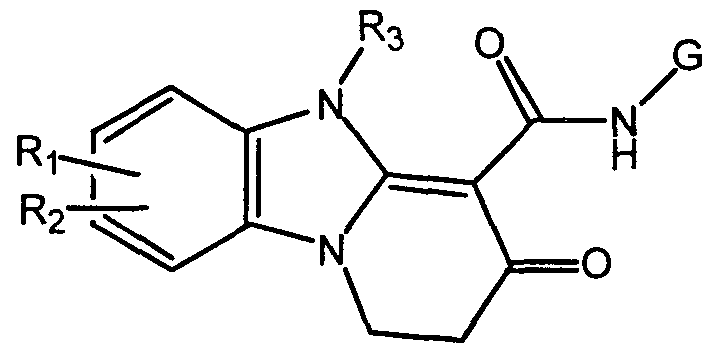
Further, the invention provides compounds of Formula VI
Figure imgf000011_0005
VI R1# R2, and R3 are as defined above and G represents:
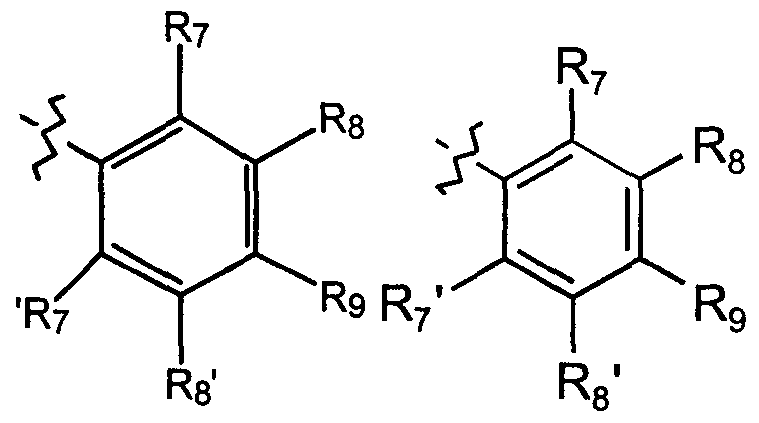
(i) a group of the formula
Figure imgf000012_0001
where
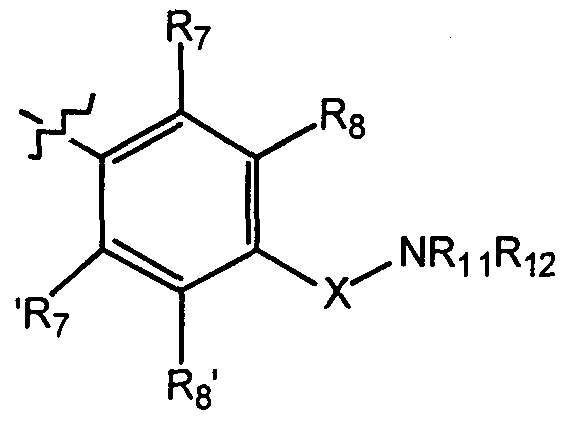
R7, R7, , R8, R8, , and R9 are the same or different and are selected from hydrogen, halogen, hydroxy,
Cj-Cg alkyl, C3-C7 cycloalkyl, -OR10, or -NR11R12; or R8 and R9 taken together with the atoms to which they are attached form a (hetero) cyclic ring wherein
R10 is C-L-Cg alkyl or C3-C7 cycloalkyl; and R1X and R12 are the same or different and represent hydrogen,
Figure imgf000012_0002
alkyl, C3-C7 cycloalkyl, or Rπ and R12 together with the nitrogen to which they are attached form a 3-7 membered ring;
(ii) a group of the formula:
R 12
Figure imgf000012_0003
where X, R7 , R7, , RB, , R9 , and NR1XR12 are as def ined above ;
(iii) a group of the formula:
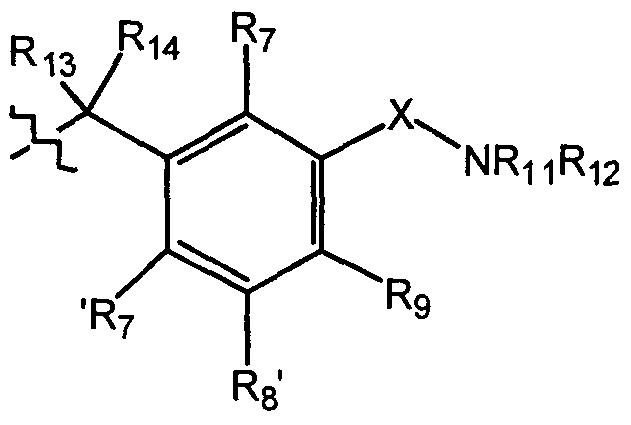
Figure imgf000013_0001
where X, R7 , R7, , R8 , R8, , and NR1XR12 are as defined above ;
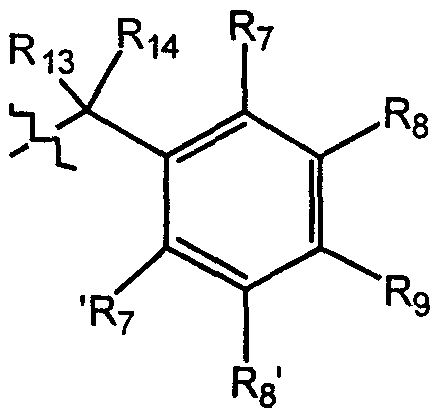
( iv) a group of the formula :
Figure imgf000013_0002
where R7, R7, , R8, R8, , and R9 are as defined above and
R13 and R14 independently represent hydrogen,
Figure imgf000013_0003
alkyl, C3-C7 cycloalkyl, or R13 and R14 taken together with the carbon atom to which they are attached form C3-C7 cycloalkyl;
(v) a group of the formula :
Figure imgf000014_0001
where X , R7, , R8 , R8, , R9 , R13 , R14 and NRX1R12 are as defined above ;
(vi) a group of the formula:
Figure imgf000014_0002
where X, R7, R7. , R8, , R9, R13, R14 and NRX1R12 are as defined above;
(vii) a group of the formula:
where X, R7, R7, , R8, R8, , R13, R14 and NR1XR12 are as defined above;
(viii) a group of the formula:
Figure imgf000015_0001
where R7, R7, , R8, , R9, and NR5R6 are as defined above and
Z is C2-C6 alkylene or C2-C6 alkyleneoxy (C2-C6) alkyl , or Z may be taken together with R5 or R6 to form a heterocyclic ring;
(ix) a group of the formula :
Figure imgf000015_0002
where Z, R7, R7, , R8, R8, , and NR5R6 are as defined above ; (x) a group of the formula:
Figure imgf000015_0003
where Z , R7, , R8 , R8, , R9 , R13 , R14 and NR5R6 are as def ined above ; (xi) a group of the formula :
Figure imgf000016_0001
where Z, R7, R7, , R8, , R9, R13, R14, and NR5R6 are as defined above;
(xii) a group of the formula:
Figure imgf000016_0002
where Z, R7, R7, , R8, R8. , R13, R14, and NR5R6 are as defined above;
(xiii) a group of the formula:
Figure imgf000016_0003
where Q represents a heteroaryl group;
(xiv) a group of the formula:
Figure imgf000016_0004
where R13, R14 and Q are as defined above;
(xv) a group of the formula:
Figure imgf000017_0001
where Z, Q, and NR5R6 are as defined above;
(xiv) a group of the formula :
Figure imgf000017_0002
where Z , Q, R13 , R14 , and NR5R6 are as defined above ,
Preferred compounds of the invention include those of Formula 1A:
Figure imgf000017_0003
1A where
R7 represents hydrogen, halogen preferably chloro or fluoro , hydroxy or methyl ;
RN represents hydrogen, r-C2 alkyl , C1-C2 alkoxy (Cx- C2) alkyl or RaRbN (C^Cj) alkyl where Ra and Rb independently represent hydrogen or
Figure imgf000017_0004
alkyl or RaRbN represents a C3-C7 nitrogen-containing ring which ring is optionally substituted with a nitrogen or oxygen atom and which ring may optionally be further substituted with Cj-Cg alkyl; and R_ represents RaRbN(C1-C4) alkyl or RaRbN (C1-C4) alkoxy (Cx- C4) alkyl where each Ra and Rb independently represents hydrogen or Ci-Cg alkyl or RaRbN represents a C3-C7 nitrogen-containing ring which ring is optionally substituted with a nitrogen or oxygen atom and which ring may optionally be further substituted with C1-C6 alkyl ; or R_ represents a group of the formula:
Figure imgf000018_0001
where each of A1 and A2 is independently C^C^^ preferably C2-C3 alkylene.
Particularly preferred compounds of Formula 1A are those where R7 is hydrogen or fluoro; RN is ethyl, hydrogen, methyl, ethoxyethyl, 2-piperidinylethyl, ethylaminoethyl or methylaminoethyl ; and R_ is
Figure imgf000019_0001
Other preferred compounds of the invention include those of Formula IB :
Figure imgf000019_0002
IB where R7 represents hydrogen, halogen preferably chloro or fluoro, hydroxy or methyl; RN represents hydrogen, C1-C2 alkyl, C^Cj alkoxy (C1- C2) alkyl or RaRbN (C^C,) alkyl where Ra and Rb independently represent hydrogen or
Figure imgf000020_0001
alkyl or RaRbN represents a C3-C7 nitrogen-containing ring which ring is optionally substituted with a nitrogen or oxygen atom and which ring may optionally be further substituted with C1-C6 alkyl; and Rs represents RaRbN(C1-C4) alkyl where each Ra and Rb independently represents hydrogen or
Figure imgf000020_0002
alkyl or RaRbN represents a C3-C7 nitrogen-containing ring which ring is optionally substituted with a nitrogen or oxygen atom and which ring may optionally be further substituted with
Figure imgf000020_0003
alkyl.
By a C3-C7 nitrogen-containing ring (RaRbN represents a C3-
C7 nitrogen-containing ring) that is optionally substituted with a nitrogen atom and further substituted with
Figure imgf000020_0004
alkyl, is meant rings such as 4-methylpiperazinyl or 4- methylimidazolidinyl .
In certain situations, compounds of Formula I may contain one or more asymmetric carbon atoms, so that the compounds can exist in different stereoisomeric forms. These compounds can be, for example, racemates or optically active forms. In these situations, the single enantiomers, i. e., optically active forms, can be obtained by asymmetric synthesis or by resolution of the racemates. Resolution of the racemates can be accomplished, for example, by conventional methods such as crystallization in the presence of a resolving agent, or chromatography, using, for example a chiral HPLC column.
Representative compounds of the present invention, which are encompassed by Formula I, include, but are not limited to the compounds in Table I and their pharmaceutically acceptable acid and base addition salts. In addition, if the compound of the invention is obtained as an acid addition salt, the free base can be obtained by basifying a solution of the acid salt. Conversely, if the product is a free base, an addition salt, particularly a pharmaceutically acceptable addition salt, may be produced by dissolving the free base in a suitable organic solvent and treating the solution with an acid, in accordance with conventional procedures for preparing acid addition salts from base compounds .
Non-toxic pharmaceutical salts include salts of acids such as hydrochloric, phosphoric, hydrobromic, sulfuric, sulfinic, formic, toluenesulfonic, methanesulfonic, nitic, bencoic, citric, tartaric, maleic, hydroiodic, alkanoic such as acetic, HOOC- (CH2) n-ACOOH where n is 0-4, and the like. Non-toxic pharmaceutical base addition salts include salts of bases such as sodium, potassium, calcium, ammonium, and the like. Those skilled in the art will recognize a wide variety of non-toxic pharmaceutically acceptable addition salts. The present invention also encompasses the acylated prodrugs of the compounds of Formula I. Those skilled in the are will recognize various synthetic methodologies which may be employed to prepare non-toxic pharmaceutically acceptable addition salts and acylated prodrugs of the compounds encompassed by Formula I .
By lower alkyl in the present invention is meant straight or branched chain alkyl groups having 1-6 carbon atoms, such as, for example, methyl, ethyl, propyl, isopropyl, n-butyl, sec-butyl, tert-butyl, pentyl, 2-pentyl, isopentyl, neopentyl, hexyl, 2-hexyl, 3-hexyl, and 3-methylpentyl .
By cycloalkyl in the present invention is meant cycloalkyl groups having 3-7 atoms such as, for example cyclopropyl, cyclobutyl, cyclopenyl, cyclohexyl, and cycloheptyl . By aryl in the present invention is meant an aromatic carbocyclic group having a single ring (e. g., phenyl), multiple rings (e. g., biphenyl) , or multiple condensed rings in which at least one is aromatic (e. g., 1,2,3,4- tetrahydronaphthyl, naphthyl, anthryl, or phenanthryl) . By arylalkyl in the present invention is meant an alkyl group moiety substituted with an aryl group. By heteroarylalkyl in the present invention is meant an alkyl group moiety substituted with an heteroaryl group.
By lower alkoxy in the present invention is meant straight or branched chain alkoxy groups having 1-6 carbon atoms, such as, for example, methoxy, ethoxy, propoxy, isopropoxy, n- butoxy, sec-butoxy, tert-butoxy, pentoxy, 2-pentyl, isopentoxy, neopentoxy, hexoxy, 2-hexoxy, and 3-methylpentoxy.
By halogen in the present invention is meant fluorine, bromine, chlorine, and iodine. By heteroaryl (aromatic heterocycle) in the present invention is meant one or more aromatic ring systems of 5-, 6-, or 7-membered rings containing at least one and up to four hetero atoms selected from nitrogen, oxygen, or sulfur. Such heteroaryl groups include, for example, thienyl, furanyl , thiazolyl, imidazolyl, (is) oxazolyl , pyridyl, pyrimidinyl, (iso) quinolinyl, naphthyridinyl , benzimidazolyl , and benzoxazolyl .
Specific examples of heteroaryl groups are the following:
Figure imgf000023_0001
wherein L is nitrogen or -CR15;
T is -NR15, oxygen, or sulfur;
R7, R8, R9, R7,, and R8, are as defined above; and
R15 is hydrogen, lower alkyl having 1-6 carbon atoms, or lower cycloalkyl having 3-7 carbon atoms.
The definition of Formula I as shown in the specification and as used in the claims includes possible isomers, such as tautomers and rotamers. The Formulae Ic and Id illustrate this point .
For Formula I, when R = H:
Figure imgf000024_0001
Ic Id
Representative compounds of the invention are shown below in Table 1.
Table 1
Figure imgf000025_0001
The compounds of Formula I and their salts are suitable for the diagnosis and treatment of anxiety, Down Syndrome, sleep, cognitive and seizure disorders, and overdose with benzodiazepine drugs and for enhancement of alertness, both in human and non-human animals and domestic pets, especially dogs and cats and farm animals such as sheep, swine and cattle. The dipyridoimidazole-oxo-carboxamides of Formula I and their salts are suitable for the diagnosis and treatment of anxiety, Down Syndrome, depression, sleep, cognitive and seizure disorders, and overdose with benzodiazepine drugs and for enhancement of alertness, both in human and non-human animals and domestic pets, especially dogs and cats and farm animals such as sheep, swine and cattle.
The compounds of general Formula I may be administered orally, topically, parenterally, by inhalation or spray or rectally in dosage unit formulations containing conventional non-toxic pharmaceutically acceptable carriers, adjuvants and vehicles. The term parenteral as used herein includes subcutaneous injections, intravenous, intramuscular, intrasternal injection or infusion techniques. In addition, there is provided a pharmaceutical formulation comprising a compound of general Formula I and a pharmaceutically acceptable carrier. One or more compounds of general Formula I may be present in association with one or more non-toxic pharmaceutically acceptable carriers and/or diluents and/or adjuvants and if desired other active ingredients. The pharmaceutical compositions containing compounds of general Formula I may be in a form suitable for oral use, for example, as tablets, troches, lozenges, aqueous or oily suspensions, dispersible powders or granules, emulsion, hard or soft capsules, or syrups or elixirs. Compositions intended for oral use may be prepared according to any method known to the art for the manufacture of pharmaceutical compositions and such compositions may contain one or more agents selected from the group consisting of sweetening agents, flavoring agents, coloring agents and preserving agents in order to provide pharmaceutically elegant and palatable preparations. Tablets contain the active ingredient in admixture with non-toxic pharmaceutically acceptable excipients which are suitable for the manufacture of tablets. These excipients may be for example, inert diluents, such as calcium carbonate, sodium carbonate, lactose, calcium phosphate or sodium phosphate; granulating and disintegrating agents, for example, corn starch, or alginic acid; binding agents, for example starch, gelatin or acacia, and lubricating agents, for example magnesium stearate, stearic acid or talc. The tablets may be uncoated or they may be coated by known techniques to delay disintegration and absorption in the gastrointestinal tract and thereby provide a sustained action over a longer period. For example, a time delay material such as glyceryl monosterate or glyceryl distearate may be employed.
Formulations for oral use may also be presented as hard gelatin capsules wherein the active ingredient is mixed with an inert solid diluent, for example, calcium carbonate, calcium phosphate or kaolin, or as soft gelatin capsules wherein the active ingredient is mixed with water or an oil medium, for example peanut oil, liquid paraffin or olive oil. Aqueous suspensions contain the active materials in admixture with excipients suitable for the manufacture of aqueous suspensions. Such excipients are suspending agents, for example sodium carboxymethylcellulose, methylcellulose, hydropropylmethylcellulose, sodium alginate, polyvinylpyrrolidone, gum tragacanth and gum acacia; dispersing or wetting agents may be a naturally-occurring phosphatide, for example, lecithin, or condensation products of an alkylene oxide with fatty acids, for example polyoxyethylene stearate, or condensation products of ethylene oxide with long chain aliphatic alcohols, for example heptadecaethyleneoxycetanol , or condensation products of ethylene oxide with partial esters derived from fatty acids and a hexitol such as polyoxyethylene sorbitol monooleate, or condensation products of ethylene oxide with partial esters derived from fatty acids and hexitol anhydrides, for example polyethylene sorbitan monooleate. The aqueous suspensions may also contain one or more preservatives, for example ethyl, or n-propyl p-hydroxybenzoate, one or more coloring agents, one or more flavoring agents, and one or more sweetening agents, such as sucrose or saccharin.
Oily suspensions may be formulated by suspending the active ingredients in a vegetable oil, for example arachis oil, olive oil, sesame oil or coconut oil, or in a mineral oil such as liquid paraffin. The oily suspensions may contain a thickening agent, for example beeswax, hard paraffin or cetyl alcohol. Sweetening agents such as those set forth above, and flavoring agents may be added to provide palatable oral preparations. These compositions may be preserved by the addition of an anti-oxidant such as ascorbic acid.
Dispersible powders and granules suitable for preparation of an aqueous suspension by the addition of water provide the active ingredient in admixture with a dispersing or wetting agent, suspending agent and one or more preservatives. Suitable dispersing or wetting agents and suspending agents are exemplified by those already mentioned above. Additional excipients, for example sweetening, flavoring and coloring agents, may also be present.
Pharmaceutical compositions of the invention may also be in the form of oil-in-water emulsions. The oily phase may be a vegetable oil, for example olive oil or arachis oil, or a mineral oil, for example liquid paraffin or mixtures of these. Suitable emulsifying agents may be naturally-occurring gums, for example gum acacia or gum tragacanth, naturally-occurring phosphatides, for example soy bean, lecithin, and esters or partial esters derived from fatty acids and hexitol, anhydrides, for example sorbitan monoleate, and condensation products of the said partial esters with ethylene oxide, for example polyoxyethylene sorbitan monoleate. The emulsions may also contain sweetening and flavoring agents.
Syrups and elixirs may be formulated with sweetening agents, for example glycerol, propylene glyeol, sorbitor or sucrose. Such formulations may also contain a demulcent, a preservative and flavoring and coloring agents. The pharmaceutical compositions may be in the form of a sterile injectable aqueous or oleaginous suspension. This suspension may be formulated according to the known art using those suitable dispersing or wetting agents and suspending agents which have been mentioned above. The sterile injectable preparation may also be sterile injectable solution or suspension in a non-toxic parentally acceptable diluent or solvent, for example as a solution in 1, 3-butanediol . Among the acceptable vehicles and solvents that may be employed are water, Ringer's solution and isotonic sodium chloride solution. In addition, sterile, fixed oils are conventionally employed as a solvent or suspending medium. For this purpose any bland fixed oil may be employed including synthetic mono-or diglycerides. In addition, fatty acids such as oleic acid find use in the preparation of injectables.
The compounds of general Formula I may also be administered in the form of suppositories for rectal administration of the drug. These compositions can be prepared by mixing the drug with a suitable non-irritating excipient which is solid at ordinary temperatures but liquid at the rectal temperature and will therefore melt in the rectum to release the drug. Such materials are cocoa butter and polyethylene glycols. Compounds of general Formula I may be administered parenterally in a sterile medium. The drug, depending on the vehicle and concentration used, can either be suspended or dissolved in the vehicle. Advantageously, adjuvants such as local anaesthetics, preservatives and buffering agents can be dissolved in the vehicle. Dosage levels of the order of from about 0.1 mg to about 140 mg per kilogram of body weight per day are useful in the treatment of the above-indicated conditions (about 0.5 mg to about 7 g per patient per day) . The amount of active ingredient that may be combined with the carrier materials to produce a single dosage form will vary depending upon the host treated and the particular mode of administration. Dosage unit forms will generally contain between from about 1 mg to about 500 mg of an active ingredient.
It will be understood, however, that the specific dose level for any particular patient will depend upon a variety of factors including the activity of the specific compound employed, the age, body weight, general health, sex, diet, time of administration, route of administration, and rate of excretion, drug combination and the severity of the particular disease undergoing therapy.
For administration to non-human animals, the composition may also be added to the animal feed or drinking water. It will be convenient to formulate these animal feed and drinking water compositions with a mullet-dose of the drug so that the animal takes in an appropriate quantity of the composition along with its diet. It will also be convenient to present the composition as a premix for addition to the feed or drinking water.
An illustration of the preparation of compounds of the present invention is given in Scheme 1.
Scheme 1
Figure imgf000032_0001
Figure imgf000032_0002
Figure imgf000032_0003
D E
In Scheme 1, the substituents Rlf R2, R3, and R4 carry the definitions set forth above for Formula I .
Those having skill in the art will recognize that the starting materials may be varied and additional steps employed to produce compounds encompassed by the present inventions, as demonstrated by the following examples. In some cases, protection of certain reactive functionalities may be necessary to achieve some of the above transformations. In general, the need for such protecting groups will be apparant to those skilled in the art of organic synthesis as well as the conditions necessary to attach and remove such groups.
The disclosures in this application of all articles and references, including patents, are incorporated herein by reference . The invention is illustrated further by the following examples which are not to be construed as limiting the invention in scope or spirit to the specific procedures described in them.
The starting materials and various intermediates may be obtained from commercial sources, prepared from commercially available organic and/or inorganic sources, or prepared using well known synthetic methods.
Representative examples of methods for preparing intermediates of the invention are set forth below.
EXAMPLE 1 Ethyl 1, 2-dihydro-3-hydroxy-pyrido [1, 2-a] benzimidazole-4- carboxylate is prepared according to literature procedure (Marynoff et al , J. Med. Chem., 1995, 38, 16-20; Marynoff, McComsey, and Winston, WO 94/04532) . EXAMPLE 2
1 . )
Figure imgf000034_0001
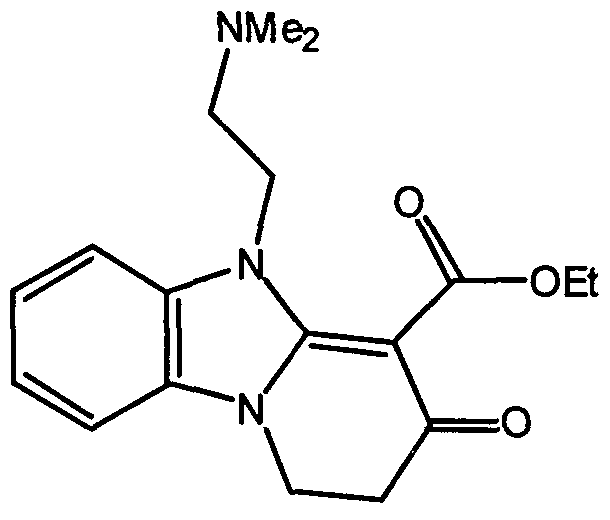
2-Dimethylaminoethylchloride hydrochloride is stirred with 10M aqueous NaOH (4 mL) and ether (20 mL) for one hour. The ether layer is decanted and the aqueous layer is washed with ether (10 ml) . The combined ether layers are dried over Na2S04, decanted, and treated with molecular sieves overnight. To a suspension of ethyl 1 , 2-dihydro-3-hydroxy-pyrido [1, 2- a] benzimidazole-4 -carboxylate (1.3 g , 5 mmol) in DMF (25 mL) is added in one portion the ethereal solution. The reaction mixture is stirred for 15 min, then a suspension of sodium hydride (0.6 g, 15 mmol, 60% in oil) in DMF (5 mL) is added in one portion. After stirring at ambient temperature for 15 min, the mixture is heated at 110 °C for 2 h. The mixture is cooled, concentrated, and water is added (20 mL) . The resulting mixture is extracted 2X with chloroform (100 mL) . The combined organic layers are dried and concentrated to afford ethyl 5- (2-dimethylaminoethyl) -3-oxo-l , 2 , 3 , 5- tetrahydropyrido [1, 2-a] benzimidazole-4 -carboxylate . 2.)
Figure imgf000035_0001
A solution of ethyl 5- (2-dimethylaminoethyl) -3-oxo- 1,2,3,5- tetrahydropyrido [1, 2-a] benzimidazole-4-carboxylate (1.0 g, 3 mmol) in ethanol (40 mL) and 10 M aqueous NaOH (20 ml) is heated at reflux for 2 h. The reaction mixture is cooled and the layers separated. The upper layer is diluted with ether (100 mL) , washed with water (20 mL) , dried, and concentrated to yield 5- (2-dimethylaminoethyl) -3-oxo-l, 2 , 3 , 5- tetrahydropyrido [1 , 2 -a] benzimidazole . 3.)
Figure imgf000035_0002
A mixture of p-tolylisocyanate (74 mg, 0.5 mmol) and 5- (2-dimethylaminoethyl) -3-oxo-l, 2,3, 5-tetrahydropyrido [1,2- a] benzimidazole (100 mg, 0.4 mmol) in chloroform (2 mL) is heated at reflux for 2 h. The mixture is cooled, concentrated, and the residue purified on silica gel to give N-(4- Methylbenzyl ) -5- (2-dimethylaminoethyl) -3-oxo-l , 2,3,5- tetrahydropyrido [1, 2-a] benzimidazole-4 -carboxamide; m.p. 120- 122° C (Compound 1) .
EXAMPLE 3
Figure imgf000036_0001
4- (2-N-t-Butoxcarbonyl-n-butylaminoethoxy) aniline (62 mg, 0.2 mmol) and ethyl 1 , 2-dihydro-3-hydroxy-pyrido [1, 2- a] benzimidazole-4-carboxylate (52 mg, 0.2 mmol) in xylenes (2 mL) are heated at 130-140°C for 2 h. The solvent is evaporated and the residue triturated with ether. The resulting solid is treated with methanol (2 mL) and 1 M HCI in ether (2 mL) at ambient temperature for 1 h. The solvent is evaporated and the residue triturated with ether to give N-[4-(2- butylaminoethoxy) phenyl] -1, 2-dihydro-3-hydroxy-pyrido [1,2- a] benzimidazole-4 -carboxamide hydrochloride; m.p. 70-85° C (Compound 3) .
EXAMPLE 4 The following compounds were prepared essentially according to the procedures described in Examples 1-3: a) N- (4-Methoxybenzyl) -5- (2-dimethylaminoethyl) -3-oxo- 1,2,3, 5-tetrahydropyrido [1, 2-a] benzimidazole-4 -carboxamide) ; m.p. 95-97° C (Compound 6) . b) N- (2-Chlorobenzyl) -5- (2-dimethylaminoethyl) -3-oxo- 1,2,3, 5-tetrahydropyrido [1, 2-a] benzimidazole-4-carboxamide ; m.p. 138-140° C (Compound 7) . c) N-Benzyl-5- (2-dimethylaminoethyl) -3-oxo-l, 2, 3, 5- tetrahydropyrido [1, 2-a] benzimidazole-4 -carboxamide (Compound 8) . d) N- [1- (1-Napthyl) ethyl] -5- (2-dimethylaminoethyl) -3- oxo-1 , 2,3, 5-tetrahydropyrido [1 , 2-a] benzimidazole-4 -carboxamide (Compound 9) . e) N- (2-Chlorobenzyl) -5- (3-dimethylaminopropyl) -3-oxo- 1,2,3, 5 -tetrahydropyrido [1, 2-a] benzimidazole- -carboxamide (Compound 2) . f) N- [4- (2 -Ethylaminoethoxy) phenyl] -1 , 2-dihydro-3- hydroxy-pyrido [1, 2-a] benzimidazole-4-carboxamide hydrochloride; m.p. 60-65° C (Compound 10) . g) N- [3- (2 -Diethylaminoethoxy) phenyl] -1, 2-dihydro-3- hydroxy-pyrido [1, 2-a] benzimidazole- -carboxamide (Compound 11). h) N- [4- (2 -Cyclopropylaminoethoxy) phenyl] -1, 2-dihydro-3- hydroxy-pyrido [1, 2-a] benzimidazole-4 -carboxamide hydrochloride (Compound 12) . i) N- [3- (2 -Isopropylaminoethoxy) phenyl] -1, 2-dihydro-3- hydroxy-pyrido [1, 2-a] benzimidazole-4-carboxamide (Compound 13). j) N- [4- (3-Butylaminopropoxy) phenyl] -1 , 2-dihydro-3- hydroxy-pyrido [1, 2-a] benzimidazole-4-carboxamide hydrochloride. k) N- [3- (2-Propylaminoethoxy) phenyl] -1, 2-dihydro-3- hydroxy-pyrido [1, 2-a] benzimidazole-4-carboxamide hydrochloride (Compound 15) .
1) N- (R) - [4- (Pyrrolidinomethoxy) phenyl] -1 , 2-dihydro-3- hydroxy-pyrido [1, 2-a] benzimidazole-4-carboxamide hydrochloride; m.p. 130-142° C (Compound 5) . m) N- (S) - [4- (Pyrrolidinomethoxy) phenyl] -1, 2-dihydro-3- hydroxy-pyrido [1, 2-a] benzimidazole-4-carboxamide hydrochloride; m.p. 130-142° C (Compound 4) . n) N- [4- (2 -Pyrrolidinoethoxy) phenyl] -1, 2-dihydro-3- hydroxy-pyrido [1, 2-a] benzimidazole-4-carboxamide hydrochloride; m.p. 130-142° C (Compound 16) . o) N- [4- (2-Diethylaminoethoxy)pyrid-3-yl] -l^-dihydro-S- hydroxy-pyrido [1, 2-a] benzimidazole-4-carboxamide hydrochloride; m.p. 175-178° C (Compound 17). p) N- [4- (2-Pyrrolidinoethoxy)pyrid-3-yl] -1 , 2-dihydro-3- hydroxy-pyrido [1, 2-a] benzimidazole-4-carboxamide hydrochloride; m.p. 170-174° C (Compound 18) . q) N- [4- (2-Piperidinoethoxy)pyrid-3-yl] -1, 2-dihydro-3- hydroxy-pyrido [1, 2-a] benzimidazole-4-carboxamide hydrochloride; m.p. 225-230° C (Compound 19) . r) N- [4- (t-Butylaminoethoxy)pyrid-3-yl] -1, 2-dihydro-3- hydroxy-pyrido [1, 2-a] benzimidazole-4-carboxamide hydrochloride (Compound 20) . s) N- [4- (2-Ethylaminoethoxy)pyrid-3-yl] -1, 2 -dihydro-3- hydroxy-pyrido [1, 2-a] benzimdazole-4 -carboxamide hydrochloride (Compound 21) . t) N-{4- [2- (2-Pyrrolidinoethoxy) ethoxy] pyrid-3-yl} -1, 2- dihydro-3 -hydroxy-pyrido [1, 2-a] benzimidazole-4 -carboxamide hydrochloride; m.p. 55-65° C (Compound 22) . u) N- [4- (3-Pyrrolidinopropoxy)pyrid-3-yl] -1, 2 -dihydro-3 - hydroxy-pyrido [1, 2-a] benzimidazole-4 -carboxamide hydrochloride; m.p. 60-68° C (Compound 23) . v) N- (4-methylbenzyl) -5- (3-dimethylaminopropyl) -3-oxo- 1,2,3, 5 -tetrahydropyrido [1, 2-a] benzimidazole-4 -carboxamide (Compound 24) . w) N-benzyl-5- (3-dimethylaminopropyl) -3-oxo-l, 2,3,5- tetrahydropyrido [1, 2-a] benzimidazole-4 -carboxamide (Compound 25) . x) N- [4- (2 -Ethylaminoethoxy) phenyl] 5-ethyl-3-oxo- 1,2,3, 5-tetrahydropyrido [1, 2-a] benzimidazole-4 -carboxamide (Compound 26) . y) N- [4- (3-Piperidin-l-yl-propoxy) benzyl] 5-ethyl-3-oxo- 1,2,3, 5-tetrahydropyrido [1, 2-a] benzimidazole- -carboxamide (Compound 27) . z) N- [2-Fluoro-4- (3-piperidin-l-yl-propoxy) benzyl] 5- ethyl-3-oxo-l, 2,3, 5-tetrahydropyrido [1, 2-a] benzimidazole-4- carboxamide (Compound 28) . aa) N- [4- (3-Dimethylaminopropoxy) benzyl] 5-ethyl-3-oxo- 1,2,3, 5-tetrahydropyrido [1, 2-a] benzimidazole-4- carboxamide (Compound 29). bb) N- [2-Fluoro-4- (2-pyrrolidin-l-yl-ethoxy) benzyl] 5- ethyl-3-oxo-l, 2,3, 5-tetrahydropyrido [1, 2-a] benzimidazole-4- carboxamide (Compound 30). cc) N- (R) - [4- (Pyrrolidin-2-yl-methoxy) phenyl] 5-ethyl-3- oxo-1, 2,3, 5-tetrahydropyrido [1, 2-a] benzimidazole-4- carboxamide (Compound 31). dd) N- (S) - [4- (Pyrrolidin-2-yl-methoxy) phenyl] 5-ethyl-3- oxo-1 ,2,3, 5-tetrahydropyrido [1 , 2-a] benzimidazole-4- carboxamide (Compound 32). ee) N- [4- (2 -Isopropylaminoethoxy) henyl] 5-ethyl-3-oxo- 1,2,3, 5-tetrahydropyrido- [1 , 2-a] benzimidazole-4- carboxamide (Compound 33). ff) N-{4- [2- (2-Pyrrolidin-l-yl-ethoxy) ethoxy] phenyl} 1,2- dihydro-3 -hydroxy-pyrido [1, 2-a] benzimidazole-4- carboxamide (Compound 34). gg) N- (R) - [3-Fluoro-4- (pyrrolidin-2-yl-methoxy) phenyl] 1, 2 -dihydro-3 -hydroxy-pyrido [1, 2-a] benzimidazole-4- carboxamide (Compound 35). h) N- (S) - [3-Fluoro-4- (pyrrolidin-2-yl-methoxy) phenyl] 1, 2-dihydro-3 -hydroxy-pyrido [1, 2-a] benzimidazole-4- carboxamide (Compound 36). ii) N- {4- [2- (2-Morpholin-4-yl-ethoxy) ethoxy] phenyl} 1,2- dihydro-3 -hydroxy-pyrido [1, 2-a] benzimidazole-4-carboxamide (Compound 37) . jj) N- (4- {2- [2- (4-Methylpiperazin-l- yl) ethoxy] ethoxy}phenyl) 1, 2-dihydro-3 -hydroxy-pyrido [1, 2- a] benzimidazole-4-carboxamide (Compound 38). kk) N- (R) - [3-Fluoro-4- (pyrrolidin-2-yl-methoxy) phenyl] 5- ethyl-3-oxo-l, 2,3, 5-tetrahydropyrido [1, 2-a] benzimidazole-4- carboxamide (Compound 39) . 11) N- (S) - [3-Fluoro-4- (Pyrrolidin-2-yl-methoxy) phenyl] 5- ethyl-3-oxo-l ,2,3, 5-tetrahydropyrido [1 , 2-a] benzimidazole-4 - carboxamide (Compound 40) . mm) N- (4- {2- [2- (4-Methylpiperazin-l- yl) ethoxy] ethoxy) benzyl] 1, 2-dihydro-3 -hydroxy-pyrido [1,2- a] benzimidazole-4-carboxamide (Compound 41) nn) N-{4- [2- (2 -Morpholin-4-yl-ethoxy) ethoxy] benzyl } 1,2- dihydro-3 -hydroxy-pyrido [1, 2-a] benzimidazole-4-carboxamide (Compound 42) .
00) N- (4- {2- [2- (Methylamino) ethoxy] ethoxy}benzyl) 1,2- dihydro-3 -hydroxy-pyrido [1, 2-a] benzimidazole-4-carboxamide (Compound 43) (Compound 27) pp) N- (4- {2- [2- (Butylamino) ethoxy] ethoxy) benzyl] 1,2- dihydro-3 -hydroxy-pyrido [1, 2-a] benzimidazole-4-carboxamide (Compound 44) . qq) N- (4- {2- [2- (Dimethylamino) ethoxy] ethoxy) benzyl] 1,2- dihydro-3 -hydroxy-pyrido [1, 2-a] benzimidazole-4 -carboxamide (Compound 45) rr) N- (2-Fluoro-{4- [3- (4-methylpiperazin-l- yDpropoxy] benzyl) 1, 2 -dihydro-3 -hydroxy-pyrido [1,2- a] benzimidazole-4 -carboxamide (Compound 46). ss) N- {4- [ (Propylamino) methyl] phenyl} 1, 2 -dihydro-3 - hydroxy-pyrido [1,2-a] benzimidazole-4 -carboxamide (Compound 27) tt) N-{4- [ (4 -Methylpiperazin-1-yl) methyl] henyl} 1,2- dihydro-3 -hydroxy-pyrido [1, 2-a] benzimidazole-4 -carboxamide (Compound 47) . uu) N- {4- [2- (Ethylamino) ethoxy] phenyl} 5- (2 -ethoxyethyl) 3-oxo-l, 2,3, 5-tetrahydropyrido [1, 2-a] benzimidazole-4- carboxamide (Compound 48) . w) N- [4- (Pyrrolidin-1-yl-methyl) phenyl] 1, 2 -dihydro-3 - hydroxy-pyrido [1, 2-a] benzimidazole-4 -carboxamide (Compound 27) ww) N-{4- [2- (Ethylamino) ethoxy} 5- (2-piperidin-l-yl- ethyl) -3-oxo-l, 2,3, 5-tetrahydropyrido [1, 2-a] benzimidazole-4- carboxamide (Compound 49) . xx) N- [4- (2-Piperidin-l-yl-ethoxy) benzyl] 5- (2- ethoxyethyl) -3-oxo-l, 2,3, 5-tetrahydropyrido [1,2- a] benzimidazole-4 -carboxamide (Compound 50). yy) N- [4- (2-Piperidin-l-yl-ethoxy) benzyl] 5- (2- ethylaminoethyl) -3-oxo-l, 2 , 3 , 5-tetrahydropyrido [1,2- a] benzimidazole-4-carboxamide (Compound 51). zz) N- [4- (2-Piperidin-l-yl-ethoxy) benzyl] 5-ethyl-3-oxo- 1,2,3, 5-tetrahydropyrido [1, 2-a] benzimidazole-4-carboxamide (Compound 52) . aaa) N- (4- {2- [ (2-Morpholin-4-yl-ethyl) amino] ethoxy}benzyl) 5-ethyl-3-oxo-l, 2, 3, 5-tetrahydropyrido [1, 2-a] benzimidazole-4- carboxamide (Compound 53) . bbb) N- [4- (2 -Ethylaminoethoxy) phenyl] 5-ethyl-3-oxo- 1,2,3 , 5-tetrahydropyrido [1, 2-a] benzimidazole-4-carboxamide citrate (Compound 54) . ccc) N- [4- (3-Piperidin-l-yl-propoxy) benzyl] 5-ethyl-3-oxo- 1,2,3, 5-tetrahydropyrido [1, 2-a] benzimidazole-4 -carboxamide hydrochloride (Compound 55) . ddd) N- [2-Fluoro-4- (3-piperidin-l-yl-propoxy) benzyl] 5- ethyl-3-oxo-l, 2, 3, 5-tetrahydropyrido [1,2-a] benzimidazole-4- carboxamide fumarate (Compound 56) . eee) N- [4- (3-Dimethylaminopropoxy) benzyl] 5-ethyl-3-oxo- 1,2,3, 5-tetrahydropyrido [1, 2-a] benzimidazole-4 -carboxamide hydrochloride (Compound 57) . fff) N- [2-Fluoro-4- (2-pyrrolidin-l-yl-ethoxy) benzyl] 5- ethyl-3-oxo-l, 2,3, 5-tetrahydropyrido [1,2-a] benzimidazole-4- carboxamide hydrochloride (Compound 58) . ggg) N- (R) - [4- (Pyrrolidin-2-yl-methoxy) phenyl] 5-ethyl-3- oxo-1,2,3, 5-tetrahydropyrido [1, 2-a] benzimidazole-4-carboxamide hydrochloride (Compound 59) . hhh) N- (S) - [4- (Pyrrolidin-2 -yl-methoxy) phenyl] 5-ethyl-3- oxo-1, 2,3, 5-tetrahydropyrido [1, 2-a] benzimidazole-4 -carboxamide hydrochloride (Compound 60) . iii) N- [4- (2-Isopropylaminoethoxy) phenyl] 5-ethyl-3-oxo- 1,2,3, 5 -tetrahydropyrido- [1, 2-a] benzimidazole-4 -carboxamide hydrochloride (Compound 61) . jjj) N- {4- [2- (2 -Pyrrolidin-1-yl-ethoxy) ethoxy] phenyl} 1,2- dihydro-3 -hydroxy-pyrido [1,2-a] benzimidazole-4 -carboxamide hydrochloride (Compound 62) . kkk) N- (R) - [3-Fluoro-4- (pyrrolidin-2-yl -methoxy) phenyl]
1 , 2 -dihydro-3 -hydroxy-pyrido [1, 2-a] benzimidazole-4 -carboxamide hydrochloride (Compound 63) .
Ill) N- (S) - [3-Fluoro-4- (pyrrolidin-2-yl -methoxy) phenyl] 1, 2 -dihydro-3 -hydroxy-pyrido [1, 2-a] benzimidazole-4 -carboxamide hydrochloride (Compound 64) . mmm) N- {4- [2- (2-Morpholin-4-yl-ethoxy) ethoxy] phenyl } 1,2- dihydro-3 -hydroxy-pyrido [1, 2-a] benzimidazole-4 -carboxamide hydrochloride (Compound 65) . nnn) N- (4- {2- [2- (4-Methylpiperazin-l- yl) ethoxy] ethoxy}phenyl) 1, 2 -dihydro-3 -hydroxy-pyrido [1,2- a] benzimidazole-4 -carboxamide hydrochloride (Compound 66). ooo) N- (R) - [3-Fluoro-4- (pyrrolidin-2-yl-methoxy) phenyl] 5- ethyl-3-oxo-l, 2,3, 5-tetrahydropyrido [1, 2-a] benzimidazole-4- carboxamide hydrochloride (Compound 67) . ppp) N- (S) - [3 -Fluoro-4- (Pyrrolidin-2-yl-methoxy) phenyl] 5- ethyl-3-oxo-l, 2, 3, 5-tetrahydropyrido [1, 2-a] benzimidazole-4- carboxamide hydrochloride (Compound 68) . qqq) N- (4-{2- [2- (4-Methylpiperazin-l- yl) ethoxy] ethoxy) benzyl] 1, 2-dihydro-3 -hydroxy-pyrido [1, 2- a] benzimidazole-4-carboxamide hydrochloride (Compound 69). rrr) N- {4- [2- (2-Morpholin-4-yl-ethoxy) ethoxy] benzyl} 1,2- dihydro-3-hydroxy-pyrido [1, 2-a] benzimidazole-4-carboxamide hydrochloride (Compound 70) . sss) N- (4- {2- [2- (Methyla ino) ethoxy] ethoxy}benzyl) 1,2- dihydro-3-hydroxy-pyrido [1, 2-a] benzimidazole-4-carboxamide hydrochloride (Compound 71) . ttt) N- (4- {2- [2- (Butylamino) ethoxy] ethoxy) benzyl] 1,2- dihydro-3 -hydroxy-pyrido [1,2-a] benzimidazole-4-carboxamide hydrochloride (Compound 72) . uuu) N- (4- {2- [2- (Dimethylamino) ethoxy] ethoxy) benzyl] 1,2- dihydro-3 -hydroxy-pyrido [1, 2-a] benzimidazole-4-carboxamide hydrochloride (Compound 73) . w) N- (2-Fluoro-{4- [3- (4-methylpiperazin-l- yl) propoxy] benzyl) 1, 2 -dihydro-3 -hydroxy-pyrido [1,2- a] benzimidazole-4-carboxamide hydrochloride (Compound 74). www) N-{4- [ (Propylamino) methyl] phenyl}l, 2-dihydro-3- hydroxy-pyrido [1, 2-a] benzimidazole-4-carboxamide (Compound 75) xxx) N-{4- [ (4-Methylpiperazin-1-yl) methyl] phenyl} 1,2- dihydro-3 -hydroxy-pyrido [1, 2-a] benzimidazole-4 -carboxamide (Compound 76) . yyy) N- {4- [2- (Ethylamino) ethoxy] phenyl} 5- (2 -ethoxyethyl ) - 3-oxo-l, 2,3, 5-tetrahydropyrido [1, 2-a] benzimidazole-4- carboxamide hydrochloride (Compound 77) . zzz) N- [4- (Pyrrolidin-1-yl -methyl) phenyl] 1, 2 -dihydro-3 - hydroxy-pyrido [1, 2-a] benzimidazole-4 -carboxamide (Compound 78). aaaa) N- {4- [2- (Ethylamino) ethoxy}5- (2-piperidin-l-yl- ethyl) -3-oxo-l,2, 3, 5-tetrahydropyrido [1, 2-a] benzimidazole-4- carboxamide hydrochloride (Compound 79) . bbbb) N- [4- (2-Piperidin-l-yl-ethoxy) benzyl] 5- (2- ethoxyethyl) -3-oxo-l, 2, 3, 5-tetrahydropyrido [1,2- a] benzimidazole-4 -carboxamide (Compound 80). cccc) N- [4- (2-Piperidin-l-yl-ethoxy) benzyl] 5- (2- ethylaminoethyl) -3-oxo-l, 2, 3, 5-tetrahydropyrido [1,2- a] benzimidazole-4 -carboxamide hydrochloride (Compound 81). dddd) N- [4- (2-Piperidin-l-yl-ethoxy) benzyl] 5-ethyl-3- oxo-1 ,2,3, 5-tetrahydropyrido [1 , 2-a] benzimidazole-4 -carboxamide (Compound 82) . eeee) N- (4- {2- [ (2-Morpholin-4-yl- ethyl) amino] ethoxy}benzyl) 5-ethyl-3-oxo-l , 2,3,5- tetrahydropyrido [1, 2-a] benzimidazole-4-carboxamide (Compound 83) .
EXAMPLE 5 The pharmaceutical utility of compounds of this invention are indicated by the following assay for GABAa receptor activity. Assays are carried out as described in Thomas and Tallman (J. Bio. Chem. 156: 9838-9842 , J. Neurosci . 3: 433-440, 1983). Rat cortical tissue is dissected and homogenized in 25 volumes
(w/v) of 0.05 M Tris HCI buffer (pH 7.4 at 4°C) . The tissue
homogenate is centrifuged in the cold (4°) at 20,000 x g for 20'. The supernatant is decanted and the pellet is rehomogenized in the same volume of buffer and again centrifuged at 20,000 x g. The supernatant is decanted and the
pellet is frozen at -20°C overnight. The pellet is then thawed and rehomogenized in 25 volume (original wt/vol) of buffer and the procedure is carried out twice. The pellet is finally resuspended in 50 volumes (w/vol of 0.05 M Tris HCI buffer (pH
7.4 at 40°C) .
Incubations contain 100 ml of tissue homogenate, 100 ml of
radioligand 0.5 nM (3H-R015-1788 [3H-Flumazenil] specific activity 80 Ci/mmol) , drug or blocker and buffer to a total
volume of 500 ml. Incubations are carried for 30 min at 4°C then are rapidly filtered through GFB filters to separate free and bound ligand. Filters are washed twice with fresh 0.05 M
Tris HCI buffer (pH 7.4 at 4°C) and counted in a liquid scintillation counter. 1.0 mM diazepam is added to some tubes to determine nonspecific binding. Data are collected in triplicate determinations, averaged and % inhibition of total specific binding is calculated. Total Specific Binding = Total - Nonspecific. In some cases, the amounts of unlabeled drugs is varied and total displacement curves of binding are carried out. Data are converted to K s. Compounds of this invention
when tested in the assay described have I s <lμM.
In addition, the following assay may be used to determine if the compounds of the invention are agonists, antagonists, or inverse agonists, and, therefore, their specific pharmaceutical utility. The following assay can be employed to determine specific GABAa receptor activity.
Assays are carried out as described in White and Gurley (NeuroReport 6: 1313-1316, 1995) and White, Gurley, Hartnett, Stirling, and Gregory (Receptors and Channels 3 : 1-5, 1995) with modifications. Xenopus Laevis oocytes are enzymatically isolated and injected with non-polyadenylated cRNA mixed in a
ratio of 4:1:4 for human derived α, β and γ subunits, respectively. For each subunit combination, sufficient message is injected to result in current amplitudes of >10 nA when 1 μM GABA is applied.
Electrophysiological recordings are carried out using the two electrode voltage-clamp technique at a membrane holding potential of -70 mV.
Compounds are evaluated against a GABA concentration that evokes <10% of the maximal evokable GABA current. Each oocyte is exposed to increasing concentrations of compound in order to evaluate a concentration/effect relationship. Compound efficacy is expressed as a percent-change in current amplitude:
100* ( (Ic/I) -1) , where Ic is the GABA evoked current amplitude observed in the presence of compound and I is the GABA evoked current amplitude observed in the absence of compound.
Specificity of a compound for the R015-1788 site is determined following completion of the concentration/effect curve. After washing the oocyte sufficiently to remove previously applied compound, the oocyte is exposed to GABA + 1 μM R015-1788, followed by exposure to GABA + 1 μM R015-1788 + compound. Percent change due to addition of compound is calculated as described above. Any percent change observed in the presence of R015-1788 is subtracted from the percent changes in current amplitude observed in the absence of 1 μM R015-1788. These net values are used for the calculation of average efficacy and EC50 values.
To evaluate average efficacy and EC50 values, the concentration/effect data are averaged across cells and fit to the logistic equation. Average values are reported as mean ± standard error.
The invention and the manner and process of making and using it, are now described in such full, clear, concise and exact terms as to enable any person skilled in the art to which it pertains, to make and use the same. It is to be understood that the foregoing describes preferred embodiments of the present invention and that modifications may be made therein without departing from the spirit or scope of the present invention as set forth in the claims. To particularly point out and distinctly claim the subject matter regarded as invention, the following claims conclude this specification.

Claims

WHAT IS CLAIMED IS:
1. A compound of the formula :
Figure imgf000051_0001
or the pharmaceutically acceptable non-toxic salts thereof wherein:
"P 2 represents a carbocyclic ring system which is optionally substituted with up to two groups Rλ and R2; R and R2 are the same or different and represent halogen,
Figure imgf000051_0002
alkyl,
Figure imgf000051_0003
alkoxy, C3-C7 cycloalkyl, C3-C7 cycloalkoxy, each of which may be optionally substituted with NR5R6;
R5 and R6 are the same or different and represent hydrogen, C^
C6 alkyl, C3-C7 cycloalkyl; or R5 and R6 may be taken together to form a nitrogen containing ring having from 5-7 members; R3 represents hydrogen,
Figure imgf000051_0005
alkyl,
Figure imgf000051_0006
alkoxy
Figure imgf000051_0004
alkyl , C3- C7 cycloalkyl, or C3-C7 cycloalkoxy C1-C6 alkyl, C3-C7 cycloalkyl, where any R3 with the exception of hydrogen may be substituted with NR5R6; and R4 is aryl, heteroaryl, arylalkyl, or heteroarylalkyl, where each aryl group is optionally substituted with up to three groups independently selected from halogen, hydroxy, C^-C8 alkyl, C3-C7 cycloalkyl, mono- or di
Figure imgf000052_0001
alkylamino, or C1-C6 alkoxy or C3-C7 cycloalkoxy, either of which may be substituted with NR5R6; provided that
(i) if R3 is not substituted with NR5R6, then either R1 or R4 is substituted with NR5R6; (ii) if R4 is not substituted with NR5R6, then either R1 or R3 is substituted with NR5R6; (iii) if Rτ is not substituted with NR5R6, then either R2 or R4 is substituted with NR5R6; and (iv) if R3 is substituted with NR5R6, R4 is arylalkyl or heteroarylalkyl, where each aryl group is optionally substituted with up to three groups independently selected from halogen, hydroxy, C^Cg alkyl, C3-C7 cycloalkyl, mono- or di (C-L-Cg) alkylamino, or
C^Cg alkoxy or C3-C7 cycloalkoxy, either of which may be substituted with NR5R6.
2. A compound according to claim 1, wherein:
Rx is -Y-NR5R6 where NR5R6 is as defined in claim 1; and Y is C1-C6 alkylene, Ci-C8alkyleneoxy, C3-C7 cycloalkylene, or Cx-Cg cycloalkyleneoxy .
3. A compound according to claim 1, wherein R4 is arylalkyl or heteroarylalkyl as defined in claim 1, where each aryl group is optionally substituted with up to three groups independently selected from halogen, hydroxy, C1-C6 alkyl, C3-C7 cycloalkyl, mono- or di (C1-C6) alkylamino, or C-L-Cg alkoxy or C3-C7 cycloalkoxy, either of which may be substituted with NR5R6; and
R3 is -X-NR5R6 where NR5R6 is as defined in claim 1, where
X is C-L-Cgalkylene, Cx-C6 alkyleneoxy lkylene, C3-C7 cycloalkylene, or C3-C7cycloalkox
Figure imgf000053_0001
alkyl .
4. A compound of the formula
Figure imgf000053_0002
or the pharmaceutically acceptable non-toxic salts thereof wherein:
R-L and R2 are independently selected from halogen,
Figure imgf000053_0003
alkyl,
C1-C6 alkoxy, C3-C7 cycloalkyl, or C3-C7 cycloalkoxy, and where either of Rx and R2 may be substituted with NR5R6;
R5 and R6 are the same or different and represent hydrogen, C^Cg alkyl, or C3-C7 cycloalkyl; or
R5 and R6 may be taken together to form a nitrogen containing ring having from 5-7 members; R3 represents hydrogen, alkyl,
Figure imgf000053_0005
alkoxy alkyl , C3-
C7 cycloalkyl, or C3-C7 cycloalkoxy
Figure imgf000053_0006
alkyl , where any R3 with the exception of hydrogen may be substituted with NR5R6 ; and G represents
(i) a group of the formula
Figure imgf000054_0001
where
R7, R7, , R8, R8, , and R9 are the same or different and are selected from hydrogen, halogen, hydroxy, C1-C6 alkyl, C^-C8 cyclo (C3-C7) alkyl , -OR10, or -NR R12; or R8 and R9 taken together with the atoms to which they are attached form a (hetero) cyclic ring; and R1# R2, and R3 are as defined above wherein R10 is lower alkyl having 1-6 carbon atoms or lower cycloalkyl having 3- 7 carbon atoms and
Rl and R12 are the same or different and represent hydrogen, C1-C6 alkyl, C3-C7 cycloalkyl, or R11 and R12 together with the nitrogen to which they are attached form a 3-7 membered ring; (ii) a group of the formula:
Figure imgf000054_0002
where X, R7, R7, , R8, , R9 , and NRX1R12 are as defined above; (iii) a group of the formula:
Figure imgf000055_0001
where X, R7, R7, , R8, R8, , and NRX1R12 are as defined above;
(iv) a group of the formula:
Figure imgf000055_0002
where R7, R7, , R8, R8, , and R9 are as defined above and R13 and R14 independently represent hydrogen,
Figure imgf000055_0003
alkyl, C3-C7 cycloalkyl, or R13R14 taken together with the carbon atom to which they are attached form a C3-C7 cycloalkyl ; (v) a group of the formula:
Figure imgf000055_0004
where X, R7, , R8, R8, , R9, R13, R14 and NR1XR12 are as defined above; (vi) a group of the formula:
Figure imgf000056_0001
where X, R7, R7,, R8. , R9, R13, R14 and NRX1R12 are as defined above; (vii) a group of the formula:
Figure imgf000056_0002
where X, R7, R7, , R8, R8, , R13, R14 and NR^R^ are as defined above; (viii) a group of the formula:
Figure imgf000056_0003
where R7, R7, , R8. , R9, and NR5R6 are as defined above and
Z is lower alkyl having 2-6 carbon atoms, or Z may be taken together with R5 or R6 to form a heterocyclic ring; (ix) a group of the formula:
Figure imgf000057_0001
where Z, R7, R7, , R8, R8, , and NR5R6 are as defined above; (x) a group of the formula:
Figure imgf000057_0002
where Z, R7, , R8, R8, , R9, R13, R14, and NR5R6 are as defined above ; (xi) a group of the formula:
Figure imgf000057_0003
where Z, R7, R7. , R8, , R9, R13, R14, and NR5R6 are as defined above ; (xii) a group of the formula:
Figure imgf000058_0001
where Z, R7, R7, , R8, R8, , R13, R14, and NR5R6 are as defined above ; (xiii) a group of the formula:
Figure imgf000058_0002
where Q represents a heteroaryl group; (xiv) a group of the formula:
where R13, R14 and Q are as defined above; (xv) a group of the formula:
r N^ Z H where Z, Q, and NR5R6 are as defined above; or (xiv) a group of the formula:
Figure imgf000058_0003
where Z, Q, R13, R14, and NR5R6 are as defined above
5. A compound of the formula:
Figure imgf000059_0001
or the pharmaceutically acceptable salts thereof wherein: R-L and R2 are independently selected from halogen, C^-C8 alkyl, C1-C6 alkoxy, C3-Cη cycloalkyl, or C3-C7 cycloalkoxy, and where either of R1 and R2 may be substituted with NR5R6; R5 and R6 are the same or different and represent hydrogen,
Figure imgf000059_0002
alkyl, or C3-C7 cycloalkyl; or R5 and R6 may be taken together to form a nitrogen containing ring having from 5-7 members; n is 0, 1 or 2 ; and G represents
(i) a group of the formula
Figure imgf000059_0003
where R7, R7, , R8, R8, , and R9 are the same or different and are selected from hydrogen, halogen, hydroxy,
Figure imgf000059_0004
alkyl, C3-C7cycloaklyl, -OR10, or -NR11R12; or R8 and R9 taken together with the atoms to which they are attached form a (hetero) cyclic ring; wherein R10 is alkyl or C3-C7cycloalkyl ; and R1X and R12 are the same or different and represent hydrogen, alkyl, C3-C7 cycloalkyl, or R1X and R12 together with the nitrogen atom to which they are attached form a 3-7 membered ring; (ii) a group of the formula:
Figure imgf000060_0001
where X, R7, R7, , R8, , R9 , and NRX1R12 are as defined above ; (iii) a group of the formula:
NRnRi2
Figure imgf000060_0002
where X, R7, R7, , R8, R8, , and NRnR12 are as defined above ; (iv) a group of the formula :
Figure imgf000060_0003
where R7, R7, , R8, R8, , and R9 are as defined above; and R13 and R14 independently represent hydrogen, C1-C6 alkyl, C3-C7 cycloalkyl, or R13 and R14 taken together with the carbon atom to which they are attached form a C3-C7 cycloalkyl; (v) a group of the formula:
Figure imgf000061_0001
where X, R7, , R8, R8, , R9, R13, R14 and NR R12 are as defined above; (vi) a group of the formula:
Figure imgf000061_0002
where X, R7, R7, , R8, , R9, R13, R14 and NRX1R12 are as defined above ; (vii) a group of the formula:
iRi2
Figure imgf000061_0003
where X, R7, R7, , R8, R8, , R13, R14 and NRnR12 are as defined above ; (viii) a group of the formula:
Figure imgf000062_0001
where R7, R7,, R8, , R9, and NR5R6 are as defined above and
Z is C-L-Cg alkyl, or Z may be taken together with R5 or R6 to form a heterocyclic ring; (ix) a group of the formula:
Figure imgf000062_0002
where Z, R7, R7, , R8, R8, , and NR5R6 are as defined above;
(x) a group of the formula:
Figure imgf000062_0003
where Z, R7, , R8, R8, , R9, R13, R14 ,and NR5R6 are as defined above ; (xi) a group of the formula:
Figure imgf000063_0001
where Z, R7, R7,, R8, , R9, R13, R14, and NR5R6 are as defined above ; (xii) a group of the formula:
Figure imgf000063_0002
where Z, R7, R7, , R8, R8, , R13, R14, and NR5R6 are as defined above ; (xiii) a group of the formula: H
where Q represents a heteroaryl group; (xiv) a group of the formula:
where Q• repre"sents a heteroaryl group and R13 and R14 are as defined above; (xv) a group of the formula :
Figure imgf000063_0003
where Q represents a heteroaryl group and Z and NR5R6 are as defined above for (xv) ; and (xiv) a group of the formula:
Figure imgf000064_0001
where Q represents a heteroaryl group and Z R13, R14, and
NR5R6 are as defined above,
6. A compound according to claim 1, which is N- [4- (2- butylaminoethoxy) phenyl] -1, 2 -dihydro-3 -hydroxy-pyrido [1,2- a] benzimidazole-4-carboxamide .
7. A compound according to claim 1, which is N- (4- methylbenzyl) -5- (2-dimethylaminoethyl) -3 -oxo-1,2, 3,5- tetrahydropyrido [1, 2-a] benzimidazole-4 -carboxamide .
8. A compound according to claim 1, which is N- (4- methoxybenzyl) -5- (2-dimethylaminoethyl) -3-oxo-l, 2, 3,5- tetrahydropyrido [1 , 2-a] benzimidazole-4 -carboxamide) .
9. A compound according to claim 1, which is N-(2- chlorobenzyl) -5- (2-dimethylaminoethyl) -3-oxo-l, 2, 3,5- tetrahydropyrido [1, 2-a] benzimidazole-4-carboxamide .
10. A compound according to claim 1, which is N-benzyl-5- (2-dimethylaminoethyl) -3-oxo-l, 2 , 3 , 5-tetrahydropyrido [1,2- a] benzimidazole-4 -carboxamide .
11. A compound according to claim 1, which is N- [1- (1- napthyl) ethyl] -5- (2-dimethylaminoethyl) -3-oxo-l, 2, 3,5- tetrahydropyrido [1,2-a] benzimidazole-4 -carboxamide .
12. A compound according to claim 1, which is N-(2- chlorobenzyl) -5- (3-dimethylaminopropyl) -3-oxo-l, 2,3,5- tetrahydropyrido [1, 2-a] benzimidazole-4 -carboxamide .
13. A compound according to claim 1, which is N- (4- methylbenzyl) -5- (3-dimethylaminopropyl) -3-oxo-l, 2,3,5- tetrahydropyrido [1, 2-a] benzimidazole-4 -carboxamide .
14. A compound according to claim 1, which is N-benzyl-5- (3-dimethylaminopropyl) -3-oxo-l, 2,3, 5-tetrahydropyrido [1,2- a] benzimidazole-4 -carboxamide.
15. A compound according to claim 1, which is N- [4- (2- ethylaminoethoxy) phenyl] -1 , 2 -dihydro-3 -hydroxy-pyrido [1,2- a] benzimidazole-4 -carboxamide.
16. A compound according to claim 1, which is N-[3-(2- diethylaminoethoxy) phenyl] -1, 2-dihydro-3-hydroxy-pyrido [1,2- a] benzimidazole-4 -carboxamide.
17. A compound according to claim 1, which is N- [4- (2- cyclopropylaminoethoxy) phenyl] -1, 2 -dihydro-3 -hydroxy- pyrido [1, 2-a] benzimidazole-4-carboxamide hydrochloride.
18. A compound according to claim 1, which is N-[3-(2- isopropylaminoethoxy) phenyl] -1, 2 -dihydro-3 -hydroxy-pyrido [1,2- a] benzimidazole-4 -carboxamide.
19. A compound according to claim 1, which is N-[4-(3- butylaminopropoxy) phenyl] -1, 2 -dihydro-3 -hydroxy-pyrido [1,2- a] benzimidazole-4 -carboxamide hydrochloride .
20. A compound according to claim 1, which is N-[3-(2- propylaminoethoxy) phenyl] -1, 2 -dihydro-3 -hydroxy-pyrido [1,2- a] benzimidazole-4 -carboxamide.
21. A compound according to claim 1, which is N- (R) - [4- (pyrrolidinomethoxy) phenyl] -1, 2 -dihydro-3-hydroxy-pyrido [1,2- a] benzimidazole-4 -carboxamide.
22. A compound according to claim 1, which is N-(S)-[4- (pyrrolidinomethoxy) phenyl] -1, 2 -dihydro-3 -hydroxy-pyrido [1,2- a] benzimidazole-4 -carboxamide .
23. A compound according to claim 1, which is N- [4- (2- pyrrolidinoethoxy) phenyl] -1, 2 -dihydro-3-hydroxy-pyrido [1,2- a] benzimidazole-4 -carboxamide.
24. A compound according to claim 1, which is N- [4- (2- diethylaminoethoxy)pyrid-3-yl] -1, 2 -dihydro-3 -hydroxy- pyrido [1, 2-a] benzimidazole-4 -carboxamide.
25. A compound according to claim 1, which is N- [4- (2- pyrrolidinoethoxy)pyrid-3-yl] -1, 2 -dihydro-3 -hydroxy-pyrido [1,2- a] benzimidazole-4 -carboxamide .
26. A compound according to claim 1, which is N- [4- (2- piperidinoethoxy)pyrid-3-yl] -1, 2 -dihydro-3 -hydroxy-pyrido [1,2- a] benzimidazole-4 -carboxamide .
27. A compound according to claim 1, which is N- [4- (t- butylaminoethoxy)pyrid-3-yl] -1, 2 -dihydro-3 -hydroxy-pyrido [1,2- a] benzimidazole-4 -carboxamide.
28. A compound according to claim 1, which is N- [4- (2- ethylaminoethoxy) pyrid-3 -yl] - 1 , 2 -dihydro-3 -hydroxy-pyrido [1,2- a] benzimidazole-4 -carboxamide .
29. A compound according to claim 1, which is N-{4-[2-(2- pyrrolidinoethoxy) ethoxy] pyrid-3 -yl} -1, 2 -dihydro-3 -hydroxy- pyrido [1, 2-a] benzimidazole-4 -carboxamide .
30. A compound according to claim 1, which is N-[4-(3- pyrrolidinopropoxy) pyrid-3 -yl] -1,2-dihydro-3 -hydroxy- pyrido [1, 2-a] benzimidazole-4 -carboxamide.
31. A compound according to claim 1 which N- [4- (2- Ethylaminoethoxy) phenyl] 5 -ethyl -3 -oxo-1, 2 , 3 , 5- tetrahydropyrido [1, 2-a] benzimidazole-4 -carboxamide .
32. A compound according to claim 1 which is N-[4-(3- Piperidin-1-yl-propoxy) benzyl] 5-ethyl-3-oxo-l , 2,3,5- tetrahydropyrido [1, 2-a] benzimidazole-4-carboxamide .
33. A compound according to claim 1 which is N-[2-Fluoro- 4- (3-piperidin-l-yl-propoxy) benzyl] 5-ethyl-3 -oxo-1, 2,3,5- tetrahydropyrido [1, 2-a] benzimidazole-4 -carboxamide .
34. A compound according to claim 1 which N- [4- (3- Dimethylaminopropoxy) benzyl] 5-ethyl-3-oxo-l , 2,3,5- tetrahydropyrido [1, 2-a] benzimidazole-4 -carboxamide .
35. A compound according to claim 1 which is N- [2-Fluoro- 4- (2 -pyrrolidin-1-yl-ethoxy) benzyl] 5-ethyl-3 -oxo-1, 2 , 3,5- tetrahydropyrido [1, 2 -a] benzimidazole-4 -carboxamide.
36. A compound according to claim 1 which N- (R) - [4- (Pyrrolidin-2 -yl -methoxy) phenyl] 5-ethyl -3 -oxo-1, 2 , 3,5- tetrahydropyrido [1, 2-a] benzimidazole-4 -carboxamide .
37. A compound according to claim 1 which is N- (S) - [4- (Pyrrolidin-2 -yl-methoxy) phenyl] 5 -ethyl-3 -oxo-1 , 2 , 3 , 5- tetrahydropyrido [1, 2-a] benzimidazole-4 -carboxamide .
38. A compound according to claim 1 which is N- [4- (2- Isopropylaminoethoxy) phenyl] 5-ethyl-3 -oxo-1, 2, 3,5- tetrahydropyrido- [1 , 2-a] benzimidazole-4-carboxamide .
39. A compound according to claim 1 which is N-{4-[2-(2- Pyrrolidin-1-yl-ethoxy) ethoxy] phenyl } 1, 2 -dihydro-3 -hydroxy- pyrido [1,2-a] benzimidazole-4 -carboxamide.
40. A compound according to claim 1 which is N-(R)-[3- Fluoro-4- (pyrrolidin-2 -yl-methoxy) phenyl] 1 , 2-dihydro-3- hydroxy-pyrido [1, 2-a] benzimidazole-4 -carboxamide .
41. A compound according to claim 1 which is N- (S) - [3- Fluoro-4- (pyrrolidin-2-yl-methoxy) phenyl] 1, 2-dihydro-3 - hydroxy-pyrido [1,2-a] benzimidazole-4 -carboxamide .
42. A compound according to claim 1 which is N-{4-[2-(2- Morpholin-4-yl-ethoxy) ethoxy] phenyl } 1, 2-dihydro-3 -hydroxy- pyrido [1, 2-a] benzimidazole-4 -carboxamide.
43. A compound according to claim 1 which is N-(4-{2-[2- (4 -Methylpiperazin-1-yl) ethoxy] ethoxy}phenyl) 1, 2 -dihydro-3 - hydroxy-pyrido [1, 2-a] benzimidazole-4 -carboxamide .
44. A compound according to claim 1 which is N-(R)-[3- Fluoro-4- (pyrrolidin-2 -yl-methoxy) phenyl] 5-ethyl-3-oxo- 1, 2 , 3 , 5-tetrahydropyrido [1 , 2-a] benzimidazole-4 -carboxamide .
45. A compound according to claim 1 which is N- (S) - [3- Fluoro-4- (Pyrrolidin-2-yl -methoxy) phenyl] 5-ethyl -3 -oxo- 1,2,3 , 5-tetrahydropyrido [1, 2-a] benzimidazole-4-carboxamide .
46. A compound according to claim 1 which is N-(4-{2-[2- (4-Methylpiperazin-l-yl) ethoxy] ethoxy) benzyl] 1, 2-dihydro-3- hydroxy-pyrido [1, 2-a] benzimidazole-4-carboxamide
47. A compound according to claim 1 which is N-{4-[2-(2- Morpholin-4-yl-ethoxy) ethoxy] benzyl } 1 , 2 -dihydro-3 -hydroxy- pyrido [1, 2-a] benzimidazole-4 -carboxamide .
48. A compound according to claim 1 which is N-(4-{2-[2- (Methylamino) ethoxy] ethoxy}benzyl) 1, 2 -dihydro-3 -hydroxy- pyrido [1, 2-a] benzimidazole-4 -carboxamide
49. A compound according to claim 1 which is N-(4-{2-[2- (Butylamino) ethoxy] ethoxy) benzyl] 1 , 2-dihydro- 3-hydroxy- pyrido [1, 2-a] benzimidazole-4 -carboxamide.
50. A compound according to claim 1 which is N-(4-{2-[2- (Dimethylamino) ethoxy] ethoxy) benzyl] 1, 2 -dihydro-3 -hydroxy- pyrido [1 , 2-a] benzimidazole-4 -carboxamide
51. A compound according to claim 1 which is N- (2-Fluoro- {4- [3- (4-methylpiperazin-l-yl)propoxy] benzyl) 1 , 2-dihydro-3-
hydroxy-pyrido [1, 2-a] benzimidazole-4 -carboxamide .
52. A compound according to claim 1 which is N-{4- [ (Propylami o) methyl] phenyl} 1, 2 -dihydro-3 -hydroxy-pyrido [1,2- a] benzimidazole-4 -carboxamide .
53. A compound according to claim 1 which is N-{4-[(4- Methylpiperazin-1-yl) methyl] phenyl} 1,2 -dihydro-3 -hydroxy- pyrido [1, 2-a] benzimidazole-4 -carboxamide.
54. A compound according to claim 1 which isN-{4-[2- (Ethylamino) ethoxy] phenyl } 5- (2 -ethoxyethyl) -3-oxo-l, 2, 3,5- tetrahydropyrido [1, 2-a] benzimidazole-4 -carboxamide .
55. A compound according to claim 1 which is N- [4- (Pyrrolidin-1-yl -methyl) henyl] 1 , 2-dihydro-3 -hydroxy- pyrido [1, 2 -a] benzimidazole-4 -carboxamide.
56. A compound according to claim 1 which isN-{4-[2- (Ethylamino) ethoxy} 5- (2-piperidin-l-yl-ethyl) -3-oxo-l, 2,3,5- tetrahydropyrido [1, 2-a] benzimidazole-4 -carboxamide .
57. A compound according to claim 1 which isN- [4- (2- Piperidin- 1-yl -ethoxy) benzyl] 5- (2 -ethoxyethyl) -3-oxo-l, 2,3,5- tetrahydropyrido [1, 2-a] benzimidazole-4 -carboxamide .
58. A compound according to claim 1 which is N-[4-(2- Piperidin- 1-yl -ethoxy) benzyl] 5- (2-ethylaminoethyl) -3-oxo- 1,2,3, 5-tetrahydropyrido [1,2-a] benzimidazole-4 -carboxamide .
59. A compound according to claim 1 which is N- [4- (2- Piperidin-1-yl-ethoxy) benzyl] 5-ethyl-3-oxo-1, 2 , 3,5- tetrahydropyrido [1, 2-a] benzimidazole-4-carboxamide .
60. A compound according to claim 1 which is N-(4-{2-[(2- Morpholin-4-yl-ethyl) amino] ethoxy}benzyl) 5-ethyl-3-oxo- 1,2,3, 5-tetrahydropyrido [1 , 2-a] benzimidazole-4-carboxamide .
PCT/US1999/019400 1998-08-25 1999-08-25 Oxo-pyridoimidazole-carboxamides: gaba brain receptor ligands Ceased WO2000010973A2 (en)

Priority Applications (6)

Application Number Priority Date Filing Date Title
AU56911/99A AU5691199A (en) 1998-08-25 1999-08-25 Oxo-pyridoimidazole-carboxamides: gaba brain receptor ligands
JP2000566247A JP2002523399A (en) 1998-08-25 1999-08-25 Oxo-pyridimidazole-carboxamide: GABA brain receptor ligand
AT99943913T ATE300539T1 (en) 1998-08-25 1999-08-25 OXO-PYRIDOIMIDAZOLE-CARBOXAMIDE: GABA RECEPTOR LIGANDS IN THE BRAIN
CA002341531A CA2341531A1 (en) 1998-08-25 1999-08-25 Oxo-pyridoimidazole-carboxamides: gaba brain receptor ligands
DE69926378T DE69926378T2 (en) 1998-08-25 1999-08-25 OXO-PYRIDOIMIDAZOLE-CARBOXAMIDE: GABA RECEPTOR LIGANDS IN THE BRAIN
EP99943913A EP1107966B1 (en) 1998-08-25 1999-08-25 Oxo-pyridoimidazole-carboxamides: gaba brain receptor ligands

Applications Claiming Priority (4)

Application Number Priority Date Filing Date Title
US9784198P 1998-08-25 1998-08-25
US60/097,841 1998-08-25
US15936298A 1998-09-23 1998-09-23
US09/159,362 1998-09-23

Publications (2)

Publication Number Publication Date
WO2000010973A2 true WO2000010973A2 (en) 2000-03-02
WO2000010973A3 WO2000010973A3 (en) 2000-06-29

Family

ID=26793697

Family Applications (1)

Application Number Title Priority Date Filing Date
PCT/US1999/019400 Ceased WO2000010973A2 (en) 1998-08-25 1999-08-25 Oxo-pyridoimidazole-carboxamides: gaba brain receptor ligands

Country Status (8)

Country Link
EP (1) EP1107966B1 (en)
JP (1) JP2002523399A (en)
AT (1) ATE300539T1 (en)
AU (1) AU5691199A (en)
CA (1) CA2341531A1 (en)
DE (1) DE69926378T2 (en)
ES (1) ES2246090T3 (en)
WO (1) WO2000010973A2 (en)

Cited By (1)

* Cited by examiner, † Cited by third party
Publication number Priority date Publication date Assignee Title
US6358946B1 (en) 1999-08-02 2002-03-19 Ortho-Mcneil Pharmaceutical, Inc. C-6 ring-substituted pyrido[1,2-a]benzimidazole derivatives useful in treating central nervous system disorders

Family Cites Families (2)

* Cited by examiner, † Cited by third party
Publication number Priority date Publication date Assignee Title
DK0656002T3 (en) * 1992-08-19 2000-11-27 Mcneilab Inc 3-Oxo-pyrido (1,2-a) benzimidazole-4-carboxyl and 4-oxo-azepino (1,2-a) benzimidazole-5-carboxyl derivatives useful in
ATE256126T1 (en) * 1996-10-07 2003-12-15 Ortho Mcneil Pharm Inc 5-HETEROATOM-ALKYL SUBSTITUTED 3-OXO-PYRIDO(1,2-A)BENZIMIDAZOLE-4-CARBOXAMIDE DERIVATIVES FOR THE TREATMENT OF CENTRAL NERVOUS SYSTEM DISORDERS

Cited By (1)

* Cited by examiner, † Cited by third party
Publication number Priority date Publication date Assignee Title
US6358946B1 (en) 1999-08-02 2002-03-19 Ortho-Mcneil Pharmaceutical, Inc. C-6 ring-substituted pyrido[1,2-a]benzimidazole derivatives useful in treating central nervous system disorders

Also Published As

Publication number Publication date
DE69926378T2 (en) 2005-12-29
WO2000010973A3 (en) 2000-06-29
ATE300539T1 (en) 2005-08-15
EP1107966A2 (en) 2001-06-20
DE69926378D1 (en) 2005-09-01
ES2246090T3 (en) 2006-02-01
EP1107966B1 (en) 2005-07-27
JP2002523399A (en) 2002-07-30
CA2341531A1 (en) 2000-03-02
AU5691199A (en) 2000-03-14

Similar Documents

Publication Publication Date Title
US6103903A (en) 4-(4-piperidylmethyhlamino) substituted heteroaryl fused pyridines: GABA brain receptor ligands
US6177569B1 (en) Oxo-pyridoimidazole-carboxamides: GABA brain receptor ligands
US5306819A (en) Certain aryl a cycloalkyl fused imidazopyrazinols; and new class of GABA brain receptor ligands
US5625063A (en) Certain aryl fused imidazaopyrimidines; a new class of GABA brain receptor ligands
EP0555391B1 (en) Certain imidazoquinoxalines; a new class of gaba brain receptor ligands
US5840888A (en) Certain aryl and cycloalkyl fused imidazopyrazinediones; a new class of GABA brain receptor ligands
US5908932A (en) Certain pyrroloquinolinones; a new class of GABA brain receptor
US6166203A (en) Heterocyclic amino substituted heteroaryl fused pyridines; GABA brain receptor ligands
US6156898A (en) Substituted 1,4-dihydro-4-oxonicotinic carboxamides; GABA brain receptor ligands
US6646124B2 (en) Substituted 4-oxo-napthyridine-3-carboxamides: GABA brain receptor ligands
US6194427B1 (en) Substituted cycloalkyl-4-Oxonicotinic carboxamides; gaba brain receptor ligands
US6103731A (en) Imidazol[1,5-c]quinazolines; a new class of GABA brain receptor
EP1007526A1 (en) Substituted 4-oxo-napthyridine-3-carboxamides as gaba brain receptor ligands
US5744603A (en) Certain aryl substituted imidazopyrazinones: a new class of GABA brain receptor ligands
US6268496B1 (en) Certain imidazoquinoxalines: a new class of GABA brain receptor ligands
US6013650A (en) Certain aryl fused imidazopyrimidines; a new class of GABA brain receptor ligands
EP1107966B1 (en) Oxo-pyridoimidazole-carboxamides: gaba brain receptor ligands
MXPA01001991A (en) Oxo-pyridoimidazole-carboxamides:gaba brain receptor ligands
NZ241986A (en) Imidazo(1,5-a)quinoxaline-1,3,(2h,5h)-dione derivatives
IE920835A1 (en) Certain imidazoquinoxalines; a new class of gaba brain receptor ligands
RO109943B1 (en) Derivates of imidazokinoxaline
MXPA00008364A (en) Substituted cycloalkyl-4-oxonicotinic carboxamides;gaba brain receptor ligands

Legal Events

Date Code Title Description
AK Designated states

Kind code of ref document: A2

Designated state(s): AE AL AM AT AU AZ BA BB BG BR BY CA CH CN CR CU CZ DE DK EE ES FI GB GD GE GH GM HR HU ID IL IN IS JP KE KG KR KZ LC LK LR LS LT LU LV MD MG MK MN MW MX NO NZ PL PT RO RU SD SE SG SI SK SL TJ TM TR TT UA UG US UZ VN YU ZA ZW

AL Designated countries for regional patents

Kind code of ref document: A2

Designated state(s): GH GM KE LS MW SD SL SZ UG ZW AM AZ BY KG KZ MD RU TJ TM AT BE CH CY DE DK ES FI FR GB GR IE IT LU MC NL PT SE BF BJ CF CG CI CM GA GN GW ML MR NE SN TD TG

121 Ep: the epo has been informed by wipo that ep was designated in this application
DFPE Request for preliminary examination filed prior to expiration of 19th month from priority date (pct application filed before 20040101)
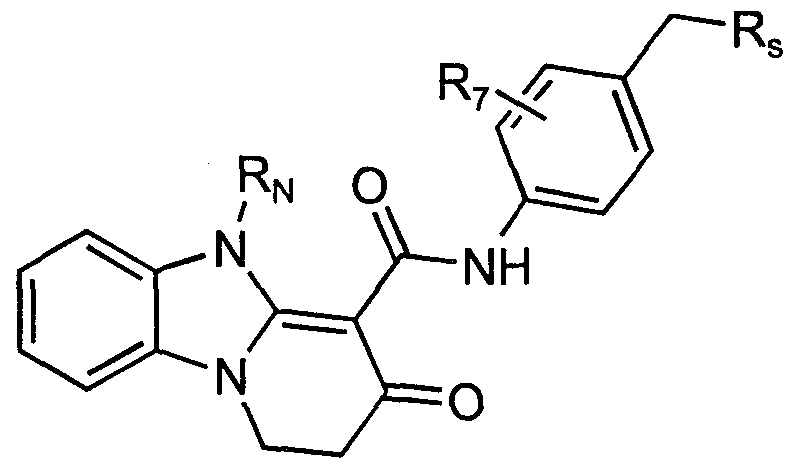
AK Designated states

Kind code of ref document: A3

Designated state(s): AE AL AM AT AU AZ BA BB BG BR BY CA CH CN CR CU CZ DE DK EE ES FI GB GD GE GH GM HR HU ID IL IN IS JP KE KG KR KZ LC LK LR LS LT LU LV MD MG MK MN MW MX NO NZ PL PT RO RU SD SE SG SI SK SL TJ TM TR TT UA UG US UZ VN YU ZA ZW

AL Designated countries for regional patents

Kind code of ref document: A3

Designated state(s): GH GM KE LS MW SD SL SZ UG ZW AM AZ BY KG KZ MD RU TJ TM AT BE CH CY DE DK ES FI FR GB GR IE IT LU MC NL PT SE BF BJ CF CG CI CM GA GN GW ML MR NE SN TD TG

ENP Entry into the national phase

Ref document number: 2341531

Country of ref document: CA

Ref country code: CA

Ref document number: 2341531

Kind code of ref document: A

Format of ref document f/p: F

WWE Wipo information: entry into national phase

Ref document number: PA/a/2001/001991

Country of ref document: MX

WWE Wipo information: entry into national phase

Ref document number: 1999943913

Country of ref document: EP

WWP Wipo information: published in national office

Ref document number: 1999943913

Country of ref document: EP

REG Reference to national code

Ref country code: DE

Ref legal event code: 8642

WWG Wipo information: grant in national office

Ref document number: 1999943913

Country of ref document: EP