WO2000012465A2 - Cycloalkylcarbonsäureamide, deren herstellung und verwendung als fungizide im agrarbereich - Google Patents
Cycloalkylcarbonsäureamide, deren herstellung und verwendung als fungizide im agrarbereich Download PDFInfo
- Publication number
- WO2000012465A2 WO2000012465A2 PCT/EP1999/006251 EP9906251W WO0012465A2 WO 2000012465 A2 WO2000012465 A2 WO 2000012465A2 EP 9906251 W EP9906251 W EP 9906251W WO 0012465 A2 WO0012465 A2 WO 0012465A2
- Authority
- WO
- WIPO (PCT)
- Prior art keywords
- alkyl
- alkoxy
- hydrogen
- halogen
- methyl
- Prior art date
- Legal status (The legal status is an assumption and is not a legal conclusion. Google has not performed a legal analysis and makes no representation as to the accuracy of the status listed.)
- Ceased
Links
Classifications
-
- C—CHEMISTRY; METALLURGY
- C07—ORGANIC CHEMISTRY
- C07C—ACYCLIC OR CARBOCYCLIC COMPOUNDS
- C07C233/00—Carboxylic acid amides
-
- A—HUMAN NECESSITIES
- A01—AGRICULTURE; FORESTRY; ANIMAL HUSBANDRY; HUNTING; TRAPPING; FISHING
- A01N—PRESERVATION OF BODIES OF HUMANS OR ANIMALS OR PLANTS OR PARTS THEREOF; BIOCIDES, e.g. AS DISINFECTANTS, AS PESTICIDES OR AS HERBICIDES; PEST REPELLANTS OR ATTRACTANTS; PLANT GROWTH REGULATORS
- A01N53/00—Biocides, pest repellants or attractants, or plant growth regulators containing cyclopropane carboxylic acids or derivatives thereof
-
- C—CHEMISTRY; METALLURGY
- C07—ORGANIC CHEMISTRY
- C07C—ACYCLIC OR CARBOCYCLIC COMPOUNDS
- C07C233/00—Carboxylic acid amides
- C07C233/57—Carboxylic acid amides having carbon atoms of carboxamide groups bound to carbon atoms of rings other than six-membered aromatic rings
- C07C233/58—Carboxylic acid amides having carbon atoms of carboxamide groups bound to carbon atoms of rings other than six-membered aromatic rings having the nitrogen atoms of the carboxamide groups bound to hydrogen atoms or to carbon atoms of unsubstituted hydrocarbon radicals
-
- C—CHEMISTRY; METALLURGY
- C07—ORGANIC CHEMISTRY
- C07C—ACYCLIC OR CARBOCYCLIC COMPOUNDS
- C07C255/00—Carboxylic acid nitriles
- C07C255/45—Carboxylic acid nitriles having cyano groups bound to carbon atoms of rings other than six-membered aromatic rings
- C07C255/48—Carboxylic acid nitriles having cyano groups bound to carbon atoms of rings other than six-membered aromatic rings to carbon atoms of 2,2-dimethylcyclopropane rings, e.g. nitrile of chrysanthemumic acids
-
- C—CHEMISTRY; METALLURGY
- C07—ORGANIC CHEMISTRY
- C07C—ACYCLIC OR CARBOCYCLIC COMPOUNDS
- C07C271/00—Derivatives of carbamic acids, i.e. compounds containing any of the groups, the nitrogen atom not being part of nitro or nitroso groups
- C07C271/06—Esters of carbamic acids
- C07C271/08—Esters of carbamic acids having oxygen atoms of carbamate groups bound to acyclic carbon atoms
- C07C271/24—Esters of carbamic acids having oxygen atoms of carbamate groups bound to acyclic carbon atoms with the nitrogen atom of at least one of the carbamate groups bound to a carbon atom of a ring other than a six-membered aromatic ring
-
- C—CHEMISTRY; METALLURGY
- C07—ORGANIC CHEMISTRY
- C07C—ACYCLIC OR CARBOCYCLIC COMPOUNDS
- C07C2601/00—Systems containing only non-condensed rings
- C07C2601/02—Systems containing only non-condensed rings with a three-membered ring
Definitions
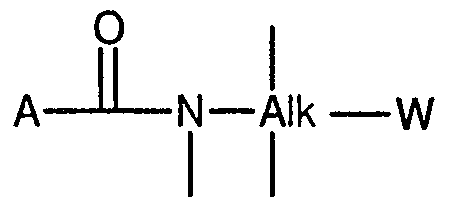
- the present invention relates to new cycloalkylcarboxamides of the general formula I.
- AC 3 -C 6 cycloalkyl which one or more
- Substituents selected from the group consisting of halogen, cyano, Ci-C ö alkyl, C -C 6 alkenyl, Cx-Cg-alkoxy or Ci-C ⁇ -alkylthio can carry;
- R 2 , R 3 are hydrogen, Ci-C ⁇ alkyl or CC 6 alkenyl, where these radicals can be partially or completely halogenated;
- Ring atoms in which one or two carbon ring atoms are replaced by N atoms may be exchanged, and where these ring systems may carry one to three of the following groups: nitro, halogen, cyano, C 4 -alkyl, C 4 haloalkyl, C ⁇ -C 4 -alkoxy, C4-haloalkoxy, C ⁇ -C 4 alkylthio, C 3 -C 6 cycloalkyl, and C ⁇ -C alkoxycarbonyl;
- EP 0 170 842 describes N-benzylcyclopropanecarboxamide derivatives and their use as fungicides in agriculture.
- the compounds described there are cyclopropylcarboxamides which carry a phenylalkyl group on the amide moiety and which are substituted by two chlorine atoms in the 2-position of the cyclopropane ring.
- No. 4,988,734 describes the corresponding N- (R) - (1-phenylethyl) -1-alkyl-2,2-dichloro-cyclopropane-carboxamide stereoisomers.
- 5,034,408 describes a further 2,2-dichloro-cyclopropane-carboxamide which contain a second carboxamide group in the carboxamide part. From PCT / EP98 / 01031 ⁇ -halogen and ⁇ -cyano-substituted carboxamides with fungicidal activity are also known.
- the compounds of the formula I can contain one or more centers of chirality. They are then present as mixtures of enantiomers or diastereomers.
- the invention relates both to the pure enantiomers or diastereomers and to their mixtures.
- alkyl, alkylthio, alkoxy, alkoxycarbonyl and alkenyl radicals can be straight-chain or branched in all the cases mentioned.
- halogen is fluorine, chlorine, bromine or iodine.
- W represents a naphthyl ring in which one or two carbon ring atoms have been replaced by nitrogen atoms
- C 1 -C 4 -alkyl and the alkyl parts of C 1 -C 4 -alkylthio: methyl, ethyl, propyl, 1-methylethyl, butyl, 1-methylpropyl, 2-methylpropyl and 1, 1-dimethylethyl;
- haloalkyl a C 1 -C 4 -alkyl radical as mentioned above which is partially or completely substituted by fluorine, chlorine, bromine and / or iodine, for example chloromethyl, dichloromethyl, trichloromethyl, fluoromethyl, difluoromethyl, trifluoromethyl , Chlorofluoromethyl, dichlorofluoromethyl, chlorodifluoromethyl, 2-fluoroethyl, 2-chloroethyl, 2-bromoethyl, 2-iodoethyl, 2, 2-difluoroethyl, 2, 2, 2-trifluoroethyl, 2-chloro-2-fluoroethyl, 2-chloro-2 , 2-difluoroethyl, 2, 2-dichloro-2-fluoroethyl, 2, 2, 2-trichloroethyl, pentafluoroethyl, 2-fluoro
- -C-C 4 haloalkoxy a C ⁇ -C 4 alkoxy radical as mentioned above, which is partially or completely substituted by fluorine, chlorine, bromine and / or iodine, for example fluoromethoxy, difluoromethoxy, trifluoromethoxy, chlorodifluoromethoxy, bromodifluoromethoxy, 2nd -Fluoroethoxy, 2-chloroethoxy, 2-bromomethoxy, 2-iodoethoxy, 2, 2-difluoroethoxy, 2, 2-trifluoroethoxy, 2-chloro-2-fluoroethoxy, 2-chloro-2, 2-difluoroethoxy, 2,
- C 2 -C 6 alkenyl ethylene, prop-1-en-l-yl, prop-2-en-l-yl, 1-methylethenyl, buten-1-yl, buten-2-yl, buten-3- yl, 1-methyl-prop-l-en-l-yl, 2-methyl-prop-l-en-l-yl, 1-methyl-prop-2-en-l-yl and 2-methyl-prop- 2-en-l-yl, penten-1-yl, penten-2-yl, penten-3-yl, penten-4-yl, 1-methylbut-1-en-l-yl, 2-methyl but-l-en-l-yl, 3-methyl-but-1-en-l-yl, l-methyl-but-2-en-l-yl, 2-methyl-but-2-en-l- yl, 3-methyl-but-2-en-l-yl, 1-methyl-but-3-en-l-yl, 2-methyl-but-3-en-l-yl, 3-methyl-
- cycloalkyl cyclopropyl, cyclobutyl, cyclopentyl, cyclohexyl; preferably cyclopropyl;
- Ci-C ⁇ -alkylene straight-chain or branched alkylene group m t 1-6 C-atoms, e.g. Methylene, 1,1-ethylene, 1,2-ethylene, 1, 1-propylene, 1, 2-propylene, 1, 3-propylene, 1,1-butylene,
- cycloalkylcarboxamides I having the following substituents are preferred, the preference being seen on its own or in combination with the other definitions:
- R 1 is preferably Ci-C ⁇ -alkyl, such as methyl or ethyl.
- R 2 is preferably hydrogen or Ci-C ⁇ -alkyl, such as methyl or ethyl.
- Compounds I in which R 1 is methyl and R 2 is hydrogen are particularly preferred.
- W preferably denotes 1-naphthyl or 2-naphthyl.
- Alk preferably means the methylene group, resulting in compounds of the type -C (R 3 ) (R 4 ).
- A preferably denotes a cyclopropyl ring, so that compounds of formula Ia result:
- R 4 is hydrogen, halogen, cyano, C ⁇ -C 6 alkyl, C 2 -C 6 alkenyl, -C-C 6 alkoxy or Ci-C ⁇ -alkylthio, these radicals being partially or completely halogenated and / or one or can carry two of the following groups: -C 4 -alkoxy, -C-C 4 -haloalkoxy, -C-C -alkylthio, -C-C-alkoxycarbonyl, C 3 -C 6 -cycloalkyl, -C-C 4 -alkoxy-carbonylamino ;
- R 5 is hydrogen, halogen, cyano, Ci-C ⁇ alkyl, C 2 -C 6 alkenyl, Ci-C ⁇ alkoxy or Ci-C ⁇ -alkylthio, these radicals being partially or completely halogenated and / or one or two can carry the following groups: -CC 4 alkoxy, -C-C haloalkoxy, -C-C 4 alkylthio,
- R 6 is hydrogen, halogen or Ci-C ⁇ -alkyl
- R 7 is hydrogen, halogen or Ci-Ce alkyl
- R 8 is hydrogen, halogen or Ci-C ⁇ -alkyl.
- the cyclopropyl ring can be substituted one to five times with respect to R 4 - R 8 .
- Monosubstituted cyclopropyl derivatives of the formula Ia are compounds in which a total of four of the radicals R 4 -R 8 are hydrogen.
- R 4 is alkyl, halogen, cyano or alkoxycarbonylamino.
- Disubstituted cyclopropyl derivatives of the formula Ia are compounds in which a total of three of the R 4 -R 8 radicals are hydrogen.
- such compounds are also suitable, wherein "which R 4 is Ci-C ⁇ -alkyl, halogen or cyano and R 5 C ⁇ -C 6 alkyl tet significance.
- Preferred disubstituted cyclopropyl derivatives are also those compounds in which R 7 and R 8 is halogen or Ci-C ⁇ -alkyl.
- Trisubstituted cyclopropyl derivatives of the formula Ia are compounds in which two of the radicals R 4 -R 8 are hydrogen.
- R 4 Ci-C ⁇ -alkyl, halogen or cyano
- R 8 halogen or Ci-Ce-alkyl
- R 8 halogen or Ci-C ⁇ -alkyl.
- R 4 -R 8 Compounds in which one of the radicals R 4 -R 8 is hydrogen.
- R 5 or R 6 is hydrogen.
- the other substituents have, for example, the following meanings: R 4 : Ci-C ⁇ -alkyl, halogen or cyano; R 6 : -CC 6 alkyl; R 7 : halogen or -CC 6 alkyl; R 8 : halogen or Ci-Ce-alkyl.
- Pentasubstituted cyclopropyl derivatives of the formula Ia are compounds in which none of the R 4 -R 8 radicals mean hydrogen.
- those compounds are suitable in which R 4 is C 1 -C 6 -alkyl, halogen or cyano and R 5 -R 8 is C 1 -C 6 -alkyl.
- R 7 and R 8 are the same and halogen, in particular chlorine, or C ö alkyl, especially methyl.
- the alkylene chain Alk contains a chiral carbon atom, this preferably has the R configuration.
- both the stereoisomeric mixtures and the corresponding enantiomers or diastereomers are suitable for the purposes of the present invention.
- R 4 and R 5 are preferably the compounds of the formula Ib:
- W is a naphthyl group
- R 7 and R 8 are a methyl group.
- the compounds can be present either as racemic mixtures or in the form of their enantiomers or their mixtures.
- the C atom marked with "*" can have either the R configuration or the S configuration. The R configuration is preferred.
- Carboxamides Id.001 to Id.144 of the general formula Id in which the meanings of the combinations of R i -R 6 are given by the rows in Table 1, W naphthyl and R 7 and R 8 are chlorine.
- the carboxamides I are obtained by a process which is preferred according to the invention.
- the amide formation takes place according to the methods known from the literature.
- the free carboxylic acids of the formula II ', where X is hydroxyl, are generally previously converted into an activated carboxylic acid derivative II, where X is e.g. stands for chlorine.
- the carboxylic acids II 'can preferably also be activated in situ by directly using the carboxylic acids II' with the addition of, for example, dicyclohexylcarbodiimide, ethyl chloroformate, diethyl cyanophosphonate, triphenylphosphine / azodicarboxylic acid ester, 2-pyridinedisulfide / triphenylphosphine, carbonyl diimidazole, thionyl chloride, phosphorus trichloride, phosphorus pentachloride, etc.
- the carbodiimides are added in equimolar amounts with respect to the carboxylic acids II '.
- the carboxylic acids are activated via acyl cyanides, for example by reacting the carboxylic acids II 'with diethyl cyanophosphonate, preferably in an inert solvent such as tetrahydrofuran, toluene or dichloromethane (cf. Tetrahedron Lett. 18 (1973) 1595-8).
- Activation via anhydrides takes place, for example, by reacting the carboxylic acids II 'with carbonic acid chlorides such as ethyl chloroformate in general in the presence of bases and, if appropriate, in an inert solvent such as toluene or tetrahydrofuran (cf. "Houben-Weyl", 4th ed. (1974) , 15/1 page 28-32).
- Amide formation is preferably carried out in the presence of bases such as tertiary amines, e.g. Triethylamine or dimethylcyclohexylamine, alkali metal carbonates, alkali metal hydroxides, pyridine etc. performed.
- bases such as tertiary amines, e.g. Triethylamine or dimethylcyclohexylamine, alkali metal carbonates, alkali metal hydroxides, pyridine etc. performed.
- bases such as tertiary amines, e.g. Triethylamine or dimethylcyclohexylamine, alkali metal carbonates, alkali metal hydroxides, pyridine etc.
- the reactants and the auxiliary base are expediently used in equimolar amounts. A slight excess of the auxiliary base of 0.1 - 0.5 equivalents can be helpful under certain circumstances.
- Aliphatic hydrocarbons such as hexane and ligroin, aromatic hydrocarbons such as toluene and xylene, chlorinated hydrocarbons such as methylene chloride and 1,2-dichloroethane, ethers such as methyl tert-butyl ether and tetrahydrofuran, polar aprotic solvents such as acetonitrile and dimethylformamide or ester come as solvents such as ethyl acetate or mixtures thereof in question.
- aromatic hydrocarbons such as toluene and xylene
- chlorinated hydrocarbons such as methylene chloride and 1,2-dichloroethane
- ethers such as methyl tert-butyl ether and tetrahydrofuran
- polar aprotic solvents such as acetonitrile and dimethylformamide or ester come as solvents such as ethyl acetate or mixtures thereof in question.
- the molar ratio of carboxylic acid derivatives II to amine III is generally 0.8 to 1.5 and preferably 0.9 to 1.1.
- the work-up is carried out as usual, e.g. by introducing the reaction mixture into water and then extracting the amide with an organic solvent.
- the amines of the formula III are known or can be obtained by processes known from the literature (cf. Organikum (1993) Barth Verlagsgesellschaft mbH Leipzig, pp. 509 ff; "Houben-Weyl", volume 15/1, pp. 648 - 665) ; Indian J. Chem. 10 (1972) 366).
- the R-isomer can be separated from racemates of the amines III in a manner known per se, for example by fractional crystallization with optically active tartaric acid or preferably by means of enzyme-catalyzed esterification and subsequent saponification (cf. e.g. WO 95/08636).
- the condensation is usually carried out in a water-immiscible solvent, such as hexane, toluene or xylene, with the water formed in the reaction being removed.
- a water-immiscible solvent such as hexane, toluene or xylene
- the reaction mixture is heated to boiling under reflux for several hours.
- Bases such as e.g. Piperidine, pyridine, ammonia or ß-alanine in the presence of an acid such as glacial acetic acid.
- X stands for a nucleophilically interchangeable radical such as hydroxy, -C-C 4 alkoxy, halogen z.
- B bromine or chlorine, hetaryl, for example imidazolyl or pyridyl, carboxylate, for example acetate or trifluoroacetate etc.
- Carboxylic acid derivatives of the formula II in which A represents optionally substituted cyclopropyl are particularly preferred.
- the compounds I are notable for excellent activity against a broad spectrum of phytopathogenic fungi, in particular from the classes of the Ascomycetes, Deuteromycetes, Phycomycetes and Basidiomycetes. Some of them are systemically effective and can be used in plant protection as leaf and soil fungicides. They are particularly important for combating a large number of fungi on various crops such as wheat, rye, barley, oats, rice, corn, grass, bananas, cotton, soybeans, coffee, sugar cane, wine, fruit and ornamental plants and vegetables such as cucumbers, Beans, tomatoes, potatoes and squash, as well as on the seeds of these plants.
- crops such as wheat, rye, barley, oats, rice, corn, grass, bananas, cotton, soybeans, coffee, sugar cane, wine, fruit and ornamental plants and vegetables such as cucumbers, Beans, tomatoes, potatoes and squash, as well as on the seeds of these plants.
- Erysiphe graminis in cereals, Erysiphe cichoracearum and Sphaerotheca fuliginea on pumpkin plants, Podosphaera leucotricha on apples, Uncinula necator on vines, Puccinia species on cereals, Rhiz ⁇ ctonia species and Rhiz ⁇ ctonia Lawn, Ustilago species on cereals and sugar cane, Venturia inaequalis (scab) on apples, Helminthosporium arcs on cereals, Septoria nodorum on wheat, Botrytis cinerea (gray mushrooms) on strawberries, vegetables, ornamental plants and vines, Cercospora arachidicola on peanuts, Pseudocercosporella herpotrichoides on wheat, barley, Pyricularia oryzae on rice, Phytophthora infestans on potatoes and tomatoes, Fusarium and Verticillium
- the compounds I are also suitable for combating harmful fungi in material protection (e.g. wood, paper, dispersions for addressing, fibers or fabrics) and in storage protection.
- material protection e.g. wood, paper, dispersions for addressing, fibers or fabrics
- the compounds I are used by treating the fungi or the plants, seeds, materials or the soil to be protected against fungal attack with a fungicidally active amount of the active compounds. It is used before or after the infection of the materials, plants or seeds by the fungi.
- formulations such as solutions, emulsions, suspensions, dusts, powders, pastes and granules.
- the form of application depends on the respective purpose; in any case, it should ensure a fine and uniform distribution of the compound according to the invention.
- the formulations are prepared in a known manner, e.g. by stretching the active ingredient with solvents and / or carriers, if desired using emulsifiers and dispersants, where, in the case of water as the diluent, other organic solvents can also be used as auxiliary solvents.
- auxiliaries solvents such as aromatics
- Carriers such as natural stone powder (e.g. kaolins, clays, talc, chalk) and synthetic stone powder
- Emulsifiers such as nonionic and anionic emulsifiers (e.g. polyoxyethylene fatty alcohol ethers, alkyl sulfonates and aryl sulfonates) and dispersants such as lignin sulfite liquors and methyl cellulose.
- the fungicidal compositions generally contain between 0.1 and 95, preferably between 0.5 and 90% by weight of active ingredient.
- the application rates in crop protection are between 0.01 and 2.0 kg of active ingredient per ha.
- active ingredient 0.001 to 0.1 g, preferably 0.01 to 0.05 g, per kg of seed are generally required.
- the amount of active ingredient applied depends on the type of application and the desired effect. Usual application rates in material protection are, for example, 0.001 g to 2 kg, preferably 0.005 g to 1 kg of active ingredient per cubic meter of treated material.
- agents according to the invention can also be present in the use form as fungicides together with other active ingredients, such as with herbicides, insecticides, growth regulators, fungicides or even with fertilizers.
- Sulfur, dithiocarbamates and their derivatives such as ferridimethyldithiocarbamate, zinc dimethyldithiocarbamate, zinc ethylene bisdithiocarbamate, manganese ethylene bisdithiocarbamate, manganese-zinc ethylenediamin-bis-dithiocarbamate, tetramethylthiurium -diamid-dibi-ethamidulfide ), Ammonia complex of zinc (N, N '-propylene-bis-dithiocarbamate), zinc (N, N' -propylene-bis-dithiocarbamate), N, N '-polypropylene-bis- (thio-carbamoyl) disulfide; Nitroderivatives such as dinitro- (1-methylheptyl) phenyl crotonate, 2-sec-butyl-4, 6-dinitrophenyl-3, 3-dimethylacrylate, 2-sec-butyl-4
- heterocyclic substances such as 2-heptadecyl-2-imidazoline acetate, 2,4-dichloro-6- (o-chloroanilino) -s-triazine, 0, O-diethyl-phthalimidophosphonothioate, 5-amino-l- [bis - (dimethylamino) phosphinyl] -3-phenyl-l, 2, 4-triazole, 2, 3-dicyano-l, 4-di-thioanthraquinone, 2-thio-l, 3-dithiolo [4, 5- b] quinoxaline, 1- (butyl-carbamoyl) -2-benzimidazole-carbamic acid methyl ester, 2-methoxycarbonylamino-benzimidazole, 2- (furyl- (2)) -benzimidazole, 2- (thiazolyl- (4)) -benzimidazole, N- (1, 1, 2, 2-tetrachloroeth
- Strobilurins such as methyl-E-methoxyimino- [ ⁇ - (o-tolyloxy) -o-tolyl] acetate, methyl-E-2- ⁇ 2- [6- (2-cyanophenoxy) pyrimidin-4-yl-oxy ] -phenyl ⁇ -3-methoxyacrylate, methyl-E-methoxyimino- [a- (2-phen-oxyphenyl)] -acetamide, methyl-E-methoxyimino- [ ⁇ - (2, 5-dimethyl-phenoxy) -o- tolyl] acetamide,
- Anilinopyrimidines such as N- (4, 6-dimethylpyrimidin-2-yl) aniline, N- [4-methyl-6- (1-propynyl) pyrimidin-2-yl] aniline, N- [4-methyl-6 -cyclopropyl-pyrimidin-2-yl] aniline,
- Phenylpyrroles such as 4- (2,2-difluoro-1,3-benzo-dioxol-4-yl) pyrrole-3-carbonitrile,
- Cinnamic acid amides such as 3- (4-chlorophenyl) -3- (3, 4-dimethoxy-phenyl) -acrylic acid morpholide,
- fungicides such as dodecylguanidine acetate, 3- [3- (3,5-dimethyl-2-oxycyclohexyl) -2-hydroxyethyl] glutarimide, hexachlorobenzene, DL-methyl-N- (2,6-dimethylphenyl) -N-furoyl (2) -alaninate, DL-N- (2,6-dimethyl-phenyl) -N- (2'-methoxyacetyl) -alanine-methyl ester, N- (2, 6- Dimethylphenyl) -N-chloroacetyl-D, L-2-aminobutyrolactone, DL-N- (2,6-dimethylphenyl) -N- (phenylacetyl) alanine methyl ester, 5-methyl-5-vinyl-3- ( 3, 5-dichlorophenyl) -2, 4-dioxo-l, 3-oxazolidine
- active ingredients as such, in the form of their formulations or the use forms prepared therefrom, e.g. in the form of directly sprayable solutions, powders, suspensions or
- Dispersions emulsions, oil dispersions, pastes, dusts, scattering agents, granules by spraying, atomizing, dusting, scattering or pouring can be used.
- the application forms depend entirely on the purposes; in any case, they should ensure the finest possible distribution of the active compounds according to the invention.
- the active substance concentrations in the ready-to-use preparations can be varied over a wide range.
- they are between 0.0001 and 10%, preferably between 0.01 and 1%.
- the active ingredients can also be used with great success in the ultra-low-volume process (ULV), it being possible to apply formulations with more than 95% by weight of active ingredient or even the active ingredient without additives.
- UUV ultra-low-volume process
- the amount of active ingredient used to control pests is 0.1 to 2.0, preferably 0.2 to 1.0, kg / ha under field conditions.
- strongly polar solvents e.g. Dirnethylformamide, dimethyl sulfoxide, N-methylpyrrolidone, water.
- Aqueous application forms can be prepared from emulsion concentrates, pastes or wettable powders (wettable powders, oil dispersions) by adding water.
- emulsions, pastes or oil dispersions the substances as such or dissolved in an oil or solvent can be homogenized in water by means of wetting agents, adhesives, dispersants or emulsifiers.
- concentrates composed of an active substance, wetting agents, adhesives, dispersants or emulsifiers and possibly solvents or oil, which are suitable for dilution with water.
- Suitable surfactants are alkali metal, alkaline earth metal and ammonium salts of lignosulfonic acid, naphthalenesulfonic acid, phenolsulfonic acid, dibutylnaphthalenesulfonic acid, alkylaryl sulfonates, alkyl sulfates, alkylsulfonates, fatty alcohol sulfates and fatty acids and their alkali and alkaline earth metal salts, salts of sulfated fatty alcohol glycol ethers, condensates of sulfonated naphthalene and naphthalene derivatives with Formaldehyde, condensation products of naphthalene or naphthalene sulfonic acid with phenol and formaldehyde, polyoxyethylene octylphenol ether, ethoxylated isooctylphenol, octylphenol, nonylphenol, alkylphenol polyglycol
- Powders, materials for broadcasting and dusts can be prepared by mixing or grinding the active substances together with a solid carrier.
- the formulations generally contain between 0.01 and 95% by weight, preferably between 0.1 and 90% by weight, of the active ingredient.
- the active ingredients are used in a purity of 90% to 100%, preferably 95% to 100% (according to the NMR spectrum).
- V. 80 parts by weight of a compound according to the invention are mixed with 3 parts by weight of the sodium salt of diisobutylnaphthalene-alpha-sulfonic acid, 10 parts by weight of the sodium salt of a lignosulfonic acid from a sulfite waste liquor and 7 parts by weight of powdered silica gel well mixed and ground in a hammer mill (active ingredient - content 80% by weight).
- Granules for example coated granules, impregnated granules and homogeneous granules, can be prepared by binding the active ingredients to solid carriers.
- Solid carriers are, for example, mineral soils, such as silica gel, silicas, silica gels, silicates, talc, kaolin, attack clay, limestone, lime, chalk, boluses, loess, clay, dolomite, diatomaceous earth, calcium and magnesium sulfate, magnesium oxide, ground plastics, fertilizers , such as ammonium sulfate, ammonium phosphate, ammonium nitrate, ureas and vegetable products such as cereal flour, tree bark, wood and nutshell flour, cellulose powder and other solid carriers.
- mineral soils such as silica gel, silicas, silica gels, silicates, talc, kaolin, attack clay, limestone, lime, chalk, boluses, loess, clay, dolomite
- Oils of various types, herbicides, fungicides, other pesticides, bactericides can be added to the active compounds, if appropriate also only immediately before use (tank mix). These agents can be added to the agents according to the invention in a weight ratio of 1:10 to 10: 1.
- the mixture of diastereomers has a melting point of 120-135 ° C.
- the starting compound was obtained according to J. Org. Chem. 1988, 53 (16), 3843-3845. 0.47 g (2.24 mmol) of 3- (2, 2-dichlorovinyl) -2, 2-dimethylcyclopropanoic acid were in 50 ml abs. Dissolved methylene chloride and mixed with 0.22 g (2.24 mmol) of triethylamine and 10 0.38 g (2.24 mmol) of (IR) -l-naphth-2-yl-ethylamine. The reaction flask was cooled to 0 ° C, then 0.33 g (2.02 mmol) of 93% ethyl cyanoacetate was added.
- the starting compound was obtained as a mixture of diastereomers in accordance with patent JP 62/116531.
- the starting compound was obtained as a mixture of diastereomers in accordance with patent JP 62/116531.
- the reaction solution was washed with 2N sodium hydroxide solution, water, 2N hydrochloric acid, water, 2N sodium hydroxide solution and finally again with water.
- 0.6 g (68% yield) of the diastereomeric title compound was obtained as a yellow resin.
- the fungicidal activity of the compounds of the general formula I against harmful fungi was demonstrated by the following greenhouse tests:
- the active ingredients were administered as a 20% emulsion in a mixture of 70% by weight cyclohexanone, 20% by weight Nekanil ® LN (Lutensol ® AP6, wetting agent with emulsifying and dispersing action based on ethoxylated alkylphenols) and 10% by weight.
- % Emulphor ® EL Emulphor ® EL (Emulan ® EL, i emulsifier based on ethoxylated fatty alcohols) prepared and diluted with water according to the desired concentration.
- Leaves of rice seedlings (variety "Tai-Nong 67") grown in pots were treated with the aqueous preparation of the active ingredients (containing 250 ppm). After about 24 hours, the plants were inoculated with an aqueous spore suspension of Pyricularia oryzae. The plants treated in this way were placed in climatic chambers at 22-24 ° C. and 95 to 99% relative atmospheric humidity for 6 days. The extent of the development of the infestation on the leaves was then determined visually.
- Pre-germinated rice (variety "Tai-Nong 67") was cultivated in a hydroponic with Hoagland solution up to the two-leaf stage. Then the roots were watered with the aqueous preparation of the active ingredients (containing 50 ppm). After five days of further cultivation in the greenhouse, the plants were inoculated with an aqueous spore suspension of Pyricularia oryzae. The plants treated in this way were placed in climatic chambers at 22-24 ° C. and 95 to 99% relative atmospheric humidity for 6 days. The extent of infestation on the leaves was then determined visually.
Landscapes
- Organic Chemistry (AREA)
- Chemical & Material Sciences (AREA)
- Life Sciences & Earth Sciences (AREA)
- Dentistry (AREA)
- Health & Medical Sciences (AREA)
- Engineering & Computer Science (AREA)
- Plant Pathology (AREA)
- General Health & Medical Sciences (AREA)
- Wood Science & Technology (AREA)
- Zoology (AREA)
- Environmental Sciences (AREA)
- Pest Control & Pesticides (AREA)
- Agronomy & Crop Science (AREA)
- Agricultural Chemicals And Associated Chemicals (AREA)
- Organic Low-Molecular-Weight Compounds And Preparation Thereof (AREA)
Abstract
Description


Claims

Priority Applications (10)
| Application Number | Priority Date | Filing Date | Title |
|---|---|---|---|
| JP2000567499A JP2002523485A (ja) | 1998-09-01 | 1999-08-26 | シクロアルキルカルボン酸アミド、それらの製造および農業用殺真菌剤としてのそれらの使用 |
| IL14153399A IL141533A (en) | 1998-09-01 | 1999-08-26 | Cycloalkyl amides of carboxylic acid Preparation and use as fungicides in agriculture |
| AT99944516T ATE228996T1 (de) | 1998-09-01 | 1999-08-26 | Cycloalkylcarbonsäureamide, deren herstellung und verwendung als fungizide im agrarbereich |
| AU57409/99A AU5740999A (en) | 1998-09-01 | 1999-08-26 | Cycloalkyl carboxylic acid amides, their production and their use as fungicides in agriculture |
| US09/763,685 US6441044B1 (en) | 1998-09-01 | 1999-08-26 | Cycloalkyl carboxylic acid amides, their production and their use as fungicides in agriculture |
| EP99944516A EP1107946B1 (de) | 1998-09-01 | 1999-08-26 | Cycloalkylcarbonsäureamide, deren herstellung und verwendung als fungizide im agrarbereich |
| BR9913361-0A BR9913361A (pt) | 1998-09-01 | 1999-08-26 | Cicloalquilcarboxamida, composição, processo para o controle de fungos prejudiciais, e, uso de uma cicloalquilalcanocarboxamida |
| KR1020017002650A KR20010073081A (ko) | 1998-09-01 | 1999-08-26 | 시클로알킬카르복실산 아미드 및 이의 제조 방법과 농업용살진균제로서의 용도 |
| HU0103891A HUP0103891A3 (en) | 1998-09-01 | 1999-08-26 | Cycloalkane carboxylic acid amides, fungicidal compositions containing thereof and their use |
| DE59903673T DE59903673D1 (de) | 1998-09-01 | 1999-08-26 | Cycloalkylcarbonsäureamide, deren herstellung und verwendung als fungizide im agrarbereich |
Applications Claiming Priority (2)
| Application Number | Priority Date | Filing Date | Title |
|---|---|---|---|
| DE19839690.2 | 1998-09-01 | ||
| DE19839690 | 1998-09-01 |
Publications (2)
| Publication Number | Publication Date |
|---|---|
| WO2000012465A2 true WO2000012465A2 (de) | 2000-03-09 |
| WO2000012465A3 WO2000012465A3 (de) | 2000-06-22 |
Family
ID=7879357
Family Applications (1)
| Application Number | Title | Priority Date | Filing Date |
|---|---|---|---|
| PCT/EP1999/006251 Ceased WO2000012465A2 (de) | 1998-09-01 | 1999-08-26 | Cycloalkylcarbonsäureamide, deren herstellung und verwendung als fungizide im agrarbereich |
Country Status (13)
| Country | Link |
|---|---|
| US (1) | US6441044B1 (de) |
| EP (1) | EP1107946B1 (de) |
| JP (1) | JP2002523485A (de) |
| KR (1) | KR20010073081A (de) |
| CN (1) | CN1320115A (de) |
| AT (1) | ATE228996T1 (de) |
| AU (1) | AU5740999A (de) |
| BR (1) | BR9913361A (de) |
| DE (1) | DE59903673D1 (de) |
| HU (1) | HUP0103891A3 (de) |
| ID (1) | ID27670A (de) |
| IL (1) | IL141533A (de) |
| WO (1) | WO2000012465A2 (de) |
Families Citing this family (2)
| Publication number | Priority date | Publication date | Assignee | Title |
|---|---|---|---|---|
| US20070031672A1 (en) * | 2005-08-08 | 2007-02-08 | Frank-Rainer Boehm | Wire-coating composition based on new polyester amide imides and polyester amides |
| US11512054B2 (en) * | 2017-12-21 | 2022-11-29 | Basf Se | Pesticidal compounds |
Family Cites Families (7)
| Publication number | Priority date | Publication date | Assignee | Title |
|---|---|---|---|---|
| US4710518A (en) | 1984-07-02 | 1987-12-01 | Nihon Tokushu Noyaku Seizo K.K. | Novel N-benzyl-cyclopropanecarboxamide fungicides |
| EP0170842B1 (de) | 1984-07-02 | 1989-09-13 | Nihon Tokushu Noyaku Seizo K.K. | N-Benzylcyclopropancarboxamid-Derivate, Verfahren zu ihrer Herstellung und Fungizide für Landwirtschaft und Gartenbau |
| JPS6439452A (en) | 1987-08-06 | 1989-02-09 | Nat House Ind | Eaves |
| DE3815728A1 (de) * | 1988-05-07 | 1989-11-16 | Bayer Ag | Stereoisomere von n-(r)-(1-aryl-ethyl)-1-alkyl-2,2-dichlor- cyclopropancarbonsaeureamiden |
| KR20000004916A (ko) | 1996-03-22 | 2000-01-25 | 스타르크, 카르크 | 살진균적으로 활성인 카르복실산 아미드 |
| PL335839A1 (en) * | 1997-03-14 | 2000-05-22 | Basf Ag | Cycloalkylalkane carboxamides as well as their production and application |
| AU1631799A (en) | 1997-12-15 | 1999-07-05 | Board Of Trustees Of The University Of Arkansas, The | Fungicidal amides |
-
1999
- 1999-08-26 US US09/763,685 patent/US6441044B1/en not_active Expired - Fee Related
- 1999-08-26 AU AU57409/99A patent/AU5740999A/en not_active Abandoned
- 1999-08-26 AT AT99944516T patent/ATE228996T1/de not_active IP Right Cessation
- 1999-08-26 CN CN99811504A patent/CN1320115A/zh active Pending
- 1999-08-26 EP EP99944516A patent/EP1107946B1/de not_active Expired - Lifetime
- 1999-08-26 WO PCT/EP1999/006251 patent/WO2000012465A2/de not_active Ceased
- 1999-08-26 BR BR9913361-0A patent/BR9913361A/pt not_active Application Discontinuation
- 1999-08-26 ID IDW20010505A patent/ID27670A/id unknown
- 1999-08-26 HU HU0103891A patent/HUP0103891A3/hu unknown
- 1999-08-26 DE DE59903673T patent/DE59903673D1/de not_active Expired - Lifetime
- 1999-08-26 IL IL14153399A patent/IL141533A/en not_active IP Right Cessation
- 1999-08-26 JP JP2000567499A patent/JP2002523485A/ja not_active Withdrawn
- 1999-08-26 KR KR1020017002650A patent/KR20010073081A/ko not_active Withdrawn
Also Published As
| Publication number | Publication date |
|---|---|
| IL141533A (en) | 2004-12-15 |
| JP2002523485A (ja) | 2002-07-30 |
| KR20010073081A (ko) | 2001-07-31 |
| IL141533A0 (en) | 2002-03-10 |
| EP1107946B1 (de) | 2002-12-04 |
| HUP0103891A2 (hu) | 2002-03-28 |
| EP1107946A2 (de) | 2001-06-20 |
| ATE228996T1 (de) | 2002-12-15 |
| ID27670A (id) | 2001-04-19 |
| CN1320115A (zh) | 2001-10-31 |
| HUP0103891A3 (en) | 2003-04-28 |
| BR9913361A (pt) | 2001-05-22 |
| US6441044B1 (en) | 2002-08-27 |
| WO2000012465A3 (de) | 2000-06-22 |
| DE59903673D1 (de) | 2003-01-16 |
| AU5740999A (en) | 2000-03-21 |
Similar Documents
| Publication | Publication Date | Title |
|---|---|---|
| EP1699763A1 (de) | 3-trifluormethylpicolins ureanilide und ihre verwendung als fungizide | |
| EP1368351A2 (de) | 7-(r)-amino-triazolopyrimidine, deren herstellung und verwendung zur bekämpfung von pflanzenpathogenen pilzen | |
| EP0970044B1 (de) | Cycloalkylalkancarbonsäureamide, deren herstellung und verwendung | |
| DE60201089T2 (de) | 6-(2-chlor-6-fluor-phenyl)-triazolpyrimidine | |
| EP1085807B1 (de) | Verwendung von 2-(n-phenylamino)pyrimidinen als fungizide sowie neue 2-(n-phenylamino)pyrimidine | |
| EP1289365B1 (de) | Verwendung von phenethylacrylamiden, neue phenethylacrylamide sowie herstellungsverfahren | |
| EP1504001A1 (de) | 2-(2-pyridyl)-5-phenyl-6-aminopyrimidine, verfahren und zwischenprodukte zu ihrer herstellung und ihre verwendung zur bekämpfung von schadpilzen | |
| EP1107946B1 (de) | Cycloalkylcarbonsäureamide, deren herstellung und verwendung als fungizide im agrarbereich | |
| EP1504009A1 (de) | Fungizide triazolopyrimidine, verfahren zu ihrer herstellung und ihre verwendung zur bek mpfung von schadpilzen sowie sie ent haltende mittel | |
| EP1487786A2 (de) | Z-substituierte acrylamide, verfahren zu deren herstellung, sowie sie enthaltende mittel | |
| EP0808102B1 (de) | Fungizides mittel | |
| EP0329011A1 (de) | Heterocyclisch substituierte Acrylsäureester | |
| EP1017671A1 (de) | Neue benzamidoxim-derivate, zwischenprodukte und verfahren zu deren herstellung und deren verwendung als fungizide | |
| EP0990642A1 (de) | Cycloalkylcarbonsäureamide, deren Herstellung und Verwendung als Fungizide | |
| EP1212291A1 (de) | Cyclopropancarbonsäureamide, deren herstellung und verwendung | |
| EP1492768A1 (de) | Phenethylacrylamide, verfahren zu deren herstellung sowie sie enthaltende mittel | |
| WO2001014322A1 (de) | Cycloalkylalkancarbonsäureamide, deren herstellung und verwendung | |
| EP1127046A1 (de) | 2-phenoxyphenylessigsäurederivate, verfahren und zwischenprodukte zu ihrer herstellung, ihre verwendung und sie enthaltende mittel zur bekämpfung von schadpilzen | |
| EP1218339B1 (de) | Benzylaminodoxim-derivate, zwischenprodukte und verfahren zu deren herstellung und deren verwendung als fungizide | |
| EP0941988A2 (de) | Neue Benzamidoxim-Derivate, Zwischenprodukte und Verfahren zu deren Herstellung und deren Verwendung als Fungizide | |
| EP1373181A1 (de) | Benzophenone, deren herstellung und verwendung zur bekämpfung von pflanzenpathogenen pilzen | |
| MXPA01002143A (en) | Cycloalkyl carboxylic acid amides, their production and their use as fungicides in agriculture | |
| EP0387499A2 (de) | Substituierte Oximether sowie deren Verwendung als Schädlingsbekämpfungsmittel | |
| WO2002074084A1 (de) | Neorustmicn d-derivate als fungizide | |
| DE10210136A1 (de) | 2-(2-Pyridyl)-5-phanyl-6-aminopyrimidine, Verfahren und Zwischenprodukte zu ihrer Herstellung und ihre Verwendung zur Bekämpfung von Schadpilzen |
Legal Events
| Date | Code | Title | Description |
|---|---|---|---|
| WWE | Wipo information: entry into national phase |
Ref document number: 99811504.5 Country of ref document: CN |
|
| AK | Designated states |
Kind code of ref document: A2 Designated state(s): AL AU BG BR BY CA CN CZ GE HR HU ID IL IN JP KR KZ LT LV MK MX NO NZ PL RO RU SG SI SK TR UA US ZA |
|
| AL | Designated countries for regional patents |
Kind code of ref document: A2 Designated state(s): AM AZ BY KG KZ MD RU TJ TM AT BE CH CY DE DK ES FI FR GB GR IE IT LU MC NL PT SE |
|
| 121 | Ep: the epo has been informed by wipo that ep was designated in this application | ||
| DFPE | Request for preliminary examination filed prior to expiration of 19th month from priority date (pct application filed before 20040101) | ||
| AK | Designated states |
Kind code of ref document: A3 Designated state(s): AL AU BG BR BY CA CN CZ GE HR HU ID IL IN JP KR KZ LT LV MK MX NO NZ PL RO RU SG SI SK TR UA US ZA |
|
| AL | Designated countries for regional patents |
Kind code of ref document: A3 Designated state(s): AM AZ BY KG KZ MD RU TJ TM AT BE CH CY DE DK ES FI FR GB GR IE IT LU MC NL PT SE |
|
| WWE | Wipo information: entry into national phase |
Ref document number: 141533 Country of ref document: IL |
|
| WWE | Wipo information: entry into national phase |
Ref document number: 1999944516 Country of ref document: EP |
|
| WWE | Wipo information: entry into national phase |
Ref document number: 09763685 Country of ref document: US |
|
| WWE | Wipo information: entry into national phase |
Ref document number: 1020017002650 Country of ref document: KR Ref document number: PA/a/2001/002143 Country of ref document: MX |
|
| ENP | Entry into the national phase |
Ref document number: 2000 567499 Country of ref document: JP Kind code of ref document: A |
|
| WWE | Wipo information: entry into national phase |
Ref document number: IN/PCT/2001/437/CHE Country of ref document: IN |
|
| WWP | Wipo information: published in national office |
Ref document number: 1999944516 Country of ref document: EP |
|
| WWP | Wipo information: published in national office |
Ref document number: 1020017002650 Country of ref document: KR |
|
| WWG | Wipo information: grant in national office |
Ref document number: 1999944516 Country of ref document: EP |
|
| WWW | Wipo information: withdrawn in national office |
Ref document number: 1020017002650 Country of ref document: KR |