WO2000024711A1 - Synthesis of methylthiophenyl hydroxyketones - Google Patents

Synthesis of methylthiophenyl hydroxyketones Download PDF

Info

Publication number
WO2000024711A1
WO2000024711A1 PCT/US1999/025064 US9925064W WO0024711A1 WO 2000024711 A1 WO2000024711 A1 WO 2000024711A1 US 9925064 W US9925064 W US 9925064W WO 0024711 A1 WO0024711 A1 WO 0024711A1
Authority
WO
WIPO (PCT)
Prior art keywords
process according
formula
compound
group
substantially non
Prior art date
Legal status (The legal status is an assumption and is not a legal conclusion. Google has not performed a legal analysis and makes no representation as to the accuracy of the status listed.)
Ceased
Application number
PCT/US1999/025064
Other languages
French (fr)
Inventor
Richard D. Tillyer
Robert D. Larsen
Ian W. Davies
Dalian Zhao
Anthony On-Ping King
Cheng Y. Chen
Edward J. J. Grabowski
Xin Wang
Paul O'shea
Current Assignee (The listed assignees may be inaccurate. Google has not performed a legal analysis and makes no representation or warranty as to the accuracy of the list.)
Merck Frosst Canada and Co
Merck and Co Inc
Original Assignee
Merck Frosst Canada and Co
Merck and Co Inc
Priority date (The priority date is an assumption and is not a legal conclusion. Google has not performed a legal analysis and makes no representation as to the accuracy of the date listed.)
Filing date
Publication date
Application filed by Merck Frosst Canada and Co, Merck and Co Inc filed Critical Merck Frosst Canada and Co
Priority to JP2000578282A priority Critical patent/JP2002528435A/en
Priority to AU11337/00A priority patent/AU758349B2/en
Priority to CA002347768A priority patent/CA2347768A1/en
Priority to EP99955168A priority patent/EP1124798A4/en
Publication of WO2000024711A1 publication Critical patent/WO2000024711A1/en
Anticipated expiration legal-status Critical
Ceased legal-status Critical Current

Links

Classifications

    • CCHEMISTRY; METALLURGY
    • C07ORGANIC CHEMISTRY
    • C07CACYCLIC OR CARBOCYCLIC COMPOUNDS
    • C07C319/00Preparation of thiols, sulfides, hydropolysulfides or polysulfides
    • C07C319/14Preparation of thiols, sulfides, hydropolysulfides or polysulfides of sulfides
    • C07C319/20Preparation of thiols, sulfides, hydropolysulfides or polysulfides of sulfides by reactions not involving the formation of sulfide groups

Definitions

  • Non-steroidal, antiinflammatory drugs exert most of their antiinflammatory, analgesic and antipyretic activity and inhibit hormone-induced uterine contractions and certain types of cancer growth through inhibition of prostaglandin G/H synthase, also known as cyclooxygenase.
  • cyclooxygenase-1 cyclooxygenase-1
  • COX-2 cyclooxygenase-1
  • COX-1 This enzyme is distinct from the COX-1 which has been cloned, sequenced and characterized from various sources including the sheep, the mouse and man.
  • the second form of cyclooxygenase, COX-2 is rapidly and readily inducible by a number of agents including mitogens, endotoxin, hormones, cytokines and growth factors.
  • prostaglandins have both physiological and pathological roles, we have concluded that the constitutive enzyme, COX-1, is responsible, in large part, for endogenous basal release of prostaglandins and hence is important in their physiological functions such as the maintenance of gastrointestinal integrity and renal blood flow.
  • COX-2 the inducible form
  • a selective inhibitor of COX-2 will have similar antiinflammatory, antipyretic and analgesic properties to a non-steroidal antiinflammatory drug, and in addition would inhibit hormone-induced uterine contractions and have potential anti-cancer effects, but will have a diminished ability to induce some of the mechanism-based side effects.
  • such a compound should have a reduced potential for gastrointestinal toxicity, a reduced potential for renal side effects, a reduced effect on bleeding times and possibly a lessened ability to induce asthma attacks in aspirin-sensitive asthmatic subjects.
  • such a compound will also inhibit prostanoid-induced smooth muscle contraction by preventing the synthesis of contractile prostanoids and hence may be of use in the treatment of dysmenorrhea, premature labour, asthma and eosinophil related disorders. It will also be of use in the treatment of Alzheimer's disease, for decreasing bone loss particularly in postmenopausal women (i.e. treatment of osteoporosis) and for the treatment of glaucoma.
  • COX-2 inhibitors is given in an article by John Vane, Nature, Vol. 367, pp. 215-216, 1994, and in an article in Drug News and Perspectives. Vol. 7, pp. 501-512, 1994.
  • This invention encompasses a novel process for synthesizing compounds represented by formula A:
  • R and Rl are C ⁇ _6alkyl, comprising reacting a compound of formula B:
  • X represents a 5 or 6-membered non-aromatic ring wherein X is selected from the group consisting of: C, N, O and S,
  • the invention encompasses a process for synthesizing compounds represented by formula A:
  • R and Rl are C ⁇ _6alkyl, comprising reacting a compound of formula B:
  • X represents a 5 or 6-membered non-aromatic ring wherein X is selected from the group consisting of: C, N, O and S,
  • the lithiating agent is selected from the group consisting of: n- butyllithium, hexyllithium and phenyllithium.
  • the substantially non-reactive solvent is selected from the group consisting of: tetrahydrofuran, toluene, ethylene glycol dimethyl ether, t-butyl methyl ether and -
  • Another embodiment of the invention encompasses a mixture of two or more of the aforesaid solvents.
  • the reduced temperature ranges from about -78° C to about 0° C. In another preferred embodiment the reduced temperature is about -40° C.
  • a preferred embodiment of the invention is that wherein the reaction is quenched with an aqueous acid.
  • quenching acids include: sulfuric acid, hydrochloric acid, citric acid and acetic acid.
  • Another embodiment of the invention is that wherein
  • R is methyl and Rl is ethyl.
  • the compound of formula A consists of two stereoisomers, one stereoisomer in enantiomeric excess with respect to the other.
  • Another embodiment of the invention is that wherein the product yield of the compound of formula A is greater than about 90%.
  • a preferred embodiment of the invention encompasses the process wherein the compound of formula B is produced by reacting a compound of formula D:
  • R and Rl are Ci- ⁇ alkyl, with an activating agent in a substantially non-reactive solvent at reduced temperature and then with pyrrolidine at room temperature to produce a compound of formula B.
  • an activating agent is carbonyldiimidazole.
  • the substantially non-reactive solvent is selected from the group consisting of: tetrahydrofuran, toulene, isopropyl acetate, ethyl acetate, t- butlymethyl ether, ethylene glycol dimethyl ether and N,N- dimethylformamdide. Mixtures of two or more of the aforesaid solvents are also contemplated.
  • the reduced temperature is in the range of about -25° C to about 10° C. More particularly the reduced temperature is about 0° C.
  • a preferred embodiment is that wherein the product yield of the compound of formula B is greater than about 90%.
  • R is methyl and Rl is ethyl.
  • a subclass of this class encompasses a process wherein the compound of formula D consists of one stereoisomer that is in enantiomeric excess with respect to the other.
  • a group of this subclass is a process wherein the compound of formula D is resolved by reacting the racemic mixture of the compound of formula D with a chiral amine resolving agent in a substantially non-reactive solvent.
  • substantially non-reactive solvent include those selected from the group consisting of: acetone, ethyl acetate, hexane and isopropyl acetate. Additionally mixtures of two or more of the aforesaid solvents are included.
  • a preferred embodiment is a process wherein the compound of formula D is resolved to an enantiomeric excess of about 98%.
  • the product yield for the resolution is greater than about 65%.
  • the compound of formula D is resolved to about 98% enatiomeric excess and the yield is about 60-70%.
  • the invention is illustrated in connection with the following generic schemes A and B.
  • R a represents C 3.6 alkyl
  • b represents C 2-6 alkyl
  • the racemic starting material is first separated into its diastereomers with a chiral amine resolving agent to provide the desired stereospecific hydroxy acid.
  • a chiral amine resolving agent to provide the desired stereospecific hydroxy acid.
  • the appropriate families of chiral amines may be used as described in T. Vries, et al., Angew Chem. Int. Ed. (1998) 37: 2349-2354.
  • chiral amine resolving agents can be selected from the group consisting of:
  • the resolved hydroxy acid is then activated using an appropriate activating agent, in a substantially non-reactive solvent, at reduced temperature, and then combined with a cyclic amine, providing compound B.
  • the cyclic amine serves as a leaving group in the next step, when is displaced via a lithiation reaction, producing compound A.
  • Compound A is oxidized to produce methyl sulfone D.
  • a suitable oxidizing agent is Oxone®.
  • Methyl sulfone D is then subjected to esteriflcation by reaction with a compound R OCH2CO2H, wherein Ra represents a C3-6 alkyl group.
  • a suitable esteriflcation procedure involves the addition of the esterifying agent such as dicyclohexylcarbodiimide (DCC) to methyl sulfone D in the presence of an amine base, e.g., DABCO, in a solvent or solvent mixture at about 30 - 35 °C.
  • DCC dicyclohexylcarbodiimide
  • the ester is thereafter cyclized, and optionally deprotected, to provide compounds having COX-2 selective inhibitory activity.
  • alkyl means linear, branched or cyclic structures and combinations thereof, containing one to twenty carbon atoms.
  • alkyl groups include methyl, ethyl, propyl, isopropyl, butyl, s- and t-butyl, pentyl, hexyl, heptyl, octyl, nonyl, undecyl, dodecyl, tridecyl, tetradecyl, pentadecyl, eicosyl, 3,7-diethyl-2,2-dimethyl- 4-propylnonyl, and the like.
  • substantially non-reactive solvent includes tetrahydrofuran, toluene, acetone, ethyl acetate, hexane, isopropyl acetate, ethylene glycol dimethyl ether, t-butyl methyl ether and N,N-dimethylformamide.
  • one stereoisomer that is in enantiomeric excess with respect to the other means that the mixture contains over 50% of one stereoisomer and under 50% of the other.
  • This phrase also is meant to include an enantiomerically pure compound consisting essentially of 100% of a stereoisomer and ' essentially 0% of the corresponding enantiomer.
  • room temperature means about 20° C.
  • reduced temperature is meant to include any temperature less than room temperature.
  • lithiumating agent includes n-butyllithium, hexyllithium and phenyllithium.
  • activating agent means any compound that activates a particular site on any other compound for displacement by another group.
  • An example is carbonyldiimidazole.
  • chiral amine resolving agent is meant to include any amine compound that when reacted with a mixture of enantiomers yields a mixture of one stereoisomer that is in enantiomeric excess with respect to the other and where such excess is greater than any excess of the original mixture. Examples include (R)-(+)-l-(l-napthyl)ethylamine and (S)-(-)-l-(l- napthyl)ethylamine.
  • Part B Salt break. Recovery of acid and amine
  • reaction mixture was transferred via cannula into the quench, (2L THF rinse), with vigorous agitation.
  • the layers were separated, and the aq. Layer was extracted with 30 L Toluene.
  • the combined organics were washed with aq. NaHCO3 (5 wt%, 18

Landscapes

  • Chemical & Material Sciences (AREA)
  • Organic Chemistry (AREA)
  • Chemical Kinetics & Catalysis (AREA)
  • Organic Low-Molecular-Weight Compounds And Preparation Thereof (AREA)
  • Pyrrole Compounds (AREA)

Abstract

This invention encompasses a novel process for synthesizing compounds represented by formula (A). These compounds are intermediates useful in the preparation of certain agents that are selective COX-2 inhibitors.

Description

TITLE OF THE INVENTION
SYNTHESIS OF METHYLTHIOPHENYL HYDROXYKETONES
BACKGROUND OF THE INVENTION This application is directed to an improved process for making methythiophenyl hydroxyketones such as (S)-2- hydroxy-2-methyl-l-(4-methylthiophenyl)butan-l-one. These compounds are intermediates useful in the preparation of certain compounds that selectively inhibit cyclooxygenase-2 (COX-2). Compounds having COX-2 selectivity, for example, are found in WO 97/14691 filed on October 9, 1996 and published on April 24, 1997.
Non-steroidal, antiinflammatory drugs exert most of their antiinflammatory, analgesic and antipyretic activity and inhibit hormone-induced uterine contractions and certain types of cancer growth through inhibition of prostaglandin G/H synthase, also known as cyclooxygenase. Initially, only one form of cyclooxygenase was known, this corresponding to cyclooxygenase-1 (COX-1) or the constitutive enzyme, as originally identified in bovine seminal vesicles. More recently the gene for a second inducible form of cyclooxygenase, COX-2 has been cloned, sequenced and characterized initially from chicken, murine and human sources. This enzyme is distinct from the COX-1 which has been cloned, sequenced and characterized from various sources including the sheep, the mouse and man. The second form of cyclooxygenase, COX-2, is rapidly and readily inducible by a number of agents including mitogens, endotoxin, hormones, cytokines and growth factors. As prostaglandins have both physiological and pathological roles, we have concluded that the constitutive enzyme, COX-1, is responsible, in large part, for endogenous basal release of prostaglandins and hence is important in their physiological functions such as the maintenance of gastrointestinal integrity and renal blood flow. In contrast, we have concluded that the inducible form, COX-2, is mainly responsible for the pathological effects of prostaglandins where rapid induction of the enzyme would occur in response to such agents as inflammatory agents, hormones, growth factors, and cytokines. Thus, a selective inhibitor of COX-2 will have similar antiinflammatory, antipyretic and analgesic properties to a non-steroidal antiinflammatory drug, and in addition would inhibit hormone-induced uterine contractions and have potential anti-cancer effects, but will have a diminished ability to induce some of the mechanism-based side effects. In particular, such a compound should have a reduced potential for gastrointestinal toxicity, a reduced potential for renal side effects, a reduced effect on bleeding times and possibly a lessened ability to induce asthma attacks in aspirin-sensitive asthmatic subjects.
Furthermore, such a compound will also inhibit prostanoid-induced smooth muscle contraction by preventing the synthesis of contractile prostanoids and hence may be of use in the treatment of dysmenorrhea, premature labour, asthma and eosinophil related disorders. It will also be of use in the treatment of Alzheimer's disease, for decreasing bone loss particularly in postmenopausal women (i.e. treatment of osteoporosis) and for the treatment of glaucoma. A brief description of the potential utility of selective
COX-2 inhibitors is given in an article by John Vane, Nature, Vol. 367, pp. 215-216, 1994, and in an article in Drug News and Perspectives. Vol. 7, pp. 501-512, 1994.
SUMMARY OF THE INVENTION
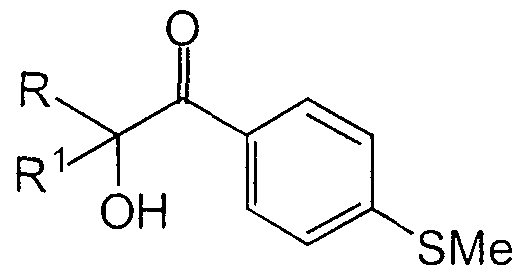
This invention encompasses a novel process for synthesizing compounds represented by formula A:
Figure imgf000004_0001
wherein R and Rl are Cι_6alkyl, comprising reacting a compound of formula B:
Figure imgf000005_0001
B
wherein the group:
Figure imgf000005_0002
represents a 5 or 6-membered non-aromatic ring wherein X is selected from the group consisting of: C, N, O and S,
with a lithiating agent and a compound of formula C:
Figure imgf000005_0003
in a substantially non-reactive solvent at reduced temperature to produce a compound of formula A.
These compounds are intermediates useful in the preparation of certain agents which are selective COX-2 inhibitors.
DETAILED DESCRIPTION OF THE INVENTION
The invention encompasses a process for synthesizing compounds represented by formula A:
Figure imgf000005_0004
wherein R and Rl are Cι_6alkyl, comprising reacting a compound of formula B:
Figure imgf000006_0001
B wherein the group:
Figure imgf000006_0002
represents a 5 or 6-membered non-aromatic ring wherein X is selected from the group consisting of: C, N, O and S,
with a lithiating agent and a compound of formula C:
Figure imgf000006_0003
C
in a substantially non-reactive solvent at reduced temperature to produce a compound of formula A.
In a preferred embodiment of the invention the lithiating agent is selected from the group consisting of: n- butyllithium, hexyllithium and phenyllithium. In another embodiment the substantially non-reactive solvent is selected from the group consisting of: tetrahydrofuran, toluene, ethylene glycol dimethyl ether, t-butyl methyl ether and -
the like. Another embodiment of the invention encompasses a mixture of two or more of the aforesaid solvents.
In another embodiment of the invention the reduced temperature ranges from about -78° C to about 0° C. In another preferred embodiment the reduced temperature is about -40° C.
A preferred embodiment of the invention is that wherein the reaction is quenched with an aqueous acid. Examples of quenching acids include: sulfuric acid, hydrochloric acid, citric acid and acetic acid. Another embodiment of the invention is that wherein
R is methyl and Rl is ethyl.
Typically the compound of formula A consists of two stereoisomers, one stereoisomer in enantiomeric excess with respect to the other. Another embodiment of the invention is that wherein the product yield of the compound of formula A is greater than about 90%.
In yet another embodiment, the following group of formula B:
Figure imgf000007_0001
is selected from pyrrolidinyl, morpholinyl, piperidinyl and piperazinyl. More particularly, the group represents pyrrolidinyl. A preferred embodiment of the invention encompasses the process wherein the compound of formula B is produced by reacting a compound of formula D:
Figure imgf000007_0002
D
wherein R and Rl are Ci-βalkyl, with an activating agent in a substantially non-reactive solvent at reduced temperature and then with pyrrolidine at room temperature to produce a compound of formula B.
An example of an activating agent is carbonyldiimidazole. Another embodiment is that wherein the substantially non-reactive solvent is selected from the group consisting of: tetrahydrofuran, toulene, isopropyl acetate, ethyl acetate, t- butlymethyl ether, ethylene glycol dimethyl ether and N,N- dimethylformamdide. Mixtures of two or more of the aforesaid solvents are also contemplated.
As used herein, the reduced temperature is in the range of about -25° C to about 10° C. More particularly the reduced temperature is about 0° C.
A preferred embodiment is that wherein the product yield of the compound of formula B is greater than about 90%.
Another preferred embodiment is that wherein R is methyl and Rl is ethyl.
A subclass of this class encompasses a process wherein the compound of formula D consists of one stereoisomer that is in enantiomeric excess with respect to the other.
A group of this subclass is a process wherein the compound of formula D is resolved by reacting the racemic mixture of the compound of formula D with a chiral amine resolving agent in a substantially non-reactive solvent. Examples of substantially non-reactive solvent include those selected from the group consisting of: acetone, ethyl acetate, hexane and isopropyl acetate. Additionally mixtures of two or more of the aforesaid solvents are included.
A preferred embodiment is a process wherein the compound of formula D is resolved to an enantiomeric excess of about 98%.
In a more preferred embodiment the product yield for the resolution is greater than about 65%.
More particularly, the compound of formula D is resolved to about 98% enatiomeric excess and the yield is about 60-70%. The invention is illustrated in connection with the following generic schemes A and B.
SCHEME A
Chiral resolving _ agent
Figure imgf000009_0001
Figure imgf000009_0002
Racemate
1 ) Activating agent Solvent
Figure imgf000009_0003
2) B
H-N
X
Figure imgf000009_0004
SCHEME B
Figure imgf000010_0001
Esterification
RbOCH,CO,H
Figure imgf000010_0002
Figure imgf000010_0003
Ra represents C3.6 alkyl R » b represents C2-6 alkyl
The racemic starting material is first separated into its diastereomers with a chiral amine resolving agent to provide the desired stereospecific hydroxy acid. Alternatively, the appropriate families of chiral amines may be used as described in T. Vries, et al., Angew Chem. Int. Ed. (1998) 37: 2349-2354.
Examples of chiral amine resolving agents can be selected from the group consisting of:
(1) (R)-(+)-l-(l-napthyl)ethylamine and
(2) (S)-(-)-l-(l-napthyl)ethylamine.
Illustrating this is a process wherein (S)-(+)-2-hydroxy- 2-methyl butyric acid is resolved using (R)-(+)-l-(l- napthyl)ethylamine. Another illustration is a process wherein (R)-(-)-2- hydroxy-2-methyl butyric acid is resolved using (S)-(-)-l-(l- napthyl)ethylamine.
The resolved hydroxy acid is then activated using an appropriate activating agent, in a substantially non-reactive solvent, at reduced temperature, and then combined with a cyclic amine, providing compound B. The cyclic amine serves as a leaving group in the next step, when is displaced via a lithiation reaction, producing compound A. Compound A is oxidized to produce methyl sulfone D.
A suitable oxidizing agent is Oxone®.
Methyl sulfone D is then subjected to esteriflcation by reaction with a compound R OCH2CO2H, wherein Ra represents a C3-6 alkyl group. One example of a suitable esteriflcation procedure involves the addition of the esterifying agent such as dicyclohexylcarbodiimide (DCC) to methyl sulfone D in the presence of an amine base, e.g., DABCO, in a solvent or solvent mixture at about 30 - 35 °C. The ester is thereafter cyclized, and optionally deprotected, to provide compounds having COX-2 selective inhibitory activity.
For the purposes of this specification, the term "alkyl" means linear, branched or cyclic structures and combinations thereof, containing one to twenty carbon atoms. Examples of alkyl groups include methyl, ethyl, propyl, isopropyl, butyl, s- and t-butyl, pentyl, hexyl, heptyl, octyl, nonyl, undecyl, dodecyl, tridecyl, tetradecyl, pentadecyl, eicosyl, 3,7-diethyl-2,2-dimethyl- 4-propylnonyl, and the like.
The term "substantially non-reactive solvent" includes tetrahydrofuran, toluene, acetone, ethyl acetate, hexane, isopropyl acetate, ethylene glycol dimethyl ether, t-butyl methyl ether and N,N-dimethylformamide.
The phrase "one stereoisomer that is in enantiomeric excess with respect to the other" means that the mixture contains over 50% of one stereoisomer and under 50% of the other. This phrase also is meant to include an enantiomerically pure compound consisting essentially of 100% of a stereoisomer and ' essentially 0% of the corresponding enantiomer.
The term "room temperature" means about 20° C.
The term "reduced temperature" is meant to include any temperature less than room temperature.
The term "lithiating agent" includes n-butyllithium, hexyllithium and phenyllithium.
The term "activating agent" means any compound that activates a particular site on any other compound for displacement by another group. An example is carbonyldiimidazole.
The term "chiral amine resolving agent" is meant to include any amine compound that when reacted with a mixture of enantiomers yields a mixture of one stereoisomer that is in enantiomeric excess with respect to the other and where such excess is greater than any excess of the original mixture. Examples include (R)-(+)-l-(l-napthyl)ethylamine and (S)-(-)-l-(l- napthyl)ethylamine.
The invention will now be illustrated by the following non-limiting examples:
PREPARATIVE EXAMPLE 1
Part A: Resolution
Figure imgf000012_0001
Figure imgf000012_0002
Under nitrogen, to a 50 L three-necked round bottom flask equipped with a mechanical stirrer, a nitrogen inlet and a thermocouple was charged with (R)-(+)-l-(l-naphthyl)ethylamine, acetone (19.0 L) at 10 °C. 2-Hydroxy-2-methylbutyric acid was added as solid over 30 min. The mixture was aged at 9-11 °C for 72- 96 hrs.
The mixture was warmed to 25°C and the solid was isolated by filtration via an insulated sintered funnel. The wet cake was rinsed with cold acetone (0 °C, 8 L). After the product was dried under reduced pressure it afforded 2,392 g of the salt (78% yield, > 93% ee by LC).
The product was recrystallized from acetone to give the salt in >98.5%ee and 70% yield.
Part B: Salt break. Recovery of acid and amine
Figure imgf000013_0001
S-(+) (ee >98.5%)
(R)-(+) S-(+) (ee >98.5%)
Figure imgf000013_0002
Under nitrogen, to a 50 L R.B. flask equipped with a mechanical stirrer, a nitrogen inlet and a thermocouple was charged with the salt from the previous step, freshly washed resin (13.3 kg, 66 L MeOH washed) and isopropanol (IPA) (20.0 L). The mixture was stirred for 2 h, the mixture was filtered and the resin was rinsed with IPA (30 L). The combined IPA solution was concentrated to approx. 5 L, heptane (60 L) was added and the mixture was re-concentrated to a volume of 30 L. The heptane solution was cooled to 0 °C. The product was filtered, the wet cake was rinsed with heptane (0 °C, 4 L) and the product was dried under reduced pressure, to give 794 g of (S)-(+)-2-hydroxy-2- methylbutyric acid (98% yield, overall yield for three steps 63.5%, ee > 98.5%).
Under nitrogen, to a 50 L R.B. flask equipped with a mechanical stirrer, a nitrogen inlet and a thermocouple was charged with the recovered resin and 2M NH3 in MeOH (30.0 L). (pH > 8.5). The mixture was agitated for 3 hrs, and the resin was filtered and washed with MeOH (30 L). The resulting solution was concentrated to give crude (R)-(+)-l-(l-naphthyl)ethylamine (1,150 g, 98% yield).
EXAMPLE 1
Figure imgf000014_0001
Figure imgf000014_0002
Figure imgf000015_0002
To carbonyldiimidazole (CDI) (818 g, 5.05 mol) in THF at 0°C was added the hydroxy acid (580 g, 5 mol) over 30 min. The mixture was aged at 0°C for 30 min and pyrrolidine (711 g, 10 mol) was added over 10 min, keeping the temperature below 25°C. The mixture was aged at room temperature for 30 min. The mixture was solvent switched to toluene (18 L), cooled to 0°C and 6 N HC1 was added portionwise, keeping the temperature below 25°C. The mixture was aged at room temperature for 30 min and the toluene layer was separated. The aq. layer was back extracted with toluene (2X9 L). Toluene layers were combined and concentrated to a solution (~3 mL/g of the amide B).
EXAMPLE 2
Figure imgf000015_0001
Figure imgf000015_0003
Figure imgf000016_0001
In a 20 L 4-necked flask equipped with N2 inlet, thermocouple, and overhead stirrer was charged the amide (solution in toluene), THF (850 mL) and PI13CH (indicator). The solution was cooled to -65 °C and n-BuLi was added slowly (the endpoint was indicated by a colour change from yellow-brown to permanent red-brown)
In a 50 L 4 necked-RB flask, equipped with N2 inlet. overhead stirrer, and thermocouple, was charged 4- bromothioanisole and THF (50 L). The solution was cooled to -62 °C and n-BuLi was added, over 1 h. The resulting heavy white slurry was aged at -50°C to -60°C for lh. To this mixture was added the slurry of amide B lithium alkoxide, via cannula, and, and the reaction mixture was then warmed to 0 °C over 2 h. Into a 125 L extractor was charged 16L deionized water and H2SO4 (2.1 L). The resulting solution was cooled to
10°C. The reaction mixture was transferred via cannula into the quench, (2L THF rinse), with vigorous agitation. The layers were separated, and the aq. Layer was extracted with 30 L Toluene. The combined organics were washed with aq. NaHCO3 (5 wt%, 18
L), and were then dried by concentration to approx 20 L. The assay yield of product was 2.29 kg (97%).

Claims

WHAT IS CLAIMED IS:
1. A process for synthesizing a compound represented by formula A:
Figure imgf000017_0001
wherein R and Rl are Cι_6alkyl,
comprising reacting a compound of formula B:
Figure imgf000017_0002
B wherein the group:
Figure imgf000017_0003
represents a 5 or 6-membered non-aromatic ring wherein X is selected from the group consisting of: C, N, O and S,
with a lithiating agent and a compound of formula C:
Figure imgf000017_0004
C in a substantially non-reactive solvent at reduced temperature to produce a compound of formula A.
2. A process according to Claim 1 wherein the lithiating agent is selected from the group consisting of: n- butyllithium, hexyllithium and phenyllithium.
3. A process according to Claim 1 wherein the substantially non-reactive solvent is selected from the group consisting of: tetrahydrofuran, toluene and ethylene glycol dimethyl ether.
4 A process according to Claim 1 wherein the substantially non-reactive solvent is a mixture of two or more solvents selected from the group consisting of: tetrahydrofuran, toluene and ethylene glycol dimethyl ether.
5. A process according to Claim 1 wherein the reduced temperature is from about -78°C to about 0°C.
6. A process according to Claim 1 wherein the reduced temperature is about -40°C.
7. A process according to Claim 1 wherein the reaction is quenched with an acid.
8. A process according to Claim 7 wherein the acid is selected from the group consisting of: sulfuric acid, hydrochloric acid, citric acid and acetic acid.
9. A process according to Claim 1 wherein R is methyl and Rl is ethyl.
10. A process according to Claim 9 wherein the compound of formula A consists of one stereoisomer that is in enantiomeric excess with respect to the other.
11. A process according to Claim 1 wherein the product yield of the compound of formula A is greater than about 90%.
12. A process according to Claim 1 wherein the following group of formula B:
h N X
is selected from the group consisting of: pyrrolidinyl, morpholinyl, piperidinyl and piperazinyl.
13. A process according to Claim 12 wherein the following group of formula B:
Figure imgf000019_0001
is pyrrolidinyl.
14. A process according to Claim 1 wherein the compound of formula B is produced by reacting a compound of formula D:
Figure imgf000019_0002
wherein R and Rl are Cχ_6alkyl, with an activating agent in a substantially non-reactive solvent at reduced temperature and with pyrrolidine at room temperature to produce a compound of formula B.
15. A process according to Claim 14 wherein the activating agent is carbonyldiimidazole.
16. A process according to Claim 14 wherein the substantially non-reactive solvent is selected from the group consisting of: tetrahydrofuran, toluene, isopropyl acetate, ethyl acetate, t-butyl methyl ether, ethylene glycol dimethyl ether and N,N-dimethylformamide.
17. A process according to Claim 14 wherein the substantially non-reactive solvent is a mixture of two or more solvents selected from the group consisting of: tetrahydrofuran, toluene, isopropyl acetate, ethyl acetate, t-butyl methyl ether, ethylene glycol dimethyl ether and N,N-dimethylformadide.
18. A process according to Claim 14 wherein the reduced temperature is in the range of about -25° C to about 10° C.
19. A process according to Claim 14 wherein the reduced temperature is about 0° C.
20. A process according to Claim 14 wherein R is methyl and Rl is ethyl.
21. A process according to Claim 20 wherein the compound of formula D consists of a mixture of one stereoisomer that is in enantiomeric excess with respect to the other.
22. A process according to Claim 14 wherein the product yield of the compound of formula B is greater than about 90%.
23. A process in accordance with Claim 21 wherein the compound of formula D is resolved by reacting a racemic mixture of the compound of formula D with a chiral amine resolving agent in a substantially non-reactive solvent.
24. A process according to Claim 23 wherein the chiral amine resolving agent is selected from the group consisting of:
(1) (R)-(+)-l-(l-napthyl)ethylamine and
(2) (S)-(-)-l-( l-napthyl)ethylamine.
25. A process according to Claim 24 wherein (S)-(+)-
2-hydroxy-2-methyl butyric acid is obtained using (R)-(+)-l-(l- napthyl)ethylamine.
26. A process according to Claim 24 wherein (R)-(-)- 2-hydroxy-2-methyl butyric acid is obtained using (S)-(-)-l-(l- napthyl)ethylamine.
27. A process according to Claim 23 wherein the substantially non-reactive solvent is selected from the group consisting of: acetone, ethyl acetate, hexane and isopropyl acetate.
28. A process according to Claim 23 wherein the substantially non-reactive solvent is a mixture of two or more solvents selected from the group consisting of: acetone, ethyl acetate, hexane and isopropyl acetate.
29. A process according to Claim 23 wherein the compound of formula D is resolved to an enantiomeric excess of about 98% with a product yield that is greater than about 65%.
PCT/US1999/025064 1998-10-27 1999-10-25 Synthesis of methylthiophenyl hydroxyketones Ceased WO2000024711A1 (en)

Priority Applications (4)

Application Number Priority Date Filing Date Title
JP2000578282A JP2002528435A (en) 1998-10-27 1999-10-25 Synthesis of methylthiophenylhydroxyketone
AU11337/00A AU758349B2 (en) 1998-10-27 1999-10-25 Synthesis of methylthiophenyl hydroxyketones
CA002347768A CA2347768A1 (en) 1998-10-27 1999-10-25 Synthesis of methylthiophenyl hydroxyketones
EP99955168A EP1124798A4 (en) 1998-10-27 1999-10-25 SYNTHESIS OF METHYLTHIOPHENYL HYDROXYKETONES

Applications Claiming Priority (2)

Application Number Priority Date Filing Date Title
US10583098P 1998-10-27 1998-10-27
US60/105,830 1998-10-27

Publications (1)

Publication Number Publication Date
WO2000024711A1 true WO2000024711A1 (en) 2000-05-04

Family

ID=22308018

Family Applications (1)

Application Number Title Priority Date Filing Date
PCT/US1999/025064 Ceased WO2000024711A1 (en) 1998-10-27 1999-10-25 Synthesis of methylthiophenyl hydroxyketones

Country Status (6)

Country Link
US (1) US6281391B1 (en)
EP (1) EP1124798A4 (en)
JP (1) JP2002528435A (en)
AU (1) AU758349B2 (en)
CA (1) CA2347768A1 (en)
WO (1) WO2000024711A1 (en)

Citations (2)

* Cited by examiner, † Cited by third party
Publication number Priority date Publication date Assignee Title
US5663195A (en) * 1994-10-19 1997-09-02 Merck & Co., Inc. Method of preventing bone loss
US5840746A (en) * 1993-06-24 1998-11-24 Merck Frosst Canada, Inc. Use of inhibitors of cyclooxygenase in the treatment of neurodegenerative diseases

Family Cites Families (6)

* Cited by examiner, † Cited by third party
Publication number Priority date Publication date Assignee Title
EP0003002B1 (en) * 1977-12-22 1984-06-13 Ciba-Geigy Ag Use of aromatic-aliphatic ketones as photoinitiators, photopolymerisable systems containing such ketones and aromatic-aliphatic ketones
US5474995A (en) * 1993-06-24 1995-12-12 Merck Frosst Canada, Inc. Phenyl heterocycles as cox-2 inhibitors
DE69529690T2 (en) * 1994-12-21 2003-11-13 Merck Frosst Canada & Co., Halifax DIARYL-2 (5H) -FUARANONE AS COX-2 INHIBITORS
US6020343A (en) * 1995-10-13 2000-02-01 Merck Frosst Canada, Inc. (Methylsulfonyl)phenyl-2-(5H)-furanones as COX-2 inhibitors
UA57002C2 (en) * 1995-10-13 2003-06-16 Мерк Фросст Кенада Енд Ко./Мерк Фросст Кенада Енд Сі. (methylsulfonyl)phenyl-2-(5n)-furanon derivative, a pharmaceutical composition and a method for treatment
CA2283100A1 (en) * 1997-03-14 1998-09-24 Merck Frosst Canada & Co. (methylsulfonyl)phenyl-2-(5h)-furanones with oxygen link as cox-2 inhibitors

Patent Citations (2)

* Cited by examiner, † Cited by third party
Publication number Priority date Publication date Assignee Title
US5840746A (en) * 1993-06-24 1998-11-24 Merck Frosst Canada, Inc. Use of inhibitors of cyclooxygenase in the treatment of neurodegenerative diseases
US5663195A (en) * 1994-10-19 1997-09-02 Merck & Co., Inc. Method of preventing bone loss

Non-Patent Citations (1)

* Cited by examiner, † Cited by third party
Title
See also references of EP1124798A4 *

Also Published As

Publication number Publication date
EP1124798A4 (en) 2002-08-28
AU758349B2 (en) 2003-03-20
EP1124798A1 (en) 2001-08-22
AU1133700A (en) 2000-05-15
CA2347768A1 (en) 2000-05-04
JP2002528435A (en) 2002-09-03
US6281391B1 (en) 2001-08-28

Similar Documents

Publication Publication Date Title
KR100549748B1 (en) Asymmetric synthesis of pregabalin
KR101045935B1 (en) Method for preparing prostaglandin derivative
WO2019062561A1 (en) Synthesis methods of firocoxib and intermediate thereof
AU758349B2 (en) Synthesis of methylthiophenyl hydroxyketones
JP2011157326A (en) Maxacalcitol intermediate and process for producing the same
CN115010692A (en) Design, preparation and application of novel macrolides
CN103508999A (en) Maxacalcitol synthesizing intermediate and preparation method and application thereof
CN111777538A (en) Preparation method of bimatoprost
JP2001233870A (en) 3-(1-hydroxypentylidene)-5-nitro-3h-benzofuran-2-one, method for producing the same and use thereof
Kamimura et al. A simple preparation of syn-NH-amide aldols and amide-Baylis–Hillman adducts via a Michael–aldol tandem process
CN114214651B (en) A kind of synthesis method of α-carbonyl-α’-thiocyanatosulfoxide ylide under electrocatalysis
CN114634407B (en) Method for stereospecifically synthesizing 2-enal, 2-enone compound and deuterated compound thereof
CN109970560B (en) A kind of preparation method of tri-substituted 1,3 diolefin compounds
JP2004339085A (en) METHOD FOR PRODUCING alpha-SUBSTITUTED PHENYL-ALKANECARBOXYLIC ESTER DERIVATIVE
CN116496136B (en) Diaryl sulfone compound and preparation method thereof
CN116789658B (en) Preparation method of 1-chloro-4-(β-D-pyranoglucopyran-1-yl)-2-(4-tetrahydrofuran-3-yloxy-benzyl)-benzene
Garcı́a et al. Highly stereoselective hydrocyanation of optically pure α-sulfinylaldehydes
CN115160198B (en) Preparation method of thiourethane collector
CN114989052B (en) Guaiacol-austempering compound and preparation method thereof
CN105343061A (en) Application and preparation method of Balasubramide derivatives
US6495713B2 (en) Synthesis of ketosulfone esters
JP2001509501A (en) Method for producing 2-alkylthiobenzoic acid derivative
CN114773247A (en) Method for synthesizing asymmetric selenium sulfide by cross coupling of diselenide and sulfoxide
JPH0723356B2 (en) Process for producing 4,4-disulfonylbutanoic acid esters
CN110256247B (en) Synthesis method of 2- ((9-hydrofluoren-9-yl) methyl) malonate

Legal Events

Date Code Title Description
ENP Entry into the national phase

Ref country code: AU

Ref document number: 2000 11337

Kind code of ref document: A

Format of ref document f/p: F

AK Designated states

Kind code of ref document: A1

Designated state(s): AE AL AM AT AU AZ BA BB BG BR BY CA CH CN CR CU CZ DE DK DM EE ES FI GB GD GE GH GM HR HU ID IL IN IS JP KE KG KP KR KZ LC LK LR LS LT LU LV MA MD MG MK MN MW MX NO NZ PL PT RO RU SD SE SG SI SK SL TJ TM TR TT TZ UA UG US UZ VN YU ZA ZW

AL Designated countries for regional patents

Kind code of ref document: A1

Designated state(s): GH GM KE LS MW SD SL SZ TZ UG ZW AM AZ BY KG KZ MD RU TJ TM AT BE CH CY DE DK ES FI FR GB GR IE IT LU MC NL PT SE BF BJ CF CG CI CM GA GN GW ML MR NE SN TD TG

121 Ep: the epo has been informed by wipo that ep was designated in this application
DFPE Request for preliminary examination filed prior to expiration of 19th month from priority date (pct application filed before 20040101)
ENP Entry into the national phase

Ref document number: 2347768

Country of ref document: CA

Ref country code: CA

Ref document number: 2347768

Kind code of ref document: A

Format of ref document f/p: F

WWE Wipo information: entry into national phase

Ref document number: 1999955168

Country of ref document: EP

ENP Entry into the national phase

Ref country code: JP

Ref document number: 2000 578282

Kind code of ref document: A

Format of ref document f/p: F

WWE Wipo information: entry into national phase

Ref document number: 11337/00

Country of ref document: AU

WWP Wipo information: published in national office

Ref document number: 1999955168

Country of ref document: EP

REG Reference to national code

Ref country code: DE

Ref legal event code: 8642

WWG Wipo information: grant in national office

Ref document number: 11337/00

Country of ref document: AU

WWW Wipo information: withdrawn in national office

Ref document number: 1999955168

Country of ref document: EP