WO2001003697A1 - 2-amino-benzoxazinones for the treatment of herpes simplex virus - Google Patents
2-amino-benzoxazinones for the treatment of herpes simplex virus Download PDFInfo
- Publication number
- WO2001003697A1 WO2001003697A1 PCT/US2000/018817 US0018817W WO0103697A1 WO 2001003697 A1 WO2001003697 A1 WO 2001003697A1 US 0018817 W US0018817 W US 0018817W WO 0103697 A1 WO0103697 A1 WO 0103697A1
- Authority
- WO
- WIPO (PCT)
- Prior art keywords
- methyl
- amino
- benzoxazin
- carbonyl
- dimethylethoxy
- Prior art date
- Legal status (The legal status is an assumption and is not a legal conclusion. Google has not performed a legal analysis and makes no representation as to the accuracy of the status listed.)
- Ceased
Links
- HGLJCNRLSMSUII-UHFFFAOYSA-N CC(C)(C)OC(Nc(c(C)c12)ccc1N=C(N(CC1)CCN1C(C)=O)OC2=O)=O Chemical compound CC(C)(C)OC(Nc(c(C)c12)ccc1N=C(N(CC1)CCN1C(C)=O)OC2=O)=O HGLJCNRLSMSUII-UHFFFAOYSA-N 0.000 description 1
- UMKDHMHTQVIFKP-UHFFFAOYSA-N Cc(c(NC(c1ccccc1)=O)ccc1N=C(N(C)Cc2ccccc2)O2)c1C2=O Chemical compound Cc(c(NC(c1ccccc1)=O)ccc1N=C(N(C)Cc2ccccc2)O2)c1C2=O UMKDHMHTQVIFKP-UHFFFAOYSA-N 0.000 description 1
Classifications
-
- C—CHEMISTRY; METALLURGY
- C07—ORGANIC CHEMISTRY
- C07D—HETEROCYCLIC COMPOUNDS
- C07D413/00—Heterocyclic compounds containing two or more hetero rings, at least one ring having nitrogen and oxygen atoms as the only ring hetero atoms
- C07D413/02—Heterocyclic compounds containing two or more hetero rings, at least one ring having nitrogen and oxygen atoms as the only ring hetero atoms containing two hetero rings
- C07D413/04—Heterocyclic compounds containing two or more hetero rings, at least one ring having nitrogen and oxygen atoms as the only ring hetero atoms containing two hetero rings directly linked by a ring-member-to-ring-member bond
-
- A—HUMAN NECESSITIES
- A61—MEDICAL OR VETERINARY SCIENCE; HYGIENE
- A61P—SPECIFIC THERAPEUTIC ACTIVITY OF CHEMICAL COMPOUNDS OR MEDICINAL PREPARATIONS
- A61P31/00—Antiinfectives, i.e. antibiotics, antiseptics, chemotherapeutics
- A61P31/12—Antivirals
-
- A—HUMAN NECESSITIES
- A61—MEDICAL OR VETERINARY SCIENCE; HYGIENE
- A61P—SPECIFIC THERAPEUTIC ACTIVITY OF CHEMICAL COMPOUNDS OR MEDICINAL PREPARATIONS
- A61P31/00—Antiinfectives, i.e. antibiotics, antiseptics, chemotherapeutics
- A61P31/12—Antivirals
- A61P31/20—Antivirals for DNA viruses
-
- C—CHEMISTRY; METALLURGY
- C07—ORGANIC CHEMISTRY
- C07D—HETEROCYCLIC COMPOUNDS
- C07D265/00—Heterocyclic compounds containing six-membered rings having one nitrogen atom and one oxygen atom as the only ring hetero atoms
- C07D265/04—1,3-Oxazines; Hydrogenated 1,3-oxazines
- C07D265/12—1,3-Oxazines; Hydrogenated 1,3-oxazines condensed with carbocyclic rings or ring systems
- C07D265/14—1,3-Oxazines; Hydrogenated 1,3-oxazines condensed with carbocyclic rings or ring systems condensed with one six-membered ring
- C07D265/24—1,3-Oxazines; Hydrogenated 1,3-oxazines condensed with carbocyclic rings or ring systems condensed with one six-membered ring with hetero atoms directly attached in positions 2 and 4
-
- C—CHEMISTRY; METALLURGY
- C07—ORGANIC CHEMISTRY
- C07D—HETEROCYCLIC COMPOUNDS
- C07D413/00—Heterocyclic compounds containing two or more hetero rings, at least one ring having nitrogen and oxygen atoms as the only ring hetero atoms
- C07D413/02—Heterocyclic compounds containing two or more hetero rings, at least one ring having nitrogen and oxygen atoms as the only ring hetero atoms containing two hetero rings
- C07D413/12—Heterocyclic compounds containing two or more hetero rings, at least one ring having nitrogen and oxygen atoms as the only ring hetero atoms containing two hetero rings linked by a chain containing hetero atoms as chain links
Definitions
- This invention is in the field of antiviral agents and specifically relates to compounds, compositions and methods for treating Herpes Simplex Virus.
- Viruses are classified into broad categories based on whether they incorporate RNA or DNA. Important virus families classified of the DNA type include adenoviridae, poxviridae, papovaviridae and herpesviridae.
- Herpesviridae is a family of DNA viruses which include herpes simplex virus type-1 (HSV-1), herpes simplex virus type-2 (HSV-2), cytomegalo virus (CMV), varicella-zoster virus (VZV), Epstein-Barr virus, human herpesvirus-6 (HHV6), human herpesvirus-7 (HHV7), human herpesvirus-8 (HHV8), pseudorabies and rhinotracheitis, among others.
- herpesviruses express their genetic content by directing the synthesis of a number of proteins encoded by the herpesvirus DNA in the host cell.
- One of the important virus-encoded proteins is made as a precursor consisting of an amino terminal-located protease and carboxyl terminal-located assembly protein.
- This precursor is proteolytically processed in an autocatalytic manner at a specific amino acid sequence known as the "release" site yielding separate protease and assembly protein.
- the assembly protein is cleaved further by the protease at another specific amino acid sequence known as the "maturation" cleavage site.
- EP 514,830 published November 25, 1992, describes a virus-specific serine protease which has a role in herpesvirus replication. Additionally, Lui and
- WO 96/37485 describes antiviral agents and compounds, compositions, and methods for treating herpes-related disorders. This document does not describe compounds that have specificity to ⁇ S V. Summary of the Invention
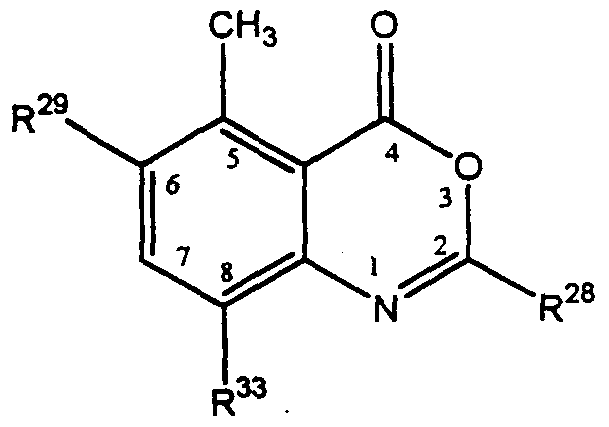
- the present invention is directed to a compound of Formula II:
- R 28 is selected from amino optionally substituted with two radicals selected from alkyl, aralkyl, heterocyclylalkyl, heterocyclyl, and aryl; wherein R 29 is selected from
- R 30 is selected form alkyl, alkoxy, alkylamino, carboxyalkyl, alkoxyalkyl, alkylaminoalkyl, cycloalkyl, heterocyclyl, heterocyclylalkyl, aralkyl, aralkoxy, aryloxy, cycloalkyloxy, arylamino, aralkenyl, heterocyclylalkoxy, alkylaminoalkoxy, alkyla ⁇ iinoalkylamino, heterocyclylalkylamino, N-aryl-N- alkylamino, and N-aralkylamino; wherein R 31 is alkyl; wherein R 32 is selected from alkyl and aryl; and wherein R 33 is selected from hydrido, halo and alkyl; or a pharmaceutically-acceptable salt thereof.
- the present invention is further directed to a pharmaceutical composition comprising a therapeutically-efFective amount of a compound of formula II and
- the present invention is further directed to a method or therapeutic or prophylactic treatment of Herpes Simplex Virus in a subject, said method comprising treating said subject with an effective amount of a compound of formula II.
- the present invention relates to a class of substituted benzoxazinones, useful in the therapeutic and prophylactic treatment of Herpes Simplex Virus viral infections, as defined by Formula II:
- R 2S is selected from amino optionally substituted with two radicals selected from alkyl, aralkyl, heterocyclylalkyl, heterocyclyl, and aryl, or the nitrogen can form a member of a heterocyclic ring; wherein R 29 is selected from
- R 30 is selected form alkyl, alkoxy, alkylamino, carboxyalkyl, alkoxyalkyl, alkylaminoalkyl, cycloalkyl, heterocyclyl, heterocyclylalkyl, aralkyl, aralkoxy, aryloxy, cycloalkyloxy, arylamino, aralkenyl, heterocyclylalkoxy, alkylaminoalkoxy, alkylaminoalkylamino, heterocyclylalkylamino, N-aryl-N- alkylamino, and N-aralkylamino; wherein R 31 is alkyl; wherein R 32 is selected from alkyl and aryl; and wherein R 33 is selected from hydrido, halo and alkyl; or a pharmaceutically-acceptable salt thereof.
- An even more preferred class of compounds consists of those compounds of Formula II wherein R 28 is selected from amino optionally substituted with two radicals selected from lower alkyl, lower aralkyl, lower heterocyclylalkyl, heterocyclyl, and aryl, wherein R 29 is selected from
- R 30 is selected from lower alkyl, lower alkoxy, lower alkylamino, lower carboxyalkyl, lower alkoxyalkyl, lower alkylaminoalkyl, lower cycloalkyl, heterocyclyl, lower heterocyckylalkyl, lower heterocyclylalkoxy, lower aralkenyl, lower aralkyl, lower aralkoxy, phenyloxy, phenylamino, lower cycloalkyloxy, lower N-phenyl-N-alkylamino, lower alkylaminoalkoxy, lower alkylaminoalkylamino, lower heterocyclylalkylamino, and lower N-aralkylamino; wherein R 31 is lower alkyl; wherein R 32 is selected from lower alkyl and aryl; and wherein R 33 is selected from hydrido and lower alkyl; or a pharmaceutically- acceptable salt thereof.
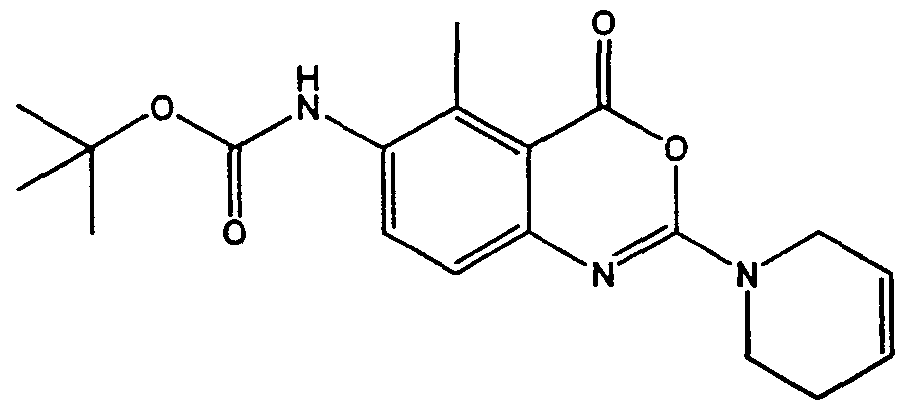
- R 28 is selected from the group consisting of methyl(phenylmethyl)amino, methyl[(4-methoxyphenyl)-methyl]amino, l-(l,2,3,6-tetrahydro-pyridyl), isopropyl(methyl)amino, (4-furoyl)piperazinyl, (2- cyano)ethyl, (4-thenoyl)piperazinyl, (4-benzenesulfonyl)-piperazinyl, d ⁇ sopropylamino, [methyl(4-dimethylamino)phenylmethyl]amino, methyl(2- pyridylmethyl)-amino; methyl[2-(3-indolyl)ethyl]amino, 4-morpholyl, allyl(methyl)amino, 1-decahydroquinolyl, and 4-(l-acetylpiperadinyl); and R 29 is selected from
- hydro denotes a single hydrogen atom (H). This hydrido radical may be attached, for example, to an oxygen atom to form a hydroxyl radical or two hydrido radicals may be attached to a carbon atom to form a methylene (-CH 2 -) radical.
- haloalkyl alkylsulfonyl
- alkoxyalkyl alkoxyalkyl
- hydroxyalkyl and “aralkyl”
- alkyl embraces linear or branched radicals having one to about twenty carbon atoms or, preferably, one to about twelve carbon atoms.
- More preferred alkyl radicals are "lower alkyl" radicals having one to about ten carbon atoms. Most Preferred are lower alkyl radicals having one to about six carbon atoms. Examples of such radicals include methyl, ethyl, n-propyl, isopropyl, n-butyl, isobutyl, sec-butyl, tert- butyl, pentyl, iso-amyl, hexyl and the like.
- halo means halogens such as fluorine, chlorine, bromine, or iodine.
- alkoxy and alkoxyalkyl embrace linear or branched oxy- containing radicals each having alkyl portions of one to about ten carbon atoms.
- More preferred alkoxy radicals are "lower alkoxy" radicals having one to six carbon atoms. Examples of such radicals include methoxy, ethoxy, propoxy, butoxy and ferf-butoxy.
- alkoxyalkyl also embraces alkyl radicals having two or more alkoxy radicals attached to the alkyl radical, that is, to form monoalkoxyalkyl and dialkoxyalkyl radicals. More preferred alkoxyalkyl radicals are "lower alkoxyalkyl” radicals having one to six carbon atoms and one or two alkoxy radicals. Examples of such radicals include methoxymethyl, methoxyethyl, ethoxyethyl, methoxybutyl and methoxypropyl.
- alkoxy or “alkoxyalkyl” radicals may be further substituted with one or more halo atoms, such as fluoro, chloro or bromo, to provide "haloalkoxy” or haloalkoxyalkyl radicals.
- More preferred haloalkoxy radicals are "lower haloalkoxy” radicals having one to six carbon atoms and one or more halo radicals. Examples of such radicals include fluoromethoxy, chloromethoxy, trifluoromethoxy, trifluoroethoxy, fluoroethoxy and fluoropropoxy.
- aryl alone or in combination, means a carbocyclic aromatic system containing one, two or three rings wherein such rings may be attached together in a pendent manner or may be fused.
- aryl embraces aromatic radicals such as phenyl, naphthyl, tetrahydronaphhthyl, indane and biphenyl.
- Aryl moieties may also be substituted at a substitutable position with one or more substituents selected independently from alkyl, aralkyl, alkoxyalkyl, alkylaminoalkyl, carboxyalkyl, alkoxycarbonylalkyl, aminocarbonylalkyl, alkoxy, aralkoxy, heterocyclylalkoxy, alkylaminoalkoxy, carboxyamino, carboxyaminoalkyl, carboxyaminoaralkyl, amino, halo, nitro, alkylamino, alkylcarbonylamino, arylcarbonylamino, alkoxycarbonylamino, aralkoxycarbonylamino, aminocarbonylamino, alkylaminocarbonylamino, alkylsulfonylamin
- heterocyclyl or “heterocyclic” embrace saturated, partially saturated and unsaturated heteroatom-containing ring-shaped radicals, where the heteroatoms may be selected from nitrogen, sulfur and oxygen.
- saturated heterocyclic radicals include saturated 5 to 7-membered heteromonocyclic group containing 1 to 4 nitrogen atoms (e.g., pyrrolidinyl, imidazolidinyl, piperidinyl, piperazinyl, tropanyl, homotropanyl, etc.); saturated 5 to 7-membere ⁇ heteromonocyclic group containing 1 to 2 oxygen atoms and 1 to 3 nitrogen atoms
- saturated 5 to 7-membered heteromonocyclic group containing 1 to 2 sulfur atoms and 1 to 3 nitrogen atoms e.g., thiazolidinyl, etc.
- partially saturated heterocyclic radicals include dihydrothiophene, dihydropyran, oxazolinyl, dihydrofuran and dihydrothiazole.
- heteroaryl radicals examples include unsaturated 5 to 7-membered heteromonocyclic group containing 1 to 4 nitrogen atoms, for example, pyrrolyl, pyrrolinyl, imidazolyl, pyrazolyl, pyridyl, pyrimidyl, azepinyl, pyrazinyl, pyridazinyl, triazolyl (e.g., 4H-l,2,4-triazolyl, 1H-1,2,3- triazolyl, 2H- 1,2,3 -triazolyl, etc.) tetrazolyl (e.g., IH-tetrazolyl, 2H-tetrazolyl, etc.), etc.; unsaturated condensed heterocyclic group contaimng 1 to 5 nitrogen atoms, for example, indolyl, isoindolyl, indolizinyl, benzimid
- heterocyclic radicals are fused with aryl radicals.
- fused bicyclic radicals include benzofuryl, benzothienyl, and the like.
- Said "heterocyclyl" radicals may also be substituted at a substitutable position with one or more substituents selected independently from alkyl, aralkyl, alkoxyalkyl, alkylaminoalkyl, carboxyalkyl, alkoxycarbonylalkyl, aminocarbonylalkyl, alkoxy, aralkoxy, alkylaminoalkoxy, aminocarboxy, alkylaminocarboxy, aralkylaminocarboxy, amino, halo, nitro, alkylamino, alkylcarbonylamino, arylcarbonylamino, alkoxycarbonylamino, aralkoxycarbonylamino, arnmocarbonylarnino, alkyla ⁇ nocarbonylamino, al
- cycloalkyl embraces radicals having 3 to 10 carbon atoms. More preferred cycloalkyl radicals are “lower cycloalkyl” radicals having 3 to 7 carbon atoms. Examples include radicals such as cyclopropyl, cyclobutyl, cyclopentyl, cyclohexyl and cycloheptyl.
- sulfonyl whether used alone or linked to other terms such as alkylsulfonyl, denotes respectively divalent radicals -SO 2 -.
- Alkylsulfonyl embraces alkyl radicals attached to a sulfonyl radical, where alkyl is defined as above.
- More preferred alkylsulfonyl radicals are "lower alkylsulfonyl" radicals having one to six carbon atoms.
- Examples of such lower alkylsulfonyl radicals include methylsulfonyl, ethylsulfonyl and propylsulfonyl.
- the "alkylsulfonyl” radicals may be further substituted with one or more halo atoms, such as fluoro, chloro or bromo, to provide "haloalkylsulfonyl" radicals.
- More preferred haloalkylsulfonyl radicals are "lower haloalkylsulfonyl” radicals having one or more halo atoms attached to lower alkylsulfonyl radicals as described above.
- lower haloalkylsulfonyl radicals include fluoromethylsulfonyl, trifluoromethylsulfonyl, and chloromethylsulfonyl.
- arylsulfony embraces aryl radicals as defined above, attached to a sulfonyl radical. Examples of such radicals include phenylsulfonyl.
- the terms “sulfamyl”, “aminosulfonyl” and “sulfonamidyl” denotes NH 2 O 2 S.
- alkoxycarbonyl means a radical containing an alkoxy radical, as defined above, attached via an oxygen atom to a carbonyl radical.
- lower alkoxycarbonyl embraces alkoxy radicals having one to six carbon atoms. Examples of such "lower alkoxycarbonyl” ester radicals include substituted and unsubstituted methoxycarbonyl, ethoxycarbonyl, propoxycarbonyl, butoxycarbcnyl, and hexyloxycarbonyl.
- aralkyl embraces aryl-substituted alkyl radicals.
- Preferable aralkyl radicals are "lower aralkyl” radicals having aryl radicals attached to alkyl radicals having 1 to 6 carbon atoms. Examples of such radicals include benzyl, diphenylmethyl, triphenylmethyl, phenylethyl and diphenylethyl.
- the aryl in the aralkyl may be additionally substituted as described above.
- aralkenyl embraces aryl-substituted alkenyl radicals.
- Preferable aralkenyl radicals are "lower phenylalkenyl” radicals having phenyl radicals attached to alkenyl radicals having 1 to 6 carbon atoms. Examples of such radicals include phenylethenyl and phenylpropenyl.
- the aryl in said aralkyl may be additionally substituted as described above.
- the terms benzyl and phenylmethyl are interchangeable.
- alkylcarbonyl includes radicals having alkyl radicals as defined above, attached to a carbonyl radical. More preferred alkylcarbonyl radicals are "lower alkylcarbonyl” radicals having one to six carbon atoms. Examples of such radicals include methylcarbonyl and ethylcarbonyl.
- carboxyalkyl embraces radicals having a carboxy radical as defined above, attached to an alkyl radical.
- the alkanoyl radicals may be substituted ro unsubstituted, such as formyl, acetyl, propionyl, butyryl, isobutyryl, valeryl, isovaleryl, pivaloyl, hexanoyl, trifluoroacetyl or the like, in which the preferable one is formyl, acetyl, propionyl or tribfluoroacetyl.
- heterocyclylalkyl embraces heterocyclic-substituted alkyl radicals. More preferred heterocyclylalkyl radicals are "lower heterocyclylalkyl” radicals having 5 to 6 membered heterocyclyl radicals attached to lower alkyl radicals having 1 to 6 carbon atoms.
- radicals include pyrrolidinylmethyl, piperidinylmethyl, mo holinylmethyl, piperazinylmethyl, oxazolylmethyl, oxazolylethyl, oxazolinylmethyl, oxazolinylethyl, indolylethyl, indolylmethyl, pyridylmethyl, quinolylmethyl, thienylmethyl, furylethyl and quinolylethyl.
- the heterocyclic in said heterocyclylalkyl may be additionally substituted as described above.
- aryloxy embraces aryl radicals, as defined above, attached to an oxygen atom.
- the aryl in said aryloxy may be additionally substituted as described above. Examples of such radicals include phenoxy.
- aralkoxy embraces oxy-containing aralkyl radicals attached through an oxygen atom to other radicals.
- the “aralkoxy” radical may be further substituted on the aryl ring portion of the radical.
- alkylamino denotes amino groups which have been substituted with 1 or 2 alkyl radicals. More preferred alkylamino radicals are "lower alkylamino" having alkyl radicals of 1 to 6 carbon atoms attached to the nitrogen atom of an amine. Suitable “lower alkylamino” may be mono or dialkylamino such as N-methylamino, N-ethylamino, N,N-dimethylamino, N,N-diethylamino or the like.
- alkylaminoalkyl denotes alkylamino groups, as defined above, attached to an alkyl radical. More preferred alkylaminoalkyl radicals are “lower alkylaminoalkyl” having 1 to 6 carbon atoms attached to a lower aminoalkyl radical as described above. Suitable “lower alkylaminoalkyl” may be mono or dialkylaminoalkyl radicals such as N-methylaminomethyl, N-ethylaminomethyl,
- dialkylaminoalkyl also includes radicals where the bridging alkyl moiety is optionally substituted with alkylsulfonyl, alkoxy, aralkoxy, heterocyclyl, and aryl.
- alkylaminoalkoxy denotes alkylamino groups, as defined above, attached to an alkoxy radical.
- Suitable " kylaminoalkoxy” may be mono or dialkylarninoalkoxy radicals such as N-methylaminomethoxy, N- ethylaminomethoxy, N,N-dimethylaminomethoxy, N,N-dimethylaminoethoxy N,N- dimethylaminopropoxy or the like.
- alkylaminocarbonyl embraces alkylamino radicals, as described above, to a carbonyl radical. More preferred alkylaminocarbonyl radicals are "lower alkylaminocarbonyl” having lower alkylamino radicals, as described above, attached to a carbonyl radical. Examples of such radicals include N- methylaminocarbonyl and N,N-dimethylaminocarbonyl.
- arylamino denotes amino groups which have been substituted with 1 or 2 aryl radicals, such as N-phenylamino.
- arylamino radicals may be further substituted on the aryl ring portion of the radical.
- ''N-arylaminoalkyl and denote amino groups which have been substituted with one aryl radical or one aryl and one alkyl radical, respectively, and having the amino group attached to an alkyl radical. More preferred arylaminoalkyl radicals are "lower arylaminoalkyl” having the arylamino radical attached to 1 to 6 carbon atoms. Examples of such radicals include N- phenylaminomethyl and N-phenyl-N-methylaminomethyl.
- aminocarbonylalkyl denotes an aminocarbonyl group attached to an alkyl radical.
- lower aminocarbonylalkyl having lower aminocarbonyl radicals as described above attached to alkyl of one to six carbon atoms.
- alkylaminocarbonylalkyl denotes an aminocarbonyl group which has been substituted with one or two alkyl radicals and attached to an alkyl radical. More preferred are “lower alkylaminocarbonyalkyl” having lower alkylaminocarbonyl radicals as described above attached to alkyl radicals of one to six carbon atoms.
- aryloxy embraces aryl radicals attached to a divalent oxygen atom, that is, to form monoaryloxy and diaryloxy radicals. The more preferred aryloxy radicals are “lower aryloxy". An example includes phenoxy.
- amino acid residue means any of the naturally occurring alpha-, beta- and gamma-amino carboxylic acids, including their D and L optical isomers and racemic mixtures thereof, synthetic amino acids, and derivatives of these natural and synthetic amino acids.
- the amino acid residue is bonded through a nitrogen of the amino acid.
- the naturally occurring amino acids which can be incorporated in the present invention include, but are not limited to, alanine, arginine, asparagine, aspartic acid, cysteine, cystine, glutamic acid, glutamine, glycine, histidine, isoleucine, leucine, lysine, methionine, ornithine, phenylalanine, proline, serine, threonine, thyroxin, tryptophan, tyrosine, valine, ⁇ -alanine, and ⁇ -aminobutyric acid.
- the present invention comprises a pharmaceutical composition comprising a therapeutically-efFective amount of a compound of Formula ⁇ in association with at least one pharmaceutically-acceptable carrier, adjuvant or diluent.
- the present invention also comprises a method of therapeutic and prophylactic treatment of viral infections, particularly herpetoviridae infection, in a subject, the method comprising treating the subject having such herpes infection a therapeutically-efFective amount of a compound of Formula II.
- the present invention also comprises a method of inhibiting a viral protease, the method comprising administering a therapeutically-efFective amount of a compound of Formula II.
- stereoisomers and tautomers thereof are also included in the family of compounds of Formula II.
- Compounds of the present invention can possess one or more asymmetric carbon atoms and are thus capable of existing in the form of optical isomers as well as in the form of racemic or non-racemic mixtures thereof. Accordingly, some of the compounds of this invention may be present in racemic mixtures which are also included in this invention.
- the optical isomers can be obtained by resolution of the racemic mixtures according to conventional processes, for example by formation of diastereoisomeric salts by treatment with an optically active acid or base.
- esters of appropriate acids are tartaric, diacetyltartaric, dibenzoyltartaric, ditoluoyltartaric and camphorsulfonic acid and then separation of the mixture of diastereoisomers by crystallization followed by liberation of the optically active bases from these salts.
- a different process for separation of optical isomers involves the use of a chiral chromatography column optimally chosen to maximize the separation of the enantiomers.
- Still another available method involves synthesis of covalent diastereoisomeric molecules by reacting an amine functionality of precursors to compounds of Formula II with an optically pure acid in an activated form, or an- optically pure acid in an activated form or an optically pure isocyanate.
- diastereomeric derivatives can be prepared by reacting a carboxyl functionality of precursors to compounds of Formula II with an optically pure amine base.
- the synthesized diastereoisomers can be separated by conventional means such as chromatography, distillation, crystallization or sublimation, and then hydrolyzed to deliver the enantiomerically pure compound.
- the optically active compounds of Formula II can likewise be obtained by utilizing optically active starting materials. These isomers may be in the form of a free acid, a free base, an ester or a salt. Additional methods for resolving optical isomers, known to those skilled in the art may be used, for example, those discussed by Jaques et al. in Enantiomers, Racemates, and Resolutions, John Wiley and Sons, New York (1981).
- pharmaceutically-acceptable salts are also included in the family of compounds of Formula II.
- pharmaceutically-acceptable salts embraces salts commonly used to form alkali metal salts and to form addition salts of free acids or free bases. The nature of the salt is not critical, provided that it is pharmaceutically-acceptable.
- Suitable pharmaceutically-acceptable acid addition salts of compounds of Formula II may be prepared from an inorganic acid or from an organic acid. Examples of such inorganic acids are hydrochloric, hydrobromic, hydroiodic, nitric, carbonic, sulfuric and phosphoric acid.
- organic acids may be selected from aliphatic, cycloaliphatic, aromatic, araliphatic, heterocyclic, carboxylic and sulfonic classes of organic acids, examples of which are formic, acetic, propionic, succinic, glycolic, gluconic, lactic, malic, tartaric, citric, ascorbic, glucuronic, maleic, fumaric, pyruvic, aspartic, glutamic, benzoic, anthranilic, mesylic, salicylic, />-hydroxybenzoic, phenylacetic, mandelic, embonic (pamoic), methanesulfonic, ethylsulfonic, benzenesulfonic, pantothenic, toluenesulfonic, 2-hydroxyethanesulfonic, sulfanilic, stearic, cyclohexylaminosulfonic, algenic, ⁇ -hydroxybutyric, galactaric
- Formula II include metallic salts made from aluminum, calcium, lithium, magnesium, potassium, sodium and zinc or organic salts made fromN,N'- dibenzylethylenediamine, choline, chloroprocaine, diethanolamine, ethylenediamine, meglumine (N-methylglucamine) and procaine. All of these salts may be prepared by conventional means from the corresponding compound of Formula II by reacting, for example, the appropriate acid or base with the compound of Formula ⁇ .
- compositions comprising one or more compounds of Formula II in association with one or more non-toxic, pharmaceutically-acceptable carriers and/or diluents and/or adjuvants
- carrier materials such as "carrier” materials
- active ingredients such as "carrier” materials
- carrier materials such as "carrier” materials
- other active ingredients such as "carrier” materials
- the compounds of the present invention may be administered by any suitable route, preferably in the form of a pharmaceutical composition adapted to such a route, and in a dose effective for the treatment intended.
- the compounds and composition may, for example, be administered orally, intravascularly, intraperitoneally, subcutaneously, intramuscularly or topically.
- the pharmaceutical composition may be in the form of, for example, a tablet, capsule, suspension or liquid.
- the pharmaceutical composition is preferably made in the form of a dosage unit containing a particular amount of the active ingredient. Examples of such dosage units are tablets or capsules.
- the active ingredient may also be administered by injection as a composition wherein, for example, saline, dextrose or water may be used as a suitable carrier.
- the amount of therapeutically active compound that is administered and the dosage regimen for treating a disease condition with the compounds and/or compositions of this invention depends on a variety of factors, including the age, weight, sex and medical condition of the subject, the severity of the disease, the route and frequency of administration, and the particular compound employed, and thus may vary widely.
- the pharmaceutical compositions may contain active ingredient in the range of about 0.1 to 2000 mg, preferably in the range of about 0.5 to 500 mg and most preferably between about 1 and 100 mg.
- 0.01 to 100 mg/kg body weight preferably between about 0.1 and about 50 mg/kg body weight and most preferably between about 1 to 20 mg/kg body weight, may be appropriate.
- the daily dose can be administered in one to four doses per day.
- the compounds of this invention are ordinarily combined with one or more adjuvants appropriate to the indicated route of administration.
- the compounds may be admixed with lactose, sucrose, starch powder, cellulose esters of alkanoic acids, cellulose alkyl esters, talc, stearic acid, magnesium stearate, magnesium oxide, sodium and calcium salts of phosphoric and sulfuric acids, gelatin, acacia gum, sodium alginate, polyvinylpyrrolidone, and/or polyvinyl alcohol, and then tableted or encapsulated for convenient administration.
- Such capsules or tablets may contain a controlled- release formulation as may be provided in a dispersion of active compound in hydroxypropylmethyl cellulose.
- Formulations for parenteral administration may be in the form of aqueous or non-aqueous isotonic sterile injection solutions or suspensions. These solutions and suspensions may be prepared from sterile powders or granules having one or more of the carriers or diluents mentioned for use in the formulations for oral administration.
- the compounds may be dissolved in water, polyethylene glycol, propylene glycol, ethanol, corn oil, cottonseed oil, peanut, oil, sesame oil, benzyl alcohol, sodium chloride, and/or various buffers.
- Other adjuvants and modes of administration are well and widely known in the pharmaceutical art.
- the formulations are preferably applied as a topical ointment or cream containing the active ingredient(s) in a total amount of, for example, 0.075 to 30 % w/w, preferably 0.2 to 20 % w/w and most preferably 0.4 to 15 % w/w.
- the active ingredients may be employed with either paraffinic or a water-miscible ointment base.
- the active ingredients may be formulated in a cream with an oil-in-water cream base.
- the aqueous phase of the cream base may include, for example, at least 30 % w/w of a polyhydric alcohol such as propylene glycol, butane- 1, 3 -diol, mannitol, sorbitol, glycerol, polyethylene glycol and mixtures thereof.
- the topical formulation may desirably include a compound which enhances absorption or penetration of the active ingredient through the skin or other affected areas. Examples of such dermal penetration enhancers include dimethylsulfoxide and related analogs.
- the compounds of this invention can also be administered by a transdermal device. Preferably topical administration will be accomplished using a patch either of the reservoir and porous membrane type or of a solid matrix variety.
- the active agent is delivered continuously from the reservoir or microcapsules through a membrane into the active agent permeable adhesive, which is in contact with the skin or mucosa of the recipient. If the active agent is absorbed through the skin, a controlled and predetermined flow of the active agent is administered to the recipient.
- the encapsulating agent may also function as the membrane.
- the oily phase of the emulsions of this invention may be constituted from known ingredients in a known manner. While the phase may comprise merely an emulsifier, it may comprise a mixture of at least one emulsifier with a fat or an oil or with both a fat and an oil. Preferably, a hydrophilic emulsifier is included together with a lipophilic emulsifier which acts as a stabilizer. It is also preferred to include both an oil and a fat.
- Emulsifiers and emulsion stabilizers suitable for use in the formulation of the present invention include Tween 60, Span 80, cetostearyl alcohol, myristyl alcohol, glyceryl monostearate, and sodium lauryl sulfate, among others.
- the choice of suitable oils or fats for the formulation is based on achieving the desired cosmetic properties, since the solubility of the active compound in most oils likely to be used in pharmaceutical emulsion formulations in very low.
- the cream should preferably be a non-greasy, non-staining and washable product with suitable consistency to avoid leakage from tubes or other containers.
- Straight or branched chain, mono- or dibasic alkyl esters such as di-isoadipate, isocetyl stearate, propylene glycol diester of coconut fatty acids, isopropyl myristate, decyl oleate, isopropyl palmitate, butyl stearate, 2-thylhexyl palmitate or a blend of branched chain esters may be used. These may be used alone or in combination depending on the properties required. Alternatively, high melting point lipids such as white soft paraffin and/or liquid paraffin or other mineral oils can be used.
- Formulations suitable for topical administration to the eye also include eye drops wherein the active ingredients are dissolved or suspended in suitable carrier, especially an aqueous solvent for the active ingredients.
- suitable carrier especially an aqueous solvent for the active ingredients.
- the antiviral active ingredients are preferably present in such formulations in a concentration of 0.5 to 20 %, advantageously 0.5 to 10 % and particularly about 1.5 % w/w. Examples
- step A To a solution of the product of step A (35.7 mg) in 2 ml of CH 2 C1 2 , were added pyridine (0.011 ml, 0.14 mmol), benzoyl chloride (0.014 ml, 0.12 mmol).
- the compounds of this invention exhibited antiviral activity as indicated by inhibition in vitro of herpesvirus protease and HCMV infectivity.
- the antiviral activity of the compounds of this invention illustrated in the Examples was determined by the following methods.
- Assemblin protease activity was determined using fluorescence polarization (FP).
- the fluorescent substrate was biotin-gamma-aminobutyrate- HTYLQASERFRIK-DTAF, based on the HSV-1 release cleavage site. Incubation of this substrate with assemblin resulted in cleavage between alanine and serine. A change in molecular size of fluorescent substrate molecule, which was increased using avidin as a reaction stop reagent, allowed cleavage to be measured by FP.
- Potential protease inhibitors were dissolved in DMF and then diluted 5-fold in assay buffer.
- 6.5uL were added to the wells of a 96-well plate (U-bottom 96-well black plate, Dynatech or Costar) which was previously blocked using blocking solution (lOmM Tris-HCl pH 8.0, 150mMNaCl, 0.05% Tween 20, lmg/mLBSA).
- the enzyme was diluted to 21.3 ug/mL in assay buffer (lMNaCitrate, 50mM NaPhosphate, pH 7.4, lOOmMNaCl, 20% glycerol, 2mM TECP) and 48.5uL were added to each well. Following a 30 minute incubation at room temperature, lOuL of 62.5ug/mL substrate were added.
- Assays were performed with the peptide substrate H-HQs-Thr-Tyr-Leu-Gln- Ala-Ser-Glu-Lys-Phe-Lys-Met-Trp-Gly-NH 2 (Bachem).
- This substrate is a HSV-1- amide UL26 Open Reading Frame (242-255) and is derived from the release site of HSV-1 protease. HSV-1 protease cleaves between alanine and serine.
- SEKFKMWG was quantified on HPLC using fluorescence detection of tryptophan residue.
- Enzyme was diluted to 4.3ug/mL in assay buffer (1M NaCitrate, 50mM NaPhosphate, pH 7.3, lOOmM NaCl, 20% glycerol, 2mM TCEP) and 48.5uL were added to the tubes.
- Potential protease inhibitors were dissolved in DMF and then diluted 10-fold in assay buffer. 6.5uL of inhibitor solution were added to each tube.
- HSV-1 protease HSV-1 protease was purified from baculovirus expressing a DNA construction encoding residues 1-288 of HSV-1 UL26 open reading frame and 32 heterologous amino acid. The construction also encoded six additional histidine residues at the amino terminus of the protease. These additional histidine residues provided an affinity ligand by which the protein was purified using Ni-NTA agarose gel (Qiagen). The purified protease was stored in stock solution (20mM HEPES buffer, pH 8.5, containing 20% (v/v) glycerol). This stock was diluted with assay buffer to adequate concentration of enzymatic assay. Substrate
- HSV-1 protease at the "release site" of the assembly protein (Dilanni, C.L., et al., J. Biol. Chem. 268, 2048, (1993)).
- the assembly protein release site has the sequence, HTYLQ A* SEKFKMWG.
- the substrate used was biotin-gamma- aminobutyrate-HTYLQA*SERFRIK-DTAF which was prepared by standard peptide synthetic methods such as that described in Bodansky and Bodansky, "The Practice of Peptide Synthesis” (1984), and was stored as a stock solution at 2.5mg/mL in DMF. This was diluted to 62.5ug/mL with phosphate buffer (50mM Naphosphate, lOOmM NaCl, pH 7.4) just before use.
- phosphate buffer 50mM Naphosphate, lOOmM NaCl, pH 7.4
- HPLC assay The substrate was HSV- 1 -amide UL 26 Open Reading Frame (242-255), obtained from Bachem (Product No. M-2160).
- An assay buffer (lM NaCitrate, 50mM NaPhosphate, pH 7.4, lOOmM aCl, 20% glycerol, 2mM TCEP) was used to dilute stock solutions of enzyme and inhibitors.
- DMEM Dulbecco's Modified Eagle Medium; commercially available.
- FBS fetal bovine serum; commercially available and unknown factors necessary for growth of cells in culture.
- HSV herpes simplex virus.
- the antiviral assay was estimated by plaque reduction assay performed by following methods. 1 * 10 s of vero cells (African green monkey kidney cell) in 48- well plates were over-night cultured and the medium of this culture was replaced with 200 ⁇ l of 2% FBS DMEM ⁇ ntaining 2* the desired final concentration of test compounds or no compound as control. The cultures were added 50 ⁇ l of 2% FBS DMEM containing with about 50 plaque forming units of HSV-1 and next 250 ⁇ l of 2% FBS DMEM containing 1% methylcellulose. These infected cultures were incubated at 37°C, 5% CO 2 for 3 days until plaques was visible.
- the chymotripsin assay was modified from the method of Delmar, et al. (Anal. Biochem. 99, 316-320 (1979)).
- Bovine pancreas ⁇ -chymotripsin(type II, Sigma) was dissolved in 0.001 N HC1 at 1 mg/ml and further diluted 1/1000 in assay buffer (0.1 M Tris, pH 7.8 containing 0.1 M CaCy before use. 0.75 ⁇ l of test compound in DMF (or DMF alone), 50 ⁇ l of assay buffer and 50 ⁇ l of enzyme were added to 96 wells plates, mixed and pre-incubated for 30 minutes at ambient temperature.
- Reaction was initiated by addition of 50 ⁇ l of 0.2 mM N-succinyl- Ala-Ala-Pro-Phe-p-nitroanilide (Sigma; 2 mM in DMSO diluted 1/10 in assay buffer before use). The increase in absorbance at 405 nm was monitored for 3 minutes with BIO-RAD model 3550 microplate reader.
- HLE Human leukocyte elastase
- assay buffer 0.75 ⁇ l of test compound in DMF (or DMF alone), 50 ⁇ l of assay buffer and 50 ⁇ l of enzyme were added to 96 well plate, mixed and pre-incubated for 30 minutes at ambient temperature. Reaction was initiated by addition of 50 ⁇ l of 2.5 mM methoxysuccinyl-Ala-Ala-Pro-Val-p-nitroanilide (Sigma; 25 mM in DMSO diluted 1/10 in assay buffer before use). The increase in absorbance at 405 nm was monitored for 3 min with BIO-RAD model 3550 microplate reader.
Landscapes
- Organic Chemistry (AREA)
- Chemical & Material Sciences (AREA)
- Health & Medical Sciences (AREA)
- Life Sciences & Earth Sciences (AREA)
- Virology (AREA)
- General Chemical & Material Sciences (AREA)
- Veterinary Medicine (AREA)
- Oncology (AREA)
- Communicable Diseases (AREA)
- Chemical Kinetics & Catalysis (AREA)
- Public Health (AREA)
- Medicinal Chemistry (AREA)
- Nuclear Medicine, Radiotherapy & Molecular Imaging (AREA)
- General Health & Medical Sciences (AREA)
- Pharmacology & Pharmacy (AREA)
- Animal Behavior & Ethology (AREA)
- Engineering & Computer Science (AREA)
- Biotechnology (AREA)
- Molecular Biology (AREA)
- Pharmaceuticals Containing Other Organic And Inorganic Compounds (AREA)
- Heterocyclic Carbon Compounds Containing A Hetero Ring Having Nitrogen And Oxygen As The Only Ring Hetero Atoms (AREA)
- Plural Heterocyclic Compounds (AREA)
Abstract
Description








Claims


Priority Applications (11)
| Application Number | Priority Date | Filing Date | Title |
|---|---|---|---|
| EP00948615A EP1210088A4 (en) | 1999-07-12 | 2000-07-11 | 2-amino-benzoxazinones for the treatment of herpes simplex virus |
| HK02108474.6A HK1046862A1 (en) | 1999-07-12 | 2000-07-11 | 2-amino-benzoxazinones for the treatment of herpes simplex virus |
| AU62089/00A AU774370B2 (en) | 1999-07-12 | 2000-07-11 | 2-amino-benzoxazinones for the treatment of herpes simplex virus |
| JP2001508977A JP2003504334A (en) | 1999-07-12 | 2000-07-11 | 2-Amino-benzoxazinones for treating herpes simplex virus |
| US10/030,414 US6806269B1 (en) | 1999-07-12 | 2000-07-11 | 2-Amino-benzoxazinones for the treatment of herpes simplex virus |
| CA002378014A CA2378014A1 (en) | 1999-07-12 | 2000-07-11 | 2-amino-benzoxazinones for the treatment of herpes simplex virus |
| BR0012380-3A BR0012380A (en) | 1999-07-12 | 2000-07-11 | 2-amino-benzoxazinones for the treatment of herpes simplex virus |
| MXPA02000485A MXPA02000485A (en) | 1999-07-12 | 2000-07-11 | 2-amino-benzoxazinones for the treatment of herpes simplex virus. |
| KR1020027000487A KR20020046273A (en) | 1999-07-12 | 2000-11-07 | 2-amino-benzoxazinones for the treatment of herpes simplex virus |
| AU2004203884A AU2004203884A1 (en) | 1999-07-12 | 2004-08-13 | 2-amino-benzoxazinones for the treatment of herpes simplex virus |
| US10/938,501 US20050032795A1 (en) | 1999-07-12 | 2004-09-13 | 2-Amino-benzoxazinones for the treatment of herpes simplex virus |
Applications Claiming Priority (2)
| Application Number | Priority Date | Filing Date | Title |
|---|---|---|---|
| US14295699P | 1999-07-12 | 1999-07-12 | |
| US60/142,956 | 1999-07-12 |
Related Child Applications (1)
| Application Number | Title | Priority Date | Filing Date |
|---|---|---|---|
| US10/030,414 Continuation US6806269B1 (en) | 1999-07-12 | 2000-07-11 | 2-Amino-benzoxazinones for the treatment of herpes simplex virus |
Publications (1)
| Publication Number | Publication Date |
|---|---|
| WO2001003697A1 true WO2001003697A1 (en) | 2001-01-18 |
Family
ID=22501956
Family Applications (1)
| Application Number | Title | Priority Date | Filing Date |
|---|---|---|---|
| PCT/US2000/018817 Ceased WO2001003697A1 (en) | 1999-07-12 | 2000-07-11 | 2-amino-benzoxazinones for the treatment of herpes simplex virus |
Country Status (11)
| Country | Link |
|---|---|
| EP (1) | EP1210088A4 (en) |
| JP (1) | JP2003504334A (en) |
| KR (1) | KR20020046273A (en) |
| CN (1) | CN1481245A (en) |
| AU (2) | AU774370B2 (en) |
| BR (1) | BR0012380A (en) |
| CA (1) | CA2378014A1 (en) |
| HK (1) | HK1046862A1 (en) |
| MX (1) | MXPA02000485A (en) |
| WO (1) | WO2001003697A1 (en) |
| ZA (1) | ZA200200311B (en) |
Cited By (1)
| Publication number | Priority date | Publication date | Assignee | Title |
|---|---|---|---|---|
| US20220370302A1 (en) * | 2021-05-14 | 2022-11-24 | The Procter & Gamble Company | Wet wipes with a cellulosic substrate and gentle lotion |
Families Citing this family (1)
| Publication number | Priority date | Publication date | Assignee | Title |
|---|---|---|---|---|
| MX2009002960A (en) * | 2006-09-21 | 2009-06-26 | Activx Biosciences Inc | Serine hydrolase inhibitors. |
Citations (1)
| Publication number | Priority date | Publication date | Assignee | Title |
|---|---|---|---|---|
| US5985872A (en) * | 1995-05-24 | 1999-11-16 | G.D. Searle & Co. | 2-amino-benzoxazinones for the treatment of viral infections |
-
2000
- 2000-07-11 CN CNA008164517A patent/CN1481245A/en active Pending
- 2000-07-11 JP JP2001508977A patent/JP2003504334A/en not_active Withdrawn
- 2000-07-11 EP EP00948615A patent/EP1210088A4/en not_active Withdrawn
- 2000-07-11 BR BR0012380-3A patent/BR0012380A/en not_active IP Right Cessation
- 2000-07-11 CA CA002378014A patent/CA2378014A1/en not_active Abandoned
- 2000-07-11 HK HK02108474.6A patent/HK1046862A1/en unknown
- 2000-07-11 AU AU62089/00A patent/AU774370B2/en not_active Ceased
- 2000-07-11 MX MXPA02000485A patent/MXPA02000485A/en unknown
- 2000-07-11 WO PCT/US2000/018817 patent/WO2001003697A1/en not_active Ceased
- 2000-11-07 KR KR1020027000487A patent/KR20020046273A/en not_active Ceased
-
2002
- 2002-01-14 ZA ZA200200311A patent/ZA200200311B/en unknown
-
2004
- 2004-08-13 AU AU2004203884A patent/AU2004203884A1/en not_active Abandoned
Patent Citations (1)
| Publication number | Priority date | Publication date | Assignee | Title |
|---|---|---|---|---|
| US5985872A (en) * | 1995-05-24 | 1999-11-16 | G.D. Searle & Co. | 2-amino-benzoxazinones for the treatment of viral infections |
Non-Patent Citations (1)
| Title |
|---|
| See also references of EP1210088A4 * |
Cited By (2)
| Publication number | Priority date | Publication date | Assignee | Title |
|---|---|---|---|---|
| US20220370302A1 (en) * | 2021-05-14 | 2022-11-24 | The Procter & Gamble Company | Wet wipes with a cellulosic substrate and gentle lotion |
| US11980677B2 (en) * | 2021-05-14 | 2024-05-14 | The Procter & Gamble Company | Wet wipes with a cellulosic substrate and gentle lotion |
Also Published As
| Publication number | Publication date |
|---|---|
| CN1481245A (en) | 2004-03-10 |
| HK1046862A1 (en) | 2003-01-30 |
| KR20020046273A (en) | 2002-06-20 |
| AU774370B2 (en) | 2004-06-24 |
| EP1210088A1 (en) | 2002-06-05 |
| AU2004203884A1 (en) | 2004-09-09 |
| MXPA02000485A (en) | 2004-09-10 |
| EP1210088A4 (en) | 2003-03-12 |
| AU6208900A (en) | 2001-01-30 |
| BR0012380A (en) | 2002-08-27 |
| ZA200200311B (en) | 2003-01-14 |
| JP2003504334A (en) | 2003-02-04 |
| CA2378014A1 (en) | 2001-01-18 |
Similar Documents
| Publication | Publication Date | Title |
|---|---|---|
| CN102933564B (en) | 5,6-Dihydro-2H-[1,4]oxazin-3-yl-amine derivatives useful as beta-secretase (BACE) inhibitors | |
| EP0828721B1 (en) | 2-amino-benzoxazinones for the treatment of viral infections | |
| CN106879256A (en) | 2 aminobenzimidazole derivatives and its application as 5 LOXs and/or prostaglandin-e synthetase inhibitors | |
| TW201522291A (en) | Mercaptobenzoate compound | |
| GB2263639A (en) | Substituted pyrimidinones as neurotensin antagonists | |
| US6806269B1 (en) | 2-Amino-benzoxazinones for the treatment of herpes simplex virus | |
| JP2022509763A (en) | Compounds for the treatment of arenavirus infections | |
| AU774370B2 (en) | 2-amino-benzoxazinones for the treatment of herpes simplex virus | |
| KR20070110386A (en) | New drugs for the treatment of respiratory diseases | |
| US6380189B1 (en) | 2-amino benzoxazinones for the treatment of viral infections | |
| JPWO2003002558A1 (en) | Antiviral treatment | |
| US6673788B2 (en) | Electrophilic ketones for the treatment of herpesvirus infections | |
| JPWO1991012245A1 (en) | 4H-3,1-benzoxazin-4-one compounds | |
| EP0888322B1 (en) | Electrophilic ketones for the treatment of herpesvirus infections | |
| HK1182098B (en) | 5,6-dihydro-2h-[1,4]oxazin-3-yl-amine derivatives useful as inhibitors of beta-secretase (bace) |
Legal Events
| Date | Code | Title | Description |
|---|---|---|---|
| AK | Designated states |
Kind code of ref document: A1 Designated state(s): AE AL AM AT AU AZ BA BB BG BR BY BZ CA CH CN CR CU CZ DE DK DM EE ES FI GB GD GE GH GM HR HU ID IL IN IS JP KE KG KP KR KZ LC LK LR LS LT LU LV MA MD MG MK MN MW MX MZ NO NZ PL PT RO RU SD SE SG SI SK SL TJ TM TR TT TZ UA UG US UZ VN YU ZA ZW |
|
| AL | Designated countries for regional patents |
Kind code of ref document: A1 Designated state(s): GH GM KE LS MW MZ SD SL SZ TZ UG ZW AM AZ BY KG KZ MD RU TJ TM AT BE CH CY DE DK ES FI FR GB GR IE IT LU MC NL PT SE BF BJ CF CG CI CM GA GN GW ML MR NE SN TD TG |
|
| 121 | Ep: the epo has been informed by wipo that ep was designated in this application | ||
| REG | Reference to national code |
Ref country code: DE Ref legal event code: 8642 |
|
| WWE | Wipo information: entry into national phase |
Ref document number: 516527 Country of ref document: NZ |
|
| WWE | Wipo information: entry into national phase |
Ref document number: PA/a/2002/000485 Country of ref document: MX Ref document number: 2378014 Country of ref document: CA Ref document number: 62089/00 Country of ref document: AU |
|
| WWE | Wipo information: entry into national phase |
Ref document number: 1020027000487 Country of ref document: KR |
|
| WWE | Wipo information: entry into national phase |
Ref document number: 200200311 Country of ref document: ZA |
|
| WWE | Wipo information: entry into national phase |
Ref document number: 2000948615 Country of ref document: EP |
|
| WWE | Wipo information: entry into national phase |
Ref document number: 008164517 Country of ref document: CN |
|
| WWE | Wipo information: entry into national phase |
Ref document number: 10030414 Country of ref document: US |
|
| WWP | Wipo information: published in national office |
Ref document number: 2000948615 Country of ref document: EP |
|
| WWP | Wipo information: published in national office |
Ref document number: 1020027000487 Country of ref document: KR |
|
| WWP | Wipo information: published in national office |
Ref document number: 516527 Country of ref document: NZ |
|
| WWG | Wipo information: grant in national office |
Ref document number: 516527 Country of ref document: NZ |
|
| WWG | Wipo information: grant in national office |
Ref document number: 62089/00 Country of ref document: AU |
|
| WWW | Wipo information: withdrawn in national office |
Ref document number: 2000948615 Country of ref document: EP |