WO2001016179A1 - Nouvelle proteine receptrice couplee a une proteine g, et son adn - Google Patents
Nouvelle proteine receptrice couplee a une proteine g, et son adn Download PDFInfo
- Publication number
- WO2001016179A1 WO2001016179A1 PCT/JP2000/005683 JP0005683W WO0116179A1 WO 2001016179 A1 WO2001016179 A1 WO 2001016179A1 JP 0005683 W JP0005683 W JP 0005683W WO 0116179 A1 WO0116179 A1 WO 0116179A1
- Authority
- WO
- WIPO (PCT)
- Prior art keywords
- protein
- present
- salt
- ligand
- dna
- Prior art date
- Legal status (The legal status is an assumption and is not a legal conclusion. Google has not performed a legal analysis and makes no representation as to the accuracy of the status listed.)
- Ceased
Links
Classifications
-
- C—CHEMISTRY; METALLURGY
- C07—ORGANIC CHEMISTRY
- C07K—PEPTIDES
- C07K14/00—Peptides having more than 20 amino acids; Gastrins; Somatostatins; Melanotropins; Derivatives thereof
- C07K14/435—Peptides having more than 20 amino acids; Gastrins; Somatostatins; Melanotropins; Derivatives thereof from animals; from humans
- C07K14/705—Receptors; Cell surface antigens; Cell surface determinants
-
- A—HUMAN NECESSITIES
- A61—MEDICAL OR VETERINARY SCIENCE; HYGIENE
- A61K—PREPARATIONS FOR MEDICAL, DENTAL OR TOILETRY PURPOSES
- A61K38/00—Medicinal preparations containing peptides
-
- G—PHYSICS
- G01—MEASURING; TESTING
- G01N—INVESTIGATING OR ANALYSING MATERIALS BY DETERMINING THEIR CHEMICAL OR PHYSICAL PROPERTIES
- G01N2333/00—Assays involving biological materials from specific organisms or of a specific nature
- G01N2333/435—Assays involving biological materials from specific organisms or of a specific nature from animals; from humans
- G01N2333/705—Assays involving receptors, cell surface antigens or cell surface determinants
- G01N2333/72—Assays involving receptors, cell surface antigens or cell surface determinants for hormones
- G01N2333/726—G protein coupled receptor, e.g. TSHR-thyrotropin-receptor, LH/hCG receptor, FSH
-
- G—PHYSICS
- G01—MEASURING; TESTING
- G01N—INVESTIGATING OR ANALYSING MATERIALS BY DETERMINING THEIR CHEMICAL OR PHYSICAL PROPERTIES
- G01N2500/00—Screening for compounds of potential therapeutic value
Definitions
- the present invention relates to a novel protein derived from human brain (G protein-coupled receptor Yuichi protein) or a salt thereof, DNA encoding the same, and the like.
- G protein-coupled receptor Yuichi protein G protein-coupled receptor Yuichi protein
- G protein conjugated guanine nucleot i de-binding protein
- G protein-coupled receptor protein is present on the surface of various functional cells of living cells and organs, and is a target for molecules that regulate the functions of these living cells and organs, such as hormones, neurotransmitters and bioactive substances. Plays a very important role. To clarify the relationship between substances that regulate complex functions in cells and organs of various organisms and their specific receptor proteins, especially G protein-coupled receptor proteins, It will elucidate the functions of organs and organs and provide a very important means for drug development closely related to those functions.
- the physiological functions of the brain are regulated by the regulation of many hormones, hormone-like substances, neurotransmitters or bioactive substances.
- neurotransmitters are present in various parts of the brain, and regulate their physiological functions through their corresponding receptor proteins.
- There are still many unknown neurotransmitters in the brain and the structure of the cDNA encoding the receptor protein has not been reported so far. Can be In addition, it was unknown whether there was a known receptor subtype of the Yuichi protein.
- the present invention relates to a novel protein derived from human brain (G protein-coupled receptor protein), a partial peptide or a salt thereof, a DNA containing a DNA encoding the protein or a partial peptide thereof, and a DNA containing the DNA.
- G protein-coupled receptor protein human brain
- a recombinant vector, a transformant transformed with the recombinant vector, a method for producing the protein or a salt thereof, an antibody against the protein, a partial peptide thereof, or a salt thereof, and the protein G protein-coupled type).
- a method for determining a ligand to the receptor a method for screening a compound or a salt thereof that changes the binding property between the ligand and the protein (G protein-coupled receptor protein), the screening kit, the screening method or Ligands Obtained Using a Screening Kit and Their Proteins (G Protein-Coupled Receptor Yuichi Protein) Providing the compound or its salt that changes the binding property, and the ligand and the protein (G protein coupled receptions evening one protein) compound that alters the binding property between or the like medicine comprising the salt thereof.
- the present inventors isolated cDNA encoding a novel protein (G protein-coupled receptor protein) derived from human brain and analyzed the entire nucleotide sequence. Successfully analyzed. When this nucleotide sequence was translated into an amino acid sequence, the first to seventh transmembrane regions were confirmed on the hydrophobicity plot, and the proteins encoded by these cDNAs were G-protein conjugated to the seven transmembrane type. It was confirmed that the protein was Recept Yuichi protein ( Figure 3). The present inventors have conducted further studies based on these findings, and as a result, have completed the present invention.
- G protein-coupled receptor protein G protein-coupled receptor protein
- a protein or a salt thereof which comprises the same or substantially the same amino acid sequence as the amino acid sequence represented by SEQ ID NO: 1;
- the protein is: (1) 1 or 2 or more in the amino acid sequence represented by SEQ ID NO: 1 (preferably about 1 to 30, more preferably about 1 to 9, more preferably several (1 or 2))
- the amino acid sequence of which amino acid has been deleted 2 SEQ ID NO: 1 or 2 or more (preferably about 1 to 30, more preferably about 1 to 10, Preferably an amino acid sequence to which several (1 or 2) amino acids have been added; and 3 one or more amino acids in the amino acid sequence represented by SEQ ID NO: 1 (preferably about 1 to 30, more preferably Is a protein containing an amino acid sequence in which about 1 to 10, more preferably several (one or two) amino acids are substituted with another amino acid, or an amino acid sequence obtained by combining them.
- the ligands are angiotensin, bombesin, canapinoid, cholesis tokinin, glutamine, serotonin, melatonin, neuropeptide Y, obioid, pudding, vasoprescin, oxitocin, PACAP, secretin, glucagon, calcitonin, adrenomedullin, sodomenostin , GHRH, CRF, ACTH, GRP, PTH, VIP (Vasoactive Intestinal and Rerated Polypeptide), Somatos-tin, Dopamine, Motilin, amylin, bradykinin, CGRP (calcitonin gene relayed peptide), leukotriene, pancreatastatin, prostaglandin, thromboxane, adenosine, adrenaline, ⁇ and 0-chemokine (eg, IL-18, GRO a , GR ⁇ / 3, GROr, NAP—2, E
- the labeled ligand may be a protein described in (1) or a salt thereof or (2) A method for screening a compound or a salt thereof that changes the binding property between the ligand and the protein or the salt thereof according to the above (1), wherein the amount of binding to the partial peptide or the salt thereof is measured and compared.
- Bombesin canapinoid, cholecystokinin, glutamine, serotonin, melatonin, neuropeptide Y, opioid, purine, vasoplethsin, oxocytosine, PACAP, secretin, glucagon, calcitonin, adrenomedullin, somatostin, RFH, CGH ACTH, GRP, PTH, VIP (Vasoactive Intestinal and Rerated Polypeptide), Somatos, Chitin, Dopamine, Motilin, Amylin, Bradykinin, CGRP (Calcitonin Receptor Peptide), Leukotriene, Pancreastatin, Prosta Glandin, thromboxane, adenosine, adrenaline, ⁇ and 3-chemokines (eg, IL-8, GR GR, GR ⁇ ) 3, GRORO, NAP-2, ENA-78, PF4, IP10 , GCP-2, MCP 1,
- a compound or a salt thereof which can be obtained by the screening method according to any one of (18) to (25), which alters the binding property between the ligand and the protein according to (1) or a salt thereof,
- a compound or a salt thereof which can be obtained by the screening method according to the above (18) to (25), which changes the binding property between the ligand and the protein or the salt thereof according to the above (1).
- a medicament characterized in that:
- (31) a compound or a salt thereof, which can be obtained by using the screening kit according to any of (28) to (30) above, which alters the binding property between the ligand and the protein or salt thereof according to (1) above;
- (32) Contains a compound or a salt thereof, which can be obtained by using the screening kit according to any one of (28) to (30), which alters the binding property between the ligand and the protein or salt thereof according to (1).
- a medicament characterized by:
- FIG. 1 shows the nucleotide sequence (AC00) of the DNA encoding the human brain-derived protein of the present invention obtained in Example 1 and the amino acid sequence deduced therefrom (following FIG. 2).
- FIG. 2 shows the nucleotide sequence (AC 00) of DNA encoding the human brain-derived protein of the present invention obtained in Example 1 and the amino acid sequence deduced therefrom (FIG. 1). Continued) .
- FIG. 3 shows a hydrophobicity plot of the human brain-derived protein of the present invention.
- FIG. 4 is a diagram showing the results of Northern plotting performed in Example 2.
- lane 1 shows the brain
- lane 2 shows the heart
- lane 3 shows the skeletal muscle
- lane 4 shows the large intestine
- lane 5 shows the thymus
- lane 6 shows the spleen
- lane 7 shows the kidney
- lane 8 shows the liver
- Lane 9 the small intestine
- lane 10 the placenta
- lane 11 the lung and lane 12 the peripheral blood leukocytes.
- FIG. 5 shows the results of analysis of the tissue distribution of AC00 expression performed in Example 3.
- the protein of the present invention contains the same or substantially the same amino acid sequence as the amino acid sequence represented by SEQ ID NO: 1 [amino acid sequence in FIGS. 1 and 2]. (Hereinafter, the protein of the present invention (G protein-coupled receptor protein) or a salt thereof may be abbreviated as the protein of the present invention).
- the protein of the present invention can be used, for example, in any cells of human mammals (eg, guinea pig, rat, mouse, mouse, egret, bush, sheep, monkey, monkey, etc.) (eg, , Spleen cells, nerve cells, glial cells, kidney / 3 cells, bone marrow cells, mesangial cells, Langerhans cells, epidermal cells, epithelial cells, endothelial cells, fibroblasts, fiber cells, muscle cells, fat cells, immune cells (Eg, macrophages, T cells, B cells, natural killer cells, mast cells, neutrophils, basophils, eosinophils, monocytes), megakaryocytes, synovial cells, chondrocytes, bone cells, osteoblasts Cells, osteoclasts, mammary gland cells, hepatocytes or stromal cells, or their precursors, stem cells or cancer cells, etc., or blood cells (eg, MEL,
- amino acid sequence substantially the same as the amino acid sequence represented by SEQ ID NO: 1 is, for example, about 70% or more, preferably about 80% or more, more preferably the amino acid sequence represented by SEQ ID NO: 1. Is an amino acid sequence having a homology of about 90% or more, more preferably about 95% or more.
- Examples of the protein having an amino acid sequence substantially identical to the amino acid sequence represented by SEQ ID NO: 1 of the present invention include, for example, a protein having an amino acid sequence substantially identical to the amino acid sequence represented by SEQ ID NO: 1, A protein having substantially the same activity as the amino acid sequence represented by SEQ ID NO: 1 is preferred.
- substantially the same activity examples include a ligand binding activity and a signal information transmitting action. Substantially the same indicates that their activities are the same in nature. Therefore, it is preferable that the activities such as ligand binding activity and signal transduction are equivalent (eg, about 0.5 to 2 times), but the quantitative factors such as the degree of these activities and the molecular weight of the protein are different. You may.
- the measurement of the activity such as the ligand binding activity and the signal information transduction can be carried out according to a method known per se.
- the activity can be measured according to a ligand determination method described later and a screening method.
- the protein of the present invention includes: (1) one or two or more amino acids in the amino acid sequence represented by SEQ ID NO: 1 (preferably, about 1 to 30, more preferably about 1 to 10, more preferably An amino acid sequence in which several (1 or 2) amino acids have been deleted, and 1 or 2 or more (preferably) amino acid sequences represented by SEQ ID NO: 1 Preferably, an amino acid sequence having about 1 to 30, more preferably about 1 to 10, and more preferably several (one or two) amino acids, and 3 in the amino acid sequence represented by SEQ ID NO: 1. An amino acid sequence in which one or two or more (preferably about 1 to 30, more preferably about 1 to 10, and still more preferably several (1 or 2)) amino acids are substituted with another amino acid; Or (1) A protein containing an amino acid sequence obtained by combining them is also used.
- the protein has a N-terminus (amino terminus) at the left end and a C-terminus (carboxyl terminus) at the right end according to the convention of peptide labeling.
- the C-terminal is usually a carboxyl group (—C ⁇ H) or a carboxylate (_C ⁇ 1).
- the C-terminal may be an amide (—CONH 2 ) or an ester (—COOR).
- R in the ester e.g., methyl, Echiru, n- propyl Le, alkyl groups such as isopropyl, n- butyl, consequent opening pentyl, C 3 _ 8 cycloalkyl group such as cyclohexyl, for example, phenylene Le, C 6 _ 12 Ariru groups such as ⁇ - naphthyl, for example, benzyl, phenethyl of which phenyl - C E _ 2 Fei such as an alkyl group or an ⁇ - naphthylmethyl - C 7 such as naphthoquinone Chiru alkyl group - 14
- a Viva yloxymethyl group widely used as an oral ester is used.
- the protein of the present invention has a carboxyl group (or carboxylate) at a position other than the C-terminus
- the protein of the present invention in which the carbonyl group is amidated or esterified is also included.
- the ester in this case, for example, the above-mentioned C-terminal ester and the like are used.
- the protein of the present invention is the protein mentioned above, Amino group protecting groups Mechio two emissions residues of N-terminal (e.g., formyl group, such as C 2 _ 6 ⁇ Rukanoiru group such Asechiru group - 6 Ashiru Group), the N-terminal side is cleaved in the living body, and the daryumin group formed is oxidized with lipamine, the substituent on the side chain of the amino acid in the molecule (for example, _OH, ⁇ SH, amino group, imidazo Lumpur group, indole group, which like Guanijino group) is protected with a suitable protecting group (e.g., formyl group, a C WINCH 6 Ashiru group such as C 2 _ 6 Arukanoiru group such Asechiru group), Alternatively, a complex protein such as a so-called glycoprotein to which a sugar chain is bound is also included.
- a suitable protecting group e.g., formyl group, a C
- protein of the present invention include, for example, a protein derived from human (more preferably, derived from human brain) containing the amino acid sequence represented by SEQ ID NO: 1.
- the partial peptide of the protein of the present invention may be any of the above-mentioned partial peptides of the protein of the present invention.
- a partial peptide may be any of the above-mentioned partial peptides of the protein of the present invention.
- the protein molecules those that are exposed outside the cell membrane and have receptor binding activity are used.
- the partial peptide of the protein having the amino acid sequence represented by SEQ ID NO: 1 is an extracellular region (hydrophilic region) in the hydrophobicity plot analysis shown in FIG. It is a peptide containing the part analyzed. Further, a peptide partially containing a hydrophobic (Hydrophobic) site can also be used. A peptide containing individual domains may be used, but a peptide containing a plurality of domains at the same time may be used.
- the number of amino acids of the partial peptide of the present invention is at least 20 or more, preferably 50 or more, more preferably 100 or more amino acids in the amino acid sequence constituting the protein of the present invention. Peptides having a sequence are preferred.
- a substantially identical amino acid sequence refers to an amino acid sequence of about 50% or more, preferably about 70% or more, more preferably about 80% or more, still more preferably about 90% or more, most preferably Indicates an amino acid sequence having about 95% or more homology.
- substantially the same activity has the same meaning as described above.
- the “substantially the same activity” can be measured in the same manner as described above.
- the partial peptide of the present invention comprises one or more (preferably about 1 to 10 and more preferably several (1 or 2)) amino acids in the above amino acid sequence.
- Deleted, or one or more amino acid sequence preferably, About 1 to 20 amino acids, more preferably about 1 to 10 amino acids, and even more preferably several (1 or 2) amino acids are added, or one or more amino acids (preferably , About 1-10, more preferably about 1-5, and even more preferably several (1 or 2) amino acids may be substituted with other amino acids.
- the partial peptide of the present invention usually has a carboxyl group (1-COOH) or a carboxylate (1-C0-) at the C-terminus, but has an amide (1-CONH) at the C-terminal as in the protein of the present invention described above. 2 ) or ester (—COOR).
- the partial peptide of the present invention includes a peptide in which the amino group of the N-terminal methionine residue is protected with a protecting group, and a Gin formed by cleavage of the N-terminal side in vivo.
- a protecting group for protecting the amino acid in the molecule
- a Gin formed by cleavage of the N-terminal side in vivo examples thereof include those in which the amino acid in the molecule is pyroglutamine-oxidized, those in which the substituent on the side chain of the amino acid in the molecule is protected by an appropriate protecting group, and those in which a sugar chain is bonded, such as a so-called glycopeptide.
- the salt of the protein of the present invention or its partial peptide is particularly preferably a physiologically acceptable acid addition salt.
- suitable salts include salts with inorganic acids (eg, hydrochloric acid, phosphoric acid, hydrobromic acid, sulfuric acid) or organic acids (eg, acetic acid, formic acid, propionic acid, fumaric acid, maleic acid, succinic acid) , Tartaric acid, cunic acid, malic acid, oxalic acid, benzoic acid, methanesulfonic acid, benzenesulfonic acid).
- inorganic acids eg, hydrochloric acid, phosphoric acid, hydrobromic acid, sulfuric acid
- organic acids eg, acetic acid, formic acid, propionic acid, fumaric acid, maleic acid, succinic acid
- Tartaric acid cunic acid, malic acid, oxalic acid
- benzoic acid methanesulfonic acid, benzenesulfonic acid
- the protein of the present invention or a salt thereof can be produced from the above-mentioned human or mammalian cells or tissues by a method for purifying the protein known per se, or a transformant containing a DNA encoding the protein of the present invention described below. It can also be produced by culturing the body. In addition, it can also be produced by the protein synthesis method described below or according to it.
- the human or mammalian tissues or cells are homogenized, then extracted with an acid or the like, and the extract is subjected to reverse phase chromatography, ion exchange chromatography, etc. Chromatography Can be purified and isolated.
- a commercially available resin for protein synthesis can be usually used.
- resins include chloromethyl resin, hydroxymethyl resin, benzhydrylamine resin, aminomethyl resin, 4-benzyloxybenzyl alcohol resin, 4-methylbenzhydrylamine resin, PAM resin, and 4-hydroxy resin.
- Methylmethylphenylacetamidomethyl resin, polyacrylamide resin, 4- (2 ', 4'-dimethoxyphenyl-hydroxymethyl) phenoxy resin, 4- (2', 4'-dimethoxyphenyl-Fmocaminoethyl ) Phenoxy resin and the like can be mentioned.
- an amino acid having an ⁇ -amino group and a side chain functional group appropriately protected is condensed on the resin in accordance with the sequence of the target protein according to various known condensation methods.
- various protecting groups are removed at the same time, and an intramolecular disulfide bond formation reaction is carried out in a highly diluted solution to obtain a target protein or an amide thereof.
- various activating reagents that can be used for protein synthesis can be used, and carbodiimides are particularly preferable.
- carpoimides DCC, N, ⁇ '-diisopropylcarpoimide, ⁇ -ethyl- ⁇ '-(3-dimethylaminoprolyl) carpoimide, and the like are used.
- the protected amino acid is added directly to the resin together with a racemization inhibitor additive (eg, HOBt, HOOBt), or the protected amino acid is preliminarily converted to a symmetric anhydride or HOBt ester or H00Bt ester. It can be added to the resin after activation.
- the solvent used for the condensation of the protected amino acid with the activated resin can be appropriately selected from solvents known to be usable for the protein condensation reaction.
- acid amides such as N, N-dimethylformamide, N, N-dimethylacetamide, N-methylpyrrolidone, octalogenated hydrocarbons such as methylene chloride, chloroform, alcohols such as trifluoroethanol , Sulfoxides such as dimethyl sulfoxide, pyridine, dioxane, tetrahydrofuran, etc.
- Ethers, nitriles such as acetonitrile and propionitrile, esters such as methyl acetate and ethyl acetate, or an appropriate mixture thereof are used.
- the reaction temperature is appropriately selected from the range known to be usable for the protein bond formation reaction, and is usually selected from the range of about -20 ° C to 50 ° C.
- the activated amino acid derivative is usually used in a 1.5 to 4-fold excess.
- Examples of the protecting group for the amino group of the starting material include Z, Boc, sulfuric acid pentyloxycarbonyl, isobornyloxycarbonyl, 4-methoxybenzyloxycarbonyl, CutZ, Br-Z, and adaman.
- Tyloxycarbonyl, trifluoroacetyl, phthaloyl, formyl, 2-nitrophenylsulfenyl, diphenylphosphinothioyl, Fmoc and the like are used.
- the carboxyl group may be, for example, alkyl esterified (for example, methyl, ethyl, propyl, butyl, tert-butyl, cyclopentyl, cyclohexyl, cycloheptyl, cyclooctyl, 2-adamantyl, etc.).
- alkyl esterified for example, methyl, ethyl, propyl, butyl, tert-butyl, cyclopentyl, cyclohexyl, cycloheptyl, cyclooctyl, 2-adamantyl, etc.
- Cyclic alkyl esterification aralkyl esterification (for example, benzyl ester, 4-nitrobenzyl ester, 4-methoxybenzyl ester, 4-chlorobenzyl ester, benzhydryl esterification), phenacyl esterification, benzylo esterification It can be protected by xycarbonyl hydrazide formation, evening char-butoxycarbonyl hydrazide formation, trityl hydrazide formation, and the like.
- the hydroxyl group of serine can be protected, for example, by esterification or etherification.
- a group suitable for the esterification for example, a lower alkanol group such as an acetyl group, an aroyl group such as a benzoyl group, a group derived from carbonic acid such as a benzyloxycarbonyl group, an ethoxycarbonyl group and the like are used.
- a group suitable for etherification include a benzyl group, a tetrahydrobiranyl group, and a t-butyl group.
- the protecting group of the phenolic hydroxyl group of tyrosine for example, Bz and C l 2 -Bz K 2- nitrobenzyl, Br-Z, evening etc. Shari one-butyl is used.
- imidazole protecting group for histidine for example, Tos, 4-methoxy-2,3,6-trimethylbenzenesulfonyl, DNP, benzyloxymethyl, BUDK Boc, Trt, Fmoc and the like are used.
- Examples of the activated carboxyl groups of the raw materials include, for example, corresponding acid anhydrides, azides, and active esters [alcohols (eg, pentachlorophenol, 2,4,5-trichloromouth phenol, 2,4-dinitrophenol) Esters with phenol, cyanomethyl alcohol, paranitrophenol, H0NB, N-hydroxysuccinimide, N-hydroxyphthalimide, HOBt).
- active esters eg, pentachlorophenol, 2,4,5-trichloromouth phenol, 2,4-dinitrophenol
- Esters with phenol, cyanomethyl alcohol, paranitrophenol, H0NB, N-hydroxysuccinimide, N-hydroxyphthalimide, HOBt As the activated amino group of the raw material, for example, a corresponding phosphoric amide is used.
- Methods for removing (eliminating) protecting groups include, for example, catalytic reduction in a hydrogen stream in the presence of a catalyst such as Pd-black or Pd-carbon, or anhydrous hydrogen fluoride, Acid treatment with acid, trifluoromethanesulfonic acid, trifluoroacetic acid or a mixture thereof, base treatment with diisopropylethylamine, triethylamine, piperidine, piperazine, etc., reduction with sodium in liquid ammonia, etc. Is also used.
- the elimination reaction by the above-mentioned acid treatment is generally carried out at a temperature of about ⁇ 20 to 4, but in the acid treatment, for example, anisol, phenol, thioanisole, meta-cresol, para-cresol, dimethylsulfur It is effective to add a cation scavenger such as amide, 1,4-butanedithiol or 1,2-ethanedithiol.
- a cation scavenger such as amide, 1,4-butanedithiol or 1,2-ethanedithiol.
- the phenyl group used for protecting the imidazole of histidine is removed by thiophenol treatment
- the formyl group used for protecting the indole of tributofan is 1,2-ethanedithiol, 1
- it is also removed by alkali treatment with dilute sodium hydroxide solution, dilute ammonia, etc.
- the protection of the functional groups that should not be involved in the reaction of the raw materials, the removal of the protective groups and their protective groups, and the activation of the functional groups involved in the reaction are known groups or known means. Can be selected as appropriate.
- an amide form of a protein for example, first, after protecting the ⁇ -carboxyl group of the carboxy-terminal amino acid by amidation, the peptide (protein) chain is extended to a desired chain length on the amino group side. After that, a protein from which only the protecting group for the ⁇ -amino group at the ⁇ -terminal of the peptide chain is removed and a protein from which only the protecting group for the carboxyl group at the C-terminus is removed, and these two proteins are mixed as described above. Condensate in solvent. Details of the condensation reaction are the same as described above. After purifying the protected protein obtained by the condensation, all the protecting groups are removed by the above method to obtain a desired crude protein. This crude protein is purified using various known purification means, and the main fraction is freeze-dried to obtain an amide of the desired protein.
- an ester of a protein for example, after condensing the ⁇ -force ropoxyl group of the carboxy terminal amino acid with a desired alcohol to form an amino acid ester, the ester of the desired protein is prepared in the same manner as the amide of the protein. Can be obtained.
- the partial peptide of the protein of the present invention or a salt thereof can be produced according to a peptide synthesis method known per se, or by cleaving the protein of the present invention with an appropriate peptidase.
- a peptide synthesis method for example, any of a solid phase synthesis method and a liquid phase synthesis method may be used.
- the target peptide can be produced by condensing a partial peptide or amino acid capable of constituting the protein of the present invention with the remaining portion, and removing the protective group when the product has a protective group.
- Known condensation methods and elimination of protecting groups include, for example, the methods described in the following 1 to 5.
- the partial peptide of the present invention can be purified and isolated by a combination of ordinary purification methods, for example, solvent extraction, distillation, column chromatography, 1 ′ liquid chromatography, and recrystallization.
- the partial peptide obtained by the above method is a free form, it can be converted to an appropriate salt by a known method, and conversely, when it is obtained as a salt, it can be converted to a free form by a known method.
- the DNA encoding the protein of the present invention any DNA may be used as long as it contains the above-described nucleotide sequence encoding the protein of the present invention.
- any of the above-described cDNA library derived from cells and tissues and synthetic DNA may be used.
- the vector used in the library may be any of pacteriophage, plasmid, cosmid, phagemid and the like. Alternatively, it can also be directly amplified by reverse transcriptase polymerase chain reaction (hereinafter abbreviated as RT_PCR method) using a total RNA or mRNA fraction prepared from the cells and tissues described above.
- RT_PCR method reverse transcriptase polymerase chain reaction
- the DNA encoding the protein of the present invention includes, for example, DNA containing the nucleotide sequence represented by SEQ ID NO: 2 or DNA having the nucleotide sequence represented by SEQ ID NO: 2 and high stringency Any DNA that encodes a protein that has DNA that hybridizes under simple conditions and has substantially the same activity as the protein of the present invention (eg, ligand binding activity, signal transduction action, etc.) It may be something.
- Examples of the DNA that hybridizes with the DNA having the nucleotide sequence represented by SEQ ID NO: 2 under high stringency conditions include, for example, about 70% or more, and preferably about 80% of the nucleotide sequence represented by SEQ ID NO: 2. Above, more preferably about
- DNA containing a nucleotide sequence having a homology of 90% or more, more preferably about 95% or more, is used.
- Hybridization is performed by a method known per se or a method analogous thereto, for example, For example, it can be carried out according to the method described in Molecular Cloning (Molecular Cloning) 2nd (J. Sambrook et al., Cold Spring Harbor Lab. Press, 1989). When a commercially available library is used, it can be carried out according to the method described in the attached instruction manual. More preferably, it can be carried out under high stringency conditions.
- High stringent conditions include, for example, a sodium concentration of about 19 to 40 m, preferably about 19 to 20 mM, and a temperature of about 50 to 70: preferably about 60 to 65. Are shown. In particular, the case where the sodium concentration is about 19 mM and the temperature is about 65 is most preferable.
- examples of the DNA encoding the protein containing the amino acid sequence represented by SEQ ID NO: 1 include DNA having the base sequence represented by SEQ ID NO: 2.
- nucleotide (oligonucleotide) containing the nucleotide sequence encoding the protein of the present invention or containing a part of the nucleotide sequence complementary to the nucleotide sequence is to encode the protein of the present invention or a partial peptide thereof. It is used to mean not only DNA but also RNA.
- an antisense (oligo) nucleotide (nucleic acid) capable of inhibiting the replication or expression of the protein gene of the present invention is cloned or determined. It can be designed and synthesized based on sequence information.
- Such (oligo) nucleotides (nucleic acids) can hybridize to the RNA of the G protein-coupled protein gene and can inhibit the synthesis or function of the RNA, or can inhibit the synthesis or function of the G protein-coupled protein. Through the interaction with RNA, the expression of the G protein-coupled protein gene can be regulated and controlled.
- (Oligo) nucleotides complementary to the selected sequence of G protein-coupled protein-related RNA and (oligo) nucleotides capable of specifically hybridizing with G protein-coupled protein-related RNA are in vivo and It is useful for regulating and controlling the expression of G protein-coupled protein gene in vitro, and is also useful for treating or diagnosing diseases.
- the term "corresponding" means having homology or being complementary to a specific sequence of nucleotides, base sequences or nucleic acids including genes.
- nucleotide a nucleotide sequence or a nucleic acid and a peptide (protein) usually refers to the amino acid of the peptide (protein) specified by the instruction derived from the nucleotide (nucleic acid) sequence or its complement. ing.
- the translation region, the 3 'end palindrome region, and the 3' end hairpin loop can be selected as preferred regions of interest, but any region within the G protein-coupled protein gene can be selected as the region of interest.
- the relationship between the target nucleic acid and the (oligo) nucleotide complementary to at least a portion of the target region is that the relationship between the target nucleic acid and the (oligo) nucleotide that can be hybridized is “antisense”.
- Antisense-(oligo) nucleotides are 2-deoxy D-report-containing polydeoxynucleotides, D-ribose-containing polydeoxynucleotides, N-glycosides of purine or pyrimidine bases.
- polynucleotides or other polymers with non-nucleotide backbones eg, commercially available protein nucleic acids and synthetic sequence-specific nucleic acid polymers
- polymers containing special bonds provided that the polymer is Base pairs found in DNA and RNA (contains nucleotides having a configuration permitting base attachment)).
- RNA hybrids can be double-stranded DNA, single-stranded DNA, double-stranded RNA, single-stranded RNA, and even DNA: RNA hybrids, and can be unmodified polynucleotides or unmodified oligonucleotides, as well as known Modified, e.g., labeled in the art, labeled, capsulated, methylated, substituted for one or more natural nucleotides by analogs, intramolecular nucleotides Modified, eg, having uncharged bonds (eg, methylphosphonate, phosphotriester, phosphoramidate, olebamate, etc.), charged or sulfur-containing bonds (eg, For example, those having phosphorothioate, phosphorodithioate, etc., such as proteins (nucleases, nucleases * inhibitors, toxins, antibodies, signal peptides, poly-L-lysine, etc.) and sugars (eg, ,
- nucleoside may include not only those containing purine and pyrimidine bases but also those having other modified complex ring bases. Such modifications may include methylated purines and pyrimidines, acylated purines and pyrimidines, or other heterocycles. Modified nucleotides and modified nucleotides may also be modified at the sugar moiety, e.g., one or more hydroxyl groups are replaced with halogens, aliphatic groups, etc., or functional groups such as ethers, amines, etc. May be converted to
- the antisense nucleic acid of the present invention is RNA, DNA, or a modified nucleic acid.
- modified nucleic acid include, but are not limited to, sulfur derivatives of nucleic acids, thiophosphate derivatives, and polynucleoside amides, which are resistant to degradation of oligonucleoside amides.
- the antisense nucleic acid of the present invention can be preferably designed according to the following policy. That is, to make the antisense nucleic acid more stable in the cell, to increase the cell permeability of the antisense nucleic acid, to increase the affinity for the target sense strand, and to antisense if toxic. Make nucleic acids less toxic.
- many modifications are known in the art, for example, J.
- the antisense nucleic acids of the present invention may have altered or modified sugars, bases, It may contain a linkage and may be provided in a special form such as ribosomes, microspheres, applied by gene therapy, or provided in an added form.
- the addition forms include polycations, such as polylysine, which act to neutralize the charge of the phosphate backbone, and lipids, which enhance the interaction with cell membranes or increase the uptake of nucleic acids ( For example, phospholipids, cholesterol, etc.).
- Preferred lipids for addition include cholesterol and its derivatives (eg, cholesteryl chromate formate, cholic acid, etc.).
- nucleic acids can be attached via a base, sugar, or intramolecular nucleoside linkage.
- Other groups include capping groups specifically located at the 3 'or 5' end of nucleic acids that prevent degradation by nucleases such as exonucleases and RNases. .
- capping groups include, but are not limited to, hydroxyl-protecting groups known in the art, including glycols such as polyethylene glycol and tetraethylene glycol.
- the inhibitory activity of the antisense nucleic acid can be examined using the transformant of the present invention, the in vivo or in vitro gene expression system of the present invention, or the in vivo or in vitro translation system of a protein.
- the nucleic acid itself can be applied to cells by various methods known per se.
- the DNA encoding the partial peptide of the present invention may be any as long as it contains the above-described nucleotide sequence encoding the partial peptide of the present invention. Further, it may be any of genomic DNA, genomic DNA library, the above-mentioned cell DNA-derived cDNA, the above-described cell / tissue-derived cDNA library, and synthetic DNA.
- the vector used for the library may be any of bacteriophage, plasmid, cosmid, phagemid and the like. Alternatively, it can be directly amplified by reverse transcription polymerase chain reaction (hereinafter abbreviated as RT-PCR method) using an mRNA fraction prepared from the cells and tissues described above.
- DNA encoding the partial peptide of the present invention for example, DNA having a partial nucleotide sequence of DNA having the nucleotide sequence represented by SEQ ID NO: 2, or ⁇ DNA hybridizing with DNA having the nucleotide sequence represented by SEQ ID NO: 2 under high stringent conditions
- a DNA having a partial nucleotide sequence of a DNA encoding a protein having substantially the same activity (eg, ligand binding activity, signal transduction action, etc.) as the protein peptide of the present invention can be used.
- Examples of the DNA that hybridizes with DNA having the nucleotide sequence represented by SEQ ID NO: 2 under high stringent conditions include, for example, about 70% or more, preferably about 70% or more of the nucleotide sequence represented by SEQ ID NO: 2.
- a DNA containing a nucleotide sequence having a homology of 80% or more, more preferably about 90% or more, further preferably about 95% or more, particularly preferably about 98% or more is used.
- a synthetic DNA primer having a partial nucleotide sequence of the protein of the present invention is used.
- Hybridization with DNA amplified by PCR method or incorporated into an appropriate vector and labeled with a DNA fragment encoding a part or all of the protein of the present invention or a synthetic DNA It can be sorted out by the dimensions.
- Hybridization can be performed according to, for example, the method described in Molecular Cloning 2nd (J. Sambrook et al., Cold Spring Harbor Lab. Press, 1989). When a commercially available library is used, it can be performed according to the method described in the attached instruction manual.
- the DNA sequence can be converted using the ODA-LA PCR method using PCR or a known kit, for example, Mutan TM -super Express Km (Takara Shuzo), Mutan TM- K (Takara Shuzo) or the like. It can be carried out according to a method known per se, such as the Gupped duplex method or the Kunkel method, or a method analogous thereto.
- the DNA encoding the cloned protein can be used as it is depending on the purpose, or it can be used after digesting with a restriction enzyme or adding a linker, if desired.
- the DNA has an ATG as a translation initiation codon at its 5 'end, Further, TAA, TGA, or TAG as a translation termination codon may be present at the 3 'end. These translation initiation codon and translation termination codon can also be added using an appropriate synthetic DNA adapter.
- the expression vector for the protein of the present invention may be prepared, for example, by (a) cutting out a DNA fragment of interest from DNA encoding the protein of the present invention, and (mouth) placing the DNA fragment downstream of a promoter in an appropriate expression vector. It can be manufactured by linking.
- E. coli-derived plasmids eg, pBR322, pBR325, pUC12, pUC13
- Bacillus subtilis-derived plasmids eg, pUB110, pTP5, pC194
- yeast-derived plasmids eg, pSH19, pSH15
- bacteriophage such as ⁇ phage
- animal viruses such as retrovirus, vaccinia virus, baculovirus, etc., as well as pAl-11, XT1, pRc / CMV, pRc / RSV , pc DNA I ZNeo and the like are used.
- the promoter used in the present invention may be any promoter as long as it is appropriate for the host used for gene expression.
- SRa promoter when animal cells are used as a host, SRa promoter, SV40 promoter, HIV-LTR promoter, CMV promoter, HSV-TK promoter and the like can be mentioned.
- the CMV promoter it is preferable to use the CMV promoter, the SRa promoter and the like.
- the host is a bacterium belonging to the genus Escherichia
- the trp promoter, the lac promoter, the recA promoter, the ⁇ ⁇ ⁇ ⁇ promoter, the lpp promoter, and the like are used.
- yeast such as 2 promoters and penP promoters, PH05 promoter-1, PGK promoter, GAP promoter, ADH promoter and the like are preferable.
- a polyhedrin promoter, P10 promoter overnight, etc. are preferred.
- expression vectors include enhancers and splicing if desired.
- a signal containing a signal, a poly-A addition signal, a selection marker, an SV40 replication origin (hereinafter sometimes abbreviated as SV40 ori) and the like can be used.
- the selection Ma one car, for example, dihydrofolate reductase (hereinafter sometimes abbreviated as dhfr) gene [methotrexate (MTX) resistance], ampicillin resistant gene (hereinafter sometimes abbreviated as Amp r), Neomai Syn-resistance gene (hereinafter sometimes abbreviated as "Ne”, G418 resistance) etc.
- dh fr gene is used as a selection marker using CHO (dh fr-) cells
- the target gene Can also be selected using a thymidine-free medium.
- a signal sequence suitable for the host is added to the N-terminal of the protein of the present invention.
- a PhoA signal sequence, a 0A signal sequence, etc. is used.
- the host is an animal cell, an insulin signal sequence, ⁇ -interferon signal sequence, an antibody molecule, a signal sequence, etc. Available for each.
- a transformant can be produced.
- Escherichia bacteria for example, Escherichia bacteria, Bacillus bacteria, yeast, insect cells, insects, animal cells, and the like are used.
- Escherichia examples include Escherichia coli Kl 2 ⁇ DH1 [Proceding's of the national academy of the 'Sciences of the nation'. ⁇ 0 atl. Acad. Sci. US A), 60, 160 (1968)], JM103 [Nucleic Acids Research, (Nucleic Acids Research), 9, 309 (1981)], JA221 [Journal Journal of Molecular Biology], 120, 517 (1978)], HB 101 [Journal of Molecular Biology, 41, 459 (1969)], C 600 [ Jee Genetics, 39, 440 (1954)].
- Bacillus spp. include Bacillus subtilis MI 114 [Gene, 24, 255 (1983)], 207-21 [Journal of Biochemistry, 95] , 87 (1 984)].
- yeast examples include, for example, Saccharomyces cerevisiae AH22, AH22R-, NA87-11A, DKD-5D, 2OB-12, Schizosaccharomyces pombe N CYC 1913, NCYC 2036, Pichia Pastoris (Pichia pastoris) is used.
- insect cells for example, when the virus is Ac NPV, a cell line derived from a larva of night moth (Spodoptera frugiperda cell; S f cell), MG1 cell derived from the midgut of Trichoplusia ni, High derived from egg of Trichoplusia ni Five TM cells, cells derived from Mamestra brassicae or cells derived from Est igmena acrea are used.
- Sf cells include Sf9 cells (ATCC CRL1711) and Sf21 cells (above, Vaughn, JL et al., In Vivo, 13, 213-217, (1977)) and the like. Used.
- insects for example, silkworm larvae are used [Maeda et al., Neichia- (Nature), 315, 592 (1985)].
- animal cells examples include monkey cells COS-7, Vero, Chinese hamster cell CHO (hereinafter abbreviated as CHO cell), dh fr gene-deficient Chinese hamster cell CHO (hereinafter abbreviated as CHO (dh fr—) cell).
- CHO cell Chinese hamster cell CHO
- dh fr— Chinese hamster cell CHO
- Mouse L-cells, mouse AtT_20, mouse myeloma cells, rat GH3, human FL cells, etc. are used.
- Transformation of insect cells or insects can be performed, for example, according to the method described in Bio / Technology, 6, 47-55 (1988).
- a liquid medium is suitable as a medium for culturing, and a carbon source necessary for the growth of the transformant is contained therein.
- Nitrogen sources inorganic substances and others.
- carbon sources include glucose, dextrin, soluble starch, and sucrose.
- nitrogen sources include ammonium salts, nitrates, cornchee liquor, peptone, casein, meat extract, soybean meal, and potato extract.
- the inorganic or organic substance such as a liquid and the inorganic substance include calcium chloride, sodium dihydrogen phosphate, and magnesium chloride.
- yeast extract, vitamins, growth promoting factors and the like may be added.
- the pH of the medium is preferably about 5-8.
- Examples of a culture medium for culturing Escherichia bacteria include, for example, glucose, M9 medium containing amino acids [Miller, Journal of Experiments in Molecular Genetics, Journal of Experiments in Molecular Genetics, 431-433, Cold Spring Harbor Laboratory, New York 1972].
- agents such as 3] 3-indolyl acrylic acid can be added to make the promotion work efficiently.
- culturing is usually performed at about 15 to 43 for about 3 to 24 hours, and if necessary, aeration and stirring may be added.
- cultivation is usually performed at about 30 to 40 ⁇ for about 6 to 24 hours, and if necessary, aeration and stirring can be applied.
- Burkholder's minimum medium Bostian, KL et al., "Procedures of the National Academy of Sciences” Natl. Acad. Sci. USA, 77, 4505 (1980)] and an SD medium containing 0.5% casamino acid [Bitter, GA et al., Proc. Natl. Acad. Jing's Ob The National Academy Of Ob Sciences Ob Ob The USA (Pro atl. Acad. Sci. USA), 81, 5330 (198 4)].
- the ⁇ of the medium is preferably adjusted to about 5 to 8. Culture is usually performed at about 20 t: to 35 T: for about 24 to 72 hours, and aeration and stirring are added as necessary.
- the medium used is Grace's Insect Medium (Grace, TCC, Nature, 195, 788 (1962)). Those to which additives such as serum are appropriately added are used. Preferably, ⁇ of the medium is adjusted to about 6.2 to 6.4. Culture is usually performed at about 27 ° C for about 3 to 5 days, and aeration and agitation are added as necessary.
- examples of the medium include a MEM medium containing about 5 to 20% fetal bovine serum [Science, 122, 501 (1952)], a DMEM medium [Virology, 8, 39 6 (1959)], RPMI 1640 medium [The Journal of the American Medical Association, Vol. 199, 519 (1967)], 199 medium [Procedure of ob. The Society for the Biological Medicine (Proceeding of the Society for the Biological Medicine), Vol. 73, 1 (1950)].
- the pH is about 6-8.
- Culture is usually carried out at about 30: -40 for about 15-60 hours, with aeration and / or agitation as needed.
- the G protein-coupled protein of the present invention can be produced in the transformant, inside the cell membrane, or outside the cell.
- the protein of the present invention can be separated and purified from the culture by, for example, the following method.
- the cells or cells When extracting the protein of the present invention from cultured cells or cells, after culturing, the cells or cells are collected by a known method, suspended in an appropriate buffer, and subjected to sonication, lysozyme and Z or freeze-thawing. After the cells or cells are destroyed by the method, a method of obtaining a crude extract of the protein by centrifugation or filtration is used as appropriate.
- the buffer may contain a protein denaturant such as urea or guanidine hydrochloride, or a surfactant such as Triton X-100 TM.
- Purification of the protein contained in the thus obtained culture supernatant or extract can be carried out by appropriately combining known separation and purification methods.
- These known separation and purification methods include methods using solubility such as salting out and solvent precipitation, dialysis, ultrafiltration, gel filtration, and SDS-polyacrylamide gel electrophoresis.
- Methods that mainly use differences in molecular weight such as methods, methods that use differences in charge, such as ion-exchange chromatography, methods that use specific affinity, such as affinity chromatography, and reversed-phase high-performance liquid chromatography.
- a method using a difference in hydrophobicity such as chromatography, a method using a difference in isoelectric points such as isoelectric focusing, and the like are used.
- the protein thus obtained when the protein thus obtained is obtained in a free form, it can be converted to a salt by a method known per se or a method analogous thereto, and conversely, when the protein is obtained in a salt, a method known per se or It can be converted into a free form or another salt by a method analogous thereto.
- the protein produced by the recombinant can be arbitrarily modified or the polypeptide can be partially removed by the action of an appropriate protein-modifying enzyme before or after purification.
- an appropriate protein-modifying enzyme for example, trypsin, chymotrypsin, arginyl endopeptidase, protein kinase, glycosidase and the like are used.
- the activity of the thus-produced protein of the present invention or a salt thereof can be measured by a binding experiment with a labeled ligand, an enzymimnoassay using a specific antibody, or the like.
- the antibody against the protein of the present invention, its partial peptide or a salt thereof may be any of a polyclonal antibody and a monoclonal antibody as long as it can recognize the protein of the present invention, its partial peptide or a salt thereof. Is also good.
- Antibodies against the protein of the present invention, its partial peptide or a salt thereof can be prepared by using the protein or the like of the present invention as an antigen according to a known method for producing an antibody or antiserum. Can be manufactured.
- the protein or the like of the present invention is administered to a mammal at a site where the antibody can be produced by administration, itself or together with a carrier or a diluent.
- Complete Freund's adjuvant / incomplete Freund's adjuvant may be administered in order to enhance the antibody-producing ability upon administration.
- the administration is usually performed once every 2 to 6 weeks, for a total of about 2 to 10 times. Examples of mammals to be used include monkeys, rabbits, dogs, guinea pigs, mice, rats, sheep, and goats, and mice and rats are preferably used.
- monoclonal antibodies When producing monoclonal antibody-producing cells, a warm-blooded animal immunized with the antigen, for example, monoclonal antibodies can be produced by selecting individuals with antibody titers from mice, collecting spleens or lymph nodes 2 to 5 days after the final immunization, and fusing the antibody-producing cells contained in them with myeloma cells. Eight hybridomas can be prepared. The antibody titer in the antiserum can be measured, for example, by reacting the antiserum with the labeled protein of the present invention described below and measuring the activity of the labeling agent bound to the antibody. .
- the fusion operation can be carried out according to a known method, for example, the method of Keller and Milstein [Nature, 256, 495 (1975)].
- the fusion promoter include polyethylene render glycol (PEG) and Sendai virus, but PEG is preferably used.
- myeloma cells examples include NS-1, P3U1, SP2Z0, etc., with P3U1 being preferred.
- the preferred ratio between the number of antibody-producing cells (spleen cells) and the number of myeloma cells used is about 1: 1 to 20: 1, and PEG (preferably PEG 1000 to PEG 600) is 1: 1.
- Cell fusion can be carried out efficiently by adding at a concentration of about 0 to 80% and incubating at about 20 to 401 :, preferably about 30 to 37X: for about 1 to 10 minutes.
- the eight hybridoma culture supernatant is added to a solid phase (eg, a microplate) on which an antigen such as the protein of the present invention is directly or adsorbed together with a carrier.
- a solid phase eg, a microplate
- an anti-immunoglobulin antibody labeled with a radioactive substance or enzyme if the cell used for cell fusion is a mouse, an anti-mouse immunoglobulin antibody is used
- protein A an anti-immunoglobulin antibody labeled with a radioactive substance or enzyme (if the cell used for cell fusion is a mouse, an anti-mouse immunoglobulin antibody is used) or protein A
- a method for detecting antibodies adding a hybridoma culture supernatant to a solid phase to which an anti-immunoglobulin antibody or protein A is adsorbed, adding a protein of the present invention labeled with a radioactive substance, an enzyme, or the like, and binding to the solid phase
- a method for detecting a monoclonal antibody is exemplified.
- the selection of the monoclonal antibody can be carried out according to a method known per se or a method analogous thereto. Usually, it can be carried out in a medium for animal cells to which HAT (hypoxanthine, aminopterin, thymidine) is added. Sorting and nurturing As the seed medium, any medium can be used as long as the hybridoma can grow. For example, RPMI 1640 medium containing 1 to 20%, preferably 10 to 20% fetal bovine serum, and GIT medium containing 1 to 10% fetal bovine serum (Wako Pure Chemical Industries, Ltd.) ) Or serum-free medium for hybridoma culture (SFM-101, Nissui Pharmaceutical Co., Ltd.).
- the culturing temperature is usually 20 to 40, preferably about 37.
- the culturing time is usually 5 days to 3 weeks, preferably 1 week to 2 weeks.
- the culture can be usually performed under 5% carbon dioxide gas.
- the antibody titer of the culture supernatant can be measured in the same manner as the measurement of the antibody titer in the antiserum described above.
- Monoclonal antibodies can be separated and purified in the same manner as ordinary polyclonal antibodies.
- immunoglobulin separation and purification eg, salting out, alcohol precipitation, isoelectric precipitation, electrophoresis, ion exchanger (eg, Adsorption / desorption method by DEAE), ultracentrifugation method, gel filtration method, specific purification method in which only antibodies are collected using an antigen-binding solid phase or an active adsorbent such as protein A or protein G, and the bonds are dissociated to obtain antibodies.
- an antigen-binding solid phase or an active adsorbent such as protein A or protein G
- the polyclonal antibody of the present invention can be produced by a method known per se or a method analogous thereto. For example, a complex of an immunizing antigen (antigen such as the protein of the present invention) and a carrier protein is formed, and a mammal is immunized in the same manner as in the above-described method for producing a monoclonal antibody. It can be produced by collecting the contents and separating and purifying the antibody.
- the type of carrier protein and the mixing ratio between the carrier and the hapten depend on the efficiency of the antibody against the hapten immunized by cross-linking with the carrier. It is possible to crosslink any substance at any ratio, if possible.
- serum serum albumin, thyroglobulin, keyhole limpet, hemocyanin, etc. are used in a weight ratio of hapten 1 to hapten 1. , About 0.1-20, preferably about 1-5 Is used.
- various condensing agents can be used for force coupling between the hapten and the carrier, and glutaraldehyde, carbodiimide, a maleimide active ester, an active ester reagent containing a thiol group or a dithioviridyl group, or the like is used.
- the condensation product is administered to a warm-blooded animal at a site where antibody production is possible or together with a carrier or diluent.
- Complete Freund's adjuvant or incomplete Freund's adjuvant may be administered in order to enhance antibody production ability upon administration.
- the administration can usually be performed once every about 2 to 6 weeks, for a total of about 3 to 10 times.
- the polyclonal antibody can be collected from blood, ascites, etc., preferably from blood, of the mammal immunized by the above method.
- the measurement of the polyclonal antibody titer in the antiserum can be performed in the same manner as the measurement of the antibody titer in the serum described above. Separation and purification of the polyclonal antibody can be performed according to the same immunoglobulin separation and purification method as in the above-described separation and purification of the monoclonal antibody.
- the protein of the present invention, its partial peptide or a salt thereof, and the DNA encoding them are as follows: 1) a method for determining a ligand for the protein of the present invention, 2) acquisition of antibodies and antisera, and 3) recombinant protein.
- a compound that alters the binding of a ligand to a G protein-coupled receptor specific to human / mammal by using a receptor binding system using the recombinant protein expression system of the present invention eg, , An agonist, an angel, etc.
- the strike can be used as a preventive and therapeutic agent for various diseases.
- a protein, a partial peptide or a salt thereof of the present invention (hereinafter sometimes abbreviated as the protein of the present invention), a DNA encoding the protein of the present invention or a partial peptide thereof (hereinafter abbreviated as a DNA of the present invention)
- the use of antibodies against the protein or the like of the present invention (hereinafter, may be abbreviated as the antibody of the present invention) will be specifically described below.
- the protein of the present invention or a salt thereof or the partial peptide of the present invention or a salt thereof is useful as a reagent for searching for or determining a ligand (agonist) for the protein of the present invention or a salt thereof.
- the present invention provides a method for determining a ligand for a protein of the present invention, which comprises contacting a protein of the present invention or a salt thereof or a partial peptide of the present invention or a salt thereof with a test compound.
- Test compounds include known ligands (e.g., angiotensin, bombesin, canapinoid, cholecystokinin, glutamine, serotonin, melatonin, neuropeptide Y, opioid, purine, vasopressin, oxytocin, PACAP, secretin, glucagon, calcitonin).
- known ligands e.g., angiotensin, bombesin, canapinoid, cholecystokinin, glutamine, serotonin, melatonin, neuropeptide Y, opioid, purine, vasopressin, oxytocin, PACAP, secretin, glucagon, calcitonin.
- Adrenomedullin Adrenomedullin, Somatos, Chitin, GHRH, CRF, ACTH, GRP, PTH, VIP (Vasoactive Intestinal and Rerated Polypeptide), Somatos, Chitin, Dopamine, Motilin, Amylin, Bradykinin, C GRP (Calcitonin Gene) Relayed peptide), leukotriene, pancreastatin, prostaglandin, thromboxane, adenosine, adrenaline, ⁇ and / 3-chemokine (eg IL- 8, GRO.
- GRO 3
- GR end NAP-2, ENA-78, PF4, IP10, GCP-2, MCP-1, HC14, MCP-3, I-309, MIP1a, MI P-1 RANTES, etc.), endothelin, enterogastrin, hissamine, neurotensin, TRH, pancreatic polypeptide or galanin, and others, for example, humans or mammals (
- a tissue extract of mouse, rat, bush, sea lion, hidge, monkey, etc.) and cell culture supernatant are used.
- the tissue extract, cell culture supernatant, and the like are added to the protein of the present invention, and fractionation is performed while measuring cell stimulating activity and the like, so that a single ligand can be finally obtained.
- the method for determining the ligand of the present invention uses the protein of the present invention, a partial peptide thereof or a salt thereof, or constructs an expression system for a recombinant protein, and uses a receptor using the expression system.
- bind to cell stimulating activity to a protein of the present invention e.g., Arakidon acid release, acetylcholine release, intracellular C a 2 + release, intracellular C AM P production, intracellular c GM
- a compound having an activity of promoting or suppressing P production, inositol phosphate production, fluctuation of cell membrane potential, phosphorylation of intracellular protein, activation of c-fos, reduction of pH, etc. for example, peptide, protein
- Non-peptidic compounds, synthetic compounds, fermentation products, etc. or salts thereof.
- the protein of the present invention or a partial peptide thereof is brought into contact with a test compound, for example, the amount of the test compound bound to the protein or the partial peptide, It is characterized by measuring its activity.
- the present invention relates to the following: (1) when a labeled test compound is brought into contact with the protein or its salt of the present invention or the partial peptide of the present invention or its salt, A method for determining a ligand for the protein or a salt thereof according to the present invention, which comprises measuring the amount of binding to the protein or a salt thereof, or the partial peptide or a salt thereof;
- Protein-mediated cell stimulating activity eg, arachidonic acid release, acetylcholine release, intracellular Ca 2+ release, intracellular CAMP production when a test compound is brought into contact with cells containing the protein of the present invention
- the protein-mediated cell stimulating activity for example, arachidonic acid release, Acetylcholine release, Intracellular Ca2 + release, Intracellular CAMP generation, Intracellular cGMP generation, Inositol phosphoric acid production, Cell membrane potential fluctuation, Intracellular protein phosphorylation, Activation of c-fos, Decrease in pH And a method for determining a ligand for the protein of the present invention or a salt thereof.
- the protein used in the method for determining a ligand may be any protein as long as it contains the protein of the present invention or the partial peptide of the present invention. Proteins are suitable.
- the above-described expression method is used, but it is preferable to express the DNA encoding the protein in mammalian cells or insect cells.
- Complementary DNA is usually used as the DNA fragment encoding the protein portion of interest, but is not necessarily limited to this.
- gene fragments or synthetic DNA may be used.
- the amount and quality of the expressed receptor can be examined by a method known per se. For example, the method is carried out according to the method described in the literature [Namb i, P. et al., The Journal 'ob' Biological Chemistry (J. Biol. Chem.), 267, 19555-19559, 1992]. be able to.
- a cell containing the protein or a cell membrane fraction thereof may be used.
- the cells When cells containing the protein of the present invention are used in the ligand determination method of the present invention, the cells may be immobilized with glutaraldehyde, formalin, or the like.
- the immobilization method can be performed according to a method known per se.
- the cell containing the protein of the present invention refers to a host cell expressing the protein of the present invention.
- Escherichia coli, Bacillus subtilis, yeast, insect cells, animal cells and the like are used as the host cell.
- the cell membrane fraction refers to a fraction abundant in cell membrane obtained by disrupting cells and then obtained by a method known per se.
- Cell crushing methods include crushing cells with a Potter-Elvehj em-type homogenizer, crushing with a Pelling Blender ⁇ Polytron (Kinematica), crushing with ultrasonic waves, pressing with a French press, etc. Examples include crushing by ejecting cells from a thin nozzle.
- centrifugal fractionation methods such as differential centrifugation and density gradient centrifugation are mainly used.
- the cell lysate is centrifuged at a low speed (500 rpm to 300 rm) for a short time (typically about 1 to 10 minutes), and the supernatant is further centrifuged at a high speed (1500 to 3,000 rpm). (0.0000 rpm) at 30 minutes to 2 hours
- the precipitate obtained is used as the membrane fraction.
- the membrane fraction is rich in the expressed protein and membrane components such as cell-derived phospholipids and membrane proteins.
- the amount of the protein in the cell containing the protein or in the membrane fraction thereof is preferably 10 3 to 10 8 molecules per cell, and more preferably 10 5 to 10 7 molecules per cell.
- the protein fraction is preferably a natural receptor protein fraction or a recombinant receptor fraction having an activity equivalent thereto.
- equivalent activity refers to equivalent ligand binding activity, signal transduction action, and the like.
- test compound [3 H :), [125 I], [14 C], [35 S] labeled angiotensin etc., bombesin, Kanapinoido, Koreshisutoki Nin, glutamine, serotonin, Mera Bok Nin, Neuropeptide Y, Obioid, Purine, Vasoplethsin, Oxytocin, PACAP, Secretin, Dal Rygon, Calcitonin, Adrenomedullin, Somatos Echinin, GHRH, CRF, ACTH, GRP, PTH, VIP (Vasoactive Intestinal and Polypeptide), somatostin, dopamine, motilin, amylin, bradykinin, CGRP (calcitonin gene-related peptide), leukotriene, pancreatastatin, prostaglandin, thromboxane, adenosine, adrenaline, ⁇ and) 3 —Chemokine
- chemokine eg, IL-8, GR ⁇ a, GR ⁇ / 3, GR ⁇ T, NAP—2, ENA-78, PF4, IP10, GCP-2, MCP-1, HC14, MCP-3 , I-309, ⁇ ⁇ 1 ⁇ , MIP-13, RANTES, etc.), endothelin, enterogastrin, histamine, neurotensin, TRH, pancreatic polypeptide, galanin and the like.
- cells or a membrane fraction of the cell containing the protein of the present invention are first suspended in a buffer suitable for the determination method. To prepare a receptor preparation.
- the buffer may be any buffer such as a phosphate buffer of pH 4 to 10 (preferably pH 6 to 8) or a buffer such as Tris-monohydrochloride buffer which does not inhibit the binding between the ligand and the protein of the present invention.
- a buffer such as Tris-monohydrochloride buffer which does not inhibit the binding between the ligand and the protein of the present invention.
- various proteins such as surfactants such as CHAPS, Tween-80 TM (Kao Ichi Atlas), digitonin, deoxycholate, serum albumin, and gelatin are buffered. You can add them all together.
- protease inhibitors such as PMS F, Leptin, E-64 (manufactured by Peptide Research Laboratories), and Peptide Inhibitor may be added in order to suppress the degradation of receptor and ligand by protease. it can.
- PMS F protein kinase
- Leptin Leptin
- E-64 manufactured by Peptide Research Laboratories
- Peptide Inhibitor may be added in order to suppress the degradation of receptor and ligand by protease. it can.
- the reaction is carried out for about 0 to 50, preferably about 4 to 37, for about 20 minutes to 24 hours, preferably about 30 minutes to 3 hours.
- the mixture is filtered through a glass fiber filter paper and the like, washed with an appropriate amount of the same buffer, and the radioactivity remaining on the glass fiber filter paper is measured with a liquid scintillation counter or a counter.
- a test compound having a count (B-NSB) of the total binding amount (B) minus the non-specific binding amount (NSB) exceeding 0 cpm is selected as a ligand (agonist) for the protein of the present invention or a salt thereof. Can be.
- cell stimulating activity via the protein for example, arachidonic acid release, acetylcholine release, intracellular Ca 2+ release
- Activity to promote or suppress cAMP production, intracellular cGMP production, inositol phosphate production, cell membrane potential fluctuation, intracellular protein phosphorylation, activation of c-fos, decrease in pH, etc. Can be measured using a known method or a commercially available measurement kit. it can. Specifically, first, cells containing the protein of the present invention are cultured in a multiwell plate or the like.
- the assay Before determining the ligand, replace the medium with a fresh medium or an appropriate buffer that is not toxic to the cells, add the test compound, etc., incubate for a certain period of time, and then extract the cells or collect the supernatant.
- the products generated are quantified according to the respective method. If the production of a substance (for example, arachidonic acid) as an indicator of cell stimulating activity is difficult due to the presence of a degrading enzyme contained in cells, the assay may be performed by adding an inhibitor against the degrading enzyme. Good.
- activities such as suppression of cAMP production can be detected as an activity of suppressing production of cells whose basic production has been increased by forskolin or the like.
- the kit for determining a ligand that binds to the protein of the present invention or a salt thereof contains the protein of the present invention or a salt thereof, the partial peptide of the present invention or a salt thereof, a cell containing the protein of the present invention, or a protein of the present invention. It contains the membrane fraction of the cells to be treated.
- kits for determining a ligand of the present invention include the following. 1. Reagent for ligand determination
- CHO cells expressing the protein of the present invention were subcultured on a 12-well plate with 5 ⁇ 10 5 Z-wells, and cultured for 2 days at 37 t :, 5% C 2 , and 95% air.
- the same as the labeled compound is prepared at a concentration 100 to 1000 times higher.
- the ligand capable of binding to the protein of the present invention or a salt thereof includes, for example, substances specifically present in the brain, pituitary gland, knee, and the like. Specifically, angiotensin and bombesin , Canapinoids, cholecystokinin, gluyumin, serotonin, melatonin, neuropeptide Y, opioids, purines, vasopressin, oxitocin, PACAP, secretin, glucagon, calcitonin, adrenomedullin, somatosustin, GHRH, CRF, A CTH, GRP, PTH, VIP (Vasoactive Intestinal and Renewed Polypeptide), Somatosintin, Dopamine, Motilin, Amylin, Bradykinin, CGRP (Calcitonin Gene Relayed Peptide), Leukotriene, Pancreatastatin, Pros Glandin, thromboxane, adenos
- the protein of the present invention or the DNA encoding the protein is replaced with the protein of the present invention in accordance with the action of the ligand. It can be used as a medicament such as a prophylactic and / or therapeutic agent for a disease associated with dysfunction of the drug.
- the DNA encoding the protein of the present invention is useful as a medicament such as an agent for preventing and / or treating diseases associated with dysfunction of the safe and low-toxic receptor protein of the present invention.
- the protein of the present invention or the DNA of the present invention may be used for central diseases (eg, Alzheimer's disease / dementia's eating disorders (anorexia), epilepsy, etc.), hormonal diseases (eg, weak labor, laxative bleeding, before and after delivery of the placenta, uterine remodeling) Insufficiency, cesarean section, abortion, milk stasis, etc., hepatic / biliary / ⁇ / endocrine disorders (eg, diabetes, eating disorders, etc.), inflammatory disorders (allergies, asthma, rheumatism, etc.), cardiovascular disorders ( For example, it is useful for prevention and treatment of hypertension 'cardiac hypertrophy' angina, arteriosclerosis, etc.
- central diseases eg, Alzheimer's disease / dementia's eating disorders (anorexia), epilepsy, etc.
- hormonal diseases eg, weak labor, laxative bleeding, before and after delivery of the placenta, uterine remodeling
- the protein of the present invention When used as the above-mentioned prophylactic / therapeutic agent, it can be formulated according to a conventional method.
- the DNA of the present invention when a DNA encoding the protein of the present invention (hereinafter sometimes abbreviated as the DNA of the present invention) is used as the above-mentioned prophylactic / therapeutic agent, the DNA of the present invention is It can be carried out by a conventional method alone or after insertion into a suitable vector such as a retrovirus vector, an adenovirus vector, or an adenovirus associated virus vector.
- the DNA of the present invention can be administered as it is or together with an auxiliary agent for promoting uptake by a gene gun or a catheter such as a hydrogel catheter.
- the protein of the present invention or (2) DNA encoding the protein may be orally administered as tablets, capsules, elixirs, microcapsules, or the like, or coated with water or other water, if necessary. It can be used parenterally in the form of injections, such as sterile solutions with pharmaceutically acceptable liquids or suspensions.
- the protein of the present invention or (2) DNA encoding the protein is generally recognized together with known physiologically recognized carriers, flavors, excipients, vehicles, preservatives, stabilizers, binders, and the like. It can be manufactured by mixing in the unit dosage form required for the practice of the formulation. The amount of active ingredient in these preparations is such that a suitable dosage in the specified range can be obtained.
- Additives that can be incorporated into tablets, capsules, etc. include, for example, binders such as gelatin, corn starch, tragacanth, gum arabic, excipients such as crystalline cellulose, corn starch, gelatin, alginic acid, etc.
- binders such as gelatin, corn starch, tragacanth, gum arabic
- excipients such as crystalline cellulose, corn starch, gelatin, alginic acid, etc.
- leavening agents such as magnesium stearate
- sweeteners such as sucrose, lactose or saccharin
- flavoring agents such as peppermint, cocoa oil or cherry are used.
- the above-mentioned dinner material may further contain a liquid carrier such as oil and fat.
- Sterile compositions for injection can be formulated according to standard pharmaceutical practice, such as dissolving or suspending the active substance in vehicles such as water for injection, or naturally occurring vegetable oils such as sesame oil, coconut oil, etc. .
- aqueous solution for injection for example, physiological saline, isotonic solution containing glucose and other auxiliary agents (eg, D-sorbitol, D-mannitol, sodium chloride, etc.) and the like are used.
- Agent for example, alcohol (eg, ethanol), polyalcohol (eg, propylene glycol, polyethylene glycol), nonionic surfactant (eg, polysorbate) DOO 80 TM, HCO-50) and the like can be used in combination.
- the oily liquid for example, sesame oil, soybean oil and the like are used, and may be used in combination with solubilizers such as benzyl benzoate and benzyl alcohol.
- prophylactic and therapeutic agents examples include, for example, buffers (eg, phosphate buffer, sodium acetate buffer), soothing agents (eg, benzalkonidum chloride, pro-proin hydrochloride, etc.), stabilizers (eg, It may be combined with human serum albumin, polyethylene glycol, etc.), preservatives (eg, benzyl alcohol, phenol, etc.), antioxidants and the like.
- buffers eg, phosphate buffer, sodium acetate buffer
- soothing agents eg, benzalkonidum chloride, pro-proin hydrochloride, etc.
- stabilizers eg, It may be combined with human serum albumin, polyethylene glycol, etc.
- preservatives eg, benzyl alcohol, phenol, etc.
- the preparations obtained in this way are safe and low toxic, for example, against human mammals (for example, rats, puppies, sheep, bush, bush, cats, cats, dogs, monkeys, etc.). Can be administered.
- human mammals for example, rats, puppies, sheep, bush, bush, cats, cats, dogs, monkeys, etc.
- the dose of the protein or DNA of the present invention varies depending on the administration subject, target organ, symptom, administration method, and the like.
- adult (as 6 O kg) anorexic patients Is about 0.1 mg to 100 mg per day, preferably about 1.0 to 5 Omg, more preferably about 1.0 to 2 Omg per day.
- the single dose varies depending on the subject, target organ, symptoms, administration method, etc.
- anorexia nervosa in adults (as 6 O kg)
- the dose can be administered in terms of 6 O kg.
- the DNA of the present invention By using the DNA of the present invention as a probe, the DNA of the present invention or a part thereof can be used in humans or mammals (eg, rat, rabbit, sheep, hidge, bush, rabbit, cat, dog, monkey, etc.). Since abnormalities (gene abnormalities) in the DNA or mRNA encoding the peptide can be detected, for example, damage, mutation, or reduced expression of the DNA or mRNA, or the DNA or mRNA It is useful as a gene diagnostic agent for A increase or overexpression.
- abnormalities gene abnormalities in the DNA or mRNA encoding the peptide can be detected, for example, damage, mutation, or reduced expression of the DNA or mRNA, or the DNA or mRNA It is useful as a gene diagnostic agent for A increase or overexpression.
- the above-described genetic diagnosis using the DNA of the present invention includes, for example, the known Northern hybridization and PCR-SSCP method (Genomics, Vol. 5, pp. 874-879 (1989), Processing's). Procedings of the National Academy of Sciences of the United States of America, Vol. 86, pp. 2766-2770 (1 989), etc. It can be implemented by:
- the concentration of the ligand in the living body can be quantified with high sensitivity.
- the quantification method of the present invention can be used, for example, in combination with a competition method. That is, the ligand concentration in the sample can be measured by bringing the sample into contact with the protein of the present invention or the like. Specifically, for example, it can be used according to the method described in (1) or (2) below or a method analogous thereto.
- the binding between the ligand and the protein or the like of the present invention can be achieved.
- peptides, proteins, non-peptidic compounds, synthetic compounds, fermentation products, etc. or salts thereof can be efficiently screened.
- Such compounds include (ii) cell stimulating activity via G protein-coupled receptors (eg, arachidonic acid release, acetylcholine release, intracellular Ca 2+ release, intracellular c AMP generation, intracellular c GMP production, inositol monophosphate production, cell membrane A compound having an activity of promoting or suppressing potential fluctuation, phosphorylation of intracellular protein, activation of C-fOS, reduction of pH, etc. (a so-called agonist against the protein of the present invention), A compound having no cell stimulating activity (so-called, an antagonist of the protein of the present invention), (c) a compound that enhances the binding force between the ligand and the protein of the present invention, or (2) a ligand and the protein of the present invention.
- G protein-coupled receptors eg, arachidonic acid release, acetylcholine release, intracellular Ca 2+ release, intracellular c AMP generation, intracellular c GMP production, inositol monophosphate production, cell
- a compound (a) is preferably screened by the above-described ligand determination method.
- the present invention relates to (i) a case where the protein of the present invention, its partial peptide or a salt thereof is brought into contact with a ligand, and (ii) a protein of the present invention, its partial peptide or a salt thereof, Screening of a compound or a salt thereof that changes the binding property between the ligand and the protein of the present invention, a partial peptide thereof or a salt thereof, which is compared with the case where the ligand and the test compound are brought into contact with each other.
- the screening method of the present invention is characterized in that, in the cases (i) and (ii), for example, the amount of a ligand bound to the protein or the like, the cell stimulating activity, and the like are measured and compared.
- the present invention provides
- the labeled ligand and the test compound are brought into contact with the cell containing the protein or the like of the present invention or the membrane of the cell.
- a compound that changes the binding property between the ligand and the protein of the present invention which is characterized by measuring and comparing the amount of the labeled ligand bound to the cell or the membrane fraction when contacted with the fraction Or its salt screening method, (3) When the labeled ligand is brought into contact with a protein or the like expressed on the cell membrane by culturing a transformant containing the DNA of the present invention, or when the labeled ligand and the test compound are brought into contact with the protein containing the DNA of the present invention. When the transformant is contacted with the protein of the present invention or the like expressed on the cell membrane by culturing the transformant, the amount of binding of the labeled ligand to the protein or the like is measured and compared with the ligand.
- a method for screening a compound or a salt thereof that changes the binding property to the protein or the like of the present invention which is characterized by measuring and comparing the amount of the labeled ligand bound to the cell or the membrane fraction when contacted with the fraction Or its
- a compound that activates the protein or the like of the present invention for example, a ligand for the protein or the like of the present invention
- a cell containing the protein or the like of the present invention or when the protein or the like of the present invention is activated.
- Cell stimulating activity through receptor upon contact of a compound and a test compound with cells containing the protein of the present invention eg, arachidonic acid release, acetylcholine release, intracellular Ca 2+ release, cell Activity to promote or inhibit intracellular cAMP production, intracellular cGMP production, inositol phosphate production, cell membrane potential fluctuation, intracellular protein phosphorylation, c-fos activation, pH reduction, etc.
- a method for screening a compound or a salt thereof that changes the binding property between the ligand and the protein of the present invention eg, arachidonic acid release, acetylcholine release, intracellular Ca 2+ release, cell Activity to promote or inhibit intracellular cAMP production, intracellular cGMP production, inositol phosphate production, cell membrane potential fluctuation, intracellular protein phosphorylation, c-fos activation, pH reduction, etc.
- a compound that activates the protein or the like of the present invention eg, a ligand for the protein or the like of the present invention
- a transformant containing the DNA of the present invention e.g., a ligand for the protein or the like of the present invention
- Receptor-mediated cell stimulatory activity e.g., arachidonic acid release, acetylcholine release, intracellular Ca2 + release, intracellular cAMP production, intracellular cGMP production, inositol phosphate production when exposed to Cell membrane potential fluctuations, phosphorylation of intracellular proteins, activation of c-fos, activity to promote or suppress pH reduction
- a cell, tissue or cell membrane fraction thereof containing a G protein-coupled receptor receptor protein such as a rat Prior to obtaining the protein or the like of the present invention, when screening a G protein-coupled receptor agonist or an angoni gonist, first, a cell, tissue or cell membrane fraction thereof containing a G protein-coupled receptor receptor protein such as a rat is used. (Primary screening), and then a test to confirm whether the candidate compound actually inhibits the binding between human G protein-coupled receptor protein and ligand (secondary screening) ) was required. If the cell, tissue, or cell membrane fraction is used as it is, other receptor proteins are also mixed, so it was difficult to actually screen the agonist or the gonist for the target receptor protein.
- the human-derived protein of the present invention primary screening is not required, and a compound that inhibits binding between a ligand and a G protein-coupled receptor protein can be efficiently screened. Furthermore, whether the screened compound is an agonist or an engonist can be easily evaluated.
- the protein and the like of the present invention used in the screening method of the present invention may be any as long as they contain the above-described protein and the like of the present invention.
- Cell membrane fractions of mammalian organs are preferred.
- human-derived receptor proteins expressed in large amounts using recombinants are suitable for screening.
- the above-mentioned method is used for producing the protein and the like of the present invention, but it is preferably carried out by expressing the DNA of the present invention in mammalian cells and insect cells.
- Complementary DNA is used for the DNA fragment encoding the target protein portion, but is not necessarily limited to this.
- a gene fragment or a synthetic DNA may be used.
- the DNA fragment In order to introduce the DNA fragment encoding the protein of the present invention into host animal cells and express them efficiently, the DNA fragment must be expressed in a nuclear polyhedrosis virus belonging to baculovirus using an insect as a host.
- lyhedros isvi rus; N (PV), polyhedrin promoter, S-V40-derived promoter, retrovirus promoter, meta-mouth choonein promoter, human heat shock promoter, cytomegalovirus promoter, SRa promoter, etc. It is preferably incorporated downstream of.
- Examination of the quantity and quality of the expressed receptor can be carried out in a manner known per se. For example, it can be carried out according to the method described in the literature [Nambi, P. et al., The Journal of Biological Chemistry, Biol. Chem.), 267, 19555-19559, 1992].
- the protein or the like containing the protein of the present invention may be a protein or the like purified according to a method known per se, or a cell containing the protein or the like may be used. Alternatively, a membrane fraction of a cell containing the protein or the like may be used.
- the cells When cells containing the protein or the like of the present invention are used in the screening method of the present invention, the cells may be immobilized with daltaraldehyde, formalin, or the like.
- the immobilization method can be performed according to a method known per se.
- the cell containing the protein or the like of the present invention refers to a host cell that expresses the protein or the like, and the host cell is preferably Escherichia coli, Bacillus subtilis, yeast, insect cells, animal cells, or the like.
- the cell membrane fraction refers to a cell membrane-rich fraction obtained by disrupting cells and then obtained by a method known per se.
- Cells can be crushed by crushing cells with a Potter-Elvehjem homogenizer, crushing using a Waring Blender ⁇ Polytron (manufactured by Kinematica), crushing using ultrasonic waves, or applying pressure using a French press, etc. Crushing by eruption is mentioned.
- centrifugal fractionation methods such as differential centrifugation and density gradient centrifugation are mainly used.
- the cell lysate is centrifuged at a low speed (500 rpm to 3000 rpm) for a short time (typically about 1 to 10 minutes), and the supernatant is centrifuged at a higher speed (15000 rpm to 30000 rpm) for 30 min. Centrifuge for 2 minutes to 2 hours, and use the resulting precipitate as the membrane fraction.
- the membrane fraction is rich in expressed proteins and membrane components such as cell-derived phospholipids and membrane proteins.
- the amount of the protein in a cell or a membrane fraction containing the protein or the like is preferably 10 3 to 10 8 molecules per cell, and more preferably 10 5 to 10 7 molecules per cell.
- the higher the expression level the higher the ligand binding activity (specific activity) per membrane fraction, which not only enables the construction of a highly sensitive screening system, but also allows a large number of samples to be measured in the same port. Become like
- a natural receptor protein fraction or a recombinant receptor protein fraction having an activity equivalent thereto is desirable.
- equivalent activity means equivalent ligand binding activity, signal transduction action, and the like.
- labeled ligand a labeled ligand, a labeled ligand analog compound, or the like is used.
- ligands labeled with [ 3 H], [ 125 I], [ 14 C], [ 35 S] and the like are used.
- a membrane fraction of a cell or a cell containing the protein of the present invention is first suitable for screening.
- the buffer may be any buffer such as a phosphate buffer having a pH of 4 to 10 (preferably pH 6 to 8) or a buffer such as Tris-monohydrochloride buffer which does not inhibit the binding between the ligand and the protein.
- surfactants such as CHAPS, Tween-80 TM (Kaoichi Atlas), digitonin, and deoxycholate can be added to the buffer to reduce non-specific binding.
- a protease inhibitor such as PMSF, leptin, E-64 (manufactured by Peptide Research Laboratories), and peptide suptin can be added for the purpose of suppressing the degradation of the receptor and the ligand by the protease.
- 0.01Ml ⁇ to the receptions evening first solution of L OML, coexisting a predetermined amount were added labeled ligand (5000 c ⁇ ⁇ 500000 c pm !), Simultaneously 10- 4 M ⁇ 10- 1Q test compound M Let it.
- NBS non-specific binding
- the reaction is carried out at about 0 to 50, preferably about 4 to 37 "C, for about 20 minutes to 24 hours, preferably for about 30 minutes to 3 hours.
- the reaction solution is filtered through a glass fiber filter or the like, and an appropriate amount of the same buffer is used.
- the radioactivity remaining on the glass fiber filter paper is measured with a liquid scintillation counter or a counter, and the count obtained by subtracting the non-specific binding amount (NSB) from the count when there is no antagonist (B.) when - ( ⁇ 0 NSB) was 100%, the specific binding amount (B-NSB) is, for example, can be selected test compound to be 50% or less as Ah Ru candidates competitive inhibition.
- a protein-mediated cell stimulating activity for example, arachidonic acid release, acetylcholine release, Activity to promote intracellular Ca 2+ release, intracellular CAMP generation, intracellular cGMP generation, inositol phosphate production, fluctuation of cell membrane potential, intracellular protein phosphorylation, activation of c-fos, decrease in pH, etc. Activity, etc.
- a protein-mediated cell stimulating activity for example, arachidonic acid release, acetylcholine release, Activity to promote intracellular Ca 2+ release, intracellular CAMP generation, intracellular cGMP generation, inositol phosphate production, fluctuation of cell membrane potential, intracellular protein phosphorylation, activation of c-fos, decrease in pH, etc. Activity, etc.
- a protein-mediated cell stimulating activity for example, arachidonic acid release, acetylcholine release, Activity to promote intracellular Ca 2+ release, intracellular CAMP generation, intracellular cGMP generation, inosito
- cells containing the protein or the like of the present invention are first cultured in a multiwell plate or the like. Before conducting screening, replace the medium with fresh medium with an appropriate buffer that is not toxic to cells, add test compounds, etc., incubate for a certain period of time, and then extract cells or supernatant. And the products generated are quantified according to the respective methods. If the production of a substance (for example, arachidonic acid) as an indicator of cell stimulating activity is difficult due to a degrading enzyme contained in cells, an inhibitor for the degrading enzyme is added to perform the assay. Is also good. In addition, activities such as cAMP production suppression can be detected as a production suppression effect on cells whose basic production has been increased by forskolin or the like.
- a substance for example, arachidonic acid
- cells expressing an appropriate protein are required.
- examples of cells expressing the protein of the present invention include a cell line having the protein of the present invention in a natural form, and a cell line expressing the above-mentioned recombinant protein, etc. Is desirable.
- test compounds for example, peptides, proteins, non-peptidic compounds, synthetic compounds, fermentation products, cell extracts, plant extracts, animal tissue extracts, etc. are used, and these compounds are novel compounds. Or a known compound.
- a screening kit for a compound or a salt thereof that alters the binding property between a ligand and the protein or the like of the present invention may be a cell containing the protein or the like of the present invention, or a cell containing the protein or the like of the present invention. And a membrane fraction containing the same.
- Examples of the screening kit of the present invention include the following.
- CHO cells expressing the protein of the present invention were subcultured on a 12-well plate at 5 ⁇ 10 5 Z-wells and cultured for 2 days in 37, 5% C 2 , 95% air.
- the ligand is dissolved in PBS containing 0.1% ⁇ serum albumin (manufactured by Sigma) so as to be ImM, and the mixture is stored at 1-20.
- the protein-expressing CH ⁇ cells of the present invention cultured on a 12-well tissue culture plate were After washing twice with 1 ml of measurement buffer, add 4901 measurement buffer to each well.
- the compound or a salt thereof obtained by using the screening method or the screening kit of the present invention is a compound having an action of changing the binding property between the ligand and the protein of the present invention.
- cell stimulating activities eg, arachidonic acid release, acetylcholine release, intracellular Ca 2+ release, intracellular cAMP production, intracellular cGMP production, A compound having an activity of promoting or suppressing inositol phosphate production, fluctuation of cell membrane potential, phosphorylation of intracellular protein, activation of c-fos, decrease in pH, etc.
- Examples of the compound include peptides, proteins, non-peptidic compounds, synthetic compounds, and fermentation products. These compounds may be novel compounds or known compounds.
- the agonist against the protein or the like of the present invention has the same activity as the biological activity of the ligand on the protein or the like of the present invention, it is safe and low toxic according to the ligand activity [for example, central disease ( For example, Alzheimer's disease, dementia, eating disorders (anorexia nervosa) 'epilepsy, etc.), hormonal diseases (eg, weak labor, laxity bleeding, before and after placental delivery, incomplete uterine reconstruction, cesarean section, abortion, milk stasis Hepatic / biliary / knee / endocrine disorders (eg diabetes, eating disorders, etc.), inflammatory disorders (alergy, asthma, rheumatism, etc.), cardiovascular diseases (eg, hypertension, cardiac hypertrophy, angina pectoris) For prevention of arteriosclerosis, etc. and Z or therapeutic agents).
- central disease For example, Alzheimer's disease, dementia, eating disorders (anorexia nervosa) 'epilepsy, etc.
- Angonist against the protein or the like of the present invention can suppress the physiological activity of the ligand against the protein or the like of the present invention, and thus is a safe and low toxic drug that suppresses the ligand activity [eg, hormone secretion regulator Central diseases, hormonal diseases, hepatobiliary Z tunnel endocrine diseases (eg, anti-obesity drugs, excessive eating, etc.), inflammatory diseases, and the like, which are caused by excessive production of the ligand for the protein or the like of the present invention. It is useful as a prophylactic and / or therapeutic agent for cardiovascular disease.
- Compounds that decrease the binding force between the ligand and the protein of the present invention include safe and low-toxic drugs for decreasing the physiological activity of the ligand for the protein of the present invention [for example, hormone secretion regulators, the present invention Central disease, hormonal disease, hepatic / biliary Z ⁇ Z endocrine disease (eg, anti-obesity drug, overeating, etc.), inflammatory disease, circulatory disease caused by excessive production of ligands for proteins Prophylactic and therapeutic or therapeutic agents].
- hormone secretion regulators for the protein of the present invention Central disease, hormonal disease, hepatic / biliary Z ⁇ Z endocrine disease (eg, anti-obesity drug, overeating, etc.), inflammatory disease, circulatory disease caused by excessive production of ligands for proteins Prophylactic and therapeutic or therapeutic agents.
- a compound or a salt thereof obtained by using the screening method or the screening kit of the present invention is used as the above-mentioned pharmaceutical composition, it can be carried out in a conventional manner.
- tablets, capsules, elixirs, microcapsules, and sterile tablets can be prepared in the same manner as the above-mentioned drug containing the protein of the present invention. Solutions, suspensions and the like.
- the preparations obtained in this way are safe and low toxic, for example, against human mammals (for example, rats, puppies, sheep, bush, bush, cats, cats, dogs, monkeys, etc.). Can be administered.
- human mammals for example, rats, puppies, sheep, bush, bush, cats, cats, dogs, monkeys, etc.
- the dose of the compound or a salt thereof varies depending on the administration subject, target organ, symptoms, administration method, and the like. However, in the case of oral administration, in general, for an adult (as 60 kg), the dose is daily. About 0.1 to: 100 mg, preferably about 1.0 to 50 mg, more preferably about 1.0 to 20 mg. In the case of parenteral administration, the single dose varies depending on the administration target, target organ, symptoms, administration method, and the like. For example, in the case of an injection, it is usually one dose for adults (as 6 O kg). It is convenient to administer intravenously about 0.01 to 3 Omg per day, preferably about 0.1 to 2 Omg, more preferably about 0.1 to 1 Omg. In the case of other animals, the dose can be administered in terms of 60 kg.
- the antibody of the present invention can specifically recognize the protein or the like of the present invention, it can be used for quantification of the protein or the like of the present invention in a test wave, particularly for quantification by a sandwich immunoassay. That is, the present invention is characterized by, for example, (i) reacting the antibody of the present invention with a test wave and a labeled protein in a competitive manner, and measuring the ratio of the labeled protein bound to the antibody.
- a method for quantifying the protein of the present invention in a test wave is characterized by, for example, (i) reacting the antibody of the present invention with a test wave and a labeled protein in a competitive manner, and measuring the ratio of the labeled protein bound to the antibody.
- the monoclonal antibody of the present invention It is possible to measure the protein and the like of the present invention using a monoclonal antibody against the protein and the like of the present invention (hereinafter sometimes referred to as the monoclonal antibody of the present invention). Alternatively, detection by tissue staining or the like can be performed.
- the antibody molecule itself may be used, or the F (ab ') 2 , Fab ⁇ or Fab fraction of the antibody molecule may be used.
- the assay method using an antibody against the protein or the like of the present invention is not particularly limited, and the amount of the antibody, antigen or antibody-antigen complex corresponding to the amount of antigen (eg, the amount of protein) in the test solution is determined.
- Any measurement method can be used as long as it is detected by chemical or physical means and calculated from a standard curve prepared using a standard solution containing a known amount of antigen.
- nephrometry, a competition method, an immunometric method and a sandwich method are preferably used, but in terms of sensitivity and specificity, a sandwich method described later is particularly preferable.
- a labeling agent used in a measurement method using a labeling substance for example, a radioisotope, an enzyme, a fluorescent substance, a luminescent substance and the like are used.
- the radioisotope for example, [1 2 5 I], [1 3 1 I], [3 H], and [1 4 C] used.
- the above enzyme a stable enzyme having a large specific activity is preferable.
- i3-galactosidase, 3-glucosidase, alkaline phosphatase, peroxidase, malate dehydrogenase and the like are used.
- the fluorescent substance for example, fluorescamine, fluorescein isothiosinate and the like are used.
- the luminescent substance for example, luminol, luminol derivative, luciferin, lucigenin and the like are used.
- a biotin-avidin system can be used for binding the antibody or antigen to the labeling agent.
- insolubilization of an antigen or an antibody physical adsorption may be used, or a method using a chemical bond usually used for insolubilizing and immobilizing a protein or an enzyme may be used.
- the carrier for example, insoluble polysaccharides such as agarose, dextran, and cellulose, synthetic resins such as polystyrene, polyacrylamide, and silicon, and glass are used.
- a test solution is reacted with the insolubilized monoclonal antibody of the present invention (primary reaction), and further reacted with the labeled monoclonal antibody of the present invention (secondary reaction).
- primary reaction the insolubilized monoclonal antibody of the present invention
- secondary reaction the labeled monoclonal antibody of the present invention
- the primary reaction and the secondary reaction may be performed in the reverse order, may be performed simultaneously, or may be performed at staggered times.
- the labeling agent and the method of insolubilization can be the same as those described above.
- the antibody used for the solid phase antibody or the labeling antibody does not necessarily need to be one type, and a mixture of two or more types of antibodies is used for the purpose of improving measurement sensitivity and the like. You may.
- the monoclonal antibody of the present invention used in the primary reaction and the secondary reaction is preferably an antibody having a different binding site to the protein or the like of the present invention. That is, when the antibody used in the primary reaction and the secondary reaction is, for example, the antibody used in the secondary reaction recognizes the C-terminal of the protein of the present invention, the antibody used in the primary reaction is preferably An antibody that recognizes other than the C-terminal, for example, the N-terminal, is used.
- the monoclonal antibody of the present invention can be used in a measurement system other than the sandwich method, for example, a competition method, an immunometric method, or a nephrometry.
- a competition method the antigen in the test wave and the labeled antigen are allowed to react competitively with the antibody, and then the unreacted labeled antigen is separated from (F) and the labeled antigen (B) bound to the antibody.
- B / F separation Measure the amount of labeling for either B or F, and determine the amount of antigen in the test solution.
- a soluble antibody is used as an antibody
- B / F separation is carried out by polyethylene render
- a liquid phase method using a second antibody to the antibody a solid phase antibody is used as the first antibody
- a solid-phase method using a solid-phased antibody as the second antibody is used.
- the antigen in the test wave and the immobilized antigen are subjected to a competitive reaction with a certain amount of the labeled antibody, and then the solid phase and the liquid phase are separated. Is allowed to react with an excess amount of the labeled antibody. Then, the immobilized antigen is added to bind the unreacted labeled antibody to the solid phase, and then the solid phase and the liquid phase are separated. Next, the amount of label in either phase is measured to quantify the amount of antigen in the test solution.
- the protein of the present invention or a salt thereof can be quantified with high sensitivity by using the antibody of the present invention. Furthermore, various diseases can be diagnosed by quantifying the protein of the present invention or its salt using the antibody of the present invention.
- the antibody of the present invention can be used for detecting the protein of the present invention or the like present in a subject such as a body fluid or a tissue.
- preparation of antibody rams for use in purifying the protein of the present invention, detection of the protein of the present invention in each fraction at the time of purification, analysis of the behavior of the protein of the present invention in test cells, etc. Use for Can be
- transgenic non-human animals expressing the protein or the like of the present invention can be prepared.
- Non-human animals include mammals (eg, rats, mice, egrets, sheep, sheep, bush, oysters, cats, dogs, monkeys, etc.) and the like (hereinafter abbreviated as animals). Mice, egrets and the like are preferred.
- the DNA of the present invention In transferring the DNA of the present invention to a target animal, it is generally advantageous to use the DNA as a gene construct linked downstream of a promoter capable of being expressed in animal cells.
- a gene construct linked to the downstream of various promoters capable of expressing the DNA of the present invention derived from an animal having high homology to animal cells can be used, for example.
- a DNA-transferred animal that highly produces the protein or the like of the present invention can be produced.
- a ubiquitous expression promoter such as a virus-derived promoter or meta-mouth thionein can be used, and preferably, an NGF gene promoter that is specifically expressed in the brain, an enolase gene promoter, or the like is used. .
- Transfer of the DNA of the present invention at the fertilized egg cell stage is ensured to be present in all germ cells and somatic cells of the target animal.
- the presence of the protein or the like of the present invention in the germinal cells of the produced animal after the DNA transfer means that all the offspring of the produced animal have the protein or the like of the present invention in all of the germ cells and somatic cells.
- the offspring of this type of animal that has inherited the gene have the protein of the present invention in all of its germinal and somatic cells.
- the DNA-transferred animal of the present invention After confirming that the DNA-transferred animal of the present invention stably retains the gene by breeding, it can be reared in an ordinary breeding environment as the DNA-bearing animal. Further, by crossing male and female animals having the desired DNA, homozygous animals having the transgene on both homologous chromosomes are obtained, and the male and female animals are crossed. By arranging, all the progeny can be propagated and passaged so as to have the DNA.
- the animal to which the DNA of the present invention is transferred has high expression of the protein or the like of the present invention, and thus is useful as an animal for screening an agonist or an orangist for the protein or the like of the present invention.
- the DNA transgenic animal of the present invention can also be used as a cell source for tissue culture.
- the protein or the like of the present invention is analyzed by directly analyzing DNA or RNA in the tissue of the DNA transgenic mouse of the present invention or by analyzing the tissue in which the protein of the present invention expressed by the gene is present. be able to.
- Cells of a tissue having the protein or the like of the present invention can be cultured by standard tissue culture techniques, and these can be used to study the function of cells from tissues that are generally difficult to culture, such as those derived from brain or peripheral tissues. it can.
- the cells for example, it is possible to select a drug that enhances the function of various tissues.
- the protein of the present invention can be isolated and purified therefrom.
- DNA Deoxylipo nucleic acid
- RNA ribonucleic acid
- mRNA messenger liponucleic acid dATP Deoxyadenosine triphosphate dTTP Deoxythymidine triphosphate dGTP Deoxyguanosine triphosphate dCTP Deoxycytidine triphosphate ATP Adenosine triphosphate
- HONB trihydroxy-5-norporene-2,3-dicarboximide SEQ ID NOs in the Sequence Listing of this specification indicate the following sequences.
- FIG 1 shows the amino acid sequence of the human brain-derived protein of the present invention.
- nucleotide sequence of the DNA encoding the human brain-derived protein of the present invention having the amino acid sequence represented by SEQ ID NO: 1 is shown (AC00).
- Example 7 shows the base sequence of a forward primer used in Example 3 described later.
- Example 7 shows the nucleotide sequence of a reverse primer used in Example 3 described later.
- Example 7 shows the nucleotide sequence of a probe used in Example 3 described later.
- the transformant Escherichia coli DH5 ⁇ / ⁇ cDNA3.1-AC00 obtained in Example 1 described below has been used since August 23, 2001, 1-1-11 Higashi, Tsukuba, Ibaraki, Japan No. FERM BP-6853, deposited at the National Institute of Advanced Industrial Science and Technology (NI BH), Ministry of International Trade and Industry of Japan from August 4, 2001. — Deposited with 85 Foundation Corporations ⁇ Fermentation Research Institute (IF ⁇ ) under accession number IF ⁇ 16303.
- NI BH National Institute of Advanced Industrial Science and Technology
- PCR reaction was performed using (5′-ATA CTA GTT CAG GAG AGA GAA CTC TCA GGT GGC CCC TG-3 ′; SEQ ID NO: 4).
- the composition of the reaction solution used in the reaction was as follows: 1/10 of the above cDNA was used as type III, 1Z50 amount of Advantage2 Polymerase Mix (CLONTECH), Primer 1 and Primer 2 were added at 0. 200 M each for dNTPs and enzyme.
- the attached buffer was added to to obtain a liquid volume of.
- the PCR reaction is performed at 95 ° C for 30 seconds, 5 cycles of 72 V- 4 minutes, 95 ° C for 30 seconds, 7 V-
- the 4-minute cycle was repeated 5 times, 95 ° C for 30 seconds, 68'30 seconds, and the 66/4 minute cycle was repeated 25 times.
- the extension reaction was performed for 68 ⁇ 3 minutes.
- the reaction product after the PCR reaction was subcloned into a plasmid vector pcDNA3.1 / V5 / His (Invitrogen) according to the prescription of a cloning kit (Invitrogen), and the obtained plasmid was named pcDNA3.AC00.
- Example 2 Analysis of the Specificity of the Gene-Expressing Organ by Northern Plotting
- the specificity of the gene-expressing organ by Northern plotting was analyzed using the membrane filter of Human 12-lane multiple tissue Northern blot (Clontic). Performed using one. Pre-hybridization was performed at 68 for 30 minutes in the Express Hyb hybridization solution with the hybridization buffer attached to the membrane fill.
- Pre-hybridization was performed at 68 for 30 minutes in the Express Hyb hybridization solution with the hybridization buffer attached to the membrane fill.
- a probe a DNA fragment from the 123 residue of the PCR product obtained in Example 1 containing a DNA fragment encoding the protein of the present invention was synthesized from (123 ⁇ ) dCTP (Amersham) and Bea best labeling. Labeling was performed using a kit (Takara Shuzo). Hybridization was performed at 68 for 18 hours in the Express Hyb Hybridization Solution with labeled probe.
- the filter was washed twice in 2XSSC, 0.05% SDS solution at room temperature, and further washed twice in 0.1XSSC, 0.1% SDS solution at 50.
- the band hybridized with the probe was examined by taking an autoradiogram. As a result, a band of about 1.5 kb was detected in all organs. In addition to this band, a band of about 2.1 kb was detected in the brain, and a band of about 1.8 kb was detected in peripheral blood leukocytes (Fig. 4).
- Example 3 Analysis of tissue distribution of ACOO expression using TaqMan PCR
- primers and probes were designed using Primer Express ver.1.0 (PE Biosystems Japan). '-TCCTCA GGTGG CCCCT GGTAT-3' (SEQ ID NO: 6)) and probe AC00-1037T (5'-AACAG ACCCC CGAGT TGGCA G-3 '(SEQ ID NO: 7)) were prepared. FAM (6-carboxyfluorescein) was added as the reporter dye of the probe.
- the PCR fragment amplified with primer 1 (SEQ ID NO: 3) and primer 2 (SEQ ID NO: 4) using pcDNA3 AC00 as type I was submitted to QIAquick PCR Purification Kit [QIAGEN (Germany)]. And purified to 10 ° to 10 6 copies / 1 to use.
- the cDNA source for each tissue is Human Tissue cDNA Panel I and Panel II
- TaqMan PCR was performed using Aq PRISM 7700 Sequence Detection System (PE Biosystems Japan) using the reagent of TaqMan Universal PCR Master Mix (PE Biosystems Japan) according to the attached instructions.
- the protein of the present invention is: (1) determination of ligand (agonist); (2) acquisition of antibodies and antiserum; and (3) expression of recombinant protein.
- Receptive binding using the same expression system Development of Atsushi system and screening of drug candidate compounds ⁇ Structure-similar ligand * Implementation of drug design based on comparison with receptor ⁇ , ⁇ Genetics It can be used as a reagent for the preparation of probes and PCR primers in offspring diagnosis, (1) the production of transgenic animals or (2) a drug such as a gene preventive and therapeutic agent.
Landscapes
- Health & Medical Sciences (AREA)
- Chemical & Material Sciences (AREA)
- Life Sciences & Earth Sciences (AREA)
- Organic Chemistry (AREA)
- Biochemistry (AREA)
- Genetics & Genomics (AREA)
- Gastroenterology & Hepatology (AREA)
- Toxicology (AREA)
- Immunology (AREA)
- Biophysics (AREA)
- General Health & Medical Sciences (AREA)
- Zoology (AREA)
- Medicinal Chemistry (AREA)
- Molecular Biology (AREA)
- Proteomics, Peptides & Aminoacids (AREA)
- Cell Biology (AREA)
- Peptides Or Proteins (AREA)
- Micro-Organisms Or Cultivation Processes Thereof (AREA)
Description
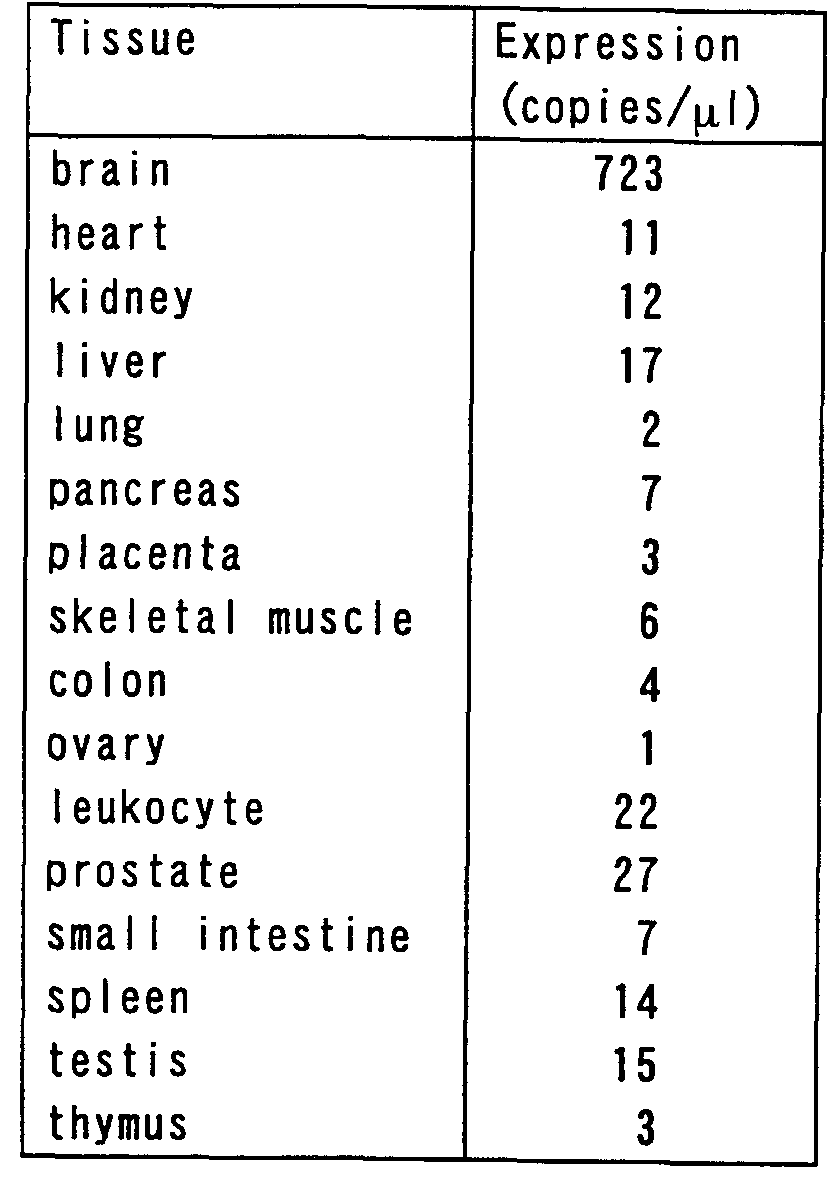
Claims
Priority Applications (3)
| Application Number | Priority Date | Filing Date | Title |
|---|---|---|---|
| EP00954968A EP1207169A4 (en) | 1999-08-27 | 2000-08-24 | NOVEL G PROTEIN COUPLED RECEPTOR PROTEIN AND ITS DNA |
| CA002382889A CA2382889A1 (en) | 1999-08-27 | 2000-08-24 | Novel g protein-coupled receptor protein and dna thereof |
| AU67278/00A AU6727800A (en) | 1999-08-27 | 2000-08-24 | Novel g protein-coupled receptor protein and dna thereof |
Applications Claiming Priority (2)
| Application Number | Priority Date | Filing Date | Title |
|---|---|---|---|
| JP11/241529 | 1999-08-27 | ||
| JP24152999 | 1999-08-27 |
Publications (1)
| Publication Number | Publication Date |
|---|---|
| WO2001016179A1 true WO2001016179A1 (fr) | 2001-03-08 |
Family
ID=17075717
Family Applications (1)
| Application Number | Title | Priority Date | Filing Date |
|---|---|---|---|
| PCT/JP2000/005683 Ceased WO2001016179A1 (fr) | 1999-08-27 | 2000-08-24 | Nouvelle proteine receptrice couplee a une proteine g, et son adn |
Country Status (4)
| Country | Link |
|---|---|
| EP (1) | EP1207169A4 (ja) |
| AU (1) | AU6727800A (ja) |
| CA (1) | CA2382889A1 (ja) |
| WO (1) | WO2001016179A1 (ja) |
Cited By (1)
| Publication number | Priority date | Publication date | Assignee | Title |
|---|---|---|---|---|
| WO2002000725A3 (en) * | 2000-06-26 | 2002-04-11 | Akzo Nobel Nv | G-protein coupled receptor org10 |
Citations (3)
| Publication number | Priority date | Publication date | Assignee | Title |
|---|---|---|---|---|
| EP0845529A2 (en) * | 1996-10-29 | 1998-06-03 | Takeda Chemical Industries, Ltd. | Human G-protein coupled receptor protein cloned form fetal brain CDNA library |
| DE19805351A1 (de) * | 1998-02-11 | 1999-08-12 | Basf Ag | Neuer G-Protein-gekoppelter Rezeptor aus menschlichem Gehirn |
| WO2000022131A2 (en) * | 1998-10-13 | 2000-04-20 | Arena Pharmaceuticals, Inc. | Non-endogenous, constitutively activated human g protein-coupled receptors |
Family Cites Families (1)
| Publication number | Priority date | Publication date | Assignee | Title |
|---|---|---|---|---|
| DK1584683T3 (da) * | 1998-11-20 | 2007-10-29 | Arena Pharm Inc | Human G-protein-koblet orphan receptor RUP3 |
-
2000
- 2000-08-24 EP EP00954968A patent/EP1207169A4/en not_active Withdrawn
- 2000-08-24 AU AU67278/00A patent/AU6727800A/en not_active Abandoned
- 2000-08-24 CA CA002382889A patent/CA2382889A1/en not_active Abandoned
- 2000-08-24 WO PCT/JP2000/005683 patent/WO2001016179A1/ja not_active Ceased
Patent Citations (3)
| Publication number | Priority date | Publication date | Assignee | Title |
|---|---|---|---|---|
| EP0845529A2 (en) * | 1996-10-29 | 1998-06-03 | Takeda Chemical Industries, Ltd. | Human G-protein coupled receptor protein cloned form fetal brain CDNA library |
| DE19805351A1 (de) * | 1998-02-11 | 1999-08-12 | Basf Ag | Neuer G-Protein-gekoppelter Rezeptor aus menschlichem Gehirn |
| WO2000022131A2 (en) * | 1998-10-13 | 2000-04-20 | Arena Pharmaceuticals, Inc. | Non-endogenous, constitutively activated human g protein-coupled receptors |
Non-Patent Citations (5)
| Title |
|---|
| DATABASE MPSRCH GENBANK 1 January 1900 (1900-01-01), XP002936307, Database accession no. AI083852 * |
| DONOHUE PATRICK J. ET AL.: "A human gene encodes a putative G protein-coupled receptor highly expressed in the central nervous system", MOLECULAR BRAIN RESEARCH, vol. 54, no. 1, February 1998 (1998-02-01), pages 152 - 160, XP002936017 * |
| MARAZZITI DANIELA ET AL.: "Cloning of GRP37, a gene located on chromosome 7 encoding a putative G-protein-coupled peptide receptor, from a human frontal brain EST library", GENOMICS, vol. 45, no. 1, 1 October 1997 (1997-10-01), pages 68 - 77, XP002936018 * |
| O'DOWD BRIAN F. ET AL.: "Cloning and chromosomal mapping of four putative novel human G-protein-coupled receptor genes", GENE, vol. 187, no. 1, 10 March 1997 (1997-03-10), pages 75 - 81, XP002936019 * |
| See also references of EP1207169A4 * |
Cited By (1)
| Publication number | Priority date | Publication date | Assignee | Title |
|---|---|---|---|---|
| WO2002000725A3 (en) * | 2000-06-26 | 2002-04-11 | Akzo Nobel Nv | G-protein coupled receptor org10 |
Also Published As
| Publication number | Publication date |
|---|---|
| AU6727800A (en) | 2001-03-26 |
| EP1207169A4 (en) | 2003-03-19 |
| EP1207169A1 (en) | 2002-05-22 |
| CA2382889A1 (en) | 2001-03-08 |
Similar Documents
| Publication | Publication Date | Title |
|---|---|---|
| JP2000312590A (ja) | 新規g蛋白質共役型レセプター蛋白質、そのdnaおよびそのリガンド | |
| CA2401290A1 (en) | Novel g protein-coupled receptor protein and dna thereof | |
| WO2000049046A1 (fr) | Nouvelle proteine de recepteur couplee a la proteine g et adn | |
| WO2001016316A1 (fr) | Proteine recepteur couplee a une proteine g et adn correspondant | |
| JP2000050875A (ja) | 新規g蛋白質共役型レセプター蛋白質およびそのdna | |
| WO2000020580A1 (fr) | Nouvelle proteine recepteur couplee a la proteine g et adn associe | |
| WO2001059106A1 (fr) | Nouvelles proteines receptrices couplees a des proteines g et adn associes | |
| WO2000020455A1 (fr) | Nouvelle proteine receptrice couplee a la proteine g d'origine humaine, et son adn | |
| WO2001094582A1 (fr) | Nouvelle proteine de recepteur couple a la proteine g et adn pour cette proteine de recepteur | |
| WO2000020456A1 (fr) | Nouvelle proteine receptrice couplee a la proteine g, et son adn | |
| WO2000035953A1 (fr) | Nouvelle proteine recepteur couplee a une proteine g et son adn | |
| WO2000024891A1 (en) | Novel g protein-coupled receptor proteins and dnas thereof | |
| WO2002006466A1 (fr) | Nouvelle proteine gr et son adn | |
| WO2001016179A1 (fr) | Nouvelle proteine receptrice couplee a une proteine g, et son adn | |
| WO2001073021A1 (fr) | Nouvelle proteine receptrice couplee a une proteine g et adn associe | |
| JP2000166576A (ja) | 新規g蛋白質共役型レセプタ―蛋白質およびそのdna | |
| JP2000175691A (ja) | 新規g蛋白質共役型レセプタ―蛋白質およびそのdna | |
| US20030162252A1 (en) | Novel g protein-coupled receptor protein and dna thereof | |
| US20030166000A1 (en) | Novel g protein-coupled receptor protein and dna thereof | |
| WO2002088182A1 (fr) | Nouvelle proteine des recepteurs couples aux proteines-g et adn associe | |
| JP2000175690A (ja) | 新規g蛋白質共役型レセプタ―蛋白質およびそのdna | |
| JP2000189174A (ja) | 新規g蛋白質共役型レセプタ―蛋白質およびそのdna | |
| US20040048284A1 (en) | Novel g protein-coupled receptor protein and dna thereof | |
| US20040072751A1 (en) | Novel g protein-coupled receptor protein and dna thereof | |
| WO2002016607A1 (fr) | Proteine de recepteur couple a la proteine g et adn correspondant |
Legal Events
| Date | Code | Title | Description |
|---|---|---|---|
| AK | Designated states |
Kind code of ref document: A1 Designated state(s): AE AG AL AM AU AZ BA BB BG BR BY BZ CA CN CR CU CZ DM DZ EE GD GE HR HU ID IL IN IS JP KG KR KZ LC LK LR LT LV MA MD MG MK MN MX MZ NO NZ PL RO RU SG SI SK TJ TM TR TT UA US UZ VN YU ZA |
|
| AL | Designated countries for regional patents |
Kind code of ref document: A1 Designated state(s): GH GM KE LS MW MZ SD SL SZ TZ UG ZW AM AZ BY KG KZ MD RU TJ TM AT BE CH CY DE DK ES FI FR GB GR IE IT LU MC NL PT SE BF BJ CF CG CI CM GA GN GW ML MR NE SN TD TG |
|
| DFPE | Request for preliminary examination filed prior to expiration of 19th month from priority date (pct application filed before 20040101) | ||
| 121 | Ep: the epo has been informed by wipo that ep was designated in this application | ||
| WWE | Wipo information: entry into national phase |
Ref document number: 2000954968 Country of ref document: EP Ref document number: 2382889 Country of ref document: CA |
|
| WWP | Wipo information: published in national office |
Ref document number: 2000954968 Country of ref document: EP |
|
| WWE | Wipo information: entry into national phase |
Ref document number: 10070334 Country of ref document: US |
|
| NENP | Non-entry into the national phase |
Ref country code: JP |
|
| WWW | Wipo information: withdrawn in national office |
Ref document number: 2000954968 Country of ref document: EP |