WO2001017956A1 - Substituted n-phenyl 2-hydroxy-2-methyl-3,3,3-trifluoropropanamide derivatives which elevate pyruvate dehydrogenase activity - Google Patents

Substituted n-phenyl 2-hydroxy-2-methyl-3,3,3-trifluoropropanamide derivatives which elevate pyruvate dehydrogenase activity Download PDF

Info

Publication number
WO2001017956A1
WO2001017956A1 PCT/GB2000/003314 GB0003314W WO0117956A1 WO 2001017956 A1 WO2001017956 A1 WO 2001017956A1 GB 0003314 W GB0003314 W GB 0003314W WO 0117956 A1 WO0117956 A1 WO 0117956A1
Authority
WO
WIPO (PCT)
Prior art keywords
optionally substituted
hydroxy
methyl
alkyl
chloro
Prior art date
Legal status (The legal status is an assumption and is not a legal conclusion. Google has not performed a legal analysis and makes no representation as to the accuracy of the status listed.)
Ceased
Application number
PCT/GB2000/003314
Other languages
French (fr)
Inventor
Roger John Butlin
Janet Elizabeth Pease
Michael Howard Block
Thorsten Nowak
Jeremy Nicholas Burrows
Current Assignee (The listed assignees may be inaccurate. Google has not performed a legal analysis and makes no representation or warranty as to the accuracy of the list.)
AstraZeneca UK Ltd
AstraZeneca AB
Original Assignee
AstraZeneca UK Ltd
AstraZeneca AB
Priority date (The priority date is an assumption and is not a legal conclusion. Google has not performed a legal analysis and makes no representation as to the accuracy of the date listed.)
Filing date
Publication date
Priority claimed from GBGB9920814.2A external-priority patent/GB9920814D0/en
Priority claimed from GB0006641A external-priority patent/GB0006641D0/en
Priority to AU68543/00A priority Critical patent/AU760061B2/en
Priority to HU0202725A priority patent/HUP0202725A3/en
Priority to AT00956672T priority patent/ATE262507T1/en
Priority to DK00956672T priority patent/DK1214296T3/en
Priority to DE60009319T priority patent/DE60009319T2/en
Priority to BR0013694-8A priority patent/BR0013694A/en
Priority to US10/069,994 priority patent/US6689909B1/en
Priority to JP2001521703A priority patent/JP2003508515A/en
Priority to IL14811100A priority patent/IL148111A0/en
Priority to MXPA02002319A priority patent/MXPA02002319A/en
Application filed by AstraZeneca UK Ltd, AstraZeneca AB filed Critical AstraZeneca UK Ltd
Priority to EEP200200113A priority patent/EE05080B1/en
Priority to UA2002042680A priority patent/UA73319C2/en
Priority to SK300-2002A priority patent/SK286774B6/en
Priority to NZ517147A priority patent/NZ517147A/en
Priority to HK02107004.7A priority patent/HK1045496B/en
Priority to CA002381581A priority patent/CA2381581A1/en
Priority to SI200030393T priority patent/SI1214296T1/en
Priority to EP00956672A priority patent/EP1214296B1/en
Publication of WO2001017956A1 publication Critical patent/WO2001017956A1/en
Priority to IL148111A priority patent/IL148111A/en
Priority to IS6285A priority patent/IS2069B/en
Priority to NO20021040A priority patent/NO20021040L/en
Anticipated expiration legal-status Critical
Ceased legal-status Critical Current

Links

Classifications

    • CCHEMISTRY; METALLURGY
    • C07ORGANIC CHEMISTRY
    • C07DHETEROCYCLIC COMPOUNDS
    • C07D295/00Heterocyclic compounds containing polymethylene-imine rings with at least five ring members, 3-azabicyclo [3.2.2] nonane, piperazine, morpholine or thiomorpholine rings, having only hydrogen atoms directly attached to the ring carbon atoms
    • C07D295/16Heterocyclic compounds containing polymethylene-imine rings with at least five ring members, 3-azabicyclo [3.2.2] nonane, piperazine, morpholine or thiomorpholine rings, having only hydrogen atoms directly attached to the ring carbon atoms acylated on ring nitrogen atoms
    • C07D295/18Heterocyclic compounds containing polymethylene-imine rings with at least five ring members, 3-azabicyclo [3.2.2] nonane, piperazine, morpholine or thiomorpholine rings, having only hydrogen atoms directly attached to the ring carbon atoms acylated on ring nitrogen atoms by radicals derived from carboxylic acids, or sulfur or nitrogen analogues thereof
    • C07D295/182Radicals derived from carboxylic acids
    • C07D295/185Radicals derived from carboxylic acids from aliphatic carboxylic acids
    • AHUMAN NECESSITIES
    • A61MEDICAL OR VETERINARY SCIENCE; HYGIENE
    • A61PSPECIFIC THERAPEUTIC ACTIVITY OF CHEMICAL COMPOUNDS OR MEDICINAL PREPARATIONS
    • A61P25/00Drugs for disorders of the nervous system
    • A61P25/28Drugs for disorders of the nervous system for treating neurodegenerative disorders of the central nervous system, e.g. nootropic agents, cognition enhancers, drugs for treating Alzheimer's disease or other forms of dementia
    • AHUMAN NECESSITIES
    • A61MEDICAL OR VETERINARY SCIENCE; HYGIENE
    • A61PSPECIFIC THERAPEUTIC ACTIVITY OF CHEMICAL COMPOUNDS OR MEDICINAL PREPARATIONS
    • A61P3/00Drugs for disorders of the metabolism
    • A61P3/06Antihyperlipidemics
    • AHUMAN NECESSITIES
    • A61MEDICAL OR VETERINARY SCIENCE; HYGIENE
    • A61PSPECIFIC THERAPEUTIC ACTIVITY OF CHEMICAL COMPOUNDS OR MEDICINAL PREPARATIONS
    • A61P3/00Drugs for disorders of the metabolism
    • A61P3/08Drugs for disorders of the metabolism for glucose homeostasis
    • A61P3/10Drugs for disorders of the metabolism for glucose homeostasis for hyperglycaemia, e.g. antidiabetics
    • AHUMAN NECESSITIES
    • A61MEDICAL OR VETERINARY SCIENCE; HYGIENE
    • A61PSPECIFIC THERAPEUTIC ACTIVITY OF CHEMICAL COMPOUNDS OR MEDICINAL PREPARATIONS
    • A61P43/00Drugs for specific purposes, not provided for in groups A61P1/00-A61P41/00
    • AHUMAN NECESSITIES
    • A61MEDICAL OR VETERINARY SCIENCE; HYGIENE
    • A61PSPECIFIC THERAPEUTIC ACTIVITY OF CHEMICAL COMPOUNDS OR MEDICINAL PREPARATIONS
    • A61P7/00Drugs for disorders of the blood or the extracellular fluid
    • A61P7/12Antidiuretics, e.g. drugs for diabetes insipidus
    • AHUMAN NECESSITIES
    • A61MEDICAL OR VETERINARY SCIENCE; HYGIENE
    • A61PSPECIFIC THERAPEUTIC ACTIVITY OF CHEMICAL COMPOUNDS OR MEDICINAL PREPARATIONS
    • A61P9/00Drugs for disorders of the cardiovascular system
    • AHUMAN NECESSITIES
    • A61MEDICAL OR VETERINARY SCIENCE; HYGIENE
    • A61PSPECIFIC THERAPEUTIC ACTIVITY OF CHEMICAL COMPOUNDS OR MEDICINAL PREPARATIONS
    • A61P9/00Drugs for disorders of the cardiovascular system
    • A61P9/04Inotropic agents, i.e. stimulants of cardiac contraction; Drugs for heart failure
    • AHUMAN NECESSITIES
    • A61MEDICAL OR VETERINARY SCIENCE; HYGIENE
    • A61PSPECIFIC THERAPEUTIC ACTIVITY OF CHEMICAL COMPOUNDS OR MEDICINAL PREPARATIONS
    • A61P9/00Drugs for disorders of the cardiovascular system
    • A61P9/08Vasodilators for multiple indications
    • AHUMAN NECESSITIES
    • A61MEDICAL OR VETERINARY SCIENCE; HYGIENE
    • A61PSPECIFIC THERAPEUTIC ACTIVITY OF CHEMICAL COMPOUNDS OR MEDICINAL PREPARATIONS
    • A61P9/00Drugs for disorders of the cardiovascular system
    • A61P9/10Drugs for disorders of the cardiovascular system for treating ischaemic or atherosclerotic diseases, e.g. antianginal drugs, coronary vasodilators, drugs for myocardial infarction, retinopathy, cerebrovascula insufficiency, renal arteriosclerosis
    • CCHEMISTRY; METALLURGY
    • C07ORGANIC CHEMISTRY
    • C07CACYCLIC OR CARBOCYCLIC COMPOUNDS
    • C07C317/00Sulfones; Sulfoxides
    • C07C317/26Sulfones; Sulfoxides having sulfone or sulfoxide groups and nitrogen atoms, not being part of nitro or nitroso groups, bound to the same carbon skeleton
    • C07C317/32Sulfones; Sulfoxides having sulfone or sulfoxide groups and nitrogen atoms, not being part of nitro or nitroso groups, bound to the same carbon skeleton with sulfone or sulfoxide groups bound to carbon atoms of six-membered aromatic rings of the carbon skeleton
    • C07C317/34Sulfones; Sulfoxides having sulfone or sulfoxide groups and nitrogen atoms, not being part of nitro or nitroso groups, bound to the same carbon skeleton with sulfone or sulfoxide groups bound to carbon atoms of six-membered aromatic rings of the carbon skeleton having sulfone or sulfoxide groups and amino groups bound to carbon atoms of six-membered aromatic rings being part of the same non-condensed ring or of a condensed ring system containing that ring
    • C07C317/38Sulfones; Sulfoxides having sulfone or sulfoxide groups and nitrogen atoms, not being part of nitro or nitroso groups, bound to the same carbon skeleton with sulfone or sulfoxide groups bound to carbon atoms of six-membered aromatic rings of the carbon skeleton having sulfone or sulfoxide groups and amino groups bound to carbon atoms of six-membered aromatic rings being part of the same non-condensed ring or of a condensed ring system containing that ring with the nitrogen atom of at least one amino group being part of any of the groups, X being a hetero atom, Y being any atom, e.g. N-acylaminosulfones
    • C07C317/42Y being a hetero atom
    • CCHEMISTRY; METALLURGY
    • C07ORGANIC CHEMISTRY
    • C07CACYCLIC OR CARBOCYCLIC COMPOUNDS
    • C07C317/00Sulfones; Sulfoxides
    • C07C317/44Sulfones; Sulfoxides having sulfone or sulfoxide groups and carboxyl groups bound to the same carbon skeleton
    • CCHEMISTRY; METALLURGY
    • C07ORGANIC CHEMISTRY
    • C07CACYCLIC OR CARBOCYCLIC COMPOUNDS
    • C07C317/00Sulfones; Sulfoxides
    • C07C317/44Sulfones; Sulfoxides having sulfone or sulfoxide groups and carboxyl groups bound to the same carbon skeleton
    • C07C317/48Sulfones; Sulfoxides having sulfone or sulfoxide groups and carboxyl groups bound to the same carbon skeleton the carbon skeleton being further substituted by singly-bound nitrogen atoms, not being part of nitro or nitroso groups
    • C07C317/50Sulfones; Sulfoxides having sulfone or sulfoxide groups and carboxyl groups bound to the same carbon skeleton the carbon skeleton being further substituted by singly-bound nitrogen atoms, not being part of nitro or nitroso groups at least one of the nitrogen atoms being part of any of the groups, X being a hetero atom, Y being any atom
    • CCHEMISTRY; METALLURGY
    • C07ORGANIC CHEMISTRY
    • C07CACYCLIC OR CARBOCYCLIC COMPOUNDS
    • C07C323/00Thiols, sulfides, hydropolysulfides or polysulfides substituted by halogen, oxygen or nitrogen atoms, or by sulfur atoms not being part of thio groups
    • C07C323/64Thiols, sulfides, hydropolysulfides or polysulfides substituted by halogen, oxygen or nitrogen atoms, or by sulfur atoms not being part of thio groups containing thio groups and sulfur atoms, not being part of thio groups, bound to the same carbon skeleton
    • C07C323/65Thiols, sulfides, hydropolysulfides or polysulfides substituted by halogen, oxygen or nitrogen atoms, or by sulfur atoms not being part of thio groups containing thio groups and sulfur atoms, not being part of thio groups, bound to the same carbon skeleton containing sulfur atoms of sulfone or sulfoxide groups bound to the carbon skeleton
    • CCHEMISTRY; METALLURGY
    • C07ORGANIC CHEMISTRY
    • C07DHETEROCYCLIC COMPOUNDS
    • C07D295/00Heterocyclic compounds containing polymethylene-imine rings with at least five ring members, 3-azabicyclo [3.2.2] nonane, piperazine, morpholine or thiomorpholine rings, having only hydrogen atoms directly attached to the ring carbon atoms
    • C07D295/04Heterocyclic compounds containing polymethylene-imine rings with at least five ring members, 3-azabicyclo [3.2.2] nonane, piperazine, morpholine or thiomorpholine rings, having only hydrogen atoms directly attached to the ring carbon atoms with substituted hydrocarbon radicals attached to ring nitrogen atoms
    • C07D295/12Heterocyclic compounds containing polymethylene-imine rings with at least five ring members, 3-azabicyclo [3.2.2] nonane, piperazine, morpholine or thiomorpholine rings, having only hydrogen atoms directly attached to the ring carbon atoms with substituted hydrocarbon radicals attached to ring nitrogen atoms substituted by singly or doubly bound nitrogen atoms
    • C07D295/135Heterocyclic compounds containing polymethylene-imine rings with at least five ring members, 3-azabicyclo [3.2.2] nonane, piperazine, morpholine or thiomorpholine rings, having only hydrogen atoms directly attached to the ring carbon atoms with substituted hydrocarbon radicals attached to ring nitrogen atoms substituted by singly or doubly bound nitrogen atoms with the ring nitrogen atoms and the substituent nitrogen atoms separated by carbocyclic rings or by carbon chains interrupted by carbocyclic rings

Definitions

  • the present invention relates to compounds which elevate pyruvate dehydrogenase (PDH) activity, processes for their preparation, pharmaceutical compositions containing them as active ingredient, methods for the treatment of disease states associated with reduced PDH activity, to their use as medicaments and to their use in the manufacture of medicaments for use in the elevation of PDH activity in warm-blooded animals such as humans, in particular the treatment of diabetes mellitus, peripheral vascular disease and myocardial ischaemia in warm-blooded animals such as humans, more particularly to their use in the manufacture of medicaments for use in the treatment of diabetes mellitus in warm-blooded animals such as humans.
  • PDH pyruvate dehydrogenase
  • adenosine triphosphate provides the energy for synthesis of complex molecules and, in muscle, for contraction. ATP is generated from the breakdown of energy-rich substrates such as glucose or long chain free fatty acids. In oxidative tissues such as muscle the majority of the ATP is generated from acetyl CoA which enters the citric acid cycle, thus the supply of acetyl CoA is a critical determinant of ATP production in oxidative tissues. Acetyl CoA is produced either by ⁇ -oxidation of fatty acids or as a result of glucose metabolism by the glycolytic pathway.
  • the key regulatory enzyme in controlling the rate of acetyl CoA formation from glucose is PDH which catalyses the oxidation of pyruvate to acetyl CoA and carbon dioxide with concomitant reduction of nicotinamide adenine dinucleotide (NAD) to NADH.
  • PDH nicotinamide adenine dinucleotide
  • NIDDM non-insulin dependent
  • IDDM insulin-dependent diabetes mellitus
  • oxidation of lipids is increased with a concomitant reduction in utilisation of glucose, which contributes to the hyperglycaemia.
  • Reduced glucose utilisation in both IDDM and NIDDM is associated with a reduction in PDH activity.
  • PDH activity may be that an increase in pyruvate concentration results in increased availability of lactate as a substrate for hepatic gluconeogenesis. It is reasonable to expect that increasing the activity of PDH could increase the rate of glucose oxidation and hence overall glucose utilisation, in addition to reducing hepatic glucose output.
  • Oxidation of glucose is capable of yielding more molecules of ATP per mole of oxygen than is oxidation of fatty acids.
  • energy demand may exceed energy supply, such as myocardial ischaemia, intermittent claudication, cerebral ischaemia and reperfusion, (Zaidan et al., 1998; J. Neurochem. 70: 233-241)
  • shifting the balance of 5 substrate utilisation in favour of glucose metabolism by elevating PDH activity may be expected to improve the ability to maintain ATP levels and hence function.
  • An agent which is capable of elevating PDH activity may also be expected to be of benefit in treating conditions where an excess of circulating lactic acid is manifest such as in certain cases of sepsis.
  • PDH is an intramitochondrial multienzyme complex consisting of multiple copies of several subunits including three enzyme activities El, E2 and E3, required for the completion of the conversion of pyruvate to acetyl CoA (Patel and Roche 1990; FASEB J., 4: 3224-3233).
  • El catalyses the non-reversible removal of CO 2 from pyruvate; E2 forms acetyl CoA and E3 0 reduces NAD to NADH.
  • Two additional enzyme activities are associated with the complex: a specific kinase which is capable of phosphorylating El at three serine residues and a loosely-associated specific phosphatase which reverses the phosphorylation.
  • Phosphorylation of a single one of the three serine residues renders the El inactive.
  • the proportion of the PDH in its active (dephosphorylated) state is determined by a balance between the activity of the kinase 5 and phosphatase.
  • the activity of the kinase may be regulated in vivo by the relative concentrations of metabolic substrates such as NAD/NADH, CoA/acetylCoA and adenine diphosphate (ADP)/ATP as well as by the availability of pyruvate itself.
  • European Patent Publication Nos. 617010 and 524781 describes compounds which are capable of relaxing bladder smooth muscle and which may be used in the treatment of urge 0 incontinence. We have found that the compounds of the present invention are very good at elevating PDH activity, a property nowhere disclosed in EP 0617010 and EP 524781.
  • the present invention is based on the surprising discovery that certain compounds elevate PDH activity, a property of value in the treatment of disease states associated with disorders of glucose utilisation such as diabetes mellitus, obesity, (Curto et al., 1997; Int. J. Obes. 21: 1137-1142), and lactic acidaemia. Additionally the compounds may be expected to have utility in diseases where supply of energy-rich substrates to tissues is limiting such as peripheral vascular disease, (including intermittent claudication), cardiac failure and certain cardiac myopathies, muscle weakness, hyperlipidaemias and atherosclerosis (Stacpoole et al., 1978; N. Engl. J. Med. 298: 526-530). A compound that activates PDH may also be useful in treating Alzheimer's disease (AD) (J Neural Transm (1998) 105, 855-870).
  • AD Alzheimer's disease
  • R 1 is chloro, fluoro, bromo, methyl or methoxy
  • R 2 is selected from one of the following three groups: i) halo, nitro, hydroxy, amino or cyano; ii) -X ! -R 5 wherein X 1 is a direct bond, -O-, -S-, -SO-, -SO 2 -, -NR 6 -, -CO-, -CONR 6 -, -NR 6 CO-, -NR 6 SO 2 - or NR 6 CONR 7 -; wherein R 6 and R 7 are independently hydrogen or C 1-4 alkyl optionally substituted with one or more A; and R 5 is selected from C 1-6 alkyl optionally substituted with one or more A, C 3-7 cycloalkyl optionally substituted with one or more A, C 3- cycloalkylC 1-6 alkyl optionally substituted with one or more A, C 2-6 alkenyl optionally substituted with one or more A, C 2 .
  • heteroaryl ring is a carbon linked 6-membered ring containing 1-2 nitrogen atoms or a carbon linked 5-membered ring containing 1-3 heteroatoms selected independently from O, N and S; and wherein if said 5-membered heteroaryl ring contains an -NH- moiety that nitrogen may be optionally substituted with a group selected from G; iii) a nitrogen-linked 4-8 membered heterocyclic group optionally substituted on a ring carbon by one or more D and wherein if said heterocyclic group contains an -NH- moiety that nitrogen may be optionally substituted
  • R 3 is C ⁇ - alkyl optionally substituted with one or more A, C 3 . 7 cycloalkyl optionally substituted with one or more A, phenyl optionally substituted with one or more D, a carbon-linked 6-membered heteroaryl ring containing 1-2 nitrogen atoms optionally substituted on a ring carbon by one or more D, or a carbon linked 5-membered heteroaryl ring containing 1-3 heteroatoms selected independently from O, N and S optionally substituted on a ring carbon by one or more D and wherein if said 5-membered heteroaryl ring contains an -NH- moiety that nitrogen may be optionally substituted with a group selected from G;
  • A is selected from hydroxy, amino, halo, carboxy, N-(C 1-4 alkyl)amino, N,N-di-(C 1-4 alkyl)amino, carbamoyl and C 1-6 alkoxy;
  • D is selected from: i) -X a -R c wherein X a is a direct bond, -O-, -S-, -SO-, -SO 2 -, -CO-, - ⁇ R d SO 2 -, -NR d CO-, -NR d CONR e -, -NR d - or -CONR d -; wherein R d and R e are independently hydrogen or C 1-4 alkyl optionally substituted with one or more hydroxy or C 1-4 alkoxy; and R c is selected from hydrogen or C ⁇ aU yl optionally substituted with one or more hydroxy or C 1-4 alkoxy; ii) a 4-8 membered Het which is optionally substituted on a ring carbon with one or more groups selected from hydroxy, halo, C ⁇ -4 alkoxy, C 1-4 alkyl or cyano and wherein if said 4-8 membered Het contains an -NH- moiety
  • R 4 is hydrogen or fluoro; or a pharmaceutically acceptable salt or an in vivo hydrolysable ester thereof.
  • alkyl includes both straight and branched chain alkyl groups but references to individual alkyl groups such as “propyl” are specific for the straight chain version only.
  • C 1-6 alkyl includes C ⁇ -4 alkyl, C 2-4 alkyl, propyl, isopropyl and t-butyl.
  • references to individual alkyl groups such as 'propyl' are specific for the straight chained version only and references to individual branched chain alkyl groups such as 'isopropyl' are specific for the branched chain version only.
  • halo refers to fluoro, chloro, bromo and iodo.
  • Suitable values for "a carbon-linked 6-membered heteroaryl ring containing 1-2 nitrogen atoms” include pyridyl, pyrimidyl, pyrazinyl and pyridazinyl.
  • a carbon-linked 6-membered heteroaryl ring containing 1-2 nitrogen atoms is pyridyl.
  • a carbon-linked 6-membered heteroaryl ring containing 1-2 nitrogen atoms is pyridazinyl.
  • Suitable values for "a carbon-linked 5-membered heteroaryl ring containing 1-3 heteroatoms" include pyrrolyl, furyl, thienyl, pyrazolyl, oxazolyl, oxadiazolyl, imidazolyl and triazolyl.
  • a “nitrogen-linked 4-8 membered heterocyclic group” is a saturated, partially saturated or unsaturated, monocyclic ring containing 4-8 atoms of which at least one is a nitrogen atom with optionally 1-3 further heteroatoms selected independently from O, N and S wherein a -CH 2 - group can optionally be replaced by a -C(O)- and a ring nitrogen and/or sulphur atom may be optionally oxidised to form the N-oxide and or the S-oxides. It will be appreciated that in forming this nitrogen link, the nitrogen atom is not quaternised, i.e. a neutral compound is formed.
  • Suitable values for "nitrogen-linked 4-8 membered heterocyclic group” include morpholino, piperidyl, piperazinyl, pyrrolidinyl, thiomorpholino, pyrrolinyl, homopiperazinyl, pyrrolyl, pyrazolyl, pyrazolinyl, imidazolyl, imidazolinyl, imidazolidinyl, pyrazolidinyl and triazolyl.
  • nitrogen-linked 4-8 membered heterocyclic group include azetidinyl, morpholino, piperidyl, piperazinyl, pyrrolidinyl, thiomorpholino, pyrrolinyl, homopiperazinyl, pyrrolyl, pyrazolyl, pyrazolinyl, imidazolyl, imidazolinyl, imidazolidinyl, pyrazolidinyl and triazolyl.
  • a "nitrogen-linked 4-8 membered heterocyclic group” is morpholino, piperidyl, piperazinyl, pyrrolidinyl, thiomorpholino, pyrrolinyl or homopiperazinyl. More preferably a "nitrogen-linked 4-8 membered heterocyclic group” is azetidinyl, morpholino, piperidyl, piperazinyl, pyrrolidinyl, thiomorpholino, pyrrolinyl or homopiperazinyl.
  • nitrogen-linked 4-8 membered heterocyclic group include azetidinyl, morpholino, piperidyl, piperazinyl, pyrrolidinyl, thiomorpholino, 1-oxothiomorpholino, 1,1-dioxothiomorpholino, pyrrolinyl, homopiperazinyl, pyrrolyl, pyrazolyl, pyrazolinyl, imidazolyl, imidazolinyl, imidazolidinyl, pyrazolidinyl and triazolyl.
  • a "nitrogen-linked 4-8 membered heterocyclic group” is morpholino, 1-oxothiomorpholino, 1,1-dioxothiomorpholino, piperidyl, piperazinyl, pyrrolidinyl, thiomorpholino, pyrrolinyl or homopiperazinyl. More preferably a "nitrogen-linked 4-8 membered heterocyclic group” is azetidinyl, morpholino, piperidyl, piperazinyl, pyrrolidinyl, thiomorpholino, 1-oxothiomorpholino, 1,1-dioxothiomorpholino, pyrrolinyl or homopiperazinyl.
  • R f as a "nitrogen-linked 4-8 membered heterocyclic group” is azetidinyl, morpholino or pyrrolidinyl.
  • R 2 is a "nitrogen-linked 4-8 membered heterocyclic group” it is thiomorpholino.
  • R 2 is thiomorpholino, piperazinyl, 1-oxothiomorpholino, 1,1-dioxothiomorpholino or morpholino.
  • a “nitrogen-linked 4-6 membered heterocyclic group” is a saturated, partially saturated or unsaturated, monocyclic ring containing 4-6 atoms of which at least one is a nitrogen atom with optionally 1-3 further heteroatoms selected independently from O, N and S wherein a -CH 2 - group can optionally be replaced by a -C(O)- and a ring nitrogen and/or sulphur atom may be optionally oxidised to form the N-oxide and or the S-oxides. It will be appreciated that in forming this nitrogen link, the nitrogen atom is not quaternised, i.e. a neutral compound is formed.
  • Suitable values for a "nitrogen-linked 4-6 membered heterocyclic group” include azetidinyl, morpholino, piperidyl, piperazinyl, pyrrolidinyl, thiomorpholino, pyrrolinyl, pyrrolyl, pyrazolyl, pyrazolinyl, imidazolyl, imidazolinyl, imidazolidinyl, pyrazolidinyl and triazolyl.
  • a "nitrogen-linked 4-6 membered heterocyclic group” is azetidinyl, morpholino or pyrrolidinyl.
  • a “nitrogen-linked 5 or 6 membered heterocyclic group” is a saturated, partially saturated or unsaturated, monocyclic ring containing 5 or 6 atoms of which at least one is a nitrogen atom with optionally 1-3 further heteroatoms selected independently from O, ⁇ and S wherein a -CH 2 - group can optionally be replaced by a -C(O)- and a ring nitrogen and/or sulphur atom may be optionally oxidised to form the N-oxide and or the S-oxides. It will be appreciated that in forming this nitrogen link, the nitrogen atom is not quaternised, i.e. a neutral compound is formed.
  • Suitable values for a "nitrogen-linked 5 or 6 membered heterocyclic group” include morpholino, piperidyl, piperazinyl, pyrrolidinyl, thiomorpholino, pyrrolinyl, pyrrolyl, pyrazolyl, pyrazolinyl, imidazolyl, imidazolinyl, imidazolidinyl, pyrazolidinyl and triazolyl.
  • a "nitrogen-linked 5 or 6 membered heterocyclic group” is morpholino, piperidyl, piperazinyl, pyrrolidinyl, thiomorpholino or pyrrolinyl.
  • a “nitrogen-linked 6 membered heterocyclic group” is a saturated, partially saturated or unsaturated, monocyclic ring containing 6 atoms of which at least one is nitrogen atom with optionally 1-3 further heteroatoms selected independently from O, N and S wherein a -CH 2 - group can optionally be replaced by a -C(O)- and a ring nitrogen and/or sulphur atom may be optionally oxidised to form the N-oxide and or the S-oxides. It will be appreciated that in forming this nitrogen link, the nitrogen atom is not quaternised, i.e. a neutral compound is formed.
  • Suitable values for a "nitrogen-linked 6 membered heterocyclic group” include morpholino, piperidyl, piperazinyl, thiomorpholino.
  • a "4-8 membered Het” is a saturated, partially saturated or unsaturated monocyclic ring containing 4-8 atoms including 1-4 heteroatoms selected independently from O, ⁇ and S, which may be carbon or nitrogen linked, wherein a -CH 2 - group can optionally be replaced by a -C(O)- and a ring nitrogen and/or sulphur atom may be optionally oxidised to form the N-oxide and or the S-oxides.
  • Suitable values for "4-8 membered Het" are morpholino, piperidyl, pyridyl, pyranyl, pyrrolyl, isothiazolyl, thienyl, thiadiazolyl, piperazinyl, thiazolidinyl, pyrrolidinyl, thiomorpholino, pyrrolinyl, homopiperazinyl, tetrahydropyranyl, imidazolyl, pyrimidyl, pyrazinyl, pyridazinyl, isoxazolyl, 4-pyridone, 2-pyrrolidone, 4-thiazolidone, pyridine-N-oxide and quinoline-N-oxide.
  • a “5 or 6 membered Het” is a saturated, partially saturated or unsaturated monocyclic ring containing 4-8 atoms including 1-4 heteroatoms selected independently from O, ⁇ and S, which may be carbon or nitrogen linked, wherein a -CH 2 - group can optionally be replaced by a -C(O)- and a ring nitrogen and/or sulphur atom may be optionally oxidised to form the N-oxide and or the S-oxides.
  • Suitable values for "5 or 6 membered Het" are morpholino, piperidyl, pyridyl, pyranyl, pyrrolyl, isothiazolyl, thienyl, thiadiazolyl, piperazinyl, thiazolidinyl, pyrrolidinyl, thiomorpholino, pyrrolinyl, tetrahydropyranyl, imidazolyl, pyrimidyl, pyrazinyl, pyridazinyl, isoxazolyl, 4-pyridone, 2-pyrrolidone, 4-thiazolidone, pyridine-N-oxide and quinoline-N-oxide.
  • Examples of "d- ⁇ alkoxycarbonyl” include methoxycarbonyl, ethoxycarbonyl, n- and t-butoxycarbonyl.
  • Examples of “C 1-6 alkoxy” include C ⁇ . alkoxy, methoxy, ethoxy and propoxy.
  • Examples of “C ⁇ -4 alkylsulphinyl” include methylsulphinyl and ethylsulphinyl.
  • Examples of “C 1-6 alkylsulphonyl” include C 1-4 alkylsulphonyl, mesyl and ethylsulphonyl.
  • Examples of “ - ⁇ alkanoyl” include C 1-4 alkanoyl, propionyl and acetyl.
  • Examples of “C 3-7 cycloalkyl” are cyclopropyl and cyclohexyl.
  • Examples of “C 2-6 alkenyl” are vinyl, allyl and 1-propenyl.
  • Examples of “C 2-6 alkynyl” are ethynyl, 1-propynyl and 2-propynyl.
  • Examples of “N-(C] -6 alkyl)carbamoyl” are methylaminocarbonyl and ethylaminocarbonyl.
  • Examples of “N-(C 1-6 alkyl) carbamoyl” are dimethylaminocarbonyl and methylethylaminocarbonyl.
  • N-(C 1-4 alkyl)amino examples include methylamino and ethylamino.
  • N-(C 1-4 alkyl) 2 amino include di-N-methylamino, di-(N-ethyl)amino and N-ethyl-N-methylamino.
  • phenylC 1-6 alkyl examples include phenylC 1-4 alkyl, benzyl and phenethyl.
  • C 3- cycloalkylC 1-6 alkyl examples include cyclopropylmethyl, cyclopentylethyl and 2-cyclohexylpropyl.
  • (heteroaryl ring)C 1-6 alkyl examples include pyridylmethyl, pyrazinylethyl and imidazolylpropyl.
  • n is 1 or 2; R is chloro, fluoro, bromo, methyl or methoxy; R 2 is selected from one of the following three groups: i) halo, nitro, hydroxy, amino or cyano; ii) -X'-R 5 wherein X 1 is a direct bond, -O-, -S-, -SO-, -SO 2 -, - ⁇ R 6 -, -CO-, -CO ⁇ R 6 -, - ⁇ R 6 CO-, -NR 6 SO 2 - or NR 6 CONR 7 -; wherein R 6 and R 7 are independently hydrogen or C 1-4 alkyl optionally substituted with one or more A; and R 5 is selected from C ⁇ -6 alkyl optionally substituted with one or more A, C 3-7 cycloalkyl optionally substituted with one or more A, C 2 .
  • R is C ⁇ -6 alkyl optionally substituted with one or more A, C 3-7 cycloalkyl optionally substituted with one or more A, phenyl optionally substituted with one or more D, a carbon-linked 6-membered heteroaryl ring containing 1-2 nitrogen atoms optionally substituted on a ring carbon by one or more D, or a carbon linked 5-membered heteroaryl ring containing 1-3 heteroatoms selected independently from O, N and S optionally substituted on a ring carbon by one or more D and wherein if said 5-membered heteroaryl ring contains an -NH- moiety that nitrogen may be optionally substituted with a group selected from G; A is selected from hydroxy, amino, halo, carboxy and C 1-6 alkoxy; D is selected from: i) -X a -R c wherein X a is a direct bond, -O-, -S-, -SO-, -SO 2 -, -CO-,
  • G is selected from d- ⁇ alkyl optionally substituted with one or more A, C 1-6 alkanoyl optionally substituted with one or more A, d ealkylsulphonyl optionally substituted with one or more A, d- ⁇ alkoxycarbonyl optionally substituted with one or more A, carbamoyl, N-(C 1-6 alkyl)carbamoyl optionally substituted with one or more A, N-(C 1-6 alkyl) 2 carbamoyl optionally substituted with one or more A and benzoyl optionally substituted with one or more A; and R 4 is hydrogen or fluoro; or a pharmaceutically acceptable salt or an in vivo hydrolysable ester thereof. Accordingly to an additional aspect of the present invention there is provided a compound of formula (I) (as depicted above) wherein: n is 1 or 2;
  • R 1 is chloro, fluoro, bromo, methyl or methoxy
  • R 2 is selected from one of the following three groups: i) halo, nitro, hydroxy, amino or cyano; ii) -X'-R 5 wherein X 1 is a direct bond, -O-, -S-, -SO-, -SO 2 -, -NR 6 -, -CO-, -CONR 6 -, -NR 6 CO-, -NR 6 SO 2 - or NR 6 CONR 7 -; wherein R 6 and R 7 are independently hydrogen or C 1- alkyl optionally substituted with one or more A; and R 5 is selected from C 1-6 alkyl optionally substituted with one or more A, C 3-7 cycloalkyl optionally substituted with one or more A, C 2-6 alkenyl optionally substituted with one or more A, C 2-6 alkynyl optionally substituted with one or more A, phenyl optionally substituted with one
  • R 3 is C ⁇ -6 alkyl optionally substituted with one or more A, C 3-7 cycloalkyl optionally substituted with one or more A, phenyl optionally substituted with one or more D, a carbon-linked 6-membered heteroaryl ring containing 1-2 nitrogen atoms optionally substituted on a ring carbon by one or more D, or a carbon linked 5-membered heteroaryl ring containing 1-3 heteroatoms selected independently from O, N and S optionally substituted on a ring carbon by one or more D and wherein if said 5-membered heteroaryl ring contains an -NH- moiety that nitrogen may be optionally substituted with a group selected from G;
  • A is selected from hydroxy, amino, halo, carboxy, N-(C 1-4 alkyl)amino, N,N-di-(C ⁇ -4 alkyl)amino and C 1-6 alkoxy;
  • D is selected from: i) -X a -R c wherein X a is a direct bond, -O-, -S-, -SO-, -SO 2 -, -CO-, - ⁇ R d SO 2 -, -NR d CO-, -NR d CONR e -, -NR d - or -CONR d -; wherein R d and R e are independently hydrogen or C 1-4 alkyl optionally substituted with one or more hydroxy or C 1-4 alkoxy; and R c is selected from hydrogen or C 1-6 alkyl optionally substituted with one or more hydroxy or C 1-4 alkoxy; ii) a 4-8 membered Het which is optionally substituted on
  • X c is -C(O)- or -SO 2 - and R f is a nitrogen-linked 4-8 membered heterocyclic group optionally substituted on a ring carbon by one or more groups selected from hydroxy, halo, C 1-4 alkoxy, C ⁇ -4 alkyl or cyano and wherein if said heterocyclic group contains an -NH- moiety that nitrogen may be optionally substituted with a group selected from G; G is selected from C 1-6 alkyl optionally substituted with one or more A, C ⁇ -6 alkanoyl optionally substituted with one or more A, C 1-6 alkylsulphonyl optionally substituted with one or more A, C 1-6 alkoxycarbonyl optionally substituted with one or more A, carbamoyl, N-(C 1-6 alkyl)carbamoyl optionally substituted with
  • R 4 is hydrogen or fluoro; or a pharmaceutically acceptable salt or an in vivo hydrolysable ester thereof.
  • R 1 , R 2 , R 3 and R 4 are as follows. Such values may be used where appropriate with any of the definitions, claims or embodiments defined hereinbefore or hereinafter.
  • n is 1. In another aspect of the invention preferably n is 2.
  • R 1 is chloro, fluoro or bromo. More preferably R 1 is chloro or fluoro. Particularly R 1 is chloro.
  • R 1 is methyl, chloro, fluoro or bromo. In another aspect of the invention, more preferably R is methyl, chloro or fluoro. In another aspect of the invention, particularly R 1 is methyl or chloro.
  • R 2 is selected from group i):
  • group i) is halo or hydroxy.
  • group i) is halo.
  • Particularly group i) is chloro or fluoro.
  • group i) is chloro.
  • R is selected from group i):
  • group i) is nitro, halo, amino or hydroxy.
  • group i) is nitro, amino or halo. Particularly group i) is nitro, bromo, iodo, amino, chloro or fluoro.
  • R 2 is selected from group ii):
  • X 1 is -S-, -SO-, -SO 2 -, -NR 6 - or -NR 6 CO-; preferably R 6 is hydrogen; and preferably R 5 is selected from C 1-6 alkyl optionally substituted with one or more A, phenyl optionally substituted with one or more D or a carbon linked 6-membered heteroaryl ring containing 1-2 nitrogen atoms optionally substituted on a ring carbon by one or more D.
  • X 1 is -S-, -SO-, -SO 2 - or -NR 6 CO-; more preferably R 6 is hydrogen; and more preferably R 5 is selected from C ⁇ -4 alkyl optionally substituted with one or more A, phenyl optionally substituted with one or more D or a carbon linked pyridyl optionally substituted on a ring carbon by one or more D.
  • X 1 is -S- or -NR 6 CO-; particularly R 6 is hydrogen; and particularly R 5 is selected from methyl optionally substituted with one or more A, ethyl optionally substituted with one or more A, phenyl optionally substituted with one or more D or a carbon linked pyridyl optionally substituted on a ring carbon by one or more D.
  • R 2 is selected from group ii):
  • X 1 is -S-, -SO-, -SO 2 -, -NR 6 - or -NR 6 CO-; preferably R 6 is hydrogen; and preferably R 5 is selected from d- ⁇ alkyl optionally substituted with one or more A or phenyl optionally substituted with one or more D.
  • X 1 is -S-, -SO-, -SO 2 - or -NR 6 CO-; more preferably R 6 is hydrogen; and more preferably R 5 is selected from C 1-4 alkyl optionally substituted with one or more A or phenyl optionally substituted with one or more D.
  • X 1 is : S- or -NR 6 CO-; particularly R 6 is hydrogen; and particularly R 5 is selected from methyl optionally substituted with one or more A, ethyl optionally substituted with one or more A or phenyl optionally substituted with one or more
  • X 1 is -O-, -S-, -SO-, -SO 2 -, -NR 6 - or -NR 6 CO-; preferably R 6 is hydrogen; and preferably R 5 is selected from C 1-6 alkyl optionally substituted with one or more A, phenyl optionally substituted with one or more D or phenylC 1-6 alkyl optionally substituted with one or more D.
  • X 1 is -O-, -S-, -SO-, -SO 2 - or -NR 6 CO-; more preferably R 6 is hydrogen; and more preferably R 5 is selected from C ⁇ -4 alkyl optionally substituted with one or more A, phenyl optionally substituted with one or more D or phenylC 1-4 alkyl optionally substituted with one or more D.
  • R 2 is selected from group iii):
  • group iii) is a nitrogen-linked 5 or 6 membered heterocyclic group optionally substituted on a ring carbon by one or more D and wherein if said heterocyclic group contains an -NH- moiety that nitrogen may be optionally substituted with a group selected from G.
  • group iii) is a nitrogen-linked 6 membered heterocyclic group optionally substituted on a ring carbon by one or more D and wherein if said heterocyclic group contains an -NH- moiety that nitrogen may be optionally substituted with a group selected from G.
  • group iii) is morpholino optionally substituted on a ring carbon by one or more D, piperidin-1-yl optionally substituted on a ring carbon by one or more D or piperazin-1-yl optionally substituted on a ring carbon by one or more D and optionally substituted on the -NH- moiety by a group selected from G.
  • R 2 is selected from group iii):
  • Particularly group iii) is morpholino optionally substituted on a ring carbon by one or more D, thiomorpholino optionally substituted on a ring carbon by one or more D, piperidin-1-yl optionally substituted on a ring carbon by one or more D or piperazin-1-yl optionally substituted on a ring carbon by one or more D and optionally substituted on the -NH- moiety by a group selected from G.
  • group iii) is thiomorpholino.
  • R 2 is selected from group iii): Particularly group iii) is morpholino, thiomorpholino, 1-oxothiomorpholino, 1,1-dioxothiomorpholino or piperazin-1-yl optionally substituted on the -NH- moiety by a group selected from G.
  • A is hydroxy, amino, halo, carboxy and methoxy. More preferably A is hydroxy.
  • A is hydroxy, amino, dimethylamino, halo, carboxy and methoxy.
  • A is hydroxy, methoxy and dimethylamino.
  • A is hydroxy, amino, dimethylamino, halo, carboxy, methoxy and carbamoyl.
  • X a in group i) is -S-, -SO-, -SO 2 -, -NR d -, -NR d CONR e - or -CONR d -; preferably R d is hydrogen or C 1-4 alkyl optionally substituted with one or more hydroxy; and preferably R c is selected from hydrogen or C 1-6 alkyl optionally substituted with one or more hydroxy.
  • X a in group i) is -S-, -SO-, -SO 2 -, -NR d - or -CONR d -; more preferably R d is hydrogen, methyl or ethyl optionally substituted with hydroxy; and more preferably R c is selected from hydrogen or C 1- alkyl optionally substituted with one or more hydroxy.
  • X a in group i) is -SO-, -SO 2 -, -NR d - or -CONR d -; more preferably R d is hydrogen, methyl or ethyl optionally substituted with hydroxy; and more preferably R c is selected from hydrogen, methyl or ethyl optionally substituted with hydroxy.
  • D is selected from group i):
  • X a in group i) is -SO-, -SO 2 -, -NR d - or -CONR d -; more preferably R d is hydrogen, methyl or ethyl optionally substituted with hydroxy; and more preferably R c is selected from hydrogen, methyl, ethyl or butyl optionally substituted with hydroxy.
  • D is selected from group ii):
  • group ii) is a 5 or 6 membered Het which is optionally substituted on a ring carbon with one or more groups selected from hydroxy, halo, C 1-4 alkoxy, C ⁇ -4 alkyl or cyano and wherein if said 5 or 6 membered Het contains an -NH- moiety that nitrogen may be optionally substituted with a group selected from G.
  • group ii) is a 5 or 6 membered Het which is optionally substituted on a ring carbon with one or more groups selected from hydroxy, halo, methyl, ethyl, methoxy, ethoxy or cyano and wherein if said 5 or 6 membered Het contains an -NH- moiety that nitrogen may be optionally substituted with a group selected from G.
  • group ii) is morpholino, morpholinyl, piperidinyl or piperazinyl optionally substituted on the -NH- moiety by a group selected from G.
  • D is selected from group iii):
  • group iii) is -X a -C 2-4 alkyl-X b -R c wherein X a and R c are as defined hereinbefore and X is preferably -SO- or -SO 2 -.
  • D is selected from group iv):
  • group iv) is cyano, fluoro or chloro. More preferably group iv) is fluoro or chloro.
  • group iv) is fluoro
  • X c is -C(O)- and R f is a nitrogen-linked 4-6 membered heterocyclic group optionally substituted by hydroxy.
  • X c is -C(O)- and R f is azetidinyl, morpholino or pyrrolidinyl (optionally substituted by hydroxy).
  • X c is -C(O)- and R f is azetidinyl, morpholino or 3-hydroxypyrrolidinyl.
  • G is C 1- alkanoyl optionally substituted with one or more A or C 1-6 alkyl optionally substituted by one or more A.
  • G is C 1-4 alkanoyl optionally substituted with one or more A or C 1-4 alkyl optionally substituted by one or more A.
  • G is acetyl or C 2-4 alkyl substituted by one or more A.
  • G is acetyl.
  • R 2 is chloro, fluoro, methylthio, acetylamino, hydroxy, C 1 . 4 alkylsulphinyl
  • R is chloro, fluoro, methylthio, acetylamino, hydroxy, methylsulphinyl, ethylsulphinyl (optionally substituted with hydroxy), mesyl, ethylsulphonyl (optionally substituted with hydroxy), phenylsulphonyl [optionally substituted with halo, amino, N,N-dimethylcarbamoyl, N,N-diethylcarbamoyl (optionally substituted with hydroxy), N-methyl-N-ethylcarbamoyl (optionally substituted with hydroxy), N-methylcarbamoyl, N-ethylcarbamoyl (optionally substituted with hydroxy), methylamino, ethylamino (optionally substituted with hydroxy), N,N-dimethylamino, N,N-diethylamino (optionally substituted with hydroxy), N-methyl-N-ethylamino
  • R is chloro, fluoro, methylthio, acetylamino or hydroxy.
  • R 2 is chloro, fluoro, bromo, iodo, nitro, amino, methylthio, acetylamino, hydroxy, C 1-4 alkylsulphanyl (optionally substituted with hydroxy), C 1-4 alkylsulphinyl (optionally substituted with hydroxy), C ⁇ -4 alkylsulphonyl (optionally substituted with hydroxy), N-(C ⁇ -4 alkyl)amino (optionally substituted with hydroxy, methoxy or dimethylamino), phenylsulphonyl [optionally substituted with halo, amino, N-(C ⁇ -4 alkyl) 2 carbamoyl (optionally substituted with hydroxy), N-(C ⁇ -4 alkyl)carbamoyl (optionally substituted with hydroxy), N-(C ⁇ -4 alkyl)a
  • R 2 is chloro, fluoro, bromo, iodo, nitro, hydroxy, amino, methylthio, acetylamino, C 1-4 alkylsulphanyl (optionally substituted with hydroxy), C 1-4 alkylsulphinyl, C 1- alkylsulphonyl, N-(C 1-4 alkyl)amino (optionally substituted with hydroxy, methoxy or dimethylamino), thiomorpholino, phenylsulphanyl (optionally substituted with N-(C 1-4 alkyl) carbamoyl) or phenylsulphinyl (optionally substituted with N-(C 1-4 alkyl) 2 carbamoyl).
  • R 2 is chloro, fluoro, bromo, iodo, nitro, amino, methylthio, acetylamino, hydroxy, methylsulphanyl, ethylsulphanyl (optionally substituted with hydroxy), methylsulphinyl, ethylsulphinyl (optionally substituted with hydroxy), mesyl, ethylsulphonyl (optionally substituted with hydroxy), methylamino, ethylamino (optionally substituted with hydroxy, methoxy or dimethylamino), phenylsulphonyl [optionally substituted with halo, amino, N,N-dimethylcarbamoyl, N,N-diethylcarbamoyl (optionally substituted with hydroxy), N-methyl-N-ethylcarbamoyl (optionally substituted with hydroxy), N-methylcarbamoyl, N-e
  • N-methyl-N-ethylamino (optionally substituted with hydroxy), methylsulphinyl, ethylsulphinyl (optionally substituted with hydroxy), methylamino, ethylamino (optionally substituted with hydroxy), mesyl, ethylsulphonyl (optionally substituted with hydroxy), 4-acetylpiperazin-l-yl, 4-methylpiperazin- 1 -yl, 4-(2-hydroxyethyl)piperazin- 1 -yl, 4-(3-hydroxypropyl)piperazin- 1 -yl or 4-(2-hydroxypropyl)piperazin-l-yl], methylamino, ethylamino (optionally substituted with hydroxy), morpholino, 4-acetylpiperazin-l-yl, 4-methylpiperazin-l-yl, 4-(2-hydroxyethyl)piperazin- 1 -yl, 4-(3-hydroxypropyl
  • R is fluoro, chloro, bromo, iodo, nitro, amino, hydroxy, methylthio, ethylsulphinyl, mesyl, 2-hydroxyethylamino, 2-methoxyethylamino, 2-dimethylaminoethylamino, 2,3-dihydroxypropylamino, 2-hydroxyethylsulphanyl, acetylamino, 4-N,N-dimethylcarbamoylphenylsulphanyl, 4-N,N-dimethylcarbamoylphenylsulphinyl or thiomorpholino.
  • R 2 is chloro, fluoro, bromo, iodo, nitro, amino, methoxy, acetylamino, hydroxy, C ⁇ -4 alkylsulphanyl (optionally substituted with hydroxy), C 1-4 alkylsulphinyl, C 1-4 alkylsulphonyl, N-(C 1-4 alkyl)amino (optionally substituted with hydroxy, methoxy, dimethylamino or carbamoyl), morpholino, 4-acetylpiperazin-l-yl, thiomorpholino, 1-oxothiomorpholino, 1,1-dioxothiomorpholino, benzylamino, phenoxy, phenylsulphanyl (optionally substituted with N-(C 1-4 alkyl) 2 carbamoyl) or phenylsulphinyl (optionally substituted with N-(C 1-4 alkyl) 2 carbamoyl
  • R is chloro, fluoro, bromo, iodo, nitro, amino, methoxy, acetylamino, hydroxy, methylthio, 2-hydroxyethylthio, methylsulphinyl, mesyl, 2-hydroxyethylamino, 2-methoxyethylamino, carbamoylmethylamino, 2-dimethylaminoethylamino, 2,3-dihydroxypropylamino, morpholino, 4-acetylpiperazin-l-yl, thiomorpholino, 1-oxothiomorpholino, 1,1-dioxothiomorpholino, benzylamino, phenoxy,
  • R 2 is methylthio, morpholino
  • R 2 is amino, 2-hydroxyethylamino or 2-methoxyethylamino.
  • R 2 is fluoro or chloro.
  • R 3 is C 1-6 alkyl optionally substituted with one or more A, phenyl optionally substituted with one or more D or a carbon-linked 6-membered heteroaryl ring containing 1-2 nitrogen atoms optionally substituted on a ring carbon by one or more D. More preferably R 3 is C 1-4 alkyl optionally substituted with one or more A, phenyl optionally substituted with one or more D or a carbon-linked pyridyl optionally substituted on a ring carbon by one or more D.
  • R 3 is methyl optionally substituted with one or more A, ethyl optionally substituted with one or more A, phenyl optionally substituted with one or more D or a carbon-linked pyridyl optionally substituted on a ring carbon by one or more D.
  • R 3 is methyl, ethyl optionally substituted with A, phenyl optionally substituted with one or more D or a carbon-linked pyridyl optionally substituted on a ring carbon by one or more D.
  • R 3 is C 1- alkyl optionally substituted with one or more hydroxy, phenyl [optionally substituted with halo, amino, N-(C ⁇ -4 alkyl) 2 carbamoyl (optionally substituted with hydroxy), N-(C 1-4 alkyl)carbamoyl (optionally substituted with hydroxy), N-(C ⁇ -4 alkyl)amino (optionally substituted with hydroxy), N-(C 1-4 alkyl) amino (optionally substituted with hydroxy), C 1-4 alkylsulphinyl (optionally substituted with hydroxy), C 1- alkylsulphonyl (optionally substituted with hydroxy), 4-acetylpiperazin-l-yl, 4-methylpiperazin-l-yl, 4-(2-hydroxyethyl)- piperazin-1-yl, 4-(3-hydroxypropyl)piperazin-l-yl or 4-(2-hydroxypropyl)piperazin-l-yl
  • R 3 is methyl, ethyl optionally substituted with hydroxy, phenyl [optionally substituted with halo, amino, N,N-dimethylcarbamoyl, N,N-diethylcarbamoyl (optionally substituted with hydroxy), N-methyl-N-ethylcarbamoyl (optionally substituted with hydroxy), N-methylcarbamoyl, N-ethylcarbamoyl (optionally substituted with hydroxy), methylamino, ethylamino (optionally substituted with hydroxy), N,N-dimethylamino, N,N-diethylamino (optionally substituted with hydroxy), N-methyl-N-ethylamino (optionally substituted with hydroxy), methylsulphinyl, ethylsulphinyl (optionally substituted with hydroxy), mesyl, ethylsulphonyl (optionally substituted with hydroxy), 4-
  • R 3 is ethyl or 4-fluorophenyl. Therefore, in another aspect of the invention preferably R 3 is C 1-4 alkyl (optionally substituted with one or more hydroxy), phenyl [optionally substituted with halo, amino, N-(C 1-4 alkyl) 2 carbamoyl (optionally substituted with hydroxy), N-(C 1-4 alkyl)carbamoyl (optionally substituted with hydroxy), N-(C 1-4 alkyl)amino (optionally substituted with hydroxy), N-(C ⁇ -4 alkyl) 2 amino (optionally substituted with hydroxy), C 1-4 alkylsulphinyl (optionally substituted with hydroxy), C 1-4 alkylsulphonyl (optionally substituted with hydroxy), 4-acetylpiperazin-l-yl, 4-methylpiperazin-l-yl, 4-(2-hydroxyethyl)-piperazin-l-yl, 4-(3-hydroxypropyl)pipe
  • R 3 is C 1-4 alkyl (optionally substituted with one or more hydroxy), phenyl [optionally substituted with halo, N-(C ⁇ - alkyl) carbamoyl, N-(C 1-4 alkyl)carbamoyl, N-(C ⁇ -4 alkyl)amino (optionally substituted with hydroxy), C 1-4 alkylsulphonyl, azetidinylcarbonyl, morpholinocarbonyl or pyrrolidinylcarbonyl (optionally substituted with hydroxy)], or carbon-linked pyridyl [optionally substituted with amino].
  • R 3 is methyl, ethyl (optionally substituted with hydroxy), butyl (optionally substituted with hydroxy), phenyl [optionally substituted with halo, amino, N,N-dimethylcarbamoyl, N,N-diethylcarbamoyl (optionally substituted with hydroxy), N-methyl-N-ethylcarbamoyl (optionally substituted with hydroxy), N-methylcarbamoyl, N-ethylcarbamoyl (optionally substituted with hydroxy), methylamino, ethylamino (optionally substituted with hydroxy), N,N-dimethylamino, N,N-diethylamino (optionally substituted with hydroxy), N-methyl-N-ethylamino (optionally substituted with hydroxy), methylsulphinyl, ethylsulphinyl (optionally substituted with hydroxy), mesyl, ethylsulphin
  • N,N-diethylamino (optionally substituted with hydroxy), N-methyl-N-ethylamino (optionally substituted with hydroxy), methylsulphinyl, ethylsulphinyl (optionally substituted with hydroxy), mesyl, ethylsulphonyl (optionally substituted with hydroxy), 4-acetylpiperazin-l-yl, 4-methylpiperazin- 1 -yl, 4-(2-hydroxyethyl)piperazin- 1 -yl, 4-(3-hydroxypropyl)piperazin- 1 -yl or 4-(2-hydroxypropyl)piperazin- 1 -yl] .
  • R 3 is methyl, ethyl, 2-hydroxyethyl, 2-hydroxybutyl, 4-fluorophenyl, 4-mesylphenyl, 4-(2-hydroxyethylamino)phenyl, 4-(N-methylcarbamoyl)phenyl, 4-(N-ethylcarbamoyl)phenyl, 4-(N,N-dimethylcarbamoyl)phenyl, 4-(N-methyl-N-ethylcarbamoyl)phenyl, 4-(azetidinylcarbonyl)phenyl, 4-(morpholinocarbonyl)phenyl, 4-(3-hydroxypyrrolidinylcarbonyl)phenyl or 6-aminopyrid-2-yl.
  • R 3 is methyl, ethyl (optionally substituted with hydroxy), isopropyl, butyl (optionally substituted with hydroxy), phenyl [optionally substituted with halo, N,N-dimethylcarbamoyl, N-methyl-N-ethylcarbamoyl, N-methylcarbamoyl, N-ethylcarbamoyl, ethylamino (optionally substituted with hydroxy), mesyl, azetidinylcarbonyl, morpholinocarbonyl or pyrrolidinylcarbonyl (optionally substituted with hydroxy)] or carbon-linked pyridyl [optionally substituted with amino].
  • R 3 is methyl, ethyl, 2-hydroxyethyl, isopropyl, 2-hydroxybutyl, 4-fluorophenyl, 4-(2-hydroxyethylamino)phenyl, 4-mesylphenyl, 4-(N,N-dimethylcarbamoyl)phenyl, 4-(N-ethylcarbamoyl)phenyl, 4-(N-methyl-N-ethylcarbamoyl)phenyl, 4-(N-methylcarbamoyl)phenyl, 4-(azetidinylcarbonyl)phenyl, 4-(morpholinocarbonyl)phenyl, 4-(3-hydroxypyrrolidinylcarbonyl)phenyl or 2-aminopyrid-6-yl.
  • R 3 is methyl, ethyl or isopropyl I
  • R is 4-(N-methylcarbamoyl)phenyl or 4-(N,N-dimethylcarbamoyl)phenyl
  • R 3 is 4-(N,N-dimethylcarbamoyl)phenyl.
  • R 4 is hydrogen
  • R 4 is fluoro.
  • the R-configuration is generally the preferred stereochemistry.
  • n is 1 or 2;
  • R 1 is methyl, chloro or fluoro;
  • R is chloro, fluoro, bromo, iodo, nitro, amino, methoxy, acetylamino, hydroxy, d. 4 alkylsulphanyl (optionally substituted with hydroxy), C 1-4 alkylsulphinyl, C ⁇ -4 alkylsulphonyl, N-(C 1- alkyl)amino (optionally substituted with hydroxy, methoxy, dimethylamino or carbamoyl), morpholino, 4-acetylpiperazin-l-yl, thiomorpholino, 1-oxothiomorpholino, 1,1-dioxothiomorpholino, benzylamino, phenoxy, phenylsulphanyl (optionally substituted with N-(C 1-4 alkyl) 2 carbamoyl) or phenylsulphinyl (optionally substituted with N-(C 1-4 alkyl) 2 carbamoyl);
  • R 3 is methyl, ethyl (optionally substituted with hydroxy), isopropyl, butyl (optionally substituted with hydroxy), phenyl [optionally substituted with halo, N.N-dimethylcarbamoyl, N-methyl-N-ethylcarbamoyl, N-methylcarbamoyl, N-ethylcarbamoyl, ethylamino (optionally substituted with hydroxy), mesyl, azetidinylcarbonyl, morpholinocarbonyl or pyrrolidinylcarbonyl (optionally substituted with hydroxy)] or carbon-linked pyridyl [optionally substituted with amino]; and
  • R 4 is hydrogen; or a pharmaceutically acceptable salt or an in vivo hydrolysable ester thereof.
  • R 1 is chloro;
  • R 2 is methylthio, morpholino, 4-acetylpiperazin-l-yl, 1-oxothiomorpholino or
  • R 3 is methyl, ethyl or isopropyl
  • R 4 is hydrogen
  • a preferred compound of the invention is any one of the Examples or a pharmaceutically acceptable salt or an in vivo hydrolysable ester thereof. More preferred compounds of the invention are Examples 7, 8, 22, 23, 24, 28, 48, 64,
  • more preferred compounds of the invention are Examples 32, 35 and 61 or a pharmaceutically acceptable salt or an in vivo hydrolysable ester thereof. In a further aspect of the invention more preferred compounds of the invention are
  • Preferred aspects of the invention are those which relate to the compound or a pharmaceutically acceptable salt thereof.
  • a compound of the formula (I) or a salt thereof may exhibit the phenomenon of tautomerism and that the formulae drawings within this specification can represent only one of the possible tautomeric forms.
  • the invention encompasses any tautomeric form which elevates PDH activity and is not to be limited merely to any one tautomeric form utilized within the formulae drawings.
  • the formulae drawings within this specification can represent only one of the possible tautomeric forms and it is to be understood that the specification encompasses all possible tautomeric forms of the compounds drawn not just those forms which it has been possible to show graphically herein.
  • the present invention encompasses any racemic, optically-active, enantiomerically pure, mixture of diastereoisomers, polymorphic or stereoisomeric form, or mixtures thereof, which form possesses properties useful in the elevation of PDH activity, it being well known in the art how to prepare optically-active forms (for example, by resolution of the racemic form by recrystallization techniques, by synthesis from optically-active starting materials, by chiral synthesis, by enzymatic resolution, (for example WO 9738124), by biotransformation, or by chromatographic separation using a chiral stationary phase) and how to determine efficacy for the elevation of PDH activity by the standard tests described hereinafter.
  • optically-active forms for example, by resolution of the racemic form by recrystallization techniques, by synthesis from optically-active starting materials, by chiral synthesis, by enzymatic resolution, (for example WO 9738124), by biotransformation, or by chromatographic separation using a chiral stationary phase
  • a compound of the formula (I), or salt thereof, and other compounds of the invention may be prepared by any process known to be applicable to the preparation of chemically-related compounds. Such processes include, for example, those illustrated in European Patent Applications, Publication Nos. 0524781, 0617010, 0625516, and in GB 2278054, WO 9323358 and WO 9738124.
  • Another aspect of the present invention provides a process for preparing a compound of formula (I) or a pharmaceutically acceptable salt or an in vivo hydrolysable ester thereof, which process (in which variable groups are as defined for formula (I) unless otherwise stated) comprises of:
  • Suitable values for Pg are a benzyl group, a silyl group (for example a trialkylsilyl group or an alkyldiphenylsilyl group) or an acetyl protecting group.
  • Suitable values for X include halo (for example chloro or bromo), anhydrides, aryloxys (for example 4-nitrophenoxy or pentafluorophenoxy) or imidazol-1-yl.
  • Suitable reagents for deprotecting an alcohol of formula (II) are: 1) when Pg is benzyl:
  • Pg is acetyl: i) mild aqueous base for example lithium hydroxide; or ii) ammonia or an amine such as dimethylamine.
  • the reaction can be conducted in a suitable solvent such as EtOH, MeOH, acetonitrile, or DMSO and may conveniently be performed at a temperature in the range of -40 to 100°C.
  • a suitable solvent such as EtOH, MeOH, acetonitrile, or DMSO
  • Scheme 1 E is a carboxy protecting group. Suitable values for E include C 1-6 alkyl, such as methyl and ethyl.
  • Suitable oxidising agents include potassium permanganate, OXONE, sodium periodate, tert-butyl hydroperoxide (as solution in toluene), peracids (such as for example 3-chloroperoxybenzoic acid), hydrogen peroxide, TPAP (tetrapropylammonium perruthenate) or oxygen.
  • the reaction may be conducted in a suitable solvent such as ether, DCM, MeOH, EtOH, water, acetic acid, or mixtures of two or more of these solvents.
  • the reaction may conveniently be performed at a temperature in the range of -40 to 100°C.
  • X is a leaving group, suitable values for X include halo, mesyl and tosyl. dine,
  • X is a leaving group, suitable values for X include halo, mesyl and tosyl.
  • Compounds of formula (Ilia) and (Illd) are commercially available compounds, or they are known in the literature, or they are prepared by standard processes known in the art. Process c)
  • the reaction can be conducted in the presence of a suitable coupling reagent.
  • Standard peptide coupling reagents known in the art can be employed as suitable coupling reagents, for example conditions such as those described above for the coupling of (lid) and (IV), or for example dicyclohexyl-carbodiimide, optionally in the presence of a catalyst such as dimethylaminopyridine or 4-pyrrolidinopyridine, optionally in the presence of a base for example triethylamine, pyridine, or 2,6-di- ⁇ /fcy/-pyridines (such as 2,6-lutidine or 2,6-di-tert-butylpyridine) or 2,6-diphenylpyridine.
  • Suitable solvents include DMA, DCM, benzene, THF, and DMF.
  • the coupling reaction may conveniently be performed at a temperature in the range of -40 to 40°C.
  • Compounds of formula (IV) are commercially available compounds, or they are known in the literature, or they are prepared by standard processes known in the art, for example they may be prepared by oxidising compounds of formula (Illf) (with the aniline protected with a suitable protecting group) under standard oxidation conditions, for example with hydrogen peroxide or meta-chloroperoxy benzoic acid (followed by de-protection), or they may be prepared according to the following scheme:
  • EP 0524781 also for preparation of the (S)-(-) acid, except that (lS,2R)-norephedrine may be used in place of (S)-(-)-l-phenylethylamine.
  • the chiral acid may also be prepared by using the enzymatic resolution method as described in Tetrahedron Asymmetry, 1999, 10, 679. Process d)
  • This coupling may be achieved optionally in the presence of a base for example triethylamine, pyridine, 2,6-di- ⁇ /&y/-pyridines (such as 2,6-lutidine or 2,6-di-tert-butylpyridine) or 2,6-diphenylpyridine.
  • a base for example triethylamine, pyridine, 2,6-di- ⁇ /&y/-pyridines (such as 2,6-lutidine or 2,6-di-tert-butylpyridine) or 2,6-diphenylpyridine.
  • Suitable solvents include DMA, DCM, benzene, THF, and DMF.
  • the coupling reaction may conveniently be performed at a temperature in the range of -40 to 40°C.
  • the necessary starting materials for the procedures such as that described above may be made by procedures which are selected from standard organic chemical techniques, techniques which are analogous to the synthesis of known, structurally similar compounds, or techniques which are analogous to the above described procedure or the procedures described in the examples.
  • aromatic substituents in the compounds of the present invention may be introduced by standard aromatic substitution reactions or generated by conventional functional group modifications or interconversions either prior to or immediately following the processes mentioned above, and as such are included in the process aspect of the invention.
  • Such reactions and modifications include, for example, introduction of a substituent by means of an aromatic substitution reaction, reduction of substituents, alkylation of substituents and oxidation of substituents.
  • the reagents and reaction conditions for such procedures are well known in the chemical art.
  • aromatic substitution reactions include the introduction of a nitro group using concentrated nitric acid, the introduction of an acyl group using, for example, an acylhalide and Lewis acid (such as aluminium trichloride) under Friedel Crafts conditions; the introduction of an alkyl group using an alkyl halide and Lewis acid (such as aluminium trichloride) under Friedel Crafts conditions; and the introduction of a halogeno group.
  • an acyl group using, for example, an acylhalide and Lewis acid (such as aluminium trichloride) under Friedel Crafts conditions
  • Lewis acid such as aluminium trichloride
  • modifications include the reduction of a nitro group to an amino group by, for example, catalytic hydrogenation with a nickel catalyst or treatment with iron in the presence of hydrochloric acid with heating; oxidation of alkylthio to alkylsulphinyl or alkylsulphonyl using, for example, hydrogen peroxide in acetic acid with heating or 3-chloroperbenzoic acid.
  • functional group interconversions are for example conversion of an aniline into a halophenyl by, for example, diazotization in the presence of cupurous halides.
  • a suitable protecting group for an amino or alkylamino group is, for example, an acyl group, for example an alkanoyl group such as acetyl, an alkoxycarbonyl group, for example a methoxycarbonyl, ethoxycarbonyl or t-butoxycarbonyl group, an arylmethoxycarbonyl group, for example benzyloxycarbonyl, or an aroyl group, for example benzoyl.
  • the deprotection conditions for the above protecting groups necessarily vary with the choice of protecting group.
  • an acyl group such as an alkanoyl or alkoxycarbonyl group or an aroyl group may be removed for example, by hydrolysis with a suitable base such as an alkali metal hydroxide, for example lithium or sodium hydroxide.
  • a suitable base such as an alkali metal hydroxide, for example lithium or sodium hydroxide.
  • an acyl group such as a t-butoxycarbonyl group may be removed, for example, by treatment with a suitable acid such as, for example hydrochloric, sulphuric or phosphoric acid or TFA and an arylmethoxycarbonyl group such as a benzyloxycarbonyl group may be removed, for example, by hydrogenation in the presence of a catalyst such as palladium-on-carbon, or by treatment with a Lewis acid for example boron tris(trifluoroacetate).
  • a suitable alternative protecting group for a primary amino group is, for example, a phthaloyl group which may be removed by treatment with an alkylamine, for example dimethylaminopropylamine, or with hydrazine.
  • a suitable protecting group for a hydroxy group is, for example, an acyl group, for example an alkanoyl group such as acetyl, an aroyl group, for example benzoyl, or an arylmethyl group, for example benzyl.
  • the deprotection conditions for the above protecting groups will necessarily vary with the choice of protecting group.
  • an acyl group such as an alkanoyl or an aroyl group may be removed, for example, by hydrolysis with a suitable base such as an alkali metal hydroxide, for example lithium or sodium hydroxide.
  • a suitable base such as an alkali metal hydroxide, for example lithium or sodium hydroxide.
  • an arylmethyl group such as a benzyl group may be removed, for example, by hydrogenation in the presence of a catalyst such as palladium-on-carbon.
  • a suitable protecting group for a carboxy group is, for example, an esterifying group, for example a methyl or an ethyl group which may be removed, for example, by hydrolysis with a base such as sodium hydroxide, or for example a t-butyl group which may be removed, for example, by treatment with an acid, for example an organic acid such as TFA, or for example a benzyl group which may be removed, for example, by hydrogenation over a catalyst such as palladium-on-carbon.
  • a base such as sodium hydroxide
  • a t-butyl group which may be removed, for example, by treatment with an acid, for example an organic acid such as TFA, or for example a benzyl group which may be removed, for example, by hydrogenation over a catalyst such as palladium-on-carbon.
  • the protecting groups may be removed at any convenient stage in the synthesis using conventional techniques well known in the chemical art.
  • compositions of formula (I) are sufficiently basic or acidic to form stable acid or basic salts
  • administration of the compound as a salt may be appropriate, and pharmaceutically acceptable salts may be made by conventional methods such as those described following.
  • suitable pharmaceutically acceptable salts are organic acid addition salts formed with acids which form a physiologically acceptable anion, for example, tosylate, methanesulphonate, acetate, tartrate, citrate, succinate, benzoate, ascorbate, ⁇ -ketoglutarate, and ⁇ -glycerophosphate.
  • Suitable inorganic salts may also be formed such as sulphate, nitrate, and hydrochloride.
  • salts may be obtained using standard procedures well known in the art, for example by reacting a sufficiently basic compound of formula (I) (or its ester) with a suitable acid affording a physiologically acceptable anion. It is also possible with most compounds of the invention to make a corresponding alkali metal (e.g. sodium, potassium, or lithium) or alkaline earth metal (e.g. calcium) salt by treating a compound of formula (I) (and in some cases the ester) with one equivalent of an alkali metal or alkaline earth metal hydroxide or alkoxide (e.g. the ethoxide or methoxide) in aqueous medium followed by conventional purification techniques.
  • a corresponding alkali metal e.g. sodium, potassium, or lithium
  • alkaline earth metal e.g. calcium
  • the compounds of the formula (I) may be administered in the form of a prodrug which is broken down in the human or animal body to give a compound of the formula (I).
  • prodrugs include in vivo hydrolysable esters of a compound of the formula (I).
  • An in vivo hydrolysable ester of a compound of the formula (I) containing carboxy or hydroxy group is, for example, a pharmaceutically acceptable ester which is hydrolysed in the human or animal body to produce the parent acid or alcohol.
  • Suitable in vivo hydrolysable esters for a compound of the formula (I) containing a carboxy group include C 1-6 alkoxy methyl esters for example methoxymethyl, C ⁇ -6 alkanoyloxymethyl esters for example pivaloyloxymethyl, phthalidyl esters, C 3-8 cycloalkoxycarbonyloxyd.
  • alkyl esters for example 1-cyclohexylcarbonyloxy ethyl
  • l,3-dioxolen-2-onylmethyl esters for example 5-methyl-l,3-dioxolen-2-onylmethyl
  • C 1-6 alkoxycarbonyloxy ethyl esters for example 1-methoxycarbonyloxyethyl and may be formed at any carboxy group in the compounds of this invention.
  • Suitable in vivo hydrolysable esters of a compound of the formula (I) containing a hydroxy group includes inorganic esters such as phosphate esters and ⁇ -acyloxyalkyl ethers.
  • inorganic esters such as phosphate esters and ⁇ -acyloxyalkyl ethers.
  • ⁇ -acyloxyalkyl ethers include acetoxymethoxy and 2,2-dimethylpropionyloxymethoxy.
  • hydrolysable ester forming groups for hydroxy include alkanoyl, benzoyl, phenylacetyl and substituted benzoyl and phenylacetyl, alkoxycarbonyl (to give alkyl carbonate esters), dialkylcarbamoyl and N-(dialkylaminoethyl)-N-alkylcarbamoyl (to give carbamates), dialkylaminoacetyl and carboxyacetyl.
  • substituents for benzoyl include morpholino and piperazino linked from a ring nitrogen atom via a methylene group to the 3- or 4- position of the benzoyl ring.
  • In vivo cleavable prodrugs of compounds of formula (I) also include in vivo hydrolysable amides of compounds of the formula (I) containing a carboxy group, for example, a N-C 1-6 alkyl or N-di-C 1-6 alkyl amide such as N-methyl, N-ethyl, N-propyl, N-dimethyl, N-ethyl-N-methyl or N-diethyl amide.
  • a N-C 1-6 alkyl or N-di-C 1-6 alkyl amide such as N-methyl, N-ethyl, N-propyl, N-dimethyl, N-ethyl-N-methyl or N-diethyl amide.
  • cD ⁇ A encoding PDH kinase may be obtained by Polymerase Chain Reaction (PCR) and subsequent cloning. This may be expressed in a suitable expression system to obtain polypeptide with
  • rat PDHkinasell obtained by expression of recombinant protein in Escherichia coli (E. Coli), was found to display PDH kinase activity.
  • rPDHKH Genbank accession number U 10357
  • a 1.3kb fragment encoding the protein was isolated by PCR from rat liver cD ⁇ A and cloned into a vector (for example pQE32 - Quiagen Ltd.).
  • the recombinant construct was transformed into E. coli (for example
  • PDH kinases for use in assays, may be cloned and expressed in a similar manner.
  • E. coli strain M15pRep4 cells were transformed with the pQE32 vector containing rPDHKII cD ⁇ A. This vector incorporates a 6-His tag onto the protein at its ⁇ -terminus. E. coli were grown to an optical density of 0.6 (600 nM) and
  • 25 protein expression was induced by the addition of 10 ⁇ M isopropylthio- ⁇ -galactosidase.
  • Cells were grown for 18 hours at 18°C and harvested by centrifugation.
  • the resuspended cell paste was lysed by homogenisation and insoluble material removed by centrifugation at 24000xg for 1 hour.
  • the 6-His tagged protein was removed from the supernatant using a nickel chelating nitrilotriacetic acid resin ( ⁇ i- ⁇ TA: Quiagen Ltd.) matrix (Quiagen) which was washed with
  • PDH kinase activity was then initiated by the addition of 5 ⁇ M ATP, 2 mM magnesium chloride and 0.04 U/ml PDH (porcine heart PDH Sigma P7032) in a total volume of 50 ⁇ l and plates incubated at ambient temperature for a further 45 minutes.
  • the residual activity of the PDH was then determined by the addition of substrates (2.5mM coenzyme A, 2.5mM thiamine pyrophosphate (cocarboxylase), 2.5mM sodium pyruvate, 6mM NAD in a total volume of 80 ⁇ l and the plates incubated for 90 minutes at ambient temperature.
  • substrates 2.5mM coenzyme A, 2.5mM thiamine pyrophosphate (cocarboxylase), 2.5mM sodium pyruvate, 6mM NAD
  • NADH reduced NAD
  • the ED 50 for a test compound was determined in the usual way using results from 12 concentrations of the compound,
  • (b) In vitro elevation of PDH activity in isolated primary cells This assay determines the ability of compounds to stimulate pyruvate oxidation in primary rat hepatocytes.
  • Hepatocytes were isolated by the two-step collagenase digestion procedure described by Seglen (Methods Cell Biol. (1976) 13, 29-33) and plated out in 6- well culture plates (Falcon Primaria) at 600000 viable cells per well in Dulbecco's Modified Eagles Medium (DMEM, Gibco BRL) containing 10% foetal calf serum (FCS), 10% penicillin/streptomycin (Gibco BRL) and 10% non-essential amino acids (NEAA, Gibco BRL).
  • DMEM Dulbecco's Modified Eagles Medium
  • FCS foetal calf serum
  • NEAA non-essential amino acids
  • MEM Minimum Essential Medium
  • HEPES phosphate buffered saline
  • 1ml HEPES -buffered Krebs solution 25mM HEPES, 0.15M sodium chloride, 25 mM sodium hydrogen carbonate, 5mM potassium chloride, 2mM calcium chloride, lmM magnesium sulphate, 1 mM potassium dihydrogen phosphate
  • Control wells contained 0.1% DMSO only and a maximum response was determined using a 10 ⁇ M treatment of a known active compound.
  • the capacity of compounds to increase the activity of PDH in relevant tissues of rats may be measured using the test described hereinafter.
  • an increase in the proportion of PDH in its active, nonphosphorylated form may be detected in muscle, heart, liver and adipose tissue after a single administration of an active compound. This may be expected to lead to a decrease in blood glucose after repeated administration of the compound.
  • DCA a compound known to activate PDH by inhibition of PDH kinase (Whitehouse, Cooper and Randle (1974) Biochem. J. 141, 761-774)
  • 150 mg/kg intraperitoneally, increased the proportion of PDH in its active form (Vary et al. (1988) Circ. Shock 24, 3-18) and after repeated administration resulted in a significant decrease in plasma glucose (Evans and Stacpoole (1982) Biochem. Pharmacol.31, 1295-1300).
  • Groups of rats are treated with a single dose or multiple doses of the compound of interest by oral gavage in an appropriate vehicle.
  • a control group of rats is treated with vehicle only.
  • animals are terminally anaesthetised, tissues are removed and frozen in liquid nitrogen.
  • muscle samples are disrupted under liquid nitrogen prior to homogenisation by one thirty-second burst in a Polytron homogenizer in 4 volumes of a buffer containing 40 mM potassium phosphate pH 7.0, 5 mM EDTA, 2mM DTT, 1% Triton X-100, lOmM sodium pyruvate, lO ⁇ M phenylmethylsulphonyl chloride (PMSF) and 2 ⁇ g/ml each of 5 leupeptin, pepstain A and aprotinin. Extracts are centrifuged before assay. A portion of the extract is treated with PDH phosphatase prepared from pig hearts by the method of Siess and Wieland (Eur. J.
  • the activity of the untreated sample is compared with the activity of the dephosphorylated extract
  • PDH activity is assayed by the method of Stansbie et al., (Biochem. J. (1976) 154, 225).
  • 50 ⁇ l Extract is incubated with 0.75 mM NAD, 0.2 mM CoA, 1.5 mM thiamine pyrophosphate (TPP) and 1.5mM sodium pyruvate in the presence of 20 ⁇ g/ml p-(p-amino-phenylazo) benzene sulphonic acid (AABS) and 50 mU/ml arylamine transferase (AAT) in a buffer containing 100 mM tris(hydroxymethyl)aminomethane, 0.5 mM EDTA,
  • AAT is prepared from pigeon livers by the method of Tabor et al. (J. Biol. Chem. (1953) 204, 127). The rate of acetyl CoA formation is determined by the rate of reduction of AABS which is indicated by a decrease in optical density at 460 nm.
  • Liver samples are prepared by an essentially similar method, except that sodium 0 pyruvate is excluded from the extraction buffer and added to the phosphatase incubation to a final concentration of 5mM.
  • Treatment of an animal with an active compound results in an increase in the activity of PDH complex in tissues. This is indicated by an increase in the amount of active PDH (determined by the activity of untreated extract as a percentage of the total PDH activity in the 5 same extract after treatment with phosphatase).
  • a pharmaceutical composition which comprises a compound of the formula (I) as defined hereinbefore or a pharmaceutically acceptable salt or an in vivo hydrolysable ester thereof, in association with a pharmaceutically acceptable excipient or carrier.
  • compositions may be in a form suitable for oral administration, for example as a tablet or capsule, for parenteral injection (including intravenous, subcutaneous, intramuscular, intravascular or infusion) for example as a sterile solution, suspension or emulsion, for topical administration for example as an ointment or cream or for rectal administration for example as a suppository.
  • parenteral injection including intravenous, subcutaneous, intramuscular, intravascular or infusion
  • sterile solution suspension or emulsion
  • topical administration for example as an ointment or cream or for rectal administration for example as a suppository.
  • the above compositions may be prepared in a conventional manner using conventional excipients.
  • compositions of the present invention are advantageously presented in unit dosage form.
  • the compound will normally be administered to a warm-blooded animal at a unit dose within the range 5-5000 mg per square metre body area of the animal, i.e. approximately 0.1-100 mg/kg.
  • a unit dose in the range, for example, 1-100 mg/kg, preferably 1-50 mg/kg is envisaged and this normally provides a therapeutically-effective dose.
  • a unit dose form such as a tablet or capsule will usually contain, for example 1-250 mg of active ingredient.
  • a compound of the formula (I) or a pharmaceutically acceptable salt or an in vivo hydrolysable ester thereof as defined hereinbefore for use in a method of treatment of the human or animal body by therapy.
  • a further feature of the present invention is a compound of formula (I) and pharmaceutically acceptable salts or in vivo hydrolysable esters thereof for use as a medicament.
  • this is a compound of formula (I), or a pharmaceutically acceptable salt or an in vivo hydrolysable ester thereof, for use as a medicament for producing an elevation of PDH activity in a warm-blooded animal such as a human being.
  • this is a compound of formula (I), or a pharmaceutically acceptable salt or an in vivo hydrolysable ester thereof, for use as a medicament for treating diabetes mellitus in a warm-blooded animal such as a human being.
  • this is a compound of formula (I), or a pharmaceutically acceptable salt or an in vivo hydrolysable ester thereof, for use as a medicament for treating diabetes mellitus, peripheral vascular disease and myocardial ischaemia in a warm-blooded animal such as a human being.
  • a compound of the formula (I), or a pharmaceutically acceptable salt or an in vivo hydrolysable ester thereof in the manufacture of a medicament for use in the production of an elevation of PDH activity in a warm-blooded animal such as a human being.
  • a compound of the formula (I), or a pharmaceutically acceptable salt or an in vivo hydrolysable ester thereof in the manufacture of a medicament for use in the treatment of diabetes mellitus in a warm-blooded animal such as a human being.
  • a compound of the formula (I), or a pharmaceutically acceptable salt or an in vivo hydrolysable ester thereof in the manufacture of a medicament for use in the treatment of diabetes mellitus, peripheral vascular disease and myocardial ischaemia in a warm-blooded animal such as a human being.
  • a method for producing an elevation of PDH activity in a warm-blooded animal, such as a human being, in need of such treatment which comprises administering to said animal an effective amount of a compound of formula (I) or a pharmaceutically acceptable salt or an in vivo hydrolysable ester thereof as defined hereinbefore.
  • a method of treating diabetes mellitus in a warm-blooded animal, such as a human being, in need of such treatment which comprises administering to said animal an effective amount of a compound of formula (I) or a pharmaceutically acceptable salt or an in vivo hydrolysable ester thereof as defined hereinbefore.
  • a method of treating diabetes mellitus, peripheral vascular disease and myocardial ischaemia in a warm-blooded animal, such as a human being in need of such treatment which comprises administering to said animal an effective amount of a compound of formula (I) or a pharmaceutically acceptable salt or an in vivo hydrolysable ester thereof as defined hereinbefore.
  • the size of the dose required for the therapeutic or prophylactic treatment of a particular disease state will necessarily be varied depending on the host treated, the route of administration and the severity of the illness being treated.
  • a daily dose in the range of 1-50 mg/kg is employed.
  • the daily dose will necessarily be varied depending upon the host treated, the particular route of administration, and the severity of the illness being treated. Accordingly the optimum dosage may be determined by the practitioner who is treating any particular patient.
  • the elevation of PDH activity described herein may be applied as a sole therapy or may involve, in addition to the subject of the present invention, one or more other substances and/or treatments. Such conjoint treatment may be achieved by way of the simultaneous, sequential or separate administration of the individual components of the treatment.
  • diabetes mellitus chemotherapy may include the following main categories of treatment: i) insulin; ii) insulin secretagogue agents designed to stimulate insulin secretion (for example glibenclamide, tolbutamide, other sulphonylureas); iii) oral hypoglycaemic agents such as metformin, thiazolidinediones; iv) agents designed to reduce the abso ⁇ tion of glucose from the intestine (for example acarbose); v) agents designed to treat complications of prolonged hyperglycaemia; vi) other agents used to treat lactic acidaemia; vii) inhibitors of fatty acid oxidation; viii) lipid lowering agents; ix) agents used to treat coronary heart disease and peripheral vascular disease such as aspirin, pentoxifylline, cilostazol; and/or x) thiamine.
  • insulin secretagogue agents designed to stimulate insulin secretion for example glibenclamide, tolbutamide, other s
  • the compounds defined in the present invention are of interest for their ability to elevate the activity of PDH.
  • Such compounds of the invention may therefore be useful in a range of disease states including diabetes mellitus, peripheral vascular disease, (including intermittent claudication), cardiac failure and certain cardiac myopathies, myocardial ischaemia, cerebral ischaemia and reperfusion, muscle weakness, hyperlipidaemias, Alzheimer's disease and/or atherosclerosis.
  • Such compounds of the invention may be useful in a range of disease states including peripheral vascular disease, (including intermittent claudication), cardiac failure and certain cardiac myopathies, myocardial ischaemia, cerebral ischaemia and reperfusion, muscle weakness, hyperlipidaemias, Alzheimer's disease and/or atherosclerosis in particular peripheral vascular disease and myocardial ischaemia.
  • the compounds of formula (I) and their pharmaceutically acceptable salts are also useful as pharmacological tools in the development and standardisation of in vitro and in vivo test systems for the evaluation of the effects of elevators of PDH activity in laboratory animals such as cats, dogs, rabbits, monkeys, rats and mice, as part of the search for new therapeutic agents.
  • temperatures are given in degrees Celsius (°C); operations were carried out at room or ambient temperature, that is, at a temperature in the range of 18-25°C and under an atmosphere of an inert gas such as argon;
  • chromatography means flash chromatography on silica gel; thin layer chromatography (TLC) was carried out on silica gel plates; where a silica Mega Bond Elut column is referred to, this means a column containing 10 g or 20 g or 50 g of silica of 40 micron particle size, the silica being contained in a 60 ml disposable syringe and supported by a porous disc, obtained from Varian, Harbor City, California, USA under the name "Mega Bond Elut SI"; "Mega Bond Elut” is a trademark; where a Biotage cartridge is referred to this means a cartridge containing KP-SILTM silica, 60A, particle size 32-63mM, supplied by Biotage, a division of Dyax Co ⁇ ., 1500 Avon Street Extended, Charlottesville, VA 22902, USA; (iv) where a Chem Elut column is referred to, this means a "Hydromatrix" extraction cartridge for adso ⁇ tion
  • NMR data is in the form of delta values for major diagnostic protons, given in parts per million (ppm) relative to tetramethylsilane (TMS) as an internal standard, determined at 300 MHz using perdeuterio dimethyl sulphoxide (DMSO- ⁇ 6 ) as solvent unless otherwise indicated, other solvents (where indicated in the text) include deuterated chloroform - CDCI 3 ; coupling constants (J) are given in Hz; Ar designates an aromatic proton when such an assignment is made;
  • (xii) solvent ratios are given in volume : volume (v/v) terms; (xiii) mass spectra (MS) were run with an electron energy of 70 electron volts in the chemical ionisation (CI) mode using a direct exposure probe; where indicated ionisation was effected by electron impact (El), fast atom bombardment (FAB) or electrospray (ESP); values for m/z are given; generally, only ions which indicate the parent mass are reported and unless otherwise stated the value quoted is (M-H) ⁇ ; (xiv) Oxone is a Trademark of E.I. du Pont de Nemours & Co., Inc., and refers to potassium peroxymonosulphate; (xv) The following abbreviations are used: ether diethyl ether;
  • Example 30 The title compound was also isolated from the mixture obtained in Example 30 as a yellow foam.
  • Oxalyl chloride (0.75 ml) was added to a stirred suspension of (R)-(+)-2-hydroxy- 2-methyl-3,3,3-trifluoropropanoic acid (Method 25) (1.37 g) in DCM (10 ml) containing DMF (1 drop). The mixture was stirred at ambient temperature for 18 hours and was then added to a solution of 4-ethylsulphanyl-2,3-dichloroaniline (Method 7) (1.92 g) and 2,6-diphenylpyridine (2.0 g) in DCM (50 ml).
  • Triisopropylsilane thiol (2.0 ml) was added to a stirred suspension of sodium hydride
  • reaction mixture was quenched with water (100 ml), and DCM was added (100 ml) and the mixture was filtered through diatomaceous earth. The aqueous layer was separated and washed with DCM (3 x 50 ml). The organic extracts were combined and dried. The volatile material was removed by evaporation, and the product was purified by chromatography using a Mega Bond Elut column (20 g silica) eluting with 0-5% MeOH / DCM to yield the title compound as a white solid. (0.53 g) 80%.
  • Oxalyl chloride (0.7 ml) was added to a stirred suspension of (R)-(+)-2-hydroxy-2-methyl-3,3,3-trifluoropropanoic acid (Method 25) (1.26 g) in DCM (40 ml) containing DMF (3 drops). The mixture was stirred at ambient temperature for 4 hours and 2,6-di-t-butylpyridine (2.25 ml) and 4-iodo-3-fluoro-2-methylaniline (Method 48) (1. 368 g) were added. The resulting mixture was stirred at ambient temperature for 72 hours.
  • Di-Phosphorous pentoxide (923 mg) was added to a solution of 4-mercaptobenzoic acid (2000 mg) in DMF (10 ml). The mixture was stirred for sixteen hours at 150°C under argon. The mixture was allowed to cool then EtOAc (150 ml) was added. The solution was washed with water (100 ml), brine (50 ml) and dried. The volatile material was removed by evaporation and the residue was purified by chromatography on silica gel, eluted with 2.5% MeOH in DCM to give two samples.
  • Iodine monochloride (0.28 ml) was added to a solution of the mixture (1919 mg) in glacial acetic acid (10 ml). The mixture was stirred for four hours at 70°C. After the mixture was allowed to cool to ambient temperature, saturated sodium sulphite solution (50 ml) added. The solution was extracted with EtOAc (100 ml), volatile material was removed by evaporation and the residue was partitioned between EtOAc (100 ml) and saturated sodium bicarbonate solution (50 ml). The organic phase was separated, washed with brine (50 ml) and dried.
  • 1,3-Bis(trimethylsilyl)urea (5.73 g) was added to a solution of (R)-(+)-2-hydroxy-2-methyl-3,3,3-trifluoropropanoic acid (Method 25; 4.424 g) in DCM (75 ml) and the mixture was stirred for 16 hours at ambient temperature. A solid was filtered off and washed with DCM (20 ml). The organic solutions were combined, cooled in an ice bath,
  • Example 85 The following illustrate representative pharmaceutical dosage forms containing the compound of formula (I), or a pharmaceutically acceptable salt or in vivo hydrolysable ester thereof (hereafter compound X), for therapeutic or prophylactic use in humans:-
  • the above formulations may be obtained by conventional procedures well known in the pharmaceutical art.
  • the tablets (a)-(c) may be enteric coated by conventional means, for example to provide a coating of cellulose acetate phthalate.

Landscapes

  • Chemical & Material Sciences (AREA)
  • Organic Chemistry (AREA)
  • Health & Medical Sciences (AREA)
  • Engineering & Computer Science (AREA)
  • Bioinformatics & Cheminformatics (AREA)
  • Veterinary Medicine (AREA)
  • Life Sciences & Earth Sciences (AREA)
  • General Chemical & Material Sciences (AREA)
  • Medicinal Chemistry (AREA)
  • Nuclear Medicine, Radiotherapy & Molecular Imaging (AREA)
  • Public Health (AREA)
  • Pharmacology & Pharmacy (AREA)
  • Chemical Kinetics & Catalysis (AREA)
  • Animal Behavior & Ethology (AREA)
  • General Health & Medical Sciences (AREA)
  • Diabetes (AREA)
  • Cardiology (AREA)
  • Heart & Thoracic Surgery (AREA)
  • Hematology (AREA)
  • Hospice & Palliative Care (AREA)
  • Biomedical Technology (AREA)
  • Neurosurgery (AREA)
  • Neurology (AREA)
  • Obesity (AREA)
  • Emergency Medicine (AREA)
  • Endocrinology (AREA)
  • Vascular Medicine (AREA)
  • Urology & Nephrology (AREA)
  • Psychiatry (AREA)
  • Pharmaceuticals Containing Other Organic And Inorganic Compounds (AREA)
  • Acyclic And Carbocyclic Compounds In Medicinal Compositions (AREA)
  • Organic Low-Molecular-Weight Compounds And Preparation Thereof (AREA)
  • Pyrrole Compounds (AREA)
  • Pyridine Compounds (AREA)

Abstract

A compound of formula (I) wherein: n is 1 or 2; R1 is chloro, fluoro, bromo, methyl or methoxy; R2 is as defined within; R3 is as defined within; and R4 is hydrogen or fluoro; or a pharmaceutically acceptable salt or an in vivo hydrolysable ester thereof is described. The use of compounds of formula (I) in the production of an elevation of PDH activity in a warm-blooded animal such as a human being are also described. Pharmaceutical compositions, methods and processes for preparation of compounds of formula (I) are detailed.

Description

SUBSTITUTED N- PHENYL 2-HYDROXY-2-METHYL-3 , 3 , 3-TRIFLUOROPROPANAMIDE DERIVATIVES WHICH ELEVATE PYRUVATE DEHYDROGENASE ACTIVITY
The present invention relates to compounds which elevate pyruvate dehydrogenase (PDH) activity, processes for their preparation, pharmaceutical compositions containing them as active ingredient, methods for the treatment of disease states associated with reduced PDH activity, to their use as medicaments and to their use in the manufacture of medicaments for use in the elevation of PDH activity in warm-blooded animals such as humans, in particular the treatment of diabetes mellitus, peripheral vascular disease and myocardial ischaemia in warm-blooded animals such as humans, more particularly to their use in the manufacture of medicaments for use in the treatment of diabetes mellitus in warm-blooded animals such as humans.
Within tissues adenosine triphosphate (ATP) provides the energy for synthesis of complex molecules and, in muscle, for contraction. ATP is generated from the breakdown of energy-rich substrates such as glucose or long chain free fatty acids. In oxidative tissues such as muscle the majority of the ATP is generated from acetyl CoA which enters the citric acid cycle, thus the supply of acetyl CoA is a critical determinant of ATP production in oxidative tissues. Acetyl CoA is produced either by β-oxidation of fatty acids or as a result of glucose metabolism by the glycolytic pathway. The key regulatory enzyme in controlling the rate of acetyl CoA formation from glucose is PDH which catalyses the oxidation of pyruvate to acetyl CoA and carbon dioxide with concomitant reduction of nicotinamide adenine dinucleotide (NAD) to NADH.
In disease states such as both non-insulin dependent (NIDDM) and insulin-dependent diabetes mellitus (IDDM), oxidation of lipids is increased with a concomitant reduction in utilisation of glucose, which contributes to the hyperglycaemia. Reduced glucose utilisation in both IDDM and NIDDM is associated with a reduction in PDH activity. In addition, a further consequence of reduced PDH activity may be that an increase in pyruvate concentration results in increased availability of lactate as a substrate for hepatic gluconeogenesis. It is reasonable to expect that increasing the activity of PDH could increase the rate of glucose oxidation and hence overall glucose utilisation, in addition to reducing hepatic glucose output. Another factor contributing to diabetes mellitus is impaired insulin secretion, which has been shown to be associated with reduced PDH activity in pancreatic β-cells (in a rodent genetic model of diabetes mellitus Zhou et al. (1996) Diabetes 45: 580-586). Oxidation of glucose is capable of yielding more molecules of ATP per mole of oxygen than is oxidation of fatty acids. In conditions where energy demand may exceed energy supply, such as myocardial ischaemia, intermittent claudication, cerebral ischaemia and reperfusion, (Zaidan et al., 1998; J. Neurochem. 70: 233-241), shifting the balance of 5 substrate utilisation in favour of glucose metabolism by elevating PDH activity may be expected to improve the ability to maintain ATP levels and hence function.
An agent which is capable of elevating PDH activity may also be expected to be of benefit in treating conditions where an excess of circulating lactic acid is manifest such as in certain cases of sepsis.
10 The agent dichloroacetic acid (DCA) which increases the activity of PDH after acute administration in animals, (Vary et al., 1988; Circ. Shock, 24: 3-18), has been shown to have the predicted effects in reducing glycaemia, (Stacpoole et al., 1978; N. Engl. J. Med. 298: 526-530), and as a therapy for myocardial ischaemia (Bersin and Stacpoole 1997; American Heart Journal, 134: 841-855) and lactic acidaemia, (Stacpoole et al., 1983; N. Engl. J. Med.
15 309: 390-396).
PDH is an intramitochondrial multienzyme complex consisting of multiple copies of several subunits including three enzyme activities El, E2 and E3, required for the completion of the conversion of pyruvate to acetyl CoA (Patel and Roche 1990; FASEB J., 4: 3224-3233). El catalyses the non-reversible removal of CO2 from pyruvate; E2 forms acetyl CoA and E3 0 reduces NAD to NADH. Two additional enzyme activities are associated with the complex: a specific kinase which is capable of phosphorylating El at three serine residues and a loosely-associated specific phosphatase which reverses the phosphorylation. Phosphorylation of a single one of the three serine residues renders the El inactive. The proportion of the PDH in its active (dephosphorylated) state is determined by a balance between the activity of the kinase 5 and phosphatase. The activity of the kinase may be regulated in vivo by the relative concentrations of metabolic substrates such as NAD/NADH, CoA/acetylCoA and adenine diphosphate (ADP)/ATP as well as by the availability of pyruvate itself.
European Patent Publication Nos. 617010 and 524781 describes compounds which are capable of relaxing bladder smooth muscle and which may be used in the treatment of urge 0 incontinence. We have found that the compounds of the present invention are very good at elevating PDH activity, a property nowhere disclosed in EP 0617010 and EP 524781.
The present invention is based on the surprising discovery that certain compounds elevate PDH activity, a property of value in the treatment of disease states associated with disorders of glucose utilisation such as diabetes mellitus, obesity, (Curto et al., 1997; Int. J. Obes. 21: 1137-1142), and lactic acidaemia. Additionally the compounds may be expected to have utility in diseases where supply of energy-rich substrates to tissues is limiting such as peripheral vascular disease, (including intermittent claudication), cardiac failure and certain cardiac myopathies, muscle weakness, hyperlipidaemias and atherosclerosis (Stacpoole et al., 1978; N. Engl. J. Med. 298: 526-530). A compound that activates PDH may also be useful in treating Alzheimer's disease (AD) (J Neural Transm (1998) 105, 855-870).
Accordingly the present invention provides a compound of formula (I):
Figure imgf000004_0001
(I) wherein: n is 1 or 2;
R1 is chloro, fluoro, bromo, methyl or methoxy;
R2 is selected from one of the following three groups: i) halo, nitro, hydroxy, amino or cyano; ii) -X!-R5 wherein X1 is a direct bond, -O-, -S-, -SO-, -SO2-, -NR6-, -CO-, -CONR6-, -NR6CO-, -NR6SO2- or NR6CONR7-; wherein R6 and R7 are independently hydrogen or C1-4alkyl optionally substituted with one or more A; and R5 is selected from C1-6alkyl optionally substituted with one or more A, C3-7cycloalkyl optionally substituted with one or more A, C3- cycloalkylC1-6alkyl optionally substituted with one or more A, C2-6alkenyl optionally substituted with one or more A, C2.6alkynyl optionally substituted with one or more A, phenyl optionally substituted with one or more D, phenylC1-6alkyl optionally substituted with one or more D, heteroaryl ring optionally substituted on a ring carbon by one or more D or (heteroaryl ring)C1-6alkyl optionally substituted on a ring carbon with one or more D; wherein said heteroaryl ring is a carbon linked 6-membered ring containing 1-2 nitrogen atoms or a carbon linked 5-membered ring containing 1-3 heteroatoms selected independently from O, N and S; and wherein if said 5-membered heteroaryl ring contains an -NH- moiety that nitrogen may be optionally substituted with a group selected from G; iii) a nitrogen-linked 4-8 membered heterocyclic group optionally substituted on a ring carbon by one or more D and wherein if said heterocyclic group contains an -NH- moiety that nitrogen may be optionally substituted with a group selected from G;
R3 is Cι- alkyl optionally substituted with one or more A, C3.7cycloalkyl optionally substituted with one or more A, phenyl optionally substituted with one or more D, a carbon-linked 6-membered heteroaryl ring containing 1-2 nitrogen atoms optionally substituted on a ring carbon by one or more D, or a carbon linked 5-membered heteroaryl ring containing 1-3 heteroatoms selected independently from O, N and S optionally substituted on a ring carbon by one or more D and wherein if said 5-membered heteroaryl ring contains an -NH- moiety that nitrogen may be optionally substituted with a group selected from G; A is selected from hydroxy, amino, halo, carboxy, N-(C1-4alkyl)amino, N,N-di-(C1-4alkyl)amino, carbamoyl and C1-6alkoxy;
D is selected from: i) -Xa-Rc wherein Xa is a direct bond, -O-, -S-, -SO-, -SO2-, -CO-, -ΝRdSO2-, -NRdCO-, -NRdCONRe-, -NRd- or -CONRd-; wherein Rd and Re are independently hydrogen or C1-4alkyl optionally substituted with one or more hydroxy or C1-4alkoxy; and Rc is selected from hydrogen or C^aU yl optionally substituted with one or more hydroxy or C1-4alkoxy; ii) a 4-8 membered Het which is optionally substituted on a ring carbon with one or more groups selected from hydroxy, halo, Cι-4alkoxy, C1-4alkyl or cyano and wherein if said 4-8 membered Het contains an -NH- moiety that nitrogen may be optionally substituted with a group selected from G; iii) -Xa-C1-6alkyl-Xb-Rc wherein Xa and Rc are as defined hereinbefore and Xb is -S-, -SO- or -SO2-; iv) cyano or halo; and v) -Xc-Rf wherein Xc is -C(O)- or -SO2- and Rf is a nitrogen-linked 4-8 membered heterocyclic group optionally substituted on a ring carbon by one or more groups selected from hydroxy, halo, C1-4alkoxy, C1-4alkyl or cyano and wherein if said heterocyclic group contains an -NH- moiety that nitrogen may be optionally substituted with a group selected from G; G is selected from C1-6alkyl optionally substituted with one or more A, C1-6alkanoyl optionally substituted with one or more A, -δalkylsulphonyl optionally substituted with one or more A, C1-6alkoxycarbonyl optionally substituted with one or more A, carbamoyl, N-(C1-6alkyl)carbamoyl optionally substituted with one or more A, N-(Cι-6alkyl)2carbamoyl optionally substituted with one or more A and benzoyl optionally substituted with one or more A; and
R4 is hydrogen or fluoro; or a pharmaceutically acceptable salt or an in vivo hydrolysable ester thereof. In this specification the term "alkyl" includes both straight and branched chain alkyl groups but references to individual alkyl groups such as "propyl" are specific for the straight chain version only. For example, "C1-6alkyl" includes Cι-4alkyl, C2-4alkyl, propyl, isopropyl and t-butyl. However, references to individual alkyl groups such as 'propyl' are specific for the straight chained version only and references to individual branched chain alkyl groups such as 'isopropyl' are specific for the branched chain version only. The term "halo" refers to fluoro, chloro, bromo and iodo.
Suitable values for "a carbon-linked 6-membered heteroaryl ring containing 1-2 nitrogen atoms" include pyridyl, pyrimidyl, pyrazinyl and pyridazinyl. Preferably "a carbon-linked 6-membered heteroaryl ring containing 1-2 nitrogen atoms" is pyridyl. In another aspect of the invention preferably "a carbon-linked 6-membered heteroaryl ring containing 1-2 nitrogen atoms" is pyridazinyl.
Suitable values for "a carbon-linked 5-membered heteroaryl ring containing 1-3 heteroatoms" include pyrrolyl, furyl, thienyl, pyrazolyl, oxazolyl, oxadiazolyl, imidazolyl and triazolyl. A "nitrogen-linked 4-8 membered heterocyclic group" is a saturated, partially saturated or unsaturated, monocyclic ring containing 4-8 atoms of which at least one is a nitrogen atom with optionally 1-3 further heteroatoms selected independently from O, N and S wherein a -CH2- group can optionally be replaced by a -C(O)- and a ring nitrogen and/or sulphur atom may be optionally oxidised to form the N-oxide and or the S-oxides. It will be appreciated that in forming this nitrogen link, the nitrogen atom is not quaternised, i.e. a neutral compound is formed. Suitable values for "nitrogen-linked 4-8 membered heterocyclic group" include morpholino, piperidyl, piperazinyl, pyrrolidinyl, thiomorpholino, pyrrolinyl, homopiperazinyl, pyrrolyl, pyrazolyl, pyrazolinyl, imidazolyl, imidazolinyl, imidazolidinyl, pyrazolidinyl and triazolyl. Further suitable values for "nitrogen-linked 4-8 membered heterocyclic group" include azetidinyl, morpholino, piperidyl, piperazinyl, pyrrolidinyl, thiomorpholino, pyrrolinyl, homopiperazinyl, pyrrolyl, pyrazolyl, pyrazolinyl, imidazolyl, imidazolinyl, imidazolidinyl, pyrazolidinyl and triazolyl. Preferably a "nitrogen-linked 4-8 membered heterocyclic group" is morpholino, piperidyl, piperazinyl, pyrrolidinyl, thiomorpholino, pyrrolinyl or homopiperazinyl. More preferably a "nitrogen-linked 4-8 membered heterocyclic group" is azetidinyl, morpholino, piperidyl, piperazinyl, pyrrolidinyl, thiomorpholino, pyrrolinyl or homopiperazinyl. Additional suitable values for "nitrogen-linked 4-8 membered heterocyclic group" include azetidinyl, morpholino, piperidyl, piperazinyl, pyrrolidinyl, thiomorpholino, 1-oxothiomorpholino, 1,1-dioxothiomorpholino, pyrrolinyl, homopiperazinyl, pyrrolyl, pyrazolyl, pyrazolinyl, imidazolyl, imidazolinyl, imidazolidinyl, pyrazolidinyl and triazolyl. Preferably a "nitrogen-linked 4-8 membered heterocyclic group" is morpholino, 1-oxothiomorpholino, 1,1-dioxothiomorpholino, piperidyl, piperazinyl, pyrrolidinyl, thiomorpholino, pyrrolinyl or homopiperazinyl. More preferably a "nitrogen-linked 4-8 membered heterocyclic group" is azetidinyl, morpholino, piperidyl, piperazinyl, pyrrolidinyl, thiomorpholino, 1-oxothiomorpholino, 1,1-dioxothiomorpholino, pyrrolinyl or homopiperazinyl. Particularly Rf as a "nitrogen-linked 4-8 membered heterocyclic group" is azetidinyl, morpholino or pyrrolidinyl. Particularly when R2 is a "nitrogen-linked 4-8 membered heterocyclic group" it is thiomorpholino. In another aspect of the invention, particularly when R2 is a "nitrogen-linked 4-8 membered heterocyclic group" it is thiomorpholino, piperazinyl, 1-oxothiomorpholino, 1,1-dioxothiomorpholino or morpholino.
A "nitrogen-linked 4-6 membered heterocyclic group" is a saturated, partially saturated or unsaturated, monocyclic ring containing 4-6 atoms of which at least one is a nitrogen atom with optionally 1-3 further heteroatoms selected independently from O, N and S wherein a -CH2- group can optionally be replaced by a -C(O)- and a ring nitrogen and/or sulphur atom may be optionally oxidised to form the N-oxide and or the S-oxides. It will be appreciated that in forming this nitrogen link, the nitrogen atom is not quaternised, i.e. a neutral compound is formed. Suitable values for a "nitrogen-linked 4-6 membered heterocyclic group" include azetidinyl, morpholino, piperidyl, piperazinyl, pyrrolidinyl, thiomorpholino, pyrrolinyl, pyrrolyl, pyrazolyl, pyrazolinyl, imidazolyl, imidazolinyl, imidazolidinyl, pyrazolidinyl and triazolyl. Preferably a "nitrogen-linked 4-6 membered heterocyclic group" is azetidinyl, morpholino or pyrrolidinyl.
A "nitrogen-linked 5 or 6 membered heterocyclic group" is a saturated, partially saturated or unsaturated, monocyclic ring containing 5 or 6 atoms of which at least one is a nitrogen atom with optionally 1-3 further heteroatoms selected independently from O, Ν and S wherein a -CH2- group can optionally be replaced by a -C(O)- and a ring nitrogen and/or sulphur atom may be optionally oxidised to form the N-oxide and or the S-oxides. It will be appreciated that in forming this nitrogen link, the nitrogen atom is not quaternised, i.e. a neutral compound is formed. Suitable values for a "nitrogen-linked 5 or 6 membered heterocyclic group" include morpholino, piperidyl, piperazinyl, pyrrolidinyl, thiomorpholino, pyrrolinyl, pyrrolyl, pyrazolyl, pyrazolinyl, imidazolyl, imidazolinyl, imidazolidinyl, pyrazolidinyl and triazolyl. Preferably a "nitrogen-linked 5 or 6 membered heterocyclic group" is morpholino, piperidyl, piperazinyl, pyrrolidinyl, thiomorpholino or pyrrolinyl.
A "nitrogen-linked 6 membered heterocyclic group" is a saturated, partially saturated or unsaturated, monocyclic ring containing 6 atoms of which at least one is nitrogen atom with optionally 1-3 further heteroatoms selected independently from O, N and S wherein a -CH2- group can optionally be replaced by a -C(O)- and a ring nitrogen and/or sulphur atom may be optionally oxidised to form the N-oxide and or the S-oxides. It will be appreciated that in forming this nitrogen link, the nitrogen atom is not quaternised, i.e. a neutral compound is formed. Suitable values for a "nitrogen-linked 6 membered heterocyclic group" include morpholino, piperidyl, piperazinyl, thiomorpholino. A "4-8 membered Het" is a saturated, partially saturated or unsaturated monocyclic ring containing 4-8 atoms including 1-4 heteroatoms selected independently from O, Ν and S, which may be carbon or nitrogen linked, wherein a -CH2- group can optionally be replaced by a -C(O)- and a ring nitrogen and/or sulphur atom may be optionally oxidised to form the N-oxide and or the S-oxides. Suitable values for "4-8 membered Het" are morpholino, piperidyl, pyridyl, pyranyl, pyrrolyl, isothiazolyl, thienyl, thiadiazolyl, piperazinyl, thiazolidinyl, pyrrolidinyl, thiomorpholino, pyrrolinyl, homopiperazinyl, tetrahydropyranyl, imidazolyl, pyrimidyl, pyrazinyl, pyridazinyl, isoxazolyl, 4-pyridone, 2-pyrrolidone, 4-thiazolidone, pyridine-N-oxide and quinoline-N-oxide.
A "5 or 6 membered Het" is a saturated, partially saturated or unsaturated monocyclic ring containing 4-8 atoms including 1-4 heteroatoms selected independently from O, Ν and S, which may be carbon or nitrogen linked, wherein a -CH2- group can optionally be replaced by a -C(O)- and a ring nitrogen and/or sulphur atom may be optionally oxidised to form the N-oxide and or the S-oxides. Suitable values for "5 or 6 membered Het" are morpholino, piperidyl, pyridyl, pyranyl, pyrrolyl, isothiazolyl, thienyl, thiadiazolyl, piperazinyl, thiazolidinyl, pyrrolidinyl, thiomorpholino, pyrrolinyl, tetrahydropyranyl, imidazolyl, pyrimidyl, pyrazinyl, pyridazinyl, isoxazolyl, 4-pyridone, 2-pyrrolidone, 4-thiazolidone, pyridine-N-oxide and quinoline-N-oxide. Examples of "d-όalkoxycarbonyl" include methoxycarbonyl, ethoxycarbonyl, n- and t-butoxycarbonyl. Examples of "C1-6alkoxy" include Cι. alkoxy, methoxy, ethoxy and propoxy. Examples of "Cι-4alkylsulphinyl" include methylsulphinyl and ethylsulphinyl. Examples of "C1-6alkylsulphonyl" include C1-4alkylsulphonyl, mesyl and ethylsulphonyl. Examples of " -όalkanoyl" include C1-4alkanoyl, propionyl and acetyl. Examples of "C3-7cycloalkyl" are cyclopropyl and cyclohexyl. Examples of "C2-6alkenyl" are vinyl, allyl and 1-propenyl. Examples of "C2-6alkynyl" are ethynyl, 1-propynyl and 2-propynyl. Examples of "N-(C]-6alkyl)carbamoyl" are methylaminocarbonyl and ethylaminocarbonyl. Examples of "N-(C1-6alkyl) carbamoyl" are dimethylaminocarbonyl and methylethylaminocarbonyl. Examples of "N-(C1-4alkyl)amino" include methylamino and ethylamino. Examples of "N-(C1-4alkyl)2amino" include di-N-methylamino, di-(N-ethyl)amino and N-ethyl-N-methylamino. Examples of "phenylC1-6alkyl" include phenylC1-4alkyl, benzyl and phenethyl. Examples of "C3- cycloalkylC1-6alkyl" include cyclopropylmethyl, cyclopentylethyl and 2-cyclohexylpropyl. Examples of "(heteroaryl ring)C1-6alkyl" include pyridylmethyl, pyrazinylethyl and imidazolylpropyl.
According to a further aspect of the present invention there is provided a compound of formula (I) (as depicted above) wherein: n is 1 or 2; R is chloro, fluoro, bromo, methyl or methoxy; R2 is selected from one of the following three groups: i) halo, nitro, hydroxy, amino or cyano; ii) -X'-R5 wherein X1 is a direct bond, -O-, -S-, -SO-, -SO2-, -ΝR6-, -CO-, -COΝR6-, -ΝR6CO-, -NR6SO2- or NR6CONR7-; wherein R6 and R7 are independently hydrogen or C1-4alkyl optionally substituted with one or more A; and R5 is selected from Cι-6alkyl optionally substituted with one or more A, C3-7cycloalkyl optionally substituted with one or more A, C2.6alkenyl optionally substituted with one or more A, C .6alkynyl optionally substituted with one or more A, phenyl optionally substituted with one or more D, a carbon linked 6-membered heteroaryl ring containing 1-2 nitrogen atoms optionally substituted on a ring carbon by one or more D or a carbon linked 5-membered heteroaryl ring containing 1-3 heteroatoms selected independently from O, N and S optionally substituted on a ring carbon by one or more D and wherein if said 5-membered heteroaryl ring contains an -NH- moiety that nitrogen may be optionally substituted with a group selected from G; iii) a nitrogen-linked 4-8 membered heterocyclic group optionally substituted on a ring carbon by one or more D and wherein if said heterocyclic group contains an -NH- moiety that nitrogen may be optionally substituted with a group selected from G;
R is Cι-6alkyl optionally substituted with one or more A, C3-7cycloalkyl optionally substituted with one or more A, phenyl optionally substituted with one or more D, a carbon-linked 6-membered heteroaryl ring containing 1-2 nitrogen atoms optionally substituted on a ring carbon by one or more D, or a carbon linked 5-membered heteroaryl ring containing 1-3 heteroatoms selected independently from O, N and S optionally substituted on a ring carbon by one or more D and wherein if said 5-membered heteroaryl ring contains an -NH- moiety that nitrogen may be optionally substituted with a group selected from G; A is selected from hydroxy, amino, halo, carboxy and C1-6alkoxy; D is selected from: i) -Xa-Rc wherein Xa is a direct bond, -O-, -S-, -SO-, -SO2-, -CO-, -NRdSO2-, -NRdCO-, -NRdCONRe-, -NRd- or -CONRd-; wherein Rd and Re are independently hydrogen or C1-4alkyl optionally substituted with one or more hydroxy or C1-4alkoxy; and Rc is selected from hydrogen or Cι-6alkyl optionally substituted with one or more hydroxy or C1-4alkoxy; ii) a 4-8 membered Het which is optionally substituted on a ring carbon with one or more groups selected from hydroxy, halo, Cι- alkoxy, Cι-4alkyl or cyano and wherein if said 4-8 membered Het contains an -NH- moiety that nitrogen may be optionally substituted with a group selected from G; iii) -Xa-C1-6alkyl-Xb-Rc wherein Xa and Rc are as defined hereinbefore and Xb is -S-, -SO- or
-SO2-; and iv) cyano or halo;
G is selected from d-όalkyl optionally substituted with one or more A, C1-6alkanoyl optionally substituted with one or more A, d ealkylsulphonyl optionally substituted with one or more A, d-βalkoxycarbonyl optionally substituted with one or more A, carbamoyl, N-(C1-6alkyl)carbamoyl optionally substituted with one or more A, N-(C1-6alkyl)2carbamoyl optionally substituted with one or more A and benzoyl optionally substituted with one or more A; and R4 is hydrogen or fluoro; or a pharmaceutically acceptable salt or an in vivo hydrolysable ester thereof. Accordingly to an additional aspect of the present invention there is provided a compound of formula (I) (as depicted above) wherein: n is 1 or 2;
R1 is chloro, fluoro, bromo, methyl or methoxy; R2 is selected from one of the following three groups: i) halo, nitro, hydroxy, amino or cyano; ii) -X'-R5 wherein X1 is a direct bond, -O-, -S-, -SO-, -SO2-, -NR6-, -CO-, -CONR6-, -NR6CO-, -NR6SO2- or NR6CONR7-; wherein R6 and R7 are independently hydrogen or C1- alkyl optionally substituted with one or more A; and R5 is selected from C1-6alkyl optionally substituted with one or more A, C3-7cycloalkyl optionally substituted with one or more A, C2-6alkenyl optionally substituted with one or more A, C2-6alkynyl optionally substituted with one or more A, phenyl optionally substituted with one or more D, a carbon linked 6-membered heteroaryl ring containing 1-2 nitrogen atoms optionally substituted on a ring carbon by one or more D or a carbon linked 5-membered heteroaryl ring containing 1-3 heteroatoms selected independently from O, N and S optionally substituted on a ring carbon by one or more D and wherein if said 5-membered heteroaryl ring contains an -NH- moiety that nitrogen may be optionally substituted with a group selected from G; iii) a nitrogen-linked 4-8 membered heterocyclic group optionally substituted on a ring carbon by one or more D and wherein if said heterocyclic group contains an -NH- moiety that nitrogen may be optionally substituted with a group selected from G;
R3 is Cι-6alkyl optionally substituted with one or more A, C3-7cycloalkyl optionally substituted with one or more A, phenyl optionally substituted with one or more D, a carbon-linked 6-membered heteroaryl ring containing 1-2 nitrogen atoms optionally substituted on a ring carbon by one or more D, or a carbon linked 5-membered heteroaryl ring containing 1-3 heteroatoms selected independently from O, N and S optionally substituted on a ring carbon by one or more D and wherein if said 5-membered heteroaryl ring contains an -NH- moiety that nitrogen may be optionally substituted with a group selected from G;
A is selected from hydroxy, amino, halo, carboxy, N-(C1-4alkyl)amino, N,N-di-(Cι-4alkyl)amino and C1-6alkoxy; D is selected from: i) -Xa-Rc wherein Xa is a direct bond, -O-, -S-, -SO-, -SO2-, -CO-, -ΝRdSO2-, -NRdCO-, -NRdCONRe-, -NRd- or -CONRd-; wherein Rd and Re are independently hydrogen or C1-4alkyl optionally substituted with one or more hydroxy or C1-4alkoxy; and Rc is selected from hydrogen or C1-6alkyl optionally substituted with one or more hydroxy or C1-4alkoxy; ii) a 4-8 membered Het which is optionally substituted on a ring carbon with one or more groups selected from hydroxy, halo, Cι-4alkoxy, C1-4alkyl or cyano and wherein if said 4-8 membered Het contains an -NH- moiety that nitrogen may be optionally substituted with a group selected from G; iii) -Xa-Cι-6alkyl-Xb-Rc wherein Xa and Rc are as defined hereinbefore and Xb is -S-, -SO- or
-SO2-; iv) cyano or halo; and v) -Xc-Rf wherein Xc is -C(O)- or -SO2- and Rf is a nitrogen-linked 4-8 membered heterocyclic group optionally substituted on a ring carbon by one or more groups selected from hydroxy, halo, C1-4alkoxy, Cι-4alkyl or cyano and wherein if said heterocyclic group contains an -NH- moiety that nitrogen may be optionally substituted with a group selected from G; G is selected from C1-6alkyl optionally substituted with one or more A, Cι-6alkanoyl optionally substituted with one or more A, C1-6alkylsulphonyl optionally substituted with one or more A, C1-6alkoxycarbonyl optionally substituted with one or more A, carbamoyl, N-(C1-6alkyl)carbamoyl optionally substituted with one or more A, N-(C1-6alkyl)2carbamoyl optionally substituted with one or more A and benzoyl optionally substituted with one or more A; and
R4 is hydrogen or fluoro; or a pharmaceutically acceptable salt or an in vivo hydrolysable ester thereof.
Preferred values of R1, R2, R3 and R4 are as follows. Such values may be used where appropriate with any of the definitions, claims or embodiments defined hereinbefore or hereinafter.
In one aspect of the invention preferably n is 1. In another aspect of the invention preferably n is 2. Preferably R1 is chloro, fluoro or bromo. More preferably R1 is chloro or fluoro. Particularly R1 is chloro.
In another aspect of the invention, preferably R1 is methyl, chloro, fluoro or bromo. In another aspect of the invention, more preferably R is methyl, chloro or fluoro. In another aspect of the invention, particularly R1 is methyl or chloro. Where R2 is selected from group i):
Preferably group i) is halo or hydroxy.
More preferably group i) is halo. Particularly group i) is chloro or fluoro.
More particularly group i) is chloro. In another aspect of the invention, where R is selected from group i):
Preferably group i) is nitro, halo, amino or hydroxy.
More preferably group i) is nitro, amino or halo. Particularly group i) is nitro, bromo, iodo, amino, chloro or fluoro.
Where R2 is selected from group ii):
Preferably in group ii) X1 is -S-, -SO-, -SO2-, -NR6- or -NR6CO-; preferably R6 is hydrogen; and preferably R5 is selected from C1-6alkyl optionally substituted with one or more A, phenyl optionally substituted with one or more D or a carbon linked 6-membered heteroaryl ring containing 1-2 nitrogen atoms optionally substituted on a ring carbon by one or more D.
More preferably in group ii) X1 is -S-, -SO-, -SO2- or -NR6CO-; more preferably R6 is hydrogen; and more preferably R5 is selected from Cι-4alkyl optionally substituted with one or more A, phenyl optionally substituted with one or more D or a carbon linked pyridyl optionally substituted on a ring carbon by one or more D.
Particularly in group ii) X1 is -S- or -NR6CO-; particularly R6 is hydrogen; and particularly R5 is selected from methyl optionally substituted with one or more A, ethyl optionally substituted with one or more A, phenyl optionally substituted with one or more D or a carbon linked pyridyl optionally substituted on a ring carbon by one or more D. In another aspect of the invention, where R2 is selected from group ii):
Preferably in group ii) X1 is -S-, -SO-, -SO2-, -NR6- or -NR6CO-; preferably R6 is hydrogen; and preferably R5 is selected from d-βalkyl optionally substituted with one or more A or phenyl optionally substituted with one or more D.
More preferably in group ii) X1 is -S-, -SO-, -SO2- or -NR6CO-; more preferably R6 is hydrogen; and more preferably R5 is selected from C1-4alkyl optionally substituted with one or more A or phenyl optionally substituted with one or more D.
Particularly in group ii) X1 is :S- or -NR6CO-; particularly R6 is hydrogen; and particularly R5 is selected from methyl optionally substituted with one or more A, ethyl optionally substituted with one or more A or phenyl optionally substituted with one or more
D.
In another aspect of the invention, where R is selected from group ii):
Preferably in group ii) X1 is -O-, -S-, -SO-, -SO2-, -NR6- or -NR6CO-; preferably R6 is hydrogen; and preferably R5 is selected from C1-6alkyl optionally substituted with one or more A, phenyl optionally substituted with one or more D or phenylC1-6alkyl optionally substituted with one or more D.
More preferably in group ii) X1 is -O-, -S-, -SO-, -SO2- or -NR6CO-; more preferably R6 is hydrogen; and more preferably R5 is selected from Cι-4alkyl optionally substituted with one or more A, phenyl optionally substituted with one or more D or phenylC1-4alkyl optionally substituted with one or more D. Where R2 is selected from group iii):
Preferably group iii) is a nitrogen-linked 5 or 6 membered heterocyclic group optionally substituted on a ring carbon by one or more D and wherein if said heterocyclic group contains an -NH- moiety that nitrogen may be optionally substituted with a group selected from G.
More preferably group iii) is a nitrogen-linked 6 membered heterocyclic group optionally substituted on a ring carbon by one or more D and wherein if said heterocyclic group contains an -NH- moiety that nitrogen may be optionally substituted with a group selected from G.
Particularly group iii) is morpholino optionally substituted on a ring carbon by one or more D, piperidin-1-yl optionally substituted on a ring carbon by one or more D or piperazin-1-yl optionally substituted on a ring carbon by one or more D and optionally substituted on the -NH- moiety by a group selected from G. In another aspect of the invention, where R2 is selected from group iii):
Particularly group iii) is morpholino optionally substituted on a ring carbon by one or more D, thiomorpholino optionally substituted on a ring carbon by one or more D, piperidin-1-yl optionally substituted on a ring carbon by one or more D or piperazin-1-yl optionally substituted on a ring carbon by one or more D and optionally substituted on the -NH- moiety by a group selected from G.
More particularly group iii) is thiomorpholino. In another aspect of the invention, where R2 is selected from group iii): Particularly group iii) is morpholino, thiomorpholino, 1-oxothiomorpholino, 1,1-dioxothiomorpholino or piperazin-1-yl optionally substituted on the -NH- moiety by a group selected from G.
Preferably A is hydroxy, amino, halo, carboxy and methoxy. More preferably A is hydroxy.
In another aspect of the invention, preferably A is hydroxy, amino, dimethylamino, halo, carboxy and methoxy.
In another aspect of the invention, more preferably A is hydroxy, methoxy and dimethylamino. In another aspect of the invention, preferably A is hydroxy, amino, dimethylamino, halo, carboxy, methoxy and carbamoyl. Where D is selected from group i):
Preferably Xa in group i) is -S-, -SO-, -SO2-, -NRd-, -NRdCONRe- or -CONRd-; preferably Rd is hydrogen or C1-4alkyl optionally substituted with one or more hydroxy; and preferably Rc is selected from hydrogen or C1-6alkyl optionally substituted with one or more hydroxy.
More preferably Xa in group i) is -S-, -SO-, -SO2-, -NRd- or -CONRd-; more preferably Rd is hydrogen, methyl or ethyl optionally substituted with hydroxy; and more preferably Rc is selected from hydrogen or C1- alkyl optionally substituted with one or more hydroxy. More preferably Xa in group i) is -SO-, -SO2-, -NRd- or -CONRd-; more preferably Rd is hydrogen, methyl or ethyl optionally substituted with hydroxy; and more preferably Rc is selected from hydrogen, methyl or ethyl optionally substituted with hydroxy. In another aspect of the invention, where D is selected from group i):
Preferably Xa in group i) is -SO-, -SO2-, -NRd- or -CONRd-; more preferably Rd is hydrogen, methyl or ethyl optionally substituted with hydroxy; and more preferably Rc is selected from hydrogen, methyl, ethyl or butyl optionally substituted with hydroxy. Where D is selected from group ii):
Preferably group ii) is a 5 or 6 membered Het which is optionally substituted on a ring carbon with one or more groups selected from hydroxy, halo, C1-4alkoxy, Cι-4alkyl or cyano and wherein if said 5 or 6 membered Het contains an -NH- moiety that nitrogen may be optionally substituted with a group selected from G.
More preferably group ii) is a 5 or 6 membered Het which is optionally substituted on a ring carbon with one or more groups selected from hydroxy, halo, methyl, ethyl, methoxy, ethoxy or cyano and wherein if said 5 or 6 membered Het contains an -NH- moiety that nitrogen may be optionally substituted with a group selected from G.
Particularly group ii) is morpholino, morpholinyl, piperidinyl or piperazinyl optionally substituted on the -NH- moiety by a group selected from G. Where D is selected from group iii):
Preferably group iii) is -Xa-C2-4alkyl-Xb-Rc wherein Xa and Rc are as defined hereinbefore and X is preferably -SO- or -SO2-. Where D is selected from group iv):
Preferably group iv) is cyano, fluoro or chloro. More preferably group iv) is fluoro or chloro.
In another aspect of the invention, where D is selected from group iv):
Preferably group iv) is fluoro.
Where D is selected from group v):
Preferably Xc is -C(O)- and Rf is a nitrogen-linked 4-6 membered heterocyclic group optionally substituted by hydroxy.
More preferably Xc is -C(O)- and Rf is azetidinyl, morpholino or pyrrolidinyl (optionally substituted by hydroxy).
Particularly Xc is -C(O)- and Rf is azetidinyl, morpholino or 3-hydroxypyrrolidinyl.
Preferably G is C1- alkanoyl optionally substituted with one or more A or C1-6alkyl optionally substituted by one or more A.
More preferably G is C1-4alkanoyl optionally substituted with one or more A or C1-4alkyl optionally substituted by one or more A.
Particularly G is acetyl or C2-4alkyl substituted by one or more A.
More particularly G is acetyl. Preferably R2 is chloro, fluoro, methylthio, acetylamino, hydroxy, C1.4alkylsulphinyl
(optionally substituted with hydroxy), C1-4alkylsulphonyl (optionally substituted with hydroxy), phenylsulphonyl [optionally substituted with halo, amino, N-(C1-4alkyl)2carbamoyl (optionally substituted with hydroxy), N-(C1- alkyl)carbamoyl (optionally substituted with hydroxy), N-(C1.4alkyl)amino (optionally substituted with hydroxy), N-(C1-4alkyl)2amino (optionally substituted with hydroxy), C]-4alkylsulphinyl (optionally substituted with hydroxy), C1-4alkylsulphonyl (optionally substituted with hydroxy), 4-acetylpiperazin-l-yl, 4-methylpiperazin- 1 -yl, 4-(2-hydroxyethyl)piperazin- 1 -yl, 4-(3-hydroxypropyl)-piperazin- 1 -yl or 4-(2-hydroxypropyl)piperazin-l-yl], pyridylsulphonyl [optionally substituted with halo, amino, N-(C1-4alkyl) amino (optionally substituted with hydroxy), N-(C1-4alkyl)2carbamoyl (optionally substituted with hydroxy), N-(C1- alkyl)carbamoyl (optionally substituted with hydroxy), N-(C1-4alkyl)amino (optionally substituted with hydroxy), C1-4alkylsulphinyl (optionally substituted with hydroxy), C1- alkylsulphonyl (optionally substituted with hydroxy) , 4-acetylpiperazin- 1 -yl, 4-methylpiperazin- 1 -yl, 4-(2-hydroxyethyl)piperazin- 1 -yl, 4-(3-hydroxypropyl)piperazin-l-yl or 4-(2-hydroxypropyl)piperazin-l-yl], N-(C1- alkyl)amino (optionally substituted with hydroxy), morpholino, 4-acetylpiperazin-l-yl, 4-methylpiperazin- 1 -yl, 4-(2-hydroxyethyl)piperazin- 1 -yl, 4-(3-hydroxypropyl)piperazin- 1 -yl or 4-(2-hydroxypropyl)piperazin- 1 -yl. More preferably R is chloro, fluoro, methylthio, acetylamino, hydroxy, methylsulphinyl, ethylsulphinyl (optionally substituted with hydroxy), mesyl, ethylsulphonyl (optionally substituted with hydroxy), phenylsulphonyl [optionally substituted with halo, amino, N,N-dimethylcarbamoyl, N,N-diethylcarbamoyl (optionally substituted with hydroxy), N-methyl-N-ethylcarbamoyl (optionally substituted with hydroxy), N-methylcarbamoyl, N-ethylcarbamoyl (optionally substituted with hydroxy), methylamino, ethylamino (optionally substituted with hydroxy), N,N-dimethylamino, N,N-diethylamino (optionally substituted with hydroxy), N-methyl-N-ethylamino (optionally substituted with hydroxy), methylsulphinyl, ethylsulphinyl (optionally substituted with hydroxy), mesyl, ethylsulphonyl (optionally substituted with hydroxy), 4-acetylpiperazin-l-yl, 4-methylpiperazin- 1-yl, 4-(2-hydroxyethyl)piperazin- 1 -yl, 4-(3-hydroxypropyl)-piperazin- 1 -yl or
4-(2-hydroxypropyl)piperazin-l-yl], pyridylsulphonyl [optionally substituted with halo, amino, N,N-dimethylcarbamoyl, N.N^diethylcarbamoyl (optionally substituted with hydroxy), N-methyl-N-ethylcarbamoyl (optionally substituted with hydroxy), N-methylcarbamoyl, N-ethylcarbamoyl (optionally substituted with hydroxy), N,N-dimethylamino, N,N-diethylamino (optionally substituted with hydroxy), N-methyl-N-ethylamino (optionally substituted with hydroxy), methylsulphinyl, ethylsulphinyl (optionally substituted with hydroxy), methylamino, ethylamino (optionally substituted with hydroxy), mesyl, ethylsulphonyl (optionally substituted with hydroxy), 4-acetylpiperazin-l-yl, 4-methylpiperazin- 1 -yl, 4-(2-hydroxyethyl)piperazin- 1 -yl, 4-(3-hydroxypropyl)piperazin- 1 -yl or 4-(2-hydroxypropyl)piperazin-l-yl], methylamino, ethylamino (optionally substituted with hydroxy), morpholino, 4-acetylpiperazin-l-yl, 4-methylpiperazin- 1-yl, 4-(2-hydroxyethyl)piperazin- 1 -yl, 4-(3-hydroxypropyl)piperazin- 1 -yl or 4-(2-hydroxypropyl)piperazin- 1 -yl. Particularly R is chloro, fluoro, methylthio, acetylamino or hydroxy. In another aspect of the invention, preferably R2 is chloro, fluoro, bromo, iodo, nitro, amino, methylthio, acetylamino, hydroxy, C1-4alkylsulphanyl (optionally substituted with hydroxy), C1-4alkylsulphinyl (optionally substituted with hydroxy), Cι-4alkylsulphonyl (optionally substituted with hydroxy), N-(Cι-4alkyl)amino (optionally substituted with hydroxy, methoxy or dimethylamino), phenylsulphonyl [optionally substituted with halo, amino, N-(Cι-4alkyl)2carbamoyl (optionally substituted with hydroxy), N-(Cι-4alkyl)carbamoyl (optionally substituted with hydroxy), N-(Cι-4alkyl)amino (optionally substituted with hydroxy), N-(C1-4alkyl)2amino (optionally substituted with hydroxy), Cι-4alkylsulphinyl (optionally substituted with hydroxy), Cι-4alkylsulphonyl (optionally substituted with hydroxy), 4-acetylpiperazin-l-yl, 4-methylpiperazin- 1-yl, 4-(2-hydroxyethyl)piperazin-l-yl, 4-(3-hydroxypropyl)-piperazin-l-yl or 4-(2-hydroxypropyl)piperazin-l-yl], pyridylsulphonyl [optionally substituted with halo, amino, N-(C1-4alkyl)2amino (optionally substituted with hydroxy), N-(C1-4alkyl)2carbamoyl (optionally substituted with hydroxy), N-(C1-4alkyl)carbamoyl (optionally substituted with hydroxy), N-(C1-4alkyl)amino (optionally substituted with hydroxy), C1-4alkylsulphinyl (optionally substituted with hydroxy), C1- alkylsulphonyl (optionally substituted with hydroxy), 4-acetylpiperazin-l-yl, 4-methylpiperazin- 1 -yl, 4-(2-hydroxyethyl)piperazin- 1 -yl, 4-(3-hydroxypropyl)piperazin- 1 -yl or 4-(2-hydroxypropyl)piperazin-l-yl], N-(C1-4alkyl)amino (optionally substituted with hydroxy), morpholino, 4-acetylpiperazin- 1 -yl, 4-methylpiperazin- 1 -yl, 4-(2-hydroxyethyl)piperazin- 1 -yl, 4-(3-hydroxypropyl)piperazin- 1 -yl or 4-(2-hydroxypropyl)piperazin-l-yl], thiomorpholino, phenylsulphanyl (optionally substituted with N-(Cι-4alkyl)2carbamoyl) or phenylsulphinyl (optionally substituted with N-(C i . alkyl)2carbamoyl) . In a further aspect of the invention preferably R2 is chloro, fluoro, bromo, iodo, nitro, hydroxy, amino, methylthio, acetylamino, C1-4alkylsulphanyl (optionally substituted with hydroxy), C1-4alkylsulphinyl, C1- alkylsulphonyl, N-(C1-4alkyl)amino (optionally substituted with hydroxy, methoxy or dimethylamino), thiomorpholino, phenylsulphanyl (optionally substituted with N-(C1-4alkyl) carbamoyl) or phenylsulphinyl (optionally substituted with N-(C1-4alkyl)2carbamoyl).
In another aspect of the invention, more preferably R2 is chloro, fluoro, bromo, iodo, nitro, amino, methylthio, acetylamino, hydroxy, methylsulphanyl, ethylsulphanyl (optionally substituted with hydroxy), methylsulphinyl, ethylsulphinyl (optionally substituted with hydroxy), mesyl, ethylsulphonyl (optionally substituted with hydroxy), methylamino, ethylamino (optionally substituted with hydroxy, methoxy or dimethylamino), phenylsulphonyl [optionally substituted with halo, amino, N,N-dimethylcarbamoyl, N,N-diethylcarbamoyl (optionally substituted with hydroxy), N-methyl-N-ethylcarbamoyl (optionally substituted with hydroxy), N-methylcarbamoyl, N-ethylcarbamoyl (optionally substituted with hydroxy), methylamino, ethylamino (optionally substituted with hydroxy), N,N-dimethylamino, N,N-diethylamino (optionally substituted with hydroxy), N-methyl-N-ethylamino (optionally substituted with hydroxy), methylsulphinyl, ethylsulphinyl (optionally substituted with hydroxy), mesyl, ethylsulphonyl (optionally substituted with hydroxy), 4-acetylpiperazin-l-yl, 4-methylpiperazin-l-yl, 4-(2-hydroxyethyl)piperazin-l-yl, 4-(3-hydroxypropyl)-piperazin-l-yl or 4-(2-hydroxypropyl)piperazin-l-yl], pyridylsulphonyl [optionally substituted with halo, amino, N,N-dimethylcarbamoyl, N,N-diethylcarbamoyl (optionally substituted with hydroxy), N-methyl-N-ethylcarbamoyl (optionally substituted with hydroxy), N-methylcarbamoyl, N-ethylcarbamoyl (optionally substituted with hydroxy), N,N-dimethylamino, N,N-diethylamino (optionally substituted with hydroxy),
N-methyl-N-ethylamino (optionally substituted with hydroxy), methylsulphinyl, ethylsulphinyl (optionally substituted with hydroxy), methylamino, ethylamino (optionally substituted with hydroxy), mesyl, ethylsulphonyl (optionally substituted with hydroxy), 4-acetylpiperazin-l-yl, 4-methylpiperazin- 1 -yl, 4-(2-hydroxyethyl)piperazin- 1 -yl, 4-(3-hydroxypropyl)piperazin- 1 -yl or 4-(2-hydroxypropyl)piperazin-l-yl], methylamino, ethylamino (optionally substituted with hydroxy), morpholino, 4-acetylpiperazin-l-yl, 4-methylpiperazin-l-yl, 4-(2-hydroxyethyl)piperazin- 1 -yl, 4-(3-hydroxypropyl)piperazin- 1 -yl or 4-(2-hydroxypropyl)piperazin-l-yl], thiomorpholino or phenylsulphanyl [optionally substituted with N,N-dimethylcarbamoyl, N,N-diethylcarbamoyl (optionally substituted with hydroxy), N-methyl-N-ethylcarbamoyl (optionally substituted with hydroxy)].
In another aspect of the invention, particularly R is fluoro, chloro, bromo, iodo, nitro, amino, hydroxy, methylthio, ethylsulphinyl, mesyl, 2-hydroxyethylamino, 2-methoxyethylamino, 2-dimethylaminoethylamino, 2,3-dihydroxypropylamino, 2-hydroxyethylsulphanyl, acetylamino, 4-N,N-dimethylcarbamoylphenylsulphanyl, 4-N,N-dimethylcarbamoylphenylsulphinyl or thiomorpholino.
In another aspect of the invention, preferably R2 is chloro, fluoro, bromo, iodo, nitro, amino, methoxy, acetylamino, hydroxy, Cι-4alkylsulphanyl (optionally substituted with hydroxy), C1-4alkylsulphinyl, C1-4alkylsulphonyl, N-(C1-4alkyl)amino (optionally substituted with hydroxy, methoxy, dimethylamino or carbamoyl), morpholino, 4-acetylpiperazin-l-yl, thiomorpholino, 1-oxothiomorpholino, 1,1-dioxothiomorpholino, benzylamino, phenoxy, phenylsulphanyl (optionally substituted with N-(C1-4alkyl)2carbamoyl) or phenylsulphinyl (optionally substituted with N-(C1-4alkyl)2carbamoyl). In another aspect of the invention, more preferably R is chloro, fluoro, bromo, iodo, nitro, amino, methoxy, acetylamino, hydroxy, methylthio, 2-hydroxyethylthio, methylsulphinyl, mesyl, 2-hydroxyethylamino, 2-methoxyethylamino, carbamoylmethylamino, 2-dimethylaminoethylamino, 2,3-dihydroxypropylamino, morpholino, 4-acetylpiperazin-l-yl, thiomorpholino, 1-oxothiomorpholino, 1,1-dioxothiomorpholino, benzylamino, phenoxy,
4-(N,N-dimethylcarbamoyl)phenylsulphanyl or 4-(N,N-dimethylcarbamoyl)phenylsulphinyl. In another aspect of the invention, particularly R2 is methylthio, morpholino,
4-acetylpiperazin-l-yl, 1-oxothiomorpholino or 1,1-dioxothiomorpholino
I Inn aa ffuurrtthheerr aassppeecct of the invention more preferably R2 is amino, 2-hydroxyethylamino or 2-methoxyethylamino.
In an additional aspect of the invention more preferably R2 is fluoro or chloro.
Preferably R3 is C1-6alkyl optionally substituted with one or more A, phenyl optionally substituted with one or more D or a carbon-linked 6-membered heteroaryl ring containing 1-2 nitrogen atoms optionally substituted on a ring carbon by one or more D. More preferably R3 is C1-4alkyl optionally substituted with one or more A, phenyl optionally substituted with one or more D or a carbon-linked pyridyl optionally substituted on a ring carbon by one or more D.
Particularly R3 is methyl optionally substituted with one or more A, ethyl optionally substituted with one or more A, phenyl optionally substituted with one or more D or a carbon-linked pyridyl optionally substituted on a ring carbon by one or more D.
Particularly R3 is methyl, ethyl optionally substituted with A, phenyl optionally substituted with one or more D or a carbon-linked pyridyl optionally substituted on a ring carbon by one or more D.
Therefore, in another aspect of the invention preferably R3 is C1- alkyl optionally substituted with one or more hydroxy, phenyl [optionally substituted with halo, amino, N-(Cι-4alkyl)2carbamoyl (optionally substituted with hydroxy), N-(C1-4alkyl)carbamoyl (optionally substituted with hydroxy), N-(Cι-4alkyl)amino (optionally substituted with hydroxy), N-(C1-4alkyl) amino (optionally substituted with hydroxy), C1-4alkylsulphinyl (optionally substituted with hydroxy), C1- alkylsulphonyl (optionally substituted with hydroxy), 4-acetylpiperazin-l-yl, 4-methylpiperazin-l-yl, 4-(2-hydroxyethyl)- piperazin-1-yl, 4-(3-hydroxypropyl)piperazin-l-yl or 4-(2-hydroxypropyl)piperazin-l-yl], or carbon-linked pyridyl [optionally substituted with halo, amino, N-(C1-4alkyl)2amino (optionally substituted with hydroxy), N-(C1-4alkyl)2carbamoyl (optionally substituted with hydroxy), N-(C1- alkyl)carbamoyl (optionally substituted with hydroxy), N-(C1-4alkyl)amino (optionally substituted with hydroxy), C1-4alkylsulphinyl (optionally substituted with hydroxy), C1-4alkylsulphonyl (optionally substituted with hydroxy), 4-acetylpiperazin-l-yl, 4-methylpiperazin- 1 -yl, 4-(2-hydroxyethyl)piperazin- 1 -yl, 4-(3-hydroxypropyl)piperazin- 1 -yl or 4-(2-hydroxypropyl)piperazin- 1 -yl] .
Particularly R3 is methyl, ethyl optionally substituted with hydroxy, phenyl [optionally substituted with halo, amino, N,N-dimethylcarbamoyl, N,N-diethylcarbamoyl (optionally substituted with hydroxy), N-methyl-N-ethylcarbamoyl (optionally substituted with hydroxy), N-methylcarbamoyl, N-ethylcarbamoyl (optionally substituted with hydroxy), methylamino, ethylamino (optionally substituted with hydroxy), N,N-dimethylamino, N,N-diethylamino (optionally substituted with hydroxy), N-methyl-N-ethylamino (optionally substituted with hydroxy), methylsulphinyl, ethylsulphinyl (optionally substituted with hydroxy), mesyl, ethylsulphonyl (optionally substituted with hydroxy), 4-acetylpiperazin-l-yl, 4-methylpiperazin- 1 -yl, 4-(2-hy droxyethyl)piperazin- 1 -yl, 4-(3-hydroxypropyl)piperazin- 1 -yl or 4-(2-hydroxypropyl)piperazin-l-yl] or carbon-linked pyridyl [optionally substituted with halo, amino, N,N-dimethylcarbamoyl, N,N-diethylcarbamoyl (optionally substituted with hydroxy), N-methyl-N-ethylcarbamoyl (optionally substituted with hydroxy), N-methylcarbamoyl, N-ethylcarbamoyl (optionally substituted with hydroxy), methylamino, ethylamino (optionally substituted with hydroxy), N,N-dimethylamino, N.N-diethylamino (optionally substituted with hydroxy), N-methyl-N-ethylamino (optionally substituted with hydroxy), methylsulphinyl, ethylsulphinyl (optionally substituted with hydroxy), mesyl, ethylsulphonyl (optionally substituted with hydroxy), 4-acetylpiperazin-l-yl, 4-methylpiperazin- 1 -yl, 4-(2-hydroxyethyl)piperazin- 1 -yl, 4-(3-hydroxypropyl)piperazin- 1 -yl or 4-(2-hydroxypropyl)piperazin- 1 -yl]. More particularly R3 is methyl, ethyl optionally substituted with hydroxy, or phenyl
(optionally substituted with halo).
Particularly preferred R3 is ethyl or 4-fluorophenyl. Therefore, in another aspect of the invention preferably R3 is C1-4alkyl (optionally substituted with one or more hydroxy), phenyl [optionally substituted with halo, amino, N-(C1-4alkyl)2carbamoyl (optionally substituted with hydroxy), N-(C1-4alkyl)carbamoyl (optionally substituted with hydroxy), N-(C1-4alkyl)amino (optionally substituted with hydroxy), N-(Cι-4alkyl)2amino (optionally substituted with hydroxy), C1-4alkylsulphinyl (optionally substituted with hydroxy), C1-4alkylsulphonyl (optionally substituted with hydroxy), 4-acetylpiperazin-l-yl, 4-methylpiperazin-l-yl, 4-(2-hydroxyethyl)-piperazin-l-yl, 4-(3-hydroxypropyl)piperazin- 1 -yl, 4-(2-hydroxypropyl)piperazin- 1 -yl, azetidinylcarbonyl, morpholinocarbonyl or pyrrolidinylcarbonyl (optionally substituted with hydroxy)], or carbon-linked pyridyl [optionally substituted with halo, amino, N-(C1-4alkyl)2amino
(optionally substituted with hydroxy), N-(C1-4alkyl)2carbamoyl (optionally substituted with hydroxy), N-(C1-4alkyl)carbamoyl (optionally substituted with hydroxy), N-(C1-4alkyl)amino (optionally substituted with hydroxy), C1-4alkylsulphinyl (optionally substituted with hydroxy), C1-4alkylsulphonyl (optionally substituted with hydroxy), 4-acetylpiperazin-l-yl, 4-methylpiperazin-l-yl, 4-(2-hydroxy'ethyl)piperazin-l-yl, 4-(3-hydroxypropyl)piperazin-l-yl or 4-(2-hydroxypropyl)piperazin- 1 -yl] .
Therefore, in a further aspect of the invention preferably R3 is C1-4alkyl (optionally substituted with one or more hydroxy), phenyl [optionally substituted with halo, N-(Cι- alkyl) carbamoyl, N-(C1-4alkyl)carbamoyl, N-(Cι-4alkyl)amino (optionally substituted with hydroxy), C1-4alkylsulphonyl, azetidinylcarbonyl, morpholinocarbonyl or pyrrolidinylcarbonyl (optionally substituted with hydroxy)], or carbon-linked pyridyl [optionally substituted with amino].
Particularly R3 is methyl, ethyl (optionally substituted with hydroxy), butyl (optionally substituted with hydroxy), phenyl [optionally substituted with halo, amino, N,N-dimethylcarbamoyl, N,N-diethylcarbamoyl (optionally substituted with hydroxy), N-methyl-N-ethylcarbamoyl (optionally substituted with hydroxy), N-methylcarbamoyl, N-ethylcarbamoyl (optionally substituted with hydroxy), methylamino, ethylamino (optionally substituted with hydroxy), N,N-dimethylamino, N,N-diethylamino (optionally substituted with hydroxy), N-methyl-N-ethylamino (optionally substituted with hydroxy), methylsulphinyl, ethylsulphinyl (optionally substituted with hydroxy), mesyl, ethylsulphonyl (optionally substituted with hydroxy), 4-acetylpiperazin-l-yl, 4-methylpiperazin-l-yl, 4-(2-hydroxyethyl)piperazin-l-yl, 4-(3-hydroxypropyl)piperazin-l-yl, 4-(2-hydroxypropyl)piperazin-l-yl, azetidinylcarbonyl, morpholinocarbonyl or pyrrolidinylcarbonyl (optionally substituted with hydroxy)] or carbon-linked pyridyl [optionally substituted with halo, amino, N,N-dimethylcarbamoyl, N,N-diethylcarbamoyl (optionally substituted with hydroxy), N-methyl-N-ethylcarbamoyl (optionally substituted with hydroxy), N-methylcarbamoyl, N-ethylcarbamoyl (optionally substituted with hydroxy), methylamino, ethylamino (optionally substituted with hydroxy), N,N-dimethylamino,
N,N-diethylamino (optionally substituted with hydroxy), N-methyl-N-ethylamino (optionally substituted with hydroxy), methylsulphinyl, ethylsulphinyl (optionally substituted with hydroxy), mesyl, ethylsulphonyl (optionally substituted with hydroxy), 4-acetylpiperazin-l-yl, 4-methylpiperazin- 1 -yl, 4-(2-hydroxyethyl)piperazin- 1 -yl, 4-(3-hydroxypropyl)piperazin- 1 -yl or 4-(2-hydroxypropyl)piperazin- 1 -yl] .
More particularly R3 is methyl, ethyl, 2-hydroxyethyl, 2-hydroxybutyl, 4-fluorophenyl, 4-mesylphenyl, 4-(2-hydroxyethylamino)phenyl, 4-(N-methylcarbamoyl)phenyl, 4-(N-ethylcarbamoyl)phenyl, 4-(N,N-dimethylcarbamoyl)phenyl, 4-(N-methyl-N-ethylcarbamoyl)phenyl, 4-(azetidinylcarbonyl)phenyl, 4-(morpholinocarbonyl)phenyl, 4-(3-hydroxypyrrolidinylcarbonyl)phenyl or 6-aminopyrid-2-yl.
In another aspect of the invention particularly R3 is methyl, ethyl (optionally substituted with hydroxy), isopropyl, butyl (optionally substituted with hydroxy), phenyl [optionally substituted with halo, N,N-dimethylcarbamoyl, N-methyl-N-ethylcarbamoyl, N-methylcarbamoyl, N-ethylcarbamoyl, ethylamino (optionally substituted with hydroxy), mesyl, azetidinylcarbonyl, morpholinocarbonyl or pyrrolidinylcarbonyl (optionally substituted with hydroxy)] or carbon-linked pyridyl [optionally substituted with amino].
In another aspect of the invention more particularly R3 is methyl, ethyl, 2-hydroxyethyl, isopropyl, 2-hydroxybutyl, 4-fluorophenyl, 4-(2-hydroxyethylamino)phenyl, 4-mesylphenyl, 4-(N,N-dimethylcarbamoyl)phenyl, 4-(N-ethylcarbamoyl)phenyl, 4-(N-methyl-N-ethylcarbamoyl)phenyl, 4-(N-methylcarbamoyl)phenyl, 4-(azetidinylcarbonyl)phenyl, 4-(morpholinocarbonyl)phenyl, 4-(3-hydroxypyrrolidinylcarbonyl)phenyl or 2-aminopyrid-6-yl.
In another aspect of the invention more particularly preferred R3 is methyl, ethyl or isopropyl I Inn a further aspect of the invention more particularly preferred R is 4-(N-methylcarbamoyl)phenyl or 4-(N,N-dimethylcarbamoyl)phenyl In a further aspect of the invention especially particularly preferred R3 is 4-(N,N-dimethylcarbamoyl)phenyl.
In one aspect of the invention, preferably R4 is hydrogen.
In another aspect of the invention, preferably R4 is fluoro. At the -C(OH)(Me)(CF3) chiral center, the R-configuration is generally the preferred stereochemistry.
Therefore in another aspect of the invention, there is provided a compound of the formula (I) as depicted above wherein: n is 1 or 2; R1 is methyl, chloro or fluoro;
R is chloro, fluoro, bromo, iodo, nitro, amino, methoxy, acetylamino, hydroxy, d.4alkylsulphanyl (optionally substituted with hydroxy), C1-4alkylsulphinyl, Cι-4alkylsulphonyl, N-(C1- alkyl)amino (optionally substituted with hydroxy, methoxy, dimethylamino or carbamoyl), morpholino, 4-acetylpiperazin-l-yl, thiomorpholino, 1-oxothiomorpholino, 1,1-dioxothiomorpholino, benzylamino, phenoxy, phenylsulphanyl (optionally substituted with N-(C1-4alkyl)2carbamoyl) or phenylsulphinyl (optionally substituted with N-(C1-4alkyl)2carbamoyl);
R3 is methyl, ethyl (optionally substituted with hydroxy), isopropyl, butyl (optionally substituted with hydroxy), phenyl [optionally substituted with halo, N.N-dimethylcarbamoyl, N-methyl-N-ethylcarbamoyl, N-methylcarbamoyl, N-ethylcarbamoyl, ethylamino (optionally substituted with hydroxy), mesyl, azetidinylcarbonyl, morpholinocarbonyl or pyrrolidinylcarbonyl (optionally substituted with hydroxy)] or carbon-linked pyridyl [optionally substituted with amino]; and
R4 is hydrogen; or a pharmaceutically acceptable salt or an in vivo hydrolysable ester thereof.
Therefore in another aspect of the invention, there is provided a compound of the formula (I) as depicted above wherein: n is 2;
R1 is chloro; R2 is methylthio, morpholino, 4-acetylpiperazin-l-yl, 1-oxothiomorpholino or
1 , 1-dioxothiomorpholino;
R3 is methyl, ethyl or isopropyl; R4 is hydrogen; or a pharmaceutically acceptable salt or an in vivo hydrolysable ester thereof.
A preferred compound of the invention is any one of the Examples or a pharmaceutically acceptable salt or an in vivo hydrolysable ester thereof. More preferred compounds of the invention are Examples 7, 8, 22, 23, 24, 28, 48, 64,
69, 70, 74, 75 or a pharmaceutically acceptable salt or an in vivo hydrolysable ester thereof.
In another aspect of the invention, more preferred compounds of the invention are Examples 32, 35 and 61 or a pharmaceutically acceptable salt or an in vivo hydrolysable ester thereof. In a further aspect of the invention more preferred compounds of the invention are
Examples 17, 18 and 58 or a pharmaceutically acceptable salt or an in vivo hydrolysable ester thereof.
Preferred aspects of the invention are those which relate to the compound or a pharmaceutically acceptable salt thereof. Within the present invention it is to be understood that a compound of the formula (I) or a salt thereof may exhibit the phenomenon of tautomerism and that the formulae drawings within this specification can represent only one of the possible tautomeric forms. It is to be understood that the invention encompasses any tautomeric form which elevates PDH activity and is not to be limited merely to any one tautomeric form utilized within the formulae drawings. The formulae drawings within this specification can represent only one of the possible tautomeric forms and it is to be understood that the specification encompasses all possible tautomeric forms of the compounds drawn not just those forms which it has been possible to show graphically herein.
It will be appreciated by those skilled in the art that certain compounds of formula (I) contain one or more asymmetrically substituted carbon and/or sulphur atoms, and accordingly may exist in, and be isolated as enantiomerically pure, a mixture of diastereoisomers or as a racemate. Some compounds may exhibit polymorphism. It is to be understood that the present invention encompasses any racemic, optically-active, enantiomerically pure, mixture of diastereoisomers, polymorphic or stereoisomeric form, or mixtures thereof, which form possesses properties useful in the elevation of PDH activity, it being well known in the art how to prepare optically-active forms (for example, by resolution of the racemic form by recrystallization techniques, by synthesis from optically-active starting materials, by chiral synthesis, by enzymatic resolution, (for example WO 9738124), by biotransformation, or by chromatographic separation using a chiral stationary phase) and how to determine efficacy for the elevation of PDH activity by the standard tests described hereinafter.
It is also to be understood that certain compounds of the formula (I) and salts thereof can exist in solvated as well as unsolvated forms such as, for example, hydrated forms. It is to be understood that the invention encompasses all such solvated forms which elevate PDH activity.
A compound of the formula (I), or salt thereof, and other compounds of the invention (as hereinafter defined) may be prepared by any process known to be applicable to the preparation of chemically-related compounds. Such processes include, for example, those illustrated in European Patent Applications, Publication Nos. 0524781, 0617010, 0625516, and in GB 2278054, WO 9323358 and WO 9738124.
Another aspect of the present invention provides a process for preparing a compound of formula (I) or a pharmaceutically acceptable salt or an in vivo hydrolysable ester thereof, which process (in which variable groups are as defined for formula (I) unless otherwise stated) comprises of:
(a) deprotecting a protected compound of formula (II):
Figure imgf000026_0001
(ID where Pg is an alcohol protecting group; (b) oxidising a compound of formula (III):
Figure imgf000026_0002
(III)
(c) coupling compounds of formula (IV):
Figure imgf000027_0001
(IV) with an acid of formula (V):
Figure imgf000027_0002
wherein X is OH;
(d) coupling an aniline of formula (IV) with an activated acid derivative of formula (V); and thereafter if necessary: i) converting a compound of the formula (I) into another compound of the formula (I); ii) removing any protecting groups; or iii) forming a pharmaceutically acceptable salt or in vivo hydrolysable ester.
Suitable values for Pg are a benzyl group, a silyl group (for example a trialkylsilyl group or an alkyldiphenylsilyl group) or an acetyl protecting group.
Where formula (V) is an activated acid derivative, suitable values for X include halo (for example chloro or bromo), anhydrides, aryloxys (for example 4-nitrophenoxy or pentafluorophenoxy) or imidazol-1-yl.
Specific conditions of the above reactions are as follows: Process a)
Examples of suitable reagents for deprotecting an alcohol of formula (II) are: 1) when Pg is benzyl:
(i) hydrogen in the presence of palladium/carbon catalyst, i.e. hydrogenolysis; or (ii) hydrogen bromide or hydrogen iodide; 2) when Pg is a silyl protecting group: (i) tetrabutylammonium fluoride; or (ii) aqueous hydrofluoric acid;
3) when Pg is acetyl: i) mild aqueous base for example lithium hydroxide; or ii) ammonia or an amine such as dimethylamine.
The reaction can be conducted in a suitable solvent such as EtOH, MeOH, acetonitrile, or DMSO and may conveniently be performed at a temperature in the range of -40 to 100°C.
Compounds of formula (II) may be prepared according to the following scheme:
Figure imgf000028_0001
Scheme 1 E is a carboxy protecting group. Suitable values for E include C1-6alkyl, such as methyl and ethyl.
Compounds of formula (Ha) are commercially available compounds, or they are known in the literature, or they are prepared by standard processes known in the art. The synthesis of compounds of formula (IV) is described below. Process b)
Suitable oxidising agents include potassium permanganate, OXONE, sodium periodate, tert-butyl hydroperoxide (as solution in toluene), peracids (such as for example 3-chloroperoxybenzoic acid), hydrogen peroxide, TPAP (tetrapropylammonium perruthenate) or oxygen. The reaction may be conducted in a suitable solvent such as ether, DCM, MeOH, EtOH, water, acetic acid, or mixtures of two or more of these solvents. The reaction may conveniently be performed at a temperature in the range of -40 to 100°C.
Compounds of formula (III) may be prepared according to the following schemes:
Figure imgf000029_0001
(Ilia) (Illb)
Figure imgf000029_0002
NaOMe, DMF, Δ (Hie)
Scheme 2
The skilled reader will appreciate that the order of steps 1 and 2 in Scheme 2 may be reversed.
Figure imgf000029_0003
(Illf)
Scheme 3 wherein M is an alkali metal. Suitable values for M include lithium, sodium or potassium.
X is a leaving group, suitable values for X include halo, mesyl and tosyl. dine,
Figure imgf000030_0001
Scheme 4
X is a leaving group, suitable values for X include halo, mesyl and tosyl. Compounds of formula (Ilia) and (Illd) are commercially available compounds, or they are known in the literature, or they are prepared by standard processes known in the art. Process c)
The reaction can be conducted in the presence of a suitable coupling reagent. Standard peptide coupling reagents known in the art can be employed as suitable coupling reagents, for example conditions such as those described above for the coupling of (lid) and (IV), or for example dicyclohexyl-carbodiimide, optionally in the presence of a catalyst such as dimethylaminopyridine or 4-pyrrolidinopyridine, optionally in the presence of a base for example triethylamine, pyridine, or 2,6-di-α/fcy/-pyridines (such as 2,6-lutidine or 2,6-di-tert-butylpyridine) or 2,6-diphenylpyridine. Suitable solvents include DMA, DCM, benzene, THF, and DMF. The coupling reaction may conveniently be performed at a temperature in the range of -40 to 40°C.
Compounds of formula (IV) are commercially available compounds, or they are known in the literature, or they are prepared by standard processes known in the art, for example they may be prepared by oxidising compounds of formula (Illf) (with the aniline protected with a suitable protecting group) under standard oxidation conditions, for example with hydrogen peroxide or meta-chloroperoxy benzoic acid (followed by de-protection), or they may be prepared according to the following scheme:
Figure imgf000031_0001
Scheme 5
Compounds of formula (IVa) and (V) are commercially available compounds, or they are known in the literature, or they are prepared by standard processes known in the art. If the resolved acid of formula (V) is required it may be prepared by any of the known methods for preparation of optically-active forms (for example, by recrystallization of the chiral salt {for example WO 9738124}, by enzymatic resolution or by chromatographic separation using a chiral stationary phase). For example if an (R)-(+) resolved acid is required it may be prepared by the method of Scheme 2 in World Patent Application Publication No. WO 9738124 for preparation of the (S)-(-) acid, i.e. using the classical resolution method described in European Patent Application Publication No. EP 0524781, also for preparation of the (S)-(-) acid, except that (lS,2R)-norephedrine may be used in place of (S)-(-)-l-phenylethylamine. The chiral acid may also be prepared by using the enzymatic resolution method as described in Tetrahedron Asymmetry, 1999, 10, 679. Process d)
This coupling may be achieved optionally in the presence of a base for example triethylamine, pyridine, 2,6-di-α/&y/-pyridines (such as 2,6-lutidine or 2,6-di-tert-butylpyridine) or 2,6-diphenylpyridine. Suitable solvents include DMA, DCM, benzene, THF, and DMF. The coupling reaction may conveniently be performed at a temperature in the range of -40 to 40°C.
If not commercially available, the necessary starting materials for the procedures such as that described above may be made by procedures which are selected from standard organic chemical techniques, techniques which are analogous to the synthesis of known, structurally similar compounds, or techniques which are analogous to the above described procedure or the procedures described in the examples.
For example, it will be appreciated that certain of the optional aromatic substituents in the compounds of the present invention may be introduced by standard aromatic substitution reactions or generated by conventional functional group modifications or interconversions either prior to or immediately following the processes mentioned above, and as such are included in the process aspect of the invention. Such reactions and modifications include, for example, introduction of a substituent by means of an aromatic substitution reaction, reduction of substituents, alkylation of substituents and oxidation of substituents. The reagents and reaction conditions for such procedures are well known in the chemical art. Particular examples of aromatic substitution reactions include the introduction of a nitro group using concentrated nitric acid, the introduction of an acyl group using, for example, an acylhalide and Lewis acid (such as aluminium trichloride) under Friedel Crafts conditions; the introduction of an alkyl group using an alkyl halide and Lewis acid (such as aluminium trichloride) under Friedel Crafts conditions; and the introduction of a halogeno group. Particular examples of modifications include the reduction of a nitro group to an amino group by, for example, catalytic hydrogenation with a nickel catalyst or treatment with iron in the presence of hydrochloric acid with heating; oxidation of alkylthio to alkylsulphinyl or alkylsulphonyl using, for example, hydrogen peroxide in acetic acid with heating or 3-chloroperbenzoic acid. Particular examples of functional group interconversions are for example conversion of an aniline into a halophenyl by, for example, diazotization in the presence of cupurous halides.
It is noted that many of the starting materials for synthetic methods as described above are commercially available and/or widely reported in the scientific literature, or could be made from commercially available compounds using adaptations of processes reported in the scientific literature.
It will also be appreciated that in some of the reactions mentioned herein it may be necessary/desirable to protect any sensitive groups in the compounds. The instances where protection is necessary or desirable and suitable methods for protection are known to those skilled in the art. Thus, if reactants include groups such as amino, carboxy or hydroxy it may be desirable to protect the group in some of the reactions mentioned herein.
A suitable protecting group for an amino or alkylamino group is, for example, an acyl group, for example an alkanoyl group such as acetyl, an alkoxycarbonyl group, for example a methoxycarbonyl, ethoxycarbonyl or t-butoxycarbonyl group, an arylmethoxycarbonyl group, for example benzyloxycarbonyl, or an aroyl group, for example benzoyl. The deprotection conditions for the above protecting groups necessarily vary with the choice of protecting group. Thus, for example, an acyl group such as an alkanoyl or alkoxycarbonyl group or an aroyl group may be removed for example, by hydrolysis with a suitable base such as an alkali metal hydroxide, for example lithium or sodium hydroxide. Alternatively an acyl group such as a t-butoxycarbonyl group may be removed, for example, by treatment with a suitable acid such as, for example hydrochloric, sulphuric or phosphoric acid or TFA and an arylmethoxycarbonyl group such as a benzyloxycarbonyl group may be removed, for example, by hydrogenation in the presence of a catalyst such as palladium-on-carbon, or by treatment with a Lewis acid for example boron tris(trifluoroacetate). A suitable alternative protecting group for a primary amino group is, for example, a phthaloyl group which may be removed by treatment with an alkylamine, for example dimethylaminopropylamine, or with hydrazine. A suitable protecting group for a hydroxy group is, for example, an acyl group, for example an alkanoyl group such as acetyl, an aroyl group, for example benzoyl, or an arylmethyl group, for example benzyl. The deprotection conditions for the above protecting groups will necessarily vary with the choice of protecting group. Thus, for example, an acyl group such as an alkanoyl or an aroyl group may be removed, for example, by hydrolysis with a suitable base such as an alkali metal hydroxide, for example lithium or sodium hydroxide. Alternatively an arylmethyl group such as a benzyl group may be removed, for example, by hydrogenation in the presence of a catalyst such as palladium-on-carbon.
A suitable protecting group for a carboxy group is, for example, an esterifying group, for example a methyl or an ethyl group which may be removed, for example, by hydrolysis with a base such as sodium hydroxide, or for example a t-butyl group which may be removed, for example, by treatment with an acid, for example an organic acid such as TFA, or for example a benzyl group which may be removed, for example, by hydrogenation over a catalyst such as palladium-on-carbon.
The protecting groups may be removed at any convenient stage in the synthesis using conventional techniques well known in the chemical art.
In cases where compounds of formula (I) are sufficiently basic or acidic to form stable acid or basic salts, administration of the compound as a salt may be appropriate, and pharmaceutically acceptable salts may be made by conventional methods such as those described following. Examples of suitable pharmaceutically acceptable salts are organic acid addition salts formed with acids which form a physiologically acceptable anion, for example, tosylate, methanesulphonate, acetate, tartrate, citrate, succinate, benzoate, ascorbate, α-ketoglutarate, and α-glycerophosphate. Suitable inorganic salts may also be formed such as sulphate, nitrate, and hydrochloride.
Pharmaceutically acceptable salts may be obtained using standard procedures well known in the art, for example by reacting a sufficiently basic compound of formula (I) (or its ester) with a suitable acid affording a physiologically acceptable anion. It is also possible with most compounds of the invention to make a corresponding alkali metal (e.g. sodium, potassium, or lithium) or alkaline earth metal (e.g. calcium) salt by treating a compound of formula (I) (and in some cases the ester) with one equivalent of an alkali metal or alkaline earth metal hydroxide or alkoxide (e.g. the ethoxide or methoxide) in aqueous medium followed by conventional purification techniques.
The compounds of the formula (I) may be administered in the form of a prodrug which is broken down in the human or animal body to give a compound of the formula (I). Examples of prodrugs include in vivo hydrolysable esters of a compound of the formula (I).
An in vivo hydrolysable ester of a compound of the formula (I) containing carboxy or hydroxy group is, for example, a pharmaceutically acceptable ester which is hydrolysed in the human or animal body to produce the parent acid or alcohol.
Suitable in vivo hydrolysable esters for a compound of the formula (I) containing a carboxy group include C1-6alkoxy methyl esters for example methoxymethyl, Cι-6alkanoyloxymethyl esters for example pivaloyloxymethyl, phthalidyl esters, C3-8cycloalkoxycarbonyloxyd.6alkyl esters for example 1-cyclohexylcarbonyloxy ethyl; l,3-dioxolen-2-onylmethyl esters for example 5-methyl-l,3-dioxolen-2-onylmethyl; and C1-6alkoxycarbonyloxy ethyl esters for example 1-methoxycarbonyloxyethyl and may be formed at any carboxy group in the compounds of this invention.
Suitable in vivo hydrolysable esters of a compound of the formula (I) containing a hydroxy group includes inorganic esters such as phosphate esters and α-acyloxyalkyl ethers. Examples of α-acyloxyalkyl ethers include acetoxymethoxy and 2,2-dimethylpropionyloxymethoxy. Other in vivo hydrolysable ester forming groups for hydroxy include alkanoyl, benzoyl, phenylacetyl and substituted benzoyl and phenylacetyl, alkoxycarbonyl (to give alkyl carbonate esters), dialkylcarbamoyl and N-(dialkylaminoethyl)-N-alkylcarbamoyl (to give carbamates), dialkylaminoacetyl and carboxyacetyl. Examples of substituents for benzoyl include morpholino and piperazino linked from a ring nitrogen atom via a methylene group to the 3- or 4- position of the benzoyl ring.
In vivo cleavable prodrugs of compounds of formula (I) also include in vivo hydrolysable amides of compounds of the formula (I) containing a carboxy group, for example, a N-C1-6alkyl or N-di-C1-6alkyl amide such as N-methyl, N-ethyl, N-propyl, N-dimethyl, N-ethyl-N-methyl or N-diethyl amide.
The identification of compounds which elevate PDH activity is the subject of the present invention. These properties may be assessed, for example, using one or more of the 5 procedures set out below:
(a) In vitro elevation of PDH activity
This assay determines the ability of a test compound to elevate PDH activity. cDΝA encoding PDH kinase may be obtained by Polymerase Chain Reaction (PCR) and subsequent cloning. This may be expressed in a suitable expression system to obtain polypeptide with
10 PDH kinase activity. For example rat PDHkinasell (rPDHK ) obtained by expression of recombinant protein in Escherichia coli (E. Coli), was found to display PDH kinase activity.
In the case of the rPDHKH (Genbank accession number U 10357) a 1.3kb fragment encoding the protein was isolated by PCR from rat liver cDΝA and cloned into a vector (for example pQE32 - Quiagen Ltd.). The recombinant construct was transformed into E. coli (for
15 example M15pRep4 - Quiagen Ltd.). Recombinant clones were identified, plasmid DΝA was isolated and subjected to DΝA sequence analysis. One clone which had the expected nucleic acid sequence was selected for the expression work. Details of the methods for the assembly of recombinant DΝA molecules and the expression of recombinant proteins in bacterial systems can be found in standard texts for example Sambrook et al, 1989, Molecular Cloning
20 - A Laboratory Manual, 2nd edition, Cold Spring Harbour Laboratory Press. Other known PDH kinases for use in assays, may be cloned and expressed in a similar manner.
For expression of rPDHKTf activity, E. coli strain M15pRep4 cells were transformed with the pQE32 vector containing rPDHKII cDΝA. This vector incorporates a 6-His tag onto the protein at its Ν-terminus. E. coli were grown to an optical density of 0.6 (600 nM) and
25 protein expression was induced by the addition of 10 μM isopropylthio-β-galactosidase. Cells were grown for 18 hours at 18°C and harvested by centrifugation. The resuspended cell paste was lysed by homogenisation and insoluble material removed by centrifugation at 24000xg for 1 hour. The 6-His tagged protein was removed from the supernatant using a nickel chelating nitrilotriacetic acid resin (Νi-ΝTA: Quiagen Ltd.) matrix (Quiagen) which was washed with
30 20 mM tris(hydroxymethyl)aminomethane-hydrogen chloride, 20 mM imidazole, 0.5 M sodium chloride pH 8.0, prior to elution of bound protein using a buffer containing 20 mM tris(hydroxymethyl)aminomethane-hydrogen chloride, 200 mM imidazole, 0.15 M sodium chloride pH 8.0. Eluted fractions containing 6-His protein were pooled and stored in aliquots at -80°C in 10% glycerol.
Each new batch of stock enzyme was titrated in the assay to determine a concentration giving approximately 90% inhibition of PDH in the conditions of the assay. For a typical batch, stock enzyme was diluted to 7.5μg/ml.
For assay of the activity of novel compounds, compounds were diluted with 10% DMSO and lOμl transferred to individual wells of 96-well assay plates. Control wells contained 20μl 10% DMSO instead of compound. 40μl Buffer containing 50mM potassium phosphate buffer pH 7.0, lOmM ethylene glycol-bis(β-aminoethyl ether)-N,N-tetracetic acid (EGTA), lmM benzamidine, lmM phenylmethylsulphonyl fluoride (PMSF), 0.3mM tosyl-L-lysine chloromethyl ketone (TLCK), 2mM dithiothreitol (DTT), recombinant rPDHKII and compounds were incubated in the presence of PDH kinase at room temperature for 45 minutes. In order to determine the maximum rate of the PDH reaction a second series of control wells were included containing 10% DMSO instead of compound and omitting rPDHKTJ. PDH kinase activity was then initiated by the addition of 5 μM ATP, 2 mM magnesium chloride and 0.04 U/ml PDH (porcine heart PDH Sigma P7032) in a total volume of 50 μl and plates incubated at ambient temperature for a further 45 minutes. The residual activity of the PDH was then determined by the addition of substrates (2.5mM coenzyme A, 2.5mM thiamine pyrophosphate (cocarboxylase), 2.5mM sodium pyruvate, 6mM NAD in a total volume of 80μl and the plates incubated for 90 minutes at ambient temperature. The production of reduced NAD (NADH) was established by measured optical density at 340nm using a plate reading spectrophotometer. The ED50 for a test compound was determined in the usual way using results from 12 concentrations of the compound, (b) In vitro elevation of PDH activity in isolated primary cells This assay determines the ability of compounds to stimulate pyruvate oxidation in primary rat hepatocytes.
Hepatocytes were isolated by the two-step collagenase digestion procedure described by Seglen (Methods Cell Biol. (1976) 13, 29-33) and plated out in 6- well culture plates (Falcon Primaria) at 600000 viable cells per well in Dulbecco's Modified Eagles Medium (DMEM, Gibco BRL) containing 10% foetal calf serum (FCS), 10% penicillin/streptomycin (Gibco BRL) and 10% non-essential amino acids (NEAA, Gibco BRL). After 4 hours incubation at 37°C in 5% CO2, the medium was replaced with Minimum Essential Medium (MEM, Gibco BRL) containing NEAA and penicillin/streptomycin as above in addition to lOnM dexamethasone and lOnM insulin.
The following day cells were washed with phosphate buffered saline (PBS) and medium replaced with 1ml HEPES -buffered Krebs solution (25mM HEPES, 0.15M sodium chloride, 25 mM sodium hydrogen carbonate, 5mM potassium chloride, 2mM calcium chloride, lmM magnesium sulphate, 1 mM potassium dihydrogen phosphate) containing the compound to be tested at the required concentration in 0.1% DMSO. Control wells contained 0.1% DMSO only and a maximum response was determined using a 10 μM treatment of a known active compound. After a preincubation period of 40 minutes at 37°C in 5% CO2, cells were pulsed with sodium pyruvate to a final concentration of 0.5mM (containing 1-14C sodium pyruvate (Amersham product CFA85) 0.18Ci/mmole) for 12 minutes. The medium was then removed and transferred to a tube which was immediately sealed with a bung containing a suspended centre well. Absorbent within the centre well was saturated with 50% phenylethylamine, and CO2 in the medium released by the addition of 0.2μl 60% (w/v) perchloric acid (PC A). Released 14CO2 trapped in the absorbent was determined by liquid scintillation counting. The ED50 for a test compound was determined in the usual way using results from 7 concentrations of the compound, (c) In vivo elevation of PDH activity
The capacity of compounds to increase the activity of PDH in relevant tissues of rats may be measured using the test described hereinafter. Typically an increase in the proportion of PDH in its active, nonphosphorylated form may be detected in muscle, heart, liver and adipose tissue after a single administration of an active compound. This may be expected to lead to a decrease in blood glucose after repeated administration of the compound. For example a single administration of DCA, a compound known to activate PDH by inhibition of PDH kinase (Whitehouse, Cooper and Randle (1974) Biochem. J. 141, 761-774) 150 mg/kg, intraperitoneally, increased the proportion of PDH in its active form (Vary et al. (1988) Circ. Shock 24, 3-18) and after repeated administration resulted in a significant decrease in plasma glucose (Evans and Stacpoole (1982) Biochem. Pharmacol.31, 1295-1300).
Groups of rats (weight range 140-180g) are treated with a single dose or multiple doses of the compound of interest by oral gavage in an appropriate vehicle. A control group of rats is treated with vehicle only. At a fixed time after the final administration of compound, animals are terminally anaesthetised, tissues are removed and frozen in liquid nitrogen. For determination of PDH activity, muscle samples are disrupted under liquid nitrogen prior to homogenisation by one thirty-second burst in a Polytron homogenizer in 4 volumes of a buffer containing 40 mM potassium phosphate pH 7.0, 5 mM EDTA, 2mM DTT, 1% Triton X-100, lOmM sodium pyruvate, lOμM phenylmethylsulphonyl chloride (PMSF) and 2μg/ml each of 5 leupeptin, pepstain A and aprotinin. Extracts are centrifuged before assay. A portion of the extract is treated with PDH phosphatase prepared from pig hearts by the method of Siess and Wieland (Eur. J. Biochem (1972) 26, 96): 20 μl extract, 40 μl phosphatase (1:20 dilution), in a final volume of 125 μl containing 25 mM magnesium chloride, 1 mM calcium chloride. The activity of the untreated sample is compared with the activity of the dephosphorylated extract
10 thus prepared. PDH activity is assayed by the method of Stansbie et al., (Biochem. J. (1976) 154, 225). 50 μl Extract is incubated with 0.75 mM NAD, 0.2 mM CoA, 1.5 mM thiamine pyrophosphate (TPP) and 1.5mM sodium pyruvate in the presence of 20 μg/ml p-(p-amino-phenylazo) benzene sulphonic acid (AABS) and 50 mU/ml arylamine transferase (AAT) in a buffer containing 100 mM tris(hydroxymethyl)aminomethane, 0.5 mM EDTA,
15 50mM sodium fluoride, 5mM 2-mercaptoethanol and lmM magnesium chloride pH 7.8. AAT is prepared from pigeon livers by the method of Tabor et al. (J. Biol. Chem. (1953) 204, 127). The rate of acetyl CoA formation is determined by the rate of reduction of AABS which is indicated by a decrease in optical density at 460 nm.
Liver samples are prepared by an essentially similar method, except that sodium 0 pyruvate is excluded from the extraction buffer and added to the phosphatase incubation to a final concentration of 5mM.
Treatment of an animal with an active compound results in an increase in the activity of PDH complex in tissues. This is indicated by an increase in the amount of active PDH (determined by the activity of untreated extract as a percentage of the total PDH activity in the 5 same extract after treatment with phosphatase).
According to a further aspect of the invention there is provided a pharmaceutical composition which comprises a compound of the formula (I) as defined hereinbefore or a pharmaceutically acceptable salt or an in vivo hydrolysable ester thereof, in association with a pharmaceutically acceptable excipient or carrier.
30 The composition may be in a form suitable for oral administration, for example as a tablet or capsule, for parenteral injection (including intravenous, subcutaneous, intramuscular, intravascular or infusion) for example as a sterile solution, suspension or emulsion, for topical administration for example as an ointment or cream or for rectal administration for example as a suppository. In general the above compositions may be prepared in a conventional manner using conventional excipients.
The compositions of the present invention are advantageously presented in unit dosage form. The compound will normally be administered to a warm-blooded animal at a unit dose within the range 5-5000 mg per square metre body area of the animal, i.e. approximately 0.1-100 mg/kg. A unit dose in the range, for example, 1-100 mg/kg, preferably 1-50 mg/kg is envisaged and this normally provides a therapeutically-effective dose. A unit dose form such as a tablet or capsule will usually contain, for example 1-250 mg of active ingredient. According to a further aspect of the present invention there is provided a compound of the formula (I) or a pharmaceutically acceptable salt or an in vivo hydrolysable ester thereof as defined hereinbefore for use in a method of treatment of the human or animal body by therapy.
We have found that compounds of the present invention elevate PDH activity and are therefore of interest for their blood glucose-lowering effects. A further feature of the present invention is a compound of formula (I) and pharmaceutically acceptable salts or in vivo hydrolysable esters thereof for use as a medicament.
Conveniently this is a compound of formula (I), or a pharmaceutically acceptable salt or an in vivo hydrolysable ester thereof, for use as a medicament for producing an elevation of PDH activity in a warm-blooded animal such as a human being.
Particularly this is a compound of formula (I), or a pharmaceutically acceptable salt or an in vivo hydrolysable ester thereof, for use as a medicament for treating diabetes mellitus in a warm-blooded animal such as a human being.
In another aspect of the invention, particularly this is a compound of formula (I), or a pharmaceutically acceptable salt or an in vivo hydrolysable ester thereof, for use as a medicament for treating diabetes mellitus, peripheral vascular disease and myocardial ischaemia in a warm-blooded animal such as a human being.
Thus according to a further aspect of the invention there is provided the use of a compound of the formula (I), or a pharmaceutically acceptable salt or an in vivo hydrolysable ester thereof in the manufacture of a medicament for use in the production of an elevation of PDH activity in a warm-blooded animal such as a human being. Thus according to a further aspect of the invention there is provided the use of a compound of the formula (I), or a pharmaceutically acceptable salt or an in vivo hydrolysable ester thereof in the manufacture of a medicament for use in the treatment of diabetes mellitus in a warm-blooded animal such as a human being. Thus according to a further aspect of the invention there is provided the use of a compound of the formula (I), or a pharmaceutically acceptable salt or an in vivo hydrolysable ester thereof in the manufacture of a medicament for use in the treatment of diabetes mellitus, peripheral vascular disease and myocardial ischaemia in a warm-blooded animal such as a human being. According to a further feature of the invention there is provided a method for producing an elevation of PDH activity in a warm-blooded animal, such as a human being, in need of such treatment which comprises administering to said animal an effective amount of a compound of formula (I) or a pharmaceutically acceptable salt or an in vivo hydrolysable ester thereof as defined hereinbefore. According to a further feature of the invention there is provided a method of treating diabetes mellitus in a warm-blooded animal, such as a human being, in need of such treatment which comprises administering to said animal an effective amount of a compound of formula (I) or a pharmaceutically acceptable salt or an in vivo hydrolysable ester thereof as defined hereinbefore. According to a further feature of the invention there is provided a method of treating diabetes mellitus, peripheral vascular disease and myocardial ischaemia in a warm-blooded animal, such as a human being, in need of such treatment which comprises administering to said animal an effective amount of a compound of formula (I) or a pharmaceutically acceptable salt or an in vivo hydrolysable ester thereof as defined hereinbefore. As stated above the size of the dose required for the therapeutic or prophylactic treatment of a particular disease state will necessarily be varied depending on the host treated, the route of administration and the severity of the illness being treated. Preferably a daily dose in the range of 1-50 mg/kg is employed. However the daily dose will necessarily be varied depending upon the host treated, the particular route of administration, and the severity of the illness being treated. Accordingly the optimum dosage may be determined by the practitioner who is treating any particular patient.- The elevation of PDH activity described herein may be applied as a sole therapy or may involve, in addition to the subject of the present invention, one or more other substances and/or treatments. Such conjoint treatment may be achieved by way of the simultaneous, sequential or separate administration of the individual components of the treatment. For example in the treatment of diabetes mellitus chemotherapy may include the following main categories of treatment: i) insulin; ii) insulin secretagogue agents designed to stimulate insulin secretion (for example glibenclamide, tolbutamide, other sulphonylureas); iii) oral hypoglycaemic agents such as metformin, thiazolidinediones; iv) agents designed to reduce the absoφtion of glucose from the intestine (for example acarbose); v) agents designed to treat complications of prolonged hyperglycaemia; vi) other agents used to treat lactic acidaemia; vii) inhibitors of fatty acid oxidation; viii) lipid lowering agents; ix) agents used to treat coronary heart disease and peripheral vascular disease such as aspirin, pentoxifylline, cilostazol; and/or x) thiamine. As stated above the compounds defined in the present invention are of interest for their ability to elevate the activity of PDH. Such compounds of the invention may therefore be useful in a range of disease states including diabetes mellitus, peripheral vascular disease, (including intermittent claudication), cardiac failure and certain cardiac myopathies, myocardial ischaemia, cerebral ischaemia and reperfusion, muscle weakness, hyperlipidaemias, Alzheimer's disease and/or atherosclerosis. Alternatively such compounds of the invention may be useful in a range of disease states including peripheral vascular disease, (including intermittent claudication), cardiac failure and certain cardiac myopathies, myocardial ischaemia, cerebral ischaemia and reperfusion, muscle weakness, hyperlipidaemias, Alzheimer's disease and/or atherosclerosis in particular peripheral vascular disease and myocardial ischaemia.
In addition to their use in therapeutic medicine, the compounds of formula (I) and their pharmaceutically acceptable salts are also useful as pharmacological tools in the development and standardisation of in vitro and in vivo test systems for the evaluation of the effects of elevators of PDH activity in laboratory animals such as cats, dogs, rabbits, monkeys, rats and mice, as part of the search for new therapeutic agents.
The invention will now be illustrated by the following non-limiting examples in which, unless stated otherwise: (i) temperatures are given in degrees Celsius (°C); operations were carried out at room or ambient temperature, that is, at a temperature in the range of 18-25°C and under an atmosphere of an inert gas such as argon;
(ii) organic solutions were dried over anhydrous magnesium sulphate; evaporation of solvent was carried out using a rotary evaporator under reduced pressure (600-4000 Pascals; 4.5-30 mm Hg) with a bath temperature of up to 60°C;
(iii) chromatography means flash chromatography on silica gel; thin layer chromatography (TLC) was carried out on silica gel plates; where a silica Mega Bond Elut column is referred to, this means a column containing 10 g or 20 g or 50 g of silica of 40 micron particle size, the silica being contained in a 60 ml disposable syringe and supported by a porous disc, obtained from Varian, Harbor City, California, USA under the name "Mega Bond Elut SI"; "Mega Bond Elut" is a trademark; where a Biotage cartridge is referred to this means a cartridge containing KP-SIL™ silica, 60A, particle size 32-63mM, supplied by Biotage, a division of Dyax Coφ., 1500 Avon Street Extended, Charlottesville, VA 22902, USA; (iv) where a Chem Elut column is referred to, this means a "Hydromatrix" extraction cartridge for adsoφtion of aqueous material, i.e. a polypropylene tube containing a special grade of flux-calcined, high purity, inert diatomaceous earth, pre-buffered to pH 4.5 or 9.0, incoφorating a phase-separation filtering material, used according to the manufacturers instructions, obtained from Varian, Harbor City, California, USA under the name of "Extube, Chem Elut"; "Extube" is a registered trademark of International Sorbent Technology Limited; (v) where an ISOLUTE column is referred to, this means an "ion exchange" extraction cartridge for adsoφtion of basic or acid material, i.e. a polypropylene tube containing a special grade of ion exchange sorbent, high purity, surface to pH ~7, incoφorating a phase-separation filtering material, used according to the manufacturers instructions, obtained from Varian, Harbor City, California, USA under the name of "Extube, Chem Elut, ISOLUTE"; "Extube" is a registered trademark of International Sorbent Technology Limited; (vi) in general, the course of reactions was followed by TLC and reaction times are given for illustration only; (vii) final products had satisfactory proton nuclear magnetic resonance (NMR) spectra and/or mass spectral data;
(viii) yields are given for illustration only and are not necessarily those which can be obtained by diligent process development; preparations were repeated if more material was required; (ix) where given, NMR data is in the form of delta values for major diagnostic protons, given in parts per million (ppm) relative to tetramethylsilane (TMS) as an internal standard, determined at 300 MHz using perdeuterio dimethyl sulphoxide (DMSO-δ6) as solvent unless otherwise indicated, other solvents (where indicated in the text) include deuterated chloroform - CDCI3; coupling constants (J) are given in Hz; Ar designates an aromatic proton when such an assignment is made;
(x) chemical symbols have their usual meanings; SI units and symbols are used;
(xi) reduced pressures are given as absolute pressures in Pascals (Pa); elevated pressures are given as gauge pressures in bars;
(xii) solvent ratios are given in volume : volume (v/v) terms; (xiii) mass spectra (MS) were run with an electron energy of 70 electron volts in the chemical ionisation (CI) mode using a direct exposure probe; where indicated ionisation was effected by electron impact (El), fast atom bombardment (FAB) or electrospray (ESP); values for m/z are given; generally, only ions which indicate the parent mass are reported and unless otherwise stated the value quoted is (M-H)~; (xiv) Oxone is a Trademark of E.I. du Pont de Nemours & Co., Inc., and refers to potassium peroxymonosulphate; (xv) The following abbreviations are used: ether diethyl ether;
DMF N, N-dimethylf ormamide ;
DMA N,N-dimethylacetamide;
TFA trifluoroacetic acid;
NMP N-methylpyrrolidin-2-one
SM starting material;
DMSO dimethylsulphoxide;
EtOAc ethyl acetate;
MeOH methanol;
EtOH ethanol; DCM dichloromethane; and
THF tetrahydrofuran; and
(xvi) where (R) or (S) stereochemistry is quoted at the beginning of a name, unless further clarified, it is to be understood that the indicated stereochemistry refers to the -NH-C(O)-C*(Me)(CF3)(OH) centre as depicted in formula (I).
Example 1
(R)-N-(2,3-Dichloro-4-ethylsulphinylphenyl)-2-hvdroxy-2-methyl-3,3,3- trifluoropropanamide t-Butyl hydrogen peroxide (2.4 ml of a 5.5M solution in decane) was added to a solution of (R)-N-[2,3-dichloro-4-ethylsulphanylphenyl]-2-hydroxy-2-methyl-3,3,3- trifluoropropanamide (Method 1) (0.23 g) and rf-10-camphorsulphonic acid (0.018 g) in chloroform (10 ml) and the mixture was stirred for 18 hours. Volatile material was removed by evaporation and the residue was purified by chromatography on a silica gel Mega Bond Elut column eluting with 0-50% EtOAc / isohexane to give the title compound (0.22 g) as a white solid. ΝMR (CDC13 + 1 drop DMSO): 1.21-1.28 (m, 3H), 1.71 (s, 3H), 2.77-2.89 (m, 1H), 3.04-3.16 (m, 1H), 7.14 (s, 1H), 7.78 (d, 1H), 8.66 (d, 1H), 9.73 (s, 1H); m/z: 376.
Examples 2-8
Following the procedure of Example 1 and using the appropriate starting materials the following compounds were made.
Figure imgf000045_0001
Figure imgf000046_0001
Product was a mixture of two diastereoisomers, Example 4 is the less polar diastereoisomer. Residue was purified on a 8g silica Biotage cartridge eluting 3% MeOH / DCM. Residue was purified on a 8g silica Biotage cartridge eluting 10% MeOH / EtOAc.
Example 9
(R)-N-(2,3-Dichloro-4-ethylsulphonylphenyl)-2-hvdroxy-2-methyl-3,3,3- trifluoropropanamide Hydrogen peroxide (15 ml of a 30 wt. % solution in water) was added to a solution of
(R)-N-[4-ethylsulphanyl-2,3-dichlorophenyl]-2-hydroxy-2-methyl-3,3,3- trifluoropropanamide (Method 1) (1.88 g) in glacial acetic acid (26 ml) and the mixture was heated at 95°C for 1.5 hours then cooled. EtOAc (200 ml) was added and the mixture was washed with saturated aqueous sodium hydrogen carbonate solution (4 x 200 ml) and brine (250 ml) then was dried. Volatile material was removed by evaporation and the residue was purified by chromatography eluting with 0-50% EtOAc / isohexane to give the title compound (1.71 g) as a white solid. ΝMR: 1.1 (t, 3H), 1.61 (s, 3H), 3.5 (q, 2H), 8.02 (d, 1H), 8.31 (d, 1H); m/z: 392.
Examples 10-26
Following the procedure of Example 9 and using the appropriate starting materials the following compounds were prepared:
Figure imgf000047_0001
Figure imgf000048_0001
Figure imgf000049_0001
Water was added to the cooled reaction mixture and the product was obtained by filtration. Example 27
(R)-N-(2-Chloro-4-ethylsulphonyl-3-hvdroxyphenyl1-2-hydroxy-2-methyl-3,3,3- trifluoropropanamide
Following the procedure of Method 1 using 2-chloro-4-ethylsulphonyl-3- hydroxyaniline (Method 9) as starting material the title compound was obtained (in 10% yield) as a solid. ΝMR: 0.92 (t, 3H), 1.45 (s, 3H), 3.25 (q, 2H), 7.55 (d, IH), 7.79 (d, IH), 7.85 (s, IH), 9.67 (s, IH); m/z: 374.
Example 28 (R)-N-r2-Chloro-4-ethylsulphonyl-3-methylsulphanylphenyl1-2-hvdroxy-2-methyl-3, 3,3- trifluoropropanamide
Sodium methane thiolate (0.16 g) was added to a stirred solution of (R)-N-[2,3-dichloro-4-ethylsulphonylphenyl]-2-hydroxy-2-methyl-3,3,3- trifluoropropanamide (Example 9) (0.60 g) in anhydrous DMA (10 ml). The reaction mixture was heated under reflux for 3 hours then more sodium methane thiolate (0.27 g) was added and heating was continued a further 18 hours. The reaction mixture was allowed to cool, EtOAc (150 ml) was added, and the mixture was washed with brine (4 x 100 ml) and dried. Volatile material was removed by evaporation and the residue was purified on a silica gel Mega Bond Elut column eluting with 0-40% EtOAc / isohexane to give the title compound (0.114 g) as a gum. ΝMR (CDC13): 1.26 (t, 3H), 1.78 (s, 3H), 2.50 (s, 3H), 3.64 (q, 2H), 3.75 (s, IH), 8.13 (d, IH), 8.67 (d, IH), 9.44 (s, IH); m/z: 404.
Example 29
(R")-N-f 3-Acetamido-2-chloro-4-[4-(2-hvdroxyethylamino)phenylsulphonyl1phenyl}-2- hvdroxy-2-methyl-3.3 ,3 -trifluoropropanamide
(R)-N-[3-Acetamido-2-chloro-4-(4-fluorophenylsulphonyl)phenyl]-2-hydroxy-2- methyl-3,3,3-trifluoropropanamide (683 mg) (Example 10), ethanolamine (177 mg, 2 eq) and acetonitrile (6 ml) were stirred and heated (85°C) under argon for 24 hours. The solvent was removed and the residual gum was redissolved in MeOH (10 ml) and poured onto deactivated silica (5 g). This was concentrated to give a free flowing powder which was transferred to the top of an ISOLUTE column (50 g silica). This was chromatographed, eluting with MeOH/DCM to give the title compound (247 mg) as a brown solid. ΝMR (400 MHz): 1.59 (s, 3H), 1.95 (s, 3H), 3.08-3.19 (m, 2H), 3.53 (q, 2H), 4.66-4.73 (t, IH), 6.62 (d, 2H), 6.67 (t, 1H), 7.0 (brs, IH), 7.44 (d, 2H), 8.06 (d, IH), 8.29 (d, IH), 9.61 (brs, IH), 9.82 (brs, IH); m z 524 (M+H)+.
Example 30 (R)-N-[2-Chloro-3-(2-hvdroxyethylamino)-4-(4-fluorophenylsulphonyl)phenyl1-2-hvdroxy-2- methy 1-3 , 3 , 3-trifluoropropanamide
Ethanolamine (47 mg, 2.5 eq) was added to a solution of (R)-N-(2-chloro-3-fluoro-4- {4-fluorophenylsulphonyl}phenyl)-2-hydroxy-2-methyl-3,3,3-trifluoropropanamide (Example 11) (135 mg) in ΝMP (1 ml) and the mixture was stirred and heated (oil bath 120°C) under argon for 24 hours. The reaction mixture was cooled and partitioned between a saturated aqueous solution of ammonium chloride (10 ml) and ether (3 x 20 ml). The combined ether extracts were washed with water (50 ml), dried and concentrated to give a gum. The residue was dissolved in MeOH/DCM and loaded onto deactivated silica (1 g). It was then concentrated to give a free flowing powder which was poured onto an ISOLUTE column (10 g silica) and chromatographed eluting with EtOAc / isohexane to give the title compound (50 mg) as a gum. ΝMR: 1.65 (s, 3H), 3.2 (m, 2H), 3.42 (m, 2H), 4.92 (t, IH), 5.91 (t, IH), 7.47 (t, 2H), 7.89 (d, IH), 7.96-8.08 (m, 3H), 9.85 (brs, IH); m/z: 483.
Example 31 (R -N-{2-Chloro-3-(2-hvdroxyethylamino)-4-[4-(2-hvdroxyethylamino) phenylsulphonyl1phenylj-2-hvdroxy-2-methyl-3,3,3-trifluoropropanamide
The title compound was also isolated from the mixture obtained in Example 30 as a yellow foam. ΝMR (400 MHz): 1.6 (s, 3H), 3.2 (m, 4H), 3.52 (m, 4H), 4.74 (t, IH), 4.95 (t, IH), 5.98 (t, IH), 6.69 (d, 2H), 6.76 (t, IH), 7.62 (d, 2H), 8.0 (brs, IH); m/z: 524.
Examples 32-39
Following the procedure of Example 30 and using the appropriate starting materials the following compounds were prepared:
Figure imgf000052_0001
Figure imgf000053_0001
Example 40
(R~)-N-[2-Chloro-3-mesyl-4-(4-fluorophenylsulphonyl)phenvn-2-hvdroxy-2-methyl-3,3,3- trifluoropropanamide
(R)-N-(2-Chloro-3-fluoro-4-{4-fluorophenylsulphonyl}phenyl)-2-hydroxy-2-methyl- 3,3,3-trifluoropropanamide (Example 11) (222 mg) was reacted with sodium methylthiolate (62 mg) in ΝMP (2 ml) at 120°C under argon for 18 hours. The cooled reaction mixture was partitioned between a saturated aqueous solution of ammonium chloride (20 ml) and ether (40 ml), the organic layer was separated and the aqueous layer was extracted with more ether (2x 40 ml).The combined ether extracts were washed with water (30 ml), dried and concentrated to give a yellow solid (242 mg) which was a mixture of three compounds. This solid was stirred and heated (100°C) in glacial acetic acid (2 ml) and hydrogen peroxide (100 vol, 0.42 ml) under argon for 80 minutes. The reaction mixture was partitioned between water (20 ml) and EtOAc (50 ml). The organic layer was washed with water (20 ml), dried and concentrated to give a gum. The residue was dissolved in DCM and loaded onto a Biotage cartridge (40 g silica), eluted with 50% EtOAc / isohexane to give the title compound (42 mg) as a white solid. NMR (CDC13 + 1 drop DMSO; 500 MHz): 1.63 (s, 3H), 3.37 (s, 3H), 7.09 (t, 2H), 7.49 (s, IH), 7.76 (m, 2H), 8.45 (d, IH), 8.89 (d, IH), 10.1 (brs, IH); m z 502.
Examples 41-42
The other compounds isolated from the above mixture are shown in the following table:
Figure imgf000054_0001
Example 43
(R)-N-[4-Ethylsulphonyl-3-methylsulphinyl-2-chlorophenyl1-2-hvdroxy-2-methyl-3,3,3- trifluoropropanamide
To a stirred solution of (R)-N-[4-ethylsulphonyl-3-methylsulphanyl-2-chlorophenyl] -2-hydroxy-2-methyl-3,3,3-trifluoropropanamide (Example 28) (0.636 g) in DCM was added metα-chloroperoxybenzoic acid (0.17 g). After 1 hour at ambient temperature a further portion of metα-chloroperoxybenzoic acid (0.14 g) was added and stirring was continued at ambient temperature for 16 hours. Further metα-chloroperoxybenzoic acid (0.08 g) was added and after 30 minutes sodium hydrogen carbonate solution (50 ml) was added. The organic layer was separated, dried and volatile material was removed by evaporation. The residue was purified by chromatography on a Mega Bond Elut column (20 g) eluting with 10-80% EtOAc / isohexane to give the title compound (0.55 g) as a white foam. NMR: 1.19 (t, 3H), 1.62 (s, 3H), 3.14 (s, 3H), 3.52-3.60 (m, 2H), 8.00 (d, IH), 8.14 (brs, IH), 8.45-8.49 (m, IH), 10.11 (brs, IH); m/z: 420.
Examples 44-48 Following the procedure of Example 43 and using the appropriate starting materials the following compounds were made.
Figure imgf000055_0001
Figure imgf000056_0001
Example 48
(R~)-N-(4-Mesyl-3-methylsulphanyl-2-chlorophenyl)-2-hydroxy-2-methyl-3,3,3- trifluoropropanamide
Sodium methane thiolate (48 mg) was added to a deoxygenated solution of (R)-N-[4-mesyl-3-fluoro-2-chlorophenyl]-2-hydroxy-2-methyl-3,3,3-trifluoropropanamide (Example 14) (0.20 g) in anhydrous ΝMP (1 ml). The reaction mixture was heated to 120°C under argon overnight. Further sodium methane thiolate (50 mg) was added and heating was continued for 2 hours and the mixture was allowed to cool to ambient temperature. Saturated ammonium chloride (50 ml) was added and the mixture was extracted into ether (4 x 50 ml). The ether extracts were combined, washed with brine (50 ml) and dried. Volatile material was removed by evaporation and the residue was purified by chromatography on an 8 g silica gel Biotage cartridge eluting with 3:7 EtOAc / isohexane to give the title compound as a white foam (0.14 g). ΝMR: 1.62 (s, 3H), 2.47 (s, 3H), 8.05 (d, IH), 8.36 (d, IH); m/z: 390.
Example 49
(R -N-r4-Ethylsulphinyl-3-methylsulphanyl-2-chlorophenyl1-2-hvdroxy-2-methyl-3.3.3- trifluoropropanamide The title compound was prepared from (R)-N-[4-ethylsulphinyl-3-fluoro-2- chlorophenyl]-2-hydroxy-2-methyl-3,3,3-trifluoropropanamide (Example 3) (0.223 g) by the procedure described in Example 48 to give the title compound as a white solid (55%). ΝMR: 1.03-1.09 (m, 3H), 1.61 (s, 3H), 2.41 (s, 3H), 2.71-2.82 (m, IH) 3.08-3.20 (m, IH), 7.69 (d, IH), 7.96 (brs, IH), 8.28-8.32 (m, IH), 9.92 (brs, IH); m/z: 388. Example 50
(R)-N-(2-Chloro-3-(2-hvdroxyethylthio -4-[4-(N,N-dimethylcarbamoyl)phenylsulphonyl1 phenyl } -2-hvdroxy-2-methyl-3,3,3-trifluoropropanamide
To (R)-N-{2-chloro-3-fluoro-4-[4-(N,N-dimethylcarbamoyl)phenylsulphonyl] phenyl}-2-hydroxy-2-methyl-3,3,3-trifluoropropanamide (Example 18) (600 mg), as a solution in ΝMP (5 ml), was added 2-hydroxyethanethiol (0.1 ml) and sodium methoxide (0.65 g), and the reaction mixture was heated at 120°C overnight under an argon atmosphere. The solution was diluted with saturated brine and extracted with ether (3 x 30 ml). The ether extracts were combined and dried. The volatile material was removed by evaporation and purified by chromatography on a Mega Bond Elut column (20 g silica) eluting with hexane/ EtOAc to yield the title compound as a white solid (60 mg, 12%). ΝMR: 1.60 (s, 3H), 2.60-2.65 (m, 2H), ), 2.85 (s, 3H), 2.95 (s, 3H), 3.10-3.20 (m, 2H), 4.75 (dd, IH), 7.60 (d, 2H); 7.95 (d, 2H), 8.05 (s, IH), 8.35 (d, IH), 8.45 (d, IH), 9.95 (s, IH); m/z: 553.
Example 51
(R)-N-(4-Ethylsulphonyl-3-[4-(N,N-dimethylcarbamoyl phenylsulphanyl]-2-chlorophenyl}- 2-hvdroxy-2-methyl-3,3,3-trifluoropropanamide
To a stirred solution of (R)-N-[4-ethylsulphonyl-3-(4-carboxyphenylsulphanyl)-2- chlorophenyl]-2-hydroxy-2-methyl-3,3,3-trifluoropropanamide (Method 59) (0.64 g) in DCM (20 ml) and DMF (3 drops) was added oxalyl chloride (0.25 ml). The reaction mixture was allowed to stir at ambient temperature overnight. Volatile material was evaporated and the residue was redissolved in DCM (20 ml) and dimethylamine (1 ml, 5.6 M solution in EtOH) was added. The mixture was allowed to stir at room temperature for 3 hours. HCl (2M, 50 ml) was added and the organic phase was separated, dried and volatile material was removed by evaporation. The residue was purified by chromatography on a Mega Bond Elut column (50 g silica) eluting with 1-3% MeOH/ DCM to give the title compound as a brown foam (0.67 g). ΝMR (CDC13) 1.20 (t, 3H), 1.64 (s, 3H), 2.89 (s, 3H), 3.01 (s, 3H), 3.41-3.48 (q, 2H), 5.37 (s, IH), 7.03 (d, 2H), 7.22 (d, 2H), 8.18 (d, IH), 8.72 (d, IH), 9.56 (s, IH); m/z: 537. Examples 52-60
Following the procedure of Example 51 and using the appropriate starting materials the following compounds were made.
Figure imgf000058_0001
Figure imgf000059_0001
water, brine and dried. The volatile material was removed by evaporation and the residue was then triturated with ether.
2 The residue was chromatographed using graduated solvents of EtOAc/hexane.
Example 61
(R)-N- f 2-Chloro-3-amino-4-[4-(N,N-dimethylcarbamoyl)phenyl1sulphonylphenyl I -2- hydroxy-2-methyl-3.3 ,3-trifluoropropanamide
Iron (324 mg) and cone, hydrochloric acid (1 drop) was added to a suspension of (R) -N- { 2-chloro-3 -nitro-4- [4-(N,N-dimethy lcarbamoyl)pheny 1] sulphony Iphenyl } -2-hydroxy-2 -methyl-3,3,3-trifluoropropanamide (Example 63) (305 mg) in water (0.25 ml) and EtOH (1 ml). The mixture was stirred for 1.5 hours at 75°C and allowed to cool to ambient temperature. Saturated ΝaHCθ3 (10 ml) was added and the solution was extracted with EtOAc (100 ml). The extracts were washed with brine (40 ml) and dried. The volatile material was removed by evaporation. The reaction had not gone to completion, so additional iron (324 mg) and cone, hydrochloric acid (3 drop) was added to a suspension of the residue in water (0.25 ml) and EtOH (1 ml). The mixture was stirred for 3 hours at 75°C. After the mixture was allowed to cool to ambient temperature, saturated NaHCO3 (10 ml) was added and the solution was extracted with EtOAc (100 ml). The extracts were washed with brine (40 ml) and dried. The volatile material was removed by evaporation to give a foam. This was purified by chromatography on silica gel, eluted with 4% MeOH in DCM to give the title compound as a foam (250 mg). NMR: 1.58 (s, 3H), 2.81 (s, 3H), 2.95 (s, 3H), 6.31 (s, 2), 7.60 (m, 3H), 7.81 (d, IH), 7.96 (m, 3H), 9.73 (brs, IH), m/z 492.
Example 62
(R)-N-[4-f 2-Aminopyrid-6-ylsulphonyl}-2,3-dichlorophenyl1-2-hvdroxy-2-methyl-3,3,3- trifluoropropanamide (R)-N-[4- { 2-Νitropyridyl } -6-sulphonyl-2,3,dichlorophenyl]-2-hydroxy-2-methyl-
3,3,3-trifluoropropanamide (Method 71) (220 mg, 0.45 mmol) was stirred and heated at 75°C for 1 hour with iron powder (272 mg), EtOH (0.3 ml), water (0.11 ml) and 1 drop of cone. HCl. The reaction mixture was allowed to cool to room temperature, and the mixture was made basic with saturated Na2CO3 solution. EtOAc was added and the mixture was filtered through a bed of diatomaceous earth and washed through thoroughly with EtO Ac/water. The organic layers were washed with brine, poured onto a Chem Elut column and eluted with EtOAc. Purification was achieved with a Mega Bond Elut column and graduated solvent 10 - 80% EtOAc/hexane to yield the title compound (115 mg) as a white foam. NMR: 1.6 (s, 3H), 6.4 (s, 2H), 7.0 (d, IH), 7.9 (t, 2H), 8.0 (s, IH), 8.3 (q, 2H), 9.9 (s, IH); m/z: 456.
Example 63
(R)-N-(2-Chloro-3-nitro-4-r4-N.N-dimethylcarbamoylphenylsulphonyl1phenyl)-2-hvdroxy-2- methyl-3,3,3-trifluoropropanamide
Oxalyl Chloride (0.07 ml) and DMF (2 drops) were added to a solution of (R)-N-(2-chloro-3-nitro-4-[4-carboxyphenylsulphonyl]phenyl)-2-hydroxy-2-methyl-3,3,3- trifluoropropanamide (Method 62) (260 mg) in DCM (15 ml). The mixture was stirred for 16 hours at ambient temperature. The volatile material was removed by evaporation and the residue was dissolved in DCM (15 ml). Dimethylamine in EtOH (5.6M, 0.6 ml) was added and the solution was stirred for 16 hours at ambient temperature. The volatile material was removed by evaporation and the residue was partitioned between EtOAc (100 ml) and water (50 ml). The organic phase was washed with brine (50 ml) and dried. Volatile material was removed by evaporation to give the title compound (324 mg) as a solid. NMR: 1.58 (s, 3H), 2.83 (s, 3H), 2.97 (s, 3H), 7.66 (d, 2H), 7.93 (d, 2H), 8.08 (brs, IH), 8.35 (d, IH), 8.42 (d, IH); m/z 522.
Example 64
(R)-N-[2-Chloro-3-(4-acetylpiperazin-l-yl)-4-(ethylsulphonyl)phenyl1-2-hvdroxy-2-methyl- 3 , 3 ,3 -trifluoropropanamide
(R)-N-[2-Chloro-3-fluoro-4-(ethylsulphonyl)phenyl]-2-hydroxy-2-methyl-3,3,3- trifluoropropanamide (Example 15; 2.0 g) was added to a solution of 1-acetylpiperazine (2.0 g, 3eq) in anhydrous ΝMP (3 ml) under argon and the mixture was stirred and heated to 147°C for 24 hours. The reaction mixture was cooled and partitioned between a saturated aqueous solution of ammonium chloride (80 ml) and ether (4 x 200 ml). The combined ether extracts were washed with brine (200- ml), dried and concentrated to give a gum. The residue was purified by chromatography on a Mega Bond Elut column (50 g) eluting with 0-4% MeOH/DCM to give the title compound (0.895 g) as a white foam. ΝMR: 1.14 (t, 3H), 1.61 (s, 3H), 2.05 (s, 3H), 2.75-2.82 (m, IH), 2.94 (brm, 2H), 3.25-3.44 (m, 3H), 3.49-3.56 (q, 2H), 3.85 (d, IH), 4.39 (d, IH), 7.94 (d, IH), 8.07 (brs, IH), 8.26 (d, IH), 9.94 (brs, IH); m/z: 484.
Examples 65 - 76
Following the procedure of Example 64 and using the appropriate starting materials the following compounds were made.
Figure imgf000062_0001
Figure imgf000063_0001
Figure imgf000064_0001
The residue was chromatographed using 0-50% EtOAc /isohexane as eluent
2 Ethanolamine (1.5 eq) was used at 120°C for 3 hours
3 Residue was purified on an 8g silica Biotage cartridge eluting with 1 : 1 EtOAc / isohexane 5 4 Benzylamine (1.5 eq) was used at 110°C for 3 hours
5 Residue purified using 0-40% EtOAc / isohexane as eluent
6 Glycinamide hydrochloride (3 eq) and triethylamine (3 eq) were used at 120°C for 24 hours
7 Residue was purified on a 8g silica Biotage cartridge eluting with EtOAc
8 Starting Material: Example 14
10 9 After chromatography the residue was filtered from hot EtOAc
10 Methoxyethylamine (1.5 eq) was used at 120°C for 3 hours
11 Residue was purified on an 8g silica Biotage cartridge eluting 40% EtOAc / isohexane
12 Residue was purified using 0-50% EtOAc /isohexane as eluent
13 Starting Material: Example 80
15 14 After chromatography the residue was recrystalhzed from MeOH
Example 77
(R)-N-[2-Chloro-3-phenoxy-4-(ethylsulphonyl)phenyl1-2-hvdroxy-2-methyl-3, 3,3- trifluoropropanamide 0 (R)-N-[2-Chloro-3-fluoro-4-(ethylsulphonyl)phenyl]-2-hydroxy-2-methyl-3,3,3- trifluoropropanamide (Example 15; 0.308 g) was added to a stirred suspension of phenol (0.150 g) and anhydrous potassium carbonate (0.220 g) in anhydrous DMF (2 ml). The reaction mixture was heated to 150°C under argon for 17 hours and allowed to cool to ambient temperature. EtOAc (50 ml) was added and the organic phase was washed with brine 5 (4 x 50 ml), separated, dried and volatile material was removed by evaporation. The residue was purified on a 8g silica Biotage cartridge eluting 40% EtOAc / isohexane to give the title compound (0.073 g) as a pale yellow foam. ΝMR (CDC13): 1.18 (t, 3H), 1.69 (s, 3H), 3.23-3.30 (q, 2H), 3.48 (s, IH), 6.78 (d, 2H), 7.02 (t, IH), 7.24 (t, 2H), 7.97 (d, IH), 8.50 (d, IH), 9.24 (brs, IH); m/z: 450.
Example 78 (R)-N-r2-Chloro-3-methoxy-4-(ethylsulρhonyl phenyl1-2-hvdroxy-2-methyl-3,3,3- trifluoropropanamide
The title compound was prepared from 2-chloro-3-methoxy-4-ethylsulphonylaniline (Method 10) according to the procedure described in Method 11 in 19% yield as a white solid. ΝMR (CDC13): 1.15 (t, 3H), 1.71 (s, 3H), 3.27-3.34 (q, 2H), 3.57 (s, IH), 3.98 (s, 3H), 7.81 (d, IH), 8.36 (d, IH), 9.24 (s, IH); m/z: 388.
Example 79
(R)-N-r2-Chloro-3-methylsulphanyl-4-(isopropylsulphonyl)phenyl1-2-hvdroxy-2-methyl- 3,3,3-trifluoropropanamide Sodium methane thiolate (0.309 g) was added to a stirred solution of
(2R)-N-[2-chloro-3-fluoro-4-(isopropylsulphonyl)phenyl]-2-hydroxy-2-methyl-3, 3,3- trifluoropropanamide (Example 80; 0.862 g) in l-methyl-2-pyrrolidinone (3 ml). The reaction mixture was heated to 128°C for 20 hours. The reaction mixture was allowed to cool, EtOAc (100 ml) was added, and the mixture was washed with water (2 x 50 ml), brine (50 ml) and dried. Volatile material was removed by evaporation to leave an oil. This was dissolved in ether (100 ml) and washed with brine (50 ml). Volatile material was removed by evaporation to leave a foam that was recrystalhzed from EtOAc/hexane to give the title compound (0.495g) as a solid. ΝMR: 1.20 (m, 6H), 1.60 (s, 3H), 2.46 (s, 3H), 4.14 (m, IH), 8.00 (d, IH), 8.39 (d, IH); m/z 418.
Example 80
(2R)-N-[2-Chloro-3-fluoro-4-(isopropylsulphonyl)phenyl1-2-hvdroxy-2-methyl-3, 3,3- trifluoropropanamide
Hydrogen peroxide (100 vols., 20 ml) was added to a solution of (2R)-N-[2-chloro-3- fluoro-4-(isopropylsulphanyl)phenyl]-2-hydroxy-2-methyl-3,3,3-trifluoropropanamide
(Method 80; 1.21g) in glacial acetic acid (20 ml) and the mixture was stirred for 4.5 hours at 100°C. It was allowed to cool to ambient temperature and volatile material was removed by evaporation. The residue was dissolved in EtOAc (100 ml) washed with water (50 ml), brine (50 ml), dried and volatile material was removed by evaporation to give the title compound (1.196 g) as a solid. NMR: 1.20 (d, 6H), 1.60 (s, 3H), 3.50 (m, IH), 7.83 (t, IH), 8.10 (s, IH), 8.19 (d, IH), 9.99 (s, IH); m/z 390.
Example 81
(R)-N-(2-Chloro-3-methylsulphanyl-4-r4-(N,N-dimethylcarbamoyl)phenylsulphonyl1 phenyl } -2-hydroxy-2-methyl-3 ,3 ,3-trifluoropropanamide
A mixture of (R)-N-{2-Chloro-3-fluoro-4-[4-(N,N-dimethylcarbamoyl) phenylsulphonyl]phenyl}-2-hydroxy-2-methyl-3,3,3-trifluoropropanamide (Example 18; 300 mg, 0.6 mmol), sodium methane thiolate(135 mg) in DMA (5 ml) was stirred overnight at
100°C. The mixture was allowed to cool to room temp and partitioned between EtO Ac/water.
The organic layers were washed with water and dried by pouring down a Chem Elut column and eluting with EtOAc. On standing 110 mg of colourless needle like crystals of the title compound were formed and filtered off and washed with hexane. ΝMR: 1.6 (s, 3H), 1.9 (s, 3H), 2.8 (s, 3H), 3.0 (s, 3H), 7.6 (d, 2H), 7.9 (d, 2H), 8.3 (d, IH), 8.5 (d, IH); m/z 523.
Example 82
(R)-Ν-f2-Chloro-3-methylsulphanyl-4-[4-(N-methyl-N-ethylcarbamoyl)phenyl-sulphonyll phenyl 1 -2-hvdroxy-2-methyl-3,3,3-trifluoropropanamide (R)-Ν- { 2-Chloro-3-fluoro-4-[4-(N-methyl-N-ethylcarbamoyl)phenylsulphonyl] phenyl}-2-hydroxy-2-methyl-3,3,3-trifluoropropanamide (Example 83; 290 mg, 0.57 mmol) was reacted with sodium methane thiolate (1.5mmol) according to the procedure of Example 81. The residue was purified by chromatography on a Mega Bond Elut column eluting with 10 -100 % EtOAc/hexane to yield the title compound (220 mg) as a white solid. ΝMR: 1.1 (m, 3H), 1.6 (s, 3H), 1.9 (s, 3H), 2.9 (d, 3H), 3.1 (d, IH), 3.5 (d, IH), 7.6 (d, 2H), 7.9 (d, 2H), 8.1 (s, IH), 8.4 (d, IH), 8.5 (d, IH), 9.9 (s, IH); m/z 537. Example 83
(R)-N- ( 2-Chloro-3-fluoro-4-[4-(N-methyl-N-ethylcarbamoyl)phenylsulphonyl]phenyl 1 -2- hvdroxy-2-methyl-3,3,3-trifluoropropanamide
A mixture of (R)-Ν-{2-Chloro-3-fluoro-4-[4-(N-methyl-N-ethylcarbamoyl) phenylsulphanyl]phenyl}-2-hydroxy-2-methyl-3,3,3-trifluoropropanamide (Method 85; 370 mg, 0.77 mmol), glacial acetic acid (5 ml) and hydrogen peroxide (1.8ml) was stirred at 95°C for 3 hours and allowed to cool to room temp. The solution was extracted with EtOAc. The organic layers were washed with saturated sodium bicarbonate solution, water and brine and poured onto a Chem Elut column and eluted with EtOAc to yield the title compound (400 mg) as a white solid. ΝMR: 1.2 (m, 3H), 1.6 (s, 3H), 2.8 (d, 3H), 3.1 (d, IH), 3.5 (d, IH), 7.6 (d, 2H), 8.0 (d, 2H), 8.1 (t, IH), 8.2 (d, IH); m/z 509.
Example 84
(R)-Ν- ( 2-Chloro-3-fluoro-4-[4-(N-ethylcarbamoyl)phenylsulphonyl1phenyl j -2-hydroxy-2- methyl-3, 3,3-trifluoropropanamide
(R)-Ν- { 2-Chloro-3-fluoro-4-[4-(N-ethylcarbamoyl)phenylsulphanyl]phenyl } -2- hydroxy-2-methyl-3,3,3-trifluoropropanamide (Method 86; 90mg), glacial acetic acid (1.3 ml) and hydrogen peroxide solution (0.45 ml) was heated with stirring at 95°C for 3 hours. The reaction mixture was allowed to cool to room temp, and extracted with EtOAc. The organic layers were washed with saturated sodium bicarbonate solution. The organic layer was separated and washed with water then dried by pouring onto a Chem Elut column and eluting with EtOAc. The resulting solution was evaporated to dryness and the residue was purified by chromatography on a Bond Elut column eluting with 20 - 70 % EtOAc / hexane to give the title compound (80 mg) as a white solid. ΝMR: 1.1 (t, 3H), 1.6 (s, 3H), 3.2 (m, 2H), 8.1 (m, 6 H), 8.7 (s, IH), 9.9 (s, IH); m/z 495.
Preparation of Starting Materials
The starting materials for the Examples above are either commercially available or are readily prepared by standard methods from known materials. For example the following reactions are illustrations but not limitations of the preparation of some of the starting materials used in the above reactions. Method 1
(R)-N-(2,3-Dichloro-4-ethylsulphanylphenyl)-2-hvdroxy-2-methyl-3,3.3- trifluoropropanamide
Oxalyl chloride (0.75 ml) was added to a stirred suspension of (R)-(+)-2-hydroxy- 2-methyl-3,3,3-trifluoropropanoic acid (Method 25) (1.37 g) in DCM (10 ml) containing DMF (1 drop). The mixture was stirred at ambient temperature for 18 hours and was then added to a solution of 4-ethylsulphanyl-2,3-dichloroaniline (Method 7) (1.92 g) and 2,6-diphenylpyridine (2.0 g) in DCM (50 ml). The mixture was stirred for 3 hours at room temperature, volatile material was removed by evaporation and the residue was purified by chromatography eluting with 0-20% EtOAc / isohexane to give the title compound (2.12 g) as a solid. ΝMR (CDC13) 1.35 (t, 3H), 1.76 (s, 3H), 2.97 (q, 2H), 3.61 (s, IH), 7.22 (d, IH), 8.27 (d, IH), 8.91 (s, IH); m/z: 360.
Methods 2-5 Following the procedure of Method 1 except that 2,6-di-t-butylpyridine was used in place of 2,6-diphenylpyridine and using the appropriate starting materials the following compounds were made.
Figure imgf000068_0001
Figure imgf000069_0001
Method 6
2,3-Dichloro-4-ethylsulphanylbenzoic acid A chilled solution of sodium hypochlorite (120 ml of a solution with 4% available chlorine) was added to a solution of 4-ethylsulphanyl-2,3-dichloroacetophenone (10.0 g, prepared as described in European Patent Application EP 0 195 247) in dioxane (80 ml). The reaction mixture was allowed to stir at ambient temperature for 15 minutes and then slowly heated to 80°C over 30 minutes and heating was maintained at this temperature for 1 hour. The reaction mixture was allowed to cool to room temperature and aqueous hydrochloric acid (100 ml of a 2M solution) was added and the resultant solid was collected and dried. This solid was redissolved in DCM (200 ml) and MeOH (20 ml), washed with sodium hydroxide (10% w/v, 300 ml) and the aqueous phase was separated and acidified with aqueous hydrochloric acid (2M, 300 ml). The precipitate was collected and dried to give the title compound (5.4 g) as a solid. ΝMR: 1.28 (t, 3H), 3.05 (q, 2H), 7.36 (d, IH), 7.68 (d, IH); m/z: 249.
Method 7
2,3-Dichloro-4-ethylsulphanylaniline A stirred suspension of 2,3-dichloro-4-ethylsulphanylbenzoic acid (Method 6) (2.71 g) in t-butanol (70 ml) and triethylamine (1.6 ml) was heated to 60°C. Diphenylphosphoryl azide (2.5 ml) was added dropwise and the mixture was heated to 90°C for 4 hours. The reaction mixture was allowed to cool to room temperature and the solvent was evaporated under reduced pressure. EtOAc (150 ml) was added and the organic phase was washed with saturated aqueous sodium hydrogen carbonate solution (2 x 100 ml) then dried. Volatile material was removed by evaporation to leave a 1 : 1 mixture of
2,3-dichloro-4-ethylsulphanylaniline and the t-butylurethane (2.51 g). TFA (6 ml) was added dropwise to this material and the mixture was stirred at ambient temperature for 30 minutes. Sodium hydroxide (20% w/v) was added to adjust the pH to 10-11 and the mixture was extracted with EtOAc (4 x 250 ml). The extracts were dried, volatile material was removed by evaporation, and the residue was purified by chromatography eluting with 10-50% EtOAc / isohexane to give the title compound (1.9 g) as an oil. NMR (CDC13): 1.26 (t, 3H), 2.85 (q, 2H), 4.2 (s, 2H), 6.65 (d, IH), 7.21 (d, IH); m/z: 220.
Methods 8-10
Following the procedure of Method 7 and using the appropriate starting materials the following compounds were made.
Figure imgf000070_0001
Method 11
(R -N-(3-Acetamido-2-Chloro-4-(4-fluorophenylsulphanvUphenyl)-2-hvdroxy-2-methyl- 3.3 ,3-trifluoropropanamide
A solution of (S)-3,3,3-trifluoro-2-(trimethylsilyloxy)-2-methylpropanoyl chloride (prepared from (R)-3,3,3-trifluoro-2-hydroxy-2-methylpropionic acid (Method 25) as described in J. Med. Chem., 1999, 42, 2741-2746) (1.179 g) in DCM (10 ml) was added dropwise to a stirred and ice-cooled suspension of 3-acetamido-2-chloro- 4-(4-fluorophenylsulphanyl)aniline (Method 18) (1.315 g) in DCM (20 ml) and triethylamine (1.72 ml). The mixture was allowed to warm to ambient temperature overnight. More triethylamine (0.8 ml) followed by (S)-3,3,3-trifluoro-2- (trimethylsilyloxy)-2-methylpropanoyl chloride (0.6 g) in DCM (5 ml) was added. After a further 6 hours the mixture was concentrated by evaporation. MeOH (50 ml) and 2M aqueous HCl (5 ml) were added, the mixture was stirred overnight, and then diluted with water (20 ml). The MeOH was removed by evaporation and 2M aqueous HCl (30 ml) was added. The mixture was then extracted with ether (2 x 80 ml). The extracts were washed with brine then dried. Volatile material was removed by evaporation and the residue was purified by chromatography on a Biotage cartridge (40 g silica), eluting with 50% EtOAc / isohexane to give the title compound (1.104 g) as a foam. NMR: 1.6 (s, 3H), 2.05 (s, 3H), 7.0 (d, IH), 7.26 (t, 2H), 7.38-7.48 (m, 2H), 7.8-7.9 (m, 2H), 9.76 (brs, IH), 9.9 (brs, IH); m/z: 449.
Methods 12 - 14
Following the procedure of Method 11 and using the appropriate starting materials the following compounds were made.
Figure imgf000071_0001
Method 15
3-Acetamido-2-chloro-4-(4-fluorophenylsulphanyl)nitrobenzene
4-Fluorobenzenethiol (0.128 ml) was added dropwise to a stirred suspension of sodium hydride (0.049 g of a 60% dispersion in mineral oil) in THF (3 ml). The mixture was stirred for 30 minutes then added dropwise to a stirred and cooled (-65°C) solution of
3-acetamido-2-amino-4-fluoronitrobenzene (0.233 g) in THF (2 ml). The mixture was stirred for 3 hours at -65°C then allowed to warm to ambient temperature. Saturated aqueous ammonium chloride solution (5 ml), then water (5 ml) were added and the mixture was extracted with ether (2 x 25 ml). The extracts were combined, washed with water (25 ml) and brine (25 ml), then dried. Volatile material was removed by evaporation and the residue was purified on a silica gel Mega Bond Elut column eluting with 0-40% EtOAc / isohexane to give the title compound. Chromatography on a Biotage cartridge (40 g silica), eluting with 40% EtOAc / isohexane to give the title compound (0.193 g) as a solid. NMR: 2.14 (s, 3H), 6.76 (d, IH), 7.4 (t, 2H), 7.6 (m, 2H), 7.88 (d, IH), 10.1 (brs, IH); m/z: 339.
Methods 16-17
Following the procedure of Method 15 and using 2-amino-3,4-difluoronitro-benzene and the appropriate starting materials the following compounds were made.
Figure imgf000072_0001
Method 18
3-Acetamido-2-chloro-4-(4-fluorophenylsulphanyl)aniline
A mixture of 3-acetamido-2-chloro-4-(4-fluorophenylsulphanyl)nitrobenzene (Method 15) (0.1 g), ferric chloride hexahydrate (0.238 g) and zinc dust (0.192 g in DMF (1 ml) and water (1 ml) was stirred and heated (oil bath 100°C) for lhour then cooled. Water (15 ml) was added and the mixture was basified to pH 11 with saturated aqueous sodium carbonate solution (3 ml) then extracted with DCM (3 x 15 ml). The extracts were washed with brine then dried. Volatile material was removed by evaporation and the residue was left under high vacuum (2 mm Hg) overnight to give the title compound (0.087 g) as a solid. NMR: 1.95 (s, 3H), 5.72 (brs, 2H), 6.73 (d, IH), 7.05-7.20 (m, 5H), 9.54 (brs, IH); m/z: 309.
Methods 19-21
Following the procedure of Method 18 and using the appropriate starting materials the following compounds were made.
Figure imgf000073_0001
Method 22
2-Chloro-3-fluoro-4-(4-fluorophenylsulphanyl)nitrobenzene
2-Amino-3-fluoro-4-(4-fluorophenylsulphanyl)nitrobenzene (Method 16) (0.846 g) was added portionwise over 5 minute's to a stirred and heated (oil bath 65°C) mixture of t-butylnitrite (0.59 ml) and cupric chloride (0.484 g) in acetonitrile (12 ml). Heating was continued for 1 hour then the mixture was left to cool and filtered. Ether (60 ml) was added and the mixture was washed with 20% aqueous hydrochloric acid (2 x 60 ml) then dried.
Volatile material was removed by evaporation and the residue was purified by chromatography on a Biotage cartridge (40 g silica ), eluting with 5% EtOAc / isohexane to give the title compound (0.574 g) as a solid. ΝMR: 6.96 (t, IH), 7.41 (t, 2H), 7.7 (m, 2H),
7.91 (d, IH); MS (El): 302 (M+H)+.
Methods 23-24 Following the procedure of Method 22 and using the appropriate starting materials the following compounds were made.
Figure imgf000074_0001
Method 25 (R)-(+)-2-Hvdroxy-2-methyl-3,3,3-trifluoropropanoic acid
The title compound was resolved according to the resolution method described in European Patent Application No. EP 524781 (described for the preparation of the (S)-(-) acid) except that (IS, 2R)-norephedrine was used in place of (IR, 2S)-norephedrine or (S)-(-)-l-phenylethylamine. NMR analysis of the acid in the presence of (R)-(+)-l-phenylethylamine gave an enantiomerical purity of >98%; NMR (CDCI3): 1.27 (s, 3H) for the (R)-enantiomer, 1.21 (s, 3H) for the (S)-enantiomer.
Method 26
2-Fluoro-3-methylsulphanyl-6-nitroaniIine To a stirred solution of 2,3-difluoro-6-nitroaniline (13.3 g) in DMF (250 ml) under argon was added sodium methane thiolate (5.7 g). The reaction mixture was allowed to stir at ambient temperature for 5 hours. EtOAc (500 ml) was added and the mixture was washed with brine (6 x 500 ml) and dried. Volatile material was removed by evaporation to give the title compound (14.9 g) as a yellow solid. NMR (CDCI3): 2.51 (s, 3H), 6.09 (brs, 2H), 6.48-6.54 (m, IH), 7.92 (d, IH); m/z (EI+): 202 (M+). Method 27
(R)-N-[4-Ethylsulphanyl-3-fluoro-2-chlorophenyl1-2-hvdroxy-2-methyl-3,3,3- trifluoropropanamide
A suspension of (R)-N-[4-methylsulphinyI-3-fluoro-2-chlorophenyl]-2-hydroxy-2- methyl-3,3,3-trifluoropropanamide (Example 2) (5.41 g) in trifluoroacetic anhydride (65 ml) was heated under reflux for 30 minutes. The reaction mixture was evaporated and the residue was redissolved in MeOH (32 ml) and triethylamine (32 ml) and ethyl iodide (2.2 ml) was added. The reaction mixture was heated under reflux for 3 hours, allowed to cool to room temperature and volatile material was removed by evaporation. The residue was partitioned between EtOAc (150 ml) and brine (100 ml); the organic phase was separated, dried and volatile material was removed by evaporation. The residue was purified by flash column chromatography eluting with 10-20% EtOAc / isohexane to give the title compound (2.16 g) as a yellow solid. ΝMR (CDC13) 1.27 (s, 3H), 1.76 (s, 3H), 2.88-2.95 (q, 2H), 3.55 (s, IH), 7.32 (t, IH), 8.15 (d, IH), 8.92 (s, IH); m/z: 344.
Method 28
(R)-N-r4-Ethylsulphanyl-3-iodo-2-chlorophenyll-2-hvdroxy-2-methyl-3,3,3- trifluoropropanamide
To a stirred solution of (R)-N-[4-mercapto-3-iodo-2-chlorophenyl]-2-hydroxy-2- methyl-3,3,3-trifluoropropanamide (Method 29) (5.85 g) in anhydrous THF (40 ml) under argon was added sodium methoxide (0.44 g) followed by ethyl iodide (0.65 ml) and the mixture was heated under reflux for 1 hour and allowed to cool to ambient temperature.
EtOAc (200 ml) was added, the organic phase was washed with brine (100 ml) and dried.
Volatile material was removed by evaporation and the residue was purified by flash column chromatography eluting with 5-30% EtOAc / isohexane to give the title compound (2.08 g) as a pale yellow solid. ΝMR (CDC13) 1.36 (t, 3H), 1.75 (s, 3H), 2.92-2.99 (q, 2H), 7.15 (d, IH),
8.34 (d, IH), 8.89 (s, IH); m/z: 452.
Method 29 (R)-N-[4-Mercapto-3-iodo-2-chlorophenyl1-2-hvdroxy-2-methyl-3,3,3-trifluoropropanamide To a stirred solution of tripheήylphosphine (6.41 g) in DCM (35 ml) and DMF (0.30 ml) cooled to 0°C was added a solution of (R)-N-[4-chlorosulphonyl-3-iodo-2- chlorophenyl]-2-hydroxy-2-methyl-3,3,3-trifluoropropanamide (Method 30) (4.0 g) in DCM (40 ml). The reaction mixture was allowed to stir at ambient temperature for 45 minutes, HCl (50 ml, 2M) was added and stirring was continued for 30 minutes. The organic phase was dried and volatile material was removed by evaporation. Ether (70 ml) was added and the suspension was filtered. The filtrate was evaporated to give the title compound (5.85 g) as a brown foam. M/z: 424.
Method 30
(R)-N-[4-Chlorosulphonyl-3-iodo-2-chlorophenyl1-2-hvdroxy-2-methyl-3, 3,3- trifluoropropanamide (R)-N-[3-Iodo-2-chlorophenyl]-2-hydroxy-2-methyl-3,3,3-trifluoropropanamide
(Method 31) (4.92 g) was added in portions to chlorosulphonic acid (18 ml) at 0°C. The reaction mixture was heated to 80°C for 4 hours, allowed to cool to ambient temperature and poured onto ice-water (200 g). The mixture was extracted into DCM (2 x 250 ml), the organic phase was washed with brine (300 ml) and dried. Volatile material was removed by evaporation to give the title compound (4.8 g) as a brown gum. ΝMR (CDC13) 1.78 (s, 3H), 3.59 (s, IH), 8.23 (d, IH), 8.74 (d, IH), 9.53 (s, IH); m/z: 490.
Method 31
(R~)-N-[3-Iodo-2-chlorophenyl1-2-hvdroxy-2-methyl-3,3,3-trifluoropropanamide To a cooled solution of (R)-N-[3-amino-2-chlorophenyl]-2-hydroxy-2-methyl-
3,3,3-trifluoropropanamide (Method 32) (12.5 g) in concentrated sulphuric acid (25 ml) and water (70 ml) was added a solution of sodium nitrite (3.15 g) in water (70 ml) dropwise. The reaction mixture was allowed to stir for 10 minutes and for 1 hour at ambient temperature. A solution of potassium iodide (22.2 g) in water (70 ml) was added cautiously and the mixture was heated to 100°C for 2.5 hours. The reaction mixture was allowed to cool to ambient temperature, EtOAc (500 ml) was added and the organic phase was washed with brine (300 ml) and dried. Volatile material was removed by evaporation and the residue was purified by flash column chromatography eluting with 5-20% EtOAc / isohexane to give the title compound (13.5 g) as a cream solid. ΝMR (CDC13) 1.76 (s, 3H), 3.63 (s, IH), 7.05 (t, IH), 7.68 (d, IH), 8.36 (d, IH), 8.97 (brs, IH); m/z: 392.
Method 32 (R)-N- [3 - Amino-2-chlorophenyll -2-hydroxy-2-methyI-3 ,3 , 3 -trifluoropropanamide
To a stirred solution of (R)-N-[3-nitro-2-chlorophenyl]-2-hydroxy-2-methyl- 3,3,3-trifluoropropanamide (Method 3) (14.3 g) in EtOAc (250 ml) under a hydrogen atmosphere was added 10% palladium on carbon (1.6 g). The reaction mixture was allowed to stir at room temperature overnight; the mixture was filtered through a pad of diatomaceous earth and volatile material was removed by evaporation to give the title compound (13 g) as a brown solid. ΝMR (CDC13) 1.75 (s, 3H), 4.00 (s, IH), 4.10 (brs, 2H), 6.61 (d, IH), 7.08 (t, IH), 7.72 (d, IH), 8.77 (brs, IH); m/z: 281.
Method 33
(R)-N-[4-Methylsulphanyl-2,3-dichloroρhenyl1-2-hvdroxy-2-methyl-3,3,3- trifluoropropanamide
(R)-N-(4-Iodo-2,3-dichlorophenyl)-2-hydroxy-2-methyl-3,3,3-trifluoropropanamide (Method 4) (5.17 g, 12.08 mmol) was dissolved in DMA (30 ml) and heated at 155°C for 6 hours stirring under argon with sodium methane thiolate (1.1 g, 1.3 eq), and cuprous chloride (670 mg). The reaction mixture was allowed to cool to room temperature and quenched with the addition of EtOAc and water. The reaction mixture was filtered through a bed of diatomaceous earth and washed thoroughly with EtOAc / water. The organic layer was washed with water followed by brine, then dried and evaporated to dryness. The residue was chromatographed on a Mega Bond Elut column eluting with 2 - 30% EtOAc / hexane and the resulting product was triturated with 10% Et2O Hexane to give the title compound as a cream solid (2.97 g). ΝMR: 1.6 (s, 3H), 2.5 (s, 3H), 7.3 (d, IH), 7.8 (d, IH); m/z: 346.
Method 34 (R -N-[4-(2-Hvdroxybutylsulphanyl)-2.3-dichlorophenyl1-2-hvdroxy-2-methyl-3,3.3- trifluoropropanamide
Sodium methoxide (0.075 g) was added to a stirred solution of (R)-N-[2,3-dichloro-4-mercaptophenyl]-2-hydroxy-2-methyl-3,3,3-trifluoropropanamide (Method 35) (0.44 g) in anhydrous THF (10 ml). The reaction mixture was stirred at ambient temperature for 5 minutes and 1,2-epoxybutane (0.11 ml) was added. The mixture was heated under reflux for 2 hours and allowed to cool to ambient temperature. EtOAc (150 ml) was added and the mixture washed with brine (100 ml) and dried. Volatile material was removed by evaporation and the residue was purified on a 20 g silica Mega Bond Elut column eluting with 1-40% EtOAc / isohexane to give the title compound (0.259 g) as an orange solid. NMR: 0.88 (t, 3H), 1.35-1.49 (m, IH), 1.58 (s, 3H), 2.97-3.08 (m, IH), 3.53-3.62 (m, IH), 5.00 (d, IH), 7.42 (d, IH), 7.77 (d, IH), 9.79 (brs, IH); m/z: 404.
Method 35
(R)-N-F2,3-Dichloro-4-mercaptophenyl1-2-hvdroxy-2-methyl-3, 3,3-trifluoropropanamide
Triisopropylsilane thiol (2.0 ml) was added to a stirred suspension of sodium hydride
(0.37 g, 60% mineral oil dispersion) in anhydrous THF (30 ml) cooled to 0°C under argon.
After 20 minutes at this temperature the reaction mixture was added to a stirred suspension of (R)-N-[4-iodo-2,3-dichlorophenyl]-2-hydroxy-2-methyl- 3,3,3-trifluoropropanamide (Method
4) (4.0 g) and tetrakis(triphenylphosphine)palladium(0) (0.86 g) in anhydrous toluene (40 ml).
The mixture was heated to 85 °C for 5 hours and DMF (10 ml) was added to obtain a clear solution. Heating was continued for a further 17 hours. The mixture was allowed to cool to ambient temperature, EtOAc (200 ml) was added and the mixture washed with brine (3 x 100 ml) and dried. Volatile material was removed by evaporation and the residue was purified by flash chromatography eluting with 1-50% EtOAc / isohexane to give the title compound
(0.448 g) as an orange solid. ΝMR: 1.58 (s, 3H), 7.55 (d, IH), 7.66 (d, IH), 7.73 (s, IH), 9.80
(s, IH); m/z: 332.
Method 36
(R -N- f2 ,3 -Dichloro-4- ( 4-(N, N-dimethylcarbamoyDphenylsulphanyl } phenyl] -2-hydroxy-2- methyl-3 ,3 ,3-trifluoropropanamide
(R)-N-[2,3-Dichloro-4-thiocyanatophenyl]-2-hydroxy-2-methyl-3,3,3-trifluoropropana mide (Method 39) (0.5 g) as a solution in DMF was treated with a solution of sodium sulphide (403 mg) in water (2 ml) and the mixture was heated at 50°C for 1 hour. The reaction mixture was then treated with a solution of N,N-dimethylcarbamoyl-4-iodobenzene (0.455 g) in DMF (5 ml), followed by cuprous oxide (0.121 g). The reaction mixture was heated at 150°C for 4.5 hours under an argon atmosphere. The reaction mixture was quenched with water (100 ml), and DCM was added (100 ml) and the mixture was filtered through diatomaceous earth. The aqueous layer was separated and washed with DCM (3 x 50 ml). The organic extracts were combined and dried. The volatile material was removed by evaporation, and the product was purified by chromatography using a Mega Bond Elut column (20 g silica) eluting with 0-5% MeOH / DCM to yield the title compound as a white solid. (0.53 g) 80%. NMR: 1.60 (s, 3H), 2.95 (d, 6H), 7.30 (d, IH); 7.30-7.50 (m, 4H), 7.85 (s, IH), 7.90 (d, IH), 9.90 (s, IH); m/z: 479.
Methods 37-38 Following the procedure of Method 36 and using the appropriate starting materials the following compounds were made.
Figure imgf000079_0001
Method 39
(R)-N- F2 , 3 -Dichloro-4-thiocvanatophenyl]-2-hvdroxy-2-methyl-3 ,3,3 -trifluoropropanamide (R)-(+)-2-Hydroxy-2-methyl-3,3,3-trifluoropropanoic acid (Method 25) (1 g), as a suspension in DCM was treated with anhydrous DMF (1 drop). Oxalyl chloride (1.15 ml) was added dropwise as a solution in DCM over a period of 15 minutes. The mixture was left to stir overnight under an argon atmosphere. The volatile material was removed by evaporation and the residue redissolved in DCM (20 ml). This solution was used to treat a solution of 2,3-dichloro-4-thiocyanatoaniline (Method 40) (1.37 g) and di-t-butylpyridine (1.55 ml) in DCM by addition over 15 minutes. The reaction was left to stir overnight at ambient temperature under an argon atmosphere. The volatile material was removed by evaporation and the residue purified by chromatography on a Mega Bond Elut column (20 g silica), to yield the title compound as a white solid, 1.08 g (48%). ΝMR (CDC13) 1.65 (s, 3H), 7.80 (d, IH), 7.95 (s, IH), 8.10 (d, IH), 9.95 (s, IH), 1.65 (s, 3H); m/z: 357.
Method 40 2,3-Dichloro-4-thiocyanatoaniline
To a cold (0-5°C) solution of 2,3-dichloroaniline (2 g) and sodium thiocyanate (3 g) in MeOH (30 ml), was added a solution of bromine (2 g) in MeOH (10 ml) saturated with sodium bromide. The solution was left to stir for 1 hour. The reaction mixture was poured into water (200 ml) and neutralised with sodium carbonate to pH 8. The solid was collected by filtration and dried to yield the title compound as a white solid (2.38 g) 88%. NMR: 6.35 (s, 2H), 6.81 (d, IH), 7.55 (d, IH); m/z (EI+): 218.
Methods 41-42 Following the procedure of Method 40 and using the appropriate starting materials the following compounds were made.
Figure imgf000080_0001
Method 43
(R)-N-(2-Methyl-3-fluroro-4-[4-fluorophenyl1sulphanylphenyl)-2-hvdroxy-2-methyl-3,3,3- trifluoropropanamide
To a solution of (R)-N-(2-methyl-3-fluoro-4-iodophenyl)-2-hydroxy-2-methyl- 3,3,3-trifluoropropanamide (Method 45) (782 mg) in DMF (6 ml), was added 4-fluorothiophenol (0.32 ml) and Cu2O (143 mg). The mixture was heated under Argon to 150°C for 4.5 hours. All volatile material was removed by evaporation and the residue was dissolved in EtOAc (100 ml). This was filtered through diatomaceous earth and all volatile material was removed by evaporation. The residue was purified by chromatography on a silica gel, eluting with 15% EtOAc in isohexane to give the title compound (544 mg) as a solid. ΝMR: 1.57 (s, 3H), 2.06 (s, 3H), 7.15 (t, IH), 7.26 (m, 3H), 7.39 (m, 2H), 7.52 (brs, IH), 9.78 (brs, IH); m/z: 390.
Method 44 Following the procedure of Method 43 and using the appropriate starting materials the following compound was made.
Figure imgf000081_0001
Method 45
(R)-N-(2-Methyl-3-fluoro-4-iodophenyl)-2-hydroxy-2-methyl-3,3,3-trifluoropropanamide
Oxalyl chloride (0.7 ml) was added to a stirred suspension of (R)-(+)-2-hydroxy-2-methyl-3,3,3-trifluoropropanoic acid (Method 25) (1.26 g) in DCM (40 ml) containing DMF (3 drops). The mixture was stirred at ambient temperature for 4 hours and 2,6-di-t-butylpyridine (2.25 ml) and 4-iodo-3-fluoro-2-methylaniline (Method 48) (1. 368 g) were added. The resulting mixture was stirred at ambient temperature for 72 hours. Volatile material was removed by evaporation and the residue was purified by chromatography on a silica gel, eluting with 25% EtOAc / isohexane to give the title compound (1.668 g) as a solid. ΝMR: 1.56 (s, 3H), 2.08 (s, 3H), 7.03 (d, IH), 7.66 (t, IH); m/z: 390.
Methods 46-47
Following the procedure of Method 45 and using the appropriate starting materials the following compounds were made.
Figure imgf000082_0001
Method 48
4-Iodo-3-fluoro-2-methylaniline Iodine monochloride (0.5 ml) was added to a solution of 3-fluoro-2-methylaniline
(1.25 g) in glacial acetic acid (15 ml). The mixture was stirred for two hours at 70°C. The mixture was allowed to cool to ambient temperature and saturated sodium sulphite solution (50 ml) was added. The solution was extracted with EtOAc (2 x 100 ml), and the extracts were combined, washed with saturated sodium bicarbonate solution (100 ml) and dried. The volatile material was removed by evaporation and the residue was purified by chromatography on silica gel, eluted with 0-10% EtOAc in hexane to give the title compound (1.53 g) as a solid. ΝMR: 1.98 (s, 3H), 5.32 (s, 2H), 6.30 (d, IH), 7.20 (t, IH); m/z: 250.
Methods 49-51 Following the procedure of Method 48 and using the appropriate starting materials the following compounds were made.
Meth Compound ΝMR m/z
49 2,3-Dichloro-4-iodoaniline 5.8 (s, 2H), 6.6 (d, IH), 7.5 286 (d, IH)
50 4-Iodo-3-chloro-2-methyl- 2.18 (s, 3H), 5.31 (s, 2H), 266 aniline 6.20 (d, IH), 7.34 (d, IH)
51 4-Iodo-3 -bromo-2-methyl- 2.25 (s, 3H), 5.32 (s, 2H), 311 (M+) aniline 6.44 (d, IH), 7.37 (d, IH)
Chromatography solvent: 0-15% EtOAc/hexane. Gave a thick dark liquid which solidified when triturated with hexane. Method 52
(R)-N-(2-Methyl-3-fluoro-4-[4-N.N-dimethylcarbamoylphenyl1sulphanylphenyl)-2-hydroxy- 2-methyl-3,3,3-trifluoropropanamide 4-[N,N-Dimethylcarbamoyl]thiophenol (Method 53) (751 mg), (R)-N-(2-methyl-3- fluoro-4-iodo-phenyl)-2-hydroxy-2-methyl-3,3,3-trifluoropropanamide (Method 45) (1.433 g) and Cu O (250 mg) were combined in DMF (10 ml). The mixture was stirred for 4.5 hours at 150°C under Argon. The mixture was allowed to cool to ambient temperature, EtOAc (100 ml) was added and the resulting suspension was filtered through diatomaceous earth, before all volatile material was removed by evaporation. The residue was purified by chromatography eluting with 1-5% MeOH in DCM to give the title compound ( 1.02 g). ΝMR: 1.60 (s, 3H), 2.12 (s, 3H), 2.97 (brs, 6H), 7.20 (d, 2H), 7.37 (m, 4H), 9.81 (brs, IH); m/z 443.
Method 53
4-rN.N-Dimethylcarbamoyllthiophenol
Di-Phosphorous pentoxide (923 mg) was added to a solution of 4-mercaptobenzoic acid (2000 mg) in DMF (10 ml). The mixture was stirred for sixteen hours at 150°C under argon. The mixture was allowed to cool then EtOAc (150 ml) was added. The solution was washed with water (100 ml), brine (50 ml) and dried. The volatile material was removed by evaporation and the residue was purified by chromatography on silica gel, eluted with 2.5% MeOH in DCM to give two samples. One sample containing a mixture of thiol and disulphide was purified by chromatography on silica gel, eluted with 1-2.5% MeOH in DCM to give the title compound (760 mg) as a solid. ΝMR: 2.94 (s, 6H), 5.63 (s, IH), 7.30 (m, 4H); m/z 180.
Method 54
(R)-N-[4-(2-Hvdroxyethylsulρhanyl)-2,3-dichlorophenyll-2-hvdroxy-2-methyl-3,3,3- trifluoropropanamide
(R)-N-[4-Iodo-2,3-dichlorophenyl]-2-hydroxy-2-methyl-3,3,3-trifluoropropanamide (Method 4) (1.22 g) was added to a deoxygenated solution of 2-mercaptoethanol (0.26 ml), sodium methoxide (0.20 g) and copper (I) chloride (0.11 g) in quinoline (3 ml) and pyridine (1 ml). The mixture was heated to 190°C under argon for 18 hours. The mixture was allowed to cool to room temperature EtOAc (200 ml) was added. The mixture was washed with hydrochloric acid (10% v/v, 2 x 250 ml), brine (200 ml) and dried. Volatile material was removed by evaporation and the residue was purified by chromatography on a 50 g silica gel Mega Bond Elut column eluting with 5-50% EtOAc / isohexane to give the title compound as an orange solid. NMR: 1.59 (s, 3H), 3.15 (t, 2H), 3.60-3.66 (m, 2H), 4.98 (t, IH), 7.43 (d, IH), 7.80 (d, IH), 9.78 (brs, IH); m/z: 376.
Method 59
(R)-N-[4-Ethylsulphonyl-3-(4-carboxyphenylsulphanyl)-2-chlorophenyl1-2-hydroxy-2- methyl-3, 3,3-trifluoropropanamide Following the procedure of Example 48 using 4-mercaptobenzoic acid (1.5 eq) and sodium methoxide instead of sodium methane thiolate, the title compound was produced in 77% yield as a brown foam. ΝMR: 1.13 (t, 3H), 1.61 (s, 3H), 3.49-3.56 (q, 2H), 7.15 (d, 2H), 8.20 (d, IH), 8.56 (d, IH), 9.99 (brs, IH), 12.9 (brs, IH); m/z: 510.
Methods 60-62
Following the procedure of Example 9 and using the appropriate starting materials the following compounds were prepared:
Figure imgf000084_0001
Method 63 (R)-N-(2-Methyl-3-chloro-4-r4-carboxyphenylsulphanyl1phenyl)-2-hvdroxy-2-methyl-3,3.3- trifluoropropanamide
4-Mercaptobenzoic acid (308 mg) was added to a suspension of Copper(I) oxide (93 mg) and (R)-Ν-(2-methyl-3-chloro-4-iodo-phenyl)-2-hydroxy-2-methyl-3,3,3- trifluoropropanamide (Method 46) (530 mg) in DMF (5 ml). The mixture was heated under Argon to 150°C for 4.5 hours. The mixture was allowed to cool to ambient temperature and EtOAc (100 ml) was added and the resulting suspension was filtered through diatomaceous earth, and volatile material was removed by evaporation. The residue was purified by chromatography, eluting with 5-10% MeOH in DCM to give the title compound (504 mg). NMR: 1.58 (s, 3H), 2.26 (s, 3H), 7.34 (m, 4H), 7.51 (brs, IH), 7.92 (brs, 2H), 9.94 (s, IH), 13.00 (brs, IH); m/z 432.
Methods 64-65
Following the procedure of Method 63 and using the appropriate starting materials the following compounds were prepared:
Figure imgf000085_0001
Method 66
(R)-N-[4-(4-Carboxyphenylsulphonyl)-2,3-dichlorophenyl1-2-hydroxy-2-methyl-3,3,3- trifluoropropanamide (R)-N-[4-(4-Carboxyphenylsulphanyl)-2,3,dichlorophenyl]-2-hydroxy-2-methyl-
3,3,3-trifluoropropanamide (Method 67) (3.83 g, 8.45 mmol) was suspended with stirring in glacial acetic acid (55 ml). Hydrogen peroxide (19 ml) was added. The mixture was heated with stirring to 95 °C for 3 hours and allowed to cool to room temp. The mixture was evaporated to dryness to yield a cream solid which was triturated with hexane. The solid was filtered and washed to yield the title compound (3.97 g) as a cream solid. NMR: 1.6 (s, 3H), 8.0 (d, 2H), 8.1 (d, 2H), 8.4 (q, 2H), 9.9 (s, IH); m/z :484.
Method 67
(R -N-[4-(4-Carboxyphenylsulphanyl)-2,3-dichlorophenyl1-2-hvdroxy-2-methyl-3,3,3- trifluoropropanamide
(R)-N-[4-Iodo-2,3-dichlorophenyl]-2-hydroxy-2-methyl-3,3,3-trifluoropropanamide (Method 4) (4.58 g, 10.7 mmol) was heated in DMF (30 ml) with stirring under argon for 4 hours with 4-mercaptobenzoic acid (2.31 g, 14.98 mmol) and cuprous oxide (765 mg) and allowed to cool to room temp. EtOAc and water were added, and the reaction mixture was filtered through a bed of diatomaceous earth, and washed with EtO Ac/water. The organic layer was separated, washed with water, brine, dried and evaporated down to dryness. The resulting solid was purified using a Mega Bond Elut column, eluting with 5 - 50 % EtOAc/isohexane to give the title compound (4.0 g) as a pale pink solid. ΝMR: 1.6 (s, 3H), 7.3 (d, 2H), 7.5 (d, IH), 7.9 (m, 3H), 8.0 (d, IH), 9.9 (s, IH), 13.0 (s, IH); m/z :452.
Method 68
(R)-N-(2-Chloro-3-nitro-4-iodophenyl)-2-hvdroxy-2-methyl-3,3,3-trifluoropropanamide 2M Hydrochloric acid (2.5 ml) was added to a solution of (R)-Ν-(2-chloro-3-nitro-4- iodophenyl)-2-trimethylsilyloxy-2-methyl-3,3,3-trifluoropropanamide (Method 69) (1150 mg) in MeOH (25 ml) and the reaction mixture was stirred for 4 hours at ambient temperature. The volatile material was removed by evaporation and the residue was partitioned between EtOAc (150 ml) and water (75 ml). The organic phase was separated, washed with brine (75 ml) and dried. The volatile material was removed by evaporation to give the title compound (943 mg). NMR: 1.58 (s, 3H), 7.70 (d, IH), 8.00 (d, IH); m/z 437. Method 69
(R)-N-(2-Chloro-3-nitro-4-iodoρhenyl)-2- trimethylsilyloxy-2-methyl-3,3,3- trifluoropropanamide
4-Iodo-3-nitro-2-chloroaniline (Method 70) (1269 mg) and 2,6-di-t-butylpyridine (1.5 ml) were added to a solution of (S)-3,3,3-trifluoro-2-(trimethylsilyloxy)- 2-methylpropanoyl chloride (prepared from (R)-3,3,3-trifluoro-2-hydroxy-2- methylpropionic acid (Method 25) as described in J. Med. Chem., 1999, 42, 2741-2746) (6 mmol) in DCM (40 ml). The mixture was stirred for 3 days at ambient temperature. The volatile material was removed by evaporation and the residue was purified by chromatography eluting with 10% EtOAc in hexane to give the title compound (1160 mg). ΝMR: 0.27(s, 9H), 1.70 (s, 3H), 7.70 (d, IH), 8.05 (d, IH), 9.72 (brs, IH); m/z 509.
Method 70
4-Iodo-3 -nitro-2-chloroaniline Iodine monochloride (1.25 ml) was added to a solution of 3-nitro-2-chloroaniline
(4265 mg) in glacial acetic acid (40 ml). The mixture was stirred for four hours at 70°C. After the mixture was allowed to cool to ambient temperature, saturated sodium sulphite solution (100 ml) was added. The solution was extracted with EtOAc (200 ml), volatile material was removed by evaporation and the residue was redissolved in EtOAc (150 ml), washed with saturated sodium bicarbonate solution (75 ml), brine (75 ml) and dried. The volatile material was removed by evaporation and the residue was purified by chromatography eluting with 5-15% EtOAc in hexane to give a mixture of the title compound and the starting material (1.933 g) (ratio 1:1.75). Iodine monochloride (0.28 ml) was added to a solution of the mixture (1919 mg) in glacial acetic acid (10 ml). The mixture was stirred for four hours at 70°C. After the mixture was allowed to cool to ambient temperature, saturated sodium sulphite solution (50 ml) added. The solution was extracted with EtOAc (100 ml), volatile material was removed by evaporation and the residue was partitioned between EtOAc (100 ml) and saturated sodium bicarbonate solution (50 ml). The organic phase was separated, washed with brine (50 ml) and dried. The volatile material was removed by evaporation and the residue was purified by chromatography eluting with 5-15% EtOAc in hexane to give the title compound (1286 mg) as a solid. ΝMR: 6.19 (s, 2H), 6.73 (d, IH), 7.50 (d, IH); m/z 297. Method 71
(R)-N-[4- ( 2-Νitropyrid-6-ylsulphonyl 1 -2,3-dichlorophenyl1-2-hvdroxy-2-methyl-3,3,3- trifluoropropanamide
A mixture of (R)-N-[2,3-Dichloro-4-(chlorosulphonyl)phenyl]-2-hydroxy-2-methyl- 3,3,3-trifluoropropanamide (2 g, 5 mmol) (Method 73), sodium sulphite (1.25 g) and sodium hydrogen carbonate (1.05 g) in water (10 ml) was stirred at 75°C for 1 hour. The solution was evaporated to dryness giving a white solid. To this was added 2-chloro-6-nitropyridine (Method 72; 713 mg) and DMF (15 ml). The mixture was heated with stirring at 75 °C for 4 hrs then allowed to cool to room temperature. The residue was partitioned between water and EtOAc. The aqueous layer was extracted with EtOAc, the organic layers were combined, washed with brine, dried and volatiles removed by evaporation. Purification was achieved with a Mega Bond Elut column and graduated solvent 0 -40% EtOAc/hexane. This yielded the title compound (250 mg) as a pale yellow foam. ΝMR: 1.6 (s, 3H), 8.1 (s, IH), 8.4 (q, 2H), 8.6 (d, IH), 8.9 (d, IH), 9.4 (s, IH); m/z: 486.
Method 72
2-Chloro-6-nitropyridine
Copper (II) chloride (5.8 g) and t-butylnitrite (6.1 ml) were stirred in THF (150 ml) under argon and heated to 65°C. 2-Amino-6-nitropyridine (Shurko, O. P., Mamaev, V. P., Chem Heterocycl Comp, 26, 1990,1 47-52; 5 g, 36 mmol) was added portionwise. The reaction was stirred at 65 °C for 1 hour then allowed to cool to room temperature. EtOAc (200 ml) was added and the organic layer was washed with 2M HCl, water and dried. Volatile material was removed by evaporation to give a sticky orange solid which was triturated with hexane to give the title compound (3.4 g) as a brown/orange solid. ΝMR: 7.8 (d, IH), 8.6 (d, IH), 9.2 (s, IH).
Method 73
(R)-N-r2,3-Dichloro-4-(chlorosulphonyl)phenyl1-2-hvdroxy-2-methyl-3,3,3- trifluoropropan amide (R)-N-{2,3-Dichlorophenyl}-2-hydroxy-2-methyl-3,3,3-trifluoropropanamide (Method
74) (5.0 g, 16.6 mmol) was added in portions to cooled (0°C) chlorosulphonic acid (5.3 ml, 81 mmol) over 15 mins and then the mixture was heated to 85°C for 4.5 hours. The reaction mixture was cooled in an ice bath and then poured slowly onto a stirred ice-water mixture (60 ml). The mixture was extracted with DCM (2 x 75 ml), the DCM washed with brine, dried and evaporated. The residue was chromatographed on silica with 20% EtOAc in hexane as eluent to give the title compound as a solid (3.0 g, 7.5 mmol). NMR (CDC13): 1.8 (s, 3H), 3.4 (s, IH), 8.15 (d, IH), 8.65 (d, IH) and 9.55 (brs, IH); m/z 400.
Method 74
(R)-N- ( 2,3-Dichlorophenyl 1 -2-hydroxy-2-methyl-3, 3,3-trifluoropropanamide
To a stirred solution of 2,3-dichloroaniline (6.85 g, 42.5 mmol) and pyridine (5.1 ml, 75 mmol) in DCM (100 ml) was added a solution of S-3,3,3-trifluoro-2-trimethylsilyoxy-2-methylpropanoyl chloride (prepared from
(R)-3,3,3-trifluoro-2-hydroxy-2-methylpropionic acid (Method 25) as described in J. Med. Chem., 1999, 42, 2741-2746) (12.2 g, 150 mmol) in DCM (50 ml). The mixture was stirred at ambient temperature for 24 hours, then washed with 1M hydrochloric acid, saturated sodium hydrogen carbonate solution and brine, then dried and evaporated. The residue was dissolved in MeOH (50 ml), treated with 1M hydrochloric acid (25 ml) and the mixture stirred at ambient temperature for 18 hours. The MeOH was evaporated, the aqueous layer extracted with EtOAc (2 x 25 ml), the EtOAc extracts were washed with saturated sodium hydrogen carbonate solution and brine, then dried and evaporated. The residue was chromatographed on silica with DCM as eluent to give the title compound as a solid (5.2 g, 17.3 mmol). ΝMR: 1.6 (s, 3H), 7.4 (dd, IH), 7.5 (d, IH), 7.8 (s, IH), 7.9 (d, IH), 9.8 (s, IH); m/z 300.
Method 75
2-Chloro-3-fluoro-4-(4-N,N-dimethylcarbamoylphenylsulphanyl)nitrobenzene The title compound was prepared from 2-chloro-3-fluoro-4-(4-carboxyphenyl-sulphanyl)nitrobenzene (Method 24) by the procedure of Example 51. ΝMR: 2.95 (d, 6H), 7.20 (dd, IH); 7.50 (d, 2H), 7.60 (d, 2H), 7.95 (d, IH); m/z (ES+): 355 (M+H)+. Method 76
(R)-N-(2-Chloro-3-(4-carboxyphenylsulphanyl)-4-r4-(N.N-dimethylcarbamoyl) phenylsulphonyllphenyl}-2-hvdroxy-2-methyl-3,3,3-trifluoropropanamide
(R)-N- { 2-Chloro-3-fluoro-4-[4-(N,N-dimethylcarbamoyl)phenylsulphonyl]phenyl } -2- hydroxy-2-methyl-3,3)3-trifluoropropanamide (Example 18) was treated with
4-mercaptobenzoic acid according to the procedure of Example 50 to yield the title compound as a white solid.(0.39 g, 25%). ΝMR:' 1.60 (s, 3H), 2.90 (s, 3H), 3.00 (s, 3H), 7.55-7.65 (m, 4H); 7.90-7.95 (m, 4H), 8.05 (s, IH), 8.55 (d, IH), 8.65 (d, IH), 9.95 (s, 1H);10.60 (s, IH); m/z: 629.
Method 77
2-Fluoro-3-(isopropylsulphanyl)-6-nitroaniline
Sodium 2-propanethiolate (5.66 g) was added to a solution of 2,3-difluoro-6-nitroaniline (10.04 g) in DMF (200 ml). The mixture was stirred at ambient temperature for 16 hours and then diluted with EtOAc (300 ml) and washed with brine (500 ml). The washing was extracted with EtOAc (300 ml). The organic phases were combined, washed with brine (500 ml), dried and volatile material was removed by evaporation to give the title compound (14.1 g) as a solid. ΝMR: 1.30 (d, 6H), 3.70 (septet, IH), 6.70 (dd, IH), 7.26 (s, 2H), 7.80 (dd, IH); m/z 229.
Method 78
2-Chloro-3-fluoro-4-(isopropylsulphanyl)-nitrobenzene
A solution of 2-fluoro-3-(isopropylsulphanyι)-6-nitroaniline (Method 77; 14.0g) in acetonitrile (100 ml) was added to a stirred mixture of copper (II) chloride (8.95 g) and t-butylnitrite (9.9 ml) in acetonitrile (300 ml) at 65°C under argon and the mixture was stirred for 2.5 hours. The reaction mixture was allowed to cool, EtOAc (300 ml) was added, and the mixture was washed with 2M hydrochloric acid (2 x 200 ml), brine (200 ml) and dried. The volatile material was removed by evaporation to leave an oil. This was purified by chromatography on silica gel, eluted with 10-25% EtOAc in hexane to give the title compound (10.16 g). ΝMR: 1.33 (d, 6H), 3.78 (m, IH), 7.65 (t, IH), 7.98 (d, IH); m/z 249 (M+). Method 79
2-Chloro-3-fluoro-4-(isopropylsulphanyl)aniline
A solution of iron trichloride hexahydrate (32.7 g) in water (100 ml) was added to a mixture of 2-chloro-3-fluoro-4-(isopropylsulphanyl)nitrobenzene (Method 78; 10.07 g) and 5 zinc dust (26.36 g) in DMF (100 ml). The mixture was heated to 100°C for two hours and then allowed to cool to ambient temperature. It was then diluted with EtOAc (500 ml) filtered through diatomaceous earth, washed with brine (4 x 250ml), dried over magnesium sulphate and volatile material was removed by evaporation to leave an oil. This was purified by chromatography on silica gel, eluted with 10% EtOAc in hexane to give the title compound 10 (5.29g) as a solid. NMR: 1.11 (d, 6H), 3.10 (septet, IH), 5.92 (s, 2H), 6.57 (d, IH), 7.11 (t, lH); m/z 219 (M+).
Method 80
(2R)-N-[2-chloro-3-fluoro-4-(isopropylsulphanyl)phenyl1-2-hvdroxy-2-methyl-3,3,3-
15 trifluoropropanamide
1,3-Bis(trimethylsilyl)urea (5.73 g) was added to a solution of (R)-(+)-2-hydroxy-2-methyl-3,3,3-trifluoropropanoic acid (Method 25; 4.424 g) in DCM (75 ml) and the mixture was stirred for 16 hours at ambient temperature. A solid was filtered off and washed with DCM (20 ml). The organic solutions were combined, cooled in an ice bath,
20 and oxalyl chloride (2.7 ml) and DMF (cat) were added. The solution was then warmed to ambient temperature and stirred for 24 hours. Volatile material was removed by evaporation, the residue was dissolved in DCM (50 ml) and added to an ice bath cooled mixture of 2-chloro-3-fluoro-4-(isopropylsulphahyl)aniline (Method 79; 5.105 g) and triethylamine (11.7 ml) in DCM (50 ml). The mixture was allowed to warm to ambient temperature and stirred for
25 18 hours. Volatile material was removed by evaporation to leave an oil. This was purified by chromatography on silica gel, eluted with 10%-25% EtOAc in hexane to give a solid. This was dissolved in anhydrous THF (15ml) and cooled to -78°C. 1M tetrabutylammonium fluoride (3.6 ml) was added and the mixture was stirred for 45 minutes at -78°C under Argon. It was then allowed to warm to ambient temperature and stirred for a further 30 minutes. 2M
30 Hydrochloric acid (50 ml) was added and the mixture extracted with EtOAc (100 ml). The extract was washed with brine (50 ml), dried, and the volatile material was removed by evaporation to leave the title compound (1.23 g) as a solid. ΝMR: 1.21 (d, 6H), 1.58 (s, 3H), 3.45 (m, IH), 7.50 (t, IH), 7.79 (d, IH), 7.84 (s, IH), 9.79 (s, IH); m/z 358.35. Method 81
2-Chloro-3-fluoro-4-[4-(N-methyl-N-ethylcarbamoyl)phenylsulphanyl]nitrobenzene
2-Chloro-3-fluoro-4-(4-carboxyphenylsulphanyl)nitrobenzene (Method 24; 5.5 g, 16.8 mmol) was suspended with stirring in DCM (100 ml) and oxalyl chloride (3.22 ml) was added. A couple of drops of DMF were added to initiate the reaction and it was left to stir overnight. The mixture was evaporated to dryness and then redissolved in DCM (20 ml). N-ethyl-N-methylamine (0.46 ml, 5.28 mmol) was dissolved in DCM (1 ml) and to this with stirring was added some of the above acid chloride solution (2.4 mmol). The solution was left to stir overnight and then washed with water, brine and dried by pouring onto a Chem Elut column eluting with EtOAc. The resulting solution was evaporated down to dryness and then purified by chromatography on a Mega Bond Elut column eluting with a graduated solvent of hexane / EtOAc to yield the title compound (680 mg). ΝMR: 1.1 (s, 3H), 2.9 (d, 3H), 3.2 (s, IH), 3.4 (s, IH), 7.2 (m, IH), 7.5 (d, 2H), 7.6 (d, 2H), 8.0 (m, IH); m/z 369.
Method 82
2-Chloro-3-fluoro-4-[4-(N-ethylcarbamoyl)phenylsulphanyllnitrobenzene
Ethylamine solution (2M in absolute EtOH; 2.65 ml) was placed in a reaction vessel with DCM (1 ml). To this was added a portion of the acid chloride solution (2.4 mmol) as prepared in Method 81. The solution was left to stir overnight and then washed with water, brine and dried by pouring onto a Chem Elut column eluting with EtOAc. The solution was evaporated to dryness and purified by chromatography on a Mega Bond Elut column eluting with graduated solvent hexane / EtOAc to give the title compound (380 mg). ΝMR: 1.1 (t, 3H), 3.2 (m, 2H), 7.1 (t, IH), 7.6 (d, 2H), 7.9 (m, 2H), 8.6 (s, IH).
Method 83
2-Chloro-3-fluoro-4-[4-(N-methyl-N-ethylcarbamoyl)phenylsulphanyl]aniline
2-Chloro-3-fluoro-4-[4-(N-methyl-N-ethylcarbamoyl)phenylsulphanyl] nitrobenzene (Method 81; 650 mg. 1.76mmol) was heated with stirring at 75°C for 45 minutes with of iron powder (1.06 g), EtOH (1.2 ml), water (0.5 ml) and 2 drops of cone. HCl. The mixture was then allowed to cool to room temp, made basic with saturated sodium bicarbonate solution, and EtOAc was added. The reaction mixture was filtered through a bed of diatomaceous earth, washing through thoroughly with water and EtOAc. The organic layers were combined and washed with water, dried, filtered and evaporated to dryness to give the title compound (600 mg) as a pale yellow gum. NMR: 1.0 (s, 3H), 2.8 (s, 3H), 3.2 (d, 2H), 6.2 (s, IH), 7.0 (m, 2H), 7.2 (m, 3H).
Method 84
2-Chloro-3-fluoro-4-[4-(N-ethylcarbamoyl)phenylsulphanyl1aniline
2-Chloro-3-fluoro-4-[4-(N-ethylcarbamoyl)phenylsulphanyl]nitrobenzene (Method 82; 360 mg, 1.02 mmol), iron powder (617 mg), EtOH (0.68 ml), water (0.28 ml) and 1 drop of cone. HCl were heated at 75°C with stirring for 45 minutes. The mixture was allowed to cool to room temp and then made basic using saturated sodium bicarbonate solution. EtOAc was added and the solution was poured onto a Chem Elut column and eluted with EtOAc to yield the title compound (260mg) as a pale yellow sticky solid. ΝMR: 1.1 (t, 3H), 3.2 (q, 2H), 6.1 (s, IH), 7.0 (q, 2H), 7.2 (q, IH), 7.7 (t, 2H), 8.3 (d, IH).
Method 85
(R)-Ν-{2-Chloro-3-fluoro-4-[4-(N-methyl-N-ethylcarbamoyl)phenylsulphanyl1 phenyl j-2-hvdroxy-2-methyl-3,3,3-trifluoropropanamide
2-Chloro-3-fluoro-4-[4-(N-methyl-N-ethylcarbamoyl)phenylsulphanyl]aniline (Method 83; 580 mg, 1.7 mmol) was dissolved in DCM (6 ml) and pyridine (0.28 ml) was added. (S)-3,3,3-Trifluoro-2-(trimethylsilyloxy)-2-methylpropanoyl chloride (prepared from
(R)-3,3,3-trifluoro-2-hydroxy-2-methylpropionic acid (Method 25) as described in J. Med. Chem., 1999, 42, 2741-2746) (508 mg) was dissolved in DCM (1 ml) and added to the aniline. The solution was stirred for 4 hours and then washed with HCl (2 M) to remove excess pyridine. The organic layer was evaporated to dryness, dissolved in MeOH (17 ml) and HCl (2M, 1.7 ml) was added. The solution was left to stir overnight at room temp. The MeOH was removed and the residue was partitioned between water and EtOAc. The aqueous layer was extracted twice with EtOAc, the organic layers were combined, washed with water, brine and dried by pouring down a Chem Elut column and eluting with EtOAc. The resulting solution was evaporated to dryness and purified by chromatography on a Bond Elut column, eluting with 5 - 65% EtOAc / hexane to yield the title compound (390 mg) as a white solid. ΝMR: 1.0 (s, 3H), 1.6 (3, 3H), 2.8 (s, 3H), 3.2 (d, 2H), 7.2 (d, 2H), 7.3 (d, 2H), 7.6 (t, IH), 7.9 (s, IH), 9.9 (s, IH); m/z 477. Method 86
(R)-N- f 2-Chloro-3-fluoro-4-[4-(N-ethylcarbamoyl)phenylsulphanyl1phenyl } -2-hydroxy-2- methyl-3.3,3-trifluoropropanamide 2-Chloro-3-fluoro-4-[4-(N-ethylcarbamoyl)phenylsulphanyl]aniline (Method 84) was reacted with (S)-3,3,3-trifluoro-2-(trimethylsilyloxy)-2-methylpropanoyl chloride according to the procedure of Method 85 to yield the title compound as a yellow gum. M/z 463.
Example 85 The following illustrate representative pharmaceutical dosage forms containing the compound of formula (I), or a pharmaceutically acceptable salt or in vivo hydrolysable ester thereof (hereafter compound X), for therapeutic or prophylactic use in humans:-
Figure imgf000094_0001
Figure imgf000095_0001
Figure imgf000096_0001
Note
The above formulations may be obtained by conventional procedures well known in the pharmaceutical art. The tablets (a)-(c) may be enteric coated by conventional means, for example to provide a coating of cellulose acetate phthalate.

Claims

Claims.
A compound of formula (I):
Figure imgf000097_0001
(I) wherein: n is 1 or 2;
R1 is chloro, fluoro, bromo, methyl or methoxy;
R2 is selected from one of the following three groups: i) halo, nitro, hydroxy, amino or cyano; ii) -X'-R5 wherein X1 is a direct bond, -O-, -S-, -SO-, -SO2-, -NR6-, -CO-, -CONR6-, -NR6CO-, -NR6SO2- or NR6CONR7-; wherein R6 and R7 are independently hydrogen or C1-4alkyl optionally substituted with one or more A; and R5 is selected from C1-6alkyl optionally substituted with one or more A, C3-7cycloalkyl optionally substituted with one or more A, C3-7cycloalkylC1.6alkyl optionally substituted with one or more A, C2.6alkenyl optionally substituted with one or more A, C2-6alkynyl optionally substituted with one or more A, phenyl optionally substituted with one or more D, phenylC1-6alkyl optionally substituted with one or more D, heteroaryl ring optionally substituted on a ring carbon by one or more D or (heteroaryl ringjd-δalkyl optionally substituted on a ring carbon with one or more D; wherein said heteroaryl ring is a carbon linked 6-membered ring containing 1-2 nitrogen atoms or a carbon linked 5-membered ring containing 1-3 heteroatoms selected independently from O, N and S; and wherein if said 5-membered heteroaryl ring contains an -NH- moiety that nitrogen may be optionally substituted with a group selected from G; iii) a nitrogen-linked 4-8 membered heterocyclic group optionally substituted on a ring carbon by one or more D and wherein if said heterocyclic group contains an -NH- moiety that nitrogen may be optionally substituted with a group selected from G;
R is C1-6alkyl optionally substituted with one or more A, C3-7cycloalkyl optionally substituted with one or more A, phenyl optionally substituted with one or more D, a carbon-linked 6-membered heteroaryl ring containing 1-2 nitrogen atoms optionally substituted on a ring carbon by one or more D, or a carbon linked 5-membered heteroaryl ring containing 1-3 heteroatoms selected independently from O, N and S optionally substituted on a ring carbon by one or more D and wherein if said 5-membered heteroaryl ring contains an -NH- moiety that nitrogen may be optionally substituted with a group selected from G; A is selected from hydroxy, amino, halo, carboxy, N-(C1-4alkyl)amino, N,N-di-(C1-4alkyl)amino, carbamoyl and C1-6alkoxy;
D is selected from: i) -Xa-Rc wherein Xa is a direct bond, -O-, -S-, -SO-, -SO2-, -CO-, -ΝRdSO2-, -NRdCO-, -NRdCONRe-, -NRd- or -CONRd-; wherein Rd and Re are independently hydrogen or d.4alkyl optionally substituted with one or more hydroxy or C1-4alkoxy; and Rc is selected from hydrogen or Cι-6alkyl optionally substituted with one or more hydroxy or C1-4alkoxy; ii) a 4-8 membered Het which is optionally substituted on a ring carbon with one or more groups selected from hydroxy, halo, C1-4alkoxy, Cι-4alkyl or cyano and wherein if said 4-8 membered Het contains an -NH- moiety that nitrogen may be optionally substituted with, a group selected from G; iii) -Xa-Cι-6alkyl-Xb-Rc wherein Xa and Rc are as defined hereinbefore and Xb is -S-, -SO- or -SO2-; iv) cyano or halo; and v) -Xc-Rf wherein Xc is -C(O)- or -SO2- and Rf is a nitrogen-linked 4-8 membered heterocyclic group optionally substituted on a ring carbon by one or more groups selected from hydroxy, halo, C1-4alkoxy, C1-4alkyl or cyano and wherein if said heterocyclic group contains an -NH- moiety that nitrogen may be optionally substituted with a group selected from G; G is selected from C1-6alkyl optionally substituted with one or more A, C1-6alkanoyl optionally substituted with one or more A, d-όalkylsulphonyl optionally substituted with one or more A, C1-6alkoxycarbonyl optionally substituted with one or more A, carbamoyl, N-(C1- alkyl)carbamoyl optionally substituted with one or more A, N-(C1-6alkyl)2carbamoyl optionally substituted with one or more A and benzoyl optionally substituted with one or more A; and
R4 is hydrogen or fluoro; or a pharmaceutically acceptable salt or an in vivo hydrolysable ester thereof.
2. A compound of formula (I) according to claim 1 wherein n is 2 or a pharmaceutically acceptable salt or an in vivo hydrolysable ester thereof.
3. A compound of formula (I) according to either of claims 1 or 2 wherein R1 is methyl, chloro or fluoro or a pharmaceutically acceptable salt or an in vivo hydrolysable ester thereof.
4. A compound of formula (I) according to any one of claims 1 to 3 wherein R2 is chloro, fluoro, bromo, iodo, nitro, amino, methoxy, acetylamino, hydroxy, C1- alkylsulphanyl (optionally substituted with hydroxy), C1-4alkylsulphinyl, C1-4alkylsulphonyl,
N-(C1-4alkyl)amino (optionally substituted with hydroxy, methoxy, dimethylamino or carbamoyl), moφholino, 4-acetylpiperazin-l-yl, thiomoφholino, 1-oxothiomoφholino, 1,1-dioxothiomorpholino, benzylamino, phenoxy, phenylsulphanyl (optionally substituted with N-(Cι-4alkyl)2carbamoyl) or phenylsulphinyl (optionally substituted with N-(d.4alkyl)2carbamoyl) or a pharmaceutically acceptable salt or an in vivo hydrolysable ester thereof.
5. A compound of formula (I) according to any one of claims 1 to 4 wherein R3 is methyl, ethyl (optionally substituted with hydroxy), isopropyl, butyl (optionally substituted with hydroxy), phenyl [optionally substituted with halo, N,N-dimethylcarbamoyl,
N-methyl-N-ethylcarbamoyl, N-methylcarbamoyl, N-ethylcarbamoyl, ethylamino (optionally substituted with hydroxy), mesyl, azetidinylcarbonyl, moφholinocarbonyl or pyrrolidinylcarbonyl (optionally substituted with hydroxy)] or carbon-linked pyridyl [optionally substituted with amino] or a pharmaceutically acceptable salt or an in vivo hydrolysable ester thereof.
6. A compound of formula (I) according to any one of claims 1 to 5 wherein R4 is hydrogen or a pharmaceutically acceptable salt or an in vivo hydrolysable ester thereof.
7. A compound of formula (I) selected from:
(R)-N-[2-Chloro-3-(l-oxothiomoφholino)-4-(ethylsulphonyl)phenyl]-2-hydroxy-2-methyl- 3,3,3-trifluoropropanamide; (R)-N-[2-Chloro-3-(l-oxothiomoφholino)-4-(isopropylsulphonyl)phenyl]-2-hydroxy-2- methyl-3,3,3-trifluoropropanamide;
(R)-N-[2-Chloro-3-(l,l-dioxothiomoφholino)-4-(methylsulphonyl)phenyl]-2-hydroxy-2- methyl-3, 3,3-trifluoropropanamide; . (R)-N-[2-Chloro-3-(l,l-dioxothiomoφholino)-4-(ethylsulphonyl)phenyl]-2-hydroxy-2- methyl-3, 3,3-trifluoropropanamide;
(R)-N-[2-Chloro-3-(l,l-dioxothiomoφholino)-4-(isopropylsulphonyl)phenyl]-2-hydroxy-2- methyl-3,3,3-trifluoropropanamide;
(R)-N-(2-Chloro-4-ethylsulphonyl-3-methylsulphanylphenyl)-2-hydroxy-2-methyl-3,3,3- trifluoropropanamide;
(R)-N-(4-Mesyl-3-methylsulphanyl-2-chlorophenyl)-2-hydroxy-2-methyl-3,3,3- trifluoropropanamide;
(R)-N-[2-Chloro-3-(4-acetylpiperazin-l-yl)-4-(ethylsulphonyl)phenyl]-2-hydroxy-2-methyl-
3,3,3-trifluoropropanamide; (R)-N- { 2-Chloro-3- [ 1 -(4-acetyl)piperazinyl]-4-(methylsulphonyl)phenyl } -2-hydroxy-2- methyl-3,3,3-trifluoropropanamide;
(R)-N-[2-Chloro-3-moφholino-4-(methylsulphonyl)phenyl]-2-hydroxy-2-methyl-3,3,3- trifluoropropanamide;
(R)-N-[2-Chloro-3-(4-acetylpiperazin-l-yl)-4-(isopropylsulphonyl)phenyl]-2-hydroxy-2- methyl-3,3,3-trifluoropropanamide; and
(R)-N-[2-Chloro-3-moφholino-4-(isopropylsulphonyl)phenyl]-2-hydroxy-2-methyl-3, 3,3- trifluoropropanamide ; or a pharmaceutically acceptable salt or an in vivo hydrolysable ester thereof.
8. A process for preparing a compound of formula (I) according to claim 1 or a pharmaceutically acceptable salt or an in vivo hydrolysable ester thereof, which process (in which variable groups are as defined for formula (I) unless otherwise stated) comprises of: (a) deprotecting a protected compound of formula (II):
Figure imgf000101_0001
(II) where Pg is an alcohol protecting group; (b) oxidising a compound of formula (III):
Figure imgf000101_0002
(HI)
(c) coupling compounds of formula (IV):
Figure imgf000101_0003
(IV) with an acid of formula (V):
Figure imgf000101_0004
wherein X is OH;
(d) coupling an aniline of formula (IV) with an activated acid derivative of formula (V); and thereafter if necessary: i) converting a compound of the formula (I) into another compound of the formula (I); ii) removing any protecting groups; or iii) forming a pharmaceutically acceptable salt or in vivo hydrolysable ester.
9. A pharmaceutical composition which comprises a compound of formula (I) according to any one of claims 1 - 7, or a pharmaceutically acceptable salt or in vivo hydrolysable ester thereof in association with a pharmaceutically-acceptable diluent or carrier.
5
10. A compound of the formula (I) according to any one of claims 1 - 7, or a pharmaceutically acceptable salt or in vivo hydrolysable ester thereof for use in a method of treatment of the human or animal body by therapy.
10 11. The use of a compound of the formula (I) according to any one of claims 1 - 7, or a pharmaceutically acceptable salt or in vivo hydrolysable ester thereof, in the manufacture of a medicament for use in the treatment of diabetes mellitus, peripheral vascular disease and myocardial ischaemia in a warm-blooded animal such as a human being.
PCT/GB2000/003314 1999-09-04 2000-08-30 Substituted n-phenyl 2-hydroxy-2-methyl-3,3,3-trifluoropropanamide derivatives which elevate pyruvate dehydrogenase activity Ceased WO2001017956A1 (en)

Priority Applications (21)

Application Number Priority Date Filing Date Title
SI200030393T SI1214296T1 (en) 1999-09-04 2000-08-30 Substituted n-phenyl 2-hydroxy-2-methyl-3,3,3-trifluoropropanamide derivatives which elevate pyruvate dehydrogenase activity
HU0202725A HUP0202725A3 (en) 1999-09-04 2000-08-30 Substituted n-phenyl 2-hydroxy-2-methyl-3,3,3-trifluoropropanamide derivatives which elevate pyruvate dehydrogenase activity, process for their preparation and pharmaceutical compositions containing them
UA2002042680A UA73319C2 (en) 1999-09-04 2000-08-30 Substituted derivatives of n-phenyl-2-hydroxy-2-methyl-3,3,3-trifluorpropanamide increasing pyruvatehydrogenase activity
AT00956672T ATE262507T1 (en) 1999-09-04 2000-08-30 SUBSTITUTED N-PHENYL-2-HYDROXY-2-METHYL-3,3,3-TRIFLUOROPANAMIDE DERIVATIVE TO INCREASE PYRUVATE DEHYDROGENASE ACTIVITY
DK00956672T DK1214296T3 (en) 1999-09-04 2000-08-30 Substituted N-phenyl-2-hydroxy-2-methyl-3,3,3-trifluoropropanamide derivatives that increase pyruvate dehydrogenase activity
DE60009319T DE60009319T2 (en) 1999-09-04 2000-08-30 SUBSTITUTED N-PHENYL-2-HYDROXY-2-METHYL-3,3,3-TRIFLUORPROPANAMID DERIVATIVES FOR INCREASING PYRUVATE DEHYDROGENASE ACTIVITY
BR0013694-8A BR0013694A (en) 1999-09-04 2000-08-30 Compound, process for preparing a compound, pharmaceutical composition, and use of a compound
US10/069,994 US6689909B1 (en) 1999-09-04 2000-08-30 Substituted N-phenyl 2-hydroxy-2-methyl-3,3,3-trifluoropropanamide derivatives which elevate pyruvate dehydrogenase activity
JP2001521703A JP2003508515A (en) 1999-09-04 2000-08-30 Substituted N-phenyl-2-hydroxy-2-methyl-3,3,3-trifluoropropanamide derivatives that enhance pyruvate dehydrogenase activity
IL14811100A IL148111A0 (en) 1999-09-04 2000-08-30 Substituted n-phenyl 2-hydroxy-2-methyl-3,3,3-trifluoropropanamide derivatives which elevate pyruvate dehydrogenase activity
MXPA02002319A MXPA02002319A (en) 1999-09-04 2000-08-30 Substituted n phenyl 2 hydroxy 2 methyl 3,3, 3 trifluoropropanamide derivatives which elevate pyruvate dehydrogenase activity.
AU68543/00A AU760061B2 (en) 1999-09-04 2000-08-30 Substituted N-phenyl 2-hydroxy-2-methyl-3,3,3-trifluoropropanamide derivatives which elevate pyruvate dehydrogenase activity
EEP200200113A EE05080B1 (en) 1999-09-04 2000-08-30 Substituted N-Phenyl-2-H-Droxy-2-Methyl-3,3,3-Trifluoropropanamide Derivatives Enhancing Pyruvate Dehydrogenase Activity
NZ517147A NZ517147A (en) 1999-09-04 2000-08-30 Substituted N-phenyl 2-hydroxy-2-methyl-3,3,3- trifluoropropanamide derivatives which elevate pyruvate dehydrogenase activity
EP00956672A EP1214296B1 (en) 1999-09-04 2000-08-30 Substituted n-phenyl 2-hydroxy-2-methyl-3,3,3-trifluoropropanamide derivatives which elevate pyruvate dehydrogenase activity
SK300-2002A SK286774B6 (en) 1999-09-04 2000-08-30 Substituted N-phenyl-2-hydroxy-2-methyl-3,3,3- trifluoropropanamide derivatives, process for their preparation and pharmaceutical composition comprising the same
HK02107004.7A HK1045496B (en) 1999-09-04 2000-08-30 Substituted n-phenyl 2-hydroxy-2-methyl-3,3,3-trifluoropropanamide derivatives which elevate pyruvate dehydrogenase activity
CA002381581A CA2381581A1 (en) 1999-09-04 2000-08-30 Substituted n-phenyl 2-hydroxy-2-methyl-3,3,3-trifluoropropanamide derivatives which elevate pyruvate dehydrogenase activity
IL148111A IL148111A (en) 1999-09-04 2002-02-11 Substituted n-phenyl 2-hydroxy-2-methyl-3,3,3- trifluoropropanamide derivatives which elevate pyruvate dehydrogenase activity
IS6285A IS2069B (en) 1999-09-04 2002-02-26 Substituted N-phenyl 2-hydroxy-2-methyl-3,3,3-trifluoropropamide derivatives that enhance pyruvate hydrogen sulfide activity
NO20021040A NO20021040L (en) 1999-09-04 2002-03-01 Substituted N-phenyl-2-hydroxy-2-methyl-3,3,3-trifluoropropanamide derivatives which teach puruvate dehydrogenase activity

Applications Claiming Priority (4)

Application Number Priority Date Filing Date Title
GB9920814.2 1999-09-04
GBGB9920814.2A GB9920814D0 (en) 1999-09-04 1999-09-04 Chemical compounds
GB0006641.5 2000-03-21
GB0006641A GB0006641D0 (en) 2000-03-21 2000-03-21 Chemical compounds

Publications (1)

Publication Number Publication Date
WO2001017956A1 true WO2001017956A1 (en) 2001-03-15

Family

ID=26243905

Family Applications (1)

Application Number Title Priority Date Filing Date
PCT/GB2000/003314 Ceased WO2001017956A1 (en) 1999-09-04 2000-08-30 Substituted n-phenyl 2-hydroxy-2-methyl-3,3,3-trifluoropropanamide derivatives which elevate pyruvate dehydrogenase activity

Country Status (32)

Country Link
US (1) US6689909B1 (en)
EP (1) EP1214296B1 (en)
JP (1) JP2003508515A (en)
KR (1) KR100692232B1 (en)
CN (1) CN1235877C (en)
AR (1) AR035163A1 (en)
AT (1) ATE262507T1 (en)
AU (1) AU760061B2 (en)
BG (1) BG65099B1 (en)
BR (1) BR0013694A (en)
CA (1) CA2381581A1 (en)
CO (1) CO5190690A1 (en)
CZ (1) CZ2002773A3 (en)
DE (1) DE60009319T2 (en)
DK (1) DK1214296T3 (en)
EE (1) EE05080B1 (en)
ES (1) ES2216940T3 (en)
HK (1) HK1045496B (en)
HU (1) HUP0202725A3 (en)
IL (2) IL148111A0 (en)
IS (1) IS2069B (en)
MX (1) MXPA02002319A (en)
MY (1) MY127036A (en)
NO (1) NO20021040L (en)
NZ (1) NZ517147A (en)
PL (1) PL353887A1 (en)
PT (1) PT1214296E (en)
RU (1) RU2255085C2 (en)
SK (1) SK286774B6 (en)
TR (1) TR200200550T2 (en)
TW (1) TW577867B (en)
WO (1) WO2001017956A1 (en)

Cited By (8)

* Cited by examiner, † Cited by third party
Publication number Priority date Publication date Assignee Title
WO2001087850A1 (en) * 2000-05-19 2001-11-22 Astrazeneca Ab Pyridazine derivative elevating pdhactivity
WO2003017995A1 (en) * 2001-08-23 2003-03-06 Astrazeneca Ab Substituted n-phenyl 2-hydroxy-2-methyl-3,3,3-trifluropropanamide derivatives which elevate pyruvate dehydrogenase activity
US6878712B1 (en) 1999-09-04 2005-04-12 Astrazeneca Ab Amides as inhibitors for pyruvate dehydrogenase
WO2012151448A1 (en) * 2011-05-03 2012-11-08 Agios Pharmaceuticals, Inc. Pyruvate kinase activators for use in therapy
US9108921B2 (en) 2013-03-15 2015-08-18 Agios Pharmaceuticals, Inc Therapeutic compounds and compositions
US9458132B2 (en) 2012-11-08 2016-10-04 Agios Pharmaceuticals, Inc Therapeutic compounds and compositions and their use as PKM2 modulators
US11364240B2 (en) 2017-08-15 2022-06-21 Agios Pharmaceuticals, Inc. Pyruvate kinase activators for use in treating blood disorders
WO2023032940A1 (en) * 2021-09-01 2023-03-09 日本たばこ産業株式会社 Nitrogen-containing tricyclic compound and pharmaceutical use thereof

Families Citing this family (2)

* Cited by examiner, † Cited by third party
Publication number Priority date Publication date Assignee Title
CN100562516C (en) * 2001-12-27 2009-11-25 第一制药株式会社 Inhibitors of beta-amyloid production and secretion
CN109096186B (en) * 2018-09-29 2020-08-04 中南大学 Synthesis method of 2-arylsulfonyl quinoline derivative

Citations (2)

* Cited by examiner, † Cited by third party
Publication number Priority date Publication date Assignee Title
EP0524781A1 (en) * 1991-07-25 1993-01-27 Zeneca Limited Therapeutic amides
EP0617010A1 (en) * 1993-03-15 1994-09-28 Zeneca Limited Therapeutic compounds

Family Cites Families (21)

* Cited by examiner, † Cited by third party
Publication number Priority date Publication date Assignee Title
EP0002309B1 (en) 1977-10-12 1982-12-01 Imperial Chemical Industries Plc Acylanilides, process for their manufacture and pharmaceutical and veterinary compositions containing them
US4191775A (en) 1977-12-15 1980-03-04 Imperial Chemical Industries Limited Amide derivatives
NZ197008A (en) 1980-05-22 1984-10-19 Ici Ltd Acylanilide derivatives and pharmaceutical compositions
AU8961382A (en) 1981-11-06 1983-05-12 Imperial Chemical Industries Plc Amide derivatives
US4537618A (en) 1982-05-26 1985-08-27 Ciba Geigy Corporation N-phenylsulfonyl-N'-pyrimidinylureas
EP0100172B1 (en) 1982-07-23 1987-08-12 Imperial Chemical Industries Plc Amide derivatives
GB8617653D0 (en) 1986-07-18 1986-08-28 Ici Plc Amide derivatives
GB8617652D0 (en) 1986-07-18 1986-08-28 Ici Plc Acylanilide derivatives
GB9116069D0 (en) * 1991-07-25 1991-09-11 Ici Plc Therapeutic amides
EP0539329A1 (en) 1991-10-25 1993-04-28 Ciba-Geigy Ag Acetenyl compounds useful as leukotrien antagonists
SE9103397D0 (en) 1991-11-18 1991-11-18 Kabi Pharmacia Ab NEW SUBSTITUTED SALICYL ACIDS
IL105558A (en) 1992-05-18 1998-04-05 Zeneca Ltd Tertiary carbinols having potassium channel activity, process for their preparation and pharmaceutical compositions containing them
GB9309716D0 (en) 1993-05-12 1993-06-23 Zeneca Ltd Heterocyclic derivatives
GB9310069D0 (en) 1993-05-17 1993-06-30 Zeneca Ltd Heterocyclic compounds
GB9310095D0 (en) 1993-05-17 1993-06-30 Zeneca Ltd Therapeutic compounds
GB2278054A (en) * 1993-05-18 1994-11-23 Zeneca Ltd Compounds for the treatment of urinary incontinence
GB9505082D0 (en) 1995-03-14 1995-05-03 Zeneca Ltd Medicament
GB9607458D0 (en) 1996-04-10 1996-06-12 Zeneca Ltd Enzymatic process for stereoselective preparation of therapeutic amides
GB9804648D0 (en) * 1998-03-06 1998-04-29 Zeneca Ltd Chemical compounds
GB9805520D0 (en) 1998-03-17 1998-05-13 Zeneca Ltd Chemical compounds
GB9811427D0 (en) 1998-05-29 1998-07-22 Zeneca Ltd Chemical compounds

Patent Citations (2)

* Cited by examiner, † Cited by third party
Publication number Priority date Publication date Assignee Title
EP0524781A1 (en) * 1991-07-25 1993-01-27 Zeneca Limited Therapeutic amides
EP0617010A1 (en) * 1993-03-15 1994-09-28 Zeneca Limited Therapeutic compounds

Non-Patent Citations (1)

* Cited by examiner, † Cited by third party
Title
C.J. OHNMACHT, ET AL.: "N-Aryl-3,3,3-trifluoro-2-hydroxy-2-methylpropanamides: KATP potassium channel openers. Modifications on the western region", JOURNAL OF MEDICINAL CHEMISTRY, vol. 39, no. 23, 8 November 1996 (1996-11-08), Ameircan Chemical Society, Washington, DC, US, pages 4592 - 4601, XP002110510, ISSN: 0022-2623 *

Cited By (17)

* Cited by examiner, † Cited by third party
Publication number Priority date Publication date Assignee Title
US6878712B1 (en) 1999-09-04 2005-04-12 Astrazeneca Ab Amides as inhibitors for pyruvate dehydrogenase
WO2001087850A1 (en) * 2000-05-19 2001-11-22 Astrazeneca Ab Pyridazine derivative elevating pdhactivity
WO2003017995A1 (en) * 2001-08-23 2003-03-06 Astrazeneca Ab Substituted n-phenyl 2-hydroxy-2-methyl-3,3,3-trifluropropanamide derivatives which elevate pyruvate dehydrogenase activity
RU2301805C2 (en) * 2001-08-23 2007-06-27 Астразенека Аб Derivatives of substituted n-phenyl-2-hydroxy-2-methyl-3,3,3-trifluoropropaneamide, method for their preparing (variants), their using (variants) and pharmaceutical composition (variants)
AU2002321520B2 (en) * 2001-08-23 2008-06-12 Astrazeneca Ab Substituted n-phenyl 2-hydroxy-2-methyl-3,3,3-trifluropropanamide derivatives which elevate pyruvate dehydrogenase activity
US9388164B2 (en) 2011-05-03 2016-07-12 Agios Pharmaceuticals, Inc Methods of using pyruvate kinase activators
WO2012151448A1 (en) * 2011-05-03 2012-11-08 Agios Pharmaceuticals, Inc. Pyruvate kinase activators for use in therapy
US9458132B2 (en) 2012-11-08 2016-10-04 Agios Pharmaceuticals, Inc Therapeutic compounds and compositions and their use as PKM2 modulators
US9108921B2 (en) 2013-03-15 2015-08-18 Agios Pharmaceuticals, Inc Therapeutic compounds and compositions
US9365545B2 (en) 2013-03-15 2016-06-14 Agios Pharmaceuticals, Inc Therapeutic compounds and compositions
US11364240B2 (en) 2017-08-15 2022-06-21 Agios Pharmaceuticals, Inc. Pyruvate kinase activators for use in treating blood disorders
US11464775B2 (en) 2017-08-15 2022-10-11 Agios Pharmaceuticals, Inc. Pyruvate kinase modulators and use thereof
US11590132B2 (en) 2017-08-15 2023-02-28 Agios Pharmaceuticals, Inc. Pyruvate kinase activators for use in treating blood disorders
US11872225B2 (en) 2017-08-15 2024-01-16 Agios Pharmaceuticals, Inc. Pyruvate kinase modulators and use thereof
US11957680B2 (en) 2017-08-15 2024-04-16 Agios Pharmaceuticals, Inc. Pyruvate kinase activators for use in treating blood disorders
US12133853B2 (en) 2017-08-15 2024-11-05 Agios Pharmaceuticals, Inc. Pyruvate kinase activators for use in treating blood disorders
WO2023032940A1 (en) * 2021-09-01 2023-03-09 日本たばこ産業株式会社 Nitrogen-containing tricyclic compound and pharmaceutical use thereof

Also Published As

Publication number Publication date
PL353887A1 (en) 2003-12-15
JP2003508515A (en) 2003-03-04
MY127036A (en) 2006-11-30
NO20021040D0 (en) 2002-03-01
PT1214296E (en) 2004-08-31
RU2002108508A (en) 2004-01-20
IL148111A0 (en) 2002-09-12
MXPA02002319A (en) 2002-07-30
BR0013694A (en) 2002-05-21
EE200200113A (en) 2003-06-16
DE60009319T2 (en) 2005-03-31
EE05080B1 (en) 2008-10-15
AU6854300A (en) 2001-04-10
NZ517147A (en) 2003-11-28
ATE262507T1 (en) 2004-04-15
CN1387509A (en) 2002-12-25
ES2216940T3 (en) 2004-11-01
EP1214296A1 (en) 2002-06-19
CZ2002773A3 (en) 2002-06-12
HUP0202725A3 (en) 2005-04-28
IL148111A (en) 2007-05-15
RU2255085C2 (en) 2005-06-27
EP1214296B1 (en) 2004-03-24
IS6285A (en) 2002-02-26
CN1235877C (en) 2006-01-11
CA2381581A1 (en) 2001-03-15
SK286774B6 (en) 2009-05-07
AU760061B2 (en) 2003-05-08
BG65099B1 (en) 2007-02-28
SK3002002A3 (en) 2002-07-02
US6689909B1 (en) 2004-02-10
HK1045496B (en) 2004-10-21
TW577867B (en) 2004-03-01
AR035163A1 (en) 2004-05-05
DE60009319D1 (en) 2004-04-29
CO5190690A1 (en) 2002-08-29
NO20021040L (en) 2002-05-02
IS2069B (en) 2005-11-15
HUP0202725A2 (en) 2003-01-28
KR100692232B1 (en) 2007-03-09
TR200200550T2 (en) 2002-06-21
HK1045496A1 (en) 2002-11-29
KR20020067498A (en) 2002-08-22
DK1214296T3 (en) 2004-07-05
BG106520A (en) 2003-03-31

Similar Documents

Publication Publication Date Title
AU744579B2 (en) Benzenesulfonamide-derivatives and their use as medicaments
EP1214287B1 (en) Amides as inhibitors for pyruvate dehydrogenase
AU740909B2 (en) Use of compounds for the elevation of pyruvate dehydrogenase activity
US6689909B1 (en) Substituted N-phenyl 2-hydroxy-2-methyl-3,3,3-trifluoropropanamide derivatives which elevate pyruvate dehydrogenase activity
EP1214295B1 (en) Hydroxyacetamidobenzenesulphonamide derivatives
WO1999062873A1 (en) Benzenesulphonamide derivatives as pyruvate dehydrogenase activators
ZA200201437B (en) Substituted N-phenyl 2-hydroxy 2-methyl-3,3,3-trifluoropropanamide derivates which elevate pyruvate dehydrogenase activity.

Legal Events

Date Code Title Description
AK Designated states

Kind code of ref document: A1

Designated state(s): AE AG AL AM AT AU AZ BA BB BG BR BY CA CH CN CR CU CZ DE DK DM DZ EE ES FI GB GD GE GH GM HR HU ID IL IN IS JP KE KG KP KR KZ LC LK LR LS LT LU LV MA MD MG MK MN MW MX NO NZ PL PT RO RU SD SE SG SI SK SL TJ TM TR TT TZ UA UG US UZ VN YU ZA ZW

AL Designated countries for regional patents

Kind code of ref document: A1

Designated state(s): GH GM KE LS MW MZ SD SL SZ TZ UG ZW AM AZ BY KG KZ MD RU TJ TM AT BE CH CY DE DK ES FI FR GB GR IE IT LU MC NL PT SE BF BJ CF CG CI CM GA GN GW ML MR NE SN TD TG

121 Ep: the epo has been informed by wipo that ep was designated in this application
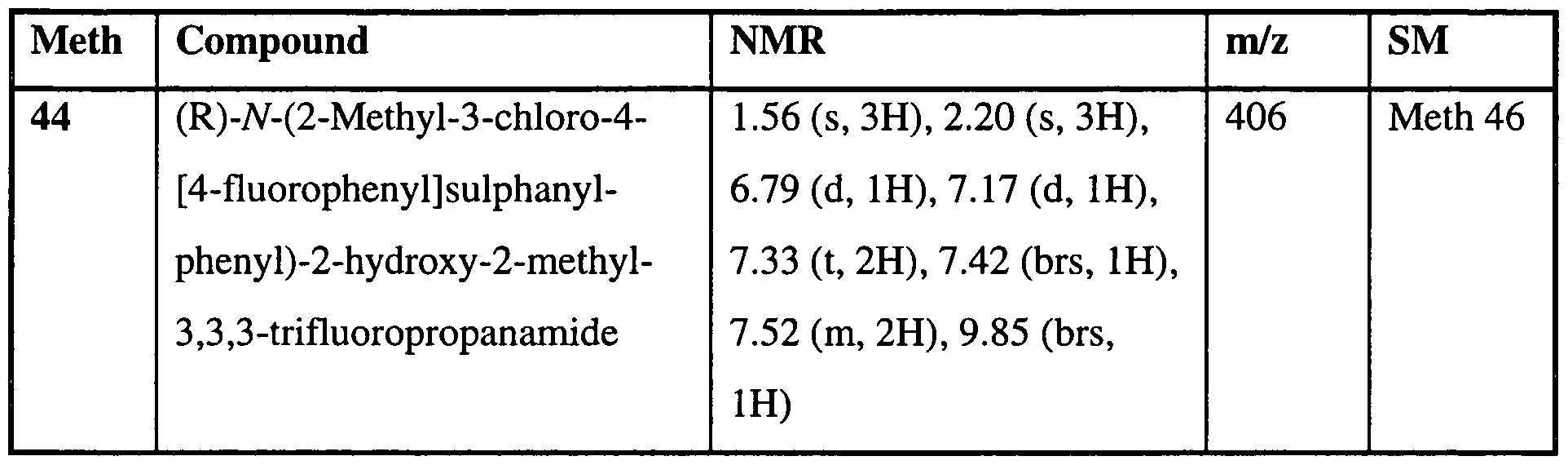
DFPE Request for preliminary examination filed prior to expiration of 19th month from priority date (pct application filed before 20040101)
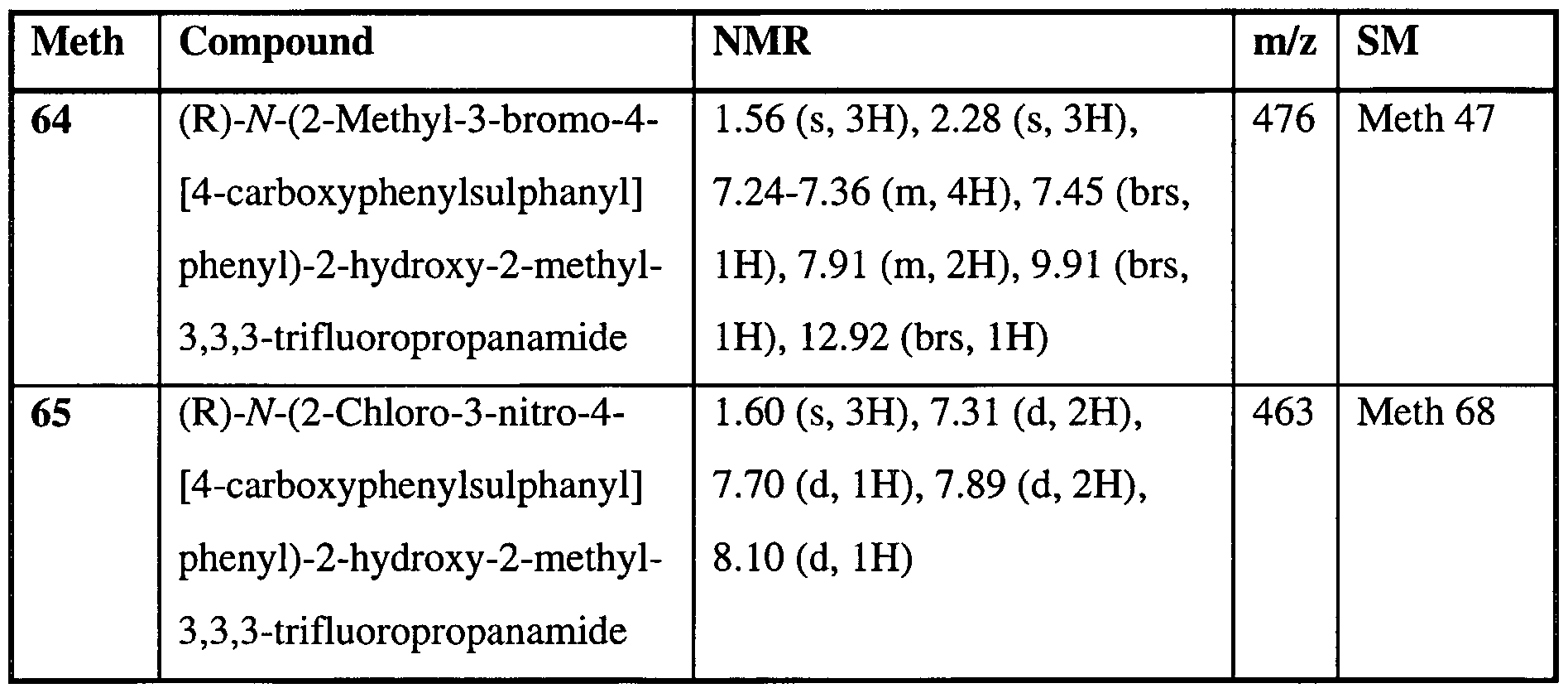
WWE Wipo information: entry into national phase

Ref document number: 2000956672

Country of ref document: EP

Ref document number: 2381581

Country of ref document: CA

Ref document number: 68543/00

Country of ref document: AU

WWE Wipo information: entry into national phase

Ref document number: 148111

Country of ref document: IL

WWE Wipo information: entry into national phase

Ref document number: 517147

Country of ref document: NZ

WWE Wipo information: entry into national phase

Ref document number: 2002/01437

Country of ref document: ZA

Ref document number: 200201437

Country of ref document: ZA

WWE Wipo information: entry into national phase

Ref document number: 3002002

Country of ref document: SK

WWE Wipo information: entry into national phase

Ref document number: PV2002-773

Country of ref document: CZ

WWE Wipo information: entry into national phase

Ref document number: PA/a/2002/002319

Country of ref document: MX

Ref document number: 2002/00550

Country of ref document: TR

WWE Wipo information: entry into national phase

Ref document number: 1020027002841

Country of ref document: KR

ENP Entry into the national phase

Ref document number: 2001 521703

Country of ref document: JP

Kind code of ref document: A

ENP Entry into the national phase

Ref document number: 2000 106520

Country of ref document: BG

Kind code of ref document: A

ENP Entry into the national phase

Ref document number: 2002 2002108508

Country of ref document: RU

Kind code of ref document: A

WWE Wipo information: entry into national phase

Ref document number: 008152446

Country of ref document: CN

WWP Wipo information: published in national office

Ref document number: PV2002-773

Country of ref document: CZ

WWE Wipo information: entry into national phase

Ref document number: 10069994

Country of ref document: US

WWP Wipo information: published in national office

Ref document number: 2000956672

Country of ref document: EP

REG Reference to national code

Ref country code: DE

Ref legal event code: 8642

WWP Wipo information: published in national office

Ref document number: 1020027002841

Country of ref document: KR

WWG Wipo information: grant in national office

Ref document number: 68543/00

Country of ref document: AU

WWP Wipo information: published in national office

Ref document number: 517147

Country of ref document: NZ

WWG Wipo information: grant in national office

Ref document number: 517147

Country of ref document: NZ

WWG Wipo information: grant in national office

Ref document number: 2000956672

Country of ref document: EP

WWE Wipo information: entry into national phase

Ref document number: 224/MUMNP/2005

Country of ref document: IN