WO2001028498A2 - Retro-anandamides, high affinity and stability cannabinoid receptor ligands - Google Patents
Retro-anandamides, high affinity and stability cannabinoid receptor ligands Download PDFInfo
- Publication number
- WO2001028498A2 WO2001028498A2 PCT/US2000/041248 US0041248W WO0128498A2 WO 2001028498 A2 WO2001028498 A2 WO 2001028498A2 US 0041248 W US0041248 W US 0041248W WO 0128498 A2 WO0128498 A2 WO 0128498A2
- Authority
- WO
- WIPO (PCT)
- Prior art keywords
- group
- cannabinoid
- receptor
- anandamide
- analogs
- Prior art date
- Legal status (The legal status is an assumption and is not a legal conclusion. Google has not performed a legal analysis and makes no representation as to the accuracy of the status listed.)
- Ceased
Links
Classifications
-
- C—CHEMISTRY; METALLURGY
- C07—ORGANIC CHEMISTRY
- C07D—HETEROCYCLIC COMPOUNDS
- C07D295/00—Heterocyclic compounds containing polymethylene-imine rings with at least five ring members, 3-azabicyclo [3.2.2] nonane, piperazine, morpholine or thiomorpholine rings, having only hydrogen atoms directly attached to the ring carbon atoms
- C07D295/16—Heterocyclic compounds containing polymethylene-imine rings with at least five ring members, 3-azabicyclo [3.2.2] nonane, piperazine, morpholine or thiomorpholine rings, having only hydrogen atoms directly attached to the ring carbon atoms acylated on ring nitrogen atoms
- C07D295/20—Heterocyclic compounds containing polymethylene-imine rings with at least five ring members, 3-azabicyclo [3.2.2] nonane, piperazine, morpholine or thiomorpholine rings, having only hydrogen atoms directly attached to the ring carbon atoms acylated on ring nitrogen atoms by radicals derived from carbonic acid, or sulfur or nitrogen analogues thereof
- C07D295/215—Radicals derived from nitrogen analogues of carbonic acid
-
- A—HUMAN NECESSITIES
- A61—MEDICAL OR VETERINARY SCIENCE; HYGIENE
- A61P—SPECIFIC THERAPEUTIC ACTIVITY OF CHEMICAL COMPOUNDS OR MEDICINAL PREPARATIONS
- A61P1/00—Drugs for disorders of the alimentary tract or the digestive system
-
- A—HUMAN NECESSITIES
- A61—MEDICAL OR VETERINARY SCIENCE; HYGIENE
- A61P—SPECIFIC THERAPEUTIC ACTIVITY OF CHEMICAL COMPOUNDS OR MEDICINAL PREPARATIONS
- A61P25/00—Drugs for disorders of the nervous system
-
- A—HUMAN NECESSITIES
- A61—MEDICAL OR VETERINARY SCIENCE; HYGIENE
- A61P—SPECIFIC THERAPEUTIC ACTIVITY OF CHEMICAL COMPOUNDS OR MEDICINAL PREPARATIONS
- A61P25/00—Drugs for disorders of the nervous system
- A61P25/02—Drugs for disorders of the nervous system for peripheral neuropathies
-
- A—HUMAN NECESSITIES
- A61—MEDICAL OR VETERINARY SCIENCE; HYGIENE
- A61P—SPECIFIC THERAPEUTIC ACTIVITY OF CHEMICAL COMPOUNDS OR MEDICINAL PREPARATIONS
- A61P25/00—Drugs for disorders of the nervous system
- A61P25/08—Antiepileptics; Anticonvulsants
-
- A—HUMAN NECESSITIES
- A61—MEDICAL OR VETERINARY SCIENCE; HYGIENE
- A61P—SPECIFIC THERAPEUTIC ACTIVITY OF CHEMICAL COMPOUNDS OR MEDICINAL PREPARATIONS
- A61P25/00—Drugs for disorders of the nervous system
- A61P25/14—Drugs for disorders of the nervous system for treating abnormal movements, e.g. chorea, dyskinesia
-
- A—HUMAN NECESSITIES
- A61—MEDICAL OR VETERINARY SCIENCE; HYGIENE
- A61P—SPECIFIC THERAPEUTIC ACTIVITY OF CHEMICAL COMPOUNDS OR MEDICINAL PREPARATIONS
- A61P25/00—Drugs for disorders of the nervous system
- A61P25/14—Drugs for disorders of the nervous system for treating abnormal movements, e.g. chorea, dyskinesia
- A61P25/16—Anti-Parkinson drugs
-
- A—HUMAN NECESSITIES
- A61—MEDICAL OR VETERINARY SCIENCE; HYGIENE
- A61P—SPECIFIC THERAPEUTIC ACTIVITY OF CHEMICAL COMPOUNDS OR MEDICINAL PREPARATIONS
- A61P25/00—Drugs for disorders of the nervous system
- A61P25/28—Drugs for disorders of the nervous system for treating neurodegenerative disorders of the central nervous system, e.g. nootropic agents, cognition enhancers, drugs for treating Alzheimer's disease or other forms of dementia
-
- A—HUMAN NECESSITIES
- A61—MEDICAL OR VETERINARY SCIENCE; HYGIENE
- A61P—SPECIFIC THERAPEUTIC ACTIVITY OF CHEMICAL COMPOUNDS OR MEDICINAL PREPARATIONS
- A61P27/00—Drugs for disorders of the senses
- A61P27/02—Ophthalmic agents
- A61P27/06—Antiglaucoma agents or miotics
-
- A—HUMAN NECESSITIES
- A61—MEDICAL OR VETERINARY SCIENCE; HYGIENE
- A61P—SPECIFIC THERAPEUTIC ACTIVITY OF CHEMICAL COMPOUNDS OR MEDICINAL PREPARATIONS
- A61P31/00—Antiinfectives, i.e. antibiotics, antiseptics, chemotherapeutics
- A61P31/12—Antivirals
- A61P31/14—Antivirals for RNA viruses
- A61P31/18—Antivirals for RNA viruses for HIV
-
- A—HUMAN NECESSITIES
- A61—MEDICAL OR VETERINARY SCIENCE; HYGIENE
- A61P—SPECIFIC THERAPEUTIC ACTIVITY OF CHEMICAL COMPOUNDS OR MEDICINAL PREPARATIONS
- A61P35/00—Antineoplastic agents
-
- A—HUMAN NECESSITIES
- A61—MEDICAL OR VETERINARY SCIENCE; HYGIENE
- A61P—SPECIFIC THERAPEUTIC ACTIVITY OF CHEMICAL COMPOUNDS OR MEDICINAL PREPARATIONS
- A61P43/00—Drugs for specific purposes, not provided for in groups A61P1/00-A61P41/00
-
- A—HUMAN NECESSITIES
- A61—MEDICAL OR VETERINARY SCIENCE; HYGIENE
- A61P—SPECIFIC THERAPEUTIC ACTIVITY OF CHEMICAL COMPOUNDS OR MEDICINAL PREPARATIONS
- A61P9/00—Drugs for disorders of the cardiovascular system
-
- C—CHEMISTRY; METALLURGY
- C07—ORGANIC CHEMISTRY
- C07C—ACYCLIC OR CARBOCYCLIC COMPOUNDS
- C07C233/00—Carboxylic acid amides
- C07C233/01—Carboxylic acid amides having carbon atoms of carboxamide groups bound to hydrogen atoms or to acyclic carbon atoms
- C07C233/02—Carboxylic acid amides having carbon atoms of carboxamide groups bound to hydrogen atoms or to acyclic carbon atoms having nitrogen atoms of carboxamide groups bound to hydrogen atoms or to carbon atoms of unsubstituted hydrocarbon radicals
- C07C233/04—Carboxylic acid amides having carbon atoms of carboxamide groups bound to hydrogen atoms or to acyclic carbon atoms having nitrogen atoms of carboxamide groups bound to hydrogen atoms or to carbon atoms of unsubstituted hydrocarbon radicals with carbon atoms of carboxamide groups bound to acyclic carbon atoms of an acyclic saturated carbon skeleton
- C07C233/05—Carboxylic acid amides having carbon atoms of carboxamide groups bound to hydrogen atoms or to acyclic carbon atoms having nitrogen atoms of carboxamide groups bound to hydrogen atoms or to carbon atoms of unsubstituted hydrocarbon radicals with carbon atoms of carboxamide groups bound to acyclic carbon atoms of an acyclic saturated carbon skeleton having the nitrogen atoms of the carboxamide groups bound to hydrogen atoms or to acyclic carbon atoms
-
- C—CHEMISTRY; METALLURGY
- C07—ORGANIC CHEMISTRY
- C07C—ACYCLIC OR CARBOCYCLIC COMPOUNDS
- C07C233/00—Carboxylic acid amides
- C07C233/01—Carboxylic acid amides having carbon atoms of carboxamide groups bound to hydrogen atoms or to acyclic carbon atoms
- C07C233/02—Carboxylic acid amides having carbon atoms of carboxamide groups bound to hydrogen atoms or to acyclic carbon atoms having nitrogen atoms of carboxamide groups bound to hydrogen atoms or to carbon atoms of unsubstituted hydrocarbon radicals
- C07C233/09—Carboxylic acid amides having carbon atoms of carboxamide groups bound to hydrogen atoms or to acyclic carbon atoms having nitrogen atoms of carboxamide groups bound to hydrogen atoms or to carbon atoms of unsubstituted hydrocarbon radicals with carbon atoms of carboxamide groups bound to carbon atoms of an acyclic unsaturated carbon skeleton
-
- C—CHEMISTRY; METALLURGY
- C07—ORGANIC CHEMISTRY
- C07C—ACYCLIC OR CARBOCYCLIC COMPOUNDS
- C07C233/00—Carboxylic acid amides
- C07C233/64—Carboxylic acid amides having carbon atoms of carboxamide groups bound to carbon atoms of six-membered aromatic rings
- C07C233/65—Carboxylic acid amides having carbon atoms of carboxamide groups bound to carbon atoms of six-membered aromatic rings having the nitrogen atoms of the carboxamide groups bound to hydrogen atoms or to carbon atoms of unsubstituted hydrocarbon radicals
-
- C—CHEMISTRY; METALLURGY
- C07—ORGANIC CHEMISTRY
- C07C—ACYCLIC OR CARBOCYCLIC COMPOUNDS
- C07C235/00—Carboxylic acid amides, the carbon skeleton of the acid part being further substituted by oxygen atoms
- C07C235/02—Carboxylic acid amides, the carbon skeleton of the acid part being further substituted by oxygen atoms having carbon atoms of carboxamide groups bound to acyclic carbon atoms and singly-bound oxygen atoms bound to the same carbon skeleton
- C07C235/04—Carboxylic acid amides, the carbon skeleton of the acid part being further substituted by oxygen atoms having carbon atoms of carboxamide groups bound to acyclic carbon atoms and singly-bound oxygen atoms bound to the same carbon skeleton the carbon skeleton being acyclic and saturated
- C07C235/06—Carboxylic acid amides, the carbon skeleton of the acid part being further substituted by oxygen atoms having carbon atoms of carboxamide groups bound to acyclic carbon atoms and singly-bound oxygen atoms bound to the same carbon skeleton the carbon skeleton being acyclic and saturated having the nitrogen atoms of the carboxamide groups bound to hydrogen atoms or to acyclic carbon atoms
-
- C—CHEMISTRY; METALLURGY
- C07—ORGANIC CHEMISTRY
- C07C—ACYCLIC OR CARBOCYCLIC COMPOUNDS
- C07C271/00—Derivatives of carbamic acids, i.e. compounds containing any of the groups, the nitrogen atom not being part of nitro or nitroso groups
- C07C271/06—Esters of carbamic acids
- C07C271/08—Esters of carbamic acids having oxygen atoms of carbamate groups bound to acyclic carbon atoms
- C07C271/10—Esters of carbamic acids having oxygen atoms of carbamate groups bound to acyclic carbon atoms with the nitrogen atoms of the carbamate groups bound to hydrogen atoms or to acyclic carbon atoms
- C07C271/12—Esters of carbamic acids having oxygen atoms of carbamate groups bound to acyclic carbon atoms with the nitrogen atoms of the carbamate groups bound to hydrogen atoms or to acyclic carbon atoms to hydrogen atoms or to carbon atoms of unsubstituted hydrocarbon radicals
-
- C—CHEMISTRY; METALLURGY
- C07—ORGANIC CHEMISTRY
- C07C—ACYCLIC OR CARBOCYCLIC COMPOUNDS
- C07C275/00—Derivatives of urea, i.e. compounds containing any of the groups, the nitrogen atoms not being part of nitro or nitroso groups
- C07C275/04—Derivatives of urea, i.e. compounds containing any of the groups, the nitrogen atoms not being part of nitro or nitroso groups having nitrogen atoms of urea groups bound to acyclic carbon atoms
- C07C275/20—Derivatives of urea, i.e. compounds containing any of the groups, the nitrogen atoms not being part of nitro or nitroso groups having nitrogen atoms of urea groups bound to acyclic carbon atoms of an unsaturated carbon skeleton
Definitions
- the present invention relates generally to cannabinoid analogs and is more particularly concerned with new and improved retro-anandamide cannabinoid analogs exhibiting high binding affinities for cannabinoid receptors, pharmaceutical preparations employing these analogs and methods of administering therapeutically effective amounts of the preparations to provide a physiological effect.
- Classical cannabinoids such as the marijuana derived cannabinoid ⁇ 9 -tetrahydrocannabinol, ( ⁇ 9 -THC) produce their pharmacological effects through interaction with specific cannabinoid receptors in the body.
- CB1 a central receptor found in the mammalian brain and peripheral tissues
- CB2 a peripheral receptor found only in the peripheral tissues.
- Compounds that are agonists or antagonists for one or both of these receptors have been shown to provide a variety of pharmacological effects. See, for example, Pertwee, R.G., Pharmacology of cannabinoid CBl and CB2 receptors, Pharmacol.
- ⁇ 9 -THC also affect cellular membranes, thereby producing undesirable side effects such as drowsiness, impairment of monoamine oxidase function and impairment of non-receptor mediated brain function.
- the addictive and psychotropic properties of some cannabinoids also limit their therapeutic value.
- Arachidonylethanolamide is an endogenous lipid that binds to and activates the CB1 cannabinoid receptor with approximately equal affinity to that of ⁇ 9 -THC.
- Anandamide also exhibits biochemical and pharmacological properties similar to that of ⁇ 9 -THC, albeit with a longer onset time and shorter duration of action.
- an enzyme called "anandamide amidase” hydrolyzes anandamide. It is presumed that the magnitude of action and relatively short duration of action of anandamide is due to a rapid inactivation process consisting of carrier-mediated transport into cells followed by intra- cellular hydrolysis by anandamide amidase.
- anandamide analogues show susceptibility towards enzymatic hydrolysis and/or have low receptor affinity.
- analogs of anandamide possessing high CB1 receptor affinity and/or metabolic stability may offer a rational therapeutic approach to a variety of disease states in which elevation of anandamide analog levels may bring about a more favorable response with fewer side effects and greater metabolic stability than direct activation of CB1 receptors by anandamide.
- novel analogs of anandamide and physiologically acceptable salts thereof possess improved CB1 receptor affinity and selectivity and/or greater metabolic stability than anandamide.
- metabolic stability refers to the resistance to hydrolysis of the subject anandamide analog by anandamide amidase.
- novel analogues described herein should have a longer duration of action then anandamide.
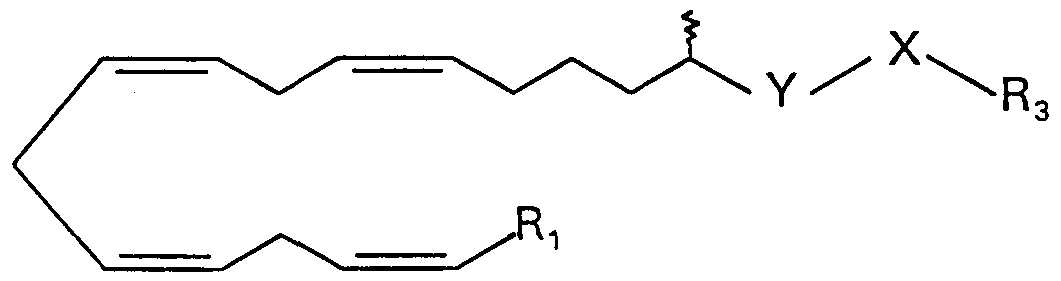
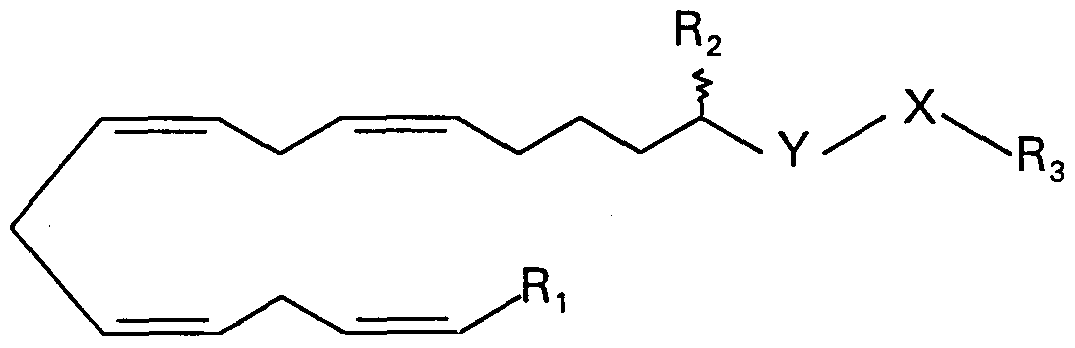
- one aspect of the invention are the analogs of anandamide generally shown in structural formula 1 .
- the novel analogs were prepared by structural modification of anandamide. The modifications were primarily made in the ethanolamido head group and included reversing the positions of the NH and CO groups. Such anandamide analogues wherein the NH and CO group positions are reversed are known as "retro-anandamides".
- X is selected from the group consisting o
- — Z group consisting of (CH 2 ) n , 0, N, and S, an wherein n is a number from 0 to about 7, wherein X, Y and Z are each selected from the group consisting of CH and N,
- R4, R5 and R6 are each selected from he group consisting of halogen, N 3 , NCS, OCH 3 , CH 3 , CH 2 CH 3 , N0 2 , NH 2 and phenyl.
- increased metabolic stability and resistance to enzymatic hydrolysis are achieved by introducing steric bulk in the form of alkyl groups around the amide bond or suitable modification of the amide bond itself.
- inventive anandamide analogues of this invention are metabolicaily stable (i.e., have low or no enzyme turnover) and show significantly higher cannabinoid receptor affinities and selectivities.
- the improved receptor affinity and selectivity and/or metabolic stability create therapeutic uses for the novel analogs.
- novel compounds described herein, and physiologically acceptable salts thereof represent potentially useful materials for providing a physiological effect to treat
- inventive analogs described herein, and physiologically acceptable salts thereof have high potential when administered in therapeutically effective amounts for providing a physiological effect useful to treat pain; peripheral pain; glaucoma; epilepsy; nausea such as associated with cancer chemotherapy; AIDS Wasting Syndrome; cancer; neurodegenerative diseases including Multiple Sclerosis, Parkinson's Disease, Huntington's Chorea and Alzheimer's Disease; to enhance apetite; to reduce fertility; to prevent or reduce diseases associated with motor function such as Tourette's syndrome; to provide neuroprotection; to produce peripheral vasodilation and to suppress memory.
- another aspect of the invention is the administration of a therapeutically effective amount of an inventive compound, or a physiologically acceptable salt thereof, to an individual or animal to provide a physiological effect.
- a "therapeutically effective amount" of a compound is the quantity of a compound which, when administered to an individual or animal, results in a sufficiently high level of that compound in the individual or animal to cause a discernible increase or decrease in stimulation of cannabinoid receptors.
- Physiological effects which result from cannabinoid receptor stimulation include analgesia, decreased nausea resulting from chemotherapy, sedation and increased appetite.
- Other physiological functions include relieving intraocular pressure in glaucoma patients and suppression of the immune system.
- a "therapeutically effective amount" of the compound ranges from about 10 mg/day to about 1 ,000 mg/day.
- an "individual” refers to a human.
- An “animal” refers to, for example, veterinary animals, such as dogs, cats, horses and the like, and farm animals, such as cows, pigs and the like.
- the compound of the present invention can be administered by a variety of known methods, including orally, rectally, or by parenteral routes (e.g., intramuscular, intravenous, subcutaneous, nasal or topical). The form in which the compounds are administered will be determined by the route of administration.
- Such forms include, but are not limited to, capsular and tablet formulations (for oral and rectal administration), liquid formulations (for oral, intravenous, intramuscular or subcutaneous administration) and slow releasing microcarriers (for rectal, intramuscular or intravenous administration).
- the formulations can also contain a physiologically acceptable vehicle and optional adjuvants, flavorings, colorants and preservatives.
- Suitable physiologically to acceptable vehicles may include, for example, saline, sterile water, Ringer's solution, and isotonic sodium chloride solutions.
- the specific dosage level of active ingredient will depend upon a number of factors, including, for example, biological activity of the particular preparation, age, body weight, sex and general health of the individual being treated.
- the inventive retro-anandamides can generally be described with reference to structural formula 1 includes physiologically acceptable salts thereof. structural formula 1
- Y is NH; 0
- X, Y and Z are each selected from the group consisting of CH and N,
- R4, R5 and R6 are each selected from he group consisting of halogen, N 3 , NCS, OCH 3 , CH 3 , CH 2 CH 3 , N0 2 , NH 2 and phenyl
- novel retro-anandamide analogs possess high metabolic stability and/or high CB1 receptor affinity and selectivity.
- the high CB1 receptor affinity and selectivity functions to make these analogs useful for the treatment of at least the previously described conditions when administered to an individual or animal in a therapeutically effective amount without the unwanted side effects that are a result of use of known cannabinoids to stimulate the CB1 and CB2 receptors.
- the high metabolic stability of the novel analogs function to provide a longer lasting effect than is typical of known cannabinoids.
- inventive materials were generally prepared according to scheme 1 below:
- Arachidonyl amine Arachidonyl amine. To a magnetically stirred solution of 2.0 g (6.3 mmol) of arachidonyl azide in 40 mL of dry diethyl ether was added 10 mL of a 1 .0 M solution of lithium aluminum hydride ( 1 0 mmol) in THF dropwise at room temperature. The reaction mixture was refluxed for 3hours (h) and then quenched with wet diethyl ether. The white suspension was filtered, and the filtrate was evaporated to dryness. Chromatography on silica gel (10-50% MeOH in dichloromethane) gave 1 .8 g (98%) as a colorless oil.
- binding affinity is represented by the IC 50 value which is the concentration of an analog required to occupy 50% of the total number (Bmax) of the receptors. The lower the IC 50 value the higher the binding affinity.
- an analog is said to have "binding selectivity” if it has higher binding affinity for one receptor compared to the other receptor; e.g. a cannabinoid analog which has an IC 50 of 0.1 nM for CB1 and 10 nM for CB2, is 100 times more selective for the CB1 receptor.
- the binding affinities (Ki) are expressed in nanomoles (nM) and are listed in TABLE 1 .
- the treated membranes were subsequently used in the binding assay described below. Approximately 30 ⁇ g of PMSF-treated membranes were incubated in silanized 96-well microtiter plate with TME containing 0.1 % essentially fatty acid-free bovine serum albumin (BSA), 0.8 nM [ 3 H] CP-55,940, and various concentrations of anandamide analogues at 30 °C for 1 hour. The samples were filtered using Packard Filtermate 1 96 and Whatman GF/C filterplates and washed with wash buffer (TME containing 0.5% BSA).
- BSA bovine serum albumin
- Radioactivity was detected using MicroScint 20 scintillation cocktail added directly to the dried filterplates, and the filterplates were counted using a Packard Instruments Top-Count. Nonspecific binding was assessed using 100 nM CP- 55,940. Data collected from three independent experiments performed with duplicate determinations was normalized between 100% and 0% specific binding for [ 3 H] CP-55,940, determined using buffer and 1 00 nM CP-55,940. The normalized data was analyzed using a 4-parameter nonlinear logistic equation to yield IC 50 values.
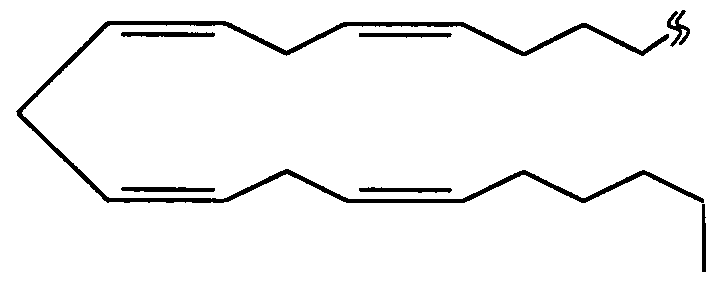
- AA refers to that portion of the anandamide molecule having the structure:
- Experimental preclinical data using a discriminating behavior test shows at least one of the analogs is 20 to 50 times more potent than the endogenous cannabinoid ligand, anandamide.
- Soubrie P SR 141 71 6
- a CBl cannabinoid receptor antagonist selectively reduces sweet food intake in marmoset. Behav. Pharmacol ( 1 998) 9: 1 79-1 81 .
- Brotchie JM Adjuncts to dopamine replacement a pragmatic approach to reducing the problem of dvskinesia in Parkinson's disease. Mov. Disord. (1 998) 1 3:871 -876.
- Terranova J-P Storme J-J Lafon N et al: Improvement of memory in rodents by the selective CB1 cannabinoid receptor antagonist, SR 1 41 71 6.
- inventive analogs described herein, and physiologically acceptable salts thereof have high potential when administered in therapeutically effective amounts for providing a physiological effect useful to treat pain; peripheral pain; glaucoma; epilepsy; nausea such as associated with cancer chemotherapy; AIDS Wasting Syndrome; cancer; neurodegenerative diseases including Multiple Sclerosis, Parkinson's Disease, Huntington's Chorea and Alzheimer's Disease; to enhance apetite; to reduce fertility; to prevent or reduce diseases associated with motor function such as Tourette's syndrome; to provide neuroprotection; to produce peripheral vasodilation and to suppress memory.
- another aspect of the invention is the administration of a therapeutically effective amount of an inventive compound, or a physiologically acceptable salt thereof, to an individual or animal to provide a physiological effect.
Landscapes
- Health & Medical Sciences (AREA)
- Organic Chemistry (AREA)
- Chemical & Material Sciences (AREA)
- Life Sciences & Earth Sciences (AREA)
- Medicinal Chemistry (AREA)
- General Chemical & Material Sciences (AREA)
- Engineering & Computer Science (AREA)
- Nuclear Medicine, Radiotherapy & Molecular Imaging (AREA)
- Chemical Kinetics & Catalysis (AREA)
- Pharmacology & Pharmacy (AREA)
- Bioinformatics & Cheminformatics (AREA)
- Animal Behavior & Ethology (AREA)
- General Health & Medical Sciences (AREA)
- Public Health (AREA)
- Veterinary Medicine (AREA)
- Biomedical Technology (AREA)
- Neurosurgery (AREA)
- Neurology (AREA)
- Psychology (AREA)
- Ophthalmology & Optometry (AREA)
- Virology (AREA)
- Cardiology (AREA)
- Oncology (AREA)
- Communicable Diseases (AREA)
- Heart & Thoracic Surgery (AREA)
- Molecular Biology (AREA)
- Tropical Medicine & Parasitology (AREA)
- Pain & Pain Management (AREA)
- Hospice & Palliative Care (AREA)
- Psychiatry (AREA)
- AIDS & HIV (AREA)
- Acyclic And Carbocyclic Compounds In Medicinal Compositions (AREA)
- Pharmaceuticals Containing Other Organic And Inorganic Compounds (AREA)
- Organic Low-Molecular-Weight Compounds And Preparation Thereof (AREA)
Abstract
Description





Claims


Priority Applications (6)
| Application Number | Priority Date | Filing Date | Title |
|---|---|---|---|
| AU19692/01A AU1969201A (en) | 1999-10-18 | 2000-10-18 | Retro-anandamides, high affinity and stability cannabinoid receptor ligands |
| JP2001531094A JP2003511478A (en) | 1999-10-18 | 2000-10-18 | Retro-anandamide, a high affinity and stable cannabinoid receptor ligand |
| US10/110,862 US7276613B1 (en) | 1998-11-24 | 2000-10-18 | Retro-anandamides, high affinity and stability cannabinoid receptor ligands |
| EP00982697A EP1226112A4 (en) | 1999-10-18 | 2000-10-18 | RETRO ANANDAMID, CANNABINOID RECEPTOR LIGANDS WITH HIGH AFFINITY AND STABILITY |
| MXPA02005102A MXPA02005102A (en) | 1999-10-18 | 2000-10-18 | Retro anandamides, high affinity and stability cannabinoid receptor ligands. |
| CA002387846A CA2387846A1 (en) | 1999-10-18 | 2000-10-18 | Retro-anandamides, high affinity and stability cannabinoid receptor ligands |
Applications Claiming Priority (2)
| Application Number | Priority Date | Filing Date | Title |
|---|---|---|---|
| US16003399P | 1999-10-18 | 1999-10-18 | |
| US60/160,033 | 1999-10-18 |
Publications (2)
| Publication Number | Publication Date |
|---|---|
| WO2001028498A2 true WO2001028498A2 (en) | 2001-04-26 |
| WO2001028498A3 WO2001028498A3 (en) | 2001-09-13 |
Family
ID=22575216
Family Applications (1)
| Application Number | Title | Priority Date | Filing Date |
|---|---|---|---|
| PCT/US2000/041248 Ceased WO2001028498A2 (en) | 1998-11-24 | 2000-10-18 | Retro-anandamides, high affinity and stability cannabinoid receptor ligands |
Country Status (7)
| Country | Link |
|---|---|
| EP (1) | EP1226112A4 (en) |
| JP (1) | JP2003511478A (en) |
| AU (1) | AU1969201A (en) |
| CA (1) | CA2387846A1 (en) |
| MX (1) | MXPA02005102A (en) |
| WO (1) | WO2001028498A2 (en) |
| ZA (1) | ZA200203910B (en) |
Cited By (22)
| Publication number | Priority date | Publication date | Assignee | Title |
|---|---|---|---|---|
| WO2002012167A1 (en) * | 2000-07-28 | 2002-02-14 | Universidad Complutense De Madrid | Novel araquidonic acid derivatives with affinity toward the anandamide transporter |
| ES2181601A1 (en) * | 2001-07-27 | 2003-02-16 | Univ Madrid Complutense | ARACHIDONIC ACID DERIVATIVES AFFINED BY THE ANANDAMIDE CARRIER |
| US6900236B1 (en) | 1999-10-18 | 2005-05-31 | University Of Connecticut | Cannabimimetic indole derivatives |
| US6927219B2 (en) | 2001-11-12 | 2005-08-09 | Pfizer Inc. | N-alkyl-adamantyl triazinyl benzamide derivatives |
| US6939977B2 (en) | 1998-05-04 | 2005-09-06 | The University Of Connecticut | Analgesic and immunomodulatory cannabinoids |
| US6943266B1 (en) | 1999-10-18 | 2005-09-13 | University Of Connecticut | Bicyclic cannabinoid agonists for the cannabinoid receptor |
| US6995187B1 (en) | 1999-10-18 | 2006-02-07 | University Of Connecticut | Peripheral cannabinoid receptor (CB2) selective ligands |
| EP1632236A1 (en) * | 2004-07-26 | 2006-03-08 | University of Connecticut | Inhibitors of the anandamide transporter |
| US7057076B2 (en) | 2001-07-13 | 2006-06-06 | University Of Connecticut | Bicyclic and tricyclic cannabinoids |
| US7057051B2 (en) | 2001-07-20 | 2006-06-06 | Merck & Co., Inc. | Substituted imidazoles as cannabinoid receptor modulators |
| US7071223B1 (en) | 2002-12-31 | 2006-07-04 | Pfizer, Inc. | Benzamide inhibitors of the P2X7 receptor |
| US7161016B1 (en) | 1998-11-24 | 2007-01-09 | University Of Connecticut | Cannabimimetic lipid amides as useful medications |
| US7176202B2 (en) | 2002-12-31 | 2007-02-13 | Pfizer Inc. | Benzamide inhibitors of the P2X7 receptor |
| US7183313B2 (en) | 2002-08-23 | 2007-02-27 | University Of Connecticut | Keto cannabinoids with therapeutic indications |
| US7214677B2 (en) | 2001-11-12 | 2007-05-08 | Pfizer Inc. | Benzamide, heteroarylamide and reverse amides |
| US7235657B2 (en) | 2004-06-29 | 2007-06-26 | Pfizer Inc. | Methods for preparing P2X7 inhibitors |
| US7276613B1 (en) | 1998-11-24 | 2007-10-02 | University Of Connecticut | Retro-anandamides, high affinity and stability cannabinoid receptor ligands |
| US7329651B2 (en) | 2001-01-26 | 2008-02-12 | University Of Connecticut | Cannabimimetic ligands |
| US7351729B2 (en) | 2002-03-08 | 2008-04-01 | Signal Pharmaceuticals, Llc | JNK inhibitors for use in combination therapy for treating or managing proliferative disorders and cancers |
| EP2020850A4 (en) * | 2006-05-01 | 2010-10-13 | Eastern Virginia Med School | NEW CANNABINOIDS AND METHODS OF USE |
| US7897598B2 (en) | 1998-06-09 | 2011-03-01 | Alexandros Makriyannis | Inhibitors of the anandamide transporter |
| WO2012104793A1 (en) * | 2011-02-02 | 2012-08-09 | Indian Council Of Medical Research | An antibacterial and antiviral compound |
Families Citing this family (4)
| Publication number | Priority date | Publication date | Assignee | Title |
|---|---|---|---|---|
| US7119108B1 (en) | 1999-10-18 | 2006-10-10 | University Of Connecticut | Pyrazole derivatives as cannabinoid receptor antagonists |
| US7393842B2 (en) | 2001-08-31 | 2008-07-01 | University Of Connecticut | Pyrazole analogs acting on cannabinoid receptors |
| WO2002060447A1 (en) | 2001-01-29 | 2002-08-08 | University Of Connecticut | Receptor selective cannabimimetic aminoalkylindoles |
| FR2885364B1 (en) * | 2005-05-03 | 2007-06-29 | Sanofi Aventis Sa | ALKYL-, ALKENYL- AND ALKYNYLCARBAMATES DERIVATIVES, THEIR PREPARATION AND THEIR THERAPEUTIC APPLICATION |
Family Cites Families (4)
| Publication number | Priority date | Publication date | Assignee | Title |
|---|---|---|---|---|
| JPS61126069A (en) * | 1984-11-21 | 1986-06-13 | Res Dev Corp Of Japan | Prostaglandin derivative |
| US5618955A (en) * | 1992-11-30 | 1997-04-08 | Yissum Research Development Company Of The Hebrew University Of Jerusalem | Fatty acid derivatives and pharmaceutical compositions containing same |
| US5688825A (en) * | 1996-05-31 | 1997-11-18 | University Of Connecticut | Anandamide amidase inhibitors as analgesic agents |
| US5925628A (en) * | 1997-03-31 | 1999-07-20 | Genzyme Corporation | Cationic amphiphiles for intracellular delivery of therapeutic molecules |
-
2000
- 2000-10-18 EP EP00982697A patent/EP1226112A4/en not_active Withdrawn
- 2000-10-18 MX MXPA02005102A patent/MXPA02005102A/en unknown
- 2000-10-18 JP JP2001531094A patent/JP2003511478A/en active Pending
- 2000-10-18 AU AU19692/01A patent/AU1969201A/en not_active Abandoned
- 2000-10-18 CA CA002387846A patent/CA2387846A1/en not_active Abandoned
- 2000-10-18 WO PCT/US2000/041248 patent/WO2001028498A2/en not_active Ceased
-
2002
- 2002-05-16 ZA ZA200203910A patent/ZA200203910B/en unknown
Cited By (25)
| Publication number | Priority date | Publication date | Assignee | Title |
|---|---|---|---|---|
| US6939977B2 (en) | 1998-05-04 | 2005-09-06 | The University Of Connecticut | Analgesic and immunomodulatory cannabinoids |
| US7897598B2 (en) | 1998-06-09 | 2011-03-01 | Alexandros Makriyannis | Inhibitors of the anandamide transporter |
| US7161016B1 (en) | 1998-11-24 | 2007-01-09 | University Of Connecticut | Cannabimimetic lipid amides as useful medications |
| US7276613B1 (en) | 1998-11-24 | 2007-10-02 | University Of Connecticut | Retro-anandamides, high affinity and stability cannabinoid receptor ligands |
| US6900236B1 (en) | 1999-10-18 | 2005-05-31 | University Of Connecticut | Cannabimimetic indole derivatives |
| US6943266B1 (en) | 1999-10-18 | 2005-09-13 | University Of Connecticut | Bicyclic cannabinoid agonists for the cannabinoid receptor |
| US6995187B1 (en) | 1999-10-18 | 2006-02-07 | University Of Connecticut | Peripheral cannabinoid receptor (CB2) selective ligands |
| WO2002012167A1 (en) * | 2000-07-28 | 2002-02-14 | Universidad Complutense De Madrid | Novel araquidonic acid derivatives with affinity toward the anandamide transporter |
| US7329651B2 (en) | 2001-01-26 | 2008-02-12 | University Of Connecticut | Cannabimimetic ligands |
| US7057076B2 (en) | 2001-07-13 | 2006-06-06 | University Of Connecticut | Bicyclic and tricyclic cannabinoids |
| US7572785B2 (en) | 2001-07-20 | 2009-08-11 | Merck & Co., Inc. | Substituted imidazoles as cannabinoid receptor modulators |
| US7057051B2 (en) | 2001-07-20 | 2006-06-06 | Merck & Co., Inc. | Substituted imidazoles as cannabinoid receptor modulators |
| ES2181601A1 (en) * | 2001-07-27 | 2003-02-16 | Univ Madrid Complutense | ARACHIDONIC ACID DERIVATIVES AFFINED BY THE ANANDAMIDE CARRIER |
| US6927219B2 (en) | 2001-11-12 | 2005-08-09 | Pfizer Inc. | N-alkyl-adamantyl triazinyl benzamide derivatives |
| US7214677B2 (en) | 2001-11-12 | 2007-05-08 | Pfizer Inc. | Benzamide, heteroarylamide and reverse amides |
| US7235549B2 (en) | 2001-11-12 | 2007-06-26 | Pfizer Inc. | Benzamide, heteroarylamide and reverse amides |
| US7351729B2 (en) | 2002-03-08 | 2008-04-01 | Signal Pharmaceuticals, Llc | JNK inhibitors for use in combination therapy for treating or managing proliferative disorders and cancers |
| US7183313B2 (en) | 2002-08-23 | 2007-02-27 | University Of Connecticut | Keto cannabinoids with therapeutic indications |
| US7407956B2 (en) | 2002-12-31 | 2008-08-05 | Pfizer, Inc. | Benzamide inhibitors of the P2X7 receptor |
| US7176202B2 (en) | 2002-12-31 | 2007-02-13 | Pfizer Inc. | Benzamide inhibitors of the P2X7 receptor |
| US7071223B1 (en) | 2002-12-31 | 2006-07-04 | Pfizer, Inc. | Benzamide inhibitors of the P2X7 receptor |
| US7235657B2 (en) | 2004-06-29 | 2007-06-26 | Pfizer Inc. | Methods for preparing P2X7 inhibitors |
| EP1632236A1 (en) * | 2004-07-26 | 2006-03-08 | University of Connecticut | Inhibitors of the anandamide transporter |
| EP2020850A4 (en) * | 2006-05-01 | 2010-10-13 | Eastern Virginia Med School | NEW CANNABINOIDS AND METHODS OF USE |
| WO2012104793A1 (en) * | 2011-02-02 | 2012-08-09 | Indian Council Of Medical Research | An antibacterial and antiviral compound |
Also Published As
| Publication number | Publication date |
|---|---|
| EP1226112A2 (en) | 2002-07-31 |
| JP2003511478A (en) | 2003-03-25 |
| CA2387846A1 (en) | 2001-04-26 |
| AU1969201A (en) | 2001-04-30 |
| MXPA02005102A (en) | 2003-09-25 |
| WO2001028498A3 (en) | 2001-09-13 |
| ZA200203910B (en) | 2004-01-26 |
| EP1226112A4 (en) | 2004-10-13 |
Similar Documents
| Publication | Publication Date | Title |
|---|---|---|
| WO2001028498A2 (en) | Retro-anandamides, high affinity and stability cannabinoid receptor ligands | |
| EP1224173B1 (en) | Pyrazole derivatives as cannabinoid receptor antagonists | |
| EP1223929B1 (en) | Cannabimimetic indole derivatives | |
| US7119108B1 (en) | Pyrazole derivatives as cannabinoid receptor antagonists | |
| US20080090871A1 (en) | Cannabimimetic indole derivatives | |
| AU785033B2 (en) | Novel bicyclic cannabinoid agonists for the cannabinoid receptor | |
| EP1414775B1 (en) | Bicyclic cannabinoid | |
| EP1363632B1 (en) | Receptor selective cannabimimetic aminoalkylindoles | |
| US20040087590A1 (en) | Novel biphenyl and biphenyl-like cannabinoids | |
| WO2001028329A1 (en) | Peripheral cannabinoid receptor (cb2) selective ligands | |
| US6943266B1 (en) | Bicyclic cannabinoid agonists for the cannabinoid receptor | |
| EP1879856B1 (en) | Alkyl-, alkenyl- and alkynyl carbamate derivatives, the preparation and therapeutic use thereof | |
| US7276613B1 (en) | Retro-anandamides, high affinity and stability cannabinoid receptor ligands | |
| US20060189610A1 (en) | Peripheral cannabinoid receptor (CB2) selective ligands | |
| US7161016B1 (en) | Cannabimimetic lipid amides as useful medications | |
| EP1702617A1 (en) | Cannabimimetic indole derivatives | |
| AU2002235482A1 (en) | Receptor selective cannabimimetic aminoalkylindoles |
Legal Events
| Date | Code | Title | Description |
|---|---|---|---|
| AK | Designated states |
Kind code of ref document: A2 Designated state(s): AE AG AL AM AT AU AZ BA BB BG BR BY BZ CA CH CN CR CU CZ DE DK DM DZ EE ES FI GB GD GE GH GM HR HU ID IL IN IS JP KE KG KP KR KZ LC LK LR LS LT LU LV MA MD MG MK MN MW MX MZ NO NZ PL PT RO RU SD SE SG SI SK SL TJ TM TR TT TZ UA UG US UZ VN YU ZA ZW |
|
| AL | Designated countries for regional patents |
Kind code of ref document: A2 Designated state(s): GH GM KE LS MW MZ SD SL SZ TZ UG ZW AM AZ BY KG KZ MD RU TJ TM AT BE CH CY DE DK ES FI FR GB GR IE IT LU MC NL PT SE BF BJ CF CG CI CM GA GN GW ML MR NE SN TD TG |
|
| 121 | Ep: the epo has been informed by wipo that ep was designated in this application | ||
| AK | Designated states |
Kind code of ref document: A3 Designated state(s): AE AG AL AM AT AU AZ BA BB BG BR BY BZ CA CH CN CR CU CZ DE DK DM DZ EE ES FI GB GD GE GH GM HR HU ID IL IN IS JP KE KG KP KR KZ LC LK LR LS LT LU LV MA MD MG MK MN MW MX MZ NO NZ PL PT RO RU SD SE SG SI SK SL TJ TM TR TT TZ UA UG US UZ VN YU ZA ZW |
|
| AL | Designated countries for regional patents |
Kind code of ref document: A3 Designated state(s): GH GM KE LS MW MZ SD SL SZ TZ UG ZW AM AZ BY KG KZ MD RU TJ TM AT BE CH CY DE DK ES FI FR GB GR IE IT LU MC NL PT SE BF BJ CF CG CI CM GA GN GW ML MR NE SN TD TG |
|
| DFPE | Request for preliminary examination filed prior to expiration of 19th month from priority date (pct application filed before 20040101) | ||
| WWE | Wipo information: entry into national phase |
Ref document number: 2387846 Country of ref document: CA |
|
| ENP | Entry into the national phase |
Ref country code: JP Ref document number: 2001 531094 Kind code of ref document: A Format of ref document f/p: F |
|
| WWE | Wipo information: entry into national phase |
Ref document number: 2000982697 Country of ref document: EP |
|
| WWE | Wipo information: entry into national phase |
Ref document number: 19692/01 Country of ref document: AU |
|
| WWE | Wipo information: entry into national phase |
Ref document number: 2002/03910 Country of ref document: ZA Ref document number: 200203910 Country of ref document: ZA |
|
| WWE | Wipo information: entry into national phase |
Ref document number: PA/a/2002/005102 Country of ref document: MX |
|
| WWP | Wipo information: published in national office |
Ref document number: 2000982697 Country of ref document: EP |
|
| REG | Reference to national code |
Ref country code: DE Ref legal event code: 8642 |
|
| WWW | Wipo information: withdrawn in national office |
Ref document number: 2000982697 Country of ref document: EP |