WO2001051451A2 - Methods for manufacturing betulinic acid - Google Patents
Methods for manufacturing betulinic acid Download PDFInfo
- Publication number
- WO2001051451A2 WO2001051451A2 PCT/US2001/000991 US0100991W WO0151451A2 WO 2001051451 A2 WO2001051451 A2 WO 2001051451A2 US 0100991 W US0100991 W US 0100991W WO 0151451 A2 WO0151451 A2 WO 0151451A2
- Authority
- WO
- WIPO (PCT)
- Prior art keywords
- compound
- formula
- aluminum
- alcoholyzing
- acylating
- Prior art date
- Legal status (The legal status is an assumption and is not a legal conclusion. Google has not performed a legal analysis and makes no representation as to the accuracy of the status listed.)
- Ceased
Links
- 0 CC(C)(C(*)CC1)C(CC2)[C@@]1(C)C(CC1)[C@]2(C)[C@](C)(CC2)C1C(C(CC1)C(C)=C)C21C(O)=O Chemical compound CC(C)(C(*)CC1)C(CC2)[C@@]1(C)C(CC1)[C@]2(C)[C@](C)(CC2)C1C(C(CC1)C(C)=C)C21C(O)=O 0.000 description 3
- FELCJAPFJOPHSD-ZLVAGDTBSA-N CC(C)(C(CC1)[C@](C)(CC2)C(CC3)C1(C)[C@](C)(CC1)C3C(C(CC3)C(C)=C)C13C=O)C2O Chemical compound CC(C)(C(CC1)[C@](C)(CC2)C(CC3)C1(C)[C@](C)(CC1)C3C(C(CC3)C(C)=C)C13C=O)C2O FELCJAPFJOPHSD-ZLVAGDTBSA-N 0.000 description 1
- ICEGILUTUIHZCW-RUVHSFMKSA-N CC(C)(C(CC1)[C@](C)(CC2)C(CC3)[C@]1(C)[C@@]1(C)C3C(C(CC3)C(C)=C)C3(CO)CC1)C2OC(I)=O Chemical compound CC(C)(C(CC1)[C@](C)(CC2)C(CC3)[C@]1(C)[C@@]1(C)C3C(C(CC3)C(C)=C)C3(CO)CC1)C2OC(I)=O ICEGILUTUIHZCW-RUVHSFMKSA-N 0.000 description 1
- SHFAGJDOBVAGDO-ARNNRXSISA-N CC(C)(C(CC1)[C@](C)(CC2)C(CC3)[C@]1(C)[C@@]1(C)C3C(C(CC3)C(C)=C)C3(COC(N3CCC3)=O)CC1)C2OC(I)=O Chemical compound CC(C)(C(CC1)[C@](C)(CC2)C(CC3)[C@]1(C)[C@@]1(C)C3C(C(CC3)C(C)=C)C3(COC(N3CCC3)=O)CC1)C2OC(I)=O SHFAGJDOBVAGDO-ARNNRXSISA-N 0.000 description 1
- QGJZLNKBHJESQX-NKOZZZGKSA-N CC(C)(C(CC1)[C@](C)(CC2)C(CC3)[C@]1(C)[C@](C)(CC1)C3C(C(CC3)C(C)=C)C13C(O)=O)[C@H]2O Chemical compound CC(C)(C(CC1)[C@](C)(CC2)C(CC3)[C@]1(C)[C@](C)(CC1)C3C(C(CC3)C(C)=C)C13C(O)=O)[C@H]2O QGJZLNKBHJESQX-NKOZZZGKSA-N 0.000 description 1
- FELCJAPFJOPHSD-LQHCPYKRSA-N CC(C)(C(CC1)[C@](C)(CC2)C(CC3)[C@]1(C)[C@](C)(CC1)C3C(C(CC3)C(C)=C)C13C=O)C2O Chemical compound CC(C)(C(CC1)[C@](C)(CC2)C(CC3)[C@]1(C)[C@](C)(CC1)C3C(C(CC3)C(C)=C)C13C=O)C2O FELCJAPFJOPHSD-LQHCPYKRSA-N 0.000 description 1
Classifications
-
- C—CHEMISTRY; METALLURGY
- C07—ORGANIC CHEMISTRY
- C07C—ACYCLIC OR CARBOCYCLIC COMPOUNDS
- C07C51/00—Preparation of carboxylic acids or their salts, halides or anhydrides
- C07C51/347—Preparation of carboxylic acids or their salts, halides or anhydrides by reactions not involving formation of carboxyl groups
- C07C51/367—Preparation of carboxylic acids or their salts, halides or anhydrides by reactions not involving formation of carboxyl groups by introduction of functional groups containing oxygen only in singly bound form
-
- C—CHEMISTRY; METALLURGY
- C07—ORGANIC CHEMISTRY
- C07C—ACYCLIC OR CARBOCYCLIC COMPOUNDS
- C07C51/00—Preparation of carboxylic acids or their salts, halides or anhydrides
- C07C51/16—Preparation of carboxylic acids or their salts, halides or anhydrides by oxidation
-
- C—CHEMISTRY; METALLURGY
- C07—ORGANIC CHEMISTRY
- C07C—ACYCLIC OR CARBOCYCLIC COMPOUNDS
- C07C62/00—Compounds having carboxyl groups bound to carbon atoms of rings other than six—membered aromatic rings and containing any of the groups OH, O—metal, —CHO, keto, ether, groups, groups, or groups
- C07C62/30—Unsaturated compounds
- C07C62/32—Unsaturated compounds containing hydroxy or O-metal groups
-
- C—CHEMISTRY; METALLURGY
- C07—ORGANIC CHEMISTRY
- C07C—ACYCLIC OR CARBOCYCLIC COMPOUNDS
- C07C67/00—Preparation of carboxylic acid esters
- C07C67/08—Preparation of carboxylic acid esters by reacting carboxylic acids or symmetrical anhydrides with the hydroxy or O-metal group of organic compounds
-
- C—CHEMISTRY; METALLURGY
- C07—ORGANIC CHEMISTRY
- C07C—ACYCLIC OR CARBOCYCLIC COMPOUNDS
- C07C67/00—Preparation of carboxylic acid esters
- C07C67/14—Preparation of carboxylic acid esters from carboxylic acid halides
-
- C—CHEMISTRY; METALLURGY
- C07—ORGANIC CHEMISTRY
- C07C—ACYCLIC OR CARBOCYCLIC COMPOUNDS
- C07C67/00—Preparation of carboxylic acid esters
- C07C67/28—Preparation of carboxylic acid esters by modifying the hydroxylic moiety of the ester, such modification not being an introduction of an ester group
- C07C67/29—Preparation of carboxylic acid esters by modifying the hydroxylic moiety of the ester, such modification not being an introduction of an ester group by introduction of oxygen-containing functional groups
-
- C—CHEMISTRY; METALLURGY
- C07—ORGANIC CHEMISTRY
- C07C—ACYCLIC OR CARBOCYCLIC COMPOUNDS
- C07C2603/00—Systems containing at least three condensed rings
- C07C2603/02—Ortho- or ortho- and peri-condensed systems
- C07C2603/52—Ortho- or ortho- and peri-condensed systems containing five condensed rings
Definitions
- Betulinic acid is useful as a therapeutic agent.
- Pisha, E. et al., (1995) J. M. Nature Medicine. 1, 1046-1051 disclose that betulinic acid has antitumor activity against melanoma, e.g., MEL-1, MEL-2 and MEL-4.
- Fujioka, T. et al., J. Nat. Prod.. (1994) 57, 243-247 discloses that betulinic acid has anti-HIV activity in H9 lymphocytic cells.
- Betulinic acid can be manufactured from betulin, which is present in large quantities in the outer birch bark of numerous species of birch trees. For example, a single paper mill in northern Minnesota generates nearly 30-70 tons of birch bark per day. Approximately 230,000 tons of birch bark are generated per year. Outer bark of Betula verrucosa (European commercial birth tree) contains nearly 25% betulin (Rainer Ekman, 1983, Horzaba 37, 205-211). The outer bark of Betula paparifera (commercial birch of northern U.S. and Canada) contains nearly 5-18% betulin (see, U.S. Patent Serial No. 09/371298). As such, vast quantities of betulin are available.
- U.S. Patent No. 5,804,575 issued to Pezzuto et al. discloses a five-step process for the synthesis of betulinic acid from betulin. Due to the length of time required to carry out this process and the yield it provides, it is not ideal for the commercial scale (e.g., kilogram) production of betulinic acid. Additionally, the process uses solvents and reagents that are hazardous and expensive, and the disclosed purification steps are not feasible on a commercial scale. The first step in the preparation of betulinic acid from betulin-3 - acetate was described by Ruzichka et al. (Helv. Chim. Acta.. 21, 1706-1715 (1938)).
- the main obstacle for employing this method is the preparation of starting material (i.e., betulin-3 -acetate).
- the selectivity of the hydrolysis of betulin-3, 28-diacetate with potassium hydroxide provided about 60% betulin-3- acetate.
- the use of magnesium alcoholates (Yao-Chang Xu et al., J. Org. Chem, 61, 9086-9089 (1996)) in the selective deprotection of betulin-3,28- diacetate (Yao-Chang Xu et al, J. Qrg. Chem.. 61, 9086-9089 (1996)) has several serious drawbacks.
- the selectivity of this process is about 81%. Additionally, the cost of magnesium alcoholates is fairly high. As such, this method is not attractive for the commercial scale production of betulinic acid.
- the present invention provides a method for preparing betulinic acid and precursors thereof.
- the methods of the present invention require less time and require reagents that are less expensive, less toxic, or less flammable than known methods for preparing betulinic acid and the precursors thereof.
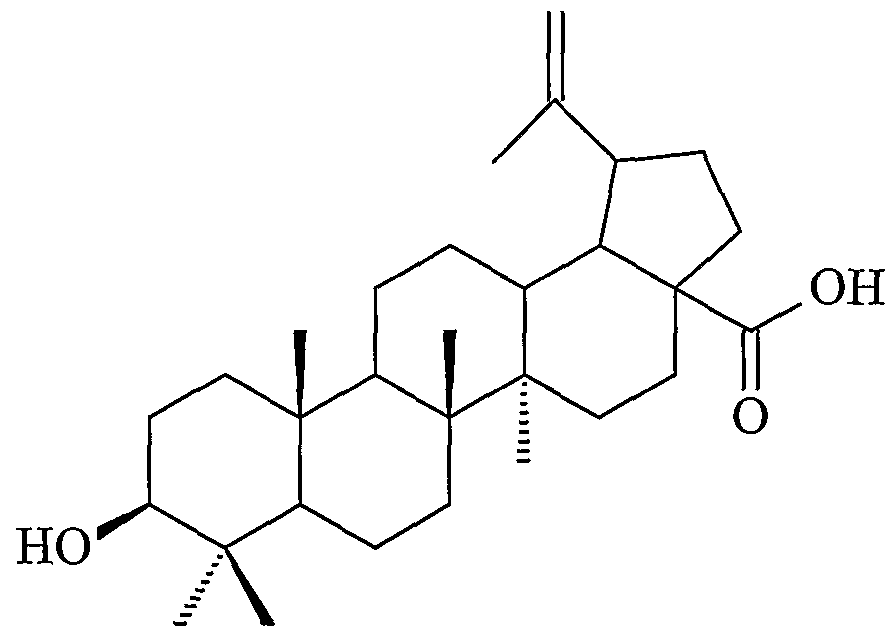
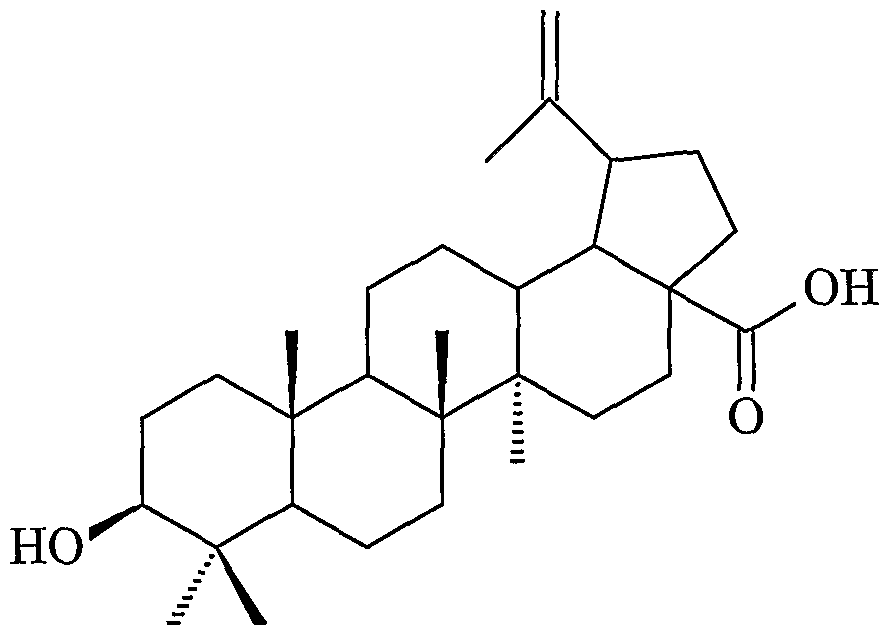
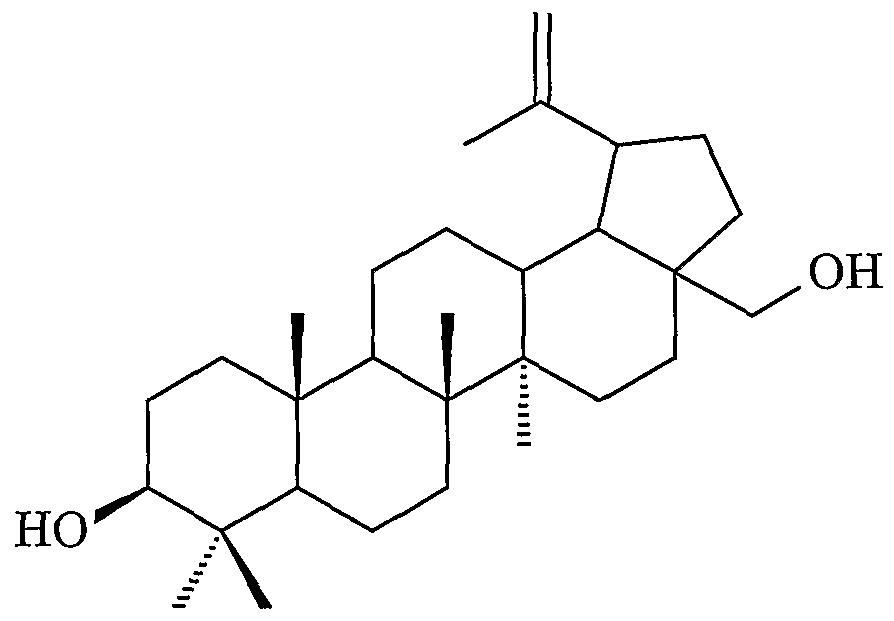
- the present invention provides a process for preparing a compound of formula III
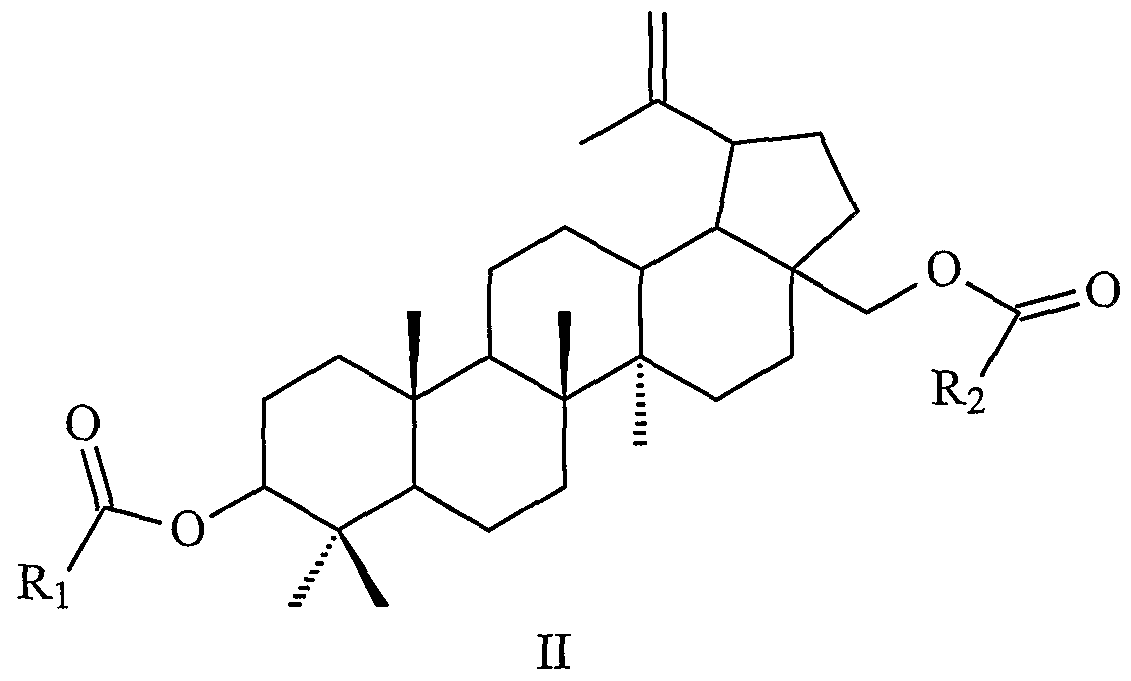
- each R j and R 2 are each independently a suitable organic group.
- the present invention also provides a process for preparing a compound of formula V
- V comprising:
- each K, and R 2 are each independently a suitable organic group
- the present invention also provides a process for preparing a compound of formula V
- tically acceptable salt thereof comprising: (1) acylating a compound of fonnula I
- R j and R 2 are each independently any suitable organic group
- the present invention also provides a process for preparing a compound of formula V
- R, and R 2 are each independently any suitable organic group
- the present invention also provides a process for preparing a compound of formula III
- the invention also provides novel compounds disclosed herein, as well as methods for their synthesis.
- Figure 1 is a schematic illustration of a synthesis of betulinic acid from betulin.
- FIG. 1 Applicant has discovered a process for alcoholyzing the bisprotected alcohol (compound II) to provide the co ⁇ esponding alcohol (compound III).
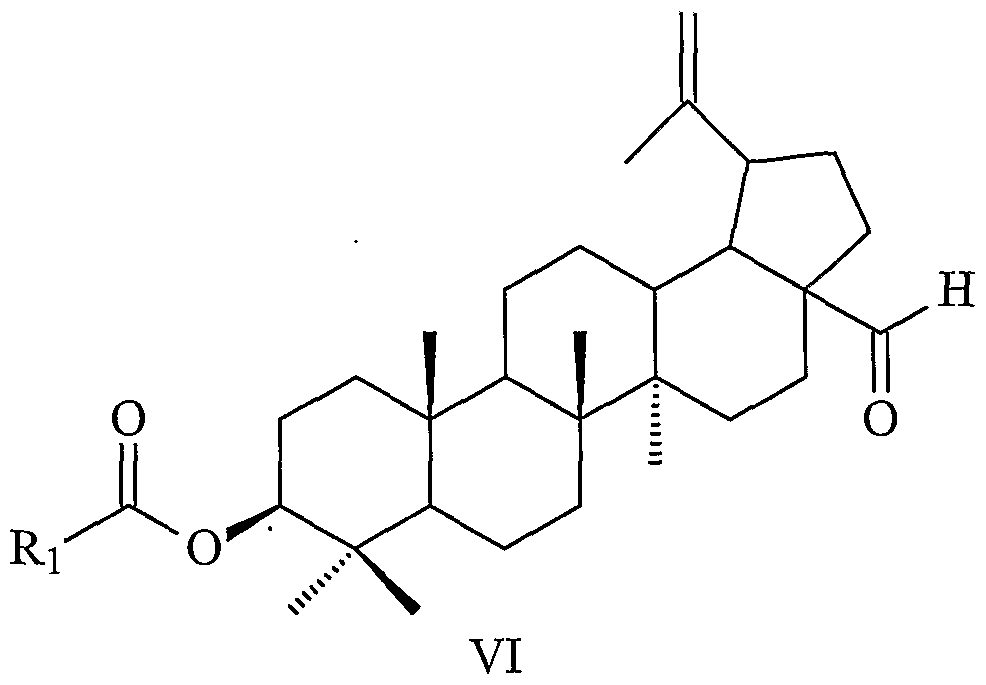
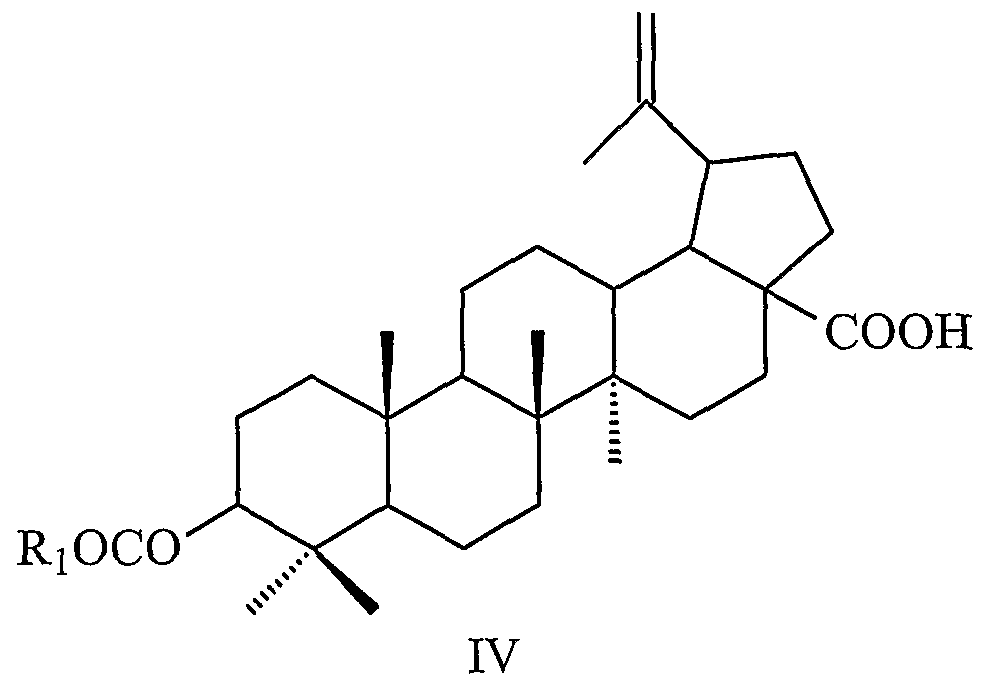
- the alcohol (compound III) can be oxidized to the acid (compound IV) and the acid (compound IV) can be deprotected to betulinic acid (compound V); or the alcohol (compound III) can be oxidized to the aldehyde (compound VI), the aldehyde (compound VI) can be oxidized to the acid (compound IV), and the acid (compound IV) can be deprotected to provide betulinic acid (compound V); or the alcohol (compound III) can be oxidized to the aldehyde (compound VI), the aldehyde (compound VI) can be deprotected to the aldehyde (compound VII), and the aldehyde (compound VII) can be oxidized to betulinic acid (compound V).
- halo is fluoro, chloro, bromo, or iodo.
- Alkyl, alkoxy, alkenyl, alkynyl, etc. denote both straight and branched groups; but reference to an individual radical such as "propyl” embraces only the straight chain radical, a branched chain isomer such as "isopropyl” being specifically refe ⁇ ed to.
- (C 6 -C 10 )aryl denotes a phenyl radical or an ortho-fused bicyclic carbocychc radical having about nine to ten ring atoms in which at least one ring is aromatic.
- Specific and prefe ⁇ ed values listed below for radicals, substituents, and ranges, are for illustration only; they do not exclude other defined values or other values within defined ranges for the radicals and substituents.
- (C r C 10 )alkyl can be methyl, ethyl, propyl, isopropyl, butyl, iso-butyl, sec-butyl, pentyl, 3-pentyl, hexyl, heptyl, octyl, nonyl or decyl;
- (C r C 10 )alkoxy can be methoxy, ethoxy, propoxy, butoxy, iso- butoxy, sec-butoxy, pentoxy, 3-pentoxy, hexyloxy, heptyloxy, octyloxy, nonyloxy, or decyloxy;
- (C 2 -C 10 )alkenyl can be vinyl, allyl, 1-propenyl, 2-propenyl, 1- butenyl, 2-butenyl, 3-butenyl, 1,-pentenyl, 2-pentenyl, 3-pentenyl, 4-pentenyl, 1- hexenyl, 2-hexenyl, 3-hexenyl, 4-hexenyl, 5-hexenyl, 1-heptenyl, 2-heptenyl, 3- heptenyl, 4-heptenyl, 5-heptenyl, 6-heptenyl, 1-octenyl, 2-octenyl, 3-octenyl, 4- octenyl, 5-octenyl, 6-octenyl, 7-octenyl, 1-nonenyl, 2-nonenyl, 3-nonenyl, 4- nonenyl, 5-nonenyl, 6-nonenyl, 7-nonenyl
- (C 2 -C 10 )alkynyl can be ethynyl, 1-propynyl, 2-propynyl, 1- butynyl, 2-butynyl, 3-butynyl, 1-pentynyl, 2-pentynyl, 3-pentynyl, 4-pentynyl, 1- hexynyl, 2-hexynyl, 3-hexynyl, 4-hexynyl, 5-hexynyl, 1-heptynyl, 2-heptynyl, 3-heptynyl, 4-heptynyl, 5-heptynyl, 6-heptynyl, 1-octynyl, 2-octynyl, 3-octynyl, 4-octynyl, 5-octynyl, 6-octynyl, 7-octynyl, 1-nonylyl, 2-non
- (C 6 -C 10 )aryl can be phenyl, indenyl or naphthyl
- (C 3 -C 6 )cycloalkyl can be cyclopropyl, cyclobutyl, cyclopentyl, or cyclohexyl.
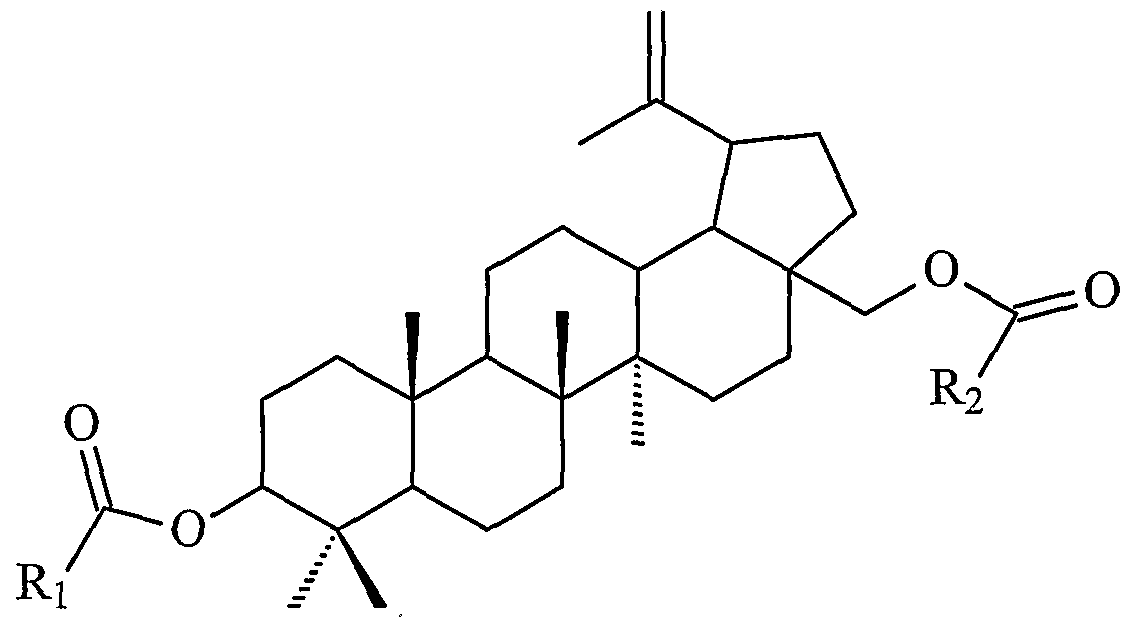
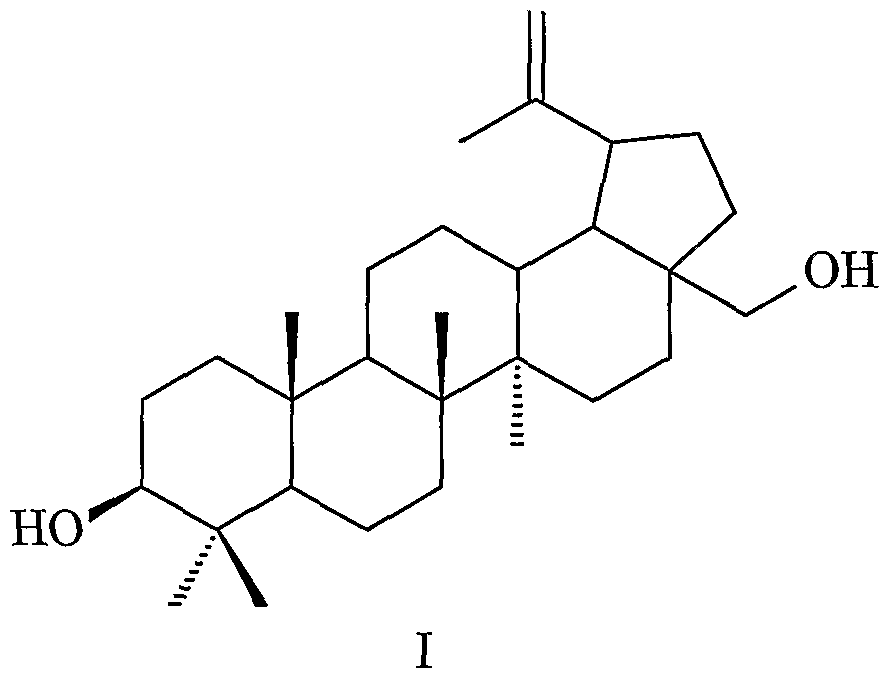
- the alcohol (compound I) can be acylated to provide the bisprotected alcohol (compound II).
- Suitable organic groups include (C x - C 10 )alkyl, (C 2 -C 10 )alkenyl, (C 2 -C 10 )alkynyl, (C 6 -C 10 )aryl, (C r C 10 )alkoxy or (C 6 - C ]0 )aryl(C r C ⁇ 0 )alkyl, wherein any alkyl, alkoxy, alkenyl, alkynyl, aryl or arylalkyl of R x and R 2 can be optionally substituted with one or more halo, nitro, cyano, trifluoromethyl, hydroxy, SR or NRR, wherein each R is independently H or (Ci-Ci 0 )alkyl.
- R 2 and R 2 can each independently be (C,- C 10 )alkyl, (C 2 -C 10 )alkenyl, (C 2 -C 10 )alkynyl, or (C 6 -C 10 )aryl. More specifically, R x and R 2 can independently be (C,-C 10 )alkyl (e.g. methyl).
- the acylation can be carried out employing any suitable acylating reagent (e.g., an acid anhydride, a carboxylic acid, or an acid chloride).
- suitable acid anhydrides include acetic anhydride, benzoyl anhydride, maleic anhydride, phtalic anhydride, and succinic anhydride.
- Suitable carboxylic acids include acetic acid and benzoic acid.
- Suitable acid chlorides include acetyl chloride, pentanoyl chloride and benzoyl chloride.
- the acylation can be carried out employing any suitable alkyl acylate (e.g., alkyl acetate).
- the acylating reagent can be acetic anhydride, acetyl chloride or acetic acid.
- the acylation can be carried out at any suitable temperature that allows for the acylation of both the primary and secondary alcohols. Specifically, the reaction can be carried out at a temperature above about 25°C or above about 70°C. More specifically, the reaction can be carried out at a temperature above about 100°C or above about 118°C.
- the acylation can be carried out in any suitable solvent.
- suitable solvents include ethers, esters, acetone, methylene chloride, chloroform, carbon tetrachloride, THF, dicloromethane, pyridine, and aromatic solvents (e.g., benzene, xylenes, toluene, trifluoromethylbenzene, o- chlorotrifluoromethylbenzene, m-chlorotrifluoromethylbenzene, and p- chlorotrifluoromethylbenzene).
- aromatic solvents e.g., benzene, xylenes, toluene, trifluoromethylbenzene, o- chlorotrifluoromethylbenzene, m-chlorotrifluoromethylbenzene, and p- chlorotrifluoromethylbenzene.
- the acylation can be carried out for any suitable length of time.
- the length of time will vary and depends in part upon the nature and amount of reagents and solvents as well as the temperature of the reaction.
- the acylation can proceed for less than about 10 hours, less than about 7 hours, or less than about 3 hours.
- acylating reagents and reaction conditions are known in the art, for example see Greene, T.W.; Wutz, P.G.M., Protecting Groups In Organic Synthesis, second edition, 1991, New York, John Wiley & sons, Inc and Morrison, R. and Boyd, R., Organic Chemistry. 672-674, third edition, 1977, Boston, Allyn and Bacon.
- the alcohol (compound I) can be acylated to the bisprotected alcohol (compound II) employing acetic anhydride/acetic acid (i.e.,
- the acylation typically provides compound II (i.e., bis acylated compound) and the mono acylated compounds (the compound wherein the primary hydroxyl group is acylated and the secondary hydroxyl group remains unreacted and the compound wherein the secondary hydroxyl group is acylated and the primary hydroxyl group remains unreacted) in a ratio of about 90:10, and preferably in a ratio of at least about 95 : 5, or in a ratio of at least about 98 :2.
- the bisprotected alcohol (compound II) can be alcoholyzed to provide the alcohol (compound III).
- alcoholyzed includes removing a primary acyl group to provide a primary hydroxyl group, while a secondary acyl group present on the same compound is not removed to any appreciable degree.
- the alcoholysis of a compound containing both a primary acyl group and a secondary acyl group can provide a mixture of compounds (e.g., the compound wherein the primary acyl group, but not the secondary acyl group, is alcoholyzed; the compound wherein both the primary and secondary acyl groups are alcoholyzed; and the compound wherein the secondary acyl group, but not the primary acyl group, is alcoholyzed).
- the alcoholysis typically provides the compound wherein the primary acyl group, but not the secondary acyl group, is alcoholyzed and the compound wherein both the primary and secondary acyl groups are alcoholyzed, in a ratio of about 80:20, and preferably in a ratio of at least about 90:10, or in a ratio of at least about 95:5.
- the alcoholysis can be carried out employing any suitable .
- aluminum alkoxide e.g., aluminum methoxide, aluminum ethoxide, aluminum isopropoxide, or aluminum butoxide.
- aluminum alkoxide is Al(O-R) 3 wherein R 3 is (C r C 10 )alkyl, (C 2 -C 10 )alkenyl, or (C 2 -C 10 )alkynyl.
- a specific aluminum alkoxide is aluminum methoxide Al(OMe) 3 , aluminum ethoxide Al(OEt) 3 , aluminum isopropoxide Al(O-iso-propyl) 3 , aluminum n-propoxide Al(0-n-propyl) 3 , aluminum sec-butoxide Al(0-sec- butyl) 3 , or aluminum tert-butoxide Al(O-tert-butyl) 3 .
- aluminum alkoxide is aluminum isopropoxide Al(O-iso-propyl) 3 , as illustrated in the Examples.
- the alcoholysis can be carried out in any suitable solvent (e.g., an anhydrous alcohol).
- suitable solvent e.g., an anhydrous alcohol.
- Particular alcohols for use in the present invention will typically have between about 1 and about 10 carbon atoms; can be cyclic or aliphatic; can be saturated or unsaturated; and can be branched or straight- chained.
- Specific alcohols suitable for use in the present invention include methanol, ethanol, tert-butanol, and iso-propanol.
- the alcohol can be anhydrous.
- anhydrous refers to the alcohol not having a significant amount of water (e.g., less than about 5 wt.% water, less than about 1.0 wt.% water, less than about 0.1 wt.% water, or less than about 0.05 wt.% water).
- the alcohol can be iso-propanol, as illustrated in the Examples. More specifically, from an environmental or recycling point of view, the same alcohol from which the aluminum alkoxide was prepared can be employed. For example, if aluminum iso-propoxide is employed, isopropanol can be employed as a solvent for alcoholysis.
- the alcoholysis can be carried out at any suitable temperature. Specifically, the alcoholysis can be carried out at a temperature above about 25°C. More specifically, the alcoholysis can be carried out at a temperature above about 50°C or above about 75 °C (i.e., the boiling temperature of the solvent).
- the alcoholysis can be carried out for any suitable length of time, provided the primary acyl group is selectively removed (i.e., the primary acyl group is removed to a greater degree than the secondary acyl group). Specifically, the alcoholysis can be carried out for about 0.5 to about 4 hours, for about 1 to about 3 hours, or about 1 to about 2 hours, as illustrated in the Examples.
- an aluminum alkoxide in an anhydrous alcohol will selectively cleave (i.e., selectively alcoholize) the primary acyl group of compound II in the presence of the secondary acyl group.
- the alcoholysis typically provides compound III (i.e., product) and compound II (i.e., starting material) in a ratio of about 80:20, and preferably in a ratio of at least about 90:10, in a ratio of at least about 95:5 or in a ratio of at least 98:2.
- the alcoholysis typically provides compound III and the compound wherein both the primary acyl group and the secondary acyl group of compound II are alcoholyzed, in a ratio of about 80:20, and preferably in a ratio of at least about 90:10, in a ratio at least about 95:5, or in a ratio of at least 98:2.
- the alcohol (compound III) can be oxidized to the aldehyde (compound VI).
- the oxidation can be carried out employing oxalyl chloride (i.e., (COCl) 2 ) in dimethyl sulfoxide (i.e., DMSO) in methylene chloride (i.e., CH 2 C1 2 ).
- the oxidation typically provides compound VI (i.e., product) and compound III (i.e., starting material) in a ratio of about 80:20, and preferably in a ratio of at least about 90: 10, or in a ratio of at least about 95:5.
- the oxidation typically provides compound VI (i.e., product) in a yield of at least about 80%), and preferably at least about 85%>, or at least about 95%), based on starting material (i.e., compound III).
- the oxidation typically provides compound VI (i.e., product) in a yield of at least about 95% if no purification step is necessary.
- the alcohol (compound III) can be oxidized to the aldehyde (compound VI) employing oxygen (i.e., O 2 ) on palladium acetate (i.e., Pd(OAc) 2 ), as illustrated in the Examples.
- the oxidation typically provides compound VI (i.e., product) and compound III (i.e., starting material) in a ratio of about 80:20, and preferably in a ratio of at least about 90:10, or in a ratio of at least about 95:5.
- the oxidation typicaly provides compound VI (i.e., product) in a yield of about 70%, and typically at least about 80%), or at least about 85%, based on starting material (i.e., compound III).
- the oxidation can be carried out at any suitable temperature, provided the alcohol is oxidized to the aldehyde and the secondary acyl group remains intact. Specifically, the oxidation can be carried out at a temperature below about -30°C, below about -40°C, or below about -50°C. More specifically, the oxidation can be ca ⁇ ied out at a temperature between about - 50°C and about -60°C.
- the oxidation can be carried out for any suitable length of time, provided the alcohol is oxidized to the aldehyde and the secondary acyl group remains intact. Specifically, the oxidation can be carried out for about 1 to about 5 hours, for about 1 to about 3 hours, or about 1 to about 2 hours, as illustrated in the Examples.
- the aldehyde (compound VI) can be oxidized to the carboxylic acid (compound IV).
- the carboxylic acid compound IV
- compound IV can be isolated as the free acid, or can be isolated as a salt of the carboxylic acid.
- the salt can be a pharmaceutically acceptable salt.
- Applicant has discovered that the oxidation can be carried out employing oxygen and NHPI (or ABIN or TEMPO) in trifluoromethylbenzene, winch is commercially available as OXSOL 2000® from Occidental Chemical
- NHPI is N-hydroxyphthalimide.
- AIBN is 2,2'-Azobisisobutyronitrile and is commercially available from Aldrich (Milwaukee, WI) and "TEMPO” is 2,2,6,6-tetramethyl-l- piperidinyloxy, fee radical and is commercially available from Aldrich (Milwaukee, WI).
- the oxidation typically provides compound IV (i.e., product) and compound VI (i.e., starting material) in a ratio of about 80:20, and preferably in a ratio of at least about 90:10, or in a ratio of at least about 95:5.
- the oxidation typically provides compound IV (i.e., product) in a yield of about 65%, and preferably at least about 70%, or at least about 80%, based on starting material (i.e., compound VI).
- the aldehyde (compound VI) can be oxidized to the carboxylic acid (compound IV) employing cobalt(III)acetylacetonate (i.e., Co(AcAce) 3 ) trifluoromethylbenzene, and oxygen, as illustrated in the Examples.
- the oxidation typically provides compound IV (i.e., product) and compound VI (i.e., starting material) in a ratio of about 80:20, and preferably in a ratio of at least about 90:10, or in a ratio of at least about 95:5.
- the oxidation typically provides compound IV (i.e., product) in a yield of about 85%), and preferably at least about 90%, or at least about 95%, based on starting material (i.e., compound VI).
- the oxidation can be carried out at any suitable temperature, provided the aldehyde is oxidized to the carboxylic acid and the secondary acyl group remains intact. Specifically, the oxidation can be carried out at a temperature between about 30°C and about 70°C, between about 40°C and about 60°C, or between about 45°C and about 50°C.
- the oxidation can be carried out for any suitable length of time, provided the aldehyde is oxidized to the carboxylic acid and the secondary acyl group remains intact. Specifically, the oxidation can be carried out for about 1 to about 10 hours, for about 4 to about 8 hours, about 5 to about 7 hours, or about 6 hours, as illustrated in the Examples.
- the alcohol (compound III) can be oxidized directly to the carboxylic acid (compound IV).
- the carboxylic acid (compound IV) can be isolated as the free acid, or can be isolated as a salt of the carboxylic acid.
- the salt can be a pharmaceutically acceptable salt.
- the oxidation can be carried out employing any suitable oxidative reagent (see, for example, March, Advanced Organic Chemistry. Reactions. Mechanism and Structure. 2nd Ed., McGraw Hill, 1977, pp. 1107-1108, and references cited therein).
- Suitable oxidative reagents include: l)chromium (IV) oxide (i.e., CrO 3 ) and acetic acid (i.e., HOAc) (J. Am.
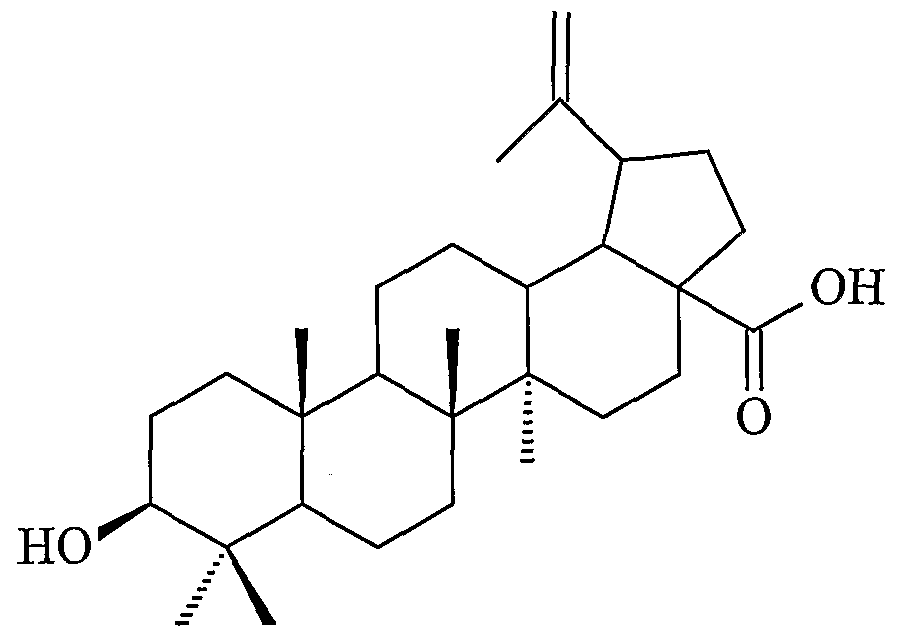
- the acid (compound IV) can be deprotected to provide betulinic acid (compound V).
- Betulinic acid (compound V) can be isolated as the free acid, or can be isolated as a salt of betulinic acid (compound V).
- the salt can be a pharmaceutically acceptable salt. Accordingly, the secondary acyl group can be removed.
- the deprotection can be carried out by hydrolysis.
- the deprotection e.g., hydrolysis
- Suitable acids include mineral acids (e.g., hydrochloric acid, nitric acid, sulfuric acid, and phosphoric acid).
- Suitable bases include metal hydroxides and carbonates (e.g., calcium carbonate and potassium carbonate).
- Suitable metal hydroxides include alkaline hydroxides (e.g., lithium hydroxide, sodium hydroxide and potassium hydroxide) and alkaline earth metal hydroxides (e.g., magnesium hydroxide and calcium hydroxide).
- the hydrolysis can be carried out using sodium hydroxide in methanol, as illustrated in the Examples.
- the deprotection can be carried out in any suitable solvent.
- suitable solvents include an aqueous alcohol solution (i.e., alcohol and water) wherein alcohol is described hereinabove.
- the deprotection can be carried out at any suitable temperature that allows for the deprotection of the secondary acyl group.
- the deprotection can be carried out at a temperature above about 25°C, above about 50°C or above about 65°C. More specifically, the deprotection can be carried out at the boiling point of the solvent (e.g., if the solvent is methanol and water, the deprotection can be carried out at a temperature of about 105°C to about 120°C).
- the deprotection can be carried out for any suitable length of time. Specifically, the deprotection can be carried out for about 1 to about 24 hours, for about 1 to about 10 hours, or for about 1 to about 3 hours, as illustrated in the Examples.
- the one-pot process is faster and less expensive than known methods.
- the monoprotected alcohol (compound HI) can be oxidized to the acid (compound IV) which can be deprotected to betulinic acid (compound V).
- the monoprotected alcohol (compound III) can be oxidized to the aldehyde (compound VI), and the aldehyde (compound VI) can be oxidized to the acid (compound IV), and deprotected to betulinic acid (compound V). All of the procedures described herein above and illustrated in the Examples herein below can be scaled up to industrial scale (i.e., kilogram).
- Betulin was obtained from outer birch bark employing the methods as disclosed in co-pending U.S. Application Number 09/371,298; Elkman, R., (1983) Holzforsch. 37, 205; Ohara, S., et al, (1986) Mokuza Gakkaishi. 32, 266; and Eckerman, C, (1985) Paperi ia Puu. No. 3, 100.
- Isopropanol i.e., z-PrOH
- powdered aluminum isopropoxide i.e., Al (O-t-Pr) 3
- Isopropyl alcohol was then removed under reduced pressure (100 mm Hg) at 30-33 °C.
- the resulting white-orange crystals were dissolved in dichloromethane (1 L) and water (60 ml) was added to the solution. After stirring (10-15 minutes) the precipitated material was filtered, extracted with dichloromethane (4x200 ml) and dried over sodium sulfate (10 g).
- Oxalyl chloride (7.86 g, 62 mmol) in trifluoromethylbenzene (250 ml) was placed in a round bottom two-neck flask (2 L). After cooling to -30 to - 35 °C (i-PrOH-dry ice bath) and with efficient stirring was added dimethylsulfoxide (6.44 g, 83 mmol) in trifluoromethylbenzene (250 ml) drop- wise over 5 to 10 minutes. The mixture was sti ⁇ ed for an additional 5-10 minutes (until gas evolution stops). Powdered 3-O-acetyl-betulin (III) (40 g, 41 mmol) was then added. The resulting mixture was allowed to stand for 45 minutes.
- Palladium acetate i.e., Pd(OAc) 2
- trifluoromethylbenzene 500 ml
- Pyridine 158 mg, 2 mmol
- MS3A i.e., molecular sieves, 3 A
- the mixture was heated to 80 to 85 °C and oxygen was . purged for 10 minutes.
- Betulin-3 -acetate (III) (powdered) (4.84 g, 10 mmol) was added and oxygen was passed through the system at 80 to 85 °C for 1.5 hours.
- Betulinic aldehyde-3 -acetate (VI) (3 g, 62.15 mmol) was dissolved in trifluoromethylbenzene (120 ml) and then was placed into a two- neck round bottom flask (250 ml). Methanol (1.2 ml) and NHPI (53 mg, 0.32 mmol) was added to the solution. Oxygen was bubbled through the solution at 15 to 20 ° C for 2 hours. The reaction mixture was poured into cold water (50 ml) and extracted with trifluoromethylbenzene (2x20 ml). The combined organic fractions were washed with 1% aqueous solution of sodium bicarbonate until the water layer was colorless (4x30 ml).
- Betulinic aldehyde-3 -acetate (VI) (1.455 g, 30.14 mmol) in trifluoromethylbenzene (150 ml) was placed into a round bottom two-neck flask (300 ml).
- Trifluoromethylbenzene was evaporated under reduced pressure 20 mm Hg, at 40 °C) and sodium hydroxide (0.82 g, 0.0205 mol) in MeOH (100 ml) was added and the mixture boiled for 1.5 hours.
- Betulinic acid-3 -acetate (IV) (0.5 g, 1.003 mmol) was refluxed in methanol (50 ml) containing sodium hydroxide (0.3 g, 7.5 mmol) for 1 hour. The reaction mixture was then diluted with 100 ml of water and filtered to provide a white residue. The white residue was crystallized (methanol-hexanes) to provide white crystals (0.420 g, 92%) of betulinic acid (V). mp. 290.1- 293.4°C [lit.
Landscapes
- Chemical & Material Sciences (AREA)
- Organic Chemistry (AREA)
- Engineering & Computer Science (AREA)
- Oil, Petroleum & Natural Gas (AREA)
- Chemical Kinetics & Catalysis (AREA)
- Organic Low-Molecular-Weight Compounds And Preparation Thereof (AREA)
- Steroid Compounds (AREA)
Abstract
Description





Claims











Priority Applications (7)
| Application Number | Priority Date | Filing Date | Title |
|---|---|---|---|
| DE60120352T DE60120352T2 (en) | 2000-01-11 | 2001-01-11 | PROCESS FOR THE INDUSTRIAL MANUFACTURE OF BETULIN ACIDS |
| CA002396574A CA2396574A1 (en) | 2000-01-11 | 2001-01-11 | Methods for manufacturing betulinic acid |
| JP2001551833A JP2003519674A (en) | 2000-01-11 | 2001-01-11 | Method for producing betulinic acid |
| EP01942354A EP1248766B1 (en) | 2000-01-11 | 2001-01-11 | Methods for manufacturing betulinic acid |
| AU57896/01A AU5789601A (en) | 2000-01-11 | 2001-01-11 | Methods for manufacturing betulinic acid |
| NO20023276A NO20023276L (en) | 2000-01-11 | 2002-07-05 | Methods of Preparation of Betulinic Acid |
| US10/194,924 US20030073858A1 (en) | 2001-01-11 | 2002-07-11 | Methods for manufacturing betulinic acid |
Applications Claiming Priority (2)
| Application Number | Priority Date | Filing Date | Title |
|---|---|---|---|
| US09/480,406 US6232481B1 (en) | 2000-01-11 | 2000-01-11 | Method for manufacturing betulinic acid |
| US09/480,406 | 2000-01-11 |
Related Child Applications (1)
| Application Number | Title | Priority Date | Filing Date |
|---|---|---|---|
| US10/194,924 Continuation US20030073858A1 (en) | 2001-01-11 | 2002-07-11 | Methods for manufacturing betulinic acid |
Publications (2)
| Publication Number | Publication Date |
|---|---|
| WO2001051451A2 true WO2001051451A2 (en) | 2001-07-19 |
| WO2001051451A3 WO2001051451A3 (en) | 2002-03-07 |
Family
ID=23907841
Family Applications (1)
| Application Number | Title | Priority Date | Filing Date |
|---|---|---|---|
| PCT/US2001/000991 Ceased WO2001051451A2 (en) | 2000-01-11 | 2001-01-11 | Methods for manufacturing betulinic acid |
Country Status (10)
| Country | Link |
|---|---|
| US (4) | US6232481B1 (en) |
| EP (1) | EP1248766B1 (en) |
| JP (1) | JP2003519674A (en) |
| AT (1) | ATE328862T1 (en) |
| AU (1) | AU5789601A (en) |
| CA (1) | CA2396574A1 (en) |
| DE (1) | DE60120352T2 (en) |
| ES (1) | ES2264694T3 (en) |
| NO (1) | NO20023276L (en) |
| WO (1) | WO2001051451A2 (en) |
Cited By (2)
| Publication number | Priority date | Publication date | Assignee | Title |
|---|---|---|---|---|
| WO2006105354A1 (en) * | 2005-03-29 | 2006-10-05 | Regents Of The University Of Minnesota | Selective oxidation of triterpenes employing tempo |
| WO2006105356A3 (en) * | 2005-03-29 | 2006-11-23 | Univ Minnesota | Methods of manufacturing bioactive 3-esters of betulinic aldehyde and betulinic acid |
Families Citing this family (12)
| Publication number | Priority date | Publication date | Assignee | Title |
|---|---|---|---|---|
| US6232481B1 (en) * | 2000-01-11 | 2001-05-15 | Regents Of The University Of Minnesota | Method for manufacturing betulinic acid |
| US7407480B2 (en) * | 2001-07-27 | 2008-08-05 | Ams Research Corporation | Method and apparatus for correction of urinary and gynecological pathologies, including treatment of incontinence cystocele |
| RU2246500C1 (en) * | 2003-06-24 | 2005-02-20 | Институт химии и химической технологии СО РАН (ИХХТ СО РАН) | Method for preparing betulinic acid |
| US20080308426A1 (en) * | 2005-03-29 | 2008-12-18 | Krasutsky Pavel A | Electrochemical Method for the Production of Betulin Aldehyde |
| WO2006133314A2 (en) * | 2005-06-08 | 2006-12-14 | Regents Of The University Of Minnesota | Synthesis of betulonic and betulinic aldehydes |
| EP2018175A4 (en) * | 2006-04-18 | 2009-12-23 | Univ Minnesota | EXTRACTION BY DEPOLYMERIZATION OF COMPOUNDS FROM BIRCH BARK |
| KR100941595B1 (en) * | 2008-06-05 | 2010-02-11 | 주식회사 알앤엘바이오 | Triterpenoid compounds useful as virus inhibitors |
| CN101302244B (en) * | 2008-06-06 | 2011-04-13 | 东北林业大学 | Production process of betulinic acid |
| CN102399255B (en) * | 2010-09-09 | 2015-04-15 | 东北林业大学 | Preparation method for betulinic acid |
| RU2560710C1 (en) * | 2014-10-30 | 2015-08-20 | Федеральное Государственное Бюджетное Учреждение Науки Институт Химии И Химической Технологии Сибирского Отделения Российской Академии Наук (Иххт Со Ран) | Method for producing betulin 3-acetate-28-sulphate derivatives |
| PL227790B1 (en) | 2015-08-13 | 2018-01-31 | Slaski Univ Medyczny W Katowicach | Phosphonates of acetylene derivatives of betulin with antitumour effects, method for producing them and applications |
| CN110577470B (en) * | 2019-10-09 | 2022-12-27 | 蚌埠学院 | Method for catalyzing selective nitration of 2-naphthyl methyl ether by using zeolite molecular sieve |
Family Cites Families (4)
| Publication number | Priority date | Publication date | Assignee | Title |
|---|---|---|---|---|
| TW212790B (en) | 1991-10-15 | 1993-09-11 | Ciba Geigy Ag | |
| US5804575A (en) | 1997-03-27 | 1998-09-08 | The Board Of Trustees Of The University Of Illinois | Methods of manufacturing betulinic acid |
| NZ506623A (en) * | 1998-03-02 | 2002-10-25 | Univ North Carolina | Acylated betulin and dihydrobetulin derivatives, preparation thereof and use in treatment of retroviral infections |
| US6232481B1 (en) * | 2000-01-11 | 2001-05-15 | Regents Of The University Of Minnesota | Method for manufacturing betulinic acid |
-
2000
- 2000-01-11 US US09/480,406 patent/US6232481B1/en not_active Expired - Lifetime
-
2001
- 2001-01-11 AU AU57896/01A patent/AU5789601A/en not_active Abandoned
- 2001-01-11 WO PCT/US2001/000991 patent/WO2001051451A2/en not_active Ceased
- 2001-01-11 JP JP2001551833A patent/JP2003519674A/en not_active Withdrawn
- 2001-01-11 ES ES01942354T patent/ES2264694T3/en not_active Expired - Lifetime
- 2001-01-11 AT AT01942354T patent/ATE328862T1/en not_active IP Right Cessation
- 2001-01-11 CA CA002396574A patent/CA2396574A1/en not_active Abandoned
- 2001-01-11 EP EP01942354A patent/EP1248766B1/en not_active Expired - Lifetime
- 2001-01-11 DE DE60120352T patent/DE60120352T2/en not_active Expired - Fee Related
- 2001-01-16 US US09/761,351 patent/US6271405B2/en not_active Expired - Lifetime
- 2001-04-23 US US09/840,627 patent/US6867314B2/en not_active Expired - Lifetime
- 2001-06-29 US US09/896,803 patent/US6407270B1/en not_active Expired - Lifetime
-
2002
- 2002-07-05 NO NO20023276A patent/NO20023276L/en unknown
Cited By (2)
| Publication number | Priority date | Publication date | Assignee | Title |
|---|---|---|---|---|
| WO2006105354A1 (en) * | 2005-03-29 | 2006-10-05 | Regents Of The University Of Minnesota | Selective oxidation of triterpenes employing tempo |
| WO2006105356A3 (en) * | 2005-03-29 | 2006-11-23 | Univ Minnesota | Methods of manufacturing bioactive 3-esters of betulinic aldehyde and betulinic acid |
Also Published As
| Publication number | Publication date |
|---|---|
| AU5789601A (en) | 2001-07-24 |
| CA2396574A1 (en) | 2001-07-19 |
| JP2003519674A (en) | 2003-06-24 |
| NO20023276D0 (en) | 2002-07-05 |
| ES2264694T3 (en) | 2007-01-16 |
| US6232481B1 (en) | 2001-05-15 |
| ATE328862T1 (en) | 2006-06-15 |
| US6407270B1 (en) | 2002-06-18 |
| DE60120352D1 (en) | 2006-07-20 |
| US6867314B2 (en) | 2005-03-15 |
| NO20023276L (en) | 2002-09-09 |
| US6271405B2 (en) | 2001-08-07 |
| US20020028960A1 (en) | 2002-03-07 |
| DE60120352T2 (en) | 2007-04-26 |
| US20010007908A1 (en) | 2001-07-12 |
| EP1248766B1 (en) | 2006-06-07 |
| US20020016482A1 (en) | 2002-02-07 |
| WO2001051451A3 (en) | 2002-03-07 |
| EP1248766A2 (en) | 2002-10-16 |
Similar Documents
| Publication | Publication Date | Title |
|---|---|---|
| EP1248766B1 (en) | Methods for manufacturing betulinic acid | |
| US4395423A (en) | Polycyclic cyanoketones | |
| US2730525A (en) | 9:11-oxido steroids | |
| US20030073858A1 (en) | Methods for manufacturing betulinic acid | |
| JPS5928560B2 (en) | Method for producing D-homosteroid | |
| US2734897A (en) | Chacoo | |
| US3313809A (en) | Steroido[21, 20-d]isoxazoles | |
| JPH0276896A (en) | Steroid compound and production thereof | |
| US3210406A (en) | A-norandrostenes and preparation thereof | |
| JPS5837320B2 (en) | Pregnancy information | |
| US2767155A (en) | Cortical hormones | |
| US2750381A (en) | Steroid alkali-metal enolates | |
| US2397656A (en) | Derivatives of the cyclopentanoperhydrophenanthrene series and process of making same | |
| US2408832A (en) | Pseudokryptogenin and its diacetate | |
| US2837538A (en) | 17-thioandrostadienes | |
| Hanson et al. | Allylic acetoxylation of Δ5-steroids at C-4 | |
| DE2064859C3 (en) | New 6 a -fluoro-16 a, 18-dimethyl-l, 4-pregnadiene-3,20-dione derivatives, processes for their preparation and pharmaceuticals containing them | |
| US2688624A (en) | Tribromosteroids | |
| GB1575494A (en) | Triterpene derivatives | |
| US3253003A (en) | deta4, 6-pregnadienes | |
| US3035048A (en) | Lower alkyl-3(n-pyrrolidyl)-12alpha-fluorodelta3, 5, 17(20)-pregnatrienes and process for the production thereof | |
| Kato et al. | Studies on Ketene and Its Derivatives. XLI. Reaction of α-Aminoketone with Diketene | |
| US3622619A (en) | Biphenyl compounds | |
| US2606198A (en) | Halosteroid alcohols and preparation of same | |
| US3136758A (en) | Delta16-20-keto-pregnene derivatives and their preparation |
Legal Events
| Date | Code | Title | Description |
|---|---|---|---|
| AK | Designated states |
Kind code of ref document: A2 Designated state(s): AE AG AL AM AT AU AZ BA BB BG BR BY BZ CA CH CN CR CU CZ DE DK DM DZ EE ES FI GB GD GE GH GM HR HU ID IL IN IS JP KE KG KP KR KZ LC LK LR LS LT LU LV MA MD MG MK MN MW MX MZ NO NZ PL PT RO RU SD SE SG SI SK SL TJ TM TR TT TZ UA UG US UZ VN YU ZA ZW |
|
| AL | Designated countries for regional patents |
Kind code of ref document: A2 Designated state(s): GH GM KE LS MW MZ SD SL SZ TZ UG ZW AM AZ BY KG KZ MD RU TJ TM AT BE CH CY DE DK ES FI FR GB GR IE IT LU MC NL PT SE TR BF BJ CF CG CI CM GA GN GW ML MR NE SN TD TG |
|
| 121 | Ep: the epo has been informed by wipo that ep was designated in this application | ||
| DFPE | Request for preliminary examination filed prior to expiration of 19th month from priority date (pct application filed before 20040101) | ||
| AK | Designated states |
Kind code of ref document: A3 Designated state(s): AE AG AL AM AT AU AZ BA BB BG BR BY BZ CA CH CN CR CU CZ DE DK DM DZ EE ES FI GB GD GE GH GM HR HU ID IL IN IS JP KE KG KP KR KZ LC LK LR LS LT LU LV MA MD MG MK MN MW MX MZ NO NZ PL PT RO RU SD SE SG SI SK SL TJ TM TR TT TZ UA UG US UZ VN YU ZA ZW |
|
| AL | Designated countries for regional patents |
Kind code of ref document: A3 Designated state(s): GH GM KE LS MW MZ SD SL SZ TZ UG ZW AM AZ BY KG KZ MD RU TJ TM AT BE CH CY DE DK ES FI FR GB GR IE IT LU MC NL PT SE TR BF BJ CF CG CI CM GA GN GW ML MR NE SN TD TG |
|
| WWE | Wipo information: entry into national phase |
Ref document number: 2396574 Country of ref document: CA |
|
| ENP | Entry into the national phase |
Ref country code: JP Ref document number: 2001 551833 Kind code of ref document: A Format of ref document f/p: F |
|
| WWE | Wipo information: entry into national phase |
Ref document number: 57896/01 Country of ref document: AU |
|
| WWE | Wipo information: entry into national phase |
Ref document number: 2001942354 Country of ref document: EP |
|
| WWP | Wipo information: published in national office |
Ref document number: 2001942354 Country of ref document: EP |
|
| REG | Reference to national code |
Ref country code: DE Ref legal event code: 8642 |
|
| WWG | Wipo information: grant in national office |
Ref document number: 2001942354 Country of ref document: EP |