WO2001061867A1 - Turbo decoder - Google Patents
Turbo decoder Download PDFInfo
- Publication number
- WO2001061867A1 WO2001061867A1 PCT/JP2001/001030 JP0101030W WO0161867A1 WO 2001061867 A1 WO2001061867 A1 WO 2001061867A1 JP 0101030 W JP0101030 W JP 0101030W WO 0161867 A1 WO0161867 A1 WO 0161867A1
- Authority
- WO
- WIPO (PCT)
- Prior art keywords
- signal
- noise ratio
- data
- unit
- decoding
- Prior art date
- Legal status (The legal status is an assumption and is not a legal conclusion. Google has not performed a legal analysis and makes no representation as to the accuracy of the status listed.)
- Ceased
Links
Classifications
-
- H—ELECTRICITY
- H04—ELECTRIC COMMUNICATION TECHNIQUE
- H04L—TRANSMISSION OF DIGITAL INFORMATION, e.g. TELEGRAPHIC COMMUNICATION
- H04L1/00—Arrangements for detecting or preventing errors in the information received
- H04L1/004—Arrangements for detecting or preventing errors in the information received by using forward error control
- H04L1/0045—Arrangements at the receiver end
- H04L1/0047—Decoding adapted to other signal detection operation
- H04L1/005—Iterative decoding, including iteration between signal detection and decoding operation
-
- H—ELECTRICITY
- H03—ELECTRONIC CIRCUITRY
- H03M—CODING; DECODING; CODE CONVERSION IN GENERAL
- H03M13/00—Coding, decoding or code conversion, for error detection or error correction; Coding theory basic assumptions; Coding bounds; Error probability evaluation methods; Channel models; Simulation or testing of codes
- H03M13/29—Coding, decoding or code conversion, for error detection or error correction; Coding theory basic assumptions; Coding bounds; Error probability evaluation methods; Channel models; Simulation or testing of codes combining two or more codes or code structures, e.g. product codes, generalised product codes, concatenated codes, inner and outer codes
- H03M13/2957—Turbo codes and decoding
- H03M13/2975—Judging correct decoding, e.g. iteration stopping criteria
-
- H—ELECTRICITY
- H03—ELECTRONIC CIRCUITRY
- H03M—CODING; DECODING; CODE CONVERSION IN GENERAL
- H03M13/00—Coding, decoding or code conversion, for error detection or error correction; Coding theory basic assumptions; Coding bounds; Error probability evaluation methods; Channel models; Simulation or testing of codes
- H03M13/37—Decoding methods or techniques, not specific to the particular type of coding provided for in groups H03M13/03 - H03M13/35
- H03M13/3707—Adaptive decoding and hybrid decoding, e.g. decoding methods or techniques providing more than one decoding algorithm for one code
-
- H—ELECTRICITY
- H03—ELECTRONIC CIRCUITRY
- H03M—CODING; DECODING; CODE CONVERSION IN GENERAL
- H03M13/00—Coding, decoding or code conversion, for error detection or error correction; Coding theory basic assumptions; Coding bounds; Error probability evaluation methods; Channel models; Simulation or testing of codes
- H03M13/37—Decoding methods or techniques, not specific to the particular type of coding provided for in groups H03M13/03 - H03M13/35
- H03M13/39—Sequence estimation, i.e. using statistical methods for the reconstruction of the original codes
- H03M13/3905—Maximum a posteriori probability [MAP] decoding or approximations thereof based on trellis or lattice decoding, e.g. forward-backward algorithm, log-MAP decoding, max-log-MAP decoding
-
- H—ELECTRICITY
- H03—ELECTRONIC CIRCUITRY
- H03M—CODING; DECODING; CODE CONVERSION IN GENERAL
- H03M13/00—Coding, decoding or code conversion, for error detection or error correction; Coding theory basic assumptions; Coding bounds; Error probability evaluation methods; Channel models; Simulation or testing of codes
- H03M13/63—Joint error correction and other techniques
- H03M13/6337—Error control coding in combination with channel estimation
-
- H—ELECTRICITY
- H03—ELECTRONIC CIRCUITRY
- H03M—CODING; DECODING; CODE CONVERSION IN GENERAL
- H03M13/00—Coding, decoding or code conversion, for error detection or error correction; Coding theory basic assumptions; Coding bounds; Error probability evaluation methods; Channel models; Simulation or testing of codes
- H03M13/65—Purpose and implementation aspects
- H03M13/6577—Representation or format of variables, register sizes or word-lengths and quantization
- H03M13/658—Scaling by multiplication or division
Definitions
- the present invention relates to a turbo decoder that performs turbo decoding by inputting data that has been encoded in one-to-one blocks.
- FIG. 4 is a diagram showing a circuit configuration in a conventional communication system using a turbo encoder and a tarpo decoder.
- FIG. 4 shows a turbo encoder 200 and a modulator 300 as a transmitting side, a communication path 400 and a demodulator 500 and a turbo decoder 100 as a receiving side.
- the turbo encoder 200 includes convolutional encoders 201 and 202 and an interleaver 203.
- Binary variable u which is input directly transmit data X s (X, s, X 2 S, ⁇ , X N S) is outputted as a convolutional marks-decoder 2 0 1 and interleaver 2 0 Entered in 3.
- the convolutional encoder 201 is provided with a delay circuit (not shown) and an exclusive OR gate.
- the convolutional encoder 201 delays the input binary variable u by one bit by a delay circuit, and calculates the binary variable delayed by one bit by an exclusive OR gate to obtain the time.
- encoded data with context (convolutional code) X pl (X ⁇ ⁇ 1, ⁇ 2 ⁇ 1, ⁇ , ⁇ ⁇ ⁇ 1) for generating a.
- the interleaver 203 sequentially writes the input binary variable u to the memory,
- the embedded binary variable u is read out according to a predetermined algorithm and input to the convolutional encoder 202.
- the convolutional coder 202 delays the data from the receiver 203 and performs an exclusive OR operation in the same manner as the above-described convolutional coder 201 to perform coded OR ( convolutional code)
- X p 2 (X ⁇ 2, X 2 p 2, ..., to generate the X N p 2).
- the modulator 3 0 0, the transmission data X s and the encoded data X pl output from the turbo encoder 2 0 0, the X p 2 are input.
- the modulator 300 converts the input transmission data X s and the encoded data X p or X p 2 into a binary phase modulation scheme (BPSK: Binary Phase Shift Keying) or a quadrature phase modulation scheme (QPSK : Modified by a modulation method such as Q uadrature P hase S hift K eying) and transmitted to the communication channel 400.
- BPSK Binary Phase Shift Keying
- QPSK Quadrature phase modulation scheme
- Noise in the communication channel 4 0 0 is mixed, transmission de Isseki X s that noise is included, the encoded data Xi X pl, is X p 2, is input to a demodulator 5 0 0.
- the demodulator 500 performs a soft decision process on the received data.
- Soft decision processing is the processing of dividing the voltage level of the demodulated signal into multiple levels of three or more and outputting it. For example, it is divided into eight types of multi-level data (0, 1, ..., 7). Output.
- These received data Y s and encoded data ⁇ 1 , ⁇ 2 are input to the turbo decoder 100.
- the tapo decoder 100 includes soft output decoders 11 and 12, invertors 13 and 14, dinners 15 and 19, a hard decision unit 16, and an arithmetic unit 17 and 18 are provided.
- MAP M ax i mum
- Upsilon [rho parity input soft-output decoder that is, Upsilon [rho 1 or Upsilon [rho 2.
- the subscript k represents time k (the k-th data in the time series data).
- the log likelihood ratio is calculated as follows. Let S k be the state at time k. S k ranges from 0 to 2 M — 1. Where M is the number of storage elements in the encoder.
- the branch metric when the state changes from S to S k is calculated as follows.
- L M is the case of the soft-output decoder 1 1 calculated by the soft-output decoder 1 2, pre-information likelihood calculated in the case of or soft-output decoder 1 2 soft-output decoder 1 1
- L c is a constant determined by the signal-to-noise ratio
- L C 4 E No .
- E e is the energy for each coded bit
- No is the noise spectral density.
- the forward recursive state metric and backward recursive state metric are calculated by the following formula. (y t (y k S k _ S J + ⁇ ))
- the correction term is implemented using a small look-up table.
- the log likelihood ratio is calculated as follows. ) In turbo code decoding, the log likelihood ratio is divided into three terms.
- the last term is called external likelihood information and is a value calculated only from parity information. Only this external likelihood information is fed back to the soft output decoder 11 as prior likelihood information.
- the soft-output decoder 11 constituting the one-point decoder 100 has a reception data Y s , encoded data Y p i, and a prior likelihood which is feedback information from the din receiver 15.
- Information L i (u) is input.
- the value of the prior likelihood information L i (u) is at '0'.
- L c estimates the channel value L c ⁇ Y s to the received data Y s, based on the the channel values L c ⁇ Y s and the encoded data Y pl To output soft output data (u) *. Where * is time delayed with respect to input It is a signal.
- the constant Lc is set by a control processor (not shown) according to the signal-to-noise ratio in the communication path 400.
- Calculator 1 7 estimates the by subtract channel value L c ⁇ Y s from the input soft output data L i (u) * external likelihood information L ei (u). Specifically, the value of the received de Isseki Y s to small the received data only noise is included Y s reliability when high constant L e is greater. Therefore, soft output data E using a large channel value L e ⁇ Y s (u) * is calculated, so that the turbo decoding is performed about the received data Y s.
- the value of the received data Y s the received data contains a large noise Y s where reliability is low constant L c is set small. Therefore, soft output data (u) * is calculated using a small channel value L t ⁇ Y s , and turbo decoding is performed centering on soft output data L i ( ⁇ ) *.
- the interleaver 14 sequentially writes the external likelihood information L e (u) from the arithmetic unit 17 into the memory in the interleaver 14, and then writes the external likelihood information L e (u) from the memory in the case of the interleaver 203 described above.
- Estimate the prior likelihood information L 2 (u) by reading with the same algorithm.
- the prior likelihood information L 2 (u) is external likelihood information given from the soft output data L i (u) * obtained by the soft output decoder 11.
- the interleaver 13 sequentially writes the received data Y s to the memory in the interleaver 13 and then reads out the received data Y s ′ by reading out the memory using the same algorithm as in the interleaver 203 described above. I do.
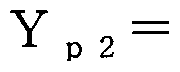
- Soft output decoder 12 receives as input received data Y s ′ and pre-likelihood information L 2 (u) from interleavers 13 and 14. Also, encoded data Y p 2 from demodulator 500 is input. Since the encoded data ⁇ ⁇ 2 is data generated through the interleaver 203 as described above, the order data in the same order as the received data Y s ′ and the prior likelihood information L 2 ( ⁇ ) It is. Soft output decoder 1 2 estimates the received data Y s 'channel value is multiplied by a constant L e to L c ⁇ Y s'.
- the channel value L e ⁇ Y p 2 is estimated by multiplying the encoded data Y p 2 by a constant L c , and these channel values L c ⁇ Y s ' and L c -Y p 2 and soft-output data L 2 (u) * based on prior likelihood information L 2 (u).
- the output soft output data L 2 (u) * is input to hard decision section 16 and arithmetic unit 18.
- the hard decision section 16 makes a hard decision as to which of the binary data the multi-valued soft output data L 2 (u) * belongs to and outputs the binary data D via the din / leaver 19. Output. If the decoding result is estimated only once, the process ends here.
- Arithmetic unit 18 receives soft output data L 2 (u) *, received data Y s ′, and prior likelihood information L 2 (u). Arithmetic unit 18 subtracts soft output data L 2 (u) * based on received data Y s ′ and prior likelihood information L 2 (u), and outputs external likelihood information Le 2 (u). presume.
- the external likelihood information Le 2 (u) is external likelihood information estimated from the n-th first decoding result from the soft output decoder 12.
- the external likelihood information L e 2 (u) is input to the dinner Lever 15.
- Ding evening Lever 1 5 priori likelihood information is converted to the same ordering as the received data Y s is the algorithm described above the external likelihood information L e 2 input (u) is treated with reverse algorithm 1 ⁇ (u) is estimated and fed back to the soft output decoder 11 and the arithmetic unit 17.
- two soft-output decoders repeatedly feed back the prior likelihood information L i (u) and L 2 (u) to each other to perform decoding.
- the error correction capability of data can be improved. Also, by rearranging the data by the interleave processing, it is possible to accurately correct a data error due to noise generated in a specific portion of the communication channel 400.
- the number of times of decoding is set in consideration of the worst signal-to-noise ratio. Therefore, when a block having a relatively high signal-to-noise ratio is received, excessive repetition is performed in the turbo decoder 100, and the processing speed is reduced by that amount, and extra power is consumed. There is a problem.
- Japanese Patent Application Laid-Open No. H10-303595 discloses that input soft decision data is decoded into a bit sequence by a video decoder, and each bit of the decoded bit sequence is decoded. A data sequence is estimated by adding reliability information, and the data sequence is subjected to a CRC check. If it is determined that there is no error, the data sequence is output as a decoding result.
- a technique has been proposed for estimating the decoding result by performing bit inversion in the descending order of the sum of the degree information until it is determined that there is no error.
- the CRC check is performed by adding reliability information to the decoded bit sequence, so that the time required for the CRC check is long, and therefore, until the decoding result is estimated. There is a problem that the processing speed is delayed.
- the constant L e used for calculating the Buranchime Torikusu (signal-to-noise ratio determined from the magnitude of the signal-to-noise ratio which is added by the communication channel 400 may atmospheric heard is determined smaller, If the signal-to-noise ratio is small, it is largely determined.)
- the constant L c is calculated by a control processor (not shown) based on information obtained from the demodulator 500 and set in the decoder 100.
- the present invention has been made in view of the above circumstances, and an object of the present invention is to provide a turbo decoder in which a processing speed is improved and power consumption is reduced while suppressing a decrease in error correction capability.
- the first turbo decoder of the present invention which achieves the above object is a turbo decoder which performs turbo decoding by inputting evening encoded data in block units.
- a decoding unit that performs turbo decoding by inputting the data, and a signal-to-noise ratio estimation unit that estimates the signal-to-noise ratio of the block being processed based on the reliability information output of the decoding unit.
- the decoding unit may repeat the tapo decoding process a number of times corresponding to the signal-to-noise ratio estimated by the signal-to-noise ratio estimating unit.
- a first turbo decoder estimates a signal-to-noise ratio of a block being processed based on the reliability information output of a decoding unit, and performs turbo decoding a number of times corresponding to the signal-to-noise ratio. Therefore, when a block containing small noise is received, evening decoding is performed a small number of times. Therefore, compared with the conventional one-point decoder in which the number of repetitions is set in consideration of the worst signal-to-noise ratio, excessive repetition is prevented when a block with a relatively high signal-to-noise ratio is received. As a result, the processing speed can be improved and the power consumption can be reduced without lowering the error correction capability.
- the signal-to-noise ratio estimator is a square for estimating a signal-to-noise ratio of a block being processed by averaging the soft output data or the external likelihood information.
- it has an averaging circuit.
- the first one-point decoder has a comparing unit for comparing the signal-to-noise ratio with a predetermined value, and the decoding unit includes a signal-to-noise ratio estimated by the signal-to-noise ratio estimating unit. It is also a preferred embodiment that the turbo signal is repeated until the ratio reaches a predetermined value.
- the first turbo decoder has a look-up table for storing a correspondence relationship between a signal-to-noise ratio and the number of times of turbo decoding, and the decoding unit estimates a signal-to-noise ratio according to the lookup table. Turbo decoding may be repeated a number of times corresponding to the signal-to-noise ratio estimated by the section.
- the first evening-both decoder has a counter unit for counting the number of times of the evening-both decoding, and the decoding unit uses the signal-to-noise ratio estimated by the signal-to-noise ratio estimation unit.
- the hard decision may be terminated after the corresponding number of times is counted in the count section, and the second evening decoder of the turbo decoder of the present invention that achieves the above object is a turbo decoder.
- a one-point decoder that performs one-point decoding by inputting encoded data in units of blocks,
- a decoding unit that inputs the data and performs turbo decoding
- a signal-to-noise ratio estimator for estimating the signal-to-noise ratio of the block being processed based on the reliability information output of the decoder
- a second aspect of the present invention comprising: an input level adjusting unit for adjusting a level of data input to the decoding unit according to the signal to noise ratio estimated by the signal to noise ratio estimating unit.
- the Yui-Po decoder estimates the signal-to-noise ratio of the block being processed based on the reliability information output of the decoding unit, and adjusts the level of the input data according to the signal-to-noise ratio.
- the constant L c determined by the signal-to-noise ratio of the input data is properly automatically set Becomes Therefore, unlike the conventional evening one volume decoder, so that reduced error correction capability and a constant L c calculated by the control processor, actually evening by the difference between the constant L c to be used in one port decoder Naco not the, also is prevented from being reduced processing capacity for calculation of constants L e, reduction in power consumption with the processing capability is enhanced even be achieved.
- the input level adjustment unit has a small amplification factor when the reliability of data input to the decoding unit is relatively low, and the reliability is low.
- the data is relatively high, it is preferable that the data be amplified at a large amplification rate.
- the signal-to-noise ratio estimating unit may be a mean-square average for estimating the signal-to-noise ratio of the block being processed by averaging the softness model or the external likelihood information. It may have a circuit. Further, in the above-mentioned second evening decoder, the above-mentioned one-time decoder uses a signal-to-noise ratio and a ratio of input data to external likelihood information (I ER; Input to Extrinsic data Ratio).
- I ER Input to Extrinsic data Ratio
- the input level adjustment unit has a lookup table for storing correspondences, and the input level adjustment unit inputs data to the decoding unit according to the signal-to-noise ratio estimated by the signal-to-noise ratio estimation unit according to the lookup table. It is also a preferable mode to adjust the level of the compound.
- a third turbo decoder of the turbo decoder of the present invention that achieves the above object is configured to perform a one-point decoding by inputting a one-point encoded data in block units.
- An iterative decoding unit that inputs the data sequence and repeats a decoding process with soft decision a plurality of times
- a hard decision unit that generates a decoded data sequence by receiving a soft decision decoding result in the iterative decoding unit and performing a hard decision;
- a C R C detector for performing a C R C check on the decoded data sequence obtained by the hard decision unit
- a low-reliability data position storage unit for storing a low-reliability data position in the soft-decision decoding result in the iterative decoding unit
- the CRC checking unit performs a CRC check on the decoded data sequence obtained by the hard decision unit, and based on the decoded data sequence, the low reliability data position in the decoded data sequence. It is characterized in that the CRC check is also performed on the data sequence in which the logic of the data at the data position with low reliability stored in the storage unit is inverted. Since the third tapo decoder of the present invention inverts the logic of the data at the data position with low reliability in the soft decision decoding result to estimate the data sequence and performs the CRC check, for example, fading may occur. Therefore, if a part of the data series contains noise, the logic of only the data containing noise in the data series is inverted and the CRC check is performed. Therefore, the probability that no error is determined by CRC inspection increases, and the above-mentioned paper (1 999 I EEE Int n l. S ymp. On
- the low reliability data position storage unit stores the low reliability data position in the soft decision result in the current iteration process every time the iterative decoding unit repeats the decoding process
- the CRC checker inverts the data logic of the data position stored in the previous low-reliability data position storage unit in the low-reliability data position storage unit in the decoded data sequence obtained by the hard decision unit. To perform a CRC check,
- the decoding result can be estimated in a shorter time, and the processing speed can be further improved and the power consumption can be further reduced.
- the error correction capability can be improved. The processing speed is improved and power consumption is reduced while suppressing the reduction.
- FIG. 1 is a block diagram of the one-point decoder according to the first embodiment of the present invention.
- FIG. 2 is a block diagram of the turbo decoder according to the second embodiment of the present invention.
- FIG. 3 is a block diagram of a turbo decoder according to the third embodiment of the present invention.
- FIG. 4 is a diagram showing a circuit configuration in a conventional turbo decoder and a communication system using the tapo decoder.
- FIG. 1 is a block diagram of the one-point decoder according to the first embodiment of the present invention.
- the turbo decoder 1 shown in FIG. 1 is different from the turbo decoder 100 shown in FIG. 4 in that a square mean circuit 20, a look-up table 21 and a counter 22 are added. ing.
- the root-mean-square circuit 20 corresponds to the signal-to-noise ratio estimator according to the present invention, and calculates the signal-to-noise ratio of the block being processed based on the soft output data L 2 (u) * from the soft output decoder 12. In order to estimate the degree of reliability of the block being processed (how much noise is included in the signal), the soft output data L 2 (u) The signal-to-noise ratio of the block is estimated by calculating the mean square of *.
- the lookup table 21 stores data indicating the correspondence between the signal-to-noise ratio estimated by the root mean square circuit 20 and the number of repetitions for performing turbo decoding. The number of repetitions is determined according to the signal-to-noise ratio of the received data Y s , the encoded data ⁇ ⁇ 1 , ⁇ ⁇ 2 , and the desired BER (Bit Error Rate).
- the pre-simulation, the received data Y s, Y pl, Upsilon and [rho 2 of the signal-to-noise ratio, advance to estimate the correlation relationship between the estimated signal-to-noise ratio by the square averaging circuit 20, Further, table data indicating the correspondence between the signal-to-noise ratio and the number of repetitions is created and stored in the lookup table 21.
- the look-up table 21 receives the signal-to-noise ratio at the time when the initial repetition (first or second or minimum required repetition) is performed, which is estimated by the root-mean-square circuit 20. The number of repetitions corresponding to the same signal-to-noise ratio as the noise-to-noise ratio is output to the counter 22.
- the counter section 22 sets the number of repetitions from the look-up table 21 as a count value, and counts the count value each time the soft output decoder 12 estimates soft output data L 2 (u) *. When the count value becomes '0' after decrementing by one At this point, the hard decision by the hard decision section 16 is terminated.
- the encoder 1 receives the data as described with reference to FIG. Then, the soft output decoder 12 estimates soft output data L 2 (u) *.
- the estimated soft output data L 2 (u) * is input to the mean square circuit 20.
- the mean-square circuit 20 estimates the signal-to-noise ratio of the block by calculating the mean-square of the soft output data L 2 (u) *.
- the estimated signal-to-noise ratio is referred to the table data stored in the look-up table 21 and the number of repetitions corresponding to the same signal-to-noise ratio as the input signal-to-noise ratio during the table Is output to the counter 22.
- the count section 22 sets the output repetition count as a count value, and decrements the count value each time the soft output decoder 12 generates the soft output data L 2 (u) *. If the count value has not reached '0' as a result of decrementing, tarpo decoding is continued. On the other hand, when the count value reaches '0', the hard decision by the hard decision section 16 is terminated.
- a comparison section for comparing a predetermined value with a signal-to-noise ratio is provided, and turbo decoding is repeated until the signal-to-noise ratio reaches this predetermined value. There may be.
- the turbo decoder 1 of the present embodiment the soft-output data of the soft-output decoder 1 2 - evening L 2 (u) * at mean square circuit 20 Since the signal-to-noise ratio of the block being processed is estimated by averaging the squares and turbo decoding is performed the number of times corresponding to the signal-to-noise ratio, if a block containing small noise is received, Turbo decoding is performed with a small number of times.
- the soft output data L 2 (u) * of the soft output decoder 12 is squared to estimate the signal-to-noise ratio of the block being processed.
- the external likelihood information of The signal-to-noise ratio of the block being processed may be estimated by averaging the squares of Le 2 (u) .
- the signal-to-noise ratio of the block is calculated by performing a root-mean-square operation.
- the present invention is not limited to this, and the signal-to-noise ratio of the block being processed may be estimated based on the reliability information output of the decoding unit. Further, in the present embodiment, the number of repetitions corresponding to the signal-to-noise ratio estimated by the root-mean-square circuit 20 is estimated with reference to the look-up table 21,
- the evening decoding is performed by the number of repetitions by decrementing by 2.
- the present invention performs turbo decoding by the number of times corresponding to the signal-to-noise ratio estimated by the signal-to-noise ratio estimation unit. Anything should do.
- FIG. 2 is a block diagram of the one-point decoder according to the second embodiment of the present invention.
- turbo decoder 100 shown in FIG. 4 described above are denoted by the same reference numerals, and redundant description will be omitted.
- the turbo decoder 2 shown in FIG. 2 is different from the tapo decoder 100 shown in FIG. 4 in that a square mean circuit 30, a look-up table 31, and input level adjusters 3 2, 3 3,
- the soft output encoders 11 and 12, the signal receivers 13 and 14, the signal receivers 15 and 19, the hard decision unit 16, and the operators 17 and 18 are This corresponds to the decoding unit according to the present invention.
- the root-mean-square circuit 30 corresponds to the signal-to-noise ratio estimator according to the present invention, and based on the soft output data L 2 (u) * from the soft output encoder 12, the signal-to-noise ratio N of the block being processed. (u). Specifically, in order to estimate the reliability of the block being processed (how much the signal-to-noise ratio N (u) is included), By calculating the mean square of the soft output data L 2 (u) *, the signal-to-noise ratio N (u) of the block is estimated.
- the lookup table 31 stores data indicating the correspondence between the signal-to-noise ratio estimated by the root mean square circuit 30 and IER.
- I ER Input Extrinsicdata Ratio
- the correlation between the signal-to-noise ratio of the input data and the signal-to-noise ratio estimated by the mean-square circuit 30 is estimated in advance by simulation, and the signal-to-noise ratio and the IER are further estimated.
- the data indicating the correspondence between the two is created and stored in look-up table 31.
- the lookup table 31 outputs the IER corresponding to the signal-to-noise ratio estimated by the root-mean-square circuit 30 to the input level adjusters 32, 33, and 34.
- the input level adjusters 32, 33, and 34 when the IER output from the lookup table 31 is small, that is, when the reliability of the received data Y s and the encoded data ⁇ ⁇ 1 and , ⁇ 2 is high.
- the soft output data 2 (u) * of the soft output decoder 1 2 is square-averaged by the root-mean-square circuit 30 and the signal-to-noise of the block being processed is estimating the ratio N (u), the estimated signal-to-noise ratio N (u) in accordance with input data Y s, Y pl, ⁇ ⁇ 2 level input level adjuster 3 2, 3 3, 3 adjusted with 4 Therefore, the signal-to-noise ratio N (u) of the block currently being processed is estimated based on the reliability output information in the turbo decoder 1, and the input data Y s , Y pl , ⁇ ⁇ 2 so that the constants L e determined by the signal-to-noise ratio is properly set automatically.
- the soft output data L 2 (u) * of the soft output To estimate the signal-to-noise ratio N (u) of the block being processed but the mean square of the external likelihood information Le 2 (u) of the arithmetic unit 18 is used to calculate the signal-to-noise ratio N of the block being processed. (u) may be estimated.
- the signal-to-noise ratio of the block is estimated by performing a root-mean-square operation.
- the signal-to-noise ratio of the block being processed may be estimated.
- the level of the input data is adjusted according to the IE scale output from the lookup table 31.
- the present invention is not limited to this, and the signal pair estimated by the signal-to-noise ratio estimating unit is not limited to this.
- the level of the input data can be adjusted according to the noise ratio.
- FIG. 3 is a block diagram of the turbo decoder according to the third embodiment of the present invention.
- turbo decoder 100 shown in FIG. 4 described above are denoted by the same reference numerals, and redundant description will be omitted.
- the turbo decoder 3 shown in FIG. 3 has a low-reliability data storage unit 40 and a ruler (: inspection circuits 4 1-1, 4 1- 2,..., 41_n, a selection circuit 42, a bit inversion circuit 43, and a repetition control circuit 44 are different.
- the combination of the soft-output decoders 11 and 12, the interleavers 13 and 14, the din-leaver 15 and the arithmetic units 17 and 18 corresponds to the iterative decoding unit according to the present invention.
- the CRC inspection circuits 41-1, 41-2, ..., 4 l__n, the selection circuit 42, the bit inversion circuit 43, and the repetition control circuit 44 correspond to a CRC inspection unit according to the present invention.
- the low-reliability data position storage unit 40 stores one or more data positions with low reliability in the prior likelihood information (u) output from the dinner Lever 15.
- the bit inversion circuit 43 is stored in the low-reliability data position storage unit 40 in the decoded data sequence D obtained by the hard decision unit 16 and din-reversed by the din delay unit 19. Invert the logic of the data at the data position, and generate a data sequence for CRC inspection. For example, if there are two stored data positions, three data sequences for CRC inspection (excluding the original data sequence) are generated. In the present embodiment, it is assumed that the data sequence for CRC inspection is generated at most n ⁇ 1 ways.
- Inspection circuits 4 1-1, 4 1-2, ..., 4 1-n have data series 1, ..., n_l from bit inversion circuit 43, and , And a data sequence D that does not pass through the bit inverting circuit 43.
- the CRC inspection circuits 41—1, 41-1, 2,. , 1,..., N _ 1 CRC checks are performed at the same time. (: Any one of the check circuits 41-1, 41-2, ..., 41-n If it is determined that there is no error in the CRC inspection result, a signal indicating that is output to the control circuit 44 repeatedly.
- repetition control circuit 44 receives this signal, repetition control circuit 44 outputs a control signal for ending the repetition of the turbo decoding process.
- the repetition of the decoding process in the iterative decoding unit including the soft output decoders 11 and 12, the signal receivers 13 and 14, the signal receiver 15, and the operators 17 and 18 ends.
- the selection circuit 42 selects and decodes a data sequence in the CRC check circuit 41—1, 4 1—2,..., 4 1 ⁇ n in which the CRC check result is determined to have no error. Output as overnight.
- the low-reliability data position in the low-reliability data position storage unit 40 in the soft decision result in the current iteration process is stored in the low-reliability data position storage unit 40.
- the logic of the data at the data position stored in the storage unit 40 is inverted, a CRC check is performed together with the data sequence D, and if it is determined that there is no error in the CRC check result, the decoding process is repeated. Therefore, for example, when noise is included in a part of the data sequence due to the occurrence of fading, the logic of only the data including the noise in the data sequence is inverted and the CRC check is performed.
Landscapes
- Physics & Mathematics (AREA)
- Probability & Statistics with Applications (AREA)
- Engineering & Computer Science (AREA)
- Theoretical Computer Science (AREA)
- Computer Networks & Wireless Communication (AREA)
- Signal Processing (AREA)
- Error Detection And Correction (AREA)
Description


Claims
Priority Applications (1)
| Application Number | Priority Date | Filing Date | Title |
|---|---|---|---|
| EP01904429A EP1170870A4 (en) | 2000-02-15 | 2001-02-14 | turbo decoder |
Applications Claiming Priority (6)
| Application Number | Priority Date | Filing Date | Title |
|---|---|---|---|
| JP2000036814A JP2001230679A (ja) | 2000-02-15 | 2000-02-15 | ターボ復号器 |
| JP2000-36814 | 2000-02-15 | ||
| JP2000-37594 | 2000-02-16 | ||
| JP2000037593A JP2001230677A (ja) | 2000-02-16 | 2000-02-16 | ターボ復号器 |
| JP2000-37593 | 2000-02-16 | ||
| JP2000037594A JP2001230681A (ja) | 2000-02-16 | 2000-02-16 | ターボ復号器 |
Publications (1)
| Publication Number | Publication Date |
|---|---|
| WO2001061867A1 true WO2001061867A1 (en) | 2001-08-23 |
Family
ID=27342361
Family Applications (1)
| Application Number | Title | Priority Date | Filing Date |
|---|---|---|---|
| PCT/JP2001/001030 Ceased WO2001061867A1 (en) | 2000-02-15 | 2001-02-14 | Turbo decoder |
Country Status (3)
| Country | Link |
|---|---|
| US (1) | US20020168033A1 (ja) |
| EP (1) | EP1170870A4 (ja) |
| WO (1) | WO2001061867A1 (ja) |
Cited By (2)
| Publication number | Priority date | Publication date | Assignee | Title |
|---|---|---|---|---|
| US7032163B2 (en) | 2001-07-06 | 2006-04-18 | Hitachi, Ltd. | Error correction decoder for turbo code |
| RU2383992C2 (ru) * | 2005-05-18 | 2010-03-10 | Самсунг Электроникс Ко., Лтд. | Архитектура турбодекодера для использования в программно-определяемых радиосистемах |
Families Citing this family (36)
| Publication number | Priority date | Publication date | Assignee | Title |
|---|---|---|---|---|
| JP3973026B2 (ja) * | 2002-08-30 | 2007-09-05 | 富士通株式会社 | 復号装置、復号方法、及びその方法をプロセッサに行わせるプログラム |
| WO2004068491A1 (ja) | 2003-01-30 | 2004-08-12 | Fujitsu Limited | データ記録再生システム及び方法 |
| JP4077355B2 (ja) | 2003-04-16 | 2008-04-16 | 三菱電機株式会社 | 通信装置および通信方法 |
| KR101050615B1 (ko) * | 2004-01-05 | 2011-07-19 | 삼성전자주식회사 | 연판정 복호기를 위한 입력범위 조절 장치 및 방법 |
| EP1715615B1 (en) * | 2004-02-10 | 2016-04-06 | Mitsubishi Electric Corporation | Quantum key delivering method and communication device |
| EP1715614B1 (en) * | 2004-02-10 | 2014-05-07 | Mitsubishi Electric Corporation | Quantum key delivering method and communication device |
| US7835264B2 (en) * | 2004-12-29 | 2010-11-16 | Mitsubishi Denki Kabushiki Kaisha | Interleaver, deinterleaver, communication device, and method for interleaving and deinterleaving |
| WO2006122291A2 (en) * | 2005-05-10 | 2006-11-16 | Qualcomm Incorporated | Using soft bit decisions to improve dpsk demodulation of sps data |
| US7395461B2 (en) | 2005-05-18 | 2008-07-01 | Seagate Technology Llc | Low complexity pseudo-random interleaver |
| US7360147B2 (en) * | 2005-05-18 | 2008-04-15 | Seagate Technology Llc | Second stage SOVA detector |
| US7502982B2 (en) * | 2005-05-18 | 2009-03-10 | Seagate Technology Llc | Iterative detector with ECC in channel domain |
| US8090059B1 (en) * | 2006-05-01 | 2012-01-03 | Marvell International Ltd. | Multi-viterbi receive channel decoder |
| KR20110126754A (ko) * | 2007-10-23 | 2011-11-23 | 리서치 인 모션 리미티드 | 콘볼루션 인코딩된 데이터를 디코딩하는 장치 및 관련 방법 |
| US8321744B2 (en) * | 2008-09-16 | 2012-11-27 | Analog Devices, Inc. | Channel adaptive iterative turbo decoder system and method |
| US8886729B2 (en) * | 2009-10-30 | 2014-11-11 | Verizon Patent And Licensing Inc. | Methods, systems and computer program products for a mobile-terminated message SPAM restrictor |
| US9300491B2 (en) | 2011-02-11 | 2016-03-29 | Qualcomm Incorporated | Frame delivery path selection in hybrid communication networks |
| JP5689544B2 (ja) | 2011-03-01 | 2015-03-25 | エイ・エス−インターナショナル・アソシエーション・アインゲトラーゲナー・フェラインAs−International Association E.V. | デジタルデータを送信するためのエラー訂正およびエラー検出の新規な組合せ |
| US8897169B2 (en) * | 2011-03-02 | 2014-11-25 | Qualcomm Incorporated | Discovery of conventional devices and bridges in hybrid communication networks |
| US8774324B2 (en) * | 2011-12-14 | 2014-07-08 | Xilinx, Inc. | Systems and methods for changing decoding parameters in a communication system |
| US8751915B2 (en) * | 2012-08-28 | 2014-06-10 | Lsi Corporation | Systems and methods for selectable positive feedback data processing |
| US9214959B2 (en) | 2013-02-19 | 2015-12-15 | Avago Technologies General Ip (Singapore) Pte. Ltd. | Systems and methods for skip layer data decoding |
| US9274889B2 (en) | 2013-05-29 | 2016-03-01 | Avago Technologies General Ip (Singapore) Pte. Ltd. | Systems and methods for data processing using global iteration result reuse |
| US8959414B2 (en) | 2013-06-13 | 2015-02-17 | Lsi Corporation | Systems and methods for hybrid layer data decoding |
| US8917466B1 (en) | 2013-07-17 | 2014-12-23 | Lsi Corporation | Systems and methods for governing in-flight data sets in a data processing system |
| US8817404B1 (en) | 2013-07-18 | 2014-08-26 | Lsi Corporation | Systems and methods for data processing control |
| US9196299B2 (en) | 2013-08-23 | 2015-11-24 | Avago Technologies General Ip (Singapore) Pte. Ltd. | Systems and methods for enhanced data encoding and decoding |
| US8908307B1 (en) | 2013-08-23 | 2014-12-09 | Lsi Corporation | Systems and methods for hard disk drive region based data encoding |
| US9298720B2 (en) | 2013-09-17 | 2016-03-29 | Avago Technologies General Ip (Singapore) Pte. Ltd. | Systems and methods for fragmented data recovery |
| US9219503B2 (en) | 2013-10-16 | 2015-12-22 | Avago Technologies General Ip (Singapore) Pte. Ltd. | Systems and methods for multi-algorithm concatenation encoding and decoding |
| US9130595B1 (en) | 2013-11-07 | 2015-09-08 | The United States Of America As Represented By The Secretary Of The Navy | System and method for acceleration effect correction using turbo-encoded data with cyclic redundancy check |
| US9323606B2 (en) | 2013-11-21 | 2016-04-26 | Avago Technologies General Ip (Singapore) Pte. Ltd. | Systems and methods for FAID follower decoding |
| RU2014104571A (ru) | 2014-02-10 | 2015-08-20 | ЭлЭсАй Корпорейшн | Системы и способы для эффективного с точки зрения площади кодирования данных |
| FR3024932B1 (fr) * | 2014-08-14 | 2017-12-01 | Sagem Defense Securite | Procede de transmission de donnees a robustesse amelioree et ensemble de dispositifs pour sa mise en œuvre |
| US9378765B2 (en) | 2014-04-03 | 2016-06-28 | Seagate Technology Llc | Systems and methods for differential message scaling in a decoding process |
| CN109245858B (zh) * | 2018-09-25 | 2021-03-23 | 重庆邮电大学 | 一种基于译码转发的改进型联合网络-Turbo编码方法 |
| US11456818B2 (en) * | 2021-01-25 | 2022-09-27 | Fudan University | Sensitivity of bluetooth receiver by introducing interleaver |
Citations (5)
| Publication number | Priority date | Publication date | Assignee | Title |
|---|---|---|---|---|
| JPH10303759A (ja) * | 1997-04-23 | 1998-11-13 | Mitsubishi Electric Corp | 誤り訂正復号装置および誤り訂正復号方式 |
| JPH1141110A (ja) * | 1997-07-15 | 1999-02-12 | Sanyo Electric Co Ltd | 誤り訂正装置および誤り訂正方法 |
| JPH11330984A (ja) * | 1997-06-19 | 1999-11-30 | Toshiba Corp | 誤り訂正符号化装置及び復号装置 |
| EP0973292A2 (en) * | 1998-07-17 | 2000-01-19 | Nortel Networks Corporation | Statistically multiplexed turbo code decoder |
| JP2000165258A (ja) * | 1998-11-27 | 2000-06-16 | Yrp Ido Tsushin Kiban Gijutsu Kenkyusho:Kk | 復号装置 |
Family Cites Families (7)
| Publication number | Priority date | Publication date | Assignee | Title |
|---|---|---|---|---|
| US561248A (en) * | 1896-06-02 | Check-hook | ||
| US6393257B1 (en) * | 1999-04-29 | 2002-05-21 | Qualcomm Incorporated | Wireless communications receiver and decoder for receiving encoded transmissions, such as transmissions using turbo codes, and estimating channel conditions |
| US6735423B1 (en) * | 1999-05-18 | 2004-05-11 | General Instrument Corporation | Method and apparatus for obtaining optimal performance in a receiver |
| US6426971B1 (en) * | 1999-09-13 | 2002-07-30 | Qualcomm Incorporated | System and method for accurately predicting signal to interference and noise ratio to improve communications system performance |
| JP2001244879A (ja) * | 2000-03-02 | 2001-09-07 | Matsushita Electric Ind Co Ltd | 送信電力制御装置及びその方法 |
| US6611794B1 (en) * | 2000-04-20 | 2003-08-26 | Southwest Research Institute | Signal amplitude restoration apparatus and method |
| US6597923B1 (en) * | 2000-10-23 | 2003-07-22 | Telefonaktiebolaget L.M. Ericsson (Publ.) | Method and apparatus for transmitter power control |
-
2001
- 2001-02-14 WO PCT/JP2001/001030 patent/WO2001061867A1/ja not_active Ceased
- 2001-02-14 EP EP01904429A patent/EP1170870A4/en not_active Withdrawn
- 2001-02-14 US US09/958,285 patent/US20020168033A1/en not_active Abandoned
Patent Citations (5)
| Publication number | Priority date | Publication date | Assignee | Title |
|---|---|---|---|---|
| JPH10303759A (ja) * | 1997-04-23 | 1998-11-13 | Mitsubishi Electric Corp | 誤り訂正復号装置および誤り訂正復号方式 |
| JPH11330984A (ja) * | 1997-06-19 | 1999-11-30 | Toshiba Corp | 誤り訂正符号化装置及び復号装置 |
| JPH1141110A (ja) * | 1997-07-15 | 1999-02-12 | Sanyo Electric Co Ltd | 誤り訂正装置および誤り訂正方法 |
| EP0973292A2 (en) * | 1998-07-17 | 2000-01-19 | Nortel Networks Corporation | Statistically multiplexed turbo code decoder |
| JP2000165258A (ja) * | 1998-11-27 | 2000-06-16 | Yrp Ido Tsushin Kiban Gijutsu Kenkyusho:Kk | 復号装置 |
Non-Patent Citations (1)
| Title |
|---|
| See also references of EP1170870A4 * |
Cited By (2)
| Publication number | Priority date | Publication date | Assignee | Title |
|---|---|---|---|---|
| US7032163B2 (en) | 2001-07-06 | 2006-04-18 | Hitachi, Ltd. | Error correction decoder for turbo code |
| RU2383992C2 (ru) * | 2005-05-18 | 2010-03-10 | Самсунг Электроникс Ко., Лтд. | Архитектура турбодекодера для использования в программно-определяемых радиосистемах |
Also Published As
| Publication number | Publication date |
|---|---|
| US20020168033A1 (en) | 2002-11-14 |
| EP1170870A1 (en) | 2002-01-09 |
| EP1170870A4 (en) | 2006-08-02 |
Similar Documents
| Publication | Publication Date | Title |
|---|---|---|
| WO2001061867A1 (en) | Turbo decoder | |
| KR100487183B1 (ko) | 터보 부호의 복호 장치 및 방법 | |
| JP4191598B2 (ja) | 多数のスケール選択を備えたターボデコーダ | |
| JP4194015B2 (ja) | 通信システムおよび方法 | |
| US8443265B2 (en) | Method and apparatus for map decoding and turbo decoder using the same | |
| EP0907256B1 (en) | Apparatus for convolutional self-doubly orthogonal encoding and decoding | |
| US8266511B2 (en) | Decoding device and decoding method | |
| US6879648B2 (en) | Turbo decoder stopping based on mean and variance of extrinsics | |
| US7886209B2 (en) | Decoding device, decoding method, and receiving apparatus | |
| KR20080101911A (ko) | 다수의 병렬 터보 디코더를 사용하는 하이브리드 디코딩 | |
| RU2214679C2 (ru) | Способ квантования для итеративного декодера в системе связи | |
| US7051270B2 (en) | Decoder an decoding method | |
| JP2001230677A (ja) | ターボ復号器 | |
| US20030018941A1 (en) | Method and apparatus for demodulation | |
| JP3987520B2 (ja) | 具現が簡単なmapデコーダー及びそのデコーディング方法 | |
| JP4116554B2 (ja) | 無線通信のためのターボ復号方法および装置 | |
| CN120956386A (zh) | 数字信息链的干扰消除方法、装置及电子设备 | |
| JP2001230679A (ja) | ターボ復号器 | |
| JP2007116591A (ja) | 符号化装置、復号化装置、および符号化・復号化システム | |
| Shin | Turbo Decoding in Rayleigh Fading Channels with Imperfect Channel State Information |
Legal Events
| Date | Code | Title | Description |
|---|---|---|---|
| AK | Designated states |
Kind code of ref document: A1 Designated state(s): US |
|
| AL | Designated countries for regional patents |
Kind code of ref document: A1 Designated state(s): AT BE CH CY DE DK ES FI FR GB GR IE IT LU MC NL PT SE TR |
|
| WWE | Wipo information: entry into national phase |
Ref document number: 09958285 Country of ref document: US |
|
| WWE | Wipo information: entry into national phase |
Ref document number: 2001904429 Country of ref document: EP |
|
| 121 | Ep: the epo has been informed by wipo that ep was designated in this application | ||
| WWP | Wipo information: published in national office |
Ref document number: 2001904429 Country of ref document: EP |
|
| WWW | Wipo information: withdrawn in national office |
Ref document number: 2001904429 Country of ref document: EP |