WO2001064782A1 - Silica reinforced rubber compositions of improved processability and storage stability - Google Patents
Silica reinforced rubber compositions of improved processability and storage stability Download PDFInfo
- Publication number
- WO2001064782A1 WO2001064782A1 PCT/US2001/006326 US0106326W WO0164782A1 WO 2001064782 A1 WO2001064782 A1 WO 2001064782A1 US 0106326 W US0106326 W US 0106326W WO 0164782 A1 WO0164782 A1 WO 0164782A1
- Authority
- WO
- WIPO (PCT)
- Prior art keywords
- silica
- rubber
- ether
- glycidyl
- butadiene
- Prior art date
- Legal status (The legal status is an assumption and is not a legal conclusion. Google has not performed a legal analysis and makes no representation as to the accuracy of the status listed.)
- Ceased
Links
- 0 CCc(cccc1C)c1N(C)CC1*C1 Chemical compound CCc(cccc1C)c1N(C)CC1*C1 0.000 description 1
Classifications
-
- C—CHEMISTRY; METALLURGY
- C08—ORGANIC MACROMOLECULAR COMPOUNDS; THEIR PREPARATION OR CHEMICAL WORKING-UP; COMPOSITIONS BASED THEREON
- C08K—Use of inorganic or non-macromolecular organic substances as compounding ingredients
- C08K5/00—Use of organic ingredients
- C08K5/04—Oxygen-containing compounds
- C08K5/15—Heterocyclic compounds having oxygen in the ring
- C08K5/151—Heterocyclic compounds having oxygen in the ring having one oxygen atom in the ring
- C08K5/1515—Three-membered rings
-
- B—PERFORMING OPERATIONS; TRANSPORTING
- B60—VEHICLES IN GENERAL
- B60C—VEHICLE TYRES; TYRE INFLATION; TYRE CHANGING; CONNECTING VALVES TO INFLATABLE ELASTIC BODIES IN GENERAL; DEVICES OR ARRANGEMENTS RELATED TO TYRES
- B60C1/00—Tyres characterised by the chemical composition or the physical arrangement or mixture of the composition
-
- B—PERFORMING OPERATIONS; TRANSPORTING
- B60—VEHICLES IN GENERAL
- B60C—VEHICLE TYRES; TYRE INFLATION; TYRE CHANGING; CONNECTING VALVES TO INFLATABLE ELASTIC BODIES IN GENERAL; DEVICES OR ARRANGEMENTS RELATED TO TYRES
- B60C1/00—Tyres characterised by the chemical composition or the physical arrangement or mixture of the composition
- B60C1/0008—Compositions of the inner liner
-
- B—PERFORMING OPERATIONS; TRANSPORTING
- B60—VEHICLES IN GENERAL
- B60C—VEHICLE TYRES; TYRE INFLATION; TYRE CHANGING; CONNECTING VALVES TO INFLATABLE ELASTIC BODIES IN GENERAL; DEVICES OR ARRANGEMENTS RELATED TO TYRES
- B60C1/00—Tyres characterised by the chemical composition or the physical arrangement or mixture of the composition
- B60C1/0016—Compositions of the tread
-
- B—PERFORMING OPERATIONS; TRANSPORTING
- B60—VEHICLES IN GENERAL
- B60C—VEHICLE TYRES; TYRE INFLATION; TYRE CHANGING; CONNECTING VALVES TO INFLATABLE ELASTIC BODIES IN GENERAL; DEVICES OR ARRANGEMENTS RELATED TO TYRES
- B60C1/00—Tyres characterised by the chemical composition or the physical arrangement or mixture of the composition
- B60C1/0025—Compositions of the sidewalls
-
- C—CHEMISTRY; METALLURGY
- C08—ORGANIC MACROMOLECULAR COMPOUNDS; THEIR PREPARATION OR CHEMICAL WORKING-UP; COMPOSITIONS BASED THEREON
- C08K—Use of inorganic or non-macromolecular organic substances as compounding ingredients
- C08K5/00—Use of organic ingredients
- C08K5/04—Oxygen-containing compounds
- C08K5/10—Esters; Ether-esters
- C08K5/101—Esters; Ether-esters of monocarboxylic acids
- C08K5/103—Esters; Ether-esters of monocarboxylic acids with polyalcohols
-
- C—CHEMISTRY; METALLURGY
- C08—ORGANIC MACROMOLECULAR COMPOUNDS; THEIR PREPARATION OR CHEMICAL WORKING-UP; COMPOSITIONS BASED THEREON
- C08K—Use of inorganic or non-macromolecular organic substances as compounding ingredients
- C08K5/00—Use of organic ingredients
- C08K5/36—Sulfur-, selenium-, or tellurium-containing compounds
- C08K5/45—Heterocyclic compounds having sulfur in the ring
-
- C—CHEMISTRY; METALLURGY
- C08—ORGANIC MACROMOLECULAR COMPOUNDS; THEIR PREPARATION OR CHEMICAL WORKING-UP; COMPOSITIONS BASED THEREON
- C08L—COMPOSITIONS OF MACROMOLECULAR COMPOUNDS
- C08L21/00—Compositions of unspecified rubbers
Definitions
- the invention relates to silica reinforced rubber compositions of matter having improved processability, storage stability and or cure for use in tires and mechanical goods.
- Particulate fillers such as silica, carbon black, clays, talc, calcium carbonate, silicates (Science and Technology of Rubber, edited by J.E. Mark et al., Academic Press Inc., San Diego, CA, 1994 p 387-469) and starch (F.G. Corvasce et al., U.S. Patent No. 5,672,639) have been generally used as reinforcing materials for rubbers to improve their physical properties such as modulus, tensile strength, abrasion, tear properties, and dynamic properties.
- the reinforcement of elastomers with particulate fillers such as silica and carbon black has been extensively studied.
- the difference in the surface free energy of carbon black and silica results in significant differences in the filler-filler and filler-rubber interaction.
- surface energies of silica with equivalent surface area and structure have a low dispersive component and a high specific component (M. J. Wang & S. Wolff, Rubber Chemistry and Technology, 65 , 329, 1992).
- the low dispersive component (related to weaker polymer-filler interaction) has been shown to produce low modulus at high strains (S. Wolff, M. J. Wang & E. H. Tan, American Chemical Society, Rubber Division Meeting, Denver, Colorado, May 1993).
- the higher specific component of the surface free energy of silica results in strong filler-filler interaction, resulting in increased viscosity of the rubber composition, especially at low strain rates.
- the surface characteristics and hence the surface energy of silica can be changed by surface modification, for example, when the silica surface is chemically modified with so-called coupling systems such as a polyfunctional organosilane, e.g., bis(3-triethoxysilyl propyl)tetrasulfide (TESPT).
- TESPT bis(3-triethoxysilyl propyl)tetrasulfide
- the specific component of the surface free energy ( ⁇ s sp ) is significantly reduced, leading to improved interaction between silica and rubber for improved compatibility (M. J. Wang, S. Wolff, Rubber Chemistry and Technology, 65 , 715, 1992).
- a reduction of filler-filler interaction results in better dispersion and reduced viscosity.
- silica retards the cure rate of the filled composition. This retardation in cure rate has been attributed to the adsorption of curatives on the silica surface (M. Fetterman,
- silanol content, the adsorbed water content and the surface area of the silica also affect the cure time (S. Wolff et al., American Chemical Society, Rubber Division Meeting, Denver, Colorado, May 1993; M. P. Wagner, Rubber Chemistry & Technology, 49, 703, 1976).
- Silica because of its high specific component of surface energy, has a strong tendency to agglomerate and is difficult to disperse in hydrocarbon rubbers.
- Polyfunctional organosilanes with sulfur linkages such as TESPT improve interactions of filler (e.g., silica) with a polymer, thereby improving the physical properties of vulcanizates such as abrasion resistance and reduced tan ⁇ at
- Epoxidized natural rubber with up to 50 mole percent epoxidation has been used alone and in combination with other diene rubbers such as natural rubber, styrene butadiene rubber, or butadiene rubber at levels higher than 30 phr (parts per one hundred parts of rubber, on a weight basis) with precipitated silica and mixture of silica with carbon black to improve wet skid resistance, but with poor tire tread abrasion and tear properties.
- the use of epoxidized natural rubber was accompanied by increased viscosity, retardation of cure rate and poor processability on storage ("Natural Rubber Science and Technology," edited by A. D. Roberts, p.359-456, Oxford University Press, UK.1988; S.
- ENR because of the higher mole percent epoxide groups (10-50%), is reinforced by silica even in the absence of coupling systems such as TESPT or ⁇ -mercaptopropyltrimethoxysilane.
- ENR at 5-30 phr was also reportedly used in blends with diene rubber and a coupling system (TESPT) to improve the abrasion and adhesion properties of the vulcanizate.
- TESPT coupling system
- the addition of glycols, amines or guanidines to rubber compositions containing silica has been reported to counter the retarding effect of silica on the cure rate during vulcanization.
- Addition of diethylene glycol or triethanolamine in silica-filled rubber reduced the Mooney viscosity and scorch time. The reduction in Mooney viscosity was storage temperature dependant and was not apparently effective at higher storage temperature (M. P.
- the present invention comprises a process for manufacturing an uncured silica containing rubber composition having improved processability, improved resistance against the decay of processability during storage of the uncured stock and in some cases reduced cure time by combining the rubber with a class of organic compounds that impart these properties to the rubber composition.
- the invention also relates to uncured or cured silica containing rubber compositions produced by the process of the invention and uncured and cured silica containing rubber compositions having these organic compounds.
- the invention in one aspect comprises a process for improving the processability, storage stability and in some cases cure rate of silica reinforced rubber, compositions comprising the step of incorporating into said silica and rubber appropriate amounts (preferably less than about 10 phr) of at least one organic compound, such as an organic compound comprising a relatively low molecular weight organic compound (i.e., a molecular weight of from about 50 to less than about 7000, and especially from about 100 to about 2000) containing at least one functional group (preferably not intramolecularly reactive) and located in terminal or sterically unhindered positions on the molecule, selected from an epoxy functional group, such as an epoxy/ether, epoxy/hydroxyl, epoxy/ester, epoxy/amine, episulfide, episulfide/amine, episulfide/ether, episulfide/hydroxyl or episulfide/ester group.
- an organic compound such as an organic compound comprising a relatively low molecular weight organic compound (i.e., a molecular weight of
- Aliphatic groups comprise both saturated and unsaturated branched chain or straight chain alkyl groups
- cycloaliphatic groups include both saturated and unsaturated ring structures based on carbon, or heterocyclic ring structures based on carbon that contain, in addition to carbon in the ring, oxygen, or sulfur, or nitrogen.
- the process of the invention comprises incorporating the low molecular weight organic compound into the silica reinforced rubber by combining a mixture comprising rubber, silica and at least one organic compound as described herein in any sequence, i.e., it involves not only the addition of the organic compound to rubber already containing silica but also combining rubber, silica and the organic compound in any sequence or simultaneously.
- the invention also comprises a product made by the aforesaid process including both uncured and cured rubber compositions and a composition of matter containing such organic compounds in a silica rubber composition, including both uncured and cured compositions of matter.
- the invention comprises uncured and cured rubber compositions used in tire, curing bladder and mechanical goods applications, and reinforced with silica or silica in combination with minor quantities of other particulate fillers such as carbon black, clay, silicates, and starch with -OH, -O-, or ester functionalities.
- the invention also comprises silica containing tire compositions such as those used in tread, tread cushion, sidewalls, carcass, belt, overlay, liner cushion, innerliner and bead area construction made from the aforesaid rubber compositions.
- the invention relates to the use of the aforementioned organic compounds, especially epoxy compounds that reduce the cure time and increase the processability of rubber compositions.
- the uncured rubber compositions of the invention containing silica or silica in combination with minor quantities of other particulate fillers, e.g., carbon black, clay, and the like, for use in tire compositions, have improved processability, storage stability and in some cases cure time.
- the organic compounds of the invention provide these enhancements in processing and/or cure properties.
- Fig. 1 shows a cross-section of a tire employing the composition of the invention
- Fig. 2 shows the effect of additives on Tan ⁇ measured at 1 Hz and
- Fig. 3 is a graph showing the effect of additives on G 1 measured at 1 Hz and 0.1 % strain as a function of temperature for silica-filled rubber vulcanizates employing the organic compounds of the present invention.
- the low molecular weight organic compound of the invention is employed as an ingredient in uncured silica reinforced rubber compositions to improve their processability stability, and/or cure kinetics, without significantly affecting the physical and dynamic properties of the vulcanizate or cured rubber compound.
- Silica reinforced compositions comprise rubber compositions containing precipitated silica, pyrogenic silica, and silicates and combinations thereof, where silica is present as the major filler.
- Other fillers used in combination with silica comprise carbon black, clay, talc, calcium carbonate, calcium sulfate, bentonite, titanium dioxide and starch and combinations thereof. Pyrogenic silica and silicates are less desirable.
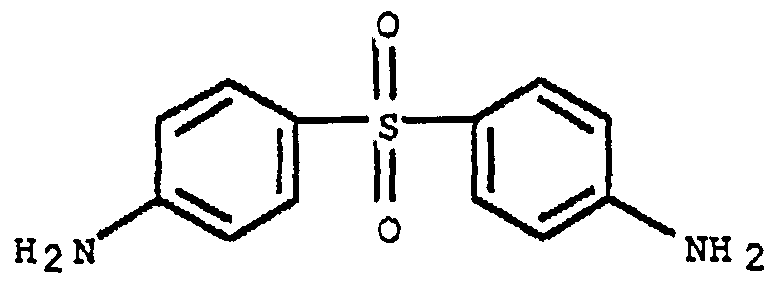
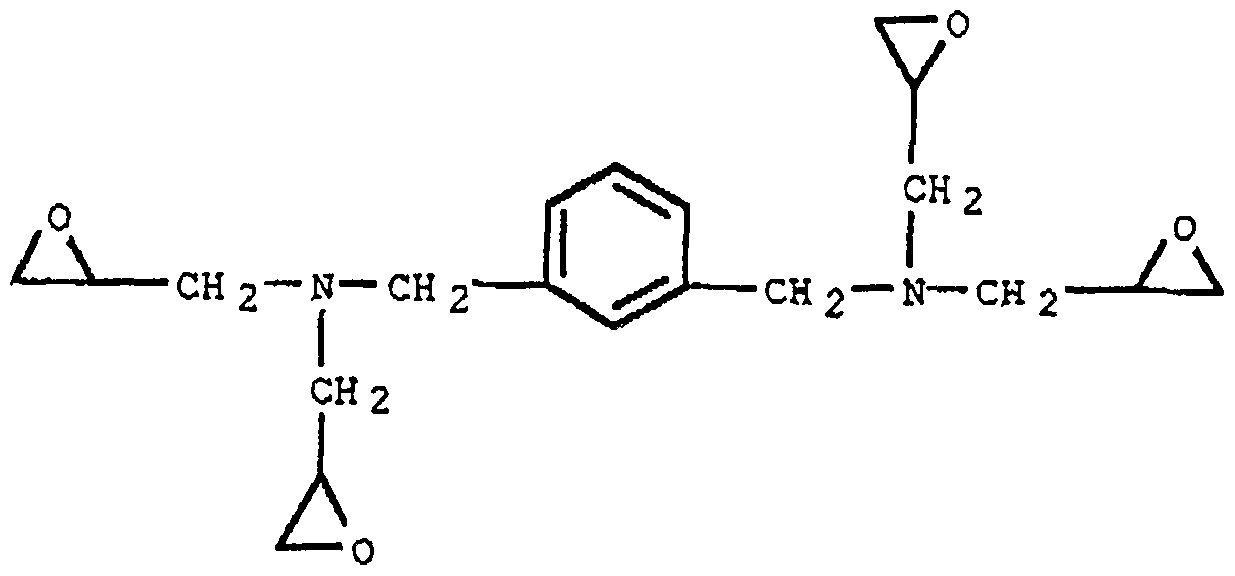
- Useful low molecular weight organic compounds of this invention (molecular weight less than about 7000 , or those having a molecular weight from about 50 to less than about 7000 and especially from about 100 to about 2000 ) comprise the following, compounds and combinations thereof:
- N.N-diglycidyl aniline N,N-diglycidyl-4-glycidyl oxyaniiine; Glycidyl aniline; Tris (2,3-epoxy propyl) isocyanurate
- 2-Propenoie aci sodium salt, polymer with 1,3-butadiene, ethenylbenzene and 2,2',2"-[1 ,2,3-propanetriyltris(oxymethylene)ltri3[oxirane], block (9CI) 119692-59-0
- Vinyl glycidyl chalcogenides and combinations thereof comprise those where the chalcogen comprises oxygen, sulfur, selenium or tellurium, and combinations thereof, but especially sulfur or selenium, and combinations thereof.
- epoxy/hydroxyl compounds comprise bisphenol A or bisphenol F-epichlorohydrin reaction products which are glycidyl end -capped polymers such as the EPON® compounds from Shell Chemical Co.
- Polyglycidyl ethers of aliphatic polyols generally comprise polyalkylene glycol diglycidyl ethers where the alkylene group has from 2 to about 5 and especially from about 2 to about 3 carbon atoms, and anywhere from about 2 to about 1000, and especially from about 2 to about 500, and preferably from about 2 to about 10 repeating polyalkylene glycol units such as polypropylene glycol (3 moles) diglycidyl ether.
- dimer acid diglycidyl ester examples include diglycidyl esters of 3-hydroxypropylene oxide or 3-hydroxypropylene sulfide and aliphatic or cycloaliphatic acids (as those terms are defined herein) having anywhere from 2 to about 20 carbon atoms and especially from about 2 to about 10 carbon atoms such as the dimer acid diglycidyl ester Aldrich Chemicals No. 43, 030-7 (Aldrich Catalog 1998, 1999 incorporated herein by reference).
- the polyglycol diepoxides include compounds such as glycerol diglycidyl ether, or diglycidyl ethers of polyhydroxy aliphatic compounds such as aliphatic compounds having anywhere from about 3 to about 6 carbon atoms and from 3 to about 6 hydroxyl groups well known in the art, but preferably glycerol diglycidyl ether.
- Nnonyl phenyl glycidyl ether Nnonyl phenyl glycidyl ether; P-tertiary butyl phenyl glycidyl ether;
- Trimethylol ethane trigylcidyl ether Trimethylol propane trigylcidyl ether
- Polyglycidyl ether of aliphatic polyol Mol. Wt. about 250 to less than
- Polyethylene glycol diglycidyl ether Mol. Wt. about 250 to less than 7,000;
- Polyethylene glycol glycidyl ether Mol. Wt. about 250 to less than
- Trimethylol ethane triglycidyl ether Trimethylol propane trigylcidyl ether
- Glycidyl 4-nitrobezoate Glycidyl tosylate
- Glycidyl butyrate Glycidyl neodcanoate
- Glycidyl methyl ether Glycidyl 2-methyl phenyl ether; Glycidyl 4-nonyl phenyl ether; Glycidyl pentyl ether; Glycidyl propyl ether;
- Glycidyl trityl ether Glycidyl undecyl ether; Glycidyl hexadecafluoro nonyl ether; Glycidyl octafluoro pentyl ether; Dodecyl glycidyl ether;
- Tetradeycl glycidyl ether Furfuryl glycidyl ether; Limonene oxide;
- a styrenated resorcinol formaldehyde epoxy polymer employed according to the invention comprise Penacolite® CRL-411 resin, 2,2'-bis(3-[3- (3-hydroxyphenoxy)-2-hydroxy-propoxy]phenyl)propane, a reaction product of resorcinol, formaldehyde, styrene and Bisphenol A diglycidylether polymer, supplied by Indspec Chemical Corp, also known as 2,2'-bis[3-(3-(3- hydroxyphenoxy)-2-hydroxy-propoxy]-phenyl)propane reaction product with styrene.
- the styrene attaches to one or both hydroxyphenoxy groups by an addition reaction to form an ethylidene phenyl moiety or ethylene phenyl moiety on the group.
- the silica containing rubber compositions have from about 0.1 to about 30 phr or preferably from about 0.5 to about 6 phr of the organic compounds.
- the term "rubber” comprises any natural or synthetic rubber or various blends, especially those suitable for tires, such as the rubbers listed in U.S.
- the organic compounds combined with, mixed, or compounded with any natural and/or synthetic rubber or various blends of rubber.
- Natural rubber means rubber obtained from plant sources, such as Hevea braziliensis and Guayule, or their chemical equivalents, such as synthetic c/s-1 ,4-polyisoprene (IR) and derivatives such as epoxidized or methacrylate grafted rubber.
- plant sources such as Hevea braziliensis and Guayule
- chemical equivalents such as synthetic c/s-1 ,4-polyisoprene (IR) and derivatives such as epoxidized or methacrylate grafted rubber.
- synthetic rubber means any rubber produced synthetically, via emulsion, solution or bulk or a gas phase process, such as polybutadiene (BR), chlorobutadiene rubber, epichlorohydrin rubber, polyisoprene, styrene/butadiene copolymers (SBR), styrene/isoprene/butadiene (SIBR) terpolymers, para or ortho methylstyrene/isoprene/butadiene rubber, para or ortho methylstyrene/butadiene rubber, butadiene/acrylonitrile copolymers, isoprene/acrylonitrile copolymers, ethylene/propylene/diene rubber (EPDM), butyl rubber isobutylene-isoprene copolymer and its halogenated derivatives, bro inated para-methyl styrene isobutylene rubber, butadiene/styrene/acrylon
- BR polybut
- the organic compounds of the invention are combined, i.e., blended or mixed, with conventional tire composition ingredients and additives, known to those skilled in the art, comprising rubbers, processing aids, antioxidants, antiozonants, fillers, aromatic oils, hydrogenated aromatic oils, naphthenic oils, waxes, silica coupling systems, adhesion promoters, resins, coupling systems for silica (as described in European Patent Application EP 0780429A1 ; US Patents No. 4,229,333; 3,873,489; 5,504,137; 5,162,409; M. P. Wagner, Rubber Chemistry and Technology, 49, p.703-773, 1976; R. J.
- Processing aids include, but are not limited to plasticizers, tackifiers, extenders, chemical conditioners, homogenizing agents, and peptizers such as mercaptans, synthetic oils, petroleum and vegetable oils, paraffin oils, hydrogenated aromatic oils, resins, rosins and the like and combinations thereof.
- Accelerators but are not limited to include guanidines, thioureas, thiurams, sulfenamides, thiocarbamates, amines, xanthates, thiazoles and the like and combinations thereof.
- Crosslinking systems or curing systems include peroxides, sulfur, sulfur donors, accelerators, zinc oxides and fatty acids and combinations thereof.
- Fillers include but are not limited to reinforcing and/or conductive carbon black, clay, silica, bentonite, titanium dioxide, talc, calcium carbonate, calcium sulfate, silicates, starch and short vegetable or synthetic fibers or pulp, and the like, and combinations thereof.
- compositions of the invention are typically combined, i.e., blended, or mixed with one another using conventional rubber compounding apparatus, in a single step or in multiple steps in a batch or continuous internal mixer, such as a Banbury, Intermesh mixer single-screw extruder, counter or corotating twin screw extruder or on a two-roll mill until a homogeneous blend is obtained.
- a batch or continuous internal mixer such as a Banbury, Intermesh mixer single-screw extruder, counter or corotating twin screw extruder or on a two-roll mill until a homogeneous blend is obtained.
- rubber compositions of this invention can be used in the construction of various components of a tire, e.g., in tire treads 20 and/or sidewalls 65, bead fillers 60, components of the bead area, including the bead composition 55, tread cushion 21 , belt 30, inner liner 40, overlay 42, and carcass 50 of a tire.
- a tread component or band 20 Disposed crown-wise to the tire carcass 50, in the usual manner, is a tread component or band 20, and inserted between the carcass and the tread band or tread cushion is a belt structure 30 and above the belt an optional overlay component, above which lies a tread cushion 42 capped by the tread 20.
- the belt comprises two radially superimposed layers, 31 and 32, of cords disposed at angles with respect to the mid circumferential plane of the tire in opposite directions, preferably symmetrically.
- Extending from tread portion 20 toward bead area 55 on the tire exterior is the sidewall 65, which may comprise the same rubber composition as the tread portion 20 or preferably a different rubber composition.
- Rubber compositions containing the materials listed in Tables 1, 3, 5, 7, 9, 11, 13 and 16 were combined, i.e., mixed in a Brabender Plasticorder (420 ml) mounted with cam rotors by using a fill factor of 0.7, a rotor velocity of 75 rpm (drive to drive ratio, 3:2) and a starting temperature of 100°C. After mixing, the compounds were masticated at room temperature on a two-roll mill (22-24°C) for 7 minutes. The curatives (CBS, DPG80, sulfur) as noted were added on mill, when necessary. The mixing sequence is shown here below and is the same for all of the compounds studied:
- SBR is styrene butadiene rubber with 25% styrene and 55% vinyl
- silica is precipitated silicon dioxide (VN3 from Degussa Corp.); carbon black is Vulcan 1380 from Cabot Corp.
- 6PPD is N-1 ,3dimethylbutyl-N'-p-phenylenediamine
- X50S is a 50% dispersion of 3,3'bis(triethoxysilylpropyl)tetrasulfide (TESPT) in N330 carbon black
- wax is microcrystalline wax
- aromatic oil is Sundex 8125 from Sun Oil Co.
- DPG80 is 80% diphenylguanidine dispersed on an inert carrier
- CBS is N-cyclohexylbenzothiazolesulfenamide; all amounts are in parts by weight per hundred parts of rubber.
- Tables 2, 4, 6, 8, 10, 12, 14, 17 list the cure characteristics, tensile properties of the vulcanizate and processability of the uncured compositions whose compositions are shown in Tables 1 , 3, 5, 7, 9, 11 , 13, 16.
- Table 15 only lists the processability characteristics of uncured compositions with and without curing ingredients (sulfur, CBS, DPG80).
- the curing behavior of the compounds was measured at 160°C by using a Monsanto Rheometer 100 with an arc angle of 3° (ASTM D2084). A marching cure was observed in all cases.
- a cure time of 60 minutes was employed for silica and silica/carbon black filled compositions, and a cure time of 40 minutes was employed for carbon black filled compositions.
- a mold lag time of 5 minutes was added in all cases to the cure time. Because of the marching cure, i.e., ' * ⁇ ," or optimum cure is defined as the time needed for the measured torque of a modified composition (with epoxy compounds, and the like as the additive) to reach the value of that of a control recipe (without any organic compound) after 60 minutes for a silica-filled composition, and after 40 minutes for a carbon black-filled composition. Five minutes were added to the obtained value for mold lag.
- Processability is defined inversely as the roughness of the surface of the extrudate after an extrusion experiment.
- the extrudate is defined as the product of an extrusion experiment.
- the processability was evaluated by the measure of the peak stress during a slow start-up flow experiment performed by using a modified multi speed Mooney viscometer equipped with a grooved biconical rotor, at a rotor rotation speed of 0.1 rpm at 120° C after a preheating period of 10 minutes (S. Schaal and AN. Coran, Paper No. 46, presented at a meeting of the Rubber Division, American Chemical Society,
- Processability is measured after a storage period of 8 days at 70°C.
- the processability index (PI) is defined as the ratio of the height of the Mooney peak of the modified composition to the height of the Mooney peak exhibited by the control composition. The lower the value of PI, the more improvement in processability compared to the control composition. Unless specified, all the processability measurements were made on non-productive compositions, i.e., compositions that do not contain any curing ingredients (CBS, DPG80, sulfur).
- each modified composition i.e., containing an additive
- each modified composition was then compression molded in a 2 mm-thick mold under 24 MPa at 160°C for a period equal to tg 0 plus 5 minutes.
- the cure time for a control recipe i.e., without additive, was arbitrarily set at 65 minutes.
- all the specimens were cured for 60 minutes at 160°C in the case of silica-filled compositions and 45 minutes in the case of carbon black filled compositions.
- Dumbbell shape specimens (ASTM D412, die type C) were cut from the 2 mm-thick sheet obtained after curing.
- the tensile test was performed at room temperature at a crosshead speed of 500 mm/min on the cured composition. Ultimate strength, ultimate strain, modulus at 100% strain (M100), modulus at 300% strain (M300) were recorded. The ratio M300/M100 was calculated as a measure of the filler dispersion quality (Cf, Rauline, U.S. Pat. No. 5,227,425). The higher the M300/M100 ratio, the better the dispersion of the filler particles in the rubber matrix.
- Example 1 A silica reinforced rubber composition was used for the evaluation of the effect of epoxy-containing organic compounds on the cure characteristics and the tensile properties of the vulcanizate as well as on the processability of the uncured compositions. Table 1 gives the compositions. The properties mentioned above are reported in Table 2.
- SS01 represents the control composition.
- the addition of N,N-diglycidylaniline (SS02) provides a substantial decrease in curing time compared to the control composition.
- the Mooney peak and the processability index of SS02 are much lower than that of SS01. This indicates that the addition of N,N-diglycidylaniline to the control composition leads to a significant improvement of the resistance to adverse rheological changes that occur during storage. It can also be seen than
- N,N-diglycidylaniline is much more effective than low molecular weight glycols such as di(ethyleneglycol)diethylether (SS03) or di(ethyleneglycol)ethylether acetate (SS04) for processability after storage.
- Processability was measured on non productive recipes, i.e., without the curing system.
- the curing system was added on a room-temperature two-roll mill for the evaluation of the curing characteristics.
- SS05 is the control composition with a silane coupling system (TESPT).
- SS08 is a composition without a silane coupling system (TESPT). It can be seen that the presence of the coupling system significantly improves the cure rate and the mechanical properties and especially, the M300/M100 ratio, which is a measure of the quality of the dispersion of the filler in the matrix (cf. Rauline U.S. Pat. No. 5,227,425). The processability index, however, is not significantly affected.
- DPG80 1.25 1.25 1.25 1.25 a
- the polypropyleneglycoldiglycidyl ether in this and all other examples had a formula weight of 304.
- Processability was measured on non productive recipes, i.e., without the curing system.
- the curing system was added on a room-temperature two-roll mill for the evaluation of the curing characteristics.
- Example 3 In this example, the compositions and their properties are shown in
- SS10 is the control composition.
- Epoxidized soybean oil (SS11 ) and 25 mol per cent epoxidized natural rubber (ENR25) at low levels (SS12) both reduce the cure rate while lowering the processability index in a silica-filled composition.
- Table 6 shows that low molecular weight epoxy compounds such as diglycidyl-1 ,2-cyclohexanedicarboxylate (SS13) and exo-2,3-epoxynorbomane (SS15) both increase the cure rate and reduce the value of the processability index even further than do either epoxidized soybean oil or ENR25.
- Processability was measured on non productive recipes, i.e., without the curing system.
- the curing system was added on a room-temperature two-roll mill for the evaluation of the curing characteristics.
- Example 4 the compositions and their properties are shown in Table 7 and Table 8 respectively.
- SS16 is the control composition.
- DPG80 1.25 1.25 1.25 1.25 1.25 1.25 1.25 1.25 1.25 1.25 1.25 1.25 a reaction product of resorcinol, formaldehyde and Bisphenol A diglycidylether polymer and styrene from Indspec Chemical Corp. Table 8: Cure, Physical and Processing Properties
- Processability was measured on non productive recipes, i.e., without the curing system.
- the curing system was added on a room-temperature two-roll mill for the evaluation of the curing characteristics.
- compositions and their properties are shown in Table 9 and Table 10 respectively.
- SS23 is the control composition. It can be seen from Table 10, that the use of diethyleneglycol (SS24) (M. P.
- Processability was measured on non productive recipes, i.e., without the curing system.
- the curing system was added on a room-temperature two-roll mill for the evaluation of the curing characteristics.
- Processability was measured on non productive recipes, i.e., without the curing system.
- the curing system was added on a room-temperature two-roll mill for the evaluation of the curing characteristics.
- compositions and their properties are shown in Table 13 and Table 14 respectively.
- SS35 is the control composition for the silica-carbon black filled composition.
- SS38 is the control composition for the carbon black composition.
- Table 14 shows that the use of polypropyleneglycoldiglycidylether (SS37) in a rubber composition filled with both silica and carbon black reduces the cure time and improves the processability after storage.
- Processability was measured on non productive recipes, i.e., without the curing system.
- the curing system was added on a room-temperature two-roll mill for the evaluation of the curing characteristics.
- Example 8 This example shows the compositions and their properties in Table 9 and Table 15 respectively, and the effect of the curing system (CBS, DPG80, sulfur) on the processability, evaluated in conjunction with an epoxy additive, i.e., polypropyleneglycoldiglycidylether.
- Table 15 shows that the curing system somewhat improves the processability after storage of a silica-filled rubber composition (compare SS23 (non productive) and SS24 (productive)).
- Fig. 2 shows the effect of additives on tan ⁇ measured at 1 Hz and 0.1% strain as a function of temperature for silica-filled rubber vulcanizates.
- Fig. 3 shows the effect of additives on G' measured at 1 Hz and 0.1 % strain as a function of temperature for silica-filled rubber vulcanizates. No major differences are observed between the viscoelastic properties of the different vulcanizates tested. The presence of these additives does not significantly affect the dynamic mechanical properties of silica-filled rubber vulcanizates, while improving their processability (after storage), as well as in some cases, their cure rates.
- a silica reinforced rubber composition was used for the evaluation of the effect of epoxy-containing compositions on the cure characteristics and the tensile properties of the vulcanizate as well as on the processability of the uncured compositions.
- Table 16 gives the compositions. The properties mentioned above are reported in Table 17.
- SS41 represents the control composition. The Mooney peak and the processability index of SS42 are much lower than that of SS41. This indicates that the addition of isopropylglycidylether to the control composition leads to a significant improvement of the resistance to adverse rheological changes that occur during storage, whereas the cyclo epoxy, where the epoxy group is located on a cyclohexyl ring is not effective in improving processability.
- the invention involves combining various organic compounds with a rubber compound or rubber composition which includes not only the physical mixing of the various compounds or compositions which, for the most part comprise solid materials at room temperature and elevated temperatures ( ⁇ 300°C) that occur during mixing, but also mixing the various organic compounds and rubber compounds or compositions where one or both are in the liquid phase.
- This liquid phase includes, not only melted organic compounds and viscous fluid rubber compounds or compositions at elevated temperatures, but also fluid dispersions of the organic compounds and/or the rubber compounds or compositions.
- the rubber compounds comprise the various rubbers set forth in the specification whereas the rubber compositions comprise these rubbers in combination with fillers, primarily silica and the other fillers noted herein and rubber additives also noted herein.
- the supplier of the rubber compound will add conventional rubber additives to the rubber.
- the process of the invention involves combining a mixture comprising rubber, silica and at least one of the aforementioned low molecular weight organic compounds by which it is meant that either the rubber or the rubber in combination with silica and in some instances other fillers and additives are combined with the low molecular weight organic compound.
- Combining the organic compounds with the rubber compound or rubber composition and/or silica involves mixing the solid and/or liquid phase materials in a high shear mixer such as a Banbury mixer, Intermesh mixer, Extruder mixer, Sigma blade mixer, 2-roll rubber mill and similar apparatus known in the rubber compounding art.
- a high shear mixer such as a Banbury mixer, Intermesh mixer, Extruder mixer, Sigma blade mixer, 2-roll rubber mill and similar apparatus known in the rubber compounding art.
- chemical reactions can occur between the various components such as reactions of the organic compounds with hydroxyl or other reactive groups on the surface of the silica or other filler in the rubber composition, or the reaction of the crosslinking or curing system with the rubber compound or composition, and in some instances with the organic compounds during the curing of the mixture as described herein.
- the invention comprises not only the process of combining the various organic compounds with the rubber compound or composition and other components, but also the product obtained by the process at all stages of the process, whether the composition made according to the process of the invention includes or excludes a curing system, and whether or not the product made by the process of the invention is subsequently subjected to a curing reaction with a crosslinking or curing system.
- the various numerical ranges describing the invention also include any combination of the lower ends of the ranges with the higher ends of the ranges including, inter alia, ranges of concentrations of compounds or compositions, ratios of these compounds or compositions to one another, molecular weights, ratios of monomer units or polymer blocks to one another, average number of polymer blocks in the polymer compounds of the invention, whole number and/or fractional number values encompassed by these ranges, as well as ranges encompassed within these ranges.
- the specification also refers to using at least one compound or composition, by which it is intended that either a single compound or composition or various combinations of the compound or composition are included. Additionally, the specification refers to combinations of compounds or compositions. In either event, the preferred combination of compounds or compositions includes the two component, three component or four component combinations.
Landscapes
- Chemical & Material Sciences (AREA)
- Health & Medical Sciences (AREA)
- Chemical Kinetics & Catalysis (AREA)
- Medicinal Chemistry (AREA)
- Polymers & Plastics (AREA)
- Organic Chemistry (AREA)
- Engineering & Computer Science (AREA)
- Mechanical Engineering (AREA)
- Compositions Of Macromolecular Compounds (AREA)
- Processes Of Treating Macromolecular Substances (AREA)
- Epoxy Resins (AREA)
Abstract
Description






Claims
Priority Applications (5)
| Application Number | Priority Date | Filing Date | Title |
|---|---|---|---|
| BR0108839-4A BR0108839A (en) | 2000-02-28 | 2001-02-28 | Process for improving processability, storage stability and / or curing rate of the rubber composition reinforced with uncured silica, rubber composition of matter, and, article of manufacture |
| JP2001564273A JP2003525333A (en) | 2000-02-28 | 2001-02-28 | Silica reinforced rubber composition with improved processability and storage stability |
| AU2001241828A AU2001241828A1 (en) | 2000-02-28 | 2001-02-28 | Silica reinforced rubber compositions of improved processability and storage stability |
| DE60136689T DE60136689D1 (en) | 2000-02-28 | 2001-02-28 | SILICATED ACID REINFORCED RUBBER COMPOSITION WITH IMPROVED PROCESSABILITY AND IMPROVED STORAGE STABILITY |
| EP01913134A EP1259565B1 (en) | 2000-02-28 | 2001-02-28 | Silica reinforced rubber compositions of improved processability and storage stability |
Applications Claiming Priority (4)
| Application Number | Priority Date | Filing Date | Title |
|---|---|---|---|
| US51464100A | 2000-02-28 | 2000-02-28 | |
| US09/514,641 | 2000-02-29 | ||
| US09/571,503 | 2000-05-15 | ||
| US09/571,503 US6482884B1 (en) | 2000-02-28 | 2000-05-15 | Silica reinforced rubber compositions of improved processability and storage stability |
Publications (2)
| Publication Number | Publication Date |
|---|---|
| WO2001064782A1 true WO2001064782A1 (en) | 2001-09-07 |
| WO2001064782B1 WO2001064782B1 (en) | 2002-02-14 |
Family
ID=27737688
Family Applications (1)
| Application Number | Title | Priority Date | Filing Date |
|---|---|---|---|
| PCT/US2001/006326 Ceased WO2001064782A1 (en) | 2000-02-28 | 2001-02-28 | Silica reinforced rubber compositions of improved processability and storage stability |
Country Status (7)
| Country | Link |
|---|---|
| US (3) | US6482884B1 (en) |
| EP (1) | EP1259565B1 (en) |
| JP (1) | JP2003525333A (en) |
| AT (1) | ATE415451T1 (en) |
| AU (1) | AU2001241828A1 (en) |
| BR (1) | BR0108839A (en) |
| WO (1) | WO2001064782A1 (en) |
Cited By (5)
| Publication number | Priority date | Publication date | Assignee | Title |
|---|---|---|---|---|
| WO2002078983A1 (en) * | 2001-03-30 | 2002-10-10 | Pirelli Pneumatici S.P.A. | Tyre for vehicle wheels with a reinforced bead |
| FR2995314A1 (en) * | 2012-12-12 | 2014-03-14 | Michelin & Cie | Rubber composition, useful in a semi-finished product and a pneumatic tire, comprises epoxy resin comprising a pattern having an aromatic ring and/or an unsaturated aliphatic chain, where the composition is devoid of an amine hardener |
| FR2999189A1 (en) * | 2012-12-12 | 2014-06-13 | Michelin & Cie | RUBBER COMPOSITION COMPRISING AN EPOXY RESIN AND A METAL OXIDE |
| WO2015189308A1 (en) * | 2014-06-12 | 2015-12-17 | Compagnie Generale Des Etablissements Michelin | Cable rubberized in situ comprising a rubberizing composition comprising an adhesion promoter |
| CN110382255A (en) * | 2016-12-23 | 2019-10-25 | 倍耐力轮胎股份公司 | The elastic composition of the silicate fiber with needle-shaped pattern containing nano-scale and vehicle tyre including them |
Families Citing this family (44)
| Publication number | Priority date | Publication date | Assignee | Title |
|---|---|---|---|---|
| US6969739B1 (en) * | 1999-09-27 | 2005-11-29 | Asahi Kasei Kabushiki Kaisha | Rubber composition |
| US7927684B2 (en) * | 2000-01-19 | 2011-04-19 | Saint-Gobain Performance Plastics Corporation | Low coefficient of friction polymer film |
| US7238102B2 (en) * | 2003-02-18 | 2007-07-03 | Delphi Technologies, Inc. | Heating, ventilation, and air conditioning system having a film valve and film for controlling air flow |
| JP2002114870A (en) * | 2000-10-05 | 2002-04-16 | Ohtsu Tire & Rubber Co Ltd :The | Rubber composition and pneumatic tire |
| IT1319656B1 (en) * | 2000-11-16 | 2003-10-23 | Enichem Spa | ELASTOMERIC COMPOSITION INCLUDING A FUNCTIONALIZED ELASTOMER. |
| US20030092801A1 (en) * | 2001-11-15 | 2003-05-15 | Giorgio Agostini | Rubber composition comprised of functionalized elastomer and starch composite with coupling agent and tire having at least one component thereof |
| WO2004056556A1 (en) * | 2002-12-19 | 2004-07-08 | Maurizio Galimberti | Process for producing a tyre for vehicle wheels |
| EP1484359B1 (en) * | 2003-06-03 | 2006-08-09 | Sumitomo Rubber Industries Limited | Rubber composition for tread and pneumatic tire using the same |
| JP2006089526A (en) * | 2004-09-21 | 2006-04-06 | Sumitomo Rubber Ind Ltd | Rubber composition for tire |
| CN101052678A (en) * | 2004-10-15 | 2007-10-10 | 倍耐力轮胎股份公司 | Tire and crosslinkable elastomeric composition |
| JP2006124504A (en) * | 2004-10-28 | 2006-05-18 | Sumitomo Rubber Ind Ltd | Rubber composition for tire and pneumatic tire using the same |
| US7473724B2 (en) * | 2005-02-15 | 2009-01-06 | The Goodyear Tire & Rubber Company | Preparation of silica reinforced polyisoprene-rich rubber composition and tire with component thereof |
| JP4695898B2 (en) * | 2005-03-08 | 2011-06-08 | 住友ゴム工業株式会社 | Rubber composition for inner liner and tire comprising the same |
| JP2009503167A (en) * | 2005-07-29 | 2009-01-29 | ピレリ・タイヤ・ソチエタ・ペル・アツィオーニ | High performance tire, tread band and crosslinkable elastomer composition |
| DE602006014352D1 (en) * | 2005-12-19 | 2010-07-01 | Sumitomo Rubber Ind | Innerliner and tire rubber composition containing the same |
| CN101346425B (en) * | 2005-12-27 | 2011-07-20 | 住友橡胶工业株式会社 | Rubber composition for sidewall and method for producing the same |
| JP4681536B2 (en) * | 2005-12-27 | 2011-05-11 | 住友ゴム工業株式会社 | Rubber composition for sidewall and method for producing the same |
| KR101274622B1 (en) * | 2006-09-26 | 2013-06-14 | 삼성디스플레이 주식회사 | Sealant and liquid crystal display apparatus using the same |
| US7435775B2 (en) * | 2006-12-14 | 2008-10-14 | The Goodyear Tire & Rubber Company | Tire with component having oxirane resin |
| JP5017703B2 (en) * | 2007-05-16 | 2012-09-05 | 住友ゴム工業株式会社 | Bead apex and tire |
| US10023723B2 (en) * | 2007-06-05 | 2018-07-17 | Momentive Performance Materials Inc. | Process for preparing rubber compositions and articles made therefrom |
| WO2010068219A1 (en) * | 2008-12-12 | 2010-06-17 | Dow Global Technologies Inc. | Oil extended rubber compositions |
| US7737204B2 (en) * | 2008-02-14 | 2010-06-15 | The Goodyear Tire & Rubber Company | Rubber with combination of silica and partially decarboxylated rosin acid and tire with component thereof |
| ES2447371T3 (en) | 2008-04-14 | 2014-03-11 | Bridgestone Corporation | Process to recover rubber from natural rubber latex |
| US8569400B2 (en) * | 2008-06-18 | 2013-10-29 | Bridgestone Corporation | Elastomer composition and tire using the elastomer composition |
| US8182626B2 (en) * | 2008-10-30 | 2012-05-22 | Continental Ag | Tire composition with improved vulcanizing agent |
| FR2940298B1 (en) * | 2008-12-23 | 2012-07-13 | Michelin Soc Tech | COMPOSITION BASED ON NATURAL RUBBER AND INORGANIC REINFORCING LOAD COMPRISING DIHYDRAZIDE. |
| US8957149B2 (en) | 2010-08-25 | 2015-02-17 | The Goodyear Tire & Rubber Company | Preparation and use of silica reinforced rubber composition for truck tire tread |
| EP3216809B1 (en) | 2012-03-06 | 2018-11-14 | Bridgestone Corporation | Processes for recovering rubber from aged briquettes and aged briquettes containing plant matter from non-hevea plants |
| US12359004B2 (en) | 2012-03-06 | 2025-07-15 | Bridgestone Corporation | Processes for the removal of rubber from non-Hevea plants |
| AU2013262725B2 (en) | 2012-05-16 | 2016-10-06 | Bridgestone Corporation | Compositions containing purified non-Hevea rubber and related purification methods |
| AU2013277335B2 (en) | 2012-06-18 | 2016-08-11 | Bridgestone Corporation | Systems and methods for the management of waste associated with processing guayule shrubs to extract rubber |
| CN105073862B (en) | 2012-06-18 | 2022-02-08 | 株式会社普利司通 | Method for dregs desolvation |
| EP2861627B1 (en) | 2012-06-18 | 2017-03-01 | Bridgestone Corporation | Methods for increasing the extractable rubber content of non-hevea plant matter |
| WO2015038707A1 (en) | 2013-09-11 | 2015-03-19 | Bridgestone Corporation | Processes for the removal of rubber from tks plant matter |
| US20150159001A1 (en) * | 2013-12-05 | 2015-06-11 | The Goodyear Tire & Rubber Company | Rubber composition and pneumatic tire |
| FR3017609B1 (en) * | 2014-02-14 | 2016-03-18 | Rhodia Operations | NOVEL PROCESS FOR THE PREPARATION OF PRECIPITATED SILICES, NOVEL PRECIPITED SILICES AND THEIR USES, IN PARTICULAR FOR THE STRENGTHENING OF POLYMERS |
| US10179479B2 (en) | 2015-05-19 | 2019-01-15 | Bridgestone Americas Tire Operations, Llc | Plant oil-containing rubber compositions, tread thereof and race tires containing the tread |
| JP6862892B2 (en) * | 2017-02-15 | 2021-04-21 | 横浜ゴム株式会社 | Rubber composition |
| CN111073086B (en) * | 2018-10-18 | 2022-03-29 | 中国石油天然气股份有限公司 | Rubber composition for high-wear-resistance green tire and preparation method thereof |
| US10775105B2 (en) | 2018-11-19 | 2020-09-15 | Bridgestone Corporation | Methods for the desolventization of bagasse |
| CN114786739B (en) | 2019-12-16 | 2023-10-31 | 固特异轮胎和橡胶公司 | Silica coated starch |
| EP4074801A4 (en) * | 2020-04-09 | 2024-01-17 | Kolon Industries, Inc. | Adhesive composition for tire cord, tire cord, and tire |
| WO2022146432A1 (en) * | 2020-12-30 | 2022-07-07 | Compagnie Generale Des Etablissements Michelin | Method of milling rubber composition having graphene and liquid rubber |
Citations (4)
| Publication number | Priority date | Publication date | Assignee | Title |
|---|---|---|---|---|
| EP0825224A1 (en) * | 1995-03-13 | 1998-02-25 | Nichias Corporation | Vulcanized rubber composition |
| DE19700967A1 (en) * | 1997-01-14 | 1998-07-16 | Continental Ag | Rubber mixture, especially for production of car tyre(s) |
| US5945500A (en) * | 1997-03-07 | 1999-08-31 | Indspec Chemical Corp. | Non-volatile resorcinolic resins and methods of making and using the same |
| DE10031348A1 (en) * | 1999-06-29 | 2001-01-04 | Yokohama Rubber Co Ltd | New rubber vulcanizing agents, useful especially in rubber mixtures for tire production, comprise compounds with at least two thiirane groups per molecule |
Family Cites Families (44)
| Publication number | Priority date | Publication date | Assignee | Title |
|---|---|---|---|---|
| US3873489A (en) | 1971-08-17 | 1975-03-25 | Degussa | Rubber compositions containing silica and an organosilane |
| DE2536674C3 (en) | 1975-08-18 | 1979-09-27 | Deutsche Gold- Und Silber-Scheideanstalt Vormals Roessler, 6000 Frankfurt | Crosslinkable mixtures based on rubber, organosilanes and silicate fillers |
| CA1094720A (en) | 1977-04-14 | 1981-01-27 | Polysar Limited | Silica filled vulcanizates |
| JPS57137333A (en) | 1981-02-19 | 1982-08-24 | Bando Chem Ind Ltd | Rubber composition |
| US4357432A (en) | 1981-05-11 | 1982-11-02 | Polysar Limited | Vulcanizates |
| US4519430A (en) | 1982-07-29 | 1985-05-28 | The B. F. Goodrich Company | Energy saving tire with silica-rich tread |
| JPS61287802A (en) | 1985-06-15 | 1986-12-18 | Toyo Tire & Rubber Co Ltd | Tire having good resistance to cutting |
| JPS61287945A (en) | 1985-06-15 | 1986-12-18 | Toyo Tire & Rubber Co Ltd | Radial tire with tread having center side structure |
| RO93933B1 (en) | 1985-12-05 | 1988-06-01 | Institutul De Cercetari Pentru Prelucrare Cauciuc Si Mase Plastice | Rubber composition for repairing tyres and inner tubes |
| SU1454817A1 (en) | 1986-01-14 | 1989-01-30 | Ивановский научно-исследовательский институт пленочных материалов и искусственной кожи технического назначения | Rubber mix composition |
| US5049641A (en) | 1988-07-01 | 1991-09-17 | Indspec Chemical Corporation | Rubber compounding resin |
| US5021522A (en) | 1988-07-01 | 1991-06-04 | Indspec Chemical Corporation | Rubber compounding resin |
| CA2023190C (en) | 1990-03-28 | 1998-09-29 | Paul Harry Sandstrom | Pneumatic tire having air retention toeguard |
| FR2661915B1 (en) | 1990-05-11 | 1993-12-24 | Rhone Poulenc Chimie | ELASTOMETRIC COMPOSITION WITH HALOGENOBUTYL MATRIX REINFORCED BY A SILICA MINERAL FILLER AND ITS USE IN THE PNEUMATIC INDUSTRY. |
| US5063268A (en) | 1990-06-08 | 1991-11-05 | Exxon Chemical Patents Inc. | Composition for tire treads (E-235) |
| FR2673187B1 (en) | 1991-02-25 | 1994-07-01 | Michelin & Cie | RUBBER COMPOSITION AND TIRE COVERS BASED ON SAID COMPOSITION. |
| JPH04234836A (en) | 1991-04-26 | 1992-08-24 | Dow Chem Co:The | N,n'-1,3-propanediylbis(2,2-dimethylpropanamide) |
| US5219944A (en) | 1991-07-10 | 1993-06-15 | Pirelli Armstrong Tire Corporation | Tire tread rubber |
| US5162409B1 (en) | 1991-08-02 | 1997-08-26 | Pirelli Armstrong Tire Corp | Tire tread rubber composition |
| JP3183415B2 (en) | 1992-02-25 | 2001-07-09 | 川崎製鉄株式会社 | Logic synthesis method |
| JPH06110271A (en) | 1992-09-24 | 1994-04-22 | Toshiba Corp | Image forming device |
| JPH0782417A (en) | 1993-09-10 | 1995-03-28 | Sumitomo Rubber Ind Ltd | Tread rubber for tire rollers |
| US5396940A (en) | 1993-09-17 | 1995-03-14 | The Goodyear Tire & Rubber Company | Sulfur cured rubber composition containing epoxidized natural rubber and silica filler |
| EP0654364A1 (en) | 1993-11-08 | 1995-05-24 | Semperit Reifen Aktiengesellschaft | Rubber composition |
| DE4415720C2 (en) | 1994-05-05 | 1997-09-25 | Uniroyal Englebert Gmbh | Tire carcass, its manufacture and use |
| FR2722503A1 (en) | 1994-07-15 | 1996-01-19 | Michelin & Cie | FUNCTIONAL DIENE POLYMERS, PROCESS FOR THEIR PREPARATION AND THEIR USE IN ELASTOMERIC SILICA-FILLED COMPOSITIONS FOR USE IN TIRE ENVELOPES |
| JPH0880461A (en) | 1994-09-12 | 1996-03-26 | Kubota Corp | Fountain nozzle protector |
| US5462979A (en) | 1994-09-28 | 1995-10-31 | The Goodyear Tire & Rubber Company | Sulfur cured rubber composition containing epoxidized natural rubber and carboxylated nitrile rubber |
| JP2997988B2 (en) | 1994-10-26 | 2000-01-11 | 新日本製鐵株式会社 | Digestion method of incineration residue discharged from marine incinerator |
| US5504137A (en) | 1995-03-10 | 1996-04-02 | The Goodyear Tire & Rubber Company | Silica reinforced rubber composition and tire with tread thereof |
| KR100394129B1 (en) * | 1995-03-17 | 2003-10-22 | 제온 코포레이션 | Rubber composition |
| CA2160324C (en) | 1995-06-07 | 2007-05-01 | Joseph Kevin Hubbell | Tire having silica reinforced tread |
| IT1277581B1 (en) | 1995-09-14 | 1997-11-11 | Enichem Elastomers | ELASTOMERIC COMPOSITION USEFUL AS A TREAD FOR TIRES |
| CA2181224A1 (en) | 1995-12-20 | 1997-06-21 | Lawson Gibson Wideman | Silica-filled rubber compositions containing a mixture of dithiodipropionic acid, trithiodipropionic acid and tetrathiodipropionic acid |
| DE19613194A1 (en) | 1996-04-02 | 1997-10-09 | Huels Chemische Werke Ag | Tire treads with low rolling resistance and improved ABS braking |
| JP3599215B2 (en) | 1996-06-13 | 2004-12-08 | 株式会社ブリヂストン | Rubber composition |
| JPH1143557A (en) * | 1997-05-29 | 1999-02-16 | Yokohama Rubber Co Ltd:The | Rubber composition |
| US5885389A (en) | 1997-03-06 | 1999-03-23 | The Goodyear Tire & Rubber Company | Tire with chafer composition |
| JPH10306233A (en) * | 1997-05-08 | 1998-11-17 | Mitsubishi Materials Corp | Inorganic powder having epoxy group on its surface, its production method and application |
| US6221943B1 (en) | 1997-07-11 | 2001-04-24 | Bridgestone Corporation | Processability of silica-filled rubber stocks |
| US6525118B2 (en) | 1997-07-11 | 2003-02-25 | Bridgestone Corporation | Processability of silica-filled rubber stocks with reduced hysteresis |
| JP3986141B2 (en) * | 1997-12-17 | 2007-10-03 | 横浜ゴム株式会社 | Resin composition for sealant using alkoxysilane having thiirane ring |
| JP2000344943A (en) * | 1999-06-01 | 2000-12-12 | Nippon Kayaku Co Ltd | Rubber composition |
| JP4517470B2 (en) * | 1999-07-30 | 2010-08-04 | Jsr株式会社 | Rubber composition and tire |
-
2000
- 2000-05-15 US US09/571,503 patent/US6482884B1/en not_active Expired - Fee Related
-
2001
- 2001-02-28 AU AU2001241828A patent/AU2001241828A1/en not_active Abandoned
- 2001-02-28 WO PCT/US2001/006326 patent/WO2001064782A1/en not_active Ceased
- 2001-02-28 JP JP2001564273A patent/JP2003525333A/en active Pending
- 2001-02-28 BR BR0108839-4A patent/BR0108839A/en not_active Application Discontinuation
- 2001-02-28 AT AT01913134T patent/ATE415451T1/en not_active IP Right Cessation
- 2001-02-28 EP EP01913134A patent/EP1259565B1/en not_active Expired - Lifetime
-
2002
- 2002-09-06 US US10/235,919 patent/US6822037B2/en not_active Expired - Fee Related
- 2002-09-06 US US10/235,920 patent/US6737466B2/en not_active Expired - Fee Related
Patent Citations (4)
| Publication number | Priority date | Publication date | Assignee | Title |
|---|---|---|---|---|
| EP0825224A1 (en) * | 1995-03-13 | 1998-02-25 | Nichias Corporation | Vulcanized rubber composition |
| DE19700967A1 (en) * | 1997-01-14 | 1998-07-16 | Continental Ag | Rubber mixture, especially for production of car tyre(s) |
| US5945500A (en) * | 1997-03-07 | 1999-08-31 | Indspec Chemical Corp. | Non-volatile resorcinolic resins and methods of making and using the same |
| DE10031348A1 (en) * | 1999-06-29 | 2001-01-04 | Yokohama Rubber Co Ltd | New rubber vulcanizing agents, useful especially in rubber mixtures for tire production, comprise compounds with at least two thiirane groups per molecule |
Cited By (8)
| Publication number | Priority date | Publication date | Assignee | Title |
|---|---|---|---|---|
| WO2002078983A1 (en) * | 2001-03-30 | 2002-10-10 | Pirelli Pneumatici S.P.A. | Tyre for vehicle wheels with a reinforced bead |
| FR2995314A1 (en) * | 2012-12-12 | 2014-03-14 | Michelin & Cie | Rubber composition, useful in a semi-finished product and a pneumatic tire, comprises epoxy resin comprising a pattern having an aromatic ring and/or an unsaturated aliphatic chain, where the composition is devoid of an amine hardener |
| FR2999189A1 (en) * | 2012-12-12 | 2014-06-13 | Michelin & Cie | RUBBER COMPOSITION COMPRISING AN EPOXY RESIN AND A METAL OXIDE |
| WO2014090966A3 (en) * | 2012-12-12 | 2014-08-07 | Compagnie Generale Des Etablissements Michelin | Rubber composition comprising an epoxy resin and a metal oxide which is different from zinc oxide |
| WO2015189308A1 (en) * | 2014-06-12 | 2015-12-17 | Compagnie Generale Des Etablissements Michelin | Cable rubberized in situ comprising a rubberizing composition comprising an adhesion promoter |
| FR3022260A1 (en) * | 2014-06-12 | 2015-12-18 | Michelin & Cie | IN SITU GUM CABLE COMPRISING A GUMMING COMPOSITION COMPRISING AN ADHESION PROMOTER |
| CN110382255A (en) * | 2016-12-23 | 2019-10-25 | 倍耐力轮胎股份公司 | The elastic composition of the silicate fiber with needle-shaped pattern containing nano-scale and vehicle tyre including them |
| CN110382255B (en) * | 2016-12-23 | 2021-07-16 | 倍耐力轮胎股份公司 | Elastomeric compositions containing nano-sized silicate fibers with needle-like morphology and vehicle tires including them |
Also Published As
| Publication number | Publication date |
|---|---|
| JP2003525333A (en) | 2003-08-26 |
| EP1259565B1 (en) | 2008-11-26 |
| ATE415451T1 (en) | 2008-12-15 |
| US6822037B2 (en) | 2004-11-23 |
| US20030187110A1 (en) | 2003-10-02 |
| EP1259565A1 (en) | 2002-11-27 |
| WO2001064782B1 (en) | 2002-02-14 |
| US6482884B1 (en) | 2002-11-19 |
| BR0108839A (en) | 2002-12-17 |
| AU2001241828A1 (en) | 2001-09-12 |
| US6737466B2 (en) | 2004-05-18 |
| US20030158317A1 (en) | 2003-08-21 |
Similar Documents
| Publication | Publication Date | Title |
|---|---|---|
| US6737466B2 (en) | Silica reinforced rubber compositions of improved processability and storage stability | |
| US5489627A (en) | Sulfur cured rubber composition containing epoxidized natural rubber and carboxylated nitrile rubber | |
| JP3383077B2 (en) | Tire with silica reinforced tread | |
| CN102656023B (en) | High silica content for heavy vehicle tires | |
| US5614580A (en) | Tire with silica reinforced tread | |
| CN1141313A (en) | Silica reinforced rubber prepn. and tire with tread thereof | |
| CN1561365A (en) | Rubber compositions and method for increasing the mooney scorch value | |
| JPH1017713A (en) | Rubber composition reinforced with starch composite material and tire having at least one component thereof | |
| US20060183831A1 (en) | Preparation of silica reinforced polyisoprene-rich rubber composition and tire with component thereof | |
| EP2202266B1 (en) | Silica-rich rubber compositions and methods of making same | |
| EP1452344B1 (en) | Tire with tread of natural rubber-rich rubber composition | |
| JPH11286575A (en) | Diene rubber composition | |
| EP3705518B1 (en) | Reinforced rubber containing silylated trigylceride oil | |
| US5023292A (en) | Tire compounds | |
| CN100543075C (en) | Tires with treads composed of natural rubber and special styrene/butadiene rubber | |
| EP3345960A1 (en) | Masterbatch preparation of silica rich rubber composition, rubber composition and tire with component | |
| US20040082702A1 (en) | Rubber with polyethylene and phenylene bismaleimide and tire with component thereof | |
| KR100437688B1 (en) | Dispersion-Improved Silica-filled SBR compounds for Tire | |
| US6555609B1 (en) | Silica reinforced rubber composition which contains thioglycerol coupling agent and benzothiazyl disulfide and article of manufacture, including a tire, having at least one component comprised of such rubber composition | |
| KR100228869B1 (en) | An improved anti-abrasion rubber composition | |
| EP4023460B1 (en) | Sulfur curable rubber formulation, tire component and silica | |
| WO2003020812A1 (en) | Rubber compositions and method for decreasing the tangent delta value | |
| KR100703848B1 (en) | Radial Tire Bead Filler Rubber Composition for Truck and Bus | |
| CN120390772A (en) | Vulcanizable rubber mixtures, vulcanized rubber and rubber products | |
| CN120435516A (en) | Vulcanizable rubber mixtures, vulcanized materials and rubber products |
Legal Events
| Date | Code | Title | Description |
|---|---|---|---|
| AK | Designated states |
Kind code of ref document: A1 Designated state(s): AE AG AL AM AT AU AZ BA BB BG BR BY BZ CA CH CN CO CR CU CZ DE DK DM DZ EE ES FI GB GD GE GH GM HR HU ID IL IN IS JP KE KG KP KR KZ LC LK LR LS LT LU LV MA MD MG MK MN MW MX MZ NO NZ PL PT RO RU SD SE SG SI SK SL TJ TM TR TT TZ UA UG US UZ VN YU ZA ZW |
|
| AL | Designated countries for regional patents |
Kind code of ref document: A1 Designated state(s): GH GM KE LS MW MZ SD SL SZ TZ UG ZW AM AZ BY KG KZ MD RU TJ TM AT BE CH CY DE DK ES FI FR GB GR IE IT LU MC NL PT SE TR BF BJ CF CG CI CM GA GN GW ML MR NE SN TD TG |
|
| 121 | Ep: the epo has been informed by wipo that ep was designated in this application | ||
| DFPE | Request for preliminary examination filed prior to expiration of 19th month from priority date (pct application filed before 20040101) | ||
| AK | Designated states |
Kind code of ref document: B1 Designated state(s): AE AG AL AM AT AU AZ BA BB BG BR BY BZ CA CH CN CO CR CU CZ DE DK DM DZ EE ES FI GB GD GE GH GM HR HU ID IL IN IS JP KE KG KP KR KZ LC LK LR LS LT LU LV MA MD MG MK MN MW MX MZ NO NZ PL PT RO RU SD SE SG SI SK SL TJ TM TR TT TZ UA UG US UZ VN YU ZA ZW |
|
| AL | Designated countries for regional patents |
Kind code of ref document: B1 Designated state(s): GH GM KE LS MW MZ SD SL SZ TZ UG ZW AM AZ BY KG KZ MD RU TJ TM AT BE CH CY DE DK ES FI FR GB GR IE IT LU MC NL PT SE TR BF BJ CF CG CI CM GA GN GW ML MR NE SN TD TG |
|
| B | Later publication of amended claims | ||
| ENP | Entry into the national phase |
Ref country code: JP Ref document number: 2001 564273 Kind code of ref document: A Format of ref document f/p: F |
|
| WWE | Wipo information: entry into national phase |
Ref document number: 2001913134 Country of ref document: EP |
|
| WWP | Wipo information: published in national office |
Ref document number: 2001913134 Country of ref document: EP |
|
| REG | Reference to national code |
Ref country code: DE Ref legal event code: 8642 |