WO2001098270A2 - N-ureidoalkyl-piperidines as modulators of chemokine receptor activity - Google Patents

N-ureidoalkyl-piperidines as modulators of chemokine receptor activity Download PDF

Info

Publication number
WO2001098270A2
WO2001098270A2 PCT/US2001/019752 US0119752W WO0198270A2 WO 2001098270 A2 WO2001098270 A2 WO 2001098270A2 US 0119752 W US0119752 W US 0119752W WO 0198270 A2 WO0198270 A2 WO 0198270A2
Authority
WO
WIPO (PCT)
Prior art keywords
alkyl
substituted
occurrence
cycloalkyl
chr
Prior art date
Legal status (The legal status is an assumption and is not a legal conclusion. Google has not performed a legal analysis and makes no representation as to the accuracy of the status listed.)
Ceased
Application number
PCT/US2001/019752
Other languages
French (fr)
Other versions
WO2001098270A3 (en
Inventor
Soo S. Ko
George V. Delucca
John V. Duncia
Ui Tae Kim
Dean A. Wacker
Changsheng Zheng
Current Assignee (The listed assignees may be inaccurate. Google has not performed a legal analysis and makes no representation or warranty as to the accuracy of the list.)
Bristol Myers Squibb Pharma Co
Original Assignee
Bristol Myers Squibb Pharma Co
DuPont Merck Pharmaceutical Co
Priority date (The priority date is an assumption and is not a legal conclusion. Google has not performed a legal analysis and makes no representation as to the accuracy of the date listed.)
Filing date
Publication date
Priority claimed from US09/597,400 external-priority patent/US6525069B1/en
Application filed by Bristol Myers Squibb Pharma Co, DuPont Merck Pharmaceutical Co filed Critical Bristol Myers Squibb Pharma Co
Priority to CA002413421A priority Critical patent/CA2413421A1/en
Priority to EP01950360A priority patent/EP1294690A2/en
Priority to JP2002504226A priority patent/JP2004516238A/en
Priority to AU7135901A priority patent/AU7135901A/en
Publication of WO2001098270A2 publication Critical patent/WO2001098270A2/en
Publication of WO2001098270A3 publication Critical patent/WO2001098270A3/en
Anticipated expiration legal-status Critical
Ceased legal-status Critical Current

Links

Classifications

    • CCHEMISTRY; METALLURGY
    • C07ORGANIC CHEMISTRY
    • C07DHETEROCYCLIC COMPOUNDS
    • C07D401/00Heterocyclic compounds containing two or more hetero rings, having nitrogen atoms as the only ring hetero atoms, at least one ring being a six-membered ring with only one nitrogen atom
    • C07D401/02Heterocyclic compounds containing two or more hetero rings, having nitrogen atoms as the only ring hetero atoms, at least one ring being a six-membered ring with only one nitrogen atom containing two hetero rings
    • C07D401/06Heterocyclic compounds containing two or more hetero rings, having nitrogen atoms as the only ring hetero atoms, at least one ring being a six-membered ring with only one nitrogen atom containing two hetero rings linked by a carbon chain containing only aliphatic carbon atoms
    • AHUMAN NECESSITIES
    • A61MEDICAL OR VETERINARY SCIENCE; HYGIENE
    • A61PSPECIFIC THERAPEUTIC ACTIVITY OF CHEMICAL COMPOUNDS OR MEDICINAL PREPARATIONS
    • A61P1/00Drugs for disorders of the alimentary tract or the digestive system
    • A61P1/04Drugs for disorders of the alimentary tract or the digestive system for ulcers, gastritis or reflux esophagitis, e.g. antacids, inhibitors of acid secretion, mucosal protectants
    • AHUMAN NECESSITIES
    • A61MEDICAL OR VETERINARY SCIENCE; HYGIENE
    • A61PSPECIFIC THERAPEUTIC ACTIVITY OF CHEMICAL COMPOUNDS OR MEDICINAL PREPARATIONS
    • A61P11/00Drugs for disorders of the respiratory system
    • AHUMAN NECESSITIES
    • A61MEDICAL OR VETERINARY SCIENCE; HYGIENE
    • A61PSPECIFIC THERAPEUTIC ACTIVITY OF CHEMICAL COMPOUNDS OR MEDICINAL PREPARATIONS
    • A61P11/00Drugs for disorders of the respiratory system
    • A61P11/02Nasal agents, e.g. decongestants
    • AHUMAN NECESSITIES
    • A61MEDICAL OR VETERINARY SCIENCE; HYGIENE
    • A61PSPECIFIC THERAPEUTIC ACTIVITY OF CHEMICAL COMPOUNDS OR MEDICINAL PREPARATIONS
    • A61P11/00Drugs for disorders of the respiratory system
    • A61P11/06Antiasthmatics
    • AHUMAN NECESSITIES
    • A61MEDICAL OR VETERINARY SCIENCE; HYGIENE
    • A61PSPECIFIC THERAPEUTIC ACTIVITY OF CHEMICAL COMPOUNDS OR MEDICINAL PREPARATIONS
    • A61P17/00Drugs for dermatological disorders
    • AHUMAN NECESSITIES
    • A61MEDICAL OR VETERINARY SCIENCE; HYGIENE
    • A61PSPECIFIC THERAPEUTIC ACTIVITY OF CHEMICAL COMPOUNDS OR MEDICINAL PREPARATIONS
    • A61P19/00Drugs for skeletal disorders
    • A61P19/02Drugs for skeletal disorders for joint disorders, e.g. arthritis, arthrosis
    • AHUMAN NECESSITIES
    • A61MEDICAL OR VETERINARY SCIENCE; HYGIENE
    • A61PSPECIFIC THERAPEUTIC ACTIVITY OF CHEMICAL COMPOUNDS OR MEDICINAL PREPARATIONS
    • A61P27/00Drugs for disorders of the senses
    • A61P27/02Ophthalmic agents
    • AHUMAN NECESSITIES
    • A61MEDICAL OR VETERINARY SCIENCE; HYGIENE
    • A61PSPECIFIC THERAPEUTIC ACTIVITY OF CHEMICAL COMPOUNDS OR MEDICINAL PREPARATIONS
    • A61P29/00Non-central analgesic, antipyretic or antiinflammatory agents, e.g. antirheumatic agents; Non-steroidal antiinflammatory drugs [NSAID]
    • AHUMAN NECESSITIES
    • A61MEDICAL OR VETERINARY SCIENCE; HYGIENE
    • A61PSPECIFIC THERAPEUTIC ACTIVITY OF CHEMICAL COMPOUNDS OR MEDICINAL PREPARATIONS
    • A61P31/00Antiinfectives, i.e. antibiotics, antiseptics, chemotherapeutics
    • A61P31/04Antibacterial agents
    • A61P31/06Antibacterial agents for tuberculosis
    • AHUMAN NECESSITIES
    • A61MEDICAL OR VETERINARY SCIENCE; HYGIENE
    • A61PSPECIFIC THERAPEUTIC ACTIVITY OF CHEMICAL COMPOUNDS OR MEDICINAL PREPARATIONS
    • A61P31/00Antiinfectives, i.e. antibiotics, antiseptics, chemotherapeutics
    • A61P31/12Antivirals
    • A61P31/14Antivirals for RNA viruses
    • A61P31/18Antivirals for RNA viruses for HIV
    • AHUMAN NECESSITIES
    • A61MEDICAL OR VETERINARY SCIENCE; HYGIENE
    • A61PSPECIFIC THERAPEUTIC ACTIVITY OF CHEMICAL COMPOUNDS OR MEDICINAL PREPARATIONS
    • A61P33/00Antiparasitic agents
    • AHUMAN NECESSITIES
    • A61MEDICAL OR VETERINARY SCIENCE; HYGIENE
    • A61PSPECIFIC THERAPEUTIC ACTIVITY OF CHEMICAL COMPOUNDS OR MEDICINAL PREPARATIONS
    • A61P35/00Antineoplastic agents
    • AHUMAN NECESSITIES
    • A61MEDICAL OR VETERINARY SCIENCE; HYGIENE
    • A61PSPECIFIC THERAPEUTIC ACTIVITY OF CHEMICAL COMPOUNDS OR MEDICINAL PREPARATIONS
    • A61P37/00Drugs for immunological or allergic disorders
    • A61P37/02Immunomodulators
    • A61P37/04Immunostimulants
    • AHUMAN NECESSITIES
    • A61MEDICAL OR VETERINARY SCIENCE; HYGIENE
    • A61PSPECIFIC THERAPEUTIC ACTIVITY OF CHEMICAL COMPOUNDS OR MEDICINAL PREPARATIONS
    • A61P37/00Drugs for immunological or allergic disorders
    • A61P37/02Immunomodulators
    • A61P37/06Immunosuppressants, e.g. drugs for graft rejection
    • AHUMAN NECESSITIES
    • A61MEDICAL OR VETERINARY SCIENCE; HYGIENE
    • A61PSPECIFIC THERAPEUTIC ACTIVITY OF CHEMICAL COMPOUNDS OR MEDICINAL PREPARATIONS
    • A61P37/00Drugs for immunological or allergic disorders
    • A61P37/08Antiallergic agents
    • AHUMAN NECESSITIES
    • A61MEDICAL OR VETERINARY SCIENCE; HYGIENE
    • A61PSPECIFIC THERAPEUTIC ACTIVITY OF CHEMICAL COMPOUNDS OR MEDICINAL PREPARATIONS
    • A61P43/00Drugs for specific purposes, not provided for in groups A61P1/00-A61P41/00
    • AHUMAN NECESSITIES
    • A61MEDICAL OR VETERINARY SCIENCE; HYGIENE
    • A61PSPECIFIC THERAPEUTIC ACTIVITY OF CHEMICAL COMPOUNDS OR MEDICINAL PREPARATIONS
    • A61P9/00Drugs for disorders of the cardiovascular system
    • A61P9/10Drugs for disorders of the cardiovascular system for treating ischaemic or atherosclerotic diseases, e.g. antianginal drugs, coronary vasodilators, drugs for myocardial infarction, retinopathy, cerebrovascula insufficiency, renal arteriosclerosis
    • CCHEMISTRY; METALLURGY
    • C07ORGANIC CHEMISTRY
    • C07DHETEROCYCLIC COMPOUNDS
    • C07D207/00Heterocyclic compounds containing five-membered rings not condensed with other rings, with one nitrogen atom as the only ring hetero atom
    • C07D207/02Heterocyclic compounds containing five-membered rings not condensed with other rings, with one nitrogen atom as the only ring hetero atom with only hydrogen or carbon atoms directly attached to the ring nitrogen atom
    • C07D207/04Heterocyclic compounds containing five-membered rings not condensed with other rings, with one nitrogen atom as the only ring hetero atom with only hydrogen or carbon atoms directly attached to the ring nitrogen atom having no double bonds between ring members or between ring members and non-ring members
    • C07D207/06Heterocyclic compounds containing five-membered rings not condensed with other rings, with one nitrogen atom as the only ring hetero atom with only hydrogen or carbon atoms directly attached to the ring nitrogen atom having no double bonds between ring members or between ring members and non-ring members with radicals, containing only hydrogen and carbon atoms, attached to ring carbon atoms
    • CCHEMISTRY; METALLURGY
    • C07ORGANIC CHEMISTRY
    • C07DHETEROCYCLIC COMPOUNDS
    • C07D211/00Heterocyclic compounds containing hydrogenated pyridine rings, not condensed with other rings
    • C07D211/04Heterocyclic compounds containing hydrogenated pyridine rings, not condensed with other rings with only hydrogen or carbon atoms directly attached to the ring nitrogen atom
    • C07D211/06Heterocyclic compounds containing hydrogenated pyridine rings, not condensed with other rings with only hydrogen or carbon atoms directly attached to the ring nitrogen atom having no double bonds between ring members or between ring members and non-ring members
    • C07D211/08Heterocyclic compounds containing hydrogenated pyridine rings, not condensed with other rings with only hydrogen or carbon atoms directly attached to the ring nitrogen atom having no double bonds between ring members or between ring members and non-ring members with hydrocarbon or substituted hydrocarbon radicals directly attached to ring carbon atoms
    • C07D211/10Heterocyclic compounds containing hydrogenated pyridine rings, not condensed with other rings with only hydrogen or carbon atoms directly attached to the ring nitrogen atom having no double bonds between ring members or between ring members and non-ring members with hydrocarbon or substituted hydrocarbon radicals directly attached to ring carbon atoms with radicals containing only carbon and hydrogen atoms attached to ring carbon atoms
    • C07D211/14Heterocyclic compounds containing hydrogenated pyridine rings, not condensed with other rings with only hydrogen or carbon atoms directly attached to the ring nitrogen atom having no double bonds between ring members or between ring members and non-ring members with hydrocarbon or substituted hydrocarbon radicals directly attached to ring carbon atoms with radicals containing only carbon and hydrogen atoms attached to ring carbon atoms with hydrocarbon or substituted hydrocarbon radicals attached to the ring nitrogen atom
    • CCHEMISTRY; METALLURGY
    • C07ORGANIC CHEMISTRY
    • C07DHETEROCYCLIC COMPOUNDS
    • C07D211/00Heterocyclic compounds containing hydrogenated pyridine rings, not condensed with other rings
    • C07D211/04Heterocyclic compounds containing hydrogenated pyridine rings, not condensed with other rings with only hydrogen or carbon atoms directly attached to the ring nitrogen atom
    • C07D211/06Heterocyclic compounds containing hydrogenated pyridine rings, not condensed with other rings with only hydrogen or carbon atoms directly attached to the ring nitrogen atom having no double bonds between ring members or between ring members and non-ring members
    • C07D211/08Heterocyclic compounds containing hydrogenated pyridine rings, not condensed with other rings with only hydrogen or carbon atoms directly attached to the ring nitrogen atom having no double bonds between ring members or between ring members and non-ring members with hydrocarbon or substituted hydrocarbon radicals directly attached to ring carbon atoms
    • C07D211/18Heterocyclic compounds containing hydrogenated pyridine rings, not condensed with other rings with only hydrogen or carbon atoms directly attached to the ring nitrogen atom having no double bonds between ring members or between ring members and non-ring members with hydrocarbon or substituted hydrocarbon radicals directly attached to ring carbon atoms with substituted hydrocarbon radicals attached to ring carbon atoms
    • CCHEMISTRY; METALLURGY
    • C07ORGANIC CHEMISTRY
    • C07DHETEROCYCLIC COMPOUNDS
    • C07D211/00Heterocyclic compounds containing hydrogenated pyridine rings, not condensed with other rings
    • C07D211/04Heterocyclic compounds containing hydrogenated pyridine rings, not condensed with other rings with only hydrogen or carbon atoms directly attached to the ring nitrogen atom
    • C07D211/06Heterocyclic compounds containing hydrogenated pyridine rings, not condensed with other rings with only hydrogen or carbon atoms directly attached to the ring nitrogen atom having no double bonds between ring members or between ring members and non-ring members
    • C07D211/08Heterocyclic compounds containing hydrogenated pyridine rings, not condensed with other rings with only hydrogen or carbon atoms directly attached to the ring nitrogen atom having no double bonds between ring members or between ring members and non-ring members with hydrocarbon or substituted hydrocarbon radicals directly attached to ring carbon atoms
    • C07D211/18Heterocyclic compounds containing hydrogenated pyridine rings, not condensed with other rings with only hydrogen or carbon atoms directly attached to the ring nitrogen atom having no double bonds between ring members or between ring members and non-ring members with hydrocarbon or substituted hydrocarbon radicals directly attached to ring carbon atoms with substituted hydrocarbon radicals attached to ring carbon atoms
    • C07D211/34Heterocyclic compounds containing hydrogenated pyridine rings, not condensed with other rings with only hydrogen or carbon atoms directly attached to the ring nitrogen atom having no double bonds between ring members or between ring members and non-ring members with hydrocarbon or substituted hydrocarbon radicals directly attached to ring carbon atoms with substituted hydrocarbon radicals attached to ring carbon atoms with hydrocarbon radicals, substituted by carbon atoms having three bonds to hetero atoms with at the most one bond to halogen, e.g. ester or nitrile radicals
    • CCHEMISTRY; METALLURGY
    • C07ORGANIC CHEMISTRY
    • C07DHETEROCYCLIC COMPOUNDS
    • C07D211/00Heterocyclic compounds containing hydrogenated pyridine rings, not condensed with other rings
    • C07D211/04Heterocyclic compounds containing hydrogenated pyridine rings, not condensed with other rings with only hydrogen or carbon atoms directly attached to the ring nitrogen atom
    • C07D211/06Heterocyclic compounds containing hydrogenated pyridine rings, not condensed with other rings with only hydrogen or carbon atoms directly attached to the ring nitrogen atom having no double bonds between ring members or between ring members and non-ring members
    • C07D211/36Heterocyclic compounds containing hydrogenated pyridine rings, not condensed with other rings with only hydrogen or carbon atoms directly attached to the ring nitrogen atom having no double bonds between ring members or between ring members and non-ring members with hetero atoms or with carbon atoms having three bonds to hetero atoms with at the most one bond to halogen, e.g. ester or nitrile radicals, directly attached to ring carbon atoms
    • C07D211/40Oxygen atoms
    • C07D211/44Oxygen atoms attached in position 4
    • C07D211/52Oxygen atoms attached in position 4 having an aryl radical as the second substituent in position 4
    • CCHEMISTRY; METALLURGY
    • C07ORGANIC CHEMISTRY
    • C07DHETEROCYCLIC COMPOUNDS
    • C07D401/00Heterocyclic compounds containing two or more hetero rings, having nitrogen atoms as the only ring hetero atoms, at least one ring being a six-membered ring with only one nitrogen atom
    • C07D401/02Heterocyclic compounds containing two or more hetero rings, having nitrogen atoms as the only ring hetero atoms, at least one ring being a six-membered ring with only one nitrogen atom containing two hetero rings
    • C07D401/12Heterocyclic compounds containing two or more hetero rings, having nitrogen atoms as the only ring hetero atoms, at least one ring being a six-membered ring with only one nitrogen atom containing two hetero rings linked by a chain containing hetero atoms as chain links
    • CCHEMISTRY; METALLURGY
    • C07ORGANIC CHEMISTRY
    • C07DHETEROCYCLIC COMPOUNDS
    • C07D403/00Heterocyclic compounds containing two or more hetero rings, having nitrogen atoms as the only ring hetero atoms, not provided for by group C07D401/00
    • C07D403/02Heterocyclic compounds containing two or more hetero rings, having nitrogen atoms as the only ring hetero atoms, not provided for by group C07D401/00 containing two hetero rings
    • C07D403/12Heterocyclic compounds containing two or more hetero rings, having nitrogen atoms as the only ring hetero atoms, not provided for by group C07D401/00 containing two hetero rings linked by a chain containing hetero atoms as chain links
    • CCHEMISTRY; METALLURGY
    • C07ORGANIC CHEMISTRY
    • C07DHETEROCYCLIC COMPOUNDS
    • C07D405/00Heterocyclic compounds containing both one or more hetero rings having oxygen atoms as the only ring hetero atoms, and one or more rings having nitrogen as the only ring hetero atom
    • C07D405/02Heterocyclic compounds containing both one or more hetero rings having oxygen atoms as the only ring hetero atoms, and one or more rings having nitrogen as the only ring hetero atom containing two hetero rings
    • C07D405/06Heterocyclic compounds containing both one or more hetero rings having oxygen atoms as the only ring hetero atoms, and one or more rings having nitrogen as the only ring hetero atom containing two hetero rings linked by a carbon chain containing only aliphatic carbon atoms
    • CCHEMISTRY; METALLURGY
    • C07ORGANIC CHEMISTRY
    • C07DHETEROCYCLIC COMPOUNDS
    • C07D413/00Heterocyclic compounds containing two or more hetero rings, at least one ring having nitrogen and oxygen atoms as the only ring hetero atoms
    • C07D413/02Heterocyclic compounds containing two or more hetero rings, at least one ring having nitrogen and oxygen atoms as the only ring hetero atoms containing two hetero rings
    • C07D413/12Heterocyclic compounds containing two or more hetero rings, at least one ring having nitrogen and oxygen atoms as the only ring hetero atoms containing two hetero rings linked by a chain containing hetero atoms as chain links
    • CCHEMISTRY; METALLURGY
    • C07ORGANIC CHEMISTRY
    • C07DHETEROCYCLIC COMPOUNDS
    • C07D417/00Heterocyclic compounds containing two or more hetero rings, at least one ring having nitrogen and sulfur atoms as the only ring hetero atoms, not provided for by group C07D415/00
    • C07D417/02Heterocyclic compounds containing two or more hetero rings, at least one ring having nitrogen and sulfur atoms as the only ring hetero atoms, not provided for by group C07D415/00 containing two hetero rings
    • C07D417/12Heterocyclic compounds containing two or more hetero rings, at least one ring having nitrogen and sulfur atoms as the only ring hetero atoms, not provided for by group C07D415/00 containing two hetero rings linked by a chain containing hetero atoms as chain links

Definitions

  • This invention relates generally to modulators of chemokine receptor activity, pharmaceutical compositions containing the same, and methods of using the same as agents for treatment and prevention of inflammatory diseases such as asthma and allergic diseases, as well as autoimmune pathologies such as rheumatoid arthritis and atherosclerosis. •
  • Chemokines are chemotactic cytokines, of molecular weight 6-15 kDa, that are released by a wide variety of cells to attract and activate, among other cell types, macrophages, T and B lymphocytes, eosinophils, basophils and neutrophils (reviewed in Luster, New Eng. J Med., 338, 436-445 (1998) and Rollins, Blood, 90, 909-928
  • CXC interleukin-8
  • NAP-2 neutrophil-activating protein-2
  • MGSA melanoma growth stimulatory activity protein
  • lymphotactin-1 lymphotactin-1
  • lymphotactin-2 both C chemokines
  • fractalkine a CXXXC chemokine
  • chemokines bind to specific cell-surface receptors belonging to the family of G-protein-coupled seven-transmembrane-domain proteins (reviewed in Horuk, Trends Pharm. Sci., 15, 159-165 (1994)) which are termed "chemokine receptors.”
  • chemokine receptors On binding their cognate ligands, chemokine receptors transduce an intracellular signal through the associated trimeric G proteins, resulting in, among other responses, a rapid increase in intracellular calcium concentration, changes in cell shape, increased expression of cellular adhesion molecules, degranulation, and promotion of cell migration.
  • CCR-1 or "CKR-1” or "CC-CKR-1" [MlP-l , MCP-3, MCP-4, RANTES] (Ben-Barruch, et al., Cell, 72, 415-425 (1993), Luster, New Eng. J. Med., 338, 436-445 (1998)); CCR-2A and CCR-2B (or "CKR- 2A”/"CKR-2B” or “CC-CKR-2A” / "CC-CKR-2B” ) [MCP-1, MCP-2, MCP-3, MCP-4, MCP-5] (Charo et al .
  • CCR-4 or "CKR-4" or "CC-CKR-4" [TARC, MlP-l ⁇ , RANTES, MCP-1] (Power et al . , J. Biol. Chem., 270, 19495-19500 (1995), Luster, New Eng. J. Med., 338, 436-445 (1998)); CCR-5 (or "CKR-5" OR “CC-CKR-5”) [MIP-lCC, RANTES, MIP- I ⁇ ] (Sanson, et al .
  • CCR-6 or "CKR-6” or "CC-CKR-6" [LARC] (Baba et al., J. Biol. Chem., 272, 14893-14898 (1997)); CCR-7 (or “CKR-7” or “CC-CKR-7”) [ELC] (Yoshie et al . , J. Leukoc. Biol. 62, 634-644 (1997)); CCR-8 (or “CKR-8” or "CC-CKR-8”) [1-309, TARC, MlP-l ⁇ ] (Napolitano et al . , J.
  • mammalian cytomegaloviruses In addition to the mammalian chemokine receptors, mammalian cytomegaloviruses, herpesviruses and poxviruses have been shown to express, in infected cells, proteins with the binding properties of chemokine receptors (reviewed by Wells and Schwartz, Curr. Opin.
  • Human CC chemokines such as RANTES and MCP-3, can cause rapid mobilization of calcium via these virally encoded receptors. Receptor expression may be permissive for infection by allowing for the subversion of normal immune system surveillance and response to infection. Additionally, human chemokine receptors, such as CXCR4, CCR2 , CCR3 , CCR5 and CCR8, can act as co-receptors for the infection of mammalian cells by microbes as with, for example, the human immunodeficiency viruses (HIV) .
  • HIV human immunodeficiency viruses
  • Chemokine receptors have been implicated as being important mediators of inflammatory, infectious, and immunoregulatory disorders and diseases, including asthma and allergic diseases, as well as autoimmune pathologies such as* rheumatoid arthritis and atherosclerosis.
  • the chemokine receptor CCR-3 plays a pivotal role in attracting eosinophils to sites of allergic inflammation and in subsequently activating these cells .
  • the chemokine ligands for CCR-3 induce a rapid increase in intracellular calcium concentration, increased expression of cellular adhesion molecules, cellular degranulation, and the promotion of eosinophil migration. Accordingly, agents which modulate chemokine receptors would be useful in such disorders and diseases. In addition, agents which modulate chemokine receptors would also be useful in infectious diseases such as by blocking infection of CCR3 expressing cells by HIV or in preventing the manipulation of immune cellular responses by viruses such as cytomegaloviruses .
  • Ri is C ⁇ Q alkyl, optionally substituted with functional groups such as -NR 6 CONHR 7 , wherein R 6 and R 7 may be phenyl further substituted with hydroxy, alkyl, cyano, halo and haloalkyl.
  • WO 95/13069 is directed to certain piperidine, pyrrolidine, and hexahydro-lH-azepine compounds of general formula :
  • Compounds of this type are claimed to promote the release of growth hormone in humans and animals .
  • WO 93/06108 discloses pyrrolobenzoxazine derivatives as 5-hydroxytrypta ine (5-HT) agonists and antagonists :
  • A is lower alkylene and R 4 may be phenyl optionally substituted with halogen.
  • NPY Neuropeptide Y
  • U.S. Pat. No. 5,668,151 discloses Neuropeptide Y (NPY) antagonists comprising 1, 4-dihydropyridines with a piperidinyl or tetrahydropyridinyl-containing moiety attached to the 3-position of the 4-phenyl ring:
  • B may be NH, NR 1 , 0, or a bond
  • R 7 may be substituted phenyl, benzyl, phenethyl and the like.
  • one object of the present invention is to provide novel agonists or antagonists of CCR-3, or pharmaceutically acceptable salts or prodrugs thereof. It is another object of the present invention to provide pharmaceutical compositions comprising a pharmaceutically acceptable carrier and a therapeutically effective amount of at least one of the compounds of the present invention or a pharmaceutically acceptable salt or prodrug form thereof.
  • the present invention provides novel N-ureidoalkyl-piperidines for use in therapy.
  • the present invention provides the use of novel N-ureidoalkyl-piperidines for the manufacture of a medicament for the treatment of allergic disorders.
  • E, Z, M, J, K, L, Q, R 1 , R 2 , R 3 , and R 4 are effective modulators of chemokine activity.
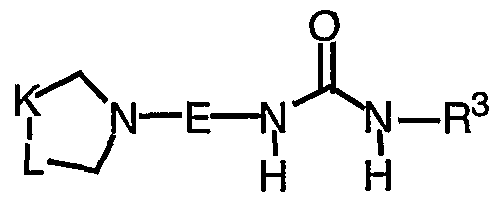
  • the present invention provides novel compounds of formula (I) :
  • M is absent or selected from CH2, CHR 5 , CHR 13 , CR 13 R 13 , and CR 5 R 13 ;
  • Q is selected from CH2, CHR 5 , CHR 13 , CR 13 R 13 , and
  • J, K and L are independently selected from CH2 , CHR 5 , CHR 6 , CR 6 R 6 and CR 5 R 6 ;
  • J is selected from CH2, CHR 5 , CHR 13 , and CR 5 R 13 ;
  • Z is selected from 0, S, NR l , CHCN, CHNO2 , and C(CN) 2 ;
  • R la is selected from H, Ci-6 alkyl, C3--6 cycloalkyl, C0NR lb R lb , 0R lb , CN, NO2 , and (CH2) phenyl;
  • R lb is independently selected from H, C ⁇ _3 alkyl, C3--5 cycloalkyl, and phenyl;
  • E is selected from:
  • ring A is a C3-6 carbocyclic residue, provided that the C3-6 carbocyclic residue in Ring A is not phenyl;
  • R 1 and R-2 are independently selected from H, Ci-6 alkyl, C3-8 alkenyl, and C3-8 alkynyl;
  • R 3 is selected from a Ci-io alkyl substituted with 0-5 R 3 9, C3-10 alkenyl substituted with 0-5 R 3 9, and C3-10 alkynyl substituted with 0-5 R 9 ;
  • R 9, at each occurrence, is independently selected from Cl, Br, I, F, 02 , CN, NR 3a R 3a P OH, 0(CHR') r R 3d ,
  • R 3 is selected from C - ⁇ alkyl, C3-8 alkenyl, C3--8 alkynyl, a (CH2)r _c 3-6 carbocyclic residue substituted with 0-3 R 3e , and (CH2) _5- 6 membered heterocyclic system containing 1-4 heteroatoms selected from N, O, and S, substituted with 0-2 R 3e ;
  • R 3d is selected from C3-8 alkenyl, C3-8 alkynyl, methyl, CF 3 , C 2 -6 alkyl substituted with 0-3 R e , a (CH2)r _ 3-io carbocyclic residue substituted with 0-3 R 3e , and a (CH2)r 5_ 6 membered heterocyclic system containing 1-4 heteroatoms selected from N, O, and S, substituted with 0-3 R 3e.
  • R e at each occurrence, is selected from C ⁇ -6 alkyl, C2-8 alkenyl, C2-8 alkynyl, (CH2)r 3-6 cycloalkyl, Cl, F, Br, I, CN, N02 , (CF2) r CF3, (CH2) r OCi_5 alkyl, OH, SH, (CH2) rS (0) p Ci-5 alkyl,
  • R 3 f is selected from H, Ci-6 alkyl, C3-6 cycloalkyl, and phenyl;
  • R 4 is absent, taken with the nitrogen to which it is attached to form an N-oxide, or selected from Ci-6 alkyl, C3-8 alkenyl, C3-8 alkynyl, (CH2) r C3-6 cycloalkyl, (CH2) qC (O) R 4b , (CH2) qC (0)NR a R a P (CH2)qC(0)OR 4b , and a (CH2)r" 3-10 carbocyclic residue substituted with 0-3 R 4c ;
  • R 4a and R 4a ' are selected from H, C ⁇ _6 alkyl, (CH2)r 3-6 cycloalkyl, and phenyl;
  • R 4b at each occurrence, is selected from Ci-6 alkyl
  • R 4c at each occurrence, is selected from Ci-6 alkyl
  • R 4 joins with R "7 , R9, R 11 , or R 4 to form a 5, 6 or 7 membered piperidinium spirocycle or pyrrolidinium spirocycle substituted with 0-3 R a ;
  • R 5 is selected from a (CR 5 'R 5 ") _ 3-io carbocyclic residue substituted with 0-5 R 16 and a (CR 5 'R 5 ")t _ 5-10 membered heterocyclic system containing 1-4 heteroatoms selected from N, O, and S, substituted with 0-3 R 6 ;
  • R 5 ' and R 5 ", at each occurrence, are selected from H, Ci-6 alkyl, (CH2)rC3-6 cycloalkyl, and phenyl;
  • R 6 at each occurrence, is selected from Ci-6 alkyl
  • R 6a and R 6a ' are selected from H, Cl-6 alkyl, C3-6 cycloalkyl, and phenyl substituted with
  • R 6b at each occurrence, is selected from Ci-6 alkyl, C3-6 cycloalkyl, and phenyl substituted with 0-3 R 6c ;
  • R 6c is selected from C ⁇ s alkyl, C3-6 cycloalkyl, Cl, F, Br, I, CN, NO2 , (CF2) r CF3, (CH2) r OCi-5 alkyl, (CH2) r OH, (CH2) r SC ⁇ _5 alkyl, and
  • R 6 at each occurrence, is selected from H, Ci-6 alkyl, and C3-6 cycloalkyl; with the proviso that when any of J, K or L is CR 6 R6 and
  • R 6 is bonded to the carbon to which it is attached through a heteroatom, the other R 6 is not bonded to the carbon to which it is attached through a heteroatom;
  • R 7 is selected from H, C ⁇ _6 alkyl, C2-8 alkenyl, C2-8 alkynyl, (CH )qOH, (CH )qSH, (CH 2 )qOR 7d , (CH )qSR 7d , (CH2)qNR 7a R 7a P (CH2 ) r C (O) OH, (CH2) r C(0)R 7b , (CH2) r C (0)NR 7a R 7 P
  • R 7a and R 7a ' are selected from H, Ci-6 alkyl, C3-8 alkenyl, C3-8 alkynyl, (CH2) r C3-6 cycloalkyl, a (CH2)r ⁇ 3-io carbocyclic residue substituted with 0-5 R 7e , and a (CH2) r - 5 - 0 membered heterocyclic system containing 1-4 heteroatoms selected from N, 0, and S, substituted with 0-3 R 7e ;
  • R 7a and R 7a ' along with the N to which they are attached, are joined to form a 5-6 membered heterocyclic system containing 1-2 heteroatoms selected from NR 7 ⁇ , O, and S and optionally fused with a benzene ring or a 6- membered aromatic heterocycle;
  • R 7b is selected from Ci-6 alkyl, C3-8 alkenyl, C3-8 alkynyl, a (CH2) r -C3-6 carbocyclic residue substituted with 0-2 R e , and a (CH2)r -5 ⁇ 6 membered heterocyclic system containing 1-4 heteroatoms selected from N, 0, and S, substituted with 0-3 R 7e ;
  • R 7c is selected from Ci-6 alkyl
  • R 7 at each occurrence, is selected from methyl, CF 3 ,
  • R 7e is selected from Ci-6 alkyl
  • R 7 ⁇ is selected from H, Ci- ⁇ alkyl, and C3-5 cycloalkyl;
  • R 7 9 is selected from H, C ⁇ -6 alkyl, C3-6 cycloalkyl, (CH2)rPhenyl, C(0)R 7f , C(0)OR 7f , and S ⁇ 2R 7f ;
  • R8 is selected from H, Ci-6 alkyl, C3-6 cycloalkyl, and (CH2) tPhenyl substituted with 0-3 R 8a ;
  • R 8a at each occurrence, is selected from C ⁇ _6 alkyl
  • R 8b is selected from H, Ci-g alkyl, C3-6 cycloalkyl, OH, CN, and (CH2) r -phenyl;
  • R9 is selected from H, Ci- ⁇ alkyl, C2-8 alkenyl, C2-8 alkynyl, F, Cl, Br, I, NO2, CN, (CH2) r OH, (CH2) r SH,
  • R 9a and R 9a ' are selected from H, Ci-6 alkyl, C3-8 alkenyl, C3-8 alkynyl, a (CH2)r _
  • R 9a and R a ' are joined to form a 5-6 membered heterocyclic system containing 1-2 heteroatoms selected from NR 9 ⁇ , 0, and S and optionally fused with a benzene ring or a 6- membered aromatic heterocycle;
  • R 9b is selected from Ci-6 alkyl, C3-8 alkenyl, C3--8 alkynyl, a (CH2) r ⁇ C3-6 carbocyclic residue substituted with 0-2 R 9e , and a (CH2)r _5_ 6 membered heterocyclic system containing 1-4 heteroatoms selected from N, 0, and S, substituted with 0-3 R 9e ;
  • R 9c is selected from Ci-6 alkyl
  • R 9d is selected from Ci-6 alkyl, C3-6 alkenyl, C3-6 alkynyl, a C3-10 carbocyclic residue substituted with 0-3 R 9c , and a 5-6 membered heterocyclic system containing 1-4 heteroatoms selected from the group consisting of N, O, and S substituted with 0-3 R 9c ;
  • R e at each occurrence, is selected from C - ⁇ alkyl
  • R 9 f at each occurrence, is selected from H, Ci-6 alkyl, and C3_6 cycloalkyl;
  • R 9 9 is selected from H, C ⁇ _6 alkyl, C3--6 cycloalkyl, (CH2)rPhenyl, C(0)R 9f , C(0)OR 9f , and S ⁇ 2R 9f ;
  • R 10 is selected from H, Ci-6 alkyl, C2-8 alkenyl, C2-8 alkynyl, F, Cl, Br, I, NO2 , CN, (CH2) r 0H, (CH2) r OR 10d , (CH2) r SR 10d , (CH2) r NR 10a R 10a ' , (CH2) r C(0)OH, (CH2) rC (0) R 10b , (CH2) r C (O)NR 10a R 10a P (CH2) r NR 10a C(O)R 10a , (CH2) r NR 10a C(O)H, (CH2 ) r C (0) OR 10b , (CH2 ) r OC (0) R 10 , (CH2) r OC(O)NR 10a R 10a P (CH2) r NR 10a C (0) OR 10b , (CH 2 ) r S(O)pR 10b , (CH2)rS(O) 2 ,
  • RlOa and R- ⁇ -O ' are selected from H, Ci-6 alkyl, C3-8 alkenyl, C3-8 alkynyl, a (CH2)r- C3-10 carbocyclic residue substituted with 0-5
  • R 1 ⁇ e and a (CH2) r -5-1 0 membered heterocyclic system containing 1-4 heteroatoms selected from N, 0, and S, substituted with 0-3 R 10e ;
  • R 1 ⁇ 3 - and R ( ⁇ a ' , along with the N to which they are attached, are joined to form a 5-6 membered heterocyclic system containing 1-2 heteroatoms selected from NR 10 9, 0, and S and optionally fused with a benzene ring or a 6- membered aromatic heterocycle,-
  • R 1 ⁇ is selected from Ci-6 alkyl
  • R 1 ⁇ d / at each occurrence is selected from C ⁇ _6 alkyl, C3-6 alkenyl, C3-6 alkynyl, a C3-10 carbocyclic residue substituted with 0-3 R 1 ⁇ 0 , and a 5-6 membered heterocyclic system containing 1-4 heteroatoms selected from the group consisting of N, 0, and S substituted with 0-3 R 10c ;
  • R 1 ⁇ a each occurrence, is selected from C ⁇ _g alkyl, C2-8 alkenyl, C2-8 alkynyl, (CH2)rC3-6 cycloalkyl, Cl, F, Br, I, CN, N02 , (CF2) r CF 3 , (CH ) r OCl-5 alkyl, OH, SH, (CH2) r SC ⁇ _5 alkyl, (CH2) r NR 10f R 10f , and (CH2 ) rphenyl ;
  • R- ⁇ -Of . t each occurrence, is selected from H, C ⁇ _5 alkyl, and C3--6 cycloalkyl; RiOg is selected from H, Ci-6 alkyl, C3.-6 cycloalkyl, (CH2)rPhenyl, C(O)R 10f , C(O)OR 10n , and S ⁇ 2R 10h ;
  • RIOI I ⁇ a t e ch occurrence is selected from C1-5 alkyl, and C3-6 cycloalkyl;
  • R 9 or R 10 when either of R 9 or R 10 is halogen, cyano, nitro, or bonded to the carbon to which it is attached through a heteroatom, the other of R 9 or R 10 is not bonded to the carbon to which it is attached through a heteroatom;
  • R 1 is selected from H, Ci-6 alkyl, C2-8 alkenyl, C2-8 alkynyl, (CH2)q0H, (CH2)qSH, (CH2) q 0R lld , (CH2)qSR lld , (CH )qNR ll R lla P (CH 2 ) r C (0) OH, (CH2) r C(0)R ll , (CH2) r C (0)NR l a R ll ' , (CH2)qNR lla C(0)R lla , (CH2 ) qOC (0) NR ll R lla P (CH2)qNR lla C(0)0R llb , (CH2) q NR lla C (0)NHR lla ,
  • R-LJ a an ⁇ 5[ plla' # at each occurrence, are selected from H, C ⁇ _g alkyl, C3-8 alkenyl, C3-8 alkynyl, a (CH2)r _ C3-10 carbocyclic residue substituted with 0-5
  • R le and a (CH2) r ⁇ 5-1 0 membered heterocyclic system containing 1-4 heteroatoms selected from N, 0, and S, substituted with 0-3 R lle ;
  • R lla and R l a are joined to form a 5-6 membered heterocyclic system containing 1-2 heteroatoms selected from NR 11 ⁇ , O, and S and optionally fused with a benzene ring or a 6- membered aromatic heterocycle;
  • R llb at each occurrence, is selected from Ci-g alkyl, C3--8 alkenyl, C3-8 alkynyl, a (CH2)r ⁇ C3-6 carbocyclic residue substituted with 0-2 R le , and a (CH2) r -5 ""6 membered heterocyclic system containing 1-4 heteroatoms selected from N, 0, and S, substituted with 0-3 R lle ;
  • R c is selected from Ci-g alkyl, C2-8 alkenyl, C2-8 alkynyl, (CH2) r C3-6 cycloalkyl, Cl, Br, I, F, (CF2) r CF3, NO2 , CN, (CH2) rNR llf R llf , (CH2) r OH, (CH2) r OCi_4 alkyl, (CH2) r SC ⁇ _4 alkyl,
  • R lld is selected from methyl, CF 3 ,
  • R lle at each occurrence, is selected from Ci-g alkyl
  • R 1 - ⁇ at each occurrence, is selected from H, Ci-g alkyl, and C3- cycloalkyl;
  • R 11 -? is selected from H, Ci-g alkyl, C3-g cycloalkyl, (CH2)rPhenyl, C(0)R llf , C(0)OR llh , and S ⁇ 2R llh ;
  • R lln at each occurrence, is selected from C ⁇ _5 alkyl, and C3-g cycloalkyl;
  • R 12 is selected from H, Ci-g alkyl, (CH2)qOH, (CH2) r C3-6 cycloalkyl, and (CH2)tphenyl substituted with 0-3 Ri2a ;
  • R 1 2 / at each occurrence is selected from C ⁇ _g alkyl, C2-8 alkenyl, C2-8 alkynyl, C3-g cycloalkyl, Cl, F, Br, I, CN, N02, (CF 2 ) r CF3, (CH2) r OCl-5 alkyl, OH,
  • R 11 and R- ⁇ -2 join to form a C3_ ⁇ o cycloalkyl, a 5-6-membered lactone or lacta , or a 4-6-membered saturated heterocycle containing 1-2 heteroatoms selected from 0, S, and R 11 ⁇ and optionally fused with a benzene ring or a 6- membered aromatic heterocycle;
  • R 13 is selected from C ⁇ _g alkyl, C2-8 alkenyl, C2-8 alkynyl, C3-g cycloalkyl, (CF ) CF3, (CH2)NR 13a R 13a P (CH 2 ) q OH, (CH ) q OR 13b , (CH2) q SH, (CH2) q SR 13b , (CH ) W C (0) OH, (CH 2 ) C(0)R 13b , (CH )wC(0)NR 13a R 13a P (CH2 ) q NR 13d C (O) R 13a , (CH2 ) C (0) 0R 13b , (CH ) q 0C (0) Rl 3b , (CH ) W S (0) p R 13b , (CH2) w S(0)2NR 13a R 13a P (CH2 ) q NR 13d S (0) 2R 13b , and (CH2)w"Phenyl substituted
  • R 13a and R 13a ' are selected from H, Ci-g alkyl, C3_g cycloalkyl, and phenyl substituted with 0-3 R 13c ;
  • R 1 b is selected from Ci-g alkyl, C3-6 cycloalkyl, and phenyl substituted with 0-3 R 13c ;
  • R 13c is selected from Ci-g alkyl, C3-6 cycloalkyl, Cl, F, Br, I, CN, NO2 , (CF 2 ) r CF3, (CH 2 )rOCi-5 alkyl, (CH ) r OH, (CH ) r SCi-5 alkyl, and
  • Rl3d / a t each occurrence is selected from H, C ⁇ _g alkyl, and C3-g cycloalkyl;
  • R 14 at each occurrence, is selected from Ci-g alkyl, (CH2) r C3-6 cycloalkyl, Cl, Br, I, F, NO2 , CN,
  • R at each occurrence is selected from H, Ci-g alkyl, C2-8 alkenyl, C2-8 alkynyl, (CH2)rC3-6 cycloalkyl, and (CH2 ) rPheny1 substituted with R 14e ;
  • R 14a and R 14a P at each occurrence are selected from H, Ci-g alkyl, C3-8 alkenyl, C3-8 alkynyl, a (CH2) ⁇ C3-IO carbocyclic residue substituted with 0-5 R 1 e , and a (CH2)r ⁇ 5 ⁇ 10 membered heterocyclic system containing 1-4 heteroatoms selected from N, 0, and S, substituted with 0-2 R 14e ;
  • R 1 at each occurrence, is selected from C ⁇ _g alkyl, C3-8 alkenyl, C3-8 alkynyl, a (CH2) r -C3-6 carbocyclic residue substituted with 0-3 R 14e , and (CH2)r ⁇ 5- ⁇ membered heterocyclic system containing 1-4 heteroatoms selected from N, 0, and S, substituted with 0-2 R 1 e ;
  • R 14d is selected from C3--8 alkenyl, C3-8 alkynyl, methyl, CF 3 , C2-6 alkyl substituted with 0-3 R 14e , a (CH2)r ⁇ C3-10 carbocyclic residue substituted with 0-3 R 14e , and a (CH2)r 5 ⁇ 6 membered heterocyclic system containing 1-4 heteroatoms selected from N, 0, and S, substituted with 0-3 R 1 e ;
  • R 1 e at each occurrence, is selected from Ci-6 alkyl, C2-8 alkenyl, C2-8 alkynyl, (CH2)r 3-6 cycloalkyl, Cl, F, Br, I, CN, NO2, (CF2) r F3, (CH2) r OCl-5 alkyl, OH, SH, (CH2) r SCi-5 alkyl, (CH2) r NR 14f R 14f , and (CH2 ) rPheny1 ;
  • R 14 f at each occurrence, is selected from H, Ci-g alkyl, C3- cycloalkyl, and phenyl;
  • R 14 joins with R 4 to form a 5, 6 or 7 membered piperidinium spirocycle or pyrrolidinium spirocycle fused to ring A, the spirocycle substituted with 0-3 R a ;
  • R a at each occurrence, is selected from Ci-g alkyl
  • R at each occurrence, is selected from H, Ci-g alkyl, C3-6 cycloalkyl, and phenyl;
  • R c at each occurrence, is selected from Ci-g alkyl, C3. g cycloalkyl, and phenyl;
  • R 15 is selected from C -8 alkyl, (CH2) r C3-6 cycloalkyl, Cl, Br, I, F, N ⁇ 2 , CN,
  • R 1 a and R 15aJ are selected from H, Ci-6 alkyl, C3-8 alkenyl, C3-8 alkynyl, a (CH2)r ⁇ C3-10 carbocyclic residue substituted with 0-5
  • R 15e and a (CH2)r ⁇ 5_ 10 membered heterocyclic system containing 1-4 heteroatoms selected from N, 0, and S, substituted with 0-2 R 15e ;
  • Rl 5a and R 15a ' along with the N to which they are attached, are joined to form a 5-6 membered heterocyclic system containing 1-2 heteroatoms selected from NR 15 ⁇ , O, and S and optionally fused with a benzene ring or a 6- membered aromatic heterocycle;
  • RlE> b a each occurrence, is selected from Ci-6 alkyl, C3-8 alkenyl, C3-8 alkynyl, a (CH2) r -C3-6 carbocyclic residue substituted with 0-3 R 1 e , and (CH2)r -5- 6 membered heterocyclic system containing 1-4 heteroatoms selected from N, 0, and S, substituted with 0-2 R 15e ;
  • R 15 is selected from C3-8 alkenyl, C3-8 alkynyl, methyl, CF 3 , C2-6 alkyl substituted with 0-3 R 15e , a (CH2)r ⁇ 3-io carbocyclic residue substituted with 0-3 R 15e , and a (CH2)r 5-6 membered heterocyclic system containing 1-4 heteroatoms selected from N, 0, and S, substituted with 0-3 R 15e.
  • R 15e is selected from Ci-g alkyl, C2-8 alkenyl, C2-8 alkynyl, (CH2)rC3-6 cycloalkyl, Cl, F, Br, I, CN, N02 , (CF ) r CF3, (CH 2 ) r OCi-5 alkyl, OH, SH, (CH ) r SCl-5 alkyl, (CH 2 ) r NR 15f R 15f , and (CH2 ) r phenyl ;
  • R 15 f is selected from H, Ci-g alkyl, C3- cycloalkyl, and phenyl;
  • R 15 5 is selected from H, Ci-g alkyl, C3-g cycloalkyl,
  • R 15h at each occurrence is selected from C1-5 alkyl, and C3-6 cycloalkyl;
  • R 16 is selected from Ci-8 alkyl, C2-8 alkenyl, C2-8 alkynyl, (CH2)rC3- cycloalkyl,
  • R 16a an( * j l6a' ⁇ a each occurrence, are selected from H, Ci-g alkyl, C3-8 alkenyl, C3-8 alkynyl, a (CH2)r ⁇ C3-I0 carbocyclic residue substituted with 0-5 R 16e a nd a (CH2)r -5- 10 membered heterocyclic system containing 1-4 heteroatoms selected from N,
  • Rl6b is selected from Ci-6 alkyl, C3-8 alkenyl, C3-8 alkynyl, a (CH2) r C3-6 carbocyclic residue substituted with 0-3 R 16e , and a (CH2)r ⁇ 5 ⁇ 6 membered heterocyclic system containing 1-4 heteroatoms selected from N, 0, and S, substituted with 0-2 R 16e ;
  • R 16d / a each occurrence is selected from C3-8 alkenyl, C3-8 alkynyl, methyl, CF 3 , C2-6 alkyl substituted with 0-3 R 16e , a (CH2)r ⁇ C3-io carbocyclic residue substituted with 0-3 R 16e , and a (CH2)r- 5 ⁇ 6 membered heterocyclic system containing 1-4 heteroatoms selected from N, 0, and S, substituted with 0-3 R 16e ;
  • R 16e is selected from Ci-g alkyl, C2-8 alkenyl, C2-8 alkynyl, (CH2) r C3-6 cycloalkyl, Cl, F, Br, I, CN, 02 , (CF2) r CF3, (CH2) r OCi-5 alkyl, OH, SH, (CH2) r SCi-5 alkyl, (CH2) r NR 16f R 16f , and (CH2 ) Phenyl ;
  • R 16 f at each occurrence, is selected from H, C1-5 alkyl, and C3-g cycloalkyl, and phenyl;
  • g is selected from 0, 1, 2, 3, and 4;
  • t is selected from 1 and 2;
  • w is selected from 0 and 1;
  • r is selected from 0, 1, 2, 3, 4, and 5;
  • q is selected from 1, 2, 3, 4, and 5;
  • p is selected from 0, 1, and 2;
  • the compounds of Formula (I) do not include the compounds disclosed in U.S. Patent Application No. 09/466,442 filed December 17, 1999.
  • the present invention provides novel compounds of formula (I) : Z is selected from 0, S, NCN, NCONH 2 , CHNO2 , and C(CN) ;
  • E is selected from:
  • R 4 is absent, taken with the nitrogen to which it is attached to form an N-oxide, or selected from Ci-8 alkyl, (CH2)rC3-6 cycloalkyl, and (CH2) r ⁇ Phenyl substituted with 0-3 R 4c ;
  • R 4c at each occurrence, is selected from Ci-g alkyl
  • R 4 joins with R 7 or R 9 or R-J- 4 to form a 5, 6 or 7 membered piperidinium spirocycle substituted with 0-3 R a ;
  • R 1 and R2 are independently selected from H and C1--4 alkyl ;
  • R 6 at each occurrence, is selected from C1-4 alkyl
  • R 6a and R 6a at each occurrence are selected from H, Cl-6 alkyl, C3- cycloalkyl, and phenyl substituted with
  • R 6 at each occurrence, is selected from C ⁇ _g alkyl
  • R6 7 at each occurrence is selected from C ⁇ _g alkyl
  • R 6d at each occurrence, is selected from H, Ci-g alkyl, and C3_g cycloalkyl;
  • R 7 is selected from H, C1-3 alkyl, (CH2)r 3-6 cycloalkyl, (CH2) q 0H, (CH2)qOR 7d , (CH2) q NR 7a R 7a (CH2) r C(0)R 7b , (CH2) r C(0)NR 7a R 7a P
  • R 7a and R 7a ' are selected from H, Ci-6 alkyl, (CH2) r C3-6 cycloalkyl, a (CH2) r phenyl substituted with 0-3 R 7e ;
  • R 7 at each occurrence, is selected from Ci-g alkyl
  • R 7c at each occurrence, is selected from C1-4 alkyl
  • R 7d is selected from Ci-g alkyl, (CH2)r c 3-6 cycloalkyl, (CH2)rPhenyl substituted with 0-3 R 7e ;
  • R 7e at each occurrence, is selected from Ci-g alkyl
  • R f at each occurrence, is selected from H, C1-5 alkyl, and C3_ cycloalkyl;
  • R 11 is selected from H, Ci-g alkyl, (CH2)rC3-6 cycloalkyl, (CH2) q 0H, (CH2) q 0R lld ,
  • lla a d Rl la ' at each occurrence, are selected from H, Ci-g alkyl, (CH2)r c 3-6 cycloalkyl, a (CH2)rPhenyl substituted with 0-3 R lle ;
  • R lla and R lla - 7 are joined to form a 5-6 membered heterocyclic system containing 1-2 heteroatoms selected from NR 11 ⁇ , 0, and S and optionally fused with a benzene ring or a 6- membered aromatic heterocycle;
  • R llb is selected from Ci-g alkyl, C2-8 alkenyl, C2-8 alkynyl, (CH2)rC3-6 cycloalkyl, (CH2)rPhenyl substituted with 0-3 R lle ;
  • R llc is selected from C1-4 alkyl, C2-8 alkenyl, C2-8 alkynyl, (CH2)r c 3-6 cycloalkyl, Cl, Br, I, F, (CF2) r CF3, N02, CN, (CH2)r-NR llf R llf , (CH2) r OH, (CH ) r OCi-4 alkyl, (CH2) r C (0)R llb , (CH2) r C(0)NR llf R llf , (CH2) r-NR llf C (0) R lla , (CH2)rS(0) p R llb , (CH 2 ) r S
  • R lld is selected from Ci-g alkyl, (CH2)rC3-6 cycloalkyl, (CH2)rPhenyl substituted with 0-3 R lle ;
  • R lle at each occurrence, is selected from Ci-g alkyl, C2-8 alkenyl, C2-8 alkynyl, C3-g cycloalkyl, Cl, F, Br, I, CN, N02, (CF ) r CF3, (CH2) r OC ⁇ _5 alkyl, OH,
  • R-Hf at each occurrence, is selected from H, C1-5 alkyl and C3-g cycloalkyl;
  • RH-9 " is selected from H, Ci-g alkyl, C3-g cycloalkyl, (CH2)rPhenyl, C(0)R llf , C(0)0R llf , and S02R llf ;
  • R 12 is H
  • RH and R 12 join to form a C3-10 cycloalkyl, a 5-6-membered lactone or lactarn, or a 4-6-membered saturated heterocycle containing 1-2 heteroatoms selected from 0, S, and NR 11 ⁇ and optionally fused with a benzene ring or a 6- membered aromatic heterocycle;
  • R 13 is selected from Ci-4 alkyl, C3-6 cycloalkyl, (CH2)NR 13a R 13a (CH2)0H, (CH 2 )0R 13b , (CH 2 ) C(0)R 13b , (CH 2 )wC(0)NR 13a R 13a P (CH2)NR 13d C(0)R 13a , (CH2)wS(0)2NR 13a R 13a ' , (CH2)NR 13d S(0)2R 13b , and (CH2) "Phenyl substituted with 0-3 R 13c ;
  • Rl3a and R 13a ' are selected from H, Ci-g alkyl, C3-g cycloalkyl, and phenyl substituted with 0-3 R 13c ;
  • R 13b at each occurrence, is selected from Ci-g alkyl
  • R 1 c is selected from Ci-g alkyl, C3-6 cycloalkyl, Cl, F, Br, I, CN, NO2 , (CF2)rCF3, (CH2) r OCi-5 alkyl, (CH2) r OH, and (CH2 ) r NR 13d R 13d ;
  • R 1 d at each occurrence, is selected from H, Ci-6 alkyl, and C3-g cycloalkyl; q is selected from 1, 2, and 3; and
  • r is selected from 0, 1, 2, and 3.
  • ring A is selected from:
  • R 5 is selected from (CR ⁇ ) t ⁇ phenyl substituted with 0-5
  • R 16 and a (CR 5 ⁇ ) t-heterocyclic system substituted with 0-3 R!6, wherein the heterocyclic system is selected from pyridinyl, thiophenyl, furanyl, indazolyl, benzothiazolyl, benzimidazolyl, benzothiophenyl, benzofuranyl, benzoxazolyl, benzisoxazolyl, quinolinyl, isoquinolinyl, imidazolyl, indolyl, indolinyl, isoindolyl, isothiadiazolyl, isoxazolyl, piperidinyl, pyrrazolyl, 1, 2 , 4-triazolyl, 1, 2 , 3-triazolyl, tetrazolyl, thiadiazolyl, thiazolyl, oxazolyl, pyrazinyl, and pyrimidinyl .
  • the heterocyclic system is selected from pyridin
  • the present invention provides novel compounds of formula (I-i) :
  • R 16 at each occurrence, is selected from Ci-8 alkyl, (CH2) r C3-6 cycloalkyl, CF3 , Cl, Br, I, F,
  • R 16a and R 16a ' are selected from H, Ci-6 alkyl, C3-6 cycloalkyl, and (CH2)rPhenyl substituted with 0-3 R 16e ;
  • Rl6b at each occurrence, is selected from H, Ci-6 alkyl, C3-g cycloalkyl, and (CH2 ) rPhenyl substituted with 0-3 R 16e ;
  • Rl6d / at each occurrence is selected from Ci-g alkyl and phenyl;
  • R 16e is selected from Ci-g alkyl, Cl, F, Br, I, CN, NO2 , (CF2) r CF3, OH, and (CH2) r OC ⁇ _5 alkyl; and
  • R 16 f is selected from H, and C1-5 alkyl .
  • the present invention provides novel compounds of formula (I-ii) :
  • R 16 is selected from Ci-8 alkyl, (CH2)rC3-6 cycloalkyl, CF3 , Cl, Br, I, F, (CH2) r NR 16a R 16a P N02, CN, OH, (CH2) r OR 16d , (CH2 ) r C (0) R 16b , (CH2 ) r (O) NR 16a R 16a ' , (CH2 ) r NR 16f C (0) R 16b , (CH2 ) r S (0) p R 16 , (CH2) r S(0)2NR 16a R 16a P (CH2 ) r NR 16f S (0) 2R 16b , and (CH2)rPhenyl substituted with 0-3 R 16e ;
  • Rl6a and R ⁇ 63 -' are selected from H, Ci-g alkyl, C3-g cycloalkyl, and (CH2)rPhenyl substituted with 0-3 R 16e ;
  • R 16 at each occurrence, is selected from H, Ci-g alkyl, C3-g cycloalkyl, and (CH2)rPhenyl substituted with 0-3 R 16e ;
  • R 16d is selected from Ci-g alkyl and phenyl
  • R 16e is selected from Ci-g alkyl, Cl, F, Br, I, CN, N02, (CF2) r CF3, OH, and (CH2) r OCi-5 alkyl; and
  • R 16 f at each occurrence, is selected from H, and C ⁇ _5 alkyl .
  • the present invention provides novel compounds of formula (I-i) :
  • R 5 is CH2phenyl substituted with 0-3 R!6;
  • R 9 is selected from H, Ci-6 alkyl, (CH2) r C3-6 cycloalkyl, F, Cl, CN, (CH2) r OH, (CH2) r OR 9d , (CH2 ) r NR 9a R 9 a (CH2 ) r OC (0) NHR 9a , (CH2 ) rPhenyl substituted with 0-5 R 9e , and (CH2 ) r _ heterocyclic system substituted with 0-2 R 9e , wherein the heterocyclic system is selected from pyridyl, thiophenyl, furanyl, oxazolyl, and thiazolyl;
  • R 9a and R 9a P at each occurrence are selected from H, Ci-g alkyl, C3-g cycloalkyl, and (CH2 ) r pheny1 substituted with 0-3 R 9e ;
  • R d at each occurrence, is selected from Ci-g alkyl and phenyl ;
  • R e at each occurrence, is selected from Ci-g alkyl, Cl, F, Br, I, CN, N02 , (CF2) r F3, OH, and (CH ) r OCi-5 alkyl;
  • R 10 is selected from H, Ci-5 alkyl, OH, and CH2OH;
  • RlO-3 " is selected from H, Ci-g alkyl, C3-g cycloalkyl, (CH2)rPhenyl, C(O)R 10f , C(O)OR 10f , and S ⁇ 2R 10f ;
  • R 9 or R 10 when either of R 9 or R 10 is halogen, cyano, nitro, or bonded to the carbon to which it is attached through a heteroatom, the other of R 9 or R 10 is not bonded to the carbon to which it is attached through a heteroatom;
  • R11 J_ S selected from H, Ci-8 alkyl, (CH2 ) rPhenyl substituted with 0-5 R lle , and a (CH2)r ⁇ heterocyclic system substituted with 0-2 R lle , wherein the heterocyclic system is selected from pyridinyl, thiophenyl, furanyl, indazolyl, benzothiazolyl, benzimidazolyl, benzothiophenyl, benzofuranyl, benzoxazolyl, benzisoxazolyl, quinolinyl, isoquinolinyl, imidazolyl, indolyl, isoindolyl, piperidinyl, pyrrazolyl, 1,2,4- triazolyl, 1, 2 , 3-triazolyl, tetrazolyl, thiazolyl, oxazolyl, pyrazinyl, and pyri idinyl; and
  • R lle at each occurrence, is selected from Ci-g alkyl, Cl, F, Br, I, CN, NO2 , (CF2) r CF3, OH, and (CH2) r OCi-5 alkyl;
  • RUST is selected from H, Ci-g alkyl, C3-g cycloalkyl, (CH2)rPhenyl, C(0)R llf , C(0)OR llf , and S ⁇ 2R llf ;
  • R 12 is H
  • R 11 and R!2 join to form a C3--10 cycloalkyl, a 5-6-membered lactone or lactam, or a 4-6-membered saturated heterocycle containing 1-2 heteroatoms selected from O, S, and R 11 ⁇ and optionally fused with a benzene ring or a 6- membered aromatic heterocycle;
  • R 14 is selected from Ci-8 alkyl, (CH2)rC3-6 cycloalkyl, CF3 , Cl, Br, I, F, (CH2) r NR 14a R 14a N02, CN, OH, (CH2) r OR 14d , (CH2 ) r C (0) R 14b , (CH2 ) r C (0)NR 1 R 1 ' , (CH2 ) r NR 14f C (0) R 1 , (CH2 ) r S (0) p R 14b , (CH2 ) r S (O) 2NR 1 a R 14a ' , (CH2 ) r NR 14f S (O) 2R 14b (CH2 ) rPheny1 substituted with 0-3 R 14e , and a
  • Rl4a an( * j Rl4a' a each occurrence, are selected from H, Ci-g alkyl, C3-g cycloalkyl, and (CH2)rPhenyl substituted with 0-3 R 14e , and a (CH2)r- 5 ⁇ 6 membered heterocyclic system containing 1-4 heteroatoms selected from N, 0, and S, substituted with 0-2 R 15e ;
  • R 1 b at each occurrence, is selected from H, Ci-g alkyl, C3_g cycloalkyl, and (CH2)rPhenyl substituted with 0-3 R 1 e ;
  • R 14d is selected from Ci-g alkyl and phenyl
  • R 14e at each occurrence, is selected from Ci-6 alkyl, Cl, F, Br, I, CN, N02, (CF2)rCF3, OH, and (CH2)rOC ⁇ _5 alkyl; and R 14r , at each occurrence, is selected from H, and C1-5 alkyl ; and
  • r is selected from 0, 1, and 2.
  • the present invention provides novel compounds of formula (I-ii) :
  • R 5 is CH2phenyl substituted with 0-3 R l ⁇ ;
  • R 9 is selected from H, Ci-g alkyl, (CH2)r 3-6 cycloalkyl, F, Cl, CN, (CH2) r OH, (CH2) r OR 9d
  • R 9a and R 9a P at each occurrence are selected from H, Ci-g alkyl, C3-g cycloalkyl, and (CH2)rP n enyl substituted with 0-3 R e ;
  • R d at each occurrence, is selected from Ci-g alkyl and phenyl ;
  • R 9e is selected from Ci-g alkyl, Cl, F, Br, I, CN, NO2 , (CF2) r CF3, OH, and (CH )rOCi-5 alkyl;
  • R 10 ⁇ is selected from H, Ci-g alkyl, C3-g cycloalkyl, (CH2)rPhenyl, C(O)R 10f , C(O)OR 10f , and S ⁇ 2R 10f ;
  • R 9 or R 10 when either of R 9 or R 10 is halogen, cyano, nitro, or bonded to the carbon to which it is attached through a heteroatom, the other of R 9 or R 10 is not bonded to the carbon to which it is attached through a heteroatom;
  • R 11 is selected from H, Ci-8 alkyl, (CH2)rPhenyl substituted with 0-5 R lle , and a (CH2)r ⁇ heterocyclic system substituted with 0-2 R lle , wherein the heterocyclic system is selected from pyridinyl, thiophenyl, furanyl, indazolyl, benzothiazolyl, benzimidazolyl, benzothiophenyl, benzofuranyl, benzoxazolyl, benzisoxazolyl, quinolinyl, isoquinolinyl, imidazolyl, indolyl, isoindolyl, piperidinyl, pyrrazolyl, 1,2,4- triazolyl, 1, 2 , 3-triazolyl, tetrazolyl, thiazolyl, oxazolyl, pyrazinyl, and pyrimidinyl; and
  • R lle at each occurrence, is selected from Ci-6 alkyl, Cl, F, Br, I, CN, O2 , (CF2) r CF3, OH, and (CH2) r OCi- 5 alkyl;
  • R11- ⁇ is selected from H, Ci-g alkyl, C3_g cycloalkyl, (CH2)rPhenyl, C(0)R llf , C(0)0R llf , and S02R llf ;
  • R 12 is H
  • R 11 and R 12 join to form a C3-10 cycloalkyl, a 5-6-membered lactone or lactarn, or a 4-6-membered saturated heterocycle containing 1-2 heteroatoms selected from 0, S, and NR 11 9 ' and optionally fused with a benzene ring or a 6- membered aromatic heterocycle;
  • R 14 is selected from Ci-8 alkyl, (CH2) r C3-6 cycloalkyl, CF3 , Cl, Br, I, F, (CH2)r-NR 14a R 14a O2 , CN, OH, (CH2) r OR 14d , (CH2) r C(0)R 1 b , (CH2) r C(0)NR 1 a R 1 P (CH2 ) r NR 14f C (0) R 1 b , (CH2 ) r S (0) p R 14b , (CH2) r S(0)2NR 1 a R 14a ' , (CH2) r NR 14f S (O) R 14b , (CH2 ) rPhenyl substituted with 0-3 R 14e , and a (CH2)r -5 -6 membered heterocyclic system containing 1-4 heteroatoms selected from N, 0, and S, substituted with 0-2 R 15e ; or two R 14 substituents on adjacent atoms
  • R 14a and Rl 4a ' t a each occurrence are selected from H, Ci-6 alkyl, C3_ cycloalkyl, and (CH2 ) rPhenyJ substituted with 0-3 R 1 e ;
  • R 14 at each occurrence, is selected from H, Ci-g alkyl, C3-g cycloalkyl, and (CH2 ) rPhenyl substituted with 0-3 R 14e ;
  • R 14d is selected from Ci-g alkyl and phenyl
  • R 1 e is selected from Ci-g alkyl, Cl, F, Br, I, CN, NO2 , (CF2) r CF3, OH, and (CH ) r OCl-5 alkyl;
  • R 14 f at each occurrence, is selected from H, and C1-5 alkyl ;
  • r is selected from 0, 1, and 2.
  • the present invention provides novel compounds of formula (I-i) :
  • J is selected from CH2 and CHR 5 ;
  • K is selected from CH2 and CHR 5 ;
  • L is selected from CH2 and CHR 5 ;
  • R 3 is selected from a Ci-io alkyl substituted with 0-3 R 3 g, C3-10 alkenyl substituted with 0-3 R 3 -?, and
  • R 3 *? at each occurrence, is selected from Cl, Br, I, F, N02, CN, NR 3a R a P OH, 0(CHR') r R 3d , SH, C(0)H, S(CHR') r R 3d , C(0)OH, C(O) (CHR') r R 3b , C(0)NR 3a R 3 P
  • R 15 wherein the heterocyclic system is selected from pyridinyl, thiophenyl, furanyl, indazolyl, benzothiazolyl, benzimidazolyl, benzothiophenyl, benzofuranyl, benzoxazolyl, benzisoxazolyl, quinolinyl, isoquinolinyl, imidazolyl, indolyl, indolinyl, isoindolyl, isothiadiazolyl, isoxazolyl, piperidinyl, pyrrazolyl, 1, 2 , 4-triazolyl, 1,2,3- triazolyl, tetrazolyl, thiadiazolyl, thiazolyl, oxazolyl, pyrazinyl, and pyrimidinyl, provided that when R 3 9 is a carbocyclic residue or a heterocyclic system, R 3 has at least one other R ⁇ , which is not a carbocyclic
  • R 3a and R 3a P at each occurrence are selected from H,
  • R 3 at each occurrence, is selected from Ci-g alkyl, and (CH2) r -phenyl substituted with 0-3 R 3e ;
  • R 3d is selected from Ci-g alkyl and phenyl substituted with 0-3 R 3e ;
  • R 3e at each occurrence, is selected from Ci-g alkyl, Cl, F, Br, I, CN, NO2 , (CF2) r CF3, (CH2) r OCi-5 alkyl, OH;
  • R f at each occurrence, is selected from H, C1-5 alkyl;
  • R 15 is selected from Ci-8 alkyl, (CH2)rC3-6 cycloalkyl, CF3 , Cl, Br, I, F,
  • Rl5a anc j Rl5a' r a t each occurrence are selected from H, Ci-g alkyl, C3-g cycloalkyl, and (CH2 ) Phenyl substituted with 0-3 R 15e ;
  • R 1 a and R 1 a# along with the N to which they are attached, are joined to form a morpholine, piperidine, or piperazine ring, and the piperazine optionally substituted with R 15 9;
  • R 15b at each occurrence, is selected from H, Ci-g alkyl, C3-g cycloalkyl, and (CH2 ) rPh ⁇ nyl substituted with 0-3 R 15e ;
  • R 15d is selected from C ⁇ _g alkyl and phenyl
  • R 1 e is selected from Ci-g alkyl, Cl, F, Br, I, CN, N02, (CF2) r CF3, OH, and (CH2) r OCi_5 alkyl; and
  • R 1 ⁇ is selected from H, and C1-5 alkyl .
  • the present invention provides novel compounds of formula (I-ii) :
  • K is selected from CH2 and CHR 5 ;
  • L is selected from CH2 and CHR 5 ;
  • R 3 is selected from a Ci-io alkyl substituted with 0-3 R g , C3-10 alkenyl substituted with 0-3 R 3 9, and
  • R 3 ST at each occurrence, is selected from Cl, Br, I, F, N02, CN, NR 3a R 3a P OH, 0(CHR') r R 3d , SH, C(0)H, S(CHR') r R 3d C(0)0H, C(O) (CHR') r R 3b / C(0)NR 3a R 3a P NR 3f C(0) (CHR') r R 3 , C (0)0 (CHR') r R 3d OC(O) (CHR') r R 3b , (CH2) r OC(0)NR 3a R 3a P
  • R 15 wherein the heterocyclic system is selected from pyridinyl, thiophenyl, furanyl, indazolyl, benzothiazolyl, benzimidazolyl, benzothiophenyl , benzofuranyl, benzoxazolyl, benzisoxazolyl, quinolinyl, isoquinolinyl, imidazolyl, indolyl, indolinyl, isoindolyl, isothiadiazolyl, isoxazolyl, piperidinyl, pyrrazolyl, 1, 2 , 4-triazolyl, 1,2,3- triazolyl, tetrazolyl, thiadiazolyl, thiazolyl, oxazolyl, pyrazinyl, and pyrimidinyl, provided that when R 3 ST is a carbocyclic residue or a heterocyclic system, R 3 has at least one other R 3 -?, which is not phenyl
  • R 3a and R a ' are selected from H,
  • R 3 at each occurrence, is selected from Ci-6 alkyl, and (CH2)r-phenyl substituted with 0-3 R 3e ;
  • R d is selected from Ci-g alkyl and phenyl substituted with 0-3 R 3e ;
  • R 3e at each occurrence, is selected from Ci-g alkyl, Cl, F, Br, I, CN, N0 , (CF ) r CF3, (CH ) r OCl_5 alkyl, OH;
  • R f at each occurrence, is selected from H, C1-5 alkyl;
  • R 15 at each occurrence, is selected from C ⁇ _8 alkyl, (CH2) r C3-6 cycloalkyl, CF3 , Cl, Br, I, F, (CH2)rNR 15a R 15a ' , NO2, CN, OH, (CH2) r OR 15d , (CH2) r C(0)R 15b , (CH2) r C(0)NR 15a R 15a P (CH2) r NR 15f C(0)R 15 , (CH2) r OC (0)NR 15a R 15a (CH2 ) q NR 15a C (0) 0R 15a , (CH 2 ) r S (0) pR 15b , (CH2) r S(0)2NR 15a R 15 ' , (CH2) r NR 15f S (O) 2R 15b , (CH2)rPhenyl substituted with 0-3 R 15e , and a heterocyclic
  • R l a and R 15a ' are selected from H, Ci-g alkyl, C3-g cycloalkyl, and (CH2 ) rPhenyl substituted with 0-3 R 15e ;
  • R 15a and R1 5&/ along with the N to which they are attached, are joined to form a morpholine, piperidine, or piperazine ring, and the piperazine optionally substituted with R 15 -?;
  • Rl5b ? a t each occurrence, is selected from H, Ci-g alkyl, C3- cycloalkyl, and (CH2)rPhenyl substituted with 0-3 R 15e ;
  • R 1 at each occurrence, is selected from C ⁇ _g alkyl and phenyl;
  • R 15e is selected from Ci-g alkyl, Cl, F, Br, I, CN, NO2 , (CF2) r F3, OH, and (CH2)rOCi-5 alkyl; and
  • R 1 f at each occurrence, is selected from H, and C1-5 alkyl .
  • the present invention provides novel compounds of formula (I-i) :
  • Z is selected from O and N(CN) ;
  • R 3 is selected from C 3 _ 8 alkyl wherein the C 3 _ 8 alkyl is selected from methyl, ethyl, propyl, i-propyl, butyl, i-butyl, t-butyl, pentyl, methylpentyl, dimethylpentyl, and trimethylpentyl, and wherein the C 3 _ 8 alkyl is substituted with 0-2 R 3 ⁇ ;
  • R 3 s at each occurrence is selected from C(0)OR 3b , OR 3b , OH, OC(0)H, NHC(0)R 3b , CN, NR 3a R 3a P and phenyl;
  • R 3a and R 3a P at each occurrence are selected from H and methyl;
  • R 3b at each occurrence, is selected from H, methyl, ethyl, propyl, and phenyl; and R 16 is selected from F, Cl, Br, and I.
  • the present invention provides novel compounds of formula (I-ii)
  • Z is selected from 0 and N(CN) ;
  • R 3 is selected from C 3 _ 8 alkyl wherein the C 3 _ 8 alkyl is selected from methyl, ethyl, propyl, i-propyl, butyl, i-butyl, t-butyl, pentyl, methylpentyl , dimethylpentyl , and trimethylpentyl , and wherein the C 3 _ 8 alkyl is substituted with 0-2 R 3 9;
  • R 3 ⁇ at each occurrence is selected from C(0)0R 3b , OR 3b , OH, OC(0)H, NHC(0)R 3b , CN, NR 3a R 3a P and phenyl;
  • R 3a and R 3a P at each occurrence are selected from H and methyl;
  • R 3b at each occurrence, is selected from H, methyl, ethyl, propyl, and phenyl;
  • R 16 is selected from F, Cl, Br, and I.
  • the present invention provides novel compounds of formula (I) , wherein the compound of formula (I) is selected from: N- (t-butyl) -N'-[ (lR,2S)-2-[[(3S)-3-(4- fluorophenyl)methyl)piperidinyl]methyl] cyclohexy 1] -urea,
  • the present invention provides a pharmaceutical composition, comprising a pharmaceutically acceptable carrier and a therapeutically effective amount of a compound of the present invention.
  • the present invention provides a method for modulation of chemokine receptor activity comprising administering to a patient in need thereof a therapeutically effective amount of the compounds of the present invention.
  • the present invention provides a method for treating or preventing inflammatory diseases, comprising administering to a patient in need thereof a therapeutically effective amount of a compound of the present invention.
  • the present invention provides a method for treating or preventing asthma, comprising administering to a patient in need thereof a therapeutically effective amount of a compound of the present invention.
  • the present invention provides a pharmaceutical composition, comprising a pharmaceutically acceptable carrier and a therapeutically effective amount of a compound of the present invention.
  • the present invention provides a method for modulation of chemokine receptor activity comprising administering to a patient in need thereof a therapeutically effective amount of a compound of the present invention.
  • the present invention provides a method for modulation of chemokine receptor activity comprising contacting a CCR3 receptor with an effective inhibitory amount of a compound of the present invention.
  • the present invention provides a method for treating inflammatory disorders comprising administering to a patient in need thereof a therapeutically effective amount of a compound of the present invention
  • the present invention provides a method for treating or preventing disorders selected from asthma, allergic rhinitis, atopic dermatitis, inflammatory bowel diseases, idiopathic pulmonary fibrosis, bullous pemphigoid, helminthic parasitic infections, allergic colitis, eczema, conjunctivitis, transplantation, familial eosinophilia, eosinophilic cellulitis, eosinophilic pneumonias, eosinophilic fasciitis, eosinophilic gastroenteritis, drug induced eosinophilia, HIV infection, cystic fibrosis, Churg-Strauss syndrome, lymphoma, Hodgkin's disease, and colonic carcinoma.
  • disorders selected from asthma, allergic rhinitis, atopic dermatitis, inflammatory bowel diseases, idiopathic pulmonary fibrosis, bullous pemphigoid, helminthic parasitic infections, allergic colitis
  • the present invention provides a method for treating or preventing disorders selected from asthma, allergic rhinitis, atopic dermatitis, and inflammatory bowel diseases.
  • the present invention provides a method for treating or preventing disorders wherein the disorder is asthma. In a more preferred embodiment, the present invention provides a method for treating or preventing disorders wherein the disorder is allergic rhinitis.
  • the present invention provides a method for treating or preventing disorders wherein the disorder is atopic dermatitis .
  • the present invention provides a method for treating or preventing disorders wherein the disorder is inflammatory bowel diseases .
  • K is selected from CHR 5 or CR 6 R 5 .
  • L is selected from CHR 5 or CR 6 R 5 .
  • the compounds herein described may have asymmetric centers.
  • substituted means that any one or more hydrogens on the designated atom is replaced with a selection from the indicated group, provided that the designated atom's normal valency is not exceeded, and that the substitution results in a stable compound.
  • 2 hydrogens on the atom are replaced.
  • any variable e.g., R a
  • its definition at each occurrence is independent of its definition at every other occurrence.
  • R a e.g., R a
  • said group may optionally be substituted with up to two R a groups and R a at each occurrence is selected independently from the definition of R a .
  • combinations of substituents and/or variables are permissible only if such combinations result in stable compounds .
  • C ⁇ _ 8 alkyl is intended to include both branched and straight-chain saturated aliphatic hydrocarbon groups having the specified number of carbon atoms, examples of which include, but are not limited to, methyl, ethyl, n-propyl, i-propyl, n-butyl, i-butyl, sec-butyl, t-butyl, pentyl, and hexyl.
  • C ⁇ _ 8 alkyl is intended to include Ci, C 2 , C 3 , C 4 , C 5 , C ⁇ , C ⁇ , and C 8 alkyl groups.
  • Alkenyl is intended to include hydrocarbon chains of either a straight or branched configuration and one or more unsaturated carbon-carbon bonds which may occur in any stable point along the chain, such as ethenyl, propenyl, and the like.
  • Alkynyl is intended to include hydrocarbon chains of either a straight or branched configuration and one or more unsaturated triple carbon-carbon bonds which may occur in any stable point along the chain, such as ethynyl, propynyl, and the like.
  • C 3 _ 6 cycloalkyl is intended to include saturated ring groups having the specified number of carbon atoms in the ring, including mono-, bi-, or poly-cyclic ring systems, such as cyclopropyl, cyclobutyl, cyclopentyl, cyclohexyl, and cycloheptyl in the case of C 7 cycloalkyl.
  • C 3 _ 6 cycloalkyl is intended to include C 3 , C 4 , C 5 , and C 5 cycloalkyl groups
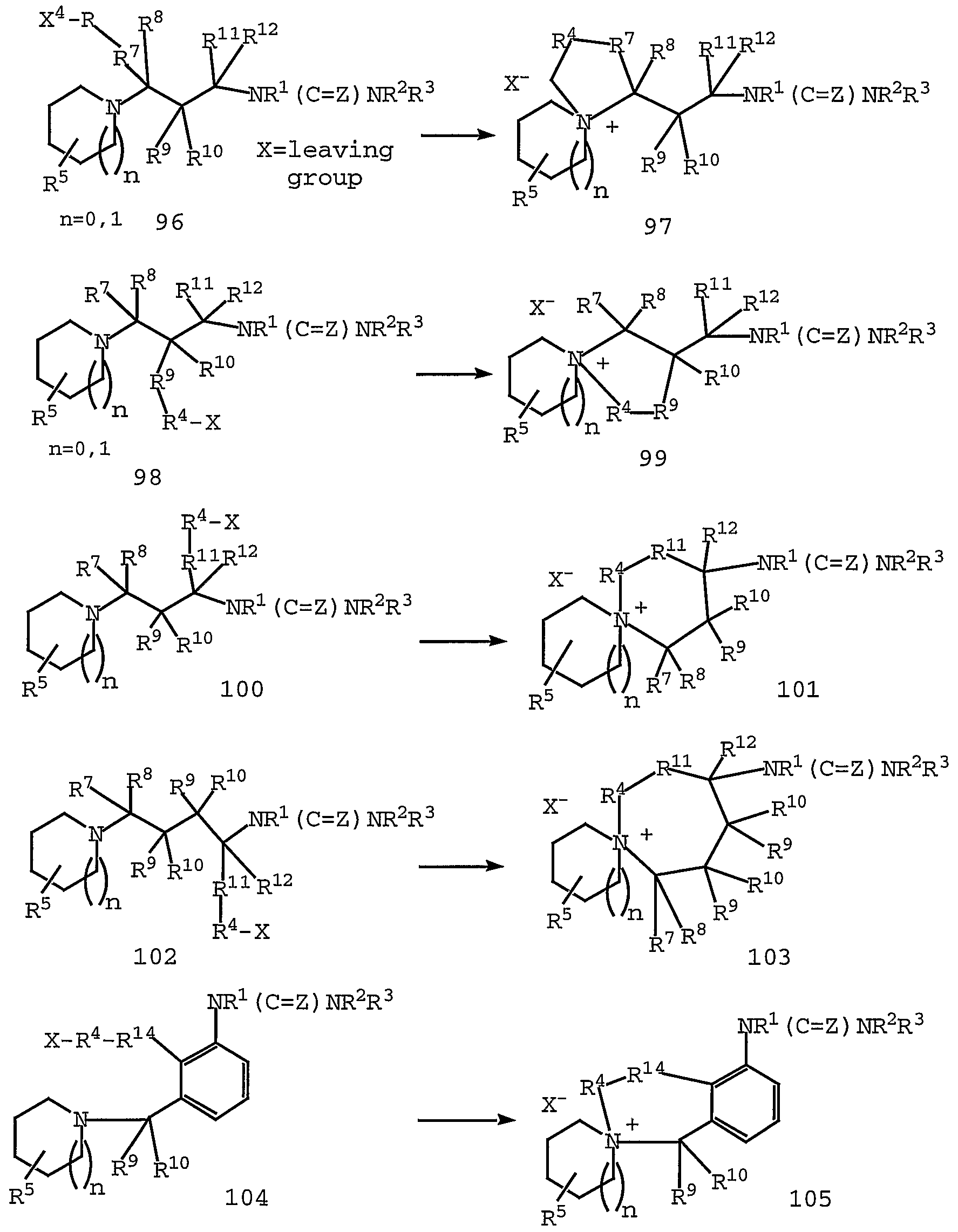
  • the compounds of Formula I can also be quaternized by standard techniques such as alkylation of the piperidine or pyrrolidine with an alkyl halide to yield quaternary piperidinium salt products of Formula I .
  • Such quaternary piperidinium salts would include a counterion.
  • counterion is used to represent a small, negatively charged species such as chloride, bromide, hydroxide, acetate, sulfate, and the like.
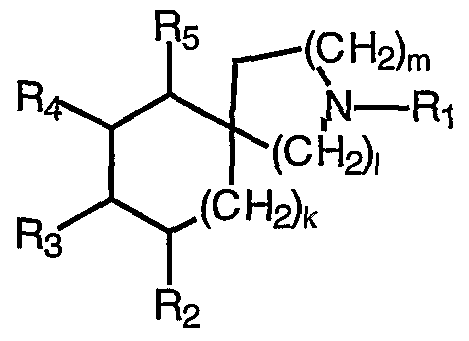
  • piperidinium spirocycle or pyrrolidinium spirocycle is intented to mean a stable spirocycle ring system, in which the two rings form a quarternary nitrogene at the ring junction.
  • 5-6-membered cyclic ketal is intended to mean 2 , 2-disubstituted 1,3- dioxolane or 2 , 2-disubstituted 1,3-dioxane and their derivatives .
  • carbocycle or “carbocyclic residue” is intended to mean any stable 3, 4, 5, 6, or 7-membered monocyclic or bicyclic or 7 , 8, 9, 10, 11, 12, or 13-membered bicyclic or tricyclic, any of which may be saturated, partially unsaturated, or aromatic.
  • carbocycles include, but are not limited to, cyclopropyl, cyclobutyl, cyclopentyl, cyclohexyl, cycloheptyl, adamantyl, cyclooctyl,; [3.3.0]bicyclooctane, [4.3.0]bicyclononane,
  • heterocycle or “heterocyclic system” is intended to mean a stable 5, 6, or 7-membered monocyclic or bicyclic or 7 , 8, 9, or 10- membered bicyclic heterocyclic ring which is saturated, partially unsaturated or unsaturated (aromatic) , and which consists of carbon atoms and 1, 2, 3, or 4 heteroatoms independently selected from the group consisting of N, NH, 0 and S and including any bicyclic group in which any of the above-defined heterocyclic rings is fused to a benzene ring.
  • the nitrogen and sulfur heteroatoms may optionally be oxidized.
  • the heterocyclic ring may be attached to its pendant group at any heteroatom or carbon atom which results in a stable structure.
  • the heterocyclic rings described herein may be substituted on carbon or on a nitrogen atom if the resulting compound is stable. If specifically noted, a nitrogen in the heterocycle may optionally be quaternized. It is preferred that when the total number of S and 0 atoms in the heterocycle exceeds 1, then these heteroatoms are not adjacent to one another.
  • aromatic heterocyclic system is intended to mean a stable 5- to 7- membered monocyclic or bicyclic or 7- to 10-membered bicyclic heterocyclic aromatic ring which consists of carbon atoms and from 1 to 4 heterotams independently selected from the group consisting of N, 0 and S.
  • heterocycles include, but are not limited to, lH-indazole, 2-pyrrolidonyl, 2H,6H-1,5,2- dithiazinyl, 2H-pyrrolyl, 3H-indolyl, 4-piperidonyl, 4aH-carbazole, 4H-quinolizinyl, 6H-1, 2 , 5-thiadiazinyl, acridinyl, azocinyl, benzimidazolyl, benzofuranyl, benzothiofuranyl, benzothiophenyl, benzoxazolyl, benzthiazolyl, benztriazolyl, benztetrazolyl, benzisoxazolyl, benzisothiazolyl, benzimidazalonyl, carbazolyl, 4 BB-carbazolyl, ⁇ -carbolinyl, chromanyl, chromenyl , cinnolinyl , decahydroquinol,
  • oxazolyl oxazolidinylperimidinyl , phenanthridinyl, phenanthrolinyl, phenarsazinyl, phenazinyl, phenothiazinyl, phenoxathiinyl, phenoxazinyl, phthalazinyl, piperazinyl, piperidinyl, pteridinyl, piperidonyl, 4-piperidonyl, pteridinyl, purinyl, pyranyl, pyrazinyl, pyrazolidinyl, pyrazolinyl, pyrazolyl, pyridazinyl, pyridooxazole, pyridoimidazole, pyridothiazole, pyridinyl, pyridyl, pyridyl, pyrimidinyl, pyrrolidinyl, pyrrolinyl, pyrrolyl
  • Preferred heterocycles include, but are not limited to, pyridinyl, thiophenyl, furanyl, indazolyl, benzothiazolyl, benzimidazolyl, benzothiaphenyl, benzofuranyl, benzoxazolyl, benzisoxazolyl, quinolinyl, isoquinolinyl, imidazolyl, indolyl, isoidolyl, piperidinyl, piperidonyl, 4-piperidonyl, piperonyl, pyrrazolyl, 1,2, 4-triazolyl, 1, 2 , 3-triazolyl, tetrazolyl, thiazolyl, oxazolyl, pyrazinyl, and pyrimidinyl. Also included are fused ring and spiro compounds containing, for example, the above heterocycles .
  • pharmaceutically acceptable refers to those compounds, materials, compositions, and/or dosage forms which are, within the scope of sound medical judgment, suitable for use in contact with the tissues of human beings and animals without excessive toxicity, irritation, allergic response, or other problem or complication, commensurate with a reasonable benefit/risk ratio.
  • pharmaceutically acceptable salts refer to derivatives of the disclosed compounds wherein the parent compound is modified by making acid or base salts thereof. Examples of pharmaceutically acceptable salts include, but are not limited to, mineral or organic acid salts of basic residues such as amines; alkali or organic salts of acidic residues such as carboxylic acids; and the like.
  • the pharmaceutically acceptable salts include the conventional non-toxic salts or the quaternary ammonium salts of the parent compound formed, for example, from non-toxic inorganic or organic acids.
  • such conventional nontoxic salts include those derived from inorganic acids such as hydrochloric, hydrobromic, sulfuric, sulfamic, phosphoric, nitric and the like; and the salts prepared from organic acids such as acetic, propionic, succinic, glycolic, stearic, lactic, malic, tartaric, citric, ascorbic, pamoic, maleic, hydroxymaleic, phenylacetic, glutamic, benzoic, salicylic, sulfanilic, 2- acetoxybenzoic, fumaric, toluenesulfonic, methanesulfonic, ethane disulfonic, oxalic, isethionic, and the like.
  • the pharmaceutically acceptable salts of the present invention can be synthesized from the parent compound which contains a basic or acidic moiety by conventional chemical methods.
  • such salts can be prepared by reacting the free acid or base forms of these compounds with a stoichiometric amount of the appropriate base or acid in water or in an organic solvent, or in a mixture of the two; generally, nonaqueous media like ether, ethyl acetate, ethanol, isopropanol, or acetonitrile are preferred.
  • Lists of suitable salts are found in Remington 's Pharmaceutical Sciences, 17th ed. , Mack Publishing Company, Easton, PA, 1985, p. 1418, the disclosure of which is hereby incorporated by reference .
  • prodrugs are known to enhance numerous desirable qualities of pharmaceuticals (e.g., solubility, bioavailability, manufacturing, etc..) the compounds of the present invention may be delivered in prodrug form.
  • the present invention is intended to cover prodrugs of the presently claimed compounds, methods of delivering the same and compositions containing the same.
  • Prodrugs are intended to include any covalently bonded carriers which release an active parent drug of the present invention in vivo when such prodrug is administered to a mammalian subject.
  • Prodrugs the present invention are prepared by modifying functional groups present in the compound in such a way that the modifications are cleaved, either in routine manipulation or in vivo, to the parent compound.
  • Prodrugs include compounds of the present invention wherein a hydroxy, amino, or sulfhydryl group is bonded to any group that, when the prodrug of the present invention is administered to a mammalian subject, it cleaves to form a free hydroxyl, free amino, or free sulfhydryl group, respectively.
  • Examples of prodrugs include, but are not limited to, acetate, formate and benzoate derivatives of alcohol and amine functional groups in the compounds of the present invention.
  • Solid compound and “stable structure” are meant to indicate a compound that is sufficiently robust to survive isolation to a useful degree of purity from a reaction mixture, and formulation into an efficacious therapeutic agent.
  • the compounds of Formula I can be prepared using the reactions and techniques described below. The reactions are performed in a solvent appropriate to the reagents and materials employed and suitable for the transformations being effected. It will be understood by those skilled in the art of organic synthesis that the functionality present on the molecule should be consistent with the transformations proposed. This will sometimes require a judgment to modify the order of the synthetic steps or to select one particular process scheme over another in order to obtain a desired compound of the invention. It will also be recognized that another major consideration in the planning of any synthetic route in this field is the judicious choice of the protecting group used for protection of the reactive functional groups present in the compounds described in this invention. An authoritative account describing the many alternatives to the trained practitioner is Greene and Wuts (Protective Groups In Organic Synthesis, Wiley and Sons, 1991) .
  • halide is not I
  • KI can also be added to facilitate the displacement, provided the solvent is suitable, such as an alcohol, 2-butanone, DMF or DMSO, amongst others.
  • the displacement can be performed at room temperature to the reflux temperature of the solvent.
  • the protecting group is subsequently removed to yield amine 4.
  • Protecting groups include phthalimide which can be removed by hydrazine, a reaction familiar to one skilled in the art; bis-BOC which can be removed by either TFA or HCl dissolved in a suitable solvent, both procedures being familiar to one skilled in the art; a nitro group instead of an amine which can be reduced to yield an amine by conditions familiar to one skilled in the art; 2,4-dimethyl pyrrole (S. P.
  • Activation of imidazolide intermediates also facilitates urea formation (Bailey, R. A., et al . , Tet. Lett. 1998, 39, 6267-6270) .
  • the urea forming reactions are done in a non- hydroxylic inert solvent such as THF, toluene, DMF, etc . , at room temperature to the reflux temperature of the solvent and can employ the use of an acid scavenger or base when necessary such as carbonate and bicarbonate salts, triethylamine, DBU, Hunigs base, DMAP, etc.
  • Substituted pyrrolidines and piperidines 1 can either be obtained commercially or be prepared as shown in Scheme 2.
  • Commercially available N-benzylpiperid-3- one 16. can be debenzylated and protected with a BOC group employing reactions familiar to one skilled in the art.
  • Subsequent Wittig reaction followed by reduction and deprotection yields piperidine 20 .
  • Substituted pyrrolidines may be made by a similar reaction sequence.
  • Other isomers and analogs around the piperidine ring can also be made by a similar reaction sequence.
  • Chiral pyrrolidines/piperidines can be synthesized via asymmetric hydrogenation of 18. using chiral catalysts (see Parshall, G.W.
  • a method for introducing substituents in linkage E is that of A. Chesney et al . (Syn. Comm. 1990, 20 (20), 3167-3180) as shown in Scheme 4.
  • Michael reaction of pyrrolidine or piperidine 1 with Michael acceptor 26 yields intermediate 27. which can undergo subsequent reactions in the same pot.
  • reduction yields alcohol . 28 which can be elaborated to the amine 29 by standard procedures familiar to one skilled in the art .
  • Some of these include mesylation or tosylation followed by displacement with NaN 3 followed by reduction to yield amine 29_ .
  • Another route as depicted in Scheme 4 involves reaction with diphenylphosphoryl azide followed by reduction of the azide to yield amine 29 . . SCHEME 4
  • the mesylate or tosylate can also be displaced by other nucleophiles such as NH 3 , BOC 2 N-, potassium phthalimide, etc., with subsequent deprotection where necessary to yield amines 29 . .
  • 29 . can be converted to urea or thiourea 3_0 by procedures discussed for Scheme 1 or to the compounds of this invention by procedures previously discussed.
  • aldehyde 27 may be reacted with a lithium or a Grignard reagent 31 to yield alcohol adduct 32 . .
  • This in turn can be converted to urea or thiourea 34 in the same way as discussed for the conversion of 28. to 30.
  • the OH group can undergo synthetic transformations which are familiar to one skilled in the art and which will be discussed in much detail later on in the application. Chiral auxilliaries can also be used to introduce stereo- and enantioselectivity in these aldol condensations, procedures which are familiar to one skilled in the art.
  • ketone 57 which may undergo nucleophilic 1,2-addition with organometallic reagents such as alkyl- or aryllithiums, Grignards, or zinc reagents, with or without CeCl 3 (T. Imamoto, et al . ,
  • Epoxides disclosed by structure 54 may be synthesized enantio-selectively from amino acid starting materials by the methods of Dellaria, et al. J Med Chem 1987, 30 (11), 2137, and Luly, et al . J Org Chem 1987, 52 (8), 1487.
  • the carbonyl group of ketone 57. in Scheme 8 may undergo Wittig reactions followed by reduction of the double bond to yield alkyl, arylalkyl, heterocyclic- alkyl, cycloalkyl, cycloalkylalkyl, etc. substitution at that position, reactions that are familiar to one skilled in the art.
  • Wittig reagents can also contain functional groups which after reduction of the double bond yield the following functionality: esters (Buddrus, J. Angew Chem., 1968, 80), nitriles (Cativiela, C.et al., Tetrahedron 1996, 52 (16), 5881-5888.), ketone (Stork, G.et al .
  • Scheme 9 summarizes the displacement chemistry and subsequent elaborations that can be used to synthesize the R 9 groups.
  • alcohol 55 or 58 may be tosylated, mesylated, triflated, or converted to a halogen by methods familiar to one skilled in the art to produce compound 59.
  • carbon homologs of 55 or 58 where OH can be (CH 2 ) r * H and it is also understood that these carbon homologs may have substituents on the methylene groups as well
  • a hydroxyl group may be converted to a bromide by CBr 4 and Ph 3 P (Takano, S.
  • Nitrile j50 can be reduced with DIBAL to yield aldehyde .61.
  • This aldehyde can undergo reduction to alcohol .62 with, for example, NaBH 4 which in turn can undergo all of the S ⁇ r2 displacement reactions mentioned for alcohol 55 or 58..
  • Alcohol .62. is a one carbon homolog of alcohol 55 or 58..
  • This alcohol can undergo activation followed by the same S N 2 displacement reactions discussed previously, ad infinitum, to result in 3, 4, 5... etc. carbon homologation products.
  • Aldehyde 61. can also be reacted with a lithium or Grignard reagent to form an alcohol 61a which can also undergo the above displacement reactions .
  • Oxidation by methods familiar to one skilled in the art yields ketone 61b.
  • Displacement by malonate yields malonic ester 63. which can be saponified and decarboxylated to yield carboxylic acid 64, a two carbon homologation product. Conversion to ester 65 (A. Hassner and V. Alexanian, Tet.
  • Alcohols may be converted to the corresponding fluoride 70 . by DAST (diethylaminosulfur trifluoride) (Middleton, W. J. ; Bingham, E. M. ; Org. Synth. 1988, VI, pg. 835).
  • Sulfones 72 can be converted to the corresponding sulfonamides 73 by the method of H.-C. Huang, E. et al . , Tet. Lett. (1994) 35, 7201-7204 which involves first, treatment with base followed by reaction with a trialkylborane yielding a sulfinic acid salt which can be reacted with hydroxylamine-O-sulfonic acid to yield a sulfonamide.
  • Another route to sulfonamides involves reaction of amines with a sulfonyl chloride (G. Hilgetag and A.
  • the isothiouronium salt may be synthesized from the corresponding halide, mesylate or tosylate 59. via reaction with thiourea (for a discussion on the synthesis of sulfonyl chlorides see G. Hilgetag and A. Martini, ibid., p. 670).
  • the aldehyde 67 obtained from the Weinreb amide reduction can be reduced to the alcohol with NaBH 4 .
  • the aldehyde or ketone .67 (or . 61 or 61b for that matter) can undergo Wittig reactions as discussed previously followed by optional catalytic hydrogenation of the olefin.
  • This Wittig sequence is one method for synthesizing the carbocyclic and heterocyclic substituted systems at R 9 employing the appropriate carbocyclic or heterocyclic Wittig (or Horner-Emmons ) reagents.
  • the Wittig reaction may also be used to synthesize alkenes at R 9 and other functionality as well.
  • Ester 65. can also form amides 66 .
  • Alcohol 68 can be converted to ether . 69 by procedures familiar to one skilled in the art, for example, NaH, followed by an alkyliodide or by Mitsunobu chemistry (Mitsunobu, 0. Synthesis, 1981, 1-28) .
  • acylated can be acylated by procedures familiar to one skilled in the art, for example, by Schotten-Baumann conditions with an acid chloride or by an anhydride with a base such as pyridine to yield 78.
  • Halide, mesylate, tosylate or triflate 59 can undergo displacement with azide followed by reduction to yield amine 74 a procedure familiar to one skilled in the art.
  • This amine can undergo optional reductive amination and acylation to yield 75 or reaction with ethyl formate (usually refluxing ethyl formate) to yield formamide 75 . .
  • Amine 74 can again undergo optional reductive amination followed by reaction with a sulfonyl chloride to yield 76 , for example under Schotten-Baumann conditions as discussed previously. This same sequence may be employed for amine 60a, the reduction product of nitrile 60. Tosylate 5_9 can undergo displacement with cuprates to yield 77 (Hanessian, S.; Thavonekham, B.; DeHoff, B.; J Org. Chem. 1989, 54, 5831).
  • Aldehyde 61 or its homologous extensions can be reacted with a carbon anion of an aryl (phenyl, naphthalene, etc.) or heterocyclic group to yield an aryl alcohol or a heterocyclic alcohol.
  • CeCl 3 may be added (T. Imamoto, et al., Tet. Lett. 1985, 26, 4763-4766; T. Imamoto, et al., Tet. Lett. 1984, 25, 4233-4236).
  • This alcohol may be reduced with Et 3 SiH and TFA (J. Org. Chem. 1969, 34, 4; J. Org. Chem. 1987, 52, 2226) (see discussion of aryl and heterocyclic anions for Schemes 20-22).
  • These aryl and heterocyclic anions may also be alkylated by 5_9
  • R 9 contains an aryl or heterocyclic group.
  • Compound 59 or its carbon homologs may be alkylated by an alkyne anion to produce alkynes at R 9 (see R.C. Larock, Comprehensive Organic Transformations, New York, 1989, VCH Publishers, p 297) .
  • carboxaldehyde 61 or its carbon homologs can undergo 1,2 -addition by an alkyne anion
  • Nitro groups can be introduced by displacing bromide 59 (or its carbon homologs) with sodium nitrite in DMF (J.K. Stille and E.D. Vessel J. Org. Chem. 1960, 25, 478-490) or by the action of silver nitrite on iodide 59 or its carbon homologs (Org. Syntheses 34, 37-39).
  • R 9 is either in its final form or in a suitable protected precursor form.
  • This electrophile can be a carbon-based electrophile, some examples being formaldehyde to introduce a CH 2 OH group, an aldehyde or a ketone which also introduces a one- carbon homologated alcohol, ethylene oxide (or other epoxides) which introduces a -CH 2 CH 2 OH group (a two- carbon homologated alcohol), an alkyl halide, etc., all of which can be later elaborated into R 9 .
  • It can also be an oxygen-based electrophile such as MCPBA, Davis ' reagent (Davis, F. A.; Haque, M.
  • ketone 85 This ketone can also be synthesized in one step directly from 1 and alpha,beta- unsaturated ketone j34 using the same procedure.
  • This ketone may be reduced with LAH, aBH 4 or other reducing agents to form alcohol .86.
  • ketone 85 can be reacted with an organolithium or Grignard reagents to form tertiary alcohol 87. .
  • ester j30 can be directly reduced with LiBH 4 or LAH to yield primary alcohol 88.
  • Alcohols 86., 87 , and 8_8 can all be tosylated, mesylated, triflated, or converted to a halogen by methods discussed previously and displaced with an amine nucleophile such as azide, diphenylphosphoryl azide (with or without DEAD and Ph 3 P) , phthalimide, etc. as discussed previously (and which are familiar to one skilled in the art) and after reduction (azide) or deprotection with hydrazine (phthalimide) , for example, yield the corresponding amines . These can then be elaborated into the compounds of this invention as discussed previously.
  • an amine nucleophile such as azide, diphenylphosphoryl azide (with or without DEAD and Ph 3 P) , phthalimide, etc.
  • Ketone 85 can also be converted into imine j39 which can be reacted with a Grignard reagent or lithium reagent, etc., to form a protected amine 90 which can be deprotected and elaborated into the compounds of this invention as discussed previously.
  • Some protecting groups include benzyl and substituted benzyl which can be removed by hydrogenation, and cyanoethyl, which can be removed with aqueous base, etc. It is to be understood that R 7-12 in Scheme 10 can be in their final form or in precursor form which can be elaborated into final form by procedures familiar to one skilled in the art.
  • the amino group can be reacted with an isocyanate, an isothiocyanate, a carbamoyl chloride, or any reagent depicted in Scheme 1 to form 95 . which can be alkylated with 1 to form the compounds of this invention.
  • amine 1 might have to be activated with Lewis acids in order to open the epoxide ring (Fujiwara, M. ; Imada, M. ; Baba, A.; Matsuda, H .; Tetrahedron Lett 1989, 30, 739; Caron, M. ; Sharpless, K. B.; J Org Chem 1985, 50, 1557) or 1 has to be deprotonated and used as a metal amide, for example the lithium amide (Gorzynski- Smith, J.; Synthesis 1984 (8), 629) or MgBr amide (Carre, M. C . ; Houmounou, J. P. ; Caubere, P. ; Tetrahedron Lett 1985, 26, 3107) or aluminum amide (Overman, L. E.; Flippin, L. A.; Tetrahedron Lett 1981, 22, 195) .
  • Lewis acids for example the lithium amide (Gorzynski- Smith, J.; Synthesis 1984 (8)
  • the quaternary salts (where R 4 is present as a substituent) of pyrrolidines and piperidines can be synthesized by simply reacting the amine with an alkylating agent, such as methyl iodide, methyl bromide, ethyl iodide, ethyl bromide, ethyl or methyl bromoacetate, bromoacetonitrile, allyl iodide, allylbromide, benzyl bromide, etc. in a suitable solvent such as THF, DMF, DMSO, etc. at room temperature to the reflux temperature of the solvent .
  • an alkylating agent such as methyl iodide, methyl bromide, ethyl iodide, ethyl bromide, ethyl or methyl bromoacetate, bromoacetonitrile, allyl iodide, allylbromide, benzyl bromid
  • Spiroquaternary salts can be synthesized in a similar manner, the only difference being that the alkylating agent is located intramolecularly as shown in Scheme 12. It is understood by one skilled in the art that functional groups might not be in their final form to permit cyclization to the quaternary ammonium salt and might have to be in precursor form or in protected form to be elaborated to their final form at a later stage.
  • the leaving groups represented by X in Scheme 12 may equal those represented in Scheme 1, but are not limited thereto.
  • N-oxides of pyrrolidines and piperidines can be made by the procedure of L. W. Deady (Syn. Comm. 1977, 7, 509- 514) . This simply entails reacting the pyrrolidine or piperidine with MCPBA, for example, in an inert solvent such as methylene chloride.
  • Multisubstituted pyrrolidines and piperidines may be synthesized by the methods outlined in Scheme 13.
  • thermodynamic or kinetic conditions yield regioselectively alkylated products (for a discussion on thermodynamic vs. kinetic alkylations see H. House Modern Synthetic Reactions, W. A. Benjamin, Inc. (Menlo Park, CA: 1972) chapter 9) .
  • the amine 109 an then be elaborated into the compounds of this invention by methods discussed previously (Scheme 1) .
  • the carbonyl- containing intermediate 107 in Scheme 13 can also be reduced to the methylene analog via a Wolff-Kishner reduction and modifications thereof, or by other methods familiar to one skilled in the art.
  • the carbonyl group can also be reduced to an OH group, which can undergo all of the reactions described in Scheme 9 to synthesize the R6 groups .
  • This piperidine or pyrrolidine can be deprotected and elaborated to the compounds of this invention by methods discussed earlier.
  • R 5 * R 5 or a precursor thereof
  • the OH may be reduced by the method of Barton (Barton, D. H. R.; Jaszberenyi, J. C. Tet. Lett. 1989, 30, 2619 and other references therein) .
  • the alcohol can also be displaced with dialkyllithium cuprates (not shown) (Hanessian, S.; Thavonekham, B.; DeHoff, B.; J Org. Chem. 1989, 54, 5831).
  • Deprotection if necessary yields 120 which may be elaborated as described previously into the compounds of this invention.
  • a method for the alkylation of alkyl groups, arylalkyl groups, allylic groups, propargylic groups, etc . , and a variety of other electrophiles onto the pyrrolidinyl and/or piperidinyl alpha-carbons (alpha to the ring nitrogen atom) is represented by the work of Peter Beak, et al . as shown in Scheme 15. It is understood by one skilled in the art that the R 5 and R 13 groups are either in their precursor, protected, or final form. Only one R 5 group is shown to be substituted on piperidine/pyrrolidine 121. However it is understood by one skilled in the art that additional functionality may be present on the ring in either precursor, protected, or final form.
  • Scheme 17 describes another method for the synthesis of compounds where R 9 and R 10 are taken together to form cycloalkyl groups.
  • alcohols can then be activated either by conversion to a halide or to a mesylate, tosylate or triflate by methods familiar to one skilled in the art and as discussed previously, and then alkylated with pyrrolidine/piperidine by the conditions described in Scheme 1 to yield 135. Subsequent deprotection yields amine 136 which can be elaborated to the compounds of this invention as described previously.
  • alcohol 133 can be oxidized to the aldehyde and then reacted with R 7or8 MgBr or R 7or8 Li with or without CeCl 3 to yield the corresponding alcohol 133 where instead of -CH 2 OH, we would have -CHR 7or8 OH.
  • This oxidation-1, 2-addition sequence may be repeated to yield a tertiary alcohol.
  • the alcohol may then be tosylated, mesylated, triflated, or converted to Cl, Br, or I by procedures familiar to one skilled in the art to yield 134 and then displaced with pyrrolidine/piperidine 1 to yield 135.
  • Subsequent deprotection yields 136 which may undergo elaboration to the compounds of this invention as discussed previously.
  • a method to introduce cycloalkyl groups at R ⁇ R 1 is shown in Scheme 18. Protection of the nitrogen of compounds 137 which are commercially available yields 138 (the protecting group may be BOC, CBZ, or any other compatible protecting group) by procedures familiar to one skilled in the art. Esterification by any one of a number procedures familiar to one skilled in the art (for example A. Hassner and V. Alexanian, Tet. Lett, 1978, 46, 4475-8) followed by reduction with DIBAL (or alternatively reduction to the alcohol with, for example, LiBH 4 , followed by Swern oxidation (op. cit.)) yields aldehyde 139.
  • the protecting group may be BOC, CBZ, or any other compatible protecting group
  • aldehyde 141 One carbon homologation via the Wittig reaction followed by hydrolysis of the vinyl ether yields aldehyde 141.
  • Reductive amination (Abdel- Magid, A. F., et al. Tet. Lett. 1990, 31, (39) 5595- 5598) yields 142 followed by deprotection yields amine 143 which can be elaborated to the compounds of this invention by the methods previously discussed.
  • aldehyde 139 can be reacted with R 9orl0 MgBr or R 9orl0 Li with or without CeCl 3 to yield an alcohol which can be oxidized to a ketone.
  • Wittig one-carbon homologation on this ketone as described above followed by hydrolysis yields 141 where the -CH 2 CHO is substituted with one R S or lO gr ⁇ up (-CHR 9or10 CHO) .
  • Aldehyde 141 (-CH 2 CHO) or its monosubstituted analog synthesized above (-CHR 9orl0 CHO) can undergo alkylation with R 9orl0 X where X is as defined in Scheme 1 to yield compound 141 containing one or both of the R 9 and R 10 substituents alpha to the aldehyde group.
  • Alkylation can be performed using LDA or lithium bistrimethylsilyl amide amongst other bases in an inert solvent such as ether, THF, etc., at -78 °C to room temperature.
  • Aldehyde 141 (-CH 2 CHO)or its substituted analogs synthesized above (i.e., -CHR 9 R 10 CHO) can undergo reductive amination with 1 and subsequent elaboration to the compounds of this invention.
  • Aldehyde 141 (- CH 2 CHO)or its substituted analogs synthesized above
  • -CHR 9 R 10 CHO can also undergo 1,2-addition with R 7or8 MgBr or R 7or8 Li to yield the corresponding alcohol - CH 2 CHR 7or8 OH or -CHR 9 R 10 CHR 7or8 OH.
  • the alcohol may then be tosylated, mesylated, triflated, or converted to Cl, Br, or I by procedures familiar to one skilled in the art and displaced with pyrrolidine/piperidine 1 to yield, after subsequent deprotection and elaboration, the compounds of this invention.
  • alcohol - CH 2 CHR 7or8 OH or -CR 9 R 10 CHR 7or8 OH can be oxidized (i.e.,
  • CR 9 R 10 CHR 7or8 OH can be oxidized (i.e., Swern, op. cit.) to the ketone and reacted once more with R 7or8 MgBr or R 7 °r 8 Li to yield the corresponding alcohol -CHCR 7 R 8 OH or -CR 9 R 10 CR 7 R 8 OH. If the ketone enolizes easily, CeCl 3 may be used together with the Grignard or lithium reagent.
  • the alcohol can again be tosylated, mesylated, triflated, or converted to Cl, Br, or I by procedures familiar to one skilled in the art and displaced with pyrrolidine/ piperidine 1 to yield, after subsequent deprotection and elaboration, the compounds of this invention.
  • each one of the R 7 , R 8 , R 9 , and R 10 groups may be introduced into compounds 141, 142 and 143 and and, of course, in the compounds of this invention, by the methods discussed above.
  • a method for the synthesis of N-substituted heterocycles at R 5 is shown in Scheme 19.
  • the heterocycle can be deprotonated with NaH or by other bases familiar to one skilled in the art, in a solvent such as DMF, THF, or another appropriate non-hydroxylic solvent and reacted with piperidine or pyrrolidine 143 at room temperature to the reflux temperature of the solvent .
  • a solvent such as DMF, THF, or another appropriate non-hydroxylic solvent
  • Deprotection and elaboration as described before yields compounds where R 5 contains an N- substituted heterocycle.
  • an acid scavenger such as K 2 C0 3 , KHC0 3 , Na 2 C0 3 , NaHC0 3 , amongst others, can be used in place of NaH, employing THF, DMF, or methyl ethyl ketone as solvents .
  • hydroxylic solvents may be used as well, such as methanol, ethanol, etc. from room temperature to the reflux temperature of the solvent.
  • Compound 143 as well as its other positional isomers are available, for example, from commercially available 4- hydroxy ethylpiperidine, 2-, 3-, and 4- carboethoxypiperidme, L- or D-proline ethyl ester, or from methyl l-benzyl-5-oxo-3-pyrrolidinecarboxylate by methods familiar to one skilled in the art and as discussed previously in this application. SCHEME 19
  • a method for the synthesis of C-substituted heterocycles at R 5 is shown in Scheme 20.
  • Many heterocycles such as the ones shown in Scheme 20, but not limited thereto, can be metallated with strong bases such as LDA, n-BuLi, sec-BuLi, t-BuLi, etc. to yield the corresponding anionic species.
  • These anions may also be generated via halogen-metal exchange employing n-BuLi , or other alkyllithium reagents .
  • These reactions may be performed in THF, ether, dioxane, DME, benzene, etc. at -78 °C to room temperature.
  • R suitable protecting -'- - group or functional group etc.
  • the anions of the methyl-substituted heterocycles may also be reacted with a BOC-protected piperidone or pyrrolidone (148) to yield alcohols 149 as shown in Scheme 22 (see above reviews on metallations for references) .
  • These alcohols may be reduced using Pt ⁇ 2 and TFA (P. E. Peterson and C. Casey, J. Org. Chem. 1964, 29, 2325-9) to yield piperidines and pyrrolidines 150.
  • Pt ⁇ 2 and TFA P. E. Peterson and C. Casey, J. Org. Chem. 1964, 29, 2325-9
  • the carbonyl group can be located in other positions instead of, for example, the 4-position of piperidine in compound 148 as depicted in Scheme 22.
  • other heterocycles may also be used besides the ones shown in Scheme 22.
  • R suitable protecting group or functional het group to compounds of by mmeetthhooddss ddee ⁇ scribed previously
  • aryl (phenyl, naphthyl, etc.) anions generated either by halogen-metal exchange or by ortho-directed metallation (Snieckus, V. Chem. Rev. 1990, 90, 879-933) using n- or s- or t-BuLi in a non- hydroxylic solvent such as THF, ether, etc., with or without TMEDA and allow them to react with
  • R suitable protecting [H] group or functional group heterocycle to compounds by methods described previously
  • the carbonyl insertion compounds (158) can also undergo reduction of the carbonyl group to either the CHOH or CH2 linkages by methods already discussed (NaBH 4 or Et 3 SiH, TFA, etc.). These amines can then be converted to isocyanate 5 via the following methods (Nowakowski, J. J Prakt Chem/Chem-Ztg 1996, 338 (7), 667-671; Knoelker, H.-J.et al . , Angew Chem 1995, 107 (22), 2746-2749; Nowick, J. S . et al . , J Org Chem 1996, 61 (11), 3929-3934; Staab, H.
  • protected aminobromobenzenes or triflates or protected aminobromoheterocycles or triflates 159 may undergo Suzuki-type couplings with arylboronic acids or heterocyclic boronic acids (160) .
  • These same bromides or triflates 159 may also undergo Stille-type coupling (Echavarren, A. M., Stille, J.K. J. Am. Chem. Soc, 1987, 109, 5478-5486) with aryl, vinyl, or heterocyclic stannanes 163.
  • Bromides or triflates 159 may also undergo Negishi-type coupling with other aryl or heterocyclic bromides 164 (Negishi E. Accts .
  • Compounds b may be also synthesized by reacting iminoyl chloride c with pyrrolidine/piperidine 1 to yield b where R 8 -* 3 is not H (Povazanec, F., et al . , J. J. Heterocycl. Chem., 1992, 29, 6, 1507-1512).
  • Iminoyl chlorides are readily available from the corresponding amide via PCI5 or CCl4/PPh3 (Duncia, J.V. et al . , J. Org. Chem., 1991, 56, 2395-2400) . Again, the urea portion may be in final form or in precursor form.
  • amines are commercially available and can be used as 9_, 10, or used as precursors to isocyanates or isothiocyanates 5_.
  • Ketones and trifluoromethylketones undergo reductive amination in the presence of TiCl 4 followed by NaCNBH 4 to yield amines (Barney, C.L., Huber, E.W., McCarthy, J.R. Tet. Lett. 1990, 31, 5547-5550) .
  • Aldehydes and ketones undergo reductive amination with Na(AcO) 3 BH as mentioned previously to yield amines (Abdel-Magid, A. F., et al . Tet. Lett. 1990, 31, (39) 5595-5598) .
  • Amines may also be synthesized from aromatic and heterocyclic OH groups (for example, phenols) via the Smiles rearrangement (Weidner, J.J.
  • alcohol 198 is quenched with an aldehyde to yield alcohol 198.
  • the metallation may also be done enantioselectively using sparteine (P. Beak, S.T. Kerrick, S. Wu, J. Chu J. Am. Chem. Soc. 1994, 116, 3231-3239) .
  • This alcohol can be deprotonated with NaH and cyclized to carbamate 198a which permits structural assignments of the erythro and threo isomers.
  • Deprotection with base yields aminoalcohol 199.
  • Subsequent N-alkylation yields p thalimidoalkylpiperidine 201.
  • alkyl chain does not necessarily have to be n- propyl, but that n-propyl was chosen for demonstration purposes only.
  • Deprotection of the phthalimido group with hydrazine yields amine 202.
  • reaction with an isocyanate or via any of the previously described conditions described in Scheme 1 yields urea 203. If an isocyanate is used, the isocyanate can add twice to yield urea-carbamate 204.
  • BOC-1-aminocyclopropane-l-carboxylic acid 216 is coupled to (S) -3- (4-fluorobenzyl) piperidine using a common amide forming reagent such as BOP, HBTU or HATU to furnish the amide tert-l- ⁇ [ (3S) -3- (4-fluorobenzyl) piperidinyl] carbonyl ⁇ cyclopropylcarbamate (217) .
  • the amide is reduced to the corresponding amine by a reducing agent such as but not limited to BH 3 in THF at room temperature, followed by the removal of BOC protecting group with TFA and neutralization to afford the free amine 218.
  • the free amine is then condensed with an isocyanate or a carbamate to yield the desired urea 219.
  • Part B Preparaton of 4-benzyl-l- (3-amino-n-prop-l- yl ) piperidine
  • the reaction Upon cooling to 23 °C, the reaction was poured into aqueous hydrogen chloride (0.20 N, 100 L) and diethyl ether (75 mL) . The layers were separated and the aqueous layer was basified with saturated aqueous sodium bicarbonate to pH 9. The aqueous layer was extracted with diethyl ether (4 x 75 mL) , and the combined organic layers were dried over sodium sulfate.
  • Part B Preparation of 1, 3-Dihydro-4 ' - [4- fluorophenylmethyl] -4-nitro-spiro [2H-isoindole-2, 1' - piperidinium] bromide
  • the filtrate was concentrated in vacuo to a mixture of water and an amber oil .
  • the mixture was dissolved in 50 ml of 2-propanol, and concentrated in vacuo to remove excess water.
  • the resulting yellow foam was dissolved in methanol and applied to a 3.5 cm x 5 cm quartz column via silica plug.
  • the product was eluted with 20% MeOH/CHCl3 to yield 0.81g of a yellow foam.
  • Part D Preparation of N- [1, 3-Dihydro-4 ' - [4- fluorophenyl-methyl] spiro [2H-isoindole-2 , 1' -piperdinium- 4-yl] -N' -4-fluorophenylurea bromide
  • Part B Preparation of 2-benzyloxycarbonylamino-l- phenyl-3 , 4-epoxy-butane.
  • Part C Preparation of 2-benzyloxycarbonylamino-4- [4- (4- fluorophenyl)methyl-1-piperidinyl] -l-phenyl-butan-3-ol .
  • Part D Preparation of 2-amino-4- [4- (4- fluorophenyl)methyl-1-piperidinyl] -l-phenyl-butan-3-ol .
  • N-Methyl-4-nitro-benzamide (2.25 g, 12.5 mmol, 1 eq.) and PC1 5 (2.60 g, 12.5 mmol, 1 eq. ) were melted together under house vacuum connected to a NaOH trap behind a safety shield. Melting occurred at 100°C. Heated at 130 °C for 1 hour then purified by kugelrohr distillation at 0.1 mmHg at 130°C. CAUTION: THE EXPLOSIVE PROPERTIES OF THIS COMPOUND ARE UNKNOWN) . The iminoyl chloride (12.5 mmol 1 eq. ) in DMF 10 ml was added to NaN 3 in 10 ml of DMF at 25°C and stirred overnight.
  • the carbamate 168 can then be reacted with various amines to give the urea 169.
  • the aniline 167 can be reacted with the appropriate isocyanates to give the urea 169 directly.
  • the saturated ring analogs can also be used.
  • 4- benzyl piperidine can be alkylated with the urea mesylate 185 (Scheme 30) to give corresponding cyclohexyl derivative 186.
  • 4-benzyl piperidine can also be N-alkylated with the phenacyl bromide 170 to give the nitro ketone 171.
  • the nitro group of 171 is then reduced using catalytic hydrogenation to give the corresponding aniline 172.
  • the aniline 172 can be reacted with the appropriate isocyanates to give the ketone urea 173.
  • the ketone of 173 can be reduced with NaBH 4 to give the alcohol 174.
  • the aniline 176 may be treated with various isocyanates to give the urea alcohols 174.
  • the 4-benzyl piperidine can also be N-alkylated with 3 -cyanobenzyl bromide (177, Scheme 28) to give the cyano analog 178.
  • the cyano group is reduced using Raney nickel to give the corresponding benzyl amine 179.
  • Treatment of 179 with isocyanates gives the urea 180.
  • the saturated ring analogs can also be synthesized using analogous procedures as outlined in Schemes 30 and 31.
  • 4-benzyl piperidine can be alkylated with the urea mesylate 185 (Scheme 29) to give corresponding cyclohexyl derivative 186.
  • the enantiomerically pure amino alcohol 187 [J. Am . Chem. Soc . 1996, 118, 5502-5503 and references therein] one can protect the nitrogen to give the N-Cbz alcohol 188. Swern oxidation of the alcohol gives the aldehyde 189.
  • Reductive amination with piperidine analogs gives the cyclohexyl methyl-1- piperidinyl analogue 190.
  • the Cbz group is removed by catalytic hydrogenation to give the free amine 191, which is treated with a phenylisocyanate to give the desired urea analogue 192.
  • Several examples using these synthetic methods are listed in Table 3a and Table 3.1.
  • aniline 167 was purified by chromatography (MPLC, 40% ethyl acetate/ hexane; silica gel) to give 2.0 g of aniline 167 as a white solid.
  • EXAMPLE 220 N- (2, 5-difluorophenyl ) -N' - [ [3-[ [4- (phenylmethyl) -1- piperidinyl]methyl] phenyl] methyl] -urea .
  • aniline 172 was then filter, the solvent removed under vacuum, and the residue purified by chromatography (MPLC, 30% ethyl acetate/hexane; silica gel) to give 1.8 g of aniline 172 as a tan/brown solid.
  • a solution of aniline 172 (Scheme 27) (310 mg, 1.0 mmol) in THF is treated with 2, 5-difluoroisocyanate (160 mg, 1.0 mmol) at room temperature for 1 h.
  • Step a To a solution of (R,R) amino alcohol 187 [J. Am . Chem. Soc. 1996, 118, 5502-5503 and references therein] (1.9 g, 14.7 mmol) in CH 2 C1 2 (50 mL) is added 50 ml of an aqueous solution of Na 2 C0 3 (2.4 g, 28.9 mmol). While stirring, benzyl chloroformate (2.51 g, 14.7 mmol) is added and the mixture is stirred at room temperature for 1 h. The organic layer is separated and washed with water and brine.
  • Step b A solution of DMSO (2.52 g, 30 mmol) in CH 2 CI 2 (50 mL) is cooled to -78°C. To this solution is added drop-wise oxalyl chloride (1.81 g, 14 mmol) and the resulting solution is stirred for an additional 10 min. Then a solution of alcohol 188 (2.5 g, 9.5 mmol) in CH 2 CI 2 (70 ml) is added via an addition funnel and stirred for 10 min. Then Et3N (5.0 g, 50 mmol) is added and the solution is allowed to warm to room temperature. The solution is diluted with water and the organic layer washed with water, 1 N HCl, and brine.
  • Step c A solution of aldehyde 189 (2.0 g, 7.7 mmol), 4- (4-fluorophenylmethyl) piperidine hydrochloride (1.8 g, 7.8 mmol) in dichloroethane (80 ml) was treated with Na(OAc) 3 BH (3.23 g, 15 mmol) and 1 ml AcOH and stirred overnight at room temperature. The resulting solution was diluted with methylene chloride and washed with 1 n NaOH, water, and brine. The organic solvents were removed under vacuum and the residue chromatographed on silica gel (50% EtOAc/hex - 100% EtOAc) to give 3.0 g (6.8 mmol) of 190 as an oil.
  • Step d A solution of 190 (3.0 g, 6.8 mmol) in MeOH was treated with 1.5 g of 10% Pd/C and hydrogenated at 50 psi overnight in a Parr apparatus. The mixture was filtered and the filtrate concentrated on a rotary evaporator to give 1.8 g (5.9 mmol) of the amine 191 as an oil.
  • Step a To a solution of (R,R) amino alcohol 187 [J. Org. Chem . 1996, 61 , 5557-5563; J. Am . Chem . Soc . 1996, 118, 5502-5503] (9.5 g, 73.8 mmol) in CHC1 (200 mL) is added 200 ml of an aqueous solution of Na 2 C0 3 (15 g, 141 mmol). While stirring, benzyl chloroformate (12.6 g, 73.8 mmol) is added slowly and the mixture is stirred at room temperature for 1 h. The organic layer is separated and washed with water and brine. The organic solvent is removed on a rotary evaporator to give a white solid.
  • Step b A solution of DMSO (36 g, 430 mmol) in CHC1 (200 mL) is cooled to -78°C. To this solution is added drop-wise oxalyl chloride (27.41 g, 216 mmol) and the resulting solution is stirred for an additional 10 min. A solution of alcohol 188 (38 g, 144 mmol) in CH 2 C1 2 (150 ml) is added via an addition funnel and stirred for
  • Step c A solution of aldehyde 189 (19.6 g, 75 mmol) and (3S) -3- (4-fluorophenylmethyl) piperidine (14.5 g, 75 mmol) in dichloroethane (400 ml) was treated with Na(OAc) 3 BH (32 g, 152 mmol) and stirred overnight at room temperature. The resulting solution was poured slowly into a stirred mixture of ice/water/1 N NaOH and stirred for 20 min. The organic layer was separated and washed water, and brine.
  • Step d A solution of 193 (32 g, 73 mmol) in MeOH was treated with 8 g of 10% Pd/C and hydrogenated at 50 psi overnight in a Parr apparatus . The mixture was filtered and the filtrate concentrated on a rotary evaporator to give 20 g (65 mmol) of the amine 194, which was used without further purification.
  • Step e A solution of amine 194 (10 g, 32.8 mmol) in THF is treated with 3-acetylyphenyl isocyanate (5.3 g, 32.8 mmol) and the mixture is stirred for 30 min. The solvent is removed on a rotary evaporator and the residue is chromatographed on silica gel (0.5:4.5:95 NH 4 ⁇ H/MeOH/CH 2 Cl2) to give 11 g of urea 195 (Example 415) as a solid. Also obtained 2 g of cis isomer (Example 416a) .
  • TEDA Tetramethylethylenediamine
  • Part G preparation of erythro-cis-1- [3- (3- acetylphenylaminocarbonylamino) -n-prop-1-yl] -4-benzyl- ⁇ - ethylpiperidinemethanol and erythro-cis-1- [3- (3- acetylphenylaminocarbonylamino) -n-prop-1-yl] -2- [1- (3- acetylphenylaminocarbonyloxy) -n-prop-1-yl) -4- benzylpiperidine
  • Part B Preparation of 2- [ (3-acetylanilino) ( ⁇ 3- [4- (4-fluorobenzyl) -1-piperidinyl] propyl ⁇ amino)methylene] malononitrile
  • Part B Preparation of 1- (3- ⁇ [ (E) -1- ( ⁇ - [4- (4- fluorobenzyl) -1-piperidinyl] propyl ⁇ amino) -2- nitroethylenyl] amino ⁇ phenyl) ethanone
  • Example 415, step d) (6 mg, 0.02 mmol) in 1 mL of THF is treated with 2 , 4, 4-trimethyl-2-pentyl isocyanate (3 ⁇ L, 0.03 mmol) at room temperature for 1 h.
  • PS-trisamine 33 mg, 0.15 mmol, Argonaut Technologies Inc.
  • the reaction mixture was filtered and the polymer was washed with CH 2 C1 2 , and the combined filtrate was concentrated under vacuum.
  • the residue is further purified by HPLC, using a VYDAC C18 prepacked column (10 mm, 22 x 250 mm) and UV detection at 214 nm, elution with MeCN-H 2 0-TFA (90:10:0.1-10:90:0.1), flow rate 15 mL/min, to afford 5.6 mg of the urea product as a solid.
  • Amine 194 (Scheme 31a) (15 mg, 0.05 mmol) and the product from Part A (117 mg, 0.5 mmol, 10 eq. ) were mixed then stirred overnight . The reaction was stripped and the residue then purified in silica gel in 100% ethyl acetate followed by 9:1 ethyl acetate/methanol . The product was further purified by HPLC, using a VYDAC C18 prepacked column (10 mm, 22 x 250 mm) and UV detection at 214 nm, elution with MeCN-H 2 0-TFA
  • Each entry in each table is intended to be paired with each formulae at the start of the table.
  • Entry 1 in Table 4 is intended to be paired with each of formulae la-44.

Landscapes

  • Health & Medical Sciences (AREA)
  • Organic Chemistry (AREA)
  • Chemical & Material Sciences (AREA)
  • Life Sciences & Earth Sciences (AREA)
  • Veterinary Medicine (AREA)
  • Chemical Kinetics & Catalysis (AREA)
  • Medicinal Chemistry (AREA)
  • Nuclear Medicine, Radiotherapy & Molecular Imaging (AREA)
  • General Chemical & Material Sciences (AREA)
  • Pharmacology & Pharmacy (AREA)
  • Animal Behavior & Ethology (AREA)
  • General Health & Medical Sciences (AREA)
  • Public Health (AREA)
  • Engineering & Computer Science (AREA)
  • Bioinformatics & Cheminformatics (AREA)
  • Immunology (AREA)
  • Pulmonology (AREA)
  • Virology (AREA)
  • Oncology (AREA)
  • Rheumatology (AREA)
  • Tropical Medicine & Parasitology (AREA)
  • Communicable Diseases (AREA)
  • AIDS & HIV (AREA)
  • Otolaryngology (AREA)
  • Heart & Thoracic Surgery (AREA)
  • Pain & Pain Management (AREA)
  • Molecular Biology (AREA)
  • Cardiology (AREA)
  • Vascular Medicine (AREA)
  • Transplantation (AREA)
  • Ophthalmology & Optometry (AREA)
  • Urology & Nephrology (AREA)
  • Dermatology (AREA)
  • Orthopedic Medicine & Surgery (AREA)
  • Physical Education & Sports Medicine (AREA)
  • Pharmaceuticals Containing Other Organic And Inorganic Compounds (AREA)
  • Plural Heterocyclic Compounds (AREA)
  • Nitrogen Condensed Heterocyclic Rings (AREA)
  • Pyrrole Compounds (AREA)
  • Hydrogenated Pyridines (AREA)

Abstract

The present application describes modulators of CCR3 of formula (I) or pharmaceutically acceptable salt forms thereof, useful for the prevention of asthma and other allergic diseases.

Description

TITLE N-UREIDOALKYL-PIPERIDINES AS MODULATORS OF CHEMOKINE
RECEPTOR ACTIVITY
FIELD OF THE INVENTION
This invention relates generally to modulators of chemokine receptor activity, pharmaceutical compositions containing the same, and methods of using the same as agents for treatment and prevention of inflammatory diseases such as asthma and allergic diseases, as well as autoimmune pathologies such as rheumatoid arthritis and atherosclerosis. •
BACKGROUND OF THE INVENTION Chemokines are chemotactic cytokines, of molecular weight 6-15 kDa, that are released by a wide variety of cells to attract and activate, among other cell types, macrophages, T and B lymphocytes, eosinophils, basophils and neutrophils (reviewed in Luster, New Eng. J Med., 338, 436-445 (1998) and Rollins, Blood, 90, 909-928
(1997)). There are two major classes of chemokines, CXC and CC, depending on whether the first two cysteines in the amino acid sequence are separated by a single amino acid (CXC) or are adjacent (CC) . The CXC chemokines, such as interleukin-8 (IL-8) , neutrophil-activating protein-2 (NAP-2) and melanoma growth stimulatory activity protein (MGSA) are chemotactic primarily for neutrophils and T lymphocytes, whereas the CC chemokines, such as RANTES, MIP-lcc, MlP-lβ, the monocyte chemotactic proteins (MCP-1, MCP-2, MCP-3, MCP-4, and MCP-5) and the eotaxins (-1,-2, and -3) are chemotactic for, among other cell types, macrophages, T lymphocytes, eosinophils, dendritic cells, and basophils. There also exist the chemokines lymphotactin-1, lymphotactin-2 (both C chemokines) , and fractalkine (a CXXXC chemokine) that do not fall into either of the major chemokine subfamilies .
The chemokines bind to specific cell-surface receptors belonging to the family of G-protein-coupled seven-transmembrane-domain proteins (reviewed in Horuk, Trends Pharm. Sci., 15, 159-165 (1994)) which are termed "chemokine receptors." On binding their cognate ligands, chemokine receptors transduce an intracellular signal through the associated trimeric G proteins, resulting in, among other responses, a rapid increase in intracellular calcium concentration, changes in cell shape, increased expression of cellular adhesion molecules, degranulation, and promotion of cell migration. There are at least ten human chemokine receptors that bind or respond to CC chemokines with the following characteristic patterns: CCR-1 (or "CKR-1" or "CC-CKR-1") [MlP-l , MCP-3, MCP-4, RANTES] (Ben-Barruch, et al., Cell, 72, 415-425 (1993), Luster, New Eng. J. Med., 338, 436-445 (1998)); CCR-2A and CCR-2B (or "CKR- 2A"/"CKR-2B" or "CC-CKR-2A" / "CC-CKR-2B" ) [MCP-1, MCP-2, MCP-3, MCP-4, MCP-5] (Charo et al . , Proc. Natl. Acad. Sci. USA, 91, 2752-2756 (1994), Luster, New Eng. J. Med., 338, 436-445 (1998)); CCR-3 (or "CKR-3" or "CC- CKR-3" ) [eotaxin-1, eotaxin-2, RANTES, MCP-3, MCP-4] (Combadiere, et al . , J. Biol. Chem., 270, 16491-16494
(1995), Luster, New Eng. J. Med., 338, 436-445 (1998)); CCR-4 (or "CKR-4" or "CC-CKR-4") [TARC, MlP-lα, RANTES, MCP-1] (Power et al . , J. Biol. Chem., 270, 19495-19500 (1995), Luster, New Eng. J. Med., 338, 436-445 (1998)); CCR-5 (or "CKR-5" OR "CC-CKR-5") [MIP-lCC, RANTES, MIP- Iβ] (Sanson, et al . , Biochemistry, 35, 3362-3367 (1996)); CCR-6 (or "CKR-6" or "CC-CKR-6") [LARC] (Baba et al., J. Biol. Chem., 272, 14893-14898 (1997)); CCR-7 (or "CKR-7" or "CC-CKR-7") [ELC] (Yoshie et al . , J. Leukoc. Biol. 62, 634-644 (1997)); CCR-8 (or "CKR-8" or "CC-CKR-8") [1-309, TARC, MlP-lβ] (Napolitano et al . , J. Immunol., 157, 2759-2763 (1996), Bernardini et al . , Eur. J. Immunol., 28, 582-588 (1998)); and CCR-10 (or "CKR- 10" or "CC-CKR-10") [MCP-1, MCP-3] (Bonini et al, DNA and Cell Biol . , 16, 1249-1256 (1997)).
In addition to the mammalian chemokine receptors, mammalian cytomegaloviruses, herpesviruses and poxviruses have been shown to express, in infected cells, proteins with the binding properties of chemokine receptors (reviewed by Wells and Schwartz, Curr. Opin.
Biotech., 8, 741-748 (1997)). Human CC chemokines, such as RANTES and MCP-3, can cause rapid mobilization of calcium via these virally encoded receptors. Receptor expression may be permissive for infection by allowing for the subversion of normal immune system surveillance and response to infection. Additionally, human chemokine receptors, such as CXCR4, CCR2 , CCR3 , CCR5 and CCR8, can act as co-receptors for the infection of mammalian cells by microbes as with, for example, the human immunodeficiency viruses (HIV) .
Chemokine receptors have been implicated as being important mediators of inflammatory, infectious, and immunoregulatory disorders and diseases, including asthma and allergic diseases, as well as autoimmune pathologies such as* rheumatoid arthritis and atherosclerosis. For example, the chemokine receptor CCR-3 plays a pivotal role in attracting eosinophils to sites of allergic inflammation and in subsequently activating these cells . The chemokine ligands for CCR-3 induce a rapid increase in intracellular calcium concentration, increased expression of cellular adhesion molecules, cellular degranulation, and the promotion of eosinophil migration. Accordingly, agents which modulate chemokine receptors would be useful in such disorders and diseases. In addition, agents which modulate chemokine receptors would also be useful in infectious diseases such as by blocking infection of CCR3 expressing cells by HIV or in preventing the manipulation of immune cellular responses by viruses such as cytomegaloviruses .
A substantial body of art has accumulated over the past several decades with respect to substituted piperidines and pyrrolidines . These compounds have implicated in the treatment of a variety of disorders. WO 98/25604 describes spiro-substituted azacycles which are useful as modulators of chemokine receptors :
Figure imgf000005_0001
wherein Ri is C±~Q alkyl, optionally substituted with functional groups such as -NR6CONHR7, wherein R6 and R7 may be phenyl further substituted with hydroxy, alkyl, cyano, halo and haloalkyl. Such spiro compounds are not considered part of the present invention. WO 95/13069 is directed to certain piperidine, pyrrolidine, and hexahydro-lH-azepine compounds of general formula :
Figure imgf000005_0002
wherein A may be substituted alkyl or Z-substituted alkyl, with Z=NRsa or O. Compounds of this type are claimed to promote the release of growth hormone in humans and animals . WO 93/06108 discloses pyrrolobenzoxazine derivatives as 5-hydroxytrypta ine (5-HT) agonists and antagonists :
Figure imgf000006_0001
wherein A is lower alkylene and R4 may be phenyl optionally substituted with halogen.
U.S. Pat. No. 5,668,151 discloses Neuropeptide Y (NPY) antagonists comprising 1, 4-dihydropyridines with a piperidinyl or tetrahydropyridinyl-containing moiety attached to the 3-position of the 4-phenyl ring:
Figure imgf000006_0002
wherein B may be NH, NR1, 0, or a bond, and R7 may be substituted phenyl, benzyl, phenethyl and the like.
These reference compounds are readily distinguished structurally by either the nature of the urea functionality, the attachment chain, or the possible substitution of the present invention. The prior art does not disclose nor suggest the unique combination of structural fragments which embody these novel piperidines and pyrrolidines as having activity toward the chemokine receptors. SUMMARY OF THE INVENTION Accordingly, one object of the present invention is to provide novel agonists or antagonists of CCR-3, or pharmaceutically acceptable salts or prodrugs thereof. It is another object of the present invention to provide pharmaceutical compositions comprising a pharmaceutically acceptable carrier and a therapeutically effective amount of at least one of the compounds of the present invention or a pharmaceutically acceptable salt or prodrug form thereof.
It is another object of the present invention to provide a method for treating inflammatory diseases and allergic disorders comprising administering to a host in need of such treatment a therapeutically effective amount of at least one of the compounds of the present invention or a pharmaceutically acceptable salt or prodrug form thereof.
It is another object of the present invention to provide novel N-ureidoalkyl-piperidines for use in therapy.
It is another object of the present invention to provide the use of novel N-ureidoalkyl-piperidines for the manufacture of a medicament for the treatment of allergic disorders. In another embodiment, the present invention provides novel N-ureidoalkyl-piperidines for use in therapy.
In another embodiment, the present invention provides the use of novel N-ureidoalkyl-piperidines for the manufacture of a medicament for the treatment of allergic disorders.
These and other objects, which will become apparent during the following detailed description, have been achieved by the inventors ' discovery that compounds of formula (I) :
Figure imgf000008_0001
( I ]
or stereoisomers or pharmaceutically acceptable salts thereof, wherein E, Z, M, J, K, L, Q, R1, R2, R3, and R4 are defined below, are effective modulators of chemokine activity.
DETAILED DESCRIPTION OF PREFERRED EMBODIMENTS
[1] In one embodiment, the present invention provides novel compounds of formula (I) :
Figure imgf000008_0002
(I) or stereoisomers or pharmaceutically acceptable salts thereof, wherein:
M is absent or selected from CH2, CHR5, CHR13 , CR13R13, and CR5R13;
Q is selected from CH2, CHR5, CHR13, CR13R13, and
CR5R13 ;
J, K and L are independently selected from CH2 , CHR5, CHR6, CR6R6 and CR5R6;
with the provisos that:
1) at least one of J, K, or L contains R5; 2) when M is absent, J is selected from CH2, CHR5, CHR13, and CR5R13 ;
Z is selected from 0, S, NRl , CHCN, CHNO2 , and C(CN)2;
Rla is selected from H, Ci-6 alkyl, C3--6 cycloalkyl, C0NRlbRlb, 0Rlb, CN, NO2 , and (CH2) phenyl;
Rlb is independently selected from H, C^_3 alkyl, C3--5 cycloalkyl, and phenyl;
E is selected from:
Figure imgf000009_0001
Figure imgf000009_0002
and
Figure imgf000010_0001
ring A is a C3-6 carbocyclic residue, provided that the C3-6 carbocyclic residue in Ring A is not phenyl;
R1 and R-2 are independently selected from H, Ci-6 alkyl, C3-8 alkenyl, and C3-8 alkynyl;
R3 is selected from a Ci-io alkyl substituted with 0-5 R39, C3-10 alkenyl substituted with 0-5 R39, and C3-10 alkynyl substituted with 0-5 R 9;
R 9, at each occurrence, is independently selected from Cl, Br, I, F, 02 , CN, NR3aR3aP OH, 0(CHR')rR3d,
SH, C(0)H, S(CHR')rR3d, C(0)OH, C (0) (CHR' ) rR3b,
C(O) NR3aR3aP OC(O) NR3aR3aP NR3aC (O) OR3d,
NR3fC(0) (CHR')rR3b, C (0)0 (CHR')rR3d,
Figure imgf000010_0002
NHC(=NR3f)NR3fR3f , S (0) p (CHR' ) rR3b, S (0) 2NR3 R3aP
NR3fS(0)2 (CHR' )rR3b/ a C3_10 carbocyclic residue substituted with 0-5 R 5, and a 5-10 membered heterocyclic system containing 1-4 heteroatoms selected from N, 0, and S, substituted with 0-3 R15, provided that when R39 is a carbocyclic residue or a heterocyclic system, R3 has at least one other R39, which is not a carbocyclic residue or a heterocyclic system; R3a and R3aP at each occurrence, are selected from H, Cι_ alkyl, C3-8 alkenyl, C3-8 alkynyl, a (CH2)r~
C3-10 carbocyclic residue substituted with 0-5 R3e, and a (CH2)r-5_10 membered heterocyclic system containing 1-4 heteroatoms selected from N, 0, and S, substituted with 0-2 R e;
R3 , at each occurrence, is selected from C -ζ alkyl, C3-8 alkenyl, C3--8 alkynyl, a (CH2)r_c3-6 carbocyclic residue substituted with 0-3 R3e, and (CH2) _5-6 membered heterocyclic system containing 1-4 heteroatoms selected from N, O, and S, substituted with 0-2 R3e;
R3d, at each occurrence, is selected from C3-8 alkenyl, C3-8 alkynyl, methyl, CF3, C2-6 alkyl substituted with 0-3 R e, a (CH2)r_ 3-io carbocyclic residue substituted with 0-3 R3e, and a (CH2)r5_6 membered heterocyclic system containing 1-4 heteroatoms selected from N, O, and S, substituted with 0-3 R3e.
R e, at each occurrence, is selected from Cχ-6 alkyl, C2-8 alkenyl, C2-8 alkynyl, (CH2)r 3-6 cycloalkyl, Cl, F, Br, I, CN, N02 , (CF2)rCF3, (CH2)rOCi_5 alkyl, OH, SH, (CH2) rS (0)pCi-5 alkyl,
(CH2)rNR3fR3f, and (CH2 ) rPhenyl;
R3f , at each occurrence, is selected from H, Ci-6 alkyl, C3-6 cycloalkyl, and phenyl; R4 is absent, taken with the nitrogen to which it is attached to form an N-oxide, or selected from Ci-6 alkyl, C3-8 alkenyl, C3-8 alkynyl, (CH2)rC3-6 cycloalkyl, (CH2) qC (O) R4b, (CH2) qC (0)NR aR aP (CH2)qC(0)OR4b, and a (CH2)r" 3-10 carbocyclic residue substituted with 0-3 R4c;
R4a and R4a' , at each occurrence, are selected from H, Cι_6 alkyl, (CH2)r 3-6 cycloalkyl, and phenyl;
R4b, at each occurrence, is selected from Ci-6 alkyl,
C3_8 alkenyl, (CH2)r 3-6 cycloalkyl, C3-8 alkynyl, and phenyl;
R4c, at each occurrence, is selected from Ci-6 alkyl,
C2-8 alkenyl, C2-8 alkynyl, C3-6 cycloalkyl, Cl, F, Br, I, CN, N02, (CF2)rCF3, (CH2)rOCi-5 alkyl,
(CH2)rOH, (CH2)rSCi-5 alkyl, (CH2)rNR4aR4a' , and (CH2)rPhenyl;
alternatively, R4 joins with R"7, R9, R11, or R 4 to form a 5, 6 or 7 membered piperidinium spirocycle or pyrrolidinium spirocycle substituted with 0-3 Ra;
R5 is selected from a (CR5 'R5") _ 3-io carbocyclic residue substituted with 0-5 R16 and a (CR5'R5")t_ 5-10 membered heterocyclic system containing 1-4 heteroatoms selected from N, O, and S, substituted with 0-3 R 6; R5 ' and R5", at each occurrence, are selected from H, Ci-6 alkyl, (CH2)rC3-6 cycloalkyl, and phenyl;
R6, at each occurrence, is selected from Ci-6 alkyl,
C2-8 alkenyl, C2-8 alkynyl, (CH2)rC3-6 cycloalkyl, (CF2)rCF3, CN, (CH2 ) rNR6aRβa' , (CH2)rOH, (CH2)rOR6b, (CH2)rSH, (CH2)rSR6b, (CH2 ) rC (O)OH, (CH2 ) rC (O) R6b, (CH2 ) rC (0) NR6aRβ ' , (CH2)rNR6dC(0)R6a, (CH2) rC (0) 0R6b, (CH2 ) rOC (0) Rβb, (CH ) rS (0) pRβb, (CH2 ) rS (O) 2NRδ R6a' , (CH2)rNR6dS(0)2R6b, and (CH2)tPhenyl substituted with 0-3 R6c;
R6a and R6a', at each occurrence, are selected from H, Cl-6 alkyl, C3-6 cycloalkyl, and phenyl substituted with
0-3 R6c;
R6b, at each occurrence, is selected from Ci-6 alkyl, C3-6 cycloalkyl, and phenyl substituted with 0-3 R6c;
R6c, at each occurrence, is selected from C±~s alkyl, C3-6 cycloalkyl, Cl, F, Br, I, CN, NO2 , (CF2)rCF3, (CH2)rOCi-5 alkyl, (CH2)rOH, (CH2)rSCι_5 alkyl, and
(CH2)rNR6dR6d;
R6 , at each occurrence, is selected from H, Ci-6 alkyl, and C3-6 cycloalkyl; with the proviso that when any of J, K or L is CR6R6 and
R6 is bonded to the carbon to which it is attached through a heteroatom, the other R6 is not bonded to the carbon to which it is attached through a heteroatom;
R7, is selected from H, Cι_6 alkyl, C2-8 alkenyl, C2-8 alkynyl, (CH )qOH, (CH )qSH, (CH2)qOR7d, (CH )qSR7d, (CH2)qNR7aR7aP (CH2 ) rC (O) OH, (CH2)rC(0)R7b, (CH2) rC (0)NR7aR7 P
(CH2)rOC(0)NR7aR7a' , (CH2) qNR7aC (0) 0R7b, (CH2)qNR7 C(0)R7a, (CH2 ) qNR7aC (0) H, (CH2) rC (0) 0R7b, (CH )q0C(0)R7b, (CH2)qS(0)pR7b,
(CH )qS(0)2NR7aR7aP (CH ) qNR7aS (0) R7 , Cl-6 haloalkyl, a (CH2) r~ 3-io carbocyclic residue substituted with 0-3 R7c, and a (CH2)χ-5-10 membered heterocyclic system containing 1-4 heteroatoms selected from N, 0, and S, substituted with 0-2 R7c;
R7a and R7a' , at each occurrence, are selected from H, Ci-6 alkyl, C3-8 alkenyl, C3-8 alkynyl, (CH2)rC3-6 cycloalkyl, a (CH2)r~ 3-io carbocyclic residue substituted with 0-5 R7e, and a (CH2)r-5- 0 membered heterocyclic system containing 1-4 heteroatoms selected from N, 0, and S, substituted with 0-3 R7e;
alternatively, R7a and R7a' , along with the N to which they are attached, are joined to form a 5-6 membered heterocyclic system containing 1-2 heteroatoms selected from NR7^, O, and S and optionally fused with a benzene ring or a 6- membered aromatic heterocycle;
R7b, at each occurrence, is selected from Ci-6 alkyl, C3-8 alkenyl, C3-8 alkynyl, a (CH2)r-C3-6 carbocyclic residue substituted with 0-2 R e, and a (CH2)r-5~6 membered heterocyclic system containing 1-4 heteroatoms selected from N, 0, and S, substituted with 0-3 R7e;
R7c, at each occurrence, is selected from Ci-6 alkyl,
C2-8 alkenyl, C2-8 alkynyl, (CH2)rC3-6 cycloalkyl, Cl, Br, I, F, (CF2)rCF3, Nθ2 , CN, (CH2 ) rNR7 fR7 f , (CH2)rOH, (CH )rOCi-4 alkyl, (CH2)rSCi-4 alkyl,
(CH2)rC(0)OH, (CH2) rC (O) R7 , (CH2 ) rC (0)NR7fR7f , (CH2)rNR7fC(0)R7a, (CH2)rC(O)0Ci-4 alkyl, (CH2)rOC(0)R7b, (CH2)rC(=NR7f)NR7fR7f, (CH2)rS(0)pR7b, (CH2 ) rNHC (=NR7 f) NR7 fR7 f, (CH2)rS(0)2NR7fR7f, (CH2) rNR7fS (0) 2R7b, and (CH2 ) rPh-enyl substituted with 0-3 R7e;
R7 , at each occurrence, is selected from methyl, CF3 ,
C2-6 alkyl substituted with 0-3 R7e, C3-8 alkenyl, C3-8 alkynyl, and a C3-10 carbocyclic residue substituted with 0-3 R7c;
R7e, at each occurrence, is selected from Ci-6 alkyl,
C2-8 alkenyl, C2-8 alkynyl, C3-6 cycloalkyl, Cl, F, Br, I, CN, N02 , (CF2)rCF3, (CH )rOCl_5 alkyl, OH, SH, (CH2)rSCi-5 alkyl, (CH2) rNR7fR7f , and (CH2)rPhenyl;
R7^, at each occurrence, is selected from H, Ci-β alkyl, and C3-5 cycloalkyl;
R79 is selected from H, Cχ-6 alkyl, C3-6 cycloalkyl, (CH2)rPhenyl, C(0)R7f, C(0)OR7f, and Sθ2R7f;
R8 is selected from H, Ci-6 alkyl, C3-6 cycloalkyl, and (CH2) tPhenyl substituted with 0-3 R8a;
R8a, at each occurrence, is selected from Cι_6 alkyl,
C2-8 alkenyl, C2-8 alkynyl, C3-6 cycloalkyl, Cl, F, Br, I, CN, N02 , (CF2)rCF3, (CH2)rOCι_5 alkyl, OH,
SH, (CH2)rSCi-5 alkyl, (CH2) rNR7fR7f, and (CH2)rPhenyl;
R8b is selected from H, Ci-g alkyl, C3-6 cycloalkyl, OH, CN, and (CH2) r-phenyl;
alternatively, R7 and R8 join to form C3-7 cycloalkyl, =0, or =NR8 ;
R9, is selected from H, Ci-β alkyl, C2-8 alkenyl, C2-8 alkynyl, F, Cl, Br, I, NO2, CN, (CH2)rOH, (CH2)rSH,
(CH2 ) rOR9d, (CH2 ) rSR9d, (CH2 ) rNR9aR9a' ,
(CH2 ) rC (0) OH, (CH2 ) rC (0) R9b, (CH2 ) rC (0) NR9 R9a P
(CH2 ) rNR9aC (O) R9a, (CH2 ) rNR9aC (0) H, (CH2)rOC(0)NR9aR9aP (CH2) rNR9 C (0) OR9b, (CH2 ) rNR9aC (0) NHR9a, (CH2 ) rC (0) 0R9b, (CH2)rOC(0)R9b, (CH )rS(0)pR9 ,
(CH2)rS(0)2NR9aR9a', (CH2 ) rNR9aS (0) R9b, Ci-6 haloalkyl, a (CH2)r~ 3-io carbocyclic residue substituted with 0-5 R9c, and a (CH2)r-5-10 membered heterocyclic system containing 1-4 heteroatoms selected from N, 0, and S, substituted with 0-3 R9c;
R9a and R9a' , at each occurrence, are selected from H, Ci-6 alkyl, C3-8 alkenyl, C3-8 alkynyl, a (CH2)r_
C3-10 carbocyclic residue substituted with 0-5 R e, and a (CH2)r~5_10 membered heterocyclic system containing 1-4 heteroatoms selected from N, 0, and S, substituted with 0-3 R9e;
alternatively, R9a and R a', along with the N to which they are attached, are joined to form a 5-6 membered heterocyclic system containing 1-2 heteroatoms selected from NR9^, 0, and S and optionally fused with a benzene ring or a 6- membered aromatic heterocycle;
R9b, at each occurrence, is selected from Ci-6 alkyl, C3-8 alkenyl, C3--8 alkynyl, a (CH2)r~C3-6 carbocyclic residue substituted with 0-2 R9e, and a (CH2)r_5_6 membered heterocyclic system containing 1-4 heteroatoms selected from N, 0, and S, substituted with 0-3 R9e;
R9c, at each occurrence, is selected from Ci-6 alkyl,
C2-8 alkenyl, C2-8 alkynyl, (CH2)rC3-6 cycloalkyl, Cl, Br, I, F, (CF2)rCF3, NO2, CN, (CH2 ) rNR9 fR9 f, (CH2)rOH, (CH2)rOCι_4 alkyl, (CH2)rSCi-4 alkyl,
(CH2)rC(0)OH, (CH2)rC(0)R9 , (CH2) rC (0)NR9fR9f ,
(CH2)rNR9fC(0)R9a, (CH ) rC (O) OC1-4 alkyl, (CH2)rOC(0)R9b, (CH2) rC (=NR9f)NR9fR9f ,
(CH2)rS(0)pR9b, (CH2 ) r-NHC (=NR9 f) NR9 fR9 f ,
(CH2)rS(0)2NR9fR9f , (CH2) rNR9fS (O) 2R9b, and
(CH2)rPhenyl substituted with 0-3 R9e;
R9d, at each occurrence, is selected from Ci-6 alkyl, C3-6 alkenyl, C3-6 alkynyl, a C3-10 carbocyclic residue substituted with 0-3 R9c, and a 5-6 membered heterocyclic system containing 1-4 heteroatoms selected from the group consisting of N, O, and S substituted with 0-3 R9c;
R e, at each occurrence, is selected from C -ζ alkyl,
C2-8 alkenyl, C2-8 alkynyl, (CH2)r 3-6 cycloalkyl, Cl, F, Br, I, CN, N02 , (CF2)rCF3, (CH2)rOCι_5 alkyl, OH, SH, (CH2)rSCi_5 alkyl, (CH2)rNR9fR9f, and (CH2 ) rPheny1 ;
R9f, at each occurrence, is selected from H, Ci-6 alkyl, and C3_6 cycloalkyl;
R99 is selected from H, Cι_6 alkyl, C3--6 cycloalkyl, (CH2)rPhenyl, C(0)R9f, C(0)OR9f, and Sθ2R9f;
R10, is selected from H, Ci-6 alkyl, C2-8 alkenyl, C2-8 alkynyl, F, Cl, Br, I, NO2 , CN, (CH2)r0H, (CH2)rOR10d, (CH2)rSR10d, (CH2) rNR10aR10a' , (CH2)rC(0)OH, (CH2) rC (0) R10b, (CH2) rC (O)NR10aR10aP (CH2)rNR10aC(O)R10a, (CH2)rNR10aC(O)H, (CH2 ) rC (0) OR10b, (CH2 ) rOC (0) R10 , (CH2)rOC(O)NR10aR10aP (CH2) rNR10aC (0) OR10b, (CH2)rS(O)pR10b, (CH2)rS(O)2NR10aR10aP (CH2)rNR10aS(O)2R10 , Ci-6 haloalkyl, a (CH2)r-C3- 10 carbocyclic residue substituted with 0-5 R1^, and a (CH2)r-5-10 membered heterocyclic system containing 1-4 heteroatoms selected from N, 0, and S, substituted with 0-3 R10c;
RlOa and R-^-O ' , at each occurrence, are selected from H, Ci-6 alkyl, C3-8 alkenyl, C3-8 alkynyl, a (CH2)r- C3-10 carbocyclic residue substituted with 0-5
R1^e, and a (CH2) r-5-10 membered heterocyclic system containing 1-4 heteroatoms selected from N, 0, and S, substituted with 0-3 R10e;
alternatively, R1^3- and R (^a' , along with the N to which they are attached, are joined to form a 5-6 membered heterocyclic system containing 1-2 heteroatoms selected from NR109, 0, and S and optionally fused with a benzene ring or a 6- membered aromatic heterocycle,-
R1^, at each occurrence, is selected from Ci-6 alkyl,
C3-8 alkenyl, C3-8 alkynyl, a (CH2)r-C3-6 carbocyclic residue substituted with 0-2 R1(^e, and a (CH2)r~5-6 membered heterocyclic system containing 1-4 heteroatoms selected from N, 0, and S, substituted with 0-3 R10e;
R *-*0, at each occurrence, is selected from Ci-6 alkyl, 2-8 alkenyl, C2-8 alkynyl, (CH2)r 3-6 cycloalkyl, Cl, Br, I, F, (CF2)rCF3, N02 , CN, (CH2) rNR10fR10f , (CH )rOH, (CH2)rOCi-4 alkyl, (CH2)rSCi-4 alkyl, (CH2)rC(0)OH, (CH2)rC(O)R10b, (CH2) rC (O)NR10fR10f , (CH2)rNR10fC(O)R10a, (CH2) rC (0) OC1--4 alkyl, (CH2)rOC(O)R10b, (CH2 ) rC (=NR10f)NR10fR10f,
(CH2)rS(O)pR10b, (CH2) rNHC (=NR10f)NR10fR10f , (CH2)rS(O)2NR10fR10f, (CH2 ) rNR10fS (0) 2R10b, and (CH2)rPhenyl substituted with 0-3 R10e;
R1^d / at each occurrence, is selected from Cι_6 alkyl, C3-6 alkenyl, C3-6 alkynyl, a C3-10 carbocyclic residue substituted with 0-3 R1^0, and a 5-6 membered heterocyclic system containing 1-4 heteroatoms selected from the group consisting of N, 0, and S substituted with 0-3 R10c;
R1^, a each occurrence, is selected from Cι_g alkyl, C2-8 alkenyl, C2-8 alkynyl, (CH2)rC3-6 cycloalkyl, Cl, F, Br, I, CN, N02 , (CF2)rCF3, (CH )rOCl-5 alkyl, OH, SH, (CH2)rSCι_5 alkyl, (CH2) rNR10fR10f, and (CH2 ) rphenyl ;
R-^-Of . t each occurrence, is selected from H, Cι_5 alkyl, and C3--6 cycloalkyl; RiOg is selected from H, Ci-6 alkyl, C3.-6 cycloalkyl, (CH2)rPhenyl, C(O)R10f, C(O)OR10n, and Sθ2R10h;
RIOII ^ at e ch occurrence, is selected from C1-5 alkyl, and C3-6 cycloalkyl;
alternatively, R9 and R10 join to form =0, a C3-10 cycloalkyl, a 5-6-membered lactone or lactam, or a 4-6-membered saturated heterocycle containing 1-2 heteroatoms selected from 0, S, and NR10^ and optionally fused with a benzene ring or a 6- membered aromatic heterocycle;
with the proviso that when either of R9 or R10 is halogen, cyano, nitro, or bonded to the carbon to which it is attached through a heteroatom, the other of R9 or R10 is not bonded to the carbon to which it is attached through a heteroatom;
R1 , is selected from H, Ci-6 alkyl, C2-8 alkenyl, C2-8 alkynyl, (CH2)q0H, (CH2)qSH, (CH2)q0Rlld, (CH2)qSRlld, (CH )qNRll RllaP (CH2) rC (0) OH, (CH2)rC(0)Rll , (CH2) rC (0)NRl aRll ' , (CH2)qNRllaC(0)Rlla, (CH2 ) qOC (0) NRll RllaP (CH2)qNRllaC(0)0Rllb, (CH2) qNRllaC (0)NHRlla,
(CH2)rC(0)0Rllb, (CH2)q0C(0)Rllb, (CH2) qS (0)pRllb,
(CH2)qS(0)2NRllaRllaP (CH2) qNRll S (0) 2Rllb, Cι_6 haloalkyl, a (CH2)r~C3-10 carbocyclic residue substituted with 0-5 Rllc, and a (CH2)r-5"10 membered heterocyclic system containing 1-4 heteroatoms selected from N, 0, and S, substituted with 0-3 Rllc;
R-LJa an<5[ plla'# at each occurrence, are selected from H, Cι_g alkyl, C3-8 alkenyl, C3-8 alkynyl, a (CH2)r_ C3-10 carbocyclic residue substituted with 0-5
R le, and a (CH2) r~5-10 membered heterocyclic system containing 1-4 heteroatoms selected from N, 0, and S, substituted with 0-3 Rlle;
alternatively, Rlla and Rl a , along with the N to which they are attached, are joined to form a 5-6 membered heterocyclic system containing 1-2 heteroatoms selected from NR11^, O, and S and optionally fused with a benzene ring or a 6- membered aromatic heterocycle;
Rllb, at each occurrence, is selected from Ci-g alkyl, C3--8 alkenyl, C3-8 alkynyl, a (CH2)r~C3-6 carbocyclic residue substituted with 0-2 R le, and a (CH2) r-5""6 membered heterocyclic system containing 1-4 heteroatoms selected from N, 0, and S, substituted with 0-3 Rlle;
R c, at each occurrence, is selected from Ci-g alkyl, C2-8 alkenyl, C2-8 alkynyl, (CH2)rC3-6 cycloalkyl, Cl, Br, I, F, (CF2)rCF3, NO2 , CN, (CH2) rNRllfRllf, (CH2)rOH, (CH2)rOCi_4 alkyl, (CH2)rSCι_4 alkyl,
(CH2)rC(0)OH, (CH2)rC(0)Rllb, (CH2 ) rC (0)NRllfRllf, (CH2)rNRllfC(0)Rlla, (CH2) rC (0) OC1--4 alkyl, (CH2)rOC(0)Rllb, (CH2) rC (=NRllfJNR11^ -^, (CH2 ) r HC (=NRllf)NRllfRllf, (CH2 ) rS (0) pRllb, (CH2)rS(0)2NRllfRllf , (CH2 ) rNRllfS (0) 2Rllb, and (CH2)rPhenyl substituted with 0-3 Rlle;
Rlld, at each occurrence, is selected from methyl, CF3,
C2-6 alkyl substituted with 0-3 Rl e, C3_ alkenyl, C3-g alkynyl, and a C3-10 carbocyclic residue substituted with 0-3 Rllc;
Rlle, at each occurrence, is selected from Ci-g alkyl,
C2-8 alkenyl, C2-8 alkynyl, C3-g cycloalkyl, Cl, F, Br, I, CN, N02, (CF2)rCF3, (CH2)rOCl-5 alkyl, OH,
SH, (CH2)rSCi-5 alkyl, (CH2) rNRllfRllf, and (CH2)rPhenyl;
R1 -^ , at each occurrence, is selected from H, Ci-g alkyl, and C3- cycloalkyl;
R11-? is selected from H, Ci-g alkyl, C3-g cycloalkyl, (CH2)rPhenyl, C(0)Rllf, C(0)ORllh, and Sθ2Rllh;
Rlln, at each occurrence, is selected from Cι_5 alkyl, and C3-g cycloalkyl;
R12 is selected from H, Ci-g alkyl, (CH2)qOH, (CH2)rC3-6 cycloalkyl, and (CH2)tphenyl substituted with 0-3 Ri2a;
R12 / at each occurrence, is selected from Cι_g alkyl, C2-8 alkenyl, C2-8 alkynyl, C3-g cycloalkyl, Cl, F, Br, I, CN, N02, (CF2)rCF3, (CH2)rOCl-5 alkyl, OH,
SH, (CH2)rSCi-5 alkyl, (CH2 ) rNR9 fR9 f, and (CH2)rPhenyl;
alternatively, R11 and R-^-2 join to form a C3_ιo cycloalkyl, a 5-6-membered lactone or lacta , or a 4-6-membered saturated heterocycle containing 1-2 heteroatoms selected from 0, S, and R11^ and optionally fused with a benzene ring or a 6- membered aromatic heterocycle;
R13, at each occurrence, is selected from Cι_g alkyl, C2-8 alkenyl, C2-8 alkynyl, C3-g cycloalkyl, (CF ) CF3, (CH2)NR13aR13aP (CH2)qOH, (CH )qOR13b, (CH2)qSH, (CH2)qSR13b, (CH ) WC (0) OH, (CH2) C(0)R13b, (CH )wC(0)NR13aR13aP (CH2 ) qNR13dC (O) R13a, (CH2 ) C (0) 0R13b, (CH ) q0C (0) Rl3b, (CH ) WS (0) pR13b, (CH2)wS(0)2NR13aR13aP (CH2 ) qNR13dS (0) 2R13b, and (CH2)w"Phenyl substituted with 0-3 R13c;
R13a and R13a' , at each occurrence, are selected from H, Ci-g alkyl, C3_g cycloalkyl, and phenyl substituted with 0-3 R13c;
R1 b, at each occurrence, is selected from Ci-g alkyl, C3-6 cycloalkyl, and phenyl substituted with 0-3 R13c; R13c, at each occurrence, is selected from Ci-g alkyl, C3-6 cycloalkyl, Cl, F, Br, I, CN, NO2 , (CF2)rCF3, (CH2)rOCi-5 alkyl, (CH )rOH, (CH )rSCi-5 alkyl, and
(CH2)rNR13dR13d;
Rl3d/ at each occurrence, is selected from H, Cι_g alkyl, and C3-g cycloalkyl;
R14, at each occurrence, is selected from Ci-g alkyl, (CH2)rC3-6 cycloalkyl, Cl, Br, I, F, NO2 , CN,
(CHR')rNR14aR14aP (CHR')rOH, (CHR' ) rO (CHR' ) rR1 d, (CHR')rSH, (CHR')rC(0)H, (CHR' ) rS (CHR ' ) rR14d/ (CHR')rC(0)OH, (CHR')rC(0) (CHR')rR14b, (CHR')rC(0)NR14aR1 aP (CHR')rNR14fC(0) (CHR')rR1 b, (CHR')rC(0)0(CHR')rR14d, (CHR' ) r0C (0) (CHR' ) rR1 b, (CHR')rC(=NR1 f)NR1 aR14a' , (CHR')rNHC(=NR1 f)NR1 fR14f ,
(CHR')rS(0)p(CHR')rRl4b, (CHR' ) rS (0) 2NR1 aRl a (CHR' )rNR1 fS(0)2 (CHR')rR14b, Cl-g haloalkyl, C2-8 alkenyl substituted with 0-3 R' , C2-8 alkynyl substituted with 0-3 R (CHR' ) rpheny1 substituted with 0-3 R1 e, and a (CH2)r-5-10 membered heterocyclic system containing 1-4 heteroatoms selected from N, 0, and S, substituted with 0-2 R14e, or two R14 substituents on adjacent atoms on ring A form to join a 5-6 membered heterocyclic system containing 1-3 heteroatoms selected from N,
0, and S substituted with 0-2 R1 e; R at each occurrence, is selected from H, Ci-g alkyl, C2-8 alkenyl, C2-8 alkynyl, (CH2)rC3-6 cycloalkyl, and (CH2 ) rPheny1 substituted with R14e;
R14a and R14aP at each occurrence, are selected from H, Ci-g alkyl, C3-8 alkenyl, C3-8 alkynyl, a (CH2)ι~ C3-IO carbocyclic residue substituted with 0-5 R1 e, and a (CH2)r~5~10 membered heterocyclic system containing 1-4 heteroatoms selected from N, 0, and S, substituted with 0-2 R14e;
R1 , at each occurrence, is selected from Cι_g alkyl, C3-8 alkenyl, C3-8 alkynyl, a (CH2)r-C3-6 carbocyclic residue substituted with 0-3 R14e, and (CH2)r~5-δ membered heterocyclic system containing 1-4 heteroatoms selected from N, 0, and S, substituted with 0-2 R1 e;
R14d, at each occurrence, is selected from C3--8 alkenyl, C3-8 alkynyl, methyl, CF3 , C2-6 alkyl substituted with 0-3 R14e, a (CH2)r~C3-10 carbocyclic residue substituted with 0-3 R14e, and a (CH2)r5~6 membered heterocyclic system containing 1-4 heteroatoms selected from N, 0, and S, substituted with 0-3 R1 e;
R1 e, at each occurrence, is selected from Ci-6 alkyl, C2-8 alkenyl, C2-8 alkynyl, (CH2)r 3-6 cycloalkyl, Cl, F, Br, I, CN, NO2, (CF2)r F3, (CH2)rOCl-5 alkyl, OH, SH, (CH2)rSCi-5 alkyl, (CH2) rNR14fR14f, and (CH2 ) rPheny1 ; R14f, at each occurrence, is selected from H, Ci-g alkyl, C3- cycloalkyl, and phenyl;
alternatively, R14 joins with R4 to form a 5, 6 or 7 membered piperidinium spirocycle or pyrrolidinium spirocycle fused to ring A, the spirocycle substituted with 0-3 Ra;
Ra, at each occurrence, is selected from Ci-g alkyl,
C2-8 alkenyl, C2-8 alkynyl, (CH2)rC3-6 cycloalkyl, Cl, Br, I, F, (CF2)rCF3, Nθ2 , CN, (CH2)rNRbRb, (CH2)rOH, (CH2)rORc, (CH2)rSH, (CH2)rSRc, (CH2)rC(0)Rb, (CH2)rC(0)NR R , (CH2 ) rNRbC (0) Rb, (CH2)rC(0)ORb, (CH2) rOC (0)RC, (CH2 ) rCH (=NRb) NRbRb, (CH2 ) rNHC (=NRb) NR Rb, (CH2 ) rS (0) pRc ,
(CH2)rS(0)2NRbRb, (CH2 ) rNRbS (0) 2 C, and (CH2)rPhenyl;
R , at each occurrence, is selected from H, Ci-g alkyl, C3-6 cycloalkyl, and phenyl;
Rc, at each occurrence, is selected from Ci-g alkyl, C3. g cycloalkyl, and phenyl;
R15, at each occurrence, is selected from C -8 alkyl, (CH2)rC3-6 cycloalkyl, Cl, Br, I, F, Nθ2 , CN,
(CHR/)rNR15aR15 ', (CHR')rOH, (CHR' ) rO (CHR' )rR15d, (CHR')rSH, (CHR#)rC(0)H, (CHR' ) rS (CHR' ) rR15d, (CHR')rC(0)OH, (CHR')rC(0) (CHR )rRl5b, (CHR/)rC(0)NR15aR15 '/ (CHR# ) rNR15fC (O) (CHR' ) rR15b,
(CHR' ) rNR15fC (0)NR15fR15f, (CHR# ) rC (0) 0 (CHR7 ) rR15d,
(CHR')rOC(O) (CHR')rR15b, (CH2) rOC (0)NR15aR15aP
(CH2)rNR15aC(0)0R15b, (CHR' ) rC
Figure imgf000028_0001
Figure imgf000028_0002
(CHR ) rS (0) p (CHR' ) rR15b (CHR' ) rS (0) 2NR15aR15a' ,
(CHRprNR15fS(0)2 (CHR')rR15b, Cι_g haloalkyl, C2-8 alkenyl substituted with 0-3 R' , C2-8 alkynyl substituted with 0-3 R', (CHR ' ) rphenyl substituted with 0-3 R15e, and a (CH2)r-5-l° membered heterocyclic system containing 1-4 heteroatoms selected from N, O, and S, substituted with 0-2 R15e.
R1 a and R15aJ , at each occurrence, are selected from H, Ci-6 alkyl, C3-8 alkenyl, C3-8 alkynyl, a (CH2)r~ C3-10 carbocyclic residue substituted with 0-5
R15e, and a (CH2)r~5_10 membered heterocyclic system containing 1-4 heteroatoms selected from N, 0, and S, substituted with 0-2 R15e;
alternatively, Rl5a and R15a', along with the N to which they are attached, are joined to form a 5-6 membered heterocyclic system containing 1-2 heteroatoms selected from NR15^, O, and S and optionally fused with a benzene ring or a 6- membered aromatic heterocycle;
RlE>b, a each occurrence, is selected from Ci-6 alkyl, C3-8 alkenyl, C3-8 alkynyl, a (CH2)r-C3-6 carbocyclic residue substituted with 0-3 R1 e, and (CH2)r-5-6 membered heterocyclic system containing 1-4 heteroatoms selected from N, 0, and S, substituted with 0-2 R15e;
R15 , at each occurrence, is selected from C3-8 alkenyl, C3-8 alkynyl, methyl, CF3 , C2-6 alkyl substituted with 0-3 R15e, a (CH2)r~ 3-io carbocyclic residue substituted with 0-3 R15e, and a (CH2)r5-6 membered heterocyclic system containing 1-4 heteroatoms selected from N, 0, and S, substituted with 0-3 R15e.
R15e, at each occurrence, is selected from Ci-g alkyl, C2-8 alkenyl, C2-8 alkynyl, (CH2)rC3-6 cycloalkyl, Cl, F, Br, I, CN, N02 , (CF )rCF3, (CH2)rOCi-5 alkyl, OH, SH, (CH )rSCl-5 alkyl, (CH2) rNR15fR15f , and (CH2 ) rphenyl ;
R15f, at each occurrence, is selected from H, Ci-g alkyl, C3- cycloalkyl, and phenyl;
R155 is selected from H, Ci-g alkyl, C3-g cycloalkyl,
(CH2)rPhenyl, C(0)R15f, C(0)0R15n, and S02R15h;
R15h at each occurrence, is selected from C1-5 alkyl, and C3-6 cycloalkyl;
R16, at each occurrence, is selected from Ci-8 alkyl, C2-8 alkenyl, C2-8 alkynyl, (CH2)rC3- cycloalkyl,
Cl, Br, I, F, N02, CN, (CHR')rNR16aR16a', (CHR')rOH, (CHR')rO(CHR')rR16d, (CHR')rSH, (CHR')rC(0)H, (CHR/)rS(CHR')rR16d (CHR7 ) rC (0) OH, (CHR7 )rC(0) (CHR')rR16 , (CHR7 ) rC (0)NR16aR16aP (CHR7)rNR16fC(0) (CHR7)rRlδb, (CHR7)rC(0)0(CHR')rR16d, (CHR7 ) rOC (0) (CHR7 ) rR16 , (CHR7 ) rC (=NRlβf) NR16aR16a' , (CHR7)rNHC(=NR16f)NR16fRl6f ,
(CHR7 ) rS (0) (CHR7 ) rR16b, (CHR7 ) rS (O) 2NRlβaR16a7 , (CHR#)rNR16fS(0)2 (CHR )rR16 , Ci-6 haloalkyl, C2-8 alkenyl substituted with 0-3 R , C2-8 alkynyl substituted with 0-3 R7, and (CHR7 ) rphenyl substituted with 0-3 R16e;
R16a an( *j l6a'^ a each occurrence, are selected from H, Ci-g alkyl, C3-8 alkenyl, C3-8 alkynyl, a (CH2)r~ C3-I0 carbocyclic residue substituted with 0-5 R16e and a (CH2)r-5-10 membered heterocyclic system containing 1-4 heteroatoms selected from N,
0, and S, substituted with 0-2 R16e;
Rl6b; at each occurrence, is selected from Ci-6 alkyl, C3-8 alkenyl, C3-8 alkynyl, a (CH2)rC3-6 carbocyclic residue substituted with 0-3 R16e, and a (CH2)r~5~6 membered heterocyclic system containing 1-4 heteroatoms selected from N, 0, and S, substituted with 0-2 R16e;
R16d/ a each occurrence, is selected from C3-8 alkenyl, C3-8 alkynyl, methyl, CF3 , C2-6 alkyl substituted with 0-3 R16e, a (CH2)r~~C3-io carbocyclic residue substituted with 0-3 R16e, and a (CH2)r-5~6 membered heterocyclic system containing 1-4 heteroatoms selected from N, 0, and S, substituted with 0-3 R16e;
R16e, at each occurrence, is selected from Ci-g alkyl, C2-8 alkenyl, C2-8 alkynyl, (CH2)rC3-6 cycloalkyl, Cl, F, Br, I, CN, 02 , (CF2)rCF3, (CH2)rOCi-5 alkyl, OH, SH, (CH2)rSCi-5 alkyl, (CH2) rNR16fR16f, and (CH2 ) Phenyl ;
R16f, at each occurrence, is selected from H, C1-5 alkyl, and C3-g cycloalkyl, and phenyl;
g is selected from 0, 1, 2, 3, and 4;
t is selected from 1 and 2;
w is selected from 0 and 1;
r is selected from 0, 1, 2, 3, 4, and 5;
q is selected from 1, 2, 3, 4, and 5;
p is selected from 0, 1, and 2;
the compounds of Formula (I) do not include the compounds disclosed in U.S. Patent Application No. 09/466,442 filed December 17, 1999.
[2] In another embodiment, the present invention provides novel compounds of formula (I) : Z is selected from 0, S, NCN, NCONH2 , CHNO2 , and C(CN) ;
E is selected from:
Figure imgf000032_0001
R4 is absent, taken with the nitrogen to which it is attached to form an N-oxide, or selected from Ci-8 alkyl, (CH2)rC3-6 cycloalkyl, and (CH2) r~Phenyl substituted with 0-3 R4c;
R4c, at each occurrence, is selected from Ci-g alkyl,
C3-8 alkenyl, C3-8 alkynyl, C3-g cycloalkyl, Cl, F, Br, I, CN, N02, (CF2)rCF3, (CH )rOCi-5 alkyl,
(CH2)rOH, (CH2)rSCi_5 alkyl, (CH2) rNR4aR4a and (CH2)rPhenyl;
alternatively, R4 joins with R7 or R9 or R-J-4 to form a 5, 6 or 7 membered piperidinium spirocycle substituted with 0-3 Ra; R1 and R2 are independently selected from H and C1--4 alkyl ;
R6, at each occurrence, is selected from C1-4 alkyl,
C2-8 alkenyl, C2-8 alkynyl, (CH2)r 3-6 cycloalkyl, (CF2)rCF3, CN, (CH2)rOH, (CH )rOR6b, (CH2) rC (O) R6b, (CH2)rC(0)NR6aR6aP (CH2 ) rNR6 C (O) R6a, and (CH2)tphenyl substituted with 0-3 R6c;
R6a and R6a at each occurrence, are selected from H, Cl-6 alkyl, C3- cycloalkyl, and phenyl substituted with
0-3 R6c;
R6 , at each occurrence, is selected from Cι_g alkyl,
C3-6 cycloalkyl, and phenyl substituted with 0-3 R6c;
R6 7 at each occurrence, is selected from Cι_g alkyl,
C3-6 cycloalkyl, Cl, F, Br, I, CN, NO2 , (CF2)r F3, (CH )rOCi-5 alkyl, (CH2)rOH, (CH2)rSCi-5 alkyl, and
(CH2)rNR6dR6d;
R6d, at each occurrence, is selected from H, Ci-g alkyl, and C3_g cycloalkyl;
R7, is selected from H, C1-3 alkyl, (CH2)r 3-6 cycloalkyl, (CH2)q0H, (CH2)qOR7d, (CH2)qNR7aR7a (CH2)rC(0)R7b, (CH2)rC(0)NR7aR7aP
(CH2)qNR7aC(0)R7a, (CH2 ) qOC (0)NR7aR7a' , (CH2)qNR7aC(0)OR7b, Cι_g haloalkyl, (CH2)rphenyl with 0-2 R7c;
R7a and R7a' , at each occurrence, are selected from H, Ci-6 alkyl, (CH2)rC3-6 cycloalkyl, a (CH2)rphenyl substituted with 0-3 R7e;
R7 , at each occurrence, is selected from Ci-g alkyl,
C3-8 alkenyl, C3-8 alkynyl, (CH2)rC3-6 cycloalkyl, (CH2)rphenyl substituted with 0-3 R7e;
R7c, at each occurrence, is selected from C1-4 alkyl,
C2-8 alkenyl, C2-8 alkynyl, (CH2)rC3-6 cycloalkyl,
Cl, Br, I, F, (CF2)rCF3, Nθ2 , CN, (CH2) rNR7fR7f, (CH2)rOH, (CH )rOCι_4 alkyl, (CH2) rC (0) R7b,
(CH2)rC(0)NR7fR7f, (CH2) rNR7fC (0) R7a,
(CH2) rS (0)pR7 , (CH2 ) rS (O) 2NR7fR7f,
(CH2)rNR7fS(0)2R7b, and (CH2)rP-henyl substituted with 0-2 R7e;
R7d, at each occurrence, is selected from Ci-g alkyl, (CH2)rc3-6 cycloalkyl, (CH2)rPhenyl substituted with 0-3 R7e;
R7e, at each occurrence, is selected from Ci-g alkyl,
C2-8 alkenyl, C2-8 alkynyl, C3_g cycloalkyl, Cl, F, Br, I, CN, N02, (CF2)rCF3, (CH2)rOCι_5 alkyl, OH,
SH, (CH2)rSCi-5 alkyl, (CH2 ) rNR7 fR7 f, and (CH2)rPhenyl; R f, at each occurrence, is selected from H, C1-5 alkyl, and C3_ cycloalkyl;
R8 is H or joins with R7 to form C3-7 cycloalkyl, =0, or =NR8b;
R11, is selected from H, Ci-g alkyl, (CH2)rC3-6 cycloalkyl, (CH2)q0H, (CH2)q0Rlld,
(CH ) qN HaRll ' , (CH2 ) rC (0) R1^, (CH2)rC(0)NRllaR1laP (CH2) qNRllaC (O) Rlla,
(CH2)q0C(0)NRllaRllaP (CH2 ) qNRllaC (O) ORlla, Cl-g haloalkyl, (CH2)rphenyl with 0-2 Rllc, (CH2)r-S-10 membered heterocyclic system containing 1-4 heteroatoms selected from N, 0, and S, substituted with 0-3 R15;
lla a d Rlla' , at each occurrence, are selected from H, Ci-g alkyl, (CH2)rc3-6 cycloalkyl, a (CH2)rPhenyl substituted with 0-3 Rlle;
alternatively, Rlla and Rlla-7, along with the N to which they are attached, are joined to form a 5-6 membered heterocyclic system containing 1-2 heteroatoms selected from NR11^, 0, and S and optionally fused with a benzene ring or a 6- membered aromatic heterocycle;
Rllb, at each occurrence, is selected from Ci-g alkyl, C2-8 alkenyl, C2-8 alkynyl, (CH2)rC3-6 cycloalkyl, (CH2)rPhenyl substituted with 0-3 Rlle; Rllc, at each occurrence, is selected from C1-4 alkyl, C2-8 alkenyl, C2-8 alkynyl, (CH2)rc3-6 cycloalkyl, Cl, Br, I, F, (CF2)rCF3, N02, CN, (CH2)r-NRllfRllf, (CH2)rOH, (CH )rOCi-4 alkyl, (CH2) rC (0)Rllb, (CH2)rC(0)NRllfRllf, (CH2) r-NRllfC (0) Rlla, (CH2)rS(0)pRllb, (CH2) rS (0) 2NRllfRllf, (CH2)rNRllfS(0)2Rllb/ and (CH2)rphenyl substituted with 0-2 Rlle;
Rlld, at each occurrence, is selected from Ci-g alkyl, (CH2)rC3-6 cycloalkyl, (CH2)rPhenyl substituted with 0-3 Rlle;
Rlle, at each occurrence, is selected from Ci-g alkyl, C2-8 alkenyl, C2-8 alkynyl, C3-g cycloalkyl, Cl, F, Br, I, CN, N02, (CF )rCF3, (CH2)rOCι_5 alkyl, OH,
SH, (CH2)rSCi-5 alkyl, (CH2) rNRllfRllf , and (CH2)rPhenyl;
R-Hf, at each occurrence, is selected from H, C1-5 alkyl and C3-g cycloalkyl;
RH-9" is selected from H, Ci-g alkyl, C3-g cycloalkyl, (CH2)rPhenyl, C(0)Rllf, C(0)0Rllf, and S02Rllf;
R12 is H;
alternatively, RH and R12 join to form a C3-10 cycloalkyl, a 5-6-membered lactone or lactarn, or a 4-6-membered saturated heterocycle containing 1-2 heteroatoms selected from 0, S, and NR11^ and optionally fused with a benzene ring or a 6- membered aromatic heterocycle;
R13, at each occurrence, is selected from Ci-4 alkyl, C3-6 cycloalkyl, (CH2)NR13aR13a (CH2)0H, (CH2)0R13b, (CH2) C(0)R13b, (CH2)wC(0)NR13aR13aP (CH2)NR13dC(0)R13a, (CH2)wS(0)2NR13aR13a' , (CH2)NR13dS(0)2R13b, and (CH2) "Phenyl substituted with 0-3 R13c;
Rl3a and R13a' , at each occurrence, are selected from H, Ci-g alkyl, C3-g cycloalkyl, and phenyl substituted with 0-3 R13c;
R13b, at each occurrence, is selected from Ci-g alkyl,
C3-6 cycloalkyl, and phenyl substituted with 0-3 R13c;
R1 c, at each occurrence, is selected from Ci-g alkyl, C3-6 cycloalkyl, Cl, F, Br, I, CN, NO2 , (CF2)rCF3, (CH2)rOCi-5 alkyl, (CH2)rOH, and (CH2 ) rNR13dR13d;
R1 d, at each occurrence, is selected from H, Ci-6 alkyl, and C3-g cycloalkyl; q is selected from 1, 2, and 3; and
r is selected from 0, 1, 2, and 3.
[3] In another embodiment, the present invention provides novel compounds of formula (I) : ring A is selected from:
Figure imgf000038_0002
R5 is selected from (CR Η) t~phenyl substituted with 0-5
R16; and a (CR5 Η) t-heterocyclic system substituted with 0-3 R!6, wherein the heterocyclic system is selected from pyridinyl, thiophenyl, furanyl, indazolyl, benzothiazolyl, benzimidazolyl, benzothiophenyl, benzofuranyl, benzoxazolyl, benzisoxazolyl, quinolinyl, isoquinolinyl, imidazolyl, indolyl, indolinyl, isoindolyl, isothiadiazolyl, isoxazolyl, piperidinyl, pyrrazolyl, 1, 2 , 4-triazolyl, 1, 2 , 3-triazolyl, tetrazolyl, thiadiazolyl, thiazolyl, oxazolyl, pyrazinyl, and pyrimidinyl .
[4] In another embodiment, the present invention provides novel compounds of formula (I-i) :
Figure imgf000038_0003
(I-i) R16, at each occurrence, is selected from Ci-8 alkyl, (CH2)rC3-6 cycloalkyl, CF3 , Cl, Br, I, F,
(CH2)rNR16aR16a', Nθ2 , CN, OH, (CH2)rOR16d, (CH ) rC (O) R16 , (CH ) rC (0) NR16aR16 ' , (CH2 ) rNR16fC (0) R16 , (CH2 ) rS (0) pR16b, (CH2)rS(0)2NR16aR16aP (CH2) rNR16fS (0) 2R16b, and (CH2)rPhenyl substituted with 0-3 R16e;
R16a and R16a' , at each occurrence, are selected from H, Ci-6 alkyl, C3-6 cycloalkyl, and (CH2)rPhenyl substituted with 0-3 R16e;
Rl6b; at each occurrence, is selected from H, Ci-6 alkyl, C3-g cycloalkyl, and (CH2 ) rPhenyl substituted with 0-3 R16e;
Rl6d/ at each occurrence, is selected from Ci-g alkyl and phenyl;
R16e, at each occurrence, is selected from Ci-g alkyl, Cl, F, Br, I, CN, NO2 , (CF2)rCF3, OH, and (CH2)rOCι_5 alkyl; and
R16f , at each occurrence, is selected from H, and C1-5 alkyl .
[5] In another embodiment, the present invention provides novel compounds of formula (I-ii) :
Figure imgf000039_0001
(I-ii)
R16, at each occurrence, is selected from Ci-8 alkyl, (CH2)rC3-6 cycloalkyl, CF3 , Cl, Br, I, F, (CH2)rNR16aR16aP N02, CN, OH, (CH2)rOR16d, (CH2 ) rC (0) R16b, (CH2 ) r (O) NR16aR16a' , (CH2 ) rNR16fC (0) R16b, (CH2 ) rS (0) pR16 , (CH2)rS(0)2NR16aR16aP (CH2 ) rNR16fS (0) 2R16b, and (CH2)rPhenyl substituted with 0-3 R16e;
Rl6a and R^63-' , at each occurrence, are selected from H, Ci-g alkyl, C3-g cycloalkyl, and (CH2)rPhenyl substituted with 0-3 R16e;
R16 , at each occurrence, is selected from H, Ci-g alkyl, C3-g cycloalkyl, and (CH2)rPhenyl substituted with 0-3 R16e;
R16d, at each occurrence, is selected from Ci-g alkyl and phenyl;
R16e, at each occurrence, is selected from Ci-g alkyl, Cl, F, Br, I, CN, N02, (CF2)rCF3, OH, and (CH2)rOCi-5 alkyl; and
R16f, at each occurrence, is selected from H, and Cι_5 alkyl .
[6] In another embodiment, the present invention provides novel compounds of formula (I-i) :
R5 is CH2phenyl substituted with 0-3 R!6;
R9, is selected from H, Ci-6 alkyl, (CH2)rC3-6 cycloalkyl, F, Cl, CN, (CH2)rOH, (CH2)rOR9d, (CH2 ) rNR9aR9 a (CH2 ) rOC (0) NHR9a, (CH2 ) rPhenyl substituted with 0-5 R9e, and (CH2 ) r_heterocyclic system substituted with 0-2 R9e, wherein the heterocyclic system is selected from pyridyl, thiophenyl, furanyl, oxazolyl, and thiazolyl;
R9a and R9aP at each occurrence, are selected from H, Ci-g alkyl, C3-g cycloalkyl, and (CH2 ) rpheny1 substituted with 0-3 R9e;
R d, at each occurrence, is selected from Ci-g alkyl and phenyl ;
R e, at each occurrence, is selected from Ci-g alkyl, Cl, F, Br, I, CN, N02 , (CF2)r F3, OH, and (CH )rOCi-5 alkyl;
R10 is selected from H, Ci-5 alkyl, OH, and CH2OH;
RlO-3" is selected from H, Ci-g alkyl, C3-g cycloalkyl, (CH2)rPhenyl, C(O)R10f, C(O)OR10f, and Sθ2R10f;
alternatively, R9 and R11-* join to form =0, a C3-10 cycloalkyl, a 5-6-membered lactone or lactam, or a 4-6-membered saturated heterocycle containing 1-2 heteroatoms selected from O, S, and NR109 and optionally fused with a benzene ring or a 6- membered aromatic heterocycle;
with the proviso that when either of R9 or R10 is halogen, cyano, nitro, or bonded to the carbon to which it is attached through a heteroatom, the other of R9 or R10 is not bonded to the carbon to which it is attached through a heteroatom;
R11 J_S selected from H, Ci-8 alkyl, (CH2 ) rPhenyl substituted with 0-5 Rlle, and a (CH2)r~ heterocyclic system substituted with 0-2 Rlle, wherein the heterocyclic system is selected from pyridinyl, thiophenyl, furanyl, indazolyl, benzothiazolyl, benzimidazolyl, benzothiophenyl, benzofuranyl, benzoxazolyl, benzisoxazolyl, quinolinyl, isoquinolinyl, imidazolyl, indolyl, isoindolyl, piperidinyl, pyrrazolyl, 1,2,4- triazolyl, 1, 2 , 3-triazolyl, tetrazolyl, thiazolyl, oxazolyl, pyrazinyl, and pyri idinyl; and
Rlle, at each occurrence, is selected from Ci-g alkyl, Cl, F, Br, I, CN, NO2 , (CF2)rCF3, OH, and (CH2)rOCi-5 alkyl;
RUST is selected from H, Ci-g alkyl, C3-g cycloalkyl, (CH2)rPhenyl, C(0)Rllf, C(0)ORllf, and Sθ2Rllf;
R12 is H;
alternatively, R11 and R!2 join to form a C3--10 cycloalkyl, a 5-6-membered lactone or lactam, or a 4-6-membered saturated heterocycle containing 1-2 heteroatoms selected from O, S, and R11^ and optionally fused with a benzene ring or a 6- membered aromatic heterocycle;
R14, at each occurrence, is selected from Ci-8 alkyl, (CH2)rC3-6 cycloalkyl, CF3 , Cl, Br, I, F, (CH2)rNR14aR14a N02, CN, OH, (CH2)rOR14d, (CH2 ) rC (0) R14b, (CH2 ) rC (0)NR1 R1 ' , (CH2 ) rNR14fC (0) R1 , (CH2 ) rS (0) pR14b, (CH2 ) rS (O) 2NR1 aR14a' , (CH2 ) rNR14fS (O) 2R14b (CH2 ) rPheny1 substituted with 0-3 R14e, and a
(CH2)r_5_10 membered heterocyclic system containing 1-4 heteroatoms selected from N, O, and S, substituted with 0-2 R15e; or two R14 substituents on adjacent atoms on ring A form to join a 5-6 membered heterocyclic system containing 1-3 heteroatoms selected from N, 0, and S substituted with 0-2 R15e;
Rl4a an( *j Rl4a' a each occurrence, are selected from H, Ci-g alkyl, C3-g cycloalkyl, and (CH2)rPhenyl substituted with 0-3 R14e, and a (CH2)r-5~6 membered heterocyclic system containing 1-4 heteroatoms selected from N, 0, and S, substituted with 0-2 R15e;
R1 b, at each occurrence, is selected from H, Ci-g alkyl, C3_g cycloalkyl, and (CH2)rPhenyl substituted with 0-3 R1 e;
R14d, at each occurrence, is selected from Ci-g alkyl and phenyl;
R14e, at each occurrence, is selected from Ci-6 alkyl, Cl, F, Br, I, CN, N02, (CF2)rCF3, OH, and (CH2)rOCι_5 alkyl; and R14r , at each occurrence, is selected from H, and C1-5 alkyl ; and
r is selected from 0, 1, and 2.
[7] In another embodiment, the present invention provides novel compounds of formula (I-ii) :
R5 is CH2phenyl substituted with 0-3 R;
R9, is selected from H, Ci-g alkyl, (CH2)r 3-6 cycloalkyl, F, Cl, CN, (CH2)rOH, (CH2)rOR9d
(CH2 ) r-NR9aR9aP (CH2 ) rOC (0)NHR9a, (CH2 ) rP-henyl substituted with 0-5 R e, and (CH2) r _heterocyclic system substituted with 0-2 R e, wherein the heterocyclic system is selected from pyridyl, thiophenyl, furanyl, oxazolyl, and thiazolyl;
R9a and R9aP at each occurrence, are selected from H, Ci-g alkyl, C3-g cycloalkyl, and (CH2)rPnenyl substituted with 0-3 R e;
R d, at each occurrence, is selected from Ci-g alkyl and phenyl ;
R9e, at each occurrence, is selected from Ci-g alkyl, Cl, F, Br, I, CN, NO2 , (CF2)rCF3, OH, and (CH )rOCi-5 alkyl;
?10 is selected from H, Ci-8 alkyl, OH, and CH2OH; R10^ is selected from H, Ci-g alkyl, C3-g cycloalkyl, (CH2)rPhenyl, C(O)R10f, C(O)OR10f, and Sθ2R10f;
alternatively, R9 and RlO join to form =0, a C3-10 cycloalkyl, a 5-6-membered lactone or lactarn, or a 4-6-membered saturated heterocycle containing 1-2 heteroatoms selected from 0, S, and NR1^ and optionally fused with a benzene ring or a 6- membered aromatic heterocycle;
with the proviso that when either of R9 or R10 is halogen, cyano, nitro, or bonded to the carbon to which it is attached through a heteroatom, the other of R9 or R10 is not bonded to the carbon to which it is attached through a heteroatom;
R11 is selected from H, Ci-8 alkyl, (CH2)rPhenyl substituted with 0-5 Rlle, and a (CH2)r~ heterocyclic system substituted with 0-2 Rlle, wherein the heterocyclic system is selected from pyridinyl, thiophenyl, furanyl, indazolyl, benzothiazolyl, benzimidazolyl, benzothiophenyl, benzofuranyl, benzoxazolyl, benzisoxazolyl, quinolinyl, isoquinolinyl, imidazolyl, indolyl, isoindolyl, piperidinyl, pyrrazolyl, 1,2,4- triazolyl, 1, 2 , 3-triazolyl, tetrazolyl, thiazolyl, oxazolyl, pyrazinyl, and pyrimidinyl; and
Rlle, at each occurrence, is selected from Ci-6 alkyl, Cl, F, Br, I, CN, O2 , (CF2)rCF3, OH, and (CH2)rOCi- 5 alkyl; R11-Ϊ is selected from H, Ci-g alkyl, C3_g cycloalkyl, (CH2)rPhenyl, C(0)Rllf, C(0)0Rllf, and S02Rllf;
R12 is H;
alternatively, R11 and R12 join to form a C3-10 cycloalkyl, a 5-6-membered lactone or lactarn, or a 4-6-membered saturated heterocycle containing 1-2 heteroatoms selected from 0, S, and NR119' and optionally fused with a benzene ring or a 6- membered aromatic heterocycle;
R14, at each occurrence, is selected from Ci-8 alkyl, (CH2)rC3-6 cycloalkyl, CF3 , Cl, Br, I, F, (CH2)r-NR14aR14a O2 , CN, OH, (CH2)rOR14d, (CH2)rC(0)R1 b, (CH2)rC(0)NR1 aR1 P (CH2 ) rNR14fC (0) R1 b, (CH2 ) rS (0) pR14b, (CH2)rS(0)2NR1 aR14a' , (CH2) rNR14fS (O) R14b, (CH2 ) rPhenyl substituted with 0-3 R14e, and a (CH2)r-5-6 membered heterocyclic system containing 1-4 heteroatoms selected from N, 0, and S, substituted with 0-2 R15e; or two R14 substituents on adjacent atoms on ring A form to join a 5-6 membered heterocyclic system containing 1-3 heteroatoms selected from N, 0, and S substituted with 0-2 R15e;
R14a and Rl4a' t a each occurrence, are selected from H, Ci-6 alkyl, C3_ cycloalkyl, and (CH2 ) rPhenyJ substituted with 0-3 R1 e; R14 , at each occurrence, is selected from H, Ci-g alkyl, C3-g cycloalkyl, and (CH2 ) rPhenyl substituted with 0-3 R14e;
R14d, at each occurrence, is selected from Ci-g alkyl and phenyl;
R1 e, at each occurrence, is selected from Ci-g alkyl, Cl, F, Br, I, CN, NO2 , (CF2)rCF3, OH, and (CH )rOCl-5 alkyl;
R14f, at each occurrence, is selected from H, and C1-5 alkyl ; and
r is selected from 0, 1, and 2.
[8] In another embodiment, the present invention provides novel compounds of formula (I-i) :
J is selected from CH2 and CHR5;
K is selected from CH2 and CHR5;
L is selected from CH2 and CHR5;
R3 is selected from a Ci-io alkyl substituted with 0-3 R3g, C3-10 alkenyl substituted with 0-3 R3-?, and
C3-10 alkynyl substituted with 0-3 R39;
R3*?, at each occurrence, is selected from Cl, Br, I, F, N02, CN, NR3aR aP OH, 0(CHR')rR3d, SH, C(0)H, S(CHR')rR3d, C(0)OH, C(O) (CHR')rR3b, C(0)NR3aR3 P
NR3fC(0) (CHR')rR3b, C(0)0(CHR')rR3d,
OC{0) (CHR')rR3 , (CH2)rOC(0)NR3aR3a' ,
(CH2)qNR3aC(0)0R3a, S (0) p (CHR' ) rR3b/ S (0) 2NR3aR3aP NR3fS(0)2(CHR' )rR3b, phenyl substituted with 0-3
R15, and a heterocyclic system substituted with 0-3
R15, wherein the heterocyclic system is selected from pyridinyl, thiophenyl, furanyl, indazolyl, benzothiazolyl, benzimidazolyl, benzothiophenyl, benzofuranyl, benzoxazolyl, benzisoxazolyl, quinolinyl, isoquinolinyl, imidazolyl, indolyl, indolinyl, isoindolyl, isothiadiazolyl, isoxazolyl, piperidinyl, pyrrazolyl, 1, 2 , 4-triazolyl, 1,2,3- triazolyl, tetrazolyl, thiadiazolyl, thiazolyl, oxazolyl, pyrazinyl, and pyrimidinyl, provided that when R39 is a carbocyclic residue or a heterocyclic system, R3 has at least one other R ^, which is not a carbocyclic residue or a heterocyclic system;
R3a and R3aP at each occurrence, are selected from H,
Ci-g alkyl, C3_8 alkenyl, C3-8 alkynyl, and (CH2)r- phenyl substituted with 0-3 R3e;
R3 , at each occurrence, is selected from Ci-g alkyl, and (CH2) r-phenyl substituted with 0-3 R3e;
R3d, at each occurrence, is selected from Ci-g alkyl and phenyl substituted with 0-3 R3e;
R3e, at each occurrence, is selected from Ci-g alkyl, Cl, F, Br, I, CN, NO2 , (CF2)rCF3, (CH2)rOCi-5 alkyl, OH; R f, at each occurrence, is selected from H, C1-5 alkyl;
R15, at each occurrence, is selected from Ci-8 alkyl, (CH2)rC3-6 cycloalkyl, CF3 , Cl, Br, I, F,
(CH2)rNR15aR15a N02, CN, OH, (CH2)rOR15d, (CH2 ) rC (0) R15b, (CH2 ) rC (0)NR15aR15a' , (CH2 ) rNR15fC (0) R15b, (CH2 ) r0C (0) NR15aR15a' , (CH2 ) qNR15aC (0) 0R15a, (CH2 ) rS (0)pR15b, (CH2)rS(0)2NR15aR15aP (CH2) r-NR15fS (0) 2R15b, (CH2 ) rPheny1 substituted with 0-3 R1 e, and a heterocyclic system substituted with 0-3 R15, wherein the heterocyclic system is selected from pyridinyl, thiophenyl, furanyl, indazolyl, benzothiazolyl, benzimidazolyl, benzothiophenyl, benzofuranyl, benzoxazolyl, benzisoxazolyl, quinolinyl, isoςjuinolinyl, imidazolyl, indolyl, indolinyl, isoindolyl, isothiadiazolyl, isoxazolyl, piperidinyl, pyrrazolyl, 1, 2, 4-triazolyl, 1,2,3- triazolyl, tetrazolyl, thiadiazolyl, thiazolyl, oxazolyl, pyrazinyl, and pyrimidinyl;
Rl5a ancj Rl5a' r at each occurrence, are selected from H, Ci-g alkyl, C3-g cycloalkyl, and (CH2 ) Phenyl substituted with 0-3 R15e;
alternatively, R1 a and R1 a#, along with the N to which they are attached, are joined to form a morpholine, piperidine, or piperazine ring, and the piperazine optionally substituted with R159; R15b, at each occurrence, is selected from H, Ci-g alkyl, C3-g cycloalkyl, and (CH2 ) rPh^nyl substituted with 0-3 R15e;
R15d, at each occurrence, is selected from Cι_g alkyl and phenyl;
R1 e, at each occurrence, is selected from Ci-g alkyl, Cl, F, Br, I, CN, N02, (CF2)rCF3, OH, and (CH2)rOCi_5 alkyl; and
R1 ^, at each occurrence, is selected from H, and C1-5 alkyl .
[9] In another embodiment, the present invention provides novel compounds of formula (I-ii) :
K is selected from CH2 and CHR5;
L is selected from CH2 and CHR5;
R3 is selected from a Ci-io alkyl substituted with 0-3 R g, C3-10 alkenyl substituted with 0-3 R39, and
C3-10 alkynyl substituted with 0-3 R39;
R3ST, at each occurrence, is selected from Cl, Br, I, F, N02, CN, NR3aR3aP OH, 0(CHR')rR3d, SH, C(0)H, S(CHR')rR3d C(0)0H, C(O) (CHR')rR3b/ C(0)NR3aR3aP NR3fC(0) (CHR')rR3 , C (0)0 (CHR')rR3d OC(O) (CHR')rR3b, (CH2)rOC(0)NR3aR3aP
(CH2)qNR3aC(0)0R3a, S (0) p (CHR' ) rR3b/ S (O) 2NR3aR3a' NR3fS(0)2 (CHR')rR3b, phenyl substituted with 0-3 R15, and a heterocyclic system substituted with 0-3
R15, wherein the heterocyclic system is selected from pyridinyl, thiophenyl, furanyl, indazolyl, benzothiazolyl, benzimidazolyl, benzothiophenyl , benzofuranyl, benzoxazolyl, benzisoxazolyl, quinolinyl, isoquinolinyl, imidazolyl, indolyl, indolinyl, isoindolyl, isothiadiazolyl, isoxazolyl, piperidinyl, pyrrazolyl, 1, 2 , 4-triazolyl, 1,2,3- triazolyl, tetrazolyl, thiadiazolyl, thiazolyl, oxazolyl, pyrazinyl, and pyrimidinyl, provided that when R3ST is a carbocyclic residue or a heterocyclic system, R3 has at least one other R3-?, which is not phenyl or a heterocyclic system;
R3a and R a' , at each occurrence, are selected from H,
Ci-g alkyl, C3--8 alkenyl, C3-8 alkynyl, and (CH2)r~ phenyl substituted with 0-3 R3e;
R3 , at each occurrence, is selected from Ci-6 alkyl, and (CH2)r-phenyl substituted with 0-3 R3e;
R d, at each occurrence, is selected from Ci-g alkyl and phenyl substituted with 0-3 R3e;
R3e, at each occurrence, is selected from Ci-g alkyl, Cl, F, Br, I, CN, N0 , (CF )rCF3, (CH )rOCl_5 alkyl, OH;
R f, at each occurrence, is selected from H, C1-5 alkyl; R15, at each occurrence, is selected from Cι_8 alkyl, (CH2)rC3-6 cycloalkyl, CF3 , Cl, Br, I, F, (CH2)rNR15aR15a' , NO2, CN, OH, (CH2) rOR15d, (CH2)rC(0)R15b, (CH2)rC(0)NR15aR15aP (CH2)rNR15fC(0)R15 , (CH2) rOC (0)NR15aR15a (CH2 ) qNR15aC (0) 0R15a, (CH2) rS (0) pR15b, (CH2)rS(0)2NR15aR15 ' , (CH2) rNR15fS (O) 2R15b, (CH2)rPhenyl substituted with 0-3 R15e, and a heterocyclic system substituted with 0-3 R15, wherein the heterocyclic system is selected from pyridinyl, thiophenyl, furanyl, indazolyl, benzothiazolyl, benzimidazolyl, benzothiophenyl, benzofuranyl, benzoxazolyl, benzisoxazolyl, quinolinyl, isoquinolinyl, imidazolyl, indolyl, indolinyl, isoindolyl, isothiadiazolyl, isoxazolyl, piperidinyl, pyrrazolyl, 1, 2 , 4-triazolyl, 1,2,3- triazolyl, tetrazolyl, thiadiazolyl, thiazolyl, oxazolyl, pyrazinyl, and pyrimidinyl;
Rl a and R15a' , at each occurrence, are selected from H, Ci-g alkyl, C3-g cycloalkyl, and (CH2 ) rPhenyl substituted with 0-3 R15e;
alternatively, R15a and R15&/, along with the N to which they are attached, are joined to form a morpholine, piperidine, or piperazine ring, and the piperazine optionally substituted with R15-?;
Rl5b? at each occurrence, is selected from H, Ci-g alkyl, C3- cycloalkyl, and (CH2)rPhenyl substituted with 0-3 R15e; R1 , at each occurrence, is selected from Cι_g alkyl and phenyl;
R15e, at each occurrence, is selected from Ci-g alkyl, Cl, F, Br, I, CN, NO2 , (CF2)r F3, OH, and (CH2)rOCi-5 alkyl; and
R1 f, at each occurrence, is selected from H, and C1-5 alkyl .
[10] In another embodiment, the present invention provides novel compounds of formula (I-i) :
Figure imgf000053_0001
Z is selected from O and N(CN) ;
R3 is selected from C3_8 alkyl wherein the C3_8 alkyl is selected from methyl, ethyl, propyl, i-propyl, butyl, i-butyl, t-butyl, pentyl, methylpentyl, dimethylpentyl, and trimethylpentyl, and wherein the C3_8 alkyl is substituted with 0-2 R3^;
R3s, at each occurrence is selected from C(0)OR3b, OR3b, OH, OC(0)H, NHC(0)R3b, CN, NR3aR3aP and phenyl;
R3a and R3aP at each occurrence, are selected from H and methyl;
R3b, at each occurrence, is selected from H, methyl, ethyl, propyl, and phenyl; and R16 is selected from F, Cl, Br, and I.
[11] In another embodiment, the present invention provides novel compounds of formula (I-ii)
Figure imgf000054_0001
Z is selected from 0 and N(CN) ;
R3 is selected from C3_8 alkyl wherein the C3_8 alkyl is selected from methyl, ethyl, propyl, i-propyl, butyl, i-butyl, t-butyl, pentyl, methylpentyl , dimethylpentyl , and trimethylpentyl , and wherein the C3_8 alkyl is substituted with 0-2 R39;
R3^, at each occurrence is selected from C(0)0R3b, OR3b, OH, OC(0)H, NHC(0)R3b, CN, NR3aR3aP and phenyl;
R3a and R3aP at each occurrence, are selected from H and methyl;
R3b, at each occurrence, is selected from H, methyl, ethyl, propyl, and phenyl; and
R16 is selected from F, Cl, Br, and I.
[12] In another embodiment, the present invention provides novel compounds of formula (I) , wherein the compound of formula (I) is selected from: N- (t-butyl) -N'-[ (lR,2S)-2-[[(3S)-3-(4- fluorophenyl)methyl)piperidinyl]methyl] cyclohexy 1] -urea,
N- (i-propyl) -N' - [ (IR, 2S) -2- [ [ (3S) -3- (4- fluorophenyl)methyl)piperidinyl]methyl] cyclohexy 1] -urea,
N~(ethoxycarbonylmethyl)~N'-[ (lR,2S)-2-[ [ (3S)-3-(4- fluorophenyl)methyl)piperidinyl]methyl] cyclohexy 1] -urea,
N- [ (IR, S) -1- (methoxycarbonyl) -2-methyl-propyl] -N'- [(lR,2S)-2-[[(3S)-3~(4- fluorophenyl)methyl)piperidinyl]methyl] cyclohexy 1] -urea,
N- [ (IS) -1- (methoxycarbonyl) -2-phenylethyl] -N' - [(lR,2S)-2-[[(3S)-3-(4- fluorophenyl)methyl)piperidinyl]methyl] cyclohexy 1] -urea,
N-[2,4,4-trimethyl-2-pentyl]-N'-[ (lR,2S)-2-[ [ (3S)-3- (4- fluorophenyl) ethyl) piperidinyl]methyl] cyclohexy
1] -urea,
N- [ (IS) -2-hydroxy-1-phenylethyl] -N' - [ (IR, 2S) -2- [ [ (3S) -3- (4- fluorophenyl)methyl)piperidinyl]methyl] cyclohexyl] - urea,
2-({[(lR,2S)-2-{[(3S)-3-(4- fluorobenyl)piperidinyl]methyl}cyclohexyl) amino}car bonyl}amino) aceta ide, N- (2-methoxyethyl) -N' - (IR, 2S) -2- [ [ (3S) -3- (4- fluorophenyl) methyl) piperidinyl] methyl] cyclohexyl] urea,
N-(2-ethoxyethyl)-N'-(lR,2S)-2-[ [ (3S)-3-{4- fluorophenyl) methyl) piperidinyl]methyl] cyclohexyl] urea,
N"-cyano-N-(ethoxycarbonylmethyl)-N'-(lR,2S)-2-[ [ (3S)-3- (4- fluorophenyl) ethyl) piperidinyl]methyl] cyclohexyl] - guanidine,
2-{ [ ( (lR,2S)-2-{[ (3S)-3-(4- fluorobenzyl)piperidinyl] methyl}cyclohexyl) amino] [( 2-methoxyethyl) amino] methylene}malonitrile,
N"-cyano-N- (2-phenoxyethyl) -N' - (IR, 2S) -2- [ [ (3S) -3- (4- fluorophenyl) ethyl) piperidinyl]methyl] cyclohexyl] - guanidine,
N"-cyano-N- (2-methoxyethyl) -N'-(1R,2S) -2- [ [ (3S)-3-(4- fluorophenyl)methyl) piperidinyl]methyl] cyclohexyl] - guanidine,
N- (2-dimethylaminoethyl) -N' -{ (IR, 2R) -2- [ (3S) -3- (4- fluorobenzyl) piperidine-1-carbonyl] cyclohexyl} - urea, and
N"-cyano-N- (2-ethoxyethyl) -N' - (IR, 2S) -2- [ [ (3S) -3- (4- fluorophenyl) ethyl) piperidinyl] methyl] cyclohexyl] - guanidine . In another embodiment, the present invention provides a pharmaceutical composition, comprising a pharmaceutically acceptable carrier and a therapeutically effective amount of a compound of the present invention.
In another embodiment, the present invention provides a method for modulation of chemokine receptor activity comprising administering to a patient in need thereof a therapeutically effective amount of the compounds of the present invention.
In a fifth embodiment, the present invention provides a method for treating or preventing inflammatory diseases, comprising administering to a patient in need thereof a therapeutically effective amount of a compound of the present invention.
In a fifth embodiment, the present invention provides a method for treating or preventing asthma, comprising administering to a patient in need thereof a therapeutically effective amount of a compound of the present invention.
In another embodiment, the present invention provides a pharmaceutical composition, comprising a pharmaceutically acceptable carrier and a therapeutically effective amount of a compound of the present invention.
In another embodiment, the present invention provides a method for modulation of chemokine receptor activity comprising administering to a patient in need thereof a therapeutically effective amount of a compound of the present invention. In a preferred embodiment, the present invention provides a method for modulation of chemokine receptor activity comprising contacting a CCR3 receptor with an effective inhibitory amount of a compound of the present invention.
In another embodiment, the present invention provides a method for treating inflammatory disorders comprising administering to a patient in need thereof a therapeutically effective amount of a compound of the present invention
In another embodiment, the present invention provides a method for treating or preventing disorders selected from asthma, allergic rhinitis, atopic dermatitis, inflammatory bowel diseases, idiopathic pulmonary fibrosis, bullous pemphigoid, helminthic parasitic infections, allergic colitis, eczema, conjunctivitis, transplantation, familial eosinophilia, eosinophilic cellulitis, eosinophilic pneumonias, eosinophilic fasciitis, eosinophilic gastroenteritis, drug induced eosinophilia, HIV infection, cystic fibrosis, Churg-Strauss syndrome, lymphoma, Hodgkin's disease, and colonic carcinoma.
In a preferred embodiment, the present invention provides a method for treating or preventing disorders selected from asthma, allergic rhinitis, atopic dermatitis, and inflammatory bowel diseases.
In a more preferred embodiment, the present invention provides a method for treating or preventing disorders wherein the disorder is asthma. In a more preferred embodiment, the present invention provides a method for treating or preventing disorders wherein the disorder is allergic rhinitis.
In a more preferred embodiment, the present invention provides a method for treating or preventing disorders wherein the disorder is atopic dermatitis .
In a more preferred embodiment, the present invention provides a method for treating or preventing disorders wherein the disorder is inflammatory bowel diseases .
In another embodiment, K is selected from CHR5 or CR6R5.
In another embodiment, L is selected from CHR5 or CR6R5.
DEFINITIONS The compounds herein described may have asymmetric centers. Compounds of the present invention containing an asymmetrically substituted atom may be isolated in optically active or racemic forms. It is well known in the art how to prepare optically active forms, such as by resolution of racemic forms or by synthesis from optically active starting materials. Many geometric isomers of olefins, C=N double bonds, and the like can also be present in the compounds described herein, and all such stable isomers are contemplated in the present invention. Cis and trans geometric isomers of the compounds of the present invention are described and may be isolated as a mixture of isomers or as separated isomeric forms. All chiral, diastereomeric, racemic forms and all geometric isomeric forms of a structure are intended, unless the specific stereochemistry or isomeric form is specifically indicated.
The term "substituted, " as used herein, means that any one or more hydrogens on the designated atom is replaced with a selection from the indicated group, provided that the designated atom's normal valency is not exceeded, and that the substitution results in a stable compound. When a substitent is keto (i.e., =0), then 2 hydrogens on the atom are replaced.
When any variable (e.g., Ra) occurs more than one time in any constituent or formula for a compound, its definition at each occurrence is independent of its definition at every other occurrence. Thus, for example, if a group is shown to be substituted with 0-2 Ra, then said group may optionally be substituted with up to two Ra groups and Ra at each occurrence is selected independently from the definition of Ra. Also, combinations of substituents and/or variables are permissible only if such combinations result in stable compounds .
When a bond to a substituent is shown to cross a bond connecting two atoms in a ring, then such substituent may be bonded to any atom on the ring. When a substituent is listed without indicating the atom via which such substituent is bonded to the rest of the compound of a given formula, then such substituent may be bonded via any atom in such substituent.
Combinations of substituents and/or variables are permissible only if such combinations result in stable compounds .
As used herein, "Cι_8 alkyl" is intended to include both branched and straight-chain saturated aliphatic hydrocarbon groups having the specified number of carbon atoms, examples of which include, but are not limited to, methyl, ethyl, n-propyl, i-propyl, n-butyl, i-butyl, sec-butyl, t-butyl, pentyl, and hexyl. Cι_8 alkyl, is intended to include Ci, C2, C3, C4, C5, Cζ , Cη , and C8 alkyl groups. "Alkenyl" is intended to include hydrocarbon chains of either a straight or branched configuration and one or more unsaturated carbon-carbon bonds which may occur in any stable point along the chain, such as ethenyl, propenyl, and the like.
"Alkynyl" is intended to include hydrocarbon chains of either a straight or branched configuration and one or more unsaturated triple carbon-carbon bonds which may occur in any stable point along the chain, such as ethynyl, propynyl, and the like. "C3_6 cycloalkyl" is intended to include saturated ring groups having the specified number of carbon atoms in the ring, including mono-, bi-, or poly-cyclic ring systems, such as cyclopropyl, cyclobutyl, cyclopentyl, cyclohexyl, and cycloheptyl in the case of C7 cycloalkyl. C3_6 cycloalkyl, is intended to include C3 , C4, C5, and C5 cycloalkyl groups
"Halo" or "halogen" as used herein refers to fluoro, chloro, bromo, and iodo; and "haloalkyl" is intended to include both branched and straight-chain saturated aliphatic hydrocarbon groups, for example CF3 , having the specified number of carbon atoms, substituted with 1 or more halogen (for example -CVFW where v = 1 to
3 and w = 1 to (2v+l) ) . The compounds of Formula I can also be quaternized by standard techniques such as alkylation of the piperidine or pyrrolidine with an alkyl halide to yield quaternary piperidinium salt products of Formula I . Such quaternary piperidinium salts would include a counterion. As used herein, "counterion" is used to represent a small, negatively charged species such as chloride, bromide, hydroxide, acetate, sulfate, and the like.
As used herein, the term "piperidinium spirocycle or pyrrolidinium spirocycle" is intented to mean a stable spirocycle ring system, in which the two rings form a quarternary nitrogene at the ring junction.
As used herein, the term "5-6-membered cyclic ketal" is intended to mean 2 , 2-disubstituted 1,3- dioxolane or 2 , 2-disubstituted 1,3-dioxane and their derivatives .
As used herein, "carbocycle" or "carbocyclic residue" is intended to mean any stable 3, 4, 5, 6, or 7-membered monocyclic or bicyclic or 7 , 8, 9, 10, 11, 12, or 13-membered bicyclic or tricyclic, any of which may be saturated, partially unsaturated, or aromatic. Examples of such carbocycles include, but are not limited to, cyclopropyl, cyclobutyl, cyclopentyl, cyclohexyl, cycloheptyl, adamantyl, cyclooctyl,; [3.3.0]bicyclooctane, [4.3.0]bicyclononane,
[4.4.0]bicyclodecane (decalin) , [2.2.2]bicyclooctane, fluorenyl, phenyl, naphthyl, indanyl, adamantyl, or tetrahydronaphthyl (tetralin) .
As used herein, the term "heterocycle" or "heterocyclic system" is intended to mean a stable 5, 6, or 7-membered monocyclic or bicyclic or 7 , 8, 9, or 10- membered bicyclic heterocyclic ring which is saturated, partially unsaturated or unsaturated (aromatic) , and which consists of carbon atoms and 1, 2, 3, or 4 heteroatoms independently selected from the group consisting of N, NH, 0 and S and including any bicyclic group in which any of the above-defined heterocyclic rings is fused to a benzene ring. The nitrogen and sulfur heteroatoms may optionally be oxidized. The heterocyclic ring may be attached to its pendant group at any heteroatom or carbon atom which results in a stable structure. The heterocyclic rings described herein may be substituted on carbon or on a nitrogen atom if the resulting compound is stable. If specifically noted, a nitrogen in the heterocycle may optionally be quaternized. It is preferred that when the total number of S and 0 atoms in the heterocycle exceeds 1, then these heteroatoms are not adjacent to one another. As used herein, the term "aromatic heterocyclic system" is intended to mean a stable 5- to 7- membered monocyclic or bicyclic or 7- to 10-membered bicyclic heterocyclic aromatic ring which consists of carbon atoms and from 1 to 4 heterotams independently selected from the group consisting of N, 0 and S. Examples of heterocycles include, but are not limited to, lH-indazole, 2-pyrrolidonyl, 2H,6H-1,5,2- dithiazinyl, 2H-pyrrolyl, 3H-indolyl, 4-piperidonyl, 4aH-carbazole, 4H-quinolizinyl, 6H-1, 2 , 5-thiadiazinyl, acridinyl, azocinyl, benzimidazolyl, benzofuranyl, benzothiofuranyl, benzothiophenyl, benzoxazolyl, benzthiazolyl, benztriazolyl, benztetrazolyl, benzisoxazolyl, benzisothiazolyl, benzimidazalonyl, carbazolyl, 4 BB-carbazolyl, β-carbolinyl, chromanyl, chromenyl , cinnolinyl , decahydroquinolinyl , 2H, 6H-1 ,5,2- dithiazinyl, dihydrofuro [2 , 3-J ] tetrahydrofuran, furanyl, furazanyl, imidazolidinyl, imidazolinyl, imidazolyl, 1H- indazolyl, indolenyl, indolinyl, indolizinyl, indolyl, isobenzofuranyl, isochromanyl, isoindazolyl, isoindolinyl, isoindolyl, isoquinolinyl (benzimidazolyl) , isothiazolyl, isoxazolyl, morpholinyl, naphthyridinyl , octahydroisoquinolinyl, oxadiazolyl, 1, 2 , 3-oxadiazolyl, 1, 2 , 4-oxadiazolyl, 1, 2 , 5-oxadiazolyl, 1,3, 4-oxadiazolyl , oxazolidinyl . , oxazolyl , oxazolidinylperimidinyl , phenanthridinyl, phenanthrolinyl, phenarsazinyl, phenazinyl, phenothiazinyl, phenoxathiinyl, phenoxazinyl, phthalazinyl, piperazinyl, piperidinyl, pteridinyl, piperidonyl, 4-piperidonyl, pteridinyl, purinyl, pyranyl, pyrazinyl, pyrazolidinyl, pyrazolinyl, pyrazolyl, pyridazinyl, pyridooxazole, pyridoimidazole, pyridothiazole, pyridinyl, pyridyl, pyrimidinyl, pyrrolidinyl, pyrrolinyl, pyrrolyl, quinazolinyl, quinolinyl, 4H-quinolizinyl, quinoxalinyl, quinuclidinyl, carbolinyl, tetrahydrofuranyl, tetrahydroisoquinolinyl, tetrahydroquinolinyl, 6H-1,2,5- thiadiazinyl, 1, 2 , 3-thiadiazolyl, 1,2,4-thiadiazolyl, 1, 2,5-thiadiazolyl, 1, 3 , -thiadiazolyl, thianthrenyl , thiazolyl, thienyl, thienothiazolyl, thienooxazolyl, thienoimidazolyl, thiophenyl, triazinyl, 1,2,3- triazolyl, 1, 2 , 4-triazolyl, 1, 2 , 5-triazolyl, 1,3,4- triazolyl, tetrazolyl, and xanthenyl . Preferred heterocycles include, but are not limited to, pyridinyl, thiophenyl, furanyl, indazolyl, benzothiazolyl, benzimidazolyl, benzothiaphenyl, benzofuranyl, benzoxazolyl, benzisoxazolyl, quinolinyl, isoquinolinyl, imidazolyl, indolyl, isoidolyl, piperidinyl, piperidonyl, 4-piperidonyl, piperonyl, pyrrazolyl, 1,2, 4-triazolyl, 1, 2 , 3-triazolyl, tetrazolyl, thiazolyl, oxazolyl, pyrazinyl, and pyrimidinyl. Also included are fused ring and spiro compounds containing, for example, the above heterocycles .
The phrase "pharmaceutically acceptable" is employed herein to refer to those compounds, materials, compositions, and/or dosage forms which are, within the scope of sound medical judgment, suitable for use in contact with the tissues of human beings and animals without excessive toxicity, irritation, allergic response, or other problem or complication, commensurate with a reasonable benefit/risk ratio. As used herein, "pharmaceutically acceptable salts" refer to derivatives of the disclosed compounds wherein the parent compound is modified by making acid or base salts thereof. Examples of pharmaceutically acceptable salts include, but are not limited to, mineral or organic acid salts of basic residues such as amines; alkali or organic salts of acidic residues such as carboxylic acids; and the like. The pharmaceutically acceptable salts include the conventional non-toxic salts or the quaternary ammonium salts of the parent compound formed, for example, from non-toxic inorganic or organic acids. For example, such conventional nontoxic salts include those derived from inorganic acids such as hydrochloric, hydrobromic, sulfuric, sulfamic, phosphoric, nitric and the like; and the salts prepared from organic acids such as acetic, propionic, succinic, glycolic, stearic, lactic, malic, tartaric, citric, ascorbic, pamoic, maleic, hydroxymaleic, phenylacetic, glutamic, benzoic, salicylic, sulfanilic, 2- acetoxybenzoic, fumaric, toluenesulfonic, methanesulfonic, ethane disulfonic, oxalic, isethionic, and the like.
The pharmaceutically acceptable salts of the present invention can be synthesized from the parent compound which contains a basic or acidic moiety by conventional chemical methods. Generally, such salts can be prepared by reacting the free acid or base forms of these compounds with a stoichiometric amount of the appropriate base or acid in water or in an organic solvent, or in a mixture of the two; generally, nonaqueous media like ether, ethyl acetate, ethanol, isopropanol, or acetonitrile are preferred. Lists of suitable salts are found in Remington 's Pharmaceutical Sciences, 17th ed. , Mack Publishing Company, Easton, PA, 1985, p. 1418, the disclosure of which is hereby incorporated by reference .
Since prodrugs are known to enhance numerous desirable qualities of pharmaceuticals (e.g., solubility, bioavailability, manufacturing, etc..) the compounds of the present invention may be delivered in prodrug form. Thus, the present invention is intended to cover prodrugs of the presently claimed compounds, methods of delivering the same and compositions containing the same. "Prodrugs" are intended to include any covalently bonded carriers which release an active parent drug of the present invention in vivo when such prodrug is administered to a mammalian subject. Prodrugs the present invention are prepared by modifying functional groups present in the compound in such a way that the modifications are cleaved, either in routine manipulation or in vivo, to the parent compound. Prodrugs include compounds of the present invention wherein a hydroxy, amino, or sulfhydryl group is bonded to any group that, when the prodrug of the present invention is administered to a mammalian subject, it cleaves to form a free hydroxyl, free amino, or free sulfhydryl group, respectively. Examples of prodrugs include, but are not limited to, acetate, formate and benzoate derivatives of alcohol and amine functional groups in the compounds of the present invention.
"Stable compound" and "stable structure" are meant to indicate a compound that is sufficiently robust to survive isolation to a useful degree of purity from a reaction mixture, and formulation into an efficacious therapeutic agent.
SYNTHESIS The compounds of Formula I can be prepared using the reactions and techniques described below. The reactions are performed in a solvent appropriate to the reagents and materials employed and suitable for the transformations being effected. It will be understood by those skilled in the art of organic synthesis that the functionality present on the molecule should be consistent with the transformations proposed. This will sometimes require a judgment to modify the order of the synthetic steps or to select one particular process scheme over another in order to obtain a desired compound of the invention. It will also be recognized that another major consideration in the planning of any synthetic route in this field is the judicious choice of the protecting group used for protection of the reactive functional groups present in the compounds described in this invention. An authoritative account describing the many alternatives to the trained practitioner is Greene and Wuts (Protective Groups In Organic Synthesis, Wiley and Sons, 1991) .
Generally, compounds described in the scope of this patent application can be synthesized by the route described in Scheme 1. The appropriately substituted pyrrolidine (n=0) or piperidine (n=l) 1 is alkylated by a N-protected alkylhalide (halide = Cl, Br, I) , mesylate, tosylate or triflate, 2 , (where E represents a linkage described within the scope of this application in its fully elaborated form with the appropriate protecting groups as understood by one skilled in the art or in a precursor form which can be later elaborated into its final form by methods familiar to one skilled in the art) with or without base or an acid scavenger to yield the piperidinyl- or pyrrolidinylalkyl protected amine 3.. If the halide is not I, then KI can also be added to facilitate the displacement, provided the solvent is suitable, such as an alcohol, 2-butanone, DMF or DMSO, amongst others. The displacement can be performed at room temperature to the reflux temperature of the solvent. The protecting group is subsequently removed to yield amine 4. Protecting groups include phthalimide which can be removed by hydrazine, a reaction familiar to one skilled in the art; bis-BOC which can be removed by either TFA or HCl dissolved in a suitable solvent, both procedures being familiar to one skilled in the art; a nitro group instead of an amine which can be reduced to yield an amine by conditions familiar to one skilled in the art; 2,4-dimethyl pyrrole (S. P. Breukelman, et al . J. Chem. Soc. Perkin Trans. I, 1984, 2801); N-l , 1, 4 , 4-Tetramethyl- disilylazacyclopentane (STABASE) (S. Djuric, J. Venit, and P. Magnus Tet. Lett 1981, 22, 1787) and other protecting groups . Reaction with an isocyanate or isothiocyanate 5 (Z = 0,S) yields urea or thiourea 6 . Reaction with a chloroformate or chlorothioformate 1_ (Z=0,S) such as o-, p-nitrophenyl-chloroformate or phenylchloroformate (or their thiocarbonyl equivalents) , followed by diplacement with an amine 9_, also yields the corresponding urea or thiourea 6. Likewise, reaction of carbamate 8. (X = H, or 2- or 4-N02) with disubstituted amine .10 yields trisubstituted urea or thiourea 12. Reaction of the amine 4 with an N,N-disubstituted carbamoyl chloride 11 (or its thiocarbonyl equivalent) yields the corresponding N,N-disubstituted urea or thiourea 12. Amine 4 can also be reductively aminated to yield 13. by conditions familiar to one skilled in the art and by the following conditions: Abdel-Magid, A. F., et al. Tet. Lett. 1990, 31, (39) 5595-5598. This secondary amine can subsequently be reacted with isocyanates or isothiocyanates to yield trisubstituted ureas 14 or with carbamoyl chlorides to yield tetrasubstituted ureas 15.
Figure imgf000069_0001
oup
X=leaving group: Cl,Br,I,
Figure imgf000069_0002
n=0,l oTs, OMs, OTf, etc
E=linker
Figure imgf000069_0003
One can also convert amine 4 into an isocyanate, isothiocyanate, carbamoyl chloride or its thiocarbonyl equivalent (isocyanate: Nowakowski, J. J Prakt . Chem/Chem-Ztg 1996, 338 (7), 667-671; Knoelker, H.-J.et al., Angew. Chem. 1995, 107 (22), 2746-2749; Nowick, J. S.et al., J. Org. Chem. 1996, 61 (11), 3929-3934; Staab, H. A.; Benz, W. ; Angew Chem 1961, 73; isothiocyanate: Strekowski L.et al., J. Heterocycl. Chem. 1996, 33 (6), 1685-1688; Kutschy, Pet al . , Synlett. 1997, (3), 289- 290) carbamoyl chloride: Hintze, F.; Hoppe, D. ; Synthesis (1992) 12, 1216-1218; thiocarbamoyl chloride: Ried, W. ; Hillenbrand, H. ; Oertel, G. ; Justus Liebigs Ann Chem 1954, 590) (these reactions are not shown in Scheme 1) . These isocyanates, isothiocyantes, carbamoyl chlorides or thiocarbamoyl chlorides can then be reacted with R2R3NH to yield di- or trisubstituted ureas or thioureas 12.. An additional urea forming reaction involves the reaction of carbonyldiimidazole (CDI) (Romine, J. L.; Martin, S. W. ; Meanwell, N. A.;
Epperson, J. R. ; Synthesis 1994 (8), 846-850) with 4 followed by reaction of the intermediate imidazolide with 9. or in the reversed sequence (9 + CDI, followed by 4) . Activation of imidazolide intermediates also facilitates urea formation (Bailey, R. A., et al . , Tet. Lett. 1998, 39, 6267-6270) . One can also use 13 and 10 with CDI . The urea forming reactions are done in a non- hydroxylic inert solvent such as THF, toluene, DMF, etc . , at room temperature to the reflux temperature of the solvent and can employ the use of an acid scavenger or base when necessary such as carbonate and bicarbonate salts, triethylamine, DBU, Hunigs base, DMAP, etc.
Substituted pyrrolidines and piperidines 1 can either be obtained commercially or be prepared as shown in Scheme 2. Commercially available N-benzylpiperid-3- one 16. can be debenzylated and protected with a BOC group employing reactions familiar to one skilled in the art. Subsequent Wittig reaction followed by reduction and deprotection yields piperidine 20. employing reactions familiar to one skilled in the art. Substituted pyrrolidines may be made by a similar reaction sequence. Other isomers and analogs around the piperidine ring can also be made by a similar reaction sequence. Chiral pyrrolidines/piperidines can be synthesized via asymmetric hydrogenation of 18. using chiral catalysts (see Parshall, G.W. Homogeneous Catalysis, John Wiley and Sons, New York: 1980, pp. 43- 45; Collman, J.P., Hegedus, L.S. Principles and Applications of Organotransition Metal Chemistry, University Science Books, Mill Valley, CA, 1980, pp. 341-348) .
SCHEME 2
Figure imgf000071_0001
The cyanoguanidines (Z = N-CN) can be synthesized by the method of K. S. Atwal, et al . and references contained therein (J. Med. Chem. (1998) 41, 217-275) . The nitroethylene analog (Z = C-N02) can be synthesized by the method of F. Moimas, et al . (Synthesis 1985, 509- 510) and references contained therein. The malononitrile analog (Z = C(CN)2) may be synthesized by the method of S. Sasho, et al. (J. Med. Chem. 1993, 36, 572-579) . Guanidines (Z=NRla) can be synthesized by the methods outlined in Scheme 3. Compound 21 where Z=S can be methylated to yield the methylisothiourea 22. Displacement of the SMe group with amines yields substituted guanidines 23. (see H. King and I. M. Tonkin J. Chem. Soc. 1946, 1063 and references therein). Alternatively, reaction of thiourea .21 with amines in the presence of triethanolamine and "lac sulfur" which facilitates the removal of H2S yields substituted guanidines 23. (K. Ramadas, Tet. Lett. 1996, 37, 5161 and references therein) . Finally, the use of carbonimidoyldichloride 24, or .25 followed by sequential displacements by amines yields the corresponding substituted guanidine 23. (S. Nagarajan, et al . , Syn. Comm. 1992, 22, 1191-8 and references therein) . In a similar manner, carbonimidoyldichlorides, R2-N=C(Cl)2 (not shown in Scheme 3) and R3-N=C(Cl)2 (not shown) can also be reacted sequentially with amines to yield di- and trisubstituted guanidine 23..
SCHEME 3
-SMe
NR2R3
Figure imgf000073_0001
N
Figure imgf000073_0002
A method for introducing substituents in linkage E is that of A. Chesney et al . (Syn. Comm. 1990, 20 (20), 3167-3180) as shown in Scheme 4. Michael reaction of pyrrolidine or piperidine 1 with Michael acceptor 26 yields intermediate 27. which can undergo subsequent reactions in the same pot. For example, reduction yields alcohol .28 which can be elaborated to the amine 29 by standard procedures familiar to one skilled in the art . Some of these include mesylation or tosylation followed by displacement with NaN3 followed by reduction to yield amine 29_ . Another route as depicted in Scheme 4 involves reaction with diphenylphosphoryl azide followed by reduction of the azide to yield amine 29.. SCHEME 4
Figure imgf000074_0001
The mesylate or tosylate can also be displaced by other nucleophiles such as NH3 , BOC2N-, potassium phthalimide, etc., with subsequent deprotection where necessary to yield amines 29.. Finally, 29. can be converted to urea or thiourea 3_0 by procedures discussed for Scheme 1 or to the compounds of this invention by procedures previously discussed. Similarly, aldehyde 27 may be reacted with a lithium or a Grignard reagent 31 to yield alcohol adduct 32.. This in turn can be converted to urea or thiourea 34 in the same way as discussed for the conversion of 28. to 30.
Scheme 5 shows that intermediate 3_6 can be extended via a Wittig reaction (A. Chesney, et al . Syn. Comm. 1990, 20 (20), 3167-3180) to yield 37. This adduct can be reduced catalytically to yield 38. or by other procedures familiar to one skilled in the art. Alkylation yields 39., followed by saponification and Curtius rearrangement (T. L. Capson and C. D. Poulter, Tet. Lett., (1984) 25, 3515-3518) followed by reduction of the benzyl protecting group yields amine 40 which can be elaborated further as was described earlier in Scheme 1 and elsewhere in this application to make the compounds of this invention. Dialkyllithium cuprate, organocopper, or copper-catalyzed Grignard addition (for a review, see G. H. Posner, "An Introduction to
Synthesis Using Organocopper Reagents", J. Wiley, New York, 1980; Organic Reactions, 19, 1 (1972)) to alpha, beta-unsaturated ester 37. yields 41 which can undergo subsequent transformations just discussed to yield amine 43. which can be elaborated further to the compounds of this invention as was described earlier. The intermediate enolate ion obtained upon cuprate addition to 37. can also be trapped by an electrophile to yield 42 (for a review, see R. J. K. Taylor, Synthesis 1985, 364) . Likewise, another 2-carbon homologation is reported by A. Chesney et al. (ibid.) on intermediate 36 which involves reacting 36 with an enolate anion to yield aldol condensation product 42 where R12=OH. The OH group can undergo synthetic transformations which are familiar to one skilled in the art and which will be discussed in much detail later on in the application. Chiral auxilliaries can also be used to introduce stereo- and enantioselectivity in these aldol condensations, procedures which are familiar to one skilled in the art.
SCHEME 5
Michael Rxn
Figure imgf000077_0002
Figure imgf000077_0001
Figure imgf000077_0003
Examples of such methods are taught in D. A. Evans, et al., J. Am. Chem. Soc. 1981, 103, 2127; D. A. Evans, J. Am. Chem. Soc. 1982, 104, 1737; D. A. Evans, J. Am. Chem. Soc. 1986, 108, 2476; D. A. Evans, et al . , J. Am. Chem. Soc. 1986, 108, 6757; D. A. Evans, J. Am. Chem. Soc. 1986, 108, 6395; D. A. Evans, J. Am. Chem. Soc. 1985, 107, 4346; A. G. Myers, et al . , J. Am. Chem. Soc.
1997, 119, 6496. One can also perform an enantioselective alkylation on esters 38 or 41 with R12X where X is a leaving group as described in Scheme 1, provided the ester is first attached to a chiral auxiliary (see above references of Evans, Myers and Mauricio de L. Vanderlei, J. et al . , Synth. Commum.
1998, 28, 3047) .
One can also react alpha, beta-unsaturated ester 37 (Scheme 6) with Corey's dimethyloxosulfonium methylide (E.J. Corey and M. Chaykovsky, J. Am. Chem. Soc. 1965, 87, 1345) to form a cyclopropane which can undergo eventual Curtius rearrangement and subsequent elaboration to the compounds of this invention wherein the carbon containing R9R10 is tied up in a cyclopropane ring with the carbon containing R11R:L2. In addition, compound 48 can also undergo the analogous reactions just described to form cyclopropylamine 50. which can be further elaborated into the compounds of this invention as described previously. Compound 48 may be synthesized by an alkylation reaction of pyrrolidine/piperidine 1 with bromide 47 in an inert solvent employing the conditions as described for the alkylation of 2 onto 1 in Scheme 1.
Another way to synthesize the compounds in the scope of this application is shown in Scheme 7. Michael reaction of amine 1. with an acrylonitrile 5_1 (as described by I. Roufos in J. Med. Chem. 1996, 39, 1514- 1520) followed by Raney-Nickel hydrogenation yields amine 53. which can be elaborated to the compounds of this invention as previously described. SCHEME 6
Figure imgf000079_0001
to compounds by methods previously discussed
Figure imgf000079_0002
In Schemes 4,5, and 6, we see that there is no gem- substitution on the alpha-carbon to the electron- withdrawing group of what used to be the Michael acceptor. In other words, in Scheme 4, there is no R-LO gem to R9; in Scheme 5, there is no R1^ gem to one of the R s and in Scheme 7 there is no R1(^ gem to R . Gem-substitution can be introduced by reacting pyrrolidine or piperidine 1 with the epoxide of Michael acceptors 26., 3_5, and 51 to yield the corresponding alcohols (for amines reacting with epoxides of Michael acceptors, see Charvillon, F. B.; Amouroux, R. ; Tet. Lett. 1996, 37, 5103-5106; Chong, J. M. ; Sharpless, K. B.; J Org Chem 1985, 50, 1560). These alcohols eventually can be further elaborated into R1^ by one skilled in the art, as, for example, by tosylation of the alcohol and cuprate displacement (Hanessian, S . ; Thavonekham, B.; DeHoff, B.; J Org. Chem. 1989, 54, 5831), etc., and by other displacement reactions which will be discussed in great detail later on in this application.
Figure imgf000080_0001
to compounds by methods previously discussed
Figure imgf000080_0002
53
Further use of epoxides to synthesize compounds of this invention are shown in Scheme 8. Reaction of pyrrole or piperidine 1 with epoxide 54 yields protected amino-alcohol 5_5. This reaction works exceptionaly well when R7 and R8 are H but is not limited thereto. The reaction is performed in an inert solvent at room temperature to the reflux temperature of the solvent . Protecting groups on the nitrogen atom of 54 include BOC and CBZ but are not limited thereto. The hydroxyl group can be optionally protected by a variety of protecting groups familiar to one skilled in the art.
SCHEME 8
Figure imgf000081_0001
58 Deprotection of the nitrogen by methods familiar to one skilled in the art yields 5_6 which can be elaborated to the compounds of this invention by the procedures previously discussed. If R9=H, then oxidation, for example, by using PCC (Corey E.J. and Suggs, J.W., Tet. Lett. 1975, 31, 2647-2650) or with the Dess-Martin periodinane (Dess, D.B. and Martin, J.C, J. Org. Chem. 1983, 48, 4155-4156) yields ketone 57 which may undergo nucleophilic 1,2-addition with organometallic reagents such as alkyl- or aryllithiums, Grignards, or zinc reagents, with or without CeCl3 (T. Imamoto, et al . ,
Tet. Lett. 1985, 26, 4763-4766; T. Imamoto, et al . , Tet. Lett. 1984, 25, 4233-4236) in aprotic solvents such as ether, dioxane, or THF to yield alcohol 58. The hydroxyl group can be optionally protected by a variety of protecting groups familiar to one skilled in the art. Deprotection of the nitrogen yields 5_6 which can be finally elaborated to the compounds of this invention as previously discussed. Epoxides disclosed by structure 54 may be synthesized enantio-selectively from amino acid starting materials by the methods of Dellaria, et al. J Med Chem 1987, 30 (11), 2137, and Luly, et al . J Org Chem 1987, 52 (8), 1487.
The carbonyl group of ketone 57. in Scheme 8 may undergo Wittig reactions followed by reduction of the double bond to yield alkyl, arylalkyl, heterocyclic- alkyl, cycloalkyl, cycloalkylalkyl, etc. substitution at that position, reactions that are familiar to one skilled in the art. Wittig reagents can also contain functional groups which after reduction of the double bond yield the following functionality: esters (Buddrus, J. Angew Chem., 1968, 80), nitriles (Cativiela, C.et al., Tetrahedron 1996, 52 (16), 5881-5888.), ketone (Stork, G.et al . , j Am Chem Soc 1996, 118 (43), 10660- 10661), aldehyde and methoxymethyl (Bertram, G.et al . , Tetrahedron Lett 1996, 37 (44), 7955-7958.), gamma- butyrolactone Vidari, G.et al ., Tetrahedron : Asymmetry 1996, 7 (10), 3009-3020.), carboxylic acids (Svoboda, J.et al . , Collect Czech Chem Commun 1996, 61 (10), 1509-1519), ethers (Hamada, Y.et al . , Tetrahedron Lett 1984, 25 (47), 5413), alcohols (after hydrogenation and deprotection--Schonauer, K. ; Zbiral, E. ; Tetrahedron Lett 1983, 24 (6), 573), amines (Marxer, A.; Leutert, T. Helv Chim Acta, 1978, 61) etc., all of which may further undergo transformations familiar to one skilled in the art to form a wide variety of functionality at this position.
Scheme 9 summarizes the displacement chemistry and subsequent elaborations that can be used to synthesize the R9 groups. In Scheme 9 we see that alcohol 55 or 58 may be tosylated, mesylated, triflated, or converted to a halogen by methods familiar to one skilled in the art to produce compound 59. (Note that all of the following reactions in this paragraph can be also performed on the compounds, henceforth called carbon homologs of 55 or 58 where OH can be (CH2)r*H and it is also understood that these carbon homologs may have substituents on the methylene groups as well) . For example, a hydroxyl group may be converted to a bromide by CBr4 and Ph3P (Takano, S. Heterocycles 1991, 32, 1587). For other methods of converting an alcohol to a bromide or to a chloride or to an iodide see R.C. Larock, Comprehensive Organic Transformations, VCH Publishers, New York, 1989, pp. 354-360. Compound 5_9 in turn may be displaced by a wide variety of nucleophiles as shown in Scheme 9 including but not limited to azide, cyano, malonate, cuprates, potassium thioacetate, thiols, amines, etc., all nucleophilic displacement reactions being familiar to one skilled in the art. Displacement by nitrile yields a one-carbon homologation product. Nitrile j50 can be reduced with DIBAL to yield aldehyde .61. This aldehyde can undergo reduction to alcohol .62 with, for example, NaBH4 which in turn can undergo all of the Sκr2 displacement reactions mentioned for alcohol 55 or 58.. Alcohol .62. is a one carbon homolog of alcohol 55 or 58.. Thus one can envision taking alcohol 62, converting it to a leaving group X as discussed above for compound 55 or 58., and reacting it with NaCN or KCN to form a nitrile, subsequent DIBAL reduction to the aldehyde and subsequent NaBH4 reduction to the alcohol resulting in a two carbon homologation product. This alcohol can undergo activation followed by the same SN2 displacement reactions discussed previously, ad infinitum, to result in 3, 4, 5... etc. carbon homologation products. Aldehyde 61. can also be reacted with a lithium or Grignard reagent to form an alcohol 61a which can also undergo the above displacement reactions . Oxidation by methods familiar to one skilled in the art yields ketone 61b. Displacement by malonate yields malonic ester 63. which can be saponified and decarboxylated to yield carboxylic acid 64, a two carbon homologation product. Conversion to ester 65 (A. Hassner and V. Alexanian, Tet. Lett, 1978, 46, 4475-8) and reduction with LAH yields alcohol 68 which can undergo all of the displacement reactions discussed for alcohol 5_5 or 58. Alcohols may be converted to the corresponding fluoride 70. by DAST (diethylaminosulfur trifluoride) (Middleton, W. J. ; Bingham, E. M. ; Org. Synth. 1988, VI, pg. 835). Sulfides 71 can be converted to the corresponding sulfoxides 72 (p=l) by sodium metaperiodate oxidation (N. J. Leonard, C. R. Johnson J. Org. Chem. 1962, 27, 282-4) and to sulfones 72 (p=2) by Oxone® (A. Castro, T.A. Spencer J. Org. Chem. 1992, 57, 3496-9). Sulfones 72 can be converted to the corresponding sulfonamides 73 by the method of H.-C. Huang, E. et al . , Tet. Lett. (1994) 35, 7201-7204 which involves first, treatment with base followed by reaction with a trialkylborane yielding a sulfinic acid salt which can be reacted with hydroxylamine-O-sulfonic acid to yield a sulfonamide. Another route to sulfonamides involves reaction of amines with a sulfonyl chloride (G. Hilgetag and A. Martini, Preparative Organic Chemistry, New York: John Wiley and Sons, 1972, p.679). This sulfonyl chloride (not shown in Scheme 9) can be obtained from the corresponding sulfide (71 where R9d=H in Scheme 9, the hydrolysis product after thioacetate displacement) , disulfide, or isothiouronium salt by simply reacting with chlorine in water. The isothiouronium salt may be synthesized from the corresponding halide, mesylate or tosylate 59. via reaction with thiourea (for a discussion on the synthesis of sulfonyl chlorides see G. Hilgetag and A. Martini, ibid., p. 670). Carboxylic acid 64. can be converted to amides .66 by standard coupling procedures or via an acid chloride by Schotten-Baumann chemistry or to a Weinreb amide (j56: R9a=OMe, R9a'= Me in Scheme 9) (S. Nahm and S. M. Weinreb, Tet. Lett., 1981, 22, 3815-3818) which can undergo reduction to an aldehyde 67 (R9b=H in Scheme 9) with LAH (S. Nahm and S. M. Weinreb, ibid.) or reactions with Grignard reagents to form ketones .67 (S. Nahm and S. M. Weinreb, ibid.) . The aldehyde 67 obtained from the Weinreb amide reduction can be reduced to the alcohol with NaBH4. The aldehyde or ketone .67 (or .61 or 61b for that matter) can undergo Wittig reactions as discussed previously followed by optional catalytic hydrogenation of the olefin. This Wittig sequence is one method for synthesizing the carbocyclic and heterocyclic substituted systems at R9 employing the appropriate carbocyclic or heterocyclic Wittig (or Horner-Emmons ) reagents. Of course, the Wittig reaction may also be used to synthesize alkenes at R9 and other functionality as well. Ester 65. can also form amides 66. by the method of Weinreb (A. Basha, M. Lipton, and S.M. Weinreb, Tet. Lett. 1977, 48, 4171-74) (J. I. Levin, E. Turos, S. M. Weinreb, Syn. Comm. 1982, 12, 989-993) . Alcohol 68 can be converted to ether .69 by procedures familiar to one skilled in the art, for example, NaH, followed by an alkyliodide or by Mitsunobu chemistry (Mitsunobu, 0. Synthesis, 1981, 1-28) . Alcohol 55 or 58, 62, or 68. can be acylated by procedures familiar to one skilled in the art, for example, by Schotten-Baumann conditions with an acid chloride or by an anhydride with a base such as pyridine to yield 78. Halide, mesylate, tosylate or triflate 59 can undergo displacement with azide followed by reduction to yield amine 74 a procedure familiar to one skilled in the art. This amine can undergo optional reductive amination and acylation to yield 75 or reaction with ethyl formate (usually refluxing ethyl formate) to yield formamide 75.. Amine 74 can again undergo optional reductive amination followed by reaction with a sulfonyl chloride to yield 76 , for example under Schotten-Baumann conditions as discussed previously. This same sequence may be employed for amine 60a, the reduction product of nitrile 60. Tosylate 5_9 can undergo displacement with cuprates to yield 77 (Hanessian, S.; Thavonekham, B.; DeHoff, B.; J Org. Chem. 1989, 54, 5831). Aldehyde 61 or its homologous extensions can be reacted with a carbon anion of an aryl (phenyl, naphthalene, etc.) or heterocyclic group to yield an aryl alcohol or a heterocyclic alcohol. If necessary, CeCl3 may be added (T. Imamoto, et al., Tet. Lett. 1985, 26, 4763-4766; T. Imamoto, et al., Tet. Lett. 1984, 25, 4233-4236). This alcohol may be reduced with Et3SiH and TFA (J. Org. Chem. 1969, 34, 4; J. Org. Chem. 1987, 52, 2226) (see discussion of aryl and heterocyclic anions for Schemes 20-22). These aryl and heterocyclic anions may also be alkylated by 5_9
(or its carbon homolog) to yield compounds where R9 contains an aryl or heterocyclic group. Compound 59 or its carbon homologs may be alkylated by an alkyne anion to produce alkynes at R9 (see R.C. Larock, Comprehensive Organic Transformations, New York, 1989, VCH Publishers, p 297) . In addition, carboxaldehyde 61 or its carbon homologs can undergo 1,2 -addition by an alkyne anion
(Johnson, A.W. The Chemistry of Acetylenic Compounds. V. 1. "Acetylenic Alcohols," Edward Arnold and Co., London (1946)). Nitro groups can be introduced by displacing bromide 59 (or its carbon homologs) with sodium nitrite in DMF (J.K. Stille and E.D. Vessel J. Org. Chem. 1960, 25, 478-490) or by the action of silver nitrite on iodide 59 or its carbon homologs (Org. Syntheses 34, 37-39).
SCHEME 9
Figure imgf000087_0001
If an anion is made of the pyrrolidine/piperidine 1 with LDA or n-BuLi, etc., then that anion in a suitable nonhydroxylic solvent such as THF, ether, dioxane, etc., can react in a Michael-type fashion (1, 4-addition) with an alpha, beta-unsaturated ester to yield an intermediate enolate which can be quenched with an electrophile (R9X) (where X is as described in Scheme 1) (Uyehara, T.; Asao, N. ; Yamamoto, Y. ; J Chem Soc, Chem Commun 1987, 1410) as shown in Scheme 10.
SCHEME 9 (con't)
Figure imgf000089_0001
It is to be understood that R9 is either in its final form or in a suitable protected precursor form. This electrophile can be a carbon-based electrophile, some examples being formaldehyde to introduce a CH2OH group, an aldehyde or a ketone which also introduces a one- carbon homologated alcohol, ethylene oxide (or other epoxides) which introduces a -CH2CH2OH group (a two- carbon homologated alcohol), an alkyl halide, etc., all of which can be later elaborated into R9. It can also be an oxygen-based electrophile such as MCPBA, Davis ' reagent (Davis, F. A.; Haque, M. S.; J Org Chem 1986, 51 (21), 4083; Davis, F. A.; Vishwaskarma, L. C . ; Billmers, J. M.; Finn, J. ; J Org Chem 1984, 49, 3241) or M0O5
(Martin, T. et al . , J Org Chem 1996, 61 (18), 6450-6453) which introduces an OH group. These OH groups can undergo the displacement reactions discussed previously in Scheme 9 or protected by suitable protecting groups and deprotected at a later stage when the displacement reactions decribed in Scheme 9 can be performed. In addition, these OH groups can also undergo displacement reactions with heterocycles as described for Schemes 19- 22 to introduce N- or C-substituted heterocycles at this position. Ester j30 can be converted into its Weinreb amide 82 (S. Nahm and S. M. Weinreb, Tet. Lett., 1981, 22, 3815-3818) or Weinreb amide j32 can be synthesized via Michael-type addition of 1 to alpha,beta-unsaturated Weinreb amide 83.. Subsequent reaction with a Grignard reagent forms ketone 85- This ketone can also be synthesized in one step directly from 1 and alpha,beta- unsaturated ketone j34 using the same procedure. This ketone may be reduced with LAH, aBH4 or other reducing agents to form alcohol .86. Or else, ketone 85 can be reacted with an organolithium or Grignard reagents to form tertiary alcohol 87. . Or else, ester j30 can be directly reduced with LiBH4 or LAH to yield primary alcohol 88.
SCHEME 10
Figure imgf000092_0001
Alcohols 86., 87 , and 8_8 can all be tosylated, mesylated, triflated, or converted to a halogen by methods discussed previously and displaced with an amine nucleophile such as azide, diphenylphosphoryl azide (with or without DEAD and Ph3P) , phthalimide, etc. as discussed previously (and which are familiar to one skilled in the art) and after reduction (azide) or deprotection with hydrazine (phthalimide) , for example, yield the corresponding amines . These can then be elaborated into the compounds of this invention as discussed previously. Ketone 85 can also be converted into imine j39 which can be reacted with a Grignard reagent or lithium reagent, etc., to form a protected amine 90 which can be deprotected and elaborated into the compounds of this invention as discussed previously. Some protecting groups include benzyl and substituted benzyl which can be removed by hydrogenation, and cyanoethyl, which can be removed with aqueous base, etc. It is to be understood that R7-12 in Scheme 10 can be in their final form or in precursor form which can be elaborated into final form by procedures familiar to one skilled in the art.
Magnesium amides of amines have been used to add in a Michael-type manner to alpha, beta-unsaturated esters where the substituents at the beta position of the unsaturated ester are tied together to form a cyclopentane ring (for example, compound 79 where R7 and R8 are taken together to be -(CH2)4~) (Kobayashi, K. et al., Bull Chem Soc Jpn, 1997, 70 (7), 1697-1699). Thus reaction of pyrrolidine or piperidine 1 with cycloalkylidine esters 79 as in Scheme 10 yields esters 80 where R7 and R8 are taken together to form a cycloalkyl ring. Subsequent elaboration yields compounds of this invention where R7 and R8 are taken together to form a cycloalkyl ring. Compounds of structure 95a may also be synthesized from epoxyalcohols which are shown in Scheme 11. Allylic alcohol 9_1 can be epoxidized either stereoselectively using VO(acac)2 catalyst (for a review, see Evans: Chem. Rev. 1993, 93, 1307) or enantioselectively (Sharpless: J. Am. Chem. Soc. 1987, 109, 5765) to epoxyalcohol 92. SN displacement of the alcohol using zinc azide and triphenylphosphine (Yoshida, A. J. Org. Chem. 57, 1992, 1321-1322) or diphenylphosphoryl azide, DEAD, and triphenylphosphine (Saito, A. et al . , Tet. Lett. 1997, 38 (22), 3955-3958) yields azidoalcohol 93. Hydrogenation over a Pd catalyst yields aminoalcohol 94. This can be protected in situ or in a subsequent step with BOC2O to put on a BOC protecting group, or with CBZ-C1 and base to put on a CBZ-group or other protecting groups. Alternatively, the amino group can be reacted with an isocyanate, an isothiocyanate, a carbamoyl chloride, or any reagent depicted in Scheme 1 to form 95. which can be alkylated with 1 to form the compounds of this invention.
SCHEME 11
Figure imgf000095_0001
91 92
Figure imgf000095_0002
as in
Figure imgf000095_0003
n=0,l
Figure imgf000095_0004
Sometimes amine 1 might have to be activated with Lewis acids in order to open the epoxide ring (Fujiwara, M. ; Imada, M. ; Baba, A.; Matsuda, H .; Tetrahedron Lett 1989, 30, 739; Caron, M. ; Sharpless, K. B.; J Org Chem 1985, 50, 1557) or 1 has to be deprotonated and used as a metal amide, for example the lithium amide (Gorzynski- Smith, J.; Synthesis 1984 (8), 629) or MgBr amide (Carre, M. C . ; Houmounou, J. P. ; Caubere, P. ; Tetrahedron Lett 1985, 26, 3107) or aluminum amide (Overman, L. E.; Flippin, L. A.; Tetrahedron Lett 1981, 22, 195) .
The quaternary salts (where R4 is present as a substituent) of pyrrolidines and piperidines can be synthesized by simply reacting the amine with an alkylating agent, such as methyl iodide, methyl bromide, ethyl iodide, ethyl bromide, ethyl or methyl bromoacetate, bromoacetonitrile, allyl iodide, allylbromide, benzyl bromide, etc. in a suitable solvent such as THF, DMF, DMSO, etc. at room temperature to the reflux temperature of the solvent . Spiroquaternary salts can be synthesized in a similar manner, the only difference being that the alkylating agent is located intramolecularly as shown in Scheme 12. It is understood by one skilled in the art that functional groups might not be in their final form to permit cyclization to the quaternary ammonium salt and might have to be in precursor form or in protected form to be elaborated to their final form at a later stage. For example, the NR1 (C=Z)NR2R3 group on the rightmost phenyl ring of compound 104 might exist as a nitro group precursor for ease of manipulation during quaternary salt formation. Subsequent reduction and NR1 (C=Z)NR2R3 group formation yields product 105. The leaving groups represented by X in Scheme 12 may equal those represented in Scheme 1, but are not limited thereto.
N-oxides of pyrrolidines and piperidines can be made by the procedure of L. W. Deady (Syn. Comm. 1977, 7, 509- 514) . This simply entails reacting the pyrrolidine or piperidine with MCPBA, for example, in an inert solvent such as methylene chloride. SCHEME 12
Figure imgf000097_0001
Multisubstituted pyrrolidines and piperidines may be synthesized by the methods outlined in Scheme 13. Monoalkylation of 106 via an enolate using LDA or potassium hexamethyldisilazane, or converting 106 first to an enamine, or by using other bases, all of which can be done in THF, ether, dioxane, benzene, or an appropriate non-hydroxylic solvent at -78 °C to room temperature with an alkylating agent such as methyl iodide, benzyl bromide, etc. where X is as defined in Scheme 1, yields product 107. This product can subsequently undergo alkylation again under thermodynamic or kinetic conditions and afterwards, if need be, can undergo two more alkylations to produce tri- and tetrasubstituted analogs of 107. The thermodynamic or kinetic conditions yield regioselectively alkylated products (for a discussion on thermodynamic vs. kinetic alkylations see H. House Modern Synthetic Reactions, W. A. Benjamin, Inc. (Menlo Park, CA: 1972) chapter 9) .
SCHEME 13
Figure imgf000099_0001
n=0,l X = leaving group R5p=precursor to R5
H2/Pd or Pd (OH) 2
to compounds by methods previously described
Figure imgf000099_0002
109 cis and trans
SCHEME 14
Figure imgf000100_0001
Subsequent Wittig olefination yields compound 108. Hydrogenation (asymmetric hydrogenation is an option here: Parshall, G.W. Homogeneous Catalysis, John Wiley and Sons, New York: 1980, pp. 43-45; Collman, J.P., Hegedus, L.S. Principles and Applications of Organotransition Metal Chemistry, University Science Books, Mill Valley, CA, 1980, pp. 341-348) yields pyrrolidine or piperidine 109 which can be resolved into its relative and/or absolute isomers at this stage or later on in the synthesis either by crystallization, chromatographic techniques, or other methods familiar to one skilled in the art. The amine 109 an then be elaborated into the compounds of this invention by methods discussed previously (Scheme 1) . The carbonyl- containing intermediate 107 in Scheme 13 can also be reduced to the methylene analog via a Wolff-Kishner reduction and modifications thereof, or by other methods familiar to one skilled in the art. The carbonyl group can also be reduced to an OH group, which can undergo all of the reactions described in Scheme 9 to synthesize the R6 groups . This piperidine or pyrrolidine can be deprotected and elaborated to the compounds of this invention by methods discussed earlier. Thus, mono-, di-, tri-, or tetraalkylated carbonyl-containing pyrrolidines or piperidines can be synthesized, which in turn can be reduced to the corresponding -CH2- analogs employing the Wolff-Kishner reduction or other methods.
Another method for synthesizing gem-substituted pyrrolidines and piperidines is shown in Scheme 14. It is understood by one skilled in the art that some of the steps in this scheme can be rearranged. It is also understood that gem-disubstitution is only shown at only one position on the piperidine ring and that similar transformations may be performed on other carbon atoms as well, both for piperidine and pyrrolidine. Thus, 3- carboethoxypiperidine 110 may be BOC-protected and alkylated employing a base such as LDA, KHMDS, LHDMS, etc., in THF, ether, dioxane, etc. at -78 °C to room temperature, and an alkylating agent R6X where X is a halide (halide = Cl, Br, I), mesylate, tosylate or triflate, to yield 112. Reduction using DIBAL, for example, and if necessary followed by oxidation such as a Swern oxidation (S. L. Huang, K. Omura, D. Swern J. Org. Chem. 1976, 41, 3329-32) yields aldehyde 113. Wittig olefination (114) followed by deprotection yields 115 which may be elaborated as described previously into the compounds of this invention. Reduction of the Wittig adduct 114 yields 116 which may be deprotected to yield 117 which may be in turn elaborated as described previously into the compounds of this invention. Reaction of aldehyde 113 with an alkyllithium or Grignard reagent yields alcohol 118 which may be reduced catalytically or with Et3SiH/TFA (J. Org. Chem. 1969, 34, 4; J. Org. Chem.
1987, 52, 2226) if R5* (R5* = R5 or a precursor thereof) is aromatic to yield 119. If R5 is not aromatic, then the OH may be reduced by the method of Barton (Barton, D. H. R.; Jaszberenyi, J. C. Tet. Lett. 1989, 30, 2619 and other references therein) . Once tosylated, the alcohol can also be displaced with dialkyllithium cuprates (not shown) (Hanessian, S.; Thavonekham, B.; DeHoff, B.; J Org. Chem. 1989, 54, 5831). Deprotection if necessary yields 120 which may be elaborated as described previously into the compounds of this invention.
SCHEME 15
Figure imgf000103_0001
123
1 . s-BuLi TMEDA
2 . R5- or R13 -X
Figure imgf000103_0002
125
A method for the alkylation of alkyl groups, arylalkyl groups, allylic groups, propargylic groups, etc . , and a variety of other electrophiles onto the pyrrolidinyl and/or piperidinyl alpha-carbons (alpha to the ring nitrogen atom) is represented by the work of Peter Beak, et al . as shown in Scheme 15. It is understood by one skilled in the art that the R5 and R13 groups are either in their precursor, protected, or final form. Only one R5 group is shown to be substituted on piperidine/pyrrolidine 121. However it is understood by one skilled in the art that additional functionality may be present on the ring in either precursor, protected, or final form. Thus lithiation with an alkyllithium reagent such as n-BuLi or s-BuLi as shown, followed by quenching with an electrophilic species such as R5X or R13X where X is as defined in Scheme 1 and R5 and R13 are in their precursor, protected, or final form, yields monoalkylated piperidine/pyrrolidine 122. This alkylation may occur either stereoselectively (P. Beak and W.K. Lee J. Org. Chem. 1990, 55, 2578-2580) or enantioselectively if sparteine is included as a source of chirality (P. Beak, et al., J. Am. Chem. Soc. 1994, 116, 3231-3239). The alkylation process may be repeated up to three more times as shown in Scheme 15 to result in di-, tri-, and tetrasubstitution at the alpha-positions.
Compounds where R9 and R10 form a cyclic 3,4,5,6, or 7-membered ring can be synthesized by the methods disclosed in Scheme 16. These same methods may also be used to synthesize gem-disubstituted compounds in which R9 can be different from R10 by step-wise alkylation of the malonate derivative. Of course, this scheme may be used to synthesize compounds where R10=H also. For example, a cyclohexyl-fused malonate may be synthesized by Michael addition and alkylation of I (CH2) 4CH=CCθ2Me with dimethyl malonate employing NaH/DMF (Desmaele, D. ; Louvet, J.-M.; Tet Lett 1994, 35 (16), 2549-2552) or by a double Michael addition (Reddy, D. B., et al . , Org. Prep. Proced. Int. 24 (1992) 1, 21 -26) (Downes, A. M. ; Gill, N. S.; Lions, F.; J Am Chem or by an alkylation followed by a second intromolecular alkylation employing an iodoaldehyde (Suami, T.; Tadano, K.; Kameda, Y. ; Iimura, Y.; Chem Lett 1984, 1919), or by an alkylation followed by a second intramolecular alkylation employing an alkyl dihalide (Kohnz, H. ; Dull, B.; Mullen, K. ; Angew Chem 1989, 101 (10), 1375), etc.
SCHEME 16
diethy1 malonate
Figure imgf000105_0001
126 127
Figure imgf000105_0002
to compounds by methods previously described
Subsequent monosaponification (Pallai, P.V., Richman, S., Struthers, R.S., Goodman, M. Int. J. Peptide Protein Res. 1983, 21, 84-92; M. Goodman Int. J. Peptide Protein Res. 19831, 17, 72-88), standard coupling with pyrrolidine/ piperidine 1 yields 128. Reduction with borane yields 129 followed by reduction with LAH yields 130 which can be then converted to amine 131 and then to the compounds of this invention by procedures as discussed previously. Ester 129 can also be converted to a Weinreb amide and elaborated to the compounds of this invention as described in Scheme 10 for ester .80 which would introduce substituents R11 and Rl2.
Scheme 17 describes another method for the synthesis of compounds where R9 and R10 are taken together to form cycloalkyl groups. Aminoalcohols 132 are found in the literature (CAS Registry Nos. for n = 0,1,2,3, respectively: 45434-02-4, 2041-56-7, 2239-31-8, 2041-57-8) . They can easily be protected, as with a BOC group (or CBZ, or any other compatible protecting group) by known procedures familiar to one skilled in the art to yield alcohols 133. The alcohols can then be activated either by conversion to a halide or to a mesylate, tosylate or triflate by methods familiar to one skilled in the art and as discussed previously, and then alkylated with pyrrolidine/piperidine by the conditions described in Scheme 1 to yield 135. Subsequent deprotection yields amine 136 which can be elaborated to the compounds of this invention as described previously. Of course, alcohol 133 can be oxidized to the aldehyde and then reacted with R7or8MgBr or R7or8Li with or without CeCl3 to yield the corresponding alcohol 133 where instead of -CH2OH, we would have -CHR7or8OH. This oxidation-1, 2-addition sequence may be repeated to yield a tertiary alcohol. The alcohol may then be tosylated, mesylated, triflated, or converted to Cl, Br, or I by procedures familiar to one skilled in the art to yield 134 and then displaced with pyrrolidine/piperidine 1 to yield 135. Subsequent deprotection yields 136 which may undergo elaboration to the compounds of this invention as discussed previously. SCHEME 17 n
Figure imgf000107_0001
to compounds by previously described
A method to introduce cycloalkyl groups at R^R1 is shown in Scheme 18. Protection of the nitrogen of compounds 137 which are commercially available yields 138 (the protecting group may be BOC, CBZ, or any other compatible protecting group) by procedures familiar to one skilled in the art. Esterification by any one of a number procedures familiar to one skilled in the art (for example A. Hassner and V. Alexanian, Tet. Lett, 1978, 46, 4475-8) followed by reduction with DIBAL (or alternatively reduction to the alcohol with, for example, LiBH4, followed by Swern oxidation (op. cit.)) yields aldehyde 139. One carbon homologation via the Wittig reaction followed by hydrolysis of the vinyl ether yields aldehyde 141. Reductive amination (Abdel- Magid, A. F., et al. Tet. Lett. 1990, 31, (39) 5595- 5598) yields 142 followed by deprotection yields amine 143 which can be elaborated to the compounds of this invention by the methods previously discussed. Of course, aldehyde 139 can be reacted with R9orl0MgBr or R9orl0Li with or without CeCl3 to yield an alcohol which can be oxidized to a ketone. Wittig one-carbon homologation on this ketone as described above followed by hydrolysis yields 141 where the -CH2CHO is substituted with one RSorlO grθup (-CHR9or10 CHO) .
SCHEME 18
Figure imgf000108_0001
DMAP n=0, 1,2,3 138 139 137
Figure imgf000108_0002
to compounds by methods described previously
Figure imgf000108_0003
142 143 Aldehyde 141 (-CH2CHO) or its monosubstituted analog synthesized above (-CHR9orl0CHO) can undergo alkylation with R9orl0X where X is as defined in Scheme 1 to yield compound 141 containing one or both of the R9 and R10 substituents alpha to the aldehyde group. Alkylation can be performed using LDA or lithium bistrimethylsilyl amide amongst other bases in an inert solvent such as ether, THF, etc., at -78 °C to room temperature. Aldehyde 141 (-CH2CHO)or its substituted analogs synthesized above (i.e., -CHR9R10CHO) can undergo reductive amination with 1 and subsequent elaboration to the compounds of this invention. Aldehyde 141 (- CH2CHO)or its substituted analogs synthesized above
(i.e., -CHR9R10CHO) can also undergo 1,2-addition with R7or8MgBr or R7or8Li to yield the corresponding alcohol - CH2CHR7or8OH or -CHR9R10CHR7or8OH. The alcohol may then be tosylated, mesylated, triflated, or converted to Cl, Br, or I by procedures familiar to one skilled in the art and displaced with pyrrolidine/piperidine 1 to yield, after subsequent deprotection and elaboration, the compounds of this invention. Or else alcohol - CH2CHR7or8OH or -CR9R10CHR7or8OH can be oxidized (i.e.,
Swern, op. cit.) to the ketone and reductively aminated with 1 and subsequently elaborated to the compounds of this invention. Or else alcohol -CHCHR7or8OH or -
CR9R10CHR7or8OH can be oxidized (i.e., Swern, op. cit.) to the ketone and reacted once more with R7or8MgBr or R7°r8Li to yield the corresponding alcohol -CHCR7R8OH or -CR9R10CR7R8OH. If the ketone enolizes easily, CeCl3 may be used together with the Grignard or lithium reagent. The alcohol can again be tosylated, mesylated, triflated, or converted to Cl, Br, or I by procedures familiar to one skilled in the art and displaced with pyrrolidine/ piperidine 1 to yield, after subsequent deprotection and elaboration, the compounds of this invention. Thus each one of the R7, R8, R9, and R10 groups may be introduced into compounds 141, 142 and 143 and and, of course, in the compounds of this invention, by the methods discussed above. A method for the synthesis of N-substituted heterocycles at R5 is shown in Scheme 19. The heterocycle can be deprotonated with NaH or by other bases familiar to one skilled in the art, in a solvent such as DMF, THF, or another appropriate non-hydroxylic solvent and reacted with piperidine or pyrrolidine 143 at room temperature to the reflux temperature of the solvent . Deprotection and elaboration as described before yields compounds where R5 contains an N- substituted heterocycle. If the nitrogen atom of the heterocycle is sufficiently nucleophilic, then an acid scavenger, such as K2C03, KHC03, Na2C03 , NaHC03 , amongst others, can be used in place of NaH, employing THF, DMF, or methyl ethyl ketone as solvents . In this case hydroxylic solvents may be used as well, such as methanol, ethanol, etc. from room temperature to the reflux temperature of the solvent. Compound 143 as well as its other positional isomers are available, for example, from commercially available 4- hydroxy ethylpiperidine, 2-, 3-, and 4- carboethoxypiperidme, L- or D-proline ethyl ester, or from methyl l-benzyl-5-oxo-3-pyrrolidinecarboxylate by methods familiar to one skilled in the art and as discussed previously in this application. SCHEME 19
Figure imgf000111_0001
previously
A method for the synthesis of C-substituted heterocycles at R5 is shown in Scheme 20. Many heterocycles such as the ones shown in Scheme 20, but not limited thereto, can be metallated with strong bases such as LDA, n-BuLi, sec-BuLi, t-BuLi, etc. to yield the corresponding anionic species. These anions may also be generated via halogen-metal exchange employing n-BuLi , or other alkyllithium reagents . These reactions may be performed in THF, ether, dioxane, DME, benzene, etc. at -78 °C to room temperature.
SCHEME 20
Figure imgf000112_0001
to compounds by methods described X ' previously
Figure imgf000112_0002
R=suitable protecting -'- - group or functional group etc.
For reviews of these metallations and halogen-metal exchange reactions see Organometallics in Organic Synthesis, FMC Corp., Lithium Division, 1993, pp. 17-39; Lithium Link, FMC Corp., Spring 1993, pp. 2-17; n- Butyllithium in Organic Synthesis, Lithium Corp. of America, 1982, pp. 8-16; G. Heinisch, T. Langer, P. Lukavsky, J. Het . Chem. 1997, 34, 17-19. The anions can then be quenched with electrophile 143 or its positional isomers to yield the corresponding C-alkylated heterocyclic pyrrolidine or piperidine 145.
Ill SCHEME 21
Figure imgf000113_0001
previously
Another method for the synthesis of C-substituted heterocyclic-methylpyrrolidines or piperidines is shown in Scheme 21. The protected aldehyde 146 is reacted with the anion of the heterocycle (its generation as described previously) at -78 °C to room temperature with or without CeCl3 in an inert solvent such as THF, ether, dioxane, DME, benzene, etc. to yield carbinol 147. Catalytic hydrogenation of the alcohol yields the corresponding methylene compound 145. Other reduction methods include Et3SiH/TFA (J. Org. Chem. 1969, 34, 4;
J. Org. Chem. 1987, 52, 2226) amongst others familiar to one skilled in the art. It is understood by one skilled in the art that the aldehyde group can be located in other positions instead of, for example, the 4-position of piperidine in compound 146 as depicted in Scheme 21. It is to be understood that other heterocycles may also be used besides the ones shown in Scheme 20 and 21.
The anions of the methyl-substituted heterocycles may also be reacted with a BOC-protected piperidone or pyrrolidone (148) to yield alcohols 149 as shown in Scheme 22 (see above reviews on metallations for references) . These alcohols may be reduced using Ptθ2 and TFA (P. E. Peterson and C. Casey, J. Org. Chem. 1964, 29, 2325-9) to yield piperidines and pyrrolidines 150. These can subsequently be taken on to the compounds of this invention as described previously. It is understood by one skilled in the art that the carbonyl group can be located in other positions instead of, for example, the 4-position of piperidine in compound 148 as depicted in Scheme 22. It is to be understood that other heterocycles may also be used besides the ones shown in Scheme 22.
SCHEME 22
Figure imgf000115_0001
R=suitable protecting group or functional het group to compounds of by mmeetthhooddss ddeeεscribed previously
Figure imgf000115_0002
One may also react aryl (phenyl, naphthyl, etc.) anions, generated either by halogen-metal exchange or by ortho-directed metallation (Snieckus, V. Chem. Rev. 1990, 90, 879-933) using n- or s- or t-BuLi in a non- hydroxylic solvent such as THF, ether, etc., with or without TMEDA and allow them to react with compounds 143 , 146, and 148 with subsequent elaboration to yield the compounds of this invention by the methods depicted in Schemes 19-22.
Another method for the preparation of C-substituted heterocycles is shown in Scheme 23. Protected piperidone 148 undergoes a Wittig reaction with heterocyclic phosphorous ylides to yield 151. Hydrogenation over a noble metal catalyst such as Pd in an alcoholic solvent or with an optically active transition metal catalyst (see asymmetric hydrogenation references of Parshall and Coleman, op. cit.) yields 152 which can be further elaborated into the compounds of this invention by the procedures described previously. It will be appreciated by one skilled in the art that the carbonyl group can be located in other positions instead of, for example, the 4-position of piperidine in compound 148 as depicted in Scheme 23. It is to be understood that other heterocycles may also be used besides the ones shown in Scheme 23.
Scheme 23
heterocycle
Figure imgf000116_0001
Figure imgf000116_0002
R=suitable protecting [H] group or functional group heterocycle to compounds by methods described previously
Figure imgf000116_0003
Syntheses of amines 9., 10, and the amines which are precursors to isocyanates or isothiocyanates 5 will now be discussed. For example, 3-nitrobenzeneboronic acid (153 : Scheme 24) is commerically available and can undergo Suzuki couplings (Suzuki, A. Pure Appl. Chem.
1991, 63, 419) with a wide variety of substituted iodo- or bromo aryls (aryls such as phenyl, naphthalene, etc.), heterocycles, alkyls, akenyls (Moreno-manas, M. , et al., J. Org. Chem., 1995, 60, 2396), or alkynes . It can also undergo coupling with triflates of aryls, heterocycles, etc. (Fu, J.-m, Snieckus, V. Tet. Lett. 1990, 31, 1665-1668) . Both of the above reactions can also undergo carbonyl insertion in the presence of an atmosphere of carbon monoxide (Ishiyama, et al . , Tet. Lett. 1993, 34, 7595). These nitro-containing compounds (155 and 157) can then be reduced to the corresponding amines either via catalytic hydrogenation, or via a number of chemical methods such as Zn/CaCl2 (Sawicki, E.
J Org Chem 1956, 21) . The carbonyl insertion compounds (158) can also undergo reduction of the carbonyl group to either the CHOH or CH2 linkages by methods already discussed (NaBH4 or Et3SiH, TFA, etc.). These amines can then be converted to isocyanate 5 via the following methods (Nowakowski, J. J Prakt Chem/Chem-Ztg 1996, 338 (7), 667-671; Knoelker, H.-J.et al . , Angew Chem 1995, 107 (22), 2746-2749; Nowick, J. S . et al . , J Org Chem 1996, 61 (11), 3929-3934; Staab, H. A.; Benz, W. ; Angew Chem 1961, 73); to isothiocyanate 5 via the following methods (Strekowski L.et al . , J Heterocycl Chem 1996, 33 (6), 1685-1688; Kutschy, Pet al . , Synlett 1997, (3), 289-290); to carbamoyl chloride 11 (after 156 or 158 is reductively aminated with an R2 group) (Hintze, F.; Hoppe, D.; Synthesis (1992) 12, 1216-1218); to thiocarbamoyl chloride H (after 156 or 158 is reductively aminated with an R2 group) (Ried, W. ; Hillenbrand, H. ; Oertel, G.; Justus Liebigs Ann Chem 1954, 590); or just used as 9, or 10 (after 156 or 158 is reductively aminated with an R2 group) , in synthesizing the compounds of this invention by the methods depicted in Scheme 1. SCHEME 24
Figure imgf000118_0001
make isocyanate or isothiocyanate 5., or carbamoyl chlorides 11. or used as 9 or 10 to make the compounds of this invention as described for the compounds of Scheme 1
Likewise, protected aminobromobenzenes or triflates or protected aminobromoheterocycles or triflates 159 (Scheme 25) may undergo Suzuki-type couplings with arylboronic acids or heterocyclic boronic acids (160) . These same bromides or triflates 159 may also undergo Stille-type coupling (Echavarren, A. M., Stille, J.K. J. Am. Chem. Soc, 1987, 109, 5478-5486) with aryl, vinyl, or heterocyclic stannanes 163. Bromides or triflates 159 may also undergo Negishi-type coupling with other aryl or heterocyclic bromides 164 (Negishi E. Accts . Chem. Res. 1982, 15, 340; M. Sletzinger, et al . , Tet. Lett. 1985, 26, 2951) . Deprotection of the amino group yields an amine with can be coupled to make a urea and other linkers containing Z as described above and for Scheme 1. Amino protecting groups include phthalimide, 2,4-dimethyl pyrrole (S. P. Breukelman, et al . J. Chem. Soc. Perkin Trans. I, 1984, 2801); N-1,1,4,4- Tetramethyldisilyl-azacyclopentane (STABASE) (S. Djuric, J. Venit, and P. Magnus Tet. Lett 1981, 22, 1787) and others familiar to one skilled in the art.
SCHEME 25
Figure imgf000119_0001
or carbamoyl chlorides 11. or used as 9_ or 10 to make 162 the compounds of this invention as described for the compounds of Scheme 1
Compounds where R"7 and R^ are taken together to form =NR *k can be synthesized by the methods in Scheme 25a. Reacting 1 with nitrile a with CuCl catalysis forms amidine b where R^k is H (Rousselet, G.; Capdevielle, P.; Maumy, M. ; Tetrahedron Lett. 1993, 34 (40), 6395-6398). Note that the urea portion may be in final form or in precursor form (for example, a protected nitrogen atom; P = protecting group such as STABASE, bis-BOC, etc., as was discussed previously) which may be subsequently elaborated into the compounds of this invention. Compounds b may be also synthesized by reacting iminoyl chloride c with pyrrolidine/piperidine 1 to yield b where R8-*3 is not H (Povazanec, F., et al . , J. J. Heterocycl. Chem., 1992, 29, 6, 1507-1512). Iminoyl chlorides are readily available from the corresponding amide via PCI5 or CCl4/PPh3 (Duncia, J.V. et al . , J. Org. Chem., 1991, 56, 2395-2400) . Again, the urea portion may be in final form or in precursor form. Scheme 25a
Figure imgf000120_0001
n=0,l
Figure imgf000120_0002
Figure imgf000120_0003
Many amines are commercially available and can be used as 9_, 10, or used as precursors to isocyanates or isothiocyanates 5_. There are numerous methods for the synthesis of non-commercially available amines familiar to one skilled in the art. For example, aldehydes and ketones may be converted to their O-benzyl oximes and then reduced with LAH to form an amine (Yamazaki, S.; Ukaji, Y.; Navasaka, K. ; Bull Chem Soc Jpn 1986, 59, 525) . Ketones and trifluoromethylketones undergo reductive amination in the presence of TiCl4 followed by NaCNBH4 to yield amines (Barney, C.L., Huber, E.W., McCarthy, J.R. Tet. Lett. 1990, 31, 5547-5550) . Aldehydes and ketones undergo reductive amination with Na(AcO)3BH as mentioned previously to yield amines (Abdel-Magid, A. F., et al . Tet. Lett. 1990, 31, (39) 5595-5598) . Amines may also be synthesized from aromatic and heterocyclic OH groups (for example, phenols) via the Smiles rearrangement (Weidner, J.J. , Peet, N.P. J. Het. Chem., 1997, 34, 1857-1860). Azide and nitrile displacements of halides, tosylates, mesylates, triflates, etc. followed by LAH or other types or reduction methods yield amines . Sodium diformyl amide (Yinglin, H., Hongwen, H. Synthesis 1989 122), potassium phthalimide, and bis-BOC-amine anion can all displace halides, tosylates, mesylates, etc., followed by standard deprotection methods to yield amines, procedures which are familiar to one skilled in the art. Other methods to synthesize more elaborate amines involve the Pictet-Spengler reaction, imine/immonium ion Diels-Alder reaction (Larsen, S.D.; Grieco, P.A. J. Am. Chem. Soc. 1985, 107, 1768-69; Grieco, P.A., et al . , J. Org. Chem. 1988, 53, 3658-3662; Cabral, J. Laszlo, P. Tet. Lett. 1989, 30, 7237-7238; amide reduction (with LAH or diborane, for example) , organometallic addition to imines (Bocoum, A. et al . , J. Chem. Soc. Chem. Comm. 1993, 1542-4) and others all of which are familiar to one skilled in the art .
Compounds containing an alcohol side-chain alpha to the nitrogen of the piperidine/pyrrolidine ring can be synthesized as shown in Scheme 25b. Only the piperidine case is exemplified, and it is to be understood by one skilled in the art that the alpha- substituted pyrrolidines may be synthesized by a similar route. It is also understood that appropriate substituents may be present on the piperidine/pyrrolidine ring. A 4-benzylpiperidine 196 is protected with a BOC group. The BOC-piperidine 197 is then metallated under conditions similar to those Beak, et al . (P. Beak and W.-K. Lee, J. Org. Chem. 1990, 55, 2578-2580, and references therein) and quenched with an aldehyde to yield alcohol 198. The metallation may also be done enantioselectively using sparteine (P. Beak, S.T. Kerrick, S. Wu, J. Chu J. Am. Chem. Soc. 1994, 116, 3231-3239) . This alcohol can be deprotonated with NaH and cyclized to carbamate 198a which permits structural assignments of the erythro and threo isomers. Deprotection with base yields aminoalcohol 199. Subsequent N-alkylation yields p thalimidoalkylpiperidine 201. It is to be understood that the alkyl chain does not necessarily have to be n- propyl, but that n-propyl was chosen for demonstration purposes only. Deprotection of the phthalimido group with hydrazine yields amine 202. Finally, reaction with an isocyanate or via any of the previously described conditions described in Scheme 1 yields urea 203. If an isocyanate is used, the isocyanate can add twice to yield urea-carbamate 204.
Figure imgf000123_0001
Compounds where Z = N-CN, CHN02 , and C(CN)2 can be synthesized by the methods shown in Scheme 25c. Thus amine 208 reacts with malononitrile 207 neat or in an inert solvent at room temperature to the reflux temperature of the solvent, or at the melting point of the solid/solid mixture, to yield malononitrile 206. This in turn can undergo reaction with amine 205 under similar conditions stated just above to yield molononitrile 209. Likewise, a similar reaction sequence may be used to make 212 and 215 [for Z = C(CN) 2], see for example P. Traxler, et al . , J. Med. Chem.
(1997), 40, 3601-3616; for Z = N-CN, see K. S. Atwal, J. Med. Chem. (1998) 41, 271; for Z = CHN02 , see J. M.
Hoffman, et al., J. Med. Chem. (1983) 26, 140-144).
Scheme 25c.
Figure imgf000124_0001
207 208
Figure imgf000124_0002
Figure imgf000125_0001
Figure imgf000125_0002
211 208
Figure imgf000125_0003
Figure imgf000125_0004
Compounds where R11 and R12 join to form a cycloalkyl compounds can be synthesized by the methods shown in Scheme 25d. It is to be understood that the cyclopropyl case shown in Scheme 25d has been chosen only to serve as an example and that other protected aminoacids in place of 216 may also be employed. Thus, BOC-1-aminocyclopropane-l-carboxylic acid 216 is coupled to (S) -3- (4-fluorobenzyl) piperidine using a common amide forming reagent such as BOP, HBTU or HATU to furnish the amide tert-l- { [ (3S) -3- (4-fluorobenzyl) piperidinyl] carbonyl}cyclopropylcarbamate (217) . Then the amide is reduced to the corresponding amine by a reducing agent such as but not limited to BH3 in THF at room temperature, followed by the removal of BOC protecting group with TFA and neutralization to afford the free amine 218. The free amine is then condensed with an isocyanate or a carbamate to yield the desired urea 219.
Scheme 25d.
BOP ,
Figure imgf000127_0001
Huenig' s Base
Figure imgf000127_0002
216
DMF 217
Figure imgf000127_0003
218
Figure imgf000127_0004
Acetonitrile
219
EXAMPLES The compounds of this invention and their preparation can be understood further by the following working examples . These examples are meant to be illustrative of the present invention, and are not to be taken as limiting thereof.
EXAMPLE 1 Part A: Preparation of 4-benzyl-l- (3-N-phthalimido-n- prop-1-yl) piperidine
Figure imgf000128_0001
4-benzylpiperidine (8.0 g , 45.6 mmol, leq) , N~(3- bromopropyl) -phthalimide (13.5 g, 50.2 mmol, 1.1 eq) , potassium iodide (7.6 g, 45.6 mmol, 1 eq) and potassium carbonate (2.6 g, 91.3 mmol, 2 eq) were refluxed in 125 mL of 2-butanone. The reaction was worked up after 5 hours by filtering off the inorganic solids then adding EtOAc and rinsing the organic layer 2X with water. The organic layer was dried over magnesium sulfate then the solvent removed in vacuo to obtain an amber oil. The oil was purified by flash chromatography in 100% EtOAc to remove impurities then 8:2 chloroform/methanol to isolate 3.67 g of the product as a light amber oil. NMR(300 MHz, CDCI3 ) 6 8.00-7.80 (m, 2H) ; 7.80-7.60 (m,
2H) ,-7.35-7.10 (m, 3H) ; 7.08 (d, 2H, J=7 Hz); 3.76 (t, 2H, J = 7 Hz); 2.83 (d, 2H, J=10 Hz); 2.45-2.30 (m, 4H) ; 1.95-1.30 ( , 7H) ; 1.20-0.90 (m, 2H) .
Part B: Preparaton of 4-benzyl-l- (3-amino-n-prop-l- yl ) piperidine
Figure imgf000128_0002
4-benz l-1- (3-N-phthalimido-n-prop-1-y1) piperidine (13.72 g, 37.9 mmol, 1 eq. ) was dissoved in 200 mL of EtOH at 25 °C under N2 , the anhydrous hydrazine (2.38 mL, 75.7 mmol, 2 eq. ) was added. The solution was then refluxed during which time a white precipitate formed. The reaction was worked up after refluxing 4 hours by filtering off the solids. The solvent was removed in vacuo to obtain an oil which was re-rotovapped from toluene to remove excess hydrazine. Obtained an oil which was stirred in Et2θ. Insoluble material was filtered then the solvent removed in vacuo to obtain 5.55g of an amber oil as product. NMR (300 MHz, CDCI3) δ 7.40-7.21 (m, 2H) ; 7.21-7.05 (m, 3H) ; 2.92 (d,
2H, J=10 Hz); 2.73 (t, 2H, J=7 Hz); 2.53 (d, 2H, J=7 Hz); 2.40-2.20 (m, 2H) ; 1.84 (t of t, 2H, J=7,7 Hz); 1.75-1.10 (m, 9H) .
Part C: N- (3-cyanophenyl) -N'- [3- [4- (phenylmethyl) -1- piperidinyl] propyl] -urea
Figure imgf000129_0001
4-benzyl-l- (3-amino-n-prop-1-yl) piperidine (300 mg, 1.29 mmol, 1 eq) was dissoved in THF at 25 °C under N2 then 3-cyanophenyl isocyanate (186 mg, 1.29 mmol, 1 eq) was added. TLC after 30 minutes shows the reaction complete. The solvent was removed in vacuo then the residue was purified over silica gel in 100% EtOAc to 8:2 chloroform/MeOHto yield 437 mg of an amber oil as product.
NMR (300 MHz, DMSO-dg) δ 9.90-9.50 ( , IH) ; 9.32 (s,
IH) ; 7.93 (s, IH) ; 7.59 (d, IH, J= 7Hz) ; 7.43 (t, IH, J= 7Hz); 7.40-7.24 ( , 3H) ; 7.24-7.10 (m, 3H) ; 6.68 (t, IH, J=7 Hz); 3.50-3.25 (m, 2H) ; 3.25-3.07 (m, 2H) ; 3.07-2.90 (m, 2H) ; 2.90-2.60 (m, 2H) ; 2.60-2.40 (m, 2H) ; 2.00-1.60 (m, 5H) ; 1.60-1.30 (m, 2H) . EXAMPLE 2 Part A: Preparation of 4-benzyl-l-carbomethoxymethyl- 1- [3- (3-cyanophenylaminocarbonylamino)prop-l- yl]piperidinium bromide
Figure imgf000130_0001
4-benzyl-l- [3- (3- cyanophenylaminocarbonylamino)prop-l-yl] piperidine (50mg, 0.133 mmol, 1 eq) , was dissoved in acetone at 25 °C under N2 then methyl bromoacetate (13μL, 0.133 mmol,
1 eq) ,was added. After 16 hours, the solvent was removed in vacuo and the residue was purified over silica gel in 100% EtOAc to 8:2 chloroform/MeOH to yield 50 mg of white solids as product. NMR (300MHz, CD3OD) δ
8.00-7.80 (m, IH) ; 7.65-7.45 (m, IH) ; 7.45-7.33 (m,
IH) ; 7.33-7.05 (m, 6H) ; 4.50-4.25 (m, 2H) ; 4.00-3.60 (m,
5H) ; 3.50-3.20 (m, 6H) ; 2.70-2.50 (m, 2H) ; 2.10-1.60 (m, 7H) .
EXAMPLE 3 Part A: Preparation of 1- (t-Butoxycarbonyl) -3- piperidone
Figure imgf000130_0002
To a deep yellow solution of l-benzyl-3-piperidone hydrochloride (3.00 g, 1.33 mmol, 1 equiv) in methanol (100 mL) was added 10 wt. % (dry basis) palladium on activated carbon (600 mg) under a stream of nitrogen. The resulting black suspension was deoxygenated by alternate evacuation and flushing with nitrogen (3x) followed by alternate evacuation and flushing with hydrogen (3x) . The reaction suspension was then shaken vigorously under a hydrogen atmosphere of 55 psi. After 12 hours, gravity filtration of the supsension and concentration of the resulting filtrate in vacuo yielded crude 3-piperidone as a viscous light green oil. The oil was immediately treated with tetrahydrofuran (150 mL) and di-t-butyldicarbonate (4.73 g, 21.7 mmol, 0.98 equiv) . Upon addition of saturated aqueous sodium bicarbonate (25 mL) , the oil completely dissolved to give a light yellow suspension. After stirring the suspension vigorously for 2 hours, the now white suspension was poured into aqueous hydrogen chloride (IN, 100 mL) , and the layers were separated. The aqueous layer was extracted with ethyl acetate (3 x 70 mL) , and the combined organic layers were washed with saturated aqueous sodium chloride (50 mL) , dried over sodium sulfate, and filtered. Concentration of the resulting filtrate in vacuo yielded l-(t- butoxycarbonyl) -3-piperidone (3.79 g, 86%) as a white oily solid. 1H NMR (300 MHz, CDCI3 ) , δ:3.94 (s, 2H) ,
3.53 (t, 2H, J" = 6 Hz), 2.41 (t, 2H, J = 7 Hz), 1.92 (m, 2H) , 1.41 (s, 9H)
Part B: Preparation of 1' , 3- (2H) -Dehydro-3-benzyl-l- (t- butoxycarbonyl ) piperidine
Figure imgf000132_0001
To a flame-dried 100-mL flask charged with sodium hydride (60% wt. dispersion in mineral oil; 601 mg, 15.0 mmol, 2.3 equiv)) and 1, 2-dimethoxyethane (20 mL) was added benzyl diethylphosphite (3.42 g, 3.13 mL, 15.0 mmol, 2.3 equiv) dropwise over a period of 5 min. After 10 min, 1- (t-butoxycarbonyl) -3 -piperidone was added in one portion to the pale yellow suspension. The flask was fitted with a relfux condensor, and the resulting yellow-gray suspension at heated under reflux conditions for 2 hrs. Upon cooling to 23 °C, the reaction was poured into aqueous hydrogen chloride (0.20 N, 100 L) and diethyl ether (75 mL) . The layers were separated and the aqueous layer was basified with saturated aqueous sodium bicarbonate to pH 9. The aqueous layer was extracted with diethyl ether (4 x 75 mL) , and the combined organic layers were dried over sodium sulfate. Filtration, concentration in vacuo, and purification of the resulting residue by flash column chromatography (5% ethyl acetate in hexanes) afforded a mixture of the desired olefin (410 mg, 23%) and the corresponding ethoxycarbamate (550 mg, 34%) as a clear oil. The ethoxycarbamate was removed in the subsequent step by
1 flash column chromatography. H NMR (300 MHz, CDCI3 ) , δ: 7.30 (m, 2H) , 7.18 (m, 3H) , 6.42 (s, IH) , 4.02 (s, 2H) , 3.50 (t, 2H, J = 6 Hz), 2.51 (t, 2H, J = 5 Hz), 1.61 (m, 2H) , 1.49 (s, 9H) . MS (CI) , m+/z: (M+H) + =
274, [(M+H)+ - (-C(0)OC(CH3)3)] 174, Part C: Preparation of 1- (t-Butoxycarbonyl) -3- benzylpiperidine
Figure imgf000133_0001
To a solution of impure product (410 mg, 1.50 mmol) obtained in the previous step in methanol (100 mL) was added 10 wt. % (dry basis) palladium on activated carbon (200 mg) under a stream of nitrogen. The resulting black suspension was deoxygenated by alternate evacuation and flushing with nitrogen (3x) followed by alternate evacuation and flushing with hydrogen (3x) . The reaction suspension was then shaken vigorously under a hydrogen atmosphere of 55 psi . After 12 hours, gravity filtration of the supsension and concentration of the resulting filtrate in vacuo resulted in a pale yellow residue. Purification of this residue by flash column chromatography afforded 1- (t-butoxycarbonyl) -3-
1 benzyl-piperidine (407 mg, 99%) as a clear oil. H NMR (300 MHz, CDCI3), δ: 7.23 (m, 2H) , 7.14 (m, 3H) , 3.86 (m, 2H) , 2.75 (br m, IH) , 2.51 (m, 3H) , 1.70 (br. m,
2H) , 1.64 (br. m, IH) , 1.41 (s, 9H) , 1.34 (br. m, IH) , 1.09 (br. m, IH) . MS (CI) , m+/z: (M+ + 1) 276, [ (M+H - (-C(0)OC(CH3)3)] = 176.
Part D: 3-Benzylpiperidine hydrochloride
Figure imgf000134_0001
To a solution of 1- (t-butoxycarbonyl) -3- benzylpiperidine (400 mg, 1.45 mmol) in methanol (5 mL) was added hydrogen chloride in dioxane (4M, 15 mL) . The resulting yellow solution was stirred for 1 hr, at which time the reaction was concentrated in vacuo to provide 3-benzylpiperidme hydrochloride (308 mg, 100%) as an amorphous solid. 1H NMR (300 MHz, CD3OD) , δ: 7.27 (m, 2H, ) , 7.19 (m, 3H) , 3.29 (br. d, IH, J = 12Hz) , 3.20 (br. d, IH, J = 12 Hz), 2.87 (br. t, IH, J -= 12 Hz), 2.67 (m, IH) , 2.60 (d, 2H, J = 7Hz) , 2.08 (m, IH) 1.70- 1.87 (m, 3H) , 1.26 (m, IH) . MS (CI) , m+/z: (M+H) + = 176.
Part E: Preparation of N- (3-methoxyphenyl) -N' - [3- [3- [ (phenyl) methyl] -1-piperidinyl] propyl] -urea
Figure imgf000134_0002
The above compound was prepared by the methods similar to the ones employed in Example 1, part C. 1H NMR (300 MHz, CD3OD) , δ:7.29-7.13 (m, 4H) ; 7/07 (d, IH, J=9 Hz); 7.02 (m, IH) ; 6.78 (d, IH, J = 9 Hz); 6.60 (d, IH, J = 9 Hz); 3.77 (s, 3H) ; 3.30 (m, 2H) ; 2.80 (m, 2H) ; 2.53-2.32 (m, 4H) ; 1.85-1.55 (m, 7H) ; 1.44-0.78 (m, 2H) . MS (ESI), m+/z: (M+H)+ = 382.
EXAMPLE 4 Part A: Preparation of a, a' -Dibromo-3-nitro-o-xylene
Figure imgf000135_0001
3-Nitro-o-xylene (10. Og, 66.14 mmol, 1.00 eq) , N- bromosuccinimide (24.14 g, 135.6 mmol, 2.05 eq) , and benzoyl peroxide (0.8 g, 3.30 mmol, 0.5 eq) were refluxed under N2 in 200 ml of carbon tetrachloride.
The reaction was worked up after two days by washing with 3 x 100 ml of water. The organic phase was dried over sodium sulfate, then the solvent was removed in vacuo to obtain an amber oil. The oil was purified by flash chromatography on a 8 cm x 20 cm quartz column, eluting with 7.5% EtOAc/Hexanes to yield 4.46 g of product as a sticky solid. NMR (300 MHz, CDCI3 ) δ 7.88 (d, IH, J=7 Hz), 7.64 (d, IH, J=7 Hz), 7.48 dd, IH, J=8 Hz), 4.86 (s, 2H) , 4.69(s, 2H) .
Part B: Preparation of 1, 3-Dihydro-4 ' - [4- fluorophenylmethyl] -4-nitro-spiro [2H-isoindole-2, 1' - piperidinium] bromide
Figure imgf000135_0002
4-Fluorobenzylpiperidine (0.94 g, 4.86 mmol, 1.0 eq) , a, a' -dibromo-3-nitro-o-xylene (1.50 g, 4.86 mmol, 1.0 eq) , and sodium carbonate (2.57 g, 24.3 mmol, 5.0 eq) were combined in 20 ml THF and stirred at 25 • C under N2, during which time a white solid precipitated from the reaction mixture. The reaction was worked up after 22 hours by filtering the solids and rinsing with THF. The solids were dissolved in methanol and applied to a 3.5 cm x 5 cm quartz column via silica plug. The product was eluted with 20% MeOH/CHCl3 to yield 1.04 g of a white foam. NMR (300 MHz, CD3OD) δ 8.27 (d, IH, J=8 Hz), 7.84 -7.80 (m, IH) , 7.75-7.69 (m, IH) , 7.23 (m, 2H) , 7.01 (dd, 2H, J=8 Hz, 8 Hz), 5.38-5.37 (m, 2H) , 5.09 (s, IH) , 5.04 (s, IH) , 3.80-3.72 (m, 2H) , 3.65-3.54 (m, 2H) , 2.71-2.68 (m, 2H) , 2.05-1.75 (m, 5H) .
Part C: Preparation of 4-Amino-l, 3-dihydro-4 ' - [4- fluorophenylmethyl] -spiro [2H-isoindole-2, 1 ' - piperidinium] bromide
Figure imgf000136_0001
1, 3-Dihydro-4 ' - [4-fluorophenylmethyl] -4-nitro- spiro [2H-isoindole-2, 1 ' -piperidinium] bromide (1.03 g, 2.46 mmol, 1.0 eq) , zinc (5.32 g, 81.5 mmol, 33.0 eq) , and calcium chloride (0.18 g, 1.60 mmol, 0.65 eq) were refluxed under N2 in 25 ml of a 78% ethanol/water solution. The reaction was worked up after 5 hours by filtering through Celite® and rinsing the cake with methanol. The filtrate was concentrated in vacuo to a mixture of water and an amber oil . The mixture was dissolved in 50 ml of 2-propanol, and concentrated in vacuo to remove excess water. The resulting yellow foam was dissolved in methanol and applied to a 3.5 cm x 5 cm quartz column via silica plug. The product was eluted with 20% MeOH/CHCl3 to yield 0.81g of a yellow foam. NMR (300 MHz, DMSO) δ 7.27-7.05 (m, 5H) , 6.61-6.53 (m, 2H) , 5.43-5.41 (m, 2H) , 4.80 (bs, IH) , 4.74 (bs, 2H) , 4.63 (bs, IH) , 3.62-3.43 (m, 4H) , 2.60 (bd, 2H, J=7 Hz), 1.98-1.59 (m, 5H) .
Part D: Preparation of N- [1, 3-Dihydro-4 ' - [4- fluorophenyl-methyl] spiro [2H-isoindole-2 , 1' -piperdinium- 4-yl] -N' -4-fluorophenylurea bromide
Figure imgf000137_0001
4-Amino-l, 3-dihydro-4' - [4-fluorophenylmethyl] - spiro [2H-isoindole-2, 1 ' -piperidinium] bromide (0.33 g, 0.84 mmol, 1.0 eq) , and 4-fluorophenyl isocyanate (0.23 g, 1.69 mmol, 2.0 eq) were combined in 3 ml DMF and stirred at 25* C under N2 . The reaction was worked up after 22 hours by removing the solvent in vacuo, dissolving the residue in methanol, and applying the mixture to a 3.5 cm x 15 cm quartz column via silica plug. The product was eluted with 10% MeOH/CHCl3 to yield 65 mg of a yellow foam. NMR (300 MHz, DMSO) δ
9.18 (s, IH) , 9.00 (s, IH) , 7.49-7.43 (m, 2H) , 7.41-7.34 (m, 2H) , 7.26-7.21 (m, 2H) , 7.17-7.10 (m, 5H) , 4.94 (s, 2H) , 4.80 (s, 2H) , 3.63-3.45 (m, 4H) , 2.61 (bd, j=7 Hz), 1.91-1.62 (m, 5H)
EXAMPLE 5 Part A. Preparation of 4-benzyl-l- (3-hydroxy-3- phenylprop-1-yl) piperidine
Figure imgf000138_0001
To a flame-dried 3-neck flask under a N2 atmosphere with a magnetic stirring bar, 4-benzylpiperidme (5.00 mL, 28 mmol, 1 eq) , DBU (42 μL, 0.28 mmol, 0.01 eq) , and THF (100 mL) were added, mixed, and cooled to -15 °C using a
CCl4/Cθ2(s) bath. Acrolein (1.87 mL, 28 mmol, 1 eq) was then syringed in slowly during 10 minutes maintaining the temp, at -15 °C. After 0.5 hours at -15 °C, phenylmagnesium chloride (2.0 M, 14.0 mL, 28 mmol, 1 eq) was syringed in slowly and the contents allowed to slowly warm to room temperature and then stirred for 48 h. The reaction was worked up by adding 0.1 N NaOH and EtOAc (200 mL each) . The viscous magnesium salts were suction filtered through fiberglass filter paper. The layers were separated and the aqueous layer was extracted again with ethyl acetate (2 x 200 mL) . The organic layers were combined, washed with brine (1 x 200 mL) , dried (MgSθ4) and the solvent removed in vacuo to yield 7.39 g of an amber oil. Flash chromatography in 100% ethyl actetate yielded 2.48 g of an orange oil. NMR (CDC13) δ 7.40-7.10 (m, 10H) ; 4.93 (d of d, IH,
J=3,7 Hz); 3.12-2.96 (m, 2H) ; 2.68-2.46 (m, 4H) ; 2.01 (t of d, IH, J=2, 10 Hz); 1.86-1.26 (m, 8H) . ESI MS detects (M+H)+ = 310. Part B: Preparation of 4-benzyl-l- (3-azido-3- phenylprop-1-yl) piperidine
Figure imgf000139_0001
The product from part A (209 mg, 0.675 mmol, 1 eq) , DBU (123 mg, 0.810 mmol, 1.2 eq) , diphenylphosphoryl azide (0.175 mL, 0.810 mmol, 1.2 eq) , and toluene (1.0 mL) were mixed and stirred overnight at room temperature under a N2 atmosphere. The reaction was then worked up by adding ethyl acetate (50 mL) , washing with water (3 x 25 mL) , followed by washing with brine (1 x 25 mL) , drying (MgS04) and removing the solvent in vacuo to yield 277 mg of an amber oil. Flash chromatography in 1:1 hexane/ethyl acetate yielded 84 mg of product as an oil. NMR (CDC13) δ 7.41-7.09 (m, 10 H) ; 4.56 (t, IH,
J=7 Hz); 3.83 (m, 2H) ; 2.52 (d, 2H, J=7 Hz); 2.32 (t, 2H, J=7 Hz); 2.30-1.77 (m, 5H) ; 2.59 (m, 2H) ; 1.98 (m, IH) ; 1.39-1.26 (m, 4H) . IR (neat) 2095 cm-1.
Part C: Preparation of 4-benzyl-l- (3-amino~3- phenylprop-1-yl) piperidine
Figure imgf000139_0002
The compound from part B (100 mg) , 10% Pd on carbon (120 mg) , and methanol (100 mL) were carefully combined in a flask under a N2 atmosphere. The contents were then submitted to 1 atm of H2 being delivered via a sparge tube for 0.5 h at room temperature. Filtration of the contents through Celite® and removal of the solvent in vacuo yielded 70 mg of product. NMR (CDC13) (key peak only) δ3.94 (t, 1, J = 7 Hz). NH4-CI MS detects (M+H) + = 309.
Part D: N- (3-cyanophenyl) -N' - [3- [4- (phenylmeth l) -1- piperidinyl] -1-phenylpropyl] -urea
Figure imgf000140_0001
The compound from Part C (57 mg, 0.185 mmol, 1 eq) was mixed and stirred with 3-cyanophenylisocyanate 26.6 mg, 0.185 mmol, 1 eq) in THF (1 mL) overnight at room temperature under a N2 atmosphere. The solvent was removed in vacuo and the residue flash chromatographed on silica gel in 3:1 to 1:1 hexane/ethyl acetate to 100% ethyl acetate to yield 44.3 mg of a yellow oil. NMR (CDCI3) δ7.58 (s, IH) ; 7.52 (d, IH, J = 9 Hz); 7.42
(s, IH) ; 7.30-7.17 9m, 8H) ; 7.12 (m, 3H) ; 4.82 (m, IH) ; 2.97-2.80 (m, 3H) ; 2.52 (d, 2H, J=7 Hz); 2.35 (m, 2H) ; 2.05-1.85 (m, 4H) ; 1.81-1.60 (m, 2H) ; 1.54 (m, IH) ; 1.25 (m, IH) . ESI MS detects (M+H) + = 453.
EXAMPLE 6 Part A: Preparation of 2-benzyloxycarbonylamino-l- phenyl-3-butene .
Figure imgf000141_0001
To a stirred suspension of methyltriphenylphosphonium bromide (10.72 g, 0.03 moles) in 100 mL of dry tetrahydofuran at -78°C was added dropwise 1.6M n-butyl lithium (17.5 mL, 0.028 moles), and the mixture was stirred for 0.5 hrs at -78 ~ -20°C. Then was added a solution of N-Cbz-phenylalaninal (5.67 g, 0.02 moles) in 50 mL of dry tetrahydrofuran, and the mixture was stirred for 16 hrs at room temperature.
After addition of saturated NH4C1 (50 mL) the mixture was extracted with EtOAc, and the extract was washed with water and brine. It was dried over Na2S04 and evaporated to give an oily residue. The crude product was purified by column chromatograpy on silica gel with elution by 5:95 EtOAc-hexane to give pure 2- benzyloxycarbonylamino-l-phenyl-3-butene.
Part B: Preparation of 2-benzyloxycarbonylamino-l- phenyl-3 , 4-epoxy-butane.
Figure imgf000141_0002
To a stirred solution of 2-benzyloxycarbonylamino- l-phenyl-3-butene (1.43 g, 5.08 mmoles) in 20 mL of CH2C12 was added 3-chloroperoxybenzoic acid (2.19 g, 60%, 7.62 mmoles) in several portions, and the mixture was stirred at room temperature for 30 hrs. After addition of EtOAc (60 mL) , the mixture was washed with saturated NaHC03 and brine, and the organic layer was dried over Na2S04. Evaporation of the solvent afforded an oily residue. The crude product was purified by column chromatography on silica gel with elution by 2:8 EtOAc-hexane to give pure 2-benzyloxycarbonylamino-l- phenyl-3 , 4-epoxy-butane .
Part C: Preparation of 2-benzyloxycarbonylamino-4- [4- (4- fluorophenyl)methyl-1-piperidinyl] -l-phenyl-butan-3-ol .
Figure imgf000142_0001
A solution of 4- (4-fluorophenyl)methyl-piperidine (0.515 g, 2.314 mmoles) and 2-benzyloxycarbonylamino-l- phenyl-3 , 4-epoxy-butane (0.688 g, 2.314 mmoles) in 5 mL of DMF was stirred for 4 hours at 100°C and cooled to room temperature. After addition of EtOAc (30 mL) , the mixture was washed with water (2x) and brine. The oranic solution was dried over Na2S04, and evaporated to give an oily residue. It was then purified by passing through a plug of silica gel with elution by EtOAc to give pure product .
Part D: Preparation of 2-amino-4- [4- (4- fluorophenyl)methyl-1-piperidinyl] -l-phenyl-butan-3-ol .
Figure imgf000143_0001
The above product was dissolved in 10 mL of ethanol, and was added 0.1 g of 10% Pd on carbon. The mixture was stirred under hydrogen (1 atm) for 8 hours, and filtered through Celite. Evaporation of the solvent gave the titled product as solid (0.662 g) .
Part E: Preparation of N- (3-cyanophenyl) -N' - [1-benzyl-2- hydroxy-3- [4- (4-fluorophenylmethyl) -1- piperidinyl] propyl] -urea
Figure imgf000143_0002
To a solution of 2-amino-4- [4- (4- fluorophenyl) methyl-1-piperidinyl] -l-phenyl-butan-3-ol (50 mg, 0.14 mmoles) in 2.5 mL of dry THF was added 3- cyanophenyl isocyanate (20.2 mg, 0.14 mmoles) and the mixture was stirred for 15 minutes at room temperature. Then the solvent was evaporated off to give an oily residue. It was purified by column chromatography on silica gel with elution by EtOAc to give pure titled compound as an amorphous solid. MS (ES+) for C3oH33FNθ2 : 501. The following examples were prepared by the procedures previously described in Schemes 1-25 , Examples 1-6 and/or by procedures familiar to one skilled in the art.
TABLE 1*
Figure imgf000145_0001
Figure imgf000145_0002
Figure imgf000146_0001
Figure imgf000147_0001
Figure imgf000148_0002
* All stereocenters are (+/-) unless otherwise indicated
EXAMPLE 6a
N- (l-{2- (3S) -3- (4-fluorobenzyl) piperidinyl) methyl}- cyclopropyl) -N' - [3- (l-methyl-lH-tetraazole-5- yl)phenyl] urea
Part A: Preparation of tert-l-{ [ (3S) -3- (4- fluorobenzyl) piperidinyl] carbonyl}cyclopropylcarbamate
Figure imgf000148_0001
To a ice-water cooled solution of (S)-3-(4- fluorobenzyl) piperidine (100 mg, 0.517 mmol), Boc-1- aminocyclopropane-1-carboxylic acid (109.3 mg, 0.543 mmol) in DMF (2.2 L) was added HATU reagent (204 mg, 0.543 mmol), followed by addition of Huenig's base
(0.142 mL, 0.815 mmol). The resulting mixture was then warmed to room temperature and stirred for 2h. The reaction mixture was diluted in sat. NaHC03 aq. solution, and extracted with ethyl acetate (25 mL) . The organic layer was washed with sat. NaHC03 aq. Solution, and brine. The organic layer was then dried in MgS04 concentrated and used directly in the next step. Mass:
Spec(ES), 377.2 (M+H); 1H MMR (300 MHz, CDC13): δ 7.15-
7.10 (m, 2H) , 6.98 (t, 2H, J = 8.8 Hz), 4.42-4.36 ( , IH) , 4.26-4.18 ( , IH) , 2.98-2.84 (m, IH) , 2.82 (s, 2H) , 2.61-2.48 (m, 3H) , 1.82-1.67 (m, 3H) , 1.43 (S, 9H) , 1.28-1.13 (m, 3H) , 0.97 (bs, IH) .
Part B: Preparation of 1- [ [ (3S) -3- (4- fluorophenyl) methyl] piperidinylmethyl] cyclopropanamine
Figure imgf000149_0001
To a solution of of tert-l-{ [ (3S) -3- (4- fluorobenzyl) piperidinyl] carbonyl}cyclopropylcarbamate (5.2 g, 13.8 mmol) in THF (40 mL) was dropwise added
BH3-THF solution (40 mL, 1.0 M) . The resulting solution was stirred at room temperature for additional 4.5 h. The reaction mixture was then concentrated, and directly treated with a 50% solution of TFA in methylene chloride (52 mL) for 1.0 h at RT. The solvent of the reaction mixture was removed. The resulting residue was suspended in water, extracted with diethyl ether (3 x 25 mL) . The aq. solution was then neutralized with 1 N NaOH solution to pH 9-10, and extracted with ether extensively (6 X 25 mL) . The combined organic layer was then dried over NaS04 and concentrated to provide 1-
[[(3S)-3-(4- fluorophenyl)methyl]piperidinylmethyl] cyclopropanamine . Mass: Spec(ES), 263.3 (M+H); NMR (300 MHz, CDC13): δ
(m, 2H) , 6.99-6.93 (m, 2H) , 2.91-2.2.80 (m, 2H) , 2.52- 2.46 (m, 2H) , 2.29 (d, IH, J = 12.5 HZ), 2.13 (d, IH, J = 12.5 Hz), 1.89-1.63 (m, 8H) , 0.96-0.91 (m, IH) , 0.59- 0.54 (m, 2H) , 0.32-0.0.30 ( , 2H) . The material was found to have a purity of greater than 95% and was used directly in the next step without further purification.
Part C: Preparation of N- (l-{2- (3S) -3- (4- fluorobenzyl) piperidinyl)methyl}cyclopropyl) -N' - [3- (1- methyl-lH-tetraazole-5-yl) phenyl] urea
Figure imgf000150_0001
To a solution of 1- [ [ (3S) -3- (4- fluorophenyl)methyl]piperidinylmethyl] cyclopropanamine (102 mg, 0.3893 mmol) in acetonitrile (1.55 L) was phenyl 3- (l-methyl-lH-tetraazole-5-yl)phenylcarbamate (126 mg, 0.4285 mmol) . The mixture was stirred RT for 4.0 h and the solevent was evaporated off . The residue was directly purified on silica gel with elution with methylene chloride, and 10% methanol in ethylacetate to give a white solid (162 mg, 90% yield); Mass: Spec(ES),
464.2 (M+H); ^ NMR (300 MHz, CD3OD) : δ 8.03 (d,2H, J
= 1.5 Hz), 7.54-7.53 (m, 2H) , 7.46-7.44 (m, IH) , 7.21- 7.16 (m, 2H) , 6.97-6.94 (m, 2H) , 4.20 (s, 3H) , 3.90-3.82 (m, IH) , 3.76-3.70 (m, IH) , 3.38-3.3.22 (m, 2H) , 2.95- 2.80 (m, IH) , 2.78-2.60 (m, 3H) , 2.18-2.05 (m, 2H) , 1.95-1.78 (m, 2H) , 1.30-1.20 (m, IH) , 1.15-0.98 (m, 4H) .
The following compounds in Table la can be made by the procedures described in Example 6a, and by other procedures described in this application and/or by procedures familiar to one skilled in the art.
TABLE la
Figure imgf000151_0001
Figure imgf000151_0002
Figure imgf000152_0001
EXAMPLE 6b
Figure imgf000152_0002
Fluorophenyl) methyl] piperidinyl1 propyl] -N' - T4- (1-methyl- lH-tetrazol-5-yl) phenyl 1 -urea
Part A. Preparation of N-Methyl-4-nitro-benzamide
Figure imgf000153_0001
4-Nitrobenzoyl chloride (7.00 g, 38 mmol, 1 eq) was dissolved in 50 ml of THF and added to a 2.0 M solution of methylamine in THF (41.5 ml, 83 mmol, 2.2 eq.) at 0°C. Worked up after 3 hours by adding EtOAc and rinsing 3X with IN NaOH, IX with brine. The organic layer was dried over MgS04, then stripped to obtain 2.25 g of off-white solids as product. NMR (300 MHz, DMSO- d6) δ 8.80 (m, IH) , 8.33 (d, 2H, J = 7 Hz), 8.06 (d, 2H, J = 7 Hz) . 2.86 (d, 3H, J = 7 Hz).
Part B. Preparation of l-Methyl-5- (4-nitro-phenyl) -1H- tetrazole
Figure imgf000153_0002
N-Methyl-4-nitro-benzamide (2.25 g, 12.5 mmol, 1 eq.) and PC15 (2.60 g, 12.5 mmol, 1 eq. ) were melted together under house vacuum connected to a NaOH trap behind a safety shield. Melting occurred at 100°C. Heated at 130 °C for 1 hour then purified by kugelrohr distillation at 0.1 mmHg at 130°C. CAUTION: THE EXPLOSIVE PROPERTIES OF THIS COMPOUND ARE UNKNOWN) . The iminoyl chloride (12.5 mmol 1 eq. ) in DMF 10 ml was added to NaN3 in 10 ml of DMF at 25°C and stirred overnight. Worked up by adding EtOAc then rinsing 3X with H20. The organic layer was dried over MgS04, then stripped to obtain yellow solids which were purified over silica gel in 3:1 hexanes/EtOAc to 100% EtOAc. Obtained 1.21 g of yellow solids as product. NMR (300
MHz, CDC13) δ 8.46 (d, 2H, J = 7Hz) , 8.02 (d, 2H, J = 7Hz) ,4.27 (S, 3H) .
Part C. Preparation of 4- (l-Methyl-lH-tetrazol-5-yl) - phenylamine
Figure imgf000154_0001
l-Methyl-5-(4-nitro-phenyl) -lH-tetrazole (470 mg) , 20% Pd(OH)2 (94 mg) , and 1:1 MeOH/EtOAc (25 ml), were hydrogenated at 50 PSI for 1 hour. The reaction was filtered through fiberglass filter paper under nitrogen. The filtrate was stripped to yield 383 mg of yellow solids as product. Mass Spec detects 176 (M+H) . NMR (300 MHz, CDC13) δ 7.57 (d, 2H, J = 7Hz) , 6.80 (d, 2H, J = 7Hz), 4.14 (s, 3H) , 4.03 (M, 2H) .
Part D. Preparation of [4- (l-Methyl-lH-tetrazol-5-yl) - phenyl] -carbamic acid phenyl ester
Figure imgf000155_0001
4- (l-Methyl-lH-tetrazol-5-yl) -phenylamine (190 mg, 1.08 mmol, 1 eq. ) , triethylamine (0.14 ml, 1.08 mmol, 1 eq. ) , in 10 ml of THF under nitrogen were cooled to 0°C. A 5 ml solution of phenyl chloroformate (0.14 ml, 1.08 mmol, 1 eq.), was added dropwise via an addition funnel. Worked up after 16 hours by adding EtOAc then rinsing 3X with H20. The organic layer was dried over MgS04, then stripped to obtain yellow solids which were purified over silica gel in 3:1 hexanes/EtOAc to 100% EtOAc. Obtained 93 mg of white solids as product. Mass Spec, 296 (M+H). NMR (300 MHz, DMSO-d6 ) δ 10.65 (s, 2H) ,
7.86 (d, 2H, J = 7Hz), 7.76 (d, 2H, J = 7Hz) , 7.44 (t, 2H, J = 7Hz) , 7.28 (t, 2H, J = 7Hz) , 4.18 s, 3H) .
Part E. Preparation of N- [3- [ (3S) -3- [ (4- fluorophenyl) methyl] piperidinyl] propyl] -N' - [4- (1-methyl- lH-tetrazol-5-yl) phenyl] -urea
Figure imgf000155_0002
To a stirring solution of 25 mg 3- [ (3S) -3- [ (4- fluorophenyl) ethyl] piperidinyl]propylamine (0.1 mmol, 1 eq) in 1 ml of dry acetonitrile was added 32.5 mg [4-(l- methyl-lH-tetrazol-5-yl) -phenyl] -carbamic acid phenyl ester (0.1 mmol, 1.1 eq) . This mixture was stirred at room temperature for two hours, then concentrated in- vacuo to a pale yellow oil. This oil was purified via radial chromatography, eluting with a 19:1 mixture of methylene chloride and methanol, to yield a white solid. This solid was dissolved in methylene chloride and treated with 1 M hydrochloric acid in diethyl ether (0.1 ml, 1 eq) . This mixture was stirred for 30 minutes, then concentrated in-vacuo to a white solid. This solid was dissolved in a 1:1 mixture of acetonitrile and water, and lyophilized to 26 mg of a white solid as product. NMR (300 MHz, CD3OD) δ 7.72 (d, 2H, J = 9 Hz),
7.64 (d, 2H, J = 9Hz) , 7.21-7.16 (m, 2H) , 7.01 (dd, 2 H, J = 8, 17 Hz), 4.17 (s, 3H) , 3.59-3.54 (m, IH) , 3.40- 3.11 (m, 4H) , 2.89-2.81 (m, IH) , 2.73-2.59 (m, 3H) , 2.10-1.70 ( , 7H) , 1.43-1.34 (m, IH) . MS (ESI+) 452 (M - Cl).
The following examples were prepared by the procedures previously described in Schemes 1-25, Examples 1-6 and/or by procedures familiar to one skilled in the art.
TABLE 2 * *
Figure imgf000156_0001
m
Figure imgf000156_0002
Figure imgf000157_0002
**All compounds are amorphous unless otherwise indicted.
TABLE 3 * *
Figure imgf000157_0001
n
Figure imgf000157_0003
** All compounds are amorphous unless otherwise indicted. The compounds of the present invention in which E contains ring A can be prepared in a number of ways well known to one skilled in the art of organic synthesis. As shown in Scheme 26, 4-benzyl piperidine is N- alkylated with an alkylating agent, such as 165 (2- nitro-benzyl bromide (X = Br, R14 = H) , Scheme 26) to give the N-benzyl compound 166. The nitro group of 166 is then reduced using catalytic hydrogenation to give the corresponding aniline 167. The aniline can be converted to the carbamate 168 using chloro-phenyl formate. The carbamate 168 can then be reacted with various amines to give the urea 169. Alternatively, the aniline 167 can be reacted with the appropriate isocyanates to give the urea 169 directly. The saturated ring analogs can also be used. For example, 4- benzyl piperidine can be alkylated with the urea mesylate 185 (Scheme 30) to give corresponding cyclohexyl derivative 186. As shown in Scheme 27, 4-benzyl piperidine can also be N-alkylated with the phenacyl bromide 170 to give the nitro ketone 171. The nitro group of 171 is then reduced using catalytic hydrogenation to give the corresponding aniline 172. The aniline 172 can be reacted with the appropriate isocyanates to give the ketone urea 173. The ketone of 173 can be reduced with NaBH4 to give the alcohol 174.
Alternatively, the epoxide 175 (R14 = H) can be opened with the 4-benzyl piperidine to give the corresponding nitro benzyl alcohol which is hydrogenated to give the aniline alcohol 176. The aniline 176 may be treated with various isocyanates to give the urea alcohols 174.
The 4-benzyl piperidine can also be N-alkylated with 3 -cyanobenzyl bromide (177, Scheme 28) to give the cyano analog 178. The cyano group is reduced using Raney nickel to give the corresponding benzyl amine 179. Treatment of 179 with isocyanates gives the urea 180.
As shown in Scheme 29, treatment of 3-cyano aniline with phenylisocyanate gives the urea 182. The cyano group of 182 is converted to the imidate 183 by HCl/ethanol. Reaction with 4-benzyl piperidine in ethanol then gives the amidine 184.
The saturated ring analogs can also be synthesized using analogous procedures as outlined in Schemes 30 and 31. For example, 4-benzyl piperidine can be alkylated with the urea mesylate 185 (Scheme 29) to give corresponding cyclohexyl derivative 186. Alternatively, starting with the enantiomerically pure amino alcohol 187 [J. Am . Chem. Soc . 1996, 118, 5502-5503 and references therein] one can protect the nitrogen to give the N-Cbz alcohol 188. Swern oxidation of the alcohol gives the aldehyde 189. Reductive amination with piperidine analogs gives the cyclohexyl methyl-1- piperidinyl analogue 190. The Cbz group is removed by catalytic hydrogenation to give the free amine 191, which is treated with a phenylisocyanate to give the desired urea analogue 192. Several examples using these synthetic methods are listed in Table 3a and Table 3.1.
Figure imgf000160_0001
169
A: DMF/K2C03/RT or THF/RT. B:10%Pd/C, H2 50 psi. C: THF/Et3N/chlorophenylf ormate. D:NHR/DMF/50:C. E: R-N=C=0/THF
SCHEME 27
Figure imgf000161_0001
A: DMF/K2C03/RT or DMF/50jC. B:10%Pd/C, H 50 psi. C: R-N=C=0/THF. D:NaBH /MeOH/RT
SCHEME 28
Figure imgf000162_0001
A: DMF/K2C03/RT B:Raney nickel, H2 50 psi . C : R-N=C=0/THF .
SCHEME 29
Figure imgf000162_0002
183 184
A: R-N=C=0/THF. B:EtOH/HCl/RT C: 4-benzylpiperidine/EtOH/RT
Figure imgf000163_0001
186
A: R-N=C=0/DMF. B:Ms-Cl/THF C : 4-benzylpiperidine/DMF/RT
SCHEME 31
Figure imgf000163_0002
192
a: Benzyl chlorof ormate / a2C03/CH2Cl2. b. Swern Ox. c:NaBH(OAc)3 d:H2/10% Pd/C e:R-N=C=0/THF. SCHEME 31a
Figure imgf000164_0001
187 188
Figure imgf000164_0002
189 H
193
Figure imgf000164_0003
195
aBenzyl
Figure imgf000164_0004
b.Swem Ox. c:NaBHOAc)3 d:H 10% Pd/C e:R-N=C=0/THF.
The following examples were synthesized using the methods outlined in Schemes 26-31a. These examples are meant to be illustrative of the present invention, and are not to be limiting thereof . EXAMPLE 218 N- [1- (phenylmethyl) 4-piperidinyl] -N'- [2- [ [4- (phenylmethyl) -1-piperidinyl] -methyl]phenyl] -urea.
A solution of 4-benzylpiperidine (1.75 g, 10 mmol) in 25 mL of DMF was treated with 2-nitrobenzyl bromide (2.16 g, 10 mmol) and K2C03 (1.38 g, 10 mmol) and the reaction mixture stirred at room temperature for 2 h. The mixture was diluted with water and extracted into ethyl acetate. The organic extracts were washed successively with water and brine, and the organic solvent removed under vacuum on a rotary evaporator to give 166 (Scheme 26, R14 = H) as a yellow oil.
The oil was re-dissolved in ethyl acetate (50 ml) and treated with 10% Pd/C and hydrogenated at 50 psi hydrogen at room temperature for 40 min. The solution was then filtered and the solvent removed under vacuum to give the aniline 167 as a white solid. The aniline was purified by chromatography (MPLC, 40% ethyl acetate/ hexane; silica gel) to give 2.0 g of aniline 167 as a white solid.
A solution of aniline 167 (1.2 g, 4.3 mmol) in THF was treated with Et3N (1.0 g, 10 mmol) and cooled in an ice bath to °0 C. Chlorophenyl formate (0.71 g, 4.5 mmol) was added to the mixture and stirred for 1 h. The mixture was diluted with water and extracted into ethyl acetate. The extracts were washed with water and brine, and the solvent removed under vacuum to give the phenyl carbamate 168 as an off-white solid. The crude product was used without further purification.
A solution of phenylcarbamate 168 (0.2 g, 0.5 mmol) in DMF is treated with 4-amino-l-benzylpiperidine (95 mg, 0.5 mmol) and K2C03 (138 mg, 1 mmol) and the mixture was heated at 50 °C for 2 h. The mixture was diluted with water and extracted into ethyl acetate. The extracts were washed with water and brine, and the solvent removed under vacuum. The residue was purified by chromatography (MPLC, 0-25 % MeOH/ethyl acetate; silica gel) to give 200 mg of the target compound as a white solid, esi ms : (M+H) + = 497.
EXAMPLE 219 N- (2 , 5-difluorophenyl) -N' - [2 - [ [4- (phenylmethyl) -1- piperidinyl] -methyl ] phenyl] -urea .
A solution of aniline 167 (Scheme 26; (R14 = H) ) (140 mg, 0.5 mmol) in THF is treated with 2 , 5-difluoro- isocyanate (80 mg, 0.5 mmol) at room temperature for 1 h. The solvent is removed under vacuum and the residue was purified by chromatography (MPLC, 20% EtOAc/Hexane, silica gel) to give the desired urea as a white solid, esi ms: (M+H)+ = 436.
EXAMPLE 220 N- (2, 5-difluorophenyl ) -N' - [ [3-[ [4- (phenylmethyl) -1- piperidinyl]methyl] phenyl] methyl] -urea .
A solution of 4-benzylpiperidme (1.75 g, 10 mmol) in 25 mL of DMF was treated with 3-cyanobenzyl bromide 177 (1.96 g, 10 mmol) and K2C03 (2.76 g, 20 mmol) and the reaction mixture stirred at room temperature for 2 h. The mixture was diluted with water and extracted into ethyl acetate. The organic extracts were washed successively with water and brine, and the organic solvent removed under vacuum on a rotary evaporator to give 178 (Scheme 28) as a yellow oil.
To a suspension of Raney nickel (2.0 g) in EtOH (saturated with NH3(gas)) was added crude 178 (Scheme 28)
(1.45 g, 5 mmol) and hydrogenated at 50 psi for 3 days. The solution was then filtered and the solvent removed under vacuum to give the amine 179 as a yellow oil. A solution of amine 179 (200 mg, 0.68 mmol) in THF is treated with 2, 5-difluoroisocyanate (115 mg, 0.74 mmol) at room temperature for 1 hour. The solvent is removed under vacuum and the residue is washed with 1 NaOH and water to give the desired urea as a white solid, esi ms: (M+H)+ = 450.
EXAMPLE 221 N- ( 2 , 5-difluorophenyl) -N' - [2- [ [4- (phenylmethyl) -1- piperidinyl] acetyl] phenyl] -urea
To an ice cold solution of 2-bromo-2 ' -nitro- acetophenone 170 (2.4 g, 10 mmol) in DMF is added 4- benzylpiperidine (1.75 g, 10 mmol) and stirred for 30 min. The solution was poured into a mixture of K2C03 (1.38 g, 10 mmol) in water/ice and extracted into ethyl acetate. The ethyl acetate extract was washed several times with water. The resultant ethyl acetate solution of crude nitroketone 171 is treated with 10% Pd/C and hydrogenated at 50 psi hydrogen at room temperature for 40 min. The solution was then filter, the solvent removed under vacuum, and the residue purified by chromatography (MPLC, 30% ethyl acetate/hexane; silica gel) to give 1.8 g of aniline 172 as a tan/brown solid. A solution of aniline 172 (Scheme 27) (310 mg, 1.0 mmol) in THF is treated with 2, 5-difluoroisocyanate (160 mg, 1.0 mmol) at room temperature for 1 h. The solvent is removed under vacuum and the residue is purified by chromatography (MPLC, 20% EtOAc/Hexane, silica gel) to give 420 mg of the desired urea-ketone 173 as a white solid, esi ms: (M+H)+ = 464.
EXAMPLE 222 N- (2 , 5-difluorophenyl) ~N'- [2- [2- [4- (phenylmethyl) - 1-piperidinyl] -1-hydroxyethyl] phenyl] -urea
A solution of the urea-ketone 173 (260 mg, 0.56 mmol) in MeOH is treated with NaBH4 (400 mg, 11 mmol) at room temp for 1 hour. The solvent is removed under vacuum and the residue is treated with 1 N NaOH and extracted into EtOAc . The extracts are washed with water, brine and the solvent removed under vacuum to give the desired alcohol 174 as a white solid, esi ms: (M+H)+ = 466.
EXAMPLE 223 N- [3- [imino- [4- (phenylmethyl) -1-piperidinyl]methyl] phenyl] -N' -phenylurea
A solution of 3-cyanoaniline (3.54 g, 30 mmol) in THF is treated with phenylisocyanate (3.58 g, 30 mmol) at room temperature for 1 h. The solvent is removed under vacuum and the residue is titurated with hexane to give 7 grams of urea 182 (Scheme 29) as a white solid. Urea 182 (1.0 g, 4.2 mmol) is dissolved in EtOH, cooled in an ice bath while HCl is bubbled-in for 20 min. The solution is left standing at room temperature for 24 h. The solvent is removed under vacuum to give 1.1 g of the imidate 183 as a white solid. The crude imidate (0.5 g, 1.8 mmol) was dissolved in EtOH and treated with 4- benzyl-piperidine (1.8 g, 10 mmol) at room temperature for 2 days . The solvent was removed under vacuum and the residue was purified by chromatography (MPLC, 0 to 30% MeOH/EtOAc, silica gel) to give 200 mg of the desired amidine 184 (Scheme 29) as a white solid, esi ms : (M+H)+ = 413.
EXAMPLE 416 N-(3-methoxyphenyl)-N'-[ (lR,2S)-2-[ [ (4- phenylmethyl) piperidinyl] methyl] cyclohexyl] -urea.
Step a: To a solution of (R,R) amino alcohol 187 [J. Am . Chem. Soc. 1996, 118, 5502-5503 and references therein] (1.9 g, 14.7 mmol) in CH2C12 (50 mL) is added 50 ml of an aqueous solution of Na2C03 (2.4 g, 28.9 mmol). While stirring, benzyl chloroformate (2.51 g, 14.7 mmol) is added and the mixture is stirred at room temperature for 1 h. The organic layer is separated and washed with water and brine. The solution is concentrated on a rotary evaporator and the residue is chromatographed on silica gel (30% ethyl acetate/hexane) to give 3.1 g (12 mmol) of 188 as a white solid. 1H NMR (300 MHz, CDC13) δ 7.40-7.29 (m, 5 H) , 5.11 (s, 2 H) , 4.71 (bd, 1 H) , 3.76- 3.71 (m, 1 H) , 3.53-3.28 (m, 3 H) , 2.00-1.95 (m, 1 H) , 1.90-1.09 (m, 8 H) . MS AP+ (M+H)+ = 264.3 (100 %)
Step b: A solution of DMSO (2.52 g, 30 mmol) in CH2CI2 (50 mL) is cooled to -78°C. To this solution is added drop-wise oxalyl chloride (1.81 g, 14 mmol) and the resulting solution is stirred for an additional 10 min. Then a solution of alcohol 188 (2.5 g, 9.5 mmol) in CH2CI2 (70 ml) is added via an addition funnel and stirred for 10 min. Then Et3N (5.0 g, 50 mmol) is added and the solution is allowed to warm to room temperature. The solution is diluted with water and the organic layer washed with water, 1 N HCl, and brine. The organic layer is dried over Na2S04, filtered, and concentrated to give 2.5 g (9.5 mmol) of the aldehyde 189 as a white solid. iH NMR (300 MHz, CDCl3 ) δ 9.59 (d, 3.6 Hz, 1 H) , 7.38- 7.28 (m, 5 H) , 5.07 (m, 2 H) , 4.69 (m, 1 H) , 3.84 (m, 21 H) , 2 . 19 -2 . 11 (m, l H) , 2 . 09-2 . 01 ( m, 1 H) , 1 . 86-1 . 75 (m, 3 H) , 1 . 54-1 . 17 (m, 4 H) .
Step c: A solution of aldehyde 189 (2.0 g, 7.7 mmol), 4- (4-fluorophenylmethyl) piperidine hydrochloride (1.8 g, 7.8 mmol) in dichloroethane (80 ml) was treated with Na(OAc)3BH (3.23 g, 15 mmol) and 1 ml AcOH and stirred overnight at room temperature. The resulting solution was diluted with methylene chloride and washed with 1 n NaOH, water, and brine. The organic solvents were removed under vacuum and the residue chromatographed on silica gel (50% EtOAc/hex - 100% EtOAc) to give 3.0 g (6.8 mmol) of 190 as an oil.
Step d: A solution of 190 (3.0 g, 6.8 mmol) in MeOH was treated with 1.5 g of 10% Pd/C and hydrogenated at 50 psi overnight in a Parr apparatus. The mixture was filtered and the filtrate concentrated on a rotary evaporator to give 1.8 g (5.9 mmol) of the amine 191 as an oil.
Step e: A solution of amine 191 (200 mg, 0.67 mmol) in THF is treated with 3-methoxyphenyl isocyanate (110 mg, 0.75 mmol) and the mixture is stirred for 30 min. The solvent is removed on a rotary evaporator and the residue is chromatographed on silica gel (50% EtOAc/hex - 100% EtOAc) to give 250 mg of urea 192 as a solid. MS esi: (M+H)+ = 454.4 (100%), HRMS (M+H)+= 454.2875.
EXAMPLE 415
N-(3-acetylphenyl)-N'-r (lR.2S)-2-r r (3S)-3-(4- fluorophenyl )methyll piperidinyl]methyl1 cyclohexyl1 -urea.
Step a: To a solution of (R,R) amino alcohol 187 [J. Org. Chem . 1996, 61 , 5557-5563; J. Am . Chem . Soc . 1996, 118, 5502-5503] (9.5 g, 73.8 mmol) in CHC1 (200 mL) is added 200 ml of an aqueous solution of Na2C03 (15 g, 141 mmol). While stirring, benzyl chloroformate (12.6 g, 73.8 mmol) is added slowly and the mixture is stirred at room temperature for 1 h. The organic layer is separated and washed with water and brine. The organic solvent is removed on a rotary evaporator to give a white solid. The solid is recrystallized from hexane to give 16.3 g (62 mmol) of the alcohol 188 (Scheme 3la) as a white solid. !H NMR (300 MHz, CDCl3) δ 7.40-7.29 (m, 5 H) ,
5.11 (s, 2 H) , 4.71 (bd, 1 H) , 3.76-3.71 (m, 1 H) , 3.53- 3.28 (m, 3 H) , 2.00-1.95 (m, 1 H) , 1.90-1.09 (m, 8 H) . MS AP+ (M+H)+ = 264.3 (100 %)
Step b: A solution of DMSO (36 g, 430 mmol) in CHC1 (200 mL) is cooled to -78°C. To this solution is added drop-wise oxalyl chloride (27.41 g, 216 mmol) and the resulting solution is stirred for an additional 10 min. A solution of alcohol 188 (38 g, 144 mmol) in CH2C12 (150 ml) is added via an addition funnel and stirred for
10 min. Then, Et3N (58 g, 570 mmol) is added and the solution is stirred for 20 min and the ice bath removed and stirred for an additional 30 min. The solution is diluted with water and the organic layer separated and washed with water, 1 N HCl, and brine. The organic layer is dried over Na2S04, filtered, and concentrated to give 38 g of aldehyde 189 as a white solid. The solid is recrystallized from hexane to give 19.7 grams of a first crop of aldehyde 189 as white needles . A second crop gave an additional 11 grams. 1H NMR (300 MHz, CDC13) δ
9.59 (d, 3.6 Hz, 1 H) , 7.38-7.28 (m, 5 H) , 5.07 (m, 2 H) , 4.69 (m, 1 H) , 3.84 (m, 21 H) , 2.19-2.11 (m, 1 H) , 2.09-2.01 ( m, 1 H) , 1.86-1.75 (m, 3 H) , 1.54-1.17 (m, 4 H) . Step c: A solution of aldehyde 189 (19.6 g, 75 mmol) and (3S) -3- (4-fluorophenylmethyl) piperidine (14.5 g, 75 mmol) in dichloroethane (400 ml) was treated with Na(OAc)3BH (32 g, 152 mmol) and stirred overnight at room temperature. The resulting solution was poured slowly into a stirred mixture of ice/water/1 N NaOH and stirred for 20 min. The organic layer was separated and washed water, and brine. The solution was dried over MgS04 and the organic solvent was removed under vacuum and the residue chromatographed on basic alumina (50% EtOAc/hexane) to give 32.1 g (73 mmol) of amine 193 as mixture of (15%) cis and trans isomers. 1H NMR (300 MHz, CDC13) δ 7.79 (bs, 1 H) , 7.38-7.29 (m, 5 H) , 6.95-6.84 (m, 4 H) , 5.08 (m, 2 H) , 3.71 (m, 1 H, cis isomer ), 3.06 (m, 1 H, trans isomer), 2.80 (m, 1 H) , 2.55-2.36 (m, 2 H) , 2.30 (dd, J = 9 Hz, J = 13 Hz, 1 H, trans isomer), 2.05 (dd, J = 2 Hz, J = 13 Hz , 1 H, trans isomer), 1.81-0.90 (m, 16 H) .
Step d: A solution of 193 (32 g, 73 mmol) in MeOH was treated with 8 g of 10% Pd/C and hydrogenated at 50 psi overnight in a Parr apparatus . The mixture was filtered and the filtrate concentrated on a rotary evaporator to give 20 g (65 mmol) of the amine 194, which was used without further purification.
Step e: A solution of amine 194 (10 g, 32.8 mmol) in THF is treated with 3-acetylyphenyl isocyanate (5.3 g, 32.8 mmol) and the mixture is stirred for 30 min. The solvent is removed on a rotary evaporator and the residue is chromatographed on silica gel (0.5:4.5:95 NH4θH/MeOH/CH2Cl2) to give 11 g of urea 195 (Example 415) as a solid. Also obtained 2 g of cis isomer (Example 416a) . The urea Example 415 was further purified by a second chromatography on silica gel (40:60:1 EtAc/Hex/TEA) and final recrystallization from ether to give crystalline solid, mp 115-117 °C, [ ]D 25 = +16.8° (CH3OH, c = 0.23 g/dL) . -J-H NMR (300 MHz, CDC13) δ7.86 (m, 1 H) , 7.78 (bs, 1 H) , 7.68-7.64 (m, 1 H) , 7.62-7.59(m, 1 H) , 7.38 (t, J = 8 Hz, 1 H) , 6.95-6.90 (m, 2 H) , 6.79-6.72 (m, 2 H) , 6.25 (s, 1 H) , 3.21 (dt, J = 3 Hz, 11 Hz, 1 H) , 3.00-2.97 (m, 1 H) , 2.66-2.56 (m, 1 H) , 2.61 (s, 3 H) , 2.44-2.32 (m, 4 H) , 2.06 (dd, J = 2 Hz, J = 13 Hz, 1 H) , 1.80-0.86 (m, 15 H) . MS esi: (M+H) + = 466.3 (100%). Anal. Calcd for C28H36N30 F: C, 72.23; H 7.70; N, 9.02. Found: C, 72.33; H, 7.91; N, 9.00.
EXAMPLE 415a N-(3-acetylphenyl)-N'-r (1R.2S)-2-Γ r (3S)-3-(4- fluorophenyl) methyl] piperidinyl!methyl] cyclohexyl1 -urea
Hydrochloride .
A solution of example 415 (15 g, 32 mmol) in 300 ml of
THF was cooled in an ice bath and treated drop-wise with 36 ml of a 1 M HCl/ether solution. The resulting solution was stirred for 30 min and concentrated in vacuo. The resulting solid was titurated with ether and the resulting white solid dried under high vacuum overnight to give 16 g of the hydrochloride salt, mp 58- 60 °C. [α]D 25 = +20.0 ° (CH3OH, c = 0.23 g/dL). ^H NMR
(400 MHz, DMSO-D6) δ 9.61 (s, 1 H) , 9.15 (s, 1 H) , 8.00
(m, 1 H) , 7.63-7.61 (m, 1 H) , 7.51-7.49 (m, 1 H) , 7.39- 7.34 (m, 1 H) , 7.22-7.17 (m, 2 H) , 7.09-7.04 (m, 2 H) ,
6.86 (d, J = 8 Hz, 1 H) , 3.47-3.31 (m, 4 H) , 3.11 (m, 1
H) , 2.98-2.82 ( , 2 H) , 2.67-2.62 (dd, J = 5 Hz, J = 13
Hz, 1 H) , 2.58-2.50 (m, 2 H) , 2.52 (s, 3 H) , 2.39 (dd, J
= 8 Hz, J = 13 Hz, 1 H) , 2.16-2.06 (m, 2 H) , 1.84-1.556 (m, 7 H) , 1.30-1.00 (m, 4 H) . Anal. Calcd for C28H37N302FC1 -»H20 -»THF0.25 : C, 64.73; H 7.68; N, 7.81. Found: C, 64.89; H, 7.41; N, 7.81.
EXAMPLE 415b
N- (3-acetylphenyl) -N' - f (1R . 2S) -2- \ \ (3S) -3- (4- fluorophenyl)methyl1piperidinyl1methyl1 cyclohexyl1 -urea
Benzenesulfonate .
Bezenesulfonic acid monohydrate (1.06 g, 6 mmol) was dried by azeotroping off the water of a benzene solution (twice) and adding the dried acid solution to a solution of example 415 (2.81 g, 6 mmol) in toluene (40 ml) . The solvents were removed in vacuo (twice) and the resulting residue recrystallized twice from toluene and dried under high vacuum overnight give 2.77 g of benzenesulfonic acid salt as a white solid, mp 157-159 °C. [α]D 25 = +16.9 ° (CH3OH, c = 0.23 g/dL). Anal. Calcd for C-34H42N3O5FS: C, 65.47; H 6.80; N, 6.75; S, 5.14. Found: C, 65.48; H, 6.80; N, 6.70; S, 5.35.
The compounds of Table 3a and Table 3.1 were prepared by procedures described in Schemes 26-31A, other examples and methods taught herein, and procedures familiar to one skilled in the art.
TABLE 3a
Figure imgf000175_0001
Figure imgf000175_0002
Figure imgf000176_0001
Figure imgf000177_0001
Figure imgf000178_0001
Figure imgf000179_0001
Figure imgf000180_0001
Figure imgf000181_0001
Figure imgf000182_0001
Figure imgf000183_0001
Figure imgf000184_0001
Figure imgf000185_0001
TABLE 3 . 1
Figure imgf000186_0001
Figure imgf000186_0002
Figure imgf000187_0001
Figure imgf000188_0001
Figure imgf000189_0001
Figure imgf000190_0001
Figure imgf000191_0001
Figure imgf000192_0001
Figure imgf000193_0001
Figure imgf000194_0001
Figure imgf000195_0002
Example 318
Figure imgf000195_0001
Part A: Preparation of 1- -butyloxycarbonyl-4- benzylpiperidine
4-benzylpiperidme (10.0 g, 57.1 mmol, 1.0 eq.) was dissolved in 100 mL of THF under N2 and subsequently cooled to 0 °C. Di- tert-butyl dicarbonate (11.21 g, 51.3 mmol, 0.9 eq.) dissolved in 50 L of THF, was added dropwise. Gas evolution was observed. Once gas evolution ceased, the ice bath was removed. After 20 hours, the THF was removed in vacuo then the residue was dissolved in EtOAc and rinsed 3X with IN citric acid, IX with brine. The organic was dried over magnesium sulfate and stripped to yield 15.4 g of colorless oil as product. Yield = 97.9%. NMR (300 MHz, CDCl3)δ 7.35-
7.17 (m,3H); 7.14 (d, 2H, J = 7 Hz); 4.20-3.90 (m, 2H) ; 2.75-2.55 (m, 2H) ; 2.54 (d, 2H, J = 7 Hz); 1.70-1.50 (m, 3H) ; 1.46 (s, 9H) ; 1.20-1.00 (m, 2H) .
Figure imgf000196_0001
erythro threo
Part B: Preparation of erythro-and threo-cis-4- benzyl-1- t-butoxycarbonyl-α-ethylpiperidinemethanol
1-t-butyloxycarbonyl-4-benzylpiperidme (5.0 g, 18.2 mmol, 1.0 eq.) was dissolved in Et2θ at 25 °C under N2 and cooled to -78 °C. N,N,N',N'-
Tetramethylethylenediamine (TMEDA) (3.29 mL, 21.8 mmol, 1.2 eq. ) was added followed by the dropwise addition of sec-butyllithium (16.76 mL, 21.8 mmol, 1.2 eq.). The reaction was allowed to warm and stir at -30 °C for 30 minutes then again cooled to -78 °C. Once cool, propionaldehyde (1.31 mL, 20.0 mmol, 1.1 eq.) was added neat. The reaction was allowed warmed to warm to -30 °C then immediately quenched with 10 mL of water and the organic layer was separated. The aqueous layer was extracted 2X more with Et20. The organic layers were combined, dried over magnesium sulfate and the solvent removed in vacuo to yield a colorless oil which was purified by flash chromatography in 4 : 1 to 1 : 1 hexane/ EtOAc. Obtained 0.68 g of a colorless oil as isomer A, yield = 11.2% and 0.91 g of a colorless oil as isomer B, yield = 15.0%. Isomer A NMR (300 MHz, CDC13 ) δ 7.40-7.25 (m, 2H) ; 7.21
(d, IH, J = 7 Hz); 7.16 (d, 2H, J = 7 Hz); 3.60-3.30 (m, 2H) ; 2.56 (d, 2H J = 7 Hz); 1.90-1.00 (m, 7H) ; 1.46 (s, 9H) ; 1.00-0.70 (m, 5H) . Isomer B NMR (300 MHz, CDCl3)δ 7.30-7.23 (m, 2H) ; 7.20
(d, IH, J = 7 Hz); 7.14 (d, 2H, J = 7 Hz.); 3.60-3.20 (m, 2H) ; 2.60-2.40 (m, 2H) ; 1.90-1.00 (m, 9H) ; 1.44 (s, 9H) ; 0.96 (t, 3H, J = 7 Hz) .
Figure imgf000197_0001
erythro
Part C: Structure determination of Isomer B via cyclization to 4α, 6α, 7α-4-benzyl-7-ethyl-8-oxa-l- azabicyclo [4.3.0]nonane-9-one
Isomer B ( 60 mg, 0.18 mmol, 1 eq. ) was dissolved in DMF at 25 °C under N2 then NaH (7.9 mg, 0.198 mmol, 1 eq. ) was added. After 20 hours, 2 mL of water was added followed by EtOAc. The layers were separated. The aqueous layer was extracted 2X more with EtOAc. The organic layers were combined, dried over magnesium sulfate, and the solvent removed in vacuo to yield an oil which was purified over silica gel in 9:1 to 1:1 hexane/EtOAc. Obtained 30 mg. Yield = 64%. Product structure confirmed by N.O.E. NMR (300 MHz, CDC13) δ
7.40-7.20 (m, 3H) ; 7.16 (d, 2H, J = 7 Hz); 4.45-4.25 ( ,
IH) ; 4.00-3.80 (m, IH) ; 3.65-3.45 (m, IH) ; 2.95-2.70 (m, IH) ; 2.65-2.45 (m, 2H) ; 1.85-1.40 (m, 4H) ; 1.40-1.00 (m, 6H) .
Figure imgf000198_0001
Part D: Preparation of erythro-cis-4-benzyl-α- ethylpiperidinemethanol
Erythro-cis-4-benzyl-l-t-butoxycarbonyl-α- ethylpiperidinemethanol (isomer B from part B) (815 mg, 2.44 mmol, 1 eq. ) was dissolved in 8 mL of ethanol at 25 °C under N2 - NaOH (391 mg, 9.78 mmol, 4 eq.) was added and the mixture refluxed for 4 hours . The solvent was removed in vacuo to yield an oil. Water was added followed by EtOAc. The layers were separated. The aqueous layer was extracted 2X more with EtOAc . The organic layers were combined dried over magnesium sulfate, and the solvent removed in vacuo to yield 390 mg of an oil. Yield = 68% . NMR (300 MHz, CDC13) δ
7.35-7.20 (m, 2H) ; 7.23-7.00 (m, 3H) ; 3.75-3.65 (m, IH) ; 3.20-3.00 (m, IH) ; 2.90-2.40 (m, 4H) ; 1.70-1.50 (m, 2H) ; 1.50-1.30 (m, IH) ; 1.20-0.80 (m, 5H) .
Figure imgf000198_0002
Part E: Preparation of erythro-cis-4-benzyl-α- ethyl-1- (3-N-phthalimido-n-prop-l-yl)piperidinemethanol Erythro-cis-4-benzyl-α-ethylpiperidinemethanol (195 mg, 0.84 mmol, 1 eq. ) , N- (3-bromopropyl) phthalimide (224 mg, 0.84 mmol, 1 eq.), potassium iodide (139 mg, 0.84 mmol, 1 eq.), and potassium carbonate (231 mg, 0.84 mmol, 1 eq.) were refluxed in 10 mL of 2-butanone for 3 hours. The reaction was worked up by filtering off the inorganic solids. The filtrate solvent was removed in vacuo to yield an oil. Purified by flash chromatography in 100% EtOAc then 4:1 chloroform/MeOH. Obtained 200 mg. Yield = 57%.
NMR (300 MHz, CDCl3) δ 7.95-7.80 (m, 2H) ; 7.80-7.65 (m,
2H) ; 7.35-7.00 (m, 5H) ; 3.90-3.60 (m, 3H) ; 3.20-2.90 (m,
2H) ; 2.65-2.30 (m, 3H) ; 2.20-2.00 ( , 2H) ; 2.00-1.75 (m, 2H) ; 1.70-1.40 (m, 4H) ; 1.35-0.90 (m, 3H) ; 0.96 (t, 3H, J = 7 Hz) .
Figure imgf000199_0001
Part F: Preparation of erythro-cis-1- (3-amino-n- prop-1-yl) -4-benzyl- -ethylpiperidinemethanol
Erythro-cis-4-benzyl-a-ethyl-l- (3-N-phthalimido-n- prop-l-yl)piperidinemethanol (200 mg, 0.48 mmol, 1 eq. ) was dissolved in 5 mL of ethanol at 25 °C under N2 • Anhydrous hydrazine (0.03mL, 0.95 mmol, 2 eq.) was added and the reaction refluxed for 3 hours during which time a white precipitate (phthalhydrazide) formed. Once cool, The solids were filtered. The filtrate solvent was removed in vacuo to yield an oil which was stirred in Et20. The triturated solids were filtered and the filtrate solvent was removed in vacuo to yield 120 mg of an oil. Yield = 87%. NMR (300 MHz, CDC13) δ 7.27 (t,
2H, J = 7 Hz); 7.17 (d, IH, J = 7 Hz); 7.13 (d, 2H, J = 7 Hz); 3.70-3.30 (m, 2H) ; 3.20-3.00 (m, 2H) ; 3.00-2.70 (m, 2H) ; 2.70-2.40 (m, 2H) ; 2.30-2.10 (m, IH) ; 2.10-1.90 (m, 2H) ; 1.90-1.40 (m, 5H) ; 1.40-1.00 (m, 3H) ; 0.96 (t, 3H, J = 7 Hz) .
Figure imgf000200_0001
Part G: preparation of erythro-cis-1- [3- (3- acetylphenylaminocarbonylamino) -n-prop-1-yl] -4-benzyl-α- ethylpiperidinemethanol and erythro-cis-1- [3- (3- acetylphenylaminocarbonylamino) -n-prop-1-yl] -2- [1- (3- acetylphenylaminocarbonyloxy) -n-prop-1-yl) -4- benzylpiperidine
Erythro-cis-1- (3-amino-n-prop-l-yl) -4-benzyl-α- ethylpiperidinemethanol (120 mg, 0.41 mmol, 1 eq.) was dissolved in 5 mL of THF at 25 °C under N2 then 3- acetylphenyl isocyanate added neat . After 1 hour the solvent was removed in vacuo to yield an oil . Purified by flash chromatography in 100% EtOAc to 4:1 chloroform/MeOH. Isolated mono-addition product (product A) along with an additional bis-addition product (product B) . Prouct A yielded 81 mg of an oil. Yield = 43%. Product B yielded 43 mg of an oil. Product A NMR (300 MHz, CDC13) δ 7.86 (bs, IH) ; 7.73 (d,
IH, J = 7 Hz); 7.60 (s, IH) ; 7.56 (d, IH, J = 7 Hz);
7.40-7.15 (m, 4H) ; 7.12 (d, 2H, J = 7 Hz); 6.30-6.05 (m,
IH) ; 4.00-3.80 (m, IH) ; 3.50-3.30 (m, IH) ; 3.30-2.90 (m,
5H) ; 2.60-2.40 (m, 2H) ; 2.57 (s, 3H) ; 2.30-2.10 (m, IH) ; 2.10-1.90 (m, 2H) ; 1.80-1.40 (m, 5H) ; 1.30-1.05 (m, 2H) ; 0.94 (t, 3H, J = 7 Hz) .
Product B NMR (300 MHz, CDC13) δ 10.80-10.60 (m, IH) ;
8.20-8.00 (m, IH) ; 7.91 (bs, IH) ; 7.80-7.18 ( , 9H) ; 7.11 (d, 2H, J = 7 Hz); 6.20-6.00 (m, IH) ; 5.20-5.00 (m, IH) ; 3.50-3.00 (m, 4H) ; 2.57 (s, 3H) ; 2.56 (s, 3H) ; 2.55-2.00 (m, 5H) ; 2.00-1.00 (m, 10H) ; 1.00-0.80 (m, 3H)
Product A was separated into its enantiomers employing a Daicel Chiral Pack AD column, eluting with 0.1% diethylamine in methanol. (-) -isomer [α]D 25 (c = 0.300 g/dL, MeOH) = -14.9°. (+) -isomer [α]D 25 (c = 0.290 g/dL, MeOH) = +20.2P
The following compounds can be synthesized by the methods discussed previously:
TABLE 3b.
Figure imgf000202_0001
Figure imgf000202_0002
Figure imgf000203_0003
EXAMPLE 332
Part A Preparation of N-cvano-N' -3- methoxyphenylcarbamimidic acid, phenyl ester
Figure imgf000203_0001
m-Anisidine (4.56 mL, 4.06 mmol, 1 eq.), and diphenylcyanocarbonimidate (967 mg, 4.06 mmol, 1 eq. ) were mixed and refluxed in acetonitrile under N2 for 1 hour. Solids precipitated. The reaction was worked up by filtering off the solids. Obtained 580 mg as product. M.P. = 170.0 - 171.0 °C. NMR (300 MHz, DMSO- d6) δ 8.70 - 8.50 (m, IH) ; 7.43 (t, 2H, J = 7 Hz); 7.40
- 7.20 (m, 2H) ; 7.14 (d, 2H, J = 7 Hz); 7.00 - 6.80 (m, 2H) ; 6.80 - 6.70 (m, IH) ; 3.80 (s, 3H) .
Part B Preparation of N' ' -cyano-N' - (3- T4- (4- fluorobenzyl ) piperidine1 propyl-N- (3- methoxyphenyl) guanidine
Figure imgf000203_0002
3- (4- (4-fluorophenylmethyl)piperidin-l- yl)propylamine, (synthesized in a similar fashion to the previously described des-fluoro compound) (53 mg, 0.20 mmol, 1 eq.) and the product from Part A (50 mg, 0.20 mmol, 1 eq.) were mixed and refluxed in 2-propanol under N2 for 1 hour. The reaction was stripped and the residue then purified over silica gel in 100 % ethyl acetate followed by 8:2 chloroform/methanol . Obtained 55 mg of off-white solids as product. NMR (300 MHz, CDC13) δ 7.33 (t, IH, J = 7 Hz); 7.10 - 6.90 (m, 4H) ; 6.90 - 6.80 (m, 3H) ; 3.83 (s, 3H) ; 3.50 - 3.35 (m, 2H) ; 2.90 - 2.70 (m, 2H) ; 1.50 - 1.20 (m, 3H) . Mass Spec detects 424
(M+H) .
EXAMPLE 334 Part A: Preparation of f (Methylthio) (3- acetylphenyl amino) l ethylenepropanedinitrile
Figure imgf000204_0001
[Bis (methylthio) methylene] propanedinitrile 3.00 g, 17.6 mmol, 1 eq. ) , and 3 ' amino-acetophenone (2.38 g, 17.6 mmol, 1 eq.), were mixed and refluxed under N2 in ethanol for 16 hours. Solids precipitated while cooling to 25 °C. The solids were filtered. Obtained 1.86 g of tan solids . M.P. = 165.0 - 166.5 °C. NMR (300 MHz, DMSO-d6) δ 10.66 (m, IH) ; 7 . 90 - 7 . 80 (m, 2H) ; 7 . 60 - 7 . 50 (m, 2H) ; 2 . 60 ( s , 3H) ; 2 . 54 ( s , 3H) .
Part B: Preparation of 2- [ (3-acetylanilino) ( {3- [4- (4-fluorobenzyl) -1-piperidinyl] propyl} amino)methylene] malononitrile
Figure imgf000205_0001
3 - ( 4- (4-fluorophenylmethyl) piperidin-1-yl ) propylamine, 49 mg, 0.194 mmol, 1 eq.) and the product from Part A (50 mg, 0.194 mmol, 1 eq. ) were mixed then stirred under N2 overnight. The reaction was stripped and the residue purified over chloroform/methanol . Obtained 17 mg of a white amphorphous solid. NMR (300 MHz, CDC13) δ 7.82
(d,
IH, J = 7 Hz); 7.73 (s, IH) ; 7.51 (t, IH, J= 7 Hz); 7.34 (d, IH, J = 7Hz); 7.10-6.80 (m, 4H) ; 3.28 (m, 2H) ; 2.62 (s, 3H) ; 2.64-2.40 (m, 2H) ; 2.40-2.25 (m, 2H) ; 2.05-1.70 ( , 2H) ; 1.70-1.35 (m, 3H) ; 1.20-0.80 (m, 2H) .
Mass Spec detects 460 (M+H) .
EXAMPLE 335
Part A: Preparation of N- [1- (methylthio) -2- nitroethenyl] -3-acetylbenzenamine
Figure imgf000205_0002
A neat mixture of 1, l-bismethylthio-2-nitroethylene (6.5 g, 38.5 mmol, 10 eq) and 3-aminoacetophenone (0.5 g, 3.85 mmol, leq) was melted together and heated at 140° C for four hours. The mixture was cooled to room temperature, then subjected to flash chromatography, eluting with 50% ethyl acetate/hexanes, to yield 0.63 g of a yellow powder as product. Yield = 65%. NMR (300 MHz, CDC13) δ 11.82 (bs, IH) , 7.95-7.91 (m, 2H) , 7.59-
7.48 (m, 2H) , 6.73 (s, IH) , 2.65 (s, 3H) , 2.41 (s, 3H) .
Part B: Preparation of 1- (3-{ [ (E) -1- ( {- [4- (4- fluorobenzyl) -1-piperidinyl] propyl}amino) -2- nitroethylenyl] amino}phenyl) ethanone
Figure imgf000206_0001
To a suspension of N- [1- (methylthio) -2- nitroethenyl] -3-acetylbenzenamine (0.30 g, 1.19 mmol, 1.00 eq) in 20 ml of methanol was added 3- (4- fluorobenzyl)piperidin-l-yl)propylamine (0.31 g, 1.25 mmol, 1.05 eq) , and the mixture was stirred at room temperature. After three days, a colorless solution was observed. The solvent was removed in-vacuo, and the residue was subjected to flash chromatography, eluting with 10% methanol/chloroform, to yield 0.38 g of an orange glass as product. Yield = 70%. NMR (300 MHz, CDC13) δ 10.51 (bs, IH) , 7.92 (d, IH, j = 8 Hz), 7.72
(bs, IH) , 7.54 (dd, IH, j = 8 Hz, 8 Hz), 7.35 (bd, IH) , 6.90-6.88 (m, 5H) , 6.17 (s, IH) , 3.54 (bs, 2H) , 2.92- 2.84 (m, 2H) , 2.63 (s, 3H) , 2.51 (m, 2H) , 1.99-1.91 (m, 4H) , 1.55-1.50 (m, 3H) , 0.88-0.85 ( , 2H) . MS (ESI) detects (M+H)+ = 455.
The following compounds can be prepared by procedures described previously:
Table 3c
Figure imgf000208_0001
Figure imgf000208_0002
Figure imgf000208_0003
Figure imgf000209_0001
The following examples were synthesized using the methods outlined in Schemes 31a and 25c.
EXAMPLE 606 N-r2.4.4-Trimethyl-2-pentyll-N'-r (lR.2S)-2-r r (3S)- 3- (4-fluorophenyl) methyl) piperidinyl] methyll cyclohexyl- urea
Figure imgf000210_0001
A solution of amine 194 (Scheme 31a, see also
Example 415, step d) (6 mg, 0.02 mmol) in 1 mL of THF is treated with 2 , 4, 4-trimethyl-2-pentyl isocyanate (3 μL, 0.03 mmol) at room temperature for 1 h. PS-trisamine (33 mg, 0.15 mmol, Argonaut Technologies Inc.) was added and stirred for 1 h. The reaction mixture was filtered and the polymer was washed with CH2C12, and the combined filtrate was concentrated under vacuum. The residue is further purified by HPLC, using a VYDAC C18 prepacked column (10 mm, 22 x 250 mm) and UV detection at 214 nm, elution with MeCN-H20-TFA (90:10:0.1-10:90:0.1), flow rate 15 mL/min, to afford 5.6 mg of the urea product as a solid. !H NMR (300 MHz, DMDO-D6) 8.33 (bs, 1 H) , 7.23- 7.10 (m, 5 H) , 6.75-6.72 (d, IH, J = 7 Hz, 1 H) , 5.75- 5.70 (d, J = 8 Hz, IH) , 3.40 (m, 1 H) , 3.18 (m, 1 H) , 3.05 (m, 1 H) , 2.95 (m, 1 H) , 2.75 (m, 1 H) , 2.60 (m, 1 H) , 2.45 (m, 1 H) , 2.00 (bs, 1 H) , 1.90-1.55 (m, 10 H) , 1.22 (s, 6 H) , 1.20-1.05 (m, 6 H) , 0.92 (s, 9 H) . MS esi: (M+H)+ = 460
EXAMPLE 607
N-r (lS)-2-Hvdroxy-l-phenylethyll-N'~r (lR,2S)-2-
Figure imgf000210_0002
fluorophenyl) methyl) piperidinyl1 methyl] cyclohexyl] -urea
Figure imgf000211_0001
Part A. Preparation of phenyl (IR) -2-hydroxy- 1-phenylethyl carbamate
Figure imgf000211_0002
To a mixture of 137.2 mg of R- (-) -2-phenylglycinol (1.0 mmol) and 250 mg polyvinyl-pyridine (Aldrich, 25% crosslinked) in 3 mL THF were added 188 μL (1.5 mmol) phenyl chloroformate . The reaction mixture was mixed at room temperature for overnight. To this mixture were then added 500 mg (2 mmols) PS-trisamine and the reaction mixed for additional 3 h. The reaction mixture was then filtered and the volatiles evaporated to give the title compound. MS esi: (M+H)+ = 258. This compound is used for next step without purification.
Part B. preparation of N-f (IR) -2-hydroxy-l- phenylethyll-N'-(lR.2S)-2-r r (3S)-3-(4- fluorophenyl) methyl) piperidinyl1methyl1 cyclohexyl1 -urea
Figure imgf000212_0001
Amine 194 (Scheme 31a, see also Example 415, step d) (6 mg, 0.02 mmol) and the product from Part A (25.8 mg, 0.1 mmol, ca 5 eq. ) were mixed and then stirred overnight. PS-trisamine (44 mg, 0.2 mmol, Argonaut Technologies Inc.) was added and stirred for 8 h. The reaction mixture was filtered and the polymer was washed with CH2C12, and the combined filtrate was concentrated under vacuum. The residue is further purified by HPLC, using a VYDAC C18 prepacked column (10 mm, 22 x 250 mm) and UV detection at 214 nm, elution with MeCN-H20-TFA
(90:10:0.1-10:90:0.1), flow rate 15 mL/min, to afford 2.6 mg of urea 607 as a solid. MS esi: (M+H)+ = 468.
EXAMPLE 615
N"-Cvano-N- (2-ethoxyethyl) -N' - (IR, 2S) -2- r r (3S) -3- (4- fluorophenyl) ethyl)piperidinyl1methyl1 cyclohexyl1 - guanidine
Figure imgf000212_0002
Part A. Preparation of N-cyano-N' -3- ethoxyethylcarbamimidic acid, phenyl ester
Figure imgf000212_0003
2-Ethoxyethylamine (0.315 mL, 3 mmol, 1 eq.), and diphenylcyanocarbonimidate (715 mg, 3 mmol, 1 eq.) were mixed and refluxed in acetonitrile for overnight. The solvent was removed in vacuo, and the residue was subjected to flash chromatography, eluting with 50%
Ethyl acetate/hexane, to yield 467 mg product as a white solid. MS esi: (M+H)+ = 234.
Part B. Preparation of N"-cvano~N- (2-ethoxyethyl) - N'-(lR.2S)-2-r r (3S)-3-(4- fluorophenyl) methyl) iperidinyl]methyl] cyclohexyl] - guanidine
Amine 194 (Scheme 31a) (15 mg, 0.05 mmol) and the product from Part A (117 mg, 0.5 mmol, 10 eq. ) were mixed then stirred overnight . The reaction was stripped and the residue then purified in silica gel in 100% ethyl acetate followed by 9:1 ethyl acetate/methanol . The product was further purified by HPLC, using a VYDAC C18 prepacked column (10 mm, 22 x 250 mm) and UV detection at 214 nm, elution with MeCN-H20-TFA
(90:10:0.1-10:90:0.1), flow rate 15 mL/min, to afford 13.6 mg of pure product as a white solid. ^-H NMR (300 MHz, CD3OD) 7.20 (m, 2 H) , 7.05 (m, 2 H) , 3.62-3.35 (m, 11 H) , 3.15 (m, 1 H) , 3.10-2.8 (m, 2 H) , 2.70-2.50 (m, 3 H) , 2.10-2.65 (m, 8 H) , 1.45-1.10 (m, 5 H) , 1.10 (t, J = 8 Hz, 3 H) . MS esi: (M+H)+ = 444.
The following compounds can be prepared by procedures described previously.
Table 3d
Figure imgf000214_0001
Figure imgf000214_0002
The following tables contain representative examples of the present invention, and may be prepared by procedures described above, or methods familiar to one skilled in the art . Each entry in each table is intended to be paired with each formulae at the start of the table. For example, Entry 1 in Table 4 is intended to be paired with each of formulae la-44.
TABLE 4*
Figure imgf000215_0001
GX o HN^, H. G ς HSL>J HSL
T R3 T R3
12a ° 13a °
Figure imgf000215_0002
Figure imgf000216_0001
20b 21b
Figure imgf000216_0002
Figure imgf000217_0001
39 40 41
Figure imgf000217_0002
42 43 44
Figure imgf000217_0003
Figure imgf000218_0001
Figure imgf000219_0001
Figure imgf000220_0001
Figure imgf000221_0001
Figure imgf000222_0001
Figure imgf000223_0001
Figure imgf000224_0001
Figure imgf000225_0001
Figure imgf000226_0001
Figure imgf000227_0001
Figure imgf000228_0001
Figure imgf000229_0001
Figure imgf000230_0001
Figure imgf000231_0001
Figure imgf000232_0001
Figure imgf000233_0002
TABLE 6*
Figure imgf000233_0001
Figure imgf000234_0001
Figure imgf000235_0001
40 41 42
Figure imgf000236_0001
46 47 48
Figure imgf000236_0002
52 53 54
Figure imgf000236_0003
61 62
Figure imgf000236_0004
Figure imgf000237_0001
Figure imgf000238_0001
Figure imgf000239_0001
Figure imgf000240_0001
Figure imgf000241_0001
Figure imgf000242_0001
Figure imgf000243_0001
Figure imgf000244_0001
Table 7
Figure imgf000245_0001
H NR3
Figure imgf000245_0002
Figure imgf000246_0001
Figure imgf000246_0002
Figure imgf000246_0003
3
3
R3
Figure imgf000247_0001
33 35
34
R3
Figure imgf000247_0002
R3
Figure imgf000247_0003
39 40 41
Figure imgf000247_0004
42 43 44
Figure imgf000248_0001
Rl = a) H, b) methyl, c) ethyl, d) n-propyl, e) allyl, f) n-butyl, g) n-pentyl, and h) n-hexyl.
Figure imgf000248_0002
Figure imgf000249_0001
Figure imgf000250_0001
Figure imgf000251_0001
Figure imgf000252_0001
Figure imgf000253_0001
Figure imgf000254_0001
Figure imgf000255_0001
Figure imgf000256_0001
Figure imgf000257_0001
Figure imgf000258_0001
Figure imgf000259_0001
Figure imgf000260_0001
Figure imgf000261_0001
Figure imgf000262_0001
Figure imgf000263_0001
Utility The utility of the compounds in accordance with the present invention as modulators of chemokine receptor activity may be demonstrated by methodology known in the art, such as the assays for CCR-2 and CCR-3 ligand binding, as disclosed by Ponath et al . , J. Exp. Med., 183, 2437-2448 (1996) and Uguccioni et al . , J. Clin. Invest., 100, 1137-1143 (1997). Cell lines for expressing the receptor of interest include those naturally expressing the chemokine receptor, such as EOL-3 or THP-1, those induced to express the chemokine receptor by the addition of chemical or protein agents, such as HL-60 or AML14.3D10 cells treated with, for example, butyric acid with interleukin-5 present, or a cell engineered to express a recombinant chemokine receptor, such as CHO or HEK-293. Finally, blood or tissue cells, for example human peripheral blood eosinophils, isolated using methods as described by Hansel et al . , J. Immunol. Methods, 145, 105- 110 (1991), can be utilized in such assays. In particular, the compound of the present invention have activity in binding to the CCR-3 receptor in the aforementioned assays. As used herein, "activity" is intended to mean a compound demonstrating an IC50 of 10 μM or lower in concentration when measured in the aforementioned assays. Such a result is indicative of the intrinsic activity of the compounds as modulators of chemokine receptor activity. A general binding protocol is described below.
CCR3 -Receptor Binding Protocol
Millipore filter plates (#MABVN1250) are treated with 5 μg/ml protamine in phosphate buffered saline, pH 7.2, for ten minutes at room temperature. Plates are washed three times with phosphate buffered saline and incubated with phosphate buffered saline for thirty minutes at room temperature. For binding, 50 μl of binding buffer (0.5% bovine serum albumen, 20 mM HEPES buffer and 5 mM magnesium chloride in RPMI 1640 media) with or without a test concentration of a compound present at a known concentration is combined with 50 μl of 125-1 labeled human eotaxin (to give a final concentration of 150 pM radioligand) and 50 μl of cell suspension in binding buffer containing 5xl05 total cells. Cells used for such binding assays can include cell lines transfected with a gene expressing CCR3 such as that described by Daugherty et al . (1996), isolated human eosinophils such as described by Hansel et al . (1991) or the AML14.3D10 cell line after differentiation with butyric acid as described by Tiffany et al . (1998) . The mixture of compound, cells and radioligand are incubated at room temperature for thirty minutes . Plates are placed onto a vacuum manifold, vacuum applied, and plates washed three times with binding buffer with 0.5M NaCl added. The plastic skirt is removed from the plate, the plate allowed to air dry, the wells punch out and CPM counted. The percent inhibition of binding is calculated using the total count obtained in the absence of any competing compound or chemokine ligand and the background binding determined by addition of 100 nM eotaxin in place of the test compound.
The utility of the compounds in accordance with the present invention as inhibitors of the migration of eosinophils or cell lines expressing the chemokine receptors may be demonstrated by methodology known in the art, such as the chemotaxis assay disclosed by Bacon et al., Brit. J. Pharmacol., 95, 966-974 (1988). In particular, the compound of the present invention have activity in inhibition of the migration of eosinophils in the aforementioned assays. As used herein, "activity" is intended to mean a compound demonstrating an IC50 of 10 μM or lower in concentration when measured in the aforementioned assays. Such a result is indicative of the intrinsic activity of the compounds as modulators of chemokine receptor activity. A human eosinophil chemotaxis assay protocol is described below.
Human Eosinophil Chemotaxis Assay
Neuroprobe MBA96 96-well chemotaxis chambers with Neuroprobe polyvinylpyrrolidone-free polycarbonate PFD5 5-micron filters in place are warmed in a 37°C incubator prior to assay. Freshly isolated human eosinophils, isolated according to a method such as that described by Hansel et al . (1991), are suspended in RPMI 1640 with 0.1% bovine serum albumin at 1 x 10⁶ cells/ml and warmed in a 37°C incubator prior to assay. A 20 nM solution of human eotaxin in RPMI 1640 with 0.1% bovine serum albumin is warmed in a 37°C incubator prior to assay. The eosinophil suspension and the 20 nM eotaxin solution are each mixed 1:1 with prewarmed RPMI 1640 with 0.1% bovine serum albumin with or without a dilution of a test compound that is at two fold the desired final concentration. These mixtures are warmed in a 37°C incubator prior to assay. The filter is separated from the prewarmed Neuroprobe chemotaxis chamber and the eotaxin/compound mixture is placed into a Polyfiltronics MPC 96 well plate that has been placed in the bottom part of the Neuro Probe chemotaxis chamber. The approximate volume is 370 microliters and there should be a positive meniscus after dispensing. The filter is replaced above the 96 well plate, the rubber gasket is attached to the bottom of the upper chamber, and the chamber assembled. A 200 μl volume of the cell suspension/compound mixture is added to the appropriate wells of the upper chamber. The upper chamber is covered with a plate sealer, and the assembled unit placed in a 37°C incubator for 45 minutes. After incubation, the plate sealer is removed and all remaining cell suspension is aspirated off. The chamber is disassembled and, while holding the filter by the sides at a 90-degree angle, unmigrated cells are washed away using a gentle stream of phosphate buffered saline dispensed from a squirt bottle and then the filter wiped with a rubber tipped squeegee . The filter is allowed to completely dry and immersed completely in Wright Giemsa stain for 30-45 seconds. The filter is rinsed with distilled water for 7 minutes, rinsed once with water briefly, and allowed to dry. Migrated cells are enumerated by microscopy.
Mammalian chemokine receptors provide a target for interfering with or promoting immune cell function in a mammal, such as a human. Compounds that inhibit or promote chemokine receptor function are particularly useful for modulating immune cell function for therapeutic purposes . Accordingly, the present invention is directed to compounds which are useful in the prevention and/or treatment of a wide variety of inflammatory, infectious, and immunoregulatory disorders and diseases, including asthma and allergic diseases, infection by pathogenic microbes (which, by definition, includes viruses) , as well as autoimmune pathologies such as the rheumatoid arthritis and atherosclerosis .
For example, an instant compound which inhibits one or more functions of a mammalian chemokine receptor (e.g., a human chemokine receptor) may be administered to inhibit (i.e., reduce or prevent) inflammation or infectious disease. As a result, one or more inflammatory process, such as leukocyte emigration, adhesion, chemotaxis, exocytosis (e.g., of enzymes, histamine) or inflammatory mediator release, is inhibited. For example, eosinophilic infiltration to inflammatory sites (e.g., in asthma or allergic rhinitis) can be inhibited according to the present method. In particular, the compound of the following examples has activity in blocking the migration of cells expressing the CCR-3 receptor using the appropriate chemokines in the aforementioned assays . As used herein, "activity" is intended to mean a compound demonstrating an IC50 of 10 μM or lower in concentration when measured in the aforementioned assays. Such a result is also indicative of the intrinsic activity of the compounds as modulators of chemokine receptor activity.
Similarly, an instant compound which promotes one or more functions of the mammalian chemokine receptor (e.g., a human chemokine) as administered to stimulate (induce or enhance) an immune or inflammatory response, such as leukocyte emigration, adhesion, chemotaxis, exocytosis (e.g., of enzymes, histamine) or inflammatory mediator release, resulting in the beneficial stimulation of inflammatory processes. For example, eosinophils can be recruited to combat parasitic infections. In addition, treatment of the aforementioned inflammatory, allergic and autoimmune diseases can also be contemplated for an instant compound which promotes one or more functions of the mammalian chemokine receptor if one contemplates the delivery of sufficient compound to cause the loss of receptor expression on cells through the induction of chemokine receptor internalization or the delivery of compound in a manner that results in the misdirection of the migration of cells .
In addition to primates, such as humans, a variety of other mammals can be treated according to the method of the present invention. For instance, mammals, including but not limited to, cows, sheep, goats, horses, dogs, cats, guinea pigs, rats or other bovine, ovine, equine, canine, feline, rodent or murine species can be treated. However, the method can also be practiced in other species, such as avian species. The subject treated in the methods above is a mammal, male or female, in whom modulation of chemokine receptor activity is desired. "Modulation" as used herein is intended to encompass antagonism, agonism, partial antagonism and/or partial agonism.
Diseases or conditions of human or other species which can be treated with inhibitors of chemokine receptor function, include, but are not limited to: inflammatory or allergic diseases and conditions, including respiratory allergic diseases such as asthma, allergic rhinitis, hypersensitivity lung diseases, hypersensitivity pneumonitis, eosinophilic cellulitis (e.g., Well's syndrome), eosinophilic pneumonias (e.g., Loeffler's syndrome, chronic eosinophilic pneumonia), eosinophilic fasciitis (e.g., Shulman's syndrome), delayed-type hypersensitivity, interstitial lung diseases (ILD) (e.g., idiopathic pulmonary fibrosis, or ILD associated with rheumatoid arthritis, systemic lupus erythematosus, ankylosing spondylitis, systemic sclerosis, Sjogren's syndrome, polymyositis or dermatomyositis) ; systemic anaphylaxis or hypersensitivity responses, drug allergies (e.g., to penicillin, cephalosporins) , eosinophilia-myalgia syndrome due to the ingestion of contaminated tryptophan, insect sting allergies; autoimmune diseases, such as rheumatoid arthritis, psoriatic arthritis, multiple sclerosis, systemic lupus erythematosus, myasthenia gravis, juvenile onset diabetes; glomerulonephritis, autoimmune thyroiditis, Behcet's disease; graft rejection (e.g., in transplantation), including allograft rejection or graft-versus-host disease; inflammatory bowel diseases, such as Crohn's disease and ulcerative colitis; spondyloarthropathies; scleroderma; psoriasis (including T-cell mediated psoriasis) and inflammatory dermatoses such as an dermatitis, eczema, atopic dermatitis, allergic contact dermatitis, urticaria; vasculitis (e.g., necrotizing, cutaneous, and hypersensitivity vasculitis) ; eosinophilic myositis, eosinophilic fasciitis; cancers with leukocyte infiltration of the skin or organs. Other diseases or conditions in which undesirable inflammatory responses are to be inhibited can be treated, including, but not limited to, reperfusion injury, atherosclerosis, certain hematologic malignancies, cytokine-induced toxicity (e.g., septic shock, endotoxic shock), polymyositis, dermatomyositis. Infectious diseases or conditions of human or other species which can be treated with inhibitors of chemokine receptor function, include, but are not limited to, HIV.
Diseases or conditions of humans or other species which can be treated with promoters of chemokine receptor function, include, but are not limited to: immunosuppression, such as that in individuals with immunodeficiency syndromes such as AIDS or other viral infections, individuals undergoing radiation therapy, chemotherapy, therapy for autoimmune disease or drug therapy (e.g., corticosteroid therapy), which causes immunosuppression; immunosuppression due to congenital deficiency in receptor function or other causes; and infections diseases, such as parasitic diseases, including, but not limited to helminth infections, such as nematodes (round worms); (Trichuriasis, Enterobiasis, Ascariasis, Hookworm, Strongyloidiasis, Trichinosis, filariasis) ; trematodes (flukes) (Schistosomiasis,
Clonorchiasis) , cestodes (tape worms) (Echinococcosis, Taeniasis saginata, Cysticercosis) ; visceral worms, visceral larva migraines (e.g., Toxocara) , eosinophilic gastroenteritis (e.g., Anisaki sp., Phocanema sp.), cutaneous larva migraines (Ancylostona braziliense, Ancylostoma caninum) . The compounds of the present invention are accordingly useful in the prevention and treatment of a wide variety of inflammatory, infectious and immunoregulatory disorders and diseases . In addition, treatment of the aforementioned inflammatory, allergic and autoimmune diseases can also be contemplated for promoters of chemokine receptor function if one contemplates the delivery of sufficient compound to cause the loss of receptor expression on cells through the induction of chemokine receptor internalization or delivery of compound in a manner that results in the misdirection of the migration of cells.
In another aspect, the instant invention may be used to evaluate the putative specific agonists or antagonists of a G protein coupled receptor. The present invention is directed to the use of these compounds in the preparation and execution of screening assays for compounds that modulate the activity of chemokine receptors. Furthermore, the compounds of this invention are useful in establishing or determining the binding site of other compounds to chemokine receptors, e.g., by competitive inhibition or as a reference in an assay to compare its known activity to a compound with an unknown activity. When developing new assays or protocols, compounds according to the present invention could be used to test their effectiveness. Specifically, such compounds may be provided in a commercial kit, for example, for use in pharmaceutical research involving the aforementioned diseases . The compounds of the instant invention are also useful for the evaluation of putative specific modulators of the chemokine receptors. In addition, one could utilize compounds of this invention to examine the specificity of G protein coupled receptors that are not thought to be chemokine receptors, either by serving as examples of compounds which do not bind or as structural variants of compounds active on these receptors which may help define specific sites of interaction.
Combined therapy to prevent and treat inflammatory, infectious and immunoregulatory disorders and diseases, including asthma and allergic diseases, as well as autoimmune pathologies such as rheumatoid arthritis and atherosclerosis, and those pathologies noted above is illustrated by the combination of the compounds of this invention and other compounds which are known for such utilities. For example, in the treatment or prevention of inflammation, the present compounds may be used in conjunction with an anti-inflammatory or analgesic agent such as an opiate agonist, a lipoxygenase inhibitor, a cyclooxygenase-2 inhibitor, an interleukin inhibitor, such as an interleukin-1 inhibitor, a tumor necrosis factor inhibitor, an NMDA antagonist, an inhibitor or nitric oxide or an inhibitor of the synthesis of nitric oxide, a non-steroidal anti-inflammatory agent, a phosphodiesterase inhibitor, or a cytokine-suppressing anti-inflammatory agent, for example with a compound such as acetaminophen, aspirin, codeine, fentaynl, ibuprofen, indomethacin, ketorolac, morphine, naproxen, phenacetin, piroxicam, a steroidal analgesic, sufentanyl, sunlindac, interferon alpha and the like. Similarly, the instant compounds may be administered with a pain reliever; a potentiator such as caffeine, an H2-antagonist, simethicone, aluminum or magnesium hydroxide; a decongestant such as phenylephrine, phenylpropanolamine, pseudophedrine, oxymetazoline, ephinephrine, naphazoline, xylometazoline, propylhexedrine, or levodesoxy-ephedrine; and antitussive such as codeine, hydrocodone, caramiphen, carbetapentane, or dextramethorphan; a diuretic; and a sedating or non-sedating antihistamine. Likewise, compounds of the present invention may be used in combination with other drugs that are used in the treatment/prevention/suppression or amelioration of the diseases or conditions for which compound of the present invention are useful. Such other drugs may be administered, by a route and in an amount commonly used therefore, contemporaneously or sequentially with a compound of the present invention. When a compound of the present invention is used contemporaneously with one or more other drugs, a pharmaceutical composition containing such other drugs in addition to the compound of the present invention is preferred. Accordingly, the pharmaceutical compositions of the present invention include those that also contain one or more other active ingredients, in addition to a compound of the present invention. Examples of other active ingredients that may be combined with a compound of the present invention, either administered separately or in the same pharmaceutical compositions, include, but are not limited to: (a) integrin antagonists such as those for selectins, ICAMs and VLA-4; (b) steroids such as beclomethasone, methylprednisolone, betamethasone, prednisone, dexamethasone, and hydrocortisone; (c) immunosuppressants such as cyclosporin, tacrolimus, rapamycin and other FK-506 type immunosuppressants; (d) antihistamines (HI-histamine antagonists) such as bromopheniramine, chlorpheniramine, dexchlorpheniramine, triprolidine, clemastine, diphenhydramine, diphenylpyraline, tripelennamine, hydroxyzine, methdilazine, promethazine, trimeprazine, azatadine, cyproheptadine, antazoline, pheniramine pyrila ine, astemizole, terfenadine, loratadine, cetirizine, fexofenadine, descarboethoxyloratadine, and the like; (e) non-steroidal anti-asthmatics such as b2-agonists (terbutaline, metaproterenol, fenoterol, isoetharine, albuteral, bitolterol, and pirbuterol) , theophylline, cromolyn sodium, atropine, ipratropium bromide, leukotriene antagonists (zafirlukast, montelukast, pranlukast, iralukast, pobilukast, SKB-102 , 203 ) , leukotriene biosynthesis inhibitors (zileuton, BAY- 1005); (f) non-steroidal antiinflammatory agents (NSAIDs) such as propionic acid derivatives (alminoprofen, benxaprofen, bucloxic acid, carprofen, fenbufen, fenoprofen, fluprofen, flurbiprofen, ibuprofen, indoprofen, ketoprofen, miroprofen, naproxen, oxaprozin, pirprofen, pranoprofen, suprofen, tiaprofenic acid, and tioxaprofen) , acetic acid derivatives (indomethacin, acemetacin, alclofenac, clidanac, diclofenac, fenclofenac, fenclozic acid, fentiazac, furofenac, ibufenac, isoxepac, oxpinac, sulindac, tiopinac, tolmetin, zidometacin, and zomepirac) , fenamic acid derivatives (flufenamic acid, meclofenamic acid, mefenamic acid, niflumic acid and tolfena ic acid) , biphenylcarboxylic acid derivatives (diflunisal and flufenisal) , oxicams (isoxicam, piroxicam, sudoxicam and tenoxican) , salicylates (acetyl salicylic acid, sulfasalazine) and the pyrazolones (apazone, bezpiperylon, feprazone, mofebutazone, oxyphenbutazone, phenylbutazone) ; (g) cyclooxygenase-2 (COX-2) inhibitors; (h) inhibitors of phosphodiesterase type IV (PDE-IV) ; (I) other antagonists of the chemokine receptors; (j) cholesterol lowering agents such as HMG- COA reductase inhibitors (lovastatin, simvastatin and pravastatin, fluvastatin, atorvsatatin, and other statins) , sequestrants (cholestyramine and colestipol) , nicotonic acid, fenofibric acid derivatives
(gemfibrozil, clofibrat, fenofibrate and benzafibrate) , and probucol; (k) anti-diabetic agents such as insulin, sulfonylureas, biguanides (metformin) , a-glucosidase inhibitors (acarbose) and glitazones (troglitazone ad pioglitazone) ; (1) preparations of interferons
(interferon alpha-2a, interferon-2B, interferon alpha- N3 , interferon beta-la, interferon beta-lb, interferon gamma-lb) ; (m) antiviral compounds such as efavirenz, nevirapine, indinavir, ganciclovir, lamivudine, famciclovir, and zalcitabine; (o) other compound such as 5-aminosalicylic acid an prodrugs thereof, antimetabolites such as azathioprine and 6- mercaptopurine, and cytotoxic cancer chemotherapeutic agents. The weight ratio of the compound of the present invention to the second active ingredient may be varied and will depend upon the effective doses of each ingredient. Generally, an effective dose of each will be used. Thus, for example, when a compound of the present invention is combined with an NSAID the weight ratio of the compound of the present invention to the NSAID will generally range from about 1000:1 to about 1:1000, preferably about 200:1 to about 1:200. Combinations of a compound of the present invention and other active ingredients will generally also be within the aforementioned range, but in each case, an effective dose of each active ingredient should be used.
The compounds are administered to a mammal in a therapeutically effective amount. By "therapeutically effective amount" it is meant an amount of a compound of Formula I that, when administered alone or in combination with an additional therapeutic agent to a mammal, is effective to prevent or ameliorate the thromboembolic disease condition or the progression of the disease.
Dosage and Formulation The compounds of this invention can be administered in such oral dosage forms as tablets, capsules (each of which includes sustained release or timed release formulations), pills, powders, granules, elixirs, tinctures, suspensions, syrups, and emulsions. They may also be administered in intravenous (bolus or infusion) , intraperitoneal, subcutaneous, or intramuscular form, all using dosage forms well known to those of ordinary skill in the pharmaceutical arts. They can be administered alone, but generally will be administered with a pharmaceutical carrier selected on the basis of the chosen route of administration and standard pharmaceutical practice.
The dosage regimen for the compounds of the present invention will, of course, vary depending upon known factors, such as the pharmacodynamic characteristics of the particular agent and its mode and route of administration; the species, age, sex, health, medical condition, and weight of the recipient; the nature and extent of the symptoms; the kind of concurrent treatment; the frequency of treatment; the route of administration, the renal and hepatic function of the patient, and the effect desired. A physician or veterinarian can determine and prescribe the effective amount of the drug required to prevent, counter, or arrest the progress of the thromboembolic disorder.
By way of general guidance, the daily oral dosage of each active ingredient, when used for the indicated effects, will range between about 0.001 to 1000 mg/kg of body weight, preferably between about 0.01 to 100 mg/kg of body weight per day, and most preferably between about 1.0 to 20 mg/kg/day. Intravenously, the most preferred doses will range from about 1 to about 10 mg/kg/minute during a constant rate infusion. Compounds of this invention may be administered in a single daily dose, or the total daily dosage may be administered in divided doses of two, three, or four times daily. Compounds of this invention can be administered in intranasal form via topical use of suitable intranasal vehicles, or via transdermal routes, using transdermal skin patches . When administered in the form of a transdermal delivery system, the dosage administration will, of course, be continuous rather than intermittent throughout the dosage regimen.
The compounds are typically administered in admixture with suitable pharmaceutical diluents, excipients, or carriers (collectively referred to herein as pharmaceutical carriers) suitably selected with respect to the intended form of administration, that is, oral tablets, capsules, elixirs, syrups and the like, and consistent with conventional pharmaceutical practices. For instance, for oral administration in the form of a tablet or capsule, the active drug component can be combined with an oral, non-toxic, pharmaceutically acceptable, inert carrier such as lactose, starch, sucrose, glucose, methyl callulose, magnesium stearate, dicalcium phosphate, calcium sulfate, mannitol, sorbitol and the like; for oral administration in liquid form, the oral drug components can be combined with any oral, non-toxic, pharmaceutically acceptable inert carrier such as ethanol, glycerol, water, and the like. Moreover, when desired or necessary, suitable binders, lubricants, disintegrating agents, and coloring agents can also be incorporated into the mixture. Suitable binders include starch, gelatin, natural sugars such as glucose or beta-lactose, corn sweeteners, natural and synthetic gums such as acacia, tragacanth, or sodium alginate, carboxymethylcellulose, polyethylene glycol, waxes, and the like. Lubricants used in these dosage forms include sodium oleate, sodium stearate, magnesium stearate, sodium benzoate, sodium acetate, sodium chloride, and the like.
Disintegrators include, without limitation, starch, methyl cellulose, agar, bentonite, xanthan gum, and the like.
The compounds of the present invention can also be administered in the form of liposome delivery systems, such as small unilamellar vesicles, large unilamellar vesicles, and multilamellar vesicles. Liposomes can be formed from a variety of phospholipids, such as cholesterol, stearylamine, or phosphatidylcholines . Compounds of the present invention may also be coupled with soluble polymers as targetable drug carriers. Such polymers can include polyvinylpyrrolidone, pyran copolymer, polyhydroxypropylmethacrylamide-phenol, polyhydroxyethylaspartamidephenol, or polyethyleneoxide-polylysine substituted with palmitoyl residues. Furthermore, the compounds of the present invention may be coupled to a class of biodegradable polymers useful in achieving controlled release of a drug, for example, polylactic acid, polyglycolic acid, copolymers of polylactic and polyglycolic acid, polyepsilon caprolactone, polyhydroxy butyric acid, polyorthoesters, polyacetals, polydihydropyrans, polycyanoacylates, and crosslinked or amphipathic block copolymers of hydrogels. Dosage forms (pharmaceutical compositions) suitable for administration may contain from about 1 milligram to about 100 milligrams of active ingredient per dosage unit. In these pharmaceutical compositions the active ingredient will ordinarily be present in an amount of about 0.5-95% by weight based on the total weight of the composition.
Gelatin capsules may contain the active ingredient and powdered carriers, such as lactose, starch, cellulose derivatives, magnesium stearate, stearic acid, and the like. Similar diluents can be used to make compressed tablets . Both tablets and capsules can be manufactured as sustained release products to provide for continuous release of medication over a period of hours. Compressed tablets can be sugar coated or film coated to mask any unpleasant taste and protect the tablet from the atmosphere, or enteric coated for selective disintegration in the gastrointestinal tract.
Liquid dosage forms for oral administration can contain coloring and flavoring to increase patient acceptance.
In general, water, a suitable oil, saline, aqueous dextrose (glucose) , and related sugar solutions and glycols such as propylene glycol or polyethylene glycols are suitable carriers for parenteral solutions.
Solutions for parenteral administration preferably contain a water soluble salt of the active ingredient, suitable stabilizing agents, and if necessary, buffer substances. Antioxidizing agents such as sodium bisulfite, sodium sulfite, or ascorbic acid, either alone or combined, are suitable stabilizing agents. Also used are citric acid and its salts and sodium EDTA. In addition, parenteral solutions can contain preservatives, such as benzalkonium chloride, methyl- or propyl-paraben, and chlorobutanol . Suitable pharmaceutical carriers, are described in Remington's Pharmaceutical Sciences, Mack Publishing Company, a standard reference text in this field.
Representative useful pharmaceutical dosage-forms for administration of the compounds of this invention can be illustrated as follows: Capsules
A large number of unit capsules can be prepared by filling standard two-piece hard gelatin capsules each with 100 milligrams of powdered active ingredient, 150 milligrams of lactose, 50 milligrams of cellulose, and 6 milligrams magnesium stearate. Soft Gelatin Capsules
A mixture of active ingredient in a digestable oil such as soybean oil, cottonseed oil or olive oil may be prepared and injected by means of a positive displacement pump into gelatin to form soft gelatin capsules containing 100 milligrams of the active ingredient. The capsules should be washed and dried. Tablets
Tablets may be prepared by conventional procedures so that the dosage unit is 100 milligrams of active ingredient, 0.2 milligrams of colloidal silicon dioxide, 5 milligrams of magnesium stearate, 275 milligrams of microcrystalline cellulose, 11 milligrams of starch and 98.8 milligrams of lactose. Appropriate coatings may be applied to increase palatability or delay absorption. Injectable A parenteral composition suitable for administration by injection may be prepared by stirring 1.5% by weight of active ingredient in 10% by volume propylene glycol and water. The solution should be made isotonic with sodium chloride and sterilized. Suspension
An aqueous suspension can be prepared for oral administration so that each 5 L contain 100 mg of finely divided active ingredient, 200 mg of sodium carboxymethyl cellulose, 5 mg of sodium benzoate, 1.0 g of sorbitol solution, U.S. P., and 0.025 mL of vanillin. Where the compounds of this invention are combined with other anticoagulant agents, for example, a daily dosage may be about 0.1 to 100 milligrams of the compound of Formula I and about 1 to 7.5 milligrams of the second anticoagulant, per kilogram of patient body weight. For a tablet dosage form, the compounds of this invention generally may be present in an amount of about 5 to 10 milligrams per dosage unit, and the second anti- coagulant in an amount of about 1 to 5 milligrams per dosage unit.
Where two or more of the foregoing second therapeutic agents are administered with the compound of Formula I, generally the amount of each component in a typical daily dosage and typical dosage form may be reduced relative to the usual dosage of the agent when administered alone, in view of the additive or synergistic effect of the therapeutic agents when administered in combination. Particularly when provided as a single dosage unit, the potential exists for a chemical interaction between the combined active ingredients. For this reason, when the compound of Formula I and a second therapeutic agent are combined in a single dosage unit they are formulated such that although the active ingredients are combined in a single dosage unit, the physical contact between the active ingredients is minimized (that is, reduced) . For example, one active ingredient may be enteric coated. By enteric coating one of the active ingredients, it is possible not only to minimize the contact between the combined active ingredients, but also, it is possible to control the release of one of these components in the gastrointestinal tract such that one of these components is not released in the stomach but rather is released in the intestines. One of the active ingredients may also be coated with a material which effects a sustained-release throughout the gastrointestinal tract and also serves to minimize physical contact between the combined active ingredients. Furthermore, the sustained-released component can be additionally enteric coated such that the release of this component occurs only in the intestine. Still another approach would involve the formulation of a combination product in which the one component is coated with a sustained and/or enteric release polymer, and the other component is also coated with a polymer such as a lowviscosity grade of hydroxypropyl methylcellulose (HPMC) or other appropriate materials as known in the art, in order to further separate the active components. The polymer coating serves to form an additional barrier to interaction with the other component.
These as well as other ways of minimizing contact between the components of combination products of the present invention, whether administered in a single dosage form or administered in separate forms but at the same time by the same manner, will be readily apparent to those skilled in the art, once armed with the present disclosure. As will be appreciated by one of skill in the art, numerous modifications and variations of the present invention are possible in light of the above teachings. It is therefore to be understood that within the scope of the appended claims, the invention may be practiced otherwise than as specifically described herein.

Claims

What is Claimed is:
1. A compound of formula (I) :
Figure imgf000283_0001
(I) or stereoisomers or pharmaceutically acceptable salts thereof, wherein:
M is absent or selected from CH2, CHR5, CHR13, CR13R13 , and CR5R13;
Q is selected from CH2 , CHR5, CHR13, CR13R13, and
CR5R13 ;
J, K and L are independently selected from CH2 , CHR5, CHR6, CR6R6 and CR5R6;
with the provisos that:
1) at least one of J, K, or L contains R5;
2) when M is absent, J is selected from CH2, CHR5,
CHR13, and CR5R13 ;
Z is selected from 0, S, NRla, CHCN, CHNO2 , and C(CN)2;
Rla is selected from H, C±-Q alkyl, C3 -6 cycloalkyl,
C0NRlbRlb, ORlb, CN, NO2 , and (CH2 ) w heny1; Rlb is independently selected from H, C;j__3 alkyl, C3-.5 cycloalkyl, and phenyl;
E is selected from:
Figure imgf000284_0001
and
Figure imgf000284_0002
ring A is a C3-6 carbocyclic residue, provided that the C3-6 carbocyclic residue in Ring A is not phenyl; R and R2 are independently selected from H, Ci-6 alkyl, C3-8 alkenyl, and C3-8 alkynyl;
R3 is selected from a Ci-io alkyl substituted with 0-5 R39, C3-10 alkenyl substituted with 0-5 R39, and C3-IO alkynyl substituted with 0-5 R39;
R39\ at each occurrence, is independently selected from Cl, Br, I, F, N02, CN, NR3aR3a', OH, O (CHR' ) R3d, SH, C(0)H, S(CHR')rR3d, C(0)OH, C (O) (CHR' ) rR3b,
C(0)NR3aR3aP OC(0)NR3aR3aP NR3aC (O) OR3d, NR3fC(0) (CHR')rR3b, C(0)0(CHR')rR3d,
Figure imgf000285_0001
NHC(=NR3f)NR3fR3f, S (0)p (CHR' ) rR3b, S (O) 2NR3aR3aP NR3fS(0)2 (CHR')rR3b, a C3_10 carbocyclic residue substituted with 0-5 R 5, and a 5-10 membered heterocyclic system containing 1-4 heteroatoms selected from N, 0, and S, substituted with 0-3
R15, provided that when R3^ is a carbocyclic residue or a heterocyclic system, R3 has at least one other R3^, which is not a carbocyclic residue or a heterocyclic system;
R a and R3aP at each occurrence, are selected from H, Ci-6 alkyl, C3--8 alkenyl, C3-8 alkynyl, a (CH2)r~
C3-10 carbocyclic residue substituted with 0-5 R3e, and a (CH2) r~5_10 membered heterocyclic system containing 1-4 heteroatoms selected from N, O, and
S, substituted with 0-2 R3e; R3b, at each occurrence, is selected from Ci-6 alkyl, C3-8 alkenyl, C3-8 alkynyl, a (CH2)r-C3-6 carbocyclic residue substituted with 0-3 R3e, and (CH2)r_5-6 membered heterocyclic system containing 1-4 heteroatoms selected from N, 0, and S, substituted with 0-2 R3e;
R3d, at each occurrence, is selected from C3-8 alkenyl, C3-8 alkynyl, methyl, CF3 , C2-6 alkyl substituted with 0-3 R3e, a (CH2)r_ 3-lO carbocyclic residue substituted with 0-3 R3e, and a (CH2)r5~6 membered heterocyclic system containing 1-4 heteroatoms selected from N, O, and S, substituted with 0-3 R3e.
R3e, at each occurrence, is selected from Ci-6 alkyl,
C2-8 alkenyl, C2-8 alkynyl, (CH2)rC3-6 cycloalkyl, Cl, F, Br, I, CN, N02 , (CF )rCF3, (CH2)rOCl_5 alkyl, OH, SH, (CH2) rS (0)pCi-5 alkyl, (CH2)r*NR3fR3f , and (CH2 ) rPhenyl ;
R3f, at each occurrence, is selected from H, C±-ζ alkyl, C3-6 cycloalkyl, and phenyl;
R4 is absent, taken with the nitrogen to which it is attached to form an N-oxide, or selected from C±- Q alkyl, C3-8 alkenyl, C3-8 alkynyl, (CH2)r 3-6 cycloalkyl, (CH2) qC (0)R , (CH2) qC (0)NR4aR4aP (CH2)qC(0)OR4b, and a (CH2)r-C3-10 carbocyclic residue substituted with 0-3 R4c; R4a and R a' , at each occurrence, are selected from H, Ci-6 alkyl, (CH2)r 3-6 cycloalkyl, and phenyl;
R b, at each occurrence, is selected from Ci-6 alkyl, C3-8 alkenyl, (CH2)r 3-6 cycloalkyl, C3-8 alkynyl, and phenyl;
R c, at each occurrence, is selected from Ci-6 alkyl,
C2-8 alkenyl, C2-8 alkynyl, C3-6 cycloalkyl, Cl, F, Br, I, CN, N02, (CF2)rCF3, (CH )rOCi-5 alkyl,
(CH2)rOH, (CH2)rSCι_5 alkyl, (CH2) rNR4aR4aP and (CH2 ) rPheny1 ;
alternatively, R4 joins with R7 , R9 , R11, or R14 to form a 5, 6 or 7 membered piperidinium spirocycle or pyrrolidinium spirocycle substituted with 0-3 Ra;
R5 is selected from a (CR5 'R5" ) t_C3-io carbocyclic residue substituted with 0-5 R16 and a (CR5 'R5" ) t- 5-10 membered heterocyclic system containing 1-4 heteroatoms selected from N, O, and S, substituted with 0-3 R16;
R ' and R5", at each occurrence, are selected from H, Ci-6 alkyl, (CH2)rC3-6 cycloalkyl, and phenyl;
R6, at each occurrence, is selected from Cι_6 alkyl,
C2-8 alkenyl, C2-8 alkynyl, (CH2)r 3-6 cycloalkyl, (CF2)rCF3, CN, (CH2) rNR6 R6a (CH2)rOH,
(CH2)rOR6b, (CH2)rSH, (CH2)rSR6b, (CH2) rC (O)OH, (CH2)rC(0)R6 , (CH2)rC(0)NR6aR6a' ,
(CH2)rNR6dC(0)R6a, (CH2)rC(0)OR6b, (CH2) rOC (0)R6b, (CH2)rS(0)pR6b, (CH2)rS(0)2NR6aR6aP (CH2)rNR6dS(0)2R6b, and (CH2 ) tP-heny1 substituted with 0-3 R6c;
R6a and R6a' , at each occurrence, are selected from H, Cl-6 alkyl, C3-6 cycloalkyl, and phenyl substituted with 0-3 R6c;
R6 , at each occurrence, is selected from Ci-6 alkyl, C3-6 cycloalkyl, and phenyl substituted with 0-3 R6c;
R6c, at each occurrence, is selected from Ci-6 alkyl,
C3-6 cycloalkyl, Cl, F, Br, I, CN, NO2 , (CF2)rCF3, (CH2)rOCi-5 alkyl, (CH2)rOH, (CH2)rSCι_5 alkyl, and
(CH2)rNR6dR6d;
R6 , at each occurrence, is selected from H, Ci-6 alkyl, and C3-6 cycloalkyl;
with the proviso that when any of J, K or L is CR^R6 and R6 is bonded to the carbon to which it is attached through a heteroatom, the other R6 is not bonded to the carbon to which it is attached through a heteroatom;
R7, is selected from H, C±-Q alkyl, C2-8 alkenyl, C2-8 alkynyl, (CH2)gOH, (CH2)qSH, (CH2)qOR7d, (CH2)qSR7d, (CH2)qNR7aR7a (CH2 ) rC (0) OH, (CH2)rC(0)R7b, (CH ) rC (0)NR7aR7 ' , (CH2 ) rOC (0) NR7aR7a' , (CH2 ) qNR7aC (0) OR7 , (CH2)qNR7aC(0)R7a, (CH2) qNR7aC (O) H, (CH2 ) rC (O) OR7b, (CH2)qOC(0)R7 , (CH2 ) qS (0) pR7b,
(CH )qS(0)2NR7aR7aP (CH ) qNR7aS (0) 2R7b, C±-6 haloalkyl, a (CH2) r-C3-io carbocyclic residue substituted with 0-3 R7c, and a (CH2)r-5-10 membered heterocyclic system containing 1-4 heteroatoms selected from N, 0, and S, substituted with 0-2 R7c;
R7 and R7a' , at each occurrence, are selected from H, Ci-6 alkyl, C3-8 alkenyl, C3-8 alkynyl, (CH2)rC3-6 cycloalkyl, a (CH2) r~C3-lo carbocyclic residue substituted with 0-5 R7e, and a (CH2)r"5-10 membered heterocyclic system containing 1-4 heteroatoms selected from N, 0, and S, substituted with 0-3 R7e;
alternatively, R7a and R a' , along with the N to which they are attached, are joined to form a 5-6 membered heterocyclic system containing 1-2 heteroatoms selected from NR7*?, O, and S and optionally fused with a benzene ring or a 6- membered aromatic heterocycle;
R7 , at each occurrence, is selected from Ci-6 alkyl, C3-8 alkenyl, C3-8 alkynyl, a (CH2)r-C3-6 carbocyclic residue substituted with 0-2 R7e, and a (CH2)r~5_6 membered heterocyclic system containing 1-4 heteroatoms selected from N, 0, and S, substituted with 0-3 R7e;
R7c, at each occurrence, is selected from Ci-6 alkyl, C2-8 alkenyl, C2-8 alkynyl, (CH2)r 3-6 cycloalkyl, Cl, Br, I, F, (CF2)rCF3, NO2 , CN, (CH2 ) r-NR7 fR7 f , (CH2)rOH, (CH2)rOCi-4 alkyl, (CH2)rSCι_4 alkyl, (CH2)rC(0)OH, (CH2)rC(0)R7b, (CH2) rC (0)NR7fR7f, (CH2)rNR7fC(0)R7a, (CH2)rC(0)OCl-4 alkyl, (CH2)rOC(0)R7 , (CH2)rC(=NR7f)NR7fR7f,
(CH2)rS(0)pR7b, (CH2 ) rNHC (=NR7 f) NR7 fR7 f , (CH2)rS(0)2NR7fR7f , (CH2) rNR7fS (0) 2R7b, and (CH2 ) rP-henyl substituted with 0-3 R7e;
R7d, at each occurrence, is selected from methyl, CF3,
C2-6 alkyl substituted with 0-3 R7e, C3-8 alkenyl, C3-8 alkynyl, and a C3-10 carbocyclic residue substituted with 0-3 R7c;
R7e, at each occurrence, is selected from Ci-β alkyl,
C2-8 alkenyl, C2-8 alkynyl, C3_β cycloalkyl, Cl, F, Br, I, CN, N02, (CF2)rCF3, (CH2)rOCι_5 alkyl, OH,
SH, (CH2)rSCι_5 alkyl, (CH2 ) rNR7 fR7 f , and (CH2 ) rP-henyl ;
R7^, at each occurrence, is selected from H, Ci-6 alkyl, and C3-6 cycloalkyl;
R7*^ is selected from H, Cι_6 alkyl, C3--6 cycloalkyl, (CH2)rPhenyl, C(0)R7f, C(0)OR7f, and Sθ2R7f; R8 is selected from H, Cι_6 alkyl, C3-6 cycloalkyl, and (CH2) tPhenyl substituted with 0-3 R8a;
R8a, at each occurrence, is selected from Ci-6 alkyl,
C2-8 alkenyl, C2-8 alkynyl, C3-6 cycloalkyl, Cl, F, Br, I, CN, NO2, (CF2)rCF3, (CH2)rOCl-5 alkyl, OH,
SH, (CH2)rSCi_5 alkyl, (CH2 ) rNR7 fR7 f , and (CH2)rPhenyl;
R8b is selected from H, Cχ-6 alkyl, C3-6 cycloalkyl, OH, CN, and (CH2) χ-ph.enγl ;
alternatively, R7 and R8 join to form C3-7 cycloalkyl, =0, or =NR8b;
R9, is selected from H, Ci-6 alkyl, C2-8 alkenyl, C2-8 alkynyl, F, Cl, Br, I, NO2, CN, (CH2)r0H, (CH2)rSH,
(CH2)rOR9d, (CH2)rSR9d, (CH2) rNR9aR9aP (CH2)rC(0)OH, (CH2) rC (0)R9b, (CH2) r (0)NR9aR9a' ,
(CH2)rNR9aC(0)R9a, (CH2)rNR9aC(0)H,
(CH2 ) rOC (0) NR9aR9a ' , (CH2 ) rNR9aC (O) OR9b,
(CH2)rNR9aC(0)NHR9a, (CH2 ) rC (0) OR9b,
(CH2)rOC(0)R9b, (CH2)rS(0)pR9b, (CH2)rS(0)2NR9aR9a', (CH2) rNR9aS (0) 2R9b, Cl-6 haloalkyl, a (CH2) r~C3-10 carbocyclic residue substituted with 0-5 R9c, and a (CH2)r"S-10 membered heterocyclic system containing 1-4 heteroatoms selected from N, 0, and S, substituted with 0-3 R9c; R9a and R a' , at each occurrence, are selected from H, Ci-6 alkyl, C3-8 alkenyl, C3-8 alkynyl, a (CH2)r~
C3-10 carbocyclic residue substituted with 0-5 R9e, and a (CH2)r~5-10 membered heterocyclic system containing 1-4 heteroatoms selected from N, 0, and S, substituted with 0-3 R9e;
alternatively, R9a and R a#, along with the N to which they are attached, are joined to form a 5-6 membered heterocyclic system containing 1-2 heteroatoms selected from NR9^, O, and S and optionally fused with a benzene ring or a 6- membered aromatic heterocycle;
R9 , at each occurrence, is selected from Ci-6 alkyl, C3-8 alkenyl, C3-8 alkynyl, a (CH2)r~C3-6 carbocyclic residue substituted with 0-2 R e, and a (CH2)r-5~6 membered heterocyclic system containing 1-4 heteroatoms selected from N, 0, and S, substituted with 0-3 R9e;
R9c, at each occurrence, is selected from Cχ-6 alkyl,
C2-8 alkenyl, C2-8 alkynyl, (CH2)rC3-6 cycloalkyl, Cl, Br, I, F, (CF2)rCF3, N02 , CN, (CH2 ) rNR9 fR9f , (CH2)rOH, (CH2)rOCi-4 alkyl, (CH2)rSCι_4 alkyl,
(CH2)rC(0)0H, (CH2)rC(0)R9b, (CH2)rC (0)NR9fR9f, (CH2)rNR9fC(0)R9 , (CH2)rC(0)OCi-4 alkyl, (CH2)rOC(0)R9b, (CH2)rC(=NR9f)NR9fR9f, (CH2)rS(0)pR9b, (CH2)rNHC(=NR9f)NR9fR9f, (CH2)rS(0)2NR9fR9f, (CH2) rNR9fS (0) 2 9b, and (CH2)rPhenyl substituted with 0-3 R9e;
R9d, at each occurrence, is selected from Ci-g alkyl, C3-6 alkenyl, C3-6 alkynyl, a C3-10 carbocyclic residue substituted with 0-3 R9c, and a 5-6 membered heterocyclic system containing 1-4 heteroatoms selected from the group consisting of
N, 0, and S substituted with 0-3 R9c;
R9e, at each occurrence, is selected from Ci-6 alkyl,
C2-8 alkenyl, C2-8 alkynyl, (CH2)rC3-6 cycloalkyl, Cl, F, Br, I, CN, NO2 , (CF2)rCF3, (CH2)rOCi-5 alkyl, OH, SH, (CH2)rSCi-5 alkyl, (CH2) rNR9fR9f , and (CH2 ) rPhenyl ;
R9f, at each occurrence, is selected from H, C -6 alkyl, and C3-6 cycloalkyl;
R9^ is selected from H, Ci-6 alkyl, C3-6 cycloalkyl, (CH2)rPhenyl, C(0)R9f, C(0)0R9f, and Sθ2R9f;
R (^, is selected from H, Cι_6 alkyl, C2-8 alkenyl, C2-8 alkynyl, F, Cl, Br, I, NO2 , CN, (CH2)rOH, (CH2)rOR10d, (CH2)rSR10d, (CH2) r-NR10aR10a
(CH2)rC(0)0H, (CH2)rC(O)R10 , (CH2) rC (O)NR10aR10a
(CH2 ) rNR10aC (0) R10 , (CH2 ) rNR10aC (0) H,
(CH2 ) rC (0) OR10b, (CH2 ) r0C (O) R10b,
(CH2 ) rOC (0) NRl0aR10a' , (CH2 ) rNRlOac (0) OR10b, (CH2)rS(O)pR10b, (CH2) rS (0) 2NR10aR10 P (CH2)rNR10aS(O)2R10b, Ci-6 haloalkyl, a (CH2)r-C3- 10 carbocyclic residue substituted with 0-5 R ^0, and a (CH2)r~5-10 membered heterocyclic system containing 1-4 heteroatoms selected from N, 0, and S, substituted with 0-3 R10c;
RlOa anc:j RlOa' t a^ each occurrence, are selected from H, Ci-6 alkyl, C3-8 alkenyl, C3-8 alkynyl, a (CH2)r~ C3-I0 carbocyclic residue substituted with 0-5 R1^, and a (CH2)r_5_10 membered heterocyclic system containing 1-4 heteroatoms selected from N, 0, and S, substituted with 0-3 R10e;
alternatively, R1(^a and R1^' , along with the N to which they are attached, are joined to form a 5-6 membered heterocyclic system containing 1-2 heteroatoms selected from NR109, O, and S and optionally fused with a benzene ring or a 6- membered aromatic heterocycle;
l0b# at each occurrence, is selected from Ci-β alkyl, C3-8 alkenyl, C3-8 alkynyl, a (CH2)r-C3-6 carbocyclic residue substituted with 0-2 R ^, anc: a (CH2)r~5~6 membered heterocyclic system containing 1-4 heteroatoms selected from N, 0, and S, substituted with 0-3 R10e;
R1^0, at each occurrence, is selected from Ci-6 alkyl, C2-8 alkenyl, C2-8 alkynyl, (CH2)r 3-6 cycloalkyl, Cl, Br, I, F, (CF2)r F3, N02 , CN, (CH2) rNR10fR10f, (CH2)rOH, (CH2)rOCi-4 alkyl, (CH2)rSCi-4 alkyl,
(CH2)rC(0)OH, (CH2) rC (O)R10 , (CH2) r (O)NR10fR10f, (CH2)rNR10fC(O)R10a, (CH2) rC (0) OCi-4 alkyl, (CH2)rOC(O)R10b, (CH2) rC (=NR10f)NR1°fRl0 , (CH2)rS(O)pR10b, (CH2)rNHC(=NR10f)NR10fR10f, (CH2)rS(O)2NR10fR10f, (CH2 ) rNR10fS (0) 2R10b, and (CH2)rPhenyl substituted with 0-3 R10e;
Rl0d7 at each occurrence, is selected from Ci-6 alkyl, C3-6 alkenyl, C3-6 alkynyl, a C3-10 carbocyclic residue substituted with 0-3 R1^0, and a 5-6 membered heterocyclic system containing 1-4 heteroatoms selected from the group consisting of
N, O, and S substituted with 0-3 R10c;
R10Θ a - each occurrence, is selected from Cχ-6 alkyl, C2-8 alkenyl, C2-8 alkynyl, (CH2)rC3-6 cycloalkyl, Cl, F, Br, I, CN, N02, (CF2)rCF3, (CH2)rOCl-5 alkyl, OH, SH, (CH2)rSCι~5 alkyl, (CH2) rNR10fR10f, and (CH2 ) rPhenyl;
R10f, at each occurrence, is selected from H, C1-5 alkyl, and C3-6 cycloalkyl;
R ^ is selected from H, Cχ-6 alkyl, C3-6 cycloalkyl,
(CH2)rPhenyl, C(O)R10f, C(O)OR10n, and Sθ2R10h;
lOh^ at each occurrence, is selected from C1-5 alkyl, and C3_6 cycloalkyl;
alternatively, R9 and R 0 join to form =0, a C3-10 cycloalkyl, a 5-6-membered lactone or lactarn, or a 4-6-membered saturated heterocycle containing 1-2 heteroatoms selected from 0, S, and NR1^ and optionally fused with a benzene ring or a 6- membered aromatic heterocycle;
with the proviso that when either of R9 or R10 is halogen, cyano, nitro, or bonded to the carbon to which it is attached through a heteroatom, the other of R9 or R10 is not bonded to the carbon to which it is attached through a heteroatom;
R1 , is selected from H, Ci-6 alkyl, C2-8 alkenyl, C2-8 alkynyl, (CH2)qOH, (CH )qSH, (CH )qORlld, (CH2)qSRlld, (CH2)qNRll R laP (CH ) rC (O) OH, (CH2 ) rC (O) R b, (CH2 ) rC (0) NRllaRlla ' , (CH2)qNRll C(0)Rlla, (CH2 ) qOC (0)NRllaRllaP (CH2 ) qNRllaC (O) ORllb, (CH2 ) qNRllaC (O) NHRlla, (CH2)rC(0)ORllb, (CH2) qOC (0) Rllb, (CH2 ) qS (0)pRllb,
(CH2)qS(0)2NRllaRllaP (CH2) qNRllaS (0) 2Rllb, Cl-6 haloalkyl, a (CH2) r~C3-lθ carbocyclic residue substituted with 0-5 Rllc, and a (CH2)r-5-iO membered heterocyclic system containing 1-4 heteroatoms selected from N, O, and S, substituted with 0-3 Rllc;
Rlla and Rl a' , at each occurrence, are selected from H, Ci-g alkyl, C3-8 alkenyl, C3-8 alkynyl, a (CH2)r- C3-10 carbocyclic residue substituted with 0-5
Rl e, and a (CH2)r_5_10 membered heterocyclic system containing 1-4 heteroatoms selected from N, 0, and S, substituted with 0-3 Rlle; alternatively, Rl a and Rl a', along with the N to which they are attached, are joined to form a 5-6 membered heterocyclic system containing 1-2 heteroatoms selected from NR11^, 0, and S and optionally fused with a benzene ring or a 6- membered aromatic heterocycle;
Rllb, at each occurrence, is selected from Ci-6 alkyl, C3-8 alkenyl, C3-8 alkynyl, a (CH2)r-C3-6 carbocyclic residue substituted with 0-2 R e, and a (CH2)r~5-6 membered heterocyclic system containing 1-4 heteroatoms selected from N, 0, and S, substituted with 0-3 Rlle;
R c, at each occurrence, is selected from Ci-g alkyl, C2-8 alkenyl, C2-8 alkynyl, (CH2)rC3-6 cycloalkyl, Cl, Br, I, F, (CF2)rCF3, Nθ2 , CN, (CH ) rNRllfRllf, (CH2)rOH, (CH2)rOCi-4 alkyl, (CH2)rSCι_4 alkyl,
(CH2)rC(0)OH, (CH )rC(0)Rllb, (CH2) rC (ONR11--^ 1-^, (CH2)rNRllfC(0)Rlla, (CH2) rC (0) OC1-4 alkyl, (CH2 ) r0C (0) Rllb, (CH2 ) rC (=NRllf) NRllfRllf , (CH2)rNHC(=NRllf)NRllfRllf , (CH2 ) rS (0)pRllb, (CH2)rS(0)2NRllfRllf, (CH2) rNRllfS (O) 2Rllb, and (CH2)rPhenyl substituted with 0-3 Rlle;
Rlld, at each occurrence, is selected from methyl, CF3,
C2-6 alkyl substituted with 0-3 R e, C3-6 alkenyl, C3-6 alkynyl, and a C3-10 carbocyclic residue substituted with 0-3 Rllc; R le, at each occurrence, is selected from Ci-6 alkyl,
C2-8 alkenyl, C2-8 alkynyl, C3_ cycloalkyl, Cl, F, Br, I, CN, NO2, (CF2)rCF3, (CH2)rOCι_5 alkyl, OH,
SH, (CH2)rSCi-5 alkyl, (CH2) rNRllfRllf, and (CH2)rPhenyl;
R11^ , at each occurrence, is selected from H, Cχ-g alkyl, and C3-6 cycloalkyl;
R 1^ is selected from H, Ci-g alkyl, C3-6 cycloalkyl, (CH2)rPhenyl, C(0)Rllf, C(O)0Rlln, and Sθ2Rllh;
Rllh at each occurrence, is selected from C1-5 alkyl, and C3-6 cycloalkyl;
R12 is selected from H, Ci-6 alkyl, (CH2)qOH, (CH2)rC3-6 cycloalkyl, and (CH2 ) tphenyl substituted with 0-3
R12a.
R 29-, at each occurrence, is selected from Ci-6 alkyl,
C2-8 alkenyl, C2-8 alkynyl, C3_6 cycloalkyl, Cl, F, Br, I, CN, N02, (CF2)rCF3, (CH2)rOCι_5 alkyl, OH,
SH, (CH2)rSCi-5 alkyl, (CH2 ) rNR9 fR9 f , and (CH2)rPhenyl;
alternatively, R and R12 join to form a C3-10 cycloalkyl, a 5-6-membered lactone or lactarn, or a 4-6-membered saturated heterocycle containing 1-2 heteroatoms selected from 0, S, and NR 9' and optionally fused with a benzene ring or a 6- membered aromatic heterocycle; R1 , at each occurrence, is selected from Ci-g alkyl, C2-8 alkenyl, C2-8 alkynyl, C3-6 cycloalkyl, (CF2) CF3, (CH )NR13aR13aP (CH2)qOH, (CH2)qOR13b, (CH2)qSH, (CH2)qSR13b, (CH2) C (O) OH, (CH2)wC(0)R13b, (CH2)wC(0)NR13aR13a', (CH2)qNR13dC(0)R13a, (CH2) C(0)OR13b, (CH2)qOC(0)R13b, (CH2)wS(0)pR13b,
(CH2)wS(0)2NR13aR 3aP (CH ) qNR13dS (0) 2R13b, and (CH2)W-Phenyl substituted with 0-3 R13c;
Rl3a an(j Rl3a' t a - each occurrence, are selected from H, Cχ-6 alkyl, C3-6 cycloalkyl, and phenyl substituted with 0-3 R13c;
R13b, at each occurrence, is selected from Cχ_g alkyl,
C3-6 cycloalkyl, and phenyl substituted with 0-3 R13c;
R c, at each occurrence, is selected from Cχ-g alkyl, C3-6 cycloalkyl, Cl, F, Br, I, CN, NO2 , (CF2)rCF3, (CH2)rOCi-5 alkyl, (CH2)rOH, (CH2)rSCι_5 alkyl, and
(CH2)rNR13dR13d;
R1 d, at each occurrence, is selected from H, Ci-6 alkyl, and C3- cycloalkyl;
R 4, at each occurrence, is selected from Cι_g alkyl, (CH2)rC3-6 cycloalkyl, Cl, Br, I, F, NO2 , CN, (CHR')rNR1 aR14aP (CHR')rOH, (CHR' ) rO (CHR' ) rR14d, (CHR')rSH, (CHR')rC(0)H, (CHR' ) rS (CHR' ) rR1 d,
(CHR')rC(0)OH, (CHR')rC(0) (CHR')rR1 b/
(CHR')rC(0)NR1 aR1 aP (CHR')rNR14fC(0) (CHR')rR14 ,
(CHR')rC(0)0(CHR')rR1 d, (CHR')rOC(0) (CHR' ) rR1 b,
Figure imgf000300_0001
(CHR')rNHC(-=NR1 f)NR14fR14f,
(CHR' ) rS (0) p (CHR' ) rR14b, (CHR' ) rS (0) 2NR14aR14 ' ,
(CHR' )rNR1 fS(0)2 (CHR')rR1 b, Ci-g haloalkyl, C2-8 alkenyl substituted with 0-3 R C2-8 alkynyl substituted with 0-3 R (CHR' ) rpheny1 substituted with 0-3 R14e, and a (CH2)r-5~10 membered heterocyclic system containing 1-4 heteroatoms selected from N, 0, and S, substituted with 0-2
R 4e, or two R 4 substituents on adjacent atoms on ring A form to join a 5-6 membered heterocyclic system containing 1-3 heteroatoms selected from N,
0, and S substituted with 0-2 R14e;
R at each occurrence, is selected from H, Ci-6 alkyl, C2-8 alkenyl, C2-8 alkynyl, (CH2)rC3-6 cycloalkyl, and (CH2)rPnenyl substituted with R 4e;
R14a and R1 aP at each occurrence, are selected from H, Ci-g alkyl, C3-8 alkenyl, C3-8 alkynyl, a (CH2)r- C3-10 carbocyclic residue substituted with 0-5
R1 e, and a (CH2) r- _10 membered heterocyclic system containing 1-4 heteroatoms selected from N, 0, and S, substituted with 0-2 R1 e; R 4 , at each occurrence, is selected from Cι_6 alkyl, C3-8 alkenyl, C3-8 alkynyl, a (CH2)r~C3-6 carbocyclic residue substituted with 0-3 R e, and (CH2)r~ -6 membered heterocyclic system containing 1-4 heteroatoms selected from N, 0, and S, substituted with 0-2 R1 e;
R14d, at each occurrence, is selected from C3-8 alkenyl, C3-8 alkynyl, methyl, CF3 , C2-6 alkyl substituted with 0-3 R14e, a (CH2)r-C3-10 carbocyclic residue substituted with 0-3 R 4e, and a (CH2)r5~6 membered heterocyclic system containing 1-4 heteroatoms selected from N, 0, and S, substituted with 0-3 R14e.
R14e, at each occurrence, is selected from Ci-6 alkyl, C2-8 alkenyl, C2-8 alkynyl, (CH2)rC3-6 cycloalkyl, Cl, F, Br, I, CN, 02 , (CF2)rCF3, (CH )rOCl-5 alkyl, OH, SH, (CH2)rSCi-5 alkyl, (CH2) rNR14fR14f , and (CH2 ) rPhenyl ;
R14f , at each occurrence, is selected from H, Ci-6 alkyl, C3- cycloalkyl, and phenyl;
alternatively, R14 joins with R4 to form a 5, 6 or 7 membered piperidinium spirocycle or pyrrolidinium spirocycle fused to ring A, the spirocycle substituted with 0-3 Ra;
Ra, at each occurrence, is selected from Ci-6 alkyl,
C2-8 alkenyl, C2-8 alkynyl, (CH2)rC3-6 cycloalkyl, Cl, Br, I, F, (CF2)rCF3, NO2 , CN, (CH2)rNRbRb, (CH )rOH, (CH )rORc, (CH )rSH, (CH2)rSRc, (CH2)rC(0)Rb, (CH2)rC(0)NRbRb, (CH2 ) rNRbC (0) Rb, (CH2)rC(0)ORb, (CH2)rOC(0)Rc, (CH2) rCH(=NRb)NRbRb, (CH2 ) rNHC (=NRb) NRbRb, (CH2 ) rS (0) pRc ,
(CH2)rS(0)2NRbRb, (CH2 ) rNRbS (0) 2RC, and (CH2)rPhenyl;
Rb, at each occurrence, is selected from H, Cι_g alkyl, C3- cycloalkyl, and phenyl;
Rc, at each occurrence, is selected from Ci-6 alkyl, C3_ 6 cycloalkyl, and phenyl;
R15, at each occurrence, is selected from Cχ-8 alkyl, (CH2)rC3-6 cycloalkyl, Cl, Br, I, F, NO2, CN, (CHR')rNR15aR15a', (CHR')rOH, (CHR' ) rO (CHR' ) rR15 , (CHR )rSH, (CHR')rC(0)H, (CHR' ) rS (CHR' ) rR15d, (CHR' ) rC (0) OH, (CHR' ) rC (0) (CHR' ) rR15b/ (CHR )rC(0)NR15aR15 P (CHR' ) rNR15fC (O) (CHR' ) rR15b, (CHR' ) rNR15fC (0) NR15fR15f , (CHR# ) rC (O) 0 (CHR ) rR15d, (CHR')rOC(O) (CHR')rR15b, (CH2 ) rOC (0)NR15aR15a (CH2 ) rNR15aC (0) OR15b, (CHR' ) rC (=NR15f) NR15 R15a' , (CHR/)rNHC(=NR15f)NR15fR15f, (CHR,)rS(0)p(CHR')rR15b, (CHR7 ) rS (0) 2NR15aR15a' ,
(CHR,)rNR15fS(0)2(CHR,)rR15b, Ci-6 haloalkyl, C2-8 alkenyl substituted with 0-3 R7, C2-8 alkynyl substituted with 0-3 R' , (CHR' ) rphenyl substituted with 0-3 R15e, and a (CH2)r-5-10 membered heterocyclic system containing 1-4 heteroatoms selected from N, 0, and S, substituted with 0-2 R15e.
l5a ancj Rl5a a-π each occurrence, are selected from H, Ci-6 alkyl, C3-8 alkenyl, C3-8 alkynyl, a (CH2)r~ C3-10 carbocyclic residue substituted with 0-5
R15e, and a (CH2)r~5-10 membered heterocyclic system containing 1-4 heteroatoms selected from N, 0, and S, substituted with 0-2 R15e;
alternatively, R a and R 5a', along with the N to which they are attached, are joined to form a 5-6 membered heterocyclic system containing 1-2 heteroatoms selected from NR15-?, 0, and S and optionally fused with a benzene ring or a 6- membered aromatic heterocycle;
R15b, at each occurrence, is selected from Ci-g alkyl, C3-8 alkenyl, C3-8 alkynyl, a (CH2)r-C3-6 carbocyclic residue substituted with 0-3 R15e, and (CH2)r_5-6 membered heterocyclic system containing 1-4 heteroatoms selected from N, 0, and S, substituted with 0-2 R15e;
R15d, at each occurrence, is selected from C3-8 alkenyl, C3-8 alkynyl, methyl, CF3, C2-6 alkyl substituted with 0-3 R 5e, a (CH2)r_C3-10 carbocyclic residue substituted with 0-3 R15e, and a (CH2)r5"6 membered heterocyclic system containing 1-4 heteroatoms selected from N, 0, and S, substituted with 0-3 R15e.
R15e, at each occurrence, is selected from Cχ_g alkyl, C2-8 alkenyl, C2-8 alkynyl, (CH2)rC3-6 cycloalkyl, Cl, F, Br, I, CN, N02 , (CF2)rCF3, (CH2)rOCi-5 alkyl, OH, SH, (CH2)rSCl-5 alkyl, (CH2 ) rNR15fR15f, and (CH2 ) rPhenyl ;
R 5^, at each occurrence, is selected from H, Cχ-g alkyl, C3-g cycloalkyl, and phenyl;
R1 ^ is selected from H, Ci-g alkyl, C3- cycloalkyl,
(CH2)rPhenyl, C(0)R15f, C(0)OR15h, and Sθ2R15h;
R1 n, at each occurrence, is selected from Cχ_5 alkyl, and C3_ cycloalkyl;
R16, at each occurrence, is selected from Ci-8 alkyl, C2-8 alkenyl, C2-8 alkynyl, (CH2)rC3-g cycloalkyl, Cl, Br, I, F, N02, CN, (CHR7 ) rNR16aR16a' , (CHR')rOH, (CHR#)rO(CHR')rR16d, (CHR')rSH, (CHR')rC(0)H, (CHR/)rS(CHR')rR16d, (CHR ) rC (0) OH, (CHR')rC(0) (CHR')rR16b, (CHR* ) rC (0)NR16aR16aP (CHR' ) rNR16fC (0) (CHR' ) rR16b,
(CHR# ) rC (0) 0 (CHR' ) rRlβd, (CHR' ) rOC (0) (CHR' ) rR16b,
(CHR' ) rC (=NR16f) NR16 R16a' ,
(CHR' ) rNHC (=NR16f)NR16fR16f,
(CHR' ) rS (0)p (CHR' ) rR16b, (CHR' ) rS (O) 2NR16aR16a' , (CHR')rNR16fS(0)2 (CHR')rR16b, Ci-g haloalkyl, C2-8 alkenyl substituted with 0-3 R' , C2-8 alkynyl substituted with 0-3 R' , and (CHR* ) rphenyl substituted with 0-3 R16e;
R 6a and R16aJ , at each occurrence, are selected from H, Ci-g alkyl, C3-8 alkenyl, C3-8 alkynyl, a (CH2)r- C3-10 carbocyclic residue substituted with 0-5
R16e, and a (CH2)r_5_10 membered heterocyclic system containing 1-4 heteroatoms selected from N, 0, and S, substituted with 0-2 R16e;
R16b, at each occurrence, is selected from Ci-g alkyl, C3-8 alkenyl, C3-8 alkynyl, a (CH2)rC3-6 carbocyclic residue substituted with 0-3 R1^, and a (CH2)r~5-6 membered heterocyclic system containing 1-4 heteroatoms selected from N, 0, and S, substituted with 0-2 R16e;
R16d, at each occurrence, is selected from C3-8 alkenyl, C3-8 alkynyl, methyl, CF3 , C2-6 alkyl substituted with 0-3 R16e, a (CH2)r~ 3-iO carbocyclic residue substituted with 0-3 R16e, and a (CH2)r--5-6 membered heterocyclic system containing 1-4 heteroatoms selected from N, 0, and S, substituted with 0-3 R16e;
R16e, at each occurrence, is selected from Ci-6 alkyl, C2-8 alkenyl, C2-8 alkynyl, (CH2)rC3-6 cycloalkyl, Cl, F, Br, I, CN, NO2 , (CF2)rCF3, (CH )rOCl-5 alkyl, OH, SH, (CH2)rSCi-5 alkyl, (CH2) rNR16fR16f, and (CH2 ) rPhenyl ,-
16f/ at each occurrence, is selected from H, C1-5 alkyl, and C3-g cycloalkyl, and phenyl;
g is selected from 0, 1, 2, 3, and 4;
t is selected from 1 and 2 ;
w is selected from 0 and 1;
r is selected from 0, 1, 2, 3, 4, and 5;
q is selected from 1, 2, 3, 4, and 5; and
p is selected from 0, 1, and 2.
2. The compound of claim 1, wherein:
Z is selected from 0, S, NCN, NCONH2 , CHN0 , and C(CN)2;
E is selected from:
Figure imgf000307_0001
R4 is absent, taken with the nitrogen to which it is attached to form an N-oxide, or selected from Ci-8 alkyl, (CH2)rC3-6 cycloalkyl, and (CH2 ) r _Phenyl substituted with 0-3 R4c;
R4c, at each occurrence, is selected from Ci- alkyl,
C3-8 alkenyl, C3-8 alkynyl, C3-6 cycloalkyl, Cl, F, Br, I, CN, NO2, (CF2)rCF3, (CH2)rOCi-5 alkyl,
(CH )rOH, (CH )rSCi-5 alkyl, (CH2) rNR aR a and (CH2)rPhenyl;
alternatively, R4 joins with R7 or R9 or R14 to form a 5, 6 or 7 membered piperidinium spirocycle substituted with 0-3 Ra;
R and R2 are independently selected from H and Ci-4 alkyl; R6, at each occurrence, is selected from Cι_4 alkyl,
C2-8 alkenyl, C2-8 alkynyl, (CH2)r 3-6 cycloalkyl, (CF )rCF3, CN, (CH )rOH, (CH2)rOR6b, (CH2) rC (0) R6b, (CH2)rC(0)NR6aR6a (CH2)r R6dC(0)R6 , and (CH2)tPhenyl substituted with 0-3 R6c;
R6a and R6a' , at each occurrence, are selected from H, Cl-6 alkyl, C3-g cycloalkyl, and phenyl substituted with 0-3 R6c;
R6 , at each occurrence, is selected from Cχ-g alkyl, C3-6 cycloalkyl, and phenyl substituted with 0-3 R&c ;
R6c, at each occurrence, is selected from Ci-g alkyl,
C3-6 cycloalkyl, Cl, F, Br, I, CN, NO2 , (CF2)r F3, (CH2)rOCi-5 alkyl, (CH2)rOH, (CH2)rSCi-5 alkyl, and (CH2)rNR6dR6d;
R6d, at each occurrence, is selected from H, Cχ-g alkyl, and C3-g cycloalkyl;
R7, is selected from H, Cι_3 alkyl, (CH2)r 3-g cycloalkyl, (CH2)qOH, (CH2)qOR7d, (CH2) qNR7aR7aP
(CH2 ) rC (0) R7b, (CH2 ) rC (O) NR7aR7a' ,
(CH2)qNR7aC(0)R7a, (CH2)qOC(0)NR7aR7aP
(CH2)qNR7aC(0)OR7b, Ci-g haloalkyl, (CH2)rphenyl with 0-2 R7c; R a and R7a' , at each occurrence, are selected from H, Ci-g alkyl, (CH2)rC3-g cycloalkyl, a (CH2)rPhenyl substituted with 0-3 R7e;
R7b, at each occurrence, is selected from Ci-g alkyl,
C3_8 alkenyl, C3-8 alkynyl, (CH2)rc3-g cycloalkyl, (CH2)rPhenyl substituted with 0-3 R7e;
R7c, at each occurrence, is selected from Cι_4 alkyl, C2-8 alkenyl, C2-8 alkynyl, (CH2)rC3-g cycloalkyl, Cl, Br, I, F, (CF2)rCF3, NO2 , CN, (CH2) rNR7fR7f, (CH2)rOH, (CH )rOCi_4 alkyl, (CH ) rC (0) R7b, (CH2 ) rC (0)NR7fR7f , (CH2 ) rNR7fC (O) R7a, (CH ) rS (0)pR b, (CH2 ) rS (O) 2NR7fR7f, (CH2)rNR7fS(0)2R7b, and (CH2)rphenyl substituted with 0-2 R7e;
R7d, at each occurrence, is selected from Ci-g alkyl, (CH2)rC3-g cycloalkyl, (CH2 ) rpheny1 substituted with 0-3 R7e;
R7e, at each occurrence, is selected from Ci-g alkyl,
C2-8 alkenyl, C2-8 alkynyl, C3-g cycloalkyl, Cl, F, Br, I, CN, NO2, (CF2)rCF3, (CH2)rOCι_5 alkyl, OH, SH, (CH2)rSCi-5 alkyl, (CH2 ) rNR7 fR7 f, and (CH2)rPhenyl;
R7^, at each occurrence, is selected from H, Cι_5 alkyl, and C3- cycloalkyl; R8 is H or joins with R7 to form C3-7 cycloalkyl, =0, or =NR8b;
R11, is selected from H, Ci-g alkyl, (CH2)rC3-6 cycloalkyl, (CH2)qOH, (CH2)qORlld,
(CH2 ) qNRllaRlla' , (CH2 ) rC (0) Rllb,
(CH2)rC(0)NRll RllaP (CH2) qNRll C (0) Rlla,
(CH2)qOC(0)NRllaRlla (CH2 ) qNRllaC (O) 0Rlla, Cl_g haloalkyl, (CH2)rPhenyl with 0-2 Rllc, (CH2)r-5"10 membered heterocyclic system containing 1-4 heteroatoms selected from N, 0, and S, substituted with 0-3 R15;
Rlla anc: Rlla^ a^ each occurrence, are selected from H, Ci-6 alkyl, (CH2)rC3-6 cycloalkyl, a (CH2)r henyl substituted with 0-3 Rlle;
alternatively, Rl and R la' , along with the N to which they are attached, are joined to form a 5-6 membered heterocyclic system containing 1-2 heteroatoms selected from NR11*?, 0, and S and optionally fused with a benzene ring or a 6- membered aromatic heterocycle;
Rl , at each occurrence, is selected from Ci-g alkyl, C2-8 alkenyl, C2-8 alkynyl, (CH2)r 3-g cycloalkyl, (CH2)rphenyl substituted with 0-3 Rlle;
Rl c, at each occurrence, is selected from C1-4 alkyl, C2-8 alkenyl, C2-8 alkynyl, (CH2)rC3-6 cycloalkyl, Cl, Br, I, F, (CF2)rCF3, NO2 , CN, (CH2) rNRllfRllf, (CH )rOH, (CH2)rOCi-4 alkyl, (CH2) rC (0) Rllb, (CH2 ) rC (O) NRllfRllf, (CH2 ) rNRllfC (0) Rlla, (CH2)rS(0)pRllb, (CH2)rS(0)2NRllfRllf, (CH2)rNRllfS(0)2Rllb, and (CH2)rphenyl substituted with 0-2 Rlle;
R d, at each occurrence, is selected from Ci-6 alkyl, (CH2)rc3-6 cycloalkyl, (CH2 ) rPheny1 substituted with 0-3 Rlle;
Rlle, at each occurrence, is selected from Ci-6 alkyl,
C2-8 alkenyl, C2-8 alkynyl, C3-g cycloalkyl, Cl, F, Br, I, CN, N02, (CF2)rCF3, (CH2)rOCl-5 alkyl, OH,
SH, (CH2)rSCi-5 alkyl, (CH2) rNRllfRllf, and (CH2)rPhenyl;
R11-^, at each occurrence, is selected from H, C1-5 alkyl and C3-6 cycloalkyl;
R11^ is selected from H, Ci-6 alkyl, C3_g cycloalkyl, (CH2)rPhenyl, C(0)Rllf, C(0)ORllf, and Sθ2Rllf;
R12 is H;
alternatively, R11 and R 2 join to form a C3-10 cycloalkyl, a 5-6-membered lactone or lacta , or a 4-6-membered saturated heterocycle containing 1-2 heteroatoms selected from 0, S, and NR ^ and optionally fused with a benzene ring or a 6- membered aromatic heterocycle; R1 , at each occurrence, is selected from Ci-4 alkyl, C3-6 cycloalkyl, (CH2)NR13aR13a (CH2)OH, (CH2)OR13b, (CH2)wC(0)R13b, (CH2 ) C (0) NR13aR13a (CH2)NR13dC(0)R13 , (CH2) S(0)2NR13aR13aP (CH2)NR13dS(0)2R13 , and (CH2 ) w-pheny1 substituted with 0-3 R13c;
Rl3a anc Rl3a' r at each occurrence, are selected from H, Ci-g alkyl, C3_g cycloalkyl, and phenyl substituted with 0-3 R13c;
R13b, at each occurrence, is selected from Cι_g alkyl,
C3-g cycloalkyl, and phenyl substituted with 0-3 R13c;
R 3c, at each occurrence, is selected from Ci-g alkyl, C3-g cycloalkyl, Cl, F, Br, I, CN, NO2 , (CF2)rCF3,
(CH2)rOCi-5 alkyl, (CH2)rOH, and (CH2) rNR13dR13d;
R13d, at each occurrence, is selected from H, Cχ-g alkyl, and C3-g cycloalkyl; q is selected from 1, 2, and 3; and
r is selected from 0, 1, 2, and 3.
3. The compound of claims 1-2, wherein:
ring A is selected from:
Figure imgf000313_0001
R5 is selected from (CR5Η) t-phenyl substituted with 0-5 R16; and a (CR Η) t-heterocyclic system substituted with 0-3 R 6, wherein the heterocyclic system is selected from pyridinyl, thiophenyl, furanyl, indazolyl, benzothiazolyl, benzimidazolyl, benzothiophenyl, benzofuranyl, benzoxazolyl, benzisoxazolyl, quinolinyl, isoquinolinyl, imidazolyl, indolyl, indolinyl, isoindolyl, isothiadiazolyl, isoxazolyl, piperidinyl, pyrrazolyl, 1, 2 , 4-triazolyl, 1,2,3-triazolyl, tetrazolyl, thiadiazolyl, thiazolyl, oxazolyl, pyrazinyl, and pyrimidinyl.
4. The compound of claims 1-3, wherein the compound of formula (I-i) is:
Figure imgf000313_0002
(I-i) R16, at each occurrence, is selected from Ci-8 alkyl, (CH2)rC3-6 cycloalkyl, CF3 , Cl, Br, I, F, (CH2)rNR16aR16aP N02, CN, OH, (CH2)rOR16d, (CH2)rC(0)R16b, (CH2)rC(0)NR16 R16aP (CH2 ) rNR16fC (0) R16b, (CH2 ) rS (0) pR16b, (CH2)rS(0)2NR16aR16aP (CH2) rNR16fS (0) 2R16b, and (CH2)rphenyl substituted with 0-3 R16e;
R16a and R^a'( at each occurrence, are selected from H, Ci-6 alkyl, C3-g cycloalkyl, and (CH2) rPh nyl substituted with 0-3 R16e;
R16b, at each occurrence, is selected from H, Ci-g alkyl, C3-g cycloalkyl, and (CH2)rPhenyl substituted with 0-3 R16e;
R-L6>d, at e3LCτa occurrence, is selected from Ci-ς alkyl and phenyl;
R16e, at each occurrence, is selected from Ci-g alkyl, Cl, F, Br, I, CN, N02 , (CF2)rCF3, OH, and (CH2)rOCi-5 alkyl; and
R 6f, at each occurrence, is selected from H, and C1-5 alkyl.
5. The compound of claims 1-3, wherein the compound of formula (I-ii) is:
Figure imgf000314_0001
(I-ii)
R16, at each occurrence, is selected from Cχ-8 alkyl, (CH2)rC3-6 cycloalkyl, CF3 , Cl, Br, I, F, (CH2)rNR16aR16aP N02 , CN, OH, (CH2)rOR16d, (CH2)rC(0)R16b, (CH2)rC(0)NR16 R16a' , (CH2 ) rNR16fC (0) R16b, (CH2 ) rS (0) pR16b, (CH2)rS(0)2NR16aR16aP (CH2) rNRlβfS (0) 2R16b, and (CH2)rPhenyl substituted with 0-3 R16e;
l6a ancj Rlδa^ * each occurrence, are selected from H, Ci-g alkyl, C3-6 cycloalkyl, and (CH2)rPhenyl substituted with 0-3 R16e;
R 6b, at each occurrence, is selected from H, Ci-g alkyl, C3-6 cycloalkyl, and (CH2)rPhenyl substituted with 0-3 R16e;
R16d, at each occurrence, is selected from Cχ_g alkyl and phenyl;
R16e, at each occurrence, is selected from Ci-g alkyl, Cl, F, Br, I, CN, NO2, (CF2)rCF3, OH, and (CH2)rOCi-5 alkyl; and
R16^, at each occurrence, is selected from H, and Cι_5 alkyl .
6. The compound of claims 1-4, wherein:
R5 is CH2phenyl substituted with 0-3 R16;
R9, is selected from H, Cι_g alkyl, (CH2)rC3-g cycloalkyl, F, Cl, CN, (CH2)rOH, (CH2)rOR9d, (CH2)rNR9aR9a (CH2) rOC (0)NHR9a, (CH2)rPhenyl substituted with 0-5 R9e, and (CH2) r-heterocyclic system substituted with 0-2 R9e, wherein the heterocyclic system is selected from pyridyl, thiophenyl, furanyl, oxazolyl, and thiazolyl;
R9a and R9a' , at each occurrence, are selected from H, Ci-g alkyl, C3-g cycloalkyl, and (CH2)rPnenYl substituted with 0-3 R9e;
R9d, at each occurrence, is selected from Ci-g alkyl and phenyl ;
R9e, at each occurrence, is selected from Cχ-g alkyl, Cl, F, Br, I, CN, N02, (CF2)rCF3, OH, and (CH2)rOCi-5 alkyl;
R10 is selected from H, Ci-5 alkyl, OH, and CH2OH;
R1^^ is selected from H, Ci-g alkyl, C3-g cycloalkyl, (CH2)rPhenyl, C(O)R10f, C(O)OR10f, and Sθ2R10f;
alternatively, R9 and R ^ join to form =0, a C3-10 cycloalkyl, a 5-6-membered lactone or lacta , or a 4-6-membered saturated heterocycle containing 1-2 heteroatoms selected from 0, S, and NR ^-? and optionally fused with a benzene ring or a 6- membered aromatic heterocycle;
with the proviso that when either of R9 or R10 is halogen, cyano, nitro, or bonded to the carbon to which it is attached through a heteroatom, the other of R9 or R10 is not bonded to the carbon to which it is attached through a heteroatom; R 1 is selected from H, Cχ-8 alkyl, (CH2 ) rpheny1 substituted with 0-5 Rlle, and a (CH2)r_ heterocyclic system substituted with 0-2 Rl e, wherein the heterocyclic system is selected from pyridinyl, thiophenyl, furanyl, indazolyl, benzothiazolyl, benzimidazolyl, benzothiophenyl, benzofuranyl, benzoxazolyl, benzisoxazolyl, quinolinyl, isoquinolinyl, imidazolyl, indolyl, isoindolyl, piperidinyl, pyrrazolyl, 1,2,4- triazolyl, 1,2,3-triazolyl, tetrazolyl, thiazolyl, oxazolyl, pyrazinyl, and pyrimidinyl; and
R le, at each occurrence, is selected from Cχ-g alkyl, Cl, F, Br, I, CN, N02, (CF2)rCF3, OH, and (CH2)rOCi-5 alkyl;
R11^ is selected from H, Cχ-g alkyl, C3-g cycloalkyl, (CH2)rPhenyl, C(0)Rllf, C(O)0Rllf, and Sθ2Rllf;
R12 is H;
alternatively, R1 and R12 join to form a C3-10 cycloalkyl, a 5-6-membered lactone or lactam, or a 4-6-membered saturated heterocycle containing 1-2 heteroatoms selected from O, S, and NR11^ and optionally fused with a benzene ring or a 6- membered aromatic heterocycle;
R 4, at each occurrence, is selected from Ci-8 alkyl, (CH2)rC3-6 cycloalkyl, CF3 , Cl, Br, I, F,
(CH2)rNR14aR14a', N02, CN, OH, (CH2)rOR14d, (CH2 ) rC (0) R1 b, (CH2 ) rC (O) NR aR14a' , (CH2 ) rNR14fC (0) R1 b, (CH2 ) rS (0) pR14b, (CH2)rS(0)2NR1 aR1 a' , (CH2) rNR14fS (0) 2R14b, (CH2)rPhenyl substituted with 0-3 R14e, and a (CH2)r-5- 0 membered heterocyclic system containing 1-4 heteroatoms selected from N, 0, and S, substituted with 0-2 R 5e; or two R14 substituents on adjacent atoms on ring A form to join a 5-6 membered heterocyclic system containing 1-3 heteroatoms selected from N, O, and S substituted with 0-2 R15e;
Rl4a ancj R14a' r a^ each occurrence, are selected from H, Cl-6 alkyl, C3-6 cycloalkyl, and (CH2) Phenyl substituted with 0-3 R1 e, and a (CH2)r"5-6 membered heterocyclic system containing 1-4 heteroatoms selected from N, 0, and S, substituted with 0-2 R15e;
R1 b, at each occurrence, is selected from H, Ci-6 alkyl, C3-g cycloalkyl, and (CH2)rPnenYl substituted with 0-3 R1 e;
R 4d, at each occurrence, is selected from Ci-g alkyl and phenyl;
R 4e, at each occurrence, is selected from Cχ-g alkyl, Cl, F, Br, I, CN, NO2 , (CF2)rCF3, OH, and (CH2)rOCi-5 alkyl; and
R14f, at each occurrence, is selected from H, and C1-5 alkyl ; and r is selected from 0, 1, and 2.
7. The compound of claims 1-3, and 5, wherein:
R5 is CH2phenyl substituted with 0-3 R16;
R9, is selected from H, Ci-g alkyl, (CH2)rC3-6 cycloalkyl, F, Cl, CN, (CH2)rOH, (CH2)rOR9d, (CH2 ) rNR9aR9a (CH2 ) rOC (0) NHR9a, (CH2 ) rPhenyl substituted with 0-5 R e, and (CH2 ) -heterocyclic system substituted with 0-2 R9e, wherein the heterocyclic system is selected from pyridyl, thiophenyl, furanyl, oxazolyl, and thiazolyl;
R9a and R9aP at each occurrence, are selected from H, Ci-g alkyl, C3_g cycloalkyl, and (CH2 ) rPhenyl substituted with 0-3 R9e;
R9 , at each occurrence, is selected from Ci-g alkyl and phenyl;
R9e, at each occurrence, is selected from Ci-6 alkyl, Cl, F, Br, I, CN, N02 , (CF2)rCF3, OH, and (CH )rOCl-5 alkyl;
R10 is selected from H, Ci-8 alkyl, OH, and CH2OH;
R-IO-Ϊ is selected from H, Ci-g alkyl, C3-g cycloalkyl, (CH2)rPhenyl, C(O)R10f, C(O)OR10f, and Sθ2R10f; alternatively, R9 and R1^ join to form =0, a C3-10 cycloalkyl, a 5-6-membered lactone or lacta , or a 4-6-membered saturated heterocycle containing 1-2 heteroatoms selected from O, S, and R ^ and optionally fused with a benzene ring or a 6- membered aromatic heterocycle;
with the proviso that when either of R9 or R10 is halogen, cyano, nitro, or bonded to the carbon to which it is attached through a heteroatom, the other of R9 or R10 is not bonded to the carbon to which it is attached through a heteroatom;
R11 is selected from H, Cι_8 alkyl, (CH2)rPhenyl substituted with 0-5 Rlle, and a (CH2)r~ heterocyclic system substituted with 0-2 R le, wherein the heterocyclic system is selected from pyridinyl, thiophenyl, furanyl, indazolyl, benzothiazolyl, benzimidazolyl, benzothiophenyl, benzofuranyl, benzoxazolyl, benzisoxazolyl, quinolinyl, isoquinolinyl, imidazolyl, indolyl, isoindolyl, piperidinyl, pyrrazolyl, 1,2,4- triazolyl, 1,2,3-triazolyl, tetrazolyl, thiazolyl, oxazolyl, pyrazinyl, and pyrimidinyl; and
Rlle, at each occurrence, is selected from Ci-ς alkyl, Cl, F, Br, I, CN, Nθ2, (CF2)rCF3, OH, and (CH2)r0Cl- 5 alkyl;
R 1^ is selected from H, Cχ-g alkyl, C3-g cycloalkyl,
(CH2)rPhenyl, C(0)Rllf, C(0)ORllf, and Sθ2Rllf;
R12 is H; alternatively, R1 and R 2 join to form a C3-10 cycloalkyl, a 5-6-membered lactone or lactam, or a 4-6-membered saturated heterocycle containing 1-2 heteroatoms selected from 0, S, and NR11? and optionally fused with a benzene ring or a 6- membered aromatic heterocycle;
R14, at each occurrence, is selected from Cι_8 alkyl, (CH2)rC3-6 cycloalkyl, CF3 , Cl, Br, I, F,
(CH2)rNR14aR14aP N02, CN, OH, (CH2)rOR14d, (CH2 ) rC (O) R1 , (CH2 ) rC (0) NR1 aR1 a' , (CH2 ) rNR14fC (0) R1 b, (CH2 ) rS (O) pR1 b, (CH2 ) rS (O) 2NR1 aR1 a' , (CH2 ) rNR14fS (O) 2R14b, (CH2)rPhenyl substituted with 0-3 R14e, and a
(CH2)r_ -6 membered heterocyclic system containing 1-4 heteroatoms selected from N, O, and S, substituted with 0-2 R15e; or two R 4 substituents on adjacent atoms on ring A form to join a 5-6 membered heterocyclic system containing 1-3 heteroatoms selected from N, O, and S substituted with 0-2 R15e;
R14a and R14a' , at each occurrence, are selected from H, Ci-g alkyl, C3-g cycloalkyl, and (CH2)rPhenyl substituted with 0-3 R e;
R 4b, at each occurrence, is selected from H, Cχ-g alkyl, C3-g cycloalkyl, and (CH2)rPnenY1 substituted with 0-3 R1 e; R 4 , at each occurrence, is selected from Ci-6 alkyl and phenyl;
R e, at each occurrence, is selected from Cι_6 alkyl, Cl, F, Br, I, CN, NO2 , (CF2)rCF3, OH, and (CH2)rOCl-5 alkyl;
R 4f, at each occurrence, is selected from H, and C1-5 alkyl ; and
r is selected from 0, 1, and 2.
8. The compound of claims 1-4 and 6, wherein:
J is selected from CH2 and CHR5;
K is selected from CH2 and CHR5,-
L is selected from CH2 and CHR5;
R3 is selected from a Ci-io alkyl substituted with 0-3 R3^, C3-10 alkenyl substituted with 0-3 R39, and
C3-10 alkynyl substituted with 0-3 R39;
R3^, at each occurrence, is selected from Cl, Br, I, F, N02, CN, NR3aR3a', OH, 0(CHR')rR3d, SH, C(0)H, S(CHR')rR3d, C(0)OH, C(O) (CHR')rR3b, C (O) NR3aR3a' , NR3fC(0) (CHR')rR3b, C(0)0(CHR')rR3d, OC(O) (CHR7)rR3b, (CH2)rOC(0)NR3aR3aP
(CH2)qNR3aC(0)OR3a, S (0)p (CHR' ) rR3b, S (O) 2NR3aR3a' NR3fS(0)2 (CHR' )rR3b, phenyl substituted with 0-3 R 5, and a heterocyclic system substituted with 0-3
R 5, wherein the heterocyclic system is selected from pyridinyl, thiophenyl, furanyl, indazolyl, benzothiazolyl, benzimidazolyl, benzothiophenyl, benzofuranyl, benzoxazolyl, benzisoxazolyl, quinolinyl, isoquinolinyl, imidazolyl, indolyl, indolinyl, isoindolyl, isothiadiazolyl, isoxazolyl, piperidinyl, pyrrazolyl, 1, 2, 4-triazolyl, 1,2,3- triazolyl, tetrazolyl, thiadiazolyl, thiazolyl, oxazolyl, pyrazinyl, and pyrimidinyl, provided that when R3^ is a carbocyclic residue or a heterocyclic system, R3 has at least one other R3^, which is not a carbocyclic residue or a heterocyclic system;
R3a and R3aP at each occurrence, are selected from H,
Cl-6 alkyl, C3-8 alkenyl, C3-8 alkynyl, and (CH2)r- phenyl substituted with 0-3 R e;
R3 , at each occurrence, is selected from Ci-g alkyl, and (CH2) -phenyl substituted with 0-3 R3e;
R3d, at each occurrence, is selected from Cι_g alkyl and phenyl substituted with 0-3 R3e;
R3e, at each occurrence, is selected from Cι_g alkyl, Cl, F, Br, I, CN, NO2 , (CF2)rCF3, (CH2)rOCl_5 alkyl, OH;
R3f , at each occurrence, is selected from H, Cχ_5 alkyl; R15, at each occurrence, is selected from Ci-8 alkyl, (CH )rC3-6 cycloalkyl, CF3 , Cl, Br, I, F, (CH2)rNR15aR15a NO2, CN, OH, (CH2)rOR15d, (CH2 ) rC (O) R15b, (CH2 ) rC (0)NR15aR15 ' , (CH2)rNR15fC(0)R15 , (CH2 ) rOC (O) NR15aR15a (CH2)qNR15aC(0)OR15a, (CH2 ) rS (O) pR15b, (CH2)rS(0)2NR15aR15a' , (CH2) rNR15fS (0) 2R15b, (CH2 ) rPheny1 substituted with 0-3 R15e, and a heterocyclic system substituted with 0-3 R15, wherein the heterocyclic system is selected from pyridinyl, thiophenyl, furanyl, indazolyl, benzothiazolyl, benzimidazolyl, benzothiophenyl, benzofuranyl, benzoxazolyl, benzisoxazolyl, quinolinyl, isoquinolinyl, imidazolyl, indolyl, indolinyl, isoindolyl, isothiadiazolyl, isoxazolyl, piperidinyl, pyrrazolyl, 1, 2 , 4-triazolyl, 1,2,3- triazolyl, tetrazolyl, thiadiazolyl, thiazolyl, oxazolyl, pyrazinyl, and pyrimidinyl;
R15a and R 5aP at each occurrence, are selected from H, Ci-g alkyl, C3-g cycloalkyl, and (CH2 ) rP-heny1 substituted with 0-3 R 5e;
alternatively, R15a and R 5 ' , along with the N to which they are attached, are joined to form a morpholine, piperidine, or piperazine ring, and the piperazine optionally substituted with R15-?;
R15b, at each occurrence, is selected from H, Ci-6 alkyl, C3- cycloalkyl, and (CH2 ) rPhenyl substituted with 0-3 R15e; R15 , at each occurrence, is selected from Ci-g alkyl and phenyl;
R15e, at each occurrence, is selected from Ci-g alkyl, Cl, F, Br, I, CN, NO2 , (CF2)rCF3, OH, and (CH2)rOCi-5 alkyl; and
R 5^ , at each occurrence, is selected from H, and C1-5 alkyl .
9. The compound of claims 1-3, 5, and 7, wherein:
K is selected from CH2 and CHR5;
L is selected from CH2 and CHR5;
R3 is selected from a Ci-io alkyl substituted with 0-3 R3-?, C3-10 alkenyl substituted with 0-3 R ^, and
C3-10 alkynyl substituted with 0-3 R39;
R3*?, at each occurrence, is selected from Cl, Br, I, F, N02, CN, NR3aR3 P OH, 0(CHR')rR3d, SH, C(0)H, S(CHR')rR3d, C(0)OH, C(O) (CHR')rR3b, C(0)NR3 R3aP NR3fC(0) (CHR')rR3b, C(0)0(CHR')rR3d, OC(O) (CHR')rR3b, (CH2 ) rOC (0)NR3aR3aP
(CH2)qNR3aC(0)OR3a, S (0)p (CHR' ) rR b, S (0) 2NR3aR3aP NR3fS(0)2(CHR')rR3b, phenyl substituted with 0-3 R 5, and a heterocyclic system substituted with 0-3
R15, wherein the heterocyclic system is selected from pyridinyl, thiophenyl, furanyl, indazolyl, benzothiazolyl, benzimidazolyl, benzothiophenyl , benzofuranyl , benzoxazolyl, benzisoxazolyl, quinolinyl, isoquinolinyl, imidazolyl, indolyl, indolinyl, isoindolyl, isothiadiazolyl, isoxazolyl, piperidinyl, pyrrazolyl, 1, 2 , 4-triazolyl, 1,2,3- triazolyl, tetrazolyl, thiadiazolyl, thiazolyl, oxazolyl, pyrazinyl, and pyrimidinyl, provided that when R3^ is a carbocyclic residue or a heterocyclic system, R3 has at least one other R3ST, which is not phenyl or a heterocyclic system;
R3a and R aP at each occurrence, are selected from H,
Ci-g alkyl, C3-8 alkenyl, C3-8 alkynyl, and (CH2)r- phenyl substituted with 0-3 R3e;
R3b, at each occurrence, is selected from Cχ-g alkyl, and (CH2)r-PnenYl substituted with 0-3 R3e;
R3 , at each occurrence, is selected from Cχ-g alkyl and phenyl substituted with 0-3 R3e;
R3e, at each occurrence, is selected from Ci-g alkyl, Cl, F, Br, I, CN, N02 , (CF2)rCF3, (CH2)rOCl-5 alkyl, OH;
R3^, at each occurrence, is selected from H, Cχ-5 alkyl;
R 5, at each occurrence, is selected from Cι_8 alkyl, (CH2)rC3-6 cycloalkyl, CF3 , Cl, Br, I, F, (CH2)rNR15aR15a', N02, CN, OH, (CH2)rOR15d, (CH2)rC(0)R15b, (CH2) rC (0)NR15aR15aP
(CH ) rNR15fC (O) R15 , (CH2 ) rOC (0) NR15aR15a' , (CH2 ) qNR15aC (0) OR15a, (CH2 ) rS (0)pR15b,
(CH2)rS(0)2NR15aR15a' , (CH2) rNR15fS (O) 2R15k\
(CH2 ) Pheny1 substituted with 0-3 R15e, and a heterocyclic system substituted with 0-3 R15, wherein the heterocyclic system is selected from pyridinyl, thiophenyl, furanyl, indazolyl, benzothiazolyl, benzimidazolyl, benzothiophenyl, benzofuranyl, benzoxazolyl, benzisoxazolyl, quinolinyl, isoquinolinyl, imidazolyl, indolyl, indolinyl, isoindolyl, isothiadiazolyl, isoxazolyl, piperidinyl, pyrrazolyl, 1, 2 , 4-triazolyl, 1,2,3- triazolyl, tetrazolyl, thiadiazolyl, thiazolyl, oxazolyl, pyrazinyl, and pyrimidinyl;
R15a and R15a' , at each occurrence, are selected from H, Ci-g alkyl, C3-g cycloalkyl, and (CH2)rPnenYl substituted with 0-3 R15e;
alternatively, R a and R15a' , along with the N to which they are attached, are joined to form a morpholine, piperidine, or piperazine ring, and the piperazine optionally substituted with R15-?;
R15b, at each occurrence, is selected from H, Cι_g alkyl, C3- cycloalkyl, and (CH2 ) rPhenyl substituted with 0-3 R15e;
R15d, at each occurrence, is selected from Ci-g alkyl and phenyl; R15e, at each occurrence, is selected from Cι_g alkyl, Cl, F, Br, I, CN, N02 , (CF2)rCF3, OH, and (CH2)rO i-5 alkyl; and
R15f, at each occurrence, is selected from H, and C1-5 alkyl .
10. The compound of claims 1-4, 6, and 8, wherein:
Figure imgf000328_0001
Z is selected from 0 and N(CN) ;
R3 is selected from C3_8 alkyl wherein the C3_8 alkyl is selected from methyl, ethyl, propyl, i-propyl, butyl, i-butyl, t-butyl, pentyl, methylpentyl , dimethylpentyl , and trimethylpentyl , and wherein the C3_8 alkyl is substituted with 0-2 R3?;
R3?, at each occurrence is selected from C(0)OR3b, OR3b, OH, OC(0)H, NHC(0)R3b, CN, NR3aR3aP and phenyl;
R3a and R3aP at each occurrence, are selected from H and methyl;
R3b, at each occurrence, is selected from H, methyl, ethyl , propyl , and phenyl ; and
R16 is selected from F, Cl, Br, and I.
11. The compound of claims 1-3, 5, 7, and 9, wherein:
Figure imgf000329_0001
Z is selected from 0 and N(CN);
R3 is selected from C3_8 alkyl wherein the C3_8 alkyl is selected from methyl, ethyl, propyl, i-propyl, butyl, i-butyl, t-butyl, pentyl, methylpentyl, dimethylpentyl, and trimethylpentyl, and wherein the C3_8 alkyl is substituted with 0-2 R3-?;
R3^, at each occurrence is selected from C(0)OR3b, OR3b, OH, OC(0)H, NHC(0)R3b, CN, NR3aR3aP and phenyl ;
R3a and R3aP at each occurrence, are selected from H and methyl;
R3b, at each occurrence, is selected from H, methyl, ethyl, propyl, and phenyl; and
R16 is selected from F, Cl, Br, and I.
12. The compound of claim 1 and pharmaceutically acceptable salt forms thereof, wherein the compound of formula (I) is selected from:
N- (t-butyl) -N'-[ (lR,2S)-2-[[ (3S)-3-(4- fluorophenyl)methyl)piperidinyl]methyl] cyclohexy l]-urea, N- (i-propyl) -N' - [ (IR, 2S) -2- [ [ (3S) -3- (4- fluorophenyl) methyl ) piperidinyl] methyl] cyclohexy 1] -urea,
N-(ethoxycarbonylmethyl)-N'-[ (lR,2S)-2-[ [ (3S)-3-(4- fluorophenyl) methyl ) piperidinyl] methyl] cyclohexy 1] -urea,
N- [ (IR, S) -1- (methoxycarbonyl) -2-methyl-propyl] -N' - [(lR,2S)-2-[[(3S)-3-(4- fluorophenyl) methyl ) piperidinyl] methyl] cyclohexy l]-urea,
N- [ (IS) -1- (methoxycarbonyl) -2-phenylethyl] -N' - [(lR,2S)-2-[[(3S)-3-(4- fluorophenyl) methyl) piperidinyl] methyl] cyclohexy 1] -urea,
N-[2,4,4-trimethyl-2-pentyl]-N'-[ (lR,2S)-2-[ [ (3S)-3- (4- fluorophenyl) methyl) piperidinyl] methyl] cyclohexy 1] -urea,
N- [ (IS) -2-hydroxy-1-phenylethyl] -N' - [ (IR, 2S) -2- [ [ (3S) -3- (4- fluorophenyl) methyl ) piperidinyl] methyl] cyclohexyl] - urea,
2-({[(lR,2S)-2-{[(3S)-3-(4- fluorobenyl) piperidinyl] methyl}cyclohexyl ) amino}car bonyl}amino) acetamide,
N-(2-methoxyethyl)-N'-(lR,2S)-2-[ [ (3S)-3-(4- fluorophenyl) methyl) piperidinyl]methyl] cyclohexyl] - urea, N-(2-ethoxyethyl)-N'-(lR,2S)-2-[ [ (3S)-3-(4- fluorophenyl)methyl) piperidinyl]methyl] cyclohexyl] - urea,
N"-cyano-N- (ethoxycarbonylmethyl) -N' - (IR, 2S) -2- [ [ (3S) -3- (4- fluorophenyl)methyl) piperidinyl] methyl] cyclohexyl] - guanidine,
2-{[( (lR,2S)-2-{[(3S)-3-(4- fluorobenzyl) piperidinyl] methyl}cyclohexyl) amino] [ ( 2-methoxyethyl) amino] methylene}malonitrile,
N"-cyano-N- (2-phenoxyethyl) -N' - (IR, 2S) -2- [ [ (3S) -3- (4- fluorophenyl)methyl) piperidinyl] methyl] cyclohexyl] - guanidine,
N"-cyano-N- (2-methoxyethyl) -N' - (IR, 2S) -2- [ [ (3S) -3- (4- fluorophenyl)methyl) piperidinyl] methyl] cyclohexyl] - guanidine,
N- (2-dimethylaminoethyl) -N' -{ (IR, 2R) -2- [ (3S) -3- (4- fluorobenzyl) piperidine-1-carbonyl] cyclohexyl} - urea, and
N"-cyano-N- (2-ethoxyethyl) -N' - (IR, 2S) -2- [ [ (3S) -3- (4- fluorophenyl) methyl) piperidinyl] ethyl] cyclohexyl] - guanidine .
13. A pharmaceutical composition, comprising a pharmaceutically acceptable carrier and a therapeutically effective amount of a compound of claims 1-12.
14. A method for modulation of chemokine receptor activity comprising administering to a patient in need thereof a therapeutically effective amount of a compound of claims 1-12.
15. A method for modulation of chemokine receptor activity comprising contacting a CCR3 receptor with an effective inhibitory amount of a compound of Claims 1- 12.
16. A method for treating or preventing inflammatory diseases, comprising administering to a patient in need thereof a therapeutically effective amount of a compound of claims 1-12.
17. A method for treating or preventing asthma, comprising administering to a patient in need thereof a therapeutically effective amount of a compound of claims 1-12.
18. A method for treating or preventing inflammatory disorder comprising administering to a patient in need thereof a therapeutically effective amount of a compound of Claims 1-12, wherein the inflammatory disorder is selected from asthma, allergic rhinitis, atopic dermatitis, inflammatory bowel diseases, idiopathic pulmonary fibrosis, bullous pemphigoid, helminthic parasitic infections, allergic colitis, eczema, conjunctivitis, transplantation, familial eosinophilia, eosinophilic cellulitis, eosinophilic pneumonias, eosinophilic fasciitis, eosinophilic gastroenteritis, drug induced eosinophilia, HIV infection, cystic fibrosis, Churg-Strauss syndrome, lymphoma, Hodgkin's disease, and colonic carcinoma.
19. The method of Claim 18 for treating or preventing disorders selected from asthma, allergic rhinitis, atopic dermatitis, and inflammatory bowel diseases .
PCT/US2001/019752 2000-06-21 2001-06-20 N-ureidoalkyl-piperidines as modulators of chemokine receptor activity Ceased WO2001098270A2 (en)

Priority Applications (4)

Application Number Priority Date Filing Date Title
CA002413421A CA2413421A1 (en) 2000-06-21 2001-06-20 N-ureidoalkyl-piperidines as modulators of chemokine receptor activity
EP01950360A EP1294690A2 (en) 2000-06-21 2001-06-20 N-ureidoalkyl-piperidines as modulators of chemokine receptor activity
JP2002504226A JP2004516238A (en) 2000-06-21 2001-06-20 N-ureidoalkyl-piperidines as modulators of chemokine receptor activity
AU7135901A AU7135901A (en) 2000-06-21 2001-07-25 N-ureidoalkyl-piperidines as modulators of chemokine receptor activity

Applications Claiming Priority (4)

Application Number Priority Date Filing Date Title
US21320800P 2000-06-21 2000-06-21
US60/213,208 2000-06-21
US09/597,400 US6525069B1 (en) 1998-12-18 2000-06-21 N-ureidoalkyl-piperidines as modulators of chemokine receptor activity
US09/597,400 2000-06-21

Publications (2)

Publication Number Publication Date
WO2001098270A2 true WO2001098270A2 (en) 2001-12-27
WO2001098270A3 WO2001098270A3 (en) 2002-05-30

Family

ID=26907864

Family Applications (1)

Application Number Title Priority Date Filing Date
PCT/US2001/019752 Ceased WO2001098270A2 (en) 2000-06-21 2001-06-20 N-ureidoalkyl-piperidines as modulators of chemokine receptor activity

Country Status (5)

Country Link
EP (1) EP1294690A2 (en)
JP (1) JP2004516238A (en)
AU (1) AU7135901A (en)
CA (1) CA2413421A1 (en)
WO (1) WO2001098270A2 (en)

Cited By (16)

* Cited by examiner, † Cited by third party
Publication number Priority date Publication date Assignee Title
US6525069B1 (en) 1998-12-18 2003-02-25 Bristol-Myers Squibb Pharma Co. N-ureidoalkyl-piperidines as modulators of chemokine receptor activity
US6605623B1 (en) 1998-12-18 2003-08-12 Bristol-Myers Squibb Pharma Co. N-ureidoalkyl-piperidines as modulators of chemokine receptor activity
WO2004032940A1 (en) * 2002-10-11 2004-04-22 Alchemia Limited Classes of compounds that interact with gpcrs
WO2004058259A1 (en) * 2002-12-24 2004-07-15 Biofocus Plc Compound libraries of n-(aminocarbonyl)-piperidine-4-carboxamide derivatives capable of binding to g-protein coupled receptors
WO2005021519A3 (en) * 2003-08-28 2005-05-12 Novartis Ag 5-phenyl-4-methyl-thiazol-2-yl-amine derivatives as inhibitors of phosphatidylinositol 3 kinase enzymes (pi3) for the treatment of inflammatory airway diseases
WO2006037159A1 (en) * 2004-10-04 2006-04-13 Alchemia Limited Selective inhibitors
AU2003266858B2 (en) * 2002-10-11 2006-09-14 Vast Bioscience Pty Limited Classes of compounds that interact with GPCRs
WO2005113534A3 (en) * 2004-05-12 2006-10-26 Schering Corp Cxcr1 and cxcr2 chemokine antagonists
WO2007024182A1 (en) * 2005-08-26 2007-03-01 Astrazeneca Ab A combination of compounds, which can be used in the treatment of respiratory diseases, especially chronic obstructive pulmonary disease (copd) and asthma.
WO2007024183A1 (en) * 2005-08-26 2007-03-01 Astrazeneca Ab A combination of compounds, which can be used in the treatment of respiratory diseases, especially chronic obstructive pulmonary disease (copd) and asthma
US7528156B2 (en) 2000-06-20 2009-05-05 Astrazeneca Ab Compounds
US7709500B2 (en) 2002-02-18 2010-05-04 Astrazeneca Ab Chemical compounds
US7956070B2 (en) 2004-02-02 2011-06-07 Astrazeneca Ab Piperidines as chemokine modulators (CCR)
US8148405B2 (en) 2005-08-02 2012-04-03 Astrazeneca Ab Salt I
US8222381B2 (en) 2002-08-08 2012-07-17 Alchemia Limited Derivatives of monosaccharides for drug discovery
US12617796B2 (en) 2020-05-07 2026-05-05 Janssen Pharmaceutica Nv Antagonists of the adenosine A2a receptor

Families Citing this family (1)

* Cited by examiner, † Cited by third party
Publication number Priority date Publication date Assignee Title
WO2007098826A2 (en) * 2006-01-18 2007-09-07 Siena Biotech S.P.A. Modulators of alpha7 nicotinic acetylcholine receptors and therapeutic uses thereof

Family Cites Families (7)

* Cited by examiner, † Cited by third party
Publication number Priority date Publication date Assignee Title
US2993897A (en) * 1961-07-25 S-triazinylmethyl ureas
US3133061A (en) * 1962-11-13 1964-05-12 Sterling Drug Inc Piperidine carboxamides and derivatives thereof
NL7800026A (en) * 1977-01-07 1978-07-11 Acna PROCESS FOR THE PREPARATION OF SUBSTITUTED AMINO-BENZENES.
IL125658A0 (en) * 1997-08-18 1999-04-11 Hoffmann La Roche Ccr-3 receptor antagonists
SE9802209D0 (en) * 1998-06-22 1998-06-22 Astra Pharma Inc Novel compounds
UA73492C2 (en) * 1999-01-19 2005-08-15 Aromatic heterocyclic compounds as antiinflammatory agents
WO2000076512A1 (en) * 1999-06-11 2000-12-21 Merck & Co., Inc. Cyclopentyl modulators of chemokine receptor activity

Cited By (25)

* Cited by examiner, † Cited by third party
Publication number Priority date Publication date Assignee Title
US6919368B2 (en) 1998-12-18 2005-07-19 Bristol-Myers Squibb Pharma Company N-ureidoalkyl-piperidines as modulators of chemokine receptor activity
US6605623B1 (en) 1998-12-18 2003-08-12 Bristol-Myers Squibb Pharma Co. N-ureidoalkyl-piperidines as modulators of chemokine receptor activity
US6525069B1 (en) 1998-12-18 2003-02-25 Bristol-Myers Squibb Pharma Co. N-ureidoalkyl-piperidines as modulators of chemokine receptor activity
US6906066B2 (en) 1998-12-18 2005-06-14 Bristol-Myers Squibb Pharma Company N-ureidoalkyl-piperidines as modulators of chemokine receptor activity
US7528156B2 (en) 2000-06-20 2009-05-05 Astrazeneca Ab Compounds
US7709500B2 (en) 2002-02-18 2010-05-04 Astrazeneca Ab Chemical compounds
US8222381B2 (en) 2002-08-08 2012-07-17 Alchemia Limited Derivatives of monosaccharides for drug discovery
WO2004032940A1 (en) * 2002-10-11 2004-04-22 Alchemia Limited Classes of compounds that interact with gpcrs
AU2003266858B2 (en) * 2002-10-11 2006-09-14 Vast Bioscience Pty Limited Classes of compounds that interact with GPCRs
US7994140B2 (en) 2002-10-11 2011-08-09 Alchemia Limited Classes of compounds that interact with GPCRs
WO2004058259A1 (en) * 2002-12-24 2004-07-15 Biofocus Plc Compound libraries of n-(aminocarbonyl)-piperidine-4-carboxamide derivatives capable of binding to g-protein coupled receptors
US7902375B2 (en) 2003-08-28 2011-03-08 Novartis Ag 5-phenyl-4-methyl-thiazol-2-yl-amine derivatives as inhibitors of phosphatidylin ositol 3 kinase enzymes (PI13) for treatment of inflammatory diseases
WO2005021519A3 (en) * 2003-08-28 2005-05-12 Novartis Ag 5-phenyl-4-methyl-thiazol-2-yl-amine derivatives as inhibitors of phosphatidylinositol 3 kinase enzymes (pi3) for the treatment of inflammatory airway diseases
RU2382783C2 (en) * 2003-08-28 2010-02-27 Новартис Аг Organic compounds
JP2007504109A (en) * 2003-08-28 2007-03-01 ノバルティス アクチエンゲゼルシャフト 5-Phenyl-4-methyl-thiazol-2-yl-amine derivatives as inhibitors of phosphatidylinositol 3-kinase enzyme (PI3) for the treatment of inflammatory airway diseases
US7956070B2 (en) 2004-02-02 2011-06-07 Astrazeneca Ab Piperidines as chemokine modulators (CCR)
US7326729B2 (en) 2004-05-12 2008-02-05 Schering Corporation CXCR1 and CXCR2 chemokine antagonists
WO2005113534A3 (en) * 2004-05-12 2006-10-26 Schering Corp Cxcr1 and cxcr2 chemokine antagonists
CN1984899B (en) * 2004-05-12 2011-07-27 先灵公司 CXCR1 and CXCR2 chemokine antagonists
WO2006037159A1 (en) * 2004-10-04 2006-04-13 Alchemia Limited Selective inhibitors
US8148405B2 (en) 2005-08-02 2012-04-03 Astrazeneca Ab Salt I
WO2007024183A1 (en) * 2005-08-26 2007-03-01 Astrazeneca Ab A combination of compounds, which can be used in the treatment of respiratory diseases, especially chronic obstructive pulmonary disease (copd) and asthma
RU2414222C2 (en) * 2005-08-26 2011-03-20 Астразенека Аб Combination of compounds, which can be applied in treatment of respiratory diseases, especially chronical obstructive lung disease (cold) and asthma
WO2007024182A1 (en) * 2005-08-26 2007-03-01 Astrazeneca Ab A combination of compounds, which can be used in the treatment of respiratory diseases, especially chronic obstructive pulmonary disease (copd) and asthma.
US12617796B2 (en) 2020-05-07 2026-05-05 Janssen Pharmaceutica Nv Antagonists of the adenosine A2a receptor

Also Published As

Publication number Publication date
AU7135901A (en) 2002-01-02
EP1294690A2 (en) 2003-03-26
JP2004516238A (en) 2004-06-03
CA2413421A1 (en) 2001-12-27
WO2001098270A3 (en) 2002-05-30

Similar Documents

Publication Publication Date Title
EP1158980B1 (en) N-ureidoalkyl-piperidines as modulators of chemokine receptor activity
US6444686B1 (en) N-ureidoalkyl-piperidines as modulators of chemokine receptor activity
US6780857B2 (en) N-ureidoalkyl-piperidines as modulators of chemokine receptor activity
US6331541B1 (en) N-ureidoalkyl-piperidines as modulators of chemokine receptor activity
US6919368B2 (en) N-ureidoalkyl-piperidines as modulators of chemokine receptor activity
EP1156807A1 (en) N-ureidoalkyl-piperidines as modulators of chemokine receptor activity
EP1140086A1 (en) N-ureidoalkyl-piperidines as modulators of chemokine receptor activity
US6605623B1 (en) N-ureidoalkyl-piperidines as modulators of chemokine receptor activity
WO2001098270A2 (en) N-ureidoalkyl-piperidines as modulators of chemokine receptor activity
EP1363881A2 (en) N-ureidoalkyl-piperidines as modulators of chemokine receptor activity
US6897234B2 (en) N-ureidoalkyl-piperidines as modulators of chemokine receptor activity
AU2001271359A1 (en) N-ureidoalkyl-piperidines as modulators of chemokine receptor activity
MXPA01006148A (en) N-ureidoalkyl-piperidines as modulators of chemokine receptor activity

Legal Events

Date Code Title Description
AK Designated states

Kind code of ref document: A2

Designated state(s): AE AG AL AM AT AU AZ BA BB BG BR BY BZ CA CH CN CR CU CZ DE DK DM DZ EE ES FI GB GD GE GH GM HR HU ID IL IN IS JP KE KG KP KR KZ LC LK LR LS LT LU LV MA MD MG MK MN MW MX MZ NO NZ PL PT RO RU SD SE SG SI SK SL TJ TM TR TT TZ UA UG UZ VN YU ZA ZW

AL Designated countries for regional patents

Kind code of ref document: A2

Designated state(s): GH GM KE LS MW MZ SD SL SZ TZ UG ZW AM AZ BY KG KZ MD RU TJ TM AT BE CH CY DE DK ES FI FR GB GR IE IT LU MC NL PT SE TR BF BJ CF CG CI CM GA GN GW ML MR NE SN TD TG

121 Ep: the epo has been informed by wipo that ep was designated in this application
AK Designated states

Kind code of ref document: A3

Designated state(s): AE AG AL AM AT AU AZ BA BB BG BR BY BZ CA CH CN CR CU CZ DE DK DM DZ EE ES FI GB GD GE GH GM HR HU ID IL IN IS JP KE KG KP KR KZ LC LK LR LS LT LU LV MA MD MG MK MN MW MX MZ NO NZ PL PT RO RU SD SE SG SI SK SL TJ TM TR TT TZ UA UG UZ VN YU ZA ZW

AL Designated countries for regional patents

Kind code of ref document: A3

Designated state(s): GH GM KE LS MW MZ SD SL SZ TZ UG ZW AM AZ BY KG KZ MD RU TJ TM AT BE CH CY DE DK ES FI FR GB GR IE IT LU MC NL PT SE TR BF BJ CF CG CI CM GA GN GW ML MR NE SN TD TG

DFPE Request for preliminary examination filed prior to expiration of 19th month from priority date (pct application filed before 20040101)
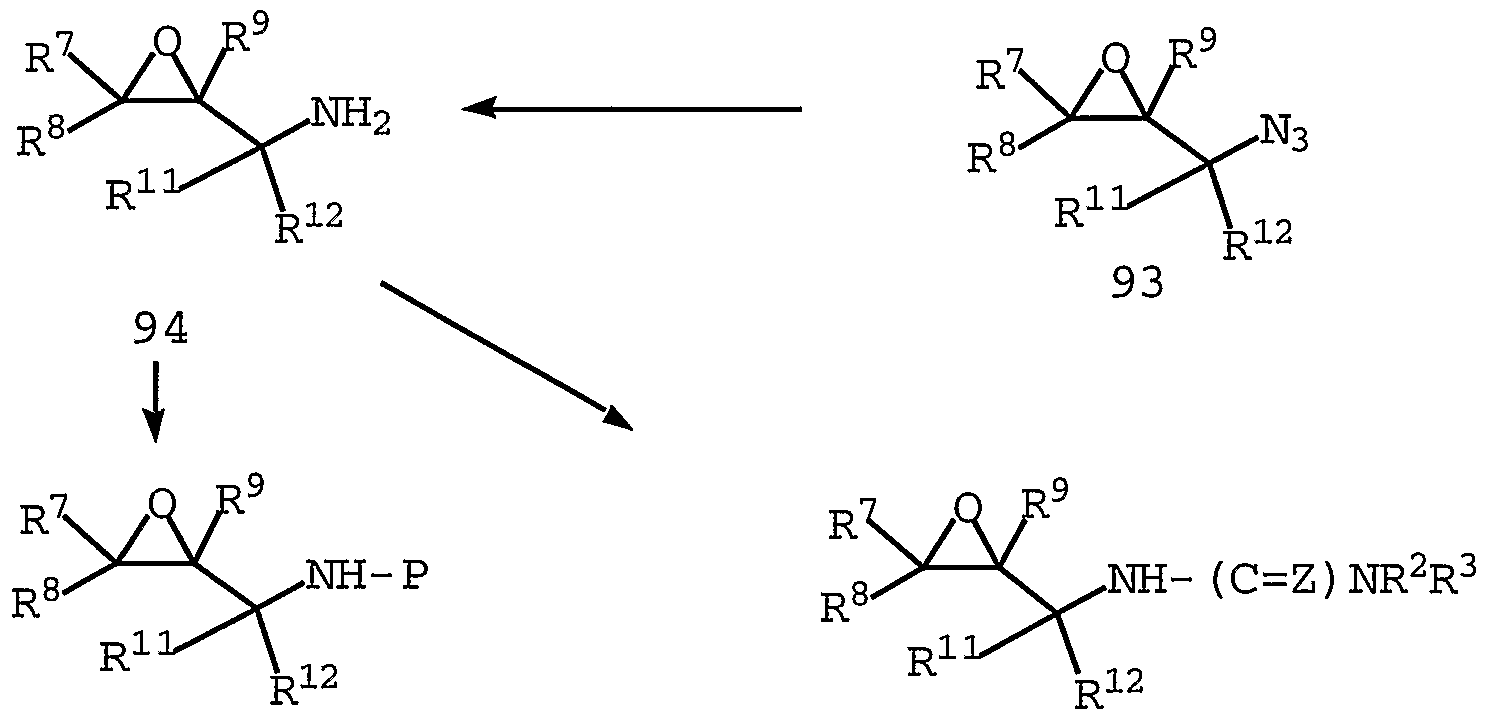
REG Reference to national code

Ref country code: DE

Ref legal event code: 8642

WWE Wipo information: entry into national phase

Ref document number: 2413421

Country of ref document: CA

ENP Entry into the national phase

Ref country code: JP

Ref document number: 2002 504226

Kind code of ref document: A

Format of ref document f/p: F

WWE Wipo information: entry into national phase

Ref document number: 2001271359

Country of ref document: AU

WWE Wipo information: entry into national phase

Ref document number: 2001950360

Country of ref document: EP

WWP Wipo information: published in national office

Ref document number: 2001950360

Country of ref document: EP

WWW Wipo information: withdrawn in national office

Ref document number: 2001950360

Country of ref document: EP