WO2002011714A2 - Antagonists of the magnesium binding defect as therapeutic agents and methods for treatment of abnormal physiological states - Google Patents
Antagonists of the magnesium binding defect as therapeutic agents and methods for treatment of abnormal physiological states Download PDFInfo
- Publication number
- WO2002011714A2 WO2002011714A2 PCT/US2001/024909 US0124909W WO0211714A2 WO 2002011714 A2 WO2002011714 A2 WO 2002011714A2 US 0124909 W US0124909 W US 0124909W WO 0211714 A2 WO0211714 A2 WO 0211714A2
- Authority
- WO
- WIPO (PCT)
- Prior art keywords
- compound
- methyl
- trans
- group
- hydrogen
- Prior art date
- Legal status (The legal status is an assumption and is not a legal conclusion. Google has not performed a legal analysis and makes no representation as to the accuracy of the status listed.)
- Ceased
Links
- 0 **(*C(CCC1)CC1*1(*)CC1)I Chemical compound **(*C(CCC1)CC1*1(*)CC1)I 0.000 description 5
Classifications
-
- C—CHEMISTRY; METALLURGY
- C07—ORGANIC CHEMISTRY
- C07C—ACYCLIC OR CARBOCYCLIC COMPOUNDS
- C07C237/00—Carboxylic acid amides, the carbon skeleton of the acid part being further substituted by amino groups
- C07C237/02—Carboxylic acid amides, the carbon skeleton of the acid part being further substituted by amino groups having the carbon atoms of the carboxamide groups bound to acyclic carbon atoms of the carbon skeleton
- C07C237/20—Carboxylic acid amides, the carbon skeleton of the acid part being further substituted by amino groups having the carbon atoms of the carboxamide groups bound to acyclic carbon atoms of the carbon skeleton the carbon skeleton containing six-membered aromatic rings
-
- A—HUMAN NECESSITIES
- A61—MEDICAL OR VETERINARY SCIENCE; HYGIENE
- A61K—PREPARATIONS FOR MEDICAL, DENTAL OR TOILETRY PURPOSES
- A61K31/00—Medicinal preparations containing organic active ingredients
- A61K31/16—Amides, e.g. hydroxamic acids
-
- A—HUMAN NECESSITIES
- A61—MEDICAL OR VETERINARY SCIENCE; HYGIENE
- A61K—PREPARATIONS FOR MEDICAL, DENTAL OR TOILETRY PURPOSES
- A61K31/00—Medicinal preparations containing organic active ingredients
- A61K31/16—Amides, e.g. hydroxamic acids
- A61K31/165—Amides, e.g. hydroxamic acids having aromatic rings, e.g. colchicine, atenolol, progabide
-
- A—HUMAN NECESSITIES
- A61—MEDICAL OR VETERINARY SCIENCE; HYGIENE
- A61P—SPECIFIC THERAPEUTIC ACTIVITY OF CHEMICAL COMPOUNDS OR MEDICINAL PREPARATIONS
- A61P15/00—Drugs for genital or sexual disorders; Contraceptives
-
- A—HUMAN NECESSITIES
- A61—MEDICAL OR VETERINARY SCIENCE; HYGIENE
- A61P—SPECIFIC THERAPEUTIC ACTIVITY OF CHEMICAL COMPOUNDS OR MEDICINAL PREPARATIONS
- A61P25/00—Drugs for disorders of the nervous system
- A61P25/08—Antiepileptics; Anticonvulsants
-
- A—HUMAN NECESSITIES
- A61—MEDICAL OR VETERINARY SCIENCE; HYGIENE
- A61P—SPECIFIC THERAPEUTIC ACTIVITY OF CHEMICAL COMPOUNDS OR MEDICINAL PREPARATIONS
- A61P3/00—Drugs for disorders of the metabolism
-
- A—HUMAN NECESSITIES
- A61—MEDICAL OR VETERINARY SCIENCE; HYGIENE
- A61P—SPECIFIC THERAPEUTIC ACTIVITY OF CHEMICAL COMPOUNDS OR MEDICINAL PREPARATIONS
- A61P3/00—Drugs for disorders of the metabolism
- A61P3/08—Drugs for disorders of the metabolism for glucose homeostasis
- A61P3/10—Drugs for disorders of the metabolism for glucose homeostasis for hyperglycaemia, e.g. antidiabetics
-
- A—HUMAN NECESSITIES
- A61—MEDICAL OR VETERINARY SCIENCE; HYGIENE
- A61P—SPECIFIC THERAPEUTIC ACTIVITY OF CHEMICAL COMPOUNDS OR MEDICINAL PREPARATIONS
- A61P43/00—Drugs for specific purposes, not provided for in groups A61P1/00-A61P41/00
-
- A—HUMAN NECESSITIES
- A61—MEDICAL OR VETERINARY SCIENCE; HYGIENE
- A61P—SPECIFIC THERAPEUTIC ACTIVITY OF CHEMICAL COMPOUNDS OR MEDICINAL PREPARATIONS
- A61P5/00—Drugs for disorders of the endocrine system
- A61P5/48—Drugs for disorders of the endocrine system of the pancreatic hormones
- A61P5/50—Drugs for disorders of the endocrine system of the pancreatic hormones for increasing or potentiating the activity of insulin
-
- A—HUMAN NECESSITIES
- A61—MEDICAL OR VETERINARY SCIENCE; HYGIENE
- A61P—SPECIFIC THERAPEUTIC ACTIVITY OF CHEMICAL COMPOUNDS OR MEDICINAL PREPARATIONS
- A61P9/00—Drugs for disorders of the cardiovascular system
-
- A—HUMAN NECESSITIES
- A61—MEDICAL OR VETERINARY SCIENCE; HYGIENE
- A61P—SPECIFIC THERAPEUTIC ACTIVITY OF CHEMICAL COMPOUNDS OR MEDICINAL PREPARATIONS
- A61P9/00—Drugs for disorders of the cardiovascular system
- A61P9/12—Antihypertensives
-
- C—CHEMISTRY; METALLURGY
- C07—ORGANIC CHEMISTRY
- C07C—ACYCLIC OR CARBOCYCLIC COMPOUNDS
- C07C237/00—Carboxylic acid amides, the carbon skeleton of the acid part being further substituted by amino groups
- C07C237/02—Carboxylic acid amides, the carbon skeleton of the acid part being further substituted by amino groups having the carbon atoms of the carboxamide groups bound to acyclic carbon atoms of the carbon skeleton
- C07C237/04—Carboxylic acid amides, the carbon skeleton of the acid part being further substituted by amino groups having the carbon atoms of the carboxamide groups bound to acyclic carbon atoms of the carbon skeleton the carbon skeleton being acyclic and saturated
- C07C237/12—Carboxylic acid amides, the carbon skeleton of the acid part being further substituted by amino groups having the carbon atoms of the carboxamide groups bound to acyclic carbon atoms of the carbon skeleton the carbon skeleton being acyclic and saturated having the nitrogen atom of at least one of the carboxamide groups bound to an acyclic carbon atom of a hydrocarbon radical substituted by carboxyl groups
-
- C—CHEMISTRY; METALLURGY
- C07—ORGANIC CHEMISTRY
- C07C—ACYCLIC OR CARBOCYCLIC COMPOUNDS
- C07C237/00—Carboxylic acid amides, the carbon skeleton of the acid part being further substituted by amino groups
- C07C237/02—Carboxylic acid amides, the carbon skeleton of the acid part being further substituted by amino groups having the carbon atoms of the carboxamide groups bound to acyclic carbon atoms of the carbon skeleton
- C07C237/22—Carboxylic acid amides, the carbon skeleton of the acid part being further substituted by amino groups having the carbon atoms of the carboxamide groups bound to acyclic carbon atoms of the carbon skeleton having nitrogen atoms of amino groups bound to the carbon skeleton of the acid part, further acylated
-
- G—PHYSICS
- G01—MEASURING; TESTING
- G01N—INVESTIGATING OR ANALYSING MATERIALS BY DETERMINING THEIR CHEMICAL OR PHYSICAL PROPERTIES
- G01N2800/00—Detection or diagnosis of diseases
- G01N2800/04—Endocrine or metabolic disorders
- G01N2800/042—Disorders of carbohydrate metabolism, e.g. diabetes, glucose metabolism
-
- G—PHYSICS
- G01—MEASURING; TESTING
- G01N—INVESTIGATING OR ANALYSING MATERIALS BY DETERMINING THEIR CHEMICAL OR PHYSICAL PROPERTIES
- G01N2800/00—Detection or diagnosis of diseases
- G01N2800/32—Cardiovascular disorders
- G01N2800/321—Arterial hypertension
Definitions
- This invention relates to therapeutic methods and compositions for the treatment of the cellular membrane magnesium binding defect, a defect associated with certain abnormal physiological states, e.g., sodium-sensitive essential hypertension and Type 2 insulin-resistant diabetes mellitus.
- the applicant discovered, by studying essential, or primary, hypertension in humans and in two strains of rats with genetic hypertension, that a specific metabolic defect is critically involved with the occurrence of so-called “salt-sensitive", i.e. sodium ion sensitive, hypertension.
- This defect is the decreased binding of the magnesium ion (i.e. Mg 2+ ) within the plasma membranes of somatic cells, in particular smooth muscle cells.
- the intracellular concentrations of the magnesium ion decrease while those of the sodium ion (i.e., Na + ) tend to increase due ostensibly to the increased passive permeability of the cell membranes for the latter ion. If the mammal's ability to remove the excess Na + from the intracellular compartment is also compromised, then, as a consequence, the intracellular concentration of calcium ion (i.e. Ca 2+ ) also increases and causes, in particular, the heightened contractility of the smooth muscle cells lining the peripheral blood vessels.
- hypertension This abnormal, increased blood pressure is recognized clinically as hypertension. Since this result stems directly from the seemingly increased passive permeability of the cell membrane to sodium ion, the hypertension is classified as being "sodium sensitive" and occurs in approximately 50 per cent of the essential hypertensive population which comprises about 25 per cent of the population of the United States.
- the magnesium binding defect is caused by the lack, or at least the decreased concentration, of a component of normal blood plasma.
- erythrocytes from either salt-sensitive, essential hypertensive humans or rats are incubated with blood plasma from analogous normo tensive subjects, the magnesium binding defect in the plasma membranes of these cells is corrected and the abnormal concentrations of intracellular ions are normalized.
- the effective components of normal blood plasma are identified as the pentapeptide and its contained tetrapeptide which comprise the C-terminal region of the tachykinin known as "Substance P", the first mammalian produced tachykinin to be isolated and identified.
- the occurrence of the magnesium-binding defect in erythrocyte membranes also antagonizes, or "resists", the effect of insulin to promote the uptake of magnesium by these cells.
- the applicant has examined the erythrocytes from a number of patients with "adult onset” or Type 2 diabetes mellitus and has found the magnesium-binding defect to occur with a frequency greater than 90%.
- the magnesium-binding defect is a significant contributor to the causation of "insulin resistance", which in patients with Type 2 diabetes mellitus is, in most cases, considered to be the initiating cause of their diabetes.
- this invention concerns the compositions and pharmacological applications of a new class of biologically stable, monopeptide compounds which are derived from butadienes, ethylenes, and propanes, which can be utilized to treat and/or to prevent those abnormal physiological states with which the magnesium-binding defect is critically associated.
- This invention is a class of compounds represented by the Formula below (as well as their pharmaceutically acceptable salts) and therapeutic methods using such compounds for the treatment or prevention in mammals of physiological disorders which are associated with a deficiency of magnesium ion bound to the plasma membranes of their somatic cells.
- R l9 R 2 and R 5 are independently selected from the group consisting of H and C r -C 2 alkyl;
- R 3 and R 4 are selected from C 2 — C 8 alkyl
- R 6 is selected from H or the L-isomer (amino acid convention) of R 7 — (CH 2 ) n TM
- n is an integer from 0 to 3;
- alkyl refers to a straight or branched, monovalent, saturated aliphatic chain of carbon atoms, including normal, iso, neo and tertiary.
- Alkyl includes but is not limited to, methyl, ethyl, propyl, isopropyl, butyl, isobutyl , sec butyl, tert butyl, amyl, isoamyl, neoamyl, hexyl, isohexyl, neohexyl, heptyl, isoheptyl, neoheptyl, octyl, isooctyl, neooctyl.
- the free-base forms of the compounds of the above Formula may be used in the methods of the present invention, it is preferred to prepare and to use a pharmaceutically acceptable salt form.
- the compounds used in the methods of this invention form pharmaceutically acceptable acid addition salts with a wide variety of organic and inorganic acids, and include the physiologically acceptable salts which are often used in pharmaceutical chemistry. Such salts are also part of this invention.
- salts of compounds of the above Formula which are substantially non-toxic to living organisms.
- Typical inorganic acids used to form such salts include hydrochloric, hydrobromic, hydroiodic, nitric, sulfuric, phosphoric, hypophosphoric and the like.
- Such pharmaceutically acceptable salts thus include acetate, phenylacetate, acrylate, ascorbate, benzoate, chlorobenzoate, dinitrobenzoate, hydroxybenzoate, methoxybenzoate, methylbenzoate, o-acetoxybenzoate, na ⁇ hfhalene-2- benzoate, bromide, isobutyrate, phenylbutyrate, beta-hydroxybutyrate, butyne-l,4-dioate, hexyne-l,4-dioate, caprate, caprylate, caproate, chloride, cinnamate, citrate, formate, fumarate, glycollate, heptanoate, hippurate, lactate, malate, maleate, hydroxymaleate, malonate, mandelate, mesylate, nicotinate, isonicotinate, nitrate, oxalate, phthalate, terephthalate, phosphate, monohydrogen
- the pharmaceutically acceptable acid addition salts are typically formed by reacting a compound of the above Formula with an equimolar or an excess amount of acid.
- the reactants are generally combined in a mutual solvent such as diethyl ether or ethyl acetate.
- the salt normally precipitates out of solution within one hour to 10 days and can be isolated by filtration or the solvent can be stripped off by conventional means.
- the pharmaceutically acceptable salts generally have enhanced solubility characteristics compared to the compounds from which they are derived, and thus are often more amenable to formulations as liquids or emulsions.
- any salt of this invention is usually not of a critical nature, so long as the salt as a whole is pharmaceutically acceptable and as long as the counter-ion does not contribute undesired qualities to the salt as a whole.
- This invention further encompasses the pharmaceutically acceptable solvates of the compounds of the above Formula. Many of them can combine with solvents such as water, methanol, ethanol and acetonitrile to form pharmaceutically acceptable solvates such as the corresponding hydrate, methanolate, ethanolate and acetonitrilate.
- Preferred compounds of this invention for use with the methods described herein are those of the above Formula wherein
- R, R 2 and R 5 are H;
- R 3 and R 4 are independently selected from the group consisting of n-butyl, n-amyl and n-hexyl;
- R 6 is selected from the group consisting of L-phenylglycine and L-valine;
- the present invention is also a method of treating a patient with a physiological disorder critically associated with the magnesium binding defect by administering to such a patient a pharmacologically effective amount of a composition that includes a compound of the above Formula.
- a composition that includes a compound of the above Formula.
- certain compounds of the above Formula can possess an asymmetric carbon atom(s) and are thus capable of existing as enantiomers.
- this invention includes such enantiomers, including racemates.
- the separate enantiomers may be synthesized from chiral starting materials, or the racemates can be resolved by procedures that are well known in the art of chemistry such as chiral chromatography, fractional crystallization of diastereometric salts and the like.
- compositions containing compounds of the above Formula are most preferred although compounds of this invention may be formulated into pharmaceutical compositions, together with pharmaceutically acceptable carriers, in solid or liquid form, for rectal and topical, as well as for oral, administration.
- compositions of this invention are preferably packaged in a container (e.g., a box or bottle, or both) with suitable printed material (e.g., a package insert) containing indications, directions for use, etc.
- a container e.g., a box or bottle, or both
- suitable printed material e.g., a package insert
- Reaction (b) Synthesis of n-butylbenzene. (Wolff-Kischner Reduction).
- the product from Reaction (a) is mixed with 200 ml of ethylene glycol, 10 gm. of KOH and 0.15 mole (5 gm.) of hydrazine.
- the mixture is heated to reflux temperature while being stirred, and the water evolved is collected. When the evolution of water ceases, the mixture is cooled, diluted with 200 ml of distilled water, and steam distilled.
- the distillate is extracted three times with 100 ml portions of benzene, and after the combined extracts are dried over anhydrous Na j SO ⁇ the benzene is removed by distillation.
- the product, n-butylbenzene is crystallized from absolute ethanol: m.p. 88° C.
- Reaction (c) Synthesis of para-n-butylbutyrophenone. Reaction (a) is repeated using 0.1 mole (13.4 gm.) of n-butyl benzene, prepared in Reaction (b) supra and 0.1 mole (10.7 gm.) of n-butyryl chloride. The crude reaction product is isolated as was the product in Reaction (a).
- Reaction (d) Synthesis of 1 ,4-di-n-butylbenzene. Reaction (b) is repeated using the approximately 0.1 mole of product from Reaction (c) as the starting material. The reaction product, 1,4-di-n-butylbenzene, is crystallized from absolute ethanol and the structure confirmed by NMR spectroscopsy. Reaction (e): Synthesis of 2,5-d ⁇ -n-butyl-nit.robenzene. 0.1 Mole (19.1 gm.) of 1,4- di-n-butylbenzene prepared in Reaction (d) is dissolved in 60 ml of a 1 :2 (v:v) mixture of cone. HNO 3 and cone. H 2 SO 4 .
- Reaction (e) 0.4 mole (26 gm.) of powdered zinc is slowly added while the stirring is continued. The yellow color fades as the reaction comes to completion.
- the reaction mixture is cooled, diluted with 400 ml of distilled water, and the acid content neutralized by the addition of an excess of 10 M NaOH.
- the reaction product is extracted into diethyl ether, and the combined ether extracts are washed with distilled water. From the ether solution, the hydrochloride of the reaction product slowly precipitates after the addition of 10 ml of cone. HC1 and by chilling the mixture.
- the recovered product is pure 2,5-di-n-butylaniline hydrochloride as indicated by GLC of the free base.
- Reaction (g) Synthesis of 2,5-di-n-butylbenzene diazonium salt.
- 0.1 Mole (24.0 gm.) of 2,5-di-n-butylaniline hydrochloride prepared in Reaction (f) is dissolved in 130 ml 3 M H 2 SO 4 and the mixture cooled to 0° C. by surrounding it with crushed ice.
- 0.12 mole of NaNO 2 (8.3 gm.) is slowly added with stirring which is continued until starch-iodide paper turns blue.
- Reaction (h) Synthesis of 2,5-di-n-butylphenol.
- the solution from Reaction (g) is diluted with an equal volume of distilled water so as to adjust the H 2 SO 4 concentration to approximately 1.5 M, and this solution is heated under reflux for 2 hours.
- the 2,5-di-n- butylphenol thus formed is removed from this reaction mixture by steam distillation and is extracted from the distillate with benzene.
- the benzene is distilled, and the residue analyzed by GLC and GLC-MS.
- Reaction (k) Synthesis of trans t trans-l ,3-butadiene-l ,4-di-n-huty1-1 -carhoxyl-4- carboxa ide.
- the crude product of Reaction (j) is dissolved in 200 ml of anhydrous ammonia in a Dewar flask and the excess ammonia is allowed to evaporate.
- the residue consists of a mixture of ammonium dicarboxylate, diamide, monoamide-mono ammonium carboxylate, acetamide and ammonium acetate and is dissolved in hot water. This solution is poured onto a 5.0 x 100 cm. column of anion exchange resin in the acetate form maintained at 100° C.
- Reaction (I) Synthesis of trans,trans-l ,3-butadiene-l ,4-d ⁇ -n-butyl-1 -chloromethyl-4- carhoxamide.
- 0.1 Mole of the product of Reaction (k) is dissolved in chloroform and 0.11 mole (4.6 gm.) of diazomethane (CH 2 N 2 ) in chloroform is added.
- the yellow color of the diazomethane quickly fades, indicating that the methyl ester has formed.
- Excess diazomethane is removed by the addition of a few drops of glacial acetic acid to form methyl acetate.
- the chloroform is removed by distillation to dryness and the residue is dissolved in absolute ethanol. 0.50 Mole of sodium beads is added to this solution, and after the evolution of hydrogen subsides, the solution is diluted with distilled water and extracted exhaustively with methylene chloride. The combined extracts are dried with anhydrous Na ⁇ O, ⁇ and the volume is reduced by distillation to about 100 ml.
- HC1 are added to the combined toluene extracts, the combination thoroughly mixed, and allowed to stand at 5° C.
- the hydrochloride of the named product forms slowly, is isolated by filtration, and is twice recrystallised by repeating the process of forming the hydrochloride. It is characterized and its structure confirmed by NMR spectroscopy of the free base.
- Reaction (o) Synthesis of 5-aminomethy1-8-dodecane carboxamide (the perhydro- 1,3-butadiene-based intermediate).
- 0.1 Mole (23.8 gm.) of trans,trans-l,3-butadiene-l,4-di-n- butyl-l-aminomethyl-4-carboxamide from Reaction (m) is dissolved in the minimum volume of 95% ethanol and subjected, with shaking, to hydrogen gas at atmospheric pressure in the presence of 50 mg. of Adams platinum oxide catalyst. The reduction is quantitative as reflected by the volume of hydrogen consumed (0.2 mole).
- the product has two chiral centers and thus the residue obtained by evaporation of the solvent contains a mixture of four optical isomers.
- the isomers in this racemic mixture can be separated by fractional crystallization after they have been converted to their diastereometric salts with (+)-tartaric acid.
- EXAMPLE 2 B Synthesis of N-(trans-2,3-di-n-amyl-2-butenoic acid amide)-L-phenylglycinamide.
- Reaction (p) Synthesis of ortho-dipentanoylbenzene. 0.1 Mole (16.6 gm.) of phthalic acid is dissolved in 100 ml of benzene and 0.2 mole (23.6 gm.) of thionyl chloride is added slowly while the solution is stirred. It is then heated under reflux until the evolution of SO 2 and hydrogen chloride ceases.
- Reaction (r) Synthesis of di-n-amyl maleic anhydride.
- the ortho-di-n-amylbenzene prepared in Reaction (q) is dissolved in cyclohexane and placed in a glass "trap" so that a rapid stream of warm air can be passed, in the reverse direction, through the solution.
- the aerosol thus formed is passed through a thick-walled, glass U-tube filled with V 2 O 5 and immersed in a bath of molten Woods metal at 450° C.
- the product, di-n-amyl maleic anhydride is collected by passing the effluent air stream through a trap surrounded by circulating water at 5° C.
- Reaction (s) Synthesis of trans 1.2-di-n-amyl ethylene-! -carhoyy1- -carboxarnide.
- the product of Reaction (r) is dissolved in the minimum volume of benzene, and the solution slowly added to 50 ml of liquid ammonia in a Dewar flask. The mixture is gently stirred as the ammonia evaporates, and the residual benzene solution is transferred to a separatory funnel with additional benzene. A few crystals of iodine are added, and the solution thoroughly mixed. After the mixture has remained overnight at room temperature, it is washed twice with 100 ml portions of 1 M HC1 and twice with distilled water. After the benzene solution is dried over anhydrous Na ⁇ O ⁇ it is distilled to dryness. The residue contains the named product.
- Reaction (t) Synthesis of trans 2,3-di-n-amyl-l -chloro-2-butenoic acid amide.
- the product from Reaction (s) is dissolved in 100 ml of chloroform and 0.1 mole (4.2 gm.) of diazomethane (CH 2 N 2 ), prepared in 50 ml of chloroform, is added.
- CH 2 N 2 diazomethane
- the reaction is completed as indicated by the cessation of fading of the yellow color, the solution is evaporated to dryness.
- the methyl ester residue is dissolved in absolute ethanol and 0.3 mole (7.0 gm.) of sodium beads is added.
- Reaction (u) Synthesis of trans 2,3-di-n-amyl-1 -arnino-2-butenoic acid amide. (Gabriel Synthesis). 0.1 Mole of product from Reaction (t) is reacted with potassium phthalimide as described in Reaction (m), Scheme One, supra to form the named compound.
- Reaction (v) Synthesis of N-(t.rans 2.3-di-n-amyl-2-hutenoic acid amideVL- phenylglycinamide. (A trans-ethylene-based compound of the above Formula). This target compound is synthesized by condensing the 1 -amino compound formed in Reaction (u) with L-phenylglycine as described in Reaction (n), Scheme One, supra.
- Reaction ( ) Synthesis of 6-aminomethyl-7-dodecane carboxamide. This compound is synthesized by subjecting the aminomethyl compound formed in Reaction (u) supra to catalytic hydrogenation as described in Reaction (o), Scheme One, supra. This compound has two chiral centers and thus the product of this synthesis is a racemic mixture of four optical isomers. These isomers can be separated by fractional crystallization after their conversion to diastereometric salts by reaction with (+)-tartaric acid. This mixture of isomers is converted to the mixture of the four possible optical isomers of N-(6-methylene-7-dodecane carboxamide)-L-phenylglycinamide by repeating Reaction (n), Scheme One, supra.
- the specific L-, D- isomer (amino acid convention) can be obtained by resolving, as indicated supra, the mixture of four isomers produced by catalytic hydrogenation supra.
- Reaction (k) Synthesis of 2-n-amy1-4-carboxy-4-nonanoic acid amide. 25 gm. of the product from Reaction (j') above is treated with anhydrous ammonia as in Reaction (k), Scheme One, supra to yield the desired product which, in this case, does not require purification by chromatography. If monomethylamine and dimethylamine are used separately instead of ammonia in this synthesis, the monomethyl and dimethyl carboxamides, respectively, can be synthesized.
- Reaction (T) Synthesis of 2-n-amyl-4-eh1oromethy1 nonanoic acid amide.
- the product from Reaction (k ⁇ ) above is treated with diazomethane, sodium beads plus absolute ethanol, and thionyl chloride as in Reaction (1) Scheme One, supra to yield the desired product.
- Reaction (nT) Synthesis of 2-n-amy1-4-arninomethy1-nonannir, aci amide. (Gabriel Synthesis). 0.1 Mole (27.6 gm.) of product from Reaction (T) above is treated as in Reaction (1), Scheme One supra to yield the pure hydrochloride of the desired compound. If the chloromethyl compound used in this reaction is condensed with N-methylphthalimide, rather than with phthalimide, the methyl amino derivative of the desired compound can be synthesized.
- Reaction (n') Synthesis of N-(2,4-di-n-amylpentanoic acid amideVL- phenylglycinamide (the named 1,3-disubstituted propane based compound of the formula).
- 0.1 Mole (25.6 gm.) of the pure product from Reaction (m ⁇ ) above is treated as in Reaction (m), Scheme One, supra.
- the product is characterized by infra red and NMR spectroscopy. It is a racemic mixture of the four possible optical isomers from which the specific L-,D- isomer (amino acid convention) can be obtained by fractional crystallization of the diastereometric salts with (+)-tartaric acid.
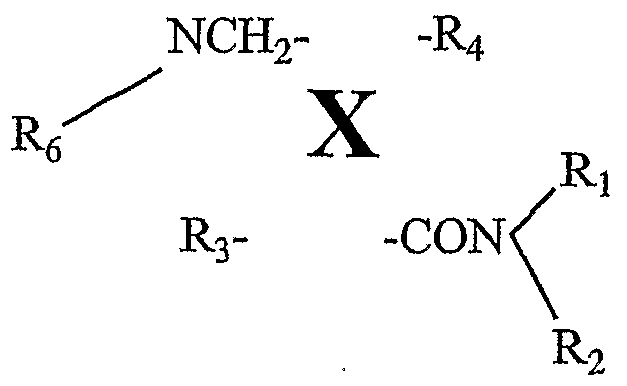
- each arm of the "X" representing a bond of the selected structural feature represent the ways by means of which these compounds can acquire essentially the same hydrophobic surface which involves about 12 methylene groups linearly arranged.
- the hydrophobisities of the four molecules are essentially identical. This structural aspect is preferable for the biological activity of the compounds of the above Formula.
- An in vitro biological assay of the activities of compounds of this invention and their synthesis intermediates can be conducted by employing nonnal human erythrocytes in which the magnesium binding defect is created by incubating these thoroughly saline- washed cells at 5° C. in Alsevers solution; the mixture has a hematocrit of 50% and contains 1.25 mg. of sodium deoxycholate per ml.
- the magnesium binding defect is present in the cell membranes of these erythrocytes as evidenced by their decreased magnesium content when compared with the magnesium content of plasma membranes from control erythrocytes which are identical in all respects except that they have been similarly incubated in Alsevers solution only, i.e. the positive control.
- Biological activity can be determined by measuring the magnesium contents of the plasma membranes of thoroughly washed, depleted erythrocytes prepared supra which have been incubated at 37° C. for three hours in Krebs-Ringer phosphate solutions to which the test compound has and has not been added.
- the mixture having cells, Krebs-Ringer solution and no test compound is the negative control, and the magnesium content of the plasma membranes of the contained cells must be significantly less than that of undepleted cells incubated in magnesium-free Krebs-Ringer solution.
- Positive biological activity is indicated when the magnesium content of the plasma membranes of the depleted erythrocytes which are incubated in Krebs-Ringer solution containing the test compound is significantly higher than that of the negative control and may be the same as, or greater than, that of the positive control.
- the compounds of the above Formula are usually administered in the form of pharmaceutical compositions. These compounds can be administered by a variety of routes including oral, rectal, transdermal, subcutaneous, intravenous, intramuscular, and intranasal. These compounds are effective as both injectable and oral compositions. Such compositions are prepared in a manner well-known in the pharmaceutical art and are comprised of at least one active compound.
- the present invention also mcludes pharmaceutical compositions which contain, as the active ingredient, the compounds of the above Formula associated with phannaceutically acceptable carriers.
- the active ingredient is usually mixed with an excipient, diluted by an excipient or enclosed within such a carrier which can be in the form of a capsule, sachet, paper or other container.
- the incipient serves as a diluent, it can be a solid, semi-solid, or liquid material, which acts as a vehicle, carrier or medium for the active ingredient.
- compositions can be in the form of tablets, pills, powders, lozenges, sachets, cachets, elixirs, suspensions, emulsions, solutions, syrups, aerosols (as a solid in a liquid medium), ointments containing for example up to 10% by weight of active compound, soft and hard gelatin capsules, suppositories, sterile injectable solutions, and sterile packaged powders.
- the active compound In preparing a formulation, it may be necessary to mill the active compound to provide the appropriate particle size prior to combining with the other ingredients. If the active compound is substantially insoluble, it ordinarily is milled to a particle size of less than 200 mesh. If the active compound is substantially water soluble, the particle size is normally adjusted by milling to provide a substantially uniform distribution in the formulation, e.g. about 40 mesh.
- suitable excipients include lactose, dextrose, sucrose, sorbitol, mannitol, starches, gum acacia, calcium phosphate, alginates, tragacanth, gelatin, calcium silicate, microcrystalline cellulose, polyvinylpyrrolidone, cellulose, water, syrup, and methyl cellulose.
- the formulations can additionally include: lubricating agents such as talc, magnesium stearate, and mineral oil; wetting agents; emulsifying and suspending agents; preserving agents such as methyl- and propylhydroxybenzoate; sweetning agents; and flavoring agents.
- lubricating agents such as talc, magnesium stearate, and mineral oil
- wetting agents such as talc, magnesium stearate, and mineral oil
- emulsifying and suspending agents such as methyl- and propylhydroxybenzoate
- sweetning agents sweetning agents
- flavoring agents such as talc, magnesium stearate, and mineral oil
- the compositions of the invention can be formulated, by employing procedures known in the art, so as to provide quick, sustained or delayed release of the active ingredient after administration to the patient.
- compositions are preferably formulated in a unit dosage form, each dosage containing from about 0.05 to about 100 mg, but usually from about 1.0 to about 30 mg, of the active ingredient.
- unit dosage form refers to physically discrete units suitable as unitary dosages for human subjects and other mammals, each unit containing a predetermined quantity of active material calculated to produce the desired therapeutic effect, in association with a suitable pharmaceutical excipient.
- the active compound is effective over a wide dosage range.
- dosages per day normally fall within the range of about 0.01 to about 30 mg/kg of body weight.
- the range of about 0. Ho about 15 mg/kg/day, in single or divided dose is especially preferred.
- the amount of the compound actually administered will be determined by a physician, in the light of the relevant circumstances, including the condition to be treated, the chosen route of administration, the actual compound administered, the age, weight, and response of the individual patient, and the severity of the patient's symptoms, and therefore the above dosage ranges are not intended to limit the scope of the invention in any way.
- dosage levels below the lower limit of the aforesaid range may be more than adequate, while in other cases still larger doses may be employed without causing any harmful side effects, provided that such large doses are first divided into several smaller doses for administration throughout the day.
- the invention is based on the discovery of the association of certain human diseases, such as "salt-sensitive" essential hypertension, Type 2 diabetes mellitus, pre-eclampsia and eclampsia, with the presence of the magnesium binding defect in the plasma membranes of the somatic cells of such patients, and the efficacy of the pentapeptide, and its included C- terminal tetrapeptide, at the C-terminal end of the mammalian tachykinins, e.g., Substance P, to correct the binding defect and thus to ameliorate and/or to prevent the disease.
- certain human diseases such as "salt-sensitive" essential hypertension, Type 2 diabetes mellitus, pre-eclampsia and eclampsia
- the efficacy of the pentapeptide, and its included C- terminal tetrapeptide at the C-terminal end of the mammalian tachykinins, e.g., Substance P
Landscapes
- Health & Medical Sciences (AREA)
- Chemical & Material Sciences (AREA)
- Organic Chemistry (AREA)
- Veterinary Medicine (AREA)
- Life Sciences & Earth Sciences (AREA)
- Public Health (AREA)
- General Health & Medical Sciences (AREA)
- Animal Behavior & Ethology (AREA)
- Medicinal Chemistry (AREA)
- Pharmacology & Pharmacy (AREA)
- Bioinformatics & Cheminformatics (AREA)
- Nuclear Medicine, Radiotherapy & Molecular Imaging (AREA)
- General Chemical & Material Sciences (AREA)
- Chemical Kinetics & Catalysis (AREA)
- Engineering & Computer Science (AREA)
- Diabetes (AREA)
- Epidemiology (AREA)
- Endocrinology (AREA)
- Cardiology (AREA)
- Heart & Thoracic Surgery (AREA)
- Hematology (AREA)
- Obesity (AREA)
- Pain & Pain Management (AREA)
- Biomedical Technology (AREA)
- Neurology (AREA)
- Neurosurgery (AREA)
- Emergency Medicine (AREA)
- Reproductive Health (AREA)
- Organic Low-Molecular-Weight Compounds And Preparation Thereof (AREA)
- Acyclic And Carbocyclic Compounds In Medicinal Compositions (AREA)
- Medicines That Contain Protein Lipid Enzymes And Other Medicines (AREA)
- Pharmaceuticals Containing Other Organic And Inorganic Compounds (AREA)
Abstract
Description


Claims


Priority Applications (6)
| Application Number | Priority Date | Filing Date | Title |
|---|---|---|---|
| NZ523915A NZ523915A (en) | 2000-08-09 | 2001-08-09 | Antagonists of the magnesium binding defect as therapeutic agents and methods for treatment of abnormal physiological states |
| DE60119385T DE60119385D1 (en) | 2000-08-09 | 2001-08-09 | ANTAGONISTS OF DEFECTIVE MAGNESIUM BINDING AS THERAPEUTIC AGENTS AND METHODS FOR THE TREATMENT OF ABNORMAL PHYSIOLOGICAL CONDITIONS |
| JP2002517051A JP2004508299A (en) | 2000-08-09 | 2001-08-09 | Antagonists of abnormal magnesium binding as therapeutics and methods of treating abnormal physiological conditions |
| CA002418951A CA2418951A1 (en) | 2000-08-09 | 2001-08-09 | Antagonists of the magnesium binding defect as therapeutic agents and methods for treatment of abnormal physiological states |
| AU2001283203A AU2001283203A1 (en) | 2000-08-09 | 2001-08-09 | Antagonists of the magnesium binding defect as therapeutic agents and methods for treatment of abnormal physiological states |
| EP01961984A EP1355638B1 (en) | 2000-08-09 | 2001-08-09 | Antagonists of the magnesium binding defect as therapeutic agents and methods for treatment of abnormal physiological states |
Applications Claiming Priority (2)
| Application Number | Priority Date | Filing Date | Title |
|---|---|---|---|
| US09/635,266 | 2000-08-09 | ||
| US09/635,266 US6455734B1 (en) | 2000-08-09 | 2000-08-09 | Antagonists of the magnesium binding defect as therapeutic agents and methods for treatment of abnormal physiological states |
Publications (2)
| Publication Number | Publication Date |
|---|---|
| WO2002011714A2 true WO2002011714A2 (en) | 2002-02-14 |
| WO2002011714A3 WO2002011714A3 (en) | 2003-08-14 |
Family
ID=24547100
Family Applications (1)
| Application Number | Title | Priority Date | Filing Date |
|---|---|---|---|
| PCT/US2001/024909 Ceased WO2002011714A2 (en) | 2000-08-09 | 2001-08-09 | Antagonists of the magnesium binding defect as therapeutic agents and methods for treatment of abnormal physiological states |
Country Status (9)
| Country | Link |
|---|---|
| US (12) | US6455734B1 (en) |
| EP (1) | EP1355638B1 (en) |
| JP (1) | JP2004508299A (en) |
| AT (1) | ATE324881T1 (en) |
| AU (1) | AU2001283203A1 (en) |
| CA (1) | CA2418951A1 (en) |
| DE (1) | DE60119385D1 (en) |
| NZ (1) | NZ523915A (en) |
| WO (1) | WO2002011714A2 (en) |
Families Citing this family (4)
| Publication number | Priority date | Publication date | Assignee | Title |
|---|---|---|---|---|
| US20040171093A1 (en) * | 1999-03-10 | 2004-09-02 | Wells Ibert C. | Methods for detecting deficient cellular membrane tightly bound magnesium for disease diagnoses |
| US6372440B2 (en) * | 1999-03-10 | 2002-04-16 | Magnesium Diagnostics, Inc. | Method for detecting deficient cellular membrane tightly bound magnesium for disease diagnoses |
| US8168592B2 (en) | 2005-10-21 | 2012-05-01 | Amgen Inc. | CGRP peptide antagonists and conjugates |
| JP2009524617A (en) | 2006-01-27 | 2009-07-02 | エフ.ホフマン−ラ ロシュ アーゲー | Use of substituted 2-imidazole or imidazoline derivatives |
Family Cites Families (124)
| Publication number | Priority date | Publication date | Assignee | Title |
|---|---|---|---|---|
| NL142416B (en) * | 1969-04-30 | 1974-06-17 | Univ Osaka | PROCEDURE FOR PREPARING 6-AMINO-ACYLAMINOPENICILLAN ACIDS, AND PROCEDURE FOR PREPARING PHARMACEUTICAL PREPARATIONS. |
| US4097472A (en) | 1974-11-08 | 1978-06-27 | Mitsubishi Chemical Industries Limited | N2 -arylsulfonyl-l-argininamides and the pharmaceutically acceptable salts thereof |
| US4073913A (en) | 1974-11-08 | 1978-02-14 | Mitsubishi Chemical Industries Limited | N2 -arylsulfonyl-L-argininamides and the pharmaceutically acceptable salts thereof |
| FR2166316A1 (en) * | 1972-01-07 | 1973-08-17 | Toyama Chemical Co Ltd | 7-acylcephalosporins - prepd via a silylated inter |
| IL42124A (en) | 1972-05-02 | 1977-02-28 | Kabi Ab | Substrate for the determination of proteolytic enzymes |
| US3894995A (en) | 1972-12-26 | 1975-07-15 | Hoechst Ag | Transparent polyamides from an isomeric mixture of norbornanes |
| US3885136A (en) * | 1974-02-25 | 1975-05-20 | Gulf & Western Industries | Reset timer/counter unit |
| US4201863A (en) | 1974-11-08 | 1980-05-06 | Mitsubishi Chemical Industries, Limited | N2 -Arylsulfonyl-L-argininamides and the pharmaceutically acceptable salts thereof |
| US4144244A (en) | 1977-12-27 | 1979-03-13 | Ciba-Geigy Corporation | Perfluoroalkyl-iodo norbornane dicarboxylic acids and derivatives thereof |
| US4304771A (en) | 1979-07-13 | 1981-12-08 | Usv Pharmaceutical Corporation | Antihypertensive amides |
| US4352751A (en) | 1979-09-10 | 1982-10-05 | Analytical Radiation Corporation | Species-linked diamine triacetic acids and their chelates |
| US4331570A (en) | 1980-07-17 | 1982-05-25 | International Flavors & Fragrances Inc. | Carboamidoalkyl norbornanes and organoleptic use in perfumes |
| US4532342A (en) | 1981-02-20 | 1985-07-30 | Warner-Lambert Company | N-substituted amino acids as intermediates in the preparation of acyl derivatives of 1,2,3,4-tetrahydroisoquinoline-3-carboxylic acids |
| AU564576B2 (en) * | 1981-09-24 | 1987-08-20 | Sigma-Tau Industrie Farmaceutiche Riunite S.P.A. | Purine derivatives |
| US4609661A (en) * | 1982-08-09 | 1986-09-02 | Syntex (U.S.A.) Inc. | Substituted 9-(1-O- or 3-O-monosubstituted or 1,3-di-O-substituted propoxymethyl)purines as antiviral agents |
| DE3401949A1 (en) | 1984-01-20 | 1985-08-01 | Bayer Ag, 5090 Leverkusen | NORBORNANE AND NORBORNINE CARBONIC ACID AMIDES, METHOD FOR THE PRODUCTION THEREOF AND THE USE OF NORBORNANE AND NORBORNIC CARBONIC ACID AMIDES AS MEDICINAL PRODUCTS |
| US4761481A (en) | 1985-03-18 | 1988-08-02 | Baxter Travenol Laboratories, Inc. | Substituted pyridine derivatives |
| DE8517666U1 (en) * | 1985-06-18 | 1985-08-14 | Heinrich Baumgarten KG, Spezialfabrik für Beschlagteile, 5908 Neunkirchen | Harness handle for attachment to bolts |
| US4705897A (en) | 1986-05-05 | 1987-11-10 | Texaco Inc. | Process for producing bicyclic diamines |
| US4772607A (en) | 1986-05-20 | 1988-09-20 | Warner-Lambert Company | Dialkenyl derivatives of xanthine, pharmaceutical compositions and methods of use therefor |
| GB8613431D0 (en) | 1986-06-03 | 1986-07-09 | Medical Res Council | Human tachykinins |
| IL83966A (en) | 1986-09-26 | 1992-03-29 | Schering Ag | Amides of aminopolycarboxylic acids and pharmaceutical compositions containing them |
| GB2200115B (en) * | 1987-01-21 | 1990-11-14 | Sandoz Ltd | Novel peptide derivatives, their production and use |
| US4792555A (en) | 1987-03-20 | 1988-12-20 | American Home Products Corporation | Phospholipase A2 inhibitors |
| US5128346A (en) | 1987-09-21 | 1992-07-07 | Abbott Laboratories | Derivatives of D-glutamic acid and D-aspartic acid |
| DE3804793A1 (en) | 1988-02-16 | 1989-08-24 | Hoechst Ag | RENIN-INHIBITING AMINOSAUTE DERIVATIVES |
| US5256645A (en) | 1988-03-04 | 1993-10-26 | Hoffmann-La Roche Inc. | Amino acid derivatives |
| CA1328333C (en) | 1988-03-04 | 1994-04-05 | Quirico Branca | Amino acid derivatives |
| JPH02209861A (en) | 1988-05-06 | 1990-08-21 | Ono Pharmaceut Co Ltd | Amino acid derivative and enkephalinase inhibitor containing the same as an active ingredient |
| US5177089A (en) * | 1988-06-01 | 1993-01-05 | Eisai Co., Ltd. | Butenoic or propenoic acid derivative |
| CA1340588C (en) | 1988-06-13 | 1999-06-08 | Balraj Krishan Handa | Amino acid derivatives |
| JPH0225417A (en) * | 1988-07-12 | 1990-01-26 | Asahi Chem Ind Co Ltd | Antitumor agent |
| FR2640970A1 (en) * | 1988-12-28 | 1990-06-29 | Pf Medicament | "Z"-1-Phenyl-2-(aminomethyl)cyclopropanecarboxamide derivatives and their therapeutic application |
| US5049548A (en) * | 1989-03-03 | 1991-09-17 | Merck & Co., Inc. | Renin-inhibitory di-, tri-, and tetrapeptides |
| US5616562A (en) | 1990-04-27 | 1997-04-01 | Murphy; Christopher J. | Methods and compositions using substance P to promote wound healing |
| IE920175A1 (en) | 1991-02-11 | 1992-08-12 | Zeneca Ltd | Nitrogen heterocycles |
| FR2676734B1 (en) | 1991-05-23 | 1995-05-19 | Roussel Uclaf | NEW PYRIMIDINE DERIVATIVES, THEIR PREPARATION PROCESS, THE NEW INTERMEDIATES OBTAINED, THEIR APPLICATION AS MEDICAMENTS AND THE PHARMACEUTICAL COMPOSITIONS CONTAINING THEM. |
| US6011068A (en) * | 1991-08-23 | 2000-01-04 | Nps Pharmaceuticals, Inc. | Calcium receptor-active molecules |
| EP0532466A3 (en) * | 1991-09-12 | 1993-06-16 | Ciba-Geigy Ag | Derivatives of 5-amino-4-hydroxy-hexanoic acid and their therapeutical use |
| US5527790A (en) * | 1991-09-30 | 1996-06-18 | The University Of British Columbia | Bis(maltolato)oxovanadium compositions for the treatment of elevated blood sugar |
| JP3122520B2 (en) | 1992-03-13 | 2001-01-09 | 生化学工業株式会社 | 2-Aminopyridine derivative, production method thereof and fluorescent labeling agent |
| JP2578044B2 (en) | 1992-03-14 | 1997-02-05 | 呉羽化学工業株式会社 | Phenylalanine-glycine derivative, method for producing the same, and antitumor agent containing the derivative |
| US5506227A (en) | 1992-04-13 | 1996-04-09 | Merck Frosst Canada, Inc. | Pyridine-substituted benzyl alcohols as leukotriene antagonists |
| EP1000930A3 (en) | 1992-08-13 | 2003-10-29 | Warner-Lambert Company | Tachykinin antagonists |
| US5641783A (en) | 1993-11-12 | 1997-06-24 | Cell Therapeutics, Inc. | Substituted amino alcohol compounds |
| AU680870B2 (en) | 1993-04-28 | 1997-08-14 | Astellas Pharma Inc. | New heterocyclic compounds |
| JP3548205B2 (en) * | 1993-10-29 | 2004-07-28 | キヤノン株式会社 | Image processing method and apparatus |
| US6403577B1 (en) | 1993-11-17 | 2002-06-11 | Eli Lilly And Company | Hexamethyleneiminyl tachykinin receptor antagonists |
| CA2109684C (en) * | 1993-11-22 | 2002-03-19 | Peter A. Pubben | Faucet control device |
| US5492927A (en) | 1993-12-21 | 1996-02-20 | Eli Lilly And Company | Non-peptide tachykinin receptor antagonists to treat allergy |
| ITFI940009A1 (en) | 1994-01-19 | 1995-07-19 | Menarini Farma Ind | ANTAGONISTS OF TACHYCININS, THEIR PREPARATION AND PHARMACEUTICAL FORMULATIONS THAT CONTAIN THEM. |
| US5646155A (en) | 1994-05-12 | 1997-07-08 | University Of Massachusetts Medical Center | Drugs to prevent recurrent herpes virus infections |
| ATE206710T1 (en) | 1994-06-06 | 2001-10-15 | Warner Lambert Co | TACHYKININ (NK1) RECEPTOR ANTAGONISTS |
| US5491140A (en) | 1994-06-30 | 1996-02-13 | Eli Lilly And Company | Naphthyl tachykinin receptor antagonists to treat physiological conditions |
| TW307746B (en) * | 1994-10-14 | 1997-06-11 | Sumitomo Chemical Co | |
| WO1996013485A1 (en) | 1994-10-27 | 1996-05-09 | Fujisawa Pharmaceutical Co., Ltd. | Pyridopyrimidones, quinolines and fused n-heretocycles as bradykinin antagonists |
| US5607947A (en) | 1995-02-21 | 1997-03-04 | Eli Lilly And Company | Pyrrolidinyl tachykinin receptor antagonists |
| US5563133A (en) | 1995-02-21 | 1996-10-08 | Eli Lilly And Company | Hexamethyleneiminyl tachykinin receptor antagonists |
| US5565568A (en) | 1995-04-06 | 1996-10-15 | Eli Lilly And Company | 2-acylaminopropanamides as tachykinin receptor antagonists |
| WO1997011940A1 (en) | 1995-09-29 | 1997-04-03 | Eli Lilly And Company | Spiro compounds as inhibitors of fibrinogen-dependent platelet aggregation |
| AU7475396A (en) * | 1995-10-30 | 1997-05-22 | Merck & Co., Inc. | Novel inhibitors of peptide binding to mhc class ii proteins |
| CA2191924A1 (en) * | 1995-12-05 | 1997-06-06 | Kevin Felsenstein | 5-amino-6-cyclohexyl-4-hydroxy-hexanamide derivatives as inhibitors of .beta.-amyloid protein production |
| WO1997040011A1 (en) | 1996-04-23 | 1997-10-30 | R. J. Reynolds Tobacco Company | Pharmaceutical compositions for prevention and treatment of central nervous system disorders |
| DE19629816A1 (en) | 1996-07-24 | 1998-01-29 | Hoechst Ag | New cycloalkyl derivatives as inhibitors of bone resorption and vitronectin receptor antagonists |
| US5703173A (en) * | 1996-08-16 | 1997-12-30 | Integument Technologies, Inc. | Transition metallohalopolymers |
| GB9617305D0 (en) | 1996-08-17 | 1996-09-25 | Glaxo Wellcome Spa | Heterocyclic compounds |
| CA2239227C (en) | 1996-10-01 | 2007-10-30 | Kyowa Hakko Kirin Co., Ltd. | Nitrogen-containing heterocyclic compounds |
| EA199900375A1 (en) | 1996-11-14 | 1999-12-29 | Пфайзер Инк. | METHOD OF OBTAINING SUBSTITUTED PYRIDINES |
| JPH10177774A (en) | 1996-12-16 | 1998-06-30 | Fujitsu Ltd | Disk device and portable electronic device |
| PE46999A1 (en) * | 1996-12-17 | 1999-05-20 | Warner Lambert Co | CYCLOALKYL INHIBITORS OF THE ENZYME FARNESIL TRANSFERASE OF PROTEINS |
| US6559144B2 (en) | 1997-02-13 | 2003-05-06 | Merck Patent Gesellschaft Mit | Bicyclic amino acids |
| ES2207834T3 (en) | 1997-04-22 | 2004-06-01 | Janssen Pharmaceutica N.V. | QUINO- AND ANTAGONIST QUINAZOLINS OF CRF. |
| US6245760B1 (en) | 1997-05-28 | 2001-06-12 | Aventis Pharmaceuticals Products, Inc | Quinoline and quinoxaline compounds which inhibit platelet-derived growth factor and/or p56lck tyrosine kinases |
| US6180632B1 (en) | 1997-05-28 | 2001-01-30 | Aventis Pharmaceuticals Products Inc. | Quinoline and quinoxaline compounds which inhibit platelet-derived growth factor and/or p56lck tyrosine kinases |
| WO1998057931A2 (en) | 1997-06-19 | 1998-12-23 | Sepracor Inc. | Quinoline-indole antimicrobial agents, uses and compositions related thereto |
| US6015815A (en) | 1997-09-26 | 2000-01-18 | Abbott Laboratories | Tetrazole-containing rapamycin analogs with shortened half-lives |
| ES2352739T3 (en) * | 1997-11-21 | 2011-02-22 | Purdue Neuroscience Company | 2-SUBSTITUTED AMINO ACETAMIDS AND THE USE OF THE SAME. |
| US6174901B1 (en) | 1998-12-18 | 2001-01-16 | Amgen Inc. | Substituted pyridine and pyridazine compounds and methods of use |
| US6011066A (en) * | 1998-02-02 | 2000-01-04 | Veterans General Hospital-Taipei | Method for treating septic shock |
| US6133455A (en) * | 1998-02-09 | 2000-10-17 | American Cyanamid Company | Process for the preparation of 2-aryl-5(perfluoro-alkyl) pyrrole compounds from N-(arylmethylene)-1-chloro-1-(perfluoroalkyl) methylamine compounds |
| US6689754B1 (en) | 1998-04-10 | 2004-02-10 | G. D. Searle & Co. | Heterocyclic glycyl β-alanine derivatives |
| GEP20032996B (en) * | 1998-05-12 | 2003-06-25 | Warner Lambert Co | Combinations of Protein Farnesyltransferase and HMG CoA Reductase Inhibitors, Pharmaceutical Compositions and Methods for Treatment |
| GB9811969D0 (en) | 1998-06-03 | 1998-07-29 | Celltech Therapeutics Ltd | Chemical compounds |
| MY125037A (en) | 1998-06-10 | 2006-07-31 | Glaxo Wellcome Spa | 1,2,3,4 tetrahydroquinoline derivatives |
| US6417185B1 (en) | 1998-06-19 | 2002-07-09 | Chiron Corporation | Inhibitors of glycogen synthase kinase 3 |
| US6090942A (en) | 1998-10-15 | 2000-07-18 | Pfizer Inc. | Process and intermediates for a β3 -adrenergic receptor agonist |
| TWI243192B (en) * | 1998-12-31 | 2005-11-11 | Ciba Sc Holding Ag | Phthalimidyl azo pigments, method for producing same and utilization thereof |
| WO2000051998A1 (en) | 1999-03-02 | 2000-09-08 | Boehringer Ingelheim Pharmaceuticals, Inc. | Compounds useful as reversible inhibitors of cathepsin s |
| AT407993B (en) * | 1999-03-03 | 2001-07-25 | Voest Alpine Ind Anlagen | METHOD FOR OPTIMIZING THE DESIGN AND OPERATION OF A REDUCTION METHOD |
| US6372440B2 (en) | 1999-03-10 | 2002-04-16 | Magnesium Diagnostics, Inc. | Method for detecting deficient cellular membrane tightly bound magnesium for disease diagnoses |
| US6750348B1 (en) | 1999-03-24 | 2004-06-15 | Anormed, Inc. | Chemokine receptor binding heterocyclic compounds |
| US6380210B1 (en) * | 1999-04-02 | 2002-04-30 | Neurogen Corporation | Heteroaryl fused aminoalkyl-imidazole derivatives: selective modulators of GABAa receptors |
| WO2000059874A1 (en) | 1999-04-02 | 2000-10-12 | Du Pont Pharmaceuticals Company | NOVEL AMIDE DERIVATIVES AS INHIBITORS OF MATRIX METALLOPROTEINASES, TNF-α, AND AGGRECANASE |
| SG82692A1 (en) * | 1999-04-07 | 2001-08-21 | Sumitomo Chemical Co | Method for purifying beta-phenylethyl alcohol |
| US7125875B2 (en) | 1999-04-15 | 2006-10-24 | Bristol-Myers Squibb Company | Cyclic protein tyrosine kinase inhibitors |
| US20020169101A1 (en) * | 1999-05-10 | 2002-11-14 | Gonzalez Maria Isabel | Treatment of sexual dysfunction |
| JP2001079018A (en) * | 1999-09-14 | 2001-03-27 | Gc Corp | Dental automatic cutting equipment |
| US6369729B1 (en) * | 1999-10-08 | 2002-04-09 | Cirrus Logic, Inc. | Common mode shift in downstream integrators of high order delta sigma modulators |
| CZ20021911A3 (en) * | 1999-12-03 | 2002-10-16 | Kyoto Pharmaceutical Industries, Ltd. | Novel heterocyclic compounds and their salts as well as their employment in medicine |
| PT1237880E (en) | 1999-12-17 | 2008-03-05 | Novartis Vaccines & Diagnostic | Pyrazine based inhibitors of glycogen synthase kinase 3 |
| US6328386B1 (en) * | 2000-01-11 | 2001-12-11 | Takata Seat Belts Inc. | Seat belt system |
| US6656958B2 (en) | 2000-02-02 | 2003-12-02 | Abbott Laboratories | Substituted pyridine compounds useful for controlling chemical synaptic transmission |
| US6593340B1 (en) * | 2000-02-28 | 2003-07-15 | Cv Technologies, Inc. | Pharmaceutical compositions containing N-propargylphentermine and related analogs to treat neurodegeneration and/or depression |
| AU2001250850A1 (en) | 2000-03-17 | 2001-10-03 | Dupont Pharmaceuticals Company | Beta-amino acid derivatives as inhibitors of matrix metalloproteases and tnf-alpha |
| CA2408343A1 (en) * | 2000-05-11 | 2002-11-07 | Banyu Pharmaceutical Co., Ltd. | N-acyltetrahydroisoquinoline derivatives |
| US6539771B1 (en) * | 2000-05-12 | 2003-04-01 | Delphi Technologies, Inc. | Seat sensor calibration method and system |
| US20030087915A1 (en) | 2000-05-12 | 2003-05-08 | Dull Gary Maurice | Pharmaceutical compositions and methods for use |
| DE50107913D1 (en) * | 2000-05-23 | 2005-12-08 | Dyomics Gmbh | STABLE NIR-MARKER DYES BASED ON BENZOPYRYLIUM POLYMETHINES |
| DE10028402A1 (en) | 2000-06-13 | 2001-12-20 | Merck Patent Gmbh | New pyridinylamino-alkanoyl-glycyl-beta-alanine derivatives, are integrin inhibitors useful for treating, e.g. thrombosis, cardiac infarction, coronary heart disease, inflammation, tumors, osteoporosis or restenosis |
| US20020173507A1 (en) | 2000-08-15 | 2002-11-21 | Vincent Santora | Urea compounds and methods of uses |
| US6583153B2 (en) | 2000-12-12 | 2003-06-24 | Ortho-Mcneil Pharmaceutical, Inc. | 7-heterocyclyl quinoline and thieno[2,3-b]yridine derivatives useful as antagonists of gonadotropin releasing hormone |
| US6943250B2 (en) * | 2001-03-06 | 2005-09-13 | Fmc Corporation | Protected aminofunctionalized polymerization initiators and methods of making and using same |
| WO2002079163A1 (en) | 2001-03-30 | 2002-10-10 | Smithkline Beecham Corporation | Aminopyridine derivatives as estrogen receptor modulators |
| US6911447B2 (en) | 2001-04-25 | 2005-06-28 | The Procter & Gamble Company | Melanocortin receptor ligands |
| MXPA03010269A (en) | 2001-05-11 | 2004-05-05 | Vertex Pharma | 2,5-disubstituted pyridine, pyrimidine, pyridazine and 1, 2, 4-triazine derivatives for use as p38 inhibitors. |
| PE20030008A1 (en) | 2001-06-19 | 2003-01-22 | Bristol Myers Squibb Co | DUAL INHIBITORS OF PDE 7 AND PDE 4 |
| JP2005508979A (en) | 2001-10-29 | 2005-04-07 | ベーリンガー インゲルハイム ファーマシューティカルズ インコーポレイテッド | Compounds useful as reversible inhibitors of cysteine proteases |
| US6635771B2 (en) * | 2001-12-03 | 2003-10-21 | Wyeth | N-benzhydryl indole compounds |
| KR100447255B1 (en) | 2001-12-31 | 2004-09-07 | 주식회사 하이닉스반도체 | Composition of impregnated abrasive layer and polishing pad using the same |
| AU2003211093A1 (en) * | 2002-02-15 | 2003-09-09 | The Regents Of The University Of Michigan | Inhibitors of rgs proteins |
| US7235558B2 (en) | 2002-06-06 | 2007-06-26 | Sanofi-Aventis Deutschland Gmbh | Inhibitors of the GPIb—vWF interaction, their preparation and use |
| US6989392B2 (en) | 2002-06-18 | 2006-01-24 | Abbott Laboratories | 2-Aminoquinolines as melanin concentrating hormone receptor antagonists |
| US20030139427A1 (en) | 2002-08-23 | 2003-07-24 | Osi Pharmaceuticals Inc. | Bicyclic pyrimidinyl derivatives and methods of use thereof |
| JP2006510661A (en) | 2002-12-06 | 2006-03-30 | ワーナー−ランバート・カンパニー、リミテッド、ライアビリティ、カンパニー | Benzoxazin-3-ones and their derivatives as inhibitors of PI3K |
-
2000
- 2000-08-09 US US09/635,266 patent/US6455734B1/en not_active Expired - Fee Related
-
2001
- 2001-08-09 DE DE60119385T patent/DE60119385D1/en not_active Expired - Lifetime
- 2001-08-09 AT AT01961984T patent/ATE324881T1/en not_active IP Right Cessation
- 2001-08-09 JP JP2002517051A patent/JP2004508299A/en active Pending
- 2001-08-09 AU AU2001283203A patent/AU2001283203A1/en not_active Abandoned
- 2001-08-09 CA CA002418951A patent/CA2418951A1/en not_active Abandoned
- 2001-08-09 WO PCT/US2001/024909 patent/WO2002011714A2/en not_active Ceased
- 2001-08-09 EP EP01961984A patent/EP1355638B1/en not_active Expired - Lifetime
- 2001-08-09 NZ NZ523915A patent/NZ523915A/en unknown
-
2002
- 2002-08-29 US US10/230,133 patent/US6664420B2/en not_active Expired - Fee Related
-
2003
- 2003-10-28 US US10/695,536 patent/US6855826B2/en not_active Expired - Fee Related
-
2004
- 2004-12-21 US US11/018,690 patent/US7041829B2/en not_active Expired - Fee Related
-
2005
- 2005-12-02 US US11/292,460 patent/US7132537B2/en not_active Expired - Fee Related
-
2006
- 2006-08-29 US US11/512,024 patent/US7211667B2/en not_active Expired - Fee Related
-
2007
- 2007-03-28 US US11/729,101 patent/US7405311B2/en not_active Expired - Fee Related
-
2008
- 2008-06-24 US US12/214,943 patent/US7619097B2/en not_active Expired - Fee Related
-
2009
- 2009-10-16 US US12/589,064 patent/US7795450B2/en not_active Expired - Fee Related
-
2010
- 2010-07-23 US US12/842,642 patent/US7982048B2/en not_active Expired - Fee Related
-
2011
- 2011-06-08 US US13/156,026 patent/US8129545B2/en not_active Expired - Fee Related
-
2012
- 2012-02-08 US US13/369,027 patent/US20120142781A1/en not_active Abandoned
Also Published As
| Publication number | Publication date |
|---|---|
| US6455734B1 (en) | 2002-09-24 |
| AU2001283203A1 (en) | 2002-02-18 |
| US20060069259A1 (en) | 2006-03-30 |
| US7795450B2 (en) | 2010-09-14 |
| ATE324881T1 (en) | 2006-06-15 |
| US8129545B2 (en) | 2012-03-06 |
| EP1355638A2 (en) | 2003-10-29 |
| NZ523915A (en) | 2005-05-27 |
| US6855826B2 (en) | 2005-02-15 |
| US20040110692A1 (en) | 2004-06-10 |
| US7132537B2 (en) | 2006-11-07 |
| EP1355638B1 (en) | 2006-05-03 |
| US6664420B2 (en) | 2003-12-16 |
| US20110281923A1 (en) | 2011-11-17 |
| US20070197659A1 (en) | 2007-08-23 |
| WO2002011714A3 (en) | 2003-08-14 |
| US20100048711A1 (en) | 2010-02-25 |
| US20030040625A1 (en) | 2003-02-27 |
| JP2004508299A (en) | 2004-03-18 |
| US7041829B2 (en) | 2006-05-09 |
| US20090030080A1 (en) | 2009-01-29 |
| US7405311B2 (en) | 2008-07-29 |
| DE60119385D1 (en) | 2006-06-08 |
| CA2418951A1 (en) | 2002-02-14 |
| US20110021633A1 (en) | 2011-01-27 |
| US20070010535A1 (en) | 2007-01-11 |
| US7211667B2 (en) | 2007-05-01 |
| US20120142781A1 (en) | 2012-06-07 |
| US20050096279A1 (en) | 2005-05-05 |
| US7982048B2 (en) | 2011-07-19 |
| US7619097B2 (en) | 2009-11-17 |
Similar Documents
| Publication | Publication Date | Title |
|---|---|---|
| TWI776886B (en) | Modulators of sestrin-gator2 interaction and uses thereof | |
| KR20030016376A (en) | Treatment of male sexual dysfunction | |
| US7273888B2 (en) | Use of difluoromethylornithine (DFMO) for the treatment of amyotrophic lateral sclerosis | |
| Bridges et al. | Conformationally restricted inhibitors of the high affinity L-glutamate transporter | |
| EP2156846A1 (en) | Prophylactic or therapeutic agent for diarrhea | |
| US20120095105A1 (en) | Inhibitors of cognitive decline | |
| EP2701510B1 (en) | Pyrazolopyridazines and methods for treating retinal-degenerative diseases and hearing loss associated with usher syndrome | |
| US8129545B2 (en) | Antagonists of the magnesium binding defect as therapeutic agents and methods for treatment of abnormal physiological states | |
| US20080102055A1 (en) | Method for detecting Alzheimer's disease | |
| KR20160129109A (en) | 5-lipoxygenase-activating protein inhibitor | |
| JPH01139528A (en) | Antiulcerative | |
| US6262302B1 (en) | N-(aryl/heteroaryl/alkylacetyl) amino acid amides, pharmaceutical compositions comprising same, and methods for inhibiting β-amyloid peptide release and/or its synthesis by use of such compounds | |
| EP2880029B1 (en) | Inhibitors of peptidyl arginine deiminase (pad) enzymes and uses thereof | |
| WO2001034639A2 (en) | β-AMINOACID COMPOUNDS USEFUL FOR INHIBITING β-AMYLOID PEPTIDE RELEASE AND/OR ITS SYNTHESIS | |
| Zagorski | Amyloidosis in Alzheimer's Disease | |
| US20150239931A1 (en) | Inhibitors of protein tyrosine phosphatases | |
| JPS6013715A (en) | Remedy for hypertension | |
| CZ9901630A3 (en) | Amines of N-(aryl/heteroaryl/alkylacetyl)amino acids, pharmaceutical compositions in which they are comprised and inhibition methods of releasing beta-amyloid peptide and/or synthesis thereof by making use of such compounds | |
| JP2002322141A (en) | Oxime compound |
Legal Events
| Date | Code | Title | Description |
|---|---|---|---|
| AK | Designated states |
Kind code of ref document: A2 Designated state(s): AE AG AL AM AT AU AZ BA BB BG BR BY BZ CA CH CN CO CR CU CZ DE DK DM DZ EC EE ES FI GB GD GE GH GM HR HU ID IL IN IS JP KE KG KP KR KZ LC LK LR LS LT LU LV MA MD MG MK MN MW MX MZ NO NZ PL PT RO RU SD SE SG SI SK SL TJ TM TR TT TZ UA UG UZ VN YU ZA ZW |
|
| AL | Designated countries for regional patents |
Kind code of ref document: A2 Designated state(s): GH GM KE LS MW MZ SD SL SZ TZ UG ZW AM AZ BY KG KZ MD RU TJ TM AT BE CH CY DE DK ES FI FR GB GR IE IT LU MC NL PT SE TR BF BJ CF CG CI CM GA GN GQ GW ML MR NE SN TD TG |
|
| 121 | Ep: the epo has been informed by wipo that ep was designated in this application | ||
| WWE | Wipo information: entry into national phase |
Ref document number: 523915 Country of ref document: NZ |
|
| WWE | Wipo information: entry into national phase |
Ref document number: 2002517051 Country of ref document: JP Ref document number: 2418951 Country of ref document: CA |
|
| WWE | Wipo information: entry into national phase |
Ref document number: 2001283203 Country of ref document: AU |
|
| WWE | Wipo information: entry into national phase |
Ref document number: 2001961984 Country of ref document: EP |
|
| REG | Reference to national code |
Ref country code: DE Ref legal event code: 8642 |
|
| WWP | Wipo information: published in national office |
Ref document number: 2001961984 Country of ref document: EP |
|
| WWP | Wipo information: published in national office |
Ref document number: 523915 Country of ref document: NZ |
|
| WWG | Wipo information: grant in national office |
Ref document number: 523915 Country of ref document: NZ |
|
| WWG | Wipo information: grant in national office |
Ref document number: 2001961984 Country of ref document: EP |