WO2002026891A1 - Modified carbocyanine dyes and their conjugates - Google Patents
Modified carbocyanine dyes and their conjugates Download PDFInfo
- Publication number
- WO2002026891A1 WO2002026891A1 PCT/US2001/030404 US0130404W WO0226891A1 WO 2002026891 A1 WO2002026891 A1 WO 2002026891A1 US 0130404 W US0130404 W US 0130404W WO 0226891 A1 WO0226891 A1 WO 0226891A1
- Authority
- WO
- WIPO (PCT)
- Prior art keywords
- sulfo
- alkyl
- compound
- amino
- independently
- Prior art date
- Legal status (The legal status is an assumption and is not a legal conclusion. Google has not performed a legal analysis and makes no representation as to the accuracy of the status listed.)
- Ceased
Links
- 0 CC1(*)c(c(cccc2)c2cc2)c2N=C1C Chemical compound CC1(*)c(c(cccc2)c2cc2)c2N=C1C 0.000 description 7
- NPRPOULKTHQLRM-UHFFFAOYSA-N CC1(c2ccccc2N=C1C)c(cc1)ccc1C(O)=O Chemical compound CC1(c2ccccc2N=C1C)c(cc1)ccc1C(O)=O NPRPOULKTHQLRM-UHFFFAOYSA-N 0.000 description 1
Classifications
-
- G—PHYSICS
- G01—MEASURING; TESTING
- G01N—INVESTIGATING OR ANALYSING MATERIALS BY DETERMINING THEIR CHEMICAL OR PHYSICAL PROPERTIES
- G01N1/00—Sampling; Preparing specimens for investigation
- G01N1/28—Preparing specimens for investigation including physical details of (bio-)chemical methods covered elsewhere, e.g. G01N33/50, C12Q
- G01N1/30—Staining; Impregnating ; Fixation; Dehydration; Multistep processes for preparing samples of tissue, cell or nucleic acid material and the like for analysis
-
- A—HUMAN NECESSITIES
- A61—MEDICAL OR VETERINARY SCIENCE; HYGIENE
- A61K—PREPARATIONS FOR MEDICAL, DENTAL OR TOILETRY PURPOSES
- A61K41/00—Medicinal preparations obtained by treating materials with wave energy or particle radiation ; Therapies using these preparations
- A61K41/0057—Photodynamic therapy with a photosensitizer, i.e. agent able to produce reactive oxygen species upon exposure to light or radiation, e.g. UV or visible light; photocleavage of nucleic acids with an agent
-
- C—CHEMISTRY; METALLURGY
- C07—ORGANIC CHEMISTRY
- C07C—ACYCLIC OR CARBOCYCLIC COMPOUNDS
- C07C66/00—Quinone carboxylic acids
- C07C66/02—Anthraquinone carboxylic acids
-
- C—CHEMISTRY; METALLURGY
- C07—ORGANIC CHEMISTRY
- C07D—HETEROCYCLIC COMPOUNDS
- C07D209/00—Heterocyclic compounds containing five-membered rings, condensed with other rings, with one nitrogen atom as the only ring hetero atom
- C07D209/02—Heterocyclic compounds containing five-membered rings, condensed with other rings, with one nitrogen atom as the only ring hetero atom condensed with one carbocyclic ring
- C07D209/04—Indoles; Hydrogenated indoles
- C07D209/08—Indoles; Hydrogenated indoles with only hydrogen atoms or radicals containing only hydrogen and carbon atoms, directly attached to carbon atoms of the hetero ring
-
- C—CHEMISTRY; METALLURGY
- C07—ORGANIC CHEMISTRY
- C07D—HETEROCYCLIC COMPOUNDS
- C07D209/00—Heterocyclic compounds containing five-membered rings, condensed with other rings, with one nitrogen atom as the only ring hetero atom
- C07D209/02—Heterocyclic compounds containing five-membered rings, condensed with other rings, with one nitrogen atom as the only ring hetero atom condensed with one carbocyclic ring
- C07D209/04—Indoles; Hydrogenated indoles
- C07D209/10—Indoles; Hydrogenated indoles with substituted hydrocarbon radicals attached to carbon atoms of the hetero ring
- C07D209/12—Radicals substituted by oxygen atoms
-
- C—CHEMISTRY; METALLURGY
- C07—ORGANIC CHEMISTRY
- C07D—HETEROCYCLIC COMPOUNDS
- C07D209/00—Heterocyclic compounds containing five-membered rings, condensed with other rings, with one nitrogen atom as the only ring hetero atom
- C07D209/02—Heterocyclic compounds containing five-membered rings, condensed with other rings, with one nitrogen atom as the only ring hetero atom condensed with one carbocyclic ring
- C07D209/04—Indoles; Hydrogenated indoles
- C07D209/10—Indoles; Hydrogenated indoles with substituted hydrocarbon radicals attached to carbon atoms of the hetero ring
- C07D209/14—Radicals substituted by nitrogen atoms, not forming part of a nitro radical
-
- C—CHEMISTRY; METALLURGY
- C07—ORGANIC CHEMISTRY
- C07D—HETEROCYCLIC COMPOUNDS
- C07D209/00—Heterocyclic compounds containing five-membered rings, condensed with other rings, with one nitrogen atom as the only ring hetero atom
- C07D209/02—Heterocyclic compounds containing five-membered rings, condensed with other rings, with one nitrogen atom as the only ring hetero atom condensed with one carbocyclic ring
- C07D209/04—Indoles; Hydrogenated indoles
- C07D209/10—Indoles; Hydrogenated indoles with substituted hydrocarbon radicals attached to carbon atoms of the hetero ring
- C07D209/14—Radicals substituted by nitrogen atoms, not forming part of a nitro radical
- C07D209/16—Tryptamines
-
- C—CHEMISTRY; METALLURGY
- C07—ORGANIC CHEMISTRY
- C07D—HETEROCYCLIC COMPOUNDS
- C07D209/00—Heterocyclic compounds containing five-membered rings, condensed with other rings, with one nitrogen atom as the only ring hetero atom
- C07D209/02—Heterocyclic compounds containing five-membered rings, condensed with other rings, with one nitrogen atom as the only ring hetero atom condensed with one carbocyclic ring
- C07D209/04—Indoles; Hydrogenated indoles
- C07D209/10—Indoles; Hydrogenated indoles with substituted hydrocarbon radicals attached to carbon atoms of the hetero ring
- C07D209/18—Radicals substituted by carbon atoms having three bonds to hetero atoms with at the most one bond to halogen, e.g. ester or nitrile radicals
-
- C—CHEMISTRY; METALLURGY
- C07—ORGANIC CHEMISTRY
- C07D—HETEROCYCLIC COMPOUNDS
- C07D209/00—Heterocyclic compounds containing five-membered rings, condensed with other rings, with one nitrogen atom as the only ring hetero atom
- C07D209/02—Heterocyclic compounds containing five-membered rings, condensed with other rings, with one nitrogen atom as the only ring hetero atom condensed with one carbocyclic ring
- C07D209/04—Indoles; Hydrogenated indoles
- C07D209/10—Indoles; Hydrogenated indoles with substituted hydrocarbon radicals attached to carbon atoms of the hetero ring
- C07D209/18—Radicals substituted by carbon atoms having three bonds to hetero atoms with at the most one bond to halogen, e.g. ester or nitrile radicals
- C07D209/24—Radicals substituted by carbon atoms having three bonds to hetero atoms with at the most one bond to halogen, e.g. ester or nitrile radicals with an alkyl or cycloalkyl radical attached to the ring nitrogen atom
-
- C—CHEMISTRY; METALLURGY
- C07—ORGANIC CHEMISTRY
- C07D—HETEROCYCLIC COMPOUNDS
- C07D209/00—Heterocyclic compounds containing five-membered rings, condensed with other rings, with one nitrogen atom as the only ring hetero atom
- C07D209/02—Heterocyclic compounds containing five-membered rings, condensed with other rings, with one nitrogen atom as the only ring hetero atom condensed with one carbocyclic ring
- C07D209/54—Spiro-condensed
-
- C—CHEMISTRY; METALLURGY
- C07—ORGANIC CHEMISTRY
- C07D—HETEROCYCLIC COMPOUNDS
- C07D209/00—Heterocyclic compounds containing five-membered rings, condensed with other rings, with one nitrogen atom as the only ring hetero atom
- C07D209/56—Ring systems containing three or more rings
- C07D209/58—[b]- or [c]-condensed
- C07D209/60—Naphtho [b] pyrroles; Hydrogenated naphtho [b] pyrroles
-
- C—CHEMISTRY; METALLURGY
- C07—ORGANIC CHEMISTRY
- C07D—HETEROCYCLIC COMPOUNDS
- C07D209/00—Heterocyclic compounds containing five-membered rings, condensed with other rings, with one nitrogen atom as the only ring hetero atom
- C07D209/56—Ring systems containing three or more rings
- C07D209/96—Spiro-condensed ring systems
-
- C—CHEMISTRY; METALLURGY
- C07—ORGANIC CHEMISTRY
- C07D—HETEROCYCLIC COMPOUNDS
- C07D401/00—Heterocyclic compounds containing two or more hetero rings, having nitrogen atoms as the only ring hetero atoms, at least one ring being a six-membered ring with only one nitrogen atom
- C07D401/02—Heterocyclic compounds containing two or more hetero rings, having nitrogen atoms as the only ring hetero atoms, at least one ring being a six-membered ring with only one nitrogen atom containing two hetero rings
- C07D401/04—Heterocyclic compounds containing two or more hetero rings, having nitrogen atoms as the only ring hetero atoms, at least one ring being a six-membered ring with only one nitrogen atom containing two hetero rings directly linked by a ring-member-to-ring-member bond
-
- C—CHEMISTRY; METALLURGY
- C07—ORGANIC CHEMISTRY
- C07D—HETEROCYCLIC COMPOUNDS
- C07D403/00—Heterocyclic compounds containing two or more hetero rings, having nitrogen atoms as the only ring hetero atoms, not provided for by group C07D401/00
- C07D403/02—Heterocyclic compounds containing two or more hetero rings, having nitrogen atoms as the only ring hetero atoms, not provided for by group C07D401/00 containing two hetero rings
- C07D403/06—Heterocyclic compounds containing two or more hetero rings, having nitrogen atoms as the only ring hetero atoms, not provided for by group C07D401/00 containing two hetero rings linked by a carbon chain containing only aliphatic carbon atoms
-
- C—CHEMISTRY; METALLURGY
- C07—ORGANIC CHEMISTRY
- C07D—HETEROCYCLIC COMPOUNDS
- C07D403/00—Heterocyclic compounds containing two or more hetero rings, having nitrogen atoms as the only ring hetero atoms, not provided for by group C07D401/00
- C07D403/02—Heterocyclic compounds containing two or more hetero rings, having nitrogen atoms as the only ring hetero atoms, not provided for by group C07D401/00 containing two hetero rings
- C07D403/12—Heterocyclic compounds containing two or more hetero rings, having nitrogen atoms as the only ring hetero atoms, not provided for by group C07D401/00 containing two hetero rings linked by a chain containing hetero atoms as chain links
-
- C—CHEMISTRY; METALLURGY
- C07—ORGANIC CHEMISTRY
- C07D—HETEROCYCLIC COMPOUNDS
- C07D403/00—Heterocyclic compounds containing two or more hetero rings, having nitrogen atoms as the only ring hetero atoms, not provided for by group C07D401/00
- C07D403/14—Heterocyclic compounds containing two or more hetero rings, having nitrogen atoms as the only ring hetero atoms, not provided for by group C07D401/00 containing three or more hetero rings
-
- C—CHEMISTRY; METALLURGY
- C07—ORGANIC CHEMISTRY
- C07D—HETEROCYCLIC COMPOUNDS
- C07D417/00—Heterocyclic compounds containing two or more hetero rings, at least one ring having nitrogen and sulfur atoms as the only ring hetero atoms, not provided for by group C07D415/00
- C07D417/02—Heterocyclic compounds containing two or more hetero rings, at least one ring having nitrogen and sulfur atoms as the only ring hetero atoms, not provided for by group C07D415/00 containing two hetero rings
- C07D417/06—Heterocyclic compounds containing two or more hetero rings, at least one ring having nitrogen and sulfur atoms as the only ring hetero atoms, not provided for by group C07D415/00 containing two hetero rings linked by a carbon chain containing only aliphatic carbon atoms
-
- C—CHEMISTRY; METALLURGY
- C07—ORGANIC CHEMISTRY
- C07D—HETEROCYCLIC COMPOUNDS
- C07D417/00—Heterocyclic compounds containing two or more hetero rings, at least one ring having nitrogen and sulfur atoms as the only ring hetero atoms, not provided for by group C07D415/00
- C07D417/14—Heterocyclic compounds containing two or more hetero rings, at least one ring having nitrogen and sulfur atoms as the only ring hetero atoms, not provided for by group C07D415/00 containing three or more hetero rings
-
- C—CHEMISTRY; METALLURGY
- C07—ORGANIC CHEMISTRY
- C07D—HETEROCYCLIC COMPOUNDS
- C07D471/00—Heterocyclic compounds containing nitrogen atoms as the only ring hetero atoms in the condensed system, at least one ring being a six-membered ring with one nitrogen atom, not provided for by groups C07D451/00 - C07D463/00
- C07D471/02—Heterocyclic compounds containing nitrogen atoms as the only ring hetero atoms in the condensed system, at least one ring being a six-membered ring with one nitrogen atom, not provided for by groups C07D451/00 - C07D463/00 in which the condensed system contains two hetero rings
- C07D471/04—Ortho-condensed systems
-
- C—CHEMISTRY; METALLURGY
- C07—ORGANIC CHEMISTRY
- C07D—HETEROCYCLIC COMPOUNDS
- C07D498/00—Heterocyclic compounds containing in the condensed system at least one hetero ring having nitrogen and oxygen atoms as the only ring hetero atoms
- C07D498/02—Heterocyclic compounds containing in the condensed system at least one hetero ring having nitrogen and oxygen atoms as the only ring hetero atoms in which the condensed system contains two hetero rings
- C07D498/04—Ortho-condensed systems
-
- C—CHEMISTRY; METALLURGY
- C07—ORGANIC CHEMISTRY
- C07K—PEPTIDES
- C07K1/00—General methods for the preparation of peptides, i.e. processes for the organic chemical preparation of peptides or proteins of any length
- C07K1/13—Labelling of peptides
-
- C—CHEMISTRY; METALLURGY
- C09—DYES; PAINTS; POLISHES; NATURAL RESINS; ADHESIVES; COMPOSITIONS NOT OTHERWISE PROVIDED FOR; APPLICATIONS OF MATERIALS NOT OTHERWISE PROVIDED FOR
- C09B—ORGANIC DYES OR CLOSELY-RELATED COMPOUNDS FOR PRODUCING DYES, e.g. PIGMENTS; MORDANTS; LAKES
- C09B23/00—Methine or polymethine dyes, e.g. cyanine dyes
- C09B23/02—Methine or polymethine dyes, e.g. cyanine dyes the polymethine chain containing an odd number of >CH- or >C[alkyl]- groups
-
- C—CHEMISTRY; METALLURGY
- C09—DYES; PAINTS; POLISHES; NATURAL RESINS; ADHESIVES; COMPOSITIONS NOT OTHERWISE PROVIDED FOR; APPLICATIONS OF MATERIALS NOT OTHERWISE PROVIDED FOR
- C09B—ORGANIC DYES OR CLOSELY-RELATED COMPOUNDS FOR PRODUCING DYES, e.g. PIGMENTS; MORDANTS; LAKES
- C09B23/00—Methine or polymethine dyes, e.g. cyanine dyes
- C09B23/02—Methine or polymethine dyes, e.g. cyanine dyes the polymethine chain containing an odd number of >CH- or >C[alkyl]- groups
- C09B23/06—Methine or polymethine dyes, e.g. cyanine dyes the polymethine chain containing an odd number of >CH- or >C[alkyl]- groups three >CH- groups, e.g. carbocyanines
-
- C—CHEMISTRY; METALLURGY
- C09—DYES; PAINTS; POLISHES; NATURAL RESINS; ADHESIVES; COMPOSITIONS NOT OTHERWISE PROVIDED FOR; APPLICATIONS OF MATERIALS NOT OTHERWISE PROVIDED FOR
- C09B—ORGANIC DYES OR CLOSELY-RELATED COMPOUNDS FOR PRODUCING DYES, e.g. PIGMENTS; MORDANTS; LAKES
- C09B23/00—Methine or polymethine dyes, e.g. cyanine dyes
- C09B23/02—Methine or polymethine dyes, e.g. cyanine dyes the polymethine chain containing an odd number of >CH- or >C[alkyl]- groups
- C09B23/08—Methine or polymethine dyes, e.g. cyanine dyes the polymethine chain containing an odd number of >CH- or >C[alkyl]- groups more than three >CH- groups, e.g. polycarbocyanines
- C09B23/083—Methine or polymethine dyes, e.g. cyanine dyes the polymethine chain containing an odd number of >CH- or >C[alkyl]- groups more than three >CH- groups, e.g. polycarbocyanines five >CH- groups
-
- C—CHEMISTRY; METALLURGY
- C09—DYES; PAINTS; POLISHES; NATURAL RESINS; ADHESIVES; COMPOSITIONS NOT OTHERWISE PROVIDED FOR; APPLICATIONS OF MATERIALS NOT OTHERWISE PROVIDED FOR
- C09B—ORGANIC DYES OR CLOSELY-RELATED COMPOUNDS FOR PRODUCING DYES, e.g. PIGMENTS; MORDANTS; LAKES
- C09B23/00—Methine or polymethine dyes, e.g. cyanine dyes
- C09B23/10—The polymethine chain containing an even number of >CH- groups
- C09B23/107—The polymethine chain containing an even number of >CH- groups four >CH- groups
-
- C—CHEMISTRY; METALLURGY
- C12—BIOCHEMISTRY; BEER; SPIRITS; WINE; VINEGAR; MICROBIOLOGY; ENZYMOLOGY; MUTATION OR GENETIC ENGINEERING
- C12Q—MEASURING OR TESTING PROCESSES INVOLVING ENZYMES, NUCLEIC ACIDS OR MICROORGANISMS; COMPOSITIONS OR TEST PAPERS THEREFOR; PROCESSES OF PREPARING SUCH COMPOSITIONS; CONDITION-RESPONSIVE CONTROL IN MICROBIOLOGICAL OR ENZYMOLOGICAL PROCESSES
- C12Q1/00—Measuring or testing processes involving enzymes, nucleic acids or microorganisms; Compositions therefor; Processes of preparing such compositions
- C12Q1/68—Measuring or testing processes involving enzymes, nucleic acids or microorganisms; Compositions therefor; Processes of preparing such compositions involving nucleic acids
- C12Q1/6813—Hybridisation assays
- C12Q1/6816—Hybridisation assays characterised by the detection means
- C12Q1/6825—Nucleic acid detection involving sensors
-
- C—CHEMISTRY; METALLURGY
- C40—COMBINATORIAL TECHNOLOGY
- C40B—COMBINATORIAL CHEMISTRY; LIBRARIES, e.g. CHEMICAL LIBRARIES
- C40B70/00—Tags or labels specially adapted for combinatorial chemistry or libraries, e.g. fluorescent tags or bar codes
-
- G—PHYSICS
- G01—MEASURING; TESTING
- G01N—INVESTIGATING OR ANALYSING MATERIALS BY DETERMINING THEIR CHEMICAL OR PHYSICAL PROPERTIES
- G01N33/00—Investigating or analysing materials by specific methods not covered by groups G01N1/00 - G01N31/00
- G01N33/48—Biological material, e.g. blood, urine; Haemocytometers
- G01N33/50—Chemical analysis of biological material, e.g. blood, urine; Testing involving biospecific ligand binding methods; Immunological testing
- G01N33/53—Immunoassay; Biospecific binding assay; Materials therefor
- G01N33/531—Production of immunochemical test materials
- G01N33/532—Production of labelled immunochemicals
- G01N33/533—Production of labelled immunochemicals with fluorescent label
-
- G—PHYSICS
- G01—MEASURING; TESTING
- G01N—INVESTIGATING OR ANALYSING MATERIALS BY DETERMINING THEIR CHEMICAL OR PHYSICAL PROPERTIES
- G01N33/00—Investigating or analysing materials by specific methods not covered by groups G01N1/00 - G01N31/00
- G01N33/48—Biological material, e.g. blood, urine; Haemocytometers
- G01N33/50—Chemical analysis of biological material, e.g. blood, urine; Testing involving biospecific ligand binding methods; Immunological testing
- G01N33/53—Immunoassay; Biospecific binding assay; Materials therefor
- G01N33/531—Production of immunochemical test materials
- G01N33/532—Production of labelled immunochemicals
- G01N33/535—Production of labelled immunochemicals with enzyme label or co-enzymes, co-factors, enzyme inhibitors or enzyme substrates
-
- G—PHYSICS
- G01—MEASURING; TESTING
- G01N—INVESTIGATING OR ANALYSING MATERIALS BY DETERMINING THEIR CHEMICAL OR PHYSICAL PROPERTIES
- G01N33/00—Investigating or analysing materials by specific methods not covered by groups G01N1/00 - G01N31/00
- G01N33/48—Biological material, e.g. blood, urine; Haemocytometers
- G01N33/50—Chemical analysis of biological material, e.g. blood, urine; Testing involving biospecific ligand binding methods; Immunological testing
- G01N33/58—Chemical analysis of biological material, e.g. blood, urine; Testing involving biospecific ligand binding methods; Immunological testing involving labelled substances
-
- G—PHYSICS
- G01—MEASURING; TESTING
- G01N—INVESTIGATING OR ANALYSING MATERIALS BY DETERMINING THEIR CHEMICAL OR PHYSICAL PROPERTIES
- G01N33/00—Investigating or analysing materials by specific methods not covered by groups G01N1/00 - G01N31/00
- G01N33/48—Biological material, e.g. blood, urine; Haemocytometers
- G01N33/50—Chemical analysis of biological material, e.g. blood, urine; Testing involving biospecific ligand binding methods; Immunological testing
- G01N33/58—Chemical analysis of biological material, e.g. blood, urine; Testing involving biospecific ligand binding methods; Immunological testing involving labelled substances
- G01N33/581—Chemical analysis of biological material, e.g. blood, urine; Testing involving biospecific ligand binding methods; Immunological testing involving labelled substances with enzyme label (including co-enzymes, co-factors, enzyme inhibitors or substrates)
-
- G—PHYSICS
- G01—MEASURING; TESTING
- G01N—INVESTIGATING OR ANALYSING MATERIALS BY DETERMINING THEIR CHEMICAL OR PHYSICAL PROPERTIES
- G01N33/00—Investigating or analysing materials by specific methods not covered by groups G01N1/00 - G01N31/00
- G01N33/48—Biological material, e.g. blood, urine; Haemocytometers
- G01N33/50—Chemical analysis of biological material, e.g. blood, urine; Testing involving biospecific ligand binding methods; Immunological testing
- G01N33/58—Chemical analysis of biological material, e.g. blood, urine; Testing involving biospecific ligand binding methods; Immunological testing involving labelled substances
- G01N33/582—Chemical analysis of biological material, e.g. blood, urine; Testing involving biospecific ligand binding methods; Immunological testing involving labelled substances with fluorescent label
-
- G—PHYSICS
- G01—MEASURING; TESTING
- G01N—INVESTIGATING OR ANALYSING MATERIALS BY DETERMINING THEIR CHEMICAL OR PHYSICAL PROPERTIES
- G01N1/00—Sampling; Preparing specimens for investigation
- G01N1/28—Preparing specimens for investigation including physical details of (bio-)chemical methods covered elsewhere, e.g. G01N33/50, C12Q
- G01N1/30—Staining; Impregnating ; Fixation; Dehydration; Multistep processes for preparing samples of tissue, cell or nucleic acid material and the like for analysis
- G01N2001/302—Stain compositions
-
- G—PHYSICS
- G01—MEASURING; TESTING
- G01N—INVESTIGATING OR ANALYSING MATERIALS BY DETERMINING THEIR CHEMICAL OR PHYSICAL PROPERTIES
- G01N31/00—Investigating or analysing non-biological materials by the use of the chemical methods specified in the subgroup; Apparatus specially adapted for such methods
- G01N31/22—Investigating or analysing non-biological materials by the use of the chemical methods specified in the subgroup; Apparatus specially adapted for such methods using chemical indicators
-
- Y—GENERAL TAGGING OF NEW TECHNOLOGICAL DEVELOPMENTS; GENERAL TAGGING OF CROSS-SECTIONAL TECHNOLOGIES SPANNING OVER SEVERAL SECTIONS OF THE IPC; TECHNICAL SUBJECTS COVERED BY FORMER USPC CROSS-REFERENCE ART COLLECTIONS [XRACs] AND DIGESTS
- Y10—TECHNICAL SUBJECTS COVERED BY FORMER USPC
- Y10T—TECHNICAL SUBJECTS COVERED BY FORMER US CLASSIFICATION
- Y10T436/00—Chemistry: analytical and immunological testing
- Y10T436/14—Heterocyclic carbon compound [i.e., O, S, N, Se, Te, as only ring hetero atom]
- Y10T436/142222—Hetero-O [e.g., ascorbic acid, etc.]
- Y10T436/143333—Saccharide [e.g., DNA, etc.]
Definitions
- the invention relates to colored and fluorescent chemicals, including reactive dyes and dye-conjugates; and to their uses.
- Fluorescent compounds are covalently or noncovalently attached to other materials to impart color and fluorescence. Brightly fluorescent dyes permit detection or location of the attached materials with great sensitivity. Certain carbocyanine dyes have demonstrated utility as labeling reagents for a variety of biological applications, e.g. U.S. Patents 4,981,977 to Southwick, et al. (1991); 5,268,486 to Waggoner et al. (1993); 5,569,587 to Waggoner (1996); 5,569,766 to
- Waggoner et al. (1996); 5,486,616 to Waggoner et al. (1996); 5,627,027 to Waggoner (1997); 5,808,044 to Brush, et al. (1998); 5,877,310 to Reddington, et al. (1999); 6,002,003 to Shen, et al. (1999); 6,004,536 to Leung et al. (1999); 6,008,373 to Waggoner, et al. (1999); 6,043,025 to Minden, et al. (2000); 6,127,134 to Minden, et al. (2000); 6,130,094 to Waggoner, et al.
- carbocyanine dyes are known to share certain disadvantages, e.g. severe quenching of the fluorescence of carbocyanine dyes in biopolymer conjugates, e.g. quenching of Cy5 and Cy7 dye variants on conjugates, as discussed by Gruber et al., BIOCONJUGATE CHEM. 11, 696 (2000), and in EP 1 065 250 Al, 0004.
- Modification of an indolium ring of the carbocyanine dye to permit a reactive group or conjugated substance at the number 3 position unexpectedly mitigates these problems and results in dye-conjugates that are uniformly and substantially more fluorescent on proteins, nucleic acids and other biopolymers, than conjugates labeled with structurally similar carbocyanine dyes bound through the nitrogen atom at the number 1 position.
- certain embodiments of the invention also have greater photostability and higher absorbance (extinction coefficients) at the wavelength(s) of peak absorbance than such structurally similar dyes.
- the dyes of the invention typically exhibit absorbance maxima between about 530 nm and about 800 nm, so dyes can be selected to match the principal emission lines of the mercury arc lamp (546 nm), frequency-doubled Nd-Yag laser (532 nm), Kr-ion laser (568 nm and 647 nm), HeNe laser (543 nm, 594 nm, and 633 nm) or long-wavelength laser diodes (especially 635 nm and longer).
- the azacarbocyanine dyes of the invention exhibit a bathochromic spectral shift (a shift to longer wavelength) of approximately 20 to 50 nm relative to otherwise structurally similar carbocyanine dyes known in the art.
- Some dyes of the invention exhibit very long wavelength excitation (at least 640 nm, but some greater than about 730 nm) and emission bands (at least 665 nm, and some greater than about 750 nm), so they are particularly useful for samples that are transparent to infrared wavelengths.
- Figure 1 Direct comparison of absorbance properties of Compound 30 (Cy5-type linkage, open circles) with Compound 24 (of the invention, closed circles) when conjugated to GAR at DOS's of approximately 2.8, 4.3, and 5.5 (600 nm absorbance bands increasing as a function of increasing DOS, 650 nm absorbance bands normalized to 1.0) (see Example 47).
- Figure 2. Comparison of the fluorescence of goat anti-rabbit IgG (GAR) conjugates of Compound 13 (solid line) and those of the spectrally similar CY3 dye (dashed line) (see Example 49).
- GAR goat anti-rabbit IgG
- the present invention describes modified carbocyanine dyes and their conjugates.
- Preferred compounds have at least one substituted indolium ring system wherein the substituent on the 3-carbon of the indolium ring contains a chemically reactive group or a conjugated substance.
- Other preferred compounds incorporate an azabenzazolium ring moiety and at least one sulfonate moiety.
- the dyes and dye conjugates are used to locate or detect the interaction or presence of analytes or ligands in a sample. Kits incorporating such dyes or dye conjugates facilitate their use in such methods.
- the carbocyanine dyes of the invention typically comprise two heterocyclic ring systems bound together by a polymethine linker, according to the formula:
- A is a first heterocyclic ring system that is a substituted benzazolium ring that optionally incorporates one or more nitrogen atoms (azabenzazolium rings)
- B is a second heterocyclic ring system that is a substituted benzazolium or azabenzazolium ring
- BRIDGE is a polymethine linker that is optionally substituted.
- the first and second ring systems and polymethine linker are optionally further substituted by a variety of substituents or are fused to additional rings that are optionally further substituted.
- the carbocyanine dye contains a chemically reactive group or a conjugated substance that is attached at carbon 3 of an indolium ring system.
- the carbocyanine dye is further substituted one or more times by sulfo or sulfoalkyl.
- sulfo is meant sulfonic acid, or salt of sulfonic acid (sulfonate).
- carboxy is meant carboxylic acid or salt of carboxylic acid.
- Phosphate is an ester of phosphoric acid, and includes salts of phosphate.
- Phosphonate as used herein, means phosphonic acid and includes salts of phosphonate.
- alkyl portions of substituents such as alkyl, alkoxy, arylalkyl, alylamino, dialkylamino, tria-kylammonium, or perfluoroalkyl are optionally saturated, unsaturated, linear or branched, and all alkyl, alkoxy, alkylamino, and dialkylamino substituents are optionally themselves further substituted by carboxy, sulfo, amino, or hydroxy.
- Y represents the atoms necessary to form one to two fused aromatic rings having 6 atoms in each ring, which atoms are selected from -CH, -C, - CR 1 , and -N(R 2 ) ⁇ , where each ⁇ is 0 or 1, and each R 1 is independently -L-R ⁇ ; or -L-S c ; or amino, sulfo, trifluoromethyl, or halogen; or Ci-Ce alkyl, Ci-Ce alkoxy, Ci-Ce alkylamino, C2-C12 dialkylamino, optionally further substituted.
- incorporación of one or more non-hydrogen substituents on the fused rings can be used to fine tune the absorption and emission spectrum of the resulting dye.
- R 3 and R 4 which may be the same or different, are alkyl or arylalkyl, and optionally further substituted.
- R 3 is -L-R x or -L-S c (as defined below).
- the substituents R 2 , R 4 , R 12 , R 13 and R 14 are independently -L-R x ; or -L-S c ; or a C1-C22 alkyl or C7-C22 arylalkyl, each alkyl portion of which optionally incorporates up to six hetero atoms, selected from N, O and S, and each alkyl portion of which is optionally substituted one or more times by fluorine, chlorine, bromine, iodine, hydroxy, carboxy, sulfo, phosphate, amino, sulfate, phosphonate, cyano, nitro, azido, Ci-C ⁇ alkoxy, Ci-C ⁇ alkylamino, or C2-C12 dialkylamino, or C3-C18 trialkylammonium.
- R 4 , R 13 and R 14 are independently alkyl having 1-6 carbons, optionally substituted one or more times by fluorine, chlorine, bromine, iodine, hydroxy, carboxy, sulfo, or amino; more preferably R 4 , R 13 and R 14 are methyl or ethyl. In one aspect of the invention, R 4 , R 13 and R 14 are methyl.
- R 4 taken in combination with R 21 forms a 6-membered ring that is optionally substituted by alkyl having 1-6 carbons, or R 4 taken in combination with R 3 forms a saturated or unsaturated ring, that is substituted by -L-R * or -L-S c .
- R 13 and R 14 taken in combination, optionally complete a five- or six-membered saturated or unsaturated ring, that is optionally substituted by -L-R x ; or -L-S c , or R 14 taken in combination with one of R 23 forms a 6-membered ring that is optionally substituted by alkyl having 1-6 carbons.
- R 2 and R 12 are independently alkyl with 1-6 carbon atoms that are unsubstituted or are substituted once by hydroxy, sulfo, carboxy or amino. Where either R 2 or R 12 is substituted by hydroxy, sulfo, carboxy or amino, the substituent is preferably separated from the indolium or other benzazolium nitrogen atom by 2-6 carbon atoms. Where R 2 and R 12 are unsubstituted alkyl groups, they are preferably methyl or ethyl, most preferably methyl. Typically R 2 and R 12 are the same and are methyl, ethyl, sulfopropyl or sulfobutyl.
- W represents the atoms necessary to form one to two fused aromatic rings having 6 atoms in each ring, which atoms are selected from -CH, -C, -CR 1 ', and - N(R 12 ) ⁇ ', where each ⁇ ' is 0 or 1, and each R 1 ' is independently -L-R x ; or -L-S e ; or amino, sulfo, trifluoromethyl, or halogen; or Ci-Ce alkyl, Ci-Ce alkoxy, Ci-Ce alkylamino, C2-C12 dialkylamino, each of which is optionally further substituted by carboxy, sulfo, amino, or hydroxy.
- the six membered rings form an azabenzazole ring system
- they typically incorporate 1-3 nitrogen atoms, more preferably 1-2 nitrogen atoms, typically incorporated in the first 6-membered aromatic ring fused to the azole ring.
- the ring system W contains only carbon atoms and is a benzazole ring system.
- a or B is an azabenzazolium
- its fused aromatic ring(s) typically incorporate 1-3 nitrogen atoms, more preferably 1-2 nitrogen atoms, typically incorporated in the first 6-membered aromatic ring fused to the azole ring.
- Preferred embodiments of the azabenzazole moiety include without limitation the following structures, (and the equivalent structures where the nitrogen is quatemized by R 12 ), where X corresponds to -CR 3 R 4 :
- Y or W includes one or more nitrogen atoms
- at least one of the azabenzazole nitrogen atoms is quatemized, resulting in a formal positive charge.
- the azole nitrogen atom is quate ized, and the benzo nitrogen atom is unsubstituted.
- the azole nitrogen atom is unsubstituted and at least one benzo nitrogen atom is quatemized.
- the nitrogen atom shifts the emission spectra to a longer wavelength, relative to dyes having a carbon atom at the same position.
- the presence of additional fused 6-membered rings (as in Formula VI, above) shift the wavelength even further.
- Choice of the X and Z moieties may also affect the dye's absorption and fluorescence emission properties.
- X and Z are optionally the same or different, and spectral properties of the resulting dye may be tuned by careful selection of X and Z.
- Z is one of O, S, Se or NR 15 , where R 15 is H or an alkyl group having 1-22 carbons, that is optionally substituted one or more times by hydroxy, carboxy, sulfo, amino, alkylamino having 1-6 carbons or dialkylamino having 2-12 carbons.
- Z is O, S, or -CR 13 R 14 , where R 13 and R 14 , which may be the same or different, are alkyl or arylalkyl, and optionally further substituted.
- R 13 and R 14 which may be the same or different, are alkyl or arylalkyl, and optionally further substituted.
- X and Z are -CR 3 R 4 and -CR 13 R 14 , respectively.
- Z is -CR 13 R 14
- the substituents R 13 and R 14 which may be same or different, are independently -L-R ⁇ ; or -L-S c ; or a C1-C22 alkyl or C7-C22 arylalkyl, each alkyl portion of which optionally incorporates up to six hetero atoms, selected from N, O and S, and each alkyl portion of which is optionally substituted one or more times by fluorine, chlorine, bromine, iodine, hydroxy, carboxy, sulfo, phosphate, amino, sulfate, phosphonate, cyano, nitro, azido, Ci-Ce alkoxy, Ci-Ce alkylamino, or C2-C12 dialkylamino, or C3-C18 trialkylammonium.
- R 13 and R 14 in combination complete a five or six membered saturated or unsaturated ring that is optionally substituted by -L-Rx; or -L-S c , or combine with a methine substituent to form a ring, as described below.
- R 13 and R 14 are independently alkyl with 1-6 carbon atoms that are unsubstituted or are substituted once by hydroxy, sulfo, carboxy or amino. Where either R 13 or R 14 is substituted by hydroxy, sulfo, carboxy or amino, the substituent is preferably separated from the indolium or other benzazolium nitrogen atom by 2-6 carbon atoms.
- R 13 and R 14 are alkyls having 1-6 carbons, preferably methyls. In another aspect of the invention, one of R 13 and R 14 is methyl, and the other is alkyl having 1-6 carbons that is substituted by carboxy or by sulfo or by hydroxy, or by -L-R ⁇ or -L-Sc.
- n l, 2, or 3.
- n is >3, the dyes have spectra even further shifted into the infrared region.
- n is 2.
- Z is CR 13 R 14
- a and b 0, and the indolium heterocycle is not fused to additional rings
- the resulting "indocarbocyanine" dye typically exhibits an absorption maximum near 550 nm.
- R 21 , R 22 , and R 23 when present, is independently H, F, Cl, alkyl having 1-6 carbons, alkoxy having 1-6 carbons, aryloxy, a N-heteroaromatic moiety, or an iminium ion.
- two adjacent substituents when taken in combination, form a 4-, 5-, or 6-membered saturated or unsaturated hydrocarbon ring that is unsubstituted or is optionally substituted one or more times by a saturated or unsaturated alkyl having 1-6 carbons, halogen, or a carbonyl oxygen.
- R 21 combines with R 4 to form a 6-membered ring that is optionally substituted by alkyl having 1-6 carbons.
- the methine substituent adjacent to Z taken in combination with one of R 13 and R 14 , forms a 6-membered ring that is optionally substituted by alkyl having 1-6 carbons.
- each of R 21 , R 22 , and R 23 is H. Where one of R 21 , R 22 , and R 23 is nonhydrogen, it is typically the substituent on the center carbon of BRIDGE. Similarly, where BRIDGE incorporates a 4-, 5-, or 6-membered ring, it typically occurs at the center of the BRIDGE moiety, for instance as shown below for a pentamethine dye:
- the substituents R 6 -R 9 are independently selected from H, alkyl having from 1-6 carbons, alkoxy having 1-6 carbons, amino, alkylamino having 1-6 carbons, or dialkylamino having 2-12 carbons, sulfo, carboxy, perfluoroalkyl having 1-6 carbons, or halogen.
- both A and B are benzazolium rings, according to the formula:
- substituents R 16 -R 19 are independently selected from H, alkyl having from 1-6 carbons, alkoxy having 1-6 carbons, amino, alkylamino having 1-6 carbons, or dialkylamino having 2-12 carbons, sulfo, carboxy, perfluoroalkyl having 1-6 carbons, or halogen.
- Incorporation of one or more non-hydrogen substituents on either or both benzazolium rings are useful to fine-tune the absorption and emission spectrum.
- the substituents on the benzo rings are typically H or sulfo.
- one of R 6 , R 7 , R 8 , and R 9 or of R 16 , R 17 , R 18 , and R 19 is a dialkylamino that is a saturated 5- or 6-membered nitrogen heterocycle, such as piperidine.
- any two adjacent substituents of R 6 -R 9 and R 16 -R 19 are optionally taken in combination to form one or more fused aromatic rings. These additional rings are optionally further substituted as described above for R 6 -R 9 and R 16 -R 19 , and in particular by sulfonic acids.
- A is a benzazolium and B is an azabenzazolium, according to the formula:
- R 16 through R 18 are independently H, -L-R ⁇ ; or -L-S c ; or amino, trifluoromethyl, or halogen; or Ci-C ⁇ alkyl, Ci-C ⁇ alkoxy, Ci-C ⁇ alkylamino, C2-C12 dialkylamino, each of which is optionally further substituted by carboxy, sulfo, amino, or hydroxy.
- the only non-hydorgen substituent on the B side, when present, is a bromine at preferably bromine at R 17 .
- n 2.
- the carbocyanine dyes of the invention are sulfonated one or more times. If the dye of the invention is substituted by sulfo, it is typically sulfonated at R 7 or R 17 or both, or sulfoalkylated at R 2 or R 12 or both, or is both sulfonated and sulfoalkylated. Typically, where the aromatic ring of Y or W contains one or more nitrogen atoms, the ring is not sulfonated.
- the dyes of the invention are substituted by one or more chemically reactive groups (-L-R ⁇ ) or conjugated substances (-L-Sc), as described below.
- the -L-Rs or -L-Sc moieties are bound to the dye at an R 2 , R 3 , R 4 , R 12 , R 13 or R 14 .
- -L-Rx or -L-Sc is bound to the dye at an aromatic carbon atom of the azabenzazolium ring, or the benzazolium ring.
- one or more of R 2 and R 12 is -L-R ⁇ or -L-Sc.
- one or more of R 3 , R 4 , R 13 , and R 14 is -L-R x or -L-Sc.
- one or more of R 21 , R 22 , and R 23 is -L-R x or -L-Sc.
- the dye of the invention is substituted by only one -L-R x or -L-Sc.
- the counterion is typically selected from, but not limited to, chloride, bromide, iodide, sulfate, alkanesulfonate, arylsulfonate, phosphate, perchlorate, tetrafluoroborate, tetraarylboride, nitrate and anions of aromatic or aliphatic carboxylic acids.
- the counterion is typically selected from, but not limited to, alkali metal ions, alkaline earth metal ions, transition metal ions, ammonium or substituted ammonium or pyridinium ions.
- any necessary counterion is biologically compatible, is not toxic as used, and does not have a substantially deleterious effect on biomolecules.
- Counterions are readily changed by methods well known in the art, such as ion-exchange chromatography, or selective precipitation.
- the dyes of the invention have been drawn in one or another particular electronic resonance structure. Every aspect of the instant invention applies equally to dyes that are formally drawn with other permitted resonance structures, as the electronic charge on the subject dyes are delocalized throughout the dye itself.
- the dye contains at least one group -L-RK, where R x is the reactive group that is attached to the dye by a covalent linkage L.
- the covalent linkage attaching the dye to R x contains multiple intervening atoms that serve as a spacer.
- the dyes with a reactive group (R x ) label a wide variety of organic or inorganic substances that contain or are modified to contain functional groups with suitable reactivity, resulting in chemical attachment of the conjugated substance (S c ), represented by -L-S c .
- “reactive group” means moiety on the compound that is capable of chemically reacting with a functional group on a different compound to form a covalent linkage.
- the reactive group is an electrophile or nucleophile that can form a covalent linkage through exposure to the corresponding functional group that is a nucleophile or electrophile, respectively.
- the reactive group is a photoactivatable group, and becomes chemically reactive only after illumination with light of an appropriate wavelength.
- the conjugation reaction between the reactive dye and the substance to be conjugated results in one or more atoms of the reactive group Rx to be incorporated into a new linkage L attaching the dye to the conjugated substance S 0 .
- Selected examples of reactive groups and linkages are shown in Table 2, where the reaction of an electrophilic group and a nucleophilic group yields a covalent linkage.
- Activated esters generally have the formula -CO ⁇ , where ⁇ is a good leaving group (e.g. succinimidyloxy (-OC4H4O2) sulfosuccinimidyloxy (- OC4H3O2-SO3H), -1-oxybenzotriazolyl (-OC6H4N3); or an aryloxy group or aryloxy substituted one or more times by electron withdrawing substituents such as nitro, fluoro, chloro, cyano, or trifluoromethyl, or combinations thereof, used to form activated aryl esters; or a carboxylic acid activated by a carbodiimide to form an anhydride or mixed anhydride -OCOR a or -OCNR a NHR , where R a and R b , which may be the same or different, are Ci-C ⁇ alkyl, Ci-C ⁇ perfluoroalkyl, or Ci-C ⁇ alkoxy; or cyclo
- the covalent linkage L binds the reactive group Rx or conjugated substance Sc to the compound, either directly (L is a single bond) or with a combination of stable chemical bonds, optionally including single, double, triple or aromatic carbon-carbon bonds, as well as carbon-nitrogen bonds, nitrogen-nitrogen bonds, carbon-oxygen bonds, carbon-sulfur bonds, phosphorus-oxygen bonds, phosphorus-nitrogen bonds, and nitrogen-platinum bonds.
- L typically includes ether, thioether, carboxamide, sulfonamide, urea, urethane or hydrazine moieties.
- the covalent linkage incorporates a platinum atom, such as described in U.S. Patent No. 5,714,327 (incorporated by reference).
- L moieties have 1-20 nonhydrogen atoms selected from the group consisting of C, N, O, P, and S; and are composed of any combination of ether, thioether, amine, ester, carboxamide, sulfonamide, hydrazide bonds and aromatic or heteroaromatic bonds.
- L is a combination of single carbon-carbon bonds and carboxamide or thioether bonds.
- the longest linear segment of the linkage L preferably contains 4-10 nonhydrogen atoms, including one or two heteroatoms. Examples of L include substituted or unsubstituted polymethylene, arylene, alkylarylene, arylenealkyl, or arylthio.
- L contains 1-6 carbon atoms; in another, L comprises a thioether linkage.
- L is or incorporates the formula -(CH2)d(CONH(CH2)e)z'-, or -(CH2)d(CON(CH2) 4 NH(CH2)e) z -, -(CH2)d(CONH(CH2)eNH2) z -, -(CH2)d(CONH(CH 2 )eNHCO)- z' , where d is 0-5, e is 1-5 and z' is 0 or 1.
- Choice of the reactive group used to attach the dye to the substance to be conjugated typically depends on the functional group on the substance to be conjugated and the type or length of covalent linkage desired.
- the types of functional groups typically present on the organic or inorganic substances include, but are not limited to, amines, amides, thiols, alcohols, phenols, aldehydes, ketones, phosphates, imidazoles, hydrazines, hydroxylamines, disubstituted amines, halides, epoxides, carboxylate esters, sulfonate esters, purines, pyrimidines, carboxylic acids, olefinic bonds, or a combination of these groups.
- a single type of reactive site may be available on the substance (typical for polysaccharides), or a variety of sites may occur (e.g. amines, thiols, alcohols, phenols), as is typical for proteins.
- a conjugated substance may be conjugated to more than one dye, which may be the same or different, or to a substance that is additionally modified by a hapten, such as biotin. Although some selectivity can be obtained by careful control of the reaction conditions, selectivity of labeling is best obtained by selection of an appropriate reactive dye.
- Rx will react with an amine, a thiol, an alcohol, an aldehyde or a ketone.
- Rx reacts with an amine or a thiol functional group.
- Rx is an acrylamide, a reactive amine (including a cadaverine or ethylenediamine), an activated ester of a carboxylic acid (typically a succinimidyl ester of a carboxylic acid), an acyl azide, an acyl nitrile, an aldehyde, an alkyl halide, an anhydride, an aniline, an aryl halide, an azide, an aziridine, a boronate, a carboxylic acid, a diazoalkane, a haloacetamide, a halotriazine, a hydrazine (including hydrazides), an imido ester, an isocyanate, an isothiocyanate, a acrylamide,
- the dye becomes chemically reactive only after illumination with light of an appropriate wavelength.
- Rx is an activated ester of a carboxylic acid
- the reactive dye is particularly useful for preparing dye-conjugates of proteins, nucleotides, oligonucleotides, or haptens.
- Rx is a maleimide or haloacetamide
- the reactive dye is particularly useful for conjugation to thiol-containing substances.
- R x is a hydrazide
- the reactive dye is particularly useful for conjugation to periodate- oxidized carbohydrates and glycoproteins, and in addition is an aldehyde-fixable polar tracer for cell microinjection.
- Rx is a carboxylic acid, a succinimidyl ester of a carboxylic acid, a haloacetamide, a hydrazine, an isothiocyanate, a maleimide group, an aliphatic amine, a perfluorobenzamido, an azidoperfluorobenzamido group, or a psoralen. More preferably, Rx is a succinimidyl ester of a carboxylic acid, a maleimide, an iodoacetamide, or a reactive platinum complex. In a particular embodiment Rx is a reactive platinum complex, or a succinimidyl ester of a carboxylic acid. Where Rx is a reactive platinum complex, it is typically a haloplatinate or a platinum nitrate.
- the appropriate reactive dye of the invention is selected for the preparation of the desired dye-conjugate, whose advantageous properties make them useful for a wide variety of applications.
- the dye-conjugates of this invention have demonstrably superior optical properties. See, e.g.
- Particularly useful dye-conjugates include, among others, conjugates where Sc is an antigen, steroid, vitamin, drug, hapten, metabolite, toxin, environmental pollutant, amino acid, peptide, protein, nucleic acid, nucleic acid polymer, carbohydrate, lipid, ion-complexing moiety, or glass, plastic or other non-biological polymer.
- Sc is a cell, cellular system, cellular fragment, or subcellular particle, e.g. inter alia, a virus particle, bacterial particle, virus component, biological cell (such as animal cell, plant cell, bacteria, yeast, or protist), or cellular component.
- Reactive dyes typically label functional groups at the cell surface, in cell membranes, organelles, or cytoplasm.
- Sc is an amino acid, peptide, protein, tyramine, polysacchari.de, ion- complexing moiety, nucleoside, nucleotide, oligonucleotide, nucleic acid, hapten, psoralen, drug, hormone, lipid, lipid assembly, polymer, polymeric microparticle, biological cell or virus. More typically, Sc is a peptide, a protein, a nucleotide, an oligonucleotide, or a nucleic acid. When conjugating dyes of the invention to such biopolymers, it is possible to incorporate more dyes per molecule to increase the fluorescent signal.
- f RQY Relative Quantum Yield
- ⁇ TF Total Fluorescence
- Sc is a ligand or a hapten, such as biotin.
- a preferred conjugate is a phenol such as a tyramine (e.g. as described in U.S. Patents 5,196,306; 5,583,001; 5,731,158; all incorporated by reference), wherein the conjugate is useful as a substrate for horseradish peroxidase.
- Sc is a biological polymer such as a peptide, protein, oligonucleotide, or nucleic acid polymer that is also labeled with at least a second non-fluorescent or fluorescent dye (optionally an additional dye of the present invention), to form an energy-transfer pair.
- the labeled conjugate functions as an enzyme substrate, and enzymatic hydrolysis disrupts the energy transfer.
- Sc is itself a fluorescent or nonfluorescent dye, optionally an additional dye of the present invention, which dye- conjugate forms a labeling complex that exhibits a large Stokes shift due to internal energy-transfer (as described in U.S. Pat. 6,008,373 above), which complex is useful to label an organic or inorganic substance (Example 52).
- Sc is an amino acid (including those that are protected or are substituted by phosphates, carbohydrates, or Ci to C22 carboxylic acids), or is a polymer of amino acids such as a peptide or protein.
- Preferred conjugates of peptides contain at least five amino acids, more preferably 5 to 36 amino acids.
- Preferred peptides include, but are not limited to, neuropeptides, cytokines, toxins, protease substrates, and protein kinase substrates.
- Preferred protein conjugates include enzymes, antibodies, lectins, glycoproteins, histones, albumins, lipoproteins, avidin, streptavidin, protein A, protein G, phycobiliproteins and other fluorescent proteins, hormones, toxins, chemokines and growth factors.
- the conjugated protein is a phycobiliprotein, such as allophycocyanin, phycocyanin, phycoerythrin, allophycocyanin B, B-phycoerythrin, phycoervthrocyanin, and b- phycoerythrin (for example, see U.S. Pat. 5,714,386 to Roederer (1998), incorporated by reference).
- excited state energy transfer results in long wavelength fluorescence emission when excited at relatively short wavelengths (Example 52).
- the conjugated protein is an antibody, an antibody fragment, avidin, streptavidin, a toxin, a lectin, a hormone, a chemokine, or a growth factor.
- the conjugated substance is a toxin, it is a neuropeptide or a phallotoxin, such as phalloidin.
- Sc is a nucleic acid base, nucleoside, nucleotide (Example 55) or a nucleic acid polymer (Examples 56-59), including those that are modified to possess an additional linker or spacer for attachment of the dyes of the invention, such as an alkynyl linkage (U.S. Pat. 5,047,519), an aminoallyl linkage (U.S. Pat. 4,711,955), or a heteroatom-substituted linker (U.S. Pat. 5,684,142) (all patents incorporated by reference), or other linkage.
- an alkynyl linkage U.S. Pat. 5,047,519
- an aminoallyl linkage U.S. Pat. 4,711,955
- a heteroatom-substituted linker U.S. Pat. 5,684,142
- the conjugated substance is a nucleoside or nucleotide analog that links a purine or pyrimidine base to a phosphate or polyphosphate moiety through a noncyclic spacer.
- the dye is conjugated to the carbohydrate portion of a nucleotide or nucleoside, typically through a hydroxyl group but additionally through a thiol or amino group (U.S. Pat. 5,659,025, U.S. Pat. 5,668,268, U.S. Pat. 5,679,785; all incorporated by reference).
- the conjugated nucleotide is a nucleoside triphosphate or a deoxynucleoside triphosphate or a dideoxynucleoside triphosphate. Incorporation of methylene moieties or nitrogen or sulfur heteroatoms into the phosphate or polyphosphate moiety is also useful.
- Nonpurine and nonpyrimidine bases such as 7-deazapurines (US Pat. 6,150,510, incorporate by reference) and nucleic acids containing such bases can also be coupled to dyes of the invention.
- Nucleic acid adducts prepared by reaction of depurinated nucleic acids with amine, hydrazide or hydroxylamine derivatives provide an additional means of labeling and detecting nucleic acids, e.g.
- Preferred nucleic acid polymer conjugates are labeled, single- or multi- stranded, natural or synthetic DNA or RNA, DNA or RNA oligonucleotides, or DNA RNA hybrids, or incorporate an unusual linker such as morpholine derivatized phosphates (AntiVirals, Inc., Corvallis OR), or peptide nucleic acids such as JV-(2- aminoethyl)glycine units.
- the nucleic acid is a synthetic oligonucleotide, it typically contains fewer than 50 nucleotides, more typically fewer than 25 nucleotides.
- Conjugates of peptide nucleic acids (PNA) may be preferred for some applications because of their generally faster hybridization rates.
- Fluorescent nucleic acid polymers are typically prepared from labeled nucleotides or oligonucleotides using oligonucleotide-primed DNA polymerization (Example 59), such as by using the polymerase chain reaction or through primer extension, or by terminal-transferase catalyzed addition of a labeled nucleotide to a 3 '-end of a nucleic acid polymer.
- Fluorescent RNA polymers are typically prepared from labeled nucleotides by transcription.
- the dye is attached via one or more purine or pyrimidine bases through an amide, ester, ether or thioether bond; or is attached to the phosphate or carbohydrate by a bond that is an ester, thioester, amide, ether or thioether.
- dye conjugate of the invention is simultaneously labeled with a hapten such as biotin or digoxigenin, or to an enzyme such as alkaline phosphatase, or to a protein such as an antibody.
- Nucleotide conjugates of the invention are readily incorporated by DNA polymerase and can be used for in situ hybridization and nucleic acid sequencing (e.g., U.S.
- the oligonucleotide incorporates an aliphatic amine, which is subsequently conjugated to an amine-reactive dye of the invention or a thiol or thiophosphate, which is conjugated to a thiol-reactive dye of the invention.
- the purine bases of the oligonucleotide react with a reactive metal complex (preferably a platinum complex) bound to a dye of the invention, yielding a dye-conjugate (Example 58).
- Nucleic acid conjugates of dyes of the invention that are linked at the 3-position of the indolium ring unexpectedly have spectral properties that are superior to those of structurally similar carbocyanine dyes wherein the dye is not linked at the 3-position of the indolium ring (Examples 58-60, Table 8).
- the conjugated oligonucleotides of the invention are aptamers for a particular target molecule, such as a metabolite, dye, hapten, or protein. That is, the oligonucleotides have been selected to bind preferentially to the target molecule.
- Methods of preparing and screening aptamers for a given target molecule have been previously described and are known in the art (for example, U.S. Pat. 5,567,588 to Gold (1996), incorporated by reference).
- the conjugated substance (S c ) is a carbohydrate that is typically a polysacchari.de, such as a dextran, FICOLLTM, heparin, glycogen, amylopectin, mannan, inulin, starch, agarose and cellulose.
- the carbohydrate is a polysaccharide that is a lipopolysaccharide.
- Preferred polysaccharide conjugates are dextran, FICOLLTM, or lipopolysaccharide conjugates.
- the conjugated substance (S c ) is a lipid (typically having 6-60 carbons), including glycolipids, phospholipids, sphingolipids, and steroids.
- the conjugated substance is a lipid assembly, such as a liposome.
- the lipophilic moiety may be used to retain the conjugated substances in cells, as described in US Pat. 5,208,148 (incorporated by reference). Certain polar dyes of the invention may also be trapped within lipid assemblies.
- Conjugates having an ion-complexing moiety serve as indicators for calcium, sodium, magnesium, zinc, potassium, or other biologically important metal ions.
- Preferred ion-complexing moieties are crown ethers (U.S. Pat. 5,405,975 and provisional patent application titled “Crown Ether Derivatives", filed December 19, 2000 by Martin et al. US S/N 60/258,266, both incorporated by reference); derivatives of l,2-bis-(2-aminophenoxyethane)-NN,N',N'-tetraacetic acid (BAPTA chelators; U.S. Pat. 5,453,517, U.S. Pat. 5,516,911, and U.S. Pat.
- the ion-complexing moiety is a crown ether chelator, a BAPTA chelator, an APTRA chelator or a derivative of nitrilotriacetic acid.
- conjugates of non-biological materials include dye-conjugates of organic or inorganic polymers, polymeric films, polymeric wafers, polymeric membranes, polymeric particles, or polymeric microparticles (Example 53); including magnetic and non-magnetic microspheres; iron, gold or silver particles; conducting and non- conducting metals and non-metals; and glass and plastic surfaces and particles.
- Conjugates are optionally prepared by copolymerization of a dye that contains an appropriate functionality while preparing the polymer, or by chemical modification of a polymer that contains functional groups with suitable chemical reactivity.
- the conjugated substance is a glass or silica, which may be formed into an optical fiber or other structure.
- S c is a conjugated substance that is an antibody
- an amino acid including intact antibodies, antibody fragments, and antibody sera, etc.
- an angiostatin or endostatin including intact antibodies, antibody fragments, and antibody sera, etc.
- an avidin or streptavidin including intact antibodies, antibody fragments, and antibody sera, etc.
- a biotin e.g. an amidobiotin, a biocytin, a desthiobiotin, etc.
- a blood component protein e.g. an albumin, a fibrinogen, a plasminogen, etc.
- a dextran e.g. an enzyme, an enzyme inhibitor, an IgG-binding protein (e.g. a protein A, protein G, protein A G, etc.), a fluorescent protein (e.g.
- a phycobiliprotein an aequorin, a green fluorescent protein, etc.
- a growth factor a hormone, a lectin (e.g. a wheat germ agglutinin, a conconavalin A, etc.), a lipopolysaccharide, a metal-binding protein (e.g. a calmodulin, etc.), a microorganism or portion thereof (e.g. a bacteria, a virus, a yeast, etc.), a neuropeptide and other biologically active factors (e.g.
- a dermorphin e.g. of ferrofluid, gold, polystyrene, etc.
- a non-biological microparticle e.g. of ferrofluid, gold, polystyrene, etc.
- a nucleotide e.g. an oligonucleotide, a peptide toxin (e.g. an apamin, a bungarotoxin, a phalloidin, etc.), a phospholipid-binding protein (e.g. an annexin, etc.), a small-molecule drug (e.g. a methotrexate, etc.), a structural protein (e.g. an actin, a fibronectin, a laminin, a microtubule-associated protein, a tublin, etc.), or a tyramide.
- a structural protein e.g. an actin, a fibronectin, a laminin, a microtubule-
- conjugates of biological polymers such as peptides, proteins, oligonucleotides, nucleic acid polymers are also labeled with at least a second fluorescent or nonfluorescent dye, that is optionally an additional dye of the present invention, to form an energy-transfer pair.
- the labeled conjugate functions as an enzyme substrate, and enzymatic hydrolysis disrupts the energy transfer.
- the conjugated substance is itself a fluorescent or nonfluorescent dye, optionally an additional dye of the present invention, that forms a labeling complex that exhibits a large Stokes shift due to internal energy-transfer (as described in U.S. Pat.
- the energy-transfer pair that incorporates a dye of the invention is conjugated to an oligonucleotide that displays efficient fluorescence quenching in its hairpin conformation (the so-called “molecular beacons” of Tyagi et al., NATURE BIOTECHNOLOGY 16, 49 (1998) incorporated by reference) or fluorescence energy transfer.
- Conjugates typically result from mixing appropriate reactive dyes and the substance to be conjugated in a suitable solvent in which both are soluble.
- the majority of the dyes of the invention are readily soluble in aqueous solutions, facilitating conjugation reactions with most biological materials. For those reactive dyes that are photoactivated, conjugation requires illumination of the reaction mixture to activate the reactive dye.
- L _ ele ⁇ members of a specific binding pair are typically used as fluorescent probes for the complementary member of that specific binding pair, each specific binding pair member having ai rea on the surface or in a cavity that specifically binds to and is complementary with a particular spatial and polar organization of the other.
- Preferred specific binding pair members are proteins that bind non-covalently to low molecular weight ligands, such as biotin, drug-haptens and fluorescent dyes (such as an anti-fluorescein antibody). Representative specific binding pairs are shown in Table 4.
- IgG is an immunoglobulin t aDNA and aRNA are the antisense (complementary) strands used for hybridization
- the conjugated substance is further labeled with additional dye moieties, such that fluorescence energy is either accepted from, or transferred to, the dye of the invention.
- novel key intermediates are readily synthesized by a reaction that is analogous to a Fischer indole synthesis (where X is a desired substituent on the resulting indolium, typically sulfo, and R 3 and R 4 are as defined above):
- an appropriately substituted aryl hydrazine which is typically a phenylhydrazine of an appropriately substituted naphthyl hydrazine, is reacted with an appropriately substituted methyl ketone to yield a 3,3-disubstituted 2- methylindole derivative.
- One of the 3-position substituents is selected to be a chemically reactive moiety or a group that is converted to a chemically reactive moiety such as a carboxylic acid derivative (Examples 1, 2, 7), an alcohol (Example 16) or an amine (Example 17).
- the 3,3- disubstituted-2-methylindole is then quatemized on the nitrogen atom to an indolium derivative with an alkylating agent that is typically an alkyl halide such as ethyl iodide, an alkylsulfonate such as methyl p-toluenesulfonate (Example 7) or a cyclic sulfonate such as propanesultone or butanesultone (Examples 2-3).
- an alkylating agent typically an alkyl halide such as ethyl iodide, an alkylsulfonate such as methyl p-toluenesulfonate (Example 7) or a cyclic sulfonate such as propanesultone or butanesultone (Examples 2-3).
- the key indolium or benzoindolium intermediates are sulfonated one or more times before or after quaternization at R 2 and subsequent condensation with the benzazolium moiety and polymethine moiety to form the subject dyes.
- a useful synthetic route to the azacarbocyanine dyes of the present invention can be described in three parts, following the natural breakdown in the description of the compounds.
- the synthesis of these dyes requires three precursors: the appropriate benzazolium or azabenzazolium salt (the "A" and "B” moieties), and a source for the polymethine spacer.
- each component is selected so as to incorporate the appropriate chemical substituents, or functional groups that can be converted to the appropriate substituents.
- the chemistry that is required to prepare and combine these precursors so as to yield any of the subject derivatives is generally well understood by one skilled in the art. Although there are many possible variations that may yield an equivalent result, we provide herein some useful general methods for their synthesis and incorporation of chemical modifications.
- R 2 / R 12 is usually obtained by alkylation of the parent heterocycle with an alkylating agent that incorporates the desired R 2 / R 12 moiety.
- the B moiety intermediate is optionally an azabenzazolium precursor, as described above, or is a benzazolium precursor, as well known in the art (for example, U.S. Patent No. 5,436,134 to Haugland et al., (1995), incorporated by reference).
- the B moiety is optionally fused to additional rings, resulting in dyes that absorb and emit at longer wavelengths (for example, see U.S. 6,027,709 to Little et al. (2000), incorporated by reference).
- Alkyl, alkoxy, carboxyl, and halogen substituents at aromatic carbons are typically already present as substituents on the benzazole or azabenzazole precursors, or on compounds that are readily converted to such precursors using methods well-known in the art.
- Sulfonic acid groups are typically introduced on the precursors prior to condensation of the cyanine dye (for example, see U.S. 5,767,287 to Bobrow et al. (1998), incorporated by reference).
- Aminoalkyl groups are typically substituted by a protecting group when they are first introduced, typically by substitution onto the benzazole or azabenzazole precursor. The protecting group is then removed after condensation of the cyanine dye.
- Aromatic amino groups are typically prepared via the reduction of a nitro substituted benzazolium precursor, which in turn is prepared by the nitration of the benzazole precursor.
- the BRIDGE moiety typically originates from the coupling agent used in the dye construction.
- N,N'-diphenylformamidine and triethylorthoformate yields BRIDGE moieties wherein a and b are both zero.
- Malonaldehyde bis(phenylimine) hydrochloride, 1,1,3-trimethoxypropane, and 1,1,3,3- tetramethoxypropane yield dyes wherein one of a and b is 1, and glutaconaldehyde dianil monochlori.de yields dyes wherein both a and b are 1.
- amine-reactive groups include sulfonyl halides, which are prepared from sulfonic acids using a halogenating agent such as PCI5 or POCI3; halotriazines, which are prepared by the reaction of cyanuric halides with amines; and isothiocyanates or isothiocyanates, which are prepared from amines and phosgene or thiophosgene, respectively.
- Dyes containing amines and hydrazides are particularly useful for conjugation to carboxylic acids, aldehydes and ketones. Most often these are synthesized by reaction of an activated ester of a carboxylic acid or a sulfonyl halide with a diamine, such as cadaverine, or with a hydrazine. Alternatively, aromatic amines are commonly synthesized by chemical reduction of a nitroaromatic compound. Amines and hydrazines are particularly useful precursors for synthesis of thiol-reactive haloacetamides or maleimides by standard methods.
- Nucleosides and nucleotides labeled with dyes of the invention are particularly useful for some applications of nucleic acid labeling.
- the use of carbocyanine- amidites for labeling nucleotides and nucleosides have been previously described (U.S. 5,986,086 to Bruch et al. (1999); U.S. 5,808,044 to Brush et al. (1998); U.S. 5,556,959 to Brush et al. (1996); all incorporated by reference).
- Examples of some synthetic strategies for selected dyes of the invention, as well as their characterization, synthetic precursors, conjugates and method of use are provided in the examples below. Further modifications and permutations will be obvious to one skilled in the art.
- the dye compounds of the invention are used to directly stain or label a sample so that the sample can be identified or quantitated.
- such dyes may be added as part of an assay for a biological target analyte, as a detectable tracer element in a biological or non-biological fluid, or for such purposes as photodynamic therapy of tumors, in which a dyed sample is irradiated to selectively destroy tumor cells and tissues, or to photoablate arterial plaque or cells, usually through the photosensitized production of singlet oxygen.
- dye conjugate is used to stain a sample that comprises a ligand for which the conjugated substance is a complementary member of a specific binding pair (e.g. Table 4).
- the sample is obtained directly from a liquid source or as a wash from a solid material (organic or inorganic) or a growth medium in which cells have been introduced for culturing, or a buffer solution in which cells have been placed for evaluation.
- the cells are optionally single cells, including microorganisms, or multiple cells associated with other cells in two or three dimensional layers, including multicellular organisms, embryos, tissues, biopsies, filaments, biofilms, etc.
- the sample is a solid, optionally a smear or scrape or a retentate removed from a liquid or vapor by filtration.
- the sample is obtained from a biological fluid, including separated or unfiltered biological fluids such as urine, cerebrospinal fluid, blood, lymph fluids, tissue homogenate, interstitial fluid, cell extracts, mucus, saliva, sputum, stool, physiological secretions or other similar fluids.
- the sample is obtained from an environmental source such as soil, water, or air; or from an industrial source such as taken from a waste stream, a water source, a supply line, or a production lot.
- the sample is present on or in solid or semi-solid matrix.
- the matrix is a membrane.
- the matrix is an electrophoretic gel, such as is used for separating and characterizing nucleic acids or proteins, or is a blot prepared by transfer from an electrophoretic gel to a membrane.
- the matrix is a silicon chip or glass slide, and the analyte of interest has been immobilized on the chip or slide in an array (e.g. the sample comprises proteins or nucleic acid polymers in a microarray).
- the matrix is a microwell plate or microfluidic chip, and the sample is analyzed by automated methods, typically by various methods of high-throughput screening, such as drug screening.
- the dye compounds of the invention are generally utilized by combining a dye compound of the invention as described above with the sample of interest under conditions selected to yield a detectable optical response.
- the term "dye compound" is used herein to refer to all aspects of the claimed dyes, including both reactive dyes and dye conjugates.
- the dye compound typically forms a covalent or non-covalent association or complex with an element of the sample, or is simply present within the bounds of the sample or portion of the sample.
- the sample is then illuminated at a wavelength selected to elicit the optical response.
- staining the sample is used to determine a specified characteristic of the sample by further comparing the optical response with a standard or expected response.
- a detectable optical response means a change in, or occurrence of, an optical signal that is detectable either by observation or instrumentally.
- the detectable response is a change in fluorescence, such as a change in the intensity, excitation or emission wavelength distribution of fluorescence, fluorescence lifetime, fluorescence polarization, or a combination thereof.
- the degree and/or location of staining, compared with a standard or expected response, indicates whether and to what degree the sample possesses a given characteristic.
- Some dyes of the invention may exhibit little fluorescence emission, but are still useful as chromophoric dyes. Such chromophores are useful as energy acceptors in FRET applications, or to simply impart the desired color to a sample or portion of a sample.
- the dye compounds of the invention are typically used in an aqueous, mostly aqueous or aqueous-miscible solution prepared according to methods generally known in the art.
- concentration of dye compound is dependent upon the experimental conditions and the desired results, but typically ranges from about one nanomolar to one millimolar or more.
- concentration is determined by systematic variation until satisfactory results with minimal background fluorescence is accomplished.
- the dye compounds are most advantageously used to stain samples with biological components.
- the sample may comprise heterogeneous mixtures of components (including intact cells, cell extracts, bacteria, viruses, organelles, and mixtures thereof), or a single component or homogeneous group of components (e.g. natural or synthetic amino acid, nucleic acid or carbohydrate polymers, or lipid membrane complexes).
- These dyes are generally non-toxic to living cells and other biological components, within the concentrations of use.
- the dye compound is combined with the sample in any way that facilitates contact between the dye compound and the sample components of interest.
- the dye compound or a solution containing the dye compound is simply added to the sample.
- Certain dyes of the invention particularly those that are substituted by one or more sulfonic acid moieties, tend to be impermeant to membranes of biological cells, and once inside viable cells are typically well retained.
- Treatments that permeabilize the plasma membrane such as electroporation, shock treatments or high extracellular ATP can be used to introduce selected dye compounds into cells.
- selected dye compounds can be physically inserted into cells, e.g. by pressure microinjection, scrape loading, patch clamp methods, or phagocytosis.
- Dyes that incorporate an aliphatic amine or a hydrazine residue can be microinjected into cells, where they can be fixed in place by aldehyde fixatives such as formaldehyde or glutaraldehyde. This fixability makes such dyes useful for intracellular applications such as neuronal tracing.
- aldehyde fixatives such as formaldehyde or glutaraldehyde.
- Dye compounds that possess a lipophilic substituent will non-covalently incorporate into lipid assemblies, e.g. for use as probes for membrane structure; or for incorporation in liposomes, lipoproteins, films, plastics, lipophilic microspheres or similar materials; or for tracing.
- Lipophilic dyes are useful as fluorescent probes of membrane structure.
- Chemically reactive dye compounds will covalently attach to a corresponding functional group on a wide variety of materials, forming dye conjugates as described above.
- Photoreactive dyes can be used similarly to photolabel components of the outer membrane of biological cells or as photo-fixable polar tracers for cells.
- the sample is washed after staining to remove residual, excess or unbound dye compound.
- the sample is optionally combined with one or more other solutions in the course of staining, including wash solutions, permeabilization and/or fixation solutions, and solutions containing additional detection reagents.
- An additional detection reagent typically produces a detectable response due to the presence of a specific cell component, intracellular substance, or cellular condition, according to methods generally known in the art. Where the additional detection reagent has, or yields a product with, spectral properties that differ from those of the subject dye compounds, multi-color applications are possible. This is particularly useful where the additional detection reagent is a dye or dye-conjugate of the present invention having spectral properties that are detectably distinct from those of the staining dye.
- the compounds of the invention that are dye conjugates are used according to methods extensively known in the art; e.g. use of antibody conjugates in microscopy and immunofluorescent assays; and nucleotide or oligonucleotide conjugates for nucleic acid hybridization assays and nucleic acid sequencing (e.g., US Patent Nos.
- Dye-conjugates of multiple independent dyes of the invention possess utility for multi-color applications. At any time after or during staining, the sample is illuminated with a wavelength of light selected to give a detectable optical response, and observed with a means for detecting the optical response.
- Equipment that is useful for illuminating the dye compounds of the invention includes, but is not limited to, hand-held ultraviolet lamps, mercury arc lamps, xenon lamps, lasers and laser diodes.
- illumination sources are optionally integrated into laser scanners, fluorescence microplate readers, standard or minifluorometers, or chromatographic detectors.
- Preferred embodiments of the invention are dyes that are be excitable at or near the wavelengths 633-636 nm, 647 nm, 660 nm, 680 nm and beyond 700 nm, as these regions closely match the output of relatively inexpensive excitation sources.
- the optical response is optionally detected by visual inspection, or by use of any of the following devices: CCD cameras, video cameras, photographic film, laser-scanning devices, fluorometers, photodiodes, quantum counters, epifluorescence microscopes, scanning microscopes, flow cytometers, fluorescence microplate readers, or by means for amplifying the signal such as photomultiplier tubes.
- CCD cameras CCD cameras
- video cameras photographic film
- laser-scanning devices fluorometers, photodiodes, quantum counters, epifluorescence microscopes, scanning microscopes, flow cytometers, fluorescence microplate readers, or by means for amplifying the signal such as photomultiplier tubes.
- kits of the invention typically comprise a colored or fluorescent dye of the invention, either present as a chemically reactive label useful for preparing dye- conjugates, or present as a dye-conjugate where the conjugated substance is a specific binding pair member, or a nucleoside, nucleotide, oligonucleotide, nucleic acid polymer, peptide, or protein.
- the kit optionally further comprises one or more buffering agents, typically present as an aqueous solution.
- kits of the invention optionally further comprise additional detection reagents, a purification medium for purifying the resulting labeled substance, luminescence standards, enzymes, enzyme inhibitors, organic solvent, or instructions for carrying out an assay of the invention.
- the acetoacetate thus obtained is dissolved in 300 mL of methanol. A solution of 10 g NaOH in 100 mL water is added. The mixture is heated at 50°C overnight. The solution is reduced to -50 mL, acidified to ⁇ pH 1, and extracted with ethyl acetate. The organic layer is dried over MgSO and evaporated to yield 13.5 g of 7-methyl-8- oxononanoic acid. The nonanoic acid is refluxed in 110 mL of acetic acid with 13.5 g of 4-hydrazinobenzenesulfonic acid for 5 hours. The acetic acid is evaporated and the product is purified on silica gel to yield 23 g of the product.
- Example 3 Preparation of 5-sulfo-l-(3-sulfopropyl)-2.3.3-trimethylindolium, sodium salt (Compound 3A) and 5-sulfo-l-(3-sulfopropyl-1.2-3.3-tetramethylindolium. sodium salt (Compound 3B).
- the compound is prepared by heating Compound 1 with 6 equivalents of methyl p- toluenesulfonate at 100°C for 1.5 hours.
- the crude product is precipitated with ethyl acetate and purified on a silica gel column.
- the compound is prepared in DMF by mixing one equivalent each of Compound 4 and Compound 7, followed by addition of four equivalents of triethylamine and 1.5 equivalents of acetic anhydride. After stirring at room temperature for 2 hours and evaporation, the residue is purified by HPLC. Example 15. Preparation of Compound 15.
- Ethyl 2-methylacetoacetate is alkylated with 6-benzoyloxy-l-bromohexane in the presence of 1.2 equivalents of sodium hydride in THF and the resulting product was hydrolyzed and decarboxylated in aqueous NaOH as in example 1 to generate the desired 9-hydroxy-3-methyl-2-nonanone.
- the nonanone is then heated at reflux with 1 equivalent of 4-hydrazinebenzenesulfonic acid in acetic acid to generate 3-(6-hydroxyhexyl)-2,3- dimethyl-5-sulfoindolium, inner salt.
- the hydroxy again is protected as an benzoyloxy group and this intermediate is then transformed to the protected form of target compound as in example 8.
- the benzoyl protecting group is then removed by dilute NaOH.
- the intermediate is prepared as in Example 16, except that 6-t-butoxycarbonyloxy- 1-bromohexane is used instead of 6-benzoyloxy-l-bromohexane.
- the t-BOC protecting group is removed with trifluoroacetic acid at room temperature after formation of the target dye.
- Compound 19 is prepared in the same manner as Compound 18 except starting with 2- methyl-6-sulfobenzothiazole, which is prepared by reaction of sulfuric acid and 2- methylbenzothiazole at room temperature.
- Compound 20 A mixture of 1.9 g of Compound 3A and 2.85 g of N-(5-anilino-2,4- pentadienylidene)aniline hydrochloride in 30 mL of acetic anhydride is heated at 120°C for 30 minutes. At the end of the period, 90 mL of ethyl acetate is added and the product is filtered and used as is.
- Compound 21 A mixture of 1.05 g of Compound 20, 2 mmoles of Compound 2, 10 mL of DMF, 1.7 mL of triethylamine and 0.6 mL of acetic anhydride is stirred at room temperature overnight and then at 35°C for an additional 1.5 hour. 40 mL of ethyl acetate is added and the precipitate is purified by HPLC.
- the compound is prepared by quarternization of 1,1,2 trimethylbenzindoleninium 1,3-disulfonate (Bioconjugate Chem., 356-362 (1996)) with propanesultone and then heated with 2 equivalents of malonaldehyde dianil hydrochloride in acetic acid with catalytic amount of triethylamine to yield Compound 28.
- the compound is prepared by stirring one equivalent each of Compound 28 and 3-(5-carboxypentyl)-2,3-dimethyl-5-sulfo-l-(3-sulfopropyl)-indoleninium inner salt, sodium salt in the presence of 3 equivalents of triethylamine and one equivalent of acetic anhydride in DMF at room temperature for one hour to yield Compound 29.
- Compound 29 is optionally converted to its corresponding succinimidyl ester as described in Examples 9 and 24.
- Compound 30 is prepared according to BIOCONJUGATE CHEM. 4, 105-111 (1993).
- reaction mixture is poured into water, neutralized with sodium hydroxide and extracted with ethyl acetate.
- the resulting crude residue is purified by chromatography on silica gel, eluting with 1:1 ethyl acetate/hexanes, to yield 1.44 g of the product.
- succinimidyl esters of carboxylic acids Succinini idyl ester derivatives are typically prepared from the corresponding carboxylic acids using the 2-succinimido-l,l,3,3-tetramethyl uronium tetrafluoroborate (Bannwarth et al. TETRAHEDRON LETT. 1157-1160 (1991)) and either triethylamine or diisopropylethylamine.
- Succinimidyl ester derivatives are also readily prepared by coupling a carboxylic acid derivative to N-hydroxysuccinimide using an activating agent such as a carbodiimide.
- the compound is prepared in a similar manner as Compound 66 except that 7-(3- sulfopropyl)-2,3,3-trimethyl-3H-pyrrolo[2,3-b]pyridinium, inner salt (Compound 51, Example 8) is used.
- the crude product is purified by HPLC.
- a succinimidyl ester derivative (Compound 69) is prepared according to the methods provided in Example 33.
- a mixture of 0.45 g of this benzothiazole and 0.45 g of phosphorous oxychloride in 5 mL of dichloroethane is heated at reflux for 2 hours to generate 2-(2-chloro-2- methoxycarbonylpropylvinyl)-3-methylbenzothiazolium chloride.
- the volatile components are evaporated and the crude chloride is used without further purification.
- the crude chloride and 0.45 g of 2,3,3,7-tetramethyl-3H-pyrrolo[2,3-b]pyridinium tosylate is stirred in 5 mL of dichloroethane in the presence of 0.45 mL of triethylamine for 2 hours.
- 6-Hydrazinonaphthalene 1,3-disulfonate (Bioconj. Chem., 356-362(1996)) is heated with 7-methyl-8-oxononanoic acid in acetic acid to generate the l-carboxypentyl-l,2-dimethyl- 6,8-disulfobenz-ndolenine.
- the benzindolenine is quartemized with propane sultone and chain elongated with malonaldehyde dianil hydrochloride to yield the 2-(4- anilinobutadienyl) derivative (Compound 82) which is then reacted with Compound 53 (Example 31) in the presence of acetic anhydride and triethylamine to yield the desired product.
- a mixture of 100 mg of 4-acetylcyclohexanecarboxylic acid and 120 mg of hydrazinobenzenesulfonic acid is refluxed in 5 mL of acetic acid to obtain the desired compound.
- Example 44 Preparation of protein dve-coniugates.
- a series of dye conjugates of goat anti-mouse IgG (GAM), goat anti-rabbit IgG (GAR), streptavidin, transferrin and other proteins, including R-phycoerythrin (R-PE) and allophycocyanin (APC) are prepared by standard means (Haugland et al., METH. MOL. BIOL. 45, 205 (1995); Haugland, METH. MOL. BIOL. 45, 223 (1995); Haugland, METH. MOL. BIOL.
- the typical method for protein conjugation with succinimidyl esters of the invention is as follows. Variations in ratios of dye to protein, protein concentration, time, temperature, buffer composition and other variables that are well known in the art are possible that still yield useful conjugates.
- a solution of the protein is prepared at ⁇ 10 mg/mL in 0.1 M sodium bicarbonate.
- the labeling reagents are dissolved in a suitable solvent such as DMF at -10 mg mL. Water is a suitable solvent for many dyes of the invention.
- Predetermined amounts of the labeling reagents are added to the protein solutions with stirring.
- a molar ratio of 10 equivalents of dye to 1 equivalent of protein is typical, though the optimal amount varies with the particular labeling reagent, the protein being labeled and the protein's concentration, and is determined empirically.
- DOS degree of substitution
- the dye-protein conjugate is typically separated from free unreacted reagent by size-exclusion chromatography, such as on BIO-RAD P-30 resin equilibrated with phosphate-buffered saline (PBS).
- PBS phosphate-buffered saline
- the initial, protein-containing colored band is collected and the degree of substitution is determined from the absorbance at the absorbance maximum of each fluorophore, using the extinction coefficient of the free fluorophore.
- the dye-protein conjugate thus obtained can be subfractionated to yield conjugates with higher, lower or more uniform DOS.
- a solution of the desired protein is prepared at 10 mg/mL in 0.1 M sodium bicarbonate.
- the labeling reagents are dissolved in DMF at 10 mg/mL.
- Predetermined amounts of the labeling reagents are added to the protein solutions with stirring.
- a molar ratio of 10 equivalents of dye to 1 equivalent of protein is typical, though the optimal amount varies with the particular labeling reagent, the protein being labeled and the protein's concentration, and is determined empirically.
- the reaction mixture is incubated at room temperature for one hour, or on ice for several hours.
- the dye-protein conjugate is typically separated from free unreacted reagent by size-exclusion chromatography on BIO-RAD P-30 resin equilibrated with PBS.
- the initial, protein-containing colored band is collected and the degree of substitution is determined from the absorbance at the absorbance maximum of each fluorophore, using the extinction coefficient of the free fluorophore.
- Protein conjugates of antibody fragments, of other avidins and of other proteins are prepared and analyzed similarly.
- Example 45 Total fluorescence of selected dye-protein conjugates as a function of degree of substitution (DOS).
- the conjugates of Compound 9 exhibit equal or greater fluorescence than the conjugates of Cy5 dye at similar DOS when conjugated to a wide variety of proteins (Table 3).
- Protein conjugates are prepared (as described in Example 44) at varying DOS and compared for brightness (total-fluorescence, TF) and relative quantum yield (RQY; definition at bottom of Table 3).
- Example 46 Total fluorescence of selected dye-protein conjugates as a function of degree of substitution.
- Table 3 shows the heavy quenching of the fluorescence of Cy5 conjugates (at even moderate DOS). Comparing GAM IgG Compound 9 at ⁇ DOS 4.2 with a GAM IgG Cy5 at DOS ⁇ 4.8 (see Table 3), reveals that the Compound 9 bioconjugate is approximately 5.0/0.4 brighter (12.5X) than the Cy5 bioconjugate. This type of pattern is observed for all of the proteins in Table 3. In general, the higher the DOS, the brighter Compound 9 bioconjugates are relative to the Cy5 bioconjugates, although, as can be seen, the Compound 9 bioconjugates are brighter at all DOS tested.
- the Cy5 and Compound 9 derivatives of GAM are examined using both absorbance spectroscopy and fluorescence excitation spectroscopy.
- the Cy5 GAM 600 nm absorbance band does not emit fluorescence, as evidenced by the large difference between the excitation and absorbance in this region of the spectrum.
- the absorbance and excitation spectra of Compound 9 bioconjugates nearly overlap in this region and hence show a drastically reduced amount of fluorescence quenching..
- Conjugates of the Cy5 dye with GAM were purchased from several sources (Table 3). Absorption spectra of each of these conjugates confirm that the Cy5 GAM conjugates all had much larger absorbances at 600 nm (relative to the 650 nm band) than the corresponding Compound 9-GAM conjugates. For fluorescence brightness comparisons, the proteins are adjusted to approximately the same concentration as measured by the absorption at 280 nm corrected for the contribution of dye absorption at 280 nm. For some commercial Cy5 bioconjugates, the protein concentration supplied by the vendor was utilized due to the presence of 280 nm absorbing stabilizers. The conjugates are excited at 633 nm and the fluorescence emission spectrum measured. The results in Table 3 confirm the superior fluorescence brightness (TF) of GAM conjugates of Compound 9 compared with the commercially available Cy5 conjugates of GAM.
- TF superior fluorescence brightness
- the increased brightness is also apparent in experiments performed on a flow cytometer.
- the flow cytometer intensity comparisons do not rely on the same type of RQY, DOS, and TF calculations required for the spectroscopically based fluorescence intensity comparisons.
- Human peripheral blood is drawn in a sodium heparin tube. One hundred ⁇ L of blood is added to a Falcon tube. The blood is blocked with 5 ⁇ L of mouse monoclonal antibodies to both human CD16 and CD32 (Caltag) for 15 minutes at room temperature. The cells are washed with PBS and resuspended to 100 ⁇ L. The blood is then incubated with mouse monoclonal antibody to mouse anti-CD3 (Caltag) at the recommended concentration of 0.50 ⁇ g for 30 minutes at 37 degrees Celsius.
- the cells After incubation with the primary antibody, the cells are washed and resuspended.
- the blood is then incubated with GAM conjugates of Compound 9 (prepared as in Example 44) and the commercial GAM conjugates of Cy5 from Jackson Laboratories (DOS ⁇ 1.9) and Amersham-Pharmacia (DOS ⁇ 11) at a concentration of 0.50 ⁇ g for 30 minutes at 37 degrees Celsius.
- the red blood cells are lysed with a cell lysis buffer and centrifuged to remove the lysed red blood cells.
- the cell pellet is washed once with PBS and resuspended to a final volume of 500 ⁇ L.
- the samples are analyzed on a FACScan flow cytometer (BD Biosciences) exciting with a 488 nm argon-ion laser and a long-pass (>650 nm) filter.
- the geometric mean of the background subtracted fluorescence intensity for the Compound 9 conjugates of GAM is 164, whereas the Cy5-GAM conjugates prepared by Jackson Laboratories and Amersham-Pharmacia are 71, and 30, respectively.
- Example 49 GAR conjugates of Compound 13 and those of the spectrally similar CY3 dye.
- GAR is labeled with Compound 13 and the CY3 reactive dyes at a variety of degrees of substitution ranging from 1.0-12.
- the GAR conjugates of Compound 13 are superior in brightness to the Cy3 dye-labeled GAR (at equivalent DOS).
- Example 50 Photostability comparison.
- Photobleaching experiments are performed in small capillary tubes at 0.5 ⁇ M concentrations of Compound 9 and commercially available Cy5 reactive succinimidyl esters, in PBS, pH 7.5.
- the 40X objective of a Nikon Eclipse E-400 and Cy3/Cy5 filter XF92 (Omega) with a 100W Mercury lamp excitation, is utilized. Integrated intensities are collected under constant illumination as a function of time ( Figure 3). After 100 minutes of illumination, Compound 9 remains about 2X brighter than the Cy5 dye.
- Example 51 Labeling ⁇ -galactosidase with a thiol-reactive dye.
- a solution of ⁇ -galactosidase, a protein rich in free thiol groups, is prepared in PBS (2.0 mg in 400 ⁇ L).
- the protein solution is then treated with a 20 mg mL solution of the maleimide derivative Compound 11 in DMF. Unreacted dye is removed on a spin column. The degree of substitution by the dye is estimated using the extinction coefficient of the free dye.
- the protein concentration is estimated from the absorbance at 280 nm, corrected for the absorbance of Compound 11 at that wavelength.
- Example 52 Fluorescence energy transfer in conjugates of R-phvcoerythrin and Allophycocyanin.
- R-phycoerythrin (R-PE) conjugates of Compound 9 and 74 are prepared as in Example 44 with a DOS sufficiently high to quench the donor fluorescence almost completely (DOS - 4-8).
- the resulting phycobiliprotein conjugate is excited at 488 nm and the fluorescence emission is compared to that of unmodified R-phycoerythrin excited at the same wavelength.
- Highly efficient energy transfer > 99% occurs from the protein to the fluorescent dye.
- Compound 22 conjugated to R-PE with a DOS of 4.7, 8.2, and 13, generates energy- transfer efficiencies of -90%, -99%, and -99.3%, respectively.
- a conjugate of these complexes with streptavidin is prepared essentially as described by Haugland (METH. MOL. BIOL. 45, 205 (1995), supra). This streptavidin conjugate retains the energy transfer properties and is useful for cell staining in flow cytometers that utilize the argon- ion laser for excitation.
- Tandem conjugates of allophycocyanin can also be made, with longer wavelength dyes of the invention such as Compound 22 yield emission well beyond 700 nm when excited near 633 nm.
- Human peripheral blood is drawn in a sodium heparin tube as in Example 48, except that a biotinylated anti-CD3 antibody (Caltag) is utilized as the primary step, and tandem-dye conjugates of Compound 9-derivatized streptavidin-R-PE and the commercial Cy5 version of this product (Gibco Red 670) are utilized for detection in parallel experiments.
- the samples are analyzed on a FACScan flow cytometer (BD Biosciences) exciting with a 488 nm argon-ion laser and a long-pass (>650 nm) filter.
- the signal-to-noise ratio of the tandem conjugate prepared from Compound 9 is ⁇ 4.5X brighter than the corresponding Cy5 tandem conjugate.
- Example 53 Preparation of fluorescent-dye labeled microspheres.
- Uniform microspheres are conjugated to the dyes of the invention by one of four methods.
- Method A 1.0 ⁇ m amine-derivatized polystyrene microspheres are suspended at -2% solids in 100 mM NaHCO 3 , pH 8.3 and treated with 2 mg/mL of an amine-reactive dye. After 1 hour the microspheres are centrifuged and washed with buffer.
- Method B carboxylate-modified microspheres are suspended in a solution of a protein that has been conjugated to a dye of the invention.
- the protein is passively adsorbed on the microspheres, and excess protein is removed by centrifugation and washing.
- Microparticles of a size that cannot be centrifuged are separated from excess protein by dialysis through a semi-permeable membrane with a high MW cutoff or by gel filtration chromatography.
- Method C a dye-labeled protein is covalently coupled through its amine residues to the carboxylate groups of the polymer using ethyl 3-(dimethylaminopropyl)carbodiimide (EDAC).
- biotinylated microspheres are treated with a streptavidin, avidin or anti- biotin conjugate of a dye of the invention, and the conjugates are isolated as in Method B.
- the larger particles can be analyzed for uniformity of staining and brightness using flow cytometry.
- the microspheres can be further coupled to proteins, oligonucleotides, haptens and other biomolecules for assays using methods well known in the art.
- Example 54 Preparation of fluorescent liposomes using dyes of the invention.
- Selected dyes of the invention are sufficiently water soluble to be incorporated into the interior of liposomes by methods well known in the art (J. BIOL. CHEM. 257, 13892 (1982) and PROC. NATL. ACAD. SCI. USA 75, 4194 (1978)).
- liposomes containing dyes of the invention having a lipophilic substituent e.g. alkyl having 11-22 carbons
- liposomes containing dyes of the invention having a lipophilic substituent e.g. alkyl having 11-22 carbons
- fluorescent dye-conjugates of deoxyuridine 5 '-triphosphate are prepared from 5-(3-amino-l-propynyl)-2' -deoxyuridine 5 '-triphosphate (as described in Hobbs, Jr. et al, supra), or by treating a thiolated nucleotide or a thiophosphate nucleotide with a thiol-reactive dye of the invention (such as the maleimide Compound 11).
- Example 56 Preparation of an oligonucleotide dve-conjugate.
- a 5'-amine-modified, 18-base M13 primer sequence (-100 ⁇ g) is dissolved in 4 ⁇ L H 2 O. To this is added 250 ⁇ g of Compound 9 or 69 in 100 ⁇ L 0.1 M sodium borate, pH 8.5. After 16 hours, 10 ⁇ L of 5 M NaCl and 3 volumes of cold ethanol are added. The mixture is cooled to -20°C, centrifuged, the supernatant is decanted, the pellet is rinsed with ethanol and then dissolved in 100 ⁇ L H 2 O.
- the labeled oligonucleotide is purified by HPLC on a 300 A C8 reverse-phase column using a ramp gradient of 0.1 M triethylammonium acetate (pH -7) and acetonitrile (5-95% over 30 min). The desired peak is collected and evaporated to give the fluorescent oligonucleotide.
- Example 57 In situ hybridization of an RNA probe.
- Mouse fibroblasts are fixed and prepared for mRNA in situ hybridization using standard procedures.
- a dye-labeled RNA probe is prepared by in vitro transcription of a plasmid containing the mouse actin structural gene cloned downstream of a phage T3 RNA polymerase promoter.
- Labeling reactions comprise combining 2 ⁇ L DNA template (1 ⁇ g DNA), 1 ⁇ L each of 10 mM ATP, CTP and GTP, 0.75 ⁇ L 10 M UTP, 2.5 ⁇ L 1 mM aminoallyl-labeled UTP (Example 55), 2 ⁇ L 10X transcription buffer (400 mM Tris, pH 8.0, 100 mM MgCl 2 , 20 mM spermidine, 100 mM NaCl), 1 ⁇ L T3 RNA polymerase (40 units/ ⁇ L), 1 ⁇ L 2 mg/mL BSA, and 8.75 ⁇ L water. Reactions are incubated at 37°C for two hours.
- the DNA template is removed by treatment with 20 units DNase I for 15 minutes, at 37°C.
- the RNA transcript is purified by extraction with an equal volume of phenolxhloroforai, 1:1, then by chromatography on SEPHADEX G50.
- Labeled RNA is denatured for 5 minutes at 50°C, then hybridized to cellular preparations using standard procedures.
- the long- avelength fluorescence of the labeled cells is detected by excitation through an optical filter optimized for Cy5-like dyes (Omega XF47).
- Example 58 Preparing DNA hybridization probes using fluorescent platinum dye (ULS)- Compounds.
- a fluorescent platinum complex is prepared from dyes of the invention and from Cy5 monosuccinimidyl ester by adapting the methods provided in U.S. Pat. 5,714,327 to Houthoff et al. (1998).
- Example 59 Preparing DNA hybridization probes using amine-modified DNA and an amine-reactive dye of the invention.
- Nick translation is performed using pUCl .77 plasmid DNA containing a chromosome 1 human ⁇ -satellite probe.
- the tube is incubated 2 hours at 15°C, then brought to a final volume of 100 ⁇ L with H 2 O.
- the amine-modified DNA is purified using a QIAQUICK PCR purification Kit (Qiagen) with the following modifications to purify the DNA from the enzyme and amine-containing Compounds: 75% EtOH is substituted for the wash buffer, H 2 O is substituted for the elution buffer, and elution is performed twice for 5 minutes each.
- the DNA is precipitated by adding 1/10 volume 3 M sodium acetate and 2.5 volumes 100% EtOH, incubated at -70°C for 30 minutes, centrifuged for 15 minutes, and washed with 70% EtOH.
- the amine-modified DNA is resuspended in 5 ⁇ L H 2 O.
- To the solution is added 3 ⁇ L 25 mg/mL sodium bicarbonate and 50 ⁇ g of Compound 9 or 69 in 5 ⁇ L DMF.
- the reaction is incubated for 1 hour at room temperature in the dark, to the reaction is added 90 ⁇ L H 2 O, and it is purified using a QIAQUICK PCR purification kit (QIAGEN), with the following modifications: three washes are performed with 75% EtOH and three elutions of 5 minutes each with the QIAGEN elution buffer.
- the DNA is precipitated as before.
- the labeled DNA products are suitable for in situ hybridization experiments, use on microarrays and as fluorescence donors or acceptors in hybridization-based assays.
- a comparison of varying the amino-allyl dUTP to dTTP ratios, followed by subsequent conjugation of the cDNA with either Compound 9 or Cy5 is shown in the Table 8. In the presence of excess reactive dye, both Compound 9 and Cy5 derivatives can label cDNA to equivalent degrees.
- Example 60 Comparison of the absorbance and fluorescence characteristics of nucleic acids.
- Nucleic acid conjugates of Compound 9 and of Cy5 monosuccinimidyl ester are prepared from the same batch of amine-substituted nucleic acid (Example 59).
- a dye-labeling ratio that is essentially identical for both the Cy5 derivative and the Compound 9 derivative (e.g., 1 dye per 23 to 24 bases, Table 5).
- Absorption spectra at the same nucleic acid concentration and dye labehng ratio show a shifting of extinction from the long-wavelength 650 nm band to a non-emitting 600 nm band for the Cy5 conjugate relative to the conjugate of Compound 9 ( Figure 5).
- the synthesized Cy5 labeled cDNA is digested with micrococcal nuclease (EC 3.1.31.1; Worthington Biochemicals).
- the reaction is allowed to proceed at room temperature for 4 hours.
- Example 61 Discrimination of live and dead cells using the dyes of the invention.
- Selected dyes of the invention are highly polar and therefore relatively impermeant to the membranes of live cells. These dyes can therefore be used to discriminate cells that have intact versus compromised cell membranes in a single-color assay as follows: Mouse monocyte-macrophage, Abelson Leukemia Virus Transformed (RAW264.7) cells are trypsinized and washed with PBS, pH 7.2. Approximately 8-10 million cells suspended in 180 ⁇ L of PBS, pH 7.2 are placed in a glass test tube and heated in a water bath at 50°C for 20 minutes to kill a fraction of the cells.
- RAW264.7 Abelson Leukemia Virus Transformed
Landscapes
- Chemical & Material Sciences (AREA)
- Organic Chemistry (AREA)
- Health & Medical Sciences (AREA)
- Life Sciences & Earth Sciences (AREA)
- Engineering & Computer Science (AREA)
- Immunology (AREA)
- Molecular Biology (AREA)
- Biomedical Technology (AREA)
- Biochemistry (AREA)
- Urology & Nephrology (AREA)
- Hematology (AREA)
- General Health & Medical Sciences (AREA)
- Analytical Chemistry (AREA)
- Medicinal Chemistry (AREA)
- Physics & Mathematics (AREA)
- Pathology (AREA)
- General Physics & Mathematics (AREA)
- Microbiology (AREA)
- Biotechnology (AREA)
- Food Science & Technology (AREA)
- Cell Biology (AREA)
- Proteomics, Peptides & Aminoacids (AREA)
- Genetics & Genomics (AREA)
- Biophysics (AREA)
- Zoology (AREA)
- Wood Science & Technology (AREA)
- Public Health (AREA)
- Animal Behavior & Ethology (AREA)
- Epidemiology (AREA)
- Pharmacology & Pharmacy (AREA)
- General Chemical & Material Sciences (AREA)
- Chemical Kinetics & Catalysis (AREA)
- Veterinary Medicine (AREA)
- Bioinformatics & Cheminformatics (AREA)
- General Engineering & Computer Science (AREA)
- Investigating Or Analysing Materials By The Use Of Chemical Reactions (AREA)
- Investigating, Analyzing Materials By Fluorescence Or Luminescence (AREA)
- Measuring Or Testing Involving Enzymes Or Micro-Organisms (AREA)
- Medicines Containing Antibodies Or Antigens For Use As Internal Diagnostic Agents (AREA)
- Investigating Or Analysing Biological Materials (AREA)
Abstract
Description


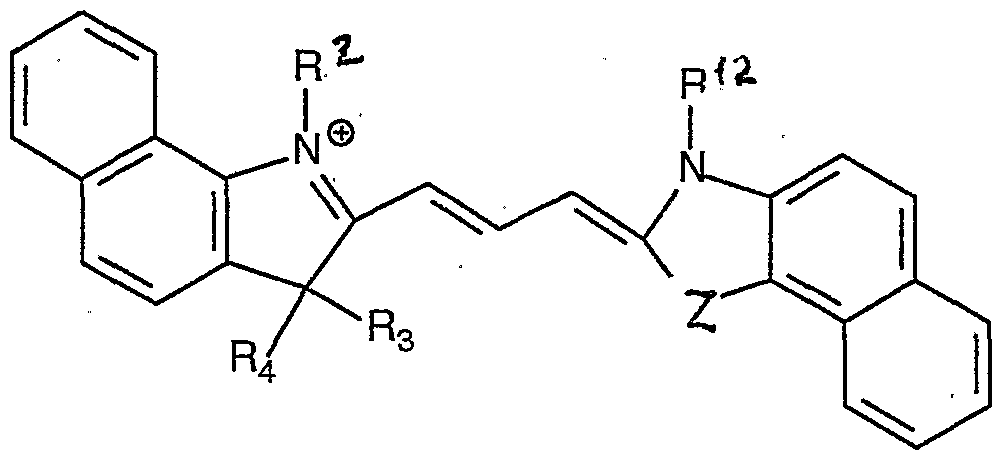


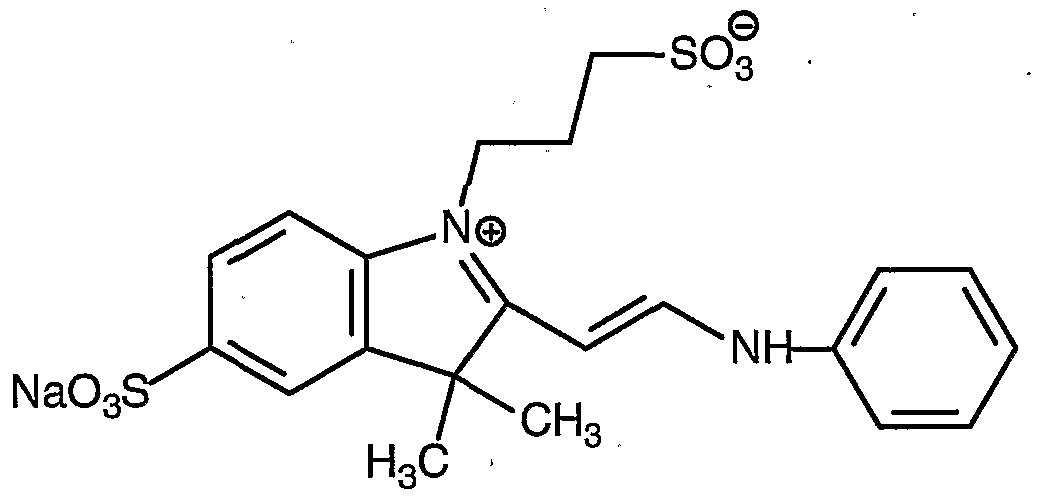


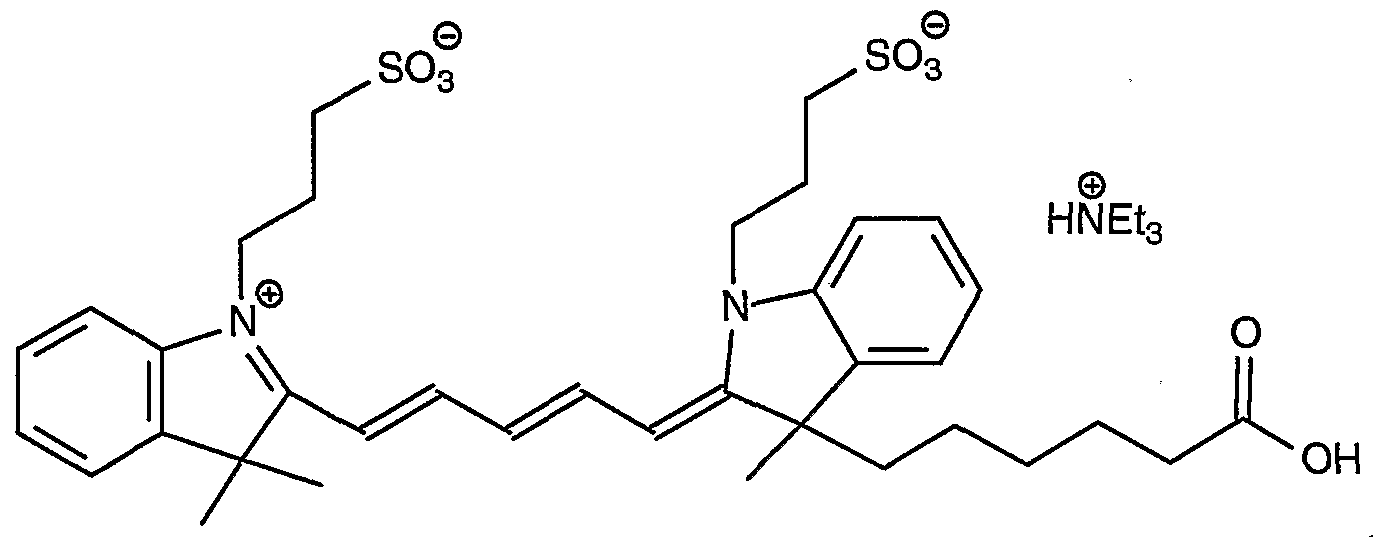
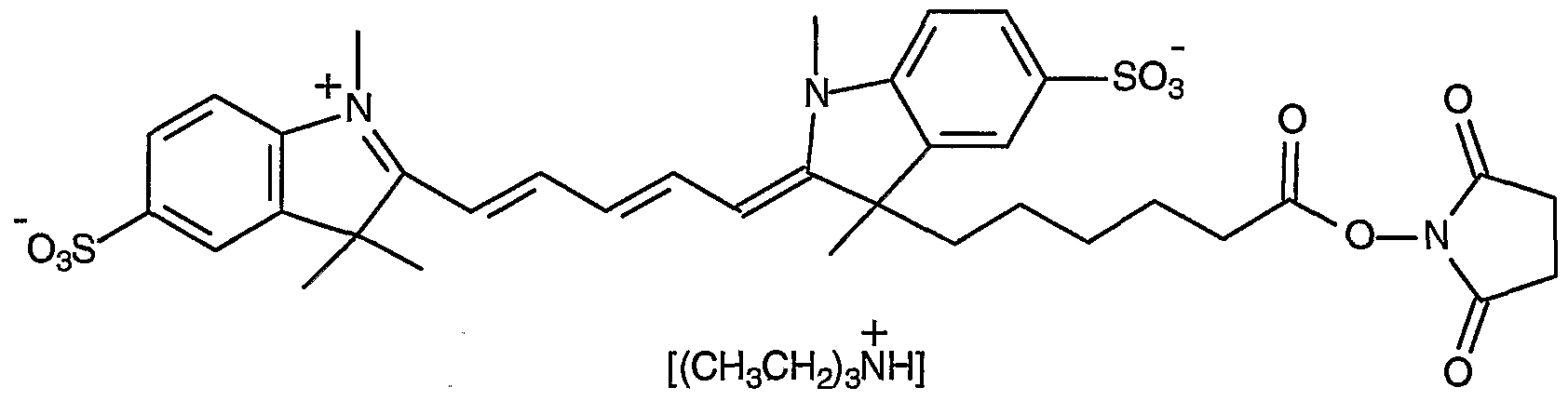


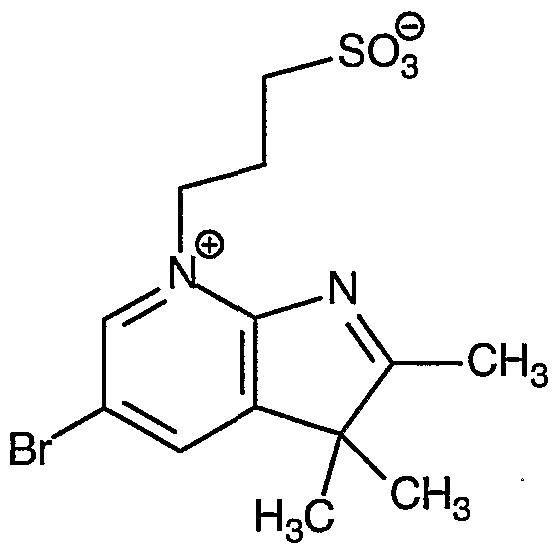


Claims


Priority Applications (6)
| Application Number | Priority Date | Filing Date | Title |
|---|---|---|---|
| AU2001294859A AU2001294859A1 (en) | 2000-09-29 | 2001-09-28 | Modified carbocyanine dyes and their conjugates |
| DE2001975541 DE01975541T9 (en) | 2000-09-29 | 2001-09-28 | MODIFIED CARBOCYANINE DYES AND THEIR CONJUGATES |
| DE2001626297 DE60126297T2 (en) | 2000-09-29 | 2001-09-28 | MODIFIED CARBOCYANINE DYES AND THEIR CONJUGATES |
| CA 2423806 CA2423806C (en) | 2000-09-29 | 2001-09-28 | Modified carbocyanine dyes and their conjugates |
| EP01975541.2A EP1322710B2 (en) | 2000-09-29 | 2001-09-28 | Modified carbocyanine dyes and their conjugates |
| AU2006200511A AU2006200511B2 (en) | 2000-09-29 | 2006-02-07 | Modified Carbocyanine Dyes and Their Conjugates |
Applications Claiming Priority (4)
| Application Number | Priority Date | Filing Date | Title |
|---|---|---|---|
| US23663700P | 2000-09-29 | 2000-09-29 | |
| US60/236,637 | 2000-09-29 | ||
| US27687001P | 2001-03-16 | 2001-03-16 | |
| US60/276,870 | 2001-03-16 |
Publications (1)
| Publication Number | Publication Date |
|---|---|
| WO2002026891A1 true WO2002026891A1 (en) | 2002-04-04 |
Family
ID=26929964
Family Applications (1)
| Application Number | Title | Priority Date | Filing Date |
|---|---|---|---|
| PCT/US2001/030404 Ceased WO2002026891A1 (en) | 2000-09-29 | 2001-09-28 | Modified carbocyanine dyes and their conjugates |
Country Status (7)
| Country | Link |
|---|---|
| US (15) | US6977305B2 (en) |
| EP (2) | EP2325263B1 (en) |
| AT (1) | ATE352586T2 (en) |
| AU (1) | AU2001294859A1 (en) |
| CA (1) | CA2423806C (en) |
| DE (2) | DE60126297T2 (en) |
| WO (1) | WO2002026891A1 (en) |
Cited By (88)
| Publication number | Priority date | Publication date | Assignee | Title |
|---|---|---|---|---|
| JP2003034696A (en) * | 2001-07-19 | 2003-02-07 | Fuji Photo Film Co Ltd | Fluorescent nucleotide and labeling method using the same |
| WO2004039894A2 (en) | 2002-05-10 | 2004-05-13 | Carnegie Mellon University | Chiral indole intermediates and their fluorescent cyanine dyes containing functional groups |
| WO2005044923A1 (en) * | 2003-10-31 | 2005-05-19 | Ge Healthcare Limited | Cyanine dye labelling reagents |
| WO2006035207A3 (en) * | 2004-09-30 | 2006-06-22 | Ge Healthcare Uk Ltd | Fluorescent nucleotide analogues |
| WO2006111726A1 (en) * | 2005-04-22 | 2006-10-26 | Ge Healthcare Uk Limited | Water soluble fluoro-substituted cyanine dyes as reactive fluorescence labelling reagents |
| US7282339B2 (en) | 2003-09-17 | 2007-10-16 | Invitrogen Corporation | Competitive immunoassay |
| WO2007124464A2 (en) | 2006-04-20 | 2007-11-01 | Becton, Dickinson And Company | Thermostable proteins and methods of making and using thereof |
| WO2007135571A2 (en) | 2006-03-23 | 2007-11-29 | Absorber Ab | Blood group antigens of different types for diagnostic and therapeutic applications |
| EP1792949A3 (en) * | 2005-12-05 | 2008-03-26 | Dyomics GmbH | Hydrophilic marker on the basis of diastereomeric cyanines |
| US7387887B2 (en) | 2004-04-20 | 2008-06-17 | University Of Utah Research Foundation | Nucleic acid melting analysis with saturation dyes |
| US7408062B2 (en) | 1997-12-17 | 2008-08-05 | Carnegie Mellon University | Rigidized trimethine cyanine dyes |
| WO2008094637A2 (en) | 2007-01-30 | 2008-08-07 | Seta Biomedicals. Llc | Luminescent compounds |
| WO2008127139A1 (en) | 2007-04-11 | 2008-10-23 | Institut Molekulyarnoi Biologii Im. V.A. Engeldardta Rossiiskoi Akademii Nauk | Indicyanine dyes and the derivatives thereof for analysing biological micromolecules |
| WO2008125788A1 (en) | 2007-03-09 | 2008-10-23 | Cis Bio International | Cyanine derivatives, fluorescent conjugates containing same and use thereof |
| US7456281B2 (en) | 2005-04-20 | 2008-11-25 | Idaho Technology, Inc. | Nucleic acid melting analysis with saturation dyes |
| US7582429B2 (en) | 2002-10-23 | 2009-09-01 | University Of Utah Research Foundation | Amplicon melting analysis with saturation dyes |
| US7785898B2 (en) | 2002-05-31 | 2010-08-31 | Genetic Technologies Limited | Maternal antibodies as fetal cell markers to identify and enrich fetal cells from maternal blood |
| EP2224013A1 (en) | 2007-02-13 | 2010-09-01 | Life Technologies Corporation | Methods for the determination of telomerase activity using click chemistry |
| US7951959B2 (en) | 2008-09-17 | 2011-05-31 | Thermo Fisher Scientific (Milwaukee) LLC | Hydrophilic labels for biomolecules |
| US8093012B2 (en) | 2005-10-13 | 2012-01-10 | Aureon Laboratories, Inc. | Multiplex in situ immunohistochemical analysis |
| JP2012012377A (en) * | 2009-10-05 | 2012-01-19 | Canon Inc | Contrast agent for photoacoustic imaging and photoacoustic imaging method using the same |
| WO2012012595A2 (en) | 2010-07-21 | 2012-01-26 | Becton, Dickinson And Company | Luminescent dyes with a water-soluble intramolecular bridge and their biological conjugates |
| WO2012022734A2 (en) | 2010-08-16 | 2012-02-23 | Medimmune Limited | Anti-icam-1 antibodies and methods of use |
| WO2012054749A1 (en) * | 2010-10-20 | 2012-04-26 | Li-Cor, Inc. | Cyanine dyes and their conjugates |
| US20120258514A1 (en) * | 2004-10-25 | 2012-10-11 | Anaspec Incorporated | Kits for analysis of biological samples |
| US8293782B2 (en) | 2009-01-30 | 2012-10-23 | Canon Kabushiki Kaisha | Compound, probe containing the novel compound, and fluorescence-imaging contrast agent containing the novel compound or the probe |
| JP2013503209A (en) * | 2009-08-31 | 2013-01-31 | プロメガ コーポレイション | Reactive cyanine compounds |
| US8394582B2 (en) | 2003-03-05 | 2013-03-12 | Genetic Technologies, Inc | Identification of fetal DNA and fetal cell markers in maternal plasma or serum |
| EP2623609A2 (en) | 2006-02-10 | 2013-08-07 | Life Technologies Corporation | Labeling and detection of post translationally modified proteins |
| CZ304094B6 (en) * | 2011-12-01 | 2013-10-16 | Vysoká skola chemicko-technologická v Praze | Use of polymethionine salts as mitochondrial probes |
| US8562802B1 (en) | 2006-02-13 | 2013-10-22 | Life Technologies Corporation | Transilluminator base and scanner for imaging fluorescent gels, charging devices and portable electrophoresis systems |
| WO2014066733A2 (en) | 2012-10-25 | 2014-05-01 | Life Technologies Corporation | Methods and compositions for enzyme-mediated site-specific radiolabeling of glycoproteins |
| WO2014089421A1 (en) * | 2012-12-07 | 2014-06-12 | Life Technologies Corporation | Detection of rna molecules using substituted unsymmetrical cyanine dyes |
| WO2014135223A1 (en) | 2013-03-08 | 2014-09-12 | Illumina Cambridge Ltd | Rhodamine compounds and their use as fluorescent labels |
| WO2014135221A1 (en) | 2013-03-08 | 2014-09-12 | Illumina Cambridge Ltd | Polymethine compounds and their use as fluorescent labels |
| WO2014144360A3 (en) * | 2013-03-15 | 2014-11-13 | Life Technologies Corporation | Methods for dye selection for protein melt temperature determinations |
| US8889884B1 (en) | 2011-07-14 | 2014-11-18 | Pierce Biotechnology, Inc. | Phosphine derivatives of fluorescent compounds |
| WO2015050959A1 (en) | 2013-10-01 | 2015-04-09 | Yale University | Anti-kit antibodies and methods of use thereof |
| US9249307B2 (en) | 2011-08-16 | 2016-02-02 | Pierce Biotechnology, Inc. | Benzocyanine compounds |
| JP2016506420A (en) * | 2012-10-24 | 2016-03-03 | ベクトン・ディキンソン・アンド・カンパニーBecton, Dickinson And Company | Hydroxamate substituted azaindoline-cyanine dye and bioconjugate thereof |
| US9447467B2 (en) | 2009-04-21 | 2016-09-20 | Genetic Technologies Limited | Methods for obtaining fetal genetic material |
| US9504405B2 (en) | 2013-10-23 | 2016-11-29 | Verily Life Sciences Llc | Spatial modulation of magnetic particles in vasculature by external magnetic field |
| US9657347B2 (en) | 2004-04-20 | 2017-05-23 | University of Utah Research Foundation and BioFire Defense, LLC | Nucleic acid melting analysis with saturation dyes |
| US9676787B2 (en) | 2012-08-28 | 2017-06-13 | Pierce Biotechnology, Inc. | Benzopyrylium compounds |
| WO2017100714A1 (en) | 2015-12-10 | 2017-06-15 | City Of Hope | Cell penetrating cyanine-coupled antibodies |
| US9751868B2 (en) | 2012-02-28 | 2017-09-05 | Pierce Biotechnology, Inc. | Benzocyanine compounds |
| WO2017181176A1 (en) | 2016-04-15 | 2017-10-19 | Lcahn School Of Medicine At Mount Sinai | Tissue profiling using multiplexed immunohistochemical consecutive staining |
| CN107445949A (en) * | 2016-04-27 | 2017-12-08 | 株式会社生医爱特 | Fluorescent chemicals and its manufacture method |
| US9861710B1 (en) | 2015-01-16 | 2018-01-09 | Verily Life Sciences Llc | Composite particles, methods, and in vivo diagnostic system |
| US9862682B2 (en) | 2016-01-08 | 2018-01-09 | BroadPharm | Functionalized pegylated cyanine compounds, pharmaceutical compositions, and methods of use thereof |
| US9964490B2 (en) | 2006-01-24 | 2018-05-08 | Life Technologies Corporation | Device and methods for quantifying analytes |
| US10000467B2 (en) | 2012-03-02 | 2018-06-19 | Pierce Biotechnology, Inc. | Cyanine compounds |
| US10028659B2 (en) | 2015-03-26 | 2018-07-24 | Verily Life Sciences Llc | Aptamer-based sensors, implantable devices and detection system |
| WO2018183621A1 (en) | 2017-03-30 | 2018-10-04 | Life Technologies Corporation | Quantification of ngs dna by adapter sequence |
| US10138510B2 (en) | 2008-05-16 | 2018-11-27 | Life Technologies Corporation | Dual labeling methods for measuring cellular proliferation |
| US10239909B2 (en) | 2015-05-22 | 2019-03-26 | Illumina Cambridge Limited | Polymethine compounds with long stokes shifts and their use as fluorescent labels |
| US10351551B2 (en) | 2010-12-21 | 2019-07-16 | Pierce Biotechnology, Inc. | Fluorescent compounds |
| WO2019227526A1 (en) * | 2018-05-29 | 2019-12-05 | 苏州百源基因技术有限公司 | Fluorescently labelled nucleotide and preparation method and use thereof |
| US10526648B2 (en) | 2017-07-12 | 2020-01-07 | Illumina Cambridge Limited | Short pendant arm linkers for nucleotides in sequencing applications |
| US10542918B2 (en) | 2013-10-23 | 2020-01-28 | Verily Life Sciences Llc | Modulation of a response signal to distinguish between analyte and background signals |
| US10557851B2 (en) | 2012-03-27 | 2020-02-11 | Ventana Medical Systems, Inc. | Signaling conjugates and methods of use |
| EP3663290A1 (en) | 2015-09-25 | 2020-06-10 | Illumina Cambridge Limited | Polymethine compounds and their use as fluorescent labels |
| WO2020178162A1 (en) | 2019-03-01 | 2020-09-10 | Illumina Cambridge Limited | Exocyclic amine-substituted coumarin compounds and their uses as fluorescent labels |
| WO2020178231A1 (en) | 2019-03-01 | 2020-09-10 | Illumina, Inc. | Multiplexed fluorescent detection of analytes |
| WO2020178165A1 (en) | 2019-03-01 | 2020-09-10 | Illumina Cambridge Limited | Tertiary amine substituted coumarin compounds and their uses as fluorescent labels |
| NL2023327B1 (en) | 2019-03-01 | 2020-09-17 | Illumina Inc | Multiplexed fluorescent detection of analytes |
| EP3733244A1 (en) | 2013-10-02 | 2020-11-04 | Medlmmune, LLC | Neutralizing anti-influenza a antibodies and uses thereof |
| EP3828167A1 (en) | 2014-05-07 | 2021-06-02 | Illumina Cambridge Limited | Polymethine compounds and their use as fluorescent labels |
| WO2021215514A1 (en) | 2020-04-24 | 2021-10-28 | 富士フイルム株式会社 | Compound and labeled biomaterial in which same is used |
| WO2022006368A2 (en) | 2020-07-02 | 2022-01-06 | Life Technologies Corporation | Trinucleotide cap analogs, preparation and uses thereof |
| WO2022025210A1 (en) | 2020-07-30 | 2022-02-03 | 富士フイルム株式会社 | Compound, and labeled biological substance in which same is used |
| WO2022023353A1 (en) | 2020-07-28 | 2022-02-03 | Illumina Cambridge Limited | Substituted coumarin dyes and uses as fluorescent labels |
| JP2022053282A (en) * | 2020-09-24 | 2022-04-05 | 大塚製薬株式会社 | Cyanine dye, labeling reagent and detection method |
| US11390619B2 (en) | 2017-10-16 | 2022-07-19 | Illumina Cambridge Limited | Secondary amine-substituted coumarin compounds and their uses as fluorescent labels |
| US11408840B2 (en) | 2018-06-28 | 2022-08-09 | Just-Evotec Biologics, Inc. | High throughput interrogation of physiochemical properties of a protein |
| WO2022265043A1 (en) | 2021-06-18 | 2022-12-22 | 富士フイルム株式会社 | Compound and labeled biomaterial using same |
| WO2023022187A1 (en) | 2021-08-18 | 2023-02-23 | 富士フイルム株式会社 | Fluorescent compound and fluorescence-labeled biosubstance obtained using same |
| WO2023004356A3 (en) * | 2021-07-21 | 2023-03-02 | Life Technologies Corporation | Azaindole cyanine dyes, uses, and methods of preparation |
| WO2023032996A1 (en) | 2021-08-31 | 2023-03-09 | 富士フイルム株式会社 | Compound and labeled biomaterial using same |
| WO2023032995A1 (en) | 2021-08-31 | 2023-03-09 | 富士フイルム株式会社 | Compound and labeled biomaterial using same |
| WO2023032994A1 (en) | 2021-08-31 | 2023-03-09 | 富士フイルム株式会社 | Compound and labeled biomaterial using same |
| CN115772390A (en) * | 2022-12-02 | 2023-03-10 | 湖北龙海化工有限公司 | Low-fluorescence plugging anti-collapse asphalt for drilling fluid |
| WO2024143263A1 (en) | 2022-12-26 | 2024-07-04 | 富士フイルム株式会社 | Fluorescence intensity enhancing agent, method for enhancing fluorescence intensity of fluorescently labeled target biological material, and fluorescence detection kit |
| WO2024124008A3 (en) * | 2022-12-07 | 2024-07-25 | Element Biosciences, Inc. | Water soluble cyanine derivatives and their use in methods of sequencing of nucleic acids |
| WO2024181454A1 (en) | 2023-02-27 | 2024-09-06 | 富士フイルム株式会社 | Compound and labeled biomaterial using same |
| WO2025047686A1 (en) | 2023-08-31 | 2025-03-06 | 富士フイルム株式会社 | Targeted drug conjugate, medicine including the same, and compound |
| EP4674861A1 (en) | 2023-02-27 | 2026-01-07 | FUJIFILM Corporation | Compound, and labeled biomaterial using same |
| EP4733317A2 (en) | 2014-07-15 | 2026-04-29 | MedImmune, LLC | Neutralizing anti-influenza b antibodies and uses thereof |
Families Citing this family (135)
| Publication number | Priority date | Publication date | Assignee | Title |
|---|---|---|---|---|
| US20030030797A1 (en) * | 1999-09-24 | 2003-02-13 | Henry Palladino | Solid state fluorescence and absorption spectroscopy |
| DE10046215B4 (en) * | 2000-09-19 | 2004-04-15 | Institut für Chemo- und Biosensorik Münster e.V. i.Ins. | Fluorochromes and their use |
| CA2423806C (en) * | 2000-09-29 | 2009-12-22 | Molecular Probes, Inc. | Modified carbocyanine dyes and their conjugates |
| US7579463B2 (en) * | 2000-12-20 | 2009-08-25 | Life Technologies Corporation | Crown ether derivatives |
| US7129346B2 (en) * | 2000-12-20 | 2006-10-31 | Molecular Probes, Inc. | Crown ether derivatives |
| US20050069962A1 (en) | 2001-10-12 | 2005-03-31 | Archer Robert M | Antibody complexes and methods for immunolabeling |
| US8323903B2 (en) * | 2001-10-12 | 2012-12-04 | Life Technologies Corporation | Antibody complexes and methods for immunolabeling |
| US6972326B2 (en) * | 2001-12-03 | 2005-12-06 | Molecular Probes, Inc. | Labeling of immobilized proteins using dipyrrometheneboron difluoride dyes |
| WO2003079015A1 (en) * | 2002-03-11 | 2003-09-25 | Visen Medical, Inc. | Optical imaging probes |
| US7445894B2 (en) * | 2002-05-03 | 2008-11-04 | Molecular Probes, Inc. | Compositions and methods for detection and isolation of phosphorylated molecules |
| US20040171034A1 (en) * | 2002-05-03 | 2004-09-02 | Brian Agnew | Compositions and methods for detection and isolation of phosphorylated molecules |
| CN1665790A (en) * | 2002-05-03 | 2005-09-07 | 莫莱丘莱尔探针公司 | Compositions and methods for detection and isolation of phosphorylated molecules |
| US7511155B2 (en) * | 2002-07-08 | 2009-03-31 | Ge Healthcare Uk Limited | Reagents and a method for saturation labelling of proteins |
| US20050233307A1 (en) | 2002-09-12 | 2005-10-20 | Kyle Gee | Site-specific labeling of affinity tags in fusion proteins |
| US7005518B2 (en) * | 2002-10-25 | 2006-02-28 | Li-Cor, Inc. | Phthalocyanine dyes |
| BR0318028A (en) * | 2003-01-24 | 2005-12-06 | Schering Ag | Thiol-reactive cyanine hydrophilic dyes and conjugates thereof with biomolecules for fluorescence diagnosis |
| US7217649B2 (en) * | 2003-03-14 | 2007-05-15 | Lam Research Corporation | System and method for stress free conductor removal |
| US7172907B2 (en) * | 2003-03-21 | 2007-02-06 | Ge Healthcare Bio-Sciences Corp. | Cyanine dye labelling reagents with meso-substitution |
| ATE488604T1 (en) | 2003-05-20 | 2010-12-15 | Investigen Inc | POLYNUCLEOTIDE DETECTION SYSTEM |
| US7727969B2 (en) | 2003-06-06 | 2010-06-01 | Massachusetts Institute Of Technology | Controlled release nanoparticle having bound oligonucleotide for targeted delivery |
| US7727752B2 (en) | 2003-07-29 | 2010-06-01 | Life Technologies Corporation | Kinase and phosphatase assays |
| US7619059B2 (en) | 2003-07-29 | 2009-11-17 | Life Technologies Corporation | Bimolecular optical probes |
| CA2445420A1 (en) | 2003-07-29 | 2005-01-29 | Invitrogen Corporation | Kinase and phosphatase assays |
| US7271265B2 (en) * | 2003-08-11 | 2007-09-18 | Invitrogen Corporation | Cyanine compounds and their application as quenching compounds |
| WO2005017528A1 (en) * | 2003-08-16 | 2005-02-24 | Bayer Healthcare Ag | Determination of free fractions |
| US20050095174A1 (en) * | 2003-10-31 | 2005-05-05 | Wolf David E. | Semipermeable sensors for detecting analyte |
| US20050214807A1 (en) * | 2003-11-19 | 2005-09-29 | Iain Johnson | Environmental sensitive fluorogenic compounds and their application for singlet oxygen and protein detection |
| EP1689764B1 (en) * | 2003-11-19 | 2013-01-02 | AlleLogic Biosciences Corporation | Oligonucleotides labeled with a plurality of fluorophores |
| US7776529B2 (en) | 2003-12-05 | 2010-08-17 | Life Technologies Corporation | Methine-substituted cyanine dye compounds |
| EP2607431B1 (en) | 2003-12-05 | 2016-08-24 | Life Technologies Corporation | Cyanine dye compounds |
| WO2005071096A2 (en) | 2004-01-21 | 2005-08-04 | Molecular Probes, Inc. | Derivatives of cephalosporin and clavulanic acid for detecting beta-lacamase in a sample |
| US8961407B2 (en) | 2004-07-21 | 2015-02-24 | Covidien Lp | Surgical port assembly |
| WO2006023231A2 (en) | 2004-07-27 | 2006-03-02 | Molecular Probes, Inc. | Fluorescent metal ion indicators with large stokes shift |
| US7524672B2 (en) * | 2004-09-22 | 2009-04-28 | Sandia Corporation | Microfluidic microarray systems and methods thereof |
| US7592139B2 (en) | 2004-09-24 | 2009-09-22 | Sandia National Laboratories | High temperature flow-through device for rapid solubilization and analysis |
| JP2008514955A (en) * | 2004-09-28 | 2008-05-08 | シンギュレックス・インコーポレイテッド | Sample analysis system and method |
| US7572640B2 (en) * | 2004-09-28 | 2009-08-11 | Singulex, Inc. | Method for highly sensitive detection of single protein molecules labeled with fluorescent moieties |
| US9040305B2 (en) * | 2004-09-28 | 2015-05-26 | Singulex, Inc. | Method of analysis for determining a specific protein in blood samples using fluorescence spectrometry |
| US8685711B2 (en) * | 2004-09-28 | 2014-04-01 | Singulex, Inc. | Methods and compositions for highly sensitive detection of molecules |
| CA2599709A1 (en) * | 2005-03-09 | 2006-09-21 | Cepheid | Polar dyes |
| JP5306811B2 (en) | 2005-05-11 | 2013-10-02 | ライフ テクノロジーズ コーポレーション | Fluorescent chemicals with high selectivity to double-stranded DNA and their use |
| US7737281B2 (en) * | 2005-05-24 | 2010-06-15 | Enzo Life Sciences, Inc. C/O Enzo Biochem, Inc. | Purine based fluorescent dyes |
| US7569695B2 (en) * | 2005-05-24 | 2009-08-04 | Enzo Life Sciences, Inc. | Dyes for the detection or quantification of desirable target molecules |
| US8227621B2 (en) * | 2005-06-30 | 2012-07-24 | Li-Cor, Inc. | Cyanine dyes and methods of use |
| FR2889700B1 (en) * | 2005-08-11 | 2012-11-23 | Synthinnove Lab | MARKERS, METHOD FOR PRODUCING THE SAME, AND APPLICATIONS THEREOF |
| US20070134685A1 (en) * | 2005-09-06 | 2007-06-14 | Invitrogen Corporation | Control of chemical modification |
| DE102006029454A1 (en) * | 2005-12-05 | 2007-06-06 | Dyomics Gmbh | Hydrophilic markers based on diastereomeric |
| US7521577B2 (en) | 2006-01-12 | 2009-04-21 | Molecular Probes, Inc. | Heavy metal binding compounds and their method of use |
| US20070196860A1 (en) * | 2006-01-18 | 2007-08-23 | Invitrogen Corporation | Methods for Measuring Real Time Kinase Activity |
| EP1987361A4 (en) * | 2006-01-30 | 2009-03-04 | Invitrogen Corp | Compositions and methods for detecting and quantifying toxic substances in disease states |
| US8021839B2 (en) * | 2006-02-24 | 2011-09-20 | Investigen, Inc. | Methods and compositions for detecting polynucleotides |
| JP4958461B2 (en) * | 2006-03-30 | 2012-06-20 | 富士フイルム株式会社 | Near-infrared absorbing dye-containing curable composition |
| ES2374507T3 (en) | 2006-03-31 | 2012-02-17 | Wako Pure Chemical Industries, Ltd. | PIRAZOL BASED CYANINE COLOR. |
| JP5308328B2 (en) | 2006-04-04 | 2013-10-09 | シングレックス,インコーポレイテッド | Sensitive system and method for the analysis of troponin |
| US7838250B1 (en) * | 2006-04-04 | 2010-11-23 | Singulex, Inc. | Highly sensitive system and methods for analysis of troponin |
| EP3156799B1 (en) | 2006-04-04 | 2024-01-24 | Novilux, LLC | Analyzer and method for highly sensitive detection of analytes |
| US20070281363A1 (en) * | 2006-04-13 | 2007-12-06 | Ewald Terpetschnig | Luminescent compounds |
| US20080076188A1 (en) * | 2006-06-19 | 2008-03-27 | Patsenker Leonid D | Luminescent compounds |
| ES2404665T3 (en) | 2006-09-06 | 2013-05-28 | Medical Research Council | DNA polymerases that incorporate dye-labeled nucleotide analogs |
| GB0619626D0 (en) * | 2006-10-05 | 2006-11-15 | Ge Healthcare Uk Ltd | Fluoro-substituted benzoxazole polymethine dyes |
| WO2008076524A2 (en) | 2006-10-27 | 2008-06-26 | Life Technologies Corporation | Fluorogenic ph sensitive dyes and their method of use |
| US7888506B2 (en) * | 2007-01-26 | 2011-02-15 | Duquesne University Of The Holy Spirit | Composition, synthesis, and use of a new class of fluorophores |
| US8586743B2 (en) * | 2007-01-30 | 2013-11-19 | Life Technologies Corporation | Labeling reagents and methods of their use |
| EP2119797B1 (en) | 2007-01-31 | 2012-04-11 | Wako Pure Chemical Industries, Ltd. | Method of detecting amplification or deletion in genomic dna fragment |
| US8221721B2 (en) * | 2007-02-09 | 2012-07-17 | Visen Medical, Inc. | Polycyclo dyes and use thereof |
| US7771947B2 (en) | 2007-02-23 | 2010-08-10 | Investigen, Inc. | Methods and compositions for rapid light-activated isolation and detection of analytes |
| WO2008105238A1 (en) * | 2007-02-28 | 2008-09-04 | Mitsubishi Kagaku Media Co., Ltd. | Cyanine dye and optical recording medium |
| US8513451B2 (en) * | 2007-05-30 | 2013-08-20 | Hee Chol Kang | Fluorescent phospholipase A2 indicators |
| US20090087860A1 (en) * | 2007-08-24 | 2009-04-02 | Todd John A | Highly sensitive system and methods for analysis of prostate specific antigen (psa) |
| WO2009078970A1 (en) | 2007-12-14 | 2009-06-25 | Biotium, Inc. | Fluorescent compounds |
| US7914734B2 (en) | 2007-12-19 | 2011-03-29 | Singulex, Inc. | Scanning analyzer for single molecule detection and methods of use |
| WO2009142678A1 (en) | 2008-03-27 | 2009-11-26 | Promega Corporatin | Protein labeling with cyanobenzothiazole conjugates |
| US8916137B2 (en) * | 2008-11-07 | 2014-12-23 | The General Hospital Corporation | Monofunctional carbocyanine dyes for in vivo and in vitro imaging |
| WO2010057944A1 (en) * | 2008-11-20 | 2010-05-27 | Ge Healthcare As | Dye conjugate imaging agents |
| JP2012524153A (en) * | 2009-04-17 | 2012-10-11 | ライコア インコーポレイテッド | Fluorescence imaging using substituted cyanine dyes |
| EP2435096A1 (en) | 2009-05-27 | 2012-04-04 | Lumicell Diagnostics, Inc. | Methods and systems for spatially identifying abnormal cells |
| US9155471B2 (en) | 2009-05-27 | 2015-10-13 | Lumicell, Inc'. | Methods and systems for spatially identifying abnormal cells |
| WO2010144358A1 (en) | 2009-06-08 | 2010-12-16 | Singulex, Inc. | Highly sensitive biomarker panels |
| US8658434B2 (en) * | 2009-10-28 | 2014-02-25 | Biotium, Inc. | Fluorescent pyrene compounds |
| WO2011068569A1 (en) | 2009-12-04 | 2011-06-09 | Biotium, Inc. | Heterocycle-substituted xanthene dyes |
| US8974651B2 (en) | 2010-04-17 | 2015-03-10 | C.C. Imex | Illuminator for visualization of fluorophores |
| AU2011249908A1 (en) | 2010-05-06 | 2012-11-22 | Singulex, Inc. | Methods for diagnosing, staging, predicting risk for developing and identifying treatment responders for rheumatoid arthritis |
| CN103052690A (en) * | 2010-06-29 | 2013-04-17 | 通用电气医疗集团股份有限公司 | Dye compositions and dye syntheses |
| GB201010878D0 (en) * | 2010-06-29 | 2010-08-11 | Ge Healthcare As | Dye compositiion and dye syntheses |
| US20130287689A1 (en) * | 2010-11-02 | 2013-10-31 | Life Technologies Corporation | Modified Hydrocyanine Dyes for the Detection of Reactive Oxygen Species |
| US9314304B2 (en) | 2010-12-08 | 2016-04-19 | Lumicell, Inc. | Methods and system for image guided cell ablation with microscopic resolution |
| WO2013039883A1 (en) | 2011-09-12 | 2013-03-21 | Abbvie Biotherapeutics Inc. | Artificial nk cells and uses thereof |
| EP2758475B1 (en) * | 2011-09-23 | 2017-04-26 | Illumina Cambridge Limited | Dyes for labelling molecular ligands |
| NL2008241C2 (en) * | 2012-02-06 | 2013-08-08 | Hq Medical Netherlands B V | Cell death probe. |
| EP2856178B1 (en) | 2012-05-31 | 2020-07-15 | The University of North Carolina at Chapel Hill | Dissolution guided wetting of structured surfaces |
| US9763577B2 (en) | 2013-03-14 | 2017-09-19 | Lumicell, Inc. | Imaging agent for detection of diseased cells |
| WO2014144702A2 (en) | 2013-03-15 | 2014-09-18 | Visen Medical, Inc. | 4,4-disubstituted cyclohexyl bridged heptamethine cyanine dyes and uses thereof |
| CA2901379C (en) | 2013-03-15 | 2023-05-16 | Visen Medical, Inc. | Substituted silaxanthenium red to near-infrared fluorochromes for in vitro and in vivo imaging and detection |
| US9835587B2 (en) | 2014-04-01 | 2017-12-05 | C.C. Imex | Electrophoresis running tank assembly |
| EP2944326B1 (en) * | 2014-05-16 | 2018-11-21 | Cyanagen Srl | Tricarbocyanine-cyclodextrin-conjugates and their use for the diagnosis of kidney diseases |
| US10357510B2 (en) * | 2014-08-07 | 2019-07-23 | The Regents Of The University Of Michigan | Metal nanoclusters and uses thereof |
| UA109751C2 (en) | 2014-09-26 | 2015-09-25 | METHOD OF DETERMINATION OF HYDROGEL IN BIOLOGICAL FABRICS | |
| US10539566B2 (en) | 2014-12-08 | 2020-01-21 | Berg Llc | Use of markers including filamin A in the diagnosis and treatment of prostate cancer |
| JP6552236B2 (en) * | 2015-03-23 | 2019-07-31 | キヤノン株式会社 | Near-infrared dye-bound transferrin, contrast agent for photoacoustic imaging comprising the near-infrared dye-bound transferrin |
| US9670318B2 (en) | 2015-05-28 | 2017-06-06 | Miltenyi Biotec Gmbh | Bright fluorochromes based on multimerization of fluorescent dyes |
| EP3098269B1 (en) | 2015-05-28 | 2022-04-06 | Miltenyi Biotec B.V. & Co. KG | Bright fluorochromes based on multimerization of fluorescent dyes on branched polyether scaffolds |
| AU2017250778B2 (en) | 2016-04-15 | 2021-09-23 | Beckman Coulter, Inc. | Photoactive macromolecules and uses thereof |
| US10294204B2 (en) * | 2016-04-27 | 2019-05-21 | Bioacts Co., Ltd. | Fluorescence compounds and preparation method thereof |
| US9796854B1 (en) | 2016-07-07 | 2017-10-24 | Intuitive Surgical Operations, Inc. | Method of synthesizing near IR, closed chain sulfo-cyanine dyes |
| ES2992410T3 (en) | 2016-09-16 | 2024-12-12 | Lighthouse Pharmaceuticals Inc | Lysine ketone inhibitors gingipain |
| CN107290198B (en) * | 2017-07-25 | 2019-07-16 | 中国科学院微生物研究所 | A method of biomaterial is dyed using PIP |
| US11091646B2 (en) | 2017-08-14 | 2021-08-17 | Seta Biomedicals, Llc | Luminescent squaraine rotaxane compounds |
| WO2019204432A2 (en) * | 2018-04-17 | 2019-10-24 | Cornell University | Fluorine-18 labeled compositions and their use in imaging of biological tissue |
| US11584825B2 (en) | 2018-12-14 | 2023-02-21 | Beckman Coulter, Inc. | Polymer dye modification and applications |
| CN121610569A (en) | 2019-04-30 | 2026-03-06 | 拉利玛生物医药公司 | Ataxin sensitivity markers for determining the efficacy of ataxin replacement therapy |
| WO2021096971A1 (en) * | 2019-11-11 | 2021-05-20 | The Trustees Of Dartmouth College | Composition and method for in vivo assay of opioid receptors |
| CN113736285A (en) * | 2020-03-18 | 2021-12-03 | 宝天生物科技(上海)有限公司 | Ultraviolet light excited fluorescent dye and application thereof |
| EP4185596A1 (en) | 2020-07-23 | 2023-05-31 | Life Technologies Corporation | Energy transfer dye conjugates for use in biological assays |
| WO2022020731A2 (en) | 2020-07-23 | 2022-01-27 | Life Technologies Corporation | Compositions, systems and methods for biological analysis involving energy transfer dye conjugates and analytes comprising the same |
| WO2022047359A1 (en) | 2020-08-31 | 2022-03-03 | Berg Llc | Protein biomarkers for pancreatic cancer |
| AU2022216619A1 (en) | 2021-02-05 | 2023-09-07 | Beckman Coulter, Inc. | Compositions and methods for preventing non-specific interactions between polymer dyes-antibody conjugates |
| WO2022191485A1 (en) * | 2021-03-10 | 2022-09-15 | 에스에프씨 주식회사 | Reporter and use thereof |
| WO2022216841A1 (en) | 2021-04-06 | 2022-10-13 | Berg Llc | Protein markers for estrogen receptor (er)-positive luminal a(la)-like and luminal b1 (lb1)-like breast cancer |
| WO2022216846A1 (en) | 2021-04-06 | 2022-10-13 | Berg Llc | Protein markers for estrogen receptor (er)-positive-like and estrogen receptor (er)-negative-like breast cancer |
| CA3214833A1 (en) | 2021-04-06 | 2022-10-13 | Bpgbio, Inc. | Protein markers for the prognosis of breast cancer progression |
| US20250092261A1 (en) | 2021-07-21 | 2025-03-20 | Life Technologies Corporation | Dibenzoxanthene Quenchers, Uses, and Methods of Preparation |
| US20240400893A1 (en) | 2021-09-30 | 2024-12-05 | Beckman Coulter, Inc. | Water-soluble tetrahydropyrene based fluorescent polymers |
| CA3237877A1 (en) | 2021-11-12 | 2023-05-19 | Aditya JARARE | Novel formulation for drying of polymer dye conjugated antibodies |
| KR102414574B1 (en) * | 2022-02-27 | 2022-06-30 | (주)바이오액츠 | Fluorescent compound for detecting biological materials and the preparation method thereof |
| US20230357851A1 (en) | 2022-04-06 | 2023-11-09 | Larimar Therapeutics, Inc. | Frataxin-sensitive markers for monitoring frataxin-replacement therapy |
| WO2023240201A1 (en) | 2022-06-08 | 2023-12-14 | Larimar Therapeutics, Inc. | Frataxin-sensitive markers for monitoring progression and treatment of leigh syndrome |
| US20250383357A1 (en) | 2022-07-01 | 2025-12-18 | Beckman Coulter, Inc. | Novel fluorescent dyes and polymers from dihydrophenanthrene derivatives |
| WO2024044327A1 (en) | 2022-08-26 | 2024-02-29 | Beckman Coulter, Inc. | Dhnt monomers and polymer dyes with modified photophysical properties |
| KR102814518B1 (en) * | 2022-11-24 | 2025-05-30 | (주)바이오액츠 | Fluorescent compound for immunohistochemical staining and fluorescent diagnosis composition comprising the same |
| EP4680677A1 (en) | 2023-03-17 | 2026-01-21 | Beckman Coulter, Inc. | Benzothienopyrrole cyanine dyes |
| EP4685144A1 (en) | 2023-05-04 | 2026-01-28 | SFC Co., Ltd. | Non-fluorescent compound and uses thereof |
| CN121866309A (en) | 2023-09-21 | 2026-04-14 | 贝克曼库尔特有限公司 | Dihydrophenanthrene (DHP) bridging dyes for flow cytometry |
| WO2025155991A2 (en) | 2024-01-19 | 2025-07-24 | Bpgbio, Inc. | Predictive biomarkers for response to coenzyme q10 treatment in pancreatic cancer |
| WO2026044153A1 (en) | 2024-08-21 | 2026-02-26 | Bpgbio, Inc. | Use of biomarkers in the diagnosis of pancreatic cancer |
| CN119119042B (en) * | 2024-09-14 | 2025-11-25 | 大连理工大学 | Near-infrared responsive asymmetric polymethyl cyanine dyes, their preparation methods and applications |
Citations (3)
| Publication number | Priority date | Publication date | Assignee | Title |
|---|---|---|---|---|
| US5268486A (en) * | 1986-04-18 | 1993-12-07 | Carnegie-Mellon Unversity | Method for labeling and detecting materials employing arylsulfonate cyanine dyes |
| US5627027A (en) * | 1986-04-18 | 1997-05-06 | Carnegie Mellon University | Cyanine dyes as labeling reagents for detection of biological and other materials by luminescence methods |
| DE19937024A1 (en) * | 1999-08-05 | 2001-02-08 | Bayer Ag | Use of acylsulfonamido substituted polymethine dyes as fluorescent dyes and / or markers |
Family Cites Families (94)
| Publication number | Priority date | Publication date | Assignee | Title |
|---|---|---|---|---|
| GB870753A (en) | 1957-07-04 | 1961-06-21 | Ilford Ltd | Improvements in or relating to methine dyes |
| US2993791A (en) | 1957-10-31 | 1961-07-25 | Gen Aniline & Film Corp | Color couplers containing long chain alkylaminoisophthalicester groups |
| US3723419A (en) | 1967-05-17 | 1973-03-27 | Eastman Kodak Co | Preparation of formylmethylene compounds and corresponding photographic dyestuffs |
| US3864644A (en) | 1971-03-22 | 1975-02-04 | Eastman Kodak Co | Dye lasers including rigidized carbocyanine dyes |
| US4011086A (en) | 1975-10-14 | 1977-03-08 | Eastman Kodak Company | Photographic emulsions and elements containing rigidized carbocyanine dyes |
| US4273862A (en) | 1977-06-11 | 1981-06-16 | Mitsubishi Paper Mills, Ltd. | Direct-positive silver halide photographic sensitive materials |
| US4711955A (en) | 1981-04-17 | 1987-12-08 | Yale University | Modified nucleotides and methods of preparing and using same |
| US5171534A (en) | 1984-01-16 | 1992-12-15 | California Institute Of Technology | Automated DNA sequencing technique |
| US6086737A (en) | 1984-03-29 | 2000-07-11 | Li-Cor, Inc. | Sequencing near infrared and infrared fluorescence labeled DNA for detecting using laser diodes and suitable labels therefor |
| US5366603A (en) | 1984-03-29 | 1994-11-22 | Li-Cor, Inc. | Sequencing near infrared and infrared fluorescence labeled DNA for detecting useing laser diodes |
| JPS62123454A (en) † | 1985-08-08 | 1987-06-04 | Fuji Photo Film Co Ltd | Silver halide photographic sensitive material |
| US6225050B1 (en) * | 1986-04-18 | 2001-05-01 | Carnegie Mellon University | Cyanine dyes as labeling reagents for detection of biological and other materials by luminescence methods |
| US5569587A (en) | 1986-04-18 | 1996-10-29 | Carnegie Mellon University | Method for labeling and detecting materials employing luminescent arysulfonate cyanine dyes |
| US6048982A (en) * | 1986-04-18 | 2000-04-11 | Carnegie Mellon University | Cyanine dyes as labeling reagents for detection of biological and other materials by luminescence methods |
| US5047519A (en) | 1986-07-02 | 1991-09-10 | E. I. Du Pont De Nemours And Company | Alkynylamino-nucleotides |
| CA1340806C (en) | 1986-07-02 | 1999-11-02 | James Merrill Prober | Method, system and reagents for dna sequencing |
| US5049673A (en) | 1987-10-30 | 1991-09-17 | The Regents Of The University Of California | Fluorescent indicator dyes for calcium working at long wavelengths |
| JPH0672706B2 (en) | 1988-05-31 | 1994-09-14 | 清水建設株式会社 | Scent supply method and scent supply device |
| US4997928A (en) | 1988-09-15 | 1991-03-05 | E. I. Du Pont De Nemours And Company | Fluorescent reagents for the preparation of 5'-tagged oligonucleotides |
| US5196306A (en) | 1989-03-29 | 1993-03-23 | E. I. Du Pont De Nemours And Company | Method for the detection or quantitation of an analyte using an analyte dependent enzyme activation system |
| US5137810A (en) | 1989-04-26 | 1992-08-11 | The University Of North Carolina | Method of determining the gram sign of bacteria |
| US4981977A (en) | 1989-06-09 | 1991-01-01 | Carnegie-Mellon University | Intermediate for and fluorescent cyanine dyes containing carboxylic acid groups |
| JPH0614984Y2 (en) | 1989-11-29 | 1994-04-20 | 西川化成株式会社 | Parts mounting structure to resin molding |
| US5648270A (en) | 1995-02-06 | 1997-07-15 | Molecular Probes, Inc. | Methods of sensing with fluorescent conjugates of metal-chelating nitrogen heterocycles |
| US5405975A (en) | 1993-03-29 | 1995-04-11 | Molecular Probes, Inc. | Fluorescent ion-selective diaryldiaza crown ether conjugates |
| US5453517A (en) | 1992-02-25 | 1995-09-26 | Molecular Probes, Inc. | Reactive derivatives of bapta used to make ion-selective chelators |
| US5567588A (en) | 1990-06-11 | 1996-10-22 | University Research Corporation | Systematic evolution of ligands by exponential enrichment: Solution SELEX |
| FR2664760B1 (en) * | 1990-07-13 | 1996-09-27 | Sgs Thomson Microelectronics | DEVICE FOR PROTECTION AGAINST OVERVOLTAGES AND ITS MONOLITHIC IMPLEMENTATION. |
| NL9001639A (en) | 1990-07-19 | 1992-02-17 | Amc Amsterdam | PT-CONTAINING COMPOUND, METHOD FOR PREPARING IT, AND USE OF SUCH COMPOUNDS. |
| US5714327A (en) | 1990-07-19 | 1998-02-03 | Kreatech Diagnostics | Platinum-containing compounds, methods for their preparation and applications thereof |
| US5208148A (en) | 1990-12-07 | 1993-05-04 | Molecular Probes, Inc. | Lipophilic fluorescent glycosidase substrates |
| YU187991A (en) | 1990-12-11 | 1994-09-09 | Hoechst Aktiengesellschaft | 3- (2) -AMINO-ALI THIOL-MODIFIED, FLUORESCENT-DYED NUCLEOSIDES, NUCLEOTIDS AND OLIGONUCLEOTIDES, PROCESS FOR THEIR OBTAINING AND THEIR USE |
| JPH08168B2 (en) | 1991-02-12 | 1996-01-10 | マルチネツ ムジカ デー.フェルナンド | Filtration device for machine tools |
| JP3084454B2 (en) | 1991-04-23 | 2000-09-04 | コニカ株式会社 | Silver halide photographic material |
| US5539082A (en) | 1993-04-26 | 1996-07-23 | Nielsen; Peter E. | Peptide nucleic acids |
| SE9200917D0 (en) * | 1991-08-20 | 1992-03-25 | Pharmacia Biosensor Ab | ASSAY METHOD |
| US5831098A (en) | 1992-03-16 | 1998-11-03 | Minnesota Mining And Manufacturing Company | 2-methyl-4,4a-dihydro-3H-carbazolium salts and dyes derived therefrom |
| JPH05313304A (en) † | 1992-05-11 | 1993-11-26 | Fuji Photo Film Co Ltd | Silver halide photographic sensitive material |
| JPH0614984A (en) | 1992-07-01 | 1994-01-25 | Yamatake Honeywell Co Ltd | Scent generating device |
| JPH08505121A (en) | 1992-09-03 | 1996-06-04 | アプライド バイオシステムズ,インコーポレイテッド | 4,7-Dichlorofluorescein dye as molecular probe |
| US5556959A (en) | 1993-01-22 | 1996-09-17 | Pharmacia P-L Biochemicals Inc. | Indocarbocyanine-linked phosphoramidites |
| US5808044A (en) | 1993-01-22 | 1998-09-15 | Pharmacia Biotech Inc. | Indocarbocyanine and benzindocarbocyanine phosphoramidites |
| US5436134A (en) | 1993-04-13 | 1995-07-25 | Molecular Probes, Inc. | Cyclic-substituted unsymmetrical cyanine dyes |
| US5496700A (en) * | 1993-08-06 | 1996-03-05 | The United States Of America As Represented By The Secretary Of The Navy | Optical immunoassay for microbial analytes using non-specific dyes |
| US5516911A (en) | 1993-12-30 | 1996-05-14 | The United States Of America As Represented By The Department Of Health And Human Services | Fluorescent intracellular calcium indicators |
| US5453505A (en) | 1994-06-30 | 1995-09-26 | Biometric Imaging, Inc. | N-heteroaromatic ion and iminium ion substituted cyanine dyes for use as fluorescence labels |
| US5487502A (en) | 1994-07-25 | 1996-01-30 | Liao; Ming-Kang | Decorative means for emitting odor and generating sound |
| DE69526617T2 (en) * | 1994-09-22 | 2002-08-29 | Fuji Photo Film Co., Ltd. | Infrared absorbing dye Silver halide photographic material |
| US5547588A (en) * | 1994-10-25 | 1996-08-20 | Gas Research Institute | Enhanced ettringite formation for the treatment of hazardous liquid waste |
| US6150510A (en) | 1995-11-06 | 2000-11-21 | Aventis Pharma Deutschland Gmbh | Modified oligonucleotides, their preparation and their use |
| DE4445065A1 (en) † | 1994-12-07 | 1996-06-13 | Diagnostikforschung Inst | Methods for in-vivo diagnostics using NIR radiation |
| US6127134A (en) | 1995-04-20 | 2000-10-03 | Carnegie Mellon University | Difference gel electrophoresis using matched multiple dyes |
| US6008373A (en) | 1995-06-07 | 1999-12-28 | Carnegie Mellon University | Fluorescent labeling complexes with large stokes shift formed by coupling together cyanine and other fluorochromes capable of resonance energy transfer |
| US5684142A (en) | 1995-06-07 | 1997-11-04 | Oncor, Inc. | Modified nucleotides for nucleic acid labeling |
| JP3292007B2 (en) * | 1995-11-09 | 2002-06-17 | 松下電器産業株式会社 | Dye-labeled protein complex and method for producing the same |
| US6004536A (en) | 1995-11-14 | 1999-12-21 | Molecular Probes, Inc. | Lipophilic cyanine dyes with enchanced aqueous solubilty |
| US5668268A (en) | 1995-11-27 | 1997-09-16 | Hybridon, Inc. | Passivated polymer supports for nucleic acid synthesis |
| US6165734A (en) * | 1995-12-12 | 2000-12-26 | Applied Spectral Imaging Ltd. | In-situ method of analyzing cells |
| US5714386A (en) | 1996-01-11 | 1998-02-03 | Board Of Trustees Of The Leland Stanford Junior University | Cy7-allophycocyanin conjugates for use in multiplex fluorescence detection assays |
| US5922618A (en) * | 1996-03-04 | 1999-07-13 | Matsushita Electric Industrial Co., Ltd. | Dye-labeled antibody conjugate and preparation method thereof |
| JP2000508709A (en) | 1996-04-19 | 2000-07-11 | アマーシャム・ファルマシア・バイオテック・ユーケイ・リミテッド | Squarate dyes and their use in fluorescent sequencing |
| US6245499B1 (en) * | 1996-04-30 | 2001-06-12 | Fuji Photo Film Co., Ltd. | Photothermographic material |
| JP3537267B2 (en) * | 1996-06-06 | 2004-06-14 | 松下電器産業株式会社 | Equipment operation method |
| US5688966A (en) | 1996-07-26 | 1997-11-18 | E. I. Du Pont De Nemours And Company | Compounds and method for synthesizing sulfoindocyanine dyes |
| US6303759B1 (en) * | 1996-11-08 | 2001-10-16 | Matsushita Electric Industrial Co., Ltd. | Dye-labeled and polymerized antibody and method for preparing the same |
| US6303758B1 (en) * | 1996-11-08 | 2001-10-16 | Matsushita Electric Industrial Co., Ltd. | Dye-labeled and polymerized antibody and method for preparing the same |
| US6027709A (en) | 1997-01-10 | 2000-02-22 | Li-Cor Inc. | Fluorescent cyanine dyes |
| US5877310A (en) | 1997-04-25 | 1999-03-02 | Carnegie Mellon University | Glycoconjugated fluorescent labeling reagents |
| WO1998048838A1 (en) † | 1997-04-29 | 1998-11-05 | Nycomed Imaging As | Compounds |
| US5986086A (en) † | 1997-06-20 | 1999-11-16 | Amersham Pharmacia Biotech Inc. | Non-sulfonated cyanine dyes for labeling nucleosides and nucleotides |
| US6133445A (en) | 1997-12-17 | 2000-10-17 | Carnegie Mellon University | Rigidized trimethine cyanine dyes |
| AU3386399A (en) | 1998-04-08 | 1999-10-25 | Ewald A. Terpetschnig | Luminescent compounds |
| US7250517B2 (en) * | 1998-04-08 | 2007-07-31 | Ewald A. Terpetschnig | Luminescent compounds |
| US6538129B1 (en) * | 1999-04-07 | 2003-03-25 | Ewald A. Terpetschnig | Luminescent compounds |
| US6002003A (en) | 1998-04-14 | 1999-12-14 | Beckman Instruments, Inc. | Cyanine dye activating group with improved coupling selectivity |
| GB9812596D0 (en) | 1998-06-11 | 1998-08-12 | Amersham Pharm Biotech Uk Ltd | Energy transfer assay method |
| US6114350A (en) | 1999-04-19 | 2000-09-05 | Nen Life Science Products, Inc. | Cyanine dyes and synthesis methods thereof |
| US6664047B1 (en) | 1999-04-30 | 2003-12-16 | Molecular Probes, Inc. | Aza-benzazolium containing cyanine dyes |
| WO2004039894A2 (en) | 2002-05-10 | 2004-05-13 | Carnegie Mellon University | Chiral indole intermediates and their fluorescent cyanine dyes containing functional groups |
| JP2003501540A (en) * | 1999-06-09 | 2003-01-14 | カーネギー メロン ユニヴァーシティ | PH-functional cyanine dyes as reactive fluorescent reagents |
| ATE284433T1 (en) | 1999-07-02 | 2004-12-15 | Visen Medical Inc | FLUORESCENT CYANINE LABELS WITH A SULPHAMIDO BRIDGE |
| US6403807B1 (en) | 1999-07-06 | 2002-06-11 | Surromed, Inc. | Bridged fluorescent dyes, their preparation and their use in assays |
| EP1219626B1 (en) | 1999-09-20 | 2005-06-01 | Fuji Photo Film Co., Ltd. | Compounds for fluorescence labeling |
| DE19957320A1 (en) * | 1999-11-29 | 2001-05-31 | Febit Ferrarius Biotech Gmbh | Dynamic sequencing of nucleic acid by hybridization, useful e.g. for research or detecting mutations, includes several hybridization cycles using progressively longer probes |
| US6977306B2 (en) * | 2000-05-02 | 2005-12-20 | Sumitomo Chemical Company, Limited | Citalopram hydrobromide crystal and method for crystallization thereof |
| US6342326B1 (en) * | 2000-05-10 | 2002-01-29 | Beckman Coulter, Inc. | Synthesis and use of acyl fluorides of cyanine dyes |
| DE10046215B4 (en) | 2000-09-19 | 2004-04-15 | Institut für Chemo- und Biosensorik Münster e.V. i.Ins. | Fluorochromes and their use |
| CA2423942A1 (en) | 2000-09-27 | 2002-04-04 | Lexicon Genetics Incorporated | Human ion-exchanger proteins and polynucleotides encoding the same |
| CA2423806C (en) | 2000-09-29 | 2009-12-22 | Molecular Probes, Inc. | Modified carbocyanine dyes and their conjugates |
| EP1209205A1 (en) * | 2000-11-28 | 2002-05-29 | Innosense S.r.l. | Improved process and method for the preparation of asymetric monofunctionalised indocyanine labelling reagents and obtained compounds |
| US6962992B2 (en) | 2000-12-20 | 2005-11-08 | Molecullar Probes, Inc. | Crown ether derivatives |
| US6972326B2 (en) | 2001-12-03 | 2005-12-06 | Molecular Probes, Inc. | Labeling of immobilized proteins using dipyrrometheneboron difluoride dyes |
| TW200502391A (en) | 2003-05-08 | 2005-01-16 | Xcyte Therapies Inc | Generation and isolation of antigen-specific t cells |
| WO2009078970A1 (en) * | 2007-12-14 | 2009-06-25 | Biotium, Inc. | Fluorescent compounds |
-
2001
- 2001-09-28 CA CA 2423806 patent/CA2423806C/en not_active Expired - Lifetime
- 2001-09-28 WO PCT/US2001/030404 patent/WO2002026891A1/en not_active Ceased
- 2001-09-28 EP EP20100183563 patent/EP2325263B1/en not_active Expired - Lifetime
- 2001-09-28 DE DE2001626297 patent/DE60126297T2/en not_active Expired - Fee Related
- 2001-09-28 DE DE2001975541 patent/DE01975541T9/en active Active
- 2001-09-28 EP EP01975541.2A patent/EP1322710B2/en not_active Expired - Lifetime
- 2001-09-28 AU AU2001294859A patent/AU2001294859A1/en not_active Abandoned
- 2001-09-28 AT AT01975541T patent/ATE352586T2/en active
- 2001-09-29 US US09/968,401 patent/US6977305B2/en not_active Expired - Lifetime
- 2001-10-01 US US09/969,853 patent/US6974873B2/en not_active Expired - Lifetime
-
2005
- 2005-06-10 US US11/150,596 patent/US7566790B2/en not_active Expired - Lifetime
- 2005-12-20 US US11/313,890 patent/US7790893B2/en not_active Expired - Lifetime
-
2007
- 2007-02-14 US US11/675,030 patent/US20070178511A1/en not_active Abandoned
- 2007-02-14 US US11/675,037 patent/US7820824B2/en not_active Expired - Lifetime
- 2007-02-14 US US11/675,033 patent/US7671214B2/en not_active Expired - Lifetime
-
2008
- 2008-05-29 US US12/129,671 patent/US7927830B2/en not_active Expired - Fee Related
- 2008-05-29 US US12/129,641 patent/US8614302B2/en not_active Expired - Fee Related
-
2010
- 2010-10-18 US US12/906,304 patent/US8252932B2/en not_active Expired - Fee Related
-
2012
- 2012-07-24 US US13/556,643 patent/US8569506B2/en not_active Expired - Fee Related
-
2013
- 2013-09-18 US US14/030,835 patent/US9018396B2/en not_active Expired - Fee Related
-
2015
- 2015-03-13 US US14/656,992 patent/US20150247785A1/en not_active Abandoned
- 2015-04-15 US US14/687,584 patent/US9423323B2/en not_active Expired - Fee Related
-
2016
- 2016-08-16 US US15/237,853 patent/US20160356681A1/en not_active Abandoned
Patent Citations (3)
| Publication number | Priority date | Publication date | Assignee | Title |
|---|---|---|---|---|
| US5268486A (en) * | 1986-04-18 | 1993-12-07 | Carnegie-Mellon Unversity | Method for labeling and detecting materials employing arylsulfonate cyanine dyes |
| US5627027A (en) * | 1986-04-18 | 1997-05-06 | Carnegie Mellon University | Cyanine dyes as labeling reagents for detection of biological and other materials by luminescence methods |
| DE19937024A1 (en) * | 1999-08-05 | 2001-02-08 | Bayer Ag | Use of acylsulfonamido substituted polymethine dyes as fluorescent dyes and / or markers |
Non-Patent Citations (2)
| Title |
|---|
| H.J. GRUBER ET AL.: "Anomalous Fluorescence Enhancement of Cy3 and Cy3.5...", BIOCONJUGATE CHEMISTRY., vol. 11, 2000, AMERICAN CHEMICAL SOCIETY, WASHINGTON., US, pages 696 - 704, XP002191648, ISSN: 1043-1802 * |
| MUJUMDAR R B ET AL: "CYANINE DYE LABELING REAGENTS: SULFOINDOCYANINE SUCCINIMIDYL ESTERS", BIOCONJUGATE CHEMISTRY, AMERICAN CHEMICAL SOCIETY, WASHINGTON, US, vol. 4, no. 2, 1 March 1993 (1993-03-01), pages 105 - 111, XP000654181, ISSN: 1043-1802 * |
Cited By (168)
| Publication number | Priority date | Publication date | Assignee | Title |
|---|---|---|---|---|
| US7964361B2 (en) | 1997-12-17 | 2011-06-21 | Carnegie Mellon University | Rigidized trimethine cyanine dyes |
| US7408062B2 (en) | 1997-12-17 | 2008-08-05 | Carnegie Mellon University | Rigidized trimethine cyanine dyes |
| JP2003034696A (en) * | 2001-07-19 | 2003-02-07 | Fuji Photo Film Co Ltd | Fluorescent nucleotide and labeling method using the same |
| US8044203B2 (en) | 2002-05-10 | 2011-10-25 | Carnegie Mellon University | Chiral indole intermediates and their fluorescent cyanine dyes containing functional groups |
| EP1525265A4 (en) * | 2002-05-10 | 2005-06-22 | Univ Carnegie Mellon | INDOLE CHIRAL INTERMEDIATES AND THEIR FLUORESCENT CYANINE DYES CONTAINING FUNCTIONAL GROUPS |
| US7615646B2 (en) | 2002-05-10 | 2009-11-10 | Carnegie Mellon University | Chiral indole intermediates and their fluorescent cyanine dyes containing functional groups |
| WO2004039894A2 (en) | 2002-05-10 | 2004-05-13 | Carnegie Mellon University | Chiral indole intermediates and their fluorescent cyanine dyes containing functional groups |
| EP2258776A1 (en) | 2002-05-10 | 2010-12-08 | Carnegie Mellon University | Fluorescent cyanine dyes containing functional groups |
| US7785898B2 (en) | 2002-05-31 | 2010-08-31 | Genetic Technologies Limited | Maternal antibodies as fetal cell markers to identify and enrich fetal cells from maternal blood |
| US7803551B2 (en) | 2002-10-23 | 2010-09-28 | University Of Utah Research Foundation | AMPLICON melting analysis with saturation dyes |
| US7582429B2 (en) | 2002-10-23 | 2009-09-01 | University Of Utah Research Foundation | Amplicon melting analysis with saturation dyes |
| US8093002B2 (en) | 2002-10-23 | 2012-01-10 | University Of Utah Research Foundation | Amplicon melting analysis with saturation dyes |
| US9290663B2 (en) | 2002-10-23 | 2016-03-22 | University Of Utah Research Foundation | Amplicon melting analysis with saturation dyes |
| US8394582B2 (en) | 2003-03-05 | 2013-03-12 | Genetic Technologies, Inc | Identification of fetal DNA and fetal cell markers in maternal plasma or serum |
| US7282339B2 (en) | 2003-09-17 | 2007-10-16 | Invitrogen Corporation | Competitive immunoassay |
| EP2360211A1 (en) | 2003-10-31 | 2011-08-24 | GE Healthcare Limited | Fluorescently-labelled target components |
| WO2005044923A1 (en) * | 2003-10-31 | 2005-05-19 | Ge Healthcare Limited | Cyanine dye labelling reagents |
| US8148539B2 (en) | 2003-10-31 | 2012-04-03 | Ge Healthcare Uk Limited | Cyanine dye labelling reagents |
| US7750163B2 (en) | 2003-10-31 | 2010-07-06 | GE Healthcare U.K. Limited | Cyanine dye labelling reagents |
| US11332779B2 (en) | 2004-04-20 | 2022-05-17 | Biofire Defense, Llc | Nucleic acid melting analysis with saturation dyes |
| US10655169B2 (en) | 2004-04-20 | 2020-05-19 | University Of Utah Research Foundation | Nucleic acid melting analysis with saturation dyes |
| US9657347B2 (en) | 2004-04-20 | 2017-05-23 | University of Utah Research Foundation and BioFire Defense, LLC | Nucleic acid melting analysis with saturation dyes |
| US7387887B2 (en) | 2004-04-20 | 2008-06-17 | University Of Utah Research Foundation | Nucleic acid melting analysis with saturation dyes |
| US7445902B2 (en) | 2004-09-30 | 2008-11-04 | Ge Healthcare Uk Limited | Fluorescent nucleotide analogues |
| WO2006035207A3 (en) * | 2004-09-30 | 2006-06-22 | Ge Healthcare Uk Ltd | Fluorescent nucleotide analogues |
| US20120258514A1 (en) * | 2004-10-25 | 2012-10-11 | Anaspec Incorporated | Kits for analysis of biological samples |
| US8999690B2 (en) * | 2004-10-25 | 2015-04-07 | Anaspec Incorporated | Kits for analysis of biological samples |
| US7456281B2 (en) | 2005-04-20 | 2008-11-25 | Idaho Technology, Inc. | Nucleic acid melting analysis with saturation dyes |
| EP2270106A3 (en) * | 2005-04-22 | 2011-06-29 | GE Healthcare UK Limited | Indolium compounds containing fluoro-substituents |
| GB2434150A (en) * | 2005-04-22 | 2007-07-18 | Ge Healthcare Uk Ltd | Fluoro-substituted 2-methyl-indolinium precursors of reactive fluorescence-labelling water-soluble cyanine dyes |
| EP2270106A2 (en) | 2005-04-22 | 2011-01-05 | GE Healthcare UK Limited | Indolium compounds containing fluoro-substituents |
| GB2434150B (en) * | 2005-04-22 | 2009-10-14 | Ge Healthcare Uk Ltd | Fluoro-substituted 2-methyl indolinium precursors of reactive fluorescence labelling water-soluble cyanine dyes |
| AU2006238753B2 (en) * | 2005-04-22 | 2012-05-24 | Ge Healthcare Uk Limited | Water soluble fluoro-substituted cyanine dyes as reactive fluorescence labelling reagents |
| JP2008538382A (en) * | 2005-04-22 | 2008-10-23 | ジーイー・ヘルスケア・ユーケイ・リミテッド | Water-soluble fluoro-substituted cyanine dyes as reactive fluorescent labeling reagents |
| GB2425315B (en) * | 2005-04-22 | 2009-10-07 | Ge Healthcare Uk Ltd | Water-soluble fluoro-substituted cyanine dyes as reactive fluorescence labelling reagents |
| US7767829B2 (en) | 2005-04-22 | 2010-08-03 | Ge Healthcare Uk Limited | Water-soluble fluoro-substituted cyanine dyes as reactive fluorescence labelling reagents |
| WO2006111726A1 (en) * | 2005-04-22 | 2006-10-26 | Ge Healthcare Uk Limited | Water soluble fluoro-substituted cyanine dyes as reactive fluorescence labelling reagents |
| US8093012B2 (en) | 2005-10-13 | 2012-01-10 | Aureon Laboratories, Inc. | Multiplex in situ immunohistochemical analysis |
| EP1792949A3 (en) * | 2005-12-05 | 2008-03-26 | Dyomics GmbH | Hydrophilic marker on the basis of diastereomeric cyanines |
| US11635383B2 (en) | 2006-01-24 | 2023-04-25 | Life Technologies Corporation | Device and methods for quantifying analytes introduction |
| US10533946B2 (en) | 2006-01-24 | 2020-01-14 | Life Technologies Corporation | Device and methods for quantifying analytes |
| US12487180B2 (en) | 2006-01-24 | 2025-12-02 | Life Technologies Corporation | Device and methods for quantifying analytes introduction |
| US10962480B2 (en) | 2006-01-24 | 2021-03-30 | Life Technologies Corporation | Device and methods for quantifying analytes introduction |
| US9964490B2 (en) | 2006-01-24 | 2018-05-08 | Life Technologies Corporation | Device and methods for quantifying analytes |
| EP3438131A1 (en) | 2006-02-10 | 2019-02-06 | Life Technologies Corporation | Oligosaccharide modification and labeling of proteins |
| US9645140B2 (en) | 2006-02-10 | 2017-05-09 | Life Technologies Corporation | Labeling and detection of post translationally modified proteins |
| US10676771B2 (en) | 2006-02-10 | 2020-06-09 | Life Technologies Corporation | Oligosaccharide modification and labeling of proteins |
| EP4092418A1 (en) | 2006-02-10 | 2022-11-23 | Life Technologies Corporation | Oligosaccharide modification and labeling of proteins |
| EP2623610A2 (en) | 2006-02-10 | 2013-08-07 | Life Technologies Corporation | Labeling and detection of post translationally modified proteins |
| EP2623986A2 (en) | 2006-02-10 | 2013-08-07 | Life Technologies Corporation | Labeling and detection of post translationally modified proteins |
| EP2623609A2 (en) | 2006-02-10 | 2013-08-07 | Life Technologies Corporation | Labeling and detection of post translationally modified proteins |
| US8562802B1 (en) | 2006-02-13 | 2013-10-22 | Life Technologies Corporation | Transilluminator base and scanner for imaging fluorescent gels, charging devices and portable electrophoresis systems |
| WO2007135571A2 (en) | 2006-03-23 | 2007-11-29 | Absorber Ab | Blood group antigens of different types for diagnostic and therapeutic applications |
| EP2362223A2 (en) | 2006-03-23 | 2011-08-31 | Absorber AB | Blood group antigens of different types for diagnostic and therapeutic applications |
| US8404456B2 (en) | 2006-03-23 | 2013-03-26 | Absorber Ab | Blood group antigens of different types for diagnostic and therapeutic applications |
| US7897328B2 (en) | 2006-03-23 | 2011-03-01 | Absorber Ab | Blood group antigens of different types for diagnostic and therapeutic applications |
| EP2362224A2 (en) | 2006-03-23 | 2011-08-31 | Absorber AB | Blood group antigens of different types for diagnostic and therapeutic applications |
| WO2007124464A2 (en) | 2006-04-20 | 2007-11-01 | Becton, Dickinson And Company | Thermostable proteins and methods of making and using thereof |
| WO2008094637A2 (en) | 2007-01-30 | 2008-08-07 | Seta Biomedicals. Llc | Luminescent compounds |
| EP2224013A1 (en) | 2007-02-13 | 2010-09-01 | Life Technologies Corporation | Methods for the determination of telomerase activity using click chemistry |
| EP2535423A2 (en) | 2007-02-13 | 2012-12-19 | Life Technologies Corporation | Labeling and detection of nucleic acids |
| WO2008125788A1 (en) | 2007-03-09 | 2008-10-23 | Cis Bio International | Cyanine derivatives, fluorescent conjugates containing same and use thereof |
| WO2008127139A1 (en) | 2007-04-11 | 2008-10-23 | Institut Molekulyarnoi Biologii Im. V.A. Engeldardta Rossiiskoi Akademii Nauk | Indicyanine dyes and the derivatives thereof for analysing biological micromolecules |
| EP2157088A4 (en) * | 2007-04-11 | 2010-04-14 | Uchrezhdenie Rossiiskoi Akadem | Indicyanine dyes and the derivatives thereof for analysing biological micromolecules |
| US10138510B2 (en) | 2008-05-16 | 2018-11-27 | Life Technologies Corporation | Dual labeling methods for measuring cellular proliferation |
| US7951959B2 (en) | 2008-09-17 | 2011-05-31 | Thermo Fisher Scientific (Milwaukee) LLC | Hydrophilic labels for biomolecules |
| US8293782B2 (en) | 2009-01-30 | 2012-10-23 | Canon Kabushiki Kaisha | Compound, probe containing the novel compound, and fluorescence-imaging contrast agent containing the novel compound or the probe |
| US9447467B2 (en) | 2009-04-21 | 2016-09-20 | Genetic Technologies Limited | Methods for obtaining fetal genetic material |
| JP2013503209A (en) * | 2009-08-31 | 2013-01-31 | プロメガ コーポレイション | Reactive cyanine compounds |
| JP2012012377A (en) * | 2009-10-05 | 2012-01-19 | Canon Inc | Contrast agent for photoacoustic imaging and photoacoustic imaging method using the same |
| WO2012012595A2 (en) | 2010-07-21 | 2012-01-26 | Becton, Dickinson And Company | Luminescent dyes with a water-soluble intramolecular bridge and their biological conjugates |
| WO2012022734A2 (en) | 2010-08-16 | 2012-02-23 | Medimmune Limited | Anti-icam-1 antibodies and methods of use |
| US9089603B2 (en) | 2010-10-20 | 2015-07-28 | Li-Cor, Inc. | Fluorescent imaging with substituted cyanine dyes |
| US9248203B2 (en) | 2010-10-20 | 2016-02-02 | Li-Cor, Inc. | Fluorescent imaging with substituted cyanine dyes |
| WO2012054749A1 (en) * | 2010-10-20 | 2012-04-26 | Li-Cor, Inc. | Cyanine dyes and their conjugates |
| US8927719B2 (en) | 2010-10-20 | 2015-01-06 | Li-Cor, Inc. | Cyanine dyes and their conjugates |
| US9408924B2 (en) | 2010-10-20 | 2016-08-09 | Li-Cor, Inc. | Bioconjugates of cyanine dyes |
| US11053222B2 (en) | 2010-12-21 | 2021-07-06 | Pierce Biotechnology, Inc. | Fluorescent compounds |
| US10351551B2 (en) | 2010-12-21 | 2019-07-16 | Pierce Biotechnology, Inc. | Fluorescent compounds |
| US9365598B2 (en) | 2011-07-14 | 2016-06-14 | Pierce Biotechnology, Inc. | Phosphine derivatives of fluorescent compounds |
| US8889884B1 (en) | 2011-07-14 | 2014-11-18 | Pierce Biotechnology, Inc. | Phosphine derivatives of fluorescent compounds |
| US10125120B2 (en) | 2011-08-16 | 2018-11-13 | Pierce Biotechnology, Inc. | Benzocyanine compounds |
| US9249307B2 (en) | 2011-08-16 | 2016-02-02 | Pierce Biotechnology, Inc. | Benzocyanine compounds |
| US10730857B2 (en) | 2011-08-16 | 2020-08-04 | Pierce Biotechnology, Inc. | Benzocyanine compounds |
| CZ304094B6 (en) * | 2011-12-01 | 2013-10-16 | Vysoká skola chemicko-technologická v Praze | Use of polymethionine salts as mitochondrial probes |
| US9751868B2 (en) | 2012-02-28 | 2017-09-05 | Pierce Biotechnology, Inc. | Benzocyanine compounds |
| US10526317B2 (en) | 2012-02-28 | 2020-01-07 | Pierce Biotechnology, Inc. | Benzocyanine compounds |
| US10000467B2 (en) | 2012-03-02 | 2018-06-19 | Pierce Biotechnology, Inc. | Cyanine compounds |
| US10696653B2 (en) | 2012-03-02 | 2020-06-30 | Pierce Biotechnology, Inc. | Cyanine compounds |
| US11906523B2 (en) | 2012-03-27 | 2024-02-20 | Ventana Medical Systems, Inc. | Signaling conjugates and methods of use |
| US10557851B2 (en) | 2012-03-27 | 2020-02-11 | Ventana Medical Systems, Inc. | Signaling conjugates and methods of use |
| US9676787B2 (en) | 2012-08-28 | 2017-06-13 | Pierce Biotechnology, Inc. | Benzopyrylium compounds |
| US10174045B2 (en) | 2012-08-28 | 2019-01-08 | Pierce Biotechnology, Inc. | Benzopyrylium compounds |
| JP2016506420A (en) * | 2012-10-24 | 2016-03-03 | ベクトン・ディキンソン・アンド・カンパニーBecton, Dickinson And Company | Hydroxamate substituted azaindoline-cyanine dye and bioconjugate thereof |
| AU2013334635B2 (en) * | 2012-10-24 | 2018-12-06 | Becton, Dickinson And Company | Hydroxamate substituted azaindoline-cyanine dyes and bioconjugates of the same |
| EP2912464A4 (en) * | 2012-10-24 | 2016-05-25 | Becton Dickinson Co | SUBSTITUTED AZAINDOLINE-CYANINE HYDROXAMATE DYES AND THEIR BIOCONJUGATES |
| WO2014066733A2 (en) | 2012-10-25 | 2014-05-01 | Life Technologies Corporation | Methods and compositions for enzyme-mediated site-specific radiolabeling of glycoproteins |
| WO2014089421A1 (en) * | 2012-12-07 | 2014-06-12 | Life Technologies Corporation | Detection of rna molecules using substituted unsymmetrical cyanine dyes |
| WO2014135223A1 (en) | 2013-03-08 | 2014-09-12 | Illumina Cambridge Ltd | Rhodamine compounds and their use as fluorescent labels |
| WO2014135221A1 (en) | 2013-03-08 | 2014-09-12 | Illumina Cambridge Ltd | Polymethine compounds and their use as fluorescent labels |
| US10866245B2 (en) | 2013-03-15 | 2020-12-15 | Life Technologies Corporation | Methods for dye selection for protein melt temperature determinations |
| US10024863B2 (en) | 2013-03-15 | 2018-07-17 | Life Technologies Corporation | Methods for dye selection for protein melt temperature determinations |
| EP3495428A1 (en) * | 2013-03-15 | 2019-06-12 | Life Technologies Corporation | Methods for dye selection for protein melt temperature determinations |
| WO2014144360A3 (en) * | 2013-03-15 | 2014-11-13 | Life Technologies Corporation | Methods for dye selection for protein melt temperature determinations |
| WO2015050959A1 (en) | 2013-10-01 | 2015-04-09 | Yale University | Anti-kit antibodies and methods of use thereof |
| EP3733244A1 (en) | 2013-10-02 | 2020-11-04 | Medlmmune, LLC | Neutralizing anti-influenza a antibodies and uses thereof |
| US9504405B2 (en) | 2013-10-23 | 2016-11-29 | Verily Life Sciences Llc | Spatial modulation of magnetic particles in vasculature by external magnetic field |
| US10542918B2 (en) | 2013-10-23 | 2020-01-28 | Verily Life Sciences Llc | Modulation of a response signal to distinguish between analyte and background signals |
| US11464429B2 (en) | 2013-10-23 | 2022-10-11 | Verily Life Sciences Llc | Modulation of a response signal to distinguish between analyte and background signals |
| US9636034B2 (en) | 2013-10-23 | 2017-05-02 | Verily Life Sciences Llc | Non-invasive analyte detection system with modulation source |
| EP3828167A1 (en) | 2014-05-07 | 2021-06-02 | Illumina Cambridge Limited | Polymethine compounds and their use as fluorescent labels |
| EP4733317A2 (en) | 2014-07-15 | 2026-04-29 | MedImmune, LLC | Neutralizing anti-influenza b antibodies and uses thereof |
| US9861710B1 (en) | 2015-01-16 | 2018-01-09 | Verily Life Sciences Llc | Composite particles, methods, and in vivo diagnostic system |
| US10028659B2 (en) | 2015-03-26 | 2018-07-24 | Verily Life Sciences Llc | Aptamer-based sensors, implantable devices and detection system |
| US10239909B2 (en) | 2015-05-22 | 2019-03-26 | Illumina Cambridge Limited | Polymethine compounds with long stokes shifts and their use as fluorescent labels |
| EP3831825A1 (en) | 2015-09-25 | 2021-06-09 | Illumina Cambridge Limited | Polymethine compounds and their use as fluorescent labels |
| US10982261B2 (en) | 2015-09-25 | 2021-04-20 | Illumina Cambridge Limited | Polymethine compounds and their use as fluorescent labels |
| US11981955B2 (en) | 2015-09-25 | 2024-05-14 | Illumina Cambridge Limited | Polymethine compounds and their use as fluorescent labels |
| US11530439B2 (en) | 2015-09-25 | 2022-12-20 | Illumina Cambridge Limited | Polymethine compounds and their use as fluorescent labels |
| EP3663290A1 (en) | 2015-09-25 | 2020-06-10 | Illumina Cambridge Limited | Polymethine compounds and their use as fluorescent labels |
| US12559479B2 (en) | 2015-12-10 | 2026-02-24 | City Of Hope | Cell penetrating cyanine-coupled antibodies |
| CN112274649A (en) * | 2015-12-10 | 2021-01-29 | 希望之城 | Cell penetrating cyanine conjugated antibodies |
| EP3386549A4 (en) * | 2015-12-10 | 2019-08-07 | City of Hope | ANTIBODIES COUPLED WITH CYANINE WITH CELL PENETRATION |
| WO2017100714A1 (en) | 2015-12-10 | 2017-06-15 | City Of Hope | Cell penetrating cyanine-coupled antibodies |
| CN108603037B (en) * | 2015-12-10 | 2020-11-17 | 希望之城 | Cell penetrating cyanine conjugated antibodies |
| CN108603037A (en) * | 2015-12-10 | 2018-09-28 | 希望之城 | Cell Penetrating Cyanine Conjugated Antibody |
| US9862682B2 (en) | 2016-01-08 | 2018-01-09 | BroadPharm | Functionalized pegylated cyanine compounds, pharmaceutical compositions, and methods of use thereof |
| WO2017181176A1 (en) | 2016-04-15 | 2017-10-19 | Lcahn School Of Medicine At Mount Sinai | Tissue profiling using multiplexed immunohistochemical consecutive staining |
| CN107445949A (en) * | 2016-04-27 | 2017-12-08 | 株式会社生医爱特 | Fluorescent chemicals and its manufacture method |
| WO2018183621A1 (en) | 2017-03-30 | 2018-10-04 | Life Technologies Corporation | Quantification of ngs dna by adapter sequence |
| US10526648B2 (en) | 2017-07-12 | 2020-01-07 | Illumina Cambridge Limited | Short pendant arm linkers for nucleotides in sequencing applications |
| US12071662B2 (en) | 2017-07-12 | 2024-08-27 | Illumina Cambridge Limited | Short pendant arm linkers for nucleotides in sequencing applications |
| US11655502B2 (en) | 2017-07-12 | 2023-05-23 | Illumina Cambridge Limited | Short pendant arm linkers for nucleotides in sequencing applications |
| US11001888B2 (en) | 2017-07-12 | 2021-05-11 | Illumina Cambridge Limited | Short pendant arm linkers for nucleotides in sequencing applications |
| US11858923B2 (en) | 2017-10-16 | 2024-01-02 | Illumina Cambridge Limited | Secondary amine-substituted coumarin compounds and their uses as fluorescent labels |
| US11390619B2 (en) | 2017-10-16 | 2022-07-19 | Illumina Cambridge Limited | Secondary amine-substituted coumarin compounds and their uses as fluorescent labels |
| WO2019227526A1 (en) * | 2018-05-29 | 2019-12-05 | 苏州百源基因技术有限公司 | Fluorescently labelled nucleotide and preparation method and use thereof |
| US11408840B2 (en) | 2018-06-28 | 2022-08-09 | Just-Evotec Biologics, Inc. | High throughput interrogation of physiochemical properties of a protein |
| US11390753B2 (en) | 2019-03-01 | 2022-07-19 | Illumina Cambridge Limited | Exocyclic amine substituted coumarin compounds and uses as fluorescent labels |
| US12110546B2 (en) | 2019-03-01 | 2024-10-08 | Illumina Cambridge Limited | Tertiary amine substituted coumarin compounds and uses as fluorescent labels |
| WO2020178165A1 (en) | 2019-03-01 | 2020-09-10 | Illumina Cambridge Limited | Tertiary amine substituted coumarin compounds and their uses as fluorescent labels |
| WO2020178231A1 (en) | 2019-03-01 | 2020-09-10 | Illumina, Inc. | Multiplexed fluorescent detection of analytes |
| NL2023327B1 (en) | 2019-03-01 | 2020-09-17 | Illumina Inc | Multiplexed fluorescent detection of analytes |
| US11884825B2 (en) | 2019-03-01 | 2024-01-30 | Illumina Cambridge Limited | Exocyclic amine substituted coumarin compounds and uses as fluorescent labels |
| WO2020178162A1 (en) | 2019-03-01 | 2020-09-10 | Illumina Cambridge Limited | Exocyclic amine-substituted coumarin compounds and their uses as fluorescent labels |
| WO2021215514A1 (en) | 2020-04-24 | 2021-10-28 | 富士フイルム株式会社 | Compound and labeled biomaterial in which same is used |
| WO2022006368A2 (en) | 2020-07-02 | 2022-01-06 | Life Technologies Corporation | Trinucleotide cap analogs, preparation and uses thereof |
| WO2022023353A1 (en) | 2020-07-28 | 2022-02-03 | Illumina Cambridge Limited | Substituted coumarin dyes and uses as fluorescent labels |
| US12351871B2 (en) | 2020-07-28 | 2025-07-08 | Illumina Cambridge Limited | Substituted coumarin dyes and uses as fluorescent labels |
| US11981964B2 (en) | 2020-07-28 | 2024-05-14 | Illumina Cambridge Limited | Substituted coumarin dyes and uses as fluorescent labels |
| WO2022025210A1 (en) | 2020-07-30 | 2022-02-03 | 富士フイルム株式会社 | Compound, and labeled biological substance in which same is used |
| JP2022053282A (en) * | 2020-09-24 | 2022-04-05 | 大塚製薬株式会社 | Cyanine dye, labeling reagent and detection method |
| WO2022265043A1 (en) | 2021-06-18 | 2022-12-22 | 富士フイルム株式会社 | Compound and labeled biomaterial using same |
| WO2023004356A3 (en) * | 2021-07-21 | 2023-03-02 | Life Technologies Corporation | Azaindole cyanine dyes, uses, and methods of preparation |
| WO2023022187A1 (en) | 2021-08-18 | 2023-02-23 | 富士フイルム株式会社 | Fluorescent compound and fluorescence-labeled biosubstance obtained using same |
| WO2023032996A1 (en) | 2021-08-31 | 2023-03-09 | 富士フイルム株式会社 | Compound and labeled biomaterial using same |
| WO2023032994A1 (en) | 2021-08-31 | 2023-03-09 | 富士フイルム株式会社 | Compound and labeled biomaterial using same |
| WO2023032995A1 (en) | 2021-08-31 | 2023-03-09 | 富士フイルム株式会社 | Compound and labeled biomaterial using same |
| CN115772390B (en) * | 2022-12-02 | 2023-09-08 | 湖北龙海化工有限公司 | Low-fluorescence blocking anti-collapse asphalt for drilling fluid |
| CN115772390A (en) * | 2022-12-02 | 2023-03-10 | 湖北龙海化工有限公司 | Low-fluorescence plugging anti-collapse asphalt for drilling fluid |
| WO2024124008A3 (en) * | 2022-12-07 | 2024-07-25 | Element Biosciences, Inc. | Water soluble cyanine derivatives and their use in methods of sequencing of nucleic acids |
| US12516374B2 (en) | 2022-12-07 | 2026-01-06 | Element Biosciences, Inc. | Cyanine derivatives and related uses |
| WO2024143263A1 (en) | 2022-12-26 | 2024-07-04 | 富士フイルム株式会社 | Fluorescence intensity enhancing agent, method for enhancing fluorescence intensity of fluorescently labeled target biological material, and fluorescence detection kit |
| EP4644874A1 (en) | 2022-12-26 | 2025-11-05 | FUJIFILM Corporation | Fluorescence intensity enhancing agent, method for enhancing fluorescence intensity of fluorescently labeled target biological material, and fluorescence detection kit |
| WO2024181454A1 (en) | 2023-02-27 | 2024-09-06 | 富士フイルム株式会社 | Compound and labeled biomaterial using same |
| EP4674861A1 (en) | 2023-02-27 | 2026-01-07 | FUJIFILM Corporation | Compound, and labeled biomaterial using same |
| EP4674860A1 (en) | 2023-02-27 | 2026-01-07 | FUJIFILM Corporation | Compound and labeled biomaterial using same |
| WO2025047686A1 (en) | 2023-08-31 | 2025-03-06 | 富士フイルム株式会社 | Targeted drug conjugate, medicine including the same, and compound |
Also Published As
Similar Documents
| Publication | Publication Date | Title |
|---|---|---|
| EP1322710B2 (en) | Modified carbocyanine dyes and their conjugates | |
| US8304560B2 (en) | Aptamer conjugates | |
| EP1801165B1 (en) | Modified carbocyanine dyes and their conjugates | |
| AU2006200511B2 (en) | Modified Carbocyanine Dyes and Their Conjugates |
Legal Events
| Date | Code | Title | Description |
|---|---|---|---|
| AK | Designated states |
Kind code of ref document: A1 Designated state(s): AE AG AL AM AT AU AZ BA BB BG BR BY BZ CA CH CN CO CR CU CZ DE DK DM DZ EC EE ES FI GB GD GE GH GM HR HU ID IL IN IS JP KE KG KP KR KZ LC LK LR LS LT LU LV MA MD MG MK MN MW MX MZ NO NZ PL PT RO RU SD SE SG SI SK SL TJ TM TR TT TZ UA UG US UZ VN YU ZA ZW |
|
| AL | Designated countries for regional patents |
Kind code of ref document: A1 Designated state(s): GH GM KE LS MW MZ SD SL SZ TZ UG ZW AM AZ BY KG KZ MD RU TJ TM AT BE CH CY DE DK ES FI FR GB GR IE IT LU MC NL PT SE TR BF BJ CF CG CI CM GA GN GQ GW ML MR NE SN TD TG |
|
| 121 | Ep: the epo has been informed by wipo that ep was designated in this application | ||
| WD | Withdrawal of designations after international publication |
Free format text: US |
|
| WWE | Wipo information: entry into national phase |
Ref document number: 2423806 Country of ref document: CA |
|
| WWE | Wipo information: entry into national phase |
Ref document number: 2001294859 Country of ref document: AU |
|
| WWE | Wipo information: entry into national phase |
Ref document number: 2001975541 Country of ref document: EP |
|
| WWP | Wipo information: published in national office |
Ref document number: 2001975541 Country of ref document: EP |
|
| REG | Reference to national code |
Ref country code: DE Ref legal event code: 8642 |
|
| NENP | Non-entry into the national phase |
Ref country code: JP |
|
| WWG | Wipo information: grant in national office |
Ref document number: 2001975541 Country of ref document: EP |