WO2002036565A1 - Heteroarylacryloylaminoalkyl-substituted benzenesulfonamide derivatives, their preparation, their use and pharmaceutical preparations comprising them - Google Patents
Heteroarylacryloylaminoalkyl-substituted benzenesulfonamide derivatives, their preparation, their use and pharmaceutical preparations comprising them Download PDFInfo
- Publication number
- WO2002036565A1 WO2002036565A1 PCT/EP2001/012142 EP0112142W WO0236565A1 WO 2002036565 A1 WO2002036565 A1 WO 2002036565A1 EP 0112142 W EP0112142 W EP 0112142W WO 0236565 A1 WO0236565 A1 WO 0236565A1
- Authority
- WO
- WIPO (PCT)
- Prior art keywords
- formula
- compound
- alkyl
- compounds
- group
- Prior art date
- Legal status (The legal status is an assumption and is not a legal conclusion. Google has not performed a legal analysis and makes no representation as to the accuracy of the status listed.)
- Ceased
Links
- 0 C*C(*)=C(*)C(N*c1cc(S(NC(**)=*)(=O)=O)c(*)cc1)=O Chemical compound C*C(*)=C(*)C(N*c1cc(S(NC(**)=*)(=O)=O)c(*)cc1)=O 0.000 description 4
- YIHGXARGQLZYPO-VQHVLOKHSA-N CC(C)NC(NS(c1cc(CCNC(/C=C/c2ccc[s]2)=O)ccc1OCCOC)(=O)=O)=S Chemical compound CC(C)NC(NS(c1cc(CCNC(/C=C/c2ccc[s]2)=O)ccc1OCCOC)(=O)=O)=S YIHGXARGQLZYPO-VQHVLOKHSA-N 0.000 description 1
Classifications
-
- C—CHEMISTRY; METALLURGY
- C07—ORGANIC CHEMISTRY
- C07D—HETEROCYCLIC COMPOUNDS
- C07D409/00—Heterocyclic compounds containing two or more hetero rings, at least one ring having sulfur atoms as the only ring hetero atoms
- C07D409/02—Heterocyclic compounds containing two or more hetero rings, at least one ring having sulfur atoms as the only ring hetero atoms containing two hetero rings
- C07D409/12—Heterocyclic compounds containing two or more hetero rings, at least one ring having sulfur atoms as the only ring hetero atoms containing two hetero rings linked by a chain containing hetero atoms as chain links
-
- A—HUMAN NECESSITIES
- A61—MEDICAL OR VETERINARY SCIENCE; HYGIENE
- A61P—SPECIFIC THERAPEUTIC ACTIVITY OF CHEMICAL COMPOUNDS OR MEDICINAL PREPARATIONS
- A61P25/00—Drugs for disorders of the nervous system
- A61P25/02—Drugs for disorders of the nervous system for peripheral neuropathies
-
- A—HUMAN NECESSITIES
- A61—MEDICAL OR VETERINARY SCIENCE; HYGIENE
- A61P—SPECIFIC THERAPEUTIC ACTIVITY OF CHEMICAL COMPOUNDS OR MEDICINAL PREPARATIONS
- A61P43/00—Drugs for specific purposes, not provided for in groups A61P1/00-A61P41/00
-
- A—HUMAN NECESSITIES
- A61—MEDICAL OR VETERINARY SCIENCE; HYGIENE
- A61P—SPECIFIC THERAPEUTIC ACTIVITY OF CHEMICAL COMPOUNDS OR MEDICINAL PREPARATIONS
- A61P9/00—Drugs for disorders of the cardiovascular system
-
- A—HUMAN NECESSITIES
- A61—MEDICAL OR VETERINARY SCIENCE; HYGIENE
- A61P—SPECIFIC THERAPEUTIC ACTIVITY OF CHEMICAL COMPOUNDS OR MEDICINAL PREPARATIONS
- A61P9/00—Drugs for disorders of the cardiovascular system
- A61P9/02—Non-specific cardiovascular stimulants, e.g. drugs for syncope, antihypotensives
-
- A—HUMAN NECESSITIES
- A61—MEDICAL OR VETERINARY SCIENCE; HYGIENE
- A61P—SPECIFIC THERAPEUTIC ACTIVITY OF CHEMICAL COMPOUNDS OR MEDICINAL PREPARATIONS
- A61P9/00—Drugs for disorders of the cardiovascular system
- A61P9/04—Inotropic agents, i.e. stimulants of cardiac contraction; Drugs for heart failure
-
- A—HUMAN NECESSITIES
- A61—MEDICAL OR VETERINARY SCIENCE; HYGIENE
- A61P—SPECIFIC THERAPEUTIC ACTIVITY OF CHEMICAL COMPOUNDS OR MEDICINAL PREPARATIONS
- A61P9/00—Drugs for disorders of the cardiovascular system
- A61P9/06—Antiarrhythmics
-
- A—HUMAN NECESSITIES
- A61—MEDICAL OR VETERINARY SCIENCE; HYGIENE
- A61P—SPECIFIC THERAPEUTIC ACTIVITY OF CHEMICAL COMPOUNDS OR MEDICINAL PREPARATIONS
- A61P9/00—Drugs for disorders of the cardiovascular system
- A61P9/10—Drugs for disorders of the cardiovascular system for treating ischaemic or atherosclerotic diseases, e.g. antianginal drugs, coronary vasodilators, drugs for myocardial infarction, retinopathy, cerebrovascula insufficiency, renal arteriosclerosis
-
- C—CHEMISTRY; METALLURGY
- C07—ORGANIC CHEMISTRY
- C07D—HETEROCYCLIC COMPOUNDS
- C07D213/00—Heterocyclic compounds containing six-membered rings, not condensed with other rings, with one nitrogen atom as the only ring hetero atom and three or more double bonds between ring members or between ring members and non-ring members
- C07D213/02—Heterocyclic compounds containing six-membered rings, not condensed with other rings, with one nitrogen atom as the only ring hetero atom and three or more double bonds between ring members or between ring members and non-ring members having three double bonds between ring members or between ring members and non-ring members
- C07D213/04—Heterocyclic compounds containing six-membered rings, not condensed with other rings, with one nitrogen atom as the only ring hetero atom and three or more double bonds between ring members or between ring members and non-ring members having three double bonds between ring members or between ring members and non-ring members having no bond between the ring nitrogen atom and a non-ring member or having only hydrogen or carbon atoms directly attached to the ring nitrogen atom
- C07D213/24—Heterocyclic compounds containing six-membered rings, not condensed with other rings, with one nitrogen atom as the only ring hetero atom and three or more double bonds between ring members or between ring members and non-ring members having three double bonds between ring members or between ring members and non-ring members having no bond between the ring nitrogen atom and a non-ring member or having only hydrogen or carbon atoms directly attached to the ring nitrogen atom with substituted hydrocarbon radicals attached to ring carbon atoms
- C07D213/54—Radicals substituted by carbon atoms having three bonds to hetero atoms with at the most one bond to halogen, e.g. ester or nitrile radicals
- C07D213/56—Amides
-
- C—CHEMISTRY; METALLURGY
- C07—ORGANIC CHEMISTRY
- C07D—HETEROCYCLIC COMPOUNDS
- C07D333/00—Heterocyclic compounds containing five-membered rings having one sulfur atom as the only ring hetero atom
- C07D333/02—Heterocyclic compounds containing five-membered rings having one sulfur atom as the only ring hetero atom not condensed with other rings
- C07D333/04—Heterocyclic compounds containing five-membered rings having one sulfur atom as the only ring hetero atom not condensed with other rings not substituted on the ring sulphur atom
- C07D333/06—Heterocyclic compounds containing five-membered rings having one sulfur atom as the only ring hetero atom not condensed with other rings not substituted on the ring sulphur atom with only hydrogen atoms, hydrocarbon or substituted hydrocarbon radicals, directly attached to the ring carbon atoms
- C07D333/24—Radicals substituted by carbon atoms having three bonds to hetero atoms with at the most one bond to halogen, e.g. ester or nitrile radicals
Definitions
- the present invention relates to heteroarylacryloyiaminoalkyl-substituted benzenesulfonamide derivatives of the formula I,
- the compounds of the formula I are valuable pharmaceutical active compounds which have, for example, an inhibitory action on ATP-sensitive potassium channels in the cardiac muscle and/or in the vagal cardiac nerve and are suitable, for example, for the treatment of disorders of the cardiovascular system such as coronary heart disease, arrhythmias, cardiac insufficiency, cardiomyopathies, decreased contractility of the heart or vagal dysfunction of the heart, or for the prevention of sudden cardiac death.
- the invention furthermore relates to processes for the preparation of compounds of the formula I, their use and pharmaceutical preparations comprising them.
- glibenclamide For certain benzenesulfonylureas, a blood-sugar-lowering action has been described.
- a prototype of such blood-sugar-lowering sulfonylureas is glibenclamide, which is used therapeutically as an agent for the treatment of diabetes mellitus.
- Glibenclamide blocks ATP-sensitive potassium channels and is used in research as a tool for the exploration of potassium channels of this type.
- glibenclamide In addition to its blood-sugar-lowering action, glibenclamide has other actions which are attributed to the blockade of precisely these ATP-sensitive potassium channels but which hitherto can still not be used therapeutically. These include, in particular, an antifibrillatory action on the heart.
- glibenclamide In the treatment of ventricular fibrillation or its early stages with glibenclamide however, the marked blood-sugar-lowering simultaneously produced by this substance would be undesirable or even dangerous, as it can further worsen the condition of the patient, so that glibenclamide is not suitable clinically as an antiarrhythmic.
- acyl group can also be derived, inter alia, from cinnamic acids, and the blood-sugar- lowering action of these compounds are disclosed in DE-A-1443878, US-A-3454636, DE-A-1518877 and US-A-4066639.
- benzenesulfonylureas which are described in GB-A-1116355 are just so characterized by a blood-sugar-lowering action, among them some specific benzenesulfonylureas which contain a heteroarylacryloyl- aminoalkyl group in the para position to the sulfonylurea group.
- WO-A-00/71513 international patent application PCT/EPOO/04091
- certain cinnamoylaminoalkyl- substituted benzenesulfonamide derivatives are described which are distinguished by a marked action on ATP-sensitive potassium channels in the heart.
- benzenesulfonamide derivatives of the present invention which contain a heteroarylacryloylaminoalkyl substituent in the meta position to the sulfonyl group show a particularly marked action on ATP-sensitive potassium channels of the cardiac muscle and/or of the vagal cardiac nerve, without having a marked action on pancreatic potassium channels and thus being valuable pharmaceutical active compounds, in particular for the treatment of disorders of the cardiovascular system.
- the present invention relates to compounds of the formula I,
- E(1), E(2) and E(3), which are independent of one another and can be identical or different, are O, S or NH; or 5) -O-(C 1 -C 4 )-alkyl-0-(C -C 4 )-alkyl which is substituted by 1 , 2 or 3 fluorine atoms; or 6) -O-(C 2 -C 4 )-alkenyl; or 7) -O-phenyl which is unsubstituted or is substituted by one or two identical or different substituents selected from the group consisting of halogen, (C ⁇ -C 4 )-alkyl, (C-
- phenyl which is unsubstituted or is substituted by one or two identical or different substituents selected from the group consisting of halogen, (C ⁇ -C )-alkyl, (C 1 -C 4 )- alkoxy, -S(0) m -(Ci-C )-alkyl, phenyl, amino, hydroxyl, nitro, trifluoromethyl, cyano, hydroxycarbonyl, carbamoyl, ((CrC 4 )-alkoxy)carbonyl and formyl; or
- R(2) is hydrogen or (C-j-C ⁇ J-alkyl, but is not hydrogen if Z is oxygen;
- residues R(3) and R(4) which are independent of one another and can be identical or different, are hydrogen or (C ⁇ -C 4 )-alkyl;
- residues R(5) which are all independent of one another and can be identical or different, are hydrogen or (C ⁇ -C 3 )-alkyl;
- Het is 5-membered or 6-membered monocyclic heteroaryl having one or two identical or different ring heteroatoms selected from the group consisting of oxygen, sulfur and nitrogen, which is unsubstituted or is substituted by one or two identical or different substituents selected from the group consisting of halogen, nitro, (C ⁇ -C )-alkyl, (C-i- C )-alkoxy and trifluoromethyl;
- X is oxygen or sulfur
- Y is -(CR(5) 2 )n-;
- Z is NH or oxygen
- n 0, 1 or 2;
- n 1 , 2, 3 or 4;
- alkyl denotes straight-chain or branched saturated hydrocarbon residues. This also applies to groups derived therefrom such as, for example, alkoxy, alkoxycarbonyl or the residue -S(O) m -alkyl.
- alkyl residues are methyl, ethyl, n-propyl, isopropyl, n-butyl, sec-butyl, isobutyl, tert-butyi, n-pentyl, 1-methyl- butyl, isopentyl, neopentyl, tert-pentyl, n-hexyl or isohexyl.
- alkoxy examples are methoxy, ethoxy, propoxy such as n-propoxy and isopropoxy, butoxy such as n-butoxy, isobutoxy and tert-butoxy, etc.
- substituted alkyl residues for example phenylalkyl residues, and to divalent alkyl residues (alkanediyl residues), in all of which the substituents or the bonds, via which the residues are bonded to the neighboring groups, can be situated in any desired positions.
- alkyl residues of this type which are bonded to two neighboring groups are -CH 2 -, -CH(CH 3 )-, -C(CH 3 ) 2 -, -CH 2 -CH 2 -, -CH(CH 3 )-CH 2 -, -CH 2 -CH(CH 3 )-, -CH 2 -CH 2 - or -CH 2 -CH 2 -CH 2 -CH 2 -CH 2 - which, inter alia, can represent the group Y or can be present in a group -0-(Ci-C 4 )-alkyl which carries one substituent.
- Alkenyl and alkynyl are straight-chain or branched, monounsaturated or polyunsaturated hydrocarbon residues, in which the double bonds and/or triple bonds can be situated in any desired positions.
- the residues alkenyl and alkynyl contain one double bond or one triple bond.
- alkenyl and alkynyl are vinyl, prop-2-enyl (allyl), prop-1-enyl, but-2-enyl, but-3-enyl, 3-methyl-but-2-enyl, pent-2,4-dienyl, ethynyl, prop-2-ynyl (propargyl), prop-1-ynyl, but-2-ynyl and but-3- ynyl.
- substituted alkenyl residues and alkynyl residues the substituents can be situated in any desired positions.
- Halogen is fluorine, chlorine, bromine or iodine, preferably chlorine or fluorine.
- the substituents can be situated in any desired positions.
- the substituent can be situated in the 2-position, the 3-position or the 4-position.
- the substituents can be situated in 2,3-position, 2,4-position, 2, 5-position, 2,6-position, 3,4-position or 3, 5-position. If a phenyl residue carries a further phenyl residue as a substituent, then this second phenyl residue can also be unsubstituted or can be substituted by the substituents which are indicated for the first phenyl residue, apart from by a phenyl residue.
- heteroaryl residues which are derived from monocyclic 5-membered or 6- membered aromatic ring systems can be also be regarded as residues derived from cyclopentadienyl or phenyl by replacement of one or two CH groups and/or CH 2 groups by S, O, N, NH (or N carrying a substituent such as, for example, N-CH 3 ), the aromatic ring system being retained or an aromatic ring system being formed.
- they contain three to five ring carbon atoms.
- heteroaryl examples include furyl, thienyl, pyrrolyl, imidazolyl, pyrazolyl, 1 ,3-oxazolyl, 1 ,2-oxazolyl, 1 ,3-thiazolyl, 1 ,2-thiazolyl, pyridyl, pyrazinyl, pyrimidyl or pyridazinyl.
- a heteroaryl residue can be bonded via any ring carbon atom.
- a thienyl residue can be present as a 2-thienyl residue or 3- thienyl residue, a furyl residue as a 2-furyl residue or 3-furyl residue, a pyridyl residue as a 2-pyridyl residue, 3-pyridyl residue or 4-pyridyl residue.
- a residue which is derived from 1 ,3-thiazole or from imidazole can be bonded via the 2-position, the 4- position or the 5-position.
- Suitable nitrogen heterocycles can also be present as N- oxides or as quaternary salts with an anion derived from a physiologically tolerable acid as counter ion.
- Pyridine rings can thus also be present, for example, as pyridine N-oxides.
- substituted heteroaryl residues the substituents can be situated in any desired positions and can occur in any desired combinations, provided the corresponding heteroaromatic is stable and its properties are suitable for the intended use.
- the compounds of the formula I contain nitro groups, then preferably in total not more than two nitro groups are present in the molecule.
- a monosubstituted 2- thienyl residue, 2-furyl residue or 2-pyrrolyl residue can be substituted in the 3- position, the 4-position or the 5-position, a monosubstituted 3-thienyl residue, 3-furyl residue or 3-pyrroIyl residue in the 2-position, 4-position or 5-position.
- a disubstituted 2-thienyl residue, 2-furyl residue or 2-pyrrolyl residue can be substituted in 3,4- position, 3,5-position or 4,5-position, a disubstituted 3-thienyl residue, 3-furyl residue or 3-pyrrolyl residue in 2,4-position, 2, 5-position or 4,5-position.
- a monosubstituted 2- pyridyl residue can be substituted in the 3-position, 4-position, 5-position or 6- position, a monosubstituted 3-pyridyl residue in the 2-position, 4-position, 5-position or 6-position, and a monosubstituted 4-pyridyl residue in the 2-position or the 3- position.
- a disubstituted 2-pyridyl residue for example, can be substituted in 3,4- position, 3,5-position, 3, 6-position, 4,5-position, 4, 6-position or 5,6-position.
- a tetrahydrofuranyl residue can be bonded via the 2-position or the 3-position, a tetrahydropyranyl residue via the 2-position, the 3-position or the 4-position.
- Preferred tetrahydrofuranyl and tetrahydropyranyl residues are tetrahydrofuran-2-yl and tetrahydropyran-2-yl.
- the present invention comprises all stereoisomeric forms of the compounds of the formula I. Asymmetric centers present in the compounds of the formula I can all independently of one another have the S configuration or the R configuration.
- the invention includes all possible enantiomers and diastereomers, as well as mixtures of two or more stereoisomeric forms, for example mixtures of enantiomers and/or diastereomers, in all ratios.
- Enantiomers for example, thus are a subject of the invention in enantiomerically pure form, as levorotatory as well as dextrorotatory antipode, in the form of the racemate and in the form of mixtures of the two enantiomeric forms in all ratios.
- cis/trans isomerism or E/Z isomerism the cis form, the trans form, the E form, the Z form and mixtures of these forms in all ratios are a subject of the invention.
- stereoisomers can be prepared, if desired, by resolution of a mixture according to customary methods, for example by chromatography or crystallization, or by use of stereochemically uniform starting substances in the synthesis, or by stereoselective reactions. If appropriate, a derivatization can be carried out before separation of stereoisomers. The separation of a stereoisomer mixture can be carried out at the stage of the compounds of the formula I or at the stage of an intermediate in the course of the synthesis. The invention also comprises all tautomeric forms of the compounds of the formula I.
- Physiologically tolerable salts of the compounds of the formula I are, in particular, nontoxic salts or pharmaceutically utilizable salts. They can contain inorganic or organic salt components. Such salts can be prepared, for example, from compounds of the formula I which contain one or more acidic groups, and nontoxic inorganic or organic bases. Possible bases are, for example, suitable alkali metal compounds or alkaline earth metal compounds, such as sodium hydroxide or potassium hydroxide, or ammonia or organic amino compounds or quaternary ammonium hydroxides. Reactions of compounds of the formula I with bases for the preparation of the salts are in genera! carried out according to customary procedures in a solvent or diluent.
- advantageous salts in the presence of acidic groups are in many cases sodium, potassium, magnesium or calcium salts or ammonium salts which can carry one or more organic residues on the nitrogen. Salt formation on the nitrogen atom of the benzenesulfonamide group in this case leads to compounds of the formula II,
- R(1), R(2), R(3), R(4), Het, X, Y and Z have the meanings indicated above and the cation M, for example, is an alkali metal ion or an equivalent of an alkaline earth metal ion, for example the sodium, potassium, magnesium or calcium ion, or the unsubstituted ammonium ion or an ammonium ion having one or more organic residues.
- An ammonium ion representing M can, for example, also be the cation which is obtained from an amino acid, in particular a basic amino acid such as, for example, lysine or arginine, by protonation.
- Compounds of the formula I which contain one or more basic, i.e. protonatable, groups, can be present and can be used according to the invention in the form of their acid addition salts with physiologically tolerable inorganic or organic acids, for example as salts with hydrogen chloride, phosphoric acid, sulfuric acid or organic carboxylic acids or sulfonic acids such as, for example, p-toluenesulfonic acid, acetic acid, tartaric acid, benzoic acid, fumaric acid, maleic acid, citric acid etc.
- Acid addition salts can also be obtained from the compounds of the formula I according to customary processes known to the person skilled in the art, for example by combination with an organic or inorganic acid in a solvent or diluent.
- the present invention also comprises internal salts or betaines (zwitterions), in addition to the salt forms described.
- the present invention also comprises all salts of the compounds of the formula I which, because of low physiological tolerability, are not directly suitable for use in pharmaceuticals but can be used, for example, as intermediates for chemical reactions or for the preparation of physiologically tolerable salts, for example by anion exchange or cation exchange.
- the present invention furthermore comprises all solvates of compounds of the formula I, for example hydrates or adducts with alcohols, and also derivatives of the compounds of the formula I such as, for example, esters and amides of acid groups, and prodrugs and active metabolites of compounds of the formula I.
- X is preferably oxygen
- Y is preferably the residue -(CR(5) 2 ) n - in which the residues R(5) are hydrogen or methyl, particularly preferably hydrogen, n is preferably 2 or 3, particularly preferably 2.
- An especially preferred group Y is the group -CH 2 -CH 2 -.
- Z is preferably NH, i.e. preferred compounds of the formula I are the benzenesulfonamide derivatives of the formula la,
- a (CrC 4 )-alkyl residue representing R(1) is preferably one of the residues methyl, ethyl and isopropyl.
- An unsubstituted -0-(Ci-C 4 )-alkyl residue representing R(1) is preferably one of the residues methoxy, ethoxy and propoxy, in particular methoxy or ethoxy.
- the alkyl group in a substituted -0-(C ⁇ -C )-alkyl residue representing R(1 ) is preferably a methyl group or an ethyl group which is substituted in the 2-position.
- a fluorine- substituted -O-(C- ⁇ -C )-aIkyl residue representing R(1 ) is preferably one of the residues trifluoromethoxy, 2-fluoroethoxy and 2,2,2-trifluoroethoxy, in particular trifluoromethoxy.
- Especially preferred -O-(C ⁇ -C 4 )-alkyl residues which carry a substituent other than fluorine atoms are tetrahydrofuran-2-ylmethoxy, tetrahydropyran-2-ylmethoxy.
- 2-(morpholin-4-yl)ethoxy, 2-phenoxyethoxy and benzyloxy, very especially preferred residues are tetrahydrofuran-2-ylmethoxy, tetrahydropyran-2-ylmethoxy and benzyloxy.
- the groups E(1 ), E(2) and E(3) which can be present therein are preferably oxygen.
- D(1 ) is preferably hydrogen. If D(1) has a meaning other than hydrogen, D(2) is preferably hydrogen.
- Preferred meanings of the residue -O-(C C )-alkyl-E(1)-(C ⁇ -C 4 )-alkyl-D(1) are -O-(C 1 -C )-alkyl-O-(C 1 -C 4 )-alkyl and -O-(C ⁇ -C 4 )-alkyl-0-(C ⁇ -C 4 )-alkyl-O-(C ⁇ -C 4 )- alkyl, a particularly preferred meaning is -O-(CrC 4 )-alkyl-0-(C ⁇ -C 4 )-alkyl.
- residue -O-(CrC )-alkyl-E(1)-(C ⁇ -C )-alkyl-D(1) are 2-methoxyethoxy, 2-ethoxyethoxy and 2-(2-methoxyethoxy)ethoxy, in particular 2-methoxyethoxy and 2-ethoxyethoxy.
- a terminal fluorine-substituted alkoxy group is trifluoromethoxy.
- a fluorine-substituted -O-(C ⁇ -C 4 )-alkyl-O-(C ⁇ -C )-alkyl residue representing R(1) is -O-(C 1 -C 4 )-alkyl-0-CF 3 , particularly preferably 2-(trifluoromethoxy)ethoxy.
- a residue -O-(C 2 -C 4 )-aIkenyl representing R(1 ) is preferably allyloxy.
- a residue -O-phenyl representing R(1) is preferably unsubstituted or monosubstituted phenoxy, particularly preferably phenoxy which is unsubstituted or substituted in the 4-position, in particular unsubstituted phenoxy, 4-methylphenoxy, 4- methoxyphenoxy, 4-fIuorophenoxy or4-trifluoromethy!phenoxy.
- Halogen representing R(1 ) is preferably bromine or iodine.
- a phenyl residue representing R(1) is preferably unsubstituted or monosubstituted phenyl, particularly preferably phenyl which is unsubstituted or substituted in the 4- position, in particular unsubstituted phenyl, 4-methylphenyl, 4-methoxyphenyl, 4-fluorophenyl or 4-trifluoromethylphenyl, especially unsubstituted phenyl.
- a residue (C 2 -Cs)-alkenyl representing R(1) is preferably allyl.
- a residue (C 2 -C 5 )-alkynyl representing R(1 ) is preferably ethynyl.
- a heteroaryl residue representing R(1 ) preferably contains one ring heteroatom and is particularly preferably a pyridyl residue, thienyl residue or furyl residue, in particular one of the residues 2-pyridyl, 3-pyridyl, 2-thienyl and 2-furyl.
- a residue -S(O) m -phenyl representing R(1 ) is preferably unsubstituted or monosubstituted -S(0) m -phenyl, particularly preferably unsubstituted -S(O) m -phenyl, especially preferably the unsubstituted residue -S-phenyl.
- m is preferably 0 or 2, particularly preferably 0.
- R(1) is preferably
- R(1) is one of the residues mentioned in the general or in a preferred definition of R(1 ) which are bonded via an oxygen atom to the benzene ring carrying the group R(1 ), or is an optionally substituted phenyl residue or heteroaryl residue.
- R(1 ) is one of the residues methoxy, ethoxy, trifluoromethoxy, 2-methoxyethoxy, 2-ethoxyethoxy, 2-(trifluoromethoxy)ethoxy, tetrahydrofuran-2-ylmethoxy, tetrahydropyran-2-ylmethoxy and benzyloxy.
- the heteroaryl residue representing Het preferably contains one ring heteroatom.
- the ring heteroatom is selected from the group consisting of nitrogen and sulfur.
- Het is a thienyl residue or a pyridyl residue.
- R(2) is preferably hydrogen or (C- ⁇ -C 4 )-alkyl, particularly preferably hydrogen, methyl, ethyl or isopropyl.
- a group of very particularly preferred compounds of the formula I, in which Z is NH, is formed by compounds in which R(2) is hydrogen or methyl, another group is formed by compounds in which R(2) is (C
- R(2) is preferably (C-i-
- R(2) is methyl.
- R(3) and R(4) are preferably independently of one another hydrogen or methyl, particularly preferably hydrogen.
- Preferred compounds of the formula I are those in which one or more of the residues present therein have preferred meanings, where all combinations of preferred substituent definitions are a subject of the present invention. Also with respect to all preferred compounds of the formula I the present invention comprises all their stereoisomeric forms and mixtures thereof in all ratios, and their physiologically tolerable salts.
- a group of preferred compounds is formed by those compounds of the formula I in which Z is NH, X is sulfur and R(2) is methyl, and the other residues have the general or preferred meanings indicated above, in al! their stereoisomeric forms and mixtures thereof in all ratios, and their physiologically tolerable salts.
- a group of preferred compounds is also formed by those compounds of the formula I in which Y is -CH 2 -CH 2 -;
- R(2) is methyl, ethyl or isopropyl; R(3) and R(4) are hydrogen; and R(1 ), Het, X and Z have the general or preferred meanings indicated above, in all their stereoisomeric forms and mixtures thereof in all ratios, and their physiologically tolerable salts.
- Particularly preferred subgroups of these compounds are formed by compounds of the formula I in which Z is NH and/or X is sulfur.
- a very particularly preferred subgroup is formed by compounds of the formula I in which R(2) is methyl.
- a group of particularly preferred compounds is formed, for example, by compounds of the formula Id,
- X is oxygen or sulfur;
- Y is -(CR(5) 2 ) n -, R(5) is hydrogen or methyl and n is 1 , 2, 3 or 4;
- R(1 ) is methoxy, ethoxy, trifluoromethoxy, 2-methoxyethoxy, 2-ethoxyethoxy, 2-(trifluoromethoxy)ethoxy, tetrahydrofuran-2-ylmethoxy, tetrahydropyran-2- ylmethoxy or benzyloxy;
- R(2) is methyl, ethyl or isopropyl; and the thienyl residue is bonded in the 2-position or the 3-position, in all their stereoisomeric forms and mixtures thereof in all ratios, and their physiologically tolerable salts.
- R(2) in the compounds of the formula Id is methyl.
- X in the compounds of the formula Id preferably is sulfur.
- the thienyl residue is preferably bonded in the 2-position.
- a group of very particularly preferred compounds is formed by compounds of the formula le,
- X is sulfur or oxygen
- R(1 ) is methoxy, ethoxy, trifluoromethoxy, 2-methoxyethoxy, 2-ethoxyethoxy,
- R(2) is methyl, ethyl or isopropyl; in all their stereoisomeric forms and mixtures thereof in all ratios, and their physiologically tolerable salts, where in these compounds R(2) preferably is methyl and X preferably is sulfur.
- a further group of particularly preferred compounds is formed, for example, by compounds of the formula If,
- X is oxygen or sulfur;
- Y is -(CR(5) 2 )n-, R(5) is hydrogen or methyl and n is 1 , 2, 3 or 4;
- R(1) is methoxy, ethoxy, trifluoromethoxy, 2-methoxyethoxy, 2-ethoxyethoxy, 2-(trifluoromethoxy)ethoxy, tetrahydrofuran-2-ylmethoxy, tetrahydropyran-2- ylmethoxy or benzyloxy;
- R(2) is methyl, ethyl or isopropyl; and the pyridyl residue is bonded in the 2-position, the 3-position or the 4-position, in all their stereoisomeric forms and mixtures thereof in all ratios, and their physiologically tolerable salts.
- a preferred meaning of R(2) in the compounds of the formula If is methyl.
- X in the compounds of the formula If preferably is sulfur.
- the pyridyl residue is preferably bonded in the 2-position.
- a group of very particularly preferred compounds is formed by compounds of the formula Ig,
- X is sulfur or oxygen
- R(1 ) is methoxy, ethoxy, trifluoromethoxy, 2-methoxyethoxy, 2-ethoxyethoxy, 2-(trifluoromethoxy)ethoxy, tetrahydrofuran-2-ylmethoxy, tetrahydropyran-2- ylmethoxy or benzyloxy;
- R(2) is methyl, ethyl or isopropyl; in all their stereoisomeric forms and mixtures thereof in all ratios, and their physiologically tolerable salts, where in these compounds R(2) preferably is methyl and X preferably is sulfur.
- the present invention also relates to processes for the preparation of the compounds of the formula I which are illustrated below and according to which the compounds of the invention are obtainable.
- R(1), R(2), R(3), R(4), Het and Y have the abovementioned meanings, can be prepared, for example, by reacting benzenesulfonamides of the formula III,
- Suitable bases are, for example, alkali metal or alkaline earth metal hydroxides, hydrides, amides or alkoxides, such as sodium hydroxide, potassium hydroxide, calcium hydroxide, sodium hydride, potassium hydride, calcium hydride, sodium amide, potassium amide, sodium methoxide, sodium ethoxide, potassium tert-butoxide, or quaternary ammonium hydroxides.
- the reaction of the compound of the formula III with the base can initially be carried out in a separate step and the resulting salt of the formula V,
- R(1), R(3), R(4), Het and Y have the abovementioned meanings and the cation M 1 is an alkali metal ion, for example a sodium ion or potassium ion, or an equivalent of an alkaline earth metal ion, for example of a magnesium ion or calcium ion, or an ammonium ion which is inert under the reaction conditions, for example a quaternary ammonium ion, can also be intermediately isolated, if desired.
- the salt of the formula V can particularly advantageously also be produced in situ from the compound of the formula III and reacted directly with the isothiocyanate of the formula IV.
- Suitable inert solvents for the reaction are, for example, ethers such as tetrahydrofuran (THF), dioxane, ethylene glycol dimethyl ether (DME) or diethylene glycol dimethyl ether (diglyme), ketones such as acetone or butanone, nitriles such as acetonitrile, nitro compounds such as nitromethane, esters such as ethyl acetate, amides such as dimethylformamide (DMF) or N-methylpyrrolidone (NMP), hexamethylphosphoric triamide (HMPT), sulfoxides such as dimethylsulfoxide (DMSO) or hydrocarbons such as benzene, toluene or xylenes.
- ethers such as tetrahydrofuran (THF), dioxane, ethylene glycol dimethyl ether (DME) or diethylene glycol dimethyl ether (diglyme)
- ketones such as acetone or
- reaction of the compound of the formula III or V with the compound of the formula IV is in general carried out at temperatures from room temperature to about 150°C, in particular from room temperature to about 100°C.
- R(1 ), R(2), R(3), R(4), Het and Y have the abovementioned meanings, can be prepared, for example, by reacting, analogously to the synthesis of the thiourea derivatives of the formula lb described above, benzenesulfonamides of the formula III or their salts of the formula V in an inert solvent or diluent with a base and with an R(2)-substituted isocyanate of the formula VI
- Benzenesulfonylureas of the formula lc can also be prepared from the benzenesulfonamides of the formula III or their salts of the formula V by reaction with R(2)-substituted 2,2,2-trichloroacetamides of the formula VII,
- R(2) has the meanings indicated above
- a base in an inert, high-boiling solvent such as, for example, DMSO.
- Benzenesulfonylureas of the formula lc can also be prepared by means of a conversion reaction (desulfurization) from the corresponding benzenesulfonylthioureas of the formula lb.
- the replacement of the sulfur atom in the thiourea group of the compounds of the formula lb by an oxygen atom can be carried out, for example, with the aid of oxides or salts of heavy metals or by use of oxidants such as hydrogen peroxide, sodium peroxide or nitrous acid.
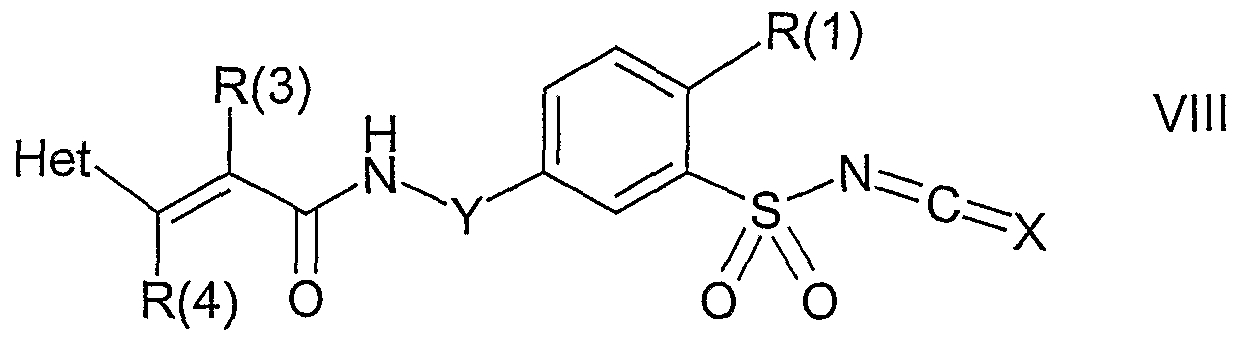
- Benzenesulfonylureas and -thioureas of the formulae lc and lb can also be prepared by reaction of amines of the formula R(2)-NH 2 in which R(2) has the abovementioned meanings, with benzenesulfonyl isocyanates and isothiocyanates of the formula VIII,
- the di- alkali metal salt of the sulfonyldithiocarbamic acid obtained here can be reacted in an inert solvent using a slight excess of phosgene or of a phosgene substitute such as triphosgene or using a chloroformic acid ester (2 equivalents) or using thionyl chloride.
- the solution of the sulfonyl iso(thio)cyanate of the formula VIII obtained can be reacted directly with the appropriately substituted amine of the formula R(2)-NH 2 or, if compounds of the formula I are to be prepared in which R(2) is hydrogen, can be reacted with ammonia.
- R(1), R(2), R(3), R(4), Het, X and Y have the abovementioned meanings, but R(2), as mentioned, is not hydrogen.
- compounds of the formula lc are in turn obtainable by reaction with the appropriate amine of the formula R(2)-NH 2 in an inert, high- boiling solvent, for example toluene, at temperatures up to the boiling point of the respective solvent.
- an inert, high- boiling solvent for example toluene
- benzenesulfonamides of the formula III as the starting compounds for the processes for the synthesis of the benzenesulfonamide derivatives of the formula I can be prepared according to or analogously to known methods such as are described in the literature, for example in standard works like Houben-Weyl,
- Y has the abovementioned meanings and R(0) is, for example, (C ⁇ -C 4 )-a!kyl, (C ⁇ -C 4 )-aIkoxy or bromine or nitro, with trifluoroacetic anhydride in the presence of pyridine in an inert solvent such as, for example, THF to give compounds of the formula X,
- Y and R(1a) have the meanings mentioned.
- the preparation of the sulfonamides of the formula XIII from the compounds of the formula XII can be carried out in one, two or more steps.
- processes are preferred in which the acylamines of the formula XII are first converted by means of electrophilic reagents in the presence or absence of inert solvents or diluents at temperatures from about -20°C to about 120°C, preferably from about 0°C to about 100°C, into the 2,5-substituted benzenesulfonic acids or their derivatives such as, for example, the sulfonic acid halides.
- sulfonic acids are the primary reaction products, these can be converted into sulfonic acid halides either directly or after treatment with amines such as, for example, triethylamine or pyridine, or with alkali metal or alkaline earth metal hydroxides or with other suitable bases, in a manner known per se by means of acid halides such as, for example, phosphorus trihalides, phosphorus pentahalides, thionyl halides or oxalyl halides.
- acid halides such as, for example, phosphorus trihalides, phosphorus pentahalides, thionyl halides or oxalyl halides.
- the conversion of the sulfonic acid derivatives into the sulfonamides of the formula XIII is carried out in a manner known from the literature.
- sulfonyl chlorides are reacted with aqueous ammonia in an inert solvent such as, for example, acetone
- the compounds of the formula XIII can be converted by treatment with an acid such as, for example, hydrochloric acid or sulfuric acid, if appropriate with addition of a polar organic solvent such as methanol or ethanol, at temperatures from about 0°C up to the boiling point of the solvent, into the compounds of the formula XIV,
- R(1a) is (C ⁇ -C 4 )-alkyl, (C- ⁇ -C 4 )-alkoxy or halogen and Y has the meaning indicated above.
- R(1 b) is (C ⁇ -C 4 )-aIkoxy, bromine or iodine
- R(1 b) is (C ⁇ -C 4 )-aIkoxy, bromine or iodine
- R(1 b) is (C ⁇ -C 4 )-aIkoxy, bromine or iodine
- Y has the meanings mentioned and R(1 b) is (C ⁇ -C 4 )-aIkoxy, bromine or iodine
- R(1 b) is (C ⁇ -C 4 )-aIkoxy, bromine or iodine
- Y is as defined above.
- This ether cleavage is carried out, for example, by treatment of the compounds of the formula XV in which R(1b) is methoxy with acids or with Lewis acids such as boron trifluoride, boron trichloride, boron tribromide or aluminum trichloride or their etherates, preferably with boron tribromide in an inert solvent such as, for example, dichloromethane.
- Lewis acids such as boron trifluoride, boron trichloride, boron tribromide or aluminum trichloride or their etherates, preferably with boron tribromide in an inert solvent such as, for example, dichloromethane.
- R(1c) is one of the residues -O-(d-C 4 )-alkyl-E(1 )-(C C 4 )-alkyl-D(1 ), fluorine-substituted -0-(d-C 4 )-alkyl-O-(C ⁇ - C 4 )-alkyl, substituted -O-(C 1 -C 4 )-alkyl, -O-(C 2 -C 4 )-alkenyl, or -O-phenyl.
- This conversion is carried out by means of an O-alkylation of the phenols of the formula XVI using appropriately substituted halogen compounds such as iodides or bromides or sulfonic acid esters such as methanesulfonic acid esters, p-toluenesulfonic acid esters or trifluoromethanesulfonic acid esters.
- halogen compounds such as iodides or bromides
- sulfonic acid esters such as methanesulfonic acid esters, p-toluenesulfonic acid esters or trifluoromethanesulfonic acid esters.
- the sulfonic acid esters are obtainable from the correspondingly substituted alcohols of the formula R(1c)-H according to standard processes, for example by using methanesulfonyl chloride in an inert solvent in the presence of a base such as potassium carbonate or cesium carbonate in the case of the methanesulfonic
- R(1d) is one of the residues (C ⁇ -C 4 )-alkyl, phenyl, (C 2 -C 5 )-alkenyl, (C 2 -C 5 )-alkynyl, heteroaryl or -S(O) m -phenyl.
- the conversion into the compounds of the formula XVIII can be carried out by means of palladium-catalyzed Suzuki coupling using arylboronic acids, for example phenylboronic acid, 4-methoxyphenylboronic acid or 4- methylthiophenylboronic acid, or heteroarylboronic acids, for example thienylboronic acid, or by means of Stille coupling using trialkylstannanes, for example tributylstannylfuran, trimethylstannylpyridine or ethinyltributylstannane.
- arylboronic acids for example phenylboronic acid, 4-methoxyphenylboronic acid or 4- methylthiophenylboronic acid
- heteroarylboronic acids for example thienylboronic acid
- trialkylstannanes for example tributylstannylfuran, trimethylstannylpyridine or ethinyltributylstannane.
- the Suzuki coupling is carried out in the presence of palladium(ll) acetate and triphenylphosphine or tetrakis(triphenylphosphine)palladium and a base such as, for example, cesium carbonate or potassium carbonate.
- a base such as, for example, cesium carbonate or potassium carbonate.
- the Stille coupling is carried out analogously to literature procedures using bis(triphenylphosphine)palladium(ll) chloride as catalyst.
- the preparation of suitable stannanes is described, for example, in Tetrahedron 49 (1993) 3325.
- Y and R(1 ) have the meanings indicated above for the formula I.
- This removal of the protective groups can be carried out either under basic or under acidic conditions.
- it is carried out by treatment of the compounds of the formulae XVII and XVIII in an inert solvent, for example an alcohol, with acids such as, for example, hydrochloric acid.
- the benzenesulfonamides of the formula XIX are then acylated using heteroarylacrylic acid derivatives to give the heteroarylacryloylaminoalkyl-substituted benzenesulfonamides of he formula III.
- the heteroarylacrylic acids are commercially obtainable or are prepared according to or analogously to literature procedures, for example starting from the corresponding heteroaromatic aldehydes.
- the acylation is in generally carried out by converting the heteroarylacrylic acid firstly into a reactive derivative, for example by reaction with N,N'-carbonyldiimidazole in an inert solvent such as, for example, THF, dioxane or DMF, and subsequent reaction with the amine of the formula XIX, if appropriate in the presence of a base such as triethylamine or pyridine.
- a reactive derivatives of the heteroarylacrylic acids also the acid halides or the acid anhydrides, for example, can be used.
- the reactions are in this case preferably carried out at temperatures from about 0°C up to the boiling point of the chosen solvent or diluent, particularly advantageously at room temperature.
- acylation of the amines of the formula XIX using the heteroarylacrylic acids can also be carried out, for example, in the presence of condensing agents such as, for example, N,N'-dicyclohexylcarbodiimide, O-((cyano(ethoxycarbonyI)methylene)- amino)-1 ,1 ,3,3-tetramethyluronium tetrafluoroborate (TOTU) or 1 -benzotriazolyloxy- tripyrrolidinophosphonium hexafluorophosphate (PyBOP).
- condensing agents such as, for example, N,N'-dicyclohexylcarbodiimide, O-((cyano(ethoxycarbonyI)methylene)- amino)-1 ,1 ,3,3-tetramethyluronium tetrafluoroborate (TOTU) or 1 -benzotriazolyloxy- tripyrrolidinophosphonium hex
- the steps described for the preparation of the compounds of the formula I can also be carried out in another sequence. Depending on the substituents to be introduced in the individual steps, one or another variant may be more advantageous.
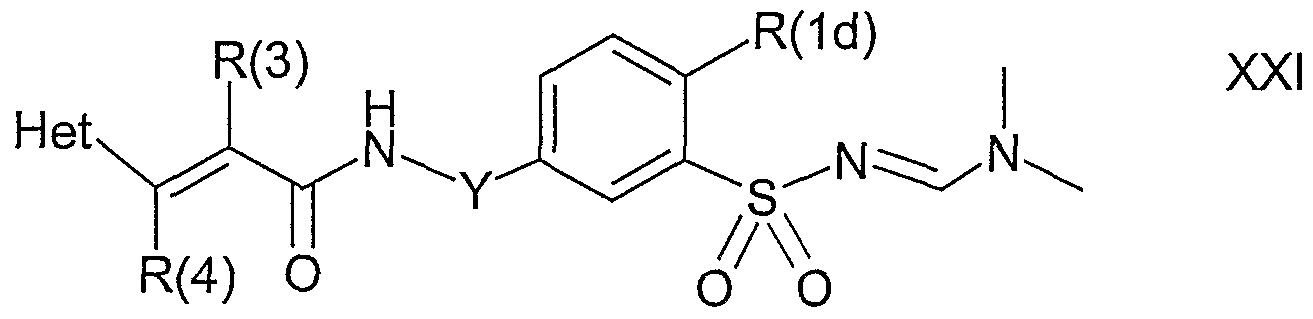
- the preparation of the compounds of the formula III in which R(1 ) is one of the residues (C ⁇ -C 4 )-alkyl, phenyl, (C 2 -C 5 )-alkenyl, (C 2 -C 5 )-alkynyl, heteroaryl or -S(0)m-phenyl can also be carried out in such a way that firstly a compound of the formula XIV in which R(1a) is iodine or bromine is converted by coupling with a heteroarylacrylic acid derivative and temporary protection of the sulfonamide group, as described above, into a compound of the formula XX,
- the compounds of the formula I inhibit ATP-sensitive potassium channels and influence the action potential of cells, in particular of cardiac muscle cells.
- they have a normalizing action on a disturbed action potential, such as is present, for example, in the case of ischemia, and are suitable, for example, for the treatment and prophylaxis of disorders of the cardiovascular system, in particular of arrhythmias and their sequelae, for example of ventricular fibrillation or of sudden cardiac death.
- the activity of the compounds of the formula I can be demonstrated, for example, in the model described below, in which the action potential duration on the papillary muscle of the guinea pig is determined.
- the compounds of the formula I also have an action on the peripheral and/or the central autonomic nervous system.
- they influence ATP-sensitive potassium channels of the vagal nervous system and have a stimulating action on the vagal nervous system, in particular a stimulating action on the vagal nervous system of the heart due to inhibition of ATP-sensitive potassium channels in the cardiac nerve.
- this interaction may be disturbed and a dysfunction of the autonomic nervous system may be present, i.e. an inequilibrium may exist between the activity of the vagal nervous system and the activity of the sympathetic nervous system.
- a hypoactivity of the vagal system can result in a hyperactivity of the sympathetic system.
- a hypoactivity of the vagal system can result in a hyperactivity of the sympathetic system.
- Examples of diseases which can be treated by eliminating a vagal dysfunction and thus compensating for a harmful sympathovagal inequilibrium are organic heart diseases such as coronary heart disease, cardiac insufficiency and cardiomyopathies. Damages to health which result from an inequilibrium of the autonomic nervous system when the dysfunction affects the heart are, for example, weakening of the myocardial contractile force and fatal cardiac arrhythmias. The importance of the autonomic nervous system for sudden cardiac death in heart diseases was described, for example, by P. J. Schwartz (The ATRAM1 prospective study: implications for risk stratification after myocardial infarction; Cardiac Electrophysiology Review 2 (1998) 38) or T. Kinugawa et al.
- a sympathovagal inequilibrium can also occur, for example, as a result of a metabolic disorder, for example of diabetes mellitus (see, for example, A. J. Burger et al., Short- and long-term reproducibility of heart rate variability in patients with long-standing type I diabetes mellitus; Am. J. Cardiol. 80 (1997) 1198).
- a hypoactivity of the vagal system can also temporarily occur, for example in the case of oxygen deficiency, for example oxygen deficiency of the heart, which leads to a reduced secretion of vagal neurotransmitters, for example of acetylcholine.
- the compounds of the formula I and their physiologically tolerable salts can be used in animals, preferably in mammals, and in particular in humans as pharmaceuticals on their own, in mixtures with one another or in the form of pharmaceutical preparations.
- Mammals in which the compounds of the formula I can be used or tested are, for example, monkeys, dogs, mice, rats, rabbits, guinea pigs, cats and larger farm animals such as, for example, cattle and pigs.
- the invention therefore also relates to the compounds of the formula I and their physiologically tolerable salts and their prodrugs for use as pharmaceuticals, and pharmaceutical preparations (or pharmaceutical compositions) which contain an efficacious dose of at least one compound of the formula I and/or of a physiologically tolerable salt thereof and/or of a prodrug thereof as active constituent and a pharmaceutically tolerable carrier, i.e. one or more pharmaceutically acceptable vehicles and/or excipients (additives).
- a pharmaceutically tolerable carrier i.e. one or more pharmaceutically acceptable vehicles and/or excipients (additives).
- the invention furthermore relates to the use of the compounds of the formula I and/or their physiologically tolerable salts and/or their prodrugs for the treatment, including the therapy and prophylaxis, of the syndromes mentioned above or below, to their use for the production of pharmaceuticals for the treatment, including therapy and prophylaxis, of the syndromes mentioned above or below, and to methods for the treatment, including the therapy and prophylaxis, of the syndromes mentioned above or below which comprise administering an efficacious amount of at least one compound of the formula I and/or a physiologically tolerable salt and/or a prodrug thereof.
- the pharmaceutical preparations can be intended for enteral or parenteral use and normally contain 0.5 to 90 percent by weight of at least one compound of the formula I and/or its physiologically tolerable salts and/or its prodrugs.
- the amount of active compound of the formula I and/or its physiologically tolerable salts and/or its prodrugs in the pharmaceutical preparations is in general about 0.2 to about 1000 mg, preferably about 0.2 to about 500 mg, particularly preferably about 1 to about 300 mg, per dose unit.
- the pharmaceutical preparations can be prepared in a manner known per se.
- the compounds of the formula I and/or their physiologically tolerable salts and/or their prodrugs are mixed with one or more solid or liquid vehicles and/or excipients and, if desired, with other pharmaceutical active compounds, for example pharmaceutical active compounds having cardiovascular activity such as, for example, calcium antagonists, ACE inhibitors or ⁇ -b!ockers, and brought into a suitable dose form and administration form which can then be used as pharmaceuticals in human medicine or veterinary medicine.
- pharmaceutical active compounds having cardiovascular activity such as, for example, calcium antagonists, ACE inhibitors or ⁇ -b!ockers
- Possible vehicles are organic and inorganic substances which are suitable, for example, for enteral, for example oral or rectal, administration, or for parenteral administration, for example by intravenous, intramuscular or subcutaneous injection or infusion, or for topical or percutaneous administration, and do not react in an undesired manner with the compounds of the formula I.
- Examples which may be mentioned are water, vegetable oils, waxes, alcohols such as ethanol, propanediol or benzyl alcohols, glycerol, polyols, polyethylene glycols, polypropylene glycols, glyceryl triacetate, gelatin, carbohydrates such as lactose or starch, stearic acid and its salts such as magnesium stearate, talc, lanolin, petroleum jelly, or mixtures of two or more vehicles, for example mixtures of water with one or more organic solvents such as mixtures of water with alcohols.
- alcohols such as ethanol, propanediol or benzyl alcohols
- glycerol polyols
- polyethylene glycols polypropylene glycols
- glyceryl triacetate gelatin
- carbohydrates such as lactose or starch
- stearic acid and its salts such as magnesium stearate, talc, lanolin, petroleum jelly, or mixtures of two or more vehicles, for example
- compositions such as tablets, film-coated tablets, sugar-coated tablets, granules, hard and soft gelatin capsules, suppositories, solutions, preferably oily, alcoholic or aqueous solutions, syrups, juices or drops, furthermore suspensions or emulsions, are used.
- solutions preferably oily, alcoholic or aqueous solutions, syrups, juices or drops, furthermore suspensions or emulsions
- solutions preferably oily, alcoholic or aqueous solutions, syrups, juices or drops, furthermore suspensions or emulsions
- ointments creams, pastes, lotions, gels, sprays, foams, aerosols, solutions or powders are used.
- solvents for solutions including injection and infusion solutions for example water or alcohols such as ethanol, isopropanol or 1 ,2-propanediol or their mixtures with one another or with water can be used.
- compositions are, for example, implants.
- the compounds of the formula I and their physiologically tolerable salts can also be Iyophilized and the lyophilizates obtained used, for example, for the production of injection preparations.
- Liposomal preparations are also suitable, in particular for topical application.
- excipients or additives which can be present in the pharmaceutical preparations, glidants, preservatives, thickeners, stabilizers, disintegrants, wetting agents, agents for achieving depot effect, emulsifiers, salts (for example for influencing the osmotic pressure), buffer substances, colorants, flavorings and aromatizers may be mentioned.
- pharmaceutical preparations can also contain one or more further active compounds and/or, for example, one or more vitamins.
- further active compounds for example, one or more vitamins.
- the compounds of the formula I and their physiologically tolerable salts and prodrugs are valuable pharmaceutical active compounds which are suitable not only as antiarrhythmics and for the control and prevention of the sequelae of arrhythmias, but also for treatment and prophylaxis in other heart diseases or disorders of the cardiovascular system.
- Such diseases which may be mentioned are cardiac insufficiency, cardiomyopathies, cardiac hypertrophy, coronary heart disease, angina pectoris, ischemia, vagal dysfunction of the heart or, for example, vagal dysfunction of the heart in diabetes mellitus.
- the compounds of the formula I can generally be employed in the treatment of diseases which are associated with a dysfunction of the autonomic nervous system or a hypoactivity or dysfunction of the vagal nervous system, in particular in the heart, or are caused by such a dysfunction or in whose treatment an increase in or normalization of the activity of the vagal nervous system is desired.
- the compounds of the formula I can also be generally employed in diseases which are characterized by oxygen deficiency conditions, in cerebral vascular disorders, and in dysfunctions of the autonomic nervous system, in particular of a vagal dysfunction in the heart, which occur as a result of a metabolic disorder such as, for example, of diabetes mellitus.
- the compounds of the formula I are especially used as antiarrhythmics for the treatment of cardiac arrhythmias of very different origin and especially for the prevention of sudden cardiac death due to arrhythmia.
- arrhythmic disorders of the heart are supraventricular arrhythmias such as, for example, atrial tachycardia, atrial flutters or paroxysomal supraventricular arrhythmias, or ventricular arrhythmias such as ventricular extrasystoles, but in particular life-threatening ventricular tachycardia or the particularly dangerous fatal ventricular fibrillation.
- arrhythmias are suitable, in particular, in those cases where arrhythmias are the result of constriction of a coronary vessel such as occur, for example, in angina pectoris or during acute cardiac infarcts or as a chronic result of a cardiac infarct. They are therefore in particular suitable for the prevention of sudden cardiac death in post- infarct patients. Further syndromes in which arrhythmias of this type and/or sudden cardiac death due to arrhythmia play a part are, for example, cardiac insufficiency or cardiac hypertrophy as a result of chronically raised blood pressure.
- the compounds of the formula I are able to positively influence decreased contractility of the heart and a weakened myocardial contractile force. This can be a disease-related decline in cardiac contractility, such as, for example, in cardiac insufficiency, but also acute cases such as heart failure in the case of shock.
- the compounds of the formula I and their physiologically tolerable salts are suitable for improving cardiac function. Specifically in a heart transplantation, under the influence of the compounds of the formula I the heart can resume its capability faster and more reliably after the operation has taken place. The same applies to operations on the heart which necessitate temporarily stopping cardiac activity by means of cardioplegic solutions.
- the compounds of the formula I in addition to their direct cardiac action, i.e. the effect on the action potential of the cardiac muscle cells, also have an indirect action on the nervous system of the heart or on the parts of the nervous system acting on the heart, they can decrease or prevent undesirable sequelae emanating from the nervous system or mediated by the nervous system in the respective syndrome present. On account of this, further damage to health such as a weakening of the myocardial contractile force or in some cases fatal cardiac arrhythmias such as ventricular fibrillation can be reduced or avoided.
- the compounds of the formula I Owing to the elimination or reduction of the dysfunction of the autonomic nervous system, the compounds of the formula I have the effect that the weakened myocardial contractile force is normalized again and that the cardiac arrhythmias which can lead to sudden cardiac death do no longer develop.
- the dose of the compounds of the formula I or their physiologically tolerable salts depends, as usual, on the circumstances of the particular individual case and is adjusted by the person skilled in the art according to the usual rules and procedures. It depends, for example, on the specific compound of the formula I administered, its potency and duration of action, on the nature and severity of the individual syndrome, on the sex, age, weight and on the individual responsiveness of the human or animal to be treated, on whether treatment is to be acute or prophylactic or on whether further active compounds are administered in addition to compounds of the formula I.
- a dose which is about 0.1 mg to about 100 mg per kg per day, preferably about 1 mg to about 10 mg per kg per day (in each case in mg per kg of body weight).
- the daily dose can be administered in the form of a single oral or parenteral dose or divided into a number of individual doses, for example two, three or four doses.
- the administration can also be carried out continuously.
- parenteral administration for example by injection or by intravenous continuous infusion, can be advantageous.
- a preferred dose range in critical situations then is about 1 to about 100 mg per kg of body weight per day. Depending on individual behavior, it may be necessary to deviate upward or downward from the doses indicated.
- the compounds of the formula I can also be employed, for example, as auxiliaries for biochemical investigations or as a scientific tool when a respective effect on ion channels is intended, or for the isolation or characterization of potassium channels. They can also be used for diagnostic purposes, for example in in-vitro diagnoses of cell samples or tissue samples.
- the compounds of the formula I and their salts can furthermore be used as chemical intermediates for the production of further pharmaceutical active compounds.
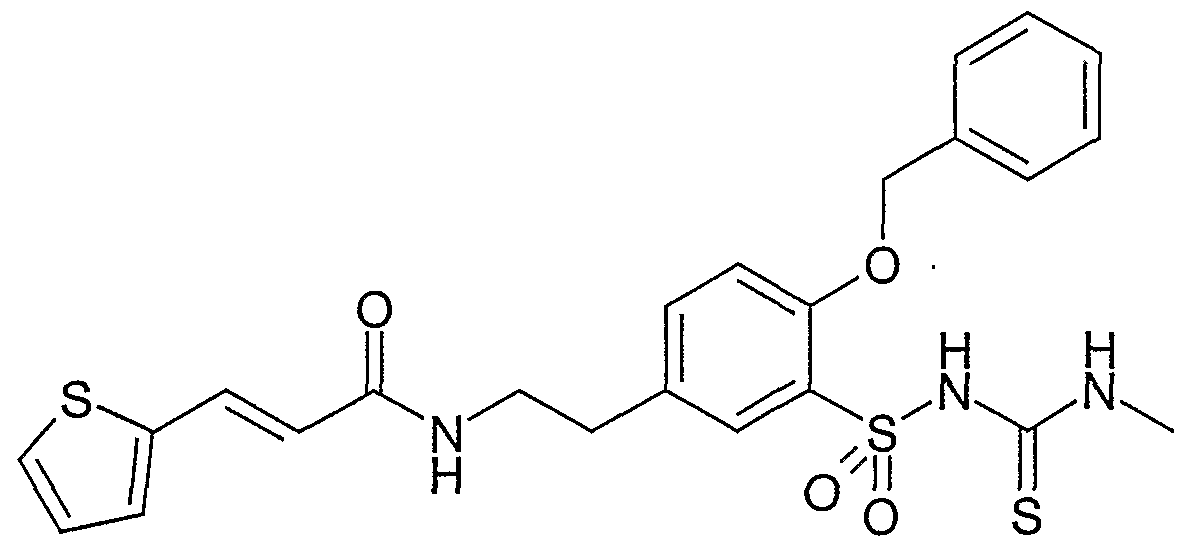
- Example 4 1 -[5-(2-(trans-3-(2-Thienyl)acryloylamino)ethyl)-2-methoxyphenylsulfonyl]-3-methyl- urea sodium salt
- the opening of ATP-sensitive potassium channels by the lowering of the ATP level is regarded as causal for this.
- a standard microelectrode technique was employed for the measurement of the action potential on the papillary muscle of the guinea pig.
- Guinea pigs of both sexes were killed by a blow to the head, the hearts were removed, and the papillary muscles were separated out and suspended in an organ bath.
- the organ bath was rinsed with Ringer's solution (136 mmol/l of NaCl, 3.3 mmol/l of KCI, 2.5 mmol/l of CaCI 2 , 1.2 mmol/l of KH 2 P0 4 , 1.1 mmol/l of MgS0 4 , 5.0 mmol/l of glucose, 10.0 mmol/l of 1-(2-hydroxyethyl)piperazine-4-(2-ethanesulfonic acid) (HEPES), pH adjusted to 7.4 with NaOH) and aerated with 100% oxygen at a temperature of 37°C.
- Ringer's solution 136 mmol/l of NaCl, 3.3 mmol/l of KCI, 2.5 mmol/l of CaCI 2 , 1.2 mmol/l of KH 2 P0 4 ,
- the muscle was stimulated with square-wave pulses of 1 V and 1 ms duration and a frequency of 1 Hz by means of an electrode.
- the action potential was derived and recorded by means of a glass microelectrode inserted intracellularly, which is filled with 3 mol/l of KCI solution.
- the compound to be tested was added to the Ringer's solution in a concentration of 2 ⁇ mol/l.
- the action potential was amplified using an amplifier from Hugo Sachs (March-Hugstetten, Germany) and stored and analyzed by means of a computer. The duration of the action potential was determined at a degree of repolarization of 90 % (APDgo).
- the action potential shortening was produced by rinsing the papillary muscle with a hypoxic NaCl solution.
- the glucose was removed here, the HEPES buffer replaced by PIPES buffer (piperazine-1 ,4-bis(2-ethanesulfonic acid)), the pH was adjusted to 6.5 and the aeration was carried out using 100% nitrogen. After a time of 60 min, this led to a marked shortening of the APDgo. After this time, the test compound was added and the relengthening of the action potential recorded after a further 60 min.
- the compound-caused relengthening of the APDgo was calculated in percent in relation to the shortening caused by hypoxia.
- the test compounds were added to the bath solution as stock solution in propanediol.
- test compound was dissolved in a mixture of dimethyl sulfoxide (DMSO) and 10 percent sodium hydrogencarbonate solution and administered intraperitoneally (i.p.). The dose was 3 mg/kg. 30 min later, the mouse was anesthetized with chloroform in a beaker. As soon as respiratory arrest had occurred under deep anesthesia (toxic stage of anesthesia), the thorax of the animal was opened using a pair of scissors and the heartbeat was visually inspected. It can be determined here at a glance whether the heart is beating, fibrillating or has stopped.
- DMSO dimethyl sulfoxide
- the respiratory arrest induced by chloroform leads via an absolute anoxia (oxygen deficiency) in combination with a direct stimulating action of chloroform on the sympathetic nervous system to a strong stimulation of the sympathetic nervous system, which for its part, in combination with the energy deficiency caused by oxygen deficiency, leads in the heart to the fatal arrhythmia, ventricular fibrillation.
- This toxic chloroform anesthesia led to ventricular fibrillation in 100 % of the untreated mice (control). The percentage proportion of the mice with ventricular fibrillation in the individual test groups (consisting of n animals) is indicated as the fibrillation ratio.
- mice having ventricular fibrillation were reduced by the percentage proportion of mice having ventricular fibrillation in comparison with the control (with a 100% fibrillation ratio) confirms that the compounds of the formula I significantly prevent the occurrence of ventricular fibrillation.
- hypoglycemic sulfonylureas such as, for example, glibenclamide
- the target organ of these compounds is the ⁇ cell of the pancreas where they block ATP-sensitive potassium channels and produce a release of the hypoglycemic hormone insulin by influencing the electrical potential of the cell membrane.
- pancreatic ATP-sensitive potassium channels are composed of the sulfonylurea receptor SUR1 and the inwardly rectifying potassium channel Kir6.2 (Inagaki et al., Science 270 (1995) 1166; Inagaki et al., Neuron 16 (1996) 1011 ).
- a hypoglycemic compound such as, for example, glibenclamide brings about, by binding to the sulfonylurea receptor, a depolarization of the cell membrane which leads to an increased influx of calcium ions and as a consequence thereof to a release of insulin.
- the extent of this depolarization of the cell membrane which is caused by the compounds according to the invention was investigated on CHO cells which were transfected with the cloned components of human pancreatic ATP- sensitive potassium channels, hSUR1 and hKir6.2, and activated by pretreatment with diaxozide, an opener of ATP-sensitive potassium channels.
- the potency of a compound with respect to the membrane potential of these transfected and activated CHO cells is a measure of the hypoglycemic potential of this compound.
- the CHO cells which showed a stable expression of human SUR1 and Kir6.2 were inoculated into 96-well microtiter plates on the day before measurement.
- the microtiter plates were washed three times with PBS (physiological buffer solution). In the last washing step, 90 ⁇ l remained in each well.
- the cells were then loaded with the fluorescent dye DlBAC (Molecular Probes, Portland, OR, USA) by addition of 90 ⁇ l of a 10 micromolar solution of DIBAC 4 in PBS and of 90 ⁇ l of a 400 micromolar solution of diaxozide in PBS to each well. After an incubation time of 30 min at 37°C, the microtiter plates were then transferred to a fluorescent microtiter plate reader (FLIPR; Molecular Devices, Sunnyvale, CA, USA).
- FLIPR fluorescent microtiter plate reader
- the cells were stimulated by means of an argon laser (Innova 90; Coherent, Santa Clara, CA, USA) at a wavelength of 488 nm and the fluorescence emission was measured by means of a CCD camera.
- the measurement of the membrane potential began after 4 min by addition of 20 ⁇ l of a solution of the test compound or of the control solution to each well, the resulting fluorescence emission being measured every 20 seconds for a period of 20 min.
- the data shown are mean values of at least 4 experiments.
- Example 1 10 ⁇ M 30.7 %
Landscapes
- Chemical & Material Sciences (AREA)
- Organic Chemistry (AREA)
- Health & Medical Sciences (AREA)
- Engineering & Computer Science (AREA)
- Bioinformatics & Cheminformatics (AREA)
- Animal Behavior & Ethology (AREA)
- Veterinary Medicine (AREA)
- Chemical Kinetics & Catalysis (AREA)
- General Chemical & Material Sciences (AREA)
- Medicinal Chemistry (AREA)
- Nuclear Medicine, Radiotherapy & Molecular Imaging (AREA)
- Pharmacology & Pharmacy (AREA)
- Life Sciences & Earth Sciences (AREA)
- Cardiology (AREA)
- General Health & Medical Sciences (AREA)
- Public Health (AREA)
- Heart & Thoracic Surgery (AREA)
- Hospice & Palliative Care (AREA)
- Urology & Nephrology (AREA)
- Vascular Medicine (AREA)
- Biomedical Technology (AREA)
- Neurology (AREA)
- Neurosurgery (AREA)
- Pharmaceuticals Containing Other Organic And Inorganic Compounds (AREA)
- Acyclic And Carbocyclic Compounds In Medicinal Compositions (AREA)
- Heterocyclic Compounds Containing Sulfur Atoms (AREA)
- Pyridine Compounds (AREA)
- Plural Heterocyclic Compounds (AREA)
- Organic Low-Molecular-Weight Compounds And Preparation Thereof (AREA)
Abstract
Description






Claims


Priority Applications (11)
| Application Number | Priority Date | Filing Date | Title |
|---|---|---|---|
| MXPA03003778A MXPA03003778A (en) | 2000-11-03 | 2001-10-20 | Heteroarylacryloylaminoalkyl-substituted benzenesulfonamide derivatives, their preparation, their use and pharmaceutical preparations comprising them. |
| CA2427548A CA2427548C (en) | 2000-11-03 | 2001-10-20 | Heteroarylacryloylaminoalkyl-substituted benzenesulfonamide derivatives, their preparation, their use and pharmaceutical preparations comprising them |
| DE60136088T DE60136088D1 (en) | 2000-11-03 | 2001-10-20 | HETEROARYLACRYLOYLAMINOALKYL SUBSTITUTED BENZOLSULPHONAMIDE DERIVATIVES, THEIR PREPARATION, THEIR USES AND PHARMACEUTICAL COMPOSITIONS CONTAINING THESE COMPOUNDS |
| AU2002223631A AU2002223631B2 (en) | 2000-11-03 | 2001-10-20 | Heteroarylacryloylaminoalkyl-substituted benzenesulfonamide derivatives, their preparation, their use and pharmaceutical preparations comprising them |
| JP2002539325A JP4281991B2 (en) | 2000-11-03 | 2001-10-20 | Heteroarylacryloylaminoalkyl-substituted benzenesulfonamide derivatives, their preparation, their use, and formulations containing them |
| DK01992700T DK1335902T3 (en) | 2000-11-03 | 2001-10-20 | Heteroberlacryloylaminoalkyl-substituted benzenesulfonamide derivatives, their preparation, their use as well as pharmaceutical preparations containing the same |
| AU2363102A AU2363102A (en) | 2000-11-03 | 2001-10-20 | Heteroarylacryloylaminoalkyl-substituted benzenesulfonamide derivatives, their preparation, their use and pharmaceutical preparations comprising them |
| IL15565801A IL155658A0 (en) | 2000-11-03 | 2001-10-20 | Heteroarylacryloylaminoalkyl substituted benzenesulfonamide derivatives, their preparation, their use and pharmaceutical preparations comprising them |
| MXPA03003608A MXPA03003608A (en) | 2000-11-03 | 2001-10-20 | Heteroarylacryloylaminoalkyl-substituted benzenesulfonamide derivatives, their preparation, their use and pharmaceutical preparations comprising them. |
| EP01992700A EP1335902B1 (en) | 2000-11-03 | 2001-10-20 | Heteroarylacryloylaminoalkyl-substituted benzenesulfonamide derivatives, their preparation, their use and pharmaceutical preparations comprising them |
| IL155658A IL155658A (en) | 2000-11-03 | 2003-04-29 | Heteroarylacryloylaminoalkyl- substituted benzenesulfonamide derivatives, their preparation, their use and pharmaceutical preparations comprising them |
Applications Claiming Priority (2)
| Application Number | Priority Date | Filing Date | Title |
|---|---|---|---|
| DE10054482.7 | 2000-11-03 | ||
| DE10054482A DE10054482A1 (en) | 2000-11-03 | 2000-11-03 | Heteroarylacryloylaminoalkyl-substituted benzenesulfonamide derivatives, their production, their use and pharmaceutical preparations containing them |
Publications (1)
| Publication Number | Publication Date |
|---|---|
| WO2002036565A1 true WO2002036565A1 (en) | 2002-05-10 |
Family
ID=7662010
Family Applications (1)
| Application Number | Title | Priority Date | Filing Date |
|---|---|---|---|
| PCT/EP2001/012142 Ceased WO2002036565A1 (en) | 2000-11-03 | 2001-10-20 | Heteroarylacryloylaminoalkyl-substituted benzenesulfonamide derivatives, their preparation, their use and pharmaceutical preparations comprising them |
Country Status (13)
| Country | Link |
|---|---|
| US (1) | US6472413B2 (en) |
| EP (1) | EP1335902B1 (en) |
| JP (1) | JP4281991B2 (en) |
| AT (1) | ATE410414T1 (en) |
| AU (2) | AU2363102A (en) |
| CA (1) | CA2427548C (en) |
| DE (2) | DE10054482A1 (en) |
| DK (1) | DK1335902T3 (en) |
| ES (1) | ES2315314T3 (en) |
| IL (2) | IL155658A0 (en) |
| MX (1) | MXPA03003778A (en) |
| PT (1) | PT1335902E (en) |
| WO (1) | WO2002036565A1 (en) |
Families Citing this family (1)
| Publication number | Priority date | Publication date | Assignee | Title |
|---|---|---|---|---|
| US6956846B2 (en) * | 2002-08-16 | 2005-10-18 | Utstarcom Incorporated | System and method for foreign agent control node redundancy in a mobile internet protocol network |
Citations (4)
| Publication number | Priority date | Publication date | Assignee | Title |
|---|---|---|---|---|
| GB1116355A (en) * | 1964-08-01 | 1968-06-06 | Hoechst Ag | Benzenesulphonyl-ureas and process for preparing them |
| DE1443878A1 (en) * | 1963-10-19 | 1968-12-12 | Hoechst Ag | Process for the preparation of benzenesulfonylureas |
| WO2000003978A2 (en) * | 1998-07-16 | 2000-01-27 | Aventis Pharma Deutschland Gmbh | 2,5-substituted benzolsulfonylureas and thioureas, methods for the production thereof, use thereof and pharmaceutical preparations containing the same |
| WO2000071513A1 (en) * | 1999-05-20 | 2000-11-30 | Aventis Pharma Deutschland Gmbh | Cinnamoylaminoalkyl-substituted benzenesulfonamide derivatives |
Family Cites Families (7)
| Publication number | Priority date | Publication date | Assignee | Title |
|---|---|---|---|---|
| DE1518874C3 (en) | 1964-10-07 | 1975-03-13 | Farbwerke Hoechst Ag, Vormals Meister Lucius & Bruening, 6000 Frankfurt | Benzenesulfonylureas and process for their preparation |
| DE1518816C3 (en) | 1965-03-24 | 1975-05-22 | Farbwerke Hoechst Ag, Vormals Meister Lucius & Bruening, 6000 Frankfurt | Benzenesulfonylureas, processes for their preparation and pharmaceutical preparations containing them |
| US4066639A (en) | 1965-05-06 | 1978-01-03 | Hoechst Aktiengesellschaft | Benzene-sulfonyl semicarbazides and process for preparing them |
| DE59401361D1 (en) | 1993-02-23 | 1997-02-06 | Hoechst Ag | Substituted benzenesulfonylureas and thioureas- Process for their preparation and their use as pharmaceuticals |
| DE4341655A1 (en) | 1993-12-07 | 1995-06-08 | Hoechst Ag | Amino-substituted benzenesulfonylureas and thioureas, processes for their preparation and their use as pharmaceuticals |
| DE19505397A1 (en) | 1995-02-17 | 1996-08-22 | Hoechst Ag | Substituted benzenesulfonylureas and thioureas, processes for their preparation, their use as medicaments or diagnostic agents and medicaments containing them |
| TR200100692T2 (en) | 1998-09-10 | 2001-07-23 | Aventis Pharma Deutschland Gmbh | The use of Benzenesulfonyl (Thio) ureas in the prevention of dysfunctions of the autonomic nervous system |
-
2000
- 2000-11-03 DE DE10054482A patent/DE10054482A1/en not_active Withdrawn
-
2001
- 2001-10-20 CA CA2427548A patent/CA2427548C/en not_active Expired - Fee Related
- 2001-10-20 AT AT01992700T patent/ATE410414T1/en active
- 2001-10-20 DE DE60136088T patent/DE60136088D1/en not_active Expired - Lifetime
- 2001-10-20 MX MXPA03003778A patent/MXPA03003778A/en active IP Right Grant
- 2001-10-20 AU AU2363102A patent/AU2363102A/en active Pending
- 2001-10-20 EP EP01992700A patent/EP1335902B1/en not_active Expired - Lifetime
- 2001-10-20 DK DK01992700T patent/DK1335902T3/en active
- 2001-10-20 JP JP2002539325A patent/JP4281991B2/en not_active Expired - Fee Related
- 2001-10-20 PT PT01992700T patent/PT1335902E/en unknown
- 2001-10-20 ES ES01992700T patent/ES2315314T3/en not_active Expired - Lifetime
- 2001-10-20 AU AU2002223631A patent/AU2002223631B2/en not_active Ceased
- 2001-10-20 IL IL15565801A patent/IL155658A0/en unknown
- 2001-10-20 WO PCT/EP2001/012142 patent/WO2002036565A1/en not_active Ceased
- 2001-11-02 US US09/985,359 patent/US6472413B2/en not_active Expired - Lifetime
-
2003
- 2003-04-29 IL IL155658A patent/IL155658A/en not_active IP Right Cessation
Patent Citations (4)
| Publication number | Priority date | Publication date | Assignee | Title |
|---|---|---|---|---|
| DE1443878A1 (en) * | 1963-10-19 | 1968-12-12 | Hoechst Ag | Process for the preparation of benzenesulfonylureas |
| GB1116355A (en) * | 1964-08-01 | 1968-06-06 | Hoechst Ag | Benzenesulphonyl-ureas and process for preparing them |
| WO2000003978A2 (en) * | 1998-07-16 | 2000-01-27 | Aventis Pharma Deutschland Gmbh | 2,5-substituted benzolsulfonylureas and thioureas, methods for the production thereof, use thereof and pharmaceutical preparations containing the same |
| WO2000071513A1 (en) * | 1999-05-20 | 2000-11-30 | Aventis Pharma Deutschland Gmbh | Cinnamoylaminoalkyl-substituted benzenesulfonamide derivatives |
Also Published As
| Publication number | Publication date |
|---|---|
| DE60136088D1 (en) | 2008-11-20 |
| CA2427548C (en) | 2010-11-16 |
| DK1335902T3 (en) | 2009-02-16 |
| ES2315314T3 (en) | 2009-04-01 |
| AU2002223631B2 (en) | 2006-07-06 |
| EP1335902B1 (en) | 2008-10-08 |
| JP4281991B2 (en) | 2009-06-17 |
| CA2427548A1 (en) | 2002-05-10 |
| MXPA03003778A (en) | 2003-07-28 |
| JP2004513114A (en) | 2004-04-30 |
| AU2363102A (en) | 2002-05-15 |
| PT1335902E (en) | 2009-01-19 |
| US6472413B2 (en) | 2002-10-29 |
| ATE410414T1 (en) | 2008-10-15 |
| US20020123495A1 (en) | 2002-09-05 |
| IL155658A0 (en) | 2003-11-23 |
| IL155658A (en) | 2010-04-15 |
| DE10054482A1 (en) | 2002-05-08 |
| EP1335902A1 (en) | 2003-08-20 |
Similar Documents
| Publication | Publication Date | Title |
|---|---|---|
| EP1345892B1 (en) | Acylaminoalkyl-substituted benzenesulfonamide derivatives | |
| AU2002218253A1 (en) | Acylaminoalkyl-substituted benzenesulfonamide derivatives | |
| US6410573B1 (en) | 2,5-substituted benzolsulfonylureas and thioureas methods for the production thereof use thereof and pharmaceutical preparations containing the same | |
| EP1335902B1 (en) | Heteroarylacryloylaminoalkyl-substituted benzenesulfonamide derivatives, their preparation, their use and pharmaceutical preparations comprising them | |
| CA2374226C (en) | Cinnamoylaminoalkyl-substituted benzenesulfonamide derivatives | |
| AU2002223631A1 (en) | Heteroarylacryloylaminoalkyl-substituted benzenesulfonamide derivatives, their preparation, their use and pharmaceutical preparations comprising them | |
| MXPA01000424A (en) | 2,5-substituted benzolsulfonylureas and thioureas, methods for the production thereof, use thereof and pharmaceutical preparations containing the same |
Legal Events
| Date | Code | Title | Description |
|---|---|---|---|
| 121 | Ep: the epo has been informed by wipo that ep was designated in this application | ||
| WWE | Wipo information: entry into national phase |
Ref document number: 2001992700 Country of ref document: EP |
|
| WWE | Wipo information: entry into national phase |
Ref document number: PA/a/2003/003608 Country of ref document: MX |
|
| WWE | Wipo information: entry into national phase |
Ref document number: PA/a/2003/003778 Country of ref document: MX Ref document number: 155658 Country of ref document: IL Ref document number: 2427548 Country of ref document: CA |
|
| WWE | Wipo information: entry into national phase |
Ref document number: 2002539325 Country of ref document: JP Ref document number: 2002223631 Country of ref document: AU |
|
| WWP | Wipo information: published in national office |
Ref document number: 2001992700 Country of ref document: EP |
|
| REG | Reference to national code |
Ref country code: DE Ref legal event code: 8642 |