WO2002046128A2 - Quaternary amino acids on solid supports - Google Patents

Quaternary amino acids on solid supports Download PDF

Info

Publication number
WO2002046128A2
WO2002046128A2 PCT/US2001/046585 US0146585W WO0246128A2 WO 2002046128 A2 WO2002046128 A2 WO 2002046128A2 US 0146585 W US0146585 W US 0146585W WO 0246128 A2 WO0246128 A2 WO 0246128A2
Authority
WO
WIPO (PCT)
Prior art keywords
fused
formula
compound
resin
hydrogen
Prior art date
Legal status (The legal status is an assumption and is not a legal conclusion. Google has not performed a legal analysis and makes no representation as to the accuracy of the status listed.)
Ceased
Application number
PCT/US2001/046585
Other languages
French (fr)
Other versions
WO2002046128A3 (en
Inventor
Dalijit Dhanoa
Michael Johnson
Keqiang Li
Elso Difranco
Current Assignee (The listed assignees may be inaccurate. Google has not performed a legal analysis and makes no representation or warranty as to the accuracy of the list.)
Pharmacore Inc
Original Assignee
Pharmacore Inc
Priority date (The priority date is an assumption and is not a legal conclusion. Google has not performed a legal analysis and makes no representation as to the accuracy of the date listed.)
Filing date
Publication date
Application filed by Pharmacore Inc filed Critical Pharmacore Inc
Priority to AU2002239520A priority Critical patent/AU2002239520A1/en
Priority to CA002431133A priority patent/CA2431133A1/en
Priority to EP01987286A priority patent/EP1373195A2/en
Priority to JP2002547868A priority patent/JP2004515481A/en
Publication of WO2002046128A2 publication Critical patent/WO2002046128A2/en
Anticipated expiration legal-status Critical
Publication of WO2002046128A3 publication Critical patent/WO2002046128A3/en
Ceased legal-status Critical Current

Links

Classifications

    • CCHEMISTRY; METALLURGY
    • C07ORGANIC CHEMISTRY
    • C07DHETEROCYCLIC COMPOUNDS
    • C07D317/00Heterocyclic compounds containing five-membered rings having two oxygen atoms as the only ring hetero atoms
    • C07D317/08Heterocyclic compounds containing five-membered rings having two oxygen atoms as the only ring hetero atoms having the hetero atoms in positions 1 and 3
    • C07D317/72Heterocyclic compounds containing five-membered rings having two oxygen atoms as the only ring hetero atoms having the hetero atoms in positions 1 and 3 spiro-condensed with carbocyclic rings
    • CCHEMISTRY; METALLURGY
    • C07ORGANIC CHEMISTRY
    • C07CACYCLIC OR CARBOCYCLIC COMPOUNDS
    • C07C271/00Derivatives of carbamic acids, i.e. compounds containing any of the groups, the nitrogen atom not being part of nitro or nitroso groups
    • C07C271/06Esters of carbamic acids
    • C07C271/08Esters of carbamic acids having oxygen atoms of carbamate groups bound to acyclic carbon atoms
    • C07C271/10Esters of carbamic acids having oxygen atoms of carbamate groups bound to acyclic carbon atoms with the nitrogen atoms of the carbamate groups bound to hydrogen atoms or to acyclic carbon atoms
    • C07C271/22Esters of carbamic acids having oxygen atoms of carbamate groups bound to acyclic carbon atoms with the nitrogen atoms of the carbamate groups bound to hydrogen atoms or to acyclic carbon atoms to carbon atoms of hydrocarbon radicals substituted by carboxyl groups
    • CCHEMISTRY; METALLURGY
    • C07ORGANIC CHEMISTRY
    • C07DHETEROCYCLIC COMPOUNDS
    • C07D211/00Heterocyclic compounds containing hydrogenated pyridine rings, not condensed with other rings
    • C07D211/04Heterocyclic compounds containing hydrogenated pyridine rings, not condensed with other rings with only hydrogen or carbon atoms directly attached to the ring nitrogen atom
    • C07D211/06Heterocyclic compounds containing hydrogenated pyridine rings, not condensed with other rings with only hydrogen or carbon atoms directly attached to the ring nitrogen atom having no double bonds between ring members or between ring members and non-ring members
    • C07D211/36Heterocyclic compounds containing hydrogenated pyridine rings, not condensed with other rings with only hydrogen or carbon atoms directly attached to the ring nitrogen atom having no double bonds between ring members or between ring members and non-ring members with hetero atoms or with carbon atoms having three bonds to hetero atoms with at the most one bond to halogen, e.g. ester or nitrile radicals, directly attached to ring carbon atoms
    • C07D211/60Carbon atoms having three bonds to hetero atoms with at the most one bond to halogen, e.g. ester or nitrile radicals
    • CCHEMISTRY; METALLURGY
    • C07ORGANIC CHEMISTRY
    • C07DHETEROCYCLIC COMPOUNDS
    • C07D211/00Heterocyclic compounds containing hydrogenated pyridine rings, not condensed with other rings
    • C07D211/04Heterocyclic compounds containing hydrogenated pyridine rings, not condensed with other rings with only hydrogen or carbon atoms directly attached to the ring nitrogen atom
    • C07D211/06Heterocyclic compounds containing hydrogenated pyridine rings, not condensed with other rings with only hydrogen or carbon atoms directly attached to the ring nitrogen atom having no double bonds between ring members or between ring members and non-ring members
    • C07D211/36Heterocyclic compounds containing hydrogenated pyridine rings, not condensed with other rings with only hydrogen or carbon atoms directly attached to the ring nitrogen atom having no double bonds between ring members or between ring members and non-ring members with hetero atoms or with carbon atoms having three bonds to hetero atoms with at the most one bond to halogen, e.g. ester or nitrile radicals, directly attached to ring carbon atoms
    • C07D211/60Carbon atoms having three bonds to hetero atoms with at the most one bond to halogen, e.g. ester or nitrile radicals
    • C07D211/62Carbon atoms having three bonds to hetero atoms with at the most one bond to halogen, e.g. ester or nitrile radicals attached in position 4
    • C07D211/66Carbon atoms having three bonds to hetero atoms with at the most one bond to halogen, e.g. ester or nitrile radicals attached in position 4 having a hetero atom as the second substituent in position 4
    • CCHEMISTRY; METALLURGY
    • C07ORGANIC CHEMISTRY
    • C07DHETEROCYCLIC COMPOUNDS
    • C07D309/00Heterocyclic compounds containing six-membered rings having one oxygen atom as the only ring hetero atom, not condensed with other rings
    • C07D309/02Heterocyclic compounds containing six-membered rings having one oxygen atom as the only ring hetero atom, not condensed with other rings having no double bonds between ring members or between ring members and non-ring members
    • C07D309/08Heterocyclic compounds containing six-membered rings having one oxygen atom as the only ring hetero atom, not condensed with other rings having no double bonds between ring members or between ring members and non-ring members with hetero atoms or with carbon atoms having three bonds to hetero atoms with at the most one bond to halogen, e.g. ester or nitrile radicals, directly attached to ring carbon atoms
    • C07D309/14Nitrogen atoms not forming part of a nitro radical
    • CCHEMISTRY; METALLURGY
    • C07ORGANIC CHEMISTRY
    • C07DHETEROCYCLIC COMPOUNDS
    • C07D335/00Heterocyclic compounds containing six-membered rings having one sulfur atom as the only ring hetero atom
    • C07D335/02Heterocyclic compounds containing six-membered rings having one sulfur atom as the only ring hetero atom not condensed with other rings
    • CCHEMISTRY; METALLURGY
    • C07ORGANIC CHEMISTRY
    • C07BGENERAL METHODS OF ORGANIC CHEMISTRY; APPARATUS THEREFOR
    • C07B2200/00Indexing scheme relating to specific properties of organic compounds
    • C07B2200/11Compounds covalently bound to a solid support
    • CCHEMISTRY; METALLURGY
    • C07ORGANIC CHEMISTRY
    • C07CACYCLIC OR CARBOCYCLIC COMPOUNDS
    • C07C2601/00Systems containing only non-condensed rings
    • C07C2601/06Systems containing only non-condensed rings with a five-membered ring
    • C07C2601/08Systems containing only non-condensed rings with a five-membered ring the ring being saturated
    • CCHEMISTRY; METALLURGY
    • C07ORGANIC CHEMISTRY
    • C07CACYCLIC OR CARBOCYCLIC COMPOUNDS
    • C07C2601/00Systems containing only non-condensed rings
    • C07C2601/12Systems containing only non-condensed rings with a six-membered ring
    • C07C2601/14The ring being saturated
    • CCHEMISTRY; METALLURGY
    • C07ORGANIC CHEMISTRY
    • C07CACYCLIC OR CARBOCYCLIC COMPOUNDS
    • C07C2603/00Systems containing at least three condensed rings
    • C07C2603/02Ortho- or ortho- and peri-condensed systems
    • C07C2603/04Ortho- or ortho- and peri-condensed systems containing three rings
    • C07C2603/06Ortho- or ortho- and peri-condensed systems containing three rings containing at least one ring with less than six ring members
    • C07C2603/10Ortho- or ortho- and peri-condensed systems containing three rings containing at least one ring with less than six ring members containing five-membered rings
    • C07C2603/12Ortho- or ortho- and peri-condensed systems containing three rings containing at least one ring with less than six ring members containing five-membered rings only one five-membered ring
    • C07C2603/18Fluorenes; Hydrogenated fluorenes

Definitions

  • the present invention relates to novel templates useful for generating novel compounds and to compounds produced utilizing the templates.
  • the templates comprise quaternary amino acids that may be linked to solid supports. These templates make possible the production of novel classes of chemical compounds through a plurality of chemical reactions.
  • the templates are advantageous for use in drug discovery regimes. BACKGROUND OF THE INVENTION
  • An additional aspect of combinatorial chemistry relates to the chemical diversity of the compound stocks that are available for screening by the pharmaceutical companies in the search for new lead structures. These have tended to be limited to the classes of compounds previously investigated through medicinal chemical techniques within each company. Therefore, the availability of new classes of molecules for screening has become a major need.
  • templates such as those presented in the present invention are highly desirable and valuable, in particular in the synthesis of peptides and of amino acid containing compounds for drug discovery.
  • the present invention provides support templates that may be utilized to generate novel compounds.
  • the support templates comprise amino acids that may be linked to polymeric supports to fo ⁇ n a platform for chemical discovery.
  • the present invention provides quaternary amino acids that are capable of being used as templates for the synthesis of other molecules including peptides, other amino acids, and other compounds that may be useful in pharmaceutical, agricultural, food product and/or related settings.
  • the quaternary amino acids may be linked to a solid support to form a template that may be utilized in solid phase synthesis techniques that advantageously permit compounds with intermediates relatively unstable to other techniques to be synthesized and isolated.
  • Embodiments of the present invention may be utilized in combinatorial chemistry using parallel synthesis techniques to create and screen large libraries of potentially useful compounds.
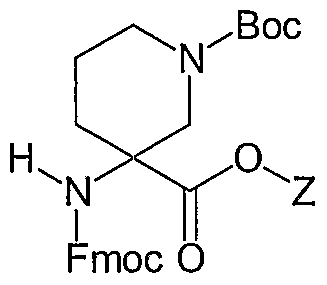
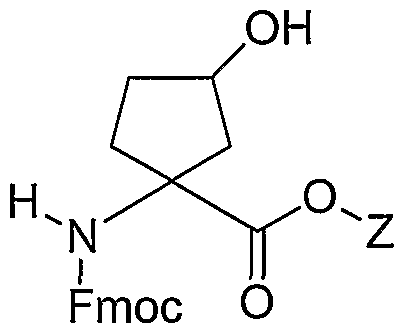
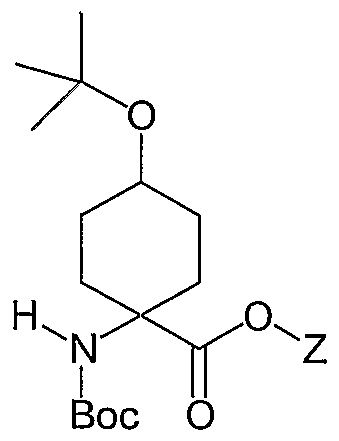
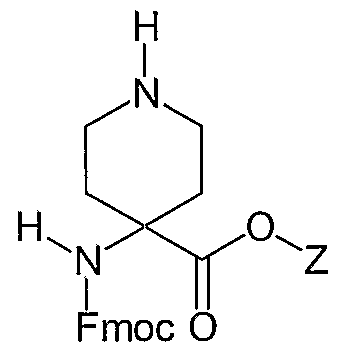
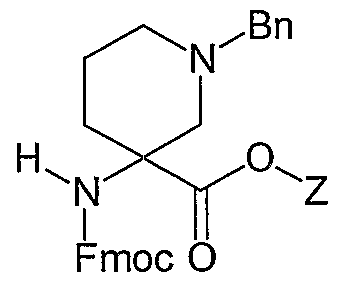
  • FIGS. 1-8 provide structures for a variety of compounds of the present invention.
  • the present invention provides quaternary amino acid templates which are represented by the formula:
  • Z represents the residue of a solid polymer support.
  • Z comprises the Merrifield resin, hydroxymethyl resin, Wang resin, aminomethyl resin, SASRIN resin, TentaGel S AC resin, TentaGel PHB resin, or TentaGel S Nli resin.
  • Particularly preferred embodiments are those in which Z comprises the Merrifield resin or the Wang resin.
  • L 1 represents a divalent linkage comprising a divalent group of the formula -0-, -NH-, or -0-CH 2 -C 6 H 4 -CH 2 0-.
  • L 1 comprises -O- or -NH-.
  • L 2 represents a divalent linkage comprising an alkylene, alkenylene, alkynylene, or a direct single bond.
  • L 2 comprises methylene, ethylene, or a direct single bond. More preferably, L 2 comprises -CH 2 -, -CH 2 CH 2 -, or a direct single bond.
  • L 3 represents a divalent linkage comprising an alkylene, alkenylene, alkynylene, or a direct single bond.
  • L comprises methylene, ethylene, or a direct single bond. More preferably, L 3 comprises -CH 2 -, -CH 2 CH 2 -, or a direct single bond.
  • L 4 represents a divalent linkage comprising alkylene, -O-, -S-, -C(O)-, -
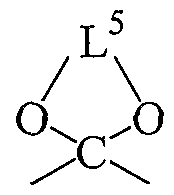
  • L 5 comprises -CH 2 CH 2 - or -CH 2 CH 2 CH 2 -.
  • L 4 comprises lower alkylene, -0-, -S-, -C(O)-,
  • L 4 comprises -CH 2 -, -O-
  • K comprises -N- or -CH-.
  • the groups L 2 , L 3 , L 4 , E, and K are chosen to comprise a ring with 3 to 8 members.
  • PG represents a group comprising a hydrogen or an amino protecting group.
  • PG comprises hydrogen, benzyloxycarbonyl, 9-fluorenylmethoxycarbonyl, allyloxycarbonyl, phenyl, benzyl or t-butoxycarbonyl. More preferably, PG comprises hydrogen, benzyloxycarbonyl, 9-fluorenylmethoxycarbonyl, or t- butoxycarbonyl.
  • R 1 represents a group comprising alkyl, alkenyl, alkynyl, cycloalkyl, heterocyclyl, aryl, heteroaryl, hydrogen, halo, -O-G 3 , -O-G 4 , -G 3 , -G 4 , or -N(G 3 )G 4 , in which G 3 and G independently represent groups comprising
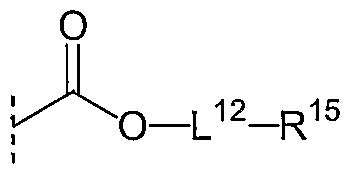
  • L 7 , L 8 , L 0 , L 10 , L 1 1 , L 19 independently represent groups comprising alkylene, alkenylene, alkynylene, cycloalkylene, cycloalkenylene, arylene, heterocyclylene, heteroarylene, fused cycloalkylarylene, fused cycloakylheteroarylene, fused heterocyclylarylene, fused heterocyclylheteroarylene , or a direct bond; and R 10 , R 11 , R 12 , R 13 , R 14 , R 5 independently represent groups comprising alkyl, alkenyl, alkynyl, cycloalkyl, cycloalkenyl, heterocyclyl, heteroaryl, aryl, fused cycloalkylaryl, fused cycloakylheteroaryl, fused heterocyclylaryl, fused heterocyclylheteroaryl, -NR 18 R 19 , -OR 18 ,
  • R 1 comprises alkyl, alkenyl, alkynyl, cycloalkyl, heterocyclyl, aryl, heteroaryl, hydrogen, halo, -O-G 3 , -O-G 4 , -G 3 , -G 4 , or-N(G 3 )G 4 , in which G 3 and G 4 independently represent groups comprising i— L 7 -R 10 o
  • L 7 , L 8 , L 10 , L 11 , L 12 independently represent groups comprising alkylene, alkenylene, alkynylene, cycloalkylene, cycloalkenylene, arylene, heterocyclylene, heteroarylene, fused cycloalkylarylene, fused cycloakylheteroarylene, fused heterocyclylarylene, fused heterocyclylheteroarylene, or a direct bond; and R 10 , R 11 , R 13 , R 14 , R 15 independently represent groups comprising alkyl, alkenyl, alkynyl, cycloalkyl, cycloalkenyl, heterocyclyl, heteroaryl, aryl, fused cycloalkylaryl, fused cycloakylheteroaryl, fused heterocyclylaryl, fused heterocyclylheteroaryl, -NR I8 R 19 , -OR 18 , -SR 18 , or hydrogen, where
  • L 8 -R 11 where L 7 , L 8 independently represent groups comprising alkylene, alkenylene, alkynylene, cycloalkylene, cycloalkenylene, arylene, heterocyclylene, heteroarylene, fused cycloalkylarylene, fused cycloakylheteroarylene, fused heterocyclylarylene, fused heterocyclylheteroarylene, or a direct bond; and R 10 , R 11 independently represent groups comprising alkyl, alkenyl, alkynyl, cycloalkyl, cycloalkenyl, heterocyclyl, heteroaryl, aryl, fused cycloalkylaryl, fused cycloakylheteroaryl, fused heterocyclylaryl, fused heterocyclylheteroaryl, -NR R , OR , SR , or hydrogen, where R and R independently represent groups comprising hydrogen, alkyl, alkynyl, alkenyl,
  • R represents a group comprising alkyl, alkenyl, alkynyl, cycloalkyl, heterocyclyl, aryl, heteroaryl, hydrogen, halo, -O-G 3 , -O-G 4 , -G 3 , -G 4 , or -N(G 3 )G , in which
  • L , L , L , L , L independently represent groups comprising alkylene, alkenylene, alkynylene, cycloalkylene, cycloalkenylene, arylene, heterocyclylene, heteroarylene, fused cycloalkylarylene, fused cycloakylheteroarylene, fused heterocyclylarylene, fused heterocyclylheteroarylene , or a direct bond; and R 10 , R 11 , R 12 , R 13 , R 14 , R 15 independently represent groups comprising alkyl, alkenyl, alkynyl, cycloalkyl, cycloalkenyl, heterocyclyl, heteroaryl, aryl, fused cycloalkylaryl, fused cycloakylheteroaryl, fused heterocyclylaryl, fused heterocyclylheteroaryl, -NR 18 R 19 , -OR 18 , -SR 18 , or hydrogen
  • R 2 comprises alkyl, alkenyl, alkynyl, cycloalkyl, heterocyclyl, aryl, heteroaryl, hydrogen, halo, -O-G 3 , -O- G 4 , -G , -G , or -N(G 3 )G 4 , in which G 3 and G independently represent groups comprising
  • L , L , L , L independently represent groups comprising alkylene, alkenylene, alkynylene, cycloalkylene, cycloalkenylene, arylene, heterocyclylene, heteroarylene, fused cycloalkylarylene, fused cycloakylheteroarylene, fused heterocyclylarylene, fused heterocyclylheteroarylene, or a direct bond; and R 10 , R u , R 13 , R 1 , R 15 independently represent groups comprising alkyl, alkenyl, alkynyl, cycloalkyl, cycloalkenyl, heterocyclyl, heteroaryl, aryl, fused cycloalkylaryl, fused cycloakylheteroaryl, fused heterocyclylaryl, fused heterocyclylheteroaryl, -NR 18 R !
  • R 18 and R 19 independently represent groups comprise hydrogen, alkyl, alkynyl, alkenyl, cycloalkyl, cycloalkenyl, aryl, heterocyclyl, or heteroaryl. More preferably, R 2 comprises alkyl, alkenyl, alkynyl, cycloalkyl, heterocyclyl, aryl, heteroaryl, hydrogen, or -G , in which G 5 comprises l— L 7 -R 10 .
  • L 7 , L 8 , L 12 independently represent groups comprising alkylene, alkenylene, alkynylene, cycloalkylene, cycloalkenylene, arylene, heterocyclylene, heteroarylene, fused cycloalkylarylene, fused cycloakylheteroarylene, fused heterocyclylarylene, fused heterocyclylheteroarylene, or a direct bond; and R 10 , R 11 , R 15 independently represent groups comprising alkyl, alkenyl, alkynyl, cycloalkyl, cycloalkenyl, heterocyclyl, heteroaryl, aryl, fused cycloalkylaryl, fused cycloakylheteroaryl, fused heterocyclylaryl, fused heterocyclylheteroaryl, -NR 18 R 19 , -OR 18 , -SR 18 , or hydrogen, where R 18 and R 19 independently represent groups comprising hydrogen, alkyl, al
  • R 2 comprises hydrogen, benzyl, benzyloxycarbonyl, 9-fluorenylmethoxycarbonyl, or t-butoxycarbonyl.
  • R 1 and R 9 may be taken together to constitute a cycloalkyl or heterocyclyl ring, or,
  • L comprises a direct bond
  • R and R may be taken together to constitute a fused aryl or heteroaryl ring.
  • amino acid templates of the present invention are represented by formula (la):
  • L 4 comprises -CH 2 -, -CH 2 CH 2 -, or a direct single bond
  • L 5 comprises -CH 2 CH - or -CH CH 2 CH 2 -
  • PG comprises hydrogen, benzyloxycarbonyl, 9-fluorenylmethoxycarbonyl, or t-butoxycarbonyl
  • R 1 and R 2 independently represent groups comprising alkyl, alkenyl, alkynyl, cycloalkyl, heterocyclyl, aryl, heteroaryl, hydrogen, halo, -O-G 3 , -O-G 4 , -G 3 , -G 4 , or -N(G 3 )G 4 , where R 1 and R 2 may be taken together to constitute a cycloalkyl or heterocyclyl ring, G 3 and G independently represent groups comprising r— L 7 -R 10 .
  • L , L , L , L independently represent groups comprising alkylene, alkenylene, alkynylene, cycloalkylene, cycloalkenylene, arylene, heterocyclylene, heteroarylene, fused cycloalkylarylene, fused cycloakylheteroarylene, fused heterocyclylarylene, fused heterocyclylheteroarylene, or a direct bond; and R 10 , R 11 , R , R , R 15 independently represent groups comprising alkyl, alkenyl, alkynyl, cycloalkyl, cycloalkenyl, heterocyclyl, heteroaryl, aryl, fused cycloalkylaryl, fused cycloakylheteroaryl, fused heterocyclylaryl, fused heterocyclylheteroaryl, -NR 18 R 19 , -OR 18 , -SR 18 , or hydrogen, where R 18
  • amino acid templates of the present invention are represented by formula (lb):
  • L 3 comprises -CH 2 -;
  • L 4 comprises a -CH 2 -;
  • E and K independently comprise -CH-;
  • PG comprises hydrogen, benzyloxycarbonyl, 9-fluorenylmethoxycarbonyl, or t-butoxycarbonyl; and
  • R 1 and R 2 independently comprise hydrogen.
  • the amino acid templates of the present invention in which Z comprises the Wang resin, are represented by the formulae:
  • amino acid templates of the present invention in which Z comprises the Merrifield resin, are represented by the formulae:
  • amino acid templates of the present invention are represented by formula (lc): (lc)
  • L comprises -CH 2 -; L comprises ⁇ ⁇ ; L comprises -CH 2 CH 2 -; E and K independently comprise -CH-; PG comprises hydrogen, benzyloxycarbonyl, 9-fluorenylmethoxycarbonyl, or t-butoxycarbonyl; and R 1 and R 2 independently comprise hydrogen.
  • amino acid templates of the present invention in which Z comprises the Wang resin, are represented by the formulae:
  • amino acid templates of the present invention in which Z comprises the Merrifield resin, are represented by the formulae:
  • amino acid templates of the present invention are represented by the formula (Id):
  • Z comprises the Wang or Merrifield resin
  • L 1 comprises -0-
  • L 2 comprises - CH 2 CH 2 -
  • L 3 comprises -CH 2 -
  • L 4 comprises a direct single bond
  • E comprises -CH-
  • K comprises -CH-
  • R 2 comprises H
  • R 1 comprises -OG 3 where G 3 is r-L 7 -R 10 , or o l L 8 -R R 11 ,-
  • L independently represent groups comprising alkylene, alkenylene, alkynylene, cycloalkylene, cycloalkenylene, arylene, heterocyclylene, heteroarylene, fused cycloalkylarylene, fused cycloakylheteroarylene, fused heterocyclylarylene, fused heterocyclylheteroarylene, or a direct bond; and R 10 , R 11 independently represent groups comprising alkyl, alkenyl, alkynyl, cycloalkyl, cycloalkenyl, heterocyclyl, heteroaryl, aryl, fused cycloalkylaryl, fused cycloakylheteroaryl, fused heterocyclylaryl, fused heterocyclylheteroaryl, -NR 18 R 19 , OR 18 , SR 18 , or hydrogen, where R 18 and R 19 independently represent groups comprising hydrogen, alkyl, alkynyl, alkenyl,
  • Z comprises the Wang or Merrifield resm
  • L comprises -0-
  • L comprises - CH 2 CH 2 -
  • L 3 comprises -CH 2 -
  • L 4 comprises a direct single bond
  • E and K independently comprise -CH-
  • PG comprises hydrogen, benzyloxycarbonyl, 9-fluorenylmethoxycarbonyl, or t-butoxycarbonyl
  • R comprises -OH
  • R comprises hydrogen.
  • amino acid templates of the present invention in which Z comprises the Wang resin, are represented by the formulae:
  • amino acid templates of the present invention in which Z comprises the Merrifield resin, are represented by the formulae:
  • amino acid templates of the present invention are represented by formula (lg):
  • Z comprises the Wang or Merrifield resin
  • L 1 comprises -0-
  • L 2 comprises -CH 2 CH 2 -
  • L 3 comprises -CH 2 -
  • L 4 comprises a direct single bond
  • E and K independently comprise -CH-
  • PG comprises hydrogen, benzyloxycarbonyl, 9-fluorenylmethoxycarbonyl, or t-butoxycarbonyl
  • R 1 comprises -O-tert-butyl
  • R 2 comprises hydrogen.
  • amino acid templates of the present invention in which Z comprises the Wang resin, are represented by the formulae:
  • amino acid templates of the present invention in which Z represents the Merrifield resin, are represented by the formulae:
  • amino acid templates of the present invention are represented by formula (lh):
  • L in which Z comprises the Wang or Merrifield resin; L comprises -O-; L comprises -CH 2 -; L 3 comprises -CH 2 -; L 4 comprises a direct single bond; E and K independently comprise -CH-; PG comprises hydrogen, benzyloxycarbonyl, 9-fluorenylmethoxy-carbonyl, or t- butoxycarbonyl; R 1 comprises -O-G 3 ; and R 2 comprises hydrogen, where G 3 represents a group comprising
  • L 8 -R 11 where L 7 , L 8 independently represent groups comprising independently, alkylene, alkenylene, alkynylene, cycloalkylene, cycloalkenylene, arylene, heterocyclylene, heteroarylene, fused cycloalkylarylene, fused cycloakylheteroarylene, fused heterocyclylarylene, fused heterocyclylheteroarylene, or a direct bond; and R 10 , R 1 independently represent groups comprising alkyl, alkenyl, alkynyl, cycloalkyl, cycloalkenyl, heterocyclyl, heteroaryl, aryl, fused cycloalkylaryl, fused cycloakylheteroaryl, fused heterocyclylaryl, fused heterocyclylheteroaryl, -NR 38 R 19 , -OR 18 , -SR 18 , or hydrogen, where R 18 and R 19 independently represent groups comprising hydrogen, alkyl,
  • amino acid templates of the present invention are represented by the formula (li):
  • L 1 comprises -0-;
  • L 2 comprises -CH 2 -
  • L 3 comprises -CH 2 -;
  • L 4 comprises a direct single bond;
  • E and K independently comprise -CH-;
  • PG comprises hydrogen, benzyloxycarbonyl, 9-fluorenylmethoxy-carbonyl, or t-
  • R comprises -OH; and R comprises hydrogen.
  • amino acid templates of the present invention in which Z comprises the Wang resin, are represented by the formulae:
  • amino acid templates of the present invention in which Z comprises the Merrifield resin, are represented by the formulae:
  • amino acid templates of the present invention are represented by the formula (lj):
  • L 1 comprises -0-;
  • L 2 comprises -CH 2 -;
  • L comprises -CH 2 -;
  • L 4 comprises a direct single bond;
  • E and K independently comprise -CH-;
  • PG comprises hydrogen, benzyloxycarbonyl, 9-fluorenylmethoxy-carbonyl, or t- butoxycarbonyl;
  • R 1 comprises -O-tert-butyl; and
  • R 2 comprises hydrogen.
  • amino acid templates of the present invention in which Z comprises the Wang resin, are represented by the formulae:
  • amino acid templates of the present invention in which Z comprises the Merrifield resin, are represented by the formulae:
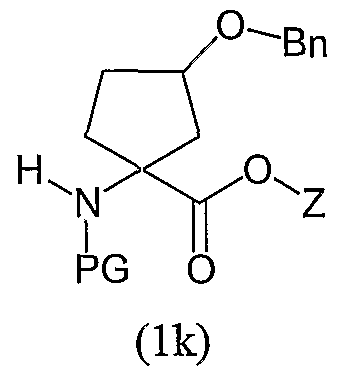
  • amino acid templates of the present invention are represented by the formula (Ik):
  • Z comprises the Wang or Merrifield resin
  • L 1 comprises -0-
  • L 2 comprises -CH 2 -
  • L comprises -CH 2 -
  • L comprises a direct single bond
  • E and K independently comprise
  • PG comprises hydrogen, benzyloxycarbonyl, 9-fluorenylmethoxy-carbonyl, or t- butoxycarbonyl; R 1 comprises -O-benzyl; and R 2 comprises hydrogen.
  • amino acid templates of the present invention in which Z comprises the Wang resin, are represented by the formulae:
  • amino acid templates of the present invention in which Z comprises the Merrifield resin, are represented by the formulae:
  • amino acid templates of the present invention are represented by formula (la):
  • G , -G , or -N(G )G where R and R may be taken together to constitute a cycloalkyl or heterocyclyl ring, and G 3 and G 4 independently represent groups comprising r— L 7 -R 1 °.
  • L 7 , L 8 , L 10 , L , L 12 independently represent groups comprising alkylene, alkenylene, alkynylene, cycloalkylene, cycloalkenylene, arylene, heterocyclylene, heteroarylene, fused cycloalkylarylene, fused cycloakylheteroarylene, fused heterocyclylarylene, fused heterocyclylheteroarylene, or a direct bond; and R 10 , R 11 , R 13 , R 14 , R 15 independently represent groups comprising alkyl, alkenyl, alkynyl, cycloalkyl, cycloalkenyl, heterocyclyl, heteroaryl, aryl, fused cycloalkylaryl, fused cycloakylheteroaryl, fused heterocyclylaryl, fused heterocyclylheteroaryl, -NR 18 R 19 , -OR 18 , -SR 18 , or hydrogen, where R 18
  • Z comprises the Wang or Merrifield resin
  • L 1 comprises -0-
  • L 2 comprises -CH 2 -;
  • L 3 comprises -CH 2 -; L comprises a -O-; E and K independently comprise -CH-; PG comprises hydrogen, benzyloxycarbonyl, 9-fluorenylmethoxycarbonyl, or t-butoxycarbonyl; and R 1 and R 2 independently comprise hydrogen.
  • amino acid templates of the present invention in which Z comprises the Wang resin, are represented by the formulae:
  • amino acid templates of the present invention in which Z comprises the Merrifield resin, are represented by the formulae:
  • amino acid templates of the present invention are represented by formula (lm):
  • Z comprises the Wang or Merrifield resin
  • L comprises -0-
  • L 2 comprises -CH 2 -
  • L 3 comprises -CH 2 -
  • L 4 comprises a -S-
  • E and K independently comprise -CH-
  • PG comprises hydrogen, benzyloxycarbonyl, 9-fluorenylmethoxycarbonyl, or t-butoxycarbonyl
  • R 1 and R 2 independently comprise hydrogen.
  • amino acid templates of the present invention in which Z comprises the Merrifield resin, are represented by the formulae:
  • amino acid templates of the present invention are represented by formula (In):
  • L 3 comprises -CH 2 -;
  • L 4 comprises a -S(0) 2 -;
  • E and K independently comprise -CH-;
  • PG comprises hydrogen, benzyloxycarbonyl, 9-fluorenylmethoxycarbonyl, or t-butoxycarbonyl; and
  • R 1 and R 2 independently comprise hydrogen.
  • amino acid templates of the present invention in which Z comprises the Wang resin, are represented by the formulae:
  • amino acid templates of the present invention in which Z comprises the Merrifield resin, are represented by the formulae:
  • amino acid templates of the present invention are represented by formula (lo):
  • Z comprises the Me ⁇ ifield resin, hydroxymethyl resin, Wang resin, or aminomethyl resin
  • E comprises -CH-
  • L 1 comprises -O- or -N-
  • L 3 comprises -CH 2 CH 2 ⁇
  • L 4 comprises a direct single bond
  • PG comprises hydrogen, benzyloxycarbonyl, 9-fluorenylmethoxycarbonyl, or t- butoxycarbonyl
  • R 1 comprises alkyl, alkenyl, alkynyl, cycloalkyl, heterocyclyl, aryl, heteroaryl, hydrogen, halo, -O-G , -G , or -N(G )G where G and G independently represent groups comprising l— L 7 -R 10 .
  • L 7 , L r ⁇ , L 10 , L 1 1 , L 19 independently represent groups comprising alkylene, alkenylene, alkynylene, cycloalkylene, cycloalkenylene, arylene, heterocyclylene, heteroarylene, fused cycloalkylarylene, fused cycloakylheteroarylene, fused heterocyclylarylene, fused heterocyclylheteroarylene, or a direct bond; and R , R , R , R 1 , R 5 independently represent a group comprising alkyl, alkenyl, alkynyl, cycloalkyl, cycloalkenyl, heterocyclyl, heteroaryl, aryl, fused cycloalkylaryl, fused cycloakylheteroaryl, fused heterocyclylaryl, fused heterocyclylheteroaryl, -NR 18 R 19 , -OR 18 , -SR 18 , or hydrogen
  • R 2 comprises alkyl, alkenyl, alkynyl, cycloalkyl, heterocyclyl, aryl, heteroaryl, hydrogen, or -G 5 , where G 5 represents a group comprising ⁇ — L 7 -R 10 .
  • L 7 , L 8 , L 2 independently represent groups comprising alkylene, alkenylene, alkynylene, cycloalkylene, cycloalkenylene, arylene, heterocyclylene, heteroarylene, fused cycloalkylarylene, fused cycloakylheteroarylene, fused heterocyclylarylene, fused heterocyclylheteroarylene, or a direct bond; and R 10 , R 11 , R 15 independently represent groups comprising alkyl, alkenyl, alkynyl, cycloalkyl, cycloalkenyl, heterocyclyl, heteroaryl, aryl, fused cycloalkylaryl, fused cycloakylheteroaryl, fused heterocyclylaryl, fused heterocyclylheteroaryl, -NR 18 R 19 , -OR 18 , -SR 18 , or hydrogen, where R 1S and R 19 independently represent groups comprising alkylene, alken
  • PG comprises hydrogen, benzyloxycarbonyl, 9-fluorenylmethoxycarbonyl, or t- butoxycarbonyl
  • R 1 comprises hydrogen
  • R 2 comprises alkyl, alkenyl, alkynyl, cycloalkyl, heterocyclyl, aryl, heteroaryl, hydrogen, or-G 5 , where G 5 represents a group comprising
  • L 7 , L 8 , L 12 independently represent groups comprising alkylene, alkenylene, alkynylene, cycloalkylene, cycloalkenylene, arylene, heterocyclylene, heteroarylene, fused cycloalkylarylene, fused cycloakylheteroarylene, fused heterocyclylarylene, fused heterocyclylheteroarylene, or a direct bond; and R , R 11 , R 15 independently represent groups comprising alkyl, alkenyl, alkynyl, cycloalkyl, cycloalkenyl, heterocyclyl, heteroaryl, aryl, fused cycloalkylaryl, fused cycloakylheteroaryl, fused heterocyclylaryl, fused heterocyclylheteroaryl, -NR 18 R 19 , -OR 18 , -SR 18 , or hydrogen, where R 18 and R 19 independently represent groups comprising hydrogen, alkyl, alky
  • Z comprises the Wang or Merrifield resin
  • L 1 comp ⁇ ses -0-
  • L 9 comprises -CH 2 -
  • L 3 comprises -CH 2 CH 2 -
  • L 4 comprises a direct single bond
  • E comprises -CH
  • K comprises
  • PG comprises hydrogen, benzyloxycarbonyl, 9-fluorenylmethoxycarbonyl, or t-butoxycarbonyl; and R 1 and R 2 independently comprise hydrogen.
  • amino acid templates of the present invention in which Z comprises the Wang resin, are represented by the formulae:
  • amino acid templates of the present invention in which Z comprises the Merrifield resin, are represented by the formulae:
  • amino acid templates of the present invention are represented by formula (lr):
  • Z comprises the Wang or Merrifield resin
  • L 1 comprises -0-
  • L 9 comprises -CH 2 -
  • L 3 comprises -CH CH 2 -
  • L comprises a direct single bond
  • E comprises -CH
  • K comprises -N-
  • PG comprises hydrogen, benzyloxycarbonyl, 9-fluorenylmethoxycarbonyl, or t-butoxycarbonyl
  • R 1 comp ⁇ ses hydrogen
  • R 9 comprises 9-fluorenylmethoxycarbonyl.
  • the amino acid templates of the present invention are represented by the formula:
  • amino acid templates of the present invention in which Z comprises the Merrifield resin, are represented by the formula:
  • amino acid templates of the present invention are represented by fonmila (Is):
  • amino acid templates of the present invention in which Z comprises the Merrifield resin, are represented by the fonnulae:
  • amino acid templates of the present invention are represented by formula (It):
  • L comprises -CH 2 CH 2 -; L comprises a direct single bond; E comprises -CH; K comprises -N-; PG comprises hydrogen, benzyloxycarbonyl, 9-fluorenylmethoxycarbonyl, or t-butoxycarbonyl; R 1 comprises hydrogen; and R 2 comprises benzyloxycarbonyl. .
  • amino acid templates of the present invention in which Z comprises the Wang resin, are represented by the formula:
  • amino acid templates of the present invention in which Z comprises the Merrifield resin, are represented by the formula:
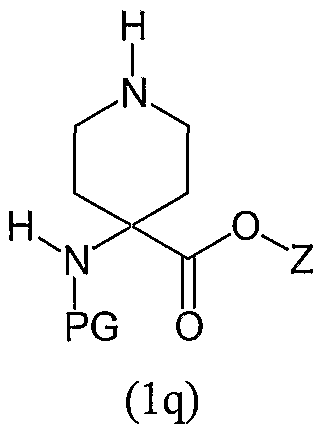
  • amino acid templates of the present invention are represented by formula (lv):
  • Z comprises the Merrifield resin, hydroxymethyl resin, Wang resin, or aminomethyl resin
  • E comprises -CH-
  • K comprises -N-
  • L 1 comprises -O- or - -
  • L 2 comprises -CH 2 -, -
  • L comprises -CH 2 -; L comprises -CH 2 - ; PG comprises hydrogen, benzyloxycarbonyl, 9-fluorenylmethoxycarbonyl, or t-butoxycarbonyl; R 1 comprises alkyl, alkenyl, alkynyl, cycloalkyl, heterocyclyl, aryl, heteroaryl, hydrogen, halo, - O-G 3 , -G 3 , or -N(G 3 )G 4 where G 3 and G 4 independently represent groups comprising
  • L 7 , L 8 , L 10 , L 11 , L 12 independently represent groups comprising alkylene, alkenylene, alkynylene, cycloalkylene, cycloalkenylene, arylene, heterocyclylene, heteroarylene, fused cycloalkylarylene, fused cycloakylheteroarylene, fused heterocyclylarylene, fused heterocyclylheteroarylene, or a direct bond; and R 10 , R 11 , R 13 , R 14 , R 15 independently represent a group comprising alkyl, alkenyl, alkynyl, cycloalkyl, cycloalkenyl, heterocyclyl, heteroaryl, aryl, fused cycloalkylaryl, fused cycloakylheteroaryl, fused heterocyclylaryl, fused heterocyclylheteroaryl, -NR 18 R 19 , -OR 18 , -SR 18 , or hydrogen,
  • R 2 comprises alkyl, alkenyl, alkynyl, cycloalkyl, heterocyclyl, aryl, heteroaryl, hydrogen, or -G 5 , where G 5 represents a group comprising i— L 7 -R 10 o
  • L 7 , L 8 , L 12 independently represent groups comprising alkylene, alkenylene, alkynylene, cycloalkylene, cycloalkenylene, arylene, heterocyclylene, heteroarylene, fused cycloalkylarylene, fused cycloakylheteroarylene, fused heterocyclylarylene, fused heterocyclylheteroarylene, or a direct bond; and R 10 , R 11 , R 5 independently represent groups comprising alkyl, alkenyl, alkynyl, cycloalkyl, cycloalkenyl, heterocyclyl, heteroaryl, aryl, fused cycloalkylaryl, fused cycloakylheteroaryl, fused heterocyclylaryl, fused heterocyclylheteroaryl, -NR 18 R 19 , -OR 18 , -SR 18 , or hydrogen, where R 18 and R 19 independently represent groups comprising hydrogen, alkyl, al
  • amino acid templates of the present invention are represented by fo ⁇ riula (lv):
  • Z comprises the Wang or Me ⁇ ifield resin
  • L 1 comprises -0-
  • L 2 comprises - CH 2 CH 2 -
  • L 3 comprises -CH 2 -
  • L 4 comprises -CH 2 -
  • E comprises -CH-
  • K comprises -N-;
  • PG comprises hydrogen, benzyloxycarbonyl, 9-fluorenylmethoxycarbonyl, or t- butoxycarbonyl;
  • R 1 comprises hydrogen; and
  • R 2 comprises alkyl, alkenyl, alkynyl, cycloalkyl, heterocyclyl, aryl, heteroaryl, hydrogen, or-G 5 , where G 5 represents a group comp ⁇ smg
  • L 7 , L 8 , L 12 independently represent groups comprising alkylene, alkenylene, alkynylene, cycloalkylene, cycloalkenylene, arylene, heterocyclylene, heteroarylene, fused cycloalkylarylene, fused cycloakylheteroarylene, fused heterocyclylarylene, fused heterocyclylheteroarylene, or a direct bond; and R 10 , R 11 , R 15 independently represent groups comprising alkyl, alkenyl, alkynyl, cycloalkyl, cycloalkenyl, heterocyclyl, heteroaryl, aryl, fused cycloalkylaryl, fused cycloakylheteroaryl, fused heterocyclylaryl, fused heterocyclylheteroaryl, -NR 18 R 19 , -OR 18 , -SR 18 , or hydrogen, where R 18 and R 19 independently represent groups comprising alkylene, alkeny
  • Z comprises the Wang or Mer ⁇ field resin; L comprises -0-; L comprises -
  • L 3 comprises -CH 2 -; L comprises -CH 2 -; E comprises -CH-; K comprises -N-; PG comprises hydrogen, benzyloxycarbonyl, 9-fluorenylmethoxycarbonyl, or t-butoxycarbonyl; and R 1 and R 2 independently comprise hydrogen.
  • amino acid templates of the present invention in which Z comprises the Wang resin, are represented by the formulae:
  • amino acid templates of the present invention in which Z comprises the Merrifield resin, are represented by the formulae:
  • amino acid templates of the present invention are represented by formula (lx):
  • amino acid templates of the present invention in which Z comprises the Merrifield resin, are represented by the formulae:
  • amino acid templates of the present invention are represented by for ⁇ iula (ly):
  • Z comprises the Wang or Me ⁇ ifield resm
  • L comprises -0-
  • L comprises - CH 2 CH 2 -
  • L 3 comprises -CH 2 -
  • L 4 comprises -CH 2 -
  • E comprises -CH-
  • K comprises -N-
  • PG comprises hydrogen, benzyloxycarbonyl, 9-fluorenylmethoxycarbonyl, or t-butoxycarbonyl
  • R 1 comprises hydrogen
  • R 2 comprises benzyl.
  • amino acid templates of the present invention in which Z comprises the Merrifield resin, are represented by the formulae:
  • amino acid templates of the present invention are represented by formula (lz):
  • Z comprises the Wang or Merrifield resin
  • L comprises -0-;
  • L comprises - CH 2 CH 2 -;
  • L 3 comprises -CH 2 -;
  • L 4 comprises -CH 2 -;
  • E comprises -CH-;
  • K comprises -N-;
  • PG comprises hydrogen, benzyloxycarbonyl, 9-fluorenylmethoxycarbonyl, or t-butoxycarbonyl;
  • R 1 comprises hydrogen; and R 2 comprises benzyloxycarbonyl.
  • amino acid templates of the present invention in which Z comprises the Wang resin, are represented by the formulae:
  • amino acid templates of the present invention in which Z comprises the Merrifield resin, are represented by the formulae:
  • the present invention provides quaternary amino acids which are represented by the formula:
  • L represents a divalent linkage comprising a divalent group of the formula -0-, -NH-, or -0-CH 2 -C 6 H 4 -CH 2 0-.
  • L 1 comprises -O- or -NH-.
  • L 2 represents a divalent linkage comprising an alkylene, alkenylene, alkynylene, or a direct single bond.
  • L 2 comprises methylene, ethylene, or a direct single bond. More preferably, L comprises -CH 2 -, -CH 2 CH 2 -, or a direct single bond.
  • L 3 represents a divalent linkage comprising an alkylene, alkenylene, alkynylene, or a direct single bond.
  • L 2 comprises methylene, ethylene, or a direct single bond. More preferably, L 3 comprises -CH 2 -, -CH 2 CH 2 -, or a direct single bond.
  • L 4 represents a divalent linkage comprising alkylene, -0-, -S-, -C(O)-, -
  • L 5 comprises -CH CH 2 - or -CH 2 CH 2 CH 2 -.
  • L comprises lower alkylene, -O-, -S-, -C(O)-,
  • L comprises -CH 2 -, -O-
  • K comprises -N- or -CH-.
  • the groups L 2 , L 3 , L 4 , E, and K are chosen to comprise a ring with 3 to 8 members.
  • the symbol PG represents a group comprising a hydrogen or an amino protecting group.
  • PG comprises hydrogen, benzyloxycarbonyl, 9-fluorenylmethoxycarbonyl, allyloxycarbonyl, phenyl, benzyl or t-butoxycarbonyl. More preferably, PG comprises hydrogen, benzyloxycarbonyl, 9-fluorenylmethoxycarbonyl, or t- butoxycarbonyl.
  • R 1 represents a group comprising alkyl, alkenyl, alkynyl, cycloalkyl, heterocyclyl, aryl, heteroaryl, hydrogen, halo, -O-G 3 , -O-G 4 , -G 3 , -G 4 , or -N(G 3 )G 4 , in which
  • L 7 , L 8 , L 9 , L 10 , L 11 , L 12 independently represent groups comprising alkylene, alkenylene, alkynylene, cycloalkylene, cycloalkenylene, arylene, heterocyclylene, heteroarylene, fused cycloalkylarylene, fused cycloakylheteroarylene, fused
  • R , R , R , R 14 , R 15 independently represent groups comprising alkyl, alkenyl, alkynyl, cycloalkyl, cycloalkenyl, heterocyclyl, heteroaryl, aryl, fused cycloalkylaryl, fused cycloakylheteroaryl, fused heterocyclylaryl, fused heterocyclylheteroaryl, -NR 18 R 19 , -OR 18 , -SR 18 , or hydrogen, where R 18 and R 19 independently represent groups comprising hydrogen, alkyl, alkynyl, alkenyl, cycloalkyl, cycloalkenyl, aryl, heterocyclyl, or heteroaryl.
  • R 1 comprises alkyl, alkenyl, alkynyl, cycloalkyl, heterocyclyl, aryl, heteroaryl, hydrogen, halo, -O-G 3 , -O-G 4 , -G 3 , -G 4 , or -N(G 3 )G 4 , in which G 3 and G 4 independently represent groups comprising
  • L 7 , L 8 , L 10 , L 11 , L 12 independently represent groups comprising alkylene, alkenylene, alkynylene, cycloalkylene, cycloalkenylene, arylene, heterocyclylene, heteroarylene, fused cycloalkylarylene, fused cycloakylheteroarylene, fused heterocyclylarylene, fused heterocyclylheteroarylene, or a direct bond; and R 10 , R 11 , R 13 , R 14 , R 15 independently represent groups comprising alkyl, alkenyl, alkynyl, cycloalkyl, cycloalkenyl, heterocyclyl, heteroaryl, aryl, fused cycloalkylaryl, fused cycloakylheteroaryl, fused heterocyclylaryl, fused heterocyclylheteroaryl, -NR 18 R 19 , -OR 18 , -SR 18 , or hydrogen, where R
  • L 8 -R 11 where L 7 , L 8 independently represent groups comprising alkylene, alkenylene, alkynylene, cycloalkylene, cycloalkenylene, arylene, heterocyclylene, heteroarylene, fused cycloalkylarylene, fused cycloakylheteroarylene, fused heterocyclylarylene, fused heterocyclylheteroarylene, or a direct bond; and R 10 , R 11 independently represent groups comprising alkyl, alkenyl, alkynyl, cycloalkyl, cycloalkenyl, heterocyclyl, heteroaryl, aryl, fused cycloalkylaryl, fused cycloakylheteroaryl, fused heterocyclylaryl, fused heterocyclylheteroaryl, -NR R , OR , SR , or hydrogen, where R and R independently represent groups comprising hydrogen, alkyl, alkynyl, alkenyl,
  • R " represents a group comprising alkyl, alkenyl, alkynyl, cycloalkyl, heterocyclyl, aryl, heteroaryl, hydrogen, halo, -O-G 3 , -O-G 4 , -G 3 , -G 4 , or -N(G 3 )G 4 , in which G 3 and G 4 independently represent groups comprising
  • L 7 , L 8 , L 9 , L 10 , L ⁇ , L 12 independently represent groups comprising alkylene, alkenylene, alkynylene, cycloalkylene, cycloalkenylene, arylene, heterocyclylene, heteroarylene, fused cycloalkylarylene, fused cycloakylheteroarylene, fused heterocyclylarylene, fused heterocyclylheteroarylene , or a direct bond; and R 10 , R 11 , R 12 , R 13 , R 1 , R 15 independently represent groups comprising alkyl, alkenyl, alkynyl, cycloalkyl, cycloalkenyl, heterocyclyl, heteroaryl, aryl, fused cycloalkylaryl, fused cycloakylheteroaryl, fused heterocyclylaryl, fused heterocyclylheteroaryl, -NR R , -OR , -SR
  • R 2 comprises alkyl, alkenyl, alkynyl, cycloalkyl, heterocyclyl, aryl, heteroaryl, hydrogen, halo, -O-G 3 , -O- G 4 , -G 3 , -G 4 , or -N(G 3 )G 4 , in which G 3 and G 4 independently represent groups comprising
  • L , L , L , L independently represent groups comprising alkylene, alkenylene, alkynylene, cycloalkylene, cycloalkenylene, arylene, heterocyclylene, heteroarylene, fused cycloalkylarylene, fused cycloakylheteroarylene, fused heterocyclylarylene, fused heterocyclylheteroarylene, or a direct bond; and R 10 , R 11 , R 13 , R 14 , R 15 independently represent groups comprising alkyl, alkenyl, alkynyl, cycloalkyl, cycloalkenyl, heterocyclyl, heteroaryl, aryl, fused cycloalkylaryl, fused cycloakylheteroaryl, fused heterocyclylaryl, fused heterocyclylheteroaryl, -NR 18 R 19 , -OR 18 , -SR 18 , or hydrogen, where
  • R 2 comprises alkyl, alkenyl, alkynyl, cycloalkyl, heterocyclyl, aryl, heteroaryl, hydrogen, or -G 5 , in which G 5 comprises l— L 7 -R 10 , o
  • L 7 , L 8 , L 12 independently represent groups comprising alkylene, alkenylene, alkynylene, cycloalkylene, cycloalkenylene, arylene, heterocyclylene, heteroarylene, fused cycloalkylarylene, fused cycloakylheteroarylene, fused heterocyclylarylene, fused heterocyclylheteroarylene, or a direct bond; and R 10 , R 11 , R 15 independently represent groups comprising alkyl, alkenyl, alkynyl, cycloalkyl, cycloalkenyl, heterocyclyl, heteroaryl, aryl, fused cycloalkylaryl, fused cycloakylheteroaryl, fused heterocyclylaryl, fused heterocyclylheteroaryl, -NR 18 R 19 , -OR 18 , -SR 18 , or hydrogen, where R 18 and R 19
  • R and R may be taken together to constitute a cycloalkyl or heterocyclyl ring, or,
  • L comprises a direct bond
  • R and R may be taken together to constitute a fused aryl or heteroaryl ring.
  • the various functional groups represented should be understood to have a point of attachment at the functional group having the hyphen.
  • the point of attachment is the oxygen atom; an example would be tert-butoxy.
  • the point of attachment is the carbonyl carbon.
  • Certain compounds of the present invention possess asymmetric carbon atoms (optical centers); the racemates, diastereomers, geometric isomers and individual isomers are all intented to be encompassed within the scope of the present invention.
  • the compounds of the present invention may also contain unnatural proportions of atomic isotopes at one or more of the atoms that constitute such compounds.
  • the compounds may be radiolabeled with radioactive isotopes, such as, for example, tritium ( 3 H), iodine-125 ( 125 I) or carbon-14 ( 14 C). All isotopic variations of the compounds of the present invention, whether radioactive or not, are intended to be encompassed within the scope of the present invention.
  • the term "optionally” means that the subsequently described event(s) may or may not occur, and includes both event(s) which occur and events that do not occur.
  • lower refers to a group having between one and six carbons.
  • alkyl refers to a straight or branched chain hydrocarbon having one to ten carbon atoms, optionally substituted with substituents and with multiple degrees of substitution being allowed.
  • alkyl as used herein include, but are not limited to, methyl, n-butyl, n-pentyl, isobutyl, and isopropyl, and the like.
  • alkylene refers to a straight or branched chain divalent hydrocarbon radical having one to ten carbon atoms, optionally substituted with substituents and with multiple degrees of substitution being allowed. Examples of “alkylene” as used herein include, but are not limited to, methylene, ethylene, and the like.
  • halogen or halo includes iodine, bromine, chlorine and fluorine.
  • alkenyl refers to a hydrocarbon radical having from two to ten carbons and at least one carbon - carbon double bond, optionally substituted with substituents and with multiple degrees of substitution being allowed.
  • alkenylene refers to a straight or branched chain divalent hydrocarbon radical having from two to ten carbon atoms and one or more carbon - carbon double bonds, optionally substituted with substituents and with multiple degrees of substitution being allowed.
  • alkenylene as used herein include, but are not limited to, ethene-l,2-diyl, propene- 1,3-diyl, and the like.
  • alkynyl refers to a hydrocarbon radical having from two to ten carbons and at least one carbon - carbon triple bond, optionally substituted with substituents and with multiple degrees of substitution being allowed.
  • alkynylene refers to a straight or branched chain divalent hydrocarbon radical having from two to ten carbon atoms and one or more carbon - carbon triple bonds, optionally substituted with substituents and with multiple degrees of substitution being allowed.
  • alkynylene as used herein include, but are not limited to, ethyne-l,2-diyl, propyne- 1,3-diyl, and the like.
  • cycloalkyl refers to an alicyclic hydrocarbon group with one or more degrees of unsaturation, having from three to twelve carbon atoms, optionally substituted with substituents and with multiple degrees of substitution being allowed.
  • cycloalkyl examples include, but are not limited to, cyclopropyl, cyclobutyl, cyclopentyl, cyclohexyl, cycloheptyl, or cyclooctyl, and the like.
  • cycloalkylene refers to an no ⁇ aromatic alicyclic divalent hydrocarbon radical having from three to twelve carbon atoms and optionally possessing one or more degrees of unsaturation, optionally substituted with substituents and with multiple degrees of substitution being allowed.
  • cycloalkylene examples include, but are not limited to, cyclopropyl- 1,1-diyl, cyclopropyl- 1,2-diyl, cyclobutyl- 1,2-diyl, cyclopentyl- 1,3-diyl, cyclohexyl- 1,4-diyl, cycloheptyl- 1,4-diyl, or cyclooctyl- 1,5-diyl, and the like.
  • heterocyclic or the term “heterocyclyl” refers to a three to twelve-membered heterocyclic ring optionally having one or more degrees of unsaturation containing one or more heteroatomic substitutions selected from S, SO, SQ, O, or N, optionally substituted with substituents and with multiple degrees of substitution being allowed.
  • a ring may be optionally fused to one or more of another "heterocyclic" ring(s) or cycloalkyl ring(s).
  • heterocyclic examples include, but are not limited to, tetrahydrofuran, 1,4-dioxane, 1,3-dioxane, piperidine, pyrrolidine, morpholine, piperazine, and the like.
  • heterocyclylene refers to a three to twelve-membered heterocyclic ring diradical optionally having one or more degrees of unsaturation containing one or more heteroatoms selected from S, SO, SO2, O, or N, optionally substituted with substituents and with multiple degrees of substitution being allowed.
  • a ring may be optionally fused to one or more benzene rings or to one or more of another "heterocyclic" rings or cycloalkyl rings.
  • heterocyclylene examples include, but are not limited to, tetrahydrofuran-2,5-diyl, morpholine-2,3-diyl, pyran-2,4-diyl, l,4-dioxane-2,3-diyl, 1,3- dioxane-2,4-diyl, piperidine-2,4-diyl, piperidine- 1,4-diyl, pyrrolidine-l,3-diyl, morpholine-
  • aryl refers to a benzene ring or to an optionally substituted benzene ring system fused to one or more optionally substituted benzene rings, optionally substituted with substituents and with multiple degrees of substitution being allowed.
  • aryl include, but are not limited to, phenyl, 2-naphthyl, 1 -naphthyl, 1- anthracenyl, and the like.
  • arylene refers to a benzene ring diradical or to a benzene ring system diradical fused to one or more optionally substituted benzene rings, optionally substituted with substituents and with multiple degrees of substitution being allowed.
  • arylene examples include, but are not limited to, benzene- 1,4-diyl, naphthalene- 1,8-diyl, and the like.
  • heteroaryl refers to a five- to seven - membered aromatic ring, or to a polycyclic heterocyclic aromatic ring, containing one or more nitrogen, oxygen, or sulfur heteroatoms, where N-oxides and sulfur monoxides and sulfur dioxides are permissible heteroaromatic substitutions, optionally substituted with substituents and with multiple degrees of substitution being allowed.
  • one or more of the rings may contain one or more heteroatoms.
  • heteroaryl used herein are furan, thiophene, py ⁇ ole, imidazole, pyrazole, triazole, tetrazole, thiazole, oxazole, isoxazole, oxadiazole, thiadiazole, isothiazole, pyridine, pyridazine, pyrazine, pyrimidine, quinoline, isoquinoline, benzofuran, benzothiophene, indole, and indazole, and the like.
  • heteroarylene refers to a five- to seven - membered aromatic ring diradical, or to a polycyclic heterocyclic aromatic ring diradical, containing one or more nitrogen, oxygen, or sulfur heteroatoms, where N-oxides and sulfur monoxides and sulfur dioxides are permissible heteroaromatic substitutions, optionally substituted with substituents and with multiple degrees of substitution being allowed.
  • N-oxides and sulfur monoxides and sulfur dioxides are permissible heteroaromatic substitutions, optionally substituted with substituents and with multiple degrees of substitution being allowed.
  • one or more of the rings may contain one or more heteroatoms.
  • heteroarylene used herein are furan-2,5-diyl, thiophene-2,4-diyl, 1,3,4- oxadiazole-2,5-diyl, l,3,4-thiadiazole-2,5-diyl, l,3-thiazole-2,4-diyl, l,3-thiazole-2,5-diyl, pyridine-2,4-diyl, pyridine-2,3-diyl, pyridine-2,5-diyl, pyrimidine-2,4-diyl, quinoline-2,3- diyl, and the like.
  • fused cycloalkylaryl refers to a cycloalkyl group fused to an aryl group, the two having two atoms in common.
  • fused cycloalkylaryl used herein include 1-indanyl, 2-indanyl, l-(l,2,3,4-tetrahydronaphthyl), and the like.
  • fused cycloalkylheteroaryl refers to a cycloalkyl group fused to an heteroaryl group, the two having two atoms in common. Examples of “fused cycloalkylheteroaryl” used herein include 5-aza-l-indanyl and the like.
  • fused heterocyclylaryl refers to a heterocyclyl group fused to an aryl group, the two having two atoms in common.
  • fused heterocyclylaryl used herein include 2,3-benzodioxin and the like.
  • fused heterocyclylheteroaryl refers to a heterocyclyl group fused to an heteroaryl group, the two having two atoms in common.
  • fused heterocyclylheteroaryl examples include 3,4-methylenedioxypyridine and the like.
  • direct bond refers to the direct joining of the substituents flanking (preceding and succeeding) the variable.
  • direct single bond refers to the direct joining of substituents flanking the variable through a single bond.
  • direct double bond refers to refers to the direct joining of substituents flanking the variable through a double bond.
  • PG represents an amino protecting group.
  • amino protecting group refers to substituents of the amino group commonly employed to block or protect the amino functionality while reacting other functional groups on the compound. Examples of such ammo-protecting groups include the formyl group, the trityl group, the phthahmido group, the trichloroacetyl group, the chloroacetyl, bromoacetyl and iodoacetyl groups, urethane-type blocking groups such as benzyloxycarbonyl (“CBZ”), 4-phenylbenzyloxycarbonyl, 2-methylbenzyloxycarbonyl, 4-methoxybenzyloxycarbonyl, 4- fluorobenzyloxycarbonyl, 4-chlorobenzyloxycarbonyl, 3-chlorobenzyloxycarbonyl, 2- chlorobenzyloxycarbonyl, 2,4-dichlorobenzyloxycarbonyl, 4-bromo
  • CBZ benzyloxycarbonyl
  • amino-protecting group employed is not critical so long as the derivatized amino group is stable to the condition of subsequent reaction(s) on other positions of the compound of formula 1 and can be removed at the desired point without disrupting the remainder of the molecule.
  • Prefe ⁇ ed amino-protecting groups are the t-butoxycarbonyl, 9- fluorenylmethoxycarbonyl, and the benzyloxycarbonyl groups.
  • Similar amino-protecting groups used in the cephalosporin, penicillin and peptide art are also embraced by the above terms. Further examples of groups refe ⁇ ed to by the above terms are described by J. W. Barton, "Protective Groups In Organic Chemistry", J. G. W.
  • protected amino defines an amino group substituted with an amino-protecting group discussed above.
  • Chemical Library or “array” comprises an intentionally created collection of differing molecules which can be prepared synthetically and screened for biological activity in a variety of different formats (e.g., libraries of soluble molecules, libraries of molecules bound to a solid support).
  • the polymeric support referred to above as “Z” may be any known solid support having hydroxyl or amino functionality which enables the protected amino acid structure to be covalently bonded thereto.
  • solid support(s) includes an insoluble substrate that has been appropriately derivatized such that a chemical module can be attached to the surface of the substrate through standard chemical methods.
  • Solid supports include, but are not limited to, beads and particles, such as peptide synthesis resins. See, for example, Merrifield, B., J. Am. Chem. Soc. 55:2149-2154 (1963); U.S. Patent No. 4,631,211; Geysenet al, Proc. Natl. Acad. Sci. USA 57:3998-4002 (1984).
  • Solid supports can be comprised of many materials, limited primarily by the capacity of the material to be functionalized through synthetic methods. Examples of such materials include, but are not limited to, polymers, plastics, resins, polysaccharides, silicon or silica based materials, and membranes. Prefe ⁇ ed resins include Me ⁇ ifield resin, hydroxymethyl resin, Wang resin, aminomethyl resin (all available from various suppliers including, Advanced ChemTech, Novabiochem, etc.), SASRTN resin
  • the solid support can be purchased with suitable functionality already present such that a chemical module can be attached to the support surface (e.g., Novabiochem, Bachem Bioscience, Rapp Polymere). Alternatively, the solid support can be chemically modified such that a chemical module can be attached to the support surface. (Grant, "Synthetic Peptides: A User's Guide,” W. H. Freeman and Co (1992); Hermkens et al, Tetrahedron
  • the functional group on the solid support that permits the attachment of a chemical module will be an alcohol, an amine, an aldehyde, or an acid group.
  • Examples of chemical reactions that can be used to attach a chemical module to the support include, but are not limited to, nucleophihc displacement of a halide or other leaving group, etherification of an alcohol, esterification of an alcohol, amidation of an amine, acetylization of an aldehyde, and ketalization of a ketone.
  • the reaction used to attach the chemical module to the solid support will be an esterification of an alcohol, an amidation of an amine, or an acetylization of an aldehyde.
  • DCM dichloromethane
  • DIEA diisopropylethylamine
  • HOBt 1 -hydroxybenzotriazole
  • NMM N-methylmorpholine, 4-methylmorpholine
  • THF tetrahydrofuran
  • THP tetrahydropyranyl
  • TMSC1 trimethylsilyl chloride
  • the supported amino acids of the present invention are useful as templates in the synthesis of peptides and of amino acid containing compounds for drug discovery.
  • the supported amino acids of the invention are useful in the synthesis of large combinatorial libraries of peptides and other biologically active compounds which possess amino acid moieties of the present invention.
  • the templates of quaternary amino acids on solid supports of the present invention can be prepared using standard synthetic methods.
  • Schemes 1-7 illustrate general methods for the preparation of amino acid templates of the formula (1).
  • compounds of the present invention can be prepared by adding a 3 to 5 fold excess of amino acids of formula (2) to mixture of an appropriate resin, EDC, and HOBt in DMF.
  • the reaction mixture is agitated for over 24 h.
  • the liquid phase is removed in vacuo followed by washings of the resin with methanol and dichloromethane to give resin-bound amino acids of formula (1).
  • quaternary amino acids of formula (2a) containing a cyclopentene skeleton and an appropriate amino protecting group can be anchored to various resins via its carboxyl terminal.
  • a quaternary amino acid of the formula (2a) isadded to a polymeric support such as hydroxymethyl resin or aminomethyl, in a solution of EDC, HOBt, and TEA in DMF for 24 h. After shaking the reaction mixture for over 12 h, the mixture is washed with DMF, methanol, and dichloromethane to afford the desired resin-bound amino acid of formula (laa).
  • trifunctionalized quaternary amino acid templates of formula (lbb) can be prepared from the corresponding quaternary amino acid (2b) using the conditions described in Schemes 1 and 2.
  • An amino acid of the formula (2b) is treated with the hydroxymethyl resin, wang resin, or aminomethyl resin, in the presence of EDC, HOBt, and TEA in DMF for 24 h.
  • the reaction mixture is processed by removing unconsumed reactants and reagents in vacuo and washed sequentially with methanol, dichloromethane, ethyl acetate, and DMF.
  • the resulting product is dried under vacuum to yield an amino acid of formula (lbb).
  • epoxide containing amino acid derivatives of formula (2c) can be linked to an appropriate resin to give the amino acid template of formula (lcc) using similar reaction conditions as described above.
  • An epoxide containing amino acid derivative of formula (2c) is treated with a resin in the presence of EDC, HOBt, and TEA in DMF for 24 h.
  • the reaction mixture is processed by removing unconsumed reactants and reagents in vacuo and washed sequentially with methanol, dichloromethane, ethyl acetate, and DMF.
  • the resulting product is dried under vacuum to yield an amino acid of formula (lcc).
  • protected diol containing amino acids of the formula (2d) can be treated with aminomethyl or hydroxymethyl resin and EDC/HOBt/TEA in DMF for over 24 h.
  • the reaction mixture is processed by removing unconsumed reactants and reagents in vacuo and washed sequentially with DMF, methanol, ethyl acetate, and dichloromethane.
  • the resulting product is dried under vacuum to yield an amino acid template of formula (ldd).
  • a general procedure for determining the load of amino acids on the Wang resin begins with 325 mg of Wang resin loaded with a quaternary amino acid The loaded resin is charged to a small round bottom flask and 10 ml of 1 : 1 TFA/CH 2 Ct is added. The resulting mixture is stirred at ambient temp for 30 min and then the resin is filtered off and the filtrate is concentrated in vacuo and azeotroped with toluene (2 x 5ml). ! H NMR analysis is used to reveal the amount of quaternary amino acid originally loaded onto the Wang resin.
  • Amino Acid derivatives (2f) can betreated with hydroxymethyl resin and aminomethyl resin to give the corresponding resin-bound products of the formula (Iff).
  • quaternary amino acids of formula (2) are used to prepare the supported amino acid templates of the present invention.
  • quaternary amino acids of formula (2) can be prepared according to the general procedures outlined in Schemes 7 and 8.
  • Peptide intermediate (2) As shown in Scheme 8, amino acids of formula (2) can also be prepared using another general procedure.
  • an appropriate dibromoalkanol such as l,4-dibromo-2- butanol (3), is protected with a THP group to yield THP protected dibromoalkanol (4).
  • THP protected dibromoalkanol (4) Next, to a suspension of sodium hydride is added a solution ofN-(diphenylmethylene) glycme ethyl ester and the THP protected dibromoalkanol (4). After a standard work-up of the reaction mixture, the THP group is removed, and an intermediate quaternary amino ester (5) is obtained.
  • the intermediate quaternary amino ester (5) is protected with an amino protecting group to yield a protected quaternary amino ester (6).
  • the ester group is hydrolyzed and the amino protecting group is removed.
  • the free amine is protected again with an amino protecting group to yield a compound of formula (2f) which can be used to prepare the supported amino acid templates of the present invention.
  • the carboxylic acid of a compound of formula (2f) can be protected, followed by the addition of a tert-butyl group to the free alcohol and the removal of the carboxylic acid protecting group to yield a compound of formula (2g), which can be used to prepare the supported amino acid templates of the present invention.
  • Example 1 The following example illustrates the synthesis of 4-N-Fmoc-amino-4- carboxytetrahydropyran Me ⁇ ifield resin of the present invention.
  • Example 2 The following example illustrates the synthesis of 4-Boc-amino-4- carboxytetrahydropyran Me ⁇ ifield resin of the present invention.
  • Example 3 The following example illustrates the synthesis of 4-N-Fmoc-amino-4-N- carboxytetrahyrothiopyran Wang resin of the present invention.
  • Example 4 The following example illustrates the synthesis of 4-N-Boc-amino-4-N- carboxytefrahyrothiopyran Wang resin of the present invention.
  • Example 6 The following example illustrates the synthesis of 4-N-Boc-amino-4-N-carboxy-l,l- dioxotetrahyrothiopyran Wang resin of the present invention.
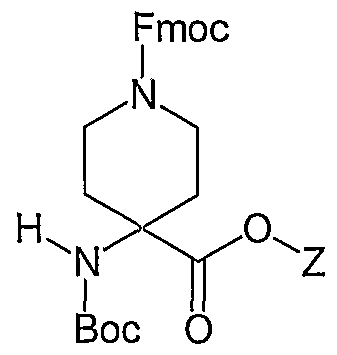
  • a coated (SIGMACOTE®) vial was charged with Merrifield resin (2.0 g, 2. Ommol active sites) and DMF (13 ml) followed by the Cesium salt of l-N-Fmoc-4-N-(Boc- amino)piperidme-4-carboxylic acid (2.0 mmol).
  • the mixture was placed in a 50° C sand bath on an orbital shaker for 20 hours.
  • the resin was then filtered in a fritted syringe and washed with DMF, 50% DMF/H 2 0, 50% H 2 0/MeOH, and MeOH (-40 ml each). The resin was suspended during each wash cycle prior to filtration. Drying in vacuo to a constant weight afforded l-N-Fmoc-4-N-(Boc-amino)piperidme-4-carboxylic acid Me ⁇ ifield resin. (30% loading typical).
  • Example 10 The following example illustrates the synthesis of N-Fmoc-amino-3- hydroxycyclopentyl carboxylic acid Merrifield resin of the present invention.
  • a coated (SIGMACOTE®) vial was charged with Merrifield resin (2.0 g, 2.0mmol active sites) and DMF (13 ml) followed by the Cesium salt of N-Fmoc-amino-(3- hydroxycyclopentyl)carboxylic acid (2.0 mmol).
  • the mixture was placed in a 50° C sand bath on an orbital shaker for 20 hours.
  • the resin was then filtered in a fritted syringe and washed with DMF, 50% DMF/H 2 0, 50% HO/MeOH, and MeOH (-40 ml each). The resin was suspended during each wash cycle prior to filtration. Drying in vacuo to a constant weight afforded N-Fmoc-amino-(3-hydroxy-cyclopentyl)carboxylic acid Merrifield resin. (30% loading typical).
  • Example 11 The following example illustrates the synthesis of N-Boc-amino-3- hydroxycyclopentyl-carboxylic acid Merrifield resin of the present invention.
  • Example 12 The following example illustrates the synthesis of N-Fmoc-amino-3-tert- butoxycyclopentyl-carboxylic acid Wang resin of the present invention.
  • a coated (SIGMACOTE®) vial was charged with Me ⁇ ifield resin (2.0 g, 2.0mmol active sites) and DMF (13 ml) followed by the Cesium salt of l-N-Fmoc-3-N-(Boc- amino)piperidine-3 -carboxylic acid (2.0 mmol).
  • the mixture was placed in a 50° C sand bath on an orbital shaker for 20 h.
  • the resin was then filtered in a fritted syringe aid washed with DMF, 50% DMF/H 2 0, 50% H 2 0/MeOH, and MeOH (-40 ml each).
  • the resin was suspended during each wash cycle prior to filtration. Drying in vacuo to a constant weight afforded l-N-Fmoc-3-N-(Boc-amino)piperidine-3-carboxylic acid Merrifield resin. (30% loading typical).
  • Example 14 The following example illustrates the synthesis of4-Hydroxy-l-N-Fmoc-amino-l- cyclohexylcarboxylic acid Merrified resin of the present invention.
  • a coated (SIGMACOTE®) vial was charged with Merrifield resin (2.0 g, 2. Ommol active sites) and DMF (13 ml) followed by the Cesium salt of 4-Hydroxy-l-N-Fmoc-amino- 1 -cyclohexylcarboxylic acid (2.0 mmol). The mixture was placed in a 50° C sand bath on an orbital shaker for 20 h. The resin was then filtered in a fritted syringe and washed with DMF,
  • Example 15 The following example illustrates the synthesis of 4-Hydroxy-l-N-Fmoc-amino-l- cyclohexylcarboxylic acid Wang resin of the present invention.
  • a coated (SIGMACOTE®) vial was charged with Wang resin (1.0 g, 1. Ommol active sites) followed by DMF (5 ml). Then, 4-Hydroxy-l-N-Fmoc-amino-l-cyclohexylcarboxylic acid (4.0 mmol) was dissolved in DMF (4 ml) and added to the resin/DMF followed by diisopropylcarbodiimide (0.613 ml, 4.0 mmol). Dimethylaminopyridine (0.122g, 1.0 mmol) was dissolved in DMF (1 ml) and added to the above mixture which was then placed on an orbital shaker for 16 h at ambient temp.
  • the resin was then filtered in a fritted syringe and washed with DMF followed by CH 2 CL 2 and MeOH (approximately 30 ml each). The resin was suspended during each wash cycle prior to filtration.
  • the 4-Hydroxy-l-N-Fmoc-amino- 1 -cyclohexylcarboxylic acid Wang resin was dried in vacuo to a constant weight (40% loading typical).
  • Example 16 The following example illustrates the synthesis of 4-tert-Butoxy-l-N-Fmoc-amino-l- cyclohexylcarboxylic acid Merrifield resin of the present invention.
  • a coated (SIGMACOTE®) vial was charged with Merrifield resin (2.0 g, 2.0mmol active sites) and DMF (13 ml) followed by the Cesium salt of 4-tert-Butoxy-l-NFmoc- amino- 1 -cyclohexylcarboxylic acid (2.0 mmol).
  • the mixture was placed in a 50° C sand bath on an orbital shaker for 20 h.
  • the resin was then filtered ina fritted syringe and washed with DMF, 50% DMF/H 2 0, 50% H 2 0/MeOH, and MeOH (-40 ml each).
  • the resin was suspended during each wash cycle prior to filtration. Drying in vacuo to a constant weight afforded 4-tert-Butoxy-l-N-Fmoc-amino-l -cyclohexylcarboxylic acid Merrifield resin. (30% loading typical).
  • Example 17 The following example illustrates the synthesis of4-tert-Butoxy-l-N-Fmoc-amino-l- cyclohexylcarboxylic acid Wang resin of the present invention.
  • a coated (SIGMACOTE®) vial was charged with Wang resin (1.0 g, 1. Ommol active sites) followed by DMF (5 ml). Then, 4-tert-Butoxy-l-N-Fmoc-amino-l- cyclohexylcarboxylic acid (4.0 mmol) was dissolved in DMF (4ml) and added to the resin/DMF followed by diisopropylcarbodiimide (0.613 ml, 4.0 mmol).
  • Example 18 The following example illustrates the synthesis of N-Fmoc-aminocyclohexyl- carboxylate Me ⁇ ifield resin of the present invention.
  • the resin was then filtered in a fritted syringe and washed with DMF followed by CH 2 CL 2 and MeOH (-30 ml each). The resin was suspended during each wash cycle prior to filtration.
  • the N-Fmoc-aminocyclohexyl-carboxylate Wang resin was dried in vacuo to a constant weight (40% loading typical).
  • Example 20 The following example illustrates the synthesis of N-Fmoc-amino-4- (ethyleneketal)cyclohexylcarboxylate Wang resin of the present invention.
  • the resin was then filtered in a fritted syringe and washed with DMF followed by CH 2 CL 2 and MeOH (-30 ml each). The resin was suspended during each wash cycle prior to filtration. The resin was dried in vacuo to a constant weight to afford the N-Fmoc-amino-4-(ethyleneketal)cyclohexylcarboxylate Wang resin (40% loading typical).
  • Example 21 The following laboratory procedure illustrates the preparation of 4-N-Fmoo-amino-4- carboxytefrahydropyran.
  • Example 22 The following laboratory procedure illustrates the preparation of 4-Boc-amino-4- carboxytetrahydropyran.
  • a 12 L round-bottom flask was equipped with a mechanical sti ⁇ er and charged with 500 g (3.25 mol) of 4-piperidone monohydrate hydrochloride, 685 g (6.99 mol) of ammonium carbonate, 4.2 L of methanol and 2.6 L of water. The mixture was allowed to stir at room temperature until all solids were dissolved. Then 443 g (6.82 mol) of potassium cyanide dissolved in 1.7 L water was added dropwise to the reaction mixture over a period of 15 minutes. The reaction was allowed to stir at room temperature for 48 h. The precipitated light yellow solid was collected in a Buchner funnel using suction filtration. This light yellow solid was washed with water until pure white (Note 2). The product was placed in a vacuum oven and dried under maximum vacuum at 80°C. This gave 440 g (80% yield) of the hydantoin.
  • potassium cyanide is a potent poison and should always be handled carefully with gloves. Any exposure to acid releases highly toxic cyanide gas.
  • precipitated hydantoin must be washed with sufficient amounts of water to remove any residual ammonia, which can interfere with subsequent reactions. If ammonia odor or yellow color persists after initial water washes, additional washes should be performed.
  • a 12 L round-bottom flask was equipped with a mechanical sti ⁇ er and charged with
  • the precipitated yellow solid was collected in a Buchner funnel using suction filtration.
  • the resulting yellow solid was triturated with 4 L of diethyl ether for 2 h.
  • the solid was again collected in a Buchner funnel using suction filtration.
  • the resulting light yellow solid was washed with 4 L of diethyl ether.
  • the product was air dried overnight to give 910 g (87%o yield) of the fri-Boc product.
  • Di-tert-butyl iminodicarboxylate which is produced as a result of the hydrolysis, is selectively soluble in the THF layer, while the amino carboxylate salt of the product remains in solution in the aqueous layer.
  • a 12 L round-bottom flask was equipped with a mechanical sti ⁇ er and charged with 273 g (1.12 mol) of the amino acid, 394 g (3.72 mol) of sodium carbonate, 4 L of water, and
  • the aqueous layer was then acidified with 2 M aqueous HCI solution to pH 2 and the suspension was exfracted 2 x 3 L with ethyl acetate.
  • the combined organic layers were dried with sodium sulfate, filtered, and concentrated.
  • the resulting sticky solid was triturated with hexanes followed by concentration.
  • the resulting white solid was then removed from the flask and dried in vacuum at 40°C. This gave 400 g (77%) of the desired product.
  • Example 25 The following laboratory procedure illustrates the preparation ofN-Boc-amino-3- hydroxycyclopentyl-carboxylic acid.
  • Potassium carbonate (144 mmol, 5.0 eq) was then added to the aqueous solution followed by the addition of a solution of Boc 2 0 (15.7 g, 71.8 mmol, 2.5 eq) in 1,4-dioxane (150 mL) and the resulting mixture was sti ⁇ ed at room temperature for 2 days.
  • Dioxane was removed using rotary evaporation and the aqueous solution was extracted with ether (3 x 50 mL).
  • the aqueous solution was acidified to pH 3 using 2N HCI and the product was extracted with ethyl acetate (6 x 50 mL).
  • the combined organic extracts were then dried over anhydrous sodium sulfate. After solvent removal, 2.5 g (36%) of the desired product was obtained.
  • N-Fmoc-amino-(3-hydroxy-cyclopentyl)carboxylic acid (271 mg, 0.74 mmol) in DMF (5.0 mL) were added NN-diisopropylethylamine (0.13 mL, 1.0 eq), catalytic amount of sodium iodide, and benzyl bromide (0.11 mL, 1.2 eq) atroom temperature.
  • the resulting mixture was sti ⁇ ed at room temperature overnight. Water (15 mL) was added and the product was extracted with ethyl acetate (3 x 50 mL).

Landscapes

  • Chemical & Material Sciences (AREA)
  • Organic Chemistry (AREA)
  • Organic Low-Molecular-Weight Compounds And Preparation Thereof (AREA)
  • Hydrogenated Pyridines (AREA)
  • Pyrane Compounds (AREA)
  • Heterocyclic Compounds That Contain Two Or More Ring Oxygen Atoms (AREA)
  • Heterocyclic Compounds Containing Sulfur Atoms (AREA)

Abstract

The present invention relates to novel templates useful for generating compounds and to compounds produced utilizing the templates. The templates comprise quaternary amino acids that may be linked to solid supports. These templates make possible the production of novel classes of chemical compounds through a plurality of chemical reactions. The templates are advantageous for use in drug discovery regimes. The templates are of formula:

Description

QUATERNARY AMINO ACIDS ON SOLID SUPPORTS
STATEMENT OF RELATED APPLICATIONS
The present application claims priority under 35 USC 119 from US Provisional Application Serial number 60/251,728 filed December 6, 2000, entitled "Quaternary Amino
Acids on Solid Supports" the disclosure of which is incorporated herein by reference. FIELD OF THE INVENTION
The present invention relates to novel templates useful for generating novel compounds and to compounds produced utilizing the templates. The templates comprise quaternary amino acids that may be linked to solid supports. These templates make possible the production of novel classes of chemical compounds through a plurality of chemical reactions. The templates are advantageous for use in drug discovery regimes. BACKGROUND OF THE INVENTION
The use of solid phase synthesis techniques for the synthesis of polypeptides and oligonucleotides is known. More recently, the use of solid phase techniques for the synthesis of small organic molecules has become a major focus of research. Of prime importance has been the ability of solid phase techniques to be automated, with an attendant increase in compound throughput and efficiency in research. This has been exploited with great vigor in the area of pharmaceutical research where it has been estimated that 10,000 compounds must he synthesized and tested in order to find one new drug (Science 259:1564, (1993)). The focus on combinatorial chemistry techniques to increase compound throughput has now become almost universal in the pharmaceutical and agricultural industries.
An additional aspect of combinatorial chemistry relates to the chemical diversity of the compound stocks that are available for screening by the pharmaceutical companies in the search for new lead structures. These have tended to be limited to the classes of compounds previously investigated through medicinal chemical techniques within each company. Therefore, the availability of new classes of molecules for screening has become a major need.
As a consequence of the development of efficient automation equipment and processes, parallel synthesis techniques have become the most extensively used method in combinatorial chemistry. The field of pharmaceutical and agricultural research has a strong need for highly flexible technologies and chemical building blocks with and without the polymer support to generate a large number of novel classes of compounds for screening and clinical testing. Thus, templates such as those presented in the present invention are highly desirable and valuable, in particular in the synthesis of peptides and of amino acid containing compounds for drug discovery.
SUMMARY OF THE INVENTION
The present invention provides support templates that may be utilized to generate novel compounds. The support templates comprise amino acids that may be linked to polymeric supports to foπn a platform for chemical discovery.
In general terms the present invention provides quaternary amino acids that are capable of being used as templates for the synthesis of other molecules including peptides, other amino acids, and other compounds that may be useful in pharmaceutical, agricultural, food product and/or related settings. The quaternary amino acids may be linked to a solid support to form a template that may be utilized in solid phase synthesis techniques that advantageously permit compounds with intermediates relatively unstable to other techniques to be synthesized and isolated. Embodiments of the present invention may be utilized in combinatorial chemistry using parallel synthesis techniques to create and screen large libraries of potentially useful compounds.
Details and embodiments of the present invention are set forth below and in the appended drawings.
BRIEF DESCRIPTION OF THE DRAWINGS
FIGS. 1-8 provide structures for a variety of compounds of the present invention.
DETAILED DESCRIPTION OF THE INVENTION
In one aspect, the present invention provides quaternary amino acid templates which are represented by the formula:
Figure imgf000005_0001
(1) in which the letter Z represents the residue of a solid polymer support. Preferably, Z comprises the Merrifield resin, hydroxymethyl resin, Wang resin, aminomethyl resin, SASRIN resin, TentaGel S AC resin, TentaGel PHB resin, or TentaGel S Nli resin. Particularly preferred embodiments are those in which Z comprises the Merrifield resin or the Wang resin.
The symbol L1 represents a divalent linkage comprising a divalent group of the formula -0-, -NH-, or -0-CH2-C6H4-CH20-. Preferably, L1 comprises -O- or -NH-.
The symbol L2 represents a divalent linkage comprising an alkylene, alkenylene, alkynylene, or a direct single bond. In preferred embodiments, L2 comprises methylene, ethylene, or a direct single bond. More preferably, L2 comprises -CH2-, -CH2CH2-, or a direct single bond.
The symbol L3 represents a divalent linkage comprising an alkylene, alkenylene, alkynylene, or a direct single bond. In preferred embodiments, L comprises methylene, ethylene, or a direct single bond. More preferably, L3 comprises -CH2-, -CH2CH2-, or a direct single bond.
The symbol L4 represents a divalent linkage comprising alkylene, -O-, -S-, -C(O)-, -
S(O)-, -S(0)2-,
Figure imgf000005_0002
, or a direct single or double bond, in which L5 comprises -CH2CH2- or -CH2CH2CH2-. In preferred embodiments, L4 comprises lower alkylene, -0-, -S-, -C(O)-,
-S(O)-, -S(0)2-,
Figure imgf000005_0003
, or a direct single bond. More preferably , L4 comprises -CH2-, -O-
, -S-, -C(0 , -S(O)-, -S(0)2-,
Figure imgf000005_0004
, or a direct single bond. The letter E represents a divalent linkage comprising -N-, -CH-, or -C=. In preferred embodiments, E comprises -N- or -CH-.
The letter K represents a divalent linkage comprising -N-, -CH-, or -C=. In preferred embodiments, K comprises -N- or -CH-. Preferably, the groups L2, L3, L4, E, and K are chosen to comprise a ring with 3 to 8 members.
The symbol PG represents a group comprising a hydrogen or an amino protecting group. In preferred embodiments, PG comprises hydrogen, benzyloxycarbonyl, 9-fluorenylmethoxycarbonyl, allyloxycarbonyl, phenyl, benzyl or t-butoxycarbonyl. More preferably, PG comprises hydrogen, benzyloxycarbonyl, 9-fluorenylmethoxycarbonyl, or t- butoxycarbonyl.
The symbol R1 represents a group comprising alkyl, alkenyl, alkynyl, cycloalkyl, heterocyclyl, aryl, heteroaryl, hydrogen, halo, -O-G3, -O-G4, -G3, -G4, or -N(G3)G4, in which G3 and G independently represent groups comprising
_L7_R10
O
L8-R11 ,
O
-S-L9-L12, II o
Figure imgf000006_0001
O
0-L12-R15
where L 7 , L 8 , L 0 , L 10 , L 1 1 , L 19 independently represent groups comprising alkylene, alkenylene, alkynylene, cycloalkylene, cycloalkenylene, arylene, heterocyclylene, heteroarylene, fused cycloalkylarylene, fused cycloakylheteroarylene, fused heterocyclylarylene, fused heterocyclylheteroarylene , or a direct bond; and R10, R11, R12, R13, R14, R 5 independently represent groups comprising alkyl, alkenyl, alkynyl, cycloalkyl, cycloalkenyl, heterocyclyl, heteroaryl, aryl, fused cycloalkylaryl, fused cycloakylheteroaryl, fused heterocyclylaryl, fused heterocyclylheteroaryl, -NR18R19, -OR18, -SR18, or hydrogen, where R18 and R19 independently represent groups comprising hydrogen, alkyl, alkynyl, alkenyl, cycloalkyl, cycloalkenyl, aryl, heterocyclyl, or heteroaryl. In preferred embodiments, R1 comprises alkyl, alkenyl, alkynyl, cycloalkyl, heterocyclyl, aryl, heteroaryl, hydrogen, halo, -O-G3, -O-G4, -G3, -G4, or-N(G3)G4, in which G3 and G4 independently represent groups comprising i— L7-R10 o
-R 11
Figure imgf000007_0001
where L7, L8, L10, L11, L12 independently represent groups comprising alkylene, alkenylene, alkynylene, cycloalkylene, cycloalkenylene, arylene, heterocyclylene, heteroarylene, fused cycloalkylarylene, fused cycloakylheteroarylene, fused heterocyclylarylene, fused heterocyclylheteroarylene, or a direct bond; and R10, R11, R13, R14, R15 independently represent groups comprising alkyl, alkenyl, alkynyl, cycloalkyl, cycloalkenyl, heterocyclyl, heteroaryl, aryl, fused cycloalkylaryl, fused cycloakylheteroaryl, fused heterocyclylaryl, fused heterocyclylheteroaryl, -NRI8R19, -OR18, -SR18, or hydrogen, where R18 and R19 independently represent groups comprising hydrogen, alkyl, alkynyl, alkenyl, cycloalkyl, cycloalkenyl, aryl, heterocyclyl, or heteroaryl. More preferably, R1 comprises hyrdrogen, halo, and -OG where G comprises
-L7-R10. or
O
L8-R11 ; where L7, L8 independently represent groups comprising alkylene, alkenylene, alkynylene, cycloalkylene, cycloalkenylene, arylene, heterocyclylene, heteroarylene, fused cycloalkylarylene, fused cycloakylheteroarylene, fused heterocyclylarylene, fused heterocyclylheteroarylene, or a direct bond; and R10, R11 independently represent groups comprising alkyl, alkenyl, alkynyl, cycloalkyl, cycloalkenyl, heterocyclyl, heteroaryl, aryl, fused cycloalkylaryl, fused cycloakylheteroaryl, fused heterocyclylaryl, fused heterocyclylheteroaryl, -NR R , OR , SR , or hydrogen, where R and R independently represent groups comprising hydrogen, alkyl, alkynyl, alkenyl, cycloalkyl, cycloalkenyl, aryl, heterocyclyl, or heteroaryl. Even more preferably, R1 comprises hydrogen, halogen, -OH, - O-tert-butyl, or -O-benzyl.
The symbol R represents a group comprising alkyl, alkenyl, alkynyl, cycloalkyl, heterocyclyl, aryl, heteroaryl, hydrogen, halo, -O-G3, -O-G4, -G3, -G4, or -N(G3)G , in which
G ι3 a „„nd r G^ independently represent groups comprising
-L7-R10.
O
La-R 11
O
-S-L -L12 ,
O
Figure imgf000008_0001
O
Ό-L12-R15
where L , L , L , L , L , L independently represent groups comprising alkylene, alkenylene, alkynylene, cycloalkylene, cycloalkenylene, arylene, heterocyclylene, heteroarylene, fused cycloalkylarylene, fused cycloakylheteroarylene, fused heterocyclylarylene, fused heterocyclylheteroarylene , or a direct bond; and R10, R11, R12, R13, R14, R15 independently represent groups comprising alkyl, alkenyl, alkynyl, cycloalkyl, cycloalkenyl, heterocyclyl, heteroaryl, aryl, fused cycloalkylaryl, fused cycloakylheteroaryl, fused heterocyclylaryl, fused heterocyclylheteroaryl, -NR18R19, -OR18, -SR18, or hydrogen, where R1 and R19 independently represent hydrogen, alkyl, alkynyl, alkenyl, cycloalkyl, cycloalkenyl, aryl, heterocyclyl, or heteroaryl. In preferred embodiments, R2 comprises alkyl, alkenyl, alkynyl, cycloalkyl, heterocyclyl, aryl, heteroaryl, hydrogen, halo, -O-G3, -O- G4, -G , -G , or -N(G3)G4, in which G3 and G independently represent groups comprising
!— L7-R10
Figure imgf000009_0001
where L , L , L , L , L independently represent groups comprising alkylene, alkenylene, alkynylene, cycloalkylene, cycloalkenylene, arylene, heterocyclylene, heteroarylene, fused cycloalkylarylene, fused cycloakylheteroarylene, fused heterocyclylarylene, fused heterocyclylheteroarylene, or a direct bond; and R10, Ru, R13, R1 , R15 independently represent groups comprising alkyl, alkenyl, alkynyl, cycloalkyl, cycloalkenyl, heterocyclyl, heteroaryl, aryl, fused cycloalkylaryl, fused cycloakylheteroaryl, fused heterocyclylaryl, fused heterocyclylheteroaryl, -NR18R! 9, -OR18, -SR18, or hydrogen, where R18 and R19 independently represent groups comprise hydrogen, alkyl, alkynyl, alkenyl, cycloalkyl, cycloalkenyl, aryl, heterocyclyl, or heteroaryl. More preferably, R2 comprises alkyl, alkenyl, alkynyl, cycloalkyl, heterocyclyl, aryl, heteroaryl, hydrogen, or -G , in which G5 comprises l— L7-R10.
Figure imgf000009_0002
where L7, L8, L12 independently represent groups comprising alkylene, alkenylene, alkynylene, cycloalkylene, cycloalkenylene, arylene, heterocyclylene, heteroarylene, fused cycloalkylarylene, fused cycloakylheteroarylene, fused heterocyclylarylene, fused heterocyclylheteroarylene, or a direct bond; and R10, R11, R15 independently represent groups comprising alkyl, alkenyl, alkynyl, cycloalkyl, cycloalkenyl, heterocyclyl, heteroaryl, aryl, fused cycloalkylaryl, fused cycloakylheteroaryl, fused heterocyclylaryl, fused heterocyclylheteroaryl, -NR18R19, -OR18, -SR18, or hydrogen, where R18 and R19 independently represent groups comprising hydrogen, alkyl, alkynyl, alkenyl, cycloalkyl, cycloalkenyl, aryl, heterocyclyl, or heteroaryl. Even more preferably, R2 comprises hydrogen, benzyl, benzyloxycarbonyl, 9-fluorenylmethoxycarbonyl, or t-butoxycarbonyl. R 1 and R 9 may be taken together to constitute a cycloalkyl or heterocyclyl ring, or,
4 1 9 where L comprises a direct bond, R and R may be taken together to constitute a fused aryl or heteroaryl ring.
In a second aspect, the amino acid templates of the present invention are represented by formula (la):
Figure imgf000010_0001
(la) in which Z comprises the Merrifield resin, hydroxymethyl resin, Wang resin, or aminomethyl resin; E and K independently comprise -CH-; L1 comprises -O- or -NH-; L2 and L3 independently comprise
-CH2-, -CH2CH2-, or a direct single bond; L4 comprises -CH2-, -C(O)-,
Figure imgf000010_0002
, or a direct single bond; L5 comprises -CH2CH - or -CH CH2CH2-; PG comprises hydrogen, benzyloxycarbonyl, 9-fluorenylmethoxycarbonyl, or t-butoxycarbonyl; and R1 and R2 independently represent groups comprising alkyl, alkenyl, alkynyl, cycloalkyl, heterocyclyl, aryl, heteroaryl, hydrogen, halo, -O-G3, -O-G4, -G3, -G4, or -N(G3)G4, where R1 and R2 may be taken together to constitute a cycloalkyl or heterocyclyl ring, G3 and G independently represent groups comprising r— L7-R10.
Figure imgf000010_0003
7 R 10 1 1 19 where L , L , L , L , L independently represent groups comprising alkylene, alkenylene, alkynylene, cycloalkylene, cycloalkenylene, arylene, heterocyclylene, heteroarylene, fused cycloalkylarylene, fused cycloakylheteroarylene, fused heterocyclylarylene, fused heterocyclylheteroarylene, or a direct bond; and R10, R11, R , R , R15 independently represent groups comprising alkyl, alkenyl, alkynyl, cycloalkyl, cycloalkenyl, heterocyclyl, heteroaryl, aryl, fused cycloalkylaryl, fused cycloakylheteroaryl, fused heterocyclylaryl, fused heterocyclylheteroaryl, -NR18R19, -OR18, -SR18, or hydrogen, where R18 and R19 independently represent groups comprising hydrogen, alkyl, alkynyl, alkenyl, cycloalkyl, cycloalkenyl, aryl, heterocyclyl, or heteroaryl.
In an embodiment of the second aspect, the amino acid templates of the present invention are represented by formula (lb):
Figure imgf000011_0001
(lb) in which Z comprises the Wang or Merrifield resin; L1 comprises -0-; L2 comprises -CH2-;
L3 comprises -CH2-; L4 comprises a -CH2-; E and K independently comprise -CH-; PG comprises hydrogen, benzyloxycarbonyl, 9-fluorenylmethoxycarbonyl, or t-butoxycarbonyl; and R1 and R2 independently comprise hydrogen. In a second embodiment of the second aspect, the amino acid templates of the present invention, in which Z comprises the Wang resin, are represented by the formulae:
Figure imgf000011_0002
In a third embodiment of the second aspect, the amino acid templates of the present invention, in which Z comprises the Merrifield resin, are represented by the formulae:
Figure imgf000011_0003
In a fourth embodiment of the second aspect, the amino acid templates of the present invention are represented by formula (lc):
Figure imgf000012_0001
(lc)
1 9 in which Z comprises the Wang or Merrifield resm; L comprises -0-; L comprises -CH2-;
Figure imgf000012_0002
L comprises -CH2-; L comprises ^ ^ ; L comprises -CH2CH2-; E and K independently comprise -CH-; PG comprises hydrogen, benzyloxycarbonyl, 9-fluorenylmethoxycarbonyl, or t-butoxycarbonyl; and R1 and R2 independently comprise hydrogen.
In a fifth embodiment of the second aspect, the amino acid templates of the present invention, in which Z comprises the Wang resin, are represented by the formulae:
Figure imgf000012_0003
In a sixth embodiment of the second aspect, the amino acid templates of the present invention, in which Z comprises the Merrifield resin, are represented by the formulae:
Figure imgf000012_0004
In a seventh embodiment of the second aspect, the amino acid templates of the present invention are represented by the formula (Id):
Figure imgf000012_0005
in which Z comprises the Wang or Merrifield resin; L1 comprises -0-; L2 comprises - CH2CH2-; L3 comprises -CH2-; L4 comprises a direct single bond; E comprises -CH-; K comprises -CH-; R2 comprises H; and R1 comprises -OG3 where G3 is r-L7-R10, or o l L8-R R11 ,-
7 o where L , L independently represent groups comprising alkylene, alkenylene, alkynylene, cycloalkylene, cycloalkenylene, arylene, heterocyclylene, heteroarylene, fused cycloalkylarylene, fused cycloakylheteroarylene, fused heterocyclylarylene, fused heterocyclylheteroarylene, or a direct bond; and R10, R11 independently represent groups comprising alkyl, alkenyl, alkynyl, cycloalkyl, cycloalkenyl, heterocyclyl, heteroaryl, aryl, fused cycloalkylaryl, fused cycloakylheteroaryl, fused heterocyclylaryl, fused heterocyclylheteroaryl, -NR18R19, OR18, SR18, or hydrogen, where R18 and R19 independently represent groups comprising hydrogen, alkyl, alkynyl, alkenyl, cycloalkyl, cycloalkenyl, aryl, heterocyclyl, or heteroaryl. In an eighth embodiment of the second aspect, the amino acid templates of the present invention are represented by formula (le):
Figure imgf000013_0001
(le) in which Z comprises the Wang or Merrifield resm; L comprises -0-; L comprises - CH2CH2-; L3 comprises -CH2-; L4 comprises a direct single bond; E and K independently comprise -CH-; PG comprises hydrogen, benzyloxycarbonyl, 9-fluorenylmethoxycarbonyl, or t-butoxycarbonyl; R comprises -OH; and R comprises hydrogen.
In a ninth embodiment of the second aspect, the amino acid templates of the present invention, in which Z comprises the Wang resin, are represented by the formulae:
Figure imgf000013_0002
In a tenth embodiment of the second aspect, the amino acid templates of the present invention, in which Z comprises the Merrifield resin, are represented by the formulae:
Figure imgf000014_0001
In an eleventh embodiment of the second aspect, the amino acid templates of the present invention are represented by formula (lg):
Figure imgf000014_0002
in which Z comprises the Wang or Merrifield resin; L1 comprises -0-; L2 comprises -CH2CH2-; L3 comprises -CH2-; L4 comprises a direct single bond; E and K independently comprise -CH-; PG comprises hydrogen, benzyloxycarbonyl, 9-fluorenylmethoxycarbonyl, or t-butoxycarbonyl; R1 comprises -O-tert-butyl; and R2 comprises hydrogen.
In a twelfth embodiment of the second aspect, the amino acid templates of the present invention, in which Z comprises the Wang resin, are represented by the formulae:
Figure imgf000014_0003
In a thirteenth embodiment of the second aspect, the amino acid templates of the present invention, in which Z represents the Merrifield resin, are represented by the formulae:
Figure imgf000015_0001
In an fourteenth embodiment of the second aspect, the amino acid templates of the present invention are represented by formula (lh):
Figure imgf000015_0002
(lh) in which Z comprises the Wang or Merrifield resin; L comprises -O-; L comprises -CH2-; L3 comprises -CH2-; L4 comprises a direct single bond; E and K independently comprise -CH-; PG comprises hydrogen, benzyloxycarbonyl, 9-fluorenylmethoxy-carbonyl, or t- butoxycarbonyl; R1 comprises -O-G3; and R2 comprises hydrogen, where G3 represents a group comprising
; — L7-R10, or O
L8-R11 ; where L7, L8 independently represent groups comprising independently, alkylene, alkenylene, alkynylene, cycloalkylene, cycloalkenylene, arylene, heterocyclylene, heteroarylene, fused cycloalkylarylene, fused cycloakylheteroarylene, fused heterocyclylarylene, fused heterocyclylheteroarylene, or a direct bond; and R10, R1 independently represent groups comprising alkyl, alkenyl, alkynyl, cycloalkyl, cycloalkenyl, heterocyclyl, heteroaryl, aryl, fused cycloalkylaryl, fused cycloakylheteroaryl, fused heterocyclylaryl, fused heterocyclylheteroaryl, -NR38R19, -OR18, -SR18, or hydrogen, where R18 and R19 independently represent groups comprising hydrogen, alkyl, alkynyl, alkenyl, cycloalkyl, cycloalkenyl, aryl, heterocyclyl, or heteroaryl.
In a fifteenth embodiment of the second aspect, the amino acid templates of the present invention are represented by the formula (li):
Figure imgf000016_0001
(li) in which Z comprises the Wang or Merrifield resin; L1 comprises -0-; L2 comprises -CH2- L3 comprises -CH2-; L4 comprises a direct single bond; E and K independently comprise -CH-; PG comprises hydrogen, benzyloxycarbonyl, 9-fluorenylmethoxy-carbonyl, or t-
1 9 butoxycarbonyl; R comprises -OH; and R comprises hydrogen.
In a sixteenth embodiment of the second aspect, the amino acid templates of the present invention, in which Z comprises the Wang resin, are represented by the formulae:
Figure imgf000016_0002
In a seventeenth embodiment of the second aspect, the amino acid templates of the present invention, in which Z comprises the Merrifield resin, are represented by the formulae:
Figure imgf000016_0003
In an eighteenth embodiment of the second aspect, the amino acid templates of the present invention are represented by the formula (lj):
Figure imgf000016_0004
(lj) in which Z comprises the Wang or Merrifield resin; L1 comprises -0-; L2 comprises -CH2-; L comprises -CH2-; L4 comprises a direct single bond; E and K independently comprise -CH-; PG comprises hydrogen, benzyloxycarbonyl, 9-fluorenylmethoxy-carbonyl, or t- butoxycarbonyl; R1 comprises -O-tert-butyl; and R2 comprises hydrogen.
In a nineteenth embodiment of the second aspect, the amino acid templates of the present invention, in which Z comprises the Wang resin, are represented by the formulae:
Figure imgf000017_0001
In a twentieth embodiment of the second aspect, the amino acid templates of the present invention, in which Z comprises the Merrifield resin, are represented by the formulae:
Figure imgf000017_0002
In an twenty-first aspect of the second embodiment, the amino acid templates of the present invention are represented by the formula (Ik):
Figure imgf000017_0003
in which Z comprises the Wang or Merrifield resin; L1 comprises -0-; L2 comprises -CH2-; L comprises -CH2-; L comprises a direct single bond; E and K independently comprise
-CH-; PG comprises hydrogen, benzyloxycarbonyl, 9-fluorenylmethoxy-carbonyl, or t- butoxycarbonyl; R1 comprises -O-benzyl; and R2 comprises hydrogen.
In a twenty-second embodiment of the second aspect, the amino acid templates of the present invention, in which Z comprises the Wang resin, are represented by the formulae:
Figure imgf000017_0004
In a twenty-third embodiment of the second aspect, the amino acid templates of the present invention, in which Z comprises the Merrifield resin, are represented by the formulae:
Figure imgf000017_0005
In a third aspect, the amino acid templates of the present invention are represented by formula (la):
Figure imgf000018_0001
(la) in which Z comprises the Merrifield resin, hydroxymethyl resin, Wang resin, or aminomethyl resin; E and K independently comprise -CH-; L1 comprises -O- or -NH-; L2 and L3 independently comprise -CH2-, -CH2CH2-, or a direct single bond; L4 comprises -0-, -S-, - S(O)-, or-S(0)2-; PG comprises hydrogen, benzyloxycarbonyl, 9-fluorenylmethoxycarbonyl, or t-butoxycarbonyl; and R and R2 independently represent groups comprising alkyl, alkenyl, alkynyl, cycloalkyl, heterocyclyl, aryl, heteroaryl, hydrogen, halo, -O-G3, -O-G4, -
G , -G , or -N(G )G , where R and R may be taken together to constitute a cycloalkyl or heterocyclyl ring, and G3 and G4 independently represent groups comprising r— L7-R1°.
Figure imgf000018_0002
O
Q_L12_R15
where L7, L8, L10, L , L12 independently represent groups comprising alkylene, alkenylene, alkynylene, cycloalkylene, cycloalkenylene, arylene, heterocyclylene, heteroarylene, fused cycloalkylarylene, fused cycloakylheteroarylene, fused heterocyclylarylene, fused heterocyclylheteroarylene, or a direct bond; and R10, R11, R13, R14, R15 independently represent groups comprising alkyl, alkenyl, alkynyl, cycloalkyl, cycloalkenyl, heterocyclyl, heteroaryl, aryl, fused cycloalkylaryl, fused cycloakylheteroaryl, fused heterocyclylaryl, fused heterocyclylheteroaryl, -NR18R19, -OR18, -SR18, or hydrogen, where R18 and R19 independently represent groups comprising hydrogen, alkyl, alkynyl, alkenyl, cycloalkyl, cycloalkenyl, aryl, heterocyclyl, or heteroaryl. In an embodiment of the third aspect, the amino acid templates of the present invention are represented by formula (11):
Figure imgf000019_0001
in which Z comprises the Wang or Merrifield resin; L1 comprises -0-; L2 comprises -CH2-;
L3 comprises -CH2-; L comprises a -O-; E and K independently comprise -CH-; PG comprises hydrogen, benzyloxycarbonyl, 9-fluorenylmethoxycarbonyl, or t-butoxycarbonyl; and R1 and R2 independently comprise hydrogen.
In a second embodiment of the third aspect, the amino acid templates of the present invention, in which Z comprises the Wang resin, are represented by the formulae:
Figure imgf000019_0002
In a third embodiment of the third aspect, the amino acid templates of the present invention, in which Z comprises the Merrifield resin, are represented by the formulae:
Figure imgf000019_0003
In a fourth embodiment of the third aspect, the amino acid templates of the present invention are represented by formula (lm):
Figure imgf000019_0004
in which Z comprises the Wang or Merrifield resin; L comprises -0-; L2 comprises -CH2-; L3 comprises -CH2-; L4 comprises a -S-; E and K independently comprise -CH-; PG comprises hydrogen, benzyloxycarbonyl, 9-fluorenylmethoxycarbonyl, or t-butoxycarbonyl; and R1 and R2 independently comprise hydrogen. In a fifth embodiment of the third aspect, the amino acid templates of the present invention, in which Z comprises the Wang resin, are represented by the formulae:
Figure imgf000020_0001
In a sixth embodiment of the third aspect, the amino acid templates of the present invention, in which Z comprises the Merrifield resin, are represented by the formulae:
Figure imgf000020_0002
In a seventh embodiment of the third aspect, the amino acid templates of the present invention are represented by formula (In):
Figure imgf000020_0003
(In) in which Z comprises the Wang or Merrifield resin; L1 comprises -0-; L2 comprises -CH2-;
L3 comprises -CH2-; L4 comprises a -S(0)2-; E and K independently comprise -CH-; PG comprises hydrogen, benzyloxycarbonyl, 9-fluorenylmethoxycarbonyl, or t-butoxycarbonyl; and R1 and R2 independently comprise hydrogen.
In an eighth embodiment of the third aspect, the amino acid templates of the present invention, in which Z comprises the Wang resin, are represented by the formulae:
Figure imgf000020_0004
In a ninth embodiment of the third aspect, the amino acid templates of the present invention, in which Z comprises the Merrifield resin, are represented by the formulae:
Figure imgf000021_0001
In a fourth aspect, the amino acid templates of the present invention are represented by formula (lo):
Figure imgf000021_0002
(lo) in which Z comprises the Meπifield resin, hydroxymethyl resin, Wang resin, or aminomethyl resin; E comprises -CH-; K compπses -N-; L 1 comprises -O- or -N-; L 9 compπses -CH2-, - CH2CH2-, or a direct single bond; L3 comprises -CH2CH2~; L4 comprises a direct single bond; PG comprises hydrogen, benzyloxycarbonyl, 9-fluorenylmethoxycarbonyl, or t- butoxycarbonyl; R1 comprises alkyl, alkenyl, alkynyl, cycloalkyl, heterocyclyl, aryl, heteroaryl, hydrogen, halo, -O-G , -G , or -N(G )G where G and G independently represent groups comprising l— L7-R10.
O
-R 11
Figure imgf000021_0003
where L 7 , L r\ , L 10 , L 1 1 , L 19 independently represent groups comprising alkylene, alkenylene, alkynylene, cycloalkylene, cycloalkenylene, arylene, heterocyclylene, heteroarylene, fused cycloalkylarylene, fused cycloakylheteroarylene, fused heterocyclylarylene, fused heterocyclylheteroarylene, or a direct bond; and R , R , R , R1 , R 5 independently represent a group comprising alkyl, alkenyl, alkynyl, cycloalkyl, cycloalkenyl, heterocyclyl, heteroaryl, aryl, fused cycloalkylaryl, fused cycloakylheteroaryl, fused heterocyclylaryl, fused heterocyclylheteroaryl, -NR18R19, -OR18, -SR18, or hydrogen, where R18 and R19 independently represent groups comprising hydrogen, alkyl, alkynyl, alkenyl, cycloalkyl, cycloalkenyl, aryl, heterocyclyl, or heteroaryl; and
R2 comprises alkyl, alkenyl, alkynyl, cycloalkyl, heterocyclyl, aryl, heteroaryl, hydrogen, or -G5, where G5 represents a group comprising ϊ— L7-R10.
O
L8-R1 , or
O
O— L12-R15 where L7, L8, L 2 independently represent groups comprising alkylene, alkenylene, alkynylene, cycloalkylene, cycloalkenylene, arylene, heterocyclylene, heteroarylene, fused cycloalkylarylene, fused cycloakylheteroarylene, fused heterocyclylarylene, fused heterocyclylheteroarylene, or a direct bond; and R10, R11, R15 independently represent groups comprising alkyl, alkenyl, alkynyl, cycloalkyl, cycloalkenyl, heterocyclyl, heteroaryl, aryl, fused cycloalkylaryl, fused cycloakylheteroaryl, fused heterocyclylaryl, fused heterocyclylheteroaryl, -NR18R19, -OR18, -SR18, or hydrogen, where R1S and R19 independently represent groups comprising hydrogen, alkyl, alkynyl, alkenyl, cycloalkyl, cycloalkenyl, aryl, heterocyclyl, or heteroaryl. In an embodiment of the fourth aspect, the amino acid templates of the present invention are represented by formula (lp):
Figure imgf000022_0001
(lp)
1 m which Z comprises the Wang or Merrifield resin; L comprises -0-; L compπses -CH2-; L3 comprises -CH2CH2-; L4 comprises a direct single bond; E comprises -CH-; K comprises
-N-; PG comprises hydrogen, benzyloxycarbonyl, 9-fluorenylmethoxycarbonyl, or t- butoxycarbonyl; R1 comprises hydrogen; and R2 comprises alkyl, alkenyl, alkynyl, cycloalkyl, heterocyclyl, aryl, heteroaryl, hydrogen, or-G5, where G5 represents a group comprising
_L7_R10
O
L8-R11 , or
Figure imgf000023_0001
where L7, L8, L12 independently represent groups comprising alkylene, alkenylene, alkynylene, cycloalkylene, cycloalkenylene, arylene, heterocyclylene, heteroarylene, fused cycloalkylarylene, fused cycloakylheteroarylene, fused heterocyclylarylene, fused heterocyclylheteroarylene, or a direct bond; and R , R11, R15 independently represent groups comprising alkyl, alkenyl, alkynyl, cycloalkyl, cycloalkenyl, heterocyclyl, heteroaryl, aryl, fused cycloalkylaryl, fused cycloakylheteroaryl, fused heterocyclylaryl, fused heterocyclylheteroaryl, -NR18R19, -OR18, -SR18, or hydrogen, where R18 and R19 independently represent groups comprising hydrogen, alkyl, alkynyl, alkenyl, cycloalkyl, cycloalkenyl, aryl, heterocyclyl, or heteroaryl. In a second embodiment of the fourth aspect, the amino acid templates of the present invention are represented by formula (lq):
Figure imgf000023_0002
in which Z comprises the Wang or Merrifield resin; L 1 compπses -0-; L 9 comprises -CH2-; L3 comprises -CH2CH2-; L4 comprises a direct single bond; E comprises -CH; K comprises
-N-; PG comprises hydrogen, benzyloxycarbonyl, 9-fluorenylmethoxycarbonyl, or t-butoxycarbonyl; and R1 and R2 independently comprise hydrogen.
In a third embodiment of the fourth aspect, the amino acid templates of the present invention, in which Z comprises the Wang resin, are represented by the formulae:
Figure imgf000024_0001
In a fourth embodiment of the fourth aspect, the amino acid templates of the present invention, in which Z comprises the Merrifield resin, are represented by the formulae:
Figure imgf000024_0002
In a fifth embodiment of the fourth aspect, the amino acid templates of the present invention are represented by formula (lr):
Figure imgf000024_0003
in which Z comprises the Wang or Merrifield resin; L 1 comprises -0-; L 9 comprises -CH2-; L3 comprises -CH CH2-; L comprises a direct single bond; E comprises -CH; K comprises -N-; PG comprises hydrogen, benzyloxycarbonyl, 9-fluorenylmethoxycarbonyl, or t-butoxycarbonyl; R 1 compπses hydrogen; and R 9 comprises 9-fluorenylmethoxycarbonyl. In a sixth embodiment of the fourth aspect, the amino acid templates of the present invention, in which Z comprises the Wang resin, are represented by the formula:
Figure imgf000024_0004
In an seventh embodiment of the fourth aspect, the amino acid templates of the present invention, in which Z comprises the Merrifield resin, are represented by the formula:
Figure imgf000025_0001
In a eighth embodiment of the fourth aspect, the amino acid templates of the present invention are represented by fonmila (Is):
Figure imgf000025_0002
(Is) in which Z comprises the Wang or Merrifield resin; L1 comprises -0-; L2 comprises -CH2-; L3 comprises -CH2CH2-; L4 comprises a direct single bond; E comprises -CH; K comprises -N-; PG comprises hydrogen, benzyloxycarbonyl, 9-fluorenylmethoxycarbonyl, or t-butoxycarbonyl; R1 comprises hydrogen; and R2 comprises benzyl. In a ninth embodiment of the fourth aspect, the amino acid templates of the present invention, in which Z comprises the Wang resin, are represented by the foraiulae:
Figure imgf000025_0003
In an tenth embodiment of the fourth aspect, the amino acid templates of the present invention, in which Z comprises the Merrifield resin, are represented by the fonnulae:
Figure imgf000025_0004
In a eleventh embodiment of the fourth aspect, the amino acid templates of the present invention are represented by formula (It):
Figure imgf000026_0001
(it) in which Z compπses the Wang or Merrifield resm; L 1 comprises -0-; L 9 comprises -CH2-;
L comprises -CH2CH2-; L comprises a direct single bond; E comprises -CH; K comprises -N-; PG comprises hydrogen, benzyloxycarbonyl, 9-fluorenylmethoxycarbonyl, or t-butoxycarbonyl; R1 comprises hydrogen; and R2 comprises benzyloxycarbonyl. .
In a twelfth embodiment of the fourth aspect, the amino acid templates of the present invention, in which Z comprises the Wang resin, are represented by the formula:
Figure imgf000026_0002
In an thirteenth embodiment of the fourth aspect, the amino acid templates of the present invention, in which Z comprises the Merrifield resin, are represented by the formula:
Figure imgf000026_0003
In a fifth aspect, the amino acid templates of the present invention are represented by formula (lv):
Figure imgf000026_0004
(lv) in which Z comprises the Merrifield resin, hydroxymethyl resin, Wang resin, or aminomethyl resin; E comprises -CH-; K comprises -N-; L1 comprises -O- or - -; L2 comprises -CH2-, -
CH2CH2-, or a direct single bond; L comprises -CH2-; L comprises -CH2- ; PG comprises hydrogen, benzyloxycarbonyl, 9-fluorenylmethoxycarbonyl, or t-butoxycarbonyl; R1 comprises alkyl, alkenyl, alkynyl, cycloalkyl, heterocyclyl, aryl, heteroaryl, hydrogen, halo, - O-G3, -G3, or -N(G3)G4 where G3 and G4 independently represent groups comprising
-L7-R10.
O
L°-R 11
Figure imgf000027_0001
where L7, L8, L10, L11, L12 independently represent groups comprising alkylene, alkenylene, alkynylene, cycloalkylene, cycloalkenylene, arylene, heterocyclylene, heteroarylene, fused cycloalkylarylene, fused cycloakylheteroarylene, fused heterocyclylarylene, fused heterocyclylheteroarylene, or a direct bond; and R10, R11, R13, R14, R15 independently represent a group comprising alkyl, alkenyl, alkynyl, cycloalkyl, cycloalkenyl, heterocyclyl, heteroaryl, aryl, fused cycloalkylaryl, fused cycloakylheteroaryl, fused heterocyclylaryl, fused heterocyclylheteroaryl, -NR18R19, -OR18, -SR18, or hydrogen, where R18 and R19 independently represent groups comprising hydrogen, alkyl, alkynyl, alkenyl, cycloalkyl, cycloalkenyl, aryl, heterocyclyl, or heteroaryl; and
R2 comprises alkyl, alkenyl, alkynyl, cycloalkyl, heterocyclyl, aryl, heteroaryl, hydrogen, or -G5, where G5 represents a group comprising i— L7-R10 o
L8-R11 , or
Figure imgf000027_0002
where L7, L8, L12 independently represent groups comprising alkylene, alkenylene, alkynylene, cycloalkylene, cycloalkenylene, arylene, heterocyclylene, heteroarylene, fused cycloalkylarylene, fused cycloakylheteroarylene, fused heterocyclylarylene, fused heterocyclylheteroarylene, or a direct bond; and R10, R11, R 5 independently represent groups comprising alkyl, alkenyl, alkynyl, cycloalkyl, cycloalkenyl, heterocyclyl, heteroaryl, aryl, fused cycloalkylaryl, fused cycloakylheteroaryl, fused heterocyclylaryl, fused heterocyclylheteroaryl, -NR18R19, -OR18, -SR18, or hydrogen, where R18 and R19 independently represent groups comprising hydrogen, alkyl, alkynyl, alkenyl, cycloalkyl, cycloalkenyl, aryl, heterocyclyl, or heteroaryl.
In an embodiment of the fifth aspect, the amino acid templates of the present invention are represented by foπriula (lv):
Figure imgf000028_0001
in which Z comprises the Wang or Meπifield resin; L1 comprises -0-; L2 comprises - CH2CH2-; L3 comprises -CH2-; L4 comprises -CH2-; E comprises -CH-; K comprises -N-;
PG comprises hydrogen, benzyloxycarbonyl, 9-fluorenylmethoxycarbonyl, or t- butoxycarbonyl; R1 comprises hydrogen; and R2 comprises alkyl, alkenyl, alkynyl, cycloalkyl, heterocyclyl, aryl, heteroaryl, hydrogen, or-G5, where G5 represents a group compπsmg
-L7-R10.
O 8-R11 , or
O
O— L12-R15 where L7, L8, L12 independently represent groups comprising alkylene, alkenylene, alkynylene, cycloalkylene, cycloalkenylene, arylene, heterocyclylene, heteroarylene, fused cycloalkylarylene, fused cycloakylheteroarylene, fused heterocyclylarylene, fused heterocyclylheteroarylene, or a direct bond; and R10, R11, R15 independently represent groups comprising alkyl, alkenyl, alkynyl, cycloalkyl, cycloalkenyl, heterocyclyl, heteroaryl, aryl, fused cycloalkylaryl, fused cycloakylheteroaryl, fused heterocyclylaryl, fused heterocyclylheteroaryl, -NR18R19, -OR18, -SR18, or hydrogen, where R18 and R19 independently represent groups comprising hydrogen, alkyl, alkynyl, alkenyl, cycloalkyl, cycloalkenyl, aryl, heterocyclyl, or heteroaryl. In a second embodiment of the fifth aspect, the amino acid templates of the present invention are represented by formula (lw):
Figure imgf000029_0001
in which Z comprises the Wang or Merπfield resin; L comprises -0-; L comprises -
CH2CH2-; L3 comprises -CH2-; L comprises -CH2-; E comprises -CH-; K comprises -N-; PG comprises hydrogen, benzyloxycarbonyl, 9-fluorenylmethoxycarbonyl, or t-butoxycarbonyl; and R1 and R2 independently comprise hydrogen.
In a third embodiment of the fifth aspect, the amino acid templates of the present invention, in which Z comprises the Wang resin, are represented by the formulae:
Figure imgf000029_0002
In a fourth embodiment of the fifth aspect, the amino acid templates of the present invention, in which Z comprises the Merrifield resin, are represented by the formulae:
Figure imgf000029_0003
In a fifth embodiment of the fifth aspect, the amino acid templates of the present invention are represented by formula (lx):
Figure imgf000029_0004
(lx)
• 1 9 in which Z comprises the Wang or Merrifield resm; L comprises -0-; L comprises - CH2CH2-; L3 comprises -CH2-; L4 comprises -CH2-; E comprises -CH-; K comprises -N-; PG comprises hydrogen, benzyloxycarbonyl, 9-fluorenylmethoxycarbonyl, or t-butoxycarbonyl; R1 comprises hydrogen; and R2 comprises 9-fluorenylmethoxycarbonyl. In a sixth embodiment of the fifth aspect, the amino acid templates of the present invention, in which Z comprises the Wang resin, are represented by the formulae:
Figure imgf000030_0001
In an seventh embodiment of the fifth aspect, the amino acid templates of the present invention, in which Z comprises the Merrifield resin, are represented by the formulae:
Figure imgf000030_0002
In a eighth embodiment of the fifth aspect, the amino acid templates of the present invention are represented by forøiula (ly):
Figure imgf000030_0003
■ (ly) in which Z comprises the Wang or Meπifield resm; L comprises -0-; L comprises - CH2CH2-; L3 comprises -CH2-; L4 comprises -CH2-; E comprises -CH-; K comprises -N-; PG comprises hydrogen, benzyloxycarbonyl, 9-fluorenylmethoxycarbonyl, or t-butoxycarbonyl; R1 comprises hydrogen; and R2 comprises benzyl. In a ninth embodiment of the fifth aspect, the amino acid templates of the present invention, in which Z comprises the Wang resin, are represented by the formulae:
Figure imgf000030_0004
In an tenth embodiment of the fifth aspect, the amino acid templates of the present invention, in which Z comprises the Merrifield resin, are represented by the formulae:
Figure imgf000030_0005
In a eleventh embodiment of the fifth aspect, the amino acid templates of the present invention are represented by formula (lz):
Figure imgf000031_0001
in which Z comprises the Wang or Merrifield resin; L comprises -0-; L comprises - CH2CH2-; L3 comprises -CH2-; L4 comprises -CH2-; E comprises -CH-; K comprises -N-; PG comprises hydrogen, benzyloxycarbonyl, 9-fluorenylmethoxycarbonyl, or t-butoxycarbonyl; R1 comprises hydrogen; and R2 comprises benzyloxycarbonyl.
In a twelfth embodiment of the fifth aspect, the amino acid templates of the present invention, in which Z comprises the Wang resin, are represented by the formulae:
Figure imgf000031_0002
In an thirteenth embodiment of the fifth aspect, the amino acid templates of the present invention, in which Z comprises the Merrifield resin, are represented by the formulae:
Figure imgf000031_0003
In a sixth aspect, the present invention provides quaternary amino acids which are represented by the formula:
Figure imgf000031_0004
(2) in which the symbol L represents a divalent linkage comprising a divalent group of the formula -0-, -NH-, or -0-CH2-C6H4-CH20-. Preferably, L1 comprises -O- or -NH-. The symbol L2 represents a divalent linkage comprising an alkylene, alkenylene, alkynylene, or a direct single bond. In prefeπed embodiments, L2 comprises methylene, ethylene, or a direct single bond. More preferably, L comprises -CH2-, -CH2CH2-, or a direct single bond. The symbol L3 represents a divalent linkage comprising an alkylene, alkenylene, alkynylene, or a direct single bond. In preferred embodiments, L2 comprises methylene, ethylene, or a direct single bond. More preferably, L3 comprises -CH2-, -CH2CH2-, or a direct single bond.
The symbol L4 represents a divalent linkage comprising alkylene, -0-, -S-, -C(O)-, -
S(O)-, -S(0)2-,
Figure imgf000032_0001
, or a direct single or double bond, in which L5 comprises -CH CH2- or -CH2CH2CH2-. In preferred embodiments, L comprises lower alkylene, -O-, -S-, -C(O)-,
-S(O)-, -S(0)2-,
Figure imgf000032_0002
, or a direct single bond. More preferably , L comprises -CH2-, -O-
, -S-, -C(O)-, -S(O)-, -S(0)2-,
Figure imgf000032_0003
, or a direct single bond.
The letter E represents a divalent linkage comprising -N-, -CH-, or -C=. In prefeπed embodiments, E comprises — N- or-CH-.
The letter K represents a divalent linkage comprising -N-, -CH-, or -C=. In preferred embodiments, K comprises -N- or -CH-.
Preferably, the groups L2, L3, L4, E, and K are chosen to comprise a ring with 3 to 8 members. The symbol PG represents a group comprising a hydrogen or an amino protecting group. In preferred embodiments, PG comprises hydrogen, benzyloxycarbonyl, 9-fluorenylmethoxycarbonyl, allyloxycarbonyl, phenyl, benzyl or t-butoxycarbonyl. More preferably, PG comprises hydrogen, benzyloxycarbonyl, 9-fluorenylmethoxycarbonyl, or t- butoxycarbonyl. The symbol R1 represents a group comprising alkyl, alkenyl, alkynyl, cycloalkyl, heterocyclyl, aryl, heteroaryl, hydrogen, halo, -O-G3, -O-G4, -G3, -G4, or -N(G3)G4, in which
G ' and G 4 i •ndependently represent groups comprising
!— L7-R10.
Figure imgf000033_0001
where L7, L8, L9, L10, L11, L12 independently represent groups comprising alkylene, alkenylene, alkynylene, cycloalkylene, cycloalkenylene, arylene, heterocyclylene, heteroarylene, fused cycloalkylarylene, fused cycloakylheteroarylene, fused
10 1 1 19 1 ^ heterocyclylarylene, fused heterocyclylheteroarylene , or a direct bond; and R , R , R , R , R14, R15 independently represent groups comprising alkyl, alkenyl, alkynyl, cycloalkyl, cycloalkenyl, heterocyclyl, heteroaryl, aryl, fused cycloalkylaryl, fused cycloakylheteroaryl, fused heterocyclylaryl, fused heterocyclylheteroaryl, -NR18R19, -OR18, -SR18, or hydrogen, where R18 and R19 independently represent groups comprising hydrogen, alkyl, alkynyl, alkenyl, cycloalkyl, cycloalkenyl, aryl, heterocyclyl, or heteroaryl. In prefeπed embodiments, R1 comprises alkyl, alkenyl, alkynyl, cycloalkyl, heterocyclyl, aryl, heteroaryl, hydrogen, halo, -O-G3, -O-G4, -G3, -G4, or -N(G3)G4, in which G3 and G4 independently represent groups comprising
I— L7-R10, O
L8-R11 ,
Figure imgf000033_0002
O
Ό_L12_R15
where L7, L8, L10, L11, L12 independently represent groups comprising alkylene, alkenylene, alkynylene, cycloalkylene, cycloalkenylene, arylene, heterocyclylene, heteroarylene, fused cycloalkylarylene, fused cycloakylheteroarylene, fused heterocyclylarylene, fused heterocyclylheteroarylene, or a direct bond; and R10, R11, R13, R14, R15 independently represent groups comprising alkyl, alkenyl, alkynyl, cycloalkyl, cycloalkenyl, heterocyclyl, heteroaryl, aryl, fused cycloalkylaryl, fused cycloakylheteroaryl, fused heterocyclylaryl, fused heterocyclylheteroaryl, -NR18R19, -OR18, -SR18, or hydrogen, where R18 and R19 independently represent groups comprising hydrogen, alkyl, alkynyl, alkenyl, cycloalkyl, cycloalkenyl, aryl, heterocyclyl, or heteroaryl. More preferably, R comprises hyrdrogen, halo, and -OG3 where G3 comprises ϊ— L7-R10, or o
L8-R11 ; where L7, L8 independently represent groups comprising alkylene, alkenylene, alkynylene, cycloalkylene, cycloalkenylene, arylene, heterocyclylene, heteroarylene, fused cycloalkylarylene, fused cycloakylheteroarylene, fused heterocyclylarylene, fused heterocyclylheteroarylene, or a direct bond; and R10, R11 independently represent groups comprising alkyl, alkenyl, alkynyl, cycloalkyl, cycloalkenyl, heterocyclyl, heteroaryl, aryl, fused cycloalkylaryl, fused cycloakylheteroaryl, fused heterocyclylaryl, fused heterocyclylheteroaryl, -NR R , OR , SR , or hydrogen, where R and R independently represent groups comprising hydrogen, alkyl, alkynyl, alkenyl, cycloalkyl, cycloalkenyl, aryl, hheetteerrooccyyccllyyll,, oorr hheetteerrooaarryyll.. Even more preferably, R comprises hydrogen, halogen, -OH, O-tert-butyl, or -O-benzyl.
The symbol R" represents a group comprising alkyl, alkenyl, alkynyl, cycloalkyl, heterocyclyl, aryl, heteroaryl, hydrogen, halo, -O-G3, -O-G4, -G3, -G4, or -N(G3)G4, in which G3 and G4 independently represent groups comprising
-L7-R10,
O
L8-R11 ,
Figure imgf000034_0001
Figure imgf000035_0001
0
II
-O-L 2- _R15
where L7, L8, L9, L10, Lπ, L12 independently represent groups comprising alkylene, alkenylene, alkynylene, cycloalkylene, cycloalkenylene, arylene, heterocyclylene, heteroarylene, fused cycloalkylarylene, fused cycloakylheteroarylene, fused heterocyclylarylene, fused heterocyclylheteroarylene , or a direct bond; and R10, R11, R12, R13, R1 , R15 independently represent groups comprising alkyl, alkenyl, alkynyl, cycloalkyl, cycloalkenyl, heterocyclyl, heteroaryl, aryl, fused cycloalkylaryl, fused cycloakylheteroaryl, fused heterocyclylaryl, fused heterocyclylheteroaryl, -NR R , -OR , -SR , or hydrogen, where R18 and R19 independently represent hydrogen, alkyl, alkynyl, alkenyl, cycloalkyl, cycloalkenyl, aryl, heterocyclyl, or heteroaryl. In prefeπed embodiments, R2 comprises alkyl, alkenyl, alkynyl, cycloalkyl, heterocyclyl, aryl, heteroaryl, hydrogen, halo, -O-G3, -O- G4, -G3, -G4, or -N(G3)G4, in which G3 and G4 independently represent groups comprising
-L7-R10.
0
L8-R11 ,
Figure imgf000035_0002
O
O— L12-R15
7 R 10 1 1 19 where L , L , L , L , L independently represent groups comprising alkylene, alkenylene, alkynylene, cycloalkylene, cycloalkenylene, arylene, heterocyclylene, heteroarylene, fused cycloalkylarylene, fused cycloakylheteroarylene, fused heterocyclylarylene, fused heterocyclylheteroarylene, or a direct bond; and R10, R11, R13, R14, R15 independently represent groups comprising alkyl, alkenyl, alkynyl, cycloalkyl, cycloalkenyl, heterocyclyl, heteroaryl, aryl, fused cycloalkylaryl, fused cycloakylheteroaryl, fused heterocyclylaryl, fused heterocyclylheteroaryl, -NR18R19, -OR18, -SR18, or hydrogen, where R18 and R19 independently represent groups comprise hydrogen, alkyl, alkynyl, alkenyl, cycloalkyl, cycloalkenyl, aryl, heterocyclyl, or heteroaryl. More preferably, R2 comprises alkyl, alkenyl, alkynyl, cycloalkyl, heterocyclyl, aryl, heteroaryl, hydrogen, or -G5, in which G5 comprises l— L7-R10, o
L8_R11 j 0r
O
, O-L12-R15 ; where L7, L8, L12 independently represent groups comprising alkylene, alkenylene, alkynylene, cycloalkylene, cycloalkenylene, arylene, heterocyclylene, heteroarylene, fused cycloalkylarylene, fused cycloakylheteroarylene, fused heterocyclylarylene, fused heterocyclylheteroarylene, or a direct bond; and R10, R11, R15 independently represent groups comprising alkyl, alkenyl, alkynyl, cycloalkyl, cycloalkenyl, heterocyclyl, heteroaryl, aryl, fused cycloalkylaryl, fused cycloakylheteroaryl, fused heterocyclylaryl, fused heterocyclylheteroaryl, -NR18R19, -OR18, -SR18, or hydrogen, where R18 and R19 independently represent groups comprising hydrogen, alkyl, alkynyl, alkenyl, cycloalkyl, cycloalkenyl, aryl, heterocyclyl, or heteroaryl. Even more preferably, R2 comprises hydrogen, benzyl, benzyloxycarbonyl, 9-fluorenylmethoxycarbonyl, or t-butoxycarbonyl.
1 9
R and R may be taken together to constitute a cycloalkyl or heterocyclyl ring, or,
4 1 9 where L comprises a direct bond, R and R may be taken together to constitute a fused aryl or heteroaryl ring.
In the compounds of Formula 1, the various functional groups represented should be understood to have a point of attachment at the functional group having the hyphen. In other words, in the case of-O-G3, it should be understood that the point of attachment is the oxygen atom; an example would be tert-butoxy. In the case of a group such as-C02-L12-R15, the point of attachment is the carbonyl carbon.
Certain compounds of the present invention possess asymmetric carbon atoms (optical centers); the racemates, diastereomers, geometric isomers and individual isomers are all intented to be encompassed within the scope of the present invention. The compounds of the present invention may also contain unnatural proportions of atomic isotopes at one or more of the atoms that constitute such compounds. For example, the compounds may be radiolabeled with radioactive isotopes, such as, for example, tritium (3H), iodine-125 (125I) or carbon-14 (14C). All isotopic variations of the compounds of the present invention, whether radioactive or not, are intended to be encompassed within the scope of the present invention.
As used herein, the term "optionally" means that the subsequently described event(s) may or may not occur, and includes both event(s) which occur and events that do not occur.
As used herein, the term "lower" refers to a group having between one and six carbons.
As used herein, the term "alkyl" refers to a straight or branched chain hydrocarbon having one to ten carbon atoms, optionally substituted with substituents and with multiple degrees of substitution being allowed. Examples of "alkyl" as used herein include, but are not limited to, methyl, n-butyl, n-pentyl, isobutyl, and isopropyl, and the like. As used herein, the term "alkylene" refers to a straight or branched chain divalent hydrocarbon radical having one to ten carbon atoms, optionally substituted with substituents and with multiple degrees of substitution being allowed. Examples of "alkylene" as used herein include, but are not limited to, methylene, ethylene, and the like.
As used herein, the term "halogen" or "halo" includes iodine, bromine, chlorine and fluorine.
As used herein, the term "alkenyl" refers to a hydrocarbon radical having from two to ten carbons and at least one carbon - carbon double bond, optionally substituted with substituents and with multiple degrees of substitution being allowed.
As used herein, the term "alkenylene" refers to a straight or branched chain divalent hydrocarbon radical having from two to ten carbon atoms and one or more carbon - carbon double bonds, optionally substituted with substituents and with multiple degrees of substitution being allowed. Examples of "alkenylene" as used herein include, but are not limited to, ethene-l,2-diyl, propene- 1,3-diyl, and the like.
As used herein, the term "alkynyl" refers to a hydrocarbon radical having from two to ten carbons and at least one carbon - carbon triple bond, optionally substituted with substituents and with multiple degrees of substitution being allowed.
As used herein, the term "alkynylene" refers to a straight or branched chain divalent hydrocarbon radical having from two to ten carbon atoms and one or more carbon - carbon triple bonds, optionally substituted with substituents and with multiple degrees of substitution being allowed. Examples of "alkynylene" as used herein include, but are not limited to, ethyne-l,2-diyl, propyne- 1,3-diyl, and the like.
As used herein, "cycloalkyl" refers to an alicyclic hydrocarbon group with one or more degrees of unsaturation, having from three to twelve carbon atoms, optionally substituted with substituents and with multiple degrees of substitution being allowed.
Examples of "cycloalkyl" as used herein include, but are not limited to, cyclopropyl, cyclobutyl, cyclopentyl, cyclohexyl, cycloheptyl, or cyclooctyl, and the like.
As used herein, the term "cycloalkylene" refers to an noι aromatic alicyclic divalent hydrocarbon radical having from three to twelve carbon atoms and optionally possessing one or more degrees of unsaturation, optionally substituted with substituents and with multiple degrees of substitution being allowed. Examples of "cycloalkylene" as used herein include, but are not limited to, cyclopropyl- 1,1-diyl, cyclopropyl- 1,2-diyl, cyclobutyl- 1,2-diyl, cyclopentyl- 1,3-diyl, cyclohexyl- 1,4-diyl, cycloheptyl- 1,4-diyl, or cyclooctyl- 1,5-diyl, and the like. As used herein, the term "heterocyclic" or the term "heterocyclyl" refers to a three to twelve-membered heterocyclic ring optionally having one or more degrees of unsaturation containing one or more heteroatomic substitutions selected from S, SO, SQ, O, or N, optionally substituted with substituents and with multiple degrees of substitution being allowed. Such a ring may be optionally fused to one or more of another "heterocyclic" ring(s) or cycloalkyl ring(s). Examples of "heterocyclic" include, but are not limited to, tetrahydrofuran, 1,4-dioxane, 1,3-dioxane, piperidine, pyrrolidine, morpholine, piperazine, and the like.
As used herein, the term "heterocyclylene" refers to a three to twelve-membered heterocyclic ring diradical optionally having one or more degrees of unsaturation containing one or more heteroatoms selected from S, SO, SO2, O, or N, optionally substituted with substituents and with multiple degrees of substitution being allowed. Such a ring may be optionally fused to one or more benzene rings or to one or more of another "heterocyclic" rings or cycloalkyl rings. Examples of "heterocyclylene" include, but are not limited to, tetrahydrofuran-2,5-diyl, morpholine-2,3-diyl, pyran-2,4-diyl, l,4-dioxane-2,3-diyl, 1,3- dioxane-2,4-diyl, piperidine-2,4-diyl, piperidine- 1,4-diyl, pyrrolidine-l,3-diyl, morpholine-
2,4-diyl, piperazine- 1,4-dyil, and the like.
As used herein, the term "aryl" refers to a benzene ring or to an optionally substituted benzene ring system fused to one or more optionally substituted benzene rings, optionally substituted with substituents and with multiple degrees of substitution being allowed. Examples of aryl include, but are not limited to, phenyl, 2-naphthyl, 1 -naphthyl, 1- anthracenyl, and the like.
As used herein, the term "arylene" refers to a benzene ring diradical or to a benzene ring system diradical fused to one or more optionally substituted benzene rings, optionally substituted with substituents and with multiple degrees of substitution being allowed.
Examples of "arylene" include, but are not limited to, benzene- 1,4-diyl, naphthalene- 1,8-diyl, and the like.
As used herein, the tenn "heteroaryl" refers to a five- to seven - membered aromatic ring, or to a polycyclic heterocyclic aromatic ring, containing one or more nitrogen, oxygen, or sulfur heteroatoms, where N-oxides and sulfur monoxides and sulfur dioxides are permissible heteroaromatic substitutions, optionally substituted with substituents and with multiple degrees of substitution being allowed. For polycyclic aromatic ring systems, one or more of the rings may contain one or more heteroatoms. Examples of "heteroaryl" used herein are furan, thiophene, pyπole, imidazole, pyrazole, triazole, tetrazole, thiazole, oxazole, isoxazole, oxadiazole, thiadiazole, isothiazole, pyridine, pyridazine, pyrazine, pyrimidine, quinoline, isoquinoline, benzofuran, benzothiophene, indole, and indazole, and the like.
As used herein, the term "heteroarylene" refers to a five- to seven - membered aromatic ring diradical, or to a polycyclic heterocyclic aromatic ring diradical, containing one or more nitrogen, oxygen, or sulfur heteroatoms, where N-oxides and sulfur monoxides and sulfur dioxides are permissible heteroaromatic substitutions, optionally substituted with substituents and with multiple degrees of substitution being allowed. For polycyclic aromatic ring system diradicals, one or more of the rings may contain one or more heteroatoms. Examples of "heteroarylene" used herein are furan-2,5-diyl, thiophene-2,4-diyl, 1,3,4- oxadiazole-2,5-diyl, l,3,4-thiadiazole-2,5-diyl, l,3-thiazole-2,4-diyl, l,3-thiazole-2,5-diyl, pyridine-2,4-diyl, pyridine-2,3-diyl, pyridine-2,5-diyl, pyrimidine-2,4-diyl, quinoline-2,3- diyl, and the like.
As used herein, the term "fused cycloalkylaryl" refers to a cycloalkyl group fused to an aryl group, the two having two atoms in common. Examples of "fused cycloalkylaryl" used herein include 1-indanyl, 2-indanyl, l-(l,2,3,4-tetrahydronaphthyl), and the like. As used herein, the term "fused cycloalkylheteroaryl" refers to a cycloalkyl group fused to an heteroaryl group, the two having two atoms in common. Examples of "fused cycloalkylheteroaryl" used herein include 5-aza-l-indanyl and the like. As used herein, the term "fused heterocyclylaryl" refers to a heterocyclyl group fused to an aryl group, the two having two atoms in common. Examples of "fused heterocyclylaryl" used herein include 2,3-benzodioxin and the like.
As used herein, the teπn "fused heterocyclylheteroaryl" refers to a heterocyclyl group fused to an heteroaryl group, the two having two atoms in common. Examples of "fused heterocyclylheteroaryl" used herein include 3,4-methylenedioxypyridine and the like.
As used herein, the teπn "direct bond", where part of a structural variable specification, refers to the direct joining of the substituents flanking (preceding and succeeding) the variable. The term "direct single bond" refers to the direct joining of substituents flanking the variable through a single bond. The term "direct double bond" refers to refers to the direct joining of substituents flanking the variable through a double bond.
In the above schemes, "PG" represents an amino protecting group. The term "amino protecting group" as used herein refers to substituents of the amino group commonly employed to block or protect the amino functionality while reacting other functional groups on the compound. Examples of such ammo-protecting groups include the formyl group, the trityl group, the phthahmido group, the trichloroacetyl group, the chloroacetyl, bromoacetyl and iodoacetyl groups, urethane-type blocking groups such as benzyloxycarbonyl ("CBZ"), 4-phenylbenzyloxycarbonyl, 2-methylbenzyloxycarbonyl, 4-methoxybenzyloxycarbonyl, 4- fluorobenzyloxycarbonyl, 4-chlorobenzyloxycarbonyl, 3-chlorobenzyloxycarbonyl, 2- chlorobenzyloxycarbonyl, 2,4-dichlorobenzyloxycarbonyl, 4-bromobenzyloxycarbonyl, 3- bromobenzyloxycarbonyl, 4-nitrobenzyloxycarbonyl, 4-cyanobenzyloxy-carbonyl, 2-(4- xenyl)iso-propoxycarbonyl, 1 , 1 -diphenyleth- 1 -yloxycarbonyl, 1 , 1 -diphenylprop- 1 - yloxycarbonyl, 2-phenylprop-2-yloxycarbonyl, 2-(p-toluyl)prop-2-yloxycarbonyl, cyclopentanyloxycarbonyl, 1-methylcyclopentanyloxycarbonyl, cyclohexanyloxycarbonyl, 1- methylcyclohexanyloxycarbonyl, 2-methylcyclohexanyloxycarbonyl, 2-(4- toluylsulfonyl)ethoxycarbonyl, 2(methylsulfonyl)ethoxycarbonyl, 2- (triphenylphosphino)ethoxycarbonyl, 9-fluorenylmethoxycarbonyl ("FMOC"), t- butoxycarbonyl ("BOC"), 2-(trimethylsilyl)ethoxycarbonyl, allyloxycarbonyl, 1- (trimethylsilylmethyl)prop-l-enyloxycarbonyl, 5-benzisoxalylmethoxycarbonyl, 4- acetoxybenzyloxycarbonyl, 2,2,2-trichloroethoxycarbonyl, 2-ethynyl-2-propoxycarbonyl, cyclopropylmethoxycarbonyl, 4-(decyloxy)benzyloxycarbonyl, isobornyloxycarbonyl, 1- piperidyloxycarbonyl and the like; the benzoylmethylsulfonyl group, the 2- (nitro)phenylsulfenyl group, the diphenylphosphine oxide group and like amino-protecting groups. The species of amino-protecting group employed is not critical so long as the derivatized amino group is stable to the condition of subsequent reaction(s) on other positions of the compound of formula 1 and can be removed at the desired point without disrupting the remainder of the molecule. Prefeπed amino-protecting groups are the t-butoxycarbonyl, 9- fluorenylmethoxycarbonyl, and the benzyloxycarbonyl groups. Similar amino-protecting groups used in the cephalosporin, penicillin and peptide art are also embraced by the above terms. Further examples of groups refeπed to by the above terms are described by J. W. Barton, "Protective Groups In Organic Chemistry", J. G. W. McOmie, Ed., Plenum Press, New York, N.Y., 1973, Chapter 2, and T. W. Greene, "Protective Groups in Organic Synthesis", John Wiley and Sons, New York, N.Y., 1981, Chapter 7. The related term
"protected amino" defines an amino group substituted with an amino-protecting group discussed above.
As used herein, the term "Chemical Library" or "array" comprises an intentionally created collection of differing molecules which can be prepared synthetically and screened for biological activity in a variety of different formats (e.g., libraries of soluble molecules, libraries of molecules bound to a solid support).
The polymeric support referred to above as "Z" may be any known solid support having hydroxyl or amino functionality which enables the protected amino acid structure to be covalently bonded thereto. As used herein the term "solid support(s)" includes an insoluble substrate that has been appropriately derivatized such that a chemical module can be attached to the surface of the substrate through standard chemical methods. Solid supports include, but are not limited to, beads and particles, such as peptide synthesis resins. See, for example, Merrifield, B., J. Am. Chem. Soc. 55:2149-2154 (1963); U.S. Patent No. 4,631,211; Geysenet al, Proc. Natl. Acad. Sci. USA 57:3998-4002 (1984). Solid supports can be comprised of many materials, limited primarily by the capacity of the material to be functionalized through synthetic methods. Examples of such materials include, but are not limited to, polymers, plastics, resins, polysaccharides, silicon or silica based materials, and membranes. Prefeπed resins include Meπifield resin, hydroxymethyl resin, Wang resin, aminomethyl resin (all available from various suppliers including, Advanced ChemTech, Novabiochem, etc.), SASRTN resin
(a polystyrene resin available from Bachem Bioscience, Switzerland), and TentaGel S AC, TentaGel PHB, or TentaGel S NH2 resin (polystyrene-polyethylene glycol copolymer resins available from Rapp Polymere, Tubingen, Germany). The solid support can be purchased with suitable functionality already present such that a chemical module can be attached to the support surface (e.g., Novabiochem, Bachem Bioscience, Rapp Polymere). Alternatively, the solid support can be chemically modified such that a chemical module can be attached to the support surface. (Grant, "Synthetic Peptides: A User's Guide," W. H. Freeman and Co (1992); Hermkens et al, Tetrahedron
52:4527-4554 (1996)). The choice of functionality used for attaching a molecule to the solid support will depend on the nature of the compound to be synthesized and the type of solid support. Examples of functionality present on the solid support that can be used to attach a chemical module include, but are not limited to, alkyl or aryl halides, aldehydes, alcohols, ketones, amines, sulfides, carboxyl groups, aldehyde groups, and sulfonyl groups.
Preferably, the functional group on the solid support that permits the attachment of a chemical module will be an alcohol, an amine, an aldehyde, or an acid group. Examples of chemical reactions that can be used to attach a chemical module to the support include, but are not limited to, nucleophihc displacement of a halide or other leaving group, etherification of an alcohol, esterification of an alcohol, amidation of an amine, acetylization of an aldehyde, and ketalization of a ketone. Preferably, the reaction used to attach the chemical module to the solid support will be an esterification of an alcohol, an amidation of an amine, or an acetylization of an aldehyde. For the attachment of certain chemical modules to the solid support, masking of functionality that is not involved in the attachment process, but that is incompatible with the mode of attachment, may be necessary. Prior to the coupling reaction, the amino groups are "protected" through standard methodology for protecting amino groups in the peptide art utilizing the amino protecting groups set forth above.
Abbreviations used are as follows: Boc = t-butoxycarbonyl
Cbz = benzyloxycarbonyl
DIC = diisopropylcarbodiimide
DCC = dicyclohexylcarbodiimide
DCM = dichloromethane DIEA = diisopropylethylamine
DMAP = N,N-dimethylaminopyridine
DMF = N,N-dimethylformamide
DMSO= dimethylsulfoxide EDC = l-ethyl-3-(3-dimethylaminopropyl)-carbodiimide hydrochloride
EtOAc = ethyl acetate
Fmoc = 9-fluorenylmethoxycarbonyl g = gram h = hour
HOBt = 1 -hydroxybenzotriazole
L = liter
M = molar
MeOH = methanol mg = milligram min = minute ml = milliliter mM = millimolar mmol = millimole mol = mole
N = normal
NMM = N-methylmorpholine, 4-methylmorpholine
NMR = nuclear magnetic resonance spectroscopy
PMA = phosphomolybedic acid PPTs = pyridimum 7J>-tolunesulfonate rt = room temperature
TEA = triethylamine
TFA = trifluoroacetic acid
THF = tetrahydrofuran THP = tetrahydropyranyl
TMSC1 = trimethylsilyl chloride
The supported amino acids of the present invention are useful as templates in the synthesis of peptides and of amino acid containing compounds for drug discovery.
Accordingly, the supported amino acids of the invention are useful in the synthesis of large combinatorial libraries of peptides and other biologically active compounds which possess amino acid moieties of the present invention. The templates of quaternary amino acids on solid supports of the present invention can be prepared using standard synthetic methods. For exemplary purposes, Schemes 1-7 illustrate general methods for the preparation of amino acid templates of the formula (1).
Scheme 1
Figure imgf000044_0001
(2) Resin (1 )
As shown in Scheme 1, compounds of the present invention can be prepared by adding a 3 to 5 fold excess of amino acids of formula (2) to mixture of an appropriate resin, EDC, and HOBt in DMF. The reaction mixture is agitated for over 24 h. The liquid phase is removed in vacuo followed by washings of the resin with methanol and dichloromethane to give resin-bound amino acids of formula (1).
As shown in Scheme 2, quaternary amino acids of formula (2a) containing a cyclopentene skeleton and an appropriate amino protecting group can be anchored to various resins via its carboxyl terminal. A quaternary amino acid of the formula (2a) isadded to a polymeric support such as hydroxymethyl resin or aminomethyl, in a solution of EDC, HOBt, and TEA in DMF for 24 h. After shaking the reaction mixture for over 12 h, the mixture is washed with DMF, methanol, and dichloromethane to afford the desired resin-bound amino acid of formula (laa).
Scheme 2
Figure imgf000044_0002
(2a) Resin (1aa)
As shown in Scheme 3, trifunctionalized quaternary amino acid templates of formula (lbb) can be prepared from the corresponding quaternary amino acid (2b) using the conditions described in Schemes 1 and 2. An amino acid of the formula (2b) is treated with the hydroxymethyl resin, wang resin, or aminomethyl resin, in the presence of EDC, HOBt, and TEA in DMF for 24 h. The reaction mixture is processed by removing unconsumed reactants and reagents in vacuo and washed sequentially with methanol, dichloromethane, ethyl acetate, and DMF. The resulting product is dried under vacuum to yield an amino acid of formula (lbb).
Scheme 3
Figure imgf000045_0001
(2b) Resin (1 bb)
As shown in Scheme 4, epoxide containing amino acid derivatives of formula (2c) can be linked to an appropriate resin to give the amino acid template of formula (lcc) using similar reaction conditions as described above. An epoxide containing amino acid derivative of formula (2c) is treated with a resin in the presence of EDC, HOBt, and TEA in DMF for 24 h. The reaction mixture is processed by removing unconsumed reactants and reagents in vacuo and washed sequentially with methanol, dichloromethane, ethyl acetate, and DMF. The resulting product is dried under vacuum to yield an amino acid of formula (lcc).
Scheme 4
Figure imgf000045_0002
(2c) Resin (1cc)
As shown in Scheme 5, protected diol containing amino acids of the formula (2d) can be treated with aminomethyl or hydroxymethyl resin and EDC/HOBt/TEA in DMF for over 24 h. The reaction mixture is processed by removing unconsumed reactants and reagents in vacuo and washed sequentially with DMF, methanol, ethyl acetate, and dichloromethane. The resulting product is dried under vacuum to yield an amino acid template of formula (ldd).
Scheme 5
Figure imgf000046_0001
(2d) Resin (1dd)
As shown in Scheme 6, highly functionalized amino acids of the formula (2e, where X comprises CI, Br, I, or -S-G4) can be converted to resin-supported amino acids of formula (le) by treating the amino acid with EDC, HOBt, and TEA in DMF for over 24 h. The reaction mixture is processed by removing unconsumed reactants and reagents in vacuo and washed sequentially with DMF, methanol, ethyl acetate, and dichloromethane. The resulting product is dried under vacuum to yield an amino acid of formula (lee).
Scheme 6
Figure imgf000046_0002
(2e) Resin (1 ee)
A general procedure for determining the load of amino acids on the Wang resin begins with 325 mg of Wang resin loaded with a quaternary amino acid The loaded resin is charged to a small round bottom flask and 10 ml of 1 : 1 TFA/CH2Ct is added. The resulting mixture is stirred at ambient temp for 30 min and then the resin is filtered off and the filtrate is concentrated in vacuo and azeotroped with toluene (2 x 5ml). !H NMR analysis is used to reveal the amount of quaternary amino acid originally loaded onto the Wang resin.
Amino Acid derivatives (2f) can betreated with hydroxymethyl resin and aminomethyl resin to give the corresponding resin-bound products of the formula (Iff).
In these reactants both the amino and the carboxy group must be protected appropriately to allow the reaction to proceed without the formation of any undesirable by-products.
Scheme 8
Figure imgf000047_0001
(2f) Resin (Iff)
Procedures for deteπnining the load of amino acids on other resins are readily apparent to those of ordinary skill in the art in light of the known general procedure for determining the load of amino acids on the Wang resin.
The quaternary amino acids of formula (2) are used to prepare the supported amino acid templates of the present invention. For example, quaternary amino acids of formula (2) can be prepared according to the general procedures outlined in Schemes 7 and 8.
In Scheme 7, an appropriate ketone, such as cyclohexanone, is reacted with an amino acid/chiral auxiliary or salt thereof, for example, phenyl alanine, and an appropriate . convertible isocyanide such as those where R4 is phenyl, cyclohexenyl, cyclohexyl, t-butyl, an amino protecting group, or the like. Solvents of the formula R OH include methanol, ethanol, or isopropanol, and reaction temperature conditions may be from about -80° to about 220° C. In turn, after cleavage of both the chiral auxiliary amine and the amide portions, the amino acids of formula (2) are provided. Specific examples of the synthesis of quaternary amino acids using this general procedure are described below.
Scheme 8
R4— C + H2N-CHR*-C02H +
Figure imgf000047_0002
l/^l
Convertible Chiral auxiliary Ketone isocynaide
Figure imgf000047_0003
Peptide intermediate (2) As shown in Scheme 8, amino acids of formula (2) can also be prepared using another general procedure. In Scheme 8, an appropriate dibromoalkanol, such as l,4-dibromo-2- butanol (3), is protected with a THP group to yield THP protected dibromoalkanol (4). Next, to a suspension of sodium hydride is added a solution ofN-(diphenylmethylene) glycme ethyl ester and the THP protected dibromoalkanol (4). After a standard work-up of the reaction mixture, the THP group is removed, and an intermediate quaternary amino ester (5) is obtained.
Scheme 9
Figure imgf000048_0001
(2g) (20 (6)
The intermediate quaternary amino ester (5) is protected with an amino protecting group to yield a protected quaternary amino ester (6). After isolation of the protected quaternary amino ester (6), the ester group is hydrolyzed and the amino protecting group is removed. The free amine is protected again with an amino protecting group to yield a compound of formula (2f) which can be used to prepare the supported amino acid templates of the present invention.
The carboxylic acid of a compound of formula (2f) can be protected, followed by the addition of a tert-butyl group to the free alcohol and the removal of the carboxylic acid protecting group to yield a compound of formula (2g), which can be used to prepare the supported amino acid templates of the present invention.
EXAMPLES Example 1 The following example illustrates the synthesis of 4-N-Fmoc-amino-4- carboxytetrahydropyran Meπifield resin of the present invention.
Figure imgf000049_0001
(Z = Merrifield resin) Hydroxymethyl resin (500 mg) was swollen in DMF and 4-N-Fmoc-amino-4- carboxytetrahydropyrane (4 eq.) was added followed by the addition of TEA (6eq.), DCC (4 eq.), and HOBt (4 eq.). The resulting mixture was shaken for 24h. The reaction mixture was then filtered in vacuum to remove reagents and solvents. The remaining resin was washed sequentially by DMF, MeOH, and DCM to yield the resin-bound 4-N-Fmoc-amino- 4-carboxytetrahydropyran.
Example 2 The following example illustrates the synthesis of 4-Boc-amino-4- carboxytetrahydropyran Meπifield resin of the present invention.
Figure imgf000049_0002
(Z = Merrifield resin)
Hydroxymethyl resin (500 mg) was swollen in DMF and 4-Boc-amino-4- carboxytetrahydropyrane (4 eq.) was added followed by the addition of TEA (6 eq.), DCC or EDC (4 equiv), and HOBt (4 eq.). The resulting mixture was shaken for 24h. The reaction mixture was then filtered in vacuum to remove reagents and solvents. The remaining resin was washed sequentially by DMF, MeOH, and DCM to yield the resin-bound 4-N-Boc- amino-4-carboxytetrahyd yran.
Example 3 The following example illustrates the synthesis of 4-N-Fmoc-amino-4-N- carboxytetrahyrothiopyran Wang resin of the present invention.
Figure imgf000050_0001
(Z = Wang resin) Wang resin (500 mg) was swollen in DMF and 4-N-Fmoc-amino-4-N- carboxytetrahyrothiopyran (4 eq.) was added followed by the addition of TEA (6 eq.), DCC or EDC (4 equiv), and HOBt (4 eq.). The resulting mixture was shaken for 24h. The reaction mixture was then filtered in vacuum to remove reagents and solvents. The remaining resin was washed sequentially by DMF, MeOH, and DCM to yield the resin-bound 4-N-Fmoc-amino-4-N-carboxytetrahyrothiopyran.
Example 4 The following example illustrates the synthesis of 4-N-Boc-amino-4-N- carboxytefrahyrothiopyran Wang resin of the present invention.
Figure imgf000050_0002
(Z = Wang resin) Wang resin (500 mg) was swollen in DMF and 4-N-Boc-amino-4-N- carboxytefrahyrothiopyran (4 eq.) was added followed by the addition of TEA (6 eq.), DCC or EDC (4 equiv), and HOBt (4 eq.). The resulting mixture was shaken for 24h. The reaction mixture was then filtered in vacuum to remove reagents and solvents. The remaining resin was washed sequentially by DMF, MeOH, and DCM to yield the resin-bound 4-N-Boc-amino-4-N-carboxytetrahyrothiopyran. Example 5
The following example illustrates the synthesis of 4-N-Fmoc-amino-4-N-carboxy-l,l- dioxotefrahyrothiopyran Wang resin of the present invention.
Figure imgf000050_0003
(Z = Wang resin)
Wang resin-bound 4-N-Fmoc-amino-4-N-carboxytefrahyrothiopyran (1 g) was swollen in dichloromethane and treated with peracetic acid or 7??-chloroperbenzoic acid for 24 h. The reaction mixture was filtered ZH vacuo and then washed with DMF, MeOH, EtOAc and DCM to afford 4-N-Fmoc-amino-4-N-carboxy-l,l-dioxotetrahyrothiopyran Wang resin.
Example 6 The following example illustrates the synthesis of 4-N-Boc-amino-4-N-carboxy-l,l- dioxotetrahyrothiopyran Wang resin of the present invention.
Figure imgf000051_0001
(Z = Wang resin)
Wang resin-bound 4-N-Boc-amino-4-N-Carboxytetrahyτothiopyran (1.2 g) was swollen in dichloromethane and treated with peracetic acid or w-chloroperbenzoic acid for 24 h. The reaction mixture was filtered in vacuo and then washed with DMF, MeOH, EtOAc and DCM to afford 4-N-Boc-amino-4-N-carboxy-l,l-dioxotetrahyrothiopyran Wang resin. Example 7
The following example illustrates the synthesis l-N-Boc-4(Fmoc-amino)piperidine-4- carboxylic acid Meπifield resin of the present invention.
Figure imgf000051_0002
(Z= Meπifield resin) To a DMF suspension of hydroxymethyl resin was added l-N-Boc-4-N-(Fmoc- amino)piperidine-4-carboxylic acid (500 mg), followed by TEA, DCC and HOBt. The mixture is shaken for 24 h. The solvent and unconsumed reagents were removedtπ vacuo. The crude product was then washed sequentially with DMF, MeOH, EtOAc and DCM to produce the resin-bound product. Example 8 The following example illustrates the synthesis of l-N-Boc-4-N-(Fmoc- amino)piperϊdine-4-carboxylic acid Wang resin of the present invention.
Figure imgf000052_0001
(Z = Wang resin) A coated (SIGMACOTE®) vial was charged with Wang resin (1.0 g, 1.Ommol active sites) followed by DMF (5 ml). Then, l-Boc-4-N-(Fmoc~ammo)piperidine-4-carboxylic acid (4.0 mmol) was dissolved in DMF (4 ml) and added to the resin/DMF followed by diisopropylcarbodiimide (0.613 ml, 4.0 mmol). Dimethylaminopyridme (0.122g, 1.0 mmol) was dissolved in DMF (1 ml) and added to the above mixture which was then placed on an orbital shaker for 16 hours at ambient temp. The resin was then filtered in a fritted syringe and washed with DMF followed by CR2CL2 and MeOH (approximately 30 ml each). The resin was suspended during each wash cycle prior to filtration. The l-N-Boc-4-N-(Fmoc- amino)piperidine-4-carboxylic acid Wang resin was dried in vacuo to a constant weight (40% loading typical). Example 9
The following example illustrates the synthesis of l-N-Fmoc-4-N-(Boc- amino)piperidine-4-carboxylic acid Meπifield resin of the present invention.
Fmoc
Boc O
(Z = Meπifield resin) To l-N-Fmoc-4-N-(Boc-amino)piperidine-4-carboxylic acid (5.0 mmol) in MeOH (24 ml) and water (2.4 ml) was added 20% aq. Cs2C03 until pH 7. Volatiles were removed OT vacuo. The residue was azeofroped with 1/1 MeOH toluene (2 x 10 ml) and dried in vacuo to yield the Cesium salt of l~N-Fmoc-4-N-(Boc-amino)piperidme-4-carboxylic acid.
A coated (SIGMACOTE®) vial was charged with Merrifield resin (2.0 g, 2. Ommol active sites) and DMF (13 ml) followed by the Cesium salt of l-N-Fmoc-4-N-(Boc- amino)piperidme-4-carboxylic acid (2.0 mmol). The mixture was placed in a 50° C sand bath on an orbital shaker for 20 hours. The resin was then filtered in a fritted syringe and washed with DMF, 50% DMF/H20, 50% H20/MeOH, and MeOH (-40 ml each). The resin was suspended during each wash cycle prior to filtration. Drying in vacuo to a constant weight afforded l-N-Fmoc-4-N-(Boc-amino)piperidme-4-carboxylic acid Meπifield resin. (30% loading typical).
Example 10 The following example illustrates the synthesis of N-Fmoc-amino-3- hydroxycyclopentyl carboxylic acid Merrifield resin of the present invention.
Figure imgf000053_0001
(Z = Merrifield resin) To N-Fmoc-amino-(3-hydroxycyclopentyl)carboxylic acid (5.0 mmol) in MeOH (24 ml) and water (2.4 ml) was added 20% aq. C^COs until pH 7. Volatiles were removed//? vacuo. The residue was azeofroped with 1/1 MeOH/toluene (2 x 10 ml) and dried in vacuo to yield the Cesium salt of N-Fmoc-amino-(3-hydroxycyclopentyl)carboxylic acid.
A coated (SIGMACOTE®) vial was charged with Merrifield resin (2.0 g, 2.0mmol active sites) and DMF (13 ml) followed by the Cesium salt of N-Fmoc-amino-(3- hydroxycyclopentyl)carboxylic acid (2.0 mmol). The mixture was placed in a 50° C sand bath on an orbital shaker for 20 hours. The resin was then filtered in a fritted syringe and washed with DMF, 50% DMF/H20, 50% HO/MeOH, and MeOH (-40 ml each). The resin was suspended during each wash cycle prior to filtration. Drying in vacuo to a constant weight afforded N-Fmoc-amino-(3-hydroxy-cyclopentyl)carboxylic acid Merrifield resin. (30% loading typical).
Example 11 The following example illustrates the synthesis of N-Boc-amino-3- hydroxycyclopentyl-carboxylic acid Merrifield resin of the present invention.
Figure imgf000053_0002
(Z = Meπifield resin) The N-Boc-amino-(3-hydroxycyclopentyl)carboxylic acid (4 equiv) was added to a DMF suspension of the hydroxymethyl resin. To this mixture is added in 4-5 fold excess of morpholine, DCC, and HOBt. The resulting mixture was shakenfor 24 h and then filtered under vacuum which is further washed successively with DMF, MeOH, EtOAc, and DCM under vacuum and the resulting product dried to afford N-Boc-amino-(3- hydroxycyclopentyl)carboxylic acid Merrifield resin.
Example 12 The following example illustrates the synthesis of N-Fmoc-amino-3-tert- butoxycyclopentyl-carboxylic acid Wang resin of the present invention.
Figure imgf000054_0001
(Z = Wang resin) The N-Fmoc-amino-3-tert-butoxycyclopentylcarboxylic acid (4 eq.) was added to a DMF suspension of Wang resin. To this mixture was added in 4-fold excess morpholine, DCC, and HOBt. The resulting mixture was shaken for 24 h and then filtered under vacuum to obtain the resin-bound product. It is washed successively with DMF, MeOH,EtOAc, and DCM under vacuum and the resulting product dried to afford N-Fmoc-amino-(3-tert- butoxycyclopentyl)carboxylic acid Wang resin.
Example 13
The following example illustrates the synthesis of l-N-Fmoc-3-N-(Boc- amino)piperidine-3 -carboxylic acid Merrifield resin of the present invention.
Figure imgf000054_0002
(Z = vlerrifield resin) To l-N-Fmoc-3-N-(Boc-ammo)piperidme-3-carboxylic acid (5.0 mmol) in MeOH (24 ml) and water (2.4 ml) was added 20% aq. Cs2C03 until pH 7. Volatiles were removed OT vacuo. The residue was azeofroped with 1/1 MeOH/toluene (2 x 10 ml) and dried in vacuo to yield the Cesium salt of l-N-Fmoc-4-N-(Boc-ammo)piperidine-4-carboxylic acid. A coated (SIGMACOTE®) vial was charged with Meπifield resin (2.0 g, 2.0mmol active sites) and DMF (13 ml) followed by the Cesium salt of l-N-Fmoc-3-N-(Boc- amino)piperidine-3 -carboxylic acid (2.0 mmol). The mixture was placed in a 50° C sand bath on an orbital shaker for 20 h. The resin was then filtered in a fritted syringe aid washed with DMF, 50% DMF/H20, 50% H20/MeOH, and MeOH (-40 ml each). The resin was suspended during each wash cycle prior to filtration. Drying in vacuo to a constant weight afforded l-N-Fmoc-3-N-(Boc-amino)piperidine-3-carboxylic acid Merrifield resin. (30% loading typical).
Example 14 The following example illustrates the synthesis of4-Hydroxy-l-N-Fmoc-amino-l- cyclohexylcarboxylic acid Merrified resin of the present invention.
OH
Fmoc O (Z = Merrifield resin) To 4-Hydroxy-l-N-Fmoc-amino-l -cyclohexylcarboxylic acid (5.0 mmol) in MeOH (24 ml) and water (2.4 ml) was added 20% aq. CS2CO3 until pH 7. Volatiles were removed in vacuo. The residue was azeofroped with 1/1 MeOH/toluene (2 x 10 ml) and dried in vacuo to yield the Cesium salt of 4-Hydroxy-l-N-Fmoc-amino-l-cyclohexylcarboxylic acid .
A coated (SIGMACOTE®) vial was charged with Merrifield resin (2.0 g, 2. Ommol active sites) and DMF (13 ml) followed by the Cesium salt of 4-Hydroxy-l-N-Fmoc-amino- 1 -cyclohexylcarboxylic acid (2.0 mmol). The mixture was placed in a 50° C sand bath on an orbital shaker for 20 h. The resin was then filtered in a fritted syringe and washed with DMF,
50% DMF/H20, 50% H20/MeOH, and MeOH (-40 ml each). The resin was suspended during each wash cycle prior to filtration. Drying in vacuo to a constant weight afforded 4- Hydroxy-l-N-Fmoc-amino-1 -cyclohexylcarboxylic acid Merrifield resin. (30% loading typical). Example 15 The following example illustrates the synthesis of 4-Hydroxy-l-N-Fmoc-amino-l- cyclohexylcarboxylic acid Wang resin of the present invention.
OH
Fmoc O (Z = Wang resin)
A coated (SIGMACOTE®) vial was charged with Wang resin (1.0 g, 1. Ommol active sites) followed by DMF (5 ml). Then, 4-Hydroxy-l-N-Fmoc-amino-l-cyclohexylcarboxylic acid (4.0 mmol) was dissolved in DMF (4 ml) and added to the resin/DMF followed by diisopropylcarbodiimide (0.613 ml, 4.0 mmol). Dimethylaminopyridine (0.122g, 1.0 mmol) was dissolved in DMF (1 ml) and added to the above mixture which was then placed on an orbital shaker for 16 h at ambient temp. The resin was then filtered in a fritted syringe and washed with DMF followed by CH2CL2 and MeOH (approximately 30 ml each). The resin was suspended during each wash cycle prior to filtration. The 4-Hydroxy-l-N-Fmoc-amino- 1 -cyclohexylcarboxylic acid Wang resin was dried in vacuo to a constant weight (40% loading typical).
Example 16 The following example illustrates the synthesis of 4-tert-Butoxy-l-N-Fmoc-amino-l- cyclohexylcarboxylic acid Merrifield resin of the present invention.
O
Fmoc O (Z = Meπifield resin)
To 4-tert-Butoxy-l-N-Fmoc-amino-l -cyclohexylcarboxylic acid (5.0 mmol) in MeOH (24 ml) and water (2.4 ml) was added 20% aq. Cs2CQj until pH 7. Volatiles were removed in vacuo. The residue was azeofroped with 1/1 MeOH/toluene (2 x 10 ml) and dried in vacuo to yield the Cesium salt of 4-tert-Butoxy-l-N-Fmoc-amino-l -cyclohexylcarboxylic acid.
A coated (SIGMACOTE®) vial was charged with Merrifield resin (2.0 g, 2.0mmol active sites) and DMF (13 ml) followed by the Cesium salt of 4-tert-Butoxy-l-NFmoc- amino- 1 -cyclohexylcarboxylic acid (2.0 mmol). The mixture was placed in a 50° C sand bath on an orbital shaker for 20 h. The resin was then filtered ina fritted syringe and washed with DMF, 50% DMF/H20, 50% H20/MeOH, and MeOH (-40 ml each). The resin was suspended during each wash cycle prior to filtration. Drying in vacuo to a constant weight afforded 4-tert-Butoxy-l-N-Fmoc-amino-l -cyclohexylcarboxylic acid Merrifield resin. (30% loading typical).
Example 17 The following example illustrates the synthesis of4-tert-Butoxy-l-N-Fmoc-amino-l- cyclohexylcarboxylic acid Wang resin of the present invention.
O
Fmoc O (Z = Wang resin)
A coated (SIGMACOTE®) vial was charged with Wang resin (1.0 g, 1. Ommol active sites) followed by DMF (5 ml). Then, 4-tert-Butoxy-l-N-Fmoc-amino-l- cyclohexylcarboxylic acid (4.0 mmol) was dissolved in DMF (4ml) and added to the resin/DMF followed by diisopropylcarbodiimide (0.613 ml, 4.0 mmol).
Dimethylaminopyridine (0.122g, 1.0 mmol) was dissolved in DMF (1 ml) and added to the above mixture which was then placed on an orbital shaker for 16 h at ambient temp. The resin was then filtered in a fritted syringe and washed with DMF followed by CH2Cl2 and MeOH (approximately 30 ml each). The resin was suspended during each wash cycle prior to filtration. The 4-tert-Butoxy-l-N-Fmoc-amino-l -cyclohexylcarboxylic acid Wang resin was dried in vacuo to a constant weight (40% loading typical).
Example 18 The following example illustrates the synthesis of N-Fmoc-aminocyclohexyl- carboxylate Meπifield resin of the present invention.
Figure imgf000058_0001
(Z = Merrifield resin) To N-Fmoc-aminocyclohexyl-carboxylic acid (5.0 mmol) in MeOH (24 ml) and water
(2.4 ml) was added 20% aq. CS2CO3 until pH 7. Volatiles were removed OT vacuo and the residue was azeofroped with 1/1 MeOH/toluene (2 x 10 ml) and dried in vacuo.
A coated (SIGMACOTE®) vial was charged with Merrifield resin (2.0g, 2.0 mmol active sites) and DMF (13ml) followed by the above Cs salt (2.0 mmol). The mixture was placed in a 50 °C sand bath on an orbital shaker for 20 h. The resin was then filtered in a fritted syringe and washed with DMF, 50% DMF/H20, 50% FfeO/MeOH, and MeOH (-40 ml each). The resin was suspended during each wash cycle prior to filtration. Drying in vacuo to a constant weight afforded N-Fmoc-ammocyclohexylcarboxylate Merrifield resin (30% loading typical). Example 19
The following example illustrates the synthesis of N-Fmoc-aminocyclohexyl- carboxylate Wang resin of the present invention.
Figure imgf000058_0002
Z = Wang resin A coated (SIGMACOTE®) vial was charged with Wang resin (1.0g, 1.0 mmol active sites) followed by DMF (5 ml). The N-Fmoc-aminocyclohexylcarboxylic acid (4.0 mmol) was dissolved in DMF (4 ml) and added to the resin/DMF followed by diisopropylcarbodiimide (0.613 ml, 4.0 mmol). Dimethylammo pyridine (0.122g, 1.0 mmol) was dissolved in DMF (1 ml) and added to the above mixture which was then placed on an orbital shaker for 16 h at ambient temp. The resin was then filtered in a fritted syringe and washed with DMF followed by CH2CL2 and MeOH (-30 ml each). The resin was suspended during each wash cycle prior to filtration. The N-Fmoc-aminocyclohexyl-carboxylate Wang resin was dried in vacuo to a constant weight (40% loading typical).
Example 20 The following example illustrates the synthesis of N-Fmoc-amino-4- (ethyleneketal)cyclohexylcarboxylate Wang resin of the present invention.
Figure imgf000059_0001
(Z = Wang resin) A coated (SIGMACOTE®) vial was charged with Wang resin (1.0g, 1.0 mmol active sites) followed by DMF (5 ml). The N-Fmoc-amino-4-(ethyleneketal) -cyclohexylcarboxylic acid (4.0 mmol) was dissolved in DMF (4 ml) and added to the resm/DMF followed by diisopropylcarbodiimide (0.613 ml, 4.0 mmol). Dimethylamino pyridine (0.122g, 1.0 mmol) was dissolved in DMF (1 ml) and added to the above mixture which is then phced on an orbital shaker for 16 h at ambient temp. The resin was then filtered in a fritted syringe and washed with DMF followed by CH2CL2 and MeOH (-30 ml each). The resin was suspended during each wash cycle prior to filtration. The resin was dried in vacuo to a constant weight to afford the N-Fmoc-amino-4-(ethyleneketal)cyclohexylcarboxylate Wang resin (40% loading typical).
Example 21 The following laboratory procedure illustrates the preparation of 4-N-Fmoo-amino-4- carboxytefrahydropyran.
Figure imgf000059_0002
To the mixture of ammonia formate (18.95 g, 0.3 mole) in methanol (600mL) was added tetrahydro-4H-pyran-4-on (14.96 g, 0.15 mole) and t-butyl isocyanide (14.93 g, 0.18 mole). The reaction mixture was refluxed for - 3 lir and solvent was evaporated. The crude product was used in the following hydrolysis reaction. MS (ESP+); m/z 229 (MH+). To the crude product was added 600 ml of 7 N HCI and the reaction mixture was stiπed at reflux for - 3 h, then it was concentrated to half of its initial volume and left in the refrigerator for overnight. The solid 4-amino-4-carboxytefrahydropyran was filtered off thoroughly and washed with ethyl acetate, the aqueous part was concentrated again and more 4-amino-4- carboxytetrahydropyran was collected. Yield -75%. MS (ESP+): m/z 146 (MH+); !H NMR (CD3OD, 400 MHz, HCI salt): δ 1.87 (m, 2H),
2.21 (m, 2H), 3.85 (m, 4H).
4- Amino-4-carboxytetrahydropyran hydrochloride (4.59 g, 25.3 mmole) was dissolved in a solution of dichloromethane (230 ml) and DIEA (17.69 ml, 101.2 mmole) was added. The reaction mixture was cooled to -10° C and trimethylsilyl chloride (TMSC1, 7.06 ml, 55.7 mmole) was added, followed by addition of FmocCl (6.55 g, 25.3 mmole) at room temperature. The mixture was stiπed overnight The solvent was distilled under vacuum, and the residue was treated with 2.5% sodium carbonate solution. After extraction with ethyl ether, the aqueous phase was acidified to pH 3 with 1 N HCI solution. After extraction with ethyl acetate, the organic solution was dried and evaporated to give 15 g (82%) of pure N- Fmoc-amino-carboxytefrahydropyran.
MS (ESP+) m z 368.46 (MH+).
Example 22 The following laboratory procedure illustrates the preparation of 4-Boc-amino-4- carboxytetrahydropyran.
Figure imgf000060_0001
4-Amino-4-carboxytetrahydropyran hydrochloride (10 g, 55 mmole) was suspended in 1 : 1 dioxane/water mixture. Then 5 equiv of potassium carbonate was added, and the solution was cooled to 0°C. Then, 2.5 equivalents of di-tert-butyl-dicarbonate was added and the mixture stiπed at room temperature for 48 hr. The reaction mixture was concentrated to half of its initial volume and extracted with hexane. The water phase was acidified to pH 3-4 with 1 N HCI solution. After exfraction with ethyl acetate, the organic solution was dried and evaporated. Yield 3 g (22 %).
MS (ESP+): m/z 246 (MH+); !H NMR (CD3OD, 300 MHz): 3.71 (m, 4H), 2.07 (m, 2H), 1.92 (m, 2H), 1.42 (m, 9H). Example 23 The following laboratory procedure illustrates the preparation of 1-N~tert- butoxycarbonyl-4-(9-fluorenylmethoxycarbonyI amino)piperidine-4-carboxylic acid.
Figure imgf000061_0001
A 12 L round-bottom flask was equipped with a mechanical stiπer and charged with 500 g (3.25 mol) of 4-piperidone monohydrate hydrochloride, 685 g (6.99 mol) of ammonium carbonate, 4.2 L of methanol and 2.6 L of water. The mixture was allowed to stir at room temperature until all solids were dissolved. Then 443 g (6.82 mol) of potassium cyanide dissolved in 1.7 L water was added dropwise to the reaction mixture over a period of 15 minutes. The reaction was allowed to stir at room temperature for 48 h. The precipitated light yellow solid was collected in a Buchner funnel using suction filtration. This light yellow solid was washed with water until pure white (Note 2). The product was placed in a vacuum oven and dried under maximum vacuum at 80°C. This gave 440 g (80% yield) of the hydantoin.
Note, potassium cyanide is a potent poison and should always be handled carefully with gloves. Any exposure to acid releases highly toxic cyanide gas.
Also note, precipitated hydantoin must be washed with sufficient amounts of water to remove any residual ammonia, which can interfere with subsequent reactions. If ammonia odor or yellow color persists after initial water washes, additional washes should be performed. A 12 L round-bottom flask was equipped with a mechanical stiπer and charged with
367 g (2.17 mol) of piperidine-4-spiro-5 '-hydantoin, 6.0 L of 1,2-dimethoxyethane, and 221 g (2.17 mol) of friethylamine. This suspension was allowed to stir for 30 minutes. While stiπing, 2368 g (10.9 mol) of solid di-tert-butyl dicarbonate was added to the reaction mixture, followed by 2.7 g (0.021 mol) of 4-dimethylaminopyridme (DMAP). A catalytic amount (2.7 g) of DMAP was added every 12 h during the course of the reaction. The reaction was allowed to stir vigorously for 72 h. During this period, the reaction becomes thicker. The precipitated yellow solid was collected in a Buchner funnel using suction filtration. The resulting yellow solid was triturated with 4 L of diethyl ether for 2 h. The solid was again collected in a Buchner funnel using suction filtration. The resulting light yellow solid was washed with 4 L of diethyl ether. The product was air dried overnight to give 910 g (87%o yield) of the fri-Boc product.
!H NMR (300 MHz; CDC13) δ 4.29-4.01 (m, 2H), 3.57-3.42 (app dt, 2H), 2.67 (dt, 2H), 1.76 (m, 2H), 1.58 (s, 9H), 1.54 (s, 9H), 1.47 (s, 9H). Note, triturating with diethyl ether was found necessary to successfully remove residual t-butyl carbonate anhydride and any t-butyl carbamate which may be produced as a result of residual traces of ammonia from the previous step.
A 12 L round-bottom flask was equipped with a mechanical stirrer and charged with 875 g (1.82 mol) of l-tert-butyloxycarbonylpiperidine-4-spiro-5'-( ,3'-bis(tert- butyloxycarbonyl))hydantoin, followed by 4.8 L of tetrahydrofuran (THF). While stirring,
4.8 L of 3.0 M potassium hydroxide was added in one portion. The reaction mixture was allowed to stir for 48 h. The layers were separated and the bottom layer wasdrained into a round bottom flask. Residual THF was removed by rotary evaporation. The aqueous layer was then cooled to 4°C and acidify slowly to pH 7 using a 6.0 M aqueous HCI solution. The resulting white precipitate is filtered, washed with water, and dried under vacuum at 70°C.
This gave 421 g (96% yield) of the pure amino acid.
Note, the solution will become homogeneous and phase separate due to the heavy ionic content of the aqueous layer. Di-tert-butyl iminodicarboxylate, which is produced as a result of the hydrolysis, is selectively soluble in the THF layer, while the amino carboxylate salt of the product remains in solution in the aqueous layer.
Note, the temperature is not allowed to rise above 15°C during the addition of the HCI solution. For each liter of aqueous solution, usually takes 400 mL of 6.0 M aqueous HCI solution to bring pH to 7.
A 12 L round-bottom flask was equipped with a mechanical stiπer and charged with 273 g (1.12 mol) of the amino acid, 394 g (3.72 mol) of sodium carbonate, 4 L of water, and
4 L of 1,4 dioxane. This suspension was allowed to stir for 30 minutes to become homogenous. While stirring, 317 g (1.23 mol) of 9-fluorenylmethylchloroformate was added in one portion. The solution was allowed to stir for 16 h (TLC (Etryl Acetate : Hexane 8 : 2) Fmoc-Cl Rf = 0.8, Product Rf = 0.4, Starting Material Rf = 0.0, Stain with PMA or Ninhydrin). The reaction was poured into 4 L water and extracted 2 x 3 L with diethyl ether.
The aqueous layer was then acidified with 2 M aqueous HCI solution to pH 2 and the suspension was exfracted 2 x 3 L with ethyl acetate. The combined organic layers were dried with sodium sulfate, filtered, and concentrated. The resulting sticky solid was triturated with hexanes followed by concentration. The resulting white solid was then removed from the flask and dried in vacuum at 40°C. This gave 400 g (77%) of the desired product.
!H NMR (300 MHz, -DMSO): δ 7.88 (d, 2H), 7.71 (d, 2H), 7.62 (d, 1H), 7.39 (t, 2H), 7.25 (t, 2H), 4.37 (m, 3H), 3.76 (m, 2H), 3.04 (m, 2H), 1.96 (m, 2H), 1.58 (m, 2H), 1.38 (s, 9H).
Example 24
The following laboratory procedure illustrates the preparation ofN-Fmoc-amino-3- hydroxycyclopentyl-carboxylic acid.
Figure imgf000063_0001
To a solution of 87 g (373 mmol) of l,4-dibromo-2-butanol in dry dichloromethane
(1500 mL) containing pyridinium/j-toluenesulfonate (2.5 g, 3 mol%) was added 3,4-dihydro- 2H-pyran (51 mL, 560 mmol, 1.5 eq) and the resulting mixture was stiπed at room temperature for 5 h. Saturated sodium bicarbonate solution (300 mL) was added and the organic layer was separated from the aqueous one. The organic solution was washed with water (500 mL), saturated sodium chloride solution (500 mL), and dried over anhydrous sodium sulfate. After solvent removal, 118 grams (100%) of a light brownish oil was obtained which was used for the next step without further purification.
1H-NMR (300 MHz, CDC13) δ D4.71 (bs, 1H), 4.10-3.30 (m, 7H), 2.37-2.05 (m, 2H), 1.90-1.40 (m, 6H). To a suspension of sodium hydride (33.0 g, 820 mmol) in anhydrous THF (1000 mL) was added dropwise a solution of/Y-(diphenylmethylene)glycine ethyl ester (100 g, 373 mmol) in anhydrous THF (300 mL) under nitrogen and the resulting mixture was stiπed at room temperature for 30 min. A solution of 2-tetrahydropyranyl-l,4-dibromo-2-butanol (118 g, 373 mmol) in anhydrous THF (100 mL) was added and the resulting mixture was stiπed at room temperature for 2 h and then at reflux for 4 h. The reaction was cooled down to 0°C using an ice bath and 1000 ml of 2.5Naqueous HCI solution was added. The resulting mixture was stiπed at room temperature overnight. Ether (500 mL) was added and the aqueous layer was separated from the organic one. The aqueous solution was extracted with ether (2 x 500 mL) and 'then basified to pH 7 using sodium bicarbonate. Sodium bicarbonate (1.5 mole, 4.0 eq) was then added to the aqueous solution followed by the addition of a solution of Fmoc-OSu (150 g, 450 mmol, 1.2 eq) in 1,4-dioxane (1000 mL) and the resulting mixture was stiπed at room temperature overnight. Dioxane was removed using rotary evaporation and the aqueous solution was exfracted with ether (3 x 500 mL). The aqueous solution was acidified to pH 3 using 2 Naqueous HCI and the product was extracted with ethyl acetate (3 x 500 mL). The combined organic extracts were washed with saturated sodium chloride solution (500 mL) and dried over anliydrous sodium sulfate. After solvent removal, 118 g (80%) of the desired product was obtained.
!H-ΝMR (300 MHz, CDC13) δ D7.80-7.10 (m, 8H), 6.08 (bs, 1H), 4.60-3.90 (m, 5H), 2.70-1.35 (m, 6H), 1.18 (t, 3H,J= 7.5 Hz). To a solution of N-Fmoc-amino-(3-hydroxy-cyclopentyl)carboxylic acid ethyl ester
(59 g, 149 mmol) in THF (300 mL) was added a solution of lithium hydroxide monohydrate (18.8 g, 447 mmol, 3.0 eq) in water (300 mL) and the resulting mixture was stiπed at room temperature overnight. Ether (100 mL) was added and the aqueous layer was separated from the organic one. The aqueous solution was exfracted with ether (2 x 50 mL) and then basified to pH 7 using 2.0 N aqueous HCI. Sodium bicarbonate (596 mmol, 4.0 eq) was then added to the aqueous solution followed by the addition of a solution of FmooOsu (60 g, 180 mmol, 1.2 eq) in 1,4-dioxane (300 mL) and the resulting mixture was stiπed at room temperature overnight. Dioxane was removed using rotary evaporation and the aqueous solution was exfracted with ether (3 x 100 mL). The aqueous solution was acidified to pH 3 using 2 N aqueous HCI and the product was extracted with ethyl acetate (3 x 100 mL). The combined organic extracts were washed with saturated sodium chloride solution (100 mL) and dried over anhydrous sodium sulfate. After solvent removal, 46 g (85%) of the desired product was obtained.
1H-ΝMR (300 MHz, DMSO) δD 12.25D(bs, 1-HD D 7.90-7.25 (m, 8H), 7.65 (s, 1H), 4.10-4.30 (m, 3H), 2.50-1.40 (m, 6H).
MS calculated for C2ιH2ιN05 368 (M + H), found 368.
Example 25 The following laboratory procedure illustrates the preparation ofN-Boc-amino-3- hydroxycyclopentyl-carboxylic acid.
Figure imgf000064_0001
To a solution of N-Fmoc-amino-(3-hydroxycyclopentyl)carboxylic acid ethyl ester (11.3 g, 28.72 mmol) in THF (50 mL) was added a solution of lithium hydroxide monohydrate (3.6 g, 86.16 mmol, 3.0 eq) in water (50 mL) and the resulting mixture was stirred at room temperature overnight. Ether (100 mL) and water (100 mL) were added and the aqueous layer was separated from the organic phase. The aqueous solution was extracted with ether (2 x 50 mL) and then basified to pH 7 using 2. ON aqueous HCI. Potassium carbonate (144 mmol, 5.0 eq) was then added to the aqueous solution followed by the addition of a solution of Boc20 (15.7 g, 71.8 mmol, 2.5 eq) in 1,4-dioxane (150 mL) and the resulting mixture was stiπed at room temperature for 2 days. Dioxane was removed using rotary evaporation and the aqueous solution was extracted with ether (3 x 50 mL). The aqueous solution was acidified to pH 3 using 2N HCI and the product was extracted with ethyl acetate (6 x 50 mL). The combined organic extracts were then dried over anhydrous sodium sulfate. After solvent removal, 2.5 g (36%) of the desired product was obtained.
1H-ΝMR (300 MHz, DMSO) δ D7.18 (bs, 1H), 4.65 (bs, 1H), 4.10 (m, 2H), 2.50-1.40 (m, 6H), 1.30 (s, 9H).
To a solution of N-Fmoc-amino-(3-hydroxy-cyclopentyl)carboxylic acid (271 mg, 0.74 mmol) in DMF (5.0 mL) were added NN-diisopropylethylamine (0.13 mL, 1.0 eq), catalytic amount of sodium iodide, and benzyl bromide (0.11 mL, 1.2 eq) atroom temperature. The resulting mixture was stiπed at room temperature overnight. Water (15 mL) was added and the product was extracted with ethyl acetate (3 x 50 mL). The combined organic extracts were washed with saturated sodium chloride solution (50 mL) and dried over anhydrous sodium sulfate. The solvent was removed using rotary evaporation and the crude product was purified by flash column chromatography (hexane/ethyl acetate, 1/1) to yield the desired product in quantitative yield. !H-ΝMR (300 MHz, CDC13) δ D7.80-7.20 (m, 13H), 5.55 (bs, 1H), 5.18 (s, 2H),
4.50-4.25 (m, 2H), 4.224.10 (m, 1H), 2.60-1.70 (m, 6H).
A solution of N-Fmoc-amino-(3-hydroxycyclopentyl)carboxylic acid benzyl ester (338 mg, 0.74 mmol) in dry dichloromethane (10 mL) was cooled to -78°C. To this solution was added phosphoric acid (0.05 mL, prepared by dissolving 4.0 g of P2 in 11.0 mL of 85%o H3P0 ) and boron trifluoride diethyl etherate (0.1 mL) and isobutylene (10 mL). The mixture was allowed to warm up gradually to room temperature with stirring. Saturated sodium bicarbonate (10 mL) and ethyl acetate (25 mL) were added and the organic layer was separated from the aqueous layer. The aqueous layer was extracted with ethyl acetate (10 mL) and the combined organic extracts were washed with saturated sodium chloride solution and dried over anhydrous sodium sulfate. The solvent was removed using rotary evaporator and the crude product was purified using flash column chromatography (hexane/ethyl acetate, 4/1) to yield 370 mg (98%) of the desired product. tø-NMR (300 MHz, CDC13) δ D7.80-7.20 (m, 13H), 5.90 (bs, 1H), 5.18 (s, 2H), 4.40-4.10 (m, 3H), 2.40-1.75 (m, 6H), 1.18 (s, 9H).
A solution of N-Fmoc-amino-3-tert-butoxy-cyclopentylcarboxylic acid benzyl ester (20 g, 39 mmol) in anhydrous ethanol (1000 mL) containing 1.0 g of 10 wt% palladium on activated carbon was stirred at room temperature for 4 h under hydrogen using a hydrogen balloon. The palladium catalyst was removed by passing through celite and the ethanol solution was further decolorized by passing through a short path of silica gel (230 -400 mesh). The solvent was removed in vacuo. After drying under vacuum overnight, 18 g (97%) of the desired product was obtained.
'H-NMR (300 MHz, DMSO) δ □ 7.90-7.25 (m, 9H), 4.304.05 (m, 3H), 2.50-1.30 (m, 6H), 1.18 (s, 9H). MS calcd for C25H29NQϊ 424 (M + H), found 424. Although the foregoing invention has been described in some detail by way of illusfration and example for purposes of clarity of understanding, it will be readily apparent to those of ordinary skill in the art in light of the teachings of this invention that certain changes and modifications may be made thereto without departing from the spirit or the scope of the appended claims.

Claims

CLAIMSI claim:
1. The compound of the following formula
Figure imgf000067_0001
wherein
Z comprises the residue of a solid polymer support;
L1 comprises a divalent group of the formula -O-, -NH-, -0-CH2-C6H -CH20-; L2 and L3 comprise, independently, alkylene, alkenylene, alkynylene, or a direct single bond;
L comprises alkylene, -0-, -S-, -C(O)-, -S(O)-, -S(0)2-,
Figure imgf000067_0002
, or a direct single or double bond;
L5 comprises -CH2CH2- or -CH2CH2CH2-;
E and K comprise, independently, -N-, -CH-, or -C=;
PG comprises hydrogen or an amino protecting group;
R and R comprise, independently, alkyl, alkenyl, alkynyl, cycloalkyl, heterocyclyl, aryl, heteroaryl, hydrogen, halo, -O-G3, -O-G4, -G3, -G4, or -N(G3)G4;
R1 and R2 may be taken together to constitute a cycloalkyl or heterocyclyl ring, or, where L4 is a direct bond, R1 and R2 may be taken together to constitute a fused aryl or heteroaryl ring;
G3 and G4 comprise, independently, j— L7-R10 , O
L8-R11 ,
Figure imgf000067_0003
Figure imgf000068_0001
0
Ό-L12-R15 where
L7, L8, L9, Li0, L11, L12 comprise, independently, alkylene, alkenylene, alkynylene, cycloalkylene, cycloalkenylene, arylene, heterocyclylene, heteroarylene, fused cycloalkylarylene, fused cycloakylheteroarylene, fused heterocyclylarylene, fused heterocyclylheteroarylene , or a direct bond; and
R10, R11, R12, R13, R14, R15 comprise, independently, alkyl, alkenyl, alkynyl, cycloalkyl, cycloalkenyl, heterocyclyl, heteroaryl, aryl, fused cycloalkylaryl, fused cycloakylheteroaryl, fused heterocyclylaryl, fused heterocyclylheteroaryl, -NR18R19, -OR18, -SR18, or hydrogen, where R18 and R19 are as defined below;
R18 and R19 comprise, independently, hydrogen, alkyl, alkynyl, alkenyl, cycloalkyl, cycloalkenyl, aryl, heterocyclyl, or heteroaryl.
2. The compound of claim 1, wherein the groups L2, L3, L4, E, and K comprise a ring with 3 to 8 members.
3. The compound of claim 2, wherein PG is selected from the group consisting of t-butoxycarbonyl, 9-fluorenylmethoxycarbonyl, and benzyloxycarbonyl.
4. The compound of claim 2, wherein E and K are -CH-, represented by the formula
Figure imgf000068_0002
and wherein,
L2 and L3 comprise, independently, -CH2-, -CH2CH2-, or a direct single bond;
L4 comprises -CH2-, -C(O)-,
Figure imgf000068_0003
, or a direct single bond; L5 comprises -CH2CH2- or'-CH2CH2CH2-; R1 and R2 comprises, independently, alkyl, alkenyl, alkynyl, cycloalkyl, heterocyclyl, aryl, heteroaryl, hydrogen, halo, -O-G3, -O-G4, -G3, -G4, or -N(G3)G4; R1 and R2 may be taken together to constitute a cycloalkyl or heterocyclyl ring; G3 and G4 comprise, independently, r-L7-R10.
O
L8-R11 ,
Figure imgf000069_0001
O
O— L12-R15 where
L7, L8, L10, L11, L12 comprise, independently, alkylene, alkenylene, alkynylene, cycloalkylene, cycloalkenylene, arylene, heterocyclylene, heteroarylene, fused cycloalkylarylene, fused cycloakylheteroarylene, fused heterocyclylarylene, fused heterocyclylheteroarylene, or a direct bond; and
R10, R11, R13, R14, R15 comprise, independently, alkyl, alkenyl, alkynyl, cycloalkyl, cycloalkenyl, heterocyclyl, heteroaryl, aryl, fused cycloalkylaryl, fused cycloakylheteroaryl, fused heterocyclylaryl, fused heterocyclylheteroaryl, -NR18R19, -OR18, -SR18, or hydrogen, where R18 and R19 are as defined below;
R18 and R19 comprise, independently, hydrogen, alkyl, alkynyl, alkenyl, cycloalkyl, cycloalkenyl, aryl, heterocyclyl, or heteroaryl.
5. The compound of claim 4 of the formula
Figure imgf000069_0002
wherein Z comprises the Wang resin.
6. The compound of claim 4 of the formula
Figure imgf000069_0003
wherein Z comprises the Meπifield resin.
7. The compound of claim 4 of the formula
Figure imgf000070_0001
wherein Z comprises the Wang resin.
8. The compound of claim 4 of the formula
Figure imgf000070_0002
wherein Z comprises the Merrifield resin.
9. The compound of claim 4 of the fomiula
Figure imgf000070_0003
wherein Z comprises the Wang resin.
10. The compound of claim 4 of the formula
Figure imgf000070_0004
wherein Z comprises the Wang resin.
11. The compound of claim 4 of the formula
Figure imgf000070_0005
wherein Z comprises the Merrifield resin.
12. The compound of claim 4 of the formula
Figure imgf000071_0001
wherein Z comprises the Merrifield resin.
13. The compound of claim 4 of the formula
Figure imgf000071_0002
wherein Z comprises the Wang resin.
14. The compound of claim 4 of the formula
Figure imgf000071_0003
wherein Z comprises the Wang resin.
15. The compound of claim 4 of the formula
Figure imgf000071_0004
wherein Z comprises the Merrifield resin.
16. The compound of claim 4 of the formula
Figure imgf000072_0001
wherein Z comprises the Merrifield resin.
17. The compound of claim 4 of the formula
Figure imgf000072_0002
wherein Z comprises the Wang resin.
18. The compound of claim 4 of the formula
Figure imgf000072_0003
wherein Z comprises the Wang resin.
19. The compound of claim 4 of the formula
Figure imgf000072_0004
wherein Z comprises the Meπifield resin.
20. The compound of claim 4 of the formula
Figure imgf000072_0005
wherein Z comprises the Merrifield resin.
21. The compound of claim 4 of the foπnula
Figure imgf000073_0001
wherein Z comprises the Wang resin.
22. The compound of claim 4 of the formula
Figure imgf000073_0002
wherein Z comprises the Wang resin.
23. The compound of claim 4 of the formula
Figure imgf000073_0003
wherein Z comprises the Meπifield resin.
24. The compound of claim 4 of the formula
Figure imgf000073_0004
wherein Z comprises the Merrifield resin.
25. The compound of claim 4 of the formula
Figure imgf000073_0005
wherein Z comprises the Wang resin.
26. The compound of claim 4 of the formula
Figure imgf000074_0001
wherein Z comprises the Wang resin.
27. The compound of claim 4 of the formula
Figure imgf000074_0002
wherein Z comprises the Merrifield resin.
28. The compound of claim 4 of the formula
Figure imgf000074_0003
wherein Z comprises the Merrifield resin.
29. The compound of claim 2, wherein E and K are -CH-, represented by the formula
Figure imgf000074_0004
and wherein,
L2 and L3 comprise, independently, -CH2-, -CH2CH2-, or a direct single bond;
L4 comprises -0-, -S-, -S(O)-, or -S(0)2- ;
R and R comprise, independently, alkyl, alkenyl, alkynyl, cycloalkyl, heterocyclyl, aryl, heteroaryl, hydrogen, halo, -O-G3, -O-G4, -G3, -G4, or -N(G3)G4;
1 9
R and R may be taken together to constitute a heterocyclyl ring;
G and G comprise, independently, i— L7-R10.
Figure imgf000075_0001
where
*7 8 10 1 1 19 L , L , L , L , L comprise, independently, alkylene, alkenylene, alkynylene, cycloalkylene, cycloalkenylene, arylene, heterocyclylene, heteroarylene, fused cycloalkylarylene, fused cycloakylheteroarylene, fused heterocyclylarylene, fused heterocyclylheteroarylene, or a direct bond; and
R10, R11, R13, R14, R15 comprise, independently, alkyl, alkenyl, alkynyl, cycloalkyl, cycloalkenyl, heterocyclyl, heteroaryl, aryl, fused cycloalkylaryl, fused cycloakylheteroaryl, fused heterocyclylaryl, fused heterocyclylheteroaryl, -NR18R19, -OR18, -SR18, or hydrogen, where R18 and R19 are as defined below;
R18 and R19 comprise, independently, hydrogen, alkyl, alkynyl, alkenyl, cycloalkyl, cycloalkenyl, aryl, heterocyclyl, or heteroaryl.
30. The compound of claim 29 of the formula
Figure imgf000075_0002
wherein Z comprises the Wang resin.
31. The compound of claim 29 of the formula
Figure imgf000075_0003
wherein Z comprises the Wang resin.
32. The compound of claim 29 of the formula
Figure imgf000076_0001
wherein Z comprises the Meπifield resin.
33. The compound of claim 29 of the formula
Figure imgf000076_0002
wherein Z comprises the Meπifield resin.
34. The compound of claim 29 of the formula
Figure imgf000076_0003
wherein Z comprises the Wang resin.
35. The compound of claim 29 of the formula
Figure imgf000076_0004
wherein Z comprises the Wang resin.
36. The compound of claim 29 of the formula
Figure imgf000076_0005
wherein Z comprises the Merrifield resin.
37. The compound of claim 29 of the formula
Figure imgf000076_0006
wherein Z comprises the Meπifield resin.
38. The compound of claim 29 of the formula
Figure imgf000077_0001
wherein Z comprises the Wang resin.
39. The compound of claim 29 of the formula
Figure imgf000077_0002
wherein Z comprises the Wang resin.
40. The compound of claim 29 of the formula
Figure imgf000077_0003
wherein Z comprises the Meπifield resin.
41. The compound of claim 29 of the formula
Figure imgf000077_0004
wherein Z comprises the Meπifield resin.
42. The compound of claim 2, wherein E comprises-CH-, K comprises -N-, L3 comprises - CH2CH2-, L4 comprises a direct single bond, represented by the formula
Figure imgf000078_0001
and wherein,
L2 comprises -CH2-, -CH2CH2-, or a direct single bond;
R1 comprises alkyl, alkenyl, alkynyl, cycloalkyl, heterocyclyl, aryl, heteroaryl, hydrogen, halo, -O-G3, -G3, or -N(G3)G4;
R2 comprises alkyl, alkenyl, alkynyl, cycloalkyl, heterocyclyl, aryl, heteroaryl, hydrogen, or -G5;
R1 and R2 may be taken together to constitute a heterocyclyl ring; G3 and G4 comprise, independently,
-L7-R10.
Figure imgf000078_0002
where
L7, L8, L10, L11, L 2 comprise, independently, alkylene, alkenylene, alkynylene, cycloalkylene, cycloalkenylene, arylene, heterocyclylene, heteroarylene, fused cycloalkylarylene, fused cycloakylheteroarylene, fused heterocyclylarylene, fused heterocyclylheteroarylene, or a direct bond; and
R10, R11, R13, R14, R15 comprise, independently, alkyl, alkenyl, alkynyl, cycloalkyl, cycloalkenyl, heterocyclyl, heteroaryl, aryl, fused cycloalkylaryl, fused cycloakylheteroaryl, fused heterocyclylaryl, fused heterocyclylheteroaryl, -NR R , -OR , -SR , or hydrogen, where R18 and R19 are as defined below; R18 and R19 comprise, independently, hydrogen, alkyl, alkynyl, alkenyl, cycloalkyl, cycloalkenyl, aryl, heterocyclyl, or heteroaryl;
G5 comprises r— L7-R 0
Figure imgf000079_0001
where
L7, L8, L12 comprise, independently, alkylene, alkenylene, alkynylene, cycloalkylene, cycloalkenylene, arylene, heterocyclylene, heteroarylene, fused cycloalkylarylene, fused cycloakylheteroarylene, fused heterocyclylarylene, fused heterocyclylheteroarylene, or a direct bond; and
R10, R11, R15 comprise, independently, alkyl, alkenyl, alkynyl, cycloalkyl, cycloalkenyl, heterocyclyl, heteroaryl, aryl, fused cycloalkylaryl, fused cycloakylheteroaryl, fused heterocyclylaryl, fused heterocyclylheteroaryl, -NR R , -OR , -SR , or hydrogen, where R18 and R19 are as defined below;
R18 and R19 comprise, independently, hydrogen, alkyl, alkynyl, alkenyl, cycloalkyl, cycloalkenyl, aryl, heterocyclyl, or heteroaryl.
43. The compound of claim 42 of the formula
wherein Z comprises the Wang resin.
44. The compound of claim 42 of the formula
Figure imgf000079_0003
wherein Z comprises the Wang resin.
45. The compound of claim 42 of the formula
Figure imgf000080_0001
wherein Z comprises the Meπifield resin.
46. The compound of claim 42 of the foπnula
Figure imgf000080_0002
wherein Z comprises the Meπifϊeld resin.
47. The compound of claim 42 of the formula
Figure imgf000080_0003
wherein Z comprises the Wang resin.
48. The compound of claim 42 of the formula
Figure imgf000080_0004
wherein Z comprises the Merrifield resin.
49. The compound of claim 42 of the formula
Figure imgf000080_0005
wherein Z comprises the Wang resin.
50. The compound of claim 42 of the formula
Figure imgf000081_0001
wherein Z comprises the Wang resin.
51. The compound of claim 42 of the formula
Figure imgf000081_0002
wherein Z comprises the Meπifield resin.
52. The compound of claim 42 of the formula
Figure imgf000081_0003
wherein Z comprises the Merrifield resin.
53. The compound of claim 42 of the formula
Figure imgf000081_0004
wherein Z comprises the Wang resin.
54. The compound of claim 42 of the formula
Figure imgf000081_0005
wherein Z comprises the Meπifield resin.
55. The compound of claim 2, wherein E comprises -CH-, K comprises -N-, L3 comprises
-CH2-, L4 comprises -CH2-, represented by the formula
Figure imgf000082_0001
and wherein,
L2 comprises -CH2-, -CH2CH2-, or a direct single bond; R1 comprises alkyl, alkenyl, alkynyl, cycloalkyl, heterocyclyl, aryl, heteroaryl, hydrogen, halo, -O-G3, -G3, or -N(G3)G4;
R2 comprises alkyl, alkenyl, alkynyl, cycloalkyl, heterocyclyl, aryl, heteroaryl, hydrogen, or -G5;
R1 and R2 may be taken together to constitute a heterocyclyl ring; G3 and G4 comprise, independently, ϊ— L7-R10. o
La-R 11
Figure imgf000082_0002
where
L7, L8, L10, L11, L12 comprise, independently, alkylene, alkenylene, alkynylene, cycloalkylene, cycloalkenylene, arylene, heterocyclylene, heteroarylene, fused cycloalkylarylene, fused cycloakylheteroarylene, fused heterocyclylarylene, fused heterocyclylheteroarylene, or a direct bond; and
R10, R11, R13, R14, R15 comprise, independently, alkyl, alkenyl, alkynyl, cycloalkyl, cycloalkenyl, heterocyclyl, heteroaryl, aryl, fused cycloallcylaryl, fused cycloakylheteroaryl, fused heterocyclylaryl, fused heterocyclylheteroaryl, -NR18R19, -OR18, -SR18, or hydrogen, where R18 and R are as defined below; R18 and R19 comprise, independently, hydrogen, alkyl, alkynyl, alkenyl, cycloalkyl, cycloalkenyl, aryl, heterocyclyl, or heteroaryl.
G5 comprises j— L7-R10,
Figure imgf000083_0001
0
^O-L12- _R15
where
L7, L8, L12 are, independently, alkylene, alkenylene, alkynylene, cycloalkylene, cycloalkenylene, arylene, heterocyclylene, heteroarylene, fused cycloalkylarylene, fused cycloakylheteroarylene, fused heterocyclylarylene, fused heterocyclylheteroarylene, or a direct bond; and
R10, R11, R15 are, independently, alkyl, alkenyl, alkynyl, cycloalkyl, cycloalkenyl, heterocyclyl, heteroaryl, aryl, fused cycloalkylaryl, fused cycloakylheteroaryl, fused heterocyclylaryl, fused heterocyclylheteroaryl, -NR18R19, -OR18, -SR18, or hydrogen, where R18 and R19 are as defined below;
R18 and R19 are, independently, hydrogen, alkyl, alkynyl, alkenyl, cycloalkyl, cycloalkenyl, aryl, heterocyclyl, or heteroaryl.
56. The compound of claim 55 of the formula
Figure imgf000083_0002
wherein Z comprises the Wang resin.
57. The compound of claim 55 of the formula
Figure imgf000083_0003
wherein Z comprises the Wang resin.
58. The compound of claim 55 of the formula
Figure imgf000084_0001
wherein Z comprises the Meπifield resin.
59. The compound of claim 55 of the formula
Figure imgf000084_0002
wherein Z comprises the Merrifield resin.
60. The compound of claim 55 of the formula
Figure imgf000084_0003
wherein Z comprises the Wang resin.
61. The compound of claim 55 of the formula
Figure imgf000084_0004
wherein Z comprises the Meπifield resin.
62. The compound of claim 55 of the formula
Figure imgf000084_0005
wherein Z comprises the Wang resin.
63. The compound of claim 55 of the formula
Figure imgf000084_0006
wherein Z comprises the Wang resin.
64. The compound of claim 55 of the formula
Figure imgf000085_0001
wherein Z comprises the Meπifield resin.
65. The compound of claim 55 of the formula
Figure imgf000085_0002
wherein Z comprises the Meπifield resin.
66. The compound of claim 55 of the formula
Figure imgf000085_0003
wherein Z comprises the Wang resin.
67. The compound of claim 55 of the formula
Figure imgf000085_0004
wherein Z comprises the Merrifield resin.
PCT/US2001/046585 2000-12-06 2001-12-06 Quaternary amino acids on solid supports Ceased WO2002046128A2 (en)

Priority Applications (4)

Application Number Priority Date Filing Date Title
AU2002239520A AU2002239520A1 (en) 2000-12-06 2001-12-06 Quaternary amino acids on solid supports
CA002431133A CA2431133A1 (en) 2000-12-06 2001-12-06 Quaternary amino acids on solid supports
EP01987286A EP1373195A2 (en) 2000-12-06 2001-12-06 Quaternary amino acids on solid supports
JP2002547868A JP2004515481A (en) 2000-12-06 2001-12-06 Quaternary amino acids on solid support

Applications Claiming Priority (2)

Application Number Priority Date Filing Date Title
US25172800P 2000-12-06 2000-12-06
US60/251,728 2000-12-06

Publications (2)

Publication Number Publication Date
WO2002046128A2 true WO2002046128A2 (en) 2002-06-13
WO2002046128A3 WO2002046128A3 (en) 2003-10-23

Family

ID=22953154

Family Applications (1)

Application Number Title Priority Date Filing Date
PCT/US2001/046585 Ceased WO2002046128A2 (en) 2000-12-06 2001-12-06 Quaternary amino acids on solid supports

Country Status (6)

Country Link
US (1) US6713580B2 (en)
EP (1) EP1373195A2 (en)
JP (1) JP2004515481A (en)
AU (1) AU2002239520A1 (en)
CA (1) CA2431133A1 (en)
WO (1) WO2002046128A2 (en)

Cited By (1)

* Cited by examiner, † Cited by third party
Publication number Priority date Publication date Assignee Title
WO2007073856A2 (en) 2005-12-15 2007-07-05 Bayer Cropscience Ag 3'-alkoxy-spirocyclopentyl-substituted tetramic and tetronic acids

Families Citing this family (1)

* Cited by examiner, † Cited by third party
Publication number Priority date Publication date Assignee Title
US20090004119A1 (en) * 2007-06-27 2009-01-01 Ge Healthcare As Polymers

Family Cites Families (11)

* Cited by examiner, † Cited by third party
Publication number Priority date Publication date Assignee Title
US4535167A (en) 1981-12-14 1985-08-13 Merck & Co. Inc. Chiral, N-protected, N-substituted α-amino acids
US4631211A (en) 1985-03-25 1986-12-23 Scripps Clinic & Research Foundation Means for sequential solid phase organic synthesis and methods using the same
US4757153A (en) 1986-02-14 1988-07-12 G. D. Searle & Co. Sulfide, sulfinyl and sulfone dipeptide amides
US5280093A (en) 1989-06-29 1994-01-18 Rhone-Poulenc Chimie Chiral polymers for the synthesis of pure enantiomers of amino acids
US5288514A (en) 1992-09-14 1994-02-22 The Regents Of The University Of California Solid phase and combinatorial synthesis of benzodiazepine compounds on a solid support
US6025371A (en) 1996-10-28 2000-02-15 Versicor, Inc. Solid phase and combinatorial library syntheses of fused 2,4-pyrimidinediones
US6117940A (en) 1997-10-17 2000-09-12 Mjalli; Adnan M. M. Amino-ketone solid support templates
US6121054A (en) 1997-11-19 2000-09-19 Trega Biosciences, Inc. Method for separation of liquid and solid phases for solid phase organic syntheses
US6207861B1 (en) 1998-01-05 2001-03-27 Neogenesis, Inc. Method for producing and screening mass coded combinatorial libraries for drug discovery and target validation
US6124462A (en) 1999-11-30 2000-09-26 E. I. Du Pont De Nemours And Company Catalysis using phosphine oxide compounds
US6620882B1 (en) 2000-05-02 2003-09-16 Advanced Syntech, Llc Solid support template for preparation of highly functionalized heterocycle compounds

Cited By (2)

* Cited by examiner, † Cited by third party
Publication number Priority date Publication date Assignee Title
WO2007073856A2 (en) 2005-12-15 2007-07-05 Bayer Cropscience Ag 3'-alkoxy-spirocyclopentyl-substituted tetramic and tetronic acids
US8039014B2 (en) 2005-12-15 2011-10-18 Bayer Cropscience Ag 3′-alkoxyspirocyclopentyl-substituted tetramic and tetronic acids

Also Published As

Publication number Publication date
US20020086949A1 (en) 2002-07-04
JP2004515481A (en) 2004-05-27
WO2002046128A3 (en) 2003-10-23
US6713580B2 (en) 2004-03-30
AU2002239520A1 (en) 2002-06-18
CA2431133A1 (en) 2002-06-13
EP1373195A2 (en) 2004-01-02

Similar Documents

Publication Publication Date Title
Mink et al. Natural products analogs as scaffolds for supramolecular and combinatorial chemistry
CA2180526A1 (en) Method of identifying chemical compounds having selected properties for a particular application
US6191277B1 (en) Hydroxypropylamide peptidomimetics as inhibitors of aspartyl proteases
CN120271660B (en) A method for preparing a highly effective and selective antagonist BQ-788
US6713580B2 (en) Quaternary amino acids on solid supports
US5670480A (en) Method of making polymers having specific properties
US6372885B1 (en) Solid-phase technology for the preparation of amides
US20100099898A1 (en) Processes and Intermediates For Preparing Benzyle Epoxides
Zhang et al. Synthesis of alanine and proline amino acids with amino or guanidinium substitution on the side chain
Hermann et al. Syntheses of hapalosin analogs by solid-phase assembly of acyclic precursors
AU690255B2 (en) Process for peptide segment condensation
US6562944B1 (en) Amide library formation using a “by-product-free” activation/coupling sequence
US6225480B1 (en) Sulphonyl compounds for use as linkers in solid phase and combinatorial synthesis
US6566524B2 (en) Methods for synthesis of amino-tetrahydroisoquinoline-sulfonamide hydroxamic acids
US5962412A (en) Method of making polymers having specific properties
US12187811B2 (en) Cyclic peptide compound simulating natural product structure, and method for preparation thereof
JP2025001050A (en) Method for producing ganirelix or salt thereof
CN116924946B (en) Compound, preparation method thereof and application of compound as amino protection reagent
US6737541B2 (en) Preparation of nitrogen mustard derivatives
WO2026027442A1 (en) Synthesis of a precursor of radiopharmaceutical products
US20030064976A1 (en) Amino acid derivatives
WO2002034728A1 (en) 4-n-acyl-δ5-2-oxopiperazines, a process for its preparation and combinatorial libraries thereof
de la Figuera et al. Solid Phase Preparation of 1, 3‐Disubstituted Indazole derivatives
CN101778815A (en) Method of producing optically active n-(halopropyl)amino acid derivative
WO2002079172A1 (en) Method for preparing monocyclic $i(n)-acyl-aminolactam compounds and combinatorial libraries thereof

Legal Events

Date Code Title Description
AK Designated states

Kind code of ref document: A2

Designated state(s): AE AG AL AM AT AU AZ BA BB BG BR BY BZ CA CH CN CO CR CU CZ DE DK DM DZ EC EE ES FI GB GD GE GH GM HR HU ID IL IN IS JP KE KG KP KR KZ LC LK LR LS LT LU LV MA MD MG MK MN MW MX MZ NO NZ PH PL PT RO RU SD SE SG SI SK SL TJ TM TR TT TZ UA UG US UZ VN YU ZA ZW

AL Designated countries for regional patents

Kind code of ref document: A2

Designated state(s): GH GM KE LS MW MZ SD SL SZ TZ UG ZM ZW AM AZ BY KG KZ MD RU TJ TM AT BE CH CY DE DK ES FI FR GB GR IE IT LU MC NL PT SE TR BF BJ CF CG CI CM GA GN GQ GW ML MR NE SN TD TG

121 Ep: the epo has been informed by wipo that ep was designated in this application
DFPE Request for preliminary examination filed prior to expiration of 19th month from priority date (pct application filed before 20040101)
WWE Wipo information: entry into national phase

Ref document number: 2431133

Country of ref document: CA

WWE Wipo information: entry into national phase

Ref document number: 2002547868

Country of ref document: JP

WWE Wipo information: entry into national phase

Ref document number: 2001987286

Country of ref document: EP

REG Reference to national code

Ref country code: DE

Ref legal event code: 8642

WWP Wipo information: published in national office

Ref document number: 2001987286

Country of ref document: EP

WWW Wipo information: withdrawn in national office

Ref document number: 2001987286

Country of ref document: EP