WO2002046172A2 - Substituted 1, 3, 5-triazines and pyrimidines as abca-1 elevating compounds against coronary artery disease or atherosclerosis - Google Patents
Substituted 1, 3, 5-triazines and pyrimidines as abca-1 elevating compounds against coronary artery disease or atherosclerosis Download PDFInfo
- Publication number
- WO2002046172A2 WO2002046172A2 PCT/US2001/046387 US0146387W WO0246172A2 WO 2002046172 A2 WO2002046172 A2 WO 2002046172A2 US 0146387 W US0146387 W US 0146387W WO 0246172 A2 WO0246172 A2 WO 0246172A2
- Authority
- WO
- WIPO (PCT)
- Prior art keywords
- optionally substituted
- compound
- methyl
- alkyl
- triazine
- Prior art date
- Legal status (The legal status is an assumption and is not a legal conclusion. Google has not performed a legal analysis and makes no representation as to the accuracy of the status listed.)
- Ceased
Links
- KIEWTVIRPPRCGS-UHFFFAOYSA-N CSc1nc(CCl)nc(N)n1 Chemical compound CSc1nc(CCl)nc(N)n1 KIEWTVIRPPRCGS-UHFFFAOYSA-N 0.000 description 1
Classifications
-
- C—CHEMISTRY; METALLURGY
- C07—ORGANIC CHEMISTRY
- C07D—HETEROCYCLIC COMPOUNDS
- C07D319/00—Heterocyclic compounds containing six-membered rings having two oxygen atoms as the only ring hetero atoms
- C07D319/04—1,3-Dioxanes; Hydrogenated 1,3-dioxanes
- C07D319/08—1,3-Dioxanes; Hydrogenated 1,3-dioxanes condensed with carbocyclic rings or ring systems
-
- A—HUMAN NECESSITIES
- A61—MEDICAL OR VETERINARY SCIENCE; HYGIENE
- A61K—PREPARATIONS FOR MEDICAL, DENTAL OR TOILETRY PURPOSES
- A61K31/00—Medicinal preparations containing organic active ingredients
- A61K31/33—Heterocyclic compounds
- A61K31/335—Heterocyclic compounds having oxygen as the only ring hetero atom, e.g. fungichromin
- A61K31/357—Heterocyclic compounds having oxygen as the only ring hetero atom, e.g. fungichromin having two or more oxygen atoms in the same ring, e.g. crown ethers, guanadrel
-
- A—HUMAN NECESSITIES
- A61—MEDICAL OR VETERINARY SCIENCE; HYGIENE
- A61K—PREPARATIONS FOR MEDICAL, DENTAL OR TOILETRY PURPOSES
- A61K31/00—Medicinal preparations containing organic active ingredients
- A61K31/33—Heterocyclic compounds
- A61K31/395—Heterocyclic compounds having nitrogen as a ring hetero atom, e.g. guanethidine or rifamycins
- A61K31/53—Heterocyclic compounds having nitrogen as a ring hetero atom, e.g. guanethidine or rifamycins having six-membered rings with three nitrogens as the only ring hetero atoms, e.g. chlorazanil, melamine
-
- A—HUMAN NECESSITIES
- A61—MEDICAL OR VETERINARY SCIENCE; HYGIENE
- A61K—PREPARATIONS FOR MEDICAL, DENTAL OR TOILETRY PURPOSES
- A61K45/00—Medicinal preparations containing active ingredients not provided for in groups A61K31/00 - A61K41/00
- A61K45/06—Mixtures of active ingredients without chemical characterisation, e.g. antiphlogistics and cardiaca
-
- A—HUMAN NECESSITIES
- A61—MEDICAL OR VETERINARY SCIENCE; HYGIENE
- A61P—SPECIFIC THERAPEUTIC ACTIVITY OF CHEMICAL COMPOUNDS OR MEDICINAL PREPARATIONS
- A61P3/00—Drugs for disorders of the metabolism
- A61P3/06—Antihyperlipidemics
-
- A—HUMAN NECESSITIES
- A61—MEDICAL OR VETERINARY SCIENCE; HYGIENE
- A61P—SPECIFIC THERAPEUTIC ACTIVITY OF CHEMICAL COMPOUNDS OR MEDICINAL PREPARATIONS
- A61P43/00—Drugs for specific purposes, not provided for in groups A61P1/00-A61P41/00
-
- A—HUMAN NECESSITIES
- A61—MEDICAL OR VETERINARY SCIENCE; HYGIENE
- A61P—SPECIFIC THERAPEUTIC ACTIVITY OF CHEMICAL COMPOUNDS OR MEDICINAL PREPARATIONS
- A61P9/00—Drugs for disorders of the cardiovascular system
-
- A—HUMAN NECESSITIES
- A61—MEDICAL OR VETERINARY SCIENCE; HYGIENE
- A61P—SPECIFIC THERAPEUTIC ACTIVITY OF CHEMICAL COMPOUNDS OR MEDICINAL PREPARATIONS
- A61P9/00—Drugs for disorders of the cardiovascular system
- A61P9/10—Drugs for disorders of the cardiovascular system for treating ischaemic or atherosclerotic diseases, e.g. antianginal drugs, coronary vasodilators, drugs for myocardial infarction, retinopathy, cerebrovascula insufficiency, renal arteriosclerosis
-
- C—CHEMISTRY; METALLURGY
- C07—ORGANIC CHEMISTRY
- C07C—ACYCLIC OR CARBOCYCLIC COMPOUNDS
- C07C237/00—Carboxylic acid amides, the carbon skeleton of the acid part being further substituted by amino groups
- C07C237/02—Carboxylic acid amides, the carbon skeleton of the acid part being further substituted by amino groups having the carbon atoms of the carboxamide groups bound to acyclic carbon atoms of the carbon skeleton
- C07C237/04—Carboxylic acid amides, the carbon skeleton of the acid part being further substituted by amino groups having the carbon atoms of the carboxamide groups bound to acyclic carbon atoms of the carbon skeleton the carbon skeleton being acyclic and saturated
- C07C237/06—Carboxylic acid amides, the carbon skeleton of the acid part being further substituted by amino groups having the carbon atoms of the carboxamide groups bound to acyclic carbon atoms of the carbon skeleton the carbon skeleton being acyclic and saturated having the nitrogen atoms of the carboxamide groups bound to hydrogen atoms or to acyclic carbon atoms
-
- C—CHEMISTRY; METALLURGY
- C07—ORGANIC CHEMISTRY
- C07C—ACYCLIC OR CARBOCYCLIC COMPOUNDS
- C07C237/00—Carboxylic acid amides, the carbon skeleton of the acid part being further substituted by amino groups
- C07C237/02—Carboxylic acid amides, the carbon skeleton of the acid part being further substituted by amino groups having the carbon atoms of the carboxamide groups bound to acyclic carbon atoms of the carbon skeleton
- C07C237/22—Carboxylic acid amides, the carbon skeleton of the acid part being further substituted by amino groups having the carbon atoms of the carboxamide groups bound to acyclic carbon atoms of the carbon skeleton having nitrogen atoms of amino groups bound to the carbon skeleton of the acid part, further acylated
-
- C—CHEMISTRY; METALLURGY
- C07—ORGANIC CHEMISTRY
- C07C—ACYCLIC OR CARBOCYCLIC COMPOUNDS
- C07C237/00—Carboxylic acid amides, the carbon skeleton of the acid part being further substituted by amino groups
- C07C237/28—Carboxylic acid amides, the carbon skeleton of the acid part being further substituted by amino groups having the carbon atom of at least one of the carboxamide groups bound to a carbon atom of a non-condensed six-membered aromatic ring of the carbon skeleton
- C07C237/40—Carboxylic acid amides, the carbon skeleton of the acid part being further substituted by amino groups having the carbon atom of at least one of the carboxamide groups bound to a carbon atom of a non-condensed six-membered aromatic ring of the carbon skeleton having the nitrogen atom of the carboxamide group bound to a carbon atom of a six-membered aromatic ring
-
- C—CHEMISTRY; METALLURGY
- C07—ORGANIC CHEMISTRY
- C07C—ACYCLIC OR CARBOCYCLIC COMPOUNDS
- C07C275/00—Derivatives of urea, i.e. compounds containing any of the groups, the nitrogen atoms not being part of nitro or nitroso groups
- C07C275/26—Derivatives of urea, i.e. compounds containing any of the groups, the nitrogen atoms not being part of nitro or nitroso groups having nitrogen atoms of urea groups bound to carbon atoms of rings other than six-membered aromatic rings
-
- C—CHEMISTRY; METALLURGY
- C07—ORGANIC CHEMISTRY
- C07C—ACYCLIC OR CARBOCYCLIC COMPOUNDS
- C07C311/00—Amides of sulfonic acids, i.e. compounds having singly-bound oxygen atoms of sulfo groups replaced by nitrogen atoms, not being part of nitro or nitroso groups
- C07C311/15—Sulfonamides having sulfur atoms of sulfonamide groups bound to carbon atoms of six-membered aromatic rings
- C07C311/20—Sulfonamides having sulfur atoms of sulfonamide groups bound to carbon atoms of six-membered aromatic rings having the nitrogen atom of at least one of the sulfonamide groups bound to a carbon atom of a ring other than a six-membered aromatic ring
-
- C—CHEMISTRY; METALLURGY
- C07—ORGANIC CHEMISTRY
- C07C—ACYCLIC OR CARBOCYCLIC COMPOUNDS
- C07C323/00—Thiols, sulfides, hydropolysulfides or polysulfides substituted by halogen, oxygen or nitrogen atoms, or by sulfur atoms not being part of thio groups
- C07C323/23—Thiols, sulfides, hydropolysulfides or polysulfides substituted by halogen, oxygen or nitrogen atoms, or by sulfur atoms not being part of thio groups containing thio groups and nitrogen atoms, not being part of nitro or nitroso groups, bound to the same carbon skeleton
- C07C323/31—Thiols, sulfides, hydropolysulfides or polysulfides substituted by halogen, oxygen or nitrogen atoms, or by sulfur atoms not being part of thio groups containing thio groups and nitrogen atoms, not being part of nitro or nitroso groups, bound to the same carbon skeleton having the sulfur atom of at least one of the thio groups bound to a carbon atom of a six-membered aromatic ring of the carbon skeleton
- C07C323/33—Thiols, sulfides, hydropolysulfides or polysulfides substituted by halogen, oxygen or nitrogen atoms, or by sulfur atoms not being part of thio groups containing thio groups and nitrogen atoms, not being part of nitro or nitroso groups, bound to the same carbon skeleton having the sulfur atom of at least one of the thio groups bound to a carbon atom of a six-membered aromatic ring of the carbon skeleton having at least one of the nitrogen atoms bound to a carbon atom of the same non-condensed six-membered aromatic ring
- C07C323/35—Thiols, sulfides, hydropolysulfides or polysulfides substituted by halogen, oxygen or nitrogen atoms, or by sulfur atoms not being part of thio groups containing thio groups and nitrogen atoms, not being part of nitro or nitroso groups, bound to the same carbon skeleton having the sulfur atom of at least one of the thio groups bound to a carbon atom of a six-membered aromatic ring of the carbon skeleton having at least one of the nitrogen atoms bound to a carbon atom of the same non-condensed six-membered aromatic ring the thio group being a sulfide group
- C07C323/36—Thiols, sulfides, hydropolysulfides or polysulfides substituted by halogen, oxygen or nitrogen atoms, or by sulfur atoms not being part of thio groups containing thio groups and nitrogen atoms, not being part of nitro or nitroso groups, bound to the same carbon skeleton having the sulfur atom of at least one of the thio groups bound to a carbon atom of a six-membered aromatic ring of the carbon skeleton having at least one of the nitrogen atoms bound to a carbon atom of the same non-condensed six-membered aromatic ring the thio group being a sulfide group the sulfur atom of the sulfide group being further bound to an acyclic carbon atom
-
- C—CHEMISTRY; METALLURGY
- C07—ORGANIC CHEMISTRY
- C07C—ACYCLIC OR CARBOCYCLIC COMPOUNDS
- C07C323/00—Thiols, sulfides, hydropolysulfides or polysulfides substituted by halogen, oxygen or nitrogen atoms, or by sulfur atoms not being part of thio groups
- C07C323/23—Thiols, sulfides, hydropolysulfides or polysulfides substituted by halogen, oxygen or nitrogen atoms, or by sulfur atoms not being part of thio groups containing thio groups and nitrogen atoms, not being part of nitro or nitroso groups, bound to the same carbon skeleton
- C07C323/39—Thiols, sulfides, hydropolysulfides or polysulfides substituted by halogen, oxygen or nitrogen atoms, or by sulfur atoms not being part of thio groups containing thio groups and nitrogen atoms, not being part of nitro or nitroso groups, bound to the same carbon skeleton at least one of the nitrogen atoms being part of any of the groups, X being a hetero atom, Y being any atom
- C07C323/40—Y being a hydrogen or a carbon atom
-
- C—CHEMISTRY; METALLURGY
- C07—ORGANIC CHEMISTRY
- C07C—ACYCLIC OR CARBOCYCLIC COMPOUNDS
- C07C323/00—Thiols, sulfides, hydropolysulfides or polysulfides substituted by halogen, oxygen or nitrogen atoms, or by sulfur atoms not being part of thio groups
- C07C323/50—Thiols, sulfides, hydropolysulfides or polysulfides substituted by halogen, oxygen or nitrogen atoms, or by sulfur atoms not being part of thio groups containing thio groups and carboxyl groups bound to the same carbon skeleton
- C07C323/51—Thiols, sulfides, hydropolysulfides or polysulfides substituted by halogen, oxygen or nitrogen atoms, or by sulfur atoms not being part of thio groups containing thio groups and carboxyl groups bound to the same carbon skeleton having the sulfur atoms of the thio groups bound to acyclic carbon atoms of the carbon skeleton
- C07C323/60—Thiols, sulfides, hydropolysulfides or polysulfides substituted by halogen, oxygen or nitrogen atoms, or by sulfur atoms not being part of thio groups containing thio groups and carboxyl groups bound to the same carbon skeleton having the sulfur atoms of the thio groups bound to acyclic carbon atoms of the carbon skeleton with the carbon atom of at least one of the carboxyl groups bound to nitrogen atoms
-
- C—CHEMISTRY; METALLURGY
- C07—ORGANIC CHEMISTRY
- C07C—ACYCLIC OR CARBOCYCLIC COMPOUNDS
- C07C327/00—Thiocarboxylic acids
- C07C327/38—Amides of thiocarboxylic acids
- C07C327/40—Amides of thiocarboxylic acids having carbon atoms of thiocarboxamide groups bound to hydrogen atoms or to acyclic carbon atoms
- C07C327/42—Amides of thiocarboxylic acids having carbon atoms of thiocarboxamide groups bound to hydrogen atoms or to acyclic carbon atoms to hydrogen atoms or to carbon atoms of a saturated carbon skeleton
-
- C—CHEMISTRY; METALLURGY
- C07—ORGANIC CHEMISTRY
- C07C—ACYCLIC OR CARBOCYCLIC COMPOUNDS
- C07C327/00—Thiocarboxylic acids
- C07C327/38—Amides of thiocarboxylic acids
- C07C327/48—Amides of thiocarboxylic acids having carbon atoms of thiocarboxamide groups bound to carbon atoms of six-membered aromatic rings
-
- C—CHEMISTRY; METALLURGY
- C07—ORGANIC CHEMISTRY
- C07D—HETEROCYCLIC COMPOUNDS
- C07D251/00—Heterocyclic compounds containing 1,3,5-triazine rings
- C07D251/02—Heterocyclic compounds containing 1,3,5-triazine rings not condensed with other rings
- C07D251/12—Heterocyclic compounds containing 1,3,5-triazine rings not condensed with other rings having three double bonds between ring members or between ring members and non-ring members
- C07D251/14—Heterocyclic compounds containing 1,3,5-triazine rings not condensed with other rings having three double bonds between ring members or between ring members and non-ring members with hydrogen or carbon atoms directly attached to at least one ring carbon atom
- C07D251/16—Heterocyclic compounds containing 1,3,5-triazine rings not condensed with other rings having three double bonds between ring members or between ring members and non-ring members with hydrogen or carbon atoms directly attached to at least one ring carbon atom to only one ring carbon atom
-
- C—CHEMISTRY; METALLURGY
- C07—ORGANIC CHEMISTRY
- C07D—HETEROCYCLIC COMPOUNDS
- C07D251/00—Heterocyclic compounds containing 1,3,5-triazine rings
- C07D251/02—Heterocyclic compounds containing 1,3,5-triazine rings not condensed with other rings
- C07D251/12—Heterocyclic compounds containing 1,3,5-triazine rings not condensed with other rings having three double bonds between ring members or between ring members and non-ring members
- C07D251/26—Heterocyclic compounds containing 1,3,5-triazine rings not condensed with other rings having three double bonds between ring members or between ring members and non-ring members with only hetero atoms directly attached to ring carbon atoms
- C07D251/40—Nitrogen atoms
- C07D251/48—Two nitrogen atoms
- C07D251/52—Two nitrogen atoms with an oxygen or sulfur atom attached to the third ring carbon atom
-
- C—CHEMISTRY; METALLURGY
- C07—ORGANIC CHEMISTRY
- C07D—HETEROCYCLIC COMPOUNDS
- C07D409/00—Heterocyclic compounds containing two or more hetero rings, at least one ring having sulfur atoms as the only ring hetero atoms
- C07D409/02—Heterocyclic compounds containing two or more hetero rings, at least one ring having sulfur atoms as the only ring hetero atoms containing two hetero rings
- C07D409/12—Heterocyclic compounds containing two or more hetero rings, at least one ring having sulfur atoms as the only ring hetero atoms containing two hetero rings linked by a chain containing hetero atoms as chain links
-
- C—CHEMISTRY; METALLURGY
- C07—ORGANIC CHEMISTRY
- C07C—ACYCLIC OR CARBOCYCLIC COMPOUNDS
- C07C2601/00—Systems containing only non-condensed rings
- C07C2601/06—Systems containing only non-condensed rings with a five-membered ring
- C07C2601/08—Systems containing only non-condensed rings with a five-membered ring the ring being saturated
-
- C—CHEMISTRY; METALLURGY
- C07—ORGANIC CHEMISTRY
- C07C—ACYCLIC OR CARBOCYCLIC COMPOUNDS
- C07C2601/00—Systems containing only non-condensed rings
- C07C2601/12—Systems containing only non-condensed rings with a six-membered ring
- C07C2601/14—The ring being saturated
-
- C—CHEMISTRY; METALLURGY
- C07—ORGANIC CHEMISTRY
- C07C—ACYCLIC OR CARBOCYCLIC COMPOUNDS
- C07C2602/00—Systems containing two condensed rings
- C07C2602/02—Systems containing two condensed rings the rings having only two atoms in common
- C07C2602/04—One of the condensed rings being a six-membered aromatic ring
- C07C2602/10—One of the condensed rings being a six-membered aromatic ring the other ring being six-membered, e.g. tetraline
-
- C—CHEMISTRY; METALLURGY
- C07—ORGANIC CHEMISTRY
- C07C—ACYCLIC OR CARBOCYCLIC COMPOUNDS
- C07C2602/00—Systems containing two condensed rings
- C07C2602/36—Systems containing two condensed rings the rings having more than two atoms in common
- C07C2602/40—Systems containing two condensed rings the rings having more than two atoms in common the bicyclo ring system containing six carbon atoms
-
- C—CHEMISTRY; METALLURGY
- C07—ORGANIC CHEMISTRY
- C07C—ACYCLIC OR CARBOCYCLIC COMPOUNDS
- C07C2602/00—Systems containing two condensed rings
- C07C2602/36—Systems containing two condensed rings the rings having more than two atoms in common
- C07C2602/42—Systems containing two condensed rings the rings having more than two atoms in common the bicyclo ring system containing seven carbon atoms
-
- C—CHEMISTRY; METALLURGY
- C07—ORGANIC CHEMISTRY
- C07C—ACYCLIC OR CARBOCYCLIC COMPOUNDS
- C07C2603/00—Systems containing at least three condensed rings
- C07C2603/56—Ring systems containing bridged rings
- C07C2603/58—Ring systems containing bridged rings containing three rings
- C07C2603/70—Ring systems containing bridged rings containing three rings containing only six-membered rings
- C07C2603/74—Adamantanes
Definitions
- the present invention relates to compounds useful for raising cellular ABCA-1 production in mammals, and to methods of using such compounds in the treatment of coronary artery diseases.
- the invention also relates to methods for the preparation of such compounds, and to pharmaceutical compositions containing them.
- Cholesterol is essential for the growth and viability of higher organisms. It is a lipid that modulates the fluidity of eukaryotic membranes, and is the precursor to steroid hormones such as progesterone, testosterone, and the like. Cholesterol can be obtained from the diet, or synthesized internally in the liver and the intestines.
- LDL low density lipoprotein cholesterol
- LDL cholesterol is essential to many biological processes in mammals
- elevated serum levels of LDL cholesterol are undesirable, in that they are known to contribute to the formation of atherosclerotic plaques in arteries throughout the body, which may lead, for example, to the development of coronary artery diseases.
- elevated levels of high density lipoprotein cholesterol (HDL-C) have been found, based upon human clinical data, and animal model systems, to protect against development of coronary diseases.
- HDLs high density lipoproteins
- Cholesterol is "effluxed" from cells by one of two processes - either by passive transfer to mature HDL, or an active transfer to apolipoprotein A-l .
- the latter process is mediated by a protein known as ATP binding cassette transporter 1 (ABC-1, or alternatively referenced as ABCA-1).
- ABSC-1 ATP binding cassette transporter 1
- lipid-poor HDL precursors acquire phospholipid and cholesterol, which leads to increased plasma levels of mature HDL particles.
- HDL cholesterol is eventually transported to the liver in a process known as "reverse cholesterol transport", where it is either recycled or excreted as bile.
- One method of treatment aimed at reducing the risk of formation of atherosclerotic plaques in arteries relates to decreasing plasma lipid levels.
- Such a method includes diet changes, and/or treatment with drugs such as derivatives of fibric acid (clofibrate, gemfibrozil, and fenofibrate), nicotinic acid, and HMG-CoA reductase inhibitors, such as mevinolin, mevastatin, pravastatin, simvastatin, fluvastatin, and lovastatin, which reduce plasma LDL cholesterol levels by either inhibiting the intracellular synthesis of cholesterol or inhibiting the uptake via LDL receptors.
- bile acid-binding resins such as cholestyrine, colestipol and probucol decrease the level of LDL-cholesterol by reducing intestinal uptake and increasing the catabolism of LDL-cholesterol in the liver.
- the invention relates to compounds of Formula I useful for increasing ABCA-1 expression:
- Formula I wherein: m, n and p are independently 0 or 1 ; A is -C ⁇ 1 )-, -C(Z l )-NH-, SO 2 , or a covalent bond; where Z 1 is oxygen or sulfur; R 1 is hydrogen, optionally substituted alkyl, optionally substituted alkenyl, optionally substituted alkynyl, optionally substituted cycloalkyl, optionally substituted heterocyclyl, optionally substituted aryl, or optionally substituted heteroaryl; R 2 is hydrogen , alkyl, or cycloalkyl; or
- R 1 , R 2 and A when taken together with the nitrogen atom to which they are attached form a nitrogen bearing heterocycle;
- R is optionally substituted alkyl, optionally substituted cycloalkyl, optionally substituted heterocyclyl, optionally substituted aryl, or optionally substituted heteroaryl;
- Y 1 is lower alkylene or carbonyl
- Y 2 is lower alkylene or oxygen
- Z is sulfur, oxygen, or -NR 5 -, comprising administering to a mammal in need thereof a therapeutically effective dose of a compound of Formula I.
- diseases include, but are not limited to, diseases of the artery, in particular coronary artery disease.
- the invention relates to a method for using the compounds of Formula I in the treatment of a disease or condition in a mammal that can be usefully treated with a compound that elevates serum levels of HDL cholesterol, comprising administering to a mammal in need thereof a therapeutically effective dose of a compound of Formula I.
- diseases include, but are not limited to, diseases of the artery, in particular coronary artery disease.
- the invention relates to a method for using the compounds of Formula I in the treatment of a disease or Condition in a mammal that can be usefully treated with a compound that promotes cholesterol efflux from cells, comprising administering to a mammal in need thereof a therapeutically effective dose of a compound of Formula I.
- diseases include, but are not limited to, diseases of the artery, in particular coronary artery disease.
- the invention relates to a method for using the compounds of Formula I in the treatment of a disease or condition characterized by low HDL-C in a mammal that can be usefully treated with a compound that elevates serum levels of HDL-C, comprising administering to a mammal in need thereof a therapeutically effective dose of a compound of Formula I.
- diseases include, but are not limited to, diseases of the artery, in particular coronary artery disease.
- the invention relates to a method for using the compounds of Formula I in the treatment of a condition related to coronary artery disease in a mammal that can be usefully treated with a combination of a compound that elevates serum levels of HDL cholesterol and a compound that lowers LDL cholesterol, comprising administering to a mammal in need thereof a therapeutically effective dose of a compound of Formula I and a compound that lowers LDL cholesterol.
- a sixth aspect of this invention relates to pharmaceutical formulations, comprising a therapeutically effective amount of a compound of Formula I and at least one pharmaceutically acceptable excipient.
- a seventh aspect of this invention relates to methods of preparing the compounds of Formula I.
- alkyl refers to a monoradical branched or unbranched saturated hydrocarbon chain having from 1 to 20 carbon atoms. This term is exemplified by groups such as methyl, ethyl, n-propyl, iso-propyl, n-butyl, iso-butyl, t-butyl, n- pentyl, 2-methylbutyl, n-hexyl,n-decyl, tetradecyl, and the like.
- substituted alkyl refers to:
- an alkyl group as defined above having from 1 to 5 substituents, preferably 1 to 3 substituents, selected from the group consisting of alkenyl, alkynyl, alkoxy, cycloalkyl, cycloalkenyl, acyl, acylamino, acyloxy, amino, aminocarbonyl, alkoxycarbonylamino, azido, cyano, halogen, hydroxy, keto, thiocarbonyl, carboxy, carboxyalkyl, arylthio, heteroarylthio, heterocyclylthio, thiol, alkylthio, aryl, aryloxy, heteroaryl, aminosulfonyl, aminocarbonylamino, aminothiocarbonylamino, aminothiocarbonylamio, heteroaryloxy, heterocyclyl, heterocyclooxy, hydroxyamino, alkoxyamino, nitro, -SO-alkyl, - SO-aryl,-SO-he
- substituents may be optionally further substituted by alkyl, alkoxy, halogen, CF 3 , amino, substituted amino, cyano, or -S(O) n R, in which R is alkyl, aryl, or heteroaryl and n is 0, 1 or 2; or
- alkyl group as defined above that is interrupted by 1-5 atoms or groups , independently chosen from oxygen, sulfur and -NR a -, where R a is chosen from hydrogen, alkyl, cycloalkyl, alkenyl, cycloalkenyl, alkynyl, aryl, heteroaryl and heterocyclyl.
- All substituents may be optionally further substituted by alkyl, alkoxy, halogen, CF 3 , amino, substituted amino, cyano, or -S(O) n R, in which R is alkyl, aryl, or heteroaryl and n is 0, 1 or 2; or 3) an alkyl group as defined above that has both from 1 to 5 substituents as defined above and is also interrupted by 1-5 atoms or groups as defined above.
- the term "lower alkyl” refers to a monoradical branched or unbranched saturated hydrocarbon chain having from 1 to 6 carbon atoms.
- This term is exemplified by groups such as methyl, ethyl, n-propyl, iso-propyl, n-butyl, iso-butyl, t-butyl, n-hexyl, and the like.
- substituted lower alkyl refers to lower alkyl as defined above having 1 to 5 substituents, preferably 1 to 3 substituents, as defined for substituted alkyl, or a lower alkyl group as defined above that is interrupted by 1-5 atoms as defined for substituted alkyl, or a lower alkyl group as defined above that has both from 1 to 5 substituents as defined above and is also interrupted by 1-5 atoms as defined above.
- alkylene refers to a diradical of a branched or unbranched saturated hydrocarbon chain, preferably having from 1 to 20 carbon atoms, preferably 1-10 carbon atoms, more preferably 1-6 carbon atoms. This term is exemplified by groups such as methylene (-CH2-), ethylene (-CH2CH2-), the propylene isomers (e.g., -CH2CH2CH2- and-CH(CH 3 )CH2-) and the like.
- lower alkylene refers to a diradical of a branched or unbranched saturated hydrocarbon chain, preferably having from 1 to 6 carbon atoms.
- substituted alkylene refers to:
- an alkylene group as defined above having from 1 to 5 substituents selected from the group consisting of alkyl, alkenyl, alkynyl, alkoxy, cycloalkyl, cycloalkenyl, acyl, acylamino, acyloxy, amino,.
- substituents may be optionally further substituted by alkyl, alkoxy, halogen, CF 3 , amino, substituted amino, cyano, or -S(O) n R, in which R is alkyl, aryl, or heteroaryl and n is 0, 1 or 2; or
- an alkylene group as defined above that is interrupted by 1-5 atoms or groups independently chosen from oxygen, sulfur and NR a -, where R a is chosen from hydrogen, optionally substituted alkyl, cycloalkyl, cycloalkenyl, aryl, heteroaryl and heterocycyl, or groups selected from carbonyl, carboxyester, carboxyamide and sulfonyl; or (3) an alkylene group as defined above that has both from 1 to 5 substituents as defined above and is also interrupted by 1-20 atoms as defined above.
- substituted alkylenes are chloromethylene (-CH(Cl)-), aminoethylene (-CH(NH 2 )CH 2 -), methyla inoethylene (-CH(NHMe)CH 2 -), 2-carboxypro ⁇ ylene isomers(-CH 2 CH(CO 2 H)CH 2 -), ethoxyethyl (-CH 2 CH 2 O-
- aralkyl refers to an aryl group covalently linked to an alkylene group, where aryl and alkylene are defined herein.
- Optionally substituted aralkyl refers to an optionally substituted aryl group covalently linked to an optionally substituted alkylene group.
- Such aralkyl groups are exemplified by benzyl, phenylethyl, 3-(4-methoxyphenyl)propyl, and the like.
- alkoxy refers to the group R-O-, where R is optionally substituted alkyl or optionally substituted cycloalkyl, or R is a group -Y-Z, in which Y is optionally substituted alkylene and Z is optionally substituted alkenyl, optionally substituted alkynyl; or optionally substituted cycloalkenyl, where alkyl, alkenyl, alkynyl, cycloalkyl and cycloalkenyl are as defined herein.
- Preferred alkoxy groups are optionally substituted alkyl-O- and include, by way of example, methoxy, ethoxy, n-propoxy, iso-propoxy, n-butoxy, tert-butoxy, sec-butoxy, n-pentoxy, n-hexyloxy, 1,2-dimethylbutoxy, trifluoromethoxy, and the like.
- alkylthio refers to the group R-S-, where R is as defined for alkoxy.
- alkenyl refers to a monoradical of a branched or unbranched unsaturated hydrocarbon group preferably having from 2 to 20 carbon atoms, more preferably 2 to 10 carbon atoms and even more preferably 2 to 6 carbon atoms and having 1-6, preferably 1, double bond (vinyl).
- lower alkenyl refers to alkenyl as defined above having from 2 to 6 carbon atoms.
- substituted alkenyl refers to an alkenyl group as defined above having from 1 to 5 substituents, and preferably 1 to 3 substituents, selected from the group consisting of alkyl, alkenyl, alkynyl, alkoxy, cycloalkyl, cycloalkenyl, acyl, acylamino, acyloxy, amino, aminocarbonyl, alkoxycarbonylamino, azido, cyano, halogen, hydroxy, keto, thiocarbonyl, carboxy, carboxyalkyl, arylthio, heteroarylthio, heterocyclylthio, thiol, alkylthio, aryl, aryloxy, heteroaryl, aminosulfonyl, aminocarbonylamino, aminothiocarbonylamino, heteroaryloxy, heterocyclyl, heterocyclooxy, hydroxyamino, alkoxyamino, nitro, -SO-alkyl,
- alkynyl refers to a monoradical of an unsaturated hydrocarbon, preferably having from 2 to 20 carbon atoms, more preferably 2 to 10 carbon atoms and even more preferably 2 to 6 carbon atoms and having at least 1 and preferably from 1-6 sites of acetylene (triple bond) unsaturation.
- alkynyl groups include ethynyl, (-C ⁇ CH), propargyl (or prop-l-yn-3-yl, -CH 2 C ⁇ CH), and the like. In the event that alkynyl is attached to nitrogen, the triple bond cannot be alpha to the nitrogen.
- substituted alkynyl refers to an alkynyl group as defined above having from 1 to 5 substituents, and preferably 1 to 3 substituents, selected from the group consisting of alkyl, alkenyl, alkynyl, alkoxy, cycloalkyl, cycloalkenyl, acyl, acylamino, acyloxy, amino, aminocarbonyl, alkoxycarbonylamino, azido, cyano, halogen, hydroxy, keto, thiocarbonyl, carboxy, carboxyalkyl, arylthio, heteroarylthio, heterocyclylthio, thiol, alkylthio, aryl, aryloxy, heteroaryl, aminosulfonyl, aminocarbonylamino, aminothiocarbonylamino, heteroaryloxy, heterocyclyl, heterocyclooxy, hydroxyamino, alkoxyamino, nitro, -SO-alky
- All substituents may be optionally further substituted by alkyl, alkoxy, halogen, CF 3 , amino, substituted amino, cyano, or -S(O) n R, in which R is alkyl, aryl, or heteroaryl and n is 0, 1 or 2.
- aminocarbonyl refers to the group -C(O)NRR where each R is independently hydrogen, alkyl, aryl, heteroaryl, heterocyclyl or where both R groups are joined to form a heterocyclic group (e.g., morpholino) . All substituents may be optionally further substituted by alkyl, alkoxy, halogen, CF 3 , amino, substituted amino, cyano, or -S(O) n R, in which R is alkyl, aryl, or heteroaryl and n is 0, 1 or 2.
- acylamino refers to the group -NRC(O)R where each R is independently hydrogen, alkyl, aryl, heteroaryl, or heterocyclyl. All substituents may be optionally further substituted by alkyl, alkoxy, halogen, CF 3 , amino, substituted amino, cyano, or-S(O) n R, in which R is alkyl, aryl, or heteroaryl and n is 0, 1 or 2.
- acyloxy refers to the groups -O(O)C-alkyl, -O(O)C-cycloalkyl, - O(O)C-aryl, -O(O)C-heteroaryl, and -O(O)C-heterocyclyl. All substituents may be optionally further substituted by alkyl, alkoxy, halogen, CF 3 , amino, substituted amino, cyano, or -S(O) n R, in which R is alkyl, aryl, or heteroaryl and n is 0, 1 or 2.
- aryl refers to an aromatic carbocyclic group of 6 to 20 carbon atoms having a single ring (e.g., phenyl) or multiple rings (e.g., biphenyl), or multiple condensed (fused) rings (e.g., naphthyl or anthryl).
- Preferred aryls include phenyl, naphthyl and the like.
- such aryl groups can optionally be substituted with from 1 to 5 substituents, preferably 1 to 3 substituents, selected from the group consisting of alkyl, alkenyl, alkynyl, alkoxy, cycloalkyl, cycloalkenyl, acyl, acylamino, acyloxy, amino, aminocarbonyl, alkoxycarbonylamino, azido, cyano, halogen, hydroxy, keto, thiocarbonyl, carboxy, carboxyalkyl, arylthio, heteroarylthio, heterocyclylthio, thiol, alkylthio, aryl, aryloxy, heteroaryl, aminosulfonyl, aminocarbonylamino, aminothiocarbonylamino, heteroaryloxy, heterocyclyl, heterocyclooxy, hydroxyamino, alkoxyamino, nitro, -SO- alkyl
- All substituents may be optionally further substituted by alkyl, alkoxy, halogen, CF 3 , amino, substituted amino, cyano, or -S(O) n R, in which R is alkyl, aryl, or heteroaryl and n is 0, 1 or 2.
- aryloxy refers to the group aryl-O- wherein the aryl group is as defined above, and includes optionally substituted aryl groups as also defined above.
- arylthio refers to the group R-S-, where R is as defined for aryl.
- amino refers to the group -NH 2 .
- substituted amino refers to the group -NRR where each R is independently selected from the group consisting of hydrogen, alkyl, cycloalkyl, carboxyalkyl (for example, benzyloxycarbonyl), aryl, heteroaryl and heterocyclyl provided that both R groups are not hydrogen, or a group -Y-Z, in which Y is optionally substituted alkylene and Z is alkenyl, cycloalkenyl, or alkynyl, All substituents may be optionally further substituted by alkyl, alkoxy, halogen, CF 3 , amino, substituted amino, cyano, or -S(O) n R, in which R is alkyl, aryl, or heteroaryl and n is 0, 1 or 2.
- Carboxyalkyl refers to the groups -C(O)O-alkyl, -C(O)O-cycloalkyl, where alkyl and cycloalkyl, are as defined herein, and may be optionally further substituted by alkyl, alkenyl, alkynyl, alkoxy, halogen, CF 3 , amino,
- R is alkyl, aryl, or heteroaryl and n is
- cycloalkyl refers to cyclic alkyl groups of from 3 to 20 carbon atoms having a single cyclic ring or multiple condensed rings.
- Such cycloalkyl groups include, by way of example, single ring structures such as cyclopropyl, cyclobutyl, cyclopentyl, cyclooctyl, and the like, or multiple ring structures such as adamantanyl, and bicyclo[2.2.1]heptane, or cyclic alkyl groups to which is fused an aryl group, for example indan, and the like.
- substituted cycloalkyl refers to cycloalkyl groups having from 1 to 5 substituents, and preferably 1 to 3 substituents, selected from the group consisting of alkyl, alkenyl, alkynyl, alkoxy, cycloalkyl, cycloalkenyl, acyl, acylamino, acyloxy, amino, aminocarbonyl, alkoxycarbonylamino, azido, cyano, halogen, hydroxy, keto, thiocarbonyl, carboxy, carboxyalkyl, arylthio, heteroarylthio, heterocyclylthio, thiol, alkylthio, aryl, aryloxy, heteroaryl, aminosulfonyl, aminocarbonylamino, aminothiocarbonylamino, heteroaryloxy, heterocyclyl, heterocyclooxy, hydroxyamino, alkoxyamino, nitro, -SO-alkyl,
- All substituents may be optionally further substituted by alkyl, alkoxy, halogen, CF 3 , amino, substituted amino, cyano, or -S(O) n R, in which R is alkyl, aryl, or heteroaryl and n is 0, 1 or 2.
- halogen or “halo” refers to fluoro, bromo, chloro, and iodo.
- acyl denotes a group -C(O)R, in which R is hydrogen, optionally substituted alkyl, optionally substituted cycloalkyl, optionally substituted heterocyclyl, optionally substituted aryl, and optionally substituted heteroaryl.
- heteroaryl refers to an aromatic group (i.e., unsaturated) comprising 1 to 15 carbon atoms and 1 to 4 heteroatoms selected from oxygen, nitrogen and sulfur within at least one ring.
- heteroaryl groups can be optionally substituted with 1 to 5 substituents, preferably 1 to 3 substituents selected from the group consisting of alkyl, alkenyl, alkynyl, alkoxy, cycloalkyl, cycloalkenyl, acyl, acylamino, acyloxy, amino, aminocarbonyl, alkoxycarbonylamino, azido, cyano, halogen, hydroxy, keto, thiocarbonyl, carboxy, carboxyalkyl, arylthio, heteroarylthio, heterocyclylthio, thiol, alkylthio, aryl, aryloxy, heteroaryl, aminosulfonyl, aminocarbonylamino, aminothiocarbonylamino, heteroaryloxy, heterocyclyl, heterocyclooxy, hydroxyamino, alkoxyamino, nitro, -SO-alkyl,
- All substituents may be optionally further substituted by alkyl, alkoxy, halogen, CF 3 , amino, substituted amino, cyano, or -S(O) n R, in which R is alkyl, aryl, or heteroaryl and n is 0, 1 or 2.
- Such heteroaryl groups can have a single ring (e.g., pyridyl or furyl) or multiple condensed rings (e.g., indolizinyl, benzothiazolyl, or benzothienyl).
- nitrogen heterocycles and heteroaryls include, but are not limited to, pyrrole, imidazole, pyrazole, pyridine, pyrazine, pyrimidine, pyridazine, indolizine, isoindole, indole, indazole, purine, quinolizine, isoquinoline, quinoline, phthalazine, naphthylpyridine, quinoxaline, quinazoline, cinnoline, pteridine, carbazole, carboline, phen-mthridine, acridine, phenanthroline, isothiazole, phenazine, isoxazole, phenoxazine, phenothiazine, imidazolidine, imidazoline, and the like as well as N-alkoxy-nitrogen containing heteroaryl compounds.
- heteroaryloxy refers to the group heteroaryl-O-.
- heterocyclyl refers to a monoradical saturated or partially unsaturated group having a single ring or multiple condensed rings, having from 1 to 40 carbon atoms and from 1 to 10 hetero atoms, preferably 1 to 4 heteroatoms, selected from nitrogen, sulfur, phosphorus, and/or oxygen within the ring.
- heterocyclic groups can be optionally substituted with 1 to 5, and preferably 1 to 3 substituents, selected from the group consisting of alkyl, alkenyl, alkynyl, alkoxy, cycloalkyl, cycloalkenyl, acyl, acylamino, acyloxy, amino, aminocarbonyl, alkoxycarbonylamino, azido, cyano, halogen, hydroxy, keto, thiocarbonyl, carboxy, carboxyalkyl, arylthio, heteroarylthio, heterocyclylthio, thiol, alkylthio, aryl, aryloxy, heteroaryl, aminosulfonyl, aminocarbonylamino, aminothiocarbonylamino, heteroaryloxy, heterocyclyl, heterocyclooxy, hydroxyamino, alkoxyamino, nitro, -SO- alkyl, -SO
- All substituents may be optionally further substituted by alkyl, alkoxy, halogen, CF 3 , amino, substituted amino, cyano, or -S(O) n R, in which R is alkyl, aryl, or heteroaryl and n is 0, 1 or 2.
- Heterocyclic groups can have a single ring or multiple condensed rings. Preferred heterocyclics include tetrahydrofuranyl, morpholino, piperidinyl, and the like.
- R 1 , R 2 and A when taken together with the nitrogen atom to which they are attached form a nitrogen bearing heterocycle.
- This definition refers to the possibility that R 1 , R 2 and A when taken together with the nitrogen atom to which they are attached represent a 5, 6 or 7 membered cyclic amide, cyclic urea, cyclic thioamide, cyclic thiourea, or a cyclic sulfonamide, of the formula:
- R is C(O), C(S), or SO 2
- D is -C- or -NH-
- R 7 , R 8 , R 9 and R 10 are independently hydrogen or lower alkyl.
- thiol refers to the group -SH.
- substituted alkylthio refers to the group -S-substituted alkyl.
- heteroarylthiol refers to the group -S-heteroaryl wherein the heteroaryl group is as defined above including optionally substituted heteroaryl groups as also defined above.
- sulfoxide refers to a group -S(O)R, in which R is alkyl, aryl, or heteroaryl.
- substituted sulfoxide refers to a group -S(O)R, in which R is substituted alkyl, substituted aryl, or substituted heteroaryl, as defined herein.
- sulfone refers to a group -S(O) 2 R, in which R is alkyl, aryl, or heteroaryl.
- substituted sulfone refers to a group -S(O) 2 R, in which R is substituted alkyl, substituted aryl, or substituted heteroaryl, as defined herein.
- keto refers to a group -C(O)-.
- thiocarbonyl refers to a group -C(S)-.
- carboxy refers to a group -C(0)-OH.
- compound of Formula I is intended to encompass the compounds of the invention as disclosed, and the pharmaceutically acceptable salts, pharmaceutically acceptable esters, and prodrugs of such compounds. Additionally, the compounds of the invention may possess one or more asymmetric centers, and can be produced as a racemic mixture or as individual enantiomers or diastereoisomers. The number of stereoisomers present in any given compound of Formula I depends upon the number of asymmetric centers present (there are 2 n stereoisomers possible where n is the number of asymmetric centers). The individual stereoisomers may be obtained by resolving a racemic or non-racemic mixture of an intermediate at some appropriate stage of the synthesis, or by resolution of the compound of Formula I by conventional means.
- “Isomers” are different compounds that have the same molecular formula. “Stereoisomers” are isomers that differ only in the way the atoms are arranged in space.
- Enantiomers are a pair of stereoisomers that are non-superimposable mirror images of each other. A 1:1 mixture of a pair of enantiomers is a “racemic” mixture. The term “( ⁇ )” is used to designate a racemic mixture where appropriate.
- “Diastereoisomers” are stereoisomers that have at least two asymmetric atoms, but which are not mirror-images of each other.
- the absolute stereochemistry is specified according to the Cahn-Ingold-Prelog R-S system.
- the stereochemistry at each chiral carbon may be specified by either R or S.
- Resolved compounds whose absolute configuration is unknown are designated (+) or (-) depending on the direction (dextro- or laevorotary) which they rotate the plane of polarized light at the wavelength of the sodium D line.
- terapéuticaally effective amount refers to that amount of a compound of Formula I that is sufficient to effect treatment, as defined below, when administered to a mammal in need of such treatment.
- the therapeutically effective amount will vary depending upon the subject and disease condition being treated, the weight and age of the subject, the severity of the disease condition, the manner of administration and the like, which can readily be determined by one of ordinary skill in the art.
- coronary artery disease means a chronic disease in which there is a “hardening” (atherosclerois) of the coronary arteries.
- arteriosclerosis refers to a form of arteriosclerosis in which deposits of yellowish plaques containing cholesterol, lipoid material , and lipophages are formed within the intima and innner media of large and medium-sized arteries.
- treatment or “treating” means any treatment of a disease in a mammal, including:
- the compounds of this invention are capable of forming acid and/or base salts by virtue of the presence of amino and/or carboxyl groups or groups similar thereto.
- pharmaceutically acceptable salt refers to salts that retain the biological effectiveness and properties of the compounds of Formula I, and which are not biologically or otherwise undesirable.
- Pharmaceutically acceptable base addition salts can be prepared from inorganic and organic bases.
- Salts derived from inorganic bases include by way of example only, sodium, potassium, lithium, ammonium, calcium and magnesium salts.
- Salts derived from organic bases include, but are not limited to, salts of primary, secondary and tertiary amines, such as alkyl amines, dialkyl amines, trialkyl amines, substituted alkyl amines, di(substituted alkyl) amines, tri(substituted alkyl) amines, alkenyl amines, dialkenyl amines, trialkenyl amines, substituted alkenyl amines, di(substituted alkenyl) amines, tri(substituted alkenyl) amines, cycloalkyl amines, di(cycloalkyl) amines, tri(cycloalkyl) amines, substituted cycloalkyl amines, disubstituted cycloalkyl amine,
- Suitable amines include, by way of example only, isopropylamine, trimethyl amine, diethyl amine, tri(iso-propyl) amine, tri(n-propyl) amine, ethanolamine, 2-dimethylaminoethanol, tromethamine, lysine, arginine, histidine, caffeine, procaine, hydrabamine, choline, betaine, ethylenediamine, glucosamine, N-alkylglucamines, theobromine, purines, piperazine, piperidine, morpholine, N-ethylpiperidine, and the like.
- Pharmaceutically acceptable acid addition salts may be prepared from inorganic and organic acids.
- Salts derived from inorganic acids include hydrochloric acid, hydrobromic acid, sulfuric acid, nitric acid, phosphoric acid, and the like.
- Salts derived from organic acids include acetic acid, propionic acid, glycolic acid, pyruvic acid, oxalic acid, malic acid, malonic acid, succinic acid, maleic acid, fumaric acid, tartaric acid, citric acid, benzoic acid, cinnamic acid, mandelic acid, methanesulfonic acid, ethanesulfonic acid, p-toluene-sulfonic acid, salicylic acid, and the like.
- pharmaceutically acceptable carrier includes any and all solvents, dispersion media, coatings, antibacterial and antifungal agents, isotonic and absorption delaying agents and the like.
- the use of such media and agents for pharmaceutically active substances is well known in the art. Except insofar as any conventional media or agent is incompatible with the active ingredient, its use in the therapeutic compositions is contemplated. Supplementary active ingredients can also be incorporated into the compositions.
- solvent inert under the conditions of the reaction being described in conjunction therewith [including, for example, benzene, toluene, acetonitrile, tetrahydrofuran (“THF”), dimethylformamide (“DMF”), chloroform, methylene chloride (or dichloromethane), diethyl ether, methanol, pyridine and the like].
- solvents used in the reactions of the present invention are inert organic solvents.
- q.s means adding a quantity sufficient to achieve a stated function, e.g., to bring a solution to the desired volume (i.e., 100%).
- the compound of formula (2) is prepared by reaction of the compound of formula (1) (2-imino-4-thiobiurea), a commercially available compound, with R Hal, in which R 4 is as defined above and Hal is chloro, bromo, or iodo.
- the reaction is carried out in an inert solvent, for example tetrahydrofuran, at room temperature, for about 10-48 hours. When the reaction is substantially complete, the next reaction is carried out with no purification.
- Step 2 - Preparation of Formula (3) The compound of formula (3) is prepared by reaction of the compound of formula (2) with an acid chloride of the formula R 3A C(O)Cl (in which R 3A represents R 3 -Y 1 -T-Y 2 -as defined above), in the presence of a base, preferably a tertiary organic base.
- the acid chloride is added in an inert solvent, preferably tetrahydrofuran, followed by the tertiary base, at about room temperature, and the mixture stirred for about 10-48 hours.
- the product of formula (3) is isolated by conventional means, for example by removal of solvent under reduced pressure and chromatographing the residue on silica gel.
- R 3A C(O)Cl which is required in Step 2 above, are commercially available, or may be prepared by means well known in the art.
- R 3 -Y 1 -T-Y 2 - is phenoxymethyl (i.e., R is phenyl, Y is a covalent bond, T is oxygen, and Y is methylene) is shown in Reaction Scheme II.
- R >3A, C(O)Cl, which is used to prepare a compound of Fomiula I in which T is sulfur.
- the compound of formula (3) is prepared by reaction of the compound of formula (2) with chloroacetyl chloride, in the presence of a base, preferably a tertiary organic base.
- a base preferably a tertiary organic base.
- the acid chloride is added in an inert solvent, preferably tetrahydrofuran, followed by the tertiary base, at about room temperature, and the mixture stirred for about 10-48 hours.
- the product of formula (3) is isolated by conventional means, for example by removal of solvent under reduced pressure and chromatographing the residue on silica gel.
- the compound of formula (3) is reacted with an amme of the formula R R NH in the presence of a base, preferably a tertiary organic base, in an inert solvent, preferably tetrahydrofuran.
- a base preferably a tertiary organic base
- an inert solvent preferably tetrahydrofuran.
- the reaction is carried out at about 50-100°C, for about 10-48 hours, preferably about 16 hours.
- the product of Formula I is isolated by conventional means, for example by removal of solvent under reduced pressure and chromatographing the residue on silica gel.
- the starting material of formula (5) is well known in the art, and may be prepared as described in Yakugaki Zasshi (1975), 95(5), 521-30.
- This intermediate can be further reacted as shown in Reaction Scheme III to give a compound of Formula I in which T is nitrogen.
- reaction of a compound of formula (3 A) with an anion of a compound of formula R 3 -(Y 1 ) n OH or R 3 -(Y 1 ) n SH provides compound of Formula I in which T is oxygen or sulfur, R 1 and R 2 are both hydrogen, and A is a covalent bond.
- This compound of formula (3 A) can be further converted to a compound of Formula I in which R 1 is not hydrogen, as shown in the Reaction Schemes above.
- the compound of formula (4) which is commercially available, is reacted with a strong base, preferably sodium hydride, followed by an acid chloride of the formula R 3 C(O)Halo in the presence of a base, preferably a tertiary organic base, in an inert solvent, preferably tetrahydrofuran.
- a strong base preferably sodium hydride
- an acid chloride of the formula R 3 C(O)Halo in the presence of a base, preferably a tertiary organic base, in an inert solvent, preferably tetrahydrofuran.
- the reaction is carried out at about 50- 100°C, for about 10-48 hours, preferably about 16 hours.
- the product of Formula I is isolated by conventional means, for example by removal of solvent under reduced pressure and chromatographing the residue on silica gel.
- the compound of Formula I in which A is a covalent bond and R 1 is hydrogen is initially reacted with a strong base, preferably sodium hydride.
- a strong base preferably sodium hydride.
- the reaction is carried out in an inert solvent, preferably tetrahydrofuran, at a temperature of about 0°C, for about 1-30 minutes.
- a compound of formula R 1 C(X 1 )C1 where X 1 is oxygen or sulfur, is then added, and the mixture allowed to warm to about room temperature for about 8-24 hours.
- the product of Formula I in which A is -C(X 1 )- is isolated by conventional means, for example by removal of the solvent under reduced pressure, followed by chromatography of the residue on silica gel.
- the compound of Formula I in which A is a covalent bond and R 1 is hydrogen is reacted with an isocyanate or isothiocyanate of formula R'NCX 1 , where X 1 is oxygen or sulfur, in the presence of a catalytic amount of 4-dimethylaminopyridine . (DMAP), and a tertiary base, preferably triethylamine.
- DMAP 4-dimethylaminopyridine .
- a tertiary base preferably triethylamine.
- the reaction is carried out in an inert solvent, for example acetonitrile, at a temperature of about 0-30°C, preferably about room temperature, for about 4-24 hours.
- the product of Formula I in which A is -C(X 1 )-NH- is isolated by conventional means, for example by removal of the solvent under reduced pressure, followed by chromatography of the residue on silica gel.
- the compounds of Formula I stimulate the expression of ABCA-1 in mammalian cells, thus increasing cholesterol efflux and raising HDL levels in plasma. Therefore, the compounds of Formula I are useful for treating conditions related to high cholesterol/low HDL levels in mammals, including, but not limited to, coronary artery disease, including that produced by diabetes, and the like. Testing
- compositions The compounds of Formula I are usually administered in the form of pharmaceutical compositions.
- This invention therefore provides pharmaceutical compositions that contain, as the active ingredient, one or more of the compounds of Formula I, or a pharmaceutically acceptable salt or ester thereof, and one or more pharmaceutically acceptable excipients, carriers, including inert solid diluents and fillers, diluents, including sterile aqueous solution and various organic solvents, permeation enhancers, solubilizers and adjuvants.
- the compounds of Formula I may be administered alone or in combination with other therapeutic agents.
- compositions are prepared in a manner well known in the pharmaceutical art (see, e.g., Remington's Pharmaceutical Sciences, Mace Publishing Co., Philadelphia, PA 17 th Ed. (1985) and "Modem Pharmaceutics", Marcel Dekker, Inc. 3 rd Ed. (G.S. Banker & C.T. Rhodes, Eds.). Administration
- the compounds of Formula I may be administered in either single or multiple doses by any of the accepted modes of administration of agents having similar utilities, for example as described in those patents and patent applications incorporated by reference, including rectal, buccal, intranasal and transdermal routes, by intra-arterial injection, intravenously, intraperitoneally, parenterally, intramuscularly, subcutaneously, orally, topically, as an inhalant, or via an impregnated or coated device such as a stent, for example, or an artery-inserted cylindrical polymer.
- compositions of the present invention are incorporated for administration by injection.
- forms in which the novel compositions of the present invention may be incorporated for administration by injection include aqueous or oil suspensions, or emulsions, with sesame oil, com oil, cottonseed oil, or peanut oil, as well as elixirs, mannitol, dextrose, or a sterile aqueous solution, and similar pharmaceutical vehicles.
- Aqueous solutions in saline are also conventionally used for injection, but less preferred in the context of the present invention.
- Ethanol, glycerol, propylene glycol, liquid polyethylene glycol, and the like (and suitable mixtures thereof), cyclodextrin derivatives, and vegetable oils may also be employed.
- the proper fluidity can be maintained, for example, by the use of a coating, such as lecithin, by the maintenance of the required particle size in the case of dispersion and by the use of surfactants.
- Sterile injectable solutions are prepared by incorporating the compound of Formula I in the required amount in the appropriate solvent with various other ingredients as enumerated above, as required, followed by filtered sterilization.
- dispersions are prepared by incorporating the various sterilized active ingredients into a sterile vehicle which contains the basic dispersion medium and the required other ingredients from those enumerated above.
- the preferred methods of preparation are vacuum-drying and freeze-drying techniques which yield a powder of the active ingredient plus any additional desired ingredient from a previously sterile- filtered solution thereof.
- Oral administration is another route for administration of the compounds of Formula I.
- Administration may be via capsule or enteric coated tablets, or the like.
- the active ingredient is usually diluted by an excipient and/or enclosed within such a carrier that can be in the form of a capsule, sachet, paper or other container.
- the excipient serves as a diluent, in can be a solid, semi-solid, or liquid material (as above), which acts as a vehicle, carrier or medium for the active ingredient.
- compositions can be in the form of tablets, pills, powders, lozenges, sachets, cachets, elixirs, suspensions, emulsions, solutions, syrups, aerosols (as a solid or in a liquid medium), ointments containing, for example, up to 10% by weight of the active compound, soft and hard gelatin capsules, sterile injectable solutions, and sterile packaged powders.
- excipients include lactose, dextrose, sucrose, sorbitol, mannitol, starches, gum acacia, calcium phosphate, alginates, tragacanth, gelatin, calcium silicate, microcrystalline cellulose, polyvinylpyrrolidone, cellulose, sterile water, syrup, and methyl cellulose.
- the formulations can additionally include: lubricating agents such as talc, magnesium stearate, and mineral oil; wetting agents; emulsifying and suspending agents; preserving agents such as methyl- and propylhydroxy-benzoates; sweetening agents; and flavoring agents.
- compositions of the invention can be formulated so as to provide quick, sustained or delayed release of the active ingredient after administration to the patient by employing procedures known in the art.
- Controlled release drug delivery systems for oral administration include osmotic pump systems and dissolutional systems containing polymer-coated reservoirs or drug-polymer matrix formulations. Examples of controlled release systems are given in U.S. Patent Nos. 3,845,770; 4,326,525; 4,902514; and 5,616,345.
- Another formulation for use in the methods of the present invention employs transdermal delivery devices ("patches"). Such transdermal patches may be used to provide continuous or discontinuous infusion of the compounds of the present invention in controlled amounts.
- the construction and use of transdermal patches for the delivery of pharmaceutical agents is well known in the art. See, e.g., U.S. Patent Nos. 5,023,252, 4,992,445 and 5,001,139. Such patches may be constructed for continuous, pulsatile, or on demand delivery of pharmaceutical agents.
- compositions are preferably formulated in a unit dosage form.
- unit dosage fonns refers to physically discrete units suitable as unitary dosages for human subjects and other mammals, each unit containing a predetermined quantity of active material calculated to produce the desired therapeutic effect, in association with a suitable pharmaceutical excipient (e.g., a tablet, capsule, ampoule).
- the compounds of Formula I are effective over a wide dosage range and is generally administered in a pharmaceutically effective amount.
- each dosage unit contains from 10 mg to 2 g of a compound of Formula I, more preferably from 10 to 700 mg, and for parenteral administration, preferably from 10 to 700 mg of a compound of Formula I, more preferably about 50-200 mg.
- the amount of the compound of Formula I actually administered will be determined by a physician, in the light of the relevant circumstances, including the condition to be treated, the chosen route of administration, the actual compound administered and its relative activity, the age, weight, and response of the individual patient, the severity of the patient's symptoms, and the like.
- the principal active ingredient is mixed with a pharmaceutical excipient to form a solid preformulation composition, containing a homogeneous mixture of a compound of the present invention.
- a solid preformulation composition containing a homogeneous mixture of a compound of the present invention.
- the active ingredient is dispersed evenly throughout the composition so that the composition may be readily subdivided into equally effective unit dosage forms such as tablets, pills and capsules.
- the tablets or pills of the present invention may be coated or otherwise compounded to provide a dosage form affording the advantage of prolonged action, or to protect from the acid conditions of the stomach.
- the tablet or pill can comprise an inner dosage and an outer dosage component, the latter being in the form of an envelope over the former.
- the two components can be separated by an enteric layer that serves to resist disintegration in the stomach and permit the inner component to pass intact into the duodenum or to be delayed in release.
- enteric layers or coatings such materials including a number of polymeric acids and mixtures of polymeric acids with such materials as shellac, cetyl alcohol, and cellulose acetate.
- compositions for inhalation or insufflation include solutions and suspensions in pharmaceutically acceptable, aqueous or organic solvents, or mixtures thereof, and powders.
- the liquid or solid compositions may contain suitable pharmaceutically acceptable excipients as described supra.
- the compositions are administered by the oral or nasal respiratory route for local or systemic effect.
- Compositions in preferably pharmaceutically acceptable solvents may be nebulized by use of inert gases. Nebulized solutions may be inhaled directly from the nebulizing device or the nebulizing device may be attached to a face mask tent, or intermittent positive pressure breathing machine. Solution, suspension, or powder compositions may be administered, preferably orally or nasally, from devices that deliver the formulation in an appropriate manner.
- amino(iminocyclopentylthiomethyl)-carboxamidine amino(iminocyclopentylmethylthiomethyl)-carboxamidine; amino(iminocyclohexylthiomethyl)-carboxamidine amino [imino(thieny-2-yl)thiomethyl] -carboxamidine; an-ino[imino(isoxazol-3-yl)thiomethyl]-carboxamidine;
- reaction mixture was concentrated under reduced pressure and the residue dissolved in ethyl acetate (150 mL) and washed with water (3x50 mL), 10% NaOH (2x25 mL), brine (1x50) and dried over anhydrous sodium sulfate.
- the solvent was removed under reduced pressure and the residue purified on silica gel using a hexane/ethyl acetate gradient (10% to 40% ethyl acetate) to give 6- (chloromethyl-4-methylthio-l,3,5-triazine-2-ylamine, a compound of formula (3).
- R 4 is ethyl, n-propyl, isopropyl, n-butyl, sec-butyl, t-butyl, n-pentyl, benzyl, and 4-t-butylbenzyl. . .
- EXAMPLE 4 Preparation of a Compound of Formula I A. Preparation of a Compound of Formula I in which R 1 and R 2 are Hydrogen, R 3 is 3-Chlorophenyl, R 4 is Methyl. T is -NH-. A is a Covalent Bond, X 1 . X 2 , and X 3 are all Nitrogen, is 0, n is 1 and Y 2 is Methylene, and Z is Sulfur.
- EXAMPLE 5 Preparation of a Compound of Formula I A.
- A is -C(Z Z 1 is Oxygen,, X 1 , X 2 , and X 3 are all Nitrogen, m is 0, n is 1, Y 2 is Methylene and p is 1, and Z is Sulfur.
- 2-ylamine a compound of Formula I where A is a covalent bond and R and R are both hydrogen (25 mg, 0.082 mmol)
- sodium hydride 5.76 mg, 0.24 mmol
- To the resulting suspension a solution of 2-thiophene-2-carbonyl chloride (0.009 mL, 0.082 mmol) in dry tetrahydrofuran (1 mL) was added and the reaction mixture was stirred at room temperature for 16 hours.
- R 1 is Allyl.
- R 2 is Hydrogen
- R 3 is 4-Tert-Butylphenyl
- R 4 is Methyl.
- T is Oxygen-
- A is -CfZ 1
- Z 1 is Oxygen
- X 1 , X 2 , and X 3 are all Nitrogen
- m is 0, n is 1, Y 2 is Methylene and p is 1, and Z is Sulfur.
- R 3 is 4-Tert-Butylphenyl
- R 4 is Methyl
- T is Oxygen-
- A is a Covalent Bond
- X 1 , X 2 , and X 3 are all Nitrogen
- m is 0.
- n is 1
- Y 2 is Methylene and p is 1.
- Z is Sulfur.
- Stearic acid 5.0 The components are blended and compressed to form tablets.
- a dry powder inhaler formulation is prepared containing the following components: Ingredient Weight %
- the active ingredient is mixed with the lactose and the mixture is added to a dry powder inhaling appliance.
- the active ingredient, starch and cellulose are passed through a No. 20 mesh U.S. sieve and mixed thoroughly.
- the solution of polyvinylpyrrolidone is mixed with the resultant powders, which are then passed through a 16 mesh U.S. sieve.
- the granules so produced are dried at 50 °C to 60 °C and passed through a 16 mesh U.S. sieve.
- the sodium carboxymethyl starch, magnesium stearate, and talc previously passed through a No. 30 mesh U.S. sieve, are then added to the granules which, after mixing, are compressed on a tablet machine to yield tablets each weighing 120 mg.
- EXAMPLE 11 Suppositories, each containing 25 mg of active ingredient are made as follows:
- the active ingredient is passed through a No. 60 mesh U.S. sieve and suspended in the saturated fatty acid glycerides previously melted using the minimum heat necessary. The mixture is then poured into a suppository mold of nominal 2.0 g capacity and allowed to cool.
- Suspensions each containing 50 mg of active ingredient per 5.0 mL dose are made as follows:
- Purified water to 5.0 mL
- the active ingredient, sucrose and xanthan gum are blended, passed through a No. 10 mesh U.S. sieve, and then mixed with a previously made solution of the microcrystalline cellulose and sodium carboxymethyl cellulose in water.
- the sodium benzoate, flavor, and color are diluted with some of the water and added with stirring. 5 Sufficient water is then added to produce the required volume.
- a subcutaneous formulation maybe prepared as follows: Ingredient Quantity
- EXAMPLE 14 15 An injectable preparation is prepared having the following composition:
- a topical preparation is prepared having the following composition: Ingredients grams
- Microcrystalline cellulose (filler) 1-35 5-15 10.6 Methacrylic acid copolymer 1-35 5-12.5 10.0 Sodium hydroxide 0.1-1.0 0.2-0.6 0.4 Hydroxypropyl methylcellulose 0.5-5.0 1-3 2.0 Magnesium stearate 0.5-5.0 1-3 2.0
- the sustained release formulations of this invention are prepared as follows: compound and pH-dependent binder and any optional excipients are intimately mixed(dry-blended). The dry-blended mixture is then granulated in the presence of an aqueous solution of a strong base which is sprayed into the blended powder. The granulate is dried, screened, mixed with optional lubricants (such as talc or magnesium stearate), and compressed into tablets.
- Preferred aqueous solutions of strong bases are solutions of alkali metal hydroxides, such as sodium or potassium hydroxide, preferably sodium hydroxide, in water (optionally containing up to 25% of water-miscible solvents such as lower alcohols).
- the resulting tablets may be coated with an optional film-forming agent, for identification, taste-masking purposes and to improve ease of swallowing.
- the film forming agent will typically be present in an amount ranging from between 2% and 4% of the tablet weight.
- Suitable film-forming agents are well known to the art and include hydroxypropyl. methylcellulose, cationic methacrylate copolymers (dimethylaminoethyl methacrylate/ methyl-butyl methacrylate copolymers - Eudragit® E - Rohm. Pharma), and the like. These film-forming agents may optionally contain colorants, plasticizers, and other supplemental ingredients.
- the compressed tablets preferably have a hardness sufficient to withstand 8 Kp compression.
- the tablet size will depend primarily upon the amount of compound in the tablet.
- the tablets will include from 300 to 1100 mg of compound free base.
- the tablets will include amounts of compound free base ranging from 400-600 mg, 650-850 mg, and 900-1100 mg.
- the time during which the compound containing powder is wet mixed is controlled.
- the total powder mix time i.e. the time during which the powder is exposed to sodium hydroxide solution, will range from 1 to 10 minutes and preferably from 2 to 5 minutes.
- the particles are removed from the granulator and placed in a fluid bed dryer for drying at about 60°C.
- This example shows the effect of the compounds of the invention on ABCA-1 gene expression, using the pGL3 luciferase reporter vector system (Promega, Madison, WI) to create a recombinant plasmid to measure reporter gene expression under control of the ABCA-1 promoter. Construction of Reporter Plasmids:
- Plasmid pGL3-Basic (Promega, Madison, WI; Cat. #E1751) was used as a control plasmid containing the promoterless luciferase gene.
- the reporter construct containing the ABCA-1 promoter and luciferase gene was made by cloning a genomic fragment from the 5' flanking region of the ABCA-1 gene (hAPRl 5' promoter, corresponding to nucleotides 1080-1643 of SEQ ID NO: 3) into the Sacl site of the GL3-Basic plasmid to generate plasmid GL-6a.
- plasmid GL-6a was digested with Spel and Acc65I.
- a BsiWI-Spel fragment excised from a lambda subclone, representing the ABCA-1 genomic sequence corresponding to nucleotides 1-1534 of SEQ ID NO: 3 was ligated into the remaining vector/ABCA-1 promoter fragment produced by this digestion.
- the resultant plasmid, pAPRl encodes the luciferase reporter gene under transcriptional control of 1.75 kb of the human ABCA-1 promoter sequence.
- Transfection of Reporter Constructs The above-described control or pAPRl plasmid was transfected into confluent cultures of RAW 264.7 cells maintained in DMEM containing 10% fetal bovine serum.
- Each well of a 12 well dish was transfected for 5 hours with either pGL3-Basic, pGL3-Promoter or pAPRl DNA (l ⁇ g), luciferase plasmid DNA (1 ⁇ g), and 12 ⁇ l of Geneporter reagent (Gene Therapy Systems, San Diego, CA; Cat. #T201007).
- pCMN ⁇ plasmid D ⁇ A (Clontech, Palo Alto, CA, Cat. #6177-1) was added as a control for transfection efficiency.
- the culture medium was replaced with serum- free DMEM/BSA in the presence of or absence of acetylated LDL (100 ⁇ g/ml) and incubated for 24 hours.
- cultured cells can be stably transfected with reporter plasmids using the following procedure.
- 5x10 6 RAW 264.7 cells are transfected for 5 hours in a 60mm dish with 9 ⁇ g of the pAPRl plasmid and pCMNscript (Stratagene, LaJolla, CA) in 10 ml of serum-free DMEM with 50 ⁇ l Geneporter transfection reagent (Gene Therapy Systems, San Diego, CA). Subsequently, the transfection medium is replaced with complete medium and the cells incubated overnight at 37°C.
- the cells are transferred to separate dishes at dilutions ranging from 1 : 5 to 1 : 1000 and incubated in selection medium containing 800 ⁇ g/ml G418 (Life Technologies, Bethesda, MD) for 20 days. Visible colonies are picked, expanded, and assayed for luciferase activity as described below. Using this method, five clonal cell lines positive for luciferase activity were identified for use in high throughput assays.
- Luciferase Assay Following transfection, the cells in each well were lysed in 70 ⁇ l of IX cell lysis reagent (Promega, Madison, WI, Cat. #E3971), subjected to one freeze-thaw cycle, and the lysate cleared by centrifugation for 5 minutes at 12,000g. After centrifugation, 100 ⁇ l of luciferase assay reagent (Promega, Madison, WI; Cat. #E1501) was added to 10 ⁇ l of lysate. The luciferase activity of each lysate was measured as light units using a luminometer.
- ⁇ -galactosidase activity of each lysate was measured using the chemiluminescent assay reagents supplied in the Galacto-light kit according to the manufacturer's instmctions (Tropix Inc., Bedford, MA: Cat. #BL100G).
- the normalized luciferase activity for each lysate was determined by dividing the luciferase activity value by the determined ⁇ - galactosidase value and reported as relative light units.
- the compounds of the invention demonstrated increased ABCA-1 gene expression in this assay.
- Modulation of expression of ABCA-1 mRNA levels by the compounds of the invention were determined in the following assays. Quantitative PCR Cultures of THP were grown to subconfluence in DMEM/10% FBS before replacement with DMEM/BSA and the indicated additive for 24 or 48 hours. RNA using standard methods.
- Quantitative PCR was carried out using the GeneAmp 5700 Sequence Detection System (Perkin-Elmer Applied Biosystems, Foster City, CA). Briefly, 500ng of DNAse -treated mRNA was reverse transcribed using random hexamer primers at 2.5 ⁇ M. Approximately 5% of this reaction was amplified by PCR using the SYBR green core kit (PE Applied Biosystems, Foster City, CA; Cat.
- PCR cycle conditions were as follows: 10 minutes 95°C; followed by 40 cycles of 95°C, 15 seconds; and 60°C, 60 seconds. The mRNA in each sample was quantitated by detecting the increase in fluorescence caused by SYBR green binding to the double- stranded amplification product generated during each PCR cycle.
- the compounds of the invention modulated expression of ABCA-1 mRNA levels in this assay.
- EXAMPLE 19 LIPID EFFLUX ASSAY This example demonstrates that enhanced expression of ABCA-1 protein in the plasma membrane is associated with lipid efflux.
- Cell-surface labeling and immunoprecipitation is used to determine whether increased expression of ABCA-1 protein in the plasma membrane is correlated with an increase in cholesterol efflux.
- the relative amount of ABCA-1 on the cell surface is determined by cross-linking surface proteins on intact cells with the membrane- impermeable agent sulfo-NHS-biotin, followed by the steps of membrane solubilization, immiinoprecipitation with ABCl antibody, SDS-PAGE, and detection with streptavidin.
- Fibroblasts are cultured under control conditions and conditions known to increase cholesterol efflux (Oram, et al., J. Lip. Res., 40: 1769-1781 (1999)).
- Control cells are grown to confluence in DMEM/10% FBS and then incubated in DMEM/BSA for 18 hours with no additives (control).
- cAMP-treated cells are grown to confluence in DMEM/10%) FBS and then incubated in DMEM/BSA for 18 hours with ImM 8-Br-cAMP(cAMP).
- Cholesterol-loaded cells are grown to confluence in DMEM/10% FBS and then incubated in DMEM/BSA for 48 hours with 30 ⁇ g/ml cholesterol plus 18 hours with no additives (cholesterol).
- Cholesterol-loaded cells treated with cAMP are grown to confluence in DMEM/10% FBS and then incubated in DMEM/BSA for 48 hours with 30 ⁇ g/ml cholesterol plus 18 hours with ImM 8-Br-cAMP (cholesterol + cAMP).
- Cell-Surface Labeling For selective labeling of plasma membrane ABCA-1, the cells are incubated for 30 minutes at 0°C with PBS containing 1 mg/ml sulfo- NHS-biotin (Pierce, Rockford, IL; Cat. #21217) to biotinylate cell-surface proteins (see Walker et al, Biochemistry, 50:14009-14014 (1993)).
- Immunoprecipitation Rabbit antiserum for ABCA-1 is raised against a synthetic peptide corresponding to the deduced peptide KNQTVVDAVLTSFLQDEKVKES located at the C-terminus of human ABCA-1. Immunoprecipitation is performed by solubilizing the cells in PBS containing 1% Triton X-100 (Sigma, St. Louis, MO) and protease inhibitors leupeptin (ImM), pepstatin (ImM), and aprotinin (ImM).
- the cell extract is incubated overnight at 4°C with anti-ABCA-1 antiserum at 1:200 dilution followed by an additional 1 hour incubation with 5 ⁇ l proteinA-coated magnetic beads (Dynal, Lake Success, NY; Cat. #1001.01).
- the antibody-antigen complex is sedimented with a magnet, the beads are ished twice with 1% Triton-X/PBS, and the proteins are eluted with 1% acetic acid.
- Detection of ABCA-1 Protein The eluted biotinylated proteins are subjected to SDS-PAGE (6% gel; 150V, 5 hours) and transferred to nitrocellulose membrane (200mA, 18 hours).
- the nitrocellulose is probed with streptavidin-horse radish peroxidase (Amersham Pharmacia, Piscataway, NJ; Cat. #RPN 1231) diluted 300-fold and detected by enhanced chemiluminescence labeling (ECL) according to vendor's protocol (Amersham Pharmacia, Piscataway, NJ).
- ECL enhanced chemiluminescence labeling
- the post-immunoprecipitation supernatant is treated with a mouse monoclonal antibody to the intracellular protein ⁇ -COP and immunoprecipitated biotinylated ⁇ -COP is assayed by streptavidin blotting.
- EXAMPLE 20 The ability of the compounds of the invention to stimulate cholesterol efflux from cells was determined in the following assay.
- RAW 264.7 cells were loaded with cholesterol as described in Smith et al., J. Biol. Chem., 271:30647-30655 (1996). Briefly, semi-confluent cells plated in 48-well dishes were incubated in 0.2 ml of DMEM supplemented with 4.5 g/L glucose, 0.1 g/L sodium pyruvate and 0.584 g/L of glutamine, 10% fetal bovine serum, 50 ⁇ g/ml acetylated low density lipoprotein (AcLDL) and 0.5 ⁇ Ci/ml of [ 3 H]-cholesterol.
- DMEM fetal bovine serum
- AcLDL acetylated low density lipoprotein
- DMEM BSA Efflux medium containing either albumin alone (control), albumin plus HDL (40 ⁇ g protein/ml), or albumin plus apo A-I (20 ⁇ g/ml, Biodesign International, Kennebunk, ME) was added and the cells were incubated for 4, 24, or 48 hours. Cholesterol efflux was measured by removing the medium, washing the cell layer and extracting the cells.
- 0.2 ml of RPMI-1640 medium containing 2 mg/ml of FAFA was added to each well.
- the compound of interest was added to a final concentration of 10 ⁇ M.
- Apolipoprotein Al (10 ⁇ g/ml) was added to some wells and the cultures incubated for 24 hr.
- the medium was harvested and assayed for radioactivity.
- the amount of radioactivity in the cell layer was ascertained by adding 0.2 ml of 2 M NaOH and counting the lysed cells. The percent cholesterol efflux was calculated as described above.
- the compounds of the invention stimulated cholesterol efflux in this assay.
- EXAMPLE 21 The relationship between ABCA-1 expression and HDL levels are determined in the following in vivo assay.
- Candidate compounds that increase ABCA-1 expression in vitro and are pharmacologically active and available in vivo are administered daily at a predetermined dosage to 7 week old male C57B1/6 mice either by intraperitoneal injection or by gavage in 10% Cremaphore (BASF)/ saline.
- Three to 4 hours after the final injection, fasted EDTA- plasma and appropriate tissues are collected for analysis.
- Plasma HDL is isolated by phosphotungstic acid precipitation (Sigma) and HDL cholesterol, total cholesterol and triacylglycerols are determined enzymatically using kits (Roche Diagnostics).
Landscapes
- Chemical & Material Sciences (AREA)
- Organic Chemistry (AREA)
- Health & Medical Sciences (AREA)
- Medicinal Chemistry (AREA)
- Pharmacology & Pharmacy (AREA)
- Life Sciences & Earth Sciences (AREA)
- Animal Behavior & Ethology (AREA)
- General Health & Medical Sciences (AREA)
- Public Health (AREA)
- Veterinary Medicine (AREA)
- Epidemiology (AREA)
- Engineering & Computer Science (AREA)
- Bioinformatics & Cheminformatics (AREA)
- Chemical Kinetics & Catalysis (AREA)
- General Chemical & Material Sciences (AREA)
- Nuclear Medicine, Radiotherapy & Molecular Imaging (AREA)
- Cardiology (AREA)
- Heart & Thoracic Surgery (AREA)
- Urology & Nephrology (AREA)
- Diabetes (AREA)
- Hematology (AREA)
- Obesity (AREA)
- Vascular Medicine (AREA)
- Pharmaceuticals Containing Other Organic And Inorganic Compounds (AREA)
- Acyclic And Carbocyclic Compounds In Medicinal Compositions (AREA)
- Organic Low-Molecular-Weight Compounds And Preparation Thereof (AREA)
- Heterocyclic Compounds That Contain Two Or More Ring Oxygen Atoms (AREA)
- Quinoline Compounds (AREA)
- Other In-Based Heterocyclic Compounds (AREA)
- Pyridine Compounds (AREA)
- Medicines That Contain Protein Lipid Enzymes And Other Medicines (AREA)
- Plural Heterocyclic Compounds (AREA)
Abstract
Description


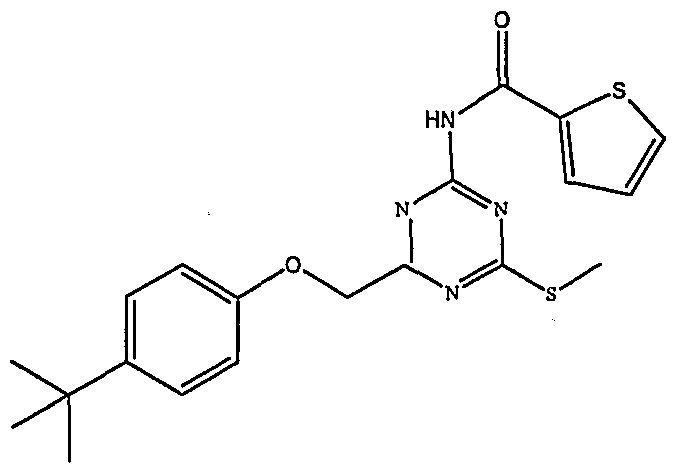


Claims


Priority Applications (11)
| Application Number | Priority Date | Filing Date | Title |
|---|---|---|---|
| CA002430951A CA2430951A1 (en) | 2000-12-07 | 2001-12-03 | Substituted 1, 3, 5-triazines and pyrimidines as abca-1 elevating compounds against coronary artery disease or atherosclerosis |
| KR10-2003-7007656A KR20030059835A (en) | 2000-12-07 | 2001-12-03 | Substituted 1, 3, 5-triazines and pyrimidines as abca-1 elevating compounds against coronary artery disease or atherosclerosis |
| AU3950802A AU3950802A (en) | 2000-12-07 | 2001-12-03 | Abca-1 elevating compounds |
| JP2002547911A JP2004521878A (en) | 2000-12-07 | 2001-12-03 | Compounds that increase ABCA-1 |
| HU0400708A HUP0400708A3 (en) | 2000-12-07 | 2001-12-03 | Substituted 1,3,5-triazine and pyrimidine derivatives, their use and pharmaceutical compositions containing them |
| IL15631501A IL156315A0 (en) | 2000-12-07 | 2001-12-03 | Abca-1 elevating compounds |
| MXPA03005120A MXPA03005120A (en) | 2000-12-07 | 2001-12-03 | Abca-1 elevating compounds. |
| NZ526336A NZ526336A (en) | 2000-12-07 | 2001-12-03 | Substituted 1, 3,5-triazines and pyrimidines as ABCA-1 elevating compounds against coronary artery disease or atherosclerosis |
| AU2002239508A AU2002239508B9 (en) | 2000-12-07 | 2001-12-03 | Substituted 1, 3, 5-triazines and pyrimidines as ABCA-1 elevating compounds against coronary artery disease or atherosclerosis |
| EP01987273A EP1341773A2 (en) | 2000-12-07 | 2001-12-03 | Substituted 1,3,5-triazines and pyrimidines as abca-1 elevating compounds against coronary artery disease or atherosclerosis |
| NO20032587A NO20032587L (en) | 2000-12-07 | 2003-06-06 | ABCA-1 student connections |
Applications Claiming Priority (4)
| Application Number | Priority Date | Filing Date | Title |
|---|---|---|---|
| US25191600P | 2000-12-07 | 2000-12-07 | |
| US60/251,916 | 2000-12-07 | ||
| US31327401P | 2001-08-17 | 2001-08-17 | |
| US60/313,274 | 2001-08-17 |
Publications (2)
| Publication Number | Publication Date |
|---|---|
| WO2002046172A2 true WO2002046172A2 (en) | 2002-06-13 |
| WO2002046172A3 WO2002046172A3 (en) | 2003-02-06 |
Family
ID=26941895
Family Applications (3)
| Application Number | Title | Priority Date | Filing Date |
|---|---|---|---|
| PCT/US2001/046387 Ceased WO2002046172A2 (en) | 2000-12-07 | 2001-12-03 | Substituted 1, 3, 5-triazines and pyrimidines as abca-1 elevating compounds against coronary artery disease or atherosclerosis |
| PCT/US2001/046788 Ceased WO2002046141A2 (en) | 2000-12-07 | 2001-12-05 | Coumpounds of the formula r1-x-y-z-nr2r3 as abca-1 elevating agents against coronary artery disease or atherosclerosis |
| PCT/US2001/046979 Ceased WO2002046181A2 (en) | 2000-12-07 | 2001-12-06 | Abca-1 elevating compounds against coronary artery disease or atherosclerosis |
Family Applications After (2)
| Application Number | Title | Priority Date | Filing Date |
|---|---|---|---|
| PCT/US2001/046788 Ceased WO2002046141A2 (en) | 2000-12-07 | 2001-12-05 | Coumpounds of the formula r1-x-y-z-nr2r3 as abca-1 elevating agents against coronary artery disease or atherosclerosis |
| PCT/US2001/046979 Ceased WO2002046181A2 (en) | 2000-12-07 | 2001-12-06 | Abca-1 elevating compounds against coronary artery disease or atherosclerosis |
Country Status (16)
| Country | Link |
|---|---|
| US (3) | US6919339B2 (en) |
| EP (3) | EP1341773A2 (en) |
| JP (4) | JP2004521878A (en) |
| KR (3) | KR20030059835A (en) |
| CN (2) | CN1486302A (en) |
| AR (2) | AR034858A1 (en) |
| AU (5) | AU3950802A (en) |
| CA (3) | CA2430951A1 (en) |
| HU (2) | HUP0400708A3 (en) |
| IL (3) | IL156315A0 (en) |
| MX (2) | MXPA03005120A (en) |
| NO (2) | NO20032587L (en) |
| NZ (2) | NZ526336A (en) |
| PL (1) | PL361893A1 (en) |
| RU (1) | RU2003120061A (en) |
| WO (3) | WO2002046172A2 (en) |
Cited By (20)
| Publication number | Priority date | Publication date | Assignee | Title |
|---|---|---|---|---|
| US6822120B2 (en) | 2002-05-24 | 2004-11-23 | Pharmacia Corporation | Sulfone liver X-receptor modulators |
| US6828446B2 (en) | 2001-12-21 | 2004-12-07 | Pharmacia Corporation | Aromatic thioether liver X-receptor modulators |
| US6900244B2 (en) | 2002-05-24 | 2005-05-31 | Pharmacia Corporation | Anilino liver X-receptor modulators |
| US7923573B2 (en) | 2004-10-27 | 2011-04-12 | Daiichi Sankyo Company, Limited | Benzene compound having 2 or more substituents |
| EP2114900A4 (en) * | 2007-01-31 | 2012-02-29 | Ym Biosciences Australia Pty | THIOPYRIMIDINE-BASED COMPOUNDS AND USES THEREOF |
| US8324232B2 (en) | 2007-08-17 | 2012-12-04 | Actelion Pharmaceuticals Ltd. | 4-pyrimidinesulfamide derivative |
| US8367685B2 (en) | 2005-09-12 | 2013-02-05 | Actelion Pharmaceuticals, Ltd. | Stable pharmaceutical compositions comprising a pyrimidine-sulfamide |
| US8415366B2 (en) | 2007-02-14 | 2013-04-09 | Janssen Pharmaceutica Nv | 2-aminopyrimidine modulators of the histamine H4 receptor |
| US8853409B2 (en) | 2007-09-21 | 2014-10-07 | Array Biopharma Inc. | Pyridin-2yl-amino-1, 2, 4-thiadiazole derivatives as glucokinase activators for the treatment of diabetes mellitus |
| CN106966997A (en) * | 2017-03-22 | 2017-07-21 | 北京宜生堂医药科技研究有限公司 | A kind of compound and preparation method thereof and purposes |
| CN106977467A (en) * | 2017-03-22 | 2017-07-25 | 北京宜生堂医药科技研究有限公司 | A kind of compound and preparation method thereof and purposes |
| US9951069B1 (en) | 2017-01-11 | 2018-04-24 | Rodin Therapeutics, Inc. | Bicyclic inhibitors of histone deacetylase |
| US9975886B1 (en) | 2017-01-23 | 2018-05-22 | Cadent Therapeutics, Inc. | Potassium channel modulators |
| US10421756B2 (en) | 2015-07-06 | 2019-09-24 | Rodin Therapeutics, Inc. | Heterobicyclic N-aminophenyl-amides as inhibitors of histone deacetylase |
| US10774064B2 (en) | 2016-06-02 | 2020-09-15 | Cadent Therapeutics, Inc. | Potassium channel modulators |
| US10919902B2 (en) | 2015-07-06 | 2021-02-16 | Alkermes, Inc. | Hetero-halo inhibitors of histone deacetylase |
| US11174242B2 (en) | 2016-12-29 | 2021-11-16 | Minoryx Therapeutics S.L. | Heteroaryl compounds and their use |
| US11225475B2 (en) | 2017-08-07 | 2022-01-18 | Alkermes, Inc. | Substituted pyridines as inhibitors of histone deacetylase |
| US11993586B2 (en) | 2018-10-22 | 2024-05-28 | Novartis Ag | Crystalline forms of potassium channel modulators |
| US12084453B2 (en) | 2021-12-10 | 2024-09-10 | Incyte Corporation | Bicyclic amines as CDK12 inhibitors |
Families Citing this family (46)
| Publication number | Priority date | Publication date | Assignee | Title |
|---|---|---|---|---|
| WO2001070677A1 (en) * | 2000-03-20 | 2001-09-27 | Merck Sharp & Dohme Limited | Sulphonamido-substituted bridged bicycloalkyl derivatives |
| DE10023484A1 (en) * | 2000-05-09 | 2001-11-22 | Schering Ag | New 2-((cycloalkyl- or heterocyclyl-alkyl)-amino)-benzamide derivatives, are VEGF receptor, KDR kinase and FLT kinase inhibitors useful e.g. for treating tumors, psoriasis, arthritis or renal or ophthalmological diseases |
| CN1486302A (en) * | 2000-12-07 | 2004-03-31 | CV���ƹ�˾ | Substituted 1,3, 5-triazines and pyrimidines as ABCA-1 potentiating compounds against coronary artery disease or arteriosclerosis |
| US6995285B2 (en) * | 2000-12-07 | 2006-02-07 | Cv Therapeutics, Inc. | ABCA-1 elevating compounds |
| AU2003226252A1 (en) * | 2002-04-04 | 2003-10-20 | Cv Therapeutics, Inc. | Compounds dor increasing abca-1 expression useful for treating coronary artery disease and atherosclerosis |
| WO2003092467A2 (en) * | 2002-04-30 | 2003-11-13 | The Trustees Of Columbia University In The City Of New York | Compositions and methods relating to abca1-mediated cholesterol efflux |
| US7615565B2 (en) * | 2002-07-31 | 2009-11-10 | Bayer Schering Pharma Aktiengesellschaft | VEGFR-2 and VEGFR-3 inhibitory anthranilamide pyridines |
| US20050080024A1 (en) * | 2002-08-15 | 2005-04-14 | Joseph Tucker | Nitric oxide donating derivatives for the treatment of cardiovascular disorders |
| US20050080021A1 (en) * | 2002-08-15 | 2005-04-14 | Joseph Tucker | Nitric oxide donating derivatives of stilbenes, polyphenols and flavonoids for the treatment of cardiovascular disorders |
| AU2003272552A1 (en) * | 2002-09-17 | 2004-04-08 | Pharmacia Corporation | Aromatic liver x-receptor modulators |
| US7202260B2 (en) * | 2003-06-13 | 2007-04-10 | Schering Ag | VEGFR-2 and VEGFR-3 inhibitory anthranilamide pyridones |
| EP1699527A1 (en) * | 2004-01-02 | 2006-09-13 | Advanced Cardiovascular Systems, Inc. | High-density lipoprotein coated medical devices |
| CA2569654C (en) * | 2004-06-15 | 2010-12-21 | Pfizer Inc. | Benzimidazolone carboxylic acid derivatives |
| US7737163B2 (en) * | 2004-06-15 | 2010-06-15 | Pfizer Inc. | Benzimidazolone carboxylic acid derivatives |
| WO2006045010A2 (en) * | 2004-10-20 | 2006-04-27 | Resverlogix Corp. | Stilbenes and chalcones for the prevention and treatment of cardiovascular diseases |
| US7906533B2 (en) * | 2004-11-03 | 2011-03-15 | Bayer Schering Pharma Ag | Nicotinamide pyridinureas as vascular endothelial growth factor (VEGF) receptor kinase inhibitors |
| EP1655295A1 (en) * | 2004-11-03 | 2006-05-10 | Schering Aktiengesellschaft | Anthranilamide pyridinureas as VEGF receptor kinase inhibitors |
| EP1657241A1 (en) * | 2004-11-03 | 2006-05-17 | Schering Aktiengesellschaft | Novel anthranilamide pyridinureas as VEGF receptor kinase inhibitors |
| CA2589770A1 (en) | 2004-12-01 | 2006-06-08 | Osi Pharmaceuticals, Inc. | N-substituted benzimidazolyl c-kit inhibitors and combinatorial benzimidazole library |
| US20080287546A1 (en) * | 2005-01-21 | 2008-11-20 | Ute Muh | Quorum Sensing Modulators |
| KR100908547B1 (en) * | 2005-02-22 | 2009-07-20 | 화이자 인코포레이티드 | Oxyindole Derivatives as 5TH4 Receptor Agonists |
| US8410109B2 (en) * | 2005-07-29 | 2013-04-02 | Resverlogix Corp. | Pharmaceutical compositions for the prevention and treatment of complex diseases and their delivery by insertable medical devices |
| US7579504B2 (en) * | 2005-12-07 | 2009-08-25 | Gilead Sciences, Inc. | ABCA1 elevating compounds |
| EP2037740A4 (en) * | 2006-06-07 | 2011-12-28 | Reddys Lab Ltd Dr | Compositions and methods to enhance reverse cholesterol transport |
| WO2008029912A1 (en) | 2006-09-07 | 2008-03-13 | National University Corporation Okayama University | Compound having benzamide skeleton and cyclooxygenase (cox-1)-selective inhibitory activity |
| PT2118074E (en) * | 2007-02-01 | 2014-03-20 | Resverlogix Corp | Compounds for the prevention and treatment of cardiovascular diseases |
| US20090203689A1 (en) * | 2008-02-07 | 2009-08-13 | Arvinder Dhalla | Abca-1 elevating compounds and methods |
| SI2346837T1 (en) | 2008-06-26 | 2015-05-29 | Resverlogix Corporation | Methods of preparing quinazolinone derivatives |
| US8633233B2 (en) | 2008-08-06 | 2014-01-21 | Hydra Biosciences, Inc. | Methods and compositions for treating anxiety |
| US8952021B2 (en) | 2009-01-08 | 2015-02-10 | Resverlogix Corp. | Compounds for the prevention and treatment of cardiovascular disease |
| KR101913109B1 (en) | 2009-03-18 | 2018-10-31 | 리스버로직스 코퍼레이션 | Novel anti-inflammatory agents |
| CA2757866A1 (en) * | 2009-04-20 | 2010-10-28 | Abbott Laboratories | Novel amide and amidine derivatives and uses thereof |
| US9757368B2 (en) | 2009-04-22 | 2017-09-12 | Resverlogix Corp. | Anti-inflammatory agents |
| CA2834548C (en) | 2011-04-28 | 2021-06-01 | The Broad Institute, Inc. | Inhibitors of histone deacetylase |
| CA2851996C (en) | 2011-11-01 | 2020-01-07 | Resverlogix Corp. | Pharmaceutical compositions for substituted quinazolinones |
| EP2877444B1 (en) * | 2012-07-27 | 2020-09-02 | The Broad Institute, Inc. | Inhibitors of histone deacetylase |
| US9765039B2 (en) | 2012-11-21 | 2017-09-19 | Zenith Epigenetics Ltd. | Biaryl derivatives as bromodomain inhibitors |
| US9073878B2 (en) | 2012-11-21 | 2015-07-07 | Zenith Epigenetics Corp. | Cyclic amines as bromodomain inhibitors |
| US9914717B2 (en) | 2012-12-20 | 2018-03-13 | The Broad Institute, Inc. | Cycloalkenyl hydroxamic acid derivatives and their use as histone deacetylase inhibitors |
| JP2016507496A (en) | 2012-12-21 | 2016-03-10 | ゼニス・エピジェネティクス・コーポレイションZenith Epigenetics Corp. | Novel heterocyclic compounds as bromodomain inhibitors |
| CN107082782B (en) | 2013-03-15 | 2020-03-20 | 海德拉生物科学有限责任公司 | Substituted xanthines and methods of use thereof |
| GB201419579D0 (en) * | 2014-11-03 | 2014-12-17 | Iomet Pharma Ltd | Pharmaceutical compound |
| US10111885B2 (en) | 2015-03-13 | 2018-10-30 | Resverlogix Corp. | Compositions and therapeutic methods for the treatment of complement-associated diseases |
| EP3737362B1 (en) | 2018-01-12 | 2025-10-15 | Kdac Therapeutics, Inc. | Combination of a selective histone deacetylase 3 (hdac3) inhibitor and an immunotherapy agent for the treatment of cancer |
| CN113999184B (en) * | 2020-02-28 | 2024-11-12 | 深圳深信生物科技有限公司 | A kind of amino lipid compound, preparation method and application thereof |
| JP2024512497A (en) * | 2021-03-17 | 2024-03-19 | 武田薬品工業株式会社 | Inhibitor of plasma kallikrein |
Family Cites Families (44)
| Publication number | Priority date | Publication date | Assignee | Title |
|---|---|---|---|---|
| US2937172A (en) * | 1960-05-17 | Alkoxxethylguanameses | ||
| DE1197613B (en) * | 1960-05-07 | 1965-07-29 | Bayer Ag | Anti-aging, anti-ozone and anti-fatigue agents |
| DE1220860B (en) * | 1964-09-26 | 1966-07-14 | Bayer Ag | Process for the preparation of trisubstituted s-triazines |
| US3413285A (en) | 1965-07-09 | 1968-11-26 | Ciba Geigy Corp | Amino-acetylamino-cholestanes |
| US3845770A (en) | 1972-06-05 | 1974-11-05 | Alza Corp | Osmatic dispensing device for releasing beneficial agent |
| DE2263110B2 (en) * | 1972-12-22 | 1980-01-31 | Ludwig Merckle Kg Chem. Pharm. Fabrik, 7902 Blaubeuren | 2-Amino-4-phenylethylamino-6-phenoxymethyl-1 ^ -triazines and process for their preparation |
| ES467739A1 (en) * | 1977-03-16 | 1979-07-01 | Hoechst Ag | preparation and use thereof |
| US4357633A (en) | 1979-07-11 | 1982-11-02 | Buechler Lester W | Engraving apparatus and method |
| US4892946A (en) * | 1979-11-30 | 1990-01-09 | E. I. Du Pont De Nemours And Company | Agricultural sulfonamides |
| US4326525A (en) | 1980-10-14 | 1982-04-27 | Alza Corporation | Osmotic device that improves delivery properties of agent in situ |
| IT1211096B (en) * | 1981-08-20 | 1989-09-29 | Lpb Ist Farm | PYRIMIDINES AND S.TRIAZINICS HYPOLIPIDEMIZING ADAPTITY. |
| US4387105A (en) * | 1982-01-26 | 1983-06-07 | American Cyanamid Company | Methods of treating atherosclerosis with dialkylureas and dialkylthioureas |
| US5364620A (en) | 1983-12-22 | 1994-11-15 | Elan Corporation, Plc | Controlled absorption diltiazem formulation for once daily administration |
| US5023252A (en) | 1985-12-04 | 1991-06-11 | Conrex Pharmaceutical Corporation | Transdermal and trans-membrane delivery of drugs |
| DE3643683A1 (en) * | 1986-12-20 | 1988-07-07 | Bayer Ag | DYES |
| US4959092A (en) * | 1987-06-03 | 1990-09-25 | Mitsubishi Kasei Corporation | Substituted phenyl (or pyridyl) urea compound and herbicidal composition containing the same as active ingredient |
| US5001139A (en) | 1987-06-12 | 1991-03-19 | American Cyanamid Company | Enchancers for the transdermal flux of nivadipine |
| US4992445A (en) | 1987-06-12 | 1991-02-12 | American Cyanamid Co. | Transdermal delivery of pharmaceuticals |
| AU606808B2 (en) * | 1988-06-29 | 1991-02-14 | Otsuka Pharmaceutical Factory, Inc. | Arylcarboxamide substituted by alkylphosphonates, process for preparing the same and a pharmaceutical composition containing the same |
| JPH0745508B2 (en) * | 1988-06-29 | 1995-05-17 | 株式会社大塚製薬工場 | Carboxamide derivative |
| US4902514A (en) | 1988-07-21 | 1990-02-20 | Alza Corporation | Dosage form for administering nilvadipine for treating cardiovascular symptoms |
| US5290814A (en) * | 1988-11-21 | 1994-03-01 | Burroughs Wellcome Co. | Anti-atherosclerotic diaryl compounds |
| FI941166A7 (en) * | 1991-09-13 | 1994-03-25 | Sankyo Co | Tricyclic heterocyclyl compound |
| JPH05194475A (en) * | 1991-09-13 | 1993-08-03 | Sankyo Co Ltd | Tricyclic heterocycle compound |
| JP3894949B2 (en) | 1993-06-30 | 2007-03-22 | ザ、ウェルカム、ファンデーション、リミテッド | Anti-atherosclerotic diaryl compounds |
| US5362744A (en) * | 1993-11-22 | 1994-11-08 | Warner-Lambert Company | Tetrazole-substituted urea acat inhibitors |
| US5420339A (en) * | 1993-11-22 | 1995-05-30 | Warner-Lambert Company | Alpha-aryl or heteroaryl-substituted amide ester ACAT inhibitors |
| IL116259A (en) * | 1994-12-19 | 2000-07-16 | American Cyanamid Co | Analogs of 9-cis retinoic acid and their use |
| US5691364A (en) | 1995-03-10 | 1997-11-25 | Berlex Laboratories, Inc. | Benzamidine derivatives and their use as anti-coagulants |
| DE19536891A1 (en) * | 1995-10-04 | 1997-04-10 | Basf Ag | New amino acid derivatives, their production and use |
| JPH11514361A (en) | 1995-10-16 | 1999-12-07 | 藤沢薬品工業株式会社 | Heterocyclic compounds as H + -ATPase |
| US5760246A (en) | 1996-12-17 | 1998-06-02 | Biller; Scott A. | Conformationally restricted aromatic inhibitors of microsomal triglyceride transfer protein and method |
| JPH10259311A (en) * | 1997-03-19 | 1998-09-29 | Sumitomo Chem Co Ltd | Azo compound and dye-based polarizing film containing the same |
| JP2002512633A (en) * | 1997-06-26 | 2002-04-23 | イーライ・リリー・アンド・カンパニー | Antithrombotic agent |
| SE9704545D0 (en) | 1997-12-05 | 1997-12-05 | Astra Pharma Prod | Novel compounds |
| US6150362A (en) * | 1997-12-12 | 2000-11-21 | Henkin; Jack | Triazine angiogenesis inhibitors |
| AR015514A1 (en) | 1998-02-10 | 2001-05-02 | Novartis Ag | AMIDA COMPOUND, PROCESS FOR PREPARATION AND PHARMACEUTICAL COMPOSITION CONTAINING IT |
| CO5090829A1 (en) | 1998-07-21 | 2001-10-30 | Novartis Ag | ORGANIC COMPOUNDS OF FORMULA I, USED AS INHIBITED RES OF THE PROTEIN OF TRANSFER OF MICROSOUS TRIGLICERIDE AND OF THE APOLIPOPROTEIN B SECRETION. |
| GB9824579D0 (en) * | 1998-11-10 | 1999-01-06 | Novartis Ag | Organic compounds |
| UA71587C2 (en) * | 1998-11-10 | 2004-12-15 | Шерінг Акцієнгезелльшафт | Anthranilic acid amides and use thereof as medicaments |
| AU2623900A (en) * | 1999-01-22 | 2000-08-07 | American Home Products Corporation | Compounds which inhibit leukocyte adhesion mediated by vla-4 |
| BR0012984A (en) * | 1999-08-04 | 2002-07-16 | Millennium Pharm Inc | Method for treating a condition associated with mc4-r in a mammal, compound binding to mc4-r, and pharmaceutical composition |
| EP1246823A1 (en) * | 1999-12-28 | 2002-10-09 | Pharmacopeia, Inc. | Pyrimidine and triazine kinase inhibitors |
| CN1486302A (en) * | 2000-12-07 | 2004-03-31 | CV���ƹ�˾ | Substituted 1,3, 5-triazines and pyrimidines as ABCA-1 potentiating compounds against coronary artery disease or arteriosclerosis |
-
2001
- 2001-12-03 CN CNA018220541A patent/CN1486302A/en active Pending
- 2001-12-03 IL IL15631501A patent/IL156315A0/en unknown
- 2001-12-03 AU AU3950802A patent/AU3950802A/en active Pending
- 2001-12-03 KR KR10-2003-7007656A patent/KR20030059835A/en not_active Ceased
- 2001-12-03 RU RU2003120061/14A patent/RU2003120061A/en not_active Application Discontinuation
- 2001-12-03 MX MXPA03005120A patent/MXPA03005120A/en unknown
- 2001-12-03 NZ NZ526336A patent/NZ526336A/en unknown
- 2001-12-03 WO PCT/US2001/046387 patent/WO2002046172A2/en not_active Ceased
- 2001-12-03 CA CA002430951A patent/CA2430951A1/en not_active Abandoned
- 2001-12-03 EP EP01987273A patent/EP1341773A2/en not_active Withdrawn
- 2001-12-03 JP JP2002547911A patent/JP2004521878A/en active Pending
- 2001-12-03 AU AU2002239508A patent/AU2002239508B9/en not_active Ceased
- 2001-12-03 HU HU0400708A patent/HUP0400708A3/en unknown
- 2001-12-04 US US10/005,064 patent/US6919339B2/en not_active Expired - Fee Related
- 2001-12-05 EP EP01987303A patent/EP1377283A2/en not_active Withdrawn
- 2001-12-05 JP JP2002547880A patent/JP2004523496A/en active Pending
- 2001-12-05 KR KR10-2003-7007655A patent/KR20030060111A/en not_active Ceased
- 2001-12-05 US US10/011,016 patent/US6713650B2/en not_active Expired - Fee Related
- 2001-12-05 WO PCT/US2001/046788 patent/WO2002046141A2/en not_active Ceased
- 2001-12-05 CA CA002431005A patent/CA2431005A1/en not_active Abandoned
- 2001-12-05 AU AU2002239535A patent/AU2002239535A1/en not_active Abandoned
- 2001-12-06 CN CNA018200311A patent/CN1478085A/en active Pending
- 2001-12-06 IL IL15616701A patent/IL156167A0/en unknown
- 2001-12-06 AU AU2002225978A patent/AU2002225978B2/en not_active Ceased
- 2001-12-06 WO PCT/US2001/046979 patent/WO2002046181A2/en not_active Ceased
- 2001-12-06 AU AU2597802A patent/AU2597802A/en active Pending
- 2001-12-06 KR KR1020037007637A patent/KR100555192B1/en not_active Expired - Fee Related
- 2001-12-06 CA CA002436662A patent/CA2436662A1/en not_active Abandoned
- 2001-12-06 EP EP01995408A patent/EP1379517A2/en not_active Withdrawn
- 2001-12-06 NZ NZ526037A patent/NZ526037A/en unknown
- 2001-12-06 US US10/010,602 patent/US6548548B2/en not_active Expired - Fee Related
- 2001-12-06 MX MXPA03005050A patent/MXPA03005050A/en active IP Right Grant
- 2001-12-06 JP JP2002547919A patent/JP4227807B2/en not_active Expired - Fee Related
- 2001-12-06 PL PL01361893A patent/PL361893A1/en unknown
- 2001-12-06 HU HU0400689A patent/HUP0400689A3/en unknown
- 2001-12-07 AR ARP010105708A patent/AR034858A1/en unknown
- 2001-12-07 AR ARP010105703A patent/AR034857A1/en unknown
-
2003
- 2003-05-27 IL IL156167A patent/IL156167A/en not_active IP Right Cessation
- 2003-06-06 NO NO20032587A patent/NO20032587L/en not_active Application Discontinuation
- 2003-06-06 NO NO20032585A patent/NO20032585L/en not_active Application Discontinuation
-
2008
- 2008-10-10 JP JP2008263387A patent/JP2009149602A/en active Pending
Cited By (41)
| Publication number | Priority date | Publication date | Assignee | Title |
|---|---|---|---|---|
| US6828446B2 (en) | 2001-12-21 | 2004-12-07 | Pharmacia Corporation | Aromatic thioether liver X-receptor modulators |
| US6822120B2 (en) | 2002-05-24 | 2004-11-23 | Pharmacia Corporation | Sulfone liver X-receptor modulators |
| US6900244B2 (en) | 2002-05-24 | 2005-05-31 | Pharmacia Corporation | Anilino liver X-receptor modulators |
| US7923573B2 (en) | 2004-10-27 | 2011-04-12 | Daiichi Sankyo Company, Limited | Benzene compound having 2 or more substituents |
| US8367685B2 (en) | 2005-09-12 | 2013-02-05 | Actelion Pharmaceuticals, Ltd. | Stable pharmaceutical compositions comprising a pyrimidine-sulfamide |
| US11648249B2 (en) | 2005-09-12 | 2023-05-16 | Actelion Pharmaceuticals Ltd | Stable pharmaceutical compositions comprising a pyrimidine-sulfamide |
| US10946015B2 (en) | 2005-09-12 | 2021-03-16 | Actelion Pharmaceuticals Ltd | Stable pharmaceutical compositions comprising a pyrimidine-sulfamide |
| US10117870B2 (en) | 2005-09-12 | 2018-11-06 | Actelion Pharmaceuticals Ltd. | Stable pharmaceutical compositions comprising a pyrimidine-sulfamide |
| US9265762B2 (en) | 2005-09-12 | 2016-02-23 | Actelion Pharmaceuticals Ltd. | Stable pharmaceutical compositions comprising a pyrimidine-sulfamide |
| US9040549B2 (en) | 2007-01-31 | 2015-05-26 | Ym Biosciences Australia Pty Ltd. | Thiopyrimidine-based compounds and uses thereof |
| AU2008210266B2 (en) * | 2007-01-31 | 2013-09-05 | Ym Biosciences Australia Pty Ltd | Thiopyrimidine-based compounds and uses thereof |
| EP2114900A4 (en) * | 2007-01-31 | 2012-02-29 | Ym Biosciences Australia Pty | THIOPYRIMIDINE-BASED COMPOUNDS AND USES THEREOF |
| US8846704B2 (en) | 2007-01-31 | 2014-09-30 | YM Biosciences Austraila Pty Ltd | Thiopyrimidine-based compounds and uses thereof |
| US8716475B2 (en) | 2007-02-14 | 2014-05-06 | Janssen Pharmaceutica Nv | 2-aminopyrimidine modulators of the histamine H4 receptor |
| US8415366B2 (en) | 2007-02-14 | 2013-04-09 | Janssen Pharmaceutica Nv | 2-aminopyrimidine modulators of the histamine H4 receptor |
| US8686142B2 (en) | 2007-02-14 | 2014-04-01 | Janssen Pharmaceutica Nv | 2-aminopyrimidine modulators of the histamine H4 receptor |
| US8324232B2 (en) | 2007-08-17 | 2012-12-04 | Actelion Pharmaceuticals Ltd. | 4-pyrimidinesulfamide derivative |
| US8853409B2 (en) | 2007-09-21 | 2014-10-07 | Array Biopharma Inc. | Pyridin-2yl-amino-1, 2, 4-thiadiazole derivatives as glucokinase activators for the treatment of diabetes mellitus |
| US9079890B2 (en) | 2007-09-21 | 2015-07-14 | Array Biopharma Inc. | Intermediates for the preparation of pyridin-2-yl-amino-1,2,4-thiadiazole derivatives |
| US10421756B2 (en) | 2015-07-06 | 2019-09-24 | Rodin Therapeutics, Inc. | Heterobicyclic N-aminophenyl-amides as inhibitors of histone deacetylase |
| US11858939B2 (en) | 2015-07-06 | 2024-01-02 | Alkermes, Inc. | Hetero-halo inhibitors of histone deacetylase |
| US10919902B2 (en) | 2015-07-06 | 2021-02-16 | Alkermes, Inc. | Hetero-halo inhibitors of histone deacetylase |
| US10774064B2 (en) | 2016-06-02 | 2020-09-15 | Cadent Therapeutics, Inc. | Potassium channel modulators |
| US11174242B2 (en) | 2016-12-29 | 2021-11-16 | Minoryx Therapeutics S.L. | Heteroaryl compounds and their use |
| US11739072B2 (en) | 2016-12-29 | 2023-08-29 | Minoryx Therapeutics S.L. | Heteroaryl compounds and their use |
| US10793567B2 (en) | 2017-01-11 | 2020-10-06 | Rodin Therapeutics, Inc. | Bicyclic inhibitors of histone deacetylase |
| US11225479B2 (en) | 2017-01-11 | 2022-01-18 | Alkermes, Inc. | Bicyclic inhibitors of histone deacetylase |
| US10519149B2 (en) | 2017-01-11 | 2019-12-31 | Rodin Therapeutics, Inc. | Bicyclic inhibitors of histone deacetylase |
| US11987580B2 (en) | 2017-01-11 | 2024-05-21 | Alkermes, Inc. | Bicyclic inhibitors of histone deacetylase |
| US9951069B1 (en) | 2017-01-11 | 2018-04-24 | Rodin Therapeutics, Inc. | Bicyclic inhibitors of histone deacetylase |
| US10696673B2 (en) | 2017-01-11 | 2020-06-30 | Rodin Therapeutics, Inc. | Bicyclic inhibitors of histone deacetylase |
| US11286256B2 (en) | 2017-01-11 | 2022-03-29 | Alkermes, Inc. | Bicyclic inhibitors of histone deacetylase |
| US10351553B2 (en) | 2017-01-23 | 2019-07-16 | Cadent Therapeutics, Inc. | Potassium channel modulators |
| US10717728B2 (en) | 2017-01-23 | 2020-07-21 | Cadent Therapeutics, Inc. | Potassium channel modulators |
| US9975886B1 (en) | 2017-01-23 | 2018-05-22 | Cadent Therapeutics, Inc. | Potassium channel modulators |
| CN106977467A (en) * | 2017-03-22 | 2017-07-25 | 北京宜生堂医药科技研究有限公司 | A kind of compound and preparation method thereof and purposes |
| CN106966997A (en) * | 2017-03-22 | 2017-07-21 | 北京宜生堂医药科技研究有限公司 | A kind of compound and preparation method thereof and purposes |
| US11225475B2 (en) | 2017-08-07 | 2022-01-18 | Alkermes, Inc. | Substituted pyridines as inhibitors of histone deacetylase |
| US11912702B2 (en) | 2017-08-07 | 2024-02-27 | Alkermes, Inc. | Substituted pyridines as inhibitors of histone deacetylase |
| US11993586B2 (en) | 2018-10-22 | 2024-05-28 | Novartis Ag | Crystalline forms of potassium channel modulators |
| US12084453B2 (en) | 2021-12-10 | 2024-09-10 | Incyte Corporation | Bicyclic amines as CDK12 inhibitors |
Also Published As
Similar Documents
| Publication | Publication Date | Title |
|---|---|---|
| AU2002239508B9 (en) | Substituted 1, 3, 5-triazines and pyrimidines as ABCA-1 elevating compounds against coronary artery disease or atherosclerosis | |
| AU2002239508A1 (en) | Substituted 1, 3, 5-triazines and pyrimidines as ABCA-1 elevating compounds against coronary artery disease or atherosclerosis | |
| AU2002225978A1 (en) | ABCA-1 elevating compounds against coronary artery disease or atherosclerosis | |
| US6900219B2 (en) | ABCA-1 elevating compounds | |
| US7579504B2 (en) | ABCA1 elevating compounds | |
| EP1646390B1 (en) | A1 adenosine receptor antagonists | |
| US6995285B2 (en) | ABCA-1 elevating compounds | |
| US10843993B2 (en) | Deuterated idebenone |
Legal Events
| Date | Code | Title | Description |
|---|---|---|---|
| AK | Designated states |
Kind code of ref document: A2 Designated state(s): AE AG AL AM AT AU AZ BA BB BG BR BY BZ CA CH CN CO CR CU CZ DE DK DM DZ EC EE ES FI GB GD GE GH GM HR HU ID IL IN IS JP KE KG KP KR KZ LC LK LR LS LT LU LV MA MD MG MK MN MW MX MZ NO NZ PL PT RO RU SD SE SG SI SK SL TJ TM TR TT TZ UA UG UZ VN YU ZA ZW |
|
| AL | Designated countries for regional patents |
Kind code of ref document: A2 Designated state(s): GH GM KE LS MW MZ SD SL SZ TZ UG ZM ZW AM AZ BY KG KZ MD RU TJ TM AT BE CH CY DE DK ES FI FR GB GR IE IT LU MC NL PT SE TR BF BJ CF CG CI CM GA GN GQ GW ML MR NE SN TD TG |
|
| 121 | Ep: the epo has been informed by wipo that ep was designated in this application | ||
| DFPE | Request for preliminary examination filed prior to expiration of 19th month from priority date (pct application filed before 20040101) | ||
| WWE | Wipo information: entry into national phase |
Ref document number: 156315 Country of ref document: IL |
|
| WWE | Wipo information: entry into national phase |
Ref document number: 2003/04436 Country of ref document: ZA Ref document number: PA/a/2003/005120 Country of ref document: MX Ref document number: 2430951 Country of ref document: CA Ref document number: 2002547911 Country of ref document: JP Ref document number: 2002239508 Country of ref document: AU Ref document number: 526336 Country of ref document: NZ Ref document number: 200304436 Country of ref document: ZA |
|
| WWE | Wipo information: entry into national phase |
Ref document number: 1020037007656 Country of ref document: KR |
|
| ENP | Entry into the national phase |
Country of ref document: RU Kind code of ref document: A Format of ref document f/p: F |
|
| WWE | Wipo information: entry into national phase |
Ref document number: 2001987273 Country of ref document: EP |
|
| WWP | Wipo information: published in national office |
Ref document number: 1020037007656 Country of ref document: KR |
|
| WWE | Wipo information: entry into national phase |
Ref document number: 018220541 Country of ref document: CN |
|
| WWP | Wipo information: published in national office |
Ref document number: 2001987273 Country of ref document: EP |
|
| REG | Reference to national code |
Ref country code: DE Ref legal event code: 8642 |
|
| WWW | Wipo information: withdrawn in national office |
Ref document number: 2001987273 Country of ref document: EP |
|
| WWP | Wipo information: published in national office |
Ref document number: 526336 Country of ref document: NZ |
|
| WWG | Wipo information: grant in national office |
Ref document number: 526336 Country of ref document: NZ |
|
| WWG | Wipo information: grant in national office |
Ref document number: 2002239508 Country of ref document: AU |
|
| WWR | Wipo information: refused in national office |
Ref document number: 1020037007656 Country of ref document: KR |