WO2002068383A2 - Thiol-modified hyaluronan - Google Patents
Thiol-modified hyaluronan Download PDFInfo
- Publication number
- WO2002068383A2 WO2002068383A2 PCT/US2002/005081 US0205081W WO02068383A2 WO 2002068383 A2 WO2002068383 A2 WO 2002068383A2 US 0205081 W US0205081 W US 0205081W WO 02068383 A2 WO02068383 A2 WO 02068383A2
- Authority
- WO
- WIPO (PCT)
- Prior art keywords
- derivative
- biscarbodiimide
- isothiocyanate
- agent
- structural formula
- Prior art date
- Legal status (The legal status is an assumption and is not a legal conclusion. Google has not performed a legal analysis and makes no representation as to the accuracy of the status listed.)
- Ceased
Links
- 0 CCN(C(*)=O)C(NCCS)=O Chemical compound CCN(C(*)=O)C(NCCS)=O 0.000 description 3
Classifications
-
- C—CHEMISTRY; METALLURGY
- C07—ORGANIC CHEMISTRY
- C07C—ACYCLIC OR CARBOCYCLIC COMPOUNDS
- C07C323/00—Thiols, sulfides, hydropolysulfides or polysulfides substituted by halogen, oxygen or nitrogen atoms, or by sulfur atoms not being part of thio groups
- C07C323/23—Thiols, sulfides, hydropolysulfides or polysulfides substituted by halogen, oxygen or nitrogen atoms, or by sulfur atoms not being part of thio groups containing thio groups and nitrogen atoms, not being part of nitro or nitroso groups, bound to the same carbon skeleton
- C07C323/24—Thiols, sulfides, hydropolysulfides or polysulfides substituted by halogen, oxygen or nitrogen atoms, or by sulfur atoms not being part of thio groups containing thio groups and nitrogen atoms, not being part of nitro or nitroso groups, bound to the same carbon skeleton having the sulfur atoms of the thio groups bound to acyclic carbon atoms of the carbon skeleton
- C07C323/25—Thiols, sulfides, hydropolysulfides or polysulfides substituted by halogen, oxygen or nitrogen atoms, or by sulfur atoms not being part of thio groups containing thio groups and nitrogen atoms, not being part of nitro or nitroso groups, bound to the same carbon skeleton having the sulfur atoms of the thio groups bound to acyclic carbon atoms of the carbon skeleton the carbon skeleton being acyclic and saturated
-
- A—HUMAN NECESSITIES
- A61—MEDICAL OR VETERINARY SCIENCE; HYGIENE
- A61P—SPECIFIC THERAPEUTIC ACTIVITY OF CHEMICAL COMPOUNDS OR MEDICINAL PREPARATIONS
- A61P27/00—Drugs for disorders of the senses
- A61P27/02—Ophthalmic agents
-
- A—HUMAN NECESSITIES
- A61—MEDICAL OR VETERINARY SCIENCE; HYGIENE
- A61P—SPECIFIC THERAPEUTIC ACTIVITY OF CHEMICAL COMPOUNDS OR MEDICINAL PREPARATIONS
- A61P41/00—Drugs used in surgical methods, e.g. surgery adjuvants for preventing adhesion or for vitreum substitution
-
- C—CHEMISTRY; METALLURGY
- C07—ORGANIC CHEMISTRY
- C07C—ACYCLIC OR CARBOCYCLIC COMPOUNDS
- C07C323/00—Thiols, sulfides, hydropolysulfides or polysulfides substituted by halogen, oxygen or nitrogen atoms, or by sulfur atoms not being part of thio groups
- C07C323/23—Thiols, sulfides, hydropolysulfides or polysulfides substituted by halogen, oxygen or nitrogen atoms, or by sulfur atoms not being part of thio groups containing thio groups and nitrogen atoms, not being part of nitro or nitroso groups, bound to the same carbon skeleton
- C07C323/31—Thiols, sulfides, hydropolysulfides or polysulfides substituted by halogen, oxygen or nitrogen atoms, or by sulfur atoms not being part of thio groups containing thio groups and nitrogen atoms, not being part of nitro or nitroso groups, bound to the same carbon skeleton having the sulfur atom of at least one of the thio groups bound to a carbon atom of a six-membered aromatic ring of the carbon skeleton
- C07C323/32—Thiols, sulfides, hydropolysulfides or polysulfides substituted by halogen, oxygen or nitrogen atoms, or by sulfur atoms not being part of thio groups containing thio groups and nitrogen atoms, not being part of nitro or nitroso groups, bound to the same carbon skeleton having the sulfur atom of at least one of the thio groups bound to a carbon atom of a six-membered aromatic ring of the carbon skeleton having at least one of the nitrogen atoms bound to an acyclic carbon atom of the carbon skeleton
-
- C—CHEMISTRY; METALLURGY
- C07—ORGANIC CHEMISTRY
- C07C—ACYCLIC OR CARBOCYCLIC COMPOUNDS
- C07C323/00—Thiols, sulfides, hydropolysulfides or polysulfides substituted by halogen, oxygen or nitrogen atoms, or by sulfur atoms not being part of thio groups
- C07C323/23—Thiols, sulfides, hydropolysulfides or polysulfides substituted by halogen, oxygen or nitrogen atoms, or by sulfur atoms not being part of thio groups containing thio groups and nitrogen atoms, not being part of nitro or nitroso groups, bound to the same carbon skeleton
- C07C323/31—Thiols, sulfides, hydropolysulfides or polysulfides substituted by halogen, oxygen or nitrogen atoms, or by sulfur atoms not being part of thio groups containing thio groups and nitrogen atoms, not being part of nitro or nitroso groups, bound to the same carbon skeleton having the sulfur atom of at least one of the thio groups bound to a carbon atom of a six-membered aromatic ring of the carbon skeleton
- C07C323/33—Thiols, sulfides, hydropolysulfides or polysulfides substituted by halogen, oxygen or nitrogen atoms, or by sulfur atoms not being part of thio groups containing thio groups and nitrogen atoms, not being part of nitro or nitroso groups, bound to the same carbon skeleton having the sulfur atom of at least one of the thio groups bound to a carbon atom of a six-membered aromatic ring of the carbon skeleton having at least one of the nitrogen atoms bound to a carbon atom of the same non-condensed six-membered aromatic ring
- C07C323/35—Thiols, sulfides, hydropolysulfides or polysulfides substituted by halogen, oxygen or nitrogen atoms, or by sulfur atoms not being part of thio groups containing thio groups and nitrogen atoms, not being part of nitro or nitroso groups, bound to the same carbon skeleton having the sulfur atom of at least one of the thio groups bound to a carbon atom of a six-membered aromatic ring of the carbon skeleton having at least one of the nitrogen atoms bound to a carbon atom of the same non-condensed six-membered aromatic ring the thio group being a sulfide group
- C07C323/37—Thiols, sulfides, hydropolysulfides or polysulfides substituted by halogen, oxygen or nitrogen atoms, or by sulfur atoms not being part of thio groups containing thio groups and nitrogen atoms, not being part of nitro or nitroso groups, bound to the same carbon skeleton having the sulfur atom of at least one of the thio groups bound to a carbon atom of a six-membered aromatic ring of the carbon skeleton having at least one of the nitrogen atoms bound to a carbon atom of the same non-condensed six-membered aromatic ring the thio group being a sulfide group the sulfur atom of the sulfide group being further bound to a carbon atom of a six-membered aromatic ring
-
- C—CHEMISTRY; METALLURGY
- C07—ORGANIC CHEMISTRY
- C07C—ACYCLIC OR CARBOCYCLIC COMPOUNDS
- C07C323/00—Thiols, sulfides, hydropolysulfides or polysulfides substituted by halogen, oxygen or nitrogen atoms, or by sulfur atoms not being part of thio groups
- C07C323/23—Thiols, sulfides, hydropolysulfides or polysulfides substituted by halogen, oxygen or nitrogen atoms, or by sulfur atoms not being part of thio groups containing thio groups and nitrogen atoms, not being part of nitro or nitroso groups, bound to the same carbon skeleton
- C07C323/39—Thiols, sulfides, hydropolysulfides or polysulfides substituted by halogen, oxygen or nitrogen atoms, or by sulfur atoms not being part of thio groups containing thio groups and nitrogen atoms, not being part of nitro or nitroso groups, bound to the same carbon skeleton at least one of the nitrogen atoms being part of any of the groups, X being a hetero atom, Y being any atom
- C07C323/43—Y being a hetero atom
- C07C323/44—X or Y being nitrogen atoms
-
- C—CHEMISTRY; METALLURGY
- C07—ORGANIC CHEMISTRY
- C07C—ACYCLIC OR CARBOCYCLIC COMPOUNDS
- C07C335/00—Thioureas, i.e. compounds containing any of the groups, the nitrogen atoms not being part of nitro or nitroso groups
- C07C335/04—Derivatives of thiourea
- C07C335/06—Derivatives of thiourea having nitrogen atoms of thiourea groups bound to acyclic carbon atoms
- C07C335/08—Derivatives of thiourea having nitrogen atoms of thiourea groups bound to acyclic carbon atoms of a saturated carbon skeleton
-
- C—CHEMISTRY; METALLURGY
- C07—ORGANIC CHEMISTRY
- C07C—ACYCLIC OR CARBOCYCLIC COMPOUNDS
- C07C335/00—Thioureas, i.e. compounds containing any of the groups, the nitrogen atoms not being part of nitro or nitroso groups
- C07C335/04—Derivatives of thiourea
- C07C335/16—Derivatives of thiourea having nitrogen atoms of thiourea groups bound to carbon atoms of six-membered aromatic rings of a carbon skeleton
-
- C—CHEMISTRY; METALLURGY
- C08—ORGANIC MACROMOLECULAR COMPOUNDS; THEIR PREPARATION OR CHEMICAL WORKING-UP; COMPOSITIONS BASED THEREON
- C08B—POLYSACCHARIDES; DERIVATIVES THEREOF
- C08B37/00—Preparation of polysaccharides not provided for in groups C08B1/00 - C08B35/00; Derivatives thereof
- C08B37/006—Heteroglycans, i.e. polysaccharides having more than one sugar residue in the main chain in either alternating or less regular sequence; Gellans; Succinoglycans; Arabinogalactans; Tragacanth or gum tragacanth or traganth from Astragalus; Gum Karaya from Sterculia urens; Gum Ghatti from Anogeissus latifolia; Derivatives thereof
- C08B37/0063—Glycosaminoglycans or mucopolysaccharides, e.g. keratan sulfate; Derivatives thereof, e.g. fucoidan
- C08B37/0072—Hyaluronic acid, i.e. HA or hyaluronan; Derivatives thereof, e.g. crosslinked hyaluronic acid (hylan) or hyaluronates
Definitions
- Hyaluronic acid also referred to as "HA” is a naturally occurring, water soluble polysaccharide comprising disaccharide units of -D-glucuronic acid (GlcUA) and N-acetyl-j -glucosamine (Glc ⁇ Ac), which are alternately linked, forming a linear polymer.
- High molecular weight HA may comprise 100 to 10,000 disaccharide units. HA often occurs naturally as the sodium salt, sodium hyaluronate.
- HA HA
- sodium hyaluronate preparations of either HA or sodium hyaluronate are often referred to as "hyaluronan.”
- hyaluronan preparations of either HA or sodium hyaluronate are often referred to as "hyaluronan.”
- HA and “hyaluronan” also refer to any of the other hyaluronate salts, including, but not limited to, potassium hyaluronate, magnesium hyaluronate, and calcium hyaluronate.
- HA is a major component of the extra-cellular matrix and is widely distributed in animal tissues.
- Naturally occurring HA generally has a molecular weight range of about between 6 x 10 4 to about 1.2 x 10 7 daltons. It has excellent biocompatibility and does not give a foreign body reaction when implanted or injected into a living body.
- An aqueous solution of hyaluronan is viscous even at relatively low solute concentrations.
- hyaluronan Methods of preparing commercially available hyaluronan are well known. Also known are various methods of coupling HA and cross-linking HA to reduce the water solubility and diffusibility of HA, and to increase the viscosity of HA. See, for example, U.S.P. Nos. 5,356,883 and 6,013,679, the teachings of which are incorporated herein by reference in their entireties. Chemically modified HA has been used as a surgical aid to prevent postoperative adhesions of tissues.
- bioactive agents including, for example, therapeutic agents or drugs and biological probes.
- a major challenge is the development of a delivery vehicle that will provide the appropriate level of bioavailability of a therapeutic agent at the affected area to achieve a desired clinical result.
- the bioavailability of a drug depends upon the nature of the drug, the drug delivery vehicle used, and the route of delivery, for example, oral, topical, transdermal, mucosal, administration by injection, administration by inhalation, or administration by a combination of two or more of these routes.
- the bioavailability may be low as a result of, for example, the degradation of the drug by stomach acid, elimination from the gastrointestinal tract, or high aqueous solubility of the drug.
- frequent administration may be required, and the amount of drug delivered with each administration may be high, leading to an increase in the occurrence of damaging side effects.
- Highly viscous cross-linked HA derivatives are sometimes used as an aid in ophthalmic surgery, such as intraocular lens implantation, glaucoma surgery, vitrectomy, and repair of retinal detachment.
- this cross-linked HA does not readily clear out through the trabecular meshwork, the outlet for aqueous humor egress.
- Blockage of the trabecular meshwork by the cross-linked HA may contribute to post-operative increases in intraocular pressure, including intraocular spikes (IOPs), the increases in pressure sometimes causing damage to the optic nerve, as well as damage to the cornea.
- IOPs intraocular spikes
- Cross-linked HA that is highly viscous is also used as a scaffold for tissue engineering in vitro or guided tissue regeneration or augmentation in vivo. Because of the high viscosity and stability of this HA derivative, however, recovery of cells grown on the cross-linked HA can be problematic.
- compositions including, for example, a biscarbodiimide having an intramolecular disulfide bond.
- the invention mter alia also includes the following embodiments, alone or in combination.
- a biscarbodiimide having an intramolecular disulfide bond is formed by a method including reacting an isothiocyanate with cystamine (2,2'- dithiobw(ethylamine), (H 2 NCH 2 CH 2 ) 2 S 2 ), thereby forming a thiourea derivative, which is then reacted with an oxidizing agent or a dehydrosulfuration agent, thereby forming a biscarbodiimide having an intramolecular disulfide bond.
- a biscarbodiimide having an intramolecular disulfide bond is formed by a method including reacting an isocyanate with cystamine, thereby forming a urea derivative, which is then reacted with a dehydrating agent, thereby forming a biscarbodiimide having an intramolecular disulfide bond.
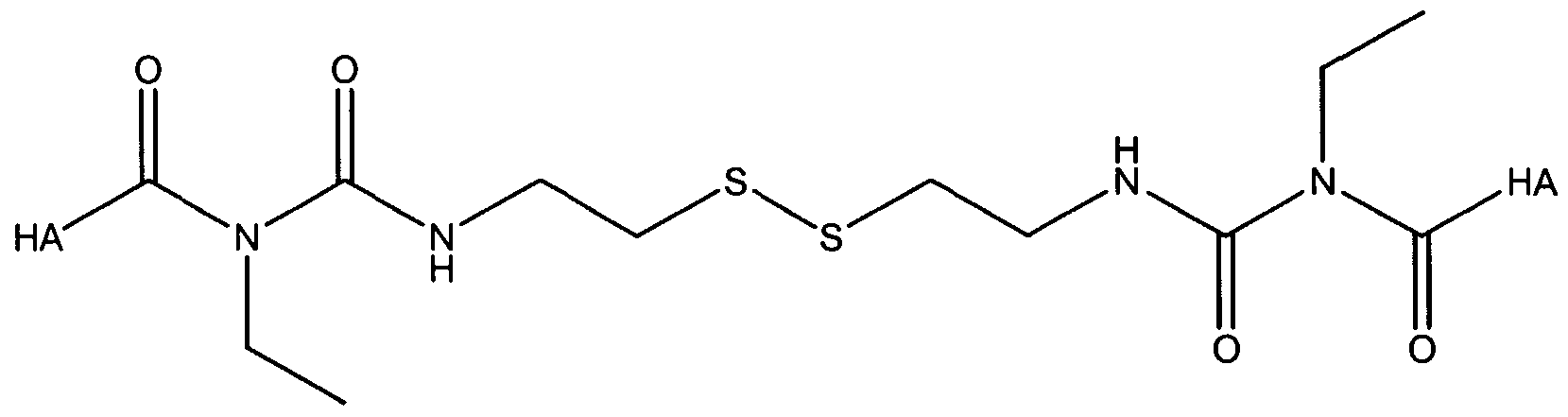
- the biscarbodiimide having an intramolecular disulfide bond is represented by Structural Formula (1):
- a biscarbodiimide having an intramolecular disulfide bond is formed by a method including reacting an isothiocyanate with 2-aminophenyl disulfide or 4-aminophenyl disulfide, thereby forming a thiourea derivative, which is then reacted with an oxidizing agent or a dehydrosulfuration agent, thereby forming a 1,1' dithiophenylene bw(ethylcarbodiimide).
- a biscarbodiimide having an intramolecular disulfide bond is represented by Structural Formula (2) or (3):
- Another embodiment is a thiourea derivative having an intramolecular disulfide bond, the thiourea derivative formed by reacting an isothiocyanate with cystamine.
- a thiourea derivative having an intramolecular disulfide bond is represented by Structural Formula (4):
- Yet another embodiment is a thiourea derivative having an intramolecular disulfide bond, the thiourea derivative formed by reacting an isothiocyanate with 2- aminophenyl disulfide or 4-aminophenyl disulfide, thereby forming the thiourea derivative.
- a thiourea derivative having an intramolecular disulfide bond is represented by Structural Formula (5) or (6): Formula (5)
- Another embodiment includes a cross-linked hyaluronan derivative containing at least one intramolecular disulfide bond, wherein the derivative is the product of a reaction between the precursor of the derivative and a biscarbodiimide having an intramolecular disulfide bond.
- a cross-linked hyaluronan derivative containing at least one intramolecular disulfide bond is the product of a reaction between hyaluronic acid or a salt thereof and a biscarbodiimide having an intramolecular disulfide bond.
- a cross-linked hyaluronan derivative containing at least one intramolecular disulfide bond is the product of a reaction between hyaluronic acid or a salt thereof and a biscarbodiimide represented by Structural Formula (1):
- a particular embodiment includes a cross-linked hyaluronan derivative represented by Structural Formula (8) and salts thereof:
- a thiolated hyaluronan derivative and salts thereof have at least one pendant thiol group, the thiolated hyaluronan derivative formed as a product of a reaction between a cross-linked hyaluronan containing at least one intramolecular disulfide bond and a reducing agent.
- a thiolated hyaluronan derivative having at least one pendant thiol group may be represented by Structural Formula (9):
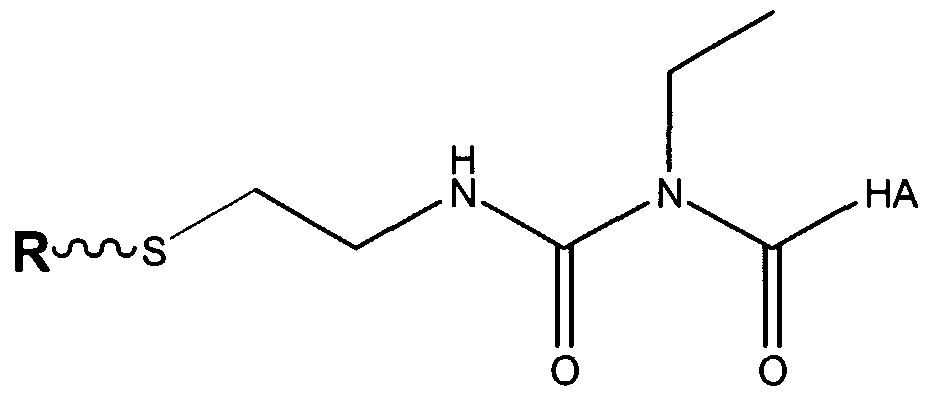
- Another embodiment is a compound that may be represented by Structural Formula (10) and salts thereof:
- R is a small molecule or monovalent moiety selected from alkyl, aryl, alkylene, halo, alkyl halide, amine, ethylamine, alkoxy, aryloxy, alkaryloxy, carboxylate, borate, and phenylborate.
- Another embodiment is a compound that may be represented by Structural Formula (10) and salts thereof:
- R is a drug or pharmaceutically active moiety.
- Another embodiment of the invention is a method of preparing a biscarbodiimide compound represented by Structural Formula (1), including the steps of reacting ethyl isothiocyanate with cystamine, thereby forming a thiourea intermediate, 2,2'dithiot>t-> (N-ethyl(N-ethylthiourea)), having Structural Formula (4); and reacting the thiourea intermediate with an oxidizing agent or a dehydrosulfuration agent, thereby forming a biscarbodiimide compound represented by Structural Formula (1).
- Another embodiment is a method of preparing a biscarbodiimide compound represented by Structural Formula (1), including the steps of reacting ethyl isocyanate with cystamine, thereby forming a urea intermediate, 2,2'dithio6w (N- ethyl(N-ethylurea)), having Structural Formula (7); and reacting the urea intermediate with a dehydrating agent, thereby forming a compound represented by Structural Formula (1).
- Another embodiment is a method of preparing a biscarbodiimide compound represented by Structural Formula (2) or (3), including the steps of reacting ethyl isothiocyanate with 2-aminophenyl disulfide or 4-aminophenyl disulfide, thereby forming a thiourea intermediate having Structural Formula (5) or (6); and reacting the thiourea intermediate with an oxidizing agent or a dehydrosulfuration agent, thereby forming 1,1' dithio-o-phenylene bt-f(ethylcarbodiimide), having Structural Formula (2), or 1,1' dithio-p-phenylene bt.-'(ethylcarbodiimide), having Structural Formula (3).
- Another embodiment is a method of preparing a thiolated hyaluronan derivative having Structural Formula (9), comprising the steps of reacting a biscarbodiimide compound represented by Structural Formula (1), with hyaluronic acid or a salt thereof, to form a cross-linked hyaluronic acid derivative of Structural Formula (8); and reacting the derivative of Structural Formula (8) with t (2- carboxyethyl)phosphine hydrochloride, thereby forming the thiolated hyaluronan derivative having Structural Formula (9).
- Yet another embodiment is a method of cross-linking pendant thiol groups on a thiolated hyaluronic acid derivative to form a hydrogel, the method including the step of: reacting a thiolated hyaluronan derivative of structural formula (9),
- the present invention has many advantages.
- the hyaluronan derivative represented by structural formula (10) and salts thereof, wherein R is a drug or pharmaceutically active moiety is an embodiment which can function as a drug delivery vehicle.
- the hyaluronan derivative of this embodiment can bind to bioactive agent R without significantly reducing its activity, and is also capable of slowly releasing the bioactive agent at a target tissue site.
- a slow-release delivery vehicle bioavailability can be more controlled and the dosing kept more even than with many currently available delivery systems.
- use of a slow- release delivery vehicle allows the amount of drug administered at one time to be kept low to minimize side effects, and the frequency of administration to be reduced.
- a hyaluronan derivative according to the invention also provides several advantages when used in ophthalmic surgery and in tissue engineering or tissue regeneration.
- the hyaluronan derivative according to one embodiment of the invention is a cross-linked, biocompatible, biodegradable material having a sufficiently high viscosity, resilience, other good mechanical properties, and sufficient stability to perform its intended function, but can be decreased in viscosity and decreased in stability.
- the derivative can be decreased in viscosity so that it can clear out through the trabecular meshwork and be absorbed by the body.
- the viscosity of the derivative can be decreased, and as the derivative disintegrates, it can become disassociated from cells grown thereon.
- Figure 1 is a representation of a general reaction scheme for the synthesis of 2,2'-dithiot3w(N-ethyl (N ethylcarbodiimide)) by one embodiment of the method of the invention, Route 1, using ethyl isothiocyanate.
- Figure 2 is a representation of a general reaction scheme for the synthesis of 2,2'-dithiobt5(N-ethyl (N ethylcarbodiimide)) by another embodiment of the method of the invention, Route 2, using ethyl isocyanate.
- Figure 3 is a representation of a general reaction scheme for the synthesis of 1,1'dithio-o-phenylene t)w(ethylcarbodiimide) by Route 1.
- Figure 4 is a representation of a general reaction scheme for the synthesis of 1,1 'dithio- ?-phenylene t>t5(ethylcarbodiimide) by Route 1.
- Figure 5 is a representation of an embodiment of the method of the invention, the cross-linking hyaluronic acid with 2,2'-dithio ⁇ t5(N-ethyl (N ethylcarbodiimide)), followed by deprotection of the cross-linked hyaluronic acid derivative with tris(2- carboxyethyl)phosphine hydrochloride (TCEP) to form thiolated hyaluronic acid.
- Figure 6 is a detailed representation of a composition according to an embodiment of the invention, thiolated hyaluronic acid.
- Figure 7 is a schematic representation of three alternative reactions according to embodiments of the invention: re-oxidation of thiolated hyaluronic acid to re- form a hydrogel; a cross-linking of pendant thiol groups with a homobifunctional cross-linker to form a hydrogel; and a conversion of the sulfhydryl group on thiolated hyaluronic acid to a new functional group, R.
- Figure 8 is a schematic representation of miscellaneous modifications of thiolated hyaluronic acid: (A-E) according to embodiments of the invention.
- the present invention is directed to compositions and methods of preparation thereof, the compositions having an intramolecular disulfide bond, a pendant thiol group, or a modified pendant thiol group.
- Embodiments of the invention include, for example, biscarbodiimides having an intramolecular disulfide bond or a masked thiol group.
- the terms "masked thiol,” “masked thiol group,” and grammatical variations thereof refer to an intramolecular disulfide bond which may be converted to a thiol group by processes such as, for example, oxidation, dehydrosulfuration, dehydration, and other methods known in the art.
- inventions include, for example, thiourea derivatives, urea derivatives, and cross-linked hyaluronan derivatives, all having at least one intramolecular disulfide bond or masked thiol group, as well as methods of synthesizing such compounds.
- cross-linked hyaluronan derivative cross-linked hyaluronic acid derivative
- cross-linked hyaluronan cross-linked hyaluronan
- cross-linked hyaluronic acid have the same meaning, an include an N- acylurea.
- the invention also provides methods for either reversible or irreversible cross-linking of hyaluronan, so that the resulting hyaluronan gel viscosity and other properties can be readily manipulated.
- Embodiments of the invention include novel thiolated hyaluronan derivatives and salts thereof, having at least one pendant thiol group, also referred to as a sulfhydryl group.
- thiolated hyaluronan derivative thiolated hyaluronic acid derivative
- thiolated hyaluronan and “thiolated hyaluronic acid” have the same meaning and include an N-acylurea.
- Yet other embodiments include for example, novel thiolated hyaluronan derivatives and salts thereof, having at least one sulfhydryl group linked to a small molecule, such as a bioactive agent, and include an N-acylurea.
- the invention also provides methods for functionalizing hyaluronan through reaction with a thiol group on thiolated hyaluronan.
- a small molecule such as, for example, a bioactive agent, can be attached to a functionalized hyaluronan molecule by substituting the bioactive agent for a hydrogen of at least one thiol group.
- Methods for substituting a bioactive agent for a hydrogen of a thiol group on a polymer are well known to those of ordinary skill in the art. See, for example, "Development of controlled drug release systems based on thiolated polymers," Bernkop-Schn ⁇ rch, A.
- Thiolated hyaluronan according to an embodiment of the invention, has mucoadhesive properties. Such mucoadhesive properties can enhance both the controlled release of a bioactive agent that has replaced a hydrogen on at least one of the thiol groups, as well as the localization of the delivery of the bioactive agent to the desired site.
- a novel biscarbodiimide having an intramolecular disulfide bond such as, for example, 2,2'-dithiot)ts(N-ethyl (Nethylcarbodiimide)), a biscarbodiimide having Structural Formula (1):
- the novel product formed is 2,2'-dithiobw(N-ethyl(N'- ethylthiourea)), having a structural formula represented by Formula (4), and having an intramolecular disulfide bond:
- the novel thiourea derivative intermediate is then reacted with an oxidizing agent or a dehydrosulfuration agent, thereby forming another novel compound, a biscarbodiimide having an intramolecular disulfide bond.
- an oxidizing agent is a hypochlorite, such as sodium hypochlorite.
- suitable oxidizing agents include, for example, N- bromosuccinimide, 1-chlorobenzothiazole, and N-chloroamidines.
- dehydrosulfuration agent is mercury II oxide.
- suitable dehydrosulfuration agents are well known in the art and include phosgene, diethyl azodicarboxylate-triphenylphosphine, lead oxide, silver oxide, activated aluminum oxide, and quinones.
- dehydrosulfuration agents include, but are not limited to, thionyl chloride, sulfenyl chloride, chlorosulfonic acid, SC1 2 , S 2 C1 2 , and phosphorus halides.
- hydrocarbyl as used herein means the monovalent moiety obtained upon removal of a hydrogen atom from a parent hydrocarbon.
- hydrocarbyls include, for example, alkyls of 1 to 25 carbon atoms, inclusive, such as methyl, ethyl, propyl, butyl, pentyl, hexyl, heptyl, octyl, nonyl, decyl, undecyl, dodecyl, tridecyl, tetradecyl, pentadecyl, hexadecyl, heptadecyl, octadecyl, nonodecyl, eicosyl, heneicosyl, docosyl, tricosyl, tetracosyl, pentacosyl and the isomeric forms thereof.
- alkyls of 1 to 25 carbon atoms, inclusive such as methyl, ethyl, propyl, butyl, pentyl, hexyl, heptyl, octyl, nonyl, decyl,
- aryl refers to the monovalent moiety obtained upon removal of a hydrogen atom from a parent aromatic compound.
- Representatives of aryl groups may have, for example, 6 to 25 carbon atoms, inclusive, such as phenyl, tolyl, xylyl, naphthyl, biphenylyl, triphenylyl, and the like.
- hydrocarbyls include cycloalkyl of 3 to 8 carbon atoms, inclusive, such as cyclopropyl, cyclobutyl, cyclopentyl, cyclohexyl, cycloheptyl, cyclooctyl and the like; alkenyl of 2 to 25 carbon atoms, inclusive, such as vinyl, allyl, butenyl, pentenyl, hexenyl, octenyl, nonenyl, decenyl, undecenyl, dodecenyl, tridecenyl, tetradecenyl, pentadecenyl, hexadecenyl, heptadecenyl, octadecenyl, nonadecenyl, eicosenyl, heneicosenyl, docosenyl, tricosenyl, tetracosenyl,
- substituted hydrocarbyl as used herein means the hydrocarbyl moiety as previously defined wherein one or more hydrogen atoms have been replaced with a chemical group which does not adversely affect the desired preparation of the product derivative. Representative of such groups are amino and alkyl.
- substituted aryls include, for example, arylalkyl of 7 to 25 carbon atoms, inclusive, such as benzyl (C 6 H 5 CH 2 ), phenylethyl, phenylpropyl, phenylbutyl, phenylhexyl, naphthylalkyl and the like.
- reaction Route 1 may be followed, starting with an aminophenyl disulfide, such as, for example, 2-aminophenyl disulfide or 4- aminophenyl disulfide and an isothiocyanate.
- a thiourea derivative having an intramolecular disulfide bond is formed by reacting an aminophenyl disulfide, such as, for example, 2-aminophenyl disulfide or 4-aminophenyl disulfide and an isothiocyanate, such as, for example, ethyl isothiocyanate, propyl isothiocyanate, butyl isothiocyanate, sec- butyl isothiocyanate, tert-butyl isothiocyanate, or phenyl isothiocyanate.
- an aminophenyl disulfide such as, for example, 2-aminophenyl disulfide or 4-aminophenyl disulfide
- an isothiocyanate such as, for example, ethyl isothiocyanate, propyl isothiocyanate, butyl isothiocyanate, sec- butyl isothiocyanate, tert-butyl
- an embodiment of a general reaction scheme for the synthesis of 1,1'dithio-o-phenylene bw(ethylcarbodiimide), a compound represented by Structural Formula (2) includes the steps of reacting ethyl isothiocyanate with 2-aminophenyl disulfide, thereby forming a thiourea derivative intermediate having Structural Formula (5); and reacting the thiourea intermediate with an oxidizing agent or a dehydrosulfuration agent, thereby forming 1,1' dithio-o- phenylene fos(ethylcarbodiimide), having Structural Formula (2).
- FIG. 4 represents a general reaction scheme for the synthesis of 1,1'dithio- -phenylene bts(ethylcarbodiimide), a compound represented by Structural Formula (3).
- the scheme includes the steps of reacting ethyl isothiocyanate with 4-aminophenyl disulfide, thereby forming a thiourea intermediate having Structural Formula (6); and reacting the thiourea intermediate with an oxidizing agent or a dehydrosulfuration agent, thereby forming 1,1' dithio-p-phenylene bw(ethylcarbodiimide), having Structural Formula (3).
- the thiourea intermediate formed according to an embodiment by reacting ethyl isothiocyanate, propyl isothiocyanate, butyl isothiocyanate, tert-butyl isothiocyanate, or phenyl isothiocyanate with an aminophenyl disulfide may be further converted to a biscarbodiimide having an intramolecular disulfide bond by oxidation with a hypochlorite such as NaOCl in IN NaOH.
- Suitable oxidizing agents include, but are not limited to, N-bromosuccinimide, l-chlorobenzothiazole, and N-chloroamidines.
- dehydrosulfuration agents that are suitable for use in Route 1 syntheses include, but are not limited to, mercury II oxide, phosgene, diethyl azodicarboxylate-triphenylphosphine, lead oxide, silver oxide, activated aluminum oxide, quinones, thionyl chloride, sulfenyl chloride, chlorosulfonic acid, SC1 2 , S 2 C1 2 , and phosphorus halides.
- novel thiourea intermediates having at least one phenyl group and at least one intramolecular disulfide bond can be formed by reacting propyl isothiocyanate, butyl isothiocyanate, tert-butyl isothiocyanate, or phenyl isothiocyanate with an aminophenyl disulfide, thereby forming a thiourea intermediate; and reacting the thiourea intermediate with an oxidizing agent or a dehydrosulfuration agent, thereby forming a biscarbodiimide having both an intramolecular disulfide bond and an R 2 which is a substituted aryl.
- suitable oxidizing agents and dehydrosulfuration agents are provided above; other examples are known by those skilled in the art, or may be readily ascertained with no more than routine experimentation
- thiourea intermediates and biscarbodiimides having at least one intramolecular disulfide bond can be formed according to the general scheme of reaction Route 1 by reacting an isothiocyanate with other disulfides, such as, for example, a disulfide having the general formula, H 2 N-R-S-S- R'-NH 2 , wherein R and R are the same or different and are hydrocarbyl such as, for example, alkyl, substituted alkyl, phenyl, and substituted phenyl.
- the terminal amines of the disulfide according to an embodiment must be primary amines.
- the second route which is represented schematically in Figure 2, is explained in greater detail below and in Example 3(a) and (b).
- an isocyanate for example, ethyl isocyanate (NCO), propyl isocyanate, butyl isocyanate, sec-butyl isocyanate, tert-butyl isocyanate, or phenyl isocyanate, with cystamine, to form a novel urea intermediate, a urea derivative having an intramolecular disulfide bond.
- the urea derivative is then reacted with a dehydrating agent, such as >-toluenesulfonyl chloride (TsCl) in pyridine, thereby forming a biscarbodiimide having an intramolecular disulfide bond.
- a dehydrating agent such as >-toluenesulfonyl chloride (TsCl) in pyridine
- TsCl >-toluenesulfonyl chloride
- suitable dehydrating agents include, among others, POCl 3 , PC1 5 , P 2 O 5 in pyridine, ?-toluenesulfonyl chloride in a phase-transfer catalysis system, and Ph 3 PBr 2 -Et 3 N.
- reaction steps for forming 2,2'-dithiobts(N-ethyl (N' ethylcarbodiimide) by way of Route 2 may be represented generally according to the reaction scheme shown in Figure 2.
- cystamine in lieu of cystamine, another disulfide such as, for example, an aminophenyl disulfide can be reacted with an isocyanate according to the Route 2 scheme to form a urea intermediate, that is then reacted with a dehydrating agent, such as ?-toluenesulfonyl chloride (TsCl) in pyridine, thereby forming a novel biscarbodiimide having an intramolecular disulfide bond.
- a dehydrating agent such as ?-toluenesulfonyl chloride (TsCl) in pyridine
- a disulfide having the general formula, H 2 N-R-S-S-R'-NH 2 , wherein R and R' are the same or different and are hydrocarbyl such as, for example, alkyl, substituted alkyl, phenyl, and substituted phenyl, can be used to react with an isocyanate for Route 2 synthesis of a novel biscarbodiimide.
- a cross-linked hyaluronan derivative containing at least one intramolecular disulfide bond can be produced by a reaction between the precursor of the cross-linked hyaluronan derivative and a biscarbodiimide having an intramolecular disulfide bond.
- An example of a precursor of a cross-linked hyaluronan derivative is hyaluronic acid.
- cross-linked hyaluronan derivative is a salt of hyaluronic acid.
- a biscarbodiimide is a cross- linking agent.
- a "cross-linking agent,” as that phrase is used herein, is a molecule containing two or more functional groups that can react with different chains of a polymer, such as, for example, hyaluronic acid or a salt thereof.
- the hyaluronic acid derivative having an intramolecular disulfide bond is prepared by reacting hyaluronic acid, or a salt thereof, with a biscarbodiimide having an intramolecular disulfide bond, in the absence of a nucleophile or a polyanionic polysaccharide other than hyaluronic acid.
- a "nucleophile,” as that term is used herein, is any molecule possessing an electron rich functional group (such as a primary amine).
- a "polyanionic polysaccharide,” as that term is used herein, is a polysaccharide containing more than one negatively charged group, e.g., a carboxyl group.
- the hyaluronic acid derivative having an intramolecular disulfide bond includes an N-acylurea.
- the reaction of hyaluronic acid or a salt thereof with a biscarbodiimide having an intramolecular disulfide bond, in the presence of an available proton, is believed to comprise protonation in the first step.
- the acid anion then attaches to the carbon atom of the cation formed, resulting in the formation of an O-acylisourea intermediate.
- the acyl group in the intermediate migrates from the oxygen atom to a nitrogen atom to produce the N-acylurea derivative of the hyaluronic acid or salt.
- the cross-linked hyaluronan derivative is biocompatible.
- a "biocompatible” substance as that term is used herein, is one that has no medically unacceptable toxic or injurious effects on biological function.
- the cross-linked hyaluronan derivative is both biocompatible and biodegradable.
- a "biodegradable" substance as that term is used herein, is one that is capable of being decomposed by natural biological processes.
- the hyaluronic acid or salts of hyaluronic acid used as starting compositions for the reaction according to an embodiment of the invention generally have an average molecular weight range of from between about 6 x 10 4 to about 1.2 x 10 7 daltons.
- Hyaluronic acid from any of a variety of sources including hyaluronic acid extracted from animal tissues or harvested as a product of bacterial fermentation, can be used as a starting material.
- the hyaluronic acid used to make the composites of this invention can be produced in commercial quantities by bioprocess technology, as described, for example, in Nimrod et al, PCT Publication No. WO 86/04355, the entire teachings of which are inco ⁇ orated herein by reference in their entirety.
- the reaction can be carried out at a temperature range of between about 0°C and about 60°C, preferably between about 15°C and about 30°C.
- Hyaluronic acid or its salt is dissolved in water to make an aqueous solution.
- the concentration of hyaluronic acid in this first aqueous solution is in the range of between about 1 mg/ml solution to about 15 mg/ml solution. More preferably, the reactions are carried out with a range of between about 4 to about 8 mg of hyaluronic acid per milliliter. The optimal concentration of hyaluronic acid is about 4 to about 6 mg/ml. The precise concentration used will vary depending on the molecular weight of the hyaluronic acid. At significantly lower concentrations, the reactions are slower and less effective. At significantly higher hyaluronic acid concentrations, the end product may be difficult to handle due to the increase in viscosity.
- the hyaluronic acid can be dissolved in distilled water, or in 0.9% saline. Alternatively, it can be dissolved in a solvent comprising about 100-60% water and about 0-40% dimethylformamide (DMF).
- a solvent comprising about 100-60% water and about 0-40% dimethylformamide (DMF).
- the pH of the hyaluronic acid solution is then adjusted by the addition of a suitable acid, for example, hydrochloric acid, 0.1M, so that the aqueous hyaluronic acid solution preferably has a pH of between about 4.0 and about 8.0, more preferably between about 4 and about 6, and optimally between about 4.75 and about 5.80.
- a suitable acid for example, hydrochloric acid, 0.1M
- the biscarbodiimide having an intramolecular disulfide bond can be added.
- an excess of the stoichometric proportion of biscarbodiimide is advantageous to promote the desired reaction.
- the molar equivalent ratio of the hyaluronic acid to the biscarbodiimide is equal to or greater than about 3.3 .
- the biscarbodiimide is dissolved in an appropriate water-mixable solvent, such as, for example, acetone, and added drop-wise, over a period of, for example, about 2 to 3 hours.
- an appropriate water-mixable solvent such as, for example, acetone
- the pH of the solution generally will increase. Gels with various desired physical properties can be obtained by simply allowing the pH to rise as the reaction proceeds. By dropwise addition of 0.1 M HCl, the pH is gradually reduced back to about 4.75. Sodium chloride is then added to the reaction mixture to about 5% NaCl. The reaction mixture is stirred for about a half hour. The reaction mixture is then poured onto ethanol (3 volume equivalents of ethanol to one volume of aqueous solution). A precipitate of cross-linked hyaluronic acid having an intramolecular disulfide bond forms, and can be collected by filtration and dried under reduced pressure.
- an appropriate water-mixable solvent such as, for example, acetone
- Example 2 provides details of the cross-linking of high molecular weight hyaluronic acid with 2,2'-dithio ⁇ t5(N-ethyl (vVethylcarbodiimide)) according to one embodiment of the invention, to form a novel compound having an intramolecular disulfide bond, the compound represented by Structural Formula 8.
- the biscarbodiimide rearranges to stable N-acyl urea-based crosslinks containing a disulfide bridge.
- the addition of at least one disulfide bridge along the hyaluronan polymer backbone is also referred to herein as the addition of a masked thiol group.
- a cross-linked hyaluronan derivative of the invention containing at least one intramolecular disulfide bond is a water-insoluble gel.
- a "water-insoluble" gel of the invention, as that and like terms are used herein, is one which is heterogeneous when suspended in a sufficient amount of water at room temperature.
- a cross-linked hyaluronan derivative according to an embodiment containing at least one intramolecular disulfide bond is a hydrogel.
- a “hydrogel” is a cross-linked macromolecular network that swells in water or biological fluids, and exhibits the ability to retain a significant portion of water within its structure without dissolving.
- the term "swelling" refers to the taking up of a liquid, for example water, by a gel with an increase in volume.
- Hydrogels have a large molecular weight that generally cannot be measured by conventional methods and are composed of a polymer backbone and cross-links.
- the water retained within a hydrogel in its swollen state is entrapped within cellular pockets or compartments formed by polymer network groups.
- the polymer network groups may be formed as a result of both intramolecular hydrogen bonding and intermolecular hydrogen bonding.
- Figure 5 is a representation of an embodiment of the method of reacting hyaluronic acid with 2,2'-dithio ⁇ t5(N-ethyl ( ethylcarbodiimide)) to form a cross- linked hyaluronic acid derivative which is a hydrogel, followed by deprotection of the cross-linked HA derivative with trt_>(2-carboxyethyl)phosphine hydrochloride (TCEP) to form a thiolated hyaluronan derivative such as, for example, thiolated hyaluronic acid.
- TCEP 2-carboxyethyl)phosphine hydrochloride
- a cross-linked hyaluronic acid derivative having an intramolecular disulfide bond is deprotected by reaction with a suitable reducing agent. Reducing the disulfide bridge liberates the masked thiols, producing two-pendant thiol groups per disulfide cross-link along the hyaluronan backbone. The reduction reaction breaks down the hyaluronan hydrogel, decreasing its viscosity.
- the cross-linked hyaluronic acid having an intramolecular disulfide bond is deprotected by undergoing a reduction reaction with the reducing agent, tr/.s(2-carboxyethyl)phosphine hydrochloride(TCEP).
- the reducing agent TCEP has the structural formula:
- Example 4 A detailed description of one embodiment of a reduction of disulfide bridge cross- linked HA by TCEP to form a hyaluronan derivative having pendant thiol groups is provided below in Example 4.
- Reduction of the cross-linked hyaluronic acid derivative, according to one embodiment of the invention produces thiolated hyaluronic acid, a compound of the invention represented by Structural Formula (9).
- Figure 6 is a more detailed representation of a portion of the thiolated hyaluronic acid represented by Structural Formula (9).
- the, cross-linked hyaluronic acid derivative having an intramolecular disulfide bond is deprotected by undergoing a reduction reaction with the reducing agent, dithiothreitol or the reducing agent 2-mercaptoethanol.
- the reducing agent is zinc metal in dilute acid.
- the reducing agent is triphenylphosphine, (C 6 H 5 ) 3 P, under basic conditions. Triphenylphosphine, a crystalline compound at room temperature, is soluble in ether, benzene, and chloroform, and has been used in the field of polymer chemistry as an initiator of polymerization and organic synthesis.
- the reducing agent is lithium aluminum hydride, LiAlH 4 , or sodium borohydride.
- the pendant thiol groups on the thiolated hyaluronic acid derivative allow a diverse range of modifications to be carried out. Examples of some potential modifications according to several different embodiments are as follows:
- the pendant thiol groups on the thiolated hyaluronic acid may be re-oxidized to form new disulfide bridges, and thus to re-form the original cross-linked hyaluronan hydrogel.
- Figure 7 schematically represents the re-oxidation of thiolated hyaluronic acid molecules, each having a pendant thiol group, to form the hyaluronic acid derivative having an intramolecular disulfide bond.
- An example of an oxidizing agent suitable for use to re- oxidize the pendant thiol groups is a hypochlorite, such as sodium hypoclorite.
- Suitable oxidizing agents include, for example, N-bromosuccinimide, 1- chlorobenzothiazole, and N-chloroamidines. This process of reduction and oxidation can be repeated theoretically any number of times. Thus, the formation of the hydrogel is a reversible process.
- a hydrogel according to an embodiment of the invention can also be formed by cross-linking pendant thiol groups on the thiolated hyaluronic acid with a homobifunctional cross-linker.
- a "homobifunctional cross-linker,” as the term is used herein, is a cross-linking agent that has two reactive groups that are identical and that are generally located at the ends of an organic spacer group. As is well known to those of skill in the related art, the length of the spacer group is generally chosen to correspond to the distance between the two groups to be linked.
- homobifunctional sulfhydryl-reactive cross- linking agents There are two general types of homobifunctional sulfhydryl-reactive cross- linking agents. One type produces an essentially permanent bond with available thiol groups. The second type forms reversible links with available thiol groups.
- cross-linking the pendant thiol groups on the thiolated hyaluronic acid with homobifunctional cross-linkers can also form hydrogels in situ by rapid, controllable, and reversible cross-linking of the hyaluronan derivative.
- Homobifunctional sulfhydryl-reactive cross-linking agents are frequently referred to in the literature, and are generally commercially available (Pierce Chemical, Rockford, LL).
- An example of homobifunctional sulfhydryl-reactive cross-linking agents suitable for use in an embodiment of the compositions and methods of the invention includes 5-thio-2-nitrobenzoic acid (TNB), which forms a reversible disulfide linkage with a sulfhydryl-containing macromolecule.
- TAB 5-thio-2-nitrobenzoic acid
- Other embodiments employ bzs-mercurial salts, to-thiosulfonates, bis- alkylhalides, and bts-maleimide derivatives.
- Other embodiments employ dithiobt-f(succinimidylproprionate) and 3,3'-dithiobt-.(sulfosuccinimidylproprionate).
- the water-insoluble, homobifunctional cross- linker l,4-di-(3'-(2'-pyridyldithio)propionamido)butane(DPDPB) is used.
- a water-insoluble cross-linker such as DPDPB is dissolved first in an organic solvent, prior to addition of the cross-linker to an aqueous, buffered reaction medium.
- ⁇ /smaleimidohexane (BMH) is used as a cross-linker.
- the viscosity of the hyaluronic acid derivative of the invention can be varied in situ by manipulation of the size and nature of the cross-link.
- the properties and reactivities of a hydrogel of the invention towards a given biological system can be affected.
- thiolated hyaluronan of the invention can form both intramolecular and intermolecular disulfide bridges, by cross-linking the material in the presence of certain bioactive agents or cells under mild conditions. These cross-linked compositions can be subsequently uncross- linked under equally mild conditions.
- the hyaluronic acid derivatives according to an embodiment have variable viscosities, and the compositions containing the derivatives can reversibly viscosify in response to mild changes in conditions in vivo.
- reversibly viscosify is meant that the viscosity can be increased or decreased, changing a composition, according to an embodiment of the invention, from a liquid state to a gel state, and from the gel state back to the liquid state.
- formulations of a composition, according to an embodiment of the invention can be manipulated to vary the rheological properties of the composition.
- the in situ- variable viscosity of the hyaluronic acid derivatives of the invention can be employed in ophthalmic uses such as, for example, filling an intraocular cavity during eye surgery.
- a composition, according to an embodiment of the invention can be delivered to the eye in a highly viscous form, similar to that in prior uses of hyaluronic acid compositions.
- the hyaluronic acid derivative of the invention like currently available compositions, has sufficiently high viscosity, stability and resilience to perform its intended function. Subsequently, its viscosity can be reduced by disrupting intermolecular disulfide groups between pendant thiol groups. As the attractions between disulfide groups are disrupted, the resulting low viscosity, low molecular weight material produced is cleared from the eye with a significantly reduced likelihood of causing intraocular spikes (IOPs).
- IOPs intraocular spikes
- the in stttt-variable viscosity of the hyaluronic acid derivatives of the invention also provides an advantage when the derivatives are used for tissue engineering.
- a hydrogel composition comprising a cross-linked hyaluronic acid derivative containing an intramolecular disulfide bond is used as a scaffold or matrix for tissue engineering in vitro.
- a hydrogel composition comprising a cross-linked hyaluronic acid derivative containing an intramolecular disulfide bond is used as a scaffold or matrix for tissue engineering in vivo. After cells have been allowed to grow on the hydrogel composition, the HA derivative hydrogel can be reduced under mild conditions, releasing the cells.
- the invention is used for delivery of in situ cross-linkable materials.
- hyaluronic acid derivatives of the invention containing pendant thiol groups can be mildly cross- linked, forming a hydrogel, in the presence of cells. These cells can be recovered in an equally mild manner by reduction of the hydrogel.
- pendant thiol groups on a hyaluronic acid derivative can be converted to new functional groups.
- small molecules such as drugs, rheology modifiers, peptides, radionuclides, and biological probes can be modified in either of two ways and attached to the hyaluronan backbone through reaction with the pendant thiol groups.
- the small molecule is modified to carry a thiol group.
- the thiol group on the small molecule then attaches to the thiol group of the hyaluronan derivative by forming a disulfide bridge thereto.
- the small molecules are modified to each carry a thiol-reactive group such as, for example, an alkyl halide (iodide or bromide), vinyl sulfone, maleimide, a metal nuclide or a radionuclide.
- a thiol-reactive group such as, for example, an alkyl halide (iodide or bromide), vinyl sulfone, maleimide, a metal nuclide or a radionuclide.
- a pendant thiol on a hyaluronic acid derivative is converted to a pendant amine by reaction of the thiol with N-( ⁇ - iodoethyl)trifluoroacetamide (m.w. 267) (aminoethyl-8 TM reagent, Pierce Chemical, Rockford, IL).
- N-( ⁇ - iodoethyl)trifluoroacetamide m.w. 267)
- aminoethyl-8 TM reagent Pierce Chemical, Rockford, IL
- This cationic site may serve as a noncovalent, ionic binding site for anionic substances such as non-steroidal anti-inflammatory drugs (e.g. naprosyn).
- a pendant thiol on a hyaluronic acid derivative is converted to a pendant amine by reaction of the thiol with 2-bromoethylamine (m.w.
- a pendant thiol on a hyaluronic acid derivative is converted to a pendant carboxylate by reaction of the thiol with iodoacetic acid.
- the reaction of a thiol with iodoacetic acid is well known to those of skill in the relevant art.
- a pendant thiol on a hyaluronic acid derivative is converted to a boronic acid by reaction with 3-maleimidophenyl boronic acid (MPBA).
- MPBA 3-maleimidophenyl boronic acid
- the pendant boronic acid forms a reversible gel complex with cis diols found in glycoproteins and ribonucleotides.
- the boronic acid-cts diol complex can be dissociated by lowering the pH to 4.5, thereby reversing the gel formation.
- the complex is used to deliver therapeutic agents that are glycoprotein-based or RNA/DNA based.
- the residence time of unmodified or native HA in the human body is generally less than a week.
- a hyaluronic acid derivative according to an embodiment having at least one intramolecular disulfide bond has a residence time greater than that of native HA.
- a thiolated hyaluronan composition according to an embodiment, having an intermolecular disulfide bond between pendant thiol groups also has a longer residence time than native, uncross-linked HA.
- an increase in the degree of either intermolecular or intramolecular cross- linking results in an increase in the time of residence.
- a cross-linked HA of desired residence time can by synthesized.
- a thiolated hyaluronan By reducing fewer than all of the disulfide bonds of a cross-linked hyaluronan, a thiolated hyaluronan according to an embodiment is produced that has increased residence time because it has both intramolecular and intermolecular disulfide bridges.
- a small molecule such as a bioactive molecule or drug to at lease one of the pendant thiol groups on the hyaluronan having at least one intramolecular disulfide bridge, as described above
- a sustained or controlled-release drug-delivery vehicle according to an embodiment, with controlled residence time is formulated.
- the hyaluronan derivative according to an embodiment of the invention described above can function as a vehicle which provides the controlled or sustained release of a drug.
- the controlled-release drug- delivery vehicle is then placed in contact with a pre-selected tissue, and allowed to remain in place until a desired clinical result is achieved.
- the controlled-release drug-delivery vehicle may be injected or implanted at the locus where delivery is desired, or may be administered orally or by a route that is a combination of two or more of these administration routes.
- the linkage between the therapeutic drug moiety and the hyaluronan derivative can be readily broken, releasing the therapeutic drug at the site of administration.
- the more stable chemical bond between the HA molecule and the carbodiimide moiety will ensure the release of the therapeutic drug without the release of the carbodiimide residue.
- the release of the carbodiimide residue might affect the therapeutic action of the drug.
- Diffusion provides the delivery of a drug via delivery systems in which the drug non-covalently interacts with the derivatized HA or other pharmaceutical carrier.
- non-covalent interactions include ionic, hydrophobic, and hydrophilic interactions in which the drug is dispersed within the carrier.
- the term "dispersed” shall refer to ionic, hydrophobic, and hydrophilic interactions between the drug and the hyaluronan derivative or other carrier.
- the rate of delivery of a drug or other bioactive agent is related not only to the rate of its diffusion, but also to the rate of degradation of the hyaluronan derivative to which the drug or other bioactive agent is attached covalently, or in which the drug or other bioactive agent is dispersed.
- the rate of degradation of the hyaluronan derivative is related to the degree of cross-linking and is also dependent on numerous metabolic processes taking place in vivo. The degradation process is usually slower than diffusion.
- the drug concentration can be varied over very broad limits and preferably should be chosen depending on the degree of cross-linking of the derivatized HA, the solubility of the drug, its pharmaceutical activity, and the effect desired.
- Any substance which has biological or pharmaceutical activity and which is normally considered to be a drug can be used as the drug component in a pharmaceutically active moiety of a hyaluronic acid derivative of the invention.
- Pharmaceutically-active substances suitable for use in an embodiment include, but are not limited to, analytes, growth factors, enzymes, therapeutic drugs, biopolymers, anti-microbials, and deodorant agents.
- the pharmaceutically active moiety may be, for example, an analyte, a growth factor, an enzyme, a therapeutic drug, a biopolymer, an anti-microbial, or a deodorant agent.
- a "therapeutic drug,” as that term is used herein, includes, for example: compounds and compositions recognized in the official United States Pharmacopoeia, the official Homeopathic Pharmacopoeia of the United States, or the official National Formulary, or any supplement of any of them; compounds and compositions intended for use in the diagnosis, cure, mitigation, treatment, or prevention of disease in man or other animals; and compounds and compositions (other than food) intended to affect the structure or any function of the body of man or other animals.
- R in a compound represented by Formula (10) is an anti-inflammatory drug, a hormone, or any synthetic analogue or pharmaceutically-active fragment of the anti-inflammatory drug or hormone.
- Therapeutic drugs which are suitable for use in delivery systems in embodiments of the invention may be fat soluble, water-soluble, anionic or cationic, as long as they can interact with a group on the hyaluronic aid derivative of an embodiment to form either covalent or ionic bonds or hydrophobic or hydrophilic interactions, including those described below.
- a hydrophobic interaction between a therapeutic drug having a hydrophobic moiety and the hyaluronan derivative according to an embodiment can occur.
- drugs having hydrophobicity and suitable for use in an embodiment include fatty acid derivatives, steroids (e.g., dexamethasone) and their analogs.
- the delivery system of the invention is well-suited for administering growth factors (e.g., interleukins, prostaglandins, thromboxanes, leukotrienes and cytokines), steroidal and non-steroidal contraceptive agents, antibiotics (e.g., penicillin, streptomycin and linocomycin), analgesics, sedatives, barbiturates, aminoalkybenzenes, catecholamines, narcotics, narcotic antagonists, anti-neoplastic agents and anticoagulants (e.g., heparin and heparin sulfate).
- growth factors e.g., interleukins, prostaglandins, thromboxanes, leukotrienes and cytokines
- steroidal and non-steroidal contraceptive agents e.g., antibiotics (e.g., penicillin, streptomycin and linocomycin), analgesics, sedatives,
- R in a compound represented by Formula (10) is a growth factor such as, for example, an interleukin, a prostaglandin, thromboxane, leukotriene or a cytokine.
- R in a compound represented by Formula (10) is a contraceptive agent, an antibiotic, an analgesic, a sedative, a barbiturate, an aminoalkybenzene, a catecholamine, a narcotic, a narcotic antagonist, an anti- neoplastic agent, or an anticoagulant.
- the following are examples of the invention, and are not intended to limit the scope of the invention in any way.
- Example 1 Synthesis of the masked thiol-containing biscarbodiimide of the invention.
- Example 2 Cross-linking of high molecular weight hyaluronan with 2,2'-dithiobis (N-ethyl(N-ethylcarbodiimide)).
- Hyaluronic acid 600mg, 1.5mmol was dissolved in distilled water (120mL) and the pH adjusted to 4.75 using 0.1 ⁇ HCl.
- 2,2'-dithio b/,s(N-ethyl(N- ethylcarbodiimide)) 116.3mg, 0.45mmol, 30mol%) dissolved in acetone (58mL, 2mg/mL) was added.
- the pH was allowed to rise to 5.8, then gradually reduced back to 4.75 over a period of 3 hours, by dropwise addition of 0. IN HCl.
- the reaction mixture was made up to 5% ⁇ aCl (6g) and stirred for 30 minutes at a room temperature of about 20°C.
- reaction mixture was poured onto ethanol (360mL, 3 volume equivalents with respect to the aqueous volume).
- the precipitate was collected by filtration and dried under reduced pressure yielding 610 mg of product, a cross-linked hyaluronic acid derivative having an intramolecular disulfide bond.
- Example 3 Synthesis of 2,2 , -dithiof ⁇ s (N-ethyl(N'-e ⁇ hylcarbodiimide)) - (BCDISS) via the urea route.
- cystamine 1.0g, 6.57 mmol
- chloroform 30mL
- ethyl isocyanate 2.5 mequivs, 16.43 mmol, 1.167 g, 1.300 mL
- the atmosphere was replaced with nitrogen; the flask was sealed; and the reaction was allowed to proceed for 16 hours.
- the chloroform was removed under reduced pressure, yielding a viscous oil.
- Methanol (20 ml) was added, and the oil scratched, yielding a white precipitate. The mixture was heated to dissolve the precipitate, then filtered.
- >-toluenesulfonyl chloride (2.2 mequivalents, 6.74 mmol, 1.284 g) was dissolved in pyridine (lOmL) and placed in a pressure-equalizing funnel. The reaction system was placed under nitrogen and the tosyl chloride solution added dropwise. The reaction mixture was stirred for 4 hours, then poured onto water (215 mL). The aqueous solution was extracted with chloroform (3x 75 mL). The chloroform was dried (MgSO 4 ) and the solvent was removed under reduced pressure, yielding an oily product, 2,2'-dithiot)ts (N-ethyl(N - ethylcarbodiimide)). The product was re-dissolved in acetone (lOOmL).
- Example 4 Deprotection of a cross-linked hyaluronic acid derivative having an intramolecular disulfide bond, the derivative made according to Example 2.
- the disulfide bridge cross-linked HA was reduced to thiol-modified HA as follows.
- HA derivative(200mg), cross-linked with a biscarbodiimide having an intramolecular disulfide bond was suspended in 0.1 M phosphate buffer (pH 4.5- 7.5; preferably pH 6.5-6.8) at 5 mg/mL (40mL).
- TCEP- HCl 28.7 mg, 0.1 mmol, large excess was added to the disulfide-modified HA solution and stirred for 20 minutes at room temperature (about 20-25°C).
- ⁇ aCl (2g) was added to the solution to give a 5% ⁇ aCl w/v solution and stirring was continued for 5 minutes.
Landscapes
- Chemical & Material Sciences (AREA)
- Organic Chemistry (AREA)
- Health & Medical Sciences (AREA)
- Life Sciences & Earth Sciences (AREA)
- Engineering & Computer Science (AREA)
- General Health & Medical Sciences (AREA)
- Chemical Kinetics & Catalysis (AREA)
- Medicinal Chemistry (AREA)
- Animal Behavior & Ethology (AREA)
- Biochemistry (AREA)
- Pharmacology & Pharmacy (AREA)
- General Chemical & Material Sciences (AREA)
- Polymers & Plastics (AREA)
- Bioinformatics & Cheminformatics (AREA)
- Public Health (AREA)
- Veterinary Medicine (AREA)
- Molecular Biology (AREA)
- Nuclear Medicine, Radiotherapy & Molecular Imaging (AREA)
- Materials Engineering (AREA)
- Surgery (AREA)
- Ophthalmology & Optometry (AREA)
- Pharmaceuticals Containing Other Organic And Inorganic Compounds (AREA)
- Materials For Medical Uses (AREA)
- Medicinal Preparation (AREA)
- Polysaccharides And Polysaccharide Derivatives (AREA)
Abstract
Description




Claims




Priority Applications (4)
| Application Number | Priority Date | Filing Date | Title |
|---|---|---|---|
| DE60207831T DE60207831D1 (en) | 2001-02-22 | 2002-02-21 | THIOL-MODIFIED HYALURONAN DERIVATIVES |
| EP02721085.5A EP1368309B2 (en) | 2001-02-22 | 2002-02-21 | Thiol-modified hyaluronan |
| AT02721085T ATE312076T1 (en) | 2001-02-22 | 2002-02-21 | THIOL-MODIFIED HYALURONAN DERIVATIVES |
| CA2437417A CA2437417C (en) | 2001-02-22 | 2002-02-21 | Thiol-modified hyaluronan |
Applications Claiming Priority (2)
| Application Number | Priority Date | Filing Date | Title |
|---|---|---|---|
| US27102301P | 2001-02-22 | 2001-02-22 | |
| US60/271,023 | 2001-02-22 |
Publications (2)
| Publication Number | Publication Date |
|---|---|
| WO2002068383A2 true WO2002068383A2 (en) | 2002-09-06 |
| WO2002068383A3 WO2002068383A3 (en) | 2003-02-27 |
Family
ID=23033860
Family Applications (1)
| Application Number | Title | Priority Date | Filing Date |
|---|---|---|---|
| PCT/US2002/005081 Ceased WO2002068383A2 (en) | 2001-02-22 | 2002-02-21 | Thiol-modified hyaluronan |
Country Status (6)
| Country | Link |
|---|---|
| US (3) | US6620927B2 (en) |
| EP (1) | EP1368309B2 (en) |
| AT (1) | ATE312076T1 (en) |
| CA (1) | CA2437417C (en) |
| DE (1) | DE60207831D1 (en) |
| WO (1) | WO2002068383A2 (en) |
Cited By (15)
| Publication number | Priority date | Publication date | Assignee | Title |
|---|---|---|---|---|
| US6884788B2 (en) | 2001-02-22 | 2005-04-26 | Anika Therapeutics, Inc. | Thiol-modified hyaluronan |
| WO2004063388A3 (en) * | 2003-01-10 | 2005-09-01 | Cleveland Clinic Foundation | Hydroxyphenyl cross-linked macromolecular network and applications thereof |
| JPWO2004046200A1 (en) * | 2002-11-21 | 2006-03-16 | 中外製薬株式会社 | Drug sustained-release carrier |
| WO2007070617A1 (en) * | 2005-12-14 | 2007-06-21 | Anika Therapeutics, Inc. | Bioabsorbable implant of hyaluronic acid derivative for treatment of osteochondral and chondral defects |
| WO2007070546A3 (en) * | 2005-12-14 | 2007-08-16 | Anika Therapeutics Inc | Meniscal implant of hyaluronic acid derivatives for treatment of meniscal defects |
| WO2007070547A3 (en) * | 2005-12-14 | 2007-08-16 | Anika Therapeutics Inc | Treatment of arthritis and other musculoskeletal disorders with crosslinked hyaluronic acid |
| US7465766B2 (en) | 2004-01-08 | 2008-12-16 | The Cleveland Clinic Foundation | Hydroxyphenyl cross-linked macromolecular network and applications thereof |
| WO2011014432A1 (en) * | 2009-07-30 | 2011-02-03 | Carbylan Biosurgery, Inc. | Modified hyaluronic acid polymer compositions and related methods |
| US8080260B2 (en) | 2008-02-13 | 2011-12-20 | The Cleveland Clinic Foundation | Molecular enhancement of extracellular matrix and methods of use |
| US8138265B2 (en) | 2003-01-10 | 2012-03-20 | The Cleveland Clinic Foundation | Hydroxyphenyl cross-linked macromolecular network and applications thereof |
| US8137688B2 (en) | 2003-01-10 | 2012-03-20 | The Cleveland Clinic Foundation | Hydroxyphenyl cross-linked macromolecular network and applications thereof |
| US8410180B2 (en) | 2008-04-30 | 2013-04-02 | The Cleveland Clinic Foundation | Methods to treat urinary incontinence |
| CN103755759A (en) * | 2014-01-26 | 2014-04-30 | 江西科技师范大学 | Method for synthesizing nucleoside phosphoryl piperidine, phosphoryl morpholine and phosphoryl pyrrolidine |
| US9446067B2 (en) | 2010-09-09 | 2016-09-20 | Bioregen Biomedical (Changzhou) Co. Ltd. | Mercapto-modified biocompatible macromolecule derivatives with low degree of mercapto-modification and the cross-linked materials and uses thereof |
| WO2019135216A1 (en) | 2018-01-02 | 2019-07-11 | Cartiheal (2009) Ltd. | Implantation tool and protocol for optimized solid substrates promoting cell and tissue growth |
Families Citing this family (111)
| Publication number | Priority date | Publication date | Assignee | Title |
|---|---|---|---|---|
| DE60036915T2 (en) | 1999-01-13 | 2008-08-07 | Alchemia Oncology Pty Ltd., Hawthorn | USE OF HYALURONAN FOR THE MANUFACTURE OF A MEDICAMENT FOR INCREASING THE EFFICACY OF CYTOTOXIC DRUGS |
| AUPQ879500A0 (en) * | 2000-07-14 | 2000-08-10 | Meditech Research Limited | Hyaluronan as cytotoxic agent, drug presensitizer and chemo-sensitizer in the treatment of disease |
| US9066919B2 (en) * | 2000-07-14 | 2015-06-30 | Alchemia Oncology Pty Limited | Hyaluronan as a chemo-sensitizer in the treatment of cancer |
| US20050042303A1 (en) * | 2001-08-27 | 2005-02-24 | Brown Tracey Jean | Therapeutic protocols |
| US20040167480A1 (en) * | 2003-02-21 | 2004-08-26 | Advanced Medical Optics, Inc. | Administration of multiple viscoelastic solutions with a multi-compartment syringe |
| US8821473B2 (en) | 2003-04-15 | 2014-09-02 | Abbott Cardiovascular Systems Inc. | Methods and compositions to treat myocardial conditions |
| US8383158B2 (en) | 2003-04-15 | 2013-02-26 | Abbott Cardiovascular Systems Inc. | Methods and compositions to treat myocardial conditions |
| WO2005054301A1 (en) * | 2003-11-14 | 2005-06-16 | Chugai Seiyaku Kabushiki Kaisha | Crosslinked polysaccharide microparticles and process for producing the same |
| US8124120B2 (en) | 2003-12-22 | 2012-02-28 | Anika Therapeutics, Inc. | Crosslinked hyaluronic acid compositions for tissue augmentation |
| US9539410B2 (en) | 2005-04-19 | 2017-01-10 | Abbott Cardiovascular Systems Inc. | Methods and compositions for treating post-cardial infarction damage |
| US20080125745A1 (en) | 2005-04-19 | 2008-05-29 | Shubhayu Basu | Methods and compositions for treating post-cardial infarction damage |
| US8828433B2 (en) * | 2005-04-19 | 2014-09-09 | Advanced Cardiovascular Systems, Inc. | Hydrogel bioscaffoldings and biomedical device coatings |
| US7767656B2 (en) * | 2005-04-25 | 2010-08-03 | Molly S Shoichet | Blends of temperature sensitive and anionic polymers for drug delivery |
| AU2006274509B2 (en) | 2005-07-27 | 2012-01-19 | Alchemia Oncology Pty Limited | Therapeutic protocols using hyaluronan |
| US20070031467A1 (en) * | 2005-08-04 | 2007-02-08 | Abrahams John M | Composition and method for vascular embolization |
| US20070031468A1 (en) * | 2005-08-04 | 2007-02-08 | Endomedix, Inc. | Modified chitosan for vascular embolization |
| CN101287475B (en) | 2005-09-07 | 2012-11-14 | 阿尔卡米亚肿瘤学股份有限公司 | Therapeutic compositions comprising hyaluronan and therapeutic antibodies as well as methods of treatment |
| US9492381B1 (en) | 2005-11-10 | 2016-11-15 | Reyn Pharma, Llc | Method of administering hyaluronan formulation for preventing and ameliorating osteoarthritis |
| US8598144B1 (en) * | 2005-11-10 | 2013-12-03 | Reyn Pharma, Llc | Method of administering hyaluronan formulation for the amelioration of osteoarthritis |
| US20070141091A1 (en) * | 2005-12-21 | 2007-06-21 | Erning Xia | Biguanide ointment and method of treatment and prevention of infections |
| US20070142478A1 (en) * | 2005-12-21 | 2007-06-21 | Erning Xia | Combination antimicrobial composition and method of use |
| US20070140897A1 (en) * | 2005-12-21 | 2007-06-21 | Hongna Wang | Ph stable biguanide composition and method of treatment and prevention of infections |
| US20070243130A1 (en) * | 2006-04-18 | 2007-10-18 | Weiliam Chen | Biopolymer system for tissue sealing |
| US7854923B2 (en) * | 2006-04-18 | 2010-12-21 | Endomedix, Inc. | Biopolymer system for tissue sealing |
| US20080075657A1 (en) * | 2006-04-18 | 2008-03-27 | Abrahams John M | Biopolymer system for tissue sealing |
| WO2008008857A2 (en) * | 2006-07-11 | 2008-01-17 | University Of Utah Research Foundation | Thiolated macromolecules and methods of making and using thereof |
| US9242005B1 (en) | 2006-08-21 | 2016-01-26 | Abbott Cardiovascular Systems Inc. | Pro-healing agent formulation compositions, methods and treatments |
| US20080063617A1 (en) * | 2006-09-07 | 2008-03-13 | Abrahams John M | Cosmetics formulations |
| KR100880891B1 (en) * | 2006-11-03 | 2009-01-30 | 한국전자통신연구원 | Shading device using flexible solar cell |
| US8741326B2 (en) | 2006-11-17 | 2014-06-03 | Abbott Cardiovascular Systems Inc. | Modified two-component gelation systems, methods of use and methods of manufacture |
| US9005672B2 (en) | 2006-11-17 | 2015-04-14 | Abbott Cardiovascular Systems Inc. | Methods of modifying myocardial infarction expansion |
| CN101200504B (en) * | 2006-12-11 | 2010-05-12 | 上海百瑞吉生物医药有限公司 | Macromolecule thiolated modified derivatives and cross-linking material thereof |
| SI2107913T1 (en) * | 2006-12-22 | 2012-05-31 | Croma Pharma Ges M B H | Use of thiolated polysaccharides for tissue augmentation |
| US20080161405A1 (en) * | 2006-12-29 | 2008-07-03 | Erning Xia | Biguanide Composition and Method of Treatment and Prevention of Infections |
| WO2008098019A2 (en) * | 2007-02-05 | 2008-08-14 | Carbylan Biosurgery, Inc. | Polymer formulations for delivery of bioactive agents |
| ES2596707T3 (en) * | 2007-04-16 | 2017-01-11 | Regentis Biomaterials Ltd. | Compositions and methods for frame formation |
| WO2009005790A2 (en) * | 2007-06-29 | 2009-01-08 | Carbylan Biosurgery, Inc. | Sterile thiol-derivatized hyaluronic acid polymer compositions and uses thereof |
| ES2326721B1 (en) * | 2008-01-04 | 2010-07-16 | Endor Nanotechnologies, S.L. | CONJUGATE OF HIALURONIC ACID FOR COSMETIC TREATMENT AND PREPARATION PROCEDURE. |
| EP3456749B1 (en) | 2008-02-29 | 2021-07-14 | PVAC Medical Technologies Ltd. | A substituted polyvinyl alcohol reagent |
| US8163716B1 (en) | 2008-06-30 | 2012-04-24 | Smith James D | Method of administering hyaluronan formulation for the amelioration of osteophytes |
| US8178511B1 (en) | 2008-07-02 | 2012-05-15 | Smith James D | Method of administering hyaluronan formulation for the amelioration of osteopenia |
| CN101721349B (en) | 2008-10-16 | 2011-07-20 | 常州百瑞吉生物医药有限公司 | Injectable in-situ crosslinking aquogel and preparation method and application thereof |
| WO2011067653A1 (en) * | 2009-12-04 | 2011-06-09 | Carlo Ghisalberti | Oral compositions for use in the mercury intoxication from dental amalgam |
| EP2512516B1 (en) | 2009-12-18 | 2016-02-17 | The Governing Council Of The University Of Toronto | Injectable polymer composition for use as a cell delivery vehicle |
| ES2376680B8 (en) | 2010-08-16 | 2013-04-30 | Nylstar, S.A. | COSMETIC TEXTILE FIBER, OBTAINING PROCEDURE AND ITS EMPLOYMENT. |
| US9644042B2 (en) | 2010-12-17 | 2017-05-09 | Carnegie Mellon University | Electrochemically mediated atom transfer radical polymerization |
| US20140275420A1 (en) | 2011-08-22 | 2014-09-18 | Carnegie Mellon University | Atom transfer radical polymerization under biologically compatible conditions |
| US20130108550A1 (en) | 2011-10-26 | 2013-05-02 | Abbott Cardiovasculr Systems, Inc. | Bioabsorbable Co-Filler for Cerebrovascular Aneurysms |
| US9533297B2 (en) | 2012-02-23 | 2017-01-03 | Carnegie Mellon University | Ligands designed to provide highly active catalyst complexes |
| US11591637B2 (en) | 2012-08-14 | 2023-02-28 | 10X Genomics, Inc. | Compositions and methods for sample processing |
| US9701998B2 (en) | 2012-12-14 | 2017-07-11 | 10X Genomics, Inc. | Methods and systems for processing polynucleotides |
| US10584381B2 (en) | 2012-08-14 | 2020-03-10 | 10X Genomics, Inc. | Methods and systems for processing polynucleotides |
| US9951386B2 (en) | 2014-06-26 | 2018-04-24 | 10X Genomics, Inc. | Methods and systems for processing polynucleotides |
| US10323279B2 (en) | 2012-08-14 | 2019-06-18 | 10X Genomics, Inc. | Methods and systems for processing polynucleotides |
| US10221442B2 (en) | 2012-08-14 | 2019-03-05 | 10X Genomics, Inc. | Compositions and methods for sample processing |
| JP6367196B2 (en) | 2012-08-14 | 2018-08-01 | テンエックス・ジェノミクス・インコーポレイテッド | Microcapsule composition and method |
| US10752949B2 (en) | 2012-08-14 | 2020-08-25 | 10X Genomics, Inc. | Methods and systems for processing polynucleotides |
| US10273541B2 (en) | 2012-08-14 | 2019-04-30 | 10X Genomics, Inc. | Methods and systems for processing polynucleotides |
| EP3567116A1 (en) | 2012-12-14 | 2019-11-13 | 10X Genomics, Inc. | Methods and systems for processing polynucleotides |
| US10533221B2 (en) | 2012-12-14 | 2020-01-14 | 10X Genomics, Inc. | Methods and systems for processing polynucleotides |
| US20150352142A1 (en) | 2013-01-11 | 2015-12-10 | Carbylan Therapeutics, Inc. | Stabilized compositions comprising hyaluronic acid |
| KR102190198B1 (en) | 2013-02-08 | 2020-12-14 | 10엑스 제노믹스, 인크. | Polynucleotide barcode generation |
| WO2014189835A2 (en) * | 2013-05-20 | 2014-11-27 | Yale University | Anti-thrombogenic grafts |
| US9782345B2 (en) | 2013-10-17 | 2017-10-10 | Jade Therapeutics, Inc. | Ocular composition and method |
| CA2943624A1 (en) | 2014-04-10 | 2015-10-15 | 10X Genomics, Inc. | Fluidic devices, systems, and methods for encapsulating and partitioning reagents, and applications of same |
| EP4574974A3 (en) | 2014-06-26 | 2025-10-08 | 10x Genomics, Inc. | Methods of analyzing nucleic acids from individual cells or cell populations |
| WO2015200869A1 (en) | 2014-06-26 | 2015-12-30 | 10X Genomics, Inc. | Analysis of nucleic acid sequences |
| US12312640B2 (en) | 2014-06-26 | 2025-05-27 | 10X Genomics, Inc. | Analysis of nucleic acid sequences |
| JP2017527422A (en) * | 2014-08-15 | 2017-09-21 | ザ・ジョンズ・ホプキンス・ユニバーシティー | Composite materials for tissue repair |
| WO2016069939A1 (en) | 2014-10-29 | 2016-05-06 | 10X Genomics, Inc. | Methods and compositions for targeted nucleic acid sequencing |
| US9975122B2 (en) | 2014-11-05 | 2018-05-22 | 10X Genomics, Inc. | Instrument systems for integrated sample processing |
| CN107427808B (en) | 2015-01-12 | 2020-10-23 | 10X基因组学有限公司 | Method and system for preparing nucleic acid sequencing library and library prepared by using same |
| US9982070B2 (en) | 2015-01-12 | 2018-05-29 | Carnegie Mellon University | Aqueous ATRP in the presence of an activator regenerator |
| EP3262407B1 (en) | 2015-02-24 | 2023-08-30 | 10X Genomics, Inc. | Partition processing methods and systems |
| CN107532202A (en) | 2015-02-24 | 2018-01-02 | 10X 基因组学有限公司 | Methods for Targeted Nucleic Acid Sequence Coverage |
| CN104910569B (en) * | 2015-06-03 | 2017-03-01 | 西安交通大学 | A bioreducible hyaluronic acid/poly(Nε-acryloyl-L-lysine) double network hydrogel and its preparation method |
| SG10202108763UA (en) | 2015-12-04 | 2021-09-29 | 10X Genomics Inc | Methods and compositions for nucleic acid analysis |
| CN108884025A (en) | 2016-03-31 | 2018-11-23 | 陶氏环球技术有限责任公司 | Dual-carbodiimide and poly- carbodiimide and preparation method thereof |
| AU2017257956B2 (en) | 2016-04-27 | 2019-11-07 | Anika Therapeutics, Inc. | Compositions for use in treating tendon degeneration |
| WO2017197343A2 (en) | 2016-05-12 | 2017-11-16 | 10X Genomics, Inc. | Microfluidic on-chip filters |
| WO2017197338A1 (en) | 2016-05-13 | 2017-11-16 | 10X Genomics, Inc. | Microfluidic systems and methods of use |
| US10815525B2 (en) | 2016-12-22 | 2020-10-27 | 10X Genomics, Inc. | Methods and systems for processing polynucleotides |
| US10550429B2 (en) | 2016-12-22 | 2020-02-04 | 10X Genomics, Inc. | Methods and systems for processing polynucleotides |
| US10011872B1 (en) | 2016-12-22 | 2018-07-03 | 10X Genomics, Inc. | Methods and systems for processing polynucleotides |
| WO2018124970A1 (en) * | 2016-12-30 | 2018-07-05 | Agency For Science, Technology And Research | A nanocomplex |
| WO2018132582A1 (en) | 2017-01-12 | 2018-07-19 | Carnegie Mellon University | Surfactant assisted formation of a catalyst complex for emulsion atom transfer radical polymerization processes |
| EP4310183B1 (en) | 2017-01-30 | 2025-07-09 | 10X Genomics, Inc. | Methods and systems for droplet-based single cell barcoding |
| US12264411B2 (en) | 2017-01-30 | 2025-04-01 | 10X Genomics, Inc. | Methods and systems for analysis |
| IL269506B2 (en) | 2017-03-22 | 2024-04-01 | Genentech Inc | Hyaluronic acid cross-linked hydrogel preparations and methods |
| US10844372B2 (en) | 2017-05-26 | 2020-11-24 | 10X Genomics, Inc. | Single cell analysis of transposase accessible chromatin |
| CN109526228B (en) | 2017-05-26 | 2022-11-25 | 10X基因组学有限公司 | Single cell analysis of transposase accessible chromatin |
| EP3638266A1 (en) | 2017-06-12 | 2020-04-22 | BioTime, Inc. | Implants, methods for making implants and methods of treating lipoatrophy defects therewith |
| CN111051523B (en) | 2017-11-15 | 2024-03-19 | 10X基因组学有限公司 | Functionalized gel beads |
| US10829815B2 (en) | 2017-11-17 | 2020-11-10 | 10X Genomics, Inc. | Methods and systems for associating physical and genetic properties of biological particles |
| CN110294696B (en) * | 2018-03-24 | 2021-07-02 | 复旦大学 | Thioethylurea/thiourea dimer derivative, preparation method and medicinal use thereof |
| WO2019195166A1 (en) | 2018-04-06 | 2019-10-10 | 10X Genomics, Inc. | Systems and methods for quality control in single cell processing |
| EP3790602A1 (en) | 2018-05-09 | 2021-03-17 | The Johns Hopkins University | Nanofiber-hydrogel composites for cell and tissue delivery |
| KR20210034544A (en) | 2018-05-09 | 2021-03-30 | 더 존스 홉킨스 유니버시티 | Nanofiber-hydrogel composite material for improved soft tissue replacement and regeneration |
| EP3806917B1 (en) | 2018-06-15 | 2025-12-10 | Croma-Pharma GmbH | Hydrogel composition comprising a crosslinked polymer |
| JP7374133B2 (en) | 2018-06-15 | 2023-11-06 | クロマ-ファーマ ゲゼルシャフト エム.ベー.ハー. | stabilized hyaluronic acid |
| US10517988B1 (en) | 2018-11-19 | 2019-12-31 | Endomedix, Inc. | Methods and compositions for achieving hemostasis and stable blood clot formation |
| US12091471B2 (en) | 2018-11-19 | 2024-09-17 | Endomedix, Inc. | Methods and compositions for achieving hemostasis and stable blood clot formation |
| CN114025742A (en) * | 2019-05-03 | 2022-02-08 | 眼睛之门制药公司 | Compositions and methods for treatment of ocular diseases |
| CN110279610B (en) | 2019-06-26 | 2021-06-11 | 常州百瑞吉生物医药有限公司 | Hyaluronic acid skin protection composition and preparation method and application thereof |
| CN110229357B (en) * | 2019-06-28 | 2022-03-11 | 浙江科技学院 | A kind of preparation method of cross-linked hyaluronic acid gel |
| US11795320B2 (en) * | 2019-09-20 | 2023-10-24 | Bausch + Lomb Ireland Limited | Grafted polymer and use thereof |
| EP4077402B1 (en) | 2019-12-19 | 2024-05-01 | Croma-Pharma GmbH | Thiol-modified hyaluronan and hydrogel comprising the crosslinked hyaluronan |
| CN111892668B (en) * | 2020-07-03 | 2022-07-12 | 广东工业大学 | A compound and preparation method thereof, fluorescent probe and antitumor drug |
| CN113683779B (en) * | 2021-09-09 | 2023-02-24 | 苏州快乐猩球生物科技有限公司 | Hyaluronic acid light induction carrier, preparation method and application |
| CN114478829B (en) * | 2021-12-31 | 2023-07-28 | 常州百瑞吉生物医药有限公司 | Hyaluronic acid crosslinked active material composition, preparation method and application |
| CN115078718B (en) * | 2022-07-22 | 2024-11-12 | 福建师范大学 | A method for detecting hyaluronidase based on surface enhanced Raman technology |
Citations (11)
| Publication number | Priority date | Publication date | Assignee | Title |
|---|---|---|---|---|
| US2946819A (en) | 1958-04-14 | 1960-07-26 | Gen Aniline & Film Corp | Process of producing carbodimides |
| US3231610A (en) | 1961-11-14 | 1966-01-25 | Bayer Ag | Process for the production of carbodiimides |
| US3502722A (en) | 1960-05-24 | 1970-03-24 | Bayer Ag | Carbodiimides |
| US3644456A (en) | 1964-08-12 | 1972-02-22 | Upjohn Co | Di((isocyanatobenzyl)-phenyl) carbodiimides and preparation of organic carbodiimides |
| US3972933A (en) | 1974-05-28 | 1976-08-03 | Monsanto Company | Preparation of carbodiimides from ureas by dehydration |
| US4014935A (en) | 1975-04-03 | 1977-03-29 | Imperial Chemical Industries Limited | Carbodiimides |
| US4066629A (en) | 1976-10-28 | 1978-01-03 | Celanese Corporation | Process for preparing carbodiimides utilizing a phosphonium salt catalyst |
| US4085140A (en) | 1976-09-22 | 1978-04-18 | Imperial Chemical Industries Limited | Carbodiimides |
| US4096334A (en) | 1975-12-17 | 1978-06-20 | Hoechst Aktiengesellschaft | Process for the manufacture of carbodiimides |
| US4137386A (en) | 1977-01-31 | 1979-01-30 | The Upjohn Company | Compounds and process |
| US5356883A (en) | 1989-08-01 | 1994-10-18 | Research Foundation Of State University Of N.Y. | Water-insoluble derivatives of hyaluronic acid and their methods of preparation and use |
Family Cites Families (25)
| Publication number | Priority date | Publication date | Assignee | Title |
|---|---|---|---|---|
| US2832756A (en) * | 1955-04-15 | 1958-04-29 | Rohm & Haas | Monomeric polymerizable ureido and thioureido compounds, methods for producing them and polymers thereof |
| US4280954A (en) * | 1975-07-15 | 1981-07-28 | Massachusetts Institute Of Technology | Crosslinked collagen-mucopolysaccharide composite materials |
| JPS5835991B2 (en) * | 1980-06-23 | 1983-08-05 | 大内新興化学工業株式会社 | N-substituted bisanilinodisulfide derivative and method for producing the derivative |
| US4973493A (en) * | 1982-09-29 | 1990-11-27 | Bio-Metric Systems, Inc. | Method of improving the biocompatibility of solid surfaces |
| MX163953B (en) * | 1984-03-27 | 1992-07-03 | Univ New Jersey Med | PROCEDURE FOR PREPARING A BIODEGRADABLE COLLAGEN MATRIX |
| SE456346B (en) | 1984-07-23 | 1988-09-26 | Pharmacia Ab | GEL TO PREVENT ADHESION BETWEEN BODY TISSUE AND SET FOR ITS PREPARATION |
| US4582865A (en) * | 1984-12-06 | 1986-04-15 | Biomatrix, Inc. | Cross-linked gels of hyaluronic acid and products containing such gels |
| US5128326A (en) * | 1984-12-06 | 1992-07-07 | Biomatrix, Inc. | Drug delivery systems based on hyaluronans derivatives thereof and their salts and methods of producing same |
| US4713448A (en) * | 1985-03-12 | 1987-12-15 | Biomatrix, Inc. | Chemically modified hyaluronic acid preparation and method of recovery thereof from animal tissues |
| US5099013A (en) * | 1985-03-12 | 1992-03-24 | Biomatrix, Inc, | Hylan preparation and method of recovery thereof from animal tissues |
| IT1215344B (en) * | 1987-01-27 | 1990-02-08 | Dessy S R L Ora Recordati Farm | PROCEDURE FOR THE PREPARATION OF COMPOUNDS WITH ANTI-ULCER ACTIVITY. |
| US6174999B1 (en) | 1987-09-18 | 2001-01-16 | Genzyme Corporation | Water insoluble derivatives of polyanionic polysaccharides |
| US5017229A (en) * | 1990-06-25 | 1991-05-21 | Genzyme Corporation | Water insoluble derivatives of hyaluronic acid |
| US4937270A (en) | 1987-09-18 | 1990-06-26 | Genzyme Corporation | Water insoluble derivatives of hyaluronic acid |
| US5527893A (en) * | 1987-09-18 | 1996-06-18 | Genzyme Corporation | Water insoluble derivatives of polyanionic polysaccharides |
| SE8900422D0 (en) | 1989-02-08 | 1989-02-08 | Pharmacia Ab | CIRCULATED HYALURONATE GELS AND PROCEDURES FOR PREPARING THESE |
| EP0416250A3 (en) † | 1989-08-01 | 1991-08-28 | The Research Foundation Of State University Of New York | N-acylurea and o-acylisourea derivatives of hyaluronic acid |
| US5616568A (en) † | 1993-11-30 | 1997-04-01 | The Research Foundation Of State University Of New York | Functionalized derivatives of hyaluronic acid |
| US5690961A (en) * | 1994-12-22 | 1997-11-25 | Hercules Incorporated | Acidic polysaccharides crosslinked with polycarboxylic acids and their uses |
| US6096728A (en) | 1996-02-09 | 2000-08-01 | Amgen Inc. | Composition and method for treating inflammatory diseases |
| CA2341519C (en) | 1998-08-27 | 2007-08-21 | Eidgenossisch Technische Hochschule Zurich | Gels and multilayer surface structures from boronic acid containing polymers |
| AT406054B (en) † | 1998-11-04 | 2000-02-25 | Andreas Bernkop-Schnuerch | Process for improving the mucoadhesion of polymers, and the preparation and use of these |
| JP2000191538A (en) * | 1998-12-28 | 2000-07-11 | Maruha Corp | Leukocyte-vascular endothelial cell adhesion inhibitor |
| CA2416126C (en) * | 2000-07-28 | 2011-07-05 | Anika Therapeutics, Inc. | Bioabsorbable composites of derivatized hyaluronic acid |
| EP1368309B2 (en) | 2001-02-22 | 2014-10-01 | Anika Therapeutics Inc. | Thiol-modified hyaluronan |
-
2002
- 2002-02-21 EP EP02721085.5A patent/EP1368309B2/en not_active Expired - Lifetime
- 2002-02-21 AT AT02721085T patent/ATE312076T1/en not_active IP Right Cessation
- 2002-02-21 WO PCT/US2002/005081 patent/WO2002068383A2/en not_active Ceased
- 2002-02-21 DE DE60207831T patent/DE60207831D1/en not_active Expired - Lifetime
- 2002-02-21 CA CA2437417A patent/CA2437417C/en not_active Expired - Lifetime
- 2002-02-21 US US10/081,019 patent/US6620927B2/en not_active Expired - Lifetime
-
2003
- 2003-08-14 US US10/640,815 patent/US6884788B2/en not_active Expired - Lifetime
-
2005
- 2005-02-15 US US11/058,741 patent/US20050222083A1/en not_active Abandoned
Patent Citations (13)
| Publication number | Priority date | Publication date | Assignee | Title |
|---|---|---|---|---|
| US2946819A (en) | 1958-04-14 | 1960-07-26 | Gen Aniline & Film Corp | Process of producing carbodimides |
| US3502722A (en) | 1960-05-24 | 1970-03-24 | Bayer Ag | Carbodiimides |
| US3231610A (en) | 1961-11-14 | 1966-01-25 | Bayer Ag | Process for the production of carbodiimides |
| US3644456A (en) | 1964-08-12 | 1972-02-22 | Upjohn Co | Di((isocyanatobenzyl)-phenyl) carbodiimides and preparation of organic carbodiimides |
| US3972933A (en) | 1974-05-28 | 1976-08-03 | Monsanto Company | Preparation of carbodiimides from ureas by dehydration |
| US4014935A (en) | 1975-04-03 | 1977-03-29 | Imperial Chemical Industries Limited | Carbodiimides |
| US4096334A (en) | 1975-12-17 | 1978-06-20 | Hoechst Aktiengesellschaft | Process for the manufacture of carbodiimides |
| US4085140A (en) | 1976-09-22 | 1978-04-18 | Imperial Chemical Industries Limited | Carbodiimides |
| US4066629A (en) | 1976-10-28 | 1978-01-03 | Celanese Corporation | Process for preparing carbodiimides utilizing a phosphonium salt catalyst |
| US4137386A (en) | 1977-01-31 | 1979-01-30 | The Upjohn Company | Compounds and process |
| US5356883A (en) | 1989-08-01 | 1994-10-18 | Research Foundation Of State University Of N.Y. | Water-insoluble derivatives of hyaluronic acid and their methods of preparation and use |
| US6013679A (en) | 1989-08-01 | 2000-01-11 | Anika Research, Inc. | Water-insoluble derivatives of hyaluronic acid and their methods of preparation and use |
| US6013679C1 (en) | 1989-08-01 | 2001-06-19 | Anika Res Inc | Water-insoluble derivatives of hyaluronic acid and their methods of preparation and use |
Cited By (32)
| Publication number | Priority date | Publication date | Assignee | Title |
|---|---|---|---|---|
| US6884788B2 (en) | 2001-02-22 | 2005-04-26 | Anika Therapeutics, Inc. | Thiol-modified hyaluronan |
| JPWO2004046200A1 (en) * | 2002-11-21 | 2006-03-16 | 中外製薬株式会社 | Drug sustained-release carrier |
| EP1564220A4 (en) * | 2002-11-21 | 2010-03-17 | Chugai Pharmaceutical Co Ltd | EXCIPIENT FOR DELAYED RELEASE MEDICINE |
| US7816316B2 (en) | 2002-11-21 | 2010-10-19 | Chugai Seiyaku Kabushiki Kaisha | Sustained release drug carrier |
| US8021350B2 (en) | 2003-01-10 | 2011-09-20 | The Cleveland Clinic Foundation | Hydroxyphenyl cross-linked macromolecular network and applications thereof |
| WO2004063388A3 (en) * | 2003-01-10 | 2005-09-01 | Cleveland Clinic Foundation | Hydroxyphenyl cross-linked macromolecular network and applications thereof |
| US6982298B2 (en) | 2003-01-10 | 2006-01-03 | The Cleveland Clinic Foundation | Hydroxyphenyl cross-linked macromolecular network and applications thereof |
| US8207262B2 (en) | 2003-01-10 | 2012-06-26 | The Cleveland Clinic Foundation | Hydroxyphenyl cross-linked macromolecular network and applications thereof |
| US8137688B2 (en) | 2003-01-10 | 2012-03-20 | The Cleveland Clinic Foundation | Hydroxyphenyl cross-linked macromolecular network and applications thereof |
| US8138265B2 (en) | 2003-01-10 | 2012-03-20 | The Cleveland Clinic Foundation | Hydroxyphenyl cross-linked macromolecular network and applications thereof |
| US7368502B2 (en) | 2003-01-10 | 2008-05-06 | The Cleveland Clinic Foundation | Hydroxyphenyl cross-linked macromolecular network and applications thereof |
| US7465766B2 (en) | 2004-01-08 | 2008-12-16 | The Cleveland Clinic Foundation | Hydroxyphenyl cross-linked macromolecular network and applications thereof |
| WO2007070547A3 (en) * | 2005-12-14 | 2007-08-16 | Anika Therapeutics Inc | Treatment of arthritis and other musculoskeletal disorders with crosslinked hyaluronic acid |
| WO2007070546A3 (en) * | 2005-12-14 | 2007-08-16 | Anika Therapeutics Inc | Meniscal implant of hyaluronic acid derivatives for treatment of meniscal defects |
| WO2007070617A1 (en) * | 2005-12-14 | 2007-06-21 | Anika Therapeutics, Inc. | Bioabsorbable implant of hyaluronic acid derivative for treatment of osteochondral and chondral defects |
| US11541075B2 (en) | 2005-12-14 | 2023-01-03 | Anika Therapeutics, Inc. | Treatment of arthritis and other musculoskeletal disorders with crosslinked hyaluronic acid |
| US8323617B2 (en) | 2005-12-14 | 2012-12-04 | Anika Therapeutics, Inc. | Treatment of arthritis and other musculoskeletal disorders with crosslinked hyaluronic acid |
| EP3028677A1 (en) * | 2005-12-14 | 2016-06-08 | Anika Therapeutics Inc. | Treatment of arthritis and other musculoskeletal disorders with crosslinked hyaluronic acid |
| US8080260B2 (en) | 2008-02-13 | 2011-12-20 | The Cleveland Clinic Foundation | Molecular enhancement of extracellular matrix and methods of use |
| US8410180B2 (en) | 2008-04-30 | 2013-04-02 | The Cleveland Clinic Foundation | Methods to treat urinary incontinence |
| US8790702B2 (en) | 2009-07-30 | 2014-07-29 | Carbylan Therapeutics, Inc. | Modified hyaluronic acid polymer compositions and related methods |
| WO2011014432A1 (en) * | 2009-07-30 | 2011-02-03 | Carbylan Biosurgery, Inc. | Modified hyaluronic acid polymer compositions and related methods |
| CN102573941B (en) * | 2009-07-30 | 2014-10-29 | 卡比兰生物外科公司 | Modified hyaluronic acid polymer compositions and related methods |
| US9192678B2 (en) | 2009-07-30 | 2015-11-24 | Carbylan Therapeutics, Inc. | Modified hyaluronic acid polymer compositions and related methods |
| JP2013501091A (en) * | 2009-07-30 | 2013-01-10 | カービラン バイオサージェリー, インコーポレイテッド | Modified hyaluronic acid polymer compositions and related methods |
| US9446136B2 (en) | 2009-07-30 | 2016-09-20 | Carbylan Therapeutics, Inc. | Modified hyaluronic acid polymer compositions and related methods |
| US9980977B2 (en) | 2009-07-30 | 2018-05-29 | Carbylan Therapeutics, Inc. | Modified hyaluronic acid polymer compositions and related methods |
| CN102573941A (en) * | 2009-07-30 | 2012-07-11 | 卡比兰生物外科公司 | Modified hyaluronic acid polymer compositions and related methods |
| US9446067B2 (en) | 2010-09-09 | 2016-09-20 | Bioregen Biomedical (Changzhou) Co. Ltd. | Mercapto-modified biocompatible macromolecule derivatives with low degree of mercapto-modification and the cross-linked materials and uses thereof |
| US10064889B2 (en) | 2010-09-09 | 2018-09-04 | Bioregen Biomedical (Changzhou) Co., Ltd. | Mercapto-modified biocompatible macromolecule derivatives with low degree of mercapto-modification and the cross-linked materials and uses thereof |
| CN103755759A (en) * | 2014-01-26 | 2014-04-30 | 江西科技师范大学 | Method for synthesizing nucleoside phosphoryl piperidine, phosphoryl morpholine and phosphoryl pyrrolidine |
| WO2019135216A1 (en) | 2018-01-02 | 2019-07-11 | Cartiheal (2009) Ltd. | Implantation tool and protocol for optimized solid substrates promoting cell and tissue growth |
Also Published As
| Publication number | Publication date |
|---|---|
| US20050222083A1 (en) | 2005-10-06 |
| DE60207831D1 (en) | 2006-01-12 |
| US20020128512A1 (en) | 2002-09-12 |
| EP1368309B1 (en) | 2005-12-07 |
| EP1368309B2 (en) | 2014-10-01 |
| CA2437417A1 (en) | 2002-09-06 |
| CA2437417C (en) | 2016-07-26 |
| US6884788B2 (en) | 2005-04-26 |
| EP1368309A2 (en) | 2003-12-10 |
| US6620927B2 (en) | 2003-09-16 |
| ATE312076T1 (en) | 2005-12-15 |
| WO2002068383A3 (en) | 2003-02-27 |
| US20040038934A1 (en) | 2004-02-26 |
Similar Documents
| Publication | Publication Date | Title |
|---|---|---|
| EP1368309B1 (en) | Thiol-modified hyaluronan | |
| US6749865B2 (en) | Modification of biopolymers for improved drug delivery | |
| US9346931B2 (en) | Self-healing material and method for the preparation thereof | |
| US20190209692A1 (en) | Hydrogels with biodegradable crosslinking | |
| CN105611914A (en) | Chemical structures for localized delivery of therapeutic agents | |
| ES2357089T5 (en) | Stabilized polymer thiol reagents | |
| US11642357B2 (en) | Hyaluronan conjugates with pharmaceutically active substances, methods and compositions | |
| EP3028677A1 (en) | Treatment of arthritis and other musculoskeletal disorders with crosslinked hyaluronic acid | |
| WO1989002445A1 (en) | Water insoluble derivatives of hyaluronic acid | |
| CN101511875A (en) | Thiolated macromolecules and methods of making and using thereof | |
| CN102803297A (en) | Process for the synthesis of conjugates of glycosaminoglycanes (GAG) with biologically active molecules, polymeric conjugates and relative uses thereof | |
| CA2400205A1 (en) | Modification of biopolymers for improved drug delivery | |
| CN112812200A (en) | Mercapto-modified high molecular compound and its preparation method and use | |
| EP1544216A2 (en) | Thiol-modified hyaluronan | |
| CN116178588A (en) | Preparation method of sulfhydrylation natural polysaccharide derivative | |
| US10047172B2 (en) | Single step functionalization and cross-linking of hyaluronic acid | |
| CZ2015445A3 (en) | Derivatives of sulfated polysaccharides, process of their preparation, modification method and use thereof | |
| EP1435964B1 (en) | Novel prodrugs of n-h bond-containing compounds and methods of making thereof | |
| WO2026020143A1 (en) | Extended-release conjugates of lipidated peptides, and uses thereof | |
| Tustin | Bioprobe International, Inc. | |
| HK1224541A1 (en) | Treatment of arthritis and other musculoskeletal disorders with crosslinked hyaluronic acid |
Legal Events
| Date | Code | Title | Description |
|---|---|---|---|
| DFPE | Request for preliminary examination filed prior to expiration of 19th month from priority date (pct application filed before 20040101) | ||
| AK | Designated states |
Kind code of ref document: A3 Designated state(s): AE AG AL AM AT AU AZ BA BB BG BR BY BZ CA CH CN CO CR CU CZ DE DK DM DZ EC EE ES FI GB GD GE GH GM HR HU ID IL IN IS JP KE KG KP KR KZ LC LK LR LS LT LU LV MA MD MG MK MN MW MX MZ NO NZ OM PH PL PT RO RU SD SE SG SI SK SL TJ TM TN TR TT TZ UA UG UZ VN YU ZA ZM ZW |
|
| AL | Designated countries for regional patents |
Kind code of ref document: A3 Designated state(s): GH GM KE LS MW MZ SD SL SZ TZ UG ZM ZW AM AZ BY KG KZ MD RU TJ TM AT BE CH CY DE DK ES FI FR GB GR IE IT LU MC NL PT SE TR BF BJ CF CG CI CM GA GN GQ GW ML MR NE SN TD TG |
|
| WWE | Wipo information: entry into national phase |
Ref document number: 2437417 Country of ref document: CA |
|
| WWE | Wipo information: entry into national phase |
Ref document number: 2002721085 Country of ref document: EP |
|
| WWP | Wipo information: published in national office |
Ref document number: 2002721085 Country of ref document: EP |
|
| REG | Reference to national code |
Ref country code: DE Ref legal event code: 8642 |
|
| WWG | Wipo information: grant in national office |
Ref document number: 2002721085 Country of ref document: EP |
|
| NENP | Non-entry into the national phase |
Ref country code: JP |
|
| WWW | Wipo information: withdrawn in national office |
Country of ref document: JP |