WO2002072106A2 - Combined method for treating hormono-dependent disorders with exemestane - Google Patents

Combined method for treating hormono-dependent disorders with exemestane Download PDF

Info

Publication number
WO2002072106A2
WO2002072106A2 PCT/EP2002/000638 EP0200638W WO02072106A2 WO 2002072106 A2 WO2002072106 A2 WO 2002072106A2 EP 0200638 W EP0200638 W EP 0200638W WO 02072106 A2 WO02072106 A2 WO 02072106A2
Authority
WO
WIPO (PCT)
Prior art keywords
compound
exemestane
phenyl
group
inhibitor
Prior art date
Legal status (The legal status is an assumption and is not a legal conclusion. Google has not performed a legal analysis and makes no representation as to the accuracy of the status listed.)
Ceased
Application number
PCT/EP2002/000638
Other languages
French (fr)
Other versions
WO2002072106A3 (en
Inventor
Enrico Di Salle
Gabriella Piscitelli
Giorgio Massimini
Dinesh Purandare
Hendrik Dekoning Gans
Current Assignee (The listed assignees may be inaccurate. Google has not performed a legal analysis and makes no representation or warranty as to the accuracy of the list.)
Pfizer Italia SRL
Pharmacia and Upjohn Co
Original Assignee
Pharmacia Italia SpA
Pharmacia and Upjohn Co
Upjohn Co
Priority date (The priority date is an assumption and is not a legal conclusion. Google has not performed a legal analysis and makes no representation as to the accuracy of the date listed.)
Filing date
Publication date
Application filed by Pharmacia Italia SpA, Pharmacia and Upjohn Co, Upjohn Co filed Critical Pharmacia Italia SpA
Priority to DE60214355T priority Critical patent/DE60214355T2/en
Priority to EP02727314A priority patent/EP1377298B1/en
Priority to JP2002571065A priority patent/JP2004519490A/en
Priority to MXPA03006607A priority patent/MXPA03006607A/en
Priority to CA002434611A priority patent/CA2434611A1/en
Publication of WO2002072106A2 publication Critical patent/WO2002072106A2/en
Priority to US10/611,653 priority patent/US20040082557A1/en
Anticipated expiration legal-status Critical
Publication of WO2002072106A3 publication Critical patent/WO2002072106A3/en
Ceased legal-status Critical Current

Links

Classifications

    • AHUMAN NECESSITIES
    • A61MEDICAL OR VETERINARY SCIENCE; HYGIENE
    • A61KPREPARATIONS FOR MEDICAL, DENTAL OR TOILETRY PURPOSES
    • A61K38/00Medicinal preparations containing peptides
    • A61K38/04Peptides having up to 20 amino acids in a fully defined sequence; Derivatives thereof
    • A61K38/08Peptides having 5 to 11 amino acids
    • AHUMAN NECESSITIES
    • A61MEDICAL OR VETERINARY SCIENCE; HYGIENE
    • A61KPREPARATIONS FOR MEDICAL, DENTAL OR TOILETRY PURPOSES
    • A61K45/00Medicinal preparations containing active ingredients not provided for in groups A61K31/00 - A61K41/00
    • A61K45/06Mixtures of active ingredients without chemical characterisation, e.g. antiphlogistics and cardiaca
    • AHUMAN NECESSITIES
    • A61MEDICAL OR VETERINARY SCIENCE; HYGIENE
    • A61KPREPARATIONS FOR MEDICAL, DENTAL OR TOILETRY PURPOSES
    • A61K31/00Medicinal preparations containing organic active ingredients
    • A61K31/33Heterocyclic compounds
    • A61K31/395Heterocyclic compounds having nitrogen as a ring hetero atom, e.g. guanethidine or rifamycins
    • A61K31/41Heterocyclic compounds having nitrogen as a ring hetero atom, e.g. guanethidine or rifamycins having five-membered rings with two or more ring hetero atoms, at least one of which being nitrogen, e.g. tetrazole
    • A61K31/4151,2-Diazoles
    • AHUMAN NECESSITIES
    • A61MEDICAL OR VETERINARY SCIENCE; HYGIENE
    • A61KPREPARATIONS FOR MEDICAL, DENTAL OR TOILETRY PURPOSES
    • A61K31/00Medicinal preparations containing organic active ingredients
    • A61K31/33Heterocyclic compounds
    • A61K31/395Heterocyclic compounds having nitrogen as a ring hetero atom, e.g. guanethidine or rifamycins
    • A61K31/435Heterocyclic compounds having nitrogen as a ring hetero atom, e.g. guanethidine or rifamycins having six-membered rings with one nitrogen as the only ring hetero atom
    • A61K31/44Non condensed pyridines; Hydrogenated derivatives thereof
    • A61K31/4427Non condensed pyridines; Hydrogenated derivatives thereof containing further heterocyclic ring systems
    • A61K31/4439Non condensed pyridines; Hydrogenated derivatives thereof containing further heterocyclic ring systems containing a five-membered ring with nitrogen as a ring hetero atom, e.g. omeprazole
    • AHUMAN NECESSITIES
    • A61MEDICAL OR VETERINARY SCIENCE; HYGIENE
    • A61KPREPARATIONS FOR MEDICAL, DENTAL OR TOILETRY PURPOSES
    • A61K31/00Medicinal preparations containing organic active ingredients
    • A61K31/56Compounds containing cyclopenta[a]hydrophenanthrene ring systems; Derivatives thereof, e.g. steroids
    • A61K31/565Compounds containing cyclopenta[a]hydrophenanthrene ring systems; Derivatives thereof, e.g. steroids not substituted in position 17 beta by a carbon atom, e.g. estrane, estradiol
    • A61K31/567Compounds containing cyclopenta[a]hydrophenanthrene ring systems; Derivatives thereof, e.g. steroids not substituted in position 17 beta by a carbon atom, e.g. estrane, estradiol substituted in position 17 alpha, e.g. mestranol, norethandrolone
    • AHUMAN NECESSITIES
    • A61MEDICAL OR VETERINARY SCIENCE; HYGIENE
    • A61KPREPARATIONS FOR MEDICAL, DENTAL OR TOILETRY PURPOSES
    • A61K31/00Medicinal preparations containing organic active ingredients
    • A61K31/56Compounds containing cyclopenta[a]hydrophenanthrene ring systems; Derivatives thereof, e.g. steroids
    • A61K31/565Compounds containing cyclopenta[a]hydrophenanthrene ring systems; Derivatives thereof, e.g. steroids not substituted in position 17 beta by a carbon atom, e.g. estrane, estradiol
    • A61K31/568Compounds containing cyclopenta[a]hydrophenanthrene ring systems; Derivatives thereof, e.g. steroids not substituted in position 17 beta by a carbon atom, e.g. estrane, estradiol substituted in positions 10 and 13 by a chain having at least one carbon atom, e.g. androstanes, e.g. testosterone
    • A61K31/5685Compounds containing cyclopenta[a]hydrophenanthrene ring systems; Derivatives thereof, e.g. steroids not substituted in position 17 beta by a carbon atom, e.g. estrane, estradiol substituted in positions 10 and 13 by a chain having at least one carbon atom, e.g. androstanes, e.g. testosterone having an oxo group in position 17, e.g. androsterone
    • AHUMAN NECESSITIES
    • A61MEDICAL OR VETERINARY SCIENCE; HYGIENE
    • A61KPREPARATIONS FOR MEDICAL, DENTAL OR TOILETRY PURPOSES
    • A61K31/00Medicinal preparations containing organic active ingredients
    • A61K31/56Compounds containing cyclopenta[a]hydrophenanthrene ring systems; Derivatives thereof, e.g. steroids
    • A61K31/565Compounds containing cyclopenta[a]hydrophenanthrene ring systems; Derivatives thereof, e.g. steroids not substituted in position 17 beta by a carbon atom, e.g. estrane, estradiol
    • A61K31/568Compounds containing cyclopenta[a]hydrophenanthrene ring systems; Derivatives thereof, e.g. steroids not substituted in position 17 beta by a carbon atom, e.g. estrane, estradiol substituted in positions 10 and 13 by a chain having at least one carbon atom, e.g. androstanes, e.g. testosterone
    • A61K31/569Compounds containing cyclopenta[a]hydrophenanthrene ring systems; Derivatives thereof, e.g. steroids not substituted in position 17 beta by a carbon atom, e.g. estrane, estradiol substituted in positions 10 and 13 by a chain having at least one carbon atom, e.g. androstanes, e.g. testosterone substituted in position 17 alpha, e.g. ethisterone
    • AHUMAN NECESSITIES
    • A61MEDICAL OR VETERINARY SCIENCE; HYGIENE
    • A61KPREPARATIONS FOR MEDICAL, DENTAL OR TOILETRY PURPOSES
    • A61K38/00Medicinal preparations containing peptides
    • A61K38/04Peptides having up to 20 amino acids in a fully defined sequence; Derivatives thereof
    • AHUMAN NECESSITIES
    • A61MEDICAL OR VETERINARY SCIENCE; HYGIENE
    • A61PSPECIFIC THERAPEUTIC ACTIVITY OF CHEMICAL COMPOUNDS OR MEDICINAL PREPARATIONS
    • A61P15/00Drugs for genital or sexual disorders; Contraceptives
    • A61P15/08Drugs for genital or sexual disorders; Contraceptives for gonadal disorders or for enhancing fertility, e.g. inducers of ovulation or of spermatogenesis
    • AHUMAN NECESSITIES
    • A61MEDICAL OR VETERINARY SCIENCE; HYGIENE
    • A61PSPECIFIC THERAPEUTIC ACTIVITY OF CHEMICAL COMPOUNDS OR MEDICINAL PREPARATIONS
    • A61P5/00Drugs for disorders of the endocrine system
    • A61P5/24Drugs for disorders of the endocrine system of the sex hormones
    • AHUMAN NECESSITIES
    • A61MEDICAL OR VETERINARY SCIENCE; HYGIENE
    • A61PSPECIFIC THERAPEUTIC ACTIVITY OF CHEMICAL COMPOUNDS OR MEDICINAL PREPARATIONS
    • A61P5/00Drugs for disorders of the endocrine system
    • A61P5/24Drugs for disorders of the endocrine system of the sex hormones
    • A61P5/30Oestrogens

Definitions

  • the present invention relates to methods of preventing and treating hormono-dependent disorders, in particular, estrogen-dependent disorders, selected from endometriosis, uterine fibroids, dysfunctional uterine bleeding, endometrial hype ⁇ lasia, polycistic ovarian disease, benign breast disease and fibrocystic mastopathy, which comprises administering to a patient in need thereof aromatase inactivator exemestane, alone or in combination with additional therapeutic agents.
  • hormono-dependent disorders in particular, estrogen-dependent disorders, selected from endometriosis, uterine fibroids, dysfunctional uterine bleeding, endometrial hype ⁇ lasia, polycistic ovarian disease, benign breast disease and fibrocystic mastopathy
  • Endometriosis is a disease in which patches of endometrial tissue, which normally is found only in the uterine lining (endometrium), grow outside the uterus.
  • the misplaced endometrial tissue commonly adheres to the ovaries and the ligaments that support the uterus as well as the peritoneal lining of the abdominal cavity. Because the misplaced endometrial tissue responds to the same hormones that the uterus responds to, it may bleed during the menstrual period, often causing cramps, pain, irritation, and the formation of scar tissue.
  • endometriotic tissue expresses aromatase activity, not seen in normal endometrium.
  • Endometriosis is estimated to occur in about 10 to 15 percent of menstruating women between the ages of 25 to 44. As many as 25 to 50 percent of infertile women may have endometriosis, which can physically interfere with conception.
  • endometriosis is an estrogen-dependent disease.
  • the main source for circulating estrogens in the premenopausal women is the ovary, where androgens are converted to estrogens by the enzyme aromatase. It has been assumed that estrogens are delivered to endometriotic implants via circulation. However, it has been recently demonstrated that significant levels of aromatase activity and rnRNA are also present in the stromal component of the endometriotic tissue, whereas aromatase expression was either absent or barely detectable in the eutopic endometrium.
  • prostaglandin (PG)E2 which is present in very high levels in endometriotic tissues, was found to be the most potent inducer of aromatase activity in endometriosis-derived stromal cells.
  • the production of PGE2 in endometrial stromal cells was demonstrated to be simulated by cytokines and estradiol via enhancement of cyclooxygenase-2 (COX-2) expression, the enzyme responsible for the synthesis of PGE2. Therefore, aberrant regulation of the aromatase enzyme in endometriotic tissues, which favor increased local level of estradiol, is possibly involved in the development and growth of endometriosis.
  • the aims of treatment of a patient with endometriosis include elimination of the misplaced endometriotic tissue, relief of pain and induction of pregnancy.
  • Current treatments include administration of drugs that suppress the activity of the ovaries and slow the growth of endometrial tissue, surgery to remove the misplaced endometriotic tissue, surgical removal or the uterus, fallopian tubes and/or ovaries, or combinations of those treatments.
  • drugs such as combination estrogen-progestin oral contraceptives, progestins, danazol, and gonadotropin-releasing hormone (GnRH) agonists (such as Buserelin) is accompanied by multiple unwanted side- effects associated with hormone modulation, including bleeding between periods, hot flushes, predisposition to osteoporosis and mood swings.
  • GnRH gonadotropin-releasing hormone
  • Benign breast disease or often called fibrocystic breast disease, appears to be dependent on ovarian steroids. See Jacquemier et al., Cancer, 49, 2534 (1982). Aromatase inhibitors have not been tried in this disease, but antiestrogens seem to be of benefit. See Ricciardi & Ianniruberto, Obstet. GynecoL, 54, 80 (1979).
  • Uterine fibroids which appear in the reproductive years and regress after menopause, are the result of cellular proliferation and differentiation in the uterine tissue regulated by the ovarian steroids.
  • treatment of a patient suffering from uterine fibroids include surgery and administration of GnRH agonists.
  • Polycystic ovarian disease is one of the most common causes of infertility in women. The disease appears to result from an abnormality in steroid metabolism, and the major form of therapy in this disease is the antiestrogen, clomiphene. See Yen, Clin. Endocrinol., 12, 177 (1980).
  • Fibrocystic mastopathy is a condition considered in the past to confer an increased risk for breast cancer. Reevaluation of the outcome of this disorder has concluded that the overall increased risk of 1.86 of developing breast cancer, estimated by pooling together many published series, was more likely due to the selection of patients than to the real malignant potential of the disease. The presence of proliferation with cell atypia on pathologic assessment, however, is associated with an increased risk for breast cancer, especially if the patient has a positive family history. Fibrocystic disease occurs more often among individuals 30 to 55 years of age, and is frequently identified by women as multiple, round lumps in one or both breasts. The niammographic patterns of multiple areas of fibrosis and cysts are typical, but represent a difficult background for evaluation of an underlying neoplasia.
  • a method of prevention and treatment of estrogen dependent disorders selected from endometriosis, uterine fibroids, dysfunctional uterine bleeding, endometrial hyperplasia, polycistic ovarian disease, fibrocystic breast disease and fibrocystic mastopathy, is disclosed which is comprised of administering to a mammalian patient in need of such treatment an effective amount of the aromatase inactivator exemestane, alone or in combination with additional therapeutic agents.
  • the present invention relates to a method of preventing and treating estrogen dependent disorders selected from endometriosis, uterine fibroids, dysfunctional uterine bleeding, endometrial hyperplasia, polycistic ovarian disease, fibrocystic breast disease and fibrocystic mastopathy, which comprises administering to a mammal patient in need of such treatment an effective amount of exemestane, either alone or in combination with an additional therapeutic agents, thus achieving a therapeutic effect.
  • estrogen dependent disorders selected from endometriosis, uterine fibroids, dysfunctional uterine bleeding, endometrial hyperplasia, polycistic ovarian disease, fibrocystic breast disease and fibrocystic mastopathy
  • the invention provides a method of preventing and treating an estrogen dependent disorder selected from endometriosis, uterine fibroids, dysfunctional uterine bleeding, endometrial hyperplasia, polycistic ovarian disease, fibrocystic breast disease and fibrocystic mastopathy, in a mammal in need of such treatment, including humans, comprising administering to said mammal exemestane in amounts sufficient to achieve a therapeutically useful effect.
  • an estrogen dependent disorder selected from endometriosis, uterine fibroids, dysfunctional uterine bleeding, endometrial hyperplasia, polycistic ovarian disease, fibrocystic breast disease and fibrocystic mastopathy
  • the invention also provides a method of preventing and treating an estrogen dependent disorder selected from endometriosis, uterine fibroids, dysfunctional uterine bleeding, endometrial hyperplasia, polycistic ovarian disease, fibrocystic breast disease and fibrocystic mastopathy, in a mammal in need of such treatment, including humans, comprising administering simultaneously, separately or sequentially to said mammal exemestane and another therapeutic agent, in amounts and close in time sufficient to achieve a therapeutically useful effect.
  • an estrogen dependent disorder selected from endometriosis, uterine fibroids, dysfunctional uterine bleeding, endometrial hyperplasia, polycistic ovarian disease, fibrocystic breast disease and fibrocystic mastopathy
  • a further object of the present invention is to provide the use of exemestane in the manufacture of a medicament for preventing and controlling an estrogen dependent disorder selected from endometriosis, uterine fibroids, dysfunctional uterine bleeding, endometrial hyperplasia, polycistic ovarian disease, fibrocystic breast disease and fibrocystic mastopathy.
  • the present invention also provides the use of exemestane in the manufacture of a medicament for preventing and controlling an estrogen dependent disorder selected from endometriosis, uterine fibroids, dysfunctional uterine bleeding, endometrial hyperplasia, polycistic ovarian disease, fibrocystic breast disease and fibrocystic mastopathy, in a patient undergoing a simultaneous, separate or sequential treatment with another therapeutic agent.
  • an estrogen dependent disorder selected from endometriosis, uterine fibroids, dysfunctional uterine bleeding, endometrial hyperplasia, polycistic ovarian disease, fibrocystic breast disease and fibrocystic mastopathy
  • the invention also provides a product containing exemestane and another therapeutic agent as a combined preparation for simultaneous, separate or sequential use in preventing and controlling an estrogen dependent disorder selected from endometriosis, uterine fibroids, dysfunctional uterine bleeding, endometrial hype ⁇ lasia, polycistic ovarian disease, fibrocystic breast disease and fibrocystic mastopathy.
  • the combination preparation according to the invention can also include combination packs or compositions in which the constituents are placed side by side and can be administered simultaneously, separately of sequentially to one and the same human being. Accordingly, exemestane and the other therapeutic agent may be present within a single or distinct container.
  • kits or single packages containing the pharmaceutical compositions useful for the combination treatment of the estrogen dependent disorder discussed above.
  • the kits or packages may also contain instructions to use the pharmaceutical compositions in accordance with the present invention.
  • the inventors of the present invention have also found that prevention and control of the above mentioned estrogen-dependent disorders by combined administration of a therapeutically effective amount of exemestane and a therapeutically effective amount of another therapeutic agent, can produce a therapeutic effect which is greater than that obtainable by single administration of a therapeutically effective amount of either sole exemestane or the sole "additional" therapeutic agent. Namely, such combined therapy provides a synergistic or superadditive therapeutic effect. Most importantly, they have found that such newly obtained therapeutic effect is not paralleled by the toxic effects, otherwise caused by single administration of either therapeutically effective amounts of exemestane or, of the "additional" therapeutic agent.
  • Product exemestane is compound 6-methylenandrost-l,4-diene-3,17-dione, which is known for instance from US Pat. No. 4,808,616.
  • the "additional" therapeutic agent for combination therapy with exemestane of the above mentioned estrogen-dependent disorders is for instance an agent selected from danazol, the class of COX-2 inhibitors, a non-steroidal anti-inflammatory compound (NSAID), a retinoid compound, a matrix metallo-protease inhibitor, an anti-estrogen, GnRH agonist or antagonist, a selective progestin receptor modulator (SPRM) and an angiogenesis inhibitor, or a mixture thereof.
  • NSAID non-steroidal anti-inflammatory compound
  • SPRM selective progestin receptor modulator
  • angiogenesis inhibitor or a mixture thereof.
  • a therapeutic agent mixture, according to the invention, which can be administered in combination with exemestane can comprise: one or more, preferably 2 to 4, in particular 2, therapeutic agents, as defined above.
  • a COX-2 inhibitor is for instance a compound according to claims 34 to 41 of WO 00/38730. These compound are as follows:
  • JTE-522 (4-(4-cyclohexyl-2-methyloxazol-5-yl) -2-fluorober ⁇ zenesulfonamide), 5-chloro-3-(4-(methylsulfonyl)phenyl)-2-(methyl-5-pyridinyl) pyridine, 2-(3, 5-difluorophenyl)-3-4(methylsulfonyl)phenyl)-2-cyclopenten-l-one,
  • COX-2 inhibitors are compound T 614 (Toyama), darbufelone (Parke- Davis), compound L745337 (Merck Frosst), celecoxib, compound CT3 (Channel Terapeutics), rofecoxib, compound L783003 (Merck & Co.), compound JT3 522 (Japan Tobacco), compound 754 (Phytochemmdo Reska), parecoxib, compound S2474 (Shianogi), compound LAS 33815 (Almirall-Prodesfarma), valdecoxib and compound MK 663 (Merck & Co.). More preferably celecoxib, rofecoxib, parecoxib and valdecoxib, in particular celecoxib.
  • a non-steroidal anti-inflammatory compound is e.g. a compound selected from acetyl salicylic acid, indometacin, sulindac, phenylbutazone, diclofenac, fentiazac, ketorolac, piroxicam, tenoxicam, mecoxicam, meloxicam, cinnoxicam, ibufenac, ibuprofen, naproxen, ketoprofen, nabumetone, nifriic acid and nimesulide, or a pharmaceutically acceptable salt thereof.
  • NSAID non-steroidal anti-inflammatory compound
  • Preferred NSAIDs are diclofenac, piroxicam, IS tenoxicam, mecoxicam, meloxicam, ibufenac, ibuprofen, naproxen and ketoprofen, or a pharmaceutically acceptable salt thereof.
  • retinoid compounds include, for example, Accutane; Adapalene; Allergan AGN-193174; Allergan AGN-193676; AUergan AGN-193836; Allergan AGN-193109; Aronex AR-623; BMS-181162; Galderma CD-437; Eisai ER-34617; Etrinate; Fenretinide; Ligand LGD-1550; lexacalcitol; Maxia Pharmaceuticals MX-781; mofarotene; Molecular Design MDI-101; Molecular Design MDI-301; Molecular Design MDI-403; Motretinide; Eisai 4-(2-[5-(4-methyl-7-ethylbenzofuran-2 ⁇ yl)pyrrolyl])benzoic acid; Johnson & Johnson N-[4-[2-thyl-l-(lH-imidazol-l-yl)butyl]phenyl]-2-benzothiazolamine;Soriatane; Roche
  • matrix metallo-protease inhibitors include known: l-cyclopropyl-N-hydroxy-4-[[4-[4-(trifluoromethoxy)phenoxy]phenyl]sulfonyl]-4- piperidmecarboxamide monohydrochloride;
  • An anti-estrogen e.g. a selective estrogen receptor modulator (SERM)
  • SERM selective estrogen receptor modulator
  • SERMs are tamoxifen, toremifene, arzoxifene, idoxifene, EM 800, fulvestrant and droloxifene.
  • GnRH (LHRH) agonists are, e.g., leuprorelin, deslorelin, triptorelin, buserelin, nafarelin, goserelin, avorelin, histerelin, compound PTL 03001 (5-oxo-L-propyl-L-histidyl-L-tryptophyl-L-seryl-L-tyrosyl-D-tryptophyl-L-leucyl-L- arginyl-N-ethyl-L-prolinamide) (Peptech), compound AN 207 (6-[N6-[5-[2-[l,2,3 ,4,6,11- hexahydro-2,5 , 12-trihydroxy-7-mehoxy-6, 11 -dioxo-4- [ [2,3 ,6-trideoxy-3 -(2,3 -dihydro- 1 H- pyrrol
  • Preferred examples are triptorelin, leuprorelin and goserelin, or a pharmaceutically acceptable salt thereof, in particular triptorelin or a pharmaceutically acceptable salt thereof, e.g. as triptorelin pamoate.
  • GnRH (LHRH) antagonists are e.g.
  • SPRMs selective progestin receptor modulators
  • An angiogenesis inhibitor is e.g. an ⁇ v/33 integrin inhibitor, a protein kinase inhibitor, angiostatin, platelet factor 4 (endostatin), a VEGF inhibitor or thalidomide.
  • VEGF Vascular endothelial growth factor
  • telomerase inhibitors are well known in the art.
  • compounds SU 5416 and SU 6668, cited herein, are also VEGF inhibitors.
  • VEGF inhibitors or antagonists are agents wliich suppress angiogenesis by reducing binding of VEGF to cellular receptors, including but not limited to, for example blocking monoclonal antibodies against the growth factor (e.g. rhuMAbVEGF, Ryan et al., Toxicol Pathol 1999, 27:78-86), against the receptor (e.g. DC101 and derivatives, Witte et al, Cancer Metastasis Rev 1998, 17:155-61), soluble forms of VEGF receptors (e.g.
  • a protein kinase inhibitor is for instance a tyrosine kinase inhibitor, in particular compound SU6668, i.e. 3-[4-(2-carboxyethyl-3,5-dimethylpyrrol-2- yl)methylidenyl]-2-indolinone, and compound SU5416, i.e. 3-[(2,4-dimethylpyrrol-5- yl)methylidenyl]-2-mdolinone, which are known from WO 96/40116 and WO 99/61422.
  • o ⁇ 3 integrin inhibitors are known: Vitaxin antibody (Ixsys); Merck KgaA EMD-121974, cyclo[RGDF-N(Me)V-];
  • Angiostatin, endostatin and thalidomide are well known in the art.
  • Pharmaceutically acceptable salts of the compound mentioned herein are well known in the art.
  • the therapeutic effect of exemestane, either alone or in combination with an additional therapeutic agent, in preventing and treating estrogen-dependent disorders, according to the invention, has been shown as an example in an animal model of endometriosis.
  • Intact adult female rats were used. Endometriosis was induced by autotransplantation of a section of endometrium to a site under the renal capsule. In nonfreated rats, the endometrial transplants grew progressively during the following 4 weeks.
  • the effect of the aromatase inhibitor exemestane and the GnRH agonist triptorelin on the growth of the endometrial explants was studied by giving the compound alone or in combination for 4 weeks.
  • triptorelin given subcutaneously once weekly for 4 weeks
  • exemestane and the other therapeutic agent can be administered in any form or mode which makes the compounds bioavailable in effective amounts, including oral and parenteral routes.
  • controlling and “treating” an estrogen dependent disorder, as used herein, is meant a method of achieving a therapeutically useful effect, in particular of curing such disorder.
  • terapéuticaally useful effect besides curing such disorders, also means giving relief from pain accompanying such disorders, in particular in patients suffering from endometriosis.
  • the invention also provides a method for improving the endometriosis pain symptoms of dismenorrea, dyspareunia and pelvic pain, in a patient suffering from endometriosis comprising administering to said patient exemestane alone or with another therapeutic agent, in amounts and close in time sufficient to achieve a therapeutically useful effect.
  • exemestane may be administered simultaneously with a further therapeutic agent or the compounds may be administered sequentially, in either order, to achieve a therapeutic effect.
  • administered or “administering” as used herein is meant any acceptable manner of administering a drug to a patient wliich is medically acceptable including parenteral and oral administration.
  • parenteral is meant intravenous, subcutaneous, infra-nasal, pulmonary, intradermal or intramuscular administration.
  • Oral administration includes administering exemestane of the constituents of the combined preparation in a suitable oral form such as, e.g., tablets, capsules, suspensions, solutions, emulsions, powders, syrups and the like.
  • a suitable oral form such as, e.g., tablets, capsules, suspensions, solutions, emulsions, powders, syrups and the like.
  • the actual preferred method and order of administration of the combined preparations of the invention may vary according to, inter alia, the particular pharmaceutical formulation of exemestane being utilized, the particular pharmaceutical formulation of the other therapeutic being utilized, the particular estrogen-dependent disorder to be prevented or treated and the particular patient being treated.
  • exemestane may be administered simultaneously with the other therapeutic agent or the compounds may be administered sequentially, in either order. Preferably the compounds are administered sequentially.
  • the combination treatment comprises exemestane and a GnRH agonist or antagonist
  • the compounds are administered in such a way that in the patient both inhibition of hormone output of her ovaries and inhibition/inactivation of aromatase enzyme are contemporaneously provided, and thus a therapeutic useful effect is achieved.
  • the dosage ranges for the administration of the combined preparation may vary with the age, condition and extent of the disease in the patient and can be determined by one of skill in the art.
  • the dosage regimen must therefore be tailored to the particular of the patient's conditions, response and associate treatments in a manner which is conventional for any therapy, and may need to be adjusted in response to changes in conditions and or in light of other clinical conditions.
  • exemestane for instance can be administered orally in a dosage range varying from about 2.5 mg daily to about 600 mg daily, in particular from about 10 to about 50, more preferably from about 10 to about 25 mg daily, or parenterally in a dosage ranging from about 50 to about 500 mg per injection.
  • exemestane may be orally administered in the form of a complex with cyclodextrins, in particular exemestane/ ⁇ -cyclodextrin complex, at a daily dosage ranging from about 10 to about 20 mg, preferably about 15 or 20 mg.
  • a therapeutically effective amount of another therapeutic agent means an amount of a compound, which when administered in combination with exemestane, is effective to prevent or treat esfrogen- dependent disorders, as herein defined.
  • an effective amount of compound SU 5416 or SU 6668 is an amount in accordance with the teaching of WO 99/61422.
  • An effective amount of compound SD 7784 is from about 10 to about 300 mg/kg, preferably per os, in particular from about 20 to about 200 mg/kg.
  • An effective amount of thalidomide may be in the range of about 100 to about 400 mg/day.
  • An anti-estrogen can be administered in a dosage according to the common practice, e.g. in a dosage of about 0.1 to about 30 mg/Kg body weight per day.
  • An effective amount of tamoxifen may be in the range of about 10 to about 40 mg/day.
  • An effective amount of fulvestrant may be in the range of about 50 mg to about 300mg/day i.m., in particular of about 100 to about 250 mg/day i.m.
  • An effective amount of raloxifen may be in the range of about 5 to about 350 mg/day, in particular about 60 mg/day.
  • An effective amount of a COX-2 inhibitor may be in the range of about 0.1 to about 2000 mg, preferably in the range of about 0.5 to about 500 and most preferably between about 1 and about 200 mg.
  • a daily dosage of about 0.01 to about 100 mg/Kg body weight, preferably between about 0.1 and about 50 mg/Kg body weight may be appropriate.
  • the daily dosage can be admimstered in one to four doses per day.
  • celecoxib a dosage from about 50 to about 500 mg, in particular about 200 mg, once or twice a day may be appropriate.
  • the dosage normally ranges from about 12.5 to about 50 mg/day.
  • the route of administration is preferably systemic e.g. oral or parenteral, in particular intravenous or intramuscularly.
  • Therapeutic dosages for SPRMs range between 2 to 50 mg/day.
  • GnRH agonists/antagonists like leuprolide are administered i.m. in doses varying from 1.5 to 15 mg, preferrably around 3.75 mg per month or 12.75mg per 3 months.
  • Goserelin can be administered as goserelin acetate by subcutaneous administration of slow release goserelin at a dosage from about 3 to about 12 mg.
  • Triptorelin can be administered for instance as triptorelin pamaote by intramuscular administration of a sustained release formulation, in such a way that there is an interval from about 1 to 4 months between each administration and at a dosage from about 3 to about 20 mg.
  • triptorelin pa oate can be administered intramuscularly in the form of microparticles as described in US Pat. No. 5,225,205 and US Pat. No. 5,776,885, and more specifically as 1-month depot formulation 3.75 mg.
  • An effective amount of a NSAID is generally the one commonly used in therapy for such compound.
  • an effective amount of naproxen may be in the range of about 300 mg to about 750 mg once or twice a day.
  • An effective amount of piroxicam may be in the range of about 15 mg to about 50 mg once or twice a day.
  • An effective amount of acetyl salicylic acid may be in the range of about 150 to about 1000 mg once or twice a day.
  • an estrogen dependent disorder selected from endometriosis, uterine fibroids, dysfunctional uterine bleeding, endometrial hype ⁇ lasia, polycistic ovarian disease, fibrocystic breast disease and fibrocystic mastopathy
  • exemestane in the manufacture of a medicament for preventing or controlling an estrogen dependent disorder selected from endometriosis, uterine fibroids, dysfunctional uterine bleeding, endometrial hype ⁇ lasia, polycistic ovarian disease, fibrocystic breast disease and fibrocystic mastopathy, in a patient undergoing a simultaneous, separate or sequential treatment with a COX-2 inhibitor selected from celecoxib, rofecoxib, parecoxib and valdecoxib, in particular celecoxib and rofecoxib, especially celecoxib.
  • an estrogen dependent disorder selected from endometriosis, uterine fibroids, dysfunctional uterine bleeding, endometrial hype ⁇ lasia, polycistic ovarian disease, fibrocystic breast disease and fibrocystic mastopathy
  • exemestane is administered orally at about 25 mg/day and celecoxib is administered orally at a dosage of about 200 mg, one or twice a day.
  • an esfrogen dependent disorder selected from endometriosis, uterine fibroids, dysfunctional uterine bleeding, endometrial hype ⁇ lasia, polycistic ovarian disease, fibrocystic breast disease and fibrocystic mastopathy
  • exemestane is administered orally at about 25 mg/day; triptorelin and leuprolide one or every three months at a dose of about 3 or about 20 mg, respectively, in particular of about 3.75 or about 12.75 mg, respectively.
  • exemestane in the manufacture of a medicament for preventing or controlling an estrogen dependent disorder selected from endometriosis, uterine fibroids, dysfunctional uterine bleeding, endometrial hype ⁇ lasia, polycistic ovarian disease, fibrocystic breast disease and fibrocystic mastopathy, in a patient undergoing a simultaneous, separate or sequential treatment with a GnRH agonist or antagonist selected from triptorelin, cetrorelix, and leuprolide, in particular triptorelin and leuprolide more preferably triptorelin.
  • an estrogen dependent disorder selected from endometriosis, uterine fibroids, dysfunctional uterine bleeding, endometrial hype ⁇ lasia, polycistic ovarian disease, fibrocystic breast disease and fibrocystic mastopathy
  • kits according to the present invention provides an exemestane 25 mg oral or 50-500 mg parenteral composition and a triptorelin depot formulation 3.75 mg.
  • a pharmaceutically composition containing exemestane and/or another therapeutic agent according to the invention can be prepared according to well known techniques to those skilled in the art.
  • a pharmaceutical composition for intramuscular administration containing triptorelin pamoate in the form of a depot formulation can be prepared for instance as described in US Pat. No. 5,225,205 and US Pat. No. 5,776,885.
  • a pharmaceutical composition containing exemestane can be prepared according to US Pat. No. 4,808,616.
  • an exemestane/ ⁇ -cyclodextrin complex formulation can be obtained as follows: Exemestane 20 mg Tablet
  • composition exemestane 20.00 mg Beta-cyclodextrin 178.00 mg

Landscapes

  • Health & Medical Sciences (AREA)
  • Life Sciences & Earth Sciences (AREA)
  • Veterinary Medicine (AREA)
  • Chemical & Material Sciences (AREA)
  • Public Health (AREA)
  • Medicinal Chemistry (AREA)
  • General Health & Medical Sciences (AREA)
  • Animal Behavior & Ethology (AREA)
  • Pharmacology & Pharmacy (AREA)
  • Epidemiology (AREA)
  • Engineering & Computer Science (AREA)
  • Bioinformatics & Cheminformatics (AREA)
  • General Chemical & Material Sciences (AREA)
  • Immunology (AREA)
  • Nuclear Medicine, Radiotherapy & Molecular Imaging (AREA)
  • Chemical Kinetics & Catalysis (AREA)
  • Endocrinology (AREA)
  • Proteomics, Peptides & Aminoacids (AREA)
  • Organic Chemistry (AREA)
  • Gastroenterology & Hepatology (AREA)
  • Diabetes (AREA)
  • Reproductive Health (AREA)
  • Pregnancy & Childbirth (AREA)
  • Gynecology & Obstetrics (AREA)
  • Pharmaceuticals Containing Other Organic And Inorganic Compounds (AREA)
  • Medicines That Contain Protein Lipid Enzymes And Other Medicines (AREA)
  • Acyclic And Carbocyclic Compounds In Medicinal Compositions (AREA)
  • Steroid Compounds (AREA)

Abstract

A method of preventing and treating estrogen dependent disorders selected from endometriosis, uterine fibroids, dysfunctional uterine bleeding, endometrial hyperplasia, polycistic ovarian disease, fibrocystic breast disease and fibrocystic mastopathy, is disclosed which is comprised of administering to a mammalian patient in need of such treatment an effective amount of aromatase inactivator exemestane, alone or in combination with additional therapeutic agents.

Description

COMBINED METHOD FOR TREATING HORMONO-DEPENDENT DISORDERS
FIELD OF THE INVENTION The present invention relates to methods of preventing and treating hormono-dependent disorders, in particular, estrogen-dependent disorders, selected from endometriosis, uterine fibroids, dysfunctional uterine bleeding, endometrial hypeφlasia, polycistic ovarian disease, benign breast disease and fibrocystic mastopathy, which comprises administering to a patient in need thereof aromatase inactivator exemestane, alone or in combination with additional therapeutic agents.
BACKGROUND OF THE INVENTION
Endometriosis is a disease in which patches of endometrial tissue, which normally is found only in the uterine lining (endometrium), grow outside the uterus. The misplaced endometrial tissue commonly adheres to the ovaries and the ligaments that support the uterus as well as the peritoneal lining of the abdominal cavity. Because the misplaced endometrial tissue responds to the same hormones that the uterus responds to, it may bleed during the menstrual period, often causing cramps, pain, irritation, and the formation of scar tissue. Moreover, it has been demonstrated that endometriotic tissue expresses aromatase activity, not seen in normal endometrium.
Endometriosis is estimated to occur in about 10 to 15 percent of menstruating women between the ages of 25 to 44. As many as 25 to 50 percent of infertile women may have endometriosis, which can physically interfere with conception.
Considerable circumstantial and laboratory evidence suggests that endometriosis is an estrogen-dependent disease. The main source for circulating estrogens in the premenopausal women is the ovary, where androgens are converted to estrogens by the enzyme aromatase. It has been assumed that estrogens are delivered to endometriotic implants via circulation. However, it has been recently demonstrated that significant levels of aromatase activity and rnRNA are also present in the stromal component of the endometriotic tissue, whereas aromatase expression was either absent or barely detectable in the eutopic endometrium. In addition, prostaglandin (PG)E2, which is present in very high levels in endometriotic tissues, was found to be the most potent inducer of aromatase activity in endometriosis-derived stromal cells. The production of PGE2 in endometrial stromal cells, in turn, was demonstrated to be simulated by cytokines and estradiol via enhancement of cyclooxygenase-2 (COX-2) expression, the enzyme responsible for the synthesis of PGE2. Therefore, aberrant regulation of the aromatase enzyme in endometriotic tissues, which favor increased local level of estradiol, is possibly involved in the development and growth of endometriosis.
In general, the aims of treatment of a patient with endometriosis include elimination of the misplaced endometriotic tissue, relief of pain and induction of pregnancy. Current treatments include administration of drugs that suppress the activity of the ovaries and slow the growth of endometrial tissue, surgery to remove the misplaced endometriotic tissue, surgical removal or the uterus, fallopian tubes and/or ovaries, or combinations of those treatments. While drug treatments are less invasive than surgery, administration of drugs such as combination estrogen-progestin oral contraceptives, progestins, danazol, and gonadotropin-releasing hormone (GnRH) agonists (such as Buserelin) is accompanied by multiple unwanted side- effects associated with hormone modulation, including bleeding between periods, hot flushes, predisposition to osteoporosis and mood swings. Furthermore, as yet available drug treatment doesn't cure endometriosis; the disease usually returns after treatment is stopped.
Benign breast disease, or often called fibrocystic breast disease, appears to be dependent on ovarian steroids. See Jacquemier et al., Cancer, 49, 2534 (1982). Aromatase inhibitors have not been tried in this disease, but antiestrogens seem to be of benefit. See Ricciardi & Ianniruberto, Obstet. GynecoL, 54, 80 (1979).
Uterine fibroids, which appear in the reproductive years and regress after menopause, are the result of cellular proliferation and differentiation in the uterine tissue regulated by the ovarian steroids. At present, treatment of a patient suffering from uterine fibroids include surgery and administration of GnRH agonists.
Polycystic ovarian disease is one of the most common causes of infertility in women. The disease appears to result from an abnormality in steroid metabolism, and the major form of therapy in this disease is the antiestrogen, clomiphene. See Yen, Clin. Endocrinol., 12, 177 (1980).
Fibrocystic mastopathy is a condition considered in the past to confer an increased risk for breast cancer. Reevaluation of the outcome of this disorder has concluded that the overall increased risk of 1.86 of developing breast cancer, estimated by pooling together many published series, was more likely due to the selection of patients than to the real malignant potential of the disease. The presence of proliferation with cell atypia on pathologic assessment, however, is associated with an increased risk for breast cancer, especially if the patient has a positive family history. Fibrocystic disease occurs more often among individuals 30 to 55 years of age, and is frequently identified by women as multiple, round lumps in one or both breasts. The niammographic patterns of multiple areas of fibrosis and cysts are typical, but represent a difficult background for evaluation of an underlying neoplasia.
It is the object of the present invention to provide a method for preventing and treating estrogen dependent disorders selected from endometriosis, uterine fibroids, dysfunctional uterine bleeding, endometrial hyperplasia, polycistic ovarian disease, fibrocystic breast disease and fibrocystic mastopathy, said method being not as invasive as surgery and not characterized by the adverse side effects that accompany administration of drugs that suppress the activity of the ovaries.
SUMMARY OF THE INVENTION
A method of prevention and treatment of estrogen dependent disorders selected from endometriosis, uterine fibroids, dysfunctional uterine bleeding, endometrial hyperplasia, polycistic ovarian disease, fibrocystic breast disease and fibrocystic mastopathy, is disclosed which is comprised of administering to a mammalian patient in need of such treatment an effective amount of the aromatase inactivator exemestane, alone or in combination with additional therapeutic agents.
DETAILED DESCRIPTION OF THE INVENTION
The present invention relates to a method of preventing and treating estrogen dependent disorders selected from endometriosis, uterine fibroids, dysfunctional uterine bleeding, endometrial hyperplasia, polycistic ovarian disease, fibrocystic breast disease and fibrocystic mastopathy, which comprises administering to a mammal patient in need of such treatment an effective amount of exemestane, either alone or in combination with an additional therapeutic agents, thus achieving a therapeutic effect.
Therefore, the invention provides a method of preventing and treating an estrogen dependent disorder selected from endometriosis, uterine fibroids, dysfunctional uterine bleeding, endometrial hyperplasia, polycistic ovarian disease, fibrocystic breast disease and fibrocystic mastopathy, in a mammal in need of such treatment, including humans, comprising administering to said mammal exemestane in amounts sufficient to achieve a therapeutically useful effect.
The invention also provides a method of preventing and treating an estrogen dependent disorder selected from endometriosis, uterine fibroids, dysfunctional uterine bleeding, endometrial hyperplasia, polycistic ovarian disease, fibrocystic breast disease and fibrocystic mastopathy, in a mammal in need of such treatment, including humans, comprising administering simultaneously, separately or sequentially to said mammal exemestane and another therapeutic agent, in amounts and close in time sufficient to achieve a therapeutically useful effect.
A further object of the present invention is to provide the use of exemestane in the manufacture of a medicament for preventing and controlling an estrogen dependent disorder selected from endometriosis, uterine fibroids, dysfunctional uterine bleeding, endometrial hyperplasia, polycistic ovarian disease, fibrocystic breast disease and fibrocystic mastopathy.
The present invention also provides the use of exemestane in the manufacture of a medicament for preventing and controlling an estrogen dependent disorder selected from endometriosis, uterine fibroids, dysfunctional uterine bleeding, endometrial hyperplasia, polycistic ovarian disease, fibrocystic breast disease and fibrocystic mastopathy, in a patient undergoing a simultaneous, separate or sequential treatment with another therapeutic agent.
The invention also provides a product containing exemestane and another therapeutic agent as a combined preparation for simultaneous, separate or sequential use in preventing and controlling an estrogen dependent disorder selected from endometriosis, uterine fibroids, dysfunctional uterine bleeding, endometrial hypeφlasia, polycistic ovarian disease, fibrocystic breast disease and fibrocystic mastopathy. The combination preparation according to the invention can also include combination packs or compositions in which the constituents are placed side by side and can be administered simultaneously, separately of sequentially to one and the same human being. Accordingly, exemestane and the other therapeutic agent may be present within a single or distinct container. Accordingly, the invention also provides kits or single packages containing the pharmaceutical compositions useful for the combination treatment of the estrogen dependent disorder discussed above. The kits or packages may also contain instructions to use the pharmaceutical compositions in accordance with the present invention. The inventors of the present invention have also found that prevention and control of the above mentioned estrogen-dependent disorders by combined administration of a therapeutically effective amount of exemestane and a therapeutically effective amount of another therapeutic agent, can produce a therapeutic effect which is greater than that obtainable by single administration of a therapeutically effective amount of either sole exemestane or the sole "additional" therapeutic agent. Namely, such combined therapy provides a synergistic or superadditive therapeutic effect. Most importantly, they have found that such newly obtained therapeutic effect is not paralleled by the toxic effects, otherwise caused by single administration of either therapeutically effective amounts of exemestane or, of the "additional" therapeutic agent.
Product exemestane is compound 6-methylenandrost-l,4-diene-3,17-dione, which is known for instance from US Pat. No. 4,808,616.
The "additional" therapeutic agent for combination therapy with exemestane of the above mentioned estrogen-dependent disorders is for instance an agent selected from danazol, the class of COX-2 inhibitors, a non-steroidal anti-inflammatory compound (NSAID), a retinoid compound, a matrix metallo-protease inhibitor, an anti-estrogen, GnRH agonist or antagonist, a selective progestin receptor modulator (SPRM) and an angiogenesis inhibitor, or a mixture thereof.
A therapeutic agent mixture, according to the invention, which can be administered in combination with exemestane can comprise: one or more, preferably 2 to 4, in particular 2, therapeutic agents, as defined above.
Danazol, an androgen derivative which suppresses the pituitary-ovarian axis by inhibiting the release of GnRH, is well known in the art.
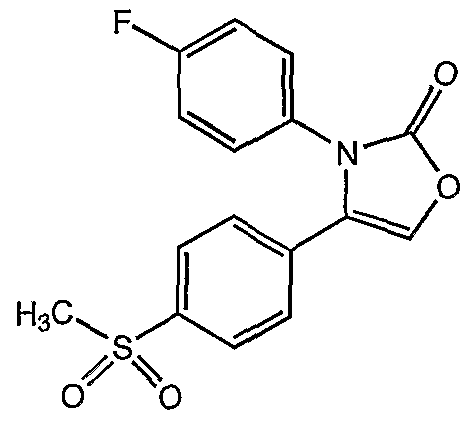
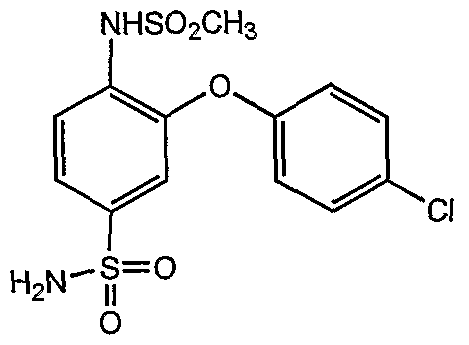
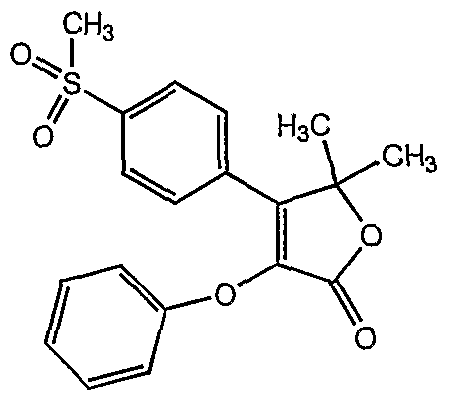
A COX-2 inhibitor, according to this invention is for instance a compound according to claims 34 to 41 of WO 00/38730. These compound are as follows:
Figure imgf000007_0001
JTE-522 (4-(4-cyclohexyl-2-methyloxazol-5-yl) -2-fluoroberιzenesulfonamide), 5-chloro-3-(4-(methylsulfonyl)phenyl)-2-(methyl-5-pyridinyl) pyridine, 2-(3, 5-difluorophenyl)-3-4(methylsulfonyl)phenyl)-2-cyclopenten-l-one,
Figure imgf000008_0001
4-[5-(4-methylphenyl)-3-(trifluoromethyl)-lH-pyrazol-l-yl]-benzenesulfonamide,
Figure imgf000008_0002
rofecoxib, (4-(4-(methylsulfonyl)phenyl]-3-phenyl-2(5H)-furanone),
Figure imgf000008_0003
4-(5-methyl-3-phenylisoxazol-4-yl) benzenesulfonamide, N-[[4-(5-methyl-3-phenylisoxazol-4yl] phenyl]sulfonyl] propanamide,
Figure imgf000008_0004
4-[5-(4-chorophenyl)-3-(trifluoromethyl)-lH-pyrazole-l-yl] benzenesulfonamide,
Figure imgf000009_0001
N-(2, 3-dihydro-l, l-dioxido-6-phenoxy-l, 2-benzisothiazol-5-yl) methanesulfonamide,
Figure imgf000009_0002
6-[[5-(4-chlorobenzoyl)-l , 4-dimethyl-lH-pyrrol-2-yl]methyl]-3(2H)-pyridazinone,
Figure imgf000009_0003
N-(4-nitro-2-phenoxyphenyl) methanesulfonamide,
Figure imgf000010_0001
Figure imgf000010_0002
-(3,4-difluorophenoxy)-5, 5-dimethyl-4-[4-(methylsulfonyl) phenyl]-2 (5H)-furanone,
Figure imgf000010_0003
N-[6-[(2, 4-difluorophenyl) thio]-2, 3-dihydro-l-oxo-lH-inden-5-yl] methanesulfonamide,
Figure imgf000010_0004
-(4-chlorophenyl)-4-[4-(methylsulfonyl)phenyl]-2 (3H)-oxazolone,
Figure imgf000011_0001
-[3-(4-fluorophenyl)-2, 3-dihydro-2-oxo-4-oxazolyl] benzenesulfonamide,
Figure imgf000011_0002
-[4-(methylsulfonyl) phenyl]-2-phenyl-2-cyclopenten-l-one,
Figure imgf000011_0003
-(2-methyl-4-phenyl-5-oxazolyl) benzenesulfonamide,
Figure imgf000011_0004
-(4-fluorophenyl)-4-[4-(methylsulfonyl) phenyl]-2 (3H)-oxazolone,
Figure imgf000012_0001
-(4-fluorophenyl)-l-[4-(methylsulfonyl) ρhenyl]-3-(trifluoromethyl)-lH-pyrazole,
Figure imgf000012_0002
-[5-phenyl)-3-(trifluoromethyl)-lH-pyrazol-l -yl) benzenesulfonamide,
Figure imgf000012_0003
- [ 1 -phenyl-3 -(trifluoromethyl)- 1 H-pyrazol-5-yl] benzenesulfonamide,
Figure imgf000012_0004
4-[5-(4-fluorophenyl)-3-(trifluoromethyl)-lH-pyrazol-l-yl] benzenesulfonamide,
Figure imgf000013_0001
N-[2-(cyclohexyloxy)-4-nitrophenyl] methanesulfonamide,
Figure imgf000013_0002
N-[6-(2, 4-difluorophenoxy)-2, 3-dihydro-l -oxo-lH-inden-5-yl] methanesulfonamide,
Figure imgf000013_0003
3-(4-chlorophenoxy)-4-[(methylsulfonyl) amino] benzenesulfonamide,
Figure imgf000013_0004
3-(4-fluorophenoxy)-4-[(methylsulfonyl) amino] benzenesulfonamide,
Figure imgf000014_0001
3-[(l-methyl-lH-imidzaol-2-yl)thio]-4 [(methylsulfonyl) amino] benzenesulfonamide,
Figure imgf000014_0002
5, 5-dimethyl-4-[4-(methylsulfonyl) ρhenyl]-3-phenoxy-2(5H)-furanone,
Figure imgf000014_0003
N-[6-[(4-ethyl-2-thiazolyl)thio]-l, 3-dihydro-l-oxo-5-isobenzofuranyl] methanesulfonamide,
Figure imgf000014_0004
3-[(2, 4-dichlorophenyl)thio]-4-[(methylsulfonyl) amino] benzenesulfonamide,
Figure imgf000015_0001
l-fluoro-4-[2-[4-(methylsulfonyl) phenyl] cyclopenten-1-yl] benzene,
Figure imgf000015_0002
-[5-(4-chlorophenyl)-3-(difluoromethyl)-lH-pyrazol-l-yl] benzenesulfonamide,
Figure imgf000015_0003
3 - [ 1 - [4-(methylsulfonyl) phenyl] -4-(trifluoromethyl)- 1 H-imidazol-2-yl] pyridine,
Figure imgf000015_0004
4-[2-(3-pyridinyll)-4-(trifluoromethyl)-lH-imidazol-l-yl] benzenesulfonamide,
Figure imgf000016_0001
4-[5 -(hydroxymethyl)-3 -phenylisoxazol-4-yl] benzenesulfonamide,
Figure imgf000016_0002
4-[3-(4-chlorophenyl)-2, 3-dihydro-2-oxo-4-oxazolyl] benzenesulfonamide,
Figure imgf000016_0003
4-[5-(difluoromethyl)-3-phenylisoxazol-4-yl] benzenesulfonamide,
Figure imgf000016_0004
[1, l':2', l"-teφhenyl]-4-sulfonamide,
Figure imgf000017_0001
4-(methylsulfonyl)-l, 1', 2], l"-teφheynyl,
Figure imgf000017_0002
4-(2-phenyl-3 -pyridinyl) benzenesulfonamide,
Figure imgf000017_0003
N-[3-(formylamino)-4-oxo-6-phenoxy-4H-l-benzopyran-7-yl] methanesulfonamide,
Figure imgf000017_0004
Figure imgf000018_0001
Figure imgf000018_0002
Figure imgf000018_0003
Preferred examples of COX-2 inhibitors are compound T 614 (Toyama), darbufelone (Parke- Davis), compound L745337 (Merck Frosst), celecoxib, compound CT3 (Channel Terapeutics), rofecoxib, compound L783003 (Merck & Co.), compound JT3 522 (Japan Tobacco), compound 754 (Phytochemmdo Reska), parecoxib, compound S2474 (Shianogi), compound LAS 33815 (Almirall-Prodesfarma), valdecoxib and compound MK 663 (Merck & Co.). More preferably celecoxib, rofecoxib, parecoxib and valdecoxib, in particular celecoxib.
A non-steroidal anti-inflammatory compound (NSAID), according to the invention, is e.g. a compound selected from acetyl salicylic acid, indometacin, sulindac, phenylbutazone, diclofenac, fentiazac, ketorolac, piroxicam, tenoxicam, mecoxicam, meloxicam, cinnoxicam, ibufenac, ibuprofen, naproxen, ketoprofen, nabumetone, nifluniic acid and nimesulide, or a pharmaceutically acceptable salt thereof. Preferred NSAIDs are diclofenac, piroxicam, IS tenoxicam, mecoxicam, meloxicam, ibufenac, ibuprofen, naproxen and ketoprofen, or a pharmaceutically acceptable salt thereof.
Examples of retinoid compounds according to the invention include, for example, Accutane; Adapalene; Allergan AGN-193174; Allergan AGN-193676; AUergan AGN-193836; Allergan AGN-193109; Aronex AR-623; BMS-181162; Galderma CD-437; Eisai ER-34617; Etrinate; Fenretinide; Ligand LGD-1550; lexacalcitol; Maxia Pharmaceuticals MX-781; mofarotene; Molecular Design MDI-101; Molecular Design MDI-301; Molecular Design MDI-403; Motretinide; Eisai 4-(2-[5-(4-methyl-7-ethylbenzofuran-2~yl)pyrrolyl])benzoic acid; Johnson & Johnson N-[4-[2-thyl-l-(lH-imidazol-l-yl)butyl]phenyl]-2-benzothiazolamine;Soriatane; Roche SR-11262; Tocoretinate Advanced Polymer Systems trans-retinoic acid; UAB Research Foundation UAB- 8; Tazorac; TopiCare; Taiho TAC-101; and Vesanoid.
Examples of matrix metallo-protease inhibitors according to the invention include known: l-cyclopropyl-N-hydroxy-4-[[4-[4-(trifluoromethoxy)phenoxy]phenyl]sulfonyl]-4- piperidmecarboxamide monohydrochloride;
N-hydroxy- 1 -(phenylmethyl)-4- [ [4- [4-(trifluoromethoxy)phenoxy] - 1 -piperidinyl] sulfonyl] -4- piperidinecarboxamide onohydrochloride;
N-hydroxy- 1 -(pyridinylmethyl)-4- [ [4-[4-(trifluoromethyl)phenoxy]phenyl] sulfonyl] -4- piperidinecarboxamide dihydrocliloride;
N-hydroxy-2,3-dimethoxy-6-[[4-[4-(trifluoromethyl)phenoχy]-l-piperidinyl]sulfonyl]- benzamide;
N-hydroxy- 1 -(4-pyridinylmethyl)-4- [ [4- [4-(trifluoromethyl)phenoxy]phenyl] sulfonyl] -4- piperidinecarboxamide dihydrochloride; N-hydroxy- 1 -(3 -pyridinyhnethyl)-4- [ [4- [4-(trifluoromethyl)phenoxy]phenyl] sulfonyl] -4- piperidinecarboxamide dihydrochloride;
N-hy<froxy-l-(2-pyridinylmethyl)-4-[[4-[4-(trifluoromethyl)phenoxy]phenyl]sulfonyl]-4- piperidinecarboxamide monohydrochloride;
British Biotech BB-2516 (marimastat), N4-[2,2-dimethyl-l-[(methylamino)carbonyl]- propyl]-Nl,2-dihydroxy-3-(2-methylpropyl)-, [2S-[N4(R*), 2R*, 3S*]]-); BMS 275291 disclosed in WO 97/19075;
Bayer Ag Bay-12-9566 (tanomastat), 4-[(4'-chloro[l,l-diρhenyl]-4-yl)oxy]-2- [(phenylthio)methyl]butanoic acid;
Agouron Pharmaceuticals AG-3340, N-hydroxy-2,2'-dimethyl-4-[[4-(4- pyridinyloxy)phenyl]sulfonyl]-3-thiomoφholinecarboxamide;
CollaGenex Pharmaceuticals CMT-3 (metastat), 6-demethyl-6-deoxy-4- dedimethylaminotetracycline, batimastat (BB-94); and
Chiroscience D-2163, 2-[lS-([(2R,S)-acetylmercapto-5-phthalimido]pentanoyl-L- leucyl)amino-3-methylbutyl]imidazole.
An anti-estrogen, e.g. a selective estrogen receptor modulator (SERM), is preferably a SERM devoid of uterotrophic activity. Examples of SERMs, according to the invention, are tamoxifen, toremifene, arzoxifene, idoxifene, EM 800, fulvestrant and droloxifene.
Examples of GnRH (LHRH) agonists according to the invention are, e.g., leuprorelin, deslorelin, triptorelin, buserelin, nafarelin, goserelin, avorelin, histerelin, compound PTL 03001 (5-oxo-L-propyl-L-histidyl-L-tryptophyl-L-seryl-L-tyrosyl-D-tryptophyl-L-leucyl-L- arginyl-N-ethyl-L-prolinamide) (Peptech), compound AN 207 (6-[N6-[5-[2-[l,2,3 ,4,6,11- hexahydro-2,5 , 12-trihydroxy-7-mehoxy-6, 11 -dioxo-4- [ [2,3 ,6-trideoxy-3 -(2,3 -dihydro- 1 H- pyrrol-l-yl).alpha.-L-lyxo-hexopyranosyl]oxy]-2-naphthacenyl]-l,5-dioxopentyl]-D-lysine]- 5(2S-cis» (ASTA Medica Inc.), compound AN 238 L-threoninamide, N-[5-[2-[(2S,4S)- 1,2,3,4,6,1 l-hexahydro-2,5,12-trihydroxy-7-methoxy-6,l l-dioxo-4-[[2,3,6-trideoxy-3-(2,3- dihydro- 1 H-pyrrl- 1 -yl) . alpha. -L-lyxo-hexopyranosyl] oxy] -2-naphthacenyl] -2-oxoethoxy] -1,5- dioxopentyl]-D-phenylalanyl-L-cysteinyl-L-tyrosyl-D-tryptophyl-L-lysyl-L-valyl-L-cysteinyl- cyclic (2.fwdarw.7)-disulfide (ASTA Medica Inc.) and compound SPD 424 (LHRH-hydrogel implant) (Shire Pharmaceuticals Group), or a pharmaceutically acceptable salt thereof. Preferred examples are triptorelin, leuprorelin and goserelin, or a pharmaceutically acceptable salt thereof, in particular triptorelin or a pharmaceutically acceptable salt thereof, e.g. as triptorelin pamoate. Examples of GnRH (LHRH) antagonists, according to the invention, are e.g. cetrorelix, abarelix, ramorelix, teverelix, ganirelix, compounds A 75998 (Acetyl-D-(2-naphthyl)alanyl- D-(4-chlorophenyl)alanyl-D-(3-pyridyl)alanyl-seryl-(N-methyl)tyrosyl-N6-(nicotinoyl)-D- lysyl-leucyl-N6-(isopropyl)lysyl-propyl-D-alaninamide) and A 84861 (Tetrahydrofuran-2-(S)- ylcarbonyl-glycyl-D-(2-naphthyl)alanyl-D-(4-cholro)phenylalanyl-D-(3-pyridyl)-alanyl-L-(N- methyl)tyrosyl-D-[N6-(3-pyridylcarbonyl)]lysyl-L-leucyl-L-(N6-isopropyl)lysyl-L-propyl-D- alanylamide)(Abbot Labs.), GnRH immunogen (Aphton Co.), compound T 98475 (Isopropyl 3-(N-benzyl-N-methylaminomethyl)-7-(2,6-difluorobenzyl)-4,7-dihydro-2-(4- isobutyrylaminophenyl)-4-oxothieno[2,3-bpyridine-5-carboxylate hydrochloride) (Takeda), and compound MI 1544 (Acetyl-D-tryptophyl-D-cyclopropyl-alanyl-D-tryptophyl-L-seryl-L- tyrosyl-D-lysyl-L-leucyl-L-arginyl-L-propyl-D-alamnamide), or a pharmaceutically acceptable salt thereof. Preferred example is abarelix or a pharmaceutically acceptable salt thereof.
Examples of selective progestin receptor modulators (SPRMs), according to the invention, are e.g. dienogest or a pharmaceutically acceptable salt thereof.
An angiogenesis inhibitor is e.g. an αv/33 integrin inhibitor, a protein kinase inhibitor, angiostatin, platelet factor 4 (endostatin), a VEGF inhibitor or thalidomide.
Vascular endothelial growth factor (VEGF) inhibitors and telomerase inhibitors are well known in the art. For instance, compounds SU 5416 and SU 6668, cited herein, are also VEGF inhibitors.
Moreover known VEGF inhibitors or antagonists are agents wliich suppress angiogenesis by reducing binding of VEGF to cellular receptors, including but not limited to, for example blocking monoclonal antibodies against the growth factor (e.g. rhuMAbVEGF, Ryan et al., Toxicol Pathol 1999, 27:78-86), against the receptor (e.g. DC101 and derivatives, Witte et al, Cancer Metastasis Rev 1998, 17:155-61), soluble forms of VEGF receptors (e.g. soluble Fit, Aiello et al., Proc Natl Acad Sci U S A 1995, 92:10457-61), or compounds which directly antagonise interactions between VEGF and cell surface receptors (e.g. Fairbrother et al., Biochemistry 1998, 37:17754-64).
A protein kinase inhibitor, according to the invention, is for instance a tyrosine kinase inhibitor, in particular compound SU6668, i.e. 3-[4-(2-carboxyethyl-3,5-dimethylpyrrol-2- yl)methylidenyl]-2-indolinone, and compound SU5416, i.e. 3-[(2,4-dimethylpyrrol-5- yl)methylidenyl]-2-mdolinone, which are known from WO 96/40116 and WO 99/61422.
Examples of oπβ3 integrin inhibitors are known: Vitaxin antibody (Ixsys); Merck KgaA EMD-121974, cyclo[RGDF-N(Me)V-];
(10S)-10,11 -dihydro-3 - [3 -(2-pyridinylamino)propoxy]-5H-dibenzo [a,d] cycloheptene- 10- acetic acid;
(2S)-7-[[(lH-benzimidazol-2-ylmethyl)methylamino]carbonyl]-2,3,4,5-tetrahydro-4-methyl-
3-oxo-lH-l ,4-benzodiazepine-2-acetic acid; (2S)-2,3,4,5-tetrahydro-4-methyl-7-[[[(5-methyl-lH-imidazo[4,5-b]ρyridin-2- yljmethyl] amino] carbonyl] -3 -oxo- 1 H- 1 ,4-benzodiazepine-2-acetic acid;
(bR)-b-[[[(3R)-2-oxo-3-[2-(5,6,7,8-tetrahydro-[l,8]-naphthyridm-2-yl)ethyl]l-l- pyrrolidinyl]acetyl]amino]-d-(lH-indol-3-yl)pentanoic acid; and
(3R)-N-[3-hydroxy-5-[(l,4,5,6-tefrahydro-5-hydroxy-2-pyrimidinyl)amino]benzoyl]-glycyl-3- (3-bromo-5-chloro-2-hydroxyphenyl)-b-alanine (compound SD 7784).
Angiostatin, endostatin and thalidomide are well known in the art. Pharmaceutically acceptable salts of the compound mentioned herein are well known in the art.
PHARMACOLOGY
The therapeutic effect of exemestane, either alone or in combination with an additional therapeutic agent, in preventing and treating estrogen-dependent disorders, according to the invention, has been shown as an example in an animal model of endometriosis. Intact adult female rats were used. Endometriosis was induced by autotransplantation of a section of endometrium to a site under the renal capsule. In nonfreated rats, the endometrial transplants grew progressively during the following 4 weeks. The effect of the aromatase inhibitor exemestane and the GnRH agonist triptorelin on the growth of the endometrial explants was studied by giving the compound alone or in combination for 4 weeks. Either exemestane, given intramuscularly once a week for 4 consecutive weeks, or triptorelin, given subcutaneously once weekly for 4 weeks, caused a dose-related decrease in the volume of the explant, measured in animals laparotomized one week after the fourth weekly drug dose. When the compounds were given in combination at marginally or intermediate effective doses, an additive or synergistic effect was observed.
Method and Administration
In effecting treatment of a patient in a therapy/prophylactic method according to the invention, exemestane and the other therapeutic agent can be administered in any form or mode which makes the compounds bioavailable in effective amounts, including oral and parenteral routes.
By the terms "controlling" and "treating" an estrogen dependent disorder, as used herein, is meant a method of achieving a therapeutically useful effect, in particular of curing such disorder.
The term "therapeutically useful effect", besides curing such disorders, also means giving relief from pain accompanying such disorders, in particular in patients suffering from endometriosis.
Accordingly the invention also provides a method for improving the endometriosis pain symptoms of dismenorrea, dyspareunia and pelvic pain, in a patient suffering from endometriosis comprising administering to said patient exemestane alone or with another therapeutic agent, in amounts and close in time sufficient to achieve a therapeutically useful effect.
The term "close in time" means that in the combined method of treatment according to the invention, exemestane may be administered simultaneously with a further therapeutic agent or the compounds may be administered sequentially, in either order, to achieve a therapeutic effect. By the term "administered" or "administering" as used herein is meant any acceptable manner of administering a drug to a patient wliich is medically acceptable including parenteral and oral administration.
By "parenteral" is meant intravenous, subcutaneous, infra-nasal, pulmonary, intradermal or intramuscular administration.
Oral administration includes administering exemestane of the constituents of the combined preparation in a suitable oral form such as, e.g., tablets, capsules, suspensions, solutions, emulsions, powders, syrups and the like.
The actual preferred method and order of administration of the combined preparations of the invention may vary according to, inter alia, the particular pharmaceutical formulation of exemestane being utilized, the particular pharmaceutical formulation of the other therapeutic being utilized, the particular estrogen-dependent disorder to be prevented or treated and the particular patient being treated.
hi the combined method of prevention or treatment according to the subject invention, exemestane may be administered simultaneously with the other therapeutic agent or the compounds may be administered sequentially, in either order. Preferably the compounds are administered sequentially. In particular when the combination treatment comprises exemestane and a GnRH agonist or antagonist, preferably, the compounds are administered in such a way that in the patient both inhibition of hormone output of her ovaries and inhibition/inactivation of aromatase enzyme are contemporaneously provided, and thus a therapeutic useful effect is achieved.
Dosage
The dosage ranges for the administration of the combined preparation may vary with the age, condition and extent of the disease in the patient and can be determined by one of skill in the art.
The dosage regimen must therefore be tailored to the particular of the patient's conditions, response and associate treatments in a manner which is conventional for any therapy, and may need to be adjusted in response to changes in conditions and or in light of other clinical conditions.
According to the method of preventing and freating esfrogen dependent disorders in mammals, provided the present invention, exemestane for instance can be administered orally in a dosage range varying from about 2.5 mg daily to about 600 mg daily, in particular from about 10 to about 50, more preferably from about 10 to about 25 mg daily, or parenterally in a dosage ranging from about 50 to about 500 mg per injection.
As a preferred embodiment of the invention, exemestane may be orally administered in the form of a complex with cyclodextrins, in particular exemestane/β-cyclodextrin complex, at a daily dosage ranging from about 10 to about 20 mg, preferably about 15 or 20 mg.
The effective therapeutic amounts of the other therapeutic agents to be used in combination with exemestane, according to the invention, are in general those commonly used in therapy for such compounds. More specifically, a therapeutically effective amount of another therapeutic agent means an amount of a compound, which when administered in combination with exemestane, is effective to prevent or treat esfrogen- dependent disorders, as herein defined.
Determination of a therapeutically effective amount is well within the capability of those skilled in the art.
For instance an effective amount of compound SU 5416 or SU 6668 is an amount in accordance with the teaching of WO 99/61422.
An effective amount of compound SD 7784 is from about 10 to about 300 mg/kg, preferably per os, in particular from about 20 to about 200 mg/kg. An effective amount of thalidomide may be in the range of about 100 to about 400 mg/day. An anti-estrogen can be administered in a dosage according to the common practice, e.g. in a dosage of about 0.1 to about 30 mg/Kg body weight per day.
An effective amount of tamoxifen may be in the range of about 10 to about 40 mg/day. An effective amount of fulvestrant may be in the range of about 50 mg to about 300mg/day i.m., in particular of about 100 to about 250 mg/day i.m.
An effective amount of raloxifen may be in the range of about 5 to about 350 mg/day, in particular about 60 mg/day.
An effective amount of a COX-2 inhibitor may be in the range of about 0.1 to about 2000 mg, preferably in the range of about 0.5 to about 500 and most preferably between about 1 and about 200 mg. In particular as to celecoxib, rofecoxib, parecoxib and valdecoxib, a daily dosage of about 0.01 to about 100 mg/Kg body weight, preferably between about 0.1 and about 50 mg/Kg body weight may be appropriate. The daily dosage can be admimstered in one to four doses per day.
More particularly, as to celecoxib a dosage from about 50 to about 500 mg, in particular about 200 mg, once or twice a day may be appropriate.
As to rofecoxib the dosage normally ranges from about 12.5 to about 50 mg/day. The route of administration is preferably systemic e.g. oral or parenteral, in particular intravenous or intramuscularly.
Therapeutic dosages for SPRMs range between 2 to 50 mg/day.
Therapeutic dosages for GnRH agonists/antagonists like leuprolide are administered i.m. in doses varying from 1.5 to 15 mg, preferrably around 3.75 mg per month or 12.75mg per 3 months. Goserelin can be administered as goserelin acetate by subcutaneous administration of slow release goserelin at a dosage from about 3 to about 12 mg.
Triptorelin can be administered for instance as triptorelin pamaote by intramuscular administration of a sustained release formulation, in such a way that there is an interval from about 1 to 4 months between each administration and at a dosage from about 3 to about 20 mg. In particular triptorelin pa oate can be administered intramuscularly in the form of microparticles as described in US Pat. No. 5,225,205 and US Pat. No. 5,776,885, and more specifically as 1-month depot formulation 3.75 mg.
An effective amount of a NSAID, according to the invention is generally the one commonly used in therapy for such compound. For instance an effective amount of naproxen may be in the range of about 300 mg to about 750 mg once or twice a day. An effective amount of piroxicam may be in the range of about 15 mg to about 50 mg once or twice a day.
An effective amount of acetyl salicylic acid may be in the range of about 150 to about 1000 mg once or twice a day.
According to a preferred feature of the invention it is here provided a method of treating and preventing an estrogen dependent disorder selected from endometriosis, uterine fibroids, dysfunctional uterine bleeding, endometrial hypeφlasia, polycistic ovarian disease, fibrocystic breast disease and fibrocystic mastopathy, in a mammal in need of such treatment, including humans, comprising administering simultaneously, separately or sequentially to said mammal exemestane and a COX-2 inhibitor selected from celecoxib, rofecoxib, parecoxib and valdecoxib, in particular celecoxib and rofecoxib, especially celecoxib, in amounts and close in time sufficient to produce a therapeutically useful effect. According to a further preferred feature of the invention it is here provided the use of exemestane in the manufacture of a medicament for preventing or controlling an estrogen dependent disorder selected from endometriosis, uterine fibroids, dysfunctional uterine bleeding, endometrial hypeφlasia, polycistic ovarian disease, fibrocystic breast disease and fibrocystic mastopathy, in a patient undergoing a simultaneous, separate or sequential treatment with a COX-2 inhibitor selected from celecoxib, rofecoxib, parecoxib and valdecoxib, in particular celecoxib and rofecoxib, especially celecoxib.
According to such preferred features exemestane is administered orally at about 25 mg/day and celecoxib is administered orally at a dosage of about 200 mg, one or twice a day.
According to a preferred feature of the invention it is here provided a method of treating and preventing an esfrogen dependent disorder selected from endometriosis, uterine fibroids, dysfunctional uterine bleeding, endometrial hypeφlasia, polycistic ovarian disease, fibrocystic breast disease and fibrocystic mastopathy, in a mammal in need of such treatment, including humans, comprising administering simultaneously, separately or sequentially to said mammal exemestane and a GnRH agonist or antagonist selected from triptorelin, cetrorelix, and leuprolide, in particular triptorelin and leuprolide, in amounts and close in time sufficient to produce a therapeutically useful effect.
According to such preferred features exemestane is administered orally at about 25 mg/day; triptorelin and leuprolide one or every three months at a dose of about 3 or about 20 mg, respectively, in particular of about 3.75 or about 12.75 mg, respectively.
According to a further preferred feature of the invention it is here provided the use of exemestane in the manufacture of a medicament for preventing or controlling an estrogen dependent disorder selected from endometriosis, uterine fibroids, dysfunctional uterine bleeding, endometrial hypeφlasia, polycistic ovarian disease, fibrocystic breast disease and fibrocystic mastopathy, in a patient undergoing a simultaneous, separate or sequential treatment with a GnRH agonist or antagonist selected from triptorelin, cetrorelix, and leuprolide, in particular triptorelin and leuprolide more preferably triptorelin.
As an example a kit according to the present invention provides an exemestane 25 mg oral or 50-500 mg parenteral composition and a triptorelin depot formulation 3.75 mg. A pharmaceutically composition containing exemestane and/or another therapeutic agent according to the invention can be prepared according to well known techniques to those skilled in the art.
A pharmaceutical composition for intramuscular administration containing triptorelin pamoate in the form of a depot formulation can be prepared for instance as described in US Pat. No. 5,225,205 and US Pat. No. 5,776,885.
A pharmaceutical composition containing exemestane can be prepared according to US Pat. No. 4,808,616. In particular an exemestane/β-cyclodextrin complex formulation can be obtained as follows: Exemestane 20 mg Tablet
Composition: exemestane 20.00 mg Beta-cyclodextrin 178.00 mg
Avicel PH101 75.00 mg
Explotab 24.00 mg
Magnesium stearate 3.00 mg According to methods well known in the art an exemestane/cyclodextrin kneaded system can be prepared.
All references cited in this disclosure are incoφorated herein by reference.

Claims

1. Use of exemestane in the manufacture of a medicament for preventing and controlling an estrogen dependent disorder selected from endometriosis, uterine fibroids, dysfunctional uterine bleeding, endometrial hypeφlasia, polycistic ovarian disease, fibrocystic breast disease and fibrocystic mastopathy.
2. The use according to claim 1, wherein when administered orally the amount of exemestane in the medicament is from about 2.5 mg to about 600 mg daily.
3. The use according to claim 1, wherein when administered orally the amount of exemestane in the medicament is from about 10 mg to about 50 mg daily.
4. The use according to claim 1, wherein when administered orally the amount of exemestane, in the medicament is from about 10 mg to about 25 mg daily.
5. The use according to claim 1, wherein when administered parenterally the amount of exemestane in the medicament is from about 50 mg to about 500 mg.
6. Use of exemestane in the manufacture of a medicament for preventing and controlling an estrogen dependent disorder selected from endometriosis, uterine fibroids, dysfunctional uterine bleeding, endometrial hypeφlasia, polycistic ovarian disease, fibrocystic breast disease and fibrocystic mastopathy, in a patient undergoing a simultaneous, separate or sequential treatment with an additional therapeutic agent.
7. The use according to claim 6, wherein the additional therapeutic agent is selected from the group consisting of danazol, a COX-2 inhibitor, a non-steroidal anti-inflammatory compound (NSATD), a retinoid compound, a matrix metallo-protease inhibitor, an anti- estrogen, GnRH agonist or antagonist, a selective progestin receptor modulator (SPRM) and an angiogenesis inhibitor, or a mixture thereof.
8. The use according to claim 6, wherein the additional therapeutic agent is a mixture comprising from 2 to 4 agents selected from the group consisting of danazol, a COX-2 inhibitor, a non-steroidal anti-inflammatory compound (NSAID), a retinoid compound, a matrix metallo-protease inhibitor, an anti-estrogen, GnRH agonist or antagonist, a selective progestin receptor modulator (SPRM) and an angiogenesis inhibitor.
9. The use according to claim 7, wherein the COX-2 inhibitor is selected form the group consisting of celecoxib, rofecoxib, parecoxib and valdecoxib.
10. The use according to claim 7, wherein the COX-2 inhibitor is celecoxib.
11. The use according to claim 7, wherein the anti-estrogen is a SERM devoid of uterotrophic activity.
12. The use according to claim 7, wherein the SERM is selected from the group consisting of tamoxifen, toremifene, arzoxifene, idoxifene, EM 800, fulvesfrant and droloxifene.
13. The use according to claim 7, wherein the GnRH agonist is selected from the group consisting of leuprorelin, dislorelin, triptorelin, buserelin, nafarelin, goserelin, avorelin, histerelin, compound PTL 03301, compound AN 207, compound TX 397, compound AN 201 and compound SPD 424, or a pharmaceutically acceptable salt thereof.
14. The use according to claim 7, wherein the GnRH agonist is selected from the group consisting of triptorelin, goserelin and leuprorelin or a pharmaceutically acceptable salt thereof.
15. The use according to claim 13, wherein the GnRH agonist is triptorelin pamoate.
16. The use according to claim 15, wherein the GnRH agonist triptorelin pamoate is in the form of a sustained release formulation, at a dosage from about 3 to about 20 mg.
17. The use according to claim 15, wherein the GnRH agonist triptorelin pamoate is in the from of 1 month depot formulation 3.75 mg.
18. The use according to claim 7, wherein the GnRH antagonist is selected from the group consisting of cetrorelix, abarelix, ramorelix, teverelix, ganirelix, compounds A 75998 and A
84861, compound PM-OV-92, GnRH immunogen, compound D 26344, compound T 98475 and compound MI 1544, or a pharmaceutically acceptable salt thereof.
19. The use according to claim 7, wherein the GnRH antagonist is abarelix or a pharmaceutically acceptable salt thereof.
20. The use according to claim 7, wherein the SPRM is dienogest or a pharmaceutically acceptable salt thereof.
21. A product containing exemestane and another therapeutic agent as a combined preparation for simultaneous, separate or sequential use in preventing and controlling an estrogen dependent disorder selected from endometriosis, uterine fibroids, dysfunctional uterine bleeding, endometrial hypeφlasia, polycistic ovarian diseas, fibrocystic breast disease and fibrocystic mastopathy.
22. A method of preventing and treating an esfrogen dependent disorder selected from the group consisting of endometriosis, uterine fibroids, dysfunctional uterine bleeding, endometrial hypeφlasia, polycistic ovarian disease, fibrocystic breast disease and fibrocystic mastopathy, in a mammal in need of such treatment, including humans, comprising administering to said mammal exemestane in amounts sufficient to achieve a therapeutically useful effect.
23. The method according to claim 22, wherein when administered orally the amount of exemestane is from about 2.5 mg to about 600 mg daily.
24. The method according to claim 22, wherein when administered orally the amount of exemestane is from about 10 mg to about 50 mg daily.
25. The method according to claim 22, wherein when administered orally the amount of exemestane is from about 10 mg to about 25 mg daily.
26. The method according to claim 22, wherein exemestane is administered in the form of exemestane/β-cyclodextrin complex at a daily dosage from about 10 mg to about 20 mg.
27. The method according to claim 22, wherein when administered parenterally the amount of exemestane is from about 50 mg to about 500 mg.
28. A method of preventing and treating an esfrogen dependent disorder selected from endometriosis, uterine fibroids, dysfunctional uterine bleeding, endometrial hypeφlasia, polycistic ovarian disease, fibrocystic breast disease and fibrocystic mastopathy, in a mammal in need of such treatment, including humans, comprising administering simultaneously, separately or sequentially to said mammal exemestane and another therapeutic agent, in amounts and close in time sufficient to achieve a therapeutically useful effect.
29. The method according to claim 28, wherein the additional therapeutic agent is selected from the group consisting of danazol, a COX-2 inhibitor, a non-steroidal anti-inflammatory compound (NSAID), a retinoid compound, a matrix metallo-protease inhibitor, an anti- estrogen, GnRH agonist or antagonist, a selective progestin receptor modulator (SPRM) and an angiogenesis inhibitor, or a mixture thereof.
30. The method according to claim 28, wherein a mixture of additional therapeutic agents, to be administered in combination with exemestane comprises from 2 to 4 agents selected from the group consisting of danazol, a COX-2 inhibitor, a non-steroidal anti-inflammatory compound (NSAID), a retinoid compound, a matrix metallo-protease inhibitor, an anti- estrogen, GnRH agonist or antagonist, a selective progestin receptor modulator (SPRM) and an angiogenesis inhibitor.
31. The method according to claim 29, wherein the additional therapeutic agent is danazol.
32. The method according to claim 29, wherein the COX-2 inhibitor is selected from the group consisting of:
Figure imgf000034_0001
JTE-522 (4-(4-cyclohexyl-2-methyloxazol-5-yl) -2-fluorobenzenesulfonamide);
5-chloro-3-(4-(methylsulfonyl)phenyl)-2-(methyl-5-ρyridirιyl) pyridine; 2-(3, 5-difluorophenyl)-3-4(methylsulfonyl)phenyl)-2-cyclopenten-l-one;
Figure imgf000034_0002
4-[5-(4-methylphenyl)-3-(trifϊuoromethyl)-lH-pyrazol-l-yl]-benzenesulfonamide;
Figure imgf000034_0003
rofecoxib, (4-(4-(methylsulfonyl)phenyl]-3-phenyl-2(5H)-furanone);
Figure imgf000035_0001
4-(5-methyl-3-phenylisoxazol-4-yl) benzenesulfonamide; N-[[4-(5-methyl-3-phenylisoxazol-4yl] ρhenyl]sulfonyl] propanamide;
Figure imgf000035_0002
4-[5-(4-chorophenyl)-3-(trifluoromethyl)-lH-pyrazole-l-yl] benzenesulfonamide;
Figure imgf000035_0003
N-(2, 3-dihydro-l, l-dioxido-6-phenoxy-l, 2-benzisothiazol-5-yl) methanesulfonamide;
Figure imgf000036_0001
6-[[5-(4-chlorobenzoyl)-l, 4-dimethyl-lH-pyrrol-2-yl]methyl]-3(2H)-pyridazinone;
Figure imgf000036_0002
N-(4-nitro-2-phenoxyphenyl) methanesulfonamide;
Figure imgf000036_0003
Figure imgf000036_0004
3-(3,4-difluorophenoxy)-5, 5-dimethyl-4-[4-(methylsulfonyl) phenyl]-2 (5H)-furanone;
Figure imgf000037_0001
N-[6-[(2, 4-difluorophenyl) thio]-2, 3-dihydro-l-oxo-lH-inden-5-yl] methanesulfonamide;
Figure imgf000037_0002
3-(4-chlorophenyl)-4-[4-(methylsulfonyl)ρhenyl]-2 (3H)-oxazolone;
Figure imgf000037_0003
4-[3-(4-fluorophenyl)-2, 3-dihydro-2-oxo-4-oxazolyl] benzenesulfonamide;
Figure imgf000037_0004
3 - [4-(methylsulfonyl) phenyl] -2-phenyl-2-cyclop enten- 1 -one;
Figure imgf000038_0001
-(2-methyl-4-phenyl-5-oxazolyl) benzenesulfonamide;
Figure imgf000038_0002
-(4-fluorophenyl)-4-[4-(methylsulfonyl) phenyl]-2 (3H)-oxazolone;
Figure imgf000038_0003
-(4-fluoroρhenyl)-l-[4-(methylsulfonyl) phenyl]-3-(trifluoromethyl)-lH-pyrazole;
Figure imgf000038_0004
-[5-phenyl)-3-(trifluoromethyl)-lH-pyrazol-l-yl) benzenesulfonamide;
Figure imgf000039_0001
4-[l-phenyl-3-(trifluoromethyl)-lH-pyrazol-5-yl] benzenesulfonamide;
Figure imgf000039_0002
4-[5-(4-fluorophenyl)-3-(trifluoromethyl)-lH-pyrazol-l-yl] benzenesulfonamide;
Figure imgf000039_0003
N-[2-(cyclohexyloxy)-4-nitrophenyl] methanesulfonamide;
Figure imgf000039_0004
N-[6-(2, 4-difluorophenoxy)-2, 3-dihydro-l-oxo-lH-inden-5-yl] methanesulfonamide;
Figure imgf000040_0001
-(4-chlorophenoxy)-4-[(methylsulfonyl) amino] benzenesulfonamide;
Figure imgf000040_0002
-(4-fluorophenoxy)-4-[(methylsulfonyl) amino] benzenesulfonamide;
Figure imgf000040_0003
-[(l-methyl-lH-imidzaol-2-yl)thio]-4 [(methylsulfonyl) amino] benzenesulfonamide
Figure imgf000040_0004
, 5-dimethyl-4-[4-(methylsulfonyl) phenyl]-3-phenoxy-2(5H)-furanone;
Figure imgf000041_0001
N-[6-[(4-ethyl-2-thiazolyl)thio]-l, 3-dihydro-l-oxo-5-isobenzofuranyl] methanesulfonamide;
Figure imgf000041_0002
3-[(2, 4-dichlorophenyl)thio]-4-[(methylsulfonyl) amino] benzenesulfonamide;
Figure imgf000041_0003
l-fluoro-4-[2-[4-(methylsulfonyl) phenyl] cyclopenten-1-yl] benzene;
Figure imgf000041_0004
4-[5-(4-chlorophenyl)-3-(difluoromethyl)-lH-pyrazol-l-yl] benzenesulfonamide;
Figure imgf000042_0001
-[l-[4-(methylsulfonyl) phenyl]-4-(trifluoromethyl)-lH-imidazol-2-yl] pyridine;
Figure imgf000042_0002
- [2-(3 -pyridinyll)-4-(trifluoromethyl)- 1 H-imidazol- 1 -yl] benzenesulfonamide;
Figure imgf000042_0003
- [5 -(hydroxymethyl)-3 -phenylisoxazol-4-yl] benzenesulfonamide;
Figure imgf000042_0004
-[3-(4-chlorophenyl)-2, 3-dihydro-2-oxo-4-oxazolyl] benzenesulfonamide;
Figure imgf000043_0001
4-[5-(difluoromethyl)-3-phenylisoxazol-4-yl] benzenesulfonamide;
Figure imgf000043_0002
[1, l':2', l"-teφhenyl]-4-sulfonamide;
Figure imgf000043_0003
-(methylsulfonyl)-l, l', 2], l"-teφheynyl;
Figure imgf000044_0001
4-(2-phenyl-3 -pyridinyl) benzenesulfonamide;
Figure imgf000044_0002
N-[3-(formylamino)-4-oxo-6-phenoxy-4H-l-benzopyran-7-yl] methanesulfonamide;
Figure imgf000044_0003
Figure imgf000044_0004
Figure imgf000044_0005
Figure imgf000045_0001
compound T 614; darbufelone; compound L745337; celecoxib; compound CT3; rofecoxib; compound L783003; compound JT3 522; compound 754; parecoxib; compound S2474; compound LAS 33815; valdecoxib; and compound MK 663.
33. The method according to claim 29, wherein the COX-2 inhibitor is selected from the group consisting of celecoxib, rofecoxib, parecoxib and valdecoxib.
34. The method according to claim 29, wherein the COX-2 inhibitor is celecoxib.
35. The method according to claim 29, wherein the NSAID is selected from the group consisting of acetyl salicylic acid, indometacin, sulindac, phenylbutazone, diclofenac, fentiazac, ketorolac, piroxicam, tenoxicam, mecoxicam, meloxicam, cinnoxicam, ibufenac, ibuprofen, naproxen, ketoprofen, nabumetone, mflumic acid and nimesulide, or a pharmaceutically acceptable salt thereof.
36. The method according to claim 29, wherein the NSATD is selected from the group consisting of diclofenac, piroxicam, tenoxicam, mecoxicam, meloxicam, ibufenac, ibuprofen, naproxen and ketoprofen, or a pharmaceutically acceptable salt thereof.
37. The method according to claim 29, wherein the retinoid compound is selected from the group consisting of Accutane; Adapalene; AGN-193174; AGN-193676; AGN-193836; AGN- 193109; AR-623; BMS-181162; CD-437; ER-34617; Etrinate; Fenretinide; Ligand LGD- 1550; lexacalcitol; MX-781; mofarotene; MDI-101; MDI-301; MDI-403; Motretinide; 4-(2- [5-(4-methyl-7-ethylbenzofuran-2-yl)pyrrolyl])benzoic acid; N-[4-[2-thyl-l-(lH-imidazol-l- yl)butyl]ρhenyl]-2-benzothiazolanιine; Soriatane; SR-11262; Tocoretinate; Advanced Polymer Systems frans-retinoic acid; UAB-8; Tazorac; TopiCare; TAC-101; and Vesanoid.
38. The method according to claim 29, wherein the metallo-protease inhibitors is selected from the group consisting of: l-cyclopropyl-N-hydroxy-4-[[4-[4-(trifluoromethoxy)phenoxy]phenyl]sulfonyl]-4- piperidinecarboxamide monohydrochloride; N-hydroxy-l-(ρhenylmethyl)-4-[[4-[4-(trifluoromethoxy)phenoxy]-l-piperidinyl]sulfonyl]-4- piperidinecarboxamide monohydrochloride; N-hydroxy- 1 -(pyridinylmethyl)-4-[ [4- [4-(trifluoromethyl)phenoxy]phenyl] sulfonyl] -4- piperidinecarboxamide dihydrochloride; N-hydroxy-2,3 -dimethoxy-6- [ [4-[4-(trifluoromethyl)phenoxy] - 1 -piperidinyl] sulfonyl] - benzamide; N-hydroxy-l-(4-pyridinylmethyl)-4-[[4-[4-(trifluoromethyl)phenoxy]phenyl]sulfonyl]-4- piperidinecarboxamide dihydrochloride;
N-hydroxy- 1 -(3 -pyridinylmethyl)-4-[ [4- [4-(trifluoromethyl)phenoxy]phenyl] sulfonyl] -4- piperidinecarboxamide dihydrochloride; N-hydroxy-l-(2-pyridinylmethyl)-4-[[4-[4-(trifluoromethyl)phenoxy]phenyl]sulfonyl]-4- piperidinecarboxamide monohydrochloride; BB-2516 (marimastat), N4-[2,2-dimethyl-l-[(methylamino)carbonyl]- propyl]-Nl,2- dihydroxy-3-(2-methylpropyl)-, [2S-[N4(R*), 2R*, 3S*]]-); BMS 275291;
Bay-12-9566 (tanomastat), 4-[(4'-chloro[l,l-diphenyl]-4-yl)oxy]-2-[(phenylthio) methyl] butanoic acid; AG-3340, N-hydroxy-2,2'-dimethyl-4-[[4-(4-pyridinyloxy)phenyl]sulfonyl]-3- thiomoφholine-carboxamide; CMT-3 (metastat), 6-demethyl-6-deoxy-4-dedimethylaminotetracycline, batimastat (BB-94); and D-2163,2-[lS-([(2R,S)-acetylmercapto-5-phthalimido]pentanoyl-L-leucyl)amino-3- methylbutyl]imidazole.
39. The method according to claim 29, wherein the anti-estrogen is a SERM devoid of uterotrophic activity.
40. The method according to claim 29, wherein the SERM is selected from the group consisting of tamoxifen, toremifene, arzoxifene, idoxifene, EM 800, fulvestrant and droloxifene.
41. The method according to claim 29, wherein the GnRH agonist is selected from the group consisting of leuprorelin, deslorelin, triptorelin, buserelin, nafarelin, goserelin, avorelin, histerelin, compound PTL 03001, compound AN 207, compound TX 397, compound AN 201 and compound SPD 424, or a pharmaceutically acceptable salt thereof.
42. The method according to claim 29, wherein the GnRH agonist is selected from the group consisting of triptorelin, goserelin and leuprorelin or a pharmaceutically acceptable salt thereof.
43. The method according to claim 42, wherein the GnRH agonist is triptorelin pamoate.
44. The method according to claim 42, wherein the GnRH agonist triptorelin pamoate is in the form of a sustained release formulation, at a dosage from about 3 to about 20 mg.
45. The method according to claim 42, wherein the GnRH agonist triptorelin pamoate is in the form of 1 month depot formulation 3.75 mg.
46. The method according to claim 41, wherein exemestane and triptorelin or a pharmaceutically acceptable salt thereof are administered, and wherein hormone output of a patient's ovaries is inhibited and aromatase enzyme activity is inhibited or inactivated, whereby a therapeutically useful effect is achieved.
47. The method according to claim 29, wherein the GnRH antagonist is selected from the group consisting of cetrorelix, abarelix, ramorelix, teverelix, ganirelix, compounds A 75998 and A 84861, compound PM-OV-92, GnRH immunogen, compound D 26344, compound T 98475, and compound MI 1544, or a pharmaceutically acceptable salt thereof.
48. The method according to claim 29, wherein the GnRH antagonist is selected from the group consisting of cetrorelix, abarelix and ramorelix, or a pharmaceutically acceptable salt thereof.
49. The method according to claim 29, wherein the SPRM is dienogest or a pharmaceutically acceptable salt thereof.
50. The method according to claim 29, wherein the angiogenesis inhibitor is selected from the group consisting of an αv/33 integrin inhibitor, a protein kinase inhibitor, angiostatin, platelet factor 4 (endostatin), a VEGF inhibitor and thalidomide.
51. The method according to claim 29, wherein the angiogenesis inhibitor is thalidomide.
52. The method according to claim 50, wherein the αv/33 integrin inhibitor is selected from the group consisting of:
Vitaxin antibody (Ixsys); Merck KgaA EMD-121974, cyclo[RGDF-N(Me)V-]; (10S)-10Jll-dihydro-3-[3-(2-pyridinylamino)ρropoxy]-5H-dibenzo[a,d]cycloheptene-10- acetic acid; (2S)-7-[[(lH-benzimidazol-2-ylmethyl)methylamino]carbonyl]-2,3,4,5-tetrahydro-4-methyl- 3-oxo-lH-l,4-benzodiazepine-2-acetic acid;
(2S)-2,3,4,5-tetrahydro-4-methyl-7-[[[(5-methyl-lH-imidazo[4,5-b]pyridin-
2yl]methyl] amino] carbonyl]-3-oxo-lH-l,4-benzodiazepine-2-acetic acid; (bR)-b-[[[(3R)-2-oxo-3-[2-(5,6,7,8-tetrahydro-[l,8]-naphthyridin-2-yl)ethyl]l-l-ρyrrolidinyl] acetyl]amino]-d-(lH-indol-3-yl)pentanoic acid; and (3R)-N-[3-hydroxy-5-[(l,4,5,6-tefrahydro-5-hydroxy-2-pyrimidinyl)amino]benzoyl]-glycyl-3- (3-bromo-5-chloro-2-hydroxyphenyl)-b-alanine (compound SD 7784).
53. The method according to claim 50, wherein the protein kinase inhibitor is selected from compound SU6668 (3-[4-(2-carboxyethyl-3,5-dimethylpyrrol-2-yl)methylidenyl]-2- indolinone), and compound SU5416 (3-[(2,4-dimethylpyrrol-5-yl)methylidenyl]-2- indolinone).
54. The method according to claim 50, wherein the VEGF inhibitor is selected from the group consisting of compound SU 6668, compound SU 5416, rhuMAbVEGF and compound
DC 101.
PCT/EP2002/000638 2001-01-26 2002-01-18 Combined method for treating hormono-dependent disorders with exemestane Ceased WO2002072106A2 (en)

Priority Applications (6)

Application Number Priority Date Filing Date Title
DE60214355T DE60214355T2 (en) 2001-01-26 2002-01-18 EXEMESTAN FOR THE TREATMENT OF HORMONE-RELATED DISORDER
EP02727314A EP1377298B1 (en) 2001-01-26 2002-01-18 Exemestane for treating hormono-dependent disorders
JP2002571065A JP2004519490A (en) 2001-01-26 2002-01-18 Combination treatment of hormone-dependent abnormalities with exemestane
MXPA03006607A MXPA03006607A (en) 2001-01-26 2002-01-18 Combined method for treating hormono-dependent disorders.
CA002434611A CA2434611A1 (en) 2001-01-26 2002-01-18 Combined method for treating hormono-dependent disorders
US10/611,653 US20040082557A1 (en) 2001-01-26 2003-07-02 Methods for treating estrogen-dependent disorders

Applications Claiming Priority (2)

Application Number Priority Date Filing Date Title
US77091101A 2001-01-26 2001-01-26
US09/770,911 2001-01-26

Related Child Applications (1)

Application Number Title Priority Date Filing Date
US10/611,653 Continuation-In-Part US20040082557A1 (en) 2001-01-26 2003-07-02 Methods for treating estrogen-dependent disorders

Publications (2)

Publication Number Publication Date
WO2002072106A2 true WO2002072106A2 (en) 2002-09-19
WO2002072106A3 WO2002072106A3 (en) 2003-10-30

Family

ID=25090093

Family Applications (1)

Application Number Title Priority Date Filing Date
PCT/EP2002/000638 Ceased WO2002072106A2 (en) 2001-01-26 2002-01-18 Combined method for treating hormono-dependent disorders with exemestane

Country Status (12)

Country Link
EP (1) EP1377298B1 (en)
JP (1) JP2004519490A (en)
AR (1) AR032268A1 (en)
AT (1) ATE337787T1 (en)
CA (1) CA2434611A1 (en)
DE (1) DE60214355T2 (en)
DK (1) DK1377298T3 (en)
ES (1) ES2269682T3 (en)
MX (1) MXPA03006607A (en)
PE (1) PE20020843A1 (en)
PT (1) PT1377298E (en)
WO (1) WO2002072106A2 (en)

Cited By (15)

* Cited by examiner, † Cited by third party
Publication number Priority date Publication date Assignee Title
WO2003017973A1 (en) * 2001-08-31 2003-03-06 Pantarhei Bioscience B.V. A method of treating benign gynaecological disorders and a drug delivery vehicle for use in such a method
RU2227035C1 (en) * 2003-02-05 2004-04-20 Павловский Алексей Васильевич Composition for prophylaxis and treatment of fibrocystic mastopathy
WO2004093868A1 (en) * 2003-04-23 2004-11-04 Pharmacia Corporation Therapeutic combination of a cox-2 inhibitor and an aromatase inhibitor
WO2008019048A1 (en) * 2006-08-04 2008-02-14 Meditrina Pharmaceuticals Use of aromatase inhibitors for thining the endometrium or treating menorrhagia
WO2007062093A3 (en) * 2005-11-22 2008-10-23 Incyte Corp Combination therapy for the treatment of cancer comprising a metalloprotease inhibitor
RU2357733C1 (en) * 2008-03-04 2009-06-10 Ольга Анатольевна Тихоновская Method offunctional ovary cyst treatment
EP1638573A4 (en) * 2003-06-20 2009-12-02 Merck & Co Inc USE OF SELECTIVE TYPE 2 CYCLOOXYGENASE INHIBITORS FOR THE TREATMENT OF ENDOMETRIOSIS
US7910570B2 (en) 2003-02-05 2011-03-22 Astrazeneca Ab Composition comprising a combination of an aromatase inhibitor, a progestin and an oestrogen and its use for the treatment of endometriosis
WO2011120925A1 (en) * 2010-03-31 2011-10-06 Bayer Pharma Aktiengesellschaft Parenteral pharmaceutical form which releases aromatse inhibitor and gestagens, for the treatment of endometriosis
US8580954B2 (en) 2006-03-28 2013-11-12 Hospira, Inc. Formulations of low dose diclofenac and beta-cyclodextrin
US8703810B2 (en) 2010-06-10 2014-04-22 Seragon Pharmaceuticals, Inc. Estrogen receptor modulators and uses thereof
US9187460B2 (en) 2011-12-14 2015-11-17 Seragon Pharmaceuticals, Inc. Estrogen receptor modulators and uses thereof
US10035778B2 (en) 2015-12-30 2018-07-31 Saint Louis University Meta-azacyclic amino benzoic acid derivatives as pan integrin antagonists
CN113712974A (en) * 2021-08-20 2021-11-30 南京大学 Application of aspirin in preparation of medicine for treating endometrial hyperplasia
US11426473B2 (en) 2013-09-24 2022-08-30 Fujifilm Corporation Nitrogen-containing compound or salt thereof, or metal complex thereof

Families Citing this family (1)

* Cited by examiner, † Cited by third party
Publication number Priority date Publication date Assignee Title
CN101717393A (en) * 2009-12-01 2010-06-02 陈依军 Derivate of cyclohexyl 2, 5-2 substituted phenyl ether and application thereof

Family Cites Families (7)

* Cited by examiner, † Cited by third party
Publication number Priority date Publication date Assignee Title
GB8517360D0 (en) * 1985-07-09 1985-08-14 Erba Farmitalia Substituted androsta-1,4-diene-3,17-diones
GB8617107D0 (en) * 1986-07-14 1986-08-20 Erba Farmitalia 6-/7-methylenandrosta-1 4-diene-3 17-dione derivatives
JPH07506120A (en) * 1993-02-18 1995-07-06 フアルマシア・エ・アツプジヨン・エツセ・ピー・アー Fluorinated 4-aminoandrostadienone derivative and method for producing the same
GB9313420D0 (en) * 1993-06-29 1993-08-11 Erba Carlo Spa Fluorinated 6-methylenandrosta-1,4-dien-3-one-derivatives and process for their preparations
BR9916536A (en) * 1998-12-23 2002-01-02 Searle & Co Method for treating or preventing a neoplasm disorder in a mammal in need of such treatment or prevention, and, combination
KR20030014223A (en) * 2000-05-15 2003-02-15 파마시아 이탈리아 에스.피.에이. Aromatase inhibitors and monoclonal anti-HER2 antibodies as antitumors agents
CN1729002A (en) * 2000-09-08 2006-02-01 法玛西雅意大利公司 Exemestane as Chemopreventive Agent

Cited By (24)

* Cited by examiner, † Cited by third party
Publication number Priority date Publication date Assignee Title
WO2003017973A1 (en) * 2001-08-31 2003-03-06 Pantarhei Bioscience B.V. A method of treating benign gynaecological disorders and a drug delivery vehicle for use in such a method
RU2227035C1 (en) * 2003-02-05 2004-04-20 Павловский Алексей Васильевич Composition for prophylaxis and treatment of fibrocystic mastopathy
US7910570B2 (en) 2003-02-05 2011-03-22 Astrazeneca Ab Composition comprising a combination of an aromatase inhibitor, a progestin and an oestrogen and its use for the treatment of endometriosis
WO2004093868A1 (en) * 2003-04-23 2004-11-04 Pharmacia Corporation Therapeutic combination of a cox-2 inhibitor and an aromatase inhibitor
EP1638573A4 (en) * 2003-06-20 2009-12-02 Merck & Co Inc USE OF SELECTIVE TYPE 2 CYCLOOXYGENASE INHIBITORS FOR THE TREATMENT OF ENDOMETRIOSIS
WO2007062093A3 (en) * 2005-11-22 2008-10-23 Incyte Corp Combination therapy for the treatment of cancer comprising a metalloprotease inhibitor
US8324194B2 (en) 2005-11-22 2012-12-04 Incyte Corporation Combination therapy for the treatment of cancer
US8580954B2 (en) 2006-03-28 2013-11-12 Hospira, Inc. Formulations of low dose diclofenac and beta-cyclodextrin
WO2008019048A1 (en) * 2006-08-04 2008-02-14 Meditrina Pharmaceuticals Use of aromatase inhibitors for thining the endometrium or treating menorrhagia
RU2357733C1 (en) * 2008-03-04 2009-06-10 Ольга Анатольевна Тихоновская Method offunctional ovary cyst treatment
EA025582B1 (en) * 2010-03-31 2017-01-30 Байер Интеллекчуал Проперти Гмбх Intravaginal ring which releases anastrozole and levonorgestrel for the treatment of endometriosis
CN103002873A (en) * 2010-03-31 2013-03-27 拜耳知识产权有限责任公司 Parenteral pharmaceutical form which releases aromatse inhibitor and gestagens, for the treatment of endometriosis
CN103002873B (en) * 2010-03-31 2015-02-18 拜耳知识产权有限责任公司 Parenteral pharmaceutical form which releases aromatse inhibitor and gestagens, for the treatment of endometriosis
AU2011234587B2 (en) * 2010-03-31 2015-07-09 Bayer Intellectual Property Gmbh Parenteral pharmaceutical form which releases aromatase inhibitor and gestagens, for the treatment of endometriosis
WO2011120925A1 (en) * 2010-03-31 2011-10-06 Bayer Pharma Aktiengesellschaft Parenteral pharmaceutical form which releases aromatse inhibitor and gestagens, for the treatment of endometriosis
US8703810B2 (en) 2010-06-10 2014-04-22 Seragon Pharmaceuticals, Inc. Estrogen receptor modulators and uses thereof
US9078871B2 (en) 2010-06-10 2015-07-14 Seragon Pharmaceuticals, Inc. Estrogen receptor modulators and uses thereof
US9193714B2 (en) 2011-12-14 2015-11-24 Seragon Pharmaceuticals, Inc. Fluorinated estrogen receptor modulators and uses thereof
US9187460B2 (en) 2011-12-14 2015-11-17 Seragon Pharmaceuticals, Inc. Estrogen receptor modulators and uses thereof
US11426473B2 (en) 2013-09-24 2022-08-30 Fujifilm Corporation Nitrogen-containing compound or salt thereof, or metal complex thereof
US10035778B2 (en) 2015-12-30 2018-07-31 Saint Louis University Meta-azacyclic amino benzoic acid derivatives as pan integrin antagonists
US10577330B2 (en) 2015-12-30 2020-03-03 Saint Louis University Meta-azacyclic amino benzoic acid derivatives as pan integrin antagonists
CN113712974A (en) * 2021-08-20 2021-11-30 南京大学 Application of aspirin in preparation of medicine for treating endometrial hyperplasia
CN113712974B (en) * 2021-08-20 2025-09-09 南京大学 Application of aspirin as sole active ingredient in preparation of medicine for treating endometrial hyperplasia

Also Published As

Publication number Publication date
WO2002072106A3 (en) 2003-10-30
PT1377298E (en) 2006-12-29
DE60214355T2 (en) 2007-08-30
EP1377298A2 (en) 2004-01-07
PE20020843A1 (en) 2002-09-25
DE60214355D1 (en) 2006-10-12
AR032268A1 (en) 2003-10-29
ATE337787T1 (en) 2006-09-15
MXPA03006607A (en) 2003-09-22
EP1377298B1 (en) 2006-08-30
JP2004519490A (en) 2004-07-02
DK1377298T3 (en) 2007-01-02
CA2434611A1 (en) 2002-09-19
ES2269682T3 (en) 2007-04-01

Similar Documents

Publication Publication Date Title
EP1377298A2 (en) Combined method for treating hormono-dependent disorders
US20040082557A1 (en) Methods for treating estrogen-dependent disorders
CA2200195C (en) Use of aromatase inhibitors for the production of a pharmaceutical agentfor treating a relative androgen deficiency in men
EP1443966B1 (en) Method of preventing or treating benign gynaecological disorders
US20040235812A1 (en) Pharmaceutical composition comprisng an aromatase inhibitor and an estrogen suitable for hormone replacement therapy for a male
JP2011001388A (en) Composition including combination of aromatase inhibitor, progestin and estrogen, and its use for the treatment of endometriosis
US20140080794A1 (en) Methods and Compositions for the Treatment of Estrogen-Dependent Hyperproliferative Uterine Disorders
AU2002257573A1 (en) Combined method for treating hormono-dependent disorders with exemestane
JP2004529924A (en) Single dose aromatase inhibitors for the treatment of infertility
EP1804819A2 (en) Use of aromatase inhibitors for endometrial thinning in preparation for surgical procedures on the endometrial cavity and uterus
WO1999020647A1 (en) Hysteromyoma remedy containing dienogest as the active ingredient
US8685950B2 (en) Use of aromatase inhibitors for treatment of ectopic pregnancy
WO2003082299A1 (en) Improved hormone replacement therapy
JP2019524846A (en) Dosing regimen for the treatment of endometriosis
NZ303672A (en) Male contraceptive comprising anti-oestrogens
US20100105640A1 (en) Aromatase Inhibitors for Emergency Contraception
MXPA98007214A (en) Combination of dehydroepiandrosterone and aromatase inhibitors and use of this combination for the production of a pharmaceutical agent to treat a relative or absolute deficiency of androgen in the hom

Legal Events

Date Code Title Description
AK Designated states

Kind code of ref document: A2

Designated state(s): AE AG AL AM AT AU AZ BA BB BG BR BY BZ CA CH CN CO CR CU CZ DE DK DM DZ EC EE ES FI GB GD GE GH GM HR HU ID IL IN IS JP KE KG KP KR KZ LC LK LR LS LT LU LV MA MD MG MK MN MW MX MZ NO NZ OM PH PL PT RO RU SD SE SG SI SK SL TJ TM TN TR TT TZ UA UG US UZ VN YU ZA ZM ZW

AL Designated countries for regional patents

Kind code of ref document: A2

Designated state(s): GH GM KE LS MW MZ SD SL SZ TZ UG ZM ZW AM AZ BY KG KZ MD RU TJ TM AT BE CH CY DE DK ES FI FR GB GR IE IT LU MC NL PT SE TR BF BJ CF CG CI CM GA GN GQ GW ML MR NE SN TD TG

DFPE Request for preliminary examination filed prior to expiration of 19th month from priority date (pct application filed before 20040101)
121 Ep: the epo has been informed by wipo that ep was designated in this application
WWE Wipo information: entry into national phase

Ref document number: 2002257573

Country of ref document: AU

WWE Wipo information: entry into national phase

Ref document number: 526877

Country of ref document: NZ

WWE Wipo information: entry into national phase

Ref document number: 2002727314

Country of ref document: EP

WWE Wipo information: entry into national phase

Ref document number: 2434611

Country of ref document: CA

WWE Wipo information: entry into national phase

Ref document number: PA/a/2003/006607

Country of ref document: MX

WWE Wipo information: entry into national phase

Ref document number: 2002571065

Country of ref document: JP

REG Reference to national code

Ref country code: DE

Ref legal event code: 8642

WWP Wipo information: published in national office

Ref document number: 2002727314

Country of ref document: EP

WWG Wipo information: grant in national office

Ref document number: 2002727314

Country of ref document: EP