WO2002077021A2 - Streptococcus pneumoniae proteins and nucleic acids - Google Patents

Streptococcus pneumoniae proteins and nucleic acids Download PDF

Info

Publication number
WO2002077021A2
WO2002077021A2 PCT/IB2002/002163 IB0202163W WO02077021A2 WO 2002077021 A2 WO2002077021 A2 WO 2002077021A2 IB 0202163 W IB0202163 W IB 0202163W WO 02077021 A2 WO02077021 A2 WO 02077021A2
Authority
WO
WIPO (PCT)
Prior art keywords
sequence
antigen
protein
nucleic acid
gene
Prior art date
Legal status (The legal status is an assumption and is not a legal conclusion. Google has not performed a legal analysis and makes no representation as to the accuracy of the status listed.)
Ceased
Application number
PCT/IB2002/002163
Other languages
French (fr)
Other versions
WO2002077021A3 (en
Inventor
Vega Masignani
Hervé TETTELIN
Claire Fraser
Current Assignee (The listed assignees may be inaccurate. Google has not performed a legal analysis and makes no representation or warranty as to the accuracy of the list.)
GSK Vaccines SRL
Institute for Genomic Research
Original Assignee
Chiron SRL
Institute for Genomic Research
Priority date (The priority date is an assumption and is not a legal conclusion. Google has not performed a legal analysis and makes no representation as to the accuracy of the date listed.)
Filing date
Publication date
Application filed by Chiron SRL, Institute for Genomic Research filed Critical Chiron SRL
Priority to US10/472,928 priority Critical patent/US20050020813A1/en
Priority to EP02735782A priority patent/EP1373513A2/en
Priority to CA002439431A priority patent/CA2439431A1/en
Priority to AU2002309130A priority patent/AU2002309130A1/en
Priority to JP2002576279A priority patent/JP2005503119A/en
Publication of WO2002077021A2 publication Critical patent/WO2002077021A2/en
Publication of WO2002077021A3 publication Critical patent/WO2002077021A3/en
Anticipated expiration legal-status Critical
Priority to US12/897,952 priority patent/US20120128707A1/en
Ceased legal-status Critical Current

Links

Classifications

    • CCHEMISTRY; METALLURGY
    • C07ORGANIC CHEMISTRY
    • C07KPEPTIDES
    • C07K14/00Peptides having more than 20 amino acids; Gastrins; Somatostatins; Melanotropins; Derivatives thereof
    • C07K14/195Peptides having more than 20 amino acids; Gastrins; Somatostatins; Melanotropins; Derivatives thereof from bacteria
    • C07K14/315Peptides having more than 20 amino acids; Gastrins; Somatostatins; Melanotropins; Derivatives thereof from bacteria from Streptococcus (G), e.g. Enterococci
    • C07K14/3156Peptides having more than 20 amino acids; Gastrins; Somatostatins; Melanotropins; Derivatives thereof from bacteria from Streptococcus (G), e.g. Enterococci from Streptococcus pneumoniae (Pneumococcus)
    • AHUMAN NECESSITIES
    • A61MEDICAL OR VETERINARY SCIENCE; HYGIENE
    • A61PSPECIFIC THERAPEUTIC ACTIVITY OF CHEMICAL COMPOUNDS OR MEDICINAL PREPARATIONS
    • A61P11/00Drugs for disorders of the respiratory system
    • AHUMAN NECESSITIES
    • A61MEDICAL OR VETERINARY SCIENCE; HYGIENE
    • A61PSPECIFIC THERAPEUTIC ACTIVITY OF CHEMICAL COMPOUNDS OR MEDICINAL PREPARATIONS
    • A61P25/00Drugs for disorders of the nervous system
    • AHUMAN NECESSITIES
    • A61MEDICAL OR VETERINARY SCIENCE; HYGIENE
    • A61PSPECIFIC THERAPEUTIC ACTIVITY OF CHEMICAL COMPOUNDS OR MEDICINAL PREPARATIONS
    • A61P27/00Drugs for disorders of the senses
    • A61P27/16Otologicals
    • AHUMAN NECESSITIES
    • A61MEDICAL OR VETERINARY SCIENCE; HYGIENE
    • A61PSPECIFIC THERAPEUTIC ACTIVITY OF CHEMICAL COMPOUNDS OR MEDICINAL PREPARATIONS
    • A61P31/00Antiinfectives, i.e. antibiotics, antiseptics, chemotherapeutics
    • A61P31/04Antibacterial agents
    • AHUMAN NECESSITIES
    • A61MEDICAL OR VETERINARY SCIENCE; HYGIENE
    • A61PSPECIFIC THERAPEUTIC ACTIVITY OF CHEMICAL COMPOUNDS OR MEDICINAL PREPARATIONS
    • A61P31/00Antiinfectives, i.e. antibiotics, antiseptics, chemotherapeutics
    • A61P31/12Antivirals
    • A61P31/14Antivirals for RNA viruses
    • AHUMAN NECESSITIES
    • A61MEDICAL OR VETERINARY SCIENCE; HYGIENE
    • A61PSPECIFIC THERAPEUTIC ACTIVITY OF CHEMICAL COMPOUNDS OR MEDICINAL PREPARATIONS
    • A61P31/00Antiinfectives, i.e. antibiotics, antiseptics, chemotherapeutics
    • A61P31/12Antivirals
    • A61P31/14Antivirals for RNA viruses
    • A61P31/16Antivirals for RNA viruses for influenza or rhinoviruses
    • AHUMAN NECESSITIES
    • A61MEDICAL OR VETERINARY SCIENCE; HYGIENE
    • A61PSPECIFIC THERAPEUTIC ACTIVITY OF CHEMICAL COMPOUNDS OR MEDICINAL PREPARATIONS
    • A61P31/00Antiinfectives, i.e. antibiotics, antiseptics, chemotherapeutics
    • A61P31/12Antivirals
    • A61P31/20Antivirals for DNA viruses
    • AHUMAN NECESSITIES
    • A61MEDICAL OR VETERINARY SCIENCE; HYGIENE
    • A61PSPECIFIC THERAPEUTIC ACTIVITY OF CHEMICAL COMPOUNDS OR MEDICINAL PREPARATIONS
    • A61P37/00Drugs for immunological or allergic disorders
    • A61P37/02Immunomodulators
    • A61P37/04Immunostimulants
    • AHUMAN NECESSITIES
    • A61MEDICAL OR VETERINARY SCIENCE; HYGIENE
    • A61KPREPARATIONS FOR MEDICAL, DENTAL OR TOILETRY PURPOSES
    • A61K39/00Medicinal preparations containing antigens or antibodies
    • YGENERAL TAGGING OF NEW TECHNOLOGICAL DEVELOPMENTS; GENERAL TAGGING OF CROSS-SECTIONAL TECHNOLOGIES SPANNING OVER SEVERAL SECTIONS OF THE IPC; TECHNICAL SUBJECTS COVERED BY FORMER USPC CROSS-REFERENCE ART COLLECTIONS [XRACs] AND DIGESTS
    • Y02TECHNOLOGIES OR APPLICATIONS FOR MITIGATION OR ADAPTATION AGAINST CLIMATE CHANGE
    • Y02ATECHNOLOGIES FOR ADAPTATION TO CLIMATE CHANGE
    • Y02A50/00TECHNOLOGIES FOR ADAPTATION TO CLIMATE CHANGE in human health protection, e.g. against extreme weather
    • Y02A50/30Against vector-borne diseases, e.g. mosquito-borne, fly-borne, tick-borne or waterborne diseases whose impact is exacerbated by climate change

Definitions

  • Streptococcus pneumoniae is a Gram-positive spherical bacterium. It is the most common cause of acute bacterial meningitis in adults and in children over 5 years of age.
  • proteins comprising amino acid sequences having sequence identity to the S.pneumoniae amino acid sequences disclosed in the examples.
  • the degree of sequence identity is preferably greater than 50% ⁇ e.g. 60%, 70%, 80%, 90%, 95%, 99% or more).
  • These proteins include homologs, orthologs, allelic variants and functional mutants. Typically, 50% identity or more between two proteins is considered to be an indication of functional equivalence.
  • Nucleic acid according to the invention can, of course, be prepared in many ways (e.g. by chemical synthesis, from genomic or cDNA libraries, from the organism itself etc.) and can take various forms (e.g. single stranded, double stranded, vectors, primers, probes etc.).
  • the nucleic acid is preferably in substantially isolated form.
  • Nucleic acid according to the invention may be labelled e.g. with a radioactive or fluorescent label. This is particularly useful where it is to be used as a primer or probe e.g. in PCR, LCR, NASBA, TMA.
  • Chlamydia trachomatis an antigen from Chlamydia trachomatis [e.g. W099/28475].
  • an enhancer element is a regulatory DNA sequence that can stimulate transcription up to 1000- fold when linked to homologous or heterologous promoters, with synthesis beginning at the norm al RNA start site. Enhancers are also active when they are placed upstream or downstream from the transcription initiation site, in either normal or flipped orientation, or at a distance of more than 1000 nucleotides from the promoter [M aniatis et al, (1987) Science 236:1237; Alberts et al. (1989) Molecular Biology of the Cell, 2nd ed.].
  • Means for regeneration vary from species to species of plants, but generally a suspension of transformed protoplasts containing copies of the heterologous gene is first provided. Callus tissue is formed and shoots may be induced from callus and subsequently rooted. Alternatively, embryo formation can be induced from the protoplast suspension.
  • a bacterial prom oter can include naturally occurring prom oters of non-bacterial origin that have the ability to bind bacterial RNA polymerase and initiate transcription.
  • a naturally occurring prom oter of non-bacterial origin can also be coupled with a compatible RNA polym erase to produce high levels of expression of some genes in prokaryotes.
  • the bacteriophage T7 RNA polymerase/promoter system is an example of a coupled promoter system [Studier et al. (1986) /. Mol Biol. 189:113; Tabor et al. (1985) Proc Natl. Acad. Sci. 82:1074],
  • a hybrid promoter can also be comprised of a bacteriophage promoter and an E.
  • a DNA molecule m ay be expressed intracellularly in yeast, A promoter sequence m ay be directly linked with the DNA molecule, , in which case the first amino acid at the N-terminus of the recombinant protein will always be a methionine, which is encoded by the ATG start codon. If desired, methionine at the N-terminus may be cleaved from the protein by in vitro incubation with cyanogen bromide.
  • compositions can comprise either polypeptides, antibodies, or nucleic acid of the invention.
  • the pharmaceutical compositions will comprise a therapeutically effective amount of either polypeptides, antibodies, or polynucleotides of the claimed invention.
  • therapeutically effective amount refers to an amount of a therapeutic agent to treat, ameliorate, or prevent a desired disease or condition, or to exhibit a detectable therapeutic or preventative effect. The effect can be detected by, for example, chemical m arkers or antigen levels. Therapeutic effects also include reduction in physical symptoms, such as decreased body temperature.
  • the precise effective amount for a subject will depend upon the subject's size and health, the nature and extent of the condition, and the therapeutics or combination of therapeutics selected for administration. Thus, it is not useful to specify an exact effective amount in advance. How ever, the effective amount for a given situation can be determined by routine experimentation and is within the judgement of the clinician,
  • Retro viral vectors are well known in the art and we contemplate that any retro viral gene therapy vector is employable in the invention, including B , C and D type retroviruses, xenotropic retroviruses (for example, NZB -X1 , NZB-X2 and NZB 9-1 (see O'Neill (1985) J. Virol 53:160) polytropic retroviruses eg. MCF and M CF-MLV (see Kelly (1983) J. Virol. 45:291 ), spum aviruses and lentiviruses. See RNA Tum or Viruses, Second Edition, Cold Spring Harbor Laboratory, 1985.
  • xenotropic retroviruses for example, NZB -X1 , NZB-X2 and NZB 9-1 (see O'Neill (1985) J. Virol 53:160)
  • polytropic retroviruses eg. MCF and M CF-MLV (see Kelly (1983) J. Virol. 45:291 )
  • Exemplary known retroviral gene therapy vectors employable in this invention include those described in patent applications GB2200651 , EP0415731 , EP0345242, EP0334301 , W O89/02468; W O89/05349, W O 89/09271 , W O90/02806, W O90/07936, W O94/03622, W 093/25698, W093/25234, W O93/11230, WO93/10218, W O91/02805, W O91/02825, W O95/07994, US 5,219,740, US 4,405,712, US 4,861 ,719, US 4,980,289, US 4,777,127, US 5,591 ,624.
  • a polynucleotide composition can comprises therapeutically effective amount of a gene therapy vehicle, as the term is defined above.
  • an effective dose will be from about 0.01 mg/ kg to 50 mg/kg or 0.05 mg/kg to about 10 mg/kg of the DNA constructs in the individual to which it is administered.
  • Lipoproteins can also be produced by in vitro or recombinant methods by expression of the apoprotein genes in a desired host cell. See, for example, Atkinson (1986) Annu Rev Biophys Chem 15:403 and Radding (1958) Biochim Biophys Acta 30: 443. Lipoproteins can also be purchased from commercial suppliers, such as Biomedical Techniologies, Inc., Stoughton, MA, USA. Further description of lipoproteins can be found in W O98/06437..
  • SEQ IDs are particularly preferred as they have no sequence similarity to humans or other eukaryotes: 504, 690, 1288, 1432, 3904, 4820, 4922 i.e. the potential for anti-patient activity in addition to antibiotic activity is reduced.

Landscapes

  • Health & Medical Sciences (AREA)
  • Life Sciences & Earth Sciences (AREA)
  • Chemical & Material Sciences (AREA)
  • Organic Chemistry (AREA)
  • Medicinal Chemistry (AREA)
  • General Health & Medical Sciences (AREA)
  • Pharmacology & Pharmacy (AREA)
  • Nuclear Medicine, Radiotherapy & Molecular Imaging (AREA)
  • Chemical Kinetics & Catalysis (AREA)
  • General Chemical & Material Sciences (AREA)
  • Animal Behavior & Ethology (AREA)
  • Public Health (AREA)
  • Veterinary Medicine (AREA)
  • Virology (AREA)
  • Molecular Biology (AREA)
  • Engineering & Computer Science (AREA)
  • Pulmonology (AREA)
  • Oncology (AREA)
  • Communicable Diseases (AREA)
  • Bioinformatics & Cheminformatics (AREA)
  • Immunology (AREA)
  • Biophysics (AREA)
  • Genetics & Genomics (AREA)
  • Proteomics, Peptides & Aminoacids (AREA)
  • Biochemistry (AREA)
  • Gastroenterology & Hepatology (AREA)
  • Neurosurgery (AREA)
  • Biotechnology (AREA)
  • Biomedical Technology (AREA)
  • Neurology (AREA)
  • Medicines Containing Antibodies Or Antigens For Use As Internal Diagnostic Agents (AREA)
  • Peptides Or Proteins (AREA)
  • Micro-Organisms Or Cultivation Processes Thereof (AREA)
  • Measuring Or Testing Involving Enzymes Or Micro-Organisms (AREA)
  • Medicines That Contain Protein Lipid Enzymes And Other Medicines (AREA)
  • Preparation Of Compounds By Using Micro-Organisms (AREA)

Abstract

The invention provides proteins and nucleic acid sequences from Streptocccus pneumoniae, together with a genome sequence. These are useful for the development of vaccines, diagnostics, and antibiotics.

Description

STREPTOCOCCUS PNEUMONIAE PROTEINS AND NUCLEIC ACIDS
All documents cited herein are incorporated by reference in their entirety.
TECHNICAL FIELD
This invention relates to nucleic acid and proteins from the bacteria Streptococcus pneumoniae.
BACKGROUND ART
Streptococcus pneumoniae is a Gram-positive spherical bacterium. It is the most common cause of acute bacterial meningitis in adults and in children over 5 years of age.
It is an object of the invention to provide materials for improving the prevention, detection and treatment of Streptococcus pneumoniae infections. More specifically, it is an object of the invention to provide proteins which can be used in the development of vaccines. Further objects are to provide proteins and nucleic acid which can be used in the diagnosis of S.pneumoniae infection, to provide proteins and nucleic acid which can be used for the detection of S.pneumoniae, to provide nucleic acid which is useful for the expression of S.pneumoniae proteins, and to provide proteins which are useful targets for antibiotic research.
DISCLOSURE OF THE INVENTION
The invention provides proteins comprising the S.pneumoniae amino acid sequences disclosed in the examples. These amino acid sequences are the even SEQ IDs between 2 and 4978.
It also provides proteins comprising amino acid sequences having sequence identity to the S.pneumoniae amino acid sequences disclosed in the examples. Depending on the particular sequence, the degree of sequence identity is preferably greater than 50% {e.g. 60%, 70%, 80%, 90%, 95%, 99% or more). These proteins include homologs, orthologs, allelic variants and functional mutants. Typically, 50% identity or more between two proteins is considered to be an indication of functional equivalence. Identity between proteins is preferably determined by the Smith-Waterman homology search algorithm as implemented in the MPSRCH program (Oxford Molecular), using an affine gap search with parameters gap open penalty =12 and gap extension penalty=l.
The invention further provides proteins comprising fragments of the S.pneumoniae amino acid sequences disclosed in the examples. The fragments should comprise at least n consecutive amino acids from the sequences and, depending on the particular sequence, n is 7 or more {e.g. 8, 10, 12, 14, 16, 18, 20, 30, 40, 50, 60, 70, 80, 90, 100 or more). Preferably the fragments comprise one or more epitopes from the sequence. Other preferred fragments are (a) the N-terminal signal peptides of the proteins disclosed in the examples, (b) the proteins disclosed in the examples, but without their N-terminal signal peptides, and (c) the proteins disclosed in the examples, but without their N-terminal amino acid residue. The proteins of the invention can, of course, be prepared by various means (e.g. recombinant expression, purification from S.pneumoniae, chemical synthesis etc) and in various forms {e.g. native, fusions, glycosylated, non-glycosylated etc.). They are preferably prepared in substantially pure form {i.e. substantially free from other streptococcal or host cell proteins). Proteins of the invention are preferably streptococcal proteins.
Preferred proteins are the 432 proteins listed in the table in the examples.
According to a further aspect, the invention provides antibodies which bind to these proteins. These may be polyclonal or monoclonal and may be produced by any suitable means. To increase compatibility with the human immune system, the antibodies may be chimeric or humanised {e.g. Breedveld (2000) Lancet 355(9205):735-740; Gorman & Clark (1990) Semin. Immunol. 2:457-466), or fully human antibodies may be used. The antibodies may include a detectable label {e.g. for diagnostic assays).
According to a further aspect, the invention provides nucleic acid comprising the S.pneumoniae nucleotide sequences disclosed in the examples. These nucleotide sequences are the odd SEQ IDs between 1 and 4977, and genome sequence SEQ ID 4979. In addition, the invention provides nucleic acid comprising nucleotide sequences having sequence identity to the S.pneumoniae nucleotide sequences disclosed in the examples. Identity between sequences is preferably determined by the Smith-Waterman homology algorithm as described above.
Furthermore, the invention provides nucleic acid which can hybridise to the S.pneumoniae nucleic acid disclosed in the examples, preferably under "high stringency" conditions (e.g. 65°C in a O.lxSSC, 0.5% SDS solution).
Nucleic acid comprising fragments of these sequences are also provided. These should comprise at least n consecutive nucleotides from the S.pneumoniae sequences and, depending on the particular sequence, n is 10 or more (e.g. 12, 14, 15, 18, 20, 25, 30, 35, 40, 50, 60, 70, 80, 90, 100, 150, 200 or more).
According to a further aspect, the invention provides nucleic acid encoding the proteins and protein fragments of the invention.
The invention also provides: nucleic acid comprising nucleotide sequence SEQ ID 4979; nucleic acid comprising nucleotide sequences having sequence identity to SEQ ID 4979; nucleic acid which can hybridise to SEQ ID 4979 (preferably under 'high stringency' conditions); nucleic acid comprising a fragment of at least n consecutive nucleotides from SEQ ID 4979, wherein n is 10 or more e.g. 12, 14, 15, 18, 20, 25, 30, 35, 40, 50, 60, 70, 80, 90, 100, 150, 200, 250, 300, 350, 400, 450, 500, 600, 700, 800, 900, 1000, 1500, 2000, 3000, 4000, 5000, 10000, 100000, 1000000 or more Nucleic acids of the invention can be used in hybridisation reactions {e.g. Northern or Southern blots, or in nucleic acid microarrays or 'gene chips') and amplification reactions (e.g. PCR, SDA, SSSR, LCR, NASBA, TMA) etc.
It should also be appreciated that the invention provides nucleic acid comprising sequences complementary to those described above {e.g. for antisense or probing purposes, or for use as primers).
Nucleic acid according to the invention can, of course, be prepared in many ways (e.g. by chemical synthesis, from genomic or cDNA libraries, from the organism itself etc.) and can take various forms (e.g. single stranded, double stranded, vectors, primers, probes etc.). The nucleic acid is preferably in substantially isolated form. Nucleic acid according to the invention may be labelled e.g. with a radioactive or fluorescent label. This is particularly useful where it is to be used as a primer or probe e.g. in PCR, LCR, NASBA, TMA.
In addition, the term "nucleic acid" includes DNA and RNA, and also their analogues, such as those containing modified backbones, and also peptide nucleic acids (PNA) etc.
According to a further aspect, the invention provides vectors comprising nucleotide sequences of the invention (e.g. cloning or expression vectors) and host cells transformed with such vectors.
According to a further aspect, the invention provides compositions comprising protein, antibody, and/or nucleic acid according to the invention. These compositions may be suitable as immunogenic compositions, for instance, or as diagnostic reagents, or as vaccines.
The invention also provides nucleic acid, protein, or antibody according to the invention for use as medicaments {e.g. as immunogenic compositions or vaccines) or as diagnostic reagents. It also provides the use of nucleic acid, protein, or antibody according to the invention in the manufacture of: (i) a medicament for treating or preventing infection due to streptococcus; (ii) a diagnostic reagent for detecting the presence of streptococcus or of antibodies raised against streptococcus; and/or (iii) a reagent which can raise antibodies against streptococcus. Said streptococcus may be any species, group or strain, but is preferably S.pneumoniae, particularly a type 4 strain. The disease may be meningitis, pneumonia, sepsis, otitis media or an ear infection.
The invention also provides a method of treating a patient, comprising administering to the patient a therapeutically effective amount of nucleic acid, protein, and/or antibody of the invention. The patient may either be at risk from the disease themselves or may be a pregnant woman ('maternal immunisation' e.g. Glezen & Alpers (1999) Clin. Infect. Dis. 28:219-224).
Administration of protein antigens is a preferred method of treatment for inducing immunity. Administration of antibodies of the invention is another preferred method of treatment. This method of passive immunisation is particularly useful for newborn children or for pregnant women. This method will typically use monoclonal antibodies, which will be humanised or fully human.
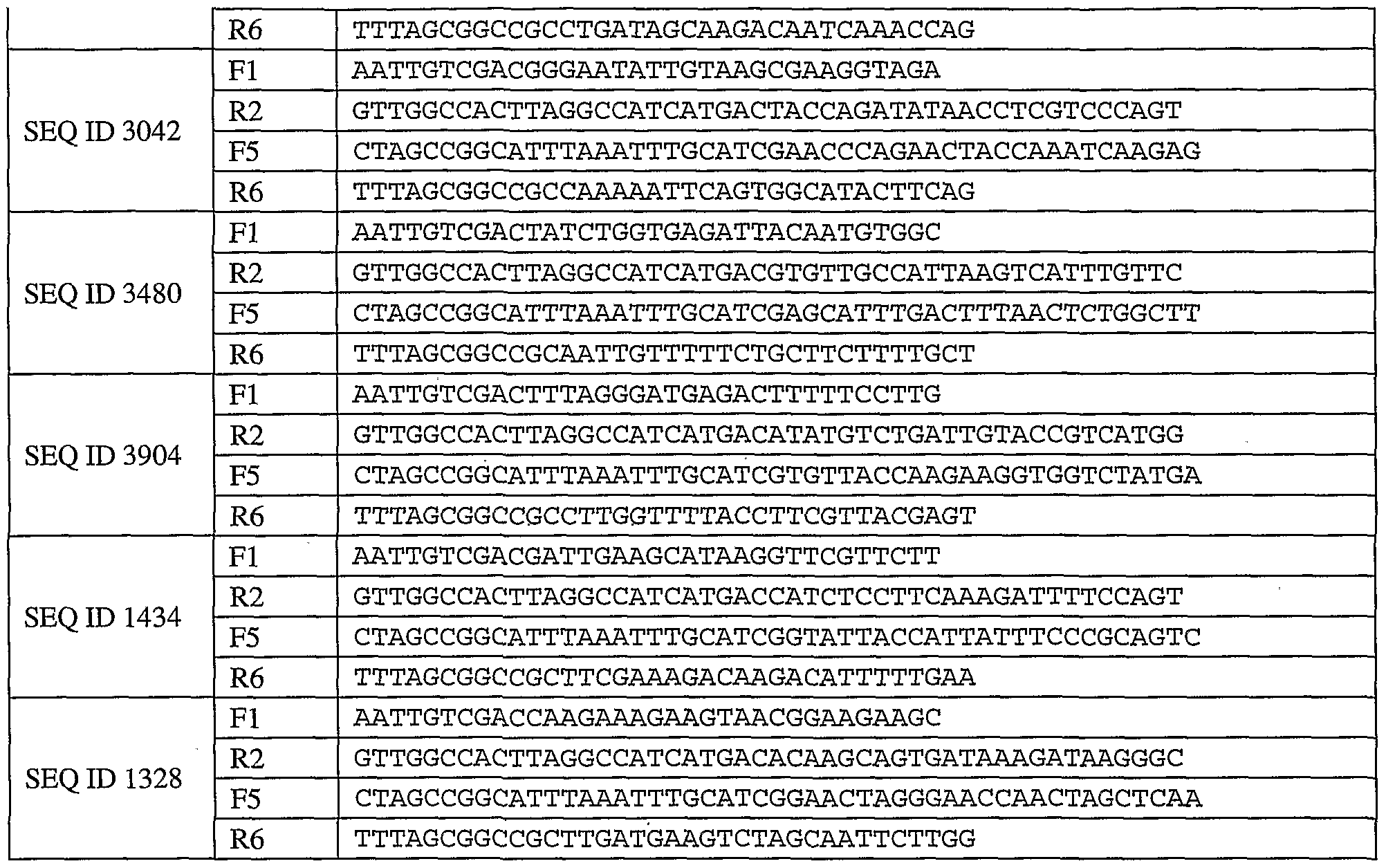
The invention also provides a kit comprising primers {e.g. PCR primers) for amplifying a target sequence contained within a Streptococcus {e.g. S.pneumoniae) nucleic acid sequence, the kit comprising a first primer and a second primer, wherein the first primer is substantially complementary to said target sequence and the second primer is substantially complementary to a complement of said target sequence, wherein the parts of said primers which have substantial complementarity define the termini of the target sequence to be amplified. The first primer and/or the second primer may include a detectable label (e.g. a fluorescent label).
The invention also provides a kit comprising first and second single-stranded oligonucleotides which allow amplification of a Streptococcus {e.g. S.pneumoniae) template nucleic acid sequence contained in a single- or double-stranded nucleic acid (or mixture thereof), wherein: (a) the first oligonucleotide comprises a primer sequence which is substantially complementary to said template nucleic acid sequence; (b) the second oligonucleotide comprises a primer sequence which is substantially complementary to the complement of said template nucleic acid sequence; (c) the first oligonucleotide and/or the second oligonucleotide comprise(s) sequence which is not complementary to said template nucleic acid; and (d) said primer sequences define the termini of the template sequence to be amplified. The non-complementary sequence(s) of feature (c) are preferably upstream of (i.e. 5' to) the primer sequences. One or both of these (c) sequences may comprise a restriction site (e.g. EP-B-0509612) or a promoter sequence (e.g. EP-B-0505012). The first oligonucleotide and/or the second oligonucleotide may include a detectable label (e.g. a fluorescent label).
The template sequence may be any part of a genome sequence (e.g. SEQ ID 4979). For example, it could be a rRNA gene or a protein-coding gene. The template sequence is preferably specific to S.pneumoniae. The invention also provides a computer-readable medium (e.g. a floppy disk, a hard disk, a CD-ROM, a DVD etc.) and/or a computer database containing one or more of the sequences in the sequence listing. The medium preferably contains SEQ ID 4979.
The invention also provides a hybrid protein represented by the formula NH2-A-[-X-L-]„-B-COOH, wherein X is an amino acid sequence of the invention as described above, L is an optional linker amino acid sequence, A is an optional N-terminal amino acid sequence, B is an optional C-terminal amino acid sequence, and n is an integer greater than 1. The value of n is between 2 and x, and the value of x is typically 3, 4, 5, 6, 7, 8, 9 or 10. Preferably n is 2, 3 or 4; it is more preferably 2 or 3; most preferably, n = 2. For each n instances, -X- may be the same or different. For each n instances of [-X-L-], linker amino acid sequence -L- may be present or absent. For instance, when n=2 the hybrid may be NH2-Xι-L]-X2-L2- COOH, NH2-Xι-X2-COOH, NHrXι-Lι-X2-€OOH, NH2-X X2-L2-COOH, etc. Linker amino acid sequence(s) -L- will typically be short (e.g. 20 or fewer amino acids i.e. 19, 18, 17, 16, 15, 14, 13, 12, 11, 10, 9, 8, 7, 6, 5, 4, 3, 2, 1). Examples include short peptide sequences which facilitate cloning, poly-glycine linkers (i.e. Gly„ where n = 2, 3, 4, 5, 6, 7, 8, 9, 10 or more), and histidine tags (i.e. His„ where n = 3, 4, 5, 6, 7, 8, 9, 10 or more). Other suitable linker amino acid sequences will be apparent to those skilled in the art. -A- and -B- are optional sequences which will typically be short (e.g. 40 or fewer amino acids i.e. 39, 38, 37, 36, 35, 34, 33, 32, 31, 30, 29, 28, 27, 26, 25, 24, 23, 22, 21, 20, 19, 18, 17, 16, 15, 14, 13, 12, II, 10, 9, 8, 7, 6, 5, 4, 3, 2, 1). Examples include leader sequences to direct protein trafficking, or short peptide sequences which facilitate cloning or purification (e.g. histidine tags i.e. His„ where n = 3, 4, 5, 6, 7, 8, 9, 10 or more). Other suitable N-terminal and C-terminal amino acid sequences will be apparent to those skilled in the art. In some embodiments, each X will be a S.pneumoniae sequence; in others, mixtures of S.pneumoniae, S.pyogenes and/or S.agalactiae sequences will be used [see even SEQ IDs 2 to 10966 of PCT/GB01/04789 for suitable sequences].
In some embodiments of the invention, the proteins and nucleic acids of the invention share sequence identity with the 2043 ORF sequences from the avirulent R6 strain of S.pneumoniae disclosed by Hoskins et al. [J Bacteriol (2001) 183:5709-17]. In other embodiments, the invention does not encompass sequences consisting of one of the 2043 ORFs specifically disclosed by Hoskins et al.
According to further aspects, the invention provides various processes.
A process for producing proteins of the invention is provided, comprising the step of culturing a host cell of to the invention under conditions which induce protein expression.
A process for producing protein or nucleic acid of the invention is provided, wherein the protein or nucleic acid is synthesised in part or in whole using chemical means.
A process for detecting polynucleotides of the invention is provided, comprising the steps of: (a) contacting a nucleic probe according to the invention with a biological sample under hybridising conditions to form duplexes; and (b) detecting said duplexes.
A process for detecting Streptococcus in a biological sample is also provided, comprising the step of contacting nucleic according to the invention with the biological sample under hybridising conditions. The process may involve nucleic acid amplification (e.g. PCR, SDA, SSSR, LCR, NASBA, TMA etc.) or hybridisation (e.g. microarrays, blots, hybridisation with a probe in solution etc.). PCR detection of S.pneumoniae in clinical samples has previously been reported [see e.g. Cherian et al. (1998) J. Clin. Microbiol. 36:3605-3608; Kearns et al. (1999) J. Clin. Microbiol. 37:3434; Matsumura, abstract D-25, 38th Annual ICAAC].
A process for detecting proteins of the invention is provided, comprising the steps of: (a) contacting an antibody of the invention with a biological sample under conditions suitable for the formation of an antibody-antigen complexes; and (b) detecting said complexes. A process for identifying an amino acid sequence is provided, comprising the step of searching for putative open reading frames or protein-coding regions within a genome sequence of S.pneumoniae. This will typically involve in silico searching the sequence for an initiation codon and for an in-frame termination codon in the downstream sequence. The region between these initiation and termination codons is a putative protein-coding sequence. Typically, all six possible reading frames will be searched. Suitable software for such analysis includes ORFFINDER (NCBI), GENEMARK [Borodovsky & Mclninch (1993) Computers Chem. 17:122-133), GLIMMER [Salzberg et al. (1998) Nucleic Acids Res. 26:544-548; Salzberg et al. (1999) Genomics 59:24-31; Delcher et al. (1999) Nucleic Acids Res. 27:4636- 4641], or other software which uses Markov models [e.g. Shmatkov et al. (1999) Bioinformatics 15:874- 876]. The invention also provides a protein comprising the identified amino acid sequence. These proteins can then expressed using conventional techniques.
The invention also provides a process for determining whether a test compound binds to a protein of the invention. If a test compound binds to a protein of the invention and this binding inhibits the life cycle of the S.pneumoniae bacterium, then the test compound can be used as an antibiotic or as a lead compound for the design of antibiotics. The process will typically comprise the steps of contacting a test compound with a protein of the invention, and determining whether the test compound binds to said protein. Preferred proteins of the invention for use in these processes are enzymes (e.g. tRNA synthetases), membrane transporters and ribosomal proteins. Suitable test compounds include proteins, polypeptides, carbohydrates, lipids, nucleic acids (e.g. DNA, RNA, and modified forms thereof), as well as small organic compounds (e.g. MW between 200 and 2000 Da). The test compounds may be provided individually, but will typically be part of a library (e.g. a combinatorial library). Methods for detecting a binding interaction include NMR, filter-binding assays, gel-retardation assays, displacement assays, surface plasmon resonance, reverse two-hybrid etc. A compound which binds to a protein of the invention can be tested for antibiotic activity by contacting the compound with GBS bacteria and then monitoring for inhibition of growth. The invention also provides a compound identified using these methods.
The invention also provides a composition comprising a protein or the invention and one or more of the following antigens:
- a protein antigen from Helicobacter pylori such as VacA, CagA, NAP, HopX, HopY [e.g. WO98/04702] and/or urease. - a protein antigen from N.meningitidis serogroup B, such as those in W099/24578, W099/36544, WO99/57280, WO00/22430, Tettelin et al. (2000) Science 287:1809-1815, Pizza et al. (2000) Science 287:1816-1820 and W096/29412, with protein '287' and derivatives being particularly preferred.
- an outer-membrane vesicle (OMV) preparation from N.meningitidis serogroup B, such as those disclosed in WO01/52885; Bjune et al. (1991) Lancet 338(8775): 1093-1096; Fukasawa et al. (1999)
Vaccine 17:2951-2958; Rosenqvist et al. (1998) Dev. Biol. Stand. 92:323-333 etc. - a saccharide antigen from N.meningitidis serogroup A, C, W135 and/or Y, such as the oligosaccharide disclosed in Costantino et al. (1992) Vaccine 10:691-698from serogroup C [see also Costantino et al. (1999) Vaccine 17:1251-1263].
- a saccharide antigen from Streptococcus pneumoniae [e.g. Watson (2000) Pediatr Infect Dis J 19:331-332; Rubin (2000) Pediatr Clin North Am 47:269-285, v; Jedrzejas (2001) Microbiol Mol
Biol Rev 65:187 '-207],
- an antigen from hepatitis A virus, such as inactivated virus [e.g. Bell (2000) Pediatr Infect Dis J 19:1187-1188; Iwarson (1995) APMIS 103:321-326].
- an antigen from hepatitis B virus, such as the surface and/or core antigens [e.g. Gerlich et al. (1990) Vaccine 8 Suppl:S63-68 & 79-80].
- an antigen from hepatitis C virus [e.g. Hsu et al. (1999) Clin Liver Dis 3:901-915].
- an antigen from Bordetella pertussis, such as pertussis holotoxin (PT) and filamentous haemagglutinin (FHA) from B.pertussis, optionally also in combination with pertactin and/or agglutinogens 2 and 3 [e.g. Gustafsson et al. (1996) N. Engl. J. Med. 334:349-355; Rappuoli et al. (1991) TIBTECH 9:232-238].
- a diphtheria antigen, such as a diphtheria toxoid [e.g. chapter 3 of Vaccines (1988) eds. Plotkin & Mortimer. ISBN 0-7216-1946-0] e.g. the CRM197 mutant [e.g. Del Guidice et al. (1998) Molecular Aspects of Medicine 19:1-70].
- a tetanus antigen, such as a tetanus toxoid [e.g. chapter 4 of Plotkin & Mortimer]. - a saccharide antigen from Haemophilus influenzae B.
- an antigen from N.gonorrhoeae [e.g. W099/24578, W099/36544, WO99/57280].
- an antigen from Chlamydia pneumoniae [e.g. WO02/02606; Kalman et al. (1999) Nature Genetics 21:385-389; Read et al. (2000) Nucleic Acids Res 28:1397-406; Shirai et al. (2000) J. Infect. Dis. 181(Suppl 3):S524-S527; WO99/27105; WO00/27994; WO00/37494]. - an antigen from S.agalactiae [e.g. PCT/GB01/04789]
- an antigen from S.pyogenes [e.g. PCT/GB01/04789]
- an antigen from Chlamydia trachomatis [e.g. W099/28475].
- an antigen from Porphyromonas gingivalis [e.g. Ross et al. (2001) Vaccine 19:4135-4142].
- polio antigen(s) [e.g. Sutter et al. (2000) Pediatr Clin North Am 47:287-308; Zimmerman & Spann (1999) Am Fam Physician 59: 113-118, 125-126] such as IPV or OPV.
- rabies antigen(s) [e.g. Dreesen (1997) Vaccine 15 Suppl:S2-6] such as lyophilised inactivated virus [e.g. MMWR Morb Mortal Wkly Rep 1998 Jan 16;47(1):12, 19; RabAvert™].
- measles, mumps and/or rubella antigens [e.g. chapters 9, 10 & 11 of Plotkin & Mortimer]. - influenza antigen(s) [e.g. chapter 19 of Plotkin & Mortimer], such as the haemagglutinin and/or neuraminidase surface proteins.
- an antigen from Moraxella catarrhalis [e.g. McMichael (2000) Vaccine 19 Suppl 1:S 101-107].
- an antigen from Staphylococcus aureus [e.g. Kuroda et al. (2001) Lancet 357(9264): 1225-1240; see also pages 1218-1219].
Where a saccharide or carbohydrate antigen is included, it is preferably conjugated to a carrier protein in order to enhance immunogenicity [e.g. Ramsay et al. (2001) Lancet 357(9251): 195-196; Lindberg (1999) Vaccine 17 Suppl 2:S28-36; Conjugate Vaccines (eds. Cruse et al.) ISBN 3805549326, particularly vol. 10:48-114 etc.]. Preferred carrier proteins are bacterial toxins or toxoids, such as diphtheria or tetanus toxoids. The CRMι97 diphtheria toxoid is particularly preferred. Other suitable carrier proteins include the N.meningitidis outer membrane protein [e.g. EP-0372501], synthetic peptides [e.g. EP-0378881, EP- 0427347], heat shock proteins [e.g. W093/17712], pertussis proteins [e.g. W098/58668; EP-0471177], protein D from H.influenzae [e.g. WO00/56360], toxin A or B from C.difficile [e.g. WO00/61761], etc. Any suitable conjugation reaction can be used, with any suitable linker where necessary. Toxic protein antigens may be detoxified where necessary (e.g. detoxification of pertussis toxin by chemical and/or genetic means).
Where a diphtheria antigen is included in the composition it is preferred also to include tetanus antigen and pertussis antigens. Similarly, where a tetanus antigen is included it is preferred also to include diphtheria and pertussis antigens. Similarly, where a pertussis antigen is included it is preferred also to include diphtheria and tetanus antigens.
Antigens are preferably adsorbed to an aluminium salt.
Antigens in the composition will typically be present at a concentration of at least 1 μg/ml each. In general, the concentration of any given antigen will be sufficient to elicit an immune response against that antigen. The invention also provides compositions comprising two or more (e.g. 3, 4, 5) proteins of the invention.
A summary of standard techniques and procedures which may be employed to perform the invention (e.g. to utilise the disclosed sequences for vaccination or diagnostic purposes) follows. This summary is not a limitation on the invention but, rather, gives examples that may be used, but are not required.
General The practice of the present invention will employ, unless otherwise indicated, conventional techniques of molecular biology, microbiology, recom binant DNA, and imm unology, which are within the skill of the art. Such techniques are explained fully in the literature eg. Sambrook Molecular Cloning; A Laboratory Manual, Second Edition (1989); DNA Cloning, Volumes 1 and II (D.N Glover ed. 1985); Oligonucleotide Synthesis (M .J. Gait ed, 1984); Nucleic Acid Hybridization (B .D . Hames & S.J. Higgins eds. 1984); Transcription and Translation (B .D. Ham es & S.J. Higgins eds. 1984); Animal Cell Culture (R.I. Freshney ed. 1986); Immobilized Cells and Enzymes (IRL Press, 1986); B . Perbal, A Practical Guide to Molecular Cloning (1984); the Methods in Enzymology series (Academic Press, Inc.), especially volumes 154 & 155; Gene Transfer Vectors for Mammalian Cells (J.H. Miller and M .P. Calos eds. 1987, Cold Spring Harbor Laboratory); M ayer and W alker, eds. (1987), Immuno chemical Methods in Cell and Molecular Biology (Academic Press, London); Scopes, (1987) Protein Purification: Principles and Practice, Second Edition (Springer-Verlag, N.Y.), and Handbook of Experimental Immunology, Volumes I-1V (D M . W eir and C. C. Blackwell eds 1986),
Standard abbreviations for nucleotides and amino acids are used in this specification.
Definitions
A composition containing X is "substantially free of" Y when at least 85% by weight of the total X+Y in the composition is X. Preferably, X comprises at least about 90% by weight of the total of X+Y in the composition, more preferably at least about 95% or even 99% by weight.
The term "comprising" means "including" as well as "consisting" e.g. a com position "comprising" X m ay consist exclusively of X or m ay include something additional e.g. X + Y.
The term "heterologous" refers to two biological components that are not found together in nature. The components m ay be host cells, genes, or regulatory regions, such as promoters. Although the heterologous components are not found together in nature, they can function together, as when a promoter heterologous to a gene is operably linked to the gene. Another example is where a streptococcus sequence is heterologous to a mouse host cell. A further examples would be two epitopes from the same or different proteins which have been assembled in a single protein in an arrangement not found in nature. An "origin of replication" is a polynucleotide sequence that initiates and regulates replication of polynucleotides, such as an expression vector. The origin of replication behaves as an autonomous unit of polynucleotide replication within a cell, capable of replication under its own control. An origin of replication m ay be needed for a vector to replicate in a particular host cell, With certain origins of replication, an expression vector can be reproduced at a high copy number in the presence of the appropriate proteins within the cell. Examples of origins are the autonomously replicating sequences, which are effective in yeast; and the viral T-antigen, effective in COS-7 cells,
A "mutant" sequence is defined as DNA, RNA or amino acid sequence differing from but having sequence identity with the native or disclosed sequence. Depending on the particular sequence, the degree of sequence identity between the native or disclosed sequence and the mutant sequence is preferably greater than 50% (eg. 60% , 70% , 80% , 90% , 95% , 99% or more, calculated using the Smith-W aterman algorithm as described above), As used herein, an "allelic variant" of a nucleic acid molecule, or region, for which nucleic acid sequence is provided herein is a nucleic acid molecule, or region, that occurs essentially at the same locus in the genome of another or second isolate, and that, due to natural variation caused by, for example, mutation or recombination, has a similar but not identical nucleic acid sequence, A coding region allelic variant typically encodes a protein having similar activity to that of the protein encoded by the gene to which it is being compared. An allelic variant can also comprise an alteration in the 5' or 3' untranslated regions of the gene, such as in regulatory control regions (eg. see US patent 5,753,235).
Expression systems
The streptococcus nucleotide sequences can be expressed in a variety of different expression systems; for example those used with mam m alian cells, baculoviruses, plants, bacteria, and yeast. i. Mamm alian Systems
Mam malian expression systems are known in the art. A m amm alian promoter is any DNA sequence capable of binding mammalian RNA polymerase and initiating the downstream (3') transcription of a coding sequence {eg. structural gene) into mRNA , A promoter will have a transcription initiating region, which is usually placed proxim al to the 5' end of the coding sequence, and a TATA box, usually located 25-30 base pairs (bp) upstream of the transcription initiation site. The TATA box is thought to direct RNA polymerase II to begin RNA synthesis at the correct site. A mamm alian promoter will also contain an upstream promoter element, usually located within 100 to 200 bp upstream of the TATA box, An upstream promoter element determines the rate at which transcription is initiated and can act in either orientation [Sambrook et al. (1989) "Expression of Cloned Genes in M amm alian Cells," In Molecular Cloning: A Laboratory Manual, 2nd ed.].
M ammalian viral genes are often highly expressed and have a broad host range; therefore sequences encoding m am malian viral genes provide particularly useful promoter sequences. Examples include the SV40 early promoter, mouse mammary tumor virus LTR promoter, adenovirus major late promoter (Ad MLP), and herpes simplex virus promoter, In addition, sequences derived from non-viral genes, such as the m urine metallotheionein gene, also provide useful promoter sequences. Expression m ay be either constitutive or regulated (inducible), depending on the promoter can be induced with glucocorticoid in hormone-responsive cells,
The presence of an enhancer element (enhancer), combined with the promoter elements described above, will usually increase expression levels. An enhancer is a regulatory DNA sequence that can stimulate transcription up to 1000- fold when linked to homologous or heterologous promoters, with synthesis beginning at the norm al RNA start site. Enhancers are also active when they are placed upstream or downstream from the transcription initiation site, in either normal or flipped orientation, or at a distance of more than 1000 nucleotides from the promoter [M aniatis et al, (1987) Science 236:1237; Alberts et al. (1989) Molecular Biology of the Cell, 2nd ed.]. Enhancer elements derived from viruses may be particularly useful, because they usually have a broader host range, Examples include the SV40 early gene enhancer [Dijkem a et al (1985) EMB O J. 4:161] and the enhancer/promoters derived from the long terminal repeat (LTR) of the Rous Sarcoma Virus [Gorman et al, (1982b) Proc. Natl Acad. Sci. 79:6111] and from human cytomegalovirus [Boshart et al, (1985) Cell 41 :52\], Additionally, some enhancers are regulatable and become active only in the presence of an inducer, such as a hormone or m etal ion [Sassone-Corsi and Borelli (1986) Trends Genet. 2:215; M aniatis et al, (1987) Science 236:1237],
A DNA molecule may be expressed intracellularly in m ammalian cells. A promoter sequence may be directly linked with the DNA molecule, in w hich case the first amino acid at the N-terminus of the recombinant protein will alw ays be a methionine, which is encoded by the ATG start codon. If desired, the N-terminus may be cleaved from the protein by in vitro incubation with cyanogen bromide,
Alternatively, foreign proteins can also be secreted from the cell into the growth media by creating chimeric DNA molecules that encode a fusion protein comprised of a leader sequence fragment that provides for secretion of the foreign protein in m ammalian cells. Preferably, there are processing sites encoded between the leader fragment and the foreign gene that can be cleaved either in vivo or in vitro. The leader sequence fragment usually encodes a signal peptide comprised of hydrophobic amino acids which direct the secretion of the protein from the cell, The adenovirus triparite leader is an example of a leader sequence that provides for secretion of a foreign protein in m ammalian cells.
Usually, transcription termination and polyadenylation sequences recognized by m ammalian cells are regulatory regions located 3' to the translation stop codon and thus, together with the promoter elements, flank the coding sequence. The 3' terminus of the mature mRNA is formed by site-specific post-transcriptional cleavage and polya- denylation [Birnstiel et al. (1985) Cell 41 :349; Proudfoot and W hitelaw (1988) "Termination and 3' end processing of eukaryotic RNA. In Transcription and splicing (ed. B .D . Hames and D .M . Glover); Proudfoot (1989) Trends Biochem. Sci. 14:105], These sequences direct the transcription of an mRNA which can be translated into the polypeptide encoded by the DNA. Examples of transcription terminater/polyadenylation signals include those derived from SV40 [Sambrook et al (1989) "Expression of cloned genes in cultured mamm alian cells." In Molecular Cloning: A Laboratory Manual].
Usually, the above described components, comprising a promoter, polyadenylation signal, and transcription termination sequence are put together into expression constructs. Enhancers, introns with functional splice donor and acceptor sites, and leader sequences may also be included in an expression construct, if desired, Expression constructs are often m aintained in a replicon, such as an extrachromosom al element {eg. plasmids) capable of stable m aintenance in a host, such as m amm alian cells or bacteria. M amm alian replication systems include those derived from anim al viruses, which require trans-acting factors to replicate, For example, plasmids containing the replication systems of papovaviruses, such as SV40 [Gluzman (1981) Cell 23:175] or polyom avirus, replicate to extremely high copy number in the presence of the appropriate viral T antigen. Additional examples of m ammalian replicons include those derived from bovine papillom avirus and Epstein-B arr virus, Additionally, the replicon may have two replicaton systems, thus allowing it to be maintained, for example, in mam m alian cells for expression and in a prokaryotic host for cloning and amplification. Examples of such m amm alian-bacteria shuttle vectors include pMT2 [Kaufm an et al. (1989) Mol. Cell. Biol. 9:946] and pHEBO [Shimizu et al, (1986) Mol. Cell. Biol. 6:1074],
The transform ation procedure used depends upon the host to be transformed, M ethods for introduction of heterologous polynucleotides into m ammalian cells are known in the art and include dextran-mediated transfection, calcium phosphate precipitation, polybrene mediated transfection, protoplast fusion, electroporation, encapsulation of the polynucleotide(s) in liposomes, and direct microinjection of the DNA into nuclei.
M ammalian cell lines available as hosts for expression are known in the art and include many im m ortalized cell lines available from the American Type Culture Collection (ATCC), including but not limited to, Chinese hamster ovary (CHO) cells, HeLa cells, baby hamster kidney (BHK) cells, monkey kidney cells (COS), hum an hepatocellular carcinoma cells {eg. Hep G2), and a number of other cell lines. ii, Baculovirus Systems
The polynucleotide encoding the protein can also be inserted into a suitable insect expression vector, and is operably linked to the control elements within that vector. Vector construction employs techniques which are known in the art. Generally, the components of the expression system include a transfer vector, usually a bacterial plasmid, which contains both a fragment of the baculovirus genome, and a convenient restriction site for insertion of the heterologous gene or genes to be expressed; a wild type baculovirus with a sequence homologous to the baculovirus-specific fragment in the transfer vector (this allows for the homologous recombination of the heterologous gene in to the baculovirus genome); and appropriate insect host cells and growth media. After inserting the DNA sequence encoding the protein into the transfer vector, the vector and the wild type viral genome are transfected into an insect host cell where the vector and viral genome are allowed to recombine. The packaged recombinant virus is expressed and recombinant plaques are identified and purified. M aterials and methods for baculovirus/insect cell expression systems are commercially available in kit form from, inter alia, Invitrogen, San Diego CA ("M axB ac" kit), These techniques are generally known to those skilled in the art and fully described in Summers and Smith, Texas Agricultural Experiment Station Bulletin No. 1555 (1987) (hereinafter "Summers and Smith"). Prior to inserting the DNA sequence encoding the protein into the baculovirus genome, the above described components, comprising a promoter, leader (if desired), coding sequence, and transcription termination sequence, are usually assembled into an intermediate transplacement construct (transfer vector), This m ay contain a single gene and operably linked regulatory elements; multiple genes, each with its owned set of operably linked regulatory elements; or multiple genes, regulated by the same set of regulatory elements, Intermediate transplacement constructs are often m aintained in a replicon, such as an extra-chromosom al element (e.g. plasmids) capable of stable maintenance in a host, such as a bacterium . The replicon will have a replication system , thus allowing it to be maintained in a suitable host for cloning and amplification,
Currently, the most com monly used transfer vector for introducing foreign genes into AcNPV is pAc373. M any other vectors, known to those of skill in the art, have also been designed. These include, for example, pVL985 (which alters the polyhedrin start codon from ATG to ATT, and which introduces a B amHI cloning site 32 basepairs downstream from the ATT; see Luckow and Summers, Virology (1989) 17:31.
The plasmid usually also contains the polyhedrin polyadenylation signal (Miller et al. (1988) Ann. Rev. Microbiol, 42:111) and a prokaryotic ampicillin-resistance (amp) gene and origin of replication for selection and propagation in E. coli.
B aculovirus transfer vectors usually contain a baculovirus promoter, A baculovirus promoter is any DNA sequence capable of binding a baculovirus RNA polymerase and initiating the downstream (5' to 3') transcription of a coding sequence (eg. structural gene) into mRNA. A promoter will have a transcription initiation region which is usually placed proximal to the 5' end of the coding sequence, This transcription initiation region usually includes an RNA polymerase binding site and a transcription initiation site, A baculovirus transfer vector m ay also have a second dom ain called an enhancer, which, if present, is usually distal to the structural gene. Expression may be either regulated or constitutive.
Structural genes, abundantly transcribed at late times in a viral infection cycle, provide particularly useful promoter sequences. Examples include sequences derived from the gene encoding the viral polyhedron protein, Friesen et al., (1986) "The Regulation of B aculovirus Gene Expression," in: The Molecular Biology of Baculoviruses (ed. W alter Doerfler); EPO Publ. Nos, 127 839 and 155 476; and the gene encoding the plO protein, Vlak et al„ (1988), /. Gen. Virol. 69:165.
DNA encoding suitable signal sequences can be derived from genes for secreted insect or baculovirus proteins, such as the baculovirus polyhedrin gene (Carbonell et al, (1988) Gene, 73 409). Alternatively, since the signals for m amm alian cell posttranslational m odifications (such as signal peptide cleavage, proteolytic cleavage, and phosphorylation) appear to be recognized by insect cells, and the signals required for secretion and nuclear accumulation also appear to be conserved between the invertebrate cells and vertebrate cells, leaders of non-insect origin, such as those derived from genes encoding human α-interferon, M aeda et al., (1985), Nature 315:592; hum an gastrin-releasing peptide, Lebacq-Verheyden et al., (1988), Molec. Cell. Biol. 8:3129; human IL-2, Smith et al, (1985) Proc. Nat'l Acad. Sci. USA, 52:8404; mouse IL-3, (Miyajima et al., (1987) Gene 58:213; and human glucocerebrosidase, M artin et al. (1988) DNA, 7:99, can also be used to provide for secretion in insects,
A recombinant polypeptide or polyprotein m ay be expressed intracellularly or, if it is expressed with the proper regulatory sequences, it can be secreted. Good intracellular expression of nonfused foreign proteins usually requires heterologous genes that ideally have a short leader sequence containing suitable translation initiation signals preceding an ATG start signal, If desired, methionine at the N-terminus may be cleaved from the m ature protein by in vitro incubation with cyanogen bromide. Alternatively, recombinant polyproteins or proteins which are not naturally secreted can be secreted from the insect cell by creating chim eric DNA m olecules that encode a fusion protein comprised of a leader sequence fragment that provides for secretion of the foreign protein in insects. The leader sequence fragment usually encodes a signal peptide comprised of hydrophobic amino acids which direct the translocation of the protein into the endoplasmic reticulum . After insertion of the DNA sequence and/or the gene encoding the expression product precursor of the protein, an insect cell host is co-transformed with the heterologous DNA of the transfer vector and the genomic DNA of wild type baculovirus - usually by co-transfection. The promoter and transcription termination sequence of the construct will usually comprise a 2-5kb section of the baculovirus genome, Methods for introducing heterologous DNA into the desired site in the baculovirus virus are known in the art, (See Summers and Smith supra; lu et al. (1987); Smith et al, Mol. Cell. Biol. (1983) 3:2156; and Luckow and Summers (1989)). For example, the insertion can be into a gene such as the polyhedrin gene, by hom ologous double crossover recombination; insertion can also be into a restriction enzyme site engineered into the desired baculovirus gene, Miller et al., (1989), Bioessays 4:91. The DNA sequence, when cloned in place of the polyhedrin gene in the expression vector, is flanked both 5' and 3' by polyhedrin-specific sequences and is positioned downstream of the polyhedrin promoter, The newly formed baculovirus expression vector is subsequently packaged into an infectious recombinant baculovirus. Homologous recombination occurs at low frequency (between about 1 % and about 5%); thus, the m ajority of the virus produced after cotransfection is still wild-type virus, Therefore, a method is necessary to identify recombinant viruses. An advantage of the expression system is a visual screen allowing recombinant viruses to be distinguished. The polyhedrin protein, which is produced by the native virus, is produced at very high levels in the nuclei of infected cells at late times after viral infection. Accumulated polyhedrin protein forms occlusion bodies that also contain embedded particles. These occlusion bodies, up to 15 μm in size, are highly refractile, giving them a bright shiny appearance that is readily visualized under the light microscope, Cells infected with recombinant viruses lack occlusion bodies. To distinguish recombinant virus from wild-type virus, the transfection supernatant is plaqued onto a monolayer of insect cells by techniques known to those skilled in the art, Namely, the plaques are screened under the light microscope for the presence (indicative of wild-type virus) or absence (indicative of recombinant virus) of occlusion bodies, "Current Protocols in Microbiology" Vol. 2 (Ausubel et al. eds) at 16.8 (Supp, 10, 1990); Summers and Smith, supra; M iller et al. (1989),
Recombinant baculovirus expression vectors have been developed for infection into several insect cells. For example, recombinant baculoviruses have been developed for, inter alia: Aedes aegypti , Autographa californica, Bombyx mori, Drosophila melanogaster, Spodoptera frugiperda, and Trichoplusia ni (W 0 89/046699; Carbonell et al., (1985) J, Virol. 56:153 ; W right (1986) Nature 321 :718; Smith et al, (1983) Mol. Cell Biol. 3:2156; and see generally, Fraser, et al. (1989) In Vitro Cell Dev. Biol. 25:225).
Cells and cell culture media are com mercially available for both direct and fusion expression of heterologous polypeptides in a baculo virus/expression system; cell culture technology is generally known to those skilled in the art. See, eg. Summers and Smith supra.
The modified insect cells may then be grown in an appropriate nutrient m edium , which allows for stable m aintenance of the plasmid(s) present in the modified insect host. W here the expression product gene is under inducible control, the host m ay be grown to high density, and expression induced. Alternatively, where expression is constitutive, the product will be continuously expressed into the medium and the nutrient medium must be continuously circulated, while removing the product of interest and augmenting depleted nutrients. The product may be purified by such techniques as chromatography, eg. HPLC, affinity chromatography, ion exchange chromatography, etc.; electrophoresis; density gradient centrifugation; solvent extraction, etc. As appropriate, the product may be further purified, as required, so as to remove substantially any insect proteins which are also present in the medium, so as to provide a product which is at least substantially free of host debris, eg. proteins, lipids and polysaccharides.
In order to obtain protein expression, recombinant host cells derived from the transformants are incubated under conditions which allow expression of the recombinant protein encoding sequence, These conditions will vary, dependent upon the host cell selected. However, the conditions are readily ascertainable to those of ordinary skill in the art, based upon what is known in the art. iii. Plant Systems
There are many plant cell culture and whole plant genetic expression systems known in the art. Exemplary plant cellular genetic expression systems include those described in patents, such as: US 5,693,506; US 5,659,122; and US
5,608,143. Additional examples of genetic expression in plant cell culture has been described by Zenk,
Phy to chemistry 30:3861 -3863 (1991). Descriptions of plant protein signal peptides m ay be found in addition to the references described above in Vaulcombe et al, Mol. Gen. Genet, 209:33-40 (1987); Chandler et al., Plant Molecular
Biology 3:407-418 (1984); Rogers, J, Biol. Chem. 260:3731 -3738 (1985); Rothstein et al, Gene 55 :353-356 (1987); Whittier et al, Nucleic Acids Research 15:2515-2535 (1987); Wirsel et al., Molecular Microbiology 3 :3-14 (1989);
Yu et al,, Gene 122:247-253 (1992), A description of the regulation of plant gene expression by the phytohormone, gibberellic acid and secreted enzymes induced by gibberellic acid can be found in R.L, Jones and J, MacMillin,
Gibberellins: in: Advanced Plant Physiology,. M alcolm B . W ilkins, ed,, 1984 Pitman Publishing Limited, London, pp. 21 -52, References that describe other metabolically-regulated genes: Sheen, Plant Cell, 2:1027-1038(1990); M aas et al., EMBO J. 9:3447-3452 (1990); B enkel and Hickey, Proc. Natl. Acad. Sci. 84:1337-1339 (1987).
Typically, using techniques known in the art, a desired polynucleotide sequence is inserted into an expression cassette comprising genetic regulatory elements designed for operation in plants. The expression cassette is inserted into a desired expression vector with companion sequences upstream and downstream from the expression cassette suitable for expression in a plant host. The companion sequences will be of plasmid or viral origin and provide necessary characteristics to the vector to permit the vectors to move DNA from an original cloning host, such as bacteria, to the desired plant host. The basic bacterial/plant vector construct will preferably provide a broad host range prokaryote replication origin; a prokaryote selectable marker; and, for Agrobacterium transformations, T DNA sequences for Agrobacterium-mediated transfer to plant chromosomes. Where the heterologous gene is not readily amenable to detection, the construct will preferably also have a selectable marker gene suitable for determining if a plant cell has been transformed. A general review of suitable markers, for example for the members of the grass family, is found in W ilmink and Dons, 1993, Plant Mol. Biol. Reptr, 11 (2): 165-185.
Sequences suitable for permitting integration of the heterologous sequence into the plant genome are also recommended. These might include transposon sequences and the like for homologous recombination as w ell as Ti sequences which permit random insertion of a heterologous expression cassette into a plant genom e. Suitable prokaryote selectable markers include resistance toward antibiotics such as am picillin or tetracycline. Other DNA sequences encoding additional functions m ay also be present in the vector, as is known in the art.
The nucleic acid molecules of the subject invention may be included into an expression cassette for expression of the protein(s) of interest. Usually, there will be only one expression cassette, although two or more are feasible. The recombinant expression cassette will contain in addition to the heterologous protein encoding sequence the following elem ents, a promoter region, plant 5' untranslated sequences, initiation codon depending upon whether or. not the structural gene comes equipped with one, and a transcription and translation termination sequence. Unique restriction enzyme sites at the 5' and 3' ends of the cassette allow for easy insertion into a pre-existing vector.
A heterologous coding sequence m ay be for any protein relating to the present invention. The sequence encoding the protein of interest will encode a signal peptide which allows processing and translocation of the protein, as appropriate, and will usually lack any sequence which might result in the binding of the desired protein of the invention to a membrane. Since, for the most part, the transcriptional initiation region will be for a gene which is expressed and translocated during germination, by employing the signal peptide which provides for translocation, one m ay also provide for translocation of the protein of interest. In this w ay, the protein(s) of interest will be translocated from the cells in which they are expressed and may be efficiently harvested. Typically secretion in seeds are across the aleurone or scutellar epithelium layer into the endosperm of the seed. While it is not required that the protein be secreted from the cells in which the protein is produced, this facilitates the isolation and purification of the recombinant protein.
Since the ultimate expression of the desired gene product will be in a eucaryotic cell it is desirable to determine . whether any portion of the cloned gene contains sequences which will be processed out as introns by the host's splicosome m achinery. If so, site-directed mutagenesis of the "intron" region m ay be conducted to prevent losing a portion of the genetic m essage as a false intron code, Reed and M aniatis, Cell 41 :95-105, 1985,
The vector can be microinjected directly into plant cells by use of micropipettes to mechanically transfer the recombinant DNA, Crossw ay, Mol Gen. Genet, 202:179-185, 1985. The genetic material may also be transferred into the plant cell by using polyethylene glycol, Krens, et al., Nature, 296, 72-74, 1982, Another method of introduction of nucleic acid segments is high velocity ballistic penetration by small particles with the nucleic acid either within the m atrix of sm all beads or particles, or on the surface, Klein, et al,, Nature, 327, 70-73, 1987 and Knudsen and Muller, 1991 , Planta, 185:330-336 teaching particle bombardm ent of barley endosperm to create transgenic barley. Yet another method of introduction would be fusion of protoplasts with other entities, either minicells, cells, lysosom es or other fusible lipid-surfaced bodies, Fraley, et al,, Proc. Natl. Acad. Sci. USA, 79, 1859-1863, 1982, The vector may also be introduced into the plant cells by electroporation, (Fromm et al., Proc. Natl Acad. Sci. USA 82:5824, 1985). In this technique, plant protoplasts are electroporated in the presence of plasmids containing the gene construct. Electrical impulses of high field strength reversibly permeabilize biomembranes allowing the introduction of the plasmids, Electroporated plant protoplasts reform the cell wall, divide, and form plant callus.
All plants from which protoplasts can be isolated and cultured to give whole regenerated plants can be transformed by the present invention so that whole plants are recovered which contain the transferred gene. It is known that practically all plants can be regenerated from cultured cells or tissues, including but not limited to all m ajor species of sugarcane, sugar beet, cotton, fruit and other trees, legumes and vegetables. Some suitable plants include, for example, species from the genera Fragaria, Lotus, Medicago, Onobrychis, Trifolium, Trigonella, Vigna, Citrus, Linum, Geranium, Manihot, Daucus, Arabidopsis, Brassica, Raphanus, Sinapis, Atropa, Capsicum, Datura, Hyoscyamus, Lycopersion, Nicotiana, Solanutn, Petunia, Digitalis, Majorana, Cichorium, Helianthus, Lactuca, - Bromus, Asparagus, Antirrhinum, Hererocallis, Nemesia, Pelargonium, Panicum, Pennisetum, Ranunculus, Senecio, Salpiglossis, Cucumis, Browaalia, Glycine, Lolium, lea, Triticum, Sorghum, and Datura.
Means for regeneration vary from species to species of plants, but generally a suspension of transformed protoplasts containing copies of the heterologous gene is first provided. Callus tissue is formed and shoots may be induced from callus and subsequently rooted. Alternatively, embryo formation can be induced from the protoplast suspension.
These embryos germinate as natural embryos to form plants. The culture media will generally contain various amino acids and hormones, such as auxin and cytokinins. It is also advantageous to add glutamic acid and proline to the m edium , especially for such species as corn and alfalfa. Shoots and roots norm ally develop simultaneously. Efficient regeneration will depend on the medium , on the genotype, and on the history of the culture. If these three variables are controlled, then regeneration is fully reproducible and repeatable, In some plant cell culture systems, the desired protein of the invention may be excreted or alternatively, the protein m ay be extracted from the whole plant. Where the desired protein of the invention is secreted into the medium , it m ay be collected. Alternatively, the embryos and embryoless-half seeds or other plant tissue may be m echanically disrupted to release any secreted protein between cells and tissues, The mixture m ay be suspended in a buffer solution to retrieve soluble proteins. Conventional protein isolation and purification methods will be then used to purify the recombinant protein. Parameters of time, temperature pH, oxygen, and volumes will be adjusted through routine methods to optimize expression and recovery of heterologous protein. iv, B acterial Systems
B acterial expression techniques are known in the art. A bacterial promoter is any DNA sequence capable of binding bacterial RNA polymerase and initiating the downstream (3 ') transcription of a coding sequence (eg. structural gene) into mRNA. A promoter will have a transcription initiation region which is usually placed proximal to the 5' end of the coding sequence, This transcription initiation region usually includes an RNA polymerase binding site and a transcription initiation site. A bacterial promoter m ay also have a second domain called an operator, that m ay overlap an adjacent RNA polym erase binding site at which RNA synthesis begins. The operator permits negative regulated (inducible) transcription, as a gene repressor protein may bind the operator and thereby inhibit transcription of a specific gene. Constitutive expression may occur in the absence of negative regulatory elements, such as the operator. In addition, positive regulation may be achieved by a gene activator protein binding sequence, which, if present is usually proxim al (5') to the RNA polymerase binding sequence. An example of a gene activator protein is the catabolite activator protein (CAP), which helps initiate transcription of the lac operon in Escherichia coli (E. coli) [Raibaud et al. (1984) Annu. Rev. Genet. 18:173], Regulated expression m ay therefore be either positive or negative, thereby either enhancing or reducing transcription.
Sequences encoding metabolic pathway enzymes provide particularly useful promoter sequences. Examples include promoter sequences derived from sugar metabolizing enzym es, such as galactose, lactose (lac) [Chang et al. (1977) Nature 198:1056], and- maltose, Additional examples include promoter sequences derived from biosynthetic enzymes such as tryptophan (trp) [Goeddel et al. (1980) Nuc. Acids Res. 8:4057; Yelverton et al. (1981 ) Nucl. Acids Res. 9:731 ; US patent 4,738,921 ; EP-A-0036776 and EP-A-0121775], The g-laotamase (bla) promoter system [Weissm ann (1981 ) "The cloning of interferon and other mistakes." In Interferon 3 (ed. I, Gresser)], bacteriophage lambda PL [Shimatake et al. (1981) Nature 292: 128] and T5 [US patent 4,689,406] promoter systems also provide useful promoter sequences.
In addition, synthetic promoters which do not occur in nature also function as bacterial promoters. For example, transcription activation sequences of one bacterial or bacteriophage promoter may be joined with the operon sequences of another bacterial or bacteriophage promoter, . creating a synthetic hybrid promoter [US patent 4,551 ,433]. For example, the tac promoter is a hybrid trp-lac promoter comprised of both trp promoter and lac operon sequences that is regulated by the lac repressor [Am ann et al. (1983) Gene 25:167; de B oer et al. (1983) Proc. Natl. Acad. Sci. 80:21], Furthermore, a bacterial prom oter can include naturally occurring prom oters of non-bacterial origin that have the ability to bind bacterial RNA polymerase and initiate transcription. A naturally occurring prom oter of non-bacterial origin can also be coupled with a compatible RNA polym erase to produce high levels of expression of some genes in prokaryotes. The bacteriophage T7 RNA polymerase/promoter system is an example of a coupled promoter system [Studier et al. (1986) /. Mol Biol. 189:113; Tabor et al. (1985) Proc Natl. Acad. Sci. 82:1074], In addition, a hybrid promoter can also be comprised of a bacteriophage promoter and an E. coli operator region (EPO-A-0 267 851). In addition to a functioning promoter sequence, an efficient ribosome binding site is also useful for the expression of foreign genes in prokaryotes. In E. coli, the ribosome binding site is called the Shine-Dalgarno (SD) sequence and includes an initiation codon (ATG) and a sequence 3-9 nucleotides in length located 3-11 nucleotides upstream of the initiation codon [Shine et al. (1975) Nature 254:34], The SD sequence is thought to promote binding of mRNA to the ribosome by the pairing of bases between the SD sequence and the 3' and of E. coli 16S rRNA [Steitz et al. (1979) "Genetic signals and nucleotide sequences in m essenger RNA ," In Biological Regulation and Development: Gene Expression (ed. R.F. Goldberger)], To express eukaryotic genes and prokaryotic genes with weak ribosom e-binding site [Sambrook et al, (1989) "Expression of cloned genes in Escherichia coli." In Molecular Cloning: A Laboratory Manual].
A DNA molecule may be expressed intracellularly, A promoter sequence may be directly linked with the DNA molecule, in which case the first amino acid at the N-terminus will alw ays be a methionine, which is encoded by the ATG start codon, If desired, methionine at the N-terminus m ay be cleaved from the protein by in vitro incubation with cyanogen bromide or by either in vivo on in vitro incubation with a bacterial m ethionine N-terminal peptidase (EPO-A-0 219 237).
Fusion proteins provide an alternative to direct expression, Usually, a DNA sequence encoding the N-terminal portion of an endogenous bacterial protein, or other stable protein, is fused to the 5' end of heterologous coding sequences.
Upon expression, this construct will provide a fusion of the two amino acid sequences, For example, the bacteriophage lambda cell gene can be linked at the 5' terminus of a foreign gene and expressed in bacteria, The resulting fusion protein preferably retains a site for a processing enzyme (factor Xa) to cleave the bacteriophage protein from the foreign gene [Nagai et al. (1984) Nature 309:810], Fusion proteins can also be made with sequences from the lad [Jia et al. (1987) Gene 60:191], trpE [Allen et al. (1987) J, Biotechnol, 5:93; Makoff et al. (1989) /.
Gen. Microbiol. 135:11], and Chey [EP-A-0 324 647] genes. The DNA sequence at the junction of the two amino acid sequences m ay or m ay not encode a cleavable site, Another example is a ubiquitin fusion protein. Such a fusion protein is m ade with the ubiquitin region that preferably retains a site for a processing enzyme (eg. ubiquitin specific processing-protease) to cleave the ubiquitin from the foreign protein. Through this method, native foreign protein can be.isolated [Miller et al. (1989) Bio/Technology 7:698].
Alternatively, foreign proteins can also be secreted from the cell by creating chimeric DNA molecules that encode a fusion protein comprised of a signal peptide sequence fragment that provides for secretion of the foreign protein in bacteria [US patent 4,336,336]. The signal sequence fragment usually encodes a signal peptide comprised of hydrophobic amino acids which direct the secretion of the protein from the cell, The protein is either secreted into the growth media (gram-positive bacteria) or into the periplasmic space, located between the inner and outer membrane of the cell (gram -negative bacteria). Preferably there are processing sites, which can be cleaved either in vivo or in vitro encoded between the signal peptide fragment and the foreign gene.
DNA encoding suitable signal sequences can be derived from genes for secreted bacterial proteins, such as the E. coli outer membrane protein gene (ompA) [M asui et al. (1983), in: Experimental Manipulation of Gene Expression; Ghrayeb et al. (1984) EMBO J. 3:2437] and the E. coli alkaline phosphatase signal sequence (phoA) [Oka et al.
(1985) Proc. Natl. Acad. Sci. 82:7212], As an additional example, the signal sequence of the alpha-amylase gene from various B acillus strains can be used to secrete heterologous proteins from B. subtilis [Palva et al. (1982) Proc. Natl. Acad. Sci. USA 79:5582; EP-A-0 244 042],
Usually, transcription termination sequences recognized by bacteria are regulatory regions located 3' to the translation stop codon, and thus together with the promoter flank the coding sequence. These sequences direct the transcription of an mRNA which can be translated into the polypeptide encoded by the DNA. Transcription termination sequences frequently include DNA sequences of about 50 nucleotides capable of forming stem loop structures that aid in terminating transcription, Examples include, transcription termination sequences derived from genes with strong promoters, such as the trp gene in E. coli as well as other biosynthetic genes,
Usually, the above described components, comprising a promoter, signal sequence (if desired), coding sequence of interest, and transcription termination sequence, are put together into expression constructs, Expression constructs are often maintained in a replicon, such as an extrachromosomal element (eg. plasmids) capable of stable maintenance in a host, such as bacteria. The replicon will have a replication system , thus allowing it to be maintained in a prokaryotic host either for expression or for cloning and amplification. In addition, a replicon may be either a high or low copy number plasmid. A high copy number plasmid will generally have a copy number ranging from about 5 to about 200, and usually about 10 to about 150. A host containing a high copy number plasmid will preferably contain at least about 10, and more preferably at least about 20 plasmids. Either a high or low copy number vector may be selected, depending upon the effect of the vector and the foreign protein on the host,
Alternatively, the expression constructs can be integrated into the bacterial genome with an integrating vector. Integrating vectors usually contain at least one sequence homologous to the bacterial chromosome that allow s the vector to integrate. Integrations appear to result from recombinations between homologous DNA in the vector and the bacterial chromosome, For example, integrating vectors constructed with DNA from various Bacillus strains integrate into the B acillus chromosome (EP-A- 0 127 328), Integrating vectors m ay also be comprised of bacteriophage or transposon sequences,
Usually, extrachromosom al and integrating expression constructs may contain selectable markers to allow for the selection of bacterial strains that have been transformed, Selectable markers can be expressed in the bacterial host and m ay include genes which render bacteria resistant to drugs such as ampicillin, chloramphenicol, erythrom ycin, kanamycin (neomycin), and tetracycline [D avies et al. (1978) Annu. Rev. Microbiol. 32:469], Selectable m arkers may also include biosynthetic genes, such as those in the histidine, tryptophan, and leucine biosynthetic pathways.
Alternatively, som e of the above described components can be put together in transform ation vectors. Transform ation vectors are usually comprised of a selectable m arket that is either m aintained in a replicon or developed into an integrating vector, as described above.
Expression and transformation vectors, either extra-chromosomal replicons or integrating vectors, have been developed for transformation into many bacteria. For example, expression vectors have been developed for, inter alia, the following bacteria: B acillus subtilis [Palva et al. (1982) Proc. Natl. Acad. Sci. USA '79:5582; EP-A-0 036 259 and EP-A-0 063 953; W O 84/04541], Escherichia coli [Shimatake et al. (1981) Nature 292:128; Amann et al. (1985) Gene 40:183 ; Studier et al. (1986) J. Mol. Biol. 189:113; EP-A-0 036 776,EP-A-0 136 829 and EP-A-0 136 907], Streptococcus cremoris [Powell et al. (1988) Appl. Environ. Microbiol. 54:655]; Streptococcus lividans [Powell et al. ' (1988) Appl. Environ. Microbiol. 54:655], Streptom yces lividans [US patent 4,745 ,056],
M ethods of introducing exogenous DNA into bacterial hosts are well-known in the art, and usually include either the transformation of bacteria treated with CaCl2 or other agents, such as divalent cations and DM SO, DNA can also be introduced into bacterial cells by electroporation, Transform ation procedures usually vary with the bacterial species to be transformed. See eg. [M asson et al. (1989) FEMS Microbiol. Lett. 60:273; Palva et al. (1982) Proc. Natl. Acad. Sci. USA 79:5582; EP-A-0 036 259 and EP-A-0 063 953; W O 84/04541 , B acillus], [Miller et al. (1988) Proc. Natl. Acad. Sci. 85:856; W ang et al. (1990) J. Bacteriol. 172:949, Campylobacter], [Cohen et al, (1973) Proc. Natl. Acad. Sci. 69:2110; Dow er et al. (1988) Nucleic Acids Res. 16:6127; Kushner (1978) "An improved method for transformation of Escherichia coli with ColEl -derived plasmids, In Genetic Engineering: Proceedings of the International Symposium on Genetic Engineering (eds. H.W . B oyer and S. Nicosia); M andel et al. (1970) J. Mol. Biol 53:159; Taketo (1988) Biochim. Biophys. Ada 949:318; Escherichia], [Chassy et al. (1987) FEMS Microbiol Lett. 44:173 Lactobacillus]; [Fiedler et al. (1988) Anal. Biochem 170:38, Pseudom onas]; [Augustin et al. (1990) FEMS Microbiol. Lett. 66:203, Staphylococcus], [B arany et al. (1980) J. Bacteriol 144:698; Harlander (1987) "Transformation of Streptococcus lactis by electroporation, in: Streptococcal Genetics (ed. J. Ferretti and R, Curtiss III); Perry et a/, (Ϊ 9M) Infect. Immun. 32:1295; Powell et al. (\ 988) Appl. Environ. Microbiol. 54:655 ; Som kuti et al, (1987) Proc. 4th Evr. Cong. Biotechnology 1:412, Streptococcus], v, Yeast Expression
Yeast expression systems are also known to one of ordinary skill in the art. A yeast promoter is any DNA sequence capable of binding yeast RNA polymerase and initiating the downstream (3') transcription of a coding sequence (eg. structural gene) into mRNA . A promoter will have a transcription initiation region which is usually placed proxim al to the 5' end of the coding sequence. This transcription initiation region usually includes an RNA polymerase binding site (the "TATA B ox") and a transcription initiation site, A yeast promoter may also have a second domain called an upstream activator sequence (UAS), which, if present, is usually distal to the structural gene, The UAS permits regulated (inducible) expression, Constitutive expression occurs in the absence of a- UAS . Regulated expression may be either positive or negative, thereby either enhancing or reducing transcription,
Yeast is a fermenting organism with an active m etabolic pathway, therefore sequences encoding enzym es in the metabolic pathway provide particularly useful promoter sequences. Examples include alcohol dehydrogenase (ADH) (EP-A-0 284 044), enolase, glucokinase, glucose-6-phosphate isomerase, glyceraldehyde-3-phosphate-dehydrogenase (GAP or GAPDH), hexokinase, phosphofructokinase, 3-phosphoglycerate mutase, and pyruvate kinase (PyK) (EPO- A-0 329 203). The yeast PH05 gene, encoding acid phosphatase, also provides useful promoter sequences [Myanohara et al. (1983) Proc. Natl. Acad. Sci. USA 80:1 ].
In addition, synthetic promoters which do not occur in nature also function as yeast promoters, For example, UAS sequences of one yeast promoter m ay be joined with the transcription activation region of another yeast promoter, creating a synthetic hybrid promoter, Examples of such hybrid promoters include the ADH regulatory sequence linked to the GAP transcription activation region (US Patent Nos, 4,876,197 and 4,880,734). Other examples of hybrid promoters include promoters which consist of the regulatory sequences of either the ADH2, GAL4, GAL10, OR PH05 genes, combined with the transcriptional activation region of a glycolytic enzyme gene such as GAP or PyK (EP-A-0 164 556). Furthermore, a yeast promoter can include naturally occurring promoters of non-ye.ast origin that have the ability to bind yeast RNA polymerase and initiate transcription. Examples of such promoters include, inter alia, [Cohen et al. (1980) Proc. Natl. Acad. Sci. USA 77:1078; Henikoff et al. (1981) Nature 283:835; Hollenberg et al. (1981) Curr. Topics Microbiol. Immunol. 96:119; Hollenberg et al. (1979) "The Expression of B acterial Antibiotic Resistance Genes in the Yeast Saccharomyces cerevisiae," in: Plasmids of Medical, Environmental and Commercial Importance (eds. K.N , Tim mis and A. Puhler); Mercerau-Puigalon et al. (1980) Gene 11 :163; Panthier et al. (1980) Curr, Genet. 2: 109;]. A DNA molecule m ay be expressed intracellularly in yeast, A promoter sequence m ay be directly linked with the DNA molecule,, in which case the first amino acid at the N-terminus of the recombinant protein will always be a methionine, which is encoded by the ATG start codon. If desired, methionine at the N-terminus may be cleaved from the protein by in vitro incubation with cyanogen bromide. Fusion proteins provide an alternative for yeast expression systems, as well as in mamm alian, baculovirus, and bacterial expression systems. Usually, a DNA sequence encoding the N-terminal portion of an endogenous yeast protein, or other stable protein, is fused to the 5' end of heterologous coding sequences. Upon expression, this construct will provide a fusion of the two amino acid sequences, For example, the yeast or human superoxide dismutase (SOD) gene, can be linked at the-5'- terminus of a-foreign gene and expressed in yeast. The DNA sequence at the junction of the two amino acid sequences may or m ay not encode a cleavable site, See eg. EP-A-0 196 056. Another example is a ubiquitin fusion protein. Such a fusion protein is m ade with the ubiquitin region that preferably retains a site for a processing enzyme (eg. ubiquitin-specific processing protease) to cleave the ubiquitin from the foreign protein, Through this m ethod, therefore, native foreign protein can be isolated (eg. W O 88/024066).
Alternatively, foreign proteins can also be secreted from the cell into the growth media by creating chimeric DNA molecules that encode a fusion protein comprised of a leader sequence fragment that provide for secretion in yeast of the foreign protein. Preferably, there are processing sites encoded between the leader fragment and the foreign gene that can be cleaved either in vivo or in vitro. The leader sequence fragment usually encodes a signal peptide comprised of hydrophobic amino acids which' direct the secretion of the protein from the cell,
DNA encoding suitable signal sequences can be derived from genes for secreted yeast proteins, such as the yeast invertase gene (EP-A-0 012 873; JPO , 62,096,086) and the A-factor gene (US patent 4,588,684). Alternatively, leaders of non-yeast origin, such as an interferon leader, exist that also provide for secretion in yeast (EP-A-0 060 057).
A preferred class of secretion leaders are those that employ a fragment of the yeast alpha-factor gene, which contains both a "pre" signal sequence, and a "pro" region. The types of alpha-factor fragm ents that can be employed include ' the full-length pre-pro alpha factor leader (about 83 amino acid residues) as well as truncated alpha-factor leaders (usually about 25 to about 50 amino acid residues) (US Patents 4,546,083 and 4,870,008; EP-A-0 324 274). Additional leaders employing an alpha-factor leader fragment that provides for secretion include hybrid alpha-factor leaders made with a presequence of a first yeast, but a pro-region from a second yeast alphafactor. (eg. see W O 89/02463.) Usually, transcription termination sequences recognized by yeast are regulatory regions located 3' to the translation stop codon, and thus together with the promoter flank the coding sequence, These sequences direct the transcription of an mRNA which can be translated into the polypeptide encoded by the DNA, Examples of transcription terminator sequence and other yeast-recognized termination. sequences, such as those coding for glycolytic enzymes.
Usually, the above described components, comprising a promoter, leader (if desired), coding sequence of interest, and transcription termination sequence, are put together into expression constructs. Expression constructs are often m aintained in a replicon, such as an extrachromosom al element (eg. plasmids) capable of stable maintenance in a host, such as yeast or bacteria, The replicon m ay have two replication systems, thus allowing it to be maintained, for example, in yeast for expression and in a prokaryotic host for cloning and amplification. Examples of such yeast- bacteria shuttle vectors include YEp24 [Botstein et al. (1979) Gene 8:17-24], pCl/1 [Brake et al. (1984) Proc. Natl. Acad. Sci USA 81 :4642-4646], and YRpl7 [Stinchcorab et al. (1982) J. Mol. Biol. 158:157], In addition, a replicon m ay be either a high or low copy number plasmid. A high copy number plasmid will generally have a copy number ranging from about 5 to about 200, and usually about 10 to about 150, A host containing a high copy number plasmid will preferably have at least about 10, and more preferably at least about 20. Enter a high or low copy number vector m ay be selected, depending upon the effect of the vector and the foreign protein on the host. See eg. Brake et al, supra. Alternatively, the expression constructs can be integrated into the yeast genome with an integrating vector. Integrating vectors usually contain at least one sequence homologous to a yeast chrom osom e that allows the vector to integrate, and preferably contain two homologous sequences flanking the expression construct, Integrations appear to result from recombinations between homologous DNA in the vector and the yeast chromosome [Orr-Weaver et al (1983) Methods in Enzymol. 101:228-245], An integrating vector may be directed to a specific locus in yeast by selecting the appropriate homologous sequence for inclusion in the vector, See Orr-W eaver et al, supra. One or more expression construct m ay integrate, possibly affecting levels of recombinant protein produced [Rine et al. (1983) Proc. Natl. Acad. Sci. USA 80:6750], The chromosomal sequences included in the vector can occur either as a single segment in the vector, which results in the integration of the entire vector, or two segments homologous to adjacent segments in the chromosome and flanking the expression construct in the vector, which can result in the stable integration of only the expression construct,
Usually, extrachromosomal and integrating expression constructs may contain selectable m arkers to allow for the selection of yeast strains that have been transformed. Selectable markers m ay include biosynthetic genes that can be expressed in the yeast host, such as ADE2, HIS4, LEU2, TRP1 , and ALG7, and the G418 resistance gene, which confer resistance in yeast cells to tunicamycin and G418, respectively. In addition, a suitable selectable marker may also provide yeast with the ability to grow in the presence of toxic compounds, such as metal. For example, the presence of C UP1 allows yeast to grow in the presence of copper ions [Butt et al. (1987) Microbiol, Rev. 51 :351 ],
Alternatively, some of the above described components can be put together into transformation vectors. Transformation vectors are usually comprised of a selectable marker that is either m aintained in a replicon or developed into an integrating vector, as described above, Expression and transform ation vectors, either extrachromosomal replicons or integrating vectors, have been developed for transform ation into m any yeasts. For example, expression vectors have been developed for, inter alia, the following yeasts:Candida albicans [Kurtz, et al. (1986) Mol. Cell- Biol. 6:142], Candida m altosa [Kunze, et al, (1985) J. Basic Microbiol. 25:141 ], Hansenula polymorpha [Gleeson, et al (1986) J. Gen, Microbiol. 132:3459;
Roggenkamp et al. (1986) Mol. Gen. Genet. 202:302], Kluyverom yces fragilis [Das, et al. (1984) J. Bacteriol. 158:1165], Kluyverom yces lactis [De Louvencourt et al (1983) J. Bacteriol 154:131; Van den B erg et al (1990) Bio/Technology 8:135], Pichia guillerimondii [Kunze et al (1985) J, Basic Microbiol. 25:141], Pichia pastoris [Cregg, et al. (1985) Mol. Cell. Biol. 5:3316; US Patent Nos. 4,837,148 and 4,929,555], Saccharomyces cerevisiae [Hinnen et al. (1978) Proc. Natl. Acad. Sci. USA 75: 1929; Ito et al. (1983) J. Bacteriol 153:163], Schizosaccharomyces pombe [B each and Nurse (1981) Nature 300:706], and Yarrowia lipolytica [Davidow , et al. (1985) Curr. Genet. 10:380471 Gaillardin, et al. (1985) Curr. Genet. 10:49],
Methods of introducing exogenous DNA into yeast hosts are well-known in the art, and usually include either the transformation of spheroplasts or of intact yeast cells treated with alkali cations. Transformation' procedures usually vary with the yeast species to be transformed. See -eg. [Kurtz et al. (1986) Mol. Cell. Biol. 6:142; Kunze et al. (1985) J. Basic Microbiol. 25:141 ; Candida]; [Gleeson et al. (1986) J. Gen. Microbiol 132:3459; Roggenkamp et al. (1986) Mol Gen. Genet. 202:302; Hansenula]; [D as et al. (1984) J. Bacteriol. 158:1165; De Louvencourt et al. (1983) J. Bacteriol. 154:1165; Van den B erg et al. (1990) Bio/Technology 8:135; Kluyveromyces]; [Cregg et al. (1985) Mol. Cell. Biol. 5:3376; Kunze et al. (1985) J. Basic Microbiol. 25:141 ; US Patent Nos, 4,837,148 and 4,929,555; Pichia]; [Hinnen et al. (1978) Proc. Natl. Acad. Sci. USA 75;1929; Ito et al. (1983) J. Bacteriol 153:163 Saccharom yces]; [Beach and Nurse (1981) Nature 300:706; Schizosaccharom yces]; [Davidow et al (1985) Curr. Genet. 10:39; Gaillardin et al. (1985) Curr. Genet. 10:49; Yarrowia], Antibodies
As used herein, the term "antibody" refers to a polypeptide or group of polypeptides composed of at least one antibody combining site, An "antibody combining site" is the three-dimensional binding space with an internal surface shape and charge distribution complementary to the features of an epitope of an antigen, which allows a binding of the antibody with the antigen. "Antibody" includes, for example, vertebrate antibodies, hybrid antibodies, chimeric antibodies, hum anised antibodies, altered antibodies, univalent antibodies, Fab proteins, and single domain antibodies.
Antibodies against the proteins of the invention are useful for affinity chrom atography, immunoassays, and distinguishing/identifying streptococcus proteins,
Antibodies to the proteins of the invention, both polyclonal and m onoclonal, m ay be prepared by conventional methods, In general, the protein is first used to immunize a suitable animal, preferably a mouse, rat, rabbit or goat.
Rabbits and goats are preferred for the preparation of polyclonal sera due to the volume of serum obtainable, and the availability of labeled anti-rabbit and anti-goat antibodies, Immunization is generally performed by mixing or emulsifying the protein in saline, preferably in an adjuvant such as Freund' s complete adjuvant, and injecting the mixture or emulsion parenterally (generally subcutaneously or intramuscularly), A dose of 50-200 μg/injection is typically sufficient. Im munization is generally boosted 2-6 w eeks later with one or more injections of the protein in saline, preferably using Freund's incomplete adjuvant. One may alternatively generate antibodies by in vitro im munization using m ethods known in the art, which for the purposes of this invention is considered equivalent to in vivo im munization. Polyclonal antisera is obtained by bleeding the immunized anim al into a glass or plastic container, incubating the blood at 25°C for one hour, followed by incubating at 4°C for 2-18 hours, The serum is recovered by centrifugation (eg. l ,000g for 10 minutes). About 20-50 ml per bleed may be obtained from rabbits,
Monoclonal antibodies are prepared using the standard method of Kohler & Milstein [Nature (1975) 256:495-96], or a modification thereof. Typically, a mouse or rat is immunized as described above. However, rather than bleeding the animal to extract serum, the spleen (and optionally several large lymp'h nodes) is removed and dissociated into single cells, If desired, the spleen cells m ay be screened (after removal of nonspecifically adherent cells) by applying a cell suspension to a plate or well coated with the protein antigen, B-cells expressing m em brane-bound im munoglobulin specific for the antigen bind to the plate, and are not rinsed away with the rest of the suspension, Resulting B-cells, or all dissociated spleen cells, are then induced to fuse with myeloma cells to form hybridomas, and are cultured in a selective medium (eg. hypoxanthine, aminopterin, thymidine medium, "HAT"), The resulting hybridomas are plated by limiting dilution, and are assayed for production of antibodies which bind specifically to the im munizing antigen (and which do not bind to unrelated antigens). The selected MAb-secreting hybridom as are then cultured either in vitro (eg. in tissue culture bottles or hollow fiber reactors), or in vivo (as ascites- in mice).
If desired, the antibodies (whether polyclonal or monoclonal) m ay be labeled using conventional techniques. Suitable labels include fluorophores, chrom ophores, radioactive atoms (particularly 32P and 125I), electron-dense reagents, enzymes, and ligands having specific binding partners. Enzymes are typically detected by their activity, For example, horseradish peroxidase is usually detected by its ability to convert 3,3',5,5'-tetraraethylbenzidine (TMB ) to a blue pigment, quantifiable with a spectrophotometer. "Specific binding partner" refers to a protein capable of binding a ligand molecule with high specificity, as for example in the case of an antigen and a monoclonal antibody specific therefor. Other specific binding partners include biotin and avidin or streptavidin, IgG and protein A, and the num erous receptor-ligand couples known in the art. It should be understood that the above description is not meant to categorize the various labels into distinct classes, as the same label may serve in several different modes, For example, 125I may serve as a radioactive label or as an electron-dense reagent. HRP may serve as enzyme or as antigen for a MAb, Further, one may combine various labels for desired effect. For example, MAbs and avidin also require labels in the practice of this invention: thus, one might label a MAb with biotin, and detect its presence with avidin labeled with 125I, or with an anti-biotin M Ab labeled with HRP. Other permutations and possibilities will be readily apparent to those of ordinary skill in the art, and are considered as equivalents within the scope of the instant invention,
Pharmaceutical Compositions
Pharmaceutical compositions can comprise either polypeptides, antibodies, or nucleic acid of the invention. The pharmaceutical compositions will comprise a therapeutically effective amount of either polypeptides, antibodies, or polynucleotides of the claimed invention, The term "therapeutically effective amount" as used herein refers to an amount of a therapeutic agent to treat, ameliorate, or prevent a desired disease or condition, or to exhibit a detectable therapeutic or preventative effect. The effect can be detected by, for example, chemical m arkers or antigen levels. Therapeutic effects also include reduction in physical symptoms, such as decreased body temperature. The precise effective amount for a subject will depend upon the subject's size and health, the nature and extent of the condition, and the therapeutics or combination of therapeutics selected for administration. Thus, it is not useful to specify an exact effective amount in advance. How ever, the effective amount for a given situation can be determined by routine experimentation and is within the judgement of the clinician,
For purposes of the present invention, an effective dose will be from about 0,01 m g/ kg to 50 m g/kg or 0.05 mg/kg to about 10 mg/kg of the DNA constructs in the individual to which it is administered. A pharm aceutical composition can also contain a pharmaceutically acceptable carrier. The term "pharm aceutically acceptable carrier" refers to a carrier for administration of a therapeutic agent, such as antibodies or a polypeptide, genes, and other therapeutic agents. The term refers to any pharm aceutical carrier that does not itself induce the production of antibodies harmful to the individual receiving the composition, and which may be administered without undue toxicity. Suitable carriers may be large, slowly m etabolized macrom olecules such as proteins, polysaccharides, polylactic acids, polyglycolic acids, polymeric amino acids, amino acid copolymers, and inactive virus particles. Such carriers are well known to those of ordinary skill in the art.
Pharm aceutically acceptable salts can be used therein, for example, mineral acid salts such as hydrochlorides, hydrobromides, phosphates, sulfates, and the like; and the salts of organic acids such as acetates, propionates, malonates, benzoates, and the like. A thorough discussion of pharmaceutically acceptable excipients is available in Remington's Pharmaceutical Sciences (Mack Pub, Co., NJ, 1991 ).
Pharmaceutically acceptable carriers in' therapeutic compositions may contain liquids such as water, saline, glycerol and ethanol. Additionally, auxiliary substances, such as wetting or emulsifying agents, pH buffering substances, and the like, may be present in such vehicles. Typically, the therapeutic compositions are prepared as injectables, either as liquid solutions or suspensions; solid forms suitable for solution in, or suspension in, liquid vehicles prior to injection m ay also be prepared. Liposomes are included within the definition of a pharmaceutically acceptable carrier, Deliverv Methods
Once formulated, the compositions of the invention can be administered directly to the subject. The subjects to be treated can be animals; in particular, human subjects can be treated.
Direct delivery of the compositions will generally be accomplished by injection, either subcutaneously, intraperitoneally, intravenously or intramuscularly or delivered to the interstitial space of a tissue, The compositions can also be administered into a lesion. Other modes of administration include oral and pulmonary administration, suppositories, and transdermal or transcutaneous applications (eg. see W O98/20734), needles, and gene guns or hyposprays. Dosage treatment may be a single dose schedule or a multiple dose schedule,
Vaccines Vaccines according to the invention m ay either be prophylactic (ie. to prevent infection) or therapeutic (ie. to treat disease after infection),
Such vaccines comprise immunising antigen(s), immunogen(s), polypeptide(s), protein(s) or nucleic acid, usually in combination with "pharmaceutically acceptable carriers," which include any carrier that does not itself induce the production of antibodies harmful to the individual receiving the composition, Suitable carriers are typically large, slowly metabolized m acromolecules such as proteins, polysaccharides, polylactic acids, polyglycolic acids, polymeric amino acids, amino acid copolym ers, lipid aggregates (such as oil droplets or liposomes), and inactive virus particles. Such carriers are well known to those of ordinary skill in the art, Additionally, these carriers may function as immunostimulating agents ("adjuvants"), Furthermore, the antigen or im munogen m ay be conjugated to a bacterial toxoid, such as a toxoid from diphtheria, tetanus, cholera, 17, pylori, etc. pathogens, Preferred adjuvants to enhance effectiveness of the composition include, but are not limited to: (1 ) aluminum salts (alum), such as aluminum hydroxide, aluminum phosphate, aluminum sulfate, etc; (2) oil-in-water emulsion formulations (with or without other specific im munostimulating agents such as muramyl peptides (see below ) or bacterial cell w all components), such as for example (a) MF59™ (W O 90/14837; Chapter 10 in Vaccine design: the subunit and adjuvant approach, eds, Powell & New man, Plenum Press 1995), containing 5% Squalene, 0.5% Tw een 80, and 0,5% Span 85 (optionally containing various amounts of MTP-PE (see below), although not required) formulated into submicron particles using a microfluidizer such as M odel HOY microfluidizer (Microfluidics, Newton, MA), (b) SAF, containing 10% Squalane, 0.4% Tween 80, 5% pluronic-blocked polymer L121 , and thr- MDP (see below) either microfluidized into a submicron emulsion or vortexed to generate a larger particle size emulsion, and (c) Ribi™ adjuvant system (RAS), (Ribi Im unochem , Hamilton, M T) containing 2% Squalene, 0.2% Tween 80, and one or more bacterial cell wall components from the group consisting of monophosphorylipid A (MPL), trehalose dim ycolate (TDM), and cell wall skeleton (CW S), preferably MPL + CWS (Detox™); (3) saponin adjuvants, such as Stimulon™ (Cambridge Bioscience, Worcester, MA) may be used or particles generated therefrom such as ISCOMs (immunostimulating complexes); (4) Complete Freund' s Adjuvant (CFA) and Incomplete Freund's Adjuvant (IFA); (5) cytokines, such as interleukins (eg. IL-l .TL-2, IL-4, IL-5, IL-6, IL-7, IL-12, etc.), interferons (eg. gamma interferon), m acrophage colony stimulating factor (M-CSF), tumor necrosis factor (TNF), etc; and (6) other substances that act as immunostimulating agents to enhance the effectiveness of the composition. Alum and MF59™ are preferred,
As mentioned above, muramyl peptides include, but are not limited to, N-acetyl-muram yl-L-threonyl-D-isoglutamine (thr-MDP), N-acetyl-normuram yl-L-alanyl-D-isoglutamine (nor-MDP), N-acetylmuram yl-L-alanyl-D-isoglutaminyl- L-alanine-2-( -2'-dipalmitoyl-iπ-glycero-3-hydroxyphosphoryloxy)-ethylamine (MTP-PE), etc. The immunogenic compositions (eg. the immunising antigen/immunogen/polypeptide/protein/ nucleic acid, pharm aceutically acceptable carrier, and adjuvant) typically will contain diluents, such as water, saline, glycerol, ethanol, etc. Additionally, auxiliary substances, such as wetting or emulsifying agents, pH buffering substances, and the like, may be present in such vehicles. Typically, the immunogenic compositions are prepared as injectables, either as liquid solutions or suspensions; solid forms suitable for solution in, or suspension in, liquid vehicles prior to injection m ay also be prepared. The preparation also m ay be emulsified or encapsulated in liposomes for enhanced adjuvant effect, as discussed above under pharmaceutically acceptable carriers.
Immunogenic compositions used as vaccines comprise an immunologically effective amount of the antigenic or immunogenic polypeptides, as well as any other of the above-mentioned components, as needed, B y "immunologically effective am ount", it is meant that the administration of that amount to an individual, either in a single dose or as part of a series, is effective for treatment or prevention, This amount varies depending upon the health and physical condition of the individual to be treated, the taxonomic group of individual to be treated (eg, nonhum an primate, primate, etc.), the capacity of the individual's immune system to synthesize antibodies, the degree of protection desired, the formulation of the vaccine, the treating doctor's assessment of the medical situation, and other relevant factors. It is expected that the amount will fall in a relatively broad range that can be determined through routine trials,
The immunogenic compositions are conventionally administered parenterally, eg. by injection, either subcutaneously, intramuscularly, or transdermally/transcutaneously (eg. W O98/20734), Additional formulations suitable for other modes of administration include oral and pulmonary formulations, suppositories, and transderm al applications. Dosage treatment m ay be a single dose schedule or a multiple dose schedule. The vaccine m ay be administered in conjunction with other immunoregulatory agents.
As an alternative to protein-based vaccines, DNA vaccination m ay be used [eg. Robinson & Torres (1997) Seminars in Immunol 9:271 -283; Donnelly et al. (1997) Annu Rev Immunol 15:617-648; later herein], Gene Delivery Vehicles
Gene therapy vehicles for delivery of constructs including a coding sequence of a therapeutic of the invention, to be delivered to the m am mal for expression in the m ammal, can be administered either locally or syste ically, These constructs can utilize viral or non-viral vector approaches in in vivo or ex vivo modality. Expression of such coding sequence can be induced using endogenous m ammalian or heterologous promoters. Expression of the coding sequence in vivo can be either constitutive or regulated.
The invention includes gene delivery vehicles capable of expressing the contemplated nucleic acid sequences. The gene delivery vehicle is preferably a viral vector and, more preferably, a retro viral, adenoviral, adeno-associated viral (AAV), herpes viral, or alphavirus vector. The viral vector can also be an astrovirus, coronavirus, orthomyxovirus, papovavirus, paramyxovirus, parvovirus, picornavirus, poxvirus, or togavirus viral vector, See generally, Jolly (1994) Cancer Gene Therapy 1 :51 -64; Kimura (1994) Human Gene Therapy 5:845-852; Connelly (1995) Human Gene Therapy 6:185-193; and Kaplitt (1994) Nature Genetics 6:148-153,
Retro viral vectors are well known in the art and we contemplate that any retro viral gene therapy vector is employable in the invention, including B , C and D type retroviruses, xenotropic retroviruses (for example, NZB -X1 , NZB-X2 and NZB 9-1 (see O'Neill (1985) J. Virol 53:160) polytropic retroviruses eg. MCF and M CF-MLV (see Kelly (1983) J. Virol. 45:291 ), spum aviruses and lentiviruses. See RNA Tum or Viruses, Second Edition, Cold Spring Harbor Laboratory, 1985.
Portions of the retroviral gene therapy vector may be derived from different retroviruses. For example, retrovector LTRs m ay be derived from a Murine Sarcom a Virus, a tRNA binding site from a Rous Sarcom a Virus, a packaging signal from a Murine Leukemia Virus, and an origin of second strand synthesis from an Avian Leukosis Virus.
These recombinant retroviral vectors m ay be used to generate transduction competent retroviral vector particles by introducing them into appropriate packaging cell lines (see US patent 5,591 ,624), Retrovirus vectors can be constructed for site-specific integration into host cell DNA by incorporation of a chimeric integrase enzyme into the retroviral particle (see W 096/37626). It is preferable that the recombinant viral vector is a replication defective recombinant virus.
Packaging cell lines suitable for use with the above-described retrovirus vectors are well known in the art, are readily prepared (see WO95/30763 and WO92/05266), and can be used to create producer cell lines (also termed vector cell lines or "VCLs") for the production of recombinant vector particles. Preferably, the packaging cell lines are made from hum an parent cells (eg. HT1080 cells) or mink parent cell lines, which eliminates inactivation in hum an serum. Preferred retroviruses for the construction of retroviral gene therapy vectors include Avian Leukosis Virus, B ovine Leukemia, Virus, Murine Leukemia Virus, Mink-Cell Focus-Inducing Virus, Murine Sarcoma Virus, Reticuloendotheliosis Virus and Rous Sarcom a Virus. Particularly preferred Murine Leukemia Viruses include 4070A and 1504A (Hartley and Rowe (1976) J Virol 19:19-25), Abelson (ATCC No. VR-999), Friend (ATCC No. VR-245), Graffi, Gross (ATCC Nol VR-590), Kirsten, Harvey Sarcom a Virus and Rauscher (ATCC No. VR-998) and Moloney Murine Leukemia Virus (ATCC No. VR-190). Such retroviruses m ay be obtained from depositories or collections such as the American Type Culture Collection ("ATCC") in Rockville, M aryland or isolated from known sources using commonly available techniques.
Exemplary known retroviral gene therapy vectors employable in this invention include those described in patent applications GB2200651 , EP0415731 , EP0345242, EP0334301 , W O89/02468; W O89/05349, W O 89/09271 , W O90/02806, W O90/07936, W O94/03622, W 093/25698, W093/25234, W O93/11230, WO93/10218, W O91/02805, W O91/02825, W O95/07994, US 5,219,740, US 4,405,712, US 4,861 ,719, US 4,980,289, US 4,777,127, US 5,591 ,624. See also Vile (1993) Cancer Res 53:3860-3864; Vile (1993) Cancer Res 53 :962-967; Ram (1993) Cancer Res 53 (1993) 83-88; Takamiya (1992) J Neurosci Res 33:493-503; B aba (1993) J Neurosurg 79:729-735; Mann (1983) Cell 33:153; Cane (1984) Proc Natl Acad Sci 81 :6349; and Miller (1990) Human Gene Therapy 1. Human adenoviral gene therapy vectors are also known in the art and employable in this invention. See, for example, Berkner (1988) Biotechniques 6:616 and Rosenfeld (1991) Science 252:431 , and W O93/07283, W O93/06223, and W O93/07282, Exemplary known adenoviral gene therapy vectors employable in' this invention include those described in the above referenced documents and in W 094/12649, W O93/03769, W 093/19191, W 094/28938, W O95/11984, W O95/00655 , W O95/27071 , W O95/29993, W O95/34671 , W O96/05320, W O94/08026, W O94/11506, W O93/06223, W 094/24299, WO95/14102, W 095/24297, WO95/02697, W094/28152, W 094/24299, W O95/09241 , WO95/25807, WO95/05835, W094/18922 and W O95/09654, Alternatively, administration of DNA linked to killed adenovirus as described in Curiel (1992) Hum. Gene Ther. 3:147-154 m ay be employed. The gene delivery vehicles of the invention also include adenovirus associated virus (AAV) vectors. Leading and preferred examples of such vectors for use in this invention are the AAV-2 based vectors disclosed in Srivastava, W 093/09239, M ost preferred AAV vectors comprise the two AAV inverted terminal repeats in which the native D-sequences are modified by substitution of nucleotides, such that at least 5 native nucleotides and up to 18 native nucleotides, preferably at least 10 native nucleotides up to 18 native nucleotides, most preferably 10 native nucleotides are retained and the rem aining nucleotides of the D-sequence are deleted or replaced with non-native nucleotides. The native D-sequences of the AAV inverted terminal repeats are sequences of 20 consecutive nucleotides in each AAV inverted terminal repeat (ie. there is one sequence at each end) which are not involved in HP form ation. The non-native replacement nucleotide may be any nucleotide other than the nucleotide found in the native D-sequence in the same position. Other employable exemplary AAV vectors are pWP-19, pWN-1 , both of which are disclosed in Nahreini (1993) Gene 124:257-262, Another example of such an AAV vector is psub201 (see Samulski (1987) /, Virol 61 :3096). Another exemplary AAV vector is the Double-D ITR vector. Construction of the Double-D ITR vector is disclosed in US Patent 5,478,745. Still other vectors are those disclosed in Carter US Patent 4,797,368 and Muzyczka US Patent ' 5,139,941, Chartejee US Patent 5,474,935, and Kotin W094/288157. Yet a further example of an AAV vector employable in this invention is SSV9AFABTKneo, which contains the AFP enhancer and albumin promoter and directs expression predominantly in the liver. Its structure and construction are disclosed in Su (1996) Human Gene Therapy 7:463-470. Additional AAV gene therapy vectors are described in US 5,354,678, US 5,173,414, US 5 ,139,941 , and US 5 ,252,479. The gene therapy vectors of the invention also include herpes vectors. Leading and preferred examples are herpes simplex virus vectors containing a sequence encoding a thymidine kinase polypeptide such as those disclosed in US 5,288,641 and EP0176170 (Roizman). Additional exemplary herpes simplex virus vectors include HFEM/ICP6-LacZ disclosed in WO95/04139 (Wistar Institute), pHSVlac described in Geller (1988) Science 241 : 1667-1669 and in W O90/09441 and W O92/07945, HSV Us3 ::pgC-lacZ described in Fink (1992) Human Gene Therapy 3:11 -19 and HSV 7134, 2 RH 105 and GAL4 described in EP 0453242 (Breakefield), and those deposited with the ATCC with accession numbers VR-977 and VR-260,
Also contemplated are alpha virus gene therapy vectors that can be employed in this invention. Preferred alpha virus vectors are Sindbis viruses vectors, Togaviruses, Semliki Forest virus (ATCC VR-67; ATCC VR-1247), Middleberg virus (ATCC VR-370), Ross River virus (ATCC VR-373; ATCC VR-1246), Venezuelan equine encephalitis virus (ATCC VR923; ATCC VR-1250; ATCC VR-1249; ATCC VR-532), and those described in US patents 5,091 ,309, 5,217,879, and W O92/10578, More particularly, those alpha virus vectors described in US Serial No. 08/405,627, filed March 15, 1995.W094/21792, W O92/10578, WO95/07994, US 5,091 ,309 and US 5,217,879 are employable, Such alpha viruses m ay be obtained from depositories or collections such as the ATCC in Rockville, M aryland or isolated from known sources using commonly available techniques. Preferably, alphavirus vectors with reduced cytotoxicity are used (see USSN 08/679640),
DNA vector systems such as eukaryotic layered expression systems are also useful for expressing the nucleic acids of the invention, See W 095/07994 for a detailed description of eukaryotic layered expression systems. Preferably, the eukaryo'tic layered expression systems of the invention are derived from alphavirus vectors and most preferably from Sindbis viral vectors. Other viral vectors suitable for use in the present invention include those derived from poliovirus, for example ATCC VR-58 and those described in Evans, Nature 339 (1989) 385 and Sabin (1973) /. Biol. Standardization 1 :115; rhinovirus, for example ATCC VR-1110 and those described in Arnold (1990) J Cell Biochem L401 ; pox viruses such as canary pox virus or vaccinia virus, for example ATCC VR-111 and ATCC VR-2010 and those described in Fisher-Hoch (1989) Proc Natl Acad Sci 86:317; Flexner (1989) Ann NY Acad Sci 569:86, Flexner (1990) Vaccine 8:17; in US 4,603,112 and US 4,769,330 and W O89/01973; SV40 virus, for example ATCC VR-305 and those described in Mulligan (1979) Nature 277:108 and M adzak (1992) 1 Gen Virol 73:1533; influenza virus, for example ATCC VR-797 and recombinant influenza viruses made employing reverse genetics techniques as described in US 5,166,057 and in Enami (1990) Proc Natl Acad Sci 87:3802-3805; Enami & Palese (1991) / Virol 65:2711-2713 and Luytjes (1989) Cell 59:110, (see also McMichael (1983) NEJ Med 309:13, and Yap (1978) Nature 273 :238 and Nature (1979) 277:108); human immunodeficiency virus as described in EP-0386882 and in Buchschacher (1992) J. Virol 66:2731 ; m easles virus, for example ATCC VR-67 and VR-1247 and those described in EP-0440219; Aura virus, for example ATCC VR-368; Bebaru virus, for example ATCC VR-600 and ATCC VR-1240; Cabassou virus, for example ATCC VR-922; Chikungunya virus, for example ATCC VR-64 and ATCC VR-1241 ; Fort M organ Virus, for example ATCC VR-924; Getah virus, for example ATCC VR-369 and ATCC VR-1243; Kyzylagach virus, for example ATCC VR-927; M ayaro virus, for example ATCC VR-66; Mucam bo virus, for example ATCC VR-580 and ATCC VR-1244; Ndumu virus, for example ATCC VR-371 ; Pixuna virus, for example ATCC VR-372 and ATCC VR-1245; Tonate virus, for example ATCC VR-925; Triniti virus, for example ATCC VR-469; Una virus, for example ATCC VR-374; Whataroa virus, for example ATCC VR-926; Y-62-33 virus, for example ATCC VR-375; O'Nyong virus, Eastern encephalitis virus, for example ATCC VR-65 and ATCC VR-1242; Western encephalitis virus, for example ATCC VR-70, ATCC VR-1251 , ATCC VR-622 and ATCC VR-1252; and coronavirus, for example ATCC VR-740 and those described in Hamre (1966) Proc Soc Exp Biol Med 121 :190,
Delivery of the compositions of this invention into cells is not limited to the above mentioned viral vectors, Other delivery methods and media may .be employed such as, for example, nucleic acid expression vectors, polycationic condensed DNA linked or unlinked to killed adenovirus alone, for example see US Serial No. 08/366,787, filed December 30, 1994 and Curiel (1992) Hum Gene Ther 3:147-154 ligand linked DNA, for example see W u (1989) J Biol Chem 264:16985-16987, eucaryotic cell delivery vehicles cells, for example see US Serial No.08/240,030, filed M ay 9, 1994, and US Serial No, 08/404,796, deposition of photopolymerized hydrogel m aterials, hand-held gene transfer particle gun, as described in US Patent 5,149,655 , ionizing radiation as described in US5 ,206,152 and in W 092/11033, nucleic charge neutralization or fusion with cell membranes. Additional approaches are described in Philip (1994) Mol Cell Biol 14:2411 -2418 and in W offendin (1994) Proc Natl Acad Sci 91 :1581-1585. Particle mediated gene transfer may be employed, for example see US Serial No. 60/023,867. Briefly, the sequence can be inserted into conventional vectors that contain conventional control sequences for high level expression, and then incubated with synthetic gene transfer m olecules such as polymeric DNA-binding cations like polylysine, protamine, and albumin, linked to cell targeting ligands such as asialoorosomucoid, as described in Wu & W u (1987) J. Biol. Chem, 262:4429-4432, insulin as described in Hucked (1990) Biochem Pharmacol 40:253-263, galactose as described in Plank (1992) Bioconjugate Chem 3:533-539, lactose or transferrin.
Naked DNA may also be employed. Exemplary naked DNA introduction methods are described in WO 90/11092 and US 5,580,859, Uptake efficiency may be improved using biodegradable latex beads. DNA coated latex beads are efficiently transported into cells after endocytosis initiation by the beads, The method may be improved further by treatment of the beads to increase hydrophobicity and thereby facilitate disruption of the endosome and release of the DNA into the cytoplasm .
Liposomes that can act as gene delivery vehicles are described in US 5 ,422,120, W 095/13796, W 094/23697, W 091/14445 and EP-524,968, As described in USSN. 60/023,867, on non-viral delivery, the nucleic acid sequences encoding a polypeptide can be inserted into conventional vectors that contain conventional control sequences for high level expression, and then be incubated with synthetic gene transfer molecules such as polymeric DNA-binding cations like polylysine, protamine, and albumin, linked to cell targeting ligands such as asialoorosomucoid, insulin, galactose, lactose, or transferrin, Other delivery systems include the use of liposomes to encapsulate DNA comprising th e gene under the control of a variety of tissue-specific or ubiquitously-active promoters. Further non-viral delivery suitable for use includes mechanical delivery systems such as the approach described in W offendin et al (1994) Proc. Natl. Acad. Sci. USA 91 (24): 11581 -1 1585, Moreover, the coding sequence and the product of expression of such can be delivered through deposition of photopolymerized hydrogel m aterials. Other conventional methods for gene delivery that can be used for delivery of the coding sequence include, for example, use of hand-held gene transfer particle gun, as described in US 5,149,655; use of ionizing radiation for activating transferred gene, as described in US 5,206,152 and W O92/11033
Exemplary liposome and polycationic gene delivery vehicles are those described in US 5,422,120 and 4,762,915; in W O 95/13796; W 094/23697 ; and W 091/14445; in EP-0524968; and in Stryer, Biochemistry, pages 236-240 (1975) W .H. Freem an, San Francisco; Szoka (1980) Biochem Biophys Acta 600:1 ; B ayer (1979) Biochem Biophys Ada 550:464; Rivnay (1987) Meth Enzymol 149:119; W ang (1987) Proc Natl Acad Sci 84:7851 ; Plant (1989) Anal Biochem 176:420.
A polynucleotide composition can comprises therapeutically effective amount of a gene therapy vehicle, as the term is defined above. For purposes of the present invention, an effective dose will be from about 0.01 mg/ kg to 50 mg/kg or 0.05 mg/kg to about 10 mg/kg of the DNA constructs in the individual to which it is administered.
Delivery Methods
Once formulated, the polynucleotide compositions of the invention can be administered (1) directly to the subject; (2) delivered ex vivo, to cells derived from the subject; or (3) in vitro for expression of recombinant proteins. The subjects to be treated can be mam m als or birds. Also, hum an subjects can be treated, Direct delivery of the compositions will generally be accomplished by injection, either subcutaneously, intraperitoneally, intravenously or intramuscularly or delivered to the interstitial space of a tissue. The compositions can also be administered into a lesion. Other m odes of administration include oral and pulmonary administration, suppositories, and transderm al or transcutaneous applications (eg. see W 098/20734), needles, and gene guns or hyposprays. Dosage treatment may be a single dose schedule or a multiple dose schedule, M ethods for the ex vivo delivery and reimplantation of transformed cells into a subject are known in the art and described in eg. W 093/14778, Examples of cells useful in ex vivo applications include, for example, stem cells, particularly hematopoetic, lymph cells, m acrophages, dendritic cells, or tumor cells.
Generally, delivery of nucleic acids for both ex vivo and in vitro applications can be accomplished by the following procedures, for example, dextran-mediated transfection, calcium phosphate precipitation, polybrene mediated transfection, protoplast fusion, electroporation, encapsulation of the polynucleotide(s) in' liposomes, and direct microinjection of the DNA into nuclei, all well known in the art.
Polynucleotide and polypeptide pharmaceutical compositions
In addition to the pharmaceutically acceptable carriers and salts described above, the following additional agents can be used with polynucleotide and/or polypeptide compositions. A.Polvpeptides
One example are polypeptides which include, without limitation: asioloorosomucoid (ASOR); transferrin; asialoglycoproteins; antibodies; antibody fragments; ferritin; interleukins; interferons, granulocyte, m acrophage colony stimulating factor (GM-CSF), granulocyte colony stimulating factor (G-CSF), m acrophage colony stimulating factor (M-CSF), stem cell factor and erythropoietin, Viral antigens, such as envelope proteins, can also be used. Also, proteins from other invasive organisms, such as the 17 amino acid peptide from the circumsporozoite protein of plasmodium falciparum known as RII.
B .Hormones, Vitamins, etc.
Other groups that can be included are, for example: hormones, steroids, androgens, estrogens, thyroid hormone, or vitamins, folic acid.
CPolyalkylenes, Polysaccharides, etc.
Also, polyalkylene glycol can be included with the desired polynucleotides/polypeptides. In a preferred embodiment, the polyalkylene glycol is polyethlylene glycol. In addition, m ono-, di-, or polysaccharides can be included. In a preferred embodiment of this aspect, the polysaccharide is dextran or DEAE-dextran, Also, chitosan and poly(lactide-co-glycolide)
D .Lipids. and Liposomes
The desired polynucleotide/polypeptide can also be encapsulated in lipids or packaged in liposomes prior to delivery to the subject or to cells derived therefrom .
Lipid encapsulation is generally accomplished using liposomes which are able to stably bind or entrap and retain nucleic acid, The ratio of condensed polynucleotide to lipid preparation can vary but will generally be around 1 1 (mg DNA:micromoles lipid), or more of lipid. For a review of the use of liposom es as carriers for delivery of nucleic acids, see, Hug and Sleight (1991) Biochim, Biophys. Acta. 1097:1 -17; Straubinger (1983) Meth. Enzymol 101 :512-527.
Liposomal preparations for use in the present invention include cationic (positively charged), anionic (negatively charged) and neutral preparations, Cationic liposomes have been shown to mediate intracellular delivery of plasmid DNA (Feigner (1987) Proc. Natl Acad. Sci. USA 84:7413-7416); mRNA (M alone (1989) Proc. Natl. Acad. Sci. USA 86:6077-6081); and purified transcription factors (Debs (1990) J, Biol. Chem. 265:10189-10192), in functional form .
Cationic liposomes are readily available. For example, N[l-2,3-dioleyloxy)propyl]-N,N ,N-triethylammonium (DOTM A) liposomes are available under the trademark Lipofectin, from GIB CO BRL, Grand Island, NY , (See, also, Feigner supra), Other commercially available liposomes include transfectace (DDAB/DOPE) and DOTAP/DOPE (Boerhinger). Other cationic liposomes can be prepared from readily available materials using techniques well known in the art. See, eg. Szoka (1978) Proc. Natl Acad. Sci. USA 75:4194-4198; W O90/11092 for a description of the synthesis of DOTAP (l ,2-bis(oleoyloxy)-3-(trimethylammonio)propane) liposomes,
Similarly, anionic and neutral liposomes are readily available, such as from Avanti Polar Lipids (Birmingham, AL), or can be easily prepared using readily available m aterials, Such materials include phosphatidyl choline, cholesterol, phosphatidyl ethanolamine, dioleoylphosphatidyl choline (DOPC), dioleoylphosphatidyl glycerol (DOPG), dioleoylphoshatidyl ethanolamine (DOPE), among others, These materials can also be mixed with the DOTMA and DOTAP starting materials in appropriate ratios, Methods for m aking liposomes using these m aterials are well known in the art. The liposomes can comprise multilammelar vesicles (MLVs), small unilamellar vesicles (SUVs), or large unilamellar vesicles (LUVs), The various liposome-nucleic acid complexes are prepared using methods known in the art. See eg. Straubinger (1983) Meth. Immunol. 101 :512-527; Szoka (1978) Proc. Natl. Acad. Sci. USA 75:4194-4198; Papahadjopoulos (1975) Biochim. Biophys. Acta 394:483; W ilson (1979) Cell 17:77); Deamer & B angham (1976) Biochim. Biophys. Acta 443:629; Ostro (1977) Biochem. Biophys. Res. Commun. 76:836; Fraley (1979) Proc. Natl. Acad. Sci. USA 76:3348); Enoch & Strittmatter (1979) Proc. Natl Acad. Sci. USA 76:145; Fraley (1980) J. Biol. Chem. (1980) 255:10431 ; Szoka & Papahadjopoulos (1978) Proc. Natl. Acad. Sci. USA 75 :145; and Schaefer-Ridder (1982) Science 215:166,
E. Lipoproteins
In addition, lipoproteins can be included with the polynucleotide/polypeptide to be delivered. Examples of lipoproteins to be utilized include: chylomicrons, HDL, IDL, LDL, and VLDL. Mutants, fragments, or fusions of these proteins can also be used. Also, modifications of naturally occurring lipoproteins can be used, such as acetylated LDL, These lipoproteins can target the delivery of polynucleotides to cells expressing lipoprotein receptors, Preferably, if lipoproteins are including with the polynucleotide to be delivered, no other targeting ligand is included in the composition, Naturally occurring lipoproteins comprise a lipid and a protein portion. The protein portion are known as apoproteins. At the present, apoproteins A, B , C, D , and E have been isolated and identified. At least two of these contain several proteins, designated by Roman numerals, Al, All, AIV; CI, CII, CIII.
A lipoprotein can comprise more than one apoprotein, For example, naturally occurring chylomicrons comprises of A, B , C & E, over time these lipoproteins lose A and acquire C & E, VLDL comprises A, B , C & E apoproteins, LDL comprises apoprotein B ; and HDL comprises apoproteins A, C, & E.
The amino acid of these apoproteins are known and are described in, for example, Breslow (1985) Annu Rev. Biochem 54:699; Law (1986) Adv. Exp M ed. Biol, 151 :162; Chen (1986) J B iol Chem 261 :12918; Kane (1980) Proc Natl Acad Sci USA 77:2465; and Uterm ann (1984) Hum Genet 65:232.
Lipoproteins contain a variety of lipids including, triglycerides, cholesterol (free and esters), and phospholipids. The composition of the lipids varies in naturally occurring lipoproteins. For example, chylomicrons comprise mainly triglycerides. A more detailed description of the lipid content of naturally occurring lipoproteins can be found, for example, in Meth. Enzymol 128 (1986). The composition of the lipids are chosen to aid in conformation of the apoprotein for receptor binding activity. The composition of lipids can also be chosen to facilitate hydrophobic interaction and association with the polynucleotide binding molecule. Naturally occurring lipoproteins can be isolated from serum by ultracentrifugation, for instance. Such methods are described in Meth. Enzymol. (supra); Pitas (1980) J, Biochem. 255:5454-5460 and Mahey (1979) J Clin. Invest 64:743-750, Lipoproteins can also be produced by in vitro or recombinant methods by expression of the apoprotein genes in a desired host cell. See, for example, Atkinson (1986) Annu Rev Biophys Chem 15:403 and Radding (1958) Biochim Biophys Acta 30: 443. Lipoproteins can also be purchased from commercial suppliers, such as Biomedical Techniologies, Inc., Stoughton, MA, USA. Further description of lipoproteins can be found in W O98/06437..
F.Polycationic Agents
Polycationic agents can be included, with or without lipoprotein, in a composition with the desired polynucleotide/polypeptide to be delivered.
Polycationic agents, typically, exhibit a net positive charge at physiological relevant pH and are capable of neutralizing the electrical charge of nucleic acids to facilitate delivery to a desired location. These agents have both in vitro, ex vivo, and in vivo applications. Polycationic agents can be. used to deliver nucleic acids to a living subject either intramuscularly, subcutaneously, etc.
The following are examples of useful polypeptides as polycationic agents: polylysine, polyarginine, polyornithine, and protamine. Other examples include histones, protamines, human serum albumin, DNA binding proteins, non-histone chromosom al proteins, coat proteins from DNA viruses, such as (X174, transcriptional factors also contain domains that bind DNA and therefore may be useful as nucleic aid condensing agents. Briefly, transcriptional factors such as C/CEBP, c-jun, c-fos, AP-1 , AP-2, AP-3, CPF, Prot-1 , Sp-1 , Oct-1 , Oct-2, CREP, and TFIID contain basic dom ains that bind DNA sequences.
Organic polycationic agents include: spermine, spermidine, and purtrescine. The dimensions and of the physical properties of a polycationic agent can be extrapolated from the list above, to construct other polypeptide polycationic agents or to produce synthetic polycationic agents.
Synthetic polycationic agents which are useful include, for example, DEAE-dextran, polybrene. Lipofectin™, and lipofectAMINE™ are monomers that form polycationic complexes when combined with polynucleotides/polypeptides. Immunodiagnostic Assays
Streptococcus antigens of the invention can be used in immunoassays to detect antibody levels (or, conversely, anti- streptococcus antibodies can be used to detect antigen levels). Im munoassays based on well defined, recombinant antigens can be developed to replace invasive diagnostics methods. Antibodies to streptococcus proteins within biological samples, including for example, blood or serum samples, can be detected. Design of the immunoassays is subject to a great deal of variation, and a variety of these are known in the art, Protocols for the immunoassay may be based, for example, upon competition, or direct reaction, or sandwich type assays. Protocols may also, for example, use solid supports, or may be by im munoprecipitation, Most assays involve the use of labeled antibody or polypeptide; the labels m ay be, for example, fluorescent, chemiluminescent, radioactive, or dye molecules. Assays which amplify the signals from the probe are also known; examples of which are assays which utilize biotin and avidin, and enzyme-labeled and mediated immunoassays, such as ELISA assays.
Kits suitable for immunodiagnosis and containing the appropriate labeled reagents are constructed by packaging the appropriate materials, including the compositions of the invention, in suitable containers, along with the rem aining reagents and materials (for example, suitable buffers, salt solutions, etc.) required for the conduct of the assay, as well as suitable set of assay instructions. Nucleic Acid Hybridisation
"Hybridization" refers to the association of two nucleic acid sequences to one another by hydrogen bonding. Typically, one sequence will be fixed to a solid support and the other will be free in solution. Then, the two sequences will be placed in contact with one another under conditions that favor hydrogen bonding, Factors that affect this bonding include: the type and volum e of solvent; reaction temperature; time of hybridization; agitation; agents to block the non-specific attachment of the liquid phase sequence to the solid support (Denhardt's reagent or BLOTTO); concentration of the sequences; use of compounds to increase the rate of association of sequences (dextran sulfate or polyethylene glycol); and the stringency of the w ashing conditions following hybridization, See Sambrook et al. [supra] Volume 2, chapter 9, pages 9,47 to 9 ,57 ,
"Stringency" refers to conditions in a hybridization reaction that favor association of very similar sequences over sequences that differ. For example, the combination of temperature and salt concentration should be chosen that is approxim ately 120 to 200°C below the calculated Tm of the hybrid under study. The temperature and salt conditions can often be determined empirically in preliminary experiments in which samples of genomic DNA im mobilized on filters are hybridized to the sequence of interest and then w ashed under conditions of different stringencies. See Sambrook et al. at page 9.50. Variables to consider when performing, for example, a Southern blot are (1) the complexity of the DNA being blotted and (2) the homology between the probe and the sequences being detected. The total amount of the fragment(s) to be studied can vary a magnitude of 10, from 0,1 to lμ g for a plasmid or phage digest to 10"9 to 10'8 g for a single copy gene in a highly complex eukaryotic genome. For lower complexity polynucleotides, substantially shorter blotting, hybridization, and exposure times, a sm aller amount of starting polynucleotides, and lower specific activity of probes can be used. For example, a single-copy yeast gene can be detected with an exposure time of only 1 hour starting with 1 μ g of yeast DNA, blotting for two hours, and hybridizing for 4-8 hours with a probe of 108 cpm/μ g, For a single-copy m amm alian gene a conservative approach would start with 10 μ g of DNA, blot overnight, and hybridize overnight in the presence of 10% dextran sulfate using a probe of greater than 108 cpm/μ g, resulting in an exposure time of ~24 hours.
Several factors can affect the melting temperature (Tm) of a DNA-DNA hybrid between the probe and the fragment of interest, and consequently, the appropriate conditions for hybridization and washing, In many cases the probe is not 100% homologous to the fragment. Other commonly encountered variables include the length and total G+C content of the hybridizing sequences and the ionic strength and formamide content of the hybridization buffer, The effects of all of these factors can be approxim ated by a single equation:
Tm= 81 + 16.6(logi0Ci) + 0.4[% (G + C)]-0.6(% formamide) - 600/n-l ,5(% mismatch). where Ci is the salt concentration (monovalent ions) and n is the length of the hybrid in base pairs (slightly m odified from Meinkoth & W ahl (1984) Anal. Biochem. 138: 267-284).
In designing a hybridization experiment, some factors affecting nucleic acid hybridization can be conveniently altered, The temperature of the hybridization and w ashes and the salt concentration during the washes are the simplest to adjust. As the temperature of the hybridization increases (ie. stringency), it becomes less likely for hybridization to occur between strands that are nonhomologous, and as a result, background decreases, If the radiolabeled probe is not completely homologous with the immobilized fragment (as is frequently the case in gene family and interspecies hybridization experiments), the hybridization temperature must be reduced, and background will increase. The temperature of the w ashes affects the intensity of the hybridizing band and the degree of background in a similar m anner, The stringency of the washes is also increased with decreasing salt concentrations.
In general, convenient hybridization temperatures in the presence of 50% form amide are 42°C for a probe with is 95% to 100% homologous to the target fragment, 37°C for 90% to 95% homology, and 32°C for 85% to 90% homology. For lower homologies, form amide content should be lowered and temperature adjusted accordingly, using the equation above, If the homology between the probe and the target fragment are not known, the simplest approach is to start with both hybridization and w ash conditions which are nonstringent. If non-specific bands or high background are observed after autoradiography, the filter can be w ashed at high stringency and reexposed; If the time required for exposure makes this approach impractical, several hybridization and/or w ashing stringencies should be tested in parallel, Nucleic Acid Probe Assays
Methods such as PCR, branched DNA probe assays, or blotting techniques utilizing nucleic acid probes according to the invention can determine the presence of cDNA or mRNA, A probe is said to "hybridize" with a sequence of the invention if it can form a duplex or double stranded complex, which is stable enough to be detected.
The nucleic acid probes will hybridize to the streptococcus nucleotide sequences of the invention (including both sense and antisense strands). Though many different nucleotide sequences will encode the amino acid sequence, the native streptococcus sequence is preferred because it is the actual sequence present in cells, mRNA represents a coding sequence and so a probe should be complementary to the coding sequence; single-stranded cDNA is complementary to mRNA, and so a cDNA probe should be complementary to the non-coding sequence.
The probe sequence need not be identical to the streptococcus sequence (or its complement) — some variation in the sequence and length can lead to increased assay sensitivity if the nucleic acid probe can form a duplex with target nucleotides, which can be detected. Also, the nucleic acid probe can include additional nucleotides to stabilize the formed duplex. Additional streptococcus sequence may also be helpful as a label to detect the formed duplex, For example, a non-complementary nucleotide sequence m ay be attached to the 5' end of the probe, with the remainder of the probe sequence being complementary to a streptococcus sequence. Alternatively, non-complementary bases or longer sequences can be interspersed into the probe, provided that the probe sequence has sufficient complem entarity with the a streptococcus sequence in order to hybridize therewith and thereby form a duplex which can be detected,
The exact length and sequence of the probe will depend on the hybridization conditions (e.g. temperature, salt condition etc.). For example, for diagnostic applications, depending on the complexity of the analyte sequence, the nucleic acid probe typically contains at least 10-20 nucleotides, preferably 15-25, and m ore preferably at least 30 nucleotides, although it m ay be shorter than this, Short primers generally require cooler temperatures to form sufficiently stable hybrid complexes with the template.
Probes may be produced by synthetic procedures, such as the triester method of Matteucci et al [J. Am. Chem. Soc. (1981) 103:3185], or according to Urdea et al [Proc. Natl Acad. Sci. USA (1983) 80: 7461], or using commercially available automated oligonucleotide synthesizers, The chemical nature of the probe can be selected according to preference. For certain applications, DNA or RNA are appropriate, For other applications, modifications may be incorporated eg. backbone modifications, such as phosphorothioates or methylphosphonates, can be used to increase in vivo half-life, alter RNA affinity, increase nuclease resistance efc. [eg. see Agrawal & Iyer (1995) Curr Opin Biotechnol 6:12-19; Agraw al (1996) TIBTECH 14:376-387]; analogues such as peptide nucleic acids may also be used [eg. see Corey (1997) TIBTECH 15:224-229; Buchardt ef al. (1993) TIBTECH 1 1 :384-386],
Alternatively, the polymerase chain reaction (PCR) is another well-known means for detecting sm all amounts of target nucleic acid, The assay is described in Mullis et al. [Meth. Enzymol (1987) 155:335-350] & US patents 4,683,195 & 4,683,202. Two "prim er" nucleotides hybridize with the target nucleic acids and are used to prime the reaction. The primers can comprise sequence that does not hybridize to the sequence of the amplification target (or its complem ent) to aid with duplex stability or, for example, to incorporate a convenient restriction site. Typically, such sequence will flank the desired streptococcus sequence.
A thermostable polymerase creates copies of target nucleic acids from the primers using the original target nucleic acids as a template. After a threshold amount of target nucleic acids are generated by the polym erase, they- can be detected by more traditional methods, such as Southern blots. W hen using the Southern blot method, the labelled probe will hybridize to the streptococcus sequence (or its complement).
Also, mRNA or cDNA can be detected by traditional blotting techniques described in Sambrook et al [supra], mRNA, or cDNA generated from mRNA using a polymerase enzyme, can be purified and separated using gel electrophoresis. The nucleic acids on the gel are then blotted onto a solid support, such as nitrocellulose. The solid, support is exposed to a labelled probe and then w ashed to remove any unhybridized probe. Next, the duplexes containing the labeled probe are detected. Typically, the probe is labelled with a radioactive m oiety. MODES FOR CARRYING OUT THE INVENTION
The genome sequence (2,162,598 base pairs) of a S.pneumoniae type 4 strain [Aaberge et al. (1995) Microbiol Pathogenesis 18: 141-152] isolate previously referred to as: JNR.7/87 [Bricker et al. (1999) FEMS Microbiol. Lett. 172:131]; KNR.7/87 [de Saizieu et al. (2000) J. Bacteriol. 182:4696; Hakenbeck et al. (2001) Infect. Immun. 69:2477]; and N4 [Wizemann et al. (2001) Infect. Immun. 69:1593] is set out in the sequence listing as SEQ ID 4979 [see also Tettelin et al. (2001) Science 293:498].
2489 coding regions were identified within this sequence using GL MER2 [Delcher et al. (1999) Nucleic Acids Research 27:4636-4641]. The nucleic acid sequences are given in the sequence listing with odd numbers (SEQ IDs 1, 3, 5, ... , 4975, 4977). For 2469 of the 2489 regions, amino acid sequences were inferred and, for these, the nucleic acid sequence is followed by its inferred translation product (SEQ IDs 2, 4, 6, ... , 4976, 4978). Inferred functions are given in field <223> of the sequence listing, together with an indication of cellular localisation, any sequence motifs of note, and an indication of similarity to any corresponding ORF in the Hoskins et al. R6 sequence.
Various tests can be used to assess the in vivo immunogenicity of the proteins identified in the examples. For example, the proteins can be expressed recombinantly and used to screen patient sera by immunoblot. A positive reaction between the protein and patient serum indicates that the patient has previously mounted an immune response to the protein in question i.e. the protein is an immunogen. This method can also be used to identify immunodominant proteins.
The recombinant proteins can also be conveniently used to prepare antibodies e.g. in a mouse. These can be used for direct confirmation that a protein is located on the cell-surface. Labelled antibody (e.g. fluorescent labelling for FACS) can be incubated with intact bacteria and the presence of label on the bacterial surface confirms the location of the protein.
Of the 2489 coding regions, 1910 have homologs in S.pneumoniae strain R6 (Hoskins et al). These 1910 regions can be used for multi-strain diagnosis and/or immunisation. Conversely, the remaining regions can be used to distinguish bacteria in strain R6.
Of the 2489 coding regions, 432 show homology to the 'GBSrøm' antigens listed in Table IV of PCT/GBOi/04789 and are thus inferred to be useful antigens for immunisation and/or diagnosis:
Figure imgf000036_0001
Figure imgf000036_0002
Figure imgf000037_0001
Figure imgf000037_0002
Figure imgf000038_0001
Figure imgf000038_0002
Figure imgf000039_0001
Figure imgf000039_0002
Figure imgf000040_0001
Figure imgf000040_0002
Isogenic deletion mutants of clinical isolate strain D39 of S.pneumoniae (serotype 2) were prepared for several coding regions using Overlap Extension [Amberg et al. (1995) Yeast 11:1275-1280] to assess the effect of deletion on viability. Precise gene disruptions were achieved by gene splicing following a "double fusion" PCR strategy. Each process was accomplished with a total of five PCR reactions: three standard PCR amplifications and two fusion PCR reactions. The first step was performed by amplifying an upstream (fragment U, primers: FI + R2) and a downstream region (fragment D, primers: F5 + R6) for each gene to disrupt, plus a selectable marker sequence (fragment K, primers: F3 + R4) to replace the gene's reading frame in between. The aphA-3 gene (kanamycin resistance) was chosen as universal K fragment for all mutant constructs. It was amplified in order to contain 24 bp 5' and 3' tails showing complementary sequence to U-3' and D-5' ends, respectively. A first fusion PCR was performed to link D to K. Each KD amplified fragment was then gel purified and a second fusion PCR reaction was realized in order to fuse it to the corresponding U fragment. Final chimera products constitute for gene disruption cassettes (UKD). During the final fusion PCR in the presence of primers FI and R6, they were amplified by AmpliTaq polymerase (Applera) able to add a single deoxyadenosine to the 3' ends of both DNA strands. Each construct was ligated into a pGEM-T Easy vector (Promega) endowed of single 3'-T overhangs at the insertion site and then introduced by electroporation into E.coli DH10B bacteria (Invitrogen). Plasmid minipreps were retrieved from true recombinant colonies and the Tightness of chimeric inserts was confirmed by PCR. Plamid DNAs were used to transform Sp using synthetic CSP-1 to induce natural competence [Havarstein et al. (1995) 92:11140-44]. Briefly, early log phase D39 cultures (ODβoo = 0.05-0.1) were diluted 1:10 with brain heart infusion broth (BHIB) supplemented with 100 ng/ml CSP-1, 10 mM glucose and 10% inactivated horse serum (Sigma) and incubated for 15 min at 37°C and 5% C02 without aeration. Plasmid DNA (lμg) was added and samples were incubated for 1 h before being spread on selective blood agar plates (tryptic soy agar, TSA-Difco, supplemented with 3% defibrinated sheep blood and 500 μg/ml of kanamycin). Growth was allowed for 1-2 days at 37°C in an atmosphere of 5% C02. Five to ten KanR CFUs were screened for each sample either by PCR (primer F1+ R6) or by direct sequencing of chromosomal DNA to choose the correct isogenic mutant colony.
Knockout of the genes having the following SEQ IDs resulted in no growth, indicating essential genes i.e. genes which are particularly preferred antibiotic targets: 504 (ABCtr83), 690 (accB), 694 (accC), 924 (blpB), 1288 (murG), 1328, 1432 (ftsE), 1434 (ftsX), 2116 (ftsW), 2250 (eno), 2460 (vicX), 2554 (licC), 2564, 3042, 3480, 3904 (murl), 4820 (purK), 4902, and 4922. In addition, SEQ ID 3392 (psaA) knockouts grew as small colonies. Of these SEQ IDs, the following are particularly preferred as they have no sequence similarity to humans or other eukaryotes: 504, 690, 1288, 1432, 3904, 4820, 4922 i.e. the potential for anti-patient activity in addition to antibiotic activity is reduced.
Primers used to create these non-viable mutants were:
Figure imgf000042_0001
Figure imgf000043_0001
It will be understood that the invention has been described by way of example only and modifications may be made whilst remaining within the scope and spirit of the invention.

Claims

1, A protein comprising an amino acid sequence selected from the group consisting of SEQ IDs 2, 4, 6, 8, 10, 12, 14, 16 18, 20, 22, 24, 26, 28, 30, 32, 34, 36, 38, 40, 42, 44, 46, 48, 50, 52, 54, 56, 58, 60, 62, 64, 66, 68, 70, 72, 74, 76, 78, 80, 82
84, 86, 88, 90, 92, 94, 96, 98, 100, 102, 104, 106 108,110,112,114,116 118,120,122,124,126 128,130,132,134,136 138, 140, 142, 144, 146, 148, 150, 152, 154, 156 158,160,162,164,166 168,170,172,174,176 178,180,182,184,186
188,190,192,194,196. 198,200,202,204,206, 208,210,212,214,216218,220,222,224,226228,230,232,234,236 238,240,242,244,246 248,250,252,254,256 258,260,262,264,266, 268,270,272,274,276, 278,280,282,284,286, 288,290,292,294,296 298,300,302,304,306 308,310,312,314,316, 318,320,322,324,326, 328,330,332,334,336, 338,340,342,344,346 348,350,352,354,356 358,360,362,364,366, 368,370,372,374,376 378,380,382,384,386, 388,390,392,394,396 398,400,402,404,406 408,410,412,414,416418,420,422,424,426 428,430,432,434,436, 438,440,442,444,446 448,450,452,454,456458,460,462,464,466468,470,472,474,476 478,480,482,484,486 488,490,492,494,496 498,500,502,504,506508,510,512,514,516 518,520,522,524,526 528,530,532,534,536 538,540,542,544,546 548,550,552,554,556 558,560,562,564,566 568,570,572,574,576 578,580,582,584,586 588,590,592,594,596 598,600,602,604,606 608,610,612,614,616, 618,620,622,624,626, 628,630,632,634,636, 638,640,642,644,646 648,650,652,654,656 658,660,662,664,666 668,670,672,674,676 678,680,682,684,686 688,690,692,694,696 698,700,702,704,706708,710,712,714,716718,720,722,724,726728,730,732,734,736 738,740,742,744,746 748,750,752,754,756758,760,762,764,766768,770,772,774,776 778,780,782,784,786 788,790,792,794,796 798,800,802,804,806 808,810,812,814,816 818,820,822,824,826 828,830,832,834,836 838,840,842,844,846 848,850,852,854,856 858,860,862,864,866 868,870,872,874,876 878,880,882,884,886 888,890,892,894,896 898,900,902,904,906 908,910,912,914,916 918,920,922,924,926 928,930,932,934,936 938,940,942,944,946 948,950,952,954,956958,960,962,964,966968,970,972,974,976978,980,982,984,986 988,990,992,994,996 998,1000,1002,1004, 1006,1008,1010,1012, 1014,1016,1018,1020 1022, 1024, 1026, 1028 1030,1032,1034,1036 1038,1040,1042,1044 1046,1048,1050,1052 1054,1056,1058,1060 1062 1064 1066 1068
1070 1072 1074 1076 1078 1080 1082 1084 1086 088 1090 1092 1094 1096 1098 1100 1102 1104 1106 1108 1110 1112, 1114, 1116 1118 1120, 1122 1124 1126 128 1130 1132 1134 1136, 1138 1140 1142 1144 1146, 1148 1150 1152, 1154, 1156 1158 1160, 1162 1164 1166 168 1170 1172 1174 1176, 1178 1180 1182 1184 1186 1188 1190 1192 1194 1196 1198 1200 1202 1204 1206 208 1210 1212 1214 1216 1218 1220 1222 1224 1226 1228 1230 1232 1234 1236 1238 1240 1242 1244 1246 248 1250 1252 1254 1256 1258 1260 1262 1264 1266 1268 1270 1272, 1274.1276, 1278 1280 1282 1284 1286 288 1290 1292 1294 1296, 1298 1300 1302 1304 1306 1308 1310 1312, 1314, 1316, 1318 1320, 1322 1324 1326 328 1330 1332 1334 1336 1338 1340 1342 1344 1346 1348 1350 1352.1354.1356, 1358 1360 1362 1364 1366 368 1370 1372 1374 1376 1378 1380 1382 1384 1386 1388 1390 1392 1394 1396 1398 1400 1402 1404 1406 408 1410 1412 1414 1416 1418 1420 1422 1424 1426 1428 1430 1432 1434 1436 1438 1440 1442 1444 1446 448 1450 1452 1454 1456 1458 1460 1462 1464 1466 1468 1470 1472 1474 1476 1478 1480' 1482 1484 1486 488 1490 1492 1494 1496 1498 1500 1502 1504 1506 1508 1510 1512 1514 1516 1518 1520 1522 1524 1526 528 1530 1532 1534 1536 1538 1540 1542 1544 1546 1548 1550 1552 1554 1556 1558 1560 1562 1564 1566 568 1570 1572 1574 1576 1578 1580 1582 1584 1586 1588 1590 1592 1594 1596 1598 1600 1602 1604 1606 608 1610 1612 1614 1616 1618 1620 1622 1624 1626 1628 1630 1632 1634 1636 1638 1640 1642 1644 1646 648 1650 1652 1654 1656 1658 1660 1662 1664 1666 1668 1670 1672 1674 1676 1678 1680 1682 1684 1686 688 1690 1692 1694 1696 1698 1700 1702 1704 1706 1708 1710 1712 1714 1716 1718 1720 1722 1724 1726 728 1730 1732 1734 1736 1738 1740 1742 1744 1746 1748 1750 1752 1754 1756 1758 1760 1762 1764 1766 768 1770 1772 1774 1776 1778 1780 1782 1784 1786 1788 1790 1792 1794 1796 1798 1800 1802 1804 1806 808 1810 1812 1814 1816 1818 1820 1822 1824 1826 1828 1830 1832 1834 1836 1838 1840 1842 1844 1846 848 1850 1852 1854 1856 1858 1860 1862 1864 1866 1868 1870 187218741876 1878 1882 1884 1886 1890 189218941896 1898 1900 1902 1904 1906 1908
Figure imgf000045_0001
3670,3672,3674,3676,3678, 3680, 3682,3684, 36863688 3690,3692,3694,369 3710,3712,3714,3716,3718, 3720, 3722,3724, 3726, 3728 3730,3732,3734,373 3750,3752,3754,3756,3758, 3760, 3762,3764, 3766, 3768 3770,3772,3774,377 3790,3792,3794,3796,3798, 3800, 3802,3804, 3806, 3808.3810,3812,3814,381 3830,3832,3834,3836,3838 3840, 3842,3844, 3846, 3848 3850,3852,3854,385 3870,3872,3874,3876,3878, 3880, 3882,3884, 3886, 3890,3892,3894,389 3910,3912,3914,3916,3918 3920, 3922,3924, 3926, 3928, 3930,3932,3934,393 3950,3952,3954,3956,3958 39603962,396439663968 3970,3972,3974,397 3990,3992,3994,3996,3998 4000, 4002, 4004, 4006, 40084010,4012,4014,401 4030,4032,4034,4036,4038 4040, 4042,4044, 40464048, 4050,4052,4054,405 4070,4072,4074,4076,4078 40804082,408440864088 4090,4092,4094,409 4110,4112,4114,4116,4118 41204122,412441264128 4130,4132,4134,413 4150,4152,4154,4156,4158 41604162,416441664168 4170,4172,4174,417 4190,4192,4194,,4196,4198 4200, 4202, 420442064208 4210,4212,4214,421 4230,4232,4234,4236,4238 42404242,4244 42464248 4250,4252,4254,425 4270, 4272, 4274,4276,4278 42804282,428442864288 4290,4292,4294,429 4310,4312,4314,4316,4318 43204322,432443264328 4330,4332,4334,433 4350,4352,4354,4356,435843604362,4364436643684370,4372,4374,437 4390,4392,4394,4396,4398 44004402,440444064408 4410,4412,4414,441 4430,4432,4434,4436,4438 44404442,444444464448 4450,4452,4454,445 4470,4472,4474,4476,447844804482,4484448644884490,4492,4494,449 4510,4512,4514,4516,451845204522,4524452645284530,4532,4534,453 4550,4552,4554,4556,4558 45604562,456445664568 4570,4572,4574,457 4590,4592,4594,4596,4598 46004602,460446064608 4610,4612,4614,461 4630,4632,4634,4636,463846404642,464446464648 4650,4652,4654,465 4670,4672,4674,4676,46784680 4682,4684 46864688 4690,4692,4694,469 4710,4712,4714,4716,4718 47204722,4724 47264728 4730,4732,4734,473 4750,4752,4754,4756,4758 47604762,4764 47664768 4770,4772,4774,477 4790,4792,4794,4796,4798 48004802,4804 48064808 4810,4812,4814,481 4830,4832,4834,4836,4838 4842,4844 48464848 4850,4852,4854,485 4870,4872,4874,4876,4878 4882,4884 4886 4890,4892,4894,489 4910,4912,4914,4916,4918 49204922,4924 4926 4928 4930,4932,4934,493
Figure imgf000046_0001
4950,4952,4954,4956,49584960 4962, 4964, 4966, 4968, 4970, 4972, 4974, 4976, 4978,
2. A protein having 50% or greater sequence identity to a protein according to claim 1.
3. A protein comprising a fragment of an amino acid sequence selected from the group consisting of SEQ IDs 2, 4, 6, 8 10, 12, 14, 16, 18, 20, 22, 24, 26, 28, 30, 32, 34, 36, 38, 40, 42, 44, 46, 48, 50, 52, 54, 56, 58, 60, 62, 64, 66, 68, 70, 72, 74 76, 78, 80, 82, 84, 86, 88, 90, 92, 94, 96, 98, 100, 102, 104, 106, 108, 110, 112, 114, 116, 118, 120, 122, 124, 126, 128, 130 132, 134, 136, 138, 140, 142, 144, 146, 148, 150, 152, 154, 156, 158, 160, 162, 164, 166, 168, 170, 172, 174, 176, 178, 180 182, 184, 186, 188, 190, 192, 194, 196, 198, 200, 202, 204, 206, 208, 210, 212, 214, 216, 218, 220, 222, 224, 226, 228, 230 232, 234, 236, 238, 240, 242, 244, 246, 248, 250, 252, 254, 256, 258, 260, 262, 264, 266, 268, 270, 272, 274, 276, 278, 280 282, 284, 286, 288, 290, 292, 294, 296, 298, 300, 302, 304, 306, 308, 310, 312, 314, 316, 318, 320, 322, 324, 326, 328, 330 332, 334, 336, 338, 340, 342, 344, 346, 348, 350, 352, 354, 356, 358, 360, 362, 364, 366, 368, 370, 372, 374, 376, 378, 380 382, 384, 386, 388, 390, 392, 394, 396, 398, 400, 402, 404, 406, 408, 410, 412, 414, 416, 418, 420, 422, 424, 426, 428, 430 2342, 2382, 2422, 2462, 2502, 2542, 2582, 2622, 2662, 2702, 2742, 2782, 2822, 2862, 2902, 2942, 2982, 3022, 3062, 3102, 3142, 3182, 3222, 3262, 3302, 3342, 3382, 3422, 3462, 3502, 3542, 3582, 3622, 3662, 3702, 3742, 3782, 3822, 3862, 3902, 3942, 3982, 4022,
Figure imgf000048_0001
4062, 4064, 4066, 4068, 4070, 4072, 4074, 4076, 4078, 4080, 4082, 4084, 4086, 4088, 4090, 4092, 4094, 4096, 4098, 4100, 4102, 4104, 4106, 4108, 4110, 4112, 4114, 4116, 4118, 4120, 4122, 4124, 4126, 4128, 4130, 4132, 4134, 4136, 4138, 4140, 4142, 4144, 4146, 4148, 4150, 4152, 4154, 4156, 4158, 4160, 4162, 4164, 4166, 4168, 4170, 4172, 4174, 4176, 4178, 4180, 4182, 4184, 4186, 4188, 4190, 4192, 4194, 4196, 4198, 4200, 4202, 4204, 4206, 4208, 4210, 4212, 4214, 4216, 4218, 4220, 4222, 4224, 4226, 4228, 4230, 4232, 4234, 4236, 4238, 4240, 4242, 4244, 4246, 4248, 4250, 4252, 4254, 4256, 4258, 4260, 4262, 4264, 4266, 4268, 4270, 4272, 4274, 4276, 4278, 4280, 4282, 4284, 4286, 4288, 4290, 4292, 4294, 4296, 4298, 4300, 4302, 4304, 4306, 4308, 4310, 4312, 4314, 4316, 4318, 4320, 4322, 4324, 4326, 4328, 4330, 4332, 4334, 4336, 4338, 4340, 4342, 4344, 4346, 4348, 4350, 4352, 4354, 4356, 4358, 4360, 4362, 4364, 4366, 4368, 4370, 4372, 4374, 4376, 4378, 4380, 4382, 4384, 4386, 4388, 4390, 4392, 4394, 4396, 4398, 4400, 4402, 4404, 4406, 4408, 4410, 4412, 4414, 4416, 4418, 4420, 4422, 4424, 4426, 4428, 4430, 4432, 4434, 4436, 4438, 4440, 4442, 4444, 4446, 4448, 4450, 4452, 4454, 4456, 4458, 4460, 4462, 4464, 4466, 4468, 4470, 4472, 4474, 4476, 4478, 4480, 4482, 4484, 4486, 4488, 4490, 4492, 4494, 4496, 4498, 4500, 4502, 4504, 4506, 4508, 4510, 4512, 4514, 4516, 4518, 4520, 4522, 4524, 4526, 4528, 4530, 4532, 4534, 4536, 4538, 4540, 4542, 4544, 4546, 4548, 4550, 4552, 4554, 4556, 4558, 4560, 4562, 4564, 4566, 4568, 4570, 4572, 4574, 4576, 4578, 4580, 4582, 4584, 4586, 4588, 4590, 4592, 4594, 4596, 4598, 4600, 4602, 4604, 4606, 4608, 4610, 4612, 4614, 4616, 4618, 4620, 4622, 4624, 4626, 4628, 4630, 4632, 4634, 4636, 4638, 4640, 4642, 4644, 4646, 4648, 4650, 4652, 4654, 4656, 4658, 4660, 4662, 4664, 4666, 4668, 4670, 4672, 4674, 4676, 4678, 4680, 4682, 4684, 4686, 4688, 4690, 4692, 4694, 4696, 4698, 4700, 4702, 4704, 4706, 4708, 4710, 4712, 4714, 4716, 4718, 4720', 4722, 4724, 4726, 4728, 4730, 4732, 4734, 4736, 4738, 4740, 4742, 4744, 4746, 4748, 4750, 4752, 4754, 4756, 4758, 4760, 4762, 4764, 4766, 4768, 4770, 4772, 4774, 4776, 4778, 4780, 4782, 4784, 4786, 4788, 4790, 4792, 4794, 4796, 4798, 4800, 4802, 4804, 4806, 4808, 4810, 4812, 4814, 4816, 4818, 4820, 4822, 4824, 4826, 4828, 4830, 4832, 4834, 4836, 4838, 4840, 4842, 4844, 4846, 4848, 4850, 4852, 4854, 4856, 4858, 4860, 4862, 4864, 4866, 4868, 4870, 4872, 4874, 4876, 4878, 4880, 4882, 4884, 4886, 4888, 4890, 4892, 4894, 4896, 4898, 4900,- 4902, 4904, 4906, 4908, 4910, 4912, 4914, 4916, 4918, 4920, 4922, 4924, 4926, 4928, 4930, 4932, 4934, 4936, 4938, 4940, 4942, 4944, 4946, 4948, 4950, 4952, 4954, 4956, 4958, 4960, 4962, 4964, 4966, 4968, 4970, 4972, 4974, 4976, 4978.
4, An antibody which'binds to a protein according to any one of claims 1 to 3,
5, A nucleic acid molecule which encodes a protein according to any one of claims 1 to 3,
6, A nucleic acid molecule according to claim 5, comprising a nucleotide sequence selected from the group consisting of SEQ IDs 1, 3, 5, 7, 9, 11, 13, 15, 17, 19, 21, 23, 25, 27, 29, 31, 33, 35, 37, 39, 41, 43, 45, 47, 49, 51, 53, 55, 57, 59, 61, 63 65, 67, 69, 71, 73, 75, 77, 79, 81, 83, 85, 87, 89, 91, 93, 95, 97, 99, 101, 103, 105, 107, 109, 111, 113, 115, 117, 119, 121 123, 125, 127, 129, 131, 133, 135, 137, 139, 141, 143, 145, 147, 149, 151, 153, 155, 157, 159, 161 ,163,165,167,169,171
173, 175, 177, 179, 181 183,185, 187,189 191,193, 195,197, 199,201 203,205,207,209,211,213,215,217,219,221 223, 225, 227, 229, 231 233,235, 237,239241,243, 245,247, 249,251 253,255,257,259,261,263,265,267,269,271 273, 275, 277, 279,281 283,285, 287,289291,293, 295,297, 299,301 303,305,307,309,311,313,315,317,319,321 323, 325, 327, 329, 331 333,335, 337,339341,343, 345,347, 349,351 353,355,357,359,361,363,365,367,369,371 373, 375, 377, 379, 381 383,385, 387,389391,393, 395,397, 399,401 403,405,407,409,411,413,415,417,419,421 423, 425, 427, 429, 431 433,435, 437,439441,443, 445,447, 449,451 453,455,457,459,461,463,465,467,469,471 473, 475, 477, 479, 481 483,485, 487,489 491,493, 495,497, 499,501 503,505,507,509,511,513,515,517,519,521 523, 525, 527, 529, 531 533,535, 537,539541,543, 545,547, 549,551 553,555,557,559,561,563,565,567,569,571 573, 575, 577, 579, 581 5*3, 585, 587,589591,593, 595,597, 599,601 603,605,607,609,611,613,615,617,619,621 623, 625, 627, 629, 631 633,635, 637,639 641,643, 645,647, 649,651 653,655,657,659,661,663,665,667,669,671 673, 675, 677, 679, 681 683,685, 687,689691,693, 695,697, 699,701 703,705,707,709,711,713,715,717,719,721 723, 725, 727, 729, 731 733,735, 737,739741,743, 745,747, 749,751 753,755,757,759,761,763,765,767,769,771 773, 775, 777, 779, 781 783,785, 787,789791,793, 795,797, 799,801 803,805,807,809,811,813,815,817,819,821 823, 825, 827, 829, 831 833,835, 837,839 841,843, 845,847, 849,851 853,855,857,859,861,863,865,867,869,871 10
15
20
25
30
35
40.
Figure imgf000050_0001
Figure imgf000051_0001
4417,4419,4421 4423,4425,4427, 4429,4431 4433,4435, 4437,4439,4441 4443, 4445 4447,4449,4451 4453,4455, 4457,4459,4461 4463,4465,4467, 4469,4471 4473,4475, 4477,4479,4481 4483,4485 4487,4489,4491 4493,4495, 4497,4499,4501 4503,4505,4507, 4509,4511 4513,4515, 4517,4519,4521 4523,4525 4527,4529,4531 4533,4535, 4537,4539,4541 4543,4545,4547, 4549,4551 4553,4555, 4557,4559,4561 4563,4565 4567,4569,4571 4573,4575, 4577,4579,4581 4583,4585,4587, 4589,4591 4593,4595, 4597,4599,4601 4603,4605 4607,4609,4611 4613,4615, 4617,4619,4621 4623,4625,4627, 4629,4631 4633,4635, 4637,4639,4641 4643,4645 4647,4649,4651 4653,4655, 4657,4659,4661 4663,4665,4667, 4669,4671 4673,4675, 4677,4679,4681 4683,4685 4687,4689,4691 4693,4695, 4697,4699,4701 4703,4705,4707, 4709,4711 4713,4715, 4717,4719,4721 4723,4725 4727,4729,4731 4733,4735, 4737,4739,4741 4743,4745,4747, 4749,4751 4753,4755, 4757,4759,4761 4763,4765 4767,4769,4771 4773,4775, 4777,4779,4781 4783,4785,4787, 4789,4791 4793,4795, 4797,4799,4801 4803,48054807,4809, 4811 4813,4815, 4817,4819,4821 4823,4825,4827, 4829,4831 4833,4835, 4837,4839,4841 4843,4845 4847,4849,4851 4853,4855, 4857,4859,4861 4863,4865,4867, 4869,4871 4873,4875, 4877,4879,4881 4883,4885 4887,4889,4891 4893,4895, 4897,4899,4901 4903,4905,4907, 4909,4911 4913,4915, 4917,4919,4921 4923,4925 4927,4929,4931 4933,4935, 4937,4939,4941 4943,4945,4947, 4949,4951 4953,4955, 4957,4959,4961 4963, 4965 4967,4969,4971 4973,4975, 4977.
7. A nucleic acid molecule comprising a fragment of a nucleotide sequence selected from the group consisting of SEQ IDs 1, 3, 5, 7, 9, 11, 13, 15, 17, 19, 21, 23, 25, 27, 29, 31, 33, 35, 37, 39, 41, 43, 45, 47, 49, 51, 53, 55, 57, 59, 61, 63, 65, 67,
69,71,73,75 77,79,81,83,85,87, 91,93,95,97,99,101 103,105, 107,109 111 113,115 117,119 121, 123,125,
127,129,131 133,135 137,139,141 143,145,147,149,151 153,155, 157,159 161 163,165 167,169 171, 173,175,
177,179,181,183,185 187,189,191. 193,195 197,199,201 203, 205, 207, 209211 213,215217,219 221, 223, 225,
227,229,231,233,235 237,239,241.243,245 247,24.9,251 253,255, 257,259261 263,265267,269 271, 273,275,
277,279,281,283,285 287,289,291.293,295 297,299,301 303,305, 307,309311 313,315 317,319 321, 323,325,
327,329,331,333,335 337,339,341 343,345347,349,351 353,355, 357,359 361 363,365 367,369 371, 373,375,
377,379,381,383,385 387,389,391 393,395 397,399,401 403, 405, 407, 409 411 413,415417,419 421, 423, 425,
427,429,431,433,435 437,439,441 443,445 447,449,451 453,455, 457,459461 463,465467,469 471, 473,475,
477,479,481,483,485 487,489,491 493,495 497,499,501 503,505, 507,509 511 513,515 517,519 521, 523,525,
527,529,531,533,535 537,5.39,541 543,545 547,549,551 553,555, 557,559 561 563,565 567,569 571, 573,575,
577,579,581,583,585 587,589,591 593,595 597,599,601 603,605, 607,609 611 613,615 617,61.9 621, 623,625,
627,629,631,633,635 637,639,641 643,645 647,649,651 653,655, 657,659 661 663,665 667,669 671, 673,675,
677,679,681,683,685 687,689,691693,695 697,699,701 703,705, 707,709711 713,715 717,719 721, 723,725,
727,729,731,733,735 737,739,741 743,745 747,749,751 753,755, 757,759761 763,765 767,769 771, 773,775,
777,779,781,783,785 787,789,791 793,795 797,799,801 803,805, 807,809 811 813,815 817,819 821, 823,825,
827,829,831,833,835 837,839,841 843,845 847,849,851 853,855, 857,859 861 863,865 867,869 871, 873,875,
877,879,881,883,885 887,889,891 893,895 897,899,901 903,905, 907,909 911 913,915 917,919 921, 923,925,
927,929,931,933,935 937,939,941 943, 945 947,949,951 953,955, 957,959 961 963,965 967,969 971, 973,975,
977,979,981,983,985 ,987,989,991,993,995,997 999,1001,1003,1005,1007,1009,1011, 1013,1015,1017,1019,
1021,1023,1025,1027 1029,1031,1033,1035 1037 1039,1041,1043,1045,1047,1049,1051 1053,1055,1057,1059,
1061,1063,1065,1067 1069,1071,1073,1075 1077 1079,1081,1083,1085,1087,1089,1091 1093,1095,1097,1099,
1101,-1103, 1105, 1107 1109,1111,1113,1115 1117 1119,1121,1123,1125,1127,1129,1131 1133,1135,1137,1139,
1141,1143,1145,1147 1149,1151,1153,1155 1157 1159,1161,1163,1165,1167,1169,1171 1173,1175,1177,1179,
1181,1183,1185,1187 1189,1191,1193,1195 1197 1199,1201,1203,1205,1207,1209,1211 1213,1215,1217,1219,
1221,1223,1225,1227 1229,1231,1233,1235 1237 1239,1241,1243,1245,1247,1249,1251 1253,1255,1257,1259,
1261,1263,1265,1267 1269,1271,1273,1275 1277 1279,1281,1283,1285,1287,1289,1291 1293,1295,1297,1299,
Figure imgf000053_0001
Figure imgf000054_0001
4661 , 4663, 4665, 4667, 4669, 4671 , 4673, 4675, 4677, 4679, 4681, 4683, 4685, 4687, 4689, 4691, 4693, 4695, 4697, 4699, 4701 , 4703, 4705, 4707, 4709, 4711 , 4713, 4715, 4717, 4719, 4721, 4723, 4725, 4727, 4729, 4731, 4733, 4735, 4737, 4739, 4741, 4743, 4745, 4747, 4749, 4751 , 4753, 4755, 4757, 4759, 4761, 4763, 4765, 4767, 4769, 4771, 4773, 4775, 4777, 4779, 4781, 4783, 4785, 4787, 4789, 4791 , 4793, 4795, 4797, 4799, 4801, 4803, 4805, 4807, 4809, 4811, 4813, 4815, 4817, 4819, 4821, 4823, 4825, 4827, 4829, 4831, 4833, 4835, 4837, 4839, 4841, 4843, 4845, 4847, 4849, 4851, 4853, 4855, 4857, 4859, 4861 , 4863, 4865, 4867, 4869, 4871 , 4873, 4875, 4877, 4879, 4881 , 4883, 4885, 4887, 4889, 4891, 4893, 4895, 4897, 4899, 4901, 4903, 4905, 4907, 4909, 4911, 4913, 4915, 4917, 4919, 4921, 4923, 4925, 4927, 4929, 4931, 4933, 4935, 4937, 4939, 4941, 4943, 4945, 4947, 4949, 4951 , 4953, 4955, 4957, 4959, 4961 , 4963, 4965, 4967, 4969, 4971, 4973, 4975, 4977.
8, A nucleic acid molecule comprising a nucleotide sequence complementary to a nucleic acid molecule according to any one of claims 5 to 7,
9, A nucleic acid molecule comprising a nucleotide sequences having 50% or greater sequence identity to a nucleic acid molecule according to any one of claims 5 to 8.
10, A nucleic acid molecule which can hybridise to a nucleic acid molecule according to any one of claims 5 to 9 under high stringency conditions,
11, A composition comprising a protein, a nucleic acid molecule, or an antibody according to any preceding claim.
12, A composition according to claim 11 being a vaccine composition or a diagnostic composition,
13, A composition according to claim 11 or claim 12 for use as a pharmaceutical.
14, The use of a composition according to claim 13 in the manufacture of a medicament for the treatment or prevention of a disease or infection due to streptococcus bacteria, particularly S.pneumoniae.
15. The use of claim 14, wherein the disease is meningitis, pneumonia, sepsis, otitis media or an ear infection.
16, A method of treating a patient, comprising administering to the patient a therapeutically effective amount of a composition according to claim 13.
17, A kit comprising primers for amplifying a target sequence contained within a Streptococcus nucleic acid sequence, the kit comprising a first primer and a second primer, wherein the first primer is substantially complementary to said target sequence and the second primer is substantially complementary to a complement of said target sequence, wherein the parts of said primers which have substantial complementarity define the termini of the target sequence to be amplified, and wherein the first and/or second primer is a nucleic acid according to any one of claims 5 to 10, or a fragment of between 8 and 100 nucleotides of SEQ ID 4979.
18, A kit comprising first and second single-stranded oligonucleotides which allow amplification of a Streptococcus template nucleic acid sequence contained in a single- or double-stranded nucleic acid (or mixture thereof), wherein: (a) the first oligonucleotide comprises a primer sequence which is substantially complementary to said template nucleic acid sequence; (b) the second oligonucleotide comprises a primer sequence which is substantially complementary to the complement of said template nucleic acid sequence; (c) the first oligonucleotide and/or the second oligonucleotide comprise(s) sequence which is not complementary to said template nucleic acid; (d) said primer sequences define the termini of the template sequence to be amplified; and (e) the first and/or second oligonucleotide is a nucleic acid according to any one of claims 5 to 10, or a fragment of between 8 and 100 nucleotides of SEQ ID 4979,
19. A hybrid protein represented by the formula NHrA-[-X-L-]n-B-C00H, wherein X is the amino acid sequence of a protein according to claim 1 , claim 2 or claim 3, L is an optional linker amino acid sequence, A is an optional N-terminal amino acid sequence, B is an optional C-terminal amino acid sequence, and n is an integer greater than 1.
20. An assay comprising the steps of contacting a test compound with a protein according to any one of claims 1 to 3, and determining whether the test compound binds to said protein.
21. The composition of claim 13 further comprising one or m ore of the following antigens:
- a protein antigen from Helicobacter pylori ;
- a protein antigen from N.meningitidis serogroup B ;
- an outer-membrane vesicle (OMV) preparation from N.meningitidis; - a saccharide antigen from N.meningitidis serogroup A, C, W 135 and/or Y ;
- a saccharide antigen from Streptococcus pneumoniae;
- an antigen from hepatitis A virus;
- an antigen from hepatitis B virus;
- an antigen from hepatitis C virus; - an antigen from Bordetella pertussis;
- a diphtheria antigen;
- a tetanus antigen;
- a saccharide antigen from Haemophilus influenzae \3.
- an antigen from N.gonorrhoeae; - an antigen from Chlamydia pneumoniae;
- an antigen from Streptococcus agalactiae;
- an antigen from Streptococcus pyogenes ;
- an antigen from Chlamydia trachomati ;
- an antigen from Porphyromonas gingivalis; - polio antigen(s);
- rabies antigen(s);
- measles, mumps and/or rubella antigens; - influenza antigen(s);
- an antigen from M oraxella catarrhalis; and/or - an antigen from Staphylococcus aureus.
22. A composition comprising two or more proteins of any one of claims 1 to 3,'
23. A S.pneumoniae bacterium wherein one or more genes encoding a protein according to claim 1 or claim 2 has been rendered inactive,
24. The S.pneumoniae bacterium of claim 23, wherein the gene(s) is/are deleted, 25, The S.pneumoniae bacterium of claim 24, wherein the deletions are isogenic.
PCT/IB2002/002163 2001-03-27 2002-03-27 Streptococcus pneumoniae proteins and nucleic acids Ceased WO2002077021A2 (en)

Priority Applications (6)

Application Number Priority Date Filing Date Title
US10/472,928 US20050020813A1 (en) 2001-03-27 2002-03-27 Streptococcus pneumoniae proteins and nucleic acids
EP02735782A EP1373513A2 (en) 2001-03-27 2002-03-27 Streptococcus pneumoniae proteins and nucleic acids
CA002439431A CA2439431A1 (en) 2001-03-27 2002-03-27 Streptococcus pneumoniae proteins and nucleic acids
AU2002309130A AU2002309130A1 (en) 2001-03-27 2002-03-27 Streptococcus pneumoniae proteins and nucleic acids
JP2002576279A JP2005503119A (en) 2001-03-27 2002-03-27 STREPTOCOCCUSPNEUMONIAE protein and nucleic acid
US12/897,952 US20120128707A1 (en) 2001-03-27 2010-10-05 Streptococcus pneumoniae proteins and nucleic acids

Applications Claiming Priority (2)

Application Number Priority Date Filing Date Title
GB0107658.7 2001-03-27
GBGB0107658.7A GB0107658D0 (en) 2001-03-27 2001-03-27 Streptococcus pneumoniae

Related Child Applications (1)

Application Number Title Priority Date Filing Date
US12/897,952 Division US20120128707A1 (en) 2001-03-27 2010-10-05 Streptococcus pneumoniae proteins and nucleic acids

Publications (2)

Publication Number Publication Date
WO2002077021A2 true WO2002077021A2 (en) 2002-10-03
WO2002077021A3 WO2002077021A3 (en) 2003-08-28

Family

ID=9911673

Family Applications (1)

Application Number Title Priority Date Filing Date
PCT/IB2002/002163 Ceased WO2002077021A2 (en) 2001-03-27 2002-03-27 Streptococcus pneumoniae proteins and nucleic acids

Country Status (7)

Country Link
US (2) US20050020813A1 (en)
EP (9) EP1373513A2 (en)
JP (2) JP2005503119A (en)
AU (1) AU2002309130A1 (en)
CA (1) CA2439431A1 (en)
GB (1) GB0107658D0 (en)
WO (1) WO2002077021A2 (en)

Cited By (54)

* Cited by examiner, † Cited by third party
Publication number Priority date Publication date Assignee Title
WO2003054007A3 (en) * 2001-12-20 2003-09-04 Shire Biochem Inc Streptococcus antigens
WO2003087147A1 (en) * 2002-04-12 2003-10-23 Imperial College Innovations Limited Stretptococcal genes involved in osmotic and oxidative stress and in virulence
FR2846668A1 (en) * 2002-11-05 2004-05-07 Univ Aix Marseille Ii MOLECULAR IDENTIFICATION OF STREPTOCOCCUS AND RELATED GENUS BACTERIA
WO2003094834A3 (en) * 2002-05-14 2004-05-21 Univ Leiden Mucosal vaccines with chitosan adjuvant and meningococcal antigens
WO2004011638A3 (en) * 2002-07-31 2004-07-01 Affinium Pharm Inc Deoxyuridine 5' triphosphate nucleotidohydrolase polypeptides and structures
WO2004067033A1 (en) * 2002-05-14 2004-08-12 Chiron Srl Mucosal meningococcal vaccines
WO2004048575A3 (en) * 2002-11-26 2004-11-04 Shire Biochem Inc Streptococcus pneumoniae surface polypeptides
EP1477802A1 (en) * 2003-05-16 2004-11-17 Erasmus Universiteit Rotterdam Method for selecting and producing vaccine components and vaccines based thereon
WO2004092209A3 (en) * 2003-04-15 2004-12-09 Intercell Ag S. pneumoniae antigens
KR20050037283A (en) * 2003-10-18 2005-04-21 송재훈 Antibiotics screening composition comprising streptococcus pneumoniae essential gene or its protein product, and antibiotics screening method using said composition
WO2005014630A3 (en) * 2003-08-08 2005-07-21 Chiron Srl Streptococcus pneumoniae knockout mutants
WO2005046721A3 (en) * 2003-11-10 2005-12-01 Uab Research Foundation Compositions for reducing bacterial carriage and cns invasion and methods of using same
US7074415B2 (en) 2000-06-20 2006-07-11 Id Biomedical Corporation Streptococcus antigens
WO2006084467A1 (en) * 2005-02-11 2006-08-17 Ace Biosciences A/S Surface-located streptococcus pneumoniae polypeptides
WO2006029982A3 (en) * 2004-09-13 2006-09-21 Affiris Forschungs & Entwicklungs Gmbh Treatment of atherosclerosis
US7128918B1 (en) 1998-12-23 2006-10-31 Id Biomedical Corporation Streptococcus antigens
EP1651750A4 (en) * 2003-06-23 2007-03-14 Univ North Carolina State COMPOUNDS USING LACTOBACILLUS ACIDOPHILUS NUCLEIC ACIDS ENCODING THE FRUCTO-OLIGOSACCHARIDE AND USES THEREOF
EP1572868A4 (en) * 2001-04-16 2007-04-04 Wyeth Corp Novel streptococcus pneumoniae open reading frames encoding polypeptide antigens and uses thereof
JP2007529195A (en) * 2003-08-15 2007-10-25 ユニバーシティ オブ フロリダ リサーチ ファウンデーション,インク. Identification of Porphyromonas gingivalis toxic polynucleotides for diagnosis, treatment, and monitoring of periodontal disease
WO2008056759A1 (en) * 2006-11-09 2008-05-15 Kyowa Hakko Bio Co., Ltd. Method for production of dipeptide
US7419672B2 (en) 1998-12-22 2008-09-02 Emergent Product Development Uk Limited Genes and proteins, and their use
EP1980267A1 (en) * 2007-04-13 2008-10-15 Rijksuniversiteit Groningen S. pneumoniae transcytosis protein
EP1980266A1 (en) * 2007-04-12 2008-10-15 Radboud University Nijmegen New virulence factors of Streptococcus pneumoniae
WO2008119358A3 (en) * 2007-03-30 2008-12-24 Ace Biosciences As Surface-located streptococcus pneumoniae polypeptides for use in vaccine compositions
WO2008127094A3 (en) * 2007-04-12 2009-01-15 Stichting Katholieke Univ New virulence factors of streptococcus pnuemoniae
US7592011B2 (en) 1998-12-22 2009-09-22 Emergent Product Development Uk Limited Genes and proteins, and their use
WO2009115508A3 (en) * 2008-03-17 2009-11-12 Intercell Ag Peptides protective against s. pneumoniae and compositions, methods and uses relating thereto
JP2010501012A (en) * 2006-08-17 2010-01-14 ザ ユーエービー リサーチ ファウンデーション Immunogenic PcpA polypeptides and uses thereof
EP2174664A1 (en) * 2008-10-07 2010-04-14 Stichting Katholieke Universiteit, more particularly the Radboud University Nijmegen Medical Centre New virulence factors of Streptococcus pneumoniae
WO2010064243A1 (en) 2008-12-03 2010-06-10 Protea Vaccine Technologies Ltd. GLUTAMYL tRNA SYNTHETASE (GtS) FRAGMENTS
US7790412B2 (en) 1997-07-02 2010-09-07 sanofi pasteur limited/sanofi pasteur limitée Nucleic acid and amino acid sequences relating to Streptococcus pneumoniae for diagnostics and therapeutics
EP2270177A1 (en) 2001-03-27 2011-01-05 Novartis Vaccines and Diagnostics S.r.l. Streptococcus pneumoniae proteins and nucleic acids
WO2011008548A1 (en) 2009-06-29 2011-01-20 Genocea Biosciences, Inc. Vaccines and compositions against streptococcus pneumoniae
WO2011067758A2 (en) 2009-12-02 2011-06-09 Protea Vaccine Technologies Ltd. Immunogenic fragments and multimers from streptococcus pneumoniae proteins
WO2011105891A1 (en) * 2010-02-23 2011-09-01 Stichting Katholieke Universiteit, More Particularly The Radboud University Nijmegen Medical Centre Combination vaccine for streptococcus
WO2012100234A1 (en) 2011-01-20 2012-07-26 Genocea Biosciences, Inc. Vaccines and compositions against streptococcus pneumoniae
US8329195B2 (en) 2007-05-23 2012-12-11 The Uab Research Foundation Detoxified pneumococcal neuraminidase and uses thereof
US8349336B2 (en) 2003-03-04 2013-01-08 Intercell Ag Streptococcus pyogenes antigens
EP2572726A1 (en) 2007-08-01 2013-03-27 Novartis AG Compositions comprising pneumococcal antigens
EP2612679A1 (en) 2004-07-29 2013-07-10 Novartis Vaccines and Diagnostics, Inc. Immunogenic compositions for gram positive bacteria such as streptococcus agalactiae
WO2013131983A1 (en) 2012-03-07 2013-09-12 Novartis Ag Adjuvanted formulations of streptococcus pneumoniae antigens
WO2013052174A3 (en) * 2011-06-06 2013-09-26 The Trustees Of The University Of Pennsylvania Methods for preventing and treating staphylococcus aureus colonization, infection, and disease
US8691243B2 (en) 2002-04-02 2014-04-08 Ben-Gurion University Of The Negev Research And Development Authority Protein-based Streptococcus pneumoniae vaccine
WO2014124228A1 (en) * 2013-02-07 2014-08-14 Children's Medical Center Corporation Protein antigens that provide protection against pneumococcal colonization and/or disease
WO2013109995A3 (en) * 2012-01-20 2015-02-05 Genocea Biosciences, Inc. Fused antigen vaccines and compositions against streptococcus pneumoniae
EP1661985B1 (en) * 2003-09-04 2017-09-27 Ezaki Glico Co., Ltd. Method of making sucrose phosphorylase (sp) heat-stable
US10048254B2 (en) 2013-06-04 2018-08-14 Albany Medical College Cyclic-di-AMP specific detection
US11013793B2 (en) 2018-09-12 2021-05-25 Affinivax, Inc. Multivalent pneumococcal vaccines
US11235047B2 (en) 2010-03-12 2022-02-01 Children's Medical Center Corporation Immunogens and methods for discovery and screening thereof
US11305001B2 (en) 2017-03-28 2022-04-19 The Children's Medical Center Corporation Multiple antigen presenting system (MAPS)-based Staphylococcus aureus vaccine, immunogenic composition, and uses thereof
US11560410B2 (en) 2011-05-11 2023-01-24 Children's Medical Center Corporation Modified biotin-binding protein, fusion proteins thereof and applications
US11612647B2 (en) 2017-06-23 2023-03-28 University Of Maryland, Baltimore Immunogenic compositions
US12036276B2 (en) 2021-09-09 2024-07-16 Affinivax, Inc. Multivalent pneumococcal vaccines
US12129283B2 (en) 2018-09-12 2024-10-29 The Children's Medical Center Corporation Pneumococcal fusion protein vaccines

Families Citing this family (28)

* Cited by examiner, † Cited by third party
Publication number Priority date Publication date Assignee Title
DK1328543T3 (en) * 2000-10-27 2009-11-23 Novartis Vaccines & Diagnostic Nucleic acids and proteins of streptococcus group A & B
EP2275126A3 (en) * 2002-04-02 2011-04-27 Ben-Gurion University Of The Negev Research And Development Authority Protein-based streptococcus pneumoniae vaccines
AU2003260102A1 (en) * 2002-08-26 2004-03-11 Chiron Corporation Conserved and specific streptococcal genomes
JP4875490B2 (en) 2003-07-31 2012-02-15 ノバルティス バクシンズ アンド ダイアグノスティックス,インコーポレーテッド Immunogenic composition for Streptococcus pyogenes
US8945589B2 (en) * 2003-09-15 2015-02-03 Novartis Vaccines And Diagnostics, Srl Immunogenic compositions for Streptococcus agalactiae
WO2006042027A2 (en) * 2004-10-08 2006-04-20 Novartis Vaccines And Diagnostics Inc. Immunogenic and therapeutic compositions for streptococcus pyogenes
GB0428394D0 (en) * 2004-12-24 2005-02-02 Chiron Srl Saccharide conjugate vaccines
US8398983B2 (en) 2005-06-27 2013-03-19 Glaxosmithkline Biologicals, S.A. Immunogenic composition
CN101484464A (en) * 2006-02-17 2009-07-15 诺华有限公司 Purification of bacterial antigens
US7572457B2 (en) * 2006-03-31 2009-08-11 Wisconsin Alumni Research Foundation Use of Streptococcus suis 38 kDa polypeptide as an immunogen
DK2054431T3 (en) * 2006-06-09 2012-01-02 Novartis Ag Conformers of bacterial adhesins
WO2008108830A2 (en) * 2006-10-30 2008-09-12 Novartis Ag Immunogenic and therapeutic compositions for streptococcus pyogenes
US20160228500A9 (en) * 2007-07-23 2016-08-11 Martina Ochs Immunogenic Polypeptides and Monoclonal Antibodies
CA2699513C (en) 2007-09-12 2018-03-13 Novartis Ag Gas57 mutant antigens and gas57 antibodies
PL2235046T3 (en) * 2007-12-21 2012-12-31 Novartis Ag Mutant forms of streptolysin o
EP2108656A1 (en) * 2008-03-19 2009-10-14 Beninati, Concetta Antigenic protein fragments of streptococcus pneumoniae
US20110039763A1 (en) 2009-01-06 2011-02-17 C3 Jian, Inc. Targeted antimicrobial moieties
KR101311886B1 (en) 2010-05-26 2013-09-26 한국기초과학지원연구원 Composition for diagnosis of pneumoniae comprising secreted protein of streptococcus pneumoniae
JP2015535005A (en) * 2012-11-06 2015-12-07 メディミューン,エルエルシー Combination therapy with anti-Pseudomonas Psl and PcrV binding molecules
US9943583B2 (en) 2013-12-03 2018-04-17 Universität Zürich Proline-rich peptides protective against S. pneumoniae
US9328275B2 (en) 2014-03-07 2016-05-03 Prc Desoto International, Inc. Phosphine-catalyzed, michael addition-curable sulfur-containing polymer compositions
FR3020070B1 (en) * 2014-04-22 2018-11-02 Universite Grenoble Alpes PROTEINS NADPH OXIDASES
JP6399589B2 (en) * 2014-10-28 2018-10-03 国立大学法人山口大学 Expression promoter in Streptococcus pneumoniae
WO2018094570A1 (en) * 2016-11-22 2018-05-31 深圳华大基因研究院 Polypeptide and application thereof
US10525119B2 (en) * 2017-03-31 2020-01-07 Boston Medical Center Corporation Methods and compositions using highly conserved pneumococcal surface proteins
CN114040782A (en) 2019-04-30 2022-02-11 威斯康星州医药大学股份有限公司 Transtympanic membrane delivery platform and uses thereof
CN113336856B (en) * 2020-02-18 2024-03-15 华东理工大学 Tryptophan optical probe and its preparation method and application
US20250000962A1 (en) * 2021-07-29 2025-01-02 Université de Lausanne Pneumococcal polypeptide antigens

Family Cites Families (162)

* Cited by examiner, † Cited by third party
Publication number Priority date Publication date Assignee Title
US2386796A (en) 1942-08-05 1945-10-16 Bond Crown & Cork Co Extruding device
DE2855719A1 (en) 1978-12-22 1980-07-10 Siemens Ag DENTAL HANDPIECE ARRANGEMENT
US4336336A (en) 1979-01-12 1982-06-22 President And Fellows Of Harvard College Fused gene and method of making and using same
AU545912B2 (en) 1980-03-10 1985-08-08 Cetus Corporation Cloned heterologous jive products in bacillies
ZA811368B (en) 1980-03-24 1982-04-28 Genentech Inc Bacterial polypedtide expression employing tryptophan promoter-operator
NZ199722A (en) 1981-02-25 1985-12-13 Genentech Inc Dna transfer vector for expression of exogenous polypeptide in yeast;transformed yeast strain
GR75411B (en) 1981-04-29 1984-07-16 Biogen Nv
US4551433A (en) 1981-05-18 1985-11-05 Genentech, Inc. Microbial hybrid promoters
US4405712A (en) 1981-07-01 1983-09-20 The United States Of America As Represented By The Department Of Health And Human Services LTR-Vectors
US4769330A (en) 1981-12-24 1988-09-06 Health Research, Incorporated Modified vaccinia virus and methods for making and using the same
US4603112A (en) 1981-12-24 1986-07-29 Health Research, Incorporated Modified vaccinia virus
CA1341302C (en) 1983-02-22 2001-10-09 Rae Lyn Burke Yeast expression systems with vectors having gapdh or pyk promoters and synthesis of foreign protein
US4876197A (en) 1983-02-22 1989-10-24 Chiron Corporation Eukaryotic regulatable transcription
JPS59166086A (en) 1983-03-09 1984-09-19 Teruhiko Beppu Novel development type plasmid and development of vitular prochymosin gene in escherichia coli using it
US4546083A (en) 1983-04-22 1985-10-08 Stolle Research & Development Corporation Method and device for cell culture growth
US4588684A (en) 1983-04-26 1986-05-13 Chiron Corporation a-Factor and its processing signals
JPS59205983A (en) 1983-04-28 1984-11-21 ジエネツクス・コ−ポレイシヨン Development of different kind gene by procaryotic microorganism
US4663280A (en) 1983-05-19 1987-05-05 Public Health Research Institute Of The City Of New York Expression and secretion vectors and method of constructing vectors
IE58011B1 (en) 1983-05-27 1993-06-16 Texas A & M Univ Sys Method for producing a recombinant baculovirus expression vector
US4689406A (en) 1983-08-10 1987-08-25 Amgen Enhancement of microbial expression of polypeptides
US4870008A (en) 1983-08-12 1989-09-26 Chiron Corporation Secretory expression in eukaryotes
JPS6054685A (en) 1983-09-02 1985-03-29 Suntory Ltd Improved manifestation vector and its use
EP0136907A3 (en) 1983-10-03 1986-12-30 Genentech, Inc. A xenogeneic expression control system, a method of using it, expression vectors containing it, cells transformed thereby and heterologous proteins produced therefrom
ZA848495B (en) 1984-01-31 1985-09-25 Idaho Res Found Production of polypeptides in insect cells
DE3587759T2 (en) 1984-05-11 1994-07-07 Chiron Corp., Emeryville, Calif. Increased yeast transcription using a hybrid construction of the promoter region.
US4880734A (en) 1984-05-11 1989-11-14 Chiron Corporation Eukaryotic regulatable transcription
CA1282721C (en) 1984-06-04 1991-04-09 Bernard Roizman Herpes simplex virus as a vector
US5288641A (en) 1984-06-04 1994-02-22 Arch Development Corporation Herpes Simplex virus as a vector
US4738921A (en) 1984-09-27 1988-04-19 Eli Lilly And Company Derivative of the tryptophan operon for expression of fused gene products
US4745056A (en) 1984-10-23 1988-05-17 Biotechnica International, Inc. Streptomyces secretion vector
US4837148A (en) 1984-10-30 1989-06-06 Phillips Petroleum Company Autonomous replication sequences for yeast strains of the genus pichia
US4762915A (en) 1985-01-18 1988-08-09 Liposome Technology, Inc. Protein-liposome conjugates
US4797368A (en) 1985-03-15 1989-01-10 The United States Of America As Represented By The Department Of Health And Human Services Adeno-associated virus as eukaryotic expression vector
US4683195A (en) 1986-01-30 1987-07-28 Cetus Corporation Process for amplifying, detecting, and/or-cloning nucleic acid sequences
US4683202A (en) 1985-03-28 1987-07-28 Cetus Corporation Process for amplifying nucleic acid sequences
DE3679343D1 (en) 1985-03-28 1991-06-27 Chiron Corp EXPRESSION BY USING FUSION GENES FOR PROTEIN PRODUCTION.
US4865974A (en) 1985-09-20 1989-09-12 Cetus Corporation Bacterial methionine N-terminal peptidase
US4777127A (en) 1985-09-30 1988-10-11 Labsystems Oy Human retrovirus-related products and methods of diagnosing and treating conditions associated with said retrovirus
JPS6296086A (en) 1985-10-21 1987-05-02 Agency Of Ind Science & Technol Composite plasmid
US5139941A (en) 1985-10-31 1992-08-18 University Of Florida Research Foundation, Inc. AAV transduction vectors
US5091309A (en) 1986-01-16 1992-02-25 Washington University Sindbis virus vectors
US4861719A (en) 1986-04-25 1989-08-29 Fred Hutchinson Cancer Research Center DNA constructs for retrovirus packaging cell lines
ATE110111T1 (en) 1986-05-02 1994-09-15 Gist Brocades Nv SECRETION SIGNAL SELECTION VECTORS FOR EXTRACELLULAR PROTEIN SYNTHESIS IN BACILLA.
DE3752372T2 (en) 1986-10-02 2004-06-24 Massachusetts Institute Of Technology, Cambridge METHOD FOR REGULATING THE METABOLIC STABILITY OF PROTEINS
JPS63123383A (en) 1986-11-11 1988-05-27 Mitsubishi Kasei Corp Hybrid promoter, expression control DNA sequence and expression vector
GB8702816D0 (en) 1987-02-07 1987-03-11 Al Sumidaie A M K Obtaining retrovirus-containing fraction
US5219740A (en) 1987-02-13 1993-06-15 Fred Hutchinson Cancer Research Center Retroviral gene transfer into diploid fibroblasts for gene therapy
EP0284044B1 (en) 1987-03-23 1994-03-23 Zymogenetics, Inc. High level expression in yeast
US4980289A (en) 1987-04-27 1990-12-25 Wisconsin Alumni Research Foundation Promoter deficient retroviral vector
WO1989001973A2 (en) 1987-09-02 1989-03-09 Applied Biotechnology, Inc. Recombinant pox virus for immunization against tumor-associated antigens
DK463887D0 (en) 1987-09-07 1987-09-07 Novo Industri As GAERLEADER
EP0378576B1 (en) 1987-09-11 1995-01-18 Whitehead Institute For Biomedical Research Transduced fibroblasts and uses therefor
US4929555A (en) 1987-10-19 1990-05-29 Phillips Petroleum Company Pichia transformation
NZ227011A (en) 1987-11-18 1992-03-26 Chiron Corp Non-a, non-b-hepatitis (hepatitis c) antigens, proteins, nucleotide sequences, vaccines and kits
WO1989005349A1 (en) 1987-12-09 1989-06-15 The Australian National University Method of combating viral infections
CA1340772C (en) 1987-12-30 1999-09-28 Patricia Tekamp-Olson Expression and secretion of heterologous protiens in yeast employing truncated alpha-factor leader sequences
US4973551A (en) 1988-01-15 1990-11-27 Merck & Co., Inc. Vector for the expression of fusion proteins and protein immunogens
US5662896A (en) 1988-03-21 1997-09-02 Chiron Viagene, Inc. Compositions and methods for cancer immunotherapy
WO1989009271A1 (en) 1988-03-21 1989-10-05 Viagene, Inc. Recombinant retroviruses
US5591624A (en) 1988-03-21 1997-01-07 Chiron Viagene, Inc. Retroviral packaging cell lines
US5206152A (en) 1988-04-08 1993-04-27 Arch Development Corporation Cloning and expression of early growth regulatory protein genes
US5422120A (en) 1988-05-30 1995-06-06 Depotech Corporation Heterovesicular liposomes
AP129A (en) 1988-06-03 1991-04-17 Smithkline Biologicals S A Expression of retrovirus gag protein eukaryotic cells
CA1339354C (en) 1988-09-01 1997-08-26 The Whitehead Institute For Biomedical Research Recombinant retroviruses with amphotropic and ecotropic host ranges
DE3841091A1 (en) 1988-12-07 1990-06-13 Behringwerke Ag SYNTHETIC ANTIGENS, METHOD FOR THEIR PRODUCTION AND THEIR USE
US5217879A (en) 1989-01-12 1993-06-08 Washington University Infectious Sindbis virus vectors
EP0378881B1 (en) 1989-01-17 1993-06-09 ENIRICERCHE S.p.A. Synthetic peptides and their use as universal carriers for the preparation of immunogenic conjugates suitable for the development of synthetic vaccines
JP2752788B2 (en) 1989-01-23 1998-05-18 カイロン コーポレイション Recombinant therapy for infection and hyperproliferative disorders
WO1990009441A1 (en) 1989-02-01 1990-08-23 The General Hospital Corporation Herpes simplex virus type i expression vector
JP3140757B2 (en) 1989-02-06 2001-03-05 デイナ・フアーバー・キヤンサー・インステイテユート Packaging defective HIV provirus, cell lines and uses thereof
EP0463056A1 (en) 1989-03-17 1992-01-02 E.I. Du Pont De Nemours And Company External regulation of gene expression
ES2116269T3 (en) 1989-03-21 1998-07-16 Vical Inc EXPRESSION OF EXOGENOUS SEQUENCES OF POLYNUCLEOTIDES IN A VERTEBRATE.
US5703055A (en) 1989-03-21 1997-12-30 Wisconsin Alumni Research Foundation Generation of antibodies through lipid mediated DNA delivery
HU212924B (en) 1989-05-25 1996-12-30 Chiron Corp Adjuvant formulation comprising a submicron oil droplet emulsion
ES2080153T3 (en) 1989-08-15 1996-02-01 Pasminco Australia Ltd ABSORPTION OF ZINC VAPOR IN CAST LEAD.
JP4041535B2 (en) 1989-08-18 2008-01-30 オックスフォード バイオメディカ(ユーケー)リミテッド Recombinant retroviruses that carry vector constructs to target cells
US5585362A (en) 1989-08-22 1996-12-17 The Regents Of The University Of Michigan Adenovirus vectors for gene therapy
US5166057A (en) 1989-08-28 1992-11-24 The Mount Sinai School Of Medicine Of The City University Of New York Recombinant negative strand rna virus expression-systems
GB8919607D0 (en) 1989-08-30 1989-10-11 Wellcome Found Novel entities for cancer therapy
IT1237764B (en) 1989-11-10 1993-06-17 Eniricerche Spa SYNTHETIC PEPTIDES USEFUL AS UNIVERSAL CARRIERS FOR THE PREPARATION OF IMMUNOGENIC CONJUGATES AND THEIR USE FOR THE DEVELOPMENT OF SYNTHETIC VACCINES.
AU7007491A (en) 1990-02-02 1991-08-08 Schweiz. Serum- & Impfinstitut Bern Cdna corresponding to the genome of negative-strand rna viruses, and process for the production of infectious negative-strand rna viruses
ZA911974B (en) 1990-03-21 1994-08-22 Res Dev Foundation Heterovesicular liposomes
CA2039921A1 (en) 1990-04-16 1991-10-17 Xandra O. Breakefield Transfer and expression of gene sequences into central nervous system cells using herpes simplex virus mutants with deletions in genes for viral replication
WO1991018088A1 (en) 1990-05-23 1991-11-28 The United States Of America, Represented By The Secretary, United States Department Of Commerce Adeno-associated virus (aav)-based eucaryotic vectors
US5149655A (en) 1990-06-21 1992-09-22 Agracetus, Inc. Apparatus for genetic transformation
IL98715A0 (en) 1990-08-13 1992-07-15 American Cyanamid Co Filamentous hemaglutinin of bodetella pertussis as a carrier molecule for conjugate vaccines
EP1285967A3 (en) 1990-09-21 2005-03-02 Chiron Corporation Human retroviral packaging cell line
US5173414A (en) 1990-10-30 1992-12-22 Applied Immune Sciences, Inc. Production of recombinant adeno-associated virus vectors
WO1992007945A1 (en) 1990-10-30 1992-05-14 Dana Farber Cancer Institute Cell type specific alteration of levels of gene products in neural cells
SE9003978D0 (en) 1990-12-13 1990-12-13 Henrik Garoff DNA EXPRESSION SYSTEM BASED ON A VIRUS REPLICATION
CA2098849C (en) 1990-12-20 2007-07-10 Dana-Farber Cancer Institute Control of gene expression by ionizing radiation
JP3534749B2 (en) 1991-08-20 2004-06-07 アメリカ合衆国 Adenovirus-mediated gene transfer into the gastrointestinal tract
FR2681786A1 (en) 1991-09-27 1993-04-02 Centre Nat Rech Scient RECOMBINANT VECTORS OF VIRAL ORIGIN, PROCESS FOR OBTAINING SAME AND THEIR USE FOR THE EXPRESSION OF POLYPEPTIDES IN MUSCLE CELLS.
NZ244306A (en) 1991-09-30 1995-07-26 Boehringer Ingelheim Int Composition for introducing nucleic acid complexes into eucaryotic cells, complex containing nucleic acid and endosomolytic agent, peptide with endosomolytic domain and nucleic acid binding domain and preparation
IL103059A0 (en) 1991-09-30 1993-02-21 Boehringer Ingelheim Int Conjugates for introducing nucleic acid into higher eucaryotic cells
US5252479A (en) 1991-11-08 1993-10-12 Research Corporation Technologies, Inc. Safe vector for gene therapy
WO1993010218A1 (en) 1991-11-14 1993-05-27 The United States Government As Represented By The Secretary Of The Department Of Health And Human Services Vectors including foreign genes and negative selective markers
GB9125623D0 (en) 1991-12-02 1992-01-29 Dynal As Cell modification
WO1993014778A1 (en) 1992-01-23 1993-08-05 Vical, Inc. Ex vivo gene transfer
IT1262896B (en) 1992-03-06 1996-07-22 CONJUGATE COMPOUNDS FORMED FROM HEAT SHOCK PROTEIN (HSP) AND OLIGO-POLY-SACCHARIDES, THEIR USE FOR THE PRODUCTION OF VACCINES.
FR2688514A1 (en) 1992-03-16 1993-09-17 Centre Nat Rech Scient Defective recombinant adenoviruses expressing cytokines and antitumour drugs containing them
EP0650370A4 (en) 1992-06-08 1995-11-22 Univ California METHODS AND COMPOSITIONS FOR TARGETING SPECIFIC TISSUES.
CA2137361A1 (en) 1992-06-10 1993-12-23 W. French Anderson Vector particles resistant to inactivation by human serum
GB2269175A (en) 1992-07-31 1994-02-02 Imperial College Retroviral vectors
EP0669987B1 (en) 1992-09-25 2008-08-13 Aventis Pharma S.A. Adenovirus vectors for the transfer of foreign genes into cells of the central nervous system, particularly in brain
JPH08506008A (en) 1992-11-18 1996-07-02 アーチ ディベロプメント コーポレイション Adenovirus-mediated gene transfer into myocardium and vascular smooth muscle
AU680459B2 (en) 1992-12-03 1997-07-31 Genzyme Corporation Gene therapy for cystic fibrosis
US5478745A (en) 1992-12-04 1995-12-26 University Of Pittsburgh Recombinant viral vector system
US5348358A (en) 1993-02-22 1994-09-20 Selick David A Contact lens insertion tool
DE4311651A1 (en) 1993-04-08 1994-10-13 Boehringer Ingelheim Int Virus for the transport of foreign DNA into higher eukaryotic cells
PT695169E (en) 1993-04-22 2003-04-30 Skyepharma Inc MULTI-SCIENTIFIC LIPOSOMES OF CYCLODEXTRIN ENCAPSULATING PHARMACOLOGICAL COMPOUNDS AND METHODS FOR THEIR UTILIZATION
CA2162271A1 (en) 1993-05-26 1994-12-08 Robert Kotin Fusion proteins containing adeno-associated virus rep protein and bacterial protein
FR2705686B1 (en) 1993-05-28 1995-08-18 Transgene Sa New defective adenoviruses and corresponding complementation lines.
ES2249761T3 (en) 1993-06-24 2006-04-01 Advec Inc. ADENOVIRUS VECTORS FOR GENE THERAPY.
BR9405507A (en) 1993-07-13 1999-05-25 Rhone Poulenc Rorer Sa Defective recombinant adenovirus cell line and pharmaceutical composition
WO1995004139A1 (en) 1993-07-27 1995-02-09 The Wistar Institute Of Anatomy And Biology Modified dna virus vectors and uses therefor
US5631236A (en) 1993-08-26 1997-05-20 Baylor College Of Medicine Gene therapy for solid tumors, using a DNA sequence encoding HSV-Tk or VZV-Tk
US5362865A (en) 1993-09-02 1994-11-08 Monsanto Company Enhanced expression in plants using non-translated leader sequences
ES2328424T3 (en) 1993-09-15 2009-11-12 Novartis Vaccines And Diagnostics, Inc. RECOMBINANT ALFAVIRUS VECTORS.
FR2710536B1 (en) 1993-09-29 1995-12-22 Transgene Sa Anti-cancer use of a viral vector comprising a gene which modulates the immune and / or inflammatory response.
JPH09505561A (en) 1993-10-01 1997-06-03 アメリカ合衆国 Nervous system gene therapy
EP1637608B1 (en) 1993-10-25 2009-07-22 CANJI, Inc. Recombinant adenoviral vector and methods of use
US5693506A (en) 1993-11-16 1997-12-02 The Regents Of The University Of California Process for protein production in plants
PT729351E (en) 1993-11-16 2000-12-29 Skyepharma Inc VESICULAS WITH CONTROLLED RELEASE OF ASSETS
FR2712603B1 (en) 1993-11-18 1996-02-09 Centre Nat Rech Scient Recombinant viruses, preparation and use in gene therapy.
JPH07241786A (en) 1994-03-08 1995-09-19 Fanuc Ltd Control device for industrial robot
US6780406B1 (en) 1994-03-21 2004-08-24 The Regents Of The University Of Michigan Inhibition of vascular smooth muscle cell proliferation administering a thymidine kinase gene
US7252989B1 (en) 1994-04-04 2007-08-07 Board Of Regents, The University Of Texas System Adenovirus supervector system
CA2189067A1 (en) 1994-04-28 1995-11-09 Gary J. Nabel Gene delivery vector using plasmid dna packaged into an adenovirus and a packaging cell line
WO1995030763A2 (en) 1994-05-09 1995-11-16 Chiron Viagene, Inc. Retroviral vectors having a reduced recombination rate
JP3816518B2 (en) 1994-06-10 2006-08-30 ジェンベク、インコーポレイティッド Complementary adenoviral vector systems and cell lines
FR2723588B1 (en) 1994-08-12 1996-09-20 Rhone Poulenc Rorer Sa ADENOVIRUS COMPRISING A GENE ENCODING GLUTATHIONE PEROXYDASE
IL117483A (en) 1995-03-17 2008-03-20 Bernard Brodeur Proteinase k resistant surface protein of neisseria meningitidis
JPH11505128A (en) 1995-05-22 1999-05-18 カイロン コーポレイション Chimeric integrase protein-mediated site-specific integration of vector constructs into eukaryotic genomes
US5753235A (en) 1996-02-15 1998-05-19 Heska Corporation Recombinant canine herpesviruses
US6294661B1 (en) * 1996-05-14 2001-09-25 Smithkline Beecham Corporation Compounds
DE19630390A1 (en) 1996-07-26 1998-01-29 Chiron Behring Gmbh & Co Proteins, in particular membrane proteins from Helicobacter pylori, their production and use
JP4320054B2 (en) 1996-08-13 2009-08-26 ノバルティス バクシンズ アンド ダイアグノスティックス,インコーポレーテッド Compositions and methods for polynucleotide delivery
JP4469026B2 (en) * 1996-10-31 2010-05-26 ヒューマン ジノーム サイエンシーズ,インコーポレイテッド Streptococcus pneumoniae antigens and vaccines
US5980898A (en) 1996-11-14 1999-11-09 The United States Of America As Represented By The U.S. Army Medical Research & Material Command Adjuvant for transcutaneous immunization
GB9713156D0 (en) 1997-06-20 1997-08-27 Microbiological Res Authority Vaccines
US6800744B1 (en) * 1997-07-02 2004-10-05 Genome Therapeutics Corporation Nucleic acid and amino acid sequences relating to Streptococcus pneumoniae for diagnostics and therapeutics
CN1263854C (en) 1997-11-06 2006-07-12 启龙股份公司 Neisserial antigen
KR20010032336A (en) 1997-11-21 2001-04-16 브랑디 빠스깔 Chlamydia pneumoniae genomic sequence and polypeptides, fragments thereof and uses thereof, in particular for the diagnosis, prevention and treatment of infection
KR100735651B1 (en) 1997-11-28 2007-07-06 세로노 제네틱스 인스티튜트 에스.에이. Chlamydia trachomatis genomic sequence and polypeptides, fragments thereof and uses thereof, in particular for the diagnosis, prevention and treatment of infection
EP1042361A1 (en) * 1997-12-31 2000-10-11 Millennium Pharmaceuticals, Inc. Essential bacterial genes and their use
AU1979599A (en) 1998-01-14 1999-08-02 Chiron S.P.A. (neisseria meningitidis) antigens
EP2261352A3 (en) 1998-05-01 2012-01-04 Novartis Vaccines and Diagnostics, Inc. Neisseria meningitidis antigens and compositions
CN1318103A (en) * 1998-07-27 2001-10-17 微生物技术有限公司 Nucleic acids and proteins from streptococcus pneumoniae
DE69935986D1 (en) * 1998-07-27 2007-06-14 Sanofi Pasteur Ltd STREPTOCOCCUS PNEUMONIAE PROTEINS AND NUCLEIC ACIDS
BR9914374A (en) 1998-10-09 2002-09-17 Chiron Corp Genetic sequences of neisseria and methods for its use
JP2002529069A (en) 1998-11-12 2002-09-10 ザ リージェンツ オブ ザ ユニバーシティ オブ カリフォルニア Chlamydia pneumoniae genome sequence
GB9828000D0 (en) 1998-12-18 1999-02-10 Chiron Spa Antigens
ES2275499T3 (en) 1999-03-19 2007-06-16 Glaxosmithkline Biologicals S.A. VACCINE AGAINST STREPTOCOCCUS PNEUMONIAE.
WO2000061761A2 (en) 1999-04-09 2000-10-19 Techlab, Inc. Recombinant clostridium toxin a protein carrier for polysaccharide conjugate vaccines
EP1261630A2 (en) * 1999-12-30 2002-12-04 Bristol-Myers Squibb Company Bacterial genes and proteins that are essential for cell viability and their uses
PT2289545T (en) 2000-01-17 2016-09-06 Glaxosmithkline Biologicals Sa Supplemented omv vaccine against meningococcus
US20020061569A1 (en) * 2000-03-21 2002-05-23 Robert Haselbeck Identification of essential genes in prokaryotes
WO2002002606A2 (en) 2000-07-03 2002-01-10 Chiron S.P.A. Immunisation against chlamydia pneumoniae
DK1328543T3 (en) 2000-10-27 2009-11-23 Novartis Vaccines & Diagnostic Nucleic acids and proteins of streptococcus group A & B
GB0107658D0 (en) 2001-03-27 2001-05-16 Chiron Spa Streptococcus pneumoniae
TWI517268B (en) 2009-08-07 2016-01-11 半導體能源研究所股份有限公司 Method for manufacturing terminal structure and method for manufacturing electronic device

Cited By (154)

* Cited by examiner, † Cited by third party
Publication number Priority date Publication date Assignee Title
US7867501B2 (en) 1997-07-02 2011-01-11 Sanofi Pasteur Limited/Sanofi Pasteur Limitee Nucleic acid and amino acid sequences relating to Streptococcus pneumoniae for diagnostics and therapeutics
US8609107B2 (en) 1997-07-02 2013-12-17 Sanofi Pasteur Limited Nucleic acid and amino acid sequences relating to Streptococcus pneumoniae for diagnostics and therapeutics
US7875438B2 (en) 1997-07-02 2011-01-25 Sanofi Pasteur Limited/Sanofi Pasteur Limitee Nucleic acid and amino acid sequences relating to Streptococcus pneumoniae for diagnostics and therapeutics
US8293884B2 (en) 1997-07-02 2012-10-23 sanofi pasteur limited/sanofi pasteur limitée Nucleic acid and amino acid sequences relating to Streptococcus pneumoniae for diagnostics and therapeutics
US7893238B2 (en) 1997-07-02 2011-02-22 Sanofi Pasteur Limited Nucleic acid and amino acid sequences relating to Streptococcus pneumoniae for diagnostics and therapeutics
US8003775B2 (en) 1997-07-02 2011-08-23 Sanofi Pasteur Limited Nucleic acid and amino acid sequences relating to Streptococcus pneumoniae for diagnostics and therapeutics
US7834166B2 (en) 1997-07-02 2010-11-16 Sanofi Pasteur Limited Nucleic acid and amino acid sequences relating to Streptococcus pneumoniae for diagnostics and therapeutics
US7875439B2 (en) 1997-07-02 2011-01-25 Sanofi Pasteur Limited Nucleic acid and amino acid sequences relating to Streptococcus pneumoniae for diagnostics and therapeutics
US7790412B2 (en) 1997-07-02 2010-09-07 sanofi pasteur limited/sanofi pasteur limitée Nucleic acid and amino acid sequences relating to Streptococcus pneumoniae for diagnostics and therapeutics
US8293249B2 (en) 1997-07-02 2012-10-23 Sanofi Pasteur Limited/Sanofi Pasteur Limitee Nucleic acid and amino acid sequences relating to Streptococcus pneumoniae for diagnostics and therapeutics
US8288519B2 (en) 1997-07-02 2012-10-16 Sanofi Pasteur Limited Nucleic acid and amino acid sequences relating to Streptococcus pneumoniae for diagnostics and therapeutics
US8298788B2 (en) 1997-07-02 2012-10-30 Sanofi Pasteur Limited Nucleic acid and amino acid sequences relating to Streptococcus pneumoniae for diagnostics and therapeutics
US7875437B2 (en) 1997-07-02 2011-01-25 Sanofi Pasteur Limited/Sanofi Pasteur Limitee Nucleic acid and amino acid sequences relating to streptococcus pneumoniae for diagnostics and therapeutics
US7592011B2 (en) 1998-12-22 2009-09-22 Emergent Product Development Uk Limited Genes and proteins, and their use
US7419672B2 (en) 1998-12-22 2008-09-02 Emergent Product Development Uk Limited Genes and proteins, and their use
US7635482B2 (en) 1998-12-23 2009-12-22 Id Biomedical Corporation Streptococcus antigens
US7128918B1 (en) 1998-12-23 2006-10-31 Id Biomedical Corporation Streptococcus antigens
US8211437B2 (en) 1998-12-23 2012-07-03 Id Biomedical Corporation Of Quebec Streptococcus antigens
US7074415B2 (en) 2000-06-20 2006-07-11 Id Biomedical Corporation Streptococcus antigens
EP2278009A1 (en) 2001-03-27 2011-01-26 Novartis Vaccines and Diagnostics S.r.l. Streptococcus pneumoniae proteins and nucleic acids
EP2270175A1 (en) 2001-03-27 2011-01-05 Novartis Vaccines and Diagnostics S.r.l. Streptococcus pneumoniae proteins and nucleic acids
EP2278010A1 (en) 2001-03-27 2011-01-26 Novartis Vaccines and Diagnostics S.r.l. Streptococcus pneumoniae proteins and nucleic acids
EP2270176A1 (en) 2001-03-27 2011-01-05 Novartis Vaccines and Diagnostics S.r.l. Streptococcus pneumoniae proteins and nucleic acids
EP2270177A1 (en) 2001-03-27 2011-01-05 Novartis Vaccines and Diagnostics S.r.l. Streptococcus pneumoniae proteins and nucleic acids
EP2314697A1 (en) 2001-03-27 2011-04-27 Novartis Vaccines and Diagnostics S.r.l. Streptococcus pneumoniae proteins and nucleic acids
EP1572868A4 (en) * 2001-04-16 2007-04-04 Wyeth Corp Novel streptococcus pneumoniae open reading frames encoding polypeptide antigens and uses thereof
EP2261241A1 (en) * 2001-04-16 2010-12-15 Wyeth Holdings Corporation Streptococcus pneumoniae open reading frames encoding polypeptide antigens and uses thereof
US7384775B2 (en) 2001-04-16 2008-06-10 Wyeth Streptococcus pneumoniae open reading frames encoding polypeptide antigens and uses thereof
EP2278013A1 (en) * 2001-04-16 2011-01-26 Wyeth Holdings Corporation Streptococcus pneumoniae open reading frames encoding polypeptide antigens and uses thereof
EP2258718A1 (en) * 2001-04-16 2010-12-08 Wyeth Holdings Corporation Streptococcus pneumoniae open reading frames encoding polypeptide antigens and uses thereof
US8241642B2 (en) 2001-04-16 2012-08-14 Wyeth Holdings Corporation Streptococcus pneumoniae open reading frames encoding polypeptide antigens and uses thereof
EP2277897A1 (en) * 2001-04-16 2011-01-26 Wyeth Holdings Corporation Streptococcus pneumoniae open reading frames encoding polypeptide antigens and uses thereof
EP2258842A1 (en) * 2001-04-16 2010-12-08 Wyeth Holdings Corporation Streptococcus pneumoniae open reading frames encoding polypeptide antigens and uses thereof
US7262024B2 (en) 2001-12-20 2007-08-28 Id Biomedical Corporation Streptococcus antigens
WO2003054007A3 (en) * 2001-12-20 2003-09-04 Shire Biochem Inc Streptococcus antigens
US8691243B2 (en) 2002-04-02 2014-04-08 Ben-Gurion University Of The Negev Research And Development Authority Protein-based Streptococcus pneumoniae vaccine
WO2003087147A1 (en) * 2002-04-12 2003-10-23 Imperial College Innovations Limited Stretptococcal genes involved in osmotic and oxidative stress and in virulence
WO2004067033A1 (en) * 2002-05-14 2004-08-12 Chiron Srl Mucosal meningococcal vaccines
WO2003094834A3 (en) * 2002-05-14 2004-05-21 Univ Leiden Mucosal vaccines with chitosan adjuvant and meningococcal antigens
US8926992B2 (en) 2002-05-14 2015-01-06 Novartis Ag Mucosal vaccines with chitosan adjuvant and meningococcal antigens
WO2004011638A3 (en) * 2002-07-31 2004-07-01 Affinium Pharm Inc Deoxyuridine 5' triphosphate nucleotidohydrolase polypeptides and structures
WO2004041841A3 (en) * 2002-11-05 2004-09-02 Univ Aix Marseille Ii Molecular identification of bacteria of genus streptococcus and related genuses
US7601822B2 (en) 2002-11-05 2009-10-13 Universite de la Mediterranee (AIX-Marsille II) Molecular identification of bacteria of genus Streptococcus and related genera
FR2846668A1 (en) * 2002-11-05 2004-05-07 Univ Aix Marseille Ii MOLECULAR IDENTIFICATION OF STREPTOCOCCUS AND RELATED GENUS BACTERIA
WO2004048575A3 (en) * 2002-11-26 2004-11-04 Shire Biochem Inc Streptococcus pneumoniae surface polypeptides
US8349336B2 (en) 2003-03-04 2013-01-08 Intercell Ag Streptococcus pyogenes antigens
AU2009230772B2 (en) * 2003-03-04 2013-07-18 Intercell Ag Streptococcus Pyogenes Antigens
US7635487B2 (en) * 2003-04-15 2009-12-22 Intercell Ag S. pneumoniae antigens
EP2311990A1 (en) * 2003-04-15 2011-04-20 Intercell AG S. pneumoniae antigens
JP2007525157A (en) * 2003-04-15 2007-09-06 インターツェル・アクチェンゲゼルシャフト Streptococcus pneumoniae antigen
EP2336357A1 (en) * 2003-04-15 2011-06-22 Intercell AG S. pneumoniae antigens
EP2333114A1 (en) * 2003-04-15 2011-06-15 Intercell AG S. pneumoniae antigens
EP2314718A1 (en) * 2003-04-15 2011-04-27 Intercell AG S. pneumoniae antigens
EP2314719A1 (en) * 2003-04-15 2011-04-27 Intercell AG S. pneumoniae antigens
AU2004230244B2 (en) * 2003-04-15 2011-09-22 Intercell Ag S. pneumoniae antigens
WO2004092209A3 (en) * 2003-04-15 2004-12-09 Intercell Ag S. pneumoniae antigens
EP2311987A1 (en) * 2003-04-15 2011-04-20 Intercell AG S. pneumoniae antigens
JP2011004753A (en) * 2003-04-15 2011-01-13 Intercell Ag Streptococcus pneumoniae antigen
EP2311991A1 (en) * 2003-04-15 2011-04-20 Intercell AG S. pneumoniae antigens
EP2311989A1 (en) * 2003-04-15 2011-04-20 Intercell AG S. pneumoniae antigens
US8372411B2 (en) 2003-04-15 2013-02-12 Intercell Ag S. pneumoniae antigens
EP2311988A1 (en) * 2003-04-15 2011-04-20 Intercell AG S. pneumoniae antigens
EP2298934A1 (en) * 2003-04-15 2011-03-23 Intercell AG S. pneumoniae antigens
JP2012184236A (en) * 2003-04-15 2012-09-27 Intercell Ag Streptococcus pneumonia antigen
US8142789B2 (en) 2003-05-16 2012-03-27 Mucosis B.V. Method for selecting and producing vaccine components and vaccines based thereon
WO2004102199A3 (en) * 2003-05-16 2005-02-24 Erasmus Uni Medisch Ct Method for selecting and producing vaccine components and vaccines based thereon
US9549974B2 (en) 2003-05-16 2017-01-24 Mucosis B.V. Method for selecting and producing vaccine components and vaccines based thereon
EP1477802A1 (en) * 2003-05-16 2004-11-17 Erasmus Universiteit Rotterdam Method for selecting and producing vaccine components and vaccines based thereon
AU2004239596B2 (en) * 2003-05-16 2011-03-03 Mucosis B.V. Method for selecting and producing vaccine components and vaccines based thereon
US7824894B2 (en) 2003-06-23 2010-11-02 North Carolina State University Lactobacillus acidophilus nucleic acids encoding fructo-oligosaccharide utilization compounds and uses thereof
US7407787B2 (en) 2003-06-23 2008-08-05 North Carolina State University Lactobacillus acidophilus nucleic acids encoding fructo-oligosaccharide utilization compounds and uses thereof
EP1651750A4 (en) * 2003-06-23 2007-03-14 Univ North Carolina State COMPOUNDS USING LACTOBACILLUS ACIDOPHILUS NUCLEIC ACIDS ENCODING THE FRUCTO-OLIGOSACCHARIDE AND USES THEREOF
WO2005014630A3 (en) * 2003-08-08 2005-07-21 Chiron Srl Streptococcus pneumoniae knockout mutants
JP2007529195A (en) * 2003-08-15 2007-10-25 ユニバーシティ オブ フロリダ リサーチ ファウンデーション,インク. Identification of Porphyromonas gingivalis toxic polynucleotides for diagnosis, treatment, and monitoring of periodontal disease
US8703436B2 (en) 2003-08-15 2014-04-22 University Of Florida Research Foundation Identification of Porphyromonas gingivalis virulence polynucleotides for diagnosis, treatment, and monitoring of periodontal diseases
EP1661985B1 (en) * 2003-09-04 2017-09-27 Ezaki Glico Co., Ltd. Method of making sucrose phosphorylase (sp) heat-stable
KR20050037283A (en) * 2003-10-18 2005-04-21 송재훈 Antibiotics screening composition comprising streptococcus pneumoniae essential gene or its protein product, and antibiotics screening method using said composition
JP2007512006A (en) * 2003-11-10 2007-05-17 ザ ユーエービー リサーチ ファウンデーション Composition for reducing bacterial transport and CNS invasion and method of using the composition
US9132179B2 (en) 2003-11-10 2015-09-15 The Uab Research Foundation Compositions for reducing bacterial carriage and CNS invasion and methods of using same
US20070286866A1 (en) * 2003-11-10 2007-12-13 The Uab Research Foundation Compositions For Reducing Bacterial Carriage And Cnc Invasion And Methods Of Using Same
WO2005046721A3 (en) * 2003-11-10 2005-12-01 Uab Research Foundation Compositions for reducing bacterial carriage and cns invasion and methods of using same
AU2004289295B2 (en) * 2003-11-10 2010-08-12 The Uab Research Foundation Compositions for reducing bacterial carriage and CNS invasion and methods of using same
JP2011160812A (en) * 2003-11-10 2011-08-25 Uab Research Foundation Composition for reducing bacterial carriage and cns invasion and method of using thereof
EP2612679A1 (en) 2004-07-29 2013-07-10 Novartis Vaccines and Diagnostics, Inc. Immunogenic compositions for gram positive bacteria such as streptococcus agalactiae
WO2006029982A3 (en) * 2004-09-13 2006-09-21 Affiris Forschungs & Entwicklungs Gmbh Treatment of atherosclerosis
WO2006084467A1 (en) * 2005-02-11 2006-08-17 Ace Biosciences A/S Surface-located streptococcus pneumoniae polypeptides
EP1855717A4 (en) * 2005-02-11 2009-12-23 Ace Biosciences As Surface-located streptococcus pneumoniae polypeptides
WO2006084466A3 (en) * 2005-02-11 2007-03-01 Ace Biosciences As Surface-located streptococcus pneumoniae polypeptides
JP2010501012A (en) * 2006-08-17 2010-01-14 ザ ユーエービー リサーチ ファウンデーション Immunogenic PcpA polypeptides and uses thereof
US8252546B2 (en) 2006-08-17 2012-08-28 The Uab Research Foundation Diagnosing pneumococcal pneumonia
JP2013155205A (en) * 2006-08-17 2013-08-15 Uab Research Foundation IMMUNOGENIC PcpA POLYPEPTIDE AND USE THEREOF
WO2008056759A1 (en) * 2006-11-09 2008-05-15 Kyowa Hakko Bio Co., Ltd. Method for production of dipeptide
JPWO2008056759A1 (en) * 2006-11-09 2010-02-25 協和発酵バイオ株式会社 Dipeptide production method
WO2008119358A3 (en) * 2007-03-30 2008-12-24 Ace Biosciences As Surface-located streptococcus pneumoniae polypeptides for use in vaccine compositions
EP2251035A3 (en) * 2007-04-12 2011-03-16 Stichting Katholieke Universiteit, more particularly the Radboud University Nijmegen Medical Centre New virulence factors of Streptococcus pneumoniae
EP2460535A1 (en) * 2007-04-12 2012-06-06 Stichting Katholieke Universiteit, more particularly the Radboud University Nijmegen Medical Centre New virulence factors of Streptococcus pneumoniae
WO2008127094A3 (en) * 2007-04-12 2009-01-15 Stichting Katholieke Univ New virulence factors of streptococcus pnuemoniae
EP2460536A1 (en) * 2007-04-12 2012-06-06 Stichting Katholieke Universiteit, more particularly the Radboud University Nijmegen Medical Centre New virulence factors of Streptococcus pneumoniae
EP2450054A1 (en) * 2007-04-12 2012-05-09 Stichting Katholieke Universiteit, more particularly the Radboud University Nijmegen Medical Centre New virulence factors of Streptococcus pneumoniae
US10485860B2 (en) 2007-04-12 2019-11-26 Stichting Katholieke Universiteit / Radboud University Nijmegen Medical Centre Virulence factors of Streptococcus pnuemoniae
EP1980266A1 (en) * 2007-04-12 2008-10-15 Radboud University Nijmegen New virulence factors of Streptococcus pneumoniae
WO2008127102A1 (en) * 2007-04-13 2008-10-23 Rijksuniversiteit Groningen S. pnuemoniae transcytosis protein
EP1980267A1 (en) * 2007-04-13 2008-10-15 Rijksuniversiteit Groningen S. pneumoniae transcytosis protein
US9080159B2 (en) 2007-05-23 2015-07-14 The Uab Research Foundation Detoxified pneumococcal neuraminidase and uses thereof
US8329195B2 (en) 2007-05-23 2012-12-11 The Uab Research Foundation Detoxified pneumococcal neuraminidase and uses thereof
EP2572726A1 (en) 2007-08-01 2013-03-27 Novartis AG Compositions comprising pneumococcal antigens
WO2009115508A3 (en) * 2008-03-17 2009-11-12 Intercell Ag Peptides protective against s. pneumoniae and compositions, methods and uses relating thereto
US8445001B2 (en) 2008-03-17 2013-05-21 Intercell Ag Peptides protective against S. pneumoniae and compositions, methods and uses relating thereto
CN101977927A (en) * 2008-03-17 2011-02-16 英特塞尔股份公司 Peptides protective against s. pneumoniae and compositions, methods and uses relating thereto
US8241643B2 (en) 2008-03-17 2012-08-14 Intercell Ag Peptides protective against S. pneumoniae and compositions, methods and uses relating thereto
EP2174664A1 (en) * 2008-10-07 2010-04-14 Stichting Katholieke Universiteit, more particularly the Radboud University Nijmegen Medical Centre New virulence factors of Streptococcus pneumoniae
WO2010041938A3 (en) * 2008-10-07 2010-07-08 Stichting Katholieke Universiteit, More Particularly The Radboud University Nijmegen Medical Centre New virulence factors of streptococcus pneumoniae
WO2010064243A1 (en) 2008-12-03 2010-06-10 Protea Vaccine Technologies Ltd. GLUTAMYL tRNA SYNTHETASE (GtS) FRAGMENTS
US11207375B2 (en) 2009-06-29 2021-12-28 Genocea Biosciences, Inc. Vaccines and compositions against Streptococcus pneumoniae
CN102548572A (en) * 2009-06-29 2012-07-04 健诺西生物科学公司 Vaccines and compositions against streptococcus pneumoniae
WO2011008548A1 (en) 2009-06-29 2011-01-20 Genocea Biosciences, Inc. Vaccines and compositions against streptococcus pneumoniae
EP2448592A4 (en) * 2009-06-29 2013-04-24 Genocea Biosciences Inc VACCINES AND COMPOSITIONS AGAINST STREPTOCOCCUS PNEUMONIAE
US10105412B2 (en) 2009-06-29 2018-10-23 Genocea Biosciences, Inc. Vaccines and compositions against Streptococcus pneumoniae
AU2010273708B2 (en) * 2009-06-29 2015-10-01 Children's Medical Center Corporation Vaccines and compositions against Streptococcus pneumoniae
CN107126557A (en) * 2009-06-29 2017-09-05 健诺西生物科学公司 Vaccines and compositions against streptococcus pneumoniae
WO2011067758A3 (en) * 2009-12-02 2011-10-13 Protea Vaccine Technologies Ltd. Immunogenic fragments and multimers from streptococcus pneumoniae proteins
WO2011067758A2 (en) 2009-12-02 2011-06-09 Protea Vaccine Technologies Ltd. Immunogenic fragments and multimers from streptococcus pneumoniae proteins
WO2011105891A1 (en) * 2010-02-23 2011-09-01 Stichting Katholieke Universiteit, More Particularly The Radboud University Nijmegen Medical Centre Combination vaccine for streptococcus
US9290550B2 (en) 2010-02-23 2016-03-22 Stitchting Katholieke Universiteit Combination vaccine for Streptococcus
US12370246B2 (en) 2010-03-12 2025-07-29 Children's Medical Center Corporation Immunogens and methods for discovery and screening thereof
US11235047B2 (en) 2010-03-12 2022-02-01 Children's Medical Center Corporation Immunogens and methods for discovery and screening thereof
US10188717B2 (en) 2011-01-20 2019-01-29 Genocea Biosciences, Inc. Vaccines and compositions against Streptococcus pneumoniae
WO2012100234A1 (en) 2011-01-20 2012-07-26 Genocea Biosciences, Inc. Vaccines and compositions against streptococcus pneumoniae
RU2623174C2 (en) * 2011-01-20 2017-06-22 Дженоцея Байосайенсиз, Инк. Vaccines and composition against streptococcus pneumoniae
EP2665490A4 (en) * 2011-01-20 2015-07-01 Genocea Biosciences Inc VACCINES AND COMPOSITIONS AGAINST STREPTOCOCCUS PNEUMONIAE
US9393294B2 (en) 2011-01-20 2016-07-19 Genocea Biosciences, Inc. Vaccines and compositions against Streptococcus pneumoniae
US11976097B2 (en) 2011-05-11 2024-05-07 Children's Medical Center Corporation Modified biotin-binding protein, fusion proteins thereof and applications
US11560410B2 (en) 2011-05-11 2023-01-24 Children's Medical Center Corporation Modified biotin-binding protein, fusion proteins thereof and applications
US11981708B2 (en) 2011-05-11 2024-05-14 Children's Medical Center Corporation Multiple antigen presenting immunogenic composition, and methods and uses thereof
US12545710B2 (en) 2011-05-11 2026-02-10 Children's Medical Center Corporation Multiple antigen presenting immunogenic composition, and methods and uses thereof
WO2013052174A3 (en) * 2011-06-06 2013-09-26 The Trustees Of The University Of Pennsylvania Methods for preventing and treating staphylococcus aureus colonization, infection, and disease
US9765125B2 (en) 2012-01-20 2017-09-19 Genocea Biosciences, Inc. Fused antigen vaccines and compositions against Streptococcus pneumoniae
WO2013109995A3 (en) * 2012-01-20 2015-02-05 Genocea Biosciences, Inc. Fused antigen vaccines and compositions against streptococcus pneumoniae
WO2013131983A1 (en) 2012-03-07 2013-09-12 Novartis Ag Adjuvanted formulations of streptococcus pneumoniae antigens
WO2014124228A1 (en) * 2013-02-07 2014-08-14 Children's Medical Center Corporation Protein antigens that provide protection against pneumococcal colonization and/or disease
US11576958B2 (en) 2013-02-07 2023-02-14 Children's Medical Center Corporation Protein antigens that provide protection against pneumococcal colonization and/or disease
US12083173B2 (en) 2013-02-07 2024-09-10 Children's Medical Center Corporation Protein antigens that provide protection against pneumococcal colonization and/or disease
EP4272750A3 (en) * 2013-02-07 2024-01-24 Children's Medical Center, Corp. Protein antigens that provide protection against pneumococcal colonization and/or disease
EP2953638A4 (en) * 2013-02-07 2016-08-03 Childrens Medical Center PROTEIN ANTIGENS WHICH CONFER AGAINST COLONIZATION AND / OR PNEUMOCOCCAL DISEASE
AU2014214844B2 (en) * 2013-02-07 2017-12-14 Children's Medical Center Corporation Protein antigens that provide protection against pneumococcal colonization and/or disease
US10048254B2 (en) 2013-06-04 2018-08-14 Albany Medical College Cyclic-di-AMP specific detection
US11305001B2 (en) 2017-03-28 2022-04-19 The Children's Medical Center Corporation Multiple antigen presenting system (MAPS)-based Staphylococcus aureus vaccine, immunogenic composition, and uses thereof
US11612647B2 (en) 2017-06-23 2023-03-28 University Of Maryland, Baltimore Immunogenic compositions
US12129283B2 (en) 2018-09-12 2024-10-29 The Children's Medical Center Corporation Pneumococcal fusion protein vaccines
US11701416B2 (en) 2018-09-12 2023-07-18 Affinivax, Inc. Multivalent pneumococcal vaccines
US12370247B2 (en) 2018-09-12 2025-07-29 Affinivax, Inc. Multivalent pneumococcal vaccines
US11013793B2 (en) 2018-09-12 2021-05-25 Affinivax, Inc. Multivalent pneumococcal vaccines
US12036276B2 (en) 2021-09-09 2024-07-16 Affinivax, Inc. Multivalent pneumococcal vaccines
US12377140B2 (en) 2021-09-09 2025-08-05 Affinivax, Inc. Multivalent pneumococcal vaccines

Also Published As

Publication number Publication date
CA2439431A1 (en) 2002-10-03
GB0107658D0 (en) 2001-05-16
EP1373513A2 (en) 2004-01-02
WO2002077021A3 (en) 2003-08-28
EP2270176A1 (en) 2011-01-05
EP2270175A1 (en) 2011-01-05
AU2002309130A1 (en) 2002-10-08
EP2278010A1 (en) 2011-01-26
US20120128707A1 (en) 2012-05-24
EP2270177A1 (en) 2011-01-05
JP2005503119A (en) 2005-02-03
EP2278009A1 (en) 2011-01-26
EP2278008A2 (en) 2011-01-26
EP2314697A1 (en) 2011-04-27
EP1630230A2 (en) 2006-03-01
US20050020813A1 (en) 2005-01-27
EP1630230A3 (en) 2006-05-17
EP2278008A3 (en) 2011-05-25
JP2009213466A (en) 2009-09-24

Similar Documents

Publication Publication Date Title
US10226524B2 (en) Staphylococcus aureus proteins and nucleic acids
US8137673B2 (en) Nucleic acids and proteins from Streptococcus groups A &amp; B
US20120128707A1 (en) Streptococcus pneumoniae proteins and nucleic acids
HK1154390A (en) Nucleic acids and proteins from streptococcus groups a and b
HK1153755A (en) Nucleic acids and proteins from streptococcus groups a &amp; b

Legal Events

Date Code Title Description
AK Designated states

Kind code of ref document: A2

Designated state(s): AE AG AL AM AT AU AZ BA BB BG BR BY BZ CA CH CN CO CR CU CZ DE DK DM DZ EC EE ES FI GB GD GE GH GM HR HU ID IL IN IS JP KE KG KP KR KZ LC LK LR LS LT LU LV MA MD MG MK MN MW MX MZ NO NZ OM PH PL PT RO RU SD SE SG SI SK SL TJ TM TN TR TT TZ UA UG US UZ VN YU ZA ZM ZW

AL Designated countries for regional patents

Kind code of ref document: A2

Designated state(s): GH GM KE LS MW MZ SD SL SZ TZ UG ZM ZW AM AZ BY KG KZ MD RU TJ TM AT BE CH CY DE DK ES FI FR GB GR IE IT LU MC NL PT SE TR BF BJ CF CG CI CM GA GN GQ GW ML MR NE SN TD TG

121 Ep: the epo has been informed by wipo that ep was designated in this application
DFPE Request for preliminary examination filed prior to expiration of 19th month from priority date (pct application filed before 20040101)
WWE Wipo information: entry into national phase

Ref document number: 2439431

Country of ref document: CA

WWE Wipo information: entry into national phase

Ref document number: 2002576279

Country of ref document: JP

WWE Wipo information: entry into national phase

Ref document number: 2002735782

Country of ref document: EP

WWP Wipo information: published in national office

Ref document number: 2002735782

Country of ref document: EP

REG Reference to national code

Ref country code: DE

Ref legal event code: 8642

WWE Wipo information: entry into national phase

Ref document number: 10472928

Country of ref document: US

WWW Wipo information: withdrawn in national office

Ref document number: 2002735782

Country of ref document: EP