WO2002077145A1 - Composition and method for bleachin g a substrate - Google Patents
Composition and method for bleachin g a substrate Download PDFInfo
- Publication number
- WO2002077145A1 WO2002077145A1 PCT/EP2002/000688 EP0200688W WO02077145A1 WO 2002077145 A1 WO2002077145 A1 WO 2002077145A1 EP 0200688 W EP0200688 W EP 0200688W WO 02077145 A1 WO02077145 A1 WO 02077145A1
- Authority
- WO
- WIPO (PCT)
- Prior art keywords
- imidazol
- bleaching
- ethylenediamine
- tris
- 2ylmethyl
- Prior art date
- Legal status (The legal status is an assumption and is not a legal conclusion. Google has not performed a legal analysis and makes no representation as to the accuracy of the status listed.)
- Ceased
Links
Classifications
-
- C—CHEMISTRY; METALLURGY
- C07—ORGANIC CHEMISTRY
- C07D—HETEROCYCLIC COMPOUNDS
- C07D233/00—Heterocyclic compounds containing 1,3-diazole or hydrogenated 1,3-diazole rings, not condensed with other rings
- C07D233/54—Heterocyclic compounds containing 1,3-diazole or hydrogenated 1,3-diazole rings, not condensed with other rings having two double bonds between ring members or between ring members and non-ring members
- C07D233/64—Heterocyclic compounds containing 1,3-diazole or hydrogenated 1,3-diazole rings, not condensed with other rings having two double bonds between ring members or between ring members and non-ring members with substituted hydrocarbon radicals attached to ring carbon atoms, e.g. histidine
-
- C—CHEMISTRY; METALLURGY
- C07—ORGANIC CHEMISTRY
- C07D—HETEROCYCLIC COMPOUNDS
- C07D235/00—Heterocyclic compounds containing 1,3-diazole or hydrogenated 1,3-diazole rings, condensed with other rings
- C07D235/02—Heterocyclic compounds containing 1,3-diazole or hydrogenated 1,3-diazole rings, condensed with other rings condensed with carbocyclic rings or ring systems
- C07D235/04—Benzimidazoles; Hydrogenated benzimidazoles
- C07D235/06—Benzimidazoles; Hydrogenated benzimidazoles with only hydrogen atoms, hydrocarbon or substituted hydrocarbon radicals, directly attached in position 2
- C07D235/14—Radicals substituted by nitrogen atoms
-
- C—CHEMISTRY; METALLURGY
- C11—ANIMAL OR VEGETABLE OILS, FATS, FATTY SUBSTANCES OR WAXES; FATTY ACIDS THEREFROM; DETERGENTS; CANDLES
- C11D—DETERGENT COMPOSITIONS; USE OF SINGLE SUBSTANCES AS DETERGENTS; SOAP OR SOAP-MAKING; RESIN SOAPS; RECOVERY OF GLYCEROL
- C11D3/00—Other compounding ingredients of detergent compositions covered in group C11D1/00
- C11D3/39—Organic or inorganic per-compounds
- C11D3/3902—Organic or inorganic per-compounds combined with specific additives
- C11D3/3905—Bleach activators or bleach catalysts
- C11D3/3907—Organic compounds
- C11D3/3917—Nitrogen-containing compounds
- C11D3/392—Heterocyclic compounds, e.g. cyclic imides or lactames
-
- C—CHEMISTRY; METALLURGY
- C11—ANIMAL OR VEGETABLE OILS, FATS, FATTY SUBSTANCES OR WAXES; FATTY ACIDS THEREFROM; DETERGENTS; CANDLES
- C11D—DETERGENT COMPOSITIONS; USE OF SINGLE SUBSTANCES AS DETERGENTS; SOAP OR SOAP-MAKING; RESIN SOAPS; RECOVERY OF GLYCEROL
- C11D3/00—Other compounding ingredients of detergent compositions covered in group C11D1/00
- C11D3/39—Organic or inorganic per-compounds
- C11D3/3902—Organic or inorganic per-compounds combined with specific additives
- C11D3/3905—Bleach activators or bleach catalysts
- C11D3/3932—Inorganic compounds or complexes
Definitions
- This invention relates to compositions and methods for catalytically bleaching substrates with air or a peroxyl species using a defined class of ligand or complex as catalyst.
- a selected class of ligand or complex is surprisingly effective in catalysing the bleaching of substrates using either air or a peroxyl species.
- a group of ligands that are surprisingly effective as bleach catalysts has at least two imidazol groups as described herein.
- the present invention provides a laundry bleach composition, capable of bleaching in an air bleaching mode or peroxyl bleaching mode, comprising a ligand of general formula (L) :
- X is selected from -CH 2 CH 2 -, -CH 2 CH 2 CH 2 -, -CH 2 C (OH) HCH 2 -;
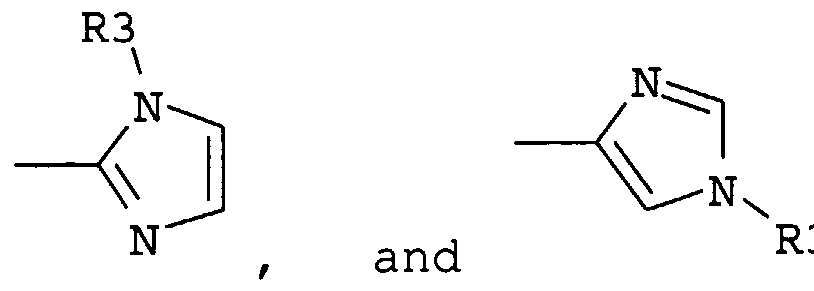
- R 1 independently represents a group selected from: R 1 and alkyl, cycloalkyl, heterocycloalkyl, heteroaryl, aryl and arylalkyl groups optionally substituted with a substituent selected from hydroxy, alkoxy, phenoxy, carboxylate, carboxamide, carboxylic ester, sulphonate, amine, alkylamine and N + (R 4 ) 3 , wherein R 4 is selected from hydrogen, alkanyl, alkenyl, arylalkanyl, arylalkenyl, oxyalkanyl, oxyalkenyl, aminoalkanyl, aminoalkenyl, alkanyl ether, alkenyl ether, and -CY 2 -R 2 , in which Y is independently selected from H, CH3, C2H5, C3H7 and R 2 is independently selected from: an optionally substituted
- R3 is independently selected from: H, alkyl, and benzyl, and wherein at least two of R 1 are -CY 2 -R 2 .
- the optionally substituted imidazole is not so substituted that it forms a benzimidazol group per se. It is essential that the ligand (L) has at least two imidazole substituents as defined above, preferably at least three imidazole substituents. The nature of the remaining Rl substituent (s) has not been found to be significant to activity of the selected ligand.
- a present invention also provides a method of bleaching a substrate comprising applying to the substrate, in an aqueous medium, a bleaching composition as defined herein.
- the present invention also extends to use of a ligand or complex as defined below in the manufacture of a bleaching composition, the bleaching composition containing effective amounts of a peroxygen bleach or a peroxy-based or peroxy- generating bleach system.
- An effective amount of a peroxygen bleach may be provided by a composition containing at least 1%, preferably at least 5%, of a peroxyl species.
- the composition contains the range of about 1-35% by weight, preferably from 5-25% of a peroxyl species.
- the present invention also extends to a commercial package comprising a bleaching composition according to the present invention together with instructions for its use.
- the composition of the present invention uses air to bleach a substrate. This is distinct from using pure oxygen or an enriched oxygen source. Air is different to molecular oxygen.
- the provision of a commercially available air bleaching product negates the requirement of an additional component, namely a peroxyl source. The removal of a peroxyl species, an expensive component, from a bleaching composition results in a reduction in manufacturing costs of the bleaching composition. Of significant importance is that an increased retention of textile strength and less dye damage is found when a bleaching composition without an added peroxyl species is used to clean fabrics.
- the provision of a commercially available air bleaching composition that may function without the requirement of saturated oxygen solutions and/or pressure vessels in an aqueous environment is important. Oxygen is relatively insoluble in water when compared to organic solvents. Nitrogen makes up approximately 80% of the volume of air whilst molecular oxygen makes up only approximately 20% of the volume of air.
- At least 10 %, preferably at least 50 % and optimally at least 90 % of any bleaching of the substrate is effected by oxygen sourced from the air.
- the air bleaching composition of the present invention has less that 1%, preferably less than 0.1%, most preferably less than 0.01%, of a peroxyl species present.
- the composition of the present invention uses a peroxyl species to bleach a substrate.
- the peroxy bleaching species may be a compound which is capable of yielding hydrogen peroxide in aqueous solution.
- Hydrogen peroxide sources are well known in the art. They include the alkali metal peroxides, organic peroxides such as urea peroxide, and inorganic persalts, such as the alkali metal perborates, percarbonates, perphosphates persilicates and persulphates. Mixtures of two or more such compounds may also be suitable.
- sodium perborate tetrahydrate and, especially, sodium perborate monohydrate are particularly preferred.
- Sodium perborate monohydrate is preferred because of its high active oxygen content.
- Sodium percarbonate may also be preferred for environmental reasons.
- the amount thereof in the composition of the invention usually will be within the range of about 1-35% by weight, preferably from 5-25% by weight.
- a bleach precursor e.g., N,N,N'N'-tetraacetyl ethylene diamine (TAED) .
- TAED N,N,N'N'-tetraacetyl ethylene diamine
- Another suitable hydrogen peroxide generating system is a combination of a C1-C4 alkanol oxidase and a C1-C4 alkanol, especially a combination of methanol oxidase (MOX) and ethanol.
- MOX methanol oxidase
- Alkylhydroxy peroxides are another class of peroxy bleaching compounds. Examples of these materials include cumene hydroperoxide and t-butyl hydroperoxide.
- Organic peroxyacids may also be suitable as the peroxy bleaching compound.
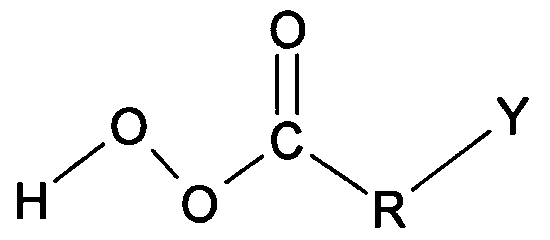
- Such materials normally have the general formula:
- R is an alkylene or substituted alkylene group containing from 1 to about 20 carbon atoms, optionally having an internal amide linkage; or a phenylene or substituted phenylene group; and Y is hydrogen, halogen, alkyl, aryl, an imido-aromatic or non-aromatic group, a COOH or
- Typical monoperoxy acids useful herein include, for example:
- aliphatic, substituted aliphatic and arylalkyl monoperoxyacids e.g. peroxylauric acid, peroxystearic acid and N, N-phthaloylaminoperoxy caproic acid (PAP); and
- diperoxyacids useful herein include, for example:
- inorganic peroxyacid compounds are suitable, such as for example potassium monopersulphate (MPS) . If organic or inorganic peroxyacids are used as the peroxygen compound, the amount thereof will normally be within the range of about 2-10% by weight, preferably from 4-8% by weight.
- MPS potassium monopersulphate
- Peroxyacid bleach precursors are known and amply described in literature, such as in the British Patents 836988; 864,798; 907,356; 1,003,310 and 1,519,351; German Patent 3,337,921; EP-A-0185522; EP-A-0174132; EP-A-0120591; and U.S. Pat. Nos. 1,246,339; 3,332,882; 4,128,494; 4,412,934 and 4,675,393.
- peroxyacid bleach precursors are those of the cationic i.e. quaternary ammonium substituted peroxyacid precursors as disclosed in US Pat. Nos. 4,751,015 and 4,397,757, in EP-A0284292 and EP-A-331, 229.
- peroxyacid bleach precursors of this class are:
- ODC N-octyl-N,N-dimethyl-N10-carbophenoxy decyl ammonium chloride
- a further special class of bleach precursors is formed by the cationic nitriles as disclosed in EP-A-303,520 and in European Patent Specification No.'s 458,396 and 464,880.
- any one of these peroxyacid bleach precursors can be used in the present invention, though some may be more preferred than others.
- the preferred classes are the esters, including acyl phenol sulphonates and acyl alkyl phenol sulphonates; the acyl-amides; and the quaternary ammonium substituted peroxyacid precursors including the cationic nitriles.
- Examples of said preferred peroxyacid bleach precursors or activators are sodium-4-benzoyloxy benzene sulphonate (SBOBS); N,N,N'N'-tetraacetyl ethylene diamine (TAED) ; sodium-l-methyl-2-benzoyloxy benzene-4-sulphonate; sodium-4- methyl-3-benzoloxy benzoate; SPCC; trimethyl ammonium toluyloxy-benzene sulphonate; sodium nonanoyloxybenzene sulphonate (SNOBS); sodium 3, 5, 5-trimethyl hexanoyl- oxybenzene sulphonate (STHOBS) ; and the substituted cationic nitriles.
- SBOBS sodium-4-benzoyloxy benzene sulphonate
- TAED N,N,N'N'-tetraacetyl ethylene diamine
- TAED sodium-l-methyl-2-benzoyloxy
- bleach precursors for use with the present invention are found in WO0015750, for example 6- (nonanamidocaproyl) oxybenzene sulphonate.
- the precursors may be used in an amount of up to 12%, preferably from 2-10% by weight, of the composition.
- the bleaching composition of the present invention has particular application in detergent formulations, especially for laundry cleaning. Accordingly, in another preferred embodiment, the present invention provides a detergent bleach composition comprising a bleaching composition as defined above and additionally a surface-active material, optionally together with detergency builder.
- the bleach composition according to the present invention may for example contain a surface-active material in an amount of from 10 to 50% by weight.
- the surface-active material may be naturally derived, such as soap, or a synthetic material selected from anionic, nonionic, amphoteric, zwitterionic, cationic actives and mixtures thereof.
- suitable actives are commercially available and are fully described in the literature, for example in "Surface Active Agents and Detergents", Volumes I and II, by Schwartz, Perry and Berch.
- Typical synthetic anionic surface-actives are usually water- soluble alkali metal salts of organic sulphates and sulphonates having alkyl groups containing from about 8 to about 22 carbon atoms, the term "alkyl” being used to include the alkyl portion of higher aryl groups.
- suitable synthetic anionic detergent compounds are sodium and ammonium alkyl sulphates, especially those obtained by sulphating higher (C ⁇ -Ci ⁇ ) alcohols produced, for example, from tallow or coconut oil; sodium and ammonium alkyl (C 9 - C 20 ) benzene sulphonates, particularly sodium linear secondary alkyl (C 10 -C 15 ) benzene sulphonates; sodium alkyl glyceryl ether sulphates, especially those ethers of the higher alcohols derived from tallow or coconut oil fatty acid monoglyceride sulphates and sulphonates; sodium and ammonium salts of sulphuric acid esters of higher (Cg-Cie) fatty alcohol alkylene oxide, particularly ethylene oxide, reaction products; the reaction products of fatty acids such as coconut fatty acids esterified with isethionic acid and neutralised with sodium hydroxide; sodium and ammonium salts of fatty acid amides of methyl taurine; al
- the preferred anionic detergent compounds are sodium (C10-C15) alkylbenzene sulphonates, and sodium (Ci ⁇ -Ci ⁇ ) alkyl ether sulphates .
- suitable nonionic surface-active compounds which may be used, preferably together with the anionic surface- active compounds, include, in particular, the reaction products of alkylene oxides, usually ethylene oxide, with alkyl (C 6 -C 22 ) phenols, generally 5-25 EO, i.e. 5-25 units of ethylene oxides per molecule; and the condensation products of aliphatic (C 8 -C ⁇ g) primary or secondary linear or branched alcohols with ethylene oxide, generally 2-30 EO.
- nonionic surface-actives include alkyl polyglycosides, sugar esters, long-chain tertiary amine oxides, long-chain tertiary phosphine oxides and dialkyl sulphoxides.
- Amphoteric or zwitterionic surface-active compounds can also be used in the compositions of the invention but this is not normally desired owing to their relatively high cost. If any amphoteric or zwitterionic detergent compounds are used, it is generally in small amounts in compositions based on the much more commonly used synthetic anionic and nonionic actives.
- the detergent bleach composition of the invention will preferably comprise from 1 to 15% wt of anionic surfactant and from 10 to 40% by weight of nonionic surfactant.
- the detergent active system is free from C ⁇ 6 -C ⁇ 2 fatty acid soaps.
- the bleach composition of the present invention may also contain a detergency builder, for example in an amount of from about 5 to 80% by weight, preferably from about 10 to 60% by weight.
- Builder materials may be selected from 1) calcium sequestrant materials, 2) precipitating materials, 3) calcium ion-exchange materials and 4) mixtures thereof.
- Examples of calcium sequestrant builder materials include alkali metal polyphosphates, such as sodium tripolyphosphate; nitrilotriacetic acid and its water- soluble salts; the alkali metal salts of carboxymethyloxy succinic acid, ethylene diamine tetraacetic acid, oxydisuccinic acid, mellitic acid, benzene polycarboxylic acids, citric acid; and polyacetal carboxylates as disclosed in US-A-4,144,226 and US-A-4, 146, 495.
- alkali metal polyphosphates such as sodium tripolyphosphate
- nitrilotriacetic acid and its water- soluble salts the alkali metal salts of carboxymethyloxy succinic acid, ethylene diamine tetraacetic acid, oxydisuccinic acid, mellitic acid, benzene polycarboxylic acids, citric acid
- polyacetal carboxylates as disclosed in US-A-4,144,2
- precipitating builder materials examples include sodium orthophosphate and sodium carbonate.
- Examples of calcium ion-exchange builder materials include the various types of water-insoluble crystalline or amorphous aluminosilicates, of which zeolites are the best known representatives, e.g. zeolite A, zeolite B (also known as zeolite P) , zeolite C, zeolite X, zeolite Y and also the zeolite P-type as described in EP-A-0, 384, 070.
- zeolites are the best known representatives, e.g. zeolite A, zeolite B (also known as zeolite P) , zeolite C, zeolite X, zeolite Y and also the zeolite P-type as described in EP-A-0, 384, 070.
- compositions of the invention may contain any one of the organic and inorganic builder materials, though, for environmental reasons, phosphate builders are preferably omitted or only used in very small amounts.
- Typical builders usable in the present invention are, for example, sodium carbonate, calcite/carbonate, the sodium salt of nitrilotriacetic acid, sodium citrate, carboxymethyloxy malonate, carboxymethyloxy succinate and water-insoluble crystalline or amorphous aluminosilicate builder materials, each of which can be used as the main builder, either alone or in admixture with minor amounts of other builders or polymers as co-builder.
- the composition contains not more than 5% by weight of a carbonate builder, expressed as sodium carbonate, more preferably not more than 2.5% by weight to substantially nil, if the composition pH lies in the lower alkaline region of up to 10.
- the bleach composition of the present invention can contain any of the conventional additives in amounts of which such materials are normally employed in fabric washing detergent compositions.
- these additives include buffers such as carbonates, lather boosters, such as alkanolamides, particularly the monoethanol amides derived from palmkernel fatty acids and coconut fatty acids; lather depressants, such as alkyl phosphates and silicones; anti-redeposition agents, such as sodium carboxymethyl cellulose and alkyl or substituted alkyl cellulose ethers; stabilisers, such as phosphonic acid derivatives (i.e.
- Dequest® types fabric softening agents; inorganic salts and alkaline buffering agents, such as sodium sulphate and sodium silicate; and, usually in very small amounts, fluorescent agents; perfumes; enzymes, such as proteases, cellulases, lipases, amylases and oxidases; germicides and colourants.
- Transition metal sequestrants such as EDTA, and phosphonic acid derivatives such as EDTMP (ethylene diamine tetra (methylene phosphonate) (same as dequestTM above) may also be included, in addition to the ligand specified, for example to improve the stability sensitive ingredients such as enzymes, fluorescent agents and perfumes, but provided the composition remains bleaching effective.
- EDTMP ethylene diamine tetra (methylene phosphonate)
- the detergent compositions of the present invention may additionally comprise one or more enzymes, which provide cleaning performance, fabric care and/or sanitation benefits .
- Said enzymes include oxidoreductases, transferases, hydrolases, lyases, isomerases and ligases. Suitable members of these enzyme classes are described in Enzyme nomenclature 1992: recommendations of the Nomenclature Committee of the International Union of Biochemistry and Molecular Biology on the nomenclature and classification of enzymes, 1992, ISBN 0-12-227165-3, Academic Press. The most recent information on the nomenclature of enzymes is available on the Internet through the ExPASy WWW server (http: //www. expasy. ch/)
- hydrolases examples include carboxylic ester hydrolase, thiolester hydrolase, phosphoric monoester hydrolase, and phosphoric diester hydrolase which act on the ester bond; glycosidase which acts on O-glycosyl compounds; glycosylase hydrolysing N-glycosyl compounds; thioether hydrolase which acts on the ether bond; and exopeptidases and endopeptidases which act on the peptide bond.
- carboxylic ester hydrolase, glycosidase and exo- and endopeptidases Preferable among them.
- suitable hydrolases include (1) exopeptidases such as aminopeptidase and carboxypeptidase A and B and endopeptidases such as pepsin, pepsin B, chymosin, trypsin, chymotrypsin, elastase, enteropeptidase, cathepsin B, papain, chymopapain, ficain, thrombin, plasmin, renin, subtilisin, aspergillopepsin, collagenase, clostripain, kallikrein, gastricsin, cathepsin D, bromelain, chymotrypsin C, urokinase, cucumisin, oryzin, proteinase K, thermomycolin, thermitase, lactocepin, thermolysin, bacillolysin.
- exopeptidases such as aminopeptidase and carboxypeptidase A and B and endopeptida
- subtilisin (2) glycosidases such as ⁇ -amylase, ⁇ -amylase, glucoamylase, isoamylase, cellulase, endo-1, 3 (4) - ⁇ -glucanase ( ⁇ -glucanase), xylanase, dextranase, polygalacturonase (pectinase) , lysozyme, invertase, hyaluronidase, pullulanase, neopullulanase, chitinase, arabinosidase, exocellobiohydrolase, hexosaminidase, mycodextranase, endo- 1, 4- ⁇ -mannanase (hemicellulase) , xyloglucanase, endo- ⁇ - galactosidase (keratanase) , mannanase and
- ⁇ -amylase and cellulase are ⁇ -amylase and cellulase; (3) carboxylic ester hydrolase including carboxylesterase, lipase, phospholipase, pectinesterase, cholesterol esterase, chlorophyllase, tannase and wax-ester hydrolase. Preferred among them is lipase.
- transferases and ligases are glutathione S- transferase and acid-thiol ligase as described in WO-A-98/59028 and xyloglycan endotransglycosylase as described in WO-A-98/38288.
- lyases examples include hyaluronate lyase, pectate lyase, chondroitinase, pectin lyase, alginase II.
- pectolyase which is a mixture of pectinase and pectin lyase.
- oxidoreductases examples include oxidases such as glucose oxidase, methanol oxidase, bilirubin oxidase, catechol oxidase, laccase, peroxidases such as ligninase and those described in WO-A-97/31090, monooxygenase, dioxygenase such as lipoxygenase and other oxygenases as described in WO-A-99/02632, WO-A-99/02638, WO-A-99/02639 and the cytochrome based enzymatic bleaching systems described in WO-A-99/02641.
- oxidases such as glucose oxidase, methanol oxidase, bilirubin oxidase, catechol oxidase, laccase, peroxidases such as ligninase and those described in WO-A-97/31090, monooxygenase, dioxygenase such as
- Peroxidases are used in combination with hydrogen peroxide, which can be formulated into a detergent composition as percarbonate or perborate.
- the hydrogen peroxide may also be generated during the washing and/or rinsing process by an enzymatic system as e.g. described in EP-A-537381.
- oxidoreductases in particular the phenol oxidising enzymes in a process for bleaching stains on fabrics and/or dyes in solution and/or antimicrobial treatment can be enhanced by adding certain organic compounds, called enhancers.
- enhancers are 2,2'- azo-bis- (3-ethylbenzo-thiazoline-6-sulphonate (ABTS) and Phenothiazine-10-propionate (PTP) . More enhancers are described in WO-A-94/12619, WO-A-94/12620, WO-A-94/12621, WO-A-97/11217, WO-A-99/23887.
- Enhancers are generally added at a level of 0.01% to 5% by weight of detergent composition.
- a different process for enhancing the efficacy of the bleaching action of oxidoreductases is by targeting them to stains by using antibodies or antibody fragments as described in WO-A-98/56885.
- Antibodies can also be added to control enzyme activity as described in WO-A-98/06812.
- a preferred combination is a detergent composition
- a detergent composition comprising of a mixture of conventional detergent enzymes such as protease, amylase, lipase, cutinase and/or cellulase together with one or more plant cell wall degrading enzymes.
- Endopeptidases (proteolytic enzymes or proteases) of various qualities and origins and having activity in various pH ranges of from 4-12 are available and can be used in the instant invention.
- suitable proteolytic enzymes are the subtilisins, which can be obtained from particular strains of B. subtilis, B. lentus, B. amyloliquefaciens and B. licheniformis, such as the commercially available subtilisins SavinaseTM, AlcalaseTM, RelaseTM, KannaseTM and EverlaseTM as supplied by Novo Industri A/S, Copenhagen, Denmark or PurafectTM, PurafectOxPTM and ProperaseTM as supplied by Genencor International.
- Suitable lipases include those of bacterial or fungal origin as described in WO-A-99/11770 pages 33,34, such as the commercially available LipolaseTM, Lipolase UltraTM, LipoPrimeTM, from Novo Nordisk, or LipomaxTM from Genencor. Chemically or genetically modified variants of these enzymes are included.
- Suitable amylases include those of bacterial or fungal origin. Chemically or genetically modified variants of these enzymes are included as described in WO-A-99/02632 pages 18,19.
- Commercial cellulase are sold under the tradename PurastarTM, Purastar OxAmTM (formerly Purafact Ox AmTM) by
- Suitable cellulases include those of bacterial or fungal origin. Chemically or genetically modified variants of these enzymes are included as described in WO-A-99/02632 page 17. Particularly useful cellulases are the endoglucanases such as the EGIII from Trichoderma longibrachiatum as described in WO-A-94/21801 and the E5 from Thermomonospora fusca as described in WO-A-97/20025. Endoglucanases may consist of a catalytic domain and a cellulose binding domain or a catalytic domain only. Preferred cellulolytic enzymes are sold under the tradename CarezymeTM, CelluzymeTM and EndolaseTM by Novo Nordisk A/S; PuradaxTM is sold by Genencor and KACTM is sold by Kao corporation, Japan.
- Detergent enzymes are usually incorporated in an amount of 0.00001% to 2%, and more preferably 0.001% to 0.5%, and even more preferably 0.01% to 0.2% in terms of pure enzyme protein by weight of the composition.
- Detergent enzymes are commonly employed in the form of granules made of crude enzyme alone or in combination with other components in the detergent composition. Granules of crude enzyme are used in such an amount that the pure enzyme is 0.001 to 50 weight percent in the granules. The granules are used in an amount of 0.002 to 20 and preferably 0.1 to 3 weight percent.
- Granular forms of detergent enzymes are known as EnzoguardTM granules, prills, marumes or T-granules.
- Granules can be formulated so as to contain an enzyme protecting agent (e.g. oxidation scavengers) and/or a dissolution retardant material.
- enzyme protecting agent e.g. oxidation scavengers
- a dissolution retardant material e.g. oxidation scavengers
- Other suitable forms of enzymes are liquid forms such as the "L” type liquids from Novo Nordisk, slurries of enzymes in nonionic surfactants such as the "SL” type sold by Novo Nordisk and microencapsulated enzymes marketed by Novo Nordisk under the tradename "LDP" and "CC”.
- the enzymes can be added as separate single ingredients (prills, granulates, stabilised liquids, etc. containing one enzyme) or as mixtures of two or more enzymes (e.g. cogranulates) .
- Enzymes in liquid detergents can be stabilised by various techniques as for example disclosed in US patents 4,261,868 and 4,318,818.
- the detergent compositions of the present invention may additionally comprise one or more biologically active peptides such as swollenin proteins, expansins, bacteriocins and peptides capable of binding to stains.
- biologically active peptides such as swollenin proteins, expansins, bacteriocins and peptides capable of binding to stains.
- the method of the present invention is carried out on a laundry fabric using aqueous treatment liquor.
- the treatment may be effected in, or as an adjunct to, an essentially conventional wash cycle for cleaning laundry.
- the treatment is carried out in an aqueous detergent wash liquor.
- the bleaching composition can be delivered into the wash liquor from a powder, granule, pellet, tablet, block, bar or other such solid form.
- the solid form can comprise a carrier, which can be particulate, sheet-like or comprise a three-dimensional object.
- the carrier can be dispersible or soluble in the wash liquor or may remain substantially intact.
- the bleaching composition can be delivered into the wash liquor from a paste, gel or liquid concentrate. Other means for ensuring that the bleaching composition is present in the wash liquor may be envisaged.
- the bleaching composition can be presented in the form of a body from which it is slowly released during the whole or part of the laundry process. Such release can occur over the course of a single wash or over the course of a plurality of washes.
- the bleaching composition can be released from a carrier substrate used in association with the wash process, e.g. from a body placed in the dispenser drawer of a washing machine, elsewhere in the delivery system or in the drum of the washing machine.
- the carrier can be freely moving or fixed relative to the drum. Such fixing can be achieved by mechanical means, for example by barbs that interact with the drum wall, or employ other forces, for example a magnetic force.
- the present invention is not limited to those circumstances in which a washing machine is employed, but can be applied where washing is performed in some alternative vessel.
- the bleaching composition can be delivered by means of slow release from the bowl, bucket or other vessel which is being employed, or from any implement which is being employed, such as a brush, bat or dolly, or from any suitable applicator.
- Suitable pre-treatment means for application of the bleaching composition to the textile material prior to the main wash include sprays, pens, roller-ball devices, bars, soft solid applicator sticks and impregnated cloths or cloths containing microcapsules. Such means are well known in the analogous art of deodorant application and/or in spot treatment of textiles. Similar means for application are employed in those embodiments where the bleaching composition is applied after the main washing and/or conditioning steps have been performed, e.g. prior to or after ironing or drying of the cloth.
- the bleaching composition may be applied using tapes, sheets or sticking plasters coated or impregnated with the substance, or containing microcapsules of the substance.
- the bleaching composition may for example be incorporated into a drier sheet so as to be activated or released during a tumble- drier cycle, or the substance can be provided in an impregnated or microcapsule-containing sheet so as to be delivered to the textile when ironed.
- alkyl linear and branched Cl-C8-alkyl
- alkenyl C2-C6-alkenyl
- cycloalkyl C3-C8-cycloalkyl
- aryl selected from homoaromatic compounds having a molecular weight under 300,
- heteroaryl selected from the group consisting of: pyridinyl; pyrimidinyl; pyrazinyl; triazolyl; pyridazinyl;
- heterocycloalkyl selected from the group consisting of: pyrrolinyl; pyrrolidinyl; morpholinyl; piperidinyl; piperazinyl; hexamethylene imine; 1, 4-piperazinyl; tetrahydrothiophenyl; tetrahydrofuranyl; 1,4,7- triazacyclononanyl; 1,4,8, 11-tetraazacyclotetradecanyl; 1,4,7, 10, 13-pentaazacyclopentadecanyl; 1, 4-diaza-7-thia- cyclononanyl; 1, 4-diaza-7-oxa-cyclononanyl; 1,4,7,10- tetraazacyclododecanyl; 1, 4-dioxanyl; 1, 4, 7-trithia- cyclononanyl; tetrahydropyranyl; and oxazolidinyl, wherein the heterocycloalkyl may be connected to the compound via any atom in the
- carboxylate derivative the group -C(0)OR, wherein R is selected from: hydrogen; Cl-C6-alkyl; phenyl; Cl-C6-alkyl- C6H5; Li; Na; K; Cs; Mg; and Ca,
- carbonyl derivative the group -C(0)R, wherein R is selected from: hydrogen; Cl-C6-alkyl; phenyl; Cl-C6-alkyl- C6H5 and amine (to give amide) selected from the group: - NR'2, wherein each R' is independently selected from: hydrogen; Cl-C6-alkyl; Cl-C6-alkyl-C6H5; and phenyl, wherein when both R' are Cl-C6-alkyl both R' together may form an - NC3 to an -NC5 heterocyclic ring with any remaining alkyl chain forming an alkyl substituent to the heterocyclic ring,
- R is selected from: hydrogen; Cl-C6-alkyl; phenyl; Cl-C6-alkyl-C6H5; Li; Na; K; Cs; Mg; and Ca,
- alkyl linear and branched Cl-C6-alkyl
- alkenyl C3-C6-alkenyl
- cycloalkyl C6-C8-cycloalkyl
- aryl selected from group consisting of: phenyl; biphenyl; naphthalenyl; anthracenyl; and phenanthrenyl,
- heteroaryl selected from the group consisting of: pyridinyl; pyrimidinyl; quinolinyl; pyrazolyl; triazolyl; isoquinolinyl; imidazolyl; and oxazolidinyl, wherein the heteroaryl may be connected to the compound via any atom in the ring of the selected heteroaryl,
- heterocycloalkyl selected from the group consisting of: pyrrolidinyl; morpholinyl; piperidinyl; piperidinyl; 1,4- piperazinyl; tetrahydrofuranyl; 1, 4, 7-triazacyclononanyl;
- heterocycloalkyl may be connected to the compound via any atom in the ring of the selected heterocycloalkyl
- carboxylate derivative the group -C(0)0R, wherein R is selected from hydrogen; Na; K; Mg; Ca; Cl-C6-alkyl; and benzyl,
- the ligand N,N-bis (pyridin- 2-yl-methyl) -1, 1-bis (pyridin-2- yl) -1-aminoethane (MeN4py) was prepared as described in EP 0 909 809 A2.
- the ligand MeN4Py (33.7 g; 88.5mmoles) was dissolved in dry methanol (500ml). Small portions of FeCl 2 .4H 2 0 (0.95 eq; 16.7 g; 84.0 mmoles) were added, yielding a clear red solution. After addition, the solution was stirred for 30 minutes at room temperature, after which the methanol was removed (rotary-evaporator) . The dry solid was ground and 150 ml of ethylacetate was added and the mixture was stirred until a fine red powder was obtained. This powder was washed twice with ethyl acetate, dried in the air and further dried under reduced pressure vacuum at 40 °C. El. Anal. Calc.
- LI has been prepared according to literature procedures (Bernal, J. ; et al. J. Chem. Soc, Dalton Trans. 1995, 3667- 3675) .
- L10 has been prepared according to literature procedures (Brennan, et al., Inorg. Chem., 30, 1937 (1991).
- L5 and L6 N- (l-propan-2ol) ethylenediamine
- L2, L3, L4, and L5 2-imidazolecarboxaldehyde
- L6, and L8 l-methyl-2-imidazolecarboxaldehyde
- L7 5-methyl-imidazol-4-methylcarboxaldehyde
- the above-mentioned vial was sealed with a cap and the solution was then shaken for 2 h to allow the imine formation.
- the mixture was treated with NaCNBH 3 (3.3 mmol), adjusted to pH 6 with acetic acid and shaken for 38 h.
- the mixture was quenched with 3 ml of 2 M HC1 solution and adjusted to pH > 13 with a 7M NaOH solution.
- the mixture was extracted with 3x10 ml of dichloromethane, dried over sodum sulfate and evaporated under reduced pressure. Yields are typically around 50%. Purities are greater than 90 % as established by HPLC/MS.
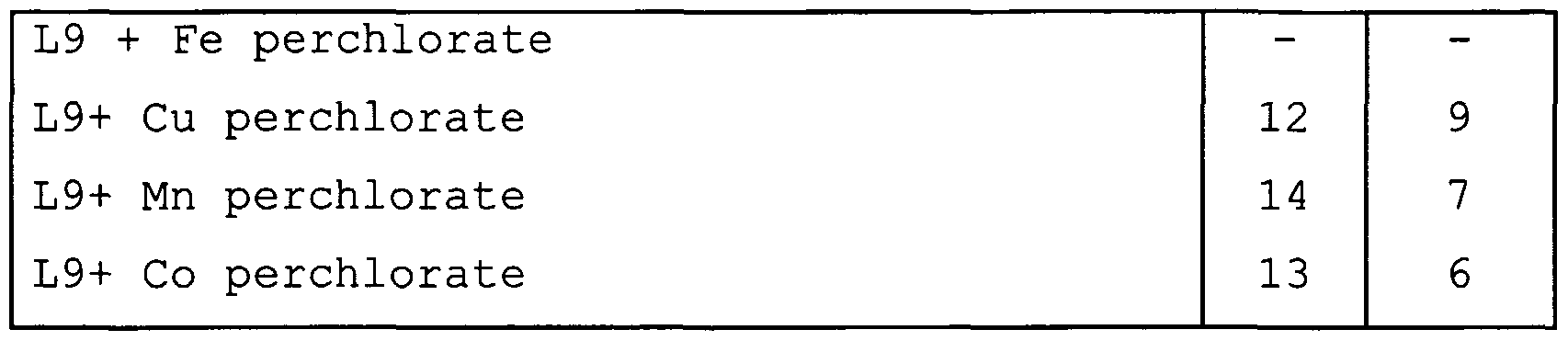
- ⁇ E [ ( ⁇ L) 2 +( ⁇ a) 2 +( ⁇ b) 2 ] 12
- ⁇ L is a measure for the difference in darkness between the washed and unwashed test cloth; ⁇ a and ⁇ b are measures for the difference in redness and yellowness respectively between both cloths.
- CIE Commission International de l'Eclairage
Landscapes
- Chemical & Material Sciences (AREA)
- Organic Chemistry (AREA)
- Inorganic Chemistry (AREA)
- Life Sciences & Earth Sciences (AREA)
- Engineering & Computer Science (AREA)
- Chemical Kinetics & Catalysis (AREA)
- Oil, Petroleum & Natural Gas (AREA)
- Wood Science & Technology (AREA)
- Detergent Compositions (AREA)
- Silver Salt Photography Or Processing Solution Therefor (AREA)
Abstract
Description




Claims


Priority Applications (4)
| Application Number | Priority Date | Filing Date | Title |
|---|---|---|---|
| BR0206429-4A BR0206429A (en) | 2001-02-05 | 2002-01-22 | Laundry bleach composition, substrate bleaching method, and, by binding |
| DE60215306T DE60215306T2 (en) | 2001-02-05 | 2002-01-22 | MEDIUM AND METHOD FOR BLEACHING A SUBSTRATE |
| CA2433832A CA2433832C (en) | 2001-02-05 | 2002-01-22 | Composition and method for bleaching a substrate |
| EP02722032A EP1358309B1 (en) | 2001-02-05 | 2002-01-22 | Composition and method for bleaching a substrate |
Applications Claiming Priority (2)
| Application Number | Priority Date | Filing Date | Title |
|---|---|---|---|
| GB0102826.5 | 2001-02-05 | ||
| GBGB0102826.5A GB0102826D0 (en) | 2001-02-05 | 2001-02-05 | Composition and method for bleaching a substrate |
Publications (1)
| Publication Number | Publication Date |
|---|---|
| WO2002077145A1 true WO2002077145A1 (en) | 2002-10-03 |
Family
ID=9908131
Family Applications (1)
| Application Number | Title | Priority Date | Filing Date |
|---|---|---|---|
| PCT/EP2002/000688 Ceased WO2002077145A1 (en) | 2001-02-05 | 2002-01-22 | Composition and method for bleachin g a substrate |
Country Status (10)
| Country | Link |
|---|---|
| US (1) | US6696403B2 (en) |
| EP (1) | EP1358309B1 (en) |
| AT (1) | ATE342333T1 (en) |
| BR (1) | BR0206429A (en) |
| CA (1) | CA2433832C (en) |
| DE (1) | DE60215306T2 (en) |
| ES (1) | ES2274024T3 (en) |
| GB (1) | GB0102826D0 (en) |
| WO (1) | WO2002077145A1 (en) |
| ZA (1) | ZA200304862B (en) |
Cited By (34)
| Publication number | Priority date | Publication date | Assignee | Title |
|---|---|---|---|---|
| JP2007524685A (en) * | 2004-02-12 | 2007-08-30 | モレキュラー インサイト ファーマシューティカルズ インコーポレーティッド | Technetium-bis (heteroaryl) and rhenium-bis (heteroaryl) complexes and methods of use thereof |
| EP2103735A1 (en) | 2008-03-18 | 2009-09-23 | Unilever PLC | Catalytic bleaching of substrates |
| WO2011083309A1 (en) | 2010-01-06 | 2011-07-14 | Unilever Plc | Curing liquids |
| WO2011120799A1 (en) | 2010-04-01 | 2011-10-06 | Unilever Plc | Structuring detergent liquids with hydrogenated castor oil |
| WO2011120772A1 (en) | 2010-03-31 | 2011-10-06 | Unilever Plc | Microcapsule incorporation in structured liquid detergents |
| WO2011157673A1 (en) | 2010-06-16 | 2011-12-22 | Akzo Nobel Chemicals International B.V. | Accelerator solution and process for curing curable resins |
| WO2012000846A1 (en) | 2010-06-28 | 2012-01-05 | Basf Se | Metal free bleaching composition |
| WO2012079624A1 (en) | 2010-12-15 | 2012-06-21 | Ppg Europe Bv | Drier composition and use thereof |
| EP2474578A1 (en) | 2011-01-06 | 2012-07-11 | Rahu Catalytics Limited | Antiskinning compositions |
| EP2495300A1 (en) | 2011-03-04 | 2012-09-05 | Unilever Plc, A Company Registered In England And Wales under company no. 41424 of Unilever House | Structuring detergent liquids with hydrogenated castor oil |
| US8318836B2 (en) | 2006-07-07 | 2012-11-27 | Omg Uk Technology Limited | Liquid hardening |
| WO2013045475A1 (en) | 2011-09-26 | 2013-04-04 | Ppg Europe Bv | Coating composition and use thereof |
| WO2013060706A1 (en) | 2011-10-25 | 2013-05-02 | Basf Se | Use of acrylate copolymers as soil antiredeposition agents and soil release agents in laundry processes |
| WO2013060708A1 (en) | 2011-10-25 | 2013-05-02 | Basf Se | Use of comb or block copolymers as soil antiredeposition agents and soil release agents in laundry processes |
| WO2014154508A1 (en) | 2013-03-27 | 2014-10-02 | Basf Se | Block copolymers as soil release agents in laundry processes |
| WO2015011430A1 (en) | 2013-07-25 | 2015-01-29 | Omg Uk Technology Limited | Encapsulated catalysts |
| WO2016198891A1 (en) | 2015-06-10 | 2016-12-15 | Chemsenti Limited | Oxidative method |
| WO2017186480A1 (en) | 2016-04-26 | 2017-11-02 | Basf Se | Metal free bleaching composition |
| US10214606B2 (en) | 2013-11-27 | 2019-02-26 | Basf Se | Random copolymers as soil release agents in laundry processes |
| US10370621B2 (en) | 2013-08-16 | 2019-08-06 | Chemsenti Limited | Bleaching formulations comprising particles and transition metal ion-containing bleaching catalysts |
| EP3524347A1 (en) | 2008-04-09 | 2019-08-14 | Basf Se | Use of metal hydrazide complex compounds as oxidation catalysts |
| US10815616B2 (en) | 2015-06-10 | 2020-10-27 | Catexel Technologies Limited | Oxidative method |
| EP3795665A1 (en) * | 2019-09-20 | 2021-03-24 | Henkel AG & Co. KGaA | Non-enzymatic removal of proteinaceous soils |
| WO2021260037A1 (en) | 2020-06-24 | 2021-12-30 | Borchers Gmbh | Paints containing driers based on vanadium compounds bearing anions of sulfonic acids as counter ions |
| EP3967742A1 (en) | 2020-09-15 | 2022-03-16 | WeylChem Performance Products GmbH | Compositions comprising bleaching catalyst, manufacturing process thereof, and bleaching and cleaning agent comprising same |
| US11518834B2 (en) | 2019-01-02 | 2022-12-06 | Polynt Composites USA, Inc. | Radically polymerizable compositions |
| WO2023030700A1 (en) | 2021-08-30 | 2023-03-09 | Borchers Gmbh | Process for improving resin performance |
| WO2023052294A1 (en) | 2021-09-30 | 2023-04-06 | Borchers Gmbh | Process for improving resin performance using lewis acids |
| WO2023117421A1 (en) | 2021-12-22 | 2023-06-29 | Borchers Gmbh | Paints containing driers based on vanadium compounds bearing various acid anions |
| WO2025191283A1 (en) | 2024-03-15 | 2025-09-18 | Catexel Gmbh | Oxidative method |
| WO2026013020A1 (en) | 2024-07-08 | 2026-01-15 | Akzo Nobel Coatings International B.V. | Coating composition comprising an autoxidizable resin and drier comprising a transition metal and ligand |
| WO2026037942A1 (en) | 2024-08-15 | 2026-02-19 | Borchers Gmbh | Polydentate ligands and thiols in curing liquids |
| WO2026068622A1 (en) | 2024-09-27 | 2026-04-02 | Borchers Gmbh | Antiskinning additive blends for autoxidizing coatings |
| WO2026068624A1 (en) | 2024-09-27 | 2026-04-02 | Borchers Gmbh | Antiskinning additives for autoxidizing coatings |
Families Citing this family (3)
| Publication number | Priority date | Publication date | Assignee | Title |
|---|---|---|---|---|
| US20090035748A1 (en) * | 2007-08-01 | 2009-02-05 | Lizzi Tiffiny Marie | Bromelain as a clinical sample pre-treatment, lysis agent and nuclease inhibitor |
| EP2228429A1 (en) | 2009-03-13 | 2010-09-15 | Unilever PLC | Shading dye and catalyst combination |
| CN113861036B (en) * | 2021-11-08 | 2024-04-02 | 合肥工业大学 | Preparation and application of ethylenediamine copper perchlorate complex |
Citations (3)
| Publication number | Priority date | Publication date | Assignee | Title |
|---|---|---|---|---|
| WO2000012808A1 (en) * | 1998-09-01 | 2000-03-09 | Unilever Plc | Method of treating a textile |
| EP1001009A1 (en) * | 1998-11-10 | 2000-05-17 | Unilever Plc | Bleach and oxidation catalyst |
| WO2000060043A1 (en) * | 1999-04-01 | 2000-10-12 | Unilever Plc | Composition and method for bleaching a substrate |
Family Cites Families (5)
| Publication number | Priority date | Publication date | Assignee | Title |
|---|---|---|---|---|
| JP2835648B2 (en) * | 1990-07-30 | 1998-12-14 | 富士写真フイルム株式会社 | Processing composition for silver halide color photographic light-sensitive material and processing method using the same |
| WO1999065905A1 (en) | 1998-06-15 | 1999-12-23 | Unilever Plc | Bleach catalysts and formulations containing them |
| PH11999002190B1 (en) | 1998-09-01 | 2007-08-06 | Unilever Nv | Composition and method for bleaching a substrate |
| CA2349011A1 (en) | 1998-11-13 | 2000-05-25 | The Procter & Gamble Company | Bleach compositions comprising cross-bridged macropolycyclic transition metal bleach catalysts |
| AU4061900A (en) | 1999-04-01 | 2000-10-23 | Procter & Gamble Company, The | Transition metal bleaching agents |
-
2001
- 2001-02-05 GB GBGB0102826.5A patent/GB0102826D0/en not_active Ceased
-
2002
- 2002-01-22 ES ES02722032T patent/ES2274024T3/en not_active Expired - Lifetime
- 2002-01-22 BR BR0206429-4A patent/BR0206429A/en not_active Application Discontinuation
- 2002-01-22 EP EP02722032A patent/EP1358309B1/en not_active Expired - Lifetime
- 2002-01-22 CA CA2433832A patent/CA2433832C/en not_active Expired - Fee Related
- 2002-01-22 AT AT02722032T patent/ATE342333T1/en not_active IP Right Cessation
- 2002-01-22 DE DE60215306T patent/DE60215306T2/en not_active Expired - Lifetime
- 2002-01-22 WO PCT/EP2002/000688 patent/WO2002077145A1/en not_active Ceased
- 2002-02-05 US US10/067,665 patent/US6696403B2/en not_active Expired - Fee Related
-
2003
- 2003-06-23 ZA ZA200304862A patent/ZA200304862B/en unknown
Patent Citations (3)
| Publication number | Priority date | Publication date | Assignee | Title |
|---|---|---|---|---|
| WO2000012808A1 (en) * | 1998-09-01 | 2000-03-09 | Unilever Plc | Method of treating a textile |
| EP1001009A1 (en) * | 1998-11-10 | 2000-05-17 | Unilever Plc | Bleach and oxidation catalyst |
| WO2000060043A1 (en) * | 1999-04-01 | 2000-10-12 | Unilever Plc | Composition and method for bleaching a substrate |
Non-Patent Citations (1)
| Title |
|---|
| GOMEZ-ROMERO P ET AL: "Dissimetry effects in u-oxo diiron (III) species: structures and spectroscopic properties of [N5FeOX3]+ (X=Cl, Br) and Implications for oxo-bridged dinuclear iron proteins", JOURNAL OF THE AMERICAN CHEMICAL SOCIETY, vol. 111, no. 25, 1989, American Chemical Society, USA, pages 9039 - 9047, XP002207358 * |
Cited By (45)
| Publication number | Priority date | Publication date | Assignee | Title |
|---|---|---|---|---|
| JP2007524685A (en) * | 2004-02-12 | 2007-08-30 | モレキュラー インサイト ファーマシューティカルズ インコーポレーティッド | Technetium-bis (heteroaryl) and rhenium-bis (heteroaryl) complexes and methods of use thereof |
| US8685369B2 (en) | 2004-02-12 | 2014-04-01 | Molecular Insight Pharmaceuticals, Inc. | Technetium- and rhenium-bis (heteroaryl) complexes, and methods of use thereof |
| US8318836B2 (en) | 2006-07-07 | 2012-11-27 | Omg Uk Technology Limited | Liquid hardening |
| US9593232B2 (en) | 2006-07-07 | 2017-03-14 | Omg Uk Technology Ltd. | Liquid hardening |
| US8664306B2 (en) | 2006-07-07 | 2014-03-04 | Omg Uk Technology Ltd. | Liquid hardening |
| US8642685B2 (en) | 2006-07-07 | 2014-02-04 | OMG UK Technology, Ltd | Liquid hardening |
| US8497314B2 (en) | 2006-07-07 | 2013-07-30 | Omg Uk Technology Ltd. | Liquid hardening |
| US8492461B2 (en) | 2006-07-07 | 2013-07-23 | Omg Uk Technology Ltd. | Liquid hardening |
| EP2103735A1 (en) | 2008-03-18 | 2009-09-23 | Unilever PLC | Catalytic bleaching of substrates |
| EP3524347A1 (en) | 2008-04-09 | 2019-08-14 | Basf Se | Use of metal hydrazide complex compounds as oxidation catalysts |
| US9150705B2 (en) | 2010-01-06 | 2015-10-06 | Omg Additives Limited | Curing liquids |
| WO2011083309A1 (en) | 2010-01-06 | 2011-07-14 | Unilever Plc | Curing liquids |
| WO2011120772A1 (en) | 2010-03-31 | 2011-10-06 | Unilever Plc | Microcapsule incorporation in structured liquid detergents |
| WO2011120799A1 (en) | 2010-04-01 | 2011-10-06 | Unilever Plc | Structuring detergent liquids with hydrogenated castor oil |
| WO2011157673A1 (en) | 2010-06-16 | 2011-12-22 | Akzo Nobel Chemicals International B.V. | Accelerator solution and process for curing curable resins |
| WO2012000846A1 (en) | 2010-06-28 | 2012-01-05 | Basf Se | Metal free bleaching composition |
| WO2012079624A1 (en) | 2010-12-15 | 2012-06-21 | Ppg Europe Bv | Drier composition and use thereof |
| WO2012093250A1 (en) | 2011-01-06 | 2012-07-12 | Omg Additives Limited | Antiskinning compositions |
| EP2474578A1 (en) | 2011-01-06 | 2012-07-11 | Rahu Catalytics Limited | Antiskinning compositions |
| EP2495300A1 (en) | 2011-03-04 | 2012-09-05 | Unilever Plc, A Company Registered In England And Wales under company no. 41424 of Unilever House | Structuring detergent liquids with hydrogenated castor oil |
| WO2013045475A1 (en) | 2011-09-26 | 2013-04-04 | Ppg Europe Bv | Coating composition and use thereof |
| WO2013060708A1 (en) | 2011-10-25 | 2013-05-02 | Basf Se | Use of comb or block copolymers as soil antiredeposition agents and soil release agents in laundry processes |
| WO2013060706A1 (en) | 2011-10-25 | 2013-05-02 | Basf Se | Use of acrylate copolymers as soil antiredeposition agents and soil release agents in laundry processes |
| WO2014154508A1 (en) | 2013-03-27 | 2014-10-02 | Basf Se | Block copolymers as soil release agents in laundry processes |
| US9790452B2 (en) | 2013-03-27 | 2017-10-17 | Basf Se | Block copolymers as soil release agents in laundry processes |
| WO2015011430A1 (en) | 2013-07-25 | 2015-01-29 | Omg Uk Technology Limited | Encapsulated catalysts |
| US10370621B2 (en) | 2013-08-16 | 2019-08-06 | Chemsenti Limited | Bleaching formulations comprising particles and transition metal ion-containing bleaching catalysts |
| US10214606B2 (en) | 2013-11-27 | 2019-02-26 | Basf Se | Random copolymers as soil release agents in laundry processes |
| WO2016198891A1 (en) | 2015-06-10 | 2016-12-15 | Chemsenti Limited | Oxidative method |
| US10815616B2 (en) | 2015-06-10 | 2020-10-27 | Catexel Technologies Limited | Oxidative method |
| US10882745B2 (en) | 2015-06-10 | 2021-01-05 | Catexel Technologies Limited | Oxidative method |
| WO2017186480A1 (en) | 2016-04-26 | 2017-11-02 | Basf Se | Metal free bleaching composition |
| US12071498B2 (en) | 2019-01-02 | 2024-08-27 | Polynt Composites USA, Inc. | Radically polymerizable compositions |
| US11518834B2 (en) | 2019-01-02 | 2022-12-06 | Polynt Composites USA, Inc. | Radically polymerizable compositions |
| EP3795665A1 (en) * | 2019-09-20 | 2021-03-24 | Henkel AG & Co. KGaA | Non-enzymatic removal of proteinaceous soils |
| WO2021260037A1 (en) | 2020-06-24 | 2021-12-30 | Borchers Gmbh | Paints containing driers based on vanadium compounds bearing anions of sulfonic acids as counter ions |
| EP3967742A1 (en) | 2020-09-15 | 2022-03-16 | WeylChem Performance Products GmbH | Compositions comprising bleaching catalyst, manufacturing process thereof, and bleaching and cleaning agent comprising same |
| WO2023030700A1 (en) | 2021-08-30 | 2023-03-09 | Borchers Gmbh | Process for improving resin performance |
| WO2023052294A1 (en) | 2021-09-30 | 2023-04-06 | Borchers Gmbh | Process for improving resin performance using lewis acids |
| WO2023117421A1 (en) | 2021-12-22 | 2023-06-29 | Borchers Gmbh | Paints containing driers based on vanadium compounds bearing various acid anions |
| WO2025191283A1 (en) | 2024-03-15 | 2025-09-18 | Catexel Gmbh | Oxidative method |
| WO2026013020A1 (en) | 2024-07-08 | 2026-01-15 | Akzo Nobel Coatings International B.V. | Coating composition comprising an autoxidizable resin and drier comprising a transition metal and ligand |
| WO2026037942A1 (en) | 2024-08-15 | 2026-02-19 | Borchers Gmbh | Polydentate ligands and thiols in curing liquids |
| WO2026068622A1 (en) | 2024-09-27 | 2026-04-02 | Borchers Gmbh | Antiskinning additive blends for autoxidizing coatings |
| WO2026068624A1 (en) | 2024-09-27 | 2026-04-02 | Borchers Gmbh | Antiskinning additives for autoxidizing coatings |
Also Published As
| Publication number | Publication date |
|---|---|
| ATE342333T1 (en) | 2006-11-15 |
| CA2433832C (en) | 2012-08-28 |
| GB0102826D0 (en) | 2001-03-21 |
| DE60215306T2 (en) | 2007-04-12 |
| BR0206429A (en) | 2003-12-23 |
| US20030008796A1 (en) | 2003-01-09 |
| CA2433832A1 (en) | 2002-10-03 |
| EP1358309B1 (en) | 2006-10-11 |
| ES2274024T3 (en) | 2007-05-16 |
| DE60215306D1 (en) | 2006-11-23 |
| EP1358309A1 (en) | 2003-11-05 |
| US6696403B2 (en) | 2004-02-24 |
| ZA200304862B (en) | 2004-06-23 |
Similar Documents
| Publication | Publication Date | Title |
|---|---|---|
| EP1358309B1 (en) | Composition and method for bleaching a substrate | |
| EP1680422B1 (en) | Bispidon-derivated ligands and complex for catalytically bleaching a substrate | |
| US20030050211A1 (en) | Enzymatic detergent compositions | |
| US6518231B2 (en) | Enhancement of air bleaching catalysts | |
| US20030008797A1 (en) | Ligand and complex for catalytically bleaching a substrate | |
| US20030232732A1 (en) | Ligand and complex for catalytically bleaching a substrate | |
| US20030230736A1 (en) | Ligand and complex for catalytically bleaching a substrate | |
| EP1678286B1 (en) | Ligand and complex for catalytically bleaching a substrate | |
| EP1341893B1 (en) | Enzymatic detergent compositions | |
| US20040127379A1 (en) | Thermally labile bleaching composition |
Legal Events
| Date | Code | Title | Description |
|---|---|---|---|
| AK | Designated states |
Kind code of ref document: A1 Designated state(s): AE AG AL AM AT AU AZ BA BB BG BR BY BZ CA CH CN CO CR CU CZ DE DK DM DZ EC EE ES FI GB GD GE GH GM HR HU ID IL IN IS JP KE KG KP KR KZ LC LK LR LS LT LU LV MA MD MG MK MN MW MX MZ NO NZ OM PH PL PT RO RU SD SE SG SI SK SL TJ TM TN TR TT TZ UA UG UZ VN YU ZA ZM ZW |
|
| AL | Designated countries for regional patents |
Kind code of ref document: A1 Designated state(s): GH GM KE LS MW MZ SD SL SZ TZ UG ZM ZW AM AZ BY KG KZ MD RU TJ TM AT BE CH CY DE DK ES FI FR GB GR IE IT LU MC NL PT SE TR BF BJ CF CG CI CM GA GN GQ GW ML MR NE SN TD TG |
|
| 121 | Ep: the epo has been informed by wipo that ep was designated in this application | ||
| DFPE | Request for preliminary examination filed prior to expiration of 19th month from priority date (pct application filed before 20040101) | ||
| WWE | Wipo information: entry into national phase |
Ref document number: 2003/04862 Country of ref document: ZA Ref document number: 200304862 Country of ref document: ZA |
|
| WWE | Wipo information: entry into national phase |
Ref document number: 2002722032 Country of ref document: EP |
|
| WWE | Wipo information: entry into national phase |
Ref document number: 2433832 Country of ref document: CA Ref document number: 2003/01018 Country of ref document: TR |
|
| WWE | Wipo information: entry into national phase |
Ref document number: 730/MUMNP/2003 Country of ref document: IN |
|
| WWP | Wipo information: published in national office |
Ref document number: 2002722032 Country of ref document: EP |
|
| REG | Reference to national code |
Ref country code: DE Ref legal event code: 8642 |
|
| NENP | Non-entry into the national phase |
Ref country code: JP |
|
| WWW | Wipo information: withdrawn in national office |
Ref document number: JP |
|
| WWG | Wipo information: grant in national office |
Ref document number: 2002722032 Country of ref document: EP |