WO2003084964A1 - 1-oxa-3-aza-dibenzoazulenes as inhibitors of tumour necrosis factor production and intermediates for the production thereof - Google Patents
1-oxa-3-aza-dibenzoazulenes as inhibitors of tumour necrosis factor production and intermediates for the production thereof Download PDFInfo
- Publication number
- WO2003084964A1 WO2003084964A1 PCT/HR2003/000015 HR0300015W WO03084964A1 WO 2003084964 A1 WO2003084964 A1 WO 2003084964A1 HR 0300015 W HR0300015 W HR 0300015W WO 03084964 A1 WO03084964 A1 WO 03084964A1
- Authority
- WO
- WIPO (PCT)
- Prior art keywords
- dibenzo
- aza
- azulene
- compounds
- alkyl
- Prior art date
- Legal status (The legal status is an assumption and is not a legal conclusion. Google has not performed a legal analysis and makes no representation as to the accuracy of the status listed.)
- Ceased
Links
- 0 *C(C1=C(*C(C=C2)=C3C=C*2N)C=C*C=C1)C3=O Chemical compound *C(C1=C(*C(C=C2)=C3C=C*2N)C=C*C=C1)C3=O 0.000 description 2
Classifications
-
- C—CHEMISTRY; METALLURGY
- C07—ORGANIC CHEMISTRY
- C07D—HETEROCYCLIC COMPOUNDS
- C07D263/00—Heterocyclic compounds containing 1,3-oxazole or hydrogenated 1,3-oxazole rings
- C07D263/52—Heterocyclic compounds containing 1,3-oxazole or hydrogenated 1,3-oxazole rings condensed with carbocyclic rings or ring systems
-
- A—HUMAN NECESSITIES
- A61—MEDICAL OR VETERINARY SCIENCE; HYGIENE
- A61P—SPECIFIC THERAPEUTIC ACTIVITY OF CHEMICAL COMPOUNDS OR MEDICINAL PREPARATIONS
- A61P1/00—Drugs for disorders of the alimentary tract or the digestive system
- A61P1/04—Drugs for disorders of the alimentary tract or the digestive system for ulcers, gastritis or reflux esophagitis, e.g. antacids, inhibitors of acid secretion, mucosal protectants
-
- A—HUMAN NECESSITIES
- A61—MEDICAL OR VETERINARY SCIENCE; HYGIENE
- A61P—SPECIFIC THERAPEUTIC ACTIVITY OF CHEMICAL COMPOUNDS OR MEDICINAL PREPARATIONS
- A61P11/00—Drugs for disorders of the respiratory system
- A61P11/06—Antiasthmatics
-
- A—HUMAN NECESSITIES
- A61—MEDICAL OR VETERINARY SCIENCE; HYGIENE
- A61P—SPECIFIC THERAPEUTIC ACTIVITY OF CHEMICAL COMPOUNDS OR MEDICINAL PREPARATIONS
- A61P17/00—Drugs for dermatological disorders
- A61P17/04—Antipruritics
-
- A—HUMAN NECESSITIES
- A61—MEDICAL OR VETERINARY SCIENCE; HYGIENE
- A61P—SPECIFIC THERAPEUTIC ACTIVITY OF CHEMICAL COMPOUNDS OR MEDICINAL PREPARATIONS
- A61P17/00—Drugs for dermatological disorders
- A61P17/06—Antipsoriatics
-
- A—HUMAN NECESSITIES
- A61—MEDICAL OR VETERINARY SCIENCE; HYGIENE
- A61P—SPECIFIC THERAPEUTIC ACTIVITY OF CHEMICAL COMPOUNDS OR MEDICINAL PREPARATIONS
- A61P17/00—Drugs for dermatological disorders
- A61P17/16—Emollients or protectives, e.g. against radiation
-
- A—HUMAN NECESSITIES
- A61—MEDICAL OR VETERINARY SCIENCE; HYGIENE
- A61P—SPECIFIC THERAPEUTIC ACTIVITY OF CHEMICAL COMPOUNDS OR MEDICINAL PREPARATIONS
- A61P19/00—Drugs for skeletal disorders
- A61P19/02—Drugs for skeletal disorders for joint disorders, e.g. arthritis, arthrosis
-
- A—HUMAN NECESSITIES
- A61—MEDICAL OR VETERINARY SCIENCE; HYGIENE
- A61P—SPECIFIC THERAPEUTIC ACTIVITY OF CHEMICAL COMPOUNDS OR MEDICINAL PREPARATIONS
- A61P19/00—Drugs for skeletal disorders
- A61P19/08—Drugs for skeletal disorders for bone diseases, e.g. rachitism, Paget's disease
-
- A—HUMAN NECESSITIES
- A61—MEDICAL OR VETERINARY SCIENCE; HYGIENE
- A61P—SPECIFIC THERAPEUTIC ACTIVITY OF CHEMICAL COMPOUNDS OR MEDICINAL PREPARATIONS
- A61P27/00—Drugs for disorders of the senses
- A61P27/02—Ophthalmic agents
-
- A—HUMAN NECESSITIES
- A61—MEDICAL OR VETERINARY SCIENCE; HYGIENE
- A61P—SPECIFIC THERAPEUTIC ACTIVITY OF CHEMICAL COMPOUNDS OR MEDICINAL PREPARATIONS
- A61P29/00—Non-central analgesic, antipyretic or antiinflammatory agents, e.g. antirheumatic agents; Non-steroidal antiinflammatory drugs [NSAID]
-
- A—HUMAN NECESSITIES
- A61—MEDICAL OR VETERINARY SCIENCE; HYGIENE
- A61P—SPECIFIC THERAPEUTIC ACTIVITY OF CHEMICAL COMPOUNDS OR MEDICINAL PREPARATIONS
- A61P43/00—Drugs for specific purposes, not provided for in groups A61P1/00-A61P41/00
-
- Y—GENERAL TAGGING OF NEW TECHNOLOGICAL DEVELOPMENTS; GENERAL TAGGING OF CROSS-SECTIONAL TECHNOLOGIES SPANNING OVER SEVERAL SECTIONS OF THE IPC; TECHNICAL SUBJECTS COVERED BY FORMER USPC CROSS-REFERENCE ART COLLECTIONS [XRACs] AND DIGESTS
- Y02—TECHNOLOGIES OR APPLICATIONS FOR MITIGATION OR ADAPTATION AGAINST CLIMATE CHANGE
- Y02P—CLIMATE CHANGE MITIGATION TECHNOLOGIES IN THE PRODUCTION OR PROCESSING OF GOODS
- Y02P20/00—Technologies relating to chemical industry
- Y02P20/50—Improvements relating to the production of bulk chemicals
- Y02P20/55—Design of synthesis routes, e.g. reducing the use of auxiliary or protecting groups
Definitions
- the present invention relates to derivatives of l-oxa-3-aza-dibenzoazulene class, to their pharmacologically acceptable salts and solvates, to processes and intermediates for the preparation thereof as well as to their antiinflammatory effects, especially to the inhibition of tumour necrosis factor- ⁇ (TNF- ⁇ ) production and the inhibition of interleukin-l (IL-1) production as well as to their analgetic action.
- TNF- ⁇ tumour necrosis factor- ⁇
- IL-1 interleukin-l
- dibenzoazulenes of the oxazole class there are known compounds possessing hetero atoms only in the oxazole ring, namely their dihydro derivatives with a 2- phenyl substituent (Schoshichiro K et al., Yakugaku Zasshi 1967, 87: 861-866 and JP 45006811) and 2-amino derivatives (ZA 6801411), whereas other completely unsaturated (aromatic) dibenzoazulenes of the oxazole class with a hetero atom (oxygen, sulfur or nitrogen) on the cycloheptane part of the molecule, which represent an object of the present invention, have now been prepared and disclosed for the first time.
- TNF- ⁇ was defined as a serum factor induced by endotoxin and causing tumour necrosis in vitro and in vivo (Carswell EA et al., Proc. Natl. Acad. Sci. U.S.A., 1975, 72:3666-3670). Besides an antitumour action, TNF- ⁇ also possesses numerous other biological actions important in the homeostasis of an organism and in pathophysiological conditions. The main sources of TNF- ⁇ are monocytes- macrophages, T-lymphocytes and mastocytes.
- Rheumatoid arthritis is an autoimmune chronic inflammatory disease characterized by irreversible pathological changes in the joints.
- TNF- ⁇ antagonists may also be used in numerous pathological conditions and diseases such as spondylitis, osteoarthritis, gout and other arthritic conditions, sepsis, septic shock, toxic shock syndrom, atopic dermatitis, contact dermatitis, psoriasis, glomerulonephritis, lupus erythematosus, scleroderma, asthma, cachexia, chronic obstructive lung disease, congestive cardiac arrest, insulin resistance, lung f ⁇ brosis, multiple sclerosis, Crohn's disease, ulcerative colitis, viral infections and AIDS.
- pathological conditions and diseases such as spondylitis, osteoarthritis, gout and other arthritic conditions, sepsis, septic shock, toxic shock syndrom, atopic dermatitis, contact dermatitis, psoriasis, glomerulonephritis, lupus erythematosus, scler
- mice in which mice genes for TNF- ⁇ or its receptor were inactivated.
- Such animals are resistant to collagen-induced arthritis (Mori L et al., J. Immunol., 1996, 757:3178-3182) and to endotoxin-caused shock (Pfeffer K et al., Cell, 1993, 73:457-467).
- TNF- ⁇ level In animal experiments where TNF- ⁇ level was increased, a chronic inflammatory polyarthritis occured (Georgopoulos S et al., J.Inflamm., 1996, 46:86- 97; Keffer J et al., EMBO J., 1991, 70:4025-4031) and its pathological picture was alleviated by inhibitors of TNF- ⁇ production.
- the treatment of such inflammatory and pathological conditions usually includes the application of non-steroid antiinflammatory drugs and, in more severe cases, gold salts, D-penicillinamine or methotrexate are administered. Said drugs act symptomatically, but they do not stop the pathological process.
- Novel approaches in the therapy of rheumatoid arthritis are based upon drugs such as tenidap, leflunomide, cyclosporin, FK-506 and upon biomolecules neutralizing the TNF- ⁇ action.
- drugs such as tenidap, leflunomide, cyclosporin, FK-506 and upon biomolecules neutralizing the TNF- ⁇ action.
- etanercept Enbrel, Immunex/Wyeth
- a fusion protein of the soluble TNF- ⁇ receptor a chimeric monoclonal human and mouse antibody infliximab (Remicade, Centocor).
- etanercept and infliximab are also registered for the therapy of Crohn's disease (Exp. Opin. Invest. Drugs, 2000, 9:103).
- IL-1 secretion is very important since IL-1 is an important cytokin in cell regulation and immunoregulation as well as in pathophysiological conditions such as inflammation (Dinarello CA et al., Rev. Infect. Disease, 1984, 5:51).
- Well-known biological activities of IL-1 are: activation of T-cells, induction of elevated temperature, stimulation of secretion of prostaglandine or collagenase, chemotaxia of neutrophils and reduction of iron level in plasma (Dinarello CA, J. Clinical Immunology, 1985, 5:287).
- Two receptors to which IL-1 may bind are well-known: IL-1RI and IL-1RII.
- IL-1RJI is situated on the cell surface and does not transfer a signal inside the cell. Since IL1-RII binds IL-1 as well as ILl-RI, it may act as a negative regulator of IL-1 action. Besides this mechanism of signal transfer regulation, another natural antagonist of IL-1 receptor (IL-lra) is present in cells. This protein binds to IL-1RI but does not transfer any signal. However, its potency in stopping the signal transfer is not high and its concentration has to be 500 times higher than that of IL-1 in order to achieve a break in the signal transfer.
- IL-1RJI is situated on the cell surface and does not transfer a signal inside the cell. Since IL1-RII binds IL-1 as well as ILl-RI, it may act as a negative regulator of IL-1 action. Besides this mechanism of signal transfer regulation, another natural antagonist of IL-1 receptor (IL-lra) is present in cells. This protein binds to IL-1RI but does not transfer any signal. However,
- the present invention relates to l-oxa-3-aza-dibenzoazulenes of the formula I
- Y and Z independently from each other denote one or more identical or different substituents linked to any available carbon atom, and may be halogen, CpC 4 alkyl, C 2 -C alkenyl, C 2 -C alkinyl, halo- - alkyl, hydroxy, Cj-C 4 alkoxy, trifluoromethyl, trifluoromethoxy, - alkanoyl, amino, amino-C ⁇ -C 4 alkyl, N-(C C 4 -alkyl)amino, NN-di(C r C 4 -alkyl)amino, thiol, C,-C 4 alkylthio, sulfonyl, C ⁇ -C 4 alkylsulfonyl, sulflnyl, C C alkylsulfinyl, carboxy, CpC 4 alkoxycarbonyl, cyano, nitro; R 1 may be hydrogen, halogen, C ⁇ -C alkyl or
- R and R simultaneously or independently from each other may be hydrogen, CpC 4 alkyl, aryl or together with N have the meaning of an optionally substituted heterocycle or heteroaryl; m represents an integer from 1 to 3; n represents an integer from 0 to 3; Qi and Q 2 represent, independently from each other, oxygen, sulfur or groups:
- substituents yi and y 2 independently from each other may be hydrogen, halogen, C C alkyl or aryl, hydroxy, C C alkoxy, C r C 4 alkanoyl, thiol, C C 4 alkylthio, sulfonyl, C C alkylsulfonyl, sulfinyl, C C 4 alkylsulfinyl, cyano, nitro or together form carbonyl or imino group; as well as to pharmacologically acceptable salts and solvates thereof.
- halo halogen atom which may be fluorine, chlorine, bromine or iodine.
- alkyl relates to alkyl groups with the meaning of alkanes wherefrom radicals are derived, which radicals may be straight, branched or cyclic or a combination of straight and cyclic ones and branched and cyclic ones.
- the preferred straight or branched alkyls are e.g. methyl, ethyl, propyl, t ' -.o-propyl, butyl, sec-butyl and tert-butyl.
- the preferred cyclic alkyls are e.g. cyclopentyl or cyclohexyl.
- haloalkyl relates to alkyl groups which must be substituted with at least one halogen atom.
- the most frequent haloalkyls are e.g. chloromethyl, dichloromethyl, trifluoromethyl or 1,2-dichloropropyl.
- alkenyl relates to alkenyl groups having the meaning of hydrocarbon radicals, which may be straight, branched or cyclic or are a combination of straight and cyclic ones or branched and cyclic ones, but having at least one carbon-carbon double bond.
- the most frequent alkenyls are ethenyl, propenyl, butenyl or cyclohexenyl.
- alkinyl relates to alkinyl groups having the meaning of hydrocarbon radicals, which are straight or branched and contain at least one and at most two carbon-carbon triple bonds. The most frequent alkinyls are e.g. ethinyl, propinyl or butinyl.
- alkoxy relates to straight or branched chains of alkoxy group. Examples of such groups are methoxy, propoxy, prop-2-oxy, butoxy, but-2-oxy or methylprop-2- oxy.
- aryl relates to groups having the meaning of an aromatic ring, e.g. phenyl, as well as to fused aromatic rings.
- Aryl contains one ring with at least 6 carbon atoms or two rings with totally 10 carbon atoms and with alternating double (resonant) bonds between carbon atoms.
- the most freqently used aryls are e.g. phenyl or naphthyl.
- aryl groups may be linked to the rest of the molecule by any available carbon atom via a direct bond or via a C ⁇ -C alkyl ene group such as methylene or ethylene.
- heteroaryl relates to groups having the meaning of aromatic and partially aromatic groups of a monocyclic or bicyclic ring with 4 to 12 carbon atoms, at least one of them being a hetero atom such as O, S or N, and the available nitrogen atom or carbon atom is the binding site of the group to the rest of the molecule either via a direct bond or via a C ⁇ -C 4 alkylene group defined earlier.
- heteroaryl examples of this type are thiophenyl, pyrrolyl, imidazolyl, pyridinyl, oxazolyl, thiazolyl, pyrazolyl, tetrazolyl, pirimidinyl, pyrazinyl, quinolinyl or triazinyl.
- heterocycle relates to five-member or six-member, completely saturated or partly unsaturated heterocyclic groups containing at least one hetero atom such as O, S or N, and the available nitrogen atom or carbon atom is the binding site of the group to the rest of the molecule either via a direct bond or via a Cj-C 4 alkylene group defined earlier.
- heteroatom such as O, S or N
- the most frequent examples are morpholinyl, piperidinyl, piperazinyl, pyrrolidinyl, pirazinyl or imidazolyl.
- alkanoyl relates to straight chains of acyl group such as formyl, acetyl or propanoyl.
- aroyl relates to aromatic acyl groups such as benzoyl.
- alkyl relates to alkyl groups which may be optionally additionally substituted with one, two, three or more substituents.
- substituents may be halogen atom (preferably fluorine, chlorine or bromine), hydroxy, C C 4 alkoxy (preferably methoxy or ethoxy), thiol, C C 4 alkylthio (preferably methylthio or ethylthio), amino, N-(Cr ) alkylamino (preferably N-methylamino or N-ethylamino), N,N-di(C C 4 -alkyl)-amino (preferably dimethylamino or diethylamino), sulfonyl, -C 4 alkylsulfonyl (preferably methylsulfonyl or ethylsulfonyl), sulfmyl, C C alkylsulfinyl (preferably methylsulfinyl).
- alkenyl relates to alkenyl groups optionally additionally substituted with one, two or three halogen atoms.
- substituents may be e.g. 2-chloroethenyl, 1,2-dichloroethenyl or 2-bromo-propene-l-yl.
- aryl, heteroaryl or heterocycle relates to aryl, heteroaryl or heterocyclic groups which may be optionally additionally substituted with one or two substituents.
- the substituents may be halogen (preferably chlorine or fluorine), CpC 4 alkyl (preferably methyl, ethyl or isopropyl), cyano, nitro, hydroxy, C C 4 alkoxy (preferably methoxy or ethoxy), thiol, C C 4 alkylthio (preferably methylthio or ethylthio), amino, N-(C ⁇ -C ) alkylamino (preferably N-methylamino or N-ethylamino), NN-di(C ⁇ -C -alkyl)-amino (preferably NN-dimethylamino or N,N- diethylamino), sulfonyl, CpC alkylsulfonyl (preferably methylsulfonyl or e
- R a relates to groups such as alkyl (preferably methyl or ethyl), alkanoyl (preferably acetyl), alkoxycarbonyl (preferably methoxycarbonyl or tert-butoxycarbonyl), arylmethoxycarbonyl (preferably benzyloxycarbonyl), aroyl (preferably benzoyl), arylalkyl (preferably benzyl), alkylsilyl (preferably trimethylsilyl) or alkylsilylalkoxyalkyl (preferably trimethylsilylethoxymethyl).
- alkyl preferably methyl or ethyl
- alkanoyl preferably acetyl
- alkoxycarbonyl preferably methoxycarbonyl or tert-butoxycarbonyl
- arylmethoxycarbonyl preferably benzyloxycarbonyl
- aroyl preferably benzoyl
- arylalkyl preferably benzyl
- alkylsilyl
- heteroaryls or heterocycles have at least one carbon atom replaced by a nitrogen atom through which the groups are linked to the rest of the molecule.
- groups are morpholine-4-yl, piperidine-1-yl, pyrrolidine-1-yl, imidazole- 1 -yl or piperazine- 1 -yl .
- salts relate to salts of the compounds of the formula I and include e.g. salts with C C alkylhalides (preferably methyl bromide, methyl chloride) (quaternary ammonium salts), with inorganic acids (hydrochloric, hydrobromic, phosphoric, metaphosphoric, nitric or sulfuric acids) or with organic acids (tartaric, acetic, citric, maleic, lactic, fumaric, benzoic, succinic, methane sulfonic or -toluene sulfonic acids).
- C C alkylhalides preferably methyl bromide, methyl chloride
- inorganic acids hydroochloric, hydrobromic, phosphoric, metaphosphoric, nitric or sulfuric acids
- organic acids tartaric, acetic, citric, maleic, lactic, fumaric, benzoic, succinic, methane sulfonic or -toluene sulfonic acids.
- Some compounds of the formula I may form salts with organic or inorganic acids or bases and these are also included in the present invention.
- Solvates (most frequently hydrates) which may form compounds of the formula I or salts thereof are also an object of the present invention.
- the compounds of the formula I may have geometric isomers and one or more chiral centres so that there can exist enantiomers or diastereoisomers.
- the present invention also relates to such isomers and mixtures thereof, including racemates.
- the present invention also relates to all possible tautomeric forms of particular compounds of the formula I.
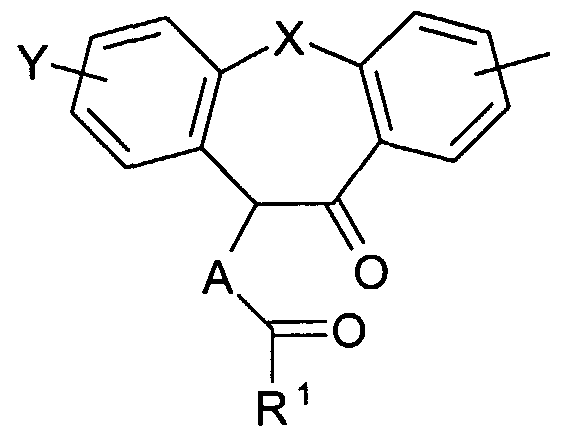
- a further object of the present invention relates to the preparation of compounds of the formula I according to processes comprising
- A has the meaning of -O- or -NH-;
- R 4 has the meaning of a leaving group
- cyclization of the compounds of the formula III is carried out by methods disclosed for the preparation of analogous compounds.
- compounds of the formula III, wherein A has the meaning of -NH- may be cyclized by a reaction with POCl 3 in organic solvents (preferably benzene or toluene) at boiling temperature during 1 to 5 hours (Lombardino JG, J. Heterocycl. Chem., 1974, 11 : 17-21), whereas a cyclization of compounds of the formula III, wherein A has a meaning of -0-, is carried out in the presence of ammonium acetate in acetic acid at boiling temperature during 5 to 10 hours.
- the obtained tetracyclic products may be isolated by chromatography on a silica gel column or by recrystallization from an appropriate solvent.
- R 5 has the meaning of H
- a ketone of the formula VI wherein R 5 has the meaning of H
- the corresponding oxime is formed, which by the reduction with a metal such as zinc in acetic acid gives an amino compound of the formula VI, wherein R 5 has the meaning of NH 2 group.
- a metal such as zinc in acetic acid
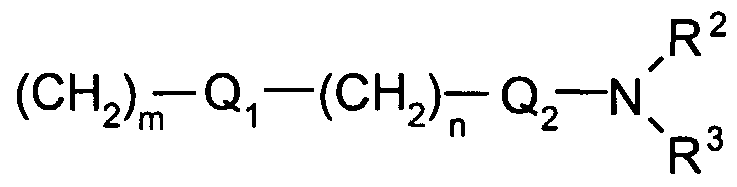
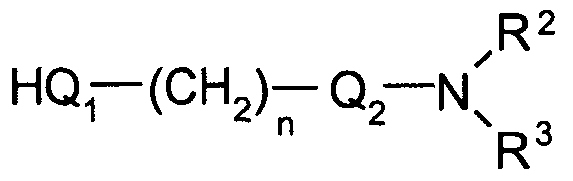
- Compounds of the formula I according to the present process may be prepared by reaction of alcohols of the formula IV and compounds of the formula V, wherein R 4 has the meaning of a leaving group, which may be a halogen atom (most frequently bromine, iodine or chlorine) or sulfonyloxy group (most frequently trifluoromethylsulfonyloxy or p-toluenesulfonyloxy).
- R 4 has the meaning of a leaving group, which may be a halogen atom (most frequently bromine, iodine or chlorine) or sulfonyloxy group (most frequently trifluoromethylsulfonyloxy or p-toluenesulfonyloxy).
- the condensation reaction may be carried out according to methods disclosed for the preparation of analogous compounds (Menozzi G et al., J. Heterocyclic Chem., 1997, 34:963-968 or WO 01/87890).
- the reaction is carried out at a temperature from 20°C to 100°C during 1 to 24 hours in a two-phase system (preferably with 50% NaOH/toluene) in the presence of a phase transfer catalyst (preferably benzyl triethyl ammonium chloride, benzyl triethyl ammonium bromide, cetyl trimethyl bromide).
- a phase transfer catalyst preferably benzyl triethyl ammonium chloride, benzyl triethyl ammonium bromide, cetyl trimethyl bromide.
- alcohols of the formula IV may be prepared from the compounds of the formula I, wherein R 1 has the meaning of a suitable functional group.
- alcohols of the formula IV may be obtained by the reduction of alkanoyl group (e.g. formyl) or alkyloxycarbonyl group (e.g. methyloxycarbonyl or ethyloxycarbonyl) by using metal hydrides such as lithium aluminum hydride or sodium borohydride.
- metal hydrides such as lithium aluminum hydride or sodium borohydride.
- alcohols of the formula IV may be prepared by the hydrolysis of the corresponding esters in an alkaline or acidic medium.
- the starting compounds of the formula V are already known or are prepared according to methods disclosed for the preparation of analogous compounds.
- Compounds of the formula I according to the present process may be prepared by reacting compounds of the formula IVa, wherein L has the meaning of a leaving group defined earlier for R 4 , and compounds of the formula Va, wherein Qi has the meaning of oxygen, nitrogen, sulfur or -C ⁇ C-.
- the most suitable condensation reactions are reactions of nucleophilic substitution on a saturated carbon atom as disclosed in the literature.
- the starting compounds of the formula IVa may be obtained by halogenation (e.g. bromination or chlorination) of alcohols of the formula IV with usual halogenating agents (e.g. hydrobromic acid, PBr 3 , SOCl 2 or PC1 5 ) by processes as disclosed in the literature.
- halogenation e.g. bromination or chlorination
- usual halogenating agents e.g. hydrobromic acid, PBr 3 , SOCl 2 or PC1 5
- the starting compounds of the formula Va are already known or are prepared according to methods disclosed for the preparation of analogous compounds.
- the compounds of the formula I, wherein Q ! has the meaning of -0-, -NH- or -S-, may be prepared by condensation of the compounds of the formula IVb and of compounds of the formula V, wherein R 4 has the meaning of a leaving group defined earlier.
- the reaction may be carried out at reaction conditions disclosed in method b) or by reactions of nucleophilic substitution disclosed in the literature.
- the starting alcohols, amines and thiols may be obtained by a reaction of water, ammonia or hydrogen sulfide with compounds IVa according to processes disclosed in the literature.
- the alcohols of the structure IV may be oxidized to corresponding compounds of the formula IVb, wherein Q has the meaning of carbonyl and which may further, by reaction with corresponding ylide reagents, result in a prolongation of the chain and in the formation of an alkenyl substituent with carbonyl or ester groups as disclosed in HR patent application No. 20000310.
- the compounds of the formula I may be prepared by transforming other compounds of the formula I and it is to be understood that the present invention also comprises such compounds and processes.
- a special example of a change of a functional group is the reaction of the aldehyde group with chosen phosphorous ylides resulting in a prolongation of the chain and the formation of an alkenyl substituent with carbonyl or ester groups as disclosed in HR patent application No. 20000310. These reactions are carried out in solvents such as benzene, toluene or hexane at elevated temperature (most frequently at boiling temperature).
- Oxidation or reduction reactions are a further possibility of the change of substituents in the compounds of the formula I.
- Most frequently used oxidation agents are peroxides (hydrogen peroxide, m-chloroperbenzoic acid or benzoyl peroxide) or permanganate, chromate or perchlorate ions.
- peroxides hydrogen peroxide, m-chloroperbenzoic acid or benzoyl peroxide
- permanganate chromate or perchlorate ions.
- alkylsulfinyl or alkylsulfonyl groups may be prepared.
- substituents of the aromatic structure in the compounds of the formula I may be introduced by standard substitution reactions or by usual changes of individual functional groups. Examples of such reactions are aromatic substitutions, alkylations, halogenation, hydroxylation as well as oxidation or reduction of substituents.
- Reagents and reaction conditions are known from the literature. Thus e.g. by aromatic substitution a nitro group is introduced in the presence of concentrated nitric acid and sulfuric acid.
- acyl halides or alkyl halides the introduction of an acyl group or an alkyl group is made possible.
- the reaction is carried out in the presence of Lewis acids such as aluminum- or iron-trichloride in conditions of Friedel-Craft reaction.
- Lewis acids such as aluminum- or iron-trichloride in conditions of Friedel-Craft reaction.
- an amino group is obtained, which is by diazotizing reaction converted to a suitable starting group, which may be replaced with one of the following groups: H, CN, OH, Hal.
- a convenient protection for amino or alkylamino groups are groups such as e..g. alkanoyl (acetyl), alkoxycarbonyl (methoxycarbonyl, ethoxycarbonyl or tert- butoxycarbonyl); arylmethoxycarbonyl (benzyloxycarbonyl), aroyl (benzoyl) or alkylsilyl (trimethylsilyl or trirnethylsilylethoxymethyl) groups.
- alkanoyl acetyl
- alkoxycarbonyl methoxycarbonyl, ethoxycarbonyl or tert- butoxycarbonyl
- arylmethoxycarbonyl benzyloxycarbonyl
- aroyl benzoyl
- alkylsilyl trimethylsilyl or trirnethylsilylethoxymethyl
- acyl groups such as alkanoyl, alkoxycarbonyl or aroyl may be eliminated by hydrolysis in the presence of a base (sodium hydroxide or potassium hydroxide), tert-butoxycarbonyl or alkylsilyl (trimethylsilyl) may be eliminated by treatment with a suitable acid (hydrochloric, sulfuric, phosphoric or trifluoroacetic acid), whereas arylmethoxycarbonyl group (benzyloxycarbonyl) may be eliminated by hydrogenation using a catalyst such as palladium on carbon.
- a base sodium hydroxide or potassium hydroxide
- tert-butoxycarbonyl or alkylsilyl trimethylsilyl
- arylmethoxycarbonyl group benzyloxycarbonyl
- a catalyst such as palladium on carbon.
- Salts of the compounds of the formula I may be prepared by generally known processes such as e.g. by reacting the compounds of the formula I with a corresponding base or acid in an appropriate solvent or solvent mixture e.g. ethers (diethylether) or alcohols (ethanol, propanol or isopropanol).
- an appropriate solvent or solvent mixture e.g. ethers (diethylether) or alcohols (ethanol, propanol or isopropanol).
- Another object of the present invention concerns the use of the present compounds in the therapy of inflammatory diseases and conditions, especially all diseases and conditions induced by excessive TNF- ⁇ and IL-1 secretion.
- Inhibitors of production of cytokins or inflammation mediators which are the object of the present invention, or pharmacologically acceptable salts thereof may be used in the production of drugs for the treatment and prophylaxis of any pathological condition or disease induced by excessive unregulated production of cytokins or inflammation mediators, which drugs should contain an effective dose of said inhibitors.
- the present invention specifically relates to an effective dose of TNF- ⁇ inhibitor, which may be determined by usual methods.
- the present invention relates to a pharmaceutical formulation containing an effective non-toxic dosis of the present compounds as well as pharmaceutically acceptable carriers or solvents.
- the preparation of pharmaceutical formulations may include blending, granulating, tabletting and dissolving ingredients.
- Chemical carriers may be solid or liquid. Solid carriers may be lactose, sucrose, talcum, gelatine, agar, pectin, magnesium stearate, fatty acids etc. Liquid carriers may be syrups, oils such as olive oil, sunflower oil or soya bean oil, water etc. Similarly, the carrier may also contain a component for a sustained release of the active component such as e.g. glyceryl monostearate or glyceryl distearate. Various forms of pharmaceutical formulations may be used.
- a solid carrier these forms may be tablets, hard gelatine capsules, powder or granules that may be administered in capsules per os.
- the amount of the solid carrier may vary, but it is mainly from 25 mg to 1 g.
- a liquid carrier the formulation would be in the form of a syrup, emulsion, soft gelatine capsules, sterile injectable liquids such as ampoules or non-aqueous liquid suspensions.
- Compounds according to the present invention may be applied per os, parenterally, locally, intranasally, intrarectally and intravaginally.
- the parenteral route herein means intravenous, intramuscular and subcutaneous applications.
- Appropriate formulations of the present compounds may be used in the prophylaxis as well as in the treatment of various diseases and pathological inflammatory conditions induced by an excessive unregulated production of cytokins or inflammation mediators, primarily TNF- ⁇ .
- rheumatoid arthritis rheumatoid arthritis, rheumatoid spondylitis, osteoarthritis and other arthritic pathological conditions and diseases, eczemas, psoriasis and other inflammatory skin conditions such as burns induced by UV radiation (sun rays and similar UV sources), inflammatory eye diseases, Crohn's disease, ulcerative colitis and asthma.
- PBMC Human peripheral blood mononuclear cells
- the cells were incubated at 37°C in an atmosphere with 5% C0 2 and 90% humidity.
- a negative control the cells were cultivated only in the medium (NC)
- TNF- ⁇ secretion was triggered by adding 1 ng/ml of lipopolysaccharides (LPS, E. coli serotype 0111 :B4, SIGMA) (PC).
- LPS lipopolysaccharides
- PC lipopolysaccharides
- TS lipopolysaccharides
- TS lipopolysaccharides
- the TNF- ⁇ level in the cell supernatant was determined by ELISA procedure according to the suggestions of the producer (R&D Systems).
- the test sensitivity was ⁇ 3pg/ml TNF- ⁇ .
- the IL-1 level was determined in an assay under the same conditions and with the same number of cells and the same concentration of the stimulus by ELISA procedure (R&D Systems).
- % inhibition [1- (TS-NC)/(PC-NC)] * 100.
- the IC 5 o value was defined as the substance concentration, at which 50% of TNF- ⁇ production were inhibited.
- peritoneal macrophages Balb/C mouse strain males, age 8 to 12 weeks, were injected i.p. with 300 ⁇ g of zymosan (SIGMA) dissolved in a phosphate buffer (PBS) in a total volume of 0.1 ml/mouse. After 24 hours the mice were euthanized according to the Laboratory Animal Welfare Act. The peritoneal cavity was washed with a sterile physiological solution (5 ml). The obtained peritoneal macrophages were washed twice with a sterile physiological solution and, after the last centrifugation (350 g/10 min), resuspended in RPMI 1640, into which 10% of FBS portion were added.
- SIGMA zymosan
- PBS phosphate buffer
- TNF- ⁇ secretion 5x10 4 cells/well were cultivated in a total volume of 200 ⁇ l for 18 to 24 hours on microtitre plates with a flat bottom (96 wells, Falcon) in RPMI 1640 medium, into which 10% fetal bovine serum (FBS, Biowhittaker) inactivated by heat, 100 units/ml of penicillin, 100 mg/ml of streptomycin, 20 mM HEPES and 50 ⁇ M 2-mercaptoethanol (all of GIBCO) were added. The cells were incubated at 37°C in an atmosphere with 5% C0 2 and 90% humidity.
- FBS fetal bovine serum
- % inhibition [1- (TS-NC)/(PC-NC)] * 100.
- the IC 50 value was defined as the substance concentration, at which 50% of TNF- ⁇ production were inhibited.
- TNF- ⁇ or IL-1 secretion in mice was induced according to the already disclosed method (Badger AM et al., J. Pharmac. Env. Therap., 1996, 279:1453-1461).
- Balb/C males, age 8 to 12 weeks, in groups of 6 to 10 animals were used.
- the animals were treated p.o. either with a solvent only (in negative and in positive controls) or with solutions of substances 30 minutes prior to i.p. treatment with LPS (E. coli serotype 0111 :B4, Sigma) in a dosis of 25 ⁇ g/animal. Two hours later the animals were euthanized by means of i.p.
- TNF- ⁇ level in the plasma was determined by ELISA procedure (Biosource, R&D Systems) according to the producer's instructions.
- the test sensitivity was ⁇ 3pg/ml TNF- ⁇ .
- the IL-1 level was determined by ELISA procedure (R&D Systems). The percentage of inhibition of TNF- ⁇ or IL-1 production was calculated by the equation:
- % inhibition [1- (TS-NC)/(PC-NC)] * 100.
- Active are the compounds showing 30% or more inhibition of TNF- ⁇ production at a dosis of 10 mg/kg.
- mice 30 minutes prior to i.p. application of acetic acid in a concentration of 0.6%, whereas test groups received standard (acetylsalicylic acid) or test substances in methyl cellulose p.o. 30 minutes prior to i.p. application of 0.6% acetic acid (volume 0.1 ml/10 g).
- test groups received standard (acetylsalicylic acid) or test substances in methyl cellulose p.o. 30 minutes prior to i.p. application of 0.6% acetic acid (volume 0.1 ml/10 g).
- the mice were placed individually under glass funnels and the number of writhings was registered for 20 minutes for each animal. The percentage of writhing inhibition was calculated according to the equation:
- % inhibition (mean value of number of writhings in the control group - number of writhings in the test group)/number of writhings in the control group * 100.
- Active are the compounds showing such analgetic activity as acetylsalicylic acid or better.
- mice Male Balb/C mice (Charles River, Italy), age 8 to 12 weks, were used.
- LPS isolated from Serratie marcessans (Sigma, L-6136) was diluted in sterile physiological solution. The first LPS injection was administered intradermally in a dosis of 4 ⁇ g/mouse. 18 to 24 hours later, LPS was administered i.v. in a dosis of 200 ⁇ g/mouse.
- a control group received two LPS injections as disclosed above. The test groups received substances p.o. half an hour prior to each LPS application. Survival after 24 hours was observed.
- Active are the substances at which the survival at a dosis of 30 mg/kg was 40% or more.
- esters 3-4 there were prepared the alcohols:
Landscapes
- Health & Medical Sciences (AREA)
- Chemical & Material Sciences (AREA)
- Organic Chemistry (AREA)
- Veterinary Medicine (AREA)
- Chemical Kinetics & Catalysis (AREA)
- General Chemical & Material Sciences (AREA)
- Medicinal Chemistry (AREA)
- Nuclear Medicine, Radiotherapy & Molecular Imaging (AREA)
- Pharmacology & Pharmacy (AREA)
- Life Sciences & Earth Sciences (AREA)
- Animal Behavior & Ethology (AREA)
- General Health & Medical Sciences (AREA)
- Public Health (AREA)
- Bioinformatics & Cheminformatics (AREA)
- Engineering & Computer Science (AREA)
- Physical Education & Sports Medicine (AREA)
- Rheumatology (AREA)
- Dermatology (AREA)
- Orthopedic Medicine & Surgery (AREA)
- Pulmonology (AREA)
- Ophthalmology & Optometry (AREA)
- Immunology (AREA)
- Pain & Pain Management (AREA)
- Toxicology (AREA)
- Pharmaceuticals Containing Other Organic And Inorganic Compounds (AREA)
- Acyclic And Carbocyclic Compounds In Medicinal Compositions (AREA)
- Steroid Compounds (AREA)
- Organic Low-Molecular-Weight Compounds And Preparation Thereof (AREA)
- Heterocyclic Carbon Compounds Containing A Hetero Ring Having Oxygen Or Sulfur (AREA)
- Nitrogen And Oxygen Or Sulfur-Condensed Heterocyclic Ring Systems (AREA)
Abstract
Description



Claims





Priority Applications (15)
| Application Number | Priority Date | Filing Date | Title |
|---|---|---|---|
| IL16439703A IL164397A0 (en) | 2002-04-10 | 2003-04-09 | 1-Oxa-3-aza-dibenzoazulenes as inhibitors of tumour necrosis factor production and intermediates forthe production thereof |
| JP2003582161A JP2005529867A (en) | 2002-04-10 | 2003-04-09 | 1-oxa-3-aza-dibenzoazulene as an inhibitor of tumor necrosis factor production and intermediate for its production |
| EP03745848A EP1492797B1 (en) | 2002-04-10 | 2003-04-09 | 1-oxa-3-aza-dibenzoazulenes as inhibitors of tumour necrosis factor production and intermediates for the production thereof |
| NZ535621A NZ535621A (en) | 2002-04-10 | 2003-04-09 | 1-oxa-3-aza-dibenzoazulenes as inhibitors of tumour necrosis factor production and intermediates for the production thereof |
| SI200330276T SI1492797T1 (en) | 2002-04-10 | 2003-04-09 | 1-oxa-3-aza-dibenzoazulenes as inhibitors of tumour necrosis factor production and intermediates for the production thereof |
| MXPA04009944A MXPA04009944A (en) | 2002-04-10 | 2003-04-09 | 1-oxa-3-aza-dibenzoazulenes as inhibitors of tumour necrosis factor production and intermediates for the production thereof. |
| DE60304047T DE60304047T2 (en) | 2002-04-10 | 2003-04-09 | 1-OXA-3-AZA-DIBENZOAZULENE AS INHIBITORS OF THE PRODUCTION OF TUMOR NECROSIS FACTOR AND INTERMEDIATE PRODUCTS FOR THEIR PREPARATION |
| AU2003259960A AU2003259960A1 (en) | 2002-04-10 | 2003-04-09 | 1-oxa-3-aza-dibenzoazulenes as inhibitors of tumour necrosis factor production and intermediates for the production thereof |
| CA002481463A CA2481463A1 (en) | 2002-04-10 | 2003-04-09 | 1-oxa-3-aza-dibenzoazulenes as inhibitors of tumour necrosis factor production and intermediates for the production thereof |
| BR0309101-5A BR0309101A (en) | 2002-04-10 | 2003-04-09 | 1-oxa-3-aza-dibenzoazulenes as tumor necrosis factor production inhibitors and intermediates for their production |
| US10/510,620 US7232815B2 (en) | 2002-04-10 | 2003-04-09 | 1-oxa-3-aza-dibenzoazulenes as inhibitors of tumor necrosis factor production and intermediates for the production thereof |
| UA20041008545A UA79276C2 (en) | 2002-04-10 | 2003-09-04 | 1-oxa-3-aza-dibenzoazulenes as inhibitors of tumour necrosis factor production and intermediates for the production thereof |
| IS7473A IS7473A (en) | 2002-04-10 | 2004-09-27 | 1-Oxa-3-aza-dibenzoazulene which inhibits tumor necrosis factor production and intermediates for their production |
| US10/964,559 US20050130956A1 (en) | 2002-04-10 | 2004-10-13 | 1-oxa 3-aza-dibenzoazulenes as inhibitors of tumor necrosis factor production and intermediates for the production thereof |
| NO20044507A NO20044507L (en) | 2002-04-10 | 2004-10-21 | 1-oxa-3-aza-dibenzoazulenes as inhibitors of tumor necrosis factor production and intermediates for their preparation |
Applications Claiming Priority (2)
| Application Number | Priority Date | Filing Date | Title |
|---|---|---|---|
| HR20020304A HRP20020304B1 (en) | 2002-04-10 | 2002-04-10 | 1-oxa-3-aza-dibenzoazulenes as inhibitors of tumor necrosis factor production and intermediates for the production thereof |
| HRP020304A | 2002-04-10 |
Related Child Applications (1)
| Application Number | Title | Priority Date | Filing Date |
|---|---|---|---|
| US10/964,559 Continuation-In-Part US20050130956A1 (en) | 2002-04-10 | 2004-10-13 | 1-oxa 3-aza-dibenzoazulenes as inhibitors of tumor necrosis factor production and intermediates for the production thereof |
Publications (1)
| Publication Number | Publication Date |
|---|---|
| WO2003084964A1 true WO2003084964A1 (en) | 2003-10-16 |
Family
ID=28686902
Family Applications (1)
| Application Number | Title | Priority Date | Filing Date |
|---|---|---|---|
| PCT/HR2003/000015 Ceased WO2003084964A1 (en) | 2002-04-10 | 2003-04-09 | 1-oxa-3-aza-dibenzoazulenes as inhibitors of tumour necrosis factor production and intermediates for the production thereof |
Country Status (23)
| Country | Link |
|---|---|
| US (1) | US7232815B2 (en) |
| EP (1) | EP1492797B1 (en) |
| JP (1) | JP2005529867A (en) |
| CN (1) | CN1649878A (en) |
| AT (1) | ATE320434T1 (en) |
| AU (1) | AU2003259960A1 (en) |
| BR (1) | BR0309101A (en) |
| CA (1) | CA2481463A1 (en) |
| DE (1) | DE60304047T2 (en) |
| DK (1) | DK1492797T3 (en) |
| ES (1) | ES2260636T3 (en) |
| HR (1) | HRP20020304B1 (en) |
| IL (1) | IL164397A0 (en) |
| IS (1) | IS7473A (en) |
| MX (1) | MXPA04009944A (en) |
| NO (1) | NO20044507L (en) |
| NZ (1) | NZ535621A (en) |
| PL (1) | PL372456A1 (en) |
| PT (1) | PT1492797E (en) |
| RU (1) | RU2323222C2 (en) |
| UA (1) | UA79276C2 (en) |
| WO (1) | WO2003084964A1 (en) |
| YU (1) | YU88204A (en) |
Cited By (2)
| Publication number | Priority date | Publication date | Assignee | Title |
|---|---|---|---|---|
| WO2005049036A1 (en) * | 2003-11-21 | 2005-06-02 | Pliva-Istrazivacki Institut D.O.O. | USE OF 3-AZA-1-OXA-DIBENZO [e,h] AZULENES FOR THE MANUFACTURE OF PHARMACEUTICAL FORMULATIONS FOR THE TREATMENT AND PREVENTION OF CENTRAL NERVOUS SYSTEM DISEAS AND DISORDERS |
| WO2006075255A3 (en) * | 2005-01-13 | 2006-10-26 | Glaxosmithkline Zagreb | Anti-inflamatory macrolide conjugates |
Families Citing this family (2)
| Publication number | Priority date | Publication date | Assignee | Title |
|---|---|---|---|---|
| HRP20020304B1 (en) * | 2002-04-10 | 2008-04-30 | GlaxoSmithKline istra�iva�ki centar Zagreb d.o.o. | 1-oxa-3-aza-dibenzoazulenes as inhibitors of tumor necrosis factor production and intermediates for the production thereof |
| DE10256416A1 (en) * | 2002-12-02 | 2004-06-09 | Basf Ag | Solid pigment preparations containing pigment derivatives and surface-active additives |
Citations (3)
| Publication number | Priority date | Publication date | Assignee | Title |
|---|---|---|---|---|
| US3838123A (en) * | 1971-02-05 | 1974-09-24 | Richardson Merrell Spa | Dibenzocycloheptadioxolan derivatives |
| US4198421A (en) * | 1978-11-30 | 1980-04-15 | E. I. Du Pont De Nemours And Company | Antiinflammatory 2-substituted-dibenzo[2,3:6,7]oxepino[4,5-d]imidazoles |
| WO2001087890A1 (en) * | 2000-05-17 | 2001-11-22 | Pliva, Farmaceutska Industrija, Dioniko Drustvo | Thienodibenzoazulene compounds as tumor necrosis factor inhibitors |
Family Cites Families (15)
| Publication number | Priority date | Publication date | Assignee | Title |
|---|---|---|---|---|
| US3745167A (en) * | 1968-03-19 | 1973-07-10 | Hoffmann La Roche | 3a,12b-dihydro-8h-dibenzo(3,4,6,7)cyclohept(1,2,-)oxazol-8-ones and processes for their preparation |
| JPS458611Y1 (en) | 1969-08-18 | 1970-04-22 | ||
| US3711489A (en) * | 1971-03-31 | 1973-01-16 | Pfizer | Certain 8,9-dihydro(3,4,7,8)cycloocta(1,2-d)imidazoles |
| CA967573A (en) | 1972-12-22 | 1975-05-13 | Joseph G. Lombardino | Tetracyclic anti-inflammatory agents |
| PT789702E (en) * | 1994-11-02 | 2001-07-31 | Janssen Pharmaceutica N V Jans | OXAZEPINE AND TIAZEPINE DERIVATIVES TETRACYCLICS SUBSTITUTED WITH AFFINITY FOR 5-HT2 RECEPTORS |
| HRP20020304B1 (en) * | 2002-04-10 | 2008-04-30 | GlaxoSmithKline istra�iva�ki centar Zagreb d.o.o. | 1-oxa-3-aza-dibenzoazulenes as inhibitors of tumor necrosis factor production and intermediates for the production thereof |
| HRP20020305A8 (en) * | 2002-04-10 | 2009-03-31 | GlaxoSmithKline istra�iva�ki centar Zagreb d.o.o. | 2-thia-dibenzoazulenes as inhibitors of tumour necrosis factor production and intermediates for the preparation thereof |
| HRP20020303A8 (en) * | 2002-04-10 | 2009-03-31 | GlaxoSmithKline istra�iva�ki centar Zagreb d.o.o. | Benzonaphthoazulenes as inhibitors of tumour necrosis factor production and intermediates for the preparation thereof |
| US20050131056A1 (en) * | 2002-04-10 | 2005-06-16 | Pliva-Istrazivacki Institut D.O.O. | 2- thia-dibenzoazulenes as inhibitors of tumor necrosis factor production and intermediates for the preparation thereof |
| HRP20020441A2 (en) * | 2002-05-21 | 2003-12-31 | Pliva D D | 1-oxa-dibenzoazulen as inhibitor of production of tumor necrosis factors and intermediate for preparation thereof |
| HRP20020440B1 (en) * | 2002-05-21 | 2008-02-29 | GlaxoSmithKline istra�iva�ki centar Zagreb d.o.o. | 1-aza-dibenzoazulenes as inhibitors of tumor necrosis factor production and intermediates for the preparation thereof |
| HRP20020453A2 (en) * | 2002-05-23 | 2003-12-31 | Pliva D D | 1,3-diaza-dibenzoazulen as inhibitor of production of tumor necrosis factors and intermediate for preparation thereof |
| HRP20020451A2 (en) * | 2002-05-23 | 2003-12-31 | Pliva D D | 1-tia-3-aza-dibenzoazulen as inhibitor of production of tumor necrosis factors and intermediates for preparation thereof |
| HRP20030160A2 (en) * | 2003-03-06 | 2005-04-30 | Pliva-Istra�iva�ki institut d.o.o. | 1-thiadibenzoazulene derivatives and biological action thereof |
| HRP20030885A2 (en) * | 2003-11-03 | 2005-08-31 | Pliva-Istra�iva�ki institut d.o.o. | USE OF 2-THIA-DIBENZO[e,h]AZULENES FOR THE MANUFACTURE OF PHARMACEUTICAL FORMULATIONS FOR THE TREATMENT AND PREVENTION OF CENTRAL NERVOUS SYYTEM DISEASES AND DISORDERS |
-
2002
- 2002-04-10 HR HR20020304A patent/HRP20020304B1/en not_active IP Right Cessation
-
2003
- 2003-04-09 RU RU2004132867/04A patent/RU2323222C2/en not_active IP Right Cessation
- 2003-04-09 PL PL03372456A patent/PL372456A1/en not_active Application Discontinuation
- 2003-04-09 PT PT03745848T patent/PT1492797E/en unknown
- 2003-04-09 ES ES03745848T patent/ES2260636T3/en not_active Expired - Lifetime
- 2003-04-09 JP JP2003582161A patent/JP2005529867A/en active Pending
- 2003-04-09 WO PCT/HR2003/000015 patent/WO2003084964A1/en not_active Ceased
- 2003-04-09 BR BR0309101-5A patent/BR0309101A/en not_active IP Right Cessation
- 2003-04-09 AU AU2003259960A patent/AU2003259960A1/en not_active Abandoned
- 2003-04-09 CA CA002481463A patent/CA2481463A1/en not_active Abandoned
- 2003-04-09 IL IL16439703A patent/IL164397A0/en unknown
- 2003-04-09 AT AT03745848T patent/ATE320434T1/en not_active IP Right Cessation
- 2003-04-09 EP EP03745848A patent/EP1492797B1/en not_active Expired - Lifetime
- 2003-04-09 NZ NZ535621A patent/NZ535621A/en unknown
- 2003-04-09 YU YU88204A patent/YU88204A/en unknown
- 2003-04-09 DK DK03745848T patent/DK1492797T3/en active
- 2003-04-09 CN CNA038096382A patent/CN1649878A/en active Pending
- 2003-04-09 DE DE60304047T patent/DE60304047T2/en not_active Expired - Fee Related
- 2003-04-09 MX MXPA04009944A patent/MXPA04009944A/en active IP Right Grant
- 2003-04-09 US US10/510,620 patent/US7232815B2/en not_active Expired - Fee Related
- 2003-09-04 UA UA20041008545A patent/UA79276C2/en unknown
-
2004
- 2004-09-27 IS IS7473A patent/IS7473A/en unknown
- 2004-10-21 NO NO20044507A patent/NO20044507L/en not_active Application Discontinuation
Patent Citations (3)
| Publication number | Priority date | Publication date | Assignee | Title |
|---|---|---|---|---|
| US3838123A (en) * | 1971-02-05 | 1974-09-24 | Richardson Merrell Spa | Dibenzocycloheptadioxolan derivatives |
| US4198421A (en) * | 1978-11-30 | 1980-04-15 | E. I. Du Pont De Nemours And Company | Antiinflammatory 2-substituted-dibenzo[2,3:6,7]oxepino[4,5-d]imidazoles |
| WO2001087890A1 (en) * | 2000-05-17 | 2001-11-22 | Pliva, Farmaceutska Industrija, Dioniko Drustvo | Thienodibenzoazulene compounds as tumor necrosis factor inhibitors |
Cited By (3)
| Publication number | Priority date | Publication date | Assignee | Title |
|---|---|---|---|---|
| WO2005049036A1 (en) * | 2003-11-21 | 2005-06-02 | Pliva-Istrazivacki Institut D.O.O. | USE OF 3-AZA-1-OXA-DIBENZO [e,h] AZULENES FOR THE MANUFACTURE OF PHARMACEUTICAL FORMULATIONS FOR THE TREATMENT AND PREVENTION OF CENTRAL NERVOUS SYSTEM DISEAS AND DISORDERS |
| JP2007512308A (en) * | 2003-11-21 | 2007-05-17 | プリバ−イストラツイヴアツキー インスティテュト デイ.オー.オー | Use of 3-aza-1-oxa-dibenzo [e, h] azulenes for the manufacture of pharmaceutical preparations for the treatment and prevention of diseases and disorders of the central nervous system |
| WO2006075255A3 (en) * | 2005-01-13 | 2006-10-26 | Glaxosmithkline Zagreb | Anti-inflamatory macrolide conjugates |
Also Published As
| Publication number | Publication date |
|---|---|
| RU2004132867A (en) | 2005-05-10 |
| NO20044507L (en) | 2004-11-09 |
| IS7473A (en) | 2004-09-27 |
| US20050148576A1 (en) | 2005-07-07 |
| CA2481463A1 (en) | 2003-10-16 |
| PL372456A1 (en) | 2005-07-25 |
| EP1492797A1 (en) | 2005-01-05 |
| DK1492797T3 (en) | 2006-07-17 |
| US7232815B2 (en) | 2007-06-19 |
| HRP20020304A2 (en) | 2004-06-30 |
| AU2003259960A1 (en) | 2003-10-20 |
| RU2323222C2 (en) | 2008-04-27 |
| DE60304047D1 (en) | 2006-05-11 |
| PT1492797E (en) | 2006-07-31 |
| CN1649878A (en) | 2005-08-03 |
| ES2260636T3 (en) | 2006-11-01 |
| MXPA04009944A (en) | 2005-09-30 |
| JP2005529867A (en) | 2005-10-06 |
| UA79276C2 (en) | 2007-06-11 |
| EP1492797B1 (en) | 2006-03-15 |
| ATE320434T1 (en) | 2006-04-15 |
| HRP20020304B1 (en) | 2008-04-30 |
| IL164397A0 (en) | 2005-12-18 |
| NZ535621A (en) | 2006-03-31 |
| BR0309101A (en) | 2005-02-09 |
| DE60304047T2 (en) | 2006-11-09 |
| YU88204A (en) | 2006-08-17 |
Similar Documents
| Publication | Publication Date | Title |
|---|---|---|
| US7312203B2 (en) | 1-aza-dibenzoazulenes as inhibitors of tumour necrosis factor production and intermediates for the preparation thereof | |
| EP1492795B1 (en) | 1- or 3-thia-benzonaphthoazulenes as inhibitors of tumour necrosis factor production and intermediates for the preparation thereof | |
| US7166583B2 (en) | 1,3-diaza-dibenzoazulenes as inhibitors of tumour necrosis factor production and intermediates for the preparation thereof | |
| US20050148577A1 (en) | 1-oxa-dibenzoazulenes as inhibitors of tumor necrosis factor production and intermediates for the preparation thereof | |
| EP1509530B1 (en) | 2-thia-dibenzoazulenes as inhibitors of tumour necrosis factor production and intermediates for the preparation thereof | |
| US7262302B2 (en) | 1-thia-3-aza-dibenzoazulenes as inhibitors of tumour necrosis factor production and intermediates for the preparation thereof | |
| US7232815B2 (en) | 1-oxa-3-aza-dibenzoazulenes as inhibitors of tumor necrosis factor production and intermediates for the production thereof | |
| WO2003099822A2 (en) | 1,2-diaza-dibenzoazulenes as inhibitors of tumour necrosis factor production and intermediates for the preparation thereof | |
| US20050130956A1 (en) | 1-oxa 3-aza-dibenzoazulenes as inhibitors of tumor necrosis factor production and intermediates for the production thereof | |
| US20060069149A1 (en) | Thiadibenzoazulene derivatives for the treatment of inflammatory diseases | |
| US20050131056A1 (en) | 2- thia-dibenzoazulenes as inhibitors of tumor necrosis factor production and intermediates for the preparation thereof | |
| ZA200408060B (en) | 1-oxa-3-aza-deibenzoazulenes as inhibitors of tumour necrosis factor production and intermediates for the production thereof | |
| KR20050020774A (en) | 1-oxa-3-aza-dibenzoazulenes as inhibitors of tumour necrosis factor production and intermediates for the production thereof |
Legal Events
| Date | Code | Title | Description |
|---|---|---|---|
| WWE | Wipo information: entry into national phase |
Ref document number: P-882/04 Country of ref document: YU |
|
| AK | Designated states |
Kind code of ref document: A1 Designated state(s): AE AG AL AM AT AU AZ BA BB BG BR BY BZ CA CH CN CO CR CU CZ DE DK DM DZ EC EE ES FI GB GD GE GH GM HR HU ID IL IN IS JP KE KG KP KR KZ LC LK LR LS LT LU LV MA MD MG MK MN MW MX MZ NI NO NZ OM PH PL PT RO RU SC SD SE SG SK SL TJ TM TN TR TT TZ UA UG US UZ VC VN YU ZA ZM ZW |
|
| AL | Designated countries for regional patents |
Kind code of ref document: A1 Designated state(s): GH GM KE LS MW MZ SD SL SZ TZ UG ZM ZW AM AZ BY KG KZ MD RU TJ TM AT BE BG CH CY CZ DE DK EE ES FI FR GB GR HU IE IT LU MC NL PT RO SE SI SK TR BF BJ CF CG CI CM GA GN GQ GW ML MR NE SN TD TG |
|
| 121 | Ep: the epo has been informed by wipo that ep was designated in this application | ||
| WWE | Wipo information: entry into national phase |
Ref document number: 535621 Country of ref document: NZ |
|
| WWE | Wipo information: entry into national phase |
Ref document number: 2003745848 Country of ref document: EP |
|
| WWE | Wipo information: entry into national phase |
Ref document number: 164397 Country of ref document: IL |
|
| WWE | Wipo information: entry into national phase |
Ref document number: 2481463 Country of ref document: CA |
|
| WWE | Wipo information: entry into national phase |
Ref document number: 372456 Country of ref document: PL Ref document number: 2004/08060 Country of ref document: ZA Ref document number: 200408060 Country of ref document: ZA |
|
| WWE | Wipo information: entry into national phase |
Ref document number: PA/a/2004/009944 Country of ref document: MX Ref document number: 1020047016057 Country of ref document: KR Ref document number: 2003259960 Country of ref document: AU Ref document number: 2003582161 Country of ref document: JP |
|
| WWE | Wipo information: entry into national phase |
Ref document number: 10964559 Country of ref document: US |
|
| WWE | Wipo information: entry into national phase |
Ref document number: 20038096382 Country of ref document: CN |
|
| WWE | Wipo information: entry into national phase |
Ref document number: 2523/CHENP/2004 Country of ref document: IN |
|
| ENP | Entry into the national phase |
Ref document number: 2004132867 Country of ref document: RU Kind code of ref document: A |
|
| WWP | Wipo information: published in national office |
Ref document number: 2003745848 Country of ref document: EP |
|
| WWE | Wipo information: entry into national phase |
Ref document number: 10510620 Country of ref document: US |
|
| WWP | Wipo information: published in national office |
Ref document number: 1020047016057 Country of ref document: KR |
|
| WWG | Wipo information: grant in national office |
Ref document number: 2003745848 Country of ref document: EP |
|
| WWP | Wipo information: published in national office |
Ref document number: 535621 Country of ref document: NZ |