WO2003099868A2 - Method for obtaining anti-idiotype antibodies - Google Patents

Method for obtaining anti-idiotype antibodies Download PDF

Info

Publication number
WO2003099868A2
WO2003099868A2 PCT/IL2003/000424 IL0300424W WO03099868A2 WO 2003099868 A2 WO2003099868 A2 WO 2003099868A2 IL 0300424 W IL0300424 W IL 0300424W WO 03099868 A2 WO03099868 A2 WO 03099868A2
Authority
WO
WIPO (PCT)
Prior art keywords
autoimmune
disease
autoantibodies
syndrome
bound
Prior art date
Legal status (The legal status is an assumption and is not a legal conclusion. Google has not performed a legal analysis and makes no representation as to the accuracy of the status listed.)
Ceased
Application number
PCT/IL2003/000424
Other languages
French (fr)
Other versions
WO2003099868B1 (en
WO2003099868A3 (en
Inventor
Israel Nur
Yehuda Shoenfeld
Current Assignee (The listed assignees may be inaccurate. Google has not performed a legal analysis and makes no representation or warranty as to the accuracy of the list.)
Omrix Biopharmaceuticals SA
Omrix Biopharmaceuticals Inc
Original Assignee
Omrix Biopharmaceuticals SA
Omrix Biopharmaceuticals Inc
Priority date (The priority date is an assumption and is not a legal conclusion. Google has not performed a legal analysis and makes no representation as to the accuracy of the date listed.)
Filing date
Publication date
Priority to US10/515,499 priority Critical patent/US8450067B2/en
Priority to EP03725556A priority patent/EP1511772B1/en
Priority to AU2003228084A priority patent/AU2003228084A1/en
Priority to AT03725556T priority patent/ATE534669T1/en
Priority to JP2004508122A priority patent/JP4489582B2/en
Priority to IL16536403A priority patent/IL165364A0/en
Application filed by Omrix Biopharmaceuticals SA, Omrix Biopharmaceuticals Inc filed Critical Omrix Biopharmaceuticals SA
Publication of WO2003099868A2 publication Critical patent/WO2003099868A2/en
Publication of WO2003099868A3 publication Critical patent/WO2003099868A3/en
Publication of WO2003099868B1 publication Critical patent/WO2003099868B1/en
Priority to IL165364A priority patent/IL165364A/en
Anticipated expiration legal-status Critical
Priority to US13/902,836 priority patent/US10040869B2/en
Ceased legal-status Critical Current

Links

Classifications

    • C—CHEMISTRY; METALLURGY
    • C07—ORGANIC CHEMISTRY
    • C07K—PEPTIDES
    • C07K16/00—Immunoglobulins [IG], e.g. monoclonal or polyclonal antibodies
    • C07K16/42—Immunoglobulins [IG], e.g. monoclonal or polyclonal antibodies against immunoglobulins
    • C07K16/4208—Immunoglobulins [IG], e.g. monoclonal or polyclonal antibodies against immunoglobulins against an idiotypic determinant on Ig
    • C07K16/4241—Immunoglobulins [IG], e.g. monoclonal or polyclonal antibodies against immunoglobulins against an idiotypic determinant on Ig against anti-human or anti-animal Ig
    • A—HUMAN NECESSITIES
    • A61—MEDICAL OR VETERINARY SCIENCE; HYGIENE
    • A61K—PREPARATIONS FOR MEDICAL, DENTAL OR TOILETRY PURPOSES
    • A61K38/00—Medicinal preparations containing peptides
    • A61K38/04—Peptides having up to 20 amino acids in a fully defined sequence; Derivatives thereof
    • A61K38/06—Tripeptides
    • A—HUMAN NECESSITIES
    • A61—MEDICAL OR VETERINARY SCIENCE; HYGIENE
    • A61K—PREPARATIONS FOR MEDICAL, DENTAL OR TOILETRY PURPOSES
    • A61K38/00—Medicinal preparations containing peptides
    • A61K38/04—Peptides having up to 20 amino acids in a fully defined sequence; Derivatives thereof
    • A61K38/12—Cyclic peptides, e.g. bacitracins; Polymyxins; Gramicidins S, C; Tyrocidins A, B or C
    • A—HUMAN NECESSITIES
    • A61—MEDICAL OR VETERINARY SCIENCE; HYGIENE
    • A61P—SPECIFIC THERAPEUTIC ACTIVITY OF CHEMICAL COMPOUNDS OR MEDICINAL PREPARATIONS
    • A61P1/00—Drugs for disorders of the alimentary tract or the digestive system
    • A61P1/04—Drugs for disorders of the alimentary tract or the digestive system for ulcers, gastritis or reflux esophagitis, e.g. antacids, inhibitors of acid secretion, mucosal protectants
    • A—HUMAN NECESSITIES
    • A61—MEDICAL OR VETERINARY SCIENCE; HYGIENE
    • A61P—SPECIFIC THERAPEUTIC ACTIVITY OF CHEMICAL COMPOUNDS OR MEDICINAL PREPARATIONS
    • A61P1/00—Drugs for disorders of the alimentary tract or the digestive system
    • A61P1/16—Drugs for disorders of the alimentary tract or the digestive system for liver or gallbladder disorders, e.g. hepatoprotective agents, cholagogues, litholytics
    • A—HUMAN NECESSITIES
    • A61—MEDICAL OR VETERINARY SCIENCE; HYGIENE
    • A61P—SPECIFIC THERAPEUTIC ACTIVITY OF CHEMICAL COMPOUNDS OR MEDICINAL PREPARATIONS
    • A61P11/00—Drugs for disorders of the respiratory system
    • A—HUMAN NECESSITIES
    • A61—MEDICAL OR VETERINARY SCIENCE; HYGIENE
    • A61P—SPECIFIC THERAPEUTIC ACTIVITY OF CHEMICAL COMPOUNDS OR MEDICINAL PREPARATIONS
    • A61P11/00—Drugs for disorders of the respiratory system
    • A61P11/06—Antiasthmatics
    • A—HUMAN NECESSITIES
    • A61—MEDICAL OR VETERINARY SCIENCE; HYGIENE
    • A61P—SPECIFIC THERAPEUTIC ACTIVITY OF CHEMICAL COMPOUNDS OR MEDICINAL PREPARATIONS
    • A61P13/00—Drugs for disorders of the urinary system
    • A61P13/12—Drugs for disorders of the urinary system of the kidneys
    • A—HUMAN NECESSITIES
    • A61—MEDICAL OR VETERINARY SCIENCE; HYGIENE
    • A61P—SPECIFIC THERAPEUTIC ACTIVITY OF CHEMICAL COMPOUNDS OR MEDICINAL PREPARATIONS
    • A61P15/00—Drugs for genital or sexual disorders; Contraceptives
    • A—HUMAN NECESSITIES
    • A61—MEDICAL OR VETERINARY SCIENCE; HYGIENE
    • A61P—SPECIFIC THERAPEUTIC ACTIVITY OF CHEMICAL COMPOUNDS OR MEDICINAL PREPARATIONS
    • A61P17/00—Drugs for dermatological disorders
    • A—HUMAN NECESSITIES
    • A61—MEDICAL OR VETERINARY SCIENCE; HYGIENE
    • A61P—SPECIFIC THERAPEUTIC ACTIVITY OF CHEMICAL COMPOUNDS OR MEDICINAL PREPARATIONS
    • A61P17/00—Drugs for dermatological disorders
    • A61P17/06—Antipsoriatics
    • A—HUMAN NECESSITIES
    • A61—MEDICAL OR VETERINARY SCIENCE; HYGIENE
    • A61P—SPECIFIC THERAPEUTIC ACTIVITY OF CHEMICAL COMPOUNDS OR MEDICINAL PREPARATIONS
    • A61P17/00—Drugs for dermatological disorders
    • A61P17/14—Drugs for dermatological disorders for baldness or alopecia
    • A—HUMAN NECESSITIES
    • A61—MEDICAL OR VETERINARY SCIENCE; HYGIENE
    • A61P—SPECIFIC THERAPEUTIC ACTIVITY OF CHEMICAL COMPOUNDS OR MEDICINAL PREPARATIONS
    • A61P19/00—Drugs for skeletal disorders
    • A61P19/02—Drugs for skeletal disorders for joint disorders, e.g. arthritis, arthrosis
    • A—HUMAN NECESSITIES
    • A61—MEDICAL OR VETERINARY SCIENCE; HYGIENE
    • A61P—SPECIFIC THERAPEUTIC ACTIVITY OF CHEMICAL COMPOUNDS OR MEDICINAL PREPARATIONS
    • A61P21/00—Drugs for disorders of the muscular or neuromuscular system
    • A—HUMAN NECESSITIES
    • A61—MEDICAL OR VETERINARY SCIENCE; HYGIENE
    • A61P—SPECIFIC THERAPEUTIC ACTIVITY OF CHEMICAL COMPOUNDS OR MEDICINAL PREPARATIONS
    • A61P21/00—Drugs for disorders of the muscular or neuromuscular system
    • A61P21/04—Drugs for disorders of the muscular or neuromuscular system for myasthenia gravis
    • A—HUMAN NECESSITIES
    • A61—MEDICAL OR VETERINARY SCIENCE; HYGIENE
    • A61P—SPECIFIC THERAPEUTIC ACTIVITY OF CHEMICAL COMPOUNDS OR MEDICINAL PREPARATIONS
    • A61P25/00—Drugs for disorders of the nervous system
    • A—HUMAN NECESSITIES
    • A61—MEDICAL OR VETERINARY SCIENCE; HYGIENE
    • A61P—SPECIFIC THERAPEUTIC ACTIVITY OF CHEMICAL COMPOUNDS OR MEDICINAL PREPARATIONS
    • A61P25/00—Drugs for disorders of the nervous system
    • A61P25/02—Drugs for disorders of the nervous system for peripheral neuropathies
    • A—HUMAN NECESSITIES
    • A61—MEDICAL OR VETERINARY SCIENCE; HYGIENE
    • A61P—SPECIFIC THERAPEUTIC ACTIVITY OF CHEMICAL COMPOUNDS OR MEDICINAL PREPARATIONS
    • A61P25/00—Drugs for disorders of the nervous system
    • A61P25/28—Drugs for disorders of the nervous system for treating neurodegenerative disorders of the central nervous system, e.g. nootropic agents, cognition enhancers, drugs for treating Alzheimer's disease or other forms of dementia
    • A—HUMAN NECESSITIES
    • A61—MEDICAL OR VETERINARY SCIENCE; HYGIENE
    • A61P—SPECIFIC THERAPEUTIC ACTIVITY OF CHEMICAL COMPOUNDS OR MEDICINAL PREPARATIONS
    • A61P27/00—Drugs for disorders of the senses
    • A61P27/02—Ophthalmic agents
    • A—HUMAN NECESSITIES
    • A61—MEDICAL OR VETERINARY SCIENCE; HYGIENE
    • A61P—SPECIFIC THERAPEUTIC ACTIVITY OF CHEMICAL COMPOUNDS OR MEDICINAL PREPARATIONS
    • A61P29/00—Non-central analgesic, antipyretic or antiinflammatory agents, e.g. antirheumatic agents; Non-steroidal antiinflammatory drugs [NSAID]
    • A—HUMAN NECESSITIES
    • A61—MEDICAL OR VETERINARY SCIENCE; HYGIENE
    • A61P—SPECIFIC THERAPEUTIC ACTIVITY OF CHEMICAL COMPOUNDS OR MEDICINAL PREPARATIONS
    • A61P3/00—Drugs for disorders of the metabolism
    • A61P3/08—Drugs for disorders of the metabolism for glucose homeostasis
    • A61P3/10—Drugs for disorders of the metabolism for glucose homeostasis for hyperglycaemia, e.g. antidiabetics
    • A—HUMAN NECESSITIES
    • A61—MEDICAL OR VETERINARY SCIENCE; HYGIENE
    • A61P—SPECIFIC THERAPEUTIC ACTIVITY OF CHEMICAL COMPOUNDS OR MEDICINAL PREPARATIONS
    • A61P31/00—Antiinfectives, i.e. antibiotics, antiseptics, chemotherapeutics
    • A61P31/12—Antivirals
    • A61P31/20—Antivirals for DNA viruses
    • A61P31/22—Antivirals for DNA viruses for herpes viruses
    • A—HUMAN NECESSITIES
    • A61—MEDICAL OR VETERINARY SCIENCE; HYGIENE
    • A61P—SPECIFIC THERAPEUTIC ACTIVITY OF CHEMICAL COMPOUNDS OR MEDICINAL PREPARATIONS
    • A61P37/00—Drugs for immunological or allergic disorders
    • A—HUMAN NECESSITIES
    • A61—MEDICAL OR VETERINARY SCIENCE; HYGIENE
    • A61P—SPECIFIC THERAPEUTIC ACTIVITY OF CHEMICAL COMPOUNDS OR MEDICINAL PREPARATIONS
    • A61P37/00—Drugs for immunological or allergic disorders
    • A61P37/02—Immunomodulators
    • A—HUMAN NECESSITIES
    • A61—MEDICAL OR VETERINARY SCIENCE; HYGIENE
    • A61P—SPECIFIC THERAPEUTIC ACTIVITY OF CHEMICAL COMPOUNDS OR MEDICINAL PREPARATIONS
    • A61P37/00—Drugs for immunological or allergic disorders
    • A61P37/02—Immunomodulators
    • A61P37/06—Immunosuppressants, e.g. drugs for graft rejection
    • A—HUMAN NECESSITIES
    • A61—MEDICAL OR VETERINARY SCIENCE; HYGIENE
    • A61P—SPECIFIC THERAPEUTIC ACTIVITY OF CHEMICAL COMPOUNDS OR MEDICINAL PREPARATIONS
    • A61P5/00—Drugs for disorders of the endocrine system
    • A61P5/14—Drugs for disorders of the endocrine system of the thyroid hormones, e.g. T3, T4
    • A—HUMAN NECESSITIES
    • A61—MEDICAL OR VETERINARY SCIENCE; HYGIENE
    • A61P—SPECIFIC THERAPEUTIC ACTIVITY OF CHEMICAL COMPOUNDS OR MEDICINAL PREPARATIONS
    • A61P5/00—Drugs for disorders of the endocrine system
    • A61P5/18—Drugs for disorders of the endocrine system of the parathyroid hormones
    • A—HUMAN NECESSITIES
    • A61—MEDICAL OR VETERINARY SCIENCE; HYGIENE
    • A61P—SPECIFIC THERAPEUTIC ACTIVITY OF CHEMICAL COMPOUNDS OR MEDICINAL PREPARATIONS
    • A61P7/00—Drugs for disorders of the blood or the extracellular fluid
    • A61P7/02—Antithrombotic agents; Anticoagulants; Platelet aggregation inhibitors
    • A—HUMAN NECESSITIES
    • A61—MEDICAL OR VETERINARY SCIENCE; HYGIENE
    • A61P—SPECIFIC THERAPEUTIC ACTIVITY OF CHEMICAL COMPOUNDS OR MEDICINAL PREPARATIONS
    • A61P7/00—Drugs for disorders of the blood or the extracellular fluid
    • A61P7/06—Antianaemics
    • A—HUMAN NECESSITIES
    • A61—MEDICAL OR VETERINARY SCIENCE; HYGIENE
    • A61P—SPECIFIC THERAPEUTIC ACTIVITY OF CHEMICAL COMPOUNDS OR MEDICINAL PREPARATIONS
    • A61P9/00—Drugs for disorders of the cardiovascular system
    • A—HUMAN NECESSITIES
    • A61—MEDICAL OR VETERINARY SCIENCE; HYGIENE
    • A61P—SPECIFIC THERAPEUTIC ACTIVITY OF CHEMICAL COMPOUNDS OR MEDICINAL PREPARATIONS
    • A61P9/00—Drugs for disorders of the cardiovascular system
    • A61P9/10—Drugs for disorders of the cardiovascular system for treating ischaemic or atherosclerotic diseases, e.g. antianginal drugs, coronary vasodilators, drugs for myocardial infarction, retinopathy, cerebrovascula insufficiency, renal arteriosclerosis
    • C—CHEMISTRY; METALLURGY
    • C07—ORGANIC CHEMISTRY
    • C07K—PEPTIDES
    • C07K16/00—Immunoglobulins [IG], e.g. monoclonal or polyclonal antibodies
    • C07K16/06—Immunoglobulins [IG], e.g. monoclonal or polyclonal antibodies from serum
    • C07K16/065—Purification, fragmentation
    • C—CHEMISTRY; METALLURGY
    • C07—ORGANIC CHEMISTRY
    • C07K—PEPTIDES
    • C07K16/00—Immunoglobulins [IG], e.g. monoclonal or polyclonal antibodies
    • C07K16/18—Immunoglobulins [IG], e.g. monoclonal or polyclonal antibodies against material from animals or humans
    • C—CHEMISTRY; METALLURGY
    • C07—ORGANIC CHEMISTRY
    • C07K—PEPTIDES
    • C07K7/00—Peptides having 5 to 20 amino acids in a fully defined sequence; Derivatives thereof
    • C07K7/04—Linear peptides containing only normal peptide links
    • C07K7/06—Linear peptides containing only normal peptide links having 5 to 11 amino acids
    • C—CHEMISTRY; METALLURGY
    • C40—COMBINATORIAL TECHNOLOGY
    • C40B—COMBINATORIAL CHEMISTRY; LIBRARIES, e.g. CHEMICAL LIBRARIES
    • C40B30/00—Methods of screening libraries
    • C40B30/04—Methods of screening libraries by measuring the ability to specifically bind a target molecule, e.g. antibody-antigen binding, receptor-ligand binding
    • G—PHYSICS
    • G01—MEASURING; TESTING
    • G01N—INVESTIGATING OR ANALYSING MATERIALS BY DETERMINING THEIR CHEMICAL OR PHYSICAL PROPERTIES
    • G01N33/00—Investigating or analysing materials by specific methods not covered by groups G01N1/00 - G01N31/00
    • G01N33/48—Biological material, e.g. blood, urine; Haemocytometers
    • G01N33/50—Chemical analysis of biological material, e.g. blood, urine; Testing involving biospecific ligand binding methods; Immunological testing
    • G01N33/53—Immunoassay; Biospecific binding assay; Materials therefor
    • G01N33/564—Immunoassay; Biospecific binding assay; Materials therefor for pre-existing immune complex or autoimmune disease, i.e. systemic lupus erythematosus, rheumatoid arthritis, multiple sclerosis, rheumatoid factors or complement components C1-C9
    • G—PHYSICS
    • G01—MEASURING; TESTING
    • G01N—INVESTIGATING OR ANALYSING MATERIALS BY DETERMINING THEIR CHEMICAL OR PHYSICAL PROPERTIES
    • G01N33/00—Investigating or analysing materials by specific methods not covered by groups G01N1/00 - G01N31/00
    • G01N33/48—Biological material, e.g. blood, urine; Haemocytometers
    • G01N33/50—Chemical analysis of biological material, e.g. blood, urine; Testing involving biospecific ligand binding methods; Immunological testing
    • G01N33/68—Chemical analysis of biological material, e.g. blood, urine; Testing involving biospecific ligand binding methods; Immunological testing involving proteins, peptides or amino acids
    • G01N33/6854—Immunoglobulins
    • G01N33/686—Anti-idiotype
    • A—HUMAN NECESSITIES
    • A61—MEDICAL OR VETERINARY SCIENCE; HYGIENE
    • A61K—PREPARATIONS FOR MEDICAL, DENTAL OR TOILETRY PURPOSES
    • A61K39/00—Medicinal preparations containing antigens or antibodies
    • C—CHEMISTRY; METALLURGY
    • C07—ORGANIC CHEMISTRY
    • C07K—PEPTIDES
    • C07K2317/00—Immunoglobulins specific features
    • C07K2317/50—Immunoglobulins specific features characterized by immunoglobulin fragments
    • C07K2317/56—Immunoglobulins specific features characterized by immunoglobulin fragments variable (Fv) region, i.e. VH and/or VL
    • C07K2317/565—Complementarity determining region [CDR]
    • G—PHYSICS
    • G01—MEASURING; TESTING
    • G01N—INVESTIGATING OR ANALYSING MATERIALS BY DETERMINING THEIR CHEMICAL OR PHYSICAL PROPERTIES
    • G01N2500/00—Screening for compounds of potential therapeutic value
    • G01N2500/04—Screening involving studying the effect of compounds C directly on molecule A (e.g. C are potential ligands for a receptor A, or potential substrates for an enzyme A)
    • G—PHYSICS
    • G01—MEASURING; TESTING
    • G01N—INVESTIGATING OR ANALYSING MATERIALS BY DETERMINING THEIR CHEMICAL OR PHYSICAL PROPERTIES
    • G01N2800/00—Detection or diagnosis of diseases
    • G01N2800/24—Immunology or allergic disorders
    • Y—GENERAL TAGGING OF NEW TECHNOLOGICAL DEVELOPMENTS; GENERAL TAGGING OF CROSS-SECTIONAL TECHNOLOGIES SPANNING OVER SEVERAL SECTIONS OF THE IPC; TECHNICAL SUBJECTS COVERED BY FORMER USPC CROSS-REFERENCE ART COLLECTIONS [XRACs] AND DIGESTS
    • Y02—TECHNOLOGIES OR APPLICATIONS FOR MITIGATION OR ADAPTATION AGAINST CLIMATE CHANGE
    • Y02A—TECHNOLOGIES FOR ADAPTATION TO CLIMATE CHANGE
    • Y02A50/00—TECHNOLOGIES FOR ADAPTATION TO CLIMATE CHANGE in human health protection, e.g. against extreme weather
    • Y02A50/30—Against vector-borne diseases, e.g. mosquito-borne, fly-borne, tick-borne or waterborne diseases whose impact is exacerbated by climate change

Definitions

  • This invention relates to the use of immunoglobulins purified f om pooled plasma as a tool for the selection of synthetic molecules which mimic autoimmune self-antibodies and as a source for the isolation of specific antibodies for therapeutic use in autoimmune diseases.
  • SLE systemic lupus erythematosus
  • MG myasthenia gravis
  • ITP idiopathic thrombocytopenic purpura
  • SLE is a multisystemic autoimmune disease with a great diversity of clinical manifestations, ranging from mild clinical findings with typical abnormal laboratory tests, to a life-threatening condition.
  • Laboratory abnormalities include high titers of autoantibodies to a vast array of tissue antigens. The most characteristic are those directed against components of the cell nucleus such as DNA, RNA, histones, nuclear proteins and protein-nucleic complexes.
  • the clinical course of SLE is highly variable and unpredictable, frequently involving periods of remissions and relapses.
  • Intravenous immunoglobulm is a highly purified IgG preparation produced from pooled human plasma collected from thousands of healthy blood donors. It is known that INIG can cause clinical improvement of patients suffering from autoimmune diseases. Administration of high dose intravenous immunoglobulm (INIG) is immunoregulatory but not immunosuppressive or myelotoxic. INIG is capable not only of modulating SLE in animal models and in humans but it also may provide a defense against infection rather than encouraging it. However, using INIG in the treatment of SLE is at present limited by cost, a poor understanding of the mechanism of action and anecdotal reports presented in the literature regarding clinical efficacy.
  • Antibodies are classified into different classes based on the structure of their heavy chains. These include IgG, IgM, IgA and IgE. Antibodies having the same constant structure are considered as being of the same isotype. Antibodies of the same isotype having different antigenic determinants as a result of the inheritance of different alleles are called allotypes. Antigenic determinants in the variable regions of L and/or H chains that are associated with the antigen-binding site of an antibody are called idiotypes. Antibodies raised or which react against an idiotype are called anti-Idiotypic antibodies (anti-Id).
  • anti-Id anti-Idiotypic antibodies
  • U.S. Patent No. 4,690,905 discloses the preparation of monoclonal (mAB) anti-Id antibodies to human anti-DNA antibodies.
  • the mABs bind a determinant present on anti-DNA antibodies of a plurality of SLE patients.
  • the determinant is preferably outside the DNA binding site of the antibodies.
  • diagnostic reagents for the determination in serum of anti-native DNA antibodies and therapeutic reagents which may be used in a method to remove anti-native DNA antibodies from the serum of patients suffering from SLE. Shoenfeld Y, et al., (1983) J. Exp Med.
  • Id idiotypic markers related to anti-D ⁇ A antibodies associated with SLE. These markers include 16/6, F4, 31 and 8.12. 43% of 100 cationic human IgG myeloma proteins isolated from patients with multiple myeloma were found to show the presence of at least one of the Id markers. It is stated that several of the anti-DNA Ids appear to be associated, but that the exact structural basis requires further study.
  • WO 96/30057 discloses synthetic peptides duplicating portions of the complementarity-determining region (CDR) of the heavy or light chains of a pathogenic anti-DNA Mab that induce SLE-like disease in mice (experimental SLE). Specifically, the sequences of 5 peptides of 12-30 amino acids are disclosed. Also disclosed is the use of such peptides for inhibiting the proliferative response of T-lymphocytes isolated from a SLE patient.
  • CDR complementarity-determining region
  • Waisman, A. et al (1997) Proc. Natl. Acad. Sci. 94:4620-4625 describes the synthesis and characterization of two peptides based on sequences of CDRl and CDR3 of a pathogenic anti-DNA Mab that bears the 16/6 Id. The peptides were found to modulate experimental SLE in mice.
  • U.S. Patent No. 6,231,856 discloses a method for treating SLE by administrating an antibody composition comprising purified anti-Id antibodies that have specificity for idiotypic determinants located on anti-DNA antibodies (anti-DNA anti-Id). Also disclosed is a method for purifying anti-DNA anti-Id from INIG. In the method, anti-D ⁇ A myeloma antibodies from a patient with gamaglubonemia that express idiotypic determinants are bound to a s olid phase. INIG is passed through the solid phase, and the bound fraction is eluted, the bound fraction containing the anti-D ⁇ A anti-Id.
  • the Williams patent also discloses the possibility of preparing synthetic peptides capable of duplicating idiotypic determinants of self-reactive autoantibodies. Such determinants may be identified through a comparison of hydropathic profiles of idiotypic-anti-Idiotypic interaction based on a computer program, as is described in Maier, C.C. et al (1994) Immunomethods 5:107-113. These synthetic peptides may be bound to a solid phase and used to purify anti-DNA anti-Id from INIG, as described above.
  • a method for identifying molecules which mimic an idiotype of an autoimmune disease-associated auto-antibody comprising:
  • the present invention is based on the isolation of molecules which mimic antigenic determinants present in antibodies associated with autoimmune disease, unlike previously-described methods which isolate molecules which mimic antigenic determinants present in a disease-associated antigen rather than in the antibody which binds the antigen.
  • the method of the present invention differs from previously-known methods in that the molecules and antibodies of the invention are prepared without coming into contact with sera taken from diseased individuals, so that the products are safe for adrninistration to patients.
  • the following terms shall have the meaning following them unless otherwise indicated:
  • a humoral dominant autoimmune condition includes a disease, illness, disorder or syndrome, in the course of which the patient produces antibodies that bind one or more of the patient's own epitopes, whether it is known today to be so or that may be diagnosed as such in the future.
  • the autoimmune diseases known to date include any disease mentioned in the background of the invention and any of the following: Myasthenia Gravis (MG), Congenital myasthenia gravis, Multiple sclerosis (MS), Stiff-man syndrome, Tropical spastic paraparesis, Rasmussen's encephalitis, Acute motor axonal neuropathy, Acute sensory-motor axonal neuropathy, Dorsal root ganglion neuritis , Acute pan-autonomic neuropathy, Brachial neuritis, Acute necrotizing hemorrhagic lekoencephahtis, Sporadic necrotizing myelopathy, Paraneoplastic cerebellar degeneration, Guillain-Barre syndrome, Limbic encephalitis, Opsoclonus-myoclonus ataxia, Sensory neuronitis, Autonomic neuropathy, Demyelinating neuropathy, AIDS-dementia complex, Tourette's syndrome, Miller-Fisher syndrome, Alzheimer's disease, Graves
  • An autoimmune-disease associated auto-antibody is any antibody produced by the body against self-antigens and implicated in or associated with the etiology or symptoms of an autoimmune disease.
  • the term molecules also includes derivatives of the peptides and proteins in which one or more amino acids have been added, deleted or replaced without substantially affecting the mimic function of the molecule.
  • Mimic in the context of this invention means having the capability of reproducing the three-dimensional (3D) conformation of an epitope without necessarily duplicating its structure.
  • This mimicry need not be a complete duplication, and may be also an approximation thereof which is sufficiently similar to that of the original idiotype so that the mimicking molecule would be bound by the same anti-Id antibody as the original idiotype.
  • Pooled plasma means plasma containing immunoglobulins pooled from a plurality of healthy subjects, and fractions thereof.
  • pooled plasma may include without limitation any immunoglobulin-containing fraction of the pooled plasma. Any partially purified or purified fraction of the pooled plasma may be u sed a ccording t o t he i nvention. I n a p referred e mbodiment, t he p ooled plasma is INIG or any derivative thereof.
  • Also contemplated within the scope of the invention are pooled, stimulated B-cells and pooled organs that are rich in immunoglobulins such as breast (colostrum), kidneys, lung or brain.
  • Molecular library in the context of this invention means any library that provides a collection of molecules from which one may select one or more molecules which mimic the idiotype of choice according to the invention.
  • Many such libraries are readily available, including for example, peptide phage display libraries, combinatorial chemical libraries, single chain antibody libraries, ribosomal libraries, etc.
  • a patient means any person afflicted with an autoimmune disease, regardless of the phase or progress of the disease in the person, and regardless of whether or not the person is being treated for the disease or any of its symptoms.
  • a patient may be suffering either from an active phase of the disease (i.e. when the symptoms of the disease are manifested) or in remission (i.e. when the person appears to be healthy).
  • the autoantibodies may be collected from a single patient or from a specific sub-group of patients. This will enable, according to the invention, the identification of mimicking molecules that correspond with the specific sub-class of the autoimmune disease from which the donors suffer. Alternatively, collection of autoantibodies from an unclassified plurality of patients may allow the identification of mimic molecules that correspond to a plurality of different classes of the same autoimmune disease, characterized for example by different prognoses.
  • the solid phase used to form the affinity matrix according to the invention may be any appropriate solid phase known in the art such as epoxy or formil groups, in any appropriate form such as a column, magnetic beads or filters.
  • the solid phase will generally be activated so as to enable the autoantibodies to bind thereto. Examples of activation include, but are not limited to, C ⁇ Br-activation and periodate-oxidation.
  • the autoimmune disease is SLE. It is established that, at least in some autoimmune diseases, the patients providing the autoantibodies may be afflicted with either an active phase of the autoimmune disease or with may be in remission. Accordingly, the amounts and types of autoantibodies obtained may differ, providing different sets of mimicking molecules.
  • the molecular library is a peptide phage display library.
  • phage display library may display for example peptides comprising three or more amino acids, or for example, cyclic peptides.
  • Use of such a library would provide peptides that mimic idiotypes of autoantibodies, and the sequence (whether amino acid or nucleic acid) of such peptides can be easily obtained from the same library according to known methods.
  • the molecular library may be a combinatorial chemical library or a single chain antibody library.
  • pooled plasma may be brought into contact with a series of affinity matrices, each affinity matrix having bound thereto autoantibodies from a different autoimmune disease, or from different manifestations of one autoimmune disease.
  • affinity matrices each affinity matrix having bound thereto autoantibodies from a different autoimmune disease, or from different manifestations of one autoimmune disease.
  • a molecule which mimics an idiotype of an autoantibody the molecule excluding the following peptides:
  • Such a molecule may also be in the form of a polymer.
  • the invention provides a method for treating a patient afflicted with an autoimmune disease comprising administering to the patient an effective amount of a molecule according to the invention.
  • a pharmaceutical composition for the treatment of an autoimmune disease comprising an effective amount of a molecule according to the invention together with a pharmaceutically acceptable excipient.
  • excipients are well known to the skilled man of the art.
  • the invention provides a method for screening chemical compounds for their potential use in treating an autoimmune disease comprising (a) providing a molecule which mimics an idiotype of an autoimmune disease, excluding the following peptides:
  • binding of the molecule to the chemical compound may be achieved by many different methods as appropriate to the molecule and compound of choice, including for example, variation of binding conditions (e.g. salt concentration, pH, etc.).
  • the invention provides a method for the preparation of anti-Id to autoantibodies, wherein the anti-Id have not been brought into contact with proteins derived from sera of autoimmune disease patients, comprising the following steps: (a) purifying autoantibodies from sera of one or more patients afflicted with the autoimmune disease;
  • the pooled plasma is INIG.
  • the second anti-Id Unlike the first anti-Id of step (d), the second anti-Id have not come into contact with sera of plasma components of patients afflicted with an autoimmune disease. This renders the second anti-Id safer for administration than the first anti-Id, as the danger of contamination of the second anti-Id by plasma components of unhealthy individuals is removed. It will be appreciated by a person skilled in the art of the invention that the second anti-Id could be useful in a method for treating a patient afflicted with an autoimmune disease. Such method comprises administering to the patient an effective amount of such anti-Id. According to another aspect of the invention, there is provided a method for the preparation of anti-Id to autoantibodies comprising immunizing an animal with an effective amount of a molecule according to the invention.
  • the invention provides a method for identifying a specific idiotype of an autoantibody comprising the following steps:
  • the invention provides a method for manufacturing purified human anti-Id immunoglobulins comprising the following steps:
  • Fig. 1 is a flow chart showing one embodiment of a method according to the invention for identifying molecules which mimic idiotypes of an autoantibody
  • Fig. 2 is a flow chart showing one embodiment of a method according to the invention for preparation of anti-Id to autoantibodies;
  • Fig. 3 is a graph illustrating specific binding of immunoglobulm peak elution t o b iotinylated p eptides 706, 707 and R 706 from a peptide column bearing the 706 peptide sequence; and Fig. 4 is a graph illustrating specific binding of immunoglobulm peak elution t o b iotinylated p eptides 706, 707 a nd R 706 from a peptide column bearing the 707 peptide sequence.
  • Example I One embodiment of a method for identifying molecules which mimic idiotypes of an autoimmune-a-a is illustrated in Fig. 1.
  • the first step of the method involves purifying autoantibodies from sera of one or more patients afflicted with the autoimmune disease.
  • anti-dsDNA anti-double-stranded DNA
  • the autoantibodies are bound to a solid phase to form an affinity matrix.
  • the anti-dsDNA antibodies are bound to a CNBr-activated Sepharose column.
  • the following step 6 comprises contacting pooled plasma comprising immunoglobulins with the affinity matrix followed by the step 8 of removal of unbound plasma components.
  • INIG is loaded on the affinity column which is subsequently washed to remove unbound immunoglobulins. Only the immunoglobulins which bind the anti-dsD ⁇ A antibodies remain bound to the column.
  • these would be anti-anti-dsD ⁇ A anti-Idiotypes.
  • the efficacy of the anti-Id may be confirmed
  • a molecular library comprising a plurality of molecule members, and the eluted anti-Id is brought into contact with the molecular library.
  • Those molecules which are bound by the anti-Id are isolated and identified 16. These molecules mimic an idiotype of the autoantibodies.
  • the anti-dsD ⁇ A antibodies are introduced to a C7C-peptide phage display library, and the peptides bound by the antibodies are isolated and identified. These peptides mimic idiotypes of the anti-dsD ⁇ A antibodies. Mimicking peptides may then be synthesized 18.
  • an affinity matrix is prepared by binding the mimicking molecules obtained by the method illustrated in Fig. 1 to a solid phase to form a second affinity matrix.
  • the mimicking molecules may be those isolated from the molecular library, or other molecules synthesized on the basis of the isolated molecules. Following the example given with respect to Fig. 1, these would be peptides which mimic idiotypes of the anti-dsDNA antibodies.
  • pooled plasma comprising immunoglobulins is contacted with this second affinity matrix followed by removal 26 of unbound plasma components.
  • INIG is loaded on the column which is subsequently washed to remove unbound immunoglobulins.
  • the anti-Id is eluted from the affinity matrix. The efficacy of the anti-Id may be confirmed 30, for example by in vitro tests and in vivo using a lupus experimental model.
  • These second anti-Id are safe for use in the treatment of patients, not having been brought into contact with proteins derived from sera of autoimmune disease patients. For example, they may be used to treat lupus patients.
  • Example III Identification of molecules, which mimic idiotypes of an autoantibody
  • Anti-anti-dsD ⁇ A isolated from INIG as described above in
  • Example I was employed to detect specific peptides presented by Ml 3 phages.
  • a commercial PLD.7TM phage display library catalog.number E8100S,
  • Anti-Id in 50mM NaHC03 (Ph 8.5) was biotinylated by adding Sulfo-NHS-LC-Biotin (Pierce # 21335), incubated 2 hrs on ice and dialyzed against 2% maltose. The efficacy of biotinylation was assayed by ELISA on neutravidine coated plates.
  • Biotinylated anti-Id (l ⁇ g) was introduced to the peptide phage display library (10 ⁇ g - 2x10¹¹ pfu) overnight at 4°C. The mixture was subjected to streptavidin coated petiri-dish (3cm, Nunc) blocked with 3% BSA. Following 20 minutes of incubation, the non-specific low affinity binding between streptavidin and the phages was prevented by adding biotin 0.1 mM for 5 min. Following extensive washings with TBS/Tween, the bound phages were eluted with Glycine-HCl 0.2M pH 2.3 and immediately neutralized with Tris pH 9.
  • the eluted phages were introduced to an ER2738 E.Coli host strain at a mid-log phase (OD600 -0.5) and incubated at room temperature for 5 min to allow the phages to enter the bacteria; then incubated for 4.5 hrs for replication and the bacteria were sedimented by centrifugation.
  • the phages were isolated from the supernatant by incubation with PEG-8000 1:5 at 4°C.
  • the amplified phages were incubated again with the original biotinylated anti-Id for the second round. Finally, 5 rounds of amplification procedure was performed using the same procedure. Between each round, the phages again undergo panning on Fc coated plates to maximally delete the Fc binding phages.
  • the 847 colonies were screened for recognition by anti-Id by ELISA. Plates (96 wells) were coated with goat-anti-M13, blocked with 3% BSA and hemocyanin, and incubated with the phages. The binding was probed with biotinylated anti-Id or biotinylated individual IgG (from one person as negative control) followed by exposure to sfreptavidin-alkaline phosphatase and an appropriate substrate. Finally 33 clones were found to be significantly positive for anti dsDNA anti-Id and were not recognized by IgG affinity-purified from one healthy donor.
  • the positive clones were introduced to ER2738 E.Coli host strain for amplifying the phages 5.5 hrs for DNA preparation, using QIAprep Ml 3 (QIAGENE cat.no 27704) according to the manufacturer's procedure. Briefly, the supernatant was separated into 1.4ml for small DNA preps and the rest for introduction to ER2537(1:100 diluted bacteria ER2537 from the overnight culture) in LB. Precipitation solution was added into the 1 .4ml supernatant tubes, vortexed and left for 7 min at RT. The mix was loaded onto nnnicolumn/2ml tubes, in 2 rounds of 700 ul/minicolumn.
  • the tubes were centrifuged for 15sec at 8,000rpm at RT, after the first and second loading. Lysis buffer was added to the columns (700ul/column), incubated lmin at RT and centrifuged. Washing buffer was added 7 OOul/column and the columns were centrifuged 15 sec, 8,000rpm at RT, the liquid was discharged and the columns were centrifuged again. The columns were attached to sterile tubes. Prewarmed (50°C) elution buffer was added onto the columns (50ul/column). The columns were incubated lOmin at RT, and centrifuged 2 min at 14,000rpm at RT.
  • the DNA preparations were sequenced by mbc Company, Nes-Ziona, Israel.
  • the peptides were synthesized as cyclic peptides at The Weizmann Institute, Rehovot, Israel.
  • the peptide sequences are listed in Table 1 :
  • ELISA plates were coated by lOug/ml of peptides in PBS overnight at 4°C. The plates were blocked with 3% BSA for lhr at 37°C. Anti-Id was added at different concentrations. IgG purified from one donor was used as negative control.
  • the binding of the immunoglobulm was probed with goat anti-human IgG conjugated to alkaline phosphatase and the appropriate substrate. Between each step, extensive washings were performed with 0.05% PBS-Tween. The following peptides were used:
  • human anti-dsDNA antibody solution was added at lOug/ml in PBS, and incubated overnight at 4°C.
  • peptide mix 1 was added at different concentrations to biotinylated anti-dsDNA anti-Id from INIG (at a concentration of 50% binding to anti-dsD ⁇ A) for overnight incubation at 4°C. The day after, the mixture of anti-Id and peptide mix was added to the
  • Example IV Using IVIG and/or pooled plasma as a template for the isolation of idiotypic mimicries of autoimmune disease.
  • the present example provides an experimental demonstration of direct selection in the conventional way which resulted in the identification of the common SLE idiotype, Id 16/6. It has been proven that one of the peptides based on the 16.6 CDRs, CDR3, can cause SLE symptoms in mice, whereas CDRl's predominate function is to ameliorate the disease in experimental SLE mice (1).
  • Two peptides based on the sequences of the complementary-determining regions (CDR) of the pathogenic murine monoclonal anti-DNA Ab (5G12) that bears the 16/6 Id were synthesized.
  • CDR complementary-determining regions
  • pCDRl CDRl -TGYYMQWNKQSPEKSLEWIG
  • pCDR3 CDR3 -YYCARFLWEPYAMDYWGQGS
  • BOC t-butyloxycarbonyl
  • the aldehydes created by this procedure are stable enough to allow the resin to be stored for long periods without a decrease in coupling potential.
  • the peptide columns were washed with at least 10 volumes of loading buffer (20 rnM PB) until the absorbance measurement at 280 nm was stable (OD about 0.005).
  • Microtiter plates (Costar, USA) were coated overnight at 2-8°C with lO ⁇ g/ml ⁇ eutrAvidin (Pierce, USA) suspended in 0.1M, pH 8.8, of carbonate-bicarbonate buffer (Sigma USA). The coating solution was removed, washed three times with washing buffer (IX PBS) and 200 ⁇ l of blocking solution (freshly prepared 1% I Block, Tropix, USA) per well was added and incubated for 1 hour at 37°C. Coated and blocked plates can be stored at -20°C for a month before use.
  • washing buffer IX PBS
  • blocking solution freshly prepared 1% I Block, Tropix, USA
  • tested samples diluted in the blocking solution were mixed in a separate tube with l ⁇ g/ml (final concentration) of the appropriate biotinylated peptide and the mixture was incubated for 1 hour at 37°C. lOO ⁇ l from each reaction tube was then transferred to the blocked microtiter plate and incubated at 37°C for l A hour. A lOO ⁇ l of 1:5000 Alkaline Phosphatase conjugate goat anti human IgG (Heavy and light chain from Jackson, USA) diluted in the blocking buffer was applied into the microtiter well and incubated for 1 hour. The enzymatic activity of alkaline phosphatase is then revealed by an overnight incubation at room temperature with p-nitrophenyl phosphate substrate (Sigma USA). The measurement was done photometrically at 405nm.
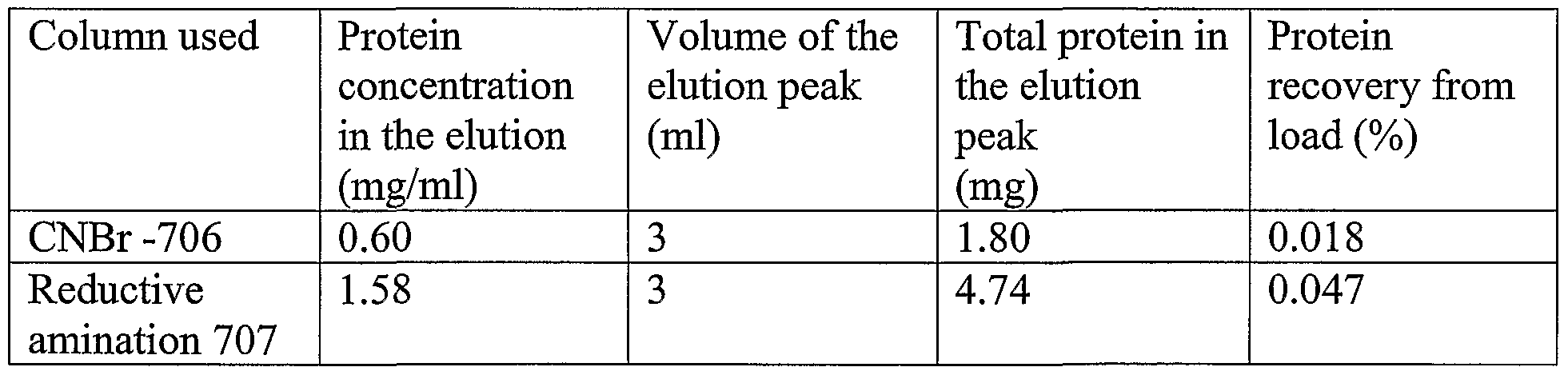
  • Figs. 3 and 4 The specificity of the elution peak was assessed by the specific binding to the peptide column elution peaks to three biotinylated peptides (706, 707 and R706) and the results are summarized in Figs. 3 and 4. It can be noted that immunoglobulin eluted from a peptide column bearing the peptide 706 reacted specifically in a linear fashion only with the biotinylated peptide of 706 and not with peptide 707 or even with a peptide bearing the same sequence in a reverse order (Fig. 3). On the other hand the elution peak from a peptide column bound with peptide 707 reacted in a non-specific manner (Fig.4).

Landscapes

  • Health & Medical Sciences (AREA)
  • Chemical & Material Sciences (AREA)
  • Life Sciences & Earth Sciences (AREA)
  • Organic Chemistry (AREA)
  • General Health & Medical Sciences (AREA)
  • Medicinal Chemistry (AREA)
  • Engineering & Computer Science (AREA)
  • Immunology (AREA)
  • Bioinformatics & Cheminformatics (AREA)
  • Veterinary Medicine (AREA)
  • Public Health (AREA)
  • Animal Behavior & Ethology (AREA)
  • Pharmacology & Pharmacy (AREA)
  • Chemical Kinetics & Catalysis (AREA)
  • General Chemical & Material Sciences (AREA)
  • Nuclear Medicine, Radiotherapy & Molecular Imaging (AREA)
  • Molecular Biology (AREA)
  • Proteomics, Peptides & Aminoacids (AREA)
  • Biochemistry (AREA)
  • Hematology (AREA)
  • Biomedical Technology (AREA)
  • Urology & Nephrology (AREA)
  • Genetics & Genomics (AREA)
  • Biophysics (AREA)
  • Diabetes (AREA)
  • Neurology (AREA)
  • Gastroenterology & Hepatology (AREA)
  • Biotechnology (AREA)
  • Cell Biology (AREA)
  • Epidemiology (AREA)
  • Pathology (AREA)
  • General Physics & Mathematics (AREA)
  • Analytical Chemistry (AREA)
  • Physics & Mathematics (AREA)
  • Food Science & Technology (AREA)
  • Microbiology (AREA)
  • Rheumatology (AREA)
  • Neurosurgery (AREA)
  • Endocrinology (AREA)
  • Pulmonology (AREA)

Abstract

A method for identifying molecules which mimic an idiotype of an autoimmune disease-associated auto-antibody (autoantibodies). The method comprises the following steps: (a) purifying autoantibodies from sera of one or more patients afflicted with the autoimmune disease; (b) binding the autoantibodies to a solid phase to form an affinity matrix; (c) contacting pooled plasma or B cells comprising immunoglobulins with the affinity matrix followed by removal of unbound plasma components; (d) eluting bound immunoglobulins, being anti-Idiotypic antibodies (anti-Id) to autoantibodies, from the matrix; (e) providing a molecular library comprising a plurality of molecule members; and (e) contacting the anti-Id with the molecular library and isolating those bound molecules which are bound by the anti-Id, the bound molecules being molecules which mimic an idiotype of autoantibodies. Also disclosed are such molecules.

Description

METHOD FOR OBTAINING ANTI-IDIOTYPE ANTIBODIES
FIELD OF THE INVENTION
This invention relates to the use of immunoglobulins purified f om pooled plasma as a tool for the selection of synthetic molecules which mimic autoimmune self-antibodies and as a source for the isolation of specific antibodies for therapeutic use in autoimmune diseases.
BACKGROUND OF THE INVENTION
Autoimmune diseases such as systemic lupus erythematosus (SLE), myasthenia gravis (MG) and idiopathic thrombocytopenic purpura (ITP) occur when the immune system of an individual is triggered to recognize and attack self components. For example, SLE is a multisystemic autoimmune disease with a great diversity of clinical manifestations, ranging from mild clinical findings with typical abnormal laboratory tests, to a life-threatening condition. Laboratory abnormalities include high titers of autoantibodies to a vast array of tissue antigens. The most characteristic are those directed against components of the cell nucleus such as DNA, RNA, histones, nuclear proteins and protein-nucleic complexes. The clinical course of SLE is highly variable and unpredictable, frequently involving periods of remissions and relapses.
The survival of patients with SLE has improved remarkably over the past decades, mainly due to the use of corticosteroids and cytotoxic drags. While such medications have powerful anti-inflammatory and immunomodulatory effects, their use is severely limited by immunosuppression, myelosuppression and/or numerous other frequent side effects. A safe and efficient mode of immunomodulatory therapy for this disorder is still lacking.
Intravenous immunoglobulm (INIG) is a highly purified IgG preparation produced from pooled human plasma collected from thousands of healthy blood donors. It is known that INIG can cause clinical improvement of patients suffering from autoimmune diseases. Administration of high dose intravenous immunoglobulm (INIG) is immunoregulatory but not immunosuppressive or myelotoxic. INIG is capable not only of modulating SLE in animal models and in humans but it also may provide a defense against infection rather than encouraging it. However, using INIG in the treatment of SLE is at present limited by cost, a poor understanding of the mechanism of action and anecdotal reports presented in the literature regarding clinical efficacy.
Antibodies are classified into different classes based on the structure of their heavy chains. These include IgG, IgM, IgA and IgE. Antibodies having the same constant structure are considered as being of the same isotype. Antibodies of the same isotype having different antigenic determinants as a result of the inheritance of different alleles are called allotypes. Antigenic determinants in the variable regions of L and/or H chains that are associated with the antigen-binding site of an antibody are called idiotypes. Antibodies raised or which react against an idiotype are called anti-Idiotypic antibodies (anti-Id).
U.S. Patent No. 4,690,905 (Diamond) discloses the preparation of monoclonal (mAB) anti-Id antibodies to human anti-DNA antibodies. The mABs bind a determinant present on anti-DNA antibodies of a plurality of SLE patients. The determinant is preferably outside the DNA binding site of the antibodies. Also disclosed are diagnostic reagents for the determination in serum of anti-native DNA antibodies, and therapeutic reagents which may be used in a method to remove anti-native DNA antibodies from the serum of patients suffering from SLE. Shoenfeld Y, et al., (1983) J. Exp Med. 158(3):718-30 describes the evaluation of idiotypic cross-reactions in 60 polynucleotide-binding monoclonal lupus auto-antibodies produced by human-human hybridomas that were derived from seven unrelated patients with SLE. Three anti-idiotype reagents were prepared by immunization of rabbits or a mouse with monoclonal auto-antibodies from two patients. Binding of the three reagents to their corresponding idiotypes was inhibited by one or more polynucleotides, an indication that the anti-idiotypes reacted with the variable regions of the auto-antibodies. A monoclonal anti-idiotype reagent cross-reacted with autoantibodies from six of the seven patients, and was named 16/6. The idiotypic cross-reactions of immunoglobulins from unrelated patients suggest that the autoantibodies are derived from related families of germ line genes that are expressed by patients with SLE.
Evans, MJ. et al (1991) J. Clin. Immunol. 11:291-5 describes the preparation of anti-Id antibodies from pooled normal human IgG which bind to anti-DNA antibodies derived from sera of SLE patients. It is postulated that the therapeutic effect of INIG on SLE patients may be due in part to the presence in INIG of anti-idiotype antibodies.
This hypothesis was further supported in a subsequent article by the same authors (Evans, M . and Abdou, Ν.I. (1993) Lupus 2:371-375) which describes the in vitro modulation of anti-DΝA secreting peripheral blood mononuclear cells derived from lupus patients by anti-Id antibodies purified
Williams Jr., R.C., et al (1994) Clin. Immunol. Immunopath. 73:215-223 describes a number of idiotypic (Id) markers related to anti-DΝA antibodies associated with SLE. These markers include 16/6, F4, 31 and 8.12. 43% of 100 cationic human IgG myeloma proteins isolated from patients with multiple myeloma were found to show the presence of at least one of the Id markers. It is stated that several of the anti-DNA Ids appear to be associated, but that the exact structural basis requires further study.
WO 96/30057 (Mozes) discloses synthetic peptides duplicating portions of the complementarity-determining region (CDR) of the heavy or light chains of a pathogenic anti-DNA Mab that induce SLE-like disease in mice (experimental SLE). Specifically, the sequences of 5 peptides of 12-30 amino acids are disclosed. Also disclosed is the use of such peptides for inhibiting the proliferative response of T-lymphocytes isolated from a SLE patient.
Waisman, A. et al (1997) Proc. Natl. Acad. Sci. 94:4620-4625 describes the synthesis and characterization of two peptides based on sequences of CDRl and CDR3 of a pathogenic anti-DNA Mab that bears the 16/6 Id. The peptides were found to modulate experimental SLE in mice.
U.S. Patent No. 6,231,856 (Williams) discloses a method for treating SLE by administrating an antibody composition comprising purified anti-Id antibodies that have specificity for idiotypic determinants located on anti-DNA antibodies (anti-DNA anti-Id). Also disclosed is a method for purifying anti-DNA anti-Id from INIG. In the method, anti-DΝA myeloma antibodies from a patient with gamaglubonemia that express idiotypic determinants are bound to a s olid phase. INIG is passed through the solid phase, and the bound fraction is eluted, the bound fraction containing the anti-DΝA anti-Id.
The Williams patent also discloses the possibility of preparing synthetic peptides capable of duplicating idiotypic determinants of self-reactive autoantibodies. Such determinants may be identified through a comparison of hydropathic profiles of idiotypic-anti-Idiotypic interaction based on a computer program, as is described in Maier, C.C. et al (1994) Immunomethods 5:107-113. These synthetic peptides may be bound to a solid phase and used to purify anti-DNA anti-Id from INIG, as described above.
Zhang, W. et al (2001) Scand. J. Immunol. 53:192-197 describes the isolation of human anti-Idiotypes from four SLE sera which were found to demonstrate broad cross reactivity to both polyclonal and monoclonal anti-DΝA antibodies isolated from SLE patients. The anti-Idiotypes were isolated on a purified IgG anti-dsD A F(ab')2 affinity column prepared from a single lupus patient. Monaci, P. et al (2001) Europ. J. of Biochem. 268:4758-4768 describes the screening and identification of ligands using five random peptide phage display libraries and serum antibodies from noninfected individuals and patients infected by hepatitis C virus (HCN). Multimeric synthetic peptides that mimic several immunodominant epitopes of the virus were used to develop a diagnostic assay which detects antibodies to HCN in serum.
Sun, Y. et al (2001) Int. Immunol. 13:223-232 describes the use of anti-dsDΝA antibodies isolated from the sera of SLE patients to screen a phage peptide library for peptides which mimic antigenic and immunogenic epitopes on dsDΝA as mimotopes. The synthetic peptide mimotope had the sequence RLTSSLRYNP, and was recognized by 88% of anti-dsDNA antibody-positive SLE sera which cross react with ssDNA.
SUMMARY OF THE INVENTION
It is an object of the present invention to provide molecules which mimic antigenic determinants present in antibodies associated with autoimmune disease.
It is a further object of the invention to provide a method for preparing such molecules. It is a still further object of the invention to provide a method for preparing anti-Idiotypic antibodies which may be used to treat autoimmune disease.
In a first aspect of the invention, there is provided a method for identifying molecules which mimic an idiotype of an autoimmune disease-associated auto-antibody (autoantibodies), comprising:
(a) purifying autoantibodies from sera of one or more patients afflicted with the autoimmune disease;
(b) binding the autoantibodies to a solid phase to form an affinity matrix;
(c) contacting pooled plasma or B cells comprising immunoglobulins with the affinity matrix followed by removal of unbound plasma components;
(d) eluting bound immunoglobulins, being anti-Idiotypic antibodies (anti-Id) to autoantibodies, from the matrix;
(e) providing a molecular library comprising a plurality of molecule members; and
(f) contacting the anti-Id with the molecular library and isolating those bound molecules which are bound by the anti-Id, the bound molecules being molecules which mimic an idiotype of autoantibodies.
The present invention is based on the isolation of molecules which mimic antigenic determinants present in antibodies associated with autoimmune disease, unlike previously-described methods which isolate molecules which mimic antigenic determinants present in a disease-associated antigen rather than in the antibody which binds the antigen.
The method of the present invention differs from previously-known methods in that the molecules and antibodies of the invention are prepared without coming into contact with sera taken from diseased individuals, so that the products are safe for adrninistration to patients. In the context of this specification, the following terms shall have the meaning following them unless otherwise indicated:
Autoimmune disease is a consequence of a cellular and a humoral response to self-antigens. A humoral dominant autoimmune condition includes a disease, illness, disorder or syndrome, in the course of which the patient produces antibodies that bind one or more of the patient's own epitopes, whether it is known today to be so or that may be diagnosed as such in the future.
The autoimmune diseases known to date include any disease mentioned in the background of the invention and any of the following: Myasthenia Gravis (MG), Congenital myasthenia gravis, Multiple sclerosis (MS), Stiff-man syndrome, Tropical spastic paraparesis, Rasmussen's encephalitis, Acute motor axonal neuropathy, Acute sensory-motor axonal neuropathy, Dorsal root ganglion neuritis , Acute pan-autonomic neuropathy, Brachial neuritis, Acute necrotizing hemorrhagic lekoencephahtis, Sporadic necrotizing myelopathy, Paraneoplastic cerebellar degeneration, Guillain-Barre syndrome, Limbic encephalitis, Opsoclonus-myoclonus ataxia, Sensory neuronitis, Autonomic neuropathy, Demyelinating neuropathy, AIDS-dementia complex, Tourette's syndrome, Miller-Fisher syndrome, Alzheimer's disease, Graves' Disease, Hashimoto's thyroiditis, Postpartum thyroiditis, Focal thyroiditis, Juvenile thyroiditis, Idiopathic hypothyroidism, Type I (insulin dependent) diabetes mellitus, Addison's disease, Hypopbysitis, Autoimmune diabetes insipidus, Hypoparathyroidism, Pemphigus Nulgaris, Pemphigus Foliaceus, Bullous phemphigoiάV Pemphigoid gestationis, Cicatrical pemphigoid, Dermatitis herpetiformis, Epidermal buUosa acquisita, Erythema multiforme, Herpes gestatonis, Nitiligo, Chronic urticaria, Discoid lupus, Alopecia universalis/Areata, Psoriasis, Autoimmune hepatitis, Primary biliary cirrhosis, Chronic active hepatitis, Chronic active hepatitits/ Primary biliary cirrhosis overlap syndrome, Primary sclerosing cholangitis, Autoimmune hemolytic anemia, Idiopathic thrombocytopenic purpura, Evans syndrome, Heparin-induced thrombocytopenia, Primary autoimmune neutropenia, Autonmnune (primary) neutropenia of infancy, Autoimmune neutropenia following bone marrow transplant, Acquired autoimmune hemophilia, Autoimmune gastritis and pernicious anemia, Coeliac disease, Crohn's disease, Ulcerative colitis, Sialadenitis, Autoimmune premature ovarian failure, Azoospermia, Hypogonadism, Male infertility associated with sperm autoantibodies, Autoimmune orchitis, Premature ovarian failure, Autoimmune oophoritis, Uveitis, Retinitis, Sympathetic ophthalmia, Birdshot retinochoroidopathy, Nogt-Koyanagi-Harada granulomatous uveitis, Retinal degeneration, Lens-induced uveitis, Optic neuritis, Autoimmune sensorineural hearing loss, Meniere's disease, Autoimmune myocarditis, Congenital heart block (neonatal lupus), Chagas' disease, Adriamycin cardiotoxicity, Dressier' s myocarditis syndrome, Bronchial asthma, Interstitial f ibrosing lung disease, Rapidly progressive glomerulonephritis, Autoimmune tubulointerstitial nephritis, Systemic lupus erythematosus (SLE), Antiphospholipid syndrome, Rheumatoid arthritis, Juvenile Rheumatoid arthritis, Felty's syndrome, Large granular lymphocytosis (LGL), Sjogren's syndrome, Systemic sclerosis (scleroderma), Crest syndrome, Mixed connective tissue disease, Polymyositis/dermatomyositis, Goodpasture's Disease, Wegener's granulomatosis, Churg-Strauss syndrome, Henoch-Schonlein purpura, Microscopic polyangiatis, Periarteritis nodosa, Bechet's syndrome, Atherosclerosis, Temporal (giant) cell arteritis, Takayasu arteritis, Kawasaki disease, Ankylosing spondilitis, Reiter's disease, Sneddons disease, Autoimmune polyendocrinopathy, candidiasis-ectodermal dystropy, Essential cryoglobulinemic vasculitis, Cutaneous leukocytoclastic angiitis, Lyme disease, Rheumatic fever and heart disease, Eosinophilic fasciitis, Paroxysmal cold hemoglobinuria, Polymyalgia rheumatica, Fibromyalgia, POEMS syndrome (polyneuropathy, organomegaly, endocrinopathy, M-spot and skin changes), Relapsing polychondritis, Autoimmune lymphoproliferative syndrome, TINU syndrome (acute tubulointerstitial nephritis and uveitis), Common variable immunodeficiency, TAP (transporter associated with antigen presentation) deficiency, Omenn syndrome, HyperlgM syndrome, BTK agammaglobulinemia, Human immunodeficiency virus and Post bone-marrow-transplant.
An autoimmune-disease associated auto-antibody ( autoantibody) is any antibody produced by the body against self-antigens and implicated in or associated with the etiology or symptoms of an autoimmune disease. Molecules are any molecule, organic or inorganic, synthetic or natural, including, by way of example, peptides, proteins and combinatorial chemicals, as well as dimers, oligomers or polymers (n=2 or more) of each of the above, e.g. based on a poly lysine backbone or other chemical platform, whether alone or in conjunction with other molecules. In the case of peptides and proteins, the term molecules also includes derivatives of the peptides and proteins in which one or more amino acids have been added, deleted or replaced without substantially affecting the mimic function of the molecule.
Mimic in the context of this invention means having the capability of reproducing the three-dimensional (3D) conformation of an epitope without necessarily duplicating its structure. This mimicry need not be a complete duplication, and may be also an approximation thereof which is sufficiently similar to that of the original idiotype so that the mimicking molecule would be bound by the same anti-Id antibody as the original idiotype.
Pooled plasma means plasma containing immunoglobulins pooled from a plurality of healthy subjects, and fractions thereof. One skilled in the art of the invention will appreciate that such pooled plasma may include without limitation any immunoglobulin-containing fraction of the pooled plasma. Any partially purified or purified fraction of the pooled plasma may be u sed a ccording t o t he i nvention. I n a p referred e mbodiment, t he p ooled plasma is INIG or any derivative thereof. Also contemplated within the scope of the invention are pooled, stimulated B-cells and pooled organs that are rich in immunoglobulins such as breast (colostrum), kidneys, lung or brain.
Molecular library in the context of this invention means any library that provides a collection of molecules from which one may select one or more molecules which mimic the idiotype of choice according to the invention. Many such libraries are readily available, including for example, peptide phage display libraries, combinatorial chemical libraries, single chain antibody libraries, ribosomal libraries, etc. A patient means any person afflicted with an autoimmune disease, regardless of the phase or progress of the disease in the person, and regardless of whether or not the person is being treated for the disease or any of its symptoms. Thus, a patient may be suffering either from an active phase of the disease (i.e. when the symptoms of the disease are manifested) or in remission (i.e. when the person appears to be healthy).
It will be appreciated that the autoantibodies may be collected from a single patient or from a specific sub-group of patients. This will enable, according to the invention, the identification of mimicking molecules that correspond with the specific sub-class of the autoimmune disease from which the donors suffer. Alternatively, collection of autoantibodies from an unclassified plurality of patients may allow the identification of mimic molecules that correspond to a plurality of different classes of the same autoimmune disease, characterized for example by different prognoses.
The solid phase used to form the affinity matrix according to the invention, may be any appropriate solid phase known in the art such as epoxy or formil groups, in any appropriate form such as a column, magnetic beads or filters. The solid phase will generally be activated so as to enable the autoantibodies to bind thereto. Examples of activation include, but are not limited to, CΝBr-activation and periodate-oxidation. According to one preferred embodiment of the invention, the autoimmune disease is SLE. It is established that, at least in some autoimmune diseases, the patients providing the autoantibodies may be afflicted with either an active phase of the autoimmune disease or with may be in remission. Accordingly, the amounts and types of autoantibodies obtained may differ, providing different sets of mimicking molecules.
According to a preferred embodiment of the invention, the molecular library is a peptide phage display library. Such phage display library may display for example peptides comprising three or more amino acids, or for example, cyclic peptides. Use of such a library would provide peptides that mimic idiotypes of autoantibodies, and the sequence (whether amino acid or nucleic acid) of such peptides can be easily obtained from the same library according to known methods. In other embodiments, the molecular library may be a combinatorial chemical library or a single chain antibody library. A person skilled in the art will further appreciate that the pooled plasma may be brought into contact with a series of affinity matrices, each affinity matrix having bound thereto autoantibodies from a different autoimmune disease, or from different manifestations of one autoimmune disease. Thus, from the one sample of pooled plasma one may identify different mimicing molecules without need to collect pooled plasma again for each autoimmune disease. This would allow for more efficient and economic use of the pooled plasma.
According to a second aspect of the invention, there is provided a molecule which mimics an idiotype of an autoantibody, the molecule excluding the following peptides:
(a) NAYISRGGNSTYYSDTVKGRFTRQKYNKRA
(b) TEKLRLRYFDYYG
(c) LVKPGGSLKLSCAASGFT
(d) RLEWNATISGDGGSYT (e) KGRFTISRDNAKNTLYL
(f) MNWNKQSHGKSL
(g) FYΝQKFKGKATL (h) SEDSALYYCARD (i) YYYGAGSYYK GYFD
(j) TGYYMQWNKQSPEKSLEWIG (k) YYCARFLWEPYAMDYWGQGS
(l) EΓΝPSTGGTTYΝQKFKAKAT
(m) GYTΝTLVIΝWVKQSHGKSLEWIG (n) YYCARSGRYGΝYWGQTL
A person skilled in the art of the invention would appreciate that the above mentioned molecules, may be prepared by steps a-f of the method described above for identifying molecules which mimic idiotypes of an autoantibody. By one example of the invention, 33 such peptides were prepared and were discovered to have the following sequences:
(a) KHETTET
(b) PPΝHSHL
(c) AGLKNSQ (d) ASTIRAG
(e) PLSSSLP
(f) FLTLTEL
(g) NRVLLRS (b) SQLGMNS (i) SEHTTNH
(j) TQPPELP
(k) LSQPERW
(1) PPPDLHA
(m) EESSYLN (n) SNEQMLY
(o) SASFTMI
(p) GTTQWNL
(q) HSLTQPA (r) QLALHST
(s) YGTPSSE
(t) KMHSNGS
(u) SLQRHPW
(v) FENASLP ( ) GDSLRST
(x) ΝSRDSSE
(y) PLPDWRN
(z) NGALPLE
(aa) TQEPSPL (bb) DWLYSRS
(cc) LRNSTTE
(dd) PPQKHLL
(ee) EMTATNS
(ff) VRLEGLP (gg) KYKRKYP
Such a molecule may also be in the form of a polymer.
According to a third aspect, the invention provides a method for treating a patient afflicted with an autoimmune disease comprising administering to the patient an effective amount of a molecule according to the invention.
According to a still further aspect of the invention, there is provided a pharmaceutical composition for the treatment of an autoimmune disease comprising an effective amount of a molecule according to the invention together with a pharmaceutically acceptable excipient. Such excipients are well known to the skilled man of the art.
According to another aspect, the invention provides a method for screening chemical compounds for their potential use in treating an autoimmune disease comprising (a) providing a molecule which mimics an idiotype of an autoimmune disease, excluding the following peptides:
- NAYISRGGNSTYYSDTNKGRFTRQKYNKRA
- TEKLRLRYFDYYG
- LVKPGGSLKLSCAASGFT - RLEWVATISGDGGSYT
- KGRFTISRDNAKNTLYL
- MNWNKQSHGKSL
- FYΝQKFKGKATL
- SEDSALYYCARD - YYYGAGSYYKRGYFD
- TGYYMQWNKQSPEKSLEWIG
- YYCARFLWEPYAMDYWGQGS;
(b) bringing the screened chemical compounds into contact with the molecule; and (c) identifying a compound which binds to the molecule, the binding compound having a potential use in treating an autoimmune disease.
It will be appreciated by one skilled in the art of the invention, that the binding of the molecule to the chemical compound may be achieved by many different methods as appropriate to the molecule and compound of choice, including for example, variation of binding conditions (e.g. salt concentration, pH, etc.).
According to another aspect, the invention provides a method for the preparation of anti-Id to autoantibodies, wherein the anti-Id have not been brought into contact with proteins derived from sera of autoimmune disease patients, comprising the following steps: (a) purifying autoantibodies from sera of one or more patients afflicted with the autoimmune disease;
(b) binding the autoantibodies to a solid phase to form an affinity matrix; (c) contacting pooled plasma comprising immunoglobulins with the affinity matrix followed by removal of unbound plasma components;
(d) eluting bound immunoglobulins, being anti-idiotype antibodies (anti-Id) to autoantibodies, from the matrix;
(e) providing a molecular library comprising a plurality of molecule members; and
(f) contacting the anti-Id with the molecular library and isolating those bound molecules which are bound by the anti-Id, the bound molecules being molecules which mimic idiotypes of autoantibodies;
(g) binding one or more of the bound molecules to a solid phase to form a second affinity matrix;
(h) contacting pooled plasma comprising immunoglobulins with the second affinity matrix followed by removal of unbound plasma components;
(i) eluting the bound immunoglbulins, being a second anti-Id to autoantibodies, from the second matrix, the second anti-Id not having been brought into contact with proteins derived from sera of autoimmune disease patients.
In a preferred embodiment, the pooled plasma is INIG.
Unlike the first anti-Id of step (d), the second anti-Id have not come into contact with sera of plasma components of patients afflicted with an autoimmune disease. This renders the second anti-Id safer for administration than the first anti-Id, as the danger of contamination of the second anti-Id by plasma components of unhealthy individuals is removed. It will be appreciated by a person skilled in the art of the invention that the second anti-Id could be useful in a method for treating a patient afflicted with an autoimmune disease. Such method comprises administering to the patient an effective amount of such anti-Id. According to another aspect of the invention, there is provided a method for the preparation of anti-Id to autoantibodies comprising immunizing an animal with an effective amount of a molecule according to the invention.
According to a further aspect, the invention provides a method for identifying a specific idiotype of an autoantibody comprising the following steps:
(a) providing a series of anti-Id of known idiotypic specificity according to this invention;
(b) bringing the autoantibodies into contact with the series of anti-Id; and
(c) identifying an anti-Id which binds to the autoantibodies, the idiotype of the bound anti-Id being the idiotype of the autoantibodies.
This method can be useful in diagnosis of the specific autoantibodies in a patient, or a class of patients. A person skilled in the art of the invention would appreciate that such identification may be useful for characterization of different aspects of the disease, providing prognoses to different patients and ultimately in the treatment of the patients. Having identified the specific idiotype of an autoantibody in a patient may allow choosing a specific class of molecules or anti-Id according to this invention for treatment of the patient. According to a still further aspect, the invention provides a method for manufacturing purified human anti-Id immunoglobulins comprising the following steps:
(a) immunizing a subject with a molecule according to the invention;
(b) collecting sera from the subject; and (c) purifying human anti-Id immunoglobulins from the sera.
BRIEF DESCRIPTION OF THE DRAWINGS:
In order to understand the invention and to see how it may be carried out in practice, preferred embodiments will now be described, by way of non-limiting example only, with reference to the accompanying drawings, in which:
Fig. 1 is a flow chart showing one embodiment of a method according to the invention for identifying molecules which mimic idiotypes of an autoantibody; Fig. 2 is a flow chart showing one embodiment of a method according to the invention for preparation of anti-Id to autoantibodies;
Fig. 3 is a graph illustrating specific binding of immunoglobulm peak elution t o b iotinylated p eptides 706, 707 and R 706 from a peptide column bearing the 706 peptide sequence; and Fig. 4 is a graph illustrating specific binding of immunoglobulm peak elution t o b iotinylated p eptides 706, 707 a nd R 706 from a peptide column bearing the 707 peptide sequence.
DETAILED DESCRIPTION OF AN EMBODIMENT
Example I One embodiment of a method for identifying molecules which mimic idiotypes of an autoimmune-a-a is illustrated in Fig. 1.
The first step of the method, indicated in Fig. 1 by reference numeral 2, involves purifying autoantibodies from sera of one or more patients afflicted with the autoimmune disease. For example, anti-double-stranded DNA (anti-dsDNA) antibodies may be purified from several tens of patients suffering from SLE (lupus patients). In the next step 4, the autoantibodies are bound to a solid phase to form an affinity matrix. Following the above example, the anti-dsDNA antibodies are bound to a CNBr-activated Sepharose column.
The following step 6 comprises contacting pooled plasma comprising immunoglobulins with the affinity matrix followed by the step 8 of removal of unbound plasma components. In the example, INIG is loaded on the affinity column which is subsequently washed to remove unbound immunoglobulins. Only the immunoglobulins which bind the anti-dsDΝA antibodies remain bound to the column.
In the next step 10, the bound anti-idiotype antibodies (=anti-Id) are eluted from the affinity matrix. In the example, these would be anti-anti-dsDΝA anti-Idiotypes. The efficacy of the anti-Id may be confirmed
12, for example by in vitro tests and in vivo using a lupus experimental model.
In the following step 14, a molecular library is provided comprising a plurality of molecule members, and the eluted anti-Id is brought into contact with the molecular library. Those molecules which are bound by the anti-Id are isolated and identified 16. These molecules mimic an idiotype of the autoantibodies. In the above example, the anti-dsDΝA antibodies are introduced to a C7C-peptide phage display library, and the peptides bound by the antibodies are isolated and identified. These peptides mimic idiotypes of the anti-dsDΝA antibodies. Mimicking peptides may then be synthesized 18.
Example II
One embodiment of a method for preparation of anti-Id to autoantibodies is illustrated in Fig. 2. In the first step 22, an affinity matrix is prepared by binding the mimicking molecules obtained by the method illustrated in Fig. 1 to a solid phase to form a second affinity matrix. The mimicking molecules may be those isolated from the molecular library, or other molecules synthesized on the basis of the isolated molecules. Following the example given with respect to Fig. 1, these would be peptides which mimic idiotypes of the anti-dsDNA antibodies.
In the next step 24, pooled plasma comprising immunoglobulins is contacted with this second affinity matrix followed by removal 26 of unbound plasma components. In the example, INIG is loaded on the column which is subsequently washed to remove unbound immunoglobulins. In the following step 28, the anti-Id is eluted from the affinity matrix. The efficacy of the anti-Id may be confirmed 30, for example by in vitro tests and in vivo using a lupus experimental model. These second anti-Id are safe for use in the treatment of patients, not having been brought into contact with proteins derived from sera of autoimmune disease patients. For example, they may be used to treat lupus patients.
Example III: Identification of molecules, which mimic idiotypes of an autoantibody
1. Materials and Methods
Anti-anti-dsDΝA (anti-Id) isolated from INIG as described above in
Example I was employed to detect specific peptides presented by Ml 3 phages. A commercial PLD.7TM phage display library (cat.number E8100S,
New England Biolabs Inc) was used according to the manufacturer's procedure, slightly modified by the inventors, as follows:
Anti-Id in 50mM NaHC03 (Ph 8.5) was biotinylated by adding Sulfo-NHS-LC-Biotin (Pierce # 21335), incubated 2 hrs on ice and dialyzed against 2% maltose. The efficacy of biotinylation was assayed by ELISA on neutravidine coated plates.
Biotinylated anti-Id (lμg) was introduced to the peptide phage display library (10 μg - 2x10¹¹ pfu) overnight at 4°C. The mixture was subjected to streptavidin coated petiri-dish (3cm, Nunc) blocked with 3% BSA. Following 20 minutes of incubation, the non-specific low affinity binding between streptavidin and the phages was prevented by adding biotin 0.1 mM for 5 min. Following extensive washings with TBS/Tween, the bound phages were eluted with Glycine-HCl 0.2M pH 2.3 and immediately neutralized with Tris pH 9.
The eluted phages were introduced to an ER2738 E.Coli host strain at a mid-log phase (OD600 -0.5) and incubated at room temperature for 5 min to allow the phages to enter the bacteria; then incubated for 4.5 hrs for replication and the bacteria were sedimented by centrifugation. The phages were isolated from the supernatant by incubation with PEG-8000 1:5 at 4°C. The amplified phages were incubated again with the original biotinylated anti-Id for the second round. Finally, 5 rounds of amplification procedure was performed using the same procedure. Between each round, the phages again undergo panning on Fc coated plates to maximally delete the Fc binding phages.
The eluted phages from the last round, at 10-fold serial dilutions, were mixed with top-agarose and plated on LB/IPTG/XGAL plates. The blue plaques were collected, and each plaque was grown separately for 4.5 hrs in 10ml LB for phage collection and centrifuged. The phages were isolated from the cultures by incubating the supernatant with PEG-8000 1:5.
The 847 colonies were screened for recognition by anti-Id by ELISA. Plates (96 wells) were coated with goat-anti-M13, blocked with 3% BSA and hemocyanin, and incubated with the phages. The binding was probed with biotinylated anti-Id or biotinylated individual IgG (from one person as negative control) followed by exposure to sfreptavidin-alkaline phosphatase and an appropriate substrate. Finally 33 clones were found to be significantly positive for anti dsDNA anti-Id and were not recognized by IgG affinity-purified from one healthy donor. The positive clones were introduced to ER2738 E.Coli host strain for amplifying the phages 5.5 hrs for DNA preparation, using QIAprep Ml 3 (QIAGENE cat.no 27704) according to the manufacturer's procedure. Briefly, the supernatant was separated into 1.4ml for small DNA preps and the rest for introduction to ER2537(1:100 diluted bacteria ER2537 from the overnight culture) in LB. Precipitation solution was added into the 1 .4ml supernatant tubes, vortexed and left for 7 min at RT. The mix was loaded onto nnnicolumn/2ml tubes, in 2 rounds of 700 ul/minicolumn. The tubes were centrifuged for 15sec at 8,000rpm at RT, after the first and second loading. Lysis buffer was added to the columns (700ul/column), incubated lmin at RT and centrifuged. Washing buffer was added 7 OOul/column and the columns were centrifuged 15 sec, 8,000rpm at RT, the liquid was discharged and the columns were centrifuged again. The columns were attached to sterile tubes. Prewarmed (50°C) elution buffer was added onto the columns (50ul/column). The columns were incubated lOmin at RT, and centrifuged 2 min at 14,000rpm at RT.
The DNA preparations were sequenced by mbc Company, Nes-Ziona, Israel.
The peptides were synthesized as cyclic peptides at The Weizmann Institute, Rehovot, Israel. The peptide sequences are listed in Table 1 :
Table 1
List of synthetic peptides synthesized:
(a) KHETTET (m) EESSYLN (y) PLPDWN
(b) PPNHSHL (n) SΝEQMY (z) NGALPLE
(c) AGLKNQ (o) SASFTMI 30 (aa) TQEPSPL
(d) ASTIRAG (P) GTTQWL (bb) DWLYSRS
(e) PLSSSLP 20 (q) HSLTQPA (cc) LRNSTTE
(f) FLTLTEL (r) QLALHST (dd) PPQKHLL
(g) VRNLLRS (s) YGTPSSE (ee) EMTATNS
(h) SQLGMS (t) KMHSNS 35 (ff) VRLEGLP
(i) SEHTTNH (u) SLQRHW (gg) KYKRKP
G) TQPPELP 25 (v) FENASLP
(k) LSQPERW (w) GDSLRST
(1) PPPDLHA (x) ΝSRDSSE
2. Direct binding of anti-Id to the synthetic peptides:
The binding of anti-Id to the peptides was tested by ELISA.
ELISA plates were coated by lOug/ml of peptides in PBS overnight at 4°C. The plates were blocked with 3% BSA for lhr at 37°C. Anti-Id was added at different concentrations. IgG purified from one donor was used as negative control.
The binding of the immunoglobulm was probed with goat anti-human IgG conjugated to alkaline phosphatase and the appropriate substrate. Between each step, extensive washings were performed with 0.05% PBS-Tween. The following peptides were used:
(1) KHETTET
(2) PPNHSHL
(3) AGLKNSQ (4) ASTIRAG
(5) NRVLLRS
(6) TQPPELP
(7) LSQPERW
(8) PPPDLHA (9) GTTQWNL
(10) YGTPSSE
(11) SLQRHPW
(12) PLPDWRN
(13) DWLYSRS (14) PPQKHLL
(15) KYKRKYP
The binding results (OD at 405 nm) are presented in Table 2.
Table 2
Figure imgf000025_0001
3. Direct binding synthetic peptides:
The same protocol was used as above, but the peptides used in this study were taken from the literature except for peptide number 1 which is the first peptide in the previous experiment. The peptides used were:
(1) KHETTET
(2) TGYYMQWNKQSPEKSLEWIG
(3) YYCARFLWEPYAMDYWGQGS (4) NAYISRGGNSTYYSDTNKGRFTRQKYNKRA
(5) TGYYMQWNKQSPEKSLEWIG
(6) YYCARFLWEPYAMDYWGQGS
(7) TEKLRLRYFDYYG
(8) LNKPGGSLKLSCAASGFT (9) MΝWNKQSHGKSL
(10) FYΝQKFKGKATL
(11) YYYGAGSYYKRGYFD
Table 3
Figure imgf000027_0001
4. Percent inhibition with mix cyclic peptides
5
The mix of 15 cyclic peptides given in Section 2 above ("Direct binding of anti-Id to the synthetic peptides") was used to inhibit the binding of anti-Id to anti-dsDNA antibodies affinity purified from each of 7 Lupus patients. The mixture was made to increase the recognition probability of the l o anti-dsDNA Id(s) of the Lupus patient.
ELISA plates were coated with anti-Fc 2ug/ml in NaHC03 0.05M pH 8.5 over night at 4°C. In this way the F(ab) portion of the immunoglobulm molecule of anti-dsDNA will present the idiotype more efficiently.
The plates were blocked with 3% BSA for lhr at 37°C, and each
15 human anti-dsDNA antibody solution was added at lOug/ml in PBS, and incubated overnight at 4°C. In separate tubes peptide mix 1 was added at different concentrations to biotinylated anti-dsDNA anti-Id from INIG (at a concentration of 50% binding to anti-dsDΝA) for overnight incubation at 4°C. The day after, the mixture of anti-Id and peptide mix was added to the
20 anti-dsDΝA coated plates for 4 hrs. The binding of unbound anti-Id which was not recognized by the peptide mix was probed with sfreptavidine conjugated with alkaline phosphatase and an appropriate substrate.
The results presented in Table 4 show percentages of inhibition of INIG specific fraction of anti-dsDΝA anti-Id binding to anti-dsDΝA from a particular Lupus patient by the peptide mixture.
Table 4
Figure imgf000028_0001
Example IV: Using IVIG and/or pooled plasma as a template for the isolation of idiotypic mimicries of autoimmune disease. 1. Introduction: The present example provides an experimental demonstration of direct selection in the conventional way which resulted in the identification of the common SLE idiotype, Id 16/6. It has been proven that one of the peptides based on the 16.6 CDRs, CDR3, can cause SLE symptoms in mice, whereas CDRl's predominate function is to ameliorate the disease in experimental SLE mice (1). Two peptides based on the sequences of the complementary-determining regions (CDR) of the pathogenic murine monoclonal anti-DNA Ab (5G12) that bears the 16/6 Id were synthesized. pCDRl (CDRl -TGYYMQWNKQSPEKSLEWIG) and pCDR3 (CDR3 -YYCARFLWEPYAMDYWGQGS) (the CDRs are underlined) were shown to be immunodominant T-cell epitopes in BALB/c and SJL mouse strains, respectively, and induced a mild SLE-like disease in responder mice (Kent, S. B. H., Hood, L. E., Beilan, H., Meister, S. & Geiser, T. (1984) in High Yield Chemical Synthesis of Biologically Active Peptides on an Automated Peptide Synthesizer of Novel Design, ed. Ragnarsson, U. (Almqvist & Wiksell, Stockholm), pp. 185-188). Further, the CDR-based peptides inhibited the priming of lymph-node cells (LΝC) of mice immunized with the same peptides or with the monoclonal anti-DΝA 16/6Id+ Abs of either mouse or human origin. The CDRl -based peptide was also shown to prevent auto-Ab production in BALB/c neonatal mice that were immunized later with either pCDRl or the pathogenic auto-Ab (Kent, op.cit ). 2. Materials and Method 2.1 Synthetic Peptides.
The 16.6 monoclonal antibody CDRl -based peptide TGYYMQWNKQSPEKSLEWIG (pCDRl), designated 706, and the CDR3-based peptide YYCARFLWEPYAMDYWGQGS (pCDR3), designated 707, were prepared with an automated synthesizer (Applied Biosystem model 430 A) using the company's protocols for t-butyloxycarbonyl (BOC) strategy (Kent, op.cit., Schnolzer, M., Alewood, P. F. & Kent, S. B. H. (1992) Int. J. Pept. Protein Res. 40, 180-193). The reverse order of CDRl designated R706 GIWELSKEPSQKNWQMYYGT was used as a control. In another similar synthesis, the resulting peptides were labeled by biotin at their Ν-terminal, later to be used in the ELISA testing. 2.2 Affinity chromatography: Preparation of the Peptide column 2.2.1 Coupling of peptide 707 by reductive amination
2.2.1.1 Activation Protocol a. Creation of Periodate-Oxidizable Matrix 10 ml of Toyopearl MH65F (Tosohass, Japan) were washed with 300 ml water on a sintered glass filter (porosity G3) followed by 5 successive (total 80 ml) washes with 1M NaOH. The resin was taken out of the sintered glass filter and suspended with 10 ml of 1M NaOH, 1ml of glycidol (Sigma) and 0.01 g of Sodium Borohydrate (NaBH4). The reaction mixture was incubated at room temperature overnight with gentle rolling. In the morning, the resin was washed extensively with 200 ml of each of water, 1M NaCl and again with water. The glycidol-modified resin was now ready for periodate oxidation. b. Direct Periodate Oxidation of the Matrix The following protocol was designed to prepare periodate oxidation resin: 10 ml wet gel containing vicinal hydroxyl groups were resuspended in 10 ml 0.2M NaI04 (4.28 g of sodium met -periodate in 100 ml of water) and mixed well by gentle rolling. The reaction was continued for 90 min. at room temperature. The formyl resin w as w ashed by 300 ml o fw ater t o s top t he oxidation. The aldehydes created by this procedure are stable enough to allow the resin to be stored for long periods without a decrease in coupling potential.
2.2.1.2 Ligand Coupling Protocol lml of phosphate buffer, pH 7.0 containing NaCNBH4 and the specific peptide was added to 2 ml of periodate -oxidized matrix. The concentration of the peptides i n the p hosphate b uffer w as 1 0 m g/ml ( about 3 .3 μ moles/ml). Therefore the ratio was 1.1 μmole of 707 to ml resin. The reaction continued with stirring overnight at room temp. The coupled resin was washed extensively with water, 1M NaCl and again with water to remove unreacted ligand and sodium cyanoborohydride. The resin was stored in 20 Mm phosphate buffer pH 7. 2.2.2 Coupling of peptide 706 to CNBr-Activated Matrix
3 g of freeze dried CNBr activated Sepharose 4 fast flow were suspended in 20ml of lmM HC1 (ice cold). The resin was washed intensely for 15 min. on a sintered glass filter (porosity G3) using 200 ml of acid. After the final wash, 2 ml of the washed resin were transferred to coupling solution, in which the peptide to be coupled had been dissolved. The coupling solution contained 900μl of 0.1-M sodium carbonate (NaHC03), pH 8.5 and lOOμl of 100 mg/ml of peptide 706. The ratio of peptide to resin was again 1.1 μmole per ml of resin. The mixture was rolled overnight at 4°C. After coupling, the vial with the resin was left at a vertical position for sedimentation of the resin. The supernatant was discarded and 15ml of 0.2M glycine, pH 8.0 were added for blocking of the remaining active groups on the resin. The blocking was performed at room temperature for 4.5 hours, while rolling. After blocking, the resin was washed with 10 column volumes of 0.1
M sodium carbonate (NaHC03), pH 8.5 following by washing with 3 cycles of alternating pH. Each cycle consisted of a 15 ml wash of 0.1 M acetate buffer pH 4 containing 0.5 M NaCl followed by a wash with 0.1 M Tris HC1 buffer pH 8 containing 0.5M NaCl. The resin was stored in 0.05 M Tris pH 7.4
2.3 Affinity c hromatography: Purification o f a nti-Idiotypes from an intravenous immunoglobulm solution using the peptide column.
The peptide columns were washed with at least 10 volumes of loading buffer (20 rnM PB) until the absorbance measurement at 280 nm was stable (OD about 0.005).
100 ml of diluted INIG (in process sample G-12 of the OmriGam, (Ornrix Biopharmaceuticals Ltd, Israel) production process, high purified double inactivated INIG) were loaded on top of a 2 ml peptide resin. The concentration of the starting material was 50 mg/ml. In order to reach this concentration, the INIG was diluted with phosphate buffer, pH 7 to reach the desired molarity. The loading proceeded overnight at 4°C at a flow rate of 100 μl/min, approximately. The loading was p erformed twice. The column was then washed with loading buffer until the absorbance at 280 reached baseline. The elution was done with 0.1M glycine, HC1 pH 2.7 into 1M Tris base buffer pH 9 to neutralize the eluate. Each elution consisted of a peak, usually of about 4-5 ml from a 1 ml column. Protein in the elution and the loading was measured by the Bradford method (Bradford (1976) Anal. Biochem. 72:248). 2.4 Efficacy of the affinity chromatography step: ELISA To measure the binding efficacy of peptide column eluates (706 and
707) the following ELISA was performed:
Microtiter plates (Costar, USA) were coated overnight at 2-8°C with lOμg/ml ΝeutrAvidin (Pierce, USA) suspended in 0.1M, pH 8.8, of carbonate-bicarbonate buffer (Sigma USA). The coating solution was removed, washed three times with washing buffer (IX PBS) and 200 μl of blocking solution (freshly prepared 1% I Block, Tropix, USA) per well was added and incubated for 1 hour at 37°C. Coated and blocked plates can be stored at -20°C for a month before use.
Tested samples diluted in the blocking solution were mixed in a separate tube with lμg/ml (final concentration) of the appropriate biotinylated peptide and the mixture was incubated for 1 hour at 37°C. lOOμl from each reaction tube was then transferred to the blocked microtiter plate and incubated at 37°C for lA hour. A lOOμl of 1:5000 Alkaline Phosphatase conjugate goat anti human IgG (Heavy and light chain from Jackson, USA) diluted in the blocking buffer was applied into the microtiter well and incubated for 1 hour. The enzymatic activity of alkaline phosphatase is then revealed by an overnight incubation at room temperature with p-nitrophenyl phosphate substrate (Sigma USA). The measurement was done photometrically at 405nm.
3. Results and Discussion. 200 ml of INIG were loaded on each of the 2 ml peptide columns: one consisted of peptide 706 bind to a CΝBr activated Sepharose matrix and the other a 707 peptide bind to the Polymeric matrix by reductive amination (see material and methods).
The protein concentrations and the binding of biotinlyted peptides were tested, and the results are provided in table 5 and Figs. 3 and 4.
Table 5:
Protein yields of 200 ml of intravenous immunoglobulm (50mg/ml) loaded on 2ml peptide columns.
Figure imgf000033_0001
The elution of the bound peak resulted in different recoveries: around 0.018%o for column peptide 706 versus 0.047 for column peptide 707. Thus, it can be concluded that peptide column 706 has the capacity of binding one out of 5555 molecules whereas peptide column 707 has the capacity of binding one out of 2237 immunoglobulm molecules found in the pooled INIG. It therefore could be assumed that the 707 epitope is more abundant and can be found at higher frequency in the INIg.
The specificity of the elution peak was assessed by the specific binding to the peptide column elution peaks to three biotinylated peptides (706, 707 and R706) and the results are summarized in Figs. 3 and 4. It can be noted that immunoglobulin eluted from a peptide column bearing the peptide 706 reacted specifically in a linear fashion only with the biotinylated peptide of 706 and not with peptide 707 or even with a peptide bearing the same sequence in a reverse order (Fig. 3). On the other hand the elution peak from a peptide column bound with peptide 707 reacted in a non-specific manner (Fig.4). The resulting immunoglobulin reacted with biotinylated peptide 706 and even more interesting the immunoglobulin reacted even more strongly with the reversed sequence of 706. Indicating that the 707-immunoglobulin preparations may react non-specifically with peptide sequences of 707 and 706 and probably with numerous other sequences.
The above results indicated that not all the CDR sequences found on the Idl 6.6 are specific and at least some of them react in a non specific manner with INIg.
These results support the notion that the use of monoclonal derived from SLE patients may result in non-specific selection of immunoglobulin.

Claims

CLAIMS:
1. A method for identifying molecules which mimic an idiotype of an autoimmune disease-associated auto-antibody (autoantibodies), comprising:
(a) purifying autoantibodies from sera of one or more patients afflicted with the autoimmune disease;
(b) binding s aid autoantibodies to a s olid phase to form an affinity matrix;
(c) contacting pooled plasma or B cells comprising immunoglobulins with said affinity matrix followed by removal of unbound plasma components;
(d) eluting bound immunoglobulins, being anti-Idiotypic antibodies (anti-Id) to autoantibodies, from said matrix;
(e) providing a molecular library comprising a plurality of molecule members; and (f) contacting said anti-Id with s aid m olecular 1 ibrary a nd i solating those bound molecules which are bound by the anti-Id, the bound molecules being molecules which mimic an idiotype of autoantibodies.
2. A method according to Claim 1 wherein said pooled plasma is INIG.
3. A method according t o C laim 1 w herein s aid a utoimmune d isease i s selected from Myasthenia Gravis, Congenital myasthenia gravis, Multiple sclerosis, Stiff-man syndrome, Tropical spastic paraparesis, Rasmussen's encephalitis, Acute motor axonal neuropathy, Acute sensory-motor axonal neuropathy, Dorsal root ganglion neuritis , Acute pan-autonomic neuropathy, Brachial neuritis, Acute necrotizing hemorrhagic lekoencephahtis, Sporadic necrotizing myelopathy, Paraneoplastic cerebellar degeneration, Guillain-Barre syndrome, Limbic encephalitis, Opsoclonus-myoclonus ataxia, Sensory neuronitis, Autonomic neuropathy, Demyelinating neuropathy, AIDS-dementia complex, Tourette's syndrome, Miller-Fisher syndrome, Alzheimer's disease, Graves' Disease, Hashimoto's thyroiditis, Postpartum thyroiditis, Focal thyroiditis, Juvenile thyroiditis, Idiopathic hypothyroidism, Type I (insulin dependent) diabetes mellitus, Addison's disease, Hypophysitis, Autoimmune diabetes insipidus, Hypoparathyroidism, Pemphigus Nulgaris, Pemphigus Foliaceus, Bullous phemphigoid/ Pemphigoid gestationis, Cicatrical pemphigoid, Dermatitis he etiformis, Epidermal bullosa acquisita, Erythema multiforme, Herpes gestatonis, Nitiligo, Chronic urticaria, Discoid lupus, Alopecia universalis/Areata, Psoriasis, Autoimmune hepatitis, Primary biliary cirrhosis, Chronic active hepatitis, Chronic active hepatitits/ Primary biliary cirrhosis overlap syndrome, Primary sclerosing cholangitis, Autoimmune hemolytic anemia, Idiopathic thrombocytopenic purpura, Evans syndrome, Heparin-induced thrombocytopenia, Primary autoimmune neutropenia, Autoimmune (primary) neutropenia of infancy, Autoimmune neutropenia following bone marrow transplant, Acquired autoimmune hemophilia, Autoimmune gastritis and pernicious anemia, Coeliac disease, Crohn's disease, Ulcerative colitis, Sialadenitis, Autoimmune premature ovarian failure, Azoospermia, Hypogonadism, Male infertility associated with sperm autoantibodies, Autoimmune orchitis, Premature ovarian failure, Autoimmune oophoritis, Uveitis, Retinitis, Sympathetic ophthalmia, Birdshot retinochoroidopathy, Vogt-Koyanagi-Harada granulomatous uveitis, Retinal degeneration, Lens-induced uveitis, Optic neuritis, Autoimmune sensorineural hearing loss, Meniere's disease, Autoimmune myocarditis, Congenital heart block (neonatal lupus), Chagas' disease, Adriamycin cardiotoxicity, Dressler's myocarditis syndrome, Bronchial asthma, Interstitial fibrosing lung disease, Rapidly progressive glomerulonephritis, Autoimmune tubulointerstitial nephritis, Systemic lupus erythematosus (SLE), Antiphospholipid syndrome, Rheumatoid arthritis, Juvenile Rheumatoid arthritis, Felty's syndrome, Large granular lymphocytosis (LGL), Sjogren's syndrome, Systemic sclerosis (scleroderma), Crest syndrome, Mixed connective tissue disease, Polymyositis/dermatomyositis, Goodpasture's Disease, Wegener's granulomatosis, Churg-Strauss syndrome, Henoch-Schonlein purpura, Microscopic polyangiatis, Periarteritis nodosa, Bechet's syndrome, Atherosclerosis, Temporal (giant) cell arteritis, Takayasu arteritis, Kawasaki disease, Ankylosing spondilitis, Reiter's disease, Sneddons disease, Autoimmune polyendocrinopathy, candidiasis-ectodermal dystropy, Essential cryoglobulinemic vasculitis, Cutaneous leukocytoclastic angiitis, Lyme disease, Rheumatic fever and heart disease, Eosinophilic fasciitis, Paroxysmal cold hemoglobinuria, Polymyalgia rheumatica, Fibromyalgia, POEMS syndrome (polyneuropathy, organomegaly, endocrinopathy, M-spot and skin changes), Relapsing polychondritis, Autoimmune lymphoproliferative syndrome, TINU syndrome (acute tubulointerstitial nephritis and uveitis), Common variable immunodeficiency, TAP (transporter associated with antigen presentation) deficiency, Omenn syndrome, HyperlgM syndrome, BTK agammaglobulinemia, Human immunodeficiency virus and Post bone-marrow-transplant.
4. A method according t o C laim 3 w herein s aid a utoimmune d isease i s SLE.
5. A method according to Claim 1 wherein said autoantibodies is purified from the serum of one patient afflicted with the autoimmune disease.
6. A method according to Claim 1 wherein said autoantibodies is purified from the sera of a plurality of patients afflicted with the autoimmune disease.
7. A method according to Claim 1 wherein said solid phase is in the form of a column, magnetic beads or filters.
8. A method according to Claim 1 wherein said solid phase comprises a CNBr-activated or periodate-oxidized resin.
9. A method according to Claim 1 wherein said molecular library is a peptide phage display library.
10. A method according to Claim 9 wherein the peptides consist of at least 3 amino acids.
11. A method according to Claim 9 wherein the peptides are cyclic
12. A method according to Claim 1 wherein said molecular library is a combinatorial chemical library.
13. A method according to Claim 1 wherein said molecular library is a single chain antibody library.
14. A molecule which mimics an idiotype of an autoantibody, said molecule excluding the following peptides:
NAYISRGGNSTYYSDTNKGRFTRQKYNKRA
TEKLRLRYFDYYG LVKPGGSLKLSCAASGFT
RLEWVAΠSGDGGSYT
KGRFTISRDNAKNTLYL
MNWVKQSHGKSL
FYNQKFKGKATL SEDSALYYCARD
YYYGAGSYYKRGYFD
TGYYMQWNKQSPEKSLEWIG
YYCARFLWEPYAMDYWGQGS
EΓΝPSTGGTTYΝQKFKAKAT GYΝMΝWNKQSHGKSLEWIG
YYCARSGRYGΝYWGQTL.
15. A molecule according to Claim 14 identified by the method of Claim 1.
16. A molecule according to Claim 14 being a peptide selected from the following list, and derivatives thereof: (a) K H E T T E T
(b) P P N H S H L
(c) A G L K N S Q
(d) A S T I R A G
(e) P L S S S L P CD F L T L T E L
(g) v R V L L R S
(h) s Q L G M V S
(i) s E H T T V H
G) T Q P P E L P
(k) L s Q P E R W
(i) P P P D L H A
(m) E E s S Y L V
(n) S N E Q M L Y
(o) S A s F T M I
(P) G T T Q W V L
(q) H s L T Q P A
(r) Q L A L H S T
(s) Y G T P S S E
(t) K M H S V G S
(u) S L Q R H P W
(v) F E V A S L P
(w) G D s L R S T
(x) N S R D S S E
(y) P L P D W R V
(z) v G A L P L E
(aa) T Q E P S P L
(bb) D w L Y S R S
(cc) L R V S T T E
(dd) P P Q K H L L
(ee) E M T A T V S
(ff) V R L E G L P
(gg) K Y K R K Y P
17. A molecule according to Claim 14 in the form of a polymer.
18. A method for treating a patient afflicted with an autoimmune disease comprising administering to said patient an effective amount of a molecule according to Claim 12.
19. A pharmaceutical composition for the treatment of an autoimmune disease comprising an effective amount of a molecule according to Claim 12 together with a pharmaceutically acceptable excipient.
20. A method for the preparation of anti-Id to autoantibodies comprising immunizing an animal with an effective amount of a molecule according to Claim 12.
21. A method for screening chemical compounds for their potential use in treating an autoimmune disease comprising:
(a) providing a molecule according to Claim 12;
(b) bringing said chemical compounds into contact with said molecule; and
(c) identifying a compound which binds to said molecule, the binding compound having a potential use in treating an autoimmune disease.
22. A method for the preparation of anti-Id to autoantibodies, wherein said anti-Id have not been brought into contact with proteins derived from sera of autoimmune disease patients, comprising steps (a) to (f) of the method of Claim 1, and further comprising:
(g) binding one or more of said bound molecules to a solid phase to form a second affinity matrix;
(h) contacting pooled plasma comprising immunoglobulins with said second affinity matrix followed by removal of unbound plasma components;
(i) eluting said bound immunoglbulins, being a second anti-Id to autoantibodies, from said second matrix, said second anti-Id not having been brought into contact with proteins derived from sera of autoimmune disease patients.
23. A method according to Claim 22 wherein pooled plasma is brought into contact with a series of second affinity matrices, each affinity matrix having bound thereto an autoantibody from a different autoimmune disease.
24. A method according to Claim 22 wherein said pooled plasma is INIG.
25. An anti-Id to autoantibodies which has not been brought into contact with proteins derived from sera of autoimmune disease patients
26. An anti-Id according to Claim 25 prepared by the method of Claim 22.
27. A method for treating a patient afflicted with an autoimmune disease comprising administering to said patient an effective amount of an anti-Id according to Claim 25.
28. A method for identifying a specific idiotype of an autoantibody comprising: (a) providing a series of anti-Id according to Claim 25 of known idiotypic specificity;
(b) bringing said autoantibodies into contact with said series of anti-Id; and
(c) identifying an anti-Id which binds to the autoantibodies, the idiotype of the bound anti-Id being the idiotype of the autoantibodies.
29. A method for manufacturing purified human anti-Id immunoglobulins comprising:
(a) immunizing a subject with a molecule according to Claim 14;
(b) collecting sera from said subject; and (c) purifying human anti-Id immunoglobulins from said sera.
PCT/IL2003/000424 2002-05-28 2003-05-22 Method for obtaining anti-idiotype antibodies Ceased WO2003099868A2 (en)

Priority Applications (8)

Application Number Priority Date Filing Date Title
EP03725556A EP1511772B1 (en) 2002-05-28 2003-05-22 Method for obtaining anti-idiotype antibodies
AU2003228084A AU2003228084A1 (en) 2002-05-28 2003-05-22 Method for obtaining anti-idiotype antibodies
AT03725556T ATE534669T1 (en) 2002-05-28 2003-05-22 METHOD FOR OBTAINING ANTI-IDIOTYPE ANTIBODIES
JP2004508122A JP4489582B2 (en) 2002-05-28 2003-05-22 Methods for obtaining anti-idiotype antibodies
IL16536403A IL165364A0 (en) 2002-05-28 2003-05-22 Method for obtaining anti-idiotype antibodies
US10/515,499 US8450067B2 (en) 2002-05-28 2003-05-22 Method for obtaining anti-idiotype antibodies
IL165364A IL165364A (en) 2002-05-28 2004-11-24 Method for identifying peptides which mimic an idiotype of an autoimmune disease-associated auto-antibody and peptides identified by such method and their use
US13/902,836 US10040869B2 (en) 2002-05-28 2013-05-26 Molecules mimicking an autoantibody idiotype and compositions containing same

Applications Claiming Priority (2)

Application Number Priority Date Filing Date Title
US38313602P 2002-05-28 2002-05-28
US60/383,136 2002-05-28

Related Child Applications (2)

Application Number Title Priority Date Filing Date
US10515499 A-371-Of-International 2002-05-22
US13/902,836 Division US10040869B2 (en) 2002-05-28 2013-05-26 Molecules mimicking an autoantibody idiotype and compositions containing same

Publications (3)

Publication Number Publication Date
WO2003099868A2 true WO2003099868A2 (en) 2003-12-04
WO2003099868A3 WO2003099868A3 (en) 2004-01-15
WO2003099868B1 WO2003099868B1 (en) 2004-04-01

Family

ID=29584513

Family Applications (1)

Application Number Title Priority Date Filing Date
PCT/IL2003/000424 Ceased WO2003099868A2 (en) 2002-05-28 2003-05-22 Method for obtaining anti-idiotype antibodies

Country Status (7)

Country Link
US (2) US8450067B2 (en)
EP (1) EP1511772B1 (en)
JP (4) JP4489582B2 (en)
AT (1) ATE534669T1 (en)
AU (1) AU2003228084A1 (en)
IL (2) IL165364A0 (en)
WO (1) WO2003099868A2 (en)

Cited By (7)

* Cited by examiner, † Cited by third party
Publication number Priority date Publication date Assignee Title
WO2006021954A2 (en) 2004-08-23 2006-03-02 Yeda Research And Development Co. Ltd. At The Weizmann Institute Of Science Peptide inhibitors for mediating stress responses
EP2258727A1 (en) 2009-05-27 2010-12-08 Wezen Biopharmaceuticals S.r.l. A Socio Unico Immunoglobulin preparation for the treatment of autoimmune diseases and immune system disorders
WO2013098419A1 (en) 2011-12-28 2013-07-04 Immunoqure Ag Method of providing monoclonal auto-antibodies with desired specificity
EP2663321A4 (en) * 2011-01-10 2014-12-03 Opko Pharmaceuticals Llc Antigen surrogates in autoimmune disease
AU2011295968B2 (en) * 2010-09-01 2017-01-05 Biogen Ma Inc. Rapid generation of anti-idiotypic antibodies
US10288622B2 (en) 2011-05-23 2019-05-14 Yeda Research And Development Co. Ltd. Use of AKT phosphorylation as a biomarker for prognosing neurodegenerative diseases and treating same
EP4056591A1 (en) 2013-07-03 2022-09-14 ImmunoQure AG Human anti-ifn-alpha antibodies

Families Citing this family (6)

* Cited by examiner, † Cited by third party
Publication number Priority date Publication date Assignee Title
EP1511772B1 (en) * 2002-05-28 2011-11-23 Omrix Biopharmaceuticals Inc. Method for obtaining anti-idiotype antibodies
US10131709B2 (en) 2011-12-28 2018-11-20 Immunoqure Ag Nucleic acid molecules encoding monoclonal antibodies specific for IL-22
AU2013299910B2 (en) * 2012-08-05 2019-01-24 Absci Corporation Inducible coexpression system
US12157766B2 (en) 2012-08-05 2024-12-03 Absci Corporation Cytoplasmic expression system
EP4015539A1 (en) * 2020-12-16 2022-06-22 Cryolab S.r.l. Method for producing human monoclonal anti-idiotype antibodies
CN116731184B (en) * 2022-11-25 2024-06-14 厦门康基生物科技有限公司 Monoclonal antibody F6H12 specifically binding to Taq enzyme and application thereof

Family Cites Families (31)

* Cited by examiner, † Cited by third party
Publication number Priority date Publication date Assignee Title
US4690905A (en) * 1983-11-16 1987-09-01 Albert Einstein College Of Medicine Of Yeshiva University, A Division Of Yeshiva University Method for removal of human antibodies to native DNA from serum
CA1256795A (en) * 1983-12-28 1989-07-04 Dennis A. Carson Anti-idiotype antibodies induced by synthetic polypeptides
US5068177A (en) * 1983-12-28 1991-11-26 Scripps Clinic And Research Foundation Anti-idiotype antibodies induced by synthetic polypeptides
FR2672290B1 (en) * 1991-02-05 1995-04-21 Pasteur Institut SPECIFIC PEPTIDE SEQUENCES OF THE HEPATIC STAGES OF P. FALCIPARUM CARRIERS OF EPITOPES CAPABLE OF STIMULATING T-LYMPHOCYTES
US6270771B1 (en) * 1988-10-06 2001-08-07 Institut Pasteur Peptide sequences specific for the hepatic stages of P. falciparum bearing epitopes capable of stimulating the T lymphocytes
US5882879A (en) * 1990-02-28 1999-03-16 Gist-Brocades, N.V. Method for influencing β-lactam antibiotic production and for isolation of large quantities of ACV synthetase
US6864060B1 (en) * 1993-03-31 2005-03-08 Cadus Technologies, Inc. Yeast cells expressing modified G proteins and methods of use therefor
IL113159A0 (en) 1995-03-28 1995-06-29 Yeda Res & Dev Synthetic peptides and pharmaceutical compositions comprising them
DE69735498T2 (en) * 1996-09-26 2006-11-09 The Regents Of The University Of Colorado, Boulder TRANSGENIC MODEL FOR HEART FAILURE
WO1998026086A1 (en) 1996-12-11 1998-06-18 University Of Florida Novel methods and compositions for treatment of autoimmune diseases
US6183997B1 (en) * 1997-03-21 2001-02-06 Stratagene Polymerase enhancing factor (PEF) extracts PEF protein complexes isolated PEF proteins and methods for purifying and identifying same
US7041490B1 (en) * 1997-11-28 2006-05-09 Serono Genetics Institute, S.A. Chlamydia trachomatis polynucleotides and vectors, recombinant host cells, DNA chips or kits containing the same
US6551795B1 (en) * 1998-02-18 2003-04-22 Genome Therapeutics Corporation Nucleic acid and amino acid sequences relating to pseudomonas aeruginosa for diagnostics and therapeutics
US7504490B1 (en) * 1998-10-16 2009-03-17 Oscient Pharmaceuticals Corporation Nucleic acid and amino acid sequences relating to Apergillus fumigatus for diagnostics and therapeutics
US20100293669A2 (en) * 1999-05-06 2010-11-18 Jingdong Liu Nucleic Acid Molecules and Other Molecules Associated with Plants and Uses Thereof for Plant Improvement
US20080229439A1 (en) * 1999-05-06 2008-09-18 La Rosa Thomas J Nucleic acid molecules and other molecules associated with transcription in plants and uses thereof for plant improvement
US20050037969A1 (en) * 1999-05-14 2005-02-17 Arbor Vita Corporation Molecular interactions in hematopoietic cells
AU5011200A (en) * 1999-05-14 2000-12-05 Arbor Vita Corporation Molecular interactions in hematopoietic cells
EP1224223A4 (en) * 1999-09-24 2004-08-11 Univ Monash IMMUNOACTIVE MOLECULES AND THEIR USE IN TREATING PATIENTS WITH HEV B 5 ALLERGIES
SK9262002A3 (en) 1999-12-30 2003-02-04 Hans-Georg Frank Method for identifying substances which mimic mammal epitopes
AU2001238347A1 (en) * 2000-02-28 2001-09-12 Hyseq, Inc. Novel nucleic acids and polypeptides
JP2004520803A (en) * 2000-04-21 2004-07-15 コリクサ コーポレイション Compositions and methods for the treatment and diagnosis of acne vulgaris
US7067626B2 (en) * 2000-07-05 2006-06-27 Pharmacia & Upjohn Company Human ion channel proteins
US6569431B2 (en) 2000-10-17 2003-05-27 The Regents Of The University Of California Recombinant antibody fragments as autoantibody antagonists
WO2002032375A2 (en) 2000-10-18 2002-04-25 Sloan-Kettering Institute For Cancer Research Uses of monoclonal antibody 8h9
US7939087B2 (en) * 2000-10-27 2011-05-10 Novartis Vaccines And Diagnostics, Inc. Nucleic acids and proteins from Streptococcus groups A & B
US7214786B2 (en) * 2000-12-14 2007-05-08 Kovalic David K Nucleic acid molecules and other molecules associated with plants and uses thereof for plant improvement
EP1383894A2 (en) * 2001-03-28 2004-01-28 Incyte Genomics, Inc. Molecules for disease detection and treatment
US7335467B2 (en) * 2001-05-15 2008-02-26 Ludwig Institute For Cancer Research Breast cancer antigens
US20030235833A1 (en) * 2001-06-18 2003-12-25 National Institute Of Advanced Industrial Science And Technology Guanosine triphosphate-binding protein coupled receptors
EP1511772B1 (en) * 2002-05-28 2011-11-23 Omrix Biopharmaceuticals Inc. Method for obtaining anti-idiotype antibodies

Non-Patent Citations (1)

* Cited by examiner, † Cited by third party
Title
None

Cited By (17)

* Cited by examiner, † Cited by third party
Publication number Priority date Publication date Assignee Title
CN103214555A (en) * 2004-08-23 2013-07-24 维兹曼科学研究所耶达研究与发展有限公司 Peptide inhibitors for mediating stress responses
US8790653B2 (en) 2004-08-23 2014-07-29 Yeda Research And Development Co. Ltd. Peptide inhibitors for mediating stress responses
WO2006021954A2 (en) 2004-08-23 2006-03-02 Yeda Research And Development Co. Ltd. At The Weizmann Institute Of Science Peptide inhibitors for mediating stress responses
US8067008B2 (en) 2004-08-23 2011-11-29 Yeda Research And Development Co. Peptide inhibitors for mediating stress responses
AU2005276117B2 (en) * 2004-08-23 2012-04-12 Yeda Research And Development Co. Ltd. At The Weizmann Institute Of Science Peptide inhibitors for mediating stress responses
EP2578226A1 (en) * 2004-08-23 2013-04-10 Yeda Research And Development Co., Ltd. Peptide inhibitors for mediating stress responses
AU2005276117C1 (en) * 2004-08-23 2013-04-18 Yeda Research And Development Co. Ltd. At The Weizmann Institute Of Science Peptide inhibitors for mediating stress responses
EP1781315A4 (en) * 2004-08-23 2009-07-22 Yeda Res & Dev PEPTIDE INHIBITORS FOR TREATING STRESS RESPONSE
EP2258727A1 (en) 2009-05-27 2010-12-08 Wezen Biopharmaceuticals S.r.l. A Socio Unico Immunoglobulin preparation for the treatment of autoimmune diseases and immune system disorders
AU2011295968B2 (en) * 2010-09-01 2017-01-05 Biogen Ma Inc. Rapid generation of anti-idiotypic antibodies
EP2611834B1 (en) * 2010-09-01 2018-03-07 Biogen MA Inc. Rapid generation of anti-idiotypic antibodies
EP2663321A4 (en) * 2011-01-10 2014-12-03 Opko Pharmaceuticals Llc Antigen surrogates in autoimmune disease
US9458199B2 (en) 2011-01-10 2016-10-04 Opko Pharmaceuticals, Llc Antigen surrogates in autoimmune disease
US10288622B2 (en) 2011-05-23 2019-05-14 Yeda Research And Development Co. Ltd. Use of AKT phosphorylation as a biomarker for prognosing neurodegenerative diseases and treating same
WO2013098419A1 (en) 2011-12-28 2013-07-04 Immunoqure Ag Method of providing monoclonal auto-antibodies with desired specificity
EP3546481A2 (en) 2011-12-28 2019-10-02 ImmunoQure AG Anti-interleukin 22 (il-22) antibody and uses thereof
EP4056591A1 (en) 2013-07-03 2022-09-14 ImmunoQure AG Human anti-ifn-alpha antibodies

Also Published As

Publication number Publication date
EP1511772B1 (en) 2011-11-23
US10040869B2 (en) 2018-08-07
JP2006505503A (en) 2006-02-16
JP2013100361A (en) 2013-05-23
JP2010150260A (en) 2010-07-08
IL165364A0 (en) 2006-01-15
IL165364A (en) 2013-06-27
AU2003228084A1 (en) 2003-12-12
US20060078943A1 (en) 2006-04-13
US8450067B2 (en) 2013-05-28
US20130244925A1 (en) 2013-09-19
JP5727133B2 (en) 2015-06-03
ATE534669T1 (en) 2011-12-15
WO2003099868B1 (en) 2004-04-01
JP5149269B2 (en) 2013-02-20
JP2010163431A (en) 2010-07-29
WO2003099868A3 (en) 2004-01-15
EP1511772A2 (en) 2005-03-09
JP4489582B2 (en) 2010-06-23

Similar Documents

Publication Publication Date Title
US10040869B2 (en) Molecules mimicking an autoantibody idiotype and compositions containing same
JP6717869B2 (en) Anti-mesothelin antibody and uses thereof
US7655417B2 (en) VCAM-1 specific monoclonal antibody
CN105143261B (en) C5 antibodies and methods for preventing and treating complement-related diseases
AU2013251165B2 (en) Cross-reactive Staphylococcus aureus antibody
US20010026928A1 (en) Anti-C2/C2a inhibitors of complement activation
CN101001874A (en) Poly-n-acetyl glucosamine (PNAG/DPNAG)-binding peptides and methods of use thereof
EP3083679B1 (en) Antibodies directed against the lukgh (lukab) toxin of staphylococcus aureus and antibody sequences
US20120157663A1 (en) Antibody identifying an antigen-bound antibody and an antigen-unbound antibody, and method for preparing the same
CA2217776C (en) Synthetic peptides and pharmaceutical compositions comprising them for the treatment of systemic lupus erythematosus
JPWO2003008584A1 (en) Humanized anti-human IgE receptor antibody and antibody fragment
Leucht et al. The B cell superantigen-like interaction of intravenous immunoglobin (IVIG) with Fab fragments of VH 3-23 and 3-30/3-30.5 germline gene origin cloned from a patient with Kawasaki disease is enhanced after IVIG therapy
US5681700A (en) Assay for pathogenicity of anti-DNA antibodies
US20100172902A1 (en) Method for treating a vcam-1 mediated disease
JP5925678B2 (en) Methods and compositions for the treatment of proliferative and pathogenic diseases
US6613536B1 (en) Synthetic peptides and pharmaceutical compositions comprising them for the treatment of systemic lupus erythematosus
Osei et al. Restricted VH3 gene usage in phage‐displayed Fab that are selected by intravenous immunoglobulin
WO2010136196A1 (en) Immunoglobulin preparation for the treatment of autoimmune diseases and immune system disorders
WO2025069026A1 (en) Lateral flow assay device and method for rapid detection of fentanyl and fentanyl analogs
US6280944B1 (en) Assay for pathogenicity of anti-DNA antibodies
Staines et al. Idiotypes of DNA-Binding Autoantibodies: Mapping by Epitope Scanning and Molecular Modelling

Legal Events

Date Code Title Description
AK Designated states

Kind code of ref document: A2

Designated state(s): AE AG AL AM AT AU AZ BA BB BG BR BY BZ CA CH CN CO CR CU CZ DE DK DM DZ EC EE ES FI GB GD GE GH GM HR HU ID IL IN IS JP KE KG KP KR KZ LC LK LR LS LT LU LV MA MD MG MK MN MW MX MZ NI NO NZ OM PH PL PT RO RU SC SD SE SG SK SL TJ TM TN TR TT TZ UA UG US UZ VC VN YU ZA ZM ZW

AL Designated countries for regional patents

Kind code of ref document: A2

Designated state(s): GH GM KE LS MW MZ SD SL SZ TZ UG ZM ZW AM AZ BY KG KZ MD RU TJ TM AT BE BG CH CY CZ DE DK EE ES FI FR GB GR HU IE IT LU MC NL PT RO SE SI SK TR BF BJ CF CG CI CM GA GN GQ GW ML MR NE SN TD TG

121 Ep: the epo has been informed by wipo that ep was designated in this application
B Later publication of amended claims

Effective date: 20031217

DFPE Request for preliminary examination filed prior to expiration of 19th month from priority date (pct application filed before 20040101)
WWE Wipo information: entry into national phase

Ref document number: 2004508122

Country of ref document: JP

WWE Wipo information: entry into national phase

Ref document number: 2003725556

Country of ref document: EP

WWP Wipo information: published in national office

Ref document number: 2003725556

Country of ref document: EP

ENP Entry into the national phase

Ref document number: 2006078943

Country of ref document: US

Kind code of ref document: A1

WWE Wipo information: entry into national phase

Ref document number: 10515499

Country of ref document: US

WWP Wipo information: published in national office

Ref document number: 10515499

Country of ref document: US