WO2003106472A1 - Kondensierte palatinose und verfahren zu deren herstellung - Google Patents
Kondensierte palatinose und verfahren zu deren herstellung Download PDFInfo
- Publication number
- WO2003106472A1 WO2003106472A1 PCT/EP2003/006218 EP0306218W WO03106472A1 WO 2003106472 A1 WO2003106472 A1 WO 2003106472A1 EP 0306218 W EP0306218 W EP 0306218W WO 03106472 A1 WO03106472 A1 WO 03106472A1
- Authority
- WO
- WIPO (PCT)
- Prior art keywords
- palatinose
- condensed
- weight
- condensed palatinose
- proportion
- Prior art date
- Legal status (The legal status is an assumption and is not a legal conclusion. Google has not performed a legal analysis and makes no representation as to the accuracy of the status listed.)
- Ceased
Links
Classifications
-
- A—HUMAN NECESSITIES
- A23—FOODS OR FOODSTUFFS; TREATMENT THEREOF, NOT COVERED BY OTHER CLASSES
- A23G—COCOA; COCOA PRODUCTS, e.g. CHOCOLATE; SUBSTITUTES FOR COCOA OR COCOA PRODUCTS; CONFECTIONERY; CHEWING GUM; ICE-CREAM; PREPARATION THEREOF
- A23G3/00—Sweetmeats; Confectionery; Marzipan; Coated or filled products
- A23G3/34—Sweetmeats, confectionery or marzipan; Processes for the preparation thereof
- A23G3/346—Finished or semi-finished products in the form of powders, paste or liquids
-
- A—HUMAN NECESSITIES
- A21—BAKING; EDIBLE DOUGHS
- A21D—TREATMENT OF FLOUR OR DOUGH FOR BAKING, e.g. BY ADDITION OF MATERIALS; BAKING; BAKERY PRODUCTS
- A21D13/00—Finished or partly finished bakery products
- A21D13/02—Products made from whole meal; Products containing bran or rough-ground grain
-
- A—HUMAN NECESSITIES
- A21—BAKING; EDIBLE DOUGHS
- A21D—TREATMENT OF FLOUR OR DOUGH FOR BAKING, e.g. BY ADDITION OF MATERIALS; BAKING; BAKERY PRODUCTS
- A21D13/00—Finished or partly finished bakery products
- A21D13/80—Pastry not otherwise provided for elsewhere, e.g. cakes, biscuits or cookies
-
- A—HUMAN NECESSITIES
- A21—BAKING; EDIBLE DOUGHS
- A21D—TREATMENT OF FLOUR OR DOUGH FOR BAKING, e.g. BY ADDITION OF MATERIALS; BAKING; BAKERY PRODUCTS
- A21D2/00—Treatment of flour or dough by adding materials thereto before or during baking
- A21D2/08—Treatment of flour or dough by adding materials thereto before or during baking by adding organic substances
- A21D2/14—Organic oxygen compounds
- A21D2/18—Carbohydrates
- A21D2/181—Sugars or sugar alcohols
-
- A—HUMAN NECESSITIES
- A23—FOODS OR FOODSTUFFS; TREATMENT THEREOF, NOT COVERED BY OTHER CLASSES
- A23C—DAIRY PRODUCTS, e.g. MILK, BUTTER OR CHEESE; MILK OR CHEESE SUBSTITUTES; PREPARATION THEREOF
- A23C9/00—Milk preparations; Milk powder or milk powder preparations
- A23C9/12—Fermented milk preparations; Treatment using microorganisms or enzymes
- A23C9/13—Fermented milk preparations; Treatment using microorganisms or enzymes using additives
- A23C9/1307—Milk products or derivatives; Fruit or vegetable juices; Sugars, sugar alcohols, sweeteners; Oligosaccharides; Organic acids or salts thereof or acidifying agents; Flavours, dyes or pigments; Inert or aerosol gases; Carbonation methods
-
- A—HUMAN NECESSITIES
- A23—FOODS OR FOODSTUFFS; TREATMENT THEREOF, NOT COVERED BY OTHER CLASSES
- A23D—EDIBLE OILS OR FATS, e.g. MARGARINES, SHORTENINGS OR COOKING OILS
- A23D7/00—Edible oil or fat compositions containing an aqueous phase, e.g. margarines
- A23D7/005—Edible oil or fat compositions containing an aqueous phase, e.g. margarines characterised by ingredients other than fatty acid triglycerides
- A23D7/0056—Spread compositions
-
- A—HUMAN NECESSITIES
- A23—FOODS OR FOODSTUFFS; TREATMENT THEREOF, NOT COVERED BY OTHER CLASSES
- A23D—EDIBLE OILS OR FATS, e.g. MARGARINES, SHORTENINGS OR COOKING OILS
- A23D9/00—Other edible oils or fats, e.g. shortenings or cooking oils
- A23D9/007—Other edible oils or fats, e.g. shortenings or cooking oils characterised by ingredients other than fatty acid triglycerides
-
- A—HUMAN NECESSITIES
- A23—FOODS OR FOODSTUFFS; TREATMENT THEREOF, NOT COVERED BY OTHER CLASSES
- A23G—COCOA; COCOA PRODUCTS, e.g. CHOCOLATE; SUBSTITUTES FOR COCOA OR COCOA PRODUCTS; CONFECTIONERY; CHEWING GUM; ICE-CREAM; PREPARATION THEREOF
- A23G9/00—Frozen sweets, e.g. ice confectionery, ice-cream; Mixtures therefor
- A23G9/52—Liquid products; Solid products in the form of powders, flakes or granules for making liquid products ; Finished or semi-finished solid products, frozen granules
-
- A—HUMAN NECESSITIES
- A23—FOODS OR FOODSTUFFS; TREATMENT THEREOF, NOT COVERED BY OTHER CLASSES
- A23K—FODDER
- A23K20/00—Accessory food factors for animal feeding-stuffs
- A23K20/10—Organic substances
- A23K20/163—Sugars; Polysaccharides
-
- A—HUMAN NECESSITIES
- A23—FOODS OR FOODSTUFFS; TREATMENT THEREOF, NOT COVERED BY OTHER CLASSES
- A23K—FODDER
- A23K50/00—Feeding-stuffs specially adapted for particular animals
- A23K50/40—Feeding-stuffs specially adapted for particular animals for carnivorous animals, e.g. cats or dogs
-
- A—HUMAN NECESSITIES
- A23—FOODS OR FOODSTUFFS; TREATMENT THEREOF, NOT COVERED BY OTHER CLASSES
- A23L—FOODS, FOODSTUFFS OR NON-ALCOHOLIC BEVERAGES, NOT OTHERWISE PROVIDED FOR; PREPARATION OR TREATMENT THEREOF
- A23L19/00—Products from fruits or vegetables; Preparation or treatment thereof
- A23L19/03—Products from fruits or vegetables; Preparation or treatment thereof consisting of whole pieces or fragments without mashing the original pieces
-
- A—HUMAN NECESSITIES
- A23—FOODS OR FOODSTUFFS; TREATMENT THEREOF, NOT COVERED BY OTHER CLASSES
- A23L—FOODS, FOODSTUFFS OR NON-ALCOHOLIC BEVERAGES, NOT OTHERWISE PROVIDED FOR; PREPARATION OR TREATMENT THEREOF
- A23L19/00—Products from fruits or vegetables; Preparation or treatment thereof
- A23L19/09—Mashed or comminuted products, e.g. pulp, purée, sauce, or products made therefrom, e.g. snacks
-
- A—HUMAN NECESSITIES
- A23—FOODS OR FOODSTUFFS; TREATMENT THEREOF, NOT COVERED BY OTHER CLASSES
- A23L—FOODS, FOODSTUFFS OR NON-ALCOHOLIC BEVERAGES, NOT OTHERWISE PROVIDED FOR; PREPARATION OR TREATMENT THEREOF
- A23L2/00—Non-alcoholic beverages; Dry compositions or concentrates therefor; Preparation or treatment thereof
- A23L2/52—Adding ingredients
- A23L2/60—Sweeteners
-
- A—HUMAN NECESSITIES
- A23—FOODS OR FOODSTUFFS; TREATMENT THEREOF, NOT COVERED BY OTHER CLASSES
- A23L—FOODS, FOODSTUFFS OR NON-ALCOHOLIC BEVERAGES, NOT OTHERWISE PROVIDED FOR; PREPARATION OR TREATMENT THEREOF
- A23L21/00—Marmalades, jams, jellies or the like; Products from apiculture; Preparation or treatment thereof
- A23L21/10—Marmalades; Jams; Jellies; Other similar fruit or vegetable compositions; Simulated fruit products
- A23L21/12—Marmalades; Jams; Jellies; Other similar fruit or vegetable compositions; Simulated fruit products derived from fruit or vegetable solids
-
- A—HUMAN NECESSITIES
- A23—FOODS OR FOODSTUFFS; TREATMENT THEREOF, NOT COVERED BY OTHER CLASSES
- A23L—FOODS, FOODSTUFFS OR NON-ALCOHOLIC BEVERAGES, NOT OTHERWISE PROVIDED FOR; PREPARATION OR TREATMENT THEREOF
- A23L27/00—Spices; Flavouring agents or condiments; Artificial sweetening agents; Table salts; Dietetic salt substitutes; Preparation or treatment thereof
- A23L27/30—Artificial sweetening agents
- A23L27/33—Artificial sweetening agents containing sugars or derivatives
-
- A—HUMAN NECESSITIES
- A23—FOODS OR FOODSTUFFS; TREATMENT THEREOF, NOT COVERED BY OTHER CLASSES
- A23L—FOODS, FOODSTUFFS OR NON-ALCOHOLIC BEVERAGES, NOT OTHERWISE PROVIDED FOR; PREPARATION OR TREATMENT THEREOF
- A23L29/00—Foods or foodstuffs containing additives; Preparation or treatment thereof
- A23L29/30—Foods or foodstuffs containing additives; Preparation or treatment thereof containing carbohydrate syrups; containing sugars; containing sugar alcohols, e.g. xylitol; containing starch hydrolysates, e.g. dextrin
-
- A—HUMAN NECESSITIES
- A23—FOODS OR FOODSTUFFS; TREATMENT THEREOF, NOT COVERED BY OTHER CLASSES
- A23L—FOODS, FOODSTUFFS OR NON-ALCOHOLIC BEVERAGES, NOT OTHERWISE PROVIDED FOR; PREPARATION OR TREATMENT THEREOF
- A23L33/00—Modifying nutritive qualities of foods; Dietetic products; Preparation or treatment thereof
- A23L33/10—Modifying nutritive qualities of foods; Dietetic products; Preparation or treatment thereof using additives
- A23L33/125—Modifying nutritive qualities of foods; Dietetic products; Preparation or treatment thereof using additives containing carbohydrate syrups; containing sugars; containing sugar alcohols; containing starch hydrolysates
-
- A—HUMAN NECESSITIES
- A23—FOODS OR FOODSTUFFS; TREATMENT THEREOF, NOT COVERED BY OTHER CLASSES
- A23L—FOODS, FOODSTUFFS OR NON-ALCOHOLIC BEVERAGES, NOT OTHERWISE PROVIDED FOR; PREPARATION OR TREATMENT THEREOF
- A23L5/00—Preparation or treatment of foods or foodstuffs, in general; Food or foodstuffs obtained thereby; Materials therefor
-
- A—HUMAN NECESSITIES
- A23—FOODS OR FOODSTUFFS; TREATMENT THEREOF, NOT COVERED BY OTHER CLASSES
- A23L—FOODS, FOODSTUFFS OR NON-ALCOHOLIC BEVERAGES, NOT OTHERWISE PROVIDED FOR; PREPARATION OR TREATMENT THEREOF
- A23L7/00—Cereal-derived products; Malt products; Preparation or treatment thereof
- A23L7/10—Cereal-derived products
- A23L7/117—Flakes or other shapes of ready-to-eat type; Semi-finished or partly-finished products therefor
- A23L7/126—Snacks or the like obtained by binding, shaping or compacting together cereal grains or cereal pieces, e.g. cereal bars
-
- A—HUMAN NECESSITIES
- A61—MEDICAL OR VETERINARY SCIENCE; HYGIENE
- A61K—PREPARATIONS FOR MEDICAL, DENTAL OR TOILETRY PURPOSES
- A61K31/00—Medicinal preparations containing organic active ingredients
- A61K31/70—Carbohydrates; Sugars; Derivatives thereof
-
- A—HUMAN NECESSITIES
- A61—MEDICAL OR VETERINARY SCIENCE; HYGIENE
- A61P—SPECIFIC THERAPEUTIC ACTIVITY OF CHEMICAL COMPOUNDS OR MEDICINAL PREPARATIONS
- A61P1/00—Drugs for disorders of the alimentary tract or the digestive system
-
- A—HUMAN NECESSITIES
- A61—MEDICAL OR VETERINARY SCIENCE; HYGIENE
- A61P—SPECIFIC THERAPEUTIC ACTIVITY OF CHEMICAL COMPOUNDS OR MEDICINAL PREPARATIONS
- A61P1/00—Drugs for disorders of the alimentary tract or the digestive system
- A61P1/10—Laxatives
-
- A—HUMAN NECESSITIES
- A61—MEDICAL OR VETERINARY SCIENCE; HYGIENE
- A61P—SPECIFIC THERAPEUTIC ACTIVITY OF CHEMICAL COMPOUNDS OR MEDICINAL PREPARATIONS
- A61P1/00—Drugs for disorders of the alimentary tract or the digestive system
- A61P1/12—Antidiarrhoeals
-
- A—HUMAN NECESSITIES
- A61—MEDICAL OR VETERINARY SCIENCE; HYGIENE
- A61P—SPECIFIC THERAPEUTIC ACTIVITY OF CHEMICAL COMPOUNDS OR MEDICINAL PREPARATIONS
- A61P15/00—Drugs for genital or sexual disorders; Contraceptives
- A61P15/08—Drugs for genital or sexual disorders; Contraceptives for gonadal disorders or for enhancing fertility, e.g. inducers of ovulation or of spermatogenesis
-
- A—HUMAN NECESSITIES
- A61—MEDICAL OR VETERINARY SCIENCE; HYGIENE
- A61P—SPECIFIC THERAPEUTIC ACTIVITY OF CHEMICAL COMPOUNDS OR MEDICINAL PREPARATIONS
- A61P19/00—Drugs for skeletal disorders
- A61P19/08—Drugs for skeletal disorders for bone diseases, e.g. rachitism, Paget's disease
-
- A—HUMAN NECESSITIES
- A61—MEDICAL OR VETERINARY SCIENCE; HYGIENE
- A61P—SPECIFIC THERAPEUTIC ACTIVITY OF CHEMICAL COMPOUNDS OR MEDICINAL PREPARATIONS
- A61P25/00—Drugs for disorders of the nervous system
-
- A—HUMAN NECESSITIES
- A61—MEDICAL OR VETERINARY SCIENCE; HYGIENE
- A61P—SPECIFIC THERAPEUTIC ACTIVITY OF CHEMICAL COMPOUNDS OR MEDICINAL PREPARATIONS
- A61P29/00—Non-central analgesic, antipyretic or antiinflammatory agents, e.g. antirheumatic agents; Non-steroidal antiinflammatory drugs [NSAID]
-
- A—HUMAN NECESSITIES
- A61—MEDICAL OR VETERINARY SCIENCE; HYGIENE
- A61P—SPECIFIC THERAPEUTIC ACTIVITY OF CHEMICAL COMPOUNDS OR MEDICINAL PREPARATIONS
- A61P3/00—Drugs for disorders of the metabolism
- A61P3/08—Drugs for disorders of the metabolism for glucose homeostasis
- A61P3/10—Drugs for disorders of the metabolism for glucose homeostasis for hyperglycaemia, e.g. antidiabetics
-
- A—HUMAN NECESSITIES
- A61—MEDICAL OR VETERINARY SCIENCE; HYGIENE
- A61P—SPECIFIC THERAPEUTIC ACTIVITY OF CHEMICAL COMPOUNDS OR MEDICINAL PREPARATIONS
- A61P31/00—Antiinfectives, i.e. antibiotics, antiseptics, chemotherapeutics
-
- A—HUMAN NECESSITIES
- A61—MEDICAL OR VETERINARY SCIENCE; HYGIENE
- A61P—SPECIFIC THERAPEUTIC ACTIVITY OF CHEMICAL COMPOUNDS OR MEDICINAL PREPARATIONS
- A61P35/00—Antineoplastic agents
-
- A—HUMAN NECESSITIES
- A61—MEDICAL OR VETERINARY SCIENCE; HYGIENE
- A61P—SPECIFIC THERAPEUTIC ACTIVITY OF CHEMICAL COMPOUNDS OR MEDICINAL PREPARATIONS
- A61P37/00—Drugs for immunological or allergic disorders
-
- A—HUMAN NECESSITIES
- A61—MEDICAL OR VETERINARY SCIENCE; HYGIENE
- A61P—SPECIFIC THERAPEUTIC ACTIVITY OF CHEMICAL COMPOUNDS OR MEDICINAL PREPARATIONS
- A61P9/00—Drugs for disorders of the cardiovascular system
- A61P9/04—Inotropic agents, i.e. stimulants of cardiac contraction; Drugs for heart failure
-
- A—HUMAN NECESSITIES
- A61—MEDICAL OR VETERINARY SCIENCE; HYGIENE
- A61P—SPECIFIC THERAPEUTIC ACTIVITY OF CHEMICAL COMPOUNDS OR MEDICINAL PREPARATIONS
- A61P9/00—Drugs for disorders of the cardiovascular system
- A61P9/10—Drugs for disorders of the cardiovascular system for treating ischaemic or atherosclerotic diseases, e.g. antianginal drugs, coronary vasodilators, drugs for myocardial infarction, retinopathy, cerebrovascula insufficiency, renal arteriosclerosis
-
- A—HUMAN NECESSITIES
- A61—MEDICAL OR VETERINARY SCIENCE; HYGIENE
- A61P—SPECIFIC THERAPEUTIC ACTIVITY OF CHEMICAL COMPOUNDS OR MEDICINAL PREPARATIONS
- A61P9/00—Drugs for disorders of the cardiovascular system
- A61P9/12—Antihypertensives
-
- C—CHEMISTRY; METALLURGY
- C07—ORGANIC CHEMISTRY
- C07H—SUGARS; DERIVATIVES THEREOF; NUCLEOSIDES; NUCLEOTIDES; NUCLEIC ACIDS
- C07H3/00—Compounds containing only hydrogen atoms and saccharide radicals having only carbon, hydrogen, and oxygen atoms
- C07H3/06—Oligosaccharides, i.e. having three to five saccharide radicals attached to each other by glycosidic linkages
-
- A—HUMAN NECESSITIES
- A23—FOODS OR FOODSTUFFS; TREATMENT THEREOF, NOT COVERED BY OTHER CLASSES
- A23G—COCOA; COCOA PRODUCTS, e.g. CHOCOLATE; SUBSTITUTES FOR COCOA OR COCOA PRODUCTS; CONFECTIONERY; CHEWING GUM; ICE-CREAM; PREPARATION THEREOF
- A23G2200/00—COCOA; COCOA PRODUCTS, e.g. CHOCOLATE; SUBSTITUTES FOR COCOA OR COCOA PRODUCTS; CONFECTIONERY; CHEWING GUM; ICE-CREAM; PREPARATION THEREOF containing organic compounds, e.g. synthetic flavouring agents
- A23G2200/06—COCOA; COCOA PRODUCTS, e.g. CHOCOLATE; SUBSTITUTES FOR COCOA OR COCOA PRODUCTS; CONFECTIONERY; CHEWING GUM; ICE-CREAM; PREPARATION THEREOF containing organic compounds, e.g. synthetic flavouring agents containing beet sugar or cane sugar if specifically mentioned or containing other carbohydrates, e.g. starches, gums, alcohol sugar, polysaccharides, dextrin or containing high or low amount of carbohydrate
-
- A—HUMAN NECESSITIES
- A23—FOODS OR FOODSTUFFS; TREATMENT THEREOF, NOT COVERED BY OTHER CLASSES
- A23L—FOODS, FOODSTUFFS OR NON-ALCOHOLIC BEVERAGES, NOT OTHERWISE PROVIDED FOR; PREPARATION OR TREATMENT THEREOF
- A23L21/00—Marmalades, jams, jellies or the like; Products from apiculture; Preparation or treatment thereof
-
- A—HUMAN NECESSITIES
- A23—FOODS OR FOODSTUFFS; TREATMENT THEREOF, NOT COVERED BY OTHER CLASSES
- A23L—FOODS, FOODSTUFFS OR NON-ALCOHOLIC BEVERAGES, NOT OTHERWISE PROVIDED FOR; PREPARATION OR TREATMENT THEREOF
- A23L7/00—Cereal-derived products; Malt products; Preparation or treatment thereof
-
- A—HUMAN NECESSITIES
- A23—FOODS OR FOODSTUFFS; TREATMENT THEREOF, NOT COVERED BY OTHER CLASSES
- A23V—INDEXING SCHEME RELATING TO FOODS, FOODSTUFFS OR NON-ALCOHOLIC BEVERAGES AND LACTIC OR PROPIONIC ACID BACTERIA USED IN FOODSTUFFS OR FOOD PREPARATION
- A23V2002/00—Food compositions, function of food ingredients or processes for food or foodstuffs
Definitions
- the present invention relates to a palatinose condensation product which is obtained by condensing the disaccharide palatinose from its melt, a process for the preparation of the condensed palatinose and its use and foods and medicaments containing the palatinose condensation product.
- the disaccharide palatinose which is also called isomaltulose, arises from the ⁇ -1, ⁇ linkage of glucose and fructose; the chemical name of the palatinose is 6-o- ⁇ -D-glucopyranosyl-fructofuranose.
- Palatinose is produced industrially, for example, by reacting sucrose with the enzyme glucosyl transferase, which is provided, for example, by microorganisms.
- Palatinose and palatinose condensates are not cariogenic and also have an anti-cariogenic effect, which consists in reducing the cariogenicity of sucrose in food. Since palatinose has a high sweetening power, palatinose is used as an anti-cariogenic sweetener in various foods. In addition, palatinose has the property of, and will, reduce the glycemic index of food and food therefore used to manufacture dietary products.
- palatinose disaccharide ie uncondensed palatinose
- palatinose dimers / trimers / tetra eres which has very good properties for use in particular in the food and feed and pharmaceutical industries.
- palatinose dimers / trimers / tetra eres which has very good properties for use in particular in the food and feed and pharmaceutical industries.
- This is in order to replace a large number of sugar-containing starting products in the production of food, feed, pharmaceuticals, foodstuffs and luxury foods and, at the same time, the advantageous properties of palatinose and its condensation products, for example in relation to their therapeutic and / or prophylactic effects to be able to use it better.
- condensed palatinose is understood to mean a mixture of the disaccharide palatinose and its condensation products, these can also be referred to as palatinose oligosaccharides (POS).
- POS palatinose oligosaccharides
- condensed palatinose also consist, for example, of their use, in particular instead of the usual cariogenic malt syrup, for increasing the viscosity of foods, for lowering the freezing point of foods, for increasing the water content in foods, for preventing drying of food or to suppress the colonization of food with rotting microorganisms.
- condensed palatinose with a composition of about 52.4% uncondensed palatinose, about 26% palatinose dimers, about 12% palatinose trimers and about 5.7% palatinose tetramers is obtained from a citric acid aqueous palatinose solution ( Mutsuo et al., 1993, Journal of Carbohydrate Chemistry).
- POS condensed palatinose
- the product obtained from the acidified aqueous solution with the aforementioned process tastes bitter due to its high glucosylmethylfurfural (GMF) content of approx. 0.6% and is therefore unsuitable for use in food.
- GMF glucosylmethylfurfural
- condensed palatinose can be used as a complete replacement for pure palatinose in animal feed.
- the condensed palatinose used was produced by the aforementioned process and contained palatinose and its condensation products in the aforementioned composition (Kashimura et al., 1990, Journal of the Japanese Society for Nutrition and Food Science).
- the palatinose dimers that are obtained with this process are double-condensed dipalatinose dianhydrides, which are formed with the elimination of two molecules of water.
- the conversion (condensation) takes place in this process in an anhydrous medium at preferably 0 to 20 ° C.
- the condensed palatinose obtained contains about 94% palatinose dimers and about 2% uncondensed palatinose (FR 2 680 789 AI).
- palatinose with a content of more than 73% of palatinose dimers is obtained by the anhydrous condensation by means of HF (Defaye et al., 1994, Carbohydrate Research 251: 1-15).
- HF a condensed palatinose produced in this way can therefore not be used in particular in food, foodstuffs, pharmaceuticals and luxury foods.
- Condensed palatinose is known to have a pronounced non-cariogenic and also anti-cariogenic effect.
- Non-cariogenic because it cannot be fermented by the cariogenic microorganisms occurring in the oral flora, in particular not to harmful acids.
- Anti-cariogenic because it can directly support the re-mineralization of the teeth and thus counteract the clinical picture of caries
- condensed palatinose for the use of condensed palatinose in food, foodstuffs, medicines and luxury foods other positive nutritional properties of condensed palatinose relevant:
- condensed palatinose By adding condensed palatinose to foods, it is also possible to modulate the glycemic properties of these foods, that is to say the glycemic reaction of the human or animal body. This is achieved in particular by the reduced degradability of the condensed palatinose compared to conventionally used carbohydrates such as sucrose, maltose or soluble starch in the digestive tract.
- a glycemic reaction is the change in the blood glucose level after ingestion of a (easily) digestible carbohydrate. Accordingly, the strongest glycemic reaction is caused by those carbohydrates from which glucose, pancreatic or small intestine enzymes can be released quickly after oral ingestion and absorbed into the blood.
- Sucrose causes a lower glycemic reaction because the fructose contained in the sucrose molecule in addition to glucose can only be partially converted into glucose.
- An increase in blood glucose causes an insulin release in healthy people. Insulin stimulates the absorption of glucose by peripheral tissues, for example skeletal muscles, so that the blood value drops back to the basic value.
- fiber especially fermentable soluble or insoluble fiber
- the glutathione / glutathione-S-transferase complex plays an important role in this context:
- Glutathione is a tripeptide containing cysteine and the most common thiol compound in mammalian cells.
- GSH is a substrate for the enzymes glutathione-S-transferase and GSH-peroxidase, which catalyze the detoxification of xenobiotic compounds and reactions to inhibit reactive oxygen molecules and other free radicals.
- GST glutathione-S-transferase
- GSH changes into the corresponding disulfide GSSG through reversible oxidation.
- Glutathione acts as an antioxidant and is therefore a buffer system for the redox state of the cell.
- the GSTs are one of the most important detoxification systems for cells, especially during phase II of cell division.
- the detoxification is carried out by transferring glutathione to electrophilic components that arise, for example, during the metabolism of carcinogens.
- the GST-catalyzed nucleophilic attack of glutathione on electrophilic substrates greatly reduces their reactivity with regard to cellular macromolecules.
- GSTs can greatly reduce the effectiveness of a number of chemical carcinogens. GSTs therefore play an important physiological role in protecting against oxidative stress and the associated diseases, especially cancer.
- Compounds such as polycyclic aromatic hydrocarbons, phenol antioxidants, reactive oxygen molecules, isothiocyanates, trivalent arsenic compounds, barbiturates and synthetic glucocorticoids can induce GST activities, whereby the genes coding for GST enzymes are activated (Hayes and Pulford, 1995).
- GST induction mainly occurs through various transcription mechanisms.
- the regulatory areas of GST-coding genes contain elements to which the aforementioned substances bind and can induce gene transcription.
- Food components for example phytochemical substances, can also induce GST activities, in particular GST forms of the ⁇ class being induced in the intestinal area.
- GST induction in the intestinal tract by food components is therefore regarded as a mechanism for preventing colon cancer (Peters and Roelofs, Cancer Res., 52 (1992), 1886-1890).
- GST induction are food components that are difficult or not digestible, that is to say food fibers or fiber that are resistant to digestion by human enzymes, but are fermented in the large intestine.
- These include some carbohydrates, such as pectin, "guar gum” (guar gum) and resistant starch, which are fermented into short-chain fatty acids, especially acetic acid, propionic acid and butyric acid, only in the intestinal tract by the bacterial flora of the large intestine (Bartram et al., Cancer Res. , 53 (1993), 3283-3288).
- the actual proportion of digestive-resistant and fermentable dietary fiber or fiber in the diet depends on many factors, for example the type of food and its method of preparation.
- wheat bran is often used as an addition to low-ball diet. Like investigations in rats with regard to tumor incidence in the colon, however, wheat bran applications are hardly suitable for cancer prevention. Similar to cellulose, wheat bran is hardly fermented by the colon flora. Rather, wheat bran and other grain fibers mostly have a high proportion of the gluten protein and its toxic components, which lead to severe changes in the small intestinal mucosa. The damage to the resorption epithelium leads to a loss of digestive enzymes and to the most severe morphological and functional disorders (malabsorption with impaired absorption of all nutrients including minerals, vitamins etc., celiac disease).
- Resistant starch which is considered to be fermentable in principle, also has a number of disadvantages.
- Commercial resistant starch is usually only partially fermentable.
- Resistant starch produced only using special extrusion processes leads, among other things, to butyric acid.
- resistant starch produced under these polymer-protective extrusion conditions is often not stable.
- the known condensed palatinose can be fermented in the large intestine and can also be used as a food component for the aforementioned purpose.
- the condensed palatinose should ideally be completely resistant to the enzymes found in the digestive tract, for example -amylase or small intestine- ⁇ -glucosidases such as Sac- charase / isomaltase complex or the glucoamylase / maltase complex and at the same time be stable against hydrolysis in the acidic environment of the gastric passage.
- -amylase or small intestine- ⁇ -glucosidases such as Sac- charase / isomaltase complex or the glucoamylase / maltase complex
- a condensed palatinose should ideally have complete resistance to the enzymes found in the digestive tract, for example ⁇ -amylase or small intestine ⁇ -glucosidases such as the saccharase / isomaltase complex or the glucoamylase / maltase complex, at the same time against hydrolysis in the acidic milieu of the gastric passage be stable and have improved fermentability in the large intestine.
- a condensed palatinose should also be resistant to hydrolysis when preparing the food, for example when it is boiled with acidic food components.
- the problem of the present invention is to provide a product which has a higher chemical stability, for example against digestion, than the condensed palatinose known from the prior art, and methods for producing this product, the use of this product as a food to provide medium component and for the manufacture of medicaments, in particular for the treatment and prevention of intestinal diseases and / or infectious diseases.
- the present invention solves this problem by providing a method for making a condensed palatinose from a palatinate. nose melt, wherein palatinose is added to a solution of a catalytically active acidic substance in water, the mixture obtained is heated and the condensed palatinose is obtained from the melt obtained in this way.
- the condensed palatinose obtained by this process according to the invention contains a composition which clearly differs from the prior art:
- the palatinose dimers obtained according to the invention also consist to a large extent, in particular to at least 70% by weight, particularly preferably to a share of 80 to 90% by weight, of double-condensed dipalatinose dianhydrate.
- the ratio of uncondensed palatinose to the condensation product of the palatinose dimers in the reaction product according to the invention is always less than 1, in particular less than 0.7.
- the proportion of uncondensed palatinose is always greater than the proportion of palatinose dimers; the ratio is therefore always significantly greater than 1.
- the proportion of uncondensed palatinose in the condensed palatinose according to the invention is at most 45% by weight, in particular at most 35% by weight. According to the invention, the proportion of palatinose dimers is always at least 35% by weight, in particular at least 40% by weight.
- the condensed palatinose according to the invention can, as explained below, also be purified chromatographically and enriched, which further improves the advantageous composition.
- the proportion of uncondensed palatinose is at most 25% by weight, in particular at most 20% by weight.
- the proportion of palatinose dimers in the purified condensed palatinose according to the invention is always at least 45% by weight, in particular at least 54% by weight.
- the condensed palatinose according to the invention taken up with food is present in a substantially higher concentration in the large intestine and can be found there to a far greater extent than is known from the conventionally used condensed palatinose serve as an active ingredient, for example for the treatment or prevention of colon diseases.
- the condensed palatinose according to the invention is also distinguished by the fact that it can combat and / or prevent infectious diseases and intestinal diseases better, in particular by virtue of its considerably higher availability in the digestive tract, than conventional condensed palatinose, for example by the accumulation of Prevent or reduce pathogenic germs on human and animal epithelial cells, fight and / or prevent inflammatory chronic intestinal diseases, counteract the development of colon cancer such as colon carcinomas and / or combat them.
- the condensed palatinose according to the invention can thereby also significantly better strengthen the immune defense against general infections, fight inflammatory or other diseases caused by oxidative stress and / or prevent them.
- the condensed palatinose according to the invention can also particularly effectively improve the absorption of food components, in particular minerals such as calcium, into the organism in comparison to the conventional condensed palatinose.
- the condensed palatinose according to the invention is not hydrolyzed in the gastric passage and in the small intestine, but reaches the large intestine unchanged, where it is then fermented by the microorganisms present there to give short-chain fatty acids, in particular butyric acid (butyrate).
- the pH drop in the acidic range resulting from this fermentation worsens the living conditions for pathogens
- Microorganisms such as clostridia and at the same time improves the living conditions for acidophilic microorganisms, for example the bifidus flora, such as bifidobacteria and lactic acid bacteria.
- the condensed palatinose according to the invention thus has a bifidogenic effect, that is to say the number of bifidobacteria is increased.
- the condensed palatinose according to the invention therefore has a prebiotic effect which is significantly enhanced compared to the conventional condensed palatinose.
- the short-chain fatty acids formed, in particular butyrate also serve as a substrate for the colonocytes and thus counteract, among other things, the development and growth of colon carcinomas.
- the amount of fermentation products produced during the fermentation of the condensed palatinose according to the invention is, for example, significantly higher than that during the fermentation of resistant starch.
- the condensed palatinose according to the invention is outstandingly suitable as a means for the treatment and / or prophylaxis of these diseases.
- the condensed palatinose according to the invention also modulates the glycemic see index of food, food and beverages.
- disease or “disease” is understood to mean a disturbance in life processes and / or deficiency states in organs or in the entire organism, which brings about a subjectively perceived and / or an objectively ascertainable physical and / or psychological change ,
- active substance is understood to mean a substance that can produce a biological effect in living organisms or parts thereof. This active substance can be used in particular for the prevention, relief, healing or diagnosis of a disease is understood to be a substance that serves to prevent or prevent, alleviate or cure an illness.
- a pharmaceutical is understood to mean a preparation form of active substances intended for use in humans or animals.
- “food or groceries” is understood to mean primarily a means of maintaining the vital functions
- “stimulants” is to be understood as a means primarily serving the well-being that arises when it is ingested.
- These split carbohydrates to form short-chain fatty acids, especially acetic acid (acetate), lactic acid (lactate) and butyric acid (butyrate).
- the proportion of water in the mixture of palatinose, catalytically active acidic substance and water which is heated to the melt is 4% by weight to 12% by weight.
- the proportion of the catalytically active acidic substance in this mixture is 0.05% by weight to 0.5% by weight, preferably 0.1% by weight, based on the weight of the palatinose in the mixture ,
- an organic acid, boric acid, a combination of phosphoric acid and potassium dihydrogen phosphate and / or the acid salt ammonium sulfate as the catalytically active acidic substance in the mixture of water, catalytically active acidic substance and palatinose.
- a slightly volatile organic acid particularly preferably citric acid, is used as the organic acid.
- a solution of the catalytically active acidic substance in water is heated to a temperature of 55 ° C. to 95 ° C., preferably to approximately 75 ° C., before and / or during the addition of the palatinose.
- the palatinose is preferably added to this solution with stirring.
- the mixture of palatinose, organic acid and water is heated to the melt at a reaction temperature of 130 ° C. to 200 ° C., preferably 140 ° C. to 155 ° C., particularly preferably approximately 145 ° C.
- the mixture is stirred, preferably very intensely, and, moreover, the aforementioned reaction temperature is reached in the shortest possible time.
- the condensed palatinose is preferably obtained from the melt after a period of more than 2 minutes, preferably from 20 to 100 minutes, particularly preferably from 30 to 60 minutes, the reaction temperature of the melt being raised to 130 ° C. to 200 ° C. over this period. preferably at 140 ° C to 155 ° C, particularly preferably at about 145 ° C.
- the melt thus obtained is quenched with water after the reaction has ended and in particular a syrup containing the condensed palatinose according to the invention is obtained.
- the water for quenching the melt is added in a weight ratio of melt to water of 10: 1 to 1: 2, preferably 5: 1 to 1: 1.
- the condensed palatinose according to the invention obtained from the melt is continuously obtained in a continuous process from a mixture of palatinose and citric acid (0.1% by weight on weight of palatinose) in a temperature-controlled extruder.
- the mixture is fed in a heated extruder and after a contact time of at least one minute, in particular a contact time of 1 to 15 minutes, preferably 1 to 6 minutes, particularly preferably 2 minutes, the condensed palatinose is obtained continuously therefrom.
- the heated extruder has a temperature of 150 to 250 ° C, preferably 180 to 220 ° C, particularly preferably about 200 ° C. It is particularly advantageous that a contact time of 2 minutes is sufficient to obtain condensed palatinose according to the invention with a proportion of over 54% of dipalatinose dianhydrides.
- Another preferred object is one of the aforementioned condensed palatinoses with a proportion of palatinose dimers from 40 to 53% by weight, preferably from 41 to 47% by weight.
- a white Another preferred object is one of the aforementioned condensed palatinoses with a proportion of palatinose trimers of 1 to 5% by weight, preferably 2.5 to 4% by weight.
- Another preferred object is one of the aforementioned condensed palatinoses with a proportion of palatinose tetramers and palatinose pentamers of 1 to 4% by weight.
- Another preferred object is one of the aforementioned condensed palatinoses with a trisaccharide content of 7% by weight to 10% by weight.
- the aforementioned advantages of the condensed palatinose according to the invention are preferably further increased by an additional process step in which the reaction product obtained according to the invention is depleted in its uncondensed palatinose content.
- This is preferably done by a chromatographic separation process.
- a cation exchanger loaded in particular with calcium ions (Ca 2+ ) is used for the chromatographic separation process.
- the enriched, condensed palatinose contains from 54 to 75% by weight, preferably from 65 to 73% by weight of palatinose dimers and / or from 2 to 9% by weight, preferably from 4 up to 6% by weight of palatinose trimers and / or a proportion of palatinose tetramers and palatinose pentamers from 0.5 to 3.5% by weight and / or a proportion of trisaccharides from 6% by weight to 15% by weight .-%, preferably from 8 to 12 wt .-%.
- the proportion of doubly condensed platinose dimers, dipalatinose dianhydrate, among the platinose dimers is at least 70%, preferably from 80 to 90%.
- DP Proportion of palatinose dimers
- dipalatinose dianhydrides are understood to mean the condensation products of two palatinose molecules with the elimination of two molecules of water. These are primarily the following connections, which are shown in FIG. 1.
- FIG. 1 shows various dipalatinose dianhydrides which are contained in the condensed palatinose according to the invention.
- dipalatinose monoanhydrides are understood to mean the condensation products of two palatinose molecules with the elimination of one molecule of water.
- the trisaccharides of all of the aforementioned condensed palatinoses according to the invention consist of the condensation product of a simple sugar of hydrolyzed palatinose and a palatinose disaccharide.
- the aforementioned condensed palatinose according to the invention or the enriched condensed palatinose according to the invention is freed from at least one accompanying component, the at least one accompanying component being separated from the obtained condensed palatinose according to the invention in particular by means of a chromatographic method.
- a catalyst loaded in particular with calcium ions (Ca 2+ ) is used for the chromatographic separation process. exchanger used.
- the at least one accompanying component is in particular glucosylmethylfurfural (GMF). GMF tastes bitter; the taste of the condensed palatinose according to the invention is significantly improved by the purification.
- the preferred object according to the invention is therefore also a condensed palatinose with a proportion of less than 0.4% by weight, preferably less than 0.25% by weight, of glucosylmethylfurfural.
- a preferred object of the present invention is also a condensed palatinose which can be obtained by one of the aforementioned processes.
- the condensed palatinose according to the invention can be used for the prophylaxis and / or therapy of diabetes melitus (type II) and / or other metabolic cranes. kung, preferably as a component of dietetic food, food or beverages.
- One object of the present invention is therefore the use of the condensed palatinose according to the invention as a constituent in foods, foods or luxury foods, in particular in dietetic foods, foods or luxury foods, for modulating their glycemic properties, in particular for modulating their glycemic index.
- the condensed palatinose according to the invention is preferably used as soluble fiber, in particular as prebiotic fiber, which especially in the gastrointestinal passage is essentially indigestible.
- prebiotic fiber is preferred according to the invention.
- the condensed palatinose according to the invention thus serves in particular as a dietary fiber source.
- the condensed palatinose according to the invention is used in combination with other soluble or insoluble, fermentable or non-fermentable fiber.
- the condensed palatinose according to the invention is selected in combination with at least one fiber from the group of fibers consisting of soluble fibers such as short-chain fructo-oligosaccharides, long-chain fructo-oligosaccharides, galacto-oligosaccharides, hydrolyzed guar gum, such as “Sun- fiber "or” Benefibre ", lactulose, xylo-oligosaccharides, lactosucrose, malto-oligosaccharides, such as” Fibersol-2 "from Matsutani, isomalto-oligosaccharides, gentio-oligosaccharides, glucose-sucrose, such as” coupling sugar "from Hayashibara, soybean oligosaccharides, chito-oligosaccharides,
- mixtures of the condensed palatinose according to the invention with at least one of the aforementioned fibers, mixtures of the condensed palatinose according to the invention, alone or in conjunction with at least one of the aforementioned fibers, with cultures of probiotic lactobacteria, bifidobacteria, so-called “synbiotics” are also preferably provided Depending on the use and the form of administration, the added probiotic bifidobacterial cultures are designed as living cultures or as dry cultures or permanent cultures.
- the condensed palatinose according to the invention serves according to the invention as a dietary fiber source, the treatment and / or prevention of constipation, the restoration and maintenance of a healthy microorganism flora
- the digestive tract the improvement of the availability and the absorption of food components, such as minerals, in the animal or human digestive tract in general, the support and restoration of health, in particular convalescence, and, as stated above, prevents the development of colon tumors and inflammatory bowel diseases.
- the condensed palatinose according to the invention preferably also serves to modulate and support the immune system of the animal and human body. Further subjects of the present invention are therefore also foodstuffs, foodstuffs, luxury foods or animal feeds which contain the aforementioned condensed palatinose according to the invention, alone or in combination with at least one of the aforementioned dietary fibers and / or with cultures of probiotic bifodobacteria, and the use of the condensed palatinose according to the invention for the production of such foods, foods, luxury foods or animal feeds.
- the invention thus also relates to foods, foodstuffs or luxury foods which contain the condensed palatinose according to the invention alone or in conjunction with at least one of the aforementioned fibers and / or with cultures of probiotic bifidobacteria.
- these are milk products and milk products, such as cheese, butter, yoghurt, kefir, quark, sour milk, buttermilk, cream, condensed milk, dry milk, whey, milk sugar, milk protein, Milk blended, milk semi-fat, whey blended or milk fat products or preparations.
- these are baked goods, in particular bread including small baked goods or fine baked goods including long-life baked goods, biscuit products or waffles.
- these are spreads, margarine products or shortenings.
- these are instant products and brewed products.
- these are fruit products or fruit preparations such as jams, jams, jellies, preserved fruit, fruit pulp, fruit pulp, fruit juices, fruit juice concentrates, fruit nectar or fruit pulp. ver.
- these are vegetable products or preparations such as canned vegetables, vegetable juices or vegetable pulp.
- these are spice mixtures.
- these are muesli and muesli mixtures, as well as products containing ready-made muesli.
- these are non-alcoholic beverages, such as sports drinks and dietary lemonades, basic drinks and powdered beverages.
- a further embodiment is confectionery such as chocolate, hard caramels, soft caramels, chewing gum, dragees, fondant products, jelly products, licorice, foam sugar products, flakes, dragees, compressed products, candied fruit, brittle, nougat products, ice confectionery, marzipan, muesli bars and the like Ice cream or alcoholic and non-alcoholic sweet drinks etc., which contain the condensed palatinose according to the invention, alone or in combination with at least one of the aforementioned fibers, and the production of these confectionery products using the condensed palatinose according to the invention, alone or in combination with at least one of the the aforementioned fiber and / or with cultures of probiotic bifido bacteria.
- confectionery such as chocolate, hard caramels, soft caramels, chewing gum, dragees, fondant products, jelly products, licorice, foam sugar products, flakes, dragees, compressed products, candied fruit, brittle, nougat products, ice confectionery, marzipan,
- the condensed palatinose according to the invention is used in particular as an active ingredient for modulating the glycemic properties, alone or in combination with at least one of the aforementioned fibers and / or with cultures of probiotic bifidobac teries, in special nutrition, in nutrition for people with glucose intolerance or in child nutrition.
- the condensed palatinose according to the invention is used in acidic foods with a pH of 1 to 5, preferably 2 to 4, in particular in fruit juices or fruit juice preparations, acidic jams
- Another object of the invention is the use of the aforementioned condensed palatinose according to the invention as a sweetener.
- the condensed palatinose according to the invention has a sweetening power of about 34% compared to sucrose (100%) and is therefore particularly advantageous not only as a soluble fiber with the associated positive properties mentioned above, but also as a sugar substitute and / or sweetener, especially in dietary products used. Accordingly, the invention also relates to a sweetener containing the condensed palatinose according to the invention.
- Another preferred object of the present invention is the use of the condensed palatinose according to the invention as an active substance, in particular as a therapeutic active substance, in particular in medicaments, medicament-like preparations, foodstuffs, foodstuffs and / or luxury foods and as an additive in animal feedstuffs for the treatment of diseases.
- these are pharmaceutical compositions, a pharmaceutical tel, which contains the condensed palatinose according to the invention, and the use of the condensed palatinose according to the invention for the production of such medicaments:
- the condensed palatinose according to the invention is used as an active ingredient for the treatment of intestinal diseases. Accordingly, the drug thus prepared is used for the treatment of intestinal diseases.
- the condensed palatinose according to the invention serves as an active ingredient for the treatment and / or prevention of constipation, the restoration and maintenance of a healthy microorganism flora in the digestive tract and the treatment and / or prevention of constipation, the restoration and maintenance of a healthy microorganism flora in the digestive tract ,
- the condensed palatinose according to the invention serves as an active ingredient to improve the absorption of food components, in particular minerals such as calcium, in the animal or human digestive tract and thus prevents and / or reduces, in particular, food deficiency symptoms.
- Another object of the present invention is therefore the use of the condensed palatinose according to the invention as an active ingredient for the prophylaxis of infectious diseases, for the prophylaxis of intestinal diseases, for the prophylaxis of colon carcinogenesis, for the prophylaxis of inflammatory diseases and / or for the prophylaxis of osteoporosis.
- Another object of the present invention is also the use of the condensed palatinose according to the invention as an active ingredient for strengthening the immune defense against general infections.
- Another preferred object of the present invention is the use of the condensed palatinose according to the invention as an active ingredient for the prophylaxis and / or treatment of diseases which are caused by oxidative stress, in particular diseases such as cancer, diabetes I and II, hypertension, stroke, male infertility , rheumatic diseases, coronary artery diseases, acute heart attack and chronic inflammatory diseases.
- diseases which are caused by oxidative stress, in particular diseases such as cancer, diabetes I and II, hypertension, stroke, male infertility , rheumatic diseases, coronary artery diseases, acute heart attack and chronic inflammatory diseases.
- the invention also relates to medicaments which contain the aforementioned condensed palatinose according to the invention, optionally together with pharmacologically logically suitable carriers, additives or auxiliary substances.
- Such carriers, additives or auxiliaries can be, for example, lubricants, release agents, thickeners, stabilizers, emulsifiers, preservatives, lecithin, intense sweeteners, sweeteners, colorants, flavorings, flavorings and / or fillers.
- the medicaments obtained in this way can be in the form of lozenges, capsules, dragees, tablets, solutions, suspensions, emulsions, drops, juices, jellies or in the form of injection or infusion solutions.
- the condensed palatinose according to the invention is preferably administered orally so that it can reach the colon via the gastrointestinal tract.
- the active ingredient is administered rectally.
- the invention preferably also relates to medicaments containing the condensed palatinose according to the invention as an active ingredient for one of the abovementioned purposes together with at least one further active ingredient which is administered either in the same administration or in a separate administration, in particular in the context of a combination therapy.
- the combined use of the condensed palatinose and the at least one additional active ingredient can be aimed at enhancing therapeutic or prophylactic effects, but can also act on various biological systems in the organism and thus enhance the overall effect.
- the selection of the additional active ingredient mainly depends on the disease to be treated and its severity. For example, is the disease a manifested colon carci nom, basic chemotherapy prescribed by the doctor, for example using 5-fluorouracil, can be supported by the simultaneous administration of condensed palatinose. If the disease is manifested as diabetes mellitus, for example the drug therapy of macroangiopathy in diabetics can be supported by using platelet aggregation inhibitors by simultaneous administration of the condensed palatinose according to the invention.
- the condensed palatinose according to the invention can also be used as an active ingredient with practically the same spectrum of action and application as set out above in animals, preferably mammals, in particular monogastric animals.
- the invention therefore also relates to the use of the condensed palatinose according to the invention for the production of medicaments for the treatment of the abovementioned diseases or their veterinary equivalents in animals.
- Example 1 Preparation of condensed palatinose according to the prior art (comparative example)
- composition of the reaction product, DP ranges is determined by means of gel permeation chromatography with Raftilose ® St as a reference substance.
- the area DP 2 corresponds largely to uncondensed palatinose (isomaltulose).
- the ratio of uncondensed palatinose to the condensation product of the palatinose dimers is approximately 1.7 and is therefore significantly above 1. According to gas chromatographic analyzes (GC), the following composition results for the palatinose dimers:
- the trisaccharide contained in the reaction product is primarily a condensation product from one of the partial hydrolysis of the palatinose-derived monosaccharide and a palatinose disaccharide.
- the ratio of uncondensed palatinose to the main condensation product of the palatinose dimers is approximately 0.7, which is significantly less than 1.
- the palatinose condensates obtained comprise approximately 85% of double-condensed palatinose Molecules, dipalatinose dianhydrate, the condensation to the dimer taking place with the elimination of two molecules of water.
- glucosylmethylfurfural is formed in the melt in a proportion of 8.3% by weight. GMF can be separated off by chromatography on the cation exchanger in the Ca 2+ form.
- Example 3 Chromatographic enrichment of palatinose condensates and separation of impurities by means of a calcium-loaded cation exchanger
- Example 2 For the enrichment of palatinose condensates in the reaction product obtained according to Example 2 by removal of uncondensed palatinose contained therein and / or for the removal of impurities, the procedure according to Example 2 is followed by chromatography on a strongly acidic cation exchanger in the Ca 2+ form (for example Amberlite XE 594).
- a strongly acidic cation exchanger in the Ca 2+ form for example Amberlite XE 594.
- the impurity glucosylmethylfurfural (GMF) can be separated almost completely (GMF-free) or the proportion of palatinose condensates in the mixture obtained can be increased by about one and a half times (150%).
- the proportion of uncondensed palatinose can be reduced to about a third.
- the condensed palatinose solution obtained is thus GMF-free or GMF-free and depleted in palatinose.
- a condensed palatinose according to the invention is obtained which can be analyzed by means of gel permeation chromatography.
- topography (see example 2) has the following composition:
- the ratio of uncondensed palatinose to the main condensation product (palatinose dimers) has decreased compared to Example 2 and is approximately 0.16.
- the proportion of palatinose dimers is thus approximately 6.25 times as high as the proportion of uncondensed palatinose.
- the proportion of dipalatinose dianhydrides is about 6 times as high as that of the condensed palatinose from the comparative example (example 1).
- the reaction mixture is obtained according to Example 1 (comparison) or according to Example 2 (according to the invention) as 0.9% solutions in 0.1 N hydrochloric acid (pH 1, 0) incubated at 80 ° C for 15 to 120 min.
- DP 3 to DP 10 the proportions of condensation products
- DP 2 and the monosaccharides also contained in the condensed palatinose reaction product are determined.
- the dense palatinose (example 2) still a 10-fold higher proportion of palatinose condensates (DP 3 to DP 10)
- the condensed palatinose obtained according to the invention after separation of GMF and palatinose (example 3) an almost 13-fold higher proportion Palatinose condensates (DP 3 to DP 10) compared to conventional condensed palatinose (example 1, comparative example).
- Example 5 Stability of the condensed palatinose in the stomach and small intestine
- the stability of a substance in the gastric passage can be simulated by determining the hydrolysis rate at pH 2.0. Sucrose and 1-kestose are used as controls.
- Condensed palatinose produced according to the prior art according to Example 1, has a lower pH stability than the condensed palatinose according to the invention produced by means of the melt according to Example 2.
- sucrose with a hydrolysis rate of 8% and 1-kestose with 36% also have low pH stability.
- the pancreatic secretion contains a large number of hydrolases, including carbohydrate-cleaving enzymes such as o-amylase, which cleaves ⁇ -1,4-glucans (starch, glycogen) preferably into maltose and maltooligosaccharides.
- carbohydrate-cleaving enzymes such as o-amylase, which cleaves ⁇ -1,4-glucans (starch, glycogen) preferably into maltose and maltooligosaccharides.
- Solution 1 20 M Na phosphate buffer with pH 7.0 and with 6 mM NaCl
- Solution 2 1% solution of condensed palatinose according to the invention prepared according to Example 2 in solution 1
- Solution 3 1% solution of conventional condensed palatinose prepared according to Example 1 in solution 1
- Solution 4 1% starch solution (soluble starch according to Zulkowski) in solution 1
- Solution 5 0.2% pancreatin enzyme (Sigma) dissolved in solution 1
- the mucosa-standing enzyme complexes saccharase / isomaltase and glucoamylase / maltase present in the small intestine ensure in vivo that disaccharides such as maltose and sucrose and partly also maltooligosaccharides which have entered the small intestine are split into monosaccharides and as such via the Intestinal wall to be absorbed into the bloodstream.
- the enzyme complexes saccharase / isomaltase (SI complex) and glucoamylase / maltase (GM complex) are isolated from pig small intestine according to the method of H. Heymann (dissertation, Hannover, 1991).
- Solution 1 0.1 M triethanolamine (TEA) buffer with pH 7.0
- Solution 2 1% solution of condensed palatinose according to the invention prepared according to example 2 in solution 1
- Solution 3 1% solution of condensed palatinose according to the invention after separation of GMF and palatinose prepared according to Example 3 in solution 1
- Solution 4 1% solution of conventional condensed palatinose prepared according to Example 1, in Solution 1 (comparative example)
- Solution 5 1% solution of maltose in solution 1
- Solution 6 1% solution of sucrose in solution 1
- Solution 7 saccharase / isomaltase enzyme complex in solution 1
- Solution 8 glucoamylase / maltase enzyme complex in solution 1
- Example 1 Under the selected conditions, there is almost complete hydrolysis of sucrose and maltose by the saccharase / isomaltase enzyme complex and of maltose by the glucoamase / maltase enzyme complex.
- the condensed palatinose from Example 1, Example 2 and Example 3 is only slightly cleaved by both enzyme complexes. It turns out, however, that the condensed palatinose according to the invention from Example 2 and Example 3 is particularly advantageously cleaved to a lesser degree from both enzyme complexes is compared to the conventional condensed palatinose from example 1.
- the condensed palatinose according to the invention from example 2 and especially from example 3 is therefore more stable towards small intestine ⁇ -glucosidases; their availability in the large intestine is therefore higher than with the known condensed palatinose.
- the resistant starch used is Novelose ® 240 (from National Starch), the proportion of resistant starch being increased to 83% beforehand by enzymatic treatment with ⁇ -amylase / amyloglucosidase and by recovery of the insoluble fraction.
- Vitamin solution (according to DSM 141) 0.5 ml
- 9 ml of the anaerobic medium described under point 1 above is mixed with 0.5% (w / v) of the oligosaccharide to be tested and then with 1 ml of a 10% faeces suspension (mixed faeces from two test subjects) in anaerobic 50 mM phosphate buffer , pH 7.0, to which 0.5 g / 1 cysteine / HCl was previously added as a reducing agent.
- the fructooligosaccharides (Raftilose ® P95) are completely metabolized after just 7 hours.
- Conventional condensed palatinose (produced according to Example 1) is almost completely fermented at 97% within 28 hours after the mono- and disaccharides have been separated off. Only 85% of the condensed palatinose according to the invention (produced according to Example 2) after separation of the mono- / disaccharides is degraded; the resistant starch enriched to 83% has a similarly lower rate of metabolism of 89%. Both the condensed palatinose according to the invention and the resistant starch still have significant levels of non-fermented carbohydrates after 28 hours.
- Fermentation (after a maximum of 48 h) is for resistant starch as well as for the invention and for the conventional condensed palatinose, after separating the mono- / disaccharides, is similarly high.
- fermentation of Raftilose ® P95 produces a significantly smaller amount of butyrate.
- the advantages of the condensed palatinose according to the invention obtainable according to Example 2 are primarily due to the increased content of condensed palatinose dimers and the reduced content of uncondensed palatinose compared to the conventional condensed palatinose. Therefore, the advantageous effects found in the condensed palatinose according to the invention obtainable according to Example 3, which is further increased in their content of palatinose dimers and even further reduced in their content of uncondensed palatinose, compared to the condensed palatinose according to the invention according to Example 2 further increased.
- Example 7 Influence of the fermentation supernatant from condensed palatinose (> DP 2) on glutathione-S-transferase activity and glutathione content in the cell line HT 29
- the HT 29 cells are pre-incubated for 48 hours before the fermentation supernatants (10% vol.) Or 10% vol. Medium (control) are added. The subsequent incubation of the HT29 cells with the fermentation supernatants takes place for a further 72 hours.
- the HT 29 cells are treated as follows before determining the GST activity and GSH content: The cells from the treated incubation batches (approx. 6 ⁇ 10 6 cells / 2.5 ml batch) are placed in an extraction buffer (20 mM Tris -HCl, 250 mM sucrose, 1 mM dithiothreitol, 1 mM PMSF, 1 mM EDTA, pH 7.4) and treated with an Ultra-Turrax for 1 minute.
- the overall GST activity is determined according to Habig et al. (J. Biol. Chem. 249, 7130-7139, 1974) with l-chloro-2,4-dinitrobenzene (1 mM). In the presence of GSH (1 mM) the reaction takes place at 30 ° C and pH 6.5. The conjugate formed is detected spectrophotometrically at 340 nm and is used to calculate the activity. .1 ⁇ Mol conjugate per minute corresponds to an arbitrary unit of activity.
- Intracellular GSH is determined using a colorimetric test (glutathione assay kit, Calbiochem / Novabiochem).
- both the intracellular glutathione S-transferase activity and the glutathione content are increased by 70% and 60% compared to the control.
- the resistant starch used for comparison does not show these significant increases.
- palatinose are ground very finely with 50 mg of the respective acid catalyst. Then transfer 2 g of it into a cylindrical stainless steel tube and heat it in an oil bath at 160 ° C for 60 minutes. The melt is then cooled and dissolved in 10 ml of deionized water.
- a well-ground mixture of palatinose and citric acid, about 0.1% by weight based on palatinose, is fed continuously to an extruder heated to 200 ° C.
- the contact time is varied from 0.5 to 5 minutes during the test.
- the resulting products are analyzed by HPAEC.
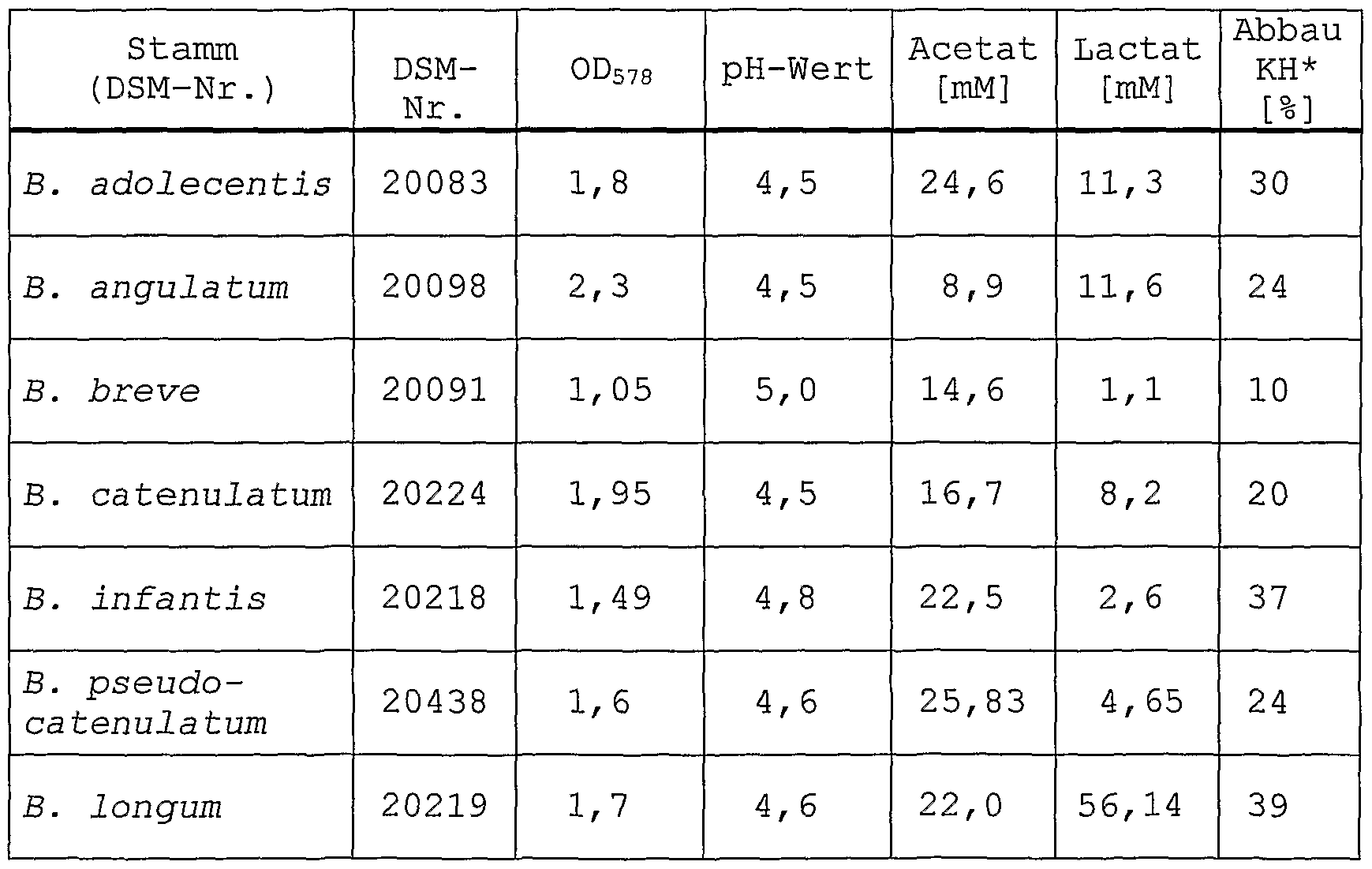
- Bifidobacteria from human faeces are incubated under anaerobic conditions in nutrient medium (for composition see below) to which condensed palatinose, prepared according to Example 3, is added as the only carbon source.
- the growth of the bacteria is followed by increasing the optical density OD58, measured at 578 nm. After an incubation time of 48 h, the parameters optical density (0D 578 ), pH, the formation of acetate and lactate and the residual content of the condensed palatinose according to the invention used are determined.
- the nutrient medium used corresponded to DSMZ medium No. 58 and had the following composition:
- Vitamin solution according to DSM Medium 141 1.0 ml
- Sample 1 conventional condensed palatinose, according to Example 1
- Sample 2 condensed palatinose, according to the invention, produced according to Example 3
- sample 1 10 out of 10 people (examiners) rate sample 1 as bitter. According to the examiners, sample 1 also has an unpleasant, long-lasting aftertaste. On the other hand, sample 2 has a pleasantly sweet taste, in particular a caramel-like taste.
- the condensed palatinose is mixed with drinking water to an 18%, 19%, 20%, 21%, 22%, 23%, 24%, 25%, 26 each %, 27% and 28% solution diluted and then each passed through a 0.45 ⁇ m membrane filter.
- an 8% aqueous sucrose solution is prepared.
- the samples are given in the order listed above.
- the examiners, 9 people, should first taste the comparison standard and then one of the samples and state whether the sugar standard or the sample is sweeter or whether they cannot tell the difference. Drinking water was used to neutralize between tastings.
- the number of samples to be tested can be reduced for the second tasting.
- the 27% to 20% aqueous condensed palatinose solutions, starting with the highest concentration, are tasted by 8 examiners against the comparison standard under the conditions described above.
- Xi transition point at which there is a change from "standard is sweeter” to "no difference in sweetening power” or from "no difference in sweetening power” to "standard is sweeter”.
- the sweetness of the condensed palatinose according to the invention was determined to be approximately 34% + 2%.
- Soak or dissolve gelatin with water Boil sugar, glucose syrup and condensed palatinose to the specified temperature, let cool slightly; Add gelatin, fruit acid and glycerin; Pour the mixture, place in the heating chamber, powder and oil.
- Soak agar in water dissolve, add sugar and other ingredients and boil to 105 ° C. Pour the mass into the appropriate molds.
- Sucrose, glucose syrup, condensed palatinose and water are boiled to 135 ° C and then evacuated. After cooling to 120 ° C, the pre-dissolved DL-malic acid, aroma and color are stirred in. The melt is stamped or poured.
- Example of use 4 drinks
- Example of use 6 yoghurt
- yeast is used as a raising agent.
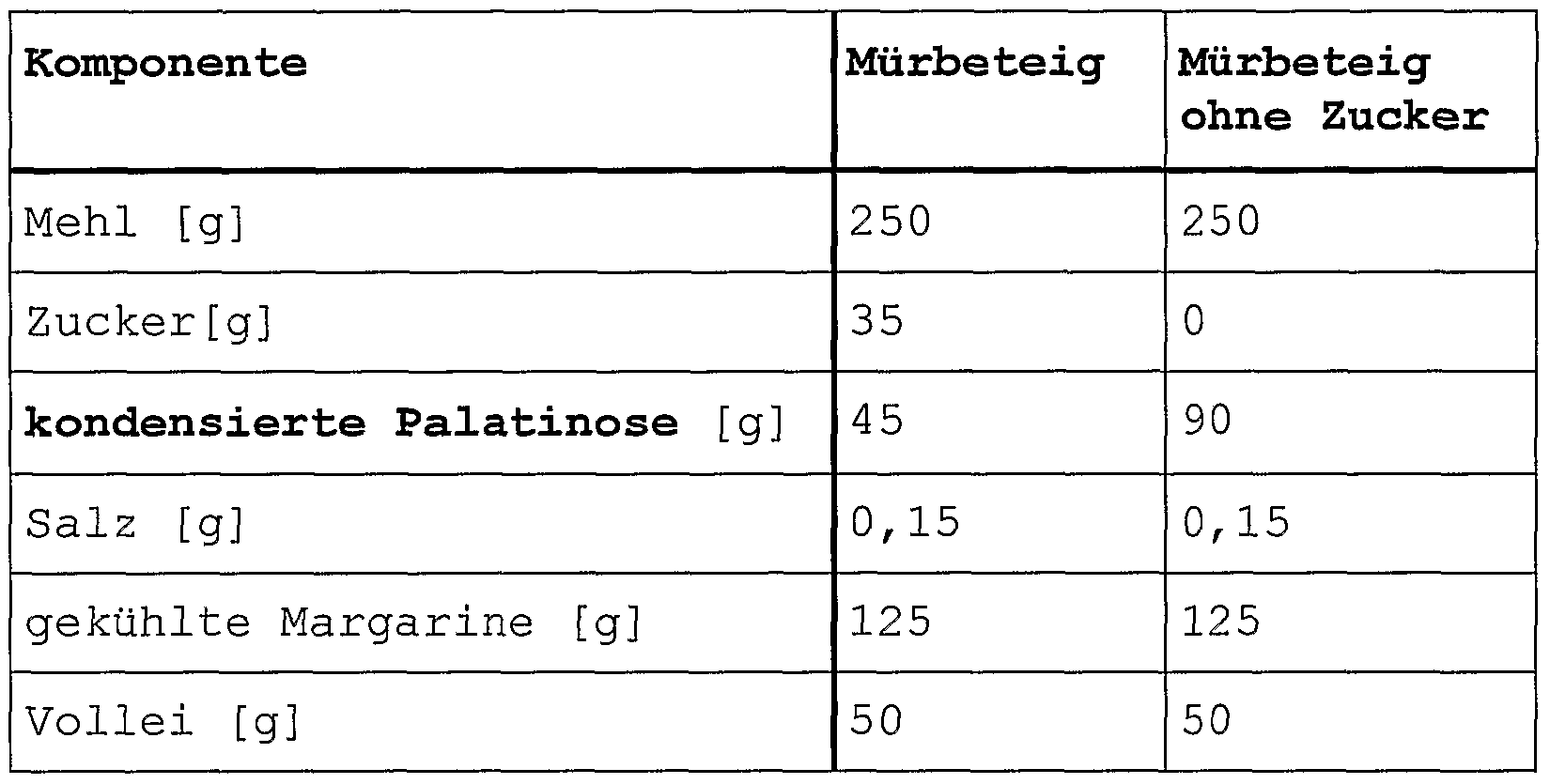
- the condensed palatinose according to the invention can only be used to a limited extent as a substrate by baker's yeast. Therefore, only one Part of the sugar exchanged for condensed palatinose.
- Whisk egg yolk, water, sugar, condensed palatinose and salt with a whisk Put the very hard beaten egg white on the egg yolk mixture. Mix the flour, cornstarch and baking powder, sieve on the snow and gently fold.
Landscapes
- Health & Medical Sciences (AREA)
- Life Sciences & Earth Sciences (AREA)
- Chemical & Material Sciences (AREA)
- Engineering & Computer Science (AREA)
- Food Science & Technology (AREA)
- Polymers & Plastics (AREA)
- Organic Chemistry (AREA)
- Nutrition Science (AREA)
- General Health & Medical Sciences (AREA)
- Public Health (AREA)
- Pharmacology & Pharmacy (AREA)
- Animal Behavior & Ethology (AREA)
- Medicinal Chemistry (AREA)
- Veterinary Medicine (AREA)
- Nuclear Medicine, Radiotherapy & Molecular Imaging (AREA)
- General Chemical & Material Sciences (AREA)
- Chemical Kinetics & Catalysis (AREA)
- Bioinformatics & Cheminformatics (AREA)
- Molecular Biology (AREA)
- Oil, Petroleum & Natural Gas (AREA)
- Animal Husbandry (AREA)
- Zoology (AREA)
- Cardiology (AREA)
- Diabetes (AREA)
- Heart & Thoracic Surgery (AREA)
- Rheumatology (AREA)
- Endocrinology (AREA)
- Biochemistry (AREA)
- Physical Education & Sports Medicine (AREA)
- Microbiology (AREA)
- Genetics & Genomics (AREA)
- Biotechnology (AREA)
- Proteomics, Peptides & Aminoacids (AREA)
- Mycology (AREA)
- Epidemiology (AREA)
- Reproductive Health (AREA)
- Birds (AREA)
- Neurology (AREA)
- Orthopedic Medicine & Surgery (AREA)
- Pregnancy & Childbirth (AREA)
Abstract
Description






Claims
Priority Applications (6)
| Application Number | Priority Date | Filing Date | Title |
|---|---|---|---|
| JP2004513303A JP2006502103A (ja) | 2002-06-13 | 2003-06-13 | 縮合パラチノース及びその製造方法 |
| AU2003276966A AU2003276966A1 (en) | 2002-06-13 | 2003-06-13 | Condensed palatinose and method for producing the same |
| BR0311783-9A BR0311783A (pt) | 2002-06-13 | 2003-06-13 | Palatinose condensada e método para produzir a mesma |
| CA002489459A CA2489459A1 (en) | 2002-06-13 | 2003-06-13 | Condensed palatinose and method for producing the same |
| EP03740239A EP1515979A1 (de) | 2002-06-13 | 2003-06-13 | Kondensierte palatinose und verfahren zu deren herstellung |
| US10/515,487 US20050238777A1 (en) | 2002-06-13 | 2003-06-13 | Condensed palatinose and method for producing the same |
Applications Claiming Priority (2)
| Application Number | Priority Date | Filing Date | Title |
|---|---|---|---|
| DE10226203A DE10226203B4 (de) | 2002-06-13 | 2002-06-13 | Kondensierte Palatinose, Verfahren zu deren Herstellung und deren Verwendung |
| DE10226203.9 | 2002-06-13 |
Publications (1)
| Publication Number | Publication Date |
|---|---|
| WO2003106472A1 true WO2003106472A1 (de) | 2003-12-24 |
Family
ID=29719002
Family Applications (1)
| Application Number | Title | Priority Date | Filing Date |
|---|---|---|---|
| PCT/EP2003/006218 Ceased WO2003106472A1 (de) | 2002-06-13 | 2003-06-13 | Kondensierte palatinose und verfahren zu deren herstellung |
Country Status (9)
| Country | Link |
|---|---|
| US (1) | US20050238777A1 (de) |
| EP (1) | EP1515979A1 (de) |
| JP (1) | JP2006502103A (de) |
| CN (1) | CN1324038C (de) |
| AU (1) | AU2003276966A1 (de) |
| BR (1) | BR0311783A (de) |
| CA (1) | CA2489459A1 (de) |
| DE (2) | DE10262018B4 (de) |
| WO (1) | WO2003106472A1 (de) |
Cited By (2)
| Publication number | Priority date | Publication date | Assignee | Title |
|---|---|---|---|---|
| WO2009047537A1 (en) * | 2007-10-11 | 2009-04-16 | Fayrefield Foods Limited | Preparation for treating intestinal infection comprising oligosaccharides and insoluble cellular material |
| WO2018109074A1 (en) * | 2016-12-16 | 2018-06-21 | Nestec Sa | Oligosaccharides for flavour generation |
Families Citing this family (20)
| Publication number | Priority date | Publication date | Assignee | Title |
|---|---|---|---|---|
| DE102005022601A1 (de) * | 2005-05-11 | 2006-11-23 | Südzucker AG Mannheim/Ochsenfurt | Hartkaramellen mit Isomaltulose |
| DE102005056652A1 (de) * | 2005-11-25 | 2007-05-31 | Südzucker AG Mannheim/Ochsenfurt | Präparat enthaltend eine polyphenolhaltige Zusammensetzung und Isomaltulose |
| DE102006014543A1 (de) * | 2006-03-21 | 2007-09-27 | Südzucker AG Mannheim/Ochsenfurt | Funktionelle Lebensmittel gegen Tumore |
| DE102007026975A1 (de) * | 2007-06-01 | 2008-12-04 | Südzucker Aktiengesellschaft Mannheim/Ochsenfurt | Antioxidationsmittel für Lebensmittel |
| US20090297660A1 (en) * | 2008-06-02 | 2009-12-03 | Kraft Food Holdings, Inc. | Cheese Products Containing Galacto-Oligosaccharides And Having Reduced Lactose Levels |
| US9622500B2 (en) | 2008-11-04 | 2017-04-18 | The Quaker Oats Company | Food products prepared with soluble whole grain oat flour |
| US10689678B2 (en) | 2008-11-04 | 2020-06-23 | The Quaker Oats Company | Method and composition comprising hydrolyzed starch |
| US9510614B2 (en) | 2008-11-04 | 2016-12-06 | The Quaker Oats Company | Food products prepared with soluble whole grain oat flour |
| US9504272B2 (en) | 2008-11-04 | 2016-11-29 | The Quaker Oats Company | Method of processing oats to achieve oats with an increased avenanthramide content |
| US9901551B2 (en) | 2009-04-20 | 2018-02-27 | Ambra Bioscience Llc | Chemosensory receptor ligand-based therapies |
| US8828953B2 (en) * | 2009-04-20 | 2014-09-09 | NaZura BioHealth, Inc. | Chemosensory receptor ligand-based therapies |
| JP5247638B2 (ja) * | 2009-09-08 | 2013-07-24 | 株式会社山田養蜂場本社 | ハチミツに由来する褐変化が抑制されたハチミツ含有組成物及びその調製方法 |
| MX2013004364A (es) | 2010-10-19 | 2013-07-02 | Elcelyx Therapeutics Inc | Terapias a base de ligando del receptor quimiosensorial. |
| PH12014500343A1 (en) | 2011-07-12 | 2014-04-14 | Pepsico Inc | Method of preparing an oat-containing dairy beverage |
| EP2830433B1 (de) * | 2012-03-30 | 2018-11-21 | Südzucker AG | Verbesserte walzmittelpulver zur anwendung auf der oberfläche von kaugummikernstoffen |
| JP5671594B2 (ja) * | 2012-11-28 | 2015-02-18 | 日本食品化工株式会社 | 糖縮合物の製造法 |
| US11172695B2 (en) | 2016-03-22 | 2021-11-16 | The Quaker Oats Company | Method, apparatus, and product providing hydrolyzed starch and fiber |
| US20170275662A1 (en) | 2016-03-22 | 2017-09-28 | The Quaker Oats Company | Method and Apparatus for Controlled Hydrolysis |
| CN106360531A (zh) * | 2016-08-29 | 2017-02-01 | 界首市宏源家庭农场 | 一种麻辣富硒南瓜酱 |
| US11337444B2 (en) | 2019-02-22 | 2022-05-24 | Jasper Products, L.L.C. | Rapid hydrolysis process for oat-based beverage composition |
Citations (4)
| Publication number | Priority date | Publication date | Assignee | Title |
|---|---|---|---|---|
| DE3818884A1 (de) * | 1987-06-04 | 1989-01-05 | Mitsui Sugar Co | Palatinose-kondensationsprodukt, verfahren zu dessen herstellung und dessen verwendung zur proliferation von bifidobakterium |
| JPH04312595A (ja) * | 1991-04-08 | 1992-11-04 | Mitsui Sugar Co Ltd | パラチノース縮合物の製造法 |
| FR2680789A1 (fr) * | 1991-09-02 | 1993-03-05 | Beghin Say Sa | Nouveaux dianhydrides glycosyles du fructose et leurs procedes de preparation. |
| US5298263A (en) * | 1991-06-19 | 1994-03-29 | Wm. Wrigley Jr. Company | Chewing gum coated with palatinose or palatinose oligosaccharide |
Family Cites Families (6)
| Publication number | Priority date | Publication date | Assignee | Title |
|---|---|---|---|---|
| JPH0612977B2 (ja) * | 1985-05-27 | 1994-02-23 | 加藤化学株式会社 | 果糖縮合物の製造方法 |
| CA2003745A1 (en) * | 1989-11-13 | 1991-05-23 | Narito Ishiga | Process for preparing an impact resistant resin |
| WO1991015941A1 (en) * | 1991-06-19 | 1991-10-31 | Wm. Wrigley Jr. Company | Chewing gum containing palatinose |
| AUPN881396A0 (en) * | 1996-03-20 | 1996-04-18 | Arnott's Biscuits Limited | Enhancement of microbial colonization of the gastrointestinal tract |
| US6531114B1 (en) * | 1999-04-06 | 2003-03-11 | Wm. Wrigley Jr. Company | Sildenafil citrate chewing gum formulations and methods of using the same |
| DE10104055A1 (de) * | 2001-01-31 | 2002-08-14 | Suedzucker Ag | Verwendung von Kohlenhydraten zur Beseitigung von Darminfektionen bei Tieren |
-
2002
- 2002-06-13 DE DE10262018A patent/DE10262018B4/de not_active Expired - Fee Related
- 2002-06-13 DE DE10226203A patent/DE10226203B4/de not_active Expired - Fee Related
-
2003
- 2003-06-13 BR BR0311783-9A patent/BR0311783A/pt not_active IP Right Cessation
- 2003-06-13 JP JP2004513303A patent/JP2006502103A/ja not_active Withdrawn
- 2003-06-13 AU AU2003276966A patent/AU2003276966A1/en not_active Abandoned
- 2003-06-13 WO PCT/EP2003/006218 patent/WO2003106472A1/de not_active Ceased
- 2003-06-13 CA CA002489459A patent/CA2489459A1/en not_active Abandoned
- 2003-06-13 CN CNB038136937A patent/CN1324038C/zh not_active Expired - Fee Related
- 2003-06-13 US US10/515,487 patent/US20050238777A1/en not_active Abandoned
- 2003-06-13 EP EP03740239A patent/EP1515979A1/de not_active Withdrawn
Patent Citations (4)
| Publication number | Priority date | Publication date | Assignee | Title |
|---|---|---|---|---|
| DE3818884A1 (de) * | 1987-06-04 | 1989-01-05 | Mitsui Sugar Co | Palatinose-kondensationsprodukt, verfahren zu dessen herstellung und dessen verwendung zur proliferation von bifidobakterium |
| JPH04312595A (ja) * | 1991-04-08 | 1992-11-04 | Mitsui Sugar Co Ltd | パラチノース縮合物の製造法 |
| US5298263A (en) * | 1991-06-19 | 1994-03-29 | Wm. Wrigley Jr. Company | Chewing gum coated with palatinose or palatinose oligosaccharide |
| FR2680789A1 (fr) * | 1991-09-02 | 1993-03-05 | Beghin Say Sa | Nouveaux dianhydrides glycosyles du fructose et leurs procedes de preparation. |
Non-Patent Citations (3)
| Title |
|---|
| DATABASE WPI Week 199251, Derwent World Patents Index; AN 1992-418621 * |
| PATENT ABSTRACTS OF JAPAN vol. 017, no. 142 (C - 1038) 23 March 1993 (1993-03-23) * |
| TANAKA ET AL.: "Structure of oligosaccharides prepared by acidic condensation of palatinose", J. CARBOHYDR. CHEM., vol. 12, no. 1, 1993, pages 49 - 61, XP009016354 * |
Cited By (3)
| Publication number | Priority date | Publication date | Assignee | Title |
|---|---|---|---|---|
| WO2009047537A1 (en) * | 2007-10-11 | 2009-04-16 | Fayrefield Foods Limited | Preparation for treating intestinal infection comprising oligosaccharides and insoluble cellular material |
| WO2018109074A1 (en) * | 2016-12-16 | 2018-06-21 | Nestec Sa | Oligosaccharides for flavour generation |
| CN109982582A (zh) * | 2016-12-16 | 2019-07-05 | 雀巢产品技术援助有限公司 | 用于产生风味物的低聚糖 |
Also Published As
| Publication number | Publication date |
|---|---|
| CN1324038C (zh) | 2007-07-04 |
| BR0311783A (pt) | 2005-03-29 |
| DE10262018B4 (de) | 2007-09-06 |
| DE10226203B4 (de) | 2008-04-03 |
| CN1659176A (zh) | 2005-08-24 |
| AU2003276966A1 (en) | 2003-12-31 |
| CA2489459A1 (en) | 2003-12-24 |
| DE10262018A1 (de) | 2004-05-13 |
| DE10226203A1 (de) | 2004-01-08 |
| US20050238777A1 (en) | 2005-10-27 |
| JP2006502103A (ja) | 2006-01-19 |
| EP1515979A1 (de) | 2005-03-23 |
Similar Documents
| Publication | Publication Date | Title |
|---|---|---|
| DE10262018B4 (de) | Zusammensetzungen, Nahrungs-, Lebens-, und Genussmittel, Süßwaren, Tierfuttermittel, diätische Spezial-Ernährung, Kinderernährung, Süßungsmittel und pharmazeutische Zusammensetzungen enthaltend kondensierte Palatinose | |
| EP1513942B1 (de) | Galactosyl-isomalt, verfahren zu seiner herstellung und verwendung | |
| DE69027384T2 (de) | Beta-Oligosaccharide enthaltende Zusammensetzung und Verfahren zur Verbesserung der Darmflora | |
| EP1641354A1 (de) | Verwendung von isomalt (mischung von 1,6 gps und 1,1 gpm) als präbiotikum u.a. zur herstellung eines arzneimittels zur behandlung von darmerkrankungen | |
| US5698437A (en) | Agent for promoting the proliferation of bifidobacterium | |
| DE10262005B4 (de) | Lebens-, Genuss-, Süßungs- und Arzneimittel, sowie Zusammensetzungen enthaltend kondensierte Palatinose in hydrierter Form | |
| DE2426998A1 (de) | Verfahren zur verhinderung des auftretens von karies | |
| EP1998633A1 (de) | Funktionelle lebensmittel gegen tumore | |
| US8187624B1 (en) | Compositions for taking dietary fibers | |
| DE69333587T2 (de) | Bifidobacterium wachstumspromotor | |
| Clarke | Non-sucrose carbohydrates | |
| IL165448A (en) | Galactosyl isomalt compositions and methods for producing galactosyl isomalt |
Legal Events
| Date | Code | Title | Description |
|---|---|---|---|
| AK | Designated states |
Kind code of ref document: A1 Designated state(s): AE AG AL AM AT AU AZ BA BB BG BR BY BZ CA CH CN CO CR CU CZ DK DM DZ EC EE ES FI GB GD GE GH GM HR HU ID IL IN IS JP KE KG KP KR KZ LC LK LR LS LT LU LV MA MD MG MK MN MW MX MZ NI NO NZ OM PH PL PT RO RU SC SD SE SG SK SL TJ TM TN TR TT TZ UA UG US UZ VC VN YU ZA ZM ZW |
|
| AL | Designated countries for regional patents |
Kind code of ref document: A1 Designated state(s): GH GM KE LS MW MZ SD SL SZ TZ UG ZM ZW AM AZ BY KG KZ MD RU TJ TM AT BE BG CH CY CZ DE DK EE ES FI FR GB GR HU IE IT LU MC NL PT RO SE SI SK TR BF BJ CF CG CI CM GA GN GQ GW ML MR NE SN TD TG |
|
| 121 | Ep: the epo has been informed by wipo that ep was designated in this application | ||
| WWE | Wipo information: entry into national phase |
Ref document number: 2003740239 Country of ref document: EP |
|
| WWE | Wipo information: entry into national phase |
Ref document number: 2003276966 Country of ref document: AU |
|
| WWE | Wipo information: entry into national phase |
Ref document number: 2004513303 Country of ref document: JP |
|
| WWE | Wipo information: entry into national phase |
Ref document number: 2489459 Country of ref document: CA Ref document number: 20038136937 Country of ref document: CN |
|
| WWP | Wipo information: published in national office |
Ref document number: 2003740239 Country of ref document: EP |
|
| DFPE | Request for preliminary examination filed prior to expiration of 19th month from priority date (pct application filed before 20040101) | ||
| WWE | Wipo information: entry into national phase |
Ref document number: 10515487 Country of ref document: US |