WO2004007553A1 - Antibodies anti-c5 component of the complement system and their use - Google Patents
Antibodies anti-c5 component of the complement system and their use Download PDFInfo
- Publication number
- WO2004007553A1 WO2004007553A1 PCT/EP2003/007487 EP0307487W WO2004007553A1 WO 2004007553 A1 WO2004007553 A1 WO 2004007553A1 EP 0307487 W EP0307487 W EP 0307487W WO 2004007553 A1 WO2004007553 A1 WO 2004007553A1
- Authority
- WO
- WIPO (PCT)
- Prior art keywords
- antibody
- antibodies
- seq
- sequences
- chain
- Prior art date
- Legal status (The legal status is an assumption and is not a legal conclusion. Google has not performed a legal analysis and makes no representation as to the accuracy of the status listed.)
- Ceased
Links
Classifications
-
- C—CHEMISTRY; METALLURGY
- C12—BIOCHEMISTRY; BEER; SPIRITS; WINE; VINEGAR; MICROBIOLOGY; ENZYMOLOGY; MUTATION OR GENETIC ENGINEERING
- C12N—MICROORGANISMS OR ENZYMES; COMPOSITIONS THEREOF; PROPAGATING, PRESERVING, OR MAINTAINING MICROORGANISMS; MUTATION OR GENETIC ENGINEERING; CULTURE MEDIA
- C12N15/00—Mutation or genetic engineering; DNA or RNA concerning genetic engineering, vectors, e.g. plasmids, or their isolation, preparation or purification; Use of hosts therefor
- C12N15/09—Recombinant DNA-technology
- C12N15/11—DNA or RNA fragments; Modified forms thereof; Non-coding nucleic acids having a biological activity
-
- A—HUMAN NECESSITIES
- A61—MEDICAL OR VETERINARY SCIENCE; HYGIENE
- A61P—SPECIFIC THERAPEUTIC ACTIVITY OF CHEMICAL COMPOUNDS OR MEDICINAL PREPARATIONS
- A61P19/00—Drugs for skeletal disorders
- A61P19/02—Drugs for skeletal disorders for joint disorders, e.g. arthritis, arthrosis
-
- A—HUMAN NECESSITIES
- A61—MEDICAL OR VETERINARY SCIENCE; HYGIENE
- A61P—SPECIFIC THERAPEUTIC ACTIVITY OF CHEMICAL COMPOUNDS OR MEDICINAL PREPARATIONS
- A61P25/00—Drugs for disorders of the nervous system
-
- A—HUMAN NECESSITIES
- A61—MEDICAL OR VETERINARY SCIENCE; HYGIENE
- A61P—SPECIFIC THERAPEUTIC ACTIVITY OF CHEMICAL COMPOUNDS OR MEDICINAL PREPARATIONS
- A61P29/00—Non-central analgesic, antipyretic or antiinflammatory agents, e.g. antirheumatic agents; Non-steroidal antiinflammatory drugs [NSAID]
-
- A—HUMAN NECESSITIES
- A61—MEDICAL OR VETERINARY SCIENCE; HYGIENE
- A61P—SPECIFIC THERAPEUTIC ACTIVITY OF CHEMICAL COMPOUNDS OR MEDICINAL PREPARATIONS
- A61P9/00—Drugs for disorders of the cardiovascular system
- A61P9/10—Drugs for disorders of the cardiovascular system for treating ischaemic or atherosclerotic diseases, e.g. antianginal drugs, coronary vasodilators, drugs for myocardial infarction, retinopathy, cerebrovascula insufficiency, renal arteriosclerosis
-
- C—CHEMISTRY; METALLURGY
- C07—ORGANIC CHEMISTRY
- C07K—PEPTIDES
- C07K16/00—Immunoglobulins [IG], e.g. monoclonal or polyclonal antibodies
- C07K16/18—Immunoglobulins [IG], e.g. monoclonal or polyclonal antibodies against material from animals or humans
-
- C—CHEMISTRY; METALLURGY
- C12—BIOCHEMISTRY; BEER; SPIRITS; WINE; VINEGAR; MICROBIOLOGY; ENZYMOLOGY; MUTATION OR GENETIC ENGINEERING
- C12N—MICROORGANISMS OR ENZYMES; COMPOSITIONS THEREOF; PROPAGATING, PRESERVING, OR MAINTAINING MICROORGANISMS; MUTATION OR GENETIC ENGINEERING; CULTURE MEDIA
- C12N15/00—Mutation or genetic engineering; DNA or RNA concerning genetic engineering, vectors, e.g. plasmids, or their isolation, preparation or purification; Use of hosts therefor
- C12N15/09—Recombinant DNA-technology
- C12N15/11—DNA or RNA fragments; Modified forms thereof; Non-coding nucleic acids having a biological activity
- C12N15/62—DNA sequences coding for fusion proteins
-
- C—CHEMISTRY; METALLURGY
- C12—BIOCHEMISTRY; BEER; SPIRITS; WINE; VINEGAR; MICROBIOLOGY; ENZYMOLOGY; MUTATION OR GENETIC ENGINEERING
- C12N—MICROORGANISMS OR ENZYMES; COMPOSITIONS THEREOF; PROPAGATING, PRESERVING, OR MAINTAINING MICROORGANISMS; MUTATION OR GENETIC ENGINEERING; CULTURE MEDIA
- C12N15/00—Mutation or genetic engineering; DNA or RNA concerning genetic engineering, vectors, e.g. plasmids, or their isolation, preparation or purification; Use of hosts therefor
- C12N15/09—Recombinant DNA-technology
- C12N15/63—Introduction of foreign genetic material using vectors; Vectors; Use of hosts therefor; Regulation of expression
- C12N15/70—Vectors or expression systems specially adapted for E. coli
-
- C—CHEMISTRY; METALLURGY
- C12—BIOCHEMISTRY; BEER; SPIRITS; WINE; VINEGAR; MICROBIOLOGY; ENZYMOLOGY; MUTATION OR GENETIC ENGINEERING
- C12N—MICROORGANISMS OR ENZYMES; COMPOSITIONS THEREOF; PROPAGATING, PRESERVING, OR MAINTAINING MICROORGANISMS; MUTATION OR GENETIC ENGINEERING; CULTURE MEDIA
- C12N15/00—Mutation or genetic engineering; DNA or RNA concerning genetic engineering, vectors, e.g. plasmids, or their isolation, preparation or purification; Use of hosts therefor
- C12N15/09—Recombinant DNA-technology
- C12N15/63—Introduction of foreign genetic material using vectors; Vectors; Use of hosts therefor; Regulation of expression
- C12N15/79—Vectors or expression systems specially adapted for eukaryotic hosts
- C12N15/85—Vectors or expression systems specially adapted for eukaryotic hosts for animal cells
-
- A—HUMAN NECESSITIES
- A61—MEDICAL OR VETERINARY SCIENCE; HYGIENE
- A61K—PREPARATIONS FOR MEDICAL, DENTAL OR TOILETRY PURPOSES
- A61K39/00—Medicinal preparations containing antigens or antibodies
- A61K2039/505—Medicinal preparations containing antigens or antibodies comprising antibodies
-
- C—CHEMISTRY; METALLURGY
- C07—ORGANIC CHEMISTRY
- C07K—PEPTIDES
- C07K2317/00—Immunoglobulins specific features
- C07K2317/20—Immunoglobulins specific features characterized by taxonomic origin
- C07K2317/21—Immunoglobulins specific features characterized by taxonomic origin from primates, e.g. man
-
- C—CHEMISTRY; METALLURGY
- C07—ORGANIC CHEMISTRY
- C07K—PEPTIDES
- C07K2317/00—Immunoglobulins specific features
- C07K2317/20—Immunoglobulins specific features characterized by taxonomic origin
- C07K2317/24—Immunoglobulins specific features characterized by taxonomic origin containing regions, domains or residues from different species, e.g. chimeric, humanized or veneered
-
- C—CHEMISTRY; METALLURGY
- C07—ORGANIC CHEMISTRY
- C07K—PEPTIDES
- C07K2317/00—Immunoglobulins specific features
- C07K2317/50—Immunoglobulins specific features characterized by immunoglobulin fragments
- C07K2317/52—Constant or Fc region; Isotype
-
- C—CHEMISTRY; METALLURGY
- C07—ORGANIC CHEMISTRY
- C07K—PEPTIDES
- C07K2317/00—Immunoglobulins specific features
- C07K2317/60—Immunoglobulins specific features characterized by non-natural combinations of immunoglobulin fragments
- C07K2317/62—Immunoglobulins specific features characterized by non-natural combinations of immunoglobulin fragments comprising only variable region components
- C07K2317/622—Single chain antibody (scFv)
-
- C—CHEMISTRY; METALLURGY
- C07—ORGANIC CHEMISTRY
- C07K—PEPTIDES
- C07K2317/00—Immunoglobulins specific features
- C07K2317/70—Immunoglobulins specific features characterized by effect upon binding to a cell or to an antigen
- C07K2317/76—Antagonist effect on antigen, e.g. neutralization or inhibition of binding
-
- C—CHEMISTRY; METALLURGY
- C07—ORGANIC CHEMISTRY
- C07K—PEPTIDES
- C07K2317/00—Immunoglobulins specific features
- C07K2317/90—Immunoglobulins specific features characterized by (pharmaco)kinetic aspects or by stability of the immunoglobulin
- C07K2317/92—Affinity (KD), association rate (Ka), dissociation rate (Kd) or EC50 value
-
- C—CHEMISTRY; METALLURGY
- C07—ORGANIC CHEMISTRY
- C07K—PEPTIDES
- C07K2319/00—Fusion polypeptide
Definitions
- complement system represents an important mechanism in the immune defence. At the same time it represents a double-edged weapon because on the one hand guarantees protection of the host but on the other is capable of damaging tissues where complement is activated by several pathological circumstances.
- the increased susceptibility to bacterial infections and autoimmune disorders observed in patients with inherited deficiencies of the C system clearly demonstrates the particular importance of this system in host protection against infectious agents and in the clearance of immunocomplexes.
- C5a and C5b67 have the function to recruit phagocytic cells at the site of inflammation or lyse sensitive targets as in the case of the membrane attack complex (MAC).
- MAC membrane attack complex
- these molecules once they are produced, are not able to discriminate between endogenous and exogenous targets, and would provoke serious damage to tissues and cells if those were not protected by potent membrane or extracellular inhibitors acting at various levels in the complement activation cascade.
- the action of inhibitors is overwhelmed in presence of a massive activation of the C system, in serious infectious diseases or autoimmune disorders, and the activated complement causes tissue and cell destruction.
- the C5a fragment and the C terminal complex are among the products involved in tissue destruction in several inflammatory processes. Above normal
- TCC is generated from the C5b fragment released by enzymatic cleavage of C5 by the action of C5 convertase. Recently it has been demonstrated that TCC induces inflammation because of tissue damage deriving from its lytic activity and of numerous non-cytotoxic effects on phagocytes and other cell types. TCC has been identified in several tissues in diverse pathological conditions, including rheumatoid arthritis, glomerulopathies multiple sclerosis, demyelinating peripheral neuropathies, atherosclerosis and myocardial infarction. The development of experimental animal models of these diseases with selective deficiencies in late C components has further contributed to define the role of these components in development of tissue damage, j
- Anti-C5 antibodies have been successfully used in mice to prevent the development of collagen-induced arthritis and to improve the clinical course of glomerulonephritis, and in rats to reduce myocardial ischemia and re-perfusion.
- two single chain antibodies (single? criain antibody or single chain fragment variable, scFv) have been produced that are both described in patent application WO 95/29697. These antibodies are able to penetrate tissues more rapidly than the whole antibody.
- the first single chain antibody obtained by assembling variable regions of a mouse antibody for C5 retains the ability of the original antibody to inhibit assembly of the MAC and partially block C5a production (Evans, M. J et al, 1995, Mol. Immunol. 32:1183).
- the second scFv is a humanised mouse antibody anti-C5, that is obtained by inserting murine CDR regions (complementarity determining region) in the structure of the variable region of human light and heavy chains.
- This antibody (Thomas, T. C. et al., 1996, Mol. Immunol. 33:1389) is able to inhibit C5a and C5b-9 formation although the recognised epitope mapped around amino acids 860-865 of the C5 molecule and corresponding to peptide KSSKC, turns out to be far from the C5 convertase cleavage site.
- Previous studies (Fitch, J.
- the main aspect of the invention refers to an antibody of human origin specific for the C5 component of activated complement and characterised by the fact that inhibits cleavage of the C5 alpha chain into C5a and C5b.
- the antibody is recombinant and recognises an epitope comprising the proteolytic site for the C5 convertase on the alpha chain of the C5 complement component.
- the recombinant antibody is composed of a single chain (scFv) comprising a variable region of the light chain covalently bound to a variable region of the heavy chain and, according to an even more preferred aspect is composed of or comprises at least one of amino acid sequences selected among SEQ ID NO : 2, 4, 6 or proteins having at least 95% homology to such polypeptides.
- scFv single chain
- the invention includes the isolated nucleotide sequences encoding antibodies specific for C5 component of activated complement. These antibodies are characterised by the fact that they inhibit cleavage of the C5 alpha chain into C5a and C5b, and in particular the sequences chosen between: SEQ ID NO 1 or 3 or 5 and the vectors containing these sequences.
- the invention refers to the therapeutic use of antibodies and nucleotide sequences for preparation of drugs that prevent and treat diseases involving uncontrolled activation of the complement system, in particular: rheumatoid arthritis, glomerulonephritis, multiple sclerosis, demyelinating peripheral neuropathies, atherosclerosis.
- Figure 1 Assessment of the ability of anti-C5 clones scFv Ts-a12 and Ts- a 12/22 to inhibit formation of C5a fragment by means of an ELISA assay (panel A) and an haemolytic assay (panel B).
- Panel A The ELISA assay measures the amount of C5a fragment released in the supernatant after enzymatic cleavage of C5, using antibodies anti-C5 as described in example 6. Incubation of C5 with antibodies Ts-a12 and Ts-a12/22 of the invention inhibits formation of the C5a fragment. Sheep erythrocytes sensitised with antibodies and coated until the C3b (EAC1-3b) compelement step were added to the mixture of TS-A12 or TS-A12/22 and C5, and the mixture was further incubated for 30 minutes at 37°C (panel B).
- EAC1-3b C3b
- TS- A12 and TS-A12/22 antibodies inhibit C5 cleavage by C5 convertase and therefore inhibit formation of C5a (Panel A) and of TCC (Panel B).
- the alpha and beta chains of C5 were electrophoretically separated by means of
- Figure 3 Inhibition of the binding of C5 and scFv of the invention by peptide P5A-18 (KDMQLGRLHMKTLLPVSK) comprising the C5 convertase cleavage site.
- Inhibition by the P5A-18 peptide of the binding between scFv of the invention and C5 is dose-dependent, ranging between 45% to 90% for peptide concentrations of 200 and 800 ng, respectively. These values correspond to a Ki of 1 ⁇ M for the P5A-18 peptide. No inhibition is observed using C5A or the unrelated peptide.
- Figure 4. Inhibition of hemolytic activity of C5 by the TS-A12/22 antibody. Values from spectrophotometric reading performed at 412 nm to measure inhibition of lysis of sheep erythrocytes coated with EAC1-3b, through the classical complement activation pathway (A Panel); or of rabbit erythrocytes in order to measure the alternative pathway of complement activation ⁇ B Panel).
- PMN Polymorphonuclear Leukocytes isolated from intra-articular wash out of rats with arthritis induced by instillation of BSA (mBSA), were incubated with antibody TS-A12/22 or with an unrelated antibody, as described in example 10. The number of PMN in the joint treated with the antibody of the invention appears drastically reduced.
- Figure 8 Schematic representation of minibodies prepared from ScFv sequences including human, mouse and rat constant regions.
- Figure 10 Inhibition of intra-articular migration of Polymorphonuclear Leukocytes (PMN) by the TS-A12/22-CH2CH3 antibody (minibody) in rat models of antigen- induced arthritis. From left: bar 1 : control (mBSA); bar 2: mBSA + TS-A12/22-CH2CH3 (minibody) injected at time 0; bar 3: mBSA + TS-A12/22-CH2CH3 (minibody) injected at 6 hours from induction of arthritis. Figure 11. Reduction of the joint swelling. The antibody, under the form of minibody, was injected in the model of mBSA- induced arthritis in rat at time 0 and 6 days after BSA treatment.
- Percentage values on the ordinate have been obtained with respect to the basal diameter of the joint prior to induction of arthritis. Days are indicated on the abscissa. From left: bar 1 : control (mBSA); bar 2: mBSA + TS-A12/22-CH2CH3 (minibody) injected at time 0 from induction of arthritis; bar 3: mBSA + TS-A12/22-CH2CH3 (minibody) injected at 6 hours from induction of arthritis.
- the main object of the present invention relates to an antibody of human origin which has specificity for the C5 component of the complement system and is characterised by the fact of inhibiting the cleavage of C5 alpha chain, also termed activated C5, into C5a and C5b fragments.
- This cleavage occurs as result of complement activation occurring by known mechanisms.
- a C5 convertase is produced which cleaves the alpha chain of factor C5 generating a fragment of approximately 70 amino acids (aa), known as C5a, and a C-terminal fragment of 925 aa, C5b.
- the products resulting from C5 activation, C5a and C5b are biologically active.
- C5a has chemotactic activity toward polymorphonuclear leukocytes and monocytes
- the C5b fragment contributes to formation of the terminal complement complex (TCC).
- the antibody is preferably recombinant.
- the antibody of the invention is of human origin, i.e. it is entirely derived from an antibody repertoire obtained from human lymphocytes. These antibodies have both framework and antigen complementary regions (CDR) of human origin, unlike humanised antibodies where only the framework is of human origin, while the CDR are of murine origin.
- CDR framework and antigen complementary regions
- recombinant antibody it is rhearit an antibody composed pf at least one variable region derived from the heavy or light chain of an immunoglobulin and produced by means of genetic engineering techniques from the nucleotide sequences coding the characterising regions of the antibody.
- the recombinant antibody is produced in a host organism which is usually a bacteria, a yeast, or a higher eukaryotic cell (of plant or animal origin).
- antibodies produced by the classical hybridoma technology described by Milstein et al. can be only from mouse or rat and have the typical Y shaped format of four-chain antibodies.
- the four chains, identical pair-wise, comprise a heavy and a light chain, each consisting of a constant and variable region, as described by Rathbum, G. et al. (1989) in «lmmunoglobulin genes», Academic Press, New York.
- the anti-C5 recombinant antibody of the invention is characterised by the fact of recognising an epitope on the alpha chain of the C5 component, which comprises the cleavage region of C5 convertase.
- the binding specificity of the antibody of the invention for the epitope comprising the cleavage site for C5 convertase, which is positioned between glycine 733 and arginine 734 of human C5 according to the SwissProt Data Base numbering for human C5 (SEQ ID P01031), can be verified in vitro.
- the antibody is preferably characterised by the ability of recognising a region with at least 80%, preferably at least 90% 95% homology to the peptide KDMQLGR ⁇ LHMKTLLPVSK (corresponding to the SEQ ID NO 15).
- the antibody of the invention recognises with very similar binding efficiency the C5 molecule of rat, mouse, rabbit etc. Moreover the antibody has in each animal species the same effect to block the conversion of activated C5 into its active fragments C5a+C5b.
- the recombinant antibody of the invention is preferably in a single chain form (scFv), even more preferably it corresponds to SEQ ID NO 6, and comprises the variable region of the light chain covalently joined to the variable region of the heavy chain, either directly or via an amino acid sequence termed linker.
- scFv it is meant a single polypeptide chain antibody, composed of the variable region of the light chain joined to the variable region of the heavy chain either directly or via synthetic linker.
- Linkers composed of non-natural amino acid sequences (synthetic) are known in the art and are described for instance in (1999): Combinatorial Chemistry and Technology: Principles, Methods, and application, Marcel Dekker Inc, NY USA.
- the synthetic linker is preferably the nucleotide sequence SEQ ID NO 13 of the Sequence Listing.
- VH and VL chains are preferably in the order VL-VH from the N- to the C-terminus of the polypeptide chain.
- This format in which the N-terminal consists of VL chain, confers greater hydrophilicity to the whole protein expressed as such and to fusion proteins comprising both VL and VH regions.
- tags or "flag"
- the antibody may also consist of the format (N-C terminus) VH-VL, or it may contain only one of the two variable chains, preferably the VH chain corresponding to SEQ ID NO 4, also in association with different VL chains, also independently of their specificity, as for instance selectable through interaction of the VH chain corresponding to SEQ IDN4 with "collections of molecular repertoires".
- the VL chain has a sequence preferably corresponding to SEQ ID NO 2 that could be covalently linked to a VH chain which preferably corresponds to SEQ IDN4.
- the invention comprises all polypeptides comprising a region having at least 95% homology, preferably 98% or 99% homology with the amino acid sequence of the VH region, preferably VH3 corresponding to SEQ ID NO 4.
- a particularly preferred embodiment of this scFv is represented by the antibody having amino acid sequence corresponding to SEQ ID NO 6, which corresponds to sequence 4 and 2 joined by a linker peptide to a sequence corresponding to SEQ ID NO 14.
- the scFv antibody corresponding to the SEQ ID NO 6 has an equilibrium constant for the antigen higher than 1x10 7 , preferably higher than 1x10 8 .
- the nucleotide sequence of scFv antibody is used to engineer expression cassettes for recombinant antibodies comprising the constant region of immunoglobulin heavy chains, preferably IgG, even more preferably of human, mouse or rat origin. Even more preferably these constructs comprise CH2 and CH3 regions either individually or in association.
- the expression cassettes made according to this procedure are cloned in suitable expression vectors which are used for transfection of eukaryotic cells, preferably of mammalian origin, as for instance HEK293, CHO, COS-1 BHK, myeloma cells or other cells suitable for expression of these protein products.
- the scFv antibody corresponding to SEQ ID NO 5 is produced in recombinant form with rat CH2 and CH3 sequences.
- the recombinant antibody dimerizes and a dimeric scFv TSA22-12 represents a particularly preferred embodiment of the invention.
- the amino-acid sequences obtained by mutation of the sequences contained in the annexed Sequence Listing, as long as these mutation do not alter the described anti-C5 antibody specificity.
- the mutation can be "conservative", when it is based on an amino-acid with similar structural or chemical characteristics with respect to polarity, charge, solubility, hydrophobicity, hydrophilicity or it is based -on the amphipatic nature of the amino-acid residues involved.
- groups of amino acids sharing similar characteristics of polarity are composed by non-polar (hydrophobic) aa which include alanine, leucine, isoleucine, valine, proline, phenylalanine, tryptophan and metionine; non-polar or neutral amino acids that include: glycine, serine, threonine, cysteine, tyrosine, asparagine and glutamine; positively charged (basic) amino acids that include: arginine, lysina and histidine; and the group of negatively charged (acidic) amino acids that comprises: aspartic acid and glutamic acid. Mutations can be also produced randomly, for instance using DNA polymerases known to be "error prone".
- this invention comprises recombinant antibodies generated -by mutagenesis of nucleotide sequences SEQ ID NO 3 and 5 corresponding to sequences coding the VH region and for antibody in the scFv form.
- the invention therefore includes a procedure to generate antibodies with specificity for the C5 component of activated complement which may have or not have the ability to block cleavage of C5 alpha in its biologically active components.
- This procedure essentially includes the use of anyone of the sequences IDN4 or IDN6 or preferably the random or site directed mutagenesis of the nucleotide sequences encoding for SEQ ID NO 4 and NO 6.
- this procedure preferably includes mutagenesis of the nucleotide sequences IDN3 and IDN5.
- the light chain is more preferably the lambda chain, and in particular the V ⁇ 3/V2-14 chain, or the kappa chain, preferably the V ⁇ 4/DPK24.
- the heavy chain is the VH3 chain, in particular the VH3/V-48, as defined in the data base at the site: http://www.mrc-cpe.cam.ac.uk imt-doc/restricted/ok.html (Vbase index).
- the invention comprises all the antibodies derived by mutagenesis of the nucleotide sequence coding the VH chain or the scFv of the invention.
- These antibodies are characterized by the fact that they retain specificity for the C5 component of the complement system and of inhibiting cleavage of the C5 alpha chain, also termed activated C5, into C5a and C5b fragments.
- activated C5 alpha chain also termed activated C5 alpha chain
- the antigen binding specificity of an antibody is mainly determined by the CDR regions (Complementarity Determining Region) which are defined as hyper-variable regions of the antibody. Three hyper-variable regions for each variable region exist in both the heavy and the light chain.
- the present invention is composed of amino acid and nucleotide sequences of the 3 CDR regions of the variable part of the light chain and of the 3 CDR regions of the variable part of the heavy chains (SEQ ID NO 7,8, 9 respectively). Therefore are included in the range of the particular embodiment of the present invention all antibodies generated by "grafting" the CDR regions or at least the third CDR, corresponding to the SEQ ID NO 9, in other antibody support structure or in antibody-like support structures. Examples of the latter are “minibodies” in which the CDR of the invention are three-dimensionally positioned in a way to maintain C5 binding specificity.
- the present invention comprises in the essence, whichever recombinant human antibody able to recognise the epitope comprising the cleavage region of C5 convertase on activated factor C5.
- the recombinant human antibody is preferably characterised by the fact that it comprises as CDR regions at least three of the amino acid sequences identified in the sequence listing, like: SEQ ID NO 7, SEQ ID NO 8, seq. SEQ ID NO 9 or their conservative mutations.
- the invention includes chimeric proteins comprising at least one of the polypeptides corresponding to the SEQ ID NO 2, 4, or 6 or those, obtainable by means of genetic engineering techniques, carrying conservative or non- conservative mutations and at least 95%, more preferably 98% or even 99% homologous to the original sequences. Therefore the invention extends to polypeptides comprising at least one of the antibody-specific amino acid sequences defined as SEQ ID NO 2,4,6, 8, 10, 12, also when those are prepared in a form that differs from the canonical or natural form of antibodies.
- chimeric immunoglobulin comprising at least one of the amino acid sequences identified as IDN2, 4 or 6 or functional domains derived from such sequences in combination with the amino acid sequence of Ig (immunoglobulin) heavy chain constant regions or subdomains of these regions (i.e. CH 2 or CH domains) derived for example from amino acid (aa) sequences known in the database (i.e. human Ig A heavy chain gene of 00220, human Ig G heavy chain gene AF 237583, mus musculus L27437 Ig gamma heavy chain, Rattus Norvegicus heavy chain region M28671).
- the antibody is dimeric.
- the invention also comprises sequences selected among IDN 2, 4 or 6, when they carry mutations aa substitution or deletions which do not alter the binding specificity of the antibody of the invention.
- the invention obviously extends to the amino acid sequences of the Sequence Listing also when they comprise additional peptides positioned at the C or N- terminus, as for instance the "tag” or “flag” sequences which are useful for purification or immunological recognition of the recombinant antibody in its various forms or when they carry deletions at the C- or N-terminus, but which do not alter their binding specificity.
- a particularly preferred type of "tag” sequence is the poly-histidine tail, coded by the expression vector used in the present invention, which is expressed at the C- terminal end of sequence ID NO 6 in order to facilitate affinity purification on a nickel column.
- Another sequence tag is the SV5 of SIV, which is added in order to facilitate immunological recognition.
- a further aspect of the invention is represented by all the nucleotide sequences resulting from degeneracy of the genetic code, characterised by the fact that they code the scFv antibody with sequence ID NO 6, or the VH heavy chain corresponding to SEQ ID NO 4, or the light chain corresponding to SEQ ID NO 2, and the nucleotide sequences coding polypeptides having at least 95% homology preferably 98% or 99% homology with the SEQ ID NO 6, the SEQ ID NO 4, the SEQ ID NO 2, preferably with SEQ ID NO 4, or coding for their conservative variants. Therefore the nucleotide sequences identified with SEQ ID NO 1 , 3, 5 of the Sequence Listing, or nucleotide sequences comprising such sequences, represent a particularly preferred embodiment of the nucleotide sequences of the invention.
- nucleotide sequences obtained by means of "parsimonious mutagenesis” (Shier, R.,et al,1996, Gene 169: 147) or by means of other methods of random or directed mutagenesis of nucleotide sequences of the present invention, in particular SEQ ID NO 1 , 3, 5 (Marks, J. D., et al., 1992, J. Biol. Chem. 267:16007) performed in order to improve some of properties of antibodies, as for instance the affinity, while maintaining binding specificity for the C5 cleavage site.
- the present invention includes all scFv antibodies in which the sequence coding the VH region, corresponding to SEQ ID NO 3, is maintained constant, while the sequence coding the VL region of antibody TS-A12/22, corresponding to SEQ ID NO 1, is replaced by "chain shuffling", for example using collections ("libraries") of VL human regions.
- the nucleotide sequences object of the present invention are cloned in vectors suitable for their amplification, further mutagenesis or modification or expression. Therefore, the vectors containing at least one of the nucleotide sequences IDN 1, 3, 5, 7, 9, 11 as in the sequence listing represent a further aspect of the invention.
- the recombinant antibodies are preferably cloned and expressed in prokaryotic hosts: particularly preferred is E.coli, but other prokaryotic hosts can also be used, «uch as B.subtilis, P. pastoris, K. Lactis, or eukaryotic cells of plant o or animal origin.
- Expression vectors containing such nucleotide sequences are optimised for expression in each of these hosts, by insertion of suitable regulatory regions, promoters, transcriptional terminators or activators, or replication origin.
- a particularly preferred expression vector according to the present invention is represented by a periplasmic expression vector for E. coli, in particular the vector pDAN ⁇ (Sblattero, D. and Bradbury A., 2000, Nat. Biotechnol. 18:75).
- the antibody or the chimeric proteins having the specificity described in the present invention inhibit C5 conversion to its biologically active products.
- CTCC terminal complex C
- MAC Membrane Attack Complex
- C5a by inhibiting C5a formation they also inhibit the chemiotactic activity of C5a for Polymorphonuclear Leukocytes of and monocytes, that upon stimulation produce either cytokines such as IL-1, IL-6, IL-8, or other important inflammatory mediators such Serin-elastases, peroxidases, etc.
- C5a chemotactic activity and the cytolytic activity of MAC, to formation of which C5b participates, are considered the main causes of induced tissue damage in several inflammatory diseases.
- elevated levels of C5a fragment and of TCC have been found in the synovial fluid of patients with rheumatoid arthritis or in the cerebrospinal fluid of patients with several diseases of the central nervous system.
- a further aspect of the invention relates to therapeutic use of recombinant anti-C5 antibodies of the invention, preferably human, carrying the ability of inhibiting the conversion of the C5 component to C5a and C5b, in one of the forms described in the invention: scFv, VH and/or VL alone or in combination with constant regions of Ig, preferably of human, rat or mouse origin, chimeric proteins or single variable regions and their conservative mutations, isotypic variants etc.
- This aspect also relates to therapeutic use of their preferred embodiments composed of the amino acid sequences SEQ ID NO 2, 4, 6 of the Sequence Listing.
- the antibodies block conversion of C5 by the C5 convertase.
- This enzyme can be activated by the classical pathway initiated by the C1 q complement component triggered by antigen-antibody complexes or of IgG or IgM aggregates, or by the alternative activation pathway initiated by natural substances such as lectins, bacteria or yeast cell walls, or some snake venoms or nephritic factors. Therefore it has been assessed whether antibodies or proteins of the invention selectively block one or the other of the two complement activation pathways.
- the antibodies and proteins according to the present invention inhibit both classical and alternative complement activation pathways.
- An advantage provided by the use of antibodies or proteins having specificity for the C5 qomponent in accordance to the present invention is that the initial complement components remain available for other functions of the complement system such as opsonization and clearance of immuno-complexes. This therapeutic approach turns out to be advantageous over a potential block at the level of the C3 component that precedes the action of the C5 component.
- the antibodies or the proteins of the invention in one of the described embodiments or in those obviously derivable from them, are used for pharmaceutical preparations for treatment of diseases caused or accompanied by hyper-activation of the complement system.
- the invention extends the use of antibodies and proteins of the invention, and their coding nucleotide sequences, to the diagnostic field, in the area of diagnosis of disorders characterised or accompanied by uncontrolled activation of the complement system, in particular of the C5 component or of its biologically active fragments.
- polypeptides and antibodies of the invention are used for treatment or prevention of diseases caused or accompanied by cytotoxic and pro- inflammatory action of the terminal C complex (Terminal C Complex TCC), where in particular such diseases comprise chronic inflammation, and in particular rheumatoid arthritis, glomerulonephritis, multiple sclerosis, demyelinating peripheral neuropathies, atherosclerosis or some autoimmune disorders.
- diseases comprise chronic inflammation, and in particular rheumatoid arthritis, glomerulonephritis, multiple sclerosis, demyelinating peripheral neuropathies, atherosclerosis or some autoimmune disorders.
- anti-C5 polypeptides and antibodies of the invention are therapeutically useful in both treatment and prevention of acute inflammatory pathologies induced or accompanied by massive activation of the C5 component, which acts through the chemotactic activity of the C5a fragment, as well as through the TCC activity initiated by the C5b fragment.
- a further aspect of the invention concerns the therapeutic use of nucleotide sequences coding antibodies or proteins of the invention, or the vectors containing them. Those are preferably used in somatic gene therapy of diseases induced or accompanied by massive activation of the C5 component, by uncontrolled activation of the complement system, by excess production of C5a and C5b fragments, by excess production of complement components C5 to C9, as in rheumatoid arthritis or in some autoimmune disorders.
- abnormal levels are pragmatically defined as those that are able to cause an acute or chronic pathological state.
- kits comprise at least one of the antibodies or of variable chains described in the invention, corresponding to sequences ID NO 2,4,6, or their homologous variants or fragments generated for diagnosis or prognosis of diseases characterised by hyperactivation of the C5 component or their encoding DNA sequences.
- the nucleotide sequences of the invention corresponding to sequences ID NO 1,3,5 and their homologous sequences, are preferably used to prepare kit for transfection of eukaryotic cells.
- the present invention also comprises the realization of a kit , for selecting compounds that interfere or modulate the cleavage of the alpha chain of the C5 complement component in its biologically active fragments.
- kits involve the use of the polypeptides of the invention, preferably the VH chain (SEQ ID NO 4) or the scFv chain (SEQ ID NO 6) and at least one of the following polypeptides: C5 complement component and its alpha chain, or a peptide comprising the cleavage site for C5 convertase, preferably corresponding to sequence SEQ ID NO 15.
- the compounds can be identified, as an example, by means of a competitive assay detecting the inhibition of peptide-antibody binding using at least one of the sequences of the invention.
- the antibodies and polypeptides of the invention are characterised by the ability to recognise the C5 complement component at the level of an epitope present in the alpha chain of the C5 component and comprising the cleavage region of C5 convertase.
- the binding specificity of the antibody of the invention for the epitope comprising the cleavage site for C5 convertase is situated between glycine 733 and arginine 734 in human C5, according to the SwissProt Data Base numbering (SEQ ID P01031).
- the invention relates to the use of anti-C5 antibodies of the invention for setting up animal experimental models of diseases induced or accompanied by hyper-activation of the complement system and in particular of the C5 component.
- the invention comprises also the peptide of complement factor C5 pertaining to mammalian species, and preferably human, that comprises the cleavage site for C5 convertase.
- This peptide is preferably that comprising the region corresponding to amino acids 731-740 of the human mature protein. Even more preferably the peptide has sequence KDMQLGR .LHMKTLLPVSK, corresponding to amino acid sequence 727-744 of the human protein.
- the peptides according to this last aspect of the invention are used for preparation of medicaments, for example vaccines, or as immunogen to prepare antisera for prevention and treatment of pathological conditions involving uncontrolled activation of the C5 complement component, such as rheumatoid arthritis or some autoimmune disorders.
- the invention includes also the use of a peptide comprising the region corresponding to amino acid sequence 731-740 of the human mature protein, or of a peptide sharing at least 80% homology with such region, more preferably at least 90% or 95% or 98% homology including the corresponding regions of the C5 component of non-human mammals.
- this aspect of the invention includes the use of a peptide having sequence KDMQLGR>lLHMKTLLPVSK (derived from the human protein) or of a peptide having at least 80%, more preferably at least 90% or 95% or 98% homology to such peptide, together with or in alternative to anti-C5 recombinant antibodies, in particular those comprising the variable region of the VH heavy chain, corresponding to SEQ ID NO 4, or the scFV antibody, corresponding to SEQ ID NO 6, to be used for selection of drugs and antibodies, even recombinant, capable of inhibiting conversion of activated C5 factor to its biologically active fragments C5a and C5b.
- anti-C5 recombinant antibodies in particular those comprising the variable region of the VH heavy chain, corresponding to SEQ ID NO 4, or the scFV antibody, corresponding to SEQ ID NO 6, to be used for selection of drugs and antibodies, even recombinant, capable of inhibiting conversion of activated C5 factor to its biologically active
- the antibody library used having a complexity of 7X10 9 , was derived from human non-immune (naive) peripheral lymphocytes. The construction of this library is described in Sheets, M. D., et al., 1998, Proc. Natl. Acad. Sci. U SA 95:6157. Bacteria. Phage amplification was in E.coli strain DH ⁇ aF' (F'/endAI hsdR17 (rtC mK + ) supE44 thi-1 recAI gyrA (Naf) relA1 D (lacZYA-argF) U169 deoR (F80dlacD(lacZ)M15)). For scFv fragment preparation was used E.coli strain HB2151 (K12, ara (lac-pro), thi/F proA + B + , lackPZMI ⁇ ).
- Purified proteins Purified proteins. Purified components C4 to C9 were purchased from Quidel (Saint Diego, CA) and the human recombinant C5a component was purchased from Sigma-Aldrich S.r.l. (Milan, Italy). C5 alpha and beta subunits were obtained by incubating 50 ⁇ g of C5 diluted in 0.55 M TRIS-HCI pH 8.1 containing DTT (0.02 M) for 30 min at room temperature (RT), followed by treatment with iodoacetamide (0.12 M) for 1 hour at RT.
- Alpha and beta chains were purified by gel filtration on Superose 12 (Pharmacia Biotech, Milan, Italy) in Fast Protein Liquid Chromatography (FPLC) and purity was assessed by SDS-PAGE in non reducing conditions.
- Sera A serum lacking in the C5 complement component (C5D) was obtained from a patient with meningococcal infection. C5 levels were below detection and haemolytic activity was lacking in this serum, and was restored by addition of exogenous of C5. Human serum obtained from blood donors was used as a source of C5 factor. Preparation of the intermediate EAC1-3b for hemolytic assay.
- Sheep erythrocytes (SBRC: Sheep red blood cells) were sensitised with sub- agglutinating amounts of rabbit IgM (EA).
- the EAC1-3b intermediate for hemolytic reaction was prepared by incubating antibody-sensitised erythrocytes (EA) with 1/10 diluted C5 depleted serum (C5D) in salt buffer containing glucose and Veronal (GVBS). Incubation was performed for 70 minutes at 37°C, followed by addition of suramine (Bayer, FRG) to block the degradation reaction, as described by Harrison, R. A., and P.J. Lachmann (Harrison, R.A., and P.J. Lachmann. 1986. Complement technology. In Handbook of Experimental Immunology. D. M. Weir, L. A. Herzemberg, C. Blackwell, and A. Herzemberg Leonore, eds. Blackwell Scientific Publ, London.
- Antisera Two anti-C5a monoclonal antibodies (Oppermann et al. Complement Inflamm., 1991 , 8:13) and a goat anti-C5 antiserum (Quidel, Saint Diego, California U.S.A.).
- Example 1 Amplification and selection of phage library. Phages were obtained and amplified as described in Marks, J. D. et al., 1991 , J. Mol. Biol. 222:581. The selection was performed in "immunotubes" (Nunc, Mascia Brunelli, Ml, IT) coated with purified C5 protein. Coating of "immunotubes" was obtained by incubation with a C5 solution (10 ⁇ g/ml in PBS) overnight at 4°C.
- Phages were diluted in PBS containing 2% non-fat dry milk (MPBS) and incubated in immuno-tubes for 60 minutes at room temperature. After incubation, the immunotubes were washed 20 times with PBS containing 0.1% Tween 20 (PBST) and 20 times with PBS. The phage particles bound to immunotubes were eluted with 1 ml of E.coli bacterial culture at a density of 0.5 OD 6 oo for 30 minutes at 37°C. Ampicillin (75 ⁇ g/ml), helper phage and kanamycin (25 ⁇ g/ml) were then added and the culture was grown overnight.
- MPBS non-fat dry milk
- eluted E.coli cells were amplified to extract phagemid DNA using methods known in the art.
- the extracted DNA was used as template for separate PCR amplifications of VH and VL regions, and subsequent assembly and cloning in pDAN5 vector (Sblattero, D., and Bradbury A., 2000, Nat. Biotechnol. 18:75).
- the pDAN5 vector is a phagemid vector containing lox and His 6 regions and the recognition region for the p27 SV5 protein of SIV virus, characterised by the fact that VH and VL regions inserted in the vector are expressed in VL-VH order, with the light chain at the N-terminus.
- E. coli cells were incubated with the helper phage and phage particles were used for a third selection cycle. After elution, clones were analysed for their ability to bind C5 according to what is described in Example 2.
- Example 2 Isolation of phage particles with binding specificity for the C5 antigen.
- Example 2 (as described in Example 1), were used to infect E.coli cells grown on solid medium. Single bacterial colonies were transferred in 96-well plates and the resulting phages were further tested by ELISA for their ability to bind C5.
- the C5 antigen at a concentration of 10 ⁇ g/ml in 0.1 M bicarbonate buffer pH 9.6, was bound to the plates by overnight incubation at 4°C. After saturation of plates with MPBS (PBS containing 2% non-fat dry milk), 50 ⁇ l of phage suspension were diluted with an identical volume of MPBS; a monoclonal antibody anti-pill (M13 protein) conjugated to HRP (Pharmacia Biotech) was then added.
- MPBS PBS containing 2% non-fat dry milk
- Phage clones obtained as described in Example 2 were used to infect the E.coli strain HB2151 to obtain expression of scFv fragments in soluble form.
- Bacteria grown until O.D. 0.5 in 2XYT medium, containing ampicillin, were induced with isopropil- ⁇ -tiogalattopiranoside and further grown for 5 hours.
- the periplasmic fraction containing scFv antibodies was prepared by incubation with B-PER reagent (Pierce, Celbio, Ml, IT) for 20 minutes at RT, followed by centrifugation for 15 minutes at 27000 x g.
- the supernatant was dialyzed against PBS and single chain antibodies containing the poly-histidine tail at the C-terminus were purified by affinity chromatography on nickel Ni-NTA resin (Qiagen, Ml, IT).
- the binding capacity of purified single chain antibodies for factor C5 was verified by means of a solid-phase ELISA assay. This was analogous to that used for phage particles. Rather than the antibody directed at pill of M13, the antibody used for detection was a monoclonal antibody against peptide SV5-tag expressed at the C-terminus of single chain antibodies.
- the protocol for the ELISA assay was the following: wells of a 96 well microtiter plate were coated with antigen (purified C5, 250 ng) by overnight incubation at 4°C in 0.1 M sodium bicarbonate buffer, pH 9.6 and then washed with PBS 0.1% Tween 20 (PBST). Residual binding sites were blocked with PBS containing 1% BSA for 1 hour at 37°C. Bacterial extracts or purified single chain scFv antibody (1 ⁇ g/ml) were then incubated and revealed with anti-SV5tag antibody (diluted 1/1000) followed by goat anti-mouse IgG antibody (diluted 1/1000) during 1 hour incubation at 37°C.
- the enzymatic reaction was developed with p- nitrophenilphosphate (Sigma Aldrich; 1 mg/ml) as the substrate in 0.1 M glycine buffer pH 10.4 containing 1mM MgCI 2 and 1mM ZnCI 2 , and adsorbace at 405 nm was read by the ELISA reader Titertek multiskan. All purified scFv antibodies were found to be capable of binding factor C5 by the described ELISA assay.
- Example 4 Determination of the binding affinity of scFv TS-A12 antibody for factor C5 by Surface Plasmon Resonance (SPR).
- SPR Surface Plasmon Resonance
- the binding affinity of the Tsa-12 antibody, purified by means of FPLC on Superdex 75 (Pharmacia), for factor C5 was measured by means of BIACORE 2000.
- the microchip (CM5, Biacore) was prepared by direct conjugation of the C5 antigen with amines (20 ⁇ g/ml in 10 mM Sodium Acetate pH 4.5). The final level of immobilisation turned out to be approximately 1000 RU (Resonance Units). Association and dissociation of antibody molecules from the bio-chip were measured using an optical detection system (Surface Plasmon Resonance).
- the KD calculated for the TS-A12 antibody turns out to be of 2x10 "7 M (sub-micromolar affinity), as expected for antibodies derived from collections (libraries) of non immune antibodies.
- Example 5 Increased affinity of the TS-A12 antibody by means of "chain shuffling".
- the TS-A12 antibody was subjected to substitution ("shuffling") of the VL light chains.
- the phagemid DNA was cut with BssHII and Sail to excise the VL region. This region was substituted with all the repertoire of VL chains of a preimmune library Sblattero, D., and Bradbury A., 2000, Nat. Biotechnol. 18:75) that was prepared with same enzymes.
- the library was subjected to three cycles of selection on the antigen, as described in examples 1 and 2, until a series of antibodies specific for C5 was obtained.
- TS-A12/22 having dissociation constant, as measured with BIACORE 2000 according to the method described in the previous example, of 1.8x10 "8 M, therefore with an increment of molar affinity of approximately one order of magnitude.
- Example 6 Characterisation of the inhibition from the antibodies scFv antiC5 of the conversion of C5 to C5a.
- the obtained anti-C5 scFv fragments were further characterised for their ability to inhibit the hemolytic activity of C5 or, in other words, to block conversion of the C5 component to C5a.
- a small amount of purified C5 component was incubated, for 30 minutes at RT, with purified scFv anti-C5 antibodies, or with an unrelated scFv (anti-gliadin), or with VBS (Veronal Buffer Saline) as control.
- the mixture was then added to sheep erythrocytes sensitised with sub- agglutinating amounts of rabbit IgM (EA) (see Harrison, R. A., and P. J. Lachmann. 1986. Complement technology. In Handbook of Experimental Immunology.
- the inhibition of C5a and TCC production by the scFv TS-A12 and TS-A12/22 was measured by means of ELISA using the monoclonal antibody 17/5 as the capture antibody and antibody G25/2 as detection antibody according to what has been described in Opperman et al., 1991, Complement Inflamm. 8:13.
- the presence of TCC was measured using antibody aE11 as the capture antibody and a biotinylated anti-C5 antibody (Sigma Aldrich) followed by alkaline phosphatase-conjugated streptavidin, as described by Tedesco et al. (1997, J Exp. Med. 185:1619).
- Example 7 Determination of the sequence of TS-A12/22 antibody.
- the VH and VL fragment of positive clones was compared with known antibody sequences published in the VBASE data bank (http://www.mrc-cpe.cam.ac.uk/imt- d ⁇ c/restricted/ok.html).
- the VH heavy chain of TS-A12/22 antibody was found to be derived from the VH3/V-48 chain and the light chain from V ⁇ 3/V2-14.
- the DNA sequence coding the scFV TS-A12/22 antibody is reported in the Sequence Listing as SEQ ID NO 5, and the derived amino acid sequence as SEQ ID NO 6.
- Example 8 Mapping of the recognition site of the TS-A12/22 antibody on the C5 molecule.
- TS-A12/22 antibody recognises the alpha or beta of subunit of the C5 complement component prepared as described in Materials. Briefly the two subunits were electrophoresed in separate wells and transferred on nitrocellulose membranes. A solution containing Tris 50 mM pH 7.6, 0.5 M NaCI and 4% skimmed powder milk was used to block non-specific sites for 1 hour at 37°C.
- Membranes were revealed by incubation with a suitable dilution of the TS-A12/22 antibody for 1 hour at 37°C, followed by incubation with a secondary antibody labeled with alkaline phosphatase or with streptavidin conjugated with alkaline phosphatase (Sigma- Aldrich).
- the enzymatic reaction was developed with blue tetrazolium and 5- bromo-4-chlorine-3-indolil phosphate (Sigma-Aldrich, 0.30 mg/ml) diluted in 0.1 M Tris-HCI pH 9.5 containing 0.1 M NaCI and 5 mM MgCI 2 .
- Rainbow RPN 756 (Amersham Italy) were used as molecular weight markers. As it is shown in figure
- the TS-A12/22 antibody of the invention recognises the alpha sub-unit of the C5 factor, loaded in lane 1 , while does not recognise the beta sub-unit, loaded in lane
- This peptide corresponds to region 727-744 of the mature protein and comprises the cleavage site of C5 convertase (indicated by the arrow) between glycine 733 and arginine 734 according to SwissProt numbering for human C5 (SEQ ID P01031).
- the peptide was used in a competitive ELISA assay on the C5 protein on solid phase. Before binding to the solid phase, the TS- A12/22 antibody was pre-incubated with the P5A-18 peptide, corresponding to amino acids 727-744 of the C5 component, or with an unrelated peptide of sequence GEEIQIGHIPREDVDYHLYP (SEQ ID No.
- Example 9 Functional characterisation of antibody TS-A12/22. Inhibition of hemolytic activity and TCC activation. Having assessed the characteristics of the inhibition of the classical activation pathway of factor C5 by the TS-A12/22 antibody, it was then verified whether there was inhibition also of the alternative pathway of C5 activation, and at which level. The test was carried out using rabbit erythrocytes as the target cells, according to well-known methods. Briefly, increasing amounts of C5 were mixed with 600 ng of the scFv of the invention or with an unrelated scFv or with GVBS in which scFv antibodies have been solubilised, and then incubated for 15 minutes at room temperature.
- each mixture was added to a 1 % suspension of sheep erythrocytes sensitised with rabbit antibody and coated with complement component up to C3b, termed EAC1- 3b.
- each mixture was added to a 1 % suspension of rabbit erythrocytes.
- C5 depleted serum diluted 1/200 was added to each erythrocyte suspension.
- the percentage of erythrocyte lysis was measured by comparison to a 100% value obtained by lysing erythrocytes with an equal volume of distilled of H 2 0 and to a blank consisting of erythrocytes re- suspended in GBVS.
- Spectrophotometric reading was performed at 412 nm and the results are reported in figure 4: inhibition of EAC1-3b lysis through the classical pathway (A Panel); inhibition of lysis of rabbit erythrocytes through the alternative pathway (B Panel).
- the TS-A12/22 antibody inhibits rabbit erythrocyte lysis by inhibiting C5 conversion similarly through the classical pathway and the alternative pathway. Since the amino acid sequence corresponding to the cleavage site of convertase on the C5 alpha chain is conserved in several animal species, it was furthermore evaluated, by hemolytic assay, the ability of TS-A12/22 antibody to inhibit conversion of C5 to C5a also in rabbit, mouse and rat sera.
- the TS-A12/22 antibody was capable of inhibiting the hemolytic activity present in the serum of all animal species tested, though with different efficiency. These results are reported in figure 5, showing that the efficiency of inhibition of rat serum was practically similar to that of human serum, whereas the efficiency was higher on rat or rabbit serum. It should be also considered that a higher amount of rabbit serum was necessary to induce a percentage of lysis comparable to that induced by human C5.
- TS-A12/22 antibody The specificity of TS-A12/22 antibody was evaluated also on other components of the complement cascade, as for instance C3 and C4, which are structurally similar to C5, but cross-reactivity was not found).
- Example 10 In vivo use of TS-A12/22 antibody. In order to test the effect of the TS-A12/22 antibody in vivo, the influx of PMN was measured in the rat joint injected with BSA, BSA and TS-A 2/22 or BSA and unrelated antibody. It was thus demonstrated that PMN chemotaxis, that is their number in the joint wash out liquid, was significantly reduced in presence of TS- A12/22 compared with rats treated with BSA or with BSA and unrelated antibody (Figure 6).
- the sequence of the TS-A12/22 antibody was modified by the addition of CH3 or
- minibody antibody
- constructs comprising only CH3, while in those comprising CH2-CH3 domains
- the pUT vector containing an unrelated scFv was modified by replacing the recognition site for the restriction enzyme (RE) BspEI, located at the end of the VH chain, with the BssH2 site.
- the BspEI substitution was performed by inverse PCR done with the primers reported in Table 2 ( references A and B).
- the mouse CH3 sequence present in pUT vector was then replaced with an analogous human sequence amplified by use of reference primers 1 and 2.
- Primer 2 inserts in addition a SV5 tag sequence (recognised by mAB SV5), and the cloning sites Spel, Pvul and EcoRI.
- cDNA from human B lymphocytes was used as template and insertion into pUT was performed by restriction with the RE
- Homo sapiens J00220 (locus: lgA1 heavy chain gene)
- Homo sapiens AF237583 (locus: lgG1 heavy chain gene)
- Mus musculus: L27437 (locus: Immunoglobulin gamma heavy chain)
- Rattus norvegicus M28671 (locus: RATIGG2B).
- Primers reported in Tab. 2 and cDNA from B lymphocytes of the corresponding species were used for PCR cloning. The cloning in pUT was performed by BssHII and Spel restriction and ligation after removal of the previous sequence (human CH3).
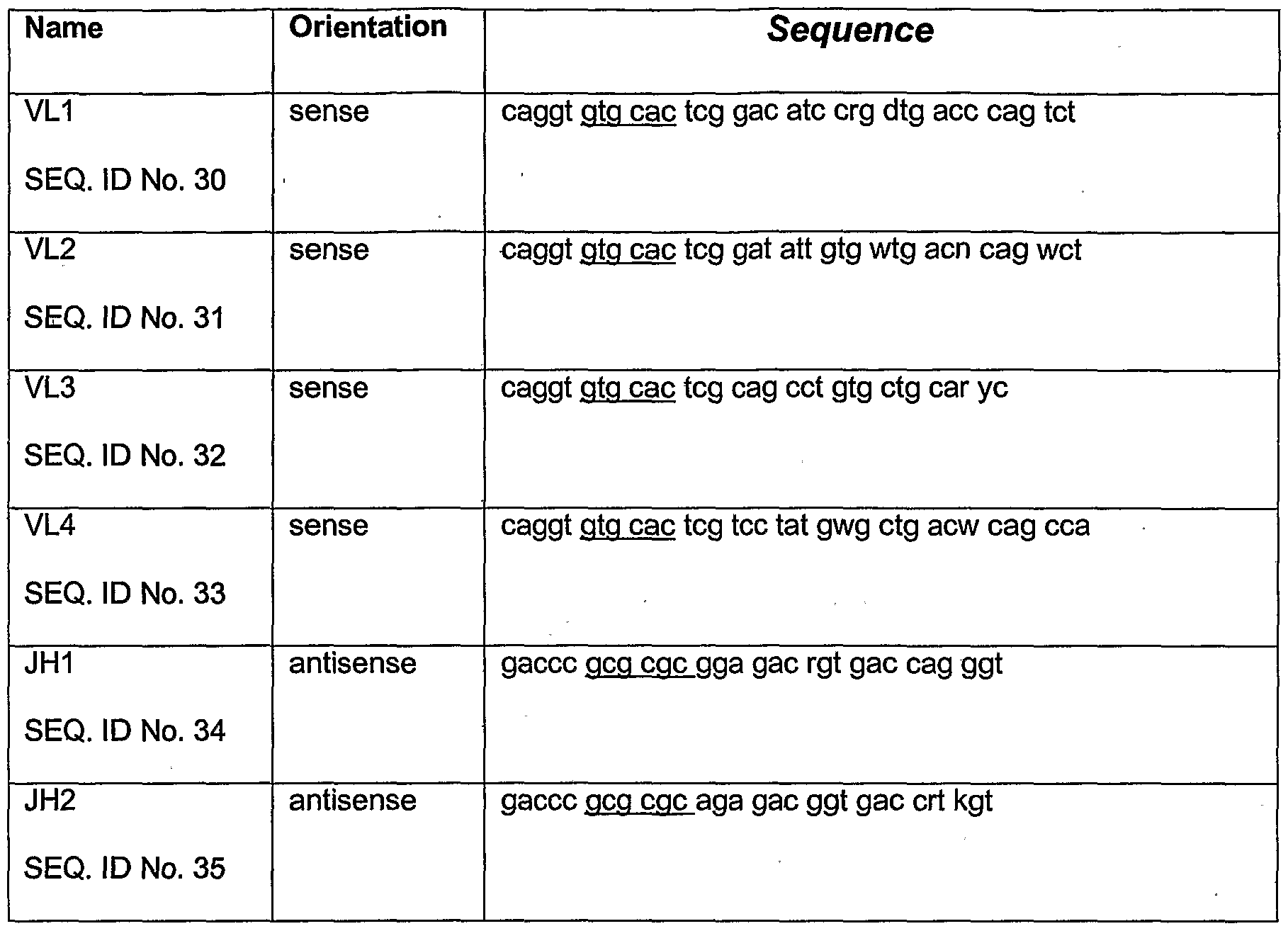
- the scFv sequence was cloned into a series of pUT vectors containing Fc domains of different species described in the previous point, by means of PCR with a mix of universal oligonucleotides for amplification of known human scFv (see Sblattero D. and Bradbury A, Immunotechnology, 1998, 3:271 -27 ⁇ , and reported in table 3), followed by digestion with ApaLI and BssHII restriction enzymes (RE).
- RE ApaLI and BssHII restriction enzymes
- Cloning in pcDNA vector of the costructs obtained in pUT was done by digestion with Hindlll and EcoRI enzymes, selective recovery of the corresponding fragment and cloning in pcDNA3 that was cut with the same RE (see outline in Fig. 8).
- Example 12 Production and validation of the TSA12/22-CH2-CH3 rat minibody.
- TSA12/22 antibody in the version containing the rat CH2-CH3 domains was tested for its ability to inhibit the classical complement activation pathway in an in vitro test, according to the modalities already described in the previous examples.
- FIG of figure 9 it is reported the percentage of inhibition of lysis of rabbit erythrocytes sensitized with IgM, mediated by complement in presence of fixed concentrations of scFv TSA12/22, of an unrelated scFv, of GVBS buffered salt solution and of the minibody composed of scFv TSA22/12 and rat CH2-CH3 domains.
- the Tsa12/22-CH2-CH3 construct showed significantly better inhibitory activity than the corresponding scFv, as can be noticed in Fig. 9.
- ScFv antibodies isolated as described in examplel, were found to be able to binding factor C5, as assessed by ELISA assay and as expected from the type of selection or "panning" of phage particles performed on C5.
- the TSA12/22 antibody inhibits the chemotactic activity induced by the former and the hemolytic activity mediated by C5b through MAC formation.
Landscapes
- Health & Medical Sciences (AREA)
- Genetics & Genomics (AREA)
- Life Sciences & Earth Sciences (AREA)
- Engineering & Computer Science (AREA)
- Chemical & Material Sciences (AREA)
- Organic Chemistry (AREA)
- Biomedical Technology (AREA)
- Bioinformatics & Cheminformatics (AREA)
- General Health & Medical Sciences (AREA)
- Zoology (AREA)
- Biotechnology (AREA)
- General Engineering & Computer Science (AREA)
- Wood Science & Technology (AREA)
- Molecular Biology (AREA)
- Biophysics (AREA)
- Biochemistry (AREA)
- Medicinal Chemistry (AREA)
- Plant Pathology (AREA)
- Microbiology (AREA)
- Physics & Mathematics (AREA)
- Veterinary Medicine (AREA)
- Public Health (AREA)
- Animal Behavior & Ethology (AREA)
- Pharmacology & Pharmacy (AREA)
- Nuclear Medicine, Radiotherapy & Molecular Imaging (AREA)
- General Chemical & Material Sciences (AREA)
- Chemical Kinetics & Catalysis (AREA)
- Immunology (AREA)
- Proteomics, Peptides & Aminoacids (AREA)
- Rheumatology (AREA)
- Heart & Thoracic Surgery (AREA)
- Pain & Pain Management (AREA)
- Cardiology (AREA)
- Vascular Medicine (AREA)
- Urology & Nephrology (AREA)
- Neurosurgery (AREA)
- Orthopedic Medicine & Surgery (AREA)
- Physical Education & Sports Medicine (AREA)
- Neurology (AREA)
- Peptides Or Proteins (AREA)
Abstract
Description


Claims
Priority Applications (9)
| Application Number | Priority Date | Filing Date | Title |
|---|---|---|---|
| DE60336821T DE60336821D1 (en) | 2002-07-11 | 2003-07-10 | ANTIBODIES TIED TO THE C5 COMPONENT OF THE COMPLEMENT SYSTEM AND THEIR USE |
| DK03763792.3T DK1529063T3 (en) | 2002-07-11 | 2003-07-10 | Antibodies anti-C5 component of the complement system and their use |
| AT03763792T ATE506375T1 (en) | 2002-07-11 | 2003-07-10 | ANTIBODIES DIRECTED AGAINST THE C5 COMPONENT OF THE COMPLEMENT SYSTEM AND THEIR USE |
| US10/521,109 US7999081B2 (en) | 2002-07-11 | 2003-07-10 | Anti-C5 alpha antibodies |
| SI200332009T SI1529063T1 (en) | 2002-07-11 | 2003-07-10 | Antibodies anti-c5 component of the complement system and their use |
| AU2003246676A AU2003246676A1 (en) | 2002-07-11 | 2003-07-10 | Antibodies anti-c5 component of the complement system and their use |
| EP03763792A EP1529063B1 (en) | 2002-07-11 | 2003-07-10 | Antibodies anti-c5 component of the complement system and their use |
| US13/185,478 US8282929B2 (en) | 2002-07-11 | 2011-07-18 | Methods of treating a disease with anti-C5 alpha antibodies |
| US13/611,910 US8962819B2 (en) | 2002-07-11 | 2012-09-12 | Anti-C5 alpha antibodies |
Applications Claiming Priority (2)
| Application Number | Priority Date | Filing Date | Title |
|---|---|---|---|
| ITMI2002A001527 | 2002-07-11 | ||
| IT2002MI001527A ITMI20021527A1 (en) | 2002-07-11 | 2002-07-11 | C5 COMPONENT ANTIBODIES OF COMPLEMENT AND THEIR USE |
Related Child Applications (2)
| Application Number | Title | Priority Date | Filing Date |
|---|---|---|---|
| US10521109 A-371-Of-International | 2003-07-10 | ||
| US13/185,478 Division US8282929B2 (en) | 2002-07-11 | 2011-07-18 | Methods of treating a disease with anti-C5 alpha antibodies |
Publications (2)
| Publication Number | Publication Date |
|---|---|
| WO2004007553A1 true WO2004007553A1 (en) | 2004-01-22 |
| WO2004007553A8 WO2004007553A8 (en) | 2004-04-29 |
Family
ID=30012505
Family Applications (1)
| Application Number | Title | Priority Date | Filing Date |
|---|---|---|---|
| PCT/EP2003/007487 Ceased WO2004007553A1 (en) | 2002-07-11 | 2003-07-10 | Antibodies anti-c5 component of the complement system and their use |
Country Status (12)
| Country | Link |
|---|---|
| US (3) | US7999081B2 (en) |
| EP (1) | EP1529063B1 (en) |
| AT (1) | ATE506375T1 (en) |
| AU (1) | AU2003246676A1 (en) |
| CY (1) | CY1111703T1 (en) |
| DE (1) | DE60336821D1 (en) |
| DK (1) | DK1529063T3 (en) |
| ES (1) | ES2365217T3 (en) |
| IT (1) | ITMI20021527A1 (en) |
| PT (1) | PT1529063E (en) |
| SI (1) | SI1529063T1 (en) |
| WO (1) | WO2004007553A1 (en) |
Cited By (32)
| Publication number | Priority date | Publication date | Assignee | Title |
|---|---|---|---|---|
| WO2006131874A3 (en) * | 2005-06-06 | 2007-04-26 | Univ Cape Town | Methods for treatment or prophylaxis of atherosclerosis and reperfusion injury |
| US20100111929A1 (en) * | 2006-09-08 | 2010-05-06 | John Hamer | Method of treating peripheral nerve disorders |
| EP2330111A2 (en) | 2004-01-30 | 2011-06-08 | Quark Pharmaceuticals, Inc. | Oligoribonucleotides and methods of use thereof for treatment of fibrotic conditions and other diseases |
| EP2380907A1 (en) * | 2006-09-05 | 2011-10-26 | Alexion Pharmaceuticals, Inc. | Methods and compositions for the treatment of antibody mediated neuropathies |
| JP2014501745A (en) * | 2010-12-21 | 2014-01-23 | アフィリス・アクチェンゲゼルシャフト | Vaccine based on peptide of complement protein C5A |
| WO2014049073A1 (en) | 2012-09-27 | 2014-04-03 | Octapharma Ag | Test for hemolytic potential of pharmaceutical products and formulations for risk minimization |
| WO2014160958A1 (en) | 2013-03-29 | 2014-10-02 | Alexion Pharmaceuticals, Inc. | Compositions and methods for increasing the serum half-life of a therapeutic agent targeting complement c5 |
| WO2014154930A1 (en) * | 2013-03-27 | 2014-10-02 | Consejo Superior De Investigaciones Científicas (Csic) | Anti-factor b antibody, pharmaceutical composition that can be used for the treatment of diseases of the complement system, and uses thereof |
| WO2016098356A1 (en) | 2014-12-19 | 2016-06-23 | Chugai Seiyaku Kabushiki Kaisha | Anti-c5 antibodies and methods of use |
| WO2016117346A1 (en) | 2015-01-22 | 2016-07-28 | Chugai Seiyaku Kabushiki Kaisha | A combination of two or more anti-c5 antibodies and methods of use |
| US9808502B2 (en) | 2012-02-20 | 2017-11-07 | Swedish Orphan Biovitrum Ab (Publ) | Polypeptides binding to human complement C5 |
| US9828429B2 (en) | 2007-09-26 | 2017-11-28 | Chugai Seiyaku Kabushiki Kaisha | Method of modifying isoelectric point of antibody via amino acid substitution in CDR |
| US9868948B2 (en) | 2008-04-11 | 2018-01-16 | Chugai Seiyaku Kabushiki Kaisha | Antigen-binding molecule capable of binding to two or more antigen molecules repeatedly |
| US9994626B2 (en) | 2013-08-28 | 2018-06-12 | Swedish Orphan Biovitrum Ab (Publ) | Stable polypeptides binding to human complement C5 |
| WO2018143266A1 (en) | 2017-01-31 | 2018-08-09 | Chugai Seiyaku Kabushiki Kaisha | A pharmaceutical composition for use in the treatment or prevention of a c5-related disease and a method for treating or preventing a c5-related disease |
| WO2020027279A1 (en) | 2018-08-01 | 2020-02-06 | Chugai Seiyaku Kabushiki Kaisha | A pharmaceutical composition for use in the treatment or prevention of a c5-related disease and a method for treating or preventing a c5-related disease |
| US10618965B2 (en) | 2011-02-25 | 2020-04-14 | Chugai Seiyaku Kabushiki Kaisha | Method for altering plasma retention and immunogenicity of antigen-binding molecule |
| US10633434B2 (en) | 2016-06-14 | 2020-04-28 | Regeneron Pharmaceuticals, Inc. | Anti-C5 antibodies |
| WO2021019033A1 (en) | 2019-07-31 | 2021-02-04 | F. Hoffmann-La Roche Ag | Dosage and administration regimen for the treatment or prevention of c5-related diseases by the use of the anti-c5 antibody crovalimab |
| WO2021019036A1 (en) | 2019-07-31 | 2021-02-04 | F. Hoffmann-La Roche Ag | Dosage and administration regimen for the treatment or prevention of c5-related diseases by the use of the anti-c5 antibody crovalimab |
| US10919953B2 (en) | 2012-08-24 | 2021-02-16 | Chugai Seiyaku Kabushiki Kaisha | FcgammaRIIB-specific Fc region variant |
| US11046784B2 (en) | 2006-03-31 | 2021-06-29 | Chugai Seiyaku Kabushiki Kaisha | Methods for controlling blood pharmacokinetics of antibodies |
| US11267868B2 (en) | 2013-04-02 | 2022-03-08 | Chugai Seiyaku Kabushiki Kaisha | Fc region variant |
| US11365265B2 (en) | 2017-12-13 | 2022-06-21 | Regeneron Pharmaceuticals, Inc. | Anti-C5 antibody combinations and uses thereof |
| USRE49495E1 (en) | 2013-08-28 | 2023-04-18 | Affibody Ab | Binding polypeptides having a mutated scaffold |
| US11780912B2 (en) | 2016-08-05 | 2023-10-10 | Chugai Seiyaku Kabushiki Kaisha | Composition for prophylaxis or treatment of IL-8 related diseases |
| US11820793B2 (en) | 2011-11-30 | 2023-11-21 | Chugai Seiyaku Kabushiki Kaisha | Drug containing carrier into cell for forming immune complex |
| US11827699B2 (en) | 2011-09-30 | 2023-11-28 | Chugai Seiyaku Kabushiki Kaisha | Methods for producing antibodies promoting disappearance of antigens having plurality of biological activities |
| US11891434B2 (en) | 2010-11-30 | 2024-02-06 | Chugai Seiyaku Kabushiki Kaisha | Antigen-binding molecule capable of binding to plurality of antigen molecules repeatedly |
| US12169205B2 (en) | 2014-12-19 | 2024-12-17 | Chugai Seiyaku Kabushiki Kaisha | Anti-myostatin antibodies, polypeptides containing variant fc regions, and methods of use |
| US12269876B2 (en) | 2012-02-09 | 2025-04-08 | Chugai Seiyaku Kabushiki Kaisha | Modified Fc region of antibody |
| US12595299B2 (en) | 2015-02-05 | 2026-04-07 | Chugai Seiyaku Kabushiki Kaisha | FC variants |
Families Citing this family (51)
| Publication number | Priority date | Publication date | Assignee | Title |
|---|---|---|---|---|
| ITMI20021527A1 (en) | 2002-07-11 | 2004-01-12 | Consiglio Nazionale Ricerche | C5 COMPONENT ANTIBODIES OF COMPLEMENT AND THEIR USE |
| AU2005235811B2 (en) * | 2004-02-06 | 2011-11-03 | Morphosys Ag | Anti-CD38 human antibodies and uses therefor |
| US8168584B2 (en) | 2005-10-08 | 2012-05-01 | Potentia Pharmaceuticals, Inc. | Methods of treating age-related macular degeneration by compstatin and analogs thereof |
| PL2860192T3 (en) | 2005-10-12 | 2018-03-30 | Morphosys Ag | Generation and profiling of fully human HuCAL GOLD-derived therapeutic antibodies specific for human CD38 |
| WO2008031051A2 (en) * | 2006-09-08 | 2008-03-13 | United Therapeutics Corporation | Clinical diagnosis of hepatic fibrosis using a novel panel of human serum protein biomarkers |
| AU2008214359B2 (en) | 2007-02-05 | 2014-01-16 | Apellis Pharmaceuticals, Inc. | Local complement inhibition for treatment of complement-mediated disorders |
| AU2014201433B2 (en) * | 2008-08-05 | 2016-05-26 | Novartis Ag | Compositions and methods for antibodies targeting complement protein C5 |
| PY09026846A (en) | 2008-08-05 | 2015-09-01 | Novartis Ag | COMPOSITIONS AND METHODS FOR ANTIBODIES THAT TARGET THE C5 COMPLEMENT PROTEIN |
| EP2376534A4 (en) | 2008-12-05 | 2012-05-30 | Abraxis Bioscience Llc | Sparc binding scfcs |
| CN105866423A (en) * | 2009-05-14 | 2016-08-17 | 牛津大学之校长及学者 | Clinical diagnosis of hepatic fibrosis using novel panel of low abundant human plasma protein biomarkers |
| EP2723361B1 (en) | 2011-06-22 | 2019-10-30 | Apellis Pharmaceuticals, Inc. | Methods of treating chronic disorders with complement inhibitors |
| ES2728278T3 (en) | 2011-12-21 | 2019-10-23 | Novartis Ag | Compositions comprising antibodies directed to factor P and C5 |
| WO2013125667A1 (en) | 2012-02-24 | 2013-08-29 | 中外製薬株式会社 | ANTIGEN-BINDING MOLECULE FOR PROMOTING DISAPPEARANCE OF ANTIGEN VIA FcγRIIB |
| EP3929206A1 (en) | 2012-11-15 | 2021-12-29 | Apellis Pharmaceuticals, Inc. | Long-acting compstatin analogs and related compositions and methods |
| US10308687B2 (en) | 2013-03-15 | 2019-06-04 | Apellis Pharmaceuticals, Inc. | Cell-penetrating compstatin analogs and uses thereof |
| US10254288B2 (en) * | 2013-08-16 | 2019-04-09 | Quidel Corporation | Method for species-independent measurement of complement activation in animals |
| WO2015103438A2 (en) | 2014-01-02 | 2015-07-09 | Genelux Corporation | Oncolytic virus adjunct therapy with agents that increase virus infectivity |
| WO2016081314A1 (en) | 2014-11-17 | 2016-05-26 | Alexion Pharmaceuticals, Inc. | Risk evaluation and management strategy involving patient follow-ups relating to a complement inhibitor |
| US20160168237A1 (en) | 2014-12-12 | 2016-06-16 | Alexion Pharmaceuticals, Inc. | Method for treating a complement mediated disorder caused by an infectious agent in a patient |
| EP3340983B1 (en) | 2015-08-26 | 2023-10-04 | Achillion Pharmaceuticals, Inc. | Aryl, heteroaryl, and heterocyclic compounds for treatment of immune and inflammatory disorders |
| WO2017035401A1 (en) | 2015-08-26 | 2017-03-02 | Achillion Pharmaceuticals, Inc. | Amide compounds for treatment of immune and inflammatory disorders |
| WO2017035405A1 (en) | 2015-08-26 | 2017-03-02 | Achillion Pharmaceuticals, Inc. | Amino compounds for treatment of immune and inflammatory disorders |
| AR106018A1 (en) | 2015-08-26 | 2017-12-06 | Achillion Pharmaceuticals Inc | ARYL, HETEROARYL AND HETEROCYCLIC COMPOUNDS FOR THE TREATMENT OF MEDICAL DISORDERS |
| EP3359566A1 (en) | 2015-10-07 | 2018-08-15 | Alexion Pharmaceuticals, Inc. | A method for treating age-related macular degeneration in a patient |
| CA3287719A1 (en) | 2015-10-07 | 2026-03-02 | Apellis Pharmaceuticals, Inc. | Use of long-acting compstatin analog for treating a complement-mediated disorder |
| JP6390647B2 (en) * | 2016-03-10 | 2018-09-19 | 株式会社豊田自動織機 | Permanent magnet rotating electric machine |
| EP3529618B1 (en) | 2016-10-19 | 2020-12-02 | Alexion Pharmaceuticals, Inc. | A method of quantitating unbound c5 in a sample |
| KR102632860B1 (en) | 2017-03-01 | 2024-02-02 | 아칠리온 파르마세우티칼스 인코포레이티드 | Aryl, heteroaryl, and heterocyclic pharmaceutical compounds for the treatment of medical disorders |
| WO2018160891A1 (en) | 2017-03-01 | 2018-09-07 | Achillion Pharmaceutical, Inc. | Pharmaceutical compounds for treatment of medical disorders |
| CN116059313A (en) | 2017-04-07 | 2023-05-05 | 阿佩利斯制药有限公司 | Dosing regimens and related compositions and methods |
| EP3661493A4 (en) | 2017-08-02 | 2021-04-14 | Achillion Pharmaceuticals, Inc. | TREATMENT DIET FOR THE TREATMENT OF PAROXYSTIC NOCTURAL HEMOGLOBINURIA |
| KR20240167712A (en) | 2017-12-15 | 2024-11-27 | 아펠리스 파마슈티컬스 인코포레이티드 | Dosing regimens and related compositions and methods |
| US20190247560A1 (en) | 2018-02-13 | 2019-08-15 | Gambro Lundia Ab | Extracorporeal devices and methods of treating complement factor related diseases |
| US20230022157A1 (en) | 2018-08-20 | 2023-01-26 | Achillion Pharmaceuticals, Inc. | Pharmaceutical compounds for the treatment of complement factor d medical disorders |
| US11814363B2 (en) | 2018-09-06 | 2023-11-14 | Achillion Pharmaceuticals, Inc. | Morphic forms of danicopan |
| EP3846803A4 (en) | 2018-09-06 | 2022-08-10 | Achillion Pharmaceuticals, Inc. | MACROCYCLIC COMPOUNDS FOR THE TREATMENT OF MEDICAL DISEASES |
| EP3856164B1 (en) | 2018-09-25 | 2024-08-07 | Achillion Pharmaceuticals, Inc. | Morphic forms of complement factor d inhibitors |
| BR112021011727A2 (en) | 2018-12-17 | 2021-08-31 | Achillion Pharmaceuticals, Inc | DIRECTED DOSAGE FOR THE TREATMENT OF COMPLEMENT MEDIATED DISORDERS |
| WO2020198062A1 (en) | 2019-03-22 | 2020-10-01 | Achillion Pharmaceuticals, Inc. | Pharmaceutical compounds for the treatment of complement mediated disorders |
| AU2020334880A1 (en) | 2019-08-16 | 2022-03-24 | Regeneron Pharmaceuticals, Inc. | High concentration anti-C5 formulations |
| EP4034237A1 (en) | 2019-09-27 | 2022-08-03 | Volution Immuno Pharmaceuticals SA | Method of treatment of hematopoietic stem cell transplant associated thrombotic microangiopathy (hsct-tma) |
| US20220356234A1 (en) | 2019-10-02 | 2022-11-10 | Alexion Pharmaceuticals, Inc. | Complement inhibitors for treating drug-induced complement-mediated response |
| AU2020369581A1 (en) | 2019-10-25 | 2022-04-21 | Regeneron Pharmaceuticals, Inc. | Dosing regimens for treating or preventing C5-associated diseases |
| CN115362162A (en) | 2020-02-20 | 2022-11-18 | 艾其林医药公司 | Heteroaryl compounds for use in the treatment of complement factor D mediated disorders |
| JP2023522208A (en) | 2020-04-16 | 2023-05-29 | アシスタンス ピュブリック-オピト ド パリ | Methods of treating complement-mediated disorders caused by viruses |
| EP4150338A1 (en) | 2020-05-15 | 2023-03-22 | Alexion Pharmaceuticals, Inc. | Method of using extracellular vesicles to detect complement activation, and uses thereof to assess and/or monitor treatment of a complement-mediated disease |
| CA3193488A1 (en) | 2020-09-23 | 2022-03-31 | Jason Allan Wiles | Pharmaceutical compounds for the treatment of complement mediated disorders |
| JP2024540086A (en) | 2021-10-28 | 2024-10-31 | リジェネロン・ファーマシューティカルズ・インコーポレイテッド | CRISPR/CAS Related Methods and Compositions for Knocking Out C5 |
| WO2024238422A1 (en) | 2023-05-12 | 2024-11-21 | Alexion Pharmaceuticals, Inc. | Use of a panel of lectins for detection of complement biomarkers in urine extracellular vesicles |
| WO2024238421A1 (en) | 2023-05-12 | 2024-11-21 | Alexion Pharmaceuticals, Inc. | Use of biomarkers for the identification and treatment of complement-mediated disorders |
| WO2025199107A1 (en) | 2024-03-19 | 2025-09-25 | Alexion Pharmaceuticals, Inc. | Risk evaluation and management strategy involving patient follow-ups relating to the use or discontinuation of a complement inhibitor |
Citations (1)
| Publication number | Priority date | Publication date | Assignee | Title |
|---|---|---|---|---|
| WO2002030985A2 (en) * | 2000-10-10 | 2002-04-18 | Tanox, Inc. | Inhibition of complement c5 activation for the treatment and prevention of delayed xenograft or acute vascular rejection |
Family Cites Families (5)
| Publication number | Priority date | Publication date | Assignee | Title |
|---|---|---|---|---|
| US5770429A (en) * | 1990-08-29 | 1998-06-23 | Genpharm International, Inc. | Transgenic non-human animals capable of producing heterologous antibodies |
| US6074642A (en) * | 1994-05-02 | 2000-06-13 | Alexion Pharmaceuticals, Inc. | Use of antibodies specific to human complement component C5 for the treatment of glomerulonephritis |
| US20040001822A1 (en) * | 2000-12-29 | 2004-01-01 | Avigdor Levanon | Y1-isolated molecules comprising epitopes containing sulfated moieties, antibodies to such epitopes, and uses thereof |
| MXPA05000511A (en) * | 2001-07-12 | 2005-09-30 | Jefferson Foote | Super humanized antibodies. |
| ITMI20021527A1 (en) | 2002-07-11 | 2004-01-12 | Consiglio Nazionale Ricerche | C5 COMPONENT ANTIBODIES OF COMPLEMENT AND THEIR USE |
-
2002
- 2002-07-11 IT IT2002MI001527A patent/ITMI20021527A1/en unknown
-
2003
- 2003-07-10 PT PT03763792T patent/PT1529063E/en unknown
- 2003-07-10 SI SI200332009T patent/SI1529063T1/en unknown
- 2003-07-10 AU AU2003246676A patent/AU2003246676A1/en not_active Abandoned
- 2003-07-10 WO PCT/EP2003/007487 patent/WO2004007553A1/en not_active Ceased
- 2003-07-10 AT AT03763792T patent/ATE506375T1/en active
- 2003-07-10 DE DE60336821T patent/DE60336821D1/en not_active Expired - Lifetime
- 2003-07-10 ES ES03763792T patent/ES2365217T3/en not_active Expired - Lifetime
- 2003-07-10 DK DK03763792.3T patent/DK1529063T3/en active
- 2003-07-10 EP EP03763792A patent/EP1529063B1/en not_active Expired - Lifetime
- 2003-07-10 US US10/521,109 patent/US7999081B2/en not_active Expired - Fee Related
-
2011
- 2011-07-08 CY CY20111100665T patent/CY1111703T1/en unknown
- 2011-07-18 US US13/185,478 patent/US8282929B2/en not_active Expired - Fee Related
-
2012
- 2012-09-12 US US13/611,910 patent/US8962819B2/en not_active Expired - Fee Related
Patent Citations (1)
| Publication number | Priority date | Publication date | Assignee | Title |
|---|---|---|---|---|
| WO2002030985A2 (en) * | 2000-10-10 | 2002-04-18 | Tanox, Inc. | Inhibition of complement c5 activation for the treatment and prevention of delayed xenograft or acute vascular rejection |
Non-Patent Citations (5)
| Title |
|---|
| EVANS MARK J ET AL: "In vitro and in vivo inhibition of complement activity by a single-chain Fv fragment recognizing human C5", MOLECULAR IMMUNOLOGY, vol. 32, no. 16, 1995, pages 1183 - 1195, XP002262114, ISSN: 0161-5890 * |
| RATHBURN, G. ET AL.: "Immunoglobulin genes", 1989, ACADEMIC PRESS |
| SHEETS, M. D. ET AL., PROC. NATL. ACAD. SCI. US A, vol. 95, 1998, pages 6157 |
| THOMAS THOMAS C ET AL: "Inhibition of complement activity by humanized anti-C5 antibody and single-chain Fv", MOLECULAR IMMUNOLOGY, vol. 33, no. 17-18, 1996, pages 1389 - 1401, XP002262113, ISSN: 0161-5890 * |
| WANG Y ET AL: "Amelioration of lupus-like autoimmune disease in NZB/W F1 mice after treatment with a blocking monoclonal antibody specific for complement component C5", PROCEEDINGS OF THE NATIONAL ACADEMY OF SCIENCES OF USA, NATIONAL ACADEMY OF SCIENCE. WASHINGTON, US, vol. 16, no. 93, 6 August 1996 (1996-08-06), pages 8563 - 8568, XP002076691, ISSN: 0027-8424 * |
Cited By (71)
| Publication number | Priority date | Publication date | Assignee | Title |
|---|---|---|---|---|
| EP2330111A2 (en) | 2004-01-30 | 2011-06-08 | Quark Pharmaceuticals, Inc. | Oligoribonucleotides and methods of use thereof for treatment of fibrotic conditions and other diseases |
| US7897561B2 (en) | 2005-06-06 | 2011-03-01 | Girish J. Kotwal | Methods for treatment or prophylaxis of atherosclerosis and reperfusion injury |
| WO2006131874A3 (en) * | 2005-06-06 | 2007-04-26 | Univ Cape Town | Methods for treatment or prophylaxis of atherosclerosis and reperfusion injury |
| US12473375B2 (en) | 2006-03-31 | 2025-11-18 | Chugai Seiyaku Kabushiki Kaisha | Methods for controlling blood pharmacokinetics of antibodies |
| US11046784B2 (en) | 2006-03-31 | 2021-06-29 | Chugai Seiyaku Kabushiki Kaisha | Methods for controlling blood pharmacokinetics of antibodies |
| EP2380907A1 (en) * | 2006-09-05 | 2011-10-26 | Alexion Pharmaceuticals, Inc. | Methods and compositions for the treatment of antibody mediated neuropathies |
| AU2007293013B2 (en) * | 2006-09-05 | 2013-06-27 | Alexion Pharmaceuticals, Inc. | Method and compositions for the treatment of antibody mediated neuropathies |
| EP3199549A1 (en) * | 2006-09-05 | 2017-08-02 | Alexion Pharmaceuticals, Inc. | Methods and compositions for the treatment of antibody mediated neuropathies |
| US9388235B2 (en) | 2006-09-05 | 2016-07-12 | Alexion Pharmaceuticals, Inc. | Methods and compositions for the treatment of antibody mediated neuropathies |
| US9211312B2 (en) * | 2006-09-08 | 2015-12-15 | Volution Immuno Pharmaceuticals Sa | Method of treating peripheral nerve disorders |
| US20100111929A1 (en) * | 2006-09-08 | 2010-05-06 | John Hamer | Method of treating peripheral nerve disorders |
| US11248053B2 (en) | 2007-09-26 | 2022-02-15 | Chugai Seiyaku Kabushiki Kaisha | Method of modifying isoelectric point of antibody via amino acid substitution in CDR |
| US12122840B2 (en) | 2007-09-26 | 2024-10-22 | Chugai Seiyaku Kabushiki Kaisha | Method of modifying isoelectric point of antibody via amino acid substitution in CDR |
| US12116414B2 (en) | 2007-09-26 | 2024-10-15 | Chugai Seiyaku Kabushiki Kaisha | Method of modifying isoelectric point of antibody via amino acid substitution in CDR |
| US9828429B2 (en) | 2007-09-26 | 2017-11-28 | Chugai Seiyaku Kabushiki Kaisha | Method of modifying isoelectric point of antibody via amino acid substitution in CDR |
| US10472623B2 (en) | 2008-04-11 | 2019-11-12 | Chugai Seiyaku Kabushiki Kaisha | Antigen-binding molecule capable of binding two or more antigen molecules repeatedly |
| US11371039B2 (en) | 2008-04-11 | 2022-06-28 | Chugai Seiyaku Kabushiki Kaisha | Antigen-binding molecule capable of binding to two or more antigen molecules repeatedly |
| US11359194B2 (en) | 2008-04-11 | 2022-06-14 | Chugai Seiyaku Kabushiki Kaisha | Antigen-binding molecule capable of binding two or more antigen molecules repeatedly |
| US9868948B2 (en) | 2008-04-11 | 2018-01-16 | Chugai Seiyaku Kabushiki Kaisha | Antigen-binding molecule capable of binding to two or more antigen molecules repeatedly |
| US9890377B2 (en) | 2008-04-11 | 2018-02-13 | Chugai Seiyaku Kabushiki Kaisha | Antigen-binding molecule capable of binding to two or more antigen molecules repeatedly |
| US11891434B2 (en) | 2010-11-30 | 2024-02-06 | Chugai Seiyaku Kabushiki Kaisha | Antigen-binding molecule capable of binding to plurality of antigen molecules repeatedly |
| US12617847B2 (en) | 2010-11-30 | 2026-05-05 | Chugai Seiyaku Kabushiki Kaisha | Antigen-binding molecule capable of binding to plurality of antigen molecules repeatedly |
| JP2014501745A (en) * | 2010-12-21 | 2014-01-23 | アフィリス・アクチェンゲゼルシャフト | Vaccine based on peptide of complement protein C5A |
| US11718678B2 (en) | 2011-02-25 | 2023-08-08 | Chugai Seiyaku Kabushiki Kaisha | Method for altering plasma retention and immunogenicity of antigen-binding molecule |
| US10618965B2 (en) | 2011-02-25 | 2020-04-14 | Chugai Seiyaku Kabushiki Kaisha | Method for altering plasma retention and immunogenicity of antigen-binding molecule |
| US11827699B2 (en) | 2011-09-30 | 2023-11-28 | Chugai Seiyaku Kabushiki Kaisha | Methods for producing antibodies promoting disappearance of antigens having plurality of biological activities |
| US11820793B2 (en) | 2011-11-30 | 2023-11-21 | Chugai Seiyaku Kabushiki Kaisha | Drug containing carrier into cell for forming immune complex |
| US12269876B2 (en) | 2012-02-09 | 2025-04-08 | Chugai Seiyaku Kabushiki Kaisha | Modified Fc region of antibody |
| US10206975B2 (en) | 2012-02-20 | 2019-02-19 | Swedish Orphan Biovitrum Ab (Publ) | Polypeptides binding to human complement C5 |
| EP4616914A2 (en) | 2012-02-20 | 2025-09-17 | IPC Research, LLC | Polypeptides binding to human complement c5 |
| EP3511339A1 (en) | 2012-02-20 | 2019-07-17 | Swedish Orphan Biovitrum AB (Publ) | Polypeptides binding to human complement c5 |
| US11123401B2 (en) | 2012-02-20 | 2021-09-21 | Ipc Research, Llc | Polypeptides binding to human complement C5 |
| US9808502B2 (en) | 2012-02-20 | 2017-11-07 | Swedish Orphan Biovitrum Ab (Publ) | Polypeptides binding to human complement C5 |
| US10919953B2 (en) | 2012-08-24 | 2021-02-16 | Chugai Seiyaku Kabushiki Kaisha | FcgammaRIIB-specific Fc region variant |
| WO2014049073A1 (en) | 2012-09-27 | 2014-04-03 | Octapharma Ag | Test for hemolytic potential of pharmaceutical products and formulations for risk minimization |
| WO2014154930A1 (en) * | 2013-03-27 | 2014-10-02 | Consejo Superior De Investigaciones Científicas (Csic) | Anti-factor b antibody, pharmaceutical composition that can be used for the treatment of diseases of the complement system, and uses thereof |
| EP3473272A1 (en) | 2013-03-29 | 2019-04-24 | Alexion Pharmaceuticals, Inc. | Compositions and methods for increasing the serum half-life of a therapeutic agent targeting complement c5 |
| WO2014160958A1 (en) | 2013-03-29 | 2014-10-02 | Alexion Pharmaceuticals, Inc. | Compositions and methods for increasing the serum half-life of a therapeutic agent targeting complement c5 |
| US11267868B2 (en) | 2013-04-02 | 2022-03-08 | Chugai Seiyaku Kabushiki Kaisha | Fc region variant |
| US9994626B2 (en) | 2013-08-28 | 2018-06-12 | Swedish Orphan Biovitrum Ab (Publ) | Stable polypeptides binding to human complement C5 |
| EP3811961A1 (en) | 2013-08-28 | 2021-04-28 | IPC Research, LLC | Stable polypeptides binding to human complement c5 |
| USRE49495E1 (en) | 2013-08-28 | 2023-04-18 | Affibody Ab | Binding polypeptides having a mutated scaffold |
| US10023630B2 (en) | 2014-12-19 | 2018-07-17 | Chugai Seiyaku Kabushiki Kaisha | Methods of neutralizing C5 with anti-C5 antibodies |
| US12169205B2 (en) | 2014-12-19 | 2024-12-17 | Chugai Seiyaku Kabushiki Kaisha | Anti-myostatin antibodies, polypeptides containing variant fc regions, and methods of use |
| US9765135B2 (en) | 2014-12-19 | 2017-09-19 | Chugai Seiyaku Kabushiki Kaisha | Anti-C5 antibodies |
| US11597760B2 (en) | 2014-12-19 | 2023-03-07 | Chugai Seiyaku Kabushiki Kaisha | Method of detecting the presence of complement C5 |
| EP3981794A1 (en) | 2014-12-19 | 2022-04-13 | Chugai Seiyaku Kabushiki Kaisha | Anti-c5 antibodies and methods of use |
| WO2016098356A1 (en) | 2014-12-19 | 2016-06-23 | Chugai Seiyaku Kabushiki Kaisha | Anti-c5 antibodies and methods of use |
| US10385122B2 (en) | 2014-12-19 | 2019-08-20 | Chugai Seiyaku Kabushiki Kaisha | Nucleic acids encoding anti-C5 antibodies |
| WO2016117346A1 (en) | 2015-01-22 | 2016-07-28 | Chugai Seiyaku Kabushiki Kaisha | A combination of two or more anti-c5 antibodies and methods of use |
| US12595299B2 (en) | 2015-02-05 | 2026-04-07 | Chugai Seiyaku Kabushiki Kaisha | FC variants |
| US10633434B2 (en) | 2016-06-14 | 2020-04-28 | Regeneron Pharmaceuticals, Inc. | Anti-C5 antibodies |
| US11479602B2 (en) | 2016-06-14 | 2022-10-25 | Regeneren Pharmaceuticals, Inc. | Methods of treating C5-associated diseases comprising administering anti-C5 antibodies |
| US11492392B2 (en) | 2016-06-14 | 2022-11-08 | Regeneran Pharmaceuticals, Inc. | Polynucleotides encoding anti-C5 antibodies |
| US11780912B2 (en) | 2016-08-05 | 2023-10-10 | Chugai Seiyaku Kabushiki Kaisha | Composition for prophylaxis or treatment of IL-8 related diseases |
| US12516115B2 (en) | 2016-08-05 | 2026-01-06 | Chugai Seiyaku Kabushiki Kaisha | Composition for prophylaxis or treatment of IL-8 related diseases |
| KR20190104982A (en) | 2017-01-31 | 2019-09-11 | 추가이 세이야쿠 가부시키가이샤 | A pharmaceutical composition for use in the treatment or prevention of a c5-related disease and a method for treating or preventing a c5-related disease |
| KR20230043247A (en) | 2017-01-31 | 2023-03-30 | 추가이 세이야쿠 가부시키가이샤 | A pharmaceutical composition for use in the treatment or prevention of a c5-related disease and a method for treating or preventing a c5-related disease |
| KR20220027265A (en) | 2017-01-31 | 2022-03-07 | 추가이 세이야쿠 가부시키가이샤 | A pharmaceutical composition for use in the treatment or prevention of a c5-related disease and a method for treating or preventing a c5-related disease |
| WO2018143266A1 (en) | 2017-01-31 | 2018-08-09 | Chugai Seiyaku Kabushiki Kaisha | A pharmaceutical composition for use in the treatment or prevention of a c5-related disease and a method for treating or preventing a c5-related disease |
| KR20180099625A (en) | 2017-01-31 | 2018-09-05 | 추가이 세이야쿠 가부시키가이샤 | Pharmaceutical compositions for treating or preventing C5-related diseases and methods for treating or preventing C5-related diseases |
| US11365265B2 (en) | 2017-12-13 | 2022-06-21 | Regeneron Pharmaceuticals, Inc. | Anti-C5 antibody combinations and uses thereof |
| US12084516B2 (en) | 2017-12-13 | 2024-09-10 | Regeneron Pharmaceuticals, Inc. | Anti-C5 antibody combinations and uses thereof |
| KR20240115904A (en) | 2018-08-01 | 2024-07-26 | 추가이 세이야쿠 가부시키가이샤 | A pharmaceutical composition for use in the treatment or prevention of a c5-related disease and a method for treating or preventing a c5-related disease |
| KR20200033348A (en) | 2018-08-01 | 2020-03-27 | 추가이 세이야쿠 가부시키가이샤 | A pharmaceutical composition for use in the treatment or prevention of a c5-related disease and a method for treating or preventing a c5-related disease |
| KR20200033225A (en) | 2018-08-01 | 2020-03-27 | 추가이 세이야쿠 가부시키가이샤 | Pharmaceutical composition for treatment or prevention of C5-related disease and method for treating or preventing C5-related disease |
| WO2020027279A1 (en) | 2018-08-01 | 2020-02-06 | Chugai Seiyaku Kabushiki Kaisha | A pharmaceutical composition for use in the treatment or prevention of a c5-related disease and a method for treating or preventing a c5-related disease |
| KR20210037743A (en) | 2018-08-01 | 2021-04-06 | 추가이 세이야쿠 가부시키가이샤 | A pharmaceutical composition for use in the treatment or prevention of a c5-related disease and a method for treating or preventing a c5-related disease |
| KR20210038697A (en) | 2018-08-01 | 2021-04-07 | 추가이 세이야쿠 가부시키가이샤 | A pharmaceutical composition for use in the treatment or prevention of a c5-related disease and a method for treating or preventing a c5-related disease |
| WO2021019033A1 (en) | 2019-07-31 | 2021-02-04 | F. Hoffmann-La Roche Ag | Dosage and administration regimen for the treatment or prevention of c5-related diseases by the use of the anti-c5 antibody crovalimab |
| WO2021019036A1 (en) | 2019-07-31 | 2021-02-04 | F. Hoffmann-La Roche Ag | Dosage and administration regimen for the treatment or prevention of c5-related diseases by the use of the anti-c5 antibody crovalimab |
Also Published As
| Publication number | Publication date |
|---|---|
| EP1529063A1 (en) | 2005-05-11 |
| WO2004007553A8 (en) | 2004-04-29 |
| US8282929B2 (en) | 2012-10-09 |
| US8962819B2 (en) | 2015-02-24 |
| ES2365217T3 (en) | 2011-09-26 |
| PT1529063E (en) | 2011-07-25 |
| AU2003246676A1 (en) | 2004-02-02 |
| EP1529063B1 (en) | 2011-04-20 |
| AU2003246676A8 (en) | 2004-02-02 |
| CY1111703T1 (en) | 2015-10-07 |
| ATE506375T1 (en) | 2011-05-15 |
| US20130071922A1 (en) | 2013-03-21 |
| DK1529063T3 (en) | 2011-06-20 |
| ITMI20021527A1 (en) | 2004-01-12 |
| US20120009184A1 (en) | 2012-01-12 |
| US20060115476A1 (en) | 2006-06-01 |
| SI1529063T1 (en) | 2011-08-31 |
| US7999081B2 (en) | 2011-08-16 |
| DE60336821D1 (en) | 2011-06-01 |
Similar Documents
| Publication | Publication Date | Title |
|---|---|---|
| US7999081B2 (en) | Anti-C5 alpha antibodies | |
| KR102923245B1 (en) | Development and application of therapeutics for TSLP-related diseases | |
| AU740043B2 (en) | Recognition molecules interacting specifically with the active site or cleft of a target molecule | |
| JP6608702B2 (en) | C5 antibodies and methods for prevention and treatment of complement related diseases | |
| Steinberger et al. | Generation and characterization of a recombinant human CCR5-specific antibody: A phage display approach for rabbit antibody humanization | |
| CN102906111B (en) | Human antibodies specifically binding to the hepatitis B virus surface antigen | |
| KR102866306B1 (en) | Monoclonal antibodies to nerve growth factor, and their encoding genes and uses | |
| WO1997049805A9 (en) | Recognition molecules interacting specifically with the active site or cleft of a target molecule | |
| CN107428838B (en) | Novel antibodies that bind TFPI and compositions comprising the same | |
| JP6010127B2 (en) | Modified antibody and method for producing the same | |
| WO2009142460A2 (en) | Antibody-peptide fused synergibody | |
| CN119019558A (en) | Anti-PD-L1 Nanobody | |
| KR20150003278A (en) | Anti-adamts-5 antibody, derivatives and uses thereof | |
| CA2562604C (en) | Preparation of scfv antibody fragments | |
| CN106928354B (en) | anti-I L-1 β monoclonal antibody and application thereof | |
| KR100829972B1 (en) | Anti-HFF / SF humanized antibody and preparation method thereof | |
| KR102709785B1 (en) | IL5 antibody, antigen-binding fragment thereof and medical applications thereof | |
| JP2014526886A (en) | Antibodies cross-reactive with macrophage migration inhibitory factor (MIF) and D-dopachrome tomerase (D-DT) | |
| KR20170110681A (en) | PCSK9 ANTIBODIES, AND PHARMACEUTICAL COMPOSITIONS AND USES THEREOF | |
| KR101501736B1 (en) | Recombinant monoclonal antibodies specifically binding to L1CAM expressed in human and mouse and their use | |
| JP5733546B2 (en) | Suppression of fibrosis by inhibiting the function of integrin α8β1 | |
| CN110959015B (en) | Bispecific recombinant proteins | |
| US20040248201A1 (en) | Recognition molecules interacting specifically with the active site or cleft of a target molecule | |
| KR101482237B1 (en) | A pharmaceutical composition for preventing and treating autoimmune disease comprising minicircle vector expressing bispecific protein comprising anti-IL-6R and TNFR2 | |
| CN116769020A (en) | An antibody and its use |
Legal Events
| Date | Code | Title | Description |
|---|---|---|---|
| AK | Designated states |
Kind code of ref document: A1 Designated state(s): AE AG AL AM AT AU AZ BA BB BG BR BY BZ CA CH CN CO CR CU CZ DE DK DM DZ EC EE ES FI GB GD GE GH GM HR HU ID IL IN IS JP KE KG KP KR KZ LC LK LR LS LT LU LV MA MD MG MK MN MW MX MZ NI NO NZ OM PG PH PL PT RO RU SC SD SE SG SK SL SY TJ TM TN TR TT TZ UA UG US UZ VC VN YU ZA ZM ZW |
|
| AL | Designated countries for regional patents |
Kind code of ref document: A1 Designated state(s): GH GM KE LS MW MZ SD SL SZ TZ UG ZM ZW AM AZ BY KG KZ MD RU TJ TM AT BE BG CH CY CZ DE DK EE ES FI FR GB GR HU IE IT LU MC NL PT RO SE SI SK TR BF BJ CF CG CI CM GA GN GQ GW ML MR NE SN TD TG |
|
| 121 | Ep: the epo has been informed by wipo that ep was designated in this application | ||
| CFP | Corrected version of a pamphlet front page | ||
| CR1 | Correction of entry in section i |
Free format text: IN PCT GAZETTE 04/2004 UNDER (72, 75) IN THE ADDRESS OF "TEDESCO, FRANCESCO" REPLACE "DEL GUARDI" BY "DE GUARDI" |
|
| ENP | Entry into the national phase |
Ref document number: 2006115476 Country of ref document: US Kind code of ref document: A1 |
|
| WWE | Wipo information: entry into national phase |
Ref document number: 10521109 Country of ref document: US |
|
| WWE | Wipo information: entry into national phase |
Ref document number: 2003763792 Country of ref document: EP |
|
| WWP | Wipo information: published in national office |
Ref document number: 2003763792 Country of ref document: EP |
|
| WWP | Wipo information: published in national office |
Ref document number: 10521109 Country of ref document: US |
|
| NENP | Non-entry into the national phase |
Ref country code: JP |
|
| WWW | Wipo information: withdrawn in national office |
Country of ref document: JP |