WO2004069969A2 - Ester konjugiert ungesättigter carbonsäuren (konjugensäurester) verfahren zu ihrer herstellung und ihre verwendung - Google Patents
Ester konjugiert ungesättigter carbonsäuren (konjugensäurester) verfahren zu ihrer herstellung und ihre verwendung Download PDFInfo
- Publication number
- WO2004069969A2 WO2004069969A2 PCT/EP2004/000446 EP2004000446W WO2004069969A2 WO 2004069969 A2 WO2004069969 A2 WO 2004069969A2 EP 2004000446 W EP2004000446 W EP 2004000446W WO 2004069969 A2 WO2004069969 A2 WO 2004069969A2
- Authority
- WO
- WIPO (PCT)
- Prior art keywords
- acid
- group
- conjugate
- radical
- esters
- Prior art date
- Legal status (The legal status is an assumption and is not a legal conclusion. Google has not performed a legal analysis and makes no representation as to the accuracy of the status listed.)
- Ceased
Links
- 0 C*O**NC Chemical compound C*O**NC 0.000 description 1
Classifications
-
- C—CHEMISTRY; METALLURGY
- C12—BIOCHEMISTRY; BEER; SPIRITS; WINE; VINEGAR; MICROBIOLOGY; ENZYMOLOGY; MUTATION OR GENETIC ENGINEERING
- C12P—FERMENTATION OR ENZYME-USING PROCESSES TO SYNTHESISE A DESIRED CHEMICAL COMPOUND OR COMPOSITION OR TO SEPARATE OPTICAL ISOMERS FROM A RACEMIC MIXTURE
- C12P7/00—Preparation of oxygen-containing organic compounds
- C12P7/64—Fats; Fatty oils; Ester-type waxes; Higher fatty acids, i.e. having at least seven carbon atoms in an unbroken chain bound to a carboxyl group; Oxidised oils or fats
- C12P7/6436—Fatty acid esters
- C12P7/6445—Glycerides
- C12P7/6458—Glycerides by transesterification, e.g. interesterification, ester interchange, alcoholysis or acidolysis
-
- C—CHEMISTRY; METALLURGY
- C07—ORGANIC CHEMISTRY
- C07C—ACYCLIC OR CARBOCYCLIC COMPOUNDS
- C07C69/00—Esters of carboxylic acids; Esters of carbonic or haloformic acids
- C07C69/52—Esters of acyclic unsaturated carboxylic acids having the esterified carboxyl group bound to an acyclic carbon atom
- C07C69/587—Monocarboxylic acid esters having at least two carbon-to-carbon double bonds
-
- C—CHEMISTRY; METALLURGY
- C08—ORGANIC MACROMOLECULAR COMPOUNDS; THEIR PREPARATION OR CHEMICAL WORKING-UP; COMPOSITIONS BASED THEREON
- C08F—MACROMOLECULAR COMPOUNDS OBTAINED BY REACTIONS ONLY INVOLVING CARBON-TO-CARBON UNSATURATED BONDS
- C08F236/00—Copolymers of compounds having one or more unsaturated aliphatic radicals, at least one having two or more carbon-to-carbon double bonds
- C08F236/02—Copolymers of compounds having one or more unsaturated aliphatic radicals, at least one having two or more carbon-to-carbon double bonds the radical having only two carbon-to-carbon double bonds
- C08F236/04—Copolymers of compounds having one or more unsaturated aliphatic radicals, at least one having two or more carbon-to-carbon double bonds the radical having only two carbon-to-carbon double bonds conjugated
-
- C—CHEMISTRY; METALLURGY
- C12—BIOCHEMISTRY; BEER; SPIRITS; WINE; VINEGAR; MICROBIOLOGY; ENZYMOLOGY; MUTATION OR GENETIC ENGINEERING
- C12P—FERMENTATION OR ENZYME-USING PROCESSES TO SYNTHESISE A DESIRED CHEMICAL COMPOUND OR COMPOSITION OR TO SEPARATE OPTICAL ISOMERS FROM A RACEMIC MIXTURE
- C12P7/00—Preparation of oxygen-containing organic compounds
- C12P7/64—Fats; Fatty oils; Ester-type waxes; Higher fatty acids, i.e. having at least seven carbon atoms in an unbroken chain bound to a carboxyl group; Oxidised oils or fats
- C12P7/6436—Fatty acid esters
- C12P7/6445—Glycerides
- C12P7/6472—Glycerides containing polyunsaturated fatty acid [PUFA] residues, i.e. having two or more double bonds in their backbone
Definitions
- esters conjugated unsaturated acids conjugated unsaturated acids (conjugate esters), process for their preparation and their use
- the present invention relates to new esters of conjugated unsaturated acids (conjugate esters), in particular to new esters of conjugated unsaturated fatty acids (conjuene fatty acid esters).
- the present invention also relates to a new process for the preparation of conjugate esters, in particular conjugate fatty acid esters.
- the present invention further relates to the use of the new conjugate esters, in particular conjugate fatty acid esters, as compositions curable with actinic radiation or for their preparation.
- the present invention relates to the use of the new compositions curable with actinic radiation as coating materials, adhesives and sealants for the production of coatings, paints, primers, adhesive layers and seals, and for the production of moldings and self-supporting films.
- esters as compositions curable with actinic radiation, as thermal and with actinic radiation or as air-drying (oxidatively curable) compositions or for their preparation is not described.
- 100% systems are preferably used as compositions curable with actinic radiation, which are largely or completely free of organic solvents and whose ingredients are almost completely or completely incorporated in the curing process resulting three-dimensional network of the hardened masses can be installed, so that post-combustion of volatile organic compounds can be saved.
- these 100% systems also comply with the strict VOC (Volatile Organic Content) guidelines, which aim to avoid the emission of volatile organic compounds, especially solvents.
- the 100% systems curable with actinic radiation also have certain disadvantages.
- their viscosity is often too high for most application processes, in particular spray application or roller application.
- the viscosity can be reduced by using reactive thinners, such as isobornyl acrylate (see also Römpp Online, 2002, “reactive thinner”) or 2-ethylhexyl acrylate (see also Römpp Online, 2002, “(2-ethylhexyl) acrylate”) ,
- reactive thinners can give the cured compositions good properties, such as good adhesion and high water resistance and scratch resistance. At the same time, however, they increase the brittleness of the hardened masses.
- the reactive thinners form a particularly close-knit three-dimensional network during curing, they also lead to an undesirable one. Polymerization shrinkage. Last but not least, numerous known reactive thinners have a very intense, unpleasant odor, which leads to a strong odor nuisance in the production and application of the masses curable with actinic radiation.
- the present invention was therefore based on the object of providing new, olefinically unsaturated monomers, in particular new conjugate esters, especially new conjuene fatty acid esters, which no longer have the disadvantages of the prior art, but rather effectively reduce the viscosity of 100% systems, so that they can be easily applied using the customary and known methods.
- the new conjugate esters in particular conjugate fatty acid esters, should be simple, safe and reproducible to produce, the known disadvantages of the thermal processes for the preparation of olefinically unsaturated esters, such as time-consuming syntheses with the high risk of polymerization as a side reaction, being avoided.
- the new compositions curable with actinic radiation in particular the new 100% systems, produced with the help of the new conjugate esters, in particular the new conjuenic fatty acid esters, should not only be able to be cured thermally and / or oxidatively with actinic radiation, but also.
- the curing should take place quickly and should not be accompanied by an annoying polymerization shrinkage.
- the resulting new hardened compositions are said to have excellent adhesion to the customary and known substrates, excellent water resistance, excellent scratch resistance and high corrosion protection. They should not tend to become brittle.
- X radical derived from an olefinically unsaturated carboxylic acid, containing one or more than one carboxyl group, 6 to 60 carbon atoms and at least two conjugated double bonds in the molecule (conjugate acid);
- the catalyst used is at least one enzyme which catalyzes the transesterification or esterification and / or at least one organism which catalyzes the transesterification or esterification and which is referred to below as the “process according to the invention”.
- conjugate esters (A) according to the invention were able to effectively reduce the viscosity of 100% systems curable with actinic radiation, so that they could be applied easily using the customary and known processes.
- the conjugate esters (A) according to the invention could be prepared in a simple, safe and reproducible manner, the known disadvantages of the thermal processes for the preparation of olefinically unsaturated esters, such as time-consuming syntheses with the high risk of polymerization as a side reaction, no longer occurring.
- the curable compositions according to the invention in particular the 100% systems according to the invention, produced with the aid of the conjugate (A) according to the invention, could be cured not only with actinic radiation but also thermally and / or oxidatively. The curing took place quickly and was not accompanied by an annoying polymerization shrinkage. In addition, there may be little or no odor nuisance in the manufacture, application and curing of the curable compositions according to the invention.
- the resulting cured compositions according to the invention had excellent adhesion to the customary and known substrates, excellent water resistance, high corrosion protection and excellent scratch resistance. Surprisingly, they did not tend to become brittle.
- the conjugate (A) according to the invention have the general formula I.
- the indices m and n stand for 1 or an integer> 1, preferably 1, 2, 3 or 4, preferably 1, 2 or 3, particularly preferably 1 or 2, in particular 1, with the provisos that
- variable X stands for a radical derived from a conjugated olefinically unsaturated carboxylic acid or conjugic acid containing one carboxyl group or more than one carboxyl group, preferably two, three or four, preferably two or three and in particular two carboxyl groups, 6 to 60, preferably 6 to 40 and in particular 6 to 30 carbon atoms and at least two and in particular two to six, conjugated double bonds in the molecule.
- the radical X is derived from a conjugate acid containing a carboxyl group.
- variable X preferably stands for a residue which is derived from a conjugated olefinically unsaturated fatty acid or conjugated fatty acid.
- the conjuene fatty acids and their esters described below are preferably prepared from olefinically unsaturated fatty acids such as linoleic acid, linolenic acid or arachidonic acid, the isolated double bonds of which are converted into conjugated double bonds under the action of alkali or biotechnologically.
- the conjuene fatty acids are common and known products and are sold, for example, under the brand Isomerginsäure ® SF, SY or SK by Harburger Fettchemie or under the brand Edenor ® UKD 6010, 5010 and 5020 by Cognis.
- variable Y stands for a single-bonded or multi-bonded, preferably two-, three- or four-bonded, preferably two- or three-bonded and in particular double-bonded radical, but in particular a single-bonded organic radical which at least contains a bond, in particular a bond which can be activated with actinic radiation.
- electromagnetic radiation such as near infrared (NIR), visible light, UV radiation, X-rays and gamma radiation, in particular UV radiation, and corpuscular radiation, such as electron radiation, proton radiation, alpha radiation, beta radiation and
- Neutron radiation especially electron radiation, understood.
- the bond which can be activated with actinic radiation becomes reactive when irradiated with actinic radiation and undergoes polymerization reactions and / or crosslinking reactions with other activated bonds of its kind which take place according to radical and / or ionic mechanisms.
- suitable bonds are carbon-hydrogen single bonds or carbon-carbon, carbon-oxygen, carbon-nitrogen, carbon-phosphorus or carbon-silicon single bonds or double bonds or carbon-carbon triple bonds.
- the carbon-carbon double bonds and triple bonds are advantageous and are therefore preferably used according to the invention.
- the carbon-carbon double bonds are particularly advantageous, which is why they are used with particular preference. For the sake of brevity, they are referred to below as "double bonds".
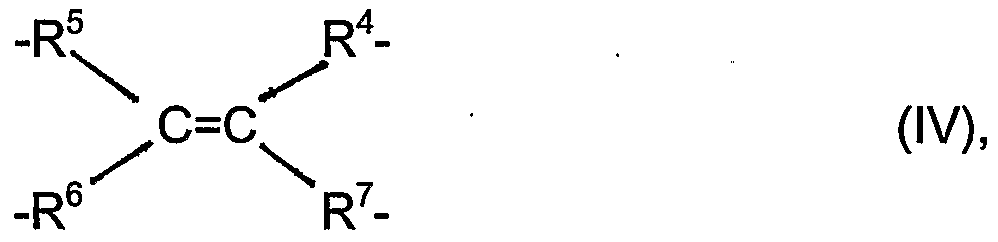
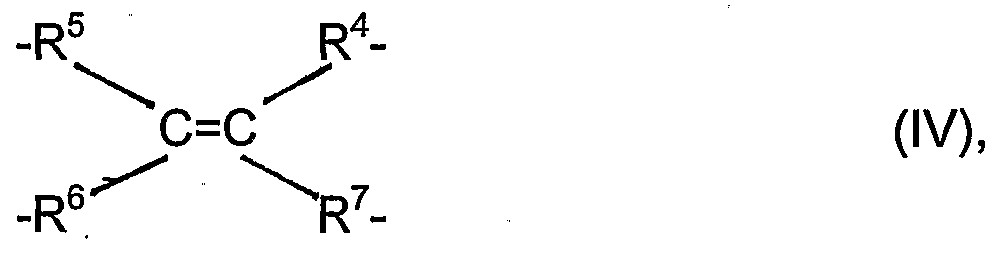
- the radical Y is preferably composed of the monovalent radicals of the general formula III:
- R 1 , R 2 and R 3 are independently hydrogen or organic
- R 6 and R 7 independently of one another bond electron pair between the olefinic carbon atom and the oxygen atom of the oxycarbonyl group of the conjugate residue or an organic residue linking to the oxycarbonyl group of the conjugate residue, with the proviso that a residue R 4 , R 5 , R 6 or R 7 , which none has a linking function Is hydrogen atom or an organic radical, preferably a hydrogen atom, it being possible for at least two of the organic radicals R 4 , R 5 , R 6 or R 7 to be cyclically linked to one another;
- the linking organic radical R is preferably selected from the group consisting of aliphatic, cycloaliphatic, aromatic, aliphatic-cycloaliphatic, aliphatic-aromatic, cycloaliphatic-aromatic and aliphatic-cycloaliphatic-aromatic radicals which contain at least one ether, thioether, carboxylic acid ester, Thiocarboxylic acid ester, carbonate, thiocarbonate, phosphoric acid ester, thiophosphoric acid ester, phosphonic acid ester, thiophosphonic acid ester, phosphite, thiophosphite, sulfonic acid ester, amide, amine, thioamide, phosphoric acid amide, thiophosphoric acid amide, phosphonic acid amide, phosphonic acid amide , Sulfonamide, imide, hydrazide, urethane, urea, thiourea, carbonyl, thiocarbonyl
- the linking organic radical R preferably contains at least one carboxylic acid ester and / or amide group.
- the divalent organic radical R particularly preferably consists of a carboxylic acid ester group and an alkylene, cycloalkylene and / or arylene group or an amide group and an alkylene, cycloalkylene and / or arylene group.
- Highly suitable alkylene groups R contain one carbon atom or 2 to 6 carbon atoms. Highly suitable cycloalkylene groups R contain 4 to 10, in particular 6, carbon atoms. Arylene groups R which are very suitable contain 6 to 10, in particular 6, carbon atoms.
- the variable R stands for a linking organic radical R consisting of a carboxylic ester group and at least one, in particular one, alkylene, cycloalkylene and / or arylene group, in particular an alkylene group, (-C (O) -O-alkylene).
- the variable R particularly preferably represents the radicals
- suitable organic radicals R 1 , R 2 and R 3 contain or consist of alkyl, cycloalkyl and / or aryl groups. Highly suitable alkyl groups contain one carbon atom or 2 to 6 carbon atoms. Highly suitable cycloalkyl groups contain 4 to 10, in particular 6, carbon atoms. Well-suited aryl groups contain 6 to 10, especially 6, carbon atoms.
- the organic radicals R, R 1 , R 2 and R 3 can be substituted or unsubstituted. However, the substituents must not interfere with the implementation of the method according to the invention and / or inhibit the activation of the groups with actinic radiation.
- the organic radicals R, R 1 , R 2 and R 3 are preferably unsubstituted.
- linking organic radicals R 4 , R 5 , R 6 and / or R 7 are preferably selected from the group consisting of the linking organic radicals R described above.
- Particularly advantageous linking organic radicals R 4 , R 5 , R 6 and / or R 7 consist of a carboxylic acid ester group and at least one, in particular one or two, alkylene, cycloalkylene and / or arylene group (s), in particular one or two alkylene group (s), (-C (O) - O-alkylene or -alkylene-C (O) -O alkylene-).
- Linking organic radicals R 4 , R 5 , R 6 and / or R 7 are very particularly preferred
- the non-linking organic radicals R 4 , R 5 , R 6 and / or R 7 are preferably selected from the group consisting of the organic radicals R 1 , R 2 and R 3 described above.
- the conjugate (A) according to the invention can contain at least one conjugate (B) of the general formula II:
- variable Z is for a saturated or aromatic, preferably saturated, in particular alicyclic saturated organic radical with a binding force of 1 or> 1, preferably 1 or 2, in particular 2.
- Examples of particularly suitable monovalent radicals Z are 4-hydroxy-, 3-hydroxy- and 2-hydroxy-cyciohexane and -benzene and omega-hydroxyalkyl radicals having 1 to 10, preferably 2 to 4 carbon atoms, in particular 2-hydroxyethyl, 3-hydroxypropyl - and 4-hydroxybutyl residues.
- Examples of particularly suitable double-bonded radicals Z are cyclohexane-1, 4-, 1,3- and 1,2-diyl, 1,4-, 1,3- and 1,2-phenylene and alkylene radicals with 1 to 10, preferably 2 up to 4 carbon atoms, in particular eth-1,2-ylene, prop-1,3-ylene (trimethylene) and but-1,4-ylene (tetramethylene)
- the mixture of conjugate (A) and conjugate (B) according to the invention can contain up to 50% by weight of conjugate (B).
- conjugate (A) according to the invention and the mixture of conjugate (A) and conjugate (B) according to the invention can basically be prepared by the customary and known methods of preparative organic chemistry for the preparation of esters. However, it is advantageous to produce them by the process according to the invention.
- conjugate acids described above in particular conjuene fatty acids, or at least one ester of these conjugate acids, in particular conjuene fatty acids, preferably at least one cycloalkyl, alkyl and aryl ester, preferably one Alkyl esters, in particular an ester of a low molecular weight alcohol with 1 to 10, preferably 1 to 4, especially methanol, ethanol, propanol, isopropanol, n-butanol or isobutanol, or a polyol, especially ethylene glycol, propylene glycol, neopentyl glycol, glycerin, trimethylol propane, pentaerythritol or a sugar alcohol like sorbitol or mannitol,
- At least one, in particular one, enzyme which catalyzes the transesterification or esterification and / or at least one, in particular one organism, which catalyzes the transesterification or esterification is used as the catalyst.
- Hydrolases [EC 3.x.x.x], in particular esterases [EC 3.1.X.X.] and proteases [EC 3.4.x.x], are used as enzymes.
- the carboxyl ester hydrolases [EC 3.1.1.x] are preferred.
- Lipases are particularly preferably used as hydrolases. In particular, lipases from Achromobacter sp., Aspergillus sp., Burholderia sp., Candida sp., Mucor sp., Penicillium sp., Pseudomonas sp., Rhizopus sp., Thermomyces sp. or pork pancreas.
- the enzymes and their functions are described, for example, in Römpp Online, 2002, "Hydrolases", “Lipases” and "Proteases”. You can be mobilized or immobilized.
- hydrolase preferably an esterase [EC 3.1.xx] or protease [EC 3.4.xx], particularly preferably a carboxyl ester hydrolase [EC 3.1.1.x] and in particular a lipase.
- All organisms known to the person skilled in the art which contain hydrolases can be used. Organisms which comprise lipases as hydrolases are preferably used.
- Achromobacter sp. Aspergillus sp., Burholderia sp., Candida sp., Mucor sp., Penicillium sp., Pseudomonas sp., Rhizopus sp., Thermomyces sp. and cells from pig pancreas use.
- These can be the unchanged organisms themselves or genetically modified organisms that originally do not express the enzymes, or express them only to an insufficient extent, and only have sufficiently high enzyme activity and productivity after modification.
- the organisms can be adapted to the reaction conditions and / or cultivation conditions by the genetic modification.
- the amount of the enzyme and / or the organism used can vary widely and depends on the requirements of the individual case, in particular on the reactivity of the starting products and the catalytic activity and selectivity of the enzyme or organism and the chosen conditions.
- the enzyme is preferably obtained in an amount of 0.1 to 20, preferably 0.2 to 16, particularly preferably 0.2 to 14, very particularly preferably 0.3 to 12, in particular 0.5 to 10% by weight on the total amount of the starting products.
- hydroxyl-containing compounds can be used in the process according to the invention. It is essential that they provide the radicals Y described above, in particular the radicals Y of the general formulas III or IV, during the reaction. 18
- hydroxyl-containing compounds from the group consisting of carboxylic acid esters and amides of the general formulas V to X, preferably V, VIII, IX and X and in particular V:
- variables R, R 1 , R 2 , R 3 R 4 , R 5 , R 6 and R 7 have the meaning given above and the variable Q for an oxygen atom or a primary or secondary imino group, preferably for an oxygen atom, and the Variable R 8 stands for a hydroxyl-containing, single-bonded organic radical; selected.
- the monovalent organic radical R 8 preferably contains at least one, in particular one, primary and / or secondary, in particular primary, hydroxyl group. It also contains at least one, especially one, alkyl, cycloalkyl and / or aryl group, especially an alkyl group.
- hydroxyl-containing compounds from the group consisting of hydroxyl-containing esters and amides of acrylic acid, methacrylic acid, ethacrylic acid, crotonic acid, cinnamic acid, cyclohexenecarboxylic acid, endomethylenecyclohexanecarboxylic acid are preferably
- Examples of very particularly suitable compounds containing hydroxyl groups are N-methylolacrylamide, 2-hydroxyethyl acrylate, 3-hydroxypropyl acrylate or 4-hydroxybutyl acrylate, in particular 4-hydroxybutyl acrylate.
- the molar ratio of conjugate or conjugate to compound containing hydroxyl groups can vary widely.
- the molar ratio of conjugate or conjugate to hydroxyl-containing compound is preferably adjusted so that an equivalent ratio of carboxylic acid or.
- Carboxylic acid ester groups to hydroxyl groups from 0.5: 1.0 to 1.0: 0.5, preferably 0.65: 1.0, 1.0 to 1.0: 0.65 and in particular 0.8: 1.0 to 1.0: 0.8 results.
- the reactions according to the process of the invention can be carried out in a single-phase or multi-phase, aqueous and / or organic reaction medium.
- the starting products can be dissolved, suspended or emulsified.
- the reactions can be carried out with or without the addition of solvents.
- Solvents which are inert with respect to the reactions are preferably used.
- Customary and known organic, in particular aprotic non-polar, solvents are preferably used.
- an excess of conjugate acids or conjugate esters or an excess of compounds containing hydroxyl groups can be used as the reaction medium.
- the method according to the invention can be carried out at different temperatures.
- the selection of the temperature range depends on the requirements of the individual case, in particular on the reactivity of the starting products and their thermal stability as well as on the catalytic activity and selectivity of the enzyme and / or the organism and their thermal stability.
- the process according to the invention is preferably carried out at temperatures from 0 to 100, preferably 10 to 80, particularly preferably 15 to 75 and in particular 20 to 70 ° C.
- the duration of the reactions can also vary widely and also depends on the requirements of the individual case, in particular on the reactivity of the starting products and the catalytic activity and selectivity of the enzyme and / or the organism.
- the duration is preferably one hour to one week, preferably two hours to five days, particularly preferably three hours to four days and in particular four hours to three days.
- the process according to the invention can be carried out in a batch mode, in which all the starting products are placed in a suitable reaction vessel, or in a semi-batch mode, in which some or all of the starting products are metered into the reaction medium in the course of the reaction.
- water or at least one, in particular one, saturated hydroxyl-containing compound for example methanol, ethanol, propanol or butanol. It is advisable to remove the hydroxyl-containing compound or the water from the reaction mixtures during or immediately after formation. All customary and known methods, such as vacuum distillation or azeotropic distillation, pervaporation or the passage of inert gases, can be used. It is essential that the starting products, the catalysts and the end products are not thermally damaged. Substances which absorb saturated compounds containing hydroxyl groups and / or water can also be added to the reaction mixtures.
- absorbent substances are molecular sieves with corresponding pore sizes (see also Römpp Online, 2002, “Molecular Sieves” and “Zeolites”).
- the resulting conjugate esters (A) according to the invention or the mixtures according to the invention of the conjugate esters (A) and the conjugate esters (B) have numerous particular advantages.
- they can be crosslinked or hardened with a small dose of actinic radiation, in particular UV radiation or electron radiation. They can also be oxidatively dried, i.e. H. can be cross-linked or hardened. They are low in odor and do not tend to crystallize or wax.
- they are well compatible with all constituents of customary and known compositions which are curable with actinic radiation, oxidatively and / or thermally. When hardened, they have excellent adhesion to metal surfaces.
- compositions can therefore be used for a wide variety of purposes.
- they can be isolated from the reaction mixtures as substances or used directly in solution.
- They are preferably used as new compositions curable with actinic radiation, thermally and with actinic radiation (dual-cure) or oxidatively curable or in the function of reactive diluents and / or adhesion promoters for their preparation.
- the new compositions curable with actinic radiation, thermally and with actinic radiation (dual-cure) or oxidatively curable compositions are referred to as "compositions according to the invention”.
- compositions according to the invention contain up to 100% by weight of the conjugate esters (A) according to the invention or the mixture according to the invention of at least one conjugate ester (A) and at least one conjugate ester (B).
- the content is preferably 0.5 to 80, preferably 1 to 60, particularly preferably 1.5 to 50 and in particular 2 to 40% by weight, in each case based on the composition according to the invention.
- compositions according to the invention can contain all customary and known constituents with actinic radiation, oxidatively and / or thermally curable compositions, such as radiation-curable and thermally curable binders, additional radiation-curable and thermally curable reactive diluents which are different from the conjugate esters (A) according to the invention, thermally curable reactive diluents and photoinitiators.
- they can contain customary and known auxiliaries and additives, such as catalysts, plasticizers, light stabilizers, adhesion promoters (tackifiers), slip additives, leveling agents,
- Polymerization inhibitors, matting agents, nanoparticles and film-forming aids contain.
- composition according to the invention is also thermally curable, ie dual-cure, it preferably also contains conventional and known thermally curing binders and crosslinking agents, which may additionally contain groups which can be activated with actinic radiation, and / or thermally curing reactive diluents, such as this, for example in German patent applications DE 198 187 735 A1 and DE 199 20 799 A. 1 or the European patent application EP 0 928 800 A1.
- compositions according to the invention are preferably produced by mixing the constituents described above in suitable mixing units such as stirred kettles, agitator mills, extruders, kneaders, Ultraturrax, in-line dissolvers, static mixers, micromixers, gear rim dispersers, pressure relief nozzles and / or microfluidizers.
- suitable mixing units such as stirred kettles, agitator mills, extruders, kneaders, Ultraturrax, in-line dissolvers, static mixers, micromixers, gear rim dispersers, pressure relief nozzles and / or microfluidizers.
- work is preferably carried out with the exclusion of light of a wavelength ⁇ ⁇ 550 nm or with the complete exclusion of light in order to prevent premature crosslinking of the compositions according to the invention.
- compositions of the invention can be in a wide variety of forms. They are conventional, organic solvent-containing compositions, aqueous compositions, essentially or completely solvent-free and water-free liquid compositions (100% systems), essentially or completely solvent-free and water-free solid powders or essentially or completely solvent-free powder suspensions (powder slurries) , In addition, they can be one-component systems in which the binders and the crosslinking agents are present side by side, or two- or multi-component systems in which the binders and the crosslinking agents are present separately from one another until shortly before application. In particular, they are 100% systems.
- compositions according to the invention are used for the production of compositions cured with actinic radiation, dual-cure-hardened and oxidatively hardened compositions, preferably of coatings, paints, primers, adhesive layers, seals, molded parts and self-supporting films, in particular primers.
- the compositions according to the invention are applied to customary and known temporary or permanent substrates.
- Customary and known temporary substrates are preferably used for the production of the films and molded parts according to the invention, such as metal and plastic strips or hollow bodies made of metal, glass, plastic, wood or ceramic, which can be easily removed without damaging the films and molded parts according to the invention ,
- compositions according to the invention are used for the production of coatings, adhesive layers, primers and seals, permanent substrates are used, such as means of transportation, including aircraft, watercraft, rail vehicles, muscle-powered vehicles and motor vehicles, and parts thereof, structures indoors and outdoors and Parts thereof, doors, windows, furniture, hollow glass bodies, coils, containers, packaging, small industrial parts, optical components, electrotechnical components, mechanical components and components for white goods.
- the films and moldings according to the invention can also serve as substrates.
- the application of the liquid compositions according to the invention has no peculiarities, but can be carried out by all customary and known application methods, such as Spraying, spraying, knife coating, brushing, pouring, dipping, trickling or rolling.
- the application of the pulverulent compositions according to the invention also has no special features in terms of method, but is carried out, for example, using the customary and known fluidized bed processes, such as those found in the company publications of BASF Coatings AG, “Powder Coatings for Industrial Applications”, January 2000, or “Coatings Partner, Pulverlack Spezial «, 1/2000, or Römpp Lexikon Lacke und Druckmaschine, Georg Thieme Verlag, Stuttgart, New York, 1998, pages 187 and 188,» Electrostatic Powder Spraying «,» Electrostatic Spraying «and» Electrostatic Whirl Bath Process « ,
- the applied compositions according to the invention are preferably cured with UV radiation.
- a radiation dose of 100 to 6,000, preferably 200 to 3,000, preferably 300 to 2,000 and particularly preferably 500 to 1,800 mJcm "2 is preferably used for the irradiation, the range ⁇ 1,700 mJcm " 2 being very particularly preferred.
- the radiation intensity can vary widely. It depends in particular on the radiation dose on the one hand and the radiation duration on the other. For a given radiation dose, the irradiation time depends on the belt or feed speed of the substrates in the irradiation system and vice versa.
- UV lamps can be used as radiation sources for the UV radiation. Flash lamps can also be used.
- Mercury vapor lamps preferably mercury low, medium and high pressure vapor lamps, are preferred as UV lamps, in particular
- Unmodified mercury vapor lamps plus suitable filters or modified, in particular doped, mercury vapor lamps are particularly preferably used.
- Gallium-doped and / or iron-doped, in particular iron-doped, mercury vapor lamps are preferably used, as described, for example, in R. Stephen Davidson, "Exploring the Science, Technology and Applications of UV and EB Curing", Sita Technology Ltd., London, 5 1999, Chapter I , "An Overview", page 16, Figure 10, or Dipl.-Ing. Peter Klamann, “eltosch system competence, UV technology, guidelines for users”, page 2, October 1998.
- Suitable flash lamps are flash lamps from VISIT.
- the distance between the UV lamps and the applied compositions according to the invention can vary surprisingly widely and can therefore be adjusted very well to the requirements of the individual case.
- the distance is preferably 2 to 200, preferably 5 to 100, particularly preferably 10 to
- the radiation can be carried out under an oxygen-depleted atmosphere.
- Oxygen-depleted means that the content of oxygen in the atmosphere is less than the oxygen content of air (20.95% by volume).
- the atmosphere can basically also be oxygen-free, ie it is an inert gas. Because of the lack of inhibitory
- thermal curing can be carried out, for example, using a gaseous, liquid and / or solid, hot medium, such as hot air, heated oil or heated rollers, or using microwave radiation, infrared light and / or near infrared light (NIR).
- the heating is preferably carried out in a forced air oven or by irradiation with IR and / or NIR lamps.
- thermal curing can also be carried out in stages. The thermal curing advantageously takes place at temperatures from room temperature to 200.degree.
- Both thermal curing and curing with actinic radiation can be carried out in stages. They can take place one after the other (sequentially) or simultaneously. Sequential curing is advantageous according to the invention and is therefore used with preference. It is particularly advantageous to carry out the thermal hardening after the hardening with actinic radiation.
- Curing with actinic radiation and / or thermal curing can or can be supplemented or supported by the oxidative curing.
- the oxidative curing can also be carried out alone.
- Coatings, primers, adhesive layers and seals are ideal for coating, gluing, sealing, wrapping and
- Packaging of means of transportation including aircraft, Watercraft, rail vehicles, muscle-powered vehicles and motor vehicles, and parts thereof, indoor and outdoor structures and parts thereof, doors, windows and furniture, as well as in the industrial coating of hollow glass bodies, coils, containers, packaging, small industrial parts such as nuts , Screws or hubcaps, optical components, electrotechnical components, such as winding goods, including coils and stators and rotors for electric motors, mechanical components and components for white goods, including household appliances, boilers and radiators.
- compositions according to the invention are used as coating materials for the production of coatings, lacquers and primers, preferably for the production of primers, in particular for the production of primers for the production of color and / or effect-giving, electrically conductive, magnetically shielding or fluorescent multi-layer coatings, especially for coloring. and / or effect-giving multi-layer paintwork.
- compositions according to the invention provide coatings, lacquers and primers, the layer thickness of which can vary very widely.
- the layer thicknesses are preferably between 2 and 100 ⁇ m.
- the resulting primers according to the invention are the lowermost layers of multi-layer paintwork, which determine the adhesion properties and the protection against corrosion quite substantially. For this reason, deficits in the primers are particularly noticeable and can lead to delamination of the primers and / or the multi-layer paintwork and / or to corrosion of the substrates.
- the primers according to the invention have a particularly high adhesive strength both to the substrate as well as to the layers of the multilayer paints lying above. They also effectively protect metal substrates from corrosion.
- the substrates according to the invention which are coated with coatings according to the invention, bonded with adhesive layers according to the invention, sealed with a seal according to the invention and / or enveloped or packaged with films and / or moldings according to the invention, therefore have outstanding long-term use properties and a particularly long service life.
- reaction mixture was stirred at 60 ° C. in vacuo (5 mbar) for 24 hours.
- the enzyme was then filtered off. There were 250
- the H 1 nuclear magnetic resonance spectroscopy in CDCI 3 showed a new signal at 4.18 ppm at 4.18 ppm, which indicated the formation of a further ester group.
- the fatty acid content was determined via the signal of the methyl group at 0.9 ppm.
- the signal ratio of ester groups to fatty acids resulted in a degree of esterification of 97%.
- Example 2a immobilized lipase from Candida antarctica (Novozym ® 435), in Example 2b) immobilized lipase from Mucor miehei and in Example 2c) immobilized lipase from Alcaligenes sp. used.
- the coating material was mixed by mixing 100 parts by weight of 3,4-epoxycyclohexylmethyl-3,4-epoxycyclohexylcarboxylate (Cyracure® UVR 6105 from Union Carbide), 0.5 part by weight of a modified silicone (Paint Additive 57 from Dow Corning), 10 parts by weight 3 Ethyl 3-hydroxymethyloxetane (Cyracure® UVR 6000 from Union Carbide), 20 parts by weight of the mixture of the conjugate esters (A) and (B) from Example 1, 4 parts by weight of triarylsulfonium hexafluorophosphate (Cyracure® UVR 6990 from Union Carbide) and 1 Part by weight of hydroxycyclohexylphenyl ketone (Irgacure ⁇ 184 from Ciba Specialty Chemicals) and homogenizing the resulting mixture.
- Cyracure® UVR 6105 3,4-epoxycyclohexylmethyl-3,
- the coating material had an advantageously low viscosity and was stable on storage. No phase separations were observed even after storage for 1 month with the exclusion of actinic radiation.
- the coating material was degreased with a bar squeegee on steel sheets of the HDG grade (hot-dip galvanizing, without pretreatment; example
- Example 3a) and on steel sheets of the Gardobond 901 type (alkali phosphating; Example 3b)) applied by the company Chemetall. After application, the coated steel sheets were aged at 50 ° C for twelve hours. The application took place in a layer thickness that after curing with UV radiation at a dose of 1,500 mJ / cm 2 resulted in a dry layer thickness of 5 to 10 ⁇ m (example 3a) and 5 to 6 ⁇ m (example 3b).
- example 3c the coating of example 3b) was covered with a customary and known pigmented topcoat for industrial applications from BASF Coatings AG.
- the resulting multilayer coating had very good adhesion to the substrate and very good interlayer adhesion.
- a coating material was obtained by mixing 56.7 parts by weight of an epoxy polyether diacrylate (Laromer® 8986 from BASF Aktiengesellschaft), 0.8 parts by weight of cobalt octoate 10 percent in mineral spirits (Octa Solingen Kobalt 6 in D60 from Borchers GmbH), 18.9 parts by weight the mixture of the conjugate esters (A) and (B) of Example 1, 18.9 parts by weight 4-
- Hydroxybutyl acrylate / polyphosphoric acid (diphosphorus pentoxide content: 84% by weight) in a weight ratio of 80:20 and 4.7 parts by weight of hydroxycyclohexylphenyl ketone (Irgacure® 184 from Ciba Specialty Chemicals) and homogenizing the resulting mixture.
- the coating material had an advantageously low viscosity (discharge cup, 6 mm nozzle opening; discharge time 24 s). It was stable in storage: No phase separations were observed even after storage for 1 month with the exclusion of actinic radiation.
- the coating material was applied with a bar squeegee to steel sheets of the HDG grade (hot-dip galvanizing, without pretreatment, degreased) from Chemetall. After application, the coated steel sheets were aged at 50 ° C for twelve hours. The application took place in a layer thickness such that after curing with UV radiation a dose of 500 mJ / cm 2 (example 4a)) and 1,500 mJ / cm 2 (example 4b)) a dry layer thickness of 5 to 9 ⁇ m (example 4a ) and 4 to 7 ⁇ m (Example 4b)) resulted. The resulting primers had very good adhesion to the substrate.
- the coating materials of Examples 5a) to 5c) and Comparative Experiments V 1a) to V 1c) were prepared by mixing the constituents given in Table 2 in the amounts stated and homogenizing the resulting mixture.
- the coating materials were applied with a doctor blade to steel sheets of the HDG grade (hot-dip galvanizing, without pretreatment, degreased) from Chemetall. After application, the coated steel sheets were aged at 50 ° C for twelve hours. The application took place in layer thicknesses that after curing with UV radiation a dose of 1,500 mJ / cm 2 resulted in coatings with dry layer thicknesses of 5 to 9 ⁇ m.
- the gloss of the coatings was measured at an angle of 60 ° in accordance with DIN 67530.
- the solvent resistance was determined in a customary and known manner by treating the surface of the coatings with the aid of a Determined cotton swab soaked in methyl ethyl ketone. The measurements were carried out (i) immediately after the coatings had been produced and (ii) after they had been stored at 50 ° C. for 15 hours. The number of double strokes after which damage to the surface occurred was given.
- the adhesion of the coatings to the substrates was determined using the cross-cut test according to DIN ISO 2409: 1994-10.
- Table 3 Gloss, resistance to solvents, adhesion and corrosion protection effect of the coatings of Examples 5a) to 5c) and of the comparative tests V 1 a) to V 1c)
- Example 6 and Comparative Experiments V 2a) and V 2b) were prepared by mixing the constituents in Table 4 in the amounts indicated and homogenizing the resulting mixture.
- the coating materials were applied with a doctor blade to degreased bare steel sheets from Chemetall. After application, the coated steel sheets were aged at 50 ° C for twelve hours. The application took place in layer thicknesses that after curing with UV radiation a dose of 1,500 mJ / cm 2 resulted in coatings with dry layer thicknesses of 8 to 10 ⁇ m.
- the adhesion of the coatings to the substrates was determined using the cross-cut test according to DIN ISO 2409: 1994-10.
- Phenolic resin (Schenactady SMD 31144), 10 35 percent solution in isomergic acid ® SF-4-hydroxybutyl ester (93 percent) 12
- Phenolic resin (Schenactady SMD 31144), 35 percent solution in 15 4-hydroxybutyl acrylate - 12
- Alkyd resin Alkydal ® R35 from Bayer AG, 35 percent solution in
Landscapes
- Chemical & Material Sciences (AREA)
- Organic Chemistry (AREA)
- Engineering & Computer Science (AREA)
- Zoology (AREA)
- Wood Science & Technology (AREA)
- Life Sciences & Earth Sciences (AREA)
- Health & Medical Sciences (AREA)
- Chemical Kinetics & Catalysis (AREA)
- Oil, Petroleum & Natural Gas (AREA)
- Genetics & Genomics (AREA)
- General Chemical & Material Sciences (AREA)
- Microbiology (AREA)
- Biotechnology (AREA)
- General Health & Medical Sciences (AREA)
- Biochemistry (AREA)
- Bioinformatics & Cheminformatics (AREA)
- General Engineering & Computer Science (AREA)
- Medicinal Chemistry (AREA)
- Polymers & Plastics (AREA)
- Organic Low-Molecular-Weight Compounds And Preparation Thereof (AREA)
- Paints Or Removers (AREA)
- Adhesives Or Adhesive Processes (AREA)
- Addition Polymer Or Copolymer, Post-Treatments, Or Chemical Modifications (AREA)
- Preparation Of Compounds By Using Micro-Organisms (AREA)
Abstract
Description





Claims





Priority Applications (3)
| Application Number | Priority Date | Filing Date | Title |
|---|---|---|---|
| JP2006501568A JP2006518346A (ja) | 2003-02-10 | 2004-01-21 | 共役した不飽和酸のエステル(共役酸エステル)、それらの製造方法及びそれらの使用 |
| US10/543,796 US20060286647A1 (en) | 2003-02-10 | 2004-01-21 | Esters of conjugated unsaturated acids (conjugated acid esters), corresponding methods and use |
| EP04703785A EP1592655A2 (de) | 2003-02-10 | 2004-01-21 | Ester konjugiert ungesättigter carbonsäuren (konjugensäurester) verfahren zu ihrer herstellung und ihre verwendung |
Applications Claiming Priority (2)
| Application Number | Priority Date | Filing Date | Title |
|---|---|---|---|
| DE10305313A DE10305313A1 (de) | 2003-02-10 | 2003-02-10 | Ester konjugiert ungesättigter Säuren (Konjuensäureester), Verfahren zu ihrer Herstellung und ihre Verwendung |
| DE10305313.1 | 2003-02-10 |
Publications (2)
| Publication Number | Publication Date |
|---|---|
| WO2004069969A2 true WO2004069969A2 (de) | 2004-08-19 |
| WO2004069969A3 WO2004069969A3 (de) | 2004-10-21 |
Family
ID=32747665
Family Applications (1)
| Application Number | Title | Priority Date | Filing Date |
|---|---|---|---|
| PCT/EP2004/000446 Ceased WO2004069969A2 (de) | 2003-02-10 | 2004-01-21 | Ester konjugiert ungesättigter carbonsäuren (konjugensäurester) verfahren zu ihrer herstellung und ihre verwendung |
Country Status (6)
| Country | Link |
|---|---|
| US (1) | US20060286647A1 (de) |
| EP (1) | EP1592655A2 (de) |
| JP (1) | JP2006518346A (de) |
| CN (1) | CN1741983A (de) |
| DE (1) | DE10305313A1 (de) |
| WO (1) | WO2004069969A2 (de) |
Families Citing this family (4)
| Publication number | Priority date | Publication date | Assignee | Title |
|---|---|---|---|---|
| DE10358488A1 (de) * | 2003-12-13 | 2005-07-14 | Basf Coatings Ag | Beschichtungsstoff, Verfahren zu seiner Herstellung und seine Verwendung zur Herstellung transparenter, korrosionshemmender Beschichtungen |
| MY151833A (en) * | 2007-11-23 | 2014-07-14 | Univ Putra Malaysia | Formulation for coating material |
| DE102009003036A1 (de) * | 2009-05-12 | 2010-11-18 | Basf Se | Verfahren zur kontinuierlichen Herstellung von urethangruppenhaltigen (Meth)acrylsäureestern |
| MY156763A (en) * | 2009-09-08 | 2016-03-31 | Jx Nippon Oil & Energy Corp | Vinyl ether compound, vinyl ether polymer, and method for producing vinyl ether compound |
Family Cites Families (8)
| Publication number | Priority date | Publication date | Assignee | Title |
|---|---|---|---|---|
| US4597963A (en) * | 1984-10-05 | 1986-07-01 | Charles Of The Ritz Group Ltd. | Moisture-resistant skin treatment compositions |
| JPS61252206A (ja) * | 1985-04-30 | 1986-11-10 | Toshinobu Higashimura | ポリ(ビニルエ−テル)類の製造方法 |
| JPS6453837A (en) * | 1987-08-24 | 1989-03-01 | Kao Corp | Phenolic laminated sheet having paper substrate |
| DE4129528A1 (de) * | 1991-09-05 | 1993-03-11 | Henkel Kgaa | Verwendung der fettsaeureester von alkadienylethern von polyolen als reaktivverduenner |
| JPH05147163A (ja) * | 1991-11-28 | 1993-06-15 | Nitto Denko Corp | フツ素樹脂−シリコーンゴム積層体およびその製法 |
| US5136065A (en) * | 1991-12-30 | 1992-08-04 | Dow Corning Corporation | Propargyl esters of carboxylic acids containing conjugated ethylenic unsaturation and organosilicon compounds derived from same |
| GB2350610A (en) * | 1999-06-01 | 2000-12-06 | Jfs Envirohealth Ltd | Preparation of pure unsaturated fatty acids |
| EP1338610B1 (de) * | 2002-02-25 | 2005-08-17 | Dainippon Ink And Chemicals, Inc. | Verfahren zur Herstellung von hochverzweigten Polyestern ungesättigte Endgruppen enthaltend |
-
2003
- 2003-02-10 DE DE10305313A patent/DE10305313A1/de not_active Ceased
-
2004
- 2004-01-21 WO PCT/EP2004/000446 patent/WO2004069969A2/de not_active Ceased
- 2004-01-21 CN CNA2004800027390A patent/CN1741983A/zh active Pending
- 2004-01-21 EP EP04703785A patent/EP1592655A2/de not_active Withdrawn
- 2004-01-21 JP JP2006501568A patent/JP2006518346A/ja not_active Withdrawn
- 2004-01-21 US US10/543,796 patent/US20060286647A1/en not_active Abandoned
Also Published As
| Publication number | Publication date |
|---|---|
| US20060286647A1 (en) | 2006-12-21 |
| WO2004069969A3 (de) | 2004-10-21 |
| JP2006518346A (ja) | 2006-08-10 |
| CN1741983A (zh) | 2006-03-01 |
| DE10305313A1 (de) | 2004-08-26 |
| EP1592655A2 (de) | 2005-11-09 |
Similar Documents
| Publication | Publication Date | Title |
|---|---|---|
| RU2625229C2 (ru) | Высушивающее вещество для самоокисляющихся покровных композиций | |
| JP3790106B2 (ja) | 塗料又はインキ組成物 | |
| EP1987073B1 (de) | Wässrige zweikomponentensysteme, verfahren zu ihrer herstellung und ihre verwendung | |
| DE2806497A1 (de) | Durch einen klarlackueberzug abgedeckte mehrschichtlackierung und verfahren zu ihrer herstellung | |
| US20020035235A1 (en) | Polyhydroxyl-compositions derived from castor oil with enhanced reactivity suitable for polyurethane-synthesis | |
| EP0036975A2 (de) | Verfahren zur Herstellung von Metalleffektlackierungen und witterungsbeständige Metalleffekt-Mehrschichtlackierungen aufweisende Flächengebilde | |
| RU2626860C2 (ru) | Осушитель для самоокисляемых покрывающих составов | |
| US4113702A (en) | Method of preparing polyester varnish resins of low viscosity | |
| DE102007038313A1 (de) | Anorganisch-modifizierte Polyesterbindemittelzubereitung, Verfahren zur Herstellung und ihre Verwendung | |
| EP2268740B1 (de) | Wässrige emulsionsbeschichtungszusammensetzung mit einem autoxidisablen fettsäure-modifziertem polyester | |
| EP0270831A2 (de) | Lösungsmittelfreie, monomerarme bzw. -freie, polymerisierbare Schmelzmasse, Verfahren zu deren Herstellung und Verarbeitung | |
| JPWO2000044840A1 (ja) | 塗料又はインキ組成物 | |
| EP0437827A2 (de) | Strahlenhärtbare Makromere auf der Basis von (meth)acrylfunktionellen Polyestern und deren Verwendung | |
| ZA200406077B (en) | Reactive diluents and coatings comprising them. | |
| EP4095165A1 (de) | Polyester-polyethermodifizierte polybutadiene und verfahren zu deren herstellung | |
| DE69836034T2 (de) | Beschichtungszusammensetzungen auf der basis von polyester/vinyl dioxolan | |
| EP1592655A2 (de) | Ester konjugiert ungesättigter carbonsäuren (konjugensäurester) verfahren zu ihrer herstellung und ihre verwendung | |
| WO2004069897A1 (de) | Polyester, enthaltend mit aktinischer strahlung aktivierbare gruppen, verfahren zu ihrer herstellung und ihre verwendung | |
| EP0002488A1 (de) | Verfahren zur Herstellung von wasseremulgierbaren lufttrocknenden Lackbindemitteln | |
| EP0546417A1 (de) | Verwendung von Octadienylethern als Reaktivverdünner | |
| US3304276A (en) | Polyhydric phenol modified fatty media and iron surfaces chelated therewith | |
| EP1660553B1 (de) | Strahlenhärtbares ungesättigtes polyesterurethanharz | |
| DE3939482A1 (de) | Enteisungsmittel und verfahren zur verhuetung von vereisung | |
| DE10305076A1 (de) | Ester von alpha, omega-Poly(meth)acrylatdiolen mit Carbonsäuren, enthaltend mit aktinischer Strahlung aktivierbare Gruppen, Verfahren zu ihrer Herstellung und ihre Verwendung | |
| EP0317913B1 (de) | Neue Di(meth)acrylate, Verfahren zu deren Herstellung und deren Verwendung |
Legal Events
| Date | Code | Title | Description |
|---|---|---|---|
| AK | Designated states |
Kind code of ref document: A2 Designated state(s): AE AG AL AM AT AU AZ BA BB BG BR BW BY BZ CA CH CN CO CR CU CZ DK DM DZ EC EE EG ES FI GB GD GE GH GM HR HU ID IL IN IS JP KE KG KP KR KZ LC LK LR LS LT LU LV MA MD MG MK MN MW MX MZ NA NI NO NZ OM PG PH PL PT RO RU SC SD SE SG SK SL SY TJ TM TN TR TT TZ UA UG US UZ VC VN YU ZA ZM ZW |
|
| AL | Designated countries for regional patents |
Kind code of ref document: A2 Designated state(s): BW GH GM KE LS MW MZ SD SL SZ TZ UG ZM ZW AM AZ BY KG KZ MD RU TJ TM AT BE BG CH CY CZ DE DK EE ES FI FR GB GR HU IE IT LU MC NL PT RO SE SI SK TR BF BJ CF CG CI CM GA GN GQ GW ML MR NE SN TD TG |
|
| DPEN | Request for preliminary examination filed prior to expiration of 19th month from priority date (pct application filed from 20040101) | ||
| 121 | Ep: the epo has been informed by wipo that ep was designated in this application | ||
| WWE | Wipo information: entry into national phase |
Ref document number: 2004703785 Country of ref document: EP |
|
| WWE | Wipo information: entry into national phase |
Ref document number: 20048027390 Country of ref document: CN |
|
| WWE | Wipo information: entry into national phase |
Ref document number: 2006501568 Country of ref document: JP |
|
| WWP | Wipo information: published in national office |
Ref document number: 2004703785 Country of ref document: EP |
|
| WWE | Wipo information: entry into national phase |
Ref document number: 2006286647 Country of ref document: US Ref document number: 10543796 Country of ref document: US |
|
| WWP | Wipo information: published in national office |
Ref document number: 10543796 Country of ref document: US |